
Symmetric UAV Cooperative Lifting Motion Planning in Confined Space


Abstract
1. Introduction
2. Dynamic Model and Analysis
2.1. Dynamic Model
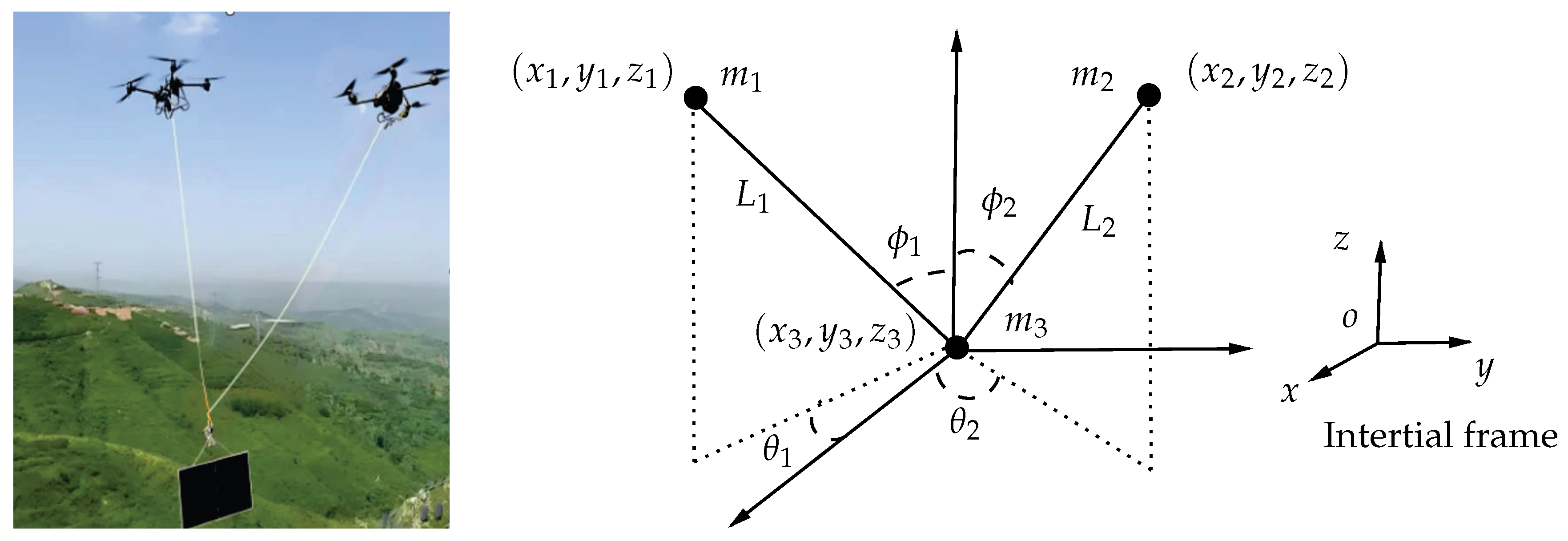
- The UAV fuselage structure is symmetric.
- Both the UAVs and the payload are symmetric rigid bodies with uniform mass density.
- The mass of the cables connecting the UAVs to the payload is negligible.
- The swing angles of the cables connected to the payload satisfy .
2.2. Differential Flatness Analysis
3. Path Planning with Reinforcement Learning
3.1. Directional-Biased Bidirectional RRT
3.1.1. Goal-Biased Mechanism with Regional Probability Sampling
3.1.2. Direction Guidance Mechanism Based on Improved Potential Field
3.1.3. Adaptive Step Size Mechanism
3.2. Reinforcement Learning Supporting
3.2.1. State Space
3.2.2. Action Space
3.2.3. Reward Function
3.2.4. Training Process
| Algorithm 1: RLDB-BiRRT: Reinforcement Learning-based Bi-RRT |
 |
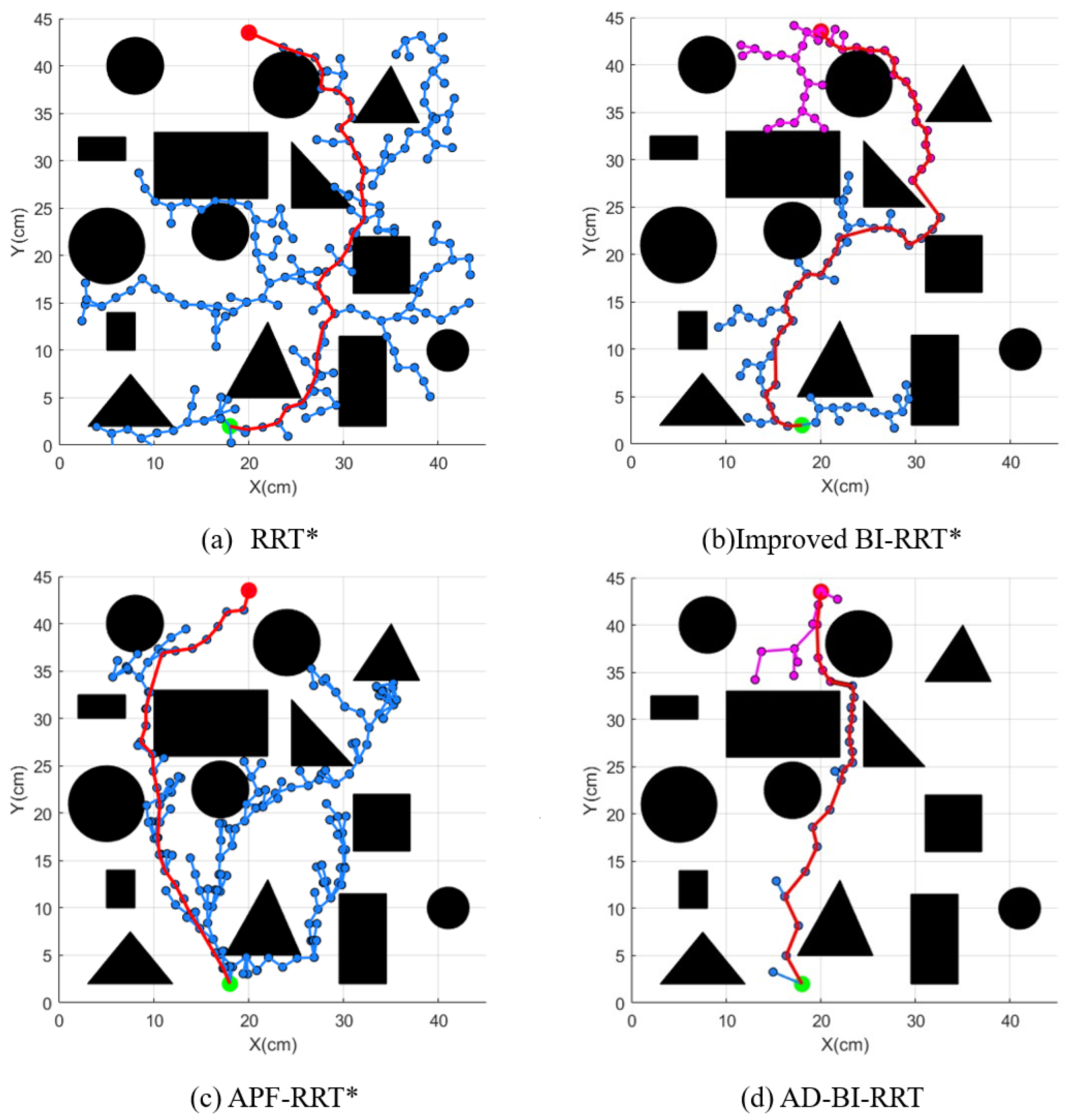
3.3. Simulation Experiments
4. Safe Flight Corridor Construction
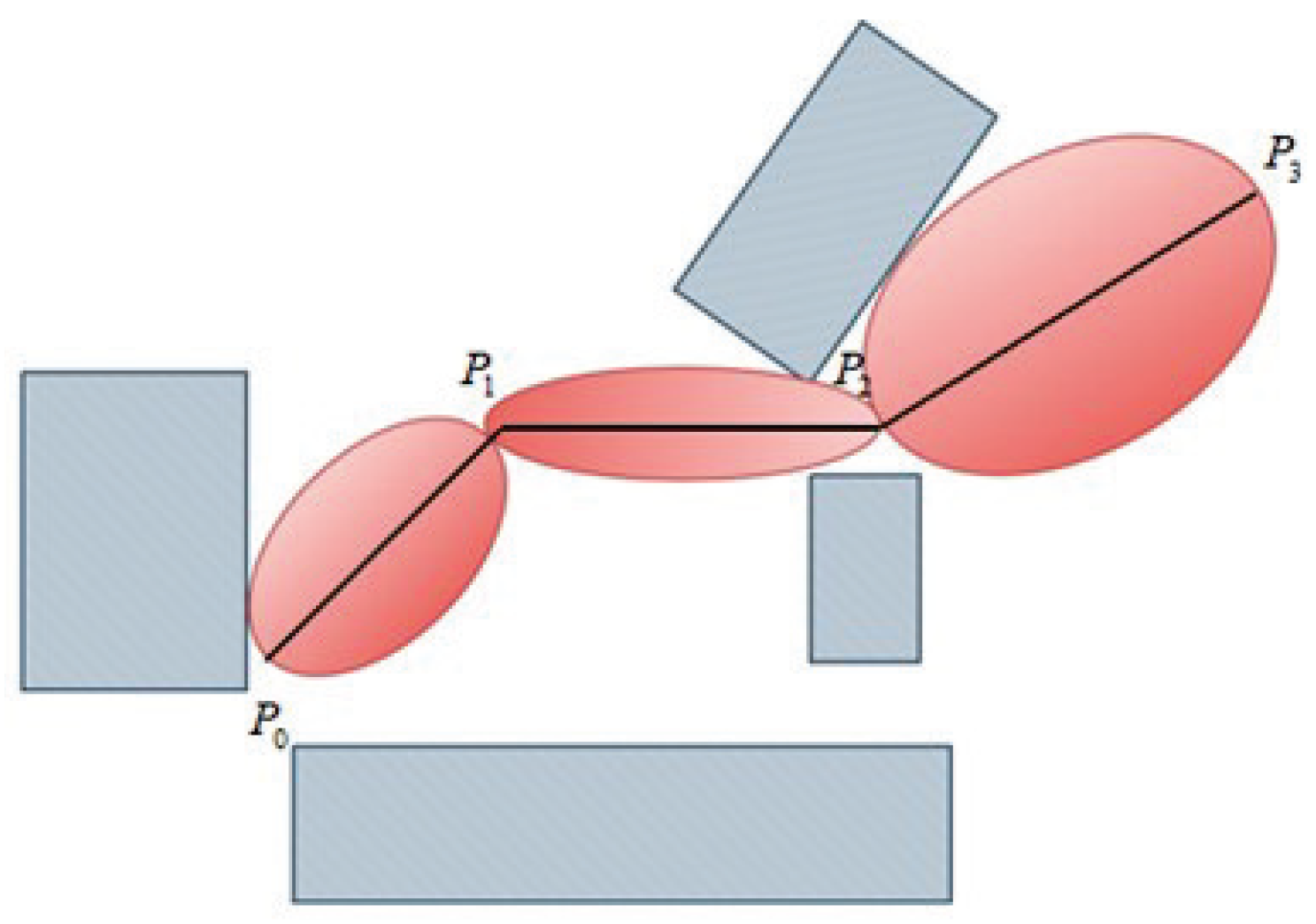
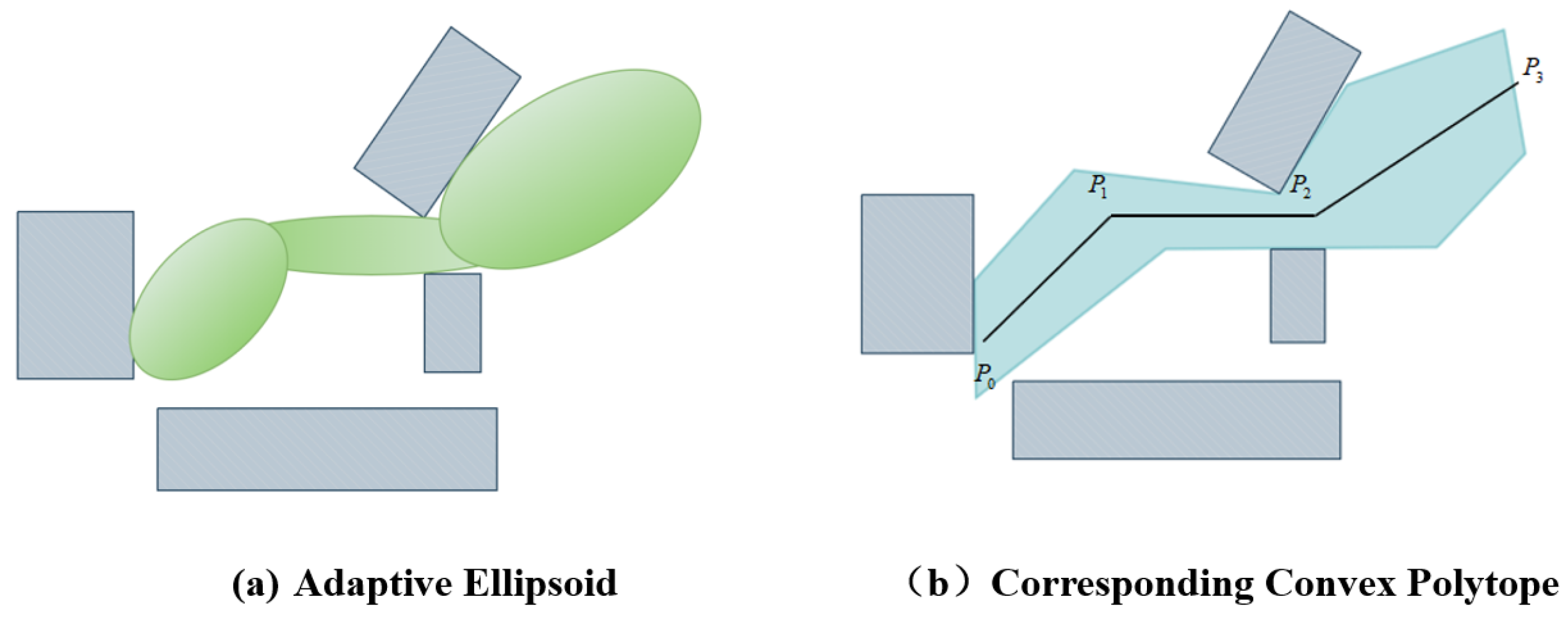
4.1. Path Segmentation and Initial Corridor Generation
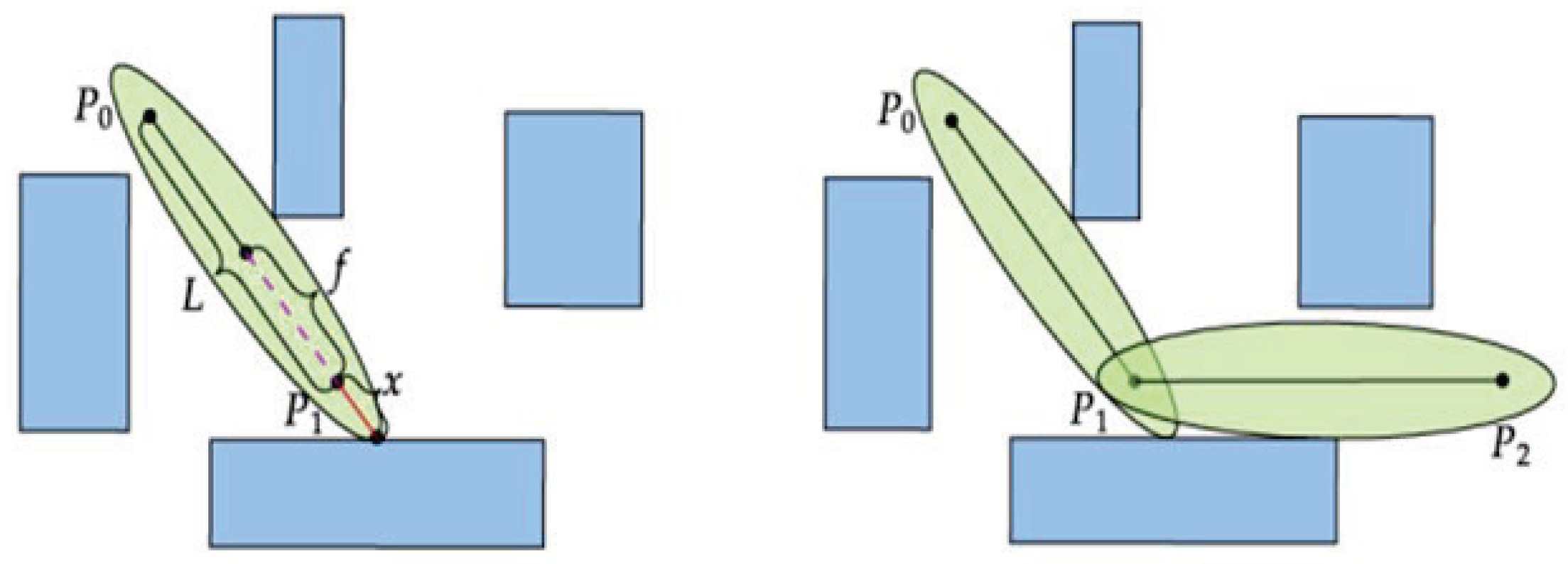
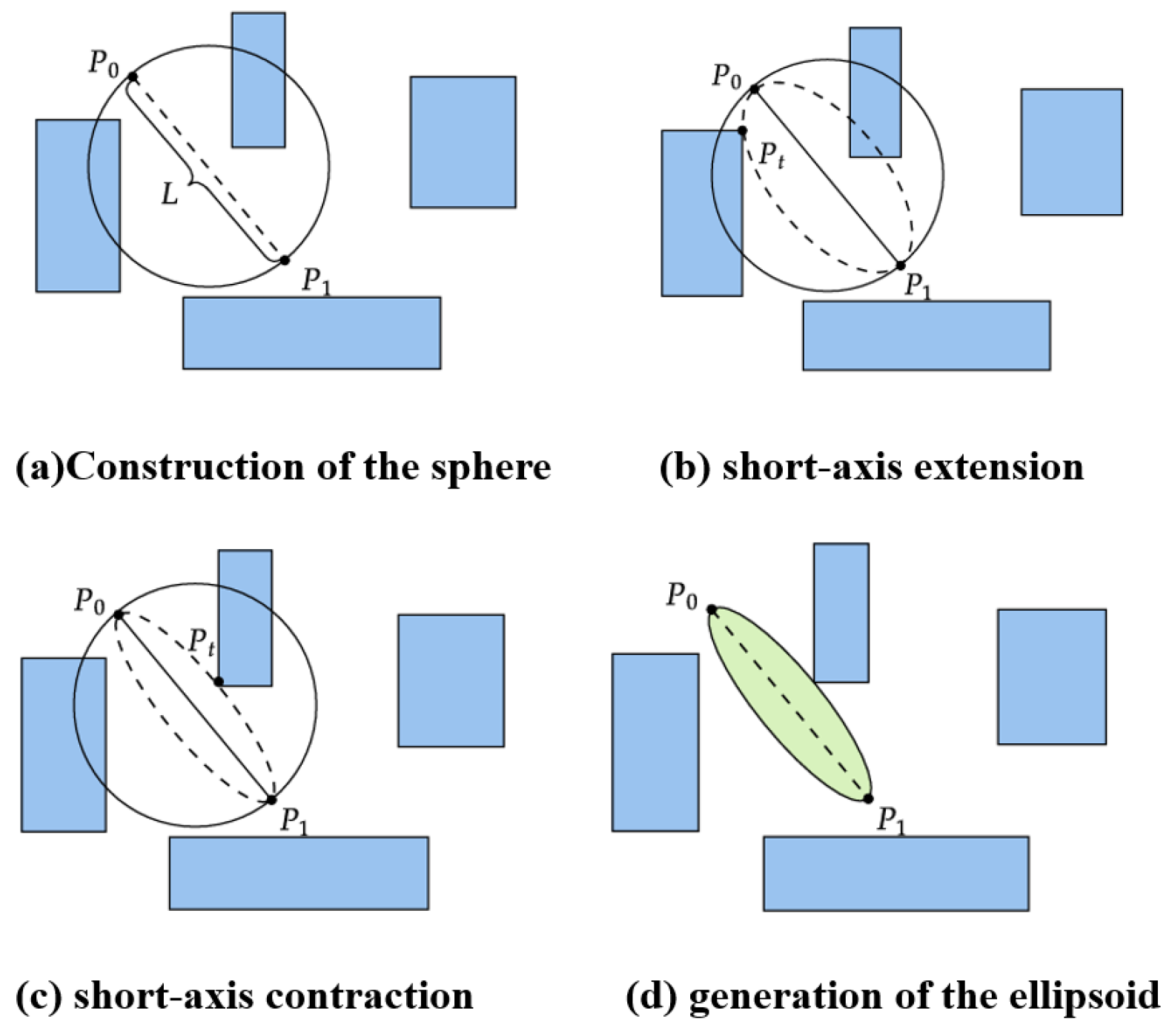
4.2. Ellipsoid Adaptive Construction

5. Trajectory Planning Based on Safety Corridors
5.1. Objective Function Formulation
5.2. Constraints Formulation
5.2.1. Equality Constraints
5.2.2. Inequality Constraints
5.3. Complete Optimization Problem
6. Simulation Experiments of the Integrated Framework
6.1. Simulation Environment Setup
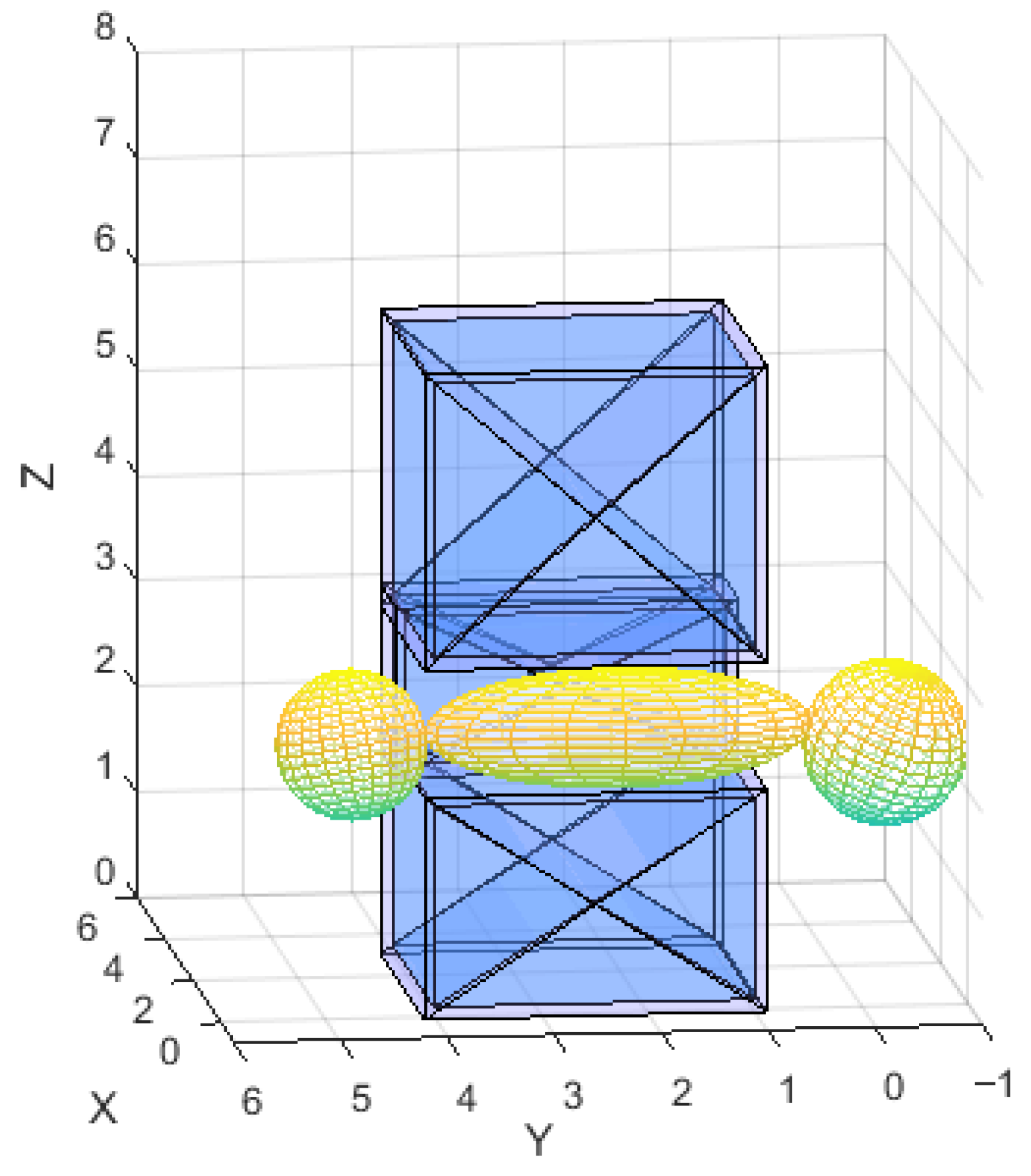
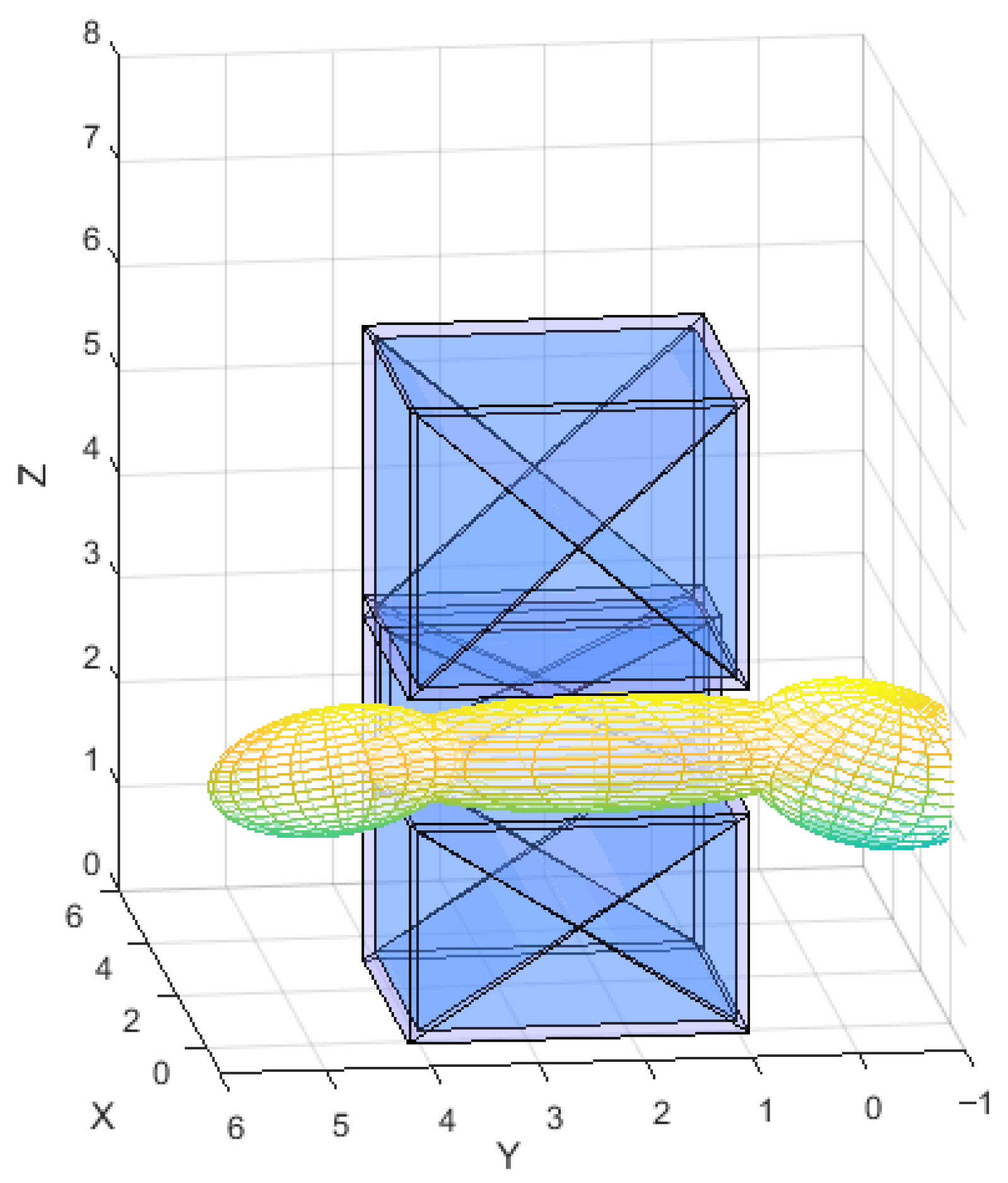
6.2. Safe Flight Corridor Construction for Confined Space
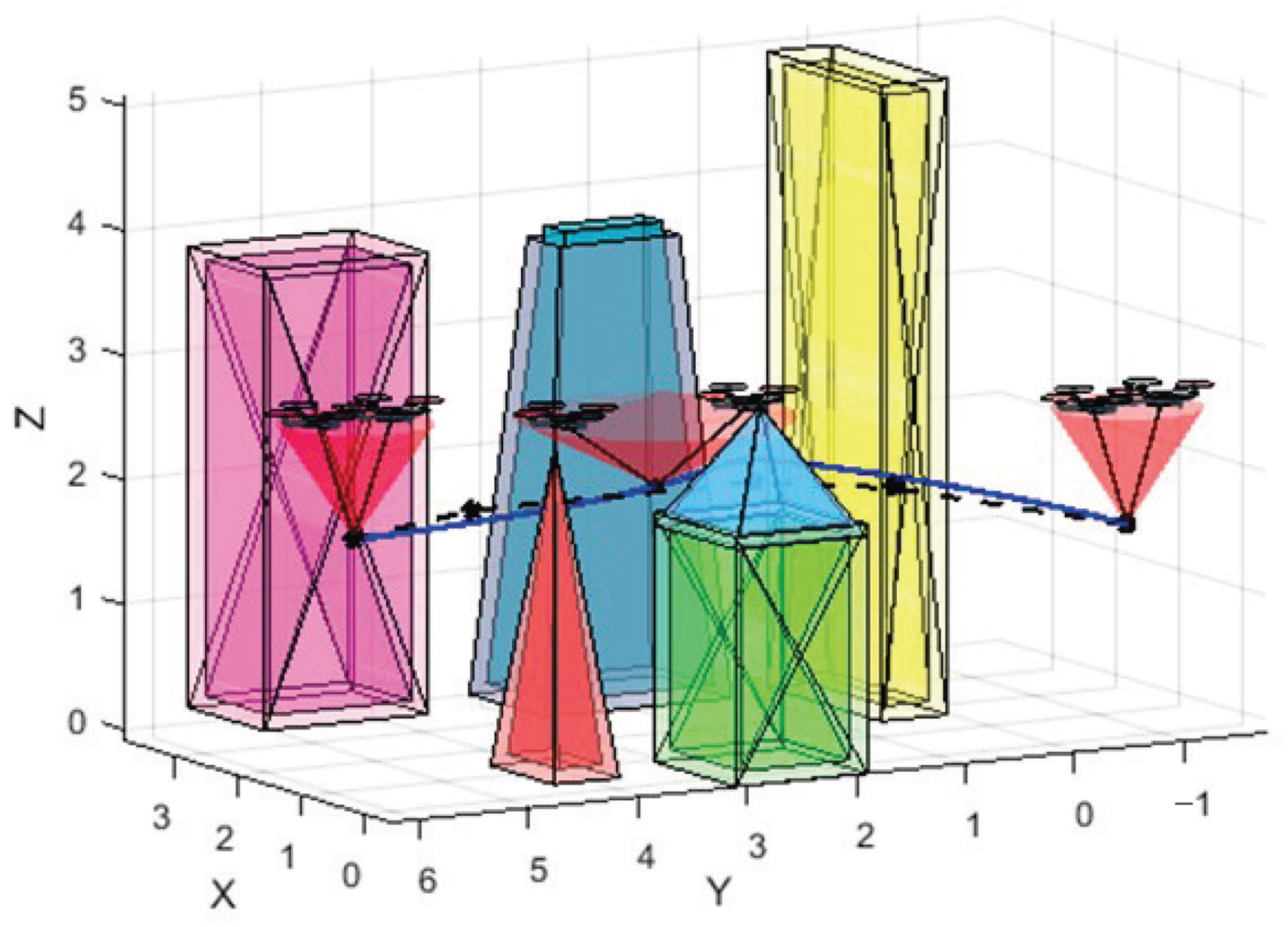
6.3. Trajectory Planning and Tracking Results
7. Discussion and Conclusions
- Differential-flatness breakdownThe flat output is derived under the symmetry conditions and . If the two UAVs differ in position or tension (, ), the 4-D vector can no longer algebraically parameterize the 9-D state vector q. Hence the dimensionality-reduction core of the minimum-snap optimizer vanishes; the trajectory must be planned in the full 9-D space, and the QP size and solution time explode.
- Constraint-linearization error blow-upThe small-angle approximation (, ) turns Lagrangian dynamics into linear/quadratic constraints. For swing angles – the linearization error exceeds , so the “smooth” optimal trajectory deviates significantly from real dynamics, producing negative cable tension (slack), thrust commands beyond motor saturation, and saturated tracking controllers that may become unstable.
- Safe-flight corridor misalignmentThe SFC treats the whole formation as one ellipsoid plus a sequence of convex polyhedra—valid only if symmetry fixes the relative UAV positions. Without symmetry, the UAV-payload triangle changes over time; the ellipsoid must be recomputed frame-by-frame or enveloped separately, leading to insufficient corridor volume (collision risk) or excessive corridor volume (space utilization collapses). collapses).
Author Contributions
Funding
Data Availability Statement
Conflicts of Interest
References
- Guo, L.; Li, Q. Path Planning of Mobile Robot Based on Improved RRT* Algorithm. Cogn. Syst. Res. 2024, 19, 1209–1217. [Google Scholar]
- Chen, Z.; Min, L.; Shao, X.; Zhao, Z. Obstacle Avoidance Path Planning of Bridge Crane Based on Improved RRT Algorithm. J. Syst. Simul. 2021, 33, 1832–1838. [Google Scholar]
- Alkomy, H.; Shan, J. Vibration reduction of a quadrotor with a cable-suspended payload using polynomial trajectories. Nonlinear Dyn. 2021, 104, 3713–3735. [Google Scholar] [CrossRef] [PubMed]
- Yu, G.; Chen, Y.; Chen, C.; Chen, X.; Mei, Y.; Liu, Y.; Xu, Y.; Zhang, W. Aggressive maneuvers for a quadrotor-slung-load system through fast trajectory generation and tracking. Auton. Robot. 2022, 46, 499–513. [Google Scholar] [CrossRef]
- Zhang, G.; Liu, X. UAV collision avoidance using mixed-integer second-order cone programming. J. Guid. Control. Dyn. 2022, 45, 1732–1738. [Google Scholar] [CrossRef]
- Li, X.; Zhang, J.; Han, J. Trajectory planning of load transportation with multi-quadrotors based on reinforcement learning algorithm. Aerosp. Sci. Technol. 2021, 116, 106887. [Google Scholar] [CrossRef]
- Estevez, J.; Gangoiti, U.; Lopez-Guede, J.M.; Graña, M. Reinforcement learning based trajectory planning for multi-UAV load transportation. IEEE Access 2024. [Google Scholar] [CrossRef]
- Campos-Macías, L.; Aldana-López, R.; de la Guardia, R.; Parra-Vilchis, J.I.; Gómez-Gutiérrez, D. Autonomous navigation of MAVs in unknown cluttered environments. J. Field Robot. 2021, 38, 307–326. [Google Scholar] [CrossRef]
- Duan, D.; Zu, R.; Yu, T.; Zhang, C.; Li, J. Differential flatness-based real-time trajectory planning for multihelicopter cooperative transportation in crowded environments. AIAA J. 2023, 61, 4079–4095. [Google Scholar] [CrossRef]
- Valentim, T.; Cunha, R.; Oliveira, P.; Cabecinhas, D.; Silvestre, C. Multi-vehicle cooperative control for load transportation. IFAC-PapersOnLine 2019, 52, 358–363. [Google Scholar] [CrossRef]
- Savin, S. An algorithm for generating convex obstacle-free regions based on stereographic projection. In Proceedings of the 2017 International Siberian Conference on Control and Communications (SIBCON), Astana, Kazakhstan, 29–30 June 2017; pp. 1–6. [Google Scholar]
- Zhong, X.; Wu, Y.; Wang, D.; Wang, Q.; Xu, C.; Gao, F. Generating large convex polytopes directly on point clouds. arXiv 2020, arXiv:2010.08744. [Google Scholar] [CrossRef]
- Werner, P.; Cohn, T.; Jiang, R.H.; Seyde, T.; Simchowitz, M.; Tedrake, R.; Rus, D. Faster algorithms for growing collision-free convex polytopes in robot configuration space. arXiv 2024, arXiv:2410.12649. [Google Scholar] [CrossRef]
- Ren, Y.; Zhu, F.; Liu, W.; Wang, Z.; Lin, Y.; Gao, F.; Zhang, F. Bubble planner: Planning high-speed smooth quadrotor trajectories using receding corridors. In Proceedings of the 2022 IEEE/RSJ International Conference on Intelligent Robots and Systems (IROS), Kyoto, Japan, 23–27 October 2022; pp. 6332–6339. [Google Scholar]
- Liu, S.; Watterson, M.; Mohta, K.; Sun, K.; Bhattacharya, S.; Taylor, C.J.; Kumar, V. Planning dynamically feasible trajectories for quadrotors using safe flight corridors in 3-D complex environments. IEEE Robot. Autom. Lett. 2017, 2, 1688–1695. [Google Scholar] [CrossRef]
- An, N.; Wang, Q.; Zhao, X.; Wang, Q. Differential Flatness and Formation Control of Unmanned Aerial Vehicle Swarm. J. Dyn. Control 2023, 21, 79–80. [Google Scholar]
- Zhang, H.; Huang, J. Research on Motion Planning of Tower Crane in Complex Environment. Control Eng. 2025, 32, 1833–1845. [Google Scholar]
- Lillicrap, T.P.; Hunt, J.J.; Pritzel, A.; Heess, N.; Erez, T.; Tassa, Y.; Silver, D.; Wierstra, D. Continuous control with deep reinforcement learning. arXiv 2015, arXiv:1509.02971. [Google Scholar]
- Karaman, S.; Frazzoli, E. Incremental Sampling-based Algorithms for Optimal Motion Planning. Int. J. Robot. Res. 2011, 30, 846–894. [Google Scholar] [CrossRef]
- Wang, H.F.; Zhang, Y.; Zhu, Y.K.; Chen, X.B. Path Planning Algorithm for Mobile Robot Based on Improved Bidirectional RRT*. J. Northeast. Univ. (Nat. Sci.) 2021, 42, 1065–1070. [Google Scholar]
- Shang, F.; Luo, C.; Li, W.; Liang, Y.; Xiao, W.; Chen, Q.; Zhou, X. Path Planning Research for Pitaya Picking Manipulator Based on APF-RRT*. J. Agric. Mech. Res. 2025, 47, 48–52. [Google Scholar]
- Huang, J.; Wang, Y.; Ni, L. Design of Cooperative Transportation and Anti-Sway Control for Dual UAVs. Comput. Integr. Manuf. Syst. 2025, 31, 4096–4104. [Google Scholar]


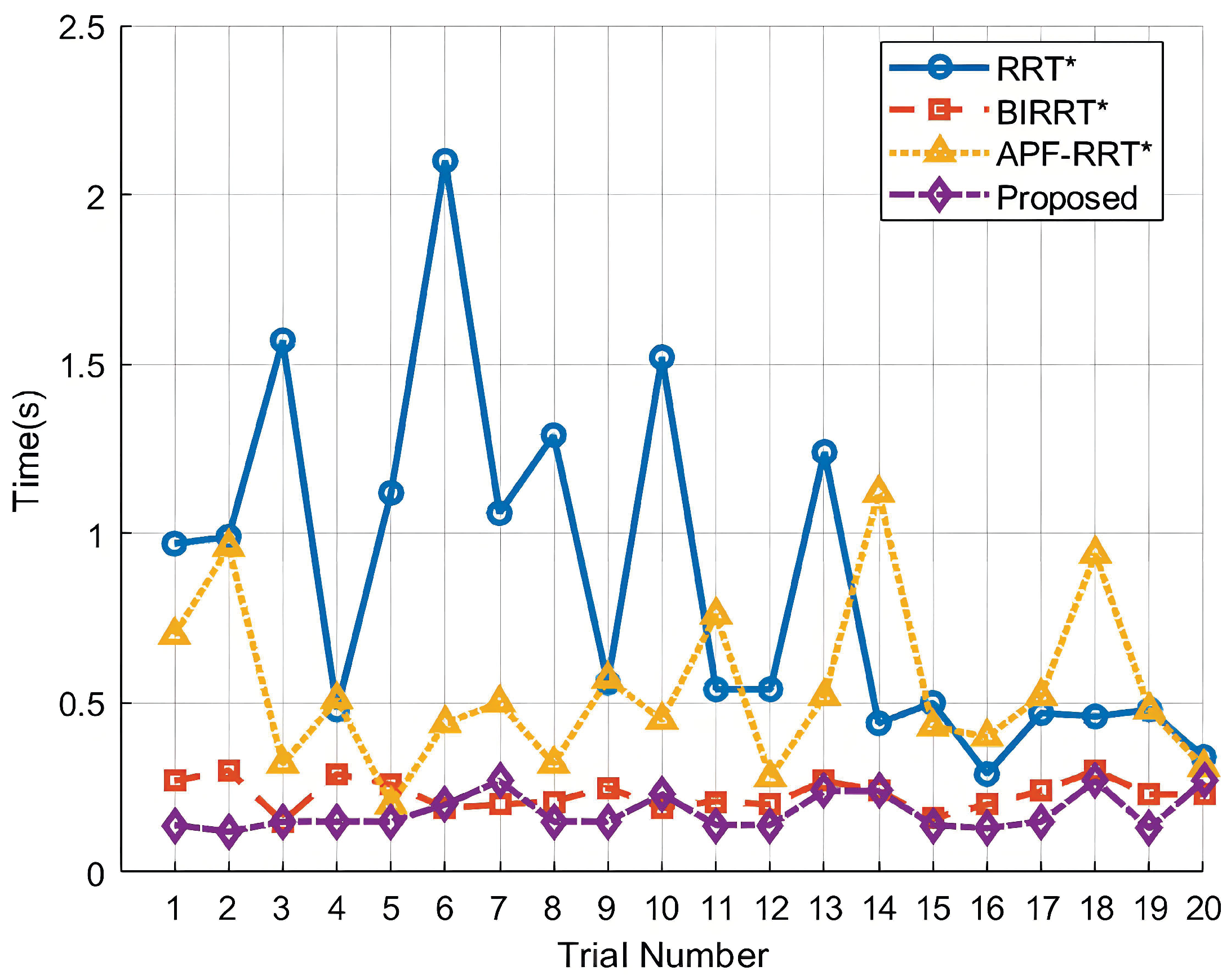
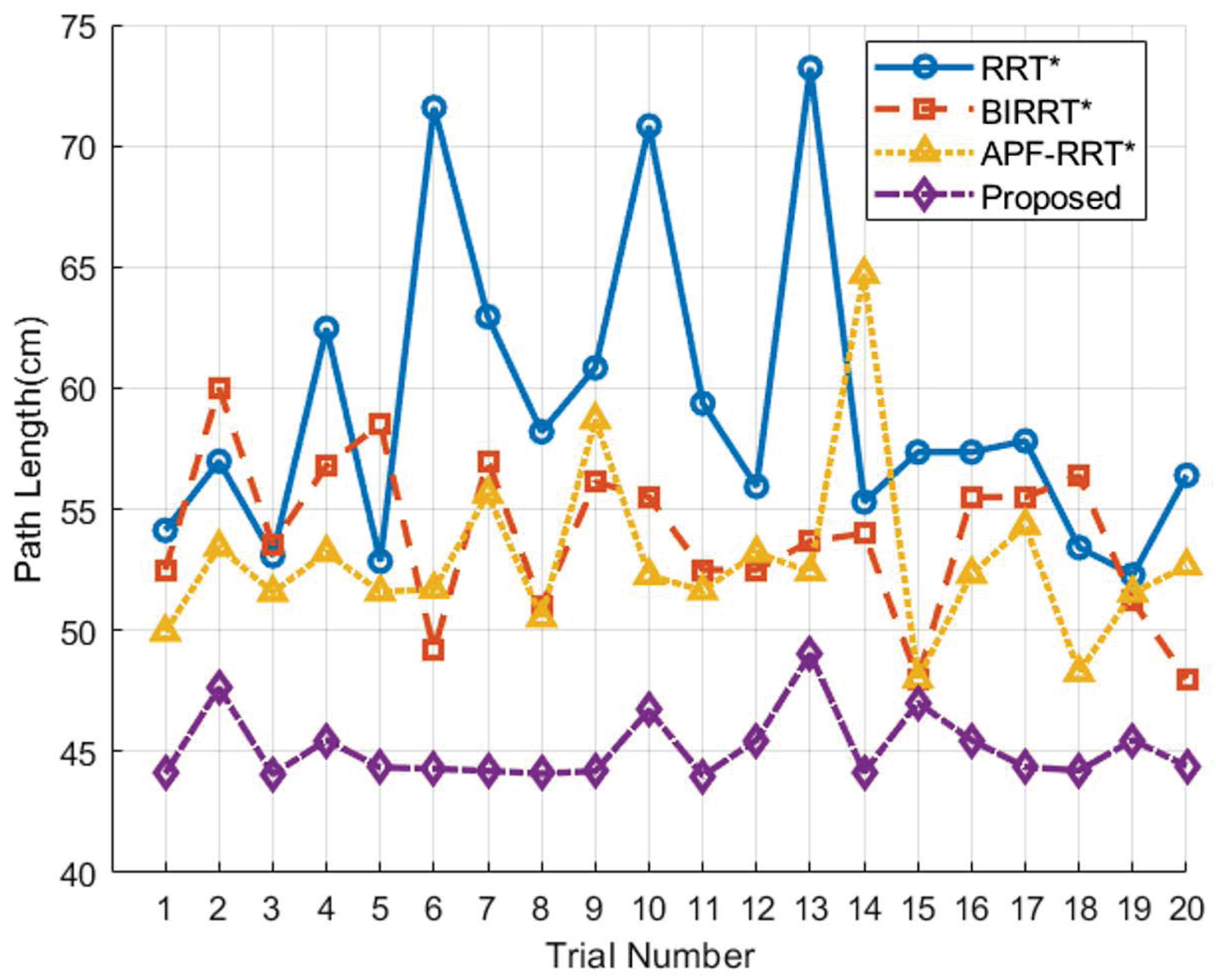


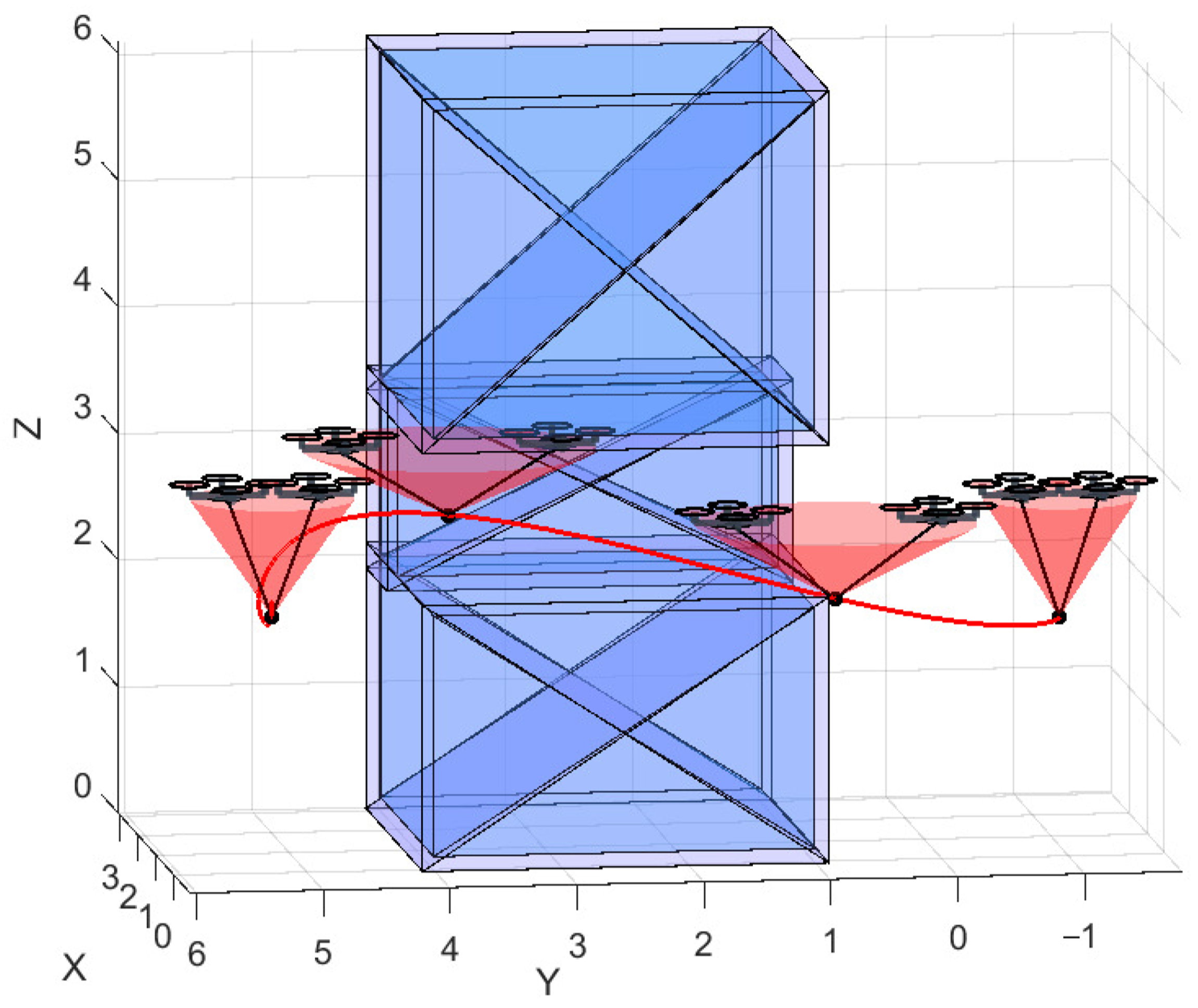


| Component | Design Objective | Condition | Value |
|---|---|---|---|
| Penalize proximity to obstacles for safety. | |||
| Otherwise | 0 | ||
| Encourage progress toward the goal. | |||
| Otherwise | 0 | ||
| Highly reward successful path connection. | Trees connect | ||
| Connection fails | |||
| Incentivize shorter paths. | |||
| Otherwise | 0 |
| Parameter | Value |
|---|---|
| Actor Learning Rate | 0.003 |
| Critic Learning Rate | 0.003 |
| Replay Buffer Size | |
| Mini-batch Size | 128 |
| Initial Noise Std | 0.1 |
| Noise Std Decay Rate | 0.995 |
| Minimum Noise Std | 0.01 |
| Corridor Type | Gen. Time (s) | Memory Usage (MB) | Utilization (%) |
|---|---|---|---|
| Compared Corridor in [15] | 0.018 | 0.188 | 68 |
| Adaptive Corridor (Proposed) | 0.023 | 0.242 | 98 |
| Method | Jerk Energy | Snap Energy |
|---|---|---|
| Compared SFC | 5.0–6.8 | 23.7–31.4 |
| Proposed Adaptive Corridor | 3.5 | 15.9 |
| Metric | AE of | AE of | AE of | ME of | ME of |
|---|---|---|---|---|---|
| Error Percentage | 0.3851% | 0.7532% | 0.1101% | 0.0204% | 0.0203% |
Disclaimer/Publisher’s Note: The statements, opinions and data contained in all publications are solely those of the individual author(s) and contributor(s) and not of MDPI and/or the editor(s). MDPI and/or the editor(s) disclaim responsibility for any injury to people or property resulting from any ideas, methods, instructions or products referred to in the content. |
© 2025 by the authors. Licensee MDPI, Basel, Switzerland. This article is an open access article distributed under the terms and conditions of the Creative Commons Attribution (CC BY) license (https://creativecommons.org/licenses/by/4.0/).
Share and Cite
Huang, J.; Jia, T.; Wei, X. Symmetric UAV Cooperative Lifting Motion Planning in Confined Space. Symmetry 2025, 17, 2041. https://doi.org/10.3390/sym17122041
Huang J, Jia T, Wei X. Symmetric UAV Cooperative Lifting Motion Planning in Confined Space. Symmetry. 2025; 17(12):2041. https://doi.org/10.3390/sym17122041
Chicago/Turabian StyleHuang, Jingwen, Tianyi Jia, and Xiulan Wei. 2025. "Symmetric UAV Cooperative Lifting Motion Planning in Confined Space" Symmetry 17, no. 12: 2041. https://doi.org/10.3390/sym17122041
APA StyleHuang, J., Jia, T., & Wei, X. (2025). Symmetric UAV Cooperative Lifting Motion Planning in Confined Space. Symmetry, 17(12), 2041. https://doi.org/10.3390/sym17122041