Evolution of Ecological Vulnerability and Scenario Simulations in the Yellow River Source Region Under Climate Change




Abstract
1. Introduction
2. Methods
2.1. Data Standardization
2.2. Evaluation Index System
2.3. Calculation of Weights
2.4. Ecological Vulnerability Index
2.5. XGBoost-SHAP
2.6. GA-Plus
3. Study Area and Data Sources
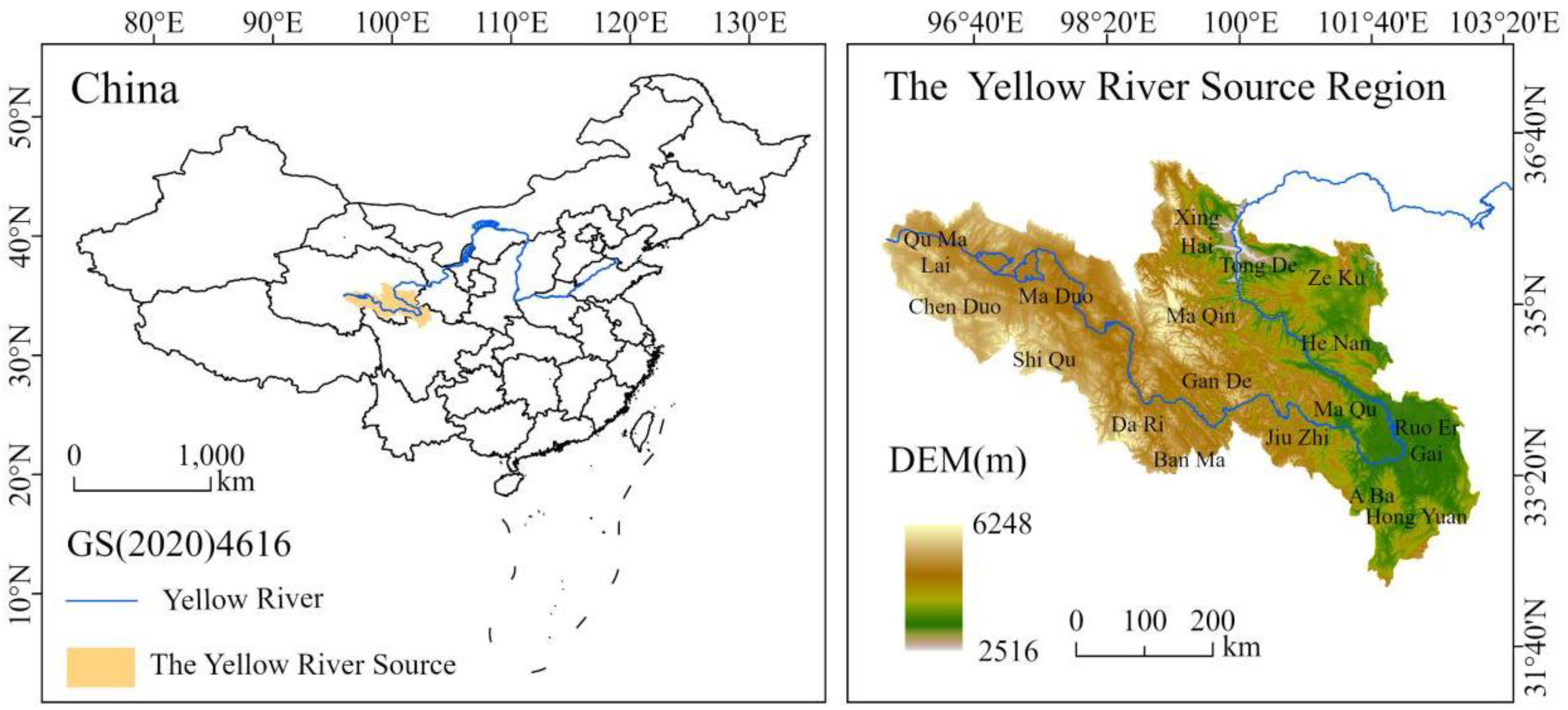
3.1. Study Area
3.2. Data Sources
4. Results
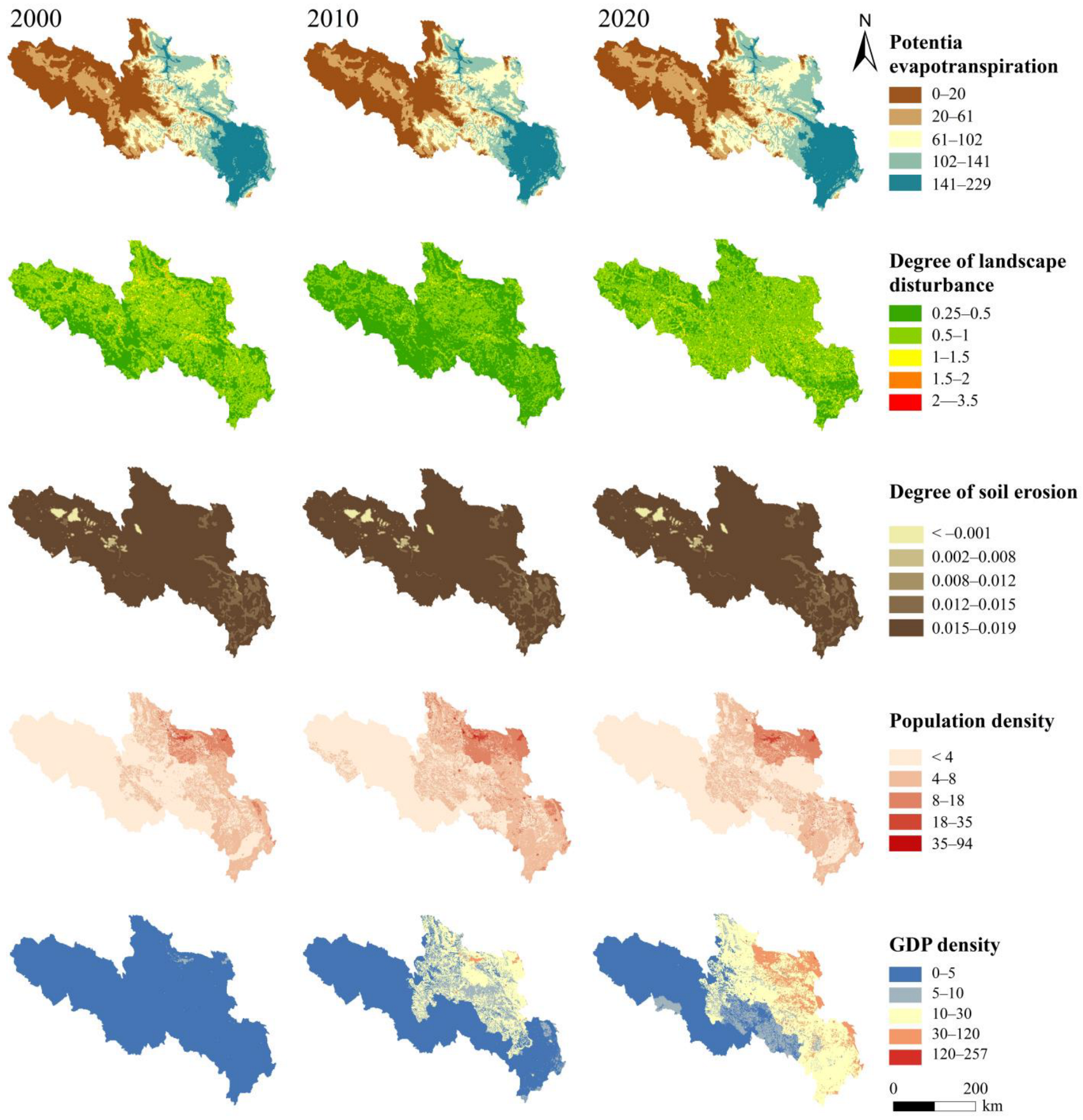
4.1. Changes in Natural and Socioeconomic Factors
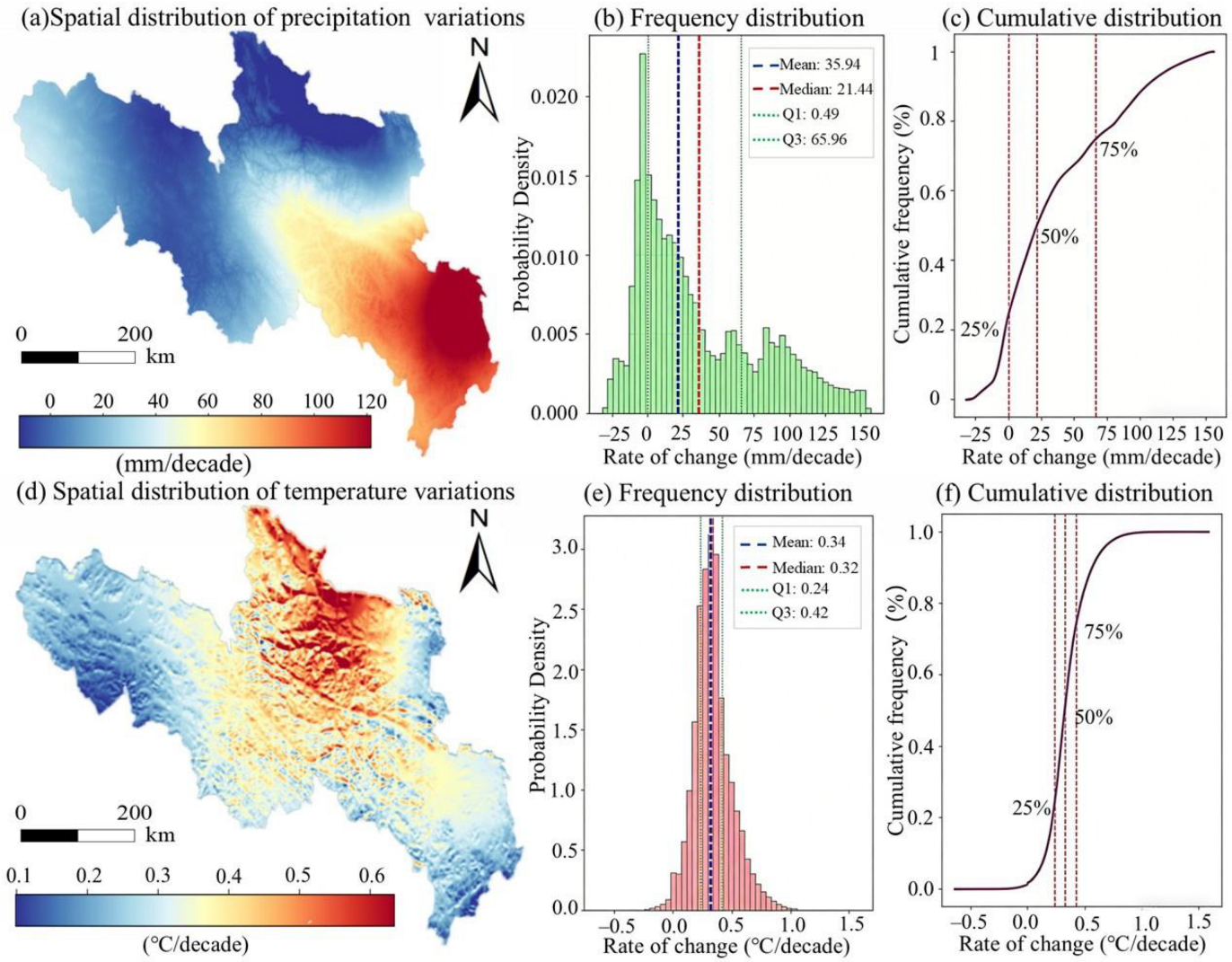
4.1.1. The Trend of “Warm and Humid Climate”
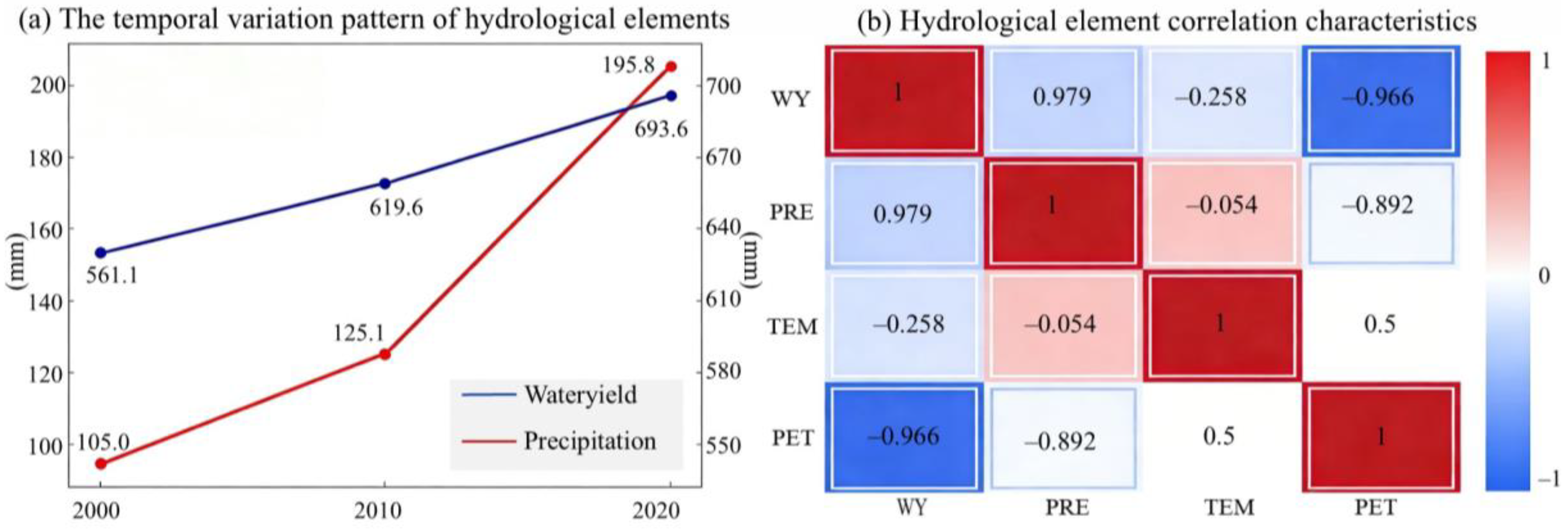
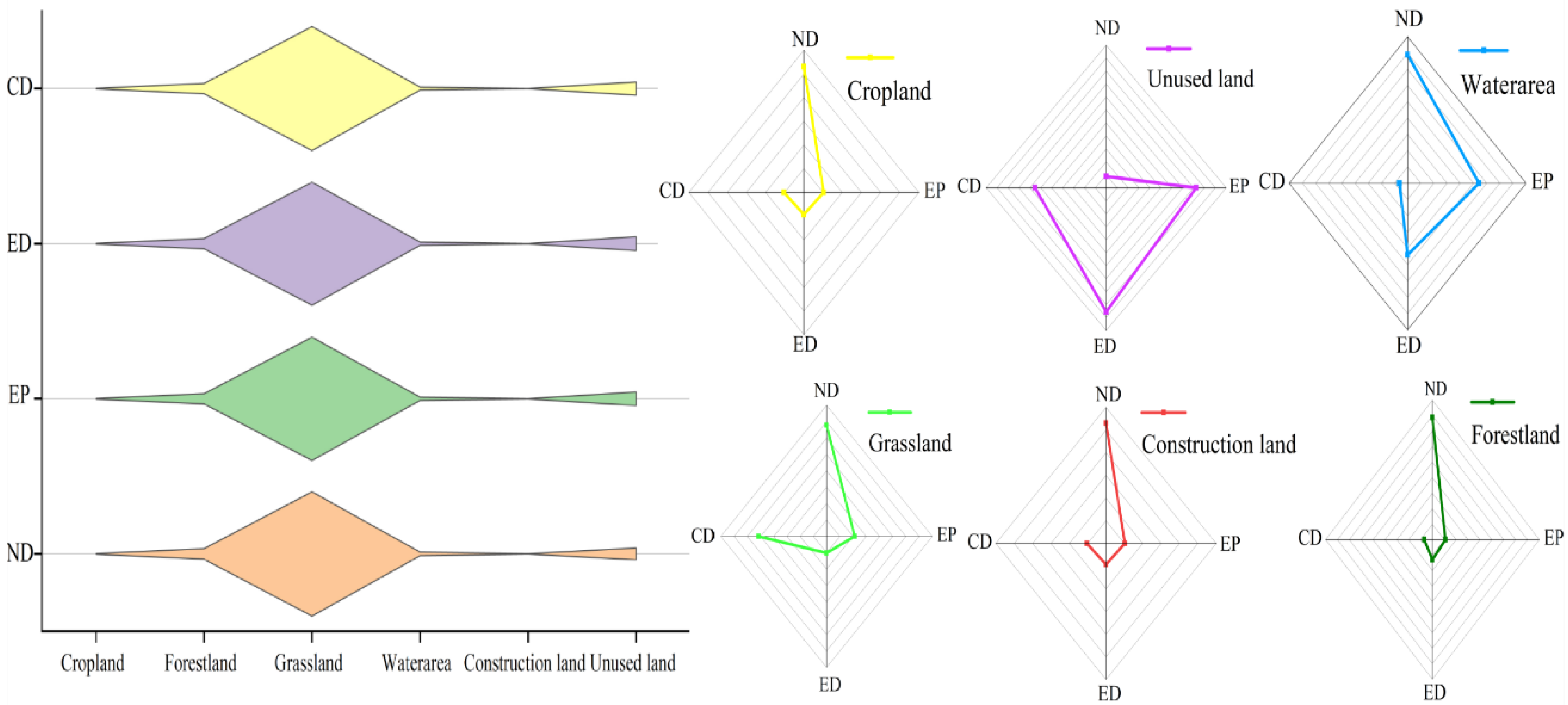
4.1.2. Key Ecological Process Responses
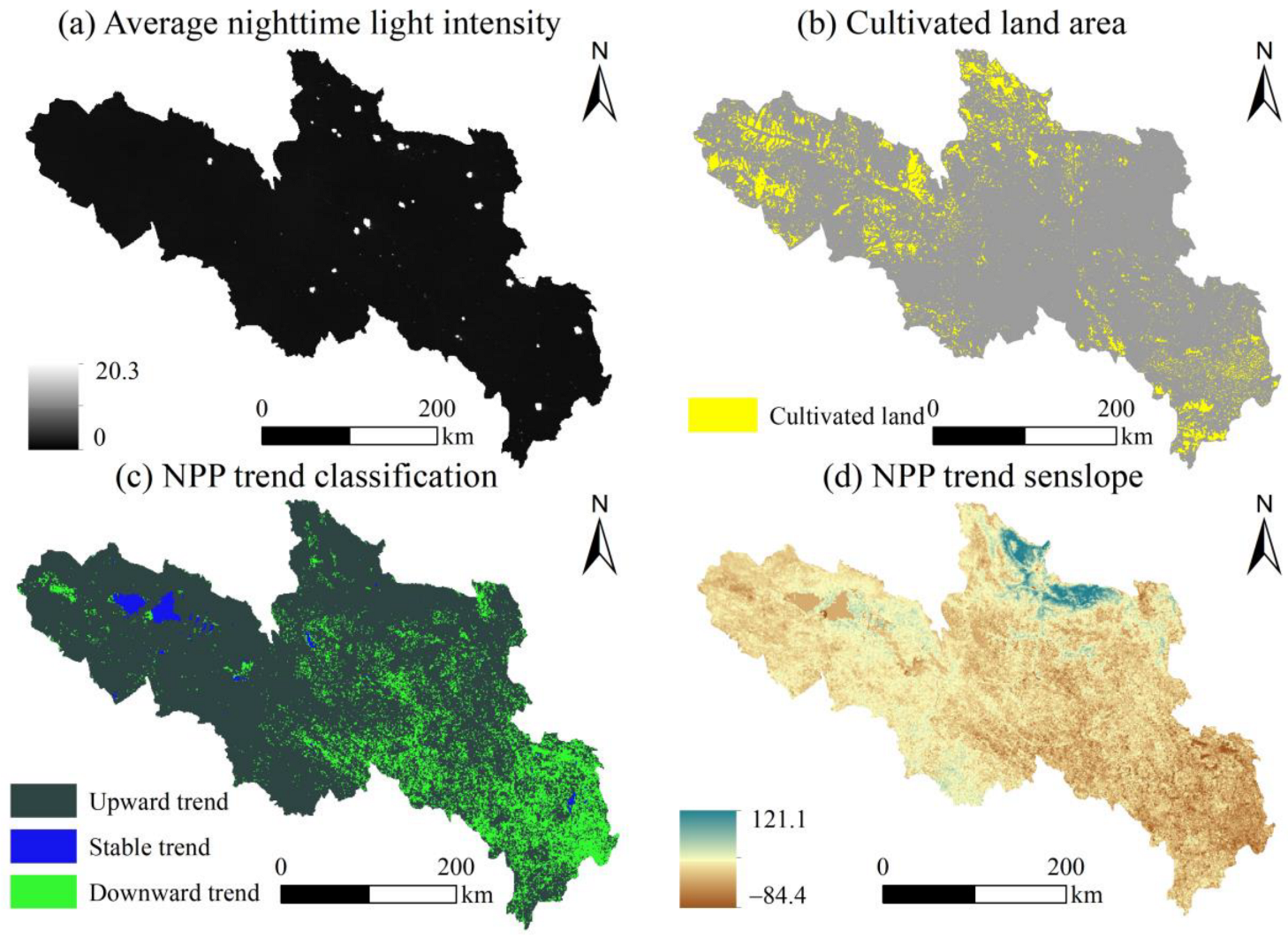
4.1.3. Ecosystem State Changes Based on NPP
4.1.4. The Coupling Effect of Natural and Anthropogenic Pressures
4.2. Ecological Vulnerability and Its Driving Factors
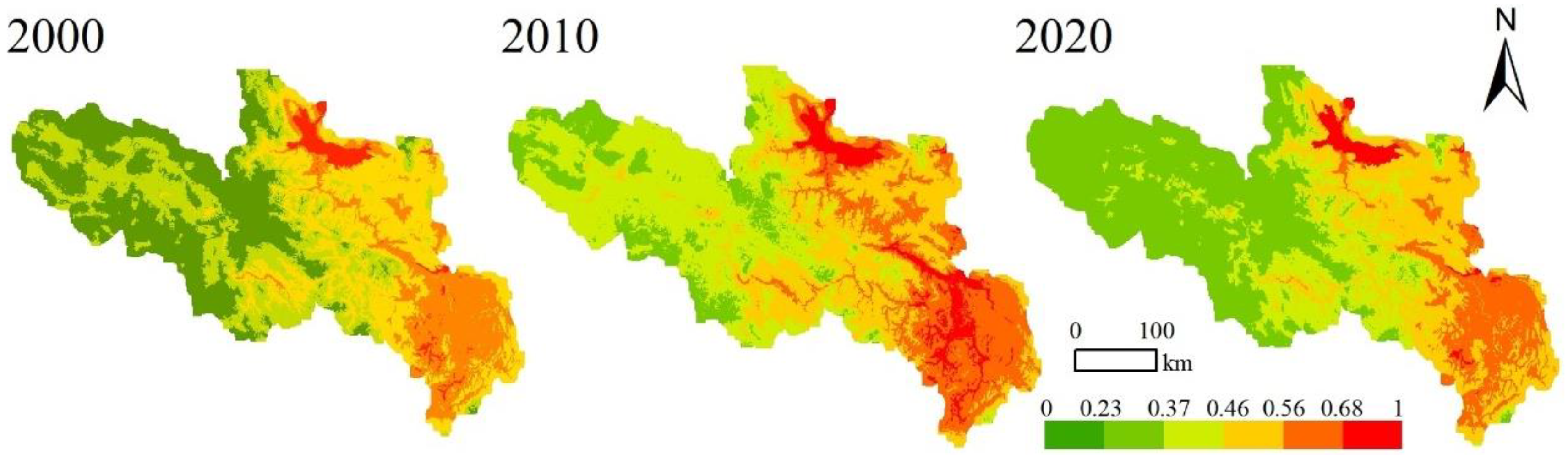
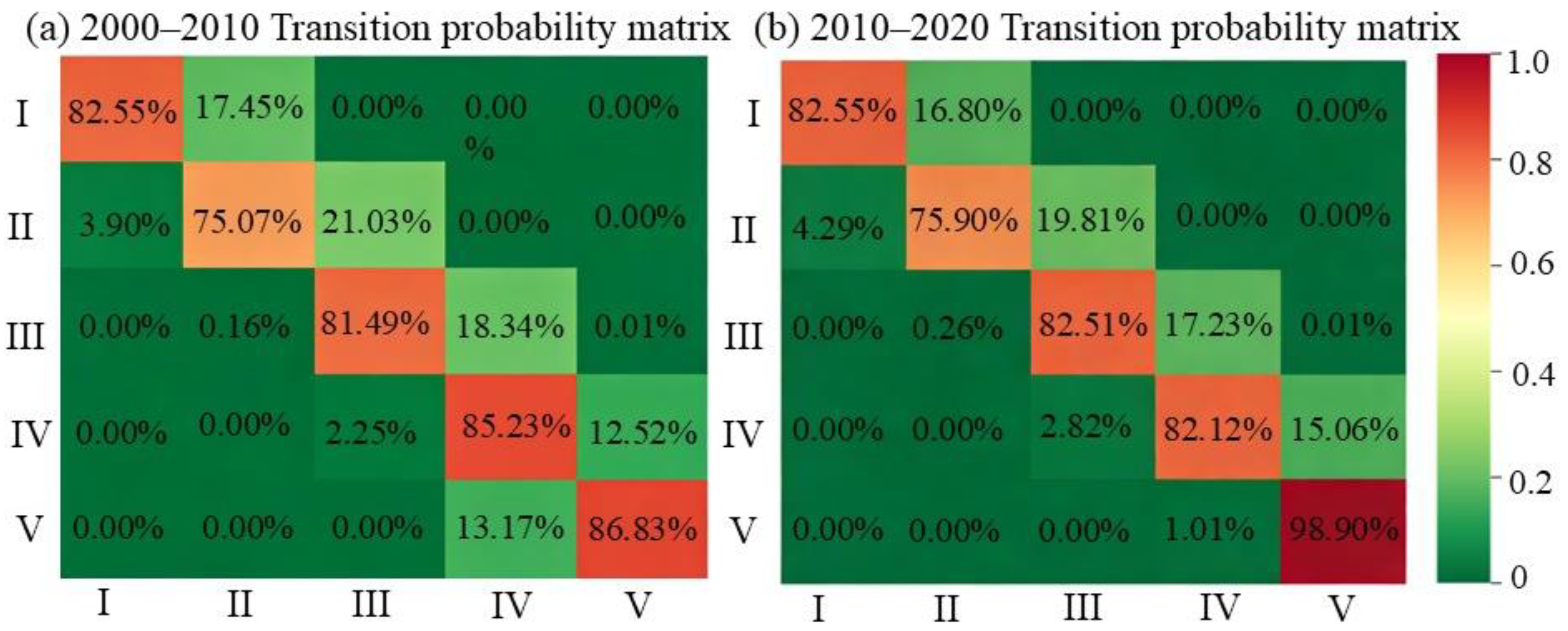
4.2.1. Spatiotemporal Differentiation of Ecological Vulnerability
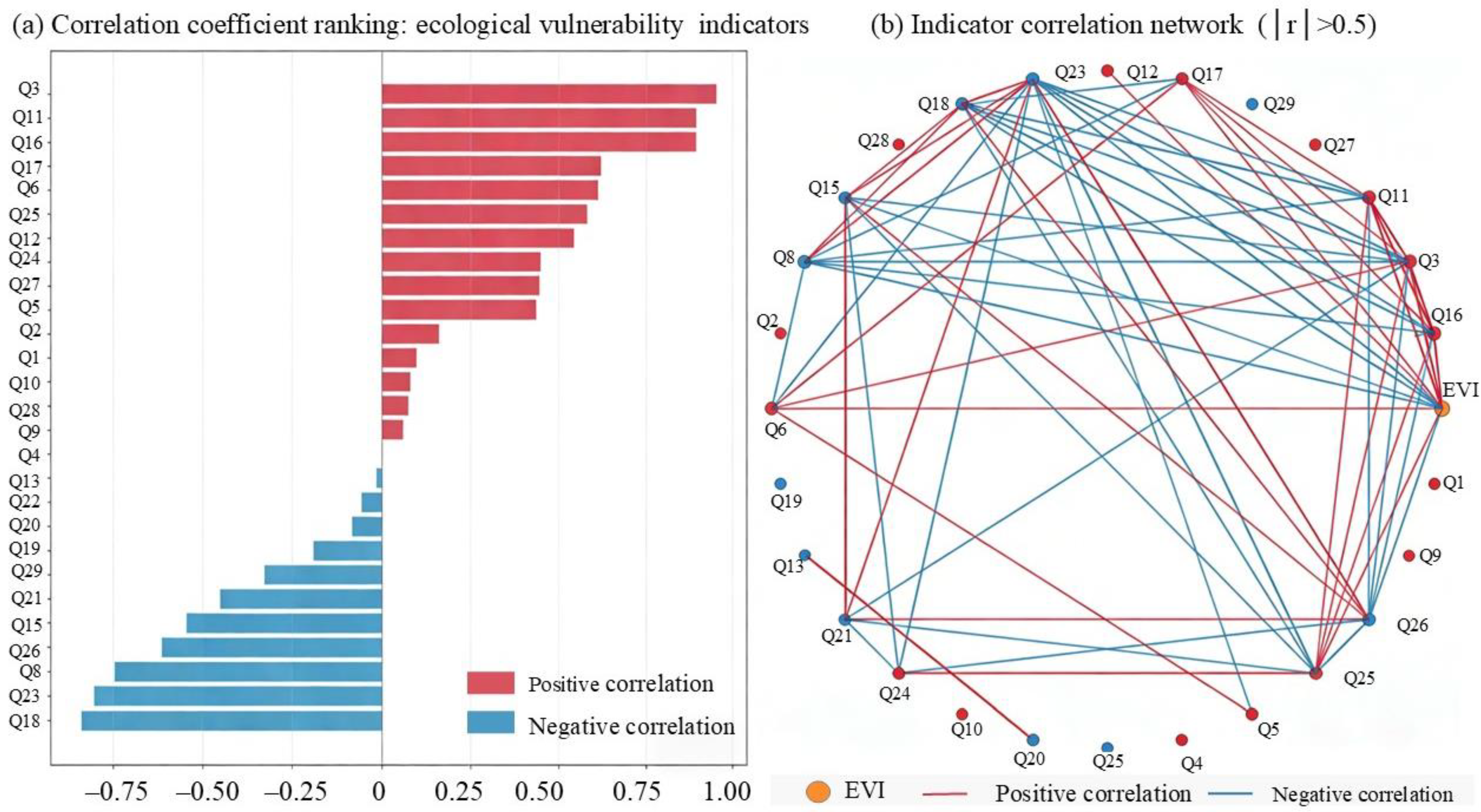
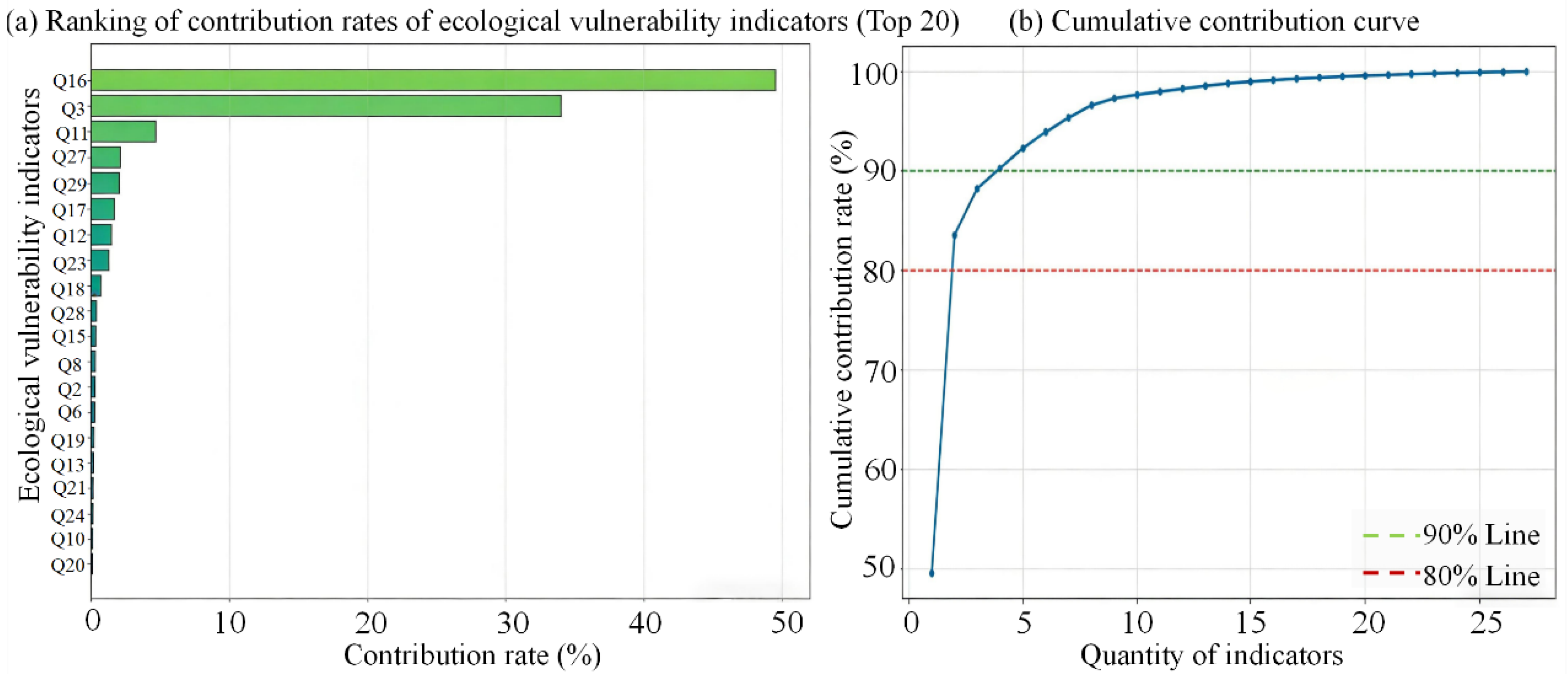
4.2.2. Identification of Main Driving Factors
4.3. Ecological Risk Prediction in Different Scenarios
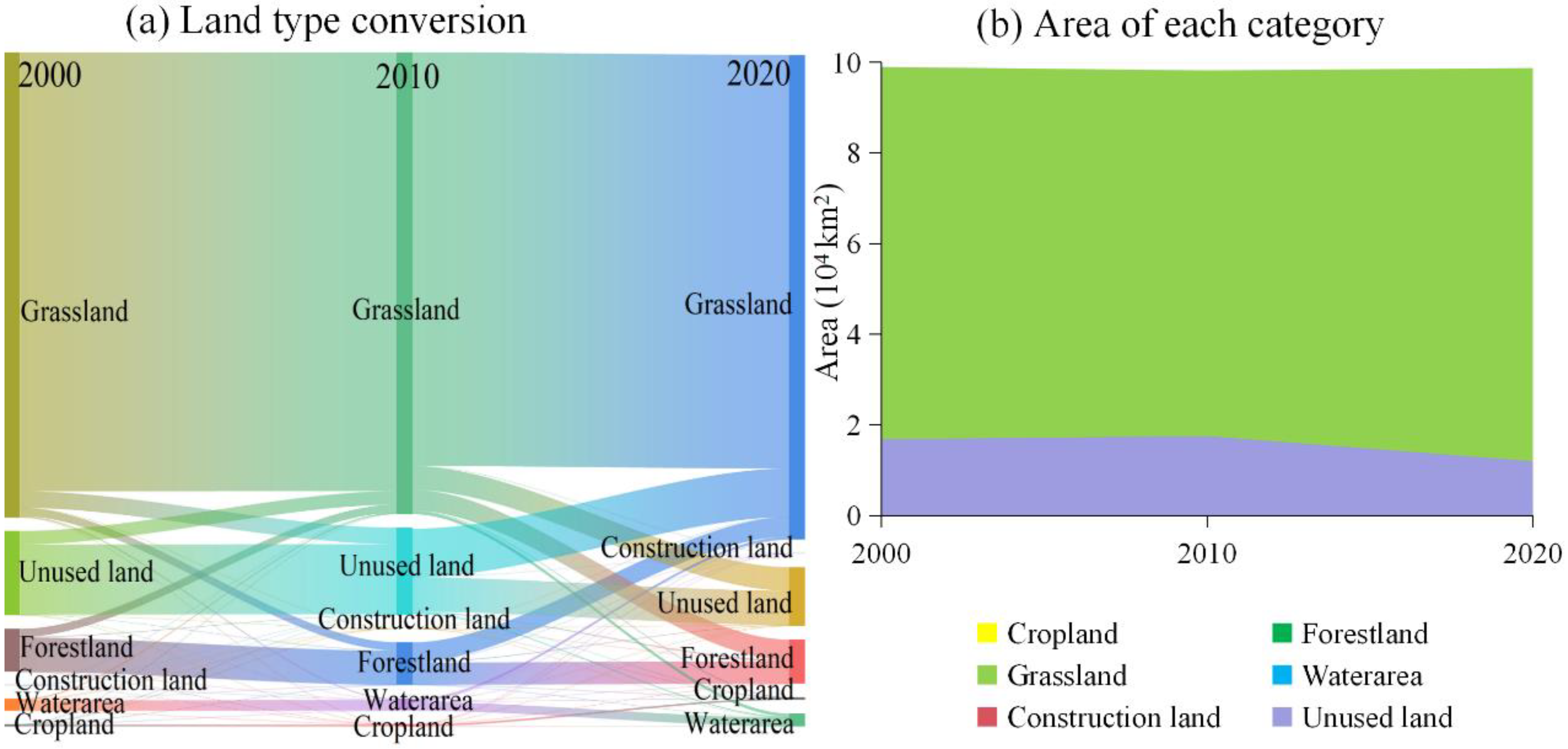
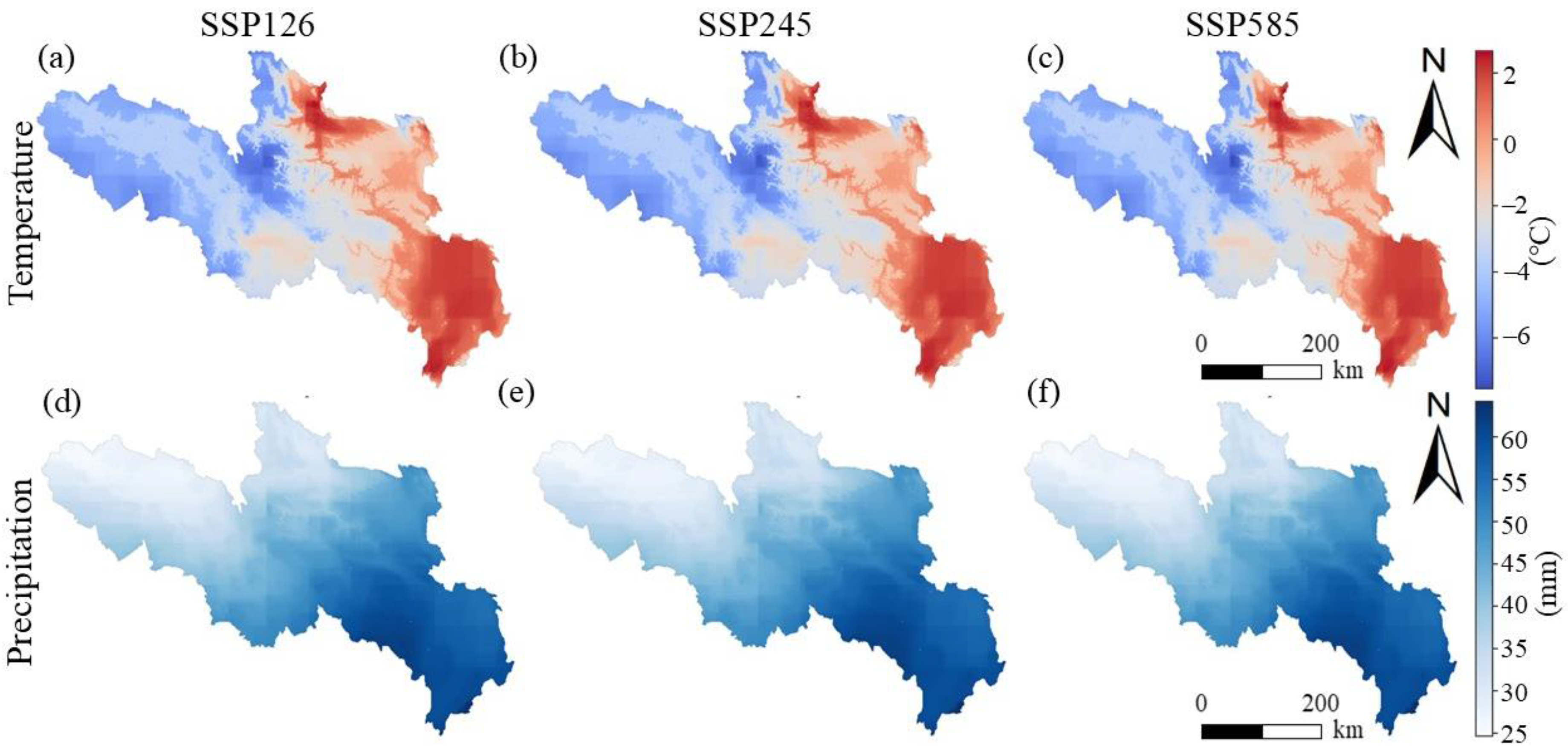
4.3.1. Projection of Land Use Dynamics and Climate
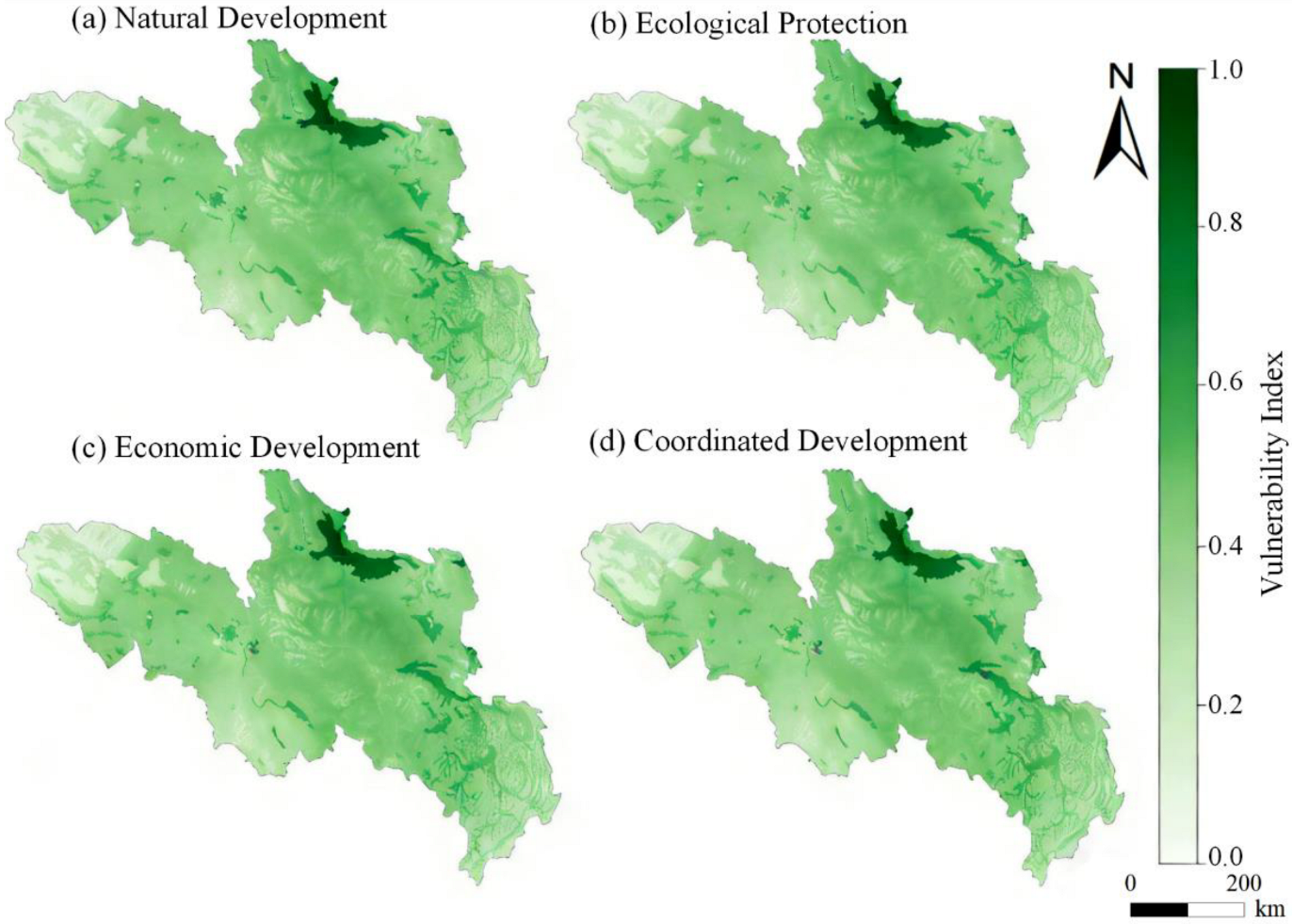
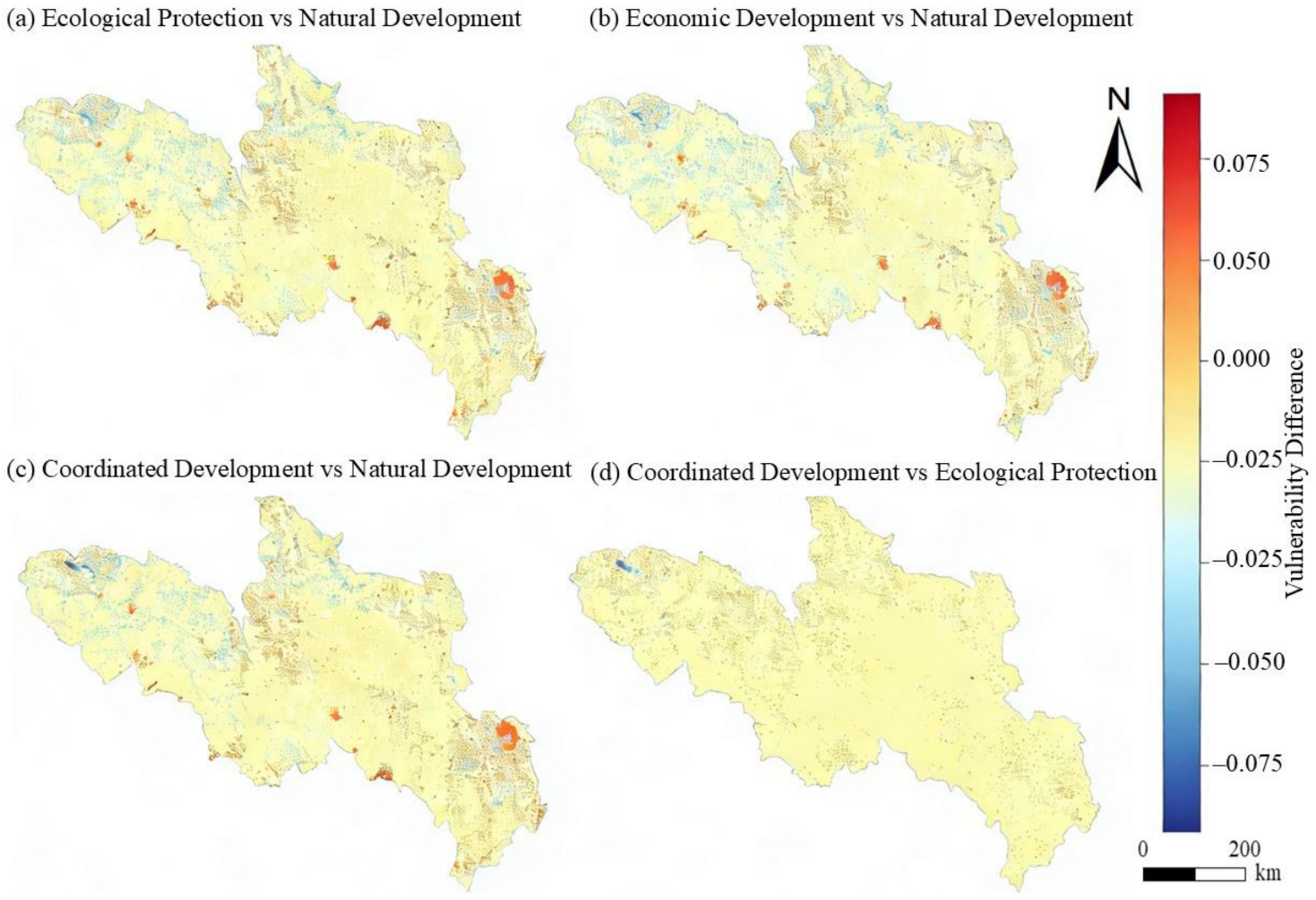
4.3.2. Future Ecological Vulnerability Response
5. Discussion
5.1. Climate Change Differentiation
5.2. Evolution of Ecological Vulnerability
5.3. Future of Ecological Risks
5.4. Limitations
6. Conclusions
Author Contributions
Funding
Data Availability Statement
Conflicts of Interest
References
- Lu, X.; Guo, Y.; Shen, J.; Liu, J.; Ling, G.; Tian, X.; Jia, Y.; Che, Y.; Wang, H.; Wang, Y. Multidecadal Legacy of Uneven Urbanization on Divergent Prospects for Bird Biodiversity. Nat. Cities 2026, 3, 176–188. [Google Scholar] [CrossRef]
- Wang, J.; Chen, Y.; Liao, W.; He, G.; Tett, S.F.B.; Yan, Z.; Zhai, P.; Feng, J.; Ma, W.; Huang, C.; et al. Anthropogenic Emissions and Urbanization Increase Risk of Compound Hot Extremes in Cities. Nat. Clim. Change 2021, 11, 1084–1089. [Google Scholar] [CrossRef]
- Ohenhen, L.O.; Shirzaei, M.; Davis, J.L.; Tiwari, A.; Nicholls, R.; Dasho, O.; Sadhasivam, N.; Seeger, K.; Werth, S.; Chadwick, A.J.; et al. Global Subsidence of River Deltas. Nature 2026, 649, 894–901. [Google Scholar] [CrossRef]
- Smith, K.E.; Burrows, M.T.; Hobday, A.J.; Gupta, A.S.; Moore, P.J.; Thomsen, M.; Wernberg, T.; Smale, D.A. Socioeconomic Impacts of Marine Heatwaves: Global Issues and Opportunities. Science 2021, 374, eabj3593. [Google Scholar] [CrossRef] [PubMed]
- Bai, X.; McPhearson, T.; Cleugh, H.; Nagendra, H.; Tong, X.; Zhu, T.; Zhu, Y.-G. Linking Urbanization and the Environment: Conceptual and Empirical Advances. Annu. Rev. Environ. Resour. 2017, 42, 215–240. [Google Scholar] [CrossRef]
- Chaffron, S.; Delage, E.; Budinich, M.; Vintache, D.; Henry, N.; Nef, C.; Ardyna, M.; Zayed, A.A.; Junger, P.C.; Galand, P.E.; et al. Environmental Vulnerability of the Global Ocean Epipelagic Plankton Community Interactome. Sci. Adv. 2021, 7, eabg1921. [Google Scholar] [CrossRef]
- Gong, D.; Huang, M.; Ge, Y.; Lin, H.; Zhang, L.; Altan, O. Operationalizing SDGs Through the Water-Energy-Food Nexus: Multi-Level Assessment of Ecosystem Service Supply-Demand Patterns in China. Ecol. Indic. 2025, 179, 114235. [Google Scholar] [CrossRef]
- Meng, F.; Su, F.; Yang, D.; Tong, K.; Hao, Z. Impacts of Recent Climate Change on the Hydrology in the Source Region of the Yellow River Basin. J. Hydrol. Reg. Stud. 2016, 6, 66–81. [Google Scholar] [CrossRef]
- Li, Y.; Sun, M.; Yang, X.; Yang, M.; Kleisner, K.M.; Mills, K.E.; Tang, Y.; Du, F.; Qiu, Y.; Ren, Y.; et al. Social–Ecological Vulnerability and Risk of China’s Marine Capture Fisheries to Climate Change. Proc. Natl. Acad. Sci. USA 2024, 121, e2313773120. [Google Scholar] [CrossRef]
- Zhang, X.; Zheng, Y.; Yang, Y.; Ren, H.; Liu, J. Spatiotemporal Evolution of Ecological Vulnerability on the Loess Plateau. Ecol. Indic. 2025, 170, 113060. [Google Scholar] [CrossRef]
- Wang, L.; Liu, X.; Lei, J.; Ma, J.; Zhang, L.; Liu, X. How the Land Use Change Impact on Ecological Vulnerability in the Lanzhou-Baiyin Section of the Yellow River Basin, China. Environ. Sustain. Indic. 2025, 27, 100779. [Google Scholar] [CrossRef]
- Hong, W.; Jiang, R.; Yang, C.; Zhang, F.; Su, M.; Liao, Q. Establishing an Ecological Vulnerability Assessment Indicator System for Spatial Recognition and Management of Ecologically Vulnerable Areas in Highly Urbanized Regions: A Case Study of Shenzhen, China. Ecol. Indic. 2016, 69, 540–547. [Google Scholar] [CrossRef]
- Li, Y.; Xie, W.; Sui, K.; Zhang, D.; Wan, Q. Revealing Various Change Characteristics and Drivers of Ecological Vulnerability in the Luan River Basin Based on the SRP Model. Sci. Rep. 2025, 15, 33021. [Google Scholar] [CrossRef]
- Xie, W.; Zhao, X.; Fan, D.; Zhang, J.; Wang, J. Assessing Spatio-Temporal Characteristics and Their Driving Factors of Ecological Vulnerability in the Northwestern Region of Liaoning Province (China). Ecol. Indic. 2024, 158, 111541. [Google Scholar] [CrossRef]
- Yang, Z.; Li, B.; Nan, B.; Dai, X.; Peng, C.; Bi, X. A Methodological Framework for Assessing Pastoral Socio-Ecological System Vulnerability: A Case Study of Altay Prefecture in Central Asia. Sci. Total Env. 2023, 862, 160828. [Google Scholar] [CrossRef] [PubMed]
- Huan, Y.; Wu, F.; Li, X.; Wang, J.; Su, Y.; Lan, Y.; Kong, F.; Gao, J.; Zhao, W.; Wang, L.; et al. Prioritizing Climate Action Maximizes Synergies Among Global Environmental SDGs: A Causal Network Analysis. Appl. Geogr. 2026, 189, 103938. [Google Scholar] [CrossRef]
- Liu, X.; Zhang, W.; Qu, Z.; Guo, T.; Sun, Y.; Rabiei, M.; Cao, Q. Feasibility Evaluation of Hydraulic Fracturing in Hydrate-Bearing Sediments Based on Analytic Hierarchy Process-Entropy Method (AHP-EM). J. Nat. Gas Sci. Eng. 2020, 81, 103434. [Google Scholar] [CrossRef]
- Huovila, A.; Bosch, P.; Airaksinen, M. Comparative Analysis of Standardized Indicators for Smart Sustainable Cities: What Indicators and Standards to Use and When? Cities 2019, 89, 141–153. [Google Scholar] [CrossRef]
- Hu, X.; Ma, C.; Huang, P.; Guo, X. Ecological Vulnerability Assessment Based on AHP-PSR Method and Analysis of Its Single Parameter Sensitivity and Spatial Autocorrelation for Ecological Protection—A Case of Weifang City, China. Ecol. Indic. 2021, 125, 107464. [Google Scholar] [CrossRef]
- He, L.; Shen, J.; Zhang, Y. Ecological Vulnerability Assessment for Ecological Conservation and Environmental Management. J. Environ. Manag. 2018, 206, 1115–1125. [Google Scholar] [CrossRef] [PubMed]
- Dong, J.; Chen, Y.; Yao, B.; Zhang, X.; Zeng, N. A Neural Network Boosting Regression Model Based on XGBoost. Appl. Soft Comput. 2022, 125, 109067. [Google Scholar] [CrossRef]
- Su, H.; Qiao, R. Comparing the Impacts of Urban Form on Urban-Rural Temperature and Human-Perceived Temperature Differences Using Interpretable Machine Learning Models. Sustain. Cities Soc. 2025, 134, 106932. [Google Scholar] [CrossRef]
- Bi, Y.; Xiang, D.; Ge, Z.; Li, F.; Jia, C.; Song, J. An Interpretable Prediction Model for Identifying N7-Methylguanosine Sites Based on XGBoost and SHAP. Mol. Ther. Nucleic Acids 2020, 22, 362–372. [Google Scholar] [CrossRef] [PubMed]
- Cui, Y.; Zhou, X.; Fan, C.; Lin, H.; Deng, S. Application of Physics-Informed Neural Networks-Based Hybrid Prediction Models in Campus Thermal Environment Prediction. Build. Environ. 2026, 287, 113880. [Google Scholar] [CrossRef]
- Sun, K.; Omokanmi, O.J.; Alomair, A. Broken Systems, Stolen Futures: Corruption, Weak Governance, and Accountability Failures in Africa’s Sustainable Development Crisis. Sustain. Dev. 2025, 34, 3280–3303. [Google Scholar] [CrossRef]
- Zou, B.; Fan, C.; Li, J.; Wang, M.; Liao, Y.; Zhou, X. Assessing the Impact of Land Use Changes on Urban Heat Risk Under Different Development Scenarios: A Case Study of Guangzhou in China. Sustain. Cities Soc. 2025, 130, 106532. [Google Scholar] [CrossRef]
- Yang, X.; Luo, Z.; Luo, S. Multi-Scenario Ecosystem Risk Identification and Early Warning Coupling ‘Pattern-Service-Stability’: A Case Study of the Poyang Lake Plain, China. Environ. Res. Lett. 2025, 20, 84030. [Google Scholar] [CrossRef]
- Zhou, F.; Wang, J.; Li, Z.; Zhou, D.; Hu, T.; Wang, F. Multi-Scenario Simulation of Land Use Change and Landscape Ecological Vulnerability Analysis in Fuzhou City Based on GA-PLUS Coupled Modeling. Sci. Rep. 2026, 16, 6331. [Google Scholar] [CrossRef]
- Cao, K.; Huang, B.; Wang, S.; Lin, H. Sustainable Land Use Optimization Using Boundary-Based Fast Genetic Algorithm. Comput. Environ. Urban Syst. 2012, 36, 257–269. [Google Scholar] [CrossRef]
- Zhou, T.; Zhao, R.; Ma, Q.; Zhang, L.; Liu, F.; Bao, P.; Wang, J.; Han, Z.; Guo, X. Evaluation of Cropland Utilization Efficiency and Analysis of Risk Mechanisms Under Abandonment Patterns in the Guanzhong Region. J. Environ. Manag. 2026, 398, 128348. [Google Scholar] [CrossRef]
- Dong, Q.; Zhong, K.; Liao, Y.; Xiong, R.; Wang, F.; Pang, M. Coupling Coordination Degree of Environment, Energy, and Economic Growth in Resource-Based Provinces of China. Resour. Policy 2023, 81, 103308. [Google Scholar] [CrossRef]
- Fang, Y.; Meng, F.; Luo, M.; Sa, C.; Bao, Y.; Lei, J. Coupling Coordination Framework for Assessing Balanced Development Between Potential Ecosystem Services and Human Activities. Earth’s Future 2025, 13, e2025EF006243. [Google Scholar] [CrossRef]
- Dai, E.; Zhao, Z.; Jia, L.; Jiang, X. Contribution of Ecosystem Services Improvement on Achieving Sustainable Development Goals Under Ecological Engineering Projects on the Qinghai-Tibet Plateau. Ecol. Eng. 2024, 199, 107146. [Google Scholar] [CrossRef]
- Li, D.; Yang, K.; Tang, W.; Li, X.; Zhou, X.; Guo, D. Characterizing Precipitation in High Altitudes of the Western Tibetan Plateau with a Focus on Major Glacier Areas. Int. J. Clim. 2020, 40, 5114–5127. [Google Scholar] [CrossRef]
- Liu, H.; Cheng, Y.; Liu, Z.; Li, Q.; Zhang, H.; Wei, W. Conflict or Coordination? The Spatiotemporal Relationship Between Humans and Nature on the Qinghai-Tibet Plateau. Earths Future 2023, 11, e2022EF003452. [Google Scholar] [CrossRef]
- Xu, Z.; Peng, J. Recognizing Ecosystem Service’s Contribution to SDGs: Ecological Foundation of Sustainable Development. Geogr. Sustain. 2024, 5, 511–525. [Google Scholar] [CrossRef]
- Li, X.; Song, W.; Cao, S.; Mo, Y.; Du, M.; He, Z. The Impact of Multidimensional Urbanization on Sustainable Development Goals (SDGs): A Long-Term Analysis of the 31 Provinces in China. Ecol. Indic. 2024, 169, 112822. [Google Scholar] [CrossRef]
- Fu, Z.; Qiu, B.; Zhang, S.; Ma, Y.; Wang, T. Triple-Goal Governance of Urban Agglomerations Under SDG 11: A Causal Inference and Deep Reinforcement Learning Framework. J. Clean. Prod. 2026, 564, 148510. [Google Scholar] [CrossRef]
- Zhu, Q.; Chen, H.; Peng, C.; Liu, J.; Piao, S.; He, J.-S.; Wang, S.; Zhao, X.; Zhang, J.; Fang, X.; et al. An Early Warning Signal for Grassland Degradation on the Qinghai-Tibetan Plateau. Nat. Commun. 2023, 14, 6406. [Google Scholar] [CrossRef] [PubMed]
- Fan, F.; Liu, Y.; Chen, J.; Dong, J. Scenario-Based Ecological Security Patterns to Indicate Landscape Sustainability: A Case Study on the Qinghai-Tibet Plateau. Landsc. Ecol. 2021, 36, 2175–2188. [Google Scholar] [CrossRef]
- Li, J.; Li, S.; Wang, X.; Xu, G.; Pang, J. Spatio-Temporal Variations and Multi-Scenario Simulation of Landscape Ecological Risk in the Drylands of the Yellow River Basin. Sci. Rep. 2024, 14, 22672. [Google Scholar] [CrossRef]
- Wang, J.; Wang, J.; Zhang, J. Optimization of Landscape Ecological Risk Assessment Method and Ecological Management Zoning Considering Resilience. J. Environ. Manag. 2025, 376, 124586. [Google Scholar] [CrossRef]
- Wang, Y.; Lu, Y.; Lu, D.; Yin, L.; Wang, X. An Integrative Methodology Framework for Assessing Regional Ecological Risk by Land Degradation Using the Case of the Qinghai-Tibet Plateau. Environ. Res. Lett. 2023, 18, 114047. [Google Scholar] [CrossRef]
- Qi, Z.; Su, H.; Hou, K. Disentangling Complex Relationships Between Urban Land Use Characteristics and Energy Usage Through Explainable Machine Learning Model. Appl. Geogr. 2025, 183, 103736. [Google Scholar] [CrossRef]
- Su, H.; Qi, Z.; Wang, Q. Impacts of Land Use Characteristics on Extreme Heat Events: Insights from Explainable Machine Learning Model. Sustain. Cities Soc. 2025, 120, 106139. [Google Scholar] [CrossRef]



| Quasi-Measurement Layer | Indicators (Code) | Attribute | W |
|---|---|---|---|
| Pressure | Landscape disturbance index (Q1) | + | 0.0416 |
| Soil erodibility (Q2) | + | 0.0539 | |
| Potential evapotranspiration (Q3) | + | 0.0363 | |
| Nighttime lights (Q4) | + | 0.0275 | |
| Population density (Q5) | + | 0.0106 | |
| GDP (Q6) | + | 0.0089 | |
| Agricultural land area ratio (Q7) | + | 0.0063 | |
| Status | Elevation (Q8) | + | 0.0148 |
| Slop (Q9) | + | 0.0105 | |
| Topographic relief (Q10) | + | 0.0085 | |
| Surface temperature (Q11) | + | 0.0271 | |
| Soil type (Q12) | − | 0.2187 | |
| Land use type (Q13) | − | 0.0497 | |
| Water network density (Q14) | − | 0.1438 | |
| Annual precipitation (Q15) | − | 0.0105 | |
| Annual average temperature (Q16) | − | 0.0035 | |
| Annual evaporation (Q17) | + | 0.1484 | |
| Annual average wind speed (Q18) | + | 0.0014 | |
| Annual sunshine duration (Q19) | + | 0.0019 | |
| Habitat quality (Q20) | − | 0.0103 | |
| Water yield (Q21) | − | 0.0077 | |
| Carbon storage (Q22) | − | 0.0058 | |
| Response | NPP (Q23) | − | 0.0191 |
| NDVI (Q24) | − | 0.0172 | |
| Vegetation coverage (Q25) | − | 0.0100 | |
| Enhanced vegetation index (Q26) | − | 0.0128 | |
| Ecological protection red line (Q27) | − | 0.0811 | |
| Residents’ education level (Q28) | − | 0.0072 | |
| Ecological compensation fund (Q29) | − | 0.0057 |
| Vulnerability Level | Vulnerability Score | Level |
|---|---|---|
| Not vulnerable | <0.23 | — |
| Extremely low vulnerability | 0.23–0.37 | I |
| Low vulnerability | 0.37–0.46 | II |
| Moderately vulnerable | 0.46–0.56 | III |
| Highly vulnerable | 0.56–0.68 | IV |
| Extremely high vulnerability | >0.68 | V |
Disclaimer/Publisher’s Note: The statements, opinions and data contained in all publications are solely those of the individual author(s) and contributor(s) and not of MDPI and/or the editor(s). MDPI and/or the editor(s) disclaim responsibility for any injury to people or property resulting from any ideas, methods, instructions or products referred to in the content. |
© 2026 by the authors. Licensee MDPI, Basel, Switzerland. This article is an open access article distributed under the terms and conditions of the Creative Commons Attribution (CC BY) license.
Share and Cite
Liu, W.; Gao, X.; Ma, W.; Zhu, M. Evolution of Ecological Vulnerability and Scenario Simulations in the Yellow River Source Region Under Climate Change. Land 2026, 15, 999. https://doi.org/10.3390/land15060999
Liu W, Gao X, Ma W, Zhu M. Evolution of Ecological Vulnerability and Scenario Simulations in the Yellow River Source Region Under Climate Change. Land. 2026; 15(6):999. https://doi.org/10.3390/land15060999
Chicago/Turabian StyleLiu, Wei, Xiaozhen Gao, Weijing Ma, and Meng Zhu. 2026. "Evolution of Ecological Vulnerability and Scenario Simulations in the Yellow River Source Region Under Climate Change" Land 15, no. 6: 999. https://doi.org/10.3390/land15060999
APA StyleLiu, W., Gao, X., Ma, W., & Zhu, M. (2026). Evolution of Ecological Vulnerability and Scenario Simulations in the Yellow River Source Region Under Climate Change. Land, 15(6), 999. https://doi.org/10.3390/land15060999