Comparison of Particle Number Concentrations Between Small and Large Urban Green Spaces During a PM Pollution Episode in Seoul, South Korea


Abstract
1. Introduction
2. Methods
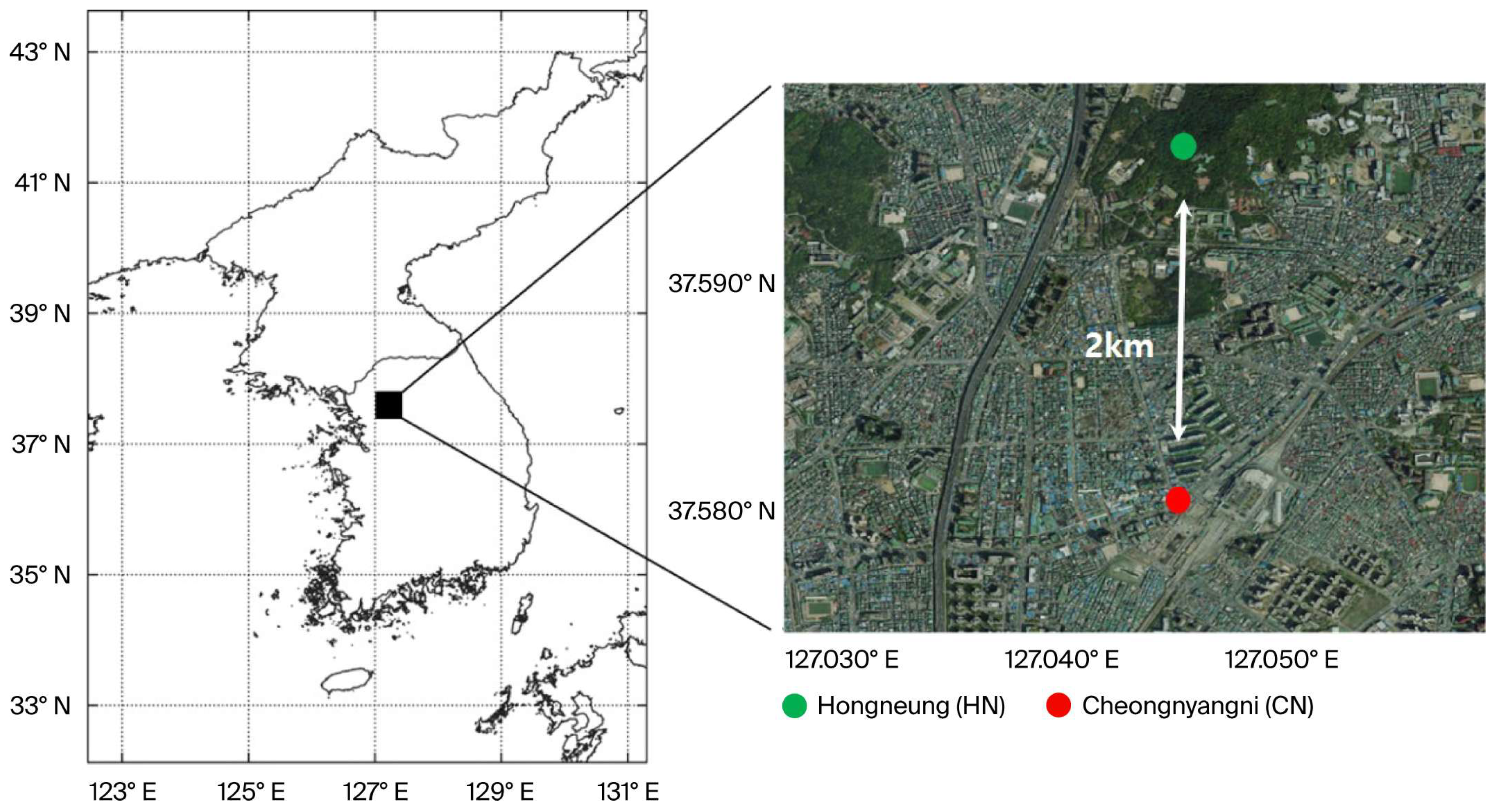
2.1. Study Area
2.2. Particulate Matter Measurement Data
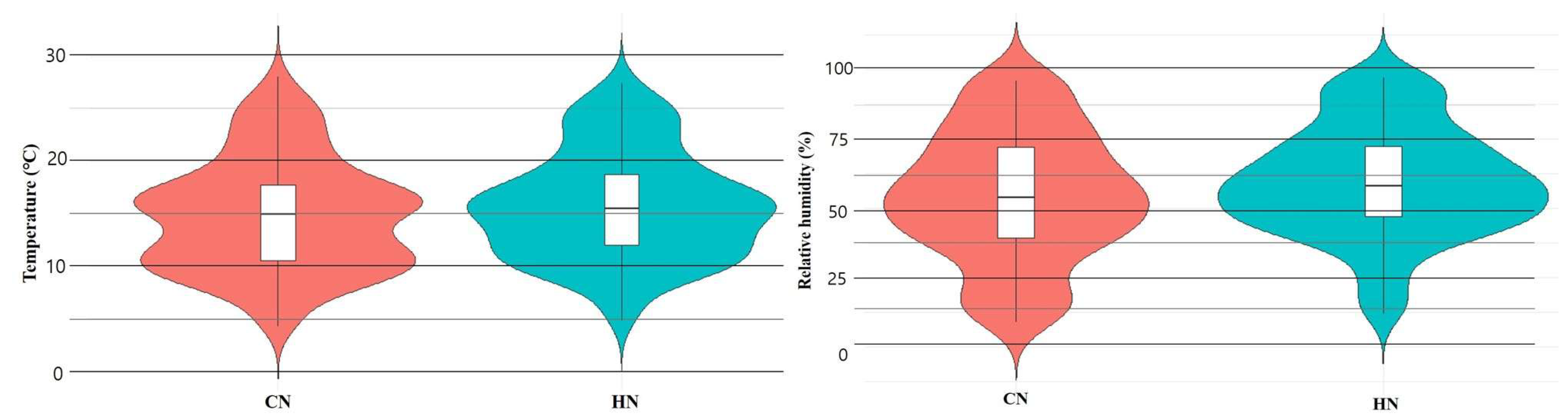
2.3. Meteorological Data
2.4. Statistical Analysis
3. Results
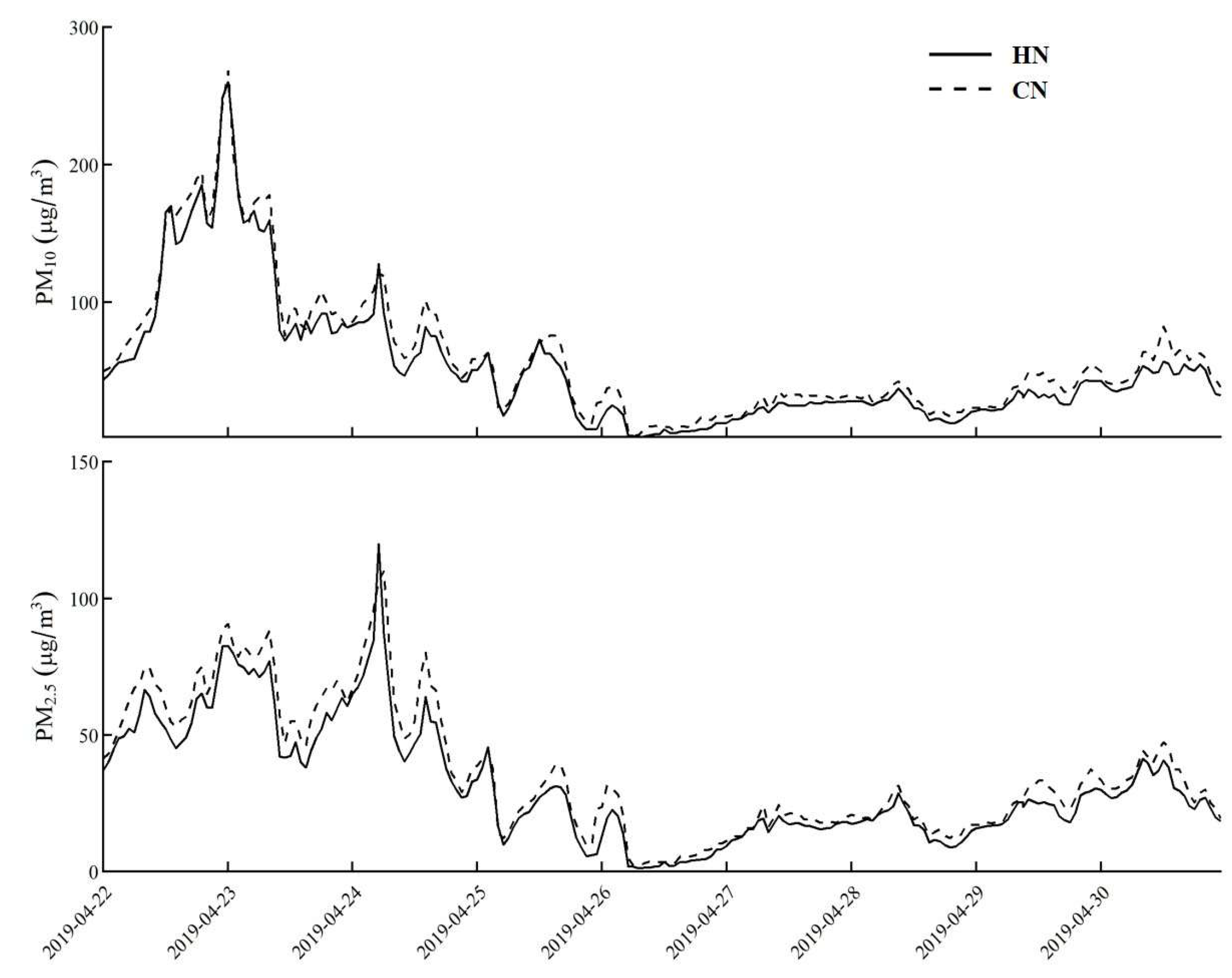
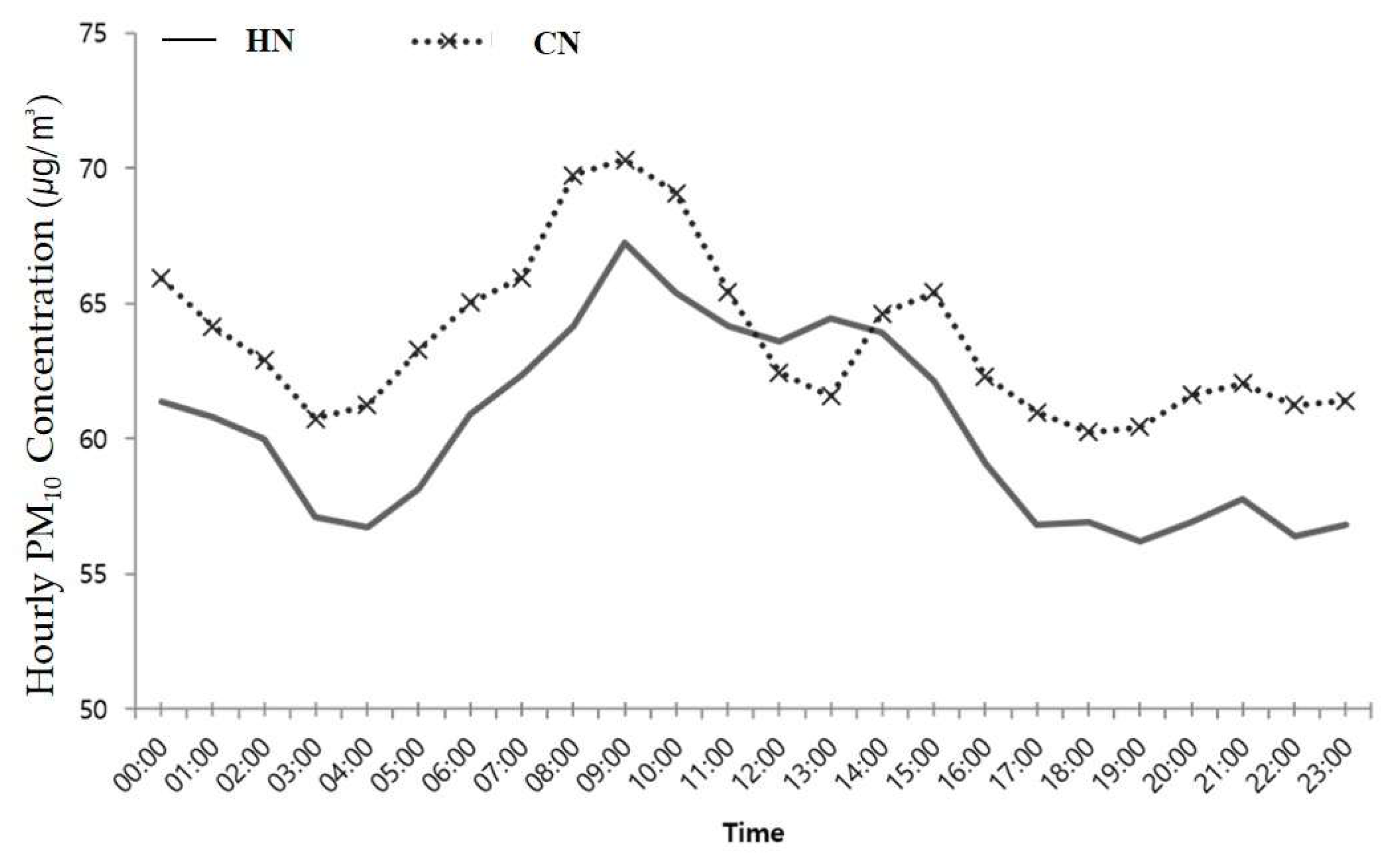
3.1. Concentration of Particulate Matter in Urban Forest
3.2. Size Distribution of Aerosol Particle Number Concentration
4. Discussion
4.1. Why Are PM Concentrations Low in Forests?
4.2. What Affects the Growth Rate of PM Concentrations Between Urban and Forests?
4.3. Implication for the Management of Urban Forests and Research Limitations
5. Conclusions
Author Contributions
Funding
Data Availability Statement
Acknowledgments
Conflicts of Interest
References
- Pope, C.A.; Dockery, D.W. Health Effects of Fine Particulate Air Pollution: Lines that Connect. J. Air Waste Manag. Assoc. 2006, 56, 709–742. [Google Scholar] [CrossRef] [PubMed]
- EPA in 2009: Progress Report. 2009. Available online: https://www.epa.gov (accessed on 1 November 2025).
- Popek, R.; Gawrońska, H.; Wrochna, M.; Gawroński, S.W.; Sæbø, A. Particulate Matter on Foliage of 13 Woody Species: Deposition on Surfaces and Phytostabilisation in Waxes—A 3-Year Study. Int. J. Phytoremediation 2013, 15, 245–256. [Google Scholar] [CrossRef] [PubMed]
- Bates, J.T.; Weber, R.J.; Abrams, J.; Verma, V.; Fang, T.; Klein, M.; Strickland, M.J.; Sarnat, S.E.; Chang, H.H.; Mulholland, J.A.; et al. Reactive Oxygen Species Generation Linked to Sources of Atmospheric Particulate Matter and Cardiorespiratory Effects. Environ. Sci. Technol. 2015, 49, 13605–13612. [Google Scholar] [CrossRef] [PubMed]
- Kyung, S.Y.; Kim, Y.S.; Kim, W.J.; Park, M.S.; Song, J.W.; Yum, H.; Yoon, H.K.; Rhee, C.K.; Jeong, S.H. Guideline for the prevention and management of particulate matter/Asian dust particle induced adverse health effect on the patients with pulmonary diseases. J. Korean Med. Assoc. 2015, 58, 1060–1069. [Google Scholar] [CrossRef]
- Korea Centers for Disease Control and Prevention (KCDC) Committed to Eradicate Tuberculosis in 2014. Ministry of Health and Welfare. 2014. Available online: https://www.mohw.go.kr (accessed on 1 November 2025).
- Beckett, K.; Freer-Smith, P.; Taylor, G. Effective tree species for local air quality management. J. Arboric. 2000, 26, 12–19. [Google Scholar]
- Dzierzanowski, K.; Popek, R.; Gawrońska, H.; Saebø, A.; Gawroński, S.W. Deposition of particulate matter of different size fractions on leaf surfaces and in waxes of urban forest species. Int. J. Phytoremediation 2011, 13, 1037–1046. [Google Scholar] [CrossRef]
- Sæbø, A.; Popek, R.; Nawrot, B.; Hanslin, H.M.; Gawronska, H.; Gawronski, S.W. Plant species differences in particulate matter accumulation on leaf surfaces. Sci. Total Environ. 2012, 427–428, 347–354. [Google Scholar] [CrossRef]
- Nowak, D.J.; Crane, D.E.; Stevens, J.C. Air pollution removal by urban trees and shrubs in the United States. Urban For. Urban Green. 2006, 4, 115–123. [Google Scholar] [CrossRef]
- Vellingiri, K.; Kim, K.-H.; Ma, C.-J.; Kang, C.-H.; Lee, J.-H.; Kim, I.-S.; Brown, R.J.C. Ambient particulate matter in a central urban area of Seoul, Korea. Chemosphere 2015, 119, 812–819. [Google Scholar] [CrossRef]
- Sou, H.D.; Kim, P.R.; Hwang, B.M.; Oh, J.H. Diurnal and Seasonal Variations of Particulate Matter Concentrations in the Urban Forests of Saetgang Ecological Park in Seoul, Korea. Land 2021, 10, 1213. [Google Scholar] [CrossRef]
- Wei, W.; Wang, B.; Niu, X. Forest roles in particle removal during spring dust storms on transport path. Environ. Res. Public Health 2020, 17, 478. [Google Scholar] [CrossRef] [PubMed]
- Qu, H.; Lu, X.; Liu, L.; Ye, Y. Effects of traffic and urban parks on PM10 and PM2.5 mass concentrations. Energy Sources Part A: Recovery Util. Environ. Eff. 2019, 45, 5635–5647. [Google Scholar]
- Junior, D.P.M.; Bueno, C.; de Silva, C.M. The effect of urban green spaces on reduction of particulate matter concentration. Bull. Environ. Contam. Toxicol. 2022, 108, 1104–1110. [Google Scholar] [CrossRef] [PubMed]
- Roostaei, V.; Abbas, A.; Gharibzadeh, F.; Faridi, S.; Naddafi, K.; Yunesian, M.; Hassanvand, M.S. Vertical Distribution of Air Particulate Matter (PM1, PM2.5, and PM10) in Different Regions of Tehran. Aerosol Air Qual. Res. 2024, 24, 240036. [Google Scholar] [CrossRef]
- Song, M.; Jeong, R.; Kim, D.; Qiu, Y.; Meng, X.; Wu, Z.; Zuend, A.; Ha, Y.; Kim, C.; Kim, H.; et al. Comparison of Phase States of PM2.5 over Megacities, Seoul and Beijing, and Their Implications on Particle Size Distribution. Environ. Sci. Technol. 2022, 56, 17581–17590. [Google Scholar] [CrossRef]
- Power, A.L.; Tennant, R.K.; Stewart, A.G.; Gosden, C.; Worsley, A.T.; Jones, R.; Love, J. The evolution of atmospheric particulate matter in an urban landscape since the Industrial Revolution. Sci. Rep. 2023, 13, 8964. [Google Scholar] [CrossRef]
- Chen, L.; Liu, C.; Zhang, L.; Zou, R.; Zhang, Z. Variation in tree species ability to capture and retain airborne fine particulate matter (PM2.5). Sci. Rep. 2017, 7, 3206. [Google Scholar] [CrossRef]
- Kim, K.; Jeon, J.; Jung, H.; Kim, T.K.; Hong, J.; Jeon, G.-S.; Kim, H.S. PM2.5 reduction capacities and their relation to morphological and physiological traits in 13 landscaping tree species. Urban For. Urban Green. 2023, 70, 127526. [Google Scholar] [CrossRef]
- Hong, J.; Park, C.; Kim, K.; Jeon, J.; Son, J.; Chang, H.; Park, C.-R.; Kim, H.S. Experimental analysis of PM2.5 reduction characteristics between Korean red pine (Pinus densiflora) and sawtooth oak (Quercus acutissima) saplings under different densities and arrangement structures. Environ. Pollut. 2024, 347, 123699. [Google Scholar] [CrossRef]
- Zhang, M. Transboundary fine dust pollution in China and Korea: How has international politics impeded environmental negotiations? Asia Pac. Policy Stud. 2024, 11, e384. [Google Scholar] [CrossRef]
- Bae, M.; Kang, Y.-H.; Kim, E.; Kim, S.; Kim, S. A multifaceted approach to explain short- and long-term PM2.5 concentration changes in Northeast Asia in the month of January during 2016–2021. Sci. Total Environ. 2023, 880, 163309. [Google Scholar] [CrossRef] [PubMed]
- Choi, S.M.; Park, C.R.; Park, W.H.; Yeo, J.H.; Yoo, S.Y.; Oh, S.R.; Joe, J.H. The Greeninfra Survey Report of AiCAN sites 2021. In National Institute of Forest Science Research Report No. 952; National Institute of Forest Science Research: Seoul, Republic of Korea, 2021; Available online: https://www.preprints.org/manuscript/202511.1582 (accessed on 1 November 2025).
- Korea’s Ministry of Environment. Summary Report of the 4th Stage (2013–2017) LTP Project, Joint Research Project for Long–Range Transboundary Air Pollutants in Northeast Asia. 2019. Available online: https://me.go.kr/home/file/readDownloadFile.do?fileId=184686&fileSeq=1 (accessed on 13 December 2025).
- Zhu, K.; Wang, L. A comprehensive study on the validation and application of multi-lognormal distribution models for atmospheric particles. Atmos. Environ. 2024, 338, 20813. [Google Scholar] [CrossRef]
- Rimnácová, D.; Ždímal, V.; Schwarz, J.; Smolík, J.; Rimnác, M. Atmospheric aerosols in suburb of Prague: The dynamics of particle size distributions. Atmos. Res. 2011, 101, 539–552. [Google Scholar] [CrossRef]
- Kittelson, D.B.; Watts, W.F.; Johnson, J.P. Nanoparticle emissions on Minnesota highways. Atmos. Environ. 2004, 38, 9–19. [Google Scholar] [CrossRef]
- Kittelson, D.B.; Watts, W.F.; Johnson, J.P. On-road and laboratory evaluation of combustion aerosols-Part1: Summary of diesel engine results. J. Aerosol Sci. 2006, 37, 913–930. [Google Scholar] [CrossRef]
- Khan, M.F.; Latif, M.T.; Amil, N.; Juneng, L.; Mohamad, N.; Nadzir, M.S.M.; Hoque, H.M.S. Characterization and source apportionment of particle number concentration at a semi-urban tropical environment. Environ. Sci. Pollut. Res. 2015, 22, 13111–13126. [Google Scholar] [CrossRef]
- Zhang, Q.; Shen, Z.; Lei, Y.; Wan, Y.; Zeng, Y.; Wang, Q.; Ning, Z.; Cao, J.; Wang, L.; Xu, H. Variations of Particle Size Distribution, Black Carbon, and Brown Carbon during a Severe Winter Pollution Event over Xi’an, China. Aerosol Air Qual. Res. 2018, 18, 1419–1430. [Google Scholar] [CrossRef]
- U.S. Environmental Protection Agency. Available online: https://www.epa.gov/sites/default/files/2019-11/documents/overvw1.pdf (accessed on 13 December 2025).
- Korea Mountain Meteorology Data. Available online: https://mtweather.nifos.go.kr (accessed on 13 December 2025).
- KMA Weather Data Service. Available online: https://data.kma.go.kr (accessed on 13 December 2025).
- R Core Team. R: A Language and Environment for Statistical Computing; R Foundation for Statistical Computing: Vienna, Austria, 2023. [Google Scholar]
- Lee, Y.-K.; Lee, K.-J.; Lee, J.-S.; Shin, E.-S. Regional Characteristics of Particle Size Distribution of PM 10. J. Korean Soc. Atmos. Environ. 2012, 28, 666–674. [Google Scholar] [CrossRef]
- Kim, J.A.; Jin, H.-A.; Kim, C.-H. Characteristics of Time Variations of PM10 Concentrations in Busan and Interpreting Its Generation Mechanism Using Meteorological Variables. J. Environ. Sci. Int. 2007, 16, 1157–1167. [Google Scholar]
- Chen, J.; Yu, X.; Sun, F.; Lun, X.; Fu, Y.; Jia, G.; Zhang, Z.; Liu, X.; Mo, L.; Bi, H. The Concentrations and Reduction of Airborne Particulate Matter (PM10, PM2.5, PM1) at Shelterbelt Site in Beijing. Atmosphere 2015, 6, 650–676. [Google Scholar] [CrossRef]
- Cho, B.-Y.; Shin, S.-H.; Jung, C.-S.; Ju, M.-H.; Yoon, M.-H.; Ahn, J.-E.; Bae, G.-S. Characteristics of Particle Size Distribution at the Roadside of Daegu. J. Korean Soc. Atmos. Environ. 2019, 35, 16–26. [Google Scholar] [CrossRef]
- Ahn, H.; Lee, J.; Hong, A. Urban form and air pollution: Clustering patterns of urban form factors related to particulate matter in Seoul, Korea. Sustain. Cities Soc. 2022, 81, 103859. [Google Scholar] [CrossRef]
- Kim, P.-R.; Park, C.-R. Evaluation of Particulate Matter’s Traits and Reduction Effects in Urban Forest, Seoul. Korean J. Environ. Ecol. 2021, 35, 569–575. [Google Scholar] [CrossRef]
- Kim, J.; Eom, K.-W.; Yeo, S.G.; Cho, H.-J.; Woo, S.Y.; Lee, J.K.; Dong, J.I. Analysis of the Distribution of Fine Particulate Matter (PM-2.5) Pollution according to Types of Urban Forest Park. J. Korean Soc. Atmos. Environ. 2023, 39, 283–293. [Google Scholar] [CrossRef]
- Park, S.; Kwak, M.J.; Lee, J.; Lim, Y.J.; Kim, H.; Jeong, S.G.; Son, J.-A.; Chang, H.; Je, S.M.; Oh, C.-Y.; et al. Urban Greening: A Sustainable Method for Particulate Matter (PM) Reduction. J. Korean Soc. For. Sci. 2023, 112, 1–10. [Google Scholar] [CrossRef]
- Seo, J.; Oh, H.-R.; Park, D.-S.R.; Kim, J.Y.; Chang, D.Y.; Park, C.R.; Sou, H.-D.; Jeong, S. The role of urban forests in mitigation of particulate air pollution: Evidence from ground observations in South Korea. Urban Clim. 2025, 59, 102264. [Google Scholar] [CrossRef]
- McRee, M.M.; Moschos, V.; Fiddler, M.N.; Massabò, D.; Surratt, J.D.; Bililign, S. Influence of relative humidity and aging on the optical properties of organic aerosols from burning African biomass fuels. Aerosol Sci. Technol. 2025, 59, 544–566. [Google Scholar] [CrossRef]
- He, Y.; Gu, Z.; Lu, W.; Zhang, L.; Okuda, T.; Fujioka, K.; Luo, H.; Yu, C.W. Atmospheric humidity and particle charging state on agglomeration of aerosol particles. Atmos. Environ. 2019, 197, 141–149. [Google Scholar] [CrossRef]
- Seo, I.; Park, C.R.; Yoo, G. Particulate matter resuspension from simulated urban green floors using a wind tunnel-mounted closed chamber. PeerJ 2023, 11, e14674. [Google Scholar] [CrossRef]
- Liu, J.; Zheng, B.; Li, J. The Positive and Negative Effects of Green Space on PM2.5 Concentrations: A Review. Atmosphere 2025, 16, 1235. [Google Scholar] [CrossRef]
- Durand, M.; Lintune, A.; Ezhova, E. Forest canopy interactions with aerosols: Important considerations in approaching future impacts and climate management. New Phytol. 2026, 249, 114–122. [Google Scholar] [CrossRef]



| Sites | Upper Trees | Density | Tree Height | Diameter at Breast Height | Canopy Coverage Percentage (>6 m) | Shrub Coverage Percentage (<2 m) | Study Area |
|---|---|---|---|---|---|---|---|
| ea/100 m2 | m | cm | % | % | m2 | ||
| Hongneung (HN) | Pinus densiflora | 13 | 12.4 ± 3.7 | 35.3 ± 11.0 | 61~80 | 60 | 100,000 |
| Cheongyangni (CN) | Pinus densiflora | 15 | 10.6 ± 2.6 | 23.7 ± 2.8 | 61~80 | 0 | 700 |
| t-Test | ns | p < 0.01 | p < 0.01 | ns | p < 0.01 | - | |
| Episode | Variables (μg/m3) | Mean | Median | Minimum | Maximum | Std. Dev. | Reduction Rate (%) | |||||
|---|---|---|---|---|---|---|---|---|---|---|---|---|
| CN | HN | CN | HN | CN | HN | CN | HN | CN | HN | |||
| High Conc. | PM10 | 112.8 | 102.3 | 94.7 | 83.8 | 44.7 | 41.9 | 268.0 | 260.3 | 51.2 | 52.4 | 9.2 |
| PM2.5 | 65.2 | 56.7 | 66.4 | 54.6 | 29.0 | 27.0 | 110.0 | 119.9 | 16.8 | 16.4 | 13.0 | |
| PM1.0 | 51.7 | 45.0 | 52.7 | 44.4 | 24.1 | 21.5 | 100.1 | 111.8 | 15.5 | 15.1 | 13.0 | |
| Low Conc. | PM10 | 31.1 | 25.2 | 29.8 | 24.6 | 3.2 | 2.0 | 76.0 | 72.9 | 16.2 | 14.9 | 19.0 |
| PM2.5 | 20.1 | 16.9 | 19.4 | 17.2 | 2.1 | 1.2 | 44.5 | 45.5 | 9.7 | 8.8 | 15.9 | |
| PM1.0 | 16.7 | 14.2 | 16.3 | 14.5 | 1.5 | 0.8 | 38.3 | 39.9 | 8.2 | 7.6 | 15.0 | |
| Episode | Variables (#/cm3) | Mean | Median | Minimum | Maximum | Std. Dev. | Reduction Rate (%) | |||||
|---|---|---|---|---|---|---|---|---|---|---|---|---|
| CN | HN | CN | HN | CN | HN | CN | HN | CN | HN | |||
| High Conc. | PNC (total) | 19.1 | 16.9 | 19.4 | 16.5 | 8.6 | 6.9 | 36.8 | 43.1 | 5.9 | 6.0 | 11.5 |
| PNC(≤0.5 μm) | 82.4 | 72.9 | 83.4 | 70.8 | 36.4 | 29.4 | 156.9 | 185.3 | 25.0 | 25.6 | 11.5 | |
| PNC(>0.5 μm) | 1.5 | 1.2 | 1.3 | 1.1 | 0.4 | 0.4 | 4.3 | 4.4 | 0.8 | 0.7 | 20.0 | |
| Low Conc. | PNC (total) | 8.0 | 6.6 | 7.6 | 6.6 | 0.6 | 0.3 | 19.0 | 20.0 | 4.3 | 3.8 | 17.5 |
| PNC(≤0.5 μm) | 31.2 | 25.6 | 29.7 | 25.7 | 2.3 | 1.2 | 72.2 | 76.2 | 16.7 | 15.0 | 17.9 | |
| PNC(>0.5 μm) | 0.3 | 0.3 | 0.3 | 0.2 | 0.1 | 0.0 | 1.3 | 1.3 | 0.2 | 0.2 | 0.0 | |
Disclaimer/Publisher’s Note: The statements, opinions and data contained in all publications are solely those of the individual author(s) and contributor(s) and not of MDPI and/or the editor(s). MDPI and/or the editor(s) disclaim responsibility for any injury to people or property resulting from any ideas, methods, instructions or products referred to in the content. |
© 2026 by the authors. Licensee MDPI, Basel, Switzerland. This article is an open access article distributed under the terms and conditions of the Creative Commons Attribution (CC BY) license.
Share and Cite
Choi, S.; Kim, T.; Park, C.-R. Comparison of Particle Number Concentrations Between Small and Large Urban Green Spaces During a PM Pollution Episode in Seoul, South Korea. Land 2026, 15, 103. https://doi.org/10.3390/land15010103
Choi S, Kim T, Park C-R. Comparison of Particle Number Concentrations Between Small and Large Urban Green Spaces During a PM Pollution Episode in Seoul, South Korea. Land. 2026; 15(1):103. https://doi.org/10.3390/land15010103
Chicago/Turabian StyleChoi, Sumin, Taehee Kim, and Chan-Ryul Park. 2026. "Comparison of Particle Number Concentrations Between Small and Large Urban Green Spaces During a PM Pollution Episode in Seoul, South Korea" Land 15, no. 1: 103. https://doi.org/10.3390/land15010103
APA StyleChoi, S., Kim, T., & Park, C.-R. (2026). Comparison of Particle Number Concentrations Between Small and Large Urban Green Spaces During a PM Pollution Episode in Seoul, South Korea. Land, 15(1), 103. https://doi.org/10.3390/land15010103