Article

Decline in the Characteristic Oak Forest of the Hungarian Resort Caused by Environmental Changes


Institute of Landscape Architecture, Urban Planning and Garden Art, Hungarian University of Agriculture and Life Sciences, 1118 Budapest, Hungary
*
Author to whom correspondence should be addressed.
Land 2025, 14(11), 2181; https://doi.org/10.3390/land14112181
Submission received: 11 October 2025 / Revised: 22 October 2025 / Accepted: 28 October 2025 / Published: 2 November 2025

Abstract

The vegetation of settlements can be particularly important for ecology and cityscapes and also plays a role in shaping and structuring the fabric of the settlement. However, there are very few settlements where the nature of woody vegetation is a defining characteristic of the settlement image. The vitality and health of the vegetation of a settlement can depend on the extent of development, increasing urbanization and the influencing effects of climate change. We monitored the changes in the vegetation of our study area, Balatonalmádi-Káptalanfüred, Hungary, going back 300 years by analyzing military and historical maps and satellite images, using the NDVI vegetation index of the last 20 years, as well as by field visits, tree examinations based on visual surveys and a plant population survey at 5 sampling points. Our results show that due to the increase in construction, the historical map shows a significant decrease in green space, and the satellite images show a dramatic decrease in the vitality of the remaining green spaces. In addition, field visits have also revealed serious plant health problems, which may lead to a relatively rapid decline of the dominant oak population. The research shows that as the upper canopy level decreases, the second canopy level becomes dominant. In order to preserve the strong, distinctive oak character of the settlement, we make proposals to mitigate the destruction of the current woody vegetation and, in the long term, to replace the stands with climate-resilient species.

1. Introduction

1.1. Urban Tree Population

Woody vegetation plays a vital role in enhancing the liveability of urban environments. Trees and shrubs significantly improve air quality through high levels of oxygen production and carbon sequestration [1], and they help mitigate the urban heat island effect via evapotranspiration [2]. Additionally, they contribute to dust retention, wind buffering, soil erosion prevention, and soil moisture conservation through their root systems. Furthermore, urban trees provide critical habitats for numerous beneficial organisms—including birds, bats, and insects—thus promoting biodiversity within city landscapes [3,4,5]. Although often underrepresented in the literature, urban vegetation has considerable importance in shaping the visual identity and landscape character of settlements [6]. In particular, the esthetic presence of nature in cities is predominantly achieved through the use of woody plantings. Trees define the character of streets and neighborhoods, especially when a consistent planting scheme with a single species is applied. The identity of many settlements is closely tied to their characteristic vegetation, with some even deriving their names from locally dominant tree species [7,8]. As a result, vegetation loss or replacement due to climate change may significantly alter the visual image and identity of these settlements.
In Hungary, located in the Carpathian Basin, only a few settlements are clearly characterized by their woody vegetation. One notable example is a resort at Lake Balaton named after the genus Pinus, referring to a formerly extensive stand of Pinus sylvestris L. Another such locality is Káptalanfüred, the focus area of this study. Now part of the municipality of Balatonalmádi, Káptalanfüred is situated on the northern shore of Lake Balaton—the largest freshwater lake in Central Europe—and is distinguished by its extensive inland oak stands. Unlike most lakeside resorts in the region, Káptalanfüred is entirely shaded by mature oak trees, providing natural cooling even during the hottest summer days [9].
The unique character of the area is shaped by the combination of Permian red sandstone formations and the overarching presence of old oaks (Quercus petraea Liebl. and Quercus cerris L.) [10]. These species dominate the upper canopy, strongly influencing the settlement’s visual identity. Despite ongoing urban development in the resort, the oak canopy remains a defining feature, especially when viewed from the lake toward the hills. However, due to both climate change and anthropogenic pressure from overdevelopment, these oak stands are increasingly threatened, with visible signs of stress and gradual decline already evident [11].
In Hungary, Qu. petraea commonly occurs in mixed stands alongside species such as Carpinus betulus L., Fraxinus excelsior L., and Tilia cordata Mill., with Qu. cerris being the most frequent associate. Other co-occurring species include Prunus cerasus Ehrh., Tilia platyphyllos Scop., and Tilia tomentosa Moench. [12]. Q. petraea prefers well-balanced site conditions and is only moderately drought-tolerant, making it vulnerable to prolonged summer droughts. It thrives on light, well-drained, or rocky soils with slightly acidic pH, particularly on weakly podzolized and clay-illuviated brown forest soils [13]. In contrast, Q. cerris is more typical of the warmer hills and mountains of southern and western Transdanubia, showing a higher light demand and tolerance for drier conditions [14]. An addition to the two dominant mountainous oak species, Quercus pubescens Willd., also occurs sporadically in the mountainous regions of Hungary in dry and exposed locations [15], and according to some literary sources, Quercus frainetto Ten. as well [16].
Experimental studies have shown that mycorrhizal treatment can significantly enhance frost tolerance and improve resistance to both biotic and abiotic stressors [17]. Due to their late leaf-out, both oak species are generally unaffected by late spring frosts [18,19]. Nevertheless, they are susceptible to several pests and pathogens. One of the most widespread fungal diseases is oak powdery mildew (Erysiphe alphitoides (Griffon & Maubl.) U. Braun & S. Takam., 2000), which forms a white coating on the leaves, thereby inhibiting photosynthesis. Common insect pests include the oak lace bug (Corythucha arcuata Say, 1832), the two-spotted oak borer (Agrilus biguttatus Fabricius, 1776), and the great capricorn beetle (Cerambyx cerdo Linnaeus, 1758). Older trees are also vulnerable to wood-decaying fungi such as Inonotus nidus-pici Pilát ex Pilát, 1953, and parasitic plants like the yellow mistletoe (Loranthus europaeus Jacq.). Among Lepidoptera, Lymantria dispar (Linnaeus, 1758) and Thaumetopea processionea (Linnaeus, 1758) are considered particularly harmful [14].
All these pests, especially when combined, may lead to the long-term decline and eventual death of oak populations. Earlier studies, such as those from the late 1980s, identified soil acidification—resulting from air pollution and the loss of ectomycorrhizal fungi—as a major driver of oak decline [17]. Oaks also support a wide diversity of wood-decaying beetles (families Buprestidae and Cerambycidae), and recent research has demonstrated that a significant proportion of these insects carry the reproductive structures of important fungal pathogens, including species from the Botryosphaeriaceae, Pestalotiopsidaceae, Plectosphaerellaceae, and Pleosporaceae families [20]. The researched ecosystems face increasing threats from both established and emerging pathogens that can cause rapid population-level mortality [21]. In recent years, Lymantria dispar and the root pathogen Phytophthora cinnamomi (Rands) have emerged as particularly concerning from a forestry management perspective [22].

1.2. Anthropogenic Factors and Legal Regulations Affecting Urban Tree Populations

Urbanization is generally accompanied by a significant reduction in green spaces. Historical maps and satellite imagery provide effective tools for visualizing this process on a large scale. Since anthropogenic activities—such as new construction developments—are often directly associated with tree removal, it is essential to investigate in detail how tree felling is regulated. Although the extensive paving of surfaces around newly built structures also negatively affects the oxygen and water availability for surrounding trees, current regulations typically do not address this issue.
Industrial activity can also have detrimental effects on urban tree populations. Previous studies (e.g., from 1988) identified soil acidification as a major factor contributing to oak decline, which was linked to air pollution and the loss of symbiotic ectomycorrhizal fungi [17].
In most European cities, the removal of trees on public land within urban areas is subject to official approval processes. In Germany, tree protection ordinances vary between municipalities, yet there is a general trend toward strengthening the preservation of urban tree populations. Typically, tree removal permits are granted with a replanting obligation, which may involve either the planting of replacement trees or a financial compensation fee [23,24,25,26,27]. In Hungary tree felling usually also requires a permit and is followed by a replacement obligation.

1.3. Impact of Climate Change on Tree Populations

1.3.1. Climate Change in Hungary

The global rise in air temperature and atmospheric CO2 concentration is a well-established trend [28], with the most pronounced warming occurring during the summer months and the least in spring [29]. According to projections from the RegCM limited-area hydrostatic climate model, developed at the National Center for Atmospheric Research (NCAR), significant warming is expected throughout the Carpathian Basin, where Hungary is located. The model indicates that the strongest warming will occur in southern regions during summer and in northeastern regions during winter [30].
Precipitation patterns are also undergoing major shifts on a global scale. By the second half of the 21st century, increased precipitation is projected for northern Europe, while the southern Mediterranean zone is expected to experience a substantial decline. Hungary, situated at the transition zone between these two regions, is not projected to undergo major changes in total annual precipitation. However, a more uneven and extreme distribution of rainfall throughout the year is likely [30].
Despite relatively stable annual precipitation volumes, the frequency and severity of drought events are already increasing and are expected to remain the most critical consequence of climate change in the region [31]. As temperatures rise—especially during the growing season—evapotranspiration rates increase. Ideally, this would be balanced by higher rainfall, but current projections do not suggest such a compensatory trend. Moreover, the intensity and variability of regional precipitation are becoming more extreme in the Carpathian Basin [32]. Sudden, high-intensity rainfall events often result in rapid surface runoff, limiting water infiltration and plant uptake while simultaneously increasing soil erosion. As soil moisture declines, the soil becomes less fertile and more susceptible to degradation. Additionally, drier vegetation and soils elevate the risk of forest fires. Although wildfires have historically been more common in Southern European countries, the possibility of their occurrence in Hungary cannot be dismissed and should be accounted for in future planning and management [33].

1.3.2. Causes of the Decline of Mountain Oak Forests

The distribution of tree species and the composition of forest ecosystems are largely determined by climatic conditions. Consequently, climate change can significantly modify the geographical range of certain species—leading to the emergence of new suitable habitats, while causing others to disappear from their current ranges. In response to global environmental changes, the drought tolerance thresholds of native, climate-sensitive, and ecologically dominant tree species—such as Qu. petraea and Qu. cerris—may shift. This may alter the southern, drought-limited boundary of forest distribution in Hungary, thereby influencing both the regional presence and dominance of these species [34].
The decline of temperate forest ecosystems has been widely documented in scientific literature [20,35,36]. In addition to the direct effects of climate change, such as increased drought and temperature extremes, other anthropogenic stressors—particularly air pollution—are also frequently cited as contributing factors [2]. Given the major silvicultural importance of Qu. petraea in Hungary, the species has been the subject of numerous studies examining its vulnerability to climate change. Research has identified considerable mortality within Qu. petraea populations as a consequence of prolonged drought events, raising concerns about the species’ long-term viability and future cultivability in certain regions [34].
In Hungary, the decline of oaks has been observed as early as 1978, with increasing signs of stress and mortality continuing to the present day.
Extensive research on oak decline has been conducted in Síkfőkút, located in the Bükk Mountains of Hungary, within a mixed deciduous forest where the canopy is primarily composed of Qu. cerris and Qu. petraea [33]. The first major episode of oak decline occurred in 1979–1980, and by 2012, 62.4% of the oak population had died [34]. During this process, Qu. petraea exhibited significantly higher mortality than Qu. cerris. While both species were affected, the decline was notably less severe in Qu. cerris, which experienced only 16% mortality. During oak decline, as the upper canopy layer opened up, certain species from the second canopy layer—particularly Acer campestre L.—showed significant height growth, thereby forming the new secondary canopy layer [35].
Research suggests that this difference in drought resilience between the two species is attributable to physiological traits—most notably, a lower water uptake magnitude deficit (ΔW) in Qu. cerris compared to Qu. petraea. Individuals of Qu. cerris exhibit higher average daytime water uptake and sap flow rates. Furthermore, Qu. cerris possesses a thicker sapwood—the outer, water-conducting layer of xylem—and its heartwood contains a larger internal reservoir of stored water, enhancing its capacity to withstand prolonged drought.
These physiological advantages are consistent with projected shifts in species distribution under future climate scenarios. Qu. petraea is expected to suffer a substantial reduction in its habitat range within Hungary’s hilly and mountainous forest zones. According to Maximum Likelihood Classification (MLC) models, habitat loss could range from 48% to 56%, while other projections estimate a decline of approximately 45% to 59% by the end of the 21st century [13].

1.3.3. Possibilities for Maintaining Tree Populations

In the scientific literature, two primary approaches have emerged as potential strategies to address the challenges posed by climate change on forest ecosystems. One perspective emphasizes conservation-oriented forest management as a means of enhancing forest resilience. This approach advocates for the restoration and protection of natural habitats and forest communities, thereby promoting biodiversity through structurally complex forests composed of mixed species, varied age classes, and a rich understory of herbaceous vegetation and associated fauna [37].
In contrast, other researchers argue that introducing non-native tree species into the local flora may be key to mitigating the adverse effects of climate change and increasing forest adaptability [28]. It is hypothesized that, under future climate scenarios, certain exotic oak species may establish silviculturally viable stands—either coexisting with or replacing the currently dominant native oak species. While similar climatic shifts have occurred in the past (e.g., during post-glacial warming periods), allowing for natural migration of species, the current rate of climate change far exceeds the natural migration capacity of most tree species. As a result, rather than a gradual northward shift in distribution, a decline in tree vitality and widespread forest dieback are more likely.
This situation may lead to formerly forested areas becoming unsuitable for the establishment of closed-canopy forests—even in regions where little primary or old-growth forest remains today [34,38].
Understanding the current distribution ranges of key forest-forming species, along with reliable projections of how these ranges are expected to shift throughout the 21st century, is essential for mitigating the ecological consequences of climate-induced habitat transformation across European forest ecosystems. As the scientific and dissemination service of the European Commission, the Joint Research Center (JRC) has been studying the ecology, utilization, and fate of European forest tree species for several years. In 2016, the JRC published the Atlas of European Forest Tree Species [39]. The atlas provides concise and fundamental information about the most important and widespread European tree species. It includes distribution maps and environmental suitability models, indicating areas where climatic and soil conditions are favorable for each species. Additionally, it models regions where climate change may enable the future presence of a species, as well as areas that the species could naturally reach through migration. These models offer guidance on target regions for assisted migration for certain species. Among the sixty-seven tree species examined in the study, changes in the distribution of the five species central to our research within the Carpathian Basin by the end of the 21st century and the beginning of the 22nd century can be summarized as shown in Table 1.
Based on research conducted at Goethe University Frankfurt on the stress tolerance of various oak species, several important conclusions can be drawn regarding the maintenance of tree populations in the study area. At the Department of Ecology, Evolution and Diversity, physiological responses and growth performance of Quercus robur L., Qu. pubescens and Qu. ilex L. were compared under drought-stress and irrigated conditions during the particularly hot and dry summers of 2014 and 2015. For Qu. robur, reductions in stem diameter growth under drought conditions were already evident in the first year of the experiment. During the even more extreme summer of 2015, significant differences between drought-stressed and control (irrigated) groups were observed for all three species, with Qu. robur exhibiting the most pronounced decline. This heightened sensitivity is likely attributable to differences in root architecture, as Qu. pubescens and Qu. ilex possess root systems that are more efficient in accessing water under dry conditions [40].

1.4. Oaks and Companion Species Potentially Adaptable to Climate Change in Hungary

Long-term observational data from botanical gardens and arboreta provide valuable insights into species survival and adaptability. For example, studies of oak stands at the Hørsholm Arboretum in Denmark have revealed notable differences among species that can inform future assisted migration efforts. These datasets include archived, geo-referenced planting records of Quercus species across the Northern Hemisphere, along with systematic assessments of survival and growth rates both in nurseries and in the arboretum.
The findings indicate that survival rates of Quercus species were primarily influenced by the climatic characteristics—particularly temperature—of their geographic origin, while growth performance was more closely correlated with the similarity between the arboretum’s rainfall regime and that of the source region. In general, oak species originating from warmer and wetter environments tended to perform poorly when transplanted to cooler or drier sites such as Hørsholm [41]. The Kecskemét Arboretum (Hungary) maintains a significant collection of oaks (Quercetum), representing both native and foreign Quercus species that are adapted to dry conditions. Many of the oaks in this collection could potentially be suitable for introduction in Káptalanfüred. For example, the Moesian oak forests of the eastern Balkans—dominated by Qu. pubescens, Qu. frainetto, and Qu cerris, often in association with Carpinus orientalis Mill. and Fraxinus ornus L.—demonstrate strong adaptation to arid climates. Similarly, the Illyrian oak forests of the western Balkans, characterized by Qu. pubescens subsp. virgiliana Ten., Qu. cerris, Qu. pubescens, Acer monspessulanum L., Carpinus orientalis, and Fraxinus ornus, also represent promising species assemblages for future consideration [42].
The Buda Arboretum (Budapest, Hungary) also hosts a variety of oak species, including native taxa that currently display both direct and indirect signs of climate change impact. These include leaf margin dieback, as well as symptoms of pathogen and pest infestations [34,41].

1.5. Research Objectives and Questions

This study aims to understand the trends of anthropogenic factors and climate change and assess their impact on the oak species that define the unique character of the study area. Through an evaluation of the existing woody vegetation and an analysis of current tree felling and replacement regulations, this research proposes recommendations to support the short-term maintenance and long-term sustainability of the tree population. The specific research questions guiding the study are as follows:
(1)
What changes have occurred in the vegetation over recent decades as a result of anthropogenic influences (e.g., urbanization, construction) and climatic factors?
(2)
How is the current state of woody vegetation likely to evolve in the future if natural processes continue unmanaged?
(3)
How do the characteristics of the five selected sample areas influence the performance of individual plants, and can differences in plant health be observed across these sites?
(4)
In what ways does the management of woody plant populations (trees and shrubs) within settlements differ from conservation-oriented forest management?
Which taxa currently are—or may become—candidates for replacing the declining, character-forming oak species in the future?

2. Materials and Methods

The research employed different methodologies to assess the impacts of anthropogenic factors and climate change on local vegetation dynamics. Anthropogenic effects were analyzed using historical maps and recent satellite imagery to detect land use changes and urbanization trends. In contrast, climate-related changes in oak stands and overall vegetation were evaluated using NDVI (Normalized Difference Vegetation Index) data from the past five years. These remote sensing analyses were complemented by on-site field surveys with a specific focus on oak-dominated areas.
To enhance the spatial and structural resolution of the NDVI-based observations, five sampling spots were established. These spots served as the basis for both qualitative and quantitative analyses of the different vegetation layers within the study area.

2.1. Description of the Settlement and Study Area

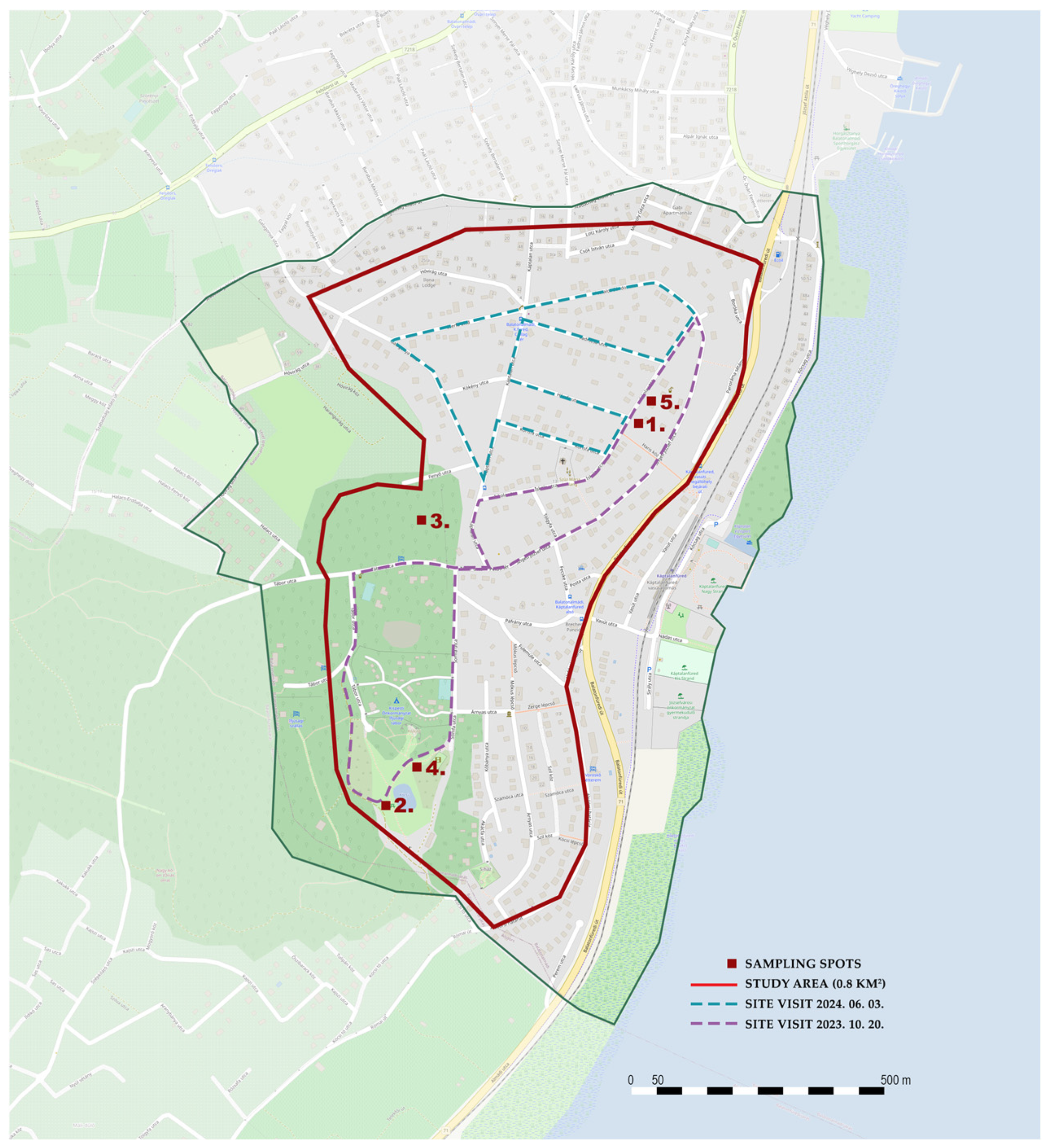
The study site is located within the inner area of the Balatonalmádi-Káptalanfüred settlement (Figure 1), situated in Hungary’s Carpathian Basin, in the eastern basin of Lake Balaton. The total area of the settlement is 133 hectares, of which approximately 82.5 hectares are covered by an almost continuous upper canopy layer. This forested portion forms the primary focus of the current research.
Káptalanfüred has a permanent population of approximately 900 residents; however, during the summer holiday season, the population increases by three to four times. (No exact data are available regarding seasonal fluctuation.)
Until 1970, Káptalanfüred was an independent settlement; it was subsequently incorporated administratively into the municipality of Balatonalmádi. The area is composed of two small hills, both of which are covered by significant oak stands. These hills reach a maximum elevation of 171 m above Baltic Sea level (Bf), rising approximately 61 m above the surface level of Lake Balaton [9]. Near the southern boundary of the study area lies Lake Köcsi, a small natural pond fed primarily by groundwater. Geologically, the area is characterized by low-lying carbonate bedrock overlain by stony feldspathic soils [11]. According to laboratory analyses of soil samples, the measured pH values were: pH(H2O) = 7.54 and pH(KCl) = 6.56 (MATE, Department of Agro-Environmental Studies; measured on 12 June 2025). Balatonalmádi and Káptalanfüred are situated within a moderately warm climatic zone, with the nearby Lake Balaton exerting a notable tempering effect on local temperature extremes. Historical climate data spanning the past 30 years are available for Balatonalmádi, based on hourly climate model simulations [43]. According to these data, the coldest monthly average temperature typically occurs in January (−3 °C), while the warmest average temperatures are recorded in July and August (+27 °C). The annual average temperature is 11.8 °C. May and September are the wettest months, each with an average precipitation of 72 mm, while January and February are the driest, averaging 45 mm. Total annual precipitation averages 672 mm.
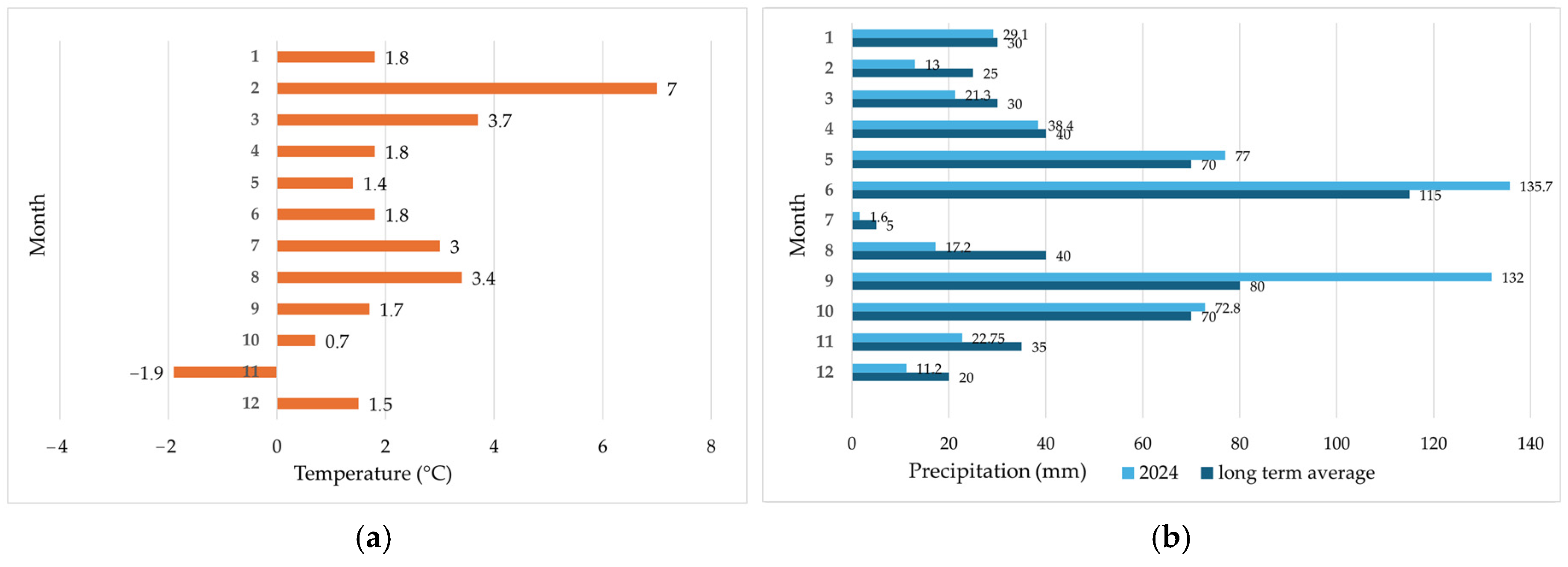
For the purposes of this research, more detailed climatic data from the past decades were analyzed (see Table 2, Figure 2a,b). In terms of phytogeographical classification, the natural vegetation cover of the area belongs to the Balatonicum floristic district [11].
Until the 1930s, much of the Káptalanfüred area was dominated by Qu. cerrisQu. petraea forests. Parceling and street planning began around 1930, as the area was considered highly suitable for recreational development [9]. From the outset, in addition to private holiday homes, Káptalanfüred also hosted facilities for children’s recreation. Initially, accommodation consisted of tents, later replaced by small wooden cabins built beneath the forest canopy. The modestly sized holiday cottages were similarly constructed in the shade of the large, mature trees. However, in the 2000s, due to financial considerations, many of these recreational facilities for children were sold. As a result, multi-story residential buildings and sports complexes were erected on the former cabin camp sites. This transformation led to the removal of a substantial portion of the original tree cover [45].

2.2. Methods of Evaluation of the Vegetation

2.2.1. Anthropogenic Effects Traced Using Historical Maps and Aerial Photographs

One of the key research questions concerns the long-term changes in woody vegetation and forest cover in Káptalanfüred over the past 400 years. These changes can be examined using historical military maps from the Habsburg Empire, alongside 20th-century topographic maps and aerial photographs, which together enable the reconstruction of the development of Káptalanfüred’s forested landscape over time.
By comparing maps from the late 18th and 19th centuries, it is possible to clearly identify landscape transformations, including shifts in land use, and the emergence, expansion, or decline of settlements and built-up areas. Various agricultural land use types are also distinguishable, such as forested areas, vineyards, arable fields, and pastures. In the 20th century, a new military survey was conducted in the early 1940s, covering the entire country. From the second half of the century onwards, aerial photography became a regular practice, providing valuable visual data for assessing changes in Káptalanfüred’s woody vegetation [46]. Since 2003, Google Earth satellite imagery has also been available for the Balatonalmádi region, allowing for the monitoring of more recent landscape and vegetation changes.

2.2.2. Tracking Vegetation Changes

The comparison of vegetation indices over the past two decades provides a reliable method for monitoring changes in the health status of woody vegetation in the study area (Figure 2). In this study, the Normalized Difference Vegetation Index (NDVI)—a widely used remote sensing-based indicator—was applied to assess vegetation vitality and detect shifts in health conditions over time [47].
NDVI values were derived from both Landsat and Sentinel satellite imagery. Landsat 5, 8, and 9 have been monitoring land cover globally for several decades, and for this research, five specific years were selected to represent a 20-year timespan (2005, 2010, 2015, 2020, 2025), each offering 30 m spatial resolution imagery. For more recent and higher-resolution analysis, Sentinel-2 imagery was used, offering a 10 m spatial resolution for the years 2016, 2019, 2022, and 2025. In all cases, the images were taken in June—the most humid early summer month in Hungary—ensuring optimal comparison of vegetation performance under similar climatic conditions.
The NDVI-based analyses were conducted for the entire 82.5 hectare study area designated in Káptalanfüred, as well as for five selected sampling spots located within it.

2.2.3. Visual Assessment During Site Visits and Evaluation of Google Earth Imagery

The current condition of the natural vegetation in Káptalanfüred—particularly focusing on the tree stands—was assessed through visual observations conducted during field visits, supplemented by the evaluation of Google Earth imagery. The routes of the field surveys were planned to provide a general overview of the vegetation health throughout the settlement (Figure 3). A characteristic feature of Káptalanfüred is that nearly all woody vegetation (approximately 95%) is located on private properties. However, since the large tree canopies often extend beyond property boundaries and overhang public spaces, it was possible to visually evaluate the health status of many trees from public roads, without the need to enter private land. An additional objective of the field visits was to identify public spaces within the settlement where tree planting would be both feasible and desirable in the future. The visual assessment of the study area was conducted according to the following criteria:
-
Upper Canopy Layer: Species composition, Health status of dominant oak individuals, evaluated based on dieback symptoms, canopy density, and leaf size
-
Secondary Canopy Layer: Species composition, with differentiation between native and exotic species, Presence of young oak individuals within both the secondary canopy and shrub layers
-
Shrub and Herbaceous Layers: Species composition, including the presence of oak and other tree seedlings
This multi-layered approach facilitated a comprehensive evaluation of the vegetation structure as well as the health status of oa-k-dominated stands.

2.2.4. Plant Population Survey in Sampling Spots

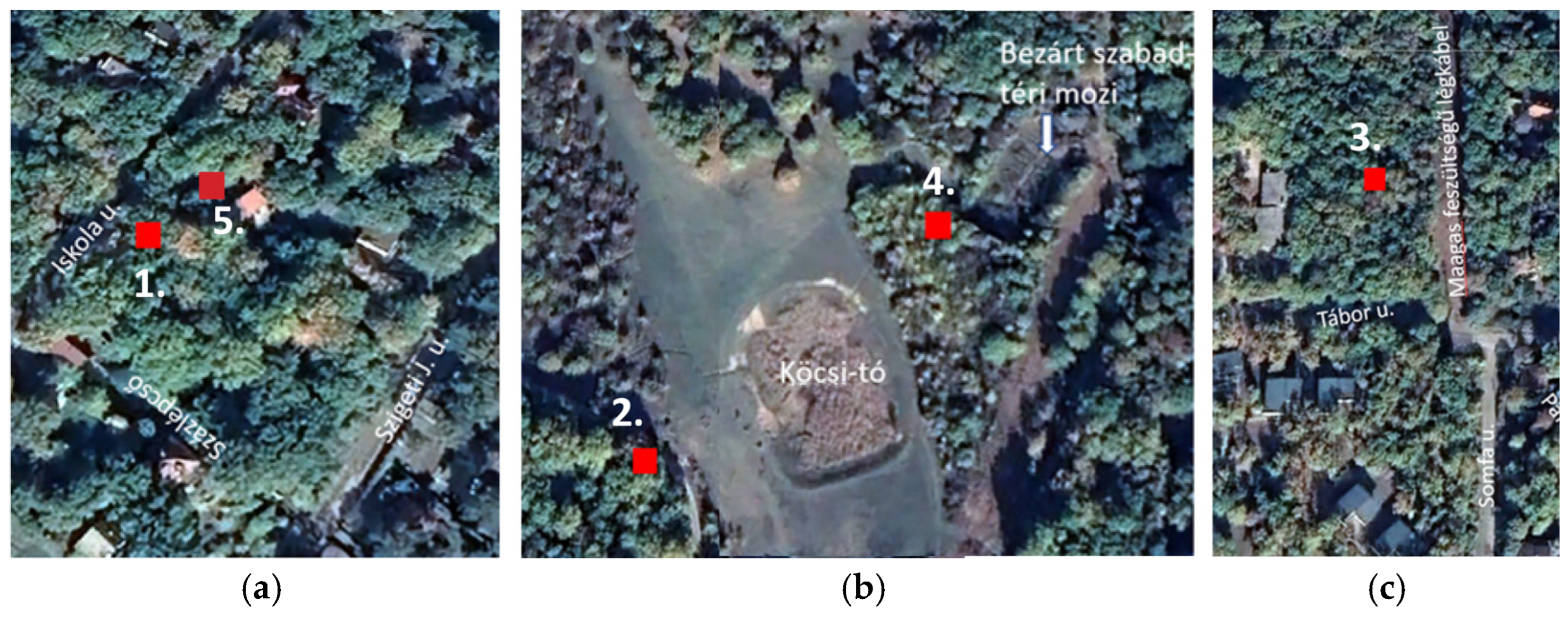
To gain a more detailed understanding of the canopy layers—including trees, shrubs, and groundcovers—five sampling plots (each 5 m × 5 m) were established within the settlement (Figure 3). These plots represent a variety of maintenance and management conditions, ranging from moderately maintained holiday gardens to abandoned and reforested areas, as well as peripheral forest zones (Figure 4). Field surveys and analyses were carried out based on the following criteria:
-
Species composition and health status of the primary canopy layer (using data from faapolok.hu);
-
Species composition of the secondary canopy layer;
-
Species composition and density of the shrub layer;
Composition of the ground vegetation/herbaceous layer. The method involved counting individuals in the upper and lower canopy layers, as well as in the shrub layer. For the groundcover layer, percentage coverage was estimated, except in cases where there were fewer than 21 individuals. Fieldwork was conducted between 20 October 2023, and 3 May 2024, with a follow-up survey in September 2025.
The visual assessment was complemented by the remote sensing method described earlier (see Section 2.2.2), which allowed monitoring changes in vegetation vitality within the sample areas over the past 20 years.
Of the five sampling plots, four are situated within the municipality’s interior, while one is located on the periphery (Figure 4). An important criterion in selecting the sampling sites was to include areas with varying slopes and exposures, with different maintenance practices in the past or present.
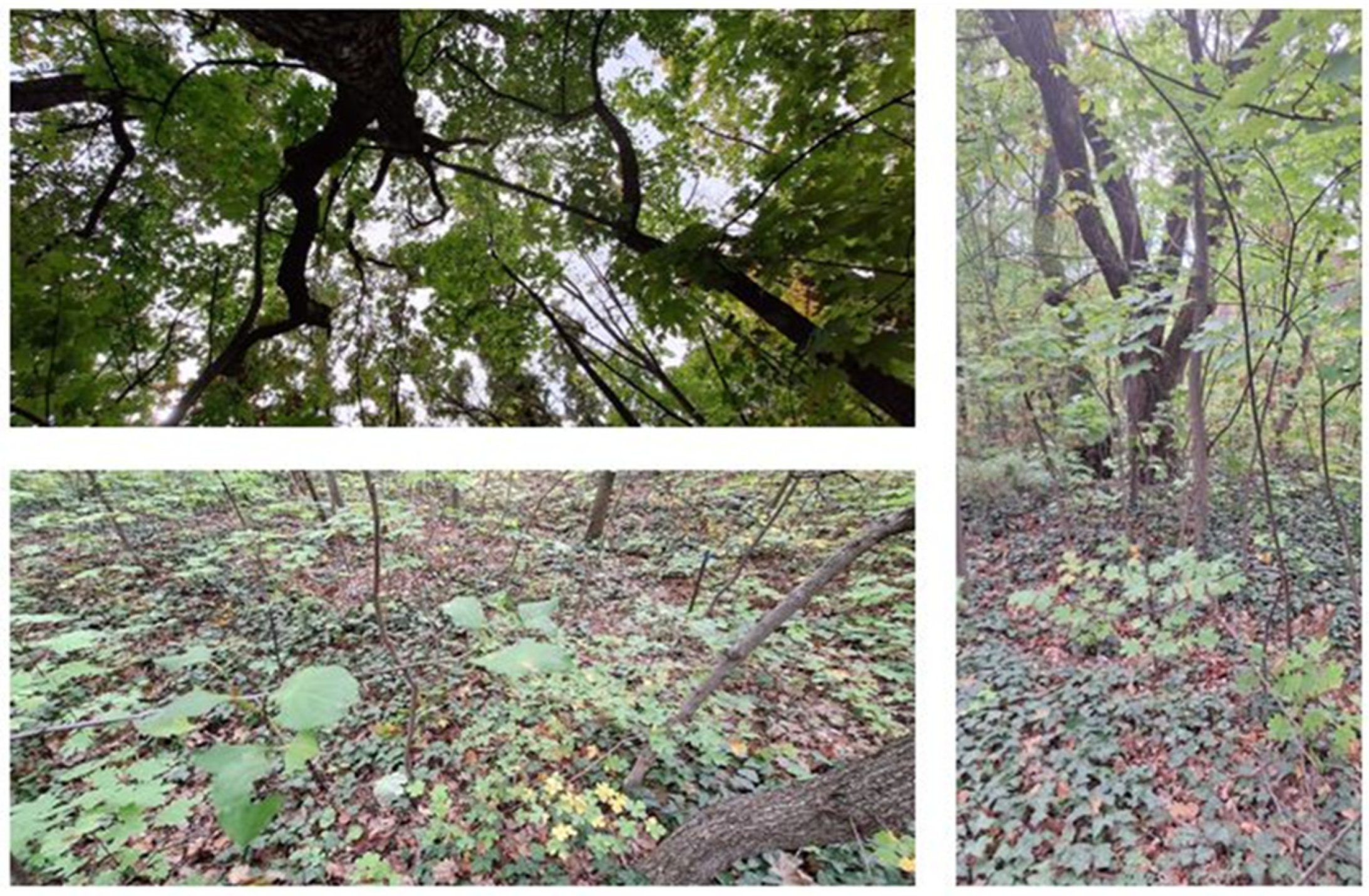
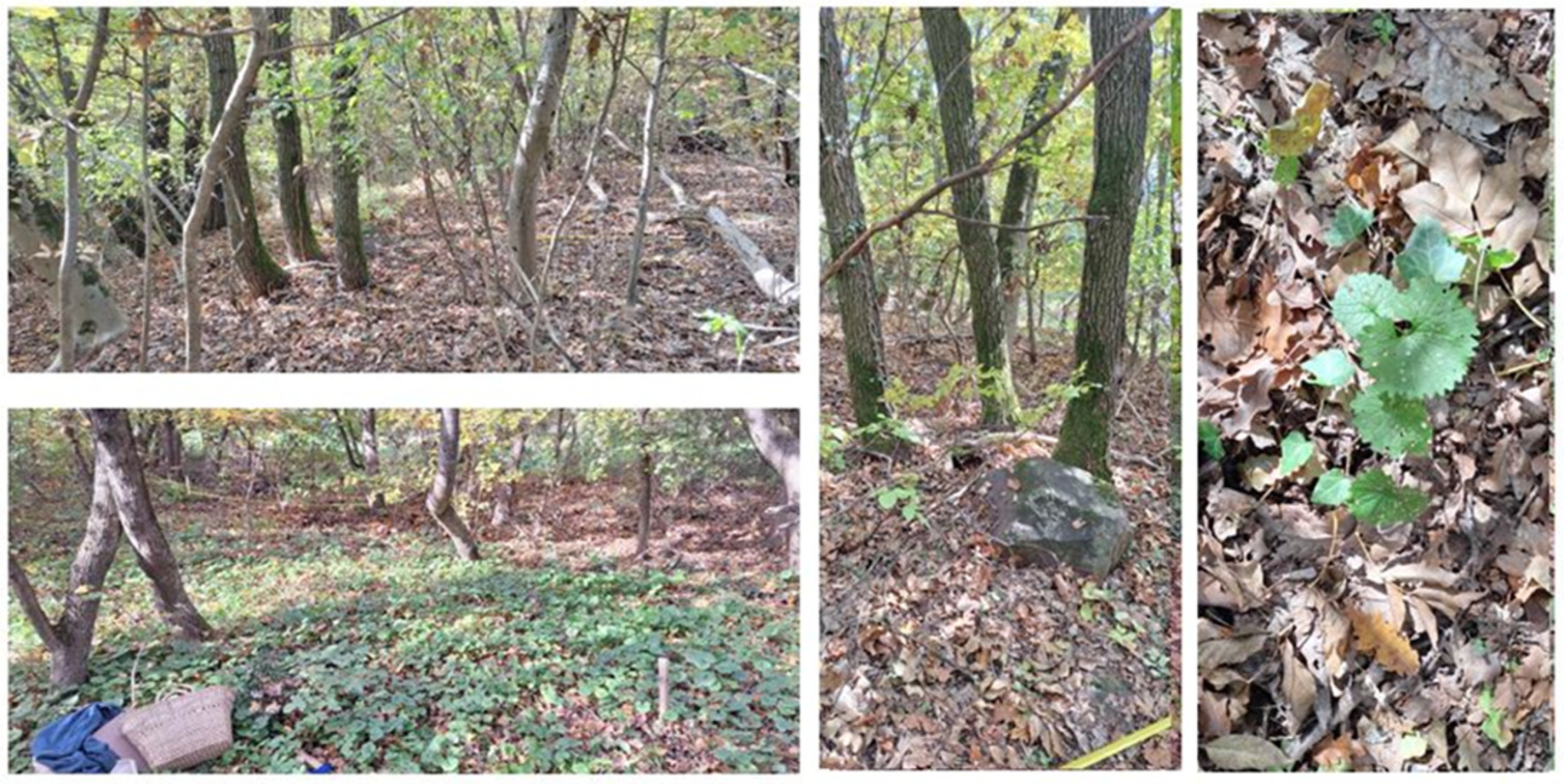
The first sampling spot is situated on a 3000 m2 holiday home property within a stunted, wooded area that receives no maintenance; broken branches and leaf litter are not cleared. The site faces east and has a slope of approximately 6–8%. Both the sampling spot and its immediate surroundings (within an approximate 20 m radius) have remained free from any anthropogenic influence for the past 30 years. Survey date: 20 October 2024 (Figure 4a). The second sampling spot is a forested area on the periphery of Káptalanfüred, near a tourist path. The terrain is flat and located about 20 m from the edge of the open meadow surrounding Lake Köcsi within the forest. Both the sampling spot and its immediate surroundings (approximately a 20 m radius) have remained unaffected by any anthropogenic influence for the past 30 years. Survey date: 20 October 2024 (Figure 4b).
The third sampling spot is an abandoned, unfenced property in the inner area of Káptalanfüred, without any buildings and presumably retaining its original, untilled vegetation. The site has a slope of approximately 25% with a southern exposure. Neither the sampling spot nor its immediate surroundings (within about a 20 m radius) have experienced any anthropogenic influence in the last 30 years. Survey date: 27 October 2024 (Figure 4c).
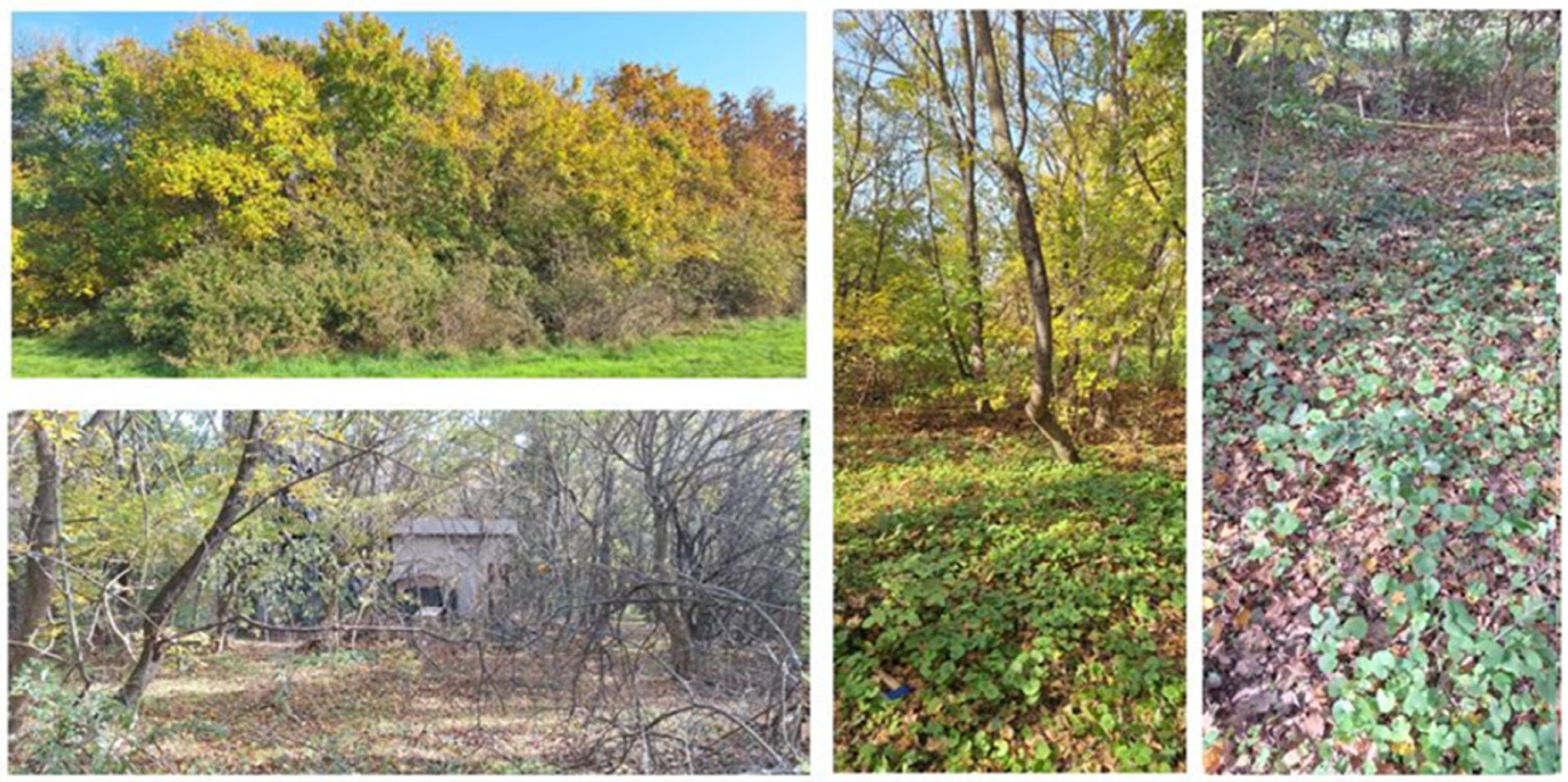
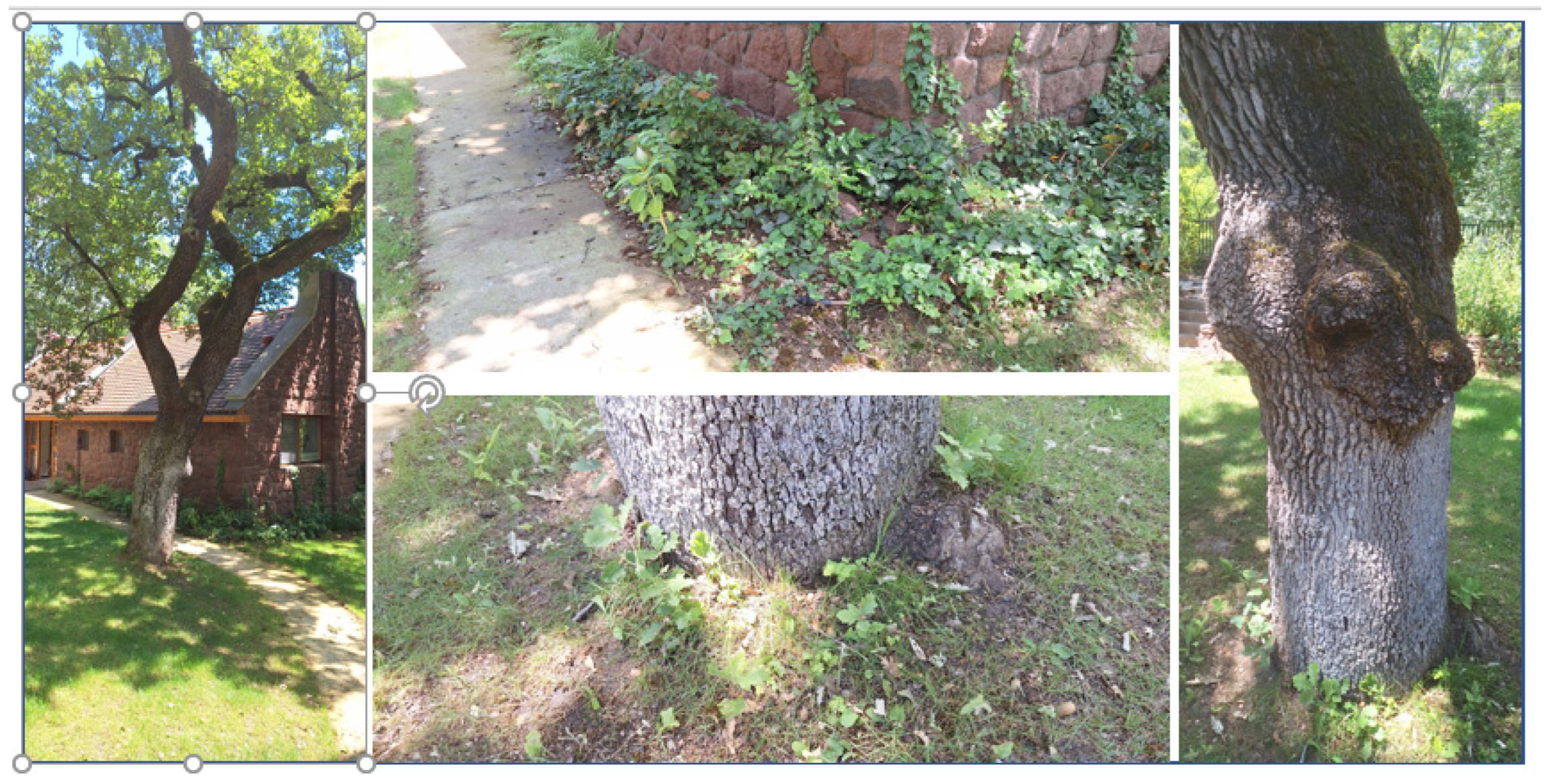
The fourth sampling spot is located adjacent to a former open-air cinema, which was closed in the early 2000s. Aerial photographs show that this area was open grassland until the cinema’s closure, after which spontaneous afforestation began in the early 2000s. The site provides a case study of natural reforestation over a 25-year period. Survey date: 20 October 2024 (Figure 4b). The fifth sampling spot is a well-maintained, fenced private garden that has been occupied by a holiday home for about 50 years. It is situated on an eastern hillside, on a plot adjacent to the first sampling area. The sampling spot itself is flat. The garden has been carefully maintained over the decades and has an automatic irrigation system since 1990. Adjacent to the garden stands a summer house with walls clad by Permian red sandstone, which can store significant amounts of heat. A 90 cm-wide pedestrian path leading to the building’s main entrance partially crosses the structural root zone of a tree. Until 2023, the driveway was made of large red sandstone slabs laid on a 10 cm crushed stone sub-base, with approximately 5 cm-wide grass joints between the slabs. In 2024, the slabs were reset onto a concrete foundation after the sub-base was deepened, effecting the root zone. The survey was conducted on 31 May 2025 (Figure 4a) and the site was re-inspected in September 2025. No notable changes were observed between the two inspections.
The health status of the trees was assessed following the guidelines of the Hungarian Tree Care Association (MFE), which evaluates tree parts separately—roots, root collar, trunk, crown base, and crown [48,49]. (Details of this evaluation method are provided in Appendix A).

3. Results

3.1. Changes in Vegetation Cover over the Last 400 Years Based on Map and Satellite Image Analysis
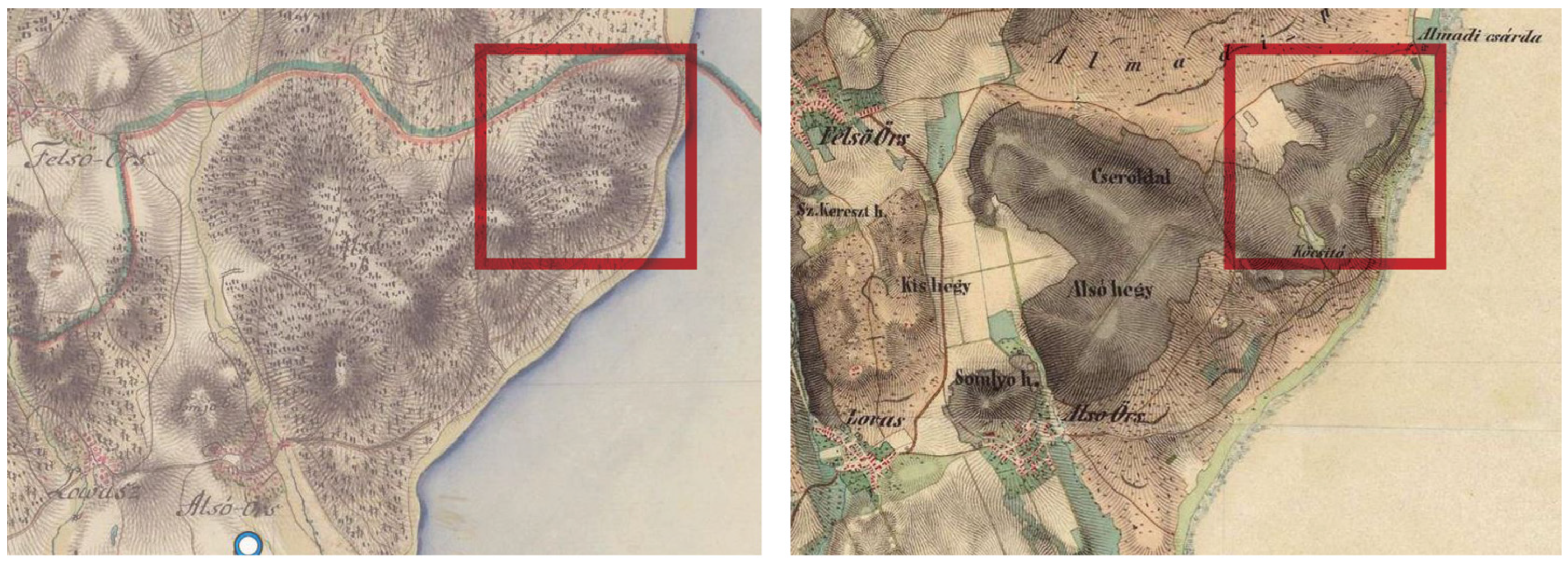
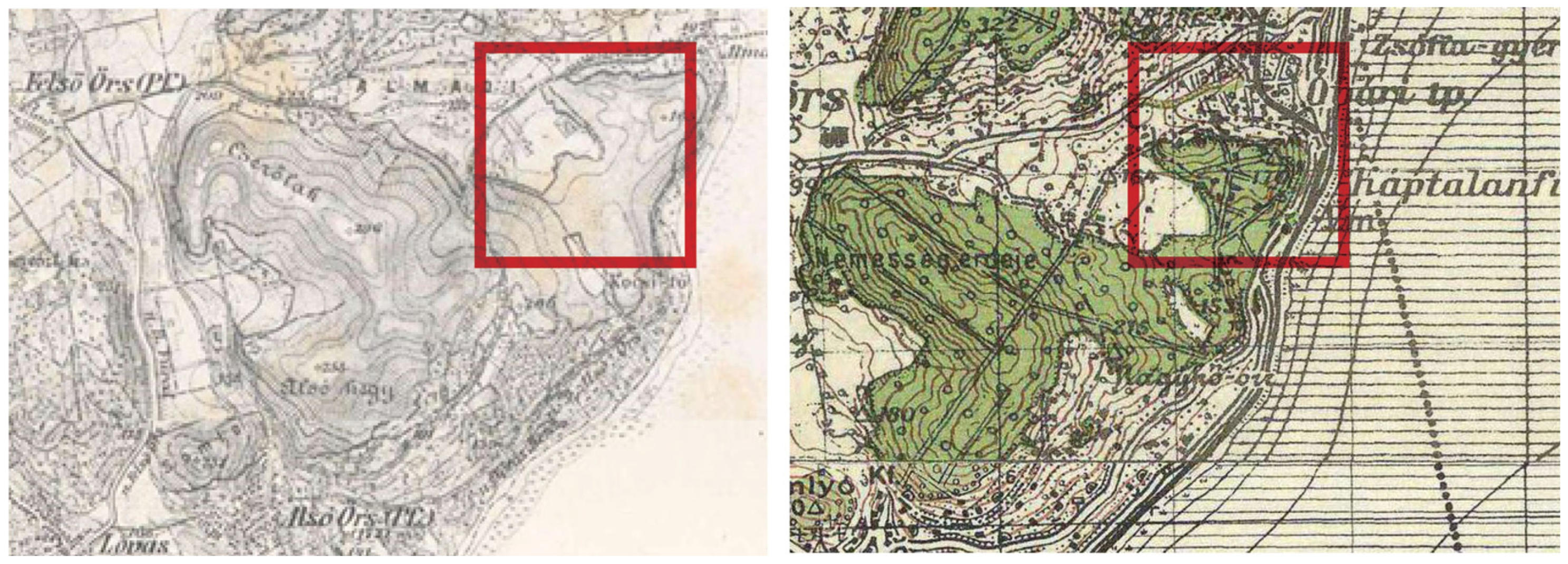
The changes in woody vegetation in Káptalanfüred since the late 18th century can be traced through military maps, aerial photographs, and satellite imagery. The first military map, created between 1782 and 1785, depicts the area as heavily wooded and uninhabited, with vineyards appearing only along the shore of Lake Balaton. By the time of the second military survey (1806–1869), vineyards had expanded up the hillside, especially in the southeastern part of the settlement, encroaching on forested areas. This map also marks a small lake—Köcsi-tó—which still exists today. In the northern part of the study area, deforestation had increased significantly since the first survey, although no vineyards are shown in this region on the second survey map (Figure 5).
Figure 5. First and second military survey of the area around present-day Káptalanfüred (source: https://www.arcanum.com/en/technology/historical-maps/ accessed on: 21 May 2025). According to the Third Military Survey (1867–1887), there had been no significant changes in the area compared to the previous survey. The vineyards had not been reforested and were still marked as bare land on the map. The phylloxera epidemic, which occurred between 1874 and 1914, destroyed vineyards in many regions [50]. The 1940 map was produced after the establishment of the resort, with land parceling having begun in the 1930s. The military survey indicates that the extent of forested areas had significantly decreased by this time. It was also during this period that the current street network of the settlement was established (Figure 6).
Land 14 02181 g005
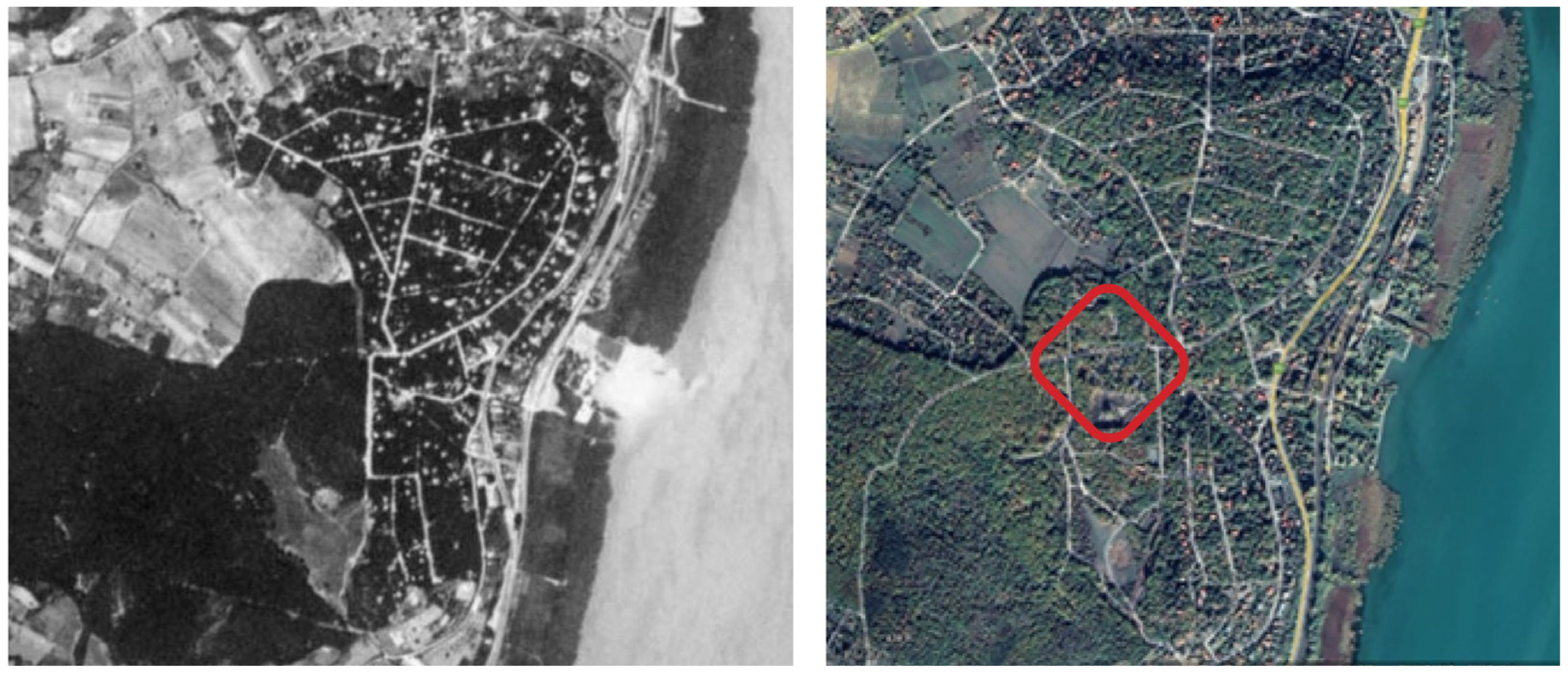
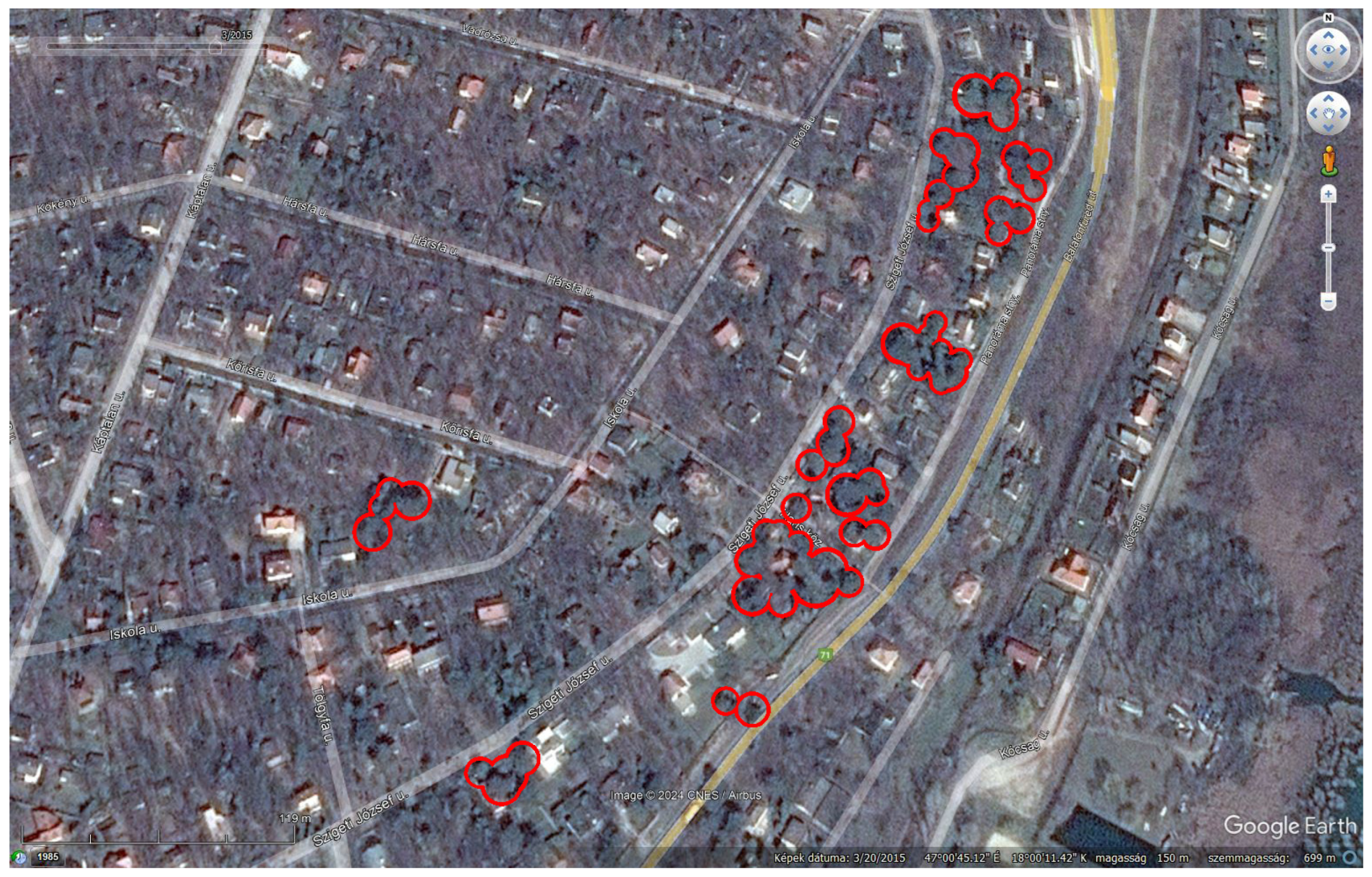
The street network is clearly visible in the 1961 aerial photograph. A comparison between the 1961 image and the 2024 Google aerial photograph reveals a marked thinning and disappearance of trees, particularly in the area outlined in red (Figure 7).
Map analysis indicates that the tree population within the municipality has been steadily declining since the 1930s, primarily due to ongoing land development. This decline appears to have accelerated since the 2000s, coinciding with the intensification of construction and urban expansion.

3.2. Results of Vegetation Index (NDVI) Measurements in the Study Area

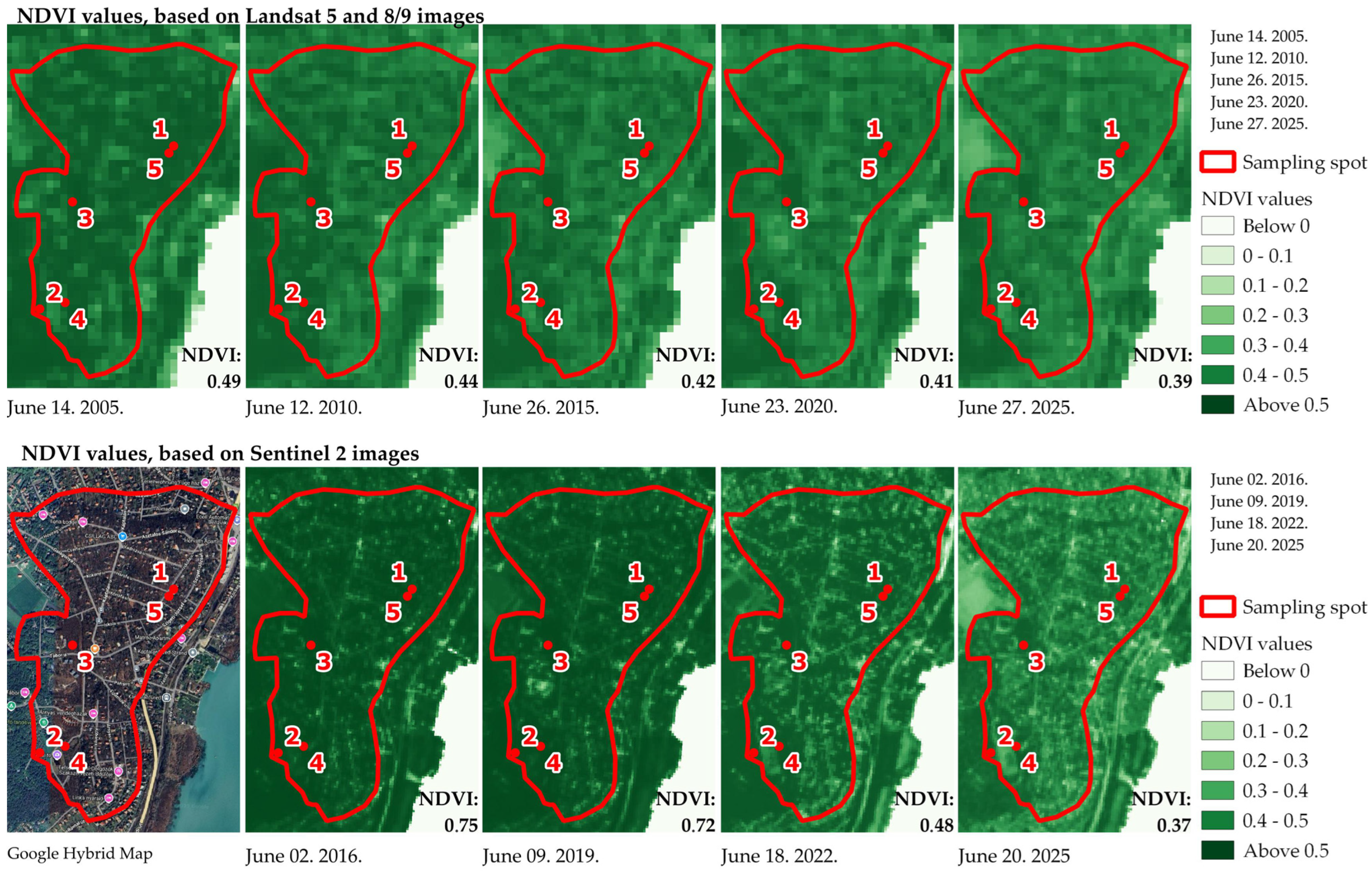
The maps (Figure 8) demonstrate a decline in vegetation vitality in recent years. June is typically the most humid month in Hungary; however, early summers in recent years (2022, 2025) have been drier than average. This trend is also reflected in the spatial statistics of the study area, where signs of heat stress, poor tree health, and reduced vegetative activity are apparent.
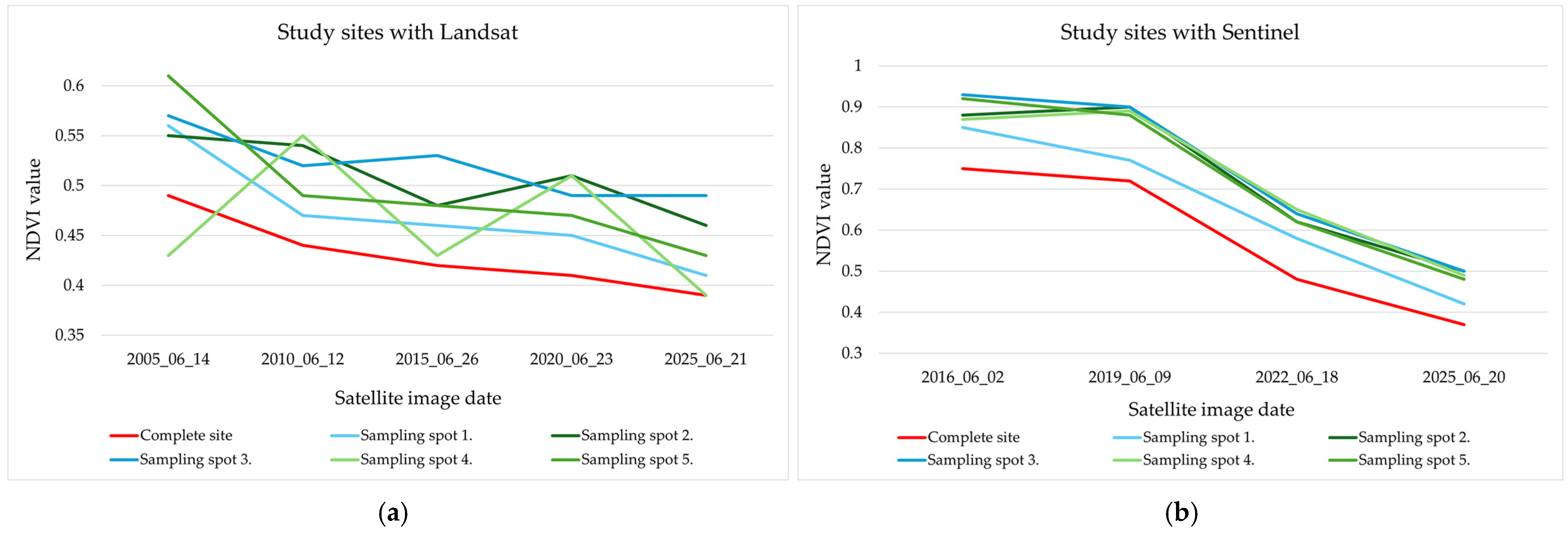
On average, the NDVI value has decreased by 0.1 over the past 20 years within the 82.5-hectare study area, as detected by the lower-resolution Landsat 5, 8, and 9 satellites (Figure 9). High-resolution Sentinel-2 imagery, with 10 m spatial resolution and greater sensitivity, reveals an even more pronounced decline—nearly 0.4 in NDVI—indicating a dramatic loss in vegetation health within the study area (Figure 8 and Figure 9, and Table A1 in the Appendix A).

3.3. Current State of Vegetation Layers Based on Visual Assessment and Google Earth Imagery

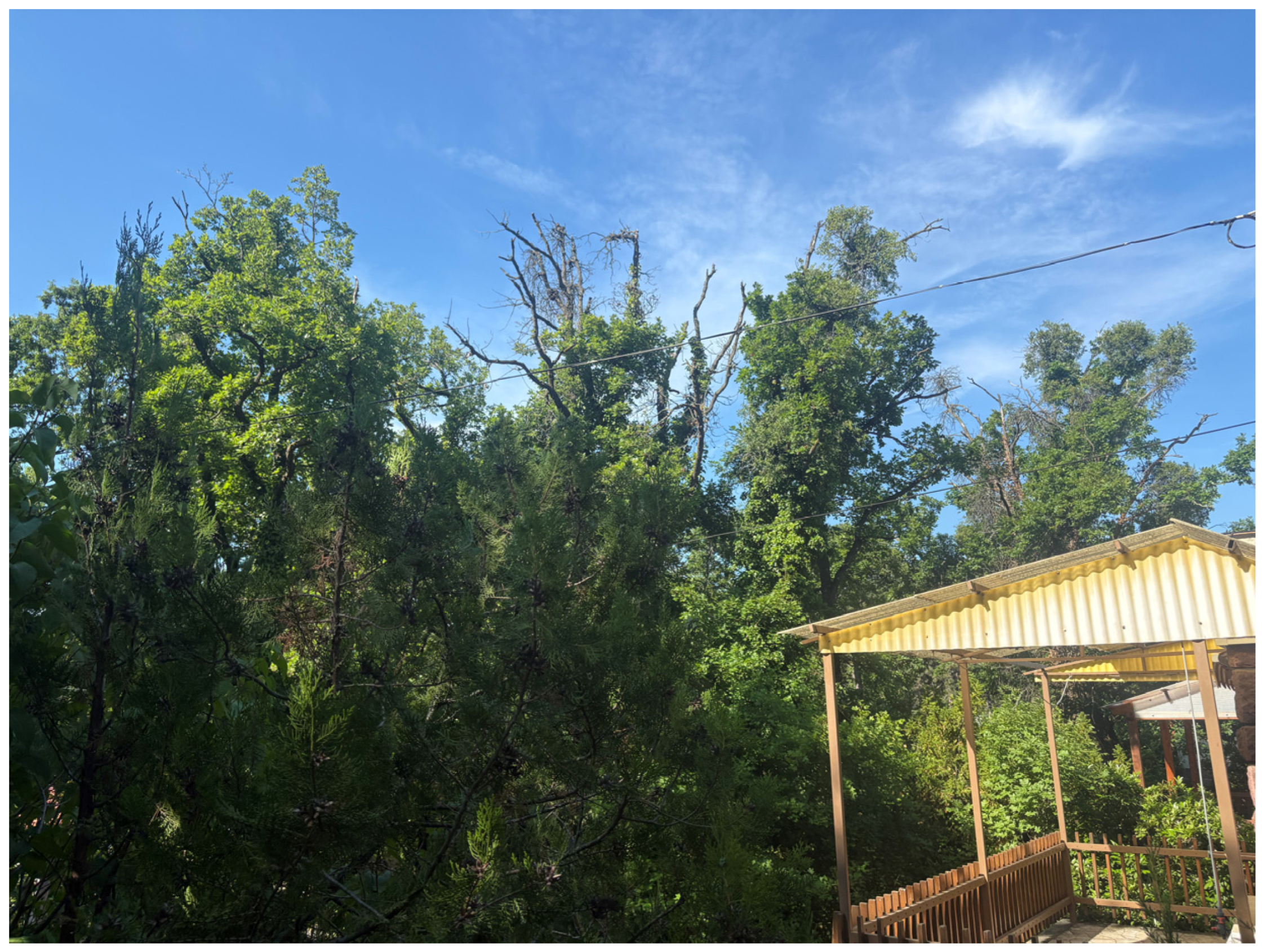
In the settlement, the upper canopy layer is predominantly composed of oaks, reaching heights of 20–25 m. A decline in vitality and thinning of the oak population—particularly among individuals of Quercus petraea—is evident. Visual assessment while walking through this part of the settlement clearly reveals that nearly all trees with a trunk diameter exceeding 30 cm exhibit symptoms of apical dieback. In addition, canopy density has significantly decreased compared to conditions observed approximately ten years ago (Figure 10).
In certain areas of the thinning upper canopy, species that originally occupied the secondary canopy layer are beginning to emerge into the upper stratum in response to the decline and structural loosening of the oak population. These species include Acer campestre, Acer platanoides L., and, to a lesser extent, Ulmus minor Mill. Although these are native species, under these altered conditions they function as internal invasive species, expanding beyond their typical ecological niche.
In leafless conditions, it is clearly visible that individuals of Qu. petraea are heavily infested with the Medusa head gall (Andricus caputmedusae (Hartig, 1843)), which is widely regarded as a typical symptom of oak decline. In contrast, Qu. cerris specimens show no or only sporadic signs of such infestation.
During the summer, gardens are regularly irrigated, which allows surviving oaks—those that were not removed during the construction of summer houses—to thrive under favorable mesophytic conditions. As drought induced by climate change is a primary driver of oak decline, oaks located in gardens benefit from more favorable moisture conditions than those in unmanaged or natural habitats. Within the oak-dominated stand, a few exceptionally large and healthy individuals can still be found. On the approximately 3000 m2 plot at 27 Iskola Street, two particularly valuable Qu. cerris specimens have been recorded, with trunk diameters of 100 cm and 81 cm, respectively.
On the eastern side of the study area, facing Lake Balaton and bordered by retaining walls along the main road, a strikingly steep slope approximately 600 m long and 5 m high is present. This geomorphological feature may be a remnant of a historical shoreline collapse, dating from a period when the basin of Lake Balaton was significantly larger. During field surveys, it was observed that while oak species dominate the primary canopy on the surrounding hills, individuals of Pinus nigra are interspersed with oaks along this steep strip (Figure 11). P. nigra has been planted in Hungary since the second half of the 19th century, primarily to combat soil erosion, especially on dolomitic slopes and in mountainous regions [22]. Although no specific data were found regarding the planting date in Káptalanfüred, it is likely that these stands were established to control shoreline erosion along Lake Balaton.
In addition to this slope, scattered P. nigra plantings are present elsewhere within the settlement. However, the health condition of these trees is severely deteriorated: many are in an advanced state of decline, with entire branches bearing dry needles, and some individuals are completely desiccated.
Under natural conditions, the secondary canopy and shrub layers beneath oak trees are typically composed of species such as Acer platanoides, A. campestre, Fraxinus ornus, Rosa canina L., and Crataegus monogyna Jacq.
However, in areas where summer homes and gardens have been established, these vegetation layers have undergone significant transformation. In many sunlit areas, ornamental species such as Prunus cerasifera Ehrh. ‘Nigra’ and large conifers including Picea pungens Engelm. ‘Glauca’, Cedrus atlantica (Endl.) Manetti ex Carrière ‘Glauca’, and Cedrus deodara (Roxb.) G. Don have been introduced and are thriving. Simultaneously, declining individuals of Picea abies (L.) H. Karst., Pinus strobus L., various Chamaecyparis species, and ×Cupressocyparis leylandii are also present. These species typically do not reach the canopy height of the native oaks.
Within the shaded conditions provided by the oak canopy, a variety of evergreen ornamental shrubs and small trees have been planted by summer home owners. Notably, however, young oak individuals with trunk diameters of 8–12 cm are entirely absent from these gardens. While mature oaks forming the upper canopy are generally retained by property owners, natural oak regeneration—still belonging to the secondary canopy level—is frequently removed to accommodate the planting of various exotic species.
Under natural conditions, the herbaceous layer in oak forests is quite diverse. Herbaceous plants typically emerge in early spring, before leaf-out, and decline by late June, with exceptions such as Campanula persicifolia L. and Dictamnus albus L. Common ivy (Hedera helix L.), which occurs naturally, is the most dominant species within this layer. In garden settings, large areas are often covered with shade-tolerant lawn alternatives. Although the understory vegetation in these areas is more diverse, the number of herbaceous species adapted to shaded conditions remains limited. The most commonly used groundcovers for shade are ivy and evergreen periwinkles (Vinca minor L. and Vinca major L.). Additionally, various Geranium species are frequently observed, and Ceratostigma plumbaginoides Bunge is a popular ornamental in many gardens. Due to nutrient-poor, rocky soils, shading, and the water-absorbing capacity of oaks, establishing a healthy lawn is generally difficult, even under irrigated conditions.
Each spring, numerous oak seedlings emerge beneath mature oak trees in gardens; however, these are regularly removed during weeding, preventing the long-term regeneration of the oak forest. Until recently, wild boars rooting in gardens during the winter posed a significant problem by consuming acorns. Nevertheless, the local municipality has recently implemented measures to reduce the wild boar population within the residential area, which is expected to facilitate the establishment of a greater number of oak seedlings in both gardens and public spaces.
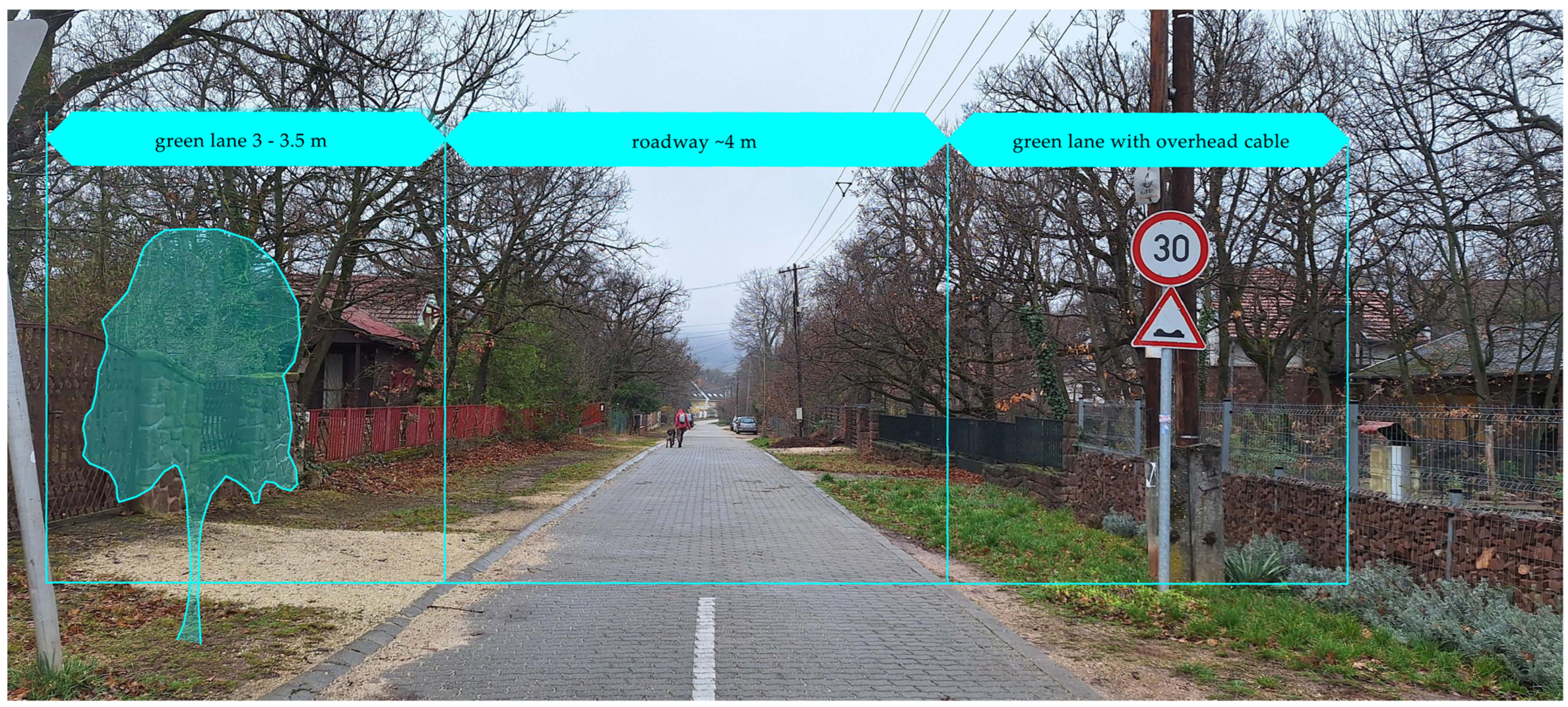
The tree canopies extending over the streets make tree planting impossible on most streets. Since the existing woody vegetation is found almost exclusively in private gardens, one of the objectives of the field survey was to identify whether suitable public spaces exist within the study area for tree planting, specifically oaks. Fortunately, the parcel divisions from the 1930s allocated wide public strips for streets, typically with a regulatory width of 10–11 m. On the main roads, the traffic lanes are approximately 7 m wide (there are no paved sidewalks in Káptalanfüred), leaving green strips of roughly 1.5 to 2 m on either side. However, on secondary streets, within the 10–11 m-wide public right-of-way, there is usually only a 4 m-wide mixed-traffic asphalt lane, flanked by green strips 3 to 3.5 m wide on both sides. These narrow green spaces are generally insufficient for planting oaks, especially considering the clearance required for traffic and the fact that the canopies of trees in private gardens often extend into the public right-of-way.

3.4. Presentation and Evaluation of the 5 × 5 m Sampling Spots

The data collected from the five sampling spots are summarized in Table 3. Oaks exclusively dominate the upper canopy layer at all sites, except at Sampling Spot 4, where only a single seedling was found in the groundcover layer. Notably, Sampling Spot 4 features an upper canopy composed solely of Acer campestre, with a complete absence of a secondary canopy layer. Sampling Spot 5, a well-maintained residential garden, exhibits significantly fewer woody species and individuals compared to the other locations. In the secondary canopy layer, oaks are generally absent, except at Sampling Spot 2, where a single oak individual was recorded. At Sampling Spot 1, Acer platanoides is present in the secondary canopy and dominates the shrub layer, but this species is absent from the other spots. Sampling Spot 3 shows a notable dominance of Fraxinus ornus, with some individuals also appearing in the shrub layer at Sampling Spot 4. The groundcover layer is notably sparse at both Sampling Spots 3 and 4. Among all locations, the oaks at Spots 2 and 3 exhibit the healthiest conditions.
Photos of the sampling spots are in the Appendix A (Figure A1, Figure A2, Figure A3, Figure A4 and Figure A5).
The sampling spot exhibits the presence of oaks of varying ages, as indicated by the differing trunk diameters. Oak individuals also appear in the secondary canopy layer, demonstrating the good health condition of the stand. In the deep shade, only ivy (Hedera helix) is able to form a distinct layer (Figure A1 and Table 3). Outside the immediate study area but within a 15 m radius, additional species such as Cornus mas and Tilia spp. are present.

3.4.1. Sampling Spot No. 1

During the investigation, the abundant presence of Acer platanoides in the secondary canopy layer was notable. This is likely the result of a former property owner planting a row of Norway maples along the boundary line in the 1960s. Over time, the canopies of these trees have expanded into other parts of the former garden and, in some areas, now reach the upper canopy layer. Due to the strong shading effect of the oaks at this sampling spot, A. platanoides has been confined to the secondary canopy and, in part, the herbaceous layer (Figure A1 and Table 3).
At this location, a bottle-shaped swelling on the trunk of an oak tree may indicate the presence of an internal cavity. Although outside the immediate sampling area, additional species such as Cornus mas and Tilia spp. are present within a 15 m radius.

3.4.2. Sampling Spot No. 2 (Rural Forest Area)

This sampling spot features oaks of varying ages, as indicated by differences in trunk diameter. Individuals of oak are also present in the secondary canopy layer, suggesting that the stand is in good health. In the deep shade, only ivy (Hedera helix) is able to form a distinct ground layer (Figure A2 and Table 3). Similarly to the previous spot, Cornus mas and Tilia spp. are also present within a 15 m radius outside the immediate sampling area.

3.4.3. Sampling Spot No. 3

This area illustrates how natural vegetation develops under extremely dry conditions, as it is located on a steep, south-facing slope. The understory is very sparse, with numerous dried and broken branches and twigs scattered across the surface. Large red sandstone rocks further hinder accessibility. Notably, Fraxinus ornus is much more dominant in the secondary canopy layer here than at other sampling spots, which reflects the warm and dry microclimate. This is further supported by the presence of Alliaria petiolata (Figure A3 and Table 3). Outside the immediate study area but within a 15 m radius, additional species such as Cornus mas and Mahonia aquifolium can be found.

3.4.4. Sampling Spot No. 4

This sampling spot represents the outcome of approximately 20 years of spontaneous afforestation. The dominant species in the area is Acer campestre, which effectively suppresses the establishment of other species, even in the secondary canopy layer. Notably, only one oak seedling is present. The dominance of Alliaria petiolata in the herbaceous layer further indicates persistent atmospheric drought within the stand (Figure A4 and Table 3). Outside the immediate sampling spot but within a 15 m radius, additional species are present. In general, seedling abundance is low. The forest edge is considerably more species-rich and includes individuals of Fraxinus ornus, Prunus cerasifera, Euonymus europaeus, and Ligustrum vulgare.

3.4.5. Sampling Spot No. 5

The picturesque branching structure and canopy of the Quercus petraea individual at this site serve as a defining visual feature of the entire garden. The tree is in good health, despite recent construction of a 10 cm-thick concrete base beneath the walkway, which previously had no foundation. (A photograph of the concrete base prior to the application of a stone cladding is included in the Appendix A). Root suckers regularly emerge at the base of the tree and are removed during routine lawn maintenance. The tree exhibits numerous Medusa head galls (Andricus caputmedusae), but no other visible signs of damage are present (Figure A4 and Table 3).
The NDVI dataset (Table A1 in Appendix A) and the corresponding graph (Figure 9) illustrate vegetation index dynamics across the sampling spots between 2005 and 2025. Data from the Sentinel-2 satellite show a steadily declining trend in vegetation index values across all locations.

4. Discussion

The ecological and visual character of Káptalanfüred is fundamentally defined by its oak-dominated upper canopy. However, a review of the relevant literature confirms a general declining trend in forest communities dominated by Qu. cerris and Qu. petraea [33,35]. This decline can be attributed primarily to anthropogenic impacts and climate change—both of which are evident in the case of Káptalanfüred. Assessing the effects of these factors on dominant tree species is essential, as these species play a key role in determining forest structure, ecosystem function, the provision of ecosystem services, and the overall landscape identity of the settlement [51].

4.1. Anthropogenic Impact and Related Recommendations

Analysis of historical maps and satellite imagery (Figure 5, Figure 6 and Figure 7) shows that the natural forests in Káptalanfüred have been steadily decreasing since the 1930s due to human activity. Beginning with land parceling and road construction in the 1930s, both tree density and forest cover declined markedly. From the 1930s to the early 2000s, construction—particularly of seasonal holiday homes—continued at a moderate pace. However, since the 2000s, the scale and intensity of development have increased significantly, especially with the construction of multi-story holiday buildings, which are associated with higher rates of tree removal.
According to Hungarian regulations, the felling of trees within the built-up areas of settlements is only permitted for reasons of public safety, property protection, or plant health. If trees are to be removed for other purposes, an expert opinion is required, and a tree removal permit must be obtained from the local municipality—except in the case of fruit trees or dead/dried-out trees. Furthermore, national legislation requires that the removed tree must be compensated in such a way that the total green volume on the property remains unchanged. This is typically achieved by planting new trees and introducing shrubs, turf, or herbaceous plants, following equivalency values defined by the regulation [52].
In addition to national regulations, municipalities may impose their own rules concerning tree felling and replacement obligations. Many local ordinances require permits even for tree removal on private property. Local building codes often define a minimum trunk diameter above which a permit is required and specify how the removed diameter must be compensated. In most cases, the total trunk diameter removed must be replaced by replanting at 100–150% of the removed value [7]. Therefore, in both public and private domains within the study area, compliance with local building regulations is a key determinant of tree population dynamics [53].
Under current regulations in Káptalanfüred, one native tree with a trunk circumference of 12 cm must be planted for every 20 cm of removed trunk diameter. If replacement planting on-site is not feasible, planting must occur on public land and be carried out by the contractor responsible for maintaining public green spaces. The regulation does not specify tree species or genera for replacement, nor does it provide a monetary compensation alternative (see Table 4). Furthermore, the removal of invasive species is not addressed in the current ordinance.
This is a notable departure from the now-repealed Decree 25/2015. (IX. 25.) [54], which required replacement plantings specifically with oak trees. The absence of this provision in the current regulation represents a missed opportunity to protect the oak-dominated character of Káptalanfüred. Strengthening the existing tree-felling regulations—by reintroducing species-specific requirements, tightening replacement obligations, and applying more severe penalties for unauthorized tree removal—could serve as an effective deterrent against unnecessary felling. Moreover, mandating the use of native oak species for replacement planting would directly contribute to the preservation of the area’s ecological integrity and visual identity.

4.2. Climate Change Impacts on Tree Health and NDVI Trends

Global environmental change exposes trees and forest ecosystems to multiple stressors, including shifting climatic conditions, more frequent extreme weather events, and the emergence and spread of pests and pathogens. Rising temperatures and the relative decline in precipitation—evident both in the 30-year climatic average (1991–2020) and particularly in the year 2024—have had a measurable negative impact on the tree stands in Káptalanfüred. These findings align with broader trends of temperate forest decline across Central Europe, as established in the literature [2,55].
The increase in the number of hot days, the rise in mean annual temperatures, and the relative decrease in precipitation clearly indicate recent climate shifts, all of which exert significant stress on the tree population of the study area. These climatic pressures are reflected in the declining NDVI values recorded over time. Sentinel-2 satellite imagery, with its higher spatial resolution and sensitivity, indicates a 0.4-point drop in NDVI over two decades—signifying a dramatic decline in vegetation health. Thus, the trend of oak forest deterioration described in the literature is also observable in Káptalanfüred’s urban environment [10]. This is further supported by field surveys and analyses of high-resolution Google Earth imagery.
Common symptoms observed in the area include tree mortality, crown tip dieback, partial crown drying, and deformation. Additional signs include overall canopy thinning, reduced foliage density, and smaller leaf size. The condition of sporadically planted Pinus nigra individuals in the upper canopy is also visibly deteriorating. In contrast, some exotic conifer species—such as Cedrus spp.—demonstrate higher resilience to climate stress and are expected to reach the canopy layer in the near future.
Literature suggests that Qu. petraea is more sensitive to warming and drought and is therefore expected to be among the first species to decline under ongoing climate change, whereas Qu. cerris shows comparatively greater tolerance to warm and dry conditions [37,40,56]. This difference was also observed in the field, where Qu. cerris individuals generally exhibited better health than Qu. petraea.
From a methodological perspective, a key limitation of NDVI-based analysis is that it reflects the condition of the entire vegetative layer, rather than specific species. However, given the dominance of the oak canopy, changes in NDVI are still largely representative of its condition. Another limitation is that NDVI cannot distinguish between vegetation decline caused by anthropogenic factors versus those driven by climate stress. To reduce this uncertainty, three of the five selected sampling spots (Spots 1, 2, and 3) were intentionally chosen in areas with minimal anthropogenic disturbance over the past 30 years. NDVI values measured in these plots and their immediate 10 m surroundings thus better reflect the isolated effects of climate change.
Interestingly, no significant difference was observed in the rate of NDVI decline over the past three decades between sampling spots affected by human activity and those with little or no disturbance (Figure 9). However, Landsat data indicate a sharp drop in vegetation index (VI) values in 2015 for Sampling Spots 2 and 4, while Spot 3 displayed a notable increase. This anomaly may be linked to climatic extremes: 2014 was the warmest year on record in Hungary since 1901, with November precipitation reaching only 55% of the average. June 2015 was exceptionally dry, deviating significantly from typical patterns [44].
Sampling Spot 2, a managed forest, likely reflected the impact of this drought through reduced VI values. In contrast, Spot 3—located on a south-facing slope—supported vegetation already adapted to warm, dry conditions, resulting in a localized increase in VI during summer 2015. Spot 4, composed of younger Acer campestre individuals, responded to the drought with reduced productivity. Spot 5, located in an irrigated residential garden, was less affected by the drought, while the cooler, east-facing slope of Spot 1 may explain the absence of a marked decline there.
Landsat data from 2020 show a temporary increase in VI at Sampling Spots 2 and 4, possibly due to unusually high rainfall in November 2019 and June 2020 [44]. However, this short-term variation was not reflected in the more sensitive Sentinel-2 dataset, which indicates a consistent downward trend in vegetation health across all sampling points.

4.3. Species Dynamics, Regeneration Challenges, and Future Planting Strategies

The thinning of the upper canopy has led to increased light availability in lower forest layers, enabling species from the secondary canopy to ascend into the upper canopy to occupy emerging gaps. This phenomenon is closely linked to changes at the secondary canopy level. As Quercus species decline and their structure loosens, native species such as Acer campestre and Ulmus minor—typically associated with the secondary canopy—exhibit behavior akin to internal invasive species.
Based on field observations from five sampling sites and consistent with findings in the literature [35], A. campestre reaches the upper canopy at Sampling Spot 4. Although predominantly a component of the secondary canopy, it often becomes the dominant species in areas undergoing natural forest regeneration. A. campestre is the most prevalent species in the secondary canopy layer of hill oak forests in Hungary [11] and has excellent community-forming ability. It tolerates both winter frost and summer heat, prefers calcareous soils, and can thrive even under nutrient-poor or slightly saline conditions [57]. Its ecological niche lies between hornbeam-oak (Carpinus betulusQuercus petraea) and sessile oak forest types, such as the Aceri campestriQuercetum petraeae-roboris community described near Gödöllő [55].
At Sampling Spot 1, A. platanoides has also extended into the upper canopy. This species is known for its high biomass production and photosynthetic efficiency and is considered invasive in some North American forests due to its ability to outcompete native flora [58,59]. On dry, south-facing slopes, such as at Sampling Spot 3, Fraxinus ornus dominates the secondary canopy and shrub layers, reflecting adaptation to harsh microclimatic conditions. Urban and suburban environments often see the removal of natural understory vegetation. As observed at Sampling Spot 5, while large oak trees (with trunk diameters > 20 cm) are usually preserved, the understory is often replaced with turf or ornamental shrubs, thereby eliminating the natural shrub and secondary canopy layers [34,40,60]. The health of oak trees in the upper canopy was highest in areas with minimal human disturbance over the past three decades, such as Sampling Spots 2 and 3. However, results at Sampling Spot 1 were less consistent—despite limited disturbance, the oaks showed signs of stress. Meanwhile, although regularly irrigated, the Quercus individual at Sampling Spot 5 demonstrated lower vitality than those in unmanaged sites. Notably, young oaks in the secondary canopy were found only at Sampling Spot 2, located in a forest outside the built-up area, highlighting the regeneration challenges within the settlement.
In response to the risks associated with climate change and biodiversity loss, many climate adaptation strategies now advocate for mixed-species plantings. These forests offer enhanced resilience against pests, disease, and unpredictable weather extremes and provide broader ecosystem services [61]. However, such a shift conflicts with the current landscape identity of Káptalanfüred, which is visually defined by the characteristic crowns of mature oaks, especially when viewed from the lakeshore. While some visual character could be preserved through careful species selection, prioritizing biodiversity and climate resilience may necessitate introducing alternative, climate-tolerant oak species. The experiment conducted by Goethe University in Frankfurt demonstrated the stress resistance of various oak species, including Qu. robur, Qu. pubescens, and Qu. ilex. Among these, Qu. pubescens showed particularly high drought tolerance, making it a potential long-term replacement for Qu. petraea, which is more susceptible to climate-induced stress [40]. According to projections from the Atlas of European Forest Tree Species [39], Mediterranean and Balkan oak species are expected to naturally expand their range into the Carpathian Basin by the end of the 21st century. These trends support the strategic introduction of Mediterranean oaks in Káptalanfüred, particularly those that match the visual and ecological characteristics of the existing oak-dominated landscape [34]. Species such as Qu. pubescens subsp. virgiliana and Qu. frainetto (syn. Qu. conferta) are already sporadically present in Hungary and are suitable for future planting based on soil pH and climate forecasts for the region [60,62]. Qu. pubescens is highly drought-tolerant, prefers calcareous soils, and is resilient to ecological stressors such as browsing and minor wildfires [62]. Although typically a poor stem former, the virgiliana subspecies is capable of developing into a large, esthetically valuable tree [60]. Qu. frainetto, a meso-xerophilous species that thrives on the Mediterranean-continental ecotone, is also suitable for the region. It tolerates acidic soils and slightly stagnant water but is less drought-tolerant than Qu. ilex and cannot tolerate calcareous substrates. While slightly frost-sensitive, frost resistance can be improved through mycorrhizal inoculation [17,50].
Survival data from the Kecskemét oak collection support the introduction of several Mediterranean oak species in Káptalanfüred [39]. Disseminating this information to local stakeholders—through civil society initiatives or municipal programs—could encourage climate-conscious tree selection and planting.
Assessing the tree population of a settlement requires multiple methodologies to gain a comprehensive understanding of current conditions, species composition, and long-term trends across all vegetation layers. Local governments and homeowners play critical roles in preserving mature oak stands and mitigating anthropogenic stressors that exacerbate tree loss. Municipal authorities must take responsibility for the planned introduction of climate-resilient oak species. A comparative analysis of current and past tree removal and replacement regulations [53,54,63] reveals that stricter replacement obligations can act as a deterrent against unauthorized or unnecessary tree felling. Future regulations should mandate the replacement of felled oaks with the aforementioned Mediterranean species to promote a more diverse and resilient tree population. Local NGOs can also play a vital role in preserving the current forest stock. Public awareness campaigns could emphasize the ecological and cultural importance of young oaks (with trunk diameters < 10 cm), whose removal prevents forest regeneration. Since enforcement in private gardens is nearly impossible, owner cooperation must be voluntary and values-driven. Naming particularly old and significant trees—such as those with trunk diameters of 80–100 cm—could help cultivate community pride and appreciation for the settlement’s distinctive oak identity.
While most trees in Káptalanfüred are on private land, increasing tree planting in public spaces remains a key priority. Despite the relatively wide streets (typically 11 m), the 7 m wide traffic lanes on main roads leave only narrow green strips (about 2 m), which are insufficient for planting large oaks. Additionally, tree crowns from private gardens often extend into public space, further limiting planting opportunities. However, in secondary streets where 3–4 m wide green strips are available—and where tree shading is less intense—oak planting is more feasible (Figure 12). A significant logistical challenge is posed by overhead utility lines, which often restrict planting to only one side of the street. Therefore, it is recommended that the municipality initiate pilot plantings using Mediterranean oak species identified through literature review. These trials could help identify which species are most suitable for the local climate and soil and provide a foundation for broader implementation in the settlement’s public green spaces.

5. Conclusions

This study examined the historical and current state of the tree population in Káptalanfüred by integrating historical maps, aerial photographs, vegetation index (NDVI) analysis, and field-based ecological observations. This multi-method approach provided a comprehensive overview of forest health trends, structural changes, and species composition across different vegetation layers.
The characteristic tree population of Káptalanfüred—primarily defined by its oak-dominated upper canopy—has experienced a significant decline over the past decade. The health of Qu. petraea is noticeably poorer than that of Qu. cerris, indicating a differential response to environmental pressures. This decline is driven by both anthropogenic factors (urbanization, tree removal, and habitat fragmentation) and climate change (increased temperatures and decreased precipitation).
By combining various research methods, the study was able to partially distinguish between changes caused by human disturbance and those resulting from climatic shifts. In the absence of management interventions, the impacts of climate change—particularly increased drought and heat stress—are likely to accelerate the decline of Qu. petraea and, subsequently, Qu. cerris. While these species may not disappear entirely from the canopy, they are expected to lose their dominance. Species currently confined to the subcanopy, particularly Acer campestre, are likely to ascend into the upper canopy to fill the structural void.
At the same time, Mediterranean oak species such as Qu. pubescens and Qu. frainetto—which are currently only sporadically present in Hungary—are expanding their range due to the warming climate. This trend aligns with projections found in the scientific literature and reflects broader ecological shifts already underway in the Carpathian Basin.
Findings from the sampling spots highlight the continued influence of human activity on vegetation composition, even in areas that have not been disturbed in recent decades (e.g., the presence of Acer platanoides at Sampling Spot 1). Additionally, slope aspect and microclimate—particularly warm, dry conditions associated with southern exposures—play a major role in shaping local species distribution and forest structure. NDVI analysis over a 20-year period revealed no significant differences in vegetation index trends between disturbed and undisturbed plots, indicating that climate factors are a dominant driver of vegetation health.
Urban conservation forestry faces unique limitations in adapting to climate change due to restricted space, land use conflicts, and the multifunctional demands placed on green infrastructure. As such, increasing forest resilience in urban environments requires a combination of strategies, including:
-
Stricter regulation of tree removal;
-
Enhanced public awareness and education on tree care and climate-resilient planting;
-
Active involvement of civil society organizations; and
The use of species lists that include both native and climate-resilient taxa [26]. Several species show promise for replacing the declining oaks that currently define the local landscape. In particular, drought-tolerant species such as Quercus pubescens (including the subspecies virgiliana or even the variety found by the name ‘Virgiliana’) and Qu. frainetto are well-suited to the projected climatic conditions of the region and can maintain both the structural and ecological integrity of oak-dominated forests. Other native broadleaved species, including Carpinus orientalis and Fraxinus ornus, may also increase in prevalence due to their drought resistance, though they are less capable of preserving the traditional oak forest character.

Author Contributions

Conceptualization, E.B. and K.S.; Methodology, E.B. and K.S.; Formal analysis, E.B., O.F., S.J. and K.S.; Investigation, E.B.; Data curation, E.B. and S.J.; Writing—original draft, E.B., O.F., A.W. and K.S.; Writing—review and editing, K.S.; Visualization, O.F. and A.W.; Supervision, K.S.; Project administration, K.S. All authors have read and agreed to the published version of the manuscript.

Funding

This research received no external funding.

Data Availability Statement

The raw data supporting the conclusions of this article will be made available by the authors on request.

Conflicts of Interest

The authors declare no conflict of interest.

Appendix A

Appendix A.1. EU Conform Tree—Health Evaluation Method Developed by MFE [48,49]

Values A (root)
5: “visibly well-developed root system, optimal site conditions, intact root collar”;
4: “root development slightly inhibited, acceptable site conditions, root collar is not damaged”;
3: “minor wounds on the roots/root-collar, slightly unsuitable site”;
2: “deep damage on roots, poor site condition”;
1: “at least 50%of the roots are damaged
0; “dead root system, empty tree place”
Values B (stem)
5;”intact”;
4;”small damage (some surface wounds)”;
3;”clear damage (surface wound, some deeper rotten wounds)”;
2;”severe damage (more multiple large wounds, deep decay)”;
1;”advanced damage, severe stem decay (the stability of the tree is weak, does not transport nutrients”;
0;” empty tree place”
Values C (canopy)
5;”intact, max. 10% foliage loss”;
4;” foliage loss 11–25%”;
3;”significant foliage loss 26–50%”;
2;”severe canopy damage, more than 50%”;
1;”dead canopy, total foliage loss”;
0;” empty tree place”
Values D (general health condition)
5; “excellent”;
4; “it can reach maximum age by some intervention”;
3; “to be replaced before maximum age”;
2; “to be replaced in 10 years”;
1; “to be replaced urgently”;
0;” empty tree place”

Appendix A.2. Vegetation Index Data Summarized in Tables

Table A1. Vegetation index values of the complete study site and the sampling spots from 2005 to 2025 with Landsat and Sentinel.
Landsat2005_06_142010_06_122015_06_262020_06_232025_06_21Area (ha)
Complete site0.490.440.420.410.3982.64
Sampling spot 10.560.470.460.450.410.03
Sampling spot 20.550.540.480.510.460.03
Sampling spot 30.570.520.530.490.490.03
Sampling spot 40.430.550.430.510.390.03
Sampling spot 50.610.490.480.470.430.03
Sentinel2016_06_022019_06_092022_06_182025_06_20Area (ha)
Complete site0.750.720.480.3782.64
Sampling spot 10.850.770.580.420.03
Sampling spot 20.880.900.620.500.03
Sampling spot 30.930.900.640.500.03
Sampling spot 40.870.890.650.490.03
Sampling spot 50.920.880.620.480.03

Appendix A.3. Photo Documentation of the Analyzed Sampling Spots
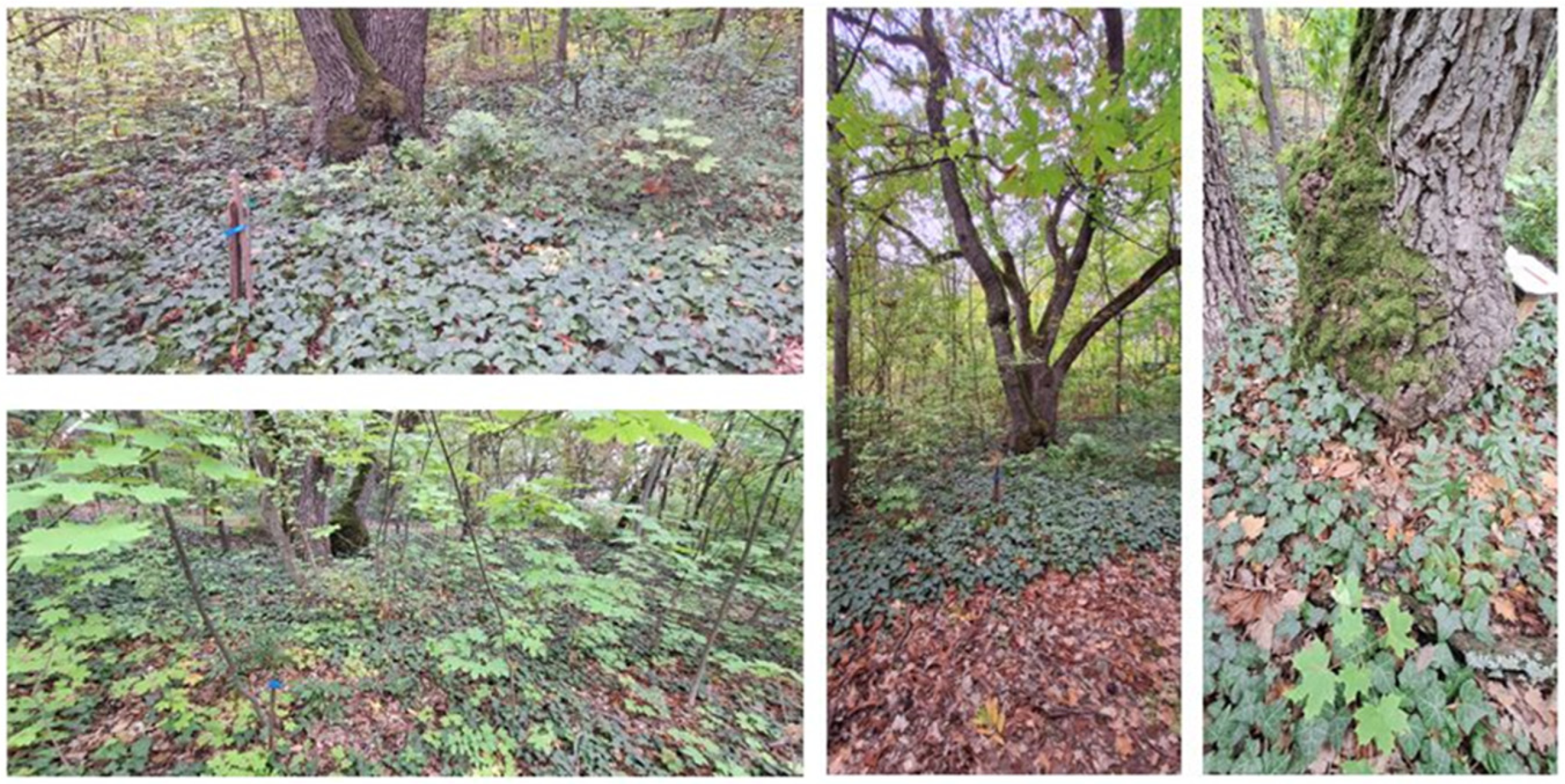
Figure A1. Photos of the sampling spot No. 1. (photos by the author).
Land 14 02181 g0a1
Figure A2. Photos of the sampling spot No. 2. (photos by the author).
Land 14 02181 g0a2
Figure A3. Photos of sampling spot No. 3. (photos by the author).
Land 14 02181 g0a3
Figure A4. Photos of sampling spot No. 4. (photos by the author).
Land 14 02181 g0a4
Figure A5. Photos of sampling spot No. 5. (photos by the author).
Land 14 02181 g0a5

References

  1. Nowak, D.J.; Crane, D.E.; Stevens, J.C. Air Pollution Removal by Urban Trees and Shrubs in the United States. Urban For. Urban Green. 2006, 4, 115–123. [Google Scholar] [CrossRef]
  2. Grote, R.; Samson, R.; Alonso, R.; Amorim, J.H.; Cariñanos, P.; Churkina, G.; Fares, S.; Thiec, D.L.; Niinemets, Ü.; Mikkelsen, T.N.; et al. Functional Traits of Urban Trees: Air Pollution Mitigation Potential. Front. Ecol. Environ. 2016, 14, 543–550. [Google Scholar] [CrossRef]
  3. Wolf, K.L.; Lam, S.T.; McKeen, J.K.; Richardson, G.R.A.; Van Den Bosch, M.; Bardekjian, A.C. Urban Trees and Human Health: A Scoping Review. Int. J. Environ. Res. Public Health 2020, 17, 4371. [Google Scholar] [CrossRef]
  4. Radó Dezső Terv, Budapest Zöldinfrastruktúra Fejlesztési és Fenntartási Akcióterve [Radó Dezső Plan, the Green Infrastructure Development and Maintenance Action Plan of Budapest]. Available online: https://rdt.budapest.hu/ (accessed on 25 June 2025).
  5. Chen, W.Y.; Jim, C.Y. Assessment and Valuation of the Ecosystem Services Provided by Urban Forests. In Ecology, Planning, and Management of Urban Forests; Carreiro, M.M., Song, Y.-C., Wu, J., Eds.; Springer: New York, NY, USA, 2008; pp. 53–83. ISBN 978-0-387-71424-0. [Google Scholar]
  6. Nádasy, L. Települési Faegyedek Talapülésképi Jelentősége [The Importance of Individual Trees in the Urban Image]. Ph.D. Thesis, Hungarian University of Agriculture and Life Sciences, Budapest, Hungary, 2022. [Google Scholar]
  7. Maclean, R. Botanical Village Names in Gaelic Scotland. Available online: https://scotlandsnature.wordpress.com/2025/07/31/botanical-village-names-in-gaelic-scotland/ (accessed on 18 June 2025).
  8. Kovács, É. Structural Types of Settlement Names Referring to the Natural Environment*. Available online: https://www.researchgate.net/publication/371200768_Structural_Types_of_Settlement_Names_Referring_to_the_Natural_Environment (accessed on 27 August 2025).
  9. Polniczky, J. Káptalanfüred Évtizedei 1930–2000 [Decades of Káptalanfüred 1930–2000]; Káptalanfüredi Fürdőegyesület: Káptalanfüred, Hungary, 2001; ISBN 978-963-00-6797-3. [Google Scholar]
  10. Kredics, L.; Lichtneckert, A. Balatonalmádi és Vörösberény Története [The History of Balatonalmádi and Vörösberény]; Almádiért Alapítvány: Balatonalmádi, Hungary, 1995; ISBN 978-963-7229-08-4. [Google Scholar]
  11. Kocsis, K. (Ed.) Magyarország Nemzeti Atlasza [National Atlas of Hungary], 2nd ed.; CSFK Földrajztudományi Kutatóintézet: Budapest, Hungary, 2024; ISBN 978-963-9545-55-7ö. [Google Scholar]
  12. Bölöni, J.; Molnár, Z.; Kun, A.; Biró, M. MÉTA Program, Általános Nemzeti Élőhely-Osztályozási Rendszer [General National Habitat Classification System]. Available online: https://www.novenyzetiterkep.hu/node/208 (accessed on 12 June 2025).
  13. Gulyás, K. The Effects of Climate Change on Distribution and Production of Sessile Oak (Quercus petraea). Ph.D. Thesis, University of Sopron, Sopron, Hungary, 2017. [Google Scholar]
  14. Tóth, I.; Retkes, J. Lombos Fák, Cserjék [Deciduous Trees, Shrubs]; Botanika Kft: Szombathely, Hungary, 2015; ISBN 9789638286055. [Google Scholar]
  15. Pasta, S.; de Rigo, D.; Caudullo, G. Quercus pubescens in Europe: Distribution, habitat, usage and threats. Tree Species 2016, 156–157. Available online: https://www.researchgate.net/publication/299471349_Quercus_pubescens_in_Europe_distribution_habitat_usage_and_threats (accessed on 19 October 2025).
  16. Mauri, A.; Enescu, C.M.; Houston Durrant, T.; de Rigo, D.; Caudullo, G. Quercus frainetto in Europe: Distribution, habitat, usage and threats. Tree Species 2016, 150–151. Available online: https://www.researchgate.net/publication/299471053_Quercus_frainetto_in_Europe_distribution_habitat_usage_and_threats (accessed on 19 October 2025).
  17. Szabó, K. Klímafák És Városfásítás [Climate Trees and Urban Forestation]; Author’s Publication Szabó, Krisztina: Budapest, Hungary, 2023; ISBN 978-615-01-7157-9. [Google Scholar]
  18. Jakucs, P. Ecology of an Oak Forest in Hungary. Results of Sikfokut Project 1. Biologia 1987, 42, 101. [Google Scholar]
  19. Maráczi, L. Díszfák, Díszcserjék Védelme [Protection of Ornamental Trees and Shrubs]; Nyugat-Dunántúli Díszfaiskolások Egyesülete: Szombathely, Hungary, 2013; ISBN 978-963-08-6992-8. [Google Scholar]
  20. Panzavolta, T.; Panichi, A.; Bracalini, M.; Croci, F.; Benigno, A.; Ragazzi, A.; Tiberi, R.; Moricca, S. Tree pathogens and their insect-mediated transport: Implications for oak tree die-off in a natural park area. Glob. Ecol. Conserv. 2018, 15, e00437. [Google Scholar] [CrossRef]
  21. Stump, A.J.; Bershing, K.; Bal, T.L.; Külheim, C. Current and Future Insect Threats to Oaks of the Midwest, Great Lakes, and Northeastern United States and Canada. Forests 2024, 15, 1361. [Google Scholar] [CrossRef]
  22. Borelli, S.; Varela, M.C. Mediterranean Oaks Network: Report of the First Meeting; Bioversity International: Rome, Italy, 2001; ISBN 92-9043-469-4. [Google Scholar]
  23. Saxe, R. In Zeiten von Schwammstadt und Klimaanpassung. Available online: https://www.gruene-fraktion-bremen.de/positionspapiere/in-zeiten-von-schwammstadt-und-klimaanpassung-so-viel-baumschutz-wie-moeglich/ (accessed on 25 July 2025).
  24. Wiesbaden Environmental Agency. Available online: https://www.wiesbaden.de/en/vv/produkte/36/Antrag-nach-Baumschutzsatzung-im-bebauten-Stadtbereich-Innenbereich (accessed on 25 July 2025).
  25. Protected Trees, a Guide to Tree Preservation Procedures. Available online: https://www.gov.uk/guidance/tree-preservation-orders-and-trees-in-conservation-areas (accessed on 25 July 2025).
  26. Schweitzer, J.-P.; Bonduelle, L. Vienna Tree Protection Act in Austria. Available online: https://buildaction.org/abstracts/vienna-tree-protection-act-in-austria/ (accessed on 15 June 2025).
  27. Stadt Wien Baumschutz in Wien. Available online: https://www.wien.gv.at/umwelt/parks/baumschutz/ (accessed on 14 June 2025).
  28. Alizadeh, B.; Hitchmough, J. A Review of Urban Landscape Adaptation to the Challenge of Climate Change. Int. J. Clim. Change Strateg. Manag. 2018, 11, 178–194. [Google Scholar] [CrossRef]
  29. Hufnagel, L. A klímaváltozás hatása ökológiai folyamatokra és közösségekre [The Impact of Climate Change on Communities and Ecological Processes]. Int. J. Clim. Change Strateg. Manag. 2019, 11, 178–194. [Google Scholar]
  30. Bartholy, J. Éghajlati Projekció a RegCM Modellel [Climate Projection with the RegCM Model]; ELTE: Budapest, Hungary, 2016; p. 4. [Google Scholar]
  31. Pauleit, S.; Fryd, O.; Backhaus, A.; Jensen, M.B. Green Infrastructures to Face Climate Change in an Urbanizing World. In Sustainable Built Environments; Loftness, V., Ed.; Springer: New York, NY, USA, 2020; pp. 207–234. [Google Scholar] [CrossRef]
  32. Bartholy, J.; Pongracz, R.; Gelybó, G.; Szabó, P. Tendencies of Extreme Climate Indices Based on Daily Precipitation in the Carpathian Basin. In Bioclimatology and Natural Hazards; Strelcová, K., Matyas, C., Kleidon, A., Lapin, M., Matejka, F., Blazenec, M., Skvarenina, J., Holecy, J., Eds.; Springer Science+Business Media B.V.: Berlin/Heidelberg, Germany, 2009; pp. 15–28. [Google Scholar] [CrossRef]
  33. Bozó, L. Climate Change: Global and Regional Challenges. 4D J. Landsc. Archit. Gard. Art 2024, 58–63. [Google Scholar] [CrossRef]
  34. Mátyás, C. Challenges of adapting forest management to changes of climate. Erdészeti Lapok 2017, CLII, 102–106. [Google Scholar]
  35. Misik, T.; Kárász, I.; Tóthmérész, B. Understory Development in an Oak Forest in Northern Hungary: The Subcanopy Layer. Acta Silv. Lignaria Hung. 2014, 10, 9–21. [Google Scholar] [CrossRef]
  36. Gilliam, F.S. Forest ecosystems of temperate climatic regions: From ancient use to climate change. New Phytol. 2016, 212, 871–887. Available online: https://nph.onlinelibrary.wiley.com/doi/full/10.1111/nph.14255 (accessed on 19 October 2025). [CrossRef]
  37. Tyrväinen, L.; Pauleit, S.; Seeland, K.; de Vries, S. Benefits and Uses of Urban Forests and Trees. In Urban Forests and Trees: A Reference Book; Konijnendijk, C., Nilsson, K., Randrup, T., Schipperijn, J., Eds.; Springer: Berlin/Heidelberg, Germany, 2005; pp. 81–114. ISBN 978-3-540-27684-5. [Google Scholar]
  38. Sabatini, F.M.; Burrascano, S.; Keeton, W.S.; Levers, C.; Lindner, M.; Pötzschner, F.; Verkerk, P.J.; Bauhus, J.; Buchwald, E.; Chaskovsky, O.; et al. Where Are Europe’s Last Primary Forests? Divers. Distrib. 2018, 24, 1426–1439. [Google Scholar] [CrossRef]
  39. JRC Forest Research Activities. Available online: https://data.jrc.ec.europa.eu/collection/FISE (accessed on 20 August 2024).
  40. Früchtenicht, E.; Neumann, L.; Klein, N.; Bonal, D.; Brüggemann, W. Response of Quercus robur and Two Potential Climate Change Winners—Quercus pubescens and Quercus ilex—To Two Years Summer Drought in a Semi-Controlled Competition Study: I—Tree Water Status. Environ. Exp. Bot. 2018, 152, 107–117. [Google Scholar] [CrossRef]
  41. Madsen, C.L.; Kjær, E.D.; Ræbild, A. Climatic Criteria for Successful Introduction of Quercus Species Identified by Use of Arboretum Data. For. Int. J. For. Res. 2021, 94, 526–537. [Google Scholar] [CrossRef]
  42. KEFAG, Z. Kecskeméti Arborétum—Tölgygyűjtemény [Kecskemét Arboretum—Oak Collection]. Available online: https://kecskemetiarboretum.hu/index.php/az-arboretumrol/tolgygyujtemeny (accessed on 13 March 2025).
  43. Szimulált Történelmi Éghajlati és Időjárási Adatok Balatonalmádi [Simulated Historical Climate and Weather Data for Balatonalmádi]. Available online: https://www.meteoblue.com/hu/id%C5%91j%C3%A1r%C3%A1s/historyclimate/climatemodelled/balatonalm%C3%A1di_magyarorsz%C3%A1g_3055590 (accessed on 13 August 2025).
  44. HungaroMet Magyar Meteorológiai Szolgáltató Nonprofit Zrt. 2025. Available online: https://www.met.hu/ (accessed on 27 August 2025).
  45. Haszán, Z. Erdőt Irtottak Káptalanfüreden, Hogy Kézilabdacsarnokot Építsenek Kocsis Máté Kerületének Üdülőjében [A Forest Was Cleared in Káptalanfüred to Build a Handball Hall in Máté Kocsis’s District Resort]. Available online: https://444.hu/2017/07/21/erdot-irtottak-kaptalanfureden-hogy-kezilabdacsarnokot-epitsenek-kocsis-mate-keruletenek-udulojeben (accessed on 14 May 2025).
  46. Lechner Tudásközpont. Available online: https://lechnerkozpont.hu/oldal/fentrol-hu (accessed on 14 August 2025).
  47. Gibson, P.J.; Power, C.H. Indroductory Remote Sensing, Digital Image Processing and Applications, 1st ed.; Routledge: London, UK, 2000; ISBN 9780415189620. [Google Scholar]
  48. Szaller, V. Útmutató a Vizuális és Műszeres Favizsgálatok Elvégzéséhez és Dokumentálásához; Magyar Faápolók Egyesülete: Kiskunhalas, Hungary, 2017; Available online: https://www.academia.edu/36987505/%C3%9Atmutat%C3%B3_a_Vizu%C3%A1lis_%C3%A9s_m%C5%B1szeres_favizsg%C3%A1latok_elv%C3%A9gz%C3%A9s%C3%A9hez_%C3%A9s_dokument%C3%A1l%C3%A1s%C3%A1hoz (accessed on 10 May 2025).
  49. Hungarian Arborist Website. Available online: https://faapolok.hu/ (accessed on 5 May 2025).
  50. Budai Arborétum Quercus frainetto—Budai Arborétum—MATE. Available online: https://budaiarboretum.uni-mate.hu/quercus-frainetto1 (accessed on 13 March 2025).
  51. Brindis-Badillo, D.A.; Arroyo-Rodríguez, V.; Mendoza, E.; Wies, G.; Martínez-Ramos, M. Conserving Dominant Trees in Human-Modified Landscapes at the Lacandon Tropical Rainforest. Biol. Conserv. 2022, 270, 109548. [Google Scholar] [CrossRef]
  52. Zöldfelületi Tanúsítvány [Greensurface Certificate]. Available online: https://www.zoldfeluletitanusitvany.hu/ (accessed on 7 June 2025).
  53. Balatonalmádi Város Önkormányzata Képviselő-Testületének 25/2015 (IX.25.) Önkormányzati Rendelete a Környezetvédelem Helyi Szabályairól [Balatonalmádi Municipal Council Local Government Decree 25/2015 (IX.25.) on Local Environmental Protection Regulations]. Available online: https://or.njt.hu/onkormanyzati-rendelet/2015-25-SP-3659 (accessed on 20 May 2025).
  54. Balatonalmádi Város Önkormányzata Képviselő-Testületének 30/2022. (X. 27.) Önkormányzati Rendelete a Fák Védelméről [Balatonalmádi Local Government of Balatonalmádi Municipal Council Decree No. 30/2022 (X. 27.) on the Protection of Trees]. Available online: https://or.njt.hu/onkormanyzati-rendelet/2022-30-SP-3659 (accessed on 20 May 2025).
  55. Fekete, G. General description of the Gödöllő hillside. J. Landsc. Ecol. 2007, 5, 213–223. [Google Scholar] [CrossRef]
  56. Mészáros, I. Szakmai Zárójelentés OTKA K-68397 sz. Pályázat: Középhegységi Zonális Fafajok Klímaérzékenységének Ökofiziológiai Vizsgálata, Különös Tekintettel a Vízforgalmi Sajátosságokra [Final Professional Report OTKA K-68397 Grant: Ecophysiological Study of the Climate Sensitivity of Zonal Tree Species in the Mid-Mountain Range, with Particular Regard to Water Circulation Characteristics]. 2012. Available online: http://nyilvanos.otka-palyazat.hu/index.php?menuid=930&lang=EN&num=68397 (accessed on 19 May 2025).
  57. Tóth, I. Lomblevelű Díszfák, Díszcserjék Kézikönyve [Manual of Deciduous Ornamental Trees and Shrubs]; Tarkavirág Keresk. és Szolg. Kft: Dunaharaszti, Hungary, 2012; ISBN 9789635035410. [Google Scholar]
  58. Lapointe, M.; Brisson, J. A Comparison of Invasive Acer Platanoides and Native A. Saccharum First-Year Seedlings: Growth, Biomass Distribution and the Influence of Ecological Factors in a Forest Understory. Forests 2012, 3, 190–206. [Google Scholar] [CrossRef]
  59. Fang, W.; Wang, X. Impact of Invasion of Acer Platanoides on Canopy Structure and Understory Seedling Growth in a Hardwood Forest in North America. Trees 2011, 25, 455–464. [Google Scholar] [CrossRef]
  60. Faültetés a Klímaváltozás Ellen—Az Olasz Molyhos Tölgy Szaporítása Mentheti Meg Az Erdőket [Planting Trees Against Climate Change—Propagating Quercus pubescens Trees Could Save Forests]. Available online: https://www.youtube.com/watch?v=sFA-3DzS4Vo&ab_channel=Tolnat%C3%A1jTelev%C3%ADzi%C3%B3 (accessed on 16 May 2025).
  61. Trogisch, S.; Liu, X.; Rutten, G.; Xue, K.; Bauhus, J.; Brose, U.; Bu, W.; Cesarz, S.; Chesters, D.; Connolly, J.; et al. The Significance of Tree-Tree Interactions for Forest Ecosystem Functioning. Basic Appl. Ecol. 2021, 55, 33–52. [Google Scholar] [CrossRef]
  62. Bordács, P.; Borovics, A.; Kézdy, P. A Molyhos Tölgyek—Quercus pubescens. Available online: http://ngt-erdeszet.emk.nyme.hu/teendok/molyhos.htm (accessed on 15 May 2025).
  63. Budapest Főváros XII. Kerület Hegyvidéki Önkormányzat Képviselő-Testületének 58/2018 (XII.17.) Önkormányzati Rendelete [Local Government Decree 58/2018 (XII.17.) of the Representative Body of the Local Government of Hegyvidék, District XII of Budapest]. Available online: https://or.njt.hu/onkormanyzati-rendelet/2018-58-SP-261 (accessed on 19 May 2025).
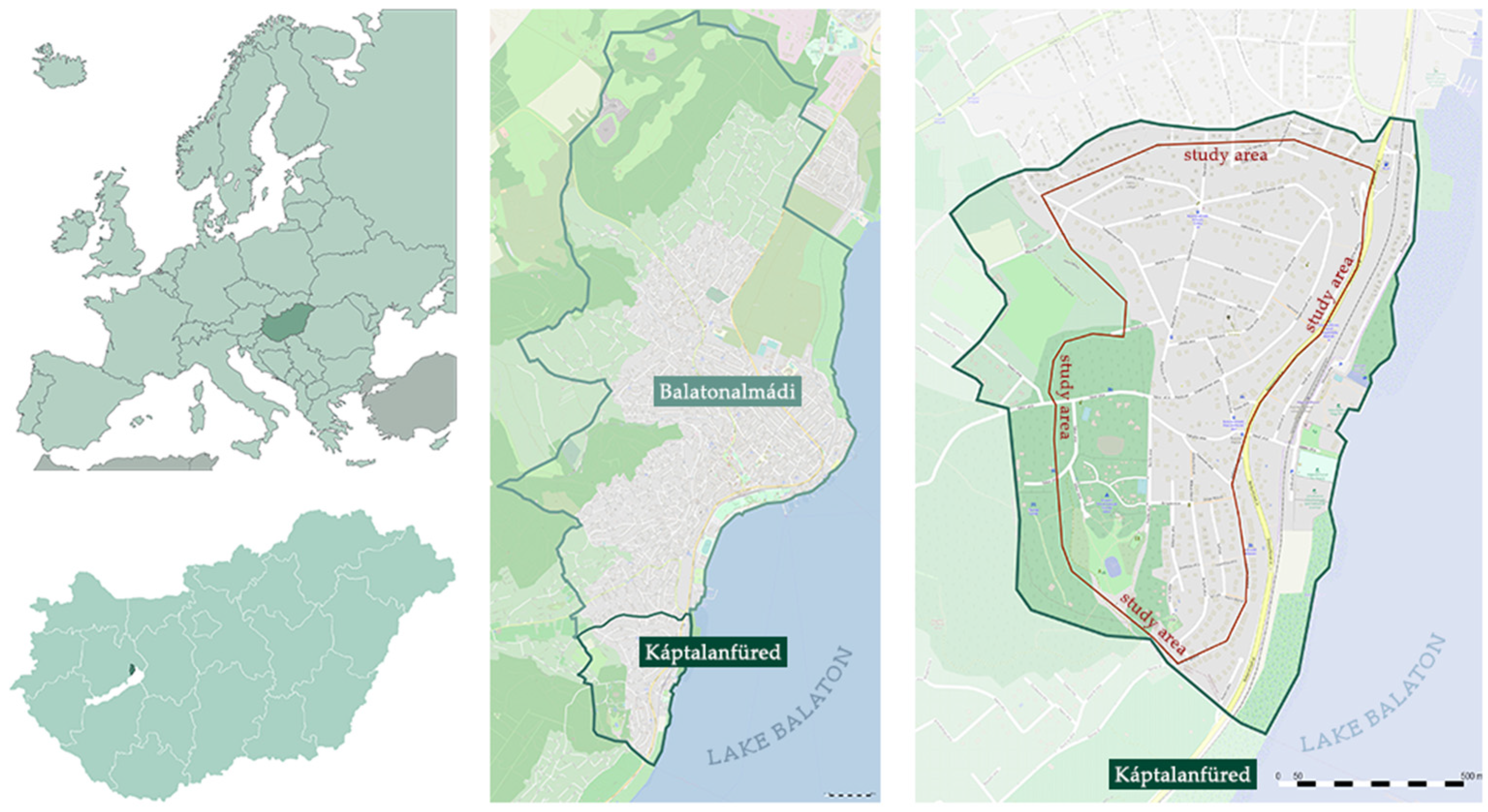
Figure 1. Geographical location of Balatonalmádi, Hungary, and the area of Káptalanfüred within the administrative boundaries of Balatonalmádi, and the study area in Káptalanfüred (based on Open Street Map).
Land 14 02181 g001
Figure 2. Deviation of the national monthly average temperature (a) and monthly average precipitation (b) totals from the long-term (1991–2020) average compared to 2024 (based on homogenized, interpolated data) [44].
Land 14 02181 g002
Figure 3. Site visit routes and location of the sampling spots (1–5) in Káptalanfüred (based on Open Street Map).
Land 14 02181 g003
Figure 4. (ac) Locations of the sampling spots (1–5) in Káptalanfüred (based on Google Earth).
Land 14 02181 g004
Figure 6. The third military survey and the 1940 map of the area around present-day Káptalanfüred (source: https://maps.arcanum.com/hu/).
Land 14 02181 g006
Figure 7. A 1961 spy satellite image and a present-day Google Earth photo of the area around Káptalanfüred. (source: https://maps.arcanum.com/hu/). Red box refers to the area with the most severe canopy loss.
Land 14 02181 g007
Figure 8. Vegetation vitality (based on NDVI) of the study site with Landsat and Sentinel satellites with marking the location of sampling spots (1–5).
Land 14 02181 g008
Figure 9. NDVI values of the study sites from 2005 to 2025 with Landsat (a) and Sentinel (b) satellites.
Land 14 02181 g009
Figure 10. On-site photograph taken in May 2025 showing the upper canopy layer formed by oaks, exhibiting signs of dieback (Photo by author).
Land 14 02181 g010
Figure 11. Patches of Austrian pine (Pinus nigra) in Káptalanfüred, March 2025 (based on Google Earth).
Land 14 02181 g011
Figure 12. Green public strip suitable for planting street trees (source: own editing).
Land 14 02181 g012
Table 1. Directions of spread of some tree species found in the study area (by authors).
Tree SpeciesSize of Spread AreaSpread in the Carpathian BasinSoil Limitation
Quercus cerrisspread to northern and
western Europe
its spread includes
the Carpathian Basin
indifferent
Quercus petraeaspreading dynamically
northwards
declining, retreats to higher,
mountainous regions
neutral/slightly acid soil
Quercus pubescensa significant spread to the north-eastcurrently spreading in the south-west, forecast shows a slow spread to the east (Great Plain)neutral/slightly alkaline soil
Quercus frainettoa slow spread north and westthe south-west of the basin will be particularly suitableneutral/slightly acid soil
Acer campestreis expected to expand in a north-easterly directionno changeindifferent
Table 2. Climate data of Balatonalmádi-Káptalanfüred based on MET [44].
Balatonalmádi-Káptalanfüred Climate Data1991–20202024
The average annual temperature (°C)1114
The number of hot days2961
Number of days affected by the heat wave1845
The annual precipitation (mm)550–600550
Table 3. Summarizing table of the plant composition of the five sampling spots with the number of plant individuals at each level and trunk diameter, height and health status of the woody vegetation.
LevelsTaxa and DataSampling Spot 1.Sampling Spot 2.Sampling Spot 3.Sampling Spot 4.Sampling Spot 5.
Upper canopyAcer campestre 5
Quercus cerris 1
Quercus petraea243 1
DBH (cm) *40; 7350; 35; 35; 29; 1220; 20; 2020; 20; 20; 8–15 **; 1565
Tree height (m)15; 1815–1715–187–815
Health (1–5) ***35544
Second canopy Acer campestre11
Acer platanoides1
Aecsulus hippocastanum1
Cerasus fruticosa 2
Fraxinus ornus 2
Quercus cerris 1
DBH (cm) *12; 14; 1510; 12; 12; 3015; 23--
Tree height (m)5–64–84–5--
Health (1–5) ***444--
Shrub levelAcer campestre2333
Acer platanoides35
Cerasus fruticosa 1
Euonymus europaeus 22
Fraxinus ornus 1102
Ligustrum vulgare 15 1
Mahonia aquifolium4 7
Prunus cerasifera31
Ulmus pumila3
Shrub height (m)0.4–10.6–1.51–31.2–1.80.3
Health (1–5) ***44555
Ground levelAlliaria petiolata 3%20%
Hedera helix70%70%5%5%
Dryopteris filix-mas 9 ind. ****
Quercus seedling 1 ind. ****
Ruscus aculeatus 1 ind. ****
lawn 65%
* DBH = tree diameter in 1 m height (cm); ** = double trunked tree; *** Health (1–5) see Appendix A.1; **** ind. = individual.
Table 4. Comparison of regulations on tree felling and replanting in Káptalafüred [2,7,52].
DecreeEffective on Private
Property as Well
Replacement
Obligation
Quantity of
Replacement
Financial
Compensation Determined
Regulation of Felling Invasive SpeciesSuggested
Species for
Replacement
Balatonalmádi/
Káptalanfüred
effective
YESfrom 5 cm trunk
diameter
12/14 trunk
circumference for 20 cm trunk diameter of felled trees
nonono
Balatonalmádi/
Káptalanfüred
previous
YESfrom 10 cm trunk diameter50%nonooak
Disclaimer/Publisher’s Note: The statements, opinions and data contained in all publications are solely those of the individual author(s) and contributor(s) and not of MDPI and/or the editor(s). MDPI and/or the editor(s) disclaim responsibility for any injury to people or property resulting from any ideas, methods, instructions or products referred to in the content.