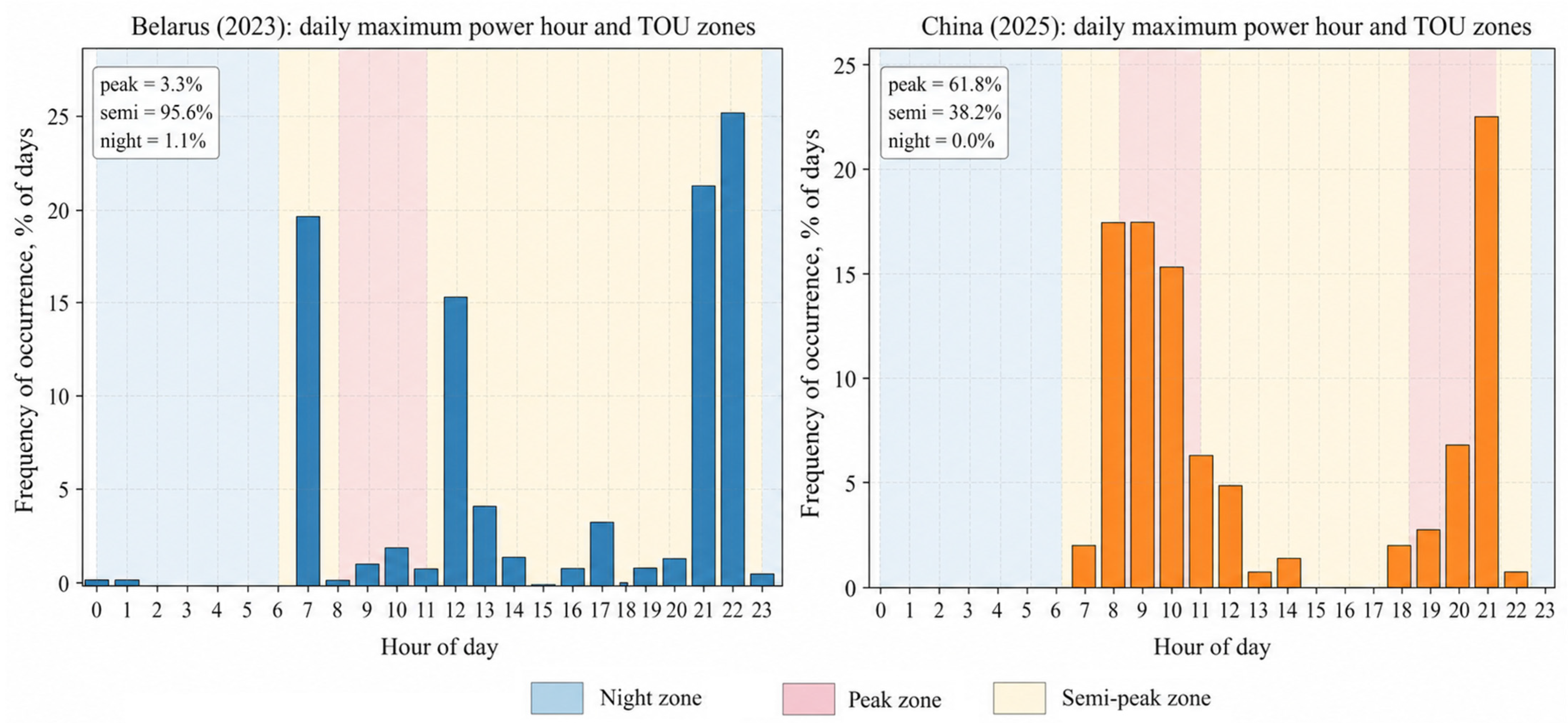
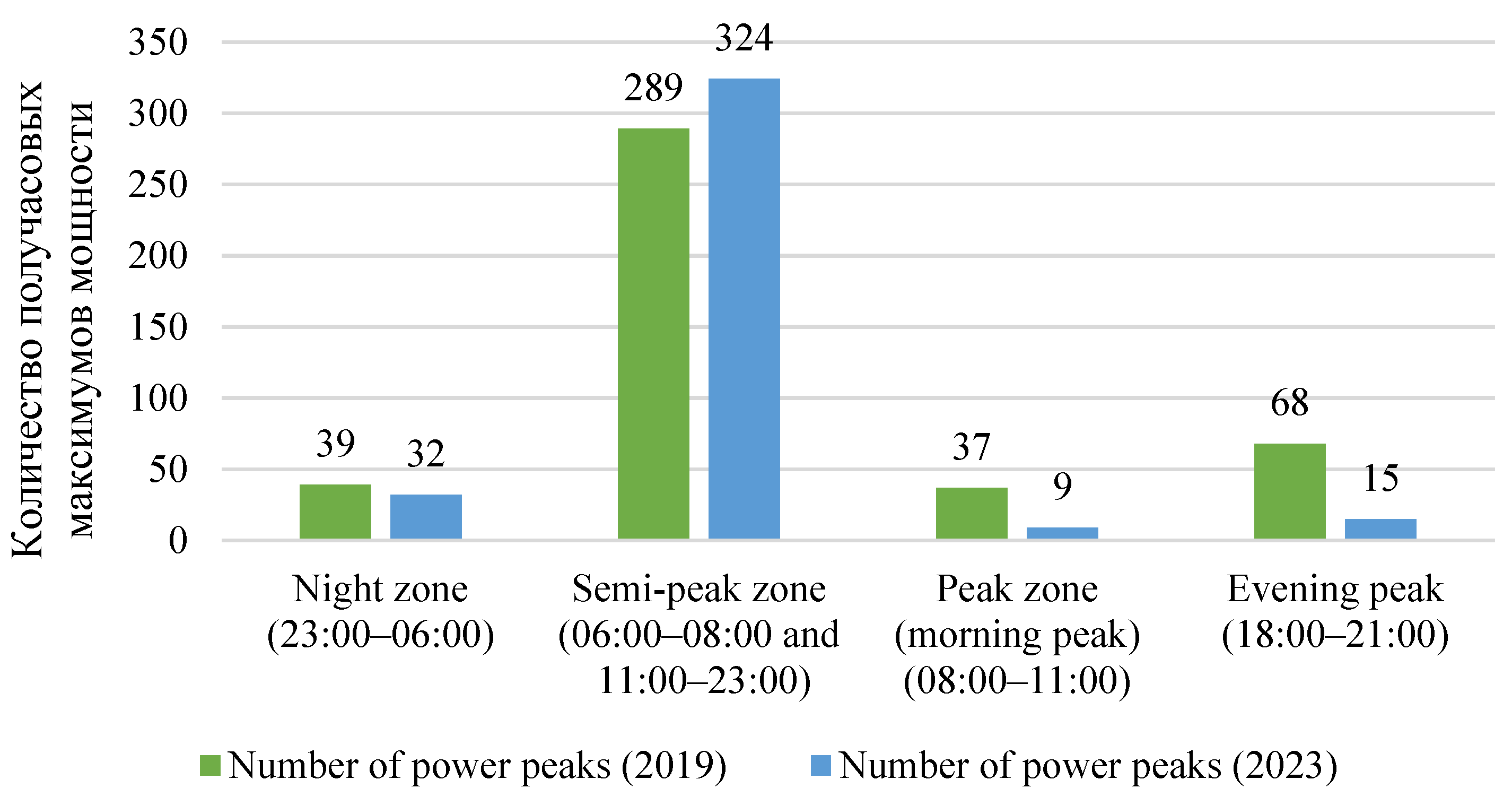
Assessing the Potential for Intra-Day Load Redistribution in Water Intake Systems Under Different Electricity Tariff Models: A Comparative Case Study of Belarus and China




Abstract
1. Introduction
2. Literature Review
3. Methodology
3.1. General Characteristics of the Research Objects
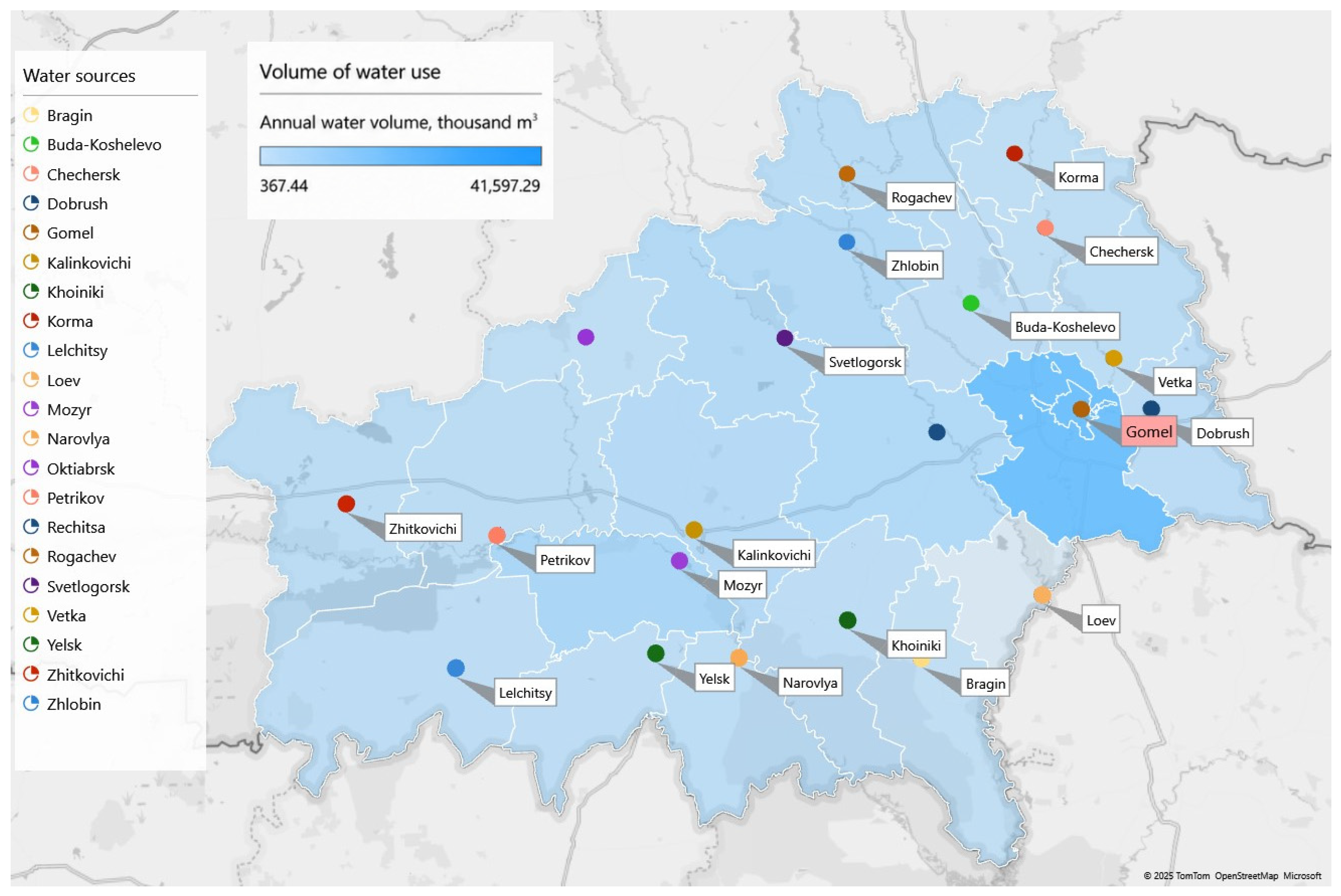
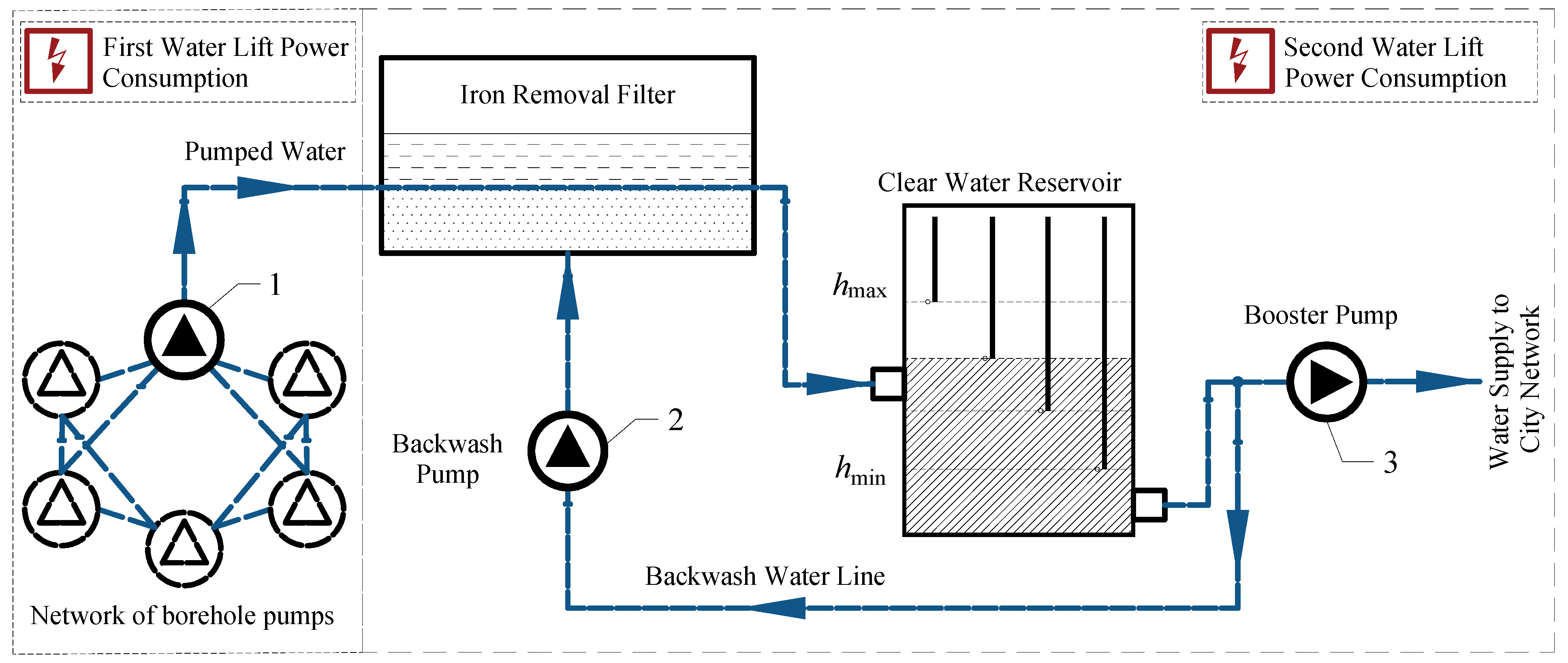
3.1.1. Features of the Belarusian Water Supply Infrastructure
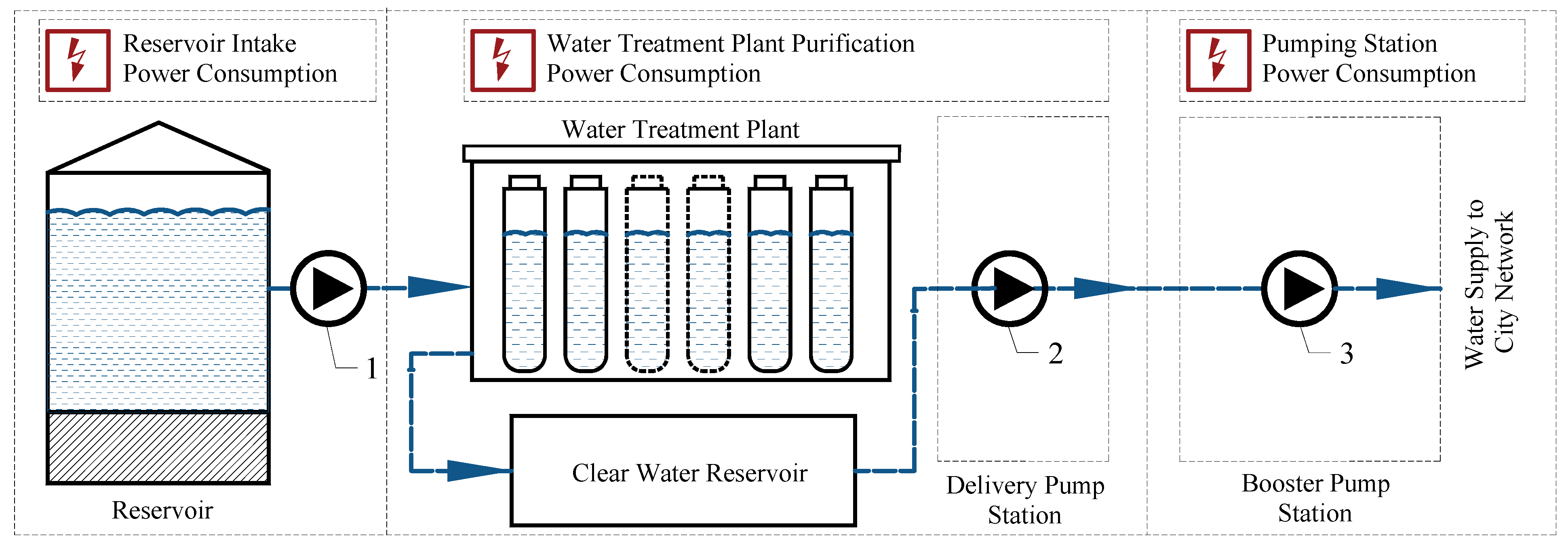
3.1.2. Features of China’s Water Supply Infrastructure
3.1.3. Comparability Analysis of Belarusian and Chinese Water Supply Systems
- Consistency in System Attributes and Processes
- 2.
- Homology of Electricity Tariff Mechanisms
- 3.
- Alignment in Management Needs
3.2. Sources of Statistical Information and Data Processing Methods
3.2.1. The Belarusian Water Supply System
3.2.2. The Chinese Water Supply System
3.3. Data Reconciliation and Comparability of Research Objects
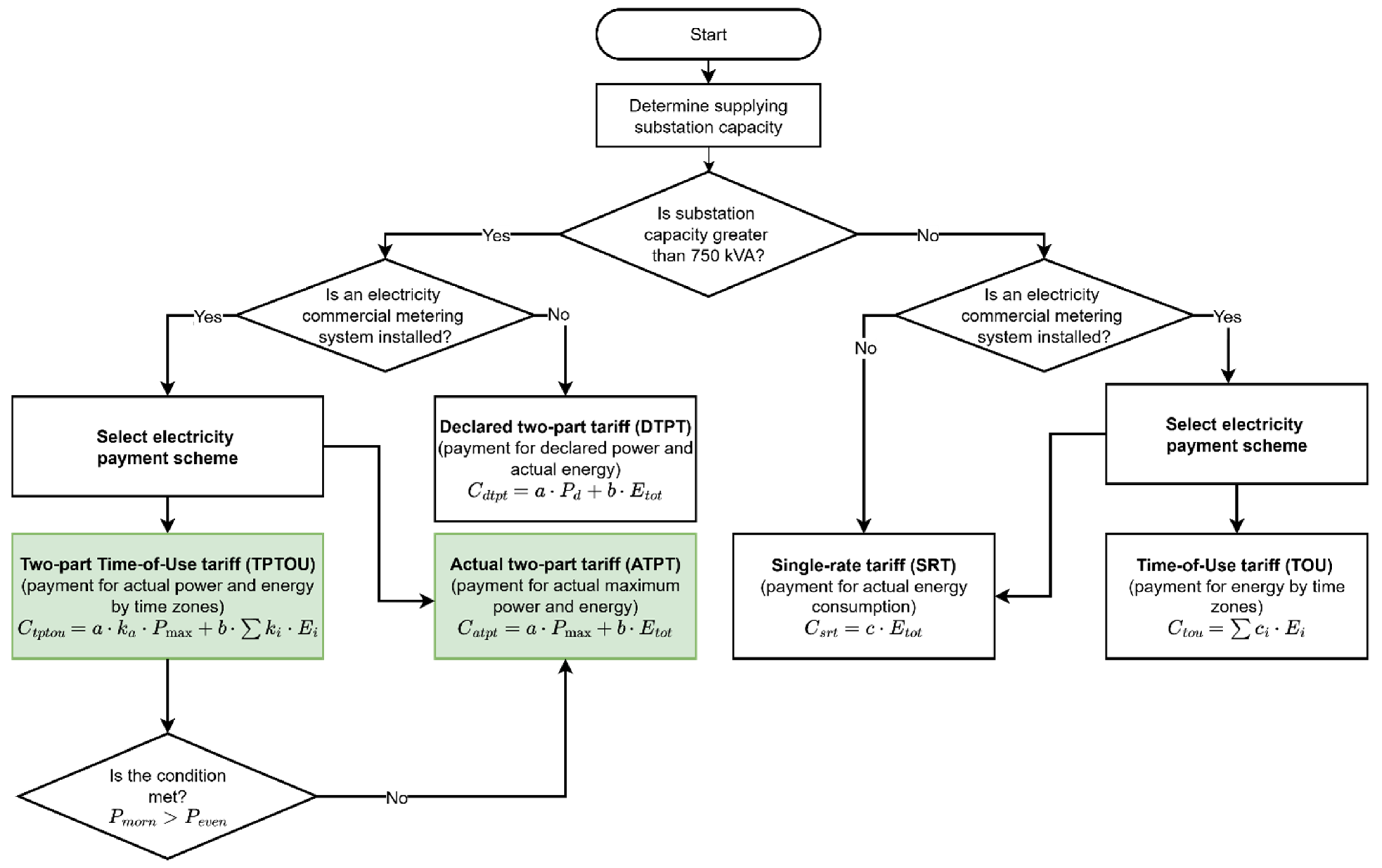
3.4. Tariff Models for Electricity Cost Calculation
3.4.1. Electricity Payment Features in Belarus
3.4.2. Peculiarities of Payment for Electricity in China
3.5. Methods of Comparative Analysis
3.6. Diagnostic Analysis of Load Transferability
3.6.1. F-Index for Assessing Potential Load Transferability
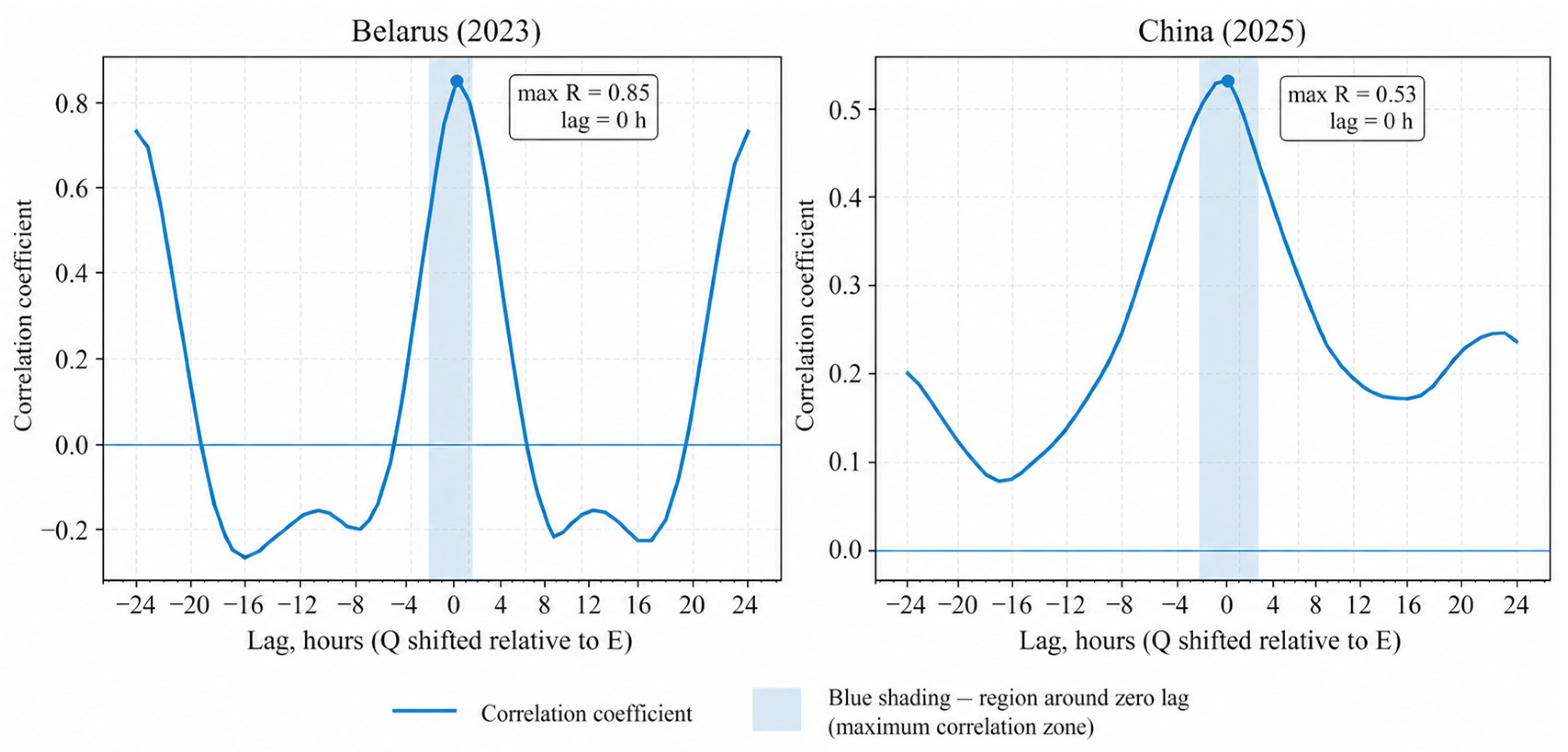
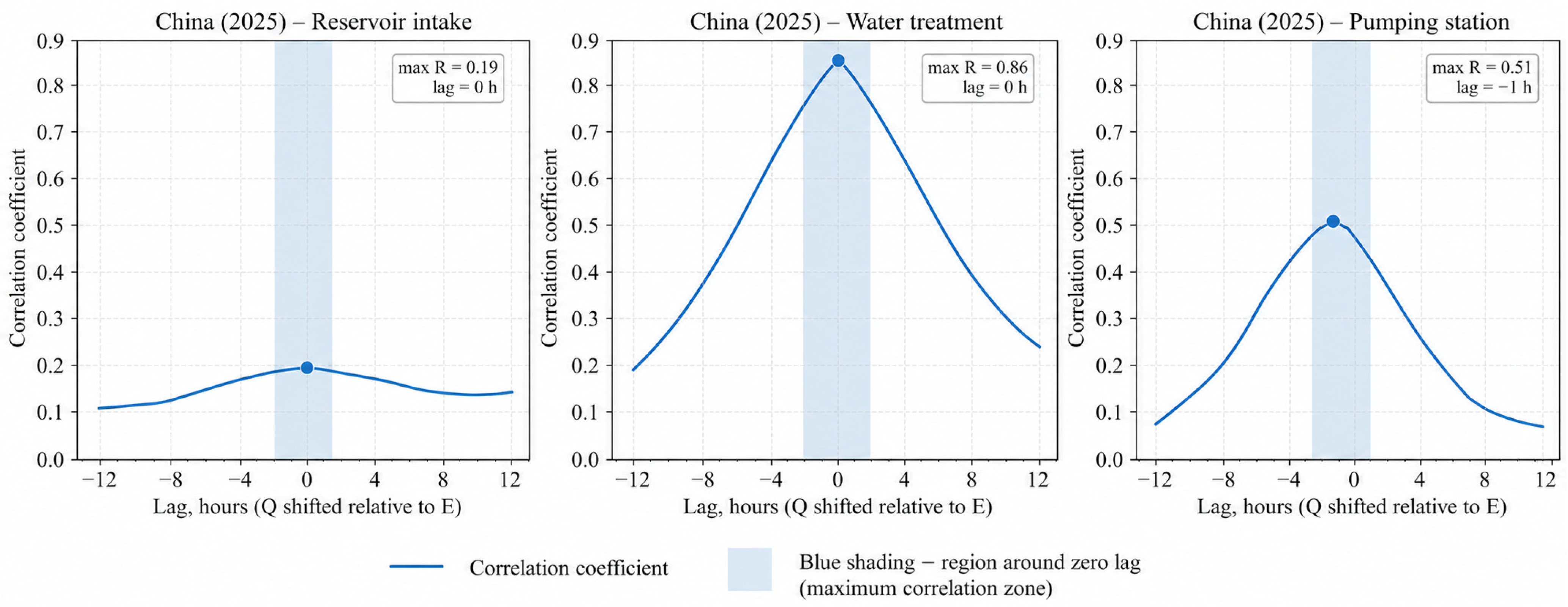
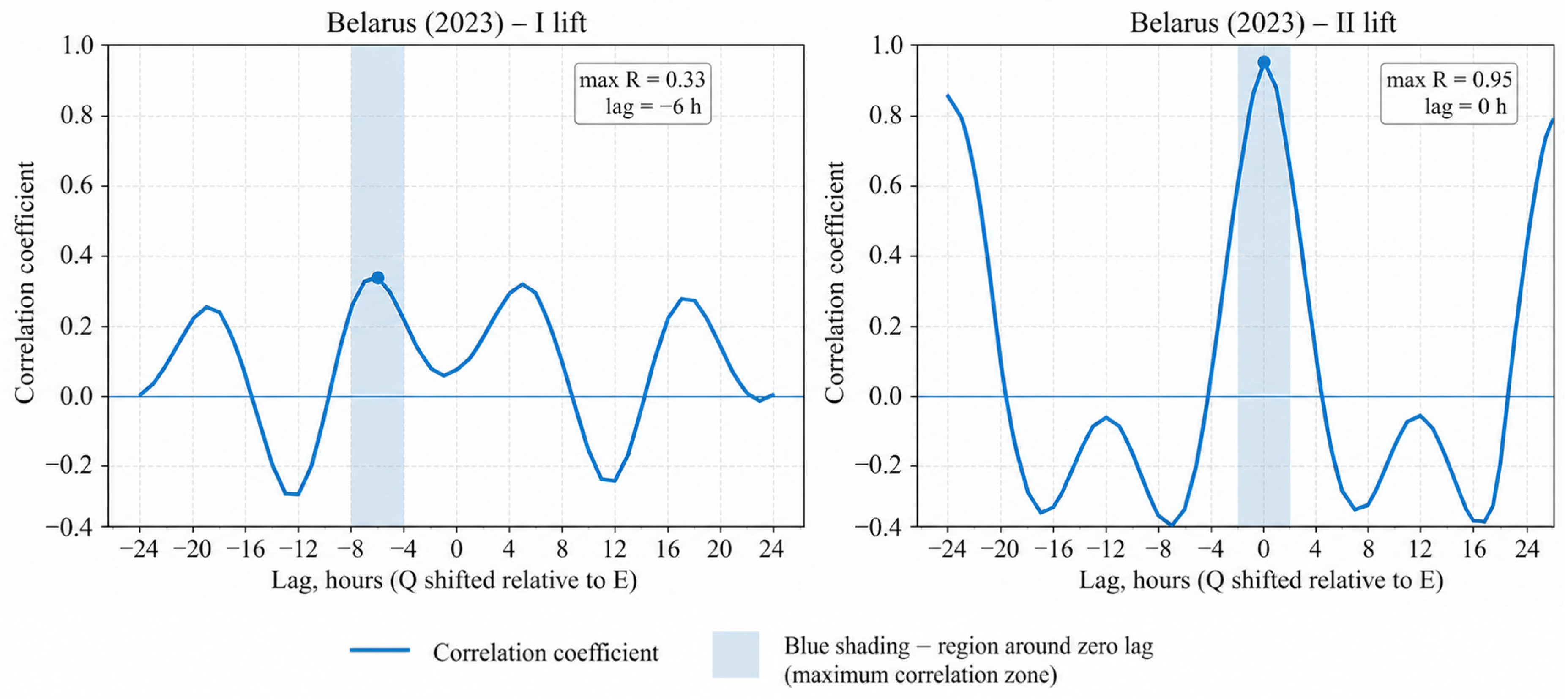
3.6.2. Lag Analysis of the Delay Effect
3.6.3. Tariff-Directed Energy Shifts Relative to Water Supply
4. Results and Discussion
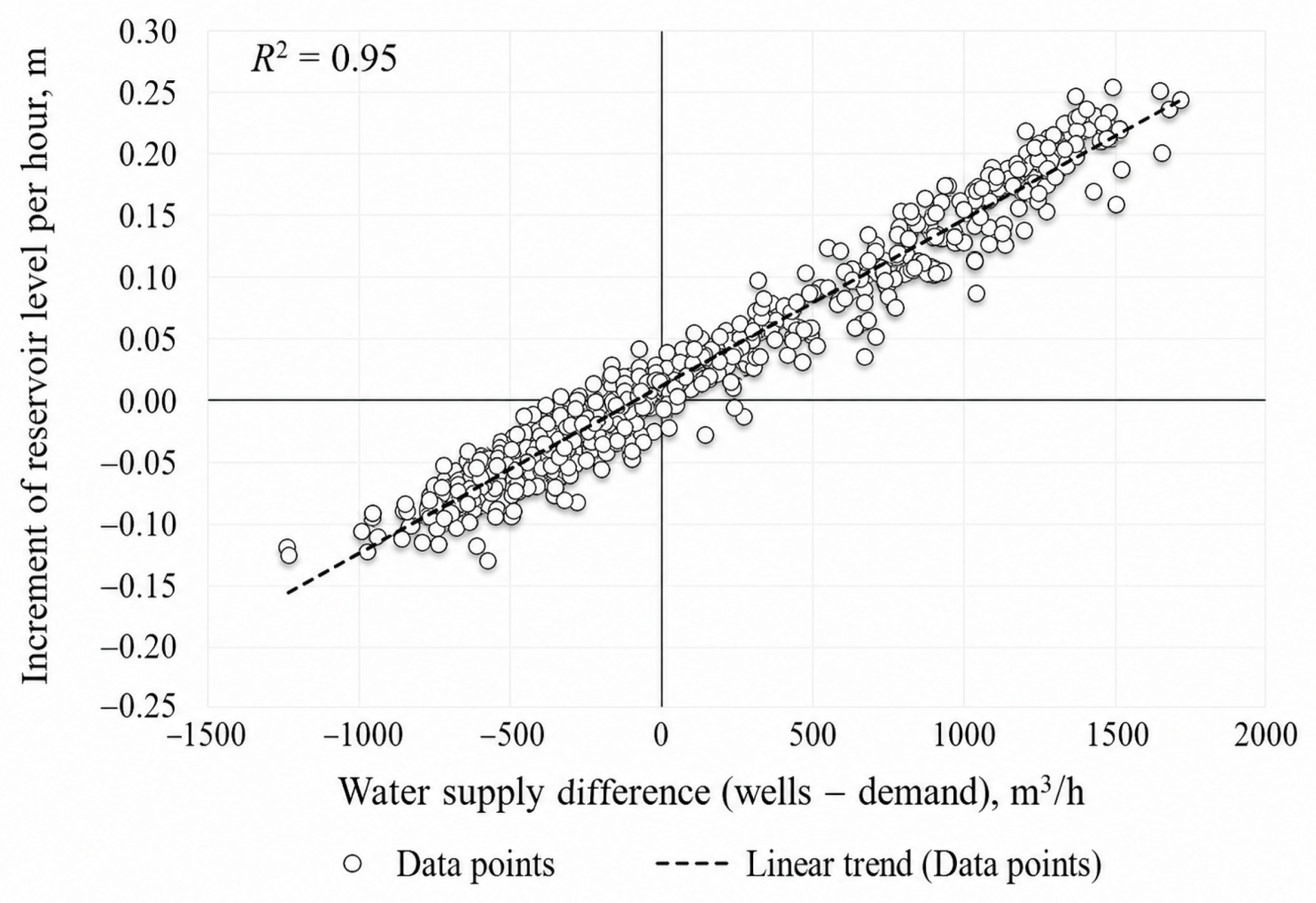
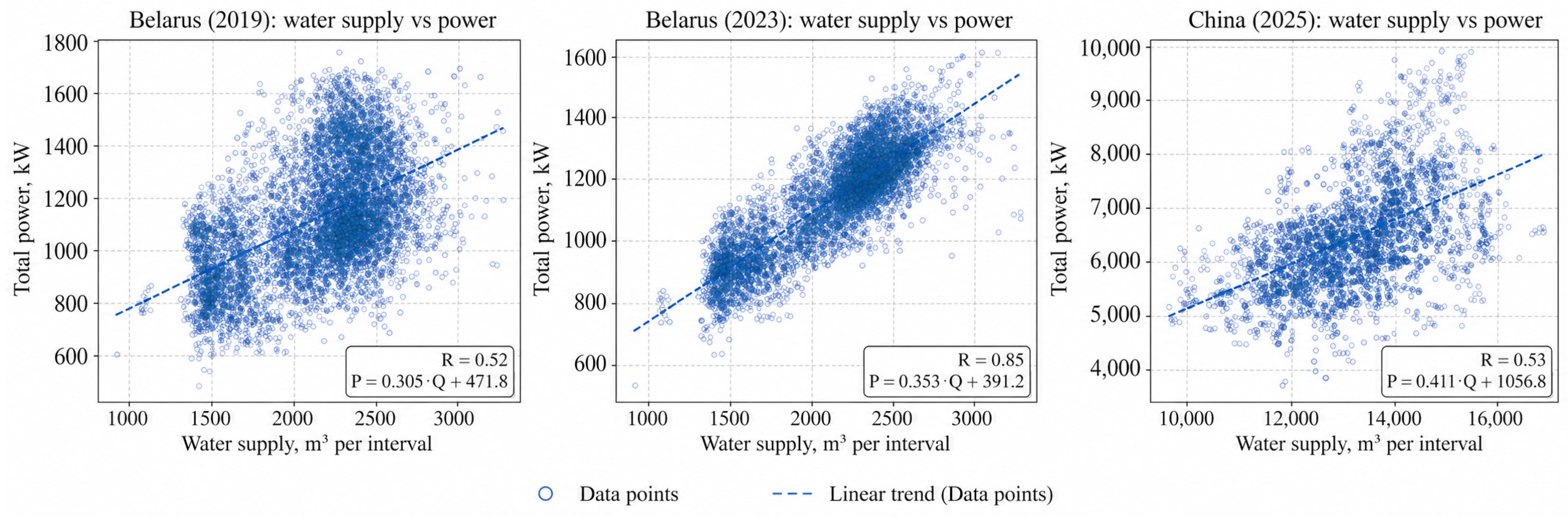
4.1. Impact of Load Management Modes on the Relationship Between Water Supply and Power Consumption
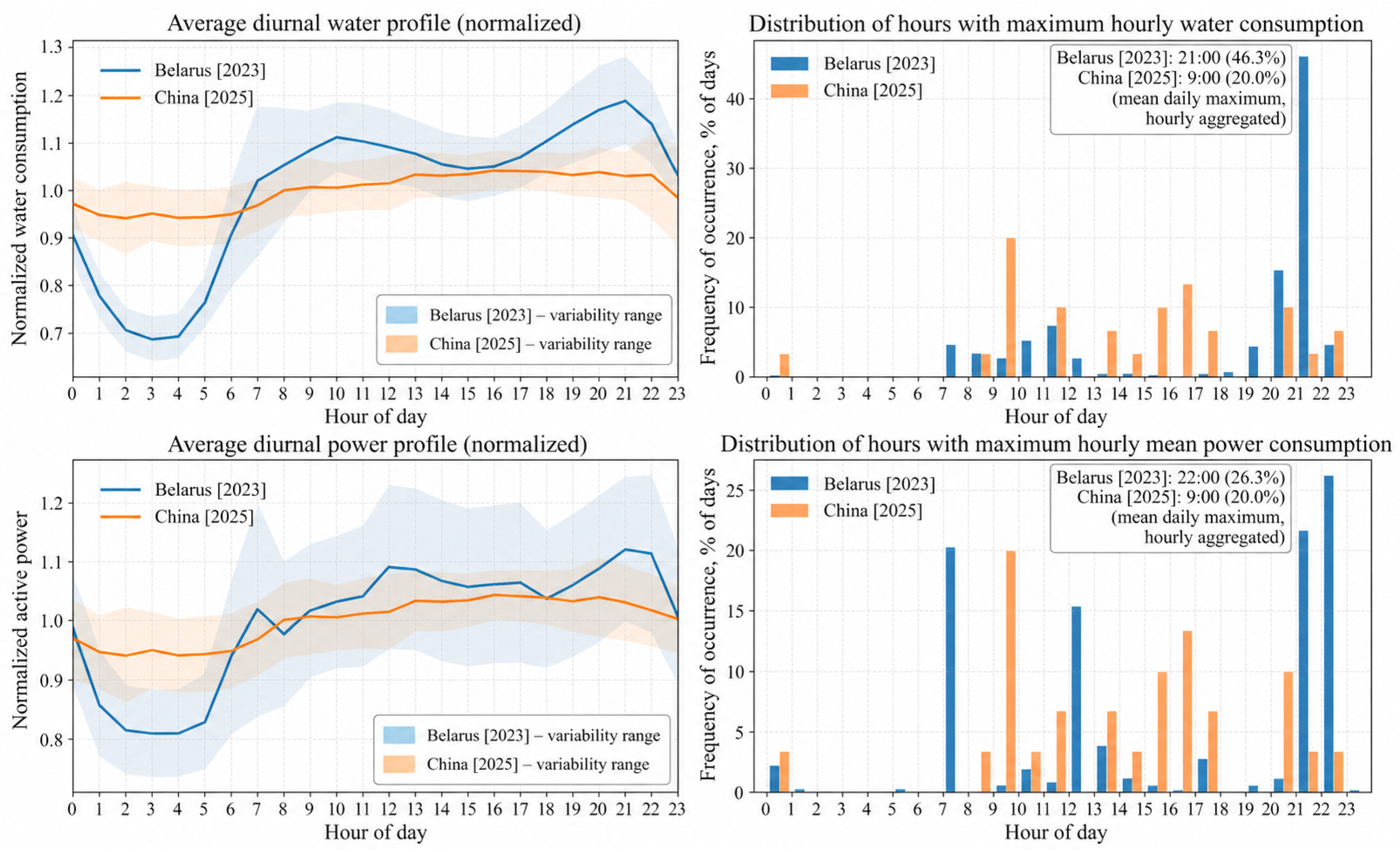
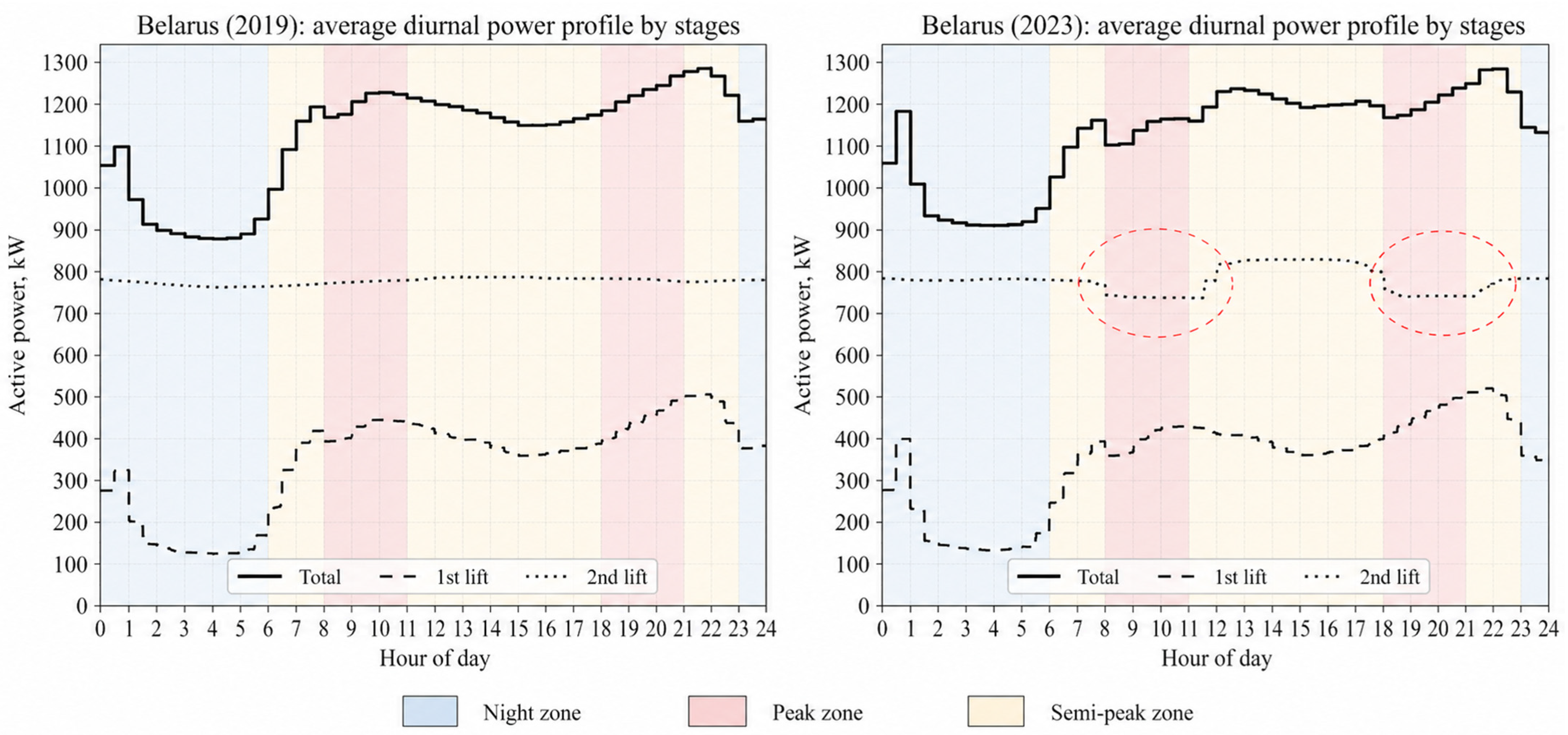
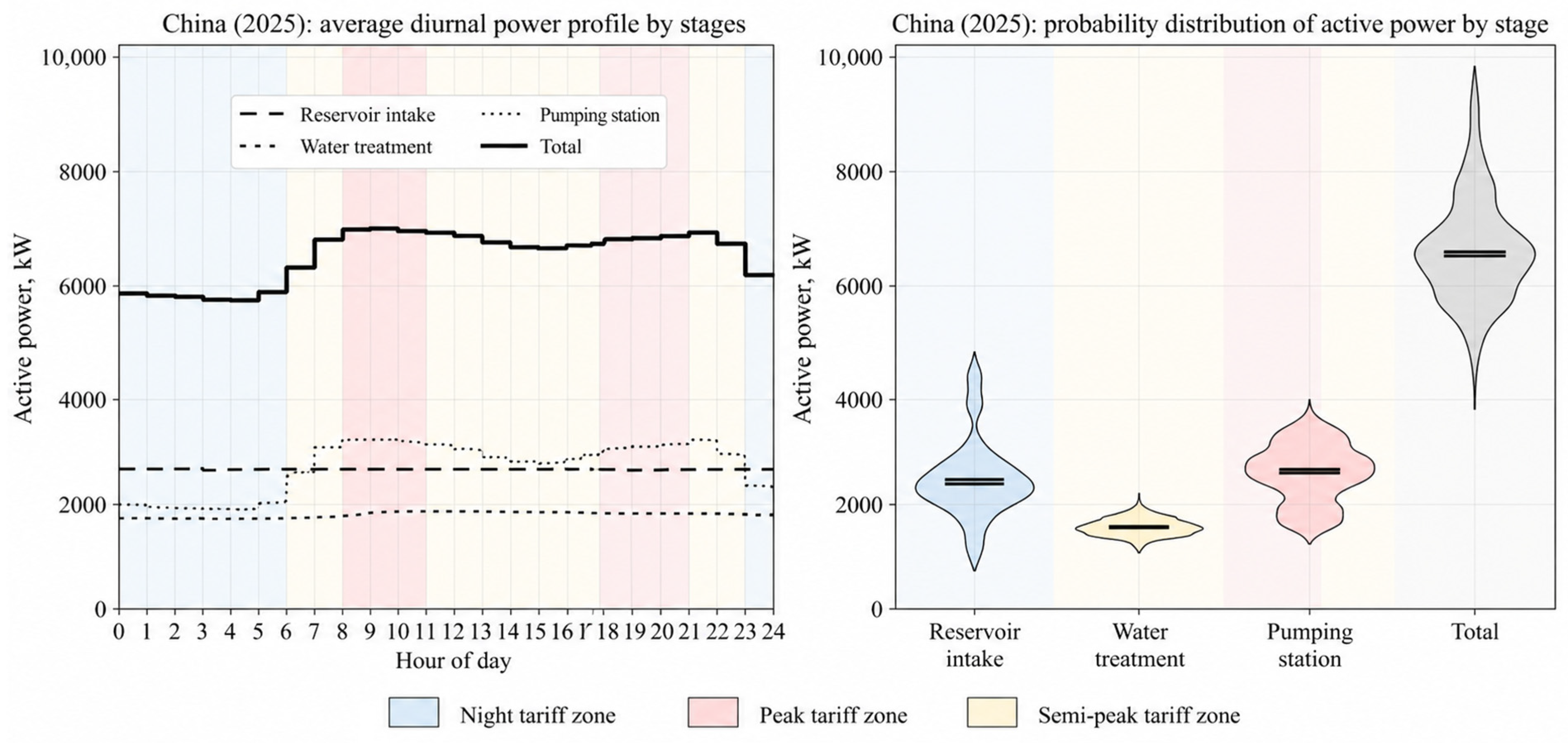
4.2. Comparative Analysis of Daily Water and Electricity Consumption Profiles
4.3. Assessment of Tariff-Driven Energy Shifting
4.4. Impact of the Tariff Model on the Economic Efficiency of Water Intake Electricity Consumption Management
4.5. Prerequisites for Planning Pump Activation Modes in Conditions of Tariff Differentiation
5. Conclusions
Author Contributions
Funding
Data Availability Statement
Conflicts of Interest
References
- Hamawand, I. Energy consumption in water/wastewater treatment industry—Optimisation potentials. Energies 2023, 16, 2433. [Google Scholar] [CrossRef]
- Cherchi, C.; Badruzzaman, M.; Oppenheimer, J.; Bros, C.M.; Jacangelo, J.G. Energy and water quality management systems for water utility’s operations: A review. J. Environ. Manag. 2015, 153, 108–120. [Google Scholar] [CrossRef]
- Reis, A.L.; Lopes, M.A.; Andrade-Campos, A.; Antunes, C.H. A review of operational control strategies in water supply systems for energy and cost efficiency. Renew. Sustain. Energy Rev. 2023, 175, 113140. [Google Scholar] [CrossRef]
- Sowby, R.B.; Morehead, N.; Burdette, S. Review of energy management guidance for water and wastewater utilities. Energy Nexus 2023, 11, 100235. [Google Scholar] [CrossRef]
- Lüdtke, D.U.; Luetkemeier, R.; Schneemann, M.; Liehr, S. Increase in Daily Household Water Demand during the First Wave of the COVID-19 Pandemic in Germany. Water 2021, 13, 260. [Google Scholar] [CrossRef]
- House-Peters, L.A.; Chang, H. Urban water demand modeling: Review of concepts, methods, and organizing principles. Water Resour. Res. 2011, 47. [Google Scholar] [CrossRef]
- Candelieri, A.; Archetti, F. Identifying typical urban water demand patterns for a reliable short-term forecasting–the icewater project approach. Procedia Eng. 2014, 89, 1004–1012. [Google Scholar] [CrossRef]
- Menke, R.; Abraham, E.; Parpas, P.; Stoianov, I. Demonstrating demand response from water distribution system through pump scheduling. Appl. Energy 2016, 170, 377–387. [Google Scholar] [CrossRef]
- Menke, R.; Abraham, E.; Parpas, P.; Stoianov, I. Extending the envelope of demand response provision though variable speed pumps. Procedia Eng. 2017, 186, 584–591. [Google Scholar] [CrossRef]
- Boukas, I.; Burtin, E.; Sutera, A.; Gemine, Q.; Pevee, B.; Ernst, D. Exploiting the flexibility potential of water distribution networks: A pilot project in Belgium. IEEE Trans. Smart Grid 2023, 15, 394–404. [Google Scholar] [CrossRef]
- Luna, T.; Ribau, J.; Figueiredo, D.; Alves, R. Improving energy efficiency in water supply systems with pump scheduling optimization. J. Clean. Prod. 2019, 213, 342–356. [Google Scholar] [CrossRef]
- Dadar, S.; Đurin, B.; Alamatian, E.; Plantak, L. Impact of the Pumping Regime on Electricity Cost Savings in Urban Water Supply System. Water 2021, 13, 1141. [Google Scholar] [CrossRef]
- Rathnayaka, K.; Malano, H.; Maheepala, S.; George, B.; Nawarathna, B.; Arora, M.; Roberts, P. Seasonal demand dynamics of residential water end-uses. Water 2015, 7, 202–216. [Google Scholar] [CrossRef]
- Gutzler, D.S.; Nims, J.S. Interannual variability of water demand and summer climate in Albuquerque, New Mexico. J. Appl. Meteorol. 2005, 44, 1777–1787. [Google Scholar] [CrossRef]
- Zhuan, X.; Xia, X. Optimal operation scheduling of a pumping station with multiple pumps. Appl. Energy 2013, 104, 250–257. [Google Scholar] [CrossRef]
- Alvisi, S.; Franchini, M. A methodology for pumping control based on time variable trigger levels. Procedia Eng. 2016, 162, 365–372. [Google Scholar] [CrossRef]
- Zhuan, X.; Li, W.; Yang, F. Optimal operation scheduling of a pumping station in east route of South-to-North water diversion project. Energy Procedia 2017, 105, 3031–3037. [Google Scholar] [CrossRef]
- Oikonomou, K.; Parvania, M.; Khatami, R. Optimal demand response scheduling for water distribution systems. IEEE Trans. Ind. Inform. 2018, 14, 5112–5122. [Google Scholar] [CrossRef]
- Oikonomou, K.; Parvania, M. Optimal coordination of water distribution energy flexibility with power systems operation. IEEE Trans. Smart Grid 2018, 10, 1101–1110. [Google Scholar] [CrossRef]
- Abdelsalam, A.A.; Gabbar, H.A. Energy saving and management of water pumping networks. Heliyon 2021, 7, e07820. [Google Scholar] [CrossRef] [PubMed]
- Mahinda, M.W.; Wanjiru, E.M.; Njiri, J.G. Optimal control of a grid-connected photovoltaic agricultural water pumping system. J. Eng. Appl. Sci. 2023, 70, 85. [Google Scholar] [CrossRef]
- Behandish, M.; Wu, Z.Y. Concurrent pump scheduling and storage level optimization using meta-models and evolutionary algorithms. Procedia Eng. 2014, 70, 103–112. [Google Scholar] [CrossRef]
- Namdari, H.; Bakhshipour, A.E.; Ashrafi, S.M.; Haghighi, A. Pump scheduling optimization in water distribution networks, including short-term demand forecasting by deep learning. Sustain. Water Resour. Manag. 2026, 12, 4. [Google Scholar] [CrossRef]
- Liu, Y.; Barrows, C.; Macknick, J.; Mauter, M. Optimization framework to assess the demand response capacity of a water distribution system. J. Water Resour. Plan. Manag. 2020, 146, 04020063. [Google Scholar] [CrossRef]
- Rautenbach, W.; Krueger, D.L.W.; Mathews, E.H. Reducing the electricity cost of a Three-Pipe Water Pumping System–a case study using software. J. Energy South. Afr. 2005, 16, 41–47. [Google Scholar] [CrossRef]
- Mkireb, C.; Dembélé, A.; Jouglet, A.; Denoeux, T. Robust optimization of demand response power bids for drinking water systems. Appl. Energy 2019, 238, 1036–1047. [Google Scholar] [CrossRef]
- Stuhlmacher, A.; Mathieu, J.L. Chance-constrained water pumping to manage water and power demand uncertainty in distribution networks. Proc. IEEE 2020, 108, 1640–1655. [Google Scholar] [CrossRef]
- Stuhlmacher, A.; Mathieu, J.L. Flexible drinking water pumping to provide multiple grid services. Electr. Power Syst. Res. 2022, 212, 108491. [Google Scholar] [CrossRef]
- Kernan, R.; Liu, X.K.; McLoone, S.; Fox, B. Demand side management of an urban water supply using wholesale electricity price. Appl. Energy 2017, 189, 395–402. [Google Scholar] [CrossRef]
- Westphal, K.S.; Vogel, R.M.; Kirshen, P.; Chapra, S.C. Decision support system for adaptive water supply management. J. Water Resour. Plan. Manag. 2003, 129, 165–177. [Google Scholar] [CrossRef]
- Hajgató, G.; Paál, G.; Gyires-Tóth, B. Deep reinforcement learning for real-time optimization of pumps in water distribution systems. J. Water Resour. Plan. Manag. 2020, 146, 04020079. [Google Scholar] [CrossRef]
- Ma, H.; Wang, X.; Wang, D. Pump Scheduling Optimization in Urban Water Supply Stations: A Physics-Informed Multiagent Deep Reinforcement Learning Approach. Int. J. Energy Res. 2024, 2024, 9557596. [Google Scholar] [CrossRef]
- Zachmann, G.; Zaborovskiy, A. The Case for Tariff Differentiation in the Belarusian Electricity Sector; GET Policy Paper; IPM Research Center: Berlin, Germany, 2008; Volume 4. [Google Scholar]
- Li, L.; Yao, Y.; Yang, R.; Zhou, K. Is it more effective to bring time-of-use pricing into increasing block tariffs? Evidence from evaluation of residential electricity price policy in Anhui province. J. Clean. Prod. 2018, 181, 703–716. [Google Scholar] [CrossRef]
- Sun, C.; Lin, B. Reforming residential electricity tariff in China: Block tariffs pricing approach. Energy Policy 2013, 60, 741–752. [Google Scholar] [CrossRef]
- Lu, G.; Yuan, B.; Zhou, S.; Wei, L.; Wu, Z. Assessing the effectiveness of time-of-use pricing design: Provincial evidence from China. Energy Strategy Rev. 2025, 60, 101780. [Google Scholar] [CrossRef]

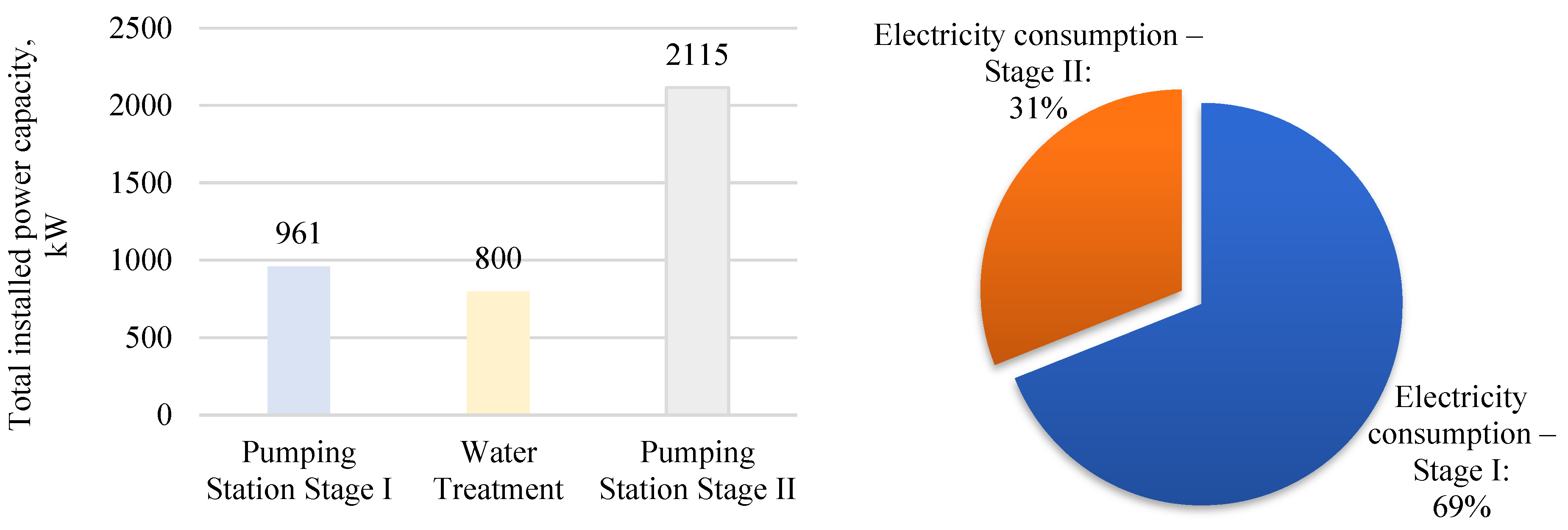


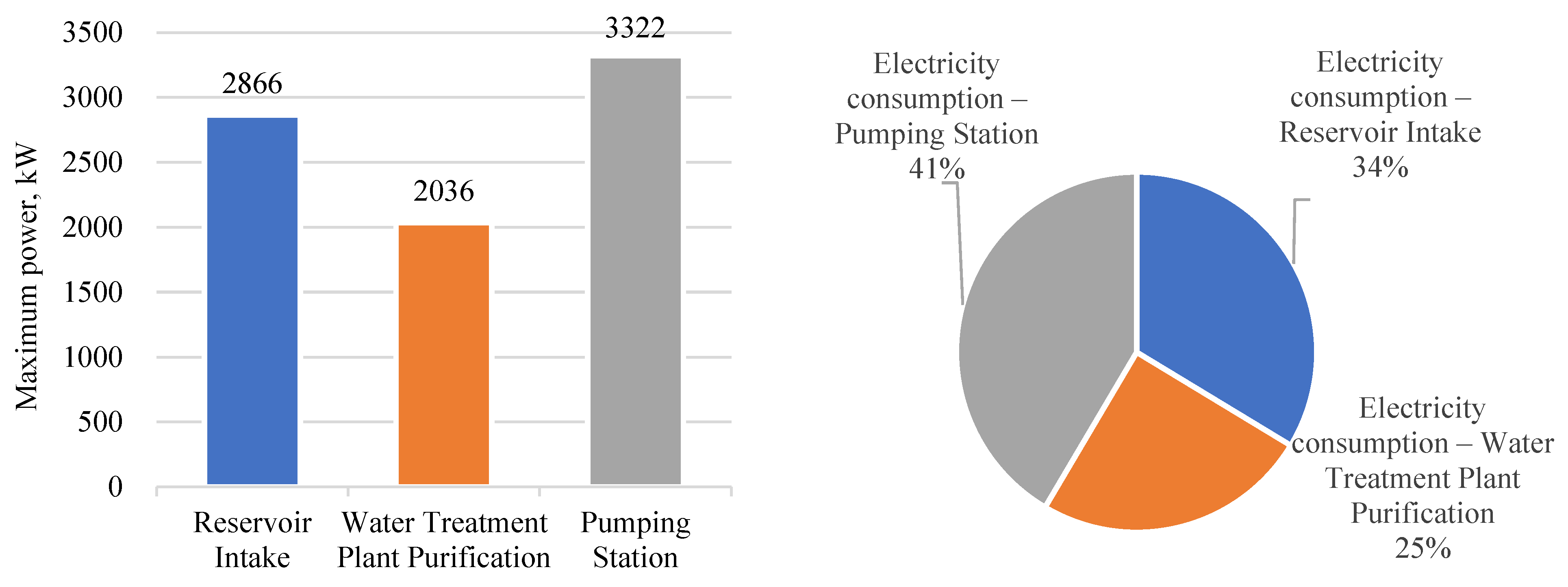




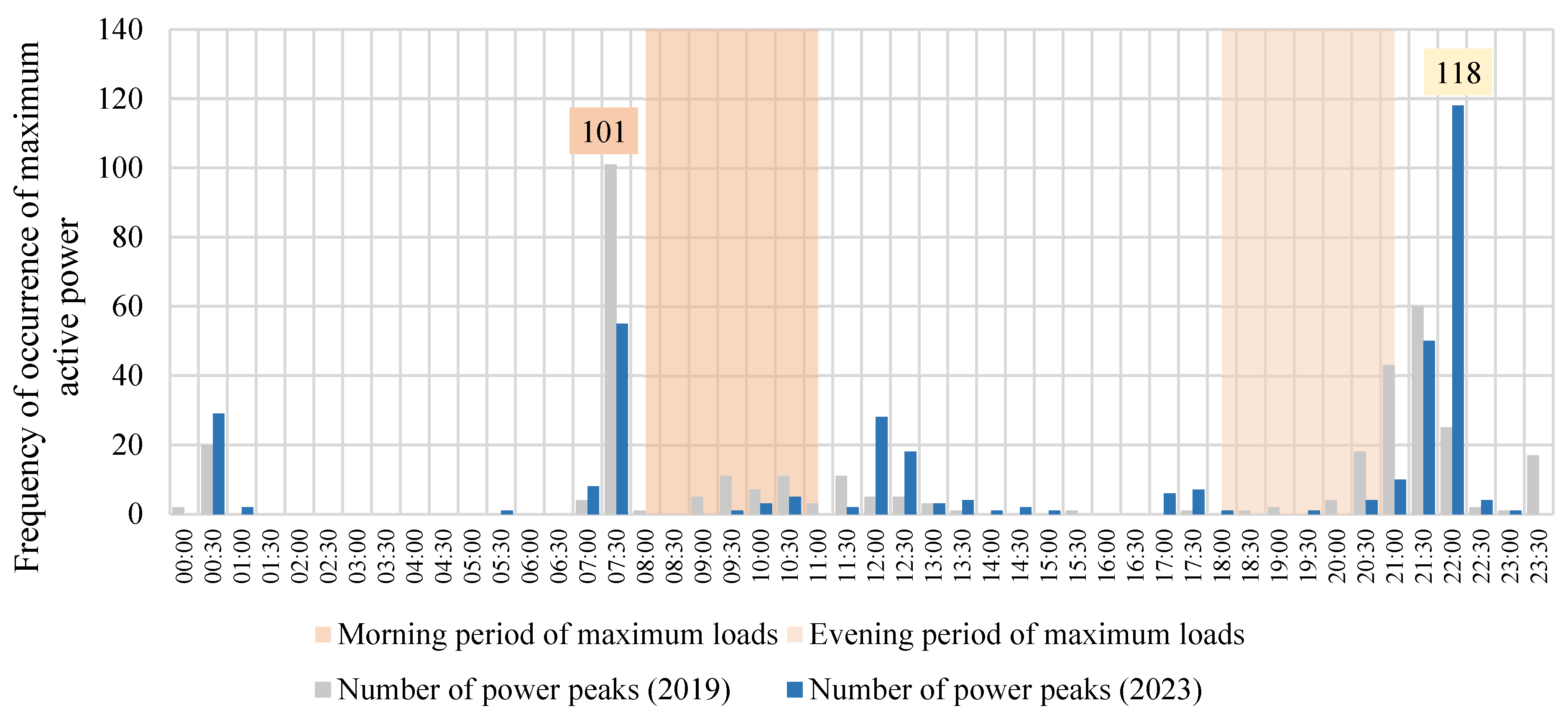
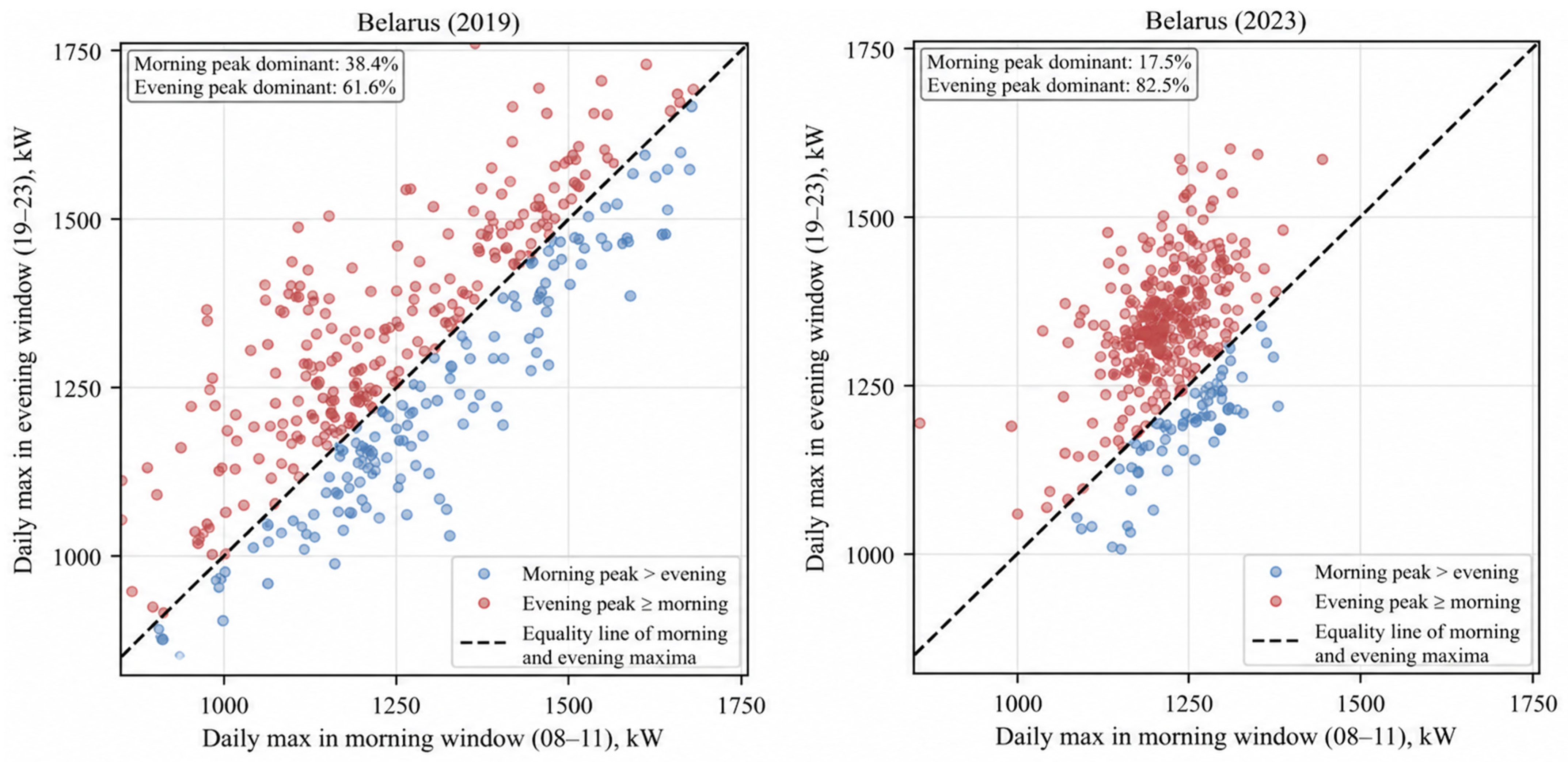

| Data Parameter | Data Source | Measurement Step | Data Volume | Research Period | Note |
|---|---|---|---|---|---|
| Electricity for the first water lift | Commercial electricity metering system | 30 min | 35,040 | 2019, 2023 | Summary data on the operation of borehole pumps |
| Electricity for the second water lift | Commercial electricity metering system | 30 min | 35,040 | 2019, 2023 | Includes second water lift pumps and WTS process needs |
| Water supply to the city network | Pumping station operator’s log | 1 h (digitized) | 17,520 | 2019, 2023 | The values were recorded manually. The data have been converted to digital format. |
| Data Parameter | Data Source | Measurement Step | Data Volume | Research Period | Note |
|---|---|---|---|---|---|
| Electricity by technological stages | Electricity metering system | 1 h | 8760 | from 1 January 2025 to 31 December 2025 | The data was recorded at the following stages: water intake from the reservoir; water treatment; operation of pumping stations for transportation and pressure increase. |
| Water supply to the city network | Electricity metering system | 1 h | 8760 | from 1 January 2025 to 31 December 2025 |
| Indicator | The Belarus (2023) | China (2025) |
|---|---|---|
| Data period (start–end) | from 1 January 2025 to 31 December 2025 | from 1 January 2025 to 31 December 2025 |
| Measurement interval | 30 min | 1 h |
| Number of days | 365 | 365 |
| Average daily water supply (m3/day) | 51,390 | 317,571 |
| Average daily electricity consumption (kWh/day) | 27,030 | 157,102 |
| Specific energy consumption at all levels (kWh/m3) | 0.526 | 0.495 |
| Mean interval-averaged power (kW) | 1126 | 6546 |
| Peak interval-averaged power (kW) | 1632 | 10,427 |
| Peak-to-average power ratio | 1.449 | 1.593 |
| Mean outlet pressure (kPa) | 415 | 527 |
| Name of the Comparison Indicator | China’s Electricity Payment Model | The Belarusian Electricity Payment Model | Note |
|---|---|---|---|
| Night zone | Usually 23:00–06:00 (7 h) | 23:00–06:00 (7 h) | The time boundaries of the night zone are completely identical |
| Peak Zone | Usually 08:00–11:00 and 18:00–21:00 (6 h) | 08:00–11:00 (3 h) | The morning peak is the same in both models; the Chinese system additionally highlights the evening peak as the peak energy zone. |
| Off-Peak Zone | Other hours (11 h) | 06:00–08:00 and 11:00–23:00 (14 h) | In the Belarusian model, the evening period belongs to the off-peak (semi-peak) zone, while in the Chinese system, part of these hours is included in the peak zone. |
| Power Payment Zone | Absolute actual maximum active power recorded for the billing month | Maximum active power recorded during the set hours of maximum power system demand (08:00–11:00 and 19:00–23:00) | In the Chinese model, the calculated capacity is not time-bound, whereas in the Belarusian system it is strictly linked to specific hourly intervals. |
| Name of the Source | Year of Observations | First Water Lift | Second Water Lift | Reservoir Intake | Water Treatment Plant Purification | Pumping Station | Overall Results |
|---|---|---|---|---|---|---|---|
| Belarus | 2019 | 0.04 | 0.77 | – | – | – | 0.52 |
| Belarus | 2023 | 0.08 | 0.95 | – | – | – | 0.85 |
| China | 2025 | – | – | 0.19 | 0.86 | 0.51 | 0.53 |
| Dataset | Stage | Energy Share of Stage, % | Correlation | F-Index of Stage |
|---|---|---|---|---|
| China (2025) | Reservoir intake | 38% | 0.19 | 0.31 |
| China (2025) | Water treatment | 24% | 0.86 | 0.03 |
| China (2025) | Pumping station | 38% | 0.49 | 0.19 |
| China (2025) | Resulting F-index | 0.53 | ||
| Belarus (2019) | Wells | 69% | 0.04 | 0.66 |
| Belarus (2019) | Water intake | 31% | 0.77 | 0.07 |
| Belarus (2019) | Resulting F-index | 0.73 | ||
| Belarus (2023) | Wells | 68% | 0.08 | 0.63 |
| Belarus (2023) | Water intake | 32% | 0.95 | 0.02 |
| Belarus (2023) | Resulting F-index | 0.65 |
| Object | Technological Stage | Δ Night, % | Δ Peak, % |
|---|---|---|---|
| Belarus (2019) | Wells (I lift) | 5.69 | −1.06 |
| Belarus (2019) | Water intake (II lift) | −6.91 | 1.83 |
| Belarus (2023) | Wells (I lift) | 6.02 | −1.70 |
| Belarus (2023) | Water intake (II lift) | −6.02 | 0.88 |
| China (2025) | Reservoir intake | 0.33 | −0.10 |
| China (2025) | Water treatment | −0.26 | 0.19 |
| China (2025) | Pumping station | −7.02 | 3.78 |
Disclaimer/Publisher’s Note: The statements, opinions and data contained in all publications are solely those of the individual author(s) and contributor(s) and not of MDPI and/or the editor(s). MDPI and/or the editor(s) disclaim responsibility for any injury to people or property resulting from any ideas, methods, instructions or products referred to in the content. |
© 2026 by the authors. Licensee MDPI, Basel, Switzerland. This article is an open access article distributed under the terms and conditions of the Creative Commons Attribution (CC BY) license.
Share and Cite
Kapanski, A.A.; Ye, M.; Chu, S.; Hruntovich, N.V. Assessing the Potential for Intra-Day Load Redistribution in Water Intake Systems Under Different Electricity Tariff Models: A Comparative Case Study of Belarus and China. Water 2026, 18, 1028. https://doi.org/10.3390/w18091028
Kapanski AA, Ye M, Chu S, Hruntovich NV. Assessing the Potential for Intra-Day Load Redistribution in Water Intake Systems Under Different Electricity Tariff Models: A Comparative Case Study of Belarus and China. Water. 2026; 18(9):1028. https://doi.org/10.3390/w18091028
Chicago/Turabian StyleKapanski, Aliaksey A., Miaomiao Ye, Shipeng Chu, and Nadezeya V. Hruntovich. 2026. "Assessing the Potential for Intra-Day Load Redistribution in Water Intake Systems Under Different Electricity Tariff Models: A Comparative Case Study of Belarus and China" Water 18, no. 9: 1028. https://doi.org/10.3390/w18091028
APA StyleKapanski, A. A., Ye, M., Chu, S., & Hruntovich, N. V. (2026). Assessing the Potential for Intra-Day Load Redistribution in Water Intake Systems Under Different Electricity Tariff Models: A Comparative Case Study of Belarus and China. Water, 18(9), 1028. https://doi.org/10.3390/w18091028