1. Introduction
MPs are ubiquitous, with an estimated 20 million pounds entering the Great Lakes each year [
1]. The most common sources of MPs are urban runoff, wastewater treatment plant inputs, sewage system overflows, and industrial inputs [
2,
3,
4,
5,
6]. Following MP entry into the water column, MPs quickly become colonized by microbial communities, often referred to as the plastisphere [
3].
The plastisphere is composed of a diverse array of microorganisms including bacteria, algae, fungi, and protozoa [
3,
4]. Biofilm development on MPs is influenced by various environmental factors such as pH, salinity, nutrients, flow, temperature, and light [
5]. The formation of these biofilms leads to secretion of extracellular polymeric substances (EPS), which provide protection and facilitate the adhesion of particles from the surrounding environment [
4,
6]. The presence of such biofilms not only protects MPs from degradation and increases their longevity but also enables the adsorption of both organic and inorganic pollutants [
7,
8]. The plastisphere thus serves as a vector for the movement of heavy metals and contaminants through the environment [
9,
10] and can result in harm to organisms ingesting these MPs.
Biofilms can influence the surface characteristics and adhesion qualities of MPs, which in turn impact their own community structure, often leading to distinct microbial assemblages on plastics compared to other surfaces [
4,
11,
12]. For example, bacterial richness on MPs can be higher than on natural substrates, with Proteobacteria and Cyanobacteria being the most commonly observed phyla in freshwater environments [
3,
12,
13]. In addition, environmental factors in the water column, such as nutrient concentrations and salinity, can influence plastisphere community structure. Understanding the forces driving plastisphere composition is important given its role as a source of nutrition or possible toxicity to MP consumers in the water column or benthos.
Church Lake presents a unique opportunity to evaluate community structure responses to environmental factors. The lake is impacted by road salt runoff, resulting in a high-salt, high-phosphorus condition at the lake bottom and a low-salt, low-phosphorus state at the lake surface [
14]. By comparing plastisphere structure in the epilimnion (low salt, low phosphorus, high light) and the hypolimnion (high salt, high phosphorus, low light) and then incubating them in the lab with the reversed water source, we were able to address the roles of environmental condition and priority effects (effect of propagule arrival order on substrate) in influencing microbial community structure on MPs. This is especially relevant for Church Lake and other salt-impacted lakes that are currently not turning over due to chemocline formation but may do so in the future should the lake’s salinity be reversed.
The study involved two components—an observational study and an experimental study. First, we examined the community structure of the algae and bacteria growing on two common polymers in both the epilimnion and hypolimnion of the salt-impacted lake. Second, we conducted a lab experiment that removed the plastisphere-colonized microplastics from the lake and placed them in water and environmental conditions from either their initial location in the lake or their alternate location (i.e., epilimnion to epilimnion or epilimnion to hypolimnion, and vice versa). This allowed us to simulate the impact on plastisphere community structure should this heavily salt-impacted lake completely mix in the future.
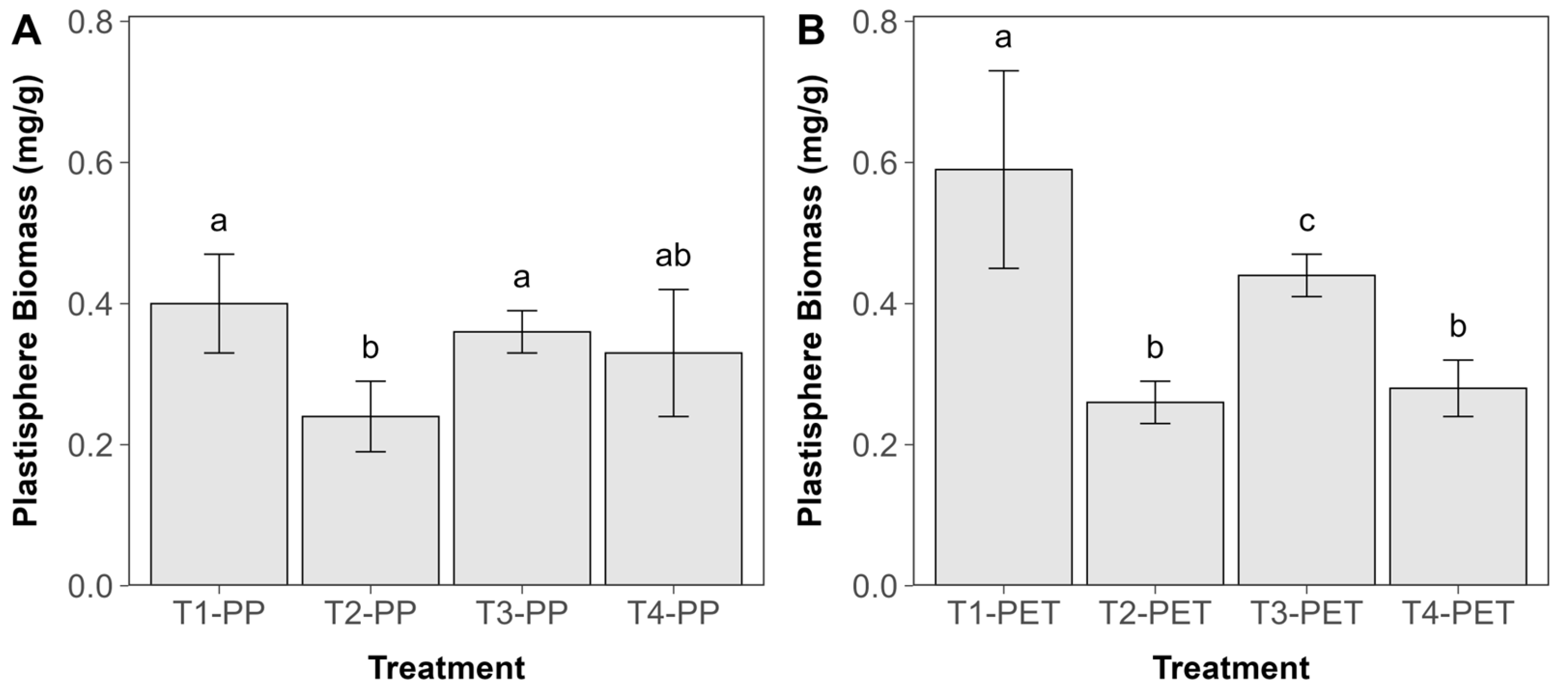
We had two explicit hypotheses associated with the laboratory experiment: first, plastisphere biomass will be higher for communities growing in the epilimnion compared to the hypolimnion, as the algal community would respond to the higher light, and their exudates would promote bacterial growth [
15]. Second, bacterial diversity will be greater in the hypolimnion due to the broader metabolic flexibility of the bacteria to reduced light and oxygen conditions compared to algae.
To test these hypotheses, MPs were placed in flow-through containers in Church Lake to facilitate biofilm formation and then subjected to controlled environmental treatments in the laboratory. This design allowed us to examine the responsiveness of the biofilm to new environmental conditions should the lake fully turn over in the future.
2. Materials and Methods
2.1. Study Site
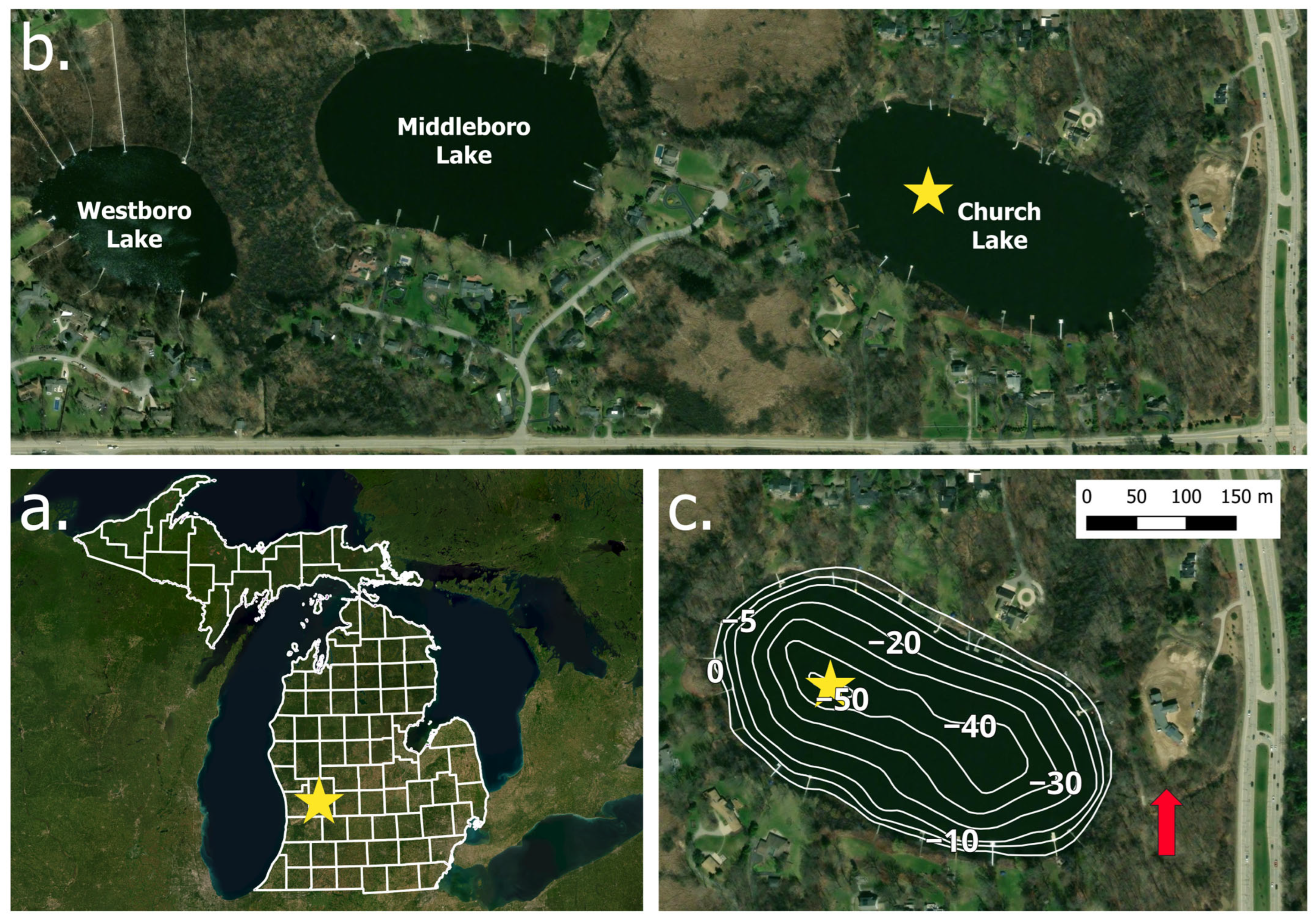
Sampling occurred in Church Lake, an urban lake located in Grand Rapids (Kent County), Michigan (
Figure 1). Church Lake spans 7.7 ha and has a maximum depth of ~16.5 m. Runoff from state highway M-44 (East Beltline) flows into an unnamed tributary that enters the east side of Church Lake. The deepest region of the lake, approximately 5% of total lake volume, does not seasonally mix due to a chemocline (~9 m) that has formed from deicing salt runoff from the East Beltline Highway [
14].
Two polymers, polypropylene (PP) and polyethylene terephthalate (PET), were used in this experiment; these are common polymers found in urban areas [
16,
17]. PP is found in auto parts and food containers, while PET is found in textiles and water bottles. PP and PET pellets were obtained from Plastic Pellets 4 Fun (High Point, NC, USA). The bulk material was sieved, resulting in a size range of 2–4 mm.
2.2. In-Lake Setup
Virgin MPs were placed in flow-through tubes based on a design by Steinman et al. [
7], allowing biofilms to grow on the MPs (
Figure S1). Approximately 46 g of MP pellets were placed in each incubation tube. Details on incubation tube construction are available in [
7], with the one change of using stainless steel mesh (mesh size 1 mm) to form a sleeve to minimize rust formation. Frames were deployed in June 2022 during the growing season and retrieved 14 days after deployment, allowing ample time for microbial colonization in this water body. There were 10 tubes per frame, and one frame was deployed at each depth (~2 m and 10 m); frames were attached to a buoy, and deployment at each depth allowed for incubation in different environmental conditions: MPs in tubes near the lake surface (epilimnion) were exposed to higher levels of light and dissolved oxygen and lower salinity, mean specific conductivity (Sp Cond), and total phosphorus (TP) concentrations compared to those deployed deeper (hypolimnion) (
Table 1; see also [
14]).
2.3. Sample Collection and Laboratory Experiment
The following water quality parameters were measured at each sampling event during the deployment and retrieval events for the frame incubation period: water temperature, pH, dissolved oxygen (DO), specific conductivity (Sp Cond), total dissolved solids (TDS), and turbidity, using a Yellow Springs Instruments (YSI) EXO multi-sensor sonde (Yellow Springs, OH, USA).
Water was collected at the time of retrieval to be used in the laboratory experiment (see
Section 2.3.2). A total of 72 L of lake water (36 L from each depth) was collected by a Van Dorn sampler and transferred into carboys pre-cleaned with 10% hydrochloric acid (HCl). Zooplankton and other floating organisms were removed from the epilimnion and the hypolimnion water samples by a two-step sequential filtration process first using 1 µm filters, followed by 0.2 µm filters (Watertec QMC1-10NPCS (FlowTech Corporation; Kalamazoo, MI, USA) and 0.2-10NPCS (Cytiva Global Life Sciences Solutions USA LLC; Wilmington, DE, USA)). Additional unfiltered samples from each depth were retained for comparison.
2.3.1. Initial Conditions
Both filtered and unfiltered water samples were measured for TP and soluble reactive phosphorus (SRP) to observe any changes that may have been caused by the two-step sequential filtration process described above. Both SRP, filtered through an acid-washed 0.45 µm membrane filter (USEPA Method 365.1), and unfiltered TP (USEPA Method 365.1 Rev. 2.0 [1993]) were analyzed using a SEAL AutoAnalyzer (SEAL Analytical, Mequon, WI, USA). Iron in the water samples collected in the hypolimnion caused interference during TP analysis, resulting in lower TP than SRP values. Following digestion, the samples showed obvious floc and an orange tint. Similar problems have previously affected TP and SRP sampling from prior Church Lake research [
18]. Given that TP cannot be less than SRP in nature, TP was conservatively estimated as being equal to SRP as a minimum possible value.
To characterize bacterial and algal communities within the water column, 500 mL water samples were collected from both the 2 m and 10 m depths using a Van Dorn sampler (Forestry Suppliers, Inc.; Jackson, MS, USA). Samples from each depth were combined into a 1 L brown bottle to inhibit photosynthesis; this integrated sample was considered representative of the bacterial community in the water column. Samples were transported on ice to the laboratory for preservation and analysis. Subsamples were preserved differently depending on the target community; for bacterial communities, 100 mL of the sample was filtered through 0.4 μm polycarbonate membrane filters, and the filters were stored at −20 °C for subsequent DNA sequencing; algal samples were preserved with Lugol’s iodine (2–3 mL per 100 mL sample) and stored at 4 °C until analysis.
Benthic bacterial communities from the littoral zone were also characterized to determine whether taxa present at the sediment/water interface were similar to those observed on MP pellets. A defined surface area was delineated using a sterile Petri dish, and the upper sediment layer, along with overlying water, was gently collected using a turkey baster. The collected material was placed into a 250 mL opaque bottle to limit light exposure and transported on ice to the laboratory. As with water column samples, benthic subsamples were preserved separately for bacterial and algal analyses as described above.
Subsamples of the retrieved MPs were used to assess the bacterial and algal communities present on MP pellets before the start of the microcosm experiment. Approximately 1 g each of PET and PP pellets from each depth was subsampled for bacterial and algal analyses. In the laboratory, pellets designated for DNA sequencing were stored in 50 mL centrifuge tubes containing deionized (DI) water and frozen at −20 °C. Pellets for algal identification were placed in 50 mL centrifuge tubes, wrapped in electrical tape to prevent UV exposure, preserved with Lugol’s iodine, and stored at 4 °C.
2.3.2. Microcosm Experiment
For the laboratory (microcosm) experiment, MPs from each depth were placed separately into 1 L beakers and exposed to environmental conditions similar to those present at either 1) the depth at which they were collected or 2) the alternate depth. This design allowed us to examine the responsiveness of the biofilm to new environmental conditions should salinity be reduced and the lake fully mix in the future.
The experimental design consisted of six different treatments, with 1 L beakers serving as experimental units. Each beaker contained 750 mL of filtered water (two-step sequential filtration as described in
Section 2.3) from Church Lake. The six treatment groups (
Table 1) included: Treatment group 1 (T1) had MPs colonized in the lake epilimnion, then transferred to hypolimnetic water, and maintained at summer hypolimnetic conditions in the growth chamber. Treatment group 2 (T2) had MPs colonized in the lake hypolimnion and transferred to epilimnetic water and conditions in the growth chamber. Treatment group 3 (T3) had MPs colonized in the lake epilimnion and transferred to epilimnetic water in the growth chamber. Treatment group 4 (T4) had MPs colonized in the lake hypolimnion and transferred to hypolimnetic water in the growth chamber. Control groups consisted of filtered water with no MPs, with control group one (C1) composed of filtered epilimnetic water put in hypolimnetic conditions and control group 2 (C2) composed of filtered hypolimnetic water put in epilimnetic conditions. The four treatments with MPs had 5 replicates each, and the 2 control treatments (no MPs) had 4 replicates each. This design was replicated for each of the two polymers being used in the experiment. Hence, a total of 48 beakers were used ([5 reps × 4 MP treatments] × 2 polymer types) + [4 reps × 2 controls]). For each treatment with MP pellets, 25 g of a single polymer type and depth origin (PP or PET from either 2 m or 10 m) was added. No mixing of polymer types occurred within a beaker.
Beakers were placed in Precision Plant Growth Chambers (Powers Scientific, Inc.; Pipersville, PA, USA) with environmental conditions set to mimic those measured in the lake. Conditions at the deployment site in the epilimnion included: mean water temperature of 16 °C; mean irradiance of 190 µmol/m
2/s; mean Sp Cond of 865 µS/cm; and mean SRP and TP concentrations of 5 µg/L and 13 µg/L, respectively. Light levels in the growth chamber were lower than ambient conditions because of bulb limitations, resulting in an irradiance of ~34.5 µmol/m
2/s. Conditions in the hypolimnion included: mean water temperature of 5 °C; mean irradiance of 0.03 µmol/m
2/s; mean conductivity of 1315 µS/cm; and mean SRP and estimated TP concentrations of 500 and 500 µg/L, respectively. Photoperiod was set at a 15:9 L:D cycle for treatments simulating epilimnetic conditions (i.e., T2, T3, C2;
Table 1) to reflect ambient conditions; treatments simulating hypolimnetic conditions (i.e., T1, T4, C1;
Table 1) were kept in the dark. Separate growth chambers were used for the two temperatures (5 °C and 16 °C), which reflected the average summer temperature at 2 m and 10 m depths, respectively. Water in the epilimnion treatment beakers was bubbled with air to keep them aerated. Hypolimnetion treatment beakers were left unbubbled. The water in each beaker was not exchanged during the experiment.
2.4. Post-Microcosm Experiment Sample Processing
At the end of the 25-day microcosm experiment, MP pellets from each beaker were processed for three separate analyses: bacterial community DNA sequencing, algal community structure, and biofilm biomass (ash-free dry mass: AFDM). Each analysis used an independent subsample taken from the 25 g of MP pellets in the beaker.
2.4.1. Biofilm Measurement
The pellets from each treatment were retrieved and pooled for total biofilm biomass (AFDM) at the end of the 25-day experiment and measured by gravimetric analysis [
19]. MP pellets were subsampled for biofilm by placing 8 g of MP pellets into a 50 mL centrifuge tube with DI water. Plastic pellets were sonicated for 10 s to remove biofilm attached to the surface of the pellets [
5]. Randomly selected pellets were checked microscopically for remaining biofilm after sonication; if biofilm remained, pellets were sonicated again until no biofilm was present, and the resulting solution was filtered through a Whatman GF/C filter. The biofilm retained on the filter was dried at 105 °C for 48 h and then placed in a muffle furnace at 550 °C for 1 h. AFDM was calculated as the difference between the dry weight and the ashed weight [
19,
20].
2.4.2. Bacterial Community DNA Sequencing
Separate 8 g subsamples of MP pellets from each beaker were placed in centrifuge tubes with DI water and stored at −20 °C until DNA extraction. DNA was extracted using the Macherey-Nagel NucleoSpin
® Soil DNA extraction kit (Macherey-Nagel, Bethlehem, PA, USA). Genomic DNA was extracted from water columns, sediments, and biofilm on MP pellets following protocols from the Macherey-Nagel NucleoSpin
® Soil user manual (Düren, Germany). MP pellets went through a bead beating step prior to DNA extraction. A two-step PCR process was used following protocols outlined in Illumina MiSeq Systems 16S Metagenomic Sequencing Library Preparation. The 16S rRNA v4 region was amplified using the 515F/806R primer set [
21]. Libraries were normalized to 4 nM using a QIAseq
® normalization kit per their instructions (Qiagen, Germantown, MD, USA). The quality of the individual libraries was checked on an Agilent Bioanalyzer (Agilent, Santa Clara, CA, USA). Libraries passing the quality check were pooled, and the amplicons were sequenced using a 2 × 250 bp format, along with a 20% spike-in of Phi-X, on the Illumina MiSeq System (Illumina, San Diego, CA, USA).
Before analyzing bacterial biodiversity data, the sequence reads were filtered based on quality scores, sequencing errors were estimated, paired reads were merged, chimeras were removed, and amplicon sequence variants (ASVs) were identified using the package dada2 [
21] in RStudio version 1.30.0 [
22]. Taxonomic assignments were based on aligning merged paired reads to the SILVA 138 SSU database [
23].
ASVs that were potential contaminants were identified using the “prevalence” method in the R package decontam version 1.22.0 [
24]. This method compares how often a sequence appears in blank samples (blank and PCR no-template controls) to how often it appears in the true positive samples. ASVs that appear more often in the blank sample are considered contaminants and are removed from the analysis.
2.4.3. Algal Community Structure
Algal diversity was determined after the 25-day microcosm experiment; an additional 8 g of MP pellets was taken from each beaker, placed in centrifuge tubes, and vortexed as described in
Section 2.4.1 for biomass measurement. Samples were concentrated prior to enumeration in Sedgewick Rafter counting chambers following algal sedimentation methods [
25]. Algal communities were identified to genera using a Nikon Eclipse Ni-U DIC inverted microscope (Nikon Instruments; Melville, NY, USA). Algal colonies were counted individually as single units. Filamentous algae were counted by dividing the final length (µm) within the square by 10. A taxonomic photo library was compiled of known and unknown genera found in both the environment (Sediment, Water, PET at 2 and 10 m, PP at 2 and 10 m) and mesocosm samples (T1, T2, T3, T4, C1, C2). Any algal cells that could not be identified to genus were named after observed characteristics and listed with the phylum. Cell density was calculated according to the following equation:
where
U is the total number of Taxon A units counted in all grids;
A is the area of the grid used (0.01 cm
2);
G is the number of grids counted;
C is volume of the Sedgwick–Rafter chamber used (1 mL);
B is the total basal area of the Sedgwick–Rafter (10 cm
2); and
CF is the concentration factor (0.01).
2.5. Statistical Analysis
All statistics and data visualization were conducted with R version 4.3.1 [
26] using RStudio version 4.2.2 [
22].
Differences in biomass measured as AFDM between treatments were analyzed using analysis of variance (ANOVA) following log-transformation. Pairwise comparisons were done using a Tukey HSD post hoc test to determine which treatments differed from each other.
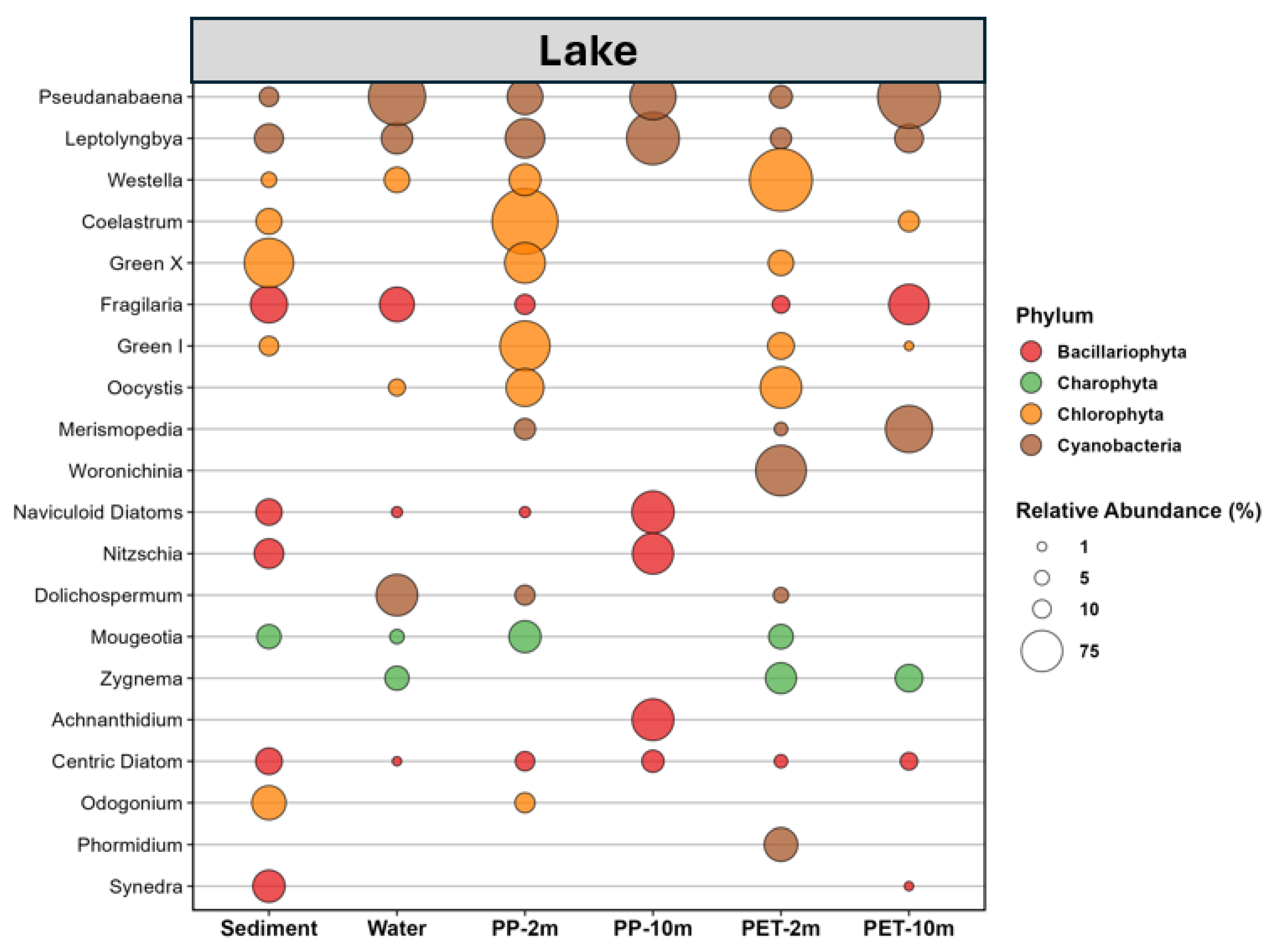
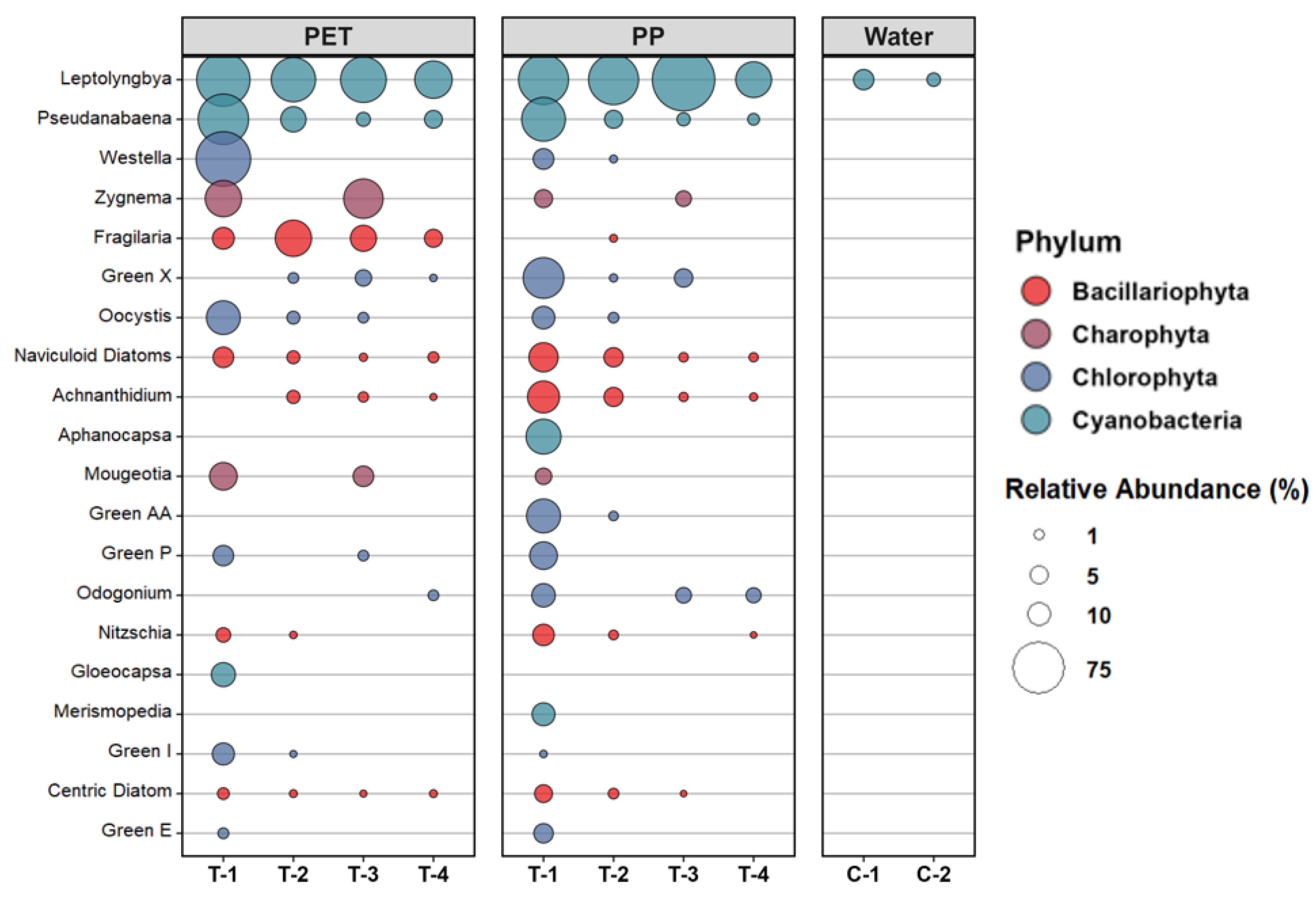
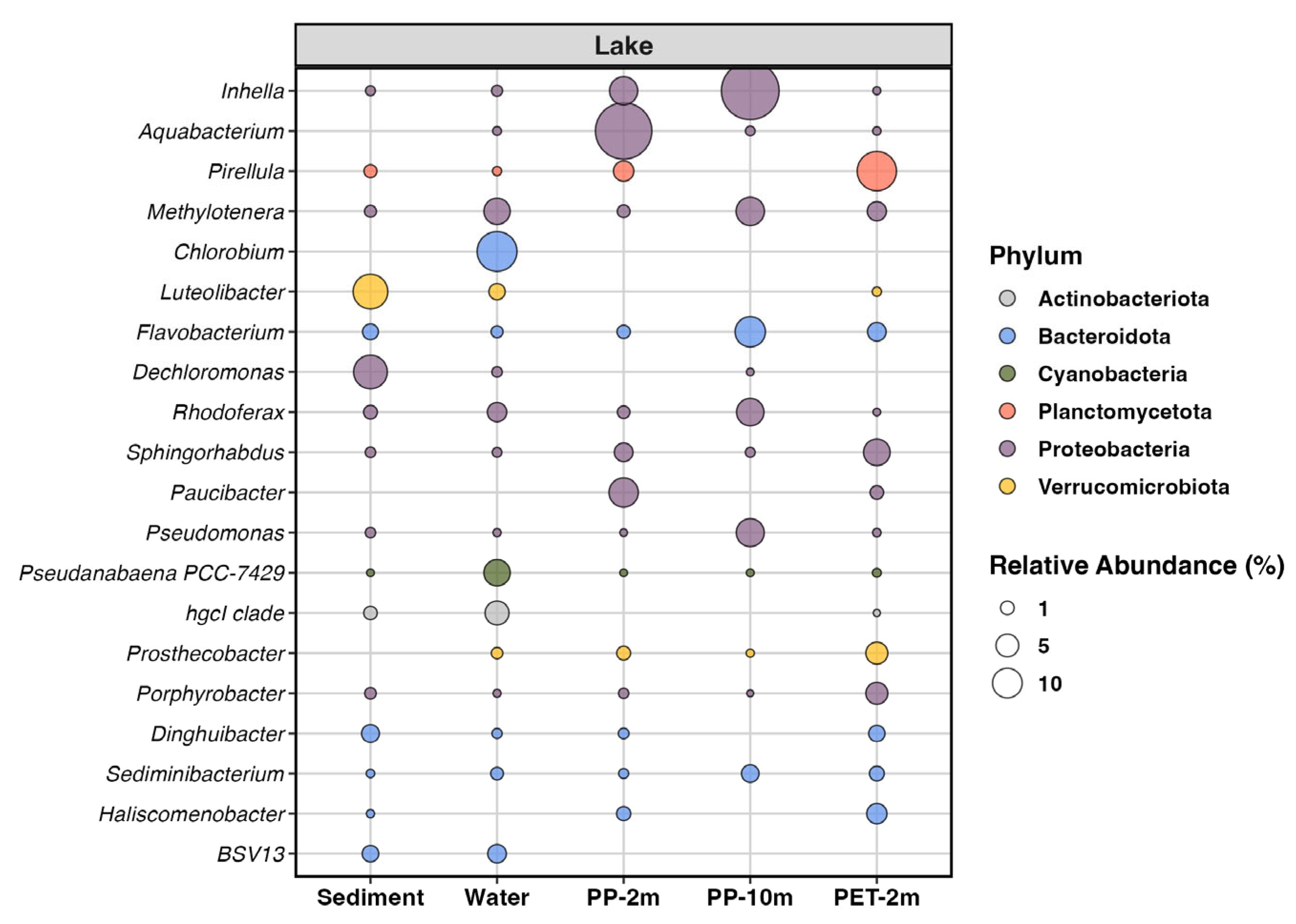
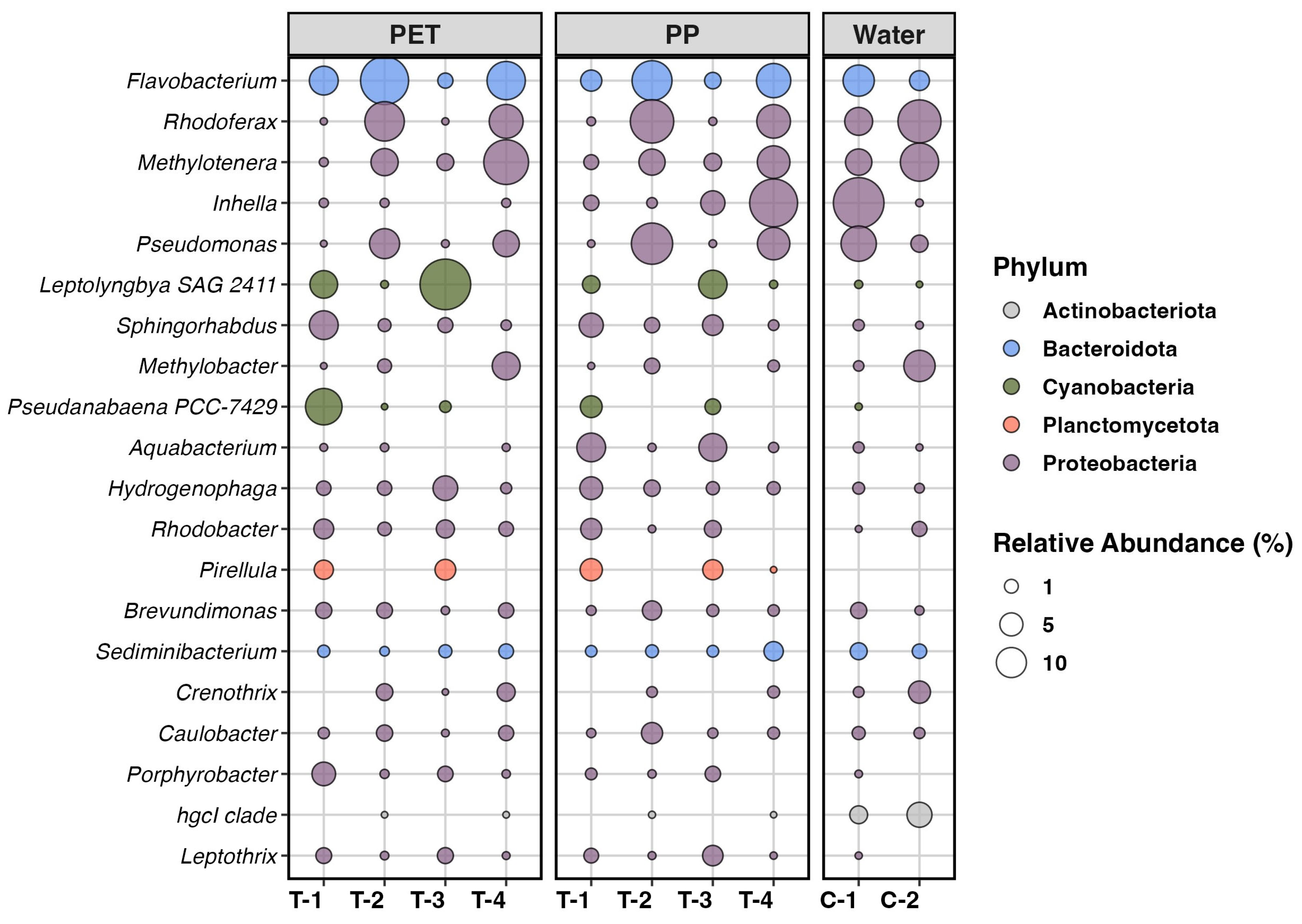
For the bacterial community assemblages, the top 20 most abundant genera were identified based on their relative abundance from each of the various field samples (water, sediment, PET-2m, PP-2m, PP-10m) and microcosm samples (T1, T2, T3, T4, C1, C2) and visualized. The PET-10m sample was lost during the amplicon library preparation. Prior to alpha and beta diversity analyses, samples were rarified to 0.9× the lowest read depth. Some sample replicates were removed before rarefication (T3, C2) because of very low read counts compared to other replicates of the same treatment.
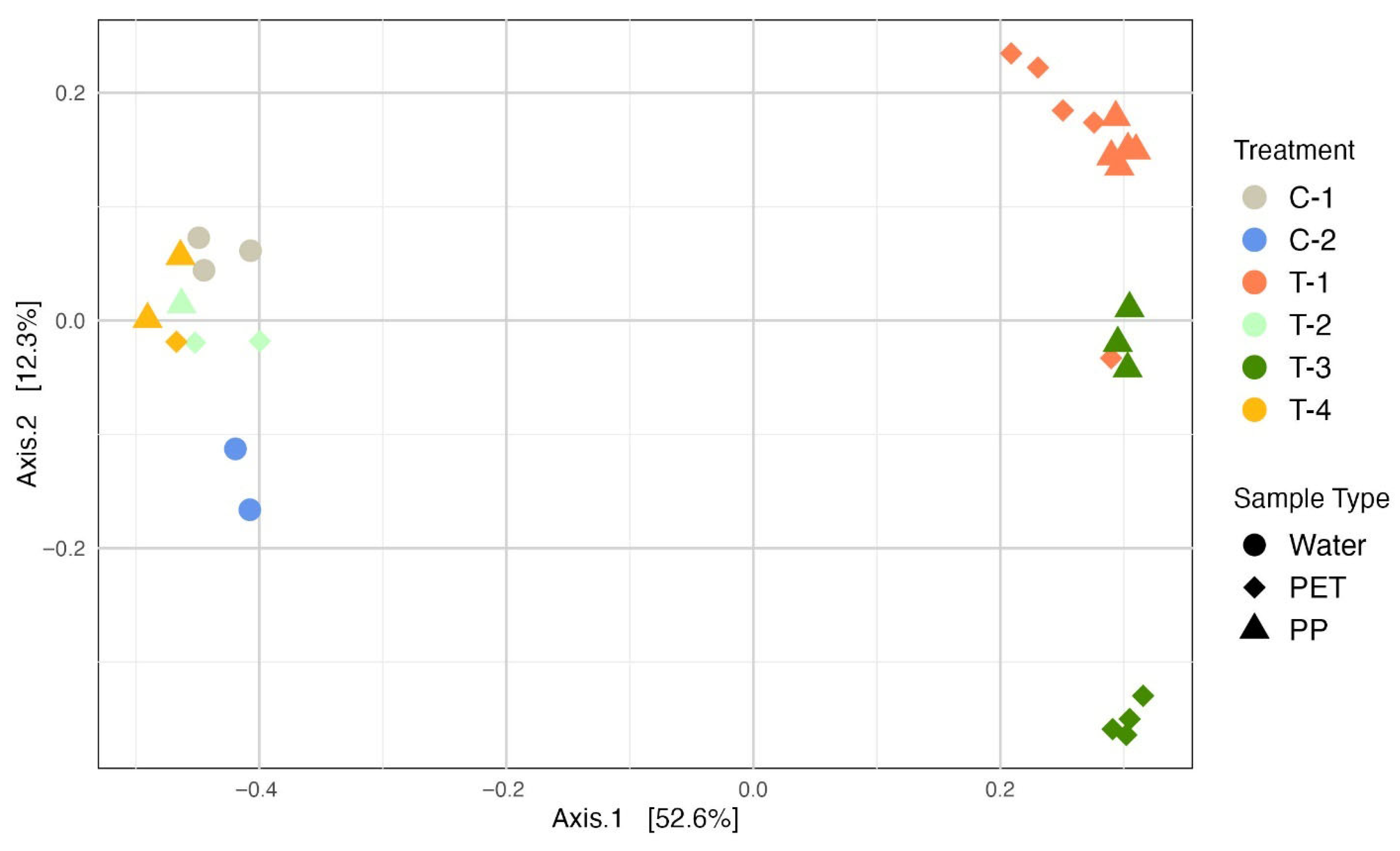
Shannon’s diversity index was used to estimate alpha diversity for each polymer per treatment. For bacterial communities, some samples had n ≤ 3, and as a result, trends were assessed qualitatively rather than with inferential statistics. Beta diversity was assessed using a principal coordinate analysis (PCoA) to identify how bacterial communities differed between microcosm treatments and samples collected from the lake. As with alpha diversity, statistical comparisons between individual treatments were not done because of limited sample sizes.
To specifically examine differences in bacterial communities between the epilimnion and the hypolimnion, the DESeq2 package version 1.38.3 [
27] was used to examine bacterial genera that significantly differed in abundance between plastics first incubated at each depth. For this analysis, the PP and PET samples were pooled. Hence, the initial Epi group was composed of T1 (Epi → Hypo) and T3 (Epi → Epi) for both polymers, and the initial Hypo group was composed of T2 (Hypo → Epi) and T4 (Hypo → Hypo) for both polymers. DESeq2 tests for significant differences using a negative binomial generalized linear model, where the initial hypolimnion samples were set as the reference. An alpha value of 0.01 was used to determine significance. Only ASVs with read counts greater than 100 across all mesocosm treatments and ASVs present in at least 3 of the samples were considered.
For algal communities, species diversity was measured using the Shannon diversity index to identify species richness and evenness between each treatment and lake samples. Kruskal–Wallis tests were used to assess whether there was a significant difference among the treatments (T1, T2, T3, T4, C1, C2) and polymers; significant differences were further analyzed using Dunn post hoc tests.
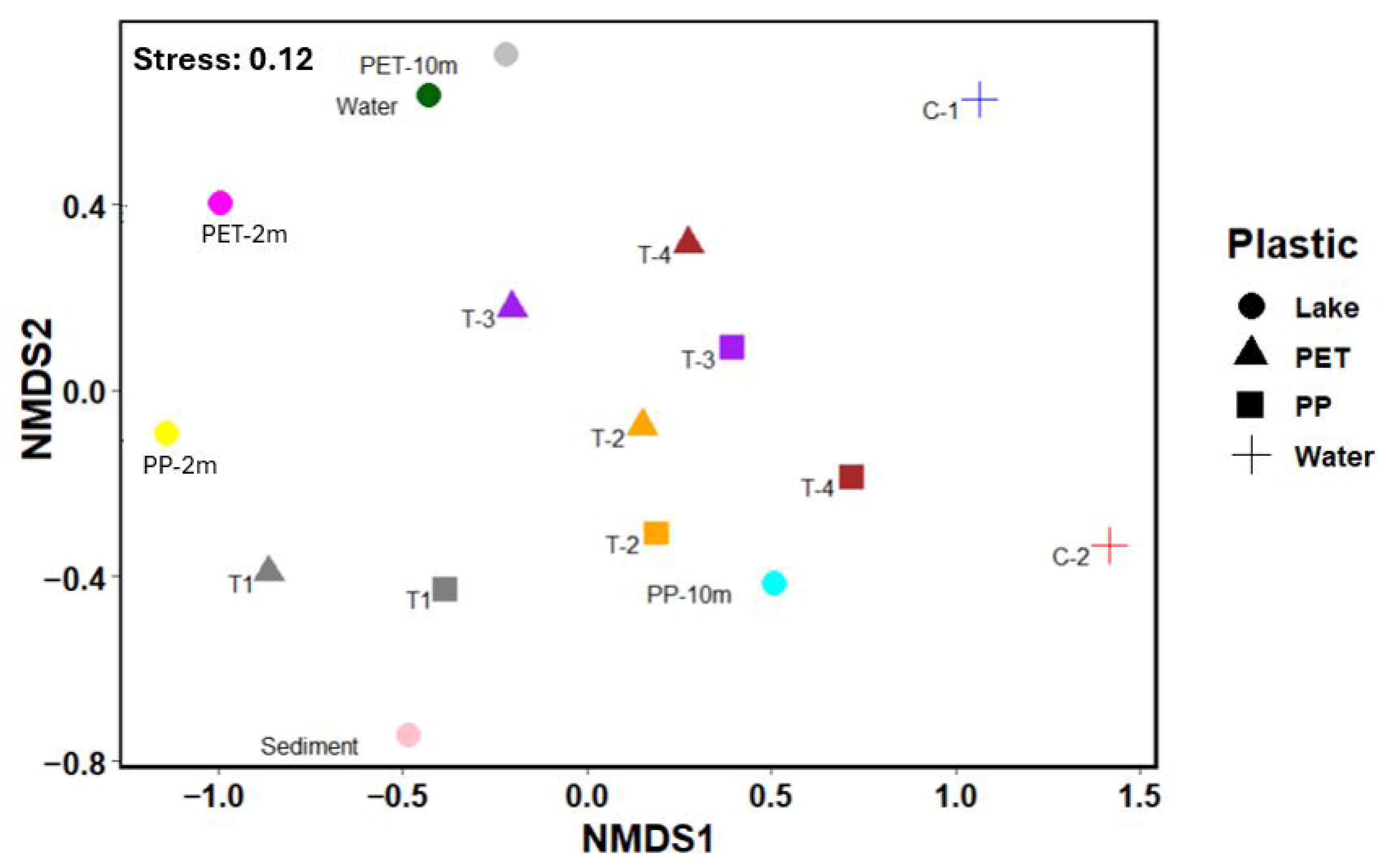
A nonmetric multidimensional scaling (NMDS) ordination was used to identify similarities or dissimilarities between the algal communities growing in Church Lake using R package vegan version 2.6-4 [
28]. NMDS ordinations were based on dissimilarity matrices calculated from cell density for each sample and Bray–Curtis’s distance measures. Analysis of similarities (ANOSIM) was performed to determine if there was a difference in community composition between treatment groups. When a
p-value was significant, a pairwise adonis test (package pairwiseAdonis version 0.4.1 [
29]) was used to find which groups were significantly more abundant than the others. Finally, an indicator species analysis was used to find which genera were driving the community in the lake and treatment groups using R package indicspecies version 1.7.14 [
30].
4. Discussion
Two impairments to freshwater systems that have received considerable attention of late are microplastics and salt runoff [
31,
32,
33,
34]. While the science community’s understanding of their individual impacts has grown in recent years, much less attention has been paid to their interactive effects. In this current study, we took advantage of a heavily salt-impacted lake [
14] that receives microplastics from highway runoff [
35] to explore this interaction and its implications on the community structure of the plastisphere. The results provide novel insights into the adaptability and ecological roles of microorganisms in response to varying environmental conditions on MPs in salinity-impacted lakes, as well as outcomes in future scenarios should these salt-stratified lakes return to a mixed state.
As expected, water quality data from Church Lake showed distinct differences between environmental conditions at 2 and 10 m. The epilimnion’s warmer temperatures, light availability, and high DO levels supported higher biofilm biomass on MPs. The highest biomass occurred on MPs that were initially incubated in the epilimnion (T1 and T3), suggesting that these conditions were conducive to algal and bacterial growth as predicted in our first hypothesis. The higher light conditions under T1 promoted photosynthesis and organic matter production [
36], which in turn can support heterotrophic growth through priming processes associated with dissolved organic matter (cf. [
37]). The presence of very high nutrient concentrations has been shown to strongly influence the community structure of microplastic biofilms [
38,
39], but it does not appear that the high P concentrations in the hypolimnion of Church Lake resulted in a unique community structure. The colder, more saline, hypoxic conditions of the hypolimnion resulted in a microbial community that, after initial colonization, apparently had minimal impact on the established community (at least within the 25-day experiment) even when placed in the environmental conditions simulating the epilimnion (T2: Hypo → Epi). Indeed, biomass accumulation in T2 was no different from that in T4 (Hypo → Hypo), suggesting that the microbial assemblage that developed in situ set the stage for near-future growth dynamics, irrespective of environmental conditions or polymer substrate. The high conductivity (mostly as chloride [
14]) in the hypolimnion can be stressful to many organisms, which may have led to lower biomass and a limited taxonomic diversity to “seed” future growth. Hence, while these biomass data largely supported our first hypothesis that biofilm abundance would be greater on MPs that were grown in the epilimnion, the rationale behind our hypothesis appears flawed: the community structure that developed based on its current environmental conditions had a greater influence on future growth patterns than as the environmental conditions into which it was transplanted. It is unclear if this “imprinting” on community structure would be retained over time, as both the new environmental conditions and the presence of new colonists in the natural environment may reduce the resistance of the community to taxonomic change. Nonetheless, it is surprising that given the fast turnover of microbial populations that these lab-grown communities retained their general structure over 25 days.
Polymer type had a limited influence on the plastisphere. The suitability of polymer physiochemical properties and their influence on biomass often varies among studies, with some studies seeing higher biomass in high-density MPs (PVC and PET) and decreases in biomass in low-density MPs (PP), while others see no effect [
38,
40]. The inconsistent results are believed to be influenced by the different environmental conditions between experiments in different laboratories [
40], as well as the polymers being investigated. Studies have shown that the biodiversity of the plastisphere is highest when the biodiversity of the bacterial communities in the surrounding water and naturally occurring substrate is also high, a finding that is consistent in this study [
3,
41,
42]. For MPs grown in the lake, where only the 2 m bacterial communities could be compared because of the lost 10 m PET sample,
Inhella and
Aquabacterium preferred PP over PET, whereas
Pirellula preferred PET over PP. However, when examined after the experimental incubations, the PET and PP communities within a treatment clustered close to each other in ordination space. It is possible that the influence of the strikingly different environmental conditions at the 2 m vs. 10 m depths overwhelmed the influence of polymer composition and texture in this study.
In lake samples, algal diversity appeared to be influenced by the environment, as the MPs grown at 2 m had higher diversity than those grown at 10 m, irrespective of polymer type. Two cyanobacteria taxa,
Leptolyngbya and
Pseudanabaena, had high relative abundances after the experiment and were present on both polymers and under all experimental conditions. Both
Leptolyngbya and
Pseudanabaena are commonly found and potential cyanotoxin producers [
43], although we did not test for toxins. It is interesting that the algal genera that colonized the MPs in the epilimnion and transferred to hypolimnetic conditions in the lab had higher diversity than those transferred to epilimnetic conditions. Several of these taxa could not be identified microscopically, and it is unclear what their metabolic state might have been. Nonetheless, the transition to low light and high salinity apparently created a niche where some taxa could survive; this was not the case for algae grown in the lake hypolimnion and kept in hypolimnetic conditions, supporting the notion that the “founder effect” [
44,
45] of colonizing species strongly influences future community structure.
With respect to the algal communities, Patrick et al. [
46] examined the factors influencing algal community structure on polymers that were different than the ones used in the current study and concluded that their polymers were suitable substrates for periphytic colonization. In addition, they identified conductivity, nitrate, phosphate, and potassium as strong influences on community structure but did not explicitly address the effect of the different polymers. The strong effect of conductivity suggests salt impacts algal community structure, which is to be expected depending on the osmoregulatory flexibility of the algae. The differences observed in the present study provide further evidence for this effect.
Our second hypothesis—that bacterial diversity would be greater in the hypolimnion due to their broader metabolic flexibility in reduced-light and -oxygen conditions compared to algae—was clearly not supported. We speculate that the founder effect had a dominant influence on community structure, although other factors may have accounted for the lack of hypothesis support. The conditions in the hypolimnion of Church Lake are extreme due to the very high P and chloride concentrations; this environment likely filtered the diversity of plastisphere colonists [
47] and also constrained future growth. In contrast, the more typical P concentrations and higher light levels in the epilimnion likely created a more favorable system for a range of taxa, as opposed to the hypolimnion.
Our study has several limitations. First, the experimental manipulation involved multiple variables, so it was difficult to tease apart the relative importance of salinity. light, nutrients, and temperature. Second, we did not address the role of biotic interactions within the biofilm [
48], which can influence community structure. Finally, as is the case in all lab experiments, the issues of container artefacts and experimental duration need to be considered. In our case, the relatively small biomass in the 1 L containers was assumed to minimize a container effect, but it was not empirically tested, and the 25-day experimental duration was based on prior unpublished studies that revealed changes in phosphorus concentration of <2% over a similar time period, suggesting minimal impact of nutrient limitation. Nonetheless, it is certainly possible that our results may have differed if the experiment lasted longer than 25 days or if a new source of colonists were introduced during the experiment.
5. Conclusions
Microbial colonization of the plastisphere in this study was filtered by a strong environmental gradient involving light, phosphorus, and salinity. Following the transfer of these communities from a high-light, low-P, and low-salinity environment to its opposite condition, and vice versa, the resulting community structure was influenced more by its initial colonizers (priority effect) than its ambient environment or polymer type, indicative of a strong founder effect.
These results have implications for management of salt-impacted lakes. The salt itself may directly influence community structure by reducing populations of salt-intolerant taxa due to osmoregulatory stress. This, in turn, may have trophic level implications if the resulting community is less palatable or nutritious to consumers. Indirectly, a salt gradient limits or may even prevent lake mixing, allowing nutrients to accumulate in the hypolimnion. Should this halocline be reduced due to human intervention, very strong storms, or dilution over time, a mixing event will advect nutrients into the photic zone and stimulate phytoplankton growth [
49]. This nutrient pulse, based on our results, will have a limited effect on the plastisphere growing in the hypolimnion, while the epilimnetic plastisphere now transported to deeper, colder waters will be inhibited, overall reducing benthic gross primary production. However, increased phytoplankton abundance will reduce lake transmissivity and may negatively impact submerged aquatic vegetation due to light limitation.