1. Introduction
Ensuring human well-being, economic development, and food security requires the protection of water and soil resources. However, both are increasingly threatened by anthropogenic pressures and climate variability. Water quantity and quality are changing dynamically due to land use alteration and climate change [
1,
2,
3]. Among the various forms of land degradation, soil erosion is one of the most critical environmental challenges, leading to nutrient loss from topsoil, reduced crop yields, increased water pollution, and altered wildlife habitats [
4]. Major drivers of erosion include unsustainable land management, agricultural practices, extreme precipitation, steep slopes, sparse vegetation cover, overgrazing, and deforestation [
5,
6]. Rainfall and surface runoff further accelerate sediment transport from uplands to low-lying areas [
7,
8]. In India, approximately 45% of the land area is affected by degradation, with water erosion impacting 68.4% of the total geographical area [
9,
10]. Sedimentation is also reducing reservoir storage capacity at rates of 0.2–1% per year [
11], threatening long-term water security.
Best Management Practices (BMPs) offer effective strategies to reduce soil erosion and nutrient pollution in watershed management projects. Numerous studies in India and globally have demonstrated the effectiveness of structural and agricultural BMPs—including filter strips, contour farming, check dams, streambank stabilization, stone bunds, recharge structures, grassed waterways, and terracing—in significantly reduce runoff velocity, trap sediments and improve watershed hydrological responses [
12,
13,
14,
15,
16,
17,
18,
19,
20].
However, assessing the effectiveness of these policies across large and varied watersheds requires thorough modeling tools that can represent hydrological processes and land management interventions over multiple geographical and temporal scales. As a result of this, hydrological models are now crucial for comprehending watershed dynamics and evaluating how conservation initiatives impact the flow of nutrients, water, and sediment [
13,
20,
21,
22]. Among the various models, the Soil and Water Assessment Tool (SWAT) is one of the most extensively used process-based watershed models for evaluating hydrological and environmental responses to land management changes [
23,
24]. SWAT is a physically based, semi-distributed model that simulates the long-term effects of land use, soil properties, climate, and management techniques on water balance, sediment transport, and nutrient dynamics at the watershed scale [
25,
26]. The model divides watersheds into sub-basins and then into Hydrologic Response Units (HRUs), which represent different combinations of land use, soil type, and slope, allowing for precise simulation of spatial heterogeneity. SWAT’s flexibility to replicate diverse conservation and land management approaches makes it ideal for evaluating the effectiveness of BMPs. The model explicitly represents agricultural and structural techniques including contour farming, vegetative filter strips, terraces, and sediment retention structures, allowing for a quantitative assessment of their effects on runoff and sediment yield [
12,
13,
14,
15,
16,
17,
18,
19,
20,
21,
22]. Furthermore, SWAT facilitates scenario-based assessments, which enable researchers to assess watershed responses under various land management techniques and future climate scenarios [
16].
The Nagavali and Vamsadhara watersheds, characterized by intensive agriculture, forested uplands, and recurring floods, have 26.5% and 49% of their respective areas identified as critical sediment source zones [
27]. These areas are primarily dominated by degraded forest land, wastelands, fallow lands, agricultural fields, and slopes more than 8°, which all contribute to increased soil erosion and sediment transport. Sedimentation has already caused a substantial loss of reservoir storage capacity in the region. For example, between 1977 and 2004, the live storage of the Gotta barrage in the Vamsadhara basin decreased by roughly 61.43% due to silt deposition [
11], emphasizing the critical need for targeted soil and water conservation actions. Although several studies have used SWAT to analyze the efficiency of BMPs in minimizing sediment quantity [
12,
13,
14,
15,
16,
17,
18,
19,
20,
21,
22,
28], just few studies have systematically evaluated the combinations of structural and agricultural BMPs in Indian watersheds [
13,
19], under climate change conditions [
16]. Such comprehensive assessments are critical for developing effective watershed management methods that can reduce soil erosion while increasing hydrological resilience to changing climatic conditions.
Therefore, this study addresses these research gaps by integrating hydrological modeling with targeted watershed management strategies. Unlike previous studies that primarily focus on individual BMPs at broader spatial scales, this research emphasizes the implementation of BMPs within critical sediment source areas identified at the HRU level, enabling more precise and efficient erosion control. The study evaluates both individual and combined BMP scenarios, including filter strips, contour farming, sedimentation ponds, and contour stone bunding, to assess their cumulative effectiveness.
Furthermore, the analysis incorporates both baseline and future climate scenarios, providing insights into the long-term sustainability and resilience of conservation measures under changing climatic conditions. This integrated approach enhances the applicability of SWAT as a decision-support tool for prioritizing site-specific soil and water conservation interventions. The findings contribute to improved watershed management planning by offering a systematic framework for reducing soil erosion, minimizing sediment transport, and sustaining reservoir storage capacity in erosion-prone regions such as the Nagavali and Vamsadhara watersheds.
2. Materials and Methods
A calibrated SWAT model was applied to the Nagavali and Vamsadhara watersheds to simulate BMPs, including filter strips (3 m, 6 m, and 10 m), sedimentation ponds, contour farming, contour stone bunding, and combined BMP scenarios.
2.1. Study Area
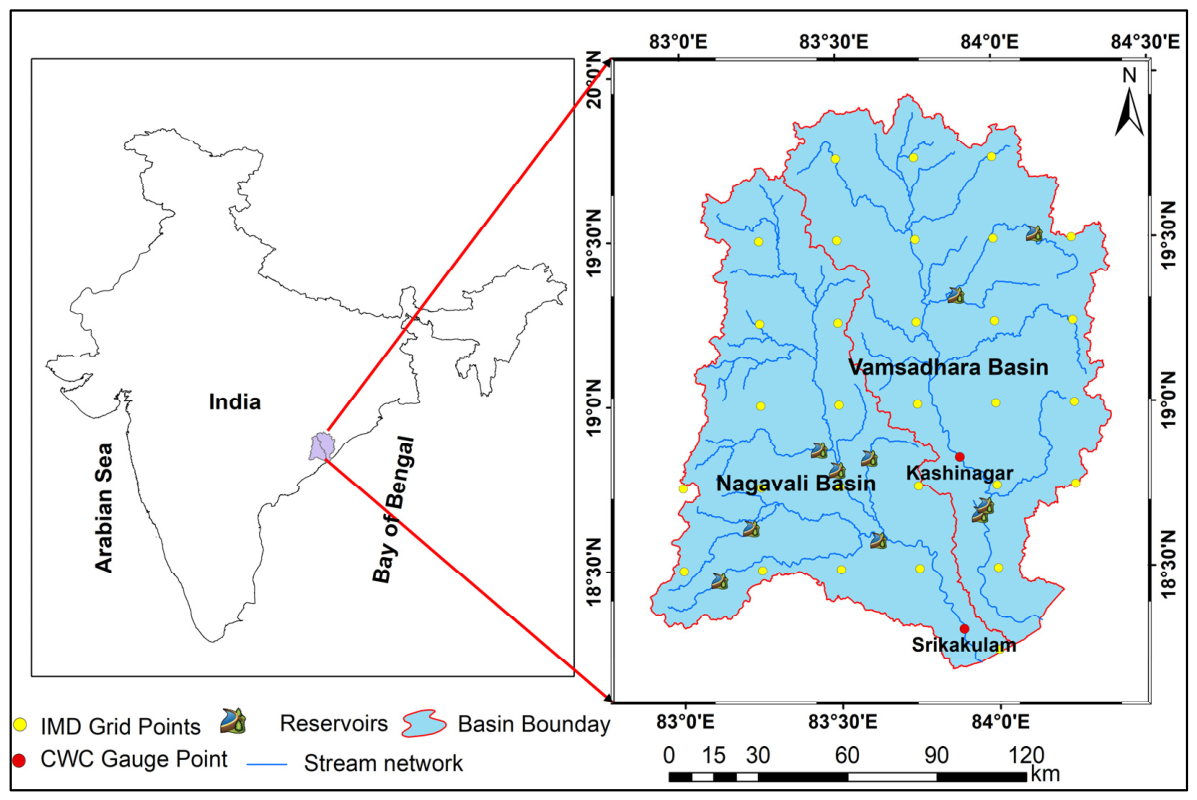
The Nagavali and Vamsadhara watersheds are located in eastern India between the Mahanadi and Godavari basins (
Figure 1). The Nagavali River flows 256 km, while the Vamsadhara River extends 254 km before draining into the Bay of Bengal. Land use within the Nagavali watershed is predominantly agricultural lands (43%), followed by forests (34%), and other land use categories (23%). In contrast, the Vamsadhara watershed comprises forests (52%), agricultural lands (30%), and other land uses (18%) [
27]. Agriculture plays a significant role in the regional economy, with rice being the dominant crop cultivated in both watersheds, followed by banana, sugarcane, maize, and groundnut.
The key hydro-meteorological factors such as precipitation and streamflow were investigated and reported in
Table 1. The region experiences a tropical monsoon climate, with annual precipitation ranging from 1000 to 1400 mm, and average minimum and maximum temperatures of 8 °C and 43 °C, respectively. The majority of precipitation falls during the southwest monsoon season (June–September), resulting in substantial runoff generation and peak flows. In addition to monsoonal rainfall, the watersheds are frequently influenced by cyclonic storms and low-pressure systems originating in the Bay of Bengal, resulting in significant spatial and temporal variability in rainfall distribution. Such high-intensity rainfall events frequently produce significant surface runoff, accelerating soil separation and sediment transport throughout the landscape. Many parts of the basin have slopes more than 8°, particularly upland and forested areas, making soils more susceptible to erosion during significant rainfall events. The region’s primary soil types include sandy loam, clayey loam, and shallow gravelly soils, all of which have limited infiltration capacity and are prone to erosion during heavy rains. When combined with agricultural growth and degraded forest areas, these factors accelerate sediment transfer from upland regions to downstream river systems and reservoirs. Hydrologically, The Nagavali and Vamsadhara rivers are important for the region’s irrigation, domestic water supply, and agricultural livelihoods. However, sediment movement from erosion-prone areas has resulted in significant reservoir sedimentation and limited storage capacity in downstream water infrastructure.
2.2. SWAT Model Setup
The Soil and Water Assessment Tool (SWAT) was employed to evaluate BMP effectiveness in critical sediment source areas. SWAT is a process-based, distributed watershed model widely used for hydrologic and sediment studies [
25,
26].
The Nagavali and Vamsadhara watersheds were delineated into 34 and 30 sub-watersheds, respectively, operating at a daily time step. Slope classes of 0–2%, 2–8%, and >8% were used to categorize low, medium, and high slopes. In Nagavali, 44.62%, 42.54%, and 12.84% of the area falls into low, medium, and high-slope categories, respectively. In Vamsadhara, the corresponding percentages are 37.62%, 31.96%, and 30.42%.
Hydrologic Response Units (HRUs) were defined based on unique combinations of land use, soil, and slope using a 100 ha threshold, resulting in 2153 HRUs in Nagavali and 2183 HRUs in Vamsadhara. Required input datasets are detailed in Nagireddy et al. [
27].
Sediment yield at the HRU level was estimated using the Modified Universal Soil Loss Equation (MUSLE). Agricultural management practices—including crop rotation, sowing and harvesting dates, and fertilizer applications—were incorporated into SWAT management files (.mgt) based on farmer surveys. Rice is cultivated during both kharif and rabi seasons, typically sown in June and harvested in December. Fertilizer application includes DAP at 50 kg/acre during sowing, followed by urea and potash (25 kg/acre) after 40 days and again in October. Banana cultivation begins in January–February, with rotational fertilizer applications (DAP, urea, and potash at 150 kg each) from July to December. Incorporating these practices enhanced the representation of field conditions within the model.
2.3. Calibration and Validation
Model calibration and uncertainty analysis were conducted using the Sequential Uncertainty Fitting (SUFI-2) algorithm in SWAT-CUP [
29]. Monthly streamflow was calibrated (1991–2005) and validated (2006–2014) for both watersheds. Monthly sediment calibration was performed for 2002–2010, with validation during 2011–2013. The calibration and validation periods were chosen based on the availability and consistency of observed hydro-meteorological and sediment data from the Central Water Commission. Streamflow data was available from 1988 to 2014 and sediment load data available from 2000 to 2013 at the Srikakulam and Kashinagar gauge stations in the Nagavali and Vamsadhara basins. However, continuous sediment data required for model calibration were only available for a limited time. Thus, the calibration periods were chosen to assure consistent and accurate datasets while reflecting realistic hydrological variability. The validation periods were chosen as independent timeframes for evaluating model performance under various hydrological circumstances. The selected periods include a wide range of flow regimes, including wet and dry years, ensuring model calibration and validation resilience.
Model performance was examined using well established statistical measures, including the coefficient of determination (R
2), Nash–Sutcliffe Efficiency (NSE) [
30], and percent bias (Pbias) [
31], which quantify the agreement between observed and simulated stream flow and sediment quantities. R
2 measures linear correlation strength, NSE evaluates model predictive performance against observed data, and PBIAS reveals the model’s tendency to overestimate or underestimate observed values. The SWAT model’s performance was evaluated using published criteria [
32]. The model performance statistics presented in
Table 2 indicate satisfactory to good agreement between observed and simulated values for both streamflow and sediment, demonstrating the reliability of the SWAT model for the study area. Detailed sensitivity, calibration, and validation results are provided in Nagireddy et al. [
27].
2.4. Streamflow and Sediment Yield Under Climate Change
Nagireddy et al. [
33] evaluated streamflow and sediment yield under SSP245, SSP370, and SSP585 scenarios using Dry–Warm (ACCESS-CM2) and Cold–Wet (EC-Earth3) models. Compared to historical conditions, both near- and far-future projections showed increased streamflow and sediment yield.
During the historical period, streamflow ranged from 7 to 182 mm and sediment yield from 0 to 25 t/ha/yr. Under SSP585, the Dry–Warm model projected increases to 13–216 mm (streamflow) and 0–30 t/ha/yr (sediment yield). The Cold–Wet model projected even larger increases in the far future, with streamflow ranging from 10 to 333 mm and sediment yield from 0 to 49 t/ha/yr. High-erosion areas expanded to 7468 km2 and 9426 km2 in Nagavali and Vamsadhara, respectively. Given these projections, BMP evaluation under climate change focused on the Cold–Wet (EC-Earth3) model under SSP585.
2.5. Evaluation of BMP Scenarios
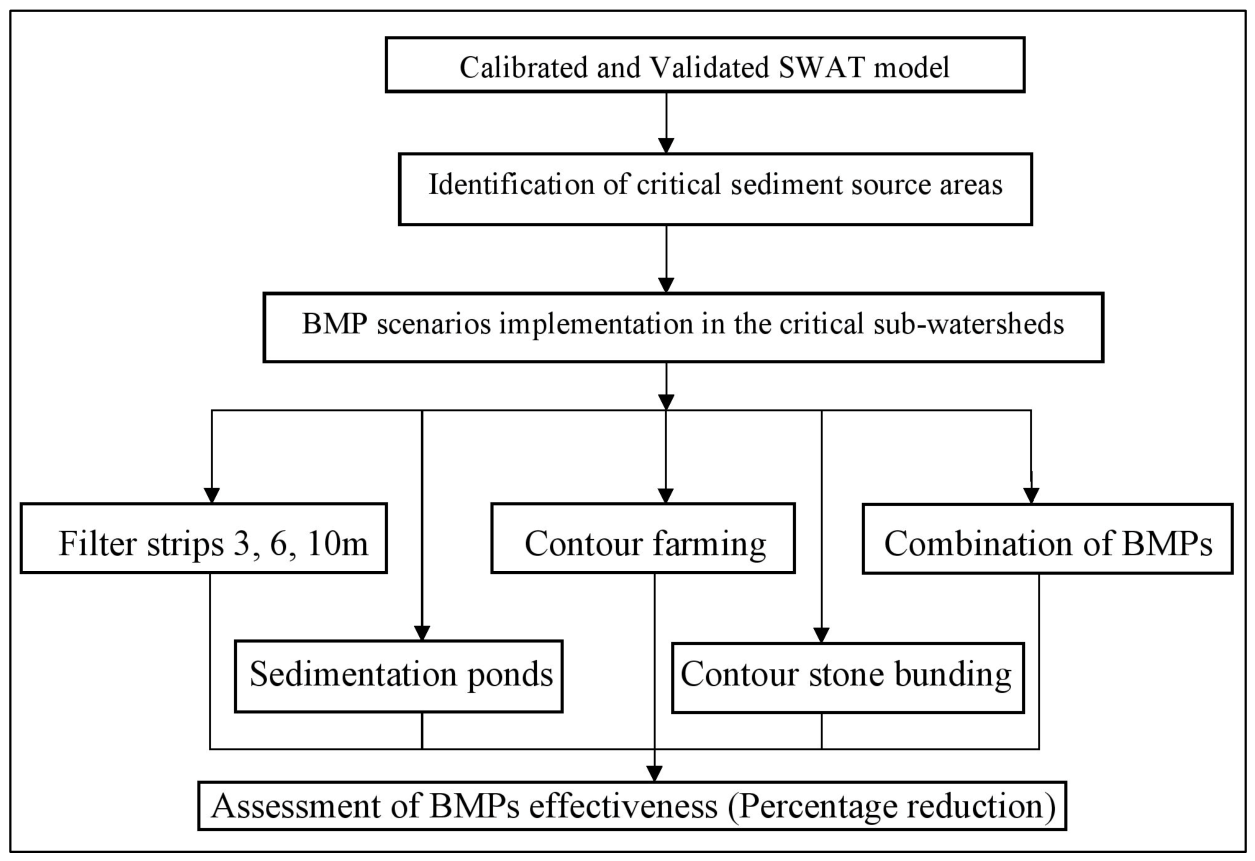
The BMP assessment framework is shown in
Figure 2. Individual BMPs—including filter strips (3 m, 6 m, 10 m), sedimentation ponds, contour farming, and contour stone bunding—and their combinations were evaluated at both sub-watershed and watershed scales using SWAT.
Pre- and post-BMP parameter values are summarized in
Table 3. BMP performance was assessed under baseline climate conditions and future projections (Cold–Wet EC-Earth3, SSP585).
BMP efficiency was calculated as follows:
where base and post-BMP scenarios represent average annual streamflow or sediment yield before and after BMP implementation.
2.5.1. Filter Strips
Filter strips are vegetated buffer zones located between agricultural fields and water bodies that reduce sediment and nutrient transport. Their impact was simulated by modifying the FILTERW parameter in SWAT to represent widths of 3 m, 6 m, and 10 m.
2.5.2. Sedimentation Ponds
Sedimentation ponds reduce flow velocity and trap sediments. In SWAT, ponds were simulated using parameters in the .pnd file, including: PND_FR (fraction of sub-basin draining to pond), PND_PSA (surface area at principal spillway), PND_PVOL (volume at principal spillway) and PND_K (hydraulic conductivity). Parameter values are provided in
Table 3.
2.5.3. Contour Farming
Contour farming reduces runoff velocity by aligning tillage along contour lines. In SWAT, this was simulated by modifying USLE_P and CN2 for agricultural lands.
2.5.4. Contour Stone Bunding
Stone bunds reduce slope length and enhance infiltration. Implementation involved modifying CN2, SLSUBBSN, and USLE_P parameters for wastelands, rangelands, and cultivated lands, based on Dibaba et al. [
15].
2.5.5. Combined BMP Scenario
Four combined scenarios were evaluated:
Combined BMP1: contour farming + sedimentation ponds + stone bunding.
Combined BMP2: 3 m filter strips + all structural BMPs.
Combined BMP3: 6 m filter strips + all structural BMPs.
Combined BMP4: 10 m filter strips + all structural BMPs.
3. Results
3.1. BMP Application Areas
Nagireddy et al. [
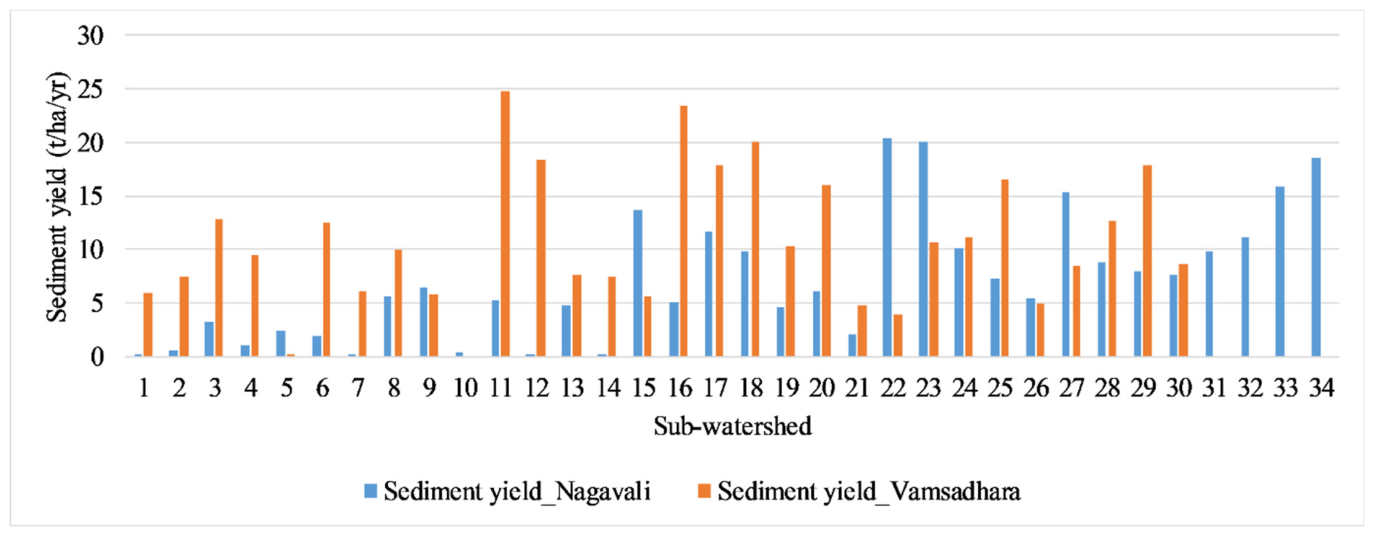
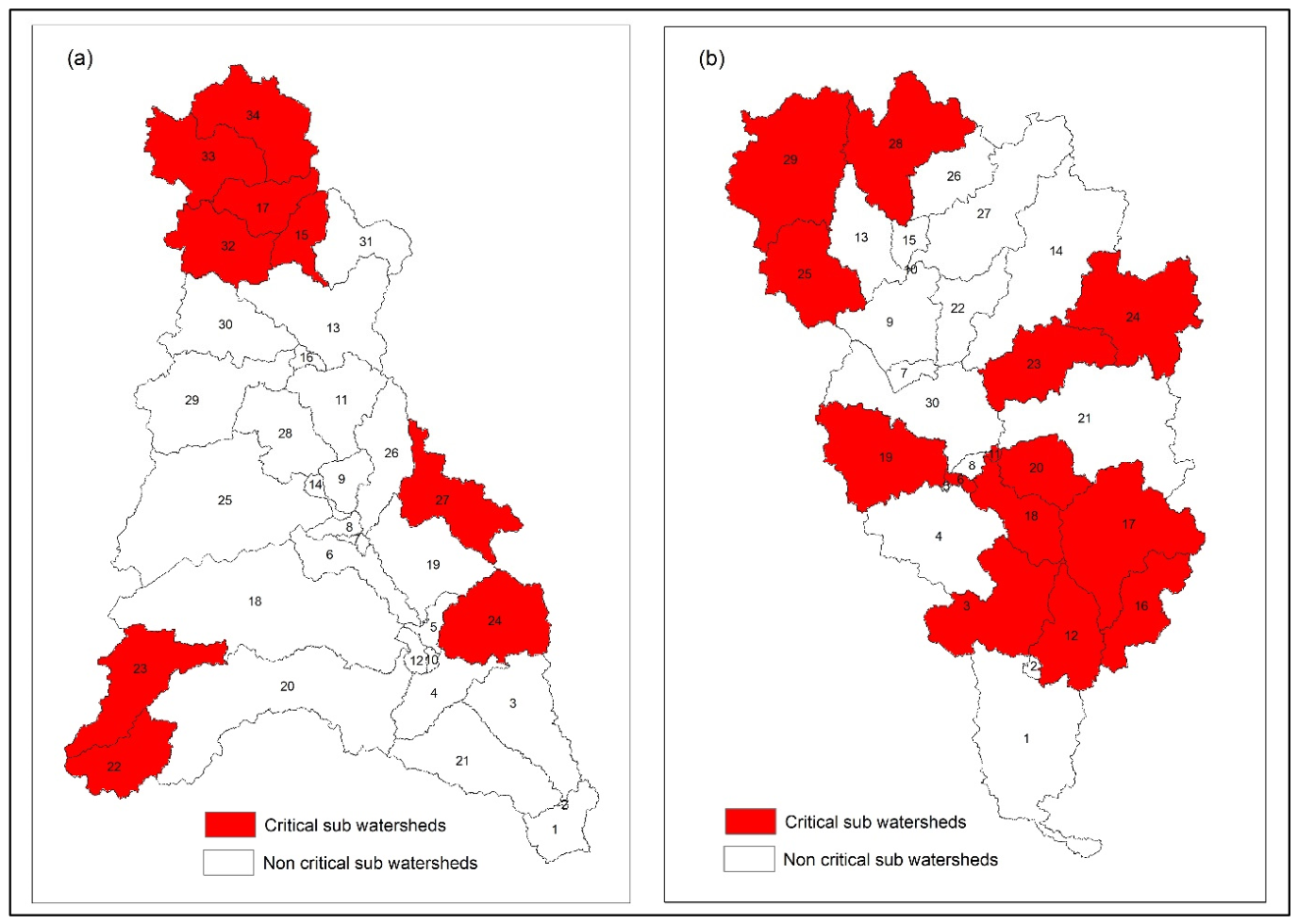
27] identified critical sediment source areas in the Nagavali and Vamsadhara watersheds for targeted management. Nine sub-watersheds (26.5%) in Nagavali, and fourteen (49%) of the Vamsadhara, were classified as high sediment-producing areas (
Figure 3 and
Figure 4). This classification was based on exceeding the threshold of 10 t/ha, which represents a critical erosion risk level.
The land use composition and slope distribution of these critical sub-watersheds are presented in
Table 4 and
Table 5. In the Nagavali watershed, critical sub-watershed areas range from 133 to 349 sq.km. Sub-watershed 32 is dominated by forest (71%), whereas sub-watershed 17 has the highest proportion of agricultural land (40%). Sub-watershed 23 exhibits the highest percentage of barren land (45%). Across the Nagavali critical sub-watersheds, barren land—an important contributor to sediment generation—ranges from 13% to 45%.
In the Vamsadhara watershed, critical sub-watersheds range from 9.8 to 686 sq.km. Forest cover dominates sub-watersheds 28 and 23, accounting for 75% and 74% of their respective areas. Sub-watersheds 6 and 12 have a higher proportion of agricultural land, accounting for 52% and 50%, respectively. The extent of barren land across the critical sub-watersheds of the Vamsadhara basin varies greatly, ranging from 6% to 48%, with sub-watersheds 11, 12, and 16 having more than 34% barren land.
Most critical sub-watersheds in both basins fall within the high-slope category (>8%), underscoring the role of topography in sediment generation. The distribution of slopes across three categories (0–2%, 2–8%, and >8%) further highlights topographic variability within these areas. Given this heterogeneity in land use and slopes, implementing combined BMP scenarios at critical Hydrologic Response Units is advised for successful sediment management and watershed protection.
To address soil erosion strategically, BMPs were prioritized based on the identified sub-watersheds. By targeting sub-watersheds exceeding the 10 t/ha sediment threshold, the study focused on areas requiring the most urgent intervention.
3.2. Effects of BMP Implementation on Streamflow and Sediment Yield
The impacts were assessed in terms of reductions in specific sediment load (t/ha) at the watershed outlet and landscape sediment yield (t/ha) at the sub-watershed level. SWAT simulations were conducted for a 12-year period (2002–2013) to compare the efficiency of the BMP scenarios on streamflow and sediment yield. Monthly simulations were performed, and average annual streamflow and sediment yield were computed at both critical sub-watershed outlets and main watershed outlets. Percentage reductions were calculated using Equation (1).
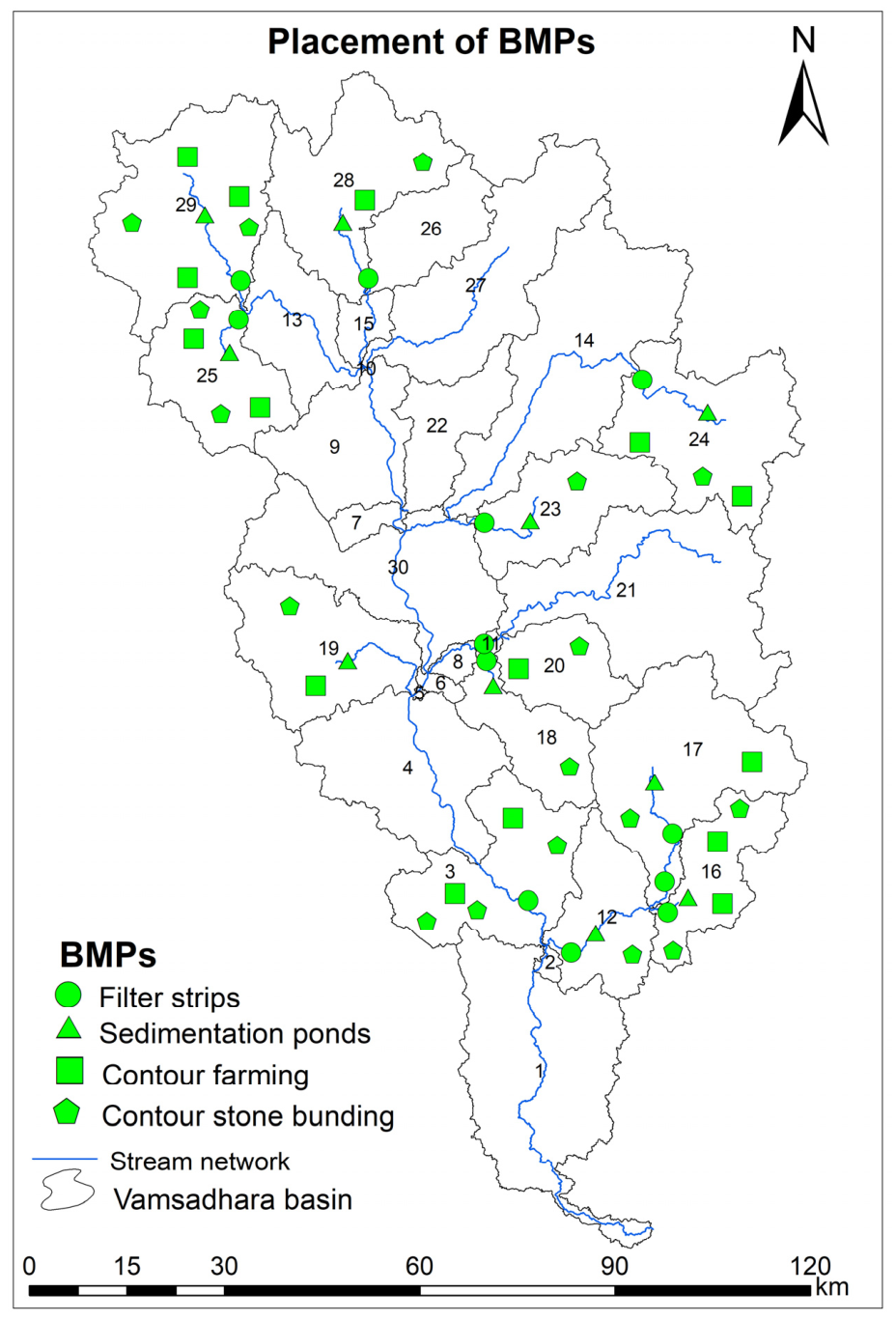
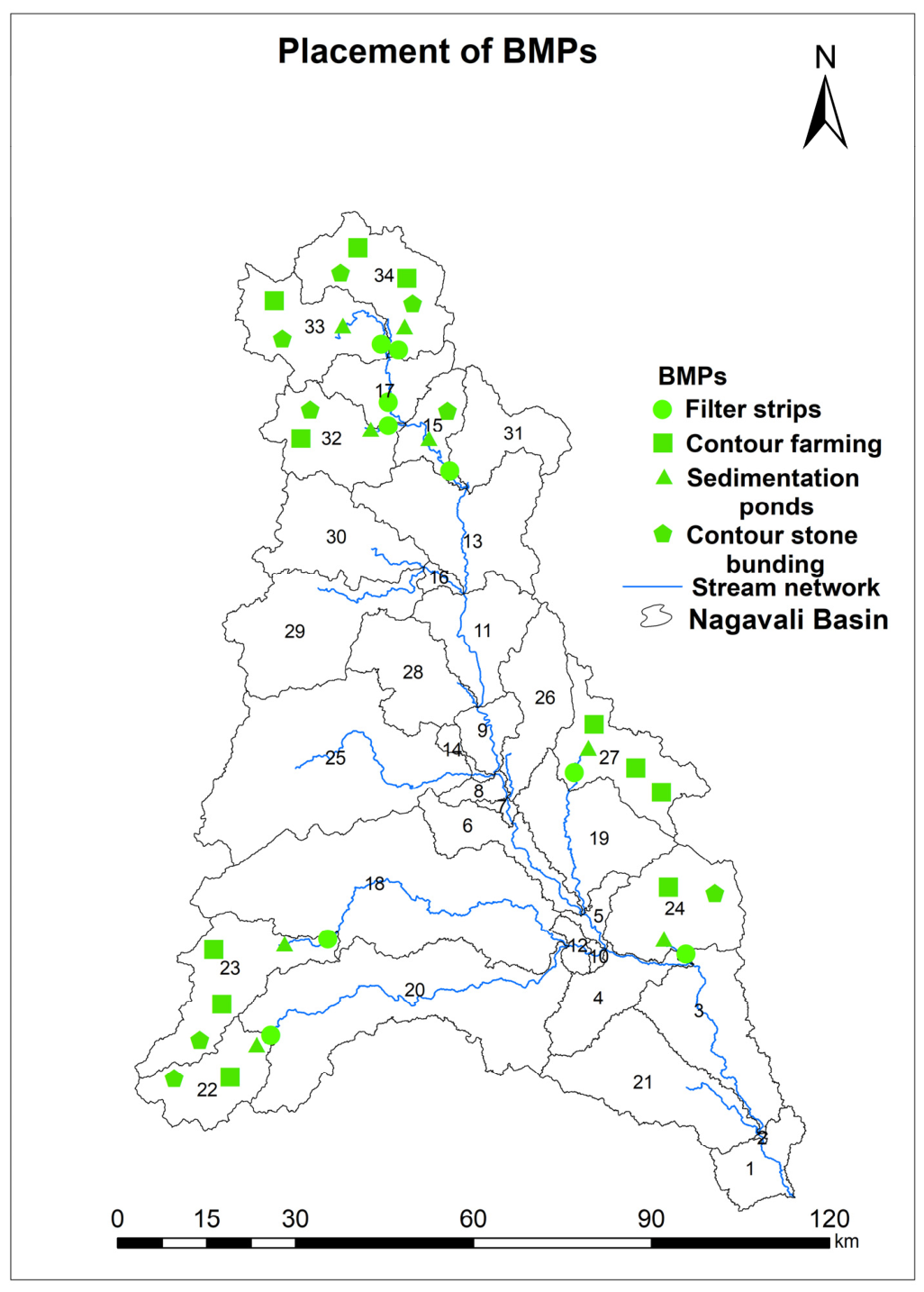
The spatial implementation of BMPs across the Nagavali and Vamsadhara watersheds is shown in
Figure 5 and
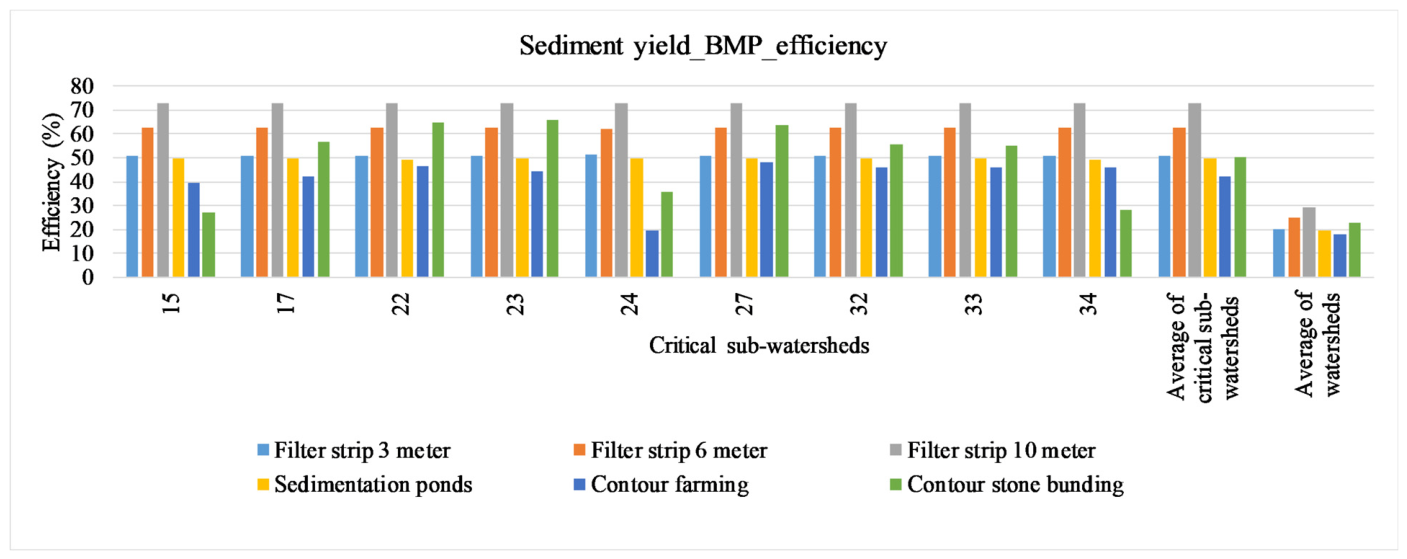
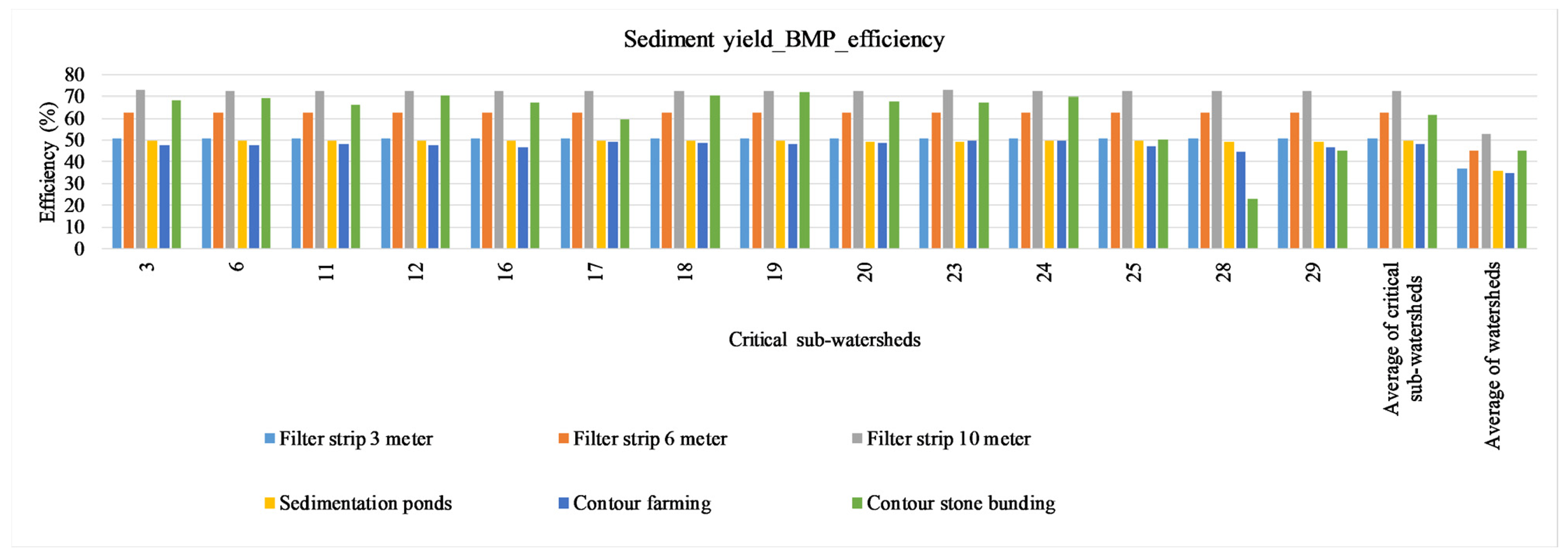
Figure 6. Overall, the BMPs demonstrated substantial reductions in sediment yield. Percentage reductions in sediment at critical sub-watershed and watershed levels are presented in
Figure 7 and
Figure 8, while streamflow reductions are summarized in
Table 6,
Table 7 and
Table 8.
Filter strips of 3 m, 6 m, and 10 m widths were applied along the edges of agricultural lands, water bodies, and wastelands. The 3 m filter strips achieved an average sediment reduction of 51% across critical sub-watersheds in both basins. At the watershed level, reductions were 20% for Nagavali and 37% for Vamsadhara. In the Nagavali watershed, all critical sub-watersheds remained within the acceptable sediment yield limit of 11.2 t/ha/yr [
34]. However, sub-watersheds 11 and 16 in Vamsadhara exceeded this limit.
The 6 m filter strips resulted in an average sediment reduction of 62% across critical sub-watersheds, and 25% and 45% reductions at the watershed level for Nagavali and Vamsadhara, respectively. Under this scenario, sediment yields in critical sub-watersheds remained within tolerable limits in both basins. Similar findings were reported by Pandey et al. [
16], who showed that 6 m filter strips effectively reduced sediment beyond tolerable limits in the Tons River basin.
The 10 m filter strips produced the highest sediment reductions among individual strip widths, achieving 73% reduction at the critical sub-watershed level and 29% (Nagavali) and 53% (Vamsadhara) reductions at the watershed level. These results indicate a positive relationship between strip width and sediment reduction efficiency. Notably, filter strips did not significantly affect streamflow in either watershed.
Sedimentation ponds reduced both sediment yield and streamflow by approximately 50% at the critical sub-watershed level in both basins. At the watershed scale, sediment yield decreased by 20% (Nagavali) and 36% (Vamsadhara), while streamflow decreased by 15% and 29%, respectively. These results highlight the effectiveness of sedimentation ponds in trapping sediments and reducing downstream transport, demonstrating their importance in watershed management.
Contour farming, applied to agricultural and wastelands with slopes greater than 2%, reduced sediment yield by 42% (Nagavali) and 48% (Vamsadhara) at the critical sub-watershed level, with corresponding streamflow reductions of 13% and 14%, respectively. At the watershed scale, sediment yield decreased by 18% (Nagavali) and 35% (Vamsadhara), while streamflow reductions were more modest (4% and 8%). Although effective, contour farming showed comparatively lower sediment reduction than filter strips, sedimentation ponds, and stone bunding.
Contour stone bunding, applied to wastelands, rangelands, and cultivated lands, significantly reduced sediment yield by 50% (Nagavali) and 62% (Vamsadhara) at the sub-watershed level. At the watershed scale, reductions were 23% and 45%, respectively. Streamflow reductions of 13% (sub-watershed) and 7% (watershed) were observed in Vamsadhara. These findings demonstrate the strong potential of contour stone bunding for soil conservation across diverse land uses.
Beyond individual BMPs, four combined BMP scenarios were evaluated. The percentage reductions in sediment and streamflow under both individual and combined BMPs are presented in
Table 8. At the critical sub-watershed level, combined BMPs achieved sediment reductions ranging from 74% to 93% in Nagavali and from 98.6% to 99.6% in Vamsadhara. Streamflow reductions were 56% and 95%, respectively. At the watershed level, sediment yield decreased by 29–37% in Nagavali and 73.5–74.2% in Vamsadhara, while streamflow reductions were 16.5% and 54%, respectively.
These results demonstrate that integrated BMP implementation provides substantially greater reductions in sediment yield and surface runoff compared to individual practices. The findings emphasize the importance of a multifaceted watershed management approach that combines complementary structural and agricultural BMPs to achieve sustainable sediment control and hydrological regulation.
3.3. Hydrological Response of BMPs Under Climate Change Cold–Wet Scenario
To assess the efficiency of BMPs under future climatic conditions, this study used a Cold–Wet climate prediction obtained from the EC-Earth3 model under the SSP585 scenario. Climate projections for the years 2025–2100 were utilized as inputs to the SWAT model, which served as a baseline for further BMP assessments. Under this anticipated climate, sediment output showed significant regional diversity across sub-watersheds in both basins. In Nagavali, sub-watershed 24 had the highest average annual sediment yield (24.1 t/ha/yr), followed by sub-watershed 34. In the Vamsadhara, sub-watershed 16 had the highest sediment yield (36.29 t/ha/year), followed by sub-watersheds 29, 11, and 28. These findings highlight significant regional variation and assist in identifying priority sub-watersheds for targeted BMP installation under changing climatic conditions.
BMP performance was evaluated by quantifying percentage reductions in annual average sediment yield and streamflow relative to the climate baseline (
Table 9). The results generally reflected trends observed under historical conditions.
Filter strips (3 m, 6 m, and 10 m) reduced sediment yield by 51–73% in Nagavali and 52–65% in Vamsadhara across critical sub-watersheds. At the watershed level, reductions ranged from 25 to 36% (Nagavali) and 26–38% (Vamsadhara). The 10 m filter strips were particularly effective in reducing sediment yield below tolerable limits, indicating that wider strips should be prioritized for enhanced sediment control under future climate scenarios. Similar to historical simulations, filter strips had negligible influence on streamflow.
Sedimentation ponds achieved approximately 50% reductions in both sediment yield and streamflow across critical sub-watersheds in both watersheds. At the watershed scale, sediment yield declined by 25% (Nagavali) and 34% (Vamsadhara), while streamflow decreased by 15% and 28%, respectively. These findings reinforce the consistent effectiveness of sedimentation ponds in trapping sediment and attenuating runoff under changing climate conditions.
Contour farming under climate change reduced sediment yield by 43% (Nagavali) and 25% (Vamsadhara), with corresponding streamflow reductions of 11% and 3% at the critical sub-watershed level. At the watershed scale, sediment reductions were 21% (Nagavali) and 17% (Vamsadhara), while streamflow reductions were modest (3% and 2%).
Contour stone bunding produced stronger reductions, with sediment yield decreasing by 63% (Nagavali) and 72% (Vamsadhara) at the critical sub-watershed level. At the watershed scale, reductions were 31% and 49%, respectively. Streamflow reductions were comparatively smaller, ranging from 2 to 10% across scales.
Given the relatively equivalent distribution of land use (agriculture, forest, and wasteland) across critical sub-watersheds (
Table 4 and
Table 5), combined BMP implementation was evaluated. Four combined scenarios were assessed: combined BMP1 (sedimentation ponds + contour farming + contour stone bunding); Combined BMP2, BMP3, and BMP4 (3 m, 6 m, and 10 m filter strips, respectively, combined with structural BMPs).
Across critical sub-watersheds, combined BMPs reduced sediment yield by 81–95% in Nagavali and 86–92% in Vamsadhara. At the watershed level, reductions ranged from 40 to 47% (Nagavali) and 58–63% (Vamsadhara). Streamflow reductions under combined BMPs were 53% and 55% across critical sub-watersheds and 16% and 31% at the watershed level in Nagavali and Vamsadhara, respectively.
Overall, combined BMP scenarios consistently outperformed individual practices. In particular, combined BMP1 and combined BMP2 successfully reduced sediment yield below tolerable limits under the Cold–Wet SSP585 scenario. Therefore, these combined strategies are recommended for effective soil and water conservation in the Nagavali and Vamsadhara watersheds under future climate conditions.
4. Discussion
The current study found that both individual and combined Best Management Practices (BMPs) considerably reduced sediment yield and streamflow in the Nagavali and Vamsadhara watersheds. The volume and trends identified are broadly similar with earlier SWAT-based studies, but the spatial prioritizing technique and climate change integration provide significant new insights. The effectiveness of filter strips observed in this study, with sediment reductions ranging from 51% to 73% at the critical sub-watershed level, is consistent with findings reported by Himanshu et al. [
13] and Nepal and Parajuli [
17]. Similarly, Pandey et al. [
16] highlighted the importance of filter strip width in improving sediment retention, which is further demonstrated by the current study’s gradual rise in efficiency from 3 m to 10 m strips. However, unlike previous research, which primarily focused on single watershed systems, this study shows that filter strip performance is consistent across two physio-graphically diverse basins, strengthening the applicability of the results.
In this study, sedimentation ponds reduced sediment and streamflow by about 50% at the sub-watershed level, which is consistent with the findings of Uniyal et al. [
14] and Leta et al. [
20], who found that structural BMPs considerably reduced sediment transport and attenuated runoff. In contrast to some research (e.g., Patil et al. [
12], which focused just on sediment reduction, the current study evaluates both hydrological and sediment responses, providing a more comprehensive knowledge of BMP efficacy. Contour farming and contour stone bunding were most beneficial in high-slope and mixed-use areas, lowering sediment yields by up to 48% and 62%, respectively. These results are in line with those of Risal and Parajuli [
19] and Venishetty and Parajuli [
21], who emphasized the relevance of slope-based conservation techniques in erosion prevention. However, the comparatively higher performance of contour stone bunding in this study, particularly in sub-watersheds with extensive barren land, suggests that its usefulness may be greater in erosion-prone areas than previously predicted. This study’s significant contribution is the examination of combined BMP scenarios, which resulted in sediment reductions of up to 93% in the Nagavali watershed and nearly 99% in the Vamsadhara watershed at the critical sub-watershed level. These findings exceed or are within the range of reductions reported in prior research by [
14,
18,
22], which found that combined BMP approaches outperform individual practices. The increased efficiency reported in the current study can be due to the targeted implementation of BMPs in significant sediment source locations identified using a threshold-based approach [
35], instead of a uniform application across the watershed. This targeted strategy indicates a substantial methodological advancement. It should be noted that the significant reduction efficiencies observed for combined BMP scenarios are optimal model-based scenarios, assuming that all conservation measures are implemented and performed optimally. In practical field conditions, the effectiveness of BMPs may be lower due to factors such as variability in maintenance, adoption levels, site-specific characteristics, and socio-economic constraints. Therefore, the reported values should be interpreted as potential maximum benefits rather than guaranteed outcomes, highlighting the importance of realistic planning and adaptive management strategies.
Under future climate circumstances (SSP585 scenario), BMPs remained effective, with combined practices reducing sediment substantially up to 95% at the sub-watershed level. These findings are consistent with previous research, such as Loukika et al. [
3] and Saddiqi et al. [
36], which underlined the need of assessing hydrological responses under changing land use and climatic scenarios. While prior SWAT studies have examined hydrological variability under diverse conditions, the current study expands on this body of work by directly tying climate projections to sediment management measures. This integration enables a broader framework for future watershed planning. In the broader context of soil conservation and land degradation, the findings are consistent with [
4,
9], which underscore the critical necessity for effective erosion control techniques. The capacity of coupled BMPs to reduce sediment yield to tolerable limits [
34] demonstrates their practical value in sustainable watershed management.
This study advances conventional SWAT-based BMP assessments by integrating a targeted HRU-level spatial prioritization approach, enabling efficient implementation of conservation measures within critical sediment source areas rather than across entire watersheds. It further evaluates both individual and combined BMP scenarios, demonstrating the superior effectiveness of integrated strategies in reducing sediment yield and streamflow. The inclusion of future climate scenarios (SSP585) extends the analysis to assess the long-term resilience of BMPs under changing hydro-climatic conditions, an aspect often underexplored in Indian watershed studies. Overall, the study provides a practical decision-support framework that links hydrological modeling with targeted watershed management, facilitating more effective prioritization of soil and water conservation interventions.
This study has significant limitations, which should be acknowledged. The dependability of SWAT simulations is determined by the quality of the input datasets, and uncertainties in hydro-meteorological and land use information might have an impact on the results. Model calibration and validation were carried out using data from only two outlet locations (Srikakulam and Kashinagar), limiting the representation of spatial variability among sub-watersheds. The research also assumes that BMPs are implemented consistently and work optimally in all crucial locations; however, their actual effectiveness may vary due to changes in local conditions, maintenance, and farmer acceptance. Furthermore, socio-economic considerations and feasibility of implementation were not assessed, which may have an impact on real-world application. The climate change analysis in this research is based on a single General Circulation Model (EC-Earth3) under the SSP585 scenario, which represents a high-emission pathway. While this approach provides useful insights into potential extreme hydro-climatic responses, it does not account for the whole range of uncertainty involved with future climate projections. It is commonly acknowledged that different climate models and emission scenarios can yield varying precipitation and temperature patterns, which have a direct impact on runoff and sediment dynamics.
5. Summary and Conclusions
This study systematically evaluated the effectiveness of four individual BMPs (filter strips, sedimentation ponds, contour farming, and contour stone bunding) and their combined scenarios in reducing sediment yield and streamflow in the Nagavali and Vamsadhara watersheds using the SWAT model.
Among the individual BMPs, filter strips, particularly 6 m and 10 m widths, proved to be most effective in reducing sediment yield, achieving considerable reductions at both sub-watershed and watershed scales without a significant effect on streamflow. Sedimentation ponds, while slightly less effective in sediment reduction compared to wider filter strips, demonstrated the best efficiency in streamflow reduction, emphasizing their relevance in runoff management and sediment trapping. Contour farming and contour stone bunding also contributed significantly to sediment reduction, especially in locations with steeper slopes and mixed land use patterns.
The combined BMP scenarios produced substantially greater reductions than individual practices. At the watershed level, sediment yield decreased by 37% (Nagavali) and 72% (Vamsadhara), while streamflow declined by 16.5% and 54%, respectively. At the critical sub-watershed level, combined BMPs achieved even larger reductions in sediment yield. The combination of structural and agricultural methods resulted in increased efficiency, with combined scenarios yielding significant improvements at both the local and watershed levels. These findings demonstrate that a multi-practice approach to sustainable watershed management is more effective than depending on single interventions.
The study also shows that BMP effectiveness remains consistent in future climate conditions, demonstrating its durability and long-term application in the context of climate variability. This emphasizes the significance of implementing integrated and adaptive management techniques to address increasing soil erosion risk under changing climatic conditions.
In conclusion, 6 m and 10 m filter strips were particularly effective individual measures, while the synergistic application of multiple BMPs produced superior outcomes in managing sediment yield and streamflow. The methodology presented in this study can support post-implementation BMP evaluation and guide sustainable land and water resource management in erosion-prone regions. This study establishes a robust and transferable framework that integrates spatial prioritization, combined BMP strategies, and climate-resilient watershed planning, offering a significant advancement in applying SWAT for decision-oriented soil and water conservation management.
Future research should focus on improving model reliability through the use of enormous observational datasets including soil moisture from remote sensing and multi-site calibration. Including bias-corrected multi-model climate predictions, remote sensing-based soil moisture and dynamic land use/land cover scenarios might improve prediction accuracy. Evaluating the economic viability of BMP implementation through a cost–benefit analysis is critical for farmer adoption. Furthermore, evaluating BMP efficacy under several climatic scenarios (e.g., SSP245 and SSP370) and investigating alternate or optimal BMP combinations can result in more adaptive and location-specific solutions. These initiatives will improve the long-term viability of BMPs for sustainable watershed management.





 ,
,