1. Introduction
The analysis of precipitation data and the construction of dimensionless hyetographs are essential steps in hydrology, especially for defining design precipitation in urban runoff calculations. Dimensionless hyetographs are widely used in hydrological engineering because they allow the temporal distribution of precipitation to be constructed for any storm duration and total precipitation amount derived from intensity–duration–frequency (IDF) relationships. However, data with higher time resolution (1 h or less) from stations are generally either not sufficiently distributed across all locations of hydrological interest or have relatively short time series. In contrast, spatial data (from reanalyses, meteorological and climate model results) distribute precipitation both temporally and spatially. Notably, on longer time scales (1 day or, especially, a month or a year), these data sources generally provide accurate precipitation values. Still, on shorter time scales (1 h or less), they tend to underestimate actual intensity. As a result, hydrological-hydraulic modelling and dimensioning based solely on recorded precipitation is very demanding if the intention is to cover a wide range of real possibilities in the basin and include analysis of the probability and return periods of individual events. When processing the precipitation record for hyetograph preparation, it is therefore necessary to consider the analysis’s purpose and application. To support this process, dimensionless hyetographs serve as practical tools for describing precipitation timing distributions. Their shape provides insight into the character of precipitation events, distinguishing between short-term, high-intensity convective showers and longer-term, lower-intensity cyclonic precipitation and determining the position of maximum intensity within each event. In engineering practice, various methods are used to create hyetographs, including Huff curves, the average-variability method, the triangular method and the Chicago method [
1]. In this paper, particular emphasis is placed on the dimensionless Huff hyetograph, which will be discussed next.
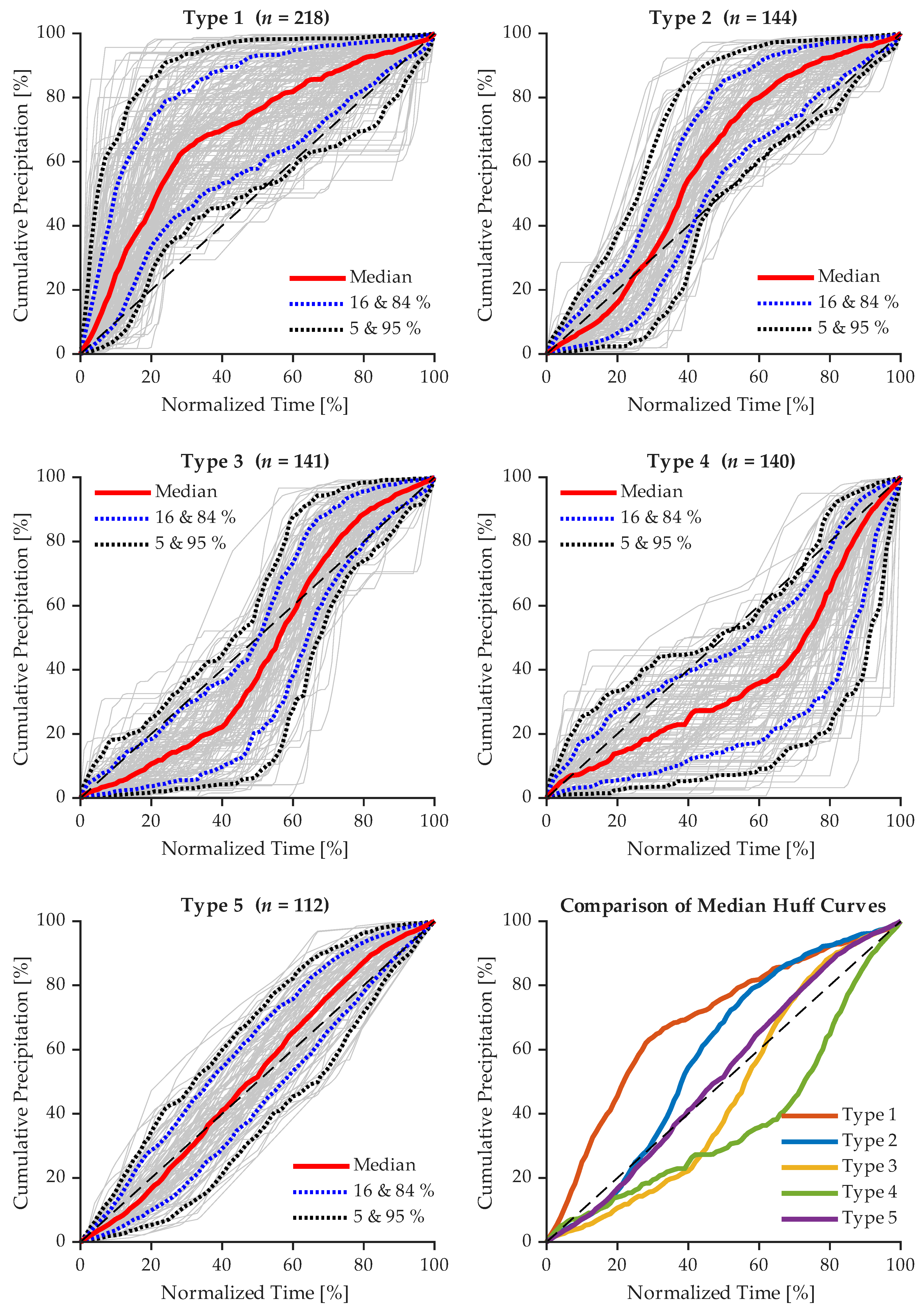
To introduce the primary method of interest, Huff curves are probability isolines of dimensionless curves of accumulated precipitation as a function of time [
2]. In this method, each event is divided into four equal time segments and the quarter containing the highest precipitation is identified. Accordingly, precipitation events are classified into four types depending on whether the maximum precipitation intensity occurs in the first, second, third or fourth quartile of the storm duration. Note that individual storm durations are variable; the Huff method normalises each event’s total duration to a dimensionless scale (0–100%), enabling direct comparison of events of different lengths. Numerous studies confirm the utility of Huff curves [
3,
4,
5,
6,
7]. More recently, an additional fifth type has been introduced to represent time-uniformly distributed precipitation [
6].
Huff [
8] points out that the median (50%) Huff curve is the most representative and stable among all quartiles, because it retains its relative position when new events are added, unlike the extreme (10% and 90%) curves. Therefore, in engineering practice, the median curve is most often used as a representative design hyetograph. Building on this, Bonta [
3] analysed the sensitivity of Huff curves to different precipitation data classification methods and found that precipitation in the first quartile typically lasts less than 6 h. Additionally, in an earlier paper, Bonta [
9] recommends creating separate Huff curves for different seasons, since winter precipitation shows less variability in intensity than spring-summer showers, which often include convective events or sub-events due to high humidity. The importance of adequately preparing and categorising precipitation data was also highlighted by Azli and Rao [
10] and Bonacci [
1]. Furthermore, Bonacci [
1] emphasises that, in analysing precipitation and constructing the runoff hyetograph, it is necessary to apply thresholds for minimum precipitation amount or intensity. Bonacci [
1] also points out that convective and cyclonic precipitation should be analysed separately because they originate from fundamentally different atmospheric processes, which result in distinct temporal structures and intensity patterns of precipitation. Therefore, Bonacci [
1] notes that convective precipitation events are typically short-lived, usually lasting about 1–2 h, which can be used as a practical criterion for distinguishing them from longer-duration cyclonic precipitation.
Separating the continuous precipitation record into individual precipitation events is a key step in constructing a dimensionless Huff hyetograph. Central to this process is the Minimum Inter-event Time (hereinafter, MIT). The choice of MIT values directly affects the number of isolated events, their duration, total precipitation and short-term intensity statistics [
11,
12,
13]. As MIT increases, longer drought breaks are combined into a single event, leading to longer events with higher precipitation. At the same time, the temporal position of the peak precipitation intensity within the event—the quantity that determines the Huff curve type classification—changes as well, which in turn indirectly alters the shape of the resulting dimensionless Huff curves. Establishing an appropriate MIT is thus a critical methodological consideration. The literature reports very different MIT values, ranging from a few tens of minutes to several hours, depending on the climatic region, data time resolution and the analysis purpose [
14,
15,
16]. In practice, MIT values are usually determined in three different ways: 1. by personal assessment, 2. by statistically based methods and 3. by autocorrelation of the rain time series. For example, Huff [
8] used a value of 6 h to separate storms in the eastern US, which was later widely accepted in hydrology [
12,
17]. On the other hand, in the analysis of short-term, intense precipitation with high time resolution, significantly shorter criteria are often applied, on the order of 1–2 h [
13]. In this context, intense precipitation refers to precipitation events characterised by high short-duration precipitation intensities, commonly represented by the maximum 30 min precipitation intensity, which is widely used to quantify storm intensity and precipitation erosivity [
13]. This wide range suggests that a universal MIT value does not exist, underscoring the importance of carefully selecting event-separation criteria, as these choices can significantly affect precipitation’s statistical characteristics.
Statistically based methods for defining MIT assume that the arrival of independent precipitation events follows a Poisson process, while the times between events follow an exponential distribution. This assumption represents a widely adopted operational simplification rather than a strict physical model of precipitation dynamics—precipitation is inherently non-stationary and may exhibit seasonal clustering or synoptic-scale persistence. The applicability of this assumption for any given MIT–threshold combination is therefore not imposed a priori but verified empirically through statistical tests described below, with combinations that fail the Poisson consistency criterion excluded from further consideration.
The exponential method of Restrepo-Posada and Eagleson [
18] determines MIT as the value of the dry period for which the coefficient of variation of successive dry phases equals 1 [
17,
19]. Alternatively, optimal MIT can be defined as the value that gives the maximum
p-value in the exponential distribution compliance test, most commonly the Kolmogorov–Smirnov test [
20,
21]. As part of these procedures, the Poisson consistency test of the annual number of isolated events is often additionally performed. In the recent literature, statistical tests (Kolmogorov–Smirnov and Poisson) are increasingly combined with subsequent smoothing of the empirical time distribution between events using the Kernel Density Estimation method [
21]. In the present paper, this unified approach is referred to as the KDE method. This provides a continuous approximation of the dry period distribution, from which the MIT value is determined based on the intersection of the exponential and empirical distributions.
A third, commonly used, group of approaches is based on the analysis of the autocorrelation of the precipitation series, in which MIT is defined as the time lag at which the autocorrelation becomes statistically insignificant [
1,
19,
21]. This approach directly links the choice of MIT to the internal time structure of the precipitation record and often yields higher MIT values than methods based on the distribution of dry periods.
In addition to the event separation criterion, the minimum total precipitation amount threshold is often used in practice [
1,
17,
21]. This threshold (in millimetres) is used to exclude from the analysis all precipitation events whose total amounts are less than a specified threshold. This way, the analysis focuses on precipitation events that generate runoff. Different minimum precipitation thresholds have been reported in the literature, depending on the analysis purpose and climatic conditions. Bonacci [
1] recommends using minimum precipitation thresholds to construct runoff hyetographs, thereby excluding very weak events that have little hydraulic influence. Azli and Rao [
10] use a minimum total event precipitation amount of 25.4 mm (accumulated over the entire event duration) to identify significant precipitation events. Some studies further highlight the 5 mm threshold as suitable for design-critical precipitation analyses in urban areas [
21]. The application of the threshold changes the number and characteristics of isolated events and affects the shape of the median Huff curves, particularly their slope and the position of the maximum precipitation concentration.
The present study provides a systematic and comprehensive assessment of different minimum inter-event time (MIT) determination approaches and their influence on the construction of dimensionless Huff curves. Unlike previous studies, fixed MIT values, autocorrelation-based (AC) and statistically based (KDE) methods are analysed within a unified framework, together with different precipitation amount thresholds. In addition, a composite design index is introduced to evaluate the design relevance of precipitation events for urban drainage applications and a separate analysis of short-duration events ( h) is performed to better represent convective precipitation. During the analysis, special attention was paid to the fact that the constructed Huff curves would serve as the basis for the analysis and design of the urban stormwater drainage system.
Section 2 presents the research methodology, including descriptions of the data used, the procedures for primary processing of the precipitation record and the methods used for separating precipitation events and constructing Huff hyetographs.
Section 3 presents the results of the analysis, with an emphasis on the sensitivity of the physical characteristics of precipitation and the shapes of dimensionless hyetographs to the selected processing methods.
Section 4 provides a discussion of the findings, including their physical interpretation and implications for engineering practice. In
Section 5, the main findings and recommendations for applying the results in urban drainage design are presented.
2. Materials and Methods
2.1. Study Area
The area of analysis includes the city of Osijek, located in the eastern part of the Republic of Croatia, in the region of Slavonia. The climate of the area, according to the Köppen (Köppen-Geiger) classification, belongs to a moderately warm humid continental climate (type
C), without a pronounced dry season (type
f), with warm to hot summers (on the border between type
a and type
b) and pronounced seasonal temperature contrasts [
22]. In the warm season (May–September), intense convective precipitation is frequent, often in the form of short, heavy showers (often ≥10 mm/h). Such precipitation plays a key role in sizing urban drainage systems due to its short duration and high peak intensities.
The analysis used data from the automatic rain gauge station in Čepin [
23], located in the immediate vicinity of the city of Osijek. The station’s position (WGS84) is 45.502250° N, 18.561694° E, at an altitude of 89 m. A continuous series of 5 min precipitation records from 2016 to the end of 2024 was used. The data are uninterrupted and show no significant deficiencies in the record, allowing for reliable identification of precipitation events and statistical analysis of their physical characteristics. The 5 min time resolution enables detailed monitoring of peak intensities and short-term intense showers, which are of particular interest for creating dimensionless hyetographs and estimating design-critical precipitation scenarios in urban drainage.
2.2. Methodology
The analysis of the impact of primary processing of pluviographic records on the construction of dimensionless hyetographs was conducted using our own MATLAB
® code [
24]. The methodology is designed as a series of successive steps leading from the original precipitation record to the final comparison of the design criticality of different types of hyetographs. Design criticality is a composite index introduced in this study to compare the analysed hyetograph variants quantitatively in terms of their relevance to urban drainage design.
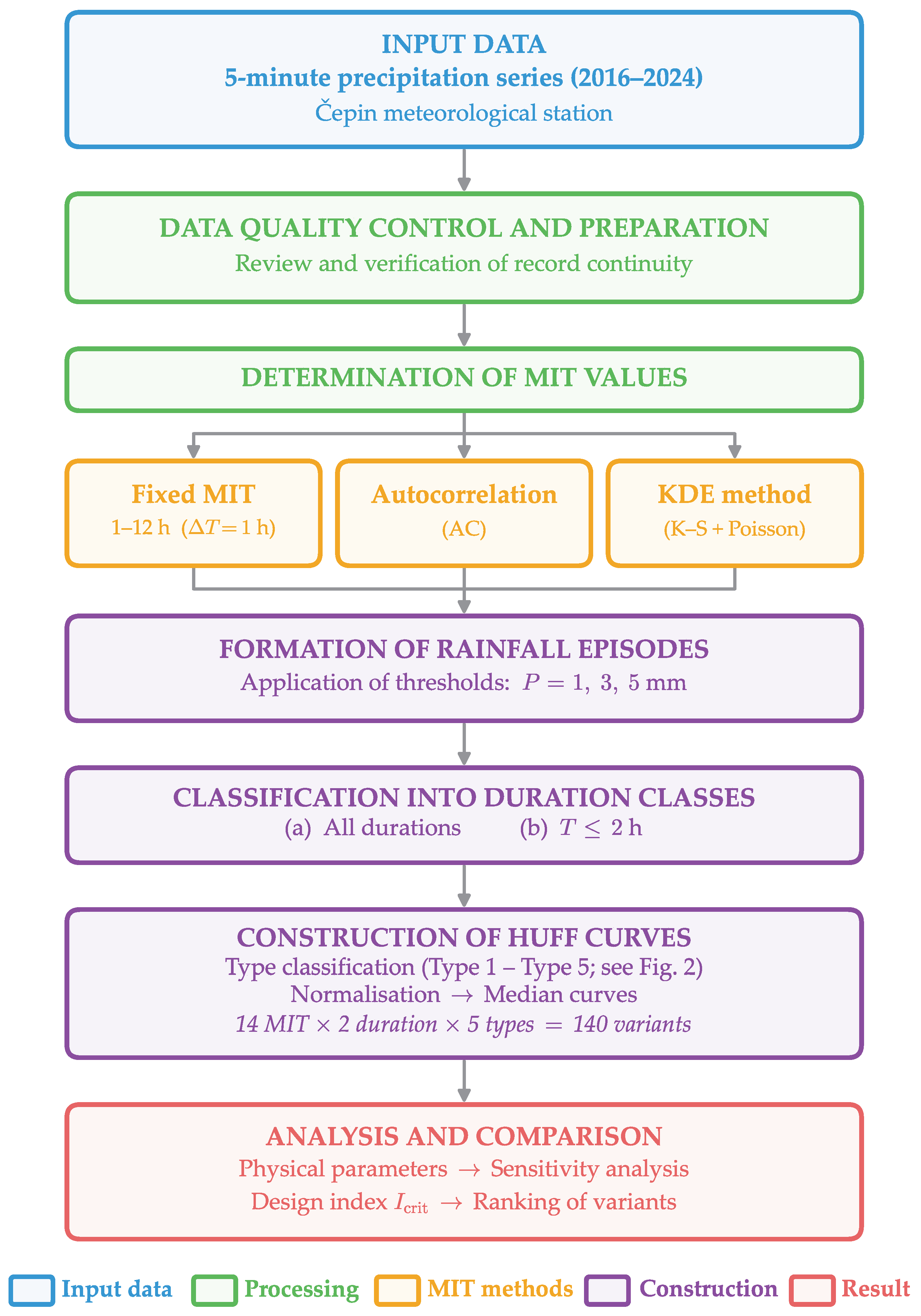
Figure 1 shows the entire analysis process. The initial step involves reviewing and preparing the input 5 min precipitation data. After that, the criteria for separating individual precipitation events are defined, where the minimum time interval between events (MIT) is determined using three different methods:
- 1.
Fixed MIT value method—the influence of MIT values in the range from 1 h to 12 h is analysed, with a step h;
- 2.
Determination of MIT values by the autocorrelation method (hereinafter: AC method);
- 3.
Statistical method—application of the Kolmogorov–Smirnov and Poisson tests with the Kernel Density Estimation (KDE) method of function smoothing (hereinafter referred to as the KDE method).
Based on the defined MIT, the continuous record is separated into individual precipitation events, after which thresholds for total precipitation amount are applied to exclude weak events from the analysis; three threshold values are evaluated independently: mm, mm and mm. In each variant, events whose total precipitation amount is less than the selected threshold are excluded. The study was carried out separately for precipitation of all durations and for short-duration precipitation ( h).
The threshold of
T ≤ 2 h was selected to allow a separate analysis of short-duration precipitation events, which are typically associated with convective precipitation. This distinction follows the recommendations of Bonacci [
1], who emphasises the importance of distinguishing short-lived convective precipitation from longer-duration cyclonic events.
For each isolated precipitation event, basic physical characteristics are determined, events are grouped into types based on the position of maximum intensity within the precipitation duration and dimensionless Huff curves are constructed. Based on the obtained curves and the corresponding physical parameters, the sensitivity analysis of the selected processing methods is conducted and the final comparison of the design criticality across different precipitation and duration classes is presented.
The analysis was structured as a full factorial combination of three dimensions: (i) event-separation method—12 fixed MIT values (1–12 h, step 1 h), the autocorrelation-based method (AC) and the KDE-based method, yielding 14 variants; (ii) precipitation duration class—all isolated events and short-duration events ( h), yielding 2 variants; and (iii) Huff curve type—Types 1–5, yielding 5 variants. This results in a total of 14 × 2 × 5 = 140 median Huff curve variants evaluated.
2.3. Methods for Determining the MIT
2.3.1. Minimum Inter-Event Time (MIT) Fixed Value Method
MIT’s fixed-value method represents the most straightforward approach to separating precipitation events. The MIT value is chosen in advance based on experience, local climate or literature. Fixed MIT values from 1 h to 12 h, with a 1 h step ( h), were analysed to assess the sensitivity to this parameter systematically.
Events are separated according to the following rule: if the dry period between two consecutive precipitation intervals is shorter than the selected MIT value, they are treated as a single event; otherwise, they are treated as separate events. This method is easy to use, but its main drawback is the subjectivity in selecting MIT values, which can significantly influence the number of detected events, their duration and total precipitation.
2.3.2. Autocorrelation Method (AC)
The autocorrelation method (AC) defines MIT as the time lag for which the autocorrelation function of the precipitation series becomes statistically insignificant [
1,
19,
21]. In the present paper, Spearman’s rank correlation was applied, which is more robust to deviations from normality and to the presence of extreme values in the precipitation series [
1].
Let
denote the original time series of the 5 min precipitation data. Then the rank transformation is defined as:
where
represents the rank (ordinal position) of the values
within the ascending sorted array of all values. Given the frequent occurrence of the same values in a series of precipitation (e.g.,
for dry intervals), the method of tied ranks was applied when assigning ranks, where identical values are assigned with the arithmetic mean of their positions. An autocorrelation function based on ranks is defined as:
where
is the dimensionless Spearman rank autocorrelation coefficient;
—rank of precipitation values in time step
i;
—the mean of the rank sequence is a fixed quantity determined solely by the sample size
n. Since ranks are assigned as consecutive integers from 1 to
n, their sum equals
and their mean is therefore always
, irrespective of the underlying precipitation values.
—time lag expressed in the number of time steps (dimensionless integer);
—total number of measurements (dimensionless integer).
MIT is defined as the shortest time lag
k for which Spearman’s rank correlation coefficient
becomes statistically insignificant (
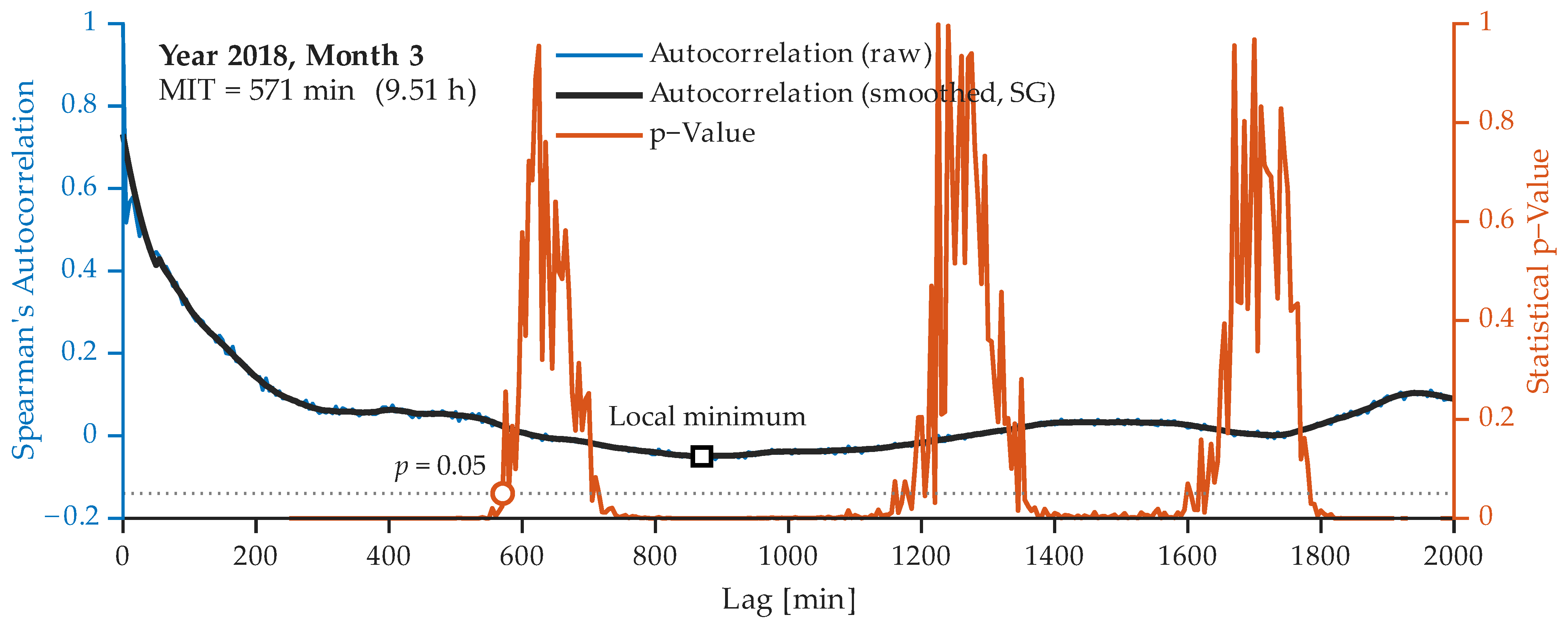
), i.e., it falls within the confidence limits. Alternatively, it is the time of the first local minimum of the autocorrelation function, whichever occurs first (
Figure A1) [
1]. Before identifying the local minimum, the autocorrelation function was smoothed with a Savitzky–Golay filter [
25]. This step removes noise from the coefficient set to improve the reliability of MIT point detection and avoid minor numerical oscillations.
The criterion of the first local minimum serves as a pragmatic operational bound that prevents unrealistically long MIT values when the autocorrelation decays slowly without crossing the significance threshold—a situation typical of prolonged cyclonic precipitation. It is acknowledged, however, that this criterion cannot unambiguously distinguish a genuine inter-system separation from a transient reduction in temporal persistence within a single multi-cell or frontal precipitation system. Consistent with the assessment of Bonacci [
1], the rank correlation method is therefore regarded as only partially physically based and the local minimum criterion should be interpreted as an operational approximation rather than a definitive indicator of meteorological event boundaries. Using the rank transformation rather than the original precipitation values is justified by the inhomogeneity of the precipitation series. The data includes many zeros (dry intervals) and occasional extreme values (intense showers). Spearman’s rank correlation maintains robustness with this data structure.
2.3.3. Kernel Density Estimation (KDE) Method
The KDE method is a statistically based approach to determining optimal MIT and precipitation amount thresholds by estimating the probability density function using core functions [
21]. Unlike the traditional approach that relies on a subjective assessment of the coefficient of variation (
), the KDE method introduces objective statistical tests.
Statistical Representation of Precipitation Events
For the selected pair of MIT and precipitation amount threshold (
P) values, the continuous precipitation record is separated into a series of precipitation event–dry period cycles. Each event is characterised by three variables: precipitation amount (
A), event duration (
T) and the dry period to the next event (
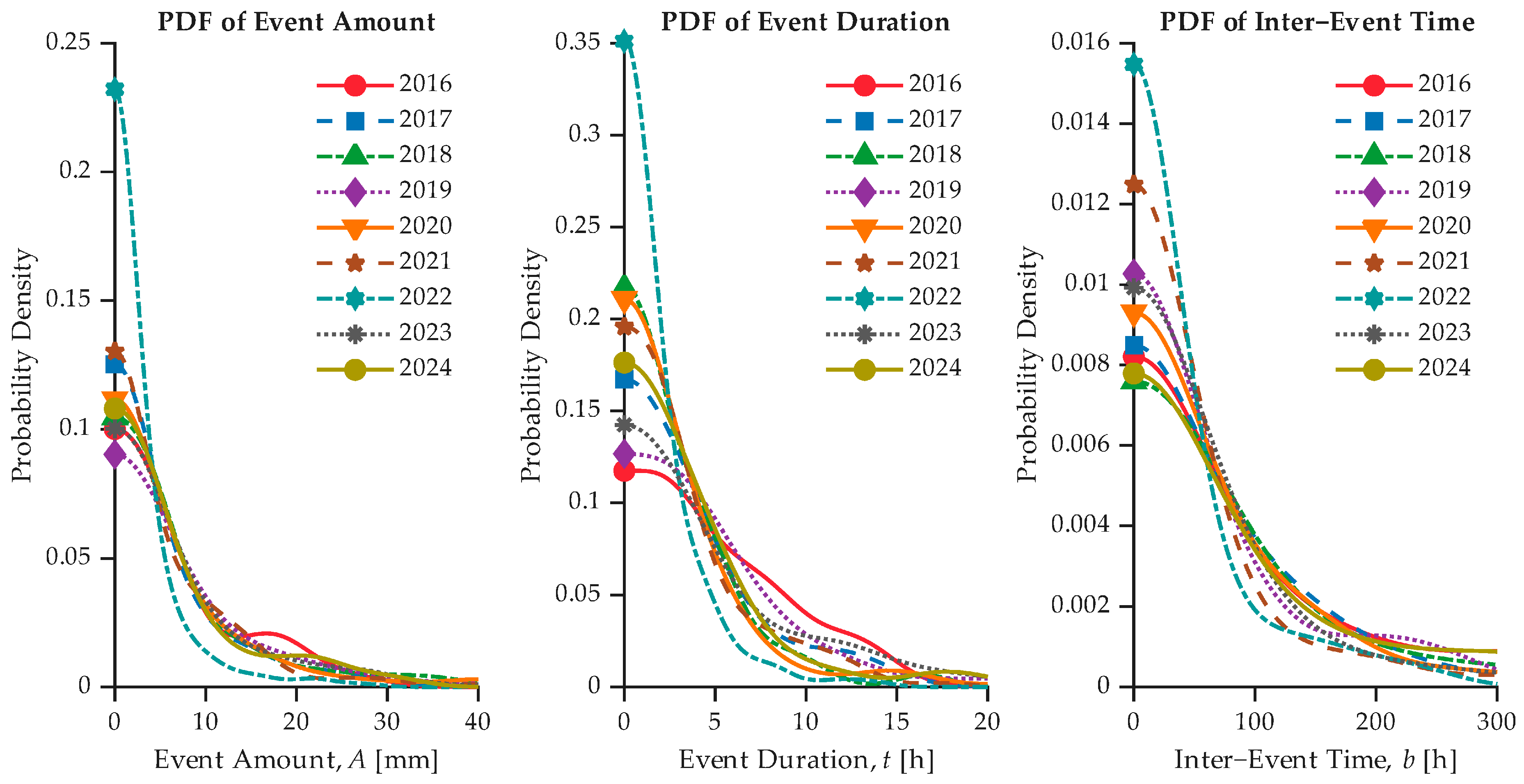
b). These variables are assumed to follow an exponential distribution (
Figure A2):
where
[
],
[
] and
[
] are the exponential rate parameters for precipitation amount, event duration and inter-event time, respectively. Consequently, the probability density functions
,
, and
carry units of
,
and
, respectively, ensuring that each integrates into unity over its non-negative domain.
Probability Density Function Estimation Using KDE
The probability density function for each characteristic precipitation event variable is estimated using a KDE. A Gaussian kernel is centred at each observed value and the resulting contributions are summed to produce a continuous density estimate:
where
is the number of samples (dimensionless);
w carries the same physical units as
(mm for precipitation amount, min for event duration and h for inter-event time);
is the individual measured value with the corresponding units; and
is the dimensionless kernel function. The estimated density
accordingly carries units of [unit of
x]
−1 (i.e.,
,
or
, depending on the variable being estimated). In this paper, the Gaussian core function is used:
The Gaussian kernel
is dimensionless; its argument
is also dimensionless by construction, as both the numerator and denominator carry the same units as
x.
The bandwidth
w controls the smoothness of the KDE estimate: a narrow bandwidth produces a spiky, high-variance estimate, while an excessively wide bandwidth over-smooths the distribution and obscures genuine features. To select w in an objective and reproducible manner, Silverman’s rule of thumb is applied [
26]:
where
is the sample standard deviation, carrying the same units as
(mm, min or h, respectively). Consequently, the bandwidth
w also carries the same units as the input variable, preserving dimensional consistency in Equation (
6).
Given that the characteristics of precipitation events are non-negative, a marginal bias correction was applied using the data-mirroring method. The new estimated density function is:
The boundary-corrected estimate
carries the same units as
(i.e., [unit of
x]
−1).
Statistical Tests
For each combination of MIT and the precipitation threshold, two statistical tests are performed. The Poisson test checks whether the annual number of precipitation events (
n) follows the Poisson distribution. The ratio is calculated:
The ratio
represents the dimensionless index of dispersion. If
is close to unity (within the critical limits for the selected significance level
), the assumption of the Poisson distribution is accepted.
and
denote the variance and expectation operators, respectively.
The Kolmogorov–Smirnov (K-S) test checks whether the variables A, T and b follow an exponential distribution. The test compares the cumulative distribution function (CDF) obtained from the KDE estimation with the theoretical exponential CDF. The null hypothesis shall be accepted if the maximum deviation is less than the critical value for a given significance level.
Of all the combinations that pass both tests, the one with the lowest relative error
is chosen:
where
is the dimensionless empirical CDF obtained from the KDE estimate;
is the dimensionless theoretical exponential CDF;
is the value of the theoretical CDF at the point of maximum deviation
[mm]; and
[%] is the relative error expressed as a percentage. Both CDFs are dimensionless by definition, as they represent cumulative probabilities bounded between 0 and 1.
In this study, MIT combinations were tested over 1–12 h and with amount thresholds of 0–5 mm. The optimal combination was identified as the one that satisfied all statistical tests and had the minimum . In the KDE method, all threshold combinations ranging from 0 to 5 mm were tested, but thresholds of 1, 3 and 5 mm were selected for comparison with other methods.
2.4. Schutz Index for Uniform Precipitation Identification (Type 5)
After separating the continuous record into individual precipitation events, each event is classified into one of five types based on the position of its maximum intensity. In this paper, the modified Huff method proposed by Nguyen and Chen [
6] was applied, introducing a fifth precipitation type with a uniform time distribution.
To distinguish uniform precipitation, Type 5 (T5), from other types, the Schutz index (
S) was used, which was originally proposed as a measure of income distribution equality in the economy [
27]. The Schutz index quantifies the total deviation of values in each time step (
) from the mean (
):
where
[mm] is the measured precipitation amount in time step
i;
[mm] is the mean precipitation per time step; and
is the total number of time steps within the precipitation event. The Schutz index
is dimensionless, as the units of
and
cancel in both the numerator and denominator.
The Schutz index ranges from 0 to 1. When , the precipitation in each time step is equal to the mean, indicating a perfectly uniform distribution. When S approaches 1, the precipitation distribution deviates significantly from uniform.
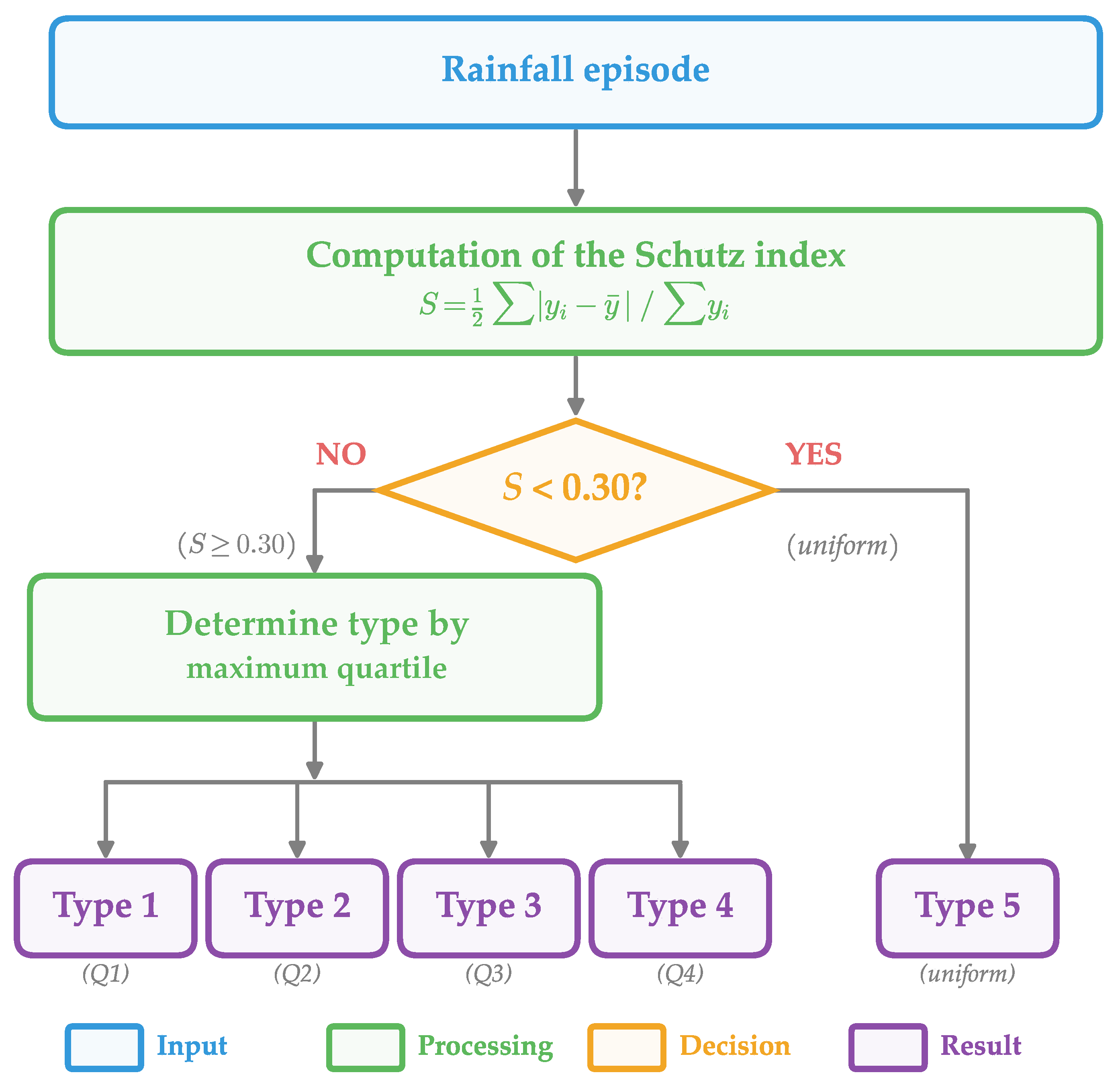
The procedure for classifying a precipitation event is carried out according to the following algorithm (
Figure 2):
Calculation of the Schutz index (
S): For each precipitation event, the value of
S is calculated according to Equation (
12).
Uniformity check: If , the precipitation event is classified as Type 5 (uniform distribution).
Type determination by quartile: If , the type is determined by the quartile in which the maximum amount of precipitation occurs (Types 1–4).
A value of
identifies events with a near-uniform temporal distribution, classified as Type 5, consistent with the threshold recommended in the literature [
6] (see
Figure 2).
2.5. Code Implementation of the Methodological Framework
The entire methodological framework described in the previous chapters is implemented in MATLAB [
24], generating user-defined functions for each analysis step. This approach makes the methodological framework very robust, fast and flexible, enabling easy adjustment of analysis parameters and application across different precipitation datasets. Precipitation input data from the Čepin meteorological station are structured by year and month as MATLAB structures, where each structure element contains a time series of precipitation for a particular month.
Although the raw input data were organised on a monthly basis, precipitation events crossing the calendar boundary between two consecutive months were explicitly handled by a dedicated post-processing routine. After-event separation was performed independently for each month, the routine systematically checked all month-to-month transitions: if the dry period between the last event of one month and the first event of the following month was shorter than the selected MIT value, the two segments were automatically merged into a single continuous event prior to further analysis. This procedure ensures that no genuine precipitation event is artificially truncated at a monthly boundary and that the monthly data organisation has no adverse effect on the identified event statistics.
The modular approach to programming allows for easy expansion of the methodological framework with additional methods for determining MIT, alternative statistical tests or different criteria for classifying precipitation events, thereby ensuring the applicability of the developed program code for future research and analysis at other locations.
2.6. Methods of Sensitivity Analysis and Variant Comparison
After the formation of individual precipitation events and the construction of dimensionless Huff curves, the sensitivity of precipitation’s physical characteristics and hyetograph shape to selected primary processing methods was analysed. The analysis was carried out at the level of individual precipitation events and median Huff curves for each precipitation type.
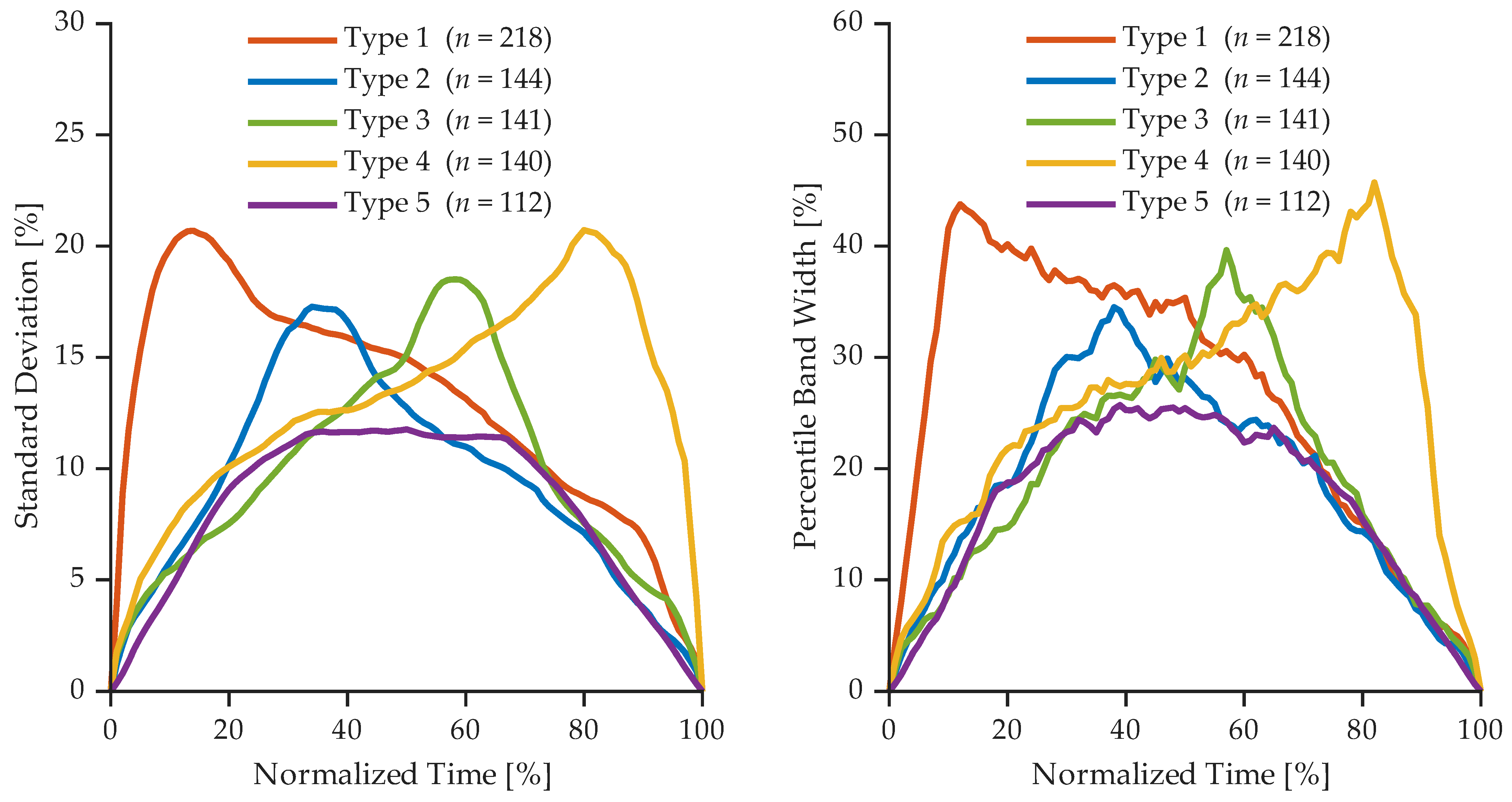
For each isolated precipitation event, the basic physical characteristics relevant to urban drainage design were determined: total precipitation amount, event duration and maximum 10, 15 and 20 min intensities. Subsequently, for each type of Huff curve, the number of precipitation events n, the average precipitation amount , the maximum precipitation amount and the maximum 10, 15 and 20 min intensities were determined. The shape of the median Huff curve was quantified by the average slope in the quartile of the maximum precipitation concentration.
The median curve is interpolated to
equidistant points, whereby each of the four quartiles is described by
segments. The value
was selected on the basis of a preliminary resolution sensitivity test comparing
, 1000 and 10,000: at
, the 25-point per-quartile resolution introduced smoothing artefacts in the slope estimates for Types 1 and 4, which exhibit the steepest and most localised intensity peaks; at
N = 10,000, no improvement in curve shape, slope or fractile accuracy was observed relative to
, while computational cost increased by approximately two orders of magnitude.
therefore represents the optimal balance between numerical fidelity and computational efficiency across the full set of 140 analysed variants. The average slope for type
k (
) is calculated as:
where
is the dimensionless cumulative normalised precipitation at interpolation point
i (expressed as a fraction of total event amount, i.e., in the range
);
%
is the dimensionless normalised interpolation time step (expressed as a fraction of total event duration). The slope
is therefore dimensionless, representing the ratio of normalised precipitation increment to normalised time increment (conventionally written as %/% to emphasise the interpretation as a rate of accumulation per unit normalised time).
Higher values of the dimensionless slope indicate a higher concentration of precipitation within the corresponding quartile, a characteristic of design-critical hyetographs with pronounced peak intensities.
To assess the sensitivity of precipitation types to the choice of minimum inter-event time, the coefficient of variation () was applied specifically to the set of fixed MIT values (MIT = 1–12 h, with a step of h). For each precipitation type and precipitation threshold, was computed across all considered MIT values for key event characteristics, including event count, mean precipitation amount, mean duration and maximum short-term intensity. In this way, the reported values inherently reflect the variability of these characteristics resulting from the use of different MITs.
To unify the assessment of the design criticality of the hyetograph, a composite design index,
, was defined that simultaneously accounts for precipitation concentration over time and short-term peak intensities. The design index is defined as the product of the normalised slope of the Huff curve
and the arithmetic mean of the normalised maximum 10-, 15- and 20 min intensities, where each quantity is normalised by its respective maximum value across all analysed MIT variants:
All terms in Equation (
14) are dimensionless by construction: the slope ratio
and each intensity ratio
are normalised by their respective maxima across all analysed MIT variants, so that
.
Short-duration precipitation intensities (10, 15 and 20 min) were selected because urban catchments typically have short times of concentration and therefore respond primarily to high-intensity precipitation over short durations, which are critical for urban drainage design [
28,
29]. Higher values of the composite design index indicate precipitation events with more concentrated precipitation in time and higher short-duration intensities, which are particularly critical for urban drainage systems. Such events are more likely to generate rapid runoff and peak flows, making them highly relevant for the analysis of urban flooding.
The analysis was carried out separately for two classes of precipitation duration: all isolated events, regardless of duration and a subset of short-term events with duration h. The final comparison between these two duration classes was based on the maximum values of the design index, thereby identifying the dominant precipitation type in the most critical urban drainage design scenario.
5. Conclusions
This paper analyses the influence of primary processing of pluviographic records (precipitation intensity measured over time) on the construction of dimensionless Huff hyetographs (standardised representations of how precipitation intensity varies over the course of an event). Special emphasis is placed on the method for defining the minimum interval between precipitation events (MIT, the smallest dry period separating two rain events) and on the choice of the precipitation threshold (minimum precipitation amount considered an event). Also, the analysis was conducted for two classes of precipitation duration: all durations and durations less than 2 h. Based on a 10 year series of 5 min measurements, a systematic analysis of the sensitivity of precipitation event physical characteristics and the shape of the Huff curves to the applied data-processing methods was conducted.
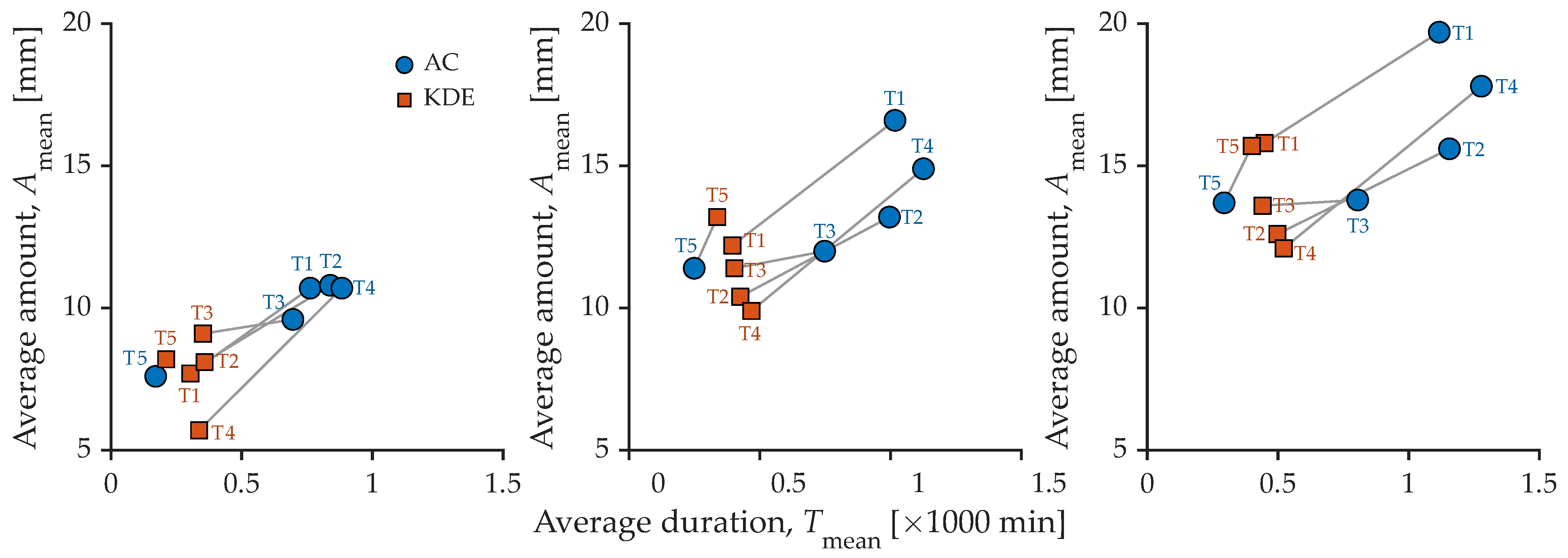
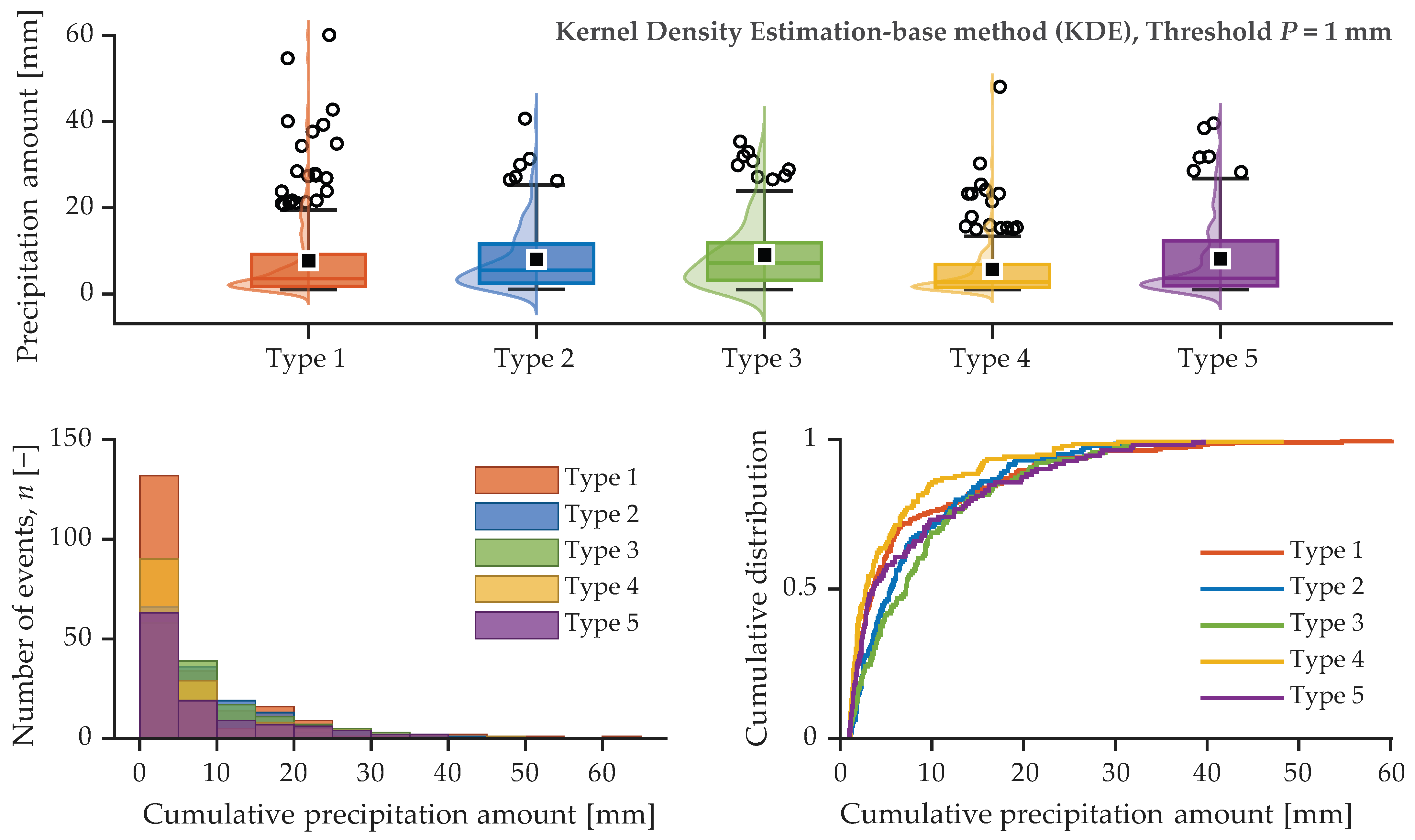
Increasing the precipitation threshold for selecting events for analysis significantly reduces the number of detected precipitation events, while the average precipitation amount and duration increase. The influence of the threshold on the maximum short-term intensities and maximum precipitation amounts was not observed. In contrast, the slope of the Huff curves proved to be poorly sensitive to changes in the threshold. This confirmed that the thresholds primarily affect the selection of weaker events, but do not change the peak characteristics of intense precipitation relevant for urban drainage design.
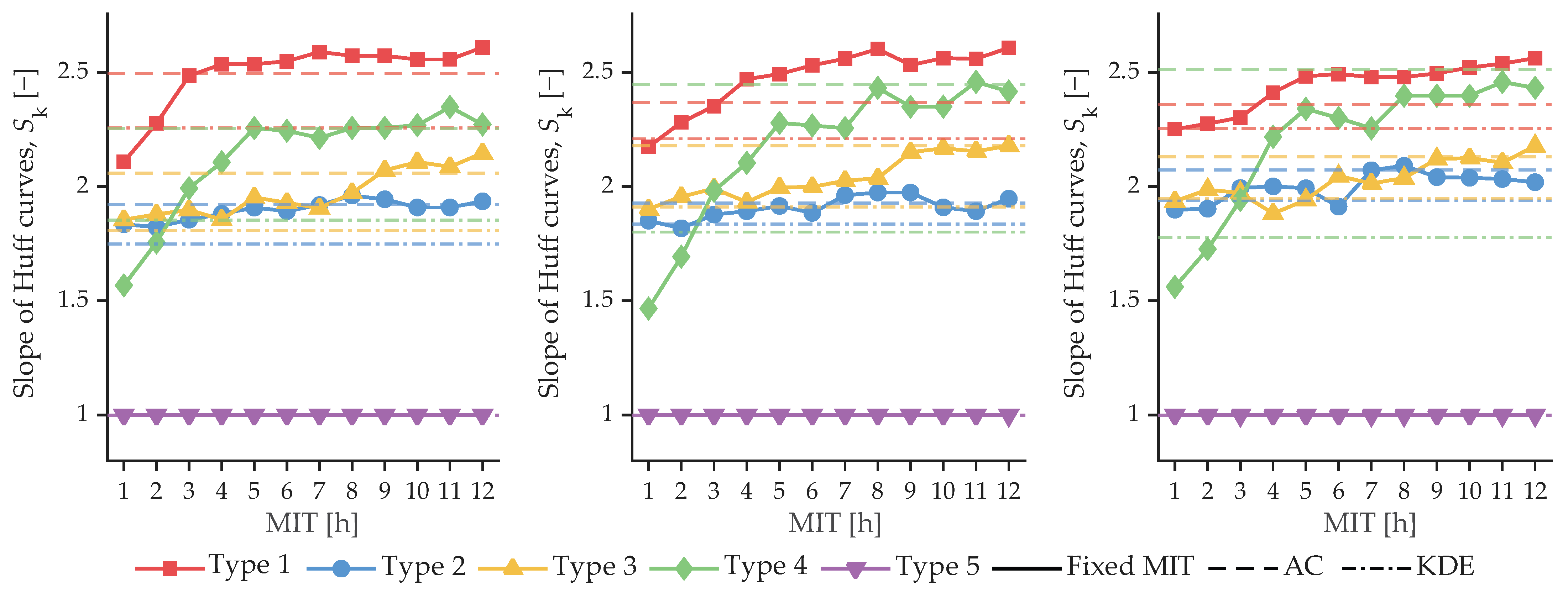
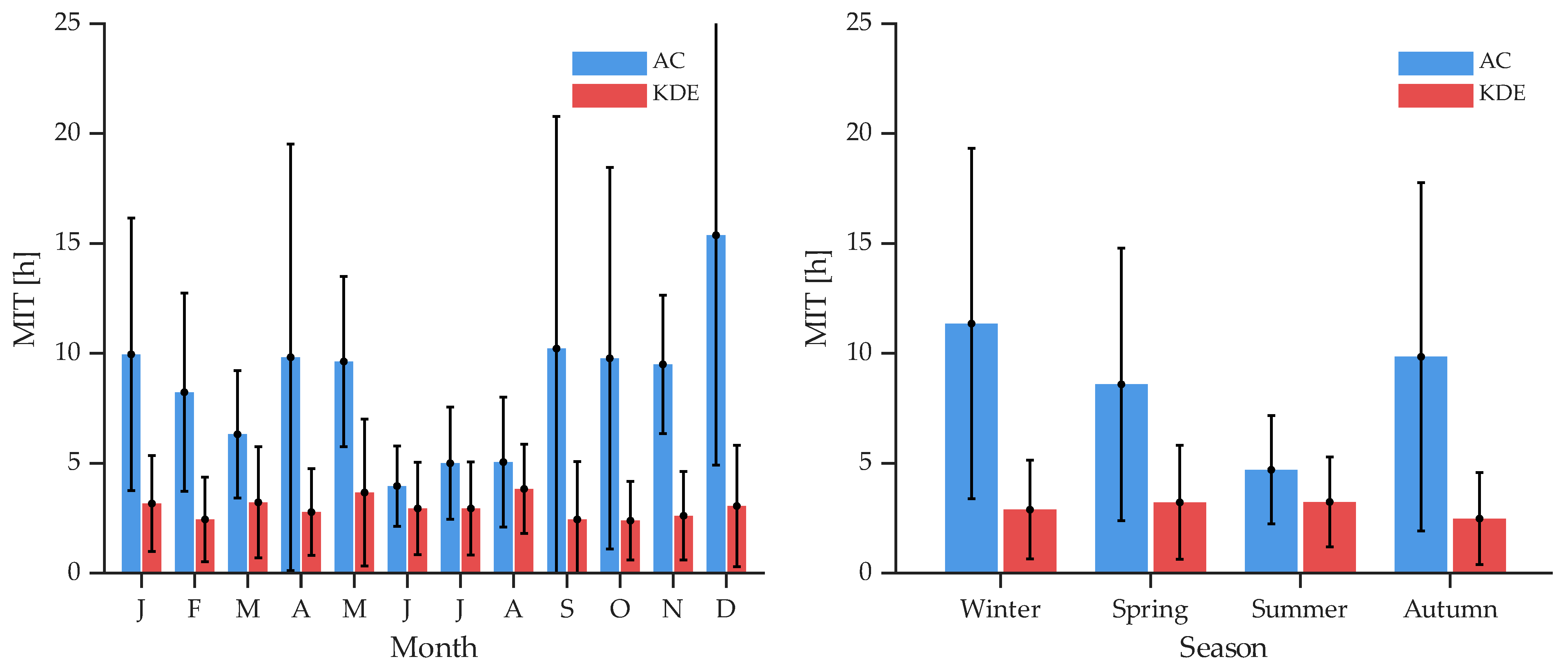
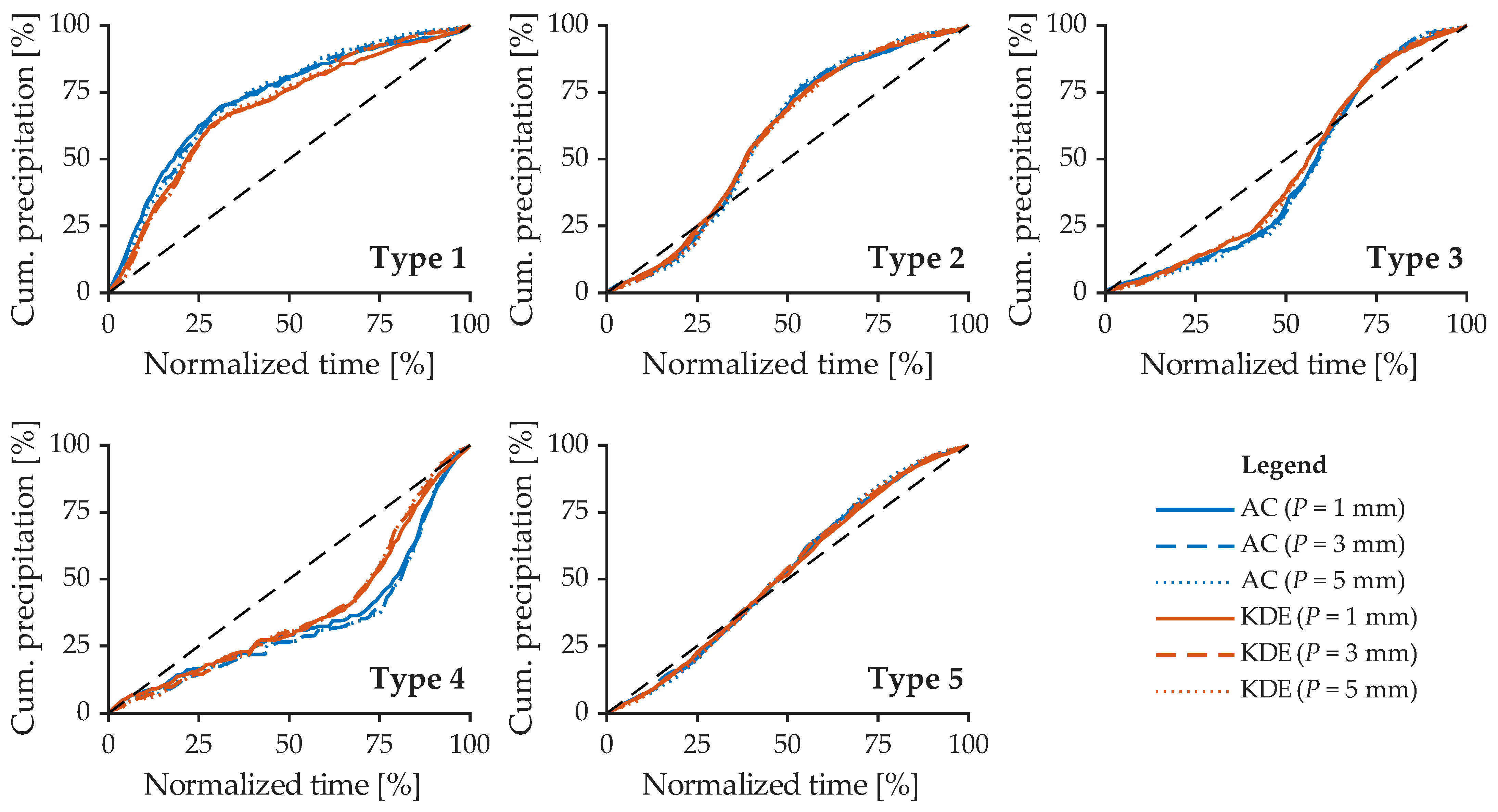
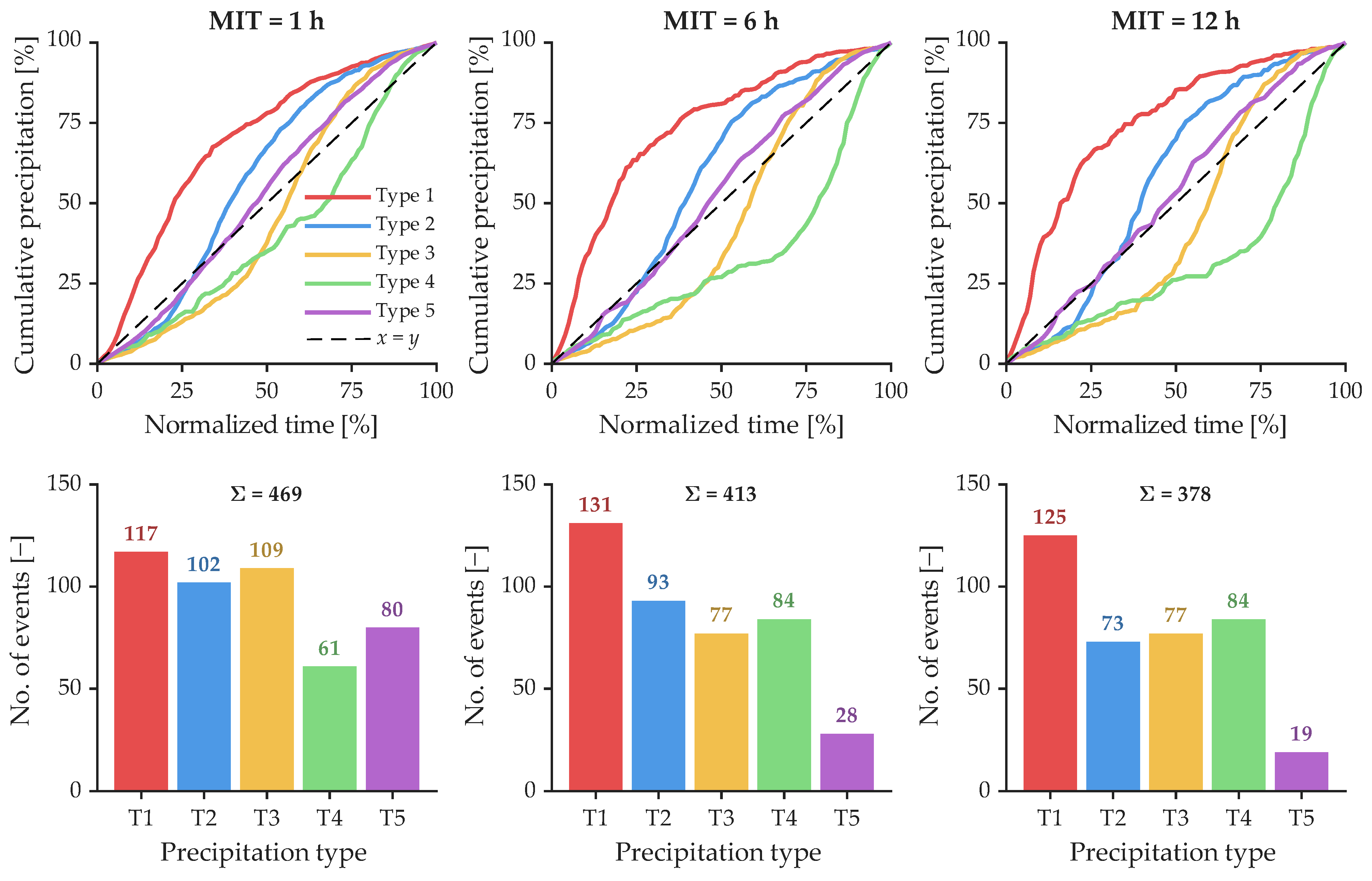
A change in the MIT value strongly affects the event duration, total precipitation amount and shape of the resulting Huff curves (
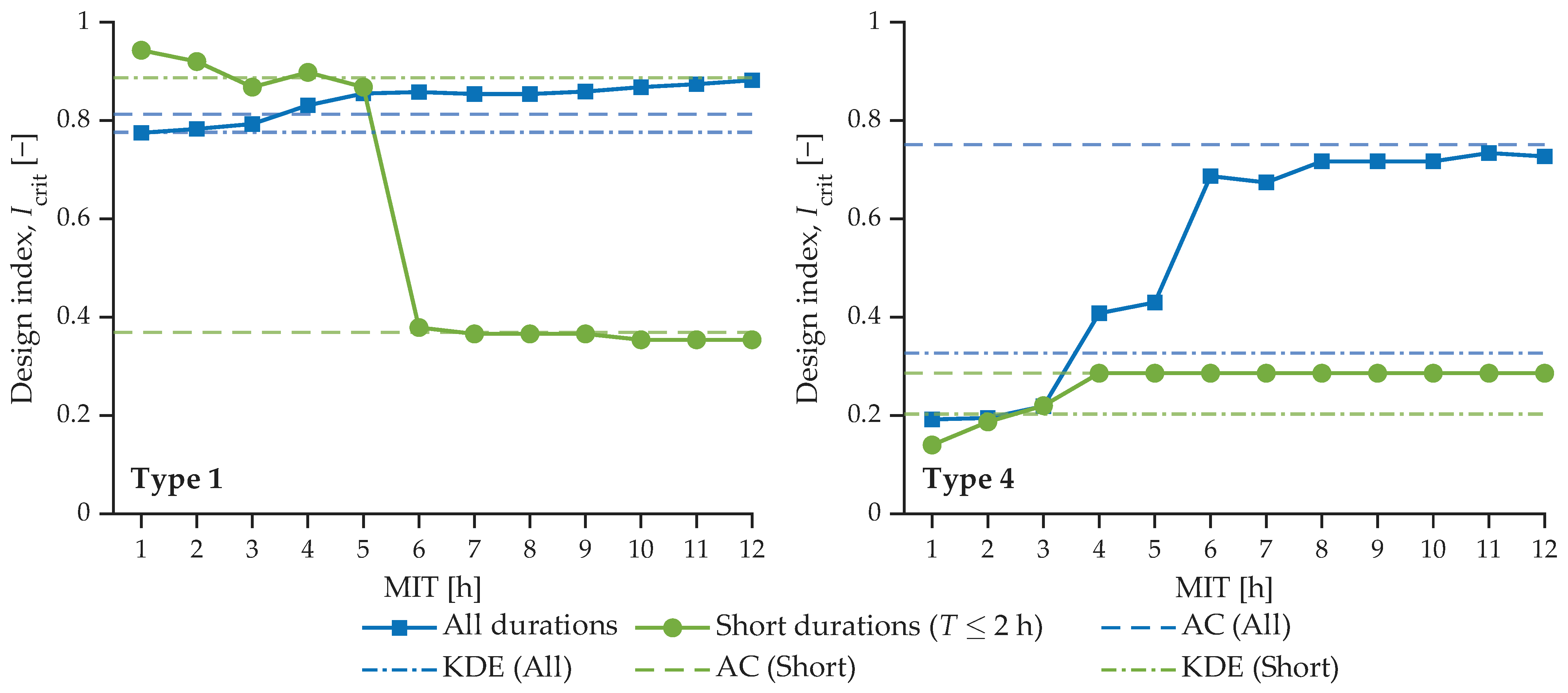
Section 3.1.2). Among the five Huff types, those with an early maximum (Type 1) or late maximum (Type 4) exhibited the highest sensitivity to the choice of event-separation criterion, whereas Type 2 (mid-early maximum) showed almost no sensitivity. When compared to the fixed MIT approach, the autocorrelation-based (AC) method corresponds to an equivalent fixed MIT of approximately 6–9 h, whereas the kernel density estimation-based (KDE) method corresponds to approximately 1–3 h. Consequently, the choice of event-separation method has a direct and quantifiable effect on the shape of the resulting dimensionless hyetographs.
This confirmed that the choice of event-separation method can directly affect the resulting dimensionless hyetographs. The KDE method is better suited for identifying short-duration events (e.g., convective storms), whereas the AC method may be more appropriate for capturing broader temporal structures.
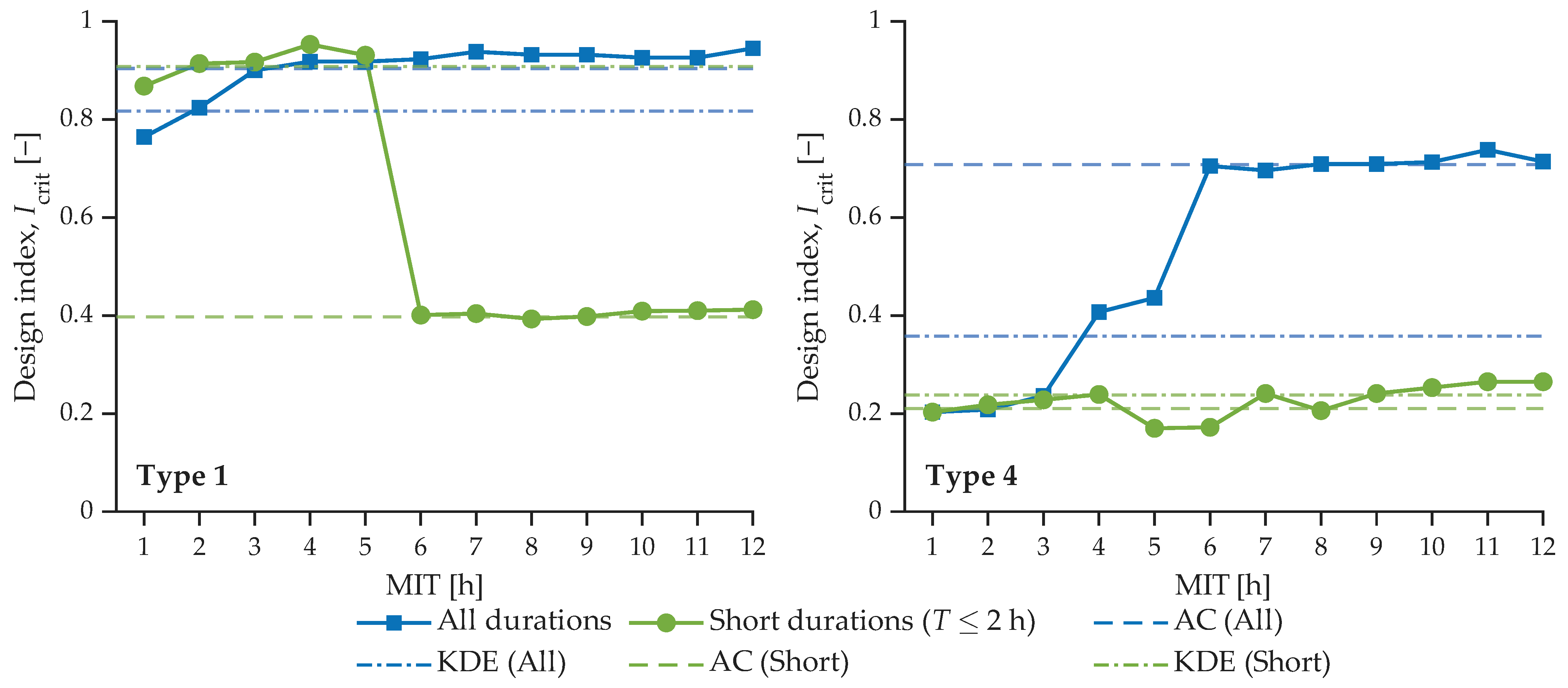
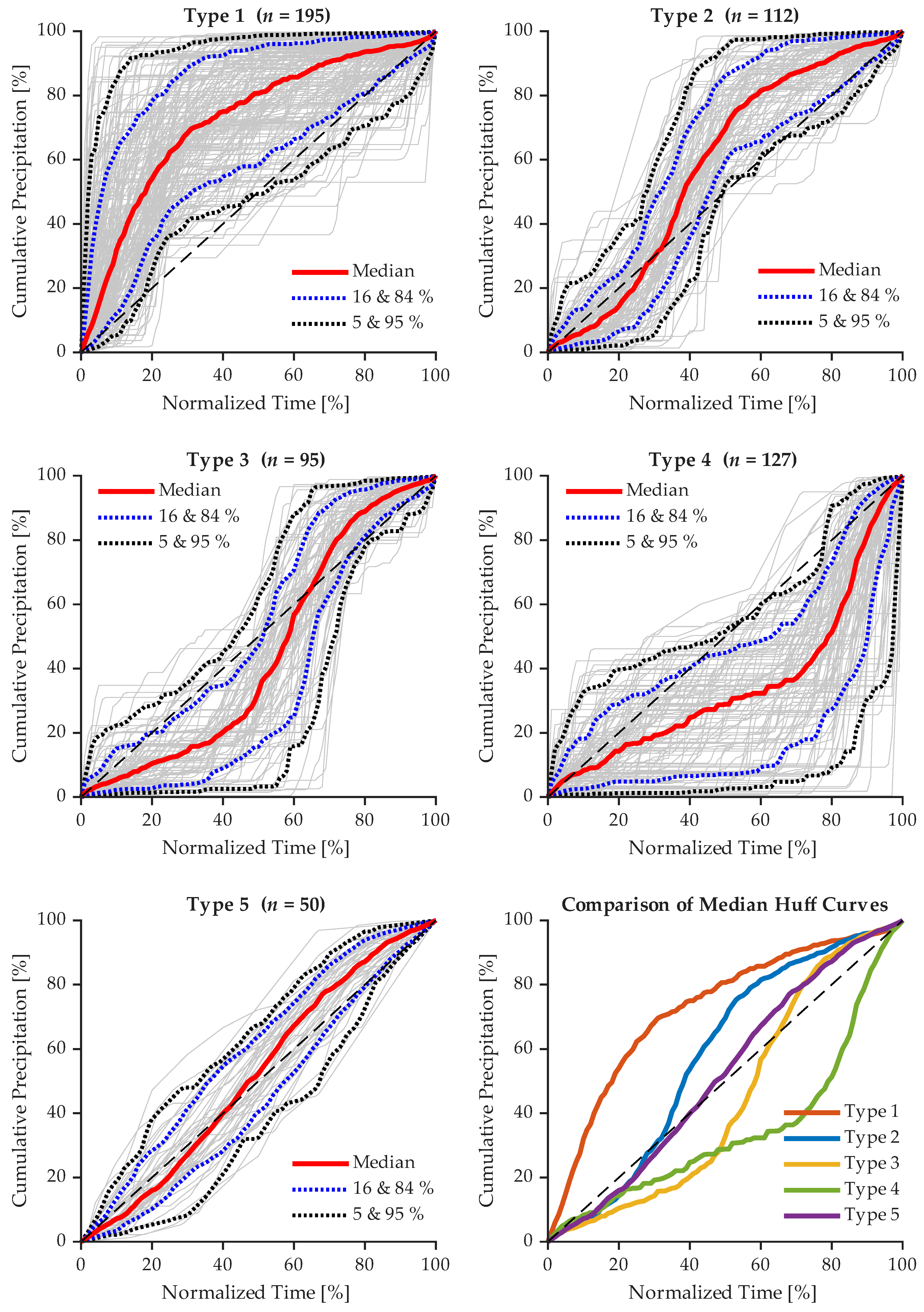
The introduction of the composite design index, which combines the slope of the Huff curve and the maximum short-term intensities, enables a unique assessment of the design criticality of different precipitation types. For all durations, it was found that Type 1 consistently represents the most critical form of the hyetograph. However, it should be emphasised that Type 4 can become almost equally critical at higher MIT values and that the autocorrelation method should be applied to the analysis of precipitation of all durations. This confirmed that the late maximum can represent a relevant design scenario in systems where merging events result in longer events, especially when prior precipitation conditions reduce retention capacity.
The analysis of a separate class of short-term events ( h) showed that the early maximum remains the only extremely critical type of precipitation. In contrast, the late maximum loses significance due to the absence of long-term pre-phases of precipitation. The slopes of the Huff curves for h are systematically higher than in the analysis of all durations, which reflects a distinct concentration of precipitation in a short time.
The final comparison of the critical design showed that the maximum values of the design index for events of duration less than 2 h are either equal to or slightly exceed those obtained from the analysis of all durations. This confirmed that the most critical individual design scenarios for urban drainage arise from short-term convective precipitation with extremely steep Huff curves. At the same time, longer events become more relevant in the average sense, but not necessarily in the absolute criticality maximum. Additionally, it was found that the precipitation threshold mm represents an optimal compromise between selecting relevant events and preserving the representative shape of the Huff curves. The lower threshold ( mm) includes a large number of very short and weak events that flatten the Huff curves and reduce their slope, while the higher threshold ( mm) significantly reduces the number of available events without a significant increase in peak intensities. For the threshold mm, the highest values of the design index are achieved with a stable shape of the Huff curves, which makes it particularly suitable for defining the design storm hyetograph in the context of urban drainage sizing.
The methodology enabled a systematic examination of the impact of primary record processing steps on the final form of dimensionless hyetographs. The results confirm that the choice of event-separation method and precipitation amount threshold has a direct and quantifiable effect on both the hyetograph shape and the identified design-critical scenario; practical guidance on these choices is provided below.
5.1. Implications for Engineering Practice
The results of this study have practical applications for creating and applying Huff hyetographs in the design of urban drainage systems.
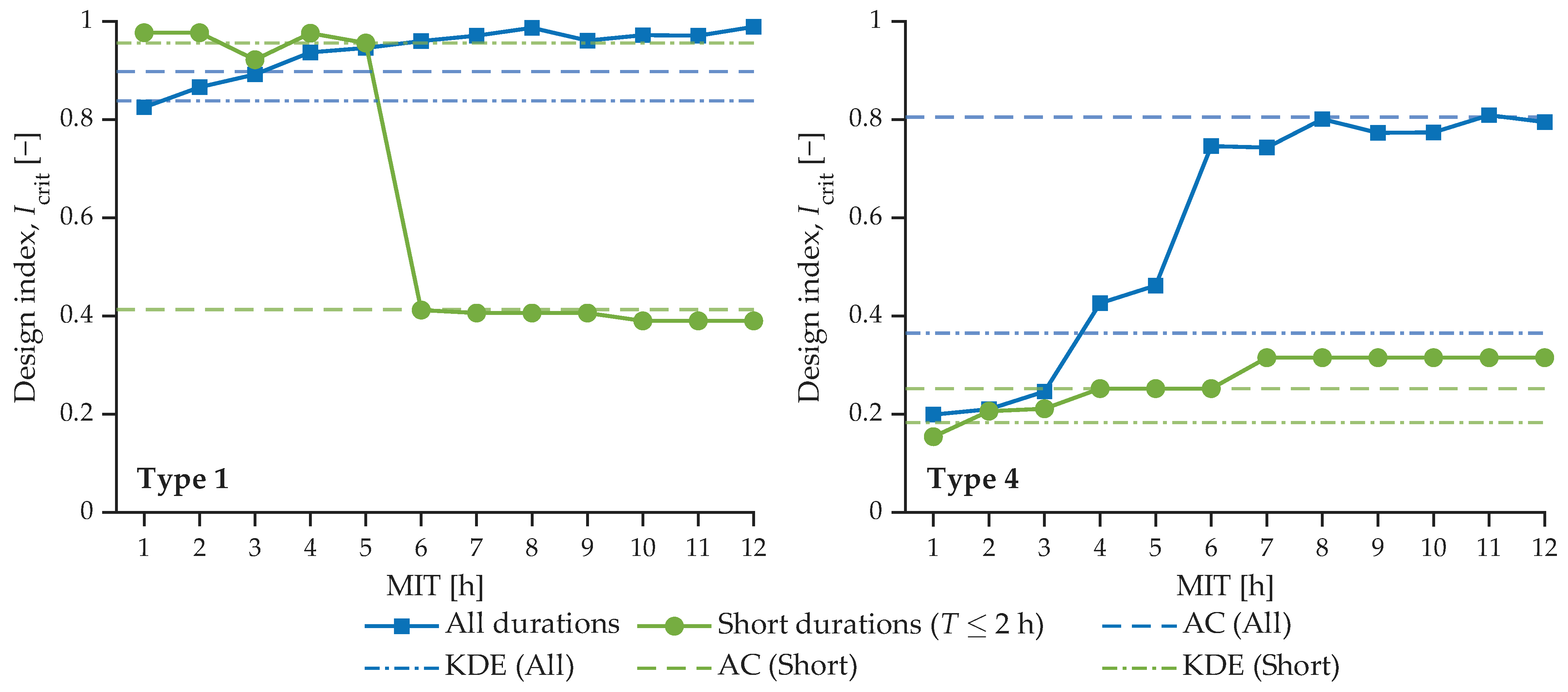
First, the choice among the MIT methods—KDE, fixed MIT values and the AC method—should match the main design goal. For analyses focused on the worst rain in small urban areas with short runoff times, both the statistically based KDE method and fixed MIT values of 1–3 h work well (
Figure 10;
Table 4), as they preserve short, intense storms and give more cautious (steeper) Huff curves for the main Type 1 event. For analyses of larger systems, where antecedent soil moisture conditions and total precipitation volume are relevant, the autocorrelation (AC) method or longer fixed MIT values may be better (
Figure 9), as they capture the full precipitation pattern, including the possibly important Type 4 event.
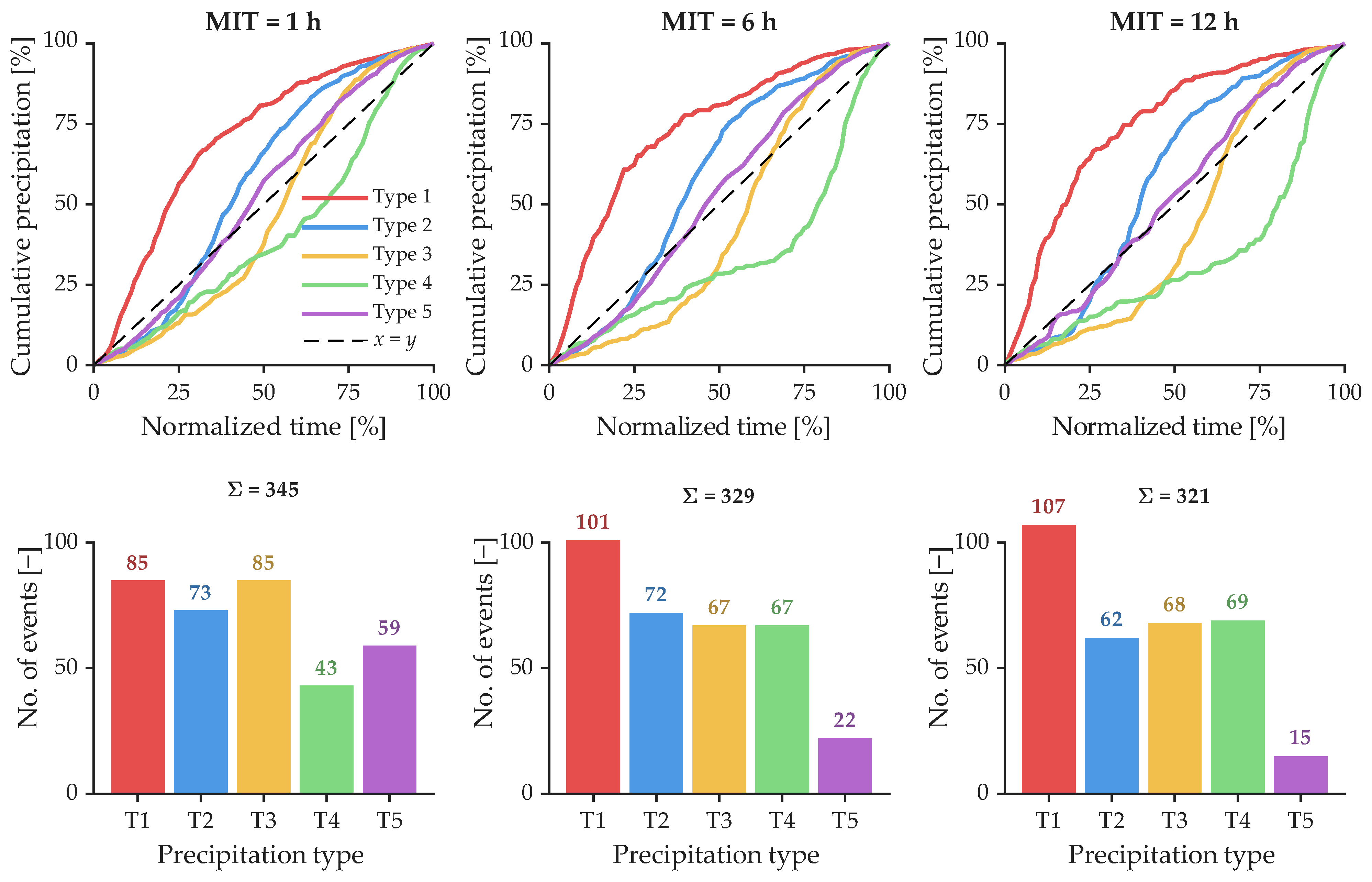
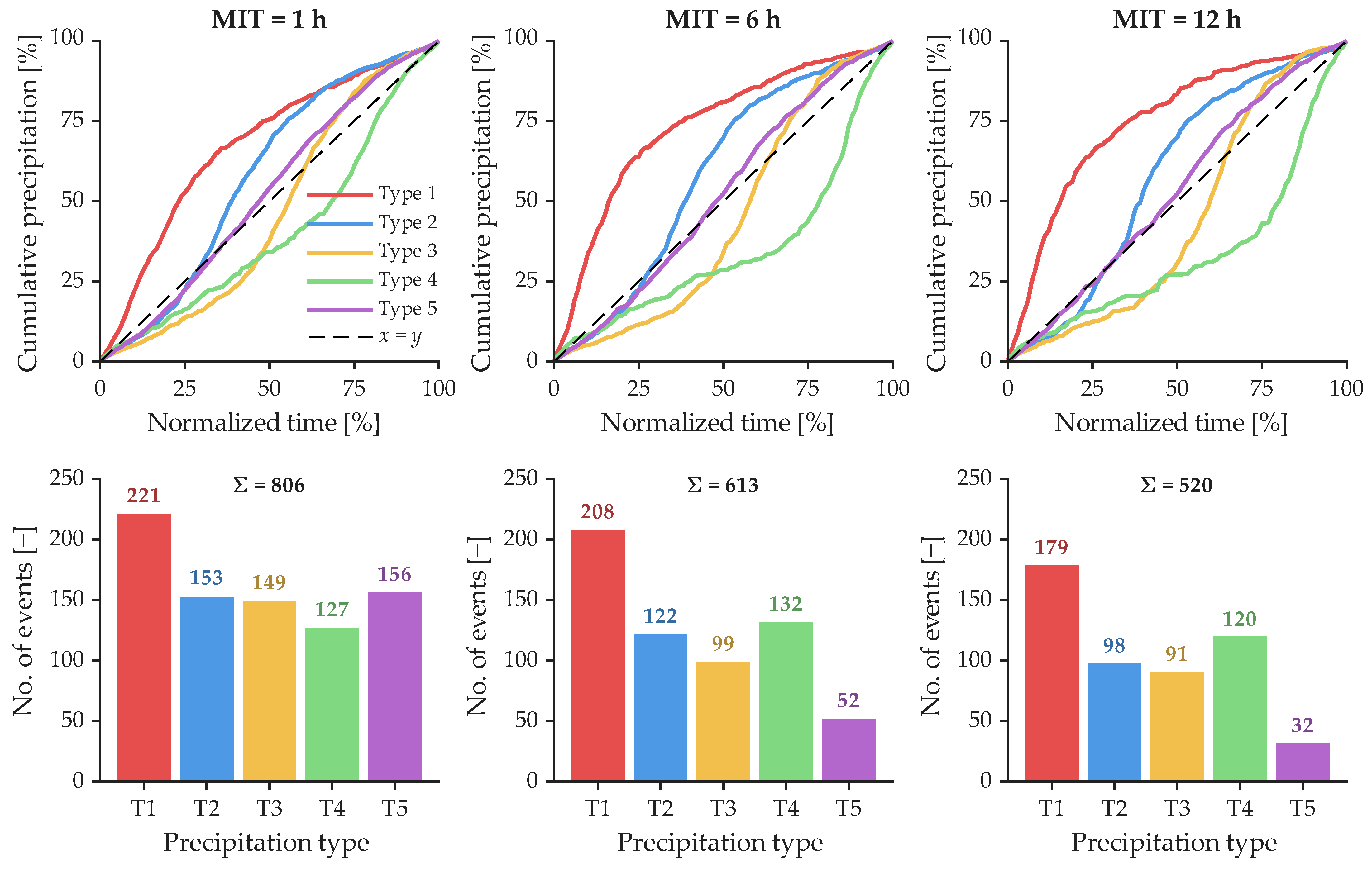
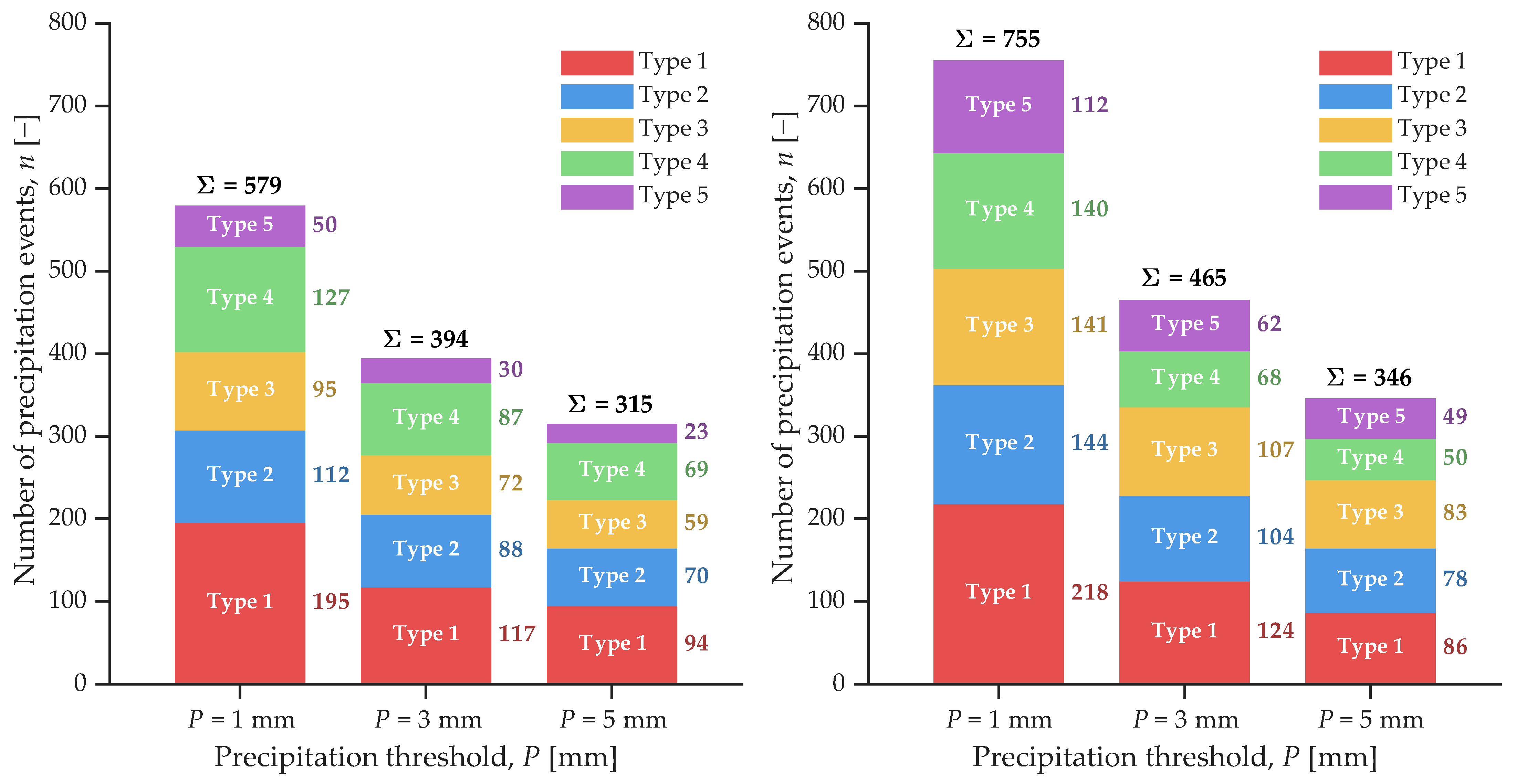
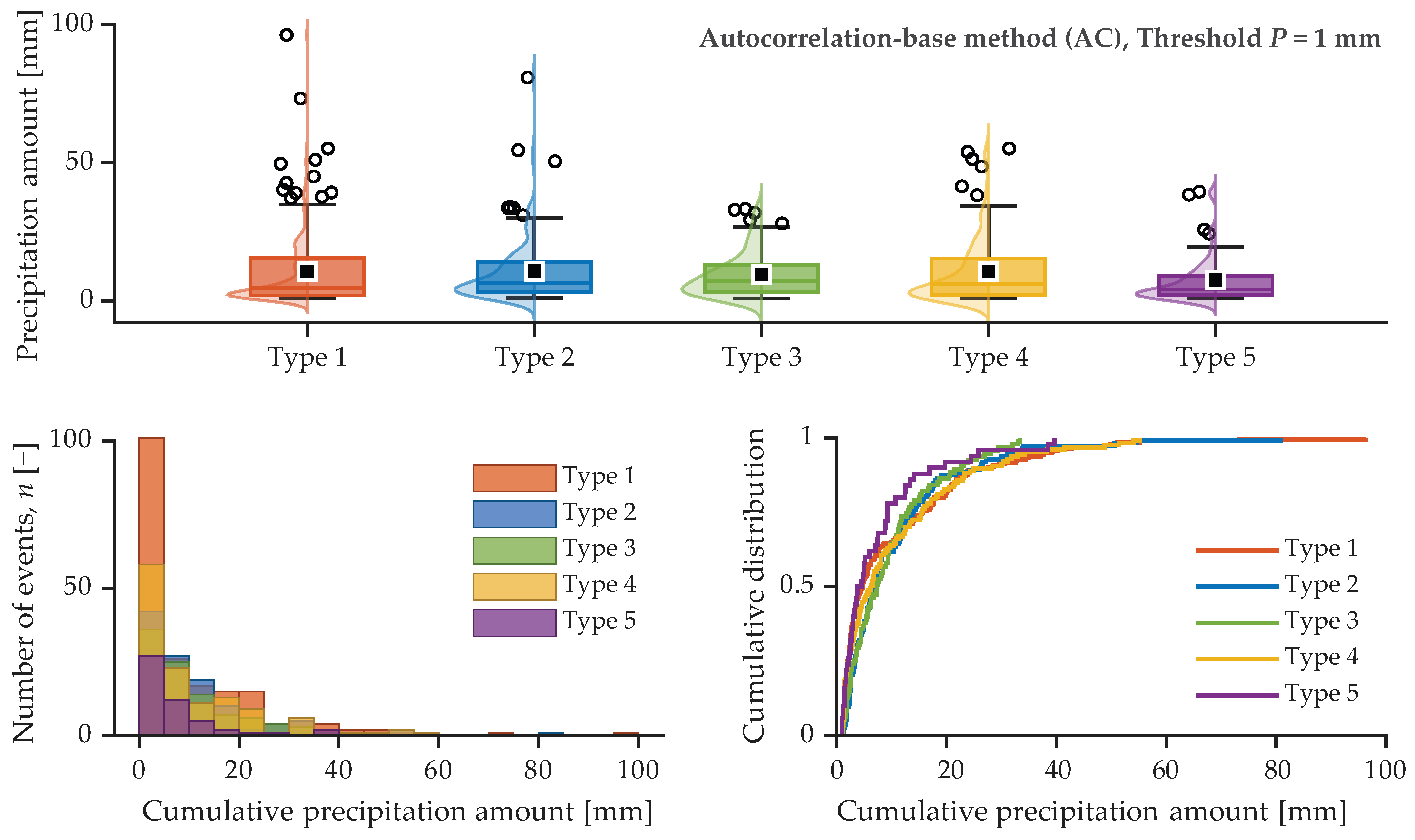
Second, the precipitation threshold should be selected to balance between excluding hydraulically insignificant events and maintaining a sufficiently large sample size. Based on the present analysis (
Table A1,
Table A2 and
Table A3;
Figure 3 and
Figure A3 and
Figure A4),
mm is recommended as an effective threshold for urban drainage applications, as it achieves the highest design index values with a stable Huff curve shape (
Figure 9 and
Figure 10).
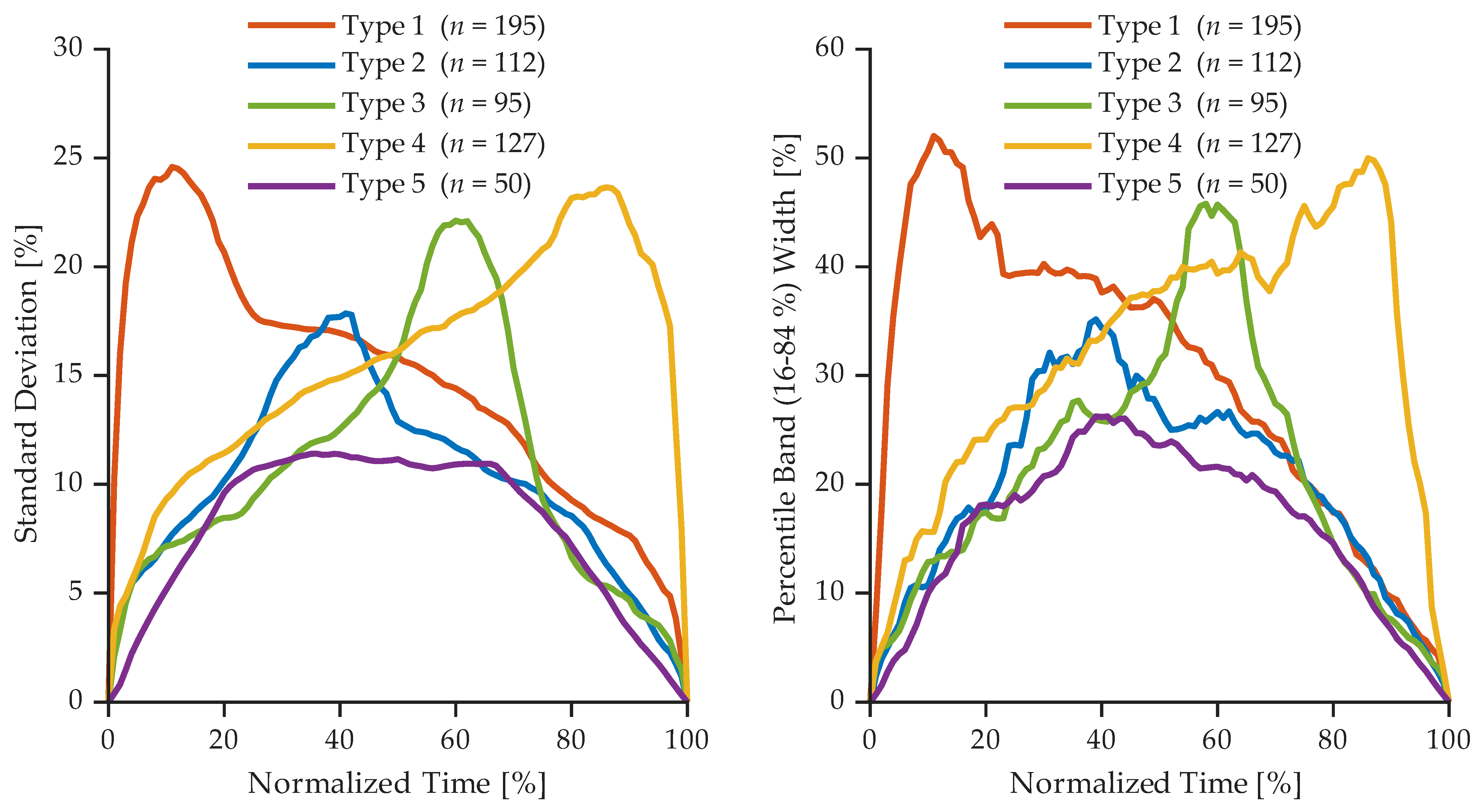
Third, the pronounced sensitivity of Type 4 to the separation method (
Table 4;
Figure 4) implies that engineering assessments should explicitly consider late-maximum events when designing systems with retention capacity or when evaluating scenarios involving sequential precipitation. Omitting Type 4 from the analysis or using a separation method that fragments these events may lead to an underestimation of design-critical conditions (
Figure 9 and
Figure 11).
Finally, the consistency of results across three fundamentally different MIT determination approaches—fixed, autocorrelation-based and statistically based—demonstrates the robustness of the Huff curve framework (
Figure A5 and
Figure A8;
Table 5 and
Table 6). These approaches differ: the fixed and KDE methods focus on short, high-intensity events, while the AC method captures longer, more gradual events. Regardless of method, the results are robust as long as the separation criteria are transparently documented and methodologically justified. The observed sensitivity to event processing emphasises the need to report the adopted MIT method, threshold and duration class alongside any published Huff hyetographs, thereby ensuring reproducibility and comparability of results across studies.
For practical applications in urban drainage design, precipitation events should be separated using the KDE-based approach (–3 h), with a precipitation amount threshold of mm. The analysis should focus on short-duration events ( h), using Type 1 as the primary design hyetograph, supplemented by verification with Type 4 hyetographs obtained with the AC method or fixed MIT h.
5.2. Limitations
Several limitations of this study should be acknowledged. The analysis uses data from one station (Čepin) with a 10-year record (
Section 2.1). This period is sufficient to identify primary Huff curve sensitivities to processing methods (
Figure 9,
Figure 10 and
Figure 11), but may not fully capture extreme event variability (
Table 5). Although the raw input data were organised on a monthly basis, precipitation events crossing calendar-month boundaries were explicitly handled by a dedicated post-processing routine (
Section 2.5), ensuring no genuine event was artificially truncated. A residual limitation is that events spanning more than one calendar month—which are extremely rare in the study climate—are still interrupted at the year boundary in the current implementation.
It should be noted that throughout this study, the terms ‘convective’ and ‘cyclonic/frontal’ are used in an operational sense to describe short-duration, high-intensity events (dominated by Type 1) and longer-duration, lower-intensity events (predominantly Types 2–4), respectively, based solely on the temporal structure of the precipitation record at a single station. Without concurrent analysis of synoptic-scale meteorological conditions (e.g., radiosonde observations, reanalysis fields or weather radar data), this attribution should be regarded as indicative rather than definitive; some individual events may exhibit mixed characteristics or arise from processes not adequately captured by the single-station temporal structure alone.
Additionally, the study examines a moderately humid continental climate (
Section 2.1). However, the performance of the MIT methods may differ in other climatic regions, especially in arid or tropical settings where precipitation patterns vary greatly. Therefore, future work should extend this analysis across more stations and climatic zones to test whether the observed patterns (
Figure 4,
Figure 9 and
Figure 10) are generalisable.
Finally, the composite design index
(Equation (
14);
Figure 9,
Figure 10 and
Figure 11) was introduced as a pragmatic metric for comparing design criticality. Still, it does not account for the frequency of occurrence of each precipitation type nor incorporate hydrological response modelling. For a more comprehensive assessment, the next step would be to couple the derived hyetographs (
Figure A5 and
Figure A8) with a precipitation–runoff model for a specific catchment, thereby translating the dimensionless curve properties into actual peak flows and system performance indicators.
Notwithstanding these limitations, several findings are expected to be broadly applicable. Although the analysis is based on a single station, several findings are expected to be generally applicable and are consistent with previous studies. The dominant role of Type 1 (early peak) precipitation as the most design-critical scenario reflects the typical behaviour of short-duration convective precipitation reported in the literature. Likewise, the use of a moderate precipitation amount threshold ( mm) represents a robust approach for excluding hydraulically insignificant events without substantially affecting the peak characteristics of intense precipitation, which are most relevant for urban drainage design. In contrast, the exact MIT values and their seasonal variability are site-specific and depend on local climatic conditions and precipitation regimes.