Article

Algae–Aerobic Granular Sludge (AAGS) for Wastewater Treatment: Granule Stability, Pollutant Removal Performance, and Biodiesel Potential

by
Rustiana Yuliasni
1,
Yob Ihadjadene
2,
Khongorzul Mungunkhuyag
1,
Juliane Steingroewer
1,
Thomas Walther
1 and
Felix Krujatz
2,3,*
1
Institute of Natural Materials Technology, Dresden University of Technology, 01069 Dresden, Germany
2
Professorship Automatic Control & System Dynamics, Chemnitz University of Technology, 09126 Chemnitz, Germany
3
Center for Applied Aquaculture & Bioeconomy, biotopa gGmbH, 01454 Radeberg, Germany
*
Author to whom correspondence should be addressed.
Water 2026, 18(12), 1395; https://doi.org/10.3390/w18121395
Submission received: 17 April 2026 / Revised: 26 May 2026 / Accepted: 27 May 2026 / Published: 7 June 2026
(This article belongs to the Special Issue Algae-Based Technology for Wastewater Treatment)

Abstract

This study investigated the granule development and pollutant removal performance of algae–aerobic granular sludge (AAGS) and aerobic granular sludge (AGS) for wastewater treatment, as well as the characterization of the fatty acid methyl ester (FAME) composition for biodiesel production. The results demonstrated that AAGS had overall better pollutant removal performance than AGS. The average removal of total nitrogen (TN), total phosphate (TP), and chemical oxygen demand (COD) of AAGS were 96.16 ± 6.8%, 58.22 ± 5.44%, and 79.5 ± 5.48%, respectively, while AGS removed 70.95 ± 31.63%, 29.53 ± 12.54, and 74.8 ± 12.13% of TN, TP, and COD, respectively. AAGS required less time (16 days) than AGS (44 days) to achieve complete TN removal. AAGS produced more bound EPS than AGS, which makes it more stable. Scanning electron microscopy (SEM) surface images showed that AGS has dense surface morphology with mineral precipitate layers, while AAGS has a porous surface with filamentous algae intertwined. The biodiesel potential (fatty acid yield) of AAGS was 45% higher than that of AGS. The fatty acid methyl ester (FAME) yields obtained in AAGS and AGS were 64.4 ± 2.61 mg/g suspended solids (SSs) and 44.4 ± 0.9 mg/g SSs, respectively. AAGS has higher proportions of monounsaturated fatty acids (MUFAs/oleate) and polyunsaturated fatty acids (PUFAs/linoleate) than AGS. Thus, AAGS generates a more prospective biodiesel potential.

1. Introduction

Wastewater treatment technology faces the challenge of increasing pollutant removal efficiency while maintaining sustainable resource recovery in biomass production [1]. Compared with conventional activated sludge, aerobic granular sludge (AGS) offers a more sustainable method of wastewater treatment [2]. Higher biomass concentrations and pollutant removal can be achieved in a single tank, with better settling properties of biomass separation and a lower energy requirement [3,4]. However, the performance of AGS technology in treating wastewater with a low C/N ratio was considered poor and unstable [5]. In addition, the post-treatment of excess biomass has become a drawback of this technology [6]. The integration of microalgae and bacteria has gained considerable attention due to their advantageous synergistic metabolism. Microalgae are capable of direct nutrient assimilation without competing for organic substrates. Thus, they can improve nutrient removal without increasing the carbon-to-nutrient ratio in the wastewater [7]. Microalgae can also provide oxygen for bacteria to oxidize organics, and bacteria can provide CO2 for microalgal photosynthesis [8]. Furthermore, excess microalgae biomass is suitable for biogas valorization through anaerobic digestion [9], and lipids and protein-rich microalgae biomass can be drawn out for biodiesel production [10].
Microalgal–bacterial interactions have been commonly studied under static batch conditions [11], with only a few studies involving granulation or aggregation [12]. At the same time, some studies also mention the role of filamentous microalgae in the granulation process [13] or filamentous microalgae developing a mat-like formation in static batch conditions [11]. Inoculation strategies for algae–aerobic granular sludge have also been reported in diverse ways. Previous studies not only used activated sludge as the seed [14] but also mature aerobic granular sludge to form photo-granulation [2,5,15,16]. Other studies used exogenous algae supplemented at the beginning of the granulation process [7,13]. Paucity of research has scrutinized the pollutant variation and removal performance, stability/adaptability for long-term application, and biomass valorization of microalgae–bacterial granules [17,18].
Extensive studies have explored aerobic granular sludge for its capability to treat a wide range of wastewater [19] or have studied granule characterizations [20] and pollutant degradation mechanisms [21]. However, only a limited number of studies have thoroughly investigated similar aspects in the microalgae–bacterial granule system, especially when it comes to direct comparisons or distinctions between aerobic granular sludge and algae–aerobic granular sludge pollutant removal. Only some studies have investigated microalgae–bacterial interaction mechanisms, stability during long-term application, and biomass recovery [17,18]. Furthermore, instead of growing endogenous microalgae through continuous illumination like most studies, this study specifically utilized exogenous algae (a mixture of green microalgae and cyanobacteria) as seeds, cultivated with activated sludge in batch conditions prior to cultivation in a sequence batch reactor (SBR), to speed up the granulation process.
This study aimed to compare the pollutant removal efficiency, granule characterization, and biodiesel potential of aerobic granular sludge (AGS) and algae–aerobic granular sludge (AAGS). In this study, activated sludge was used as the seed in the AGS system, while activated sludge and a mix of various types of green algae and filamentous cyanobacteria were supplemented in the AAGS system. The granulation process was conducted in a sequencing batch reactor. The pollutant removal efficiency (COD, N, and P), biomass production, particle diameter alteration, EPS production, granule surface imaging, and fatty acid methyl ester production were investigated.

2. Materials and Methods

2.1. Reactor Configuration and Operation Setup

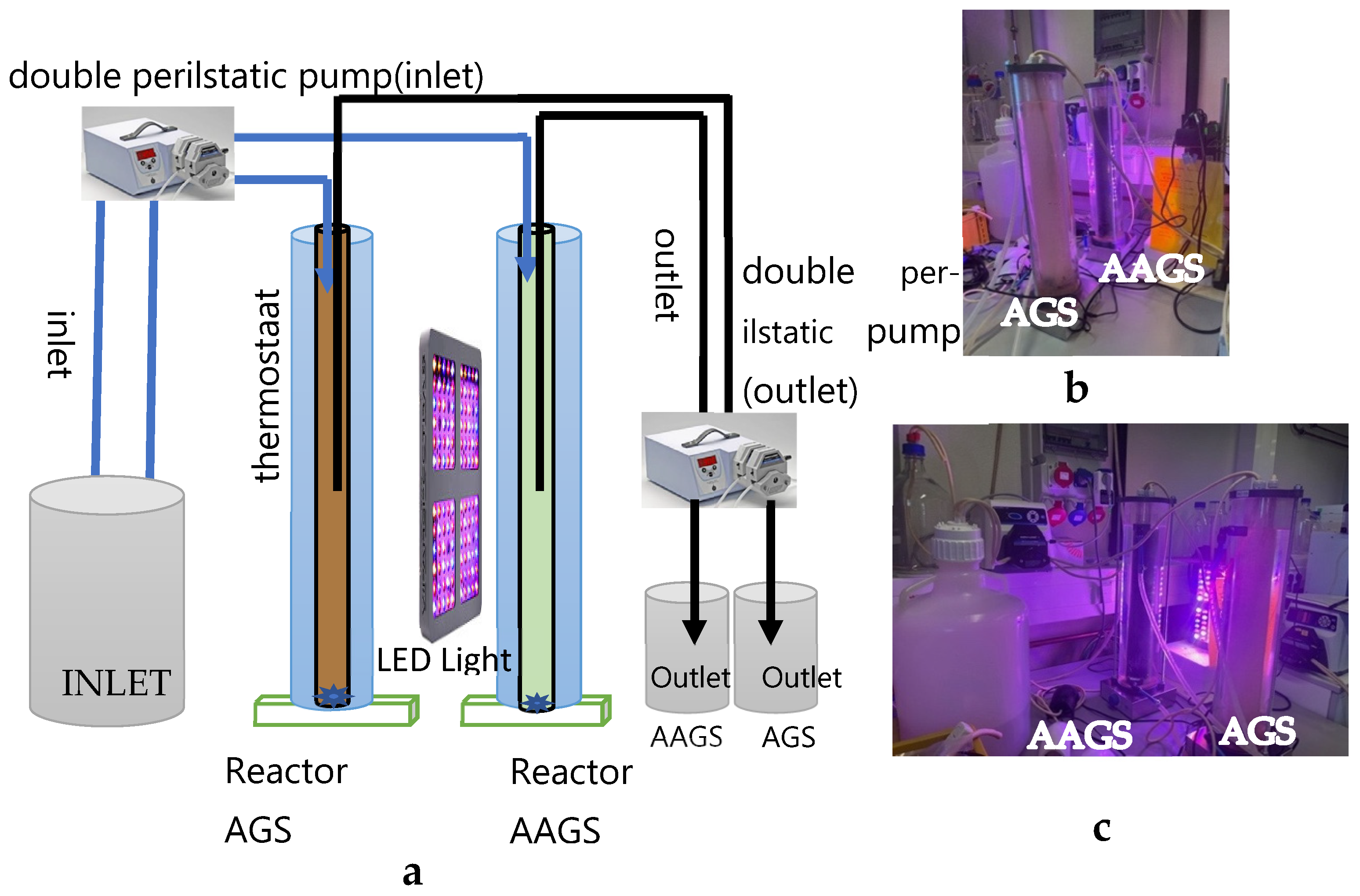
Two cylindrical reactors (internal diameter: 5.4 cm; height: 47.5 cm; working volume: 1080 mL) made of transparent acrylic were operated in a closed system in sequencing batch mode. One reactor was inoculated with sludge only (AGS), and the second was inoculated with sludge and microalgae (AAGS). AGS and AAGS were operated in a 4 h cycle, with a cycle of 5 min feeding, a 60 min non-aeration period, a 165 min aeration period, 10 min (for 7 days), decreased to 5 min (for 55 days), of sedimentation, and 5 min of effluent discharge. The reactors had a volumetric exchange ratio of 50%, resulting in a hydraulic retention time (HRT) of 8 h. The cycle ran for 24 h, automatically adjusted by a timer (Innorido GmbH, Pulheim, Germany). Bubble stones, with a diameter of 2 cm, were installed at the bottom of the reactors and connected to the lab-scale compressors at an airflow rate (Qair) of 1.25 L/min. To increase shear force and homogeneity, a magnetic stirrer (Velp Scientifica, Usmate, Italy) was used. A LED light with light illumination of 150 μmol/(m2·s) (12 h light/12 h dark) was placed in front of the reactor AAGS. The water temperature was maintained at 25 °C using a thermostat (Haake Technik GmbH, Vraden, Germany). Water samples from the inlet and outlet, and biomass samples from the inlet and outlet, were collected periodically for further analysis. Dissolved oxygen (DO) was measured every 2–3 days (Figure S2, Supplementary Material). The experiment lasted for 56 days. Figure 1 depicts the reactor AGS and AAGS configuration scheme in a real setting.

2.2. Wastewater Composition and Sludge/Microalgae Inoculation

The synthetic domestic wastewater was composed of 250 mg/L glucose (C6H12O6); 250 mg/L Na-acetate (CH3COONa); 100 mg/L NH4CL; and 20 mg/L KH2PO4 (which equaled to 426–650 mg/L COD, 20.51 ± 1.92 mg/L NH4+-N, and 15.57 ± 1.9 mg/L PO4 in the inlet (see Figure S1, Supplementary Material)); 100 mg/L NaHCO3; 10 mg/L CaCl2; 5 mg/L MgSO4 and 1 mL/L trace elements. The trace element solution contained (in g/L) FeCl3 (1.5), H3BO3 (0.15), ZnSO4 (0.15), CoCl2 (0.14), MnCl2 (0.14), Na2MoO4 (0.1), CuSO4 (0.03), and KI (0.03). AGS was inoculated with 20% v/v of activated sludge from the wastewater treatment plant (WWTP) in Dresden, Germany. In comparison, AAGS was inoculated with a 20% v/v mixture of activated sludge and microalgae with a ratio of 4:1. The microalgae were a mixture of Chlorella vulgaris sp., Scenedesmus sp., and two types of cyanobacteria, namely, Leptolyngbya sp. NIVA-CYA 404 and cyanobacteria isolated from an old mining site in the region of Saxony (isolate EHR-34). The AAGS, sludge, and microalgae were inoculated in batch mode for 2 weeks (supplemented with glucose and fertilizer, with light illumination of 30–50 μmol/(m2∙s).

2.3. Morphological Observation

Particle size and particle distribution were measured with dynamic image analysis (Sympatec GmbH, Clausthal-Zellerfeld, Germany) in triplicate, and a microscopic image was captured by a microscope (Zeiss, Oberkochen, Germany). The granule surface image was captured by scanning electron microscopy (SEM) (Jeol Ltd., Tokyo, Japan), with an Au coating, a secondary electron (SE) signal, a 20 kV voltage and high vacuum. The SEM samples were fixed using a mixture of 4% paraformaldehyde (PFA) in phosphate buffer solution (PBS) and dehydrated with ethanol, as described in [22].

2.4. Methods for Other Analysis

Samples were collected and analyzed only after the settling time in the reactors had been reduced from 10 to 5 min. The water quality parameter (chemical oxygen demand (COD), NH4+-N, NO3-N, NO2-N, total nitrogen (TN) and total phosphate (TP)) as well as the sludge characteristics (mixed liquor volatile suspended solids (MLVSSs), mixed liquor suspended solids (MLSSs), SVI5, and SV30) were measured using standard methods for the examination of water and wastewater [23]. All samples were measured in triplicate, except for MLSS/MLVSS. Total nitrogen was the sum of the concentrations of ammonia, nitrite, and nitrate.

2.5. Extraction and Determination of Extracellular Polymeric Substances (EPSs)

Soluble and bound extracellular polymeric substances (S-EPSs and B-EPSs) were extracted from the biomass by a method reference to [2], and the protein (PN) and polysaccharide (PS) fractions were determined by the method described in references [24] and [25], respectively.

2.6. FAME Extraction and Characterization

FAMEs were extracted from the wet biomass using modified hydrothermal in situ transesterification, as described in [6,26,27]. The FAME composition in the n-hexane phase was analyzed in triplicate by gas chromatography (GC) (Shimadzu, Kyoto, Japan) in combination with tandem mass spectrometry, with an SP-2560 capillary column (100 m × 0.25 mm ID and 0.20 μm film thickness) and with helium as the carrier gas, with a flow rate of 2.2 mL/min. The inlet temperature was 220 °C, and the sample injection volume and split ratio were 1 μL and 20:1, respectively. The oven temperature of the GC was programmed to start at 100 °C and held for 4 min at 25 °C/min to 200 °C (holding for 8 min) at 5 °C/min to 250 °C (holding for 6 min). The detector was an MSD with the following mode: full scan and 40–400 m/z, with a solvent delay of 6.95 min and a temperature transfer line of 250 °C.

2.7. Statistical Analysis

All measurements were conducted in triplicate (n = 3) to ensure data reliability, and the results are presented as means ± standard deviation. Basic data processing was carried out in SciDAVis (https://scidavis.org/). The data were first tested for their normal distributions using the Shapiro test. Significant differences between groups were evaluated using a t-test performed in R (https://www.r-project.org/), with p < 0.05 considered statistically significant (95% confidence interval).

3. Results

3.1. Morphology Observation

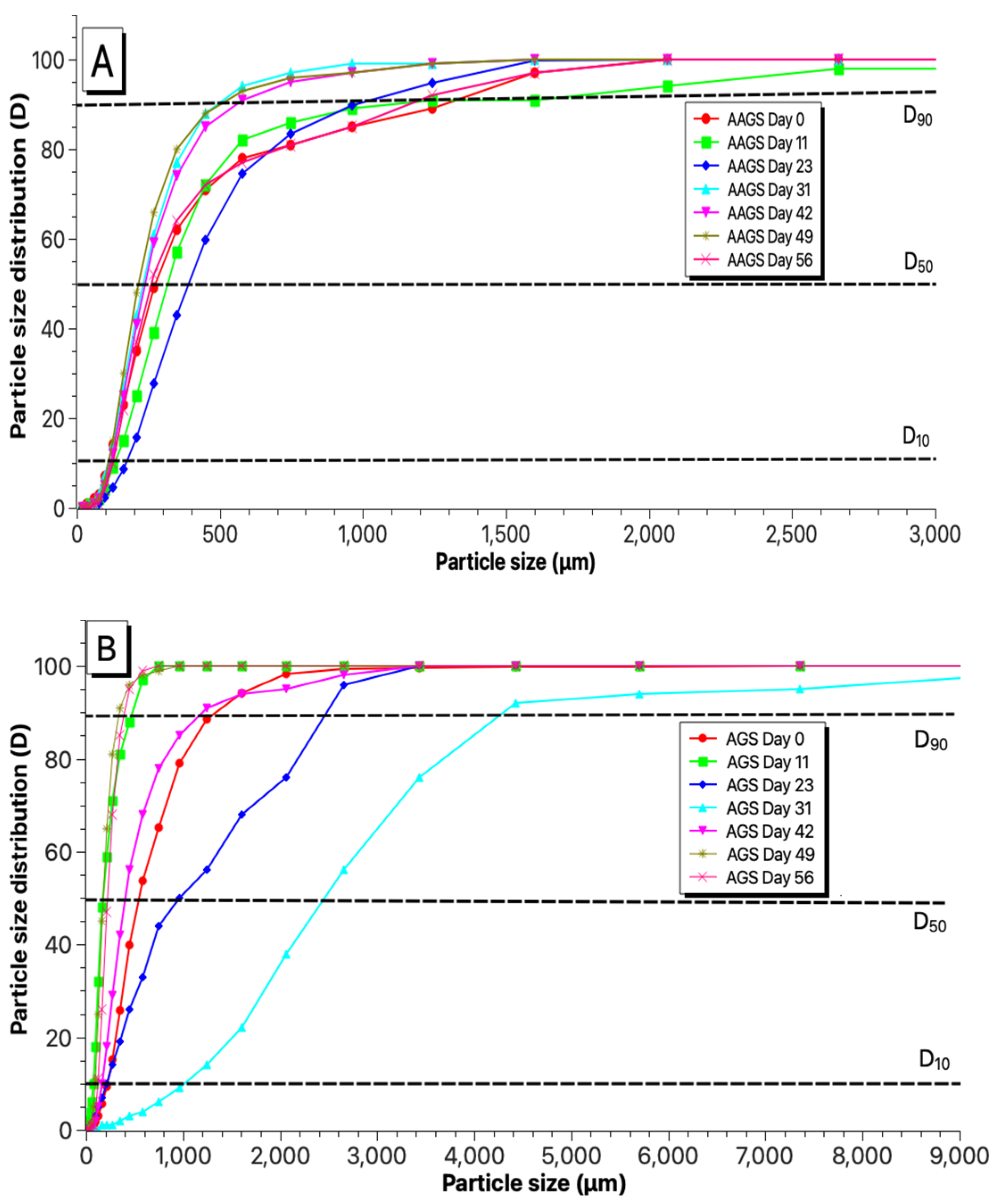
In this study, to evaluate granule development and capacity, particle size images of the biomass during the experiment in both AGS and AAGS were monitored. Subsequently, at the end of the experiment, the surface images of mature granules were probed. Figure 2 shows the changes in particle size/diameter and cumulative particle size distribution in AGS and AAGS during the experiment. The figure shows that more than 50% of the biomass aggregates had a particle size (median particle diameter) greater than 200 µm at the end of the experiment, indicating successful granulation [28]. As depicted in Figure 2A, the median particle size (expressed as 50% cumulative distribution or D50) in AAGS and the cumulative distribution patterns (D10, D50, and D90 profiles) did not significantly change throughout the experiment. The average particle size in AAGS increased from 326 µm on day 0 to 390 µm on day 21, and then slightly decreased to 284 µm on day 49. Overall, the average particle size in AAGS throughout the experiment was ~359 µm.
Figure 2B illustrates the particle size and cumulative particle size distribution in the AGS system. The median particle diameter (D50) in AGS on day 0 was 514 µm, which then increased drastically to 962 µm on day 23, and then to 2.66 mm on day 41, along with a substantial increase in the biomass concentration. However, on day 49, the average particle diameter of AGS decreased significantly to 163 µm, and the biomass concentration also dropped significantly (see biomass concentration profile in Figure 5). The median particle diameter of AGS was ~519 µm, which was larger than the median diameter of AAGS. However, despite a larger median diameter, abundant filamentous bacteria with poor settling properties (SVI30) above 300 mL/g (see biomass concentration profile in Figure 5) were detected in the AGS system. In addition, the slow production of biomass/sludge in the AGS system was the reason for poor pollutant removal efficiency.
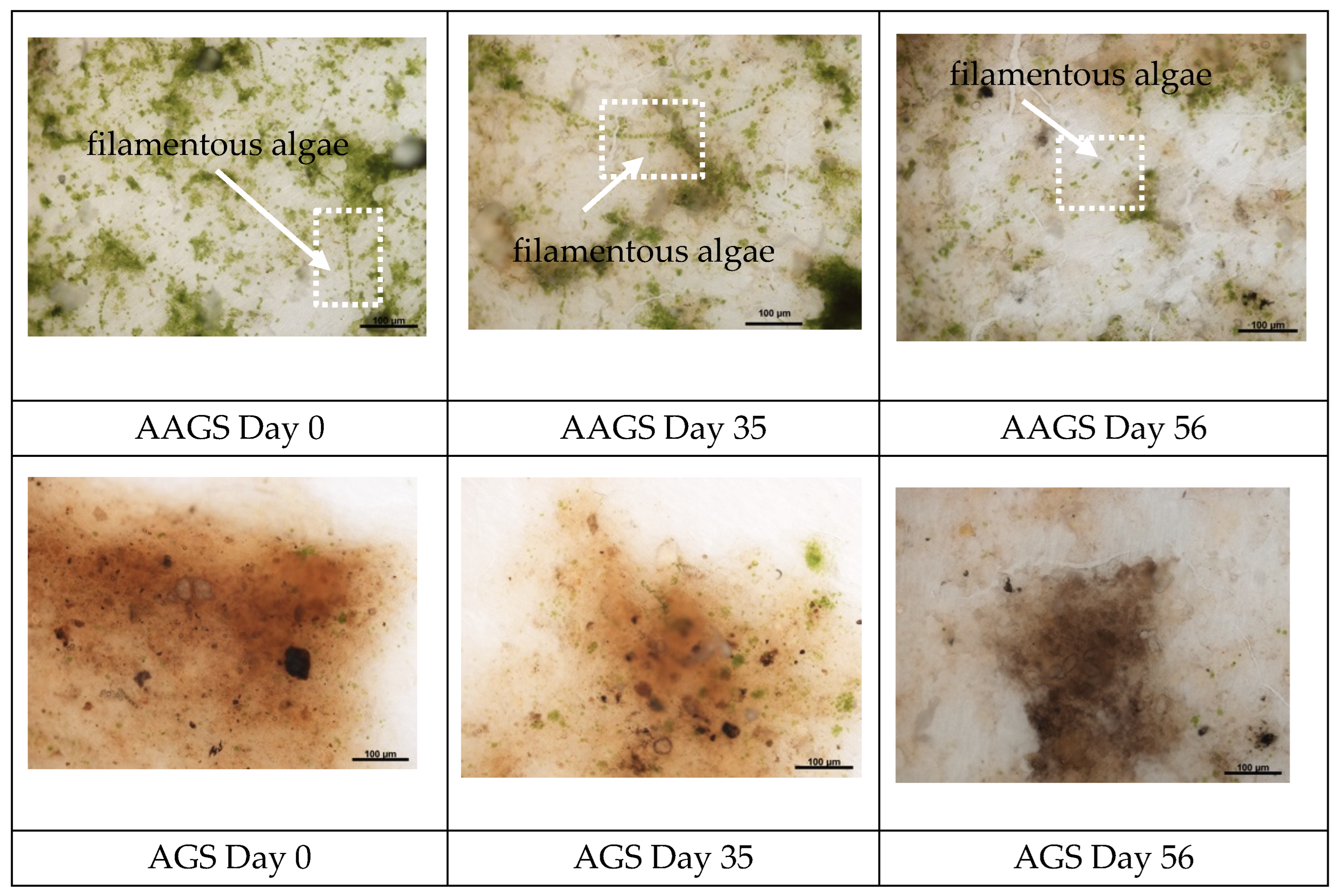
Figure 3 illustrates microscopic images of the aggregates in AGS and AAGS on days 0, 35, and 56. It shows that biomass aggregates in AAGS were dominated by microalgae, with some filamentous green algae tangled in between (which could be closely related to Cladophora sp., depicted as size > ~100 µm, with multiple nuclei) [29]. Figure 3 also shows that the biomass aggregates in AAGS and AGS on day 0 were larger than those on day 35 and day 56 (as also in agreement with the particle diameter data in Figure 2A,B).
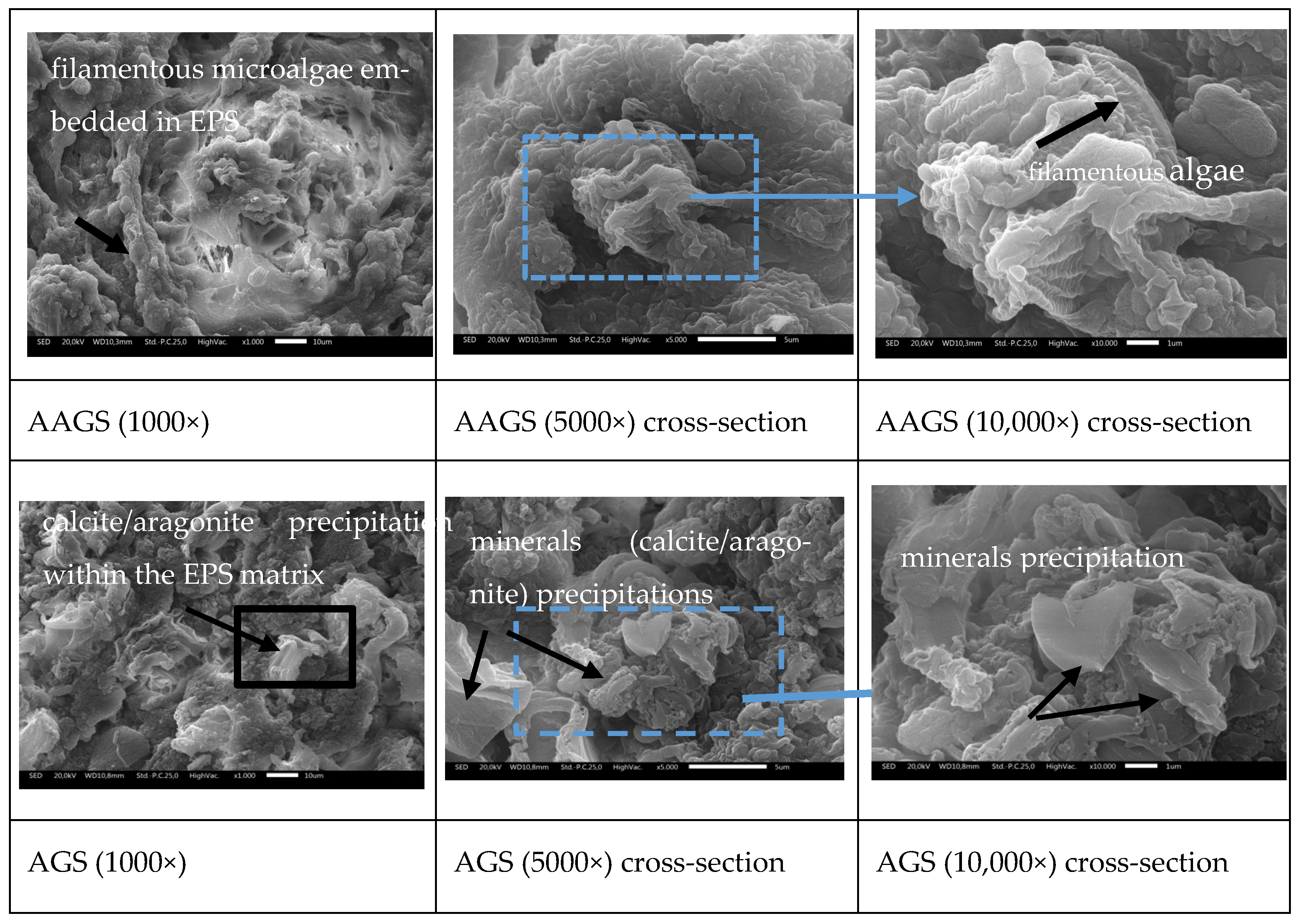
Scanning electron microscopy (SEM) images of the granule surfaces of AGS and AAGS are shown in Figure 4. Figure 4 shows that the granule surface of AGS consisted primarily of a complex dense structure, a bacteria-rich matrix, with calcite or aragonite (CaCO3) within the EPS matrix on the top layer, as also detected in a study by [30]. In this study, a high concentration of CaCO3 might be due to the addition of 100 mg/L of NaHCO3 and 5 mg/L of CaCl2 in the inlet feed. Mineral precipitates, e.g., calcite or aragonite, due to biologically induced calcium carbonate precipitation (MICP), increase the structural integrity and settling speed of granules by filling voids in the microbial structure. Concurrently, the granule surface of AAGS was more porous, with filamentous algal structures acting as a skeleton embedded within the extracellular polymeric substance (EPS) matrix.

3.2. Biomass Concentration, Settling Properties, and EPS Production

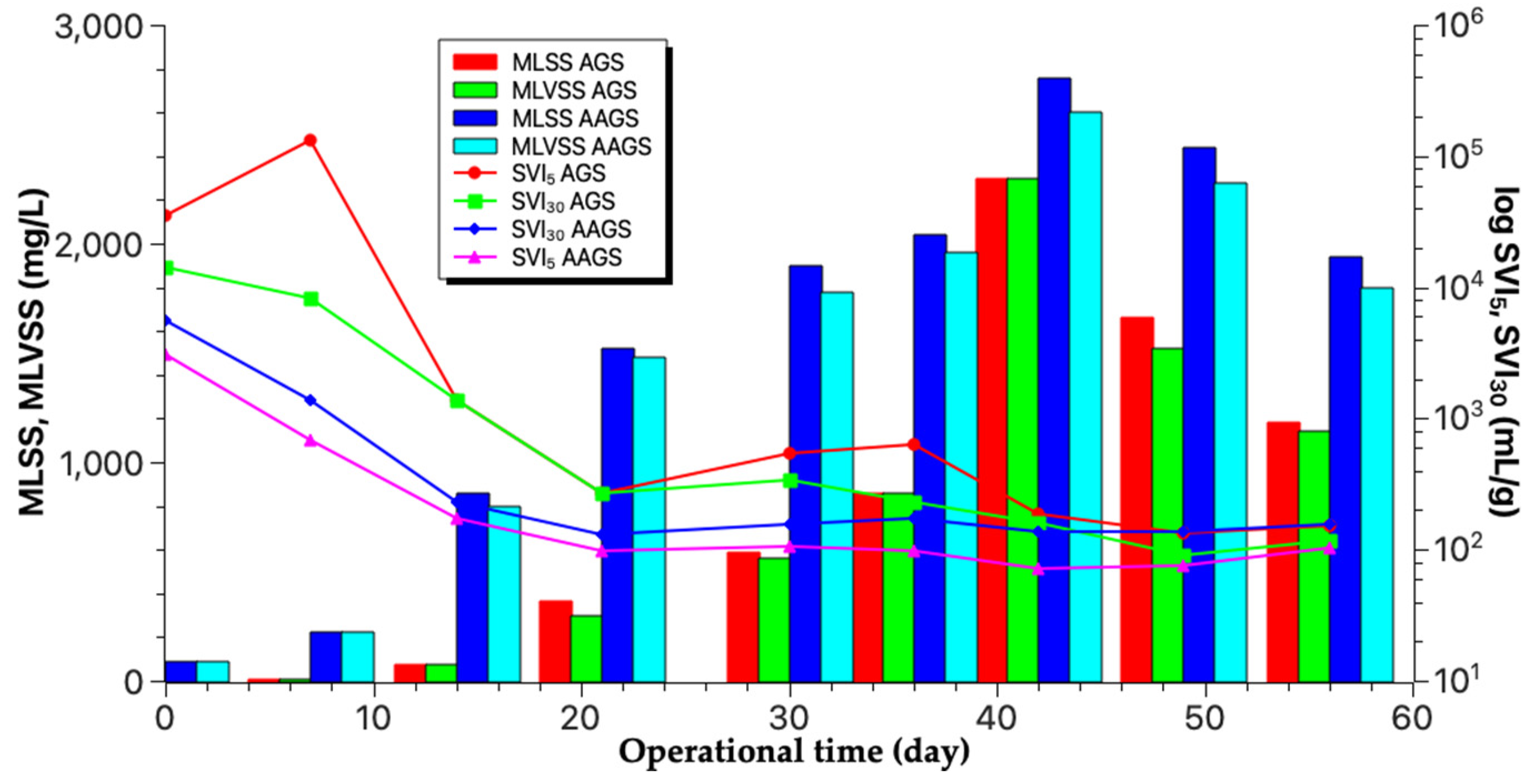
In this study, samples were taken and analyzed after the sedimentation time was reduced from 10 min to 5 min (regarded as day 0). Figure 5 depicts biomass concentrations (expressed as MLSS and MLVSS) and granule settling properties (expressed as SVI5 and SVI30) at settling times of 5 and 30 min throughout the experiment. The values of MLVSS and MLSS were nearly identical, indicating that almost all the solids in the reactors were biomass. The initial MLVSS in AAGS was 90 mg/L and steadily increased to 2600 mg/L by day 40 and then gradually decreased to 1800 mg/L by day 55. The same pattern also occurred in the AGS system, but the increase in MLVSS was much lower than that in the AAGS system. MLVSS in AGS, which was initially 14 mg/L, increased to 232 mg/L on day 35, peaked at 2300 mg/L on day 42, and then decreased to 1140 mg/L on day 55. The decrease in biomass growth on day 55 was due to aeration issues that also affected dissolved oxygen. However, a slight decrease in biomass growth on days 50 to 55 did not affect the pollutants removal efficiency in general (TN, TP and COD pollutant removal efficiency can be seen in Figure 8, Figure 9 and Figure 10).
The initial SVI5 and SVI30 of AGS on days 0 to 13 were high (way above 1300 mL/g), which indicated poor settling ability. From day 21 to day 35, SVI5 and SVI30 were significantly reduced to below 272 mL/g and above 542 mL/g, respectively. On days 42 to 55, SVI5 and SVI30 in AGS reached 160 mL/g and 103 mL/g, respectively. Simultaneously, the initial SVI5 and SVI30 of AAGS from day 0 to 7 were very high, at 1363 and 681 mL/g, respectively. The values were gradually reduced to below 100 mL/g and 150 mL/g by the end of the experiment. In this study, as small-sized granules were generated, the SVI5 and SVI30 values were in the range of 100–150 mL/g, which generally suggests a good settleability. It is worth mentioning that, in both systems, at the end of the experiment, the ratio of SVI5/SVI30 was near 1, which signifies dense settling and high granulation.
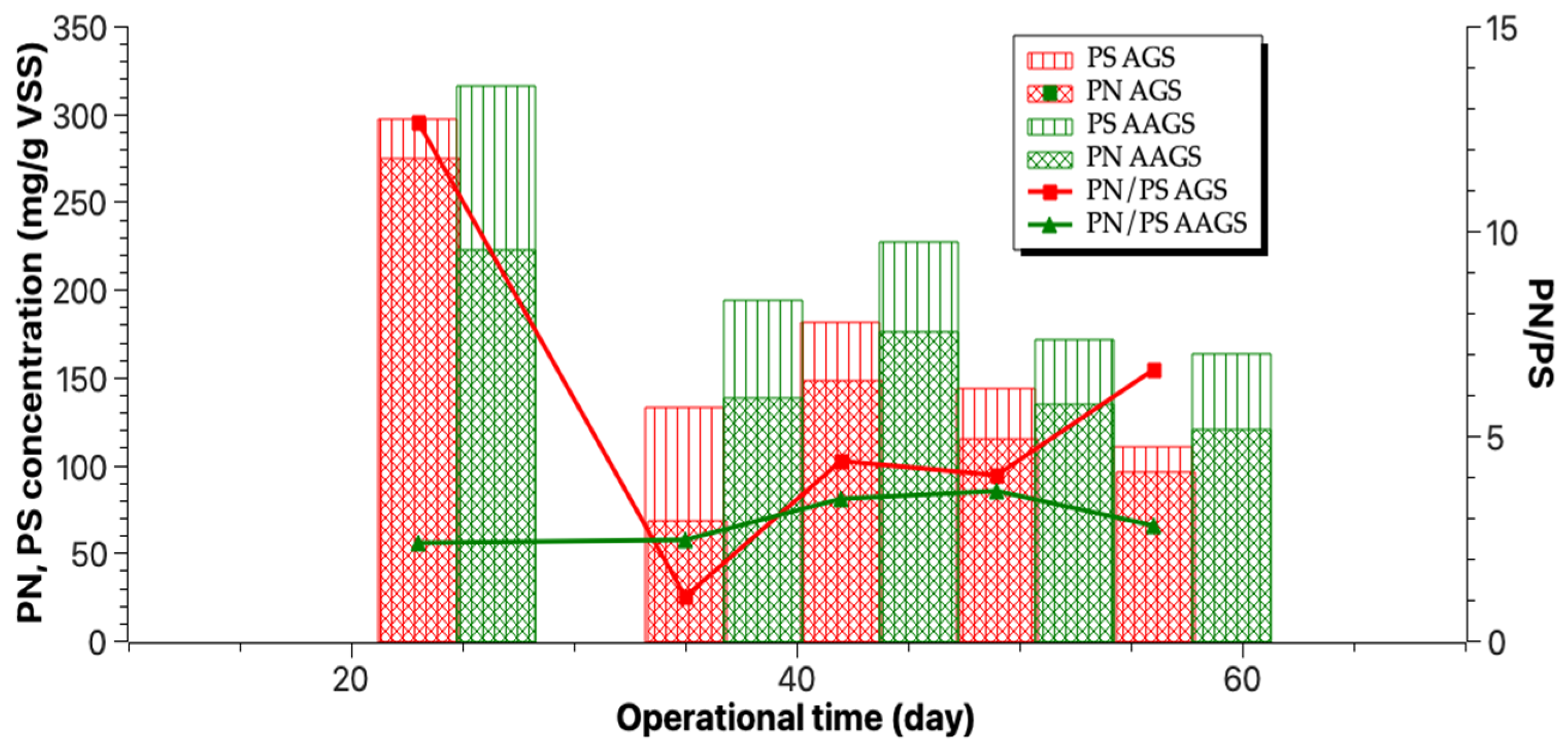
The bound extracellular polymeric substance (bound EPS) profiles in AGS and AAGs are presented in Figure 6. Soluble EPSs (S-EPSs) were not detected in both AGS and AAGS. Total bound EPSs were calculated as the sum of protein (PN) and polysaccharides/carbohydrates (PSs). Generally, the average of total bound EPSs produced in AAGS was higher than in AGS, ~224.3 mg/g VSS bound EPSs produced in AAGS and ~144.2 mg/g VSS in AGS, also in agreement with [7,31]. Figure 6 also illustrates that, in both AGS and AAGS systems, bound EPSs slightly decreased from day 35 to day 56. A decrease in EPSs was likely due to a decrease in dissolved oxygen (as a response to a decrease in aeration intensity). The concentration of PN was higher than that of PS, as frequently observed. The ratio of PN/PS for AAGS was between 2.39 and 3.77, while AGS’s PN/PS was between 4 and 12. AAGS showed a lower ratio of PN/PS compared to AGS, because typically bound EPSs are richer in polysaccharides [32].

3.3. Ammonia (NH4+-N), Nitrate (NO3-N), Nitrite (NO2-N), and Total Nitrogen (TN) Removal Performance

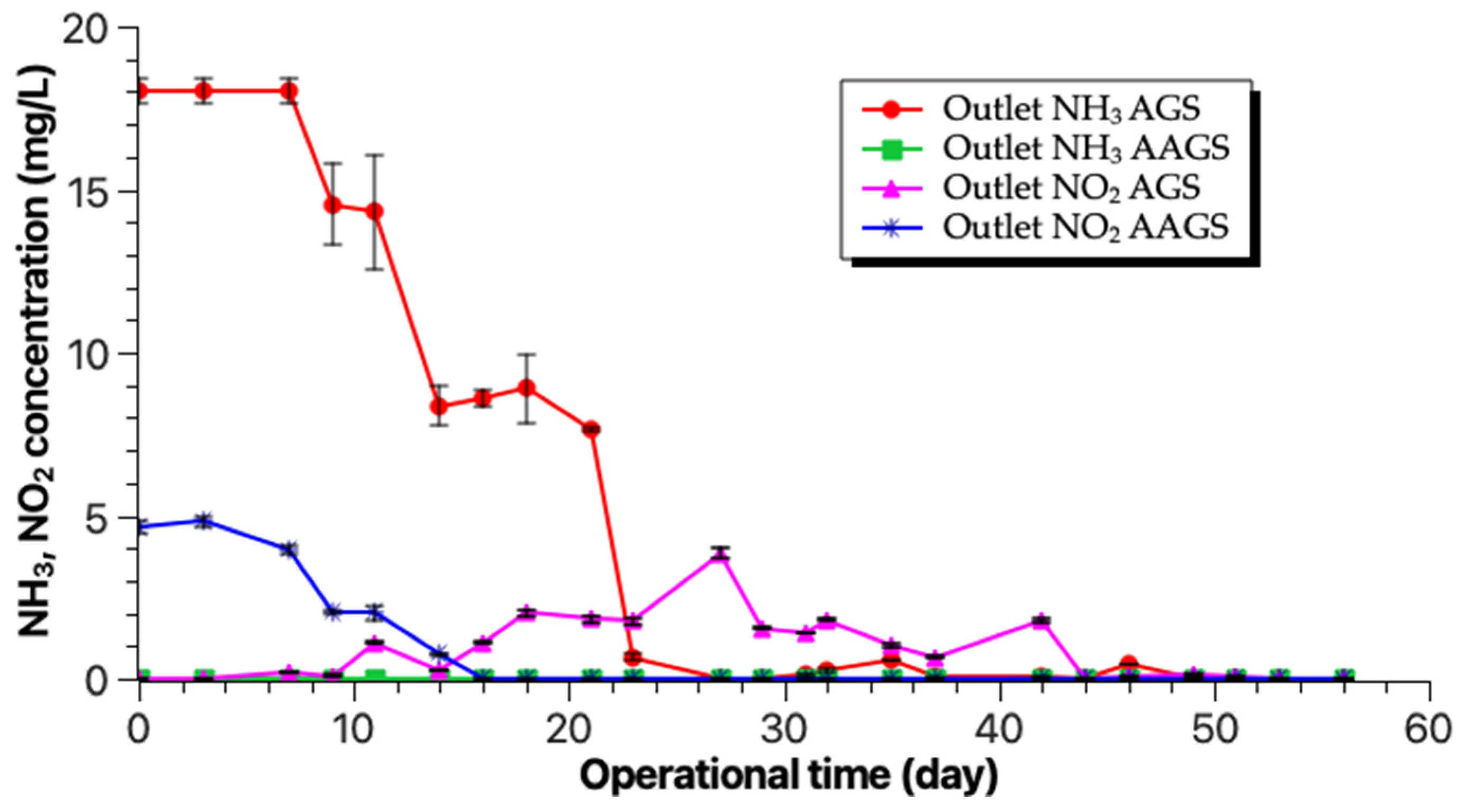
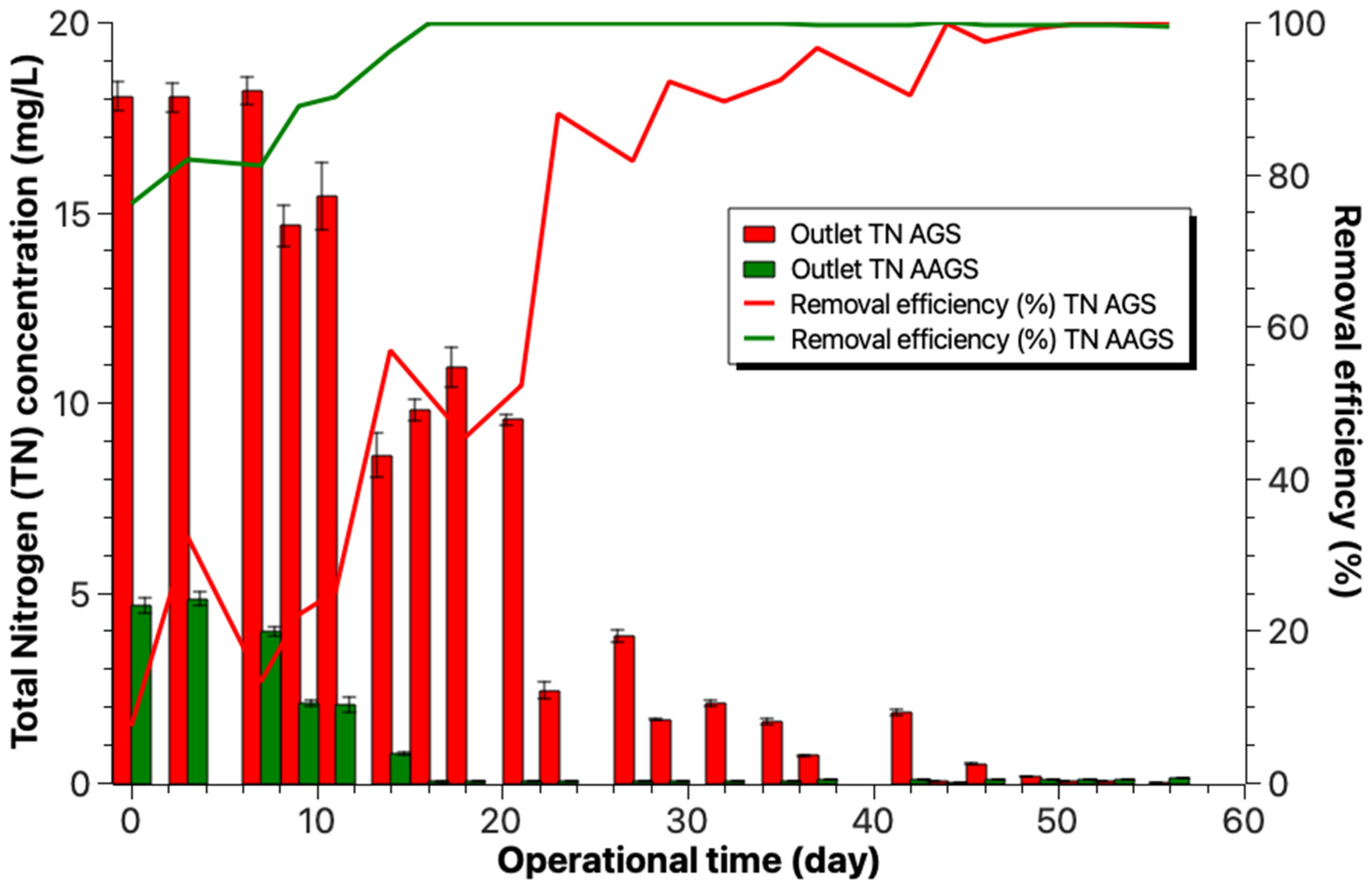
The average NH4+-N concentration in the inlet was 20.51 ± 1.92 mg/L, while the inlet concentrations of NO3-N and NO2-N were below the limit of detection of the analysis of 0.05 mg/L (for NO3-N) and 0.005 mg/L (for NO2-N) (see Figure S1, Supplementary Material). The experiment ran for 56 days. The NH4+-N and NO2-N outlet concentration profiles in AGS and AAGS are shown in Figure 7, while the concentrations of NO3-N at the outlets of both AGS and AAGS are not reported because they were below the analysis’s detection limit (<0.05 mg/L). The results indicated that NH4+-N concentrations at the AAGS outlet were always below 0.05 mg/L throughout the experiment. Conversely, NH4+-N concentrations at the AGS outlet were initially high but gradually decreased. Furthermore, the concentrations at the AGS outlet declined to 0.05 mg/L on day 27; they were initially high, dropping gradually from 18 mg/L on day 0 to 7.6 mg/L on day 21, and then further declined to 0.05 mg/L on day 27, remaining at that level until the end of the experiment. The average NH4+-N concentrations in the effluent for AAGS and AGS were 0.05 mg/L and 5.16 ± 1.1 mg/L, respectively. Simultaneously, the concentration of NO2-N in the outlet of AAGS on day 0 was 4.56 mg/L, which then gradually decreased to below 0.005 mg/L by day 16 and remained below 0.005 mg/L until the end of the experiment. Conversely, the concentration of NO2-N at the outlet of AGS was below 0.005 mg/L at the beginning of the experiment, increased steadily to 1.11 mg/L on day 11, reached a maximum of 3.84 mg/L on day 27, then dropped gradually to 0.05 mg/L on day 44, and remained at 0.05 mg/L until the end of the experiment. Figure 8 depicts a complete removal (at almost 99.9%) of total nitrogen (TN) in the AAGS system from day 16, while, while AGS needed 44 days to achieve the same amount of TN removal. Generally, AAGS had a higher TN removal efficiency (±25% higher) than AGS. The average total nitrogen (TN) removal efficiencies for AGS and AAGS were 70.95 ± 31.63% and 96.16 ± 6.8%, respectively. The p-value of <0.05 illustrates a statistically significant distinction between the TN values in AGS and AAGS (Text S1; see Supplementary Material).

3.4. Total Phosphate (TP) Removal Performance

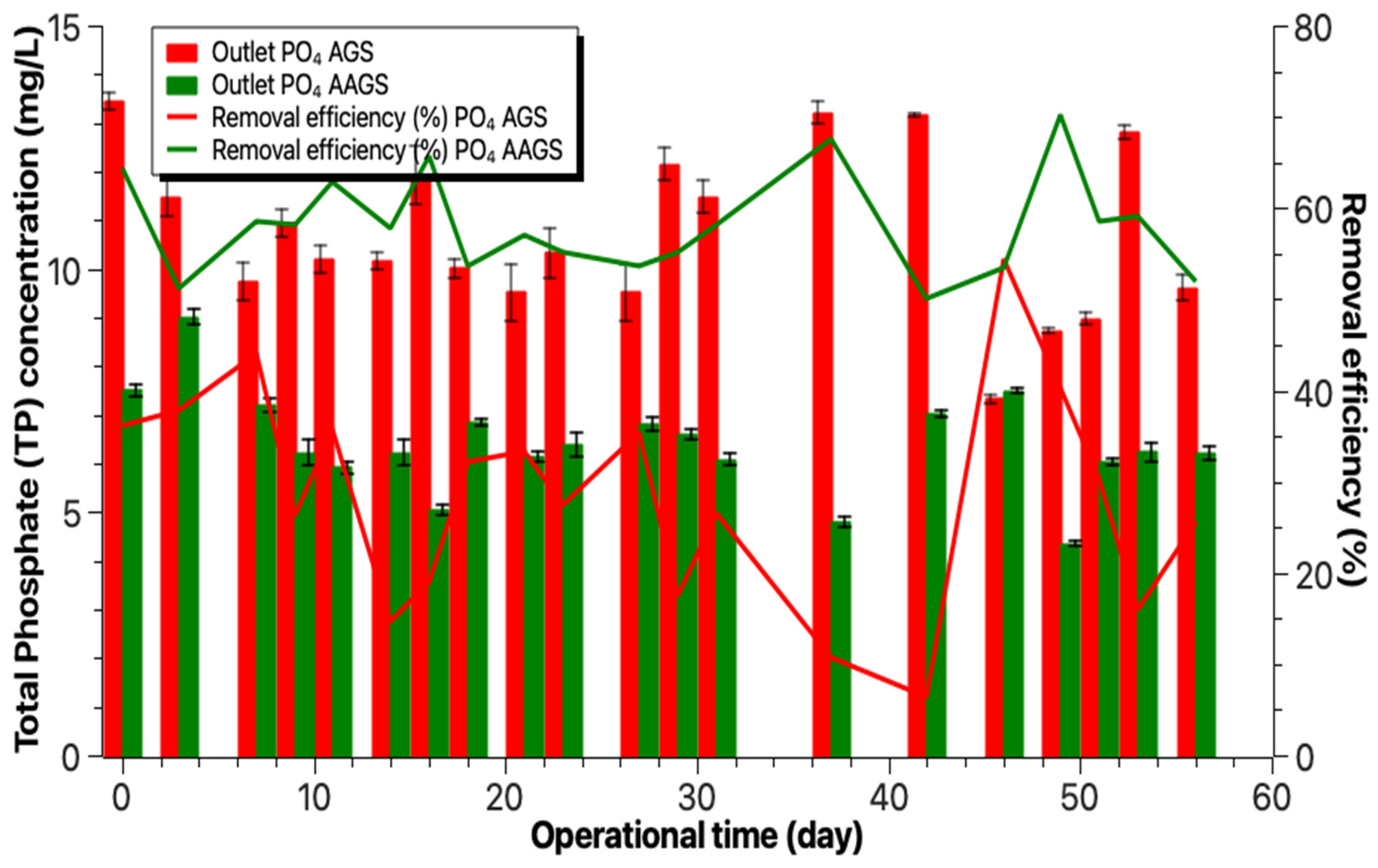
The average of the total phosphate concentration in the inlet was 15.57 ± 1.9 mg/L. Figure 9 shows that AAGS had a higher TP removal efficiency than AGS. The TP outlet concentrations of AAGS were consistently stable (below 7.5 mg/L) from day 4 until the end of the operational time, while the TP outlet concentrations of AGS were mostly above 9 mg/L from day 0 until day 42, but decreased to approximately 7.5 mg/L on day 46 until the end of the experiment. The average TP outlet concentrations in AAGS and AGS were 6.45 ± 1.02 mg/L and 10.67 ± 1.67 mg/L, respectively. The total phosphate removal efficiencies of AAGS and AGS were 58.22 ± 5.44% and 29.53 ± 12.53%, respectively. The TP removal efficiency in AAGS in this study was slightly higher than in the previous study [33]. However, the TP removal efficiency in AGS in this study was much lower than that in several previous studies [34]. Low TP removal in AGS might be correlated with the slow production of biomass (MLSS and MLVSS) in the AGS system (Figure 5) [5]. The t-test showed a p-value of <0.001, indicating statistically significant differences in TP values between AGS and AAGS (see Text S1 in the Supplementary Material).

3.5. Chemical Oxygen Demand (COD) Removal Performance

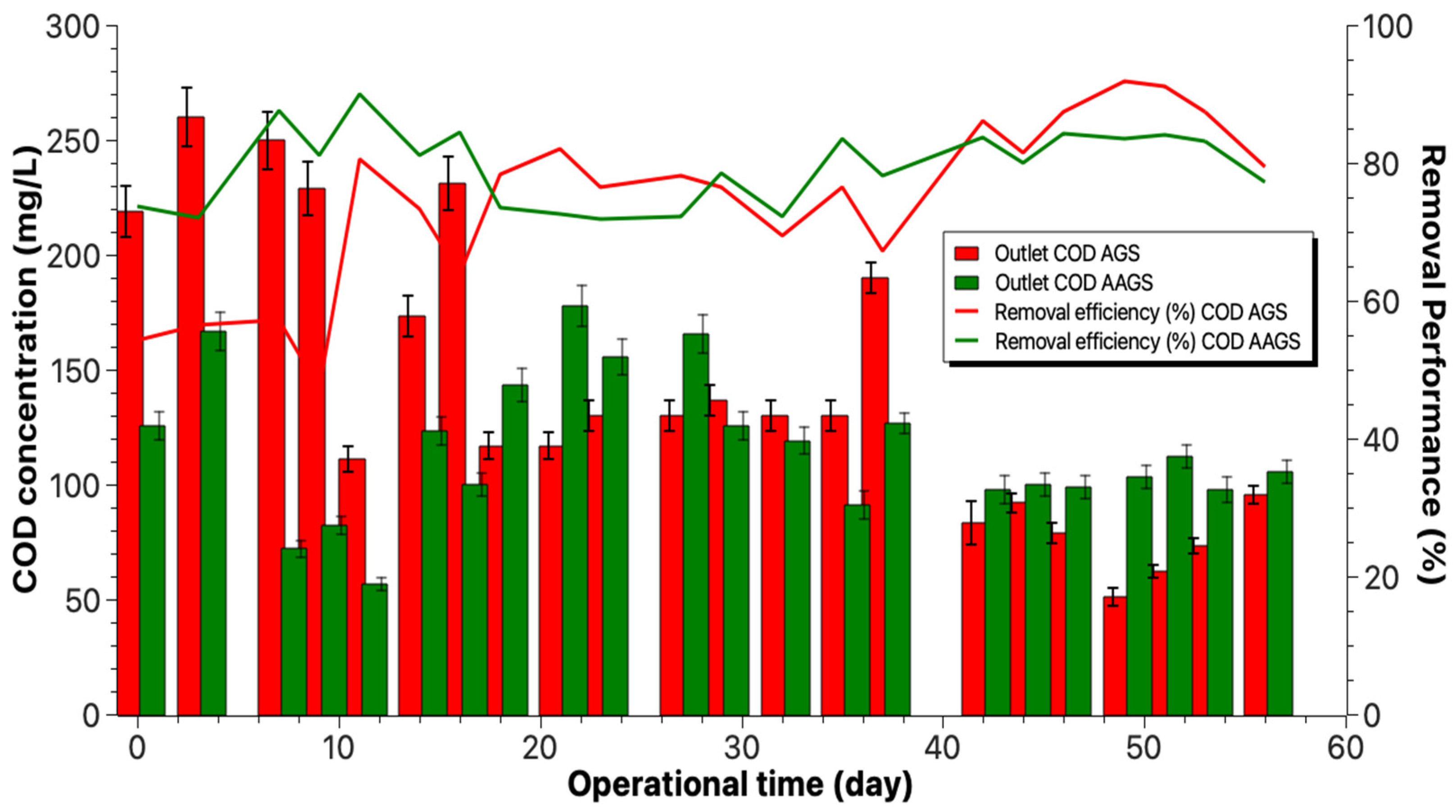
To measure the organic matter concentration in wastewater, COD was an indicator. The average COD concentration in the inlet was 570.63 ± 71.04 mg/L (see Supplementary Material). Figure 10 illustrates that the average COD removal efficiency of AAGS was slightly higher than that of AGS. The COD removal efficiencies of AAGS and AGS were 79.5 ± 5.48 and 74.8 ± 12.13, respectively. The average COD concentrations in the outlet of AAGS and AGS were 115.8 ± 30.5 and 140 ± 62, respectively, and the p-value of 0.1027 indicated statistically insignificant discrepancies between the COD values in AGS and AAGS (Text S1 see Supplementary Material). Furthermore, the COD removal efficiency in AGS was somewhat correlated with biomass concentrations (expressed as MLSSs or MLVSSs in Figure 5). In the AGS system, the COD concentrations of the outlet from day 0 to day 9 were higher than 200 mg/L, with MLSS levels of lower than 73 mg/L (resulting in ~50% COD removal). Then, when the biomass concentration increased up to 250 mg/L from day 15 to day 37, the COD concentrations of the outlet decreased to below 130 mg/L (resulting in ~80% COD removal). The COD concentrations at the outlet of the AGS system decreased further to below 100 mg/L from day 42 to the end of the experiment, as MLSS levels increased to over 1000 mg/L (~90% COD removal). On the contrary, it seemed that in the AAGS system, the biomass concentration did not correlate with the COD concentrations of the outlet. The COD removal efficiency in the AAGS system slightly fluctuated between 72 to 90%, which did not align with the biomass concentration profile. It was assumed that not only algae–bacteria in the form of granules were responsible for the utilization of the organic matter, but microalgae attached to the surface of the reactor could also use organic matter.

3.6. Fatty Acid Methyl Ester (FAME) Proportion and Yield

The potential application of biodiesel was assessed by calculating the fatty acid methyl ester (FAME) yield of the biomass in the AGS and AAGS reactors. The major FAME components in biodiesel are saturated fatty acids (SFAs), monounsaturated fatty acids (MUFAs), and polyunsaturated fatty acids (PUFAs). This study showed that, in general, AAGS produced a higher FAME content than AGS. Table 1 shows that AAGS produced 64 ± 2.61 mg/g SSs of total FAMEs, while AGS produced 44.04 ± 0.9 mg/g SSs. The proportions of SFAs (myristate, palmitate, stearate, and other saturated fatty acids) in AAGS were 3.98 ± 0.04 mg/g SSs (6.22 ± 0.1%), 9.67 ± 0.49 mg/g SSs (15.03 ± 0.7%), 1.91 ± 0.16 mg/g SSs (2.89 ± 0.33%), and 36.54 ± 1.25 mg/g SSs (56.76 ± 1.94%), respectively. Meanwhile, the proportions of SFAs (myristate, palmitate, stearate, and other saturated fatty acids) in AGS were 3.18 ± 0.29 mg/g SSs (7.23 ± 0.66%), 12.11 ± 0.12 mg/g SSs (27.5 ± 0.13%), 1.79 ± 0.06 mg/g SSs (4.06 ± 0.08%), and 23.38 ± 0.34 mg/g SSs (53.08 ± 0.77%), respectively. The total SFA proportions in AAGS and AGS were 80.9% and 91.87%, respectively, which are also in agreement with previous studies [2,35,36]. Furthermore, AAGS had higher monounsaturated fatty acid (MUFA/oleate) and polyunsaturated fatty acid (PUFA/linoleate) contents than AGS. The proportions of oleate and linoleate of AAGS and AGS were 14.2 ± 0.62% (9.14 ± 0.49 mg/g SSs), 4.9 ± 0.27% (3.16 ± 0.18 mg/g SSs), 7.17 ± 0.06% (3.16 ± 0.08 mg/g SSs), and 0.97 ± 0.02% (0.43 ± 0.01 mg/g SSs), respectively. The proportions of MUFAs (14.2%) and PUFAs (4.9%) in AAGS were similar to those reported in a previous study [2].

4. Discussion

The granule sizes in this study (in both the AGS and AAGs systems) were clustered as small-to-medium granules [37] due to an intensive aeration (1.25 L/min) and a high agitation speed (300 rpm), which created high shear force [38] and limited oxygen availability for heterotrophic growth [39,40]. While, heterotopic bacteria were responsible for more optimum COD removal; smaller granules allow oxygen to penetrate more effectively to the core, enhancing the growth of nitrification bacteria, thus performing better in N removal [41]. Moreover, smaller-sized granules have less void space (lower porosity) and higher density [41], and, therefore, have greater physical strength and more stable performance [42], which is also confirmed by this study. Throughout the 56-day experiment, the removal performance of AAGS was stable, with low variation in the pollutant removal efficiency and good sedimentation properties. However, in the AGS system, biomass tended to grow more slowly than in AAGS. The pollutant removal efficiency and settling properties increased significantly with increasing biomass concentration, reaching nearly 100% ammonia removal.
In this experiment, in the AAGS system, aerobic granular sludge was seeded with a mixture of activated sludge and some green microalgae and cyanobacteria. Typically, Chlorophyta and cyanobacteria were the dominant phyla of microalgae in AAGS [3]. With the addition of exogenous Chlorophyta and cyanobacteria as an inoculation strategy in the AAGS system, there was likely a predominance of Chlorophyta and cyanobacteria in the system. Unfortunately, there was no information on microbial and microalgal community distribution in this study to confirm the statement. However, the microscopic images show a big filament of filamentous green algae, with a size of around 21–28 µm in diameter and 83–272 µm in length, which was closely related to Chladophora sp. [29]. Chladophora sp. favored ammonia, absorbing and assimilating it, resulting in a nutrient consumption rate (NCR) for total nitrogen (TN) of 2.65 mg/(g∙d) [43]. The symbiosis between bacteria and Cladophora sp. contributed to pollutant removal and generated a stable and diverse community of microorganisms [43], providing a plausible explanation for the high nitrogen, phosphorus, and organic matter removal rates observed in the AAGS system in this study.
Extracellular polymeric substances (EPSs) play an important role in microbial aggregation, granulation, and stability [8]. Generally, EPSs are classified as bound EPSs (B-EPSs) and soluble EPSs (S-EPSs). S-EPSs are easily soluble in water, as a pool of soluble byproduct, and are affected by the external environment [44]. Bound EPSs tightly adhere to cells and present a double-layered dynamic structure consisting of loosely bound (LB) and tightly bound (TB) EPSs and provide a more significant role in the early stage of the granulation process [8,45]. Bound EPSs are highly hydrated, gelatinous, and negatively charged, creating a three-dimensional matrix that facilitates the transition from flocculent sludge to compact, dense granules [8,46,47]. In this experiment, AAGS has a higher concentration of bound EPSs than AGS, while soluble EPSs were not detected in either the AGS or AAGS systems. It was also explained by [47] that soluble EPSs did not have a role in cell aggregation/granulation. Furthermore, as observed in a previous study [3], integrating algae into aerobic granular sludge enhanced the production of bound EPSs, especially tightly bound PN, thereby improving granular stability by increasing hydrophobicity [33]. The degree of stability of granules is also determined by the ratio of PN/PS. AAGS in this experiment had a PN/PS ratio between 2.39 and 3.77, which was within the range of stable granules [48].
The organic loading rate (OLR) in this study was around ±2.82 kg COD/(m3·d), which is viewed as high-strength wastewater. The ideal OLR for AAGS is reported to be between 0.9 and 1.8 kg COD/(m3·d), while AGS needs 2–4 kg COD/(m3·d) to maintain a stable, compact, and fast-settling granular structure in many municipal wastewater applications [49]. However, previous study showed that an OLR between 0.6 and 2.6 kg COD/(m3·d) in AAGS could also achieve 95% COD and a 90% ammonia nitrogen removal efficiency, with stable operation for 180 days [50]. In this study, although the average COD removal was lower, the total nitrogen removal was higher, and the system could run stably for 56 days of operation. The COD removal efficiencies in this study were lower than those reported in previous studies with the same COD inlet/organic loading rate [51,52]. However, the average outlet concentrations of AAGS in this study already meet the European Union (EU) effluent standard regulation for wastewater [53].
The total nitrogen removal in this study was considered to be higher than in previous studies [54]. Compared with the AGS system, the AAGS system did not require high-organic-carbon substrates for denitrification. AAGS photosynthesis supplied organic carbon for denitrification in the anaerobic period, and organic carbon might be more important than a strict anaerobic environment. In the aerobic phase, the simultaneous nitrification–denitrification (SND) process in AAGS was mainly achieved by SND with direct ammonia assimilation by algae [55], while in AGS, the SND process was conventional simultaneous nitrification and denitrification (CSND). Hence, AGS needs a more balanced ratio of C/N and a higher OLR than AAGS [40]. In the AGS system, enhancement of phosphate-accumulating organisms (PAOs) in granules remains the principal and most effective way to achieve high P removal through the sequencing of anaerobic/aeration periods [55], as observed in this study [55]. In AAGS, the removal mechanisms of TP involved assimilation and precipitation. Some believed that significantly promoting P removal by increasing light density (up to 200 μmol/(m2.s)) during the anaerobic phase in the AAGS system could increase P release (by PAOs) and P uptake simultaneously (by algae), with the pH controlled at 7.4–8.4 (Figure S3; see Supplementary Material) [56].
Table 2 elaborates on the overview of previous studies, which were similar in approach (utilizing activated sludge (AS) supplemented with a mix of microalgae as the seed) to this study. Table 2 shows the variations in the results, depending on the type of inoculation system, the wastewater quality, and most importantly, the process parameter.
The biodiesel potential of AAGS in this study was similar to previous studies [2,6]. The major constituents of FAMEs in the biodiesel were saturated fatty acids (SFAs), monounsaturated fatty acids (MUFAs), and polyunsaturated fatty acids (PUFAs). It is worth mentioning that the ratio between saturated and unsaturated fatty acids is one of the most important components to determine the fuel quality. A balanced ratio (1:1) is required to meet industry standards such as ASTM D6751 or EN 14214 [60], as high saturation improves stability but hurts cold flow. In contrast, high unsaturation improves cold flow but reduces stability [6,61,62]. As opposed to the study conducted by Liu et al. (2018) [6], the composition of saturated fatty acids, for both AGS and AAGS in this study, was considered to be much higher than that of unsaturated fatty acids, which led to a better combustion property/high oxidation ability and improved stability. Meanwhile, AGS in this study had a lower unsaturated fatty acid level than AAGS, which created poorer cold flow properties, meaning it gels or crystallizes at higher temperatures. However, in this study, the FAME yield in AAGS was not significantly different from that in a previous study [6], where only the yield of AGS was slightly higher. The FAME yields obtained by Liu et al. (2018) [6] were 66.21 ± 1.08 mg/g SS (AAGS) and 35.44 ± 0.92 mg/g SS (AGS). As also emphasized by Liu et al. (2018) [6], a distinct proportion of saturated fatty acids due to the difference in bacterial composition in the granular sludge and microalgae integration in AAGS created a higher ratio of unsaturated fatty acids. Despite this, both studies agreed that integration between sludge and microalgae in the form AAGS has better potential for biodiesel than AGS or microalgae alone [60,62].

5. Conclusions

This study compared granule development, pollutant removal performance, and biodiesel production between algae–aerobic granular sludge (AAGS) and aerobic granular sludge (AGS) for treating synthetic domestic wastewater. In general, AAGS had better pollutant removal performance than AGS. Moreover, AAGS needed a shorter time (16 days) than AGS (44 days) to reach complete TN removal. AAGS granules were more stable than AGS granules due to their greater production of bound EPSs. AGS had a dense surface morphology with mineral precipitate layers. In contrast, AAGS showed a porous surface with filamentous algae intertwined. AAGS produced higher levels of fatty acids, with a higher polyunsaturated fatty acid content than AGS, making it more promising for biodiesel application.

Supplementary Materials

The following supporting information can be downloaded at https://www.mdpi.com/article/10.3390/w18121395/s1: Figure S1: COD, total nitrogen (TN), and total phosphate (TP) inlet concentrations during experiment; Figure S2: Dissolved oxygen (DO) in Reactor AGS and AAGS during the experiment; Figure S3: pH in the inlet, inside the reactors and outlet of the reactors of AGS and AAGS during the experiment; Text S1: Statistical test results.

Author Contributions

Conceptualization, R.Y.; methodology, R.Y.; software, R.Y.; validation, R.Y.; formal analysis, R.Y.; investigation, R.Y.; resources, R.Y., Y.I. and K.M.; data curation, R.Y.; writing—original draft preparation, R.Y.; writing—review and editing, R.Y., Y.I. and F.K.; visualization, R.Y.; supervision, F.K., J.S. and T.W. All authors have read and agreed to the published version of the manuscript.

Funding

This research was funded by the German Academic Exchange Service (DAAD), Research Grants—Doctoral Programs in Germany, 2022/23 (Grant number: 57588370).

Data Availability Statement

The original contributions presented in this study are included in this article/Supplementary Material. Further inquiries can be directed to the corresponding author.

Acknowledgments

This study was also technically supported by Andre Kupka, a staff member of the chair group for mechanical process engineering at TU Dresden.

Conflicts of Interest

Author FK is CEO of the company biotopa gGmbH. The remaining authors declare that the research was conducted in the absence of any commercial or financial relationships that could be construed as a potential conflict of interest.

Abbreviations

The following abbreviations are used in this manuscript:
AGSAerobic Granular Sludge
AAGSAlgae–Aerobic Granular Sludge
SBRSequencing Batch Reactor
PSBRPhoto-Sequencing Batch Reactor
FAMEFatty Acid Methyl Ester
TNTotal Nitrogen
TPTotal Phosphate
CODChemical Oxygen Demand
SSSuspended Solid
PBSPhosphate Buffer Solution
PFAParaformaldehyde
MUFAMonounsaturated Fatty Acid
SFASaturated Fatty Acid
PUFAPolyunsaturated Fatty Acid
HRTHydraulic Retention Time
DODissolved Oxygen
MLSSMixed Liquor Suspended Solid
MLVSSMixed Liquor Volatile Suspended Solid
VSSVolatile Suspended Solid
PNProtein
PSPolysaccharide
MICPBiologically Induced Calcium Carbonate Precipitation
SVISludge Volume Index
EPSExtracellular Polymeric Substance
ASTMAmerican Standard for Testing and Materials
EUEuropean Union
PAOsPhosphate-Accumulating Organisms

References

  1. Hamza, R.; Rabii, A.; Ezzahraoui, F.; Morgan, G.; Iorhemen, O.T. A Review of the State of Development of Aerobic Granular Sludge Technology over the Last 20 Years: Full-Scale Applications and Resource Recovery. Case Stud. Chem. Environ. Eng. 2022, 5, 100173. [Google Scholar] [CrossRef]
  2. Purba, L.D.A.; Zahra, S.A.; Yuzir, A.; Iwamoto, K.; Abdullah, N.; Shimizu, K.; Lei, Z.; Hermana, J. Algal-Bacterial Aerobic Granular Sludge for Real Municipal Wastewater Treatment: Performance, Microbial Community Change and Feasibility of Lipid Recovery. J. Environ. Manag. 2023, 333, 117374. [Google Scholar] [CrossRef] [PubMed]
  3. Zhou, Y.; Zhou, Y.; Chen, S.; Guo, N.; Xiang, P.; Lin, S.; Bai, Y.; Hu, X.; Zhang, Z. Evaluating the Role of Algae in Algal-Bacterial Granular Sludge: Nutrient Removal, Microbial Community and Granular Characteristics. Bioresour. Technol. 2022, 365, 128165. [Google Scholar] [CrossRef]
  4. Nancharaiah, Y.V.; Kiran Kumar Reddy, G. Aerobic Granular Sludge Technology: Mechanisms of Granulation and Biotechnological Applications. Bioresour. Technol. 2018, 247, 1128–1143. [Google Scholar] [CrossRef]
  5. Purba, L.D.A.; Ibiyeye, H.T.; Yuzir, A.; Mohamad, S.E.; Iwamoto, K.; Zamyadi, A.; Abdullah, N. Various Applications of Aerobic Granular Sludge: A Review. Environ. Technol. Innov. 2020, 20, 101045. [Google Scholar] [CrossRef]
  6. Liu, L.; Hong, Y.; Ye, X.; Wei, L.; Liao, J.; Huang, X.; Liu, C. Biodiesel Production from Microbial Granules in Sequencing Batch Reactor. Bioresour. Technol. 2018, 249, 908–915. [Google Scholar] [CrossRef]
  7. Liu, Z.; Ning, F.; Hou, Y.; Zhang, D.; Yang, R.; Wang, J.; Zhang, A.; Chen, Y.; Liu, Y. Deciphering the Effect of Algae Sources on the Formation of Algal-Bacterial Granular Sludge: Endogenous versus Exogenous Algae. J. Clean. Prod. 2022, 363, 132468. [Google Scholar] [CrossRef]
  8. Wang, Y.; Wang, J.; Liu, Z.; Huang, X.; Fang, F.; Guo, J.; Yan, P. Effect of EPS and Its Forms of Aerobic Granular Sludge on Sludge Aggregation Performance during Granulation Process Based on XDLVO Theory. Sci. Total Environ. 2021, 795, 148682. [Google Scholar] [CrossRef]
  9. Zheng, M.; Hu, Z.; Liu, T.; Sperandio, M.; Volcke, E.I.P.; Wang, Z.; Hao, X.; Duan, H.; Vlaeminck, S.E.; Xu, K.; et al. Pathways to Advanced Resource Recovery from Sewage. Nat. Sustain. 2024, 7, 1395–1404. [Google Scholar] [CrossRef]
  10. Hao, L.; Wen, L.; Ren, S.; Shi, C.; Shen, Q.; Wang, Q. Algal-Bacterial Granular Sludge: A Sustainable Solution for Wastewater Treatment for Pollutant Removal and Resource Recovery towards Circular Economy Implementation. Process Saf. Environ. Prot. 2025, 201, 107555. [Google Scholar] [CrossRef]
  11. Milferstedt, K.; Kuo-Dahab, W.C.; Butler, C.S.; Hamelin, J.; Abouhend, A.S.; Stauch-White, K.; McNair, A.; Watt, C.; Carbajal-González, B.I.; Dolan, S.; et al. The Importance of Filamentous Cyanobacteria in the Development of Oxygenic Photogranules. Sci. Rep. 2017, 7, 17944. [Google Scholar] [CrossRef] [PubMed]
  12. Liu, L.; Zeng, Z.; Bee, M.; Gibson, V.; Wei, L.; Huang, X.; Liu, C. Characteristics and Performance of Aerobic Algae-Bacteria Granular Consortia in a Photo-Sequencing Batch Reactor. J. Hazard. Mater. 2018, 349, 135–142. [Google Scholar] [CrossRef]
  13. Zhang, B.; Wu, L.; Shi, W.; Zhang, Z.; Lens, P.N.L. A Novel Strategy for Rapid Development of a Self-Sustaining Symbiotic Algal-Bacterial Granular Sludge: Applying Algal-Mycelial Pellets as Nuclei. Water Res. 2022, 214, 118210. [Google Scholar] [CrossRef]
  14. Zhang, B.; Lens, P.N.L.; Shi, W.; Zhang, R.; Zhang, Z.; Guo, Y.; Bao, X.; Cui, F. Enhancement of Aerobic Granulation and Nutrient Removal by an Algal–Bacterial Consortium in a Lab-Scale Photobioreactor. Chem. Eng. J. 2018, 334, 2373–2382. [Google Scholar] [CrossRef]
  15. Xiong, W.; Jin, Y.; Wang, Y.; Wang, S.; Chen, B.; Su, H. Novel Insights into the Biological State in Algal-Bacterial Granular Sludge Granulation: Armor-like Protection Provided by the Algal Barrier. Water Res. 2024, 262, 122087. [Google Scholar] [CrossRef] [PubMed]
  16. Zhang, B.; Li, W.; Wu, L.; Shi, W.; Lens, P.N.L. Rapid Start-up of Photo-Granule Process in a Photo-Sequencing Batch Reactor under Low Aeration Conditions: Effect of Inoculum AGS Size. Sci. Total Environ. 2022, 820, 153204. [Google Scholar] [CrossRef]
  17. Pham, M.-D.-T.; Bui, X.-T.; Vo, T.-K.-Q.; Dao, T.-S.; Le, L.-T.; Vo, T.-D.-H.; Huynh, K.-P.-H.; Nguyen, T.-B.; Lin, C.; Visvanathan, C. Microalgae–Bacteria Based Wastewater Treatment Systems: Granulation, Influence Factors and Pollutants Removal. Bioresour. Technol. 2025, 418, 131973. [Google Scholar] [CrossRef]
  18. Chen, X.; Wang, Q.; Xu, Q.; Wang, J.; Lei, Z.; Lee, D.-J. Algal-Bacterial Granular Sludge Process for Sustainable Wastewater Treatment: Technological Advances and Challenges. Water Res. 2026, 289, 124906. [Google Scholar] [CrossRef]
  19. Cai, F.; Lei, L.; Li, Y.; Chen, Y. A Review of Aerobic Granular Sludge (AGS) Treating Recalcitrant Wastewater: Refractory Organics Removal Mechanism, Application and Prospect. Sci. Total Environ. 2021, 782, 146852. [Google Scholar] [CrossRef]
  20. Gao, D.; Liu, L.; Liang, H.; Wu, W.-M. Aerobic Granular Sludge: Characterization, Mechanism of Granulation and Application to Wastewater Treatment. Crit. Rev. Biotechnol. 2011, 31, 137–152. [Google Scholar] [CrossRef]
  21. Setianingsih, N.I.; Hadiyanto; Budihardjo, M.A.; Yuliasni, R.; Vistanty, H.; Mukimin, A.; Sudarno. Characteristics and Performance of Aerobic Granular Sludge Technology in the Treatment of Real Batik Textile Wastewater. Int. J. Environ. Sci. Technol. 2025, 22, 2917–2930. [Google Scholar] [CrossRef]
  22. Chao, Y.; Zhang, T. Optimization of Fixation Methods for Observation of Bacterial Cell Morphology and Surface Ultrastructures by Atomic Force Microscopy. Appl. Microbiol. Biotechnol. 2011, 92, 381–392. [Google Scholar] [CrossRef]
  23. Lipps, W.; Braun-Howland, E.; Baxter, E.; American Public Health Association; American Water Works Association; Water Environment Federation. Standard Methods for the Examination of Water and Wastewater, 24th ed.; APHA Press: Washington, DC, USA, 2023. [Google Scholar]
  24. Lowry, O.H.; Rosebrough, N.J.; Farr, A.L.; Randall, R.J. PROTEIN MEASUREMENT WITH THE FOLIN PHENOL REAGENT. J. Biol. Chem. 1951, 193, 265–275. [Google Scholar] [CrossRef]
  25. Dubois, M.; Gilles, K.; HAamilton, J.K.; Rebers, P.A.; Smith, F. A Colorimetric Method for the Determination of Sugars. Nature 1951, 168, 167. [Google Scholar] [CrossRef] [PubMed]
  26. Vo, H.-N.-P.; Bui, X.-T.; Nguyen, T.-T.; Nguyen, T.-P.; Le, T.-H.-H.; Nguyen, T.-S.; Vo, T.-D.-H.; Lin, C. An In-Situ Transesterification of Municipal Activated Sludge for Biodiesel Production. Desalin. Water Treat. 2017, 98, 169–175. [Google Scholar] [CrossRef]
  27. Hu, W.; Zhou, X.; Tan, J.; Hou, J.; Xie, Y.; Wang, X.; Wang, Y.; Zhang, Y. In Situ Transesterification of Wet Sewage Sludge via Hydrothermal Process: Biodiesel Production and Residue Utilization. Biomass Bioenergy 2020, 141, 105715. [Google Scholar] [CrossRef]
  28. Huang, Y.-P.; Wang, X.; Wang, R.-L.; He, J.-T.; Huang, Y.; Hang, Z.-Y.; Chen, X.; Li, Z.-H. Managing Stability of Aerobic Granules by Coordinating Diameter and Denitrification. Sci. Total Environ. 2024, 906, 167795. [Google Scholar] [CrossRef] [PubMed]
  29. Michalak, I.; Messyasz, B. Concise Review of Cladophora spp.: Macroalgae of Commercial Interest. J. Appl. Phycol. 2021, 33, 133–166. [Google Scholar] [CrossRef]
  30. Liu, Y.-Q.; Lan, G.-H.; Zeng, P. Size-Dependent Calcium Carbonate Precipitation Induced Microbiologically in Aerobic Granules. Chem. Eng. J. 2016, 285, 341–348. [Google Scholar] [CrossRef]
  31. Liu, Z.; Liu, J.; Zhao, Y.; Zhang, S.; Gao, M.; Wang, J.; Zhang, A.; Zhang, T.; Liu, Y. Understanding the Effects of Algae Growth on Algae-Bacterial Granular Sludge Formation: From Sludge Characteristics, Extracellular Polymeric Substances, and Microbial Community. J. Clean. Prod. 2023, 410, 137327. [Google Scholar] [CrossRef]
  32. Basuvaraj, M.; Fein, J.; Liss, S.N. Protein and Polysaccharide Content of Tightly and Loosely Bound Extracellular Polymeric Substances and the Development of a Granular Activated Sludge Floc. Water Res. 2015, 82, 104–117. [Google Scholar] [CrossRef] [PubMed]
  33. Zhao, Z.; Liu, S.; Yang, X.; Lei, Z.; Shimizu, K.; Zhang, Z.; Lee, D.-J.; Adachi, Y. Stability and Performance of Algal-Bacterial Granular Sludge in Shaking Photo-Sequencing Batch Reactors with Special Focus on Phosphorus Accumulation. Bioresour. Technol. 2019, 280, 497–501. [Google Scholar] [CrossRef]
  34. Iorhemen, O.T.; Ukaigwe, S.; Dang, H.; Liu, Y. Phosphorus Removal from Aerobic Granular Sludge: Proliferation of Polyphosphate-Accumulating Organisms (PAOs) under Different Feeding Strategies. Processes 2022, 10, 1399. [Google Scholar] [CrossRef]
  35. Huang, W.; Liu, D.; Huang, W.; Cai, W.; Zhang, Z.; Lei, Z. Achieving Partial Nitrification and High Lipid Production in an Algal-Bacterial Granule System When Treating Low COD/NH4–N Wastewater. Chemosphere 2020, 248, 126106. [Google Scholar] [CrossRef]
  36. Meng, F.; Huang, W.; Liu, D.; Zhao, Y.; Huang, W.; Lei, Z.; Zhang, Z. Application of Aerobic Granules-Continuous Flow Reactor for Saline Wastewater Treatment: Granular Stability, Lipid Production and Symbiotic Relationship between Bacteria and Algae. Bioresour. Technol. 2020, 295, 122291. [Google Scholar] [CrossRef]
  37. Quijano, G.; Arcila, J.S.; Buitrón, G. Microalgal-Bacterial Aggregates: Applications and Perspectives for Wastewater Treatment. Biotechnol. Adv. 2017, 35, 772–781. [Google Scholar] [CrossRef]
  38. Jiang, Q.; Chen, H.; Fu, Z.; Fu, X.; Wang, J.; Liang, Y.; Yin, H.; Yang, J.; Jiang, J.; Yang, X.; et al. Current Progress, Challenges and Perspectives in the Microalgal-Bacterial Aerobic Granular Sludge Process: A Review. Int. J. Environ. Res. Public Health 2022, 19, 13950. [Google Scholar] [CrossRef]
  39. Huang, Y.; Zhang, J.; Liu, J.; Gao, X.; Wang, X. Effect of C/N on the Microbial Interactions of Aerobic Granular Sludge System. J. Environ. Manag. 2024, 349, 119505. [Google Scholar] [CrossRef]
  40. Bao, R.; Zheng, Y.; Ma, C.; Xue, L.; Cheng, W.; Ruan, A.; Li, X. A Comparative Study of Algal-Bacterial Granular Sludges and Aerobic Granular Sludge at Different C/N Ratio: Granule Characteristics, SND Progress and Microbial Community. J. Environ. Chem. Eng. 2024, 12, 113245. [Google Scholar] [CrossRef]
  41. Wu, S.; Xu, D.; Li, J.; Guo, T.; Li, Z.; Yan, A.; Wu, S.; Gu, C. Unveiling the Secrets of Particle Size in Aerobic Granules: Impacts on Emerging Contaminants Removal, Stability, and Sustainability: A Review. Water 2025, 17, 2503. [Google Scholar] [CrossRef]
  42. Guo, H.; Lu, Y.; Gao, M.; Yao, Y.; Zhang, Y.; Boluk, Y.; Huang, W.; Liu, Y. Granule Size Influences Anammox Performance through Functional Differentiation and Microbial Specialization in a UASB System. Chem. Eng. J. 2025, 521, 166496. [Google Scholar] [CrossRef]
  43. Zhao, C.; Li, W.; Shang, D.; Ma, Q.; Liu, L.; Xu, J.; Meng, J.; Zhang, T.; Wang, Q.; Wang, X.; et al. Influence of Nitrogen Sources on Wastewater Treatment Performance by Filamentous Algae in Constructed Wetland System. Environ. Res. 2023, 235, 116638. [Google Scholar] [CrossRef]
  44. Yu, J.; Xiao, K.; Xu, H.; Li, Y.; Xue, Q.; Xue, W.; Zhang, A.; Wen, X.; Xu, G.; Huang, X. Spectroscopic Fingerprints Profiling the Polysaccharide/Protein/Humic Architecture of Stratified Extracellular Polymeric Substances (EPS) in Activated Sludge. Water Res. 2023, 235, 119866. [Google Scholar] [CrossRef]
  45. Liu, X.-M.; Sheng, G.-P.; Luo, H.-W.; Zhang, F.; Yuan, S.-J.; Xu, J.; Zeng, R.J.; Wu, J.-G.; Yu, H.-Q. Contribution of Extracellular Polymeric Substances (EPS) to the Sludge Aggregation. Environ. Sci. Technol. 2010, 44, 4355–4360. [Google Scholar] [CrossRef] [PubMed]
  46. Zhu, L.; Lv, M.; Dai, X.; Yu, Y.; Qi, H.; Xu, X. Role and Significance of Extracellular Polymeric Substances on the Property of Aerobic Granule. Bioresour. Technol. 2012, 107, 46–54. [Google Scholar] [CrossRef]
  47. Cydzik-Kwiatkowska, A. Biopolymers in Aerobic Granular Sludge—Their Role in Wastewater Treatment and Possibilities of Re-Use in Line with Circular Economy. Energies 2021, 14, 7219. [Google Scholar] [CrossRef]
  48. Liu, Z.; Du, Y.; Yang, R.; Ning, F.; Wang, J.; Lei, J.; Wang, J.; Zhang, A.; Liu, Y. Response of Extracellular Polymeric Substances in Algal-Bacterial Granular Sludge under Salinity Stress: Secretion Behavior, Structural Properties, and Protective Roles. Bioresour. Technol. 2025, 433, 132754. [Google Scholar] [CrossRef] [PubMed]
  49. Ezz, H.; Ibrahim, M.G.; Fujii, M.; Nasr, M. Sustainable Management of Petrochemical Wastewater Using Algal-Bacterial Granules Followed by Biogas and Biochar Production: A Techno-Economic Perspective. J. Water Process Eng. 2024, 68, 106391. [Google Scholar] [CrossRef]
  50. Qi, W.-K.; Sun, Y.-G.; Zhang, M.-M.; Hu, R.; Peng, Y.-Z.; Wang, C. In-Situ Cultivation and Process Dynamics of Algal-Bacterial Granular Sludge in a Continuous-Flow Self-Circulation Reactor. Bioresour. Technol. 2026, 444, 133953. [Google Scholar] [CrossRef]
  51. Gan, C.; Cheng, Q.; Chen, R.; Chen, X.; Chen, Y.; Wu, Y.; Li, C.; Xu, S.; Chen, Y. Rapid Formation and Performance of Aerobic Granular Sludge Driven by a Sodium Alginate Nucleus under Different Organic Loading Rates and C/N Ratios. Water 2024, 16, 1336. [Google Scholar] [CrossRef]
  52. Yu, S.; Sun, P.; Zheng, W.; Chen, L.; Zheng, X.; Han, J.; Yan, T. The Effect of COD Loading on the Granule-Based Enhanced Biological Phosphorus Removal System and the Recoverability. Bioresour. Technol. 2014, 171, 80–87. [Google Scholar] [CrossRef]
  53. Directive (EU) 2024/3019 of the European Parliament and of the Council of 27 November 2024 concerning urban wastewater treatment (recast). Off. J. Eur. Union 2024, L 3019, 1–59.
  54. Ai, Z.; Fan, Y.; Dong, J.; Lyu, X.; Huang, W.; Yuan, T.; Utsumi, M.; Shimizu, K.; Lei, Z. Nitrogen Assimilation May Facilitate Enhanced Nitrogen Removal and Reservation in Algal-Bacterial Granular Sludge. Bioresour. Technol. 2026, 443, 133799. [Google Scholar] [CrossRef] [PubMed]
  55. Li, Z.; Wang, J.; Chen, X.; Lei, Z.; Yuan, T.; Shimizu, K.; Zhang, Z.; Lee, D.-J. Insight into Aerobic Phosphorus Removal from Wastewater in Algal-Bacterial Aerobic Granular Sludge System. Bioresour. Technol. 2022, 352, 127104. [Google Scholar] [CrossRef]
  56. Wang, J.; Lei, Z.; Tian, C.; Liu, S.; Wang, Q.; Shimizu, K.; Zhang, Z.; Adachi, Y.; Lee, D.-J. Ionic Response of Algal-Bacterial Granular Sludge System during Biological Phosphorus Removal from Wastewater. Chemosphere 2021, 264, 128534. [Google Scholar] [CrossRef] [PubMed]
  57. Purba, L.D.A.; Abdullah, N.; Yuzir, A.; Zamyadi, A.; Shimizu, K.; Hermana, J. Rapid Development of Microalgae-Bacteria Granular Sludge Using Low-Strength Domestic Wastewater. J. Water Environ. Technol. 2021, 19, 96–107. [Google Scholar] [CrossRef]
  58. Cai, W.; Zhao, Z.; Li, D.; Lei, Z.; Zhang, Z.; Lee, D.-J. Algae Granulation for Nutrients Uptake and Algae Harvesting during Wastewater Treatment. Chemosphere 2019, 214, 55–59. [Google Scholar] [CrossRef]
  59. Trebuch, L.M.; Oyserman, B.O.; Janssen, M.; Wijffels, R.H.; Vet, L.E.M.; Fernandes, T.V. Impact of Hydraulic Retention Time on Community Assembly and Function of Photogranules for Wastewater Treatment. Water Res. 2020, 173, 115506. [Google Scholar] [CrossRef]
  60. Knothe, G. A Technical Evaluation of Biodiesel from Vegetable Oils vs. Algae. Will Algae-Derived Biodiesel Perform? Green Chem. 2011, 13, 3048. [Google Scholar] [CrossRef]
  61. Aslan, V. Fuel Characterization, Engine Performance Characteristics and Emissions Analysis of Different Mustard Seed Biodiesel: An Overview. J. Biotechnol. 2023, 370, 12–30. [Google Scholar] [CrossRef]
  62. Lanjekar, R.D.; Deshmukh, D. A Review of the Effect of the Composition of Biodiesel on NO x Emission, Oxidative Stability and Cold Flow Properties. Renew. Sustain. Energy Rev. 2016, 54, 1401–1411. [Google Scholar] [CrossRef]
Figure 1. (a) Reactor AGS and AAGS configuration scheme (b,c) photo in a real setting.
Water 18 01395 g001
Figure 2. Particle diameters and cumulative particle size distributions of AAGS (A) and AGS (B).
Water 18 01395 g002
Figure 3. Microscopic images of AGS and AAGS during the experiment.
Water 18 01395 g003
Figure 4. Scanning electron microscopy (SEM) surface images of AGS and AAGS with 1000×, 5000×, and 10,000× magnifications.
Water 18 01395 g004
Figure 5. Biomass concentrations (expressed as MLSS and MLVSS) and settling property (SVI30 and SVI5) profiles in AGS and AAGS.
Water 18 01395 g005
Figure 6. EPS (as bound EPSs) profile in AGS and AAGS.
Water 18 01395 g006
Figure 7. Ammonia and nitrite outlet concentration profiles in AGS and AAGS.
Water 18 01395 g007
Figure 8. Total nitrogen (TN) outlet concentration profiles and removal performances in AGS and AAGS.
Water 18 01395 g008
Figure 9. Total phosphate concentrations in the outlet and removal performances in AGS and AAGS.
Water 18 01395 g009
Figure 10. COD outlet concentration and removal efficiency in AGS and AAGS.
Water 18 01395 g010
Table 1. Composition of fatty acid methyl esters (FAMEs) from biomass in RAGS and RAAGS (sampled on day 55).
FAMEAGSAAGS
Content (%)Yield (mg/g SSs)Content (%)Yield (mg/g SSs)
Saturated
Myristate (C14:0)7.23 ± 0.663.18 ± 0.296.22 ± 0.13.98 ± 0.04
Palmitate (C16:0)27.5 ± 0.1312.11 ± 0.1215.03 ± 0.79.67 ± 0.49
Stearate (C18:0)4.06 ± 0.081.79 ± 0.062.89 ± 0.331.91 ± 0.16
Others53.08 ± 0.7723.38 ± 0.3456.76 ± 1.9436.54 ± 1.25
Unsaturated
Oleate (C18:1)7.17 ± 0.063.16 ± 0.0814.2 ± 0.629.14 ± 0.49
Linoleate (C18:2)0.97 ± 0.020.43 ± 0.014.9 ± 0.273.16 ± 0.18
Total (mg/g SSs)44.04 ± 0.964.4 ± 2.61
Table 2. Algae–aerobic granular sludge overview in related studies.
SeedWastewater (mg/L)Type of ReactorsProcess
Parameter
ResultsReference
AS (85%); Scenedesmus sp. (17%)Real domestic wastewater, COD: 189, TN: 26, TP6.2V: 1.5 L, PSBRLED: 54 μmol/(m2·s), light: dark cycle: 24 h:0, aeration: 2.5 L/min, VER: 50%, HRT: 6 hSize: 6 mm, COD and N removal: 72%[57]
AS, Leptolyngbya sp. Synthetic wastewater, DOC: 300, TN: 50, TP: 8V: 1.3 L, SBRSolar light: 20 k–24 klx, light: dark cycle: 12 h:12 h, aeration: 0.5 cm/s, VER: 50%, HRT: 8 hSize: 0.61 mm, DOC: 95.7%, TP: 68.1%, ammonia: 95%, TN: 48.2%[58]
AS (50%), Chlorella sorokiniana sp., Chlorococcum sp. (50%)Synthetic wastewater, COD: 200, NH4+-N: 100 mg/L, TP: 10V: 1.7 L, SBRLight: dark cycle: 12 h:12 h, aeration: 0.4 L/min, HRT: 0.33–2 dSize: 0.48–0.6 mm, pollutants removal not reported[59]
AS (80%), mix of Chlorella vulgaris, Scenedesmus sp., and leptolyngbya sp. (20%) Synthetic wastewater,
COD: 470; NH4+-N: 20, TP: 15
V:1.08 L, PSBRLight: dark cycle: 12 h:12 h, aeration: 1.25 L/min, HRT: 8 h, VER: 50%, LED: 150 μmol/(m2·s), agitation: 300 rpmSize: ± 0.36 mm,
COD: 79%, TN: 96%, TP: 58%
(Biodiesel production: 64.4 mg/g SS)
This study
Disclaimer/Publisher’s Note: The statements, opinions and data contained in all publications are solely those of the individual author(s) and contributor(s) and not of MDPI and/or the editor(s). MDPI and/or the editor(s) disclaim responsibility for any injury to people or property resulting from any ideas, methods, instructions or products referred to in the content.