Article

Genotoxic Effects of River Waters in Northern Armenia Evaluated with Tradescantia Test Systems

1
Laboratory of General and Molecular Genetics, RI Biology, Faculty of Biology, Yerevan State University, 8 Charents Str., Yerevan 0025, Armenia
2
National Institute of Chemical Physics and Biophysics, Akadeemia Tee 23, 12618 Tallinn, Estonia
3
Scientific Center of Zoology and Hydroecology, National Academy of Sciences of Armenia, 7 Paruir Sevak Str., Yerevan 0014, Armenia
*
Author to whom correspondence should be addressed.
Water 2026, 18(12), 1388; https://doi.org/10.3390/w18121388
Submission received: 13 April 2026 / Revised: 26 May 2026 / Accepted: 3 June 2026 / Published: 6 June 2026

Abstract

The quality of riverine water is largely influenced by anthropogenic activity; however, worldwide monitoring practices remain largely limited to assessing water physicochemical parameters. To evaluate the potential of river contaminants to cause biological effects, two standard tests with the Tradescantia plant were used: Trad-SHM (stamen hair mutations) and Trad-MN (appearance of micronuclei in sporogenic cells). Water samples were collected from nine localities along the two rivers of the Kura basin: before and after the towns of Spitak, Vanadzor, Tumanyan, Alaverdi, and before Akhtala. The sampling locations were impacted by different anthropogenic sources—domestic and agricultural (Spitak and Vanadzor) and domestic and mining (Tumanyan, Alaverdi, and Akhtala). The biological responses were compared to water quality monitoring data based on physicochemical parameters (ions and metals). Monitoring results indicated “good” or “average” water quality, except for the exceedance of Fe, Mn, Cu, and Pb concentrations in the mining-affected areas. However, Tradescantia showed significantly increased frequency of hair cell mutations and micronucleus formation from urban/agricultural to mining-affected samples. The multivariate PCA analysis distinguished between the samples by associating ammonium and nitrate levels with the samples from urban/agricultural areas and the concentrations of Fe, Mn, Co, and Al with the biological responses in mining-affected samples. However, most likely, toxic substances in the riverine waters acted synergistically. The results indicated that compliance with chemical standards does not necessarily equate to biological safety. They emphasize the need to incorporate biological effects into monitoring programs to improve their contribution to informed decision-making regarding environmental impacts.

1. Introduction

River ecosystems are primary sources of fresh water for human consumption, agriculture, and industry, and concurrently are major sinks for pollutants discharged from domestic, industrial, and agricultural activities (https://www.epa.gov/enviroatlas/enviroatlas-benefit-category-clean-and-plentiful-water (accessed on 1 May 2026)). Over 50% of the world’s population lives closer than 3 km to a surface freshwater body [1], and the quality of the riverine water is largely influenced by anthropogenic activity. Anthropogenic activity has already accelerated the evolution of river trophic status [2] through increased delivery of nitrogen and phosphorus to streams from agricultural activity and river damming worldwide [3]. Industrial discharges and mining activities can elevate concentrations of toxic metals and persistent organic pollutants, posing ecological and health risks [4]. The levels of metals Cr, Cu, and Pb exceeded the safety thresholds in many investigated rivers in India [5]. Metals disrupt biological processes and alter the structure and function of microbial, plant, and animal communities [6]. For example, egg fertilization failure in Paracentrotus lividus increases with metal concentration [7]. The levels of some antiretroviral drugs in the surface waters in Zambia and South Africa could reach as high as 140 g L−1 [8]. In Pakistan, the residues of non-steroidal anti-inflammatory drug diclofenac in raptors (originating from the consumption of treated livestock) were associated with the renal failure of 28/42 raptors, which led to their death [9]. Nevertheless, most pharmaceuticals are not yet evaluated for their long-term toxicity and fate in the environment [10].
According to National Geographic, fresh water (lakes, rivers, swamps) available to living organisms represents only 0.3% of Earth’s total water resources (https://education.nationalgeographic.org/resource/earths-fresh-water (accessed on 1 May 2026)). Activities related to fresh water range from irrigation and fisheries to recreation and hydropower generation, and also include water treatment and conservation. Water scarcity or poor water quality may severely impact human society and environmental health (https://education.nationalgeographic.org/resource/earths-fresh-water (accessed on 1 May 2026)).
The rivers in Armenia are tributaries of the main rivers, the Araks and the Kura. Approximately 76% of the total territory is part of the Araks basin, and the remaining 24% of the Kura basin [11]. The rivers flow through densely populated areas, receiving domestic and industrial effluents. Previous studies identified As, Pb, Mo, Zn, V, and Cu as major bottom sediment contaminants in the Hrazdan River (Araks basin). The major source of Pb, Cu, Zn, and Mo in the river was surface runoff in urban environments [12]. The quality of surface waters in Armenia is monitored on an annual and seasonal basis by the “Hydrometeorology and Monitoring Center” under the Ministry of Environment of the Republic of Armenia, hereinafter referred to as the Monitoring Center. The concentrations of naturally occurring and anthropogenic anions, cations, and metals are assessed against the corresponding national ecological standards, ranging from “excellent” to “bad” water quality. If any parameter exceeds a given norm, the corresponding quality level is assigned. However, bioassays are not included in the monitoring program.
Meanwhile, bioassays conducted on sediments from three rivers in the Araks basin (Karchaghbyur, Gavaraget, Argichi), where water quality was determined “average” or “good”, showed that the sediment was toxic to the larvae of the midge Chironomus riparius, impeding larval growth and development and the emergence of adult midges [13]. As well, our previous investigations using Tradescantia on water samples from Armenian rivers, bays, and lakes revealed the presence of toxic substances in the water capable of causing genotoxic effects in Tradescantia (despite low metal concentrations in water) [14,15]. However, these findings are not currently considered in water quality assessments. Furthermore, the current list of monitored chemicals does not include emerging organic micropollutants such as per- and polyfluoroalkyl substances (commonly known as “forever chemicals”, PFAS) or phthalates (plasticizers used in plastic production). Their concentrations in Armenia’s aquatic systems remain largely unknown, and consequently, their potential impacts on aquatic organisms have not yet been evaluated. Anthropogenic pressure on natural water bodies is steadily increasing worldwide, elevating the risk of underestimating ecological hazard when regulation is limited to target pollutants only. Neglecting ecotoxicological risk assessment may lead to a mismatch between water quality evaluation based solely on physicochemical criteria and the actual hazards present in the natural water resources.
Tradescantia-based test systems have proven to be effective tools for hazard assessment across multiple environmental compartments, including water, air, sediment, and soil [16,17,18]. Genetic markers in Tradescantia are highly responsive to xenobiotics even at lower concentrations [14,19,20]. An additional advantage is the unique ability to simultaneously assess point mutations in somatic cells and chromosomal aberrations in sporogenic cells within the same organism [15].
This work evaluates the potential of river contaminants to cause clastogenic and genotoxic changes by means of two bioassays with the plant Tradescantia (clone 02), Trad-SHM and Trad-MN. As model rivers, the Pambak and Debed in the Kura basin (Armenia), having distinct anthropogenic pressures, were selected (domestic/industrial/agricultural vs. mining). The number of somatic mutations in the stamen hair, the quantity of non-viable stamen hair, and the appearance of micronuclei in the sporagenic cells of Tradescantia were used as endpoints in the testing. The results underscore the critical role of ecotoxicological investigations in environmental quality assessment, as they provide ecologically relevant evaluations of chemical hazards that are essential for effective assessment of the state of the environment and its management and protection. The novelty of this study is the demonstration that, firstly, significant biological effects may arise from synergistic interaction among low-concentration contaminants and, secondly, targeting the reduction of a single pollutant (due to regulatory exceedance) may be ineffective if other pollution sources continue to affect the system. Our findings highlight the role of testing for realistic evaluation of environmental impacts and the need to incorporate it into environmental monitoring programs.

2. Materials and Methods

2.1. Study Area

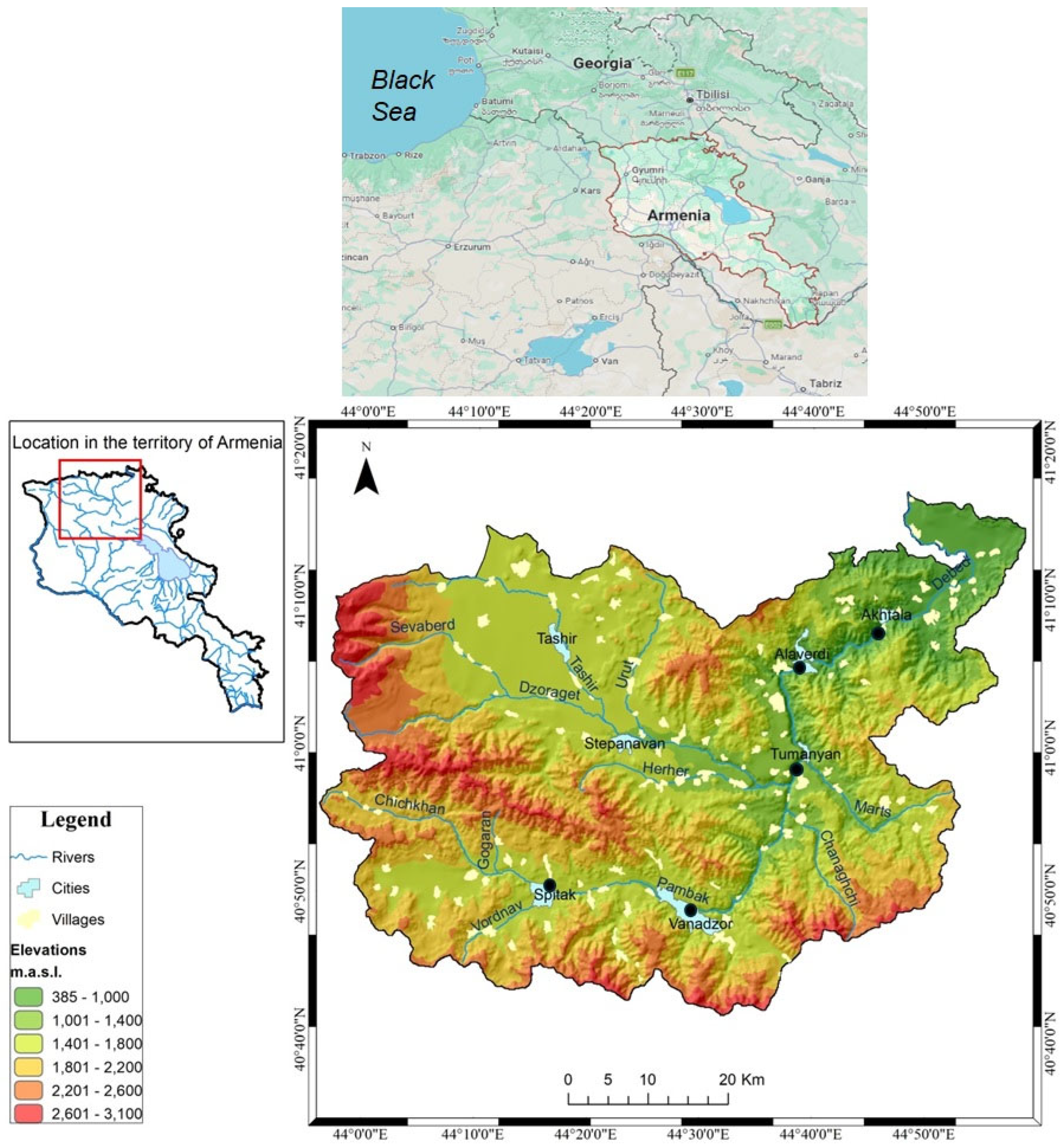
Water samples were collected in October of 2018 from multiple sites along the Pambak and Debed rivers in northern Armenia, both of which are part of the Kura River basin. The Pambak River, a tributary of the Debed, has a length of 86 km (https://www.mapsofworld.com/ accessed on 12 April 2026). It originates on the north-eastern slope of the Pambak Range and, at the confluence with the Dzoraget River, forms the Debed River. The sampling sites on this river were located before and after the towns of Spitak and Vanadzor (Figure 1). Vanadzor is the third largest industrial city in Armenia (armstat.am). According to [21], domestic and agricultural activities were the main source of pollution in the drainage basin of the Pambak River. The water quality in this stretch of the river consistently varies from “average” to “bad”; in 2018, this was mainly due to high concentrations of ammonium, phosphates, nitrates, and Fe, while from 2020 to 2022, due to biogen elements and Mo (reports by the Monitoring Center).
The Debed River is the largest transboundary river in Armenia, flowing into the Khrami River in the Republic of Georgia, a tributary of the Kura River. The total length of the river is 178 km (https://www.mapsofworld.com/ accessed on 12 April 2026). The sampling sites on this river were located before and after the towns of Tumanyan and Alaverdi, and before the town of Akhtala (Figure 1). This region is rich in mineral reserves, which have been explored for centuries, affecting the environment through mining drainage and wind-induced dry deposition of metals [22].
In 2004, Pb concentration in the water, after passing through the town of Vanadzor, exceeded the background concentration by 800 times (8 μg/L), then decreased to 1 μg/L before the Alaverdi mining district [23]. After Alaverdi, it increased to >3000 μg/L, although reducing to ∼3 μg/L just before flowing into Georgia [23]. The Alaverdi copper smelter has operated since the end of the 18th century, and the town of Akhtala, located about 15 km away from the town of Alaverdi, has open mines and has open and closed tailings nearby [24]. In 2018, the Pb contamination in different types of soil in Akhtala (residential yards, school yards, gardens, churchyards) exceeded that in Alaverdi, 177–7242 and 332–465 mg kg−1, respectively [25].
From 2018 to 2021, the concentrations of As, Cd, Cr, Cu, Mo, Ni, Pb, and Zn in soils in the Tumanyan region and within the town of Alaverdi exceeded many times the levels found in areas without mining activity [22]. According to the reports of the Monitoring Center, from 2018 to 2022, water quality in the Debed varied from “average” to “bad”.
The water samples were labeled according to their pertinence to the towns: before Spitak (B_Spitak), after Spitak (A_Spitak), before Vanadzor (B_Vanadzor), after Vanadzor (A_Vanadzor), before Tumanyan (B_Tumanyan), after Tumanyan (A_Tumanyan), before Alaverdi (B_Alaverdi), after Alaverdi (A_Alaverdi), and before Akhtala (Akhtala) (Figure 1).

2.2. Physicochemical Analysis of Riverine Waters

Sampling locations coincided with the regular monitoring stations of the Monitoring Center. Thus, the concentrations of major ions (SO4, Cl, NO3, NH4, Mg, Na, K, Ca, P) and metals/metalloids (Al, Fe, Co, Mn, Cu, Zn, Mo, V, As, Ni, Cr, Pb) in the riverine waters were analyzed and provided by the Center.

2.3. Ecotoxicological Testing of Riverine Waters Using Tradescantia-Based Assays

Tradescantia (clone 02) is an interspecific hybrid of T. occidentalis and T. ohiensis [26] and is heterozygous for flower color, exhibiting blue and pink variants (with pink being the recessive trait). The plant material was sourced from the greenhouse of Yerevan State University (Armenia).
Two established Tradescantia-based bioassays were applied. The first, stamen hair mutation test Trad-SHM, is part of the International Program on Plant Bioassays under the UN Environment Program [27]. It records the frequency of mutations of the dominant gene, which triggers a color shift from the normal blue stamen hair to pink (recessive point mutation). The second, micronucleus test Trad-MN (or Trad-MCN), assesses disruptions during microsporogenesis in anthers by determining clastogenic effects in pollen mother cells [28]. The appearance of fragments at the tetrad stage in anthers (micronuclei—MN) points out chromosomal aberrations (acentric fragments or lagging chromosomes).
For both assays, three to seven young Tradescantia inflorescences were immersed in water samples for 24 h at room temperature (in triplicate). Dechlorinated tap water served as the negative control, and 10 mM chromium(VI) oxide (CrO3) solution served as the positive control. A detailed description of the test conditions can be found in [15].

2.3.1. Trad-SHM Genotoxicity Test

In brief, after 24 h exposure and a 7-day recovery period, opened flowers of Tradescantia were examined daily for 21 days. Stamen hairs were gently excised at the base using tweezers, straightened, and mounted on glass slides. Samples were examined under a binocular loupe (40× magnification, Motic SMZ-171 Swift Optical Instruments, Inc., Universal City, TX, USA). The main genetic marker of the test was the change in the color of filament hair cells from blue to pink (recessive point mutations, pink cells—PC). In addition, the loss of color in the cells (colorless cells—CC, undefined mutation) and appearance of non-viable hairs, with fewer than 12 cells (stunted hair—SH, indicator of the inhibition of cell division) were noted. Mutation frequency was calculated as the ratio of observed mutation events (PC, CC, and SH) to the total number of hairs analyzed (approximately 10,000–17,000), and results were expressed per 1000 hairs.

2.3.2. Trad-MN Clastogenicity Test

In brief, after a 24 h exposure, inflorescences were fixed for 24 h in Carnoy’s solution (3:1 ethanol–glacial acetic acid) and stained with 0.5% acetocarmine. Tetrad preparation and micronucleus scoring were performed following the procedure described by [26]. Micronucleus formation was assessed by examining 300 tetrads per slide under an optical microscope (Motic Images Swift M10L, Swift Optical Instruments, Inc., Universal City, TX, USA) at 400× magnification. In total, 3000 tetrads were evaluated for each sample. The clastogenic markers were the appearance of MN in microspore tetrads during microsporogenesis, specifically, the frequency of formation of MN with tetrads (MN_T) and the frequency of formation of tetrads with MN (T_MN). Results were expressed per 100 tetrads.

2.4. Statistical Analysis

Correlation analysis was carried out between the frequency of occurrence of mutations (in the stamen hair) and MN (in microspore tetrads) and the concentration of chemical elements in the water samples (Statgraphics Centurion 16.2).
One-way ANOVA with post hoc Tukey was carried out to determine significant differences in the genetic markers (T_MN, MN_T, PC, CC, SH) among the sampling sites as well as before and after each sampling site (confidence level 0.05) (using R version 4.1.3, 2022, package rstatix).
Principal component analysis (PCA) was used to integrate biological and chemical datasets and to identify relationships among chemical levels and the genotoxicity and clastogenicity indicators (PC, CC, SH, T_MN, MN_T).
A principal component (C) is a weighted linear combination of the columns of the original numerical variable matrix [29]:
C = n = 1 p a n x n ,
where p is the number of original numerical variables, x is the original variable, a-weight/eigenvalue from eigenvector (termed as component loading, which shows the contribution of the variable to the component). Linear combinations are defined to maximize variance within the component while maintaining uncorrelatedness with the previous combination. The elements of the linear combinations are termed component scores, which are the values each entry (in this case, sampling sites) would score on the component.
Multiple PCA runs were performed to incorporate all relevant data (transformed to conform to normality, if necessary). Biplots showing factor scores and factor loadings (≥0.4) were examined to interpret variable relationships (using R packages ggcorrplot and factoextra).

2.5. Study Workflow

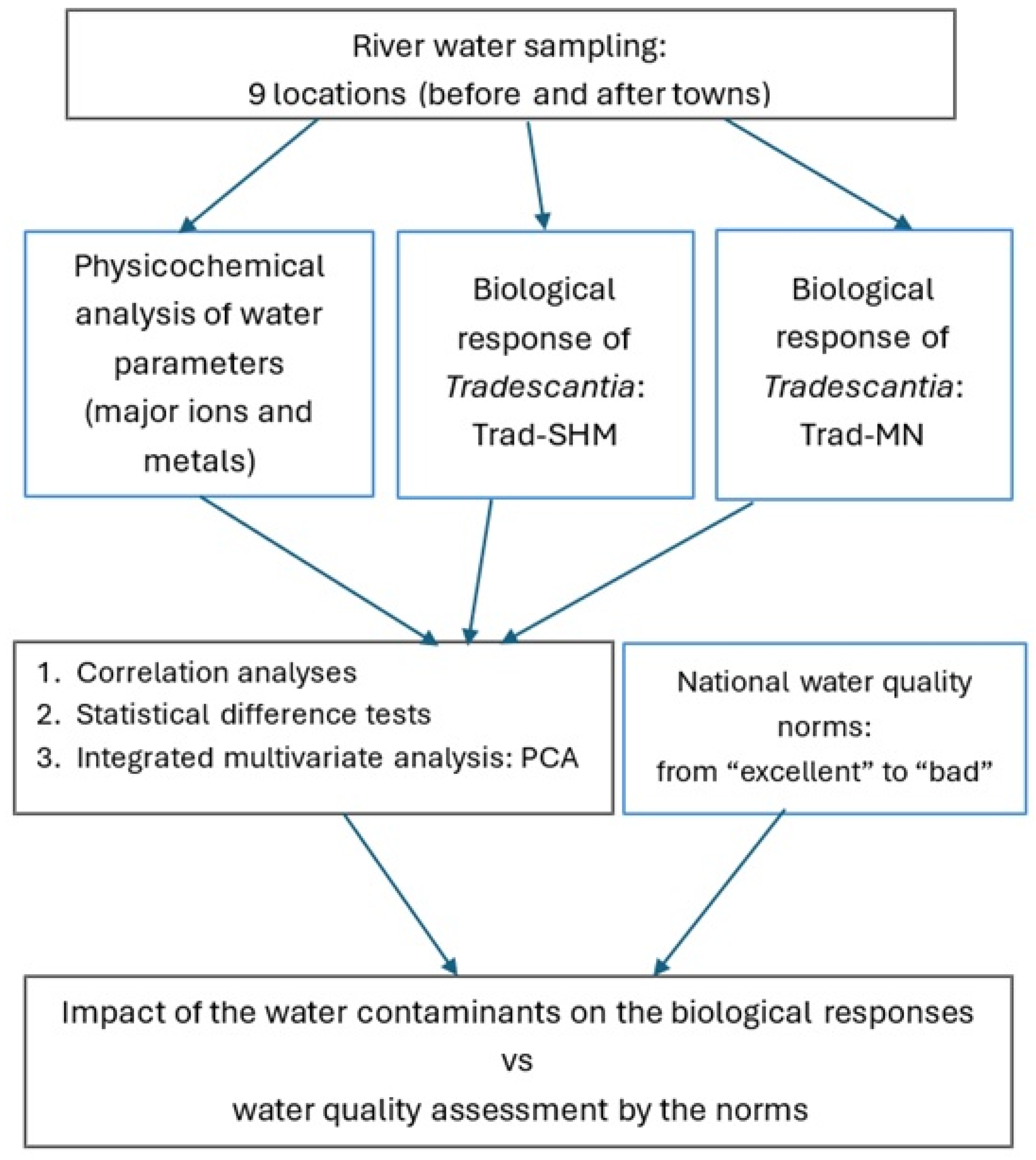
The general methodological approach was based on obtaining ecotoxicological data (physical and chemical parameters of the environment and biological responses to environmental exposure) and their integrated analysis to identify potential relationships among them (Figure 2). Furthermore, the results were compared with national surface water quality norms to evaluate the extent to which compliance with those norms predicts the effects of toxicants on biota.

3. Results

In this study, the responses of Tradescantia to river water exposure were investigated to evaluate the genotoxic potential of the water and to compare the results with national surface water quality norms based solely on physicochemical parameters.
The concentrations of a few metals in the water samples from the Debed exceeded the national ecological norm of “good” or “average” quality for surface waters (Table 1). Ammonium concentration was the highest (and exceeded the “average” water quality) in the sample after the town of Vanadzor. The full list of measured physicochemical parameters and element concentrations can be found in Table S1.
The concentrations of several metals were strongly correlated with Tradescantia’s responses (Table 2 and Table 3).
Both clastogenicity and genotoxicity endpoints in all samples significantly exceeded those in the control, tap water (Tables S2 and S3). The increase in the level of MN_T exceeded by 3–8 times and T_MN by 2–7 times that in the control (Table S2). The number of PC exceeded that in the control nearly 2–7 times, that of the CC nearly 2, and of malformations from 2 to 9 times (Table S3).
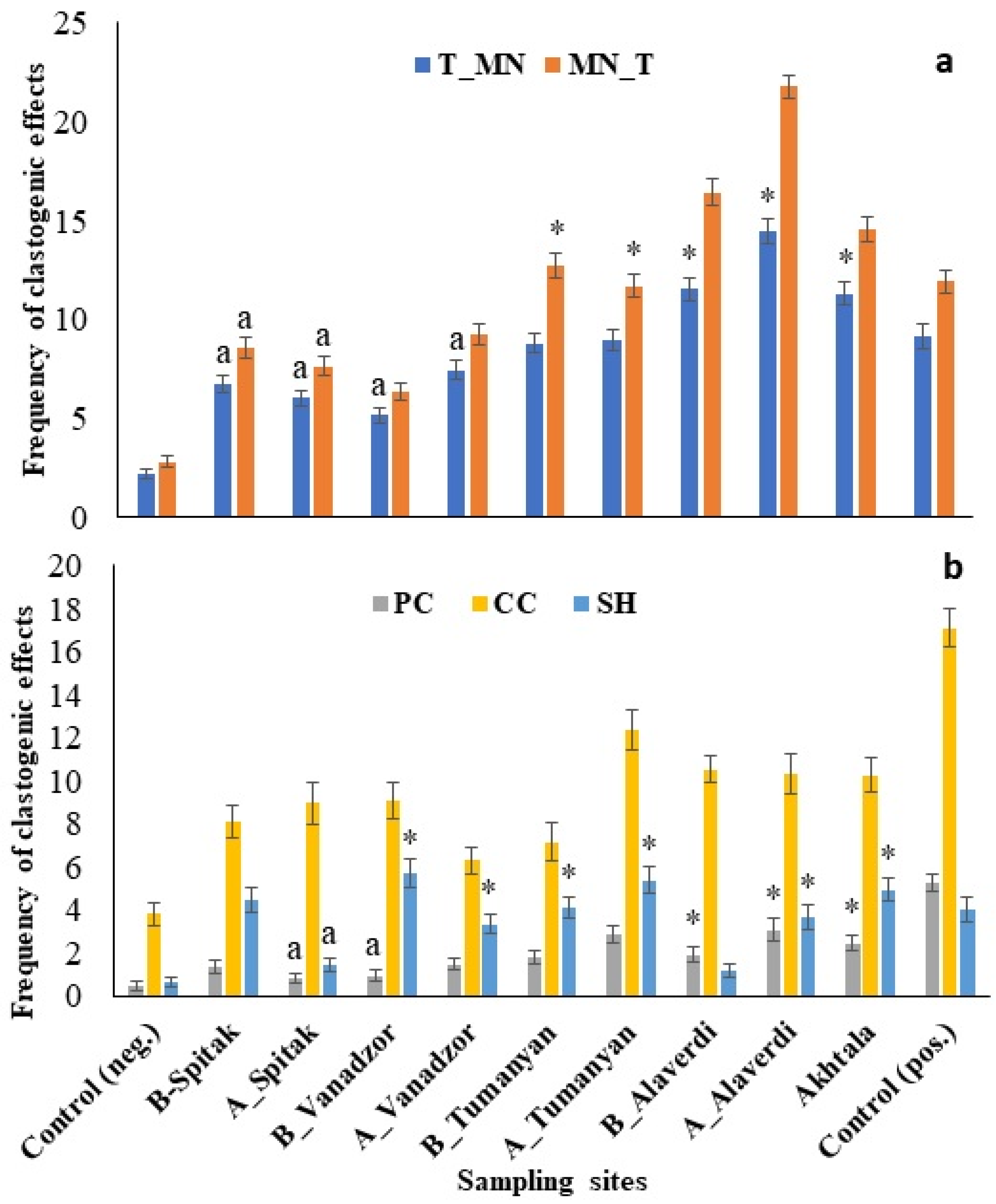
The frequencies of occurrence of T_MN and PC in the samples of Alaverdi and Akhtala significantly exceeded those of Spitak and Vanadzor and the positive control (Figure 3a,b). The frequency of occurrence of SH at all samples was significantly greater than in the sample A_Spitak (Figure 3b, Table S4). The frequency of appearance of CC varied insignificantly among the samples (Figure 3b). All endpoints in samples collected before and after the towns showed an increasing trend except for SH in the samples of Spitak and Vanadzor (Figure 3).
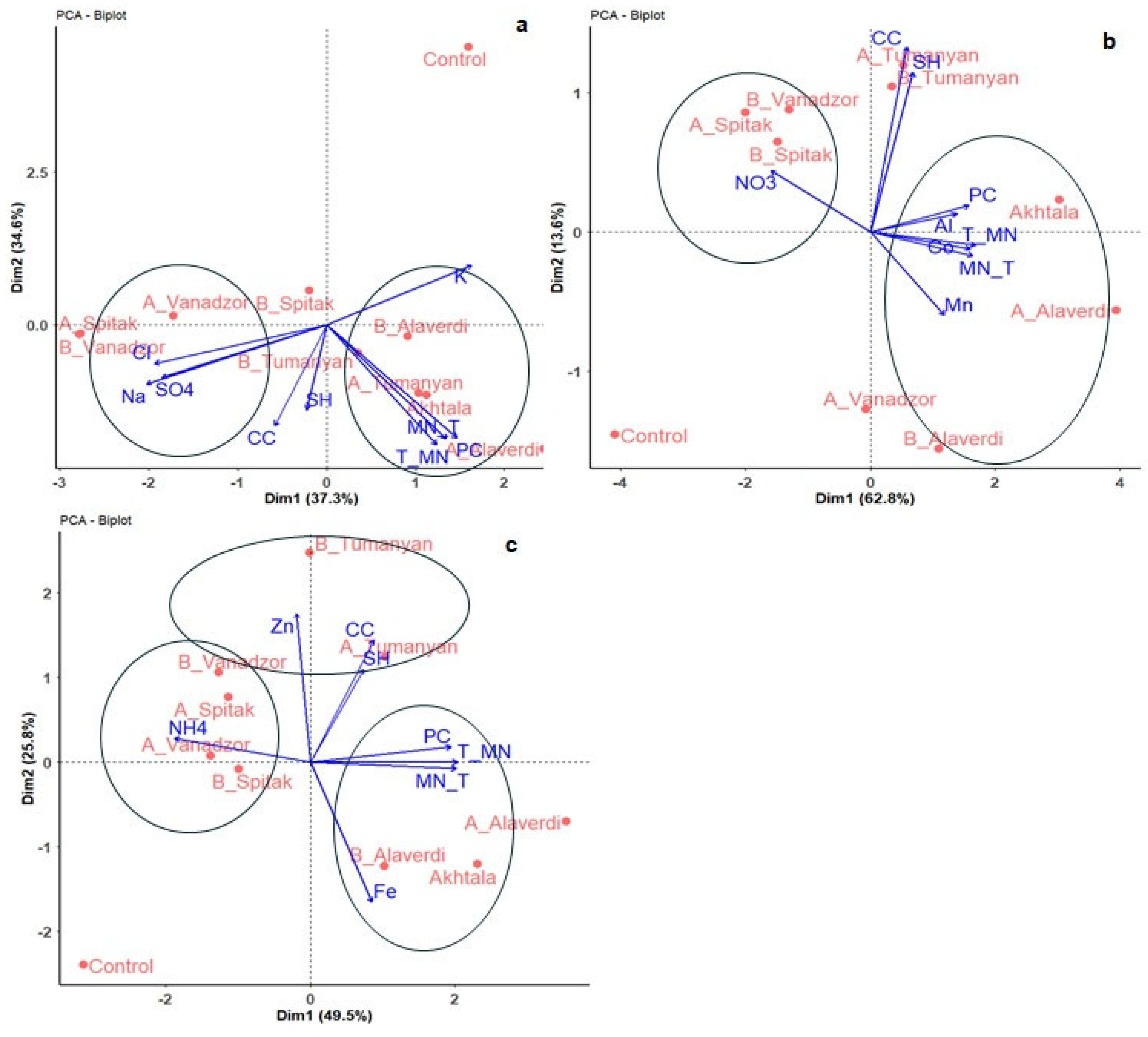
The PCA analysis on the available ecotoxicological data revealed associations of the biological endpoints with the metals and sampling locations (Figure 4).

4. Discussion

The analysis of physicochemical data (Table 1 and Table S1) showed that the concentrations of almost all ions and elements in the riverine water corresponded to the “good” or “average” water quality, with the exception of Fe, Pb, Cu, and Mn in the samples taken near the localities affected by mining activity (Tumanyan, Alaverdi, and Akhtala) and ammonium after the town of Vanadzor. The frequency of occurrence of MN in the pollen mother cells of Tradescantia was significantly greater in the samples from Tumanyan, Alaverdi, and Akhtala compared to the other sites (Figure 3a, Table S4). It also exceeded that in the positive control (Figure 3a). MN are chromosomal fragments (formed during the breaking of DNA molecules by genotoxic pollutants) in tetrads at the early meiotic stage of the formation of pollen cells (shown by MN_T), which become MN at the tetrad stage during meiosis (shown by T_MN) [30]. The occurrence of the MN depends on the recovery time of the sporogenic cells of Tradescantia used in the test. If the recovery period coincides with the time of completion of meiosis (e.g., when the recovery time is long enough), then the T_MN endpoint can yield a greater value [30]. Clearly, the mixture of contaminants from mining and smelters’ drainages in this area contained agents capable of exerting genotoxic and clastogenic stress to the inflorescences of Tradescantia during the exposure.
Furthermore, the frequencies of PC mutations in the samples from Tumanyan, Alaverdi, and Akhtala were also significantly greater compared to the other sites (Figure 3b, Table S4), confirming the presence of genotoxicants in those samples. Correlations found between most of the Tradescantia responses and the concentrations of Fe, Cu, and Pb also support this (Table 2 and Table 3). The towns of Tumanyan, Alaverdi, and Akhtala are located within a mining-intensive zone with documented soil and water contamination by metals (e.g., As, Cu, Pb, As, Cd, Ni, Cr), originating from open mines, smelters, and tails [22]. Metals such as As, Cd, Cr, and Ni are known carcinogens due to their contribution to oxidative DNA damage or creation of a hypoxic cellular environment via replacement of Fe from the Fe-dependent enzyme prolyl-hydroxylase and inhibition of its activity [31,32]. Cu and Fe are known catalysts in the formation of reactive oxygen species and catalyze peroxidation of membrane lipids [33]. Dissolved Cu concentrations from 38 to 95 µM caused formation of MN in Vicia faba roots, supposedly via the oxidative stress mechanism [34]. At Pb concentration higher than 50 µg L−1, cells of lettuce Lactuca sative roots showed the presence of MN [35].
Rivers impacted by mining drainages showed reduced species richness: the rivers Alaverdi and Akhtala (the Debed basin), flowing through mining areas, were dominated by blue-green algae [36]. The latter are tolerant to metal pollution due to effective detoxification mechanisms such as production of extracellular secretions to bind metals, changes in the permeability of cytoplasmic membrane, and internal binding at polyphosphate bodies within algal cells [37]. In a molybdenum mining area, metal concentrations in sediments and surface waters were significantly negatively correlated with both taxonomic and functional α-diversity of macroinvertebrate assemblages, indicating the loss of sensitive taxa under metal stress [38]. Similarly, biodiversity loss has been observed in fish communities, where mining inputs and associated pollutants cause direct and indirect declines in fish diversity and disrupt aquatic food webs [39].
PCA analysis also distinguished the mining-impacted sampling sites from those that are influenced by urban and agricultural effluents, with a cumulative percentage of the variability in the original dataset accounted by the components ~70% (Figure 4a–c). For example, in the samples of Akhtala and Alaverdi, the frequencies of occurrence of PC, MN_T, and T_MN were grouped with the concentrations of Al, Mn, Fe, and Co (Figure 4b,c). Correlation analysis also demonstrated positive correlations between all these metals (except Mn) and endpoints (r = 0.6–0.9, p < 0.05) (Table 2 and Table 3). The frequencies of occurrence of CC and SH were related to the concentration of Zn in the town of Tumanyan (Figure 4b). Meanwhile, the towns of Spitak and Vanadzor were mainly associated with nitrate and ammonium concentrations without a link with the endpoints (Figure 4a,c). Indeed, Spitak and Vanadzor have a different profile compared to Alaverdi, Tumanyan, and Akhtala, which are influenced by mining effluents. Spitak is primarily a reconstructed urban center (after the earthquake of 1988) with limited industrial emissions compared to the mining/smelting hotspots. In both towns, small and medium-sized industrial enterprises operate, including housing and industrial construction activities, while in Spitak, the population is also engaged in trade, services, and agriculture (data of the Statistical Committee of Armenia, armstat.am).
Statistically significant differences were found in the endpoints before and after Tumanyan and Alaverdi (Table S4). The PC mutation frequency significantly increased after these towns, compared to the value of the endpoint recorded before them. This increasing trend could be attributed to the exacerbation of the stress to the plant’s inflorescences exerted by additional agents present in the domestic and agrarian effluents. However, the frequency of occurrence of CC did not significantly differ among the sampling sites (Figure 3b, Table S4). The relatively homogeneous values of this endpoint across all samples indicate the influence of ubiquitous environmental mutagens, including at the Spitak and Vanadzor sites, where the other endpoints were statistically lower than in mining-affected areas, Alaverdi, Tumanyan, and Akhtala.
Hence, the greatest values of all endpoints in the samples of Tumanyan, Alaverdi, and Akhtala may be attributable to several factors: the high concentrations of Fe, Mn, and Pb at those sites (through their individual or combined effects) or the presence of other genotoxicants or the synergistic action of contaminant mixtures originating from mining and smelter drainage in the area.
Interestingly, the SH endpoint showed a significant decrease after the towns of Spitak and Vanadzor (Figure 3b, Table S4). This could be attributable to the binding of metals to organic matter (which enters this stretch of the river with urban effluents and agricultural runoff) or the antagonistic interaction of pollutants, resulting in the somewhat diminished effect of the pollutant mix on this endpoint. For example, Cu has a high affinity to organic matter, which may lead to the reduction of free ions and lesser bioavailability [34]. PC values also showed a decrease after Spitak, but not after Vanadzor (although both insignificantly) (Table S4).
In fact, with the levels of most physicochemical parameters corresponding to “good” or “average” water quality (except for the exceedance of Fe, Mn, Cu, and Pb concentration), the PCA divided the sampling sites into two groups: the mining-affected samples in which biological endpoints were linked with Fe, Mn, Co, and Al concentrations and the samples from urban/agricultural areas which were linked with ammonium and nitrate concentrations.
A low concentration of chemicals (even below regulatory norms) could also trigger serious disturbances during the sporogenesis of Tradescantia [14,15]. As well, interactions among competing agents and abiotic factors in natural samples may either amplify or negate the effects of known toxicants. For example, high water hardness mitigates metal stress on Daphnia magna via a competition of Ca and Mg ions with metal ions, leading to the saturation of binding sites on the biological surfaces [40]. Lower concentrations of Zn could not protect D. magna from Cd toxicity, while higher Zn concentrations fostered a decrease in body Cd concentration, resulting in a less than additive effect of these two metals [41].
Moreover, the sampling sites could bear the footprint of other anthropogenic pollutants, such as organic substances from domestic and industrial effluents, which were not identified in the present study and are not included in the regular environmental monitoring program. For example, the concentration of persistent organic pollutants in free-range chicken eggs in several Alaverdi localities substantially increased from 2018 to 2020 compared to the levels in 2010 [22]. Urban and industrial areas are potential sources of a wide range of organic substances, including petroleum hydrocarbons, organotins, pesticides, plasticizers, polycyclic aromatic hydrocarbons, and other industrial chemicals, many of which are known or suspected genotoxins [42,43,44]. These compounds can act independently or synergistically with metals, enhancing clastogenic and genotoxic effects even at low concentrations. Consequently, regular environmental monitoring, in particular in Armenia, should be expanded to include priority organic pollutants alongside metals.
Overall, although the results were derived from a single survey campaign focused solely on metal pollution, they demonstrate that urban and industrial pollution in the studied towns is associated with measurable clastogenic and genotoxic responses, even where monitored contaminant concentrations indicate “good” or “average” water quality. While this demonstrates the high sensitivity of Tradescantia-based bioassays, it also points out that compliance with chemical standards does not necessarily equate to biological safety [14,15]. Comparisons of physicochemical parameters with water quality standards alone may hide the main pollution sources or the actual causes of biological effects. In this study, ammonium concentration in the sample after the town of Vanadzor exceeded the threshold for “average” water quality, indicating “bad” water quality; meanwhile, the low metal concentrations corresponded to “good” water quality. Nevertheless, significant genotoxic and clastogenic effects were observed in Tradescantia, likely due to the synergistic action of toxicants present at low concentrations (metals) or of contaminants not included in the monitoring program. Similarly, in the sample before the town of Vanadzor, which could be assessed as having “good” water quality, some biological responses (CC and SH) were greater than in the sample after the town (Table 1 and Tables S1 and S4, Figure 3b). Therefore, mitigation measures focused solely on reducing, e.g., nutrient inputs from the catchment may be ineffective if other pollution sources continue to contaminate the river.
In parallel, the ecotoxicity potential of environmental samples should be systematically assessed using bioassays, as effect-based approaches reflect the combined impact of a complex environmental compartment. Incorporating biological effect monitoring would provide a more ecologically relevant assessment of the ecological status of natural waters than chemical analysis alone. In this, genetic markers assessed by easy and simple bioassays, such as Tradescantia-based test systems, can apparently provide first-hand data that can determine the appropriateness of more detailed subsequent testing.

5. Conclusions

In the towns of Akhtala, Alaverdi, and Tumanyan in the Debed basin, where active mining takes place, the clastogenic and genotoxic potential of the riverine water was the greatest compared to Spitak and Vanadzor, characterized by urban and agricultural activities.
The multivariate analysis made a clear distinction between the towns affected by urban effluents and mining activity. The water samples from the mining-impacted locations had elevated concentrations of Fe, Mn, and Pb, and the PCA associated Fe and Mn concentrations with the PC mutations and the formation of MN in Tradescantia in those samples. The urban/agricultural areas were associated with ammonium and nitrate concentrations, but no linking with the endpoints was shown. Overall, the observed biological responses were likely triggered by the synergistic effect of complex pollutant mixtures rather than isolated exceedances of regulated metals.
In the “good” water quality sample (B_Vanadzor), the frequency of occurrence of SH was significantly greater than that in the “average” water quality sample (A_Vanadzor). Assessing water quality solely on the basis of physicochemical parameters may mask the true causes of biological effects, as synergistic interactions among low-concentration or unmonitored contaminants can still induce significant toxicity. Moreover, efforts to reduce a single pollutant (due to exceedance of the norms) may be ineffective if other pollution sources persist. The inclusion of biological testing results in monitoring programs can support informed decision-making regarding environmental impacts.
Hence, important limitations of the routine monitoring programs, in particular in Armenia, are (1) not considering organic and emerging contaminants, which are capable of exerting additional toxicity individually or combined with metal-based toxicants, and (2) not including regular evaluation of the potential toxicity of the environment by means of biotests.
The use of the Trad-MN and Trad-SHM tests is relevant for assessing the potential toxicological risk of chemicals present in river water. Given the continuous and often increasing anthropogenic pressures on freshwater systems, there is an urgent need to enhance monitoring and strengthen regulatory frameworks to protect and restore water quality and ecosystem health in river basins.

Supplementary Materials

The following supporting information can be downloaded at: https://www.mdpi.com/article/10.3390/w18121388/s1, Table S1: Physicochemical parameters and element concentrations in the water samples from the rivers Pambak and Debed (Armenia) and the ecological norms for “good” surface water quality of Armenia; Table S2: Statistically significant differences from the control (clean tap water) in the frequency of micronuclei in sporagenic cells of Tradescantia (clone 02) after exposure to water samples from the rivers Pambak and Debed (Armenia); Table S3: Statistically significant differences from the control (clean tap water) in the frequency of somatic mutations and morphological changes in the stamen hair in Tradescantia (clone 02) after exposure to water samples from the rivers Pambak and Debed (Armenia); Table S4: Tukey’s test of differences in the Tradescantia responses among sampling sites on the rivers Debed and Pambak.

Author Contributions

Conceptualization, R.A. (Rimma Avalyan), A.A., and R.A. (Rouben Aroutiounian); methodology, R.A. (Rimma Avalyan), A.A., and R.A. (Rouben Aroutiounian); formal analysis, R.A. (Rimma Avalyan), A.K., and B.G.; investigation, R.A. (Rimma Avalyan), A.K., A.A., and R.A. (Rouben Aroutiounian); resources, R.A. (Rouben Aroutiounian); writing—original draft preparation, R.A. (Rimma Avalyan); writing—review and editing, R.A. (Rouben Aroutiounian), A.K., and B.G.; visualization, A.K.; project administration, R.A. (Rouben Aroutiounian). All authors have read and agreed to the published version of the manuscript.

Funding

This research was funded by the Higher Education and Science Committee under the Ministry of Education, Science, Culture and Sport of the Republic of Armenia, grant number 25SCZHE-APP-I-IF.

Data Availability Statement

Dataset available on request from the authors.

Conflicts of Interest

The authors declare no conflicts of interest.

References

  1. Kummu, M.; de Moel, H.; Ward, P.J.; Varis, O. How Close Do We Live to Water? A Global Analysis of Population Distance to Freshwater Bodies. PLoS ONE 2011, 6, e20578. [Google Scholar] [CrossRef]
  2. Li, Y.; Fang, L.; Yuanzhu, W.; Mi, W.; Ji, L.; Guixiang, Z.; Yang, P.; Chen, Z.; Bi, Y. Anthropogenic Activities Accelerated the Evolution of River Trophic Status. Ecol. Indic. 2022, 136, 108584. [Google Scholar] [CrossRef]
  3. Beusen, A.H.W.; Bouwman, A.F.; Van Beek, L.P.H.; Mogollón, J.M.; Middelburg, J.J. Global Riverine N and P Transport to Ocean Increased during the 20th Century despite Increased Retention along the Aquatic Continuum. Biogeosciences 2016, 13, 2441–2451. [Google Scholar] [CrossRef]
  4. Meybeck, M. Global Analysis of River Systems: From Earth System Controls to Anthropocene Syndromes. Philos. Trans. R. Soc. Lond. Ser. B Biol. Sci. 2003, 358, 1935–1955. [Google Scholar] [CrossRef] [PubMed]
  5. Sharma, S.; Nagpal, A.K.; Kaur, I. Potentially Toxic Elements in River Water and Associated Health Risks in Ropar Wetland, India and Its Vicinity. Int. J. Environ. Sci. Technol. 2022, 19, 475–498. [Google Scholar] [CrossRef]
  6. Briffa, J.; Sinagra, E.; Blundell, R. Heavy Metal Pollution in the Environment and Their Toxicological Effects on Humans. Heliyon 2020, 6, e04691. [Google Scholar] [CrossRef]
  7. Riba, I.; Gabrielyan, B.; Khosrovyan, A.; Luque, A.; Del Valls, T.A. The Influence of Ph and Waterborne Metals on Egg Fertilization of the Blue Mussel (Mytilus edulis), the Oyster (Crassostrea gigas) and the Sea Urchin (Paracentrotus lividus). Environ. Sci. Pollut. Res. 2016, 23, 14580–14588. [Google Scholar] [CrossRef]
  8. Adeola, A.O.; Forbes, P.B.C. Antiretroviral Drugs in African Surface Waters: Prevalence, Analysis, and Potential Remediation. Environ. Toxicol. Chem. 2022, 41, 247–262. [Google Scholar] [CrossRef]
  9. Oaks, J.L.; Gilbert, M.; Virani, M.Z.; Watson, R.T.; Meteyer, C.U.; Rideout, B.A.; Shivaprasad, H.L.; Ahmed, S.; Iqbal Chaudhry, M.J.; Arshad, M.; et al. Diclofenac Residues as the Cause of Vulture Population Decline in Pakistan. Nature 2004, 427, 630–633. [Google Scholar] [CrossRef]
  10. OECD. Management of Pharmaceutical Household Waste; OECD Publishing: Paris, France, 2022; ISBN 9789264315068. [Google Scholar]
  11. Aleksanyan, A.; Khudaverdyan, S.; Vaseashta, A. Modeling River Ecosystem Vulnerability Assessments Due to Climate Change: Case Study of Armenia. Pol. J. Environ. Stud. 2015, 24, 871–877. [Google Scholar] [CrossRef]
  12. Tepanosyan, G.; Harutyunyan, N.; Maghakyan, N.; Sahakyan, L. Potentially Toxic Elements Contents and the Associated Potential Ecological Risk in the Bottom Sediments of Hrazdan River under the Impact of Yerevan City (Armenia). Environ. Sci. Pollut. Res. 2022, 29, 36985–37003. [Google Scholar] [CrossRef]
  13. Gabrielyan, B.; Asatryan, V.; Kobelyan, H.; Khosrovyan, A. The Sediment of a River Having Good Ecological Status” Turned out to Be Toxic to Midge Chironomus Riparius Larvae: Implication for Environmental Monitoring? Ecotoxicol. Environ. Saf. 2024, 283, 116855. [Google Scholar] [CrossRef] [PubMed]
  14. Aghajanyan, E.A.; Avalyan, R.E.; Simonyan, A.E.; Atoyants, A.L.; Gabrielyan, B.K.; Aroutiounian, R.M.; Khosrovyan, A. Clastogenecity Evaluation of Water of Lake Sevan (Armenia) Using Tradescantia Micronucleus Assay. Chemosphere 2018, 209, 1–6. [Google Scholar] [CrossRef] [PubMed]
  15. Khosrovyan, A.; Aghajanyan, E.; Avalyan, R.; Atoyants, A.; Sahakyan, L.; Gabrielyan, B.; Aroutiounian, R. Assessment of the Mutagenic Potential of the Water of an Urban River by Means of Two Tradescantia-Based Test Systems. Mutat. Res. /Genet. Toxicol. Environ. Mutagen. 2022, 876–877, 503449. [Google Scholar] [CrossRef]
  16. Placencia, F.; Fadic, X.; Yáñez, K.; Cereceda-Balic, F. Tradescantia as a Biomonitor for Genotoxicity Evaluation of Diesel and Biodiesel Exhaust Emissions. Sci. Total Environ. 2019, 651, 2597–2605. [Google Scholar] [CrossRef]
  17. Pereira, B.B.; de Campos Júnior, E.O.; Morelli, S. In Situ Biomonitoring of the Genotoxic Effects of Vehicular Pollution in Uberlândia, Brazil, Using a Tradescantia Micronucleus Assay. Ecotoxicol. Environ. Saf. 2013, 87, 17–22. [Google Scholar] [CrossRef] [PubMed]
  18. de Campos Júnior, E.O.; de Campos, J.M.S.; Dias, R.J.P.; Barros, N.O. Novelties on Tradescantia: Perspectives on Water Quality Monitoring. Chemosphere 2024, 368, 143732. [Google Scholar] [CrossRef]
  19. Mišík, M.; Pichler, C.; Rainer, B.; Nersesyan, A.; Mišíková, K.; Knasmueller, S. Micronucleus Assay with Tetrad Cells of Tradescantia. In Genotoxicity Assessment; Humana: New York, NY, USA, 2019; Volume 2031, pp. 325–335. [Google Scholar] [CrossRef]
  20. Sinha, V.; Pakshirajan, K.; Chaturvedi, R. Chromium(VI) Accumulation and Tolerance by Tradescantia Pallida: Biochemical and Antioxidant Study. Appl. Biochem. Biotechnol. 2014, 173, 2297–2306. [Google Scholar] [CrossRef]
  21. Mamyan, A.S.; Gevorgyan, G.A.; Hambaryan, L.H. Investigations of the Nutrient Pollution of The hydroecosystems in the Pambak River Catchment Area. Electron. J. Nat. Sci. 2013, 20, 30–32. [Google Scholar]
  22. Grechko, V.; Petrlík, J.; Matuštík, J.; Straková, J.; Zarafyan, I. Toxic Hot Spots in Northern Armenia; Arnika: Prague, Czech Republic, 2021. [Google Scholar]
  23. Kurkjian, R.; Dunlap, C.; Flegal, A.R. Long-Range Downstream Effects of Urban Runoff and Acid Mine Drainage in the Debed River, Armenia: Insights from Lead Isotope Modeling. Appl. Geochem. 2004, 19, 1567–1580. [Google Scholar] [CrossRef]
  24. Bystrianský, M.; Sir, M.; Straková, J.; Krejčová, N. Heavy Metals in the Surroundings of Mining and Metallurgical Sites in the Lori Region in Armenia; Czech Environmental Organization Arnika: Arnika, Prague, 2018. [Google Scholar]
  25. Akopyan, K.; Petrosyan, V.; Grigoryan, R.; Melkom Melkomian, D. Assessment of Residential Soil Contamination with Arsenic and Lead in Mining and Smelting Towns of Northern Armenia. J. Geochem. Explor. 2018, 184, 97–109. [Google Scholar] [CrossRef]
  26. Ma, T.-H.; Cabrera, G.L.; Chen, R.; Gill, B.S.; Sandhu, S.S.; Vandenberg, A.L.; Salamone, M.F. Tradescantia Micronucleus Bioassay. Mutat. Res.—Fundam. Mol. Mech. Mutagen. 1994, 310, 221–230. [Google Scholar] [CrossRef]
  27. Ma, T.-H. The International Program on Plant Bioassays and the Report of the Follow-up Study after the Hands-on Workshop in China. Mutat. Res.—Fundam. Mol. Mech. Mutagen. 1999, 426, 103–106. [Google Scholar] [CrossRef]
  28. Mišík, M.; Pichler, C.; Rainer, B.; Nersesyan, A.; Knasmueller, S. Micronucleus Assay with Tetrad Cells of Tradescantia. In Genotoxicity Assessment; Humana Press: Totowa, NJ, USA, 2013; Volume 1044, pp. 405–415. [Google Scholar] [CrossRef]
  29. Jolliffe, I.T.; Cadima, J. Principal Component Analysis: A Review and Recent Developments. Philos. Trans. R. Soc. A Math. Phys. Eng. Sci. 2016, 374, 20150202. [Google Scholar] [CrossRef] [PubMed]
  30. Falistocco, E.; Torricelli, R.; Feretti, D.; Zerbini, I.; Zani, C.; Monarca, S. Enhancement of Micronuclei Frequency in the Tradescantia/Micronuclei Test Using a Long Recovery Time. Hereditas 2004, 133, 171–174. [Google Scholar] [CrossRef][Green Version]
  31. Paul, S.A.M.; Simons, J.W.; Mabjeesh, N.J. HIF at the Crossroads between Ischemia and Carcinogenesis. J. Cell. Physiol. 2004, 200, 20–30. [Google Scholar] [CrossRef] [PubMed]
  32. Zhu, Y.; Costa, M. Metals and Molecular Carcinogenesis. Carcinogenesis 2020, 41, 1161–1172. [Google Scholar] [CrossRef]
  33. Liu, Z.; Liu, S.; Liu, B.; Bian, Y.; Yuan, M.; Yang, C.; Meng, Q.; Chen, C.; Ma, P.; Lin, J. Fe(III)-Naphthazarin Metal–Phenolic Networks for Glutathione-Depleting Enhanced Ferroptosis–Apoptosis Combined Cancer Therapy. Small 2023, 19, 2207825. [Google Scholar] [CrossRef]
  34. Marcato-Romain, C.E.; Pinelli, E.; Pourrut, B.; Silvestre, J.; Guiresse, M. Assessment of the Genotoxicity of Cu and Zn in Raw and Anaerobically Digested Slurry with the Vicia faba Micronucleus Test. Mutat. Res./Genet. Toxicol. Environ. Mutagen. 2009, 672, 113–118. [Google Scholar] [CrossRef] [PubMed][Green Version]
  35. Silva, S.; Silva, P.; Oliveira, H.; Gaivão, I.; Matos, M.; Pinto-Carnide, O.; Santos, C. Pb Low Doses Induced Genotoxicity in Lactuca Sativa Plants. Plant Physiol. Biochem. 2017, 112, 109–116. [Google Scholar] [CrossRef]
  36. Mamyan, A.S.; Gevorgyan, G.A. Comparative Investigation of the River Phytoplankton of the Debed River Catchment Basin’s Mining and Non-Mining Areas. Biolog. J. Armen. 2017, 69. Available online: https://arar.sci.am/dlibra/publication/260457/edition/238505/content (accessed on 12 April 2026).
  37. Fiore, M.F.; Trevors, J.T. Cell Composition and Metal Tolerance in Cyanobacteria. Biometals 1994, 7, 83–103. [Google Scholar] [CrossRef]
  38. Rico-Sánchez, A.E.; Rodríguez-Romero, A.J.; Sedeño-Díaz, J.E.; López-López, E.; Sundermann, A. Aquatic Macroinvertebrate Assemblages in Rivers Influenced by Mining Activities. Sci. Rep. 2022, 12, 3209. [Google Scholar] [CrossRef]
  39. Azevedo-Santos, V.M.; Arcifa, M.S.; Brito, M.F.G.; Agostinho, A.A.; Hughes, R.M.; Vitule, J.R.S.; Simberloff, D.; Olden, J.D.; Pelicice, F.M. Negative Impacts of Mining on Neotropical Freshwater Fishes. Neotrop. Ichthyol. 2021, 19, e210001. [Google Scholar] [CrossRef]
  40. Ha, H.; Hong, C.; Hong, J.; Jho, E.; Hwang, H.; Lim, J.; Choi, C.; Lee, S. Effects of Water Hardness on the Toxicity of Heavy Metals to Daphnia Magna. Desalin. Water Treat. 2020, 184, 80–85. [Google Scholar] [CrossRef]
  41. Pérez, E.; Hoang, T.C. Chronic Toxicity of Binary-Metal Mixtures of Cadmium and Zinc to Daphnia magna. Environ. Toxicol. Chem. 2017, 36, 2739–2749. [Google Scholar] [CrossRef]
  42. Bukowska, B.; Mokra, K.; Michałowicz, J. Benzo[a]Pyrene—Environmental Occurrence, Human Exposure, and Mechanisms of Toxicity. Int. J. Mol. Sci. 2022, 23, 6348. [Google Scholar] [CrossRef]
  43. Flanagan, K.; Blecken, G.-T.; Österlund, H.; Nordqvist, K.; Viklander, M. Contamination of Urban Stormwater Pond Sediments: A Study of 259 Legacy and Contemporary Organic Substances. Environ. Sci. Technol. 2021, 55, 3009–3020. [Google Scholar] [CrossRef]
  44. Teixeira, J.; Delerue-Matos, C.; Morais, S.; Oliveira, M. Environmental Contamination with Polycyclic Aromatic Hydrocarbons and Contribution from Biomonitoring Studies to the Surveillance of Global Health. Environ. Sci. Pollut. Res. 2024, 31, 54339–54362. [Google Scholar] [CrossRef] [PubMed]
Figure 1. Study area (the basins of the rivers Pambak and Debed, Armenia) and sampling locations before and after the towns of Spitak and Vanadzor (the Pambak) and Tumanyan, Alverdi, and Akhtala (the Debed).
Water 18 01388 g001
Figure 2. Flowchart outlining the general methodological process.
Water 18 01388 g002
Figure 3. Frequencies of clastogenic and genotoxic responses of Tradescantia (clone 02) exposed to water samples from the rivers Pambak and Debed (Armenia) (mean ± SD). (a) clastogenic responses MN_T (micronuclei in tetrads in the pollen cells of Tradescantia) and T_MN (tetrads with micronuclei); (b) genotoxic responses PC (change in the color of filament hair cells from blue to pink—recessive point mutation), CC (colorless cells—genetically undefined mutation) and morphological changes SH (non-viable hair <12 cells—indicator of cell division inhibition). Controls: (neg.)—negative, tap water; (pos.)—positive, 10 mM CrO3. Per marked endpoint: “*” is statistically different from “a” (p < 0.05).
Water 18 01388 g003
Figure 4. Principal component analysis on the chemical data (in blue) in the river water samples (in red) and the response of Tradescantia (clone 02) to the water exposure (in blue): factor loadings and scores biplot in the coordinates of the two principal components (Dim 1 and Dim 2). In parentheses: the percentage of variance explained by each component.
Water 18 01388 g004
Table 1. Select cation and element concentrations in the water samples from the rivers Pambak and Debed (Armenia) and the national ecological norms for “good” and “average” surface water quality.
SampleConcentration
NH4+MnMgAlFeCuZnNiCrPb
mg L−1µg L−1
B_Spitak00.014.70.20.10.6200.20.31
A_Spitak0.20.025.30.10.10.940.10.10.5
B_Vanadzor0.20.084.90.20.20.820.20.20.3
A_Vanadzor3.40.174.50.20.3560.20.10.9
B_Tumanyan0.40.044.80.20.8810.20.38
A_Tumanyan0.40.035.10.10.65100.10.230
B_Alaverdi0.50.084.90.21.918090.50.520
A_Alaverdi0.70.124.60.31.760200.50.520
Akhtala0.70.158.50.51.850600.40.630
Control (negative)00.0015.800.008160270.2
Ecological water quality norm
“good”0.40.150---1002050-
“average”1.20.2100-0.5502005010025
Note: - depends on the background value of a particular element in a particular locality. In bold: exceedance of the given norm.
Table 2. Spearman correlation coefficients among clastogenic responses of Tradescantia (micronuclei in tetrads and tetrads with micronuclei) and metal concentrations in the rivers Pambak and Debed (Armenia).
ResponseCaFeCoMnCuMoVNiCrPbAl
MN_T0.7 *0.9 **0.9 **0.50.6 *−0.4−0.5−0.3−0.50.7 **0.6 *
T_MN0.7 *0.9 **0.9 **0.50.6 *−0.5−0.6−0.4−0.50.7 **0.7 *
Note: * p < 0.05; ** p < 0.01.
Table 3. Spearman’s correlation coefficients among genotoxicity responses of Tradescantia (mutations PC and CC and morphological changes in the stamen hair SH) and metal concentrations in the rivers Pambak and Debed (Armenia).
ResponseCaFeNaCoMgMnCuMoVNiCrPbAl
PC0.7 *0.7 **−0.20.8 **0.10.40.4−0.4−0.5−0.4−0.50.9 **0.6 *
CC0.8 **0.6 *0.30.6 *0.10.20.4−0.7 *−0.7 *−0.6 *−0.7 *0.8 **0.4
SH0.40.00.30.20.10.3−0.4−0.6 *−0.6 *−0.6−0.6 *0.30.5
Note: * p < 0.05; ** p < 0.01.
Disclaimer/Publisher’s Note: The statements, opinions and data contained in all publications are solely those of the individual author(s) and contributor(s) and not of MDPI and/or the editor(s). MDPI and/or the editor(s) disclaim responsibility for any injury to people or property resulting from any ideas, methods, instructions or products referred to in the content.