2. Methodology
2.1. Research Method
This study includes a series of semi-structured academic interviews focusing on urban water management and BGI implementation in various spatial planning contexts. The article adopts a vertical perspective to assess each city’s status across four dimensions (e.g., urban challenges, BGI guidelines and actions, land-use strategy, and potential solution for BGI implementation), and a horizontal perspective to compare how the selected cities encourage BGI implementation given their existing challenges and spatial planning systems.
According to the aim of the paper, to evaluate cities with different BGI implementation approaches, the following four cities were selected. Ljubljana and Kraków are recognised as “green cities” with a strong intention to implement BGI, but lack an explicit BGI strategy. Shanghai, as one of the first sponge city pilots, represents a frontrunner case with a deliberate BGI strategy already implemented. Guangzhou later adopted the SCP strategy following the Shanghai example, allowing policy adaptation within the existing national spatial planning system. In addition, the Shanghai municipality has an administrative status similar to that of Ljubljana (i.e., without regional-level planning), while Guangzhou’s administrative level is similar to that of Kraków, both under the province or voivodeship.
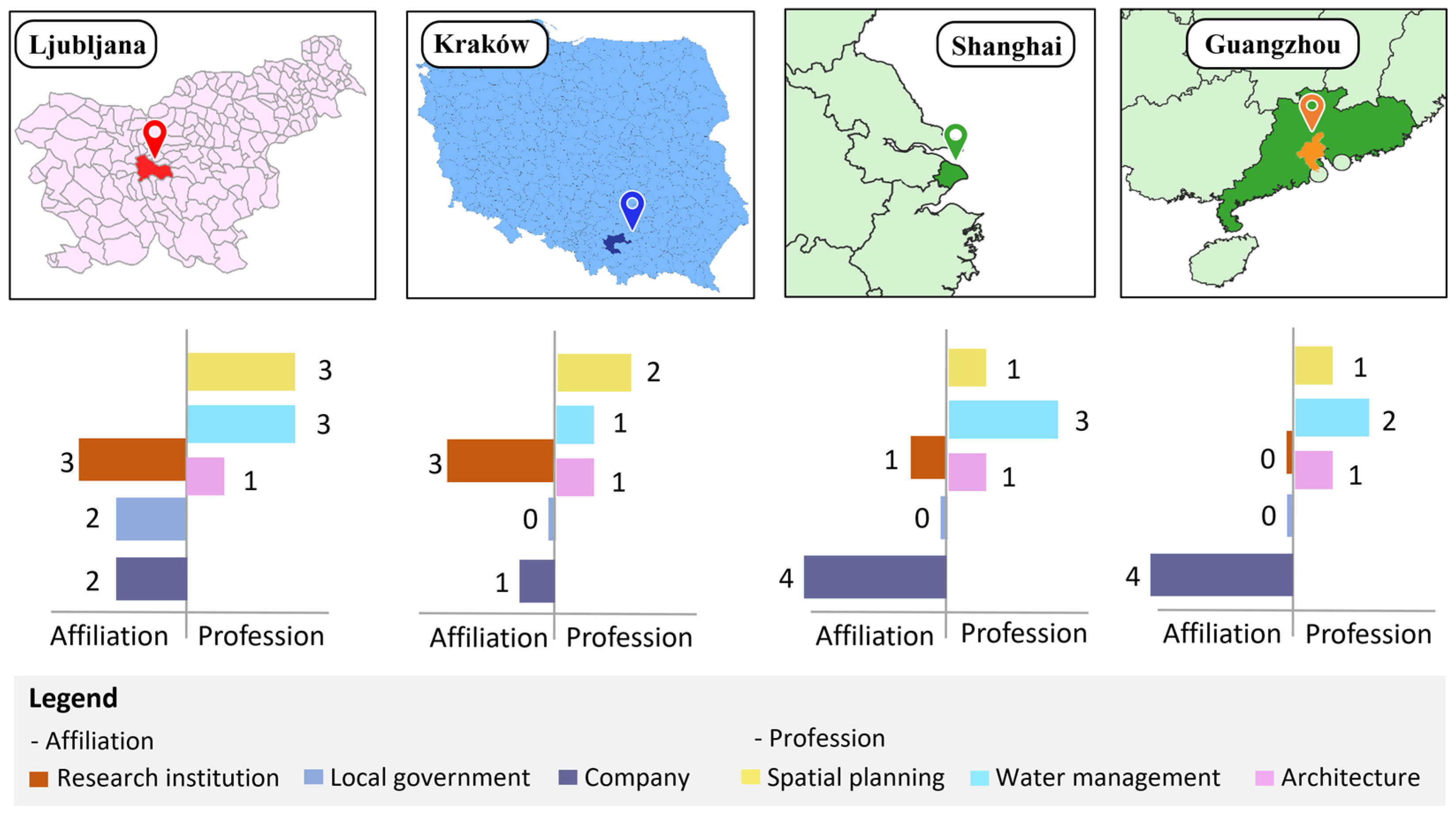
For the sampling strategy, we mapped relevant institutions in each of the four cities based on policy and academic literature. The participants’ backgrounds include spatial planning, water management, and architecture (including architects and spatial planning architects). The invited experts are affiliated with research institutions (senior researchers and professors), the local government (professionals involved in decision-making), and companies (experts working on related projects). Each expert held a university degree (bachelor’s, master’s, or doctoral) and had a minimum of four years of relevant professional experience.
Participants (4–7 experts per city, see
Figure 1) were invited to conduct the semi-structured interviews and questionnaires via official emails and phone calls. Interviews were conducted individually, each lasting between 30 and 60 min, audio-recorded, and held either online or in person between May and July 2024. In addition, experts unavailable for interviews completed a questionnaire with the same questions (see
Supplementary Materials). All participants assigned numerical scores to each quantitative question. Subsequently, the interviewees were prompted to explain their scores and to share their experience of the qualitative questions.
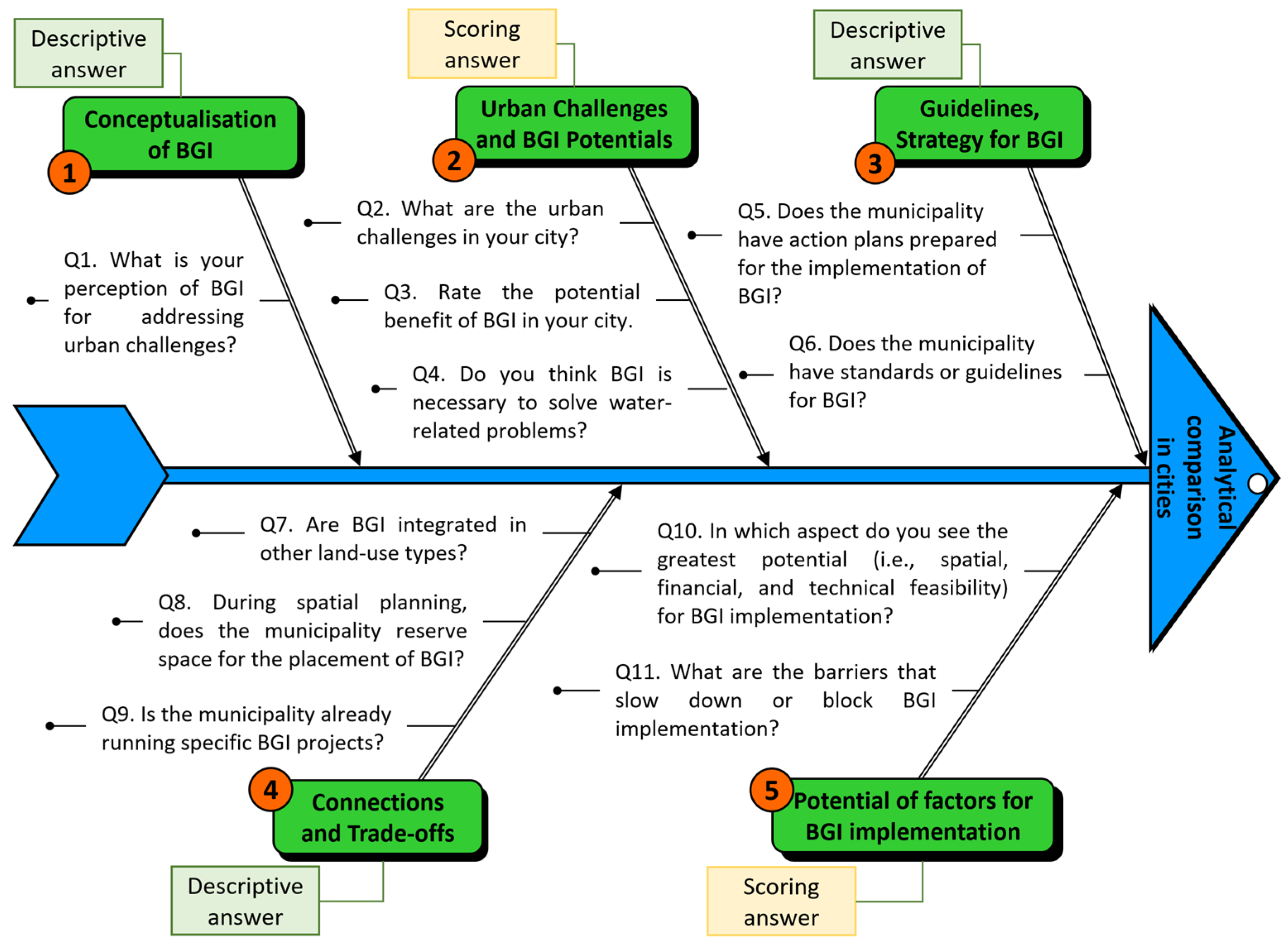
Participants were guided through five main analytical aspects (
Figure 2), and the interview protocol was structured accordingly.
Conceptualisation of BGI: As BGI is interpreted differently across professional fields such as spatial planning, civil engineering, and architecture, interviewees were asked to define its relevance within their own professional context.
Urban challenges and BGI potentials: Despite contextual variations, the core BGI concept employs natural processes to address urban challenges such as flooding, drought, water pollution, the urban heat island effect (UHI), biodiversity loss, and air pollution. Interviewees were asked to describe local challenges and discuss the feasibility of using BGI to address them.
Guidelines, strategies, and actions: BGI implementation and prioritisation differ due to varying planning frameworks and objectives. This section examines how BGI is integrated into spatial planning systems and how the balance between BGI objectives and broader strategies is achieved, particularly in contexts lacking formal BGI policies.
Land-use strategy for BGI: This section assesses the systematic integration of BGI by investigating its incorporation into other land-use types and examining whether municipalities reserve space for BGI during spatial planning.
Potential of factors for BGI implementation: This aspect explores perceived opportunities and limitations associated with BGI implementation, including considerations related to the scale of BGI planning, as well as financial, technical, and spatial factors. Interviewees also provide insights into future planning directions and strategies for overcoming existing challenges.
2.2. Profiles of Four Cities
The four selected cities exhibit distinct land-use patterns, population densities, levels of economic development, climatic conditions, and hydrological regimes (
Table 1). Statistical data indicate that Ljubljana and Kraków are relatively small cities with extensive green areas, while Shanghai and Guangzhou are much larger and more densely populated. However, Kraków also has a comparatively high population density for a city of its size in Europe.
Regarding economic development, Ljubljana has the highest gross domestic product (GDP) per capita among the four cities, followed by Shanghai. In contrast, the economic performance of Kraków and Guangzhou is comparatively lower. For BGI development, climate type and summer temperature are critical influencing factors. Ljubljana and Kraków have a temperate continental climate, whereas Shanghai and Guangzhou are located in humid subtropical climatic zones. Consequently, the mean maximum temperature in July, which is typically the hottest month of the year, is notably lower in Ljubljana and Kraków than in Shanghai and Guangzhou.
Meteorologically, Ljubljana experiences peak precipitation between July and October, with an annual average of approximately 1643 mm [
23]. In Kraków, the summer (June to August) is the most humid season, resulting in an annual total precipitation of around 650 mm [
24], which is substantially lower than in the other three cities. Shanghai’s annual precipitation has been recorded as 1140 mm, while Guangzhou’s annual precipitation stands at 1800 mm, which is the highest of the four cases [
25].
2.2.1. Ljubljana
Ljubljana is the capital of Slovenia, serving as its cultural, educational, economic, and political centre. The Ljubljanica River flows through the city centre, providing residents with direct access to natural water features and integrating blue elements into the urban landscape (
Figure 3). Along with a network of urban parks, green spaces, and tree-lined streets, the surrounding hills form a comprehensive green system that offers significant ecological, recreational, and social benefits [
26]. Thus, natural landscapes such as hills and rivers play a key role in spatial planning in Ljubljana.
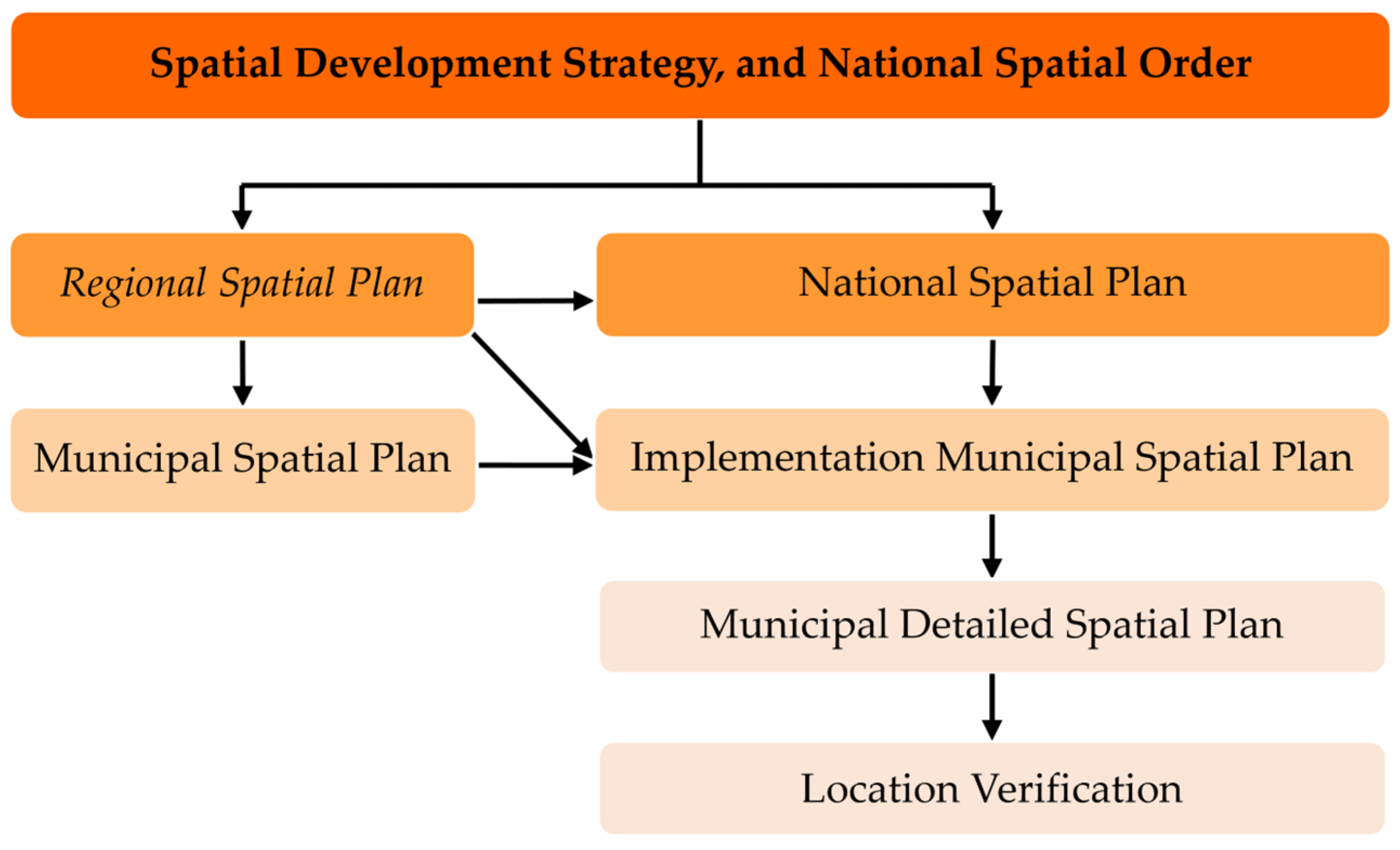
Slovenia’s spatial planning system (
Figure 4) operates under a hierarchical structure of legal and policy instruments at national, regional, and municipal levels. Spatial Planning Act [
28] provides the overarching legal framework for spatial planning activities at all levels. This legislation classifies planning documents as either strategic or implementation documents. Among the strategic documents, the Spatial Development Strategy of Slovenia 2050 is particularly significant, outlining national development priorities across sectors and serving as a foundation [
29].
Implementation documents in Slovenia define the procedures for executing spatial regulations and provide detailed guidance on the content, structure, and methodology for preparing National Spatial Plans, Municipal Spatial Plans, Detailed Municipal Spatial Plans, and Location Verification. To address the absence of regional implementation documents (Regional Spatial Plan), functional urban areas serve as a key governance tool, integrating cities with their surrounding regions to enhance coordination. While not a formal legal framework, functional urban areas foster collaboration on cross-boundary challenges such as transportation and water management, leading to more coherent spatial planning [
30].
The Municipal Spatial Plan serves as the principal strategic document, outlining regulations for urban development, infrastructure provision, and environmental protection. The Implementation Municipal Spatial Plan complements this by providing a detailed regulatory framework for the entire municipality, specifying land-use designations, zoning restrictions, and sectoral parameters such as cultural heritage, nature conservation, and water catchment areas [
31].
2.2.2. Kraków
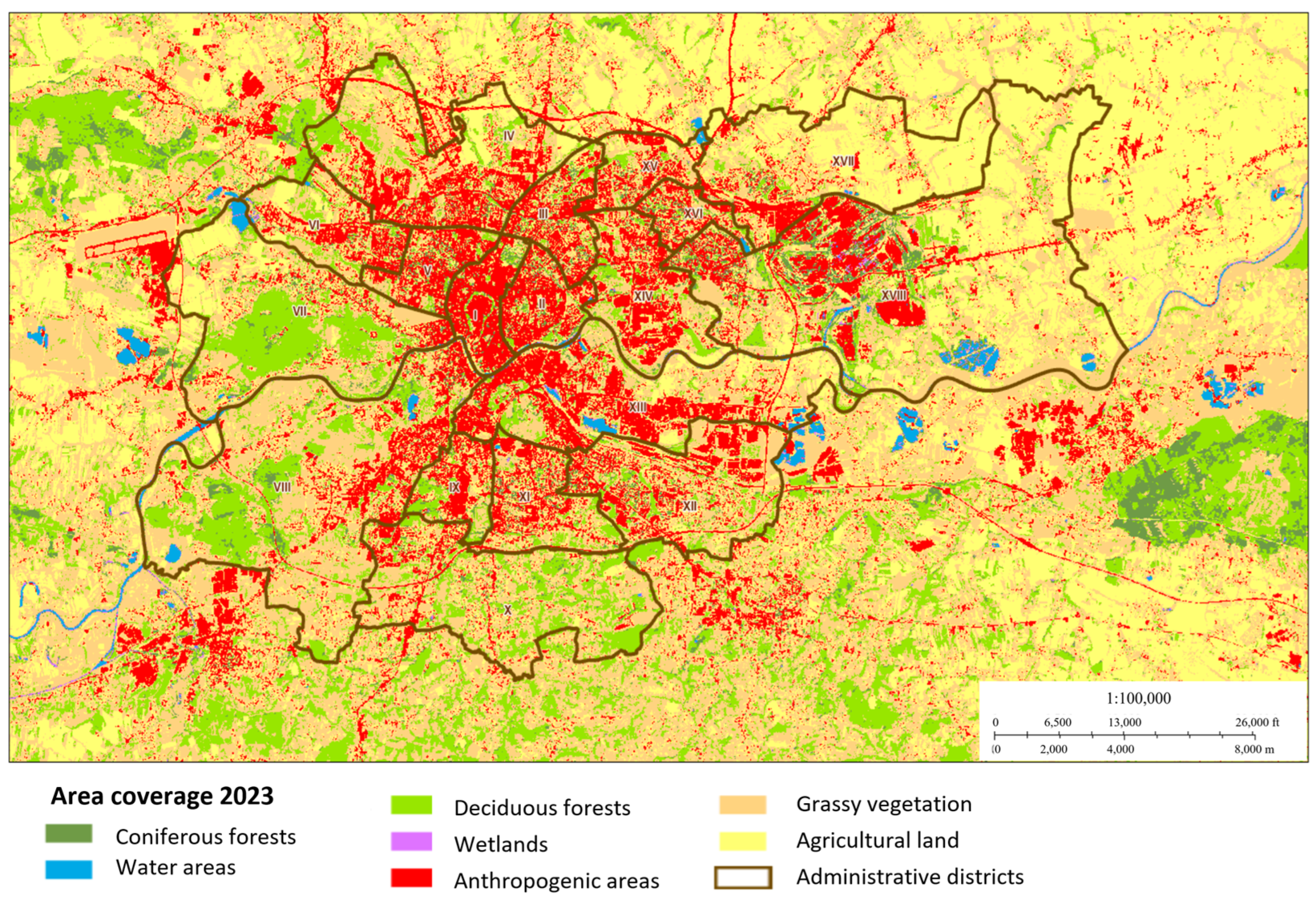
Kraków, the capital of the Małopolska Voivodeship (
Figure 5), is located in the Vistula River valley, bordered to the west by the Jurassic Landscape Parks and to the east by the Niepołomice Forest. The Vistula, supplemented by three minor rivers and several water bodies, forms the city’s main waterway [
32]. Notable green spaces include Błonia Park and the Planty Park ring surrounding the Old Town. Current initiatives aim to strengthen its role within the BGI by improving water quality, flood-risk management, and ecological functions. Parks, riverfronts, and water ponds serve as natural floodplains and help regulate the urban microclimate.
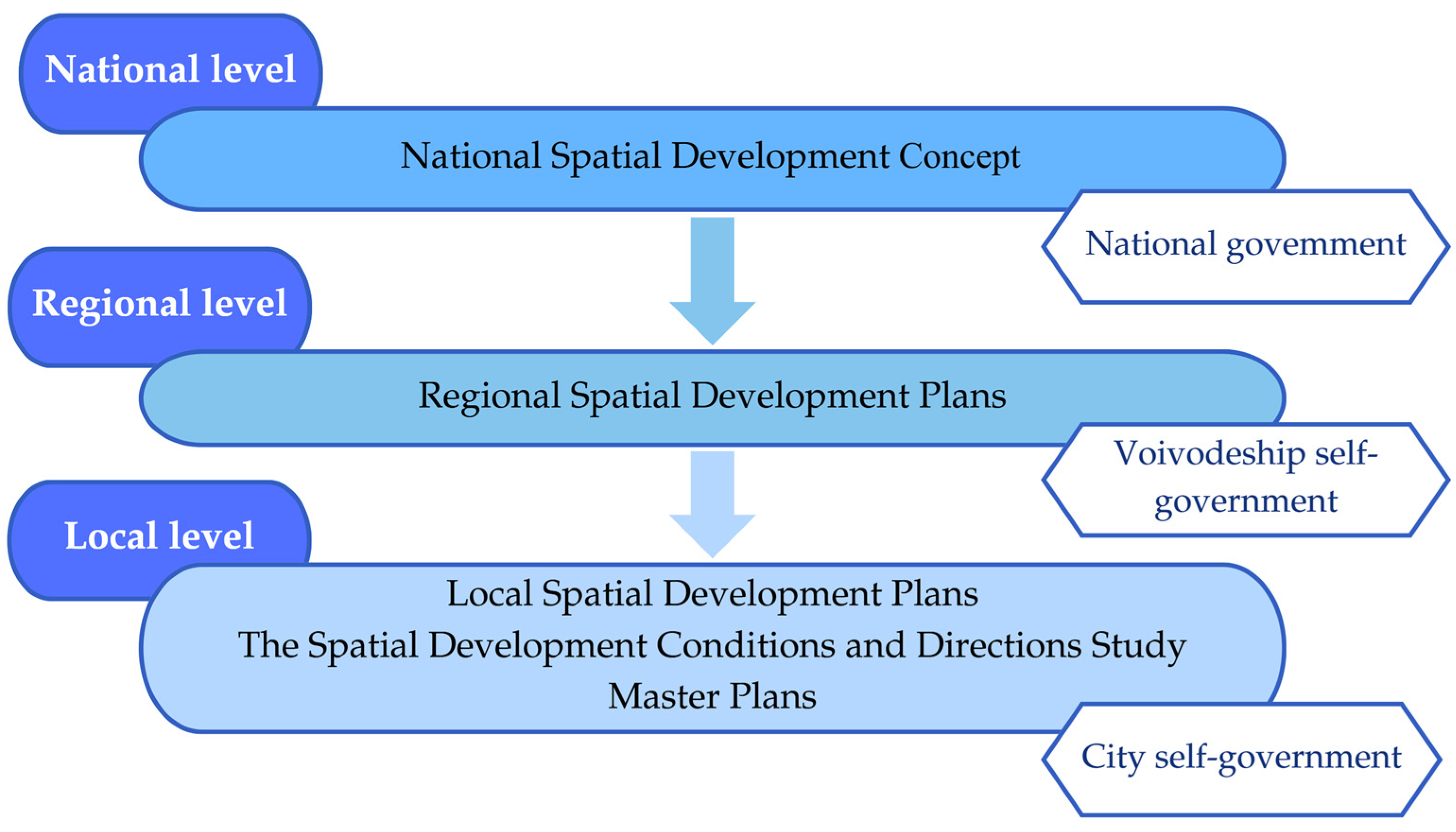
Poland’s spatial planning operates at three hierarchical levels (
Figure 6). At the national level, the National Spatial Development Concept 2030 [
34] sets long-term spatial policy. At the voivodeship (regional) level, Regional Spatial Development Plans coordinate development across municipalities and align with national priorities [
35]. At the municipal level, Local Spatial Development Plans are legally binding documents that define specific regulations for land use, construction standards, and infrastructure development within designated urban districts [
36]. Notably, a 2023 reform mandates the adoption of complementary General Master Plans by 31 December 2025.
The strategic documents often address specific urban challenges, including flood risk mitigation, transport planning, heritage conservation, and UHI [
37]. For example, Kraków’s directions of development and management of green areas for 2019–2030 outline strategies for implementing green infrastructure for rainwater management and set maintenance standards.
Figure 6.
Spatial planning system in Poland [
38].
Figure 6.
Spatial planning system in Poland [
38].
2.2.3. Shanghai
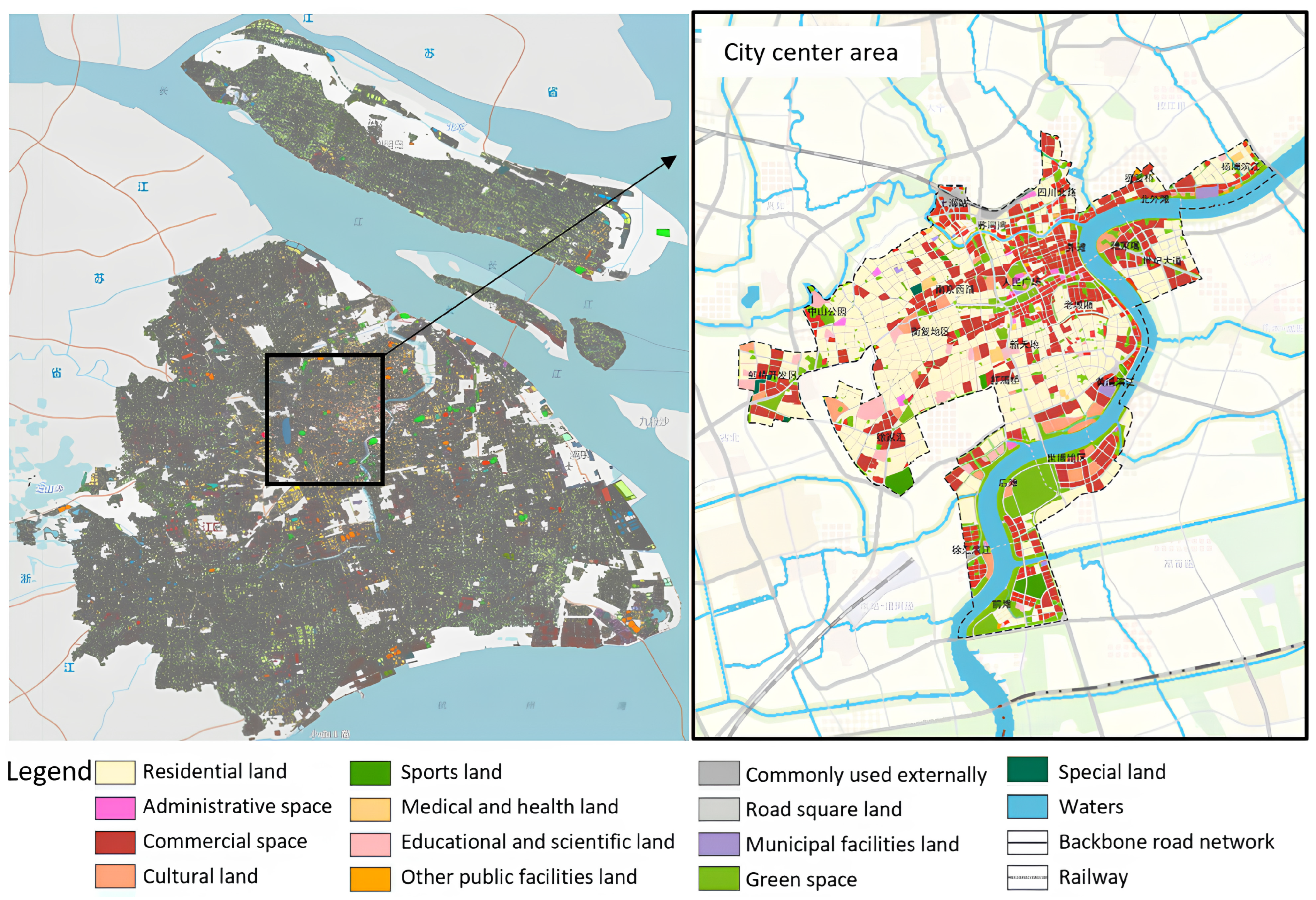
Shanghai is located in Eastern China on the Yangtze River Delta alluvial plain, bordered by the East China Sea to the east and adjacent to the Sheshan National Tourist Resort to the west (
Figure 7). Shanghai’s stormwater drainage system is integrated with its broader water conservancy network [
39]. Ongoing urban renewal is transforming the Huangpu River, Suzhou Creek corridors, and numerous lakes into central elements of a city-wide BGI network, enabling natural flood detention, microclimate regulation, and ecological stability alongside urban parks and wetlands.
2.2.4. Guangzhou
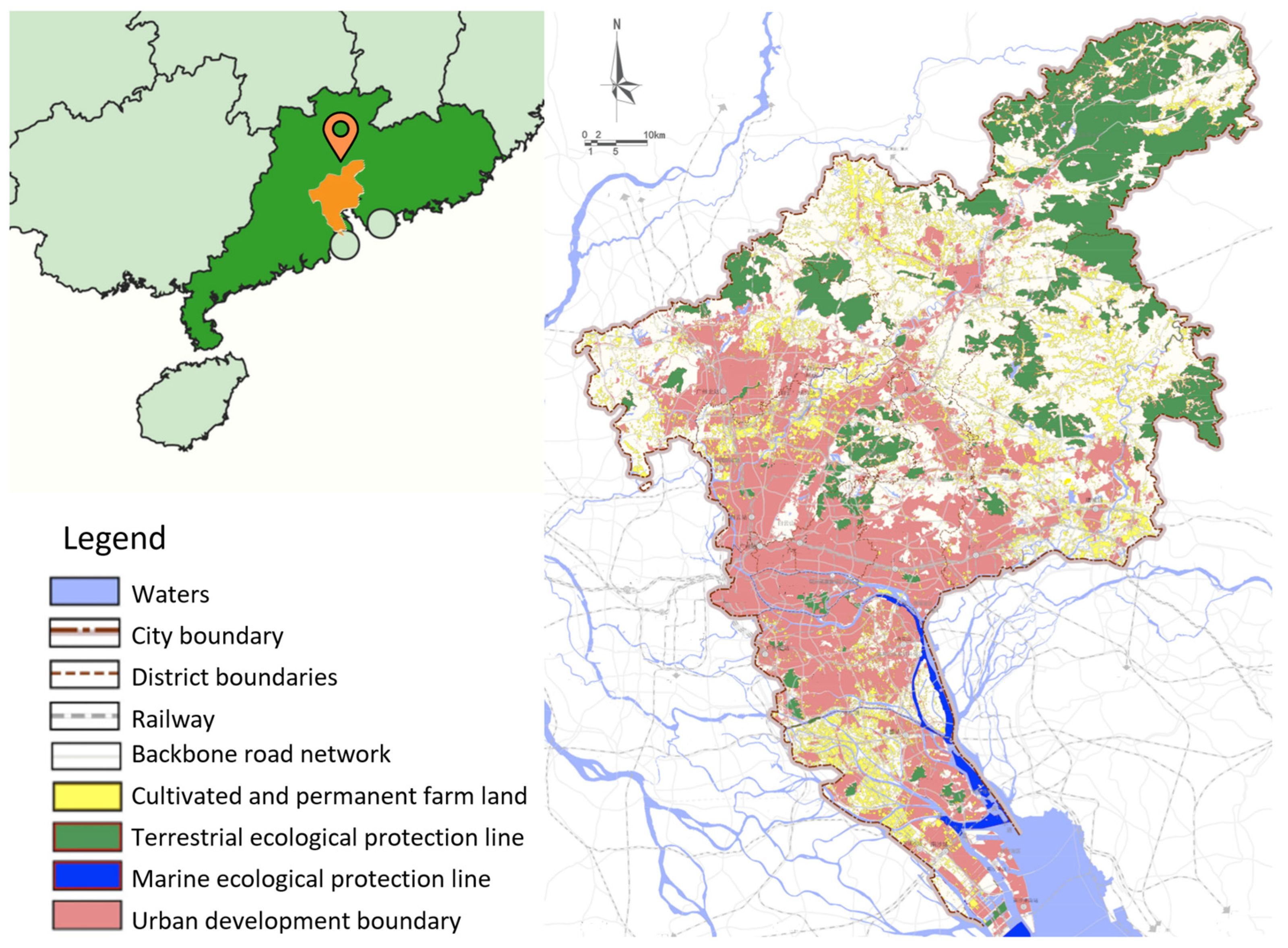
Guangzhou, the capital of Guangdong Province, is located on the eastern bank of the Pearl River in Southern China. According to the Guangzhou Forestry and Garden Bureau, the city contains approximately 1300 rivers and 108 parks (
Figure 8), including forest parks, wetlands, and geological parks. This extensive riverine, wetland system, and low-lying topography enhance ecological resilience, but also increase flood vulnerability. The region’s subtropical climate, characterised by high humidity and persistently high summer temperatures, intensifies the UHI effect and places considerable pressure on drainage and urban cooling infrastructure.
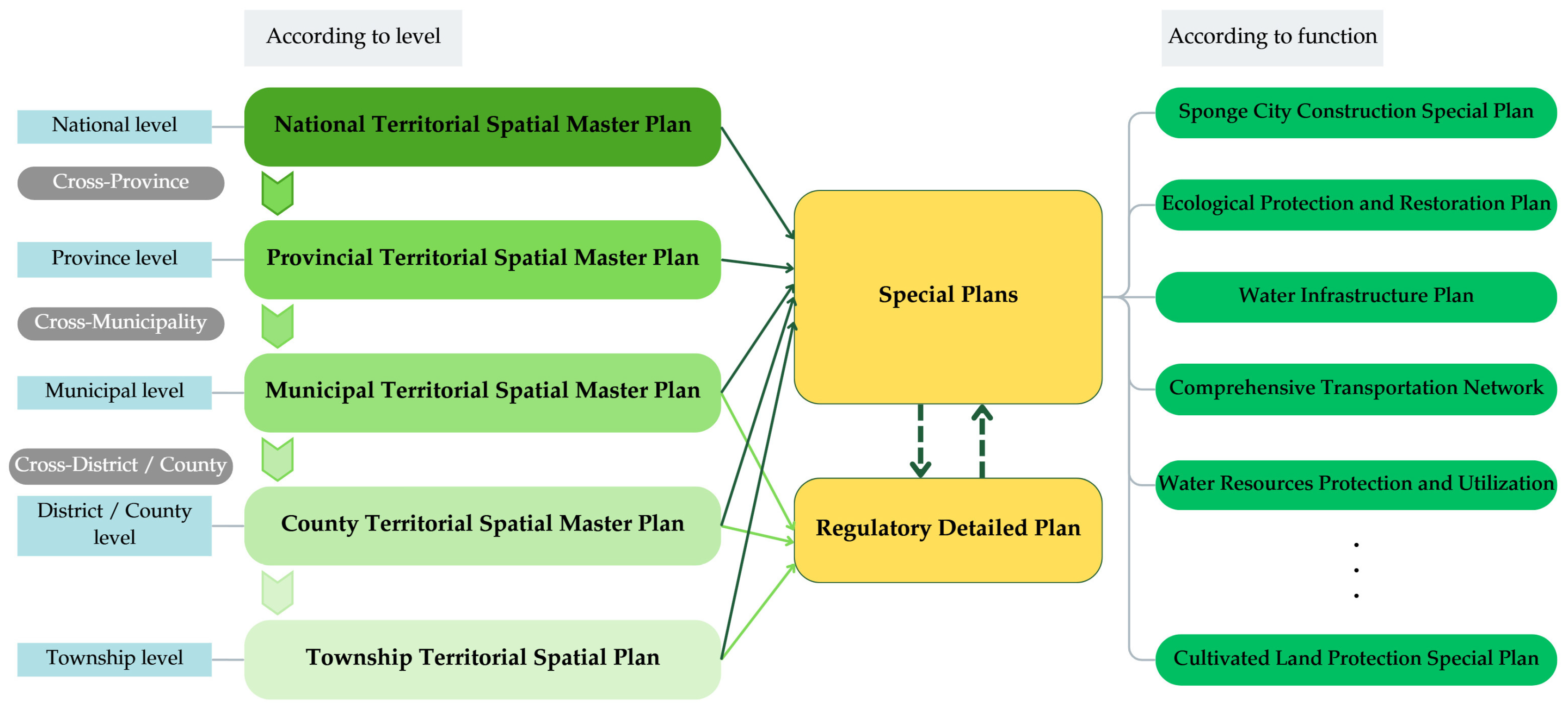
Shanghai and Guangzhou operate under China’s Territorial Spatial Planning System (
Figure 9), which consolidates various planning functions into a unified, integrated framework [
42]. This system is organised hierarchically, with planning activities aligned to five administrative levels (i.e., national, provincial, municipal, district/county, and township), enabling coordinated spatial governance across scales [
43].
Horizontally, this planning system comprises three main categories of plans: the Territorial Spatial Master Plan, the Regulatory Detailed Plan, and Special Plans. The Territorial Spatial Master Plan provides the strategic framework for land use and conservation, serving as the foundation. The higher-level Territorial Spatial Master Plan takes authority in cases of inter-jurisdictional coordination. Regulatory Detailed Plans are not formulated at the national or provincial levels; instead, they are developed at the municipal and lower levels to guide specific land use and development activities. Special Plans are thematic and support sector-specific development goals, such as transportation, water conservancy, ecological protection, and cultural heritage preservation. Their complementary roles ensure that strategic objectives are effectively operationalised at the local level, enabling coherent and context-sensitive spatial development.
3. Results
The presented results follow the structure of the interview (
Figure 2). They include qualitative as well as quantitative representations of the answers by the interviewees.
3.1. Conceptualisation of BGI
As BGI implementation involves multiple disciplines, interpretations and priorities can differ. Most disagreements among interviewees resulted from differences in professional backgrounds and institutional perspectives. Rather than treating these as contradictions to be resolved, they should be interpreted as reflecting variations in expertise and priorities. In the analysis, such divergent views were noted where they emerged and discussed in relation to each professional context, without forcing a false consensus. In response to Q1 (
Figure 2), all of the interviewees believe that BGI is a sustainable, robust, and versatile solution to urban environmental challenges.
Spatial planners primarily focus on integrating BGI with other urban functional areas, managing trade-offs, and emphasising its multifunctionality as a key attribute. Civil engineers specialised in water management prioritise ensuring that BGI fulfils its functions without compromising flood control performance. They also stated that BGI is a sustainable, long-term solution to mitigate flood risks by promoting the urban hydrological cycle and regulating the urban climate. Architects focus on harmonising BGI with building design and maximising its architectural potential. For example, they optimise green roofs to promote plant vitality, while landscape architects increasingly value BGI for its cost-effectiveness.
3.2. Urban Challenges and BGI Potentials
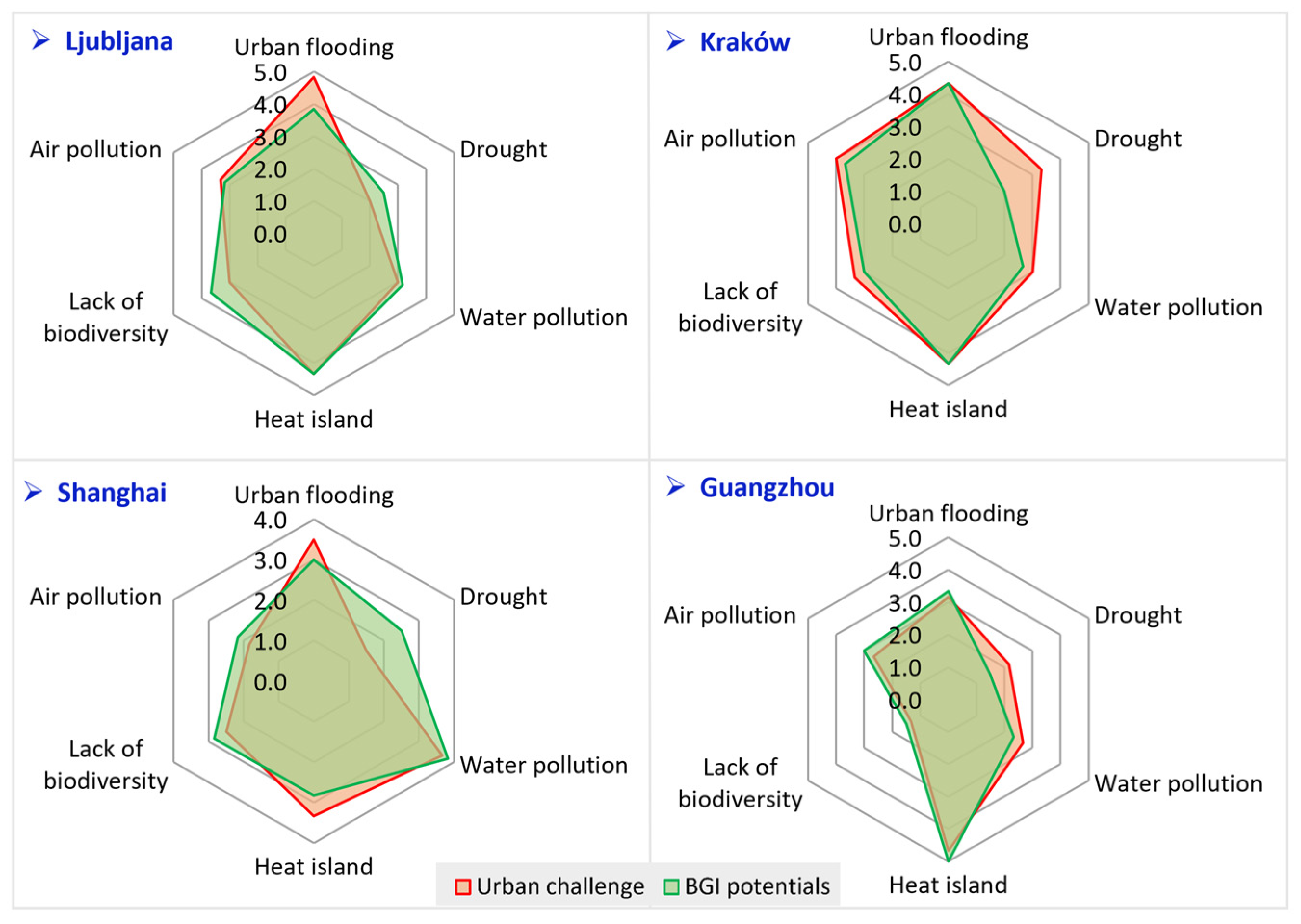
Adaptable planning is essential to tailor BGI to a city’s specific challenges, such as urban flooding or UHI. The radar charts in
Figure 10 illustrate the severity of urban challenges (red lines) and the potential of BGI to mitigate these challenges (blue lines) across four cities from interviewees, based on the average scores of Q2, Q3, and Q4 (
Figure 2). The analysis highlights how BGI’s potential aligns with each city’s specific urban challenges, providing insights into targeted intervention opportunities. Across all cities, the most severe challenges are urban flooding and UHI effects, with BGI showing the greatest potential for mitigation.
In Ljubljana, respondents identified UHI, urban flooding, and air quality as key challenges. Although BGI is recognised as a potential solution, it has not yet been implemented sufficiently to effectively address UHI and flood risks. One interviewee noted that Ljubljana’s extensive green network supports biodiversity and social well-being, reinforcing the city’s ecological identity.
In Kraków, the UHI emerged as the primary concern, guiding BGI interventions towards heat mitigation, followed by measures addressing urban flooding caused by heavy rainfall. The ‘green belt’ was often mentioned as an example of how BGI can deliver significant social and environmental benefits, particularly in improving air quality. However, respondents noted that BGI alone has limited potential to address water pollution and supply issues. One participant emphasised that green spaces differ from BGI in their inability to resolve hydraulic challenges, while another highlighted the ongoing challenge of managing sudden floods.
Shanghai and Guangzhou experience higher cumulative environmental stress than the two European cities. Flooding is consistently identified as the most pressing water-related challenge, influencing spatial planning priorities. Guangzhou presents the most critical and multifaceted situation, with a particular focus on the coincidence of extreme UHI, air pollution, and biodiversity deficits. For these conditions, BGI is rated as highly effective. However, BGI is not perceived as a primary solution for drinking water scarcity or large-scale drought. Respondents indicated that drought occurs on a large scale, for which BGI’s spatially constrained solutions are insufficient.
3.3. Guidelines, Strategies, and Actions
This section analyses how BGI is integrated into spatial planning systems through guidelines, strategies, and action plans (see Q5 and Q6 in
Figure 2).
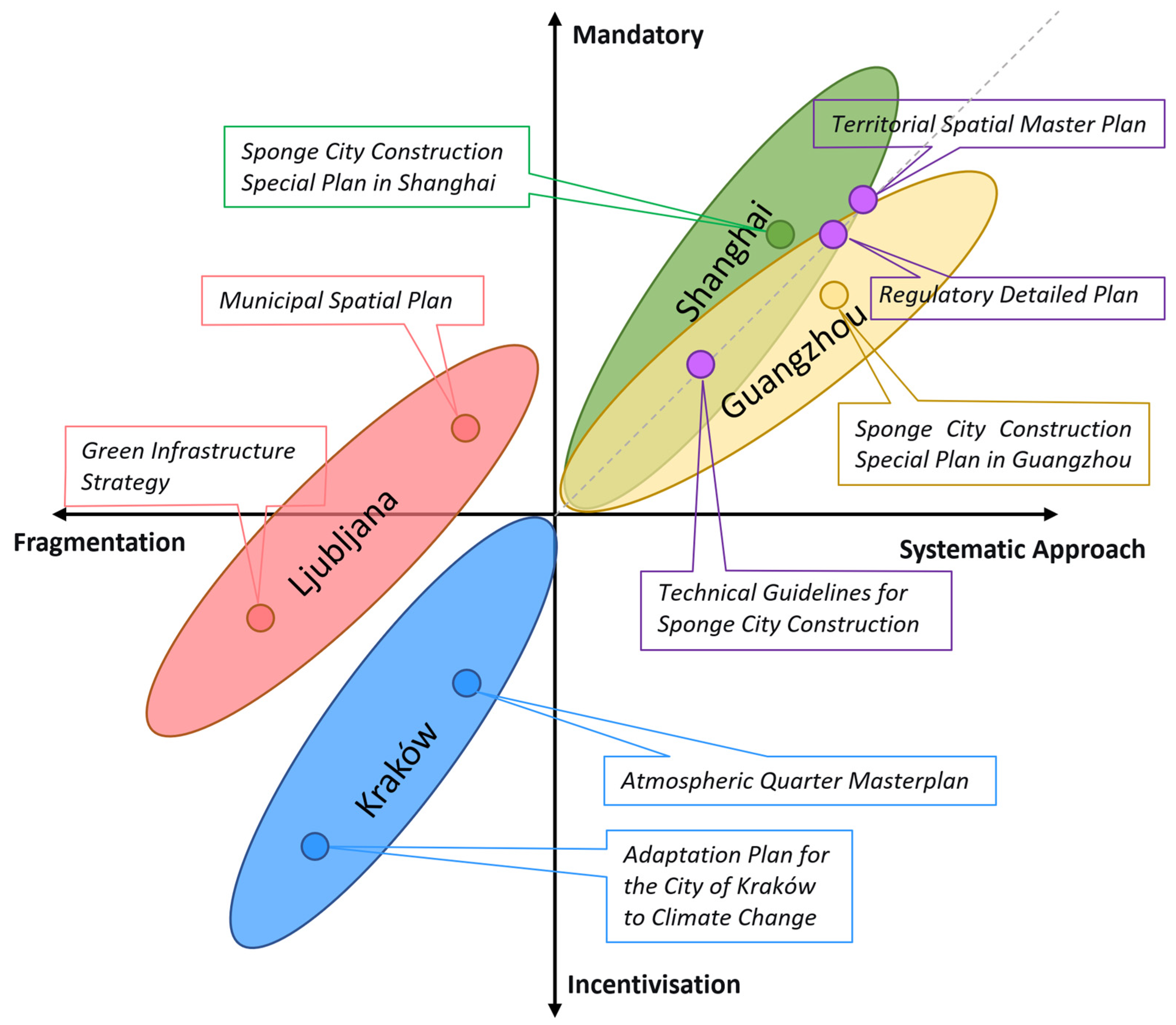
Figure 11 presents a conceptual result, based on the descriptive answer from interviewees, with the horizontal axis ranging from fragmentation (left) to a systematic approach (right), and the vertical axis ranging from incentivisation (bottom) to mandatory requirements (top).
The roles of BGI in Ljubljana’s spatial planning occupy the lower-left quadrant, marked by greater fragmentation and reliance on incentivisation. There is no specific government-issued guideline dedicated to BGI implementation. As one spatial planner in Ljubljana explained, the lack of spatial planning implementation at the regional level makes it difficult to establish a hierarchical BGI strategy at the municipal level. Another spatial planner working in a company also mentioned that the limited awareness among decision-makers regarding the benefits and necessity of BGI results in an incoherent framework.
A civil engineer specialising in water management in Ljubljana noted that the Municipal Spatial Plan incorporates BGI principles in its water management section, despite not explicitly using the term BGI. The plan’s strategic part aims to reduce flood risk and improve the water environment through sustainable solutions, while the implementation part specifies measures such as green roofs, rainwater harvesting, infiltration-first approaches, and on-site retention. However, as one civil engineer noted, although this is a regulatory requirement for new projects, there is no specific obligation to adopt BGI measures. Ljubljana has adopted the Green Infrastructure Strategy, focusing on preserving green spaces, ecological corridors, and natural areas. Despite this strategy placing emphasis on the role of green spaces in climate regulation, one spatial planner noted that it could serve as a starting point to highlight the multiple functions of BGI and to normalise the BGI strategy.
Similarly, Kraków promotes BGI through adaptive, sector-specific strategies rather than fully integrated mandatory frameworks. The Adaptation Plan for the City of Kraków to climate change promotes BGI to enhance climate resilience, primarily against UHI. Operationally, the Atmospheric Quarter Masterplan serves as an internal tool to align urban investments with BGI objectives, integrating elements such as stormwater systems to mitigate heatwaves, droughts, and flooding. While these plans provide a complementary framework and have spurred pilot projects, such as bioretention cells and green roofs, a key limitation is the absence of enforceable coordination mechanisms. Furthermore, overarching strategic instruments, such as the Study of Conditions and Directions of Spatial Development, guide long-term development, but they lack legal enforceability.
According to an expert in urban spatial planning, current efforts focus on developing standards for BGI implementation across the city. One spatial planner in Kraków noted that while affluent districts incorporate BGI as part of broader sustainability agendas, other districts lack dedicated BGI programmes. In many cases, BGI is implemented as a by-product of infrastructure or redevelopment projects, rather than as a deliberate strategic element. However, one civil engineer highlighted the conflict between regulatory specificity and the flexibility required for development, suggesting that overly detailed regulations can hinder BGI implementation.
In contrast, the SCP in Shanghai and Guangzhou clusters in the upper-right quadrant (high mandatory enforcement and high systematicity). This positioning highlights their highly structured, top-down national mandates. BGI is embedded within a hierarchical planning system, which enables standardised, large-scale implementation. This contrasts with the project-driven approaches observed in Ljubljana and Kraków. One spatial planner mentioned that the Territorial Spatial Master Plan establishes SCP as a key objective and designates land use types for BGI. The SCP Special Plan at the municipal level guides systematic development of BGI through hydrological analysis and spatial zoning. The Regulatory Detailed Plan sets quantitative targets, such as annual runoff control rates, and land-use boundaries for each sub-catchment.
Shanghai and Guangzhou have translated national SCP targets into binding municipal SCP Special Plans with clear quantitative objectives, spatial zoning, and differentiated implementation guidelines. Shanghai’s SCP Special Plan integrates BGI into the urban fabric, employing technology-intensive solutions within a densely built environment. Guangzhou’s SCP Special Plan adopted a landscape-scale approach due to the more intense rainfall, focusing on large wetlands, river corridors, infiltration systems, and ecological parks. It should be noted that, compared to Shanghai, Guangzhou’s SCP Special Plan is more regulated in the sense that Guangzhou’s provincial capital structure requires greater coordination with surrounding cities and a more holistic spatial plan.
While China’s top-down national BGI framework ensures systematicity and enforcement, a spatial planning expert pointed out that its early stage was insufficient in city-specific diagnostics. In contrast, cities such as Ljubljana and Kraków employ adaptive, context-sensitive strategies that foster local support, though these are less systematised into a comprehensive city-wide framework.
3.4. Land-Use Strategy for BGI
The development of BGI is constrained by competing land-use demands in densely populated cities. Embedding BGI within spatial planning frameworks is essential to secure space and ensure regulatory alignment. At the same time, further negotiation with private landowners is necessary. This fragmentation often results in administrative barriers, conflicting priorities, and implementation delays. A comparative analysis in Ljubljana, Kraków, and Chinese cities reveals a spectrum of approaches to this challenge (see Q7 and Q8 in
Figure 2).
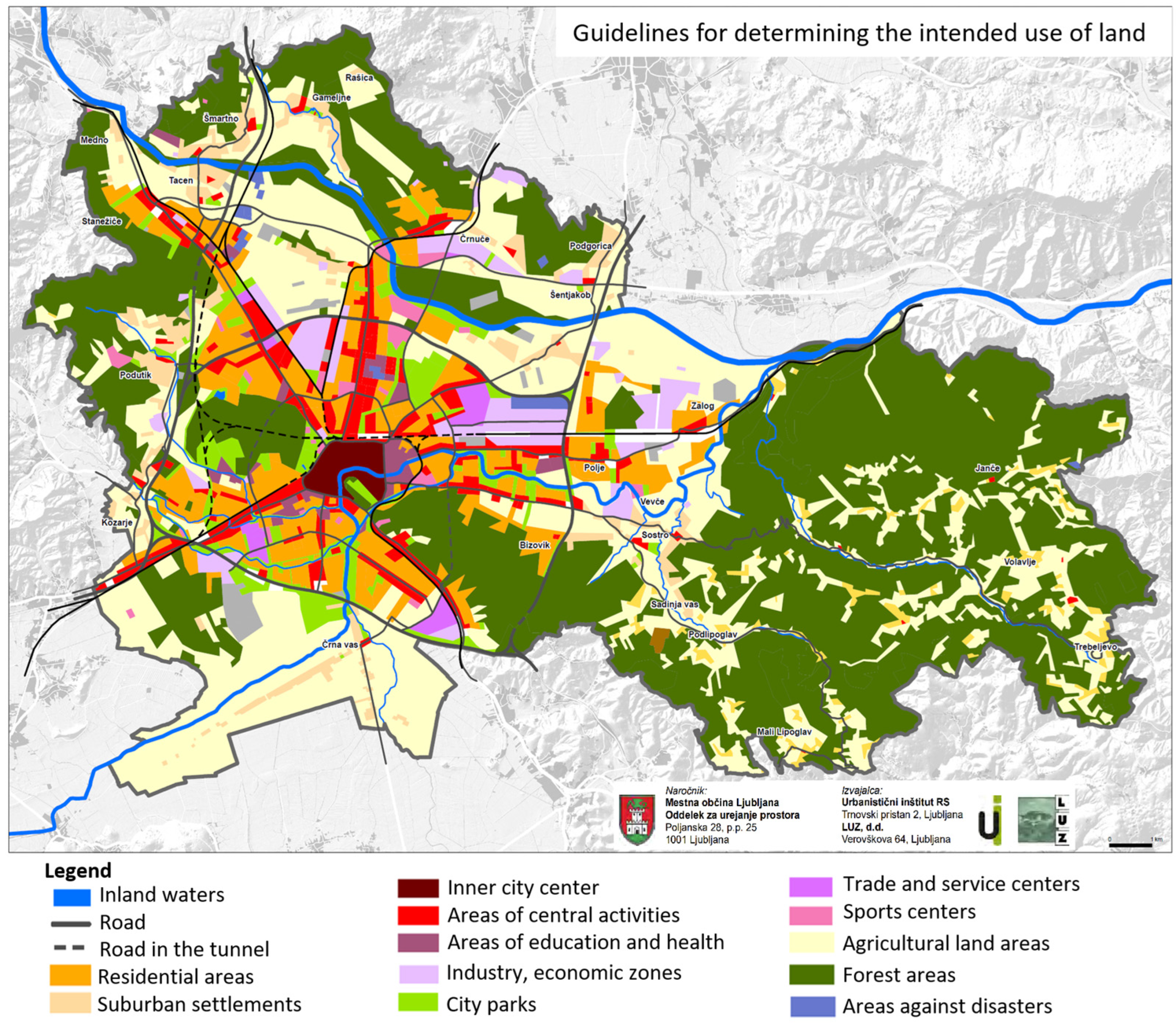
In Ljubljana, there is no specific BGI land-use category in spatial planning documents, but BGI components can be integrated into existing land uses through stormwater management. According to experts in Kraków, the city mandates green space ratios in new developments and pilots BGI in selected districts, often linking BGI implementation to transport networks via green corridors. However, the priority given to cultural heritage preservation and transport systems often fragments green areas, despite efforts to promote connectivity through integrated pedestrian and bicycle green corridors. One spatial planner in Kraków noted that another challenge is resolving land ownership fragmentation through spatial plans. In contrast, the spatial planners from Shanghai and Guangzhou noted that certain public areas have been designated as priority zones for BGI.
3.5. Potential of Factors for BGI Implementation
Based on the interview and questionnaires, the analysis identified where targeted improvements can most effectively accelerate BGI implementation (see Q10 in
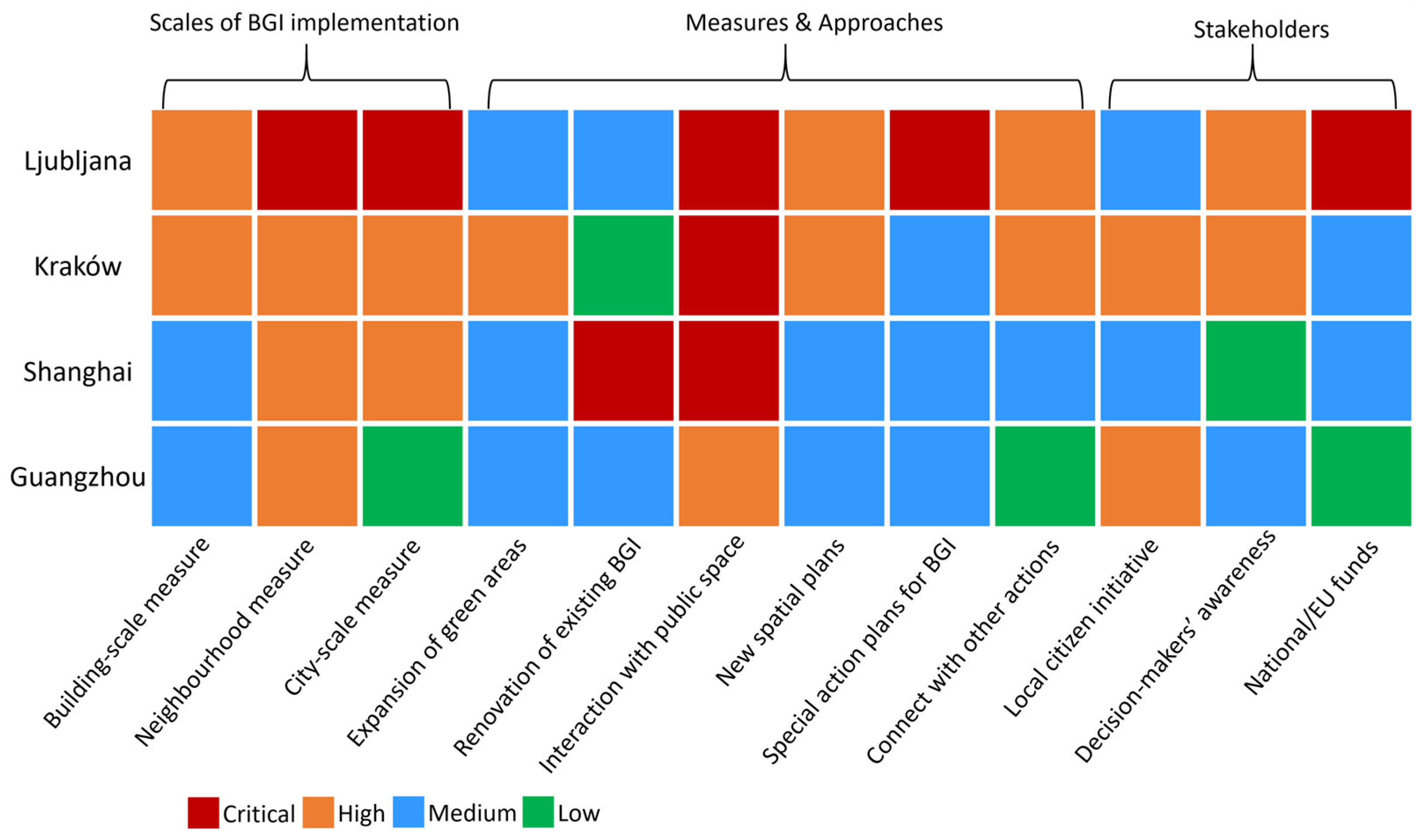
Figure 2). The results (average scores in each city) are presented in a priority matrix (
Figure 12), with each aspect colour-coded: red for critical, orange for high, blue for medium, and green for low priority. Interaction with public spaces is the most important aspect for improvement across the cities, while increasing neighbourhood-scale measures is the second most important. Additionally, Ljubljana demonstrates urgency regarding city-scale measures, special action plans, and financial support. Kraków shows a similar profile, but with less intensity. Experts in Shanghai have suggested that more attention should be given to the renovation of existing BGI. Guangzhou displays a balanced potential of all factors.
When considering the scale of BGI implementation, Ljubljana has critical potential if efforts focus on the neighbourhood and city levels. In Kraków, high potential is associated with development at all scales. However, one spatial planner explained that implementation in high-density, historically complex environments like Kraków is hindered by fragmented land ownership, which complicates even modest interventions such as green corridors. In the Chinese cases, interviewees believed that building-scale BGI is not effective in promoting BGI implementation due to high building density, which makes negotiation with residents more difficult. A spatial planner in Guangzhou also noted that greater focus on city-scale measures is difficult because, as part of Guangdong Province, all city-level actions must first align with provincial development goals and be coordinated with neighbouring municipalities, limiting local autonomy and financial allocation.
Regarding the measures and approaches to advance BGI implementation, there is general agreement that BGI is most effective when it creates multifunctional spaces and integrates with other public elements. In Ljubljana, there is an emphasis on the need for new spatial plans, improved connections, and the development of specific action plans for BGI. One spatial planner further suggested that decision makers at the city or higher levels should engage in more systematic deliberation on integrating BGI into spatial planning frameworks. Similarly, in Kraków, the extension of green areas is considered a useful measure for BGI implementation. Meanwhile, Shanghai presents a distinct optimisation-focused approach, prioritising the renovation of existing systems. Notably, Guangzhou demonstrates a balanced potential of all factors.
Regarding stakeholder involvement, the four cities present different situations. In Ljubljana, public concerns about BGI-related developments often arise from fears of losing existing green spaces. In Slovenia, the national Eco Fund offers financial incentives to individuals, economic groups, and local communities. Similar incentives in Kraków encourage the uptake of private property improvements, with subsidies for energy savings and retention systems. However, interviewees mentioned that short application windows and complex procedures limit participation. Another expert noted that public perception often evolves from initial scepticism to acceptance after implementation.
In contrast, Chinese SCPs face different public confidence challenges, as some serious flooding events have eroded trust in BGI. This context creates a dual challenge: decision-makers express scepticism about BGI’s adaptability to diverse climatic conditions, while public perceptions reflect unrealistic expectations of BGI for extreme events. This expectation–reality gap is widened by BGI’s limitations in managing extreme stormwater events and the over-promotion of SCP. This highlights the high need for transparent communication with the public, particularly in Guangzhou, where precipitation levels are high.
From a financial perspective, project funding for BGI in Ljubljana and Kraków is predominantly sourced from the European Union and municipal governments. However, one spatial planner noted that Ljubljana’s funding exhibits a scale bias, favouring large projects. In Kraków, a participatory budgeting mechanism (i.e., civil budget) has been established and used for small-scale greenery, parks, and rain gardens in communities. In Shanghai and Guangzhou, BGI projects are funded by government sources, special construction bonds, and provincial or municipal co-financing. However, one respondent noted that allocations are more political than problem-driven, resulting in inadequate cost–benefit analysis and overinvestment.
4. Discussion
The comparative analysis reveals distinct approaches to integrating BGI into spatial planning across cities. The interviews provide empirically grounded findings and valuable insights into the future development of BGI in each city. By identifying current urban challenges and the potential of BGI, this study establishes an evidence base for decision-making, enabling the setting of realistic, impactful objectives and the refinement of BGI implementation strategies.
In order to achieve the multifunctionality of BGI, collaboration must be facilitated across and between different disciplinary fields [
5]. The development of BGI is particularly constrained by competing land-use demands in densely populated cities, and integration with other land-use categories is limited. Embedding BGI within spatial planning frameworks is essential to secure space and ensure regulatory alignment.
This study emphasised the importance of institutional integrity and governance structures in BGI planning. It also highlighted the distinct roles expected of the different levels of government, as identified by previous research [
19,
21]. At the national level, this requires legislation to explicitly incorporate BGI as a viable infrastructure, alongside a rethinking of policy, finance, and governance systems. At the regional level, the transformative potential of BGI needs coordinated action and cross-sector planning. This is also the limit of the regional spatial planning in Ljubljana. Meanwhile, local governments need to strengthen their capabilities for BGI design, evaluation, and management, thereby ensuring the effective implementation.
Our findings confirm that neither a top-down enforcement framework nor decentralised flexibility is universally superior. The contribution of governance model, scalar coordination, and legal enforceability to the efficiency of BGI implementation has been proven in China. Meanwhile, the adaptive problem-based BGI implementation approach in Kraków and Ljubljana allows for multifunctional BGI solutions, increasing possibilities for implementation. This indicates that optimal outcomes could emerge from hybrid models that would combine China’s enforceable policy and financial support with Europe’s emphasis on socio-ecological integration and local adaptation.
However, the scaling and effective implementation of BGI requires improved communication among municipalities, experts, and residents [
22]. In this regard, this study is limited by the lack of direct engagement with local residents, as it only involved expert interviews. Future research would therefore benefit from incorporating community-based participatory methods to complement the expert-driven findings presented here.