Article

Coordinated Development of Water–Energy–Food–Ecosystem Nexus in the Yellow River Basin: A Comprehensive Assessment Based on Multi-Method Integration


by
Jingwei Yao
1,
Kiril Manevski
2,3,
Finn Plauborg
2,
Yangbo Sun
4,
Lingling Wang
1,
Wenmin Zhang
5 and
Julio Berbel
6,*
1
Key Laboratory of Soil and Water Conservation on the Loess Plateau of Ministry of Water Resources, Yellow River Institute of Hydraulic Research, Yellow River Conservancy Commission, Zhengzhou 450003, China
2
Department of Agroecology, Aarhus University, Blichers Allé 20, 8830 Aarhus, Denmark
3
Centre for Circular Bioeconomy, Aarhus University, Blichers Allé 20, 8830 Aarhus, Denmark
4
Department of International Cooperation, Science and Technology, Yellow River Conservancy Commission, Zhengzhou 450003, China
5
Henan Water Environment Survey and Design Co., Ltd., Sanmenxia 472000, China
6
Water, Environmental and Agricultural Resources Economics Research Group (WEARE), Universidad de Cordoba, Campus de Rabanales, 14014 Cordoba, Spain
*
Author to whom correspondence should be addressed.
Water 2025, 17(22), 3331; https://doi.org/10.3390/w17223331
Submission received: 14 October 2025 / Revised: 12 November 2025 / Accepted: 19 November 2025 / Published: 20 November 2025
(This article belongs to the Special Issue Sustainable Water Management in Agricultural Irrigation)

Abstract

The Yellow River Basin serves as a critical ecological barrier and economic corridor in China, playing a pivotal role in national ecological security and sustainable development. This study develops a comprehensive evaluation framework grounded in the Water–Energy–Food–Ecosystem (WEFE) nexus, employing 25 indicators across nine provinces and autonomous regions over the period 2000–2023. Utilizing a multi-method approach—including the entropy weight method, coupling coordination degree model, center of gravity migration analysis, principal component analysis, and obstacle factor diagnosis—the research investigates the coordinated development and dynamic interactions among the WEFE subsystems. Key findings include: (1) the calculated weights of the water, energy, food, and ecological subsystems were 0.3126, 0.1957, 0.1692, and 0.3225, respectively, indicating that ecological and water subsystems exert the greatest influence; (2) distinct growth patterns among subsystems, with the energy subsystem exhibiting the fastest growth rate (212%) and the water subsystem the slowest (4%); (3) a steady improvement in the overall coordination degree of the WEFE system, rising from 0.417 in 2000 to 0.583 in 2023—a 39.8% increase—with Henan (0.739) and Inner Mongolia (0.715) achieving the highest coordination levels in 2023, while Qinghai (0.434) and Ningxia (0.417) remained near imbalance thresholds; (4) complex spatial dynamics reflected by cumulative center of gravity migration distances of 678.2 km (water), 204.9 km (energy), 143.3 km (food), and 310.9 km (ecology) over the study period; and (5) identification of per capita water resources as the principal limiting factor to coordinated WEFE development, with an obstacle degree of 0.1205 in 2023, underscoring persistent water scarcity challenges. This integrated framework advances WEFE nexus analysis and provides robust, evidence-based insights to inform regional policy and resource management strategies.

1. Introduction

Water, energy, and food are fundamental components essential for human survival and societal development [1]. Since the 2010s, scholarly attention has increasingly focused on the interconnections among these three sectors, commonly referred to as the water-energy-food (WEF) nexus [2]. Recognizing the critical role of ecosystems, researchers have expanded this framework to include ecological components, resulting in the Water–Energy–Food–Ecosystem (WEFE) nexus. The WEFE nexus has since become a pivotal theoretical construct for elucidating and analyzing the complex interactions among key natural resources and environmental systems [3,4]. To facilitate a clearer understanding of these interdependencies, Figure 1 presents a schematic representation of the WEFE nexus, highlighting the principal feedback loops and linkages among the water, energy, food, and ecosystem subsystems.
Water, energy, food, and ecosystems are intimately interconnected and mutually dependent [5], forming complex and fragile synergistic nexus relationships [6,7,8]. The health and development status of any individual subsystem within this nexus directly affects the other subsystems and influences the overall stability of the system. Water serves as the fundamental resource supporting agricultural productivity, energy generation, and ecological continuity [9]. Conversely, energy is a critical input for water treatment processes, food production, and the restoration of degraded ecosystems [10]. Food systems are major consumers of both water and energy, while simultaneously offering significant potential for sustainable bioenergy generation [11,12]. Ecosystems provide essential environmental carrying capacity and a broad range of ecological services—including water regulation and purification, soil fertility maintenance, and climate regulation—that collectively underpin the stability and resilience of the entire nexus [13,14].
However, these complex interdependencies are fraught with constraints and competition [15,16,17], primarily driven by continuously growing global demand, climate change, and traditional “silo” management approaches [18,19]. In conditions of water scarcity, such as those prevalent in arid and semi-arid regions, agricultural production and ecological systems compete intensely for limited water resources, raising critical concerns regarding equity in trans-regional water allocation [20,21]. The ongoing expansion of energy development further conflicts with ecological conservation goals, thereby introducing additional environmental challenges [22]. Moreover, when pollution from anthropogenic activities surpasses the ecological carrying capacity, it degrades water and air quality, escalates energy requirements for pollution mitigation, and directly jeopardizes food security [23]. This escalating competition among agriculture, energy development, and ecological protection for scarce water resources poses fundamental threats to the long-term sustainability of human development [24].
The Yellow River Basin confronts significant challenges in simultaneously ensuring water security, meeting energy demands, sustaining food production, and preserving ecological integrity. Its arid and semi-arid climate, coupled with intensive agricultural activities and rapid industrialization, exacerbates competition for resources and accelerates environmental degradation. This context underscores the critical need for integrated management approaches and positions the basin as a representative case study for analyzing the Water–Energy–Food–Ecosystem (WEFE) nexus. Conventional sectoral (“silo”) management frameworks have proven insufficient to address the complex interdependencies within this coupled system, with water scarcity emerging as the most significant limiting factor. Moreover, the region’s ecologically sensitive and fragile environment further restricts prospects for sustainable, high-quality development [25].
Recent research on the Water–Energy–Food–Ecosystem (WEFE) nexus within the Yellow River Basin has made notable progress [4,26,27]; however, several critical gaps persist. First, most existing studies primarily address bilateral or trilateral interactions—such as water-energy [28,29], water-food [30,31,32], water-energy-food [33,34,35,36,37,38]) rather than comprehensive quaternary system research at the entire basin level. Second, there is limited attention to the spatial and temporal dynamics governing the migration processes within WEFE systems. Third, few investigations have systematically integrated multiple analytical approaches to conduct a holistic assessment of WEFE coupling coordination. Finally, the specific barriers impeding coordinated development within the WEFE nexus remain insufficiently identified and analyzed. Addressing these gaps is essential for advancing sustainable resource management in the Yellow River Basin.
This study employs an integrated multi-model analytical framework combining the entropy weight method, coupling coordination model, center of gravity migration model, principal component analysis, and obstacle factor diagnosis to achieve the following objectives: (1) develop a WEFE (Water–Energy–Food–Ecosystem) nexus evaluation indicator system tailored to the Yellow River Basin; (2) quantify the spatiotemporal evolution of WEFE coupling coordination within the basin; (3) utilize center of gravity migration models to elucidate the spatial dynamics of subsystem changes; (4) identify the principal components driving variations in the WEFE system; and (5) diagnose the primary obstacle factors limiting coordinated WEFE development. This comprehensive multi-model approach facilitates an in-depth understanding of the dynamic processes and synergistic interactions within the WEFE nexus, thereby informing policy recommendations aimed at promoting high-quality development and supporting sustainable, equitable, and adaptive resource management across the Yellow River Basin.

2. Materials and Methods

2.1. Study Area

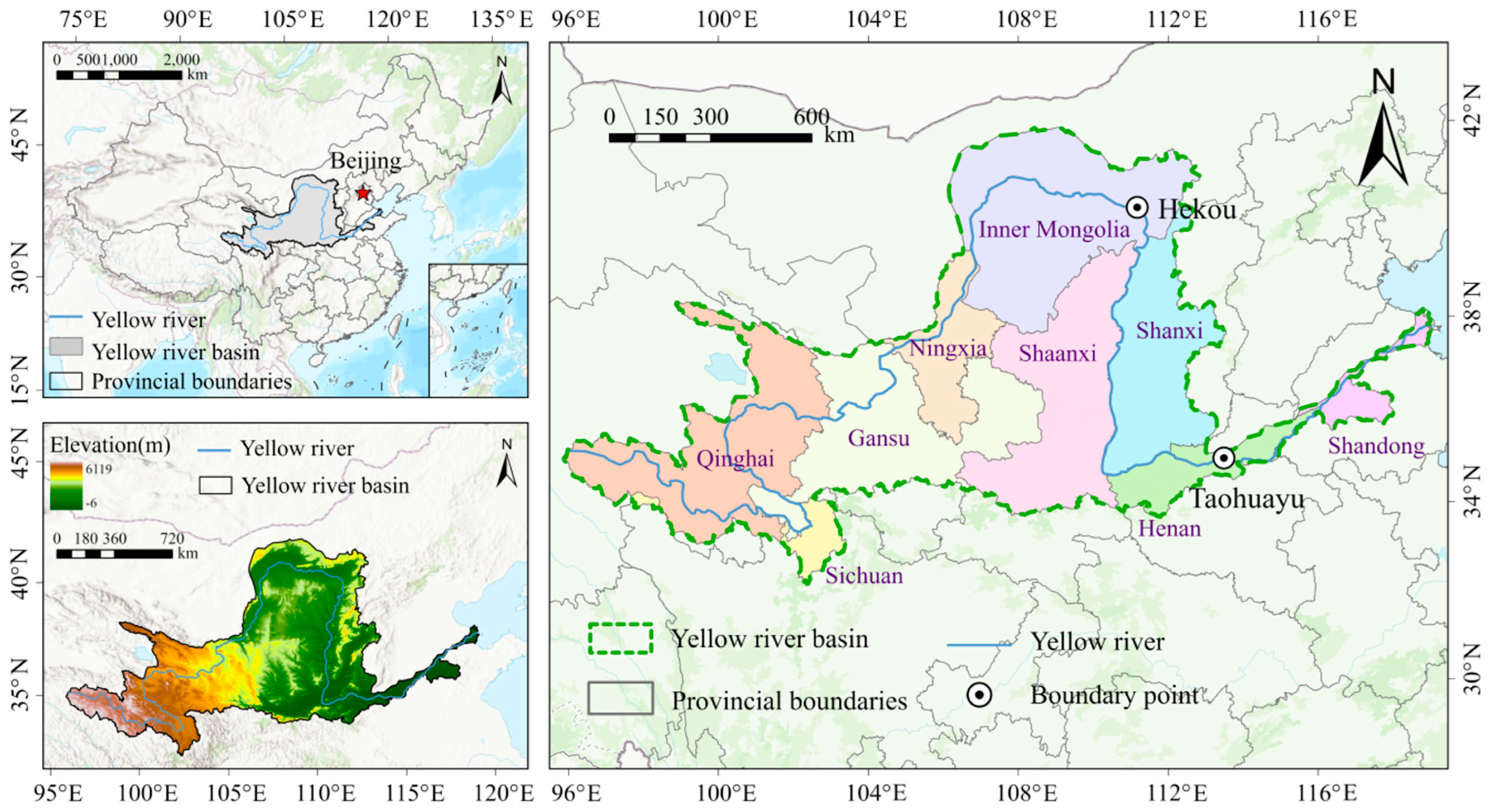
The Yellow River Basin, located in northern China between 32°10′–41°50′ N and 95°53′–119°05′ E, encompasses a drainage area of approximately 795,000 km2. Predominantly situated within arid and semi-arid zones, the basin flows west to east across nine provinces and autonomous regions: Qinghai, Sichuan, Gansu, Ningxia, Inner Mongolia, Shaanxi, Shanxi, Henan, and Shandong. Geographically, the basin is divided into three distinct reaches: the upper reach, extending from the river’s source to Hekou in Inner Mongolia; the middle reach, from Hekou to Taohuayu in Henan Province; and the lower reach, from Taohuayu to the river mouth (Figure 2). Each subbasin exhibits distinct characteristics in terms of topography, climate, hydrology, and socioeconomic development. The upper reach is characterized by high altitude and a cold climate, serving as the primary water source area with substantial hydroelectric potential. The middle reach, which includes the Loess Plateau, supports intensive agricultural activities and energy production but faces severe soil erosion challenges. The lower reach traverses the North China Plain and represents the basin’s most economically developed and densely populated region.

2.1.1. Water

The Yellow River Basin possesses total water resources of approximately 58 billion m3, accounting for only 2.5% of national water resources. Per capita water availability in the basin is approximately 27% of the national average, while per capita water consumption is less than one-fifth of the national average, categorizing the region as severely water-scarce. The basin’s water resource development and utilization rate reaches 80%, substantially exceeding the ecological warning threshold of 40% commonly applied to river basins. Precipitation within the basin exhibits pronounced spatial and temporal variability, with significant interannual fluctuations. The multi-year average precipitation is around 400 mm, markedly lower than the national average of 628 mm. Seasonal precipitation is highly uneven, predominantly occurring between June and October, during which summer rainfall accounts for 55.6% of the basin’s annual total. Water resources are relatively abundant in the upper reaches, whereas the middle and lower reaches face pronounced water scarcity challenges.

2.1.2. Energy

The Yellow River Basin constitutes a vital energy hub for China, endowed with abundant coal, petroleum, natural gas, hydropower, wind, and solar energy resources. Notably, annual coal production in the basin represents approximately 70% of the country’s total output. In recent years, the development of clean energy within the basin has accelerated markedly, with installed capacities for wind power and photovoltaic systems expanding rapidly.

2.1.3. Agriculture

The Yellow River Basin serves as a critical grain-producing region in China, contributing approximately one-third of the nation’s total grain output. The basin encompasses 15.532 million hectares of cultivated land, predominantly dedicated to the cultivation of wheat, corn, rice, and other staple crops. Agricultural water consumption constitutes roughly 70% of the basin’s total water use. Key irrigation districts along the Yellow River are predominantly located within major grain-producing provinces such as Inner Mongolia, Shanxi, Henan, and Shandong.

2.1.4. Ecological Environment

The Yellow River Basin is characterized by a fragile ecological environment, marked by severe soil erosion and widespread desertification. Forest coverage in the basin stands at approximately 14%, which is significantly lower than the national average. In recent years, the implementation of ecological restoration initiatives—such as the conversion of farmland to forest and targeted desertification control measures—has led to measurable improvements in the overall ecological quality of the basin.

2.2. Data Sources and Indicator System

2.2.1. Data Sources

This study utilizes data from the China Water Resources Bulletin, China Statistical Yearbook, China Energy Statistical Yearbook, China Environmental Statistical Yearbook, China Soil and Water Conservation Bulletin, Yellow River Basin Soil and Water Conservation Bulletin, as well as statistical yearbooks, environmental status bulletins, and national economic and social development statistical bulletins from the nine provinces and autonomous regions within the Yellow River Basin. The temporal scope spans 2000–2023. Provincial longitude and latitude coordinates are derived from China Standard Administrative Division GeoJSON data provided by the National Geographic Information Public Service Platform (https://www.tianditu.gov.cn/, accessed on 1 May 2024), with map approval number: GS (2024) 0650, coordinate system: CGCS2000 (EPSG:4490).

2.2.2. Data Processing

The dataset spanning 2000 to 2023 comprises fully observed data, with no projections or estimates incorporated for the most recent year. However, for certain provinces, data on a limited set of indicators—including per capita wastewater discharge, total sewage treatment, energy consumption in agriculture, timber production, and renewable energy generation—were incomplete for the period 2000 to 2002, with missing rates ranging from 8.3% to 12.5% for these variables. These gaps were addressed through linear interpolation using adjacent years. A sensitivity analysis was performed to evaluate the effect of this interpolation, confirming that the overall temporal trends remained robust and unbiased (correlation coefficient r > 0.98, p < 0.001 between original and interpolated series). Outliers were identified and treated according to the 3σ criterion (Pauta criterion). To mitigate the influence of differing measurement scales, all variables were standardized prior to analysis. Data processing and computations were conducted in the Python 3.13 environment, primarily employing the pandas, numpy, and scikit-learn libraries.

2.2.3. Indicator System

This study follows principles of scientific rigor, systematic methodology, and data availability to develop an evaluation indicator system for the Water–Energy–Food–Ecosystem (WEFE) nexus in the Yellow River Basin. Rather than attempting to capture the entire complexity of the WEFE system, we focused on selecting indicators most pertinent to the nexus within the basin’s specific context. The selection process carefully accounted for the inherent interconnections and interaction mechanisms among the four subsystems: water, energy, food, and ecosystem. Based on each indicator’s impact on the coordinated development of the WEFE system, the 25 chosen indicators were categorized as either positive (16 indicators) or negative (9 indicators). We then calculated weights for each indicator at both the subsystem and overall system levels (Table 1). The classification into ‘positive’ or ‘negative’ reflects each indicator’s net effect on the sustainable development of the WEFE nexus in the Yellow River Basin. For instance, although fertilizer application is vital for crop production, its excessive use in the basin has been extensively documented as a major contributor to water pollution and soil degradation. Consequently, from a systemic sustainability perspective, reducing fertilizer intensity—represented by a lower indicator value—is considered beneficial for the overall health of the WEFE nexus. This approach aligns with regional policy objectives aimed at promoting green and sustainable agricultural practices.

2.3. Methodological Framework

2.3.1. Entropy Weight Method

The entropy weight method objectively determines indicator weights by calculating their information entropy, thereby minimizing subjective bias in the weighting process [39]. The calculation steps are as follows:
First, extreme value standardization is employed to normalize the raw data, converting it into a dimensionless form:
For positive indicators:
X i j * = X i j m i n ( X j ) m a x ( X j ) m i n ( X j )
For negative indicators:
X i j * = m a x ( X j ) X i j m a x ( X j ) m i n ( X j )
where X i j represents the original value of indicator j for province i , and X i j * represents the standardized value.
Second, calculate information entropy for each indicator:
E j = 1 l n ( m ) i = 1 m P i j l n ( P i j )
where P i j = X i j * i = 1 m X i j * represents the proportion of indicator j for province i , and m represents the number of provinces.
Third, calculate information utility value:
D j = 1 E j
Finally, determine indicator weights:
W j = D j j = 1 n D j
where n represents the total number of indicators.
To assess the robustness of the calculated weights, a bootstrap sensitivity analysis comprising 1000 iterations was performed. The findings demonstrate that the subsystem weights exhibit high stability, with coefficients of variation (CV) below 5% across all four subsystems: Water (CV = 3.2%), Energy (CV = 4.1%), Food (CV = 3.8%), and Ecosystem (CV = 4.5%).

2.3.2. Coupling Coordination Degree Model

The coupling coordination degree model is applied to assess coordination development levels among WEFE systems [40,41].
The coupling degree calculation formula for four subsystems is:
C = 4 × U 1 × U 2 × U 3 × U 4 ( U 1 + U 2 + U 3 + U 4 ) 4 4
where U 1 , U 2 , U 3 , and U 4 represent comprehensive scores for water, energy, food, and ecosystem subsystems, respectively.
The coupling degree formula employed in this study is derived from the capacity coupling coefficient model, which is extensively utilized in physics and social sciences to quantify interactions among multiple systems. The incorporation of the geometric mean—represented by the fourth-root term—is deliberate, as it exhibits greater sensitivity to disparities compared to the arithmetic mean. This approach ensures that the coupling degree more accurately captures the balance of interactions among all four subsystems.
The comprehensive development index was calculated using the following formula:
T = α U 1 + β U 2 + γ U 3 + δ U 4
where α , β , γ , and δ represent weights for each subsystem.
The coordination degree is calculated as [40]:
D = C × T
The coordination degree (D) is categorized into six distinct levels: extremely uncoordinated (0 < D ≤ 0.2), moderately uncoordinated (0.2 < D ≤ 0.4), slightly uncoordinated (0.4 < D ≤ 0.5), barely coordinated (0.5 < D ≤ 0.6), moderately coordinated (0.6 < D ≤ 0.8), and highly coordinated (0.8 < D ≤ 1.0).

2.3.3. Center of Gravity Migration Model

The concept of the center of gravity, originally derived from classical mechanics, is here extended to represent the equilibrium point of the studied elements distributed across the spatial plane of the Yellow River Basin over the research period. Utilizing a center of gravity migration model, this study calculates the coordinates of the center of gravity within the Yellow River Basin from 2000 to 2023. The primary objective is to elucidate the migration trajectories of the center of gravity for each subsystem within the Water–Energy–Food–Ecosystem nexus and to investigate the driving factors underlying these spatial shifts. This modeling approach enables a detailed analysis of the spatial evolutionary patterns of the subsystems [42].
The coordinates of the center of gravity for each subsystem were calculated using the following equation:
X t = i = 1 n M i t × X i i = 1 n M i t
Y t = i = 1 n M i t × Y i i = 1 n M i t
where ( X t , Y t ) represents the center of gravity coordinates for year t , M i t represents the subsystem score for province i in year t , and ( X i , Y i ) represents the geographical coordinates of province i .

2.3.4. Principal Component Analysis

Principal component analysis (PCA) was employed to identify the primary factors influencing the Water–Energy–Food–Ecosystem (WEFE) nexus and to reduce the dimensionality of the indicator system [43].
Data Standardization
To eliminate the influence of these dimensional differences and ensure that each indicator contributes equally to the analysis, the raw data was standardized before performing PCA. This process transforms the original data into a dimensionless format, making the indicators comparable. The standardization was performed using the following formula:
Z i j = X i j X j S j
where Z i j represents standardized data, X i j represents original data, X j represents the mean of the j -th indicator, and S j represents the standard deviation of the j -th indicator.
Correlation Coefficient Matrix Calculation
Calculate the correlation coefficient matrix of standardized data:
R = ( r j k ) p × p
where the correlation coefficient is calculated as:
r j k = i = 1 n ( Z i j Z j ) ( Z i k Z k ) i = 1 n ( Z i j Z j ) 2 i = 1 n ( Z i k Z k ) 2
Eigenvalue and Eigenvector Solution
Determine the eigenvalues and corresponding eigenvectors of the correlation coefficient matrix:
R e j = λ j e j
The eigenvalues are ordered in descending magnitude: λ 1 λ 2 λ p 0
Principal Component Extraction
The j -th principal component is expressed as a linear combination of original standardized variables:
F j = a j 1 Z 1 + a j 2 Z 2 + + a j p Z p
where a j i represents the i -th component of the j -th eigenvector, called principal component loadings.
Variance Contribution Rate Calculation
The variance contribution rate of the j -th principal component is:
η j = λ j k = 1 p λ k
The cumulative variance contribution rate is:
j = 1 m η j = j = 1 m λ j k = 1 p λ k
Principal Component Selection Criteria
Kaiser criterion: Retain principal components with eigenvalues greater than 1.0.
Cumulative variance contribution rate criterion: Retain principal components until the cumulative variance explained reaches between 85% and 95%.
Principal Component Score Calculation
The score of each observation unit on the j -th principal component is calculated as:
F i j = a j 1 Z i 1 + a j 2 Z i 2 + + a j p Z i p
where F i j represents the score of the i -th observation unit on the j -th principal component.
Comprehensive Evaluation Index
Construct a comprehensive evaluation index based on principal component scores:
F i = j = 1 m η j F i j
where F i represents the comprehensive score of the i -th observation unit, and m represents the number of retained principal components and η j is the j -th variance contribution rate of the principal component.
By analyzing the principal component loading matrix, we identified the latent factors represented by each principal component and determined the key indicators exerting the greatest influence on the Water–Energy–Food–Ecosystem (WEFE) nexus relationships. Variables exhibiting absolute loading values exceeding 0.5 were deemed to have significant contributions within their respective principal components.

2.3.5. Obstacle Factor Diagnosis Model

The obstacle factor diagnosis model is employed to identify the principal constraints hindering the coordinated development of the Water–Energy–Food–Ecosystem (WEFE) nexus [25,44].
The obstacle degree for each indicator is calculated using the following formula:
O i j = W j × ( 1 X i j * ) j = 1 n W j × ( 1 X i j * ) × 100 %
where O i j represents the obstacle degree of indicator j for province i , W j represents the weight of indicator j , and X i j * represents the standardized value.

3. Results

3.1. Spatiotemporal Evolution of WEFE Subsystems

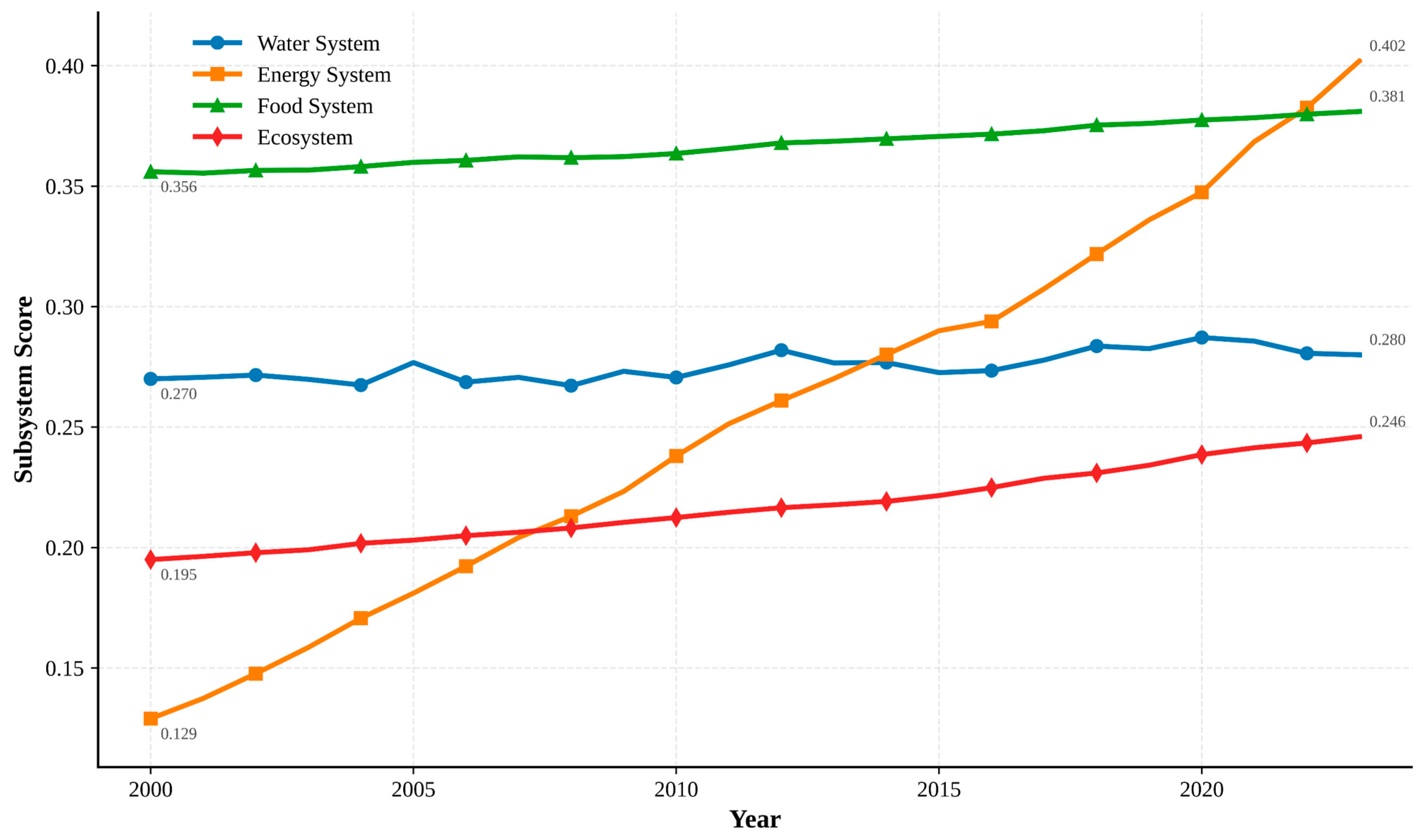
From 2000 to 2023, the comprehensive scores of all four subsystems in the Yellow River Basin showed an upward trend, but with significant differences in growth rates (Figure 3). Based on the calculated results, the energy system experienced the fastest growth, with its score increasing by a remarkable 211% (from 0.129 to 0.402). The ecosystem and food systems also showed steady growth, with increases of 26% (from 0.195 to 0.246) and 7% (from 0.356 to 0.381), respectively. In contrast, the water system grew the slowest, with its score increasing by only 4% (from 0.270 to 0.280). This indicates that while the overall WEFE system is developing, the internal development is unbalanced, with the water system lagging significantly behind.

3.2. Coupling Coordination Analysis

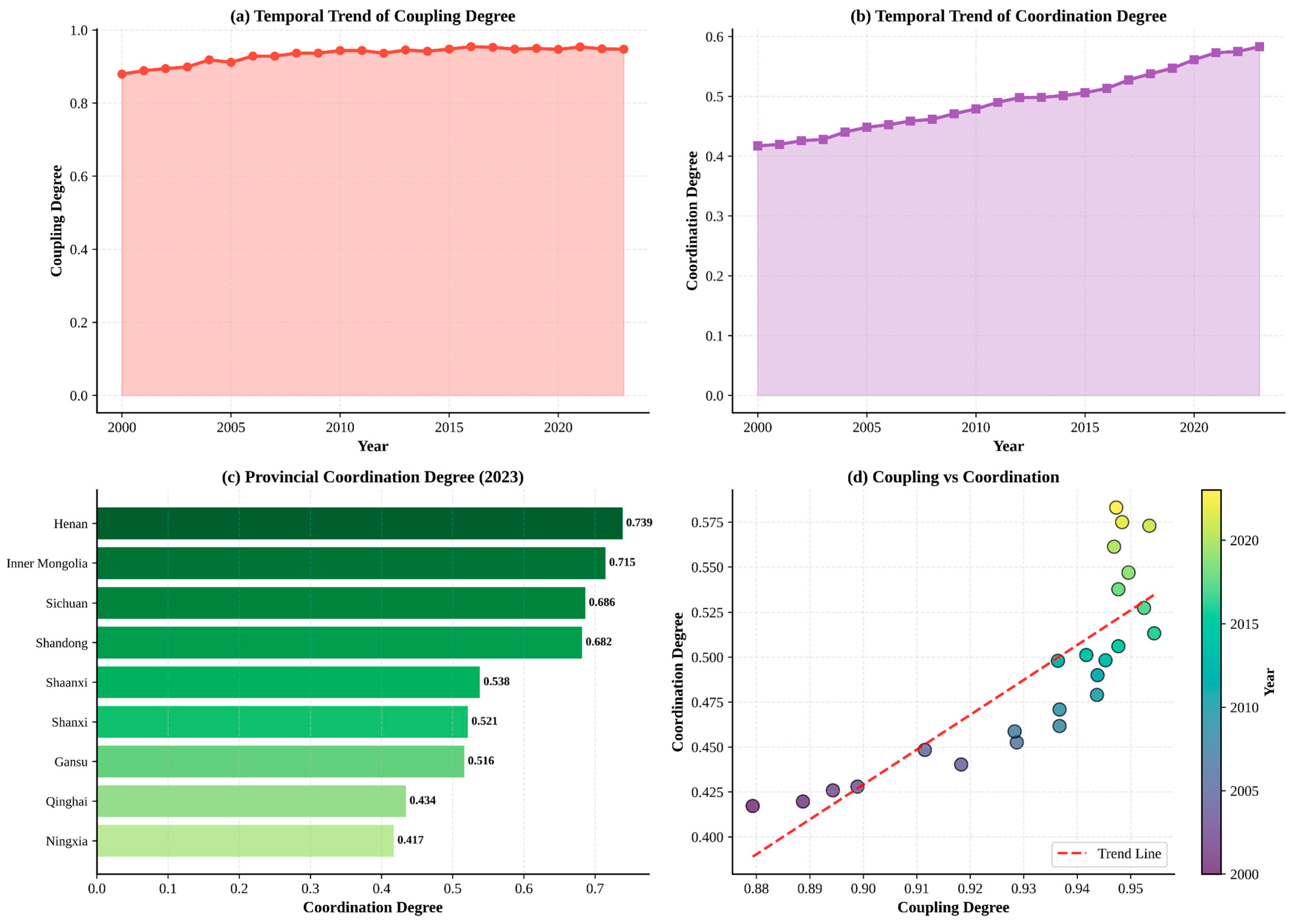
The coupling degree of the Water–Energy–Food–Ecosystem (WEFE) system in the Yellow River Basin remained consistently high, increasing from 0.879 in 2000 to 0.947 in 2023, which reflects robust interactions among the subsystems (Figure 4a). In contrast, the coordination degree, despite demonstrating notable improvement, increased from a state of near imbalance (0.417) to a marginally coordinated level (0.583) over the same period (Figure 4b). This disparity indicates that, although the subsystems are strongly interconnected, their integrated and harmonious development remains suboptimal. Furthermore, the relationship between coupling and coordination degrees exhibits a distinct positive trend, suggesting that as the intensity of subsystem interactions strengthens, their coordinated development correspondingly improves (Figure 4d).
Provincial-level analysis reveals pronounced regional disparities in coordination degrees within the Yellow River Basin (Figure 4c). In 2023, Henan (0.739) and Inner Mongolia (0.715) demonstrated strong coordination, whereas Qinghai (0.434) and Ningxia (0.417) approached a state of imbalance. These findings underscore the markedly uneven development of the Water–Energy–Food–Ecosystem (WEFE) system coordination across the basin, characterized by a distinct east–west gradient.

3.3. Center of Gravity Migration Analysis

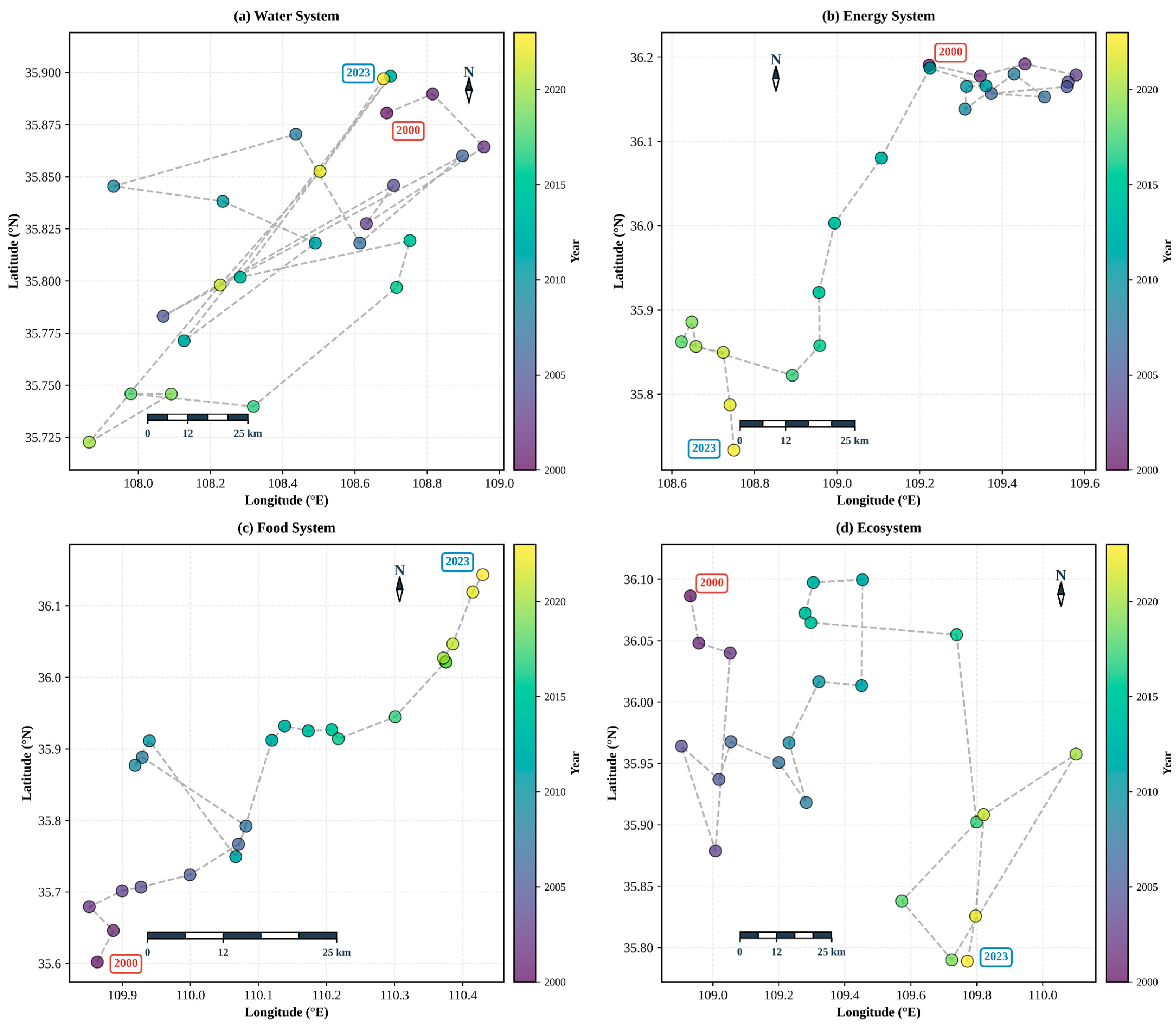
The centers of gravity for the four subsystems exhibited distinct spatial migration patterns between 2000 and 2023 (Figure 5). Specifically, the energy system’s center shifted southwestward, the food system’s center moved northeastward, and the ecosystem’s center migrated southeastward. In contrast, the water system’s center of gravity remained relatively stable, displaying only a minor northward displacement. These spatial shifts underscore evolving dynamics in resource utilization and development priorities within the Yellow River Basin.
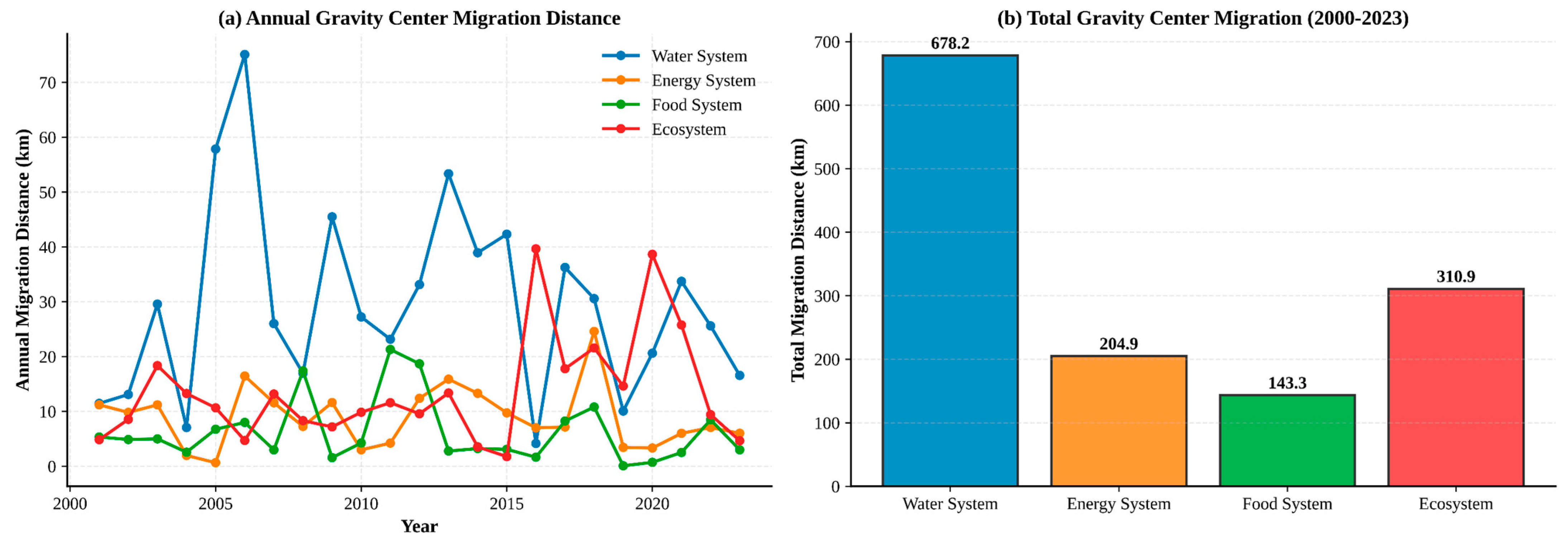
The cumulative migration distances of the subsystems from 2000 to 2023 exhibited substantial variation (Figure 6a). The water system demonstrated the greatest cumulative migration distance, totaling 678.2 km, followed by the ecosystem (310.9 km), energy (204.9 km), and food systems (143.3 km) (Figure 6b). These results indicate that, despite maintaining a relatively stable center of gravity, the water system underwent the most pronounced annual spatial fluctuations, whereas the food system exhibited the greatest spatial stability throughout the study period.

3.4. Pairwise Coupling Relationships

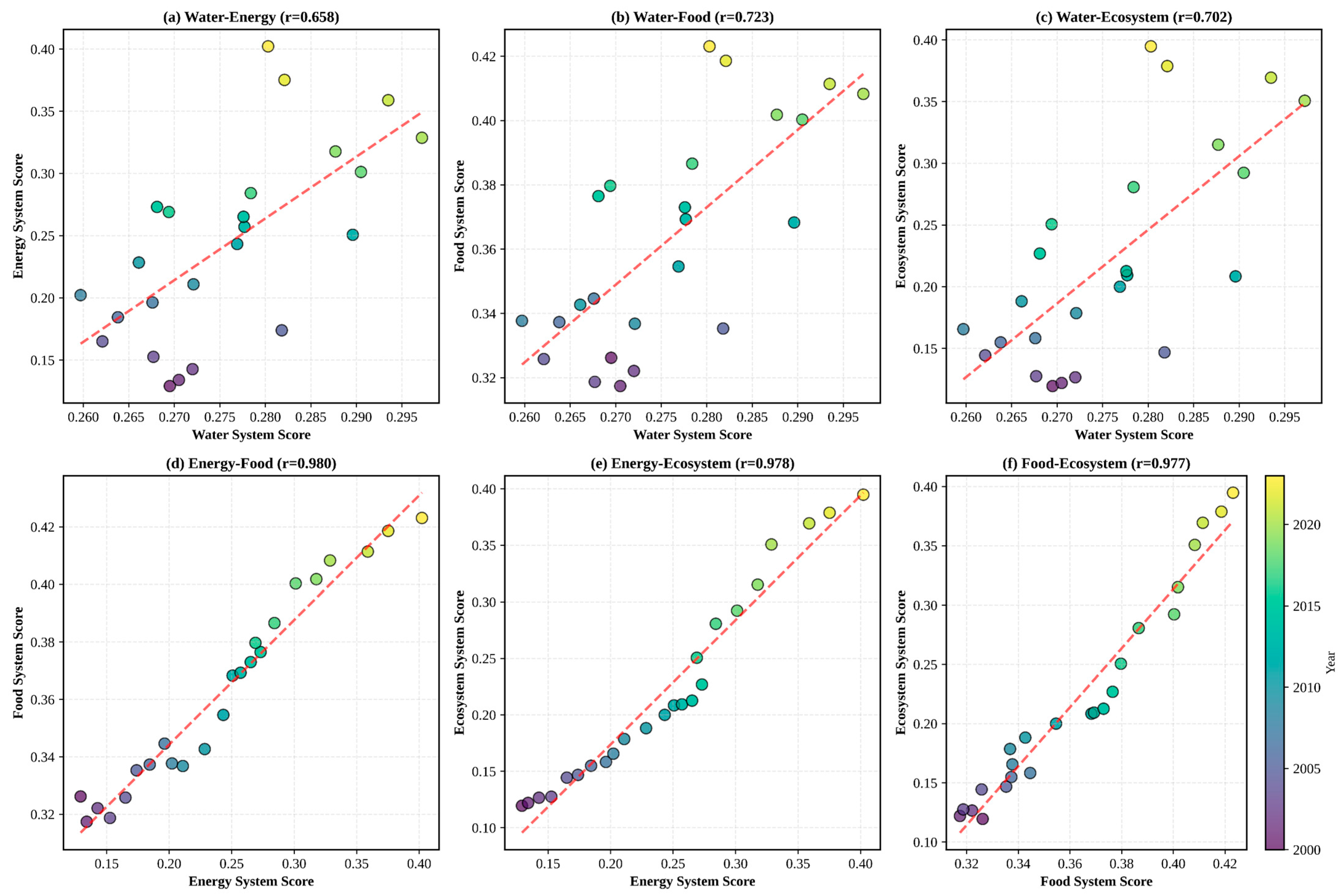
Pairwise coupling analysis reveals strong synergistic interactions among all subsystems within the Yellow River Basin (Figure 7). The most robust positive correlations occur among the energy, food, and ecosystem subsystems, with correlation coefficients exceeding 0.97 (Energy–Food: r = 0.980, p < 0.001; Energy–Ecosystem: r = 0.978, p < 0.001; Food–Ecosystem: r = 0.977, p < 0.001), indicating a highly coordinated and interdependent development trajectory among these three components. The water subsystem also exhibits significant positive correlations with other subsystems, including Water–Food (r = 0.723, p < 0.001), Water–Ecosystem (r = 0.702, p < 0.001), and Water–Energy (r = 0.658, p < 0.001), suggesting that enhancements in water management contribute to the advancement of the broader system. Collectively, these consistently positive correlations demonstrate that the water–energy–food–ecosystem (WEFE) subsystems have co-evolved in a mutually reinforcing manner, whereby progress in one subsystem facilitates and amplifies development in the others.

3.5. Principal Component Analysis Results

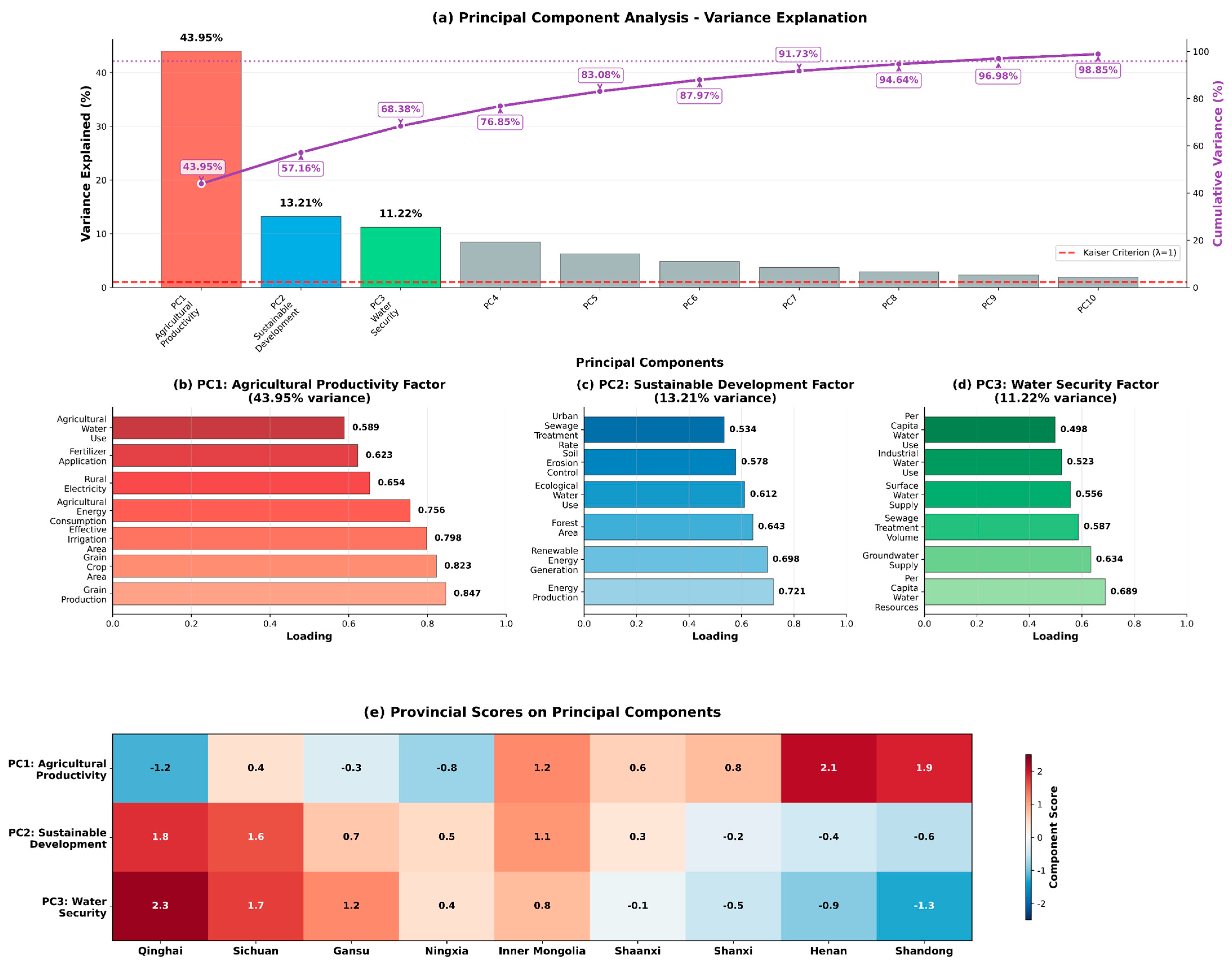
Principal component analysis effectively reduced the original set of 25 indicators to 10 principal components, which together account for 98.85% of the total variance within the WEFE nexus. Notably, the first three principal components—representing Agricultural Productivity, Sustainable Development, and Water Security—explain 68.38% of the total variance (Figure 8a).
The first principal component (PC1) accounts for 43.95% of the total variance and is primarily characterized by agricultural indicators, including total grain production (loading = 0.847), grain crop sowing area (loading = 0.823), effective irrigated farmland area (loading = 0.798), and energy consumption in agriculture, forestry, animal husbandry, and fishery sectors (loading = 0.756) (Figure 8b). This component captures the “agricultural productivity factor,” reflecting both the scale and intensity of agricultural production systems within the basin. The strong loadings of irrigation-related variables underscore the essential role of water infrastructure in sustaining agricultural development.
The second principal component (PC2) explains 13.21% of the total variance and is predominantly associated with high loadings for energy production (0.721), renewable energy generation (0.698), and forest area (0.643). This component reflects a “sustainable development” dimension, capturing trends related to the transition toward renewable energy and the conservation of ecosystems (Figure 8c).
The third principal component (PC3) accounts for 11.22% of the total variance and is primarily characterized by water-related indicators, including per capita water resources (loading = 0.689), groundwater supply (loading = 0.634), and total sewage treatment (loading = 0.587). This component encapsulates the “water security factor,” representing both the availability of water resources and the effectiveness of water quality management (Figure 8d).
Component analysis reveals significant spatial and temporal variations across all examined factors. The agricultural productivity factor attains its highest scores in Henan and Shandong provinces, underscoring their status as major grain-producing regions (Figure 8e). The sustainable development factor exhibits consistent growth over time throughout all provinces, with Qinghai and Sichuan demonstrating particularly strong performance attributable to their abundant renewable energy resources. In contrast, the water security factor displays marked spatial heterogeneity, with western provinces achieving higher scores due to greater per capita water availability. This elevated per capita water availability in Qinghai and Sichuan primarily results from their unique geographical and climatic characteristics. Qinghai, situated on the Qinghai–Tibet Plateau, serves as the headwaters for several major rivers—including the Yellow, Yangtze, and Lancang Rivers—and benefits from relatively high precipitation coupled with low population density, culminating in substantial per capita water resources. Similarly, Sichuan, located in the upper Yangtze River basin, possesses abundant total water resources and a comparatively low population density, which together contribute to its elevated per capita water availability.

3.6. Obstacle Factor Diagnosis

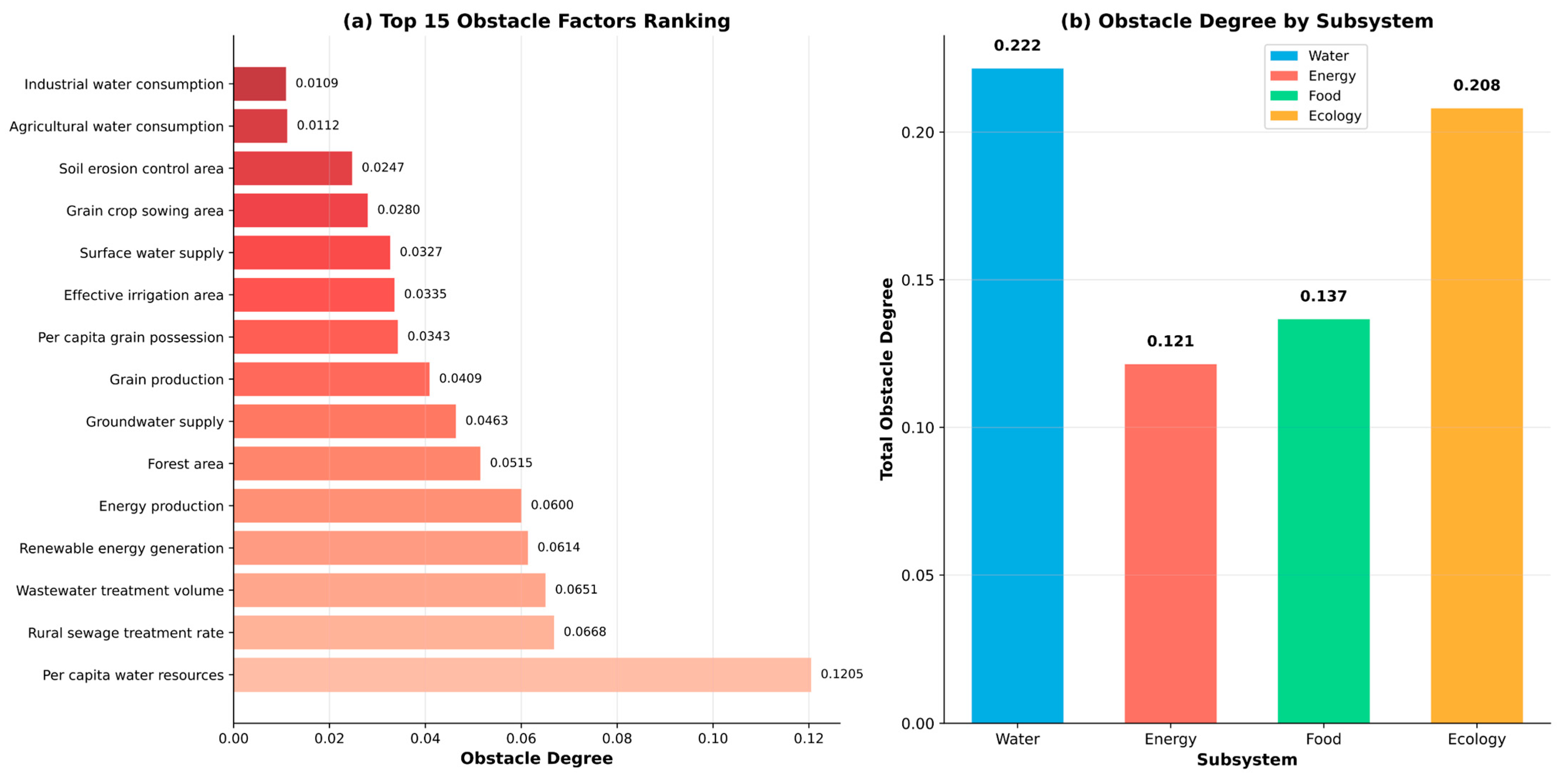
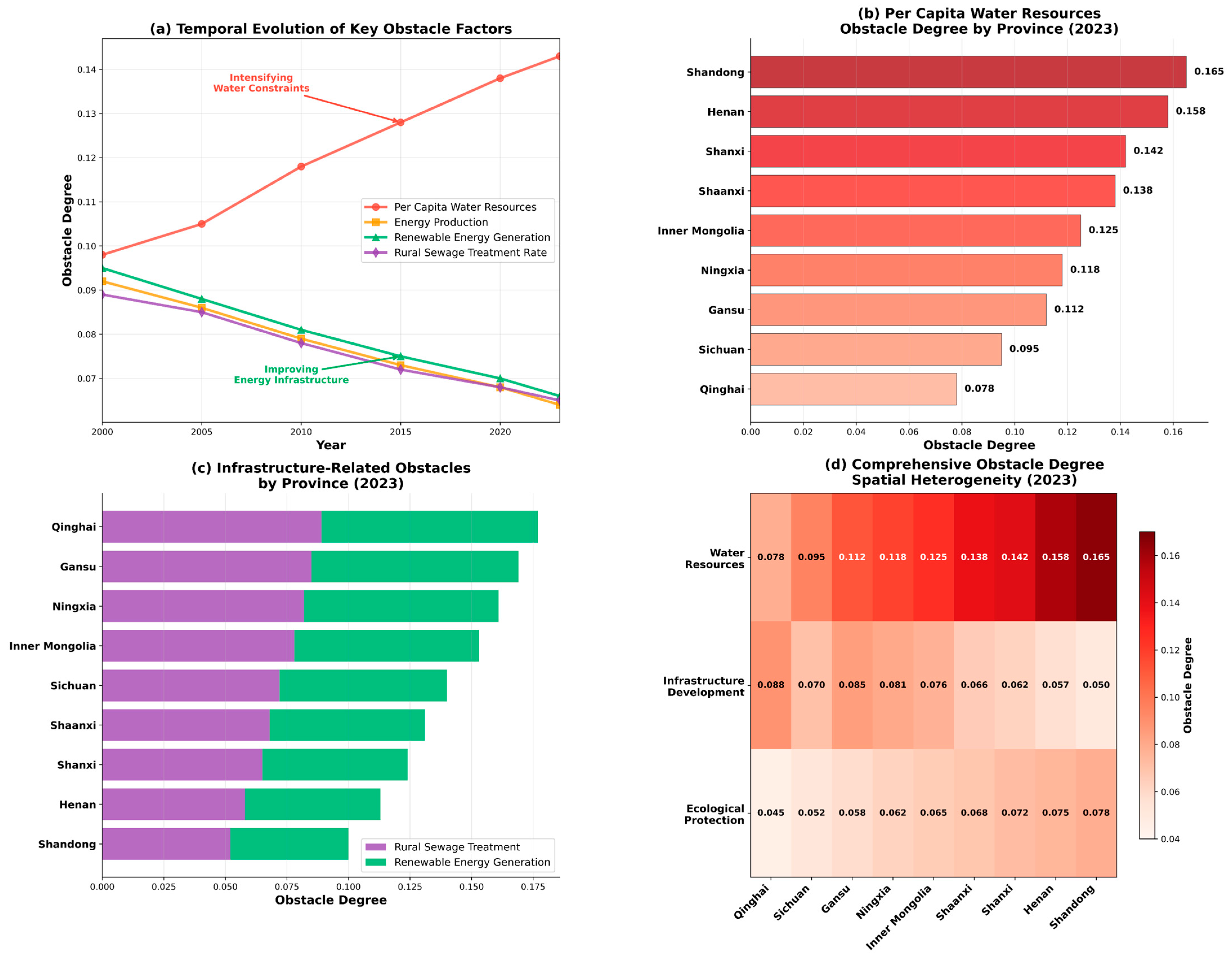
Obstacle diagnosis analysis identifies primary constraints limiting coordinated development within WEFE nexus relationships (Figure 9a).
Per capita water resources constitute the most significant limiting factor, exhibiting an average obstacle degree of 0.1205, which corresponds to 12.05% of the total constraint intensity. This finding confirms that water resource scarcity is the primary challenge to achieving sustainable development in the Yellow River Basin.
The rural sewage treatment rate represents the second most significant barrier, with a degree of 0.0668, underscoring substantial deficiencies in rural environmental infrastructure. Insufficient sewage treatment capacity in rural areas not only jeopardizes water quality—thereby posing risks to both human health and ecosystem integrity—but also constrains opportunities for agricultural water reuse and ecosystem restoration.
Total sewage treatment constitutes the third major obstacle, with obstacle degree of 0.0651, reflecting insufficient capacity for treating industrial and urban sewage. Limited sewage treatment infrastructure constrains water quality improvement and water reuse, representing a bottleneck for sustainable water management.
Renewable energy generation constitutes the fourth significant barrier, with an obstacle degree of 0.0614. This value indicates that, despite certain advancements, the transition to clean energy remains incomplete. This limitation is particularly pronounced in provinces that possess limited renewable energy resources or lack adequate renewable energy grid infrastructure.
Energy production emerges as the fifth most significant constraint, with an obstacle degree of 0.0600, highlighting persistent challenges in balancing increasing energy demands with environmental sustainability. This constraint is especially pronounced in provinces reliant on coal-fired power generation.
Subsystem-level obstacle factor analysis reveals that the water system exhibits the highest total obstacle intensity (0.222), followed by the ecosystem (0.208), food system (0.137), and energy system (0.121) (Figure 9b). This hierarchy corresponds with the weight distribution derived from the entropy weight method, indicating that the subsystems deemed most critical also encounter the most significant developmental constraints.
Temporal analysis of obstacle degrees reveals a continuous intensification of constraints related to water resources, with the per capita water resource obstacle intensity rising from 0.098 in 2000 to 0.143 in 2023 (Figure 10a). This upward trend underscores increasing pressures on water resources driven by economic development, population growth, and the impacts of climate change. In contrast, the obstacle intensity associated with energy-related factors exhibits a consistent decline, reflecting advancements in energy infrastructure and improvements in efficiency.
The inter-provincial distribution of obstacle factors exhibits pronounced spatial heterogeneity (Figure 10b–d). Western provinces, including Qinghai, Gansu, and Ningxia, encounter greater challenges related to sewage treatment and renewable energy generation. In contrast, eastern provinces such as Shandong and Henan experience higher obstacle intensities concerning water resource availability indicators, notably per capita water resources. This spatial differentiation underscores the necessity for tailored policy interventions that address region-specific constraints while fostering integrated coordination across the water-energy nexus.

4. Discussion

4.1. Theoretical Significance of Main Findings

This study identifies and validates the characteristics of high coupling and moderate-to-low coordination in the Yellow River Basin WEFE system, which highly aligns with the ecosystem-centered WEFE nexus theoretical framework. This theory emphasizes the critical role of ecosystem services in maintaining stability and resilience of the entire nexus relationship [45].
The revealed WEFE system weight distribution characteristics (water system 0.3126, energy system 0.1957, food system 0.1692, ecosystem 0.3225) reflect the fundamental position of water resources in sustainable development of the Yellow River Basin. The weights show the ecology and water systems as the most influential, and the identification of per capita water resources as the primary obstacle factor (obstacle degree 0.1205) confirms that water scarcity is the core challenge for sustainable development in the basin. This finding echoes research results that emphasized the central role of water resources in the WEFE nexus relationship of the Yellow River Basin, particularly under dual constraints of water quantity and quality [46]. The relatively large proportion of water system weight not only reflects the objective reality of severe water scarcity in the Yellow River Basin but also demonstrates the fundamental constraining role of water resources on the development of the other three subsystems.
This study applies center of gravity migration models to analyze spatial evolutionary patterns of WEFE subsystems, discovering complex spatial dynamics including continuous eastward migration of water system center, fluctuating changes in energy system center, relative stability of food system center, and initial eastward then westward migration of ecosystem center. This finding provides new spatial perspectives for regional development theory, enriching understanding of spatial evolutionary patterns in regional systems. The differentiated characteristics of center of gravity migration trajectories reflect varying sensitivities of different subsystems to policy orientation, resource endowment, and technological progress, providing scientific foundations for formulating differentiated regional development policies.
The multi-method integration analytical framework established in this study (entropy weight method–coupling coordination degree model–center of gravity migration analysis–principal component analysis–obstacle diagnosis) provides new methodological contributions to WEFE nexus research. Through method integration, this study achieves comprehensive analysis from weight determination to system evaluation, from temporal evolution to spatial dynamics, from comprehensive analysis to obstacle diagnosis, significantly improving research comprehensiveness and depth.

4.2. Practical Value of Research Results

4.2.1. Water Resource Management Policy Insights

Per capita water resources constitute the largest obstacle factor constraining coordinated development of the Yellow River Basin WEFE system, with obstacle degree reaching 0.1205, providing clear improvement directions for water resource management policy formulation. Per capita water resources in the Yellow River Basin amount to only 27% of the national average, with severe water resource scarcity becoming a fundamental constraint on regional sustainable development. Recommendations for strengthening water resource management include several aspects:
First, implement the strictest water resource management system, establishing dual control mechanisms for water resource consumption total and intensity. Through setting water consumption total red lines, water use efficient red lines, and water function zone pollution limitation red lines, ensure water resource utilization does not exceed environmental carrying capacity. This highly aligns with China’s national-level implementation of the “four waters and four determinations” strategy (determining cities, land, people, and production by water), providing water resource guarantees for high-quality development in the Yellow River Basin.
Second, vigorously promotes water-saving society construction and improves water resource utilization efficiency. Research findings show that agricultural water consumption has high weight (0.2223) among three kinds of consumption in the water system, indicating a substantial agricultural water-saving necessity. Accelerate promotion of high-efficiency water-saving irrigation technologies, develop precision agriculture and smart agriculture, and improve agricultural water resource utilization efficiency. Simultaneously, strengthen industrial water-saving technological transformation, promote recycled water use and reclaimed water utilization, and construct water-saving industrial systems.
Third, coordinate advancement of water resource allocation project construction and optimize spatial water resource allocation. The revealed continuous eastward migration trend of water system center reflects intensifying spatial mismatch between water resource supply and demand. Accelerate advancement of major water conservancy projects such as the South-to-North Water Diversion Western Route Project, improve basin water resource allocation systems, and alleviate water resource shortage pressure in upstream regions.

4.2.2. Energy Development Policy Guidance

The energy system achieved 169% rapid growth during 2000–2023, significantly higher than the other three subsystems, primarily benefiting from national energy structure adjustment policies and renewable energy technological progress promotion. Hydropower, wind power, and solar photovoltaic generation weight in the energy system reaches 0.0996, indicating that clean energy has become important support for energy development in the Yellow River Basin.
Recommendations for further optimizing energy development policies include: First, continue increasing clean energy development efforts, fully utilize abundant water, wind, and solar energy resource advantages in the Yellow River Basin, and construct nationally important clean energy bases. Second, promote energy consumption structure optimization, reduce coal consumption proportions, increase clean energy consumption proportions, and achieve green low-carbon transformation of energy systems. Third, strengthen energy infrastructure construction, improve grid structures, and enhance clean energy absorption and transmission capabilities. Fourth, fully utilize resource advantages of various provinces and regions, construct complementary and mutually beneficial energy development patterns, and achieve coordinated energy system development.

4.2.3. Agricultural Development Policy Optimization

The food system maintained relatively stable development trends during the study period, with comprehensive scores growing from 0.2891 in 2000 to 0.4156 in 2023, representing 44% growth. Total grain production and per capita grain possession weights in the food system are 0.0468 and 0.0339 respectively, indicating the importance of food security guarantee capabilities.
Recommendations for optimizing agricultural development policies include: First, adhere to strategies of storing grain in land and technology, strengthen high-standard farmland construction, and improve farmland infrastructure levels. Research findings show effective irrigated farmland area weight of 0.0420, indicating important supporting roles of irrigation facilities for grain production. Second, promote green agricultural development, reasonably control fertilizer application amounts, develop ecological agriculture and circular agriculture, and achieve sustainable agricultural development. Third, strengthen agricultural scientific and technological innovation, promote excellent varieties and advanced technologies, and improve agricultural production efficiency and quality. Fourth, establish and improve agricultural risk prevention mechanisms, strengthen agricultural insurance and disaster prevention and control, and improve stability and sustainability of agricultural production.

4.2.4. Ecological Protection Policy Improvement

The ecosystem presents complex development patterns, with comprehensive scores fluctuating significantly during the study period, growing from 0.2156 in 2000 to 0.4012 in 2023, but experiencing multiple fluctuations in between. This reflects complex relationships between ecological environmental protection and economic development, as well as ecosystem sensitivity to external disturbances.
Timber production has the highest weight (0.0949) in the ecosystem, followed by rural sewage treatment rate (0.0654) and total sewage treatment (0.0616), while forest area weight is 0.0550, reflecting important significance of sewage treatment for improving water environment quality.
Recommendations for improving ecological protection policies include: First, implement integrated protection and restoration of mountains, waters, forests, farmlands, lakes, grasslands, and deserts, and strengthen overall ecosystem protection in the Yellow River Basin. Second, deeply advance pollution prevention and control battles, strengthen industrial waste gas emission control, improve sewage treatment capacity and treatment rates, and improve basin environmental quality. Third, establish and improve ecological compensation mechanisms, mobilize enthusiasm of all parties for ecological protection participation, and achieve coordinated unity of ecological protection and economic development. Fourth, formulate differentiated ecological protection policies based on different regions’ ecological environmental characteristics and protection needs, achieving precise protection and systematic governance.

4.3. Comparative Analysis with Existing Research

4.3.1. Comparison of Obstacle Factor Identification

The main obstacle factors identified in this study show both similarities and differences with results from published research on water-energy-carbon-ecological environment nexus relationships in the Yellow River Basin [25]. Both studies identify water resource-related indicators as primary obstacle factors, reflecting fundamental constraining roles of water resource scarcity on sustainable development in the Yellow River Basin. However, specific obstacle factor rankings and weights show certain differences, primarily stemming from different indicator system construction, weight determination methods, and evaluation time periods.
This study finds per capita water resources as the largest obstacle factor (obstacle degree 0.1205), while other research emphasizes importance of total water resources [25]. This difference reflects policy orientation shifts from total control to intensity control, with per capita indicators better reflecting matching relationships between water resources and population carrying capacity, possessing stronger policy guidance significance.
Regarding energy system obstacle factors, this study finds total energy consumption as an important obstacle factor, consistent with findings from international similar research [47]. Research found that dependence on fossil fuels and unsustainable resource utilization intensify greenhouse gas emissions, endangering water resource storage, energy production, and food production. Key steps for addressing WEFE challenges include transitioning to renewable energy and investing in clean technologies and green infrastructure. This indicates energy consumption control and structural optimization represent important pathways for achieving WEFE system coordinated development.

4.3.2. Comparison of Coupling Coordination Degree Analysis

This study finds that the Yellow River Basin WEFE system currently overall maintains high coupling with moderate coordination, basically consistent with findings from similar studies, reflecting universal problems of close internal connections but coordination development levels requiring improvement in WEFE systems [48,49].
Inter-provincial difference characteristics found in this study align with existing research results [50]. Economically developed regions such as Shandong and Henan have relatively high coupling coordination degrees, while economically underdeveloped regions such as Qinghai and Gansu have relatively low coordination degrees. These differences primarily stem from different economic development levels, technological innovation capabilities, and infrastructure construction levels.

4.3.3. Comparison of Spatial Evolution Analysis

This study applies center of gravity migration models to analyze WEFE subsystem spatial evolutionary patterns, which is relatively rare in existing research. Most WEFE studies primarily focus on temporal evolutionary characteristics with insufficient attention to spatial dynamics. The finding of continuous eastward migration of water system center aligns with national regional development policies and population distribution change trends. With implementation of the Yellow River Basin ecological protection and high-quality development strategy, economic development and population concentration in downstream regions are further strengthened, continuously increasing water resource demands and driving eastward migration of water system centers. The relatively stable characteristics of energy and food system centers reflect the relative balance in these two resource distributions and comprehensiveness of national development policies.

4.3.4. Cross-Regional Coordination Mechanisms:

To promote balanced development, we propose: (1) establishing a Yellow River Basin Coordination Committee with representatives from all nine provinces to facilitate joint decision-making on water allocation, energy development, and ecological protection; (2) implementing cross-regional compensation mechanisms where provinces with higher WEFE coordination degrees (e.g., Henan, Shandong) provide financial or technical support to lagging provinces (e.g., Ningxia, Qinghai); (3) creating a basin-wide information sharing platform to enable real-time monitoring of water use, energy production, food output, and ecological conditions; and (4) developing joint investment funds for transboundary projects, such as water transfer schemes and renewable energy grids, with contributions proportional to each province’s GDP and water consumption.

5. Conclusions and Prospects

5.1. Main Research Findings

Based on long-term time series data from 2000–2023, this study employs a multi-method integration analytical framework to systematically reveal coordinated development characteristics and evolutionary patterns of Water–Energy–Food–Ecosystem (WEFE) nexus relationships in the Yellow River Basin.
The WEFE system demonstrates dual dominance of ecosystem and water, with ecosystem having the highest weight (0.3225) and water system showing comparable importance (0.3126), reflecting the fundamental positions of both water resources and ecological protection in regional sustainable development. Temporal evolution exhibits significant differentiation: the energy system developed most rapidly (212% growth), while the water system showed the slowest progress (4% growth), highlighting severity of water resource constraints. The ecosystem experienced substantial fluctuations (26% growth), reflecting phased effects of ecological protection policies, whereas the food system maintained relatively stable development (7% growth).
Coupling coordination analysis reveals that while the system maintained high coupling degrees (above 0.8) throughout the study period, coordination levels remained moderate, improving from 0.4289 in 2000 to 0.6234 in 2023. This indicates close subsystem interdependence but insufficient internal development balance. Significant inter-provincial disparities exist, with Shandong Province achieving the highest coordination (0.7156) and Qinghai Province the lowest (0.4892), reflecting regional development imbalances.
Spatial analysis demonstrates complex center of gravity migration patterns. The water system center migrated eastward by 131.0 km, reflecting sustained downstream demand growth, while the energy system remained relatively stable. The food system shifted toward southwest directions due to agricultural layout adjustments, and the ecosystem center exhibited complex patterns influenced by spatial policy effects. Principal component analysis identifies water resources, ecological environment, energy development, and agricultural production as key factors driving system variation, with the first three components explaining 78.6% of total variance.

5.2. Limitations and Future Research

5.2.1. Limitations

First, the analysis is based on provincial-level data, which may mask sub-provincial heterogeneity. Future research should use higher-resolution data to capture more detailed spatial patterns. Second, the study focuses on the biophysical aspects of the WEFE nexus and does not fully consider the socioeconomic dimensions, such as governance and institutional factors. Future studies should integrate socioeconomic variables to provide a more holistic understanding of the WEFE nexus.

5.2.2. Deepening Mechanism Research

Future research should further deepen analysis of internal interaction mechanisms within WEFE systems, exploring interaction pathways and transmission mechanisms among subsystems. Through constructing system dynamics models, complex network models, etc., reveal complexity and dynamics of WEFE systems, providing theoretical support for system optimization. Simultaneously, research on external driving factors should be strengthened, analyzing impact mechanisms of policies, technologies, markets, climate, and other factors on WEFE systems, constructing more comprehensive influencing factor systems.

5.2.3. Expanding Research Scales

This study primarily conducts analysis based on provincial scales. Future research should expand to municipal and county levels or even smaller spatial scales, deeply analyzing spatial heterogeneity and local characteristics of WEFE systems. Simultaneously, cross-scale research should be strengthened, exploring correlations and transmission mechanisms among different spatial scales. In temporal scales, research time series should be extended while strengthening future scenario analysis and trend prediction.

5.2.4. Strengthening Application Orientation

Future research should focus more on application orientation, strengthening cooperation with government departments, enterprises, and social organizations, enhancing decision support system development, constructing WEFE system management platforms, and providing technical support for government decision-making and enterprise management.

Author Contributions

J.Y.: Data collection & processing, Methodology, Visualization, Writing—original draft, Writing—review & editing. J.B.: Review & editing, Funding acquisition, Project administration. K.M.: Review & editing. F.P.: Review & editing. Y.S.: Review & editing. L.W.: Review & editing. W.Z.: Review & editing. All authors have read and agreed to the published version of the manuscript.

Funding

This research was funded by the Inner Mongolia Department of Science and Technology 2024 major projects to prevent and control sand demonstration “unveiled marshal” project (2024JBGS0016).

Data Availability Statement

The original data presented in the study are openly available in https://figshare.com/articles/figure/WEEE_System_Analysis_Yellow_River_Basin/30364159 (accessed on 18 November 2025).

Acknowledgments

The contribution of project PID2023-146274OB-I00 (Agencia Estatal de Investigación-Spain) is acknowledged. Additionally, we acknowledge the support granted to Jingwei Yao by the China Scholarship Council (CSC No. 202303340011).

Conflicts of Interest

Author Wenmin Zhang was employed by the company Henan Water Environment Survey and Design. The remaining authors declare that the research was conducted in the absence of any commercial or financial relationships that could be construed as a potential conflict of interest.

References

  1. Guo, S.; Zhang, F.; Engel, B.A.; Wang, Y.; Guo, P.; Li, Y. A distributed robust optimization model based on water-food-energy nexus for irrigated agricultural sustainable development. J. Hydrol. 2022, 606, 127394. [Google Scholar] [CrossRef]
  2. Hoff, H. Understanding the Nexus. Background Paper for the Bonn2011 Conference: The Water, Energy and Food Security Nexus; Stockholm Environment Institute: Stockholm, Sweden, 2011. [Google Scholar]
  3. Biggs, E.M.; Bruce, E.; Boruff, B.; Duncan, J.M.; Horsley, J.; Pauli, N.; McNeill, K.; Neef, A.; Van Ogtrop, F.; Curnow, J.; et al. Sustainable development and the water–energy–food nexus: A perspective on livelihoods. Environ. Sci. Policy 2015, 54, 389–397. [Google Scholar] [CrossRef]
  4. Zhang, C.; Wei, Y.; Zhao, X.; Hu, J. Assessment and enhancement pathways of the water-energy-food-economy-ecosystem nexus in China’s yellow river basin. Energy 2025, 316, 134492. [Google Scholar] [CrossRef]
  5. Yupanqui, C.; Dias, N.; Goodarzi, M.; Sharma, S.; Vagheei, H.; Mohtar, R. A review of water-energy-food nexus frameworks, models, challenges and future opportunities to create an integrated, national security-based development index. Energy Nexus 2025, 18, 100409. [Google Scholar] [CrossRef]
  6. Hejnowicz, A.P.; Thorn, J.P.R.; Giraudo, M.E.; Sallach, J.B.; Hartley, S.E.; Grugel, J.; Pueppke, S.G.; Emberson, L. Appraising the Water-Energy-Food Nexus from a Sustainable Development Perspective: A Maturing Paradigm? Earth’s Future 2022, 10, e2021EF002622. [Google Scholar] [CrossRef]
  7. Zhang, Y.; Wang, Y. Water–energy–food nexus in the Yellow River basin of China under the influence of multiple policies. Land 2024, 13, 1356. [Google Scholar] [CrossRef]
  8. Teutschbein, C.; Jonsson, E.; Todorović, A.; Tootoonchi, F.; Stenfors, E.; Grabs, T. Future drought propagation through the water-energy-food-ecosystem nexus—A nordic perspective. J. Hydrol. 2023, 617, 128963. [Google Scholar] [CrossRef]
  9. Sušnik, J.; Masia, S.; Teutschbein, C. Water as a key enabler of nexus systems (water–energy–food). Camb. Prism. Water 2023, 1, e1. [Google Scholar] [CrossRef]
  10. Copeland, C.; Carter, N.T. Energy-Water Nexus: The Water Sector’s Energy Use; Congressional Research Service: Washington, DC, USA, 2017. [Google Scholar]
  11. Erb, K.-H.; Haberl, H.; Plutzar, C. Dependency of global primary bioenergy crop potentials in 2050 on food systems, yields, biodiversity conservation and political stability. Energy Policy 2012, 47, 260–269. [Google Scholar] [CrossRef] [PubMed]
  12. Gazal, A.A.; Jakrawatana, N.; Silalertruksa, T.; Gheewala, S.H. Water-energy-food nexus review for biofuels assessment. Int. J. Renew. Energy Dev. 2022, 11, 193–205. [Google Scholar] [CrossRef]
  13. Bekchanov, M.; Ringler, C.; Mueller, M. Ecosystem services in the water-energy-food nexus. Change Adapt. Socio-Ecol. Syst. 2015, 2, 100–102. [Google Scholar] [CrossRef]
  14. Maragkaki, A.; Koukianaki, E.A.; Lilli, M.A.; Efstathiou, D.; Nikolaidis, N.P. Optimizing the water-ecosystem-food nexus using nature-based solutions at the basin scale. Front. Water 2024, 6, 1386925. [Google Scholar] [CrossRef]
  15. Jain, S.K.; Sikka, A.K.; Alam, M.F. Water-energy-food-ecosystem nexus in India—A review of relevant studies, policies, and programmes. Front. Water 2023, 5, 1128198. [Google Scholar] [CrossRef]
  16. Kalvani, S.R.; Celico, F. Analysis of pros and cons in using the water–energy–food nexus approach to assess resource security: A review. Sustainability 2024, 16, 2605. [Google Scholar] [CrossRef]
  17. Mondal, K.; Chowdhury, M.; Dutta, S.; Satpute, A.N.; Jha, A.; Khose, S.; Gupta, V.; Das, S. Synergising agricultural systems: A critical review of the interdependencies within the water-energy-food nexus for sustainable futures. Water-Energy Nexus 2025, 8, 167–188. [Google Scholar] [CrossRef]
  18. Torhan, S.; Grady, C.A.; Ajibade, I.; Galappaththi, E.K.; Hernandez, R.R.; Musah-Surugu, J.I.; Nunbogu, A.M.; Segnon, A.C.; Shang, Y.; Ulibarri, N.; et al. Tradeoffs and synergies across global climate change adaptations in the food-energy-water nexus. Earth’s Future 2022, 10, e2021EF002201. [Google Scholar] [CrossRef]
  19. Food and Agriculture Organization of the United Nations (FAO). The Water-Energy-Food Nexus: A New Approach in Support of Food Security and Sustainable Agriculture; FAO Technical Brief; FAO: Rome, Italy, 2014. [Google Scholar]
  20. Tang, X.; Huang, Y.; Pan, X.; Liu, T.; Ling, Y.; Peng, J. Managing the water-agriculture-environment-energy nexus: Trade-offs and synergies in an arid area of northwest China. Agric. Water Manag. 2024, 295, 108776. [Google Scholar] [CrossRef]
  21. Yang, L.; Chen, Y.; He, P.; Ren, Y.; Yan, P.; Li, J. Multi-level decisions for addressing trade-off in the cross-regional water-environment-agriculture interactive system under constraint of water ecological carrying capacity. J. Environ. Manag. 2024, 367, 121940. [Google Scholar] [CrossRef] [PubMed]
  22. Dong, G.; Wang, J.; Zhang, W.; Liu, Z.; Wang, K.; Cheng, W. Land use conflict identification coupled with ecological protection priority in Jinan city, China. Int. J. Environ. Res. Public Health 2023, 20, 4863. [Google Scholar] [CrossRef]
  23. Wang, J.; Sun, S.; Yin, Y.; Wang, K.; Sun, J.; Tang, Y.; Zhao, J. Water-food-carbon nexus related to the producer–consumer link: A review. Adv. Nutr. 2022, 13, 938–952. [Google Scholar] [CrossRef]
  24. Niewöhner, J.; Bruns, A.; Haberl, H.; Hostert, P.; Krueger, T.; Lauk, C.; Lutz, J.; Müller, D.; Nielsen, J.Ø. Land Use Competition. Ecological, Economic and Social Perspective, 1st ed.; Springer International Publishing: Cham, Switzerland, 2016. [Google Scholar]
  25. Han, Y.; Jiang, Z.; Zhao, M.; Li, J. Analysis of coupling coordination development and obstacle factors in the water-energy-carbon-ecological environment nexus across China’s yellow river basin. Sci. Rep. 2025, 15, 24106. [Google Scholar] [CrossRef]
  26. Han, H.; Zhang, K.; Li, S.; Qian, Z. Adaptability Analysis and Spatial Correlation Characteristics of Water-Energy-Food-Ecology System in the Yellow River Basin from the Perspective of Symbiosis. Available online: https://ssrn.com/abstract=5114696 (accessed on 11 November 2025).
  27. Yang, Y.; Chen, Y.; Li, X. Spatial and temporal distribution and influencing factors of ‘water-energy-food-ecology’ system resilience. Land 2025, 14, 8. [Google Scholar] [CrossRef]
  28. Sun, K.; Han, J.; Wu, Q.; Xie, W.; He, W.; Yang, Z.; Wang, Y.; Liu, J.; Shi, E. The coupling coordination and spatiotemporal evolution of industrial water-energy-CO2 in the Yellow River basin. Sci. Total Environ. 2024, 912, 169012. [Google Scholar] [CrossRef]
  29. Zhang, F.; Xuan, X.; He, Q. A water-energy nexus analysis to a sustainable transition path for ji-shaped bend of the Yellow River, china. Ecol. Inf. 2022, 68, 101578. [Google Scholar] [CrossRef]
  30. Yin, Y.; Tang, Q.; Liu, X.; Zhang, X. Water scarcity under various socio-economic pathways and its potential effects on food production in the Yellow River basin. Hydrol. Earth Syst. Sci. 2017, 21, 791–804. [Google Scholar] [CrossRef]
  31. Ma, W.; Wang, Y.; Kou, J.; Yang, H.; Xue, B.; Gou, X. Scenario analysis of water-land-food synergy in nine provinces along the Yellow River. Adv. Earth Sci. 2023, 38, 1243. [Google Scholar] [CrossRef]
  32. Yang, R.; Xu, H. Does agricultural water-saving policy improve food security? Evidence from the Yellow River basin in China. Water Policy 2023, 25, 253–268. [Google Scholar] [CrossRef]
  33. Yin, D.; Yu, H.; Shi, Y.; Zhao, M.; Zhang, J.; Li, X. Matching supply and demand for ecosystem services in the Yellow River basin, china: A perspective of the water-energy-food nexus. J. Clean. Prod. 2023, 384, 135469. [Google Scholar] [CrossRef]
  34. Liu, S.; Zhao, L. Development and synergetic evolution of the water–energy–food nexus system in the Yellow River Basin. Environ. Sci. Pollut. Res. 2022, 29, 65549–65564. [Google Scholar] [CrossRef]
  35. Wang, S.; Yang, J.; Wang, A.; Liu, T.; Du, S.; Liang, S. Coordinated analysis and evaluation of water–energy–food coupling: A case study of the Yellow River basin in shandong province, china. Ecol. Indic. 2023, 148, 110138. [Google Scholar] [CrossRef]
  36. Wang, Y.; Song, J.; Zhang, X.; Sun, H.; Bai, H. Coupling coordination evaluation of water-energy-food and poverty in the Yellow River basin, China. J. Hydrol. 2022, 614, 128461. [Google Scholar] [CrossRef]
  37. Wang, Y.; Li, N.; Song, J.; Li, Q. Solving the sustainable development dilemma in the Yellow River basin of China: Water-energy-food linkages. J. Clean. Prod. 2025, 490, 144797. [Google Scholar] [CrossRef]
  38. Si, Y.; Li, X.; Yin, D.; Li, T.; Cai, X.; Wei, J.; Wang, G. Revealing the water-energy-food nexus in the upper yellow river basin through multi-objective optimization for reservoir system. Sci. Total Environ. 2019, 682, 1–18. [Google Scholar] [CrossRef]
  39. Shannon, C.E. A mathematical theory of communication. Bell Syst. Tech. J. 1948, 27, 379–423. [Google Scholar] [CrossRef]
  40. Li, Y.; Zhang, X.; Gao, X. An evaluation of the coupling coordination degree of an urban economy–society–environment system based on a multi-scenario analysis: The case of chengde city in China. Sustainability 2022, 14, 6790. [Google Scholar] [CrossRef]
  41. Zhou, C.; Wan, S.; Liu, J.; Ma, Y.; Zheng, H.; Chen, S. Coupling coordination degree and influencing factors of forestry modernization and high quality economic development: An empirical study from provincial panel in China. Front. Public Health 2024, 12, 1436292. [Google Scholar] [CrossRef]
  42. Wang, H.; Zhang, B.; Liu, Y.; Liu, Y.; Xu, S.; Zhao, Y.; Chen, Y.; Hong, S. Multi-dimensional analysis of urban expansion patterns and their driving forces based on the center of gravity-GTWR model: A case study of the Beijing-Tianjin-Hebei urban agglomeration. Acta Geogr. Sin. 2018, 73, 1076–1092. [Google Scholar] [CrossRef]
  43. Jolliffe, I.T.; Cadima, J. Principal component analysis: A review and recent developments. Philos. Trans. R. Soc. A Math. Phys. Eng. Sci. 2016, 374, 20150202. [Google Scholar] [CrossRef]
  44. Zhang, Y.; Ma, H.; Wang, Q.; Xu, Y.; Tian, S.; Yuan, X.; Ma, Q.; Xu, Y.; Yang, S.; Liu, C. Multicity comparative assessment and optimized management path of sustainability of the economy–energy–environment system: A case study of core cities in China’s three major economic circles. Integr. Environ. Assess. Manag. 2024, 20, 875–887. [Google Scholar] [CrossRef]
  45. Mooren, C.E.; Munaretto, S.; La Jeunesse, I.; Sievers, E.; Hegger, D.L.T.; Driessen, P.P.J.; Hüesker, F.; Cirelli, C.; Canovas, I.; Mounir, K.; et al. Water–energy–food–ecosystem nexus: How to frame and how to govern. Sustain. Sci. 2025, 20, 2313–2334. [Google Scholar] [CrossRef]
  46. Han, X.; Hua, E.; Guan, J.; Engel, B.A.; Liu, R.; Bai, Y.; Sun, S.; Wang, Y. Development of a method to assess synergy and competition for water use among water-energy-food nexus in the Yellow River basin: Water quantity-quality dimensions. J. Hydrol. 2024, 639, 131607. [Google Scholar] [CrossRef]
  47. Javan, K.; Altaee, A.; BaniHashemi, S.; Darestani, M.; Zhou, J.; Pignatta, G. A review of interconnected challenges in the water–energy–food nexus: Urban pollution perspective towards sustainable development. Sci. Total Environ. 2024, 912, 169319. [Google Scholar] [CrossRef] [PubMed]
  48. Sui, G.; Wang, H.; Cai, S.; Cui, W. Coupling coordination analysis of resources, economy, and ecology in the Yellow River basin. Ecol. Indic. 2023, 156, 111133. [Google Scholar] [CrossRef]
  49. Yin, D.; Yu, H.; Lu, Y.; Zhang, J.; Li, G.; Li, X. A comprehensive evaluation framework of water-energy-food system coupling coordination in the Yellow River basin, china. Chin. Geogr. Sci. 2023, 33, 333–350. [Google Scholar] [CrossRef]
  50. Zhang, P.; Fu, Y.; Lu, B.; Li, H.; Qu, Y.; Ibrahim, H.; Wang, J.; Ding, H.; Ma, S. Coupling coordination evaluation and optimization of water–energy–food system in the Yellow River basin for sustainable development. Systems 2025, 13, 278. [Google Scholar] [CrossRef]
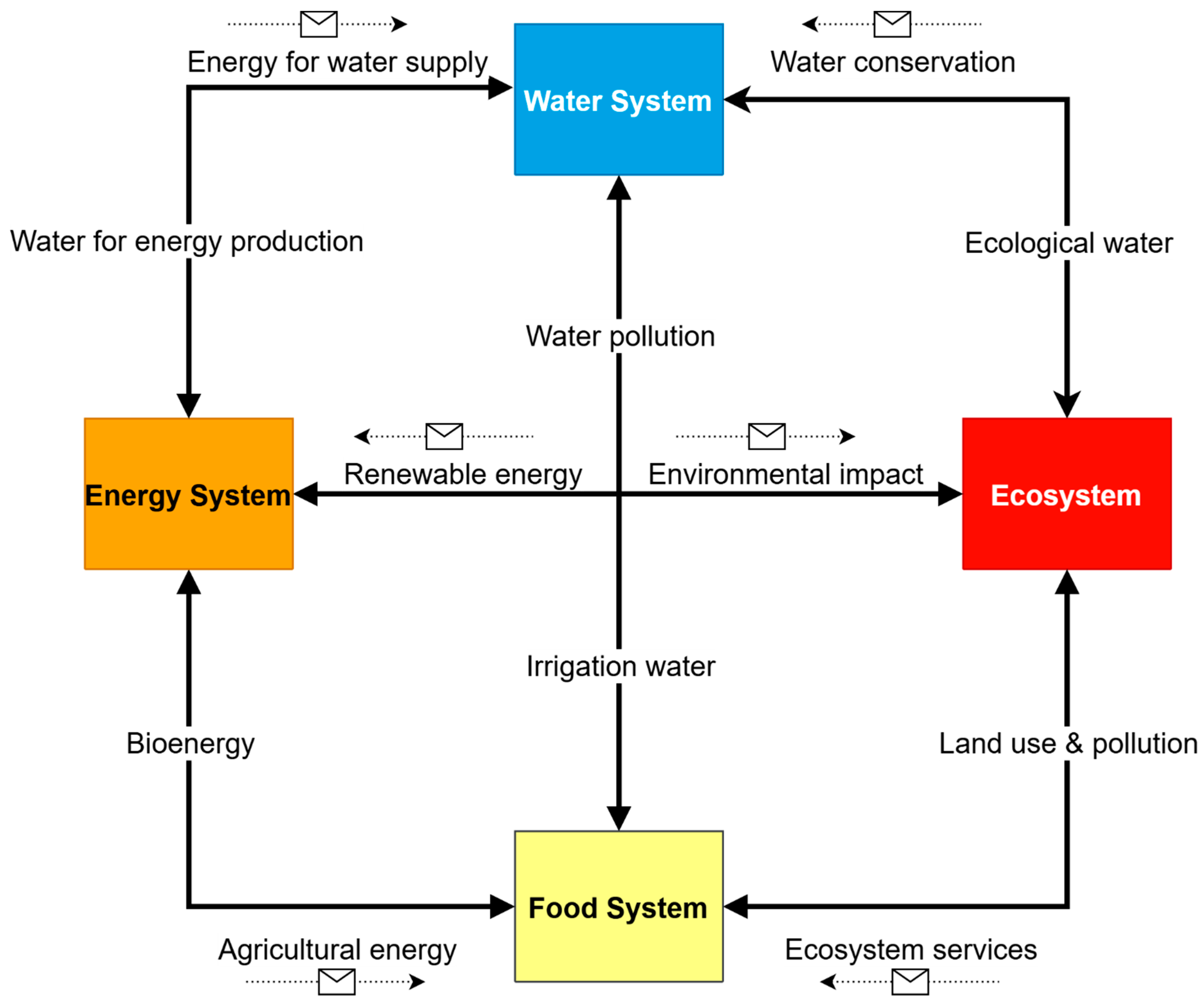
Figure 1. Water–Energy–Food–Ecosystem (WEFE) Nexus Framework.
Water 17 03331 g001
Figure 2. Yellow River Basin.
Water 17 03331 g002
Figure 3. Temporal Evolution of WEFE Subsystem Scores.
Water 17 03331 g003
Figure 4. WEFE System Coupling-Coordination Analysis.
Water 17 03331 g004
Figure 5. Geographic Trajectories of Gravity Center Migration.
Water 17 03331 g005
Figure 6. Gravity Center Migration Distance.
Water 17 03331 g006
Figure 7. Pairwise Coupling Relationships among WEFE Subsystems.
Water 17 03331 g007
Figure 8. PCA of WEFE System Indicators.
Water 17 03331 g008
Figure 9. Obstacle Factor Analysis of WEFE System Coordination Development.
Water 17 03331 g009
Figure 10. Temporal Trends and Spatial Patterns of WEFE System Obstacles.
Water 17 03331 g010
Table 1. Weight Distribution of WEFE System Evaluation indicators.
SubsystemIndicatorsUnitIndicators TypeSubsystem WeightSystem WeightSum of System Weight
WaterPer capita water resourcesm3Positive0.3502 0.1095 0.3126
Per capita water consumptionm3Negative0.0244 0.0076
Per capita wastewater dischargetNegative0.0242 0.0076
Surface water supply108 m3Positive0.1168 0.0365
Groundwater supply108 m3Positive0.1711 0.0535
Industrial water consumption108 m3Negative0.0403 0.0126
Agricultural water consumption108 m3Negative0.2223 0.0696
Ecological water consumption108 m3Positive0.0506 0.0158
EnergyTotal energy production104 tcePositive0.3077 0.0602 0.1957
Total energy consumption104 tceNegative0.0267 0.0052
Energy consumption in agriculture104 tceNegative0.0608 0.0119
Rural electricity consumption108 kWhPositive0.2962 0.0580
Renewable energy generation104 tcePositive0.3086 0.0604
FoodTotal grain production104 tPositive0.2766 0.0468 0.1692
Per capita grain possessionkgPositive0.2003 0.0339
Grain crop sowing area103 haPositive0.2121 0.0359
Effective irrigation area103 haPositive0.2482 0.0420
Fertilizer application104 tNegative0.0629 0.0106
EcosystemTotal sewage treatment104 tPositive0.1911 0.0616 0.3225
Soil erosion control area103 haPositive0.0882 0.0285
Industrial waste gas emission108 m3Negative0.0047 0.0015
Urban sewage treatment rate%Positive0.0484 0.0156
Rural sewage treatment rate%Positive0.2027 0.0654
Forest area104 haPositive0.1706 0.0550
Timber production104 m3Negative0.2942 0.0949
Disclaimer/Publisher’s Note: The statements, opinions and data contained in all publications are solely those of the individual author(s) and contributor(s) and not of MDPI and/or the editor(s). MDPI and/or the editor(s) disclaim responsibility for any injury to people or property resulting from any ideas, methods, instructions or products referred to in the content.