Article

Impact of Wastewater Treatment Plant Discharge on Water Quality of a Heavily Urbanized River in Milan Metropolitan Area: Traditional and Emerging Contaminant Analysis


1
National Research Council-Water Research Institute (CNR-IRSA), Via del Mulino 19, 20861 Brugherio, Italy
2
National Research Council-Institute of Polar Sciences (CNR-ISP), Via Cozzi 53, 20126 Milan, Italy
*
Authors to whom correspondence should be addressed.
Water 2025, 17(22), 3276; https://doi.org/10.3390/w17223276
Submission received: 3 October 2025 / Revised: 8 November 2025 / Accepted: 12 November 2025 / Published: 16 November 2025
(This article belongs to the Section Water Quality and Contamination)

Abstract

Wastewater treatment plants (WWTPs) can still be considered point sources of contamination into receiving aquatic ecosystems, especially for many emerging contaminants, which require additional treatments for their removal. In this study, the impact of a WWTP on the water quality of a river located in the metropolitan area of Milan, Northern Italy, was investigated. A wide range of emerging contaminants (i.e., perfluorinated compounds, pharmaceuticals, and synthetic fragrances) and traditional contaminants (i.e., heavy metals, nutrients, and microbiological parameters) were analyzed, both in the river water and in the wastewater at the inlet and outlet of the WWTP, with the aim of evaluating removal efficiency and the risk for the riverine ecosystem. The results showed that wastewater treatment acts differently on the analyzed compounds, effectively removing nutrients, bacteria, few pharmaceuticals, and most heavy metals, but leaving others unchanged such as perfluorinated compounds and synthetic fragrances, that are thus discharged into the receiving river, especially during rain events due to the activation of sewer overflows. The calculation of the Risk Quotient for organic compounds confirmed the negative impact of the WWTP effluent on the chemical quality of the river water, with a consequent potential ecological risk for riverine biota. This study also verified that certain traditional contaminants (i.e., total nitrogen (TN), total phosphorous (TP), thermotolerant coliforms, Escherichia coli), and contamination tracer (i.e., chloride (Cl), boron (B), and MBAS (Methylene Blue Active Substances) could be effectively measured in real time rather than through classical laboratory analysis and could support timely risk assessment.

1. Introduction

Industrialization and technological advancements are the driving forces behind growing economies, but they can also have negative effects on both the environment and human health [1]. The development of novel technologies combined with the synthesis of new compounds is not always accompanied by adequate life cycle assessment to avoid negative repercussions on the surrounding environment [2]. Given the development of new analytical techniques of higher sensitivity, more and more anthropogenic chemical compounds are being detected in the environment even at trace levels, thus raising considerable concerns about their potential accumulation, with consequent adverse effects [3]. This is the case with emerging contaminants (e.g., pharmaceuticals and personal care products), industrial chemicals (e.g., perfluorinated compounds), and other traditional pollutants such as heavy metals, nutrients, and pathogens.
Wastewater treatment plants (WWTPs) are recognized as hotspots of environmental pollution for a wide variety of chemical compounds, both organic and inorganic [4]. Conventional WWTPs are primarily designed to remove suspended solids, biodegradable organic matter, and nutrients through primary, secondary, and in some cases tertiary treatment steps. Their performance in these core parameters is generally good, with removal efficiencies often exceeding 80–90% for organic matter and around 60–90% for nutrients under optimal conditions [5]. However, when it comes to many emerging contaminants the removal efficiency of conventional WWTPs remains highly variable and frequently insufficient. This variability is largely due to the physico-chemical properties of individual compounds (hydrophobicity, charge, size), the design and operating conditions of the WWTP as sludge retention time, hydraulic retention time, redox regimes, and the fact that most plants were not originally designed for the removal of such diverse micropollutant loads [6]. As a result, effluent discharged from WWTPs may still contain complex mixtures of micropollutants at environmentally relevant concentrations, with potential sub-lethal effects on aquatic organisms and contributing to the diffuse chemical contamination of the receiving waters. To address these limitations, upgrading WWTPs with advanced treatment technologies such as ozonation, activated carbon adsorption, membrane filtration, and advanced oxidation processes (AOPs) is increasingly recommended. Studies indicate that when tertiary/advanced treatments are applied, removal efficiencies for many micropollutants can exceed 85% and in some cases approach or surpass 90% [7,8]. Nevertheless, even these advanced treatments cannot guarantee the full elimination of all micropollutants, and issues such as by-product formation, operational cost, energy consumption, and sludge management remain critical [9]. Regulatory frameworks are now evolving in response to the gap between conventional treatment performance and rising concerns about emerging pollutants. For instance, the recast Directive (EU) 2024/3019 introduces requirements for quaternary treatments to remove a broader spectrum of micropollutants for urban WWTPs above certain size thresholds by 2045.
This is exemplified by the case of per- and polyfluoroalkyl substances (PFASs), a class of artificial compounds used in many consumer products such as coating materials, fire retardants, cookware, food containers, and medical devices [10]. PFASs are very persistent and bioaccumulative chemicals which have been detected in the environment, aquatic organisms, and humans [11,12]. Other authors underline the multiple toxicity effects of PFASs on aquatic organisms [13]. Their removal in conventional WWTPs is challenging and an increase in their concentrations during wastewater treatment has been evidenced in different studies, as the result of precursor biodegradation during secondary treatment [14].
Pharmaceuticals are another class of contaminants of which only a portion is effectively removed by conventional technologies [15]. Large volumes of medicines are employed for the prevention, diagnosis, and treatment of diseases in humans and animals. Most of these compounds can be excreted from the human/animal body unchanged or as metabolites and thus enter the environment through WWTP effluents not properly treated [16]. A well-known environmental effect is represented by increasing antibiotic resistance in water bodies [17].
Synthetic fragrances are compounds incorporated into a variety of items such as perfumes, detergents, and home cleaning products [18]. Polycyclic musk fragrances (PMFs) have been detected in different aquatic matrices, including freshwaters [19], sediments [20], and organisms [21]. The presence of PMFs and their metabolites in WWTP effluents has also been already highlighted [22]. These compounds may exert negative consequences on surface water environments [23] and toxic effects on aquatic organisms [24].
Due to the above described potential risks, the removal of these compounds during wastewater treatments is of great interest and new research and monitoring programs are encouraged in both scientific and political domains [25]. By establishing a list of priority contaminants set under the Water Framework Directive [26] and continuously updating the Watch Lists [27,28,29,30], the European Union emphasizes the need for the rigorous monitoring and understanding of the emerging compounds’ behavior in the water environment. Furthermore, the European Commission “zero pollution action plan” aims to reduce the pollution of air, soil, and water in Europe at levels no longer considered harmful to health and natural ecosystems. The pursuit of these objectives is then made more difficult by increasingly evident global climate change, which can lead to an increase in droughts and water scarcity events that can compromise the ecosystems as they directly affect the capacity of surface waters to dilute pollutants [31].
Besides these emerging contaminants, traditional pollutants such as pathogens, nutrients, and heavy metals may represent a risk for aquatic ecosystems. Nutrients (e.g., total phosphorous and nitrogen) are generally efficiently removed by conventional treatments using activated sludge microorganisms [32]. However, the presence of sewer overflows within combined sewer systems results in the discharge of mixed waters (rainwaters plus sewage waters) with a high nutrient content, during heavy rainfall. This reduces the efficiency of the integrated water collection–water treatment system [33] and may contribute to eutrophication [34]. The presence of sewer overflows can also cause the dispersion of other contaminants, including pathogens, that are typically efficiently eliminated in WWTPs through disinfection [35]. Heavy metal removal in conventional WWTPs may be regarded as a side benefit, with efficiencies varying largely, depending on input concentrations and other parameters [36]. WWTP effluents, thus, may represent a source of metals for the receiving water ecosystem, posing a risk of toxicity for aquatic organisms. Indeed, up to 50% of the daily input of metals such as Cr, Pb, Ni, Cd, and Zn may be released in rivers with WWTP outlets [37].
Certain substances introduced into the environment by human activity are considered tracers of anthropogenic contamination. To be effective, a tracer must be selective for a specific type of contamination (e.g., domestic, industrial, agricultural) and also measurable using relatively simple analytical methods (e.g., [38]). Among the various potential tracers of urban wastewater contamination, at least four have proven to be reliable and are widely cited in the scientific literature: caffeine, MBAS (Methylene Blue Active Substances), boron, and chloride [39,40]. Caffeine is present in many beverages, is excreted in urine, and can reach the aquatic environment through domestic wastewater that is not properly treated, while its concentrations are efficiently reduced by WWTPs [41]. MBAS are used in large quantities in detergents and cleaners and, like caffeine, their concentrations are generally effectively reduced within WWTPs [42]. Boron is extensively employed in different human activities (e.g., glass industry, soap/detergent, fertilizers), shows high solubility [43], and is not removed by conventional treatments [44]. Chloride also exhibits high solubility, is considered a conservative tracer, and is not removed by sedimentation processes within WWTPs. Although it can be produced by certain industrial processes, it is primarily associated with contamination of domestic origin [40].
From an applied perspective, in recent years, significant advancements have been made in the development of continuous monitoring systems, enabling the direct monitoring of specific pollutants and tracers of contamination [45]. Continuous monitoring is also being increasingly integrated into early warning systems [46] as it facilitates rapid decision-making by providing immediate results, without the delays associated with traditional laboratory analyses.
The aim of this study was to examine the occurrence and fate of a wide range of traditional and emerging contaminants in a WWTP located in the Milan Metropolitan area (Northern Italy), equipped with conventional activated sludge (CAS) biological treatment apparatus. Removal efficiencies during wastewater treatments were calculated for a wide set of different contaminants. Furthermore, the impact of the WWTP on the water quality of the receiving river was evaluated by the analysis of river water upstream and downstream of the WWTP effluent input. In addition, this paper provides valuable insights for the real-time monitoring of traditional pollutants (i.e., TN, TP, thermotolerant coliforms, E. coli) or substances that can be considered tracers of pollution (i.e., Cl, B, and MBAS) by the comparison between traditional laboratory analysis and real-time measurements, with potential applications in on-time monitoring and risk assessment, facilitating rapid decision-making.

2. Materials and Methods

2.1. Study Area

A sampling campaign was carried out in January 2023 considering the worst-case scenario in terms of pollutant concentrations in wastewater. In fact, while discharges of pollutants of industrial origin can be considered relatively constant throughout the year, compounds of domestic origin are subject to higher variability due to their different degrees of use during the year. Pharmaceuticals, for example, show higher concentrations in winter compared with summer, as already observed by other authors also in the same area, likely reflecting the increased consumption of these substances during the colder season [42,43]. Other compounds, such as synthetic fragrances, are more closely related to population density in the area, which is expected to rise during the period immediately following the Christmas holidays, when residents typically return to their homes. Samples were collected daily for five consecutive days at the inlet and outlet of a wastewater treatment plant (WWTP) and in a medium-sized river receiving the treated effluent. The river has an average flow rate of 5.8 m3 s−1, with a mixing coefficient of 0.8 with the WWTP effluent. Sampling was performed at two stations along the river: upstream (700 m) and downstream (1.2 km) of the discharge point (Figure 1). The plant is located in the Milan Metropolitan area (Northern Italy), one of the most heavily anthropized and industrialized zones in Europe. The WWTP, serving approximately 600,000 population equivalents and 4500 industrial facilities, has a capacity of 205,000 m3 d−1 and is equipped with primary treatment for particle removal, secondary biological treatment operating with active sludges, and a tertiary disinfection step using high-intensity UV lamps. The combined sewer system of the area collects both stormwater and wastewater and hosts hundreds of sewage overflows in about thirty municipalities, which, during intense rainfall events, may discharge untreated wastewater directly into the river. Weather conditions were recorded during the sampling days: the first sampling day was slightly rainy (about 2 mm), while the other days were sunny. During the sampling period the river flow regime was low-medium (about 3 m3 s−1) while the WWTP inflow/outflow discharge was nearly 1.5 m3 s−1, which corresponds to about 50% of the river discharge.

2.2. Samplings and Physical–Chemical Characterization

Instantaneous water samples were collected once a day in the river at two stations, i.e., upstream and downstream of the discharge of the WWTP effluent. River water was sampled from bridges in the middle of the riverbed. On each sampling day, instantaneous water samples were collected also at the inflow and outflow of the WWTP (Figure 1). River water and wastewater samples were collected with stainless-steel buckets and divided into aliquots intended for the various analyses: cleaned amber glass bottles for organic chemicals and nutrients; acid-washed polyethylene bottles for trace elements. Samples were stored at 4 °C and analyzed within 24 h. For microbiological analyses, samples were collected using sterilized bottles, stored at 4 °C and analyzed within 24 h. Physical–chemical characterization (i.e., redox potential, conductivity, turbidity, pH, and dissolved oxygen) of each sample was carried out in the field using a Eureka Manta2 probe (Systea, Anagni, IT) [47].

2.3. Selected Compounds and Analytical Methods

A total of about 260 different contaminants were analyzed in the water samples. The complete list of compounds is reported in the Supplementary Materials (Table S1) along with the limits of detection (LODs) and employed analytical methods. Since the concentrations of many substances were below the LOD for many samples, a selection of contaminants for data analysis was carried out considering only analytes for which the measurements above the LOD were registered in at least 50% of samples (i.e., 10 out of a total of 20 samples). For these analytes, concentrations below the LODs were included in data analysis as half of the detection limit [48]. By adopting these criteria, a dataset of 54 pollutants was obtained, which included conventional pollutants such as indicators of microbiological contamination (thermotolerant coliforms, and Escherichia coli), nutrients (total phosphorus, total nitrogen, and total organic carbon), and trace elements (Al, Fe, As, B, Ba, Co, Cr, Cu, Mn, Ni, Pb, Sb, Se, V, and Zn), along with emerging organic pollutants such as pharmaceuticals (amoxicillin, atenolol, azithromycin, carbamazepine, ciprofloxacin, clarithromycin, diclofenac, erythromycin, gemfibrozil, naproxen, primidone, sulfamethoxazole, and trimethoprim), PFASs (PFHxA, PFOA, PFPeA, PFHpA, and GenX), and synthetic fragrances (ADBI, HHCB, AHTN, and HHCB-L) whose main properties are reported in the Supplementary Materials (Table S2). Data matrix also included the compounds caffeine, chloride (Cl), B, and anionic surfactant MBAS, here considered as contamination tracers.
Determination of perfluorinated compounds, pharmaceuticals, nutrients, phytosanitary products, polycyclic aromatic hydrocarbons, trace elements (by ICP-MS), contamination tracers, and microbiological parameters were carried out by an external laboratory (L.A.V. srl, Rimini, Italy) using standardized protocols EPA and UNI EN ISO reported in the Supplementary Materials (Table S1) while polycyclic musks and trace elements (by ICP-OES) were analyzed using internal methods briefly described here.
Protocols for polycyclic musk analysis, previously validated for recovery, accuracy, and precision, are reported in [19] for freshwater samples and in [49] for wastewater samples. A brief description is reported in the Supplementary Materials (Text S1).
Total trace element concentrations were determined in whole samples (representing the sum of dissolved and particulate species) and in the dissolved phase, i.e., in the samples after filtration with 0.45 µm pore size membranes. After microwave-assisted digestion of samples, the concentrations of Al, Fe, As, Ba, Co, Cr, Cu, Mn, Ni, Pb, Sb, Se, V, and Zn were quantified using Inductively Coupled Argon Plasma-Optical Emission Spectroscopy (ICP-OES, iCAP7200 DUO, Thermo Fisher Scientific spa, Milan, Italy). The detailed protocol of analysis and operating conditions are reported in Supplementary Materials (Text S2). For B, TP (river samples), and for some trace elements with concentrations close to or below LODs of ICP-OES (Table S1), i.e., As, Ba, Cr, Cu, Mn, Ni, and Pb, the analysis was refined by the external laboratory (L.A.V. srl, Rimini, Italy) using Inductively Coupled Plasma Mass Spectrometry (ICP-MS) using an ICP-MS iCAP RQ Thermo Fisher Scientific spa, Milan, Italy, following the standard protocols indicated in Table S1.
Real-time measurements of nutrients (i.e., TN, TP) and contamination tracers (i.e., Cl, B, and MBAS) were performed using the real-time equipment Systea Micromac-C (Systea, Anagni, IT). Micromac-C, a colorimetric microprocessor-controlled online analyzer [50,51], while measures of microbial parameters (i.e., thermotolerant coliforms and Escherichia coli) were carried out using the Systea Easychem framework (Systea, Anagni, IT) [52], a microprocessor-controlled online analyzer that automates the detection of thermotolerant coliforms and Escherichia coli in water samples according to t ISO standard 9308-2:2012.

2.4. Data Analysis

A Principal Component Analysis (PCA) was carried out to explore the selected data collected in the field campaign. PCA was performed with R software, version 4.5.1 (https:/www.rproject.org, accessed on 15 June 2025), using the “hclust” and “princomp” function [53].
To evaluate the monotonic relationships between variables without assuming a specific data distribution, we computed Spearman’s rank order correlation coefficients [54]. The analysis was conducted in R using the “cor” function with the “spearman” method. A correlation was considered statistically significant at p < 0.05, and the strength of the relationship was interpreted as moderate or stronger for absolute values of the coefficient (|r|) ≥ 0.4 [55].
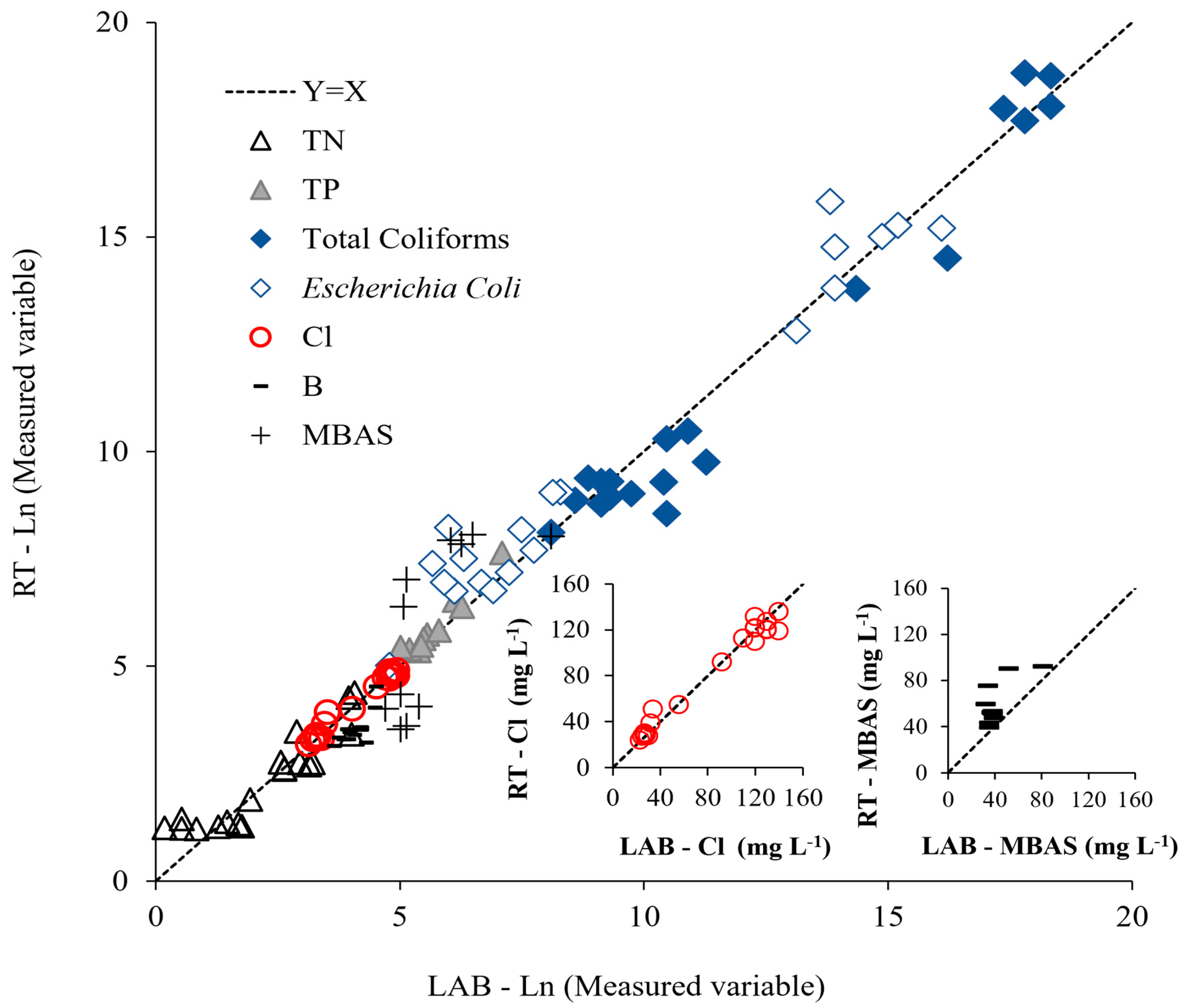
Linear regression analysis (Ordinary Least Squares, OLS) was used to compare the results of laboratory and real-time measurements (microbiological contamination: thermotolerant coliforms, Escherichia coli; nutrients: TN, TP; tracers: Cl, B, MBAS). Data were previously normalized using natural logarithmic transformation to represent all the comparisons in a unique plot (i.e., Figure 2). QQ plots were used to visually check the distribution of the standardized residuals. Normal distribution and homoscedasticity of residuals were then checked through the Shapiro–Wilk and Breusch–Pagan test (“lmtest” library), adopting a 0.05 p-value threshold of acceptance.
Contaminants’ mean removal efficiencies in the studied WWTP were calculated, according to EU Directive 2024/3019 concerning urban wastewater treatment, by considering the difference between effluent and influent mean load for the five sampling days, obtained by multiplying the concentrations (ng L−1) by the daily flow rates of the wastewater (L s−1), measured both at the WWTP inlet and outlet, using the following equation:
( L i n L o u t ) L i n × 100 ,
where Lin represents the mean load in the influent and Lout represents the mean load in the effluent.
A risk assessment considering daily concentrations of organic chemicals measured in the river was performed using the Risk Quotient (RQ) approach [56] to assess the potential risk of target compounds on the aquatic ecosystem using the following equation:
R Q = M E C P N E C ,
where MEC is the measured environmental concentration of a pollutant in the water sample and PNEC is the predicted no effect concentration, derived from the lowest freshwater PNEC values available in the NORMAN ecotoxicity database (https://www.norman-network.com/nds/ecotox/lowestPnecsIndex.php, accessed on 8 November 2025). The term lowest PNECs refers to quality targets which are suggested by experts for prioritization purposes. They are obtained from experimental ecotoxicity studies or predicted by QSAR models.
Overall, RQ values > 1.0 indicate that a high ecological risk is expected, while values between 0.1 and 1.0 indicate a medium risk that requires further investigations, and values < 0.1 indicate a low risk [57]. Finally, the daily cumulative ecological risk was also calculated by the sum of the individual RQi of each compound [58]. A cumulative RQ ≤ 0.01, between 0.01 and 0.1, between 0.1 and 1, and ≥1.0 can be traduced into an ecological risk level of no, probably low, medium, and high risk, respectively.

3. Results and Discussion

3.1. Occurrence of Pollutants in the WWTP and in the River

The concentration ranges and means ± standard deviations of all the selected compounds at the sampling stations are shown in Table 1.
Regarding the organic compounds, pharmaceuticals showed a broad range of concentrations in the water samples (Figure S1). Generally, higher concentrations of all these compounds were observed in wastewater samples compared with river samples both at the inflow and the outflow of the WWTP (Figure S1). The concentration depends on the usage of these chemicals by the resident population and on the relative metabolism inside an organism before excretion [25,59]. Not all pharmaceuticals are completely metabolized in the organism and so, parental compounds can be detected at high concentrations in wastewater and in the receiving water systems. In this study, azithromycin, carbamazepine, ciprofloxacin, clarithromycin, erythromycin (antibiotics), and diclofenac (anti-inflammatory) exhibit higher concentrations compared with other pharmaceuticals in wastewater samples. Other authors have already evaluated the concentrations of some pharmaceuticals in rivers and WWTPs in the same area, calculating a high mass load of carbamazepine, clarithromycin, erythromycin, and diclofenac discharged into rivers compared with other pharmaceutical compounds [60]. This probably indicates that over time these pharmaceuticals remain among the most used by the resident population of the study area. The same authors evaluated the concentrations of some pharmaceuticals in the WWTPs of Como and Chiasso, which are not far from the region of this study, measuring similar concentrations of atenolol (477.7–600.4 ng L−1), carbamazepine (140.4–256.9 ng L−1), clarithromycin (619.48–401.66 ng L−1), diclofenac (2165.1–1217.1 ng L−1), and naproxen (1300.3–1179.7 ng L−1) in influent wastewaters [61]. These substances have a documented stability during wastewater treatments, thus they are discharged in large amount in rivers where high concentrations can be measured [60].
Synthetic fragrances were measured in all water samples, with the highest values in the outflow samples. HHCB and its transformation product HHCB-L were the main compounds, with concentrations over 1 µg L−1, while AHTN registered a concentration below 300 ng L−1 and ADBI was measured only at trace levels. This difference may be due to the application of EU Directive 2008/42/EC, which limited the use of AHTN in cosmetic products. The concentrations of synthetic fragrances increased during wastewater treatments (Figure S1). This behavior was observed also in other studies [62,63]. In [22], the enrichment in HHCB-L concentration during wastewater treatments, evidenced in another WWTP in Northern Italy operating with the same conventional CAS system, was explained as being the result of the biological oxidation of HHCB during secondary treatment operating with activated sludges. The prevalence of HHCB was detected also in other case studies across Europe [64,65] and in Italy [19,66] where WWTP effluents caused an increase in concentration in the receiving rivers.
Regarding PFASs, concentrations ranged from 2.50 ng L−1 to 120 ng L−1, with higher mean values in outflow water samples, except for GenX, which showed maxima in the inflow samples (Table 1). Thus, the WWTP seems to be a source also for these substances. Differences between PFASs can be highlighted in respective concentration levels. For example, legacy long-chain PFASs such as PFOA and the degradation product PFHpA showed low concentration levels in all types of water samples, clearly reflecting the actual restriction in the use and production of these compounds due to their adverse impacts (POPs Regulation of 2009 for PFOS and of 2020 for PFOA). Other PFASs, classified as short-chain fluorinated compounds, used as substitutes for the banned long-chain ones, exhibit mean concentrations up to 70 ng L−1 and were mostly detected in wastewater samples. This mirrors the shift in industrial use from long- to short-chain PFASs and the consequent increased presence of these compounds in wastewaters [67]. For comparison, concentrations of PFOA and other long-chain PFASs in a three-year monitoring study carried out in Northern Italy in 2015 [68] were definitely higher than the concentrations reported in this study, both for wastewater and river water samples, thus confirming the decrease in the production and use of these chemicals after the restrictions. Regarding short-chain compounds, the concentration ranges are similar to other studied rivers such as the Yellow River, Pearl River, and Yangtze River in China, where industrial wastewater discharges and domestic sewages are present [69,70].
Considering tracers, caffeine showed a mean concentration of 43,800 ± 9121 ng L−1 in inflow samples and 114 ± 73 ng L−1 in outflow samples, and similarly MBAS from 1.0 ± 1.3 mg L−1 to 0.1 ± 0.1 mg L−1. On the contrary, B and Cl registered similar concentration levels in both inflow and outflow water samples (Table 1), as expected from their stability.
Regarding trace metals, the highest whole-sample concentrations were mostly observed in the inflow, deriving from direct domestic inflows and/or indirect industrial wastewaters from runoff. In the outflow samples, levels were significantly lower for elements like Cr, Ni, Zn, Pb, Sb, Co, and Ba (Table 1 and Figure S1). Lower concentrations after wastewater treatment are achieved in conventional WWTPs mainly through the elimination of suspended solids using physical treatments (e.g., grids, settling tanks, and filtration) followed by chemical treatments (e.g., clariflocculation) to remove colloids [36]. In addition, dissolved metals may be efficiently retained via biosorption in activated sludges [36]. In our study, most elements in the dissolved phase were observed to decrease after treatments (Figure S1), except for Al, Fe, Mn, and B. The enrichment of total Fe and Al in the outflow may derive from the application of coagulants and flocculants such as ferric chloride, aluminum sulfate, or polyaluminum chloride [71]. However, some studies report that water recirculation steps, for example, the intermittent re-injection of sludge filtrate in settling tanks, may determine increased concentrations of dissolved Fe, Al, and Mn during the treatment process, resulting in increased levels in the outflow in comparison to the inflow [72], as observed in our study. River samples were instead characterized by higher arsenic concentrations than inflow and outflow samples (Figure S1). This trace element likely originates from upstream formations of arsenopyrite, located in the Central Alps, which deposit in the downstream river alluvial plain [73].

3.2. Contamination Pattern in Different Water Samples: PCA and Correlation Analysis

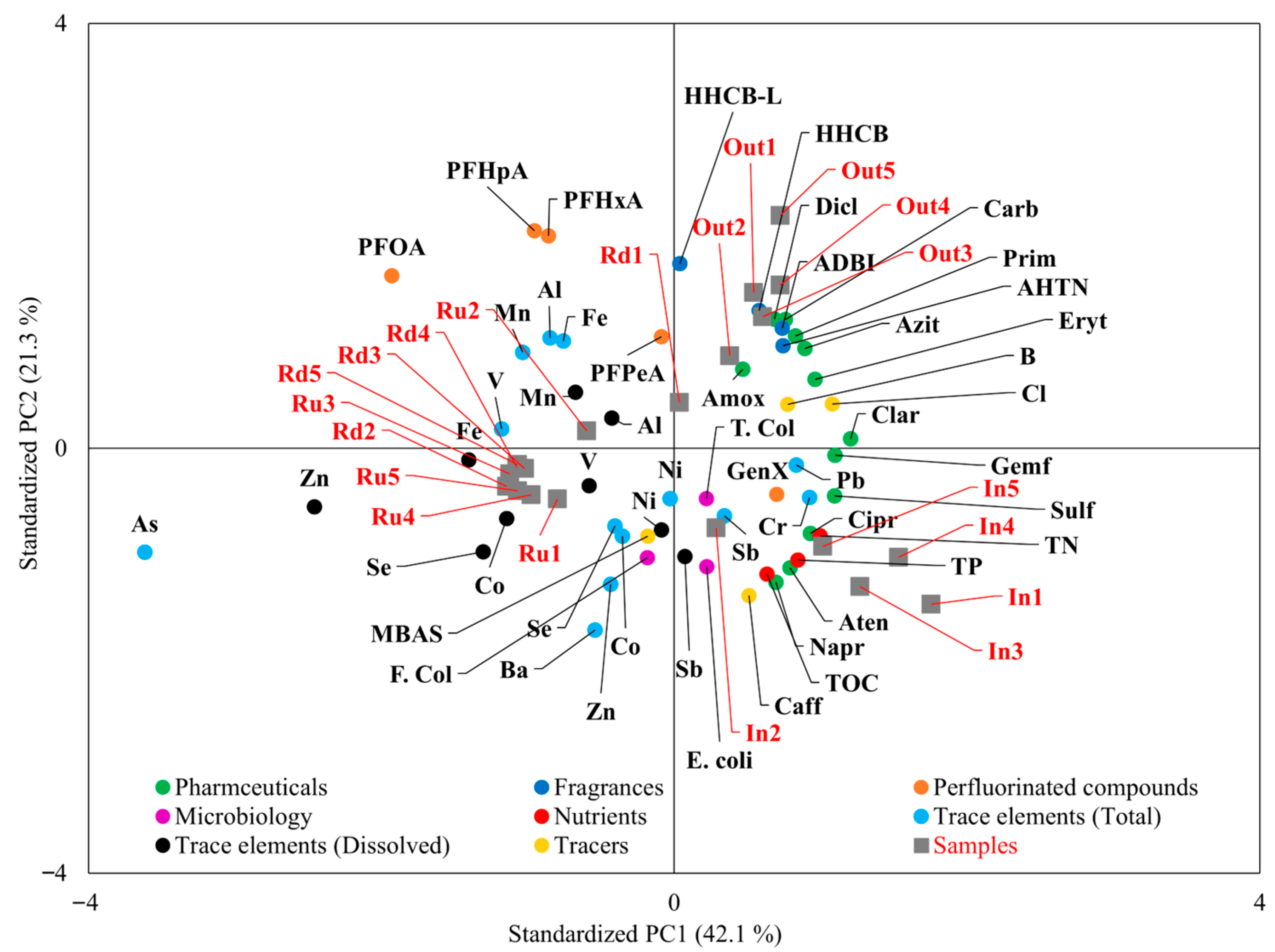
Based on contaminant concentrations, samples were grouped by PCA, which explained 63% of the total variance (i.e., PC1: 42.1%, and PC2: 21.3%), into three main clusters, corresponding to specimens collected at the WWTP inflow, at the outflow, and in the river (Figure 2).
The only sample that deviates from this general pattern is the one collected in the river during the first sampling day (River downstream 1, Rd1), which was grouped within the outflow cluster. This deviation can be due to the different weather conditions of the first sampling day that, together with the rainfall event of the previous day, may have caused the activation of sewer overflows discharging untreated wastewater directly into the river (see also physical–chemical data reported in Table S3 and related comments). This is further supported by the water flow rate recorded at the WWTP inlet and outlet which, on the first day, were the highest of the entire campaign (Table S4). According to the PCA, there is no clear distinction between samples collected in the river upstream and downstream of the WWTP.
The principal component 1 (PC1) clearly separated wastewater, where the highest concentrations of organic contaminants were found, from all river samples, mostly characterized by the presence of metals such as arsenic, as previously described. Instead, the principal component 2 (PC2) separated inflow wastewater samples, characterized by high concentrations of nutrients; microbiological variables; several pharmaceuticals, such as ciprofloxacin, atenolol, naproxen, sulfamethoxazole, and gemfibrozil; one PFAS (GenX); the tracers, caffeine and MBAS; and most trace elements (Pb, Cr, Ni, Co, and Sb) from outflow samples, all distributed in the upper sections, where different pharmaceuticals were mapped (amoxicillin, azithromycin, erythromycin, primidone, carbamazepine, diclofenac, and trimethoprim) along with fragrances, PFASs except GenX, the tracers B and Cl, and the metals Fe, Al, Mn, and V.
The similar behavior of these contaminants was further confirmed by the correlation analysis (Table S5), which showed that contaminants clustering near the inflow samples in the PCA show a high degree of mutual correlation and are efficiently removed during wastewater treatments (see Section 3.3 for further details). Considering tracers, caffeine and MBAS were positively correlated with the parameters showing the highest concentrations in the inflow samples, such as nutrients, trace elements, microbiological parameters, and with some organic contaminants such as naproxen, atenolol, ciprofloxacin, and GenX. These tracers were also negatively correlated with PFHpA, PFHxA, and PFOA, which showed high concentrations in outflow samples.
Similarly, significant positive correlations were highlighted between perfluorinated substances, synthetic fragrances, and several pharmaceuticals, such as amoxicillin, erythromycin, azithromycin, diclofenac, and carbamazepine, and the metals Fe, Al, Mn, and V. All these compounds registered higher concentrations in the outflow samples than in the inflow (Table 1). Conventional treatments operated in the WWTP may not be efficient in their removal; therefore, they can maintain or increase their concentrations during the treatment steps as discussed below. Regarding the other tracers B and Cl, they were positively correlated with most variables. Indeed, the concentrations of these tracers do not significantly change during wastewater treatments (t-test, p < 0.05 between concentrations of inflow vs. outflow samples) and, for this reason, they can correlate to the same degree with variables characteristic of both inflow and outflow samples. This is probably due to the high solubility in water of both tracers, which allows them to migrate with different contaminants [43]. None of the selected tracers exhibited the same behavior as the substances whose concentrations increase after passing through conventional WWTPs, such as PFASs or synthetic fragrances. In this context, fluorometric measurements of substances such as fluorescent whitening agents (FWAs) represent a promising future research opportunity [74], given their relative ease of measurement by fluorometry [75] and the tendency to increase their concentrations after passing through conventional WWTPs [76].

3.3. WWTP Removal Efficiency for Emerging Compounds

The removal efficiencies for organic compounds were evaluated considering their loads in inflow and outflow wastewater, according to the recent EU Directive 2024/3019 concerning urban wastewater treatment (Equation (1), Table 2).
Of the thirteen pharmaceuticals considered in this study only atenolol, ciprofloxacin, gemfibrozil, and naproxen were efficiently removed. A removal efficiency lower than 50% was measured for clarithromycin and sulfamethoxazole, as also reported in [59], while an increase in concentration levels was evidenced for the other compounds, up to +51% for diclofenac. This is in agreement with previous studies reporting that activated sludge treatment generally results in the efficient removal of naproxen, gemfibrozil, and atenolol, while the diclofenac, trimethoprim, and carbamazepine detected in the effluents show concentrations comparable or even higher than the levels detected in the influent wastewaters [77,78,79,80]. Ciprofloxacin registered a mean removal of 69%, in accordance with previous studies that showed the effective removal of this compound, i.e., above 70% using activated sludge treatment [81,82,83,84,85]. Erythromycin and other macrolide antibiotics such as azithromycin and clarithromycin showed lower removal rates or even an increase in concentration from inflow to outflow samples, as they show a high potential for resisting biodegradation [86]. According to [87], the removal of erythromycin may improve under anaerobic conditions, while it is less effective in the presence of oxygen as in active sludge treatment. However, previous findings on the removal of this pharmaceutical are inconsistent. Some studies indicate a removal efficiency higher than 85% [88] while others reported an efficiency lower than 60% [84,85,89], probably due to other variables that cannot be controlled during treatments. An opposite behavior was evidenced for sulfamethoxazole, which registered a mean removal of 46%, in accordance with [82,90,91]. In general, together with the type of treatment applied to wastewater, it has been proved that the main factors governing the removal of micropollutants are the extent of their interactions with solid particles [92] and also the hydraulic retention time (HRT) of the WWTP. In fact, suspended particles are eliminated during treatments, while longer HRTs generally result in a higher removal efficiency of micropollutants [25,93]. However, in some cases, higher concentrations can be observed in the effluent compared with the influent. This can be due to different causes such as fluid dynamics inside the WWTP, e.g., the recirculation of suspended waters at some treatment steps [94], desorption from the activated sludge [95], or release from fecal particles broken down by microbes [89]. Our results are also in line with those reported for other conventional WWTPs employing similar treatment processes in Northern Italy [60,61,96]. Pharmaceutical removal efficiencies were in fact similar between our study and the city of Milan, Como, and Chiasso, highlighting the same behavior of such substances in all those systems. Atenolol, ciprofloxacin, gemfibrozil, and naproxen were efficiently removed in all the WWTPs, while other pharmaceuticals were stable during wastewater treatments. However, as already mentioned, various factors such as the type of treatment, the different composition of wastewater (domestic or industrial), the biomass concentration, the characteristics of the plant in terms of hydraulic and sludge retention times, biodegradation kinetics, temperature (season), redox, and pH condition may influence the removal efficiency of a WWTP [97,98].
Considering PFASs, conventional technologies applied in the studied WWTP were apparently able to remove only the short-chain PFAS GenX. Other PFAS compounds, both long and short chain, registered an enrichment during wastewater treatments up to more than six times with respect to influent samples (i.e., PFHpA and PFPeA). Many studies also pointed out that PFAS removal efficiencies in WWTPs are affected by the same operational parameters as pharmaceuticals [67]. Activated sludges, also applied in the studied WWTP, are generally not efficient in PFAS removal, as already evidenced by [99]. For example, PFOA, already monitored in Northern Italy in other WWTPs operating with activated sludges [60], evidenced an enrichment in the mass load during wastewater treatments as in our study. References [62,96] suggested that the increase in effluent concentrations and mass loads may derive from the biodegradation of PFAS precursors in short-chain PFASs during treatments. In fact, polyfluoroalkyl precursors can degrade to shorter chain PFASs such as PFOA and PFHxA [100]; PFPeA and PFHxA may be the degradation products of PFOA and PFHpA [101] or of the fluorotelomers 6:2 FTS, 6:2 FTOH [102,103], and 8:2 FTOH. Considering GenX, from our results, the moderate removal of this compound can be highlighted (55%). Many studies evidenced that the removal of short-chain PFASs compounds is even more challenging that the one of long-chain PFASs, due to their low absorbability and their high water solubility [104]. Ref. [105] stated that both conventional and advanced treatment processes (i.e., disinfection, filtration, ozonation, and coagulation/flocculation/sedimentation) were scarcely effective on GenX removal. To effectively remove PFAS compounds from wastewaters, ref. [104] proposed a treatment workflow involving different adsorption materials, such as a preliminary treatment with a granular activated carbon column to remove long-chain PFASs, followed by an ion exchange treatment, specifically targeted for the removal of short-chain PFASs.
For all the considered synthetic fragrances, an enrichment was evidenced during WWTP treatment, especially for HHCB-L. The new formation of this metabolite may occur during oxidation processes operating with active sludges [63]. This mechanism was also highlighted by [22] in another Italian WWTP by sampling wastewaters at different treatment steps. The results evidenced a clear change in the parental/metabolite ratio during the secondary treatment operated with activated sludges, where an increase in the metabolite was observed along with the degradation of the parental compound. In addition, the higher polarity of the metabolite makes the sludge adsorption process more difficult, thus resulting in higher concentrations in the aqueous matrix. Sorption and biodegradation are in fact the two main mechanisms driving the fate of synthetic fragrances during wastewater treatment [63]. Extremely high concentrations of HHCB were measured in different sludges thus posing some concerns regarding the possible reuse of this matrix for agricultural purposes [106,107,108]. In our study, the parental compounds such as HHCB also registered an increase during wastewater treatments, while AHTN mass loads were comparable between inflow and outflow samples. This behavior, which might be in contrast with previous studies, in which an albeit modest removal (<40%) of HHCB and AHTN was observed in terms of concentrations [62,64], highlights that these micropollutants are persistent and difficult to degrade.
Given the capacity of the studied WWTP exceeding 150,000 equivalent inhabitants, according to the Directive 3019/2024/UE, the application of a quaternary treatment to the wastewater is foreseen to reduce the load of organic micropollutants that can be discharged into the receiving water body. The Directive indicates a minimum removal percentage of 80% in relation to the load of the influent, which is calculated from the flow rate in dry weather conditions and measured for a series of organic substances including carbamazepine, clarithromycin, and diclofenac. To assess whether the minimum required removal percentage of 80% is achieved, the average of the specific removal percentages of all the individual substances involved in the calculation is considered. In this case, considering only these three substances, the minimum required removal percentage was not achieved and therefore the future application of the quaternary treatment may allow the removals required by the new directive.

3.4. Preliminary Ecological Risk Assessment of Emerging Organic Contaminants in River Waters

Considering the Risk Quotient (RQ) approach, the daily measured concentrations of emerging organic pollutants in the river samples were compared to their specific Predicted No-Effect Concentration (PNEC) values to assess if the measured pollutant concentrations may have an associated risk of exerting ecotoxicological effects on riverine aquatic organisms (Equation (2), Table S6). PNEC values were obtained from experimental ecotoxicity studies or predicted by QSAR models where experimental studies were not available.
Considering both upstream and downstream river samples, only a few compounds exhibited a high risk level (RQ between >1), while for all the other compounds a medium or low risk level was obtained (RQ < 1). At both sampling stations, the fragrance AHTN and the metabolite HHCB-L always registered a high risk level for aquatic organisms based on the PNEC derived from Norman network website. Considering pharmaceutical compounds, azithromycin and diclofenac always exhibited a high risk level while ciprofloxacin, clarithromycin, and erythromycin only exhibited this on the first two sampling days. Amoxicillin and sulfamethoxazole were always at the medium risk level while atenolol, carbamazepine, gemfibrozil, naproxen, primidone, and trimethoprim were at the no risk level. According to tabulated PNECs, all PFAS compounds registered a low risk level during the sampling campaign.
By summing the single RQi in each water sample, the overall water quality in the river generally resulted in a high risk level both upstream and downstream of the WWTP, with values generally higher downstream from the WWTP. These results highlight that the river quality appeared already compromised upstream of the WWTP. It must be highlighted that several environmental processes, including degradation, photolysis, hydrolysis, and temperature-dependent transformations, can influence the fate and persistence of organic micropollutants in aquatic systems, and consequently alter their effective toxicity. For these reasons, the risk assessment can only be considered as preliminary as it does not consider processes such as bioaccumulation, the metabolism of contaminants, and long-term exposure effects, which may worsen the results of this risk assessment.

3.5. Comparison Between Laboratory and Real-Time Measurements

The results of the comparison between laboratory (LAB) and real-time (RT) measurements of traditional contaminants (TN, TP, thermotolerant coliforms, and E. coli) and tracers (Cl, B, and MBAS) are summarized in Table 3. A good overlap of the measurement ranges can be observed. All regressions were significant (p-values < 0.001) and showed coefficients of determination ranging from 0.48 (B) to 0.96 (Cl), indicative of an overall good agreement between the two measurement systems [50].
An overall graphical representation of the relationship between measurements carried out in the laboratory and using real-time equipment is shown in the main panel of Figure 3, while the lower panels display the comparisons for the variables with the best (Cl) and the worst (MBAS) agreement. The results of this study highlight that certain nutrients (e.g., TN and TP), microbial contamination indicators (thermotolerant coliforms and Escherichia coli), and substances considered as contamination tracers can be continuously monitored employing real-time equipment, thus providing direct, rapid, and reliable responses that are potentially useful for the development of early warning systems.

4. Conclusions

This study evaluated the impact of a WWTP on the water quality of a heavily urbanized river located in the Milan Metropolitan area, Northern Italy. Samplings were carried out on a few days in winter, which is considered the worst condition scenario in the year for some micropollutants derived from domestic uses, such as pharmaceuticals. Even if the results may be only partially representative of the overall impact caused by the WWTP effluent in the downstream river ecosystem, by focusing on the analysis of traditional and emerging contaminants, the calculation of removal efficiencies and ecological risk pointed out a likely negative impact, highlighting the need to improve wastewater treatments by adding further treatments to those already conventionally applied. In fact, some substances as atenolol, gemfibrozil, and naproxen were generally effectively removed in the WWTP, but some others such as amoxicillin, erythromycin, primidone, azithromycin, and tonalide remained unchanged after conventional treatments, while perfluorinated compounds as PFOA, PFHpA, PFHxA, pharmaceuticals such as diclofenac, and synthetic fragrances such as galaxolide and its metabolite even increased their concentrations during treatments. The real-time measurement of contaminants such as microbiological variables, nutrients, Cl, B, and MBAS, which were proved to be effective tracers of wastewater contamination, could be effectively used for continuous monitoring, allowing faster decision-making. Specifically, nutrients and microbiological variables proved to be excellent tracers for pollutants effectively removed by the WWTP. In contrast, B and Cl were identified as excellent tracers for compounds whose concentrations remain unchanged following treatment. This study, however, did not identify any real-time monitorable tracers for contaminants whose concentrations increase during wastewater processing. Nevertheless, data from the literature suggest that specific agents such as fluorescent whitening agents (FWAs) could be suitable proxies for this category of pollutants.

Supplementary Materials

The following supporting information can be downloaded at: https://www.mdpi.com/article/10.3390/w17223276/s1, Texts S1 and S2: Polycyclic musk and heavy metals analysis; Figure S1: Concentration ranges of emerging and conventional pollutants at the four sampling stations; Table S1: List of contaminants measured during the sampling campaign with their respective limit of detection (LOD) and the analytical method; Table S2: Selected emerging organic compounds and properties derived from PubChem; Table S3: Physical–chemical characteristics of water samples; Table S4: Water flow recorded at the WWTP inlet and outlet during the sampling campaign; Table S5: Matrix of correlation coefficients and p-values between all contaminants measured in this study by laboratory methods; Table S6: Preliminary risk assessment regarding organic contaminants on river water samples; Table S7: Statistics of pairs measurements laboratory (LAB)–real time (RL) carried out in this study.

Author Contributions

Conceptualization, D.C. and F.S.; methodology, S.T., L.G., L.V. and M.T.P.; validation, L.G., L.V., M.T.P. and F.S.; formal analysis, S.T., L.M., L.V. and D.C.; investigation, S.T., L.M., L.G., L.V. and M.T.P.; data curation, S.T., L.G. and L.M.; writing—original draft preparation, S.T., L.M. and D.C.; writing—review and editing, S.T., L.M., L.G., L.V., M.T.P., F.S. and D.C.; supervision, F.S. and D.C.; project administration, F.S.; funding acquisition, F.S. All authors have read and agreed to the published version of the manuscript.

Funding

This work has been carried out under the project CN_00198 “SWaRMNet– Rete per la gestione intelligente delle risorse idriche”, Program: “Smart Cities and Communities and Social innovation” (D.D.391/Ric del 5 July 2012), funded by the Italian Ministry of Education, University and Research (MIUR).

Data Availability Statement

The raw data supporting the conclusions of this article will be made available by the authors on request.

Acknowledgments

We thank the personnel of Systea S.p.A. (Anagni, Italy) and L.A.V. srl (Rimini, Italy) for sampling and analytical support.

Conflicts of Interest

The authors declare no conflicts of interest.

References

  1. Jahanger, A.; Usman, M.; Murshed, M.; Mahmood, H.; Balsalobre-Lorente, D. The Linkages between Natural Resources, Human Capital, Globalization, Economic Growth, Financial Development, and Ecological Footprint: The Moderating Role of Technological Innovations. Resour. Policy 2022, 76, 102569. [Google Scholar] [CrossRef]
  2. Ali, S.H.; de Oliveira, J.A.P. Pollution and Economic Development: An Empirical Research Review. Environ. Res. Lett. 2018, 13, 123003. [Google Scholar] [CrossRef]
  3. Zainurin, S.N.; Wan Ismail, W.Z.; Mahamud, S.N.I.; Ismail, I.; Jamaludin, J.; Ariffin, K.N.Z.; Wan Ahmad Kamil, W.M. Advancements in Monitoring Water Quality Based on Various Sensing Methods: A Systematic Review. Int. J. Environ. Res. Public Health 2022, 19, 14080. [Google Scholar] [CrossRef]
  4. Li, Z.; Zheng, T.; Li, M.; Liu, X. Organic Contaminants in the Effluent of Chinese Wastewater Treatment Plants. Environ. Sci. Pollut. Res. 2018, 25, 26852–26860. [Google Scholar] [CrossRef]
  5. Aib, H.; Czegeny, I.; Benhizia, R.; Czédli, H.M. Evaluating the Efficiency of Wastewater Treatment Plants in the Northern Hungarian Plains Using Physicochemical and Microbiological Parameters. Water 2024, 16, 3590. [Google Scholar] [CrossRef]
  6. Luo, Y.; Guo, W.; Ngo, H.H.; Nghiem, L.D.; Hai, F.I.; Zhang, J.; Liang, S.; Wang, X.C. A Review on the Occurrence of Micropollutants in the Aquatic Environment and Their Fate and Removal during Wastewater Treatment. Sci. Total Environ. 2014, 473–474, 619–641. [Google Scholar] [CrossRef] [PubMed]
  7. Derco, J.; Žgajnar Gotvajn, A.; Guľašová, P.; Šoltýsová, N.; Kassai, A. Selected Micropollutant Removal from Municipal Wastewater. Processes 2024, 12, 888. [Google Scholar] [CrossRef]
  8. Diniz, V.; Gasparini Fernandes Cunha, D.; Rath, S. Adsorption of Recalcitrant Contaminants of Emerging Concern onto Activated Carbon: A Laboratory and Pilot-Scale Study. J. Environ. Manag. 2023, 325, 116489. [Google Scholar] [CrossRef] [PubMed]
  9. Bourgin, M.; Beck, B.; Boehler, M.; Borowska, E.; Fleiner, J.; Salhi, E.; Teichler, R.; von Gunten, U.; Siegrist, H.; McArdell, C.S. Evaluation of a Full-Scale Wastewater Treatment Plant Upgraded with Ozonation and Biological Post-Treatments: Abatement of Micropollutants, Formation of Transformation Products and Oxidation by-Products. Water Res. 2018, 129, 486–498. [Google Scholar] [CrossRef]
  10. Cousins, I.T.; Goldenman, G.; Herzke, D.; Lohmann, R.; Miller, M.; Ng, C.A.; Patton, S.; Scheringer, M.; Trier, X.; Vierke, L.; et al. The Concept of Essential Use for Determining When Uses of PFASs Can Be Phased Out. Environ. Sci. Process. Impacts 2019, 21, 1803–1815. [Google Scholar] [CrossRef]
  11. Ademollo, N.; Spataro, F.; Rauseo, J.; Pescatore, T.; Fattorini, N.; Valsecchi, S.; Polesello, S.; Patrolecco, L. Occurrence, Distribution and Pollution Pattern of Legacy and Emerging Organic Pollutants in Surface Water of the Kongsfjorden (Svalbard, Norway): Environmental Contamination, Seasonal Trend and Climate Change. Mar. Pollut. Bull. 2021, 163, 111900. [Google Scholar] [CrossRef] [PubMed]
  12. Valsecchi, S.; Babut, M.; Mazzoni, M.; Pascariello, S.; Ferrario, C.; De Felice, B.; Bettinetti, R.; Veyrand, B.; Marchand, P.; Polesello, S. Per- and Polyfluoroalkyl Substances (PFAS) in Fish from European Lakes: Current Contamination Status, Sources, and Perspectives for Monitoring. Environ. Toxicol. Chem. 2021, 40, 658–676. [Google Scholar] [CrossRef] [PubMed]
  13. Lee, J.W.; Choi, K.; Park, K.; Seong, C.; Yu, S.D.; Kim, P. Adverse Effects of Perfluoroalkyl Acids on Fish and Other Aquatic Organisms: A Review. Sci. Total Environ. 2020, 707, 135334. [Google Scholar] [CrossRef] [PubMed]
  14. Gobelius, L.; Glimstedt, L.; Olsson, J.; Wiberg, K.; Ahrens, L. Mass Flow of Per- and Polyfluoroalkyl Substances (PFAS) in a Swedish Municipal Wastewater Network and Wastewater Treatment Plant. Chemosphere 2023, 336, 139182. [Google Scholar] [CrossRef]
  15. Verlicchi, P.; Zambello, E. Pharmaceuticals and Personal Care Products in Untreated and Treated Sewage Sludge: Occurrence and Environmental Risk in the Case of Application on Soil—A Critical Review. Sci. Total Environ. 2015, 538, 750–767. [Google Scholar] [CrossRef]
  16. Zhang, Y.; Geißen, S.-U.; Gal, C. Carbamazepine and Diclofenac: Removal in Wastewater Treatment Plants and Occurrence in Water Bodies. Chemosphere 2008, 73, 1151–1161. [Google Scholar] [CrossRef]
  17. Sambaza, S.S.; Naicker, N. Contribution of Wastewater to Antimicrobial Resistance: A Review Article. J. Glob. Antimicrob. Resist. 2023, 34, 23–29. [Google Scholar] [CrossRef]
  18. Clara, M.; Gans, O.; Windhofer, G.; Krenn, U.; Hartl, W.; Braun, K.; Scharf, S.; Scheffknecht, C. Occurrence of Polycyclic Musks in Wastewater and Receiving Water Bodies and Fate during Wastewater Treatment. Chemosphere 2011, 82, 1116–1123. [Google Scholar] [CrossRef]
  19. Tasselli, S.; Rogora, M.; Orrù, A.; Guzzella, L. Behaviour of Synthetic Musk Fragrances in Freshwaters: Occurrence, Relations with Environmental Parameters, and Preliminary Risk Assessment. Environ. Sci. Pollut. Res. 2023, 30, 109643–109658. [Google Scholar] [CrossRef]
  20. Lou, Y.; Wang, J.; Wang, L.; Shi, L.; Yu, Y.; Zhang, M. Determination of Synthetic Musks in Sediments of Yellow River Delta Wetland, China. Bull. Environ. Contam. Toxicol. 2016, 97, 78–83. [Google Scholar] [CrossRef]
  21. Leonards, P.E.G.; de Boer, J. Synthetic Musks in Fish and Other Aquatic Organisms. In Series Anthropogenic Compounds: Synthetic Musk Fragances in the Environment; Rimkus, G.G., Ed.; The Handbook of Environmental Chemistry; Springer: Berlin/Heidelberg, Germany, 2004; pp. 49–84. ISBN 978-3-540-47900-0. [Google Scholar]
  22. Tasselli, S.; Valenti, E.; Guzzella, L. Polycyclic Musk Fragrance (PMF) Removal, Adsorption and Biodegradation in a Conventional Activated Sludge Wastewater Treatment Plant in Northern Italy. Environ. Sci. Pollut. Res. 2021, 28, 38054–38064. [Google Scholar] [CrossRef]
  23. Zhao, J.-L.; Yao, L. Fragrances in Surface Waters; The Handbook of Environmental Chemistry; Springer: Berlin/Heidelberg, Germany, 2023; pp. 1–31. [Google Scholar]
  24. Tumová, J.; Šauer, P.; Golovko, O.; Koba Ucun, O.; Grabic, R.; Máchová, J.; Kocour Kroupová, H. Effect of Polycyclic Musk Compounds on Aquatic Organisms: A Critical Literature Review Supplemented by Own Data. Sci. Total Environ. 2019, 651, 2235–2246. [Google Scholar] [CrossRef]
  25. Nas, B.; Dolu, T.; Koyuncu, S. Behavior and Removal of Ciprofloxacin and Sulfamethoxazole Antibiotics in Three Different Types of Full-Scale Wastewater Treatment Plants: A Comparative Study. Water. Air. Soil Pollut. 2021, 232, 127. [Google Scholar] [CrossRef]
  26. 2000/60/EC; Directive 2000/60/EC of 23 October 2000 establishing a framework for Community action in the field of water policy. European Parliament and Council of the European Union: Strasbourg, France, 2000; pp. 1–73.
  27. 2008/105/EC; Commission Implementing Decision (EU) 2015/495 of 20 March 2015 establishing a watch list of substances for Union-wide monitoring in the field of water policy pursuant to Directive 2008/105/EC. European Union: Brussels, Belgium, 2015; pp. 40–42.
  28. 2008/105/EC; Commission Implementing Decision (EU) 2018/840 of 5 June 2018 establishing a watch list of substances for Union-wide monitoring in the field of water policy pursuant to Directive 2008/105/EC. European Union: Brussels, Belgium, 2018; pp. 9–12.
  29. 2008/105/EC; Commission Implementing Decision (EU) 2020/1161 of 4 August 2020 establishing a watch list of substances for Union-wide monitoring in the field of water policy pursuant to Directive 2008/105/EC. European Union: Brussels, Belgium, 2020; pp. 32–35.
  30. 2008/105/EC; Commission Implementing Decision (EU) 2022/1307 of 22 July 2022 establishing a watch list of substances for Union-wide monitoring in the field of water policy pursuant to Directive 2008/105/EC. European Union: Brussels, Belgium, 2022; pp. 117–120.
  31. Azevedo, L.S.; Pestana, I.A.; Rocha, A.R.M.; Meneguelli-Souza, A.C.; Lima, C.A.I.; Almeida, M.G.; Bastos, W.R.; Souza, C.M.M. Drought Promotes Increases in Total Mercury and Methylmercury Concentrations in Fish from the Lower Paraíba Do Sul River, Southeastern Brazil. Chemosphere 2018, 202, 483–490. [Google Scholar] [CrossRef]
  32. Oehmen, A.; Lemos, P.C.; Carvalho, G.; Yuan, Z.; Keller, J.; Blackall, L.L.; Reis, M.A.M. Advances in Enhanced Biological Phosphorus Removal: From Micro to Macro Scale. Water Res. 2007, 41, 2271–2300. [Google Scholar] [CrossRef] [PubMed]
  33. Copetti, D.; Marziali, L.; Viviano, G.; Valsecchi, L.; Guzzella, L.; Capodaglio, A.G.; Tartari, G.; Polesello, S.; Valsecchi, S.; Mezzanotte, V.; et al. Intensive Monitoring of Conventional and Surrogate Quality Parameters in a Highly Urbanized River Affected by Multiple Combined Sewer Overflows. Water Supply 2018, 19, 953–966. [Google Scholar] [CrossRef]
  34. Copetti, D.; Tartari, G.; Valsecchi, L.; Salerno, F.; Viviano, G.; Mastroianni, D.; Yin, H.; Viganò, L. Phosphorus Content in a Deep River Sediment Core as a Tracer of Long-Term (1962–2011) Anthropogenic Impacts: A Lesson from the Milan Metropolitan Area. Sci. Total Environ. 2019, 646, 37–48. [Google Scholar] [CrossRef] [PubMed]
  35. Collivignarelli, M.C.; Abbà, A.; Benigna, I.; Sorlini, S.; Torretta, V. Overview of the Main Disinfection Processes for Wastewater and Drinking Water Treatment Plants. Sustainability 2018, 10, 86. [Google Scholar] [CrossRef]
  36. Fu, F.; Wang, Q. Removal of Heavy Metal Ions from Wastewaters: A Review. J. Environ. Manag. 2011, 92, 407–418. [Google Scholar] [CrossRef]
  37. Üstün, G.E. Occurrence and Removal of Metals in Urban Wastewater Treatment Plants. J. Hazard. Mater. 2009, 172, 833–838. [Google Scholar] [CrossRef]
  38. Ebrahimzadeh, G.; Nodehi, R.N.; Alimohammadi, M.; Rezaei Kahkah, M.R.; Mahvi, A.H. Monitoring of Caffeine Concentration in Infused Tea, Human Urine, Domestic Wastewater and Different Water Resources in Southeast of Iran- Caffeine an Alternative Indicator for Contamination of Human Origin. J. Environ. Manag. 2021, 283, 111971. [Google Scholar] [CrossRef]
  39. Sérodes, J.-B.; Behmel, S.; Simard, S.; Laflamme, O.; Grondin, A.; Beaulieu, C.; Proulx, F.; Rodriguez, M.J. Tracking Domestic Wastewater and Road De-Icing Salt in a Municipal Drinking Water Reservoir: Acesulfame and Chloride as Co-Tracers. Water Res. 2021, 203, 117493. [Google Scholar] [CrossRef]
  40. Viviano, G.; Salerno, F.; Manfredi, E.C.; Polesello, S.; Valsecchi, S.; Tartari, G. Surrogate Measures for Providing High Frequency Estimates of Total Phosphorus Concentrations in Urban Watersheds. Water Res. 2014, 64, 265–277. [Google Scholar] [CrossRef]
  41. Cantwell, M.G.; Katz, D.R.; Sullivan, J.C.; Shapley, D.; Lipscomb, J.; Epstein, J.; Juhl, A.R.; Knudson, C.; O’Mullan, G.D. Spatial Patterns of Pharmaceuticals and Wastewater Tracers in the Hudson River Estuary. Water Res. 2018, 137, 335–343. [Google Scholar] [CrossRef] [PubMed]
  42. Corada-Fernández, C.; Lara-Martín, P.A.; Candela, L.; González-Mazo, E. Tracking Sewage Derived Contamination in Riverine Settings by Analysis of Synthetic Surfactants. J. Environ. Monit. 2011, 13, 2010–2017. [Google Scholar] [CrossRef]
  43. Guinoiseau, D.; Louvat, P.; Paris, G.; Chen, J.-B.; Chetelat, B.; Rocher, V.; Guérin, S.; Gaillardet, J. Are Boron Isotopes a Reliable Tracer of Anthropogenic Inputs to Rivers over Time? Sci. Total Environ. 2018, 626, 1057–1068. [Google Scholar] [CrossRef]
  44. Chong, M.F.; Lee, K.P.; Chieng, H.J.; Ramli, I.I.S.B. Removal of Boron from Ceramic Industry Wastewater by Adsorption–Flocculation Mechanism Using Palm Oil Mill Boiler (POMB) Bottom Ash and Polymer. Water Res. 2009, 43, 3326–3334. [Google Scholar] [CrossRef]
  45. Yaroshenko, I.; Kirsanov, D.; Marjanovic, M.; Lieberzeit, P.A.; Korostynska, O.; Mason, A.; Frau, I.; Legin, A. Real-Time Water Quality Monitoring with Chemical Sensors. Sensors 2020, 20, 3432. [Google Scholar] [CrossRef]
  46. Jin, T.; Cai, S.; Jiang, D.; Liu, J. A Data-Driven Model for Real-Time Water Quality Prediction and Early Warning by an Integration Method. Environ. Sci. Pollut. Res. 2019, 26, 30374–30385. [Google Scholar] [CrossRef] [PubMed]
  47. Tillman, E.F. Evaluation of the Eureka Manta2 Water-Quality Multiprobe Sonde; U.S. Geological Survey: Reston, VA, USA, 2017.
  48. Lohmann, R.; Vrana, B.; Muir, D.; Smedes, F.; Sobotka, J.; Zeng, E.Y.; Bao, L.-J.; Allan, I.J.; Astrahan, P.; Barra, R.O.; et al. Passive-Sampler-Derived PCB and OCP Concentrations in the Waters of the World─First Results from the AQUA-GAPS/MONET Network. Environ. Sci. Technol. 2023, 57, 9342–9352. [Google Scholar] [CrossRef] [PubMed]
  49. Tasselli, S.; Guzzella, L. Polycyclic Musk Fragrances (PMFs) in Wastewater and Activated Sludge: Analytical Protocol and Application to a Real Case Study. Environ. Sci. Pollut. Res. 2020, 27, 30977–30986. [Google Scholar] [CrossRef]
  50. Copetti, D.; Valsecchi, L.; Capodaglio, A.G.; Tartari, G. Direct Measurement of Nutrient Concentrations in Freshwaters with a Miniaturized Analytical Probe: Evaluation and Validation. Environ. Monit. Assess. 2017, 189, 144. [Google Scholar] [CrossRef]
  51. Wade, A.J.; Palmer-Felgate, E.J.; Halliday, S.J.; Skeffington, R.A.; Loewenthal, M.; Jarvie, H.P.; Bowes, M.J.; Greenway, G.M.; Haswell, S.J.; Bell, I.M.; et al. Hydrochemical Processes in Lowland Rivers: Insights from in Situ, High-Resolution Monitoring. Hydrol. Earth Syst. Sci. 2012, 16, 4323–4342. [Google Scholar] [CrossRef]
  52. Shahady, T.D.; Cleary, W.C. Influence of a Low-Head Dam on Water Quality of an Urban River System. J. Environ. Manag. 2021, 297, 113334. [Google Scholar] [CrossRef]
  53. Everitt, B.; Hothorn, T. An Introduction to Applied Multivariate Analysis with R; Springer Science & Business Media: Berlin/Heidelberg, Germany, 2011; ISBN 978-1-4419-9650-3. [Google Scholar]
  54. Helsel, D.R.; Hirsch, R.M.; Ryberg, K.R.; Archfield, S.A.; Gilroy, E.J. Statistical Methods in Water Resources; U.S. Geological Survey: Reston, VA, USA, 2020.
  55. Evans, J.D. Straightforward Statistics for the Behavioral Sciences; Thomson Brooks/Cole Publishing Co.: Belmont, CA, USA, 1996; p. xxii, 600. ISBN 978-0-534-23100-2. [Google Scholar]
  56. Badawy, M.I.; El-Gohary, F.A.; Abdel-Wahed, M.S.; Gad-Allah, T.A.; Ali, M.E.M. Mass Flow and Consumption Calculations of Pharmaceuticals in Sewage Treatment Plant with Emphasis on the Fate and Risk Quotient Assessment. Sci. Rep. 2023, 13, 3500. [Google Scholar] [CrossRef] [PubMed]
  57. Rodríguez-Bolaña, C.; Pérez-Parada, A.; Niell, S.; Heinzen, H.; de Mello, F.T. Comparative Deterministic and Probabilistic Approaches for Assessing the Aquatic Ecological Risk of Pesticides in a Mixed Land Use Basin: A Case Study in Uruguay. Sci. Total Environ. 2024, 910, 168704. [Google Scholar] [CrossRef] [PubMed]
  58. Guo, G.-H.; Wu, F.-C.; He, H.-P.; Zhang, R.-Q.; Li, H.-X. Screening Level Ecological Risk Assessment for Synthetic Musks in Surface Water of Lake Taihu, China. Stoch. Environ. Res. Risk Assess. 2013, 27, 111–119. [Google Scholar] [CrossRef]
  59. Chen, C.X.; Aris, A.; Yong, E.L.; Noor, Z.Z. Evaluation of the Occurrence of Antibiotics at Different Treatment Stages of Decentralised and Conventional Sewage Treatment Plants. Int. J. Environ. Sci. Technol. 2022, 19, 5547–5562. [Google Scholar] [CrossRef]
  60. Castiglioni, S.; Davoli, E.; Riva, F.; Palmiotto, M.; Camporini, P.; Manenti, A.; Zuccato, E. Mass Balance of Emerging Contaminants in the Water Cycle of a Highly Urbanized and Industrialized Area of Italy. Water Res. 2018, 131, 287–298. [Google Scholar] [CrossRef]
  61. Castiglioni, S.; Zuccato, E.; Fattore, E.; Riva, F.; Terzaghi, E.; Koenig, R.; Principi, P.; Di Guardo, A. Micropollutants in Lake Como Water in the Context of Circular Economy: A Snapshot of Water Cycle Contamination in a Changing Pollution Scenario. J. Hazard. Mater. 2020, 384, 121441. [Google Scholar] [CrossRef]
  62. Reiner, J.L.; Berset, J.D.; Kannan, K. Mass Flow of Polycyclic Musks in Two Wastewater Treatment Plants. Arch. Environ. Contam. Toxicol. 2007, 52, 451–457. [Google Scholar] [CrossRef]
  63. Su, Y.; Li, F.; Xiao, X.; Li, H.; Wang, D.; You, J. Ecological Risk of Galaxolide and Its Transformation Product Galaxolidone: Evidence from the Literature and a Case Study in Guangzhou Waterways. Environ. Sci. Process. Impacts 2023, 25, 1337–1346. [Google Scholar] [CrossRef]
  64. Bester, K. Retention Characteristics and Balance Assessment for Two Polycyclic Musk Fragrances (HHCB and AHTN) in a Typical German Sewage Treatment Plant. Chemosphere 2004, 57, 863–870. [Google Scholar] [CrossRef]
  65. Tanwar, S.; Di Carro, M.; Ianni, C.; Magi, E. Occurrence of PCPs in Natural Waters from Europe. In Personal Care Products in the Aquatic Environment; Díaz-Cruz, M.S., Barceló, D., Eds.; Springer International Publishing: Cham, Switzerland, 2015; pp. 37–71. ISBN 978-3-319-18809-6. [Google Scholar]
  66. Rizzi, C.; Sara, V.; Luca, R.; Andrea, M.; Valeria, L. Levels and Ecological Risk of Selected Organic Pollutants in the High-Altitude Alpine Cryosphere—The Adamello-Brenta Natural Park (Italy) as a Case Study. Environ. Adv. 2022, 7, 100178. [Google Scholar] [CrossRef]
  67. Moneta, B.G.; Feo, M.L.; Torre, M.; Tratzi, P.; Aita, S.E.; Montone, C.M.; Taglioni, E.; Mosca, S.; Balducci, C.; Cerasa, M.; et al. Occurrence of Per- and Polyfluorinated Alkyl Substances in Wastewater Treatment Plants in Northern Italy. Sci. Total Environ. 2023, 894, 165089. [Google Scholar] [CrossRef] [PubMed]
  68. Castiglioni, S.; Valsecchi, S.; Polesello, S.; Rusconi, M.; Melis, M.; Palmiotto, M.; Manenti, A.; Davoli, E.; Zuccato, E. Sources and Fate of Perfluorinated Compounds in the Aqueous Environment and in Drinking Water of a Highly Urbanized and Industrialized Area in Italy. J. Hazard. Mater. 2015, 282, 51–60. [Google Scholar] [CrossRef]
  69. So, M.K.; Miyake, Y.; Yeung, W.Y.; Ho, Y.M.; Taniyasu, S.; Rostkowski, P.; Yamashita, N.; Zhou, B.S.; Shi, X.J.; Wang, J.X.; et al. Perfluorinated Compounds in the Pearl River and Yangtze River of China. Chemosphere 2007, 68, 2085–2095. [Google Scholar] [CrossRef]
  70. Zhao, P.; Xia, X.; Dong, J.; Xia, N.; Jiang, X.; Li, Y.; Zhu, Y. Short- and Long-Chain Perfluoroalkyl Substances in the Water, Suspended Particulate Matter, and Surface Sediment of a Turbid River. Sci. Total Environ. 2016, 568, 57–65. [Google Scholar] [CrossRef]
  71. Lee, C.S.; Robinson, J.; Chong, M.F. A Review on Application of Flocculants in Wastewater Treatment. Process Saf. Environ. Prot. 2014, 92, 489–508. [Google Scholar] [CrossRef]
  72. Karvelas, M.; Katsoyiannis, A.; Samara, C. Occurrence and Fate of Heavy Metals in the Wastewater Treatment Process. Chemosphere 2003, 53, 1201–1210. [Google Scholar] [CrossRef] [PubMed]
  73. Marziali, L.; Valsecchi, L.; Schiavon, A.; Mastroianni, D.; Viganò, L. Vertical Profiles of Trace Elements in a Sediment Core from the Lambro River (Northern Italy): Historical Trends and Pollutant Transport to the Adriatic Sea. Sci. Total Environ. 2021, 782, 146766. [Google Scholar] [CrossRef] [PubMed]
  74. Lim, F.Y.; Ong, S.L.; Hu, J. Recent Advances in the Use of Chemical Markers for Tracing Wastewater Contamination in Aquatic Environment: A Review. Water 2017, 9, 143. [Google Scholar] [CrossRef]
  75. Carstea, E.M.; Bridgeman, J.; Baker, A.; Reynolds, D.M. Fluorescence Spectroscopy for Wastewater Monitoring: A Review. Water Res. 2016, 95, 205–219. [Google Scholar] [CrossRef]
  76. Assaad, A.; Pontvianne, S.; Pons, M.-N. Photodegradation-Based Detection of Fluorescent Whitening Agents in a Mountain River. Chemosphere 2014, 100, 27–33. [Google Scholar] [CrossRef]
  77. Choi, S.; Yoom, H.; Son, H.; Seo, C.; Kim, K.; Lee, Y.; Kim, Y.M. Removal Efficiency of Organic Micropollutants in Successive Wastewater Treatment Steps in a Full-Scale Wastewater Treatment Plant: Bench-Scale Application of Tertiary Treatment Processes to Improve Removal of Organic Micropollutants Persisting after Secondary Treatment. Chemosphere 2022, 288, 132629. [Google Scholar] [CrossRef]
  78. Son, D.-J.; Kim, C.-S.; Park, J.-W.; Lee, S.-H.; Chung, H.-M.; Jeong, D.-H. Spatial Variation of Pharmaceuticals in the Unit Processes of Full-Scale Municipal Wastewater Treatment Plants in Korea. J. Environ. Manag. 2021, 286, 112150. [Google Scholar] [CrossRef] [PubMed]
  79. Behera, S.K.; Kim, H.W.; Oh, J.-E.; Park, H.-S. Occurrence and Removal of Antibiotics, Hormones and Several Other Pharmaceuticals in Wastewater Treatment Plants of the Largest Industrial City of Korea. Sci. Total Environ. 2011, 409, 4351–4360. [Google Scholar] [CrossRef]
  80. Vieno, N.; Sillanpää, M. Fate of Diclofenac in Municipal Wastewater Treatment Plant—A Review. Environ. Int. 2014, 69, 28–39. [Google Scholar] [CrossRef]
  81. Hu, J.; Zhou, J.; Zhou, S.; Wu, P.; Tsang, Y.F. Occurrence and Fate of Antibiotics in a Wastewater Treatment Plant and Their Biological Effects on Receiving Waters in Guizhou. Process Saf. Environ. Prot. 2018, 113, 483–490. [Google Scholar] [CrossRef]
  82. Min, X.; Li, W.; Wei, Z.; Spinney, R.; Dionysiou, D.D.; Seo, Y.; Tang, C.-J.; Li, Q.; Xiao, R. Sorption and Biodegradation of Pharmaceuticals in Aerobic Activated Sludge System: A Combined Experimental and Theoretical Mechanistic Study. Chem. Eng. J. 2018, 342, 211–219. [Google Scholar] [CrossRef]
  83. Dorival-García, N.; Zafra-Gómez, A.; Navalón, A.; González-López, J.; Hontoria, E.; Vílchez, J.L. Removal and Degradation Characteristics of Quinolone Antibiotics in Laboratory-Scale Activated Sludge Reactors under Aerobic, Nitrifying and Anoxic Conditions. J. Environ. Manag. 2013, 120, 75–83. [Google Scholar] [CrossRef] [PubMed]
  84. Li, B.; Zhang, T. Biodegradation and Adsorption of Antibiotics in the Activated Sludge Process. Environ. Sci. Technol. 2010, 44, 3468–3473. [Google Scholar] [CrossRef]
  85. Tran, N.H.; Chen, H.; Reinhard, M.; Mao, F.; Gin, K.Y.-H. Occurrence and Removal of Multiple Classes of Antibiotics and Antimicrobial Agents in Biological Wastewater Treatment Processes. Water Res. 2016, 104, 461–472. [Google Scholar] [CrossRef]
  86. Wang, J.; Chu, L.; Wojnárovits, L.; Takács, E. Occurrence and Fate of Antibiotics, Antibiotic Resistant Genes (ARGs) and Antibiotic Resistant Bacteria (ARB) in Municipal Wastewater Treatment Plant: An Overview. Sci. Total Environ. 2020, 744, 140997. [Google Scholar] [CrossRef]
  87. Xue, W.; Wu, C.; Xiao, K.; Huang, X.; Zhou, H.; Tsuno, H.; Tanaka, H. Elimination and Fate of Selected Micro-Organic Pollutants in a Full-Scale Anaerobic/Anoxic/Aerobic Process Combined with Membrane Bioreactor for Municipal Wastewater Reclamation. Water Res. 2010, 44, 5999–6010. [Google Scholar] [CrossRef]
  88. Suarez, S.; Lema, J.M.; Omil, F. Removal of Pharmaceutical and Personal Care Products (PPCPs) under Nitrifying and Denitrifying Conditions. Water Res. 2010, 44, 3214–3224. [Google Scholar] [CrossRef]
  89. Göbel, A.; Thomsen, A.; McArdell, C.S.; Joss, A.; Giger, W. Occurrence and Sorption Behavior of Sulfonamides, Macrolides, and Trimethoprim in Activated Sludge Treatment. Environ. Sci. Technol. 2005, 39, 3981–3989. [Google Scholar] [CrossRef]
  90. Kang, A.J.; Brown, A.K.; Wong, C.S.; Yuan, Q. Removal of Antibiotic Sulfamethoxazole by Anoxic/Anaerobic/Oxic Granular and Suspended Activated Sludge Processes. Bioresour. Technol. 2018, 251, 151–157. [Google Scholar] [CrossRef]
  91. Zhao, W.; Sui, Q.; Mei, X.; Cheng, X. Efficient Elimination of Sulfonamides by an Anaerobic/Anoxic/Oxic-Membrane Bioreactor Process: Performance and Influence of Redox Condition. Sci. Total Environ. 2018, 633, 668–676. [Google Scholar] [CrossRef] [PubMed]
  92. Roberts, P.H.; Thomas, K.V. The Occurrence of Selected Pharmaceuticals in Wastewater Effluent and Surface Waters of the Lower Tyne Catchment. Sci. Total Environ. 2006, 356, 143–153. [Google Scholar] [CrossRef] [PubMed]
  93. Batt, A.L.; Bruce, I.B.; Aga, D.S. Evaluating the Vulnerability of Surface Waters to Antibiotic Contamination from Varying Wastewater Treatment Plant Discharges. Environ. Pollut. 2006, 142, 295–302. [Google Scholar] [CrossRef] [PubMed]
  94. Rodayan, A.; Majewsky, M.; Yargeau, V. Impact of Approach Used to Determine Removal Levels of Drugs of Abuse during Wastewater Treatment. Sci. Total Environ. 2014, 487, 731–739. [Google Scholar] [CrossRef]
  95. Salgado, R.; Marques, R.; Noronha, J.P.; Carvalho, G.; Oehmen, A.; Reis, M.A.M. Assessing the Removal of Pharmaceuticals and Personal Care Products in a Full-Scale Activated Sludge Plant. Environ. Sci. Pollut. Res. 2012, 19, 1818–1827. [Google Scholar] [CrossRef]
  96. Di Guardo, A.; Castiglioni, S.; Gambino, I.; Sailis, A.; Salmoiraghi, G.; Schiarea, S.; Vighi, M.; Terzaghi, E. Modelling Micropollutant Cycle in Lake Como in a Winter Scenario: Implications for Water Use and Reuse, Ecosystem Services, and the EU Zero Pollution Action Plan. Sci. Total Environ. 2024, 906, 167594. [Google Scholar] [CrossRef] [PubMed]
  97. Verlicchi, P.; Al Aukidy, M.; Zambello, E. Occurrence of Pharmaceutical Compounds in Urban Wastewater: Removal, Mass Load and Environmental Risk after a Secondary Treatment—A Review. Sci. Total Environ. 2012, 429, 123–155. [Google Scholar] [CrossRef] [PubMed]
  98. Evgenidou, E.N.; Konstantinou, I.K.; Lambropoulou, D.A. Occurrence and Removal of Transformation Products of PPCPs and Illicit Drugs in Wastewaters: A Review. Sci. Total Environ. 2015, 505, 905–926. [Google Scholar] [CrossRef]
  99. Li, F.; Duan, J.; Tian, S.; Ji, H.; Zhu, Y.; Wei, Z.; Zhao, D. Short-Chain per- and Polyfluoroalkyl Substances in Aquatic Systems: Occurrence, Impacts and Treatment. Chem. Eng. J. 2020, 380, 122506. [Google Scholar] [CrossRef]
  100. Zhang, C.; Yan, H.; Li, F.; Hu, X.; Zhou, Q. Sorption of Short- and Long-Chain Perfluoroalkyl Surfactants on Sewage Sludges. J. Hazard. Mater. 2013, 260, 689–699. [Google Scholar] [CrossRef]
  101. Lenka, S.P.; Kah, M.; Padhye, L.P. A Review of the Occurrence, Transformation, and Removal of Poly- and Perfluoroalkyl Substances (PFAS) in Wastewater Treatment Plants. Water Res. 2021, 199, 117187. [Google Scholar] [CrossRef]
  102. Yu, X.; Nishimura, F.; Hidaka, T. Effects of Microbial Activity on Perfluorinated Carboxylic Acids (PFCAs) Generation during Aerobic Biotransformation of Fluorotelomer Alcohols in Activated Sludge. Sci. Total Environ. 2018, 610–611, 776–785. [Google Scholar] [CrossRef]
  103. Wang, N.; Liu, J.; Buck, R.C.; Korzeniowski, S.H.; Wolstenholme, B.W.; Folsom, P.W.; Sulecki, L.M. 6:2 Fluorotelomer Sulfonate Aerobic Biotransformation in Activated Sludge of Waste Water Treatment Plants. Chemosphere 2011, 82, 853–858. [Google Scholar] [CrossRef]
  104. Smaili, H.; Ng, C. Adsorption as a Remediation Technology for Short-Chain per- and Polyfluoroalkyl Substances (PFAS) from Water—A Critical Review. Environ. Sci. Water Res. Technol. 2023, 9, 344–362. [Google Scholar] [CrossRef]
  105. Sun, P.; Casteel, K.; Dai, H.; Wehmeyer, K.R.; Kiel, B.; Federle, T. Distributions of Polycyclic Musk Fragrance in Wastewater Treatment Plant (WWTP) Effluents and Sludges in the United States. Sci. Total Environ. 2014, 493, 1073–1078. [Google Scholar] [CrossRef]
  106. Košnář, Z.; Mercl, F.; Chane, A.D.; Pierdonà, L.; Míchal, P.; Tlustoš, P. Occurrence of Synthetic Polycyclic and Nitro Musk Compounds in Sewage Sludge from Municipal Wastewater Treatment Plants. Sci. Total Environ. 2021, 801, 149777. [Google Scholar] [CrossRef] [PubMed]
  107. Biel-Maeso, M.; Corada-Fernández, C.; Lara-Martín, P.A. Removal of Personal Care Products (PCPs) in Wastewater and Sludge Treatment and Their Occurrence in Receiving Soils. Water Res. 2019, 150, 129–139. [Google Scholar] [CrossRef] [PubMed]
  108. La Guardia, M.; Hale, R.; Harvey, E.; Bush, E.; Mainor, T.; Gaylor, M. Emerging Chemicals of Concern in Biosolids. Proc. Water Environ. Fed. 2003, 19, 1134–1152. [Google Scholar] [CrossRef]
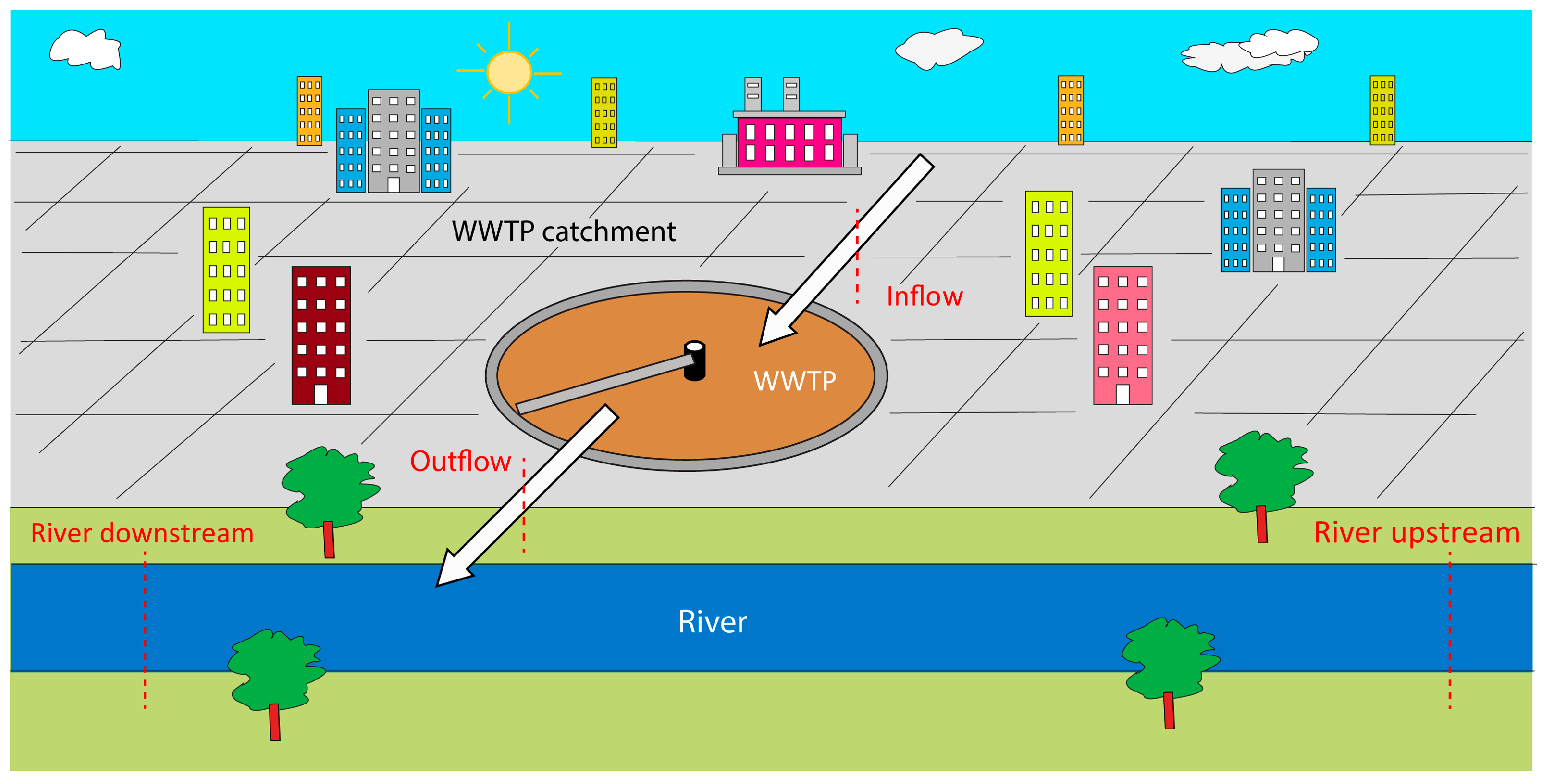
Figure 1. Schematic map of the study area. Vertical dashed lines represent the four sampling points.
Water 17 03276 g001
Figure 2. Principal Component Analysis (PCA) of the different variables measured in the samples collected in the river upstream and downstream of the wastewater treatment plant (WWTP) and in the WWTP inflow and outflow. In the PCA plot, samples are indicated with gray squares and red labels and grouped as follows: inflow (In), outflow (Out), river upstream (Ru), and river downstream (Rd).
Water 17 03276 g002
Figure 3. The main panel reports the scatter plot of the natural logarithms of all the pairs of the variables measured in this study with laboratory vs. real-time measurements. Lower panels report scatter plots of Cl (highest agreement) and B concentrations (lowest agreement), each in its respective units.
Water 17 03276 g003
Table 1. Concentration ranges and means ± standard deviations of selected organic compounds at the sampling stations. Values < LOD were set as LOD/2. Abbreviations and LODs are reported in Table S1.
CompoundRiver UpstreamWWTP InflowWWTP OutflowRiver Downstream
Perfluorinated compounds (ng L−1)
GenX2.5–22
10 ± 8
59–79
69 ± 8
2.5–72
35 ± 31
2.5–52
21 ± 19
PFHpA2.5–7
5 ± 2
2.5–2.5
2.5 ± 0
11–24
19 ± 5
5–12
7 ± 3
PFHxA9–15
12 ± 2
2.5–12
7 ± 3
26–58
45 ± 12
11–27
16 ± 6
PFPeA11–18
14 ± 3
2.5–120
36 ± 51
38–95
70 ± 23
9–57
23 ± 19
PFOA6–9
7 ± 1
2.5–6
4 ± 2
7–11
9 ± 1
5–7
6 ± 1
Pharmaceuticals (ng L−1)
Amox25–59
36 ± 14
25–100
70 ± 28
64–120
91 ± 23
25–63
40 ± 17
Aten26–71
47 ± 17
380–690
584 ± 124
120–130
126 ± 5
25–190
62 ± 72
Azit160–640
294 ± 204
810–1400
1162 ± 226
1400–1900
1560 ± 207
170–1300
416 ± 495
Carb64–180
97 ± 47
180–330
260 ± 54
350–440
396 ± 39
64–280
120 ± 90
Cipr10–180
81 ± 81
650–2400
1610 ± 721
450–650
548 ± 84
30–520
137 ± 214
Clar90–280
140 ± 79
520–850
706 ± 146
560–600
576 ± 15
100–430
178 ± 142
Dicl180–610
320 ± 167
550–1700
1270 ± 463
1400–2700
2160 ± 532
170–1400
486 ± 514
Eryt210–580
348 ± 138
650–1800
1164 ± 427
950–1800
1350 ± 350
180–9700
2156 ± 4218
Gemf10–27
13 ± 8
25–170
101 ± 52
65–90
74 ± 10
10–57
19 ± 21
Napr10–170
79 ± 62
960–2000
1512 ± 433
150–220
188 ± 31
43–360
117 ± 136
Prim23–75
42 ± 20
78–190
140 ± 42
150–230
192 ± 32
28–130
56 ± 42
Sulf60–140
90 ± 31
220–510
412 ± 113
230–270
246 ± 17
55–220
10 ± 65
Trim25–67
37 ± 18
58–140
107 ± 31
130–170
154 ± 17
22–120
46 ± 42
Fragrances (ng L−1)
ADBI0.5–3.0
1.3 ± 1.1
2.0–7.0
4.4 ± 1.8
6.0–8.0
6.8 ± 0.8
1.0–4.0
1.6 ± 1.3
AHTN36–112
62 ± 36
76–295
179 ± 87
227–266
246 ± 16
38–196
71 ± 70
HHCB635.0–2088.0
1088.0 ± 635.9
1541.0–4857.0
3092.0 ± 1293.7
5100.0–5795.0
5456.6 ± 288.8
684.0–3230.0
1236.6 ± 1115.0
HHCB-L144.0–411.0
212.8 ± 111.6
239.0–454.0
366.4 ± 87.9
912.0–1094.0
984.2 ± 69.3
161.0–677.0
277.8 ± 223.4
Trace elements in whole water samples (µg L−1)
Al108–406
241 ± 130
19–462
341 ± 112
164–2964
79 ± 1214
132–219
170 ± 33
As1.1–1.2
1.2 ± 0.1
0.5–1.1
0.8 ± 0.3
0.5–0.7
0.5 ± 0.1
1.0–1.3
1.1 ± 0.1
Ba19.9–24.2
22.5 ± 1.6
26.0–38.6
32.9 ± 4.6
16.0–19.0
17.4 ± 1.2
17.3–23.1
21.4 ± 2.4
Co5–10
6 ± 2
3–10
7 ± 3
0.5–9
4 ± 3
0.5–0.5
0.5 ± 0.0
Cr2.6–3.6
3.0 ± 0.5
10.2–24.0
16.2 ± 5.9
7.6–12.0
9.6 ± 2.1
2.6–11.9
4.6 ± 4.1
Fe88–175
121 ± 38
101–432
249 ± 147
128–2262
594 ± 933
19–114
63 ± 35
Mn10–19
12 ± 4
6–25
13 ± 8
9–23
15 ± 5.4
5–13
10 ± 3
Ni1.2–5.0
2.1 ± 1.6
6.1–112.0
27.8 ± 47.1
8.1–17.4
12. ± 3.40
1.2–18.6
4.9 ± 7.6
Pb0.5–0.5
0.5 ± 0.0
1.5–2.5
2.0 ± 0.4
1.0–2.5
1.6 ± 0.5
0.5–0.5
0.5 ± 0.0
Sb0.5–5
2 ± 2
2–23
12 ± 8
0.5–10
6 ± 4
0–5
3 ± 2
Se3–26
14 ± 8
4–30
20 ± 11
6–19
12 ± 5
4–17
9 ± 5
V16–52
36 ± 15
8–50
35 ± 16
12–57
39 ± 17
11–48
33 ± 16
Zn13–30
20 ± 7
17–103
58 ± 37
3–28
12 ± 11
12–30
23 ± 8
Dissolved trace elements (µg L−1)
Al57–142
84 ± 34
76–131
101 ± 24
66–186
99 ± 51
38–103
67 ± 25
Co0.5–5
3 ± 2
0.5–9
3 ± 3
0.5–3
1 ± 1
0.5–0.5
0.5 ± 0.0
Fe31–146
92 ± 41
7.5–102
65 ± 41
7.5–208
74 ± 91
7.5–75
31 ± 35
Mn6–18
11 ± 4
6–25
12 ± 8
8–15
13 ± 3
2–13
6 ± 5
Ni0.5–10
3 ± 4
5–87
24 ± 36
0.5–9
3 ± 3
0.5–14
3 ± 6
Se2–11
5 ± 4
1–10
6 ± 3
0.5–4
2 ± 2
0.5–7
4 ± 3
Sb0.5–5
1 ± 2
0.5–17
7 ± 6
0.5–5
1 ± 2
0.5–2
1 ± 1
V9–42
21 ± 13
8–47
25 ± 18
8–43
23 ± 14
4–19
13 ± 6
Zn13–22
17 ± 4
3–22
13 ± 8
3–25
11 ± 10
10–20
15 ± 4
Nutrients (mg L−1)
TN2–7
4 ± 2
23–61
50 ± 15
13–25
18 ± 5
0.5–14
4 ± 6
TP0.18–0.53
0.33 ± 0.16
2.80–3.80
3.32 ± 0.38
0.74–1.20
0.93 ± 0.19
0.15–1.20
0.43 ± 0.44
TOC3–19
8 ± 7
49–97
70 ± 18
7–33
14 ± 11
0.5–19
9 ± 8
Microbiological parameters (MPN 100 mL−1)
Thermotolerant
coliform (F_Col)
2200–7.9 × 10⁵
163,720 ± 350,123
1600–3.5 × 10⁸
12,420,320 ± 13,521,541
330–7000
2306 ± 2723
2200–2.3 × 10⁶
464,100 ± 1,026,302
E. coli *
(E_Col)
400–5 × 10⁵
101,520 ± 222,761
1 × 10⁶–9.8 × 10⁶
3,760,000 ± 3,604,580
120–1000
498 ± 323
290–1.1 × 10⁶
221,356 ± 491,178
Thermotolerant
coliform
(T_Col)
5400–1.7 × 10⁶
361,080 ± 748,732
3.5 × 10⁷–9.2 × 10⁷
6.54 × 10⁷ ± 25,491,175
7000–9.2 × 10⁷
18,422,800 ± 41,130,916
3300–1.1 × 10⁷
2,216,100 ± 4,910,369
Tracers (µg L−1)
Caff0.1–3
0.7 ± 1.2
28–50
43.8 ± 9.1
0.05–0.2
0.1 ± 0.1
0.1–8.9
1.9 ± 3.9
Total B
(T_B)
25–52
39 ± 8
160–300
234 ± 61
140–310
252 ± 70
25–81
45 ± 20
Total Cl
(T_Cl)
23–56
33 ± 13
120–140
130 ± 10
110–130
122 ± 8
25–92
42 ± 28
MBAS50–150
70 ± 45
170–3300
1014 ± 1290
50–220
140 ± 64
50–160
72 ± 49
Note: * E. coli measured in UFC 100 mL−1.
Table 2. Mean influent (IN) and effluent (OUT) loads (g day−1) and removal efficiencies (RE) ± 95% confidence interval calculated for each emerging organic compound in the WWTP. Negative values for RE indicate increases.
Loads (g Day−1)
Organic CompoundInfluent (IN)Effluent (OUT)RE%
MeanSDMeanSD
PFOA0.660.301.170.19−78 ± 107
PFHpA0.360.042.480.78−589 ± 286
PFHxA1.020.495.971.99−487 ± 425
PFPeA5.718.629.063.06−59 ± 305
GenX10.052.224.524.0455 ± 51
Amox10.164.2011.763.26−16 ± 72
Aten84.7423.5116.341.4581 ± 7
Azit167.9440.36204.6647.50−22 ± 50
Carb37.9111.5151.507.79−36 ± 57
Cipr232.69104.9571.2013.3169 ± 18
Clar102.3727.9274.979.3027 ± 27
Dicl185.4178.70280.0768.65−51 ± 91
Eryt171.4581.24178.2762.06−4 ± 76
Gemf10.641.442.673.1475 ± 37
Napr220.0878.5124.615.7289 ± 6
Prim20.277.2824.974.89−23 ± 62
Sulf59.3416.8632.074.8146 ± 22
Trim15.284.1520.033.10−31 ± 51
ADBI0.630.230.880.11−40 ± 68
HHCB438.16160.62708.5978.07−62 ± 77
AHTN25.2510.9631.923.69−26 ± 70
HHCB-L52.3611.09127.267.48−143 ± 66
Table 3. Comparison between laboratory (LAB) and real-time (RT) equipment: ranges of the two measurements, linear regression equation between the natural logarithms of the two variables, and coefficients of determination. All p-values related to the regression equations were <0.001.
VariableRange LABRange RTRegression EquationR2
TN (mg L−1)1.2–61.03.4–76.9Ln (RT) = 0.7785 Ln (LAB) + 0.57350.85
TP (mg L−1)0.15–1.200.21–2.07Ln (RT) = 1.1363 Ln (LAB) − 0.57950.94
Thermotolerant coliforms (cfu mL−1)3.3 × 10³–9.2 × 1073.32 × 103–1.5 × 10⁸Ln (RT) = 1.0335 Ln (LAB) − 0.74610.96
Escherichia coli (cfu mL−1)1.20 × 10²–9.80 × 1061.5 × 102–7.5 × 10⁶Ln (RT) = 0.925 Ln (LAB) + 1.26660.96
Cl (mg L−1)23–14023.8–135.5Ln (RT) = 0.9234 Ln (LAB) + 0.33880.98
B (mg L−1)32–8139.0–92.0Ln (RT) = 0.7455 Ln (LAB) + 1.29640.48
MBAS (mg L−1)0.1–3.30.1–3.2Ln (RT) = 1.4286 Ln (LAB) − 2.20660.52
Disclaimer/Publisher’s Note: The statements, opinions and data contained in all publications are solely those of the individual author(s) and contributor(s) and not of MDPI and/or the editor(s). MDPI and/or the editor(s) disclaim responsibility for any injury to people or property resulting from any ideas, methods, instructions or products referred to in the content.