Article

Stability Analysis of Loess Slope Under Heavy Rainfall Considering Joint Effect—Case Study of Jianxi Landslide, China


1
Hebei Cangzhou Groundwater and Land Subsidence National Observation and Research Station, Cangzhou 061000, China
2
MOE Key Laboratory of Groundwater Circulation and Environmental Evolution, China University of Geosciences, Beijing 100083, China
3
School of Architecture and Urban Planning, Beijing University of Civil Engineering and Architecture, Beijing 102616, China
4
Hebei Key Laboratory of Mountain Geological Environment, Chengde 067000, China
*
Authors to whom correspondence should be addressed.
Water 2025, 17(22), 3271; https://doi.org/10.3390/w17223271
Submission received: 23 October 2025 / Revised: 10 November 2025 / Accepted: 13 November 2025 / Published: 15 November 2025
(This article belongs to the Special Issue Landslide on Hydrological Response)

Abstract

Loess exhibits a pronounced reduction in strength under rainfall infiltration, making loess slopes highly susceptible to instability and failure during rainfall events. Although numerous studies have investigated the failure mechanisms of loess slopes under rainfall, most have overlooked the role of joints, which are intrinsic structural features of loess. To address this gap, this study selected the Jianxi landslide, located in Lingbao city of Henan province, as a representative case and employed a numerical simulation method to examine the influence of joints on the moisture fields and stability conditions of the Jianxi landslide. The results elucidate that the safety factor of the Jianxi landslide considering joints is 15.7% lower than the one measured without considering joints and identify the critical rainfall threshold leading to landslide instability to be 100 mm/d. Furthermore, when joints are considered, the sliding zone becomes deeper, indicating a larger landslide volume and more severe potential damage. This work provides new insights into the failure mechanism of loess landslides and offers a scientific basis for early warning.

1. Introduction

Loess, a Quaternary sediment mainly composed of clay and sand grains, is characterized by high porosity and well-developed vertical joints [1,2]. When exposed to water, it is prone to softening and deformation, leading to poor mechanical properties [3,4,5]. Consequently, loess slopes are highly prone to sliding under the influence of rainfall, posing direct threats to people’s lives and property [6,7,8,9].
Many scholars have explored the infiltration and failure mechanisms of loess landslides under rainfall, mainly employing approaches such as laboratory tests [10,11,12,13], field monitoring [14,15,16,17,18], and numerical simulation [19,20,21]. Through 12 controlled flume experiments, Acharya et al. 2011 demonstrated that rainfall erosion at the toe of loess slopes plays a key role in inducing shallow landslides [22]. Wu et al., 2017 [23] conducted a model test to investigate the evolution of the seepage and deformation fields of slopes under artificial rainfall. The results indicated that rainfall infiltration reduced soil shear strength and increased soil saturation, ultimately leading to slope instability [23]. Zhang et al. 2021 conducted laboratory model tests and found that, under rainfall, cracks within the loess slope served as preferential infiltration channels, allowing rainwater to infiltrate rapidly into the slope and thereby triggering instability [24]. By adopting distributed fiber optic sensing technology, the strain and moisture variations within the loess slope model under rainfall were captured and the failure process was analyzed [25]. Using field monitoring methods, Tu et al., 2009 [26] conducted long-term in situ observations of a loess slope adjacent to a highway. By simulating different rainfall conditions, the study revealed the wetting front development [26]. Lukić et al., 2018 investigated the inducing factors in the loess landslides located in the Zemun settlement on the northern outskirts of Belgrade and found that vegetation removal and improper drainage associated with urbanization promoted water infiltration and eventually triggered landslide instability [27]. An improved electrical resistivity tomography (ERT) method was employed to monitor soil moisture change within the Pijiagou landslide during rainfall, and the results revealed that preferential flow in the soil played a significant role in triggering landslide instability [28]. By adopting multiple monitoring methods, Wulamu et al., 2024 identified the triggering mechanism of the Kalahaisu landslide and clarified the roles of dry–wet cycling and snowmelt in accelerating landslide deformation [29].
Compared with laboratory tests and field monitoring, numerical simulations have been more widely applied, owing to their advantages of low cost, unique ability to capture scale effects, and flexibility in simulating diverse working conditions. In order to explore the relationship between rainfall intensity, rainfall duration, and the initiation of slope failure in Weijia Gully, Fast Lagrangian Analysis of Continuum (FLAC 2D) software (V5.0) was employed to analyze the evolution of pore water pressures and deformation within the slope [30]. Utilizing a finite-element method (FEM)-based approach, the revival mechanism of an ancient loess landslide, situated in Deqing County, under rainfall was analyzed. The results demonstrated that diversion ditch leakage contributed to the landslide instability [31]. By adopting GeoStudio software (Version 2021), under irrigation conditions, the relationship between the slope gradient, the depth of water infiltration and the sliding distance was revealed [32]. Based on the fluid–solid coupling principle, Jiang et al., 2023 examined how the width and depth of cracks affected the deformation process and stability condition of loess slopes [33]. Through using finite-element PLAXIS software (Editon V20), Jamshidi et al., 2025 found that the cause of the AghEmam landslide instability was the reduction in soil strength caused by the dissolution of cements between loess particles due to continuous precipitation [34]. The afore-mentioned studies have systematically investigated the evolution of seepage fields and the deformation processes of loess slopes through various numerical simulation methods, thereby advancing the understanding of their instability mechanisms. However, most existing studies on loess landslides have neglected the presence of joints. As research on loess landslides continues to advance, an increasing number of scholars have recognized that joints within loess act as preferential pathways for rainfall infiltration, adversely affecting slope stability. However, accurately obtaining the true spatial distribution of joints in loess landslides remains a major challenge. Consequently, many studies have relied on idealized laboratory model tests to investigate the effects of rainfall infiltration on slope deformation and stability. For example, Ma et al. (2019) [35] and Ren et al. (2025) [36] examined the evolution of the phreatic line under rainfall by predefining joints with varying widths and positions in laboratory model slopes. This approach of presetting joints in physical model tests has become a common research method and has indeed deepened our understanding of rainfall infiltration processes in loess slopes. Nevertheless, the actual joint distribution in natural loess landslides is often highly complex, making it difficult for laboratory results to fully reflect real-world conditions [35,36]. Therefore, it is essential to conduct detailed field investigations to characterize the actual joint distribution in loess slopes, establish numerical models that incorporate these realistic joint features, and subsequently analyze slope stability under different rainfall scenarios.
In this study, the loess landslide in Jianxi Village, Yinzhuang Town, Lingbao City, Henan Province was selected as a representative case. On the basis of field investigations, the distribution characteristics of joints, such as their width, length and spacing, were determined. Subsequently, two sets of numerical models were established using the Geostudio software (Version 2021): one incorporating joints and the other serving as a control without joints. The models were used to simulate the evolution of soil moisture content and safety factor under different rainfall conditions. By comparing the results of the two models, this study further elucidates the impact of joints on loess slope stability, thereby enhancing the understanding of their instability mechanisms.

2. Geological Setting of Jianxi Landslide

2.1. Geographical Environment Feature

The Jianxi landslide is located at the rear of Jianxi Village, Yinzhuang Town, with geographic coordinates of 34°30′10.13″ N latitude and 110°51′26.61″ E longitude (Figure 1a,b). As shown in Figure 1c, the Jianxi landslide exhibits an overall elliptical morphology, with a relatively steep slope angle ranging from 60° to 85°. The slope elevation varies between 410 and 490 m, with a height of approximately 60–80 m.
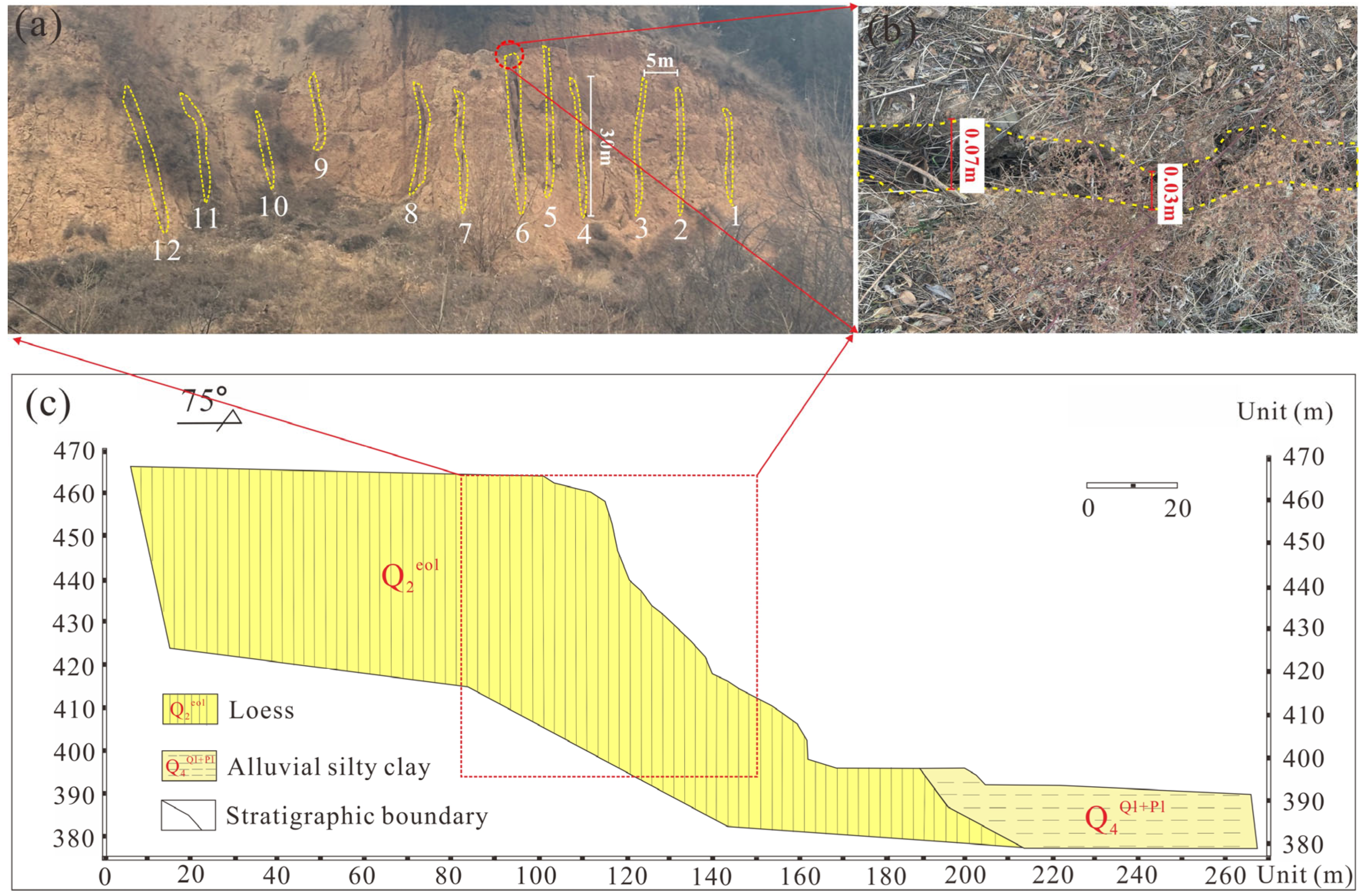
The geological profile of the Jianxi landslide is presented in Figure 2c, indicating that the landslide is predominantly composed of Middle Pleistocene lithified loess. Field investigations (Figure 2a) reveal that the loess exhibits a relatively dense structure, with well-developed vertical joints. As shown in Figure 2a, a total of 12 sets of joints are distributed across the entire cross-section, with an average spacing of approximately 5 m and a length of about 30 m. In addition, we have measured the width of Joint 6. As illustrated in Figure 2b, the maximum width of Joint 6 is 0.07 m and the minimum width is 0.03 m. Accordingly, an average width of 0.05 m was adopted for modeling purposes. Distinct traces of rainfall infiltration are observed along some of the joints. At the leading edge of the landslide, the lithology of the strata was alluvial silty clay, as shown in Figure 2c. In order to record the displacement of the Jianxi landslide, on 10 July 2021, the local government installed a Global Navigation Satellite System (GNSS) displacement measurement device at the top of the Jianxi landslide. The device, model WDS-01B (Produced by Shanghai Sinan Satellite Navigation Technology Co., Ltd., Shanghai, China), provides millimeter-level landslide deformation measurement. A photo of the GNSS device is illustrated in Figure 2c.

2.2. Hydrometeorological Characteristics

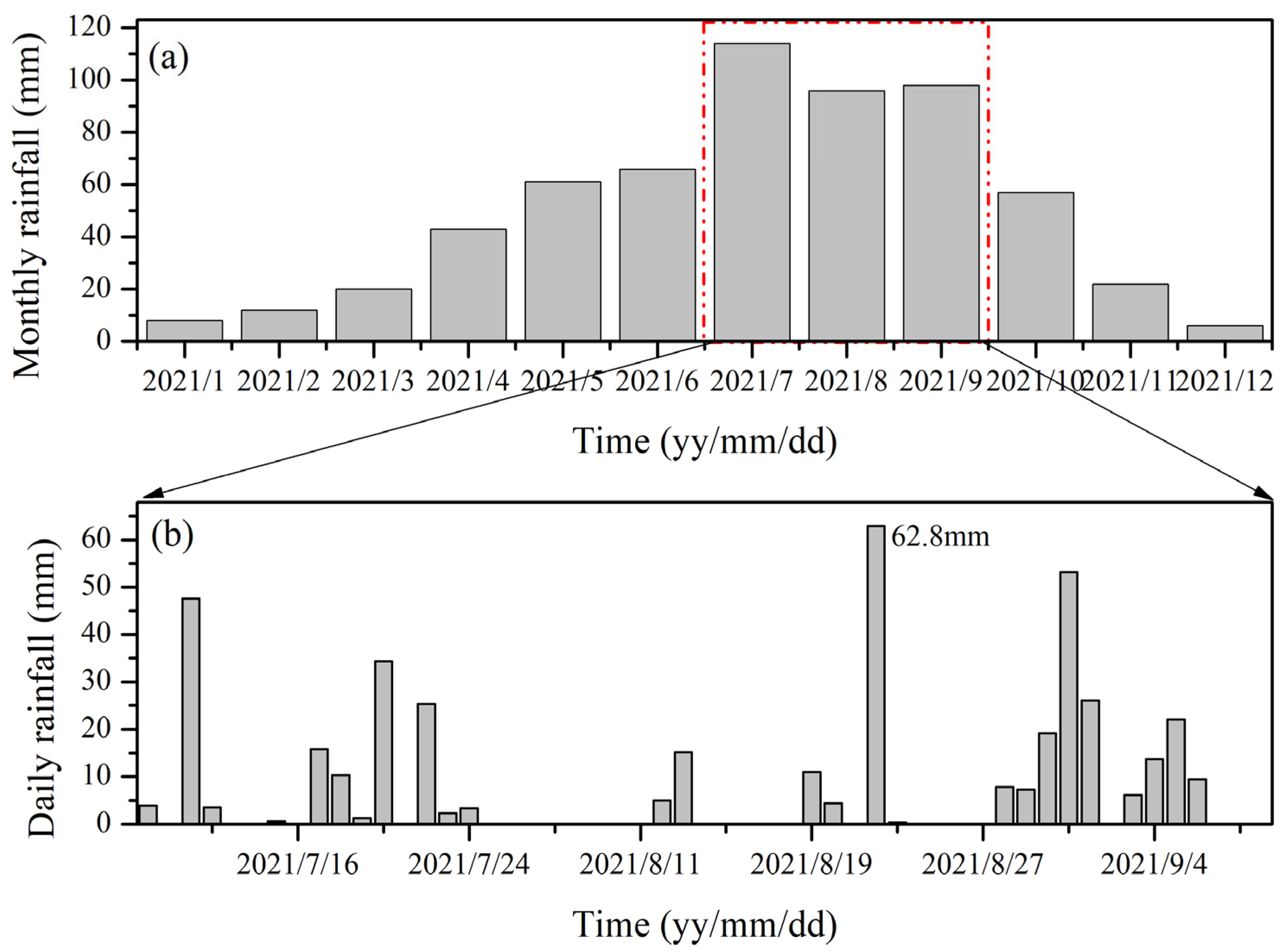
By analyzing the rainfall results recorded by local a meteorological station, the maximum annual rainfall at Jianxi village reached 947.9 mm in 2021, while the minimum was 318.7 mm in 1997, yielding a maximum interannual variation of 629.2 mm. Analysis of the monthly rainfall distribution during 2021 indicates considerable variability (Figure 3a). The intra-annual precipitation exhibits a distinct single-peak pattern, with July recording the highest monthly rainfall of 122.3 mm, followed by September (99 mm) and August (95 mm). In contrast, December had the lowest rainfall, with only 4.4 mm. Overall, approximately 61.68% of the total annual precipitation occurs between July and September, indicating a pronounced concentration of rainfall during this period. This period also coincided with the peak occurrence of geological hazards. To further characterize rainfall dynamics, daily precipitation data of Jianxi village from July to September were plotted (Figure 3b). The results showed that daily rainfall ranged between 0 and 62.8 mm, with the heaviest event occurring on 22 August 2021.

3. Numerical Model Establishment

3.1. Finite Element Model Establishment

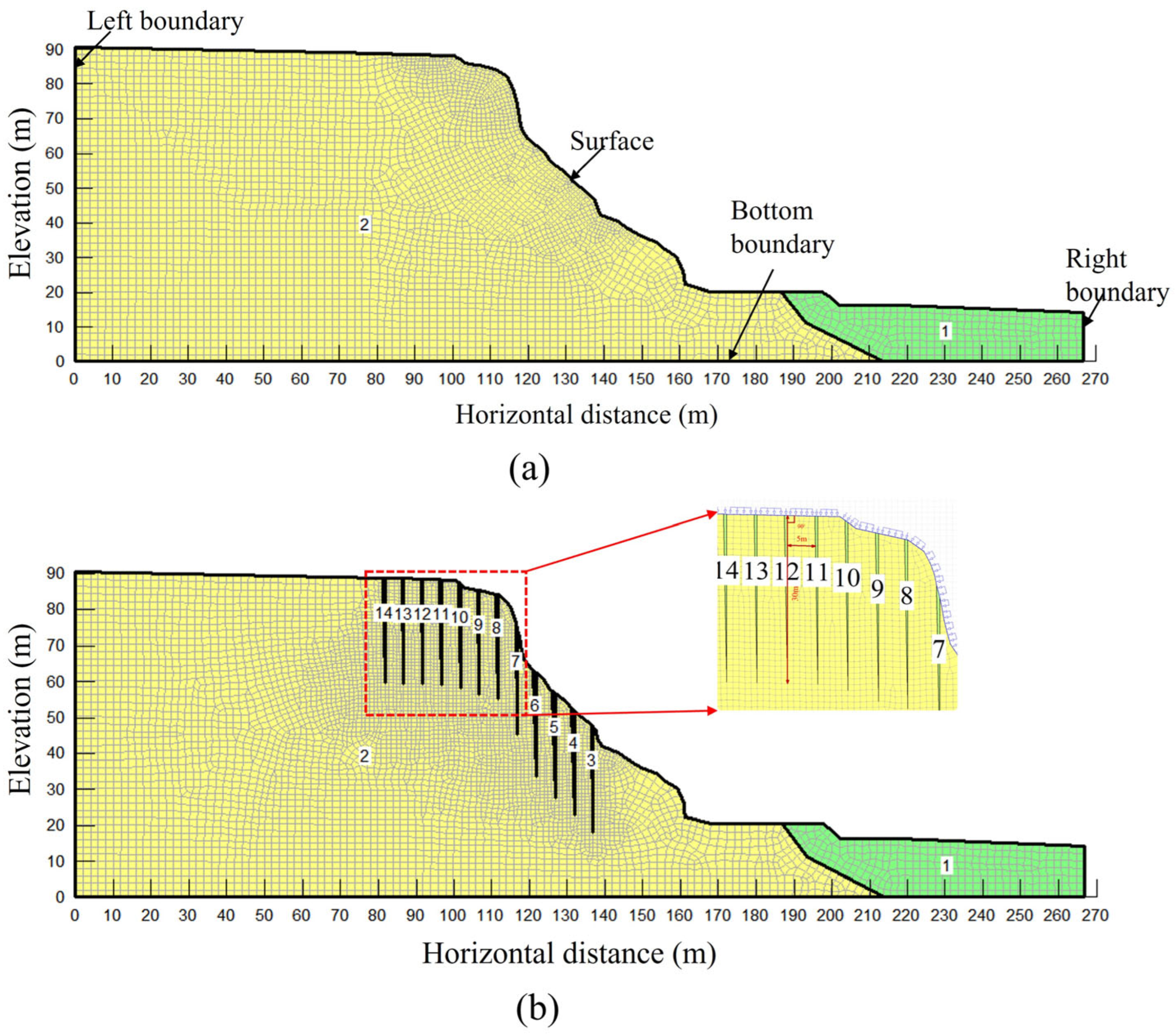
Using the Geostudio software (Version 2021), incorporating the geological profile as illustrated in Figure 2c), two numerical models of the Jianxi landslide were established (Figure 4a,b). As shown in Figure 4a), the landslide can be divided into two zones: Zone 1, consisting of loess, and Zone 2, composed of alluvial silty clay. The baseline model comprised 4553 nodes and 4391 elements, with a general mesh size of 2 m. Figure 4b presents the refined numerical model that accounts for the actual distribution of joints. Based on field investigations, as illustrated in Figure 2a, 12 sets of joints were defined with a spacing of 5 m, a width of 0.05 m, and a length of 30 m. Since this study primarily focuses on variations in the soil moisture field along landslide joints and their influence on overall stability, mesh refinement was applied at the joints, with an element size of 1 m. Under the same meshing constraints, the jointed model consisted of 6593 nodes and 6452 elements.
The boundary conditions of the landslide model were defined primarily in terms of deformation constraints and rainfall infiltration. For deformation, the boundary conditions were defined by fixing the left, right, and bottom boundaries of the slope, while allowing free movement along the surface. For rainfall conditions, based on the daily rainfall records from Jianxi village, the landslide remained stable under the maximum observed daily rainfall of 62.8 mm. Therefore, a series of rainfall intensities—50 mm/d, 75 mm/d, 100 mm/d, 150 mm/d, 175 mm/d, and 200 mm/d—were applied to simulate different rainfall scenarios. As the precipitation was assumed to be approximately constant, the rainfall boundary was set as Uniform Flow.

3.2. Soil Parameters

Before carrying out the numerical simulations, it was necessary to determine the physical and mechanical parameters of the soil. Therefore, on-site sampling was conducted.
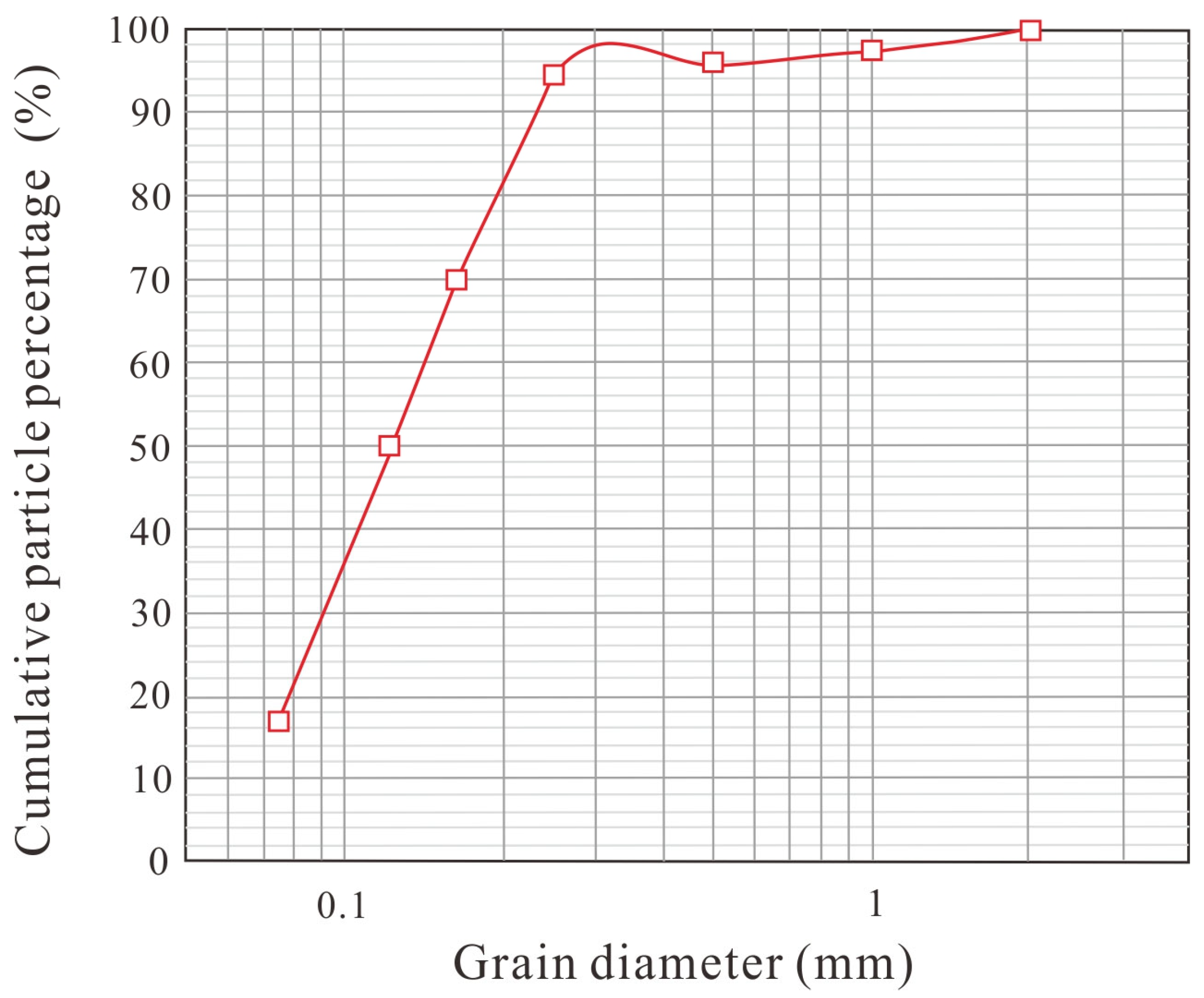
The particle composition and content of the Jianxi landslide loess samples, determined through the sieving method, are presented in Figure 5. As shown, the loess in this area is predominantly composed of silt-sized particles, with their content exceeding 80%. In contrast, the sand particle content is relatively low, remaining below 16.7%.
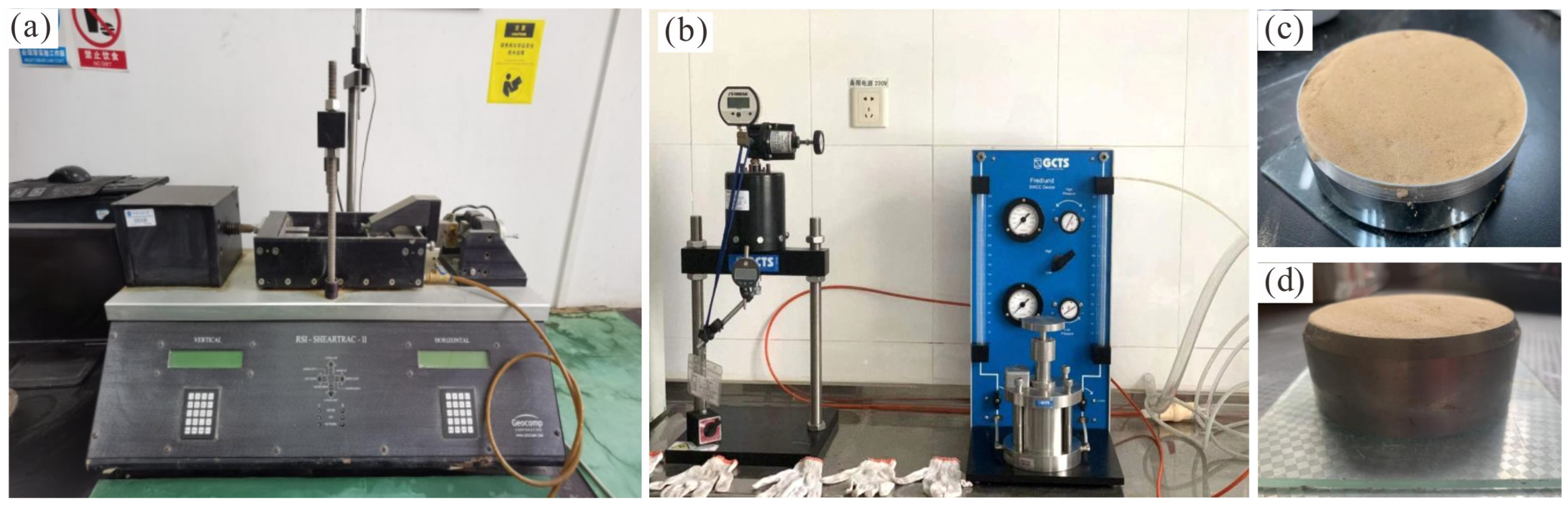
The natural and saturated bulk densities as well as the permeability coefficients of loess and alluvial silty clay were measured using the cutting-ring method (Figure 6c,d), specific gravity bottle method, and constant head permeability test. Subsequently, direct shear tests were performed on both soil types with the RSI ShearTRAC-II (Produced by Geocomp Corporation, Acton, Massachusetts, USA) fully automatic direct shear apparatus (Figure 6a), from which the cohesion (c) and internal friction angle (Φ) were obtained. The measured parameters are listed in Table 1.
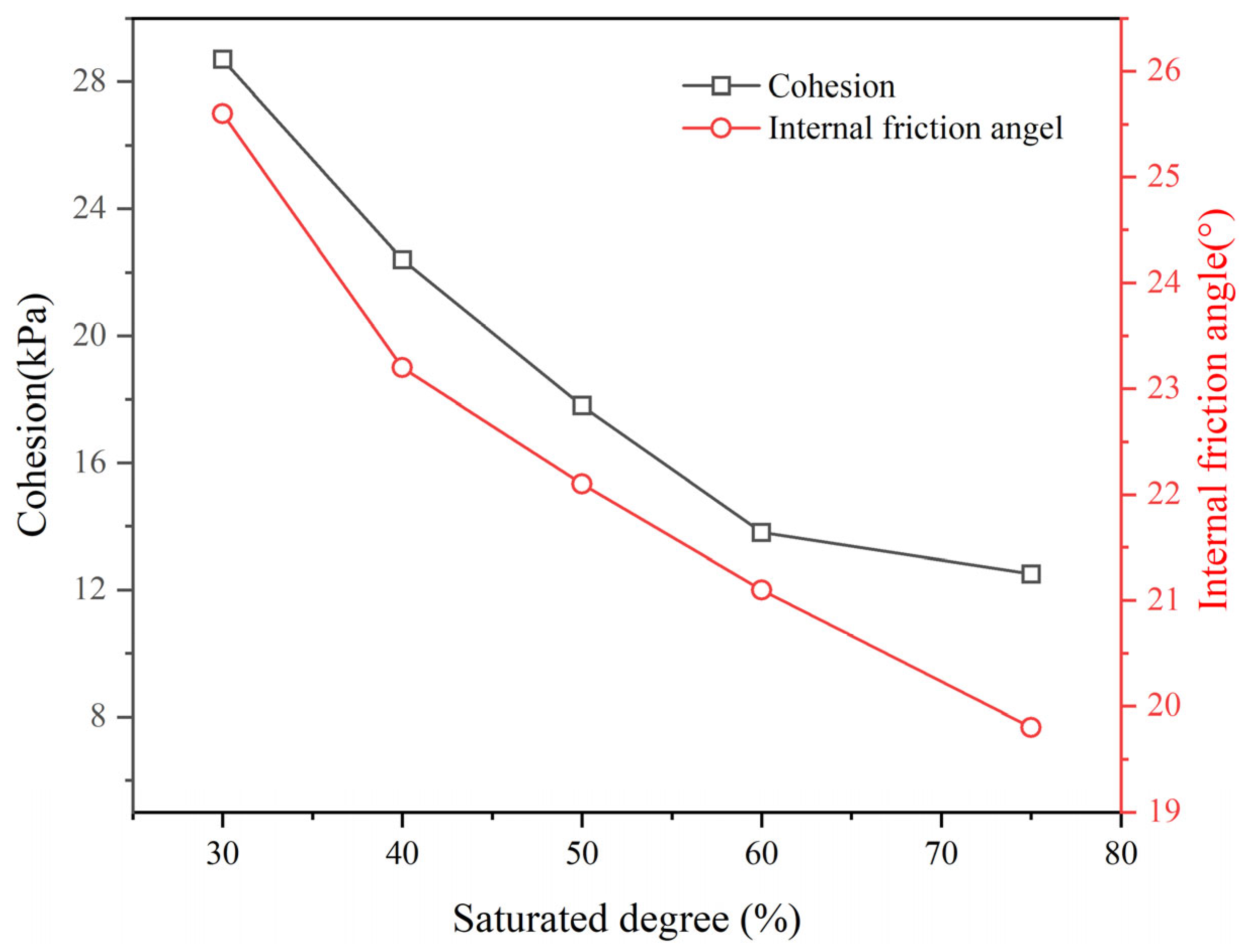
As shown in Figure 7, with the increase in saturation, both the cohesion and internal friction angle of the Jianxi landslide loess decrease, indicating that matric suction in unsaturated loess has a controlling influence on these two parameters. Moreover, the variations in cohesion and internal friction angle occur almost simultaneously. The cohesion of natural loess is 28.7 kPa, but as saturation increases, it gradually decreases to 12.5 kPa—a reduction of 56.4%. In contrast, the change in internal friction angle is relatively small, decreasing from 25.6° under natural conditions to 19.8° at higher saturation, representing a reduction of 22.7%.
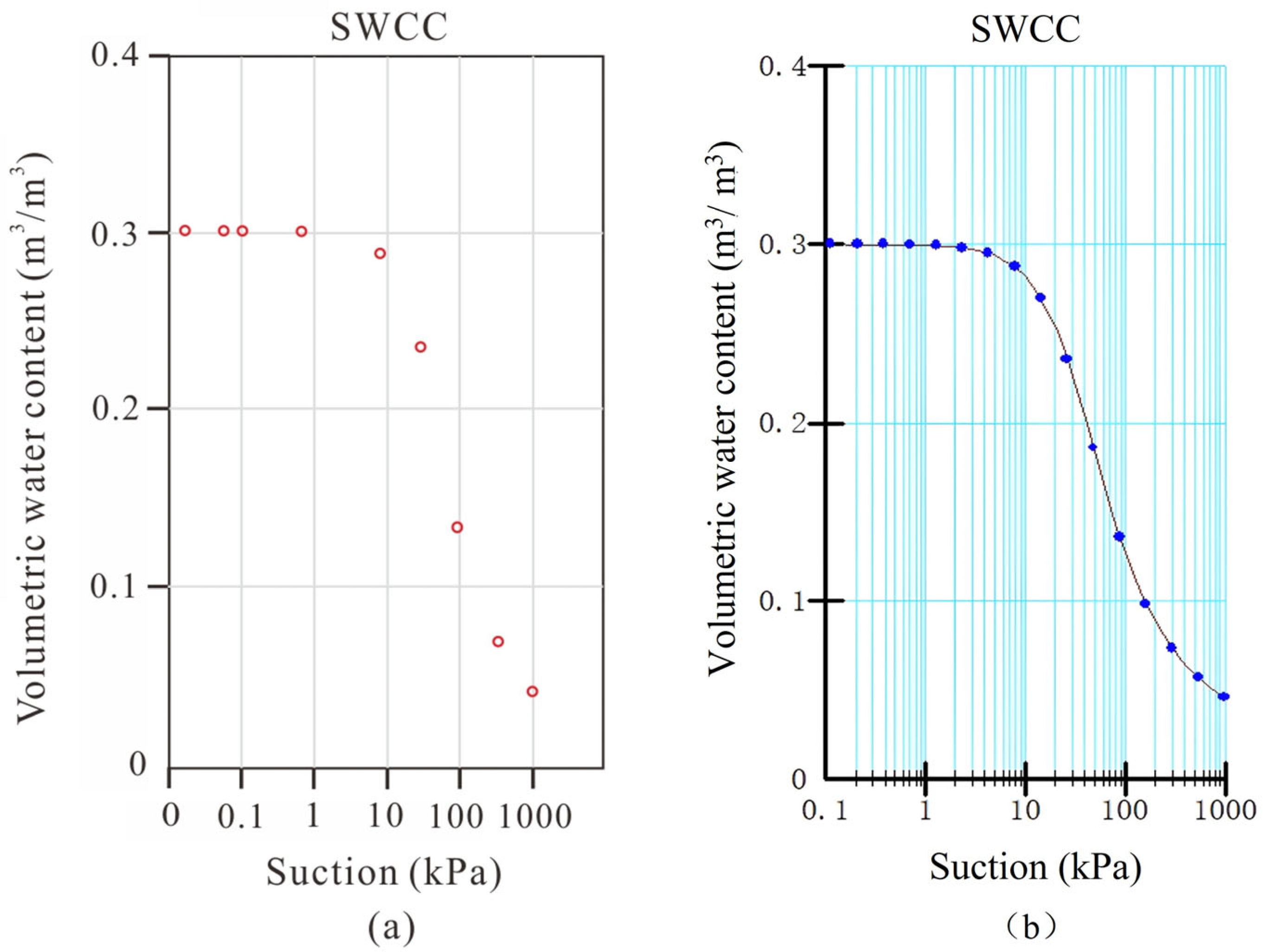
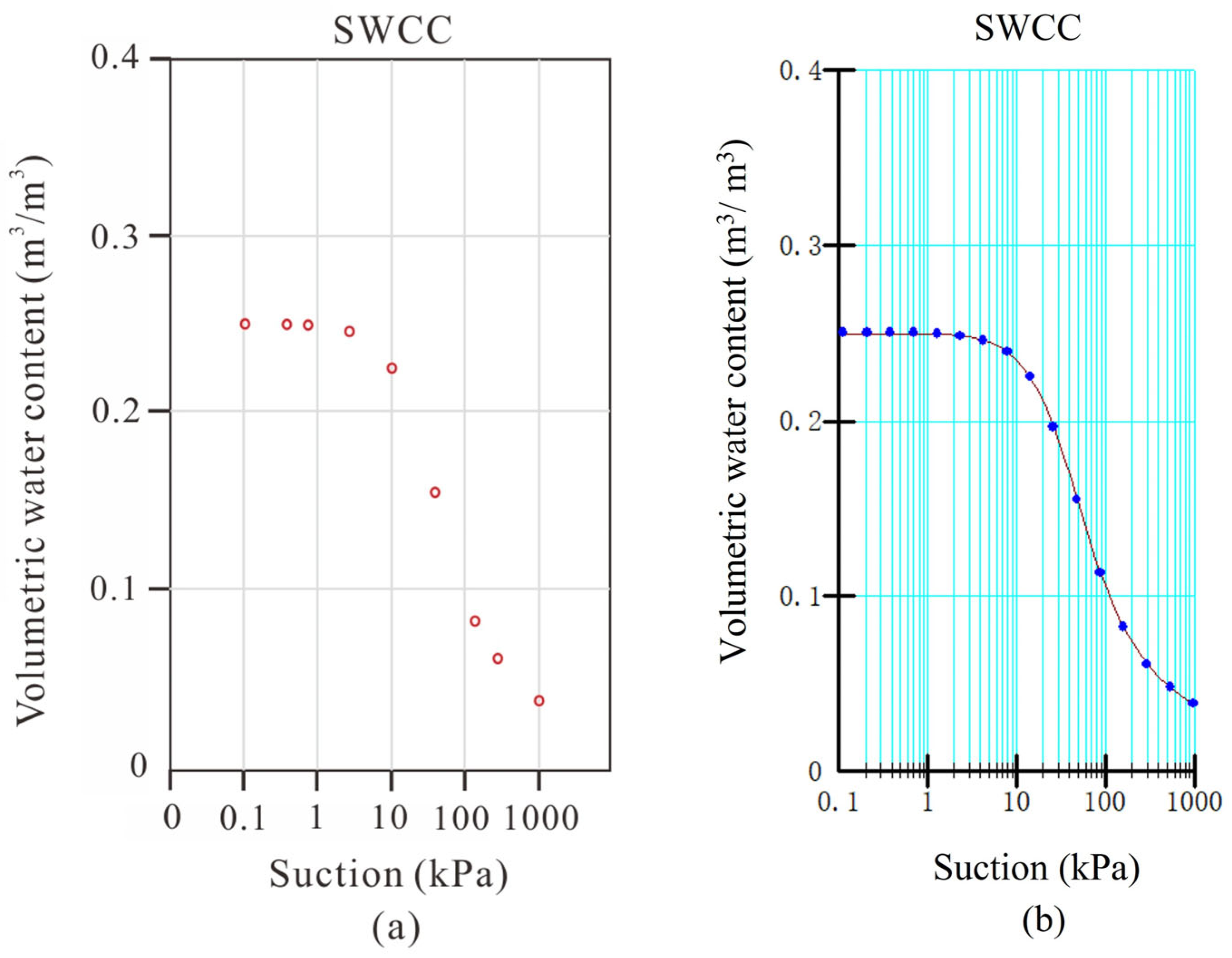
The instability of loess landslides induced by rainfall infiltration are closely related to the saturated–unsaturated properties of loess, which can be characterized by the soil–water characteristic curve (SWCC). The SWCC was determined with the SWC-150 Fredlund pressure apparatus (Produced by GCTS Testing Systems, Arizona, USA) (Figure 6b). As shown in Figure 8a and Figure 9a respectively, the SWCC of the loess and alluvial silty clay were measured. These curves can be quantitatively described by fitting appropriate mathematical models, among which the Van Genuchten (VG) model is the most commonly used [37]. The VG model is listed as follows:
θ = θ r + θ s θ r [ 1 + ( α h ) n ] m
where θ denotes the volumetric water content, while θs and θr represent the saturated and residual water contents, respectively. The variable h refers to matric suction (commonly expressed as a positive value). The parameters α, m, and n are model fitting coefficients, where α is associated with the air-entry value and m and n are curve-shaping parameters, with the constraint m = 1/n.
The SWCCs of the loess and alluvial silty clay, fitted using the VG model, are presented in Figure 8b and Figure 9b, respectively. The best-fit parameters of the VG model are listed in Table 2.

4. Results

4.1. Soil Moisture Field

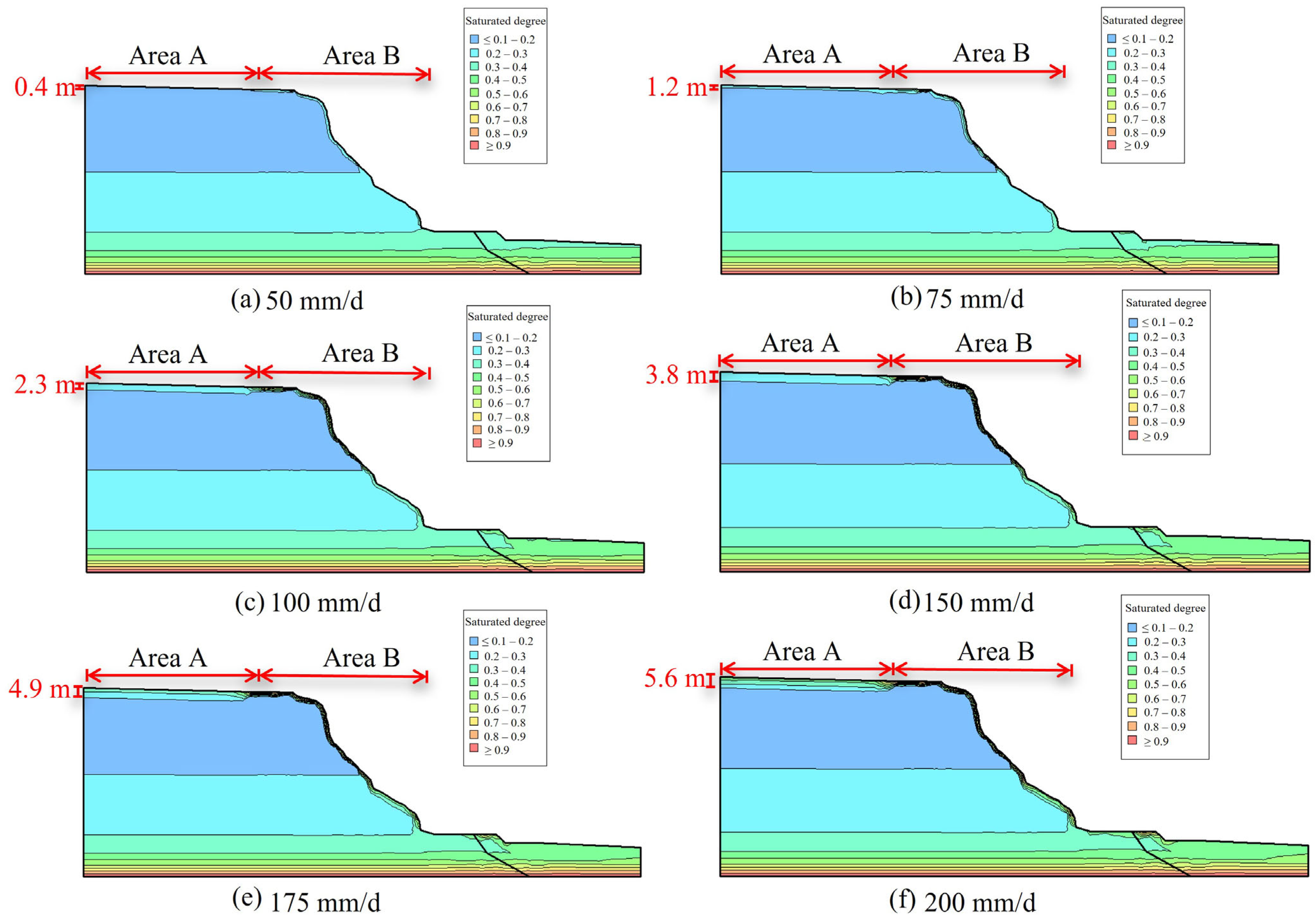
The simulated soil moisture fields of the Jianxi landslide are presented in Figure 10 and Figure 11. Figure 10 illustrates the case without considering joints, whereas Figure 11 represents the case with vertical joints distributed in the Jianxi landslide. When the rainfall intensity increases from 50 mm/d to 200 mm/d, the corresponding soil moisture field distributions are depicted in Figure 10a–f. A saturation degree of 1 indicates that the soil was completely saturated. Based on the simulated results, the Jianxi landslide can be broadly divided into two areas, Area A and Area B (Figure 10a–f). The main difference between Area A and Area B lies in their slope characteristics. Specifically, Area A has a relatively gentle and nearly horizontal slope, whereas Area B is steeper, with a maximum inclination of up to 85°. In Area A, the infiltration depth increases progressively with rainfall intensity. For 50 mm/d rainfall, the infiltration depth is approximately 0.4 m (Figure 10a). As the rainfall intensity increases to 75, 100, 150, 175, and 200 mm/d, the corresponding infiltration depths increase to 1.2, 2.3, 3.8, 4.9, and 5.6 m, respectively. In contrast, the infiltration depth in Area B shows no significant change with increasing rainfall intensity. This can be attributed to the steeper slope gradient in Area B, where part of the rainfall infiltrates into the Jianxi landslide, the other part is converted into surface runoff.
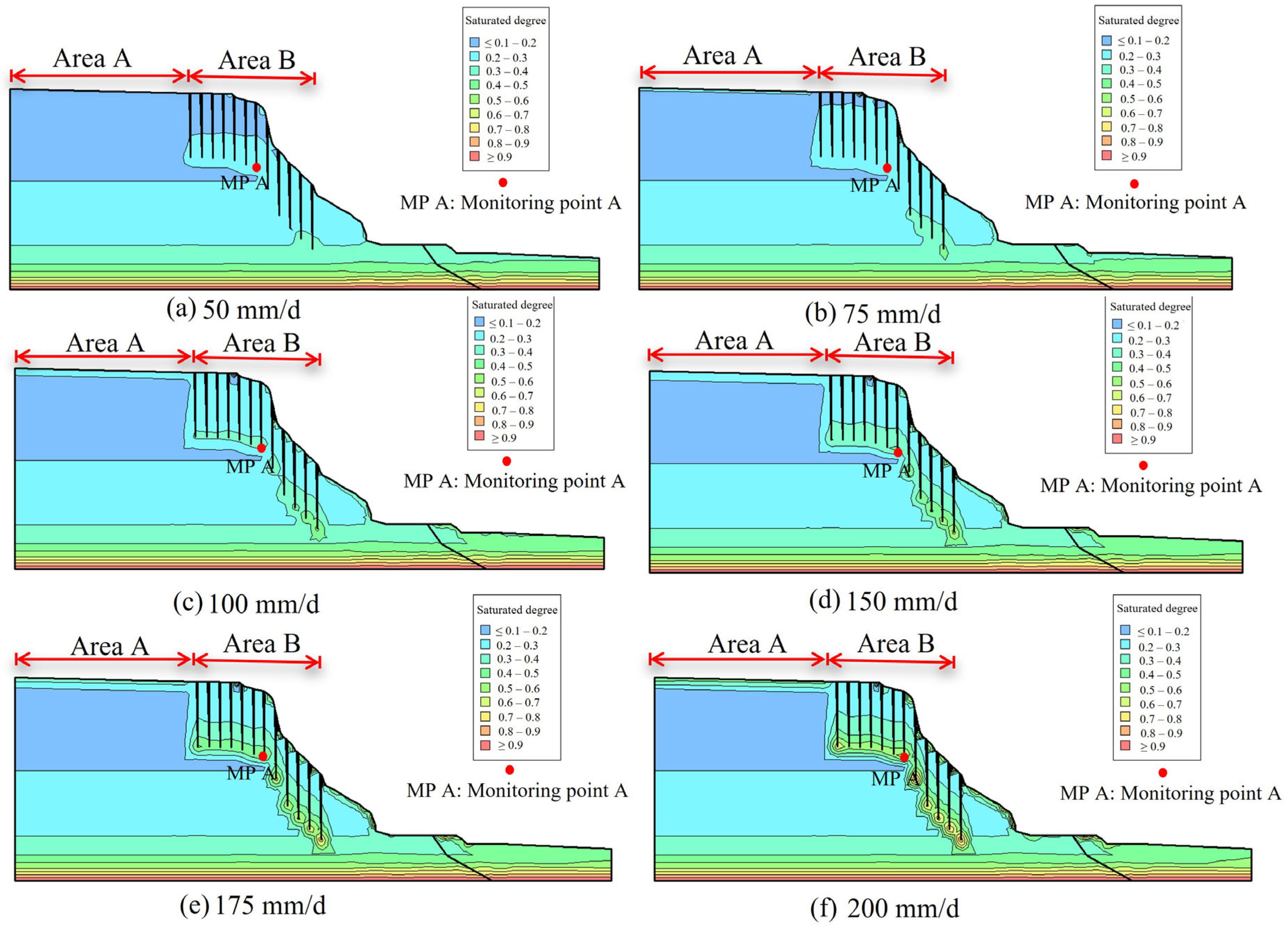
When joints are considered, the variation in the soil moisture field of the Jianxi landslide is shown in Figure 11a–f. The Jianxi landslide can be roughly divided into two areas—Area A and Area B—according to whether joints are present. For Area A, the infiltration patterns of rainwater under different rainfall intensities are generally consistent with those shown in Figure 10. However, significant differences are observed in Area B. This is mainly attributed to the existence of joints, which act as preferential flow paths, facilitating the rapid infiltration of rainfall to the bottom of the joints. The findings of this work are consistent with previous studies [38,39].
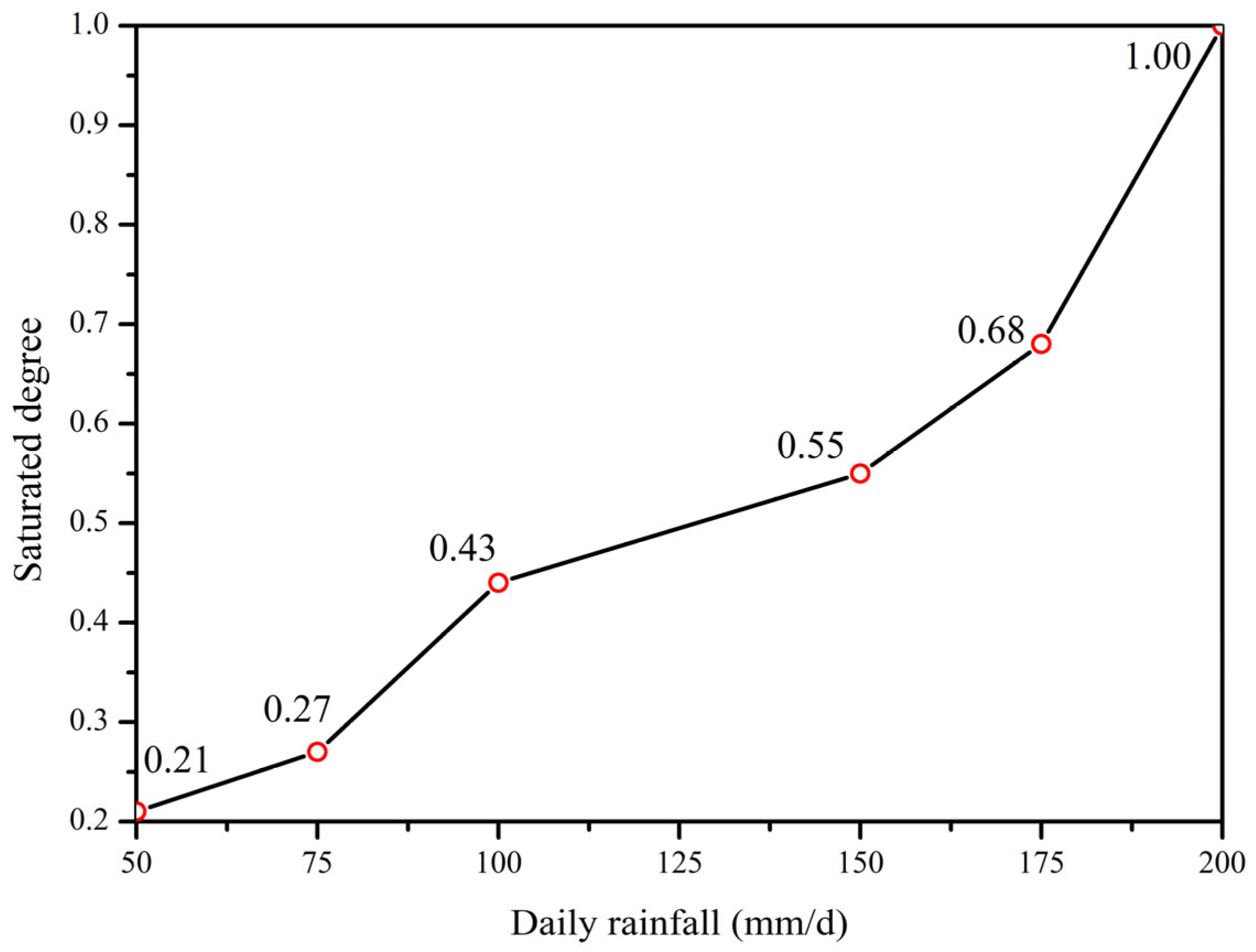
To further illustrate the influence of joints on the soil moisture field of the Jianxi landslide, a monitoring point (MP A) was set at the bottom of Joint 8, as marked by the red dots in Figure 11. The variation in the saturation degree at MP A is presented in Figure 12. For a rainfall intensity of 50 mm/d, the saturation degree at MP A is 0.21. As rainfall intensity increases, the saturation at MP A also rises accordingly. For a rainfall intensity of 200 mm/d, the saturation degree at MP A reaches one, indicating that the soil becomes fully saturated and rainwater accumulation begins to occur.
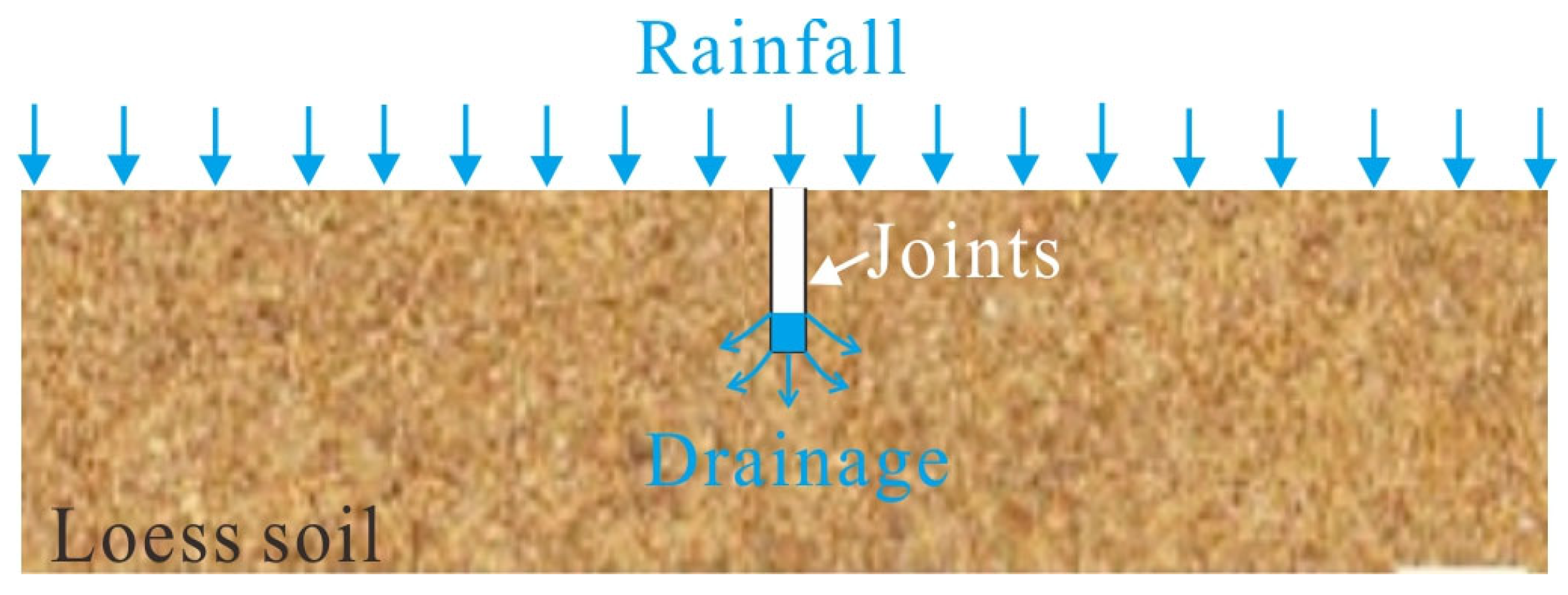
As shown in Figure 13, once the bottom of the joint becomes saturated, a hydraulic gradient forms between this area and the surrounding soil. Consequently, rainwater within the joint drains into the surrounding soil, leading to the phenomenon observed in Figure 11f, where the saturation at the bottom of the joint is higher than that of the surrounding area.

4.2. Landslide Stability

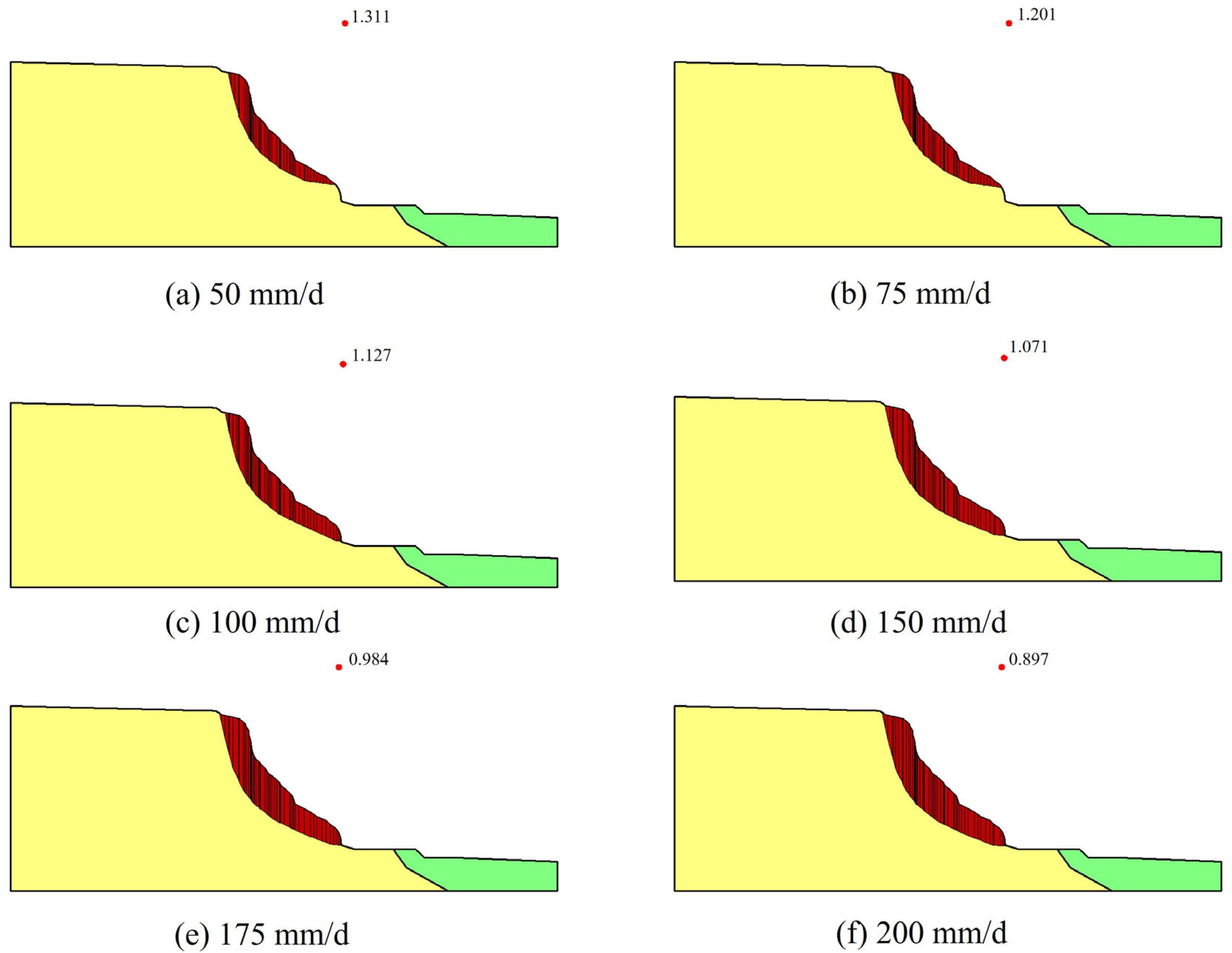
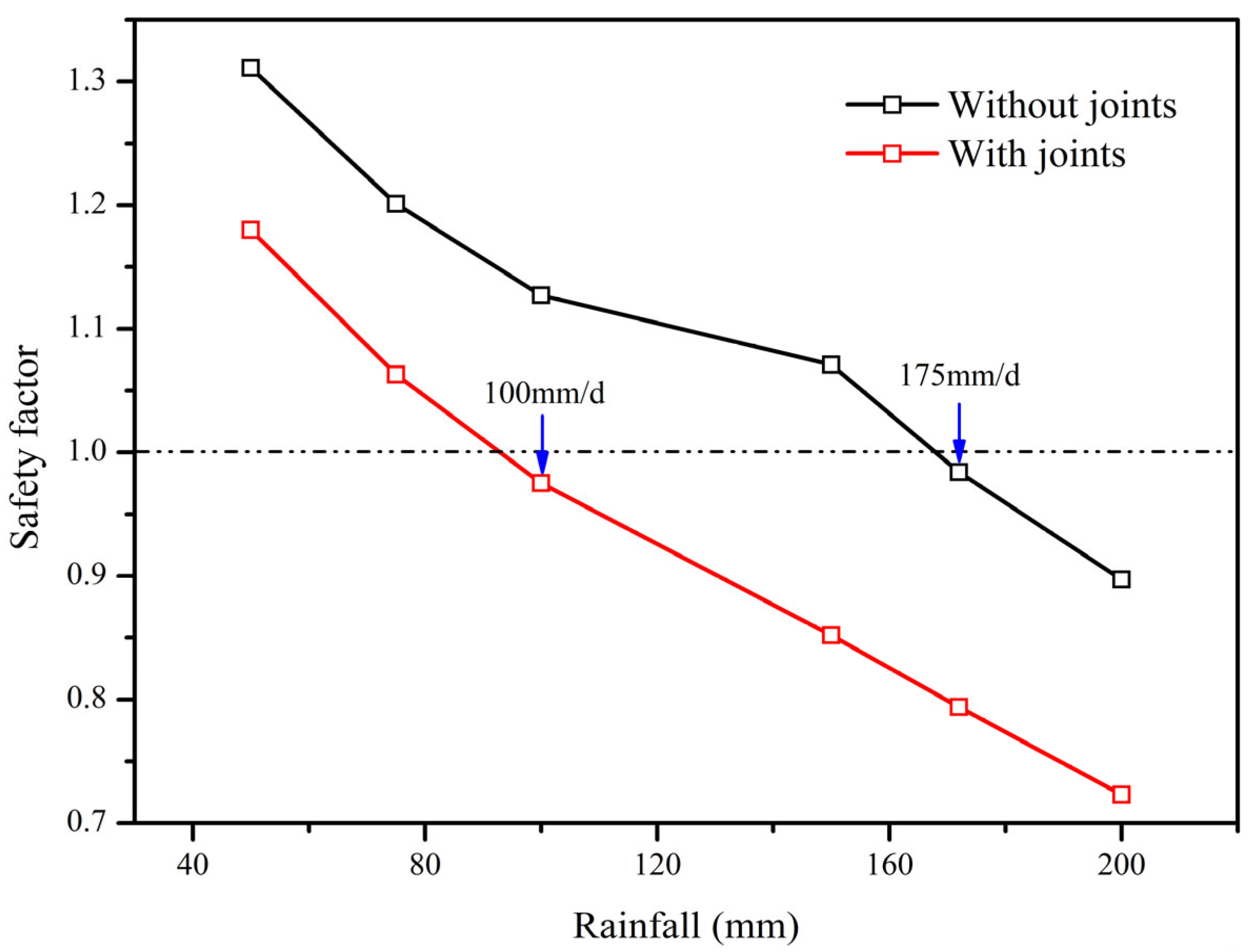
After each rainfall event, the safety factor of the Jianxi landslide was calculated using the SLOPE/W module. The results for different rainfall intensities without considering joints are presented in Figure 14a–f, with specific values listed in Table 3. For 50 mm/d rainfall, the landslide’s safety factor is 1.311. As rainfall intensity increases, the safety factor gradually decreases, reaching 0.984 at 175 mm/d. Since the safety factor of 1 corresponds to the limit equilibrium state, values below 1 indicate slope failure. Thus, the critical rainfall threshold for Jianxi landslide failure is determined to be 175 mm/d. With further increases in rainfall intensity, the safety factor continued to decrease, dropping to 0.897 at 200 mm/d.
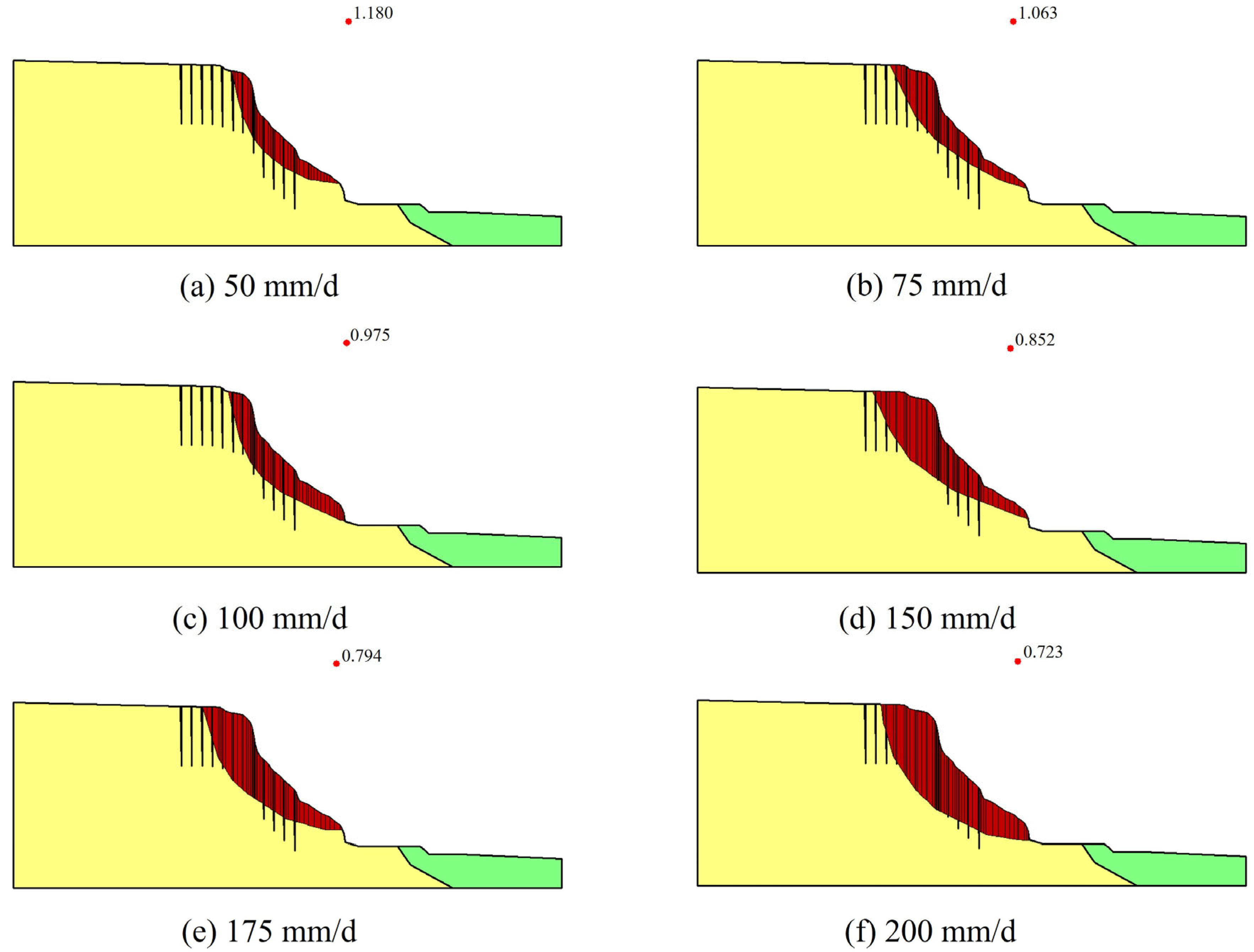
When joints are considered, the safety factors of Jianxi landslide calculated after each rainfall are shown in Figure 15a–f, with the corresponding values summarized in Table 3. It is found that under same rainfall conditions, the safety factors with joints are consistently lower than those without joints. By comparing the safety factor with and without joints under the same rainfall conditions, it was found that the overall safety factor of the Jianxi landslide with joints is 15.7% lower than those without joints. When it attains 100 mm/d, the safety factor drops to 0.975, approaching the limit equilibrium state. Thus, the critical rainfall threshold for landslide instability can be approximated as 100 mm/d. With further increases in rainfall, the safety factor continues to decrease, reaching 0.723 at 200 mm/d.

5. Discussion

5.1. Validation of the Developed Model

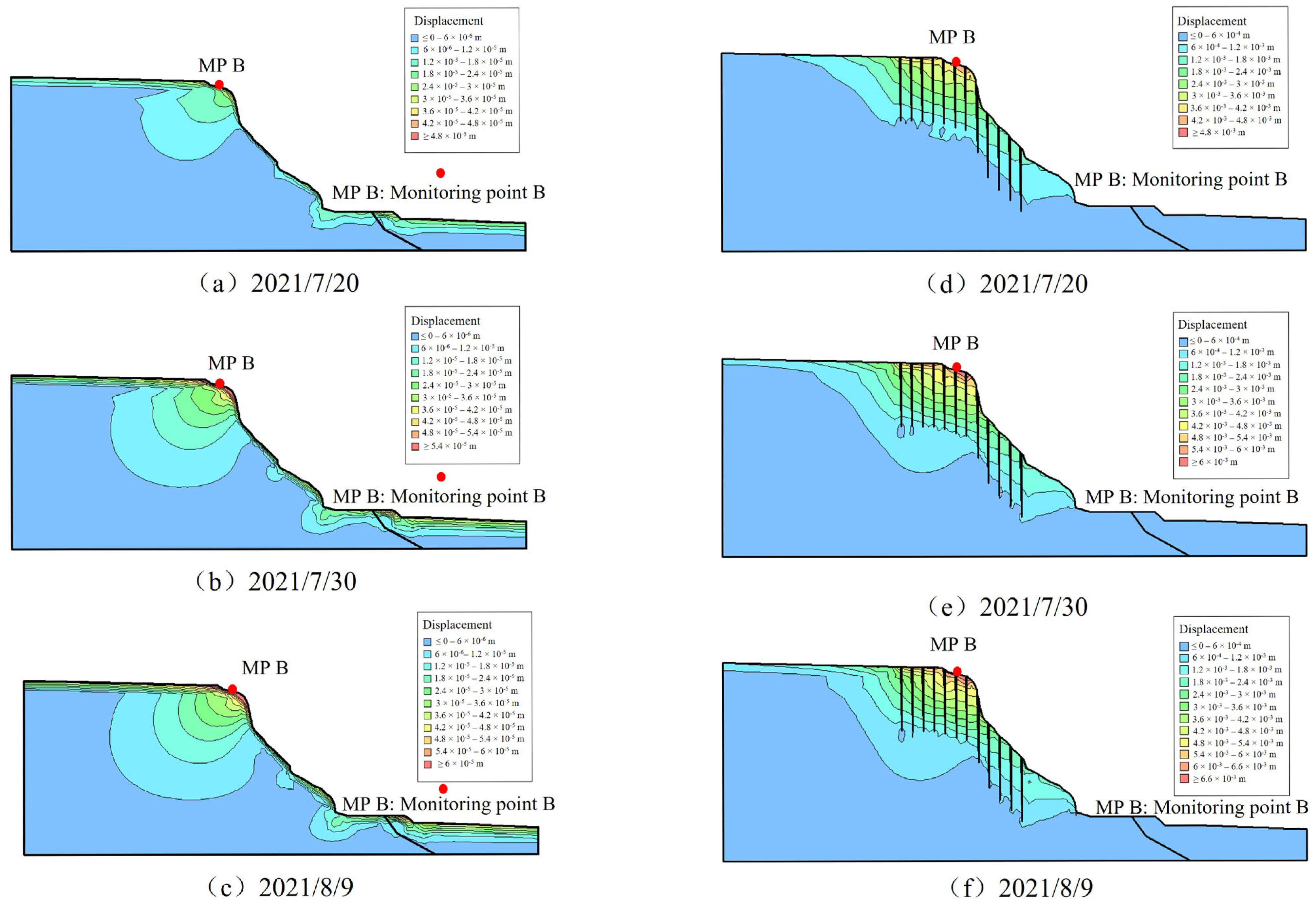
To verify the reliability and accuracy of the calculation model incorporating the actual joint distribution developed in this study, the simulated displacement results from 10 July to 9 August 2021 (a 30-day period) were compared with the GNSS-measured displacements. The rainfall data used in the simulation were the actual daily rainfall records provided by the local meteorological bureau (Figure 3b). Therefore, the rainfall boundary was defined as Rain of Limited Duration. The simulated displacement results of the Jianxi landslide with and without considering joints are shown in Figure 16. Specifically, Figure 16a–c present the simulated deformation on 20 July 2021, 30 July 2021, and 9 August 2021 without considering joints, whereas Figure 16d–f show the corresponding results when joints are included. It can be found that the maximum deformation is primarily concentrated at the top area. Moreover, the deformation is significantly greater when joints are considered, highlighting their critical role in landslide instability.
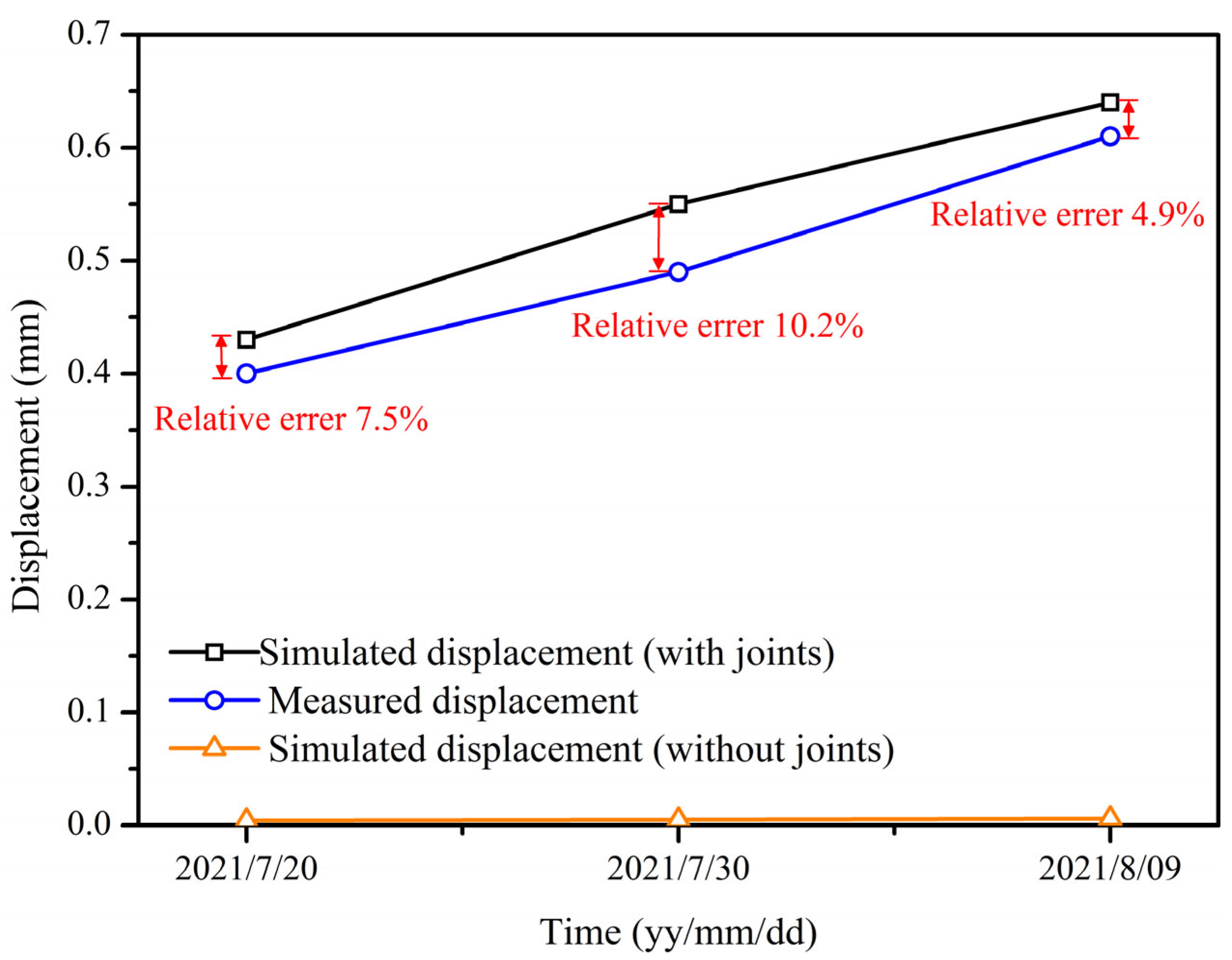
To compare the simulated and measured displacements, a monitoring point (MP-B) was established in the landslide model at the same location as the GNSS monitoring point. The simulated deformation results, both with and without considering joints, were compared with the GNSS-measured displacements, as shown in Figure 16. It can be found that the simulated displacement of the Jianxi landslide without considering joints is minimal, fluctuating between 0.04 mm and 0.06 mm. In contrast, the simulated displacements that account for joints are much closer to the GNSS measurements. Further analysis indicates that the simulated displacement values are slightly higher than the observed data, which may be attributed to idealized assumptions made in the numerical modeling of joints. For example, although the actual joint lengths are generally less than 30 m, all joints were uniformly set to 30 m in the model. Similarly, the actual joint widths vary between 0.03 m and 0.07 m, but an average value of 0.05 m was adopted. Despite these simplifications, the relative errors between simulated and measured values are 7.5%, 10.2%, and 4.9%, with an average of 7.5% (Figure 17). These results demonstrate that the landslide calculation model incorporating joints developed in this study is accurate and reliable.

5.2. The Influence of Joints on the Moisture Field and Stability of Jianxi Landslide

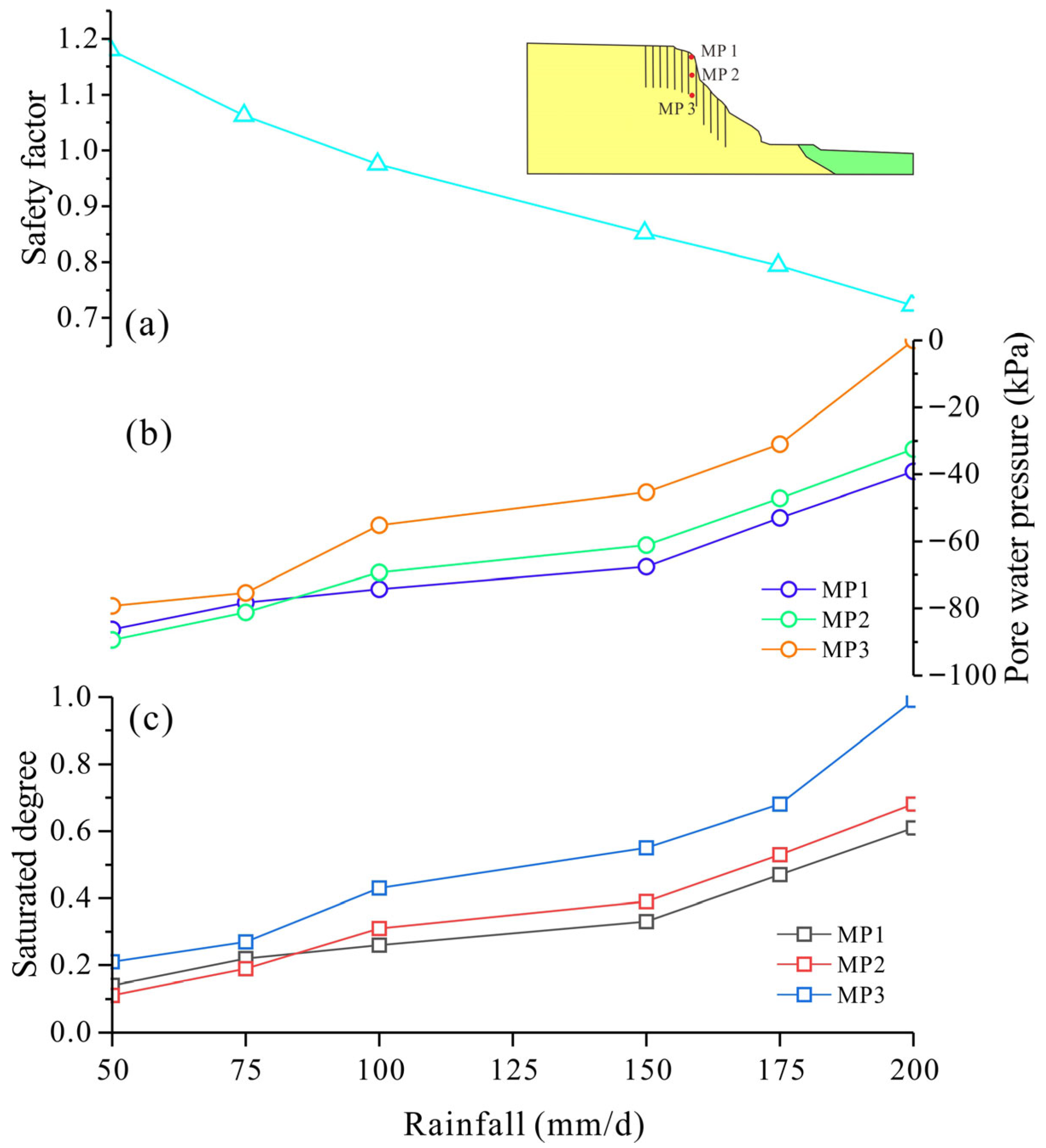
To further investigate the influence of joints on the moisture field and slope stability, we analyzed the moisture content and pore water pressure at different depths of the Jianxi landslide—specifically at monitoring points MP1, MP2, and MP3—as well as the corresponding safety factors under various rainfall conditions. The evolution of moisture content, pore water pressure, and safety factor at different depths under different rainfall intensities is shown in Figure 18. As illustrated in Figure 18b,c, with the increasing of rainfall intensity, both the moisture content and pore water pressure at MP1, MP2, and MP3 rise continuously. Among them, MP3 exhibits significantly higher moisture content and pore water pressure compared with MP1 and MP2. This is because the presence of joints allows rainwater to rapidly infiltrate along the fissures and reach MP3 [40]. In contrast, the values at MP1 and MP2 are relatively similar. Notably, when rainfall intensity increases from 75 mm/d to 100 mm/d and from 175 mm/d to 200 mm/d, the moisture content and pore water pressure at all three points rise sharply, and the safety factor of the Jianxi landslide decreases significantly in response.
In order to determine the rainfall threshold of the Jianxi landslide, the variation in the safety factor is illustrated in Figure 19. The safety factor of the Jianxi landslide decreases markedly when joints are considered compared to the scenario without joints. The corresponding rainfall thresholds for landslide instability are 100 mm/d and 175 mm/d for the cases with and without joints, respectively. As demonstrated in Section 5.1 (“Validation of the developed model”), the simulation results incorporating joints are more consistent with the observed field conditions. Moreover, numerous studies have demonstrated that joints should be considered when analyzing the moisture field and the stability of loess slopes [35,41]. Therefore, the critical rainfall threshold (100 mm/d) obtained in this study is considered to be more representative of the actual situation.
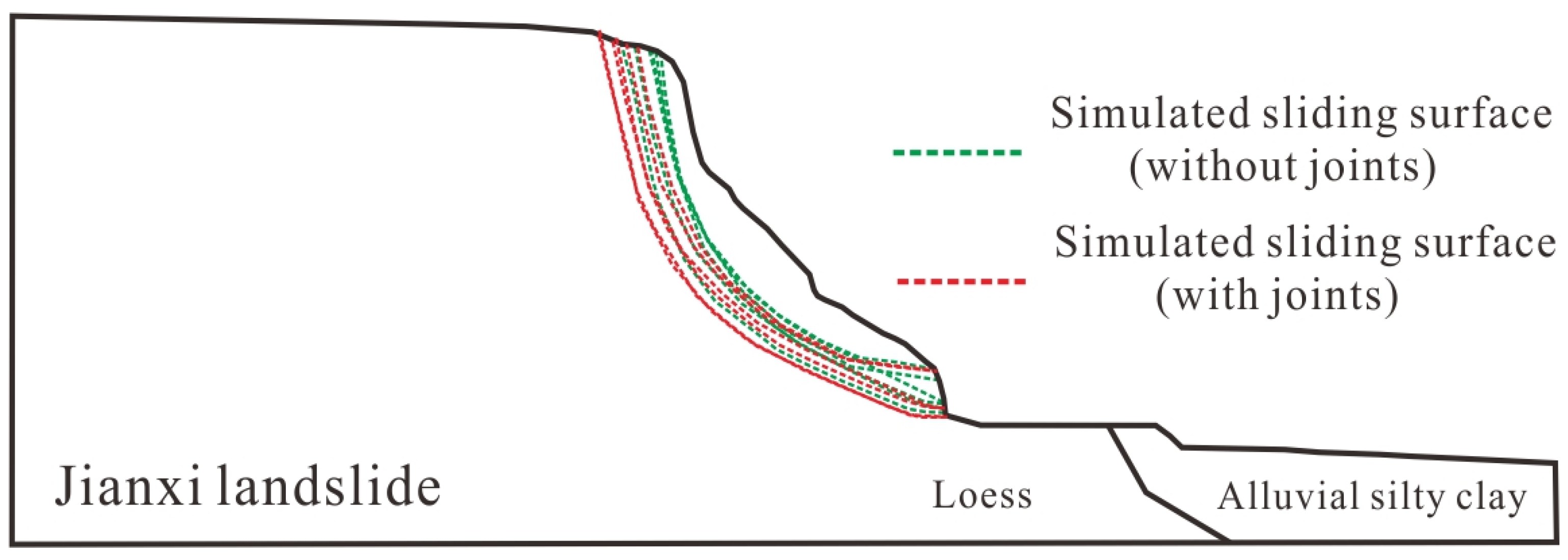
In addition, the simulated sliding surfaces under different rainfall conditions both with and without considering joints are plotted in Figure 20. The green dashed lines denote the positions of the sliding surfaces obtained from simulations without joints, whereas the red lines represent those derived from simulations that include joints. It can be clearly seen that the sliding surfaces are deeper when joints are considered. This indicates that the potential sliding volume is larger when considering joints. This can be explained, as rainwater can rapidly infiltrate into deeper parts of the landslide via the preferential pathways, thereby reducing the shear strength of the deeper soil layers and thus potentially triggering deep-seated landslides.
Climate change, particularly global warming, leads to more frequent and intense extreme rainfall events primarily due to the increased moisture-holding capacity of the atmosphere, enhanced surface evaporation, and intensified convective activity [41]. Such conditions can induce large-scale instability in loess landslides. Therefore, special attention should be given by the local government to the exposure risks faced by the residential area situated downslope of the landslide—Jianxi Village—and timely measures should be taken to implement effective landslide prevention or resident relocation.

5.3. Novelty and Significance

The structural complexity of joints in natural loess slopes poses a major challenge for accurately reproducing field-scale deformation and failure mechanisms. To address this limitation, this study conducted detailed field investigations of the Jianxi landslide to accurately characterize the true distribution of joints—including their locations, depths, widths, and quantities—and subsequently developed a numerical model based on these data. By incorporating real rainfall records and comparing the simulated displacement of the landslide with GNSS monitoring results, the model’s accuracy and reliability were validated. Based on this verified model, simulations of the seepage field and slope stability under different rainfall conditions were performed. The findings led to two key insights: (1) the critical rainfall threshold for the Jianxi landslide was determined to be 100 mm/d, which is notably lower than the 175 mm/d threshold obtained when joints were not considered; and (2) the presence of joints was found to deepen the potential sliding zone, indicating that joint development can trigger larger-scale landslides. These two insights provide important implications for the prediction and early warning of loess landslides.
To further contextualize the results of the Jianxi landslide, comparative analyses were performed with other representative loess landslides across China. Previous studies have shown that rainfall infiltration plays a dominant role in triggering loess slope failures, with variations in rainfall thresholds and soil response depending on local hydrological and structural conditions. Li et al. (2018) highlighted that the development of cracks and joints across the eastern Loess Plateau greatly enhances infiltration pathways and reduces slope stability, confirming that structural discontinuities are key controlling factors in rainfall-induced loess failures [42]. In addition, Zhou et al., 2024 reported that extreme rainfall events exceeding 90 mm/d triggered widespread loess collapses and shallow landslides, with the intensity–duration threshold modeled as I = 90 D−0.92 [7].
Compared with these previous works, our study further quantifies the effect of joints on slope stability through numerical simulation. Specifically, the results demonstrate that considering joints leads to a 15.7% reduction in the safety factor and deepens the sliding zone, indicating greater potential landslide volume and damage. The critical rainfall threshold of approximately 100 mm/d obtained in this study is consistent with the rainfall intensities identified in other regions of the Loess Plateau, but the additional analysis of joint-controlled seepage provides a more comprehensive understanding of how structural features accelerate instability.
Overall, this study establishes a novel and integrated framework that links in situ joint characterization, rainfall-driven seepage processes, and validated numerical modeling. By bridging the gap between field observations and modeling analysis, it not only refines the understanding of rainfall thresholds and failure mechanisms in jointed loess slopes but also contributes valuable insights for landslide prediction, early warning, and regional hazard mitigation across the Loess Plateau and similar environments worldwide.

6. Conclusions

This study analyzed the stability of loess landslides under rainfall conditions using the GeoStudio numerical simulation method. By comparing two sets of models—with and without joints—the influence of loess joints on landslide seepage fields and stability condition was systematically investigated. The main conclusions are as follows:
(1) The existence of joints significantly reduces the stability of the Jianxi landslide. Specifically, joints in the loess serve as preferential paths for rainwater infiltration, facilitating the rapid infiltration of rainfall to the bottom of the joints and consequently leading to a reduction in landslide stability. Overall, the safety factor calculated with joints is approximately 15.7% lower than that without joints.
(2) When joints are taken into account, the critical rainfall level, which induces instability in the Jianxi landslide, is 100 mm/d, which is considerably lower than the threshold of 175 mm/d obtained without considering joints. This indicates that neglecting joints may lead to an overestimation of the rainfall threshold for landslide instability.
(3) When joints are considered, the sliding surface of the Jianxi landslide extends to a greater depth than in the case without joints, indicating a larger sliding volume and potentially more severe consequences once failure.

Author Contributions

Investigation, methodology, writing—original draft preparation, J.W.; Investigation, conceptualization, writing—review and editing, project administration, and funding acquisition, L.Z.; Investigation, data curation, validation, writing—review and editing, S.Z.; Investigation, data curation, validation, G.L.; Data curation, writing—review and editing, H.G. All authors have read and agreed to the published version of the manuscript.

Funding

The authors gratefully acknowledge the financial support provided by the Open Fund of Hebei Cangzhou Groundwater and Land Subsidence National Observation and Research Station (No. CGLOS-2023-06), the National Key Research and Development Program of China (2023YFC3007202); the Fundamental Research Funds for the Central Universities (2-9-2022-042). Opening fund of State Key Laboratory of Geohazard Prevention and Geoenvironment Protection (SKLGP2023K021), and Key Laboratory of Ministry of Education for Geomechanics and Embankment Engineering, Hohai University (2023002).

Data Availability Statement

The original contributions presented in this study are included in the article. Further inquiries can be directed to the corresponding authors.

Conflicts of Interest

The authors declare no conflicts of interest.

References

  1. Li, Y.; Mo, P. A unified landslide classification system for loess slopes: A critical review. Geomorphology 2019, 340, 67–83. [Google Scholar] [CrossRef]
  2. Feng, L.; Lin, H.; Zhang, M.; Guo, L.; Jin, Z.; Liu, X. Development and evolution of Loess vertical joints on the Chinese Loess Plateau at different spatiotemporal scales. Eng. Geol. 2020, 265, 105372. [Google Scholar] [CrossRef]
  3. Zhang, L.; Cui, Y.; Zhu, H.; Wu, H.; Han, H.; Yan, Y.; Shi, B. Shear deformation calculation of landslide using distributed strain sensing technology considering the coupling effect. Landslides 2023, 20, 1583–1597. [Google Scholar] [CrossRef]
  4. Derbyshire, E. Geological hazards in loess terrain, with particular reference to the loess regions of China. Earth-Sci. Rev. 2001, 54, 231–260. [Google Scholar] [CrossRef]
  5. Yuan, B.; Huang, Q.; Xu, W.; Han, Z.; Luo, Q.; Chen, G.; Zhang, Q.; Sabri, S.M.M. Study on the interaction between pile and soil under lateral load in coral sand. Geomech. Energy Environ. 2025, 42, 100674. [Google Scholar] [CrossRef]
  6. Liu, H.; Li, Y.; Bai, M.; Gao, X.; Yang, L.; Zhang, Z.; Zuo, M.; Liu, Q. Mechanism of rainfall-induced loess landslides revealed by multi-source data. Nat. Hazards 2025, 121, 9141–9160. [Google Scholar] [CrossRef]
  7. Zhou, C.; Xia, Z.; Chen, D.; Miao, L.; Hu, S.; Yuan, J.; Huang, W.; Liu, L.; Ai, D.; Xu, H.; et al. Extreme Rainfall Events Triggered Loess Collapses and Landslides in Chencang District, Shanxi, China, during June–October 2021. Water 2024, 16, 2279. [Google Scholar] [CrossRef]
  8. Shi, G.; Yang, X.; Yang, F.; Tao, Z.; Zhang, X.; Dong, J. Instability mechanism and control measures of loess slope induced by heavy rainfall. Earth Surf. Proc. Land. 2025, 50, e70088. [Google Scholar] [CrossRef]
  9. Yates, K.; Fenton, C.H.; Bell, D.H. A review of the geotechnical characteristics of loess and loess-derived soils from Canterbury, South Island, New Zealand. Eng. Geol. 2018, 236, 11–21. [Google Scholar] [CrossRef]
  10. Meng, Z.; Zhang, F.; Peng, J.; Xu, C.; Kang, C.; Ma, P.; Fan, Z.; Leng, Y.; Li, C.; Cao, Y. A rainfall model test for investigating the initiation mechanism of the catastrophic loess landslide in Baqiao, Xi’an, China. Bull. Eng. Geol. Environ. 2025, 84, 201. [Google Scholar] [CrossRef]
  11. Guo, Z.; Huang, Q.; Liu, Y.; Wang, Q.; Chen, Y. Model experimental study on the failure mechanisms of a loess-bedrock fill slope induced by rainfall. Eng. Geol. 2023, 313, 106979. [Google Scholar] [CrossRef]
  12. Zhang, R.; Wang, B. Analysis of the effects of vertical joints on the stability of loess slope. Sci. Rep. 2023, 13, 4270. [Google Scholar] [CrossRef] [PubMed]
  13. Cheng, Y.; Huo, A.; Zhao, Z.; Peng, J. Analysis of loess fracture on slope stability based on centrifugal model tests. Bull. Eng. Geol. Environ. 2021, 80, 3647–3657. [Google Scholar] [CrossRef]
  14. Ma, J.; Yao, Y.; Wei, Z.; Meng, X.; Zhang, Z.; Yin, H.; Zeng, R. Stability analysis of a loess landslide considering rainfall patterns and spatial variability of soil. Comput. Geotech. 2024, 167, 106059. [Google Scholar] [CrossRef]
  15. Bai, W.; Li, R.; Pan, J.; Li, R.; Wang, L.; Yang, Z. Measured rainfall infiltration and the infiltration interface effect on double-layer loess slope. Water 2023, 15, 2505. [Google Scholar] [CrossRef]
  16. Shi, J.S.; Wu, L.Z.; Wu, S.R.; Li, B.; Wang, T.; Xin, P. Analysis of the causes of large-scale loess landslides in Baoji, China. Geomorphology 2016, 264, 109–117. [Google Scholar] [CrossRef]
  17. Zhang, L.; Zhu, H.; Han, H.; Shi, B. Fiber optic monitoring of an anti-slide pile in a retrogressive landslide. J. Rock Mech. Geotech. 2024, 16, 333–343. [Google Scholar] [CrossRef]
  18. Zhang, L.; Shi, B.; Zhang, D.; Sun, Y.; Inyang, H.I. Kinematics, triggers and mechanism of Majiagou landslide based on FBG real-time monitoring. Environ. Earth Sci. 2020, 79, 200. [Google Scholar] [CrossRef]
  19. Xie, W.L.; Guo, Q.; Wu, J.Y.; Li, P.; Yang, H.; Zhang, M. Analysis of loess landslide mechanism and numerical simulation stabilization on the Loess Plateau in Central China. Nat. Hazards 2021, 106, 805–827. [Google Scholar] [CrossRef]
  20. Ma, S.; Wei, J.; Xu, C.; Shao, X.; Xu, S.; Chai, S.; Cui, Y. UAV survey and numerical modeling of loess landslides: An example from Zaoling, southern Shanxi Province, China. Nat. Hazards 2020, 104, 1125–1140. [Google Scholar] [CrossRef]
  21. Yang, L.; Wei, Y.; Wang, W.; Zhu, S. Numerical runout modeling analysis of the loess landslide at Yining, Xinjiang, China. Water 2019, 11, 1324. [Google Scholar] [CrossRef]
  22. Acharya, G.; Cochrane, T.; Davies, T.; Bowman, E. Quantifying and modeling post-failure sediment yields from laboratory-scale soil erosion and shallow landslide experiments with silty loess. Geomorphology 2011, 129, 49–58. [Google Scholar] [CrossRef]
  23. Wu, L.Z.; Zhou, Y.; Sun, P.; Shi, J.S.; Liu, G.G.; Bai, L.Y. Laboratory characterization of rainfall-induced loess slope failure. Catena 2017, 150, 1–8. [Google Scholar] [CrossRef]
  24. Zhang, J.; Luo, Y.; Zhou, Z.; Victor, C.; Duan, M. Research on the rainfall-induced regional slope failures along the Yangtze River of Anhui, China. Landslides 2021, 18, 1801–1821. [Google Scholar] [CrossRef]
  25. Leng, X.; Dong, Y.; Cui, L.; Zhou, L.; Luo, S. An integrated investigation of the failure mechanism of loess landslide induced by raining: From field to laboratory. Bull. Eng. Geol. Environ. 2024, 83, 442. [Google Scholar] [CrossRef]
  26. Tu, X.B.; Kwong, A.K.L.; Dai, F.C.; Tham, L.G.; Min, H. Field monitoring of rainfall infiltration in a loess slope and analysis of failure mechanism of rainfall-induced landslides. Eng. Geol. 2009, 105, 134–150. [Google Scholar] [CrossRef]
  27. Lukić, T.; Bjelajac, D.; Fitzsimmons, K.E.; Marković, S.B.; Basarin, B.; Mlađan, D.; Samardžić, I. Factors triggering landslide occurrence on the Zemun loess plateau, Belgrade area, Serbia. Environ. Earth Sci. 2018, 77, 519. [Google Scholar] [CrossRef]
  28. Zhang, B.; Feng, L.; Zhang, M.; Sun, P.; Li, T.; Liu, H. Application of resistivity measurement to stability evaluation for loess slopes. Landslides 2022, 19, 2871–2887. [Google Scholar] [CrossRef]
  29. Wulamu, K.; Zhang, Z.; Lv, Q.; Shi, G.; Zhang, Y.; Liang, S. Triggering mechanics and early warning for snowmelt-rainfall-induced loess landslide. Sci. Rep. 2024, 14, 26787. [Google Scholar] [CrossRef]
  30. Lu, X.B.; Ye, T.L.; Zhang, X.H.; Cui, P.; Hu, K.H. Experimental and numerical analysis on the responses of slope under rainfall. Nat. Hazards 2012, 64, 887–902. [Google Scholar] [CrossRef][Green Version]
  31. Tu, G.X.; Huang, D.; Deng, H. Reactivation of a huge ancient landslide by surface water infiltration. J. Mt. Sci. 2019, 16, 806–820. [Google Scholar] [CrossRef]
  32. Wang, H.; Sun, P.; Wang, G.; Wu, L. Experimental and numerical study of shallow loess slope failure induced by irrigation. Catena 2021, 206, 105548. [Google Scholar] [CrossRef]
  33. Jiang, X.D.; Hou, T.S.; Guo, S.L.; Chen, Y. Influence of cracks on loess collapse under heavy rainfall. Catena 2023, 223, 106959. [Google Scholar] [CrossRef]
  34. Jamshidi, A.; Yazarloo, R.; Nabizadeh, F. Determining the failure mechanism and analyzing numerical stability of a Loess slope in seismic zones: A case study. Geopersia 2025, 15, 35–56. [Google Scholar] [CrossRef]
  35. Ma, P.; Peng, J.; Wang, Q.; Zhuang, J.; Zhang, F. The mechanisms of a loess landslide triggered by diversion-based irrigation: A case study of the South Jingyang Platform, China. Bull. Eng. Geol. Environ. 2019, 78, 4945–4963. [Google Scholar] [CrossRef]
  36. Ren, X.; Sun, W.; Lan, H.; Bao, H.; Li, L.; Liu, S.; Tian, C. Influence of tension cracks on moisture infiltration in loess slopes under high-intensity rainfall conditions. Sci. Rep. 2025, 15, 4488. [Google Scholar] [CrossRef]
  37. Genuchten, M.T.V. A closed-form equation for predicting the hydraulic conductivity of unsaturated soils. Soil Sci. Soc. Am. J. 1980, 44, 892–898. [Google Scholar] [CrossRef]
  38. Hou, K.; Qian, H.; Zhang, Y.; Wang, H. Seepage mechanisms and permeability differences between loess and paleosols in the critical zone of the Loess Plateau. Earth Surf. Proc. Land. 2021, 46, 2044–2059. [Google Scholar] [CrossRef]
  39. Luo, Y.; Wang, T.-H.; Liu, X.-J. Study on seepage character of loess vertical joint. Disaster Adv. 2013, 6, 154–160. [Google Scholar]
  40. Wang, H.; Qian, H.; Liu, Y.; Li, S.; Gao, Y.; Tan, Y. Characteristics of water infiltration in the loess vadose zone: Evidence from electrical resistivity tomography. J. Hydrol. 2025, 661, 133782. [Google Scholar] [CrossRef]
  41. Zhang, W.; Zhou, T. Increasing impacts from extreme precipitation on population over China with global warming. Sci. Bull. 2020, 65, 243–252. [Google Scholar] [CrossRef]
  42. Li, Y.; Mao, J.; Xiang, X.; Mo, P. Factors influencing development of cracking–sliding failures of loess across the eastern Huangtu Plateau of China. Nat. Hazards Earth Syst. Sci. 2018, 18, 1223–1231. [Google Scholar] [CrossRef]
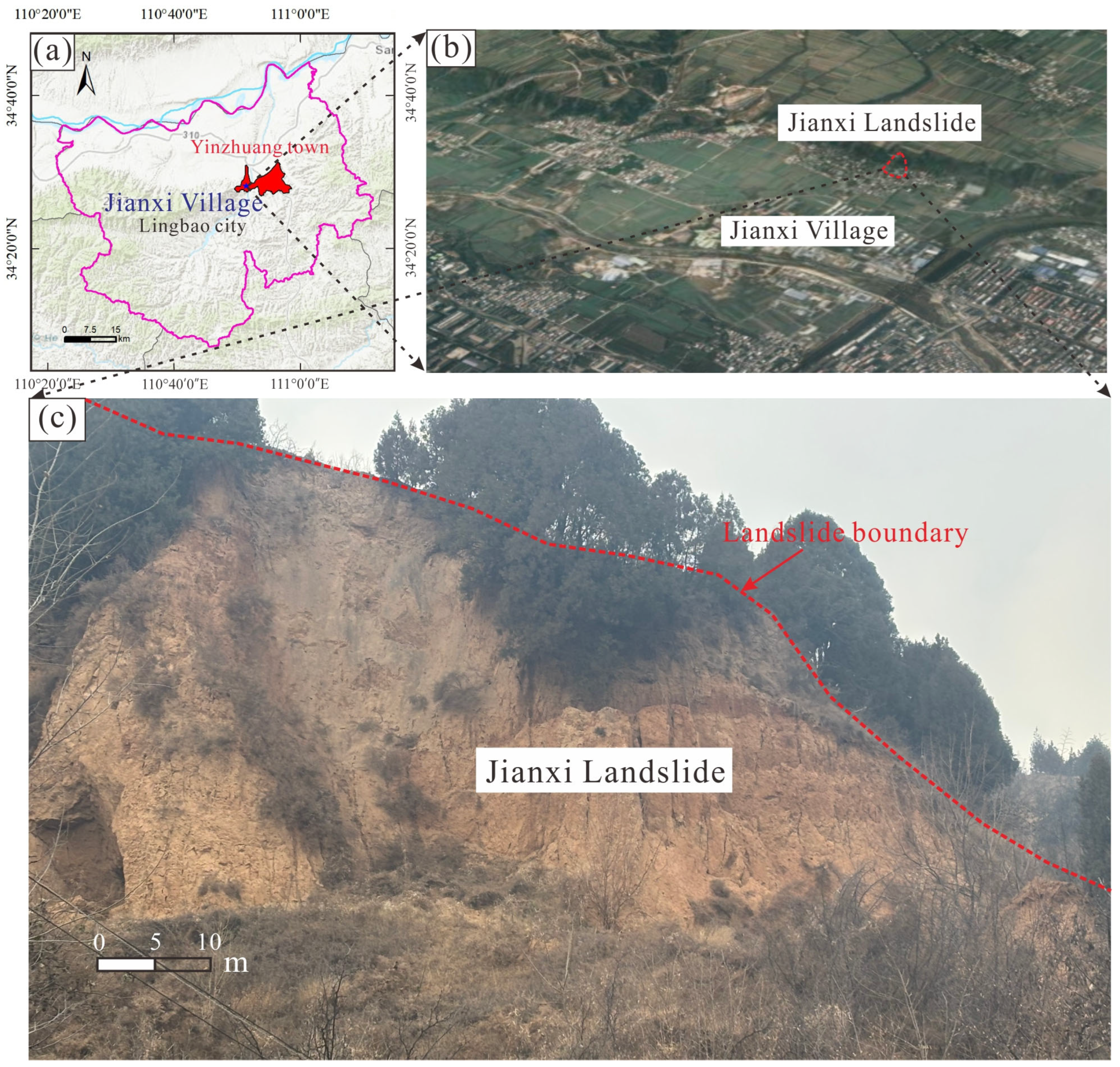
Figure 1. The location of the Jianxi landslide. (a) The geographical location of Jianxi Village; (b) Photos of Jianxi Village captured on google earth; (c) the main part of the Jianxi landslide obtained by a drone.
Water 17 03271 g001
Figure 2. (a) Vertical joint distribution of the Jianxi landslide; (b) the width of Joint 6; (c) geological profile of Jianxi landslide.
Water 17 03271 g002
Figure 3. (a) The monthly rainfall at the Jianxi landslide; (b) The daily rainfall at the Jianxi landslide from July to September 2021.
Water 17 03271 g003
Figure 4. Numerical model of the Jianxi landslide (a) without joints; (b) with joints.
Water 17 03271 g004
Figure 5. Loess grain size distribution of Jianxi landslide.
Water 17 03271 g005
Figure 6. Test apparatus for soil shear strength testing. (a) Shear strength was measured using the RSI ShearTRAC-II fully automatic direct shear apparatus; (b) SWCC was measured using the SWC-150 Fredlund pressure apparatus (c) a soil sample was taken after shear failure; (d) the circular cutting ring samples.
Water 17 03271 g006
Figure 7. Variation in cohesion and friction angle with soil saturation.
Water 17 03271 g007
Figure 8. (a) Loess’s SWCC obtained with the SWC-150 Fredlund pressure apparatus; (b) Best fit of the loess’s SWCC.
Water 17 03271 g008
Figure 9. (a) Alluvial silty clay’s SWCC obtained with the SWC-150 Fredlund pressure apparatus; (b) Best fit of the alluvial silty clay’s SWCC.
Water 17 03271 g009
Figure 10. The soil moisture field variation in Jianxi landslide without joints under different rainfall conditions. (a) 50 mm/d; (b) 75 mm/d; (c) 100 mm/d; (d) 150 mm/d; (e) 175 mm/d; (f) 200 mm/d.
Water 17 03271 g010
Figure 11. The soil moisture field variation in Jianxi landslide with joints under different rainfall conditions. (a) 50 mm/d; (b) 75 mm/d; (c) 100 mm/d; (d) 150 mm/d; (e) 175 mm/d; (f) 200 mm/d.
Water 17 03271 g011
Figure 12. The saturation degree variation at monitoring point A under different rainfall intensities.
Water 17 03271 g012
Figure 13. Rainwater in the joints drains into the surrounding soil.
Water 17 03271 g013
Figure 14. The safety factor variation in the Jianxi landslide without joints under different rainfall conditions. (a) 50 mm/d; (b) 75 mm/d; (c) 100 mm/d; (d) 150 mm/d; (e) 175 mm/d; (f) 200 mm/d.
Water 17 03271 g014
Figure 15. The safety factor variation in Jianxi landslide with joints under different rainfall conditions. (a) 50 mm/d; (b) 75 mm/d; (c) 100 mm/d (d) 150 mm/d; (e) 175 mm/d; (f) 200 mm/d.
Water 17 03271 g015
Figure 16. The simulated displacement of the Jianxi landslide with and without joints under real rainfall conditions. (a), (b), and (c) represent the simulated displacement without joints on 20 July 2021, 30 July 2021, and 9 August 2021, respectively; (d), (e), and (f) represent the simulated displacement with joints on 20 July 2021, 30 July 2021, and 9 August 2021, respectively.
Water 17 03271 g016
Figure 17. Comparison of the simulated displacement and measured displacement.
Water 17 03271 g017
Figure 18. (a) Change in safety factor of Jianxi landslide under different rainfall conditions. (b) Variation in pore water pressure at different depths under different rainfall conditions. (c) Variation in saturation degree at different depths under different rainfall conditions.
Water 17 03271 g018
Figure 19. Variation in safety factor of the Jianxi landslide with rainfall.
Water 17 03271 g019
Figure 20. Comparison of simulated sliding surfaces with and without joints under different rainfall conditions.
Water 17 03271 g020
Table 1. The physical and mechanical parameters of Jianxi landslide.
StratumUnit Weight γ (kN/m3)Cohesion (Kpa)Internal Friction Angle (°)Permeability Coefficient K
(cm/s)
NaturalSaturated
Loess soil 18.119.528.725.61.15
Alluvial silty clay17.521.56.323.70.1
Table 2. The best-fit parameters of VG model for loess and alluvialsilty clay.
Parametersαnmθsθr
Loess0.131.600.630.510.07
Alluvial silty clay2.311.890.530.550.12
Table 3. Safety factor of the Jianxi landslide without and with joints under different rainfall conditions.
Rainfall IntensitySafety FactorChange Rate of Safety Factor
With JointsWithout Joints
50 mm/d1.1801.3119.9%
75 mm/d1.0631.20111.5%
100 mm/d0.9751.12713.5%
150 mm/d0.8521.07120.4%
175 mm/d0.7940.98419.3%
200 mm/d0.7230.89719.4%
Disclaimer/Publisher’s Note: The statements, opinions and data contained in all publications are solely those of the individual author(s) and contributor(s) and not of MDPI and/or the editor(s). MDPI and/or the editor(s) disclaim responsibility for any injury to people or property resulting from any ideas, methods, instructions or products referred to in the content.