
Article

Spatiotemporal Patterns, Characteristics, and Ecological Risk of Microplastics in the Surface Waters of Shijiu Lake (Nanjing, China)

1
Department of Municipal Engineering, School of Civil Engineering, Southeast University, Nanjing 210096, China
2
Nanjing Research Institute of Environmental Protection, Nanjing 210041, China
3
School of Environmental Engineering, Nanjing Institute of Technology, Nanjing 211167, China
*
Author to whom correspondence should be addressed.
Water 2025, 17(22), 3224; https://doi.org/10.3390/w17223224
Submission received: 12 September 2025 / Revised: 24 October 2025 / Accepted: 28 October 2025 / Published: 11 November 2025
(This article belongs to the Section Ecohydrology)

Abstract

Microplastics (MPs) are pervasive in freshwater and may threaten aquatic ecosystem health. We surveyed surface waters of Shijiu Lake and its inflowing tributaries during the dry (January–March) and rainy (May–July) seasons of 2024. MP abundance ranged within 17.54–30.93 items/L, with higher values in the rainy than in the dry season (28.18 ± 6.03 vs. 24.53 ± 5.68 items/L; one-way ANOVA, p < 0.05). Abundance correlated positively with turbidity (r = 0.44; R2 = 0.20; p < 0.05), whereas associations with total nitrogen, total phosphorus, and suspended solids were not significant (p > 0.05). Small particles (38–75 μm) dominated and were slightly more prevalent in the dry season, while the fraction of larger particles (>150 μm) was relatively higher in the rainy season. Granules predominated across sites, but their share decreased in the rainy season, accompanied by a notable increase in fibers. The Pollution Load Index (PLI) indicated slight but spatially uneven pollution (PLI = 1.00–1.43), generally higher during the rainy season and consistently elevated at the lake center; the Nongkan River exhibited the lowest levels. Ecologically, the patterns indicate rainfall-driven inputs and hydrodynamic controls (runoff, resuspension, residence time), identifying the lake center and tributary interfaces as priority zones for monitoring and mitigation. These results provide lake-scale evidence to refine seasonal monitoring and inform source-reduction strategies in similar inland waters.

1. Introduction

Plastics have become ubiquitous and irreplaceable in different fields of industrial and agricultural production, and consumer goods, owing to their high strength, low weight, durability and cost effectiveness [1,2]. However, potential pollution brought by the wide application of plastics cannot be ignored. Microplastics (MPs), which were academically identified as plastic particles with a diameter of less than 5 mm [3], have been an emerging and global problem in the ecological and environmental issues of the 21st century [4,5]. For decades, they originated from various pathways, including physical breakage of plastic products, application of cosmetic additives, and washing and shedding of synthetic fibers [6]. Subsequently, surface runoff and sewage discharge introduced MPs into aquatic systems [7], leading to their accumulation in surface waters. Recently, studies of MPs have been mostly focused on marine environments [7], and MPs in freshwater have received relatively little attention. Nevertheless, it seemed to be vital to investigate the environmental occurrence and behavior of MPs in rivers and lakes, since they serve as predominant conduits for more than 70% of universal MPs transported from land to oceans [8]. As stated in the report of the United Nations Environment Programme (UNEP) in 2024, MPs accumulated in global terrestrial ecosystems were estimated to be 4 to 23 times that of marine ecosystems, which were around 17 million tons. Currently, MPs have been found in freshwater ecosystems of 36 countries around the world, with concentrations ranging from 10−3 to 105 items/m3 [9]. In addition, based on another systematic survey that investigated the distribution of plastic debris (>250 μm) in 38 lakes and reservoirs worldwide, the global concentration level of MPs in freshwater was 10−3–10 items/m3, spanning four orders of magnitude [10].
In addition, since China serves as a major producer and consumer of plastics, MP pollution load in Chinese water bodies is particularly prominent, especially in rivers and lakes. In previous studies of major freshwater in China, the average abundance of MPs in rivers and lakes ranged from 0.57 to 930.00 items/L [11,12,13]. Evidently, the size of MPs in river basins was generally smaller than 1 mm, while MPs in lake systems were predominantly smaller than 0.5 mm, probably owing to continuous fragmentation of larger-size MPs by dynamic water flow in rivers before reaching the lake [14]. Considering sources of MPs in China, the most dominant morphology of MP occurrence was fiber, with the highest proportion of over 90% [13], followed by fragments [15] and other shapes. Due to the influence of hydrological conditions, MPs’ distribution in rivers and lakes showed significant spatiotemporal differences, in which generally lower concentrations were observed in rainy seasons compared with dry seasons [16]. Moreover, the chemical stability of MPs caused their employment as enduring toxicity carriers, with adsorption of heavy metals and emerging organic contaminants [17,18], resulting in combined pollution and hazards on aquatic organisms. Despite increasing attention to MPs, large floodplain lakes in the middle–lower Yangtze basin remain under-studied, and Shijiu Lake lacks a systematic assessment of MPs occurrence and ecological risk. Previous studies have predominantly focused on marine environments or individual river systems, leaving key questions about the occurrence and distribution of MPs in lake ecosystems unresolved. Specifically, little is known about the spatial and seasonal variability of MPs across different zones or their relationships with water quality factors such as turbidity, nutrients, and suspended solids. Furthermore, no ecological risk assessments have been conducted for MPs in Shijiu Lake, despite its importance as a key freshwater system in Nanjing.
To follow up, MPs distributed in Shijiu Lake in Nanjing city of China were determined in this work. Aims of present study were (1) to evaluate spatiotemporal variations in MPs occurrence between the dry (January–March) and rainy (May–July) seasons of 2024; (2) to investigate the distribution of MPs in terms of size (38–75 μm, 75–150 μm, >150 μm) and morphology (granule, fiber, fragment, film) across different sampling sites; (3) to analyze the relationships between MPs and environmental factors such as NTU, TN, TP, and SS; and (4) to assess ecological risks using the Pollution Load Index (PLI) to identify potential hotspots of pollution. We hypothesize that MPs will be more abundant in the rainy season, that small particles will dominate, and that the lake center will exhibit higher ecological risk due to prolonged water retention times and accumulated pollutants. This research offers new insights into MPs content and ecological impacts in Chinese inland waters and is expected to provide a valuable reference for subsequent surface water MPs management.

2. Materials and Methods

2.1. Study Area and Sampling Period

Shijiu Lake is located at the confluence of Lishui District and Gaochun District in Nanjing City, and Dangtu County and Bowang District in Ma’anshan City, Anhui Province (31°23′–31°33′ N, 118°46′–118°58′ E). Spanning an area exceeding 200 km2, it stands as one of the most important lakes in the middle and lower reaches of the Yangtze River. To investigate the distribution of MP pollution in Shijiu Lake, this study selected six sampling sites within the Shijiu Lake system, specifically located in Nongkan River (NK), Yefenggang (YFG), Jijiagou River (JJ), Guxi River 2 (GX2), Guxi River 1 (GX1), and the central lake area (HX) (Figure 1 and Table S1). Sampling was conducted during the dry season (January–March) and the rainy season (May–July) of 2024.

2.2. Water Sample Collection Method

During January–March and May–July 2024, 5 L surface water grab samples were collected monthly from selected river channels and the lake center using a bucket-shaped container. At each sampling site, three water samples were collected using a stainless steel sampler. During sampling, all tools (including the sampler, stainless steel bucket, and bottles) were thoroughly rinsed with filtered tap water and then wrapped in aluminum foil. Using a stainless steel sampler, 1 L water samples were taken from each sampling point, transferred into amber glass bottles, and transported to the laboratory for further detection. Before sampling, the aforementioned samplers, stainless steel buckets, and stainless steel cups were each rinsed three times with ultrapure water to avoid external MP contamination. When continuous sampling was performed, the sampler was rinsed three times after each sampling event to prevent MP cross-contamination.

2.3. MPs Pretreatment and Detection

Water samples were first sieved through stainless steel test sieves with mesh sizes of 150 μm, 75 μm, and 38 μm (Fisher Scientific, Waltham, MA, USA). The materials remaining on the sieves were transferred into a 500 mL glass beaker using ultrapure water, which was rinsed three times to ensure complete transfer of residual matter. The sieved samples were then dried at 90 °C for 24 h until the water content was reduced to less than 10 mL. After cooling, 20 mL of 30% hydrogen peroxide (H2O2) was added, followed by 30 mL of 5 mol/L ferrous sulfate (FeSO4), and the mixture was stirred and heated at 70 °C for 30 min to remove organic matter [19,20]. If necessary, additional H2O2 was added to ensure complete digestion [21].
For density separation, 97 g/100 mL ZnCl2 was added to the samples, followed by 5–10 mL of hydrochloric acid to assist in the dissolution of ZnCl2 [22]. The mixture was transferred to a separating funnel and rinsed with saturated sodium chloride solution. After allowing the mixture to settle for 24 h, the supernatant was collected and filtered through a 0.45 μm nitrocellulose membrane (Whatman, Kent, UK) using a vacuum filtration system. The filtered membrane was then air-dried at room temperature and covered with aluminum foil to avoid contamination [23].

2.4. MPs Counting and Identification

After the filtered membranes air-dried, they were placed under a microscope (50–100× magnification) for visual MPs counting. For membranes with high MPs content, the membrane was divided into quarters in the Petri dish as appropriate. The MPs on one-quarter of the membrane area were counted individually under a microscope, and then multiplied by four to obtain the approximate total number of MPs on the membrane.
Using a microscope (EZ4 56× Leica, Wetzlar, Germany), particles were identified and counted based on their shape (fragments, fibers, films, granules) and size (150–270 μm, 75–150 μm, 38–75 μm).

2.5. Quality Control

To minimize background interference and enhance quality control, separate, thoroughly cleaned stainless steel sieves were laid out in situ to collect blank/background samples. The three layers of sieves were rinsed three times with Milli-Q ultrapure water before use and then collectively transferred to a 500 mL beaker. Before formal background sampling, random samples were taken to assess the MP background level at the sampling sites and the cleanliness of the sieves. To reduce anthropogenically introduced synthetic fibers, laboratory personnel wore pure cotton laboratory coats throughout the experiment; all containers and equipment were thoroughly cleaned with ultrapure water before use, and all operations were performed in a laminar flow hood. Considering potential particle loss during the extraction and separation of environmental samples, triplicate spiked recovery experiments were conducted using polystyrene (PS) microspheres (100 μm and 74 μm particle sizes) provided by Huzheng Nano Technology (Shanghai, China). Recovery rates of 93.15% and 95.76% were obtained, indicating high reliability of quality control in this study. To further prevent potential contamination, efforts were made to loosely cover components with aluminum foil during each step and to re-rinse all reagents and glassware with ultrapure water three times before use.

2.6. MP Risk Assessment Methods

Given the current lack of universally accepted and recognized environmental hazard assessment models for MPs, this study solely employed the Pollution Load Index (PLI) [24] to evaluate the ecological risk of MPs in the surface water of Shijiu Lake (and its influent rivers). This method focuses on concentration characterization, comparing the measured concentration at each sampling site (or period) with a baseline concentration, and constructing a comprehensive risk index using geometric mean. It was characterized by simple parameters and strong comparability [25].
C F i = C i C 0 i  
P L I = C F i
P L I z o n e = P L 1 P L 2 P L n n  
where C F i is the contamination factor, obtained as the ratio of the MPs concentration C i at a single sampling site to the lowest MP concentration C 0 i . C i represents the observed MP concentration at each sampling location, whose accuracy and precision depend on experimental methods and instruments; C 0 i is the defined baseline value, represented by the lowest MP concentration at each sampling site [25]. The PLI, based on MP concentration, is used to assess the ecological risk of MPs.

2.7. Statistical Analysis

MP concentrations were calculated by dividing the total count of MPs in the sample by the sample volume, with results reported as mean ± standard error in items/L. To assess group differences, a one-way analysis of variance (ANOVA) was conducted, followed by post hoc tests using the Duncan Method. Data homogeneity was first tested using Levene’s Test (Robust tests for equality of variances) to verify the equality of variances across groups, chosen for its robustness against deviations from normality. All statistical analyses were conducted using SPSS Statistics (Version 26) (IBM, New York, NY, USA) www.ibm.com/products/spss-statistics, accessed on 11 September 2025, and graphical presentation and data visualization were completed using Origin software (Version 2021) (OriginLab Corp., Northampton, MA, USA) www.originlab.com.

3. Results and Discussion

3.1. Spatial Distribution of MP Abundance

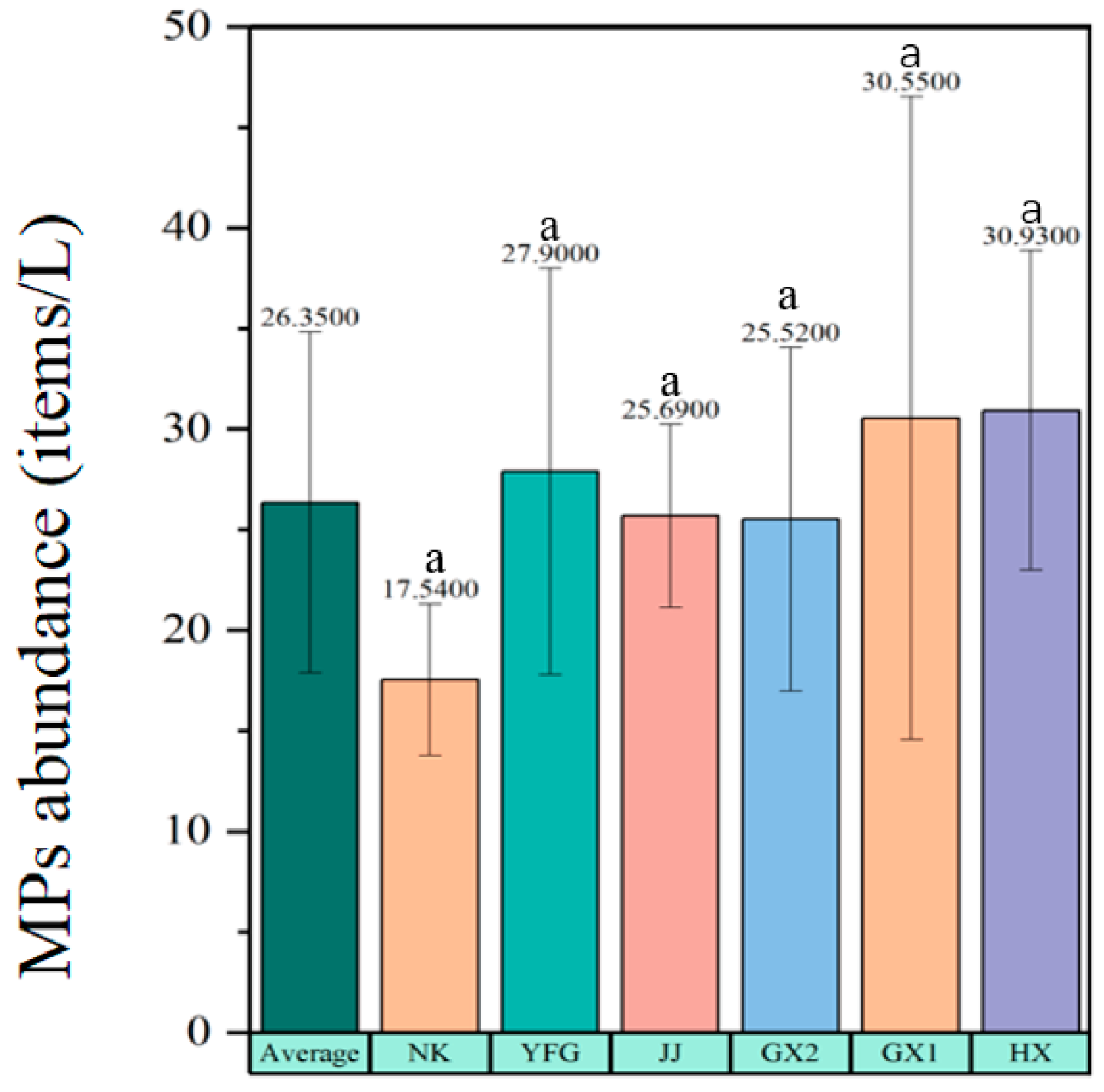
Monitoring revealed clear spatial heterogeneity in MP abundance across sites (Figure 2). Compared with NK (17.54 items/L), HX showed the highest annual mean (30.93 items/L; +76.34%), followed by GX1 (30.55 items/L; +74.17%) and YFG (27.90 items/L; +59.06%). JJ (25.69 items/L; +46.47%) and GX2 (25.52 items/L; +45.50%) were intermediate, whereas NK recorded the lowest annual mean (p > 0.05). Related domestic studies have reported MP abundances in the water bodies of Poyang Lake in Jiangxi (5–34 items/L) [26], Dongting Lake in Hunan (2.3 items/L) [27], and Bao’an Lake in Hubei (annual average 10.09–32.99 items/L) [16]. Furthermore, a systematic review of lakes and reservoirs in China between 2017 and 2023 indicated that MP abundance in Chinese freshwater systems primarily ranged from 0.19 to 49 items/L [28]. Similarly, comparable MP contents have been detected in international waters; for instance, Lake Ontario in Canada had an annual average concentration of 15.4 items/L [29], Kodaikanal Lake in India reported 24.42 ± 3.22 items/L [30], and the Teltow Canal in Berlin, Germany, had an abundance as high as 98.5 items/L [31]. Although Shijiu Lake’s abundance level is considerably lower than that observed in heavily polluted river basins, such as the Ganges River in India (2800–4200 items/L) and the Langat River in Malaysia (1464.8 items/L), its annual average concentration remains notably high. This is particularly evident when compared to most domestic lakes and typical international freshwater systems, with some influent tributary areas approaching the upper limits of observed concentrations. Globally, the MP abundance of Shijiu Lake was at a moderately high level. Shijiu Lake might progressively evolve into a regional MP pollution “sink area”, so that its ecological risk within the Yangtze River mid-lower basin should not be overlooked [16,30].
Differences in MP abundance across various water bodies of Shijiu Lake could be attributed to spatial variations in human activity intensity and land-use patterns within the watershed [32,33]. Taking Guxi River as an example, its upstream GX1 exhibited the highest abundance (30.55 items/L), while downstream GX2 showed an abundance of 25.52 items/L; both were generally at high levels. Upstream GX1 flows through Xinhekou Street and Guoling Market Town, with numerous agricultural irrigation ditches and residential sewage outlets distributed along its banks. Agricultural runoff containing pesticide and fertilizer particles, along with detergents and plastic fibers from domestic wastewater, were a major source of MP [34]. Additionally, this area was close to National Highway G205 and several township traffic nodes, where frequent traffic activities contributed tire wear particles and plastic litter, which were easily carried into the water body by surface runoff during the rainy season, exacerbating the risk of MP input [32]. In contrast, GX2 was located in the middle-to-lower reaches of the river, flowing through the southern urban-rural fringe of Bowang Town, where there were some livestock and poultry farms and rural residential areas. Domestic wastewater and agricultural runoff imposed dual pressure on water quality [35]. However, due to relatively stronger hydrodynamic conditions in the downstream river channel, some particles may be diluted during transport, leading to a slightly lower abundance than upstream [36]. This upstream-downstream difference indicated that MP pollution in Guxi River was dually driven by agricultural and domestic sources, in which urban domestic discharge and traffic activities in the upstream had an influence on its abundance [21].
YFG (with an annual average abundance of 27.9 items/L) and JJ (with 25.69 items/L) also exhibited high abundance levels. As previously reported, the YFG watershed featured intensive aquaculture activities along its course, where plastic fishing nets, foam buoys, and aquaculture cages used long-term in areas like Taiping Fishery were prone to aging and fragmentation under high temperatures, UV radiation, and mechanical disturbance, becoming potential MP pollution sources [37]. Furthermore, frequent water exchange between the downstream YFG and the main Shijiu Lake area, coupled with dynamic water flow, may facilitate the transport of MP fragments from surrounding agricultural and residential lands into the lake, leading to a certain accumulation effect [16]. JJ flowed through the Lai’an Economic Development Zone and concentrated industrial areas, where some small and medium-sized factories had issues with untreated wastewater discharge during rainy days, providing a pathway for a large number of plastic fragments and synthetic resin particles into the water body, thus resulting in high MP abundance [31].
Compared to the aforementioned water areas, NK exhibited the lowest MP abundance, at only 17.54 items/L. Its basin is dominated by forest and wetland ecosystems, with low shoreline development and weak agricultural and industrial interference [30]. Being far from major transportation routes and densely populated areas, it lacked large-scale pollution input sources. In addition, coupled with relatively stable water flow, it possessed strong dilution and self-purification capacities, hence its MP concentration was the lowest among all sampling sites [33]. The highest annual average MP abundance of 30.93 items/L was observed at HX, which served as the confluence area for all influent tributaries This area had relatively weak hydrodynamic conditions and a long hydraulic retention time, which facilitated the deposition of pollutants [16], leading to the accumulation of some upstream-transported MP particles in the central lake area. Concurrently, as the lake center was far from direct discharge points, MPs primarily relied on external transport for entry, and their abundance level, to some extent, reflected the “final convergence” characteristic of comprehensive pollution from the entire watershed [30].

3.2. Seasonal Variation Trends in MP Abundance

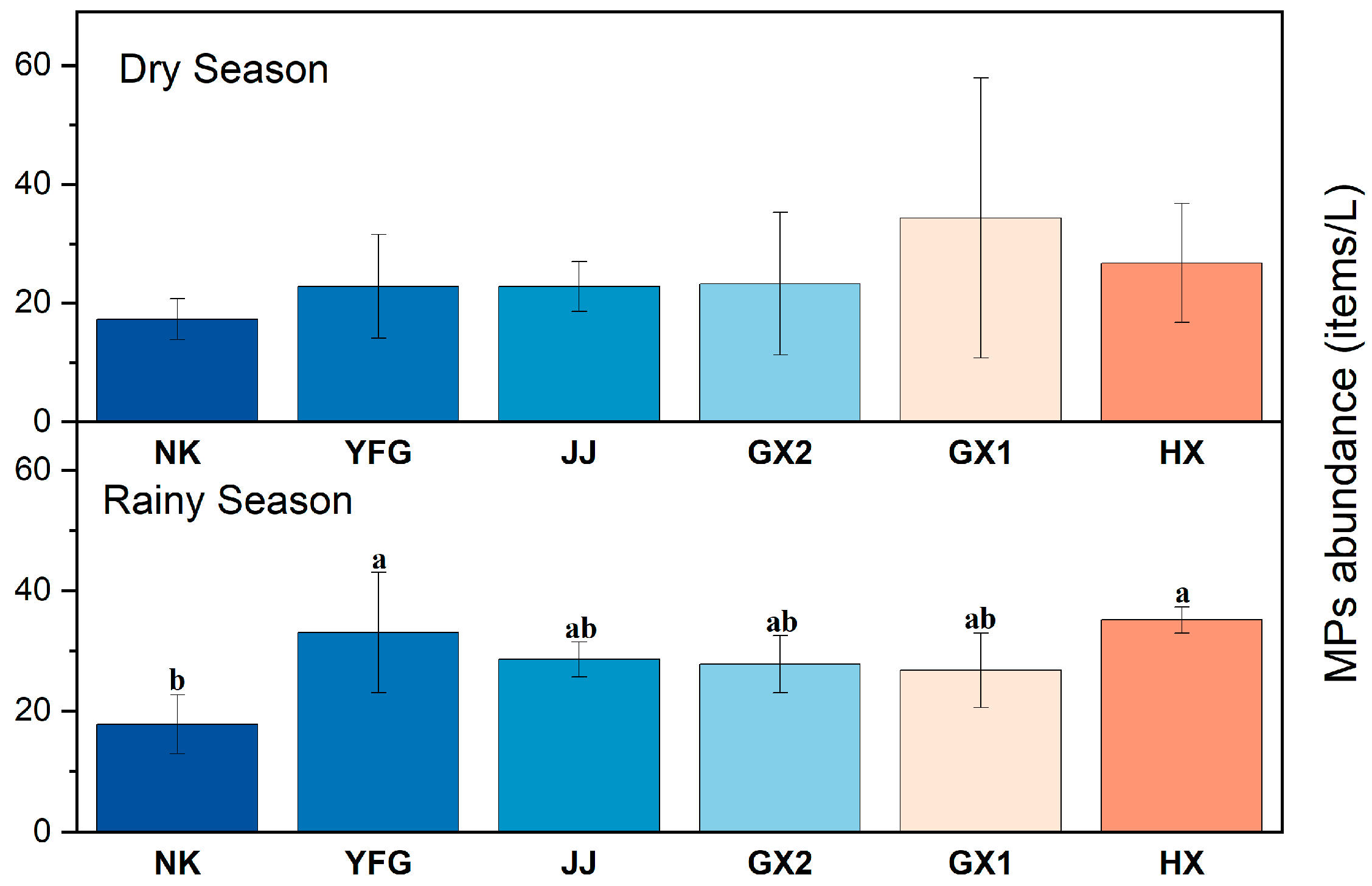
Monitoring revealed clear seasonal differences across sites (Figure 3). Overall, rainy-season MP abundance (28.18 items/L) exceeded the dry-season level (24.53 items/L), an aggregate increase of 14.91%. At the site scale, rainy-season means changed as follows relative to the dry season: YFG +45.02% (22.77 to 33.03 items/L), HX +31.36% (26.74 to 35.13), JJ +25.59% (22.77 to 28.60), GX2 +19.50% (23.25 to 27.79), NK +3.01% (17.28 to 17.80), whereas GX1 decreased by 22.06% (34.33 to 26.76) (p > 0.05). Similar increases in MP abundance during the rainy season have been observed in the Yangtze Estuary and various freshwater systems, attributable to strong rainfall and runoff input [38,39].
Changes in MP abundance at NK were minor between the rainy season (17.80 ± 4.85 items/L) and dry season (17.28 ± 3.45 items/L). Conversely, GX1 exhibited a phenomenon where dry season MP abundance (34.33 ± 23.58 items/L) was higher than in the rainy season (26.76 ± 6.20 items/L). During the dry season, water hydrodynamics were relatively stable, MP resuspension capacity was reduced, leading to generally lower and less varied concentrations. In contrast, higher flow velocities in the rainy season facilitated MPs input and migration, but with increased water volume, some sections may experience dilution effects, causing abundance distribution to converge. This was attributed to monsoons and heavy rainfall intensifying MPs migration [39], thereby causing the phenomenon of higher dry season MP abundance compared to the rainy season at GX1.
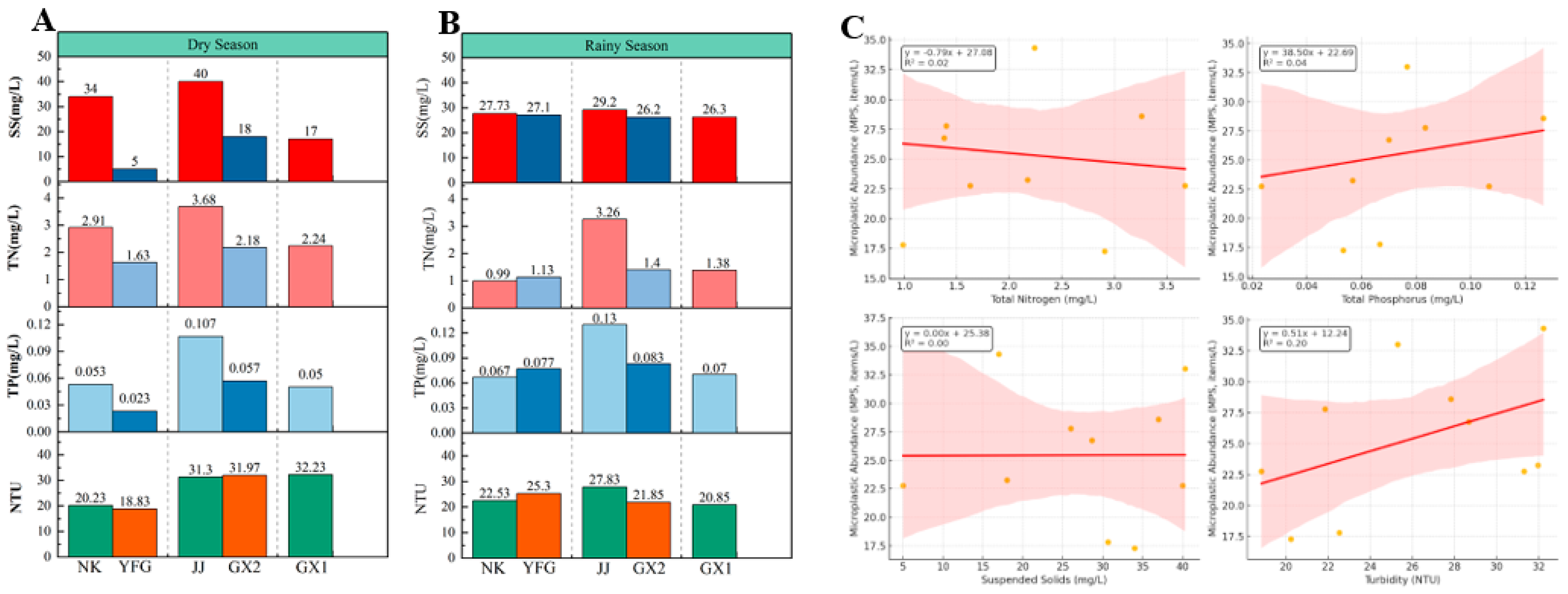
To explore the relationship between water quality parameters and seasonal differences in MP abundance, this study monitored total nitrogen (TN), total phosphorus (TP), suspended solids (SS), and turbidity (NTU) (Figure 4A,B). In the rainy season, TP and NTU levels significantly increased at most sampling sites, especially at YFG, where NTU rose from 18.83 (dry season) to 25.33 (rainy season), and TP concentration increased from 0.023 mg/L (dry season) to 0.077 mg/L (rainy season), indicating enhanced phosphorus input during the rainy season [40]. Correlation analysis results showed a positive correlation between MP abundance and NTU (r = 0.44, R2 = 0.20; Figure 4C), which could be attributed to the resuspension of MPs leading to increased water turbidity and reduced settling rates, thereby increasing water MP concentrations [41]. In contrast, MPs did not show significant correlations with TN (r = −0.13), TP (r = 0.20), and SS (r ≈ 0.00) (Figure 4C), indicating an insignificant association between MP abundance and nutrients [40]. Suspended solids did not show a clear trend, possibly because SS in Shijiu Lake primarily consists of sediment and organic matter rather than predominantly plastic particles, attributed to the tendency of MPs to adhere to specific colloids and particulate matter [42].
Taken together, the weak or non-significant associations between MPs and bulk nutrient/solid metrics (TN, TP, SS) are mechanistically plausible: TN/TP largely track dissolved nutrient pools and fine mineral–organic fractions [43], and SS is typically mineral-dominated; these bulk indicators do not directly trace polymer particles [7]. By contrast, turbidity (NTU) reflects short-term hydrodynamic disturbance and resuspension that co-vary with MPs during rainfall and wind-driven events [44]. Field and synthesis studies consistently report runoff and resuspension elevating MPs concentrations [45]. Moreover, methodological non-harmonization—especially mesh-size and size-range differences—can obscure cross-parameter relationships [46,47].
Overall, MP abundance in Shijiu Lake was influenced by both seasonal rainfall and watershed human activities. Runoff input and increased turbidity in the rainy season promoted MP migration and resuspension, while the dry season maintained a stable pollution level driven by local emissions.

3.3. MP Size Distribution and Morphological Characteristics

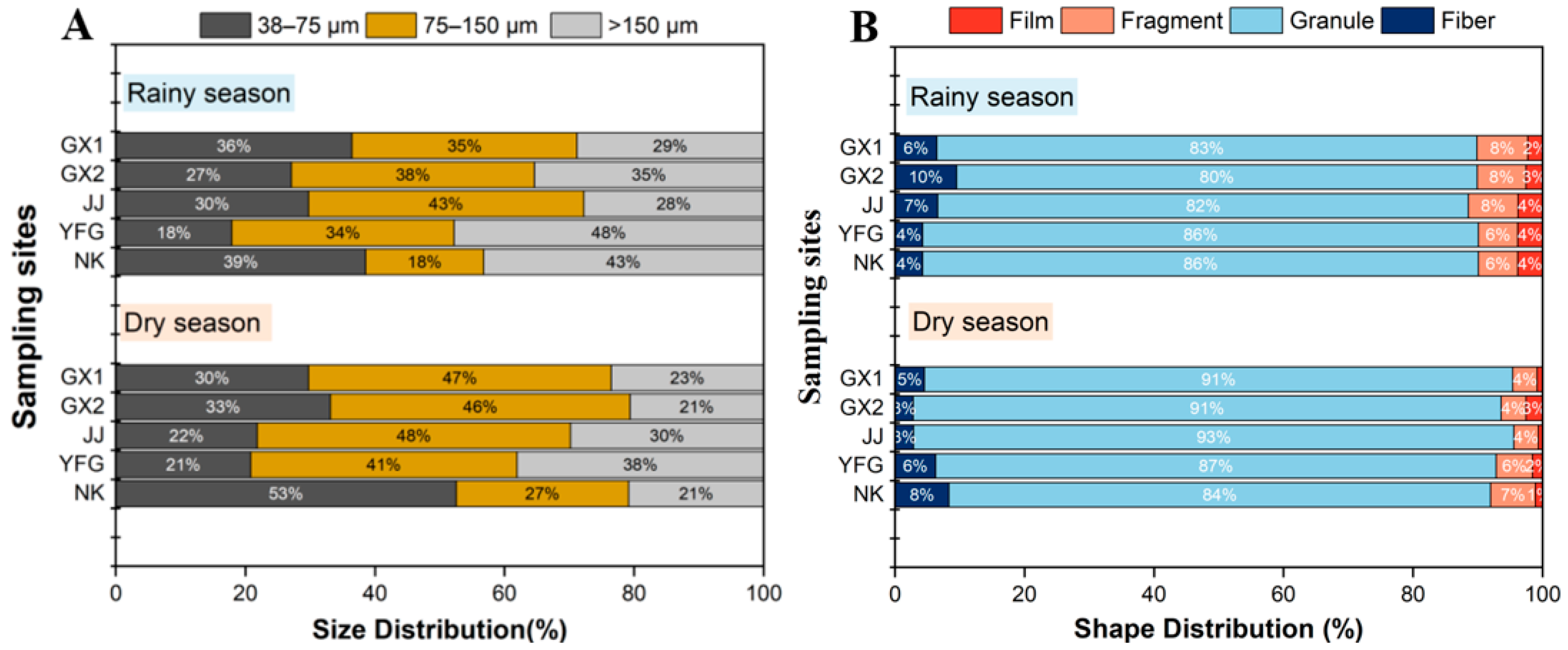
Analyzing the physical characteristics of MPs is of great significance for understanding the current pollution status of Shijiu Lake. MPs of different sizes and morphologies exhibited various migration capacities and environmental risks under hydrodynamic disturbance and external input. Figure 5 revealed the size ranges and morphological distributions of MPs in Shijiu Lake during the dry and rainy seasons.
MPs in Shijiu Lake were mainly concentrated in three size ranges: 38–75 μm, 75–150 μm, and >150 μm (Figure 5A). Overall, the proportion of small particles (38–75 μm) significantly increased in the dry season, accounting for 21–53%, while in the rainy season, it was 18–39%. Conversely, the proportion of large particles (>150 μm) was higher in the rainy season. For instance, at NK and GX2, the proportion of large particles exceeded 40% in the rainy season, whereas most sampling sites showed proportions below 30% in the dry season. Stronger rainfall and runoff in the rainy season increased the input of various sizes of MPs from the watershed. Concurrently, water body disturbance caused by high water levels and wind waves inhibited the settling of large particles, keeping larger particles in suspension [48]. In contrast, during the dry season, weakened lake currents and reduced wave action led to calmer and more stable hydrodynamic conditions, making large particles more prone to settling into the bottom sediment. External inputs were predominantly small particles, which settled slowly and tended to remain suspended for extended periods, leading to a significant increase in the relative proportion of small particles in the water column [49]. This size distribution difference was closely related to hydrodynamic conditions, as small MPs, due to their slow settling velocity, were more likely to remain suspended in the water for longer durations, while large MPs were more susceptible to hydrodynamic conditions affecting their settling and resuspension [50].
Furthermore, as shown in Figure 5B, granular MPs were the dominant morphology in Shijiu Lake, with their proportion consistently exceeding 80%. This absolute dominance in morphology was primarily attributed to their widespread and continuous sources. Compared to fibers, mainly originating from textile washing and fishing activities, or films, derived from plastic bags and agricultural mulching films, granules and fragments are predominantly “secondary MPs” [51]. They were formed by the continuous breakage and degradation of large quantities of discarded plastic products in the environment, such as plastic bottles, packaging containers, and various hard plastic wastes, under physical, chemical, and biological weathering (such as UV radiation, wave impact, and mechanical abrasion). Due to the massive production and disposal of these large plastic products, and their inherent durability, they continuously fragmented into a vast number of microscopic particles in the environment, thereby outnumbering other specifically sourced morphologies [52].
Despite the dominance of granular forms, their relative proportions still showed subtle seasonal variations. The proportion of granular MPs was generally higher in the dry season than in the rainy season. For instance, at JJ, granular MPs accounted for 93% in the dry season compared to 82% in the rainy season. Correspondingly, the combined proportion of fibrous, fragmented, and film-like morphologies slightly increased in the rainy season. For instance, at GX2, the proportion of fibrous MPs rose from 3% in the dry season to 10% in the rainy season. This phenomenon was also closely related to hydrodynamic conditions. Enhanced surface runoff during the rainy season would transport a more diverse range of land-based pollutants into the lake, such as wastewater containing fibers and agricultural and domestic waste containing films and fragments, thus increasing the input of these MPs morphologies [30]. In the dry season, with weaker hydrodynamics, denser and more regularly shaped granular MPs were more prone to settling and accumulating in the water column and sediments, while less dense or irregularly shaped fibers and films may be more easily transported out of the lake or degraded, leading to a higher relative proportion of granular MPs [53].
Overall, the physical characteristics of MPs in Shijiu Lake were a result of the combined action of pollution source types and hydrological dynamic processes. The dominance of granular forms revealed that secondary pollution from the degradation of large plastic waste was the primary source, while seasonal fluctuations in size and morphology clearly reflected the role of lake hydrodynamic conditions as a crucial environmental screening mechanism, governing the migration, suspension, and settling processes of MPs.

3.4. Hazard Screening with the Pollution Load Index (PLI)

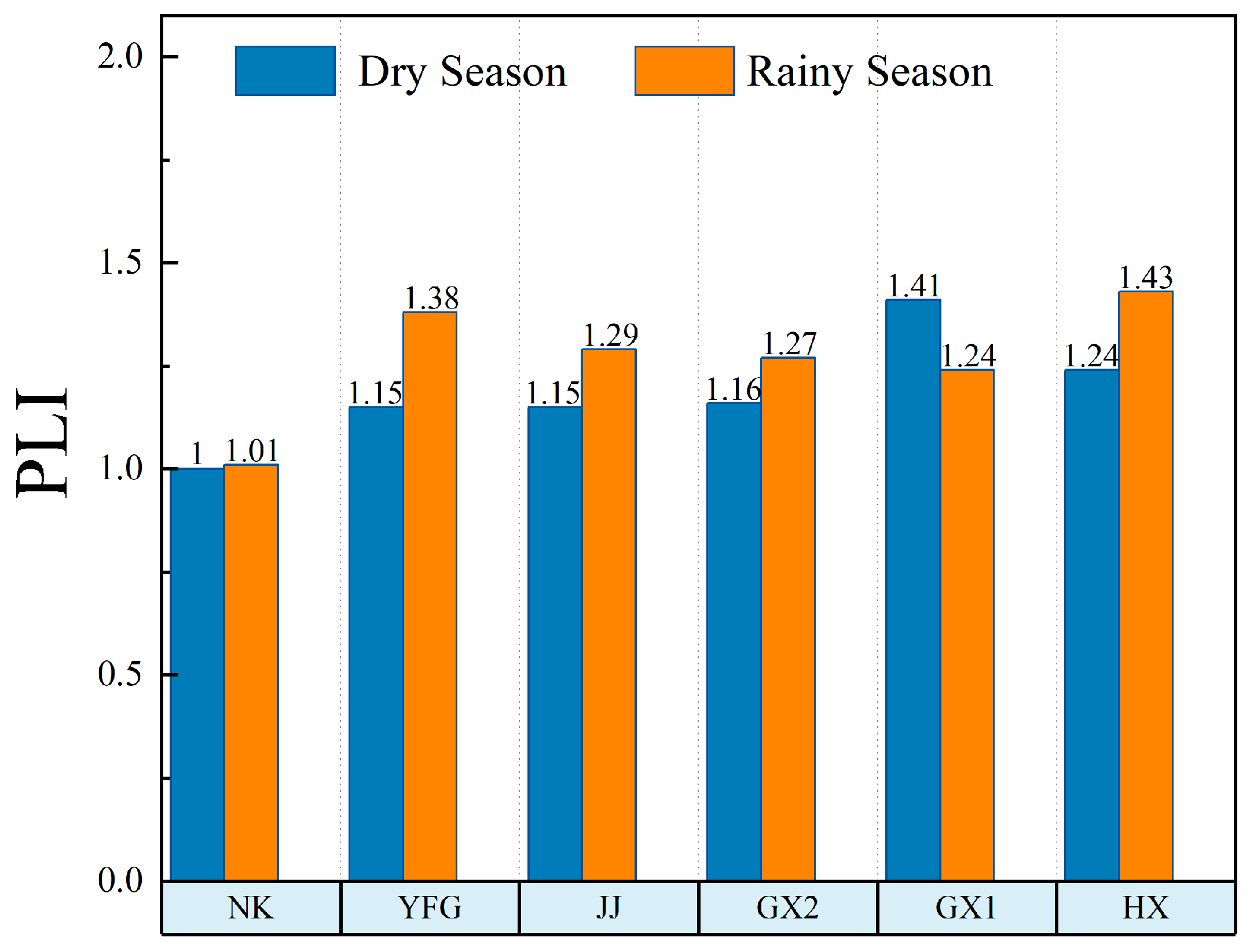
In this study, the Pollution Load Index (PLI) is employed as a relative hazard–screening indicator, whereby site- and season-specific MP concentrations are normalized to a defined baseline. As shown in Figure 6, PLI values exceeding 1 denote above-baseline conditions and thus indicate a lake-wide but spatially heterogeneous hazard signal, rather than a quantitative risk estimate.
Spatially, hazard risk varied significantly. HX and GX1 exhibited the highest pollution loads, with PLI peaks reaching 1.43 in the rainy season and 1.41 in the dry season, respectively. This might be related to their geographical location as contaminant accumulation zones or recipients of major runoff inputs. In contrast, NK had the lowest PLI values (close to 1.00 in the dry season and 1.01 in the rainy season), indicating a relatively lower pollution degree and hazard.
Seasonally, the ecological risk in the rainy season was generally higher than in the dry season. Except for GX1, PLI values at all other sampling sites significantly increased in the rainy season. For example, YFG’s PLI dramatically rose from 1.15 (dry season) to 1.38 (rainy season). This trend was highly consistent with the aforementioned conclusion of significantly increased MP abundance in the rainy season (Figure 3), further confirming that strong rainfall and surface runoff were key driving factors exacerbating the MP pollution load and ecological hazard in the lake area [30,53].
Overall, based on the PLI assessment results, Shijiu Lake was currently at a slight pollution level (PLI > 1), but pollution hazard was spatially uneven and significantly exacerbated in the rainy season. Although the current hazard level was not yet severe, HX and key influent tributaries have shown a trend in continuous accumulation of pollution. Given that PLI primarily reflected abundance differences, future research needed to integrate information on polymer types, adsorbed toxicity, and hazard scores of MPs to conduct more comprehensive ecological risk assessments, providing a more precise scientific basis for pollution control in Shijiu Lake.

4. Conclusions

Shijiu Lake exhibits moderately elevated surface-water MP concentrations (17.54–30.93 items/L) with pronounced spatial heterogeneity: HX and major influent reaches (GX1, YFG) show the highest levels, whereas NK remains the lowest. Seasonally, MP abundance is significantly higher in the rainy season (p < 0.05) and positively associated with turbidity (NTU; e.g., r ≈ 0.44, R2 ≈ 0.20), indicating rainfall-runoff inputs and resuspension. The particle size spectrum is skewed to 38–75 μm, and granular/fibrous morphotypes predominate, with fibers increasing during the rainy season—consistent with secondary fragmentation and mixed anthropogenic sources. Concentration-based screening using PLI indicates slight but spatially uneven contamination (1.00–1.43), with HX and GX1 persisting as risk hotspots, particularly in the rainy period.
These lines of evidence imply two practical priorities: (1) source interception to curb stormwater and other non-point inputs (e.g., roadside runoff, aquaculture debris), and (2) hotspot-oriented monitoring and mitigation around HX and GX1 (e.g., floating-debris control and shoreline cleanups). As a template for comparable inland lakes, the results provide a basis for season-aware surveillance, risk screening, and targeted management, while motivating future work on polymer typing, source apportionment, and hazard-weighted MP risk assessment.

Supplementary Materials

The following supporting information can be downloaded at: https://www.mdpi.com/article/10.3390/w17223224/s1, Table S1. Physical features and anthropogenic activities by site (Shijiu Lake).

Author Contributions

Conceptualization, J.J. and M.C.; methodology, J.J.; software, X.W.; validation, J.J., H.J. and Y.W.; formal analysis, X.Q.; investigation, J.J.; resources, H.M.; data curation, J.X.; writing—original draft preparation, J.J.; writing—review and editing, J.H.; visualization, H.J.; supervision, J.H.; project administration, H.M.; funding acquisition, J.H. All authors have read and agreed to the published version of the manuscript.

Funding

This research was funded by the National Natural Science Foundation of China (NO. 52270152) and Jiangsu Provincial Key Research and Development Program (No. BE2022831).

Data Availability Statement

The original contributions presented in this study are included in the article. Further inquiries can be directed to the corresponding author.

Acknowledgments

The authors gratefully acknowledge the financial support provided by the National Natural Science Foundation of China and Jiangsu Provincial Key Research and Development Program.

Conflicts of Interest

The authors declare no conflicts of interest. The funders had no role in the design of the study; in the collection, analyses, or interpretation of data; in the writing of the manuscript; or in the decision to publish the results.

References

  1. Bergmann, M.; Collard, F.; Fabres, J.; Gabrielsen, G.W.; Provencher, J.F.; Rochman, C.M.; van Sebille, E.; Tekman, M.B. Plastic pollution in the Arctic. Nat. Rev. Earth Environ. 2022, 3, 323–337. [Google Scholar] [CrossRef]
  2. Zhu, L.; Bai, H.; Chen, B.; Sun, X.; Qu, K.; Xia, B. Microplastic pollution in North Yellow Sea, China: Observations on occurrence, distribution and identification. Sci. Total Environ. 2018, 636, 20–29. [Google Scholar] [CrossRef]
  3. Thompson, R.C.; Olsen, Y.; Mitchell, R.P.; Davis, A.; Rowland, S.J.; John, A.W.G.; McGonigle, D.; Russell, A.E. Lost at Sea: Where Is All the Plastic? Science 2004, 304, 838. [Google Scholar] [CrossRef]
  4. de Souza Machado, A.A.; Kloas, W.; Zarfl, C.; Hempel, S.; Rillig, M.C. Microplastics as an emerging threat to terrestrial ecosystems. Glob. Change Biol. 2018, 24, 1405–1416. [Google Scholar] [CrossRef] [PubMed]
  5. Yang, H.; Sun, F.; Liao, H.; Guo, Y.; Wang, J.; Wu, F. Quantitative characteristics and multiple probabilistic risk assessment of small-sized microplastics in the middle and lower reaches of the Hanjiang River, China. Mar. Pollut. Bull. 2025, 220, 118404. [Google Scholar] [CrossRef] [PubMed]
  6. Chen, Y.Y.; Chen, Q.Q.; Zhang, Q.; Zuo, C.C.; Shi, H.H. An Overview of Chemical Additives on (Micro)Plastic Fibers: Occurrence, Release, and Health Risks. Rev. Environ. Contam. Toxicol. 2022, 260, 22. [Google Scholar] [CrossRef]
  7. Guo, M.; Noori, R.; Abolfathi, S. Microplastics in freshwater systems: Dynamic behaviour and transport processes. Resour. Conserv. Recycl. 2024, 205, 107578. [Google Scholar] [CrossRef]
  8. Alimi, O.S.; Farner Budarz, J.; Hernandez, L.M.; Tufenkji, N. Microplastics and Nanoplastics in Aquatic Environments: Aggregation, Deposition, and Enhanced Contaminant Transport. Environ. Sci. Technol. 2018, 52, 1704–1724. [Google Scholar] [CrossRef]
  9. Chang, M.; Sun, P.; Zhang, L.; Liu, Y.; Chen, L.; Ren, H.; Wu, B. Changes in characteristics and risk of freshwater microplastics under global warming. Water Res. 2024, 260, 121960. [Google Scholar] [CrossRef]
  10. Nava, V.; Chandra, S.; Aherne, J.; Alfonso, M.B.; Antão-Geraldes, A.M.; Attermeyer, K.; Bao, R.; Bartrons, M.; Berger, S.A.; Biernaczyk, M.; et al. Plastic debris in lakes and reservoirs. Nature 2023, 619, 317–322. [Google Scholar] [CrossRef]
  11. Fan, J.; Zou, L.; Zhao, G. Microplastic abundance, distribution, and composition in the surface water and sediments of the Yangtze River along Chongqing City, China. J. Soils Sediments 2021, 21, 1840–1851. [Google Scholar] [CrossRef]
  12. Fan, Y.; Zheng, K.; Zhu, Z.; Chen, G.; Peng, X. Distribution, sedimentary record, and persistence of microplastics in the Pearl River catchment, China. Environ. Pollut. 2019, 251, 862–870. [Google Scholar] [CrossRef]
  13. Han, M.; Niu, X.; Tang, M.; Zhang, B.-T.; Wang, G.; Yue, W.; Kong, X.; Zhu, J. Distribution of microplastics in surface water of the lower Yellow River near estuary. Sci. Total Environ. 2020, 707, 135601. [Google Scholar] [CrossRef]
  14. Zhang, Q.; Liu, T.; Liu, L.; Fan, Y.; Rao, W.; Zheng, J.; Qian, X. Distribution and sedimentation of microplastics in Taihu Lake. Sci. Total Environ. 2021, 795, 148745. [Google Scholar] [CrossRef] [PubMed]
  15. Liang, J.; Chen, X.; Zha, S.; Chen, X.; Yu, Y.; Duan, X.; Cao, Y.; Liang, Y. Distribution and Characteristics of Microplastics in Agricultural Soils around Gehu Lake, China. Water Air Soil Pollut. 2023, 234, 517. [Google Scholar] [CrossRef]
  16. Fan, Y.; Zheng, J.; Deng, L.; Rao, W.; Zhang, Q.; Liu, T.; Qian, X. Spatiotemporal dynamics of microplastics in an urban river network area. Water Res. 2022, 212, 118116. [Google Scholar] [CrossRef] [PubMed]
  17. Chen, S.-Y.; Hsieh, C.-C.; Liao, C.-M.; Chen, S.-C. Toxic metal-adsorbed microplastics threaten human digestive system: A bioaccessibility-based risk assessment. Environ. Pollut. 2025, 383, 126900. [Google Scholar] [CrossRef]
  18. Freilinger, J.; Kappacher, C.; Huter, K.; Hofer, T.S.; Back, J.O.; Huck, C.W.; Bakry, R. Interactions between perfluorinated alkyl substances (PFAS) and microplastics (MPs): Findings from an extensive investigation. J. Hazard. Mater. Adv. 2025, 18, 100740. [Google Scholar] [CrossRef]
  19. Fenton, H.J.H. Oxidation of tartaric acid in presence of iron. J. Chem. Soc. Trans. 1894, 65, 899–910. [Google Scholar] [CrossRef]
  20. Grbic, J.; Nguyen, B.; Guo, E.; You, J.B.; Sinton, D.; Rochman, C.M. Magnetic Extraction of Microplastics from Environmental Samples. Environ. Sci. Technol. Lett. 2019, 6, 68–72. [Google Scholar] [CrossRef]
  21. Li, J.; Liu, H.; Paul Chen, J. Microplastics in freshwater systems: A review on occurrence, environmental effects, and methods for microplastics detection. Water Res. 2018, 137, 362–374. [Google Scholar] [CrossRef] [PubMed]
  22. Herrera, A.; Garrido-Amador, P.; Martínez, I.; Samper, M.D.; López-Martínez, J.; Gómez, M.; Packard, T.T. Novel methodology to isolate microplastics from vegetal-rich samples. Mar. Pollut. Bull. 2018, 129, 61–69. [Google Scholar] [CrossRef] [PubMed]
  23. Reineccius, J.; Bresien, J.; Waniek, J.J. Separation of microplastics from mass-limited samples by an effective adsorption technique. Sci. Total Environ. 2021, 788, 147881. [Google Scholar] [CrossRef]
  24. Tomlinson, D.L.; Wilson, J.G.; Harris, C.; Jeffrey, D. Problems in the assessment of heavy-metal levels in estuaries and the formation of a pollution index. Helgoländer Meeresunters 1980, 33, 566–575. [Google Scholar] [CrossRef]
  25. Rakib, M.R.J.; Al Nahian, S.; Madadi, R.; Haider, S.M.B.; De-la-Torre, G.E.; Walker, T.R.; Jonathan, M.P.; Cowger, W.; Khandaker, M.U.; Idris, A.M. Spatiotemporal trends and characteristics of microplastic contamination in a large river-dominated estuary. Environ. Sci. Process. Impacts 2023, 25, 929–940. [Google Scholar] [CrossRef]
  26. Liu, S.; Jian, M.; Zhou, L.; Li, W. Distribution and characteristics of microplastics in the sediments of Poyang Lake, China. Water Sci. Technol. 2019, 79, 1868–1877. [Google Scholar] [CrossRef] [PubMed]
  27. Jiang, C.; Yin, L.; Wen, X.; Du, C.; Wu, L.; Long, Y.; Liu, Y.; Ma, Y.; Yin, Q.; Zhou, Z.; et al. Microplastics in Sediment and Surface Water of West Dongting Lake and South Dongting Lake: Abundance, Source and Composition. Int. J. Environ. Res. Public Health 2018, 15, 2164. [Google Scholar] [CrossRef]
  28. Dan, C.; Ju, L.; Ping, W.; Rui, W.; Zhiwei, Y.; Yuanyuan, Y.; Chunnuan, D. Pollution Status and Characterization of Microplastics in Some Lakes and Reservoirs in China. Wetl. Sci. 2024, 22, 536544. [Google Scholar]
  29. Grbić, J.; Helm, P.; Athey, S.; Rochman, C.M. Microplastics entering northwestern Lake Ontario are diverse and linked to urban sources. Water Res. 2020, 174, 115623. [Google Scholar] [CrossRef]
  30. Wang, T.; Wang, J.; Lei, Q.; Zhao, Y.; Wang, L.; Wang, X.; Zhang, W. Microplastic pollution in sophisticated urban river systems: Combined influence of land-use types and physicochemical characteristics. Environ. Pollut. 2021, 287, 117604. [Google Scholar] [CrossRef]
  31. Long, Z.X.; Wang, W.L.; Yu, X.G.; Lin, Z.Y.; Chen, J. Heterogeneity and Contribution of Microplastics From Industrial and Domestic Sources in a Wastewater Treatment Plant in Xiamen, China. Front. Environ. Sci. 2021, 9, 770634. [Google Scholar] [CrossRef]
  32. Zhang, L.; Li, X.; Li, Q.; Xia, X.; Zhang, H. The effects of land use types on microplastics in river water: A case study on the mainstream of the Wei River, China. Environ. Monit. Assess. 2024, 196, 349. [Google Scholar] [CrossRef]
  33. Townsend, K.R.; Lu, H.-C.; Sharley, D.J.; Pettigrove, V. Associations between microplastic pollution and land use in urban wetland sediments. Environ. Sci. Pollut. Res. 2019, 26, 22551–22561. [Google Scholar] [CrossRef]
  34. Meng, X.; Tian, X.; Zhao, R.; Wang, B.; Qi, J.; Zhang, W.; Li, S.; Shan, B. Spatiotemporal and vertical distribution characteristics and ecological risks of microplastics in typical shallow lakes in northern China. Environ. Pollut. 2025, 382, 126773. [Google Scholar] [CrossRef]
  35. Boctor, J.; Hoyle, F.C.; Farag, M.A.; Ebaid, M.; Walsh, T.; Whiteley, A.S.; Murphy, D.V. Microplastics and nanoplastics: Fate, transport, and governance from agricultural soil to food webs and humans. Environ. Sci. Eur. 2025, 37, 68. [Google Scholar] [CrossRef]
  36. Hurley, R.; Woodward, J.; Rothwell, J.J. Microplastic contamination of river beds significantly reduced by catchment-wide flooding. Nat. Geosci. 2018, 11, 251–257. [Google Scholar] [CrossRef]
  37. Lin, L.; Chen, C.C.; Zhu, X.; Pan, K.; Xu, X. Risk of aquaculture-derived microplastics in aquaculture areas: An overlooked issue or a non-issue? Front. Mar. Sci. 2022, 9, 923471. [Google Scholar] [CrossRef]
  38. Chen, Z.M.; Ren, Q.Q.; Liu, C.L.; Xian, W.W. Seasonal and Spatial Variations in Fish Assemblage in the Yangtze Estuary and Adjacent Waters and Their Relationship with Environmental Factors. J. Mar. Sci. Eng. 2022, 10, 1679. [Google Scholar] [CrossRef]
  39. Silva-Cavalcanti, J.S.; Silva, J.C.P.; de Andrade, F.M.; Brito, A.M.S.S.; da Costa, M.F. Microplastic pollution in sediments of tropical shallow lakes. Sci. Total Environ. 2023, 855, 158671. [Google Scholar] [CrossRef] [PubMed]
  40. Yang, L.H.; Li, J.Z.; Zhou, K.K.; Feng, P.; Dong, L.X. The effects of surface pollution on urban river water quality under rainfall events in Wuqing district, Tianjin, China. J. Clean. Prod. 2021, 293, 126136. [Google Scholar] [CrossRef]
  41. Hitchcock, J.N. Storm events as key moments of microplastic contamination in aquatic ecosystems. Sci. Total Environ. 2020, 734, 139436. [Google Scholar] [CrossRef]
  42. Zeng, Y.C.; Wang, H.; Liang, D.F.; Yuan, W.H.; Xu, H.S.; Li, S.Q.; Li, J.L. Disentangling the retention preferences of estuarine suspended particulate matter for diverse microplastic types. Environ. Pollut. 2025, 366, 125390. [Google Scholar] [CrossRef]
  43. Feng, F.; Ye, W.; Xiang, S.; Fan, X.; Liu, X.; Liu, H.; Zhang, W. Factors influencing the migration and distribution of microplastics in the environment. Front. Environ. Sci. Eng. 2025, 19, 142. [Google Scholar] [CrossRef]
  44. An, X.J.; Wang, Y.L.; Adnan, M.; Li, W.; Zhang, Y.Q. Natural Factors of Microplastics Distribution and Migration in Water: A Review. Water 2024, 16, 1595. [Google Scholar] [CrossRef]
  45. Wei, L.F.; Yue, Q.; Chen, G.L.; Wang, J. Microplastics in rainwater/stormwater environments: Influencing factors, sources, transport, fate, and removal techniques. TrAC Trends Anal. Chem. 2023, 165, 117147. [Google Scholar] [CrossRef]
  46. Bertoldi, C.; Lara, L.Z.; Fernandes, A.N. Revealing microplastic dynamics: The impact of precipitation and depth in urban river ecosystems. Environ. Sci. Pollut. Res. 2023, 30, 111231–111243. [Google Scholar] [CrossRef]
  47. Wu, J.; Ye, Q.; Sun, L.; Liu, J.; Huang, M.; Wang, T.; Wu, P.; Zhu, N. Impact of persistent rain on microplastics distribution and plastisphere community: A field study in the Pearl River, China. Sci. Total Environ. 2023, 879, 163066. [Google Scholar] [CrossRef]
  48. Browne, M.A.; Crump, P.; Niven, S.J.; Teuten, E.; Tonkin, A.; Galloway, T.; Thompson, R. Accumulation of Microplastic on Shorelines Woldwide: Sources and Sinks. Environ. Sci. Technol. 2011, 45, 9175–9179. [Google Scholar] [CrossRef] [PubMed]
  49. Priya, K.L.; Renjith, K.R.; Joseph, C.J.; Indu, M.S.; Srinivas, R.; Haddout, S. Fate, transport and degradation pathway of microplastics in aquatic environment-A critical review. Reg. Stud. Mar. Sci. 2022, 56, 102647. [Google Scholar] [CrossRef]
  50. Koelmans, A.A.; Redondo-Hasselerharm, P.E.; Nor, N.H.M.; de Ruijter, V.N.; Mintenig, S.M.; Kooi, M. Risk assessment of microplastic particles. Nat. Rev. Mater. 2022, 7, 138–152. [Google Scholar] [CrossRef]
  51. Chamas, A.; Moon, H.; Zheng, J.J.; Qiu, Y.; Tabassum, T.; Jang, J.H.; Abu-Omar, M.; Scott, S.L.; Suh, S. Degradation Rates of Plastics in the Environment. ACS Sustain. Chem. Eng. J. 2020, 8, 3494–3511. [Google Scholar] [CrossRef]
  52. Li, W.C.; Tse, H.F.; Fok, L. Plastic waste in the marine environment: A review of sources, occurrence and effects. Sci. Total Environ. 2016, 566, 333–349. [Google Scholar] [CrossRef] [PubMed]
  53. Mancini, M.; Francalanci, S.; Serra, T.; Colomer, J.; Solari, L. Settling velocities of microplastics with different shapes in sediment-water mixtures. Environ. Pollut. 2025, 372, 126071. [Google Scholar] [CrossRef] [PubMed]
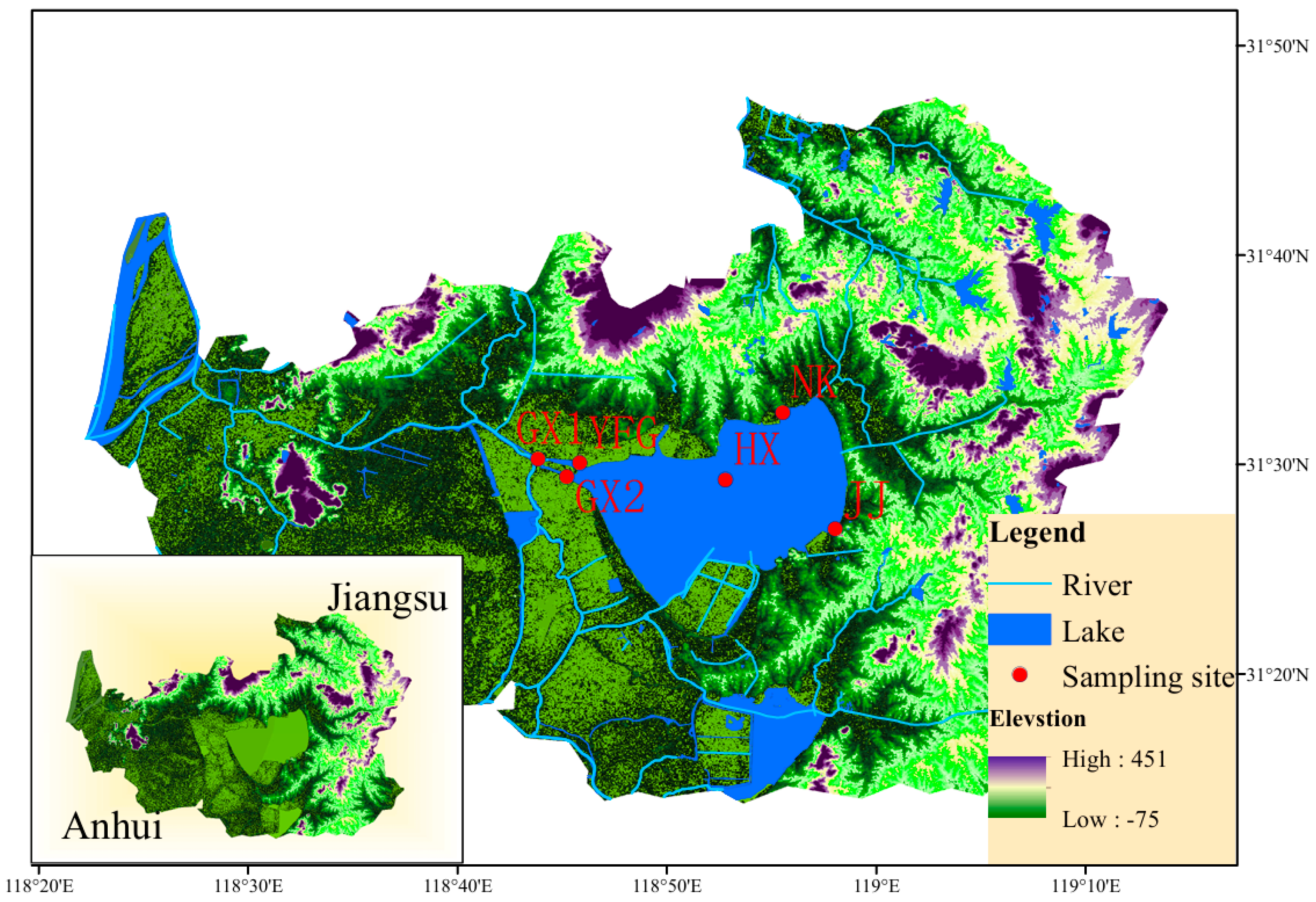
Figure 1. Geographic location and sampling sites in Shijiu Lake of Nanjing City.
Water 17 03224 g001
Figure 2. Overall spatial distribution of MP abundance in Shijiu Lake. The letter a indicate significant differences between groups (p < 0.05).
Water 17 03224 g002
Figure 3. Seasonal distribution of MP abundance in Shijiu Lake. Different letters indicate significant differences between groups (p < 0.05).
Water 17 03224 g003
Figure 4. (A) Water quality parameters in dry season, (B) Water quality parameters in rainy season, and (C) Linear correlation between MPs and TN, TP, SS, and NTU in Shijiu Lake.
Water 17 03224 g004
Figure 5. Characteristics of MPs in Shijiu Lake: (A) Size distribution, (B) Shape distribution.
Water 17 03224 g005
Figure 6. Hazard screening using the Pollution Load Index (PLI).
Water 17 03224 g006
Disclaimer/Publisher’s Note: The statements, opinions and data contained in all publications are solely those of the individual author(s) and contributor(s) and not of MDPI and/or the editor(s). MDPI and/or the editor(s) disclaim responsibility for any injury to people or property resulting from any ideas, methods, instructions or products referred to in the content.