Article

Assessing the Demographical Dynamics of Evacuations During Flood Hazard Using Mobile Spatial Statistics

by
Masakazu Hashimoto
1,*,
Shintaro Sata
1,
Erick Mas
2,
Shinichi Egawa
2,
Daisuke Sano
3,4 and
Shunichi Koshimura
2
1
Faculty of Environmental and Urban Engineering, Kansai University, Suita 564-8680, Japan
2
International Research Institute of Disaster Science, Tohoku University, Sendai 980-8572, Japan
3
Department of Civil and Environmental Engineering, Graduate School of Engineering, Tohoku University, Sendai 980-8579, Japan
4
Department of Frontier Science for Advanced Environment, Graduate School of Engineering, Tohoku University, Sendai 980-0845, Japan
*
Author to whom correspondence should be addressed.
Water 2025, 17(22), 3192; https://doi.org/10.3390/w17223192
Submission received: 31 July 2025 / Revised: 26 October 2025 / Accepted: 27 October 2025 / Published: 8 November 2025

Abstract

This study proposes a method to quantitatively assess evacuation demographics during regional floods using Mobile Spatial Statistics (MSSs). It focuses on Koriyama City, affected by Typhoon Hagibis in 2019, as well as Yamagata City, which experienced torrential rains in July 2020, when COVID-19 infection risks in evacuation shelters could have affected evacuation behavior. Both events led to flooding. MSS provided by NTT Docomo were used to explore the dynamics of the population. Evacuees’ demographics, according to the changes in river levels, were presented by gender and age group. Our results show differences in evacuation dynamics between the two regions: In Koriyama, younger people were more likely to evacuate faster; in Yamagata, older people moved faster than other age groups. At the evacuation peak, the average relative evacuation ratios were 2.2 times higher for women in their 20s in Koriyama, and 2.5 times higher for women in their 30s in Yamagata. Gender differences indicate that women were more likely to evacuate than men. The effect of the COVID-19 pandemic on evacuation dynamics remains unclear; however, concerns about infection risk in shelters may have influenced people’s willingness to evacuate. MSSs provide a robust representation of evacuation dynamics in the local context and can help municipal governments develop more targeted evacuation policies, such as tailored warnings for specific age groups and enhanced support for older adults.

1. Introduction

As floods become more frequent and severe worldwide, the development of countermeasures to ensure the safety of local populations is urgently needed, and there is an increasing need for prompt and appropriate evacuation plans. Flood hazard maps, which help policymakers make effective evacuation decisions, are gaining recognition as regional populations become more aware of flood risks. However, when flooding occurs, the evacuee numbers recorded by local governments do not necessarily indicate whether the evacuation was efficiently conducted. Therefore, it is necessary to develop information systems that target those reluctant to evacuate [1].
Implementing soft measures, such as flood hazard maps and warning systems, helps residents make evacuation decisions as they become more aware of flood hazard resources. However, evacuee numbers reported at evacuation centers indicate that there has been little progress in persuading residents to evacuate their homes. Existing research on the demographic groups who choose not to evacuate, or their reasons not to evacuate, is scarce. Information on evacuees’ attributes would be highly advantageous for medical personnel and other disaster relief workers [2].
Many previous studies have estimated evacuee populations using satellite imagery and census data [3,4]. However, these approaches primarily provide static snapshots—such as nighttime population distributions—and thus fail to capture real-time movements. With the advent of Mobile Spatial Statistics (MSSs), which ensure user confidentiality, dynamic population data have become available and are now used to study evacuation behaviors in actual disaster contexts [5]. Mobile phone–based data enable high-resolution population grids and are increasingly applied across various disciplines, including disaster response and transportation research [6].
Various studies on evacuation behavior during flooding have examined how prior disaster experiences influence residents’ decision-making processes [7,8,9,10]. An agent-based model incorporating flood experience has been used to analyze the acquisition of evacuation decision criteria through reinforcement learning, demonstrating that repeated experiences influence adaptive decision-making [11,12]. Another study investigated flood evacuation situations through a questionnaire survey, providing valuable insights into residents’ actual responses during flood events [13]. Additionally, the utilization of volunteered geographic information—such as data from X (formerly Twitter)—has been increasingly promoted in this field, underscoring the usefulness of crowdsourced data for enhancing real-time situational awareness [14]. Several studies have also assessed evacuation behavior from an economic perspective, highlighting how economic valuation and willingness-to-pay approaches can inform flood risk reduction strategies [15,16].
Globally, considerable efforts have been made to understand population demographics using mobile phone tower data [17]. One study utilized mobile spatial statistical data to estimate population changes during disasters, demonstrating the feasibility of capturing high-resolution spatiotemporal population shifts [18]. Another study analyzed dynamic population movements of evacuees by gender and age before and after an earthquake, revealing demographic differences in evacuation behavior [4]. Population dynamics during earthquakes have also been studied [5]. For instance, research on the Kumamoto earthquake examined the distribution of relief supplies to numerous undesignated shelters that emerged when official evacuation centers reached capacity, emphasizing the importance of recognizing informal evacuation trends [19]. Furthermore, agent-based models have been used to simulate evacuation behavior, although their validation in real-world disaster settings remains challenging [20]. Demographic data during evacuation are particularly difficult to obtain; previous studies have relied on evacuation center user lists or post-disaster questionnaires [21], which are often constrained by low response rates and the inability to capture evacuees in unofficial locations.
When considering natural disasters, flooding is a phenomenon in which residents evacuate more gradually, according to the degree of perceived flood risk from information that they receive. Flooding emergencies differ from other natural disasters, such as earthquakes, because populations most often do not require long-term evacuation. Consequently, we expect significant differences in gender and generational trends between these two types of disasters. Floods differ from earthquakes and tsunamis in that evacuations may occur in response to progressively worsening conditions, sometimes with some advance warning. Nevertheless, flooding is not always predictable, particularly in the case of flash floods [22].
Accordingly, the objectives of this study are to (1) quantitatively clarify evacuee demographics of gender and age range, and identify target populations that should be encouraged to evacuate in similar geographical locations in the northeastern part of Japan—before and at the beginning of the COVID-19 pandemic; and (2) establish a method to quantitatively evaluate the evacuation behavior of residents in any given area, using a flood hazard-based evacuation curve.

2. Materials and Methods

For this study, we analyzed MSS to identify evacuation time trends among the population in flood zone areas that were being evacuated.

2.1. Datasets

The study employed hourly dynamic MSS, provided by the Japanese mobile phone operator NTT Docomo [23]. The number of mobile phones in each area was regularly monitored at base stations, and NTT Docomo estimated the population using basic resident ledger data managed by municipalities. People whose mobile carriers use non-Docomo mobile phones were considered using NTT DOCOMO’s mobile phone penetration rate. Data were then de-identified with confidentiality processing. The data did not include mobile phone users under the age of 15 or over 80. The spatial resolution of the data was 500 m, making it possible to determine the population for each grid cell by age and gender.

2.2. Study Area

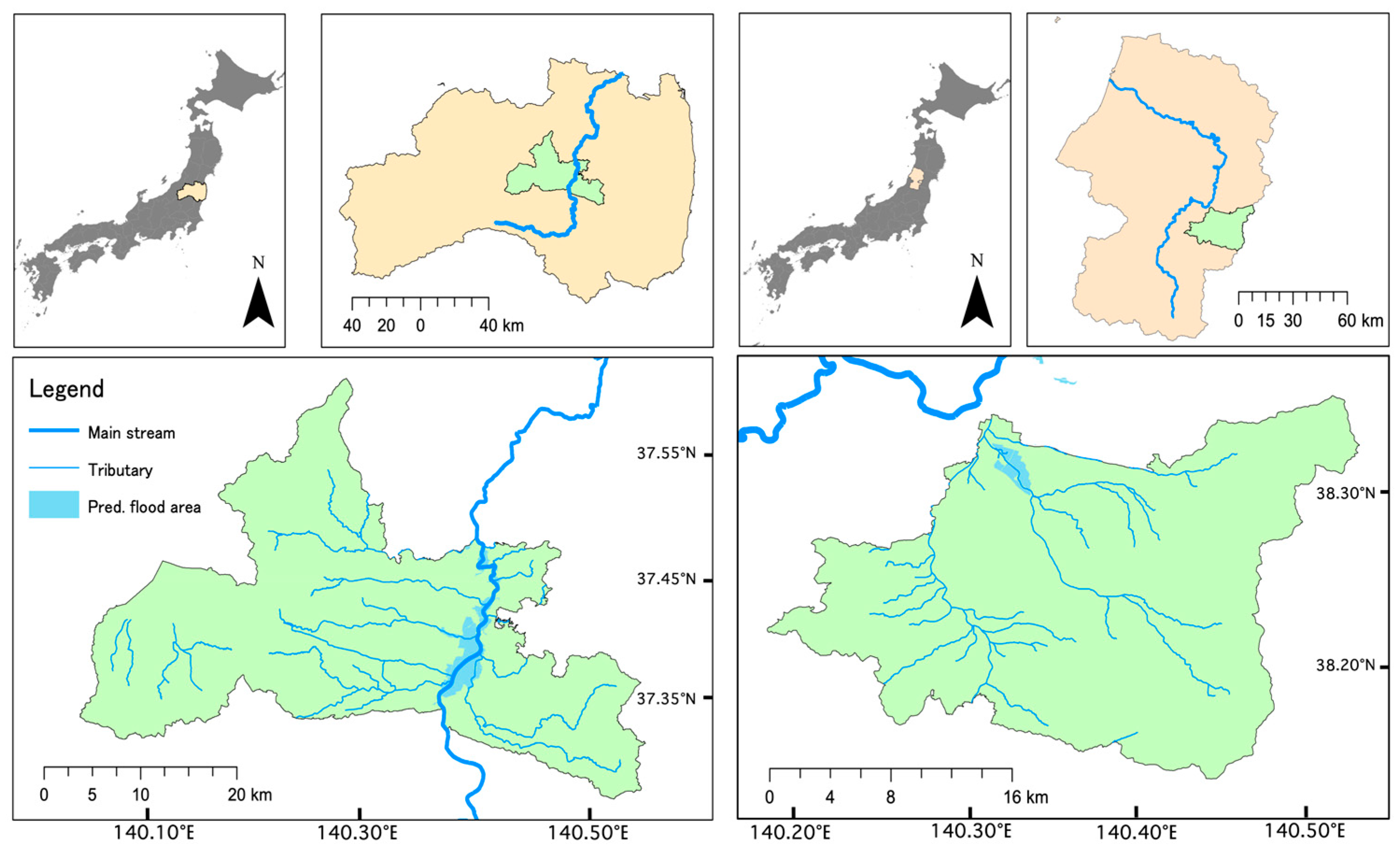
The study areas were Koriyama City in Fukushima prefecture (population 350,000) and Yamagata City in Yamagata prefecture (population 250,000) (Figure 1). Koriyama experienced a typhoon on 13 October 2019 (before the pandemic), and Yamagata was affected by torrential rains on 28 July 2020—at the start of the COVID-19 pandemic. In both events, flood risk increased during the evening, and evacuation orders were issued around 16:00. The temporal scale of these two events was approximately the same.
The 2019 East Japan Typhoon (Typhoon Hagibis) caused extensive river flooding after making landfall on the Izu Peninsula shortly before 19:00 on 12 October 2019, severely affecting the Kanto and Tohoku regions, including Koriyama.
The rainy season in early July 2020 brought record-breaking rainfall to the Kyushu region, resulting in large-scale river flooding, landslides, and other extensive damage [24]. Torrential rains associated with the seasonal rain front fell in the Yamagata region on July 27 and 28, causing extensive damage in Yamagata [25]. In the middle reaches of the Mogami River, Murayama City and Higashine City experienced river flooding from branch rivers. In Oishida Town, some areas were flooded due to overflow from the main branch of the Mogami River.
We selected these two municipalities because flooding is likely in these regions, and river-level information can be obtained from nearby municipalities. Extensive data on river water levels and rainfall have been accumulated, covering the period required to analyze both the 2018 typhoon and the 2020 torrential rainfall events. A key difference between the two study areas is that the Koriyama typhoon occurred before the COVID-19 pandemic, whereas the Yamagata torrential rains took place during it. This distinction is relevant because the perceived risk of infection may have influenced evacuation decisions and shelter use, factors directly related to the demographic evacuation patterns analyzed in this study. Notably, no increase in COVID-19–positive cases was observed in Yamagata Prefecture following the event, suggesting that evacuees likely took appropriate precautions against infection. This context is essential for interpreting the population movement data recorded during the flood. It was assumed that the typhoon evacuees were aware of the risk of infection in the shelters and took relevant precautions. A part of the urban area of Koriyama was within the predicted flooding area and sustained damage, while the city of Yamagata itself was spared from flooding. The water levels recorded at the Akutsu observatory station in Koriyama and the Nagasaki observatory station in Yamagata were compared. The two municipalities were divided into tertiary mesh grids (1000 m), and real-time population changes within the predicted flooded areas (pale blue regions in Figure 1) were estimated. Predicted flood areas were obtained from hazard maps provided by the Ministry of Land, Infrastructure, Transport and Tourism (MLIT), which delineate inundation zones under severe flood scenarios.

2.3. Demographics of the Evacuated Populations

Given the day-night and day-of-week periodicity in population fluctuations and the fact that this cycle varies between weekdays and weekends, representative diurnal population patterns for weekdays and weekends were calculated using population cycles observed during the five weeks preceding the flood as below:
P a v e = Σ n = 1 l P i , j , k l
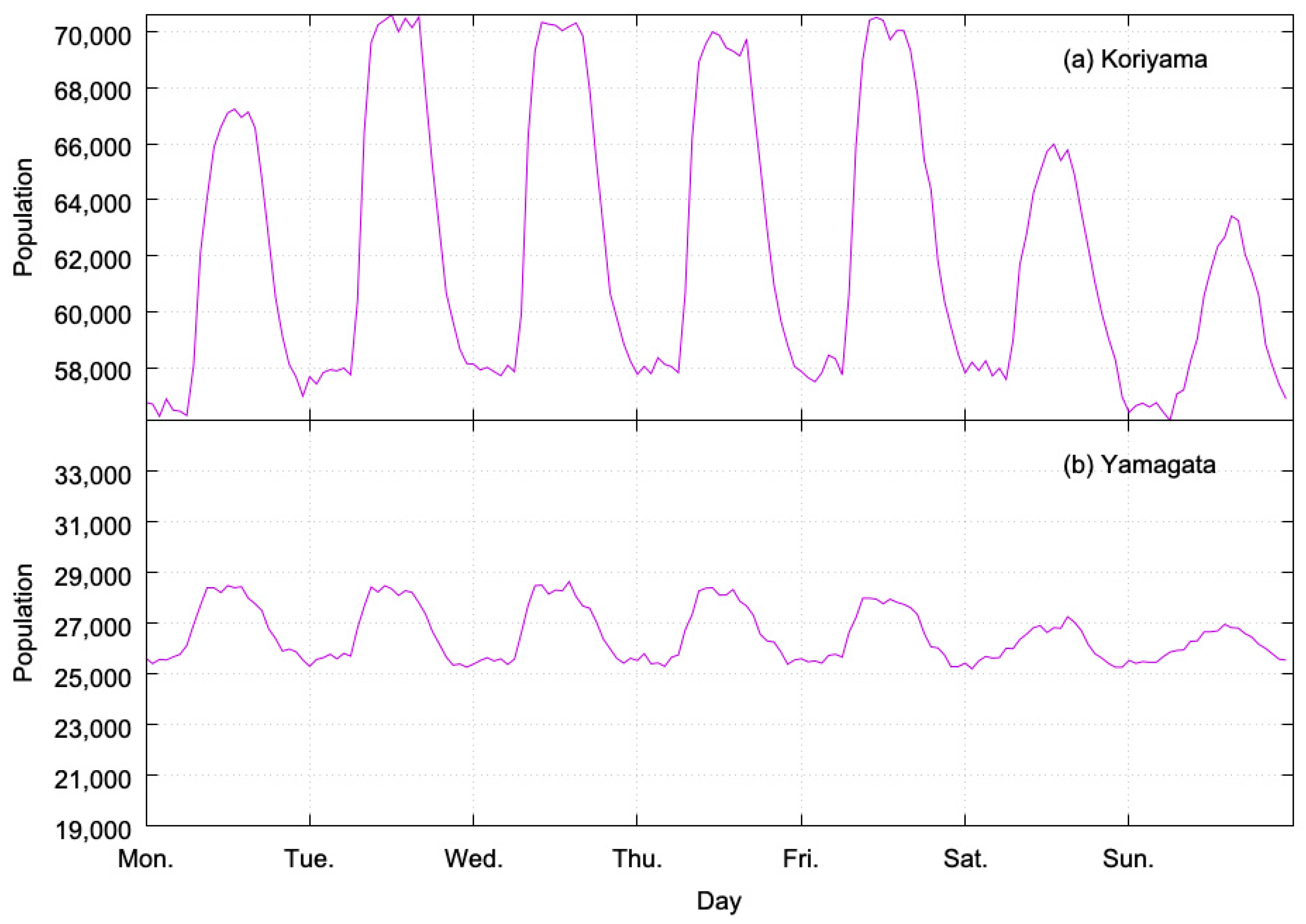
Here, Pave = base line population in a week, i = week, j = day of the week, k = proper time, and l week (five weeks) are used as the sample. The average values of i, j, and k are calculated as the standard population not experiencing any particular situation. The populations in the flood-estimated areas differ because of the size of the two municipalities. Figure 2 presents the baseline weekly population cycle, constructed from average day-of-week and hourly variations observed during the five weeks preceding the flood. This baseline serves as a reference pattern under non-flood conditions, against which evacuation-related changes were evaluated.
To estimate the typical population in a week, we calculated the average population at the same time on the same day for five weeks.
Using the estimated typical population in a week, we estimated the evacuation population as below:
P e v a c = P P a v e
Here, Pevac = evacuated population and P = population at that time. The difference from the average is defined as the evacuated population.
To quantitatively assess gender differences in evacuation, we focused on evacuated population ratios during the peak evacuation period and calculated the multiplier for each age group and gender relative to the overall evacuated population ratio, using the following formula:
P R R i = P R i P R a l l
Here, i = age group, PRRi = relative evacuated population ratio at the evacuation peak, PRi = peak evacuated population ratio for age group i, and PRall = peak overall evacuated population ratio.

3. Results

3.1. Gender Differences Among Evacuees

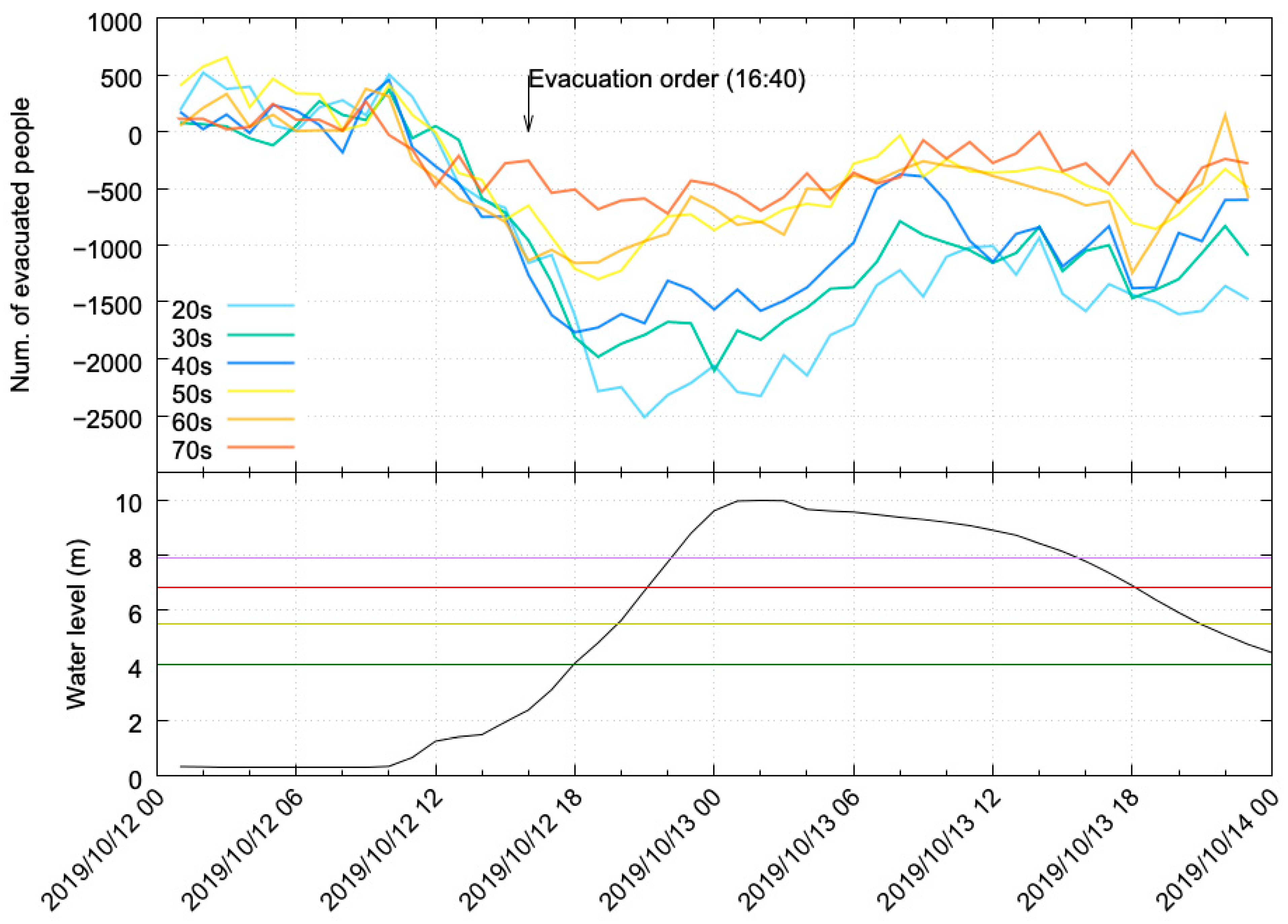
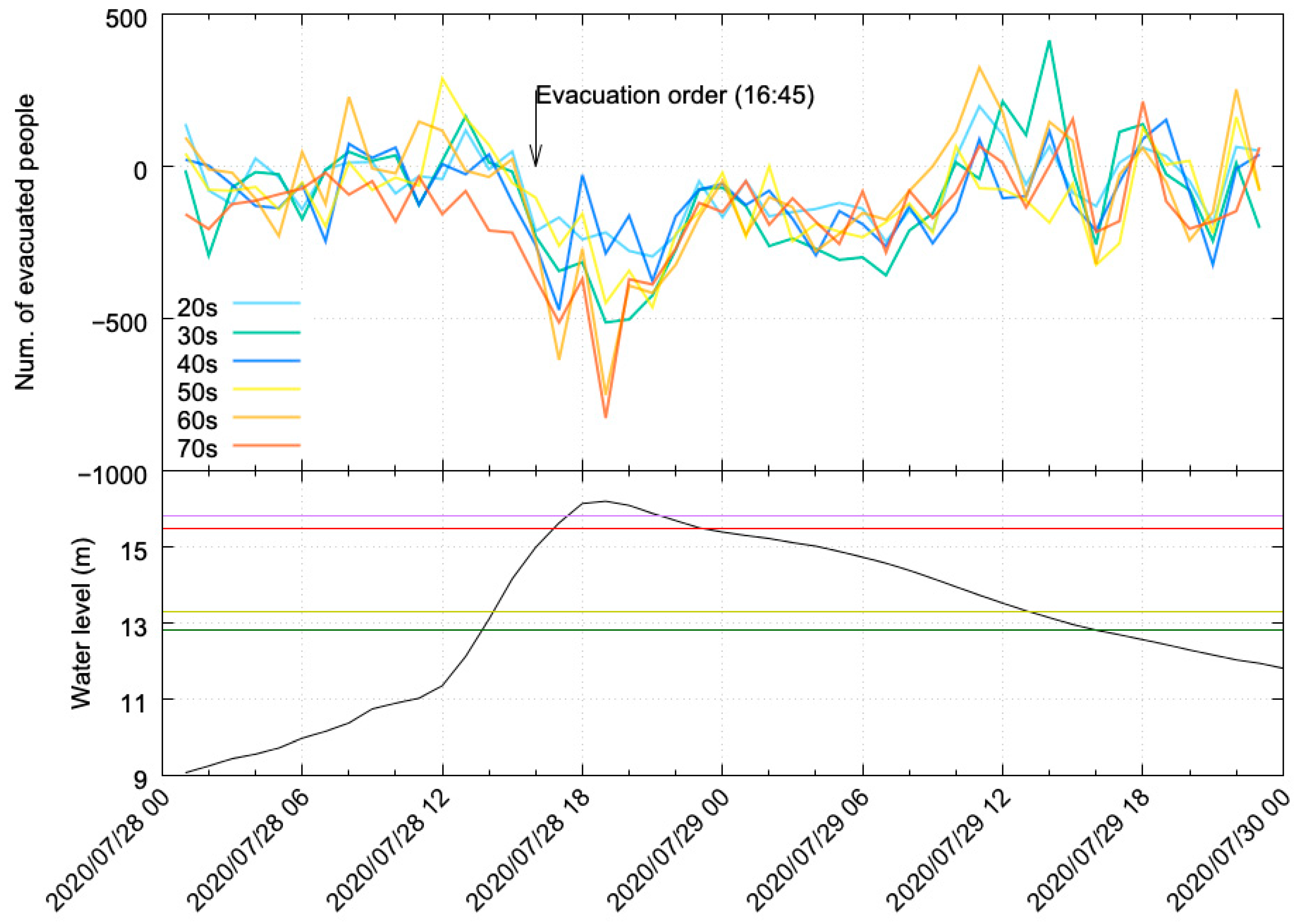
Figure 3 and Figure 4 show the age ranges of evacuees as correlated with the rivers’ water levels. There was a more sizable proportion of younger evacuees in Koriyama, while there was a more substantial proportion of older adults in Yamagata. When comparing the waveforms, in Koriyama, the evacuated population remained high for longer than in Yamagata, where the numbers of evacuees peaked for a shorter time. Although the evacuated population increased in Yamagata, the evacuees returned quicker than in Koriyama; this is because flooding was more severe in Koriyama, making it difficult for evacuees to decide to return home. The river water level exceeded the flood danger level (purple line) for more than 12 h in Koriyama.

3.2. Comparison of Evacuation Curves

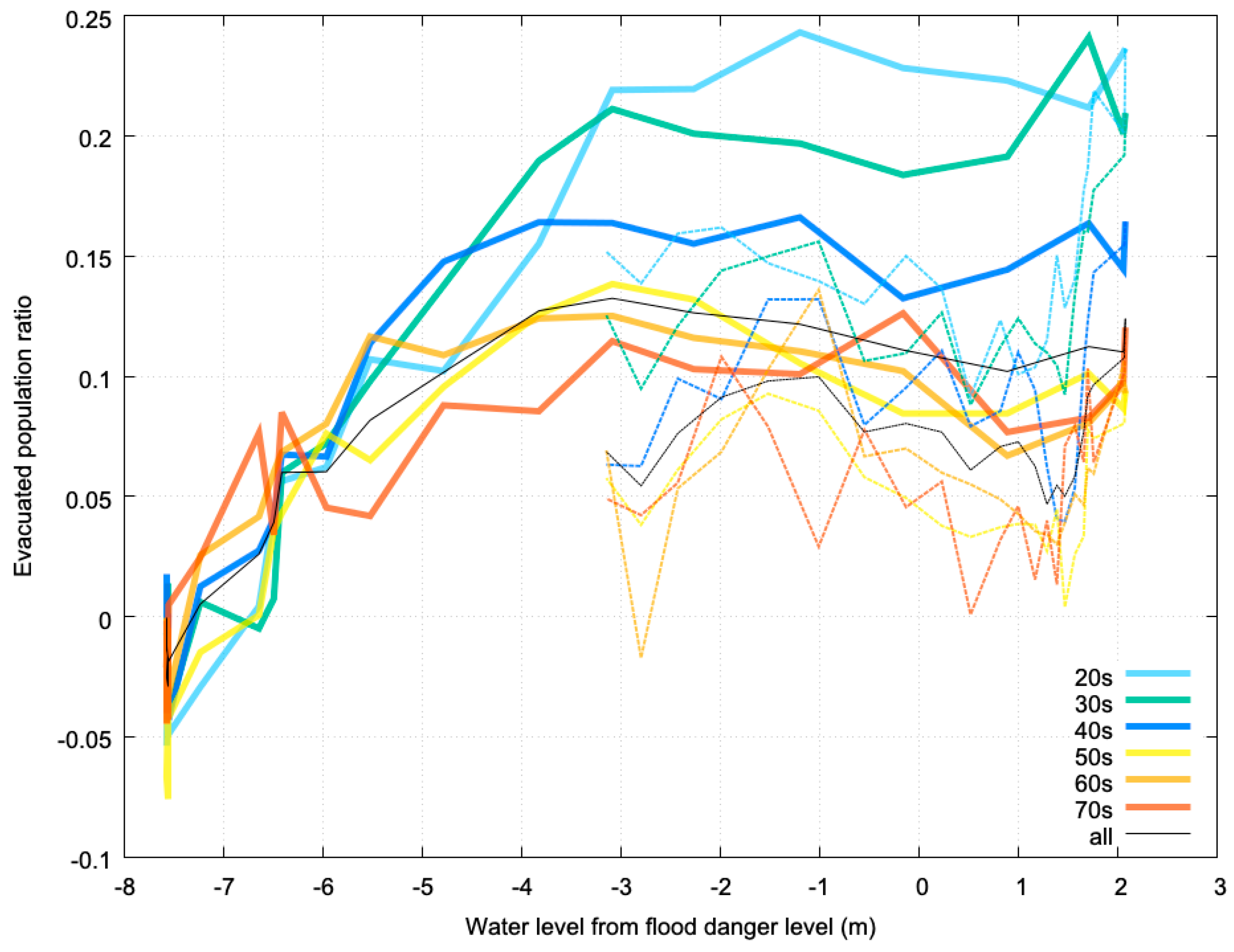
Figure 5 illustrates a comparison of evacuation curves for age groups in Koriyama. The horizontal axis shows the respective rivers’ flood hazard levels, measured by the difference between the current river level and the predesignated flood danger level (8 m in Yamagata, and 12 m in Koriyama) during the rising-water phase (solid lines) and receding-water phase (dotted lines).
The vertical axis shows the evacuated population ratio for each age group. Negative values indicate a temporary concentration of the population. The ratios all increased as the flood hazard level increased. At the initial low-risk stage, the evacuated population ratio was relatively high among older adults in their 60s and 70s. However, as the risk level increased, the ratio increased among younger people in their 20s–40s. A potential reason could be that older adults—especially those who required time to evacuate—were the first to act. Subsequently, the age groups raising children (20s–40s) obtained flood information and evacuated to their relatives’ homes or shelters. Older people may have been reluctant to evacuate because the evacuation order was given in the evening. In some cases, evening evacuations forced people to stay overnight at home.
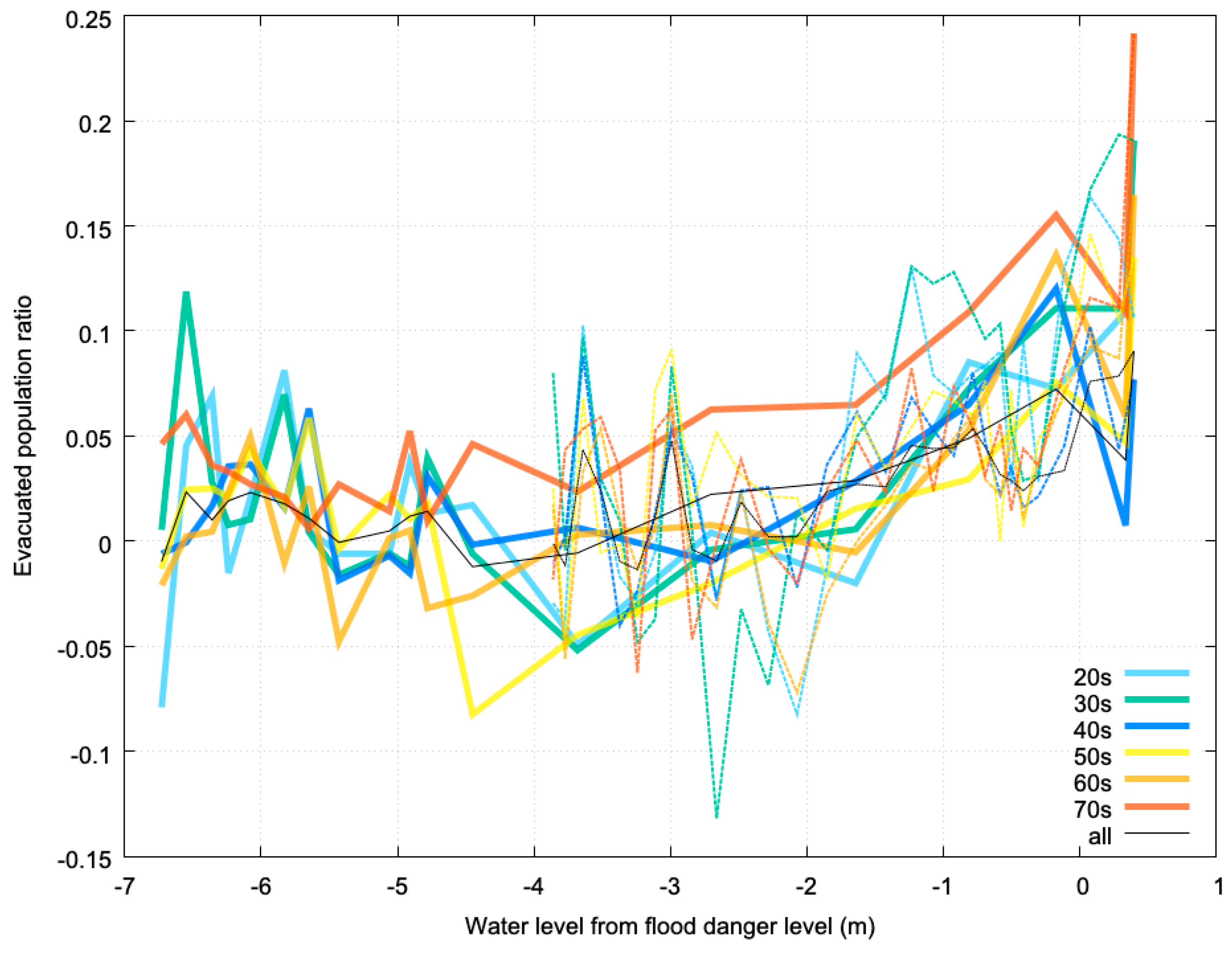
Figure 6 presents a similar plot for Yamagata, where the proportion of people in their 70s who evacuated was relatively high, while the proportion of younger people was low. The evacuation rate among people in their 70s was approximately the same as the average rate observed across all age groups.
Comparing the two evacuation curves, the evacuated population ratio in Koriyama was higher. The response was also considerably faster during the rising-water phase, which may be because Koriyama was more severely flooded. In Yamagata, all age groups displayed similar evacuation behavior: When the river level reached 3 m below the flood danger level, it initiated evacuation behavior during the water-rising phase and return behavior during the receding-water phase (Figure 6).
In addition, as the evacuation was carried out because of a Typhoon Hagibis (2019 East Japan Typhoon), the typhoon’s path, forecast cycle, and timing were more apparent to the residents. The day of the week may also have influenced evacuation behavior. During the Saturday night of Typhoon Hagibis, most residents were likely at home with their families, which may have facilitated quicker decision-making and collective evacuation. In contrast, during the Tuesday night flooding in Yamagata, residents were more dispersed due to weekday activities, potentially leading to delayed evacuation responses.
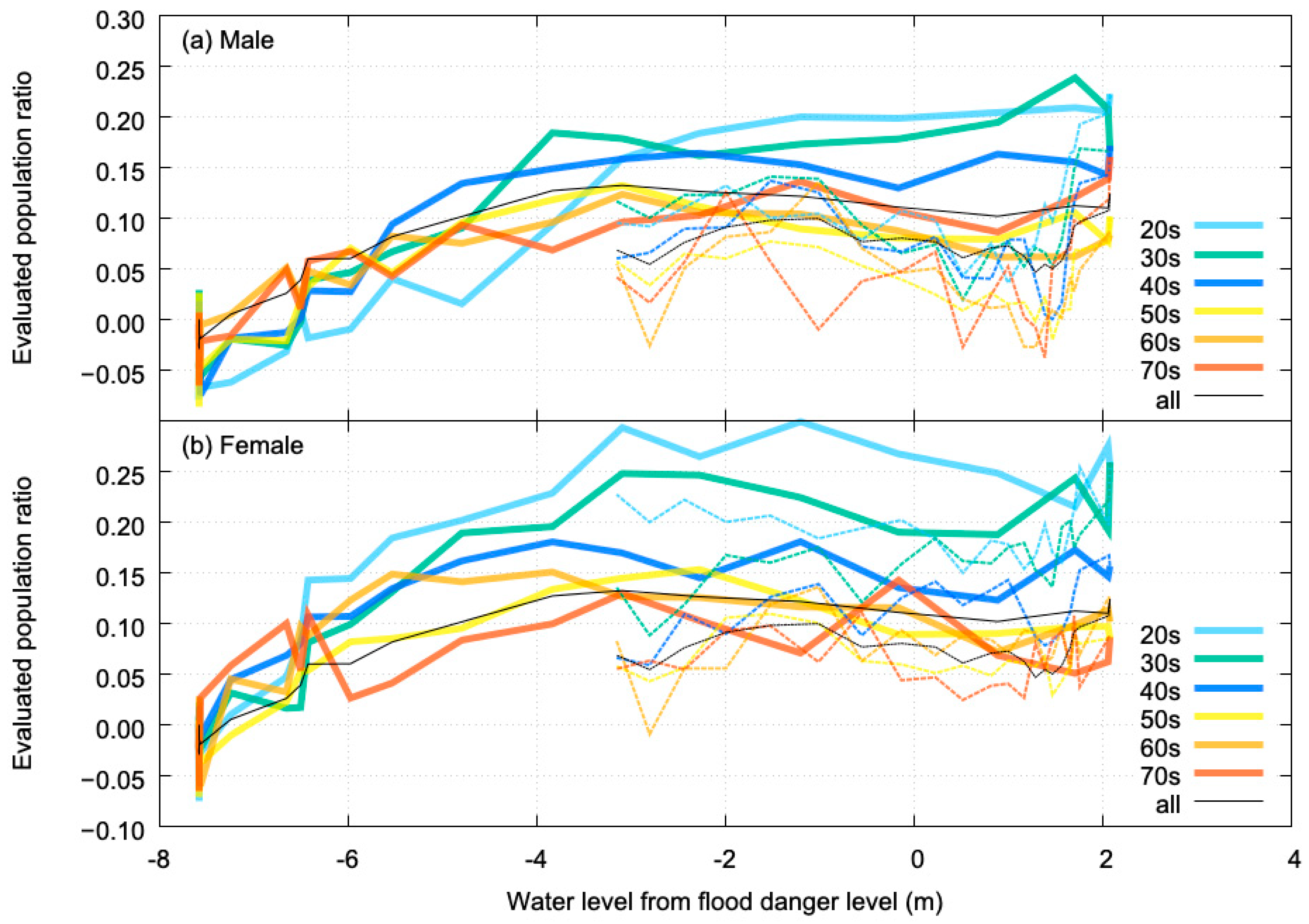
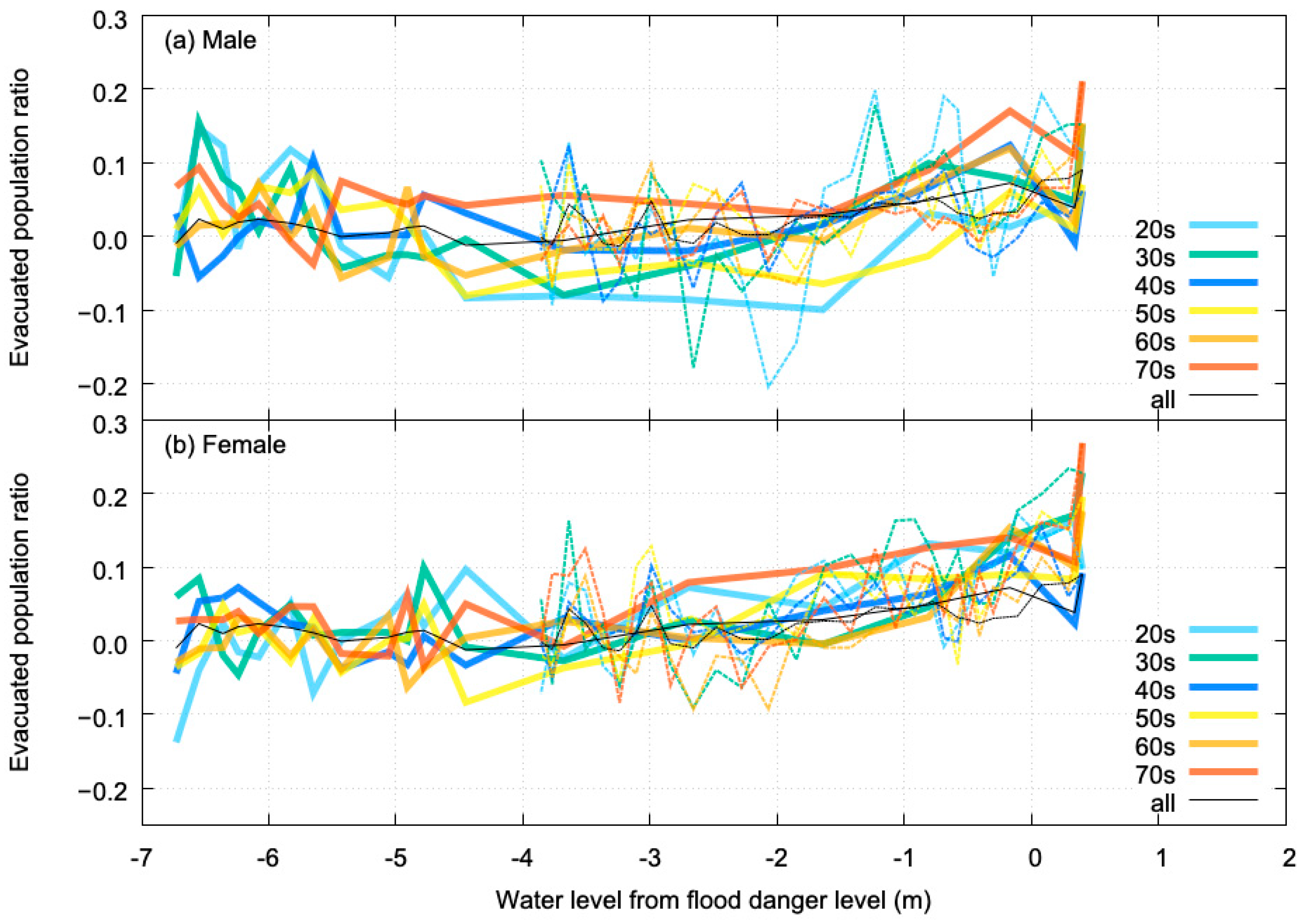
Figure 7 and Figure 8 present the evacuation ratios by gender and age in relation to river water levels. In both municipalities, women exhibited higher evacuation ratios than men. In Koriyama, women in their 20s and 30s showed relatively higher evacuation ratios compared to other age groups, whereas women in their 70s showed lower ratios. In Yamagata, gender- and age-related differences were less pronounced.
In Koriyama, the proportion of women in their 20s and 30s who were evacuated was high, comprising nearly 30% of the population (Figure 7). It is impossible to know whether these evacuees were displaced alone or with relatives, because of the MSS profiles. Still, these attributes were particularly sensitive relative to other age groups.
The values in Table 1 indicate that, in many cases, the relative evacuated population ratio was higher for women than that of men. In Koriyama, women in their 20s exhibited the highest relative evacuated population ratio, which was more than double the overall ratio. By contrast, men aged 60–79 had lower relative evacuated population ratios than those of all other age groups. In Yamagata, the highest relative evacuated population ratio was observed among women in their 70s, followed by women in their 30s and men in their 70s.
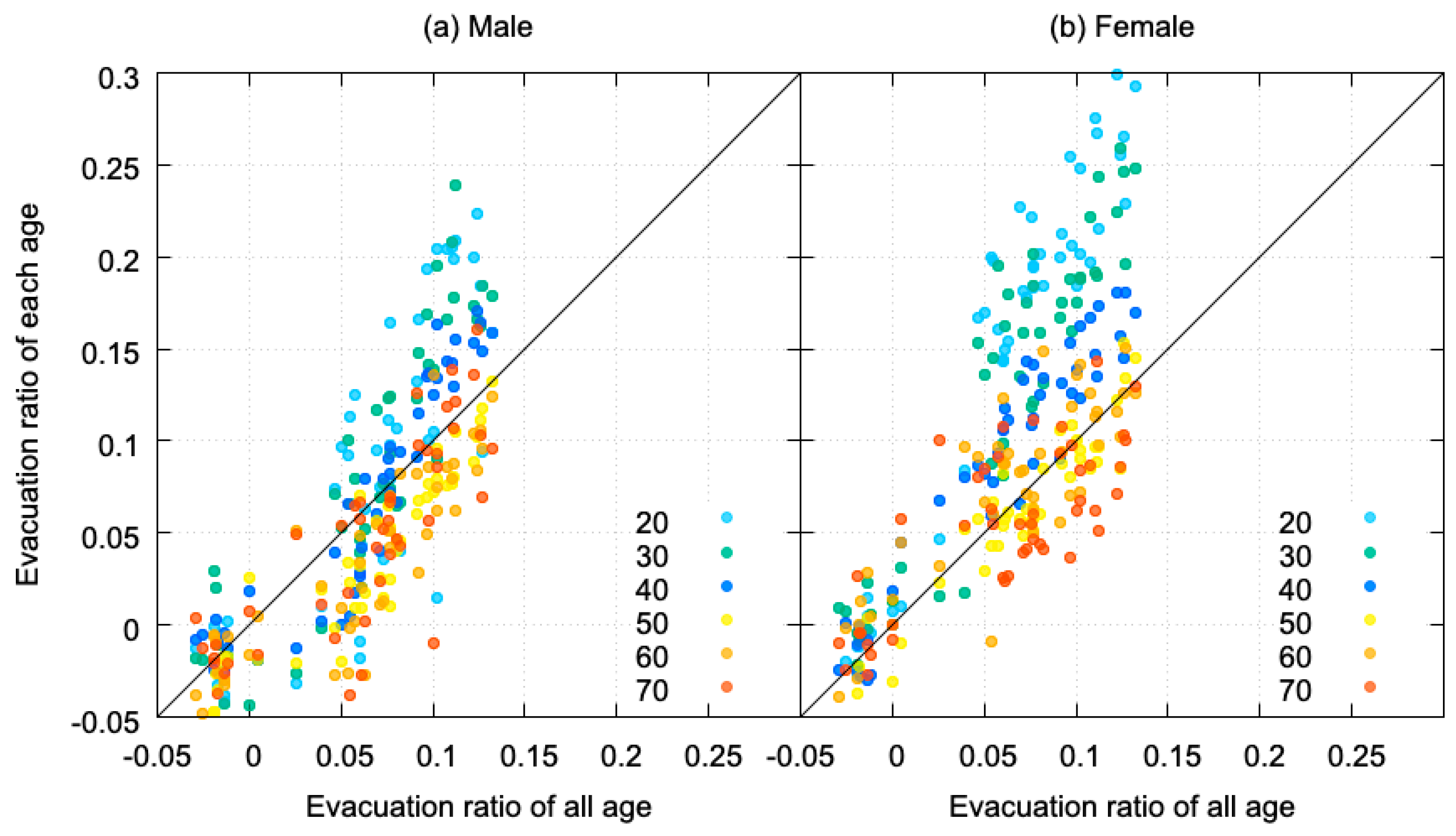
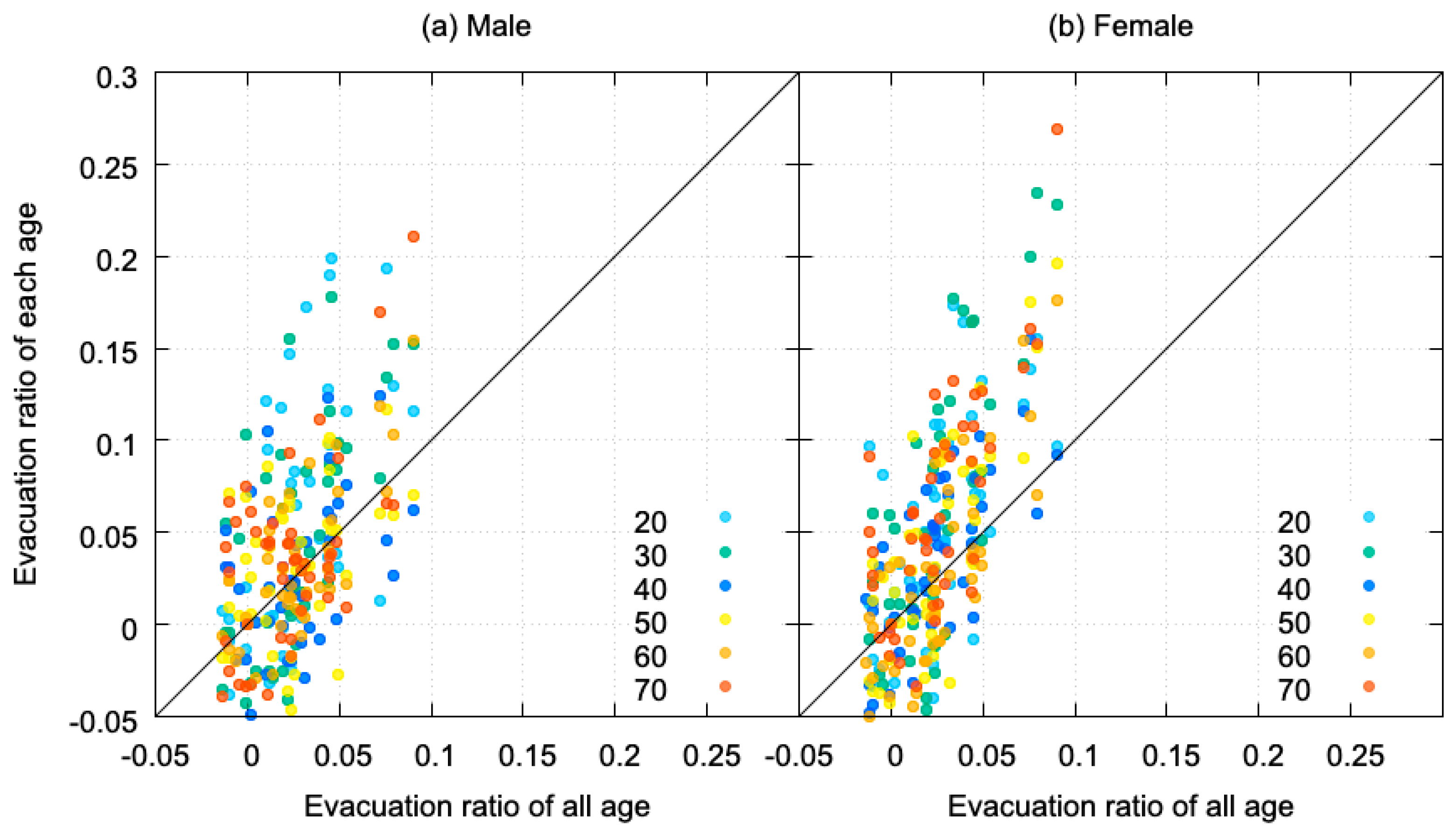
Figure 9 and Figure 10 plot gender comparisons of evacuated population ratios for each age group and for all age groups combined. Figure 9 shows that the evacuated population ratios of women in their 20s and 30s in Koriyama became markedly higher than the overall ratio when the latter exceeded 0.05. In Yamagata, by contrast, there was no noticeable difference, though women in their 70s had a slightly higher evacuated population ratio than the overall ratio (Figure 10). These findings illustrate that evacuation dynamics are likely influenced by the nature of the torrential rainfall event and characteristics of the target area.

4. Discussion

4.1. Novelty and Key Findings

This study is novel because it clarifies evacuation dynamics on a finer time scale than, for example, the monthly analysis conducted for earthquakes by Hada et al. [4]. The substantially higher evacuation rate among women in their 30s was also reported by Hada et al. [3], and a similar trend was observed in the present study. As Hada et al. [4] speculated, it is likely that the child-rearing generation with infants and toddlers might have actively engaged in evacuation behavior. In addition, because wide-area evacuation depends on transportation availability, the relationship between generation and evacuation rates must be further analyzed [26]. For example, targeted communication strategies such as early warning messages via social media or mobile applications could be designed to better reach the child-rearing demographic, particularly women in their 30s who demonstrated proactive evacuation behavior. In contrast, tailored evacuation support programs for the older adults—such as neighborhood-based assistance networks or pre-registered evacuation transportation services—may mitigate delayed responses in future disasters.

4.2. Limitations of the Study

This study used MSS to capture the evacuation behavior of populations in two mid-sized urban cities in Japan, as flooding risks increased. However, we acknowledge that several key factors influencing evacuation behavior—such as flood severity, timing of evacuation orders, infrastructure availability, and prior disaster experience—were not systematically isolated or quantified due to limitations in the available data. Future studies should aim to incorporate such variables using multivariate approaches to better disentangle their effects.
Moreover, this study did not capture vertical evacuation or shelter-in-place behavior, which are common in urban flood scenarios. Since MSS data reflect location movement patterns, individuals who evacuated vertically within their residence or remained at home may have been interpreted as non-evacuees. This limitation should be considered when interpreting evacuation rates, especially in densely built urban areas where such behaviors are prevalent.
It should be noted that MSS data are available with a temporal resolution of 30 min and are not provided in real time. This latency imposes limitations on the real-time applicability of the data for immediate emergency response or early warning systems. Nevertheless, the objective of this study is not to enable real-time evacuation guidance, but rather to evaluate post-event evacuation behavior patterns across demographics for planning and policy purposes. Future research and collaboration with data providers may enable reduced latency or real-time data access, which would enhance the utility of MSS for operational disaster management.

4.3. Generalisability of the Findings

Although this study examines only two flood events in Japan, the findings may not be generalizable to regions with different geographical, climatic, socio-economic, or institutional contexts. Therefore, caution should be exercised in interpreting the gender- or age-related evacuation tendencies as universal patterns. Future research should aim to validate this methodology in a variety of international contexts—such as densely populated Asian cities, flood-prone low-lying European regions, or urban peripheries in developing countries—to assess its broader applicability and robustness in diverse disaster scenarios.

4.4. Methodological and Practical Implications

Despite its limited scope, the methodology developed in this study is novel in two key respects. First, unlike previous disaster studies that typically analyzed evacuation behavior at monthly or daily intervals, our approach utilizes MSS data with a 30 min temporal resolution, allowing the examination of evacuation dynamics at a much finer time scale. Second, by disaggregating the data by both generation and gender, we systematically captured demographic differences in evacuation patterns that have not been fully explored in previous flood research. These methodological advances make the framework innovative and provide a foundation for applying it to other regions and disaster types, potentially revealing broader patterns in evacuation behavior.
This study focused on evacuation behaviors during individual flood events; however, longitudinal analysis across multiple disasters would provide valuable insights into how repeated hazard exposure and shifts in societal risk perception influence evacuation decisions over time. Since MSS only became publicly available in October 2013, the history of using MSS for evacuation behavior analysis remains relatively short. Nonetheless, accumulating evacuation data across recurrent flood events will be essential for discussing how evacuation behavior by age group evolves in response to repeated disasters and changing public awareness.

4.5. Future Research Directions

Among the results obtained in this study, the most significant difference in the two areas was the start time of evacuation behavior, considering the river water level. In addition, how agencies disseminate information differs between flooding by a typhoon and flooding by torrential rain; a direct comparison, therefore, has limitations. Nevertheless, there is a need for future research on the timing of evacuation orders from municipal governments and their impacts on populations. As mentioned by Alias [21], evacuation behavior of each generation and gender may be highly influenced by the media through which they receive information about disasters. Further research is needed on the relationship between the means of obtaining information and the timing of evacuation. The results of the current study suggest that the younger generation actively collects information when the accuracy of disaster risk prediction is high, like in Koriyama. Regarding the older adults who may delay their evacuation, as observed in some parts of this study, it may be necessary to consider an evacuation plan that captures the time required for evacuation [27]. Especially in flash flood-prone countries such as Japan, early evacuation is preferred, before the floods become high-velocity currents [28].

4.6. Generational Differences and Future Research Directions

Once detailed data on evacuation behavior by age group and gender are accumulated, it may be possible to determine whether there is a suppressive effect on evacuation behavior during an infectious disease epidemic [29,30,31]. The COVID-19 pandemic may have created anxiety regarding the crowdedness in evacuation centers during the 2020 Yamagata rain disaster; it is therefore possible that people hesitated to start evacuation and tried to return as soon as possible. However, people in Koriyama were more likely to not return home for a longer time, likely owing to the severity of the flooding itself and because there was no infectious disease outbreak. To confirm changes in evacuation behavior during a flooding event that coincides with a spike in COVID-19 cases in the area, accumulation of data on comparable flood events of the same magnitude in the presence or absence of COVID-19 outbreaks—longitudinally or cross-sectionally—is necessary.
Interestingly, this study found contrasting evacuation patterns among older adults in the two cities: While evacuation rates among those aged 60 and above were relatively low in Koriyama, Yamagata showed a trend of earlier and more active evacuation among the same age group. Several factors may contribute to the discrepancy in evacuation patterns of older adults between the two cities. First, the nature of the flood events differed: The Koriyama event was driven by typhoon-induced flooding. Second, one possible explanation is that the Yamagata event was characterized by localized torrential rainfall, and the perceived severity and timing of such events may have influenced decision-making processes differently across age groups. Another contributing factor could be differences in risk communication strategies. In Yamagata, real-time local media and community networks may have played a stronger role in disseminating evacuation alerts to older residents, who often rely more heavily on traditional information sources. Third, sociocultural factors, such as community cohesion and prior disaster experience, might have affected evacuation readiness. For example, Yamagata’s higher community-based disaster awareness programs or past flood experiences may have heightened preparedness among older adults. Further research is needed to examine these factors systematically through surveys or interviews in order to clarify how context-specific conditions influence age-based evacuation behaviors.


5. Conclusions

This study demonstrated the utility of MSS in identifying evacuation trends by age and gender during flood events in two mid-sized Japanese cities. Notably, women in their 20s and 30s exhibited significantly higher evacuation rates than the general population. These insights suggest that evacuation strategies should be tailored to demographic characteristics to improve future disaster response. The methodology presented here also lays the groundwork for broader application in other geographic and hazard contexts. While the use of MSS has limitations—including delayed data availability and challenges in capturing vertical evacuation—its spatiotemporal resolution makes it a valuable tool for evaluating evacuation behavior patterns in post-disaster analyses. To the best of our knowledge, this is the first study to utilize MSS to concurrently analyze evacuation behavior by age and gender during flood events in mid-sized Japanese cities, offering new insights that can guide the design of demographic-specific disaster response strategies.

Author Contributions

Conceptualization, M.H.; methodology, M.H. and E.M.; validation, M.H. and S.S.; writing—original draft preparation, M.H.; writing—review and editing, M.H., E.M., S.E., D.S. and S.K.; funding acquisition, E.M. All authors have read and agreed to the published version of the manuscript.

Funding

This work was supported by JST Japan-US Collaborative Research Program, Grant Number JPMJSC2119, Japan.

Data Availability Statement

The mobile spatial statistics data used in this study are not publicly available due to licensing restrictions. The data were obtained from NTT DOCOMO, Inc. (https://mobaku.jp/) through a formal application process. Researchers may apply for access to these data via the official website and subject to approval and applicable fees.

Acknowledgments

This research project has been done with the Mobile Spatial Statistics of Docomo Insight Marketing, INC. This work was supported in part by the Japan Science and Technology Agency (JST) Japan-US Collaborative Research Program (JPMJSC2119), the Core Research Cluster of Disaster Science, the Co-creation Center for Disaster Resilience.

Conflicts of Interest

The authors declare no conflicts of interest.

Abbreviations

The following abbreviation is used in this manuscript:
MSSMobile Spatial Statistics

References

  1. Thompson, R.R.; Garfin, D.R.; Silver, R.C. Evacuation from natural disasters: A systematic review of the literature. Risk Anal. 2016, 37, 812–839. [Google Scholar] [CrossRef]
  2. Yazdani, M.; Mojtahedi, M.; Loosemore, M.; Sanderson, D. A modeling framework to design an evacuation support system for healthcare infrastructures in response to major flood events. Prog. Disaster Sci. 2022, 13, 100218. [Google Scholar] [CrossRef]
  3. Wu, S.; Qiu, X.; Wang, L. Population estimation methods in GIS and remote sensing: A review. GISci. Rem. Sens. 2005, 42, 80–96. [Google Scholar] [CrossRef]
  4. Hada, Y.; Sekiya, N.; Hiroi, U. Evacuation behaviors in wide area beyond the area of municipalities in the 2016 Kumamoto earthquake. J. Disaster Inf. Stud. 2017, 15, 255–266. [Google Scholar] [CrossRef]
  5. Yabe, T.; Sekimoto, Y.; Tsubouchi, K.; Ikemoto, S. Cross-comparative analysis of evacuation behavior after earthquakes using mobile phone data. PLoS ONE 2014, 14, e0211375. [Google Scholar] [CrossRef]
  6. Jiang, S.; Ferreira Jr, J.; Gonzalez, M.C. Activity-based human mobility patterns inferred from mobile phone data: A case study of Singapore. IEEE Trans. Big Data 2017, 3, 208–219. [Google Scholar] [CrossRef]
  7. Dash, N.; Gladwin, H. Evacuation decision making and behavioral responses: Individual and household. Nat. Hazards Rev. 2007, 8, 69–77. [Google Scholar] [CrossRef]
  8. Apivatanagul, P.; Davidson, R.A.; Nozick, L.K. Bi-level optimization for risk-based regional hurricane evacuation planning. Nat. Hazards 2012, 60, 567–588. [Google Scholar] [CrossRef]
  9. Lamb, S.; Walton, D.; Mora, K.; Thomas, J. Effect of authoritative information and message characteristics on evacuation and shadow evacuation in a simulated flood event. Nat. Hazards Rev. 2012, 13, 272–282. [Google Scholar] [CrossRef]
  10. Kolen, B.; Helsloot, I. Decision-making and evacuation planning for flood risk management in the Netherlands. Disasters 2014, 8, 610–635. [Google Scholar] [CrossRef]
  11. Michigashira, R.; Hori, T. Reinforcement learning analysis of the impact of flood experience on decision making criteria of evacuation behavior. J. Jpn. Soc. Civ. Eng. 2021, 77, I_1483–I_1488. [Google Scholar] [CrossRef]
  12. Dawson, R.J.; Peppe, R.; Wang, M. An agent-based model for risk-based flood incident management. Nat. Hazards 2011, 59, 167–189. [Google Scholar] [CrossRef]
  13. Sun, Y.; Yamori, K.; Tanisawa, R.; Kondo, S. Consciousness of disaster risk and tsunami evacuation: A questionnaire survey in Okitsu, Kochi Prefecture. J. Nat. Disaster. Sci. 2013, 2, 127–141. [Google Scholar] [CrossRef]
  14. Kusumo, A.N.L.; Reckien, D.; Verplanke, J. Utilising volunteered geographic information to assess resident’s flood evacuation shelters. Case study: Jakarta. Appl. Geogr. 2017, 88, 174–185. [Google Scholar] [CrossRef]
  15. Zhai, G.; Sato, T.; Fukuzono, T.; Ikeda, S.; Yoshida, K. Willingness to pay for flood risk reduction and its determinants in Japan. J. Am. Water Resour. Assoc. 2006, 42, 927–940. [Google Scholar] [CrossRef]
  16. Zhai, G.; Ikeda, S. Flood risk acceptability and economic value of evacuation. Risk Anal. 2006, 26, 683–694. [Google Scholar] [CrossRef]
  17. Deville, P.; Linard, C.; Martin, S.; Gilbert, M.; Stevens, F.R.; Gaughan, A.E.; Blondel, V.D.; Tatem, A.J. Dynamic population mapping using mobile phone data. Proc. Natl. Acad. Sci. USA 2014, 111, 15888–15893. [Google Scholar] [CrossRef] [PubMed]
  18. Zeniya, N.; Yamaguchi, H.; Okumura, M.; Nakayama, S. Quantitative analysis of behaviour under disaster related information by time-series population data. Proc. Infrastruct. Plan 2019, 60, 1–8. (In Japanese) [Google Scholar]
  19. Funakoshi, K.; Hatayama, M. A study on the method to identify shelters and its support measures. IPSJ SIG Tech. Rep. 2017, 139, 1–8. [Google Scholar]
  20. Kihara, T.; Ochi, H.; Fujimori, Y.; Mitani, T.; Moriwaki, R. Evacuation simulation using river inundation analysis–Study of vertical evacuation behavior and effectiveness of voluntary shelters. J. Jpn. Soc. Civ. Eng. 2021, 77, I_1501–I_1506. [Google Scholar] [CrossRef]
  21. Alias, N.E.; Salim, N.A.; Taib, S.M.; Yusof, M.B.M.; Saari, R.; Ramli, M.W.A.; Othman, I.K.; Annammala, K.V.; Yusof, H.M.; Ismail, N.; et al. Community responses on effective flood dissemination warnings—A case study of the December 2014 Kelantan Flood. Malaysia. J. Flood Risk Manag. 2019, 13, e12552. [Google Scholar] [CrossRef]
  22. Balistrocchi, M.; Metulini, R.; Carpita, M.; Ranzi, R. Dynamic maps of human exposure to floods based on mobile phone data. Nat. Hazards Earth Syst. Sci. 2020, 20, 3485–3500. [Google Scholar] [CrossRef]
  23. Okajima, I.; Tanaka, S.; Terada, M.; Ikeda, D.; Nagata, T. Supporting growth in society and industry using statistical data from mobile terminal networks―Overview of mobile spatial statistics. NTT DOCOMO Tech. J. 2013, 14, 4–9. Available online: https://www.docomo.ne.jp/english/binary/pdf/corporate/technology/rd/technical_journal/bn/vol14_3/vol14_3_004en.pdf (accessed on 12 October 2022).
  24. Moriguchi, S.; Mutsugi, H.; Ochiai, T.; Yoshikawa, S.; Inagaki, H.; Ueno, S.; Suzuki, M.; Tobita, Y.; Chida, T.; Takahashi, K.; et al. Survey report on damage caused by 2019 Typhoon Hagbis in Marumori Town, Miyagi Prefecture, Japan. Soils Found. 2021, 61, 586–599. [Google Scholar] [CrossRef]
  25. Ministry of Land, Infrastructure, Transport and Tourism. Report of Damages Caused by Torrential Rainfall in July 2020 in Yamagata. 2020. Available online: https://www.thr.mlit.go.jp/shinjyou/02_kasen/chisuitaisaku/pdf/gaiyou.pdf (accessed on 12 October 2022).
  26. Kim, K.; Pant, P.; Yamashita, E. Integrating travel demand modeling and flood hazard risk analysis for evacuation and sheltering. Int. J. Disaster Risk Reduct. 2018, 31, 177–1186. [Google Scholar] [CrossRef]
  27. Jamrussri, S.; Toda, Y. Available flood evacuation time for high-risk areas in the middle reach of Chao Phraya River Basin. Water 2018, 10, 1871. [Google Scholar] [CrossRef]
  28. Bernardini, G.; Postacchini, M.; Quagliarini, E.; Brocchini, M.; Cianca, C.; D’Orazio, M. A preliminary combined simulation tool for the risk assessment of pedestrians’ flood-induced evacuation. Environ. Model. Softw. 2017, 96, 14–29. [Google Scholar] [CrossRef]
  29. Simonovic, S.P.; Kundzewicz, Z.W.; Wright, N. Floods and the COVID-19 pandemic—A new double hazard problem. WIREs Water 2021, 8, e1509. [Google Scholar] [CrossRef] [PubMed]
  30. Borowski, E.; Cedillo, V.L.; Stathopoulos, A. Dueling emergencies: Flood evacuation ridesharing during the COVID-19 pandemic. Transp. Res. Interdiscip. Perspect. 2021, 10, 100352. [Google Scholar] [CrossRef] [PubMed]
  31. Tripathy, S.S.; Bhatia, U.; Mohanty, M.; Karmakar, S.; Ghosh, S. Flood evacuation during pandemic: A multi-objective framework to handle compound hazard. Environ. Res. Lett. 2021, 16, 034034. [Google Scholar] [CrossRef]
Figure 1. Study area (Left: Koriyama, Fukushima Prefecture; Right: Yamagata, Yamagata Prefecture. Yellow: prefectural boundaries; Green: city boundaries). Predicted flood areas (pale blue) were obtained from hazard maps provided by the Ministry of Land, Infrastructure, Transport and Tourism (MLIT), which estimate inundation zones under severe flood scenarios.
Water 17 03192 g001
Figure 2. Population cycles under normal conditions in (a) Koriyama and (b) Yamagata. The horizontal axis shows a representative week (Monday to Sunday) that was constructed from average population data over the 5 weeks preceding the flood. Tick marks correspond to 00:00 h of each day.
Water 17 03192 g002
Figure 3. Relationship between river level and number of evacuees in Koriyama (October 2019). In the top chart, each line shows a different age group. In the bottom chart, reporting data from the Akutsu observatory station, the purple line indicates the flood danger level; the red line indicates the evacuation judgment level; the yellow line shows the flood warning level; and the green line denotes the flood fighting corps standby water level.
Water 17 03192 g003
Figure 4. Relationship between river level and number of evacuees in Yamagata (July 2020). In the top chart, each line shows a different age group. In the bottom chart, reporting data from the Nagasaki observatory station, the purple line indicates the flood danger level; the red line indicates the evacuation judgment level; the yellow line shows the flood warning level; and the green line denotes the flood fighting corps standby water level).
Water 17 03192 g004
Figure 5. Evacuation curves by age group plotted against the river level in Koriyama. The solid line represents evacuation behavior during the rising-water phase; the dotted line represents this behavior during the receding-water phase.
Water 17 03192 g005
Figure 6. Evacuation curve by age range according to the river water levels for Yamagata (Solid lines represent the evacuation behavior during the rising phase of the river level, while dotted lines represent the phase after the river level had peaked and began to recede).
Water 17 03192 g006
Figure 7. Evacuation curves by gender and age group in Koriyama. Solid lines represent evacuation behavior during the rising-water phase; dotted lines represent this behavior during the water-receding phase.
Water 17 03192 g007
Figure 8. Evacuation curves by gender and age group in Yamagata. Solid lines represent evacuation behavior during the rising-water phase; dotted lines represent this behavior during the receding-water phase.
Water 17 03192 g008
Figure 9. Gender comparison of variation in the overall evacuated population ratio and the ratio for each age group in Koriyama.
Water 17 03192 g009
Figure 10. Gender comparison of variation in the overall evacuated population ratio and the ratio for each age group in Yamagata.
Water 17 03192 g010
Table 1. Each gender and age group’s evacuated population ratio relative to the overall ratio.
YamagataKoriyama
Age GroupeMaleFemaleMaleFemale
201.31.11.22.2
301.72.51.41.9
400.711.21.3
500.82.211.1
601.720.91
702.330.71
Disclaimer/Publisher’s Note: The statements, opinions and data contained in all publications are solely those of the individual author(s) and contributor(s) and not of MDPI and/or the editor(s). MDPI and/or the editor(s) disclaim responsibility for any injury to people or property resulting from any ideas, methods, instructions or products referred to in the content.