


Abstract
To elucidate the spatial distribution characteristics of algal communities and their correlation with environmental factors in the Heilongjiang River, algal surveys and water quality monitoring were carried out from May to October 2023. The results were as follows: (1) In total, 234 species from 95 genera belonging to seven phyla were detected, mainly Bacillariophyta, Chlorophyta, and Cyanophyta. (2) The most dominant species in the Heilongjiang River in summer and autumn were Pseudanabaena minima (G. S. An) Anagnostidis and Phormidium gelatinosum Woronichin. The dominant species in the middle niche in summer and the dominant species in the broad niche in autumn were Bacillariophyta. (3) Canonical Correlation Analysis results revealed that the environmental factors that significantly affected the distribution of the epiphytic algae during the summer were COD, F-, and WT, while EC, TN, BOD5, and pH significantly influenced the distribution of epiphytic algae in autumn. (4) Significant correlation heatmaps revealed that the dominant species were significantly correlated with WT and TP in the Greater Khingan Mountains in summer, whereas the dominant species were significantly correlated with COD, NH3-N, and TP in the Heihe region, Lesser Khingan Mountains, and Sanjiang Plain. There was a significant correlation between the dominant species and TN in the Greater Khingan Mountains in autumn. The spatial distribution characteristics of the algal communities and the correlations between the dominant species and water environmental factors can provide a theoretical reference for the assessment of the water ecological health status.
1. Introduction
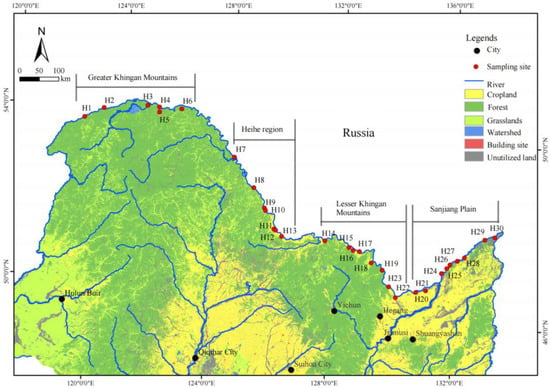
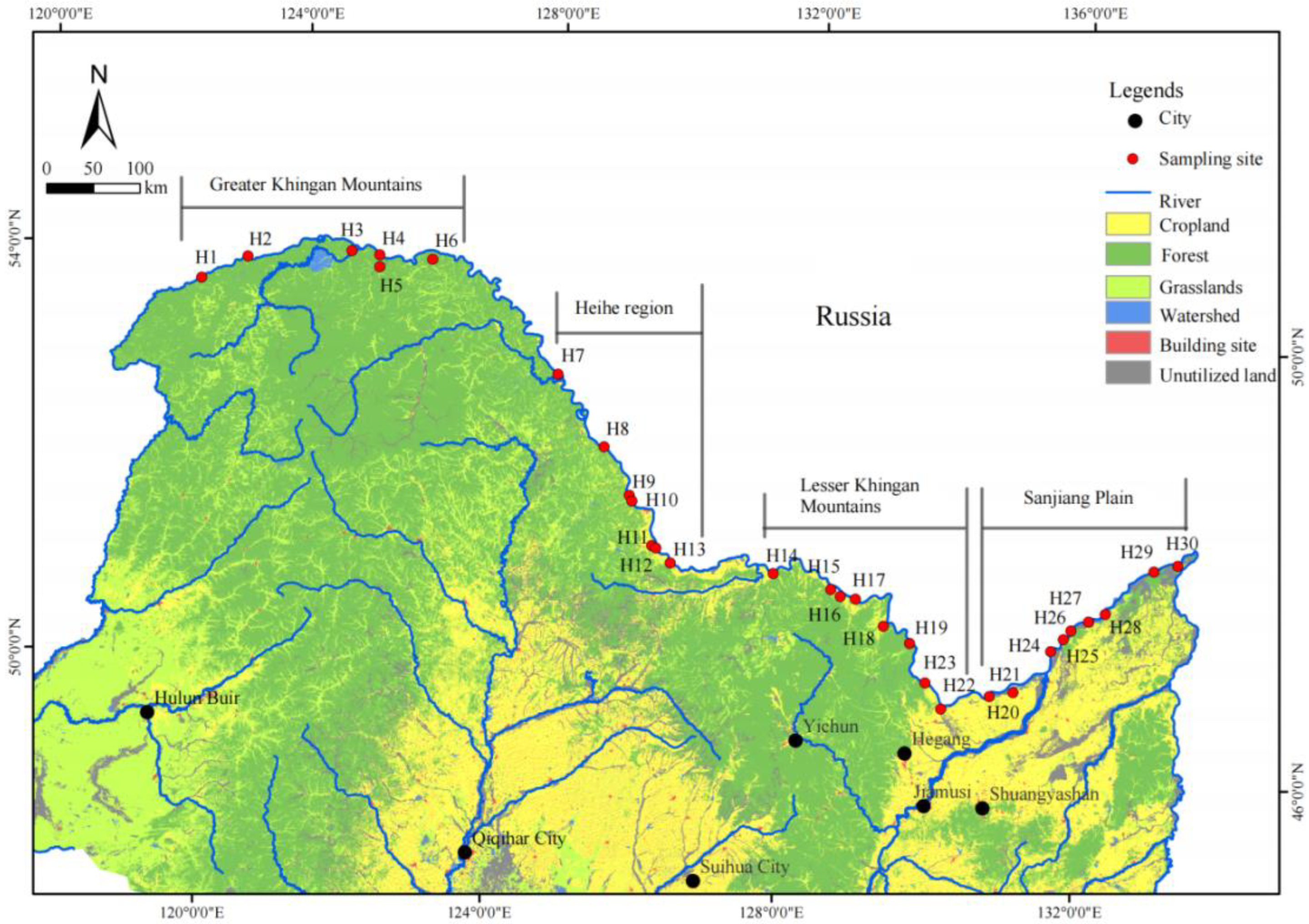
The Heilongjiang River is a boundary river between China and Russia, from the confluence point of the northern and southern sources of the Heilongjiang River to the confluence point of the Heilongjiang and Ussuri rivers in Khabarovsk (Boli), Russia. It spans the Mongolian Plateau, the Northeast Plain of China, and the mountainous areas of the Russian Far East, forming a continuous transitional zone from the cold temperate zone to the temperate zone [1]. The confluence of its two sources (forming a unique “three-source symbiotic” hydrological system) results in an annual average runoff of 272 billion cubic meters, with 75–80% of the water replenishment coming from rainfall and 15–20% from meltwater. This is significantly different from other high-latitude rivers [2]. The main stream shows a significant hydrological gradient from upstream to downstream: the upper reaches are dominated by torrent in canyons (with an average gradient of 0.2‰), the middle reaches are influenced by the confluence of rivers such as Jiaoya River and Songhua River, forming broad valleys and networked channels, and the lower reaches are affected by the tidal action of the Sea of Okhotsk, presenting the ecological characteristics of estuary wetlands (Figure 1) [3].
Figure 1.
Distribution of the sampling points in the Heilongjiang River.
As the longest river along the China–Russia border (with a 4000 km section), the main stream of the Heilongjiang River is not only a geopolitical sensitive area but also an ecological security barrier in Northeast Asia. Its basin covers 48% of China’s cross-border water resources and supports the Songnen Plain agricultural belt (with a cultivated land area of 2.46 thousand km2) and core urban agglomerations such as Harbin and Heihe. The annual variation in main stream runoff is large; it flows through the low mountains and plain regions of the Greater and Lesser Khingan Mountains forest region, and it is rich in hydraulic resources [4,5].
When attached to the surface of a water substrate, algae are important primary producers in river ecosystems and play important roles in nutrient cycling, energy flow, the food web, and carbon sequestration in aquatic environments [6,7,8]. Epiphytic algae are ideal biological indicators for monitoring water environmental quality, as they are characterized by high species diversity, complex community structure, and sensitivity to aquatic environmental factors, enabling rapid responses to water pollution conditions [9,10]. Studies have shown that epiphytic algae are more sensitive to organic pollutants than macrobenthic invertebrates and fish are, and monitoring results are more accurate and predictable. Because epiphytic algae are fixed at a certain position, they can more accurately reflect water quality than phytoplankton can in water bodies with high flow rates, and they are excellent indicators of river ecosystem health [11,12,13]. At present, a few studies have been conducted on phytoplankton and zooplankton in the Heilongjiang region, but studies on algae in the Heilongjiang River are scarce, and there are even fewer studies on the distribution and succession patterns of epiphytic algae in the whole main stream [14,15,16].
The epiphytic algae in the Heilongjiang River were sampled, and the community composition, density, and abundance were analyzed to provide background information on the distribution of epiphytic algae in the Heilongjiang River. The dominant species of epiphytic algae and their ecological niche widths were analyzed to clarify the extent to which the species are adapted to their environments or utilize resources. The dominant species of epiphytic algae and their relationships with water quality factors were analyzed to elucidate the environmental drivers of their distributions. It is hoped that this study can provide theoretical support and a research basis for the protection of the ecological health of the dry stream water of the Heilongjiang River and provide information for the protection of the water environment in China and Russia.
2. Materials and Methods
2.1. Study Area and Sampling Site Locations
The Heilongjiang River is located in the mid-high-latitude cold region, flowing through three countries, China, Russia, and Mongolia, and it is the third largest river in China. The Heilongjiang River starts from the mouth of the Shilka River in Luoguhe village, northwest of Mohe County; it then flows through the Greater Khingan Mountains, the Heihe region, the Lesser Khingan Mountains, Sanjiang Plain, and other regions and finally reaches the confluence point of the Heilongjiang and Ussuri Rivers in Khabarovsk (Boli), Russia, with a total length of 1899 km and a watershed region of 11.2 × 10⁵ km2 [17]. The terrain in the region is complex and diverse, the river system is developed, and its hydraulic resources are rich. Mohe, Huma, Heihe, and Fuyuan are important ports or ship stations along the river, and most of the ports are open to the outside world [18,19,20].
In the summer (June–July) and autumn (September–October) of 2023, a total of 30 sampling sites (Table 1) were established in the Heilongjiang River to conduct a survey of raw algae (Figure 1). Among these, 6 sites were in the Daxinganling region (H1–H6), 7 sites were in the Heihe region (H7–H13), 7 sites were in the Xiaoxinganling region (H14–H19, H23), and 10 sites were in the Sanjiang Plain region (H20–H22, H24–H30).
Table 1.
Sampling sites in Heilongjiang.
The Daxinganling region is the northernmost and highest-latitude border area in China. Its western part is a high-latitude and frozen landform type area, while its eastern part is a high-latitude and eroded landform type area. The entire area is composed of mountains, low mountains, hills, and intermountain basins. It has a unique climate and belongs to the cold temperate continental monsoon climate. The terrain of Heihe region is high in the northwest and gradually decreases towards the southeast. The annual average temperature ranges from −1.30 to 0.40 °C, belonging to the cold temperate continental monsoon climate, spanning the third, fourth, fifth, and sixth heat accumulation zones. The Xiaoxinganling region has gentle mountain slopes, with the north being lower and the south higher. Its main tributaries include the Xun River, Zhan River, and Wuyun River. The annual average temperature is about −1 °C, and it belongs to the continental monsoon climate of the north temperate zone. The Sanjiang Plain region is vast and flat. The average temperature in January is −21 to −18 °C, and in July, it is 21 to 22 °C. The freezing period lasts for 7 to 8 months, with the maximum freezing depth ranging from 1.50 to 2.10 m. The average annual temperature is 1 to 4 °C. It has a temperate humid and semi-humid continental monsoon climate.
2.2. Collection and Identification of Algal Samples
At each sample site, we chose the shore near the low tide line and the river near the 0.3 m isobath as the sample collection region for the epiphytic algae; randomly collected 6 different pieces of coarse gravel, cobblestone, and tree residues; scraped the epiphytic algae from the surface of the substrate to a total of 10 cm × 10 cm into sample bottles using tools such as knives, tweezers, and toothbrushes; and then washed the scraping tools with pure water repeatedly and collected the rinse water in the sample bottles. The samples of the epiphytic algae were fixed with Rugo’s reagent at a dosage of 1% to 1.5% of the volume of the water samples and brought back to the laboratory for processing and qualitative and quantitative analyze.
During identification, the supernatant was discarded, and the remaining liquid was stirred, transferred to a colorimetric tube, and made up to 30 mL with a label attached for later use. If the total volume of the liquid exceeded 30 mL, it could be re-precipitated, with the supernatant discarded, and then made up to 30 mL. For preservation, the fixative was checked every few weeks and replenished if necessary until species identification was completed. After observation, for long-term preservation, formalin solution could be added at a concentration of 4%. Statistical analyses were performed using PRIMER 6.0 and SPSS 19.0 after algal identification was completed within 7 to 15 days.
2.3. Determination of Physical and Chemical Parameters of Water Quality
The water temperature (WT), pH, dissolved oxygen (DO), electrical conductivity (EC), and turbidity (NTU) at various points were measured onsite with a YSI multiparameter water quality measuring instrument.
The five-day biochemical oxygen demand (BOD5) was determined by the dilution and seeding method (HJ 505-2009), ammonia nitrogen (NH3-N) by the Nessler’s reagent spectrophotometric method (HJ 535-2009), chemical oxygen demand (COD) by the dichromate method (HJ 828-2017), total nitrogen (TN) by the alkaline potassium persulfate digestion–ultraviolet spectrophotometric method (HJ 536-2012), and total phosphorus (TP) and fluoride (F-) contents were determined according to the “Water and Wastewater Monitoring and Analysis Methods” [21,22,23].
2.4. Ecological Indices
The dominance index was used to determine the composition of the dominant species; species with Y > 0.02 were identified as the dominant species [24]. The formula for calculating dominance is as follows:
Y = (Ni/N) × fi
Ni is the number of the ith species, N is the total number of cells, and fi is the frequency of occurrence of the ith species.
2.5. Ecotope Niche Width
Ecotope niche width reflects the status of a species’ adaptation to the environment or the degree of resource utilization, and the ecological niche width is calculated for dominant species whose dominance is greater than 0.02. The narrower the ecological niche of a species is, the stronger the degree of specialization of that species, i.e., it tends to be more specialized and is at a disadvantage in the competition for resources [25]. The ecotope niche width was calculated as follows:
where Bi is the proportion of the ith species, Pij is the proportion of the number of individuals of the ith species at the jth sample point to all the individuals of that species, Pij = nij/ni, i is the species, j is the resource (season or sample point), nij is the number of ith species at the jth season or sample point, and r is the number of sampling points. The niche width can be used to define broad niche species (Bi ≥ 0.6), middle niche species (0.6 > Bi ≥ 0.3), and narrow niche species (0.30 > Bi > 0) [26].
2.6. Calculation of Biodiversity Index
- The Shannon–Wiener (H′) diversity index can analyze the species diversity of epiphytic algae.
The calculation formula of the Shannon–Wiener diversity index is as follows:
- 2.
- The calculation formula for the Pielou uniformity index (J) i:
- 3.
- The calculation formula of the Simpson dominance index (D) is
- 4.
- The calculation formula for the Margalef richness index (d) is
2.7. Data Processing and Analysis
Statistical analysis of the community structure and environmental factors of the epiphytic algae was performed using Origin 2021 and EXCEL 2024. One-way analysis of variance (ANOVA) was conducted to analyze the densities of the epiphytic algae in different regions of the Heilongjiang River using SPSS 26. CCA was selected in Canoco 5 software to analyze the response of the dominant species to the environmental factors in each river section. The correlations between phytoplankton and environmental factors were examined via the “vegan” package in the R language [27,28,29,30].
3. Results and Discussion
3.1. Characteristics of Changes in Water Quality Indicators
The average changes in the physical and chemical indicators of the water bodies in the Greater Khingan Range, Heihe, Lesser Khingan Range, and Sanjiangyuan area of the Heilongjiang River in summer and autumn are shown in Table 2. The pH in the Greater Khingan Range area is the highest, while WT, NH3-N, TP, and TN are the lowest. The physical and chemical indicators of the water body in Heihe area did not reach the maximum value, only DO and CODCr were at the lowest values. In the Xiaoxing’anling area, CODMn, CODCr, and BOD5 were the highest, while Cond was the lowest. In the Sanjiang Plain area, WT, DO, Cond, NH3-N, TP, and TN were the highest values, while CODMn and BOD5 were the lowest values.
Table 2.
Average changes in physical and chemical indicators of water bodies in four regions during summer and autumn.
3.2. Species Composition of Epiphytic Algal Community
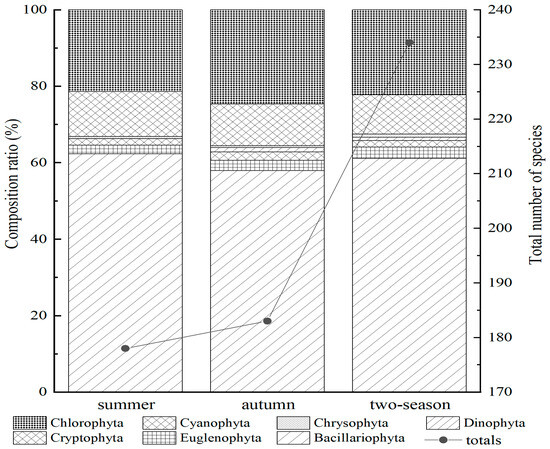
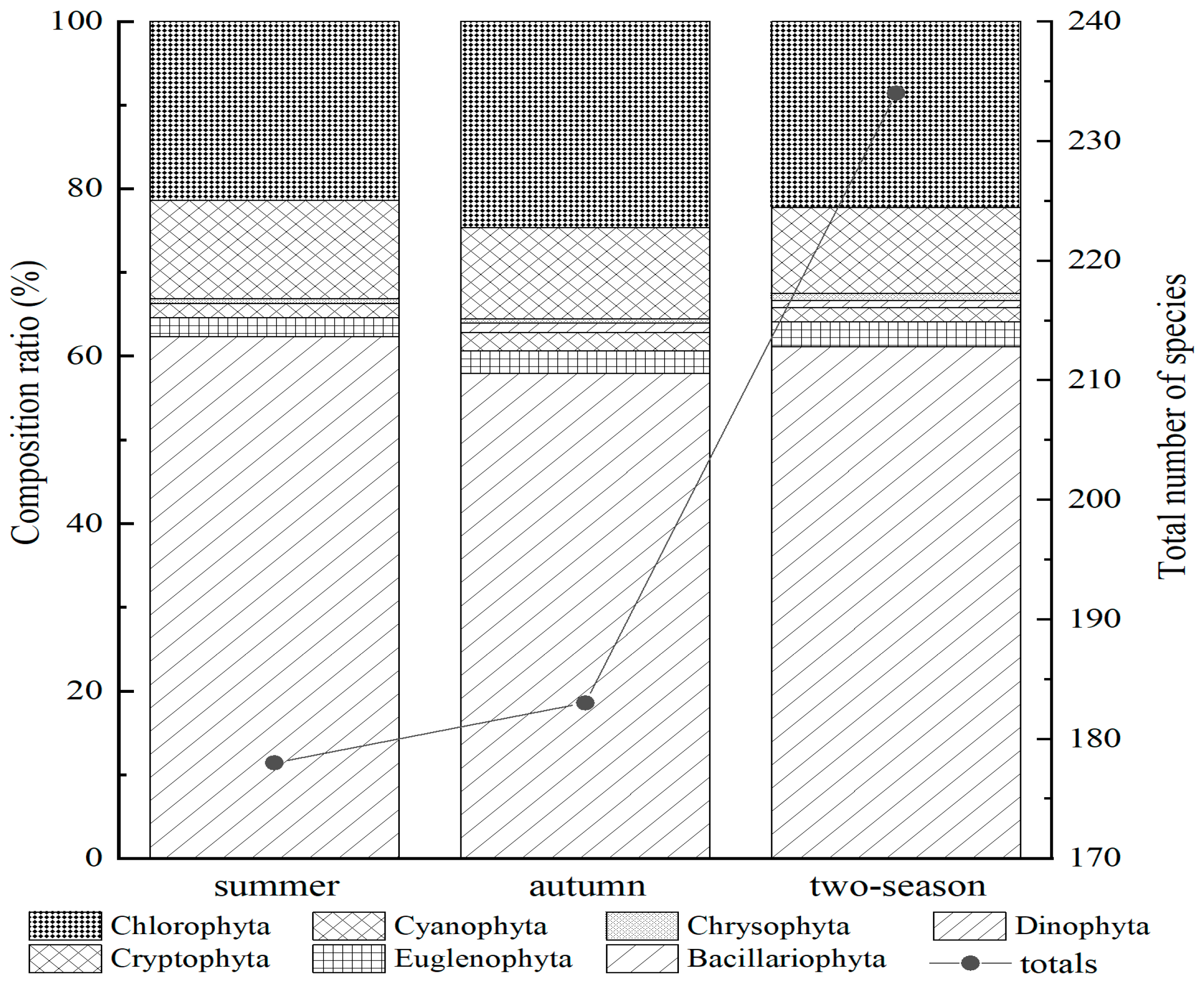
In total, 234 species of epiphytic algae in seven phyla and 95 genera were identified, including 143 species in 50 genera of Bacillariophyta, accounting for 61.0% of the total; 26 genera and 52 species of Chlorophyta, accounting for 22.0% of the total; and 24 species in 10 genera of Cyanophyta, accounting for 10.0% of the total. The remainder accounted for 6.40% (Figure 2).
Figure 2.
Seasonal characteristics of number and composition ratio of algal species.
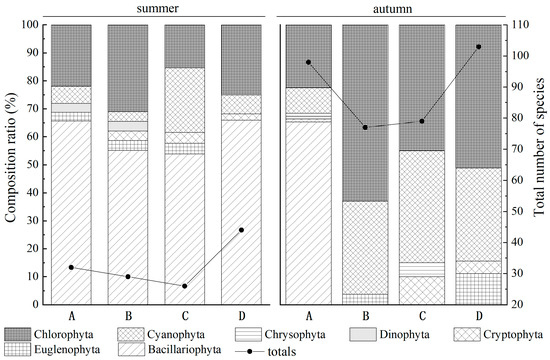
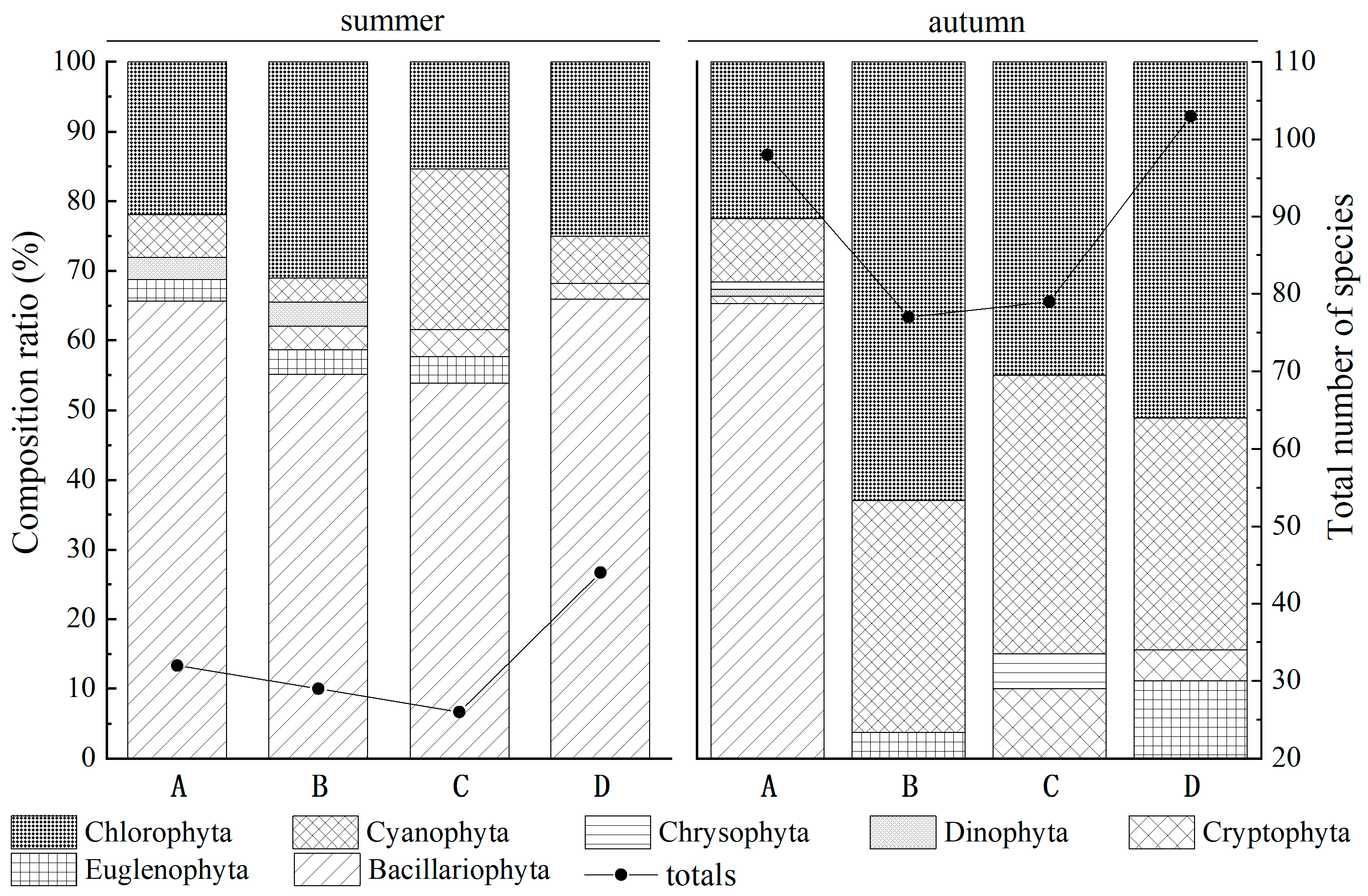
In terms of season, 178 species of epiphytic algae belonging to six phyla and 79 genera were identified in the summer (Figure 3). The percentages of Bacillariophyta, Chlorophyta, Cyanophyta, and other phyla were 62.4%, 21.4%, 11.8%, and 4.49%, respectively. A total of 183 epiphytic species of algae belonging to seven phyla and 82 genera were identified in autumn. The percentages of Bacillariophyta, Chlorophyta, Cyanophyta, and other phyla were 56.4%, 23.9%, 10.6%, and 6.56%, respectively. In general, in summer and in autumn, the proportion of Bacillariophyta was greater than half, followed by Chlorophyta and Cyanophyta. Numerous studies have shown that epiphytic algae in many areas are composed mainly of Bacillariophyta, cyanophyta, and Chlorophyta [31,32,33]. These three algal groups are diverse, abundant, and extremely widespread, and communities can rebuild rapidly even during ecosystem destruction and recovery [34,35,36].
Figure 3.
Spatial characteristics of algal species number and composition ratio. Note: A: Greater Khingan Mountains; B: Heihe region; C: Lower Khingan Mountains; D: Sanjiang Plain.
3.3. Seasonal Changes in Density and Abundance
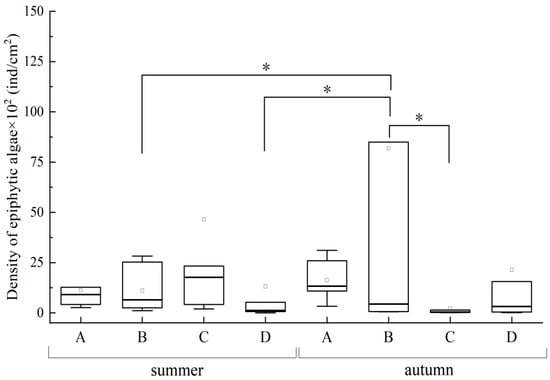
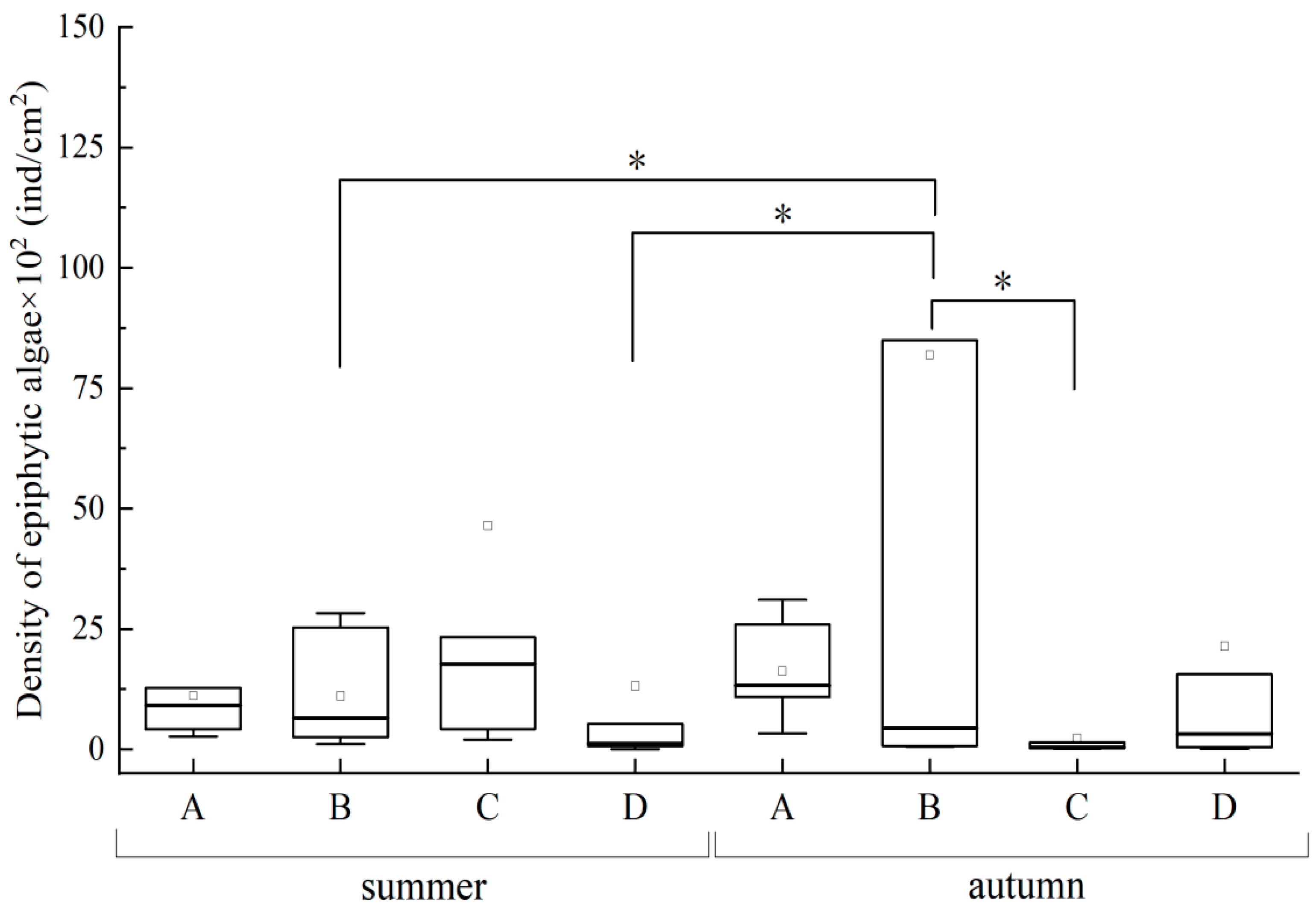
The spatial and temporal differences in the cell density of epiphytic algae in the Heilongjiang River were significant (Figure 4). In terms of season, there was a large difference in the density of epiphytic algae between summer and autumn. The overall average density of epiphytic algae in summer was 2.01 × 10³ ind·cm−2, and the average density in autumn was 3.01 × 10³ ind·cm−2. The density of epiphytic algae in autumn was greater than that in summer. From a spatial perspective, the average density of epiphytic algae differed greatly across different regions. The density was lowest in the Greater Khingan Mountains, with an average value of 1.37 × 10³ ind·cm−2. The Heihe region had the highest density, with an average value of 4.24 × 10³ ind·cm−2. The average densities in the Lesser Khingan Mountains and Sanjiang Plain were 2.44 × 10³ ind·cm−2 and 1.73 × 10³ ind·cm−2, respectively.
Figure 4.
Map of regional density differences in summer and autumn. Note: A: Greater Khingan Mountains; B: Heihe region; C: Lower Khingan Mountains; D: Sanjiang Plain. “*” indicates significant correlation at 0.05 level (two-tailed).
The regions with the highest and lowest densities of epiphytic algae in summer and autumn varied. The highest algal density was found in the Lesser Khingan Mountains in summer, with an average value of 4.65 × 10³ ind·cm−2; the lowest density in the Greater Khingan Mountains was 7.50 × 10² ind·cm−2. The highest algal density was found in the Heihe region in autumn, with an average value of 7.37 × 10³ ind·cm−2. The average algal density in the Lesser Khingan Mountains was 2.30 × 10² ind·cm−2. In general, the average density of algae in the Heilongjiang River was as follows: Heihe region > Sanjiang Plain > Lesser Khingan Mountains > Greater Khingan Mountains. Univariate analysis of variance revealed that there was a significant difference between summer and autumn in the Heihe region, and there was a significant difference between the Heihe region and the Lesser Khingan Mountains in autumn (p < 0.05).
Water temperature indirectly affects the acquisition and utilization of light energy and nutrients by influencing the activity of algal enzymes, which in turn affects algal growth and reproduction [37,38]. Water temperature has a key influence on the total primary productivity of algae, which can indirectly affect the acquisition and utilization of light energy and nutrient salts by influencing the activity of algal enzymes, which in turn affects algal growth [39,40,41]. The Heilongjiang River is located in the northernmost part of China; the average water temperature in summer is 10 °C, and the average water temperature in autumn is 22 °C, which is more suitable for the growth and reproduction of algae.
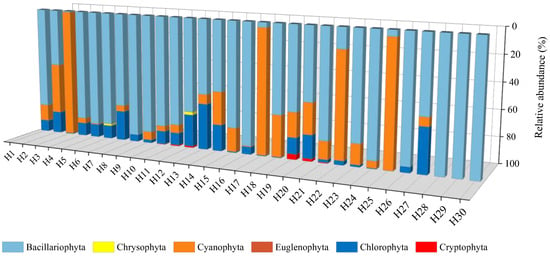
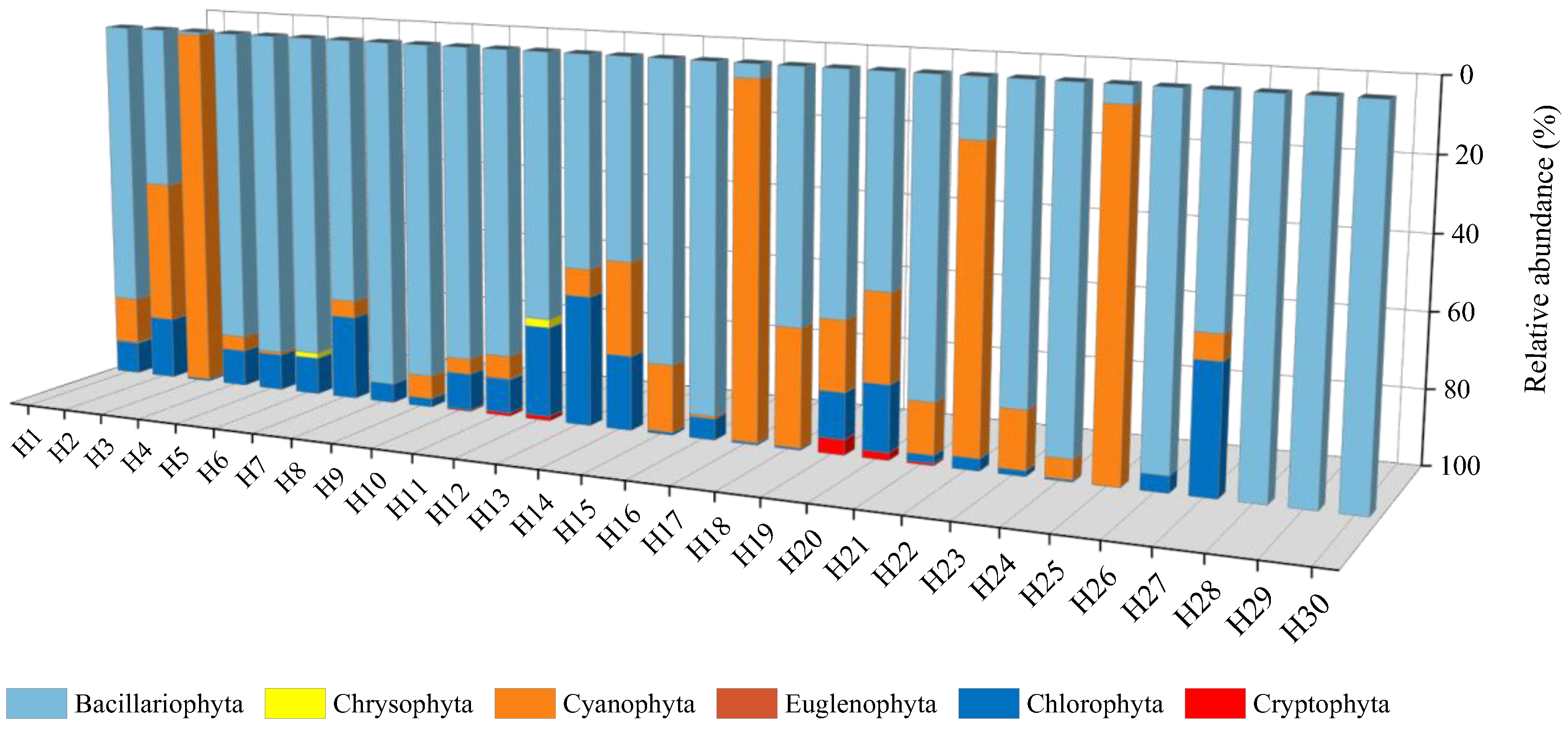
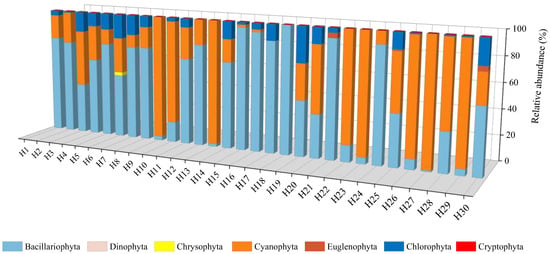
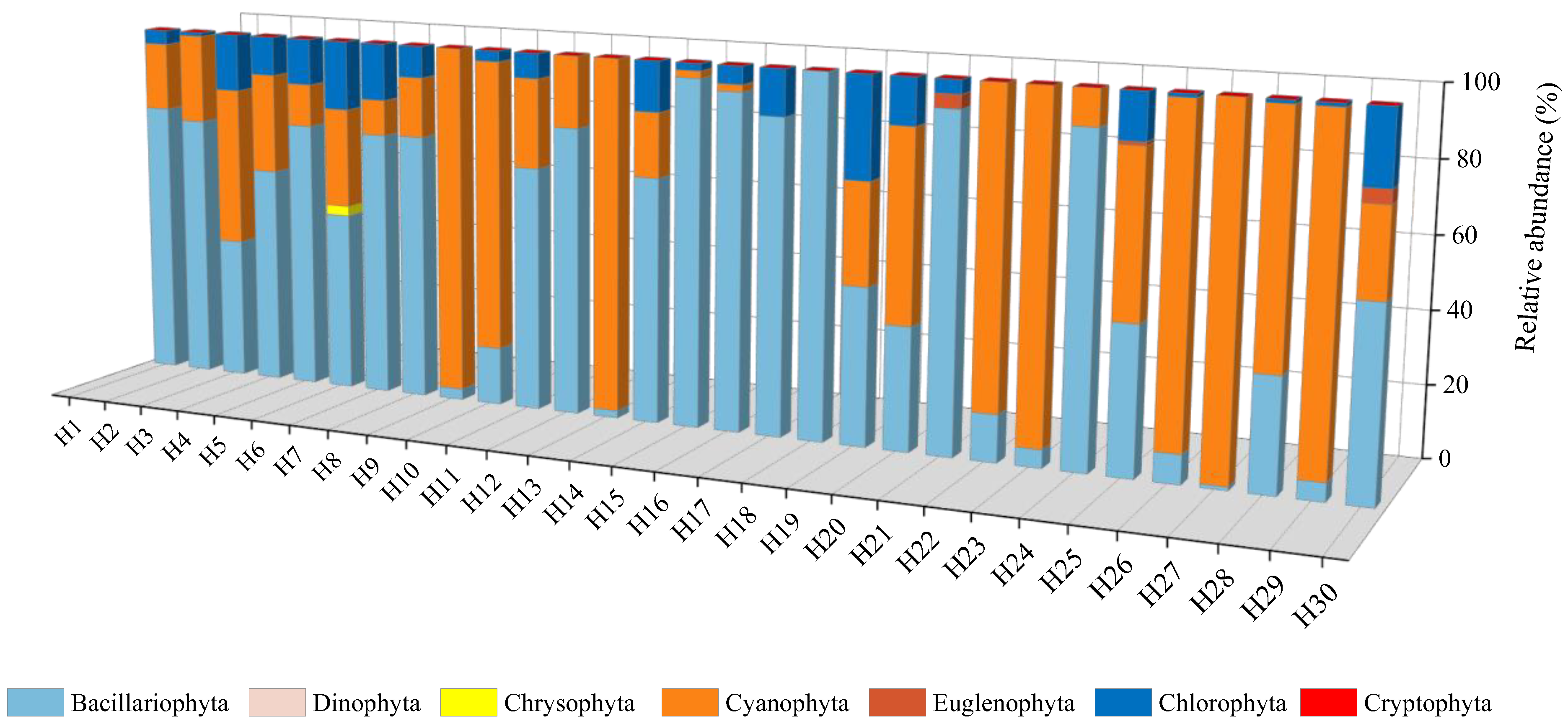
Differences in the dominant species of epiphytic algae were observed in the summer and autumn (Figure 5 and Figure 6). Bacillariophyta dominated in summer, followed by cyanophyta. Autumn was dominated by the interaction of Bacillariophyta and Cyanophyta. Among the four regions, the Greater Khingan Mountains and Sanjiang Plain mainly contained Bacillariophyta in summer, whereas the Heihe region and Lesser Khingan Mountains were dominated by Bacillariophyta and cyanophyta. In autumn, Bacillariophyta were dominant in the Greater Khingan Mountains and Lesser Khingan Mountains, whereas cyanophyta were absolutely dominant in the Heihe region and Sanjiang Plain. The average relative abundance of Bacillariophyta was the highest in summer, while that of Cyanophyta was the highest in autumn. Bacillariophyta prefer cooler summer temperatures, and cyanophyta are mostly fouling-tolerant species that bloom in nutrient-rich waters [42,43].
Figure 5.
Abundance of epiphytic algal species in summer.
Figure 6.
Abundance of epiphytic algal species in autumn.
3.4. Distribution Characteristics of Dominant Species of Epiphytic Algae
The dominant species had a significant effect on the community structure, and the dominant species and the dominance degree (Y > 0.02) of algae significantly differed between summer and autumn in the Heilongjiang River (Table 3 and Table 4). The dominant species in summer and autumn were very different, and the dominant species in different river sections in the same season were also very different. Among the four regional dominant species, the dominant species in the Greater Khingan Mountains in summer were all Bacillariophyta, and the dominant species in the Sanjiang Plain region in autumn were all Cyanophyta. Only Cocconeis placentula Ehrenberg appeared in both summer and autumn in the Greater Khingan Mountains, and the dominant species varied in summer and autumn in the other regions.
Table 3.
Dominant species and dominance degree of algae in each region in summer.
Table 4.
Dominant species and dominance degree of algae in each region in autumn.
The dominant species in the summer was Melosira varians Agardh in Heihe, the Lesser Hinggan Mountains, and the Sanjiang Plain and Pseudanabaena minima (G. S. An.) Anagnostidis in the Greater Hinggan Mountains and Sanjiang Plain; the other dominant species were different. Melosira varians Agardh was the dominant species in the Greater Khingan Mountains and the Heihe region, Lyngbya kuetzingii Schmidle was the dominant species in the Lesser Khingan Mountains and the Sanjiang Plain, and Phormidium gelatinosum Woronichin was the dominant species in the Heihe region and the Sanjiang Plain. The dominant species that appeared in both summer and autumn were Cocconeis placentula Ehrenberg and Nitzschia palea (Kützing) W. Smith, which are tolerant to moderately polluted water. Cnidaria glutinosa is a widespread species in freshwater habitats, is tolerant of moderately polluted waters, and has strong salinity tolerance [7,44,45]. Cocconeis placentula Ehrenberg adsorbs organic substances that pollute the water and mineralize them via the action of biot [46].
3.5. Ecotope Width of Dominant Algal Species
The width of the ecotope niche reflects the state of adaptation of the species or population to the environment or the degree of resource utilization. The ecotope width index revealed that the dominant species had greater ecotope widths in autumn than in summer, and the ecotope widths of the dominant species were greater in the Greater Khingan Mountains than in the other regions. In summer, the widths of the ecotopes of Cocconeis placentula Ehrenberg from the Greater Khingan Mountains, Melosira varians Agardh from the Lesser Khingan Mountains, and Nitzschia palea (Kützing) W. Smith from the Sanjiang Plain were all in the range of 0.317–0.580, which is a medium ecotope; all three species belong to Bacillariophyta (Table 5).
Table 5.
Ecotope widths and types of dominant species in summer.
In autumn, Cocconeis placentula Ehrenberg and Epithemia turgida (Ehrenberg) Kützing had high niche widths (>0.6) in the Greater Khingan Mountains, which is a broad niche belonging to Bacillariophyta. Cocconeis placentula and Phormidium gelatinosum Woronichin in the Heihe region are middle niches belonging to Bacillariophyta and cyanophyta, respectively. Nitzschia palea (Kützing) W. Smith had a high ecotope width (>0.6) in the Lesser Khingan Mountains as a broad ecotope and belongs to the phylum Bacillariophyta (Table 6). Bacillariophyta has a strong adaptive capacity to changes in various environmental factors. The increase in water volume and enhanced water exchange capacity in the Heilongjiang River in autumn exacerbated the competitive pressure among the dominant species of Bacillariophyta, and the width of the ecotope niche occupied by a single species decreased.
Table 6.
Ecotope widths and types of dominant species in autumn.
In summer, the middle niche species of the dominant species was Bacillariophyta; 2/3 of the narrow niches were Bacillariophyta, and 1/3 were Cyanophyta. In autumn, the broad niche species is Bacillariophyta. In the middle niche, Cocconeis placentula Ehrenberg and Phormidium gelatinosum Woronichin belong to Bacillariophyta and Cyanophyta, respectively; Cocconeis placentula Ehrenberg had a greater niche width (Table 6). The species in the narrow ecotope, except Navicula minuscula Grunow, were cyanophyta. In the Greater Khingan Mountains, the broad niche and middle niche species belonged to Bacillariophyta. In the Heihe region, the narrow niche species in summer belonged to Bacillariophyta, and the middle niche species in autumn belonged to Cyanophyta and Bacillariophyta. The optimum water temperature of Bacillariophyta is generally lower than that of Chlorophyta and Cyanophyta, and Bacillariophyta are often the dominant group in low-temperature environments [47].
3.6. Biodiversity Index
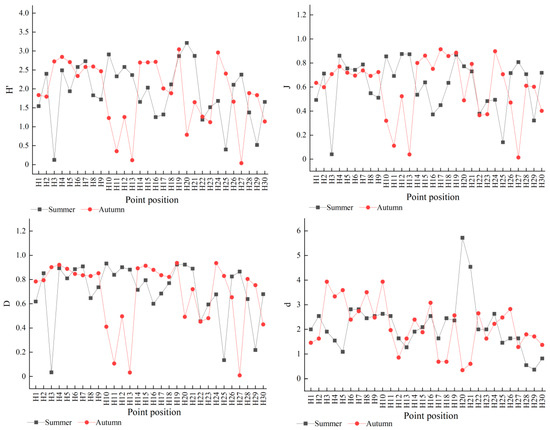
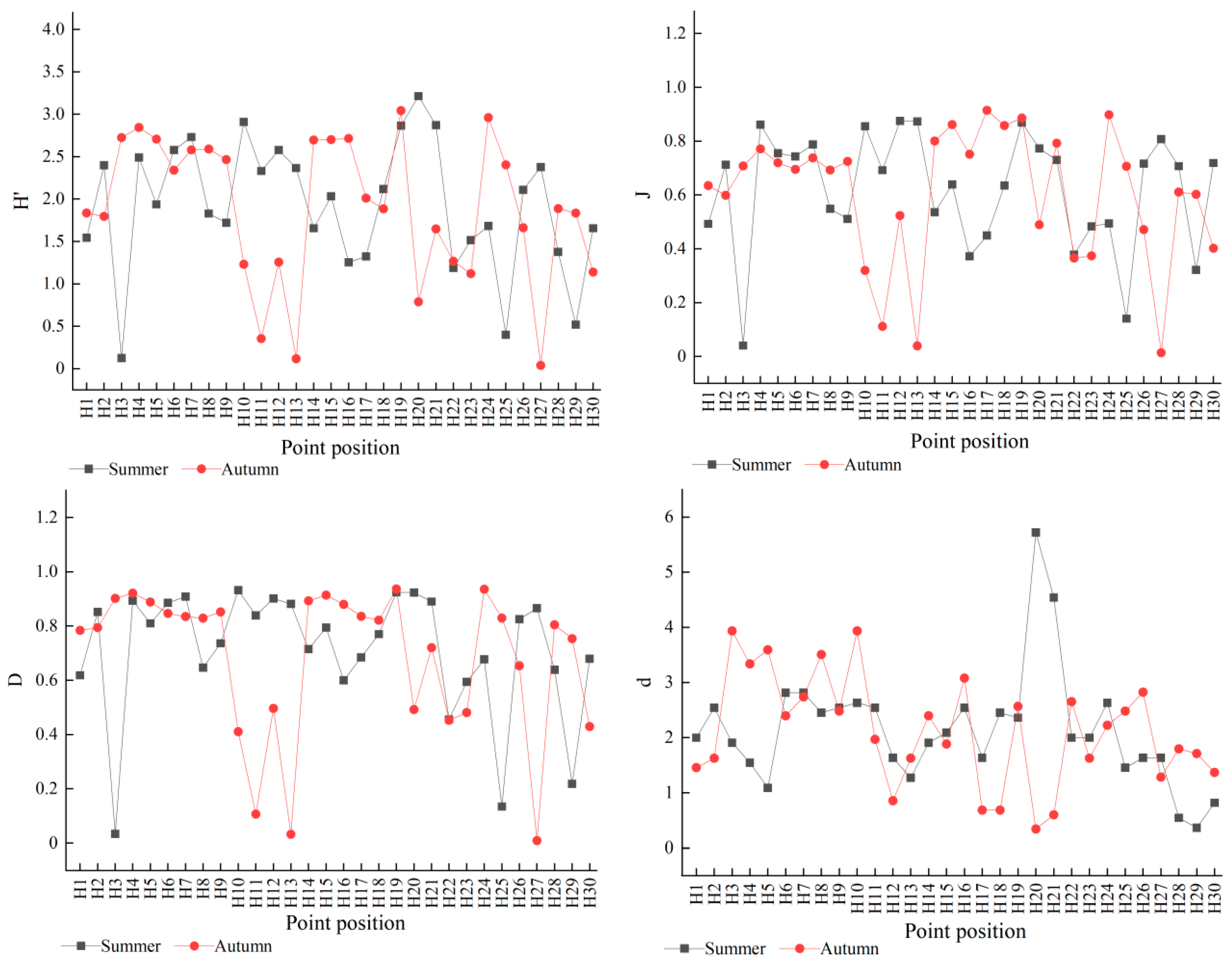
The Shannon–Wiener diversity index (H′), Simpson dominance index (D), Pielou homogeneity index (J), and Margalef richness index (d) of the native algae in the Heilongjiang River are shown in Figure 7. In summer, the Shannon–Wiener diversity index of algae growing in the Heilongjiang River ranged from 0.12 to 3.12, with an average value of 1.92. The Shannon–Wiener diversity index was the largest at point H20, while it was the smallest at point H3. The Simpson dominance index ranged from 0.03 to 0.93, with an average value of 0.71. The Simpson dominance index was the largest at point H10, while it was the smallest at point H3. The Pielou uniformity index ranged from 0.04 to 0.88, with an average value of 0.62. The Pielou uniformity index was the largest at point H12, while it was the smallest at point H3. The Margalef richness index ranged from 0.36 to 5.72, with an average value of 2.14. The Margalef richness index at point H20 is the largest, while that at point H29 is the smallest.
Figure 7.
Changes in biodiversity index.
In autumn, the Shannon–Wiener diversity index of algae growing in the Heilongjiang River ranged from 0.04 to 3.04, with an average value of 1.89. The Shannon–Wiener diversity index was the largest at point H19, while it was the smallest at point H27. The Simpson dominance index ranged from 0.01 to 0.94, with an average value of 0.68. The Simpson dominance index was the largest at point H24, while it was the smallest at point H27. The Pielou uniformity index ranged from 0.01 to 0.91, with an average value of 0.6. The Pielou uniformity index was the largest at point H17, while it was the smallest at point H27. The Margalef richness index ranged from 0.34 to 3.94, with an average value of 2.12. The Margalef richness index at point H10 is the largest, while that at point H20 is the smallest.
Overall, the biodiversity indices revealed spatial and seasonal heterogeneity in epiphytic algal communities, with nutrient levels, temperature, and organic pollution as key drivers. Higher diversity and richness in the Sanjiang Plain (summer) and Lesser Khingan Mountains (autumn) suggest that these regions support more resilient ecosystems, while low diversity in the Greater Khingan Mountains highlights its vulnerability to environmental stress.
3.7. Canonical Correlation Analysis (CCA) Between Dominant Species of Epiphytic Algae and Environmental Factors
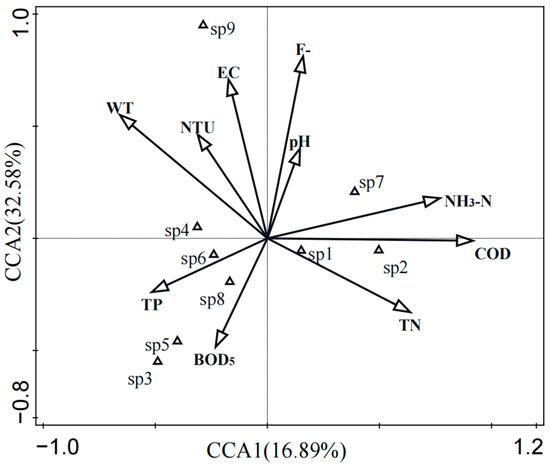
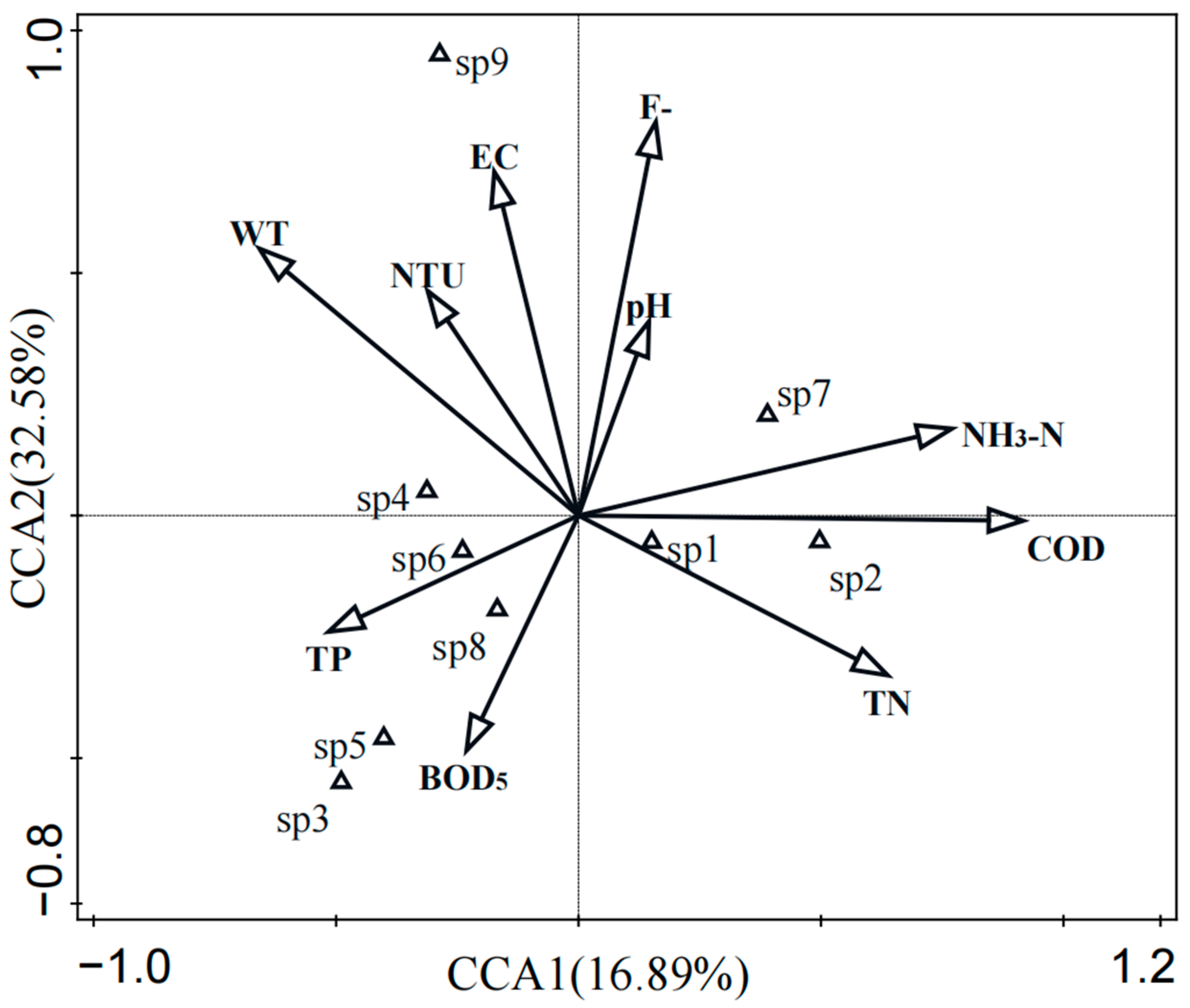
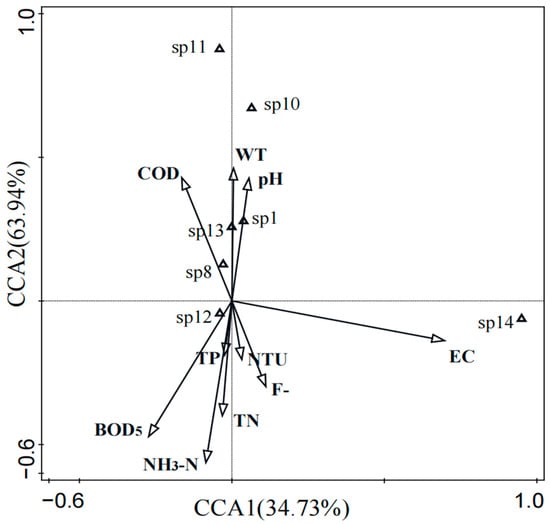
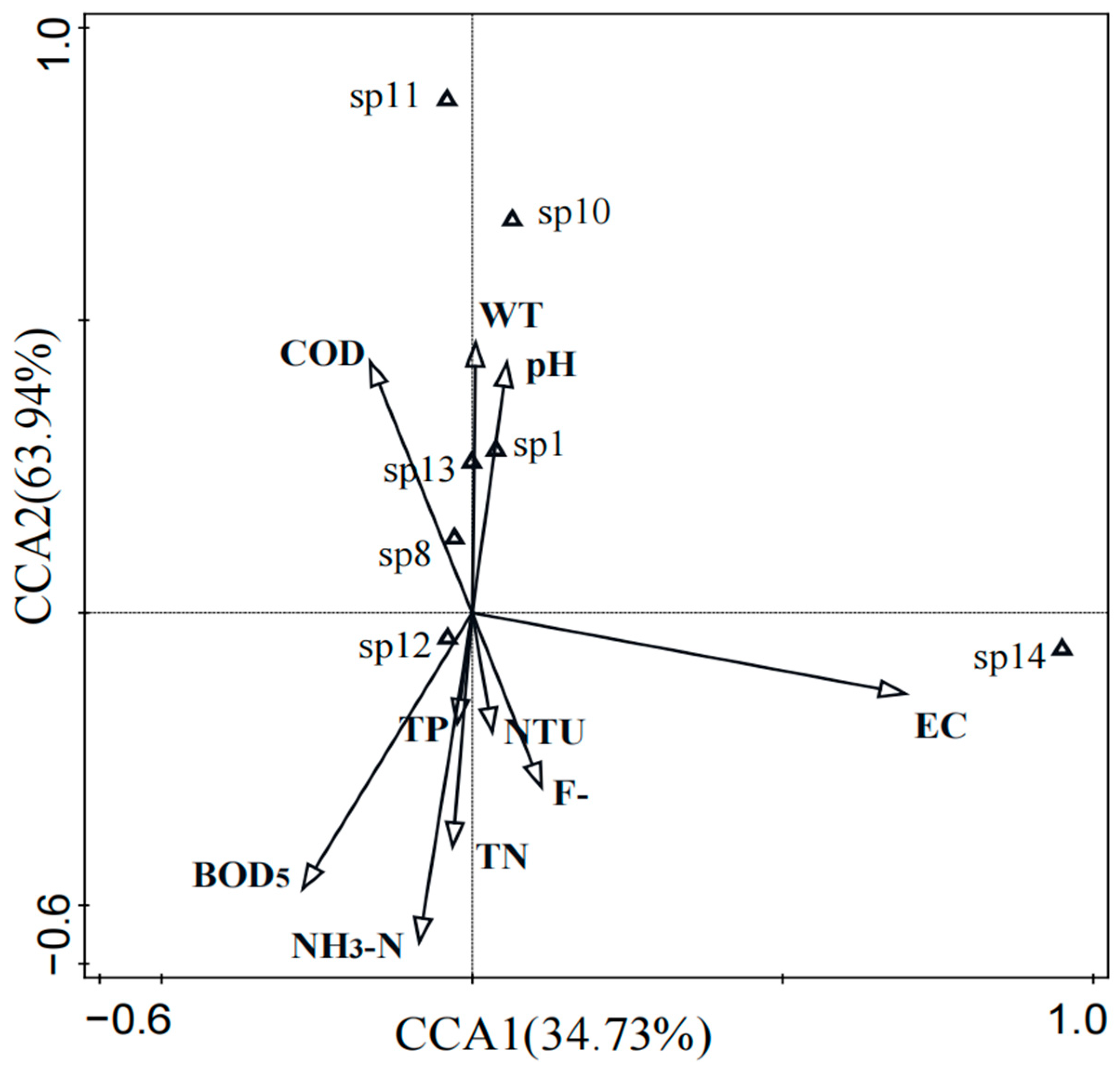
The CCA of the dominant species and environmental factor parameters of the summer- and autumn-resident algae in the Heilongjiang River were used to identify the main water environmental factors affecting the characteristics of the epiphytic algal communities (Figure 8). The results revealed that the cumulative explanatory variables of the first- and second-order axes in summer and autumn were 49.5% and 98.7%, respectively, which could truly reflect the influence of water environmental factors on the distribution of algae.
Figure 8.
CCA of dominant algal species and environmental factors in summer. Note: sp1: Cocconeis placentula Ehrenberg; sp2: Pseudanabaena minima (G. S. An) Anagnostidis; sp3: Encyonema silesiacum (Bleisch) D. G. Mann; sp4: Melosira varians Agardh; sp5: Encyonema minutum (Hilse) Mann; sp6: Navicula lanceolata (Agardh) Kützing; sp7: Lyngbya holdenii Forti; sp8: Nitzschia palea (Kützing) W. Smith; sp9: Oscillatoria subbrevis Schmidle.
The growth and reproduction of epiphytic algae are affected by many conditions, such as water temperature, light intensity, nutrient salts, and pH. The correlations of environmental factors with the distribution of epiphytic algae in the Heilongjiang River were as follows: COD > F- > WT > TP > pH > TN > EC > NH3-N > NTU > BOD5; COD, F-, and WT had significant effects on the distribution of organic algae (p < 0.05). Water temperature indirectly affects the acquisition and utilization of light energy and nutrients by influencing the activity of algal enzymes, thus affecting the growth and reproduction of epiphytic algae. Low water temperatures limit the intake of nutrients by algae and the acquisition of photosynthetically active radiation energy; the assimilation effect reduces the demand for nutrients by algae, weakening the feedback effect of nutrients on algal growth [48]. In the middle ecotope niche, Cocconeis placentula Ehrenberg was positively correlated with TN and COD and negatively correlated with WT, Melosira varians Agardh was positively correlated with WT, and Nitzschia palea (Kützing) W. Smith was positively correlated with TP and BOD5 and negatively correlated with F-.
The correlations between the water environmental factors and the distribution of the epiphytic algae in the Heilongjiang River in autumn were as follows: EC > WT > TN > BOD5 > pH > TP > COD > F- > NH3-N > NTU; the effects of EC, WT, TN, BOD5, and pH on the distribution of the epiphytic algae were significant (p < 0.05) (Figure 9).
Figure 9.
CCA of dominant algal species and environmental factors in autumn. Note: sp1: Cocconeis placentula Ehrenberg; sp8: Nitzschia palea (Kützing) W. Smith; sp10: Epithemia turgida (Ehrenberg) Kützing; sp11: Oscillatoria princes Vaucher ex Gomont; sp12: Phormidium gelatinosum Woronichin; sp13: Navicula minuscula Grunow; sp14: Lyngbya kuetzingii Schmidle.
Previous studies have shown that EC, WT, TN, BOD5, pH, and other indicators are the main environmental factors resulting in spatiotemporal differences in epiphytic algal communities [49]. In mountainous rivers, electrical conductivity has an important effect on the distribution of Bacillariophyta, and an increase in electrical conductivity within a certain range is conducive to an increase in Bacillariophyta density [50]. There was a positive correlation between pH and WT and a negative correlation between TN and BOD5 in Cocconeis placentula Ehrenberg, Nitzschia palea (Kützing) W. Smith, and Epithemia turgida (Ehrenberg) Kützing in the broad ecotope niche. There was a positive correlation between TN and BOD5 and a negative correlation between pH and WT.
The structure of the epiphytic algal community is closely related to various environmental factors because of its rapid response to environmental changes. In summer and autumn, all of the environmental factors had significant effects on the distribution of the dominant algal species in the Heilongjiang River, whereas the other environmental factors differed. In summer, the Heilongjiang River mainly consists of Bacillariophyta, which is closely correlated with COD, WT, TP, TN, and BOD5. In autumn, mainly Bacillariophyta, cyanophyta, and Bacillariophyta were closely correlated with COD, pH, and WT, and cyanophyta were closely correlated with EC, BOD5, pH, WT, and TN. The cell densities of the dominant algae at the different sites were mainly correlated with temperature and with nitrogen and phosphorus contents, e.g., temperature, EC, Ph, TN, and TP were the main environmental factors affecting epiphytic algae in the Three Gorges Reservoir, and the main factors affecting algal growth around Jinyang Lake were water temperature, nutrient levels, and human activities [51].
Seasonal shifts in dominant factors likely stem from hydrological and climatic changes: summer’s higher organic input (reflected in COD) and temperature fluctuations drive algal dynamics, while autumn’s increased ionic concentration (EC) and nutrient accumulation (TN) shape community structure. These results underscore the sensitivity of epiphytic algae to environmental gradients, validating their role as bioindicators of water quality.
3.8. Heatmap of Dominant Algal Species and Environmental Factors
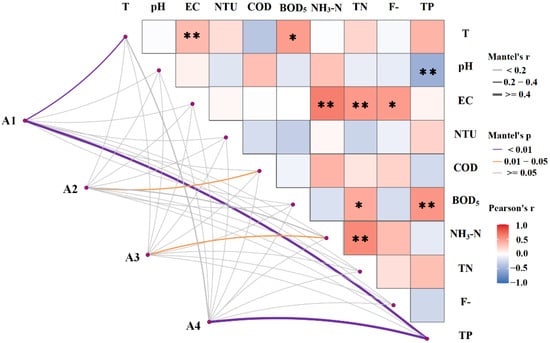
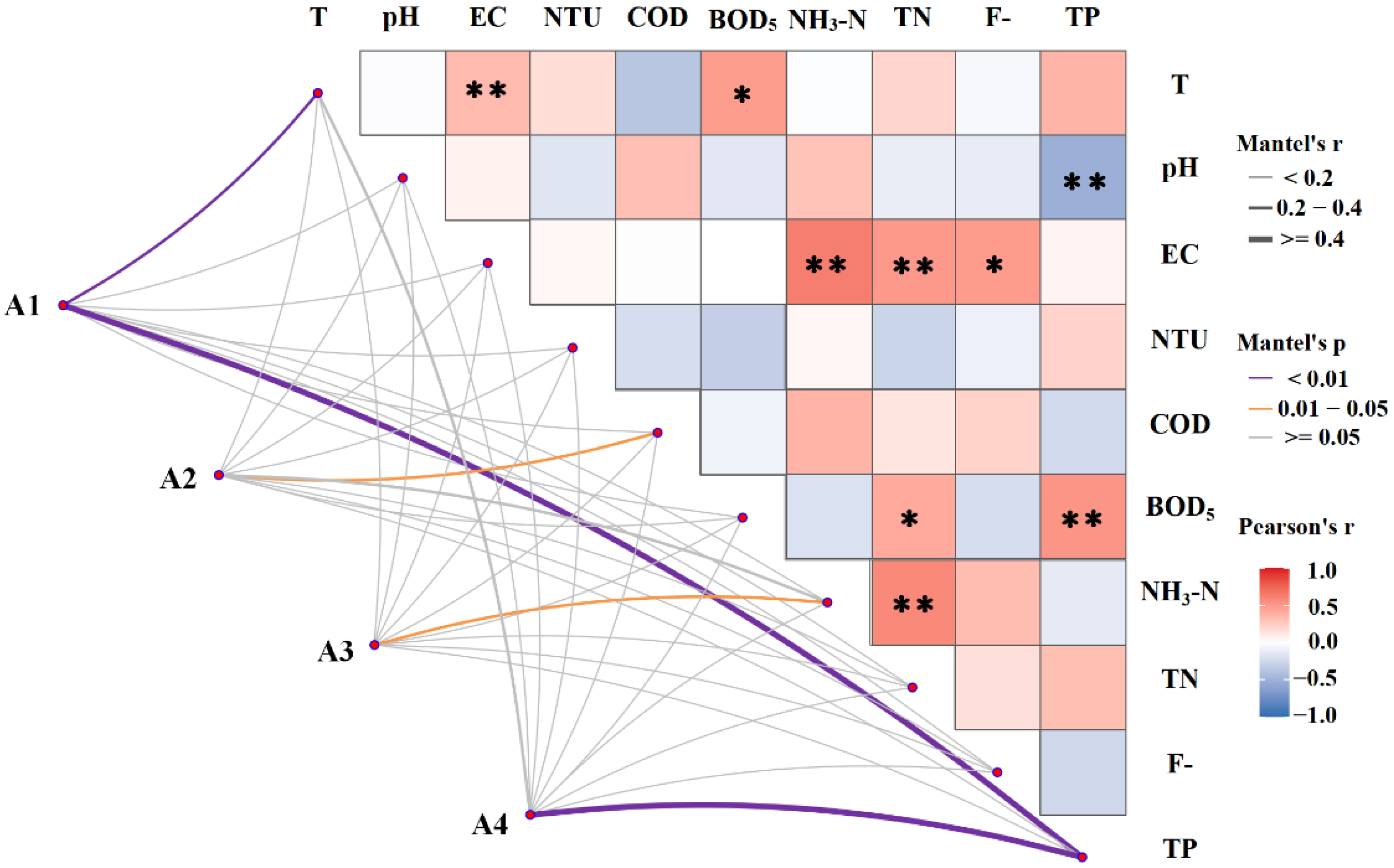
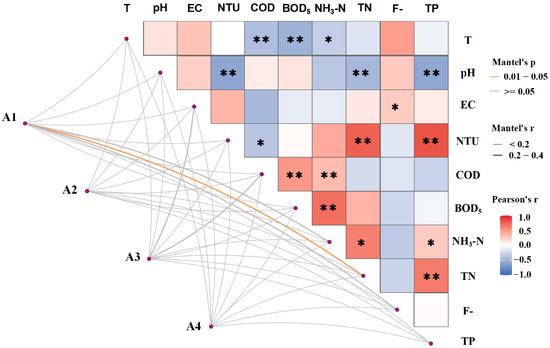
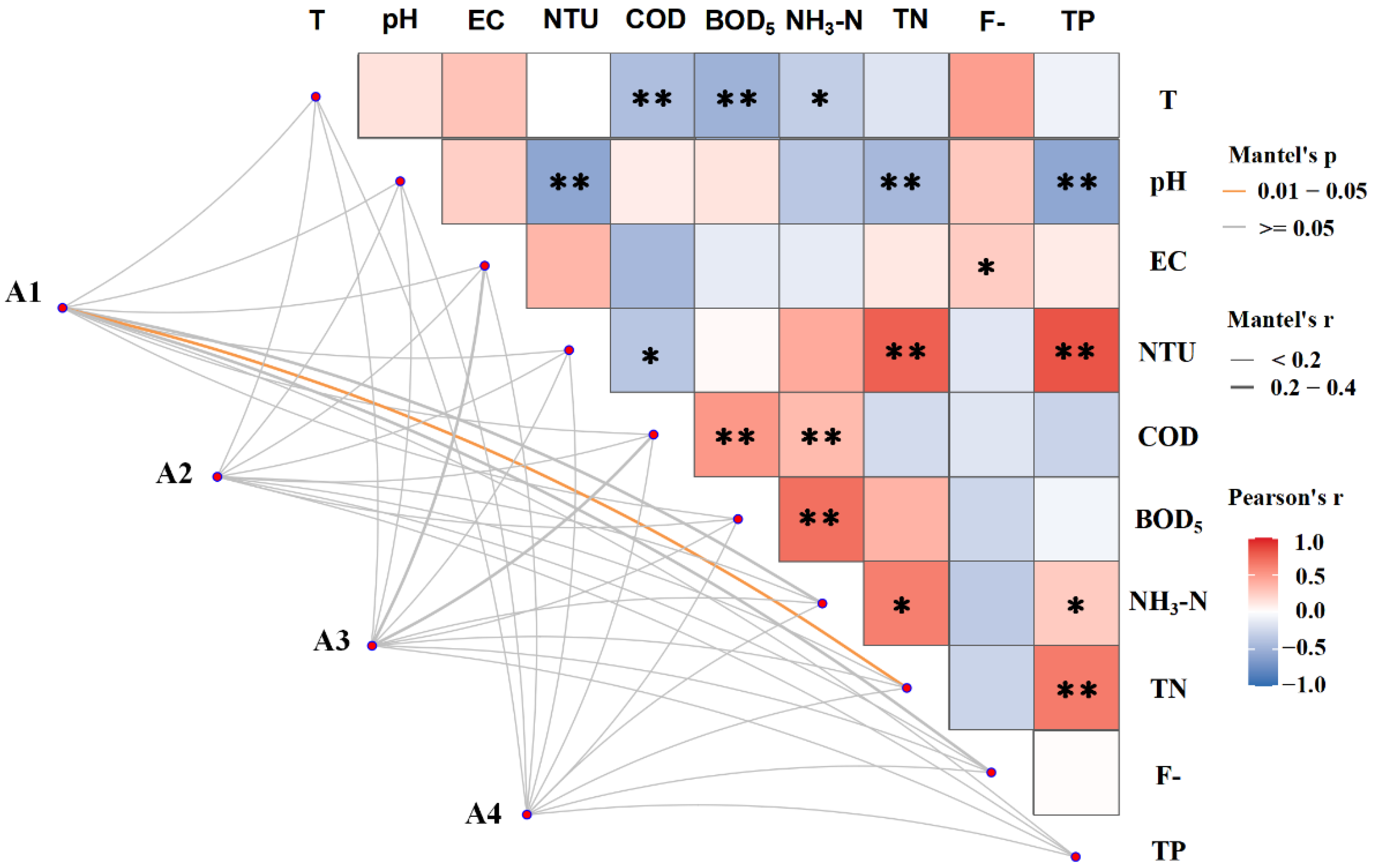
The dominant species of the epiphytic algae in the Heilongjiang River are mainly Bacillariophyta and cyanophyta. To understand the driving factors affecting the succession and distribution of their communities, Mantel test analysis was carried out to analyze the epiphytic algal communities and environmental factors in the four areas distributed from west to east of the Heilongjiang River. The results revealed that the dominant groups of epiphytic algae in the Heilongjiang River were Bacillariophyta and cyanophyta (Figure 10 and Figure 11).
Figure 10.
A heatmap of the correlation network of the dominant species with the environmental factors in summer. Note: “**” indicates a significant correlation at the 0.01 level (double-tailed); “*” indicates a significant correlation at the 0.05 level (two-tailed).
Figure 11.
A heatmap of the correlation network of the dominant species with the environmental factors in autumn. Note: “**” indicates a significant correlation at the 0.01 level (double-tailed); “*” indicates a significant correlation at the 0.05 level (two-tailed).
The dominant species in summer were mainly Bacillariophyta. The Mantel test revealed that the dominant species in the Greater Khingan Mountains in summer were significantly correlated with WT and TP (p < 0.01), and TP was an important environmental factor leading to water eutrophication and thus driving the proliferation of cyanophyta [52]. There was a significant correlation between the dominant species of Bacillariophyta and COD in the Heihe region (p < 0.05), and it has been shown that COD (60 mg/L) affects key metabolic pathways such as photosystem II, oxidative phosphorylation, and other metabolic pathways in algae, increasing the intensity of autotrophic and heterotrophic metabolism in biofilms, increasing nutrient demand, and promoting biomass accumulation [53,54]. A significant correlation between dominant species and NH3-N in the Lesser Khingan Mountains was observed (p < 0.05), and the highest NH3-N concentrations were found in the Lesser Khingan Mountains. Changes in ammonia nitrogen concentrations affected the number of dominant populations of attached algae but also the dominance of attached algae, which also affected the epiphytic algal community structure [49]. The correlation between the dominant species and TP in the Sanjiang Plain was significant (p < 0.01). Moreover, algae in the water column can usually utilize dissolved phosphate directly; the concentration of dissolved phosphate in the aquatic environment is usually low, and the TP content in the Sanjiang Plain region is high, which promotes the growth of algae [55,56,57,58]. Pearson correlation analysis among the environmental factors revealed that WT was significantly positively correlated with NTU and BOD5, that TP was significantly positively correlated with BOD5 and negatively correlated with pH, and that NH3-N was significantly positively correlated with EC and TN.
Bacillariophyta and cyanophyta were the main epiphytic algae growing in autumn. The Mantel test revealed that the dominant species had a significant correlation with TN. TN is one of the most important nutrients required for the growth and reproduction of diatoms, and changes in total nitrogen have an important effect on the alteration of the structure of diatom communities. For example, diatoms in the main stream of the Yangtze River are significantly correlated with total nitrogen, and nitrogen deposition leads to an increase in algal cover [59,60]. Pearson correlation analysis between the environmental factors revealed significant positive correlations for TN, TP, NH3-N, and NTU and significant negative correlations for pH. Nutrient salts are the key factors influencing the epiphytic algal community structure, of which TP and TN are the most important components. COD is positively correlated with algal density, and the intrinsic mechanism is that both are affected by water level.
In addition to the physical and chemical indices of water, hydrological dynamic conditions [61], exogenous nutrient types, land use patterns [62], sampling seasons and times, and human activities affect the spatial patterns of the riverine algal community structure [63,64].
4. Conclusions
- A total of 234 species of epiphytic algae in seven phyla and 95 genera, mainly Bacillariophyta, Chlorophyta, and cyanophyta, were identified; there are obvious spatial and temporal differences in the epiphytic algal community structure, mainly Bacillariophyta in summer and mainly Bacillariophyta and cyanophyta in autumn. The epiphytic algal density was higher in autumn than in summer. Spatially, epiphytic algal density was higher in autumn than in summer, with the Heihe region exhibiting the highest density, followed by the Lesser Khingan Mountains, Sanjiang Plain, and Greater Khingan Mountains.
- The most dominant species in the Heilongjiang River in summer and autumn were Pseudanabaena minima (G. S. An) Anagnostidis and Phormidium gelatinosum Woronichin, whereas the dominant species in both summer and autumn were Cocconeis placentula Ehrenberg and Nitzschia palea (Kützing) W. Smith. The niche width of the dominant species was larger in autumn than in summer: Bacillariophyta occupied the middle niche in summer and the broad niche in autumn, indicating their strong adaptability to environmental fluctuations.
- The CCA results revealed that the environmental factors that significantly affected the distribution of the epiphytic algae during the summer were COD, F-, and WT (p < 0.05). The EC, WT, TN, BOD5, and pH pairs significantly influenced the distribution of epiphytic algae in autumn (p < 0.05).
- Mantel test analysis indicated regional differences in the responses of dominant species to environmental factors. In summer, dominant species in the Greater Khingan Mountains were significantly correlated with WT and total phosphorus (TP) (p < 0.01); those in the Heihe region correlated with COD (p < 0.05); those in the Lesser Khingan Mountains correlated with ammonia nitrogen (NH3-N) (p < 0.05); and those in the Sanjiang Plain correlated with TP (p < 0.01). In autumn, dominant species in the Greater Khingan Mountains showed a significant correlation with TN (p < 0.05).
- Pearson correlation analysis revealed that the responses of different dominant species to environmental factors significantly differed. The summer WT was significantly positively correlated with NTU and BOD5, TP was significantly positively correlated with BOD5, pH was significantly negatively correlated, and NH3-N was significantly positively correlated with NTU and TN. In autumn, TN was positively correlated with TP, NH3-N, and NTU and negatively correlated with pH.
Author Contributions
Methodology, C.L. and C.Y.; Software, Y.W. and N.H.; Formal analysis, W.W., H.L. and Y.W.; Investigation, W.W. and H.L.; Resources, C.L.; Data curation, H.L. and H.G.; Writing—original draft, H.L.; Writing—review & editing, C.Y. All authors have read and agreed to the published version of the manuscript.
Funding
This research was funded by National Key Research and Development Program of China grant number 2021YFC3201504 and The APC was funded by National Key Research and Development Program of China.
Data Availability Statement
Data available on request due to restrictions e.g., privacy or ethical. The data presented in this study are available on request from the corresponding author. The data are not publicly available due to the need for confidentiality.
Acknowledgments
This research was jointly supported by the National Key Research and Development Program of China (2021YFC3201504).
Conflicts of Interest
The authors declare that they have no known competing financial interests or personal relationships that could have appeared to influence the work reported in this paper.
References
- Yoshida, S.; Sato, K.; Tanaka, K.; Yamaguchi, H.; Ding, L. Heilongjiang River Basin: Water Level Observations of Ta He River. Res. Rep. Nagaoka Technol. Coll. 1998, 34, 63–67. [Google Scholar]
- Han, Z.S.; Wang, H.; Chai, R. Trans boundary aquifers on the Sino-Russia border—A case study of the Middle Heilongjiang-Amur River basin. Geol. China 2007, 34, 697–699. [Google Scholar]
- Ma, B.; Li, L.; Wu, S.F. Length-weight relationships of five fishes from the middle Heilongjiang River, China. J. Appl. Ichthyol. 2016, 32, 156–157. [Google Scholar] [CrossRef] [Scilit]
- Chunyan, Z.; Li, D.; Qing, H. A Study on Countermeasures for Ecological Environment Protection and Management of Sino-Russian Border River Heilongjiang. Issues For. Econ. 2014, 34, 193–199. [Google Scholar]
- Li, G.Q.; Li, H.B.; Liu, M. Reasons of the bank of border and boundary river in Heilongjiang. Water Conserv. Sci. Techonol. Econ. 2002, 1, 17–19. [Google Scholar]
- Albueajee, A.I. Epiphytic Algae Composition and Biodiversity in Auda Marsh/Southern of Iraq. J. Res. Lepid. 2020, 51, 1135–1150. [Google Scholar] [CrossRef] [Scilit]
- Andressa, B.; Cristina, O.N.; Bárbara, D.; Liliana, R. Periphytic algae in a floodplain lake and river under low water conditions. Biota Neotrop. 2016, 16, e20160159. [Google Scholar]
- Ati, A.S.; Pribadi, T.D.K. Periphytic Algal Succession with Temperature and Light Treatments. Ecol. Environ. Conserv. Pap. 2022, 28, 1682–1688. [Google Scholar] [CrossRef] [Scilit]
- Beibei, H.; Haoping, W.; Qingchuan, C.; Ke, X.; Yanpeng, C. Algal migration and nutrient enrichment contribute to patterns in phytoplankton versus epiphyton communities. Sci. Total Environ. 2021, 795, 148747. [Google Scholar]
- Klochenko, P.; Shevchenko, T. Distribution of epiphytic algae on macrophytes of various ecological groups (the case study of water bodies in the Dnieper River basin). Oceanol. Hydrobiol. Stud. 2017, 46, 283–293. [Google Scholar] [CrossRef] [Scilit]
- Cavalcanti-Lima, L.F.; Cutrim, M.V.J.; Feitosa, F.A.D.N.; de J. Flores-Montes, M.; Dias, F.J.S.; dos S. Sá, A.K.D.; Santos, T.P.; da Cruz, Q.S.; Lourenço, C.B. Effects of climate, spatial and hydrological processes on shaping phytoplankton community structure and β-diversity in an estuary-ocean continuum (Amazon continental shelf, Brazil). J. Sea Res. 2023, 193, 102384. [Google Scholar]
- Perera, I.U.; Fujiyoshi, S.; Kumakura, D.; Medel, C.; Yarimizu, K.; González, O.E.; Guzmán, L.; Nakaoka, S.; Tucca, F.; Torres, A.J.; et al. Causal interactions among phytoplankton and Pseudo-nitzschia species revealed by empirical dynamic modelling. Mar. Pollut. Bull. 2024, 211, 117432. [Google Scholar] [CrossRef] [Scilit]
- Liu, Y.; Fu, J.; Cheng, D.; Lin, Q.; Su, P.; Wang, X.; Sun, H. The spatial pattern of periphytic algae communities and its corresponding mechanism to environmental variables in the Weihe River Basin, China. Hydrol. Res. 2020, 51, 1036–1047. [Google Scholar] [CrossRef] [Scilit]
- Zuofa, J.; Fujiang, T.; Chongzhi, D.; Jie, S.U.; Lingbo, M. Phytoplankton Population Composition in Heilongjiang River System. J. Jilin Agric. Univ. 2007, 29, 53–57. [Google Scholar]
- Li, Z.; Jiang, Z.; Huo, T.; Ma, B. Dynamics of phytoplankton diversity and water quality evaluation in the middle reaches of Heilongjiang River. J. Fish. Sci. China 2012, 19, 671–678. [Google Scholar] [CrossRef] [Scilit]
- Jie, S.U.; Zuofa, J.; Chongzhi, D.; Fujiang, T.; Lingbo, M. Zooplankton composition in Heilongjiang River. Chin. J. Fish. 2005, 18, 18. [Google Scholar]
- Zhou, Z.-Q.; Liu, T. The current status, threats and protection way of Sanjiang Plain wetland, Northeast China. J. For. Res. 2005, 16, 148–152. [Google Scholar] [CrossRef] [Scilit]
- Peng, J.; Zhou, L.; Li, H. Social Value Evaluation of Forest Resource Asset of Forest Industry Zone in Heilongjiang Province. In Advances in Intelligent Systems Research, Proceedings of the 2012 National Conference on Information Technology and Computer Science, Harbin, China, 24–25 November 2012; Atlantis Press: Dordrecht, The Netherlands, 2012. [Google Scholar]
- Haiqing, H.; Yuanchun, L.; Yan, J. Estimation of the carbon storage of forest vegetation and carbon emission from forest fires in Heilongjiang Province, China. J. For. Res. 2007, 18, 17–22. [Google Scholar] [CrossRef] [Scilit]
- Zaisheng, H.; Jayakumar, R.; Ke, L.; Hao, W.; Rui, C. Review on transboundary aquifers in People’s Republic of China with case study of Heilongjiang-Amur River Basin. Environ. Geol. 2008, 54, 1411–1422. [Google Scholar] [CrossRef] [Scilit]
- Abdelali, K.M.; Tatan, Y.; Snmez, A.Y. Investigation of Beyler dam lake water quality in terms of some physical and chemical parameters. Mar. Sci. Technol. Bull. 2018, 7, 21–27. [Google Scholar] [CrossRef] [Scilit]
- Jafar, R.; Awad, A.; Gbilly, A.; Mayea, Z.; Jafar, K.; Shahrour, I. Comprehensive assessment of surface water quality and pollution sources in Al-Muzaynah dam lake, Syria: Insights from multivariate statistical analysis. Euro-Mediterr. J. Environ. Integr. 2024, 10, 901–915. [Google Scholar] [CrossRef] [Scilit]
- Kannel, P.R.; Lee, S.; Lee, Y.S.; Kanel, S.R.; Khan, S.P. Application of Water Quality Indices and Dissolved Oxygen as Indicators for River Water Classification and Urban Impact Assessment. Environ. Monit. Assess. 2007, 132, 93–110. [Google Scholar] [CrossRef] [Scilit]
- Yu, G.; Zhibing, J.; Jingjing, L.; Quanzhen, C.; Jiangning, Z.; Wei, H. Seasonal variations of net-phytoplankton community structure in the southern Yellow Sea. J. Ocean Univ. China 2013, 12, 557–567. [Google Scholar] [CrossRef] [Scilit]
- Yanyun, X.U.; Shuiliang, G.; Shengchao, Z.; Haiyan, C.; Peng, L. Calculations of Niche of Woody Plants in Mount. Baiyun of Lishui, Zhejiang. J. Wuhan Bot. Res. 2003, 21, 339–345. [Google Scholar]
- Martins, K.; Pelage, L.; Justino, A.K.S.; Frédou, F.L.; Travassos, P. Assessing trophic interactions between pelagic predatory fish by gut content and stable isotopes analysis around Fernando de Noronha Archipelago (Brazil), Equatorial West Atlantic. J. Fish Biol. 2021, 99, 1576–1590. [Google Scholar] [CrossRef] [Scilit] [PubMed]
- Li, R.R.; Zhang, G.X.; Zhang, L. ZMultivariate analysis of the relations between phytoplankton assemblages and environmental factors in Chagan Lake Wetland. Acta Ecol. Sin. 2014, 34, 2663–2673. [Google Scholar]
- Long, S.X.; Chen, C.; Liu, Z.W.; Ye, X.Y. Relationship between phytoplankton and environment factors in Lake Hongfeng. J. Environ. Biol. 2013, 34, 445–449. [Google Scholar]
- Zhao, H.J.; Wang, Y.; Yang, L.L.; Yuan, L.W.; Peng, D.C. Relationship between phytoplankton and environmental factors in landscape water supplemented with reclaimed water. Ecol. Indic. 2015, 58, 113–121. [Google Scholar] [CrossRef] [Scilit]
- Zhou, G.; Zhao, X.; Bi, Y.; Liang, Y.; Hu, J.; Yang, M.; Mei, Y.; Zhu, K.; Zhang, L.; Hu, Z. Phytoplankton variation and its relationship with the environment in Xiangxi Bay in spring after damming of the Three-Gorges, China. Environ. Monit. Assess. 2011, 176, 125–141. [Google Scholar] [CrossRef] [Scilit]
- Awo, M.E.; Fonge, B.A. Epiphytic Algae on Dominant Macrophytes in Lotic Ecosystems in the Eastern Flanks of Mount Cameroon. Asian J. Environ. Ecol. 2024, 23, 125–138. [Google Scholar] [CrossRef] [Scilit]
- AL-Hassany, J.S.; Hindi, M.T. A Study of Epiphytic and Epipelic Algae in Al-Dora Site/Tigris River in Bagdad Province-Iraq. Baghdad Sci. J. 2016, 13, 6. [Google Scholar] [CrossRef] [Scilit]
- Nejadsattari, T.; Noroozi, M.; Fallahi, M. The composition and seasonal distribution of epiphytic algae in Anzali lagoon, Iran. Cryptogam. Algol. 2005, 26, 387–398. [Google Scholar]
- Borduqui, M.; Ferragut, C. Factors determining periphytic algae succession in a tropical hypereutrophic reservoir. Hydrobiologia 2012, 683, 109–122. [Google Scholar] [CrossRef] [Scilit]
- Dos, S.A.A.; Nascimento, M.C.W.D. Additions to the epiphytic macroalgae flora of Bahia and Brazil. Phytotaxa 2011, 28, 53. [Google Scholar] [CrossRef] [Scilit]
- Al Hassany, J.S.; Al-Bueajee, A.I. A Qualitative Study of Epiphytic Algae Diatom on Some Aquatic Plants in Al-Auda Marshes Within Maysan Province/Southern Iraq. Baghdad Sci. J. 2015, 12, 665–676. [Google Scholar] [CrossRef] [Scilit]
- Tiegang, Z.; Jingqiao, M.; Huichao, D.; Defu, L. Impacts of water release operations on algal blooms in a tributary bay of Three Gorges Reservoir. Sci. China Technol. Sci. 2011, 54, 1588–1598. [Google Scholar] [CrossRef] [Scilit]
- Araki, M.; Okano, K.; Ohta, S.; Suzuki, E.; Fujibayashi, M.; Miyata, N. Characteristics of Harmful Algal Blooms during a Low Water Temperature Season in Lake Hachiro. J. Water Environ. Technol. 2018, 16, 175–183. [Google Scholar] [CrossRef] [Scilit]
- Yu, J.; Tang, D.; Wang, S.; Lian, J.; Wang, Y. Changes of Water Temperature and Harmful Algal Bloom in the Daya Bay in the Northern South China Sea. Mar. Sci. Bull. 2007, 9, 25–33. [Google Scholar]
- Li, Y.P.; Tang, C.Y.; Yu, Z.B.; Acharya, K. Correlations between algae and water quality: Factors driving eutrophication in Lake Taihu, China. Int. J. Environ. Sci. Technol. 2014, 11, 169–182. [Google Scholar] [CrossRef] [Scilit]
- Didar-ul-Alam, M. Study on Percent Recovery of Nitrogen in Incubation with Five BGA (Blue-green algae) Species at Four Temperature and Three Moisture Conditions. Bangladesh J. Sci. Ind. Res. 2007, 42, 235–238. [Google Scholar] [CrossRef] [Scilit]
- Tarashchuk, O.S. Epiphyton Algae Communities of the River Section of the Kanev Reservoir Depending on Ecological Factors. Hydrobiol. J. 2009, 45, 33–50. [Google Scholar] [CrossRef] [Scilit]
- Kwak, S.N.; Huh, S.-H. Seasonal Variation in the Biomass of Eelgrass (Zostera marina) and Epiphytic Algae in Two Eelgrass Beds around Namhae Island in Korea. Fish. Aquat. Sci. 2009, 12, 219–226. [Google Scholar] [CrossRef] [Scilit]
- Figueira, E.; Freitas, R.; Guasch, H.; Almeida, S.F.P. Efficiency of cadmium chelation by phytochelatins in Nitzschia palea (Kützing) W. Smith. Ecotoxicology 2014, 23, 285–292. [Google Scholar] [CrossRef] [Scilit] [PubMed]
- Heredia, A.; Figueira, E.; Rodrigues, C.T.; Rodríguez-Galván, A.; Basiuk, V.A.; Vrieling, E.G.; Almeida, S.F. Cd2+ affects the growth, hierarchical structure and peptide composition of the biosilica of the freshwater diatom Nitzschia palea (Kutzing) W. Smith. Phycol. Res. 2012, 60, 229–240. [Google Scholar] [CrossRef] [Scilit]
- Wells, E.; Wilkinson, M.; Wood, P.; Scanlan, C. The use of macroalgal species richness and composition on intertidal rocky seashores in the assessment of ecological quality under the European Water Framework Directive. Mar. Pollut. Bull. 2006, 55, 151–161. [Google Scholar] [CrossRef] [Scilit] [PubMed]
- Ma, C.; Yu, H.; Chen, S. The community dynamics of phytoplankton with different degrees of human impact in cold water region, a case study in northeast China. In Proceedings of the 2011 International Symposium on Water Resource and Environmental Protection, Xi’an, China, 20–22 May 2011; pp. 2311–2313. [Google Scholar]
- Xing, R.; Chen, Z.; Hao, J.; Liu, W.; Ju, Q.; Zhang, D.; Xu, S.; Wang, H. Temporal variation in river ice phenology of the Heilongjiang River in response to climate change. J. Hydrol. Reg. Stud. 2024, 54, 101868. [Google Scholar] [CrossRef] [Scilit]
- Xue, P.; Suzhen, H.; Kelang, Y.; Lu, Z.; Fangjie, G.; Qingwei, L.; Yi, Z.; Zhenbin, W.; Biyun, L. Dynamic Characteristics of Periphytic Algae Communities on Different Substrates and the Host Response in Subtropical-Urban-Landscape Lakes. Water 2023, 15, 639. [Google Scholar]
- Guo, S.; He, F.; Tang, T.; Tan, L.; Cai, Q. Intra-annual fluctuations dominating temporal dynamics of benthic diatom assemblages in a Chinese mountainous river. Ann. Limnol.-Int. J. Limnol. 2020, 56, 22. [Google Scholar] [CrossRef] [Scilit]
- Feng, J.; Wang, F.; Xie, S. Structure and dynamics of the periphytic algae of Jinyang Lake in Shanxi Province, North China. Acta Ecol. Sin. 2011, 31, 310–316. [Google Scholar] [CrossRef] [Scilit]
- Yuxin, H.; Jing, Z.; Jie, H.; Sheng, H. Environmental Drivers and Aquatic Ecosystem Assessment of Periphytic Algae at Inflow Rivers in Six Lakes over the Yangtze River Basin. Water 2022, 14, 2184. [Google Scholar] [CrossRef] [Scilit]
- Li, P.; Yang, Y.; Zhuang, L.L.; Hu, Z.; Zhang, L.; Ge, S.; Qian, W.; Tian, W.; Wu, Y.; Hu, H.Y. Effects of chemical oxygen demand and chloramphenicol on attached microalgae growth: Physicochemical properties and microscopic mass transfer in biofilm. Bioresour. Technol. 2024, 399, 130561. [Google Scholar] [CrossRef] [Scilit] [PubMed]
- Xiang, R.; Liu, T.; Chu, Z.; Wang, X.; Zheng, B.; Jia, H. Effects of dissolved organic matter derived from two herbs on the growth, physiology, and physico-chemical characteristics of four bloom-forming algae species. J. Environ. Manag. 2023, 336, 117559. [Google Scholar] [CrossRef] [Scilit] [PubMed]
- Bicudo, F.D.D.C. Effect of N and P enrichment on periphytic algal community succession in a tropical oligotrophic reservoir. Limnology 2012, 13, 131–141. [Google Scholar]
- Mhlanga, L.; Mhlanga, W. Nitrate-induced changes and effect of varying total nitrogen to total phosphorus ratio on the phytoplankton community in Lake Chivero, Zimbabwe: Microcosm experiments. Water SA 2012, 38, 607–614. [Google Scholar] [CrossRef] [Scilit]
- Maowu, F.; Yunhai, W.; Shixun, F. Effect of different N/P ratios on algal growth. Ecol. Environ. 2008, 17, 1759–1763. [Google Scholar]
- Li, W.; He, S. The effect of N∶ P supply ratios on experimental algal community structure. J. Lake Sci. 2014, 26, 767–772. [Google Scholar] [CrossRef] [Scilit]
- Grandin, U. Epiphytic Algae and Lichen Cover in Boreal ForestsA Long-Term Study along a N and S Deposition Gradient in Sweden. AMBIO J. Hum. Environ. 2011, 40, 857–866. [Google Scholar] [CrossRef] [Scilit]
- Xinyu, S.; Yue, Z.; Linyuan, Z.; Xinyu, X.; Junqiu, W.; Zimin, W.; Hongyu, Y.; Shubo, Z.; Caihong, S.; Liming, J. Photodegradation, bacterial metabolism, and photosynthesis drive the dissolved organic matter cycle in the Heilongjiang River. Chemosphere 2022, 295, 133923. [Google Scholar] [CrossRef] [Scilit]
- Algarte, V.M.; Siqueira, N.S.; Ruwer, D.T.; Osório, N.C.; Rodrigues, L. Richness of periphytic algae and its relationship with hydrological attributes. Braz. J. Bot. 2017, 40, 735–740. [Google Scholar] [CrossRef] [Scilit]
- Rumuri, R.; Ramkumar, T.; Vasudevan, S.; Gnanachandrasamy, G. Variation of sediment grain size parameters, fish diversity, and phytoplankton richness in relation to sand and silt fractions in estuaries. Geol. Ecol. Landsc. 2022, 8, 26–40. [Google Scholar] [CrossRef] [Scilit]
- Ferreiro, N.; Giorgi, A.; Feijoó, C. Effects of macrophyte architecture and leaf shape complexity on structural parameters of the epiphytic algal community in a Pampean stream. Aquat. Ecol. 2013, 47, 389–401. [Google Scholar] [CrossRef] [Scilit]
- Gosselain, V.; Hudon, C.; Cattaneo, A.; Gagnon, P.; Planas, D.; Rochefort, D. Physical variables driving epiphytic algal biomass in a dense macrophyte bed of the St. Lawrence River (Quebec, Canada). Hydrobiologia 2005, 534, 11–22. [Google Scholar] [CrossRef] [Scilit]

Disclaimer/Publisher’s Note: The statements, opinions and data contained in all publications are solely those of the individual author(s) and contributor(s) and not of MDPI and/or the editor(s). MDPI and/or the editor(s) disclaim responsibility for any injury to people or property resulting from any ideas, methods, instructions or products referred to in the content. |
© 2025 by the authors. Licensee MDPI, Basel, Switzerland. This article is an open access article distributed under the terms and conditions of the Creative Commons Attribution (CC BY) license (https://creativecommons.org/licenses/by/4.0/).