1. Background
Peri-implantitis is one of the major biological complications that jeopardize the long-term stability of dental implants, and it is characterized by inflammation of the soft tissues surrounding the implant and progressive marginal bone loss [
1,
2]. In addition to plaque-related biofilm accumulation, peri-implantitis and implant failure may also be influenced by patient-related factors, local tissue conditions, surgical or prosthetic factors, and systemic inflammatory or metabolic status [
2]. Current clinical diagnosis is primarily based on phenotypic indicators like probing depth, bleeding on probing, pus discharge, and radiographic bone resorption [
3]. These indicators are mainly a measure of structural damage that has already occurred and therefore are not easily able to reveal disease activity and possible molecular heterogeneity in a timely manner [
4]. In recent years, there has been a growing body of research on molecular biomarkers in saliva and peri-implant sulcus fluid [
5]. Peri-implantitis has been associated with IL-1β, IL-6, TNF-α, matrix metalloproteinases, and oxidative stress markers such as GSH-Px, MPO, and MDA [
6]. However, the results from different studies are still inconsistent and the standardization of testing and external validation are relatively underwhelming [
7]. Consequently, a stable and generalizable molecular stratification and risk identification system for peri-implantitis is still missing.
From a pathophysiological perspective, peri-implantitis is not a linear inflammatory process triggered solely by plaque accumulation, but rather the result of the combined effects of biofilm dysbiosis, abnormal host immune responses, cumulative oxidative stress, and bone metabolism disorders [
2]. Current research shows that peri-implantitis tissue has different immunological microenvironment features as compared to healthy peri-implant tissue and periodontitis tissue, such as increased immune-cell infiltration, changed matrix cell composition, and increased inflammatory responses [
8]. These findings suggest that peri-implantitis is not a homogeneous disease but rather consists of distinct tissue, immunological and molecular states [
9]. Previous studies have mainly focused on individual inflammatory biomarkers, broad transcriptomic alterations, or immune-cell composition in peri-implantitis. However, it remains unclear whether regulated cell death-related signatures, particularly pyroptosis–ferroptosis crosstalk, can be used to characterize disease-associated transcriptional patterns and immune microenvironment remodeling in an integrated framework.
Programmed cell death provides a new perspective for understanding the amplification of inflammation and tissue destruction in peri-implantitis [
10]. Pyroptosis is a programmed cell death with inflammation, which is featured by the disruption of cell membrane integrity and the release of pro-inflammatory factors including IL-1β and IL-18 [
11]. Ferroptosis is defined as iron-dependent lipid peroxidation and causes damage to membrane lipids [
12]. Both processes are closely related to inflammation, oxidative stress and tissue damage and have been involved in the pathogenesis and progression of periodontal and other oral inflammatory diseases [
11,
13]. In peri-implantitis lesions, persistent biofilm stimulation, inflammatory cytokine release, oxidative stress, and progressive tissue destruction may coexist within the same local microenvironment. Therefore, pyroptosis- and ferroptosis-related signatures may represent interconnected inflammatory and oxidative stress responses rather than isolated cell death programs [
2,
9]. However, systematic studies on the co-dysregulation of molecules associated with pyroptosis and ferroptosis and their capacity to characterize disease-related candidate expression clusters and mirror changes in the immune microenvironment are still deficient in peri-implantitis [
7,
14]. Thus, the primary aim of this study was to explore pyroptosis–ferroptosis crosstalk-related transcriptional signatures in peri-implantitis using integrated public transcriptomic datasets. The secondary aims were to characterize related pathway activity, identify candidate molecular clusters, estimate immune-infiltration patterns, and prioritize candidate genes for future validation.
2. Method
2.1. Data Acquisition and Preprocessing
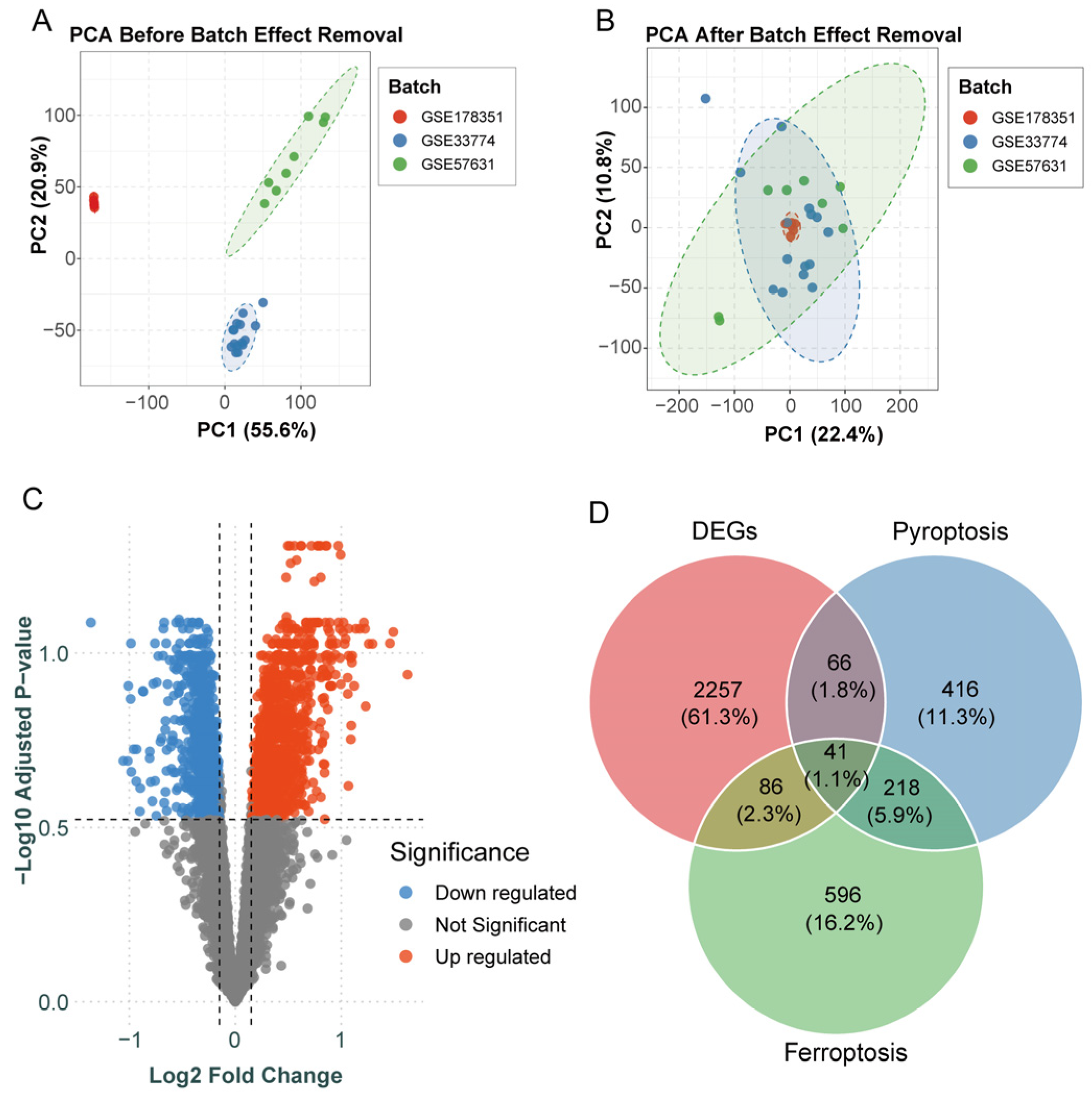
In this study, three gene expression microarray datasets related to peri-implantitis tissues were downloaded from the Genome Expression Omnibus (GEO) at the National Center for Biotechnology Information (NCBI), namely GSE178351, GSE33774 and GSE57631. Datasets were included if they met the following criteria: human peri-implant tissue samples, available disease and healthy control groups, accessible normalized or raw expression profiles, and identifiable sample grouping information. Samples without clear disease/control annotation or genes without reliable annotation were excluded from downstream analysis. The datasets consist of 29 samples in total, with 16 samples of peri-implantitis tissue and 13 samples of healthy peri-implant tissue. The available information mainly included dataset source, platform annotation, sample grouping, and disease/control status. However, detailed patient-level clinical variables, etiological factors, microbiological profiles, implant characteristics, treatment history, and surgical or prosthetic information were not consistently available across the three datasets. Therefore, these variables could not be incorporated as covariates in the integrated differential expression model. The raw expression matrices were background corrected and quantile normalized. In case of multiple probes corresponding to the same gene symbol, the maximum expression value was chosen to avoid redundancy. The three datasets were then batch effect corrected by using the ComBat algorithm in the sva R package. The correction effect was visually assessed by principal component analysis (PCA), which showed that batch effects were effectively removed.
2.2. Screening for Exploratory Candidate Differentially Expressed Genes
We used linear models implemented in the limma R package together with empirical Bayes moderation to compare gene expression differences between peri-implantitis and healthy control samples. Differential expression analysis was performed using the ComBat-corrected expression matrix. Considering the limited sample size and the exploratory nature of this integrated transcriptomic analysis, candidate differentially expressed genes were initially screened using an exploratory threshold of Benjamini–Hochberg adjusted
p value < 0.30 and |log2 fold change| ≥ 0.15. This threshold was used to retain potentially relevant transcriptional signals for downstream hypothesis-generating analyses rather than to define definitive disease-driving genes [
15]. To evaluate the influence of this exploratory threshold, sensitivity analyses were further performed using more stringent criteria, including nominal
p value < 0.05, adjusted
p value < 0.25, and adjusted
p value < 0.05, all combined with |log2 fold change| ≥ 0.15. The threshold-based sensitivity analysis is summarized in
Supplementary Table S5.
2.3. Acquisition of Pyroptosis and Ferroptosis-Related Gene Sets
Pyroptosis-related genes were collected from MSigDB/GSEA, literature-curated gene lists, and GeneCards keyword searches. Ferroptosis-related genes were obtained from MSigDB/GSEA, the literature-curated gene lists, GeneCards, and the KEGG ferroptosis pathway [
16]. GeneCards was searched on 8 March 2026 using the keywords ‘pyroptosis’ and ‘ferroptosis’, and only genes with a relevance score ≥1.2 were retained. All gene symbols were harmonized to official gene symbols and duplicates were removed before downstream analysis. The sources and final non-redundant gene lists are provided in
Supplementary Tables S1–S4. Because GeneCards keyword searches may include genes with indirect or relatively weak associations, the resulting gene sets were used as exploratory candidate gene sets rather than definitive pathway-specific gene lists.
2.4. Gene Set Enrichment Analysis
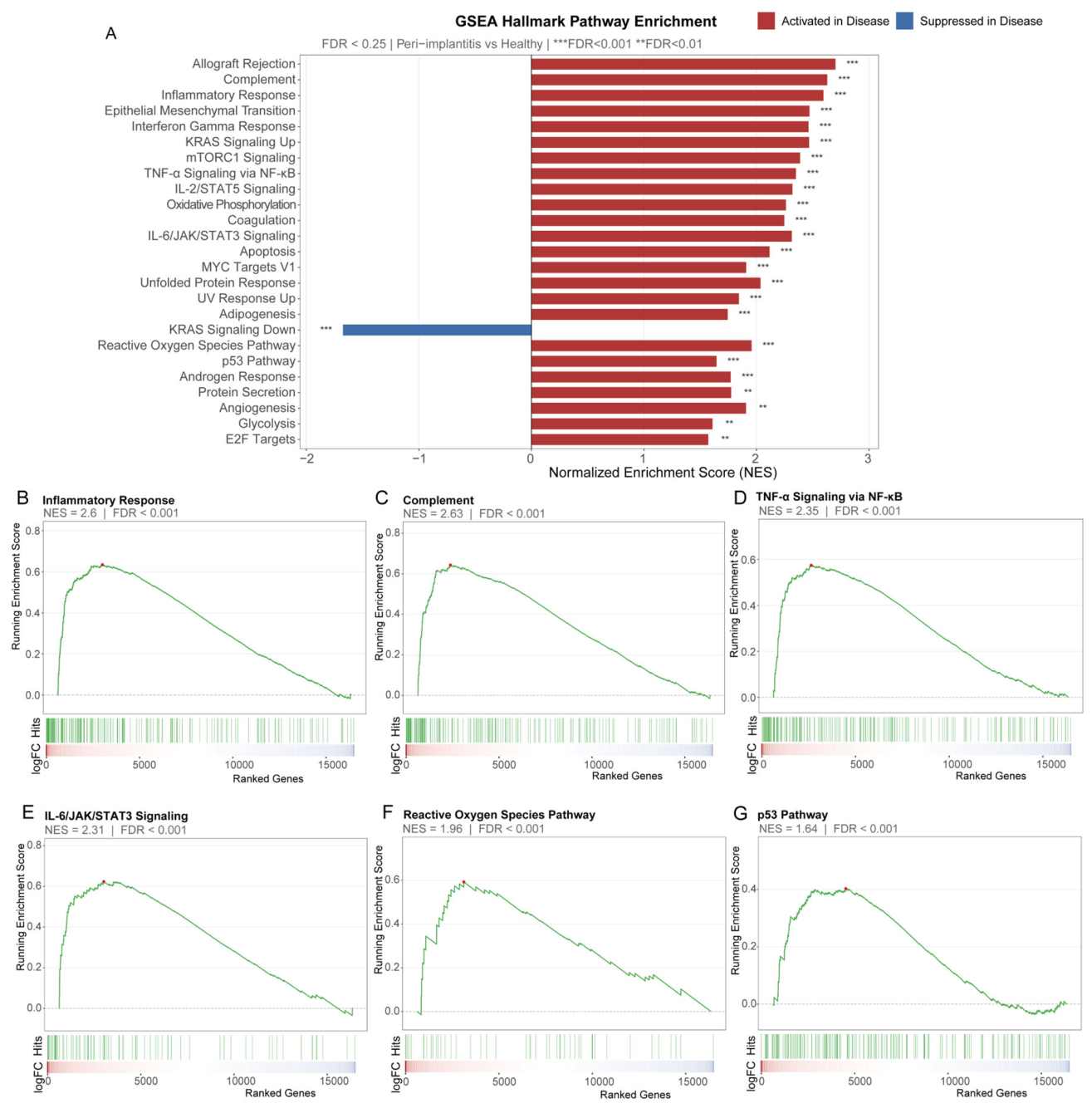
Gene Set Enrichment Analysis (GSEA) was performed to determine the differences in pathway activity between the peri-implantitis group and the healthy control group for the whole transcriptomic level. The reference database was the HALLMARK annotated gene sets (v2023.2) from the Molecular Signatures Database (MSigDB). All identified genes were ranked in descending order of their log2 fold change (log2FC) and used as a pre-ranked list input into the clusterProfiler R package for GSEA [
17]. Multiple hypothesis testing correction was performed using the Benjamini–Hochberg method and pathways with false discovery rate (FDR) < 0.25 were defined as significantly enriched pathways.
2.5. Gene Set Variation Analysis
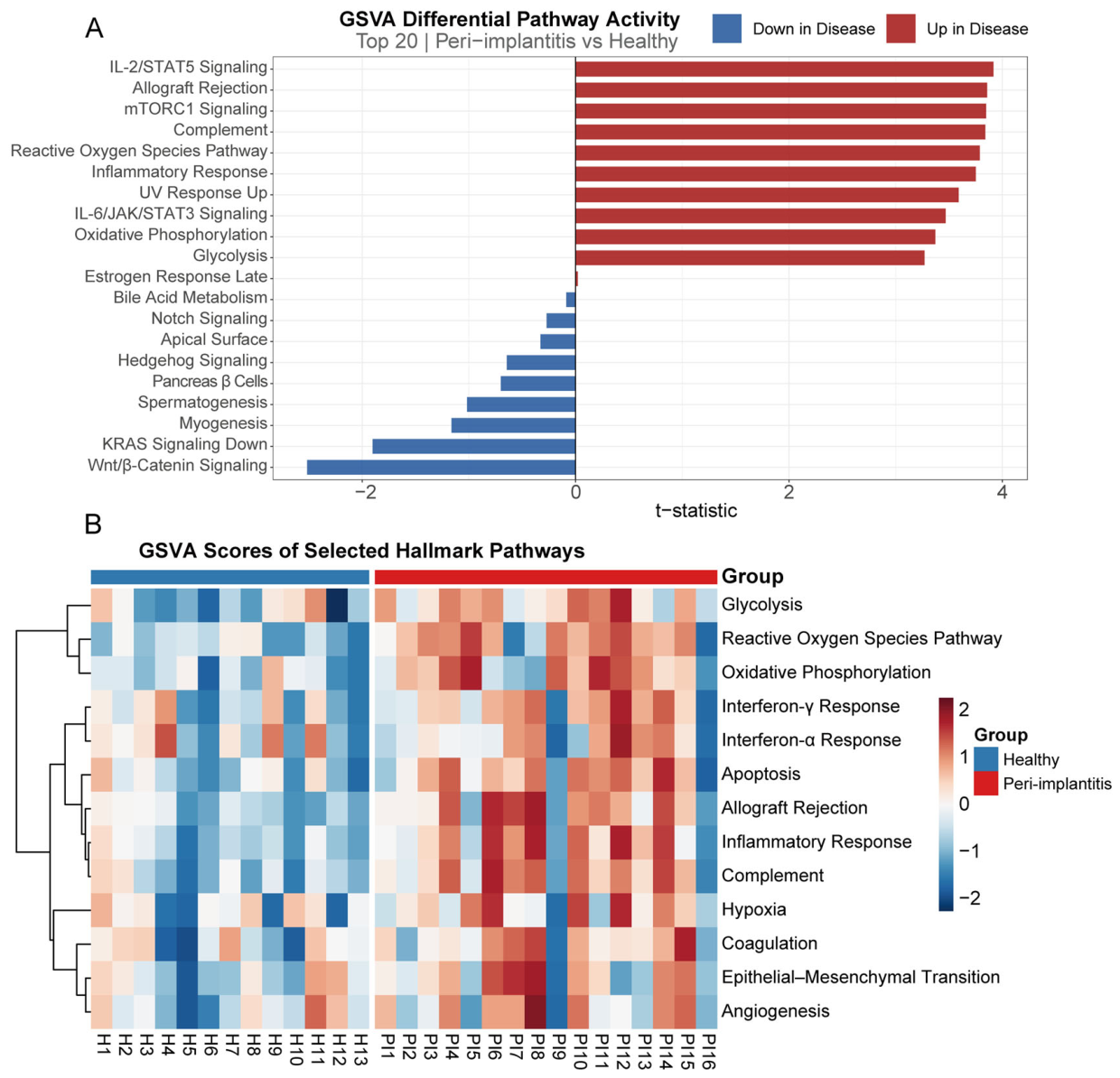
To assess pathway activity at the single-sample level, GSVA was employed to generate pathway enrichment scores for each sample. Enrichment scores of each pathway in each sample were calculated by the single-sample gene set enrichment analysis (ssGSEA) algorithm of the GSVA R package, with the MSigDB HALLMARK gene sets (v2023.2) as reference annotations [
18]. The difference in pathway activity between the peri-implantitis group and healthy control group was then compared by empirical Bayesian method in limma R package, with correction for multiple hypothesis testing by Benjamini–Hochberg. GSVA computes pathway activity at the single-sample level, thus effectively accounting for heterogeneity between samples.
2.6. Consensus Clustering for Candidate Molecular Clusters
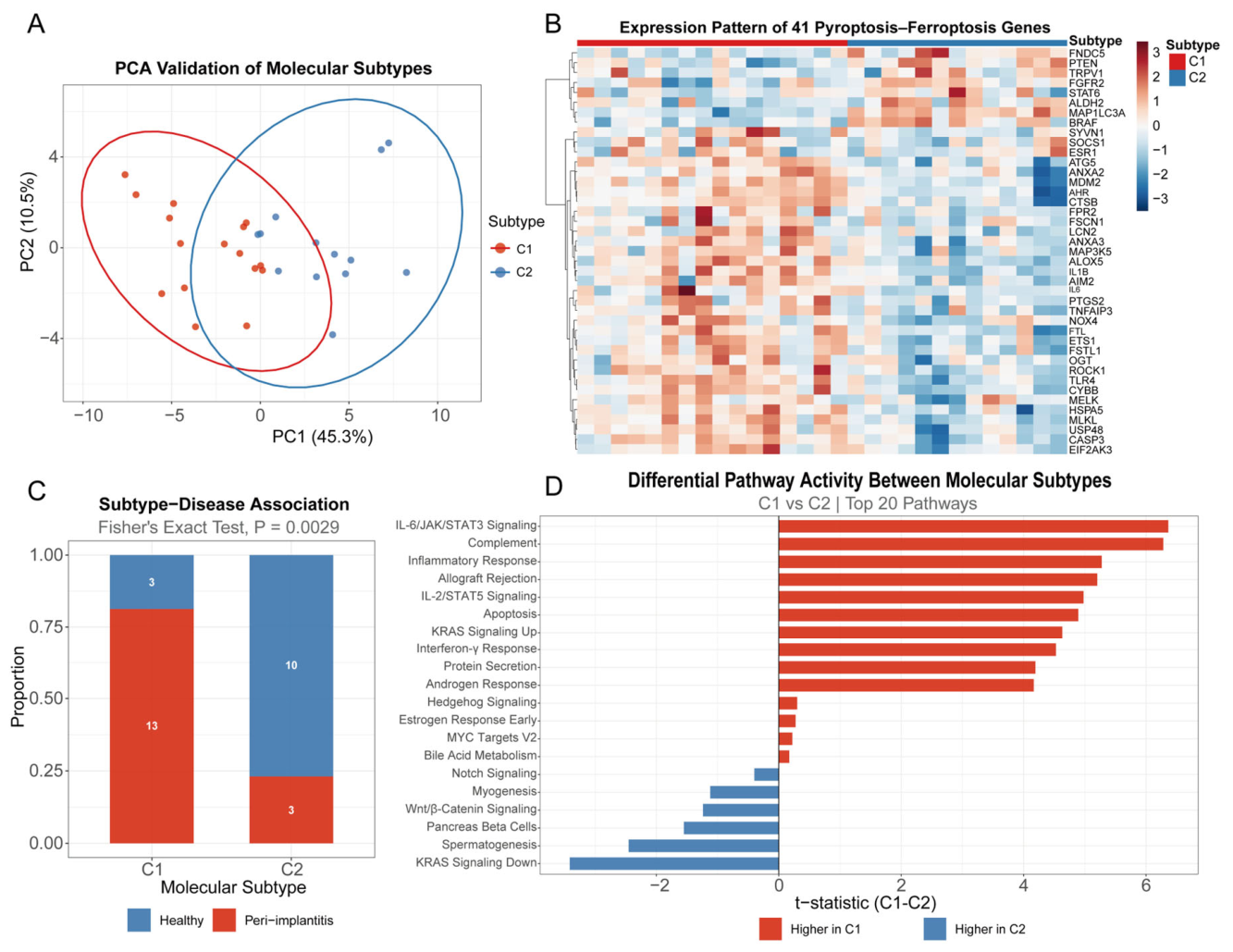
To explore the existence of candidate expression clusters of peri-implantitis based on genes involved in pyroptosis–ferroptosis crosstalk, consensus clustering was performed with the expression matrix of the 41 pyroptosis–ferroptosis overlap genes identified in the previous screening. Data were centered by the median of each gene before clustering. Unsupervised clustering was performed using the hierarchical clustering algorithm with the Pearson correlation distance as the distance metric, using the ConsensusClusterPlus R package [
19]. The parameters were as follows: To evaluate clustering stability, 200 resampling iterations were performed, with 80% of samples and 80% of gene features randomly selected in each iteration. The consensus matrix, cumulative distribution function (CDF) curve, delta area plot, and tracking plot for K = 2 to K = 6 were used to evaluate clustering stability and to select the optimal cluster number. To confirm the degree of separation among samples of different subtypes, PCA scatter plots were used after candidate expression clusters were identified. Fisher’s exact test was used to assess the association between the candidate cluster classification and clinical status (disease/health).
To compare the differences in pathway activity between the two candidate expression clusters, GSVA was used to generate 50 ssGSEA enrichment scores of HALLMARK pathways for each sample. Differences in pathway activity between the two candidate clusters were compared by the empirical Bayesian method in the limma R package, with an FDR < 0.05 as the criterion of statistical significance. The top 30 differentially expressed pathways were ranked by t-values. Wilcoxon rank-sum test was used to determine the significance of the expression differences in the 41 pyroptosis–ferroptosis overlap genes between the two candidate clusters, with p < 0.05 as the cutoff for differentially expressed genes.
2.7. Machine Learning-Based Exploratory Feature Prioritization
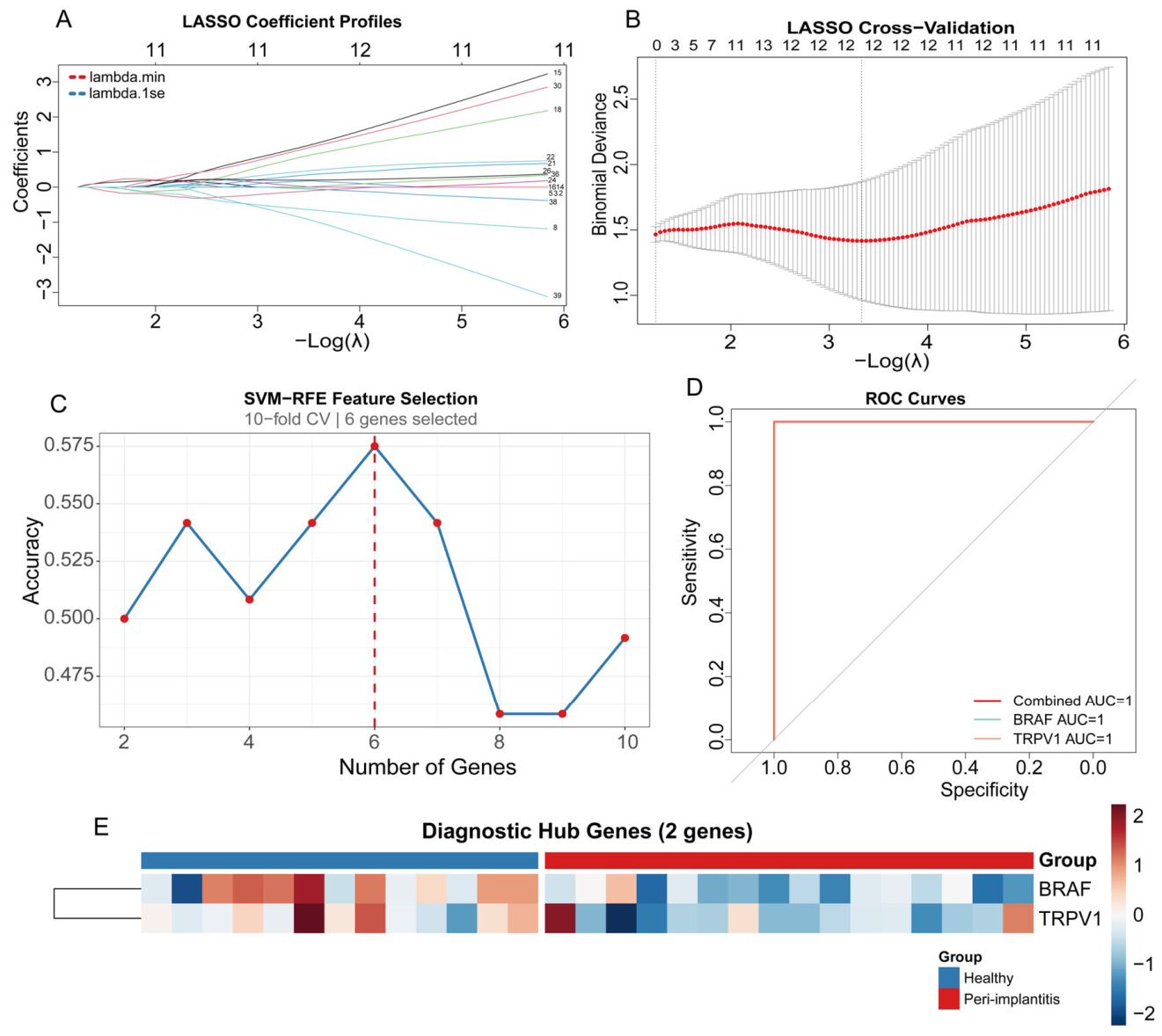
Two complementary machine learning feature selection strategies were used to find the minimal set of exploratory candidate features of the pyroptosis–ferroptosis overlap genes among the 41 pyroptosis–ferroptosis overlap genes. First, the dimensionality of the features was reduced using LASSO (Least Absolute Shrinkage and Selection Operator) regression. The regularization parameter was selected by 10-fold cross-validation, and genes with non-zero coefficients at λ1se were retained as LASSO-selected candidates. Secondly, the Support Vector Machine with Recursive Feature Elimination (SVM-RFE) algorithm was employed. The genes with the smallest contribution to the classification were iteratively removed using 10-fold cross-validation and the accuracy with different feature numbers was recorded to select the optimal feature subset. The last core exploratory candidate genes were determined by the intersection of genes screened by LASSO and SVM-RFE. A multivariate logistic regression model was established for combined exploratory model, with the final pyroptosis–ferroptosis overlap genes as independent variables and disease status as the dependent variable. Receiver operator characteristic (ROC) curves were plotted and the area under the curve (AUC) was calculated to determine internal discriminatory performance. The intersection of the LASSO- and SVM-RFE-selected genes was defined as the exploratory candidate feature set. Because of the limited sample size, the machine learning workflow was used for exploratory feature prioritization rather than for establishing a clinically validated diagnostic model. The initial ROC analysis was retained as an apparent/internal performance estimate in the integrated cohort. To reduce the instability introduced by a single 7:3 split, leave-one-out cross-validation (LOOCV) and repeated five-fold cross-validation with 100 repetitions were further performed for BRAF, TRPV1, and the combined BRAF + TRPV1 logistic model. AUC values and 95% confidence intervals were calculated where applicable, and the results were interpreted as exploratory internal performance.
2.8. Estimation of Immune-Infiltration Patterns
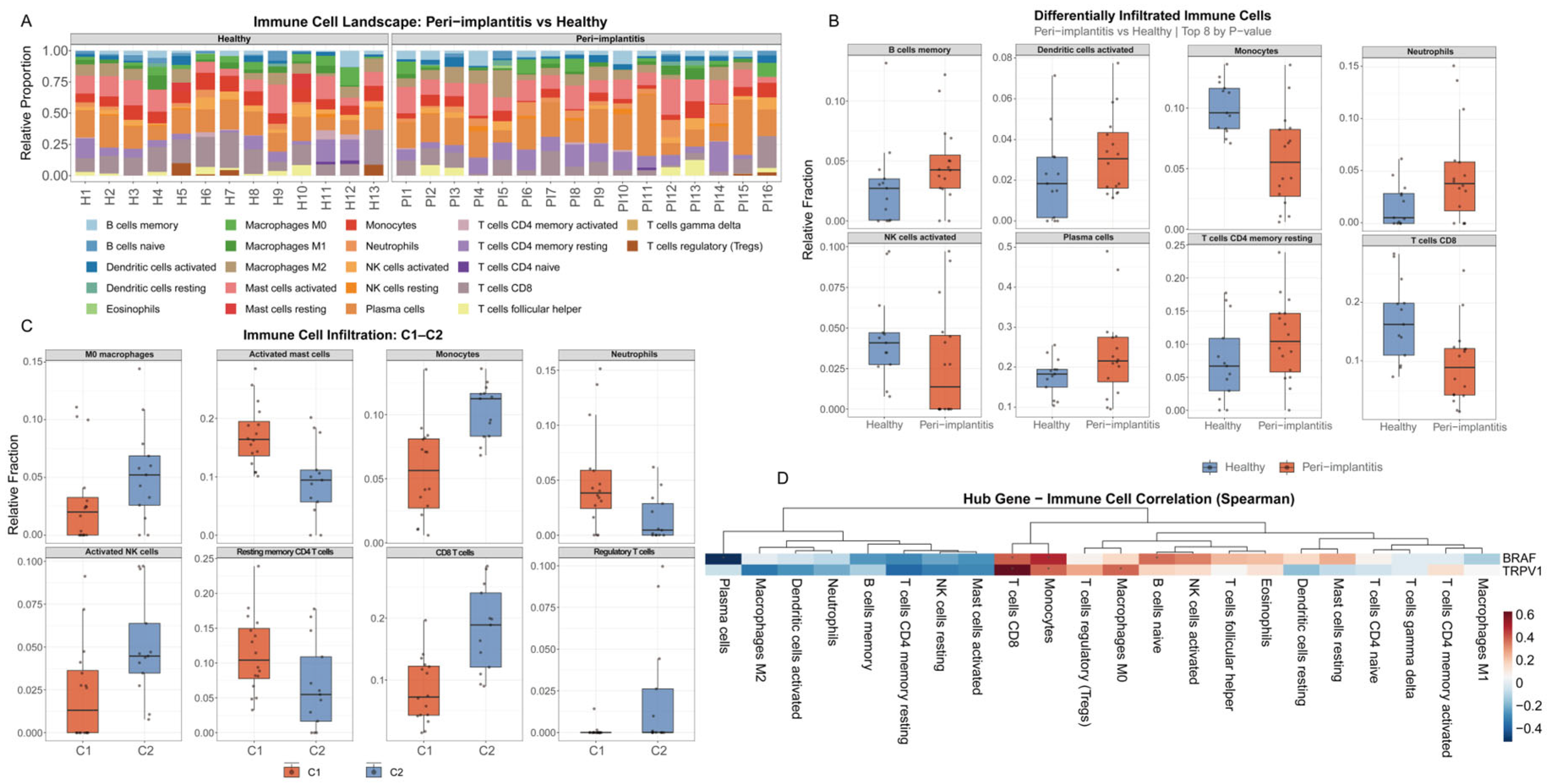
CIBERSORT was applied to the batch-corrected expression matrix to estimate the relative proportions of 22 LM22-defined leukocyte subsets in each sample. The LM22 signature matrix was used as the reference, and deconvolution was performed with 1000 permutations [
20]. For each sample, the CIBERSORT
p value, correlation coefficient, and RMSE were recorded as quality metrics. Among the 29 samples, 19 had a CIBERSORT
p value < 0.05. Considering the small sample size and the exploratory purpose of this analysis, all samples were retained for downstream immune-infiltration comparisons. Differences in immune-cell fractions between groups were assessed using the Wilcoxon rank-sum test, and Benjamini–Hochberg correction was applied across the 22 immune-cell types. The results were interpreted as estimated leukocyte-infiltration patterns rather than complete cellular composition profiles of peri-implant tissues.
2.9. Construction of a Predicted ceRNA Network
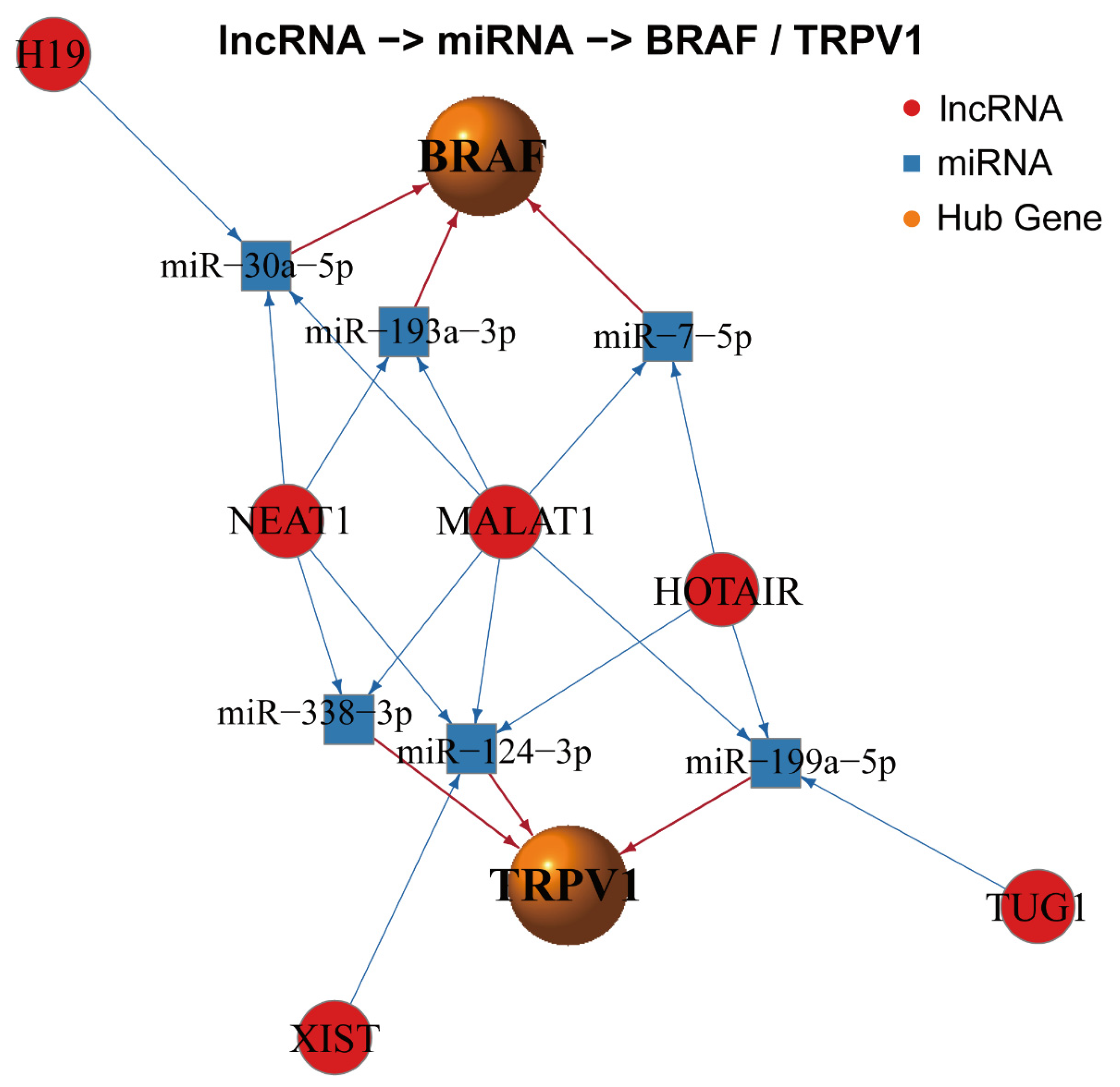
To explore potential post-transcriptional regulatory hypotheses related to BRAF and TRPV1, a predicted competing endogenous RNA (ceRNA) network was constructed. Candidate miRNAs targeting BRAF and TRPV1 were retrieved from miRTarBase (
https://mirtarbase.cuhk.edu.cn (accessed on 18 April 2026)) and starBase (
https://starbase.sysu.edu.cn (accessed on 18 April 2026)). Candidate lncRNAs interacting with these miRNAs were then obtained from lncBase (
https://diana.e-ce.uth.gr/ (accessed on 18 April 2026)) and starBase. An lncRNA–miRNA–mRNA regulatory network was constructed and visualized using the igraph R package. Because matched lncRNA and miRNA expression profiles were not available in the included peri-implantitis datasets, co-expression or inverse-expression relationships could not be evaluated. Therefore, this ceRNA network was interpreted as a database-derived computational prediction rather than evidence of active post-transcriptional regulation in peri-implantitis tissues.
2.10. Statistical Analysis
All computational analyses were performed using R software 4.4.3. Differential expression analysis was conducted with the limma package, batch correction with the sva package, functional enrichment and GSEA with clusterProfiler and related Bioconductor packages, GSVA with the GSVA package, consensus clustering with ConsensusClusterPlus, machine learning-based feature prioritization with glmnet and e1071/caret, immune deconvolution with the CIBERSORT R script and LM22 signature matrix, and network visualization with igraph. Fisher’s exact test was used to evaluate the association between candidate cluster assignment and disease status. Spearman correlation analysis was used to assess relationships between candidate gene expression and estimated immune-cell fractions. As this study was based exclusively on public transcriptomic datasets and computational analysis, no laboratory hardware, sampling equipment, or experimental instruments were used.
4. Discussion
This study systematically analyzed disease-associated transcriptional abnormalities, pathway activation remodeling, candidate expression clusters, immune-infiltration characteristics and candidate exploratory candidate genes by integrating peri-implantitis transcriptomic data based on the crosstalk between pyroptosis and ferroptosis. Taken together, this study demonstrated an exaggerated classical inflammatory response in peri-implantitis tissues, but also the co-dysregulation of genes involved in complement activation, oxidative stress, cellular stress and programmed cell death. Previous studies have demonstrated that IL-1β, IL-6, TNF-α, MMP-8, RANKL and other markers in gingival crevicular fluid or saliva are associated with peri-implantitis [
6,
21]. Wang et al. report that peri-implant disease activity is also associated with local oxidative stress markers like GSH-Px, MPO and MDA, suggesting that oxidative stress could be an important link between inflammatory responses and tissue destruction [
22]. Unlike these studies, the present study did not focus on single oxidative stress markers or individual inflammatory factors, but proposed a molecular framework at the whole-transcriptome level, involving the joint participation of inflammation, oxidative stress and programmed cell death. Peri-implantitis should be understood as a multifactorial condition rather than a disease driven by a single cause [
2]. Patient-related factors, plaque control, local peri-implant tissue conditions, implant positioning, prosthetic design, biomechanical loading, systemic metabolic status and microbial dysbiosis may all contribute to disease initiation and progression [
8,
21]. In this context, the transcriptomic changes observed in the present study should be interpreted as downstream host-response patterns associated with peri-implantitis tissues, rather than gene expression changes attributable to one specific etiological factor.
GSEA and GSVA results indicated that TNF-α/NF-κB, IL-6/JAK/STAT3, Complement, Inflammatory response and Reactive oxygen species pathways were significantly enriched in peri-implantitis tissue. These findings largely corroborate previous studies that have identified immune dysregulation, complement activation and heightened inflammatory pathways in peri-implantitis [
8,
23]. Programmed cell death offers new insight to understand this complex inflammatory state [
24]. Pyroptosis can amplify the local inflammatory responses through inflammatory caspase, Gasdermin family proteins and IL-1β/IL-18 release [
25,
26]. In contrast, ferroptosis is closely related to iron homeostasis disorder, lipid peroxidation and membrane lipid damage [
12]. Xu et al. reported that pyroptosis may connect microbial stimulation, inflammasome activation, and the release of immune factors to promote periodontal tissue destruction, and ferroptosis may also occur under the stimulation of plaque microorganisms and the inflammatory microenvironment and contribute to damaging periodontal hard and soft tissues [
27]. Tang et al. studied ferroptosis in bone-associated cells and proposed that iron metabolism, mitochondrial function, and the balance of bone formation and bone resorption could be influenced by inflammatory factors and oxidative stress [
28]. In this study, we further included genes related to pyroptosis and ferroptosis in the analysis simultaneously and identified 41 overlapping candidate genes. It suggests that these two cell death-related programs may be jointly disrupted against the backdrop of inflammation and oxidative stress in peri-implantitis.
We performed consensus clustering based on 41 pyroptosis–ferroptosis overlap genes and observed two candidate expression clusters, C1 and C2, which were significantly associated with disease status. Interestingly, subtype C1 was enriched in peri-implantitis samples and subtype C2 was enriched in healthy controls, indicating that this clustering is not a random expression cluster but may reflect disease-specific transcriptional patterns. Li et al. found by single-cell analysis that peri-implantitis has a unique immune microenvironment different from healthy peri-implant tissues and periodontitis tissues, with increased immune-cell infiltration, altered stromal cell composition, and increased inflammatory responses [
8]. Because this study is based on bulk transcriptomics, it is impossible to determine cell origins of the subtypes at single-cell level. However, the C1/C2 classification should be interpreted cautiously. Because clustering was performed in the integrated cohort containing both peri-implantitis and healthy control samples, the separation may mainly reflect disease-associated transcriptional differences rather than true intra-disease candidate expression clusters of peri-implantitis. Therefore, C1 and C2 should be regarded as preliminary candidate expression clusters that require validation in larger peri-implantitis-only cohorts [
29].
In this study, LASSO and SVM-RFE were simultaneously used to screen
BRAF and
TRPV1 as candidate exploratory candidate genes for pyroptosis and ferroptosis.
TRPV1-positive sensory neurons were shown to participate in alveolar bone resorption and the regulation of bone metabolism via CGRP signaling in animal studies by Takahashi et al. [
30]. In addition, the study by Jiang et al. on dental implants also suggests that
TRPV1 activation in sensory neurons modulates macrophage polarization and immune responses through CGRP release, which facilitates osseointegration [
31]. Thus,
TRPV1 may connect neuro-immune regulation, bone remodeling and peri-implant tissue homeostasis. According to the NCBI gene annotations,
BRAF encodes an RAF family serine/threonine protein kinase, which has been reported to be involved in MAPK/ERK signaling and MAPK-related inflammatory pathways in the immune response of peri-implantitis [
32,
33].
BRAF is also known as an oncology-related gene involved in MAPK/ERK signaling [
34]. However, the present study analyzed BRAF expression in non-tumor peri-implantitis datasets and did not assess
BRAF mutations or malignant transformation. Therefore, our findings should not be interpreted as evidence of a cancer-related mechanism in peri-implantitis, but rather as a possible link to MAPK-related inflammatory signaling that requires further validation. Nevertheless, the evidence in the present study is based on integrated bulk transcriptomic analysis and internal feature prioritization. Because of the limited sample size and lack of independent external validation, protein-level confirmation, or functional experiments,
BRAF and
TRPV1 should be interpreted as exploratory candidate genes rather than validated clinical diagnostic biomarkers.
The predicted ceRNA network provided a computational hypothesis regarding potential post-transcriptional regulation involving
BRAF and
TRPV1. This study predicts that lncRNAs such as NEAT1, MALAT1, H19, HOTAIR, TUG1 and XIST may form regulatory networks with
BRAF/
TRPV1 through associated miRNAs. Previous studies have proposed that lncRNAs, such as MALAT1 and NEAT1, may be involved in the regulation of inflammatory responses and cellular functions in periodontitis and other oral inflammatory diseases [
35,
36]. However, the ceRNA network constructed in this study is all predicted from the public databases, and no lncRNA or miRNA expression matrix has been used to validate the ceRNA network. Thus, the role of this network is rather to generate testable mechanistic hypotheses than to prove the existence of specific lncRNA–miRNA–mRNA regulatory axes. Clinically, these findings may provide preliminary molecular clues for future risk stratification and disease-activity assessment in peri-implantitis. However, they are not currently applicable as diagnostic or therapeutic tools and require validation in larger prospective cohorts.
Some limitations exist in this study. First, all analyses were based on publicly available microarray datasets with a small sample size. Although batch correction was performed, dataset heterogeneity and possible residual batch effects cannot be completely excluded. In addition, detailed clinical metadata, etiological factors, microbiological profiles, implant characteristics and treatment history were not consistently available, which limited further covariate-adjusted analyses. The diagnostic utility of BRAF and TRPV1 and the stability of the C1/C2 candidate expression clusters still need to be validated in larger clinical cohorts. Second, the differential expression analysis employed an exploratory screening threshold to retain candidate genes that could be functionally relevant in the context of chronic inflammation, but this could also increase the risk of false-positive findings. Third, CIBERSORT results are computational estimates of relative leukocyte proportions and cannot resolve spatial distribution, cell–cell interactions, rare cell populations, or non-immune tissue components; therefore, histological, immunohistochemical, single-cell, or spatial transcriptomic validation is required. Fourth, this study did not incorporate microbiome, proteomic or metabolomic data, although these omics dimensions are important for understanding the links among biofilm dysbiosis, host responses and bone destruction. Fifth, the candidate genes and predicted ceRNA network have not been experimentally validated, and the specific regulatory relationships need to be further confirmed by protein-level assays, dual-luciferase reporter assays, RNA interference, overexpression experiments, and models using cells derived from peri-implantitis tissues.