Research on the Hippo Pathway in Cancer

Highlights
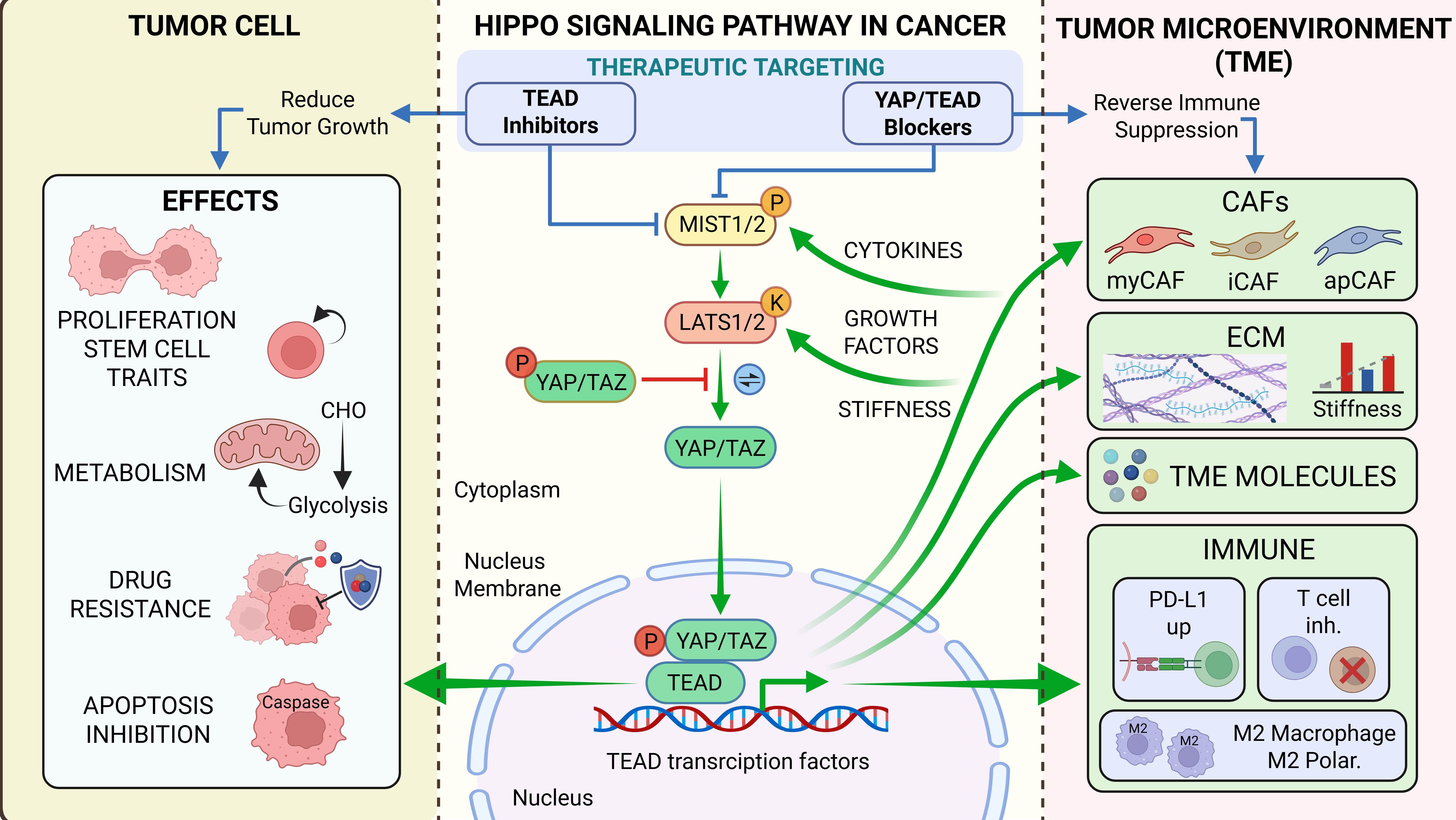
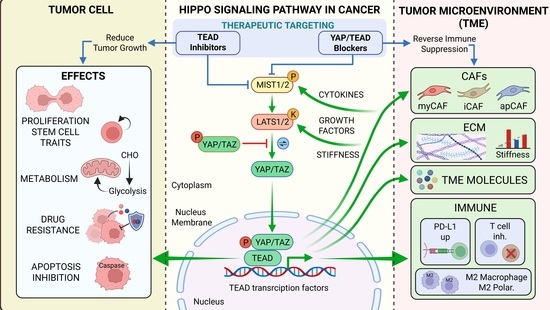
- Hippo/YAP/TAZ activation drives tumor proliferation, stemness, metabolism, and drug resistance.
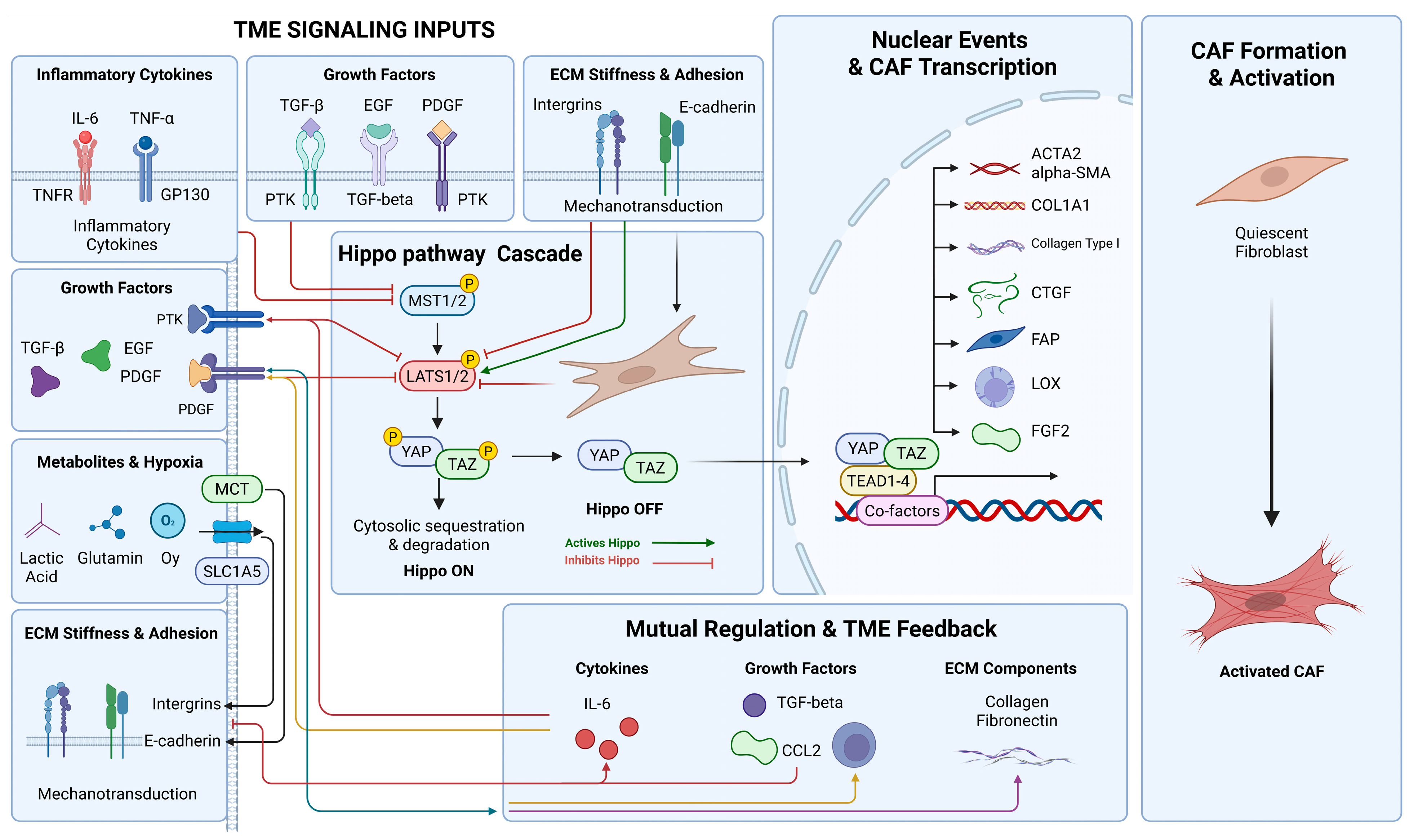
- Hippo regulates CAF activation and immunosuppression, while TME cues reciprocally promote Hippo activity, forming a pro-tumorigenic loop.
- Hippo–TME crosstalk provides a mechanistic basis for combinatorial anti-cancer strategies.
- TEAD palmitoylation inhibitors and YAP–TEAD disruptors in clinical trials offer precision options for Hippo-dysregulated tumors.
Abstract
1. The Composition and Regulation of the Hippo Pathway
1.1. Classic Regulation of the Hippo Pathway
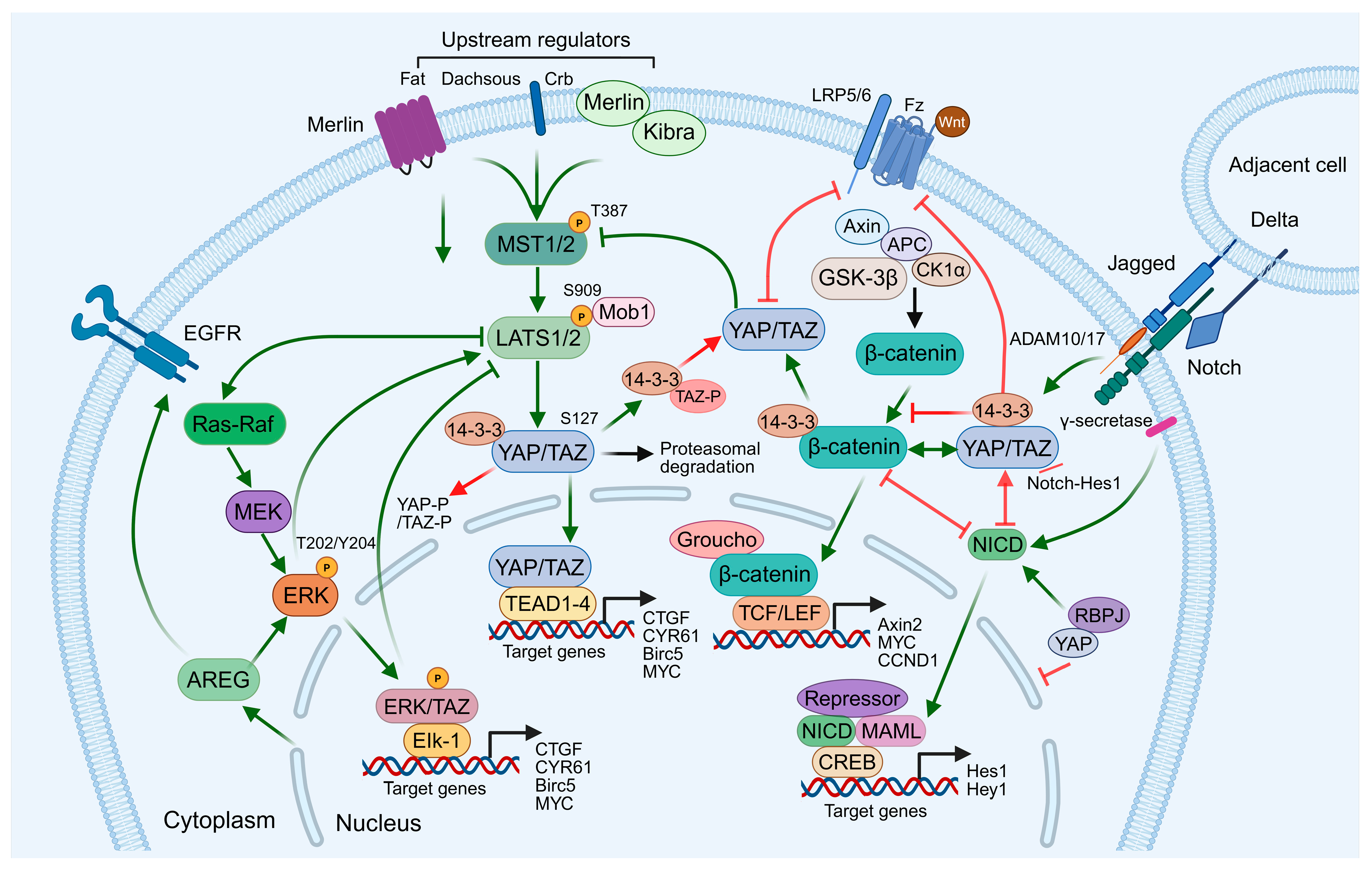
1.2. Signaling Network of the Hippo Pathway
2. Hippo Pathway and Tumor Cell Biological Behaviors
2.1. Promotion of Tumor Cell Proliferation and Cancer Stem Cell Traits
2.2. Involvement in Tumor Cell Metabolic Reprogramming
2.3. Mediation of Tumor Cell Drug Resistance
2.4. Mediation of Tumor Cell Proliferation, Apoptosis, and Transformation
3. Crosstalk Between the Hippo Pathway and the Tumor Microenvironment
3.1. Hippo Pathway Regulation of CAF Formation and Activation
3.2. Hippo Pathway and CAF Heterogeneity
4. Impact of the Hippo Pathway on Immune Cell Function
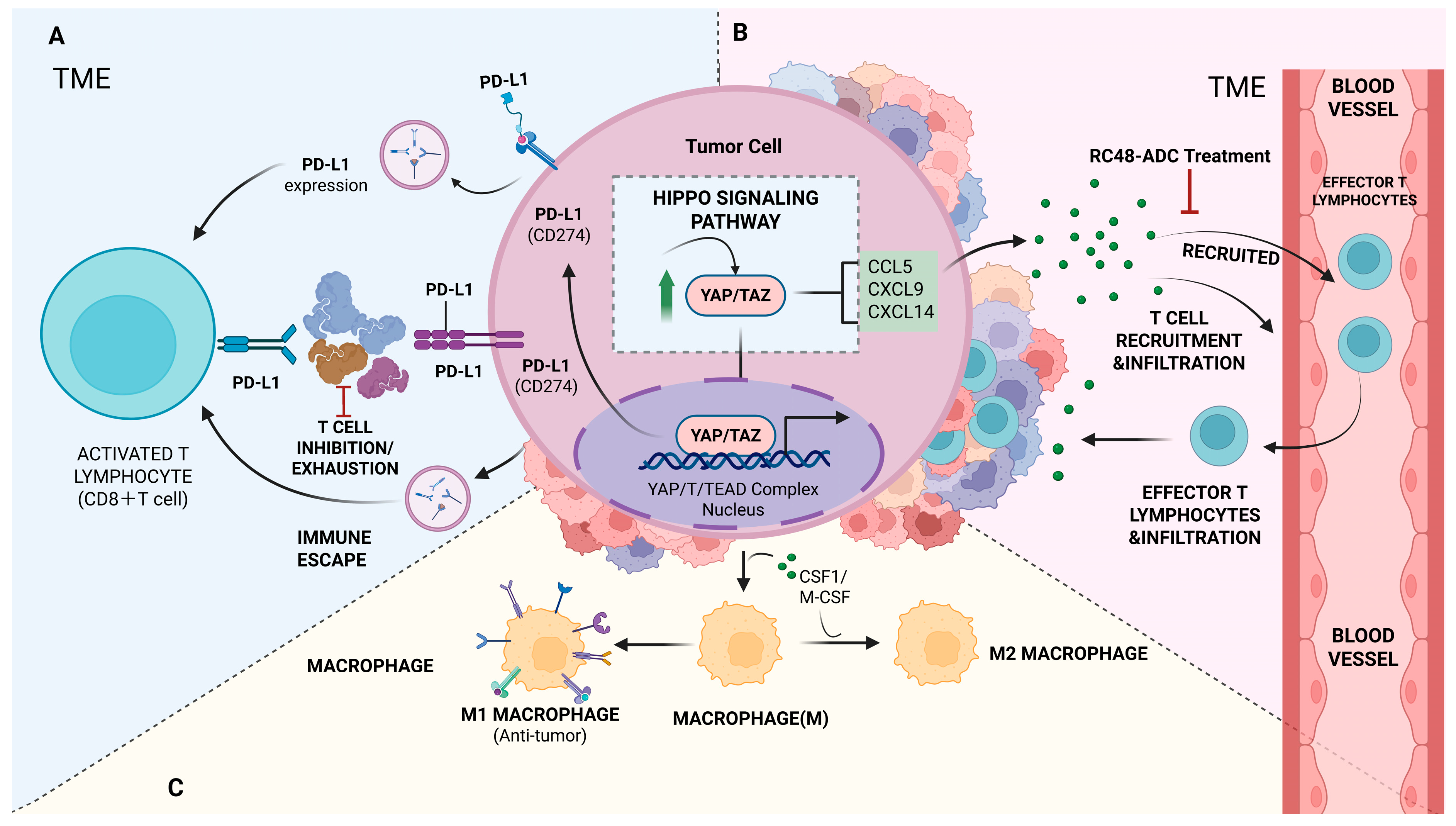
4.1. Hippo Pathway and T Cell Suppression
4.2. Role of the Hippo Pathway in PD-L1 Regulation
4.3. Hippo Pathway Promotes Chemokine Release
4.4. Impact of the Hippo Pathway on Macrophage Polarization
5. Feedback Regulation of the Hippo Pathway by the TME
5.1. Regulation of the Hippo Pathway by Tumor Microenvironment Signaling Molecules
5.2. Regulation of the Hippo Pathway by Inflammatory Cytokines
5.3. Regulation of the Hippo Pathway by Growth Factors
5.4. Regulation of the Hippo Pathway by Metabolites
6. Drug Development Targeting the Hippo Pathway
6.1. TEAD Palmitoylation Inhibitors
6.2. YAP/TEAD Interaction Inhibitors
7. Conclusions and Perspectives
Author Contributions
Funding
Institutional Review Board Statement
Informed Consent Statement
Data Availability Statement
Acknowledgments
Conflicts of Interest
Abbreviations
| TME | tumor microenvironment |
| CAFs | cancer-associated fibroblasts |
| PD-L1 | programmed death-ligand 1 |
| MST1/2 | mammalian STE20-like kinase 1/2 |
| SAV1 | scaffold protein Salvador homolog 1 |
| LATS1/2 | large tumor suppressor 1/2 |
| YAP/TAZ | Yes-associated protein/transcriptional co-activator with PDZ-binding motif |
| TEAD1-4 | domain family member 1-4 |
| CSC | cancer stem cell |
| pEMT | epithelial–mesenchymal transition |
| TGF-β | transforming growth factor-β |
| PCCs | pancreatic cancer cells |
| HCC | hepatocellular carcinoma |
| ECM | extracellular matrix |
| myCAF | myofibroblastic CAF |
| iCAF | inflammatory CAF |
| apCAF | antigen-presenting CAF |
| rCAF | regulatory CAF |
| DCs | dendritic cells |
| CTLs | CD8+ cytotoxic T lymphocytes |
| MDSC | myeloid-derived suppressor cell |
| ERS | endoplasmic reticulum stress |
| PAAD | pancreatic ductal adenocarcinoma |
| TAMs | tumor-associated macrophages |
| AREG | PCC-derived amphiregulin |
| EGF | epidermal growth factor |
| EBV | Epstein–Barr virus |
| RTKs | receptor tyrosine kinases |
| GGPP | geranylgeranyl pyrophosphate |
References
- Dong, Z. Highlights of recent cancer research. Holist. Integr. Oncol. 2022, 1, 2. [Google Scholar] [CrossRef]
- Fu, M.; Hu, Y.; Lan, T.; Guan, K.-L.; Luo, T.; Luo, M. Correction: The Hippo signalling pathway and its implications in human health and diseases. Signal Transduct. Target. Ther. 2024, 9, 5. [Google Scholar] [CrossRef]
- Wei, Y.; Hui, V.L.Z.; Chen, Y.; Han, R.; Han, X.; Guo, Y. YAP/TAZ: Molecular pathway and disease therapy. MedComm 2023, 4, e340. [Google Scholar] [CrossRef]
- Heng, B.C.; Zhang, X.; Aubel, D.; Bai, Y.; Li, X.; Wei, Y.; Fussenegger, M.; Deng, X. An overview of signaling pathways regulating YAP/TAZ activity. Cell. Mol. Life Sci. 2021, 78, 497–512. [Google Scholar] [CrossRef]
- Xu, F.; Li, Z.; Guan, H.; Ma, J. YAP/TAZ-Hippo mediates the tumorigenesis of various cancers through post-translational modification represented by ubiquitination. Cell Death Discov. 2025, 11, 41. [Google Scholar] [CrossRef] [PubMed]
- Lin, M.; Zheng, X.; Yan, J.; Huang, F.; Chen, Y.; Ding, R.; Wan, J.; Zhang, L.; Wang, C.; Pan, J.; et al. The RNF214-TEAD-YAP signaling axis promotes hepatocellular carcinoma progression via TEAD ubiquitylation. Nat. Commun. 2024, 15, 4995. [Google Scholar] [CrossRef]
- Xia, H.; Dai, X.; Yu, H.; Zhou, S.; Fan, Z.; Wei, G.; Tang, Q.; Gong, Q.; Bi, F. EGFR-PI3K-PDK1 pathway regulates YAP signaling in hepatocellular carcinoma: The mechanism and its implications in targeted therapy. Cell Death Dis. 2018, 9, 269. [Google Scholar] [CrossRef] [PubMed]
- Kim, W.; Khan, S.K.; Gvozdenovic-Jeremic, J.; Kim, Y.; Dahlman, J.; Kim, H.; Park, O.; Ishitani, T.; Jho, E.H.; Gao, B.; et al. Hippo signaling interactions with Wnt/β-catenin and Notch signaling repress liver tumorigenesis. J. Clin. Investig. 2017, 127, 137–152. [Google Scholar] [CrossRef]
- Park, J.; Jia, S.; Salter, D.; Bagnaninchi, P.; Hansen, C.G. The Hippo drives the cellular response to hydrostatic pressure. EMBO J. 2022, 41, e108719. [Google Scholar] [CrossRef]
- Driskill, J.H.; Pan, D. Control of stem cell renewal and fate by YAP and TAZ. Nat. Rev. Mol. Cell Biol. 2023, 24, 895–911. [Google Scholar] [CrossRef]
- Lin, W.H.; Cooper, L.M.; Anastasiadis, P.Z. Cadherins and catenins in cancer: Connecting cancer pathways and tumor microenvironment. Front. Cell Dev. Biol. 2023, 11, 1137013. [Google Scholar] [CrossRef]
- Buckley, C.D.; Tan, J.; Anderson, K.L.; Hanein, D.; Volkmann, N.; Weis, W.I.; Nelson, W.J.; Dunn, A.R. Cell adhesion. The minimal cadherin-catenin complex binds to actin filaments under force. Science 2014, 346, 1254211. [Google Scholar] [CrossRef]
- Baroja, I.; Kyriakidis, N.C.; Halder, G.; Moya, I.M. Expected and unexpected effects after systemic inhibition of Hippo transcriptional output in cancer. Nat. Commun. 2024, 15, 2700. [Google Scholar] [CrossRef]
- Zhang, S.; Wang, J.; Chen, Y.; Liang, W.; Liu, H.; Du, R.; Sun, Y.; Hu, C.; Shang, Z. CAFs-derived lactate enhances the cancer stemness through inhibiting the MST1 ubiquitination degradation in OSCC. Cell Biosci. 2024, 14, 144. [Google Scholar] [CrossRef]
- Liao, C.; Wang, Q.; An, J.; Long, Q.; Wang, H.; Xiang, M.; Xiang, M.; Zhao, Y.; Liu, Y.; Liu, J.; et al. Partial EMT in Squamous Cell Carcinoma: A Snapshot. Int. J. Biol. Sci. 2021, 17, 3036–3047. [Google Scholar] [CrossRef]
- Molina-Castro, S.E.; Tiffon, C.; Giraud, J.; Boeuf, H.; Sifre, E.; Giese, A.; Belleannée, G.; Lehours, P.; Bessède, E.; Mégraud, F.; et al. The Hippo Kinase LATS2 Controls Helicobacter pylori-Induced Epithelial-Mesenchymal Transition and Intestinal Metaplasia in Gastric Mucosa. Cell. Mol. Gastroenterol. Hepatol. 2020, 9, 257–276. [Google Scholar] [CrossRef]
- Zou, W.; Han, Z.; Wang, Z.; Liu, Q. Targeting glutamine metabolism as a potential target for cancer treatment. J. Exp. Clin. Cancer Res. 2025, 44, 180. [Google Scholar] [CrossRef]
- Park, M.; Jin, J.; An, D.Y.; Kim, D.H.; Lee, J.; Yun, J.W.; Hwang, I.; Park, J.S.; Kim, M.K.; Lee, Y.M.; et al. Targeting YAP Activity and Glutamine Metabolism Cooperatively Suppresses Tumor Progression by Preventing Extracellular Matrix Accumulation. Cancer Res. 2024, 84, 3388–3401. [Google Scholar] [CrossRef]
- Kim, M.; Hwang, S.; Kim, B.; Shin, S.; Yang, S.; Gwak, J.; Jeong, S.M. YAP governs cellular adaptation to perturbation of glutamine metabolism by regulating ATF4-mediated stress response. Oncogene 2023, 42, 2828–2840. [Google Scholar] [CrossRef]
- Li, Q.; Wang, M.; Hu, Y.; Zhao, E.; Li, J.; Ren, L.; Wang, M.; Xu, Y.; Liang, Q.; Zhang, D.; et al. MYBL2 disrupts the Hippo-YAP pathway and confers castration resistance and metastatic potential in prostate cancer. Theranostics 2021, 11, 5794–5812. [Google Scholar] [CrossRef]
- Zhang, X.; Zhao, H.; Li, Y.; Xia, D.; Yang, L.; Ma, Y.; Li, H. The role of YAP/TAZ activity in cancer metabolic reprogramming. Mol. Cancer 2018, 17, 134. [Google Scholar] [CrossRef]
- Nguyen, C.D.K.; Yi, C. YAP/TAZ Signaling and Resistance to Cancer Therapy. Trends Cancer 2019, 5, 283–296. [Google Scholar] [CrossRef]
- Jiang, S.; Deng, T.; Cheng, H.; Liu, W.; Shi, D.; Yuan, J.; He, Z.; Wang, W.; Chen, B.; Ma, L.; et al. Macrophage-organoid co-culture model for identifying treatment strategies against macrophage-related gemcitabine resistance. J. Exp. Clin. Cancer Res. 2023, 42, 199. [Google Scholar] [CrossRef]
- Zhou, Z.J.; Ye, Y.H.; Hu, Z.Q.; Hou, Y.R.; Liu, K.X.; Sun, R.Q.; Wang, P.C.; Luo, C.B.; Li, J.; Zou, J.X.; et al. Whole-exome sequencing reveals genomic landscape of intrahepatic cholangiocarcinoma and identifies SAV1 as a potential driver. Nat. Commun. 2024, 15, 9960. [Google Scholar] [CrossRef]
- Yang, W.; Zhang, M.; Zhang, T.X.; Liu, J.H.; Hao, M.W.; Yan, X.; Gao, H.; Lei, Q.Y.; Cui, J.; Zhou, X. YAP/TAZ mediates resistance to KRAS inhibitors through inhibiting proapoptosis and activating the SLC7A5/mTOR axis. JCI Insight 2024, 9, e178535. [Google Scholar] [CrossRef]
- Roels, J.; Ghaedi, H.; Kancherla, J.; Yang, Y.; Ganesan, R.; Babu, P.; Williams, K.; Yao, X.; Pradhan, R.; Guan, X.; et al. The Hippo is Dysregulated in Cancer-Associated Fibroblasts in Anti-PD-L1 Resistant Cancer. Cancer Res. 2026. [Google Scholar] [CrossRef]
- Kim, M.H.; Kim, C.G.; Kim, S.K.; Shin, S.J.; Choe, E.A.; Park, S.H.; Shin, E.C.; Kim, J. YAP-Induced PD-L1 Expression Drives Immune Evasion in BRAFi-Resistant Melanoma. Cancer Immunol. Res. 2018, 6, 255–266. [Google Scholar] [CrossRef] [PubMed]
- Katayama, Y.; Yamada, T.; Tanimura, K.; Kawachi, H.; Ishida, M.; Matsui, Y.; Hirai, S.; Nakamura, R.; Morimoto, K.; Furuya, N.; et al. YAP Regulates HER3 Signaling-Driven Adaptive Resistance to RET Inhibitors in RET-Aberrant Cancers. Clin. Cancer Res. 2025, 31, 1127–1141. [Google Scholar] [CrossRef] [PubMed]
- Lin, L.; Sabnis, A.J.; Chan, E.; Olivas, V.; Cade, L.; Pazarentzos, E.; Asthana, S.; Neel, D.; Yan, J.J.; Lu, X.; et al. The Hippo effector YAP promotes resistance to RAF- and MEK-targeted cancer therapies. Nat. Genet. 2015, 47, 250–256. [Google Scholar] [CrossRef]
- Mizuno, T.; Murakami, H.; Fujii, M.; Ishiguro, F.; Tanaka, I.; Kondo, Y.; Akatsuka, S.; Toyokuni, S.; Yokoi, K.; Osada, H.; et al. YAP induces malignant mesothelioma cell proliferation by upregulating transcription of cell cycle-promoting genes. Oncogene 2012, 31, 5117–5122. [Google Scholar] [CrossRef]
- Li, H.; Wu, B.K.; Kanchwala, M.; Cai, J.; Wang, L.; Xing, C.; Zheng, Y.; Pan, D. YAP/TAZ drives cell proliferation and tumour growth via a polyamine-eIF5A hypusination-LSD1 axis. Nat. Cell Biol. 2022, 24, 373–383. [Google Scholar] [CrossRef] [PubMed]
- Cheng, Y.; Mao, M.; Lu, Y. The biology of YAP in programmed cell death. Biomark. Res. 2022, 10, 34. [Google Scholar] [CrossRef]
- Gu, Y.; Yi, Z.; Zhou, Z.; Wang, J.; Li, S.; Zhu, P.; Liu, N.; Xu, Y.; He, L.; Wang, Y.; et al. SNORD88B-mediated WRN nucleolar trafficking drives self-renewal in liver cancer initiating cells and hepatocarcinogenesis. Nat. Commun. 2024, 15, 6730. [Google Scholar] [CrossRef]
- de Visser, K.E.; Joyce, J.A. The evolving tumor microenvironment: From cancer initiation to metastatic outgrowth. Cancer Cell 2023, 41, 374–403. [Google Scholar] [CrossRef]
- Mao, X.; Xu, J.; Wang, W.; Liang, C.; Hua, J.; Liu, J.; Zhang, B.; Meng, Q.; Yu, X.; Shi, S. Crosstalk between cancer-associated fibroblasts and immune cells in the tumor microenvironment: New findings and future perspectives. Mol. Cancer 2021, 20, 131. [Google Scholar] [CrossRef]
- Kim, H.S.; Nam, J.S. The multifaceted role of YAP in the tumor microenvironment and its therapeutic implications in cancer. Exp. Mol. Med. 2025, 57, 2201–2213. [Google Scholar] [CrossRef]
- Wang, Z.; Li, N.; Kong, X.; Tao, J.; Yang, Z.; Zhu, H. Detection of tumor immune checkpoints: From pathological analysis to functional imaging. Holist. Integr. Oncol. 2025, 4, 76. [Google Scholar] [CrossRef]
- Schwörer, S.; Cimino, F.V.; Ros, M.; Tsanov, K.M.; Ng, C.; Lowe, S.W.; Carmona-Fontaine, C.; Thompson, C.B. Hypoxia Potentiates the Inflammatory Fibroblast Phenotype Promoted by Pancreatic Cancer Cell-Derived Cytokines. Cancer Res. 2023, 83, 1596–1610. [Google Scholar] [CrossRef] [PubMed]
- Fang, Z.; Meng, Q.; Xu, J.; Wang, W.; Zhang, B.; Liu, J.; Liang, C.; Hua, J.; Zhao, Y.; Yu, X.; et al. Signaling pathways in cancer-associated fibroblasts: Recent advances and future perspectives. Cancer Commun. 2023, 43, 3–41. [Google Scholar] [CrossRef]
- Thinyakul, C.; Sakamoto, Y.; Shimoda, M.; Liu, Y.; Thongchot, S.; Reda, O.; Nita, A.; Sakamula, R.; Sampattavanich, S.; Maeda, A.; et al. Hippo in cancer cells induces NCAM1(+)αSMA(+) fibroblasts to modulate tumor microenvironment. Commun. Biol. 2024, 7, 1343. [Google Scholar] [CrossRef]
- Jenkins, L.; Jungwirth, U.; Avgustinova, A.; Iravani, M.; Mills, A.; Haider, S.; Harper, J.; Isacke, C.M. Cancer-Associated Fibroblasts Suppress CD8+ T-cell Infiltration and Confer Resistance to Immune-Checkpoint Blockade. Cancer Res. 2022, 82, 2904–2917. [Google Scholar] [CrossRef]
- D’Aguanno, S.; Brignone, M.; Scalera, S.; Chiacchiarini, M.; Di Martile, M.; Valentini, E.; De Nicola, F.; Ricci, A.; Pelle, F.; Botti, C.; et al. Bcl-2 dependent modulation of Hippo in cancer cells. Cell Commun. Signal. 2024, 22, 277. [Google Scholar] [CrossRef] [PubMed]
- Calvo, F.; Ege, N.; Grande-Garcia, A.; Hooper, S.; Jenkins, R.P.; Chaudhry, S.I.; Harrington, K.; Williamson, P.; Moeendarbary, E.; Charras, G.; et al. Mechanotransduction and YAP-dependent matrix remodelling is required for the generation and maintenance of cancer-associated fibroblasts. Nat. Cell Biol. 2013, 15, 637–646. [Google Scholar] [CrossRef]
- Qin, Z.; Xia, W.; Fisher, G.J.; Voorhees, J.J.; Quan, T. YAP/TAZ regulates TGF-β/Smad3 signaling by induction of Smad7 via AP-1 in human skin dermal fibroblasts. Cell Commun. Signal 2018, 16, 18. [Google Scholar] [CrossRef]
- Xia, Y.; Xie, S.; Cai, Z.; Shan, X. The techniques and applications of patient-derived head and neck cancer organoids: A systematic review. Holist. Integr. Oncol. 2025, 4, 18. [Google Scholar] [CrossRef]
- Song, J.; Wei, R.; Liu, C.; Zhao, Z.; Liu, X.; Wang, Y.; Liu, F.; Liu, X. Antigen-presenting cancer associated fibroblasts enhance antitumor immunity and predict immunotherapy response. Nat. Commun. 2025, 16, 2175. [Google Scholar] [CrossRef] [PubMed]
- Wang, Y.; Qiu, X.; Li, Q.; Qin, J.; Ye, L.; Zhang, X.; Huang, X.; Wen, X.; Wang, Z.; He, W.; et al. Single-cell and spatial-resolved profiling reveals cancer-associated fibroblast heterogeneity in colorectal cancer metabolic subtypes. J. Transl. Med. 2025, 23, 175. [Google Scholar] [CrossRef]
- Janse van Rensburg, H.J.; Azad, T.; Ling, M.; Hao, Y.; Snetsinger, B.; Khanal, P.; Minassian, L.M.; Graham, C.H.; Rauh, M.J.; Yang, X. The Hippo Component TAZ Promotes Immune Evasion in Human Cancer through PD-L1. Cancer Res. 2018, 78, 1457–1470. [Google Scholar] [CrossRef] [PubMed]
- Wei, G.; Nie, Y.; Sun, M.; Zhou, W.; Zhao, H.; Chen, F.; Zhu, C. Cancer-associated fibroblasts induce almonertinib resistance in non-small cell lung cancer. J. Transl. Med. 2025, 23, 42. [Google Scholar] [CrossRef]
- Ma, S.; Tang, T.; Probst, G.; Konradi, A.; Jin, C.; Li, F.; Gutkind, J.S.; Fu, X.D.; Guan, K.L. Transcriptional repression of estrogen receptor alpha by YAP reveals the Hippo as therapeutic target for ER(+) breast cancer. Nat. Commun. 2022, 13, 1061. [Google Scholar] [CrossRef]
- Zhan, Y.; Xu, J.; Zhang, Z.; Hu, Y.; Li, Y.; Qian, J.; Ling, Y.; Wu, D.; Deng, H.; Li, G.; et al. Targeting SPHK1 in macrophages remodels the tumor microenvironment and enhances anti-PD-1 immunotherapy efficacy in colorectal cancer liver metastasis. Cancer Commun. 2025, 45, 1203–1228. [Google Scholar] [CrossRef]
- Ni, X.; Tao, J.; Barbi, J.; Chen, Q.; Park, B.V.; Li, Z.; Zhang, N.; Lebid, A.; Ramaswamy, A.; Wei, P.; et al. YAP Is Essential for Treg-Mediated Suppression of Antitumor Immunity. Cancer Discov. 2018, 8, 1026–1043. [Google Scholar] [CrossRef]
- Ortega, Á.; Vera, I.; Diaz, M.P.; Navarro, C.; Rojas, M.; Torres, W.; Parra, H.; Salazar, J.; De Sanctis, J.B.; Bermúdez, V. The YAP/TAZ Signaling Pathway in the Tumor Microenvironment and Carcinogenesis: Current Knowledge and Therapeutic Promises. Int. J. Mol. Sci. 2021, 23, 430. [Google Scholar] [CrossRef]
- Juneja, V.R.; McGuire, K.A.; Manguso, R.T.; LaFleur, M.W.; Collins, N.; Haining, W.N.; Freeman, G.J.; Sharpe, A.H. PD-L1 on tumor cells is sufficient for immune evasion in immunogenic tumors and inhibits CD8 T cell cytotoxicity. J. Exp. Med. 2017, 214, 895–904. [Google Scholar] [CrossRef] [PubMed]
- Wang, C.-Y. Research highlights in cancer immunotherapy from basic discovery to clinical trial. Holist. Integr. Oncol. 2022, 1, 11. [Google Scholar] [CrossRef]
- Lim, R.J.; Salehi-Rad, R.; Tran, L.M.; Oh, M.S.; Dumitras, C.; Crosson, W.P.; Li, R.; Patel, T.S.; Man, S.; Yean, C.E.; et al. CXCL9/10-engineered dendritic cells promote T cell activation and enhance immune checkpoint blockade for lung cancer. Cell Rep. Med. 2024, 5, 101479. [Google Scholar] [CrossRef]
- Dangaj, D.; Bruand, M.; Grimm, A.J.; Ronet, C.; Barras, D.; Duttagupta, P.A.; Lanitis, E.; Duraiswamy, J.; Tanyi, J.L.; Benencia, F.; et al. Cooperation between Constitutive and Inducible Chemokines Enables T Cell Engraftment and Immune Attack in Solid Tumors. Cancer Cell 2019, 35, 885–900.e810. [Google Scholar] [CrossRef]
- Xiao, J.; Liu, J.; Zhang, C.; Liu, Z.; Nie, Z.; Yi, Z.; Gao, X.; Liang, H.; Huang, J.; Cai, Z.; et al. Overcoming immunotherapy resistance in bladder cancer with a novel antibody-drug conjugate RC48. J. Immunother. Cancer 2025, 13, e011881. [Google Scholar] [CrossRef]
- Huang, B.; Cao, X. Metabolically targeting immunosuppression and immunoescape for future cancer immunotherapy: A narrative review. Holist. Integr. Oncol. 2022, 1, 15. [Google Scholar] [CrossRef]
- Chapeau, E.A.; Sansregret, L.; Galli, G.G.; Chène, P.; Wartmann, M.; Mourikis, T.P.; Jaaks, P.; Baltschukat, S.; Barbosa, I.A.M.; Bauer, D.; et al. Author Correction: Direct and selective pharmacological disruption of the YAP-TEAD interface by IAG933 inhibits Hippo-dependent and RAS-MAPK-altered cancers. Nat. Cancer 2024, 5, 1130. [Google Scholar] [CrossRef] [PubMed]
- Chen, J.; Zhang, K.; Zhi, Y.; Wu, Y.; Chen, B.; Bai, J.; Wang, X. Tumor-derived exosomal miR-19b-3p facilitates M2 macrophage polarization and exosomal LINC00273 secretion to promote lung adenocarcinoma metastasis via Hippo. Clin. Transl. Med. 2021, 11, e478. [Google Scholar] [CrossRef]
- Zhang, J.Y.; Zhu, W.W.; Wang, M.Y.; Zhai, R.D.; Wang, Q.; Shen, W.L.; Liu, L.K. Cancer-associated fibroblasts promote oral squamous cell carcinoma progression through LOX-mediated matrix stiffness. J. Transl. Med. 2021, 19, 513. [Google Scholar] [CrossRef]
- Wen, F.; Han, Y.; Zhang, H.; Zhao, Z.; Wang, W.; Chen, F.; Qin, W.; Ju, J.; An, L.; Meng, Y.; et al. Epstein-Barr virus infection upregulates extracellular OLFM4 to activate YAP signaling during gastric cancer progression. Nat. Commun. 2024, 15, 10543. [Google Scholar] [CrossRef] [PubMed]
- Taniguchi, K.; Wu, L.W.; Grivennikov, S.I.; de Jong, P.R.; Lian, I.; Yu, F.X.; Wang, K.; Ho, S.B.; Boland, B.S.; Chang, J.T.; et al. A gp130-Src-YAP module links inflammation to epithelial regeneration. Nature 2015, 519, 57–62. [Google Scholar] [CrossRef] [PubMed]
- Zhang, X.; Li, Y.; Ma, Y.; Yang, L.; Wang, T.; Meng, X.; Zong, Z.; Sun, X.; Hua, X.; Li, H. Yes-associated protein (YAP) binds to HIF-1α and sustains HIF-1α protein stability to promote hepatocellular carcinoma cell glycolysis under hypoxic stress. J. Exp. Clin. Cancer Res. 2018, 37, 216. [Google Scholar] [CrossRef] [PubMed]
- She, G.; Du, J.C.; Wu, W.; Pu, T.T.; Zhang, Y.; Bai, R.Y.; Zhang, Y.; Pang, Z.D.; Wang, H.F.; Ren, Y.J.; et al. Hippo activation mediates chemotherapy-induced anti-cancer effect and cardiomyopathy through causing mitochondrial damage and dysfunction. Theranostics 2023, 13, 560–577. [Google Scholar] [CrossRef]
- Nardone, G.; Oliver-De La Cruz, J.; Vrbsky, J.; Martini, C.; Pribyl, J.; Skládal, P.; Pešl, M.; Caluori, G.; Pagliari, S.; Martino, F.; et al. YAP regulates cell mechanics by controlling focal adhesion assembly. Nat. Commun. 2017, 8, 15321. [Google Scholar] [CrossRef]
- Choi, H.J.; Kim, N.E.; Kim, B.M.; Seo, M.; Heo, J.H. TNF-α-Induced YAP/TAZ Activity Mediates Leukocyte-Endothelial Adhesion by Regulating VCAM1 Expression in Endothelial Cells. Int. J. Mol. Sci. 2018, 19, 3428. [Google Scholar] [CrossRef]
- Azar, W.J.; Christie, E.L.; Mitchell, C.; Liu, D.S.; Au-Yeung, G.; Bowtell, D.D.L. Noncanonical IL6 Signaling-Mediated Activation of YAP Regulates Cell Migration and Invasion in Ovarian Clear Cell Cancer. Cancer Res. 2020, 80, 4960–4971. [Google Scholar] [CrossRef]
- Fan, R.; Kim, N.G.; Gumbiner, B.M. Regulation of Hippo by mitogenic growth factors via phosphoinositide 3-kinase and phosphoinositide-dependent kinase-1. Proc. Natl. Acad. Sci. USA 2013, 110, 2569–2574. [Google Scholar] [CrossRef]
- Okamoto, K.; Ando, T.; Izumi, H.; Kobayashi, S.S.; Shintani, T.; Gutkind, J.S.; Yanamoto, S.; Miyauchi, M.; Kajiya, M. AXL activates YAP through the EGFR-LATS1/2 axis and confers resistance to EGFR-targeted drugs in head and neck squamous cell carcinoma. Oncogene 2023, 42, 2869–2877. [Google Scholar] [CrossRef]
- Zhou, X.; Chen, N.; Xu, H.; Zhou, X.; Wang, J.; Fang, X.; Zhang, Y.; Li, Y.; Yang, J.; Wang, X. Regulation of Hippo-YAP signaling by insulin-like growth factor-1 receptor in the tumorigenesis of diffuse large B-cell lymphoma. J. Hematol. Oncol. 2020, 13, 77. [Google Scholar] [CrossRef] [PubMed]
- Wang, W.; Xiao, Z.D.; Li, X.; Aziz, K.E.; Gan, B.; Johnson, R.L.; Chen, J. AMPK modulates Hippo activity to regulate energy homeostasis. Nat. Cell Biol. 2015, 17, 490–499. [Google Scholar] [CrossRef]
- Mo, J.S.; Meng, Z.; Kim, Y.C.; Park, H.W.; Hansen, C.G.; Kim, S.; Lim, D.S.; Guan, K.L. Cellular energy stress induces AMPK-mediated regulation of YAP and the Hippo. Nat. Cell Biol. 2015, 17, 500–510. [Google Scholar] [CrossRef]
- Choi, S.; Kang, J.G.; Tran, Y.T.H.; Jeong, S.H.; Park, K.Y.; Shin, H.; Kim, Y.H.; Park, M.; Nahmgoong, H.; Seol, T.; et al. Hippo-YAP/TAZ signalling coordinates adipose plasticity and energy balance by uncoupling leptin expression from fat mass. Nat. Metab. 2024, 6, 847–860. [Google Scholar] [CrossRef] [PubMed]
- Xie, F.; Lyu, Y.; Chen, B.; Leung, H.W.; Yu, P.; Feng, T.; Fang, C.; Cheung, A.H.K.; Zhou, B.; Jiang, J.; et al. STK3 is a transcriptional target of YAP1 and a hub component in the crosstalk between Hippo and Wnt signaling pathways during gastric carcinogenesis. Mol. Cancer 2025, 24, 186. [Google Scholar] [CrossRef]
- Yoshida, G.J. Regulation of heterogeneous cancer-associated fibroblasts: The molecular pathology of activated signaling pathways. J. Exp. Clin. Cancer Res. 2020, 39, 112. [Google Scholar] [CrossRef]
- Chan, P.; Han, X.; Zheng, B.; DeRan, M.; Yu, J.; Jarugumilli, G.K.; Deng, H.; Pan, D.; Luo, X.; Wu, X. Autopalmitoylation of TEAD proteins regulates transcriptional output of the Hippo. Nat. Chem. Biol. 2016, 12, 282–289. [Google Scholar] [CrossRef]
- Tang, T.T.; Konradi, A.W.; Feng, Y.; Peng, X.; Ma, M.; Li, J.; Yu, F.X.; Guan, K.L.; Post, L. Small Molecule Inhibitors of TEAD Auto-palmitoylation Selectively Inhibit Proliferation and Tumor Growth of NF2-deficient Mesothelioma. Mol. Cancer Ther. 2021, 20, 986–998. [Google Scholar] [CrossRef] [PubMed]
- Kim, J.; Kim, H.; Kim, J.; Cho, S.Y.; Moon, S.; Yoo, Y.; Kim, H.; Kim, J.K.; Jeon, H.; Namkung, W.; et al. Pan-Transcriptional Enhanced Associated Domain Palmitoylation Pocket Covalent Inhibitor. J. Med. Chem. 2024, 67, 18957–18968. [Google Scholar] [CrossRef]
- Jiao, S.; Wang, H.; Shi, Z.; Dong, A.; Zhang, W.; Song, X.; He, F.; Wang, Y.; Zhang, Z.; Wang, W.; et al. A peptide mimicking VGLL4 function acts as a YAP antagonist therapy against gastric cancer. Cancer Cell 2014, 25, 166–180. [Google Scholar] [CrossRef] [PubMed]
- Holden, J.K.; Crawford, J.J.; Noland, C.L.; Schmidt, S.; Zbieg, J.R.; Lacap, J.A.; Zang, R.; Miller, G.M.; Zhang, Y.; Beroza, P.; et al. Small Molecule Dysregulation of TEAD Lipidation Induces a Dominant-Negative Inhibition of Hippo Signaling. Cell Rep. 2020, 31, 107809. [Google Scholar] [CrossRef]
- Meng, Z.; Moroishi, T.; Mottier-Pavie, V.; Plouffe, S.W.; Hansen, C.G.; Hong, A.W.; Park, H.W.; Mo, J.S.; Lu, W.; Lu, S.; et al. MAP4K family kinases act in parallel to MST1/2 to activate LATS1/2 in the Hippo. Nat. Commun. 2015, 6, 8357. [Google Scholar] [CrossRef]
- Cox, A.G.; Hwang, K.L.; Brown, K.K.; Evason, K.; Beltz, S.; Tsomides, A.; O’Connor, K.; Galli, G.G.; Yimlamai, D.; Chhangawala, S.; et al. Yap reprograms glutamine metabolism to increase nucleotide biosynthesis and enable liver growth. Nat. Cell Biol. 2016, 18, 886–896. [Google Scholar] [CrossRef] [PubMed]
- Zhou, T.; Xie, Y.; Hou, X.; Bai, W.; Li, X.; Liu, Z.; Man, Q.; Sun, J.; Fu, D.; Yan, J.; et al. Irbesartan overcomes gemcitabine resistance in pancreatic cancer by suppressing stemness and iron metabolism via inhibition of the Hippo/YAP1/c-Jun axis. J. Exp. Clin. Cancer Res. 2023, 42, 111. [Google Scholar] [CrossRef] [PubMed]
- Wang, Z.; Wang, F.; Ding, X.Y.; Li, T.E.; Wang, H.Y.; Gao, Y.H.; Wang, W.J.; Liu, Y.F.; Chen, X.S.; Shen, K.W. Hippo/YAP signaling choreographs the tumor immune microenvironment to promote triple negative breast cancer progression via TAZ/IL-34 axis. Cancer Lett. 2022, 527, 174–190. [Google Scholar] [CrossRef]



| Drug | Mechanism | Developer | Clinical Phase | Indication | Safety Profile | NCT Number |
|---|---|---|---|---|---|---|
| VT3989 | Potent inhibitor of TEAD protein palmitoylation | Vivace Therapeutics | Phase I/II | Malignant pleural mesothelioma, NF2-mutant solid tumors including non-small cell lung cancer | Well tolerated; primarily grade 1–2 adverse events (proteinuria, peripheral edema, fatigue); proteinuria reversible with dose adjustment | NCT04665206 |
| IK-930 | Selective TEAD1 palmitoylation inhibitor | Ikena Oncology | Phase I | Epithelioid hemangioendothelioma, NF2-deficient mesothelioma, meningioma | Well tolerated; lower proteinuria incidence than pan-TEAD inhibitors, supporting a wider therapeutic window | NCT05228015 |
| IAG933 | YAP-TEAD interaction inhibitor | Novartis | Phase I (terminated) | Malignant pleural mesothelioma, NF2/LATS1/2 mutant tumors, YAP/TAZ fusion-positive tumors | Moderate tolerability; QT prolongation and proteinuria reported | NCT04857372 |
| ION537 | YAP1 mRNA degrader | Ionis Pharmaceuticals | Phase I | HCC, head and neck cancer, NF2-mutant mesothelioma | Dose escalation stage | NCT04659096 |
| ISM6331 | Reversible TEAD1/2/3/4 palmitoylation pocket binder | Insilico Medicine | Phase I | Metastatic malignant pleural mesothelioma, NF2-deficient solid tumors | Dose escalation stage | NCT06566079 |
| SIGX2649 | Dual mechanism: inhibits palmitoylation and promotes VGLL4 binding | Signet Therapeutics | Preclinical (IND preparation) | Malignant pleural mesothelioma (NF2 loss/LATS mutation), YAP-activated HCC | IND submission in progress | Preparation for IND submission |
| IAG933 | YAP/TEAD allosteric inhibitor | Novartis | Phase I | Advanced malignant pleural mesothelioma (NF2 loss/mutation) | Clinical data not disclosed | NCT04857372 |
| Verteporfin | Direct YAP–TEAD protein interaction inhibitor | Original: QLT Inc.; Global/Commercial: Novartis | Ophthalmology approved; Phase I/II oncology | YAP/TAZ-activated solid tumors (GBM, pancreatic cancer, breast cancer skin metastases, mesothelioma) | Phase I/II trials evaluating safety and preliminary efficacy; no phase III data | NCT04590664 (recurrent GBM, liposomal), NCT03033225 (unresectable pancreatic cancer, PDT combination), NCT02939274 (breast cancer skin metastases, low-dose PDT) |
| BPI-460372 | Highly selective TEAD1/3/4 palmitoylation inhibitor | Betta Pharmaceuticals | Phase I | Malignant mesothelioma, epithelioid hemangioendothelioma | Well tolerated | NCT05789602 |
| SW-682 | Pan-TEAD palmitoylation inhibitor | SpringWorks Therapeutics | Phase I (terminated) | Malignant mesothelioma including NF2-mutant tumors | Safety data not disclosed | NCT06251310 |
| TY-1054 | TEAD palmitoylation pocket inhibitor | TYK Medicines | Phase I/II | Malignant mesothelioma (NF2 mutant) | Data not yet disclosed | NCT06251310 |
Disclaimer/Publisher’s Note: The statements, opinions and data contained in all publications are solely those of the individual author(s) and contributor(s) and not of MDPI and/or the editor(s). MDPI and/or the editor(s) disclaim responsibility for any injury to people or property resulting from any ideas, methods, instructions or products referred to in the content. |
© 2026 by the authors. Licensee MDPI, Basel, Switzerland. This article is an open access article distributed under the terms and conditions of the Creative Commons Attribution (CC BY) license.
Share and Cite
Dang, F.; Dai, S.; Zhao, T.; Zhang, R.; Chen, L.; Zhao, Y. Research on the Hippo Pathway in Cancer. Cells 2026, 15, 833. https://doi.org/10.3390/cells15090833
Dang F, Dai S, Zhao T, Zhang R, Chen L, Zhao Y. Research on the Hippo Pathway in Cancer. Cells. 2026; 15(9):833. https://doi.org/10.3390/cells15090833
Chicago/Turabian StyleDang, Fengqiu, Shuhuan Dai, Tianqi Zhao, Rong Zhang, Long Chen, and Yongxiang Zhao. 2026. "Research on the Hippo Pathway in Cancer" Cells 15, no. 9: 833. https://doi.org/10.3390/cells15090833
APA StyleDang, F., Dai, S., Zhao, T., Zhang, R., Chen, L., & Zhao, Y. (2026). Research on the Hippo Pathway in Cancer. Cells, 15(9), 833. https://doi.org/10.3390/cells15090833