The Viral Immunoshadow: Early Adenovirus Strategies for Cloaking Innate Immunity with E1A, E4orf1, and Beyond



Abstract
1. Introduction
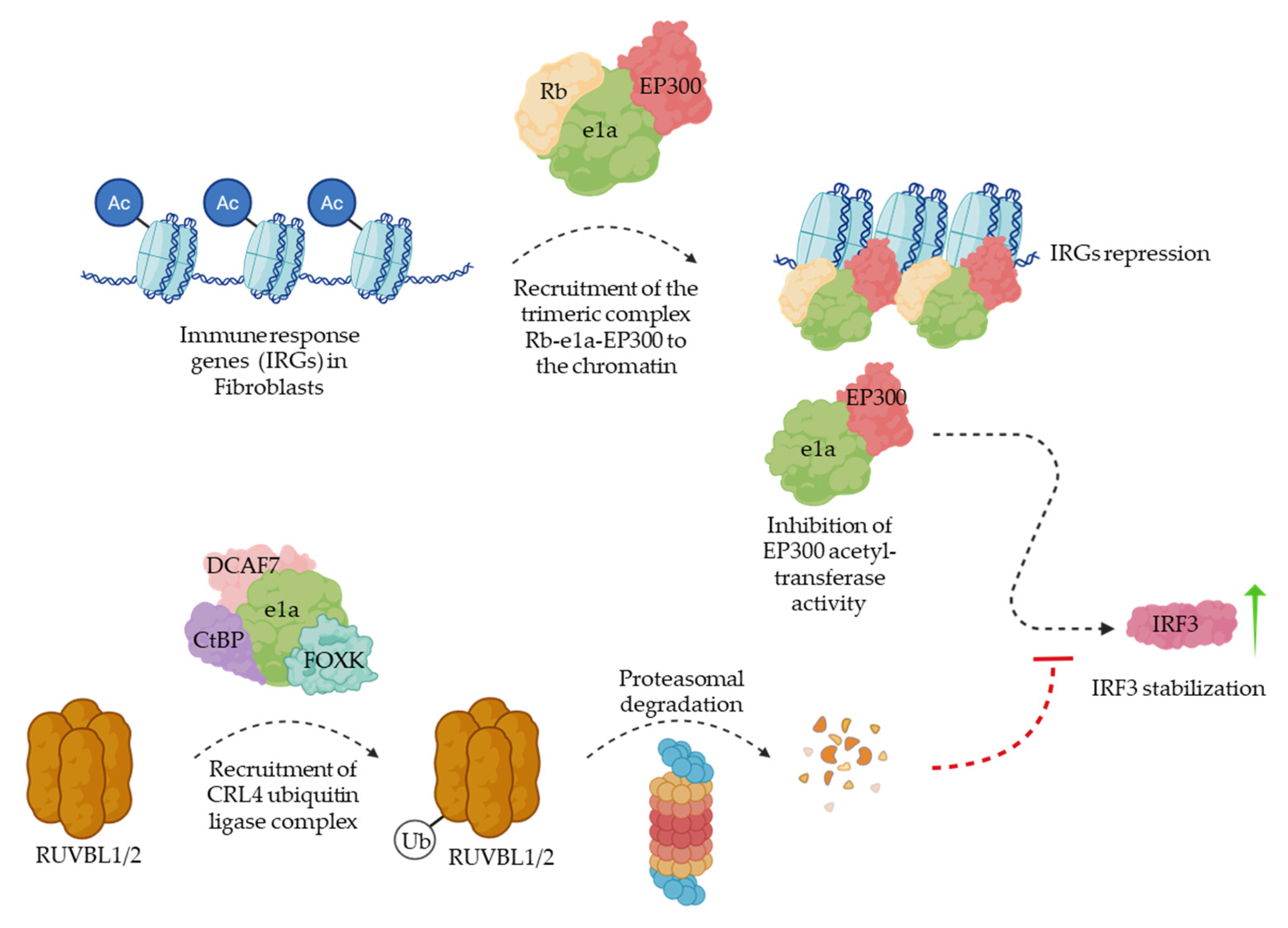
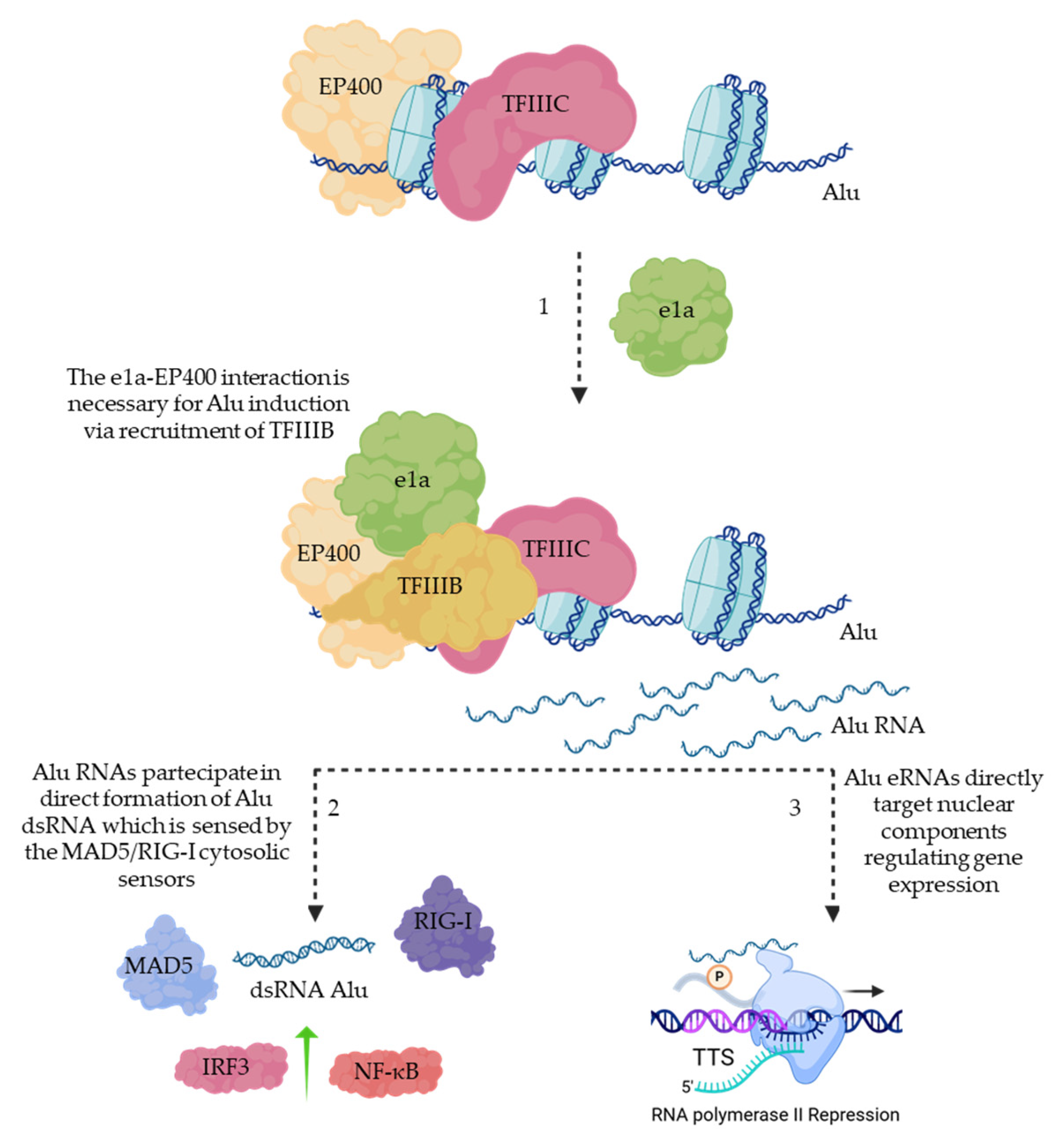
2. The Early E1A Protein: The Architect of Genome-Wide Reprogramming
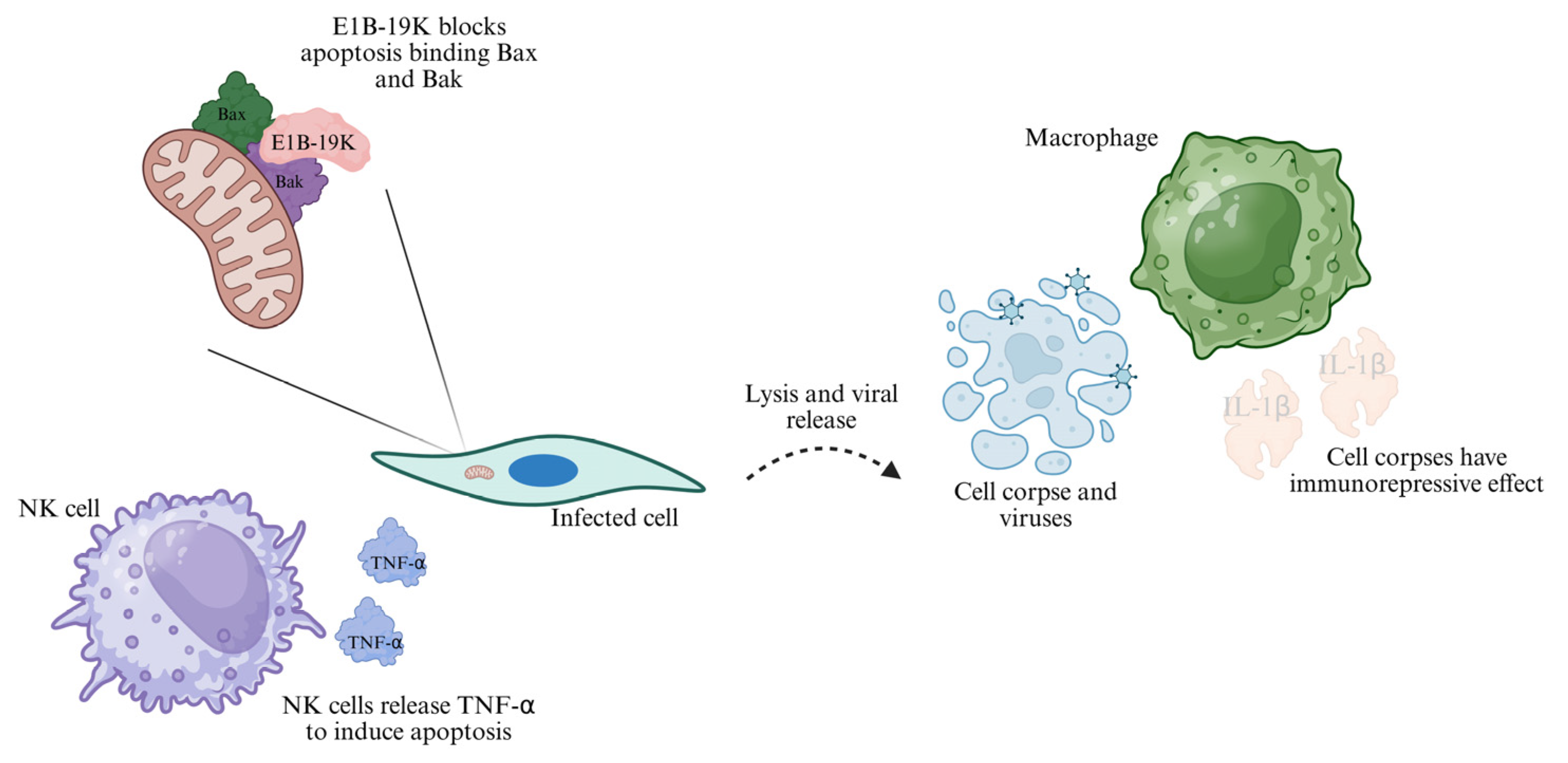
3. E1B-19K: Modulation of Apoptosis in the Immune Evasion of Adenoviruses
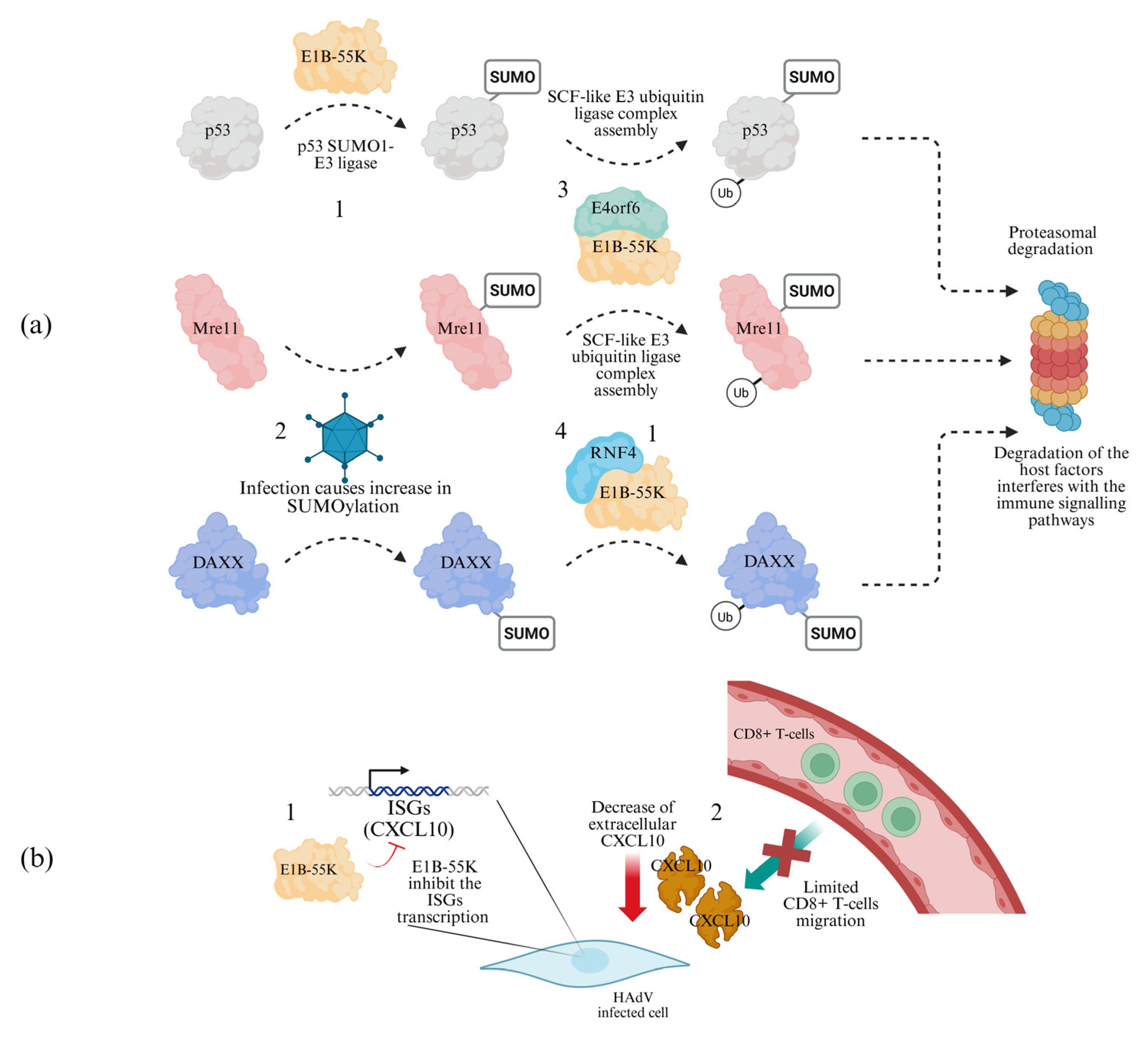
4. E1B-55K: Evasion by Degradation and Transcriptional Repression
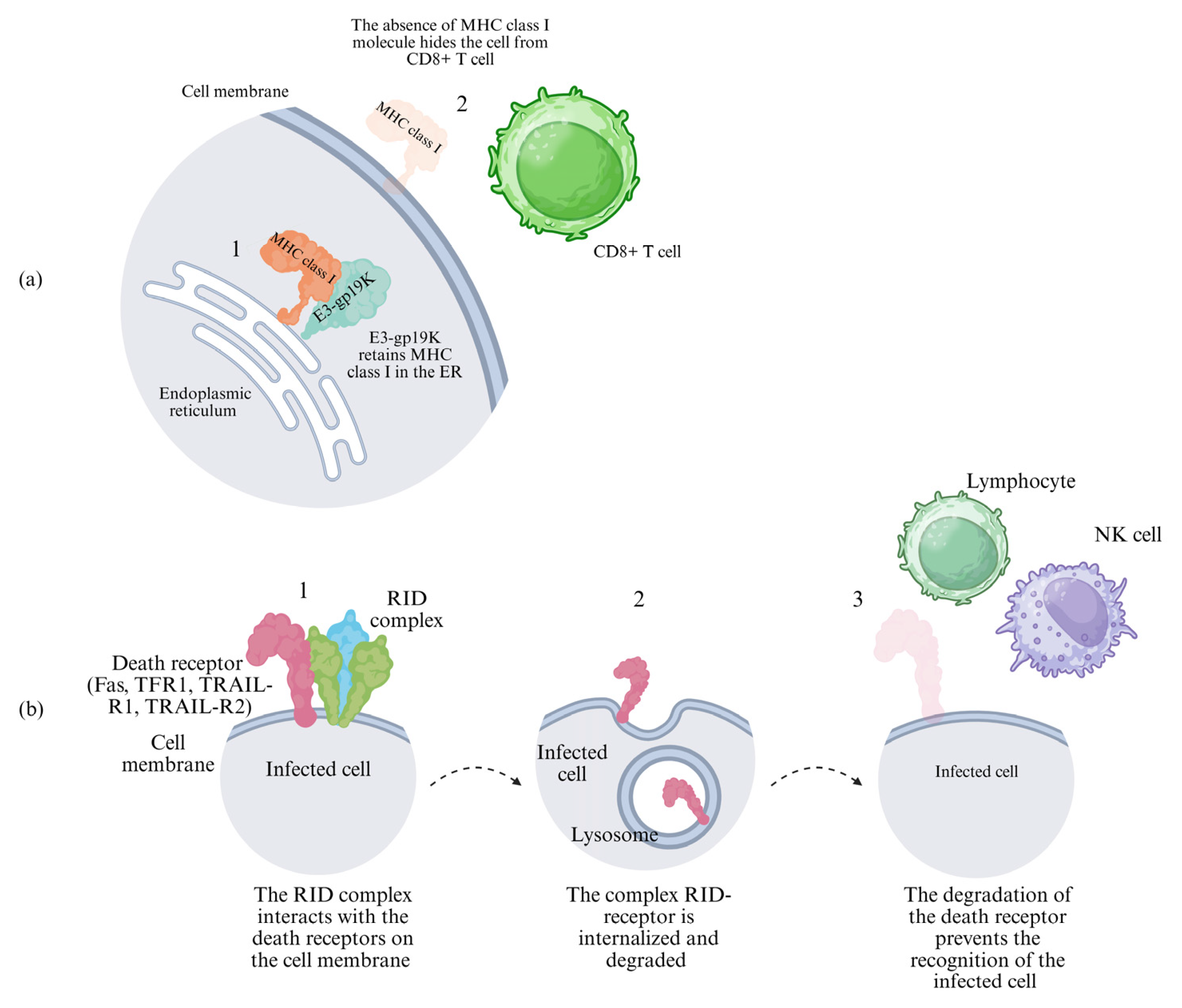
5. E3 Proteins: Key Players in Adaptive Immune Evasion
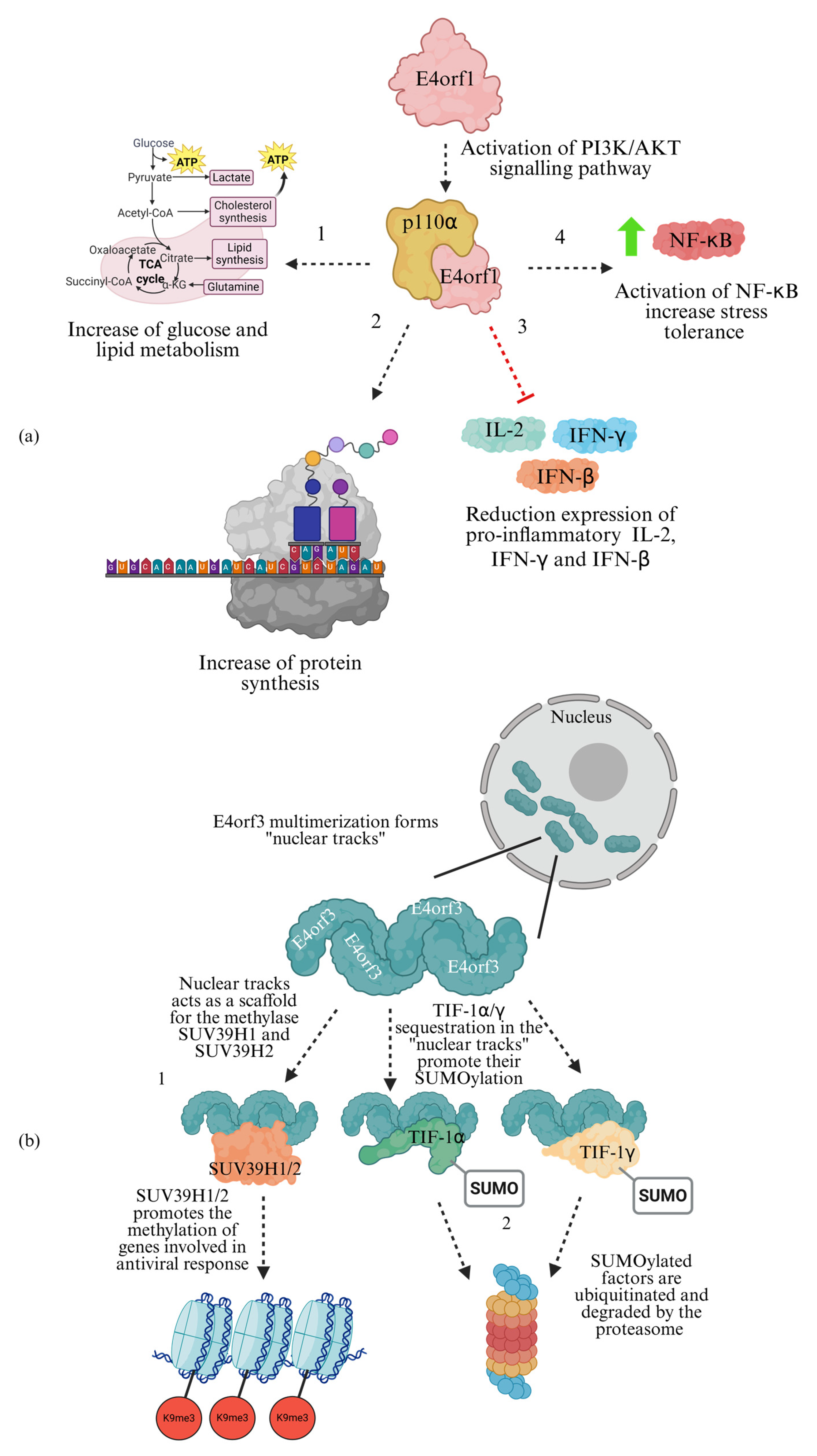
6. E4orf1 as a Pleiotropic Factor for Adenoviral Immune Evasion
7. E4orf3: Paving Nuclear Tracks for Immune Escape
8. Conclusions and Perspectives
Author Contributions
Funding
Institutional Review Board Statement
Informed Consent Statement
Data Availability Statement
Acknowledgments
Conflicts of Interest
Abbreviations
| HAdV | Human adenovirus |
| EBV | Epstein–Barr virus |
| KSHV | Kaposi’s sarcoma-associated virus |
| HCMV | Human cytomegalovirus |
| HBV | Hepatitis B virus |
| HPV | Human papillomavirus |
| IAV | Influenza A virus |
| HIV | Human immunodeficiency virus |
| HAT | Histone acetyl-transferase |
| HDAC | Histone deacetylase |
| eRNA | Enhancer RNA |
| PML-NB | Promyelocytic leukaemia |
| SINE | Short interspersed nuclear elements |
| dsRNA | Double-stranded RNA |
| CRL | Cullin-RING ligase |
| IRG | Immune response gene |
| ISG | Interferon-stimulated genes |
References
- MacNeil, K.M.; Dodge, M.J.; Evans, A.M.; Tessier, T.M.; Weinberg, J.B.; Mymryk, J.S. Adenoviruses in medicine: Innocuous pathogen, predator, or partner. Trends Mol. Med. 2023, 29, 4–19. [Google Scholar] [CrossRef]
- Koski, A.; Kangasniemi, L.; Escutenaire, S.; Pesonen, S.; Cerullo, V.; Diaconu, I.; Nokisalmi, P.; Raki, M.; Rajecki, M.; Guse, K.; et al. Treatment of cancer patients with a serotype 5/3 chimeric oncolytic adenovirus expressing GMCSF. Mol. Ther. 2010, 18, 1874–1884. [Google Scholar] [CrossRef] [PubMed]
- Sampson, A.T.; Hlavac, M.; Gillman, A.C.T.; Douradinha, B.; Gilbert, S.C. Developing the next-generation of adenoviral vector vaccines. Hum. Vaccin. Immunother. 2025, 21, 2514356. [Google Scholar] [CrossRef] [PubMed]
- Gao, J.; Mese, K.; Bunz, O.; Ehrhardt, A. State-of-the-art human adenovirus vectorology for therapeutic approaches. FEBS Lett. 2019, 593, 3609–3622. [Google Scholar] [CrossRef] [PubMed]
- Russell, S.J.; Peng, K.W.; Bell, J.C. Oncolytic virotherapy. Nat. Biotechnol. 2012, 30, 658–670. [Google Scholar] [CrossRef]
- Goradel, N.H.; Mohajel, N.; Malekshahi, Z.V.; Jahangiri, S.; Najafi, M.; Farhood, B.; Mortezaee, K.; Negahdari, B.; Arashkia, A. Oncolytic adenovirus: A tool for cancer therapy in combination with other therapeutic approaches. J. Cell. Physiol. 2019, 234, 8636–8646. [Google Scholar] [CrossRef]
- Koski, A.; Karli, E.; Kipar, A.; Escutenaire, S.; Kanerva, A.; Hemminki, A. Mutation of the fiber shaft heparan sulphate binding site of a 5/3 chimeric adenovirus reduces liver tropism. PLoS ONE 2013, 8, e60032. [Google Scholar] [CrossRef]
- Ferrari, R.; Pellegrini, M.; Horwitz, G.A.; Xie, W.; Berk, A.J.; Kurdistani, S.K. Epigenetic reprogramming by adenovirus e1a. Science 2008, 321, 1086–1088. [Google Scholar] [CrossRef]
- Wang, Z.; Luo, F.; Li, L.; Yang, L.; Hu, D.; Ma, X.; Lu, Z.; Sun, L.; Cao, Y. STAT3 activation induced by Epstein-Barr virus latent membrane protein1 causes vascular endothelial growth factor expression and cellular invasiveness via JAK3 And ERK signaling. Eur. J. Cancer 2010, 46, 2996–3006. [Google Scholar] [CrossRef]
- Zheng, D.L.; Zhang, L.; Cheng, N.; Xu, X.; Deng, Q.; Teng, X.M.; Wang, K.S.; Zhang, X.; Huang, J.; Han, Z.G. Epigenetic modification induced by hepatitis B virus X protein via interaction with de novo DNA methyltransferase DNMT3A. J. Hepatol. 2009, 50, 377–387. [Google Scholar] [CrossRef]
- Yeo-Teh, N.S.L.; Ito, Y.; Jha, S. High-Risk Human Papillomaviral Oncogenes E6 and E7 Target Key Cellular Pathways to Achieve Oncogenesis. Int. J. Mol. Sci. 2018, 19, 1706. [Google Scholar] [CrossRef]
- Lu, F.; Tsai, K.; Chen, H.S.; Wikramasinghe, P.; Davuluri, R.V.; Showe, L.; Domsic, J.; Marmorstein, R.; Lieberman, P.M. Identification of host-chromosome binding sites and candidate gene targets for Kaposi’s sarcoma-associated herpesvirus LANA. J. Virol. 2012, 86, 5752–5762. [Google Scholar] [CrossRef]
- Liu, S.; Liu, L.; Xu, G.; Cao, Z.; Wang, Q.; Li, S.; Peng, N.; Yin, J.; Yu, H.; Li, M.; et al. Epigenetic Modification Is Regulated by the Interaction of Influenza A Virus Nonstructural Protein 1 with the De Novo DNA Methyltransferase DNMT3B and Subsequent Transport to the Cytoplasm for K48-Linked Polyubiquitination. J. Virol. 2019, 93, e01587-18. [Google Scholar] [CrossRef]
- Johnson, K.E.; Song, B.; Knipe, D.M. Role for herpes simplex virus 1 ICP27 in the inhibition of type I interferon signaling. Virology 2008, 374, 487–494. [Google Scholar] [CrossRef]
- Weissman, J.D.; Brown, J.A.; Howcroft, T.K.; Hwang, J.; Chawla, A.; Roche, P.A.; Schiltz, L.; Nakatani, Y.; Singer, D.S. HIV-1 tat binds TAFII250 and represses TAFII250-dependent transcription of major histocompatibility class I genes. Proc. Natl. Acad. Sci. USA 1998, 95, 11601–11606. [Google Scholar] [CrossRef] [PubMed]
- Pelka, P.; Ablack, J.N.; Fonseca, G.J.; Yousef, A.F.; Mymryk, J.S. Intrinsic structural disorder in adenovirus E1A: A viral molecular hub linking multiple diverse processes. J. Virol. 2008, 82, 7252–7263. [Google Scholar] [CrossRef] [PubMed]
- Komorek, J.; Kuppuswamy, M.; Subramanian, T.; Vijayalingam, S.; Lomonosova, E.; Zhao, L.J.; Mymryk, J.S.; Schmitt, K.; Chinnadurai, G. Adenovirus type 5 E1A and E6 proteins of low-risk cutaneous beta-human papillomaviruses suppress cell transformation through interaction with FOXK1/K2 transcription factors. J. Virol. 2010, 84, 2719–2731. [Google Scholar] [CrossRef] [PubMed]
- Glenewinkel, F.; Cohen, M.J.; King, C.R.; Kaspar, S.; Bamberg-Lemper, S.; Mymryk, J.S.; Becker, W. The adaptor protein DCAF7 mediates the interaction of the adenovirus E1A oncoprotein with the protein kinases DYRK1A and HIPK2. Sci. Rep. 2016, 6, 28241. [Google Scholar] [CrossRef]
- Ferrari, R.; Berk, A.J.; Kurdistani, S.K. Viral manipulation of the host epigenome for oncogenic transformation. Nat. Rev. Genet. 2009, 10, 290–294. [Google Scholar] [CrossRef] [PubMed]
- Ferrari, R.; Gou, D.; Jawdekar, G.; Johnson, S.A.; Nava, M.; Su, T.; Yousef, A.F.; Zemke, N.R.; Pellegrini, M.; Kurdistani, S.K.; et al. Adenovirus small E1A employs the lysine acetylases p300/CBP and tumor suppressor Rb to repress select host genes and promote productive virus infection. Cell Host Microbe 2014, 16, 663–676. [Google Scholar] [CrossRef]
- Ferrari, R.; Su, T.; Li, B.; Bonora, G.; Oberai, A.; Chan, Y.; Sasidharan, R.; Berk, A.J.; Pellegrini, M.; Kurdistani, S.K. Reorganization of the host epigenome by a viral oncogene. Genome Res. 2012, 22, 1212–1221. [Google Scholar] [CrossRef]
- Lutschg, V.; Boucke, K.; Hemmi, S.; Greber, U.F. Chemotactic antiviral cytokines promote infectious apical entry of human adenovirus into polarized epithelial cells. Nat. Commun. 2011, 2, 391. [Google Scholar] [CrossRef] [PubMed]
- Zemke, N.R.; Hsu, E.; Barshop, W.D.; Sha, J.; Wohlschlegel, J.A.; Berk, A.J. Adenovirus E1A binding to DCAF10 targets proteasomal degradation of RUVBL1/2 AAA+ ATPases required for quaternary assembly of multiprotein machines, innate immunity, and responses to metabolic stress. J. Virol. 2023, 97, e0099323. [Google Scholar] [CrossRef] [PubMed]
- Weinberg, R.A. The retinoblastoma protein and cell cycle control. Cell 1995, 81, 323–330. [Google Scholar] [CrossRef]
- Liu, X.; Marmorstein, R. Structure of the retinoblastoma protein bound to adenovirus E1A reveals the molecular basis for viral oncoprotein inactivation of a tumor suppressor. Genes Dev. 2007, 21, 2711–2716. [Google Scholar] [CrossRef]
- Zemke, N.R.; Gou, D.; Berk, A.J. Dedifferentiation by adenovirus E1A due to inactivation of Hippo pathway effectors YAP and TAZ. Genes Dev. 2019, 33, 828–843. [Google Scholar] [CrossRef] [PubMed]
- Lohr, K.; Hartmann, O.; Schafer, H.; Dobbelstein, M. Mutual interference of adenovirus infection and myc expression. J. Virol. 2003, 77, 7936–7944. [Google Scholar] [CrossRef]
- Tworkowski, K.A.; Chakraborty, A.A.; Samuelson, A.V.; Seger, Y.R.; Narita, M.; Hannon, G.J.; Lowe, S.W.; Tansey, W.P. Adenovirus E1A targets p400 to induce the cellular oncoprotein Myc. Proc. Natl. Acad. Sci. USA 2008, 105, 6103–6108. [Google Scholar] [CrossRef]
- Cantarella, S.; Vezzoli, M.; Carnevali, D.; Morselli, M.; Zemke, N.R.; Montanini, B.; Daussy, C.F.; Wodrich, H.; Teichmann, M.; Pellegrini, M.; et al. Adenovirus small E1A directs activation of Alu transcription at YAP/TEAD- and AP-1-bound enhancers through interactions with the EP400 chromatin remodeler. Nucleic Acids Res. 2024, 52, 9481–9500. [Google Scholar] [CrossRef]
- Ahmad, S.; Mu, X.; Yang, F.; Greenwald, E.; Park, J.W.; Jacob, E.; Zhang, C.Z.; Hur, S. Breaching Self-Tolerance to Alu Duplex RNA Underlies MDA5-Mediated Inflammation. Cell 2018, 172, 797–810.e13. [Google Scholar] [CrossRef]
- Cottrell, K.A.; Andrews, R.J.; Bass, B.L. The competitive landscape of the dsRNA world. Mol. Cell 2024, 84, 107–119. [Google Scholar] [CrossRef]
- Tluckova, K.; Kaczmarek, B.; Salmazo, A.; Bernecky, C. Mechanism of mammalian transcriptional repression by noncoding RNA. Nat. Struct. Mol. Biol. 2025, 32, 607–612. [Google Scholar] [CrossRef]
- Yakovchuk, P.; Goodrich, J.A.; Kugel, J.F. B2 RNA and Alu RNA repress transcription by disrupting contacts between RNA polymerase II and promoter DNA within assembled complexes. Proc. Natl. Acad. Sci. USA 2009, 106, 5569–5574. [Google Scholar] [CrossRef] [PubMed]
- Pelka, P.; Ablack, J.N.; Shuen, M.; Yousef, A.F.; Rasti, M.; Grand, R.J.; Turnell, A.S.; Mymryk, J.S. Identification of a second independent binding site for the pCAF acetyltransferase in adenovirus E1A. Virology 2009, 391, 90–98. [Google Scholar] [CrossRef] [PubMed]
- Li, X.; Cho, Y.S.; Han, Y.; Zhou, M.; Liu, Y.; Yang, Y.; Zhuo, S.; Jiang, J. The Hippo pathway effector YAP inhibits NF-κB signaling and ccRCC growth by opposing ZHX2. J. Biol. Chem. 2025, 301, 108430. [Google Scholar] [CrossRef] [PubMed]
- Berhane, S.; Areste, C.; Ablack, J.N.; Ryan, G.B.; Blackbourn, D.J.; Mymryk, J.S.; Turnell, A.S.; Steele, J.C.; Grand, R.J. Adenovirus E1A interacts directly with, and regulates the level of expression of, the immunoproteasome component MECL1. Virology 2011, 421, 149–158. [Google Scholar] [CrossRef]
- Gregory, S.M.; Nazir, S.A.; Metcalf, J.P. Implications of the innate immune response to adenovirus and adenoviral vectors. Future Virol. 2011, 6, 357–374. [Google Scholar] [CrossRef]
- Carlin, C.R. New Insights to Adenovirus-Directed Innate Immunity in Respiratory Epithelial Cells. Microorganisms 2019, 7, 216. [Google Scholar] [CrossRef]
- Federico, S.; Pozzetti, L.; Papa, A.; Carullo, G.; Gemma, S.; Butini, S.; Campiani, G.; Relitti, N. Modulation of the Innate Immune Response by Targeting Toll-like Receptors: A Perspective on Their Agonists and Antagonists. J. Med. Chem. 2020, 63, 13466–13513. [Google Scholar] [CrossRef]
- D’Anna, S.E.; Maniscalco, M.; Cappello, F.; Carone, M.; Motta, A.; Balbi, B.; Ricciardolo, F.L.M.; Caramori, G.; Stefano, A.D. Bacterial and viral infections and related inflammatory responses in chronic obstructive pulmonary disease. Ann. Med. 2021, 53, 135–150. [Google Scholar] [CrossRef]
- Ip, W.H.; Dobner, T. Cell transformation by the adenovirus oncogenes E1 and E4. FEBS Lett. 2020, 594, 1848–1860. [Google Scholar] [CrossRef]
- White, E. Mechanisms of apoptosis regulation by viral oncogenes in infection and tumorigenesis. Cell Death Differ. 2006, 13, 1371–1377. [Google Scholar] [CrossRef]
- Radke, J.R.; Grigera, F.; Ucker, D.S.; Cook, J.L. Adenovirus E1B 19-kilodalton protein modulates innate immunity through apoptotic mimicry. J. Virol. 2014, 88, 2658–2669. [Google Scholar] [CrossRef] [PubMed]
- Sato, K.; Ito, K.; Kohara, H.; Yamaguchi, Y.; Adachi, K.; Endo, H. Negative regulation of catalase gene expression in hepatoma cells. Mol. Cell. Biol. 1992, 12, 2525–2533. [Google Scholar] [CrossRef] [PubMed]
- Kato, Y.; Rice, N.; Pokrass, M.; Jeong, J.; Rodriguez, R.; Field, J.J.; Nowyhed, H. Nonclinical characterization of ICVB-1042 as a selective oncolytic adenovirus for solid tumor treatment. Commun. Biol. 2024, 7, 1132. [Google Scholar] [CrossRef]
- Sparer, T.E.; Tripp, R.A.; Dillehay, D.L.; Hermiston, T.W.; Wold, W.S.; Gooding, L.R. The role of human adenovirus early region 3 proteins (gp19K, 10.4K, 14.5K, and 14.7K) in a murine pneumonia model. J. Virol. 1996, 70, 2431–2439. [Google Scholar] [CrossRef]
- Schreiner, S.; Wimmer, P.; Dobner, T. Adenovirus degradation of cellular proteins. Future Microbiol. 2012, 7, 211–225. [Google Scholar] [CrossRef]
- Pennella, M.A.; Liu, Y.; Woo, J.L.; Kim, C.A.; Berk, A.J. Adenovirus E1B 55-kilodalton protein is a p53-SUMO1 E3 ligase that represses p53 and stimulates its nuclear export through interactions with promyelocytic leukemia nuclear bodies. J. Virol. 2010, 84, 12210–12225. [Google Scholar] [CrossRef] [PubMed]
- Ip, W.H.; Tatham, M.H.; Krohne, S.; Gruhne, J.; Melling, M.; Meyer, T.; Gornott, B.; Bertzbach, L.D.; Hay, R.T.; Rodriguez, E.; et al. Adenovirus E1B-55K controls SUMO-dependent degradation of antiviral cellular restriction factors. J. Virol. 2023, 97, e0079123. [Google Scholar] [CrossRef]
- Baker, A.; Rohleder, K.J.; Hanakahi, L.A.; Ketner, G. Adenovirus E4 34k and E1b 55k oncoproteins target host DNA ligase IV for proteasomal degradation. J. Virol. 2007, 81, 7034–7040. [Google Scholar] [CrossRef]
- Dallaire, F.; Blanchette, P.; Groitl, P.; Dobner, T.; Branton, P.E. Identification of integrin α3 as a new substrate of the adenovirus E4orf6/E1B 55-kilodalton E3 ubiquitin ligase complex. J. Virol. 2009, 83, 5329–5338. [Google Scholar] [CrossRef]
- Gupta, A.; Jha, S.; Engel, D.A.; Ornelles, D.A.; Dutta, A. Tip60 degradation by adenovirus relieves transcriptional repression of viral transcriptional activator EIA. Oncogene 2013, 32, 5017–5025. [Google Scholar] [CrossRef]
- Querido, E.; Blanchette, P.; Yan, Q.; Kamura, T.; Morrison, M.; Boivin, D.; Kaelin, W.G.; Conaway, R.C.; Conaway, J.W.; Branton, P.E. Degradation of p53 by adenovirus E4orf6 and E1B55K proteins occurs via a novel mechanism involving a Cullin-containing complex. Genes Dev. 2001, 15, 3104–3117. [Google Scholar] [CrossRef]
- Schreiner, S.; Burck, C.; Glass, M.; Groitl, P.; Wimmer, P.; Kinkley, S.; Mund, A.; Everett, R.D.; Dobner, T. Control of human adenovirus type 5 gene expression by cellular Daxx/ATRX chromatin-associated complexes. Nucleic Acids Res. 2013, 41, 3532–3550. [Google Scholar] [CrossRef]
- Schreiner, S.; Kinkley, S.; Burck, C.; Mund, A.; Wimmer, P.; Schubert, T.; Groitl, P.; Will, H.; Dobner, T. SPOC1-mediated antiviral host cell response is antagonized early in human adenovirus type 5 infection. PLoS Pathog. 2013, 9, e1003775. [Google Scholar] [CrossRef]
- Muncheberg, S.; Hay, R.T.; Ip, W.H.; Meyer, T.; Weiss, C.; Brenke, J.; Masser, S.; Hadian, K.; Dobner, T.; Schreiner, S. E1B-55K-Mediated Regulation of RNF4 SUMO-Targeted Ubiquitin Ligase Promotes Human Adenovirus Gene Expression. J. Virol. 2018, 92. [Google Scholar] [CrossRef]
- Kolbe, V.; Ip, W.H.; Kieweg-Thompson, L.; Lang, J.; Gruhne, J.; Meyer, T.; Wilkens, B.; Schie, M.; Thunauer, R.; Schreiner, S.; et al. Conserved E1B-55K SUMOylation in Different Human Adenovirus Species Is a Potent Regulator of Intracellular Localization. J. Virol. 2022, 96, e0083821. [Google Scholar] [CrossRef] [PubMed]
- von Stromberg, K.; Seddar, L.; Ip, W.H.; Gunther, T.; Gornott, B.; Weinert, S.C.; Huppner, M.; Bertzbach, L.D.; Dobner, T. The human adenovirus E1B-55K oncoprotein coordinates cell transformation through regulation of DNA-bound host transcription factors. Proc. Natl. Acad. Sci. USA 2023, 120, e2310770120. [Google Scholar] [CrossRef] [PubMed]
- Seddar, L.; von Stromberg, K.; Bertzbach, L.D.; Grundhoff, A.; Dobner, T.; Ip, W.H. Adenovirus E1B-55K regulates p53-dependent and -independent gene expression during infection. PLoS Pathog. 2025, 21, e1013622. [Google Scholar] [CrossRef] [PubMed]
- Ip, W.H.; Bertzbach, L.D.; Schreiner, S.; Dobner, T. Adenovirus E1B-55K interferes with cellular IκB kinase complex subunit proteins. Front. Immunol. 2025, 16, 1532742. [Google Scholar] [CrossRef]
- Ozga, A.J.; Chow, M.T.; Lopes, M.E.; Servis, R.L.; Di Pilato, M.; Dehio, P.; Lian, J.; Mempel, T.R.; Luster, A.D. CXCL10 chemokine regulates heterogeneity of the CD8+ T cell response and viral set point during chronic infection. Immunity 2022, 55, 82–97.e8. [Google Scholar] [CrossRef] [PubMed]
- Soria, C.; Estermann, F.E.; Espantman, K.C.; O’Shea, C.C. Author Correction: Heterochromatin silencing of p53 target genes by a small viral protein. Nature 2023, 614, E29. [Google Scholar] [CrossRef] [PubMed]
- McSharry, B.P.; Burgert, H.G.; Owen, D.P.; Stanton, R.J.; Prod’homme, V.; Sester, M.; Koebernick, K.; Groh, V.; Spies, T.; Cox, S.; et al. Adenovirus E3/19K promotes evasion of NK cell recognition by intracellular sequestration of the NKG2D ligands major histocompatibility complex class I chain-related proteins A and B. J. Virol. 2008, 82, 4585–4594. [Google Scholar] [CrossRef]
- Prasad, V.; Suomalainen, M.; Jasiqi, Y.; Hemmi, S.; Hearing, P.; Hosie, L.; Burgert, H.G.; Greber, U.F. The UPR sensor IRE1α and the adenovirus E3-19K glycoprotein sustain persistent and lytic infections. Nat. Commun. 2020, 11, 1997. [Google Scholar] [CrossRef]
- Korner, H.; Burgert, H.G. Down-regulation of HLA antigens by the adenovirus type 2 E3/19K protein in a T-lymphoma cell line. J. Virol. 1994, 68, 1442–1448. [Google Scholar] [CrossRef]
- Fu, J.; Li, L.; Bouvier, M. Adenovirus E3-19K proteins of different serotypes and subgroups have similar, yet distinct, immunomodulatory functions toward major histocompatibility class I molecules. J. Biol. Chem. 2011, 286, 17631–17639. [Google Scholar] [CrossRef]
- Oliveira, E.R.A.; Bouvier, M. Immune evasion by adenoviruses: A window into host-virus adaptation. FEBS Lett. 2019, 593, 3496–3503. [Google Scholar] [CrossRef] [PubMed]
- Benedict, C.A.; Norris, P.S.; Prigozy, T.I.; Bodmer, J.L.; Mahr, J.A.; Garnett, C.T.; Martinon, F.; Tschopp, J.; Gooding, L.R.; Ware, C.F. Three adenovirus E3 proteins cooperate to evade apoptosis by tumor necrosis factor-related apoptosis-inducing ligand receptor-1 and -2. J. Biol. Chem. 2001, 276, 3270–3278. [Google Scholar] [CrossRef]
- Tollefson, A.E.; Toth, K.; Doronin, K.; Kuppuswamy, M.; Doronina, O.A.; Lichtenstein, D.L.; Hermiston, T.W.; Smith, C.A.; Wold, W.S. Inhibition of TRAIL-induced apoptosis and forced internalization of TRAIL receptor 1 by adenovirus proteins. J. Virol. 2001, 75, 8875–8887. [Google Scholar] [CrossRef]
- Elsing, A.; Burgert, H.G. The adenovirus E3/10.4K-14.5K proteins down-modulate the apoptosis receptor Fas/Apo-1 by inducing its internalization. Proc. Natl. Acad. Sci. USA 1998, 95, 10072–10077. [Google Scholar] [CrossRef]
- Shisler, J.; Yang, C.; Walter, B.; Ware, C.F.; Gooding, L.R. The adenovirus E3-10.4K/14.5K complex mediates loss of cell surface Fas (CD95) and resistance to Fas-induced apoptosis. J. Virol. 1997, 71, 8299–8306. [Google Scholar] [CrossRef] [PubMed]
- McNees, A.L.; Garnett, C.T.; Gooding, L.R. The adenovirus E3 RID complex protects some cultured human T and B lymphocytes from Fas-induced apoptosis. J. Virol. 2002, 76, 9716–9723. [Google Scholar] [CrossRef] [PubMed]
- Monsalve, F.A.; Rojas, A.; Gonzalez, I.; Perez, R.; Anasco, C.; Romero, J.; Araya, P.; Santos, L.S.; Delgado-Lopez, F. RID: Evaluation of the Possible Inhibiting Effect of the Proinflammatory Signaling Induced by TNF-α through NF-κβ and AP-1 in Two Cell Lines of Breast Cancer. Mediat. Inflamm. 2020, 2020, 2707635. [Google Scholar] [CrossRef]
- Delgado-Lopez, F.; Horwitz, M.S. Adenovirus RIDαβ complex inhibits lipopolysaccharide signaling without altering TLR4 cell surface expression. J. Virol. 2006, 80, 6378–6386. [Google Scholar] [CrossRef]
- Cardoso Alves, L.; Berger, M.D.; Koutsandreas, T.; Kirschke, N.; Lauer, C.; Sporri, R.; Chatziioannou, A.; Corazza, N.; Krebs, P. Non-apoptotic TRAIL function modulates NK cell activity during viral infection. EMBO Rep. 2020, 21, e48789. [Google Scholar] [CrossRef]
- Gainey, M.D.; Rivenbark, J.G.; Cho, H.; Yang, L.; Yokoyama, W.M. Viral MHC class I inhibition evades CD8+ T-cell effector responses in vivo but not CD8+ T-cell priming. Proc. Natl. Acad. Sci. USA 2012, 109, E3260–E3267. [Google Scholar] [CrossRef]
- Ismail, A.M.; Saha, A.; Morrissey, K.A.; Lundquist, D.; Garcia, E.; Balne, P.; Cannon, J.L.; Chodosh, J.; Rajaiya, J. OCT4 Negatively Regulates the Transcriptional Programming of the Early Region 3 Immune Evasion Genes of Human Adenovirus. bioRxiv 2025. [Google Scholar] [CrossRef]
- Owaki, T.; Asakawa, M.; Morishima, N.; Hata, K.; Fukai, F.; Matsui, M.; Mizuguchi, J.; Yoshimoto, T. A role for IL-27 in early regulation of Th1 differentiation. J. Immunol. 2005, 175, 2191–2200. [Google Scholar] [CrossRef]
- Saleem, M.; Chang, C.W.; Qadeer, A.; Asiri, M.; Alzahrani, F.M.; Alzahrani, K.J.; Alsharif, K.F.; Chen, C.C.; Hussain, S. The emerging role of extracellular vesicles in viral transmission and immune evasion. Front. Immunol. 2025, 16, 1634758. [Google Scholar] [CrossRef]
- Nachmias, D.; Frohn, B.P.; Sachse, C.; Mizrahi, I.; Elia, N. ESCRTs—A multi-purpose membrane remodeling device encoded in all life forms. Trends Microbiol. 2025, 33, 665–687. [Google Scholar] [CrossRef] [PubMed]
- Doorbar, J. The E4 protein; structure, function and patterns of expression. Virology 2013, 445, 80–98. [Google Scholar] [CrossRef] [PubMed]
- Weitzman, M.D. Functions of the adenovirus E4 proteins and their impact on viral vectors. Front. Biosci. 2005, 10, 1106–1117. [Google Scholar] [CrossRef] [PubMed]
- Geng, F.; Kobayashi, M.; Lin, Y.; Gomez-Salinero, J.M.; Romano, D.; Kanyo, J.; Geng, J.; Liu, Y.; Ginsberg, M.; Shieh, J.H.; et al. Adenovirus E4ORF1 activates isoform-specific phosphatidylinositol 3-kinase signaling in human endothelial cells. J. Biol. Chem. 2026, 302, 110947. [Google Scholar] [CrossRef]
- Almuzaini, N.; Moore, M.; Robert-Guroff, M.; Thomas, M.A. Disruption of NBS1/MRN Complex Formation by E4orf3 Supports NF-κB That Licenses E1B55K-Deleted Adenovirus-Infected Cells to Accumulate DNA>4n. Microbiol. Spectr. 2022, 10, e01881-21. [Google Scholar] [CrossRef]
- Singhal, G.; Leo, E.; Setty, S.K.; Pommier, Y.; Thimmapaya, B. Adenovirus E1A oncogene induces rereplication of cellular DNA and alters DNA replication dynamics. J. Virol. 2013, 87, 8767–8778. [Google Scholar] [CrossRef]
- Moore, M.; Kong, J.; Akmel, A.; Thomas, M.A. The adenovirus E4orf1 protein initiates a feedback loop involving insulin and growth factor receptors, AKT, and NF-κB, leading to abnormal DNA content in infected cells. PLoS Pathog. 2025, 21, e1013202. [Google Scholar] [CrossRef]
- Thai, M.; Graham, N.A.; Braas, D.; Nehil, M.; Komisopoulou, E.; Kurdistani, S.K.; McCormick, F.; Graeber, T.G.; Christofk, H.R. Adenovirus E4ORF1-induced MYC activation promotes host cell anabolic glucose metabolism and virus replication. Cell Metab. 2014, 19, 694–701. [Google Scholar] [CrossRef]
- Sangare, K.; Helmold Hait, S.; Moore, M.; Hogge, C.; Hoang, T.; Rahman, M.A.; Venzon, D.J.; LaBranche, C.; Montefiori, D.; Robert-Guroff, M.; et al. E4orf1 Suppresses E1B-Deleted Adenovirus Vaccine-Induced Immune Responses. Vaccines 2022, 10, 295. [Google Scholar] [CrossRef]
- Doucas, V.; Ishov, A.M.; Romo, A.; Juguilon, H.; Weitzman, M.D.; Evans, R.M.; Maul, G.G. Adenovirus replication is coupled with the dynamic properties of the PML nuclear structure. Genes Dev. 1996, 10, 196–207. [Google Scholar] [CrossRef]
- Patsalo, V.; Yondola, M.A.; Luan, B.; Shoshani, I.; Kisker, C.; Green, D.F.; Raleigh, D.P.; Hearing, P. Biophysical and functional analyses suggest that adenovirus E4-ORF3 protein requires higher-order multimerization to function against promyelocytic leukemia protein nuclear bodies. J. Biol. Chem. 2012, 287, 22573–22583. [Google Scholar] [CrossRef] [PubMed]
- Sohn, S.Y.; Hearing, P. Mechanism of Adenovirus E4-ORF3-Mediated SUMO Modifications. mBio 2019, 10, e00022-19. [Google Scholar] [CrossRef]
- Araujo, F.D.; Stracker, T.H.; Carson, C.T.; Lee, D.V.; Weitzman, M.D. Adenovirus type 5 E4orf3 protein targets the Mre11 complex to cytoplasmic aggresomes. J. Virol. 2005, 79, 11382–11391. [Google Scholar] [CrossRef]
- Stracker, T.H.; Carson, C.T.; Weitzman, M.D. Adenovirus oncoproteins inactivate the Mre11-Rad50-NBS1 DNA repair complex. Nature 2002, 418, 348–352. [Google Scholar] [CrossRef]
- Sohn, S.Y.; Hearing, P. The adenovirus E4-ORF3 protein functions as a SUMO E3 ligase for TIF-1γ sumoylation and poly-SUMO chain elongation. Proc. Natl. Acad. Sci. USA 2016, 113, 6725–6730. [Google Scholar] [CrossRef] [PubMed]
- Forrester, N.A.; Patel, R.N.; Speiseder, T.; Groitl, P.; Sedgwick, G.G.; Shimwell, N.J.; Seed, R.I.; Catnaigh, P.O.; McCabe, C.J.; Stewart, G.S.; et al. Adenovirus E4orf3 targets transcriptional intermediary factor 1γ for proteasome-dependent degradation during infection. J. Virol. 2012, 86, 3167–3179. [Google Scholar] [CrossRef][Green Version]
- Bridges, R.G.; Sohn, S.Y.; Wright, J.; Leppard, K.N.; Hearing, P. The Adenovirus E4-ORF3 Protein Stimulates SUMOylation of General Transcription Factor TFII-I to Direct Proteasomal Degradation. mBio 2016, 7, e02184-15. [Google Scholar] [CrossRef]
- Vink, E.I.; Zheng, Y.; Yeasmin, R.; Stamminger, T.; Krug, L.T.; Hearing, P. Impact of Adenovirus E4-ORF3 Oligomerization and Protein Localization on Cellular Gene Expression. Viruses 2015, 7, 2428–2449. [Google Scholar] [CrossRef] [PubMed]
- Ohbayashi, N.; Kawakami, S.; Muromoto, R.; Togi, S.; Ikeda, O.; Kamitani, S.; Sekine, Y.; Honjoh, T.; Matsuda, T. The IL-6 family of cytokines modulates STAT3 activation by desumoylation of PML through SENP1 induction. Biochem. Biophys. Res. Commun. 2008, 371, 823–828. [Google Scholar] [CrossRef] [PubMed]
- Locatelli, M.; Faure-Dupuy, S. Virus hijacking of host epigenetic machinery to impair immune response. J. Virol. 2023, 97, e0065823. [Google Scholar] [CrossRef]
- Van Gelder, R.N.; Akileswaran, L.; Nakamichi, K.; Stroman, D. Molecular and Clinical Characterization of Human Adenovirus E4-Associated Conjunctivitis. Am. J. Ophthalmol. 2022, 233, 227–242. [Google Scholar] [CrossRef]
- Pujantell, M.; Altfeld, M. Consequences of sex differences in Type I IFN responses for the regulation of antiviral immunity. Front. Immunol. 2022, 13, 986840. [Google Scholar] [CrossRef]
- Ginsberg, H.S.; Lundholm-Beauchamp, U.; Horswood, R.L.; Pernis, B.; Wold, W.S.; Chanock, R.M.; Prince, G.A. Role of early region 3 (E3) in pathogenesis of adenovirus disease. Proc. Natl. Acad. Sci. USA 1989, 86, 3823–3827. [Google Scholar] [CrossRef] [PubMed]
- Ilan, Y.; Droguett, G.; Chowdhury, N.R.; Li, Y.; Sengupta, K.; Thummala, N.R.; Davidson, A.; Chowdhury, J.R.; Horwitz, M.S. Insertion of the adenoviral E3 region into a recombinant viral vector prevents antiviral humoral and cellular immune responses and permits long-term gene expression. Proc. Natl. Acad. Sci. USA 1997, 94, 2587–2592. [Google Scholar] [CrossRef] [PubMed]
- Lesokhin, A.M.; Delgado-Lopez, F.; Horwitz, M.S. Inhibition of chemokine expression by adenovirus early region three (E3) genes. J. Virol. 2002, 76, 8236–8243. [Google Scholar] [CrossRef] [PubMed]



| Virus | Viral Protein | Target | Pathway/Mechanisms | Reference |
|---|---|---|---|---|
| EBV | LMP1/2 | JNK/AP-1; STAT3 | Activation of the JNK/AP-1 and STAT3 signalling pathway | [9] |
| HBV | HBx | DNMT1; DNMT3A | Hypermethylation of IL-4R, USF1 promoters | [10] |
| HPV | E6; E7 | DNMT1 | Hypermethylation of IFNκ promoter | [11] |
| KSHV | LANA | STAT1 | Inhibition of STAT1 phosphorylation | [12] |
| IAV | NS1 | DNMT3B | Degradation of DNMT3B causes increase expression of JAK/STAT inhibitors | [13] |
| HSV-1 | ICP27 | STAT1 | Inhibition of STAT1 phosphorylation | [14] |
| HIV | Tat | TAFII250 | Inhibition of the TAFII250 HAT activity | [15] |
Disclaimer/Publisher’s Note: The statements, opinions and data contained in all publications are solely those of the individual author(s) and contributor(s) and not of MDPI and/or the editor(s). MDPI and/or the editor(s) disclaim responsibility for any injury to people or property resulting from any ideas, methods, instructions or products referred to in the content. |
© 2026 by the authors. Licensee MDPI, Basel, Switzerland. This article is an open access article distributed under the terms and conditions of the Creative Commons Attribution (CC BY) license.
Share and Cite
Vezzoli, M.; Dieci, G.; Ferrari, R. The Viral Immunoshadow: Early Adenovirus Strategies for Cloaking Innate Immunity with E1A, E4orf1, and Beyond. Cells 2026, 15, 746. https://doi.org/10.3390/cells15090746
Vezzoli M, Dieci G, Ferrari R. The Viral Immunoshadow: Early Adenovirus Strategies for Cloaking Innate Immunity with E1A, E4orf1, and Beyond. Cells. 2026; 15(9):746. https://doi.org/10.3390/cells15090746
Chicago/Turabian StyleVezzoli, Marco, Giorgio Dieci, and Roberto Ferrari. 2026. "The Viral Immunoshadow: Early Adenovirus Strategies for Cloaking Innate Immunity with E1A, E4orf1, and Beyond" Cells 15, no. 9: 746. https://doi.org/10.3390/cells15090746
APA StyleVezzoli, M., Dieci, G., & Ferrari, R. (2026). The Viral Immunoshadow: Early Adenovirus Strategies for Cloaking Innate Immunity with E1A, E4orf1, and Beyond. Cells, 15(9), 746. https://doi.org/10.3390/cells15090746