Cholinergic Differentiation of Human iPSCs Reveals Early APOE4-Driven Dysregulation of Neuronal Markers, Synaptogenesis and Inflammatory Responses

Abstract
1. Introduction
2. Materials and Methods
2.1. Cell Culture and Neuronal Differentiation
2.2. Lentiviral Production and Transduction
2.3. Immunocytochemistry
2.4. TNF-α Treatment
2.5. RT-PCR and RT-qPCR
3. Results
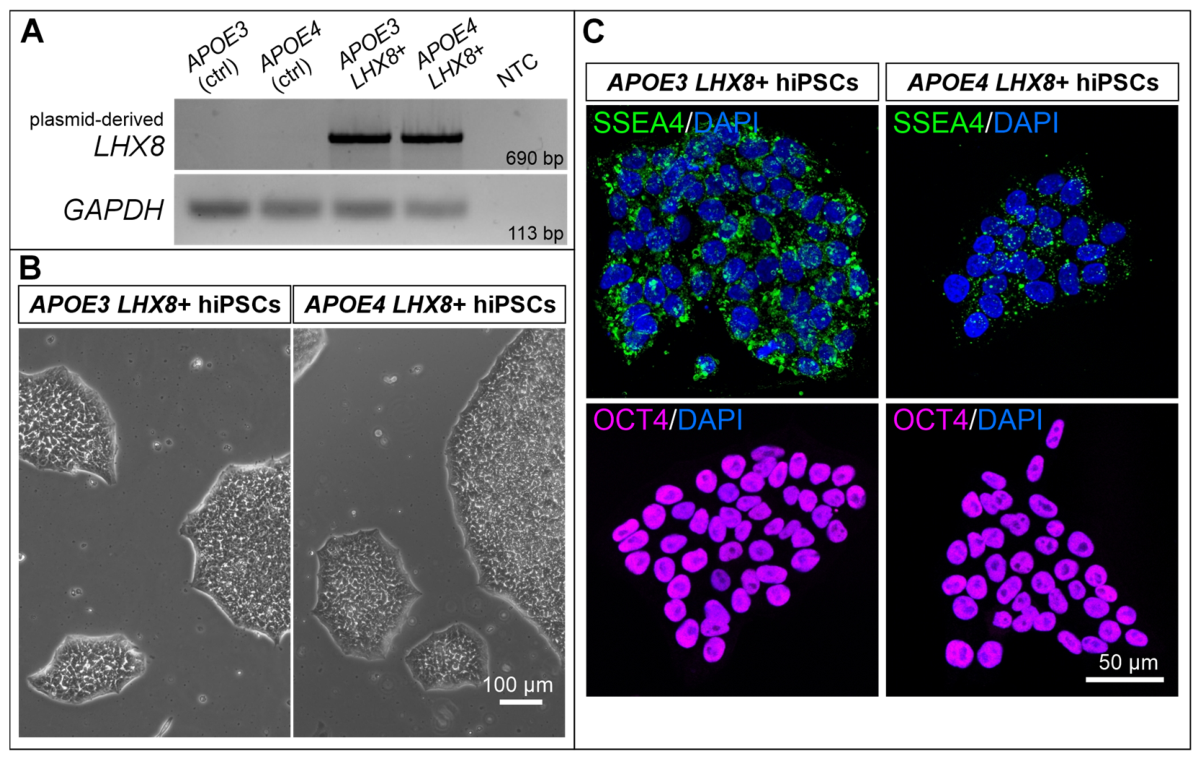
3.1. LHX8 Transduced hiPSCs Maintain Pluripotency Marker Expression and Colony Morphology
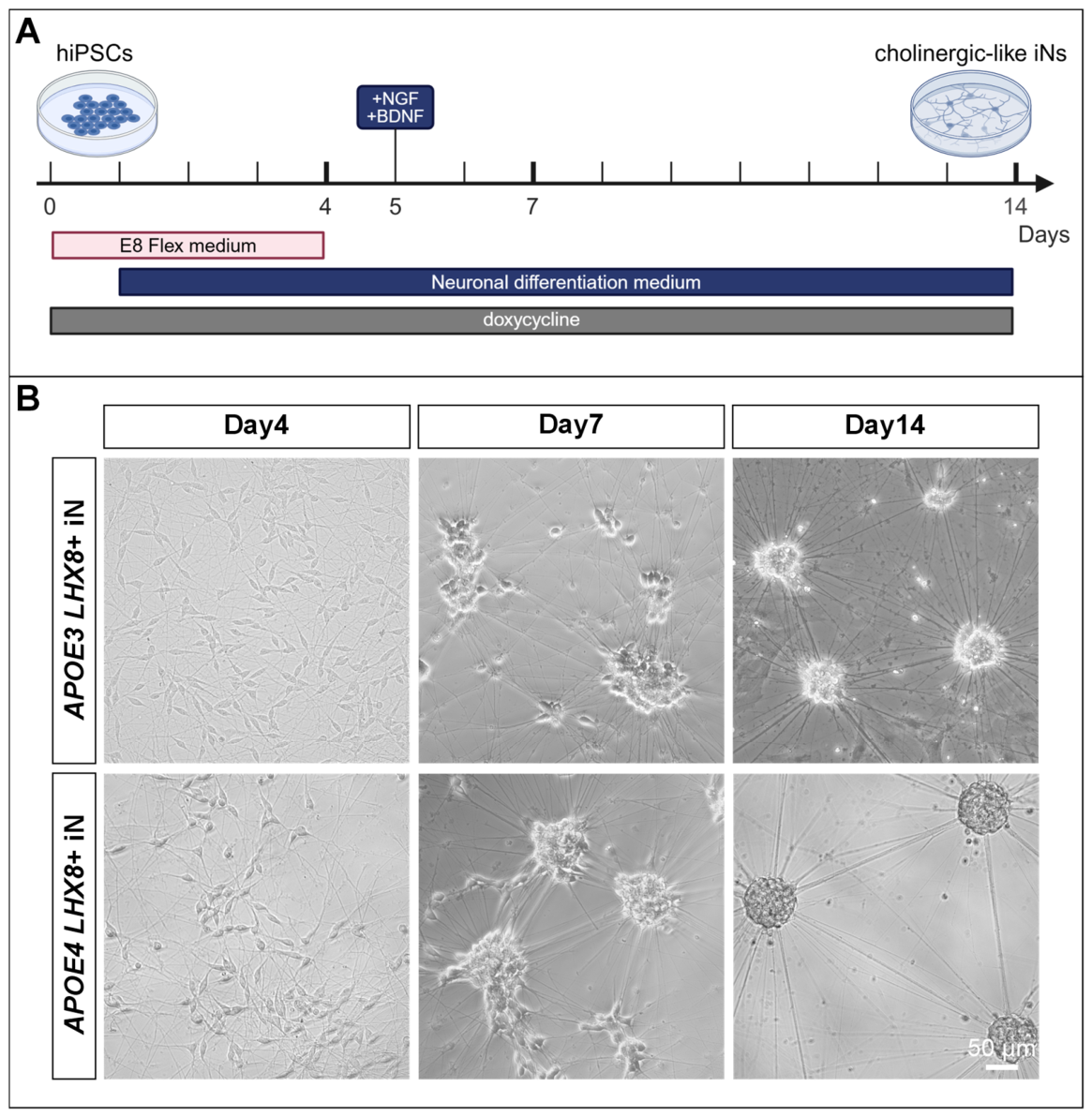
3.2. LHX8 Expression Drives Morphological Changes in hiPSCs Toward a Clustered Neuronal Phenotype
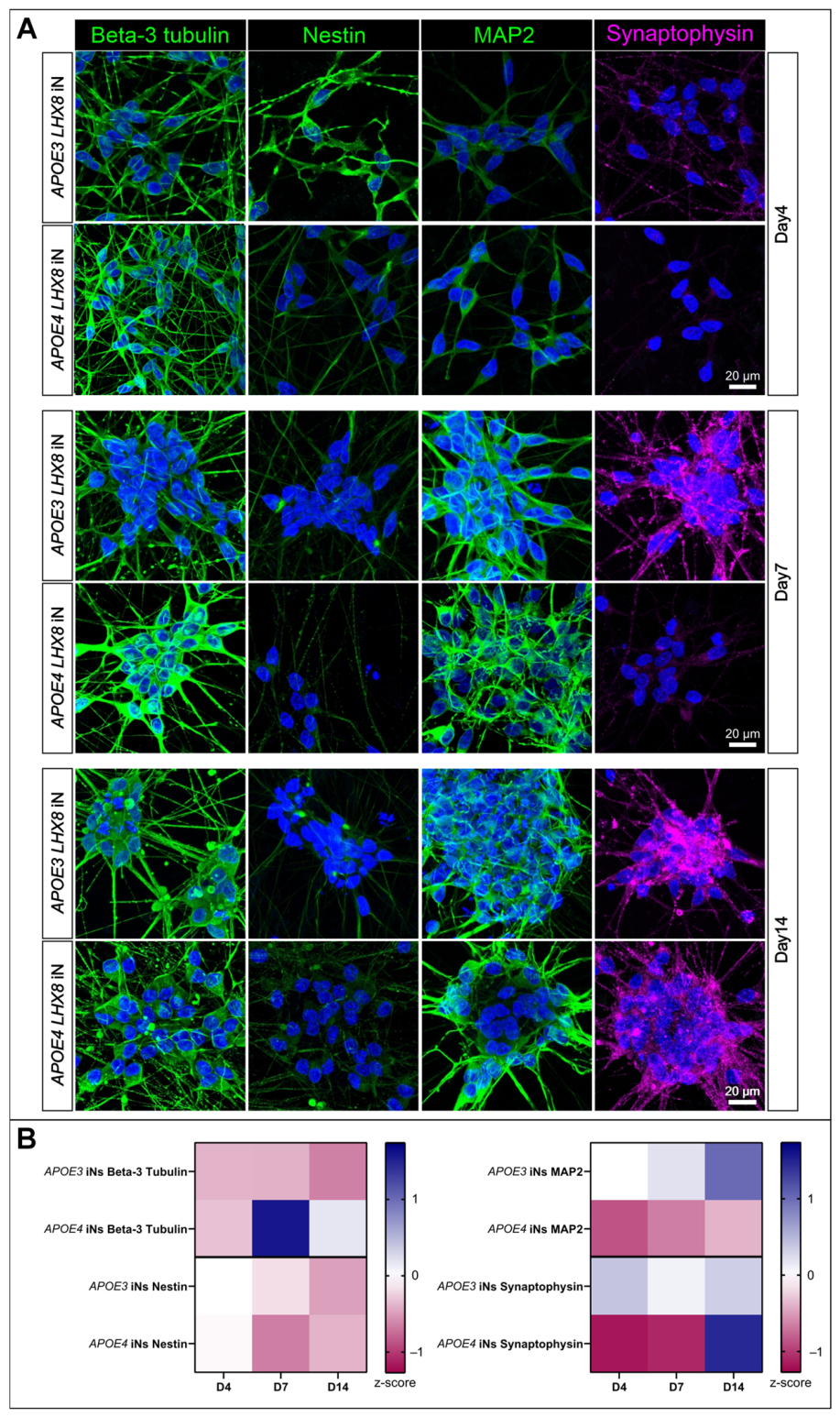
3.3. Protein Expression Confirms Neuronal Differentiation and Reveals Differences in Synaptic Marker Levels Between APOE3 and APOE4 iNs
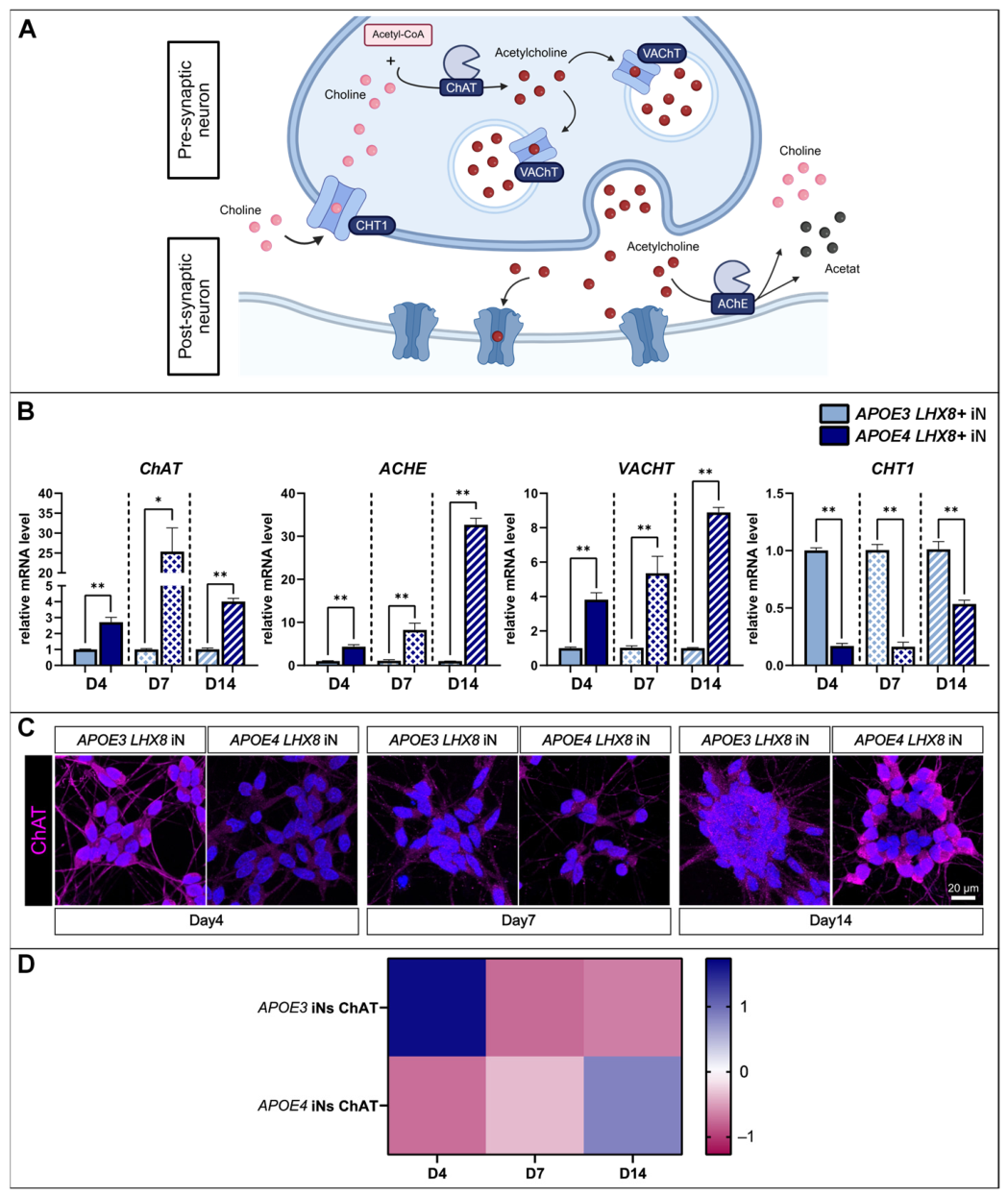
3.4. Cholinergic Marker Expression Suggests Impaired Synaptic Maturation in APOE4 iNs
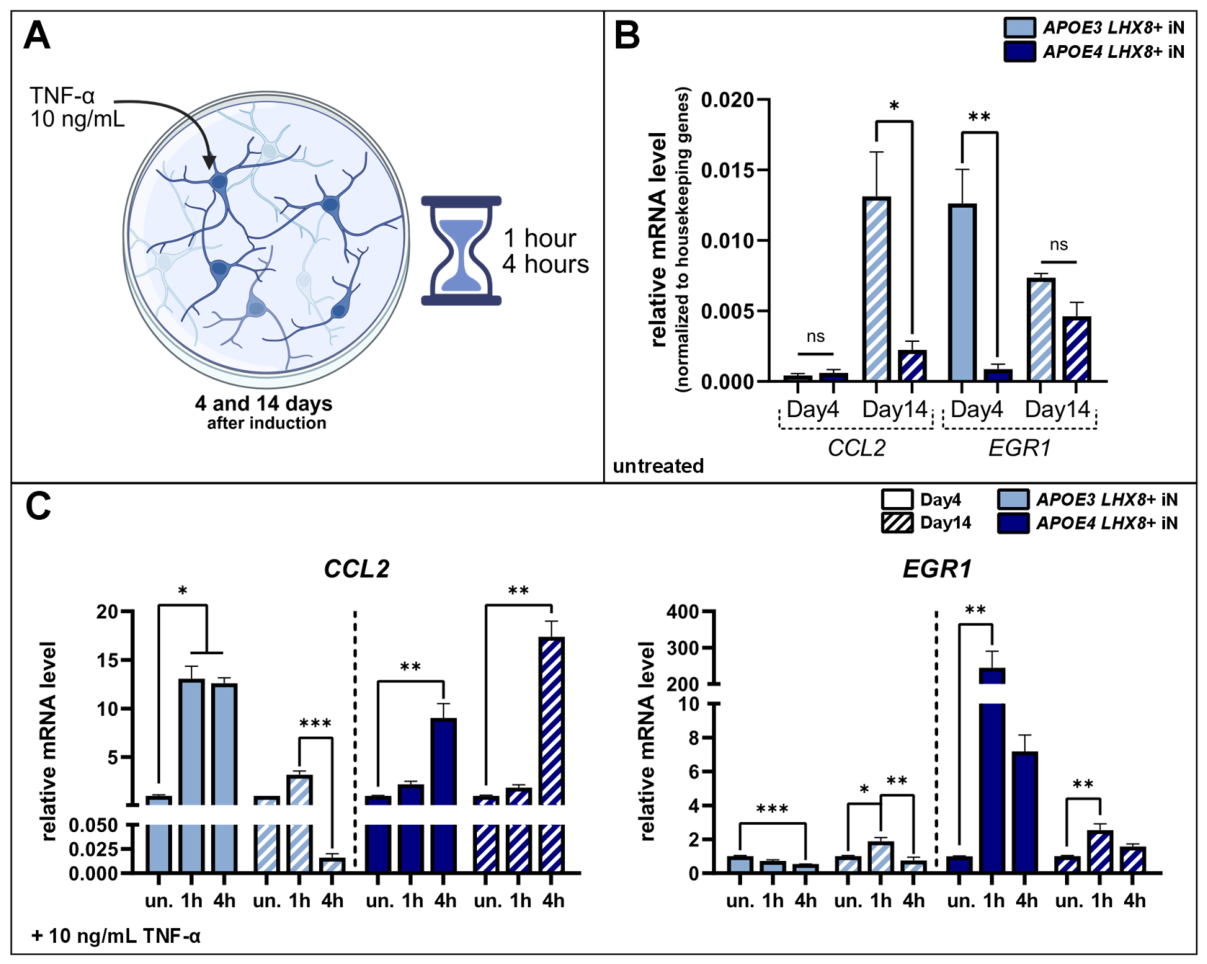
3.5. APOE4 iNs Exhibit Altered and Delayed Inflammatory Responses to TNF-α Compared to APOE3
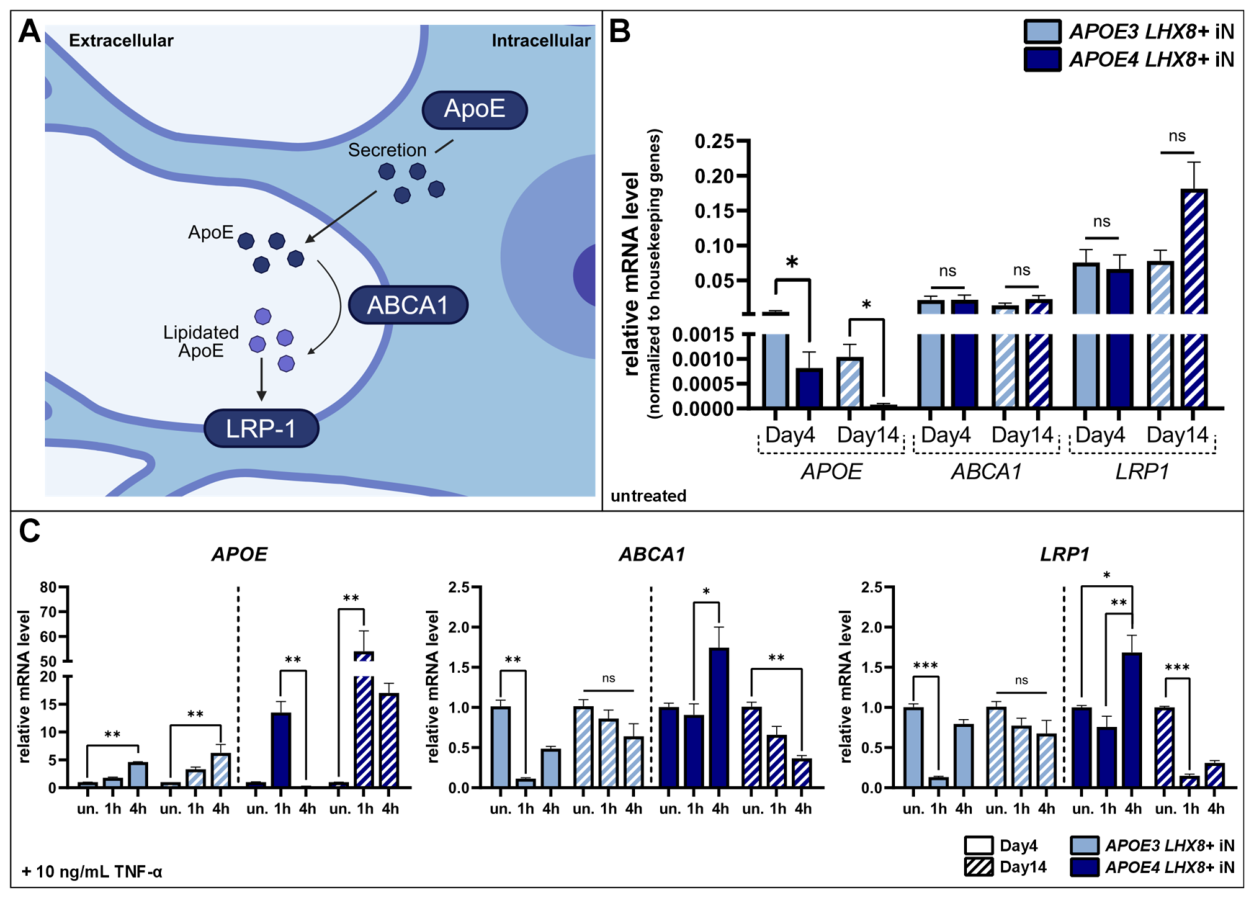
3.6. Regulation of Lipid-Related Genes in APOE4 iNs During Inflammation Is Stage-Dependent
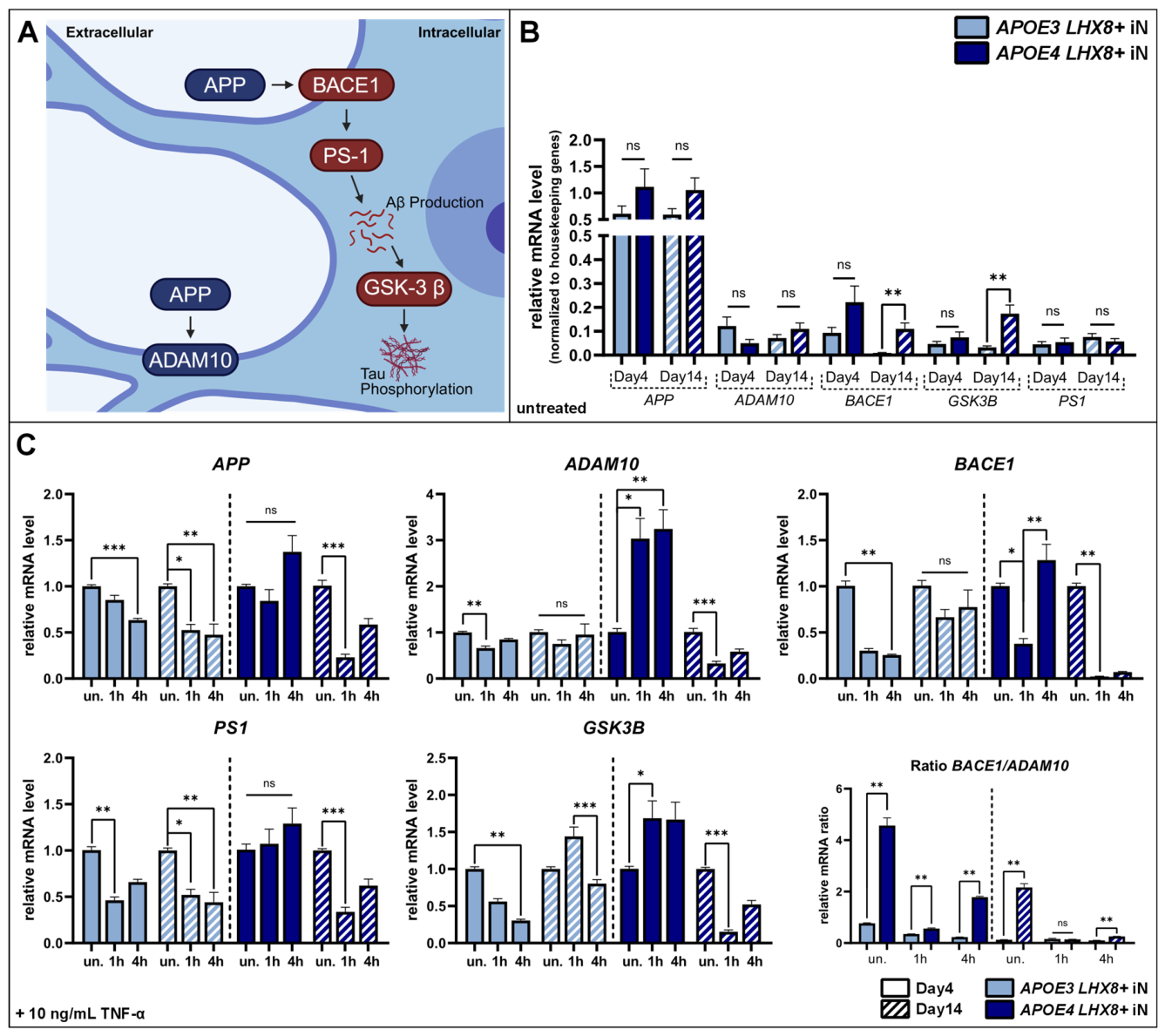
3.7. APOE Genotype and Neuronal Maturation Differentially Shape Amyloidogenic Pathway Responses to TNF-α Stimulation
4. Discussion
5. Conclusions
Supplementary Materials
Author Contributions
Funding
Institutional Review Board Statement
Informed Consent Statement
Data Availability Statement
Acknowledgments
Conflicts of Interest
Abbreviations
| AD | Alzheimer’s Disease |
| Aβ | Amyloid-β |
| EOAD | Early-onset Alzheimer’s Disease |
| LOAD | Late-onset Alzheimer’s Disease |
| APOE | Apolipoprotein E |
| ACh | Acetylcholine |
| TF | Transcription factor |
| iN | Induced Neurons |
| TNF-α | Tumor necrosis factor alpha |
| hiPSCs | Human-induced pluripotent stem cell |
| ChAT | Choline Acetyltransferase |
| VAChT | Vesicular acetylcholine transporter |
| AChE | Acetylcholinesterase |
| CHT1 | High affinity choline transporter 1 |
| CCL2 | C-C motif chemokine ligand 2 |
| EGR1 | Early Growth Response 1 |
| ABCA1 | ATP-Binding Cassette Transporter A1 |
| LRP-1 | Low Density Lipoprotein Receptor-related Protein 1 |
| APP | Amyloid-beta precursor protein |
| ADAM10 | Disintegrin and metalloproteinase domain-containing protein 10 |
| BACE1 | Beta-Site APP-Cleaving Enzyme 1 |
| PS1 | Presenilin-1 |
| GSK3B | Glycogen synthase kinase-3 beta |
Appendix A

| Differentiation Stage | Genotype | Gene | Treatment Response | |||
|---|---|---|---|---|---|---|
| 1h TNF-α vs. un. | 4h TNF-α vs. un. | |||||
| Day 4 | APOE3 | CCL2 | 13.0× | ↑ * | 12.6× | ↑ * |
| Day 14 | 3.2× | ns | 0.02× | ns | ||
| Day 4 | APOE4 | 2.2× | ns | 9× | ↑ ** | |
| Day 14 | 1.9× | ns | 17.4× | ↑ ** | ||
| Day 4 | APOE3 | EGR1 | 0.7× | ns | 0.5× | ↓ *** |
| Day 14 | 1.9× | ↑ * | 0.8× | ns | ||
| Day 4 | APOE4 | 244.5× | ↑ ** | 7.2× | ns | |
| Day 14 | 2.5× | ↑ ** | 1.6× | ns | ||
| Day 4 | APOE3 | APOE | 1.8× | ns | 4.6× | ↑ ** |
| Day 14 | 3.3× | ns | 6.3× | ↑ ** | ||
| Day 4 | APOE4 | 13.5× | ns | 0.3× | ns | |
| Day 14 | 54.1× | ↑ ** | 17.0× | ns | ||
| Day 4 | APOE3 | ABCA1 | 0.1× | ↓ ** | 0.5× | ns |
| Day 14 | 0.9× | ns | 0.6× | ns | ||
| Day 4 | APOE4 | 0.9× | ns | 1.7× | ns | |
| Day 14 | 0.7× | ns | 0.4× | ↓ ** | ||
| Day 4 | APOE3 | LRP1 | 0.1× | ↓ *** | 0.8× | ns |
| Day 14 | 0.8× | ns | 0.7× | ns | ||
| Day 4 | APOE4 | 0.8× | ns | 1.7× | ↑ * | |
| Day 14 | 0.1× | ↓ *** | 0.3× | ns | ||
| Day 4 | APOE3 | APP | 0.9× | ns | 0.6× | ↓ *** |
| Day 14 | 0.5× | ↓ * | 0.5× | ↓ ** | ||
| Day 4 | APOE4 | 0.8× | ns | 1.4× | ns | |
| Day 14 | 0.2× | ↓ *** | 0.6× | ns | ||
| Day 4 | APOE3 | ADAM10 | 0.7× | ↓** | 0.8× | ns |
| Day 14 | 0.8× | ns | 1× | ns | ||
| Day 4 | APOE4 | 3× | ↑ * | 3.2× | ↑ ** | |
| Day 14 | 0.3× | ↓ *** | 0.6× | ns | ||
| Day 4 | APOE3 | BACE1 | 0.3× | ns | 0.3× | ↓ ** |
| Day 14 | 0.7× | ns | 0.8× | ns | ||
| Day 4 | APOE4 | 0.4× | ↓ * | 1.3× | ns | |
| Day 14 | 0.02× | ↓ ** | 0.07× | ns | ||
| Day 4 | APOE3 | PS1 | 0.5× | ↓ ** | 0.7× | ns |
| Day 14 | 0.5× | ↓ * | 0.4× | ↓ ** | ||
| Day 4 | APOE4 | 1× | ns | 1.3× | ns | |
| Day 14 | 0.3× | ↓ *** | 0.6× | ns | ||
| Day 4 | APOE3 | GSK3B | 0.6× | ns | 0.3× | ↓ ** |
| Day 14 | 0.9× | ns | 0.6× | ns | ||
| Day 4 | APOE4 | 1.7× | ↑ * | 1.7× | ns | |
| Day 14 | 0.2× | ↓ *** | 0.5× | ns | ||
References
- Wu, C.-K.; Fuh, J.-L. A 2025 update on treatment strategies for the Alzheimer’s disease spectrum. J. Chin. Med. Assoc. 2025, 88, 495–502. [Google Scholar] [CrossRef]
- Athanasiadou, E.; Tsaloglidou, A.; Koukourikos, K.; Papathanasiou, I.V.; Iliadis, C.H.; Frantzana, A.; Fradelos, E.; Kourkouta, L. Care of Patients with Alzheimer’s Disease. Adv. Exp. Med. Biol. 2021, 1339, 9–20. [Google Scholar] [CrossRef]
- Hyman, B.T.; Phelps, C.H.; Beach, T.G.; Bigio, E.H.; Cairns, N.J.; Carrillo, M.C.; Dickson, D.W.; Duyckaerts, C.; Frosch, M.P.; Masliah, E.; et al. National Institute on Aging-Alzheimer’s Association guidelines for the neuropathologic assessment of Alzheimer’s disease. Alzheimer’s Dement. 2012, 8, 1–13. [Google Scholar] [CrossRef]
- Jack, C.R.; Bennett, D.A.; Blennow, K.; Carrillo, M.C.; Feldman, H.H.; Frisoni, G.B.; Hampel, H.; Jagust, W.J.; Johnson, K.A.; Knopman, D.S.; et al. A/T/N: An unbiased descriptive classification scheme for Alzheimer disease biomarkers. Neurology 2016, 87, 539–547. [Google Scholar] [CrossRef]
- Koenig, A.M.; Nobuhara, C.K.; Williams, V.J.; Arnold, S.E. Biomarkers in Alzheimer’s, Frontotemporal, Lewy Body, and Vascular Dementias. Focus 2018, 16, 164–172. [Google Scholar] [CrossRef] [PubMed]
- Kaltschmidt, B.; Czaniera, N.J.; Schulten, W.; Kaltschmidt, C. NF-κB in Alzheimer’s Disease: Friend or Foe? Opposite Functions in Neurons and Glial Cells. Int. J. Mol. Sci. 2024, 25, 11353. [Google Scholar] [CrossRef] [PubMed]
- Barber, I.S.; Braae, A.; Clement, N.; Patel, T.; Guetta-Baranes, T.; Brookes, K.; Medway, C.; Chappell, S.; Guerreiro, R.; Bras, J.; et al. Mutation analysis of sporadic early-onset Alzheimer’s disease using the NeuroX array. Neurobiol. Aging 2017, 49, 215.e1–215.e8. [Google Scholar] [CrossRef]
- Bellenguez, C.; Küçükali, F.; Jansen, I.E.; Kleineidam, L.; Moreno-Grau, S.; Amin, N.; Naj, A.C.; Campos-Martin, R.; Grenier-Boley, B.; Andrade, V.; et al. New insights into the genetic etiology of Alzheimer’s disease and related dementias. Nat. Genet. 2022, 54, 412–436. [Google Scholar] [CrossRef]
- Kim, J.; Basak, J.M.; Holtzman, D.M. The role of apolipoprotein E in Alzheimer’s disease. Neuron 2009, 63, 287–303. [Google Scholar] [CrossRef] [PubMed]
- Mahley, R.W.; Weisgraber, K.H.; Huang, Y. Apolipoprotein E: Structure determines function, from atherosclerosis to Alzheimer’s disease to AIDS. J. Lipid Res. 2009, 50, S183–S188. [Google Scholar] [CrossRef]
- Chen, Y.; Strickland, M.R.; Soranno, A.; Holtzman, D.M. Apolipoprotein E: Structural Insights and Links to Alzheimer Disease Pathogenesis. Neuron 2021, 109, 205–221. [Google Scholar] [CrossRef]
- Ye, S.; Huang, Y.; Müllendorff, K.; Dong, L.; Giedt, G.; Meng, E.C.; Cohen, F.E.; Kuntz, I.D.; Weisgraber, K.H.; Mahley, R.W. Apolipoprotein (apo) E4 enhances amyloid beta peptide production in cultured neuronal cells: ApoE structure as a potential therapeutic target. Proc. Natl. Acad. Sci. USA 2005, 102, 18700–18705. [Google Scholar] [CrossRef]
- Di Biase, E.; Connolly, K.J.; Crumpton, I.; Cooper, O.; Hallett, P.J.; Isacson, O. ApoE4 requires lipidation enhancement to resolve cellular lipid and protein abnormalities following NPC1 inhibition. Sci. Rep. 2025, 15, 15051. [Google Scholar] [CrossRef]
- Holtzman, D.M.; Herz, J.; Bu, G. Apolipoprotein E and apolipoprotein E receptors: Normal biology and roles in Alzheimer disease. Cold Spring Harb. Perspect. Med. 2012, 2, a006312. [Google Scholar] [CrossRef]
- Vemuri, P.; Wiste, H.J.; Weigand, S.D.; Knopman, D.S.; Shaw, L.M.; Trojanowski, J.Q.; Aisen, P.S.; Weiner, M.; Petersen, R.C.; Jack, C.R. Effect of apolipoprotein E on biomarkers of amyloid load and neuronal pathology in Alzheimer disease. Ann. Neurol. 2010, 67, 308–316. [Google Scholar] [CrossRef] [PubMed]
- Gratuze, M.; Schlachetzki, J.C.M.; D’Oliveira Albanus, R.; Jain, N.; Novotny, B.; Brase, L.; Rodriguez, L.; Mansel, C.; Kipnis, M.; O’Brien, S.; et al. TREM2-independent microgliosis promotes tau-mediated neurodegeneration in the presence of ApoE4. Neuron 2023, 111, 202–219.e7. [Google Scholar] [CrossRef]
- Iannucci, J.; Sen, A.; Grammas, P. Isoform-Specific Effects of Apolipoprotein E on Markers of Inflammation and Toxicity in Brain Glia and Neuronal Cells In Vitro. Curr. Issues Mol. Biol. 2021, 43, 215–225. [Google Scholar] [CrossRef]
- Schulten, W.; Czaniera, N.J.; Buschheuer, A.L.; Liermann, A.; Wiegand, A.; Kaltschmidt, B.; Kaltschmidt, C. Pluripotent Cells Expressing APOE4 Exhibit a Pronounced Pro-Apoptotic Phenotype Accompanied by Markers of Hyperinflammation and a Blunted NF-κB Response. Int. J. Mol. Sci. 2025, 26, 9283. [Google Scholar] [CrossRef] [PubMed]
- Lin, Y.-T.; Seo, J.; Gao, F.; Feldman, H.M.; Wen, H.-L.; Penney, J.; Cam, H.P.; Gjoneska, E.; Raja, W.K.; Cheng, J.; et al. APOE4 Causes Widespread Molecular and Cellular Alterations Associated with Alzheimer’s Disease Phenotypes in Human iPSC-Derived Brain Cell Types. Neuron 2018, 98, 1141–1154.e7. [Google Scholar] [CrossRef]
- Meyer, K.; Feldman, H.M.; Lu, T.; Drake, D.; Lim, E.T.; Ling, K.-H.; Bishop, N.A.; Pan, Y.; Seo, J.; Lin, Y.-T.; et al. REST and Neural Gene Network Dysregulation in iPSC Models of Alzheimer’s Disease. Cell Rep. 2019, 26, 1112–1127.e9. [Google Scholar] [CrossRef] [PubMed]
- Meyer-Acosta, K.K.; Diaz-Guerra, E.; Varma, P.; Aruk, A.; Mirsadeghi, S.; Muniz-Perez, A.; Rafati, Y.; Hosseini, A.; Nieto-Estevez, V.; Giugliano, M.; et al. APOE4 impacts cortical neurodevelopment and alters network formation in human brain organoids. Stem Cell Rep. 2025, 20, 102537. [Google Scholar] [CrossRef]
- Kim, J.; Yoon, H.; Basak, J.; Kim, J. Apolipoprotein E in synaptic plasticity and Alzheimer’s disease: Potential cellular and molecular mechanisms. Mol. Cells 2014, 37, 767–776. [Google Scholar] [CrossRef] [PubMed]
- Li, Z.; Martens, Y.A.; Ren, Y.; Jin, Y.; Sekiya, H.; Doss, S.V.; Kouri, N.; Castanedes-Casey, M.; Christensen, T.A.; Miller Nevalainen, L.B.; et al. APOE genotype determines cell-type-specific pathological landscape of Alzheimer’s disease. Neuron 2025, 113, 1380–1397.e7. [Google Scholar] [CrossRef] [PubMed]
- Solari, N.; Hangya, B. Cholinergic modulation of spatial learning, memory and navigation. Eur. J. Neurosci. 2018, 48, 2199–2230. [Google Scholar] [CrossRef]
- Huang, Q.; Liao, C.; Ge, F.; Ao, J.; Liu, T. Acetylcholine bidirectionally regulates learning and memory. J. Neurorestoratol. 2022, 10, 100002. [Google Scholar] [CrossRef]
- Marucci, G.; Buccioni, M.; Ben, D.D.; Lambertucci, C.; Volpini, R.; Amenta, F. Efficacy of acetylcholinesterase inhibitors in Alzheimer’s disease. Neuropharmacology 2021, 190, 108352. [Google Scholar] [CrossRef]
- Liu, Y.; Uras, G.; Onuwaje, I.; Li, W.; Yao, H.; Xu, S.; Li, X.; Li, X.; Phillips, J.; Allen, S.; et al. Novel inhibitors of AChE and Aβ aggregation with neuroprotective properties as lead compounds for the treatment of Alzheimer’s disease. Eur. J. Med. Chem. 2022, 235, 114305. [Google Scholar] [CrossRef]
- Stanciu, G.D.; Luca, A.; Rusu, R.N.; Bild, V.; Beschea Chiriac, S.I.; Solcan, C.; Bild, W.; Ababei, D.C. Alzheimer’s Disease Pharmacotherapy in Relation to Cholinergic System Involvement. Biomolecules 2019, 10, 40. [Google Scholar] [CrossRef]
- Black, J.B.; McCutcheon, S.R.; Dube, S.; Barrera, A.; Klann, T.S.; Rice, G.A.; Adkar, S.S.; Soderling, S.H.; Reddy, T.E.; Gersbach, C.A. Master Regulators and Cofactors of Human Neuronal Cell Fate Specification Identified by CRISPR Gene Activation Screens. Cell Rep. 2020, 33, 108460. [Google Scholar] [CrossRef]
- Zhao, Y.; Marín, O.; Hermesz, E.; Powell, A.; Flames, N.; Palkovits, M.; Rubenstein, J.L.R.; Westphal, H. The LIM-homeobox gene Lhx8 is required for the development of many cholinergic neurons in the mouse forebrain. Proc. Natl. Acad. Sci. USA 2003, 100, 9005–9010. [Google Scholar] [CrossRef]
- Tomioka, T.; Shimazaki, T.; Yamauchi, T.; Oki, T.; Ohgoh, M.; Okano, H. LIM homeobox 8 (Lhx8) is a key regulator of the cholinergic neuronal function via a tropomyosin receptor kinase A (TrkA)-mediated positive feedback loop. J. Biol. Chem. 2014, 289, 1000–1010. [Google Scholar] [CrossRef]
- Ma, K.; Deng, X.; Xia, X.; Fan, Z.; Qi, X.; Wang, Y.; Li, Y.; Ma, Y.; Chen, Q.; Peng, H.; et al. Direct conversion of mouse astrocytes into neural progenitor cells and specific lineages of neurons. Transl. Neurodegener. 2018, 7, 29. [Google Scholar] [CrossRef]
- Li, H.; Jin, G.; Zhu, P.; Zou, L.; Shi, J.; Yi, X.; Zhang, X.; Tian, M.; Qin, J. Upregulation of Lhx8 increase VAChT expression and ACh release in neuronal cell line SHSY5Y. Neurosci. Lett. 2014, 559, 184–188. [Google Scholar] [CrossRef]
- Alvarez, A.; Cacabelos, R.; Sanpedro, C.; García-Fantini, M.; Aleixandre, M. Serum TNF-alpha levels are increased and correlate negatively with free IGF-I in Alzheimer disease. Neurobiol. Aging 2007, 28, 533–536. [Google Scholar] [CrossRef] [PubMed]
- Zelová, H.; Hošek, J. TNF-α signalling and inflammation: Interactions between old acquaintances. Inflamm. Res. 2013, 62, 641–651. [Google Scholar] [CrossRef]
- Xu, C.; Wu, J.; Wu, Y.; Ren, Z.; Yao, Y.; Chen, G.; Fang, E.F.; Noh, J.H.; Liu, Y.U.; Wei, L.; et al. TNF-α-dependent neuronal necroptosis regulated in Alzheimer’s disease by coordination of RIPK1-p62 complex with autophagic UVRAG. Theranostics 2021, 11, 9452–9469. [Google Scholar] [CrossRef] [PubMed]
- Crompton, L.A.; Byrne, M.L.; Taylor, H.; Kerrigan, T.L.; Bru-Mercier, G.; Badger, J.L.; Barbuti, P.A.; Jo, J.; Tyler, S.J.; Allen, S.J.; et al. Stepwise, non-adherent differentiation of human pluripotent stem cells to generate basal forebrain cholinergic neurons via hedgehog signaling. Stem Cell Res. 2013, 11, 1206–1221. [Google Scholar] [CrossRef]
- Hockemeyer, D.; Soldner, F.; Cook, E.G.; Gao, Q.; Mitalipova, M.; Jaenisch, R. A drug-inducible system for direct reprogramming of human somatic cells to pluripotency. Cell Stem Cell 2008, 3, 346–353. [Google Scholar] [CrossRef]
- Lois, C.; Hong, E.J.; Pease, S.; Brown, E.J.; Baltimore, D. Germline transmission and tissue-specific expression of transgenes delivered by lentiviral vectors. Science 2002, 295, 868–872. [Google Scholar] [CrossRef] [PubMed]
- Allan, C.; Burel, J.-M.; Moore, J.; Blackburn, C.; Linkert, M.; Loynton, S.; Macdonald, D.; Moore, W.J.; Neves, C.; Patterson, A.; et al. OMERO: Flexible, model-driven data management for experimental biology. Nat. Methods 2012, 9, 245–253. [Google Scholar] [CrossRef]
- Katsetos, C.D.; Herman, M.M.; Mörk, S.J. Class III beta-tubulin in human development and cancer. Cell Motil. Cytoskelet. 2003, 55, 77–96. [Google Scholar] [CrossRef] [PubMed]
- Lendahl, U.; Zimmerman, L.B.; McKay, R.D. CNS stem cells express a new class of intermediate filament protein. Cell 1990, 60, 585–595. [Google Scholar] [CrossRef]
- Lu, C.; Shi, X.; Allen, A.; Baez-Nieto, D.; Nikish, A.; Sanjana, N.E.; Pan, J.Q. Overexpression of NEUROG2 and NEUROG1 in human embryonic stem cells produces a network of excitatory and inhibitory neurons. FASEB J. 2019, 33, 5287–5299. [Google Scholar] [CrossRef]
- Wiedenmann, B.; Franke, W.W. Identification and localization of synaptophysin, an integral membrane glycoprotein of Mr 38,000 characteristic of presynaptic vesicles. Cell 1985, 41, 1017–1028. [Google Scholar] [CrossRef] [PubMed]
- Soreq, H.; Bar, A.; Paldor, I. The cholinergic synapses. Handb. Clin. Neurol. 2025, 211, 23–35. [Google Scholar] [CrossRef]
- Klein, J. The Central Cholinergic Synapse: A Primer. Int. J. Mol. Sci. 2025, 26, 9670. [Google Scholar] [CrossRef]
- Meher, M.M.; Afrin, M.; Jahan, M.R.; Nozaki, K.; Masumoto, K.-H.; Yanai, A.; Islam, M.N. Neurochemical heterogeneity of ChAT-immunoreactive neurons in the basal forebrain cholinergic nuclei and striatum in reference to CGRP, CCK, and calcium-binding proteins. Acta Histochem. 2025, 127, 152291. [Google Scholar] [CrossRef] [PubMed]
- McGeer, P.L.; McGeer, E.G. Polymorphisms in inflammatory genes and the risk of Alzheimer disease. Arch. Neurol. 2001, 58, 1790–1792. [Google Scholar] [CrossRef]
- Li, L.; Liu, Y.; Hu, W.; Yang, J.; Ma, S.; Tian, Z.; Cao, Z.; Pan, K.; Jiang, M.; Liu, X.; et al. Peripheral CCL2 induces inflammatory pain via regulation of Ih currents in small diameter DRG neurons. Front. Mol. Neurosci. 2023, 16, 1144614. [Google Scholar] [CrossRef]
- Lin, Z.; Shi, J.-L.; Chen, M.; Zheng, Z.-M.; Li, M.-Q.; Shao, J. CCL2: An important cytokine in normal and pathological pregnancies: A review. Front. Immunol. 2022, 13, 1053457. [Google Scholar] [CrossRef]
- Duclot, F.; Kabbaj, M. The Role of Early Growth Response 1 (EGR1) in Brain Plasticity and Neuropsychiatric Disorders. Front. Behav. Neurosci. 2017, 11, 35. [Google Scholar] [CrossRef]
- Martiskainen, H.; Haapasalo, A.; Kurkinen, K.M.A.; Pihlajamäki, J.; Soininen, H.; Hiltunen, M. Targeting ApoE4/ApoE receptor LRP1 in Alzheimer’s disease. Expert Opin. Ther. Targets 2013, 17, 781–794. [Google Scholar] [CrossRef]
- Sen, A.; Alkon, D.L.; Nelson, T.J. Apolipoprotein E3 (ApoE3) but not ApoE4 protects against synaptic loss through increased expression of protein kinase C epsilon. J. Biol. Chem. 2012, 287, 15947–15958. [Google Scholar] [CrossRef]
- Kanekiyo, T.; Cirrito, J.R.; Liu, C.-C.; Shinohara, M.; Li, J.; Schuler, D.R.; Shinohara, M.; Holtzman, D.M.; Bu, G. Neuronal clearance of amyloid-β by endocytic receptor LRP1. J. Neurosci. 2013, 33, 19276–19283. [Google Scholar] [CrossRef]
- Hampel, H.; Hardy, J.; Blennow, K.; Chen, C.; Perry, G.; Kim, S.H.; Villemagne, V.L.; Aisen, P.; Vendruscolo, M.; Iwatsubo, T.; et al. The Amyloid-β Pathway in Alzheimer’s Disease. Mol. Psychiatry 2021, 26, 5481–5503. [Google Scholar] [CrossRef]
- Muñoz, S.S.; Engel, M.; Balez, R.; Do-Ha, D.; Cabral-da-Silva, M.C.; Hernández, D.; Berg, T.; Fifita, J.A.; Grima, N.; Yang, S.; et al. A Simple Differentiation Protocol for Generation of Induced Pluripotent Stem Cell-Derived Basal Forebrain-Like Cholinergic Neurons for Alzheimer’s Disease and Frontotemporal Dementia Disease Modeling. Cells 2020, 9, 2018. [Google Scholar] [CrossRef]
- D’Aloia, A.; Pastori, V.; Blasa, S.; Campioni, G.; Peri, F.; Sacco, E.; Ceriani, M.; Lecchi, M.; Costa, B. A new advanced cellular model of functional cholinergic-like neurons developed by reprogramming the human SH-SY5Y neuroblastoma cell line. Cell Death Discov. 2024, 10, 24. [Google Scholar] [CrossRef]
- Hill, D.P.; Robertson, K.A. Characterization of the cholinergic neuronal differentiation of the human neuroblastoma cell line LA-N-5 after treatment with retinoic acid. Brain Res. Dev. Brain Res. 1997, 102, 53–67. [Google Scholar] [CrossRef]
- Nwabuisi-Heath, E.; Rebeck, G.W.; Ladu, M.J.; Yu, C. ApoE4 delays dendritic spine formation during neuron development and accelerates loss of mature spines in vitro. ASN Neuro 2014, 6, e00134. [Google Scholar] [CrossRef]
- Bergeron, A.L.; Schrader, A.; Yang, D.; Osman, A.A.; Simmons, D.D. The final stage of cholinergic differentiation occurs below inner hair cells during development of the rodent cochlea. J. Assoc. Res. Otolaryngol. 2005, 6, 401–415. [Google Scholar] [CrossRef]
- Ribeiro, F.M.; Black, S.A.G.; Prado, V.F.; Rylett, R.J.; Ferguson, S.S.G.; Prado, M.A.M. The “ins” and “outs” of the high-affinity choline transporter CHT1. J. Neurochem. 2006, 97, 1–12. [Google Scholar] [CrossRef]
- Buffington, S.A.; Huang, W.; Costa-Mattioli, M. Translational control in synaptic plasticity and cognitive dysfunction. Annu. Rev. Neurosci. 2014, 37, 17–38. [Google Scholar] [CrossRef]
- Bose, S.; Cho, J. Role of chemokine CCL2 and its receptor CCR2 in neurodegenerative diseases. Arch. Pharm. Res. 2013, 36, 1039–1050. [Google Scholar] [CrossRef]
- Corrêa, J.D.; Starling, D.; Teixeira, A.L.; Caramelli, P.; Silva, T.A. Chemokines in CSF of Alzheimer’s disease patients. Arq. Neuropsiquiatr. 2011, 69, 455–459. [Google Scholar] [CrossRef]
- Patel, J.R.; Brewer, G.J. Age-related changes to tumor necrosis factor receptors affect neuron survival in the presence of beta-amyloid. J. Neurosci. Res. 2008, 86, 2303–2313. [Google Scholar] [CrossRef]
- Ophir, G.; Amariglio, N.; Jacob-Hirsch, J.; Elkon, R.; Rechavi, G.; Michaelson, D.M. Apolipoprotein E4 enhances brain inflammation by modulation of the NF-kappaB signaling cascade. Neurobiol. Dis. 2005, 20, 709–718. [Google Scholar] [CrossRef]
- Kiyota, T.; Yamamoto, M.; Xiong, H.; Lambert, M.P.; Klein, W.L.; Gendelman, H.E.; Ransohoff, R.M.; Ikezu, T. CCL2 accelerates microglia-mediated Abeta oligomer formation and progression of neurocognitive dysfunction. PLoS ONE 2009, 4, e6197. [Google Scholar] [CrossRef]
- Sancho-Balsells, A.; Borràs-Pernas, S.; Brito, V.; Alberch, J.; Girault, J.-A.; Giralt, A. Cognitive and Emotional Symptoms Induced by Chronic Stress Are Regulated by EGR1 in a Subpopulation of Hippocampal Pyramidal Neurons. Int. J. Mol. Sci. 2023, 24, 3833. [Google Scholar] [CrossRef]
- Huang, Y.; Mahley, R.W. Apolipoprotein E: Structure and function in lipid metabolism, neurobiology, and Alzheimer’s diseases. Neurobiol. Dis. 2014, 72, 3–12. [Google Scholar] [CrossRef]
- Karasinska, J.M.; de Haan, W.; Franciosi, S.; Ruddle, P.; Fan, J.; Kruit, J.K.; Stukas, S.; Lütjohann, D.; Gutmann, D.H.; Wellington, C.L.; et al. ABCA1 influences neuroinflammation and neuronal death. Neurobiol. Dis. 2013, 54, 445–455. [Google Scholar] [CrossRef]
- Piccarducci, R.; Giacomelli, C.; Bertilacchi, M.S.; Benito-Martinez, A.; Di Giorgi, N.; Daniele, S.; Signore, G.; Rocchiccioli, S.; Vilar, M.; Marchetti, L.; et al. Apolipoprotein E ε4 triggers neurotoxicity via cholesterol accumulation, acetylcholine dyshomeostasis, and PKCε mislocalization in cholinergic neuronal cells. Biochim. Biophys. Acta Mol. Basis Dis. 2023, 1869, 166793. [Google Scholar] [CrossRef] [PubMed]
- Safieh, M.; Liraz, O.; Ovadia, M.; Michaelson, D. The Role of Impaired Receptor Trafficking in Mediating the Pathological Effects of APOE4 in Alzheimer’s Disease. J. Alzheimer‘s Dis. 2024, 97, 753–775. [Google Scholar] [CrossRef]
- He, Y.; Ruganzu, J.B.; Zheng, Q.; Wu, X.; Jin, H.; Peng, X.; Ding, B.; Lin, C.; Ji, S.; Ma, Y.; et al. Silencing of LRP1 Exacerbates Inflammatory Response Via TLR4/NF-κB/MAPKs Signaling Pathways in APP/PS1 Transgenic Mice. Mol. Neurobiol. 2020, 57, 3727–3743. [Google Scholar] [CrossRef]
- He, Y.; Ruganzu, J.B.; Jin, H.; Peng, X.; Ji, S.; Ma, Y.; Zheng, L.; Yang, W. LRP1 knockdown aggravates Aβ1-42-stimulated microglial and astrocytic neuroinflammatory responses by modulating TLR4/NF-κB/MAPKs signaling pathways. Exp. Cell Res. 2020, 394, 112166. [Google Scholar] [CrossRef]
- Li, Q.; Shang, Y.; Huang, H.-C.; Dai, X.; Lao, F. The Synergistic Role of ApoE4 and GSK3β in Alzheimer’s Disease: Pathological Mechanisms and Therapeutic Implications. Mol. Neurobiol. 2025, 63, 32. [Google Scholar] [CrossRef]
- Chen, Y.; Jin, H.; Chen, J.; Li, J.; Găman, M.-A.; Zou, Z. The multifaceted roles of apolipoprotein E4 in Alzheimer’s disease pathology and potential therapeutic strategies. Cell Death Discov. 2025, 11, 312. [Google Scholar] [CrossRef]
- DaRocha-Souto, B.; Coma, M.; Pérez-Nievas, B.G.; Scotton, T.C.; Siao, M.; Sánchez-Ferrer, P.; Hashimoto, T.; Fan, Z.; Hudry, E.; Barroeta, I.; et al. Activation of glycogen synthase kinase-3 beta mediates β-amyloid induced neuritic damage in Alzheimer’s disease. Neurobiol. Dis. 2012, 45, 425–437. [Google Scholar] [CrossRef]
- Liu, C.-C.; Zhao, N.; Fu, Y.; Wang, N.; Linares, C.; Tsai, C.-W.; Bu, G. ApoE4 Accelerates Early Seeding of Amyloid Pathology. Neuron 2017, 96, 1024–1032.e3. [Google Scholar] [CrossRef] [PubMed]
- Blumenfeld, J.; Yip, O.; Kim, M.J.; Huang, Y. Cell type-specific roles of APOE4 in Alzheimer disease. Nat. Rev. Neurosci. 2024, 25, 91–110. [Google Scholar] [CrossRef] [PubMed]
- Lu, C.; Garipler, G.; Dai, C.; Roush, T.; Salome-Correa, J.; Martin, A.; Liscovitch-Brauer, N.; Mazzoni, E.O.; Sanjana, N.E. Essential transcription factors for induced neuron differentiation. Nat. Commun. 2023, 14, 8362. [Google Scholar] [CrossRef] [PubMed]


| Day | E8 Flex Medium | Neuronal Differentiation Medium |
|---|---|---|
| 0 | 100% | 0% |
| 1 | 75% | 25% |
| 2 | 50% | 50% |
| 3 | 50% | 50% |
| 4 | 25% | 75% |
| 5 | 0% | 100% |
| Primary Antibody | Host | Dilution | Manufacturer |
|---|---|---|---|
| Beta-3 tubulin | mouse | 1:2000 | Promega GmbH, Walldorf, Germany |
| ChAT | rabbit | 1:400 | Sigma Aldrich, St. Louis, MO, USA |
| MAP2 | mouse | 1:200 | Thermo Fisher Scientific, Waltham, MA, USA |
| Nestin | mouse | 1:200 | Merck Millipore, Burlington, MA, USA |
| Oct-4A | rabbit | 1:200 | Cell Signaling Technology, Danvers & Boston, MA, USA |
| SSEA4 | mouse | 1:200 | Cell Signaling Technology, Danvers & Boston, MA, USA |
| Synaptophysin | rabbit | 1:500 | Abcam, Cambridge, UK |
| vGlut2 | mouse | 1:200 | Merck Millipore, Burlington, MA, USA |
Disclaimer/Publisher’s Note: The statements, opinions and data contained in all publications are solely those of the individual author(s) and contributor(s) and not of MDPI and/or the editor(s). MDPI and/or the editor(s) disclaim responsibility for any injury to people or property resulting from any ideas, methods, instructions or products referred to in the content. |
© 2026 by the authors. Licensee MDPI, Basel, Switzerland. This article is an open access article distributed under the terms and conditions of the Creative Commons Attribution (CC BY) license.
Share and Cite
Czaniera, N.J.; Schulten, W.; Nowak, K.; Pschik, D.; Joneleit, J.; Kaltschmidt, B.; Kaltschmidt, C. Cholinergic Differentiation of Human iPSCs Reveals Early APOE4-Driven Dysregulation of Neuronal Markers, Synaptogenesis and Inflammatory Responses. Cells 2026, 15, 1057. https://doi.org/10.3390/cells15121057
Czaniera NJ, Schulten W, Nowak K, Pschik D, Joneleit J, Kaltschmidt B, Kaltschmidt C. Cholinergic Differentiation of Human iPSCs Reveals Early APOE4-Driven Dysregulation of Neuronal Markers, Synaptogenesis and Inflammatory Responses. Cells. 2026; 15(12):1057. https://doi.org/10.3390/cells15121057
Chicago/Turabian StyleCzaniera, Nele Johanne, Wiebke Schulten, Katja Nowak, Diana Pschik, Jonas Joneleit, Barbara Kaltschmidt, and Christian Kaltschmidt. 2026. "Cholinergic Differentiation of Human iPSCs Reveals Early APOE4-Driven Dysregulation of Neuronal Markers, Synaptogenesis and Inflammatory Responses" Cells 15, no. 12: 1057. https://doi.org/10.3390/cells15121057
APA StyleCzaniera, N. J., Schulten, W., Nowak, K., Pschik, D., Joneleit, J., Kaltschmidt, B., & Kaltschmidt, C. (2026). Cholinergic Differentiation of Human iPSCs Reveals Early APOE4-Driven Dysregulation of Neuronal Markers, Synaptogenesis and Inflammatory Responses. Cells, 15(12), 1057. https://doi.org/10.3390/cells15121057