


Abstract
Robotic arms and motion planning are key technologies that enable fruit and vegetable harvesting robots to operate autonomously while improving harvesting efficiency and operational safety. This paper reviews and analyzes the suitability of robotic arms with different structural configurations for harvesting typical fruits and vegetables, including apples, citrus fruits, strawberries, and tomatoes, in terms of their degrees of freedom, structural configurations, and variable-stiffness technologies. The review shows that six-DOF serial manipulators provide greater motion flexibility, whereas low-DOF, parallel, and Cartesian manipulators are more suitable for structured environments with relatively simple obstacle distributions. Single-target geometric motion planning has been relatively well validated, while field validation remains limited for motion-constrained trajectory generation, online replanning, learning-based planning, and multi-arm coordination. Existing motion-planning algorithms still face several challenges in complex orchard environments, including limited real-time planning capability, insufficient robustness, difficulties in coordinating multiple optimization objectives and constraints, and limited generalization across different tasks and environments. Overcoming these limitations is therefore a critical direction for future research. This study provides theoretical and technical guidance for the selection and integration of motion-planning algorithms, the optimization of robotic arm configurations, and the development of fully autonomous fruit and vegetable harvesting systems.
1. Introduction
Fruit and vegetable harvesting is characterized by high labor intensity, seasonality, and high labor costs, and is especially prominent in harvesting labor-intensive economic crops such as apples, kiwifruit, and tomatoes. For example, manual harvesting costs for peaches, pears, and apples account for as much as 49~60% [1]. With the development of intelligent sensing technologies and artificial intelligence, harvesting robots have become an important approach to resolving the structural contradiction between continuously rising labor costs and the ever-expanding scale of the industry. The robot harvesting workflow includes intelligent identification and localization of fruits, robotic arm motion planning, end-effector non-destructive harvesting, and fully autonomous decision-making throughout the process. Through multi-sensor fusion and coordinated algorithms, efficient, accurate, fully autonomous harvesting can be achieved [2]. To realize the above functions, a vision system, control system, robotic arm, end effector, and motion planning are usually required [3]. Among them, robotic arm motion planning is one of the core technologies for the robot to achieve autonomous operation; this work aims to generate a feasible path for the robotic arm based on sensed information about the fruit space and environmental obstacle information, satisfying kinematic constraints, obstacle avoidance requirements, and operational efficiency. If the motion planning is improper, it may cause the robotic arm to collide with branches or damage fruits, directly affecting the picking success rate and efficiency [4]. Therefore, the motion planning result directly determines the robot’s operational performance and is an important factor in enabling it to move from laboratory settings to field operation scenarios. In real operations, robotic arm motion planning faces many constraint conditions. In complex orchard environments, the arm must not only reach the target fruit position accurately at a relatively high speed, but also avoid obstacles such as branches, fruits, and trellises to ensure the safety of the picking system [5]. This review covers more than 80 recent studies from China and other countries on manipulators and path planning, and summarizes the current research status of manipulator path planning for fruit and vegetable harvesting. The path-planning methods are classified into single-target motion planning, trajectory optimization and constrained planning, online replanning, reinforcement learning, multi-target planning, and multi-arm coordination. The applicable conditions, experimental results, and limitations of these methods are analyzed. For studies involving physical harvesting experiments, planning time, algorithms, harvesting success rate, and harvesting time are also compared. This review aims to provide theoretical support and references for the further development of agricultural robots.
1.1. Materials and Methods
This study adopted a narrative literature review approach to retrieve and analyze studies on robotic manipulators and path planning for fruit and vegetable harvesting robots.
1.1.1. Information Sources and Search Date
The literature was mainly collected from Web of Science, IEEE Xplore, ScienceDirect, and the China National Knowledge Infrastructure (CNKI). The final search was conducted on 7 September 2026. Studies published between 2018 and 2026 were primarily reviewed. In addition, through reference tracing, several historically significant studies published outside the main search period were included. The full texts of potentially eligible studies were retrieved and independently assessed for final inclusion. Any disagreements arising during the screening process were resolved through discussion and consultation among the authors.
1.1.2. Search Strategy
The search terms included “fruit and vegetable harvesting robot,” “harvesting manipulator,” “path planning,” “motion planning,” “trajectory planning,” “obstacle avoidance,” “multi-target,” and “multi-arm coordination.” For specific methods, additional searches were conducted using algorithm names such as A*, PRM, RRT, PSO, and GA.
The literature screening process consisted of two stages: title and abstract screening, followed by full-text assessment. The included studies were classified according to manipulator type, path-planning method, and algorithm type. Because different studies adopted different definitions and experimental settings for planning success rate, harvesting success rate, computation time, and path-related metrics, these indicators were not directly pooled or ranked in this review. Instead, comparisons were made using comparable metrics under similar experimental conditions. Particular attention was given to the adaptability of different methods to natural orchard and greenhouse environments, their real-time planning capabilities, and their practical effects on harvesting efficiency and damage-free harvesting.
1.1.3. Search Results
The initial searches across all databases identified a total of 265 records. After removing 48 duplicate records, 217 records remained for title and abstract screening, of which 116 were excluded. The full texts of 101 potentially eligible studies were subsequently retrieved and assessed for eligibility. Fifteen studies were excluded because of inappropriate study design or insufficient data. Ultimately, 86 studies meeting the inclusion criteria were included in this review.
Among the 86 included studies, 72 were published in English, 13 in Chinese, and one in another language. In terms of publication type, 82 were journal articles, and four were conference papers.
2. Robotic Arms for Fruit and Vegetable Harvesting
2.1. Current Research Status
Research on fruit and vegetable harvesting robots began relatively early on the international stage, and gradually formed an automated harvesting system framework centered on a robotic arm, a visual perception system, a mobile platform, and an end effector. American scholars Schertz and Brown proposed, at an early stage, applying mechanized equipment to fruit harvesting [6], laying a foundation for subsequent research on fruit and vegetable harvesting robots. Afterward, Professor Kawamura’s team at Kyoto University developed an early tomato harvesting robot, which consisted of a 5-DOF robotic arm, an end effector, a stereo vision camera, and a mobile platform [7], enabling an initial integration of fruit recognition, spatial positioning, and the robotic arm’s harvesting motions. The Kondo team is continuing its research into harvesting robots for crops such as tomatoes, cucumbers and grapes [8], promoting the development of agricultural harvesting robotic arms from a single mechanical structure to an integrated system combining visual perception and end-effector execution.
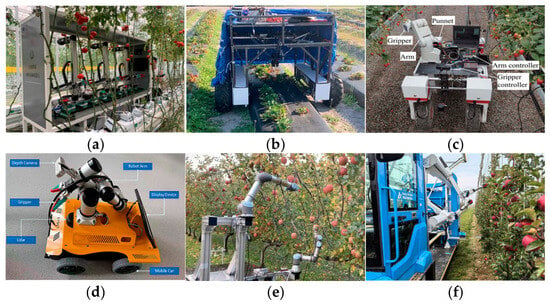
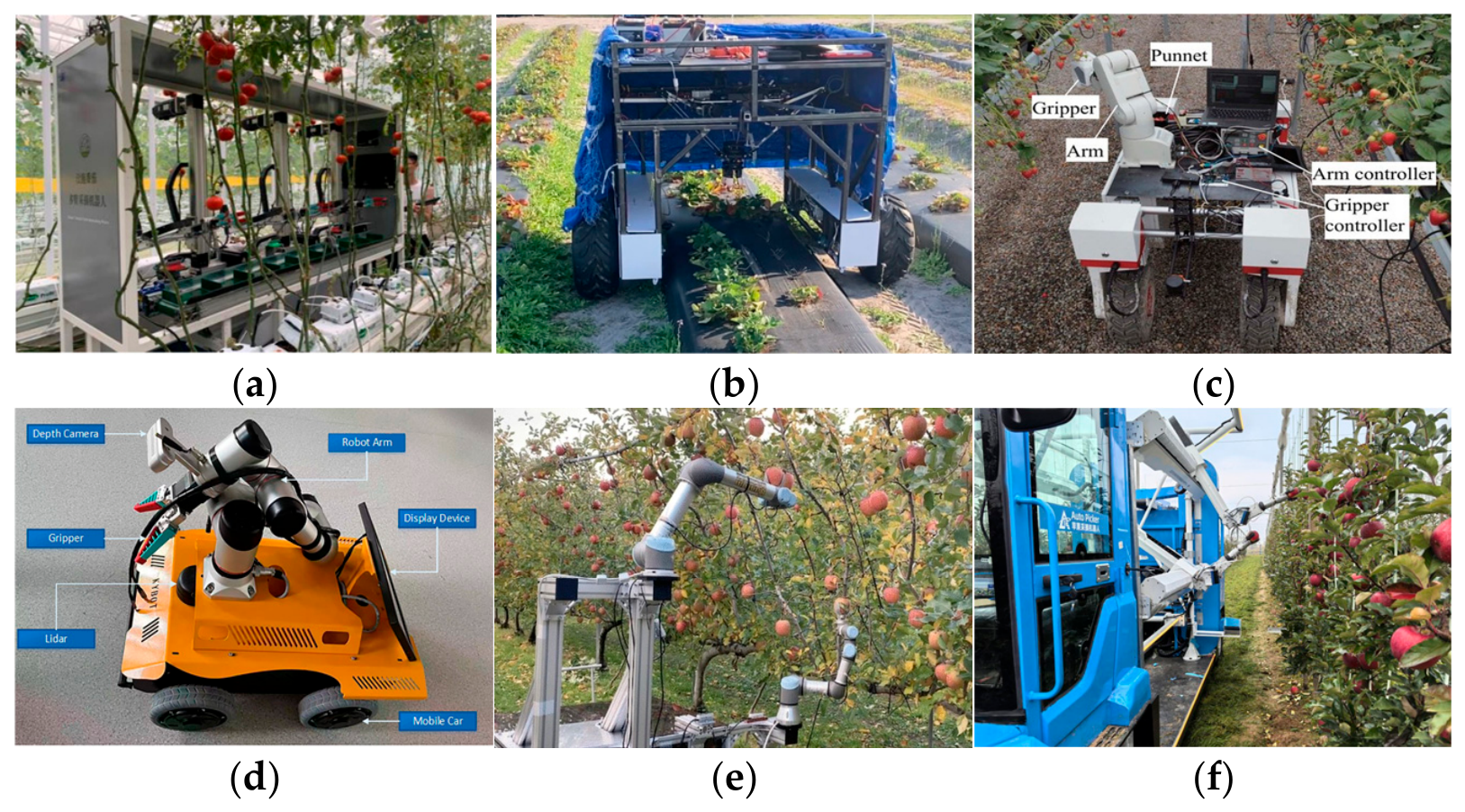
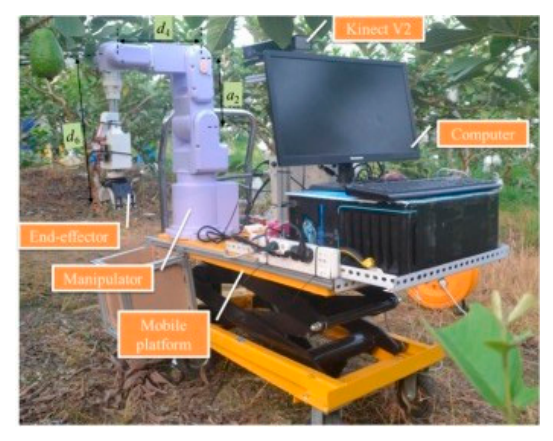
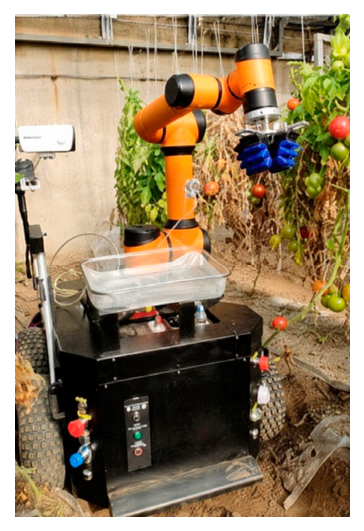
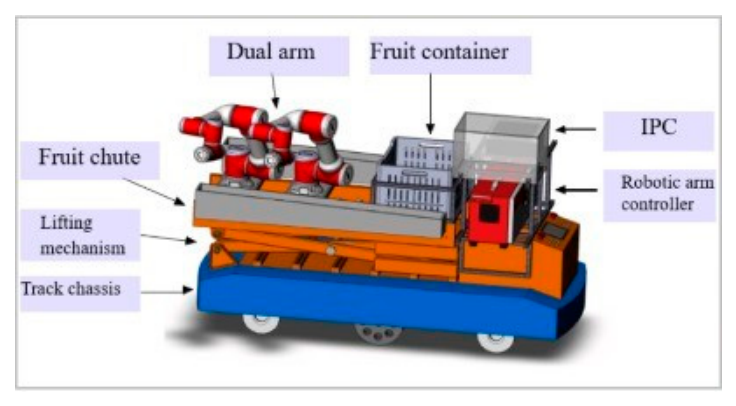
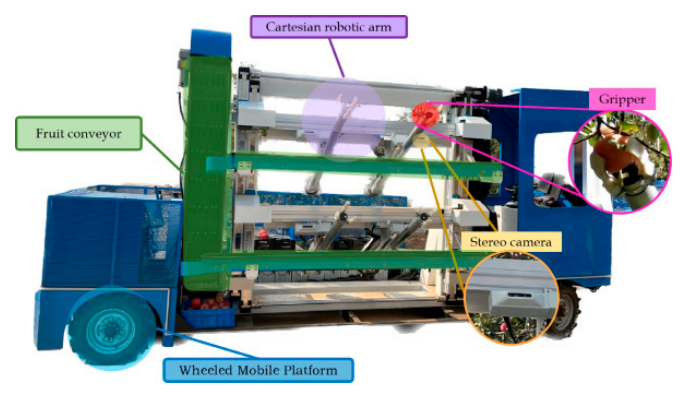
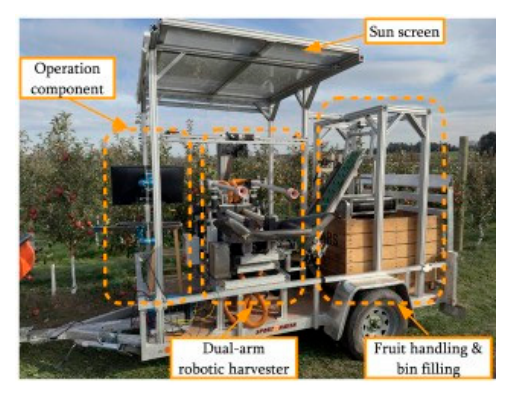
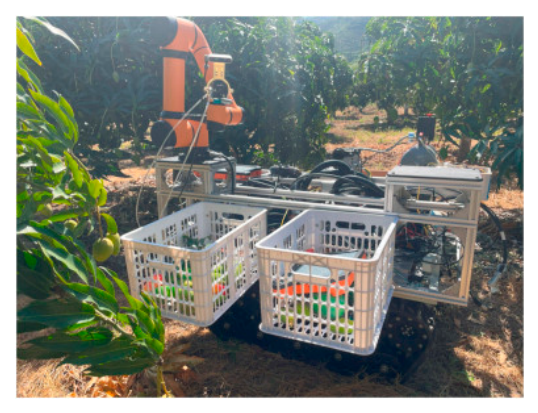
In the field of greenhouse tomato harvesting, research into tomato-harvesting robots has long since evolved from single-arm operation to dual-arm collaborative operation, focusing on addressing the challenges of fruit grasping, stem cutting and continuous operation within the greenhouse environment. Dong et al. designed a dual-arm tomato harvesting robot [9], utilizing three 3-degree-of-freedom robotic arms to perform fruit grasping and stem cutting, respectively, as shown in Figure 1a, and combining stereo vision and a control system to achieve collaborative harvesting within a greenhouse environment. This study demonstrated that dual-arm collaboration can improve tomato harvesting efficiency to a certain extent, but also places higher demands on target localization, dual-arm coordination and end-effector control. With regard to strawberry harvesting, the Tituaña team developed an autonomous strawberry harvesting robot [10], as shown in Figure 1b, which utilizes a cable-driven flexible gripper, an RGB-D camera and a mobile platform to achieve continuous harvesting of strawberries grown on tabletops. For strawberry harvesting in ridge-cultivated environments, Xiong et al. further designed a dual-arm automated strawberry harvesting robot [11], as shown in Figure 1c. By utilizing dual-arm coordination and decision-making regarding the harvesting sequence, they shortened the cycle time for individual fruit harvesting, thereby validating the efficiency advantages of multi-arm coordination in the harvesting of low-growing crops. With regard to the harvesting of fruit trees such as apple trees, Zhu et al. developed an apple-harvesting robot based on the YOLOv5-RACF model [12], as shown in Figure 1d, which integrates a depth camera, LiDAR, a six-degree-of-freedom robotic arm, a flexible gripper and a mobile chassis within the ROS framework. The system achieves apple recognition and localization, fruit diameter measurement, autonomous navigation, obstacle avoidance and harvesting operations, with an average time of approximately 9 s to harvest a single apple and return to its initial pose. The Yoshida team proposed a dual-arm fruit-harvesting robot for V-shaped trellis orchard environments [13], as shown in Figure 1e. By utilizing visual recognition, inverse kinematics and rapid path planning methods, the dual robotic arms are able to perform picking operations under complex conditions involving dense foliage and fruit distribution. Feng et al. further proposed a four-arm apple-harvesting robot system [14], as shown in Figure 1f. By combining multi-view visual localization, multi-arm workspace partitioning and multi-agent task planning methods, the system enhances parallel operation capabilities and task execution efficiency during the apple harvesting process.
Figure 1.
Various types of harvesting robots: (a) tomato harvesting robot (reproduced from [9]); (b) low-bed strawberry harvesting robot (reproduced from [10]); (c) bench-type strawberry harvesting robot (reproduced from [11]); (d) single-arm apple harvesting robot (reproduced from [12]); (e) dual-arm apple harvesting robot (reproduced from [13]); (f) four-arm apple harvesting robot (reproduced from [14]).
From the above discussion of Schertz and Brown to the improvements by Zhang Kailiang, and on to the research conducted by numerous scholars, fruit and vegetable harvesting robots have gradually evolved from early single-arm, single-target harvesting systems into intelligent harvesting systems that integrate visual perception, path planning, damage-free end-effector harvesting and multi-arm collaborative control [15]. Field trials on typical crops such as strawberries, tomatoes and apples have demonstrated that multi-arm configurations can effectively enhance harvesting capacity per unit of time; however, in unstructured orchards or greenhouse environments, fruit occlusion, interference from branches and foliage, positioning errors, end-effector collision avoidance and multi-arm task scheduling remain significant challenges for harvesting robots. Future research should continue to focus on in-depth studies in areas such as robust visual perception, real-time path planning, multi-arm collaborative collision avoidance, and standardized adaptation to crop agronomic practice.
Tomato is a representative fruiting vegetable in harvesting-robot research, motivated by its widespread cultivation and the labor required for repeated selective harvesting [9]. Protected cultivation provides a relatively defined environment for integrated-system development and testing, but clustered fruit, occlusion, and peduncle orientation still impose substantial demands on perception and approach poses. These factors explain the practical research interest in tomato systems; the evidence assembled here does not establish that tomatoes were studied historically before all other crops.
Following several years of continuous innovation, agricultural harvesting robotic arms have evolved from simple structures into intelligent systems featuring multi-arm coordination and multi-algorithm collaboration. These advances have not only effectively alleviated labor shortages but also provided a basis for fruit and vegetable harvesting robots to achieve efficient, damage-free operations. However, challenges remain in terms of stability, energy consumption and adaptation to standardized cultivation models. In the future, further improvements towards lightweight design and greater intelligence will be required, combined with advancements in agronomy and deep learning, to achieve fully autonomous, highly efficient and damage-free operations.
2.2. Classification of Degrees of Freedom in Robotic Arms
The degrees of freedom of a harvesting manipulator determine its kinematic flexibility in positioning and orienting the end effector and provide a common basis for classification [16]. Due to dense foliage and the random distribution of fruit, the robotic arm must be capable of precise three-dimensional positioning and real-time obstacle avoidance, whilst also balancing harvesting efficiency, stability and energy consumption [17].
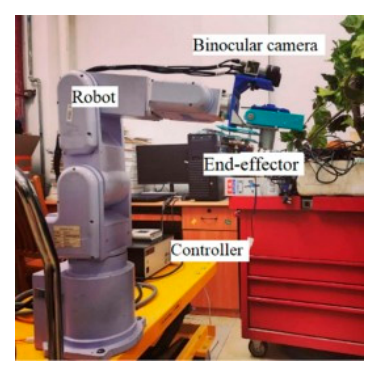
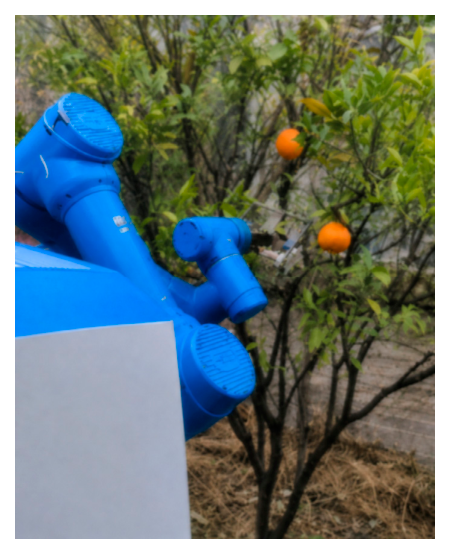
Six-degree-of-freedom robotic arms [18] are a type of robotic arm structure that is currently widely used in fruit and vegetable harvesting robots. Compared with low-degree-of-freedom robotic arms, six-degree-of-freedom robotic arms offer greater movement flexibility and the ability to adjust their orientation [19]. They are capable of achieving coordinated control of position and orientation in three-dimensional space, enabling the end-effector to approach the target fruit at an appropriate angle, thereby adapting to unstructured harvesting environments characterized by random fruit distribution, obstruction by branches and foliage, and complex working spaces. Currently, six-degree-of-freedom robotic arms are widely used in harvesting robots for various fruits and vegetables, including apples, citrus fruits, tomatoes and kiwifruit, demonstrating strong adaptability in tasks such as fruit localization, obstacle avoidance, gripping and cutting [20]. Owing to their versatility, large working volume and mature control systems, which facilitate integration with modules such as vision recognition, path planning and end-effectors, they have become one of the mainstream robotic arm configurations in the research and application of fruit and vegetable harvesting robots.
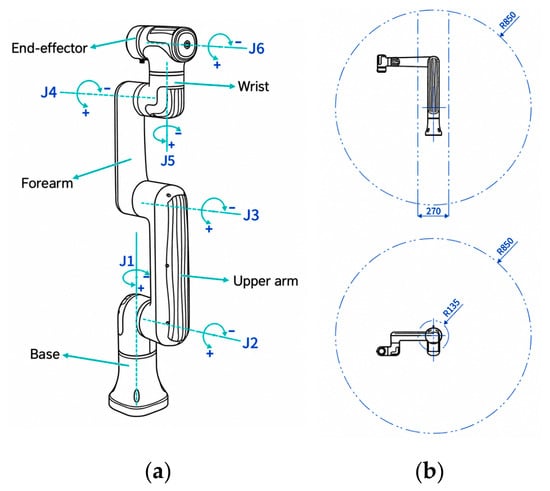
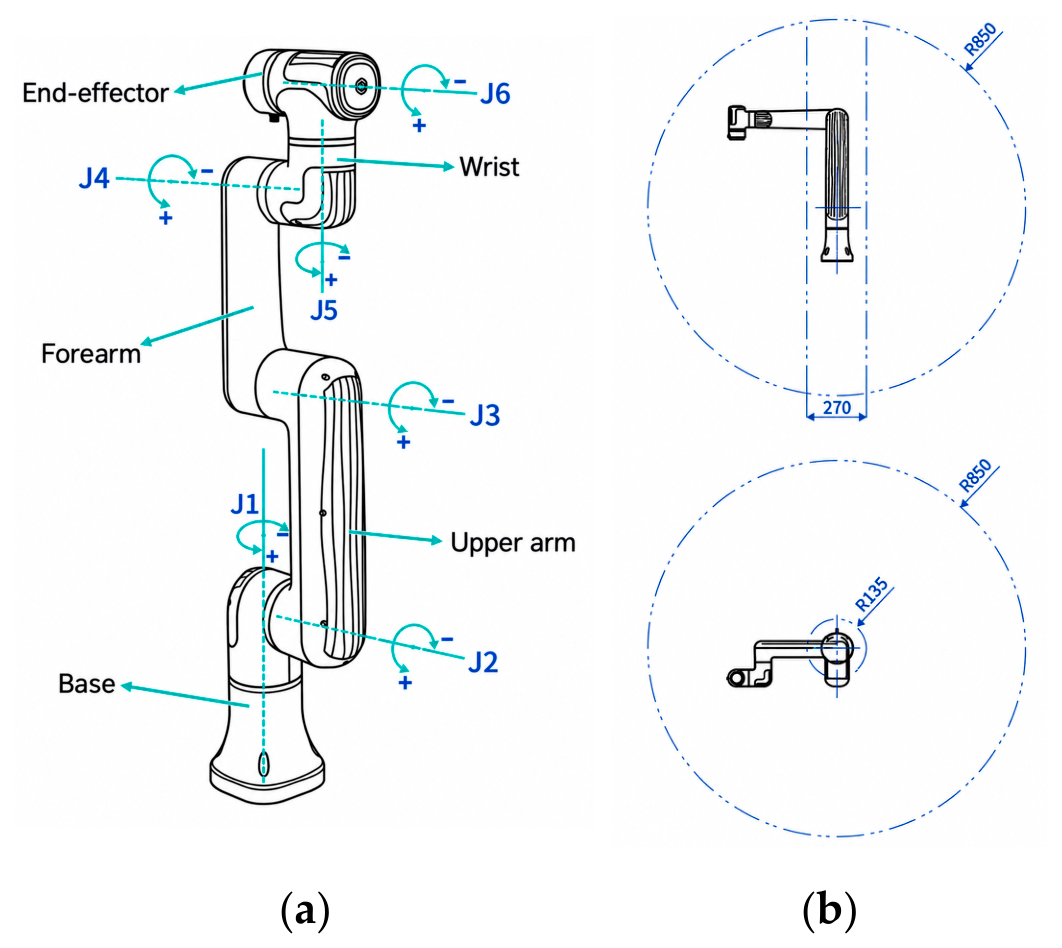
This robotic arm is designed with a humanoid arm structure and comprises a base, upper arm, forearm, wrist and end-effector [21]. The joints of the robotic arm are shown in Figure 2a, whilst its working space is illustrated in Figure 2b. Through multiple rotational joints, the robotic arm mimics the functions of human shoulders, elbows and wrists, enabling it to perform movements such as extension, flexion, rotation and posture adjustment in three-dimensional space. The system is typically equipped with high-precision servo motors and reduction mechanisms to enable precise control of each joint, thereby enhancing positioning accuracy and operational stability during the robotic arm’s movements [22]. The robotic arm possesses a high degree of flexibility and degrees of freedom, enabling it to perform multi-angle operations and obstacle avoidance maneuvers in complex environments. Combining flexibility, stability and high-precision control capabilities [23,24], the robotic arm has extensive application potential in fields such as agricultural harvesting, industrial automation and intelligent robotics.
Figure 2.
Schematic diagram of a six-degree-of-freedom robotic arm: (a) Schematic diagram of the robotic arm, (b) Working space of the robotic arm.
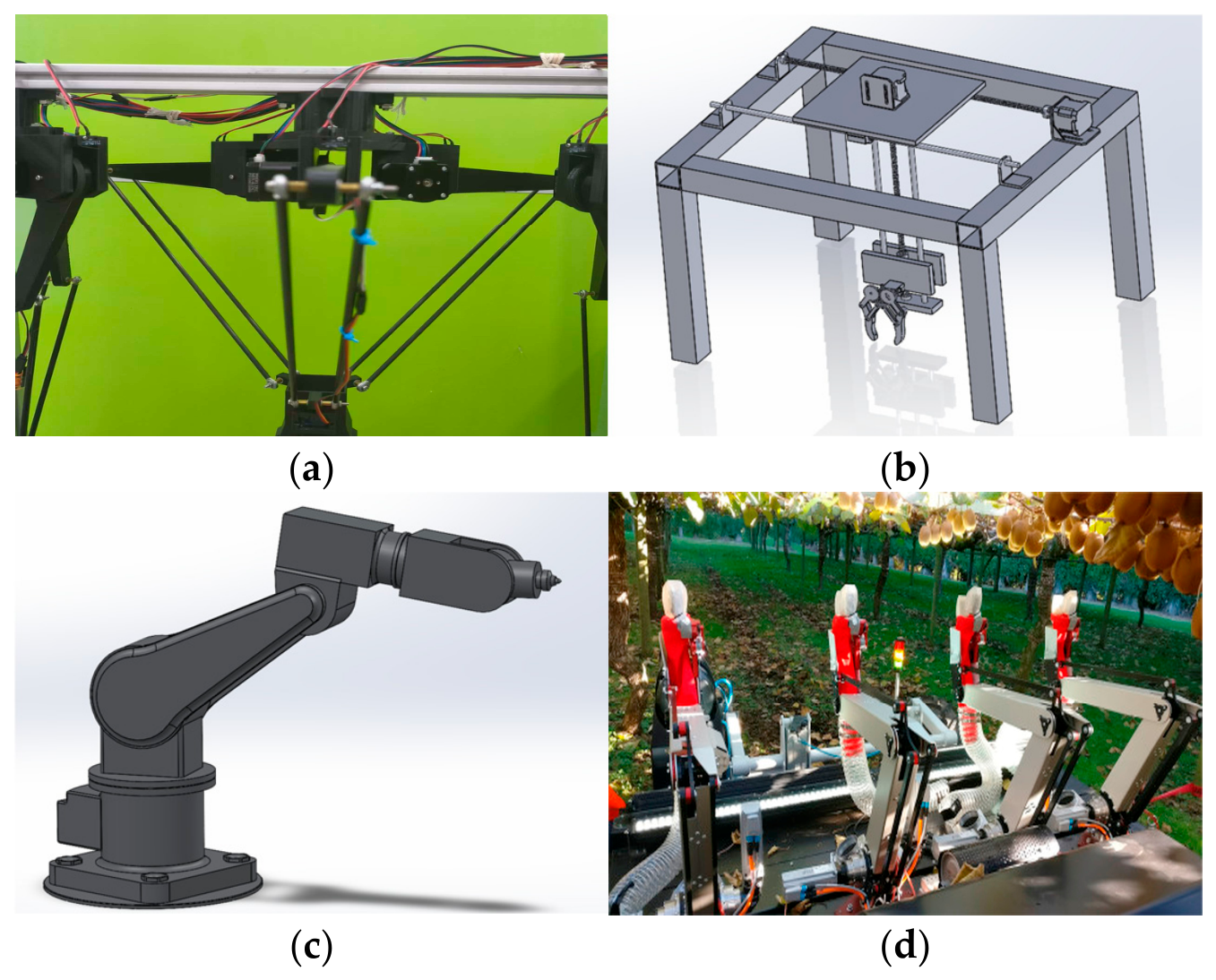
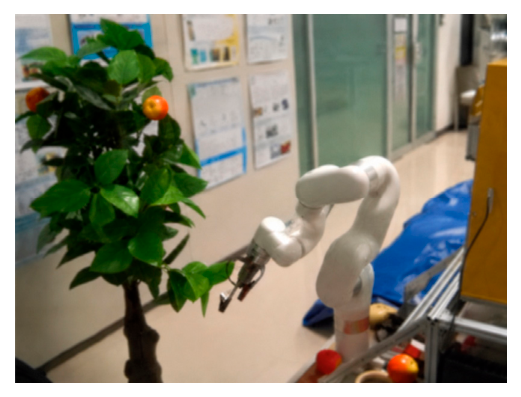
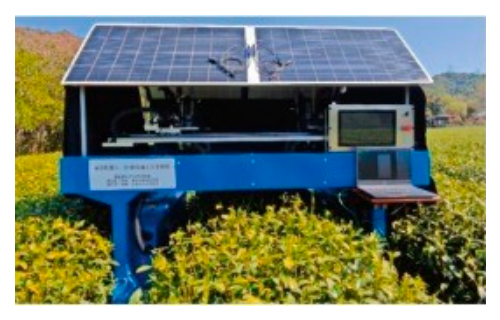
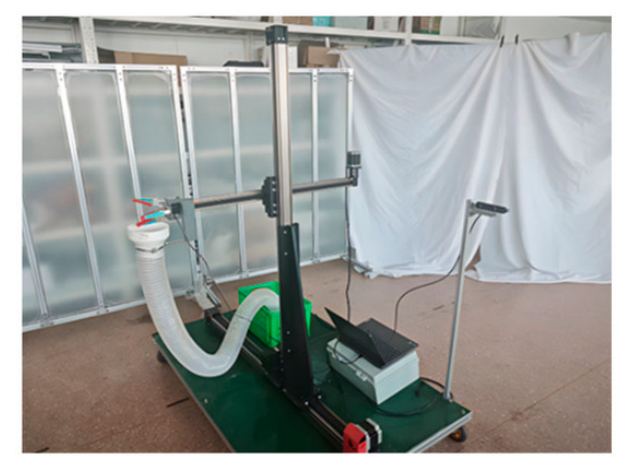
Low-degree-of-freedom robotic arms typically include Delta robotic arms [25] and Cartesian robotic arms [26]. A Delta robotic arm is shown in Figure 3a, whilst a Cartesian robotic arm is shown in Figure 3b. This type of robotic arm is cost-effective and utilizes simple control algorithms; it is primarily suitable for harvesting crops in structured greenhouses or under low-growing cultivation systems, such as tomatoes, tea leaves or strawberries grown on trellises.
4–5-DOF robotic arms feature a hybrid series–parallel joint structure, as shown in Figure 3c. These are predominantly desktop-scale robotic arms, suitable for harvesting small crops [27]. Early Japanese tomato harvesters utilized 5-DOF multi-jointed arms to achieve basic posture adjustments, whilst 4-DOF designs, combining aluminum alloy and steel structures with the YOLOv8 vision system, achieved a 90 percent success rate and a processing time of 15 s per fruit in hydroponic environments. Such robotic arms impose a relatively low computational burden; however, when faced with high-dimensional obstacles, their numerous joints [28,29,30] render them unable to meet the requirements for continuous multi-target harvesting under dynamic branch disturbances.
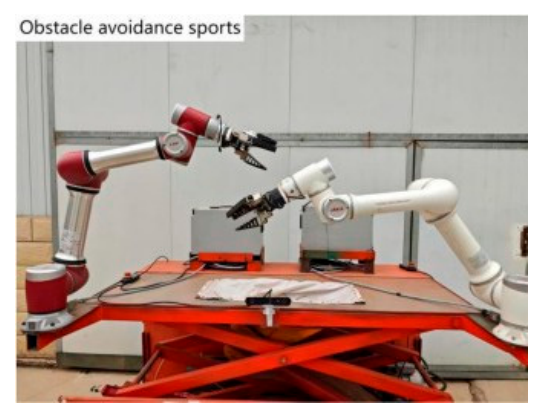
Multi-arm harvesting systems are gradually emerging as a key area of research [31,32,33]. As shown in Figure 3d, compared with traditional single-arm robots, multi-arm robots utilize multiple arms working in coordination to simultaneously perform tasks such as fruit recognition and harvesting, thereby significantly improving harvesting efficiency per unit of time [34]; they are particularly suitable for high-density orchards such as those growing apples, citrus fruits and kiwifruit. Two-arm and four-arm harvesting robots are capable of dynamically allocating harvesting tasks based on fruit distribution [35], enabling parallel operation across multiple targets and thereby shortening the overall harvesting cycle. However, multi-arm collaborative harvesting still faces challenges such as complex motion coordination [36], difficulties in real-time collision avoidance, high computational demands on the control system, and increased costs. With the development of artificial intelligence, multi-robot collaborative control and digital twin technologies, multi-arm harvesting robots will evolve towards efficient collaboration, autonomous decision-making and intelligent optimization [37], further enhancing the operational efficiency and environmental adaptability of agricultural harvesting robots. A more detailed comparison of different types of robotic arms is presented in Table 1.
Table 1.
Comparison of different types of robotic arms.
Figure 3.
Different types of robotic arms: (a) Delta robotic arm; (b) Cartesian robotic arm; (c) 4-DOF robotic arm; (d) multi-arm robotic arm (reproduced from [32]).
2.3. Variable-Stiffness Robotic Arm
A variable-stiffness robotic arm is a robotic arm capable of actively adjusting its own stiffness during movement or operation; it can maintain its soft and compliant characteristics [38] whilst also increasing its structural stiffness and load-bearing capacity when required. Unlike traditional rigid robotic arms, which maintain a fixed stiffness at all times, variable-stiffness robotic arms can dynamically alter the stiffness of their joints or linkages in response to environmental changes, task requirements and external forces, thereby balancing safety, stability and operational precision.
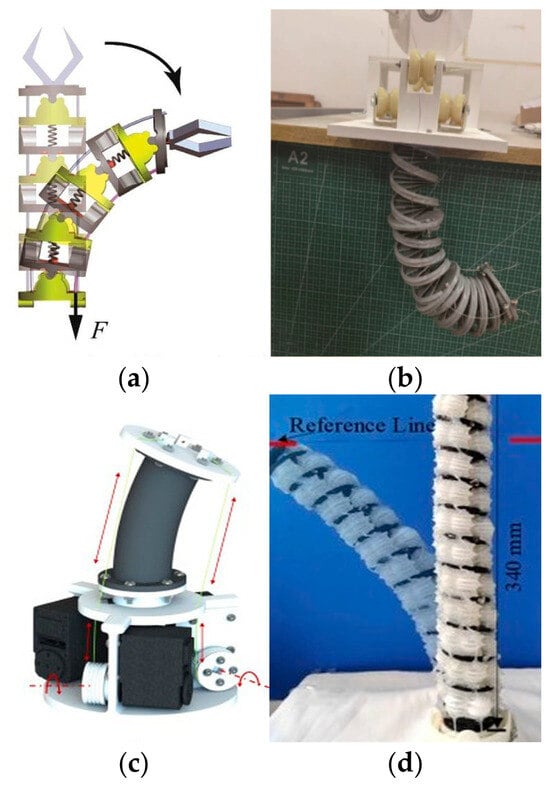
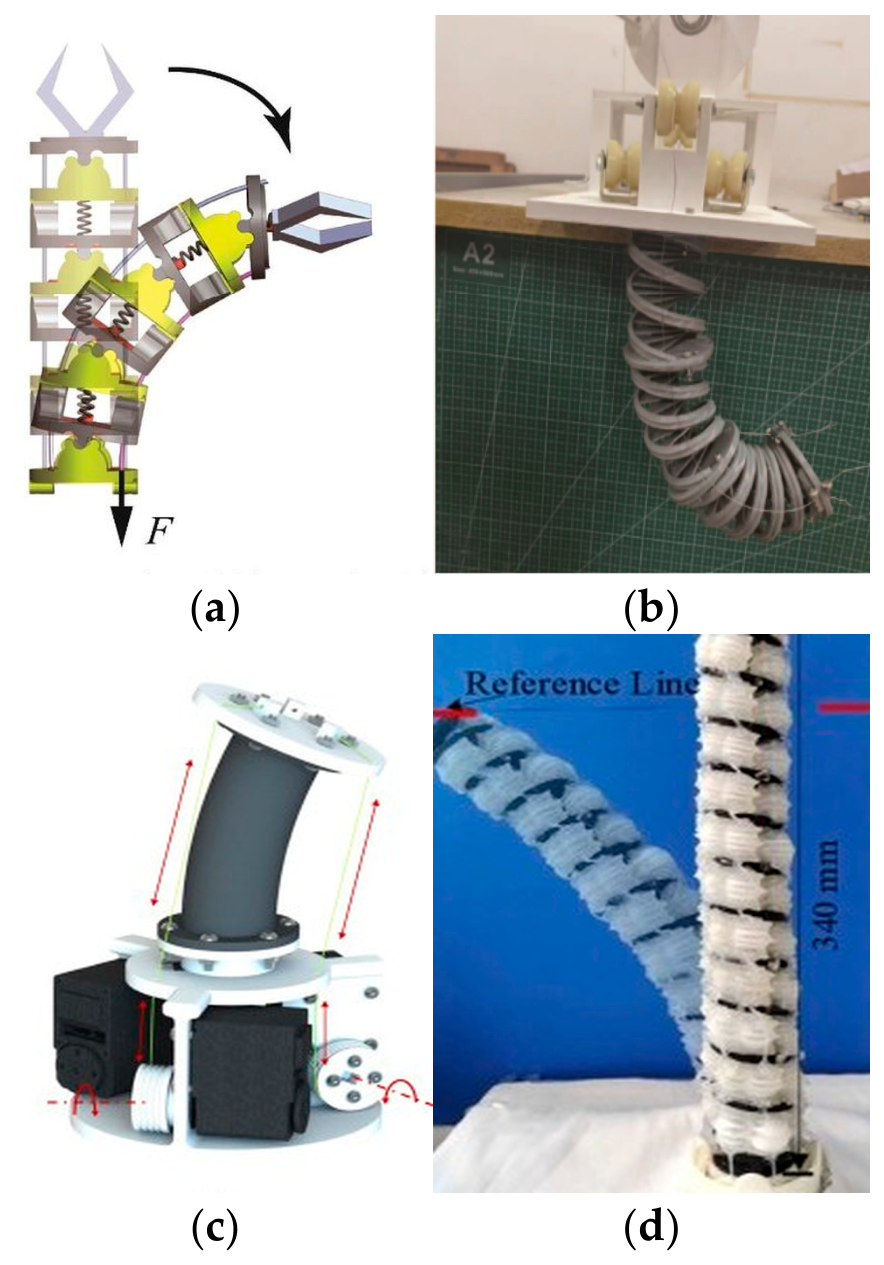
Zhou Liang et al. designed a multi-degree-of-freedom flexible continuum robotic arm [39], as shown in Figure 4a, which not only resolves the issue that bending and rotational degrees of freedom cannot coexist in existing continuum robotic arms, but also enhances the axial stiffness and motion precision of the robotic arm. It is capable of planning the extension and retraction of the drive cables according to the actual operational motion trajectory, and utilizes the robotic arm’s diverse composite motion modes to meet operational requirements in different scenarios. Zhang et al. proposed a rope-driven, DNA-inspired double-helix variable-stiffness structural design [40], as shown in Figure 4b. This structure achieves a dynamic, coordinated balance between axial stiffness and radial flexibility, exhibits distinct stiffness gradient characteristics, overcomes the shortcomings of traditional variable-stiffness designs, and is capable of adapting to multi-joint coordinated control, thereby providing theoretical support and technical guidance for the future engineering implementation of flexible robotic arms. Lu proposed a variable stiffness mechanism based on internal structural reconfiguration [41], as shown in Figure 4c, to enable rapid and continuous adjustment of the stiffness of flexible joints. Lightweight flexible joints possess high load-bearing capacity and environmental adaptability, and kinematic and stiffness models have been established for them. Experimental results indicate that this joint is capable of a wide range of stiffness adjustment with high modelling accuracy. Wang et al. proposed a continuous-medium robotic arm that combines extensibility, variable stiffness and compliance [42]; as shown in Figure 4d, by combining a helical structure with soft pneumatic actuators, adjustable control of both length and stiffness was achieved. Compared with traditional fixed-length robotic arms, it offers a larger working space and better adaptability to complex, constrained environments. Through the coordinated control of tendon-driven and pneumatic drives, the robotic arm’s load-carrying capacity and disturbance resistance have been effectively enhanced, providing new research insights for the application of continuous-medium robotic arms in fields such as agricultural harvesting.
Figure 4.
Various types of variable-stiffness robotic arms: (a) Single-module, multi-degree-of-freedom robotic arm (reproduced from [39]); (b) DNA-inspired robotic arm (reproduced from [40]); (c) Flexible-spine robotic arm (reproduced from [41]); (d) Soft pneumatic helical robotic arm (reproduced from [42]).
3. Current State of Research on Motion Planning Methods
Motion planning is used here as the umbrella term for geometric path planning and time-parameterized trajectory generation. A geometric path q(s), where s is a path parameter, specifies a sequence of robot configurations without an execution schedule [43]. A trajectory q(t), where t is time, specifies the evolution of these configurations and must satisfy velocity, acceleration, and actuator constraints. Online replanning updates a path or trajectory when target, obstacle, or robot-state information changes. Task sequencing determines the order in which target objects are visited, while task allocation assigns targets to manipulators. These task-level decisions interact with motion planning but are distinct from geometric paths and timed trajectories. Multi-arm coordination must additionally address spatial collisions and temporal conflicts [44]. In this review, single-target and multi-target refer to target objects; they do not denote the number of optimization objectives.
3.1. Single-Target Motion Planning
Single-target geometric planning determines whether a manipulator can move from its current pose to a grasping or cutting pose without collision. An effective model should include all links, self-collision of the manipulator, joint limits, the end effector, and the harvested fruit [45]. Even when the obstacle model is generated from point-cloud data, these conditions are not necessarily satisfied. Map resolution, occluded branches, calibration errors, and continuous collision detection can all affect whether the planned path can be executed.
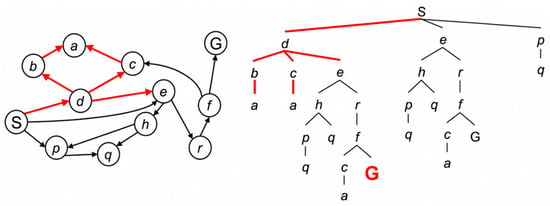
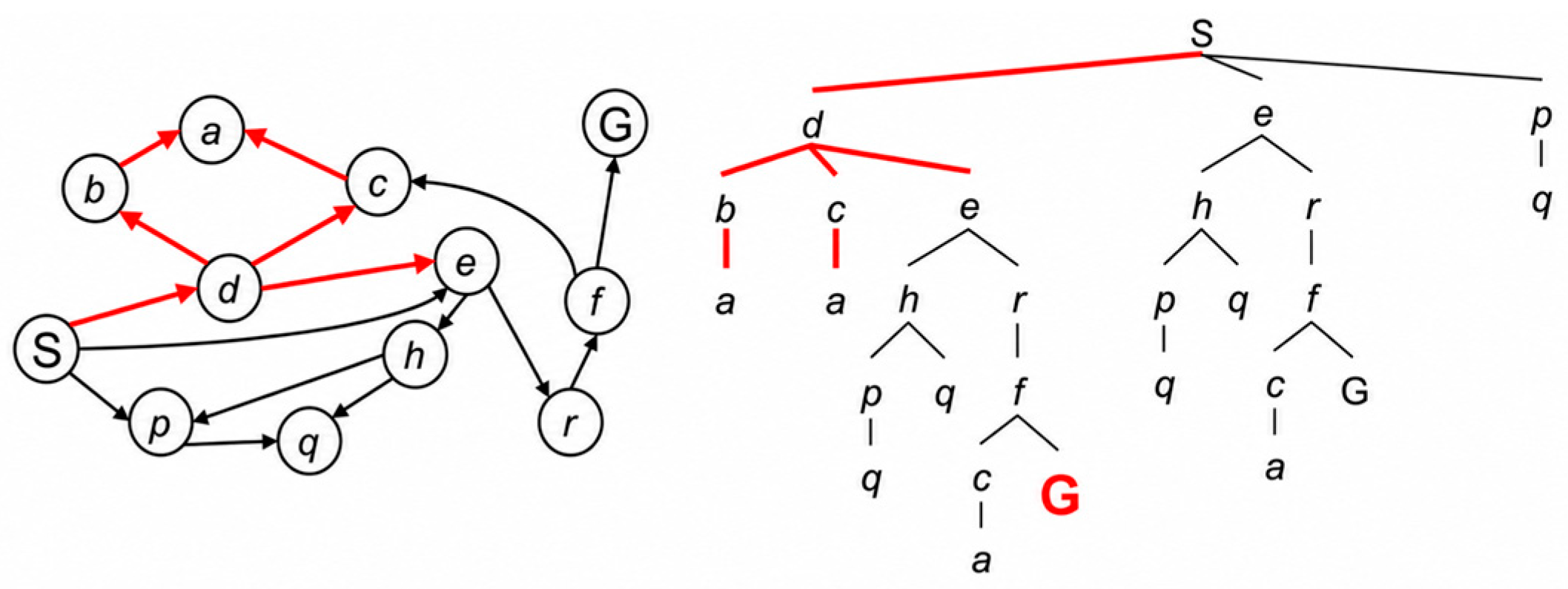
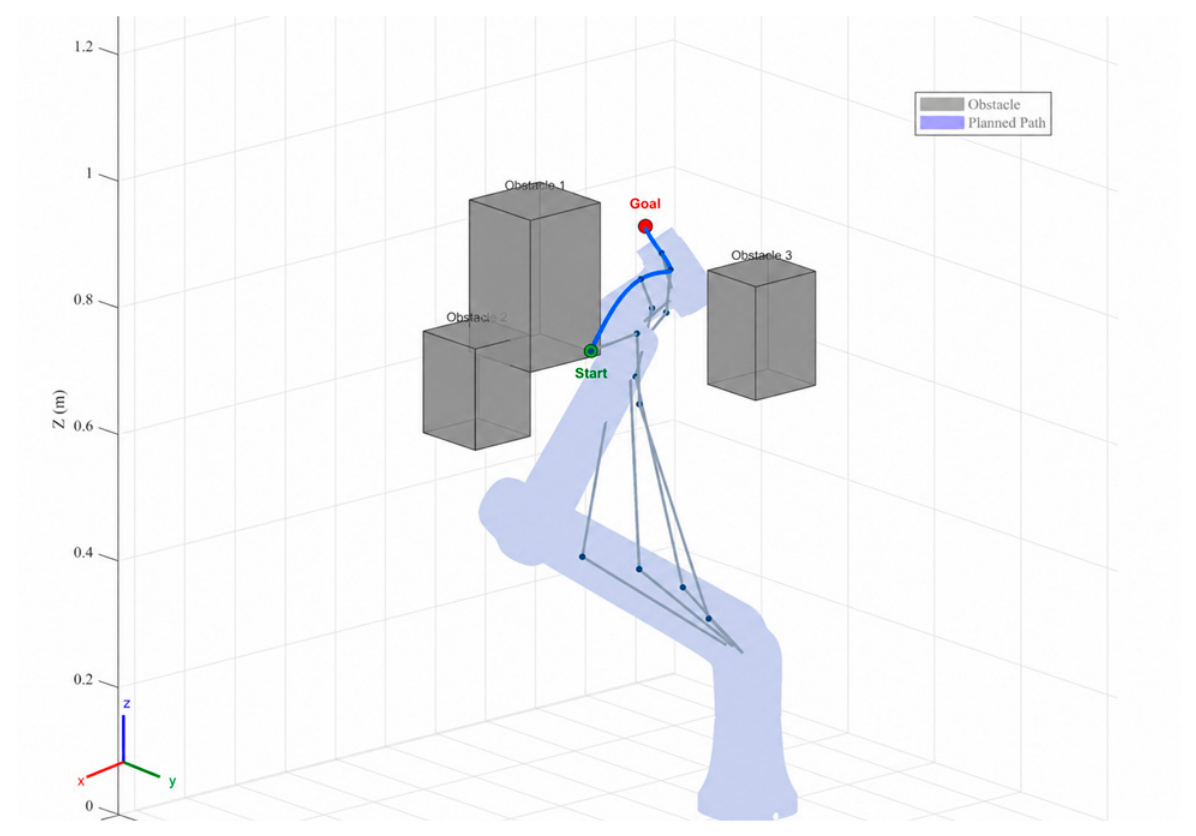
Graph-search methods represent free space as a grid or configuration graph. They expand paths step by step and search for the shortest path from the start node to each reachable node. This allows the manipulator to perform harvesting tasks efficiently and safely, as shown in Figure 5. When the cost and heuristic functions satisfy the required conditions, A* can obtain a minimum-cost path on a finite graph. However, it does not necessarily find the globally optimal solution with the shortest computation time. Its practical performance depends on how the graph is discretized. It also depends on whether the high-dimensional configuration space of the manipulator can be represented without excessive memory consumption. Zhang et al. [46] introduced a positional cost into the conventional A* algorithm for obstacle-avoidance path planning of manipulators. Their work provides a reference for improving node selection by using spatial relationships. Zhuang et al. [47] combined the artificial potential field method with A* for an apple-picking manipulator. They further used an improved RRT algorithm for replanning and path smoothing. Simulation results showed that discrete global search provided a stable direction toward the target, while the potential field further improved local obstacle avoidance. However, the study did not report sufficient repeated experiments, planning-time distributions, or continuous collision data for the entire manipulator to evaluate robustness in real orchards. Chen et al. [48] first searched for connected regions between obstacles in a discretized workspace. They then explored the configuration space to correct the weights of these discrete regions. Their method generally outperformed RRT in both path quality and planning speed, and physical harvesting experiments were also conducted. The main value of graph-search methods for harvesting manipulators is that they can convert canopy topology, reachable regions, and safety costs into reproducible global guidance. However, their performance is still limited by the completeness of the environmental map and the discretization resolution. Their capability for real-time replanning in high-dimensional configuration spaces also needs further improvement.
Figure 5.
Diagram illustrating graph search.
PRM (Probabilistic Roadmaps) is a probability-based path-planning algorithm for robots [49]. It is mainly used to find feasible paths in complex environments. The algorithm randomly generates a set of roadmap nodes and establishes connections between them to construct a probabilistic roadmap. A feasible path from the start point to the goal point is then obtained by searching this roadmap. However, PRM often suffers from poor sampling directionality, low sample utilization, and long convergence time when dealing with complex maps. To address these problems, Gong et al. [50] proposed the TL-PRM algorithm. When the number of nodes was small, the collision-free path planned by TL-PRM was 44.2 m shorter than that generated by the conventional PRM algorithm, and the path success rate increased by 80.5%. In loop-type maps, TL-PRM greatly reduced the number of sampling points while maintaining high path quality. Cheng et al. [51] improved the computational efficiency and safety of PRM by adjusting the connection distance between neighboring nodes. This strategy reduced unreasonable path connections. With the same number of sampling points, the improved PRM reduced the computation time by nearly 50% at most compared with the conventional PRM, showing a clear improvement in running speed. The optimized algorithm also improved real-time performance and safety, making it more suitable for real-time robot path planning. Zou et al. [52] further improved PRM by introducing a random node generation function. This method effectively reduced the problem of insufficient valid nodes caused by uneven node distribution. Compared with the conventional PRM algorithm, the improved method required less computation and provided better real-time performance. It could also generate an optimal path with fewer sampling points.
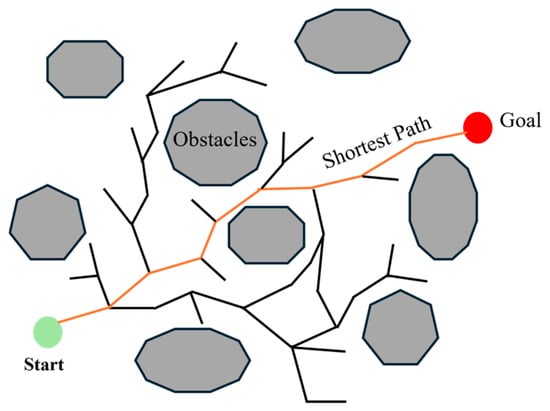
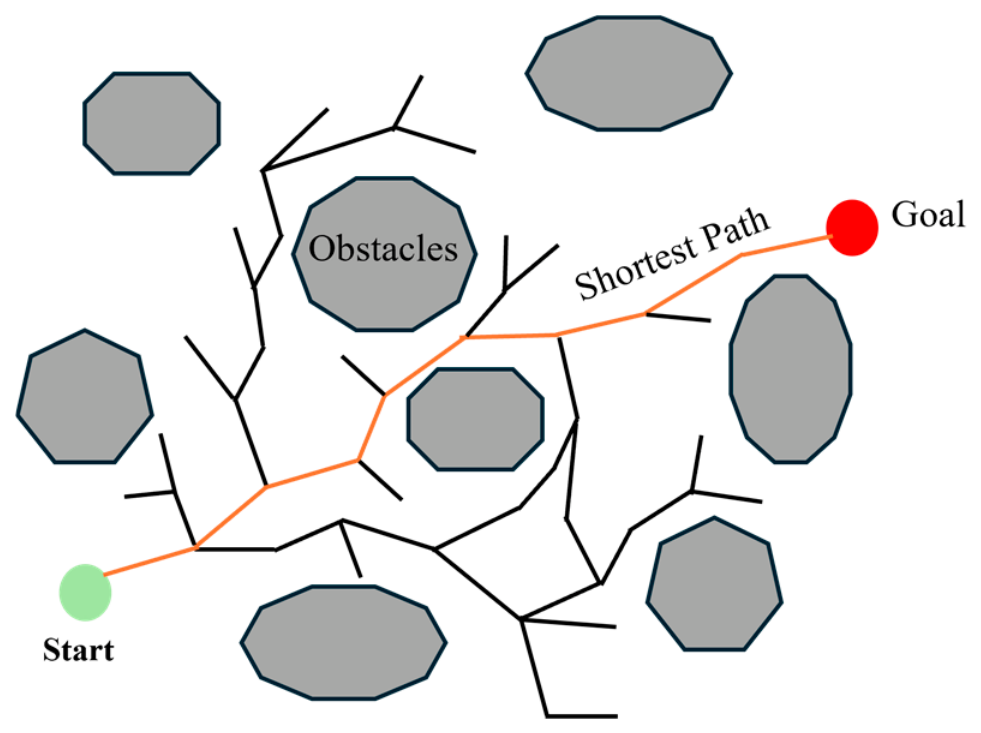
The full name of RRT is Rapidly exploring Random Tree, as shown in Figure 6. The algorithm selects an initial point as the root node and generates a randomly expanding tree by random sampling and continuous addition of new leaf nodes [53]. When a leaf node reaches the target point or enters the target region, a feasible path from the initial point to the target can be obtained by tracing back through the tree. RRT-Connect uses two search trees and an aggressive connection strategy, which usually enables faster completion of a single planning query. RRT* rewires tree nodes and can achieve asymptotic optimality under specific assumptions when the number of samples approaches infinity. Cao et al. [54] combined target biasing, genetic post-processing, and path smoothing with RRT for a litchi-harvesting manipulator. In a virtual environment, the reported planning time was approximately 0.47 s, and the path length was reduced by about 20% compared with the selected baseline. Liu et al. [55] reported that TO-RRT for citrus harvesting achieved substantial relative improvements in computation time, path length, and the number of collision checks compared with the selected benchmark implementations. Fang et al. [56] reported a planning success rate of 98% and an average planning time of 0.524 s for XN-RRT* in simulation. Orchard harvesting experiments were also conducted. However, its quantitative generalization performance under field conditions still requires further validation.
Figure 6.
Schematic diagram of RRT random search.
Overall, sample-based planning is well-suited for high-dimensional harvesting tasks because of its flexibility in exploring complex configuration spaces. However, due to significant differences across studies in terms of robotic arms, obstacles, computing platforms, and validation conditions, it is difficult to directly compare the advantages reported in different studies regarding planning time and path length.
3.2. Trajectory Optimization and Constrained Planning
Trajectory optimization and constrained planning determine how a manipulator can move safely, smoothly, and feasibly along a given path within a specified time. The variables are usually time-parameterized joint trajectories that satisfy joint position, velocity, and acceleration limits [57]. For high-speed or flexible harvesting tasks, driving torque, end-effector pose, contact force, and the risk of fruit damage should also be considered. Trajectory optimization directly improves a discretized trajectory under predefined objectives and constraints. Dynamics-constrained planning incorporates system dynamics into the search or optimization process.
Most existing studies on fruit and vegetable harvesting improve geometric paths through post-processing. Wang et al. [58] proposed a polynomial shortcut smoothing method with velocity and acceleration constraints. The method converts piecewise-linear paths into synchronized joint trajectories and performs collision detection after replacing local trajectory segments. For 10 test paths, 50 shortcut iterations required an average computation time of about 1.3 s. The average trajectory execution time was reduced by about 3 s compared with unsmoothed paths. These results indicate that post-processing can improve motion continuity and execution efficiency. Saoud et al. [59] optimized sinusoidal jerk trajectories for a 4-DOF strawberry-harvesting manipulator under velocity, acceleration, and torque constraints. For different displacement conditions, the trajectory duration was about 2 s and the computation time was 0.5 s. This study directly considered both kinematic and dynamic constraints. However, experimental validation under real plants, varying payloads, and actuator saturation conditions was lacking.
Current trajectory-planning studies for fruit and vegetable harvesting mainly focus on shortcut smoothing, polynomial time parameterization, and a limited number of multi-objective optimization methods. These methods can improve trajectory smoothness and execution efficiency, while CHOMP and model predictive control have the potential to jointly consider obstacle costs and system constraints. However, most studies remain limited to simulation or controlled laboratory conditions, and their robustness and real-time executability under varying payloads, actuator constraints, perception errors, and field disturbances have not been sufficiently validated. Future studies should compare different methods using the same hardware platform and canopy conditions, and report planning time, trajectory execution time, path length, peak velocity, continuous collision-detection results, energy consumption, and harvesting success rate. Such standardized evaluation would provide a more reliable basis for assessing the practical applicability of trajectory-planning methods in field harvesting.
3.3. Online Replanning
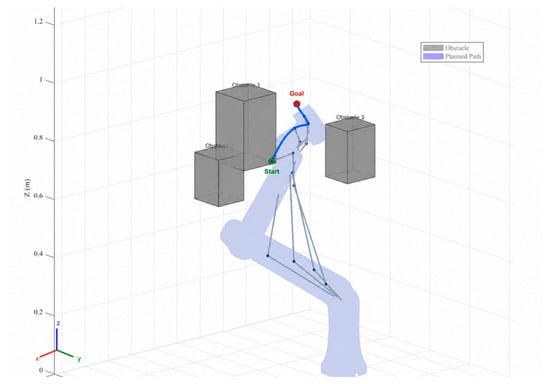
Online replanning is used to address information changes that occur during manipulator execution [60]. When the target position, obstacle state, or robot state is updated, the system can modify or regenerate the remaining trajectory during motion, as shown in Figure 7. The main challenges of online replanning include fruit localization errors, incomplete point clouds, occluded branches, calibration drift between the camera and manipulator, and perception and control delays. Xiong et al. [61] proposed an active obstacle-separation method that combines pushing and drag-pushing. Xiong et al. [62] then used deep learning for detection and tracking, and re-perceived fruits and obstacles before each action. In strawberry field tests, the overall success rate reached 62.4%, which was 36.8 percent higher than that of the earlier system. These results showed that re-perception can improve manipulability in dense fruit clusters. Nemlekar et al. [63] treated leaves as penetrable obstacles and planned harvesting paths using a cost-adjusted APF-RRT*. Their study suggested that treating leaves as penetrable obstacles and rigid branches as non-traversable obstacles is more consistent with practical harvesting conditions. However, the study did not demonstrate that the environment could be continuously updated and replanned within a specified cycle after leaf disturbance. Dual-arm fruit harvesting experiments by Yoshida et al. [13] further showed that point-cloud noise can make thin branches difficult to reconstruct. When the manipulator became stuck, or harvesting failed, the system abandoned the target. These failures indicate that the bottleneck of online planning is not only planner speed. It also depends on the completeness of the obstacle model, the timeliness of environmental updates, and the ability to recover from failures.
Figure 7.
Schematic diagram of online re-planning.
Online replanning should evaluate environmental changes, perception updates, and motion responses within the same framework. Future experiments should introduce disturbances such as fruit position errors, calibration errors, missing point-cloud data, branch displacement, and perception delays. The evaluation should compare metrics such as map and path update frequencies, minimum safety distance, the number of replanning attempts per fruit, collision rate, and harvesting success rate. If the system only reacquires the scene after the manipulator stops and then completely recomputes the path, it should be described as segmented static replanning. It should not be claimed as a solution to real-time replanning in dynamic orchard environments.
3.4. Reinforcement Learning and Hybrid Planning
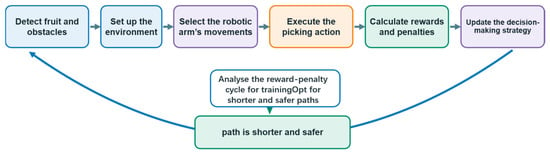
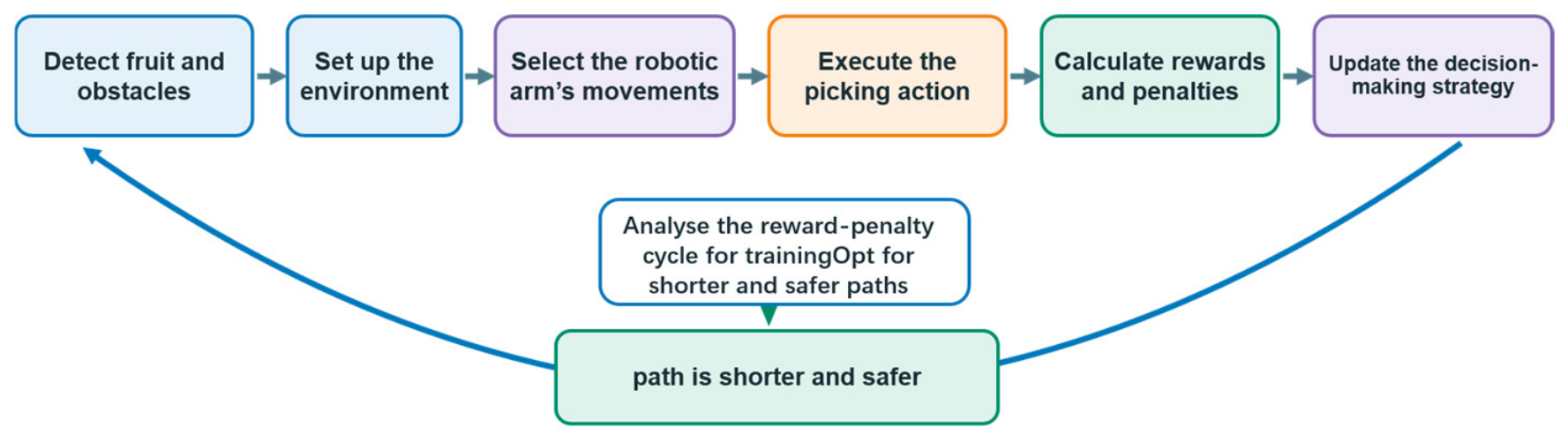
Reinforcement learning-based planning learns a mapping from environmental states to manipulator actions or local motion directions through interaction between an agent and the environment. It can also be used to guide sampling or predict trajectories [64]. Compared with search-based algorithms, these methods shift more computation to the offline training stage and usually achieve faster online inference. However, their performance is often closely related to the training scenarios, state representation, and reward function. The reinforcement learning workflow is shown in Figure 8.
Figure 8.
Reinforcement learning flowchart.
Lin et al. [65] combined a recurrent neural network with DDPG for collision-free path prediction of a guava-harvesting manipulator. In simulation, the planning success rate of recurrent DDPG reached 90.90%, which was higher than the 19.32% achieved by standard DDPG. The planning time for a single query was about 29 ms. In field experiments, the final harvesting success rate was significantly improved compared with the system without collision-free path planning. Training strategies also affected performance. Liu et al. [66] used feasible paths generated by RRT as demonstration samples. These samples were combined with data generated through autonomous exploration of the manipulator for training. When the proportion of expert samples was gradually reduced from 0.45 to 0.35, the success rate increased by 20.37%. When the samples were replayed 15 times every 50 training episodes, the success rate increased by 31.77%. This method reduced ineffective exploration during the early training stage, but it was not validated in a real orchard environment. Li et al. [67] applied dynamic constraints and an improved HER-SAC method to pose selection and obstacle avoidance in tomato peduncle grasping. The actual harvesting success rate reached 85.5%, and the average time from recognition to harvesting completion was 11.42 s. These results reflect the combined effects of pose selection, obstacle avoidance, and control strategies.
The main advantages of reinforcement learning in fruit and vegetable harvesting are reducing online search time and improving adaptability to complex states [68]. Future studies should compare reinforcement learning methods with RRT-Connect, RRT*, and other planners using the same manipulator, environmental map, and computing hardware. The comparison should include planning time, success rate, path length, and collision rate. For physical robotic systems, paths generated by learning-based policies should be checked for manipulator collisions and verified against dynamic constraints. When the policy output is invalid or has insufficient confidence, the robot should stop moving.
3.5. Multi-Target Sequencing and Multi-Arm Coordination
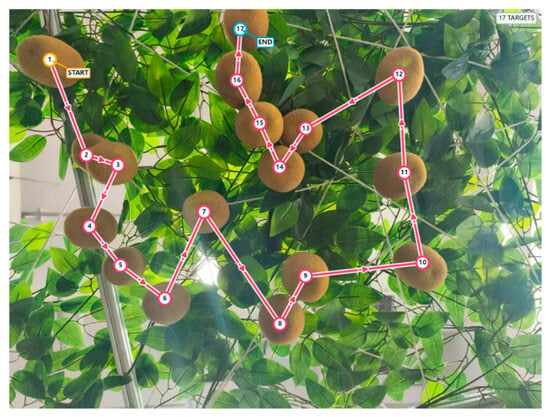
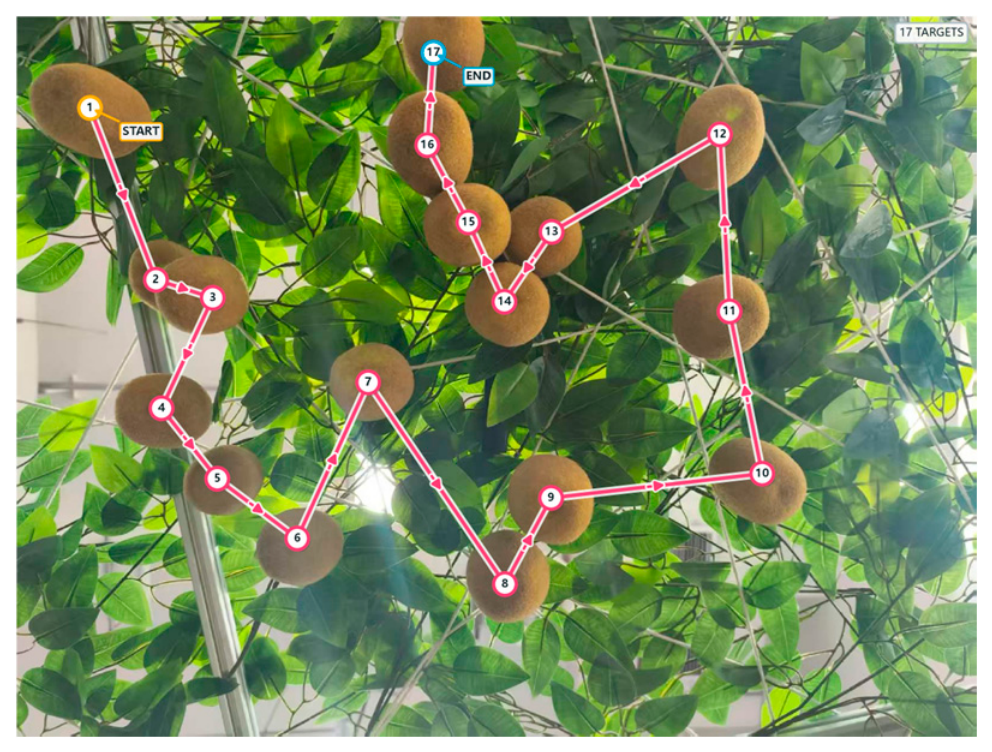
Multi-target sequencing and multi-arm coordination extend single-target path planning by further determining the harvesting order of fruits and the assignment of targets [69]. When multiple fruits are harvested continuously, the system must decide not only which fruit to harvest first, but also how to allocate harvesting tasks among different manipulators, as shown in Figure 9. For a single-arm robot, the traveling salesman problem (TSP) can be used to find a shorter harvesting sequence. However, sorting only by the straight-line distance between fruits cannot reflect the actual motion distance and execution time required for the manipulator to avoid branches and leaves [70]. For multi-arm robots, interference between different manipulators during operation must also be avoided. Therefore, the fruit harvesting sequence, task allocation, and manipulator motion paths should be planned before the harvesting operation is carried out.
Figure 9.
Schematic diagram of multi-target sequencing.
The purpose of sequencing is to reduce unnecessary travel between targets. Zhang et al. [71] modeled continuous three-dimensional harvesting as a TSP with random obstacles and proposed OSACO. Compared with other algorithms, the average path length was greatly reduced. Ma et al. [72] further combined multi-target sequencing with RRT-based local planning. In simulation, the continuous harvesting path was substantially shortened, the planning time was reduced by about 50%, and the planning success rate reached approximately 98.8%. This hierarchical structure is closer to practical harvesting tasks than using TSP alone. However, it still lacks validation under orchard conditions involving missed fruit detection, environmental changes after harvesting, and path execution failures. Multi-arm systems also need to compare different task-allocation baselines and clearly state their modeling assumptions. Li et al. [73] used a Markov game and multi-agent reinforcement learning for task planning in a four-arm apple-harvesting system. Compared with a heuristic algorithm, the average harvesting cycle was shortened by 33.3%, and the average planning optimization time was 1.17 s. The harvesting success rates in indoor and field tests were 71.28% and 80.45%, respectively. This study achieved physical integration of perception, task planning, and control.
For dense targets and shared workspaces, spatiotemporal conflicts must also be addressed. Dai et al. [74] proposed 3MSP2, which uses a shoulder-view camera to divide fruit clusters and determine the harvesting sequence. An end-effector view is then used to reduce collision risk. Compared with single-view scanning, the collision-free harvesting success rate increased by 17.2% in simulation and by 36.1% in physical experiments. The field harvesting success rate reached 70.9%, with an average harvesting time of 8.6 s. Liu et al. [75] developed a dual-arm strawberry harvesting method. A conflict graph of the shared workspace and GCO was used for target allocation, while RRT* was used to generate paths for each arm. Compared with an equal spatial partitioning strategy, the total harvesting time was reduced by 23.1%, and the cumulative idle time was reduced by 74.2%. However, the method has not been validated with a dual-arm system in a real orchard. Zhu et al. [26] jointly optimized scheduling and collision-free trajectories for 2–12 Cartesian manipulators. Simulation results showed that increasing the number of manipulators can greatly improve harvesting efficiency when the number of fruits is small. However, as the number of fruits increases, the additional efficiency gained from adding more manipulators gradually decreases. Because the experiments used simulated fruit positions, these results still need further validation in real orchard environments.
Most existing studies are conducted in simulated environments. In these studies, the positions of all fruits are predefined before planning and are assumed to remain unchanged during harvesting. However, in real orchards, some fruits may be missed by the perception system, new targets may appear after harvesting, and grasping failures or manipulator pauses may also occur [76]. Future studies should update target allocation and harvesting sequences in time according to the latest perception results and task status. When evaluating multi-arm systems, researchers should report not only the total harvesting time and the harvesting cycle per fruit, but also the idle time of each manipulator, mutual waiting time, task computation time, and recovery capability after failures. Task allocation, motion paths, and physical harvesting results should also be evaluated together to provide a comprehensive assessment.
Overall, path planning for a manipulator to reach a single fruit is relatively well developed. However, a planned path does not necessarily ensure that the manipulator can move safely and smoothly. It also cannot guarantee stable harvesting when the environment changes or multiple tasks interact. Future studies should therefore pay more attention to motion smoothness and system constraints. The system should be able to update paths in time according to environmental changes. The adaptability and safety of learning-based methods in unfamiliar environments should also be evaluated. For multi-fruit and multi-arm systems, harvesting sequence, target reachability, interference between manipulators, and task adjustment after failures should be considered together. Only by reporting planning time, motion execution performance, and final harvesting results on the same physical platform can researchers determine whether an algorithm truly improves field harvesting efficiency and system stability.
Field validation remains limited for motion-constrained trajectory generation, online replanning, learning-based planning, and multi-arm coordination. Table 2 identifies the highest experimental validation level supported by the available evidence for each study. A blank cell indicates that the corresponding value or validation level could not be verified from the available evidence.
Table 2.
Performance metrics of different algorithms and the highest levels of experimental validation.
4. Challenges and Outlook
Although considerable progress has been made in manipulator design and motion planning for fruit and vegetable harvesting robots, performance improvements obtained in simulation or laboratory environments still face challenges in field validation. Safe and efficient operation is the result of the combined effects of robotic arm design, perception, motion planning, and control. The current challenge goes beyond simply generating a collision-free path. When there are errors in fruit location, moving branches and leaves, restrictions on robotic arm movement, or interactions between multiple targets and multiple robotic arms, the reliability of harvesting depends on the combined performance of these various components. It is difficult to solve these problems by improving a single algorithm alone. Therefore, future research should focus on the following aspects.
Most existing studies predefine the positions of fruits and obstacles before planning. However, occlusion, missing point-cloud data, illumination changes, and branch movement in real environments may invalidate the original collision-free path. Future studies should establish a closed-loop perception–planning–execution framework. The environmental model and motion path should be updated in a timely manner when targets or obstacles change. Evaluation should include environmental replanning time, minimum obstacle-avoidance distance, collision rate, and overall harvesting success rate. A short collision-free path does not guarantee smooth execution, as joint velocity, acceleration, and torque limits are often neglected in path search. Rapid motion may cause manipulator vibration, reduce positioning accuracy, and even damage the fruit. Polynomial smoothing and kinematic and dynamic constraints have been used in existing studies to improve trajectory continuity. Future research should further integrate path search, trajectory optimization, and motion control. Force sensing or variable-stiffness mechanisms can also be used to reduce the impact of the manipulator on the fruit during harvesting.
Reinforcement learning methods can make fast decisions after training, but their performance is sensitive to the training environment, state representation, reward function, and disturbance range. A policy trained for a specific crop, canopy, or manipulator may fail when the environment or robotic platform changes. Future research can use learning-based models to guide sampling or estimate motion costs, while retaining collision detection and motion constraints. Reliability should also be evaluated through cross-crop and cross-platform tests, anomaly detection, and safe fallback strategies. Multi-fruit harvesting requires not only planning paths to individual targets but also determining the harvesting sequence. The straight-line distance between fruits is easy to calculate, but it cannot reflect the actual obstacle-avoidance distance or execution time of the manipulator. Multi-arm systems may also suffer from idle time caused by unbalanced task allocation and conflicts in shared workspaces. Future studies should support task reassignment when new targets appear after occlusion, grasping fails, or a manipulator becomes constrained. Feasible trajectory cost or actual motion cost should also be used instead of simple straight-line distance.
In terms of agronomic adaptability, the performance of harvesting robots depends not only on mechanical design and planning algorithms. It is also affected by fruit size, peduncle orientation, canopy density, branch stiffness, and harvesting method. These factors can change the manipulator workspace and the difficulty of path planning. As shown in Table 1 and Table 2, existing studies differ greatly in crop type, equipment, environmental models, and evaluation metrics. The definition of successful harvesting also varies among studies, making direct comparison difficult. Future research should coordinate cultivation practices, manipulators, end effectors, and planning methods. Laboratory and field testing standards should also be unified, with clear definitions of harvesting success, collision, fruit damage, planning failure, and recovery. Planning performance, motion execution, and complete harvesting results should be reported separately to provide a more reliable basis for evaluating the practical value of different methods. Existing studies provide some evidence on operational efficiency, but reporting of energy consumption, the rationale for manipulator selection, and complete costs remains insufficient; the evidence assembled in this review mainly comes from prototype trials and is insufficient to establish sustainable commercial deployment.
5. Conclusions
This review summarizes the main manipulator configurations and motion-planning methods used in ground-based fruit and vegetable harvesting robots. Existing studies show that no single manipulator or planning algorithm is suitable for all harvesting tasks. Six-DOF serial manipulators offer a large workspace and high motion flexibility, but their planning and execution time may be relatively long. Low-DOF or parallel manipulators can move faster, but their workspace and obstacle-avoidance capability are more limited. The applicability of graph-search methods, sampling-based planning, trajectory optimization, online replanning, and learning-based methods also depends on crop structure, obstacle density, perception accuracy, motion constraints, and the number of targets. Single-target geometric path planning has been widely validated in static or laboratory environments. However, field experiments are still limited for motion-constrained trajectory generation, continuous replanning in dynamic environments, safe generalization of learning-based methods, and multi-arm coordination. Because crop types, manipulator platforms, environmental complexity, computing hardware, and evaluation metrics differ among studies, the reported planning time, path length, and success rate cannot be directly compared. Future research should further strengthen the integration of multiple algorithms, motion planning, multi-arm task coordination and obstacle-avoidance control, and adaptation to agronomic conditions. These efforts will promote the development of fruit and vegetable harvesting robots toward higher efficiency, stability, intelligence, and practical applicability.
Author Contributions
Research conception: Y.W. and Z.T.; Investigation/Literature Review: Y.W. and Z.T.; Writing—Drafting: Y.W. and Z.T.; Project management: W.M.; Fundraising: W.M. All authors have read and agreed to the published version of the manuscript.
Funding
This research was supported by the Major Task Project of the Institute of Urban Agriculture, Chinese Academy of Agricultural Sciences (Grant No. SZ202405), the Chengdu Agricultural Science and Technology Center Local Finance Special Funds Project (Grant No. NASC2024TD04), and the Agricultural Science and Technology Innovation Program of the Chinese Academy of Agricultural Sciences (Grant No. ASTIP2026-34-IUA-10).
Data Availability Statement
No new data were created or analyzed in this study. Data sharing is not applicable to this article.
Conflicts of Interest
The authors declare no conflicts of interest.
References
- Kan, J.; Yu, M.; Li, X.; Zhao, M.; Qiao, Y.; Wang, X.; Han, J.; Yang, Y.; Wei, M.; Shen, Z. Current status and recommendations for the fruit tree industry in east China’s Jiangsu Province. Technol. Hortic. 2024, 4, e017. [Google Scholar] [CrossRef] [Scilit]
- Ghonimy, M.; Abdel-Baky, N.F. Robotic fruit harvesting systems: Integration of perception, manipulation, and detachment for autonomous harvesting. Agronomy 2026, 16, 1127. [Google Scholar] [CrossRef] [Scilit]
- Zhang, K.; Lammers, K.; Chu, P.; Li, Z.; Lu, R. System design and control of an apple harvesting robot. Mechatronics 2021, 79, 102644. [Google Scholar] [CrossRef] [Scilit]
- Bulanon, D.M.; Burr, C.; DeVlieg, M.; Braddock, T.; Allen, B. Development of a visual servo system for robotic fruit harvesting. AgriEngineering 2021, 3, 840–852. [Google Scholar] [CrossRef] [Scilit]
- Xiong, Y.; Peng, C.; Grimstad, L.; From, P.J.; Isler, V. Development and field evaluation of a strawberry harvesting robot with a cable-driven gripper. Comput. Electron. Agric. 2019, 157, 392–402. [Google Scholar] [CrossRef] [Scilit]
- Schertz, C.E.; Brown, G.K. Basic considerations in mechanizing citrus harvest. Trans. ASAE 1968, 11, 343–346. [Google Scholar] [CrossRef] [Scilit]
- Kawamura, N.; Namikawa, K.; Fujiura, T.; Ura, M. Study on agricultural robot (Part 1): Microcomputer-controlled manipulator system for fruit harvesting. J. Jpn. Soc. Agric. Mach. 1984, 46, 353–358. [Google Scholar] [CrossRef] [PubMed]
- Kondo, N.; Monta, M.; Fujiura, T. Fruit harvesting robots in Japan. Adv. Space Res. 1996, 18, 181–184. [Google Scholar] [CrossRef] [Scilit] [PubMed]
- Dong, T.; Zhang, Y.; Luo, X.; Song, X.; Qin, X.; Liu, Y.; Bai, Z. Design, development, and field test analysis of a multiarm tomato harvesting robot. J. Field Robot. 2026, 43, 2805–2829. [Google Scholar] [CrossRef] [Scilit]
- Tituaña, L.; Gholami, A.; He, Z.; Xu, Y.; Karkee, M.; Ehsani, R. A small autonomous field robot for strawberry harvesting. Smart Agric. Technol. 2024, 8, 100454. [Google Scholar] [CrossRef] [Scilit]
- Xiong, Y.; Ge, Y.; Grimstad, L.; From, P.J. An autonomous strawberry-harvesting robot: Design, development, integration, and field evaluation. J. Field Robot. 2020, 37, 202–224. [Google Scholar] [CrossRef] [Scilit]
- Zhu, F.; Zhang, W.; Wang, S.; Jiang, B.; Feng, X.; Zhao, Q. Apple-harvesting robot based on the YOLOv5-RACF model. Biomimetics 2024, 9, 495. [Google Scholar] [CrossRef] [Scilit] [PubMed]
- Yoshida, T.; Onishi, Y.; Kawahara, T.; Fukao, T. Automated harvesting by a dual-arm fruit harvesting robot. ROBOMECH J. 2022, 9, 19. [Google Scholar] [CrossRef] [Scilit]
- Feng, Q.; Zhao, C.; Li, T.; Chen, L.; Guo, X.; Xie, F.; Xiong, Z.; Chen, K.; Liu, C.; Yan, T. Design and test of a four-arm apple harvesting robot. Trans. Chin. Soc. Agric. Eng. 2023, 39, 25–33. [Google Scholar]
- Rajendra, P.; Kondo, N.; Ninomiya, K.; Kamata, J.; Kurita, M.; Shiigi, T.; Hayashi, S.; Yoshida, H.; Kohno, Y. Machine vision algorithm for robots to harvest strawberries in tabletop culture greenhouses. Eng. Agric. Environ. Food 2008, 2, 24–30. [Google Scholar] [CrossRef] [Scilit]
- Zhong, M.; Han, R.; Liu, Y.; Huang, B.; Chai, X.; Liu, Y. Development, integration, and field evaluation of an autonomous Agaricus bisporus picking robot. Comput. Electron. Agric. 2024, 220, 108871. [Google Scholar] [CrossRef] [Scilit]
- Tang, Z.; He, Y.; Tang, Z.; Zhang, C.; Liu, Z.; Liu, X. Research status and development trends of orchard harvesting machinery. Acta Agric. Zhejiangensis 2026, 38, 184–196. [Google Scholar] [CrossRef]
- Liu, Z.; Abeyrathna, R.M.R.D.; Sampurno, R.M.; Nakaguchi, V.M.; Ahamed, T. A new occlusion-avoidance and dual-view fruit localization method with a 6-DoF manipulator for orchard harvesting. Comput. Electron. Agric. 2025, 237, 110634. [Google Scholar] [CrossRef] [Scilit]
- Sun, H. Path planning and simulation analysis of a six-degree-of-freedom apple-picking manipulator. South. Agric. Mach. 2021, 52, 47–50. [Google Scholar]
- Paul, A.; Machavaram, R. Design, kinematic modeling, and hybrid AI-based optimization of a vision-guided 6-DOF robotic arm for capsicum harvesting in greenhouse environments. Frankl. Open 2025, 12, 100388. [Google Scholar] [CrossRef] [Scilit]
- Ouyang, A.; Huang, H.; Zhang, A.; Wang, X.; Zhang, Y.; Wang, Q.; Xu, J. Research progress and prospects of fruit and vegetable picking robots. Trans. Chin. Soc. Agric. Mach. 2026, 57, 19–38, 49. [Google Scholar] [CrossRef]
- Zhang, W.; Zhang, B.; Gong, Y.; Ren, N. Research status and prospects of robotic arms for fruit and vegetable harvesting robots. J. Chin. Agric. Mech. 2022, 43, 232–237, 244. [Google Scholar] [CrossRef]
- Mail, M.F.; Maja, J.M.; Marshall, M.; Cutulle, M.; Miller, G.; Barnes, E. Agricultural harvesting robot concept design and system components: A review. AgriEngineering 2023, 5, 777–800. [Google Scholar] [CrossRef] [Scilit]
- Lin, T.; Sun, F.; Li, X.; Guo, X.; Ying, J.; Wu, H.; Li, H. A review of key technologies and recent advances in intelligent fruit-picking robots. Horticulturae 2026, 12, 158. [Google Scholar] [CrossRef] [Scilit]
- Droukas, L.; Doulgeri, Z.; Tsakiridis, N.L.; Triantafyllou, D.; Kleitsiotis, I.; Mariolis, I.; Giakoumis, D.; Tzovaras, D.; Kateris, D.; Bochtis, D. A survey of robotic harvesting systems and enabling technologies. J. Intell. Robot. Syst. 2023, 107, 21. [Google Scholar] [CrossRef] [Scilit] [PubMed]
- Zhu, Y.; Vougioukas, S.G. Fast scheduling and trajectory planning for robotic fruit harvesters with multiple Cartesian arms. IEEE Robot. Autom. Lett. 2026, 11, 1562–1569. [Google Scholar] [CrossRef] [Scilit]
- Masood, M.U.; Haghshenas-Jaryani, M. A study on the feasibility of robotic harvesting for chile pepper. Robotics 2021, 10, 94. [Google Scholar] [CrossRef] [Scilit]
- Feng, Q.; Chen, J.; Zhang, M.; Wang, X. Design and test of harvesting robot for table-top cultivated strawberry. In Proceedings of the 2019 WRC Symposium on Advanced Robotics and Automation (WRC SARA), Beijing, China, 21–22 August 2019; pp. 80–85. [Google Scholar] [CrossRef] [Scilit]
- Silwal, A.; Davidson, J.R.; Karkee, M.; Mo, C.; Zhang, Q.; Lewis, K. Design, integration, and field evaluation of a robotic apple harvester. J. Field Robot. 2017, 34, 1140–1159. [Google Scholar] [CrossRef] [Scilit]
- Tian, Z.; Guo, X.; Ma, W.; Xue, X. Research on kiwifruit harvesting robot worldwide: A solution for sustainable development of kiwifruit industry. Smart Agric. Technol. 2025, 10, 100792. [Google Scholar] [CrossRef] [Scilit]
- Sarig, Y. Robotics of fruit harvesting: A state-of-the-art review. J. Agric. Eng. Res. 1993, 54, 265–280. [Google Scholar] [CrossRef] [Scilit]
- Williams, H.A.M.; Jones, M.H.; Nejati, M.; Seabright, M.J.; Bell, J.; Penhall, N.D.; Barnett, J.J.; Duke, M.D.; Scarfe, A.J.; Ahn, H.S.; et al. Robotic kiwifruit harvesting using machine vision, convolutional neural networks, and robotic arms. Biosyst. Eng. 2019, 181, 140–156. [Google Scholar] [CrossRef] [Scilit]
- Espinoza, J.; Chinnock, B.; Bahne, C.; Nguyen, T.; Bani Milhim, A. A novel high-precision citrus harvesting robotic system for controlled stem length: Design, validation, and field evaluation. Smart Agric. Technol. 2026, 13, 101918. [Google Scholar] [CrossRef] [Scilit]
- Chen, C.; Song, Z.; Li, X.; Chen, C.; Yang, F.; Wang, Z. Research status of apple picking robotic arm picking strategy and end-effector. Comput. Electron. Agric. 2025, 235, 110349. [Google Scholar] [CrossRef] [Scilit]
- Kaleem, A.; Hussain, S.; Aqib, M.; Cheema, M.J.M.; Saleem, S.R.; Farooq, U. Development challenges of fruit-harvesting robotic arms: A critical review. AgriEngineering 2023, 5, 2216–2237. [Google Scholar] [CrossRef] [Scilit]
- Zhu, K.; Lammers, K.; Zhang, K.; Arunachalam, C.; Bhattacharya, S.; Li, J.; Lu, R.; Li, Z. Advancement and field evaluation of a dual-arm apple harvesting robot. Smart Agric. Technol. 2025, 12, 101343. [Google Scholar] [CrossRef] [Scilit]
- Liu, X.; Zhang, Z.; Yu, J.; Hua, W.; Li, X.; Azizi, A.; Mhamed, M.; Abid, F.; Abdelhamid, M.A. Design, integration, and evaluation of a low-cost system for automatic apple picking and infield sorting. Comput. Electron. Agric. 2025, 239, 110933. [Google Scholar] [CrossRef] [Scilit]
- Yao, L.; Li, J.; Dong, H. Analysis of variable-stiffness performance of a pneumatic soft manipulator module. J. Mech. Eng. 2020, 56, 36–44. [Google Scholar]
- Zhou, L.; Wen, T.; Hu, J.; Zhou, H. Design of single-module multi-degree-of-freedom flexible continuum robotic arm based on rolling contact. J. Eng. Des. 2024, 31, 473–482. [Google Scholar] [CrossRef]
- Zhang, R.; Zhao, S.; Jia, B.; Qin, Z.; Xin, Y.; Liu, Z. Design and experiment of a DNA-inspired variable-stiffness flexible manipulator. Sci. Technol. Eng. 2026, 26, 3606–3615. [Google Scholar] [CrossRef]
- Lu, Y.; Zhang, F.; Shang, W.; Ma, Y.; Gao, X.; Kong, L. Design and modelling of a flexible cable-driven robotic joint with variable stiffness capability. Robot. Auton. Syst. 2026, 196, 105249. [Google Scholar] [CrossRef] [Scilit]
- Wang, P.; Zang, J.; Dong, Z.; Xing, Z.; Zhao, J. Design and statics model of an extensible hybrid-driven continuum robot with variable stiffness. Sens. Actuators A Phys. 2025, 384, 116177. [Google Scholar] [CrossRef] [Scilit]
- Liu, J.; Yap, H.J.; Khairuddin, A.S.M. Review on motion planning of robotic manipulator in dynamic environments. J. Sens. 2024, 2024, 5969512. [Google Scholar] [CrossRef] [Scilit]
- Xie, F.; Guo, Z.; Li, T.; Feng, Q.; Zhao, C. Dynamic task planning for multi-arm harvesting robots under multiple constraints using deep reinforcement learning. Horticulturae 2025, 11, 88. [Google Scholar] [CrossRef] [Scilit]
- Liu, Z.; Sampurno, R.M.; Abeyrathna, R.M.R.D.; Nakaguchi, V.M.; Ahamed, T. Development of a collision-free path planning method for a 6-DoF orchard harvesting manipulator using RGB-D camera and Bi-RRT algorithm. Sensors 2024, 24, 8113. [Google Scholar] [CrossRef] [Scilit] [PubMed]
- Zhang, X.; Liu, Y. Path planning of obstacle avoidance for manipulators based on position cost A* algorithm. J. Mach. Des. 2021, 38, 108–113. [Google Scholar]
- Zhuang, M.; Li, G.; Ding, K. Obstacle avoidance path planning for apple picking robotic arm incorporating artificial potential field and A* algorithm. IEEE Access 2023, 11, 100070–100082. [Google Scholar] [CrossRef] [Scilit]
- Chen, B.; Gong, L.; Yu, C.; Du, X.; Chen, J.; Xie, S.; Le, X.; Li, Y.; Liu, C. Workspace decomposition based path planning for fruit-picking robot in complex greenhouse environment. Comput. Electron. Agric. 2023, 215, 108353. [Google Scholar] [CrossRef] [Scilit]
- Kavraki, L.E.; Švestka, P.; Latombe, J.-C.; Overmars, M.H. Probabilistic roadmaps for path planning in high-dimensional configuration spaces. IEEE Trans. Robot. Autom. 1996, 12, 566–580. [Google Scholar] [CrossRef] [Scilit]
- Gong, W.; Luo, H.; Su, Y.; Gu, Y.; Chen, H.; Jiang, Y.; Yuan, T.; Li, H. Topological discrimination and lazy collision-based multistage optimization of probabilistic roadmap algorithm for path planning. Robotica 2025, 43, 1885–1909. [Google Scholar] [CrossRef] [Scilit]
- Cheng, Q.; Gao, S.; Cao, K.; Chen, C. Path planning of mobile robot based on PRM optimization algorithm. Comput. Appl. Softw. 2020, 37, 254–259, 296. [Google Scholar] [CrossRef]
- Zou, S.; Wang, P.; Han, X. Improved path planning algorithm based on PRM. Modul. Mach. Tool Autom. Manuf. Tech. 2019, 1, 1–3. [Google Scholar] [CrossRef] [Scilit]
- Xu, T. Recent advances in rapidly-exploring random tree: A review. Heliyon 2024, 10, e32451. [Google Scholar] [CrossRef] [Scilit] [PubMed]
- Cao, X.; Zou, X.; Jia, C.; Chen, M.; Zeng, Z. RRT-based path planning for an intelligent litchi-picking manipulator. Comput. Electron. Agric. 2019, 156, 105–118. [Google Scholar] [CrossRef] [Scilit]
- Liu, C.; Feng, Q.; Tang, Z.; Wang, X.; Geng, J.; Xu, L. Motion planning of the citrus-picking manipulator based on the TO-RRT algorithm. Agriculture 2022, 12, 581. [Google Scholar] [CrossRef] [Scilit]
- Fang, C.; Wang, J.; Yuan, F.; Chen, S.; Zhou, H. Path planning for dragon-fruit-harvesting robotic arm based on XN-RRT* algorithm. Sensors 2025, 25, 2773. [Google Scholar] [CrossRef] [Scilit] [PubMed]
- Zhang, Y.; Luo, W.; Yu, S.; Wen, T. A multi-objective integrated optimal online trajectory planning method for citrus picking robots. Discov. Appl. Sci. 2026, 8, 538. [Google Scholar] [CrossRef] [Scilit]
- Wang, H.; Zhao, Q.; Li, H.; Zhao, R. Polynomial-based smooth trajectory planning for fruit-picking robot manipulator. Inf. Process. Agric. 2022, 9, 112–122. [Google Scholar] [CrossRef] [Scilit]
- Saoud, I.; Chahboun, A.; Raissouni, N. Real-time trajectory planning for a strawberry harvesting manipulator under kinematic and dynamic constraints. Mech. Based Des. Struct. Mach. 2026, 54, 2679088. [Google Scholar] [CrossRef] [Scilit]
- Shao, J.; Zhang, H.; Zhu, S.; Song, W. Online trajectory generation with local replanning for 7-DoF serial manipulator in unforeseen dynamic environments. IEEE Robot. Autom. Lett. 2024, 9, 10660–10667. [Google Scholar] [CrossRef] [Scilit]
- Xiong, Y.; Ge, Y.; From, P.J. Push and drag: An active obstacle separation method for fruit harvesting robots. In Proceedings of the 2020 IEEE International Conference on Robotics and Automation (ICRA), Beijing, China, 21–22 August 2020; pp. 4957–4962. [Google Scholar] [CrossRef] [Scilit]
- Xiong, Y.; Ge, Y.; From, P.J. An improved obstacle separation method using deep learning for object detection and tracking in a hybrid visual control loop for fruit picking in clusters. Comput. Electron. Agric. 2021, 191, 106508. [Google Scholar] [CrossRef] [Scilit]
- Nemlekar, H.; Liu, Z.; Kothawade, S.; Niyaz, S.; Raghavan, B.; Nikolaidis, S. Robotic lime picking by considering leaves as permeable obstacles. In Proceedings of the 2021 IEEE/RSJ International Conference on Intelligent Robots and Systems (IROS), Prague, Czech Republic, 27 September–1 October 2021; pp. 3278–3284. [Google Scholar] [CrossRef] [Scilit]
- Liang, L.; Wu, C.; Wang, X. Policy-guided model predictive path integral for safe manipulator trajectory planning. Sensors 2026, 26, 2074. [Google Scholar] [CrossRef] [Scilit] [PubMed]
- Lin, G.; Zhu, L.; Li, J.; Zou, X.; Tang, Y. Collision-free path planning for a guava-harvesting robot based on recurrent deep reinforcement learning. Comput. Electron. Agric. 2021, 188, 106350. [Google Scholar] [CrossRef] [Scilit]
- Liu, Y.; Gao, P.; Zheng, C.; Tian, L.; Tian, Y. A deep reinforcement learning strategy combining expert experience guidance for a fruit-picking manipulator. Electronics 2022, 11, 311. [Google Scholar] [CrossRef] [Scilit]
- Li, Y.; Feng, Q.; Zhang, Y.; Peng, C.; Ma, Y.; Liu, C.; Ru, M.; Sun, J.; Zhao, C. Peduncle collision-free grasping based on deep reinforcement learning for tomato harvesting robot. Comput. Electron. Agric. 2024, 216, 108488. [Google Scholar] [CrossRef] [Scilit]
- Yang, S.; Xie, X.; Bing, Z.; Hao, J.; Zhang, X.; Yuan, D. Path planning of green walnut picking robotic arm based on HER-TD3 algorithm. Trans. Chin. Soc. Agric. Mach. 2024, 55, 113–123. [Google Scholar] [CrossRef]
- Zhang, K.; Lammers, K.; Chu, P.; Dickinson, N.; Li, Z.; Lu, R. Algorithm design and integration for a robotic apple harvesting system. In Proceedings of the 2022 IEEE/RSJ International Conference on Intelligent Robots and Systems (IROS), Kyoto, Japan, 23–27 October 2022; pp. 9217–9224. [Google Scholar] [CrossRef] [Scilit]
- Zion, B.; Mann, M.; Levin, D.; Shilo, A.; Rubinstein, D.; Shmulevich, I. Harvest-order planning for a multiarm robotic harvester. Comput. Electron. Agric. 2014, 103, 75–81. [Google Scholar] [CrossRef] [Scilit]
- Zhang, C.; Wang, H.; Fu, L.-H.; Pei, Y.-H.; Lan, C.-Y.; Hou, H.-Y.; Song, H. Three-dimensional continuous picking path planning based on ant colony optimization algorithm. PLoS ONE 2023, 18, e0282334. [Google Scholar] [CrossRef] [Scilit] [PubMed]
- Ma, X.; Shi, X.; Xiao, W.; Ren, M.; Bao, X. Multi-objective continuous picking path planning for citrus based on TSP_RRT algorithm. Acta Agric. Univ. Jiangxiensis 2024, 46, 490–501. [Google Scholar] [CrossRef] [Scilit]
- Li, T.; Xie, F.; Zhao, Z.; Zhao, H.; Guo, X.; Feng, Q. A multi-arm robot system for efficient apple harvesting: Perception, task plan and control. Comput. Electron. Agric. 2023, 211, 107979. [Google Scholar] [CrossRef] [Scilit]
- Dai, N.; Fang, J.; Yuan, J.; Liu, X. 3MSP2: Sequential picking planning for multi-fruit congregated tomato harvesting in multi-clusters environment based on multi-views. Comput. Electron. Agric. 2024, 225, 109303. [Google Scholar] [CrossRef] [Scilit]
- Liu, X.; Song, Z.; Tan, Y.; Yang, S.; Ma, Y. Conflict avoidance task planning strategy for dual-arm cooperative strawberry harvesting robots. Comput. Electron. Agric. 2026, 241, 111067. [Google Scholar] [CrossRef] [Scilit]
- Sun, T.; Zhang, W.; Gao, X.; Zhang, W.; Li, N.; Miao, Z. Efficient occlusion avoidance based on active deep sensing for harvesting robots. Comput. Electron. Agric. 2024, 225, 109360. [Google Scholar] [CrossRef] [Scilit]
- Barnett, J.; Duke, M.; Au, C.K.; Lim, S.H. Work distribution of multiple Cartesian robot arms for kiwifruit harvesting. Comput. Electron. Agric. 2020, 169, 105202. [Google Scholar] [CrossRef] [Scilit]
- Cao, X.; Yan, H.; Huang, Z.; Ai, S.; Xu, Y.; Fu, R.; Zou, X. A multi-objective particle swarm optimization for trajectory planning of fruit picking manipulator. Agronomy 2021, 11, 2286. [Google Scholar] [CrossRef] [Scilit]
- Ye, L.; Duan, J.; Yang, Z.; Zou, X.; Chen, M.; Zhang, S. Collision-free motion planning for the litchi-picking robot. Comput. Electron. Agric. 2021, 185, 106151. [Google Scholar] [CrossRef] [Scilit]
- Wang, Y.; Liu, D.; Zhao, H.; Li, Y.; Song, W.; Liu, M.; Tian, L.; Yan, X. Rapid citrus harvesting motion planning with pre-harvesting point and quad-tree. Comput. Electron. Agric. 2022, 202, 107348. [Google Scholar] [CrossRef] [Scilit]
- Lammers, K.; Zhang, K.; Zhu, K.; Chu, P.; Li, Z.; Lu, R. Development and evaluation of a dual-arm robotic apple harvesting system. Comput. Electron. Agric. 2024, 227, 109586. [Google Scholar] [CrossRef] [Scilit]
- Zhang, B.; Yin, C.; Fu, Y.; Xia, Y.; Fu, W. Harvest motion planning for mango picking robot based on improved RRT-Connect. Biosyst. Eng. 2024, 248, 177–189. [Google Scholar] [CrossRef] [Scilit]
- Zhao, X.; Wang, K.; Zhang, P.; Kan, J. An improved RRT* path planning algorithm combining Gaussian distributed sampling and depth strategy for robotic arm of fruit-picking robot. Comput. Electron. Agric. 2026, 240, 111244. [Google Scholar] [CrossRef] [Scilit]
- Yang, S.; Zhang, Z.; Hao, J.; Wang, C.; Qi, G. Picking path planning for one-eye-dual-arm green walnuts harvesting robot. Smart Agric. Technol. 2026, 13, 101804. [Google Scholar] [CrossRef] [Scilit]
- Jia, J.; Li, Y.; Wang, X.; Yu, T.; Chen, J.; Zhou, Y.; Wu, C. Collaborative motion planning for multi-arm tea-picking robots. Comput. Electron. Agric. 2026, 244, 111470. [Google Scholar] [CrossRef] [Scilit]
- Wang, D.; Jin, H.; Lu, C.; Wu, X.; Chen, Q.; Zhou, L.; Jiang, X.; Zhou, H. Path planning for a Cartesian apple harvesting robot using the improved grey wolf optimizer. Agronomy 2026, 16, 272. [Google Scholar] [CrossRef] [Scilit]

Disclaimer/Publisher’s Note: The statements, opinions and data contained in all publications are solely those of the individual author(s) and contributor(s) and not of MDPI and/or the editor(s). MDPI and/or the editor(s) disclaim responsibility for any injury to people or property resulting from any ideas, methods, instructions or products referred to in the content. |
© 2026 by the authors. Licensee MDPI, Basel, Switzerland. This article is an open access article distributed under the terms and conditions of the Creative Commons Attribution (CC BY) license.