


Abstract
Organic citrus production in semi-arid Mediterranean regions is increasingly challenged by water scarcity, soil degradation, and rising phytosanitary pressure associated with climate change. This study evaluated different sustainable management strategies under commercial organic citrus production conditions in the Andarax Valley (Almería, southeastern Spain). Two complementary field trials were conducted: (i) the assessment of four weed management systems—shallow tillage, mechanical mowing, sown cover crop, and partial manual mowing—and (ii) the comparison of four mass-trapping systems for the control of Ceratitis capitata. Fruit quality parameters, yield performance, and trapping efficacy were evaluated under commercial organic farming conditions. Weed management treatments did not significantly affect internal fruit quality parameters, including juice content, total soluble solids, titratable acidity, and maturity index, which were mainly determined by cultivar-related factors. In contrast, yield showed significant responses to treatment, growing season, and cultivar. The sown cover crop treatment (T3) produced the highest mean yields in both growing seasons, reaching 56.6 and 72.9 kg tree−1 in seasons 1 and 2, respectively. In the mass-trapping trial, the liquid trap baited with hydrolyzed protein (R-9) showed the highest capture efficacy (0.060 flies trap−1 day−1), significantly outperforming the control treatment (0.014 flies trap−1 day−1) and the other evaluated trapping systems. Conversely, dry trap models (A-9 and V-8) recorded significantly lower capture rates (FTD < 0.01), which may be associated with lower retention efficiencies documented in the literature for dry-killing designs. All treatments exhibited high female selectivity (>94%). In addition, a pronounced edge effect was detected, with significantly higher captures concentrated along the orchard perimeter. Overall, the results support the integration of functional cover crops and perimeter mass-trapping strategies as sustainable tools to improve resilience and pest management in Mediterranean organic citrus production systems.
1. Introduction
At a global level, citrus fruits constitute one of the most significant agricultural commodities. According to recent database reports from the Food and Agriculture Organization of the United Nations (FAO), global orange production exceeds 75 million tons annually [1]. Within this global context, Spain plays a pivotal role, standing as the leading citrus producer in the European Union and the sixth worldwide, with an average annual production ranging between 3.3 and 3.7 million tons, which accounts for approximately half of the total European orange output [1]. This prominent position highlights the need for sustainable and highly efficient agricultural practices in Mediterranean orchards to guarantee both productivity and environmental preservation under semi-arid conditions. Organic citrus production has become an increasingly important alternative to conventional farming systems, particularly in Mediterranean regions where soil degradation, water scarcity, and rising temperatures are compromising the sustainability of agricultural agroecosystems. In southeastern Spain, and particularly in the Andarax Valley (Almería, Spain), citrus cultivation is conducted under semi-arid Mediterranean conditions characterized by low rainfall, high summer temperatures, and frequent episodes of water stress. These environmental conditions limit water availability, promote soil degradation processes, and increase crop vulnerability to both biotic and abiotic stresses [2,3].
Over recent decades, citrus production in the Andarax Valley has undergone a significant transition toward organic farming systems as a strategy to improve both environmental sustainability and the economic viability of farms. Torres et al. [4] demonstrated that the conversion from conventional to organic agriculture increased farm profitability and reduced farmland abandonment in the region, while also consolidating the role of SAT Cítricos del Andarax as the main organizational entity of the local organic citrus sector. Nevertheless, despite this productive transformation, the sector continues to face major agronomic constraints associated with climate change, increasing water scarcity, and rising pest pressure.
At present, most organic orchards in the region maintain traditional weed management systems based on shallow tillage and mechanical mowing of spontaneous vegetation. According to technical data provided by SAT Cítricos del Andarax, the citrus-growing area managed by associated producers covers approximately 641.91 ha, although a progressive reduction in cultivated surface has been observed in recent years due to the aging farming population and the declining profitability of certain orchards. At the same time, the increase in mean temperatures and the frequency of extreme heat events recorded during recent growing seasons have favored a significant rise in the incidence of Ceratitis capitata (Wiedemann), the main pest limiting fresh-market citrus production in Mediterranean regions.
Within organic farming systems, spontaneous vegetation is no longer regarded exclusively as a competitive factor, but rather as a functional component of the agroecosystem capable of providing important ecosystem services. Cover crops can improve soil structure, enhance water infiltration and retention, stimulate microbial activity, and contribute to nutrient cycling [5,6,7,8]. In semi-arid Mediterranean systems, these benefits are particularly relevant due to the historical processes of erosion and organic matter depletion affecting agricultural soils [9,10]. In addition, cover crops may contribute to weed suppression and enhance functional biodiversity by providing shelter and resources for beneficial organisms [11,12].
However, under conditions of limited water availability, inadequate vegetation management may increase competition for water and nutrients with the crop, thereby reducing yield performance [13,14]. Although the use of cover crops in Mediterranean fruit orchards has increased in recent years, information regarding their agronomic performance under commercial semi-arid organic citrus conditions remains limited, particularly concerning their effects on yield and fruit quality [15].
On the other hand, C. capitata is considered one of the most destructive agricultural pests worldwide due to its high polyphagy, reproductive potential, and dispersal capacity [16]. In Mediterranean citrus orchards, females oviposit in ripening fruits, causing direct damage and significant economic losses [17]. Regulatory restrictions on conventional insecticides, together with the growing demand for residue-free food products, have promoted the development of biotechnical strategies compatible with organic farming, particularly mass trapping based on food attractants.
Mass trapping relies on the capture of a high proportion of adult insects using traps baited with specific attractants, thereby reducing population pressure to economically acceptable levels [18]. The efficacy of these systems depends both on the type of attractant used and on the retention capacity of the trap device [19,20,21]. Nevertheless, information regarding the comparative efficacy of different mass-trapping systems under real semi-arid Mediterranean organic citrus production conditions remains scarce.
Furthermore, maintaining high functional biodiversity and protecting non-target entomofauna are fundamental pillars of sustainable pest management in modern Mediterranean citrus orchards. Active conservation of native vegetation and floor covers not only limits weed growth but also serves as a critical ecological reservoir. As documented by Massa et al. [22], the native flora surrounding Mediterranean citrus groves harbors essential alternative hosts that support the survival and seasonal conservation of vital parasitoids (such as Eulophidae species) that regulate primary citrus pests like the citrus leafminer (Phyllocnistis citrella Stainton). Consequently, agricultural strategies must prioritize the preservation of these ecological infrastructures to enhance natural biological control and safeguard neutral and beneficial insect communities under semi-arid conditions.
The integration of soil conservation strategies and biotechnical pest control may contribute to improving the resilience of citrus agroecosystems, reducing dependence on external inputs, and stabilizing production under semi-arid conditions [23]. In this context, the present study aimed to evaluate different sustainable management strategies applied to Mediterranean organic citrus production in the Andarax Valley. Specifically, the study assessed (i) the effect of different weed management systems on fruit quality and yield across consecutive growing seasons, and (ii) the comparative efficacy of different mass-trapping systems for the control of C. capitata, in order to determine their potential as integrated tools to improve the sustainability, productivity, and resilience of Mediterranean organic citrus systems.
2. Materials and Methods
2.1. Study Area and Experimental Conditions
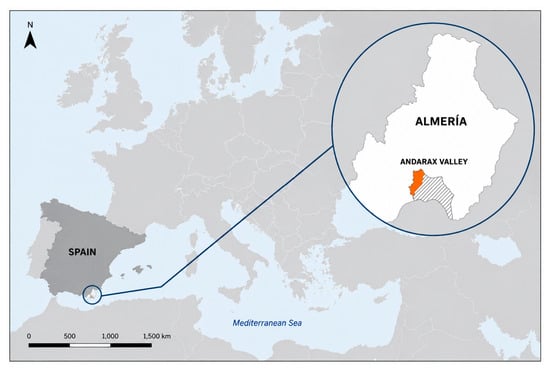
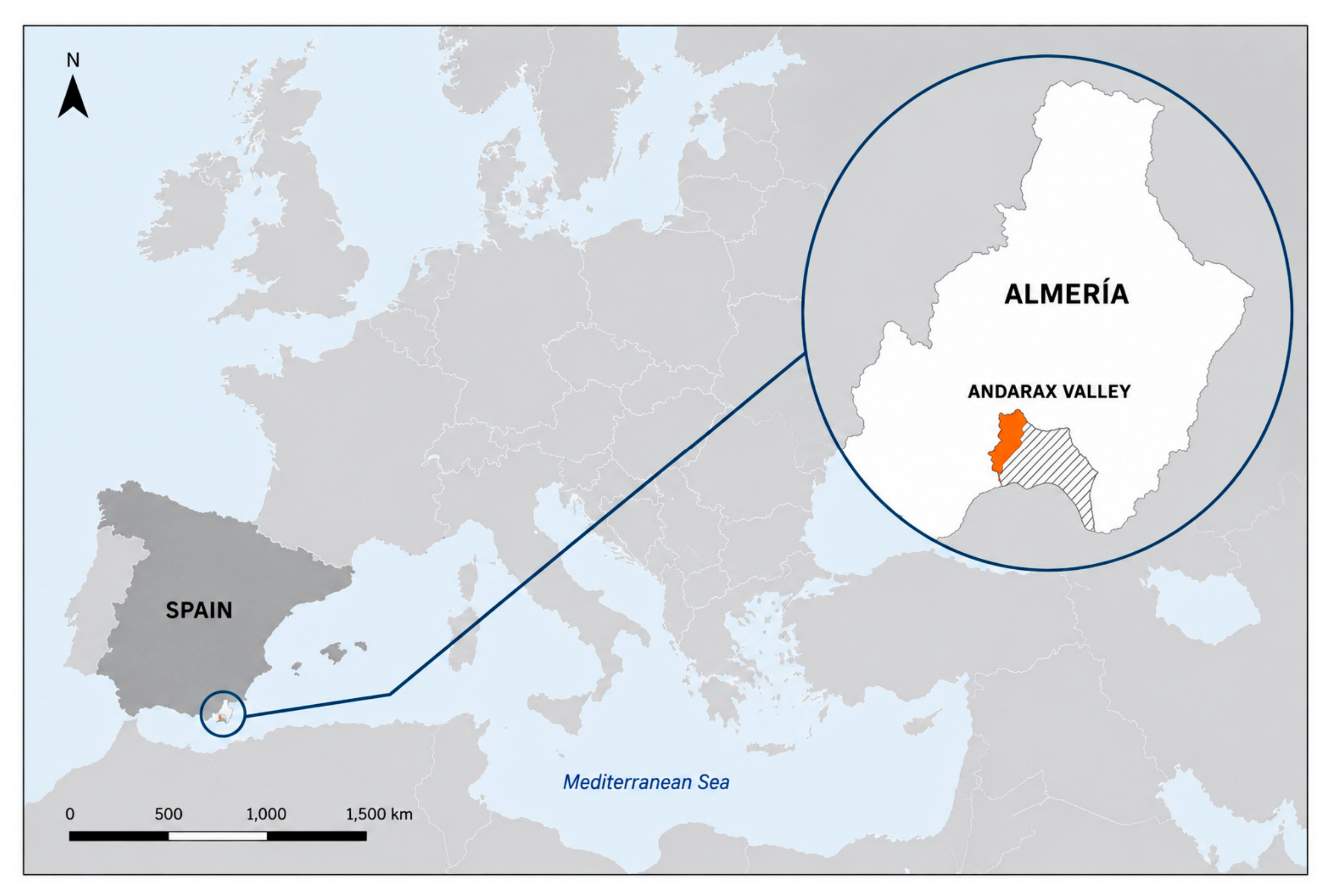
The study was conducted under commercial organic sweet orange (Citrus sinensis (L.) Osbeck) production conditions in the Andarax Valley (Almería, southeastern Spain) (Figure 1), a semi-arid Mediterranean region characterized by low rainfall, high evapotranspiration rates, and mild winter temperatures. The field experiments were strictly executed during the 2021/2022, 2022/2023, and 2023/2024 agricultural campaigns in commercial citrus orchards located in the municipality of Gádor (Almería, Spain; Andarax River Valley). These plots were selected in collaboration with the Sociedad Agraria de Transformación (SAT) Cítricos del Andarax (Gádor, Spain), a leading local cooperative providing technical assistance for organic conversion. While the cooperative initially promoted and initiated the transition of its traditional cultivation acreage to organic farming during the 2015/2016 crop season—conducted in accordance with European Regulation (EC) No. 834/2007—the target orchards for this study had already reached a fully consolidated and stable organic stage by 2021. Consequently, synthetic fertilizers and conventional chemical pesticides had been suspended for over five years prior to the start of our trials, far exceeding the mandatory 24-month chemical-free window and minimizing potential confounding residual effects from historical conventional management.
Figure 1.
Geographic location of the Andarax Valley (Almería, southeastern Spain) within the Mediterranean region of Europe.
The selected orchards consisted of mature sweet orange trees (Citrus sinensis (L.) Osbeck cv. ‘Navelina’) grafted onto Citrange Carrizo (Citrus sinensis × Poncirus trifoliata) rootstock. The trees were approximately 15 years old, planted under a standard density framework of 6 m × 3 m, and managed under a localized drip irrigation system and a homogeneous organic management program focused on active biological pest control and mechanical weed management.
To evaluate sustainable management strategies in organic citrus production, two complementary field trials were established: (i) a weed and cover crop management trial aimed at assessing their effects on fruit quality and crop yield, and (ii) a mass-trapping trial designed to evaluate different trapping systems for the control of C. capitata under organic farming conditions. Both experiments were conducted under homogeneous agronomic management practices and in accordance with European organic farming regulations.
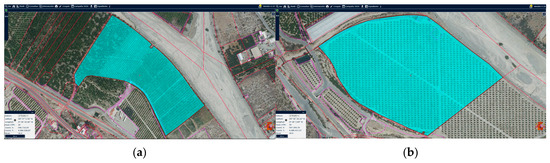
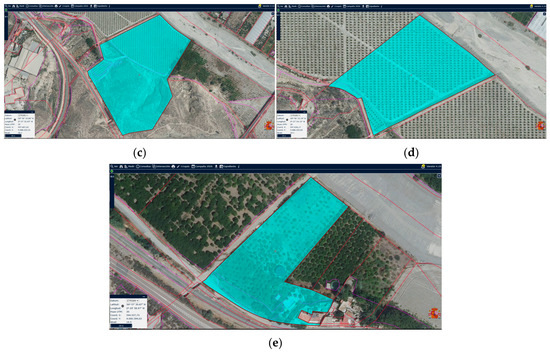
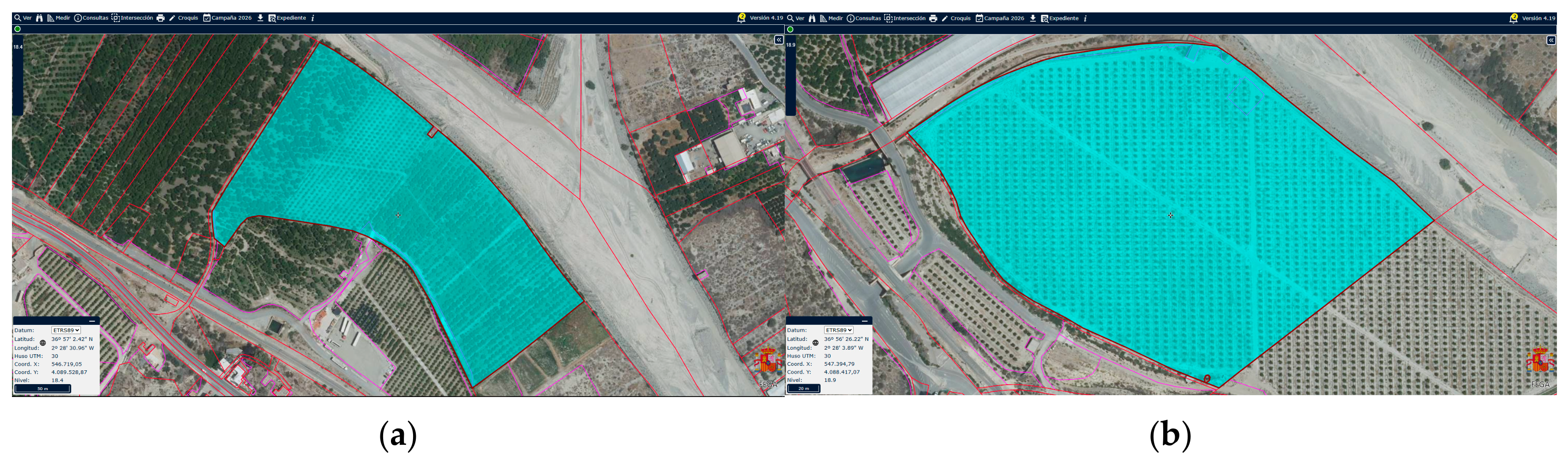
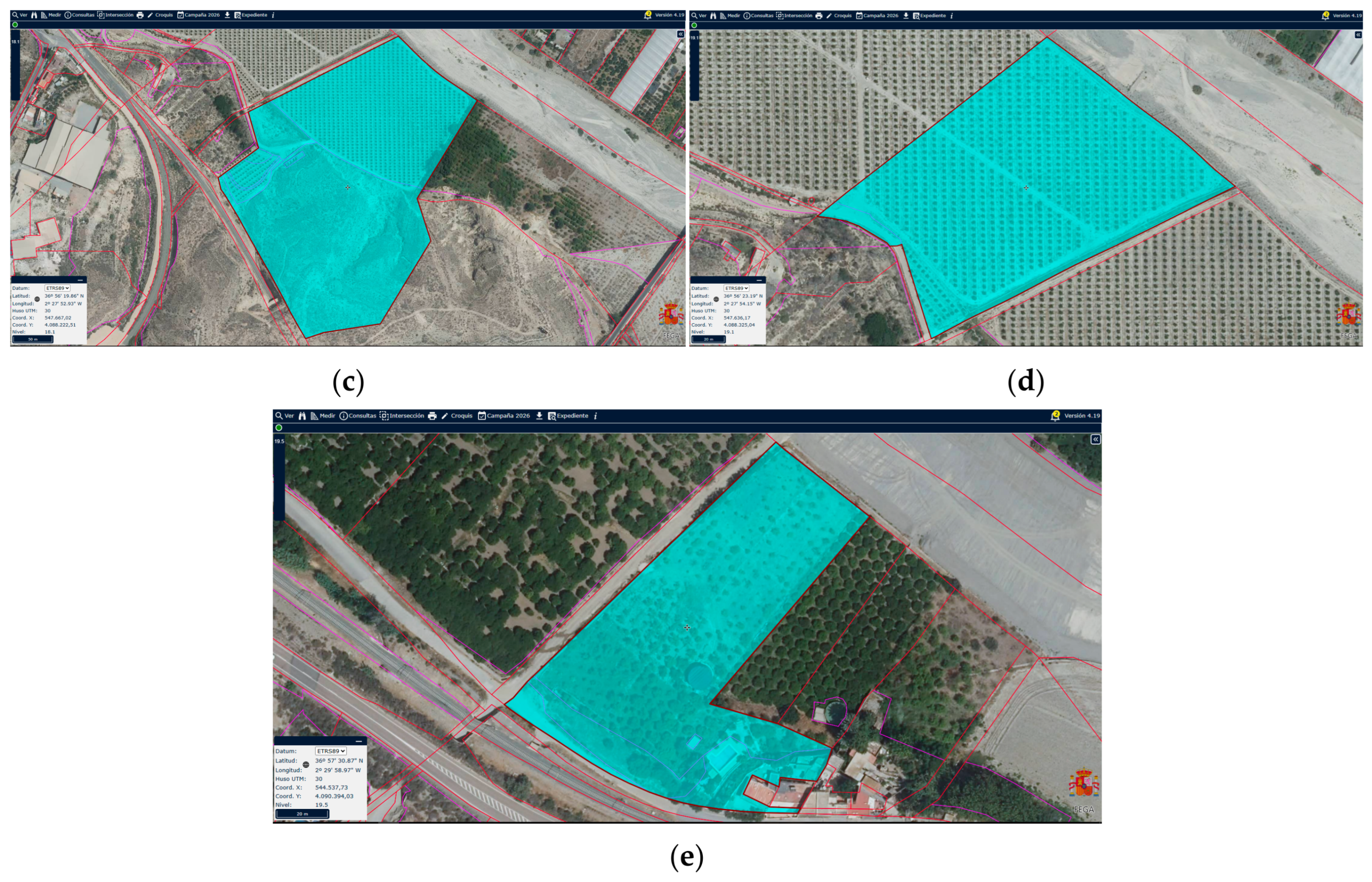
The weed management trial was carried out over two consecutive growing seasons; the 2021/2022 season corresponded to growing season 1, whereas the 2022/2023 season corresponded to growing season 2. The study was conducted in four commercial orchards located in the municipalities of Gádor and Benahadux, in Almería, Spain (Figure 2).
Figure 2.
Geographic location and delimitation of the experimental plots in the Andarax region (Almería, Spain). (a) El Rumi Farm; (b) El Quemado Farm; (c) El Rumi I Farm—Part I; (d) El Rumi I Farm—Part II; (e) Jacalgarín Farm. The areas shaded in green indicate the experimental surface where the randomized blocks under organic management were established. Source: SIGPAC Viewer v4.19 [24].
Four sweet orange (Citrus sinensis L.) cultivars were evaluated: young ‘Navelina’, mature ‘Navelina’, ‘Salustiana’, and ‘Castellana’. The total orchard area and experimental surface varied according to the characteristics of each experimental plot (Table 1).
Table 1.
Characteristics of the experimental plots and varieties evaluated in the study.
The experimental area corresponds to the portion of each orchard effectively used for treatment implementation and data collection. Border zones, headlands, and areas showing non-uniform conditions were excluded when necessary to ensure experimental homogeneity and minimize potential edge effects.
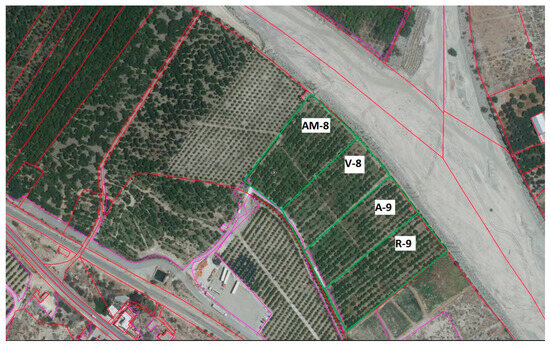
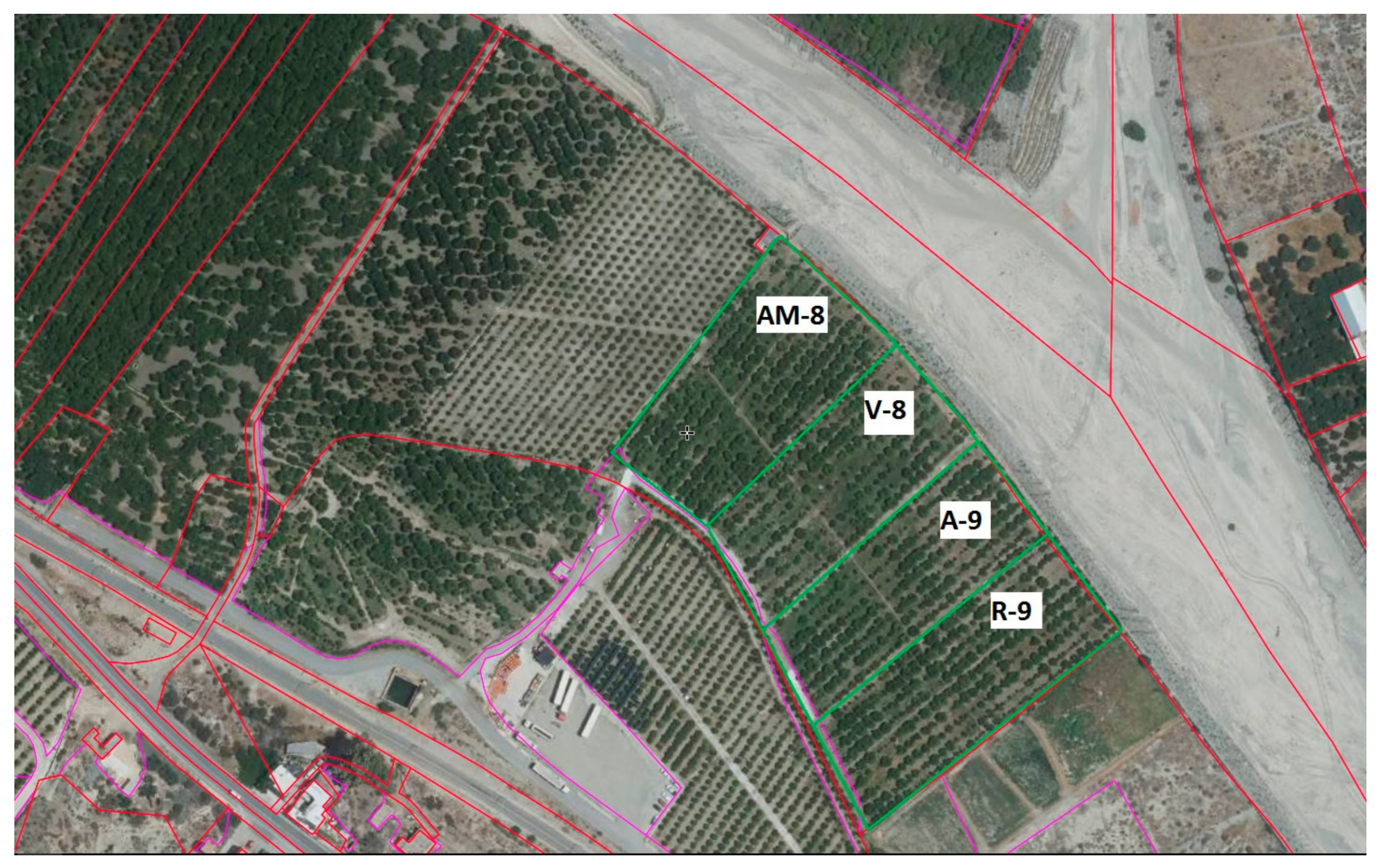
The mass-trapping trial was conducted during the 2023/2024 growing season, corresponding to growing season 3, in a 2.22 ha commercial orchard located in the Andarax River basin (Figure 3), within the municipality of Gádor (Almería, Spain), cultivated with sweet orange (Citrus sinensis (L.)) cv. ‘Navelina’.
Figure 3.
Layout of the study sectors (AM-8, V-8, A-9, and R-9) within the agricultural plot. Source: SIGPAC Viewer [24].
The orchard perimeter bordered adjacent organic farms managed using traditional control systems based on diammonium phosphate attractants.
All experimental orchards were managed under localized drip irrigation and homogeneous fertilization, pruning, and phytosanitary practices in order to minimize external sources of variability unrelated to the evaluated treatments. Planting density was approximately 555 trees ha−1, arranged in a 6 × 3 m planting pattern.
To ensure uniform agronomic conditions across all experimental orchards, irrigation and fertilization practices followed a common management protocol representative of organic citrus production in the Andarax Valley. The seasonal irrigation and fertilization regime applied throughout the study is summarized in Table 2.
Table 2.
Characteristics of the experimental plots and varieties evaluated in the study.
2.2. Experimental Desing
The weed management trial was established using a completely randomized block design. In each experimental orchard, four blocks were delimited in which the different weed vegetation management treatments were randomly distributed, with three replicates per treatment (totaling 12 subplots per orchard). The size of each experimental unit was adjusted according to the available surface area and the specific characteristics of each orchard. In all experimental orchards, four weed management strategies were evaluated and distributed across specific sectors in order to compare their effectiveness and impact on crop performance. The implemented treatments were as follows:
- T1. Shallow tillage: This consisted of three annual mechanical interventions performed at a depth of 5–10 cm, aimed at controlling vegetation through soil disturbance. These operations were carried out in April, July, and September, coinciding with periods of maximum vegetative activity and post-harvest conditions in order to minimize resource competition with the crop.
- T2. Mechanical mowing: Three annual mowing interventions were carried out to maintain spontaneous vegetation at competition levels considered acceptable for the crop. Mowing operations were performed in April, May, and August, and the resulting biomass was immediately shredded using a mulching machine and incorporated into the soil as organic mulch.
- T3. Sown cover crop: This involved the establishment of a functional cover crop through the sowing of a mixture of legumes (Vicia sativa) and grasses (Avena sativa), aiming to take advantage of their synergistic effects within the agroecosystem. The cover crop was established using seeding rates commonly employed in Mediterranean organic citrus orchards (approximately 80 kg ha−1 of Vicia sativa and 40 kg ha−1 of Avena sativa). Sowing and cover crop maintenance operations were carried out in March, May, and September, ensuring adequate soil cover throughout the growing season.
- T4. Partial manual mowing (control): This treatment served as the control and consisted of three annual manual mowing interventions performed in March, May, and August. Management operations were restricted to a two-meter strip surrounding the tree trunk in order to prevent damage caused by climbing plants and to reduce potential rodent attacks at the base of the trees.
In the mass-trapping trial, four trapping systems authorized for organic farming were evaluated. Treatments were assigned to four independent sectors (AM-8, V-8, A-9, and R-9), each representing a different trapping technology (Table 3). The evaluated systems included four commercial trap models, encompassing both wet and dry trapping approaches and differing in their structural characteristics and chemical attractant compositions.
Table 3.
Description of the treatments, trap composition, and trapping densities evaluated during the experimental trial.
- Wet Trapping Systems (R9 and AM8):
Model R9 (Conical Wet Trap): Fabricated from high-density yellow polyethylene (base) and transparent polypropylene (lid) with a total volume of 1000 mL (height: 130 mm; maximum diameter: 120 mm). The device features four equidistant lateral entry holes of 10 mm in diameter located in the upper third of the cylinder. It was baited with 250 mL of a 5% (w/v) aqueous solution of hydrolyzed protein (commercial liquid formulation) with 0.1% borax acting as a preservative and wetting agent. d-Limomene was not added, and no insecticidal active ingredient was used, as target insects die by drowning in the liquid.
Model AM8 (Bottle-shaped Wet Trap): Consisting of a transparent polyethylene terephthalate (PET) bottle with a total volume of 800 mL (height: 180 mm; diameter: 90 mm). It features four circular lateral entry ports (8 mm in diameter) equidistantly arranged along the upper contour of the container. The trap was filled with 250 mL of a 5% (w/v) hydrolyzed protein liquid solution, operating under a physical principle of food attraction and subsequent drowning, without the addition of conventional chemical insecticides. To ensure field reproducibility, each device was firmly secured to a branch using a flexible wire and positioned within the outer third of the tree canopy, at a standardized height between 1.5 and 1.8 m above ground level. The traps were preferentially oriented toward the south–southeast side of the orange tree to optimize flight interception based on the pest’s thermal preference, ensuring they remained protected under the foliage to avoid extreme direct solar radiation. The liquid bait volume was monitored weekly to compensate for evaporation losses by replenishing with distilled water; a complete replacement and sanitation of the trapping system was performed every 14 days to maintain a constant emission rate of attractant volatiles.
- Dry Trapping Systems (A9 and V8):
Model A9 (Cylindrical Dry Trap): Constructed of opaque yellow polypropylene with a total volume of 900 mL (height: 140 mm; diameter: 100 mm) containing four lateral entry ports of 8 mm. The dry-killing mechanism consisted of a solid plastic strip (dimensions: 2.5 cm × 5.0 cm) impregnated with 1.5% DDVP (Dichlorvos) secured internally to the trap lid.
Model V8 (Delta Dry Trap): A classic triangular prism-shaped trap made of yellow corrugated plastic (base: 150 mm × 110 mm; height: 120 mm) with an open double-entry setup. It utilizes a removable sticky cardboard insert on the bottom surface. The killing agent was incorporated directly via the adhesive surface, which was integrated with a dry micro-dispenser of deltamethrin (0.1 mg active ingredient) as a knockdown agent.
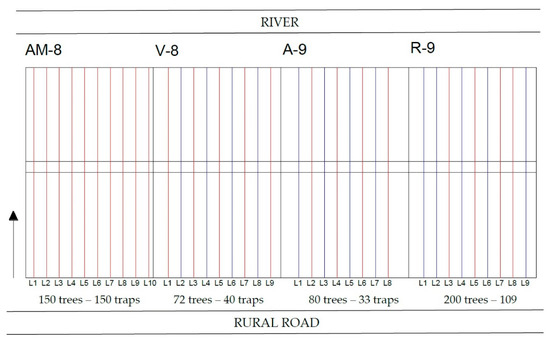
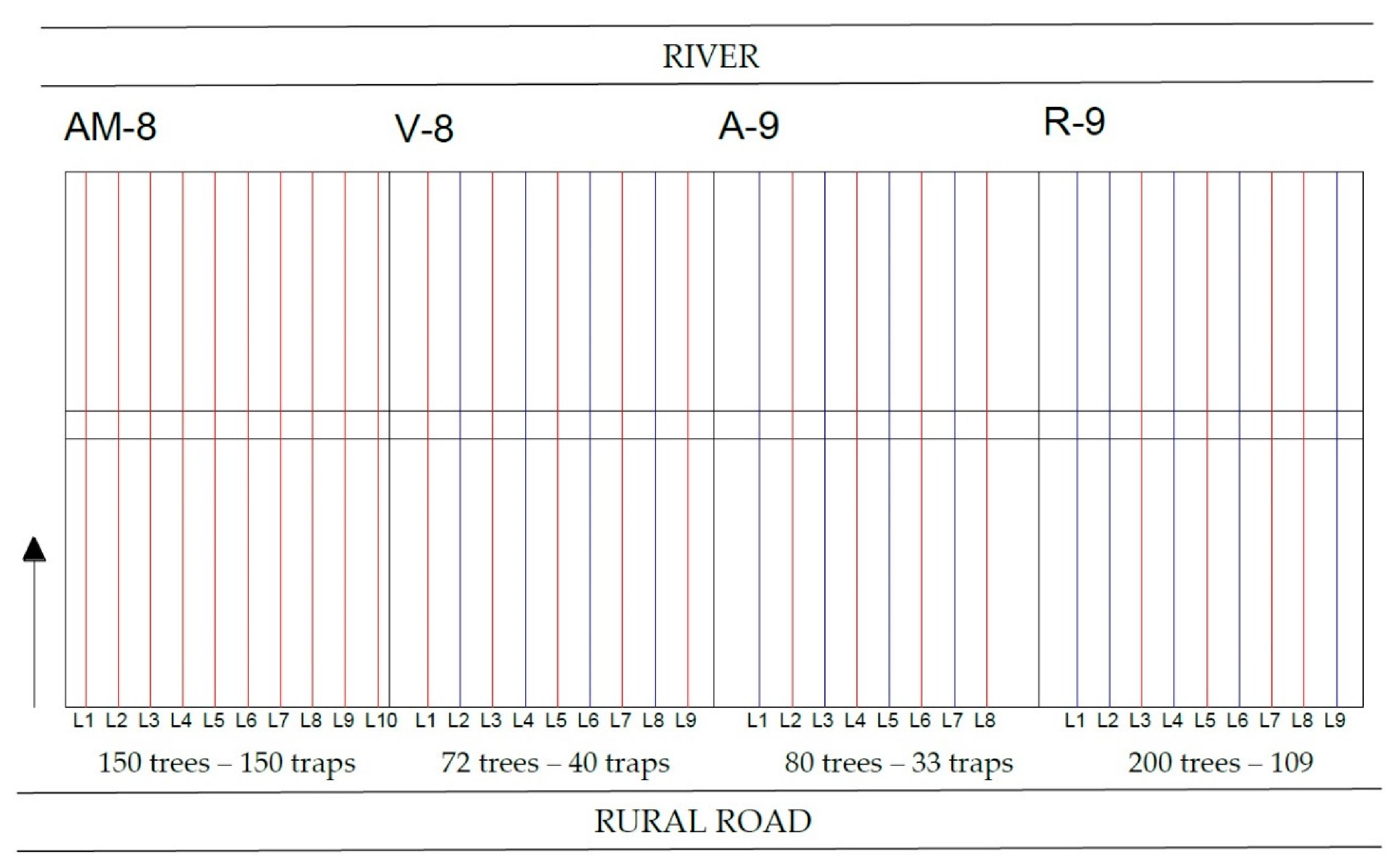
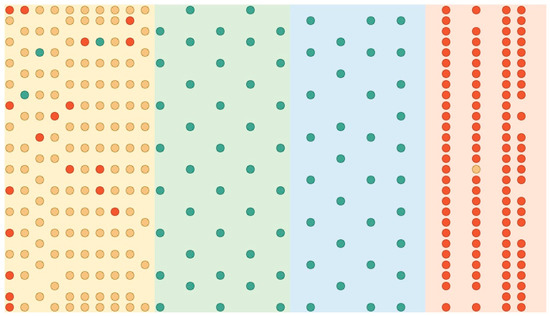
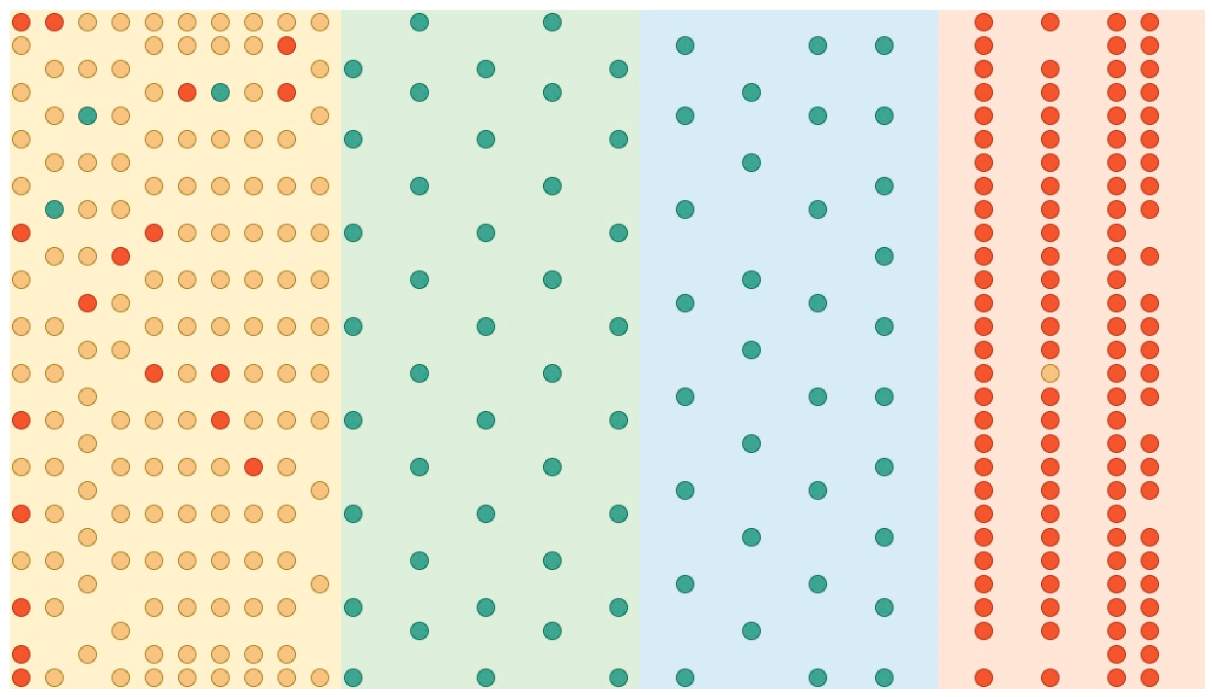
The orchard was divided into four experimental sectors, with one treatment assigned to each sector (Figure 4). Traps were installed at the beginning of the fruit ripening period (September) and suspended on the southern side of the trees at a height of 1.5–2.0 m above ground level. Trap distribution and density were adjusted according to commercial mass-trapping recommendations:
Figure 4.
Spatial distribution of the different treatments evaluated in the study (L: crop row; — with trap; — without trap).
- Sector AM-8 Control: 100% coverage (one trap per tree in all rows; 150 traps).
- Sector V-8: alternating distribution covering 55.6% of the trees (40 traps).
- Sector A-9: alternating distribution covering 41.3% of the trees (33 traps).
- Sector R-9: row-block distribution covering 54.4% of the trees (109 traps).
Regarding non-target entomofauna, it must be explicitly noted that their evaluation was conducted solely as a qualitative and descriptive observation. Because the physical and biochemical selectivity of the evaluated traps resulted in practically negligible captures of non-target species, the data did not allow for a robust quantitative statistical comparison. We acknowledge the absence of this statistical analysis as a methodological limitation of the current study, although it effectively reflects the high ecological safety of the mass trapping systems employed.
2.3. Data Collection and Evaluated Variables
In the weed management trial, harvesting was carried out simultaneously in all experimental orchards, and the yield obtained from each block and replicate was processed independently. The following methodology was used to determine the physicochemical and productive parameters evaluated. Fruit quality parameters were determined using standard destructive pomological methods described by [25]. Juice content was calculated gravimetrically and expressed as a percentage of the total fruit weight. Total soluble solids (TSS, expressed as °Brix) were measured using a temperature-compensated digital refractometer (Atago Co., Ltd., Tokyo, Japan). Titratable acidity (TA, expressed as a percentage of anhydrous citric acid per 100 mL of juice) was determined by titration with 0.1 M NaOH to an endpoint of pH 8.1. The maturity index (MI) was calculated as the dimensionless TSS/TA ratio. All these analytical assessments were performed in compliance with international commercial quality guidelines established in the Codex Standard for Oranges [26] and followed established fruit-sampling criteria [27].
- Juice content (%): Fruits were cut equatorially, and juice was extracted using a manual press. Juice yield was determined by weighing the extracted juice and expressing it as a percentage of total fruit weight.
- Total soluble solids (°Brix): Sugar content was determined by refractometry. Three measurements were taken per sample, and values were adjusted to a reference temperature of 20 °C after thermal stabilization of the juice.
- Titratable acidity (g L−1): A total of 5 mL of filtered juice was titrated with 0.1 N NaOH solution using 1% phenolphthalein as the endpoint indicator.
- Maturity index: This was determined as the ratio between total soluble solids content and titratable acidity.
- Yield (kg tree−1): Yield was determined from the harvest of 10 trees per experimental unit (replicate), and results were expressed as kg tree−1. Trees were selected from the central area of each plot to minimize border effects. The harvested fruit was weighed individually and used to calculate the mean yield per tree for each treatment.
In the mass-trapping trial, all installed traps were inspected on a biweekly basis. Captured individuals were counted and differentiated by sex. Trapping efficacy was standardized by calculating the FTD index (flies trap−1 day−1). In addition, field observations were conducted to assess the retention capacity of the trapping systems and the incidental capture of non-target beneficial fauna.
2.4. Statistical Analysis
Data from the weed management trial were subjected to multifactorial analysis of variance (ANOVA) to determine the effects of growing season, vegetation management treatment, and cultivar, as well as their possible interactions, on fruit quality parameters and yield. The experiment was established as a randomized block design in each orchard to reduce the influence of spatial variability and improve the reliability of treatment comparisons. Blocks were used as an experimental design element to account for within-orchard heterogeneity. However, block effects were not included as an explicit factor in the ANOVA model.
In the mass-trapping trial, differences among treatments were analyzed using one-way ANOVA. Mean separation was performed using Fisher’s Least Significant Difference (LSD) test at a significance level of p ≤ 0.05. In addition, an independent samples Student’s t-test was applied to evaluate the effect of trap position within the orchard (perimeter vs. interior) on capture levels.
Results from the multifactor ANOVA are presented as p-values for the main effects and interactions. Effects were considered statistically significant at p ≤ 0.05.
All statistical analyses were performed using Statgraphics Centurion version 19 [28].
3. Results and Discussion
3.1. Effect of Weed Management Systems on Fruit Quality
The multifactorial analysis showed that weed management systems did not exert significant effects on the evaluated internal fruit quality parameters (Table 4). These results are consistent with recent studies in citrus orchards reporting that different soil and weed management strategies did not significantly affect total soluble solids, titratable acidity, or juice content [29].
Table 4.
p-values obtained from multifactor ANOVA evaluating the effects of season, treatment, variety and their interactions on fruit quality parameters and yield in organic citrus orchards.
Juice content was significantly influenced by cultivar and by the growing season × cultivar interaction, whereas neither growing season nor treatment showed significant effects. This response confirms the strong influence of the genetic component on juice yield and industrial fruit quality [30]. Similarly, total soluble solids (°Brix) were significantly affected by growing season and cultivar, highlighting the sensitivity of sugar accumulation processes to both environmental conditions and cultivar-specific physiological responses [30].
Titratable acidity and maturity index were mainly conditioned by cultivar. These results further confirm the predominant influence of genetic factors on internal fruit composition and ripening dynamics in citrus crops [30,31].
Overall, the results indicate that internal fruit quality was primarily determined by varietal factors, whereas weed management systems did not significantly alter these parameters. These findings support the viability of sustainable soil management strategies without compromising fruit quality [29].
Furthermore, although the present study focused on primary agronomic attributes and pest management efficacy, future research should prioritize the evaluation of plant secondary metabolites, including total phenolic compounds, flavonoids, carotenoids, and antioxidant activity. Such analyses would provide a deeper understanding of the biochemical and physiological implications of organic management strategies and their potential effects on fruit nutritional quality.
3.2. Effect of Weed Management Systems on Yield
Yield (kg tree−1) was the variable most sensitive to the evaluated factors. The multifactorial analysis revealed significant effects of growing season, treatment, and cultivar, as well as significant growing season × treatment and treatment × cultivar interactions (Table 4), indicating that yield response depended on both environmental conditions and plant material.
The significant treatment × cultivar interaction indicates that cultivars responded differently to the evaluated vegetation management strategies. While the sown cover crop treatment generally promoted higher yields in Young ‘Navelina’ and Mature ‘Navelina’, the response was less pronounced in ‘Salustiana’, whereas ‘Castellana’ showed comparatively high yields under T1 and T3. These results highlight the cultivar-dependent nature of yield responses under the evaluated management systems (Table 5).
Table 5.
Mean yield (kg tree−1) as affected by treatment, variety, and growing season. Shallow tillage, T1; mechanical mowing, T2; sown cover crop, T3; partial manual mowing (control), T4.
In general, the mechanical mowing treatment (T2) showed lower yield values, particularly in the ‘Castellana’ cultivar, with 87.7 and 99.5 kg tree−1 during growing seasons 1 and 2, respectively (Table 5).
This reduction may be associated with increased competition for water and nutrients caused by spontaneous vegetation cover, as previously reported in citrus orchards under Mediterranean conditions [32,33]. Similar responses have been described in recent studies evaluating cover crop management under water-limited orchard conditions, where vegetation competition may reduce crop performance when water availability is restricted [12,13,14].
The ‘Castellana’ and mature ‘Navelina’ cultivars showed the highest yield levels, whereas ‘Salustiana’ consistently recorded the lowest values (Table 5). ‘Castellana’ performed particularly well under treatments T1 and T3, reaching values of up to 140.3 kg tree−1, confirming the strong influence of varietal characteristics on productive potential and agronomic adaptation of each cultivar [34].
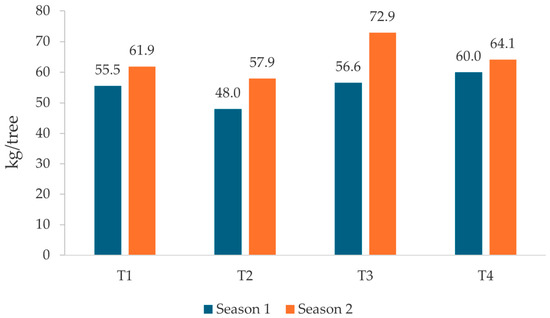
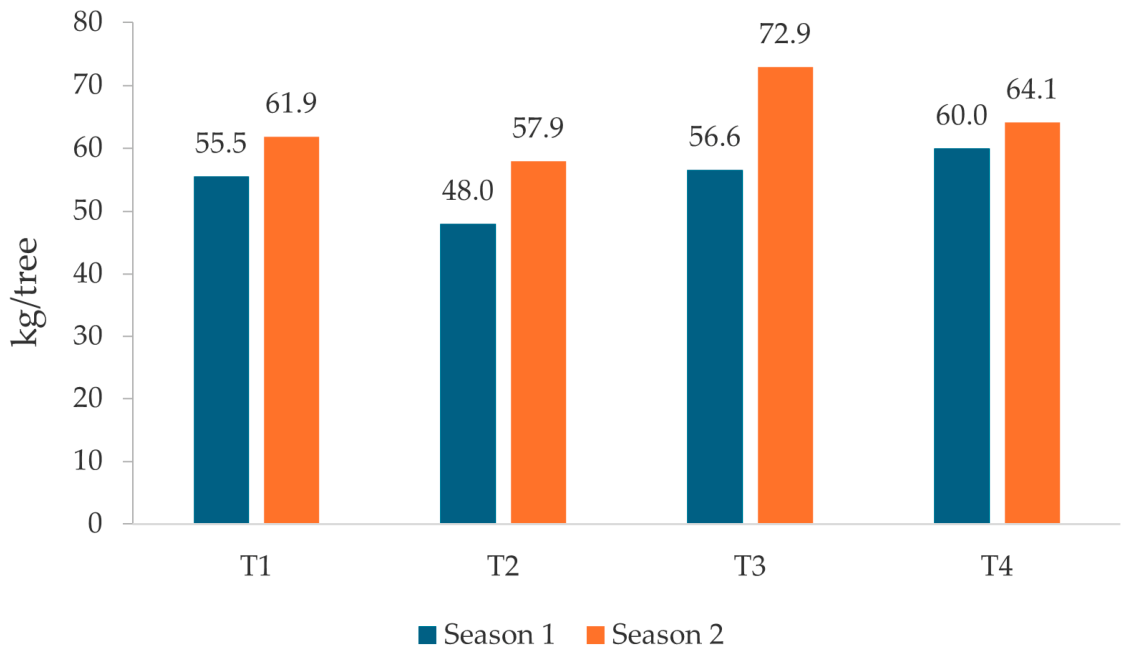
In contrast, the sown cover crop treatment (T3) showed favorable responses under specific cultivar–season combinations, particularly in mature ‘Navelina’, where yield increased from 94.3 to 117.4 kg tree−1 between growing seasons. Moreover, T3 exhibited the highest mean yield values in both seasons (Figure 5). The mechanisms underlying this response were not evaluated in the present study; however, recent studies have reported that cover crops may improve soil structure, nutrient cycling, soil organic carbon stabilization, microbial activity, and water retention in Mediterranean perennial cropping systems, which can contribute to enhanced orchard performance under water-limited conditions [35,36,37]. Similar benefits associated with cover crop management have recently been described in citrus and other Mediterranean woody crops, particularly under semi-arid environments where soil functionality and water-use efficiency are critical determinants of productivity [38].
Figure 5.
Mean yield (kg tree−1) for the four vegetation management treatments during the two growing seasons evaluated. Values correspond to treatment means and are presented for descriptive purposes. Statistical significance of the main effects and interactions was assessed by multifactor ANOVA and is reported in Table 4; detailed treatment × cultivar × season means are shown in Table 5.
Overall, the results indicate that internal fruit quality remained stable across the different management systems, whereas yield exhibited greater sensitivity to the applied strategies. In this context, sown cover crops showed agronomically favorable performance in specific cultivars, reinforcing their potential as a sustainable alternative for Mediterranean citrus production systems [15,29].
3.3. Climatic Conditions and Population Dynamics
During the experimental period, from August to December, mean temperatures remained above the activity threshold of C. capitata (14 °C) until the end of November (Table 6). These favorable thermal conditions, together with the delayed harvest period extending into December, created a particularly suitable scenario for pest development.
Table 6.
Monthly mean, maximum, and minimum temperatures recorded during growing season 3 (Almería Airport Meteorological Station).
The joint analysis of meteorological parameters (Table 6) and the temporal dynamics of trap catches (Figure 6) reveals a clear correlation between sustained warm temperatures during autumn and the steady increase in the Mediterranean fruit fly (Ceratitis capitata) population. These observations are consistent with recent studies indicating that temperature is one of the principal drivers regulating the phenology, seasonal activity, and population dynamics of C. capitata. Recent evidence suggests that warmer autumn conditions and milder winters can prolong pest activity, increase the overlap of generations, and expand the temporal window of infestation risk in Mediterranean fruit-producing regions. The well-established biological activity threshold for C. capitata is 14 °C; below this mean temperature, key behaviors such as flight, feeding, and reproduction significantly decrease or cease entirely.
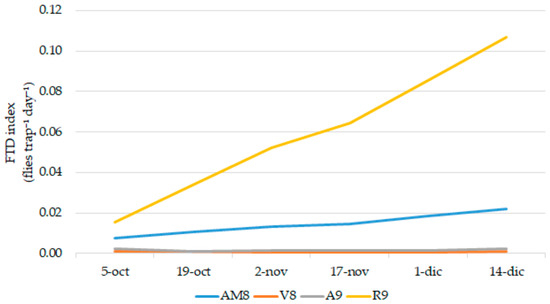
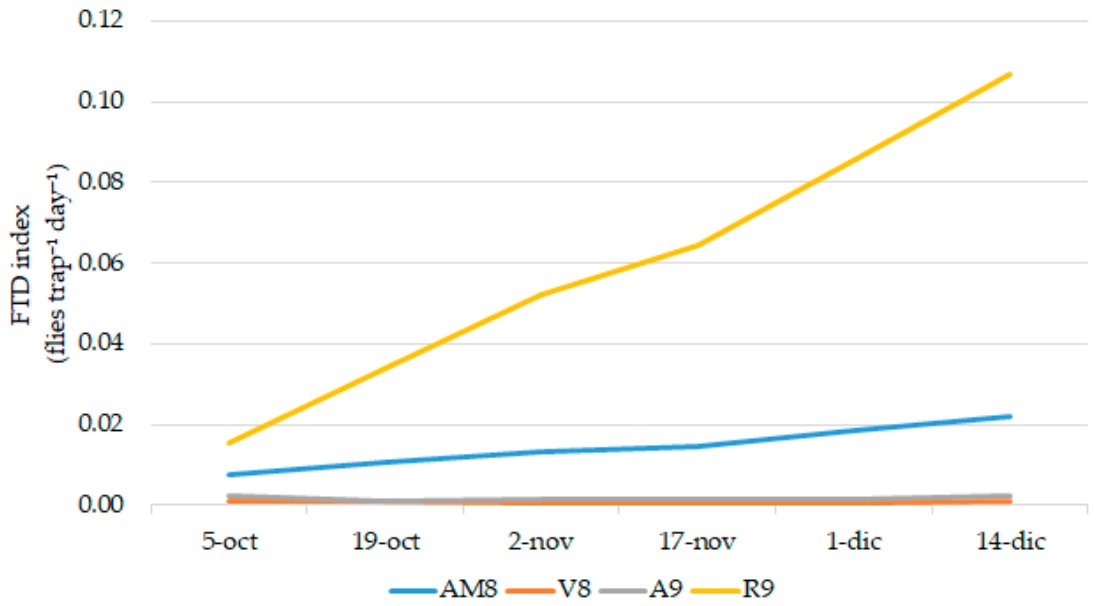
Figure 6.
Temporal dynamics of captures (FTD index) in the four trapping systems evaluated throughout the experimental period during growing season 3 (October, November and December).
Examining the trapping period, Table 6 shows that October recorded a mean temperature of 20.1 °C, with minimum values of 16.8 °C. Correspondingly, at the beginning of October, the Fly per Trap per Day (FTD) index started at baseline levels (Figure 6). However, because mean and minimum temperatures remained well above the 14 °C threshold, the pest maintained high physiological activity. Throughout this month, a continuous upward trend became visible in the capture curves, which was particularly pronounced in the R9 treatment and followed a more moderate trajectory in the AM8 system.
In November, although the mean temperature decreased to 16.5 °C, it remained critically above the 14 °C threshold. Instead of stabilizing with the onset of autumn, the capture curve for the R9 treatment accelerated markedly, rising from an approximate FTD of 0.05 to nearly 0.08 by the end of the month. This persistence of favorable thermal conditions permitted unusual flight continuity. In the absence of cold thermal shocks to arrest their biological cycle, successive fly generations overlapped, thereby multiplying the pest pressure across the orchard.
In December, the mean temperature finally dropped to 12.6 °C (with minimums of 9.5 °C), breaking below the 14 °C biological barrier. Paradoxically, Figure 6 demonstrates that captures reached their absolute peak in mid-December (exceeding 0.10 FTD), driven primarily by the R9 traps, despite the theoretical thermal constraints. This phenological anomaly is explained by the delay in the harvest date until December. Although temperatures declined, the massive population accumulated during the warm months of October and November encountered an abundance of mature fruit on the trees, providing both an ideal food source and an oviposition substrate. The necessity to forage on sunny December days, combined with strong population inertia, triggered this late-season capture surge prior to winter dormancy.
In summary, the capture curves do not display the typical bell-shaped Gaussian distribution that declines in autumn, but rather a continuous upward trajectory. This indicates that the Almería climate functioned as a prolonged biological incubator, keeping the ‘metabolic engine’ of the pest active until late November (T > 14 °C), which enabled exponential population growth precisely when fruit ripening coincided with delayed harvesting practices.
3.4. Comparative Efficacy of the Trapping Systems
The comparative analysis of the trapping systems revealed highly significant differences among treatments (ANOVA, p < 0.05). Treatment R-9 (liquid trap baited with hydrolyzed protein) showed the highest capture performance, with a mean value of 0.0597 ± 0.0009 MTD, significantly outperforming the other evaluated systems (Table 7). The AM-8 control treatment recorded the second-highest capture level (0.0144 ± 0.0007 MTD), whereas A-9 and V-8 exhibited considerably lower capture levels.
Table 7.
Mean FTD index values (flies trap−1 day−1), maximum FTD values, and proportion of captured females according to treatment.
These results demonstrate that liquid attractants based on hydrolyzed protein provide greater efficacy than both dry trapping systems and the local standard based on diammonium phosphate. Similar findings were reported by Martínez-Ferrer et al. [39], who observed that traps baited with liquid attractants captured significantly higher numbers of C. capitata adults than systems based on dry volatile amines. Recent studies have similarly highlighted the effectiveness of hydrolyzed protein-based attractants within integrated mass-trapping programs for Ceratitis capitata management, particularly under Mediterranean production conditions. These systems generally provide higher capture rates than dry attractants due to their stronger feeding stimulation and greater attractiveness to females, which are the most relevant target for population suppression [21,40,41].
Regarding sexual selectivity, all attractants showed a strong preference for female C. capitata, with female proportions exceeding 94% in all cases. Treatments V-8 and A-9 achieved selectivity levels close to 100%; however, these were associated with considerably lower capture volumes. These results suggest that high selectivity does not necessarily imply greater overall trapping efficacy.
3.5. Retention Capacity and Non-Target Fauna
Field observations revealed important differences in the mechanical retention capacity of the evaluated trapping systems. Live individuals were detected inside both A-9 and R-9 traps; however, in the liquid-based R-9 system, the vast majority ultimately died by physical drowning. In contrast, in the dry A-9 system, a high proportion of flies were observed escaping from the traps, revealing limitations in the lethal efficacy of contact insecticides when insects do not remain in contact with the treated surface for a sufficient period of time.
Regarding the dry trapping systems, both the A-9 and V-8 models registered significantly lower capture rates (FTD < 0.01) compared to the wet models (R-9 and AM-8). Although the actual insect escape rates were not directly monitored, counted, or quantified in our field trials due to experimental constraints, the previous literature on tephritid trap performance strongly suggests that dry systems often suffer from substantial pest escape before the insects come into lethal contact with the chemical killing agents [42,43].
This lower field retention efficiency in dry devices is highly hypothesized to stem from a physical limitation: unlike liquid-drowning systems which provide immediate physical immobilization, dry traps rely entirely on the rapid knockdown effect of toxic strips (such as DDVP in the A-9 model) or adhesive surfaces with contact agents (such as deltamethrin in the V-8 model). Under semi-arid field conditions, if the volatilization rate of the insecticide decreases, or if the entrance hole design facilitates rapid exit paths, attracted flies may feed, rest inside, and successfully escape without dying, leading to the significantly reduced final cumulative counts observed in this study. This literature-based escape hypothesis explains why the physical barrier of liquid in wet traps represents a superior design for mass trapping operations under high-pressure scenarios.
Additionally, incidental captures of non-target fauna, mainly ants and lepidopterans, were recorded in treatments AM-8 and V-8, although no relevant captures of beneficial insects important for crop protection were detected.
The assessment of non-target fauna was qualitative in nature and intended only to identify potential incidental captures of beneficial organisms. Consequently, no statistical analyses were performed on these observations.
3.6. Spatial Distribution of Captures and Edge Effect
Absolute capture results should also be interpreted considering the spatial distribution of the experimental design. A pronounced edge effect was observed, with significantly higher capture levels recorded in the perimeter areas compared with the orchard interior (Student’s t-test, t = 20.32; p < 0.001) (Figure 7). The sectors showing the highest capture levels, corresponding to AM-8 and R-9, were located along the orchard perimeter, whereas V-8 and A-9 occupied central positions. This arrangement favored the perimeter acting as an interception barrier against immigrating populations, considerably reducing pest pressure within the inner sectors of the orchard.
Figure 7.
Spatial heatmap of cumulative total captures within the experimental plot. The colorimetric scale indicates capture density, ranging from green (0 captures) through yellow to red (maximum captures, >150 individuals). Higher capture densities were observed along the southern and eastern edges of the plot (represented by reddish hues), whereas lower densities predominated in the interior sectors (represented by green tones). This spatial distribution is consistent with the edge effect observed during the study and suggests a greater concentration of Mediterranean fruit fly activity near the orchard perimeter.
The observed spatial pattern is consistent with the findings reported by Israely et al. [44] and Cohen and Yuval [45], who demonstrated that Mediterranean fruit fly populations enter orchards from external reservoirs and tend to aggregate along the first border rows, particularly in sun-exposed areas. These results highlight the importance of implementing perimeter mass-trapping strategies by reinforcing trap density along orchard borders, especially on the southern sides of the plots, in order to maximize control efficacy under commercial production conditions.
Although the present study was conducted over a single representative agricultural season, which limits the evaluation of interannual climatic variability and its effect on long-term pest dynamics, the high spatial replication and uniform experimental conditions provided a highly reliable comparative baseline for the trap designs. Nevertheless, future long-term, multi-year monitoring studies are warranted to fully validate the consistency and economic viability of these mass trapping devices under changing annual environmental dynamics.
In conclusion, our study demonstrates that localized mass trapping using highly retentive liquid devices (R9 and AM8) constitutes a highly effective, pesticide-free alternative for C. capitata management in organic citrus orchards. Beyond its technical efficacy in keeping pest populations below economic thresholds, this simple-to-implement method offers substantial management cost savings by reducing the labor, energy, and machinery expenses associated with repeated chemical or broad-spectrum insecticide spray applications. More importantly, from an ecological perspective, this highly selective trapping approach successfully prevents the mass killing of beneficial and neutral non-target insects, preserving the native biodiversity, native pollinators, and natural biological control agents in Mediterranean agroecosystems.
4. Conclusions
The results obtained in this study highlight the potential of different sustainable management strategies to improve the resilience and sustainability of Mediterranean organic citrus production under semi-arid conditions. Both weed management practices and the evaluated biotechnical control strategies showed relevant effects on crop productivity and pest management without compromising fruit quality.
- Different weed management systems did not significantly affect internal fruit quality, with parameters such as juice content, total soluble solids, titratable acidity, and maturity index remaining stable across treatments.
- Cultivar and growing season conditions were the main factors determining fruit quality, revealing a strong genotype–environment interaction in Mediterranean citrus production systems.
- Yield was the variable most sensitive to the evaluated management strategies. The sown cover crop treatment (T3) generally produced the most favorable yield responses, particularly in mature ‘Navelina’.
- Mechanical mowing (T2) resulted in lower yield levels in certain cultivars, possibly due to increased competition for water and nutrients under semi-arid conditions.
- In the mass-trapping trial, the liquid hydrolyzed protein system (R-9) was the most effective treatment for the control of C. capitata, achieving significantly higher capture values than the other evaluated systems.
- All trapping systems showed high selectivity toward female C. capitata; however, dry systems exhibited limitations associated with lower retention capacity and higher escape rates.
- A pronounced edge effect was observed, with higher captures concentrated in the perimeter areas of the orchard, highlighting the importance of reinforcing trapping strategies along orchard borders.
- Overall, the combination of functional cover crops and perimeter mass-trapping strategies represents a promising approach to improve the sustainability and resilience of Mediterranean organic citrus production systems under semi-arid conditions.
Author Contributions
Conceptualization, A.P.-F. and D.L.V.-M.; methodology, A.P.-F. and D.L.V.-M.; formal analysis, J.T., P.M.-M. and M.Á.M.-T.; investigation, J.T., P.M.-M., M.Á.M.-T., A.P.-F. and D.L.V.-M.; data curation, J.T., P.M.-M. and M.Á.M.-T.; writing—original draft preparation, J.T., M.Á.M.-T. and P.M.-M.; writing—review and editing A.P.-F. and D.L.V.-M., supervision, A.P.-F. and D.L.V.-M.; project administration, A.P.-F.; funding acquisition, A.P.-F. All authors have read and agreed to the published version of the manuscript.
Funding
This research was funded by Junta Andalucía, European Agricultural Fund for Rural development, UAL, grant number UAL2020-TEP-A1986, and Cubisol Almería S.L., research contract 001809.
Data Availability Statement
The original contributions presented in this study are included in the article. Further inquiries can be directed to the corresponding author.
Acknowledgments
The authors wish to express their gratitude to Citricos del Andarax SAT. Figure 1 was generated with the assistance of ChatGPT (GPT-5; OpenAI, San Francisco, CA, USA) and subsequently reviewed and edited by the authors, who take full responsibility for its final content.
Conflicts of Interest
Author Juan Torres was employed by the company Cítricos del Andarax SAT. The remaining authors declare that the research was conducted in the absence of any commercial or financial relationships that could be construed as a potential conflict of interest. The authors declare that this study received funding from Cubisol Almería S.L. The funder was not involved in the study design, collection, analysis, interpretation of data, the writing of this article or the decision to submit it for publication.
References
- FAO. Organic Agriculture: Organic Citrus Production. Available online: https://www.fao.org/organicag/ (accessed on 2 June 2026).
- Sánchez-Navarro, V.; Martínez-Martínez, S.; Acosta, J.A.; Almagro, M.; Martínez-Mena, M.; Boix-Fayos, C.; Díaz-Pereira, E.; Temnani, A.; Berrios, P.; Pérez-Pastor, A.; et al. Soil Greenhouse Gas Emissions and Crop Production with Implementation of Alley Cropping in a Mediterranean Citrus Orchard. Eur. J. Agron. 2023, 142, 126684. [Google Scholar] [CrossRef] [Scilit]
- Acosta, J.A.; Imbernón-Mulero, A.; Martínez-Álvarez, V.; Gallego-Elvira, B.; Maestre-Valero, J.F. Midterm Effects of Irrigation with Desalinated Seawater on Soil Properties and Constituents in a Mediterranean Citrus Orchard. Agric. Ecosyst. Environ. 2025, 381, 109421. [Google Scholar] [CrossRef] [Scilit]
- Torres, J.; Valera, D.; Belmonte, L.; Herrero-Sánchez, C. Economic and Social Sustainability through Organic Agriculture: Study of the Restructuring of the Citrus Sector in the “Bajo Andarax” District (Spain). Sustainability 2016, 8, 918. [Google Scholar] [CrossRef] [Scilit]
- Altieri, M.A. The Ecological Role of Biodiversity in Agroecosystems. Agric. Ecosyst. Environ. 1999, 74, 19–31. [Google Scholar] [CrossRef] [Scilit]
- Blanco-Canqui, H.; Ruis, S.J.; Holman, J.D.; Creech, C.F.; Obour, A.K. Can Cover Crops Improve Soil Ecosystem Services in Water-limited Environments? A Review. Soil Sci. Soc. Am. J. 2022, 86, 1–18. [Google Scholar] [CrossRef] [Scilit]
- Daryanto, S.; Fu, B.; Wang, L.; Jacinthe, P.-A.; Zhao, W. Quantitative Synthesis on the Ecosystem Services of Cover Crops. Earth. Sci. Rev. 2018, 185, 357–373. [Google Scholar] [CrossRef] [Scilit]
- Mauro, R.P.; Anastasi, U.; Lombardo, S.; Pandino, G.; Pesce, R.; Restuccia, A.; Mauromicale, G. Cover Crops for Managing Weeds, Soil Chemical Fertility and Nutritional Status of Organically Grown Orange Orchard in Sicily. Ital. J. Agron. 2015, 10, 641. [Google Scholar] [CrossRef] [Scilit]
- Gomez, J.; Sobrinho, T.; Giraldez, J.; Fereres, E. Soil Management Effects on Runoff, Erosion and Soil Properties in an Olive Grove of Southern Spain. Soil Tillage Res. 2009, 102, 5–13. [Google Scholar] [CrossRef] [Scilit]
- de Oliveira, E.M.; Hermógenes, G.M.; da Costa Brito, L.; Silva, B.M.; Avanzi, J.C.; Beniaich, A.; Silva, M.L.N. Cover Crop Management Systems Improves Soil Quality and Mitigate Water Erosion in Tropical Olive Orchards. Sci. Hortic. 2024, 330, 113092. [Google Scholar] [CrossRef] [Scilit]
- Gurr, G.M.; Wratten, S.D.; Landis, D.A.; You, M. Habitat Management to Suppress Pest Populations: Progress and Prospects. Annu. Rev. Entomol. 2017, 62, 91–109. [Google Scholar] [CrossRef] [Scilit] [PubMed]
- Brewer, M.; Strauss, S.L.; Chase, C.; Sellers, B.; Kadyampakeni, D.M.; van Santen, E.; Kanissery, R. Effects of Cover Crops on Weed Suppression in the Interrow Spaces of Citrus Orchards. Weed Sci. 2025, 73, e15. [Google Scholar] [CrossRef] [Scilit]
- Celette, F.; Findeling, A.; Gary, C. Competition for Nitrogen in an Unfertilized Intercropping System: The Case of an Association of Grapevine and Grass Cover in a Mediterranean Climate. Eur. J. Agron. 2009, 30, 41–51. [Google Scholar] [CrossRef] [Scilit]
- Ward, P.R.; Flower, K.C.; Cordingley, N.; Weeks, C.; Micin, S.F. Soil Water Balance with Cover Crops and Conservation Agriculture in a Mediterranean Climate. Field Crops Res. 2012, 132, 33–39. [Google Scholar] [CrossRef] [Scilit]
- Silwana, S.; Mulidzi, A.R.; Jovanovic, N. Evaluating the Effects and Benefits of Cover Crops in Citrus Orchards: A Review. South Afr. J. Plant Soil 2023, 40, 117–126. [Google Scholar] [CrossRef] [Scilit]
- Enkerlin, W.R. Chapter 7.2. Impact of Fruit Fly Control Programmes Using the Sterile Insect Technique; Springer Nature Link: London, UK, 2005. [Google Scholar]
- Alemany, A.; Miranda, M.A.; Alonso, R.; Martin Escorza, C. Changes in the Spatial and Temporal Population Density of the Mediterranean Fruit Fly (Diptera: Tephritidae) in a Citrus Orchard. Span. J. Agric. Res. 2006, 4, 161–166. [Google Scholar] [CrossRef] [Scilit]
- El-Sayed, A.M.; Suckling, D.M.; Wearing, C.H.; Byers, J.A. Potential of Mass Trapping for Long-Term Pest Management and Eradication of Invasive Species. J. Econ. Entomol. 2006, 99, 1550–1564. [Google Scholar] [CrossRef]
- Navarro-Llopis, V.; Alfaro, F.; Dominguez, J.; Dominguez, D.; Sanchis, J.; Primo, J. Evaluation of Traps and Lures for Mass Trapping of Mediterranean Fruit Fly in Citrus Groves. J. Econ. Entomol. 2008, 101, 126–131. [Google Scholar] [CrossRef]
- Bali, E.-M.D.; Moraiti, C.A.; Ioannou, C.S.; Mavraganis, V.; Papadopoulos, N.T. Evaluation of Mass Trapping Devices for Early Seasonal Management of Ceratitis capitata (Diptera: Tephritidae) Populations. Agronomy 2021, 11, 1101. [Google Scholar] [CrossRef] [Scilit]
- Elimem, M.; Harbi, A.; Limem-Sellemi, E.; Rouz, S.; Chahed, K.; Bouchkara, M.A.; Chermiti, B.; Jammezi, A. Improving Ceratitis capitata Control through the Mass Trapping Technique in an IPM Programme on Apricots in Tunisia. Plant Prot. Sci. 2021, 57, 318–325. [Google Scholar] [CrossRef] [Scilit]
- Massa, B.; Rizzo, M.C.; Caleca, V. Natural Alternative Hosts of Eulophidae (Hymenoptera: Chalcidoidea) Parasitoids of the Citrus Leafminer Phyllocnistis citrella Stainton (Lepidoptera: Gracillariidae) in The Mediterranean Basin. J. Hymenopt. Res. 2001, 10, 91–100. [Google Scholar]
- Arias-Giraldo, L.F.; Guzmán, G.; Montes-Borrego, M.; Gramaje, D.; Gómez, J.A.; Landa, B.B. Going Beyond Soil Conservation with the Use of Cover Crops in Mediterranean Sloping Olive Orchards. Agronomy 2021, 11, 1387. [Google Scholar] [CrossRef] [Scilit]
- Ministerio de Agricultura, Pesca y Alimentación. Sistema de Información Geográfica de Parcelas Agrícolas (SIGPAC). Available online: https://sigpac.mapa.gob.es/fega/visor/ (accessed on 11 April 2026).
- Batchelor, L.D.; Webber, H.J. The Citrus Industry, Volume II: The Production of the Crop, 1st ed.; University of California Press: Oakland, CA, USA, 2023; Volume II. [Google Scholar]
- FAO. FAO Codex Standard for Oranges (CODEX STAN 245-2005). In Codex Alimentarius International Food Standards; FAO: Rome, Italy.
- Albertini, M.V.; Carcouet, E.; Pailly, O.; Gambotti, C.; Luro, F.; Berti, L. Changes in Organic Acids and Sugars during Early Stages of Development of Acidic and Acidless Citrus Fruit. J. Agric. Food Chem. 2006, 54, 8335–8339. [Google Scholar] [CrossRef] [Scilit] [PubMed]
- StatPoint Technologies. STATGRAPHICS Centurion XVI. In Manual de Usuario; StatPoint Technologies: Warrenton, VA, USA, 2010; p. 297. [Google Scholar]
- Pokhrel, A.; Kanissery, R.; Strauss, S.L.; Albrecht, U. Integration of Organic Amendments and Weed Management to Improve Young Citrus Tree Growth Under HLB-Endemic Conditions. Agronomy 2025, 15, 772. [Google Scholar] [CrossRef] [Scilit]
- de Carvalho, D.U.; Cruz-Bejatto, M.A.; Tardivo, C.; Yada, I.F.U.; Leite Junior, R.P.; Tazima, Z.H. Long-Term Performance of ‘Valencia’ Sweet Orange Grafted onto Nine Rootstocks under Two Subtropical Environments in Brazil: Effects of Orchard Age on Growth, Yield, Fruit Quality, and Planting Estimates. Sci. Hortic. 2025, 351, 114405. [Google Scholar] [CrossRef] [Scilit]
- Ladaniya, M. Citrus Fruit: Biology, Technology and Evaluation; Academic Press: Cambridge, MA, USA, 2008. [Google Scholar]
- Jordan, L.S.; Russell, R.C. Weed Management Improves Yield and Quality of ‘Valencia’ Oranges1. HortScience 1981, 16, 785. [Google Scholar] [CrossRef] [Scilit]
- Parajuli, D.; Giri, H.N.; Adhikari, M.; Ojha, B.; Pokharel, A.; Panthee, A.A. Effect of Weed Management Practices on Citrus Growth and Cost of Production at Young Mandarin Orchard in Palpa, Nepal. Int. J. Fruit Sci. 2025, 25, 43–55. [Google Scholar] [CrossRef] [Scilit]
- Giménez-Valero, C.; Núñez-Gómez, D.; Legua, P.; Martínez-Nicolás, J.J.; Lidón Noguera, V.; Melgarejo, P. Early Vegetative Response and Fruit Quality Modulation by Fruit Thinning and Weed-Control Mesh in Citrus sinensis CV. ‘Navelina’. Horticulturae 2025, 11, 1387. [Google Scholar] [CrossRef] [Scilit]
- Castellano-Hinojosa, A.; Maltais-Landry, G.; Martens-Habbena, W.; Strauss, S.L. Depth-Dependent Effects of Cover Crops in Citrus Orchards on Soil Carbon and Nitrogen Cycling, Greenhouse Gas Emissions, and Soil Microbial Communities. Appl. Soil Ecol. 2023, 192, 105071. [Google Scholar] [CrossRef] [Scilit]
- Fernández-Soler, C.; Garcia-Franco, N.; Almagro, M.; Díaz-Pereira, E.; Luján, R.; García, E.; Martínez-Mena, M. Cover Crops Improve the Long-term Stabilization of Soil Organic Carbon and Total Nitrogen through Physico-chemical Protection in Rainfed Semiarid Mediterranean Woody Crop Systems. Soil Use Manag. 2024, 40, e13066. [Google Scholar] [CrossRef] [Scilit]
- Wauters, V.M.; Gaudin, A.C.M.; Haring, S.; Hanson, B.D.; Geoghan, P.; Kim, H.; Hodson, A. Cover Crop Composition Influences Soil Health and Nematodes in a Mediterranean Almond Orchard System. Appl. Soil Ecol. 2025, 206, 105888. [Google Scholar] [CrossRef] [Scilit]
- Ding, W.; Zvomuya, F.; Cao, M.; Wu, Y.; Liu, Z.; He, H. Ground Cover Management Improves Orchard Soil Moisture Content: A Global Meta-Analysis. J. Hydrol. 2024, 633, 130710. [Google Scholar] [CrossRef] [Scilit]
- Martínez-Ferrer, M.T.; Navarro, C.; Campos, J.M.; Marzal, C.; Fibla, J.M.; Bargues, L.; Garcia-Marí, F. Seasonal and Annual Trends in Field Populations of Mediterranean Fruit Fly, Ceratitis capitata, in Mediterranean Citrus Groves: Comparison of Two Geographic Areas in Eastern Spain. Span. J. Agric. Res. 2010, 8, 757–765. [Google Scholar] [CrossRef] [Scilit]
- Giunti, G.; Benelli, G.; Campolo, O.; Canale, A.; Kapranas, A.; Liedo, P.; De Meyer, M.; Nestel, D.; Ruiu, L.; Scolari, F.; et al. Management of the Mediterranean Fruit Fly, Ceratitis capitata: Past, Present, and Future. Entomol. Gen. 2023, 43, 1241–1263. [Google Scholar] [CrossRef] [Scilit]
- Colacci, M.; Trematerra, P.; Sciarretta, A. Evaluation of Trap Devices for Mass Trapping of Ceratitis capitata (Diptera: Tephritidae) Populations. Insects 2022, 13, 941. [Google Scholar] [CrossRef] [Scilit] [PubMed]
- Navarro-Llopis, V.; Vacas, S. Mass Trapping for Fruit Fly Control. In Trapping and the Detection, Control, and Regulation of Tephritid Fruit Flies: Lures, Area-Wide Programs, and Trade Implications; Shelly, T., Epsky, N., Jang, E.B., Reyes-Flores, J., Vargas, R., Eds.; Springer: Dordrecht, The Netherlands, 2014; pp. 513–555. [Google Scholar]
- Epsky, N.D.; Hendrichs, J.; Katsoyannos, B.I.; Vásquez, L.A.; Ros, J.P.; Zümreoglu, A.; Pereira, R.; Bakri, A.; Seewooruthun, S.I.; Heath, R.R. Field Evaluation of Female-Targeted Trapping Systems for Ceratitis capitata (Diptera: Tephritidae) in Seven Countries. J. Econ. Entomol. 1999, 92, 156–164. [Google Scholar] [CrossRef] [Scilit]
- Israely, N.; Yuvav, B.; Kitron, U.; Nestel, D. Population Fluctuations of Adult Mediterranean Fruit Flies (Diptera: Tephritidae) in a Mediterranean Heterogeneous Agricultural Region. Environ. Entomol. 1997, 26, 1263–1269. [Google Scholar] [CrossRef] [Scilit]
- Cohen, H.; Yuval, B. Perimeter Trapping Strategy to Reduce Mediterranean Fruit Fly (Diptera: Tephritidae) Damage on Different Host Species in Israel. J. Econ. Entomol. 2000, 93, 721–725. [Google Scholar] [CrossRef] [Scilit] [PubMed]

Disclaimer/Publisher’s Note: The statements, opinions and data contained in all publications are solely those of the individual author(s) and contributor(s) and not of MDPI and/or the editor(s). MDPI and/or the editor(s) disclaim responsibility for any injury to people or property resulting from any ideas, methods, instructions or products referred to in the content. |
© 2026 by the authors. Licensee MDPI, Basel, Switzerland. This article is an open access article distributed under the terms and conditions of the Creative Commons Attribution (CC BY) license.