Multi-Dimensional Filler Design for Enhanced Thermal Conductivity and Tunable Dielectric Properties in Natural Rubber Composites

 ,
,  and
and 
Abstract
1. Introduction
2. Materials and Methods
2.1. Materials
2.2. Filler Preparation
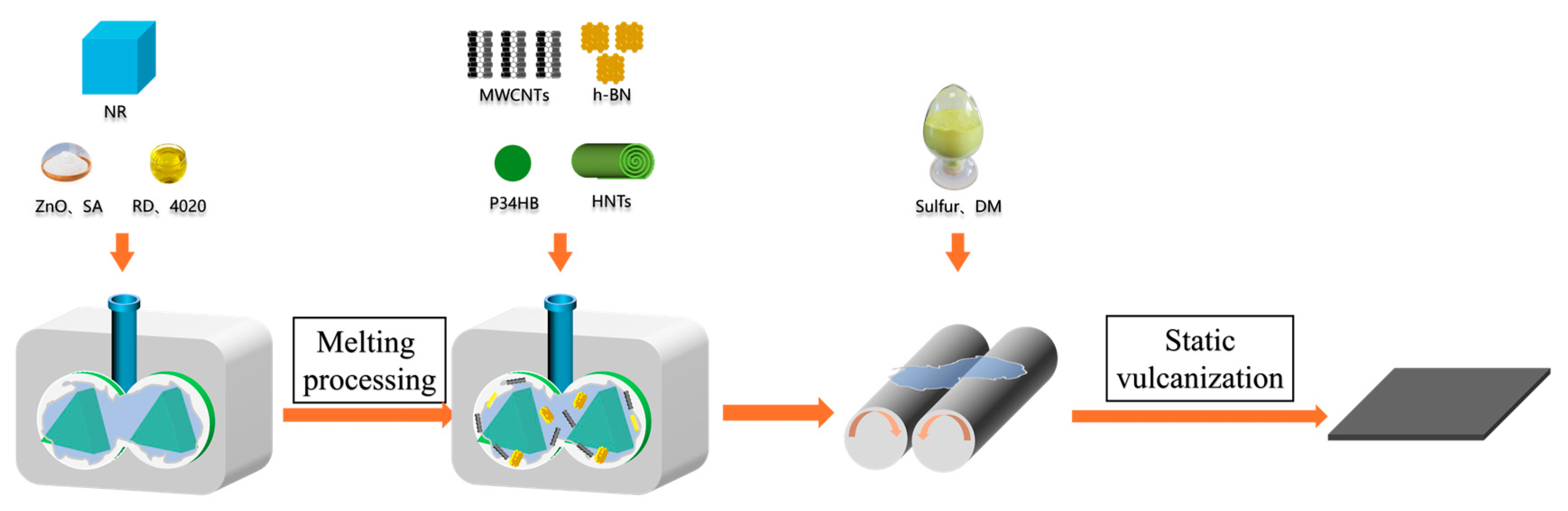
2.3. Sample Preparation
2.4. Characterization and Measurements
3. Results and Discussion
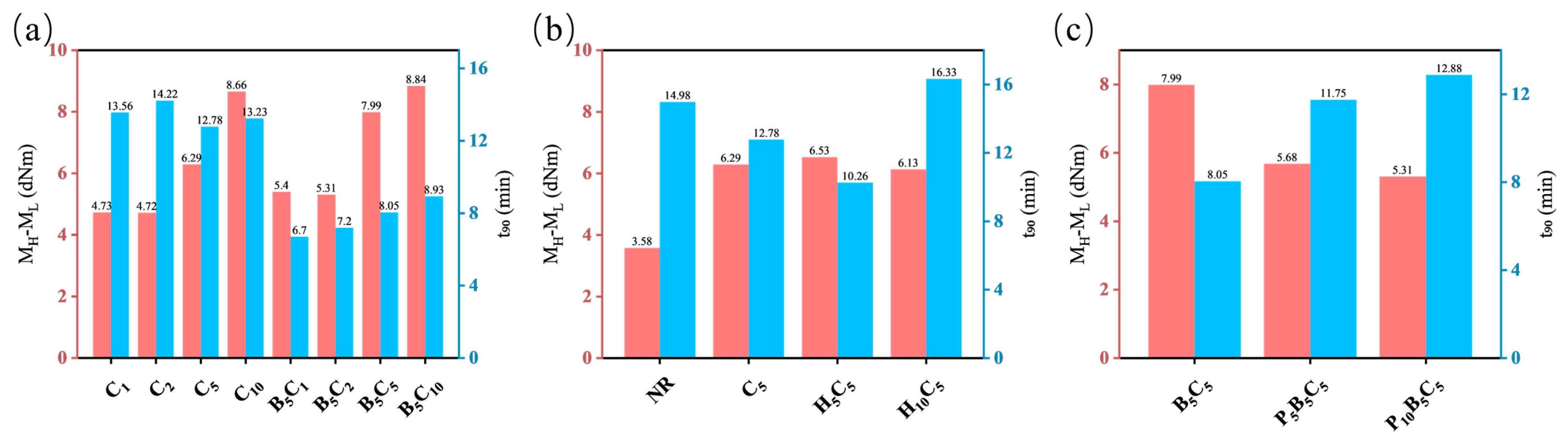
3.1. Vulcanization Properties
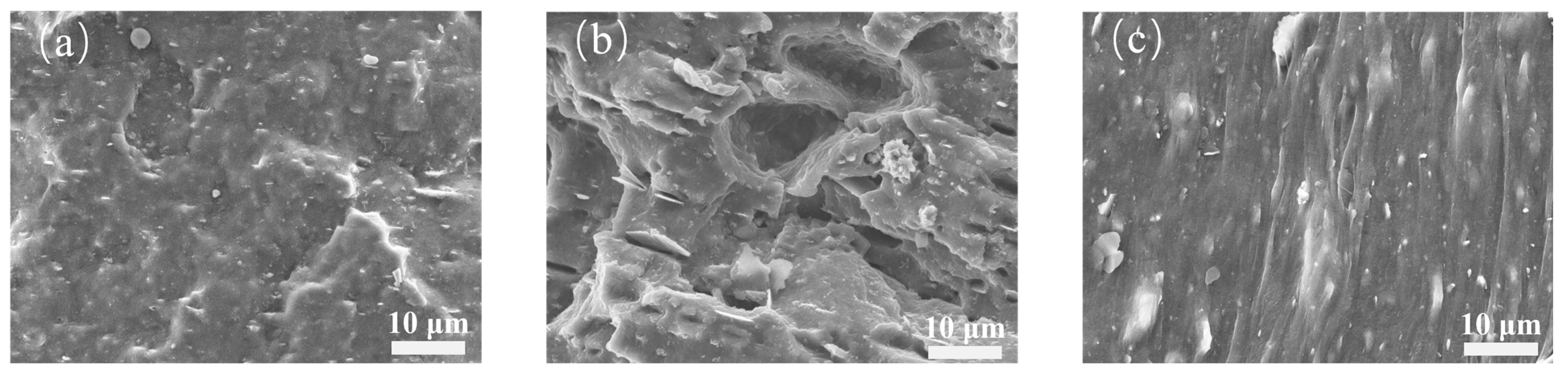
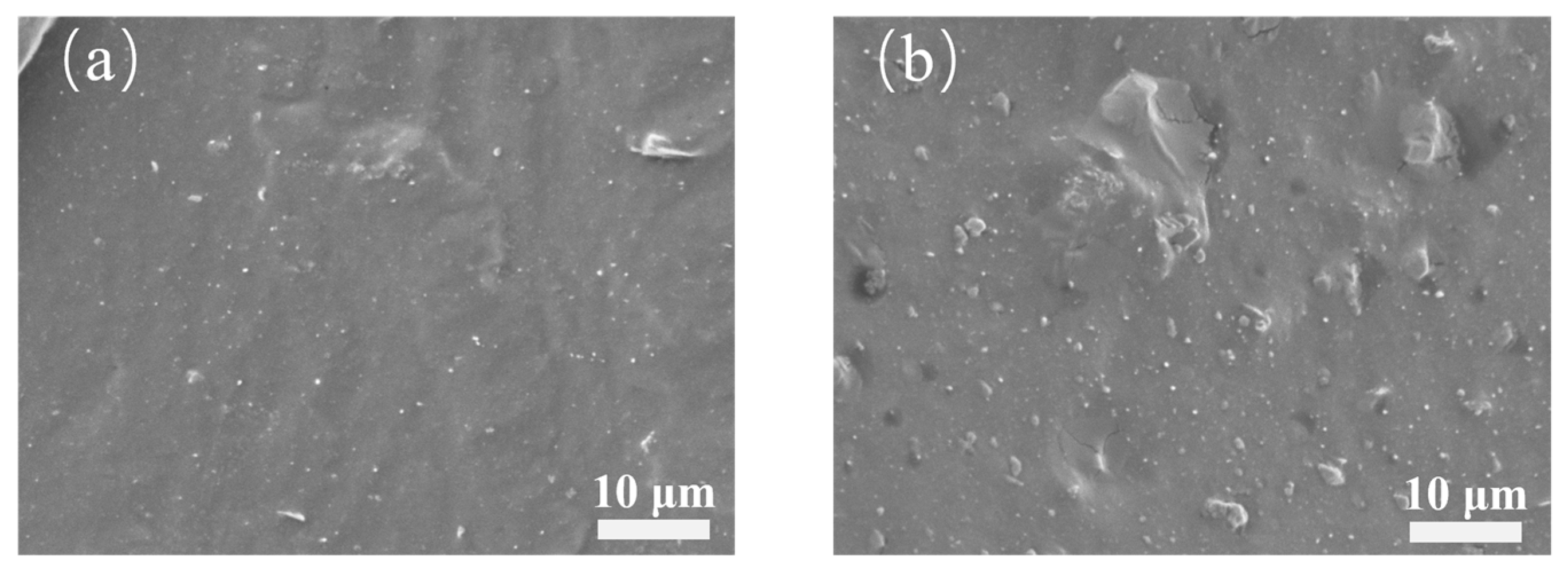
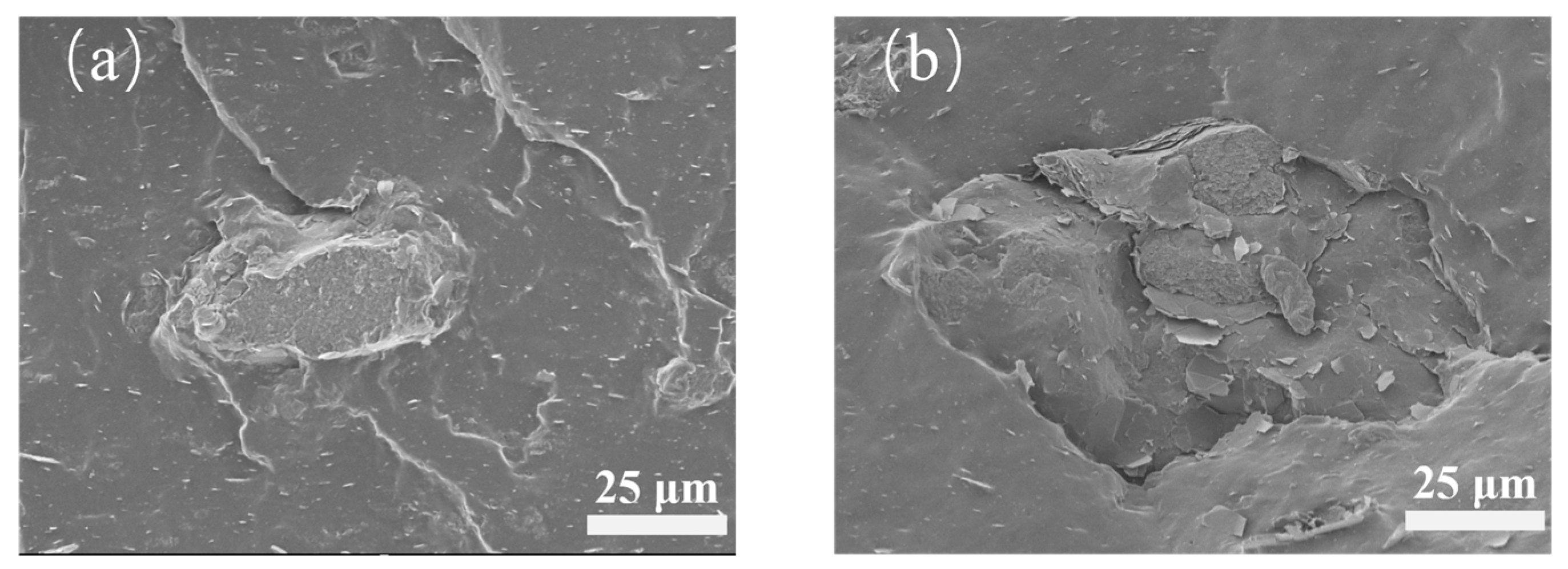
3.2. Microstructure Morphology
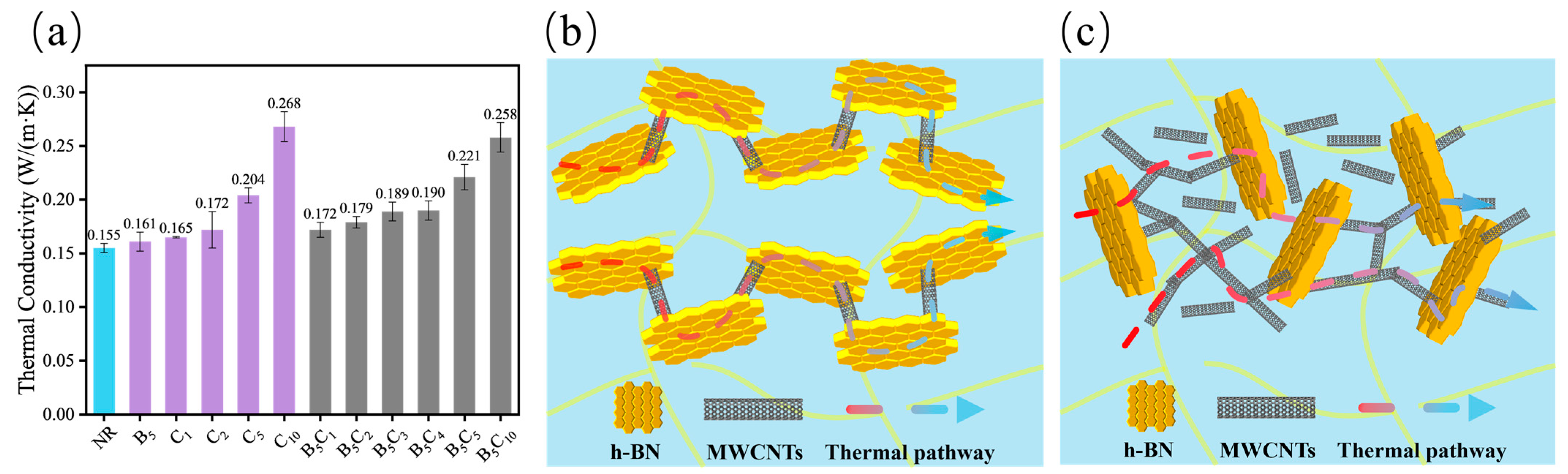
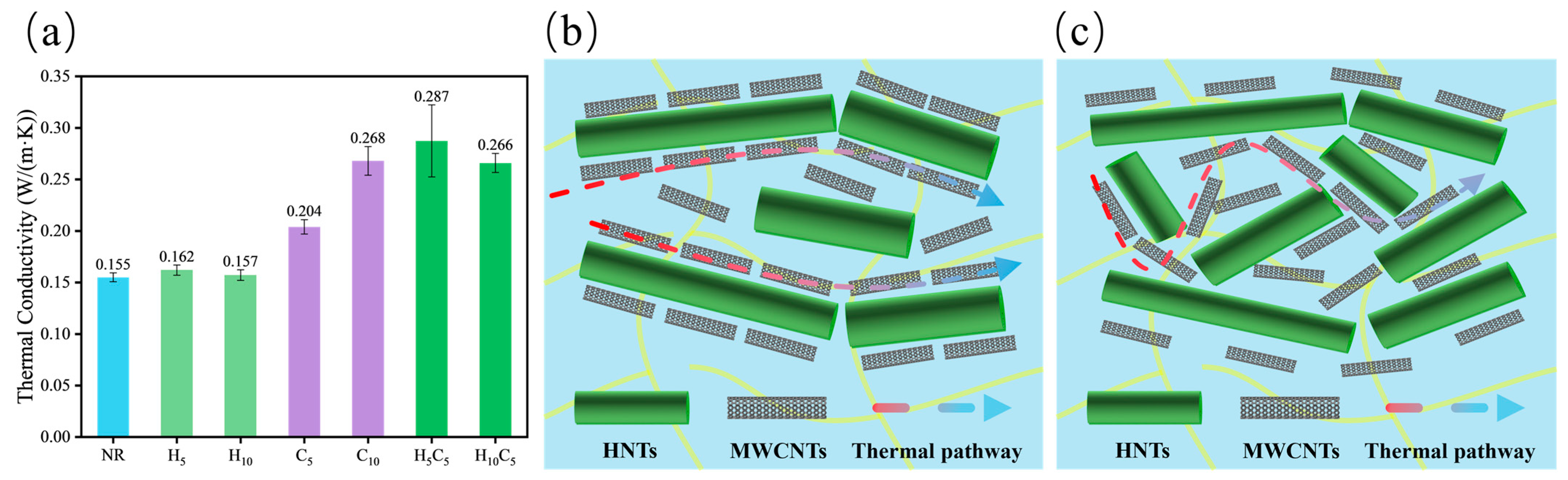
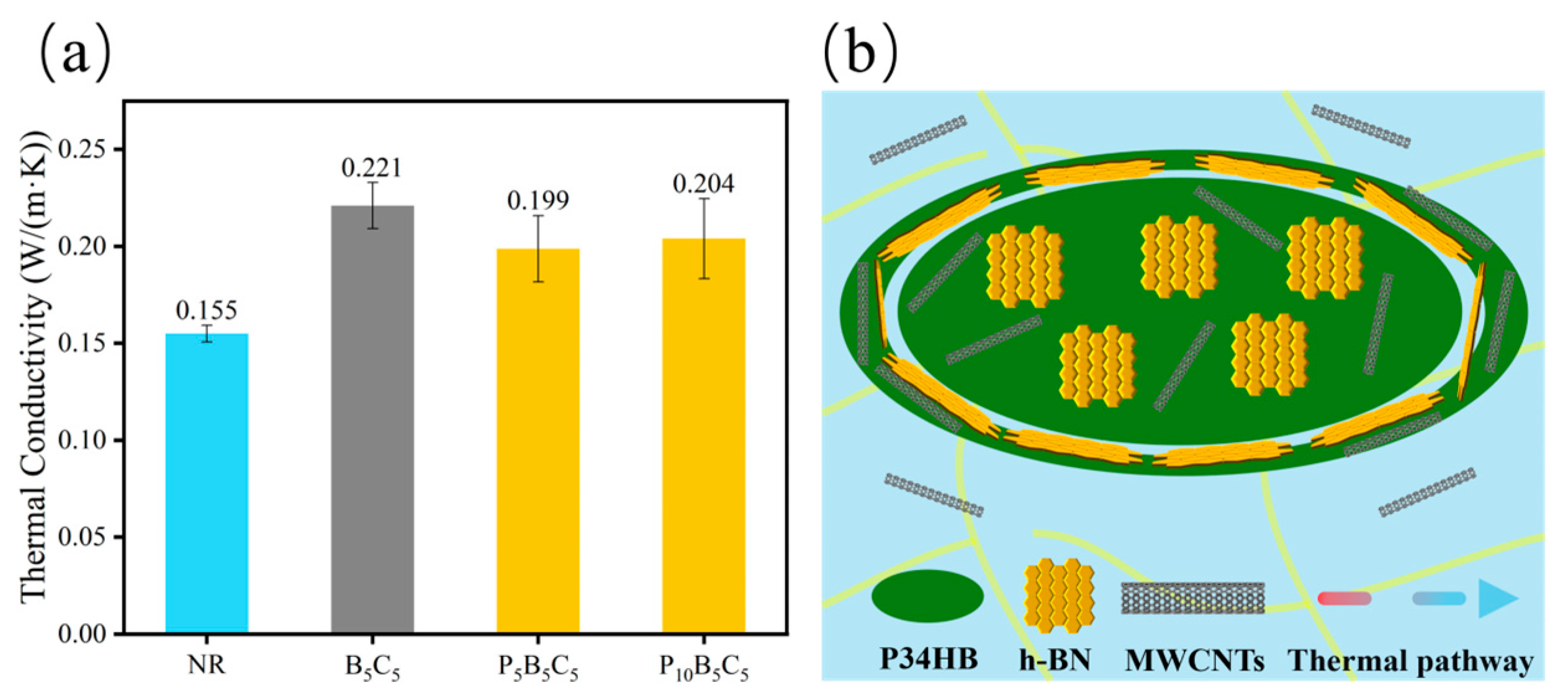
3.3. Thermal Conductivity
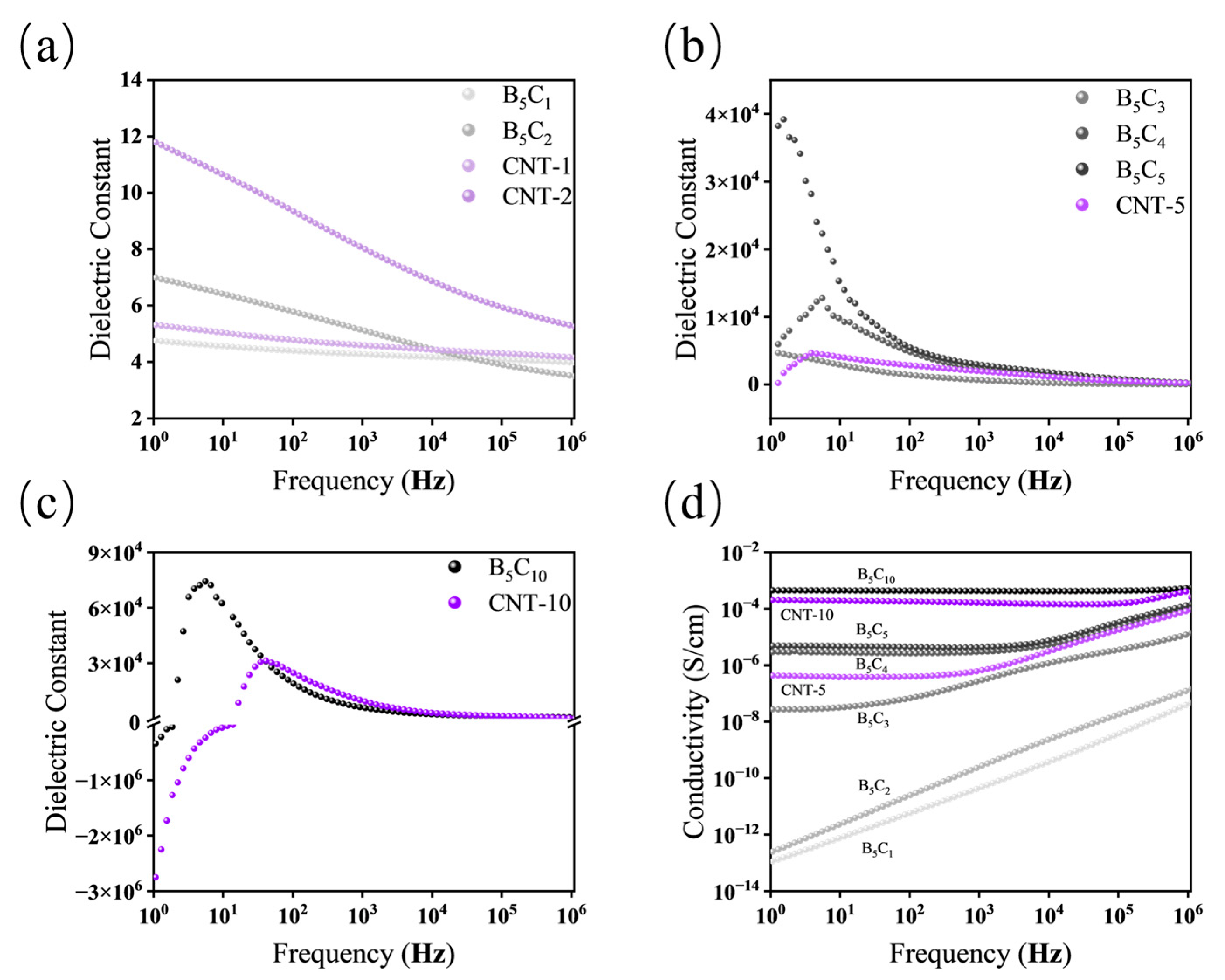
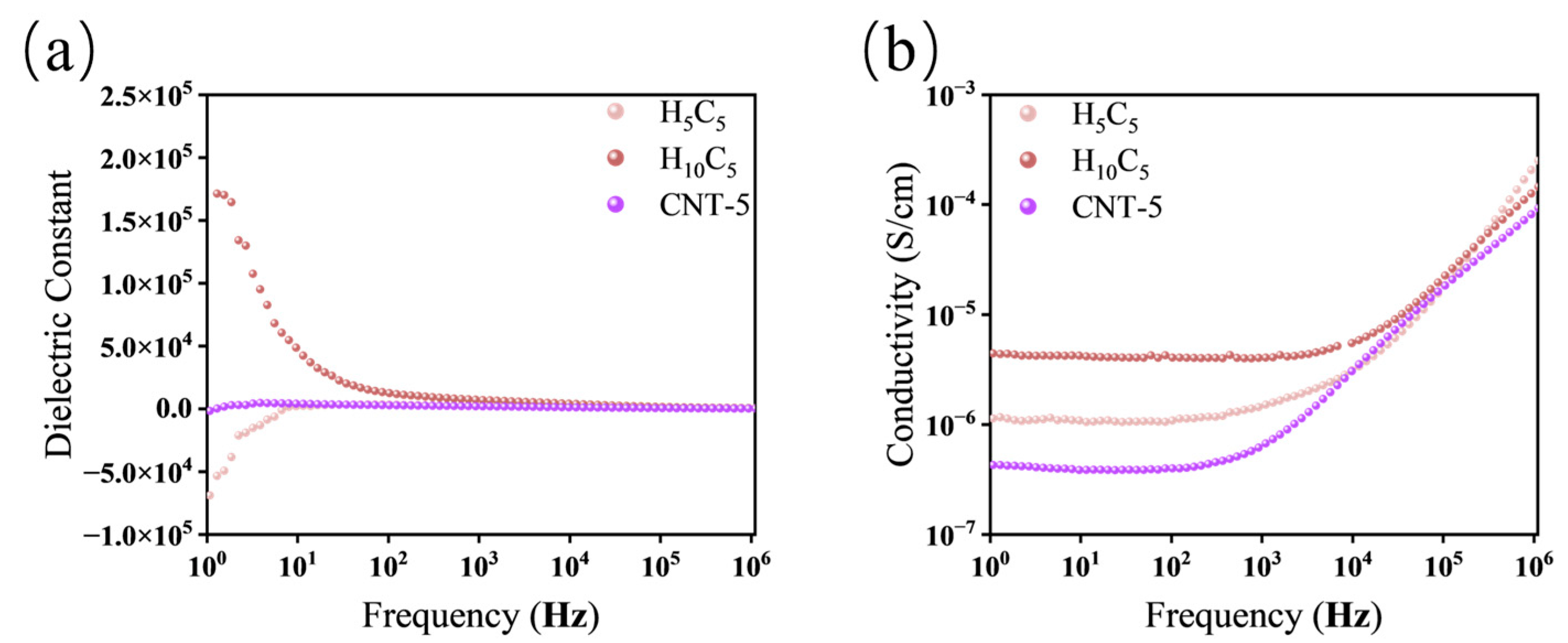
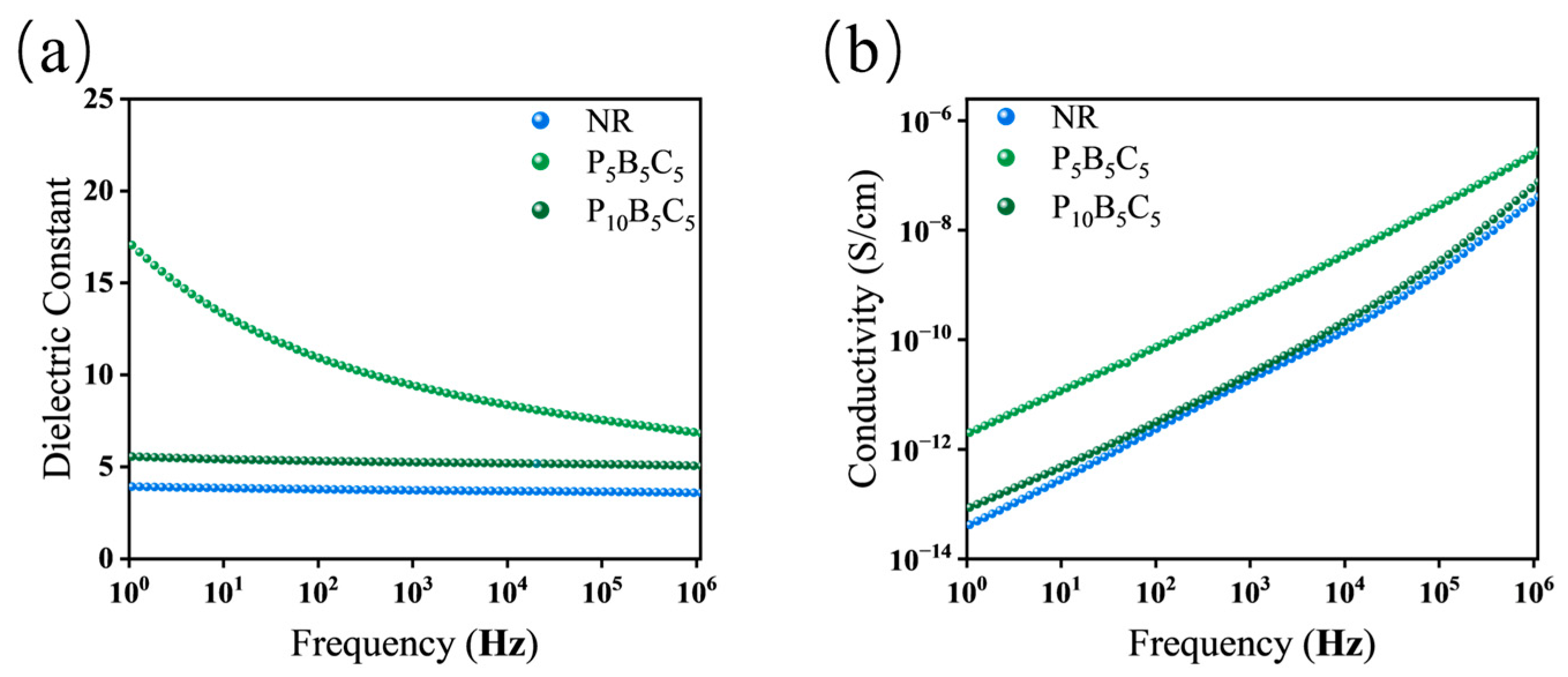
3.4. Dielectric Properties
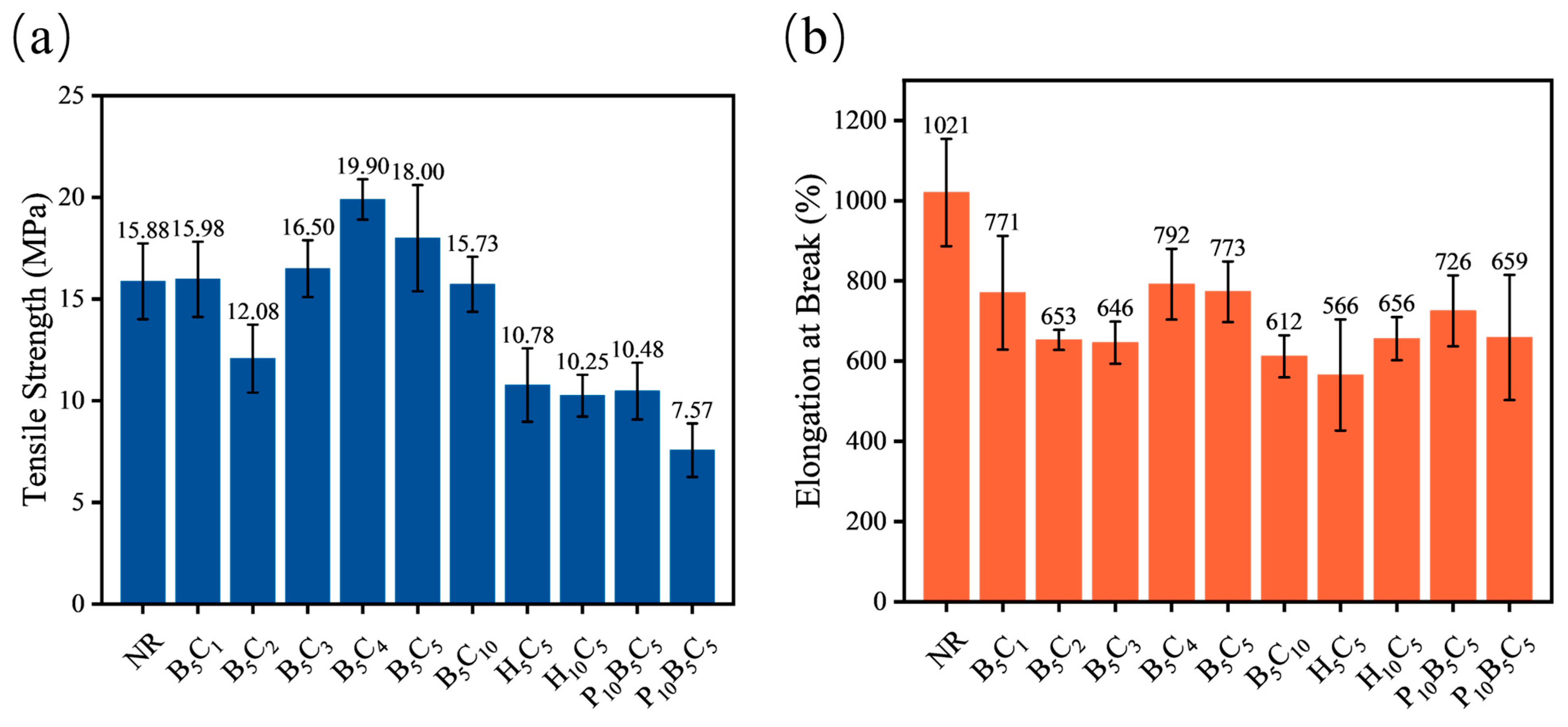
3.5. Mechanical Properties
4. Discussion
4.1. Unified Mechanistic Model
4.2. Comparison with Literature
4.3. Limitations and Future Perspectives
5. Conclusions
Supplementary Materials
Author Contributions
Funding
Institutional Review Board Statement
Data Availability Statement
Conflicts of Interest
Abbreviations
| NR | Natural rubber |
| h-BN | Hexagonal boron nitride |
| HNTs | Halloysite nanotubes |
| P34HB | Poly(3-hydroxybutyrate-co-4-hydroxyvalerate) |
| MWCNTs | Multi-walled carbon nanotubes |
| SEM | Scanning electron microscope |
| MDR | Moving Die Rheometer |
| ML | Minimum torque |
| MH | Maximum torque |
| t90 | Optimum cure time |
| ωp | Plasma frequency |
| σ | Conductivity |
| ω | Angular frequency |
| ε′ | Real part of permittivity (dielectric constant) |
| ε″ | Imaginary part of permittivity (dielectric loss) |
| n | Jonscher exponent |
| R2 | Coefficient of determination |
References
- Qi, J.; Liang, C.; Ruan, K.; Li, M.; Guo, H.; He, M.; Qiu, H.; Guo, Y.; Gu, J. Cactus-like Architecture for Synergistic Microwave Absorption and Thermal Management. Natl. Sci. Rev. 2025, 12, nwaf394. [Google Scholar] [CrossRef]
- Pathumudy, R.D.; Prabhu, K.N. Thermal interface materials for cooling microelectronic systems: Present status and future challenges. J. Mater. Sci. Mater. Electron. 2021, 32, 11339–11366. [Google Scholar] [CrossRef]
- Bodin, A.; Coloigner, A.; Pietri, T.; Simonato, J.P. The Core-Shell Approach for Thermally Conductive and Electrically Insulating Polymer Nanocomposites: A Review. Macromol. Rapid Commun. 2025, 46, 2500078. [Google Scholar] [CrossRef]
- Li, Z.; Sun, Y.; Hu, F.; Liu, D.; Zhang, X.; Ren, J.; Guo, H.; Shalash, M.; He, M.; Hou, H.; et al. An overview of polymer-based thermally conductive functional materials. J. Mater. Sci. Technol. 2025, 218, 191–210. [Google Scholar] [CrossRef]
- Wan, Y.-J.; Li, G.; Yao, Y.-M.; Zeng, X.-L.; Zhu, P.-L.; Sun, R. Recent advances in polymer-based electronic packaging materials. Compos. Commun. 2020, 19, 154–167. [Google Scholar] [CrossRef]
- Ye, W.; Ye, Z.; Liang, T.; Zeng, X.; Wen, Z.; Ren, L.; Sun, R.; Zeng, X. Stretchable Thermal Interface Materials by Tailoring the Chain Relaxation at the Filler/Polymer Interface. ACS Appl. Polym. Mater. 2022, 4, 4653–4663. [Google Scholar] [CrossRef]
- Wang, Z.; Cui, H.; Li, S.; Feng, X.; Aghassi-Hagmann, J.; Azizian, S.; Levkin, P.A. Facile Approach to Conductive Polymer Microelectrodes for Flexible Electronics. ACS Appl. Mater. Interfaces 2021, 13, 21661–21668. [Google Scholar] [CrossRef] [PubMed]
- Roy, R.; Stevens, K.C.; Treaster, K.A.; Sumerlin, B.S.; McGaughey, A.J.H.; Malen, J.A.; Evans, A.M. Intrinsically thermally conductive polymers. Mater. Horiz. 2024, 11, 3267–3286. [Google Scholar] [CrossRef]
- Lv, G.; Zhu, J. Intrinsic Thermal Conductivity of Molecular Engineered Polymer. Adv. Funct. Mater. 2025, 36, 2420708. [Google Scholar] [CrossRef]
- He, M.; Zhong, X.; Lu, X.; Hu, J.; Ruan, K.; Guo, H.; Zhang, Y.; Guo, Y.; Gu, J. Excellent Low-Frequency Microwave Absorption and High Thermal Conductivity in Polydimethylsiloxane Composites Endowed by Hydrangea-Like CoNi@BN Heterostructure Fillers. Adv. Mater. 2024, 36, 2410186. [Google Scholar] [CrossRef]
- Wang, S.-S.; Feng, D.-Y.; Zhang, Z.-M.; Liu, X.; Ruan, K.-P.; Guo, Y.-Q.; Gu, J.-W. Highly Thermally Conductive Polydimethylsiloxane Composites with Controllable 3D GO@f-CNTs Networks via Self-sacrificing Template Method. Chin. J. Polym. Sci. 2024, 42, 897–906. [Google Scholar] [CrossRef]
- Zhang, H.; Guo, Y.; Zhao, Y.; Zhu, Q.; He, M.; Guo, H.; Shi, X.; Ruan, K.; Kong, J.; Gu, J. Liquid Crystal-Engineered Polydimethylsiloxane: Enhancing Intrinsic Thermal Conductivity through High Grafting Density of Mesogens. Angew. Chem. Int. Ed. 2025, 64, e202500173. [Google Scholar] [CrossRef]
- Zhang, K.; Zhang, J.; Dang, L.; Wu, Y.; He, M.; Guo, H.; Shi, X.; Qiu, H.; Gu, J. High intrinsic thermal conductivity and low dielectric constant of liquid crystalline epoxy resins with fluorine-containing semi-IPN structures. Sci. China Chem. 2025, 68, 2615–2627. [Google Scholar] [CrossRef]
- Su, J.; Liu, X.; Charmchi, M.; Sun, H. Experimental and numerical study of anisotropic thermal conductivity of magnetically aligned PDMS/Ni particle composites. Int. J. Heat Mass Transf. 2016, 97, 645–652. [Google Scholar] [CrossRef]
- Ren, J.; Sun, Y.; He, M.H.; Helal, M.; Dong, W.; Ma, X.; Guo, J.; Zhu, J.; Ayob, E.A.; Xu, B.B.; et al. Strengthened Epoxy Nanocomposites with Binary Fillers of Magnetite@Polyaniline and Carbon Nanofiber for High-Performance Thermal Stability Electromagnetic Wave Absorption. J. Mater. Sci. Technol. 2026, 243, 139–148. [Google Scholar] [CrossRef]
- Yoon, H.; Matteini, P.; Hwang, B. Review on three-dimensional ceramic filler networking composites for thermal conductive applications. J. Non-Cryst. Solids 2022, 576, 121272. [Google Scholar] [CrossRef]
- Wang, D.; Wu, X.; Owens, G.; Xu, H. Porous carbon-based thermally conductive materials: Fabrication, functions and applications. Chin. J. Struct. Chem. 2023, 42, 100006. [Google Scholar] [CrossRef]
- He, Q.; Zhang, H.; Zhang, Z.; Duan, Y.; Qin, M.; Feng, W. Dandelion-Inspired Radial Oriented Microspheres for Dynamic Interface Thermal Management. Adv. Funct. Mater. 2026, 36, e73794. [Google Scholar] [CrossRef]
- Yu, J.; Choi, H.K.; Kim, H.S.; Kim, S.Y. Synergistic effect of hybrid graphene nanoplatelet and multi-walled carbon nanotube fillers on the thermal conductivity of polymer composites and theoretical modeling of the synergistic effect. Compos. Part A Appl. Sci. Manuf. 2016, 88, 79–85. [Google Scholar] [CrossRef]
- Zeng, J.; Chen, X.; Hu, M.; Zheng, K.; Zhang, X.; Tian, X. Thermal conductivity and electromagnetic shielding performance of three-dimensional anisotropic BN/MWCNT epoxy composites under low filling capacity. Colloid. Polym. Sci. 2023, 301, 505–516. [Google Scholar] [CrossRef]
- Kim, K.; Ju, H.; Kim, J. Filler orientation of boron nitride composite via external electric field for thermal conductivity enhancement. Ceram. Int. 2016, 42, 8657–8663. [Google Scholar] [CrossRef]
- Zhang, H.; Xu, S. Magnetic field-assisted alignment of boron nitride nanosheets in poly(vinyl alcohol) composites with enhanced in-plane thermal conductivity. J. Polym. Res. 2023, 30, 209. [Google Scholar] [CrossRef]
- Lin, Q.-h.; He, S.; Liu, Q.-q.; Yang, J.-h.; Qi, X.-d.; Wang, Y. Construction of a 3D interconnected boron nitride nanosheets in a PDMS matrix for high thermal conductivity and high deformability. Compos. Sci. Technol. 2022, 226, 109528. [Google Scholar] [CrossRef]
- Ruan, K.; Li, M.; Pang, Y.; He, M.; Guo, H.; Shi, X.; Gu, J. Molecular Brush-Grafted Liquid Crystalline Hetero-Structured Fillers for Boosting Thermal Conductivity of Polyimide Composite Films. Adv. Funct. Mater. 2025, 35, 2506563. [Google Scholar] [CrossRef]
- Liu, B.; Vu-Bac, N.; Zhuang, X.; Fu, X.; Rabczuk, T. Stochastic full-range multiscale modeling of thermal conductivity of Polymeric carbon nanotubes composites: A machine learning approach. Compos. Struct. 2022, 289, 115393. [Google Scholar] [CrossRef]
- Sheng, Y.; Li, C.; Wang, J.; Xia, X.; Weng, G.J.; Su, Y. Multiscale modeling of thermal conductivity of hierarchical CNT-polymer nanocomposite system with progressive agglomeration. Carbon 2023, 201, 785–795. [Google Scholar] [CrossRef]
- Bauhofer, W.; Kovacs, J.Z. A review and analysis of electrical percolation in carbon nanotube polymer composites. Compos. Sci. Technol. 2009, 69, 1486–1498. [Google Scholar] [CrossRef]
- Tsangaris, G.M.; Psarras, G.C.; Kouloumbi, N. Electric modulus and interfacial polarization in composite polymeric systems. J. Mater. Sci. 1998, 33, 2027–2037. [Google Scholar] [CrossRef]
- Wang, Q.; Che, J.; Wu, W.; Hu, Z.; Liu, X.; Ren, T.; Chen, Y.; Zhang, J. Contributing Factors of Dielectric Properties for Polymer Matrix Composites. Polymers 2023, 15, 590. [Google Scholar] [CrossRef] [PubMed]
- Guo, C.; Li, C.; Qiao, Z.; Lei, C.; Ju, Z.; Zhang, Y.; Zhang, Q.; Fu, Q.; Wu, K. Crack-Resistant and Self-Healable Passive Radiative Cooling Silicone Compounds. Adv. Mater. 2025, 37, e2500738. [Google Scholar] [CrossRef] [PubMed]
- Yuan, K.; Lin, G.; Li, T.; Guo, Y.; Li, W.; Gao, H.; Miao, J. Enhancing electrical insulation and thermal conductivity in polydimethylsiloxane polymer nanocomposites through silica coating on carbon fibers. Polymer 2024, 312, 127572. [Google Scholar] [CrossRef]
- GB/T 528-2009; Rubber, Vulcanized or Thermoplastic—Determination of Tensile Stress-Strain Properties. Standardization Administration of China: Beijing, China, 2009.
- Isarn, I.; Bonnaud, L.; Massagués, L.; Serra, À.; Ferrando, F. Study of the synergistic effect of boron nitride and carbon nanotubes in the improvement of thermal conductivity of epoxy composites. Polym. Int. 2019, 69, 280–290. [Google Scholar] [CrossRef]
- Rehman, A.; Shuib, R.K. Enhanced thermal stability, flame retardancy, and thermal conductivity of self-healing natural rubber composites reinforced surface treated halloysite clay nanotubes. Case Stud. Therm. Eng. 2025, 73, 106473. [Google Scholar] [CrossRef]
- Wu, K.; Li, Y.; Huang, R.; Chai, S.; Chen, F.; Fu, Q. Constructing conductive multi-walled carbon nanotubes network inside hexagonal boron nitride network in polymer composites for significantly improved dielectric property and thermal conductivity. Compos. Sci. Technol. 2017, 151, 193–201. [Google Scholar] [CrossRef]
- Zhang, F.; Ye, W.; Zhou, W.; Gao, X.; Fang, H.; Ding, Y. Endowing Thermally Conductive and Electrically Insulating Epoxy Composites with a Well-Structured Nanofiller Network via Dynamic Transesterification-Participated Interfacial Welding. Ind. Eng. Chem. Res. 2022, 61, 3320–3328. [Google Scholar] [CrossRef]
- Xue, Y.; Li, X.; Wang, H.; Zhang, D.; Chen, Y. Thermal conductivity improvement in electrically insulating silicone rubber composites by the construction of hybrid three-dimensional filler networks with boron nitride and carbon nanotubes. J. Appl. Polym. Sci. 2018, 136, 46929. [Google Scholar] [CrossRef]






| Component | Concentration (phr) |
|---|---|
| Natural rubber (NR) | 100 |
| Zinc oxide (ZnO) | 5 |
| Stearic acid (SA) | 3 |
| Sulfur (S) | 2.5 |
| Dibenzothiazole disulfide (DM) | 0.6 |
| N-Isopropyl-N′-phenyl diphenylamine (4020) | 1.6 |
| 2,2,4-Trimethyl-1,2-dihydroquinoline polymer (RD) | 0.5 |
| Sample | ML (dNm) | MH (dNm) | MH-ML (dNm) | t90 (min) |
|---|---|---|---|---|
| NR | 0.56 | 4.14 | 3.58 | 14.98 |
| B5 | 0.53 | 4.91 | 4.38 | 14.10 |
| C1 | 0.48 | 5.21 | 4.73 | 13.56 |
| C2 | 0.58 | 5.30 | 4.72 | 14.22 |
| C5 | 0.86 | 7.15 | 6.29 | 12.78 |
| C10 | 1.51 | 10.17 | 8.66 | 13.23 |
| B5C1 | 0.17 | 5.57 | 5.40 | 6.70 |
| B5C2 | 0.07 | 5.38 | 5.31 | 7.20 |
| B5C3 | 0.37 | 7.00 | 6.63 | 6.97 |
| B5C4 | 0.36 | 7.50 | 7.14 | 7.39 |
| B5C5 | 0.48 | 8.47 | 7.99 | 8.05 |
| B5C10 | 0.62 | 9.46 | 8.84 | 8.93 |
| H5C5 | 0.80 | 7.33 | 6.53 | 10.26 |
| H10C5 | 0.85 | 6.98 | 6.13 | 16.33 |
| P5B5C5 | 0.51 | 6.19 | 5.68 | 11.75 |
| P10B5C5 | 0.52 | 5.83 | 5.31 | 12.88 |
| System | Loading | Thermal Conductivity (W/(m·K)) | Dielectric Constant |
|---|---|---|---|
| PS/MWCNT@h-BN [35] | 1 + 10 vol% (MWCNT + h-BN) | 0.66 | 123 (100 Hz) |
| Epoxy vitrimer/MWCNT/h-BN [36] | 1 + 8 wt% (MWCNT + h-BN) | 0.83 | — |
| Silicone rubber/CNT/BN [37] | 0.25 vol% CNT + 30 phr BN | 0.279 | ~2.9 (10 Hz) |
| B5C5 | 5 + 5 phr (h-BN + MWCNT) | 0.221 | ~3.8 × 10⁴ (1 Hz) |
| H5C5 | 5 + 5 phr (HNT + MWCNT) | 0.287 | Positive → negative (6 Hz) |
| P10B5C5 | 10 + 5 + 5 phr (P34HB + h-BN + MWCNT) | 0.204 | ~5.5 (1 Hz) |
Disclaimer/Publisher’s Note: The statements, opinions and data contained in all publications are solely those of the individual author(s) and contributor(s) and not of MDPI and/or the editor(s). MDPI and/or the editor(s) disclaim responsibility for any injury to people or property resulting from any ideas, methods, instructions or products referred to in the content. |
© 2026 by the authors. Licensee MDPI, Basel, Switzerland. This article is an open access article distributed under the terms and conditions of the Creative Commons Attribution (CC BY) license.
Share and Cite
Li, Y.; Cui, Q.; Wang, Y.; Gao, Y.; Hu, X.; Liu, X.; Xia, Y.; Cao, L.; Chen, Y. Multi-Dimensional Filler Design for Enhanced Thermal Conductivity and Tunable Dielectric Properties in Natural Rubber Composites. Polymers 2026, 18, 1074. https://doi.org/10.3390/polym18091074
Li Y, Cui Q, Wang Y, Gao Y, Hu X, Liu X, Xia Y, Cao L, Chen Y. Multi-Dimensional Filler Design for Enhanced Thermal Conductivity and Tunable Dielectric Properties in Natural Rubber Composites. Polymers. 2026; 18(9):1074. https://doi.org/10.3390/polym18091074
Chicago/Turabian StyleLi, Yu, Qihan Cui, Yining Wang, Yuanqin Gao, Xianhua Hu, Xueqing Liu, Yumin Xia, Lan Cao, and Yuwei Chen. 2026. "Multi-Dimensional Filler Design for Enhanced Thermal Conductivity and Tunable Dielectric Properties in Natural Rubber Composites" Polymers 18, no. 9: 1074. https://doi.org/10.3390/polym18091074
APA StyleLi, Y., Cui, Q., Wang, Y., Gao, Y., Hu, X., Liu, X., Xia, Y., Cao, L., & Chen, Y. (2026). Multi-Dimensional Filler Design for Enhanced Thermal Conductivity and Tunable Dielectric Properties in Natural Rubber Composites. Polymers, 18(9), 1074. https://doi.org/10.3390/polym18091074