A Method for Reducing the Temperature Sensitivity of a Single-Base Propellant by Adding Ultra-Fine RDX Particles

 ,
,
Abstract
1. Introduction
2. Theoretical Principles of Reducing Temperature Coefficient
3. Experiment
3.1. Materials
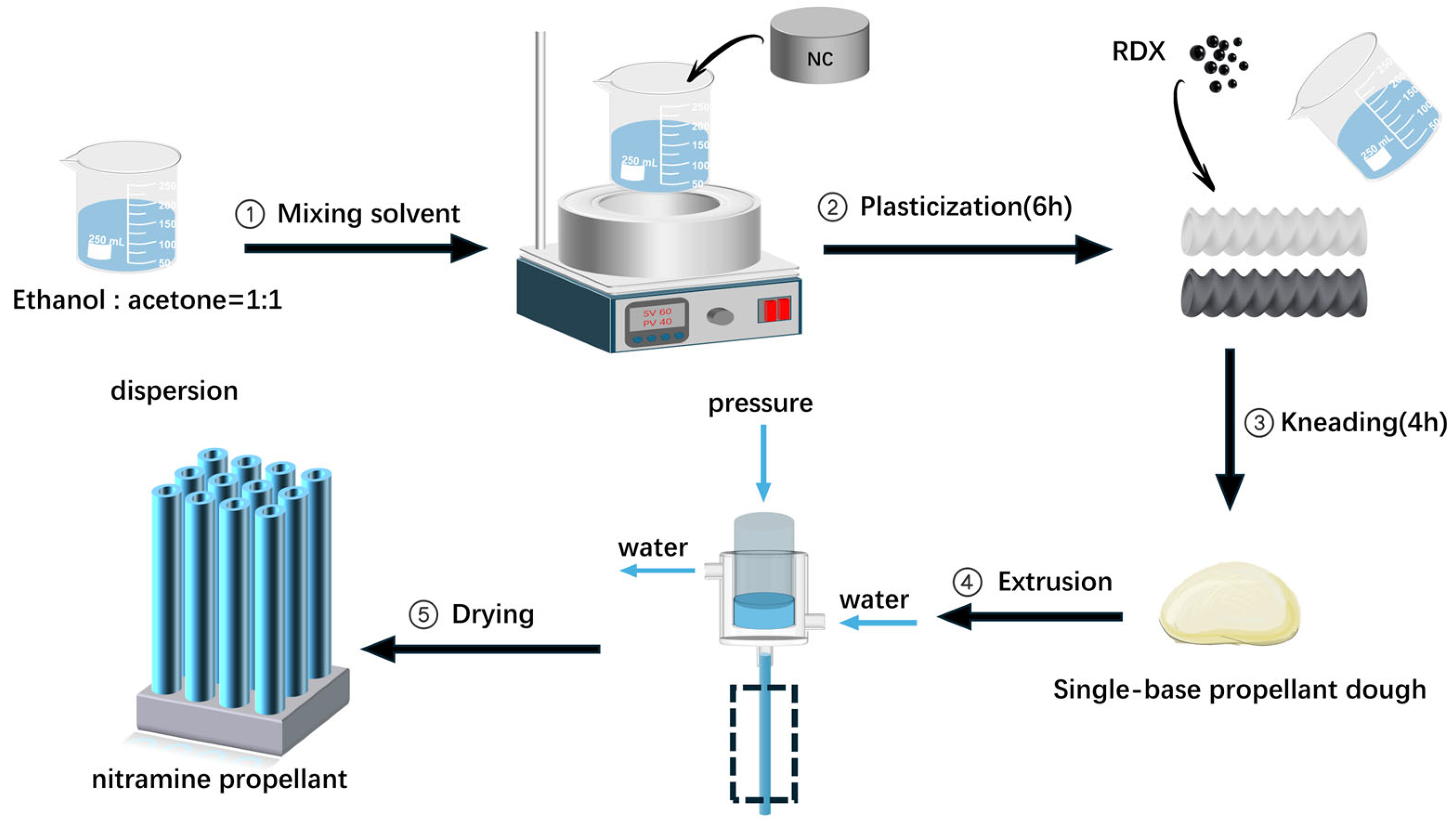
3.2. Preparation
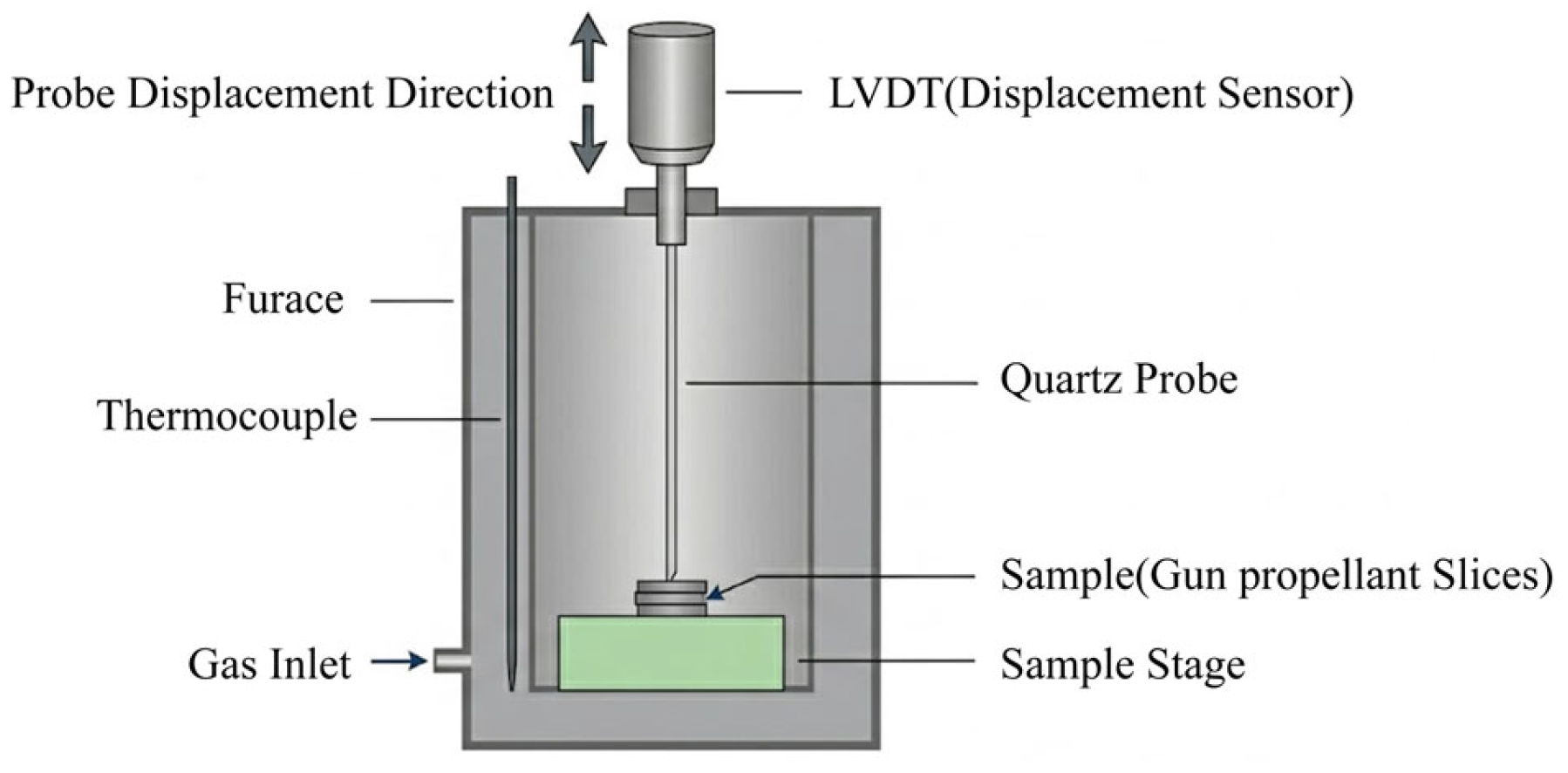
3.3. TMA Test
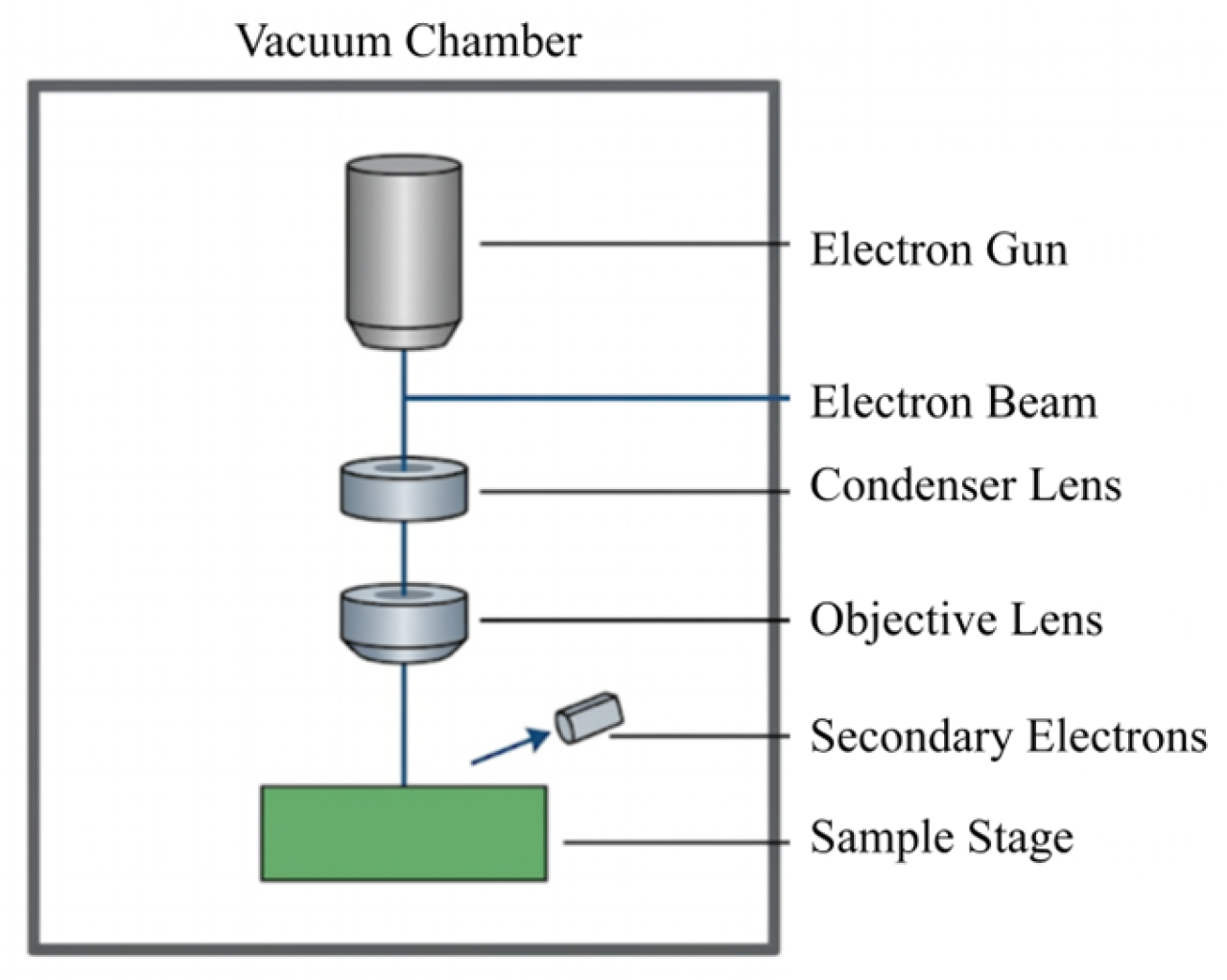
3.4. SEM Observation
3.5. 3D Video Microscope
3.6. Closed Bomb Test
4. Results and Discussion
4.1. Thermal Expansion Coefficient
4.2. Internal Physical Structure
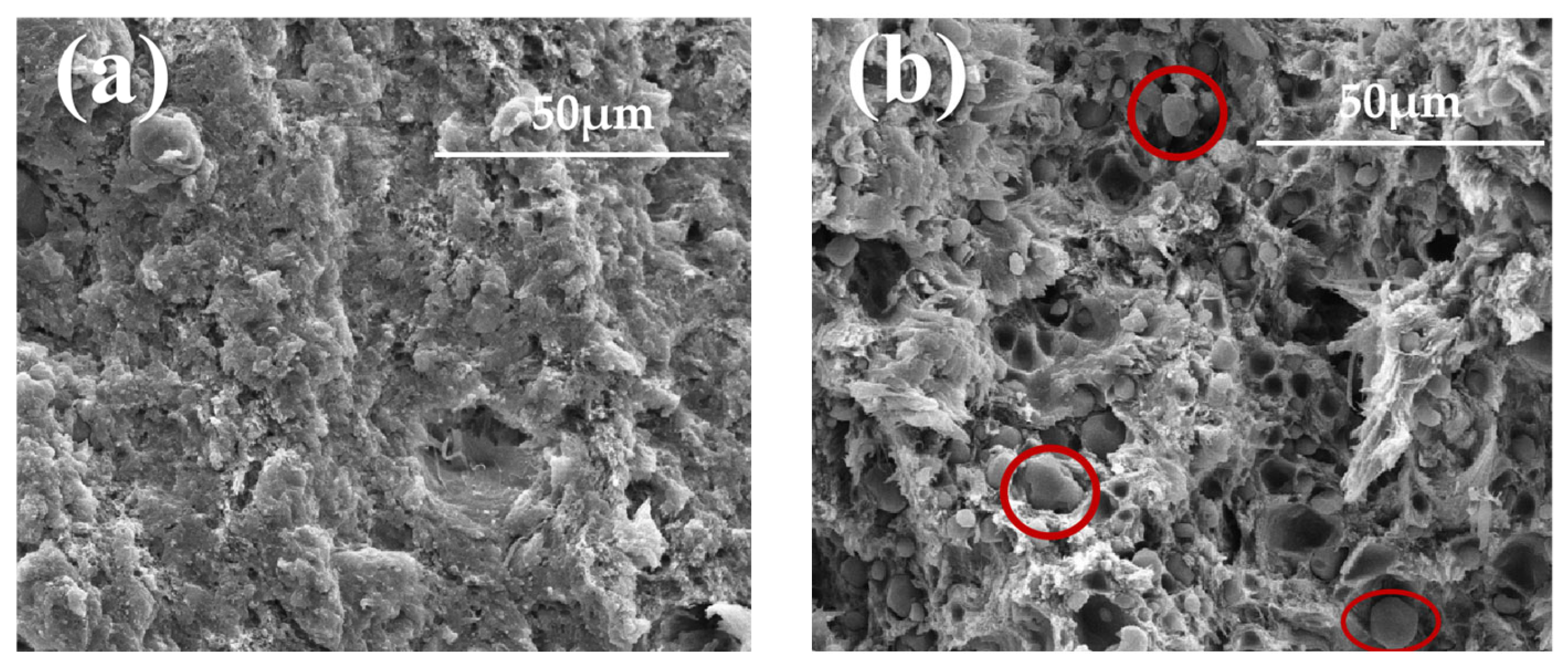
4.2.1. SEM
4.2.2. 3D Video Microscope
4.3. Combustion Performance
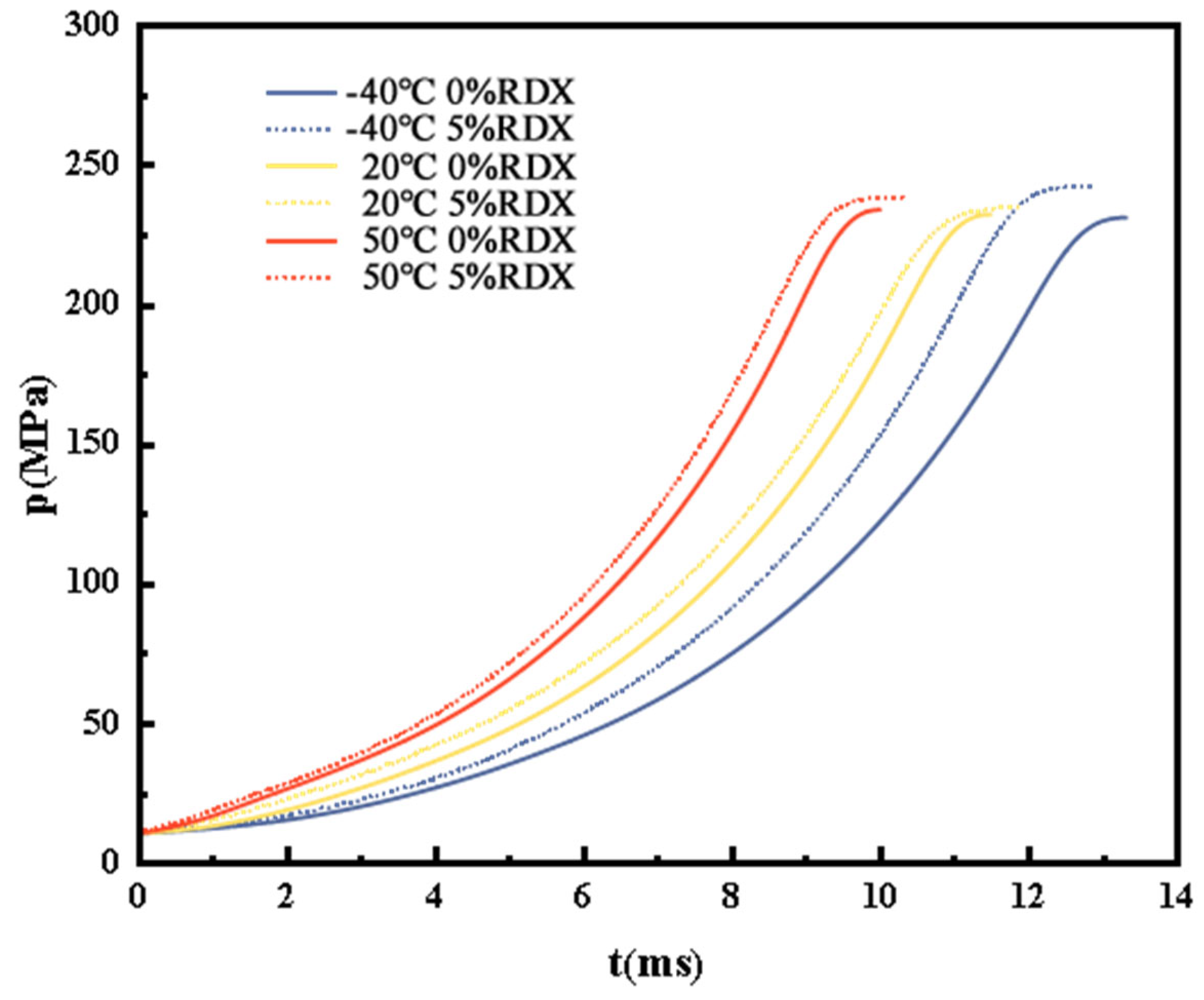
4.3.1. Pressure–Time (p-t) Curves
4.3.2. Γ-Ψ and L-B Curves
4.3.3. u-p Curves
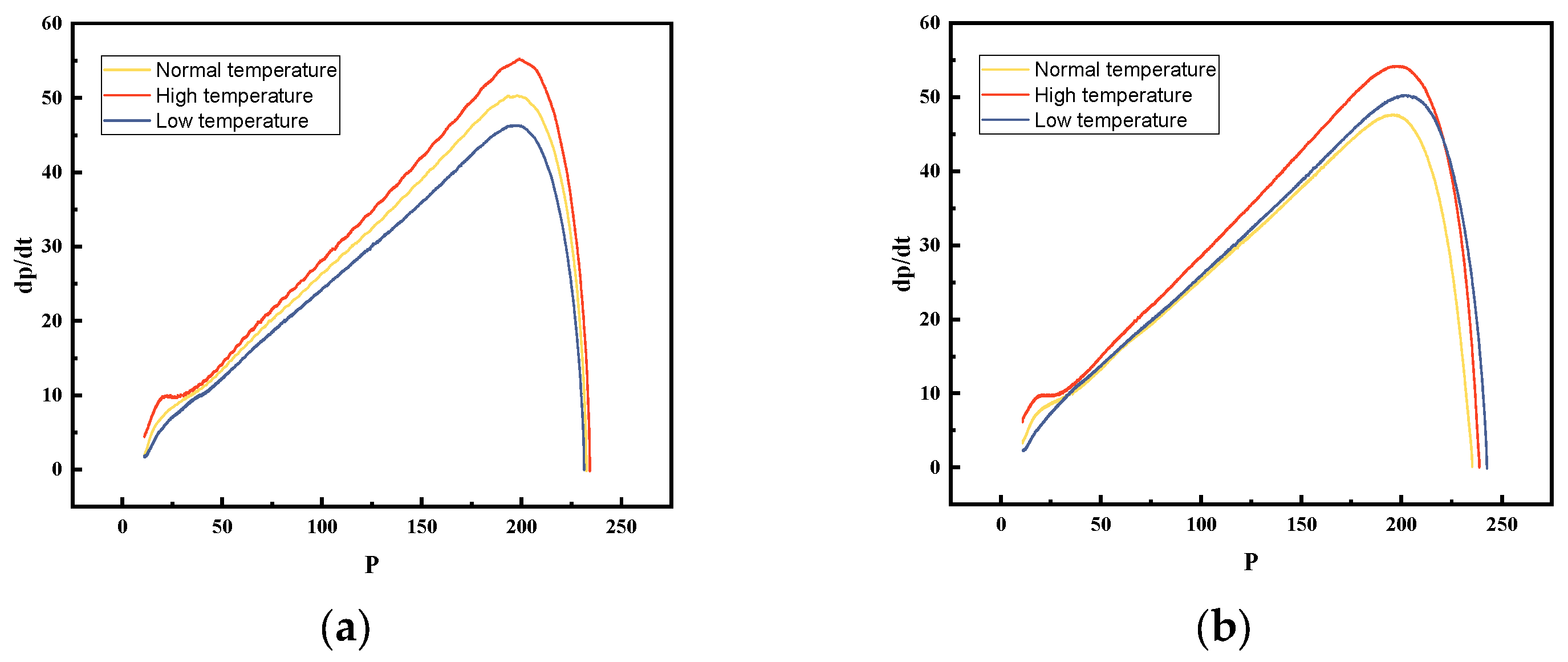
4.3.4. dp/dt-p Curves
4.3.5. Burning Rate Temperature Coefficient and Pressure Exponent
4.3.6. Combustion Stability of Modified Single-Base Propellant
4.4. Mechanistic Analysis
5. Conclusions
- (1)
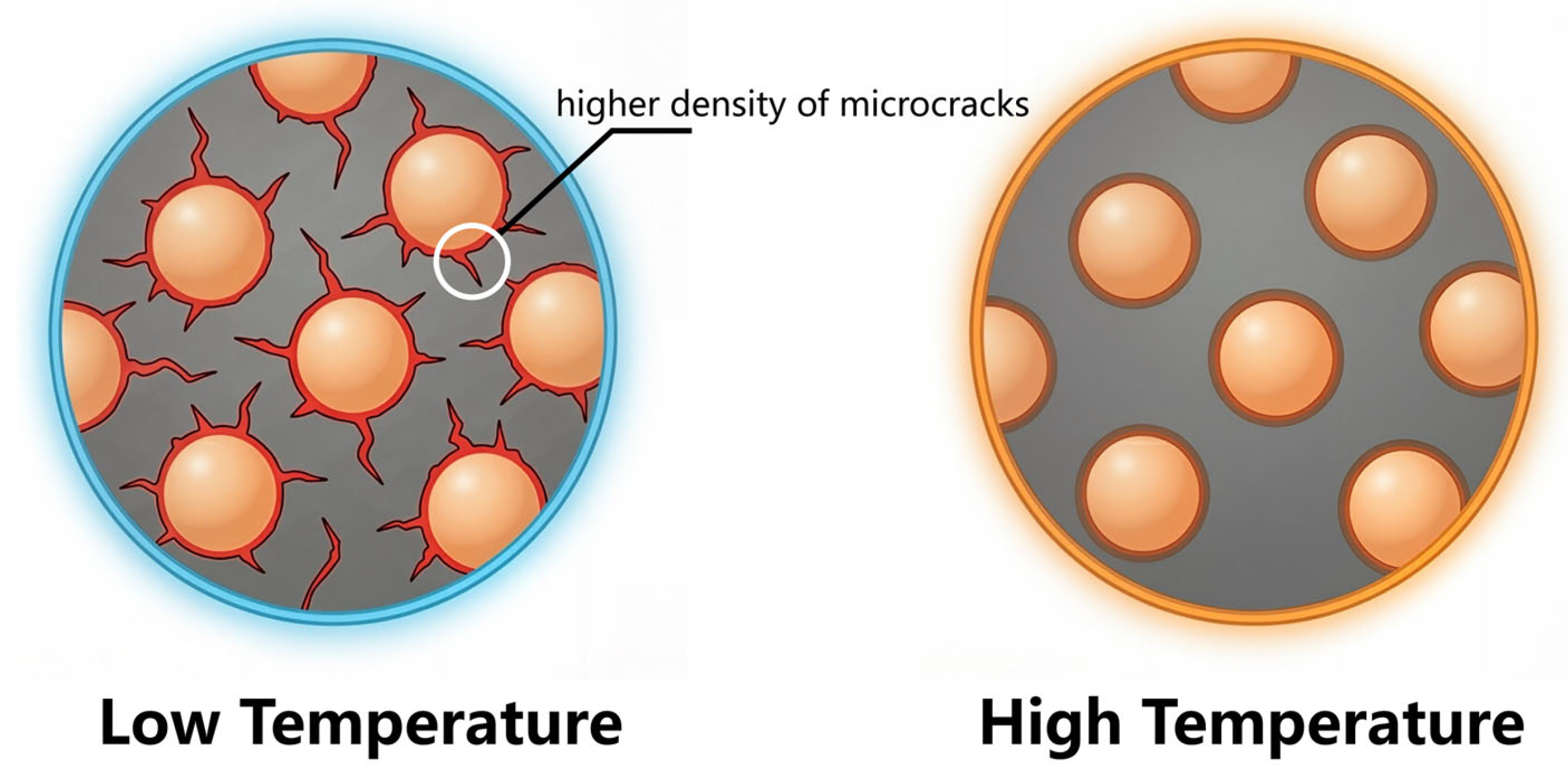
- SEM images show that the modified single-base propellant has a heterogeneous structure, and there are interfaces between RDX particles and the single-base propellant matrix. The mismatch in thermal expansion between the RDX particles and the propellant matrix, together with temperature-dependent interfacial adhesion, leads to a variable burning surface area in the modified single-base propellant, thereby reducing its temperature sensitivity coefficient.
- (2)
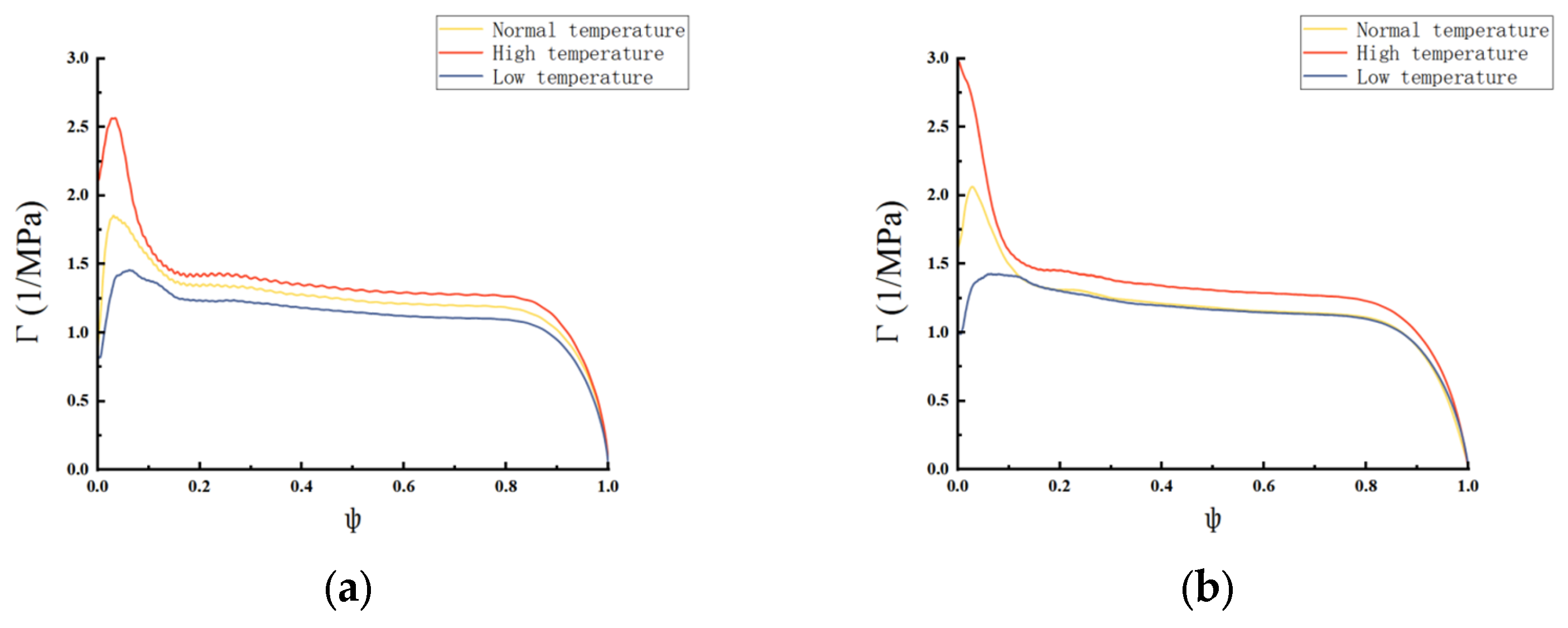
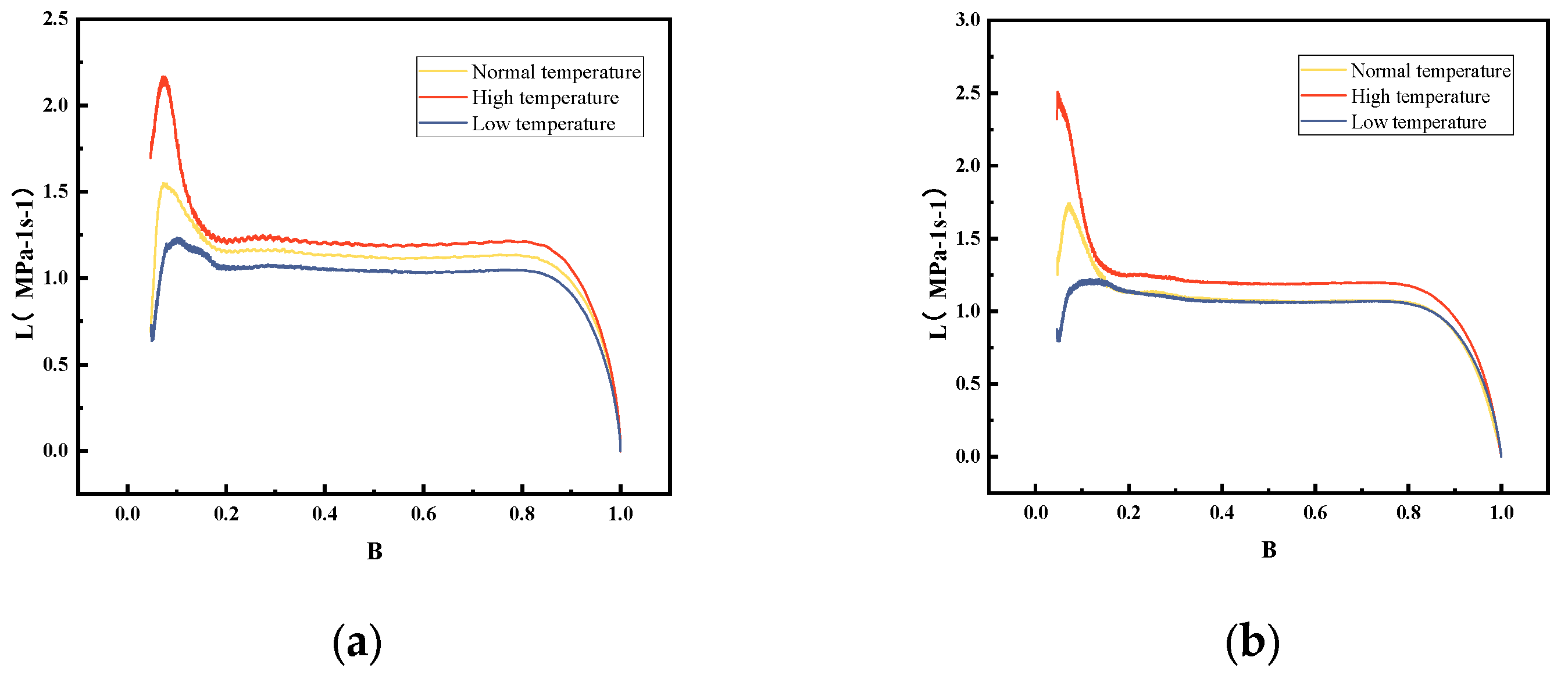
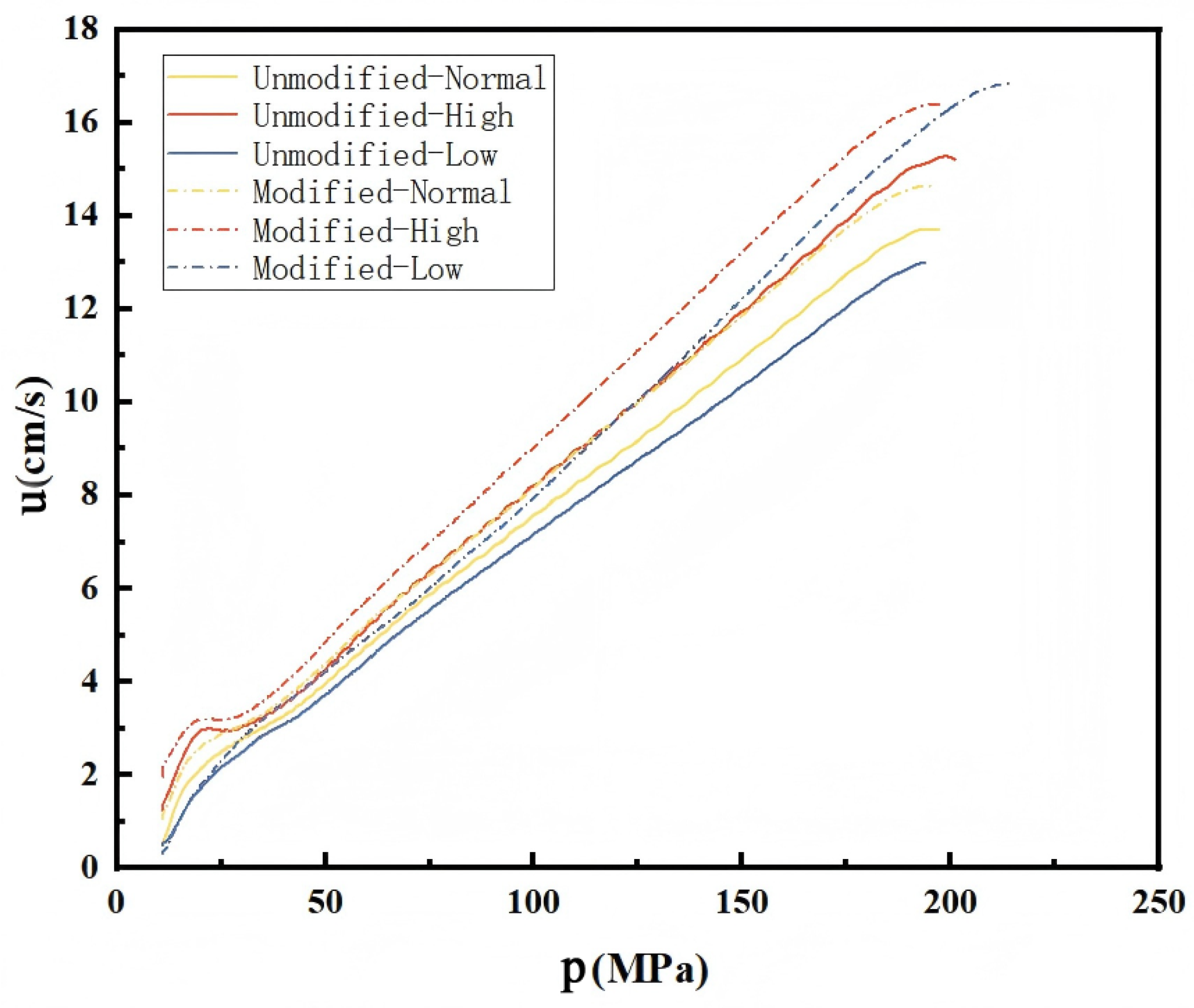
- The results of the closed bomb test show that when the burned fraction Ψ is larger than 0.15, the gas generation rate of the modified single-base propellant at low temperature is approximately the same as that at room temperature. The modified single-base propellant exhibits a lower temperature sensitivity coefficient than the unmodified propellant.
- (3)
- The combustion stability of the modified single-base propellant was evaluated using the RQ. The RQ values at room, low and high temperature are 0.9639, 0.9892 and 0.9960, respectively. All values are close to but less than 1, indicating that the modified single-base propellant can burn safely and stably.
Author Contributions
Funding
Institutional Review Board Statement
Data Availability Statement
Conflicts of Interest
Abbreviations
| RDX | research department explosive |
| SEM | scanning electron microscope |
| TMA | thermal mechanical analysis |
| RQ | relative quickness |
| f | powder force |
| φ | coefficient of secondary works |
| 2e1 | web thickness |
| Γ | vivacity of propellant |
| Ψ | proportion of burnt propellant |
| p | pressure |
| pm | maximum pressure |
| L | vivacity of propellant |
| B | p/pm |
| S | cross-section area of muzzle |
| ω | mass of propellant |
| l | projectile travel |
| l0 | length of chamber |
| lψ | equivalent length of propellant gas |
| v | velocity |
| Λ | volume |
| θ | thermal parameter |
| η | covolume of propellant gas |
| α | temperature sensitivity coefficient |
| δ | density |
| Δ | loading density |
| Z | relative burning thickness of propellant |
| χ | characteristic shape parameter |
| Ik | full pressure impulse |
| T | temperature |
| t | time |
| m | mass |
| σ | relative burning surface area |
| a | burning rate coefficient |
| r | burning rate |
| n | burning rate pressure exponent |
References
- Wang, Y.B.; Ma, Y.; Wang, R.T.; Zhao, L.; Nan, F.; He, W. Design optimization and simulation of interior ballistic measurement technology based on parameters of large-caliber launch fuel. Measurement 2022, 189, 110479. [Google Scholar] [CrossRef]
- Wang, Z.S. Low Temperature Sensitivity Propellant Charge; National Defense Industry Press: Beijing, China, 2006. [Google Scholar]
- Boulkadid, M.K.; Lefebvre, M.H.; Jeunieau, L.; Dejeaifve, A. Temperature Sensitivity of Propellant Combustion and Temperature Coefficients of Gun Performance. Cent. Eur. J. Energetic Mater. 2016, 13, 1005–1022. [Google Scholar] [CrossRef] [PubMed]
- Vijayalakshmi, R.; Naik, N.H.; Gore, G.M.; Sikder, A.K. Linear Nitramine (DNDA-57): Synthesis, Scale-Up, Characterization, and Quantitative Estimation by GC/MS. J. Energetic Mater. 2014, 33, 1–16. [Google Scholar] [CrossRef]
- Wen, Z.; Zhang, G.; Huo, C.; Xu, T.; Chen, X.; Liu, P.; Ao, W. Combustion characteristics of composite solid propellants under low-temperature and high-pressure conditions. Fuel 2026, 403, 136095. [Google Scholar] [CrossRef]
- Boulkadid, M.K.; Lefebvre, M.H.; Jeunieau, L.; Dejeaifve, A. Influence of Firing Temperature on Properties of Gun Propellants. J. Chem. Chem. Eng. 2015, 9, 415–427. [Google Scholar] [CrossRef]
- Chen, H.; Li, S.; Luo, H.; Ding, Y.; Tao, Z.; Xiao, Z. Temperature shock strategy for prefabricated microcracks to reduce the temperature sensitivity of gun propellant combustion. Eur. Polym. J. 2025, 236, 114154. [Google Scholar] [CrossRef]
- Dcas, R.W.; Trafton, T.R. Design and evaluation of deterred propellant for use kinetic energy ammunition. In Proceeding of the 1980 JANNAF Propulsion Meeting; CPIA Publication: Columbia, MD, USA, 1980; Volume 315. [Google Scholar]
- Hu, H.; Chen, D.; Yu, H.; Wang, L. Research Progress of Burning Rate Inhibitors in Solid Heterogeneous Propellants. Propellants Explos. Pyrotech. 2024, 49, e202400158. [Google Scholar] [CrossRef]
- Demko, A.R.; Allen, T.W.; Dillier, C.; Sammet, T.; Petersen, E.L.; Reid, D.L.; Seal, S. Temperature Sensitivity of Composite Propellants Containing Novel Nano-Additive Catalysts. J. Propuls. Power 2018, 34, 795–807. [Google Scholar] [CrossRef]
- Liang, Y.; Yao, Y.J.; Yang, J. Ballistic Performance of Gun Propellant Grain Compressed Modular. Chin. J. Explos. Propellants 2010, 33, 51–54. [Google Scholar]
- Hao, C.; Lv, X.; Sun, Z.; Zhao, J.; Ao, W. Numerical and experimental study on the combustion pressurization and gaseous products of propellant in a combustor. Results Eng. 2025, 27, 105853. [Google Scholar] [CrossRef]
- Morrison, W.F.; Horst, A.W.; May, I.; Rocchio, J. Trends in Gun Propulsion for Tactical Army Application. In Proceedings of the 13th International Symposium on Ballistics, Stockholm, Sweden, 1–3 June 1992. [Google Scholar]
- Ludwig, S. Thermochemical and Burning Rate Properties of Deterred US Small Arms Propellants; AD-A086093; U.S. Army Armament Research and Development Command: Rockaway Township, NJ, USA, 1980. [Google Scholar]
- Kruczynski, D.L.; Hewitt, J.R. Temperature Compensation Techniques and Technologies—An Overview; AD-A242565; Ballistic Research Laboratory: Aberdeen, MD, USA, 1991. [Google Scholar]
- Kumari, D.; Balakshe, R.; Banerjee, S.; Singh, H. Energetic Plasticizers for Gun & Rocket Propellants. Rev. J. Chem. 2012, 2, 240–262. [Google Scholar] [CrossRef]
- Xiang, C.; Lina, Z.; Ping, D.; Shuai, J.; Nan, F. Research on the Combustion Performance of Mixed Charge of the Super-porous Propellant. J. Phys. Conf. Ser. 2020, 1605, 012119. [Google Scholar] [CrossRef]
- Bolinder, B.; Schmid, H. Method of Producing Progressively Burning Artillery Propellant Powder and Agent Adopted Thereto. U.S. Patent 4654093, 31 March 1987. [Google Scholar]
- Canterberry, J.B. Polycaprolactone-Deterred Nitrocellulose Propellant Compositions and Method. U.S. Patent 4950342, 21 August 1990. [Google Scholar]
- Nagendra, K.; Vijay, C.; Ramakrishna, P.A. Temperature sensitivity of composite solid propellants: Predictions and experimental verification. Combust. Flame 2020, 220, 130–132. [Google Scholar] [CrossRef]
- Liu, B.; Ma, F.S.; Bian, X.Y.; Tian, D.Q.; Wang, Q.L.; Lv, H. Research on the performance of deterred-coating DIANP gun propellant. J. Phys. Conf. Ser. 2023, 2478, 012028. [Google Scholar] [CrossRef]
- Lysien, K.; Stolarczyk, A.; Jarosz, T. Solid Propellant Formulations: A Review of Recent Progress and Utilized Components. Materials 2021, 14, 6657. [Google Scholar] [CrossRef] [PubMed]
- Zhao, Q.; Liu, B.; Liu, S.W.; Ma, F.S.; Wang, Q.L. Research progress of technologies for reducing ballistic temperature coefficient of propellant charge at home and abroad. Chin. J. Explos. Propellants 2019, 42, 540–547. [Google Scholar]
- Yang, J.; Liu, Z.T.; Zhang, J.W.; Chen, Q.; Fu, Y.; Chen, F.; Liao, X. Interval regulation of the temperature sensitivity coefficient of propellants by functional additives MWCNT@MPN and its mechanism analysis. Colloids Surf. A Physicochem. Eng. Asp. 2026, 728, 138800. [Google Scholar] [CrossRef]
- Yang, J.; Liu, Z.; Zhang, J.; Chen, Q.; Fu, Y.; Chen, F.; Liao, X. Temperature Sensitivity Coefficients of RDX-Based Propellants and Their Mixed Charges. Propellants Explos. Pyrotech. 2021, 46, 1589. [Google Scholar]
- Mueller, D.; Langlotz, W. Low Temperature Coefficient (LTC) Propellants. Int. J. Energetic Mater. Chem. Propuls. 2002, 6, 369–376. [Google Scholar] [CrossRef]
- Encyclopaedia Britannica. RDX. Available online: https://www.britannica.com/technology/RDX (accessed on 24 April 2026).
- Wang, Y.B.; Jiang, L.M.; Dong, J.; Li, B.; Shen, J.; Chen, L.; Fu, Y.; He, W. Three-dimensional network structure nitramine gun propellant with nitrated bacterial cellulose. J. Mater. Res. Technol. 2020, 9, 15094–15101. [Google Scholar] [CrossRef]
- Chen, S.; Tang, Z.; Tang, K.; Cui, L.; Qin, Z.; Xu, K. Lowering the burning rate temperature coefficient of composite propellant by compensating its burning surface through thermal expansion and contraction in microstructure. Chem. Eng. J. 2024, 494, 152800. [Google Scholar] [CrossRef]
- Zhang, Y.; An, C.; Qiao, R.; Zhange, Y.; Cui, F.; Pu, J.; Hu, G.; Jiang, J. The effect of loading condition on the thermal decomposition characteristics of RDX. Thermochim. Acta 2025, 751, 180056. [Google Scholar] [CrossRef]
- Li, X.; Cheng, Y.-F.; Zhu, S.-J.; Chen, Z.-H.; Shen, Z.-W. Effects of vacuum degree on the detonation characteristics and energy release laws of RDX explosive. Vacuum 2024, 225, 113270. [Google Scholar] [CrossRef]
- Corner, J. Theory of the Interior Ballistics of Guns; John Wiley & Sons, Inc.: New York, NY, USA, 1950. [Google Scholar]
- Liu, Z.T.; Xu, B.; Nan, F.Q.; Liao, X.; Wang, Z.S. Simulation on Interior Ballistics Potential Balance Theory of Low Temperature Sensitivity Coated Propellant Charge. Chin. J. Energetic Mater. 2012, 20, 701–704. [Google Scholar]
- Shi, X.Y.; He, W.D.; Wang, Z.S. The closed vessel combustion and ballistic property study of low temperature sensitivity high energy nitroamine. J. Ballist. 2002, 14, 8–13. [Google Scholar]
- Vijay, C.; Ramakrishna, P.A. Estimation of burning characteristics of AP/HTPB composite solid propellant using a sandwich model. Combust. Flame 2020, 217, 321–330. [Google Scholar] [CrossRef]
- GJB 3345A-2019; Solid Rocket Motor Internal Ballistics Requirements. General Armament Department of the PLA: Beijing, China, 2019.
- Dobratz, B.M. Properties of Chemical Explosive and Explosive Simulants; UCRL-51319; Lawrence Livermore National Laboratory: Livermore, CA, USA, 1972; pp. 4–6. [Google Scholar]
- STANAG 4115; Definition and Characterization of Single, Double, and Triple Base Propellants, (Edition 2). NATO Standardization Office: Brussels, Belgium, 2012.
- Kuo, K.K.; Acharya, R. Applications of Turbulent and Multiphase Combustion; John Wiley & Sons, Inc.: New York, NY, USA, 2012. [Google Scholar]
- Chen, S.L.; Li, F.S. Design and Manufacture of Gunpowder; Teaching Materials Editorial Office of Weapons Industry: Beijing, China, 1987. [Google Scholar]
- Atwood, A.I.; Boggs, T.L.; Curran, P.O.; Parr, T.P.; Hanson-Parr, D.M.; Price, C.F.; Wiknich, J. Burning Rate of Solid Propellant Ingredients, Part 2: Determination of Burning Rate Temperature Sensitivity. J. Propuls. Power 1999, 15, 748–752. [Google Scholar] [CrossRef]
- Fu, Y.; Liu, Z.; Xu, B.; Zhu, Y.; Wang, X.; Yang, J.; Chen, Q.; Ma, Y.; Chen, F.; Liao, X. Influence of different energetic plasticizers on the performance of NC-RDX nitramine gun propellants. J. Sci. Adv. Mater. Devices 2024, 9, 100650. [Google Scholar] [CrossRef]





| Sample | Unmodified | Modified |
|---|---|---|
| NC (%) | 100 | 95 |
| RDX (%) | 0 | 5 |
| Temperature (°C) | Single-Base Propellant | Modified Single-Base Propellant | ||
|---|---|---|---|---|
| Thermal Expansion Coefficient (10−4 K−1) | Increment (%) | Thermal Expansion Coefficient (10−4 K−1) | Increment (%) | |
| −30~0 | 0.141 | −13.50 | 0.457 | −3.38 |
| 0~20 | 0.163 | - | 0.473 | - |
| 20~50 | 0.150 | −7.98 | 0.455 | −3.81 |
| Pressure (MPa) | Temperature (°C) | Burning Rate (cm/s) | Burning Rate Temperature Coefficient × 10−4/°C | Burning Rate Pressure Exponent | |||
|---|---|---|---|---|---|---|---|
| Single-Base Propellant | Modified Single-Base Propellant | Single-Base Propellant | Modified Single-Base Propellant | Single-Base Propellant | Modified Single-Base Propellant | ||
| 50 | 20 | 3.96 | 4.47 | 10.60 | 2.86 | 20 °C 0.918 | 20 °C 0.888 |
| −40 | 3.72 | 4.39 | 10.60 | 2.86 | |||
| 50 | 4.25 | 4.86 | 10.60 | 2.86 | |||
| 70 | 20 | 5.54 | 5.98 | 10.79 | 2.09 | ||
| −40 | 5.21 | 5.90 | 10.79 | 2.09 | −40 °C 0.928 | −40 °C 0.897 | |
| 50 | 5.96 | 6.61 | 10.79 | 2.09 | |||
| 100 | 20 | 7.59 | 8.17 | 9.60 | 1.88 | ||
| −40 | 7.17 | 8.08 | 9.60 | 1.88 | |||
| 50 | 8.22 | 9.04 | 9.60 | 1.88 | 50 °C 0.936 | 50 °C 0.909 | |
| 150 | 20 | 10.92 | 11.87 | 9.01 | 1.33 | ||
| −40 | 10.36 | 11.78 | 9.01 | 1.33 | |||
| 50 | 11.95 | 13.23 | 9.01 | 1.33 | |||
Disclaimer/Publisher’s Note: The statements, opinions and data contained in all publications are solely those of the individual author(s) and contributor(s) and not of MDPI and/or the editor(s). MDPI and/or the editor(s) disclaim responsibility for any injury to people or property resulting from any ideas, methods, instructions or products referred to in the content. |
© 2026 by the authors. Licensee MDPI, Basel, Switzerland. This article is an open access article distributed under the terms and conditions of the Creative Commons Attribution (CC BY) license.
Share and Cite
Zhu, S.; Wang, Y.; Ying, Q.; Jiang, Z.; Zhao, R.; Yang, Y.; Sun, T.; Weng, Y.; Xu, B.; He, W. A Method for Reducing the Temperature Sensitivity of a Single-Base Propellant by Adding Ultra-Fine RDX Particles. Polymers 2026, 18, 1156. https://doi.org/10.3390/polym18101156
Zhu S, Wang Y, Ying Q, Jiang Z, Zhao R, Yang Y, Sun T, Weng Y, Xu B, He W. A Method for Reducing the Temperature Sensitivity of a Single-Base Propellant by Adding Ultra-Fine RDX Particles. Polymers. 2026; 18(10):1156. https://doi.org/10.3390/polym18101156
Chicago/Turabian StyleZhu, Sihan, Yingbo Wang, Qixuan Ying, Zongcheng Jiang, Ruifan Zhao, Yinan Yang, Tong Sun, Yeqin Weng, Bin Xu, and Weidong He. 2026. "A Method for Reducing the Temperature Sensitivity of a Single-Base Propellant by Adding Ultra-Fine RDX Particles" Polymers 18, no. 10: 1156. https://doi.org/10.3390/polym18101156
APA StyleZhu, S., Wang, Y., Ying, Q., Jiang, Z., Zhao, R., Yang, Y., Sun, T., Weng, Y., Xu, B., & He, W. (2026). A Method for Reducing the Temperature Sensitivity of a Single-Base Propellant by Adding Ultra-Fine RDX Particles. Polymers, 18(10), 1156. https://doi.org/10.3390/polym18101156