
Article

Enhanced Properties of Electrodes Based on Ti/TiO2-Au/rGO Composite Structures for Electrochemical Application


National Institute for Research and Development in Electrochemistry and Condensed Matter Timisoara, Condensed Matter Department, 300224 Timisoara, Romania
*
Author to whom correspondence should be addressed.
Crystals 2026, 16(5), 338; https://doi.org/10.3390/cryst16050338
Submission received: 8 April 2026 / Revised: 1 May 2026 / Accepted: 12 May 2026 / Published: 16 May 2026
(This article belongs to the Special Issue Synthesis and Applications of Crystalline Nanoporous Materials)

Abstract

The increasing environmental pollution with emergent pollutants has led to the necessity to develop various structures for sensory applications used in water monitoring processes. In this context, this study presents a composite structure based on titanium foil/titanium dioxide/reduced graphene oxide functionalized with gold ions (Ti/TiO2-Au/rGO) obtained by a simple and efficient spin-coating method, successfully applied in electrochemical doxorubicin detection processes. The synthesis protocol first involves etching the titanium foil to form a Ti/TiO2 substrate, followed by the synthesis of the TiO2-Au/rGO solution, which was deposited by a spin-coating technique on the surface of the Ti/TiO2 support, to form electrodes based on a Ti/TiO2-Au/rGO composite structure. The structure and morphology of the as-synthesized composites were investigated in detail using X-ray analysis, Raman spectroscopy, and scanning electron microscopy coupled with an EDX. Furthermore, to determine the electroactive surface area and apparent diffusion coefficient of the composite structures, the electrochemical behavior was evaluated by CV in a 1 M KNO3 and in the presence of 4 mM K3Fe(CN)6. By using electrochemical impedance spectroscopy (EIS) in 0.1 M NaOH supporting electrolyte and within a frequency range of 0.1–10,000 Hz and a voltage of 10 mV, the charge transfer resistance was also investigated. The potential application in electroanalysis of the electrodes was tested by CV for the detection of the DOX pollutant in 0.1 M NaOH and 1–5 mg L−1 DOX. The obtained results provide new insights into the development of electrochemical sensors for applications in water treatment processes.

1. Introduction

Due to their mechanical, chemical, and physical properties, composite materials have become a significant advancement in materials engineering. Thus, in composite materials synergistic interactions can appear that exceed the individual properties of the components, because they are made up of at least two different constituents [1]. These advanced materials are widely used in various industries due to the recent improvement in their characteristics. In this context, numerous nanostructured composites have been developed for electrochemical applications as a result of recent developments in materials science [2]. In recent years, electrochemical technologies have attracted a lot of interest due to their versatility, high sensitivity and rapid response and because they can be used in energy storage, clinical diagnosis and environmental monitoring [3]. For example, electrochemical sensors and supercapacitors have shown great development and use modern technologies in analytical detection and efficient energy management [4]. However, the use of conventional electrode materials is often limited due to their poor characteristics such as low conductivity, reduced stability and low surface activity. To overcome these limitations, significant research efforts have been made to develop advanced composite materials capable of bringing together the complementary properties (charge transfer, active surface area, and electrochemical performance) of different constituents in a single structure [5,6]. In electrochemical sensors, composite materials provide substantially improved sensitivity, selectivity, and detection limits due to their high electrocatalytic activity. Also, in supercapacitor applications, composites play a key role in boosting specific capacitance, energy density, and cycle stability, as they facilitate ion transport and electron mobility [7]. In general, composites are classified according to the nature of their constituent materials. Thus, carbon-based composites (i.e., graphene, carbon nanotubes, or reduced graphene oxide) are widely used due to their high electrical conductivity and large specific surface area [8]. On the other hand, metal and metal oxide composites exhibit strong electrocatalytic activity and chemical stability, which makes them suitable for both sensing and energy storage applications [9]. Finally, polymer-based composites, especially those based on conductive polymers, provide unique properties such as flexibility, biocompatibility, and dynamic surface chemistry, which enhance the properties of biosensors and flexible energy storage devices [10].
Titanium dioxide (TiO2) is a well-known semiconductor used in various applications such as sensing, self-cleaning, environmental remediation, and energy conversion due to its properties such as high chemical stability, low cost, non-toxicity and good photocatalytic activity [11]. However, the performances of TiO2 are limited by a wide band gap (3.0–3.2 eV), since it absorbs mainly in the ultraviolet (UV) region of the spectrum, thus the rapid recombination of photogenerated electron–hole pairs occur. Due to these limitations, coupling with carbon-based materials was investigated [12]. Among them, integration with reduced graphene oxide (rGO) was effective because rGO is characterized by high electrical conductivity and very high electron mobility, thus it can function as an electron acceptor and can provide an electron transport pathway, resulting in improved charge separation and recombination. TiO2–rGO composites offer effective performances in environmental remediation, development of energy storage devices, photocatalytic hydrogen production, solar energy conversion, sensor development, and CO2 emission reduction, because it is a synergistic combination between the photocatalytic activity of TiO2, high electrical conductivity and large specific surface area of rGO [13,14,15,16].
The composition and structure of these composites can further enhance their effectiveness, making them promising candidates for advanced and sustainable technological applications. Thus, a glassy carbon electrode functionalized with TiO2–rGO nanocomposites by combining the electrocatalytic activity of TiO2 and the efficient charge transport of rGO resulted in high sensitivity and low detection limit in the detection of nitrite [17]. Also, in gas detection, TiO2–rGO composites have demonstrated remarkable sensitivity and stability, due to the formation of heterojunctions that facilitate charge transfer and modulate the resistance to gas adsorption. For example, rGO–TiO2 hybrids have been successfully used as chemoresistive sensors due to their synergistic properties, which showed improved responses to various gases and volatile compounds as a result of the electron mobility and enhanced adsorption capacity [18]. In a laborious study, the synthesis and electrochemical characterization of rGO-TiO2 composite electrodes for energy storage devices were reported. The composite was prepared by an ultrasonic method, while the electrodes were fabricated using a drop-casting technique. The electrochemical behavior of the rGO-TiO2 composite electrodes has been further studied, and the researchers showed that the applied obtaining method is a simple and cost-effective synthesis route for rGO-TiO2 electrodes, and may show promising potential for applications in supercapacitors, especially when optimized for specific electrolytic conditions [19]. The unique properties of the composites were demonstrated in a study that reported the successful synthesis of rGO-TiO2 composites with variable rGO content using a simple hydrothermal method. The obtained results indicated that these composites exhibit high efficiency in the UV-assisted photodegradation of emerging organic pollutants, such as parabens, in water [20]. The electrochemical behavior of rGO–TiO2 composite electrodes has been further examined, and the findings show that the applied preparation method offers a simple and cost-effective route for synthesizing rGO–TiO2 electrodes. This approach holds promising potential for supercapacitor applications, particularly when the materials are optimized for specific electrolyte conditions [19]. The distinctive properties of these composites were also highlighted in a study that successfully synthesized rGO–TiO2 materials with varying rGO content using a straightforward hydrothermal method. The results demonstrated that the composites exhibit high efficiency in the UV-assisted photodegradation of emerging organic pollutants, such as parabens, in water. In addition, several studies were conducted to highlight the humidity sensing properties (at room temperature) of two metal oxide semiconductor nanocomposites with reduced graphene oxide based on TiO2/rGO and α-Fe2O3/rGO. The results showed that both TiO2/rGO and α-Fe2O3/rGO exhibited very good humidity sensing performance at room temperature, fast response/recovery times and good repeatability, recommending them as candidates for their use in obtaining low-cost sensing devices [21]. Incorporating rare metal nanoparticles—such as Au—into composite materials particularly enhances their electrochemical performance by providing catalytically active sites and improving interfacial electron transfer. In electrochemical sensing applications, for example, TiO2–rGO–Au nanocomposites have been used to construct highly sensitive electrodes capable of detecting various biomolecules. Thus, an rGO-TiO2-Au-modified glassy carbon electrode demonstrated significantly improved electrochemical sensing performance for the detection of acyclovir, attributed to the combined effects of high conductivity and catalytic activity [22]. Therefore, the ternary TiO2–rGO–Au composite structures can exhibit strong synergistic effects due to the combination of the advantages of each component. In these hybrid systems, TiO2 acts as the main photoactive material, rGO forms a highly conductive network that allows rapid electron transport, and Au nanoparticles enhance visible light absorption and promote efficient charge separation.
The strong interfacial interactions between these components of the composite can significantly improve the dynamics of charge carriers, increase the surface reactivity, and enhance the overall catalytic efficiency [23]. The literature demonstrates that TiO2–Au–rGO nanostructures can be used for high-sensitivity surface-enhanced Raman spectroscopy (SERS) detection and, through a simple cleaning procedure, can be reused for subsequent SERS measurements. The importance of this composite derives from the properties of each component: Au nanoparticles provide the SERS function via surface plasmon resonance and enhance the photocatalytic activity of TiO2 by reducing electron–hole recombination, while reduced graphene facilitates electron–hole separation due to its high mobility [24]. Thus, due to their multifunctional nature, TiO2–rGO–Au composites are suitable for different applications, such as environmental monitoring, medical diagnostics, and industrial safety systems.
Starting with our previous research [25,26] about the development and application of hybrid electrodes based on TiO2-rGO deposited on metallic titanium support, as well as on the obtained results regarding the design of the electrodes, these composite structures exhibit good morpho-structural and electrochemical properties that provide new insights into applications for the detection of emergent pollutants. Therefore, in this work, we report the electrodes based on Ti foil/TiO2/rGO functionalized with Au ions obtained by a simple and efficient spin-coating method, applied in electrochemical doxorubicin detection processes. The morpho-structural and electrochemical properties of the as-synthesized composite structures are systematically investigated, and the role of each component in improving electrochemical performance is evidenced.

2. Materials and Methods

2.1. Chemicals

Synthesis reagents were as follows: graphene oxide 4 mg m L−1 dispersed in H2O, titanium foil (99.99% purity), Pluronic P 127, titanium issopropoxide (TTIP, 98%), tetrachloroauric (III) acid (HAuCl4), melamine (C3H6N6), hydrogen peroxide (H2O2), nitric acid (HNO3), acetone, ethyl alcohol, alpha-terpinol, ethyl cellulose, doxorubicin hydrochloride, were used without any previous treatment and purchased from Sigma-Aldrich Company (St. Louis, MO, USA).

2.2. Development of the Electrodes Based on Ti/TiO2-Au/rGO Composite Structure

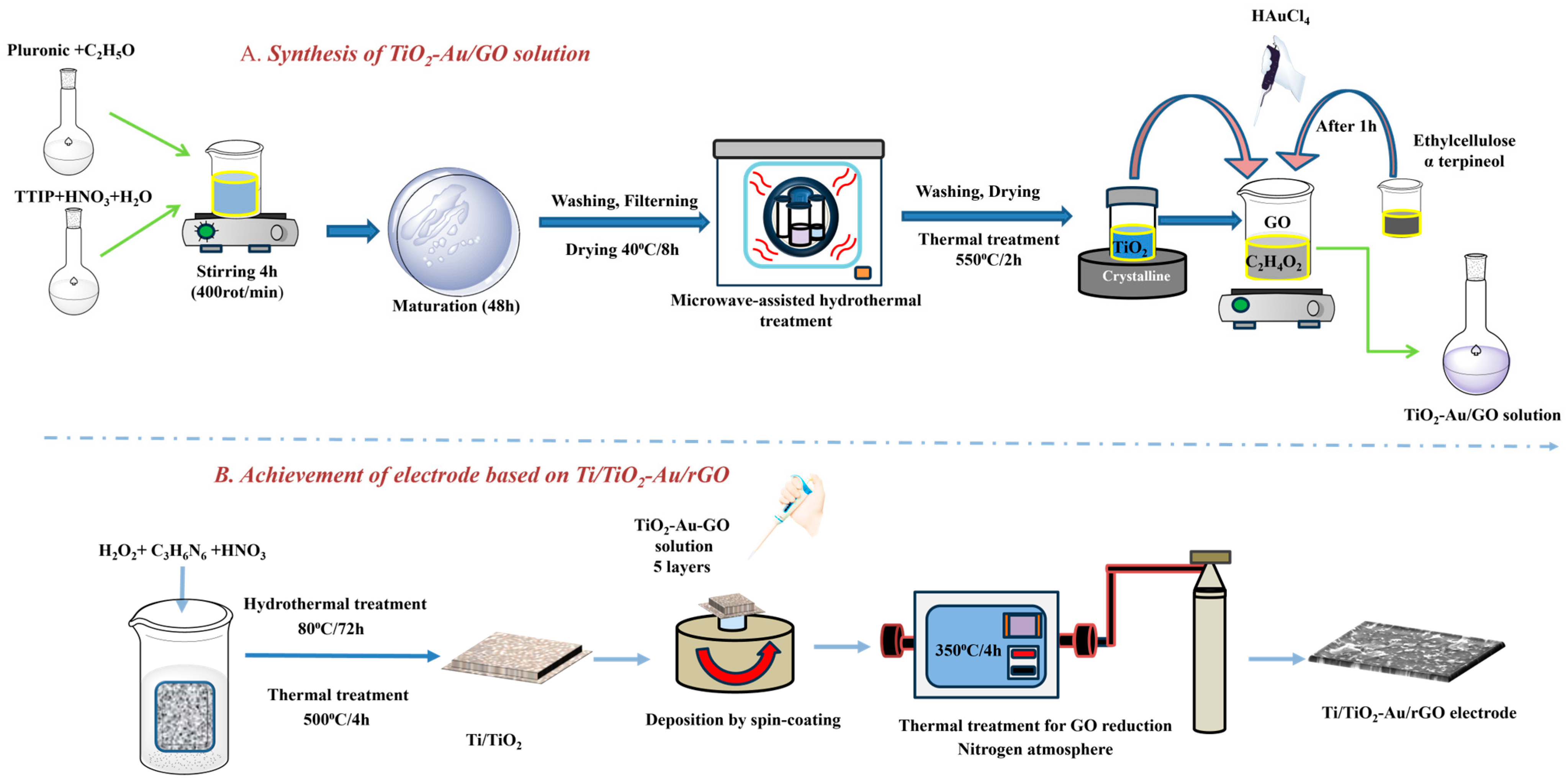
The electrodes based on the Ti/TiO2-Au/rGO composite structure were obtained in two main stages as described in Figure 1.
A. 
Synthesis of TiO2-Au/GO solution: Firstly, the synthesis of TiO2 material was achieved, which serves as the main matrix of the TiO2-Au/GO composite material. In this way, to control the consistency and architecture of the porous TiO2, two precursor solutions were synthesized: solution 1–30 g of Pluronic dissolved in 30 mL of distilled water under continuous stirring at a temperature of 40 °C for 3 h. This step allowed the formation of a homogeneous solution and activated the surfactants, which are essential for particle stabilization and obtaining a uniform nanoporous structure; solution 2—mixing of 10 mL TTIP with distilled water under constant stirring for 60 min, and the adjustment of pH to 2 with HNO3 to control the hydrolysis and condensation of TTIP and to prevent the formation of undesired aggregates. After that, the solutions 1 and 2 were mixed under continuous stirring and matured for 24 h, to facilitate the complete interaction between the TiO2 precursors, ensuring the formation of a coherent network and stabilization of particles in a homogeneous dispersion. Following sol maturation, the amorphous TiO2 powder was transferred into a quartz autoclave with a 50% fullness degree, together with a mixed solution of 15 mL of ethanol and 25 mL of distilled water, in a microwave-assisted hydrothermal system (Anton Paar Multiwave 3000 Microwave Digestion Oven, Graz, Austria, Europe) at 180 °C for 2 h. After the treatment, the powder was thoroughly washed with distilled water, dried at 60 °C for 5 h, and subsequently calcined at 550 °C for 2 h to obtain crystalline TiO2.
Finally, the TiO2-Au/GO solution was prepared by dispersing crystalline TiO2 into a 4 mL GO solution, followed by the addition of 10 drops of HAuCl4 under continuous stirring for 1 h. Subsequently, ethyl cellulose and α-terpineol were added to the resulting mixture, serving as stabilizing and binding agents to facilitate uniform dispersion on the electrode support.
B. 
Achievement of the electrode based on Ti/TiO2-Au/rGO: The Ti/TiO2 electrode support was prepared by etching a titanium foil (1 × 1.2 cm2, thickness 0.20 mm) in a mixed H2O2–C3H6N6–HNO3 solution, as previously reported in our work [25]. By using the spin-coating technique (WS-400-6NPPB Spin Coater, Laurell Technology Corporation, Lansdale, PA, USA), the TiO2-Au/GO solution was deposited onto the Ti/TiO2 support at 1800 rpm for 15 s, repeated for five cycles on each side of the Ti/TiO2 electrode. After each deposited layer, the electrodes were dried at 60 °C for 30 min and finally treated at 350 °C for 3 h in a tube furnace (GSL-1100X Tube Furnace Vacuum System, MTI Corporation, Richmond, CA, USA) under a controlled N2 flow using 80 mL min−1. The heat treatment improves the adhesion of the composite on the Ti/TiO2 support and, at the same time, facilitates the reduction in GO to rGO.

2.3. Characterization Methods

The morphological investigation was investigated by a scanning electron microscope (SEM), using the FEI Inspect S PANalytical model (Eindhoven, The Netherlands), coupled with the energy dispersive X-ray analysis detector (EDX) for elemental analysis. For the structural analysis, the composite structures were analyzed using X-ray diffraction (XRD, PANalytical X’Pert PRO MPD Diffractometer, Almelo, The Netherlands) with Cu-Kα radiation in the range 2theta = 20–60°, and Raman analysis with a Nanonics Imaging (Jerusalem, Israel)—MultiProbe Imaging—MultiView 1000™Platform (SPM) equipped with a 532 nm laser for vibrational states identification. An Autolab potentiostat/galvanostat (PGSTAT 302 Metrohm Autolab B.V., Utrecht, The Netherlands) controlled with GPES 4.9 software using a three-electrode cell system in 1 M KNO3 solution was used for electrochemical measurements, where Ti/TiO2/rGO and Ti/TiO2-Au/rGO acted as a working electrode, Ag/AgCl served as the reference electrode and a platinum plate acted as the counter electrode.

3. Results and Discussion

3.1. Morpho-Structural and Electrochemical Characterization

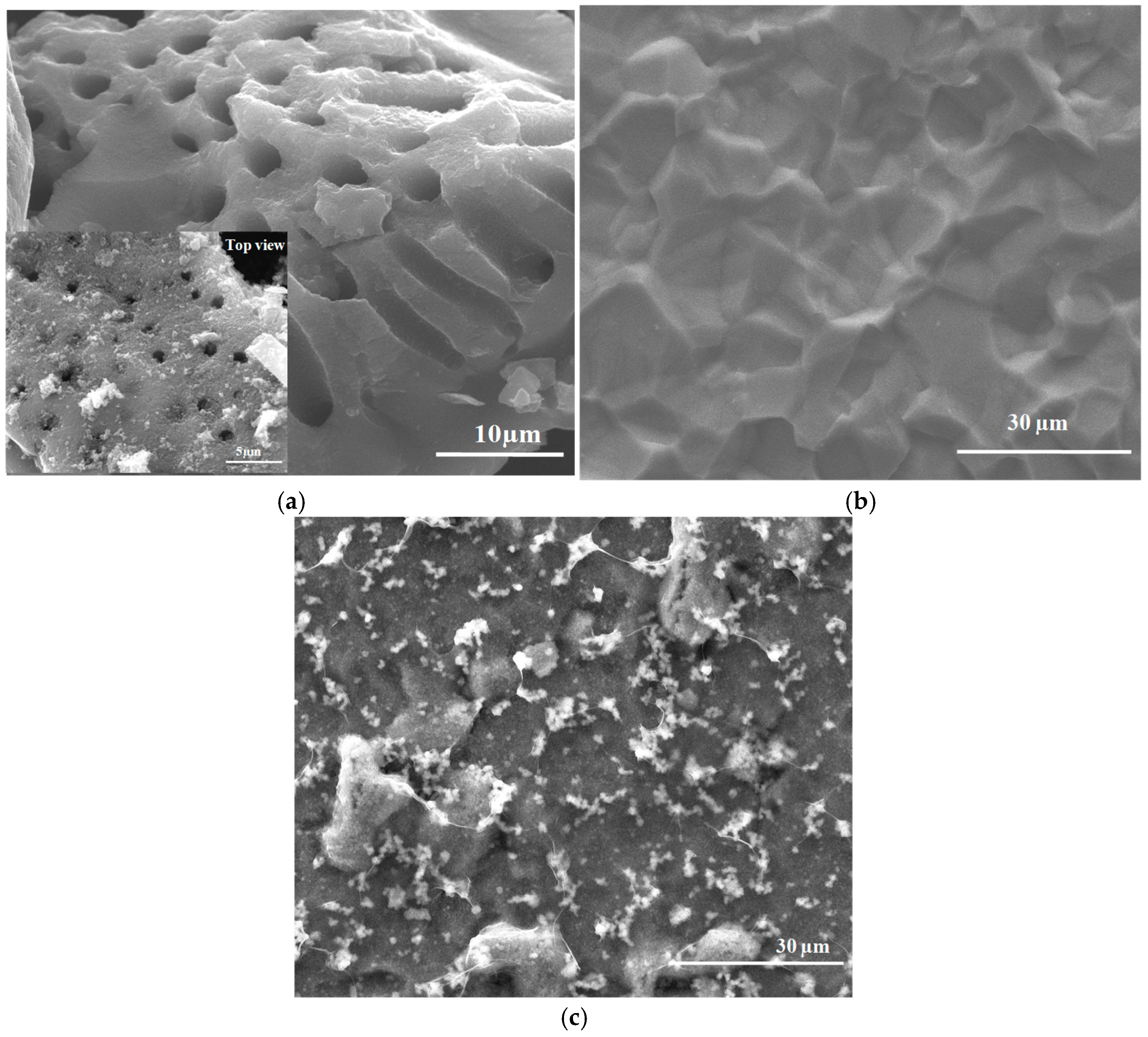
Figure 2 shows the SEM morphologies and EDX analysis for the as-obtained materials. As presented in Figure 2a, the morphological analysis shows that the obtained titanium dioxide has a monolithic structure, with pores uniformly distributed over the entire surface, this aspect being characteristic of porous materials. This structure was obtained, most likely, due to the link between the hydrothermal treatment and the presence of the Pluronic surfactant in the synthesis medium. It is well known that surfactants can act as molecular templates around which ordered structures are formed [27]. In the present case, it is possible that the surfactant, due to the hydrothermal conditions, was partially or completely removed and led to the formation of pores and the monolithic structure. The Ti/TiO2 support after the etching process shows the complete removal of the passivation layer, illustrated in Figure 2b [26]. Moreover, the deposited layer of TiO2-Au/rGO on the Ti/TiO2 support has a uniform distribution, is crack-free, and covers the entire surface of the support (Figure 2c). The elemental analysis performed by EDX analysis together with EDX mapping confirms the purity of both as-obtained electrodes, with specific elements such as Ti, O, Au and C, presented in Supplementary Material as Figure S1.
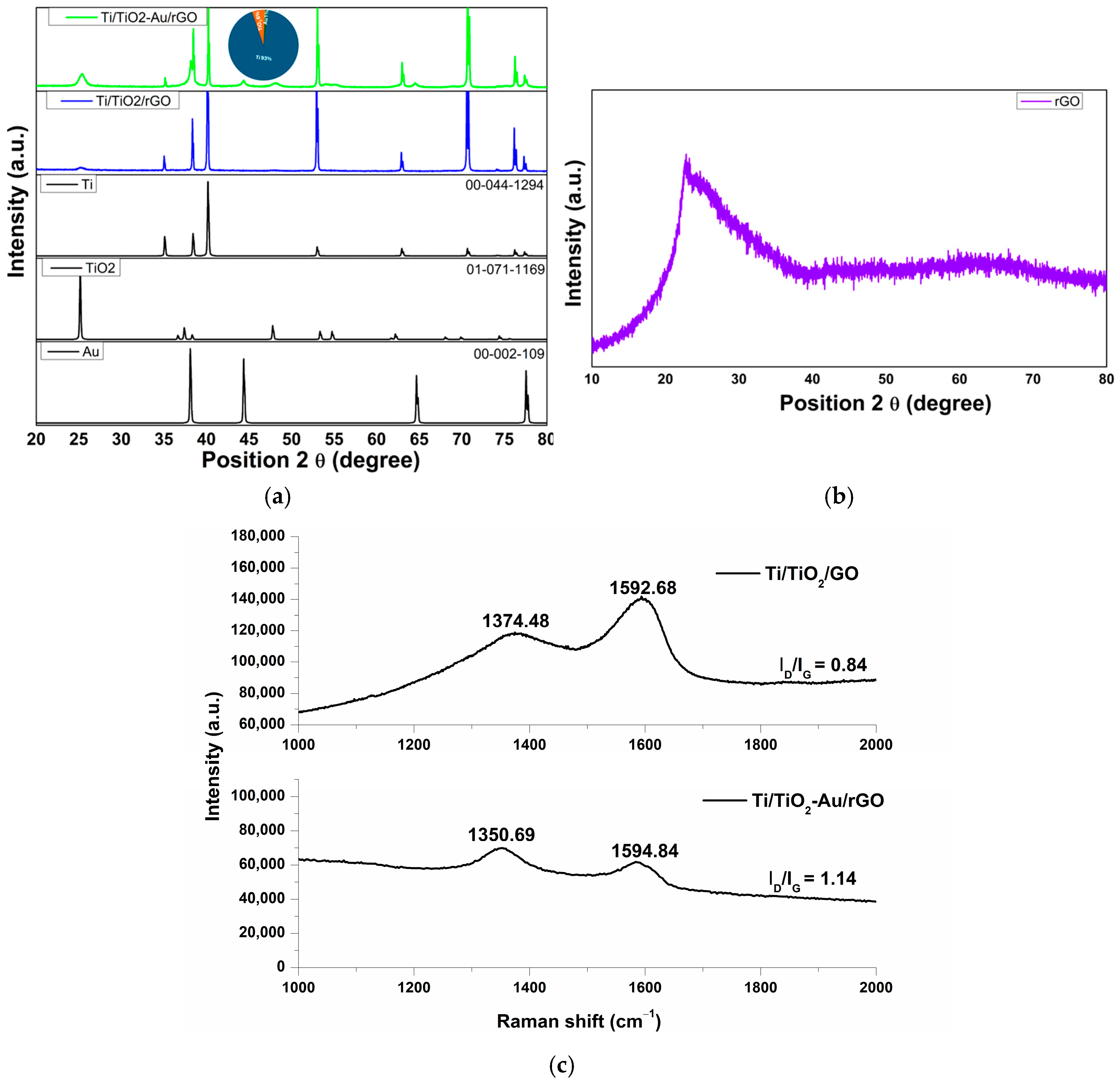
The X-ray patterns for the structural analysis of the tested electrochemical electrodes based on Ti/TiO2/rGO and Ti/TiO2–Au/rGO are presented in Figure 3a. The XRD spectra confirmed that nanostructured TiO2 is present on the Ti support electrodes (JCPDS No. 00-044-1294), with a characteristic peak at 2theta = 25.4°, corresponding to the most intense (101) plane for both electrodes. Furthermore, to enhance the properties of the electrodes, the functionalization with Au ions was achievedand the as-obtained TiO2-Au/GO solution was deposited on the Ti/TiO2 support. The XRD pattern of the Ti/TiO2–Au/rGO sample shows strong peaks at 2theta values of 38.1°, 44.3°, 64.7°, and 74.5°, which correspond to the (111), (200), (220), and (311) crystal planes of gold (JCPDS No. 00-002-109). The inset of Figure 3a presents the quantitative ratio of TiO2:Au particles, indicating a 6:1 ratio. The average crystallite size was also calculated using the Scherrer formula [28] and was estimated to be 9.3 nm for TiO2 and 29.7 nm for Au particles. For both electrodes a thin film of rGO was deposited, but the characteristic peak of rGO appears approximately at the same 2theta position as anatase TiO2, making it difficult to distinguish. Therefore, Figure 3b separately presents the spectra for rGO pure, showing a peak at 2theta corresponding to the (002) diffraction plane, which confirms the reduction in GO to rGO. To evaluate the vibrational states of the samples, Raman analysis was performed for the electrodes based on composite structures from 1000 to 2000 cm−1, as presented in Figure 3c. The peak at 1350.69 cm−1, known as the D band (structural defect), and the second peak at 1594.84 cm−1, the G band (graphitized structure), were observed for Ti/TiO2-Au/rGO with an ID/IG ratio 1.14 higher than the ID/IG ratio of Ti/TiO2/GO, about 0.84 which indicates the reduction in GO into rGO in the synthesis conditions.
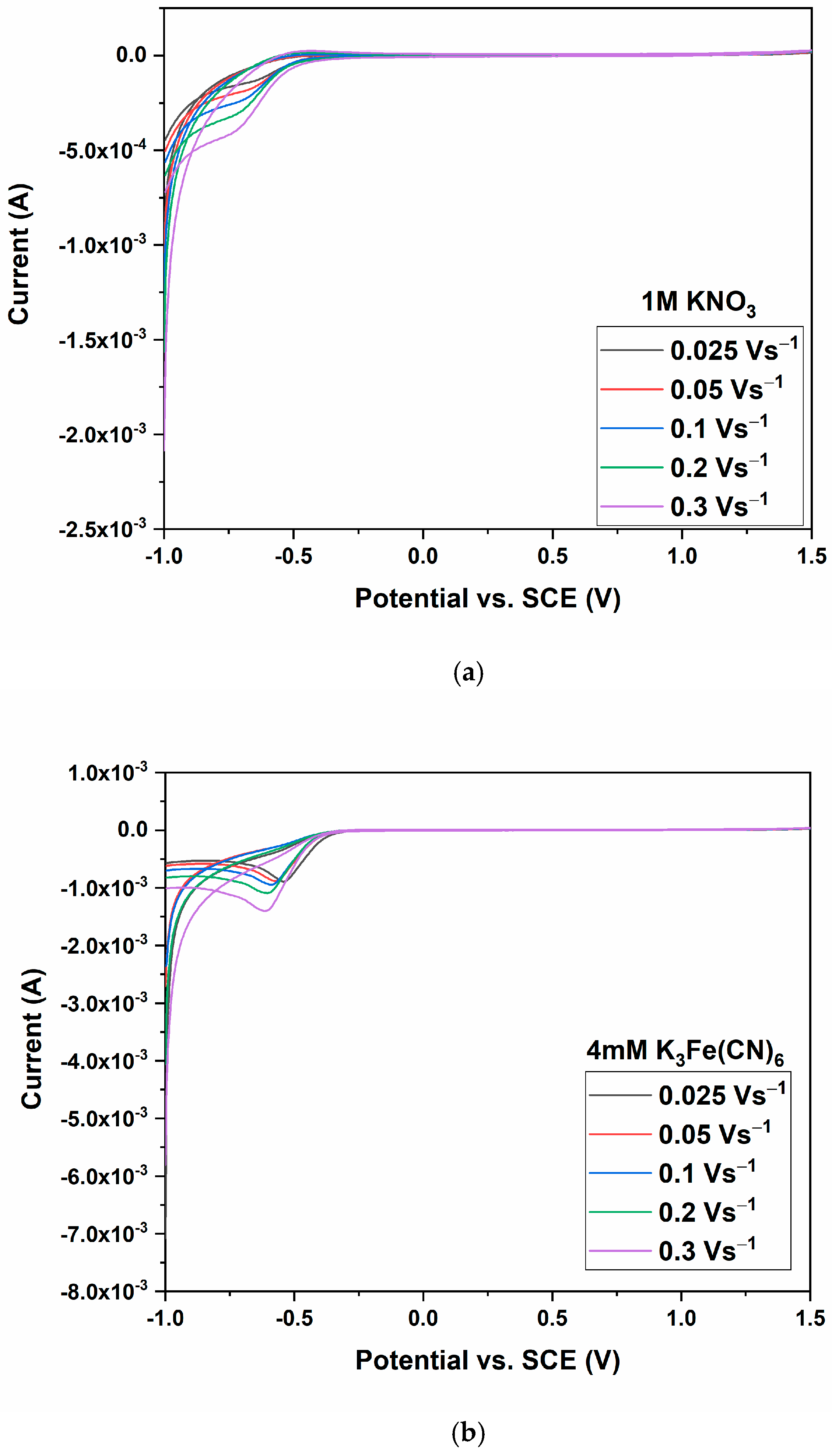
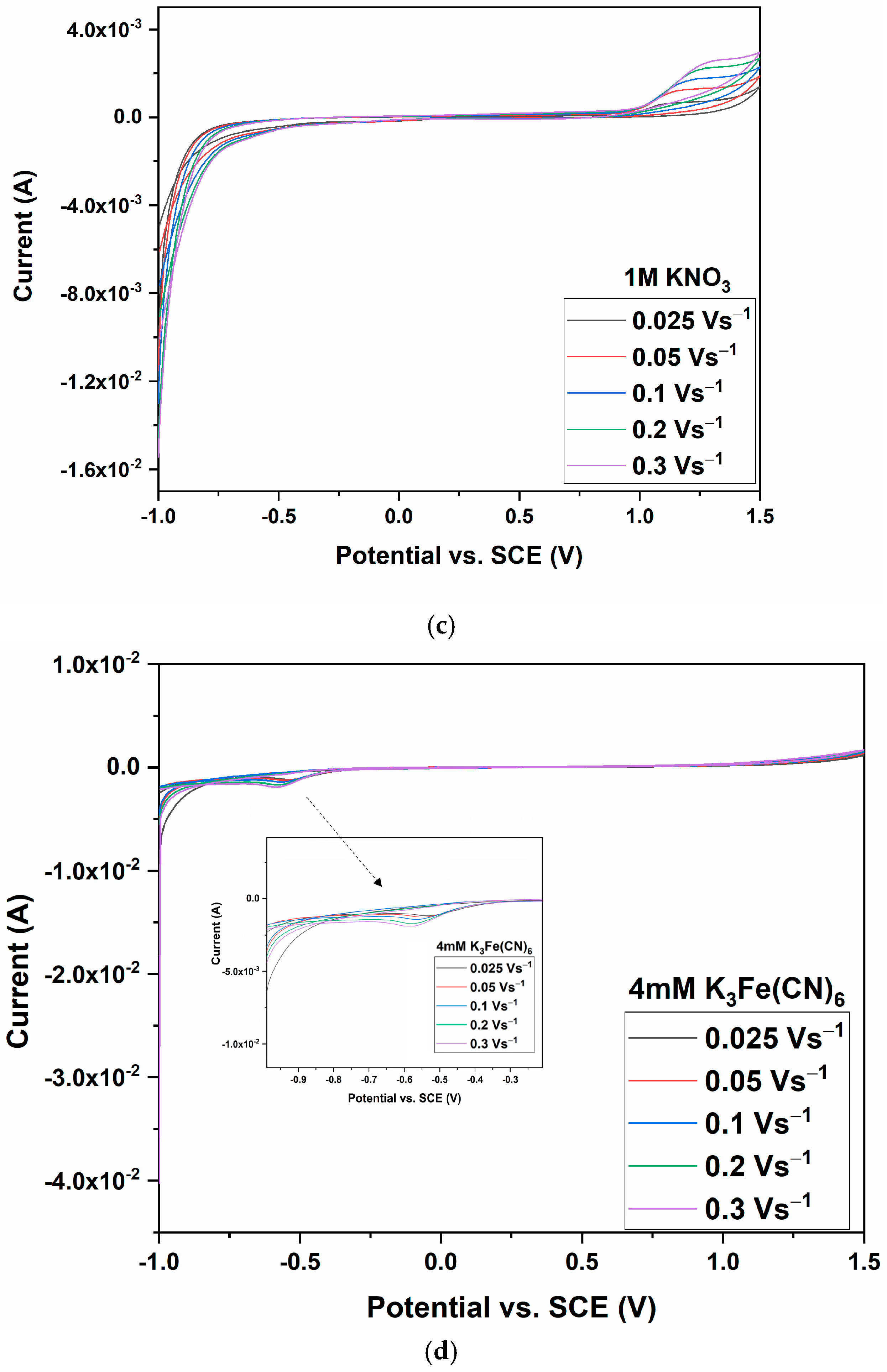
The as-synthesized electrodes based on composite structures were electrochemically characterized using the cyclic voltammetry method in the presence of 4 mM ferro/ferricyanide K3Fe(CN)6 3H2O redox couple as an electrochemical model of a reversible redox system. Figure 4 presents the cyclic voltammograms of 1 M KNO3 supporting electrolyte in the presence of 4 mM K3Fe(CN)6 recorded for the tested Ti/TiO2/rGO and Ti/TiO2-Au/rGO at an increasing potential scan rate from 0.025 to 0.3 V s−1.
The electroactive surface area and the apparent diffusion coefficient of the Ti/TiO2/rGO and Ti/TiO2-Au/rGO hybrid electrode were calculated based on the Randles–Sevcik Equation (1).
Ip = 2.69 × 10⁵AD1/2n3/2v1/2C
where A represents the geometric surface area of the sensor—0.7 cm2; n represents the number of participating electrons in the reaction, equal to 1; D represents the diffusion coefficient of the molecules in solution (cm2 s−1); C is the molar concentration of K3Fe(CN)6 in the solution (i.e., 4 mM); and v represents the scanning speed (V s−1).
In comparison with the theoretical diffusion coefficient value of 6.7 × 10⁻⁶ cm2 s−1 reported by Konopka et al. [29], in our case, the as-developed electrodes based on composite structures exhibited a diffusion coefficient of about 4.98 × 10⁻⁶ cm2 s−1 for Ti/TiO2/rGO and higher of about 5.07 × 10⁻⁵ cm2 s−1 for the Ti/TiO2-Au/rGO electrode. The increase in peak current shows an improvement of the electroactive surface area for the Ti/TiO2-Au/rGO electrode compared to Ti/TiO2/rGO, which also improves the electron transfer kinetics.

3.2. Testing of the Ti/TiO2-Au/rGO Electrode for Detection of Doxorubicin Pollutant

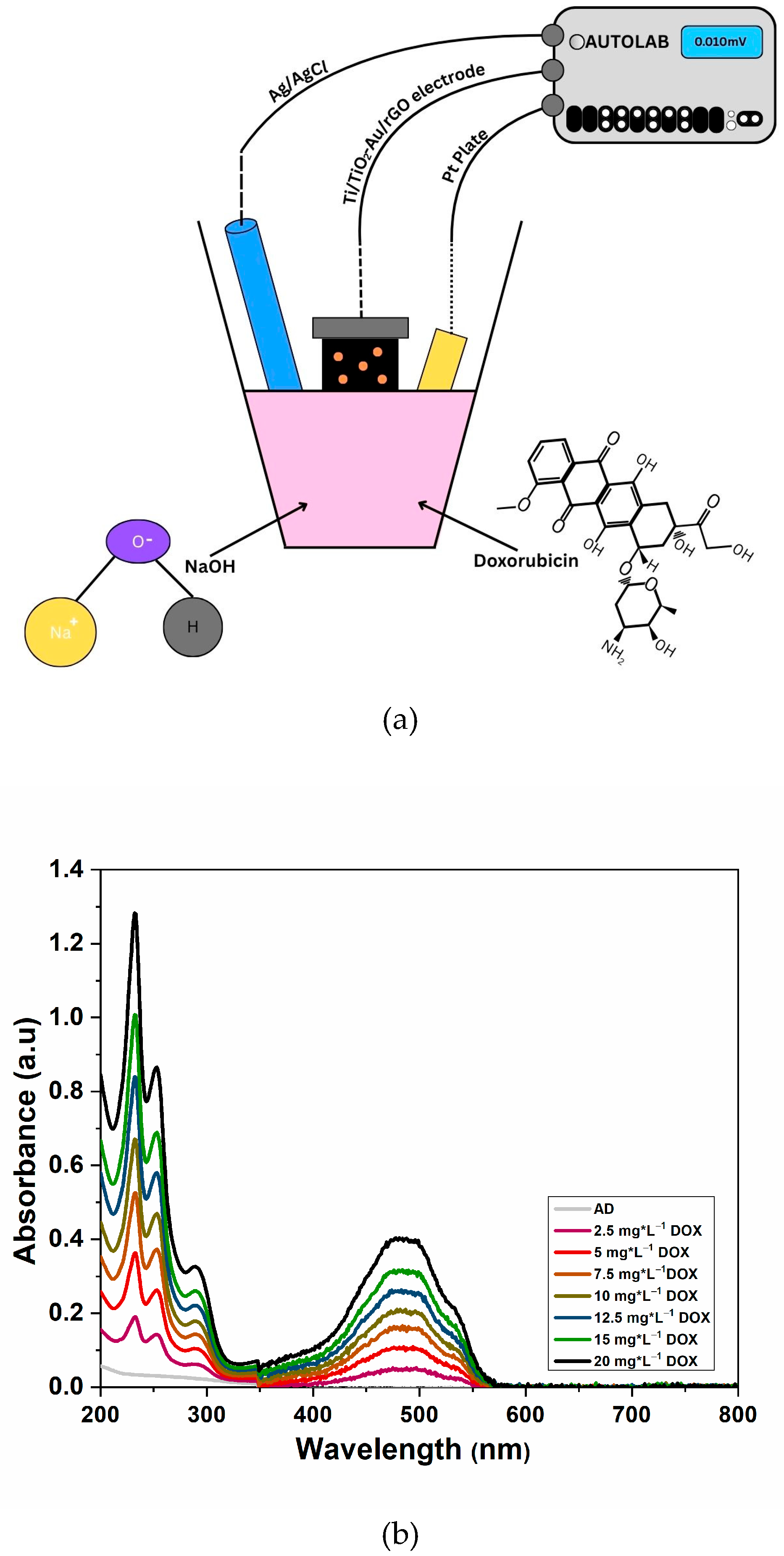
In order to test the electrodes based on Ti/TiO2/rGO and Ti/TiO2-Au/rGO composite structures with an effective surface of 0.5 × 0.7 cm2, Figure 5a illustrates a home-made undivided cell of 1 dm3 capacity containing 0.1 M NaOH supporting electrolyte and different concentrations of DOX pollutant, at room temperature without pH correction. Moreover, the UV-VIS spectra for the DOX compound were investigated (Figure 5b) to confirm the standard concentrations, the absorbance peaks at A232, A253, A290, and A486 nm being recorded by using different concentrations of 2.5, 5, 7.5, 10, 12.5, 15, and 20 mg L−1 DOX.
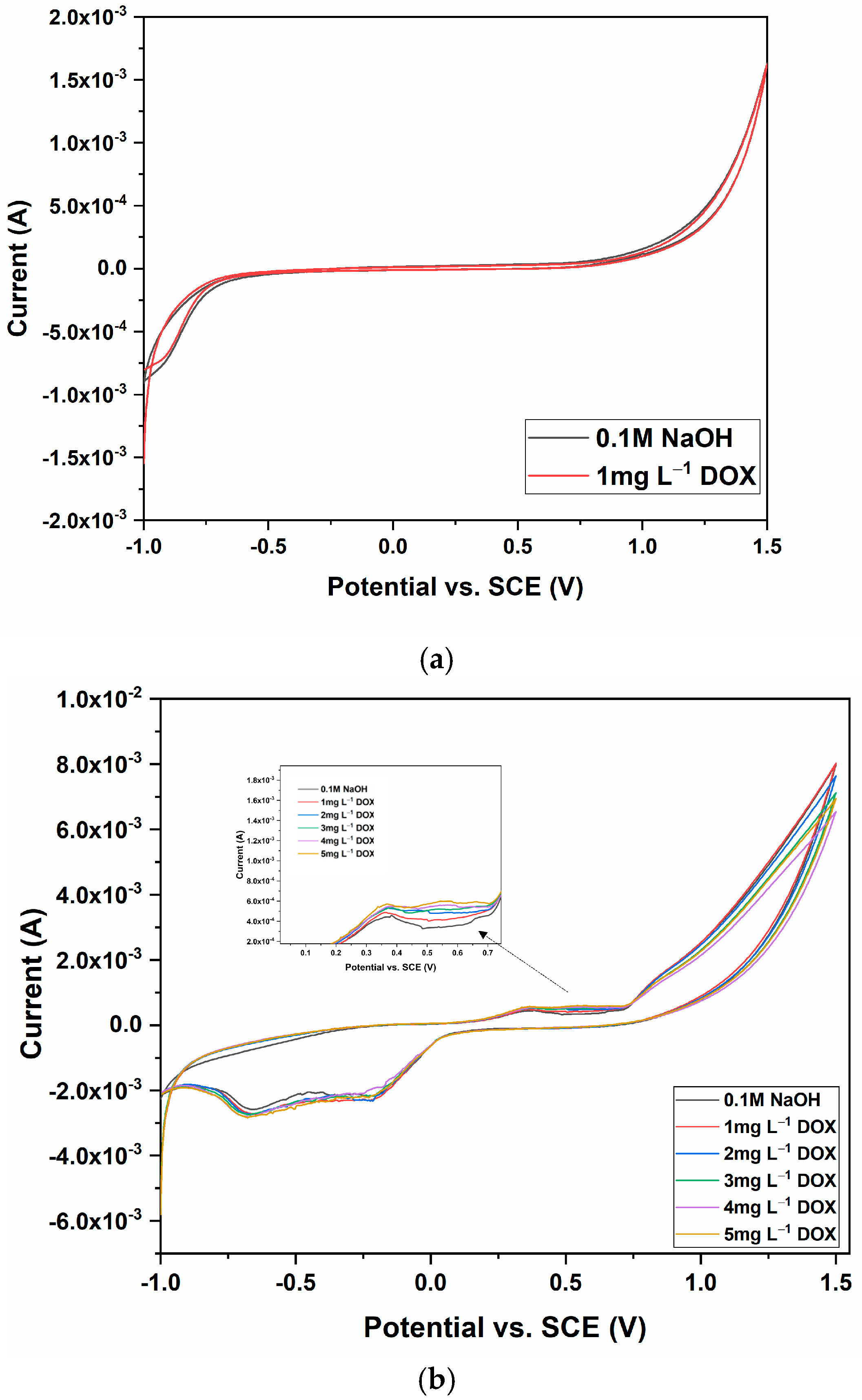
The electrochemical behavior of the Ti/TiO2/rGO and Ti/TiO2-Au/rGO electrodes was evaluated using cyclic voltammetry at a potential window range from −1.0 V to 1.5 V in the presence of 0.1 M NaOH as supporting electrolyte, as presented in Figure 6. The stabilization rate was achieved through multiple scans at a scan rate of 0.05 Vs−1. As presented in Figure 6a, the electrode based on Ti/TiO2/rGO did not respond in the presence of DOX contaminant; instead, in the case of the Ti/TiO2-Au/rGO electrode, the DOX concentration was detected up to 5 mg L−1 (Figure 6b). These aspects confirm to us the improvement of the electrode by functionalization of the composite structure with gold ions. Also, the presence of the TiO2-Au/rGO composite structure is evidenced by the increased background current, which reflects the enhanced electroactive surface area and improved electron transfer kinetics. These effects were observed during the electrochemical investigation of doxorubicin, indicating that the Ti/TiO2-Au/rGO electrode contributes to improved sensing performance for this compound.
To evaluate the resistance of the electrodes, electrochemical impedance spectroscopy (EIS) measurements were performed over a frequency range of 0.1–10,000 Hz by applying an AC voltage with an amplitude of 10 mV. The modified Randles equivalent circuit and the corresponding resistance values for both electrodes are presented in the Supplementary Materials as Figure S2a,b. The supporting electrolyte used for the EIS measurements was 0.1 M NaOH, in accordance with the conditions employed for the electrochemical testing of the as-developed electrodes. The series resistance (Rs) was found to be approximately 19.5 Ω for both electrodes, Ti/TiO2/rGO and Ti/TiO2-Au/rGO, confirming consistent experimental conditions and similar electrolyte conductivity. A reduction in charge-transfer resistance (Rct) was observed, decreasing from 620 Ω for the Ti/TiO2/rGO electrode to 430 Ω for the Ti/TiO2–Au/rGO electrode. This decline indicates that the presence of gold ions effectively enhances electron transfer kinetics at the electrode–electrolyte interface. These results are consistent with other studies on TiO2 decorated with noble metal oxides [30] and further demonstrate an improvement compared to our previous study [25]. Moreover, based on the obtained results, the electrode based on Ti/TiO2-Au/rGO structure shows enhanced properties and opens new perspectives for possible application in electrooxidation processes for the removal of doxorubicin pollutant, and other possible emerging compounds from water.

4. Conclusions

Within this study, a composite structure based on Ti/TiO2-Au/rGO for the development of a functional electrode was successfully synthesized in several steps. Firstly, TiO2 crystalline was obtained in microwave-assisted hydrothermal conditions using two precursor solutions. In the second stage, a TiO2-Au/GO solution was obtained, followed by a spin-coating deposition on the Ti/TiO2 support. The structural analysis achieved by XRD spectra exhibited only the anatase phase for TiO2 crystalline, and the reduction in GO to rGO is confirmed by the presence of an intensity peak 2theta = 20–30° corresponding to the (002) plane, and also by the Raman spectroscopy by the ratio ID/IG peaks of about 1.14. The elemental analysis shows the presence of Ti, Au and O elements, evidencing the purity of the as-synthesized materials. The C element is not present due to the carbon tape used in SEM measurements. The SEM morphologies indicate that the surface of the titanium support was corroded completely, and the deposition of rGO on the electrode surface was uniform. EDX spectra together with elemental mapping confirm the purity of the as-obtained electrodes. Moreover, the electrochemical characterization confirms the stability of the as-developed electrodes in the presence of 4 mM ferro/ferricyanide K3Fe(CN)6 3H2O, and the results for the detection of doxorubicin pollutant by using Ti/TiO2-Au/rGO were very promising for further applications. The modified equivalent circuit and the corresponding resistance values for both electrodes are presented, and a decrease in the resistance can be observed from 620 Ω for Ti/TiO2/rGO to 430 Ω for Ti/TiO2–Au/rGO electrodes. Moreover, based on the morphological, structural and electrochemical results, these electrodes based on Ti/TiO2-Au/rGO composite structure could open new perspectives for the detection of other emergent pollutants for water.

Supplementary Materials

The following supporting information can be downloaded at: https://www.mdpi.com/article/10.3390/cryst16050338/s1. Figure S1: Elemental identification by EDX analysis together with elemental mapping for Ti/TiO2/rGO (a,b) and Ti/TiO2-Au/rGO (c,d); Figure S2. Equivalent circuit fitting of Ti/TiO2/rGO (a) and Ti/TiO2-Au/rGO electrodes (b).

Author Contributions

M.N. and C.B.—conceptualization; M.N., M.-I.M., C.B. and C.L.—methodology; C.L. and C.B.—validation; C.O., M.N. and M.-I.M.—investigation; M.N., C.L. and C.B.—writing—original draft preparation; M.N., C.L. and C.B.—writing—review and editing; M.N. and C.B.—visualization; M.N. and C.B.—supervision. All authors have read and agreed to the published version of the manuscript.

Funding

The authors acknowledge the support of the project granted by the Ministry of Research, Innovation and Digitization, CNCS-UEFISCDI, project number PN-IV-P8-8.3-ROMD-2023-0227 within PNCDI IV and partially project number PN 23 27 01 02 INOMAT, 23-27 29N/2023.

Data Availability Statement

The original contributions presented in this study are included in the article. Further inquiries can be directed to the corresponding author.

Conflicts of Interest

The authors declare no conflicts of interest.

References

  1. Chung, D.D.L. Composite materials for electrochemical applications. In Composite Materials: Functional Materials for Modern Technologies; Chung, D.D.L., Ed.; Springer: London, UK, 2003; pp. 213–232. [Google Scholar]
  2. Musolino, M.G. Advances in Nanostructured Electrode Materials: Design and Applications. Nanomaterials 2025, 15, 1638. [Google Scholar] [CrossRef] [PubMed]
  3. Mello, G.A.; Benjamin, S.R.; de Lima, F.; Dutra, R.F. Recent Advances in Electrochemical Sensors for the Detection of Anti-Inflammatory and Antibiotic Drugs: A Comprehensive Review. Biosensors 2025, 15, 676. [Google Scholar] [CrossRef] [PubMed]
  4. Bandas, C.; Orha, C.; Nicolaescu, M.; Morariu, M.-I.; Lăzău, C. 2D and 3D Nanostructured Metal Oxide Composites as Promising Materials for Electrochemical Energy Storage Techniques: Synthesis Methods and Properties. Int. J. Mol. Sci. 2024, 25, 12521. [Google Scholar] [CrossRef]
  5. Periyasamy, T.; Asrafali, S.P.; Lee, J. Emerging Electrode Materials for Next-Generation Electrochemical Devices: A Comprehensive Review. Micromachines 2026, 17, 106. [Google Scholar] [CrossRef] [PubMed]
  6. Anwer, A.H.; Ansari, M.Z.; Mashkoor, F.; Zhu, S.; Shoeb, M.; Jeong, C. Synergistic effect of carbon nanotube and tri-metallic MOF nanoarchitecture for electrochemical high-performance asymmetric supercapacitor applications and their charge storage mechanism. J. Alloys Compd. 2023, 955, 170038. [Google Scholar] [CrossRef]
  7. Zhang, W.; Li, X.; Ding, X.; Hua, K.; Sun, A.; Hu, X.; Nie, Z.; Zhang, Y.; Wang, J.; Li, R.; et al. Progress and opportunities for metal–organic framework composites in electrochemical sensors. RSC Adv. 2023, 13, 10800–10817. [Google Scholar] [CrossRef]
  8. Sarathchandran, C.; Thomas, S.; Ilangovan, S.A. Chapter 1—Introduction to carbon. In Handbook of Carbon-Based Nanomaterials; Thomas, S., Sarathchandran, C., Ilangovan, S.A., Moreno-Piraján, J.C., Eds.; Elsevier: Amsterdam, The Netherlands, 2021; pp. 1–17. [Google Scholar]
  9. Pasindu, V.; Yapa, P.; Dabare, S.; Munaweera, I. Multifunctional transition metal oxide/graphene oxide nanocomposites for catalytic dye degradation, renewable energy, and energy storage applications. RSC Adv. 2025, 15, 33162–33186. [Google Scholar] [CrossRef]
  10. Bhattacharyya, A.S. Conducting polymers in biosensing: A review. Chem. Phys. Impact 2024, 8, 100642. [Google Scholar] [CrossRef]
  11. Nakata, K.; Fujishima, A. TiO2 photocatalysis: Design and applications. J. Photochem. Photobiol. C Photochem. Rev. 2012, 13, 169–189. [Google Scholar] [CrossRef]
  12. Etafa Tasisa, Y.; Kumar Sarma, T.; Krishnaraj, R.; Sarma, S. Band gap engineering of titanium dioxide (TiO2) nanoparticles prepared via green route and its visible light driven for environmental remediation. Results Chem. 2024, 11, 101850. [Google Scholar] [CrossRef]
  13. Parveen, N.; Ansari, S.A.; Alnahdi, K.M.; Hammud, H.H.; Aljamhi, W.A.; Alam, M.W.; Adil, S.F.; Al Zoubi, W. Eco-friendly synthesis and applications of graphene-titanium dioxide nanocomposites for pollutant degradation and energy storage. J. Photochem. Photobiol. A Chem. 2025, 459, 116096. [Google Scholar] [CrossRef]
  14. Gupta, B.; Melvin, A.A. TiO2/RGO composites: Its achievement and factors involved in hydrogen production. Renew. Sustain. Energy Rev. 2017, 76, 1384–1392. [Google Scholar] [CrossRef]
  15. Prabhu, S.; Cindrella, L.; Joong Kwon, O.; Mohanraju, K. Superhydrophilic and self-cleaning rGO-TiO2 composite coatings for indoor and outdoor photovoltaic applications. Sol. Energy Mater. Sol. Cells 2017, 169, 304–312. [Google Scholar] [CrossRef]
  16. Khorsand Zak, A.; Hashim, A.M.; Esmaeilzadeh, J. Graphene-based nanocomposites in photocatalysis: Emerging architectures, mechanistic insights, and future frontiers. Appl. Water Sci. 2026, 16, 56. [Google Scholar] [CrossRef]
  17. Salagare, S.; Shivappa Adarakatti, P.; B P, S.; Venkataramanappa, Y. A Selective Electrochemical Sensor Based on Titanium Dioxide-Reduced Graphene Oxide Nanocomposite (TiO2- RGO/GCE) for the Efficient Determination of Nitrite. Mater. Res. Innov. 2023, 27, 33–44. [Google Scholar] [CrossRef]
  18. Sagadevan, S.; Lett, J.A.; Weldegebrieal, G.K.; ud Dowla Biswas, M.R.; Oh, W.C.; Alshahateet, S.F.; Fatimah, I.; Mohammad, F.; Al-Lohedan, H.A.; Paiman, S.; et al. Enhanced gas sensing and photocatalytic activity of reduced graphene oxide loaded TiO2 nanoparticles. Chem. Phys. Lett. 2021, 780, 138897. [Google Scholar] [CrossRef]
  19. Vidhi; Sadiq, M.; Singh, A.K.; Thakur, O.P. Synthesis of rGO/TiO2 composite electrode material for enhanced electrochemical activity and its applications in supercapacitors. Ionics 2024, 30, 5685–5697. [Google Scholar] [CrossRef]
  20. Ruidíaz-Martínez, M.; Álvarez, M.A.; López-Ramón, M.V.; Cruz-Quesada, G.; Rivera-Utrilla, J.; Sánchez-Polo, M. Hydrothermal Synthesis of rGO-TiO2 Composites as High-Performance UV Photocatalysts for Ethylparaben Degradation. Catalysts 2020, 10, 520. [Google Scholar] [CrossRef]
  21. Zou, W.; Wu, C.; Zhao, W. Humidity-Sensing Performance of TiO2/RGO and α-Fe2O3/RGO Composites. Sensors 2025, 25, 691. [Google Scholar] [CrossRef]
  22. Lu, X.-Y.; Li, J.; Kong, F.-Y.; Wei, M.-J.; Zhang, P.; Li, Y.; Fang, H.-L.; Wang, W. Improved Performance for the Electrochemical Sensing of Acyclovir by Using the rGO–TiO2–Au Nanocomposite-Modified Electrode. Front. Chem. 2022, 10, 892919. [Google Scholar] [CrossRef]
  23. El-Bery, H.M.; Matsushita, Y.; Abdel-moneim, A. Fabrication of efficient TiO2-RGO heterojunction composites for hydrogen generation via water-splitting: Comparison between RGO, Au and Pt reduction sites. Appl. Surf. Sci. 2017, 423, 185–196. [Google Scholar] [CrossRef]
  24. Qu, L.-L.; Wang, N.; Zhu, G.; Yadav, T.P.; Shuai, X.; Bao, D.; Yang, G.; Li, D.; Li, H. Facile fabrication of ternary TiO2-gold nanoparticle-graphene oxide nanocomposites for recyclable surface enhanced Raman scattering. Talanta 2018, 186, 265–271. [Google Scholar] [CrossRef] [PubMed]
  25. Lazau, C.; Nicolaescu, M.; Orha, C.; Pop, A.; Căprărescu, S.; Bandas, C. In Situ Deposition of Reduced Graphene Oxide on Ti Foil by a Facile, Microwave-Assisted Hydrothermal Method. Coatings 2022, 12, 1805. [Google Scholar] [CrossRef]
  26. Morariu, M.-I.; Nicolaescu, M.; Orha, C.; Lăzău, C.; Duteanu, N.; Bandas, C. Heterostructure Based of Ti-TiO2(NW)/rGO Hybrid Materials for Electrochemical Applications. Inorganics 2025, 13, 31. [Google Scholar] [CrossRef]
  27. Calleja, G.; Serrano, D.P.; Sanz, R.; Pizarro, P.; García, A. Study on the synthesis of high-surface-area mesoporous TiO2 in the presence of nonionic surfactants. Ind. Eng. Chem. Res. 2004, 43, 2485–2492. [Google Scholar] [CrossRef]
  28. Scherrer, P. Bestimmung der Größe und der inneren Struktur von Kolloidteilchen mittels Röntgenstrahlen. Nachrichten Ges. Wiss. Göttingen Math.-Phys. Kl. 1918, 1, 96–100. [Google Scholar]
  29. Konopka, S.J.; McDuffie, B. Diffusion coefficients of ferri- and ferrocyanide ions in aqueous media, using twin-electrode thin-layer electrochemistry. Anal. Chem. 1970, 42, 1741–1746. [Google Scholar] [CrossRef]
  30. Mezni, A. Ternary hybrid Au@PteTiO2 nanocomposites: Highly thermally stable photocatalyst with highly efficient visible-light photocatalytic activity. J. Mater. Res. Technol. 2020, 9, 15263–15272. [Google Scholar] [CrossRef]
Figure 1. Schematic diagram of the synthesis process for the development of Ti/TiO2-Au/rGO electrodes.
Crystals 16 00338 g001
Figure 2. SEM morphologies of TiO2-Au nanocrystalline (a), Ti/TiO2 support (b) and Ti/TiO2-Au/rGO (c).
Crystals 16 00338 g002
Figure 3. X-ray spectra for composite structures (a) and pure rGO (b). Raman analysis of the as-developed electrodes (c).
Crystals 16 00338 g003
Figure 4. Cyclic voltammograms for the Ti/TiO2/rGO (a,b) and Ti/TiO2-Au/rGO (c,d) electrodes in 1 M KNO3 supporting electrolyte and in the presence of 4 mM K3Fe(CN)6.
Crystals 16 00338 g004aCrystals 16 00338 g004b
Figure 5. Testing cell for DOX detection by using 0.1 M NaOH supporting electrolyte (a); UV-VIS spectra for 2.5, 5, 7.5, 10, 12.5, 15, and 20 mg L−1 DOX (b).
Crystals 16 00338 g005
Figure 6. Cyclic voltammograms recorded in 0.1 M NaOH supporting electrolyte and in the presence of 1 to 5 mg L−1 DOX concentrations, at a scan rate of 50 mV s−1 by using Ti/TiO2/rGO (a) and Ti/TiO2-Au/rGO (b) electrodes.
Crystals 16 00338 g006
Disclaimer/Publisher’s Note: The statements, opinions and data contained in all publications are solely those of the individual author(s) and contributor(s) and not of MDPI and/or the editor(s). MDPI and/or the editor(s) disclaim responsibility for any injury to people or property resulting from any ideas, methods, instructions or products referred to in the content.