Article

Photorefraction and Optical Damage Resistance Enhancement in Uranium-Doped Lithium Niobate Crystals by Hafnium Co-Doping

1
Institute of Crystal Growth, School of Materials Science and Engineering, Shanghai Institute of Technology, Shanghai 201418, China
2
MOE Key Laboratory of Weak-Light Nonlinear Photonics, School of Physics and TEDA Institute of Applied Physics, Nankai University, Tianjin 300071, China
*
Authors to whom correspondence should be addressed.
Crystals 2026, 16(5), 303; https://doi.org/10.3390/cryst16050303
Submission received: 15 April 2026 / Revised: 26 April 2026 / Accepted: 29 April 2026 / Published: 2 May 2026
(This article belongs to the Special Issue Advances in Optoelectronic Materials)

Abstract

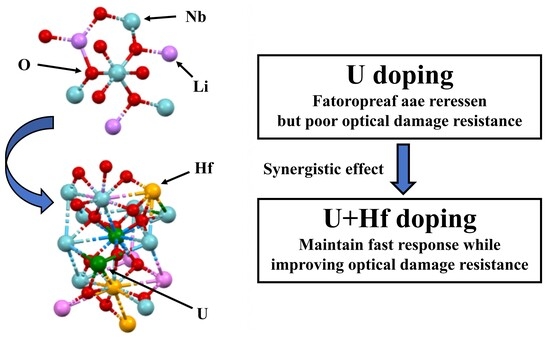
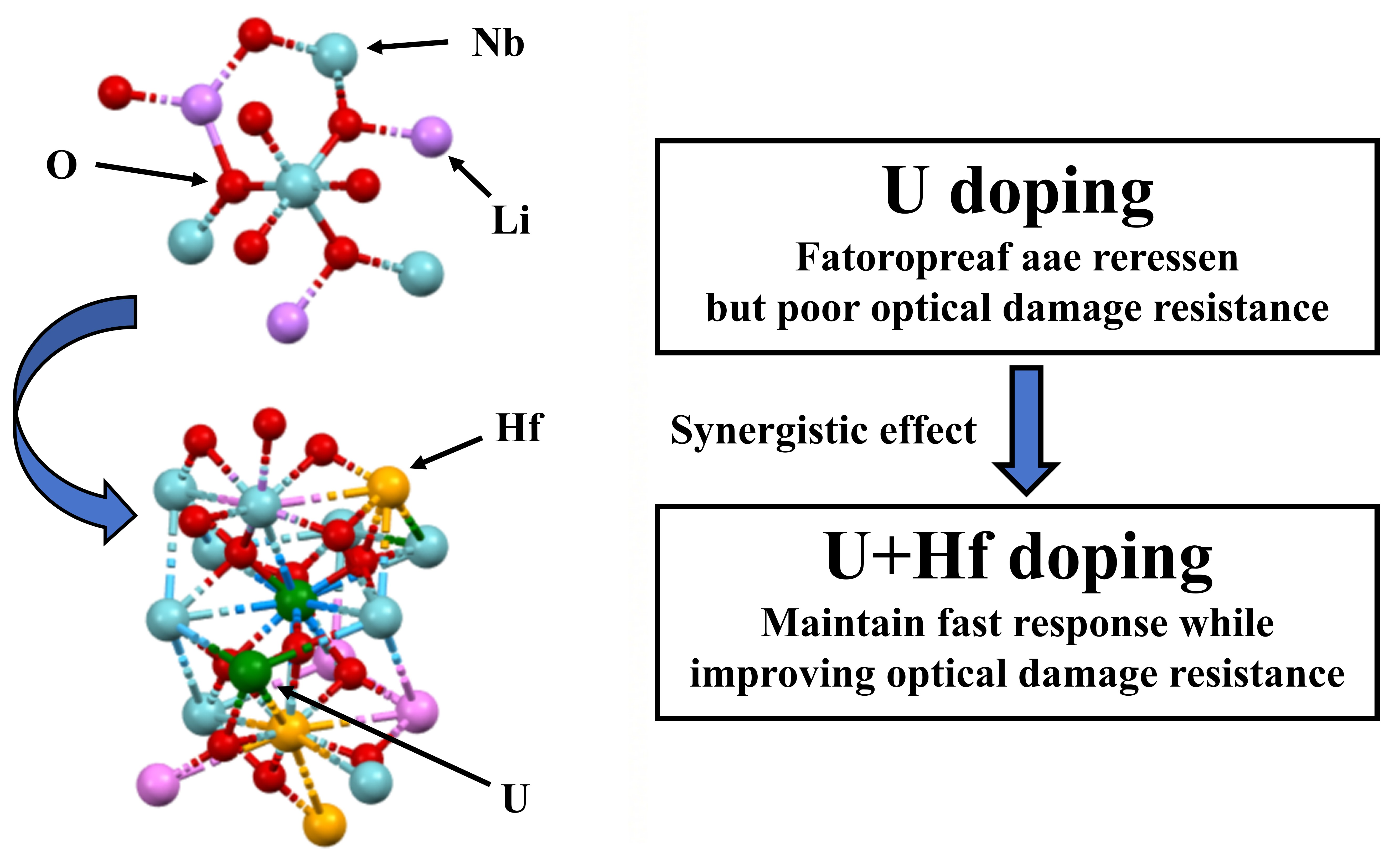
A series of Hf co-doped uranium-doped lithium niobate (LN:U,Hf) crystals with a diameter of one inch were grown by the modified Bridgman method. XPS analysis showed that U ions coexist in mixed valence states of U4+, U5+, and U6+. At 442 nm, LN:U,Hf1.0 exhibited a fast photorefractive response of 0.32 s together with a high saturation diffraction efficiency of 82.01%. With increasing Hf concentration, the optical damage resistance was significantly enhanced, and LN:U,Hf5.0 achieved an optical damage threshold of 2.8 × 10⁵ W/cm2. Two-beam coupling experiments indicated that electrons are the dominant charge carriers and diffusion is the main transport mechanism. It demonstrates that co-doping Hf4+ provides an effective route to simultaneously enhance photorefractive response and optical damage resistance in LN:U, offering potential for high-power and fast-response photonic devices.

Graphical Abstract

1. Introduction

Lithium niobate (LiNbO3, LN), widely recognized as the “silicon of photonics,” is a multifunctional crystal that combines excellent acousto-optic, electro-optic, piezoelectric, nonlinear-optical, and photorefractive properties [1,2,3,4]. Owing to this unique combination of physical properties, LN has long played an important role in nonlinear frequency conversion, electro-optic modulation, holographic storage, and integrated photonics [5,6,7,8]. With the rapid development of information-intensive technologies, such as artificial intelligence, lithium niobate on insulator (LNOI) has attracted growing attention as a promising platform for compact and high-speed optical information processing. The photorefractive (PR) effect discovered in the LN single crystal has recently been of great value in LN-based photonic devices. For example, a previous study has shown that LN micro resonators possess markedly fast PR response for dynamic device operation [9]. In addition, PR induced intracavity Bragg scattering has been observed in LN ring resonators, indicating that PR driven refractive-index modulation can directly alter cavity-mode coupling and device behavior [10]. It is well known that LN single crystals are the substrate materials for LNOI thin films. Therefore, controlling the PR properties of LN single crystals, particularly the response speed, is of practical significance for on-chip photonic devices.
Doping is one of the most effective strategies for tailoring the PR properties of LN, primarily through modulation of the defect structure. Early studies mainly focused on introducing low valence PR ions, such as Fe, Cu, Ce, and Mn, into the Li-site to adjust the PR characteristics. For example, LN: Fe exhibits a response time of 32 s at 488 nm, which is about four times faster than that of LN (178 s) while maintaining a high saturated diffraction efficiency of 65% [4]. However, the corresponding response time remained relatively long. In recent years, it has been shown that doping high valence PR ions, such as V and Mo, into the Nb-site can significantly enhance photorefraction in LN crystals [11,12,13]. For example, LN: Mo exhibited shortened response times of 5.5 s and 7 s at 488 nm and 532 nm, respectively, whereas the corresponding saturation diffraction efficiencies were 28.5% and 18.2% [13]. LN: V achieved a response time as short as 0.57 s in the visible region, yet the saturation diffraction efficiency was only 1.1% [11,12]. Recently, our group found that uranium (U) with high valence was a novel PR dopant [14]. LN: U possessed a fast response time of 1.98 s and a saturation diffraction efficiency of 67.15%.
For PR ions doped LN, co-doping optical damage resistant (ODR) ions is beneficial for enhancing PR response speed or improving its resistance to optical damage because they can get rid of intrinsic defects in LN [15,16,17,18,19,20]. In LN, ODR dopants mainly include divalent ions such as Mg2+, trivalent ions such as In3+, and tetravalent ions such as Hf4+ [21,22,23]. Following this strategy, our group introduced Mg2+ and In3+ into LN: U crystals. LN: U,Mg crystals exhibited an optical damage threshold of 2.36 × 10⁵ W/cm2 at 532 nm, but only maintained a response time comparable to that of LN: U [24]. LN: U,In crystals displayed a saturation diffraction efficiency similar to that of LN: U at 488 nm, but its response time was approximately twice as long [25]. These results indicate that divalent and trivalent ODR ions have not yet achieved the simultaneous enhancement of optical damage resistance and further acceleration of the response speed of LN: U. Therefore, it is necessary to further explore the role of tetravalent ODR ions in LN: U crystals.
Previous studies have shown that doping Hf4+ can markedly enhance optical damage resistance, reaching a level comparable to that of LN: Mg [23,26,27]. In addition, LN: Mo,Hf crystals show an optical damage threshold three orders of magnitude higher than that of LN: Mo, while maintaining fast response times in the visible range [28]. These findings indicate that co-doping Hf4+ may be an effective strategy for simultaneously improving PR properties and ODR in LN: U. In this work, a series of Hf4+ co-doped LN: U crystals were grown by the modified Bridgman method. The crystal growth, PR properties, and ODR were investigated.

2. Materials and Methods

2.1. Crystal Growth and Sample Preparation

When high valence photorefractive ions (such as U6+) are incorporated into the LN lattice, they preferentially occupy the Nb-site, leading to the formation of additional anti-site defects NbLi4+. To eliminate these defect centers, a sufficiently high concentration of ODR ions must be co-doped to compensate for the charge imbalance and reduce lattice disorder. Based on our previous work, the UO2 concentration was fixed at 0.6 mol% [14]. According to the lithium-vacancy model, the HfO2 concentration required for defect elimination can be estimated as follows. First, the intrinsic anti-site defects NbLi4+ in congruent CLN require approximately 1.28 mol% HfO2 for complete compensation [26,27]. Second, according to Equation (1), the incorporation of 0.6 mol% U ions is expected to introduce an additional ~3 mol% NbLi4+ anti-site defects. For the convenience of estimation, it is assumed here that all incorporated U ions are oxidized to U6+ to obtain the maximum estimated threshold concentration. According to Equation (2), the removal of these U-induced defects requires approximately 1.2 mol% HfO2. Therefore, it is calculated that an HfO2 concentration of approximately 2.48 mol% is required to eliminate all NbLi4+ anti-site defects in the LN: U system. Considering that the reported threshold concentration for mono-doped Hf4+ in LN is in the range of 2.0–4.0 mol% [26,27], the estimated threshold concentration of Hf4+ in LN: U is 4.48–6.48 mol%. It should be emphasized that this value is only an approximate estimate based on a simplified charge compensation model for threshold range analysis, rather than an exact experimental threshold. Accordingly, Hf4+ concentrations of 1.0, 5.0, and 6.0 mol% were chosen in this work, and the obtained crystals were denoted as LN: U,Hf1.0, LN: U,Hf5.0, and LN: U,Hf6.0.
8 L i N b O 3 + 2 H f O 2 + U O 3 = ( V Li - ) ( U Nb + ) O 3 + 8 ( Hf Li 3 ) 1 / 4 ( V Li - ) 3 / 4 ( N b O 3 ) + 3 L i 2 O
2 H f O 2 + 5 ( Nb Li 4 ) 1 / 5 ( V Li - ) 4 / 5 ( N b O 3 ) + 2 L i N b O 3 = 8 ( Hf Li 3 ) 1 / 4 ( V Li - ) 3 / 4 ( N b O 3 ) + L i 2 O
The raw materials were Li2CO3 (99.99%, Shanghai Titan Scientific Co., Ltd., Shanghai, China), Nb2O5 (99.99%, Sinopharm Chemical Reagent Co., Ltd., Shanghai, China), HfO2 (99.99%, Meryer (Shanghai) Chemical Technology Co., Ltd., Shanghai, China), and depleted UO2 (99.99%, CNNC North Nuclear Fuel Element Co., Ltd., Baotou, China). Among them, Nb2O5 was pre-calcined at 800 °C for 5 h to remove fluorine impurities. The accurately weighed powders were thoroughly mixed in an agate mortar and then placed in a corundum crucible. The mixture was sintered at 1150 °C for 7 h in a high-temperature muffle furnace to obtain the polycrystalline material. Subsequently, the polycrystalline material was loaded into a platinum crucible and heated to 1320 °C in the crystal-growth furnace to ensure complete melting. After seed-crystal insertion, the automatic lowering program was initiated, and the crystal-growth period lasted approximately 20 days. Upon completion of growth, the crystals were cooled at a controlled rate of 40 °C/h. Finally, electrical poling was performed at 1200 °C to obtain a single-domain state. The y-cut crystals with thicknesses of 1 mm and 3 mm were obtained after grinding and polishing to optical grade for measurements.

2.2. Property Characterization

The actual concentrations of U and Hf in the crystals were determined by inductively coupled plasma atomic emission spectrometry (ICP-OES), and the effective segregation coefficient (keff) was calculated using the following formula:
k eff = C s C 1
where Cs represents the actual ion concentration in the crystal, and C1 represents the initial ion concentration in the melt.
Crystal growth was carried out using a self-designed modified crucible-lowering furnace, and the temperature was controlled by a VBF1600 high-temperature vertical lowering furnace control system manufactured by Shanghai Jingcui Materials Technology Co., Ltd. (Shanghai, China). The elemental composition of the samples was analyzed using a ZEISS GeminiSEM 300 microscope (Zeiss, Oberkochen, Germany). Powder X-ray diffraction (XRD) patterns were collected on a Dandong Tongda TD3500 diffractometer (Dandong Tongda Technology Co., Ltd., Dandong, China) with Cu Kα radiation (λ = 0.15406 nm), over a 2θ range of 5–120° with a step size of 0.02°. Rocking curves were measured using a SmartLab X-ray diffractometer (Rigaku, Tokyo, Japan). X-ray photoelectron spectroscopy was performed using an XPS spectrometer (K-Alpha+, Thermo Fisher Scientific, i.e., Waltham, MA, USA) with an Al Kα microfocus monochromatic source over a range of 30–400 μm and a step size of 5 μm. The segregation coefficient was determined by inductively coupled plasma optical emission spectrometry, ICP-OES (Optima 8000, PerkinElmer, i.e., Waltham, MA, USA). The Cs values used for calculating the effective segregation coefficient were obtained from samples collected from the constant-diameter region near the shoulder of the crystals. The OH absorption spectra were recorded using a Nicolet 10 Fourier-transform infrared spectrometer (Thermo Scientific, i.e., Madison, WI, USA) in the range of 1900–3900 cm−1.
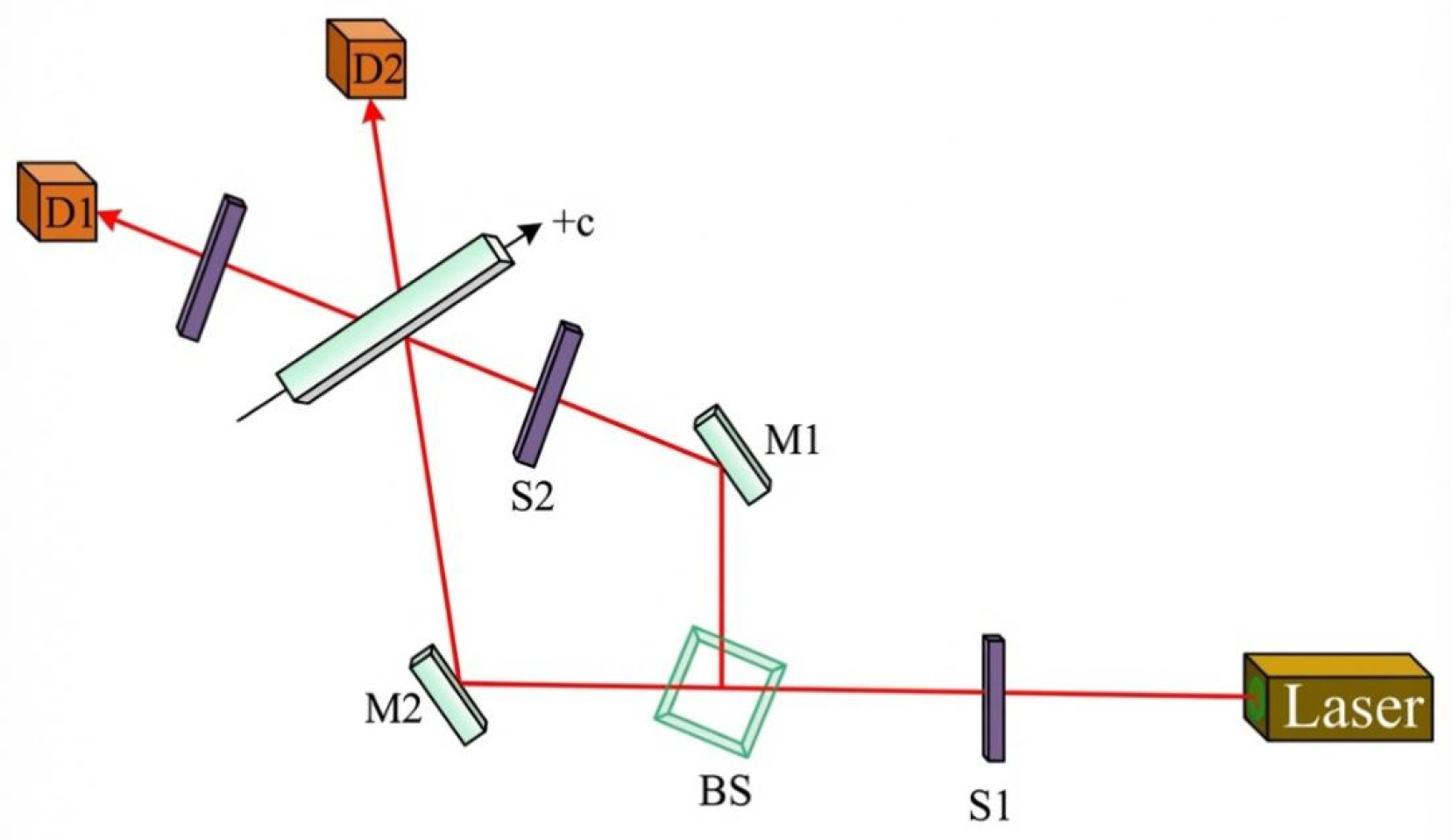
The PR properties of LN: U,Hf crystals were investigated by two-wave coupling experiments using 3 mm thick samples. The experimental optical setup is shown in Figure 1. The system consisted of a beam splitter (BS), mirrors (M1 and M2), shutters (S1 and S2), and detectors (D1 and D2). Laser sources with wavelengths of 442 nm, 532 nm, and 671 nm were employed. The single-beam intensity was 400 mW/cm2 for the 442 nm and 532 nm lasers and 3000 mW/cm2 for the 671 nm laser. The two coherent beams were incident on the sample at an angle of 15°, forming an interference grating inside the crystal. The variation in diffraction efficiency was recorded in real time by the detectors.
The diffraction efficiency (η) of a crystal is defined as the ratio of the diffracted intensity (Id) to the total transmitted intensity (Id + It):
η = I d I d + I t × 100 %
The temporal evolution of the diffraction efficiency, η(t), can be fitted by the following function, from which the saturation diffraction efficiency (ηs) and response time (τr) are obtained:
η ( t ) = η s [ 1 e x p ( t / τ r ) ] 2
The expressions for the change in refractive index (Δn) and photorefractive sensitivity (S) are given by
n = λ cos θ π d arcsin η s
S = 1 I d d η dt | t = 0
where λ denotes the laser wavelength, d signifies the crystal thickness, θ represents the internal half-angle between the writing beams, and I corresponds to the total incident light intensity.
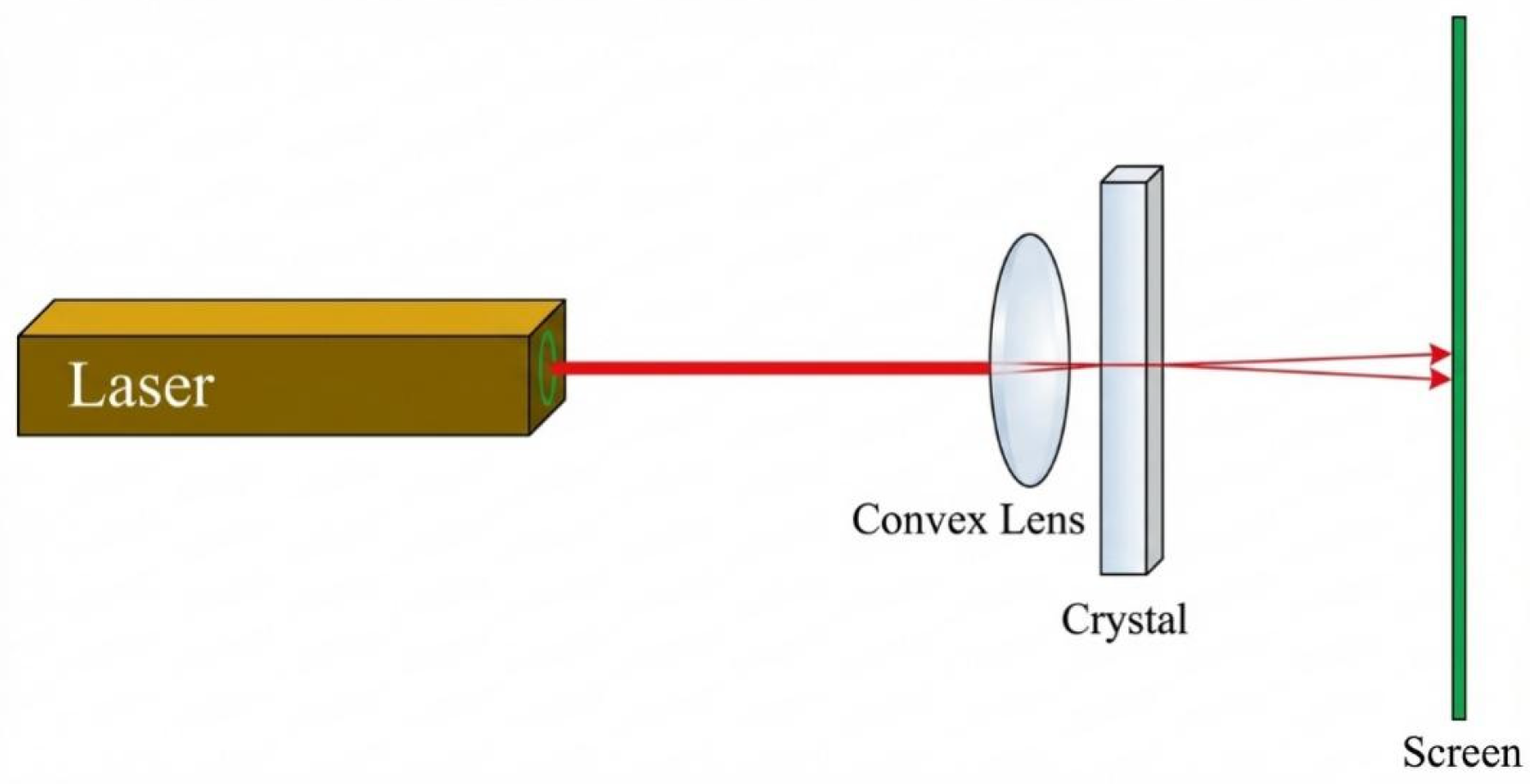
The optical damage resistance of the crystals was evaluated by the transmitted-beam distortion method, as schematically illustrated in Figure 2. The incident laser beam was focused by a convex lens with a focal length of f = 100 mm and then normally irradiated onto the crystal sample. The optical damage behavior was assessed by monitoring the evolution of the transmitted beam profile on a far-field screen. During the measurement, the laser power was gradually increased until a noticeable distortion of the transmitted spot appeared. The corresponding incident power was recorded, and the optical damage threshold was determined by calculating the associated power density at the focal spot.

3. Results and Discussions

3.1. Crystal Structure and Quality

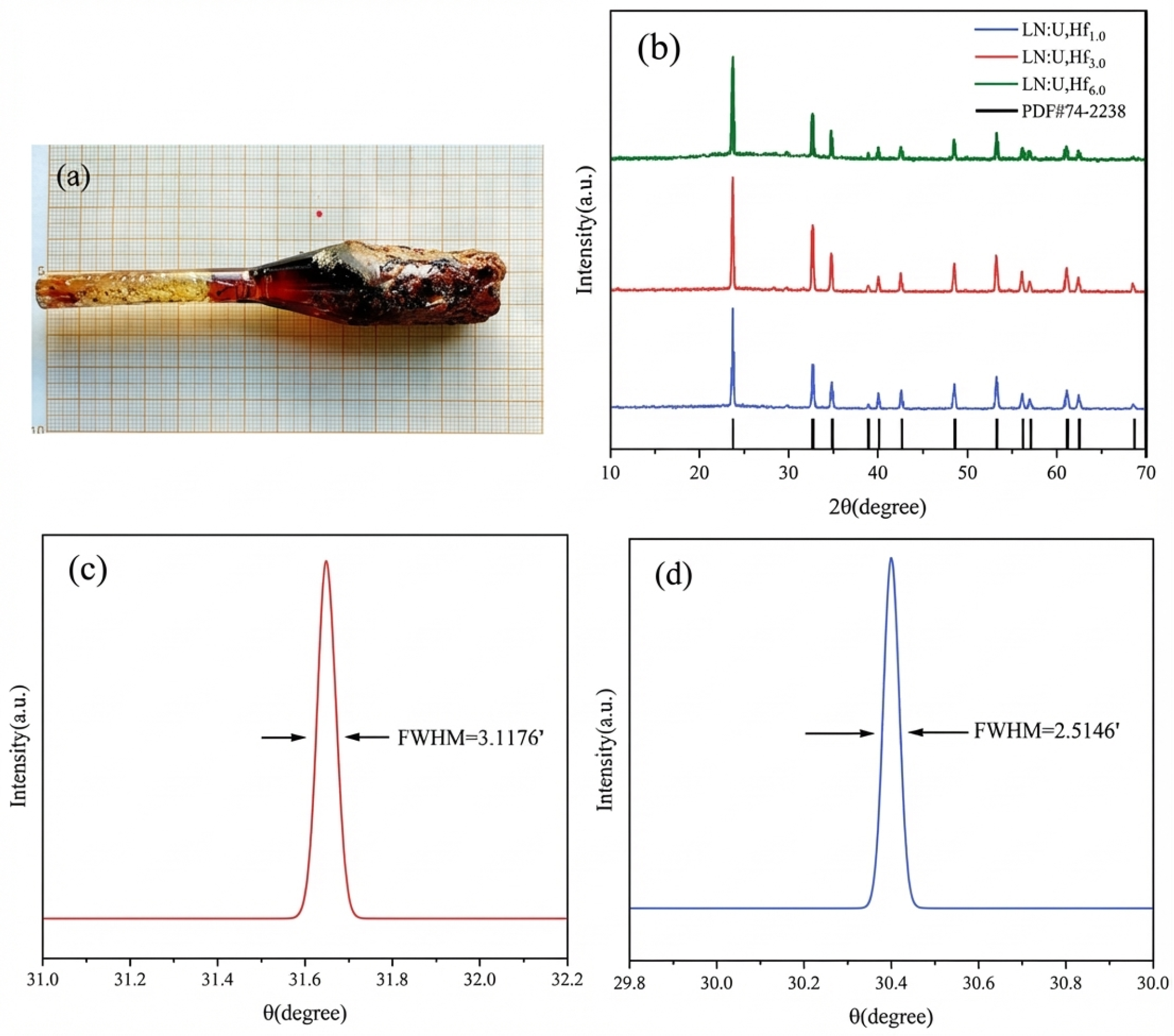
Using the modified Bridgman method, one-inch LN: U,Hf crystals with Hf4+ concentrations of 1.0 and 5.0 mol% and lengths of approximately 7–8 cm were successfully grown. As shown in Figure 3a, both crystals exhibit a reddish-brown color. However, bulk growth of LN: U,Hf6.0 was unsuccessful, and only a tiny crystal grain was obtained, which was insufficient for characterization. As shown in Figure 3b, all diffraction peaks match the standard LiNbO3 pattern (PDF#74-2238), and no secondary phase is detected. The high-resolution X-ray rocking curves in Figure 3c,d show that the full widths at half maximum of the (006) reflections are 2.5146′ and 3.1176′ for LN: U,Hf1.0 and LN: U,Hf5.0, respectively. Their crystallization quality is superior to that of LN: U, In6.0 crystals [25], although inferior to that of LN: U0.6 crystals [14], which may be attributed to the lattice distortion and internal stress caused by co-doping Hf4+.
The effective segregation coefficients calculated from the ICP-OES measurements are summarized in Table 1. In crystal growth, a segregation coefficient closer to 1 indicates that the dopant ions can be incorporated into the lattice more easily, thereby promoting compositional uniformity and stable growth. The results reveal that, with increasing Hf concentration, the effective segregation coefficient of U gradually decreases and deviates further from 1. This trend increases compositional instability during crystal growth, thereby making crystal growth more difficult. The segregation coefficients of the constituent elements in LN: U,Hf6.0 deviated significantly from 1, which might be the reason for the failure of crystal growth of this crystal.
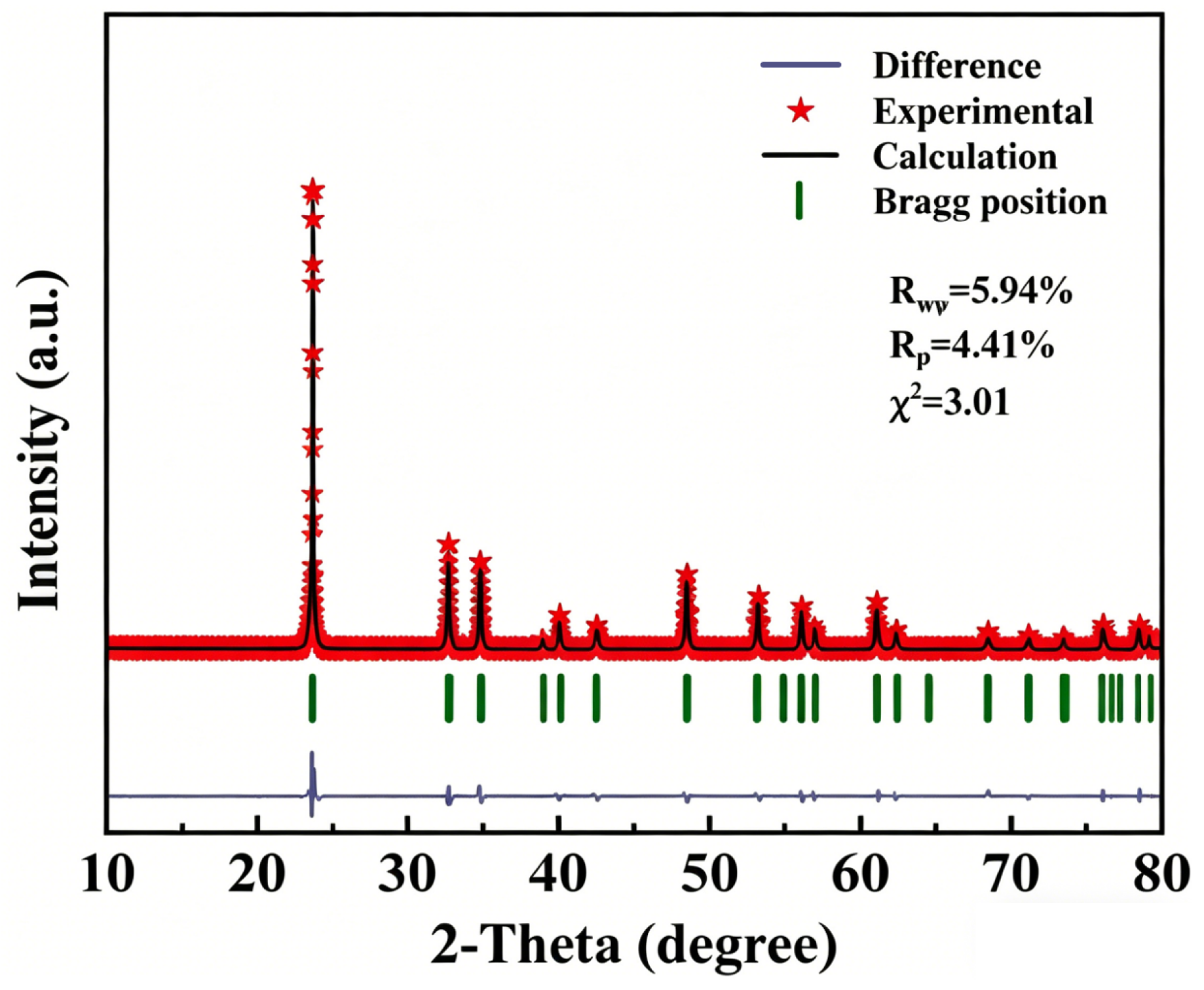
To further investigate the crystal structure, the XRD data of LN:U,Hf1.0 were refined by the General Structure Analysis System (GSAS), and the refinement profile is shown in Figure 4. The refinement converged with reliability factors of Rp = 5.94% and Rwp = 3.44%, with a goodness-of-fit (Gof) value of 3.01, indicating a reasonable agreement between the calculated and observed patterns. The refined crystallographic parameters are summarized in Table 2. LN:U,Hf1.0 crystallizes in the R3c space group, with lattice parameters of a = b = 5.15214(4) Å and c = 13.86347(10) Å, corresponding to a unit-cell volume of 318.6972(27) Å3. The atomic coordinates and occupancies are listed in Table 3. It can be seen that U ions occupy the normal Nb-site with an occupancy of 0.0064, whereas Hf ions mainly enter the Li-site with an occupancy of 0.0100. In addition, anti-site defects NbLi4+ are still present at the Li-site with an occupancy of 0.0122.

3.2. Analysis of Ionic Valence States

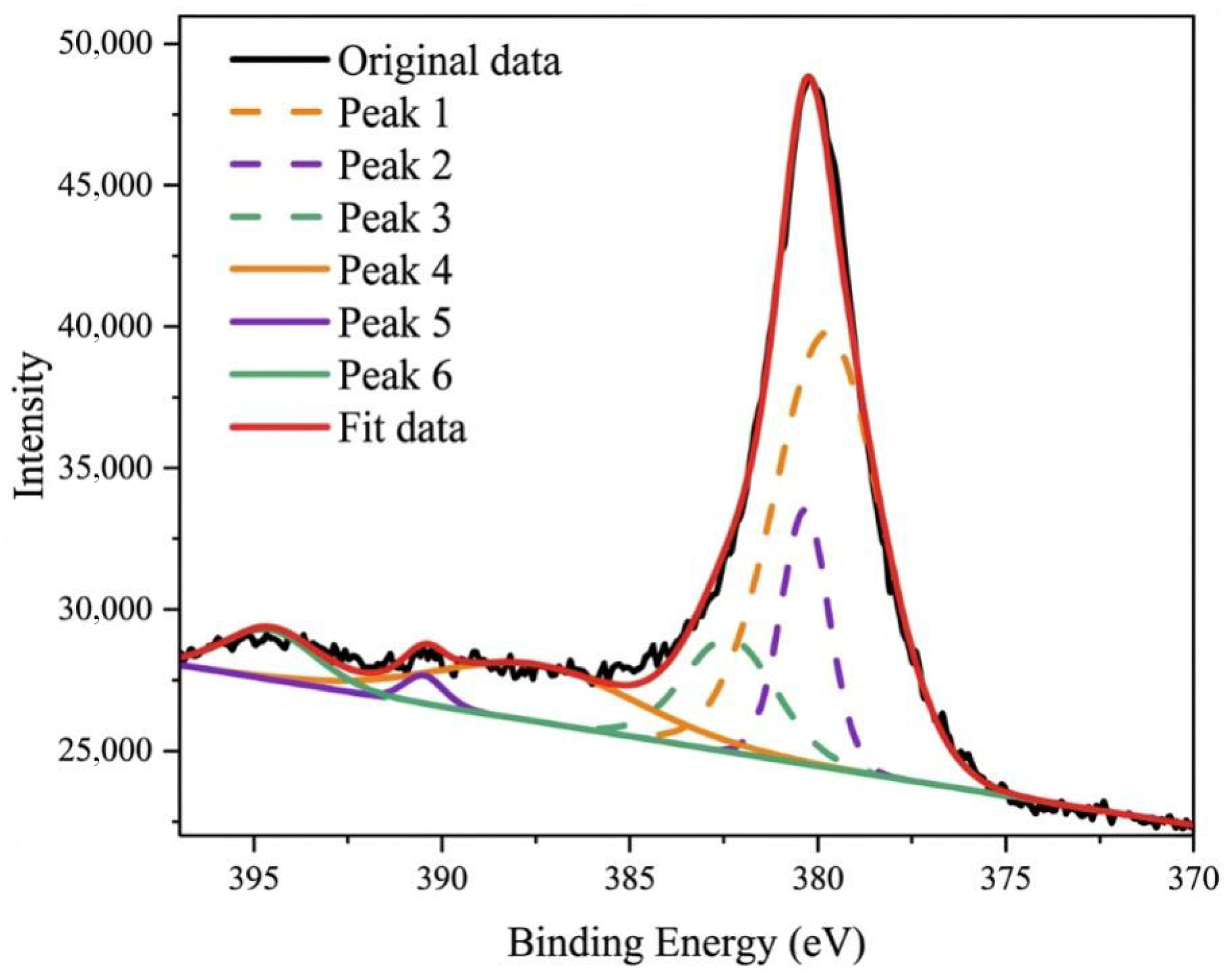
The valence states of U ions in the crystals were analyzed by XPS. As shown in Figure 5, the U4f XPS spectrum of the LN: U,Hf crystal can be deconvoluted into six characteristic peaks. According to previous reports, the U4f core level is split into two components, U 4f7/2 and U 4f5/2, due to spin–orbit coupling, with a characteristic binding-energy separation of approximately 10–12 eV [29,30]. In the present measurements, the energy difference between the two peak groups (Peak 1(379.8 ev), Peak 2(378.8 ev), Peak 3(382.4 ev)) and (Peak 4(388.3 ev), Peak 5(390.8 ev), Peak 6(393.7 ev)) is consistent with this splitting behavior. Accordingly, the six fitted peaks were assigned to three uranium valence states: Peaks 1 and 4 to U4+, Peaks 2 and 5 to U5+, and Peaks 3 and 6 to U6+. These assignments are consistent with our previous observations in LN: U, LN: U,Mg, and LN: U,In crystals [14,24,25], indicating that U ions coexist in mixed valence states (U4+, U5+, and U6+) in LN: U,Hf.

3.3. Photorefractive Properties

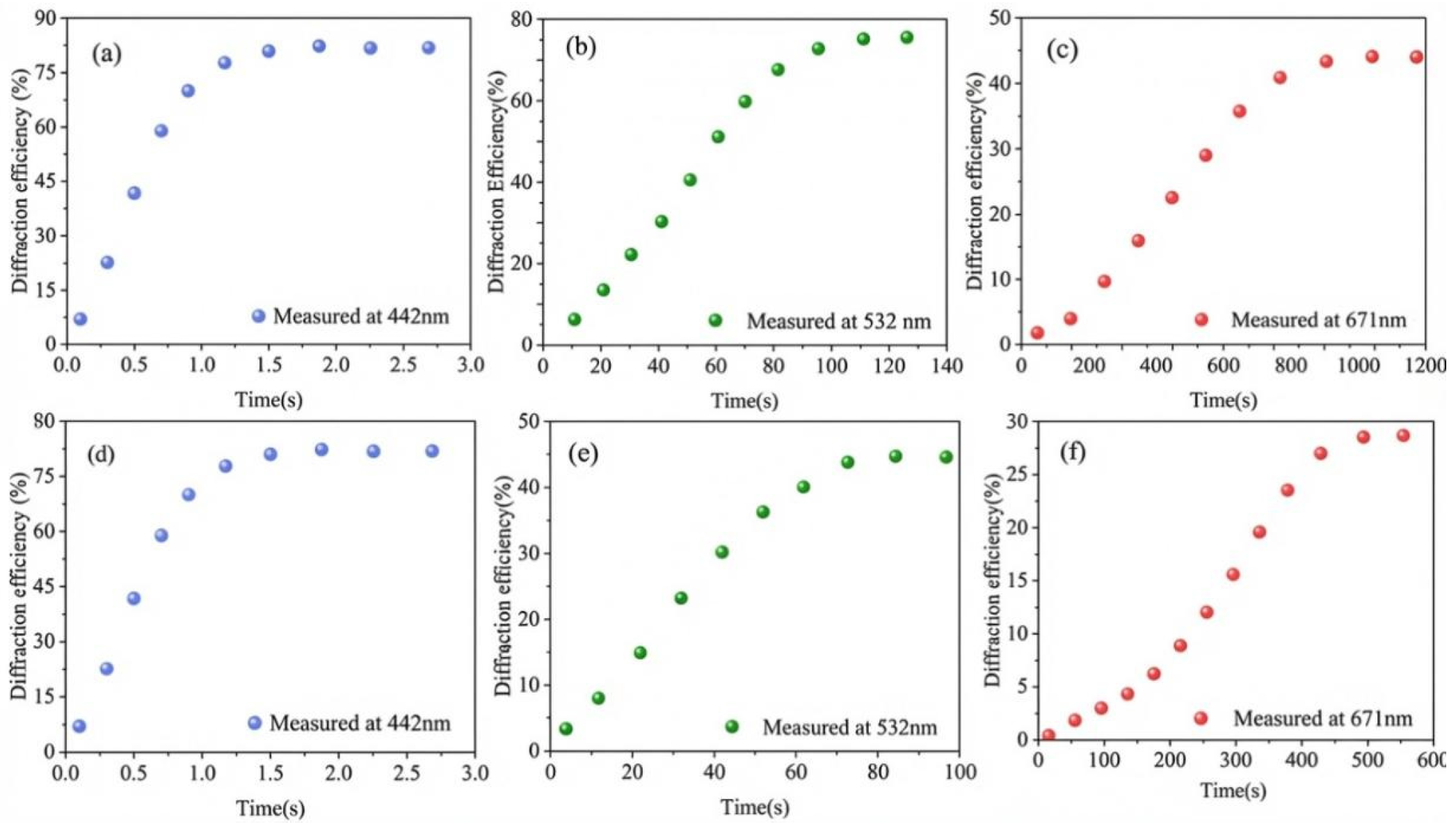
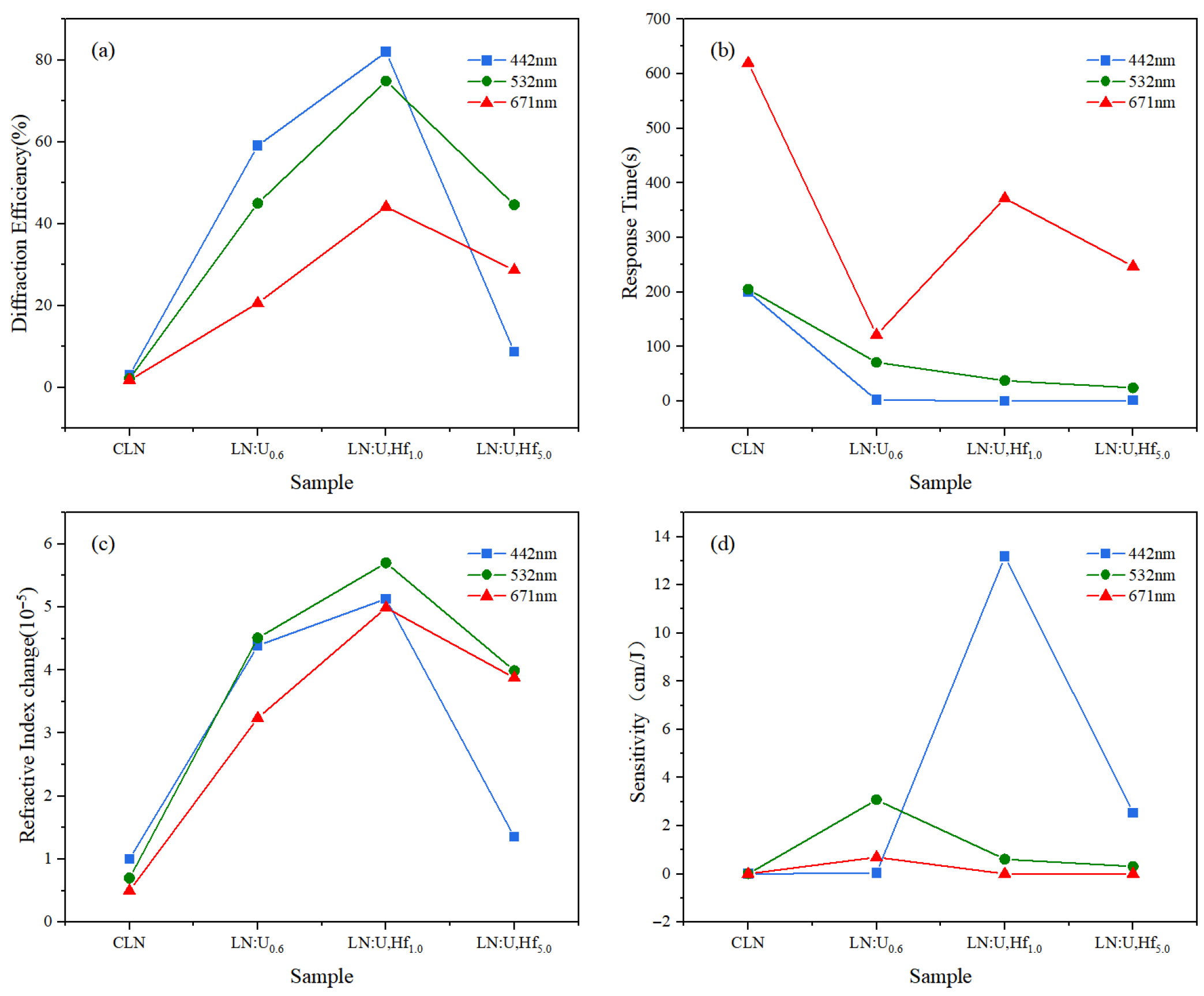
The typical PR writing curves of LN: U,Hf1.0 and LN: U,Hf5.0 crystals at different wavelengths are shown in Figure 6, and the corresponding performance parameters are summarized in Figure 7. The LN: U,Hf series exhibits a clear wavelength dependence. At 442 nm, the diffraction efficiency, sensitivity, and refractive index modulation reach their maximum values, while the response time is the shortest. As the wavelength increases to 532 nm and 671 nm, the overall PR performance gradually decreases. Both the refractive index change and sensitivity show pronounced wavelength dependence. LN: U,Hf1.0 maintains a relatively large Δn over 442, 532, and 671 nm and exhibits significantly higher sensitivity than LN: U,Hf5.0, especially at 442 nm. By contrast, increasing the Hf4+ concentration to 5.0 mol% reduces Δn and sensitivity, indicating a weakened PR response. This suggests that co-doping moderate Hf4+ is more favorable for preserving the PR effect. At 532 nm, the response times of both Hf co-doped samples became noticeably longer, which is likely related to the reduced optical absorption at this wavelength and the consequently lower excitation efficiency of photogenerated charge carriers. At the longer wavelength of 671 nm, both samples exhibited response times exceeding 240 s. However, their saturation diffraction efficiencies were still more than three times that of LN: U0.6.
Notably, the LN: U,Hf1.0 crystal exhibited an exceptionally short response time of 0.32 s at 442 nm, which is approximately six times faster than that of LN: U0.6 (1.98 s) [14], nearly three times faster than LN: Mo,Hf (0.9 s) [28], and about nineteen times faster than LN: U,In2.0 (6.14 s) [25]. Meanwhile, it maintained a high saturation diffraction efficiency of 82.01%, significantly higher than those of LN: U0.6 (50%) [14] and LN: Mo,Hf3.5 (46.07%) [28]. LN: U,Hf5.0 exhibited a response time of 1.14 s at 442 nm. Although slower than that of LN: U,Hf1.0, it remained faster than LN: U0.6. These results clearly indicate that appropriate co-doping with Hf4+ can substantially accelerate the PR response of LN: U crystals at 442 nm.
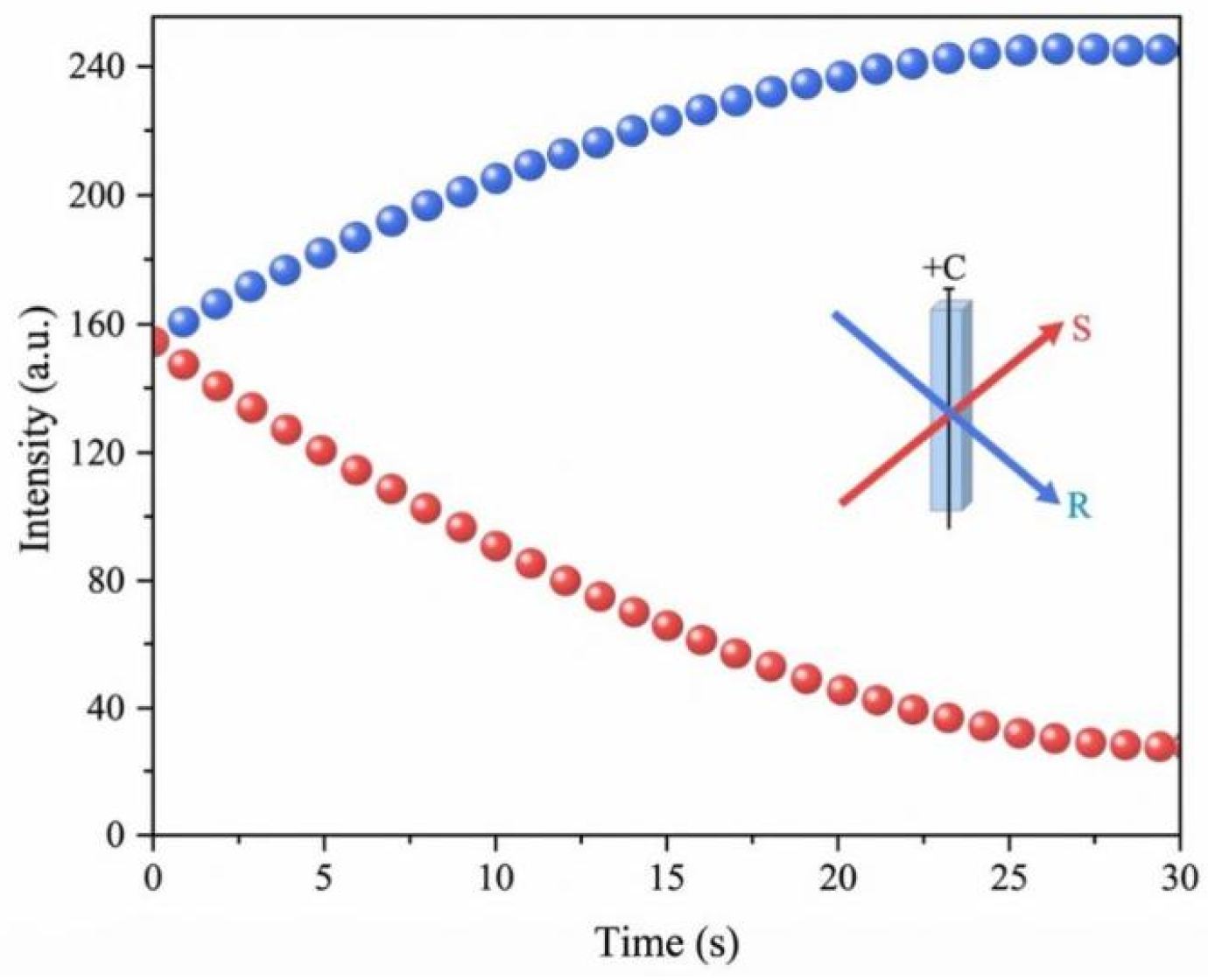
The dominant photogenerated charge carriers and their migration mechanism were examined using two-beam energy coupling experiments. As shown in Figure 8, for the LN: U,Hf1.0 crystal, energy is transferred from the signal beam (S beam) to the reference beam (R beam) along the -C axis, indicating that electrons are the dominant charge carriers. The observed energy transfer behavior further suggests that diffusion is the primary migration mechanism [25]. A similar energy transfer behavior was also observed in the LN: U,Hf5.0 crystal.

3.4. Optical Damage Resistance

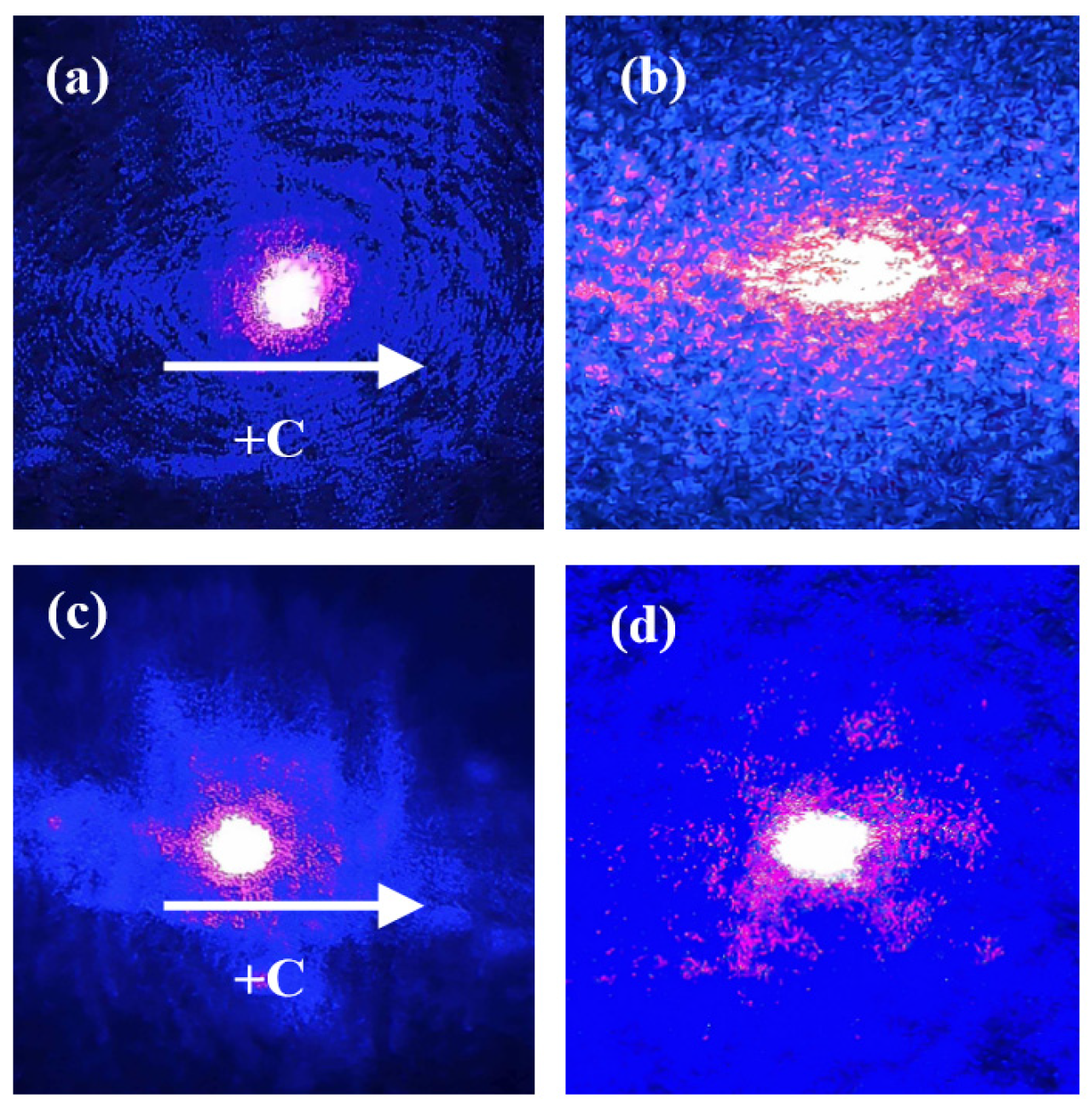
The optical damage resistance of the crystals was evaluated at 442 nm using the transmitted-beam distortion method. As shown in Figure 9, after irradiation with a laser intensity of 2.80 × 10⁵ W/cm2 for 5 min, the transmitted beam of the LN: U,Hf1.0 crystal exhibited severe distortion (Figure 9b), whereas the LN: U,Hf5.0 sample maintained a circular beam profile without noticeable distortion (Figure 9d). Further measurements revealed that the optical-damage threshold of LN: U,Hf1.0 was approximately 6.0 × 10² W/cm2, while that of LN: U,Hf5.0 reached 2.8 × 10⁵ W/cm2. This value is not only much higher than that of the LN: U,Hf1.0, but also higher than LN: Mo,Hf [28] and comparable to LN: U,Mg7.0 [24]. These results clearly demonstrate that high-concentration Hf co-doping can markedly enhance the ODR of LN: U.

3.5. OH Absorption and Raman Spectroscopic Analysis

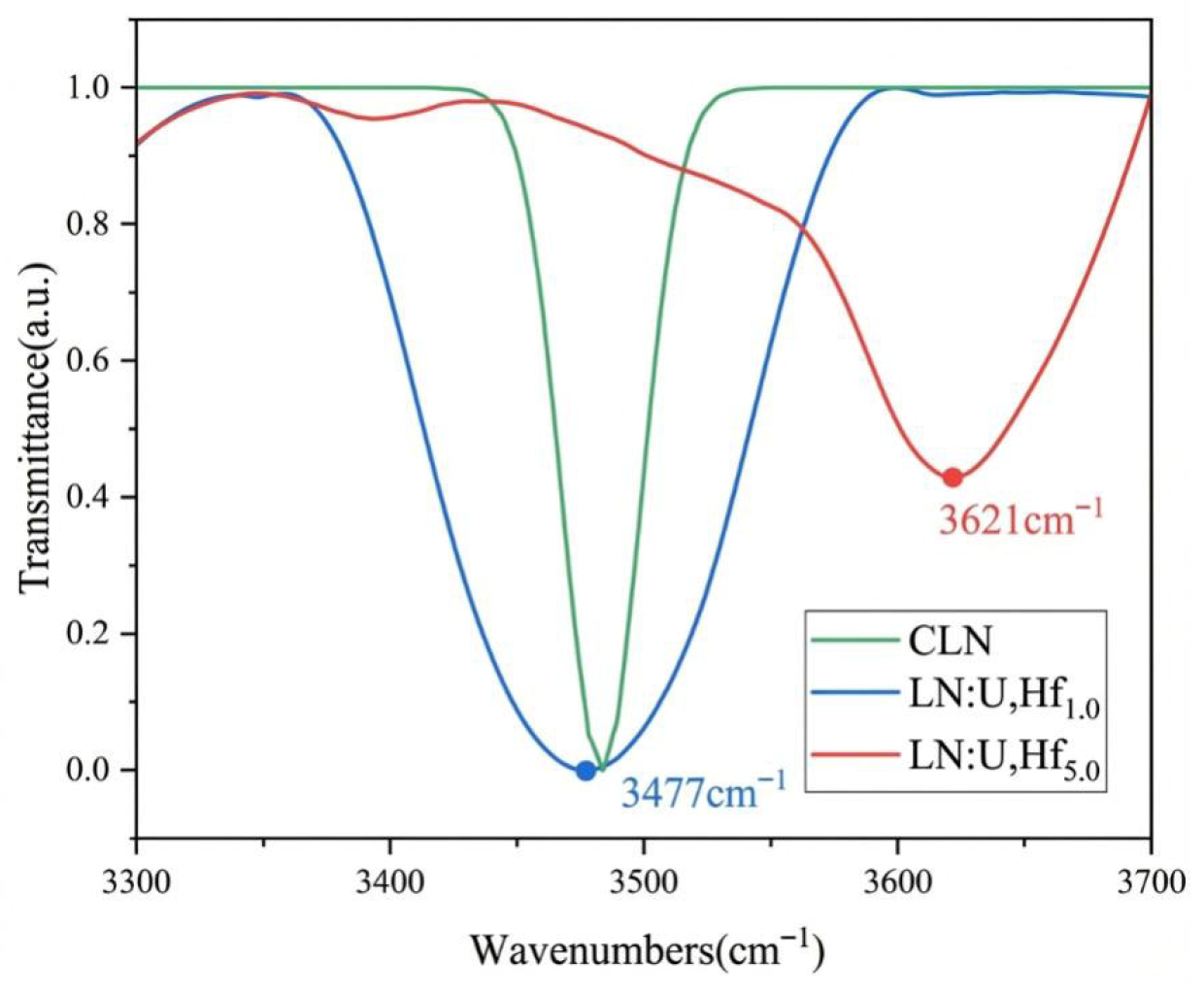
FTIR spectroscopy was used to determine whether the concentration of ODR ions had reached the threshold level by monitoring the position of the OH stretching vibration band. For congruent LN, the OH absorption peak is typically located near 3484 cm−1 and is associated with defect-related OH complexes [31,32]. When optical damage-resistant ions are incorporated into the lattice and get rid of anti-site defects NbLi4+, the OH absorption band shifts toward higher wavenumbers [27,32]. As shown in Figure 10, the OH absorption peak of LN: U,Hf1.0 was located at 3477 cm−1, which is close to that of CLN, indicating that the 1 mol% had not yet reached the concentration threshold of Hf4+ in LN: U,Hf. In contrast, the OH absorption band of LN: U,Hf5.0 exhibited a pronounced blue shift to 3621 cm−1. This shift was attributed to the formation of Hf-related OH complexes, suggesting that 5 mol% exceeded the concentration threshold of Hf4+ in LN: U,Hf [27], and all NbLi4+ anti-site defects in LN: U were eliminated. These observations are consistent with the theoretical estimates according to Equations (1) and (2), and also provide a reasonable explanation for the significantly enhanced ODR observed in LN: U,Hf 5.0.
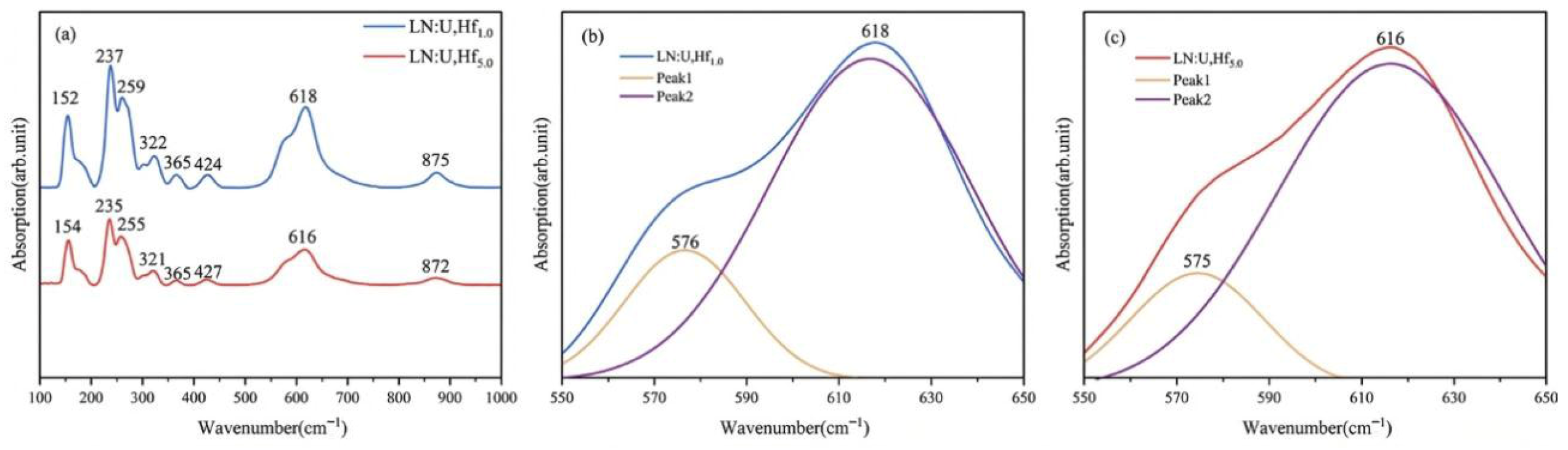
Raman spectroscopy further corroborated the above conclusions. As shown in Figure 11, the Raman spectra of the LN:U,Hf are generally similar to that of CLN, indicating that co-doping Hf4+ does not alter the basic lattice framework of lithium niobate. Since the broad band in the 550–650 cm−1 region is likely composed of overlapping modes, Gaussian fitting was performed to separate the individual components and determine their peak positions more accurately. The main Raman bands are located near 152, 237, 255, and 618 cm−1. Among them, the band near 255 cm−1 is assigned to the NbLi–O stretching vibration associated with NbLi4+ defects. The intensity of this band is stronger in LN: U,Hf1.0 than in the other samples, indicating that a certain amount of NbLi4+ defects still remains at co-doping Hf4+ with low concentration. With increasing Hf4+ concentration, this band weakens, suggesting that more NbLi4+ defects are cleared and more Nb5+ are repelled back to their regular lattice sites. As shown in Table 4, the broad band in the 550–650 cm−1 region can be deconvoluted into two peaks at approximately 575–576 cm−1 and 616–618 cm−1, corresponding to O–O and Nb–O stretching vibrations, respectively. With increasing Hf concentration, only slight changes in peak position are observed, whereas the FWHM values increase slightly. This indicates that Hf co-doping does not significantly alter the basic lattice structure of LN, but may increase local structural disorder, thereby leading to enhanced local lattice distortion.

3.6. Absorption Spectra and Discussion of Photorefractive Centers

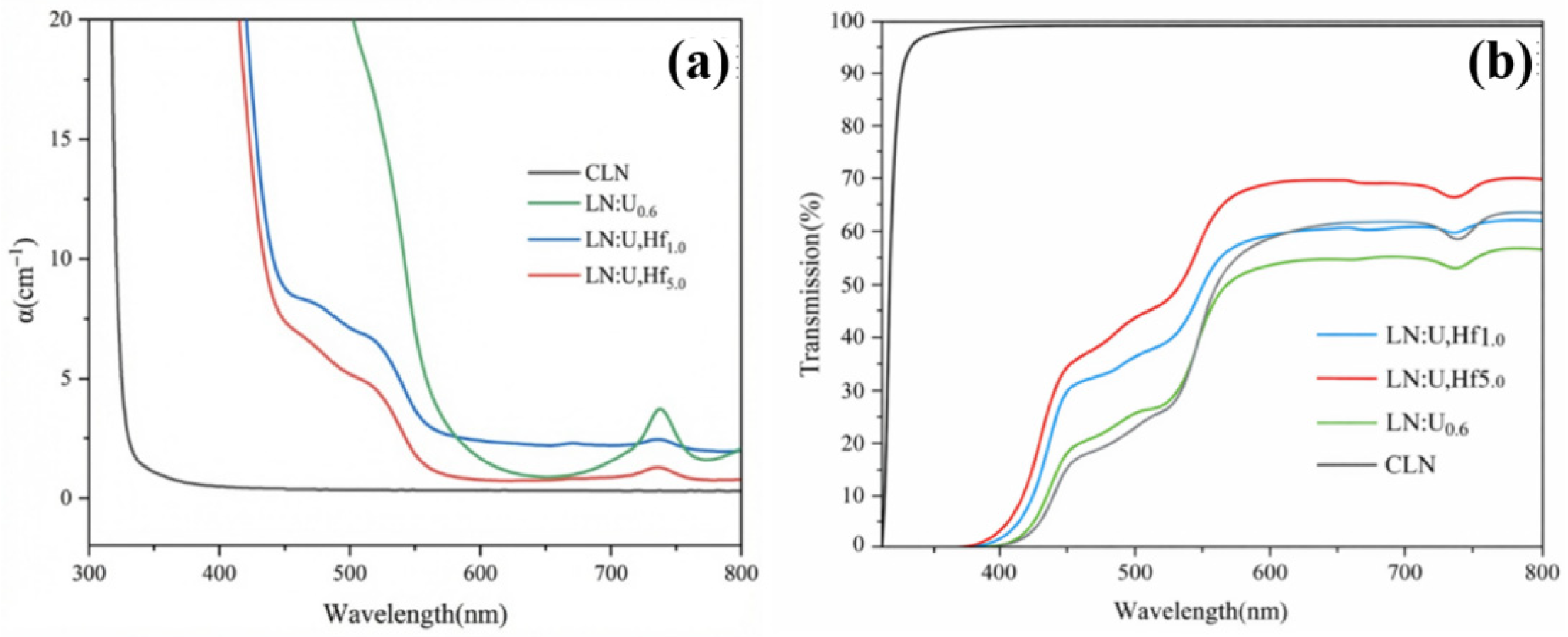
Figure 12a shows the optical absorption spectra of the different samples. According to the Li-vacancy model, the absorption edge is generally defined as the wavelength corresponding to an absorption coefficient of 20 cm−1 [33]. According to this criterion, the absorption edges of CLN, LN:U0.6, LN:U,Hf1.0, and LN:U,Hf5.0 were determined to be 318, 528, 420, and 415 nm, respectively. Obviously, compared with CLN, all doped crystals exhibit an evident red shift in the absorption edge. For LN, the position of the absorption edge is highly sensitive to the defect structure. It has been reported that the absorption edge is related to the transition energy from the O2p states to the Nb4d states, and can be strongly affected by intrinsic defects and defect-related local electronic states [33,34,35,36]. In particular, Li-site related disorder and cation mixing can modify the local electronic structure near the band edge, thereby causing red or blue shifts in the absorption edge [36]. According to our former work, U5+/6+ occupies the Nb-site and pushes the Nb ions to the Li-site, which aggravates the Li/Nb cation mixing. Thus, the band gap of LN: U0.6 was narrower than CLN, which makes a strong redshift of the absorption edge [14]. In contrast, relative to LN: U0.6, the LN: U,Hf crystals show a blue shift. This behavior can be reasonably attributed to the preferential occupation of the Li-site by Hf4+ ions, and repels anti-site defects NbLi4+ back to the regular Nb-site, reduces defect-related localized states, and thus widens the effective band gap [26,27,33]. As the Hf concentration increased from 1.0 mol% to 5.0 mol% and exceeded the threshold level, the absorption edge underwent a further slight blue shift, consistent with the continued evolution of the defect structure.
As can be seen from Figure 12b, compared with CLN, the LN:U,Hf co-doped crystals exhibit much stronger absorption in the wavelength range of about 400–600 nm. The transmittance of LN: U,Hf1.0 is about 30% at around 450 nm and 39% near 520 nm, and then rises to about 61% in the 600–800 nm region; for LN: U,Hf5.0, the corresponding values are about 35%, 46%, and 69%, respectively. Such a broad absorption band indicates the presence of multiple PR active centers that can be excited by different wavelengths to generate carriers, which also explains why the LN: U,Hf crystals exhibit enhanced PR performance at 442, 532, and 671 nm. In particular, U ions with three valence states coexist in LN: U,Hf, and previous studies on LN: U and LN: U,In have shown that mixed valence U ions related defect clusters can serve as PR centers [14,25]. In addition to these U-related centers, intrinsic defect states, possibly including oxygen-related defects, may also participate in photocarrier generation, trapping, and transport [34,35]. Therefore, the spectral evolution shown in Figure 12 provides indirect but useful evidence for understanding the correlation between defect structure and PR performance. Nevertheless, the exact nature and specific roles of these PR centers still require further investigation by complementary characterization techniques.

4. Conclusions

Hf4+ co-doped LN: U crystals, one inch in diameter, were grown by the modified Bridgman method. LN: U,Hf1.0 exhibited a fast response time of 0.32 s and a high saturation diffraction efficiency of 82.01% at 442 nm. Its response time is approximately six times faster than that of LN: U and about nineteen times faster than LN: U,In. When the doping concentration of Hf4+ reached 5 mol%, the optical damage threshold of LN: U,Hf was as high as 2.8 × 10⁵ W/cm2. The result of the OH spectrum showed that 5 mol% exceeded the real threshold concentration of Hf4+ in LN: U. Two-beam coupling measurements showed that electrons are the dominant carriers and diffusion is the primary transport mechanism. The defects were also discussed based on the Li-vacancy model. Overall, Hf co-doping enables both fast PR response and high optical damage resistance in LN: U crystals, making this system promising for high-power, fast-response photonic devices.

Author Contributions

J.X.: conceptualization, resources, supervision, investigation, writing—original draft, writing—review and editing. M.X.: methodology, investigation, data curation, formal analysis, writing—original draft. C.F. and D.Z. (Dong Zhang): methodology, investigation, data curation, formal analysis. H.L.: funding acquisition, methodology. D.Z. (Dahuai Zheng): methodology, resources, validation, writing—review and editing. Y.C. and H.S.: methodology, validation. T.T.: resources, funding acquisition, supervision, validation, project administration, writing—review and editing. All authors have read and agreed to the published version of the manuscript.

Funding

This research was supported by the National Natural Science Foundation of China (52372013 and 12474386), Science Research Project of Hebei Education Department (QN2025121), and Shanghai Oriental Talents Program (QNJY2024114).

Data Availability Statement

Due to privacy reasons, data is contained within the article.

Conflicts of Interest

The authors declare no conflicts of interest.

References

  1. Pang, Z.; Li, J.; Gao, Y.; Yang, Z. Theoretical studies on optimum design of acousto-optic modulator using lithium niobate crystal. Chin. Opt. Lett. 2015, 13, S11601. [Google Scholar] [CrossRef][Green Version]
  2. Mookherjea, S.; Mere, V.; Valdez, F. Thin-film lithium niobate electro-optic modulators: To etch or not to etch. Appl. Phys. Lett. 2023, 122, 120501. [Google Scholar] [CrossRef]
  3. De Castilla, H.; Bélanger, P.; Zednik, R.J. Dynamic Piezoelectric Behavior of Lithium Niobate at High Temperature. Mater. Sci. Forum 2017, 879, 408–412. [Google Scholar] [CrossRef]
  4. Buse, K. Light-induced charge transport processes in photorefractive crystals II: Materials. Appl. Phys. B 1997, 64, 391–407. [Google Scholar] [CrossRef]
  5. Zhang, Q.; Li, M.; Xu, J.; Lin, Z.; Yu, H.; Wang, M.; Fang, Z.; Cheng, Y.; Gong, Q.; Li, Y. ReconFigureurable directional coupler in lithium niobate crystal fabricated by three-dimensional femtosecond laser focal field engineering. Photonics Res. 2019, 7, 503. [Google Scholar] [CrossRef]
  6. Shen, Y.; Shu, X.; Ma, L.; Yu, S.; Chen, G.; Liu, L.; Ge, R.; Chen, B.; Rao, Y. Ultra-high extinction ratio optical pulse generation with a thin film lithium niobate modulator for distributed acoustic sensing. Photonics Res. 2024, 12, 40–50. [Google Scholar] [CrossRef]
  7. Zhou, J.; Huang, T.; Fang, Z.; Wu, R.; Zhou, Y.; Liu, J.; Zhang, H.; Wang, Z.; Wang, M.; Cheng, Y. Laser diode-pumped compact hybrid lithium niobate microring laser. Opt. Lett. 2022, 47, 5599–5601. [Google Scholar] [CrossRef] [PubMed]
  8. Zhang, M.; Wang, C.; Cheng, R.; Shams, A.A.; Lončar, M. Monolithic ultra-high-Q lithium niobate microring resonator. Optica 2017, 4, 1536–1537. [Google Scholar] [CrossRef]
  9. Jiang, H.; Luo, R.; Liang, H.; Chen, X.; Chen, Y.; Lin, Q. Fast response of photorefraction in lithium niobate microresonators. Opt. Lett. 2017, 42, 3267–3270. [Google Scholar] [CrossRef]
  10. Xu, Y.; Sayem, A.A.; Zou, C.L.; Fan, L.; Cheng, R.; Tang, H.X. Photorefraction-induced Bragg scattering in cryogenic lithium niobate ring resonators. Opt. Lett. 2021, 46, 432–435. [Google Scholar] [CrossRef]
  11. Dong, Y.; Liu, S.; Li, W.; Kong, Y.; Chen, S.; Xu, J. Improved ultraviolet photorefractive properties of vanadium-doped lithium niobate crystals. Opt. Lett. 2011, 36, 1779–1781. [Google Scholar] [CrossRef]
  12. Dong, Y.; Liu, S.; Kong, Y.; Chen, S.; Rupp, R.; Xu, J. Fast photorefractive response of vanadium-doped lithium niobate in the visible region. Opt. Lett. 2012, 37, 1841–1843. [Google Scholar] [CrossRef]
  13. Qiao, H.; Xu, J.; Zhang, G.; Zhang, X.; Sun, Q.; Zhang, G. Ultraviolet photorefractivity features in doped lithium niobate crystals. Phys. Rev. B 2004, 70, 094101. [Google Scholar] [CrossRef]
  14. Tian, T.; Chen, Y.; Zhang, J.; Wang, S.; Yuan, W.; Liu, H.; Chu, Y.; Mao, C.; Xu, W.; Zheng, D.; et al. Photorefraction of uranium–doped lithium niobate crystals at multiple visible wavelengths. CrystEngComm 2023, 25, 1207–1212. [Google Scholar] [CrossRef]
  15. Zhang, G.; Xu, J.; Liu, S.; Sun, Q.; Zhang, G.; Fang, Q.; Ma, C. Study of resistance against photorefractive light-induced scattering in LiNbO3:Fe,Mg crystals. Proc. SPIE 1995, 2529, 14–17. [Google Scholar] [CrossRef]
  16. Buse, K.; Adibi, A.; Psaltis, D. Non-volatile holographic storage in doubly doped lithium niobate crystals. Nature 1998, 393, 665–668. [Google Scholar] [CrossRef]
  17. Kong, Y.; Wu, S.; Liu, S.; Chen, S.; Xu, J. Fast photorefractive response and high sensitivity of Zr and Fe co-doped LiNbO3 crystals. Appl. Phys. Lett. 2008, 92, 251107. [Google Scholar] [CrossRef]
  18. Zhou, W.; Wang, B.; Yuan, W.; Ling, F.; Ma, D.; Nie, Y. Photorefractive properties of double-doped Hf:Ce:LiNbO3 crystals. Microw. Opt. Technol. Lett. 2008, 50, 1693–1695. [Google Scholar] [CrossRef]
  19. Shi, H.; Ren, C. Investigation on photorefractive properties of Hf:Fe:LiNbO3 crystals. Optik 2013, 124, 3170–3172. [Google Scholar] [CrossRef]
  20. Rossella, F.; Grando, D.; Galinetto, P.; Degiorgio, V.; Kokanyan, E. Photoconductive and electro-optical properties of Hf doped lithium niobate crystals. Ferroelectrics 2007, 352, 143–147. [Google Scholar] [CrossRef]
  21. Bryan, D.A.; Gerson, R.; Tomaschke, H.E. Increased optical damage resistance in lithium niobate. Appl. Phys. Lett. 1984, 44, 847–849. [Google Scholar] [CrossRef]
  22. Kong, Y.; Wen, J.; Wang, H. New doped lithium niobate crystal with high resistance to photorefraction—LiNbO3:In. Appl. Phys. Lett. 1995, 66, 280–281. [Google Scholar] [CrossRef]
  23. Kokanyan, E.P.; Razzari, L.; Cristiani, I.; Degiorgio, V.; Gruber, J.B. Reduced photorefraction in hafnium-doped single-domain and periodically poled lithium niobate crystals. Appl. Phys. Lett. 2004, 84, 1880–1882. [Google Scholar] [CrossRef]
  24. Tian, T.; Wu, T.; Zhang, J.; Wang, S.; Liu, H.; Chen, Y.; Chu, Y.; Shen, H.; Xu, J. Improvement of the photorefractive responsive time and optical damage resistance of LiNbO3 by co-doping with uranium and magnesium. Opt. Mater. 2024, 157, 116223. [Google Scholar] [CrossRef]
  25. Tian, T.; Xu, W.; Fang, C.; Chen, Y.; Liu, H.; Chu, Y.; Shen, H.; Xu, J. The Influence of In3+ on the Crystal Growth and Visible Band Photorefraction of Uranium-Doped Lithium Niobate Single Crystals. Crystals 2024, 14, 380. [Google Scholar] [CrossRef]
  26. Razzari, L.; Minzioni, P.; Cristiani, I.; Degiorgio, V.; Kokanyan, E.P. Photorefractivity of hafnium-doped congruent lithium-niobate crystals. Appl. Phys. Lett. 2005, 86, 131914. [Google Scholar] [CrossRef]
  27. Li, S.; Liu, S.; Kong, Y.; Deng, D.; Gao, G.; Li, Y.; Gao, H.; Zhang, L.; Hang, Z.; Chen, S. The optical damage resistance and absorption spectra of LiNbO3: Hf crystals. J. Phys. Condens. Matter 2006, 18, 3527–3534. [Google Scholar] [CrossRef]
  28. Zhu, L.; Zheng, D.; Saeed, S.; Wang, S.; Liu, H.; Kong, Y.; Liu, S.; Chen, S.; Zhang, L.; Xu, J. Photorefractive Properties of Molybdenum and Hafnium Co-Doped LiNbO3 Crystals. Crystals 2018, 8, 322. [Google Scholar] [CrossRef]
  29. Bagus, P.S.; Nelin, C.J.; Ilton, E.S. Theoretical modeling of the uranium 4f XPS for U(VI) and U(IV) oxides. J. Chem. Phys. 2013, 139, 244704. [Google Scholar] [CrossRef]
  30. Ilton, E.S.; Bagus, P.S. XPS determination of uranium oxidation states. Surf. Interface Anal. 2011, 43, 1549–1560. [Google Scholar] [CrossRef]
  31. Kong, Y.; Zhang, W.; Chen, X.; Xu, J.; Zhang, G. OH absorption spectra of pure lithium niobate crystals. J. Phys. Condens. Matter 1999, 11, 2139–2143. [Google Scholar] [CrossRef]
  32. Kong, Y.; Deng, J.; Zhang, W.; Wen, J.; Zhang, G.; Wang, H. OH absorption spectra in doped lithium niobate crystals. Phys. Lett. A 1994, 196, 128–132. [Google Scholar] [CrossRef]
  33. Kovács, L.; Ruschhaupt, G.; Polgár, K.; Corradi, G.; Wöhlecke, M. Composition dependence of the ultraviolet absorption edge in lithium niobate. Appl. Phys. Lett. 1997, 70, 2801–2803. [Google Scholar] [CrossRef]
  34. Schirmer, O.F.; Imlau, M.; Merschjann, C.; Schoke, B. Electron small polarons and bipolarons in LiNbO3. J. Phys. Condens. Matter 2009, 21, 123201. [Google Scholar] [CrossRef]
  35. Schirmer, O.; Thiemann, O.; Wöhlecke, M. Defects in LiNbO3—I. Experimental aspects. J. Phys. Chem. Solids 1991, 52, 185–200. [Google Scholar] [CrossRef]
  36. Chen, K.; Li, Y.; Peng, C.; Lu, Z.; Luo, X.; Xue, D. Microstructure and defect characteristics of lithium niobate with different Li concentrations. Inorg. Chem. Front. 2021, 8, 4006–4013. [Google Scholar] [CrossRef]
Figure 1. Optical path diagram of the two-wave coupling holographic test.
Crystals 16 00303 g001
Figure 2. Schematic diagram of the transmitted spot distortion method for measuring optical damage resistance.
Crystals 16 00303 g002
Figure 3. (a) Photograph of LN: U,Hf crystals; (b) XRD patterns of polycrystalline LN: U,Hf with different doping concentrations; (c) HRXRD rocking curve of LN: U,Hf1.0, and (d) LN: U,Hf5.0.
Crystals 16 00303 g003
Figure 4. Rietveld refinement patterns of LN: U,Hf1.0.
Crystals 16 00303 g004
Figure 5. U4f XPS spectrum and its fitted peaks for the LN: U,Hf crystal.
Crystals 16 00303 g005
Figure 6. Photorefractive writing curves for LN: U,Hf1.0 at (a) 442 nm, (b) 532 nm, and (c) 671 nm, and for LN:U,Hf5.0 at (d) 442 nm, (e) 532 nm, and (f) 671 nm.
Crystals 16 00303 g006
Figure 7. Comparison of photorefractive parameters for CLN, LN: U0.6, LN: U,Hf1.0, and LN: U,Hf5.0 crystals: (a) saturation diffraction efficiency, (b) response time, (c) sensitivity, and (d) refractive-index change.
Crystals 16 00303 g007
Figure 8. Two-beam coupling curve of the LN: U,Hf1.0 crystal, showing energy transfer from the S-beam to the R-beam.
Crystals 16 00303 g008
Figure 9. The experimental results of optical damage resistance at 442 nm. (a) Incident beam spot on LN: U,Hf1.0. (b) Distorted transmitted beam spot from LN: U,Hf1.0. (c) Incident beam spot on LN: U,Hf5.0. (d) Undistorted transmitted beam spot from LN: U,Hf5.0.
Crystals 16 00303 g009
Figure 10. OH absorption spectra of CLN, LN: U,Hf1.0, and LN: U,Hf5.0 crystals.
Crystals 16 00303 g010
Figure 11. (a) Raman spectra of LN:U,Hf crystals and fitted curves in the 550–650 cm−1 region. (b) Peak deconvolution of LN: U,Hf1.0 at 618 cm−1. (c) Peak deconvolution of LN: U,Hf5.0 at 616 cm−1.
Crystals 16 00303 g011
Figure 12. (a) Transmittance spectra of CLN, LN: U0.6, and the LN: U,Hf crystals. (b) Absorption spectra of CLN, LN: U0.6, and the LN: U,Hf crystals.
Crystals 16 00303 g012
Table 1. The effective segregation coefficients.
SampleLN: U,Hf1.0LN: U,Hf5.0LN: U,Hf6.0
IonHfUHfUHfU
Effective segregation coefficient (keff)1.21840.82671.16470.73671.32580.485
Table 2. Rietveld refinement data for LN: U,Hf1.0.
FormulaLN: U0.6, Hf1.0
Space groupR3c
a (Å)5.15214(4)
b (Å)5.15214
c (Å)13.86347(10)
A (°)90
b (°)90
γ (°)120
V (Å3)318.6972(27)
Rp (%)5.94%
Rwp (%)3.44%
Gof3.01
Table 3. Fractional atomic coordinates and equivalent isotropic displacement parameters for LN: U,Hf1.0.
LN: U0.6, Hf1.0SiteXZUeqOccupancy
Li1Li0.000000.280200.01470.9778
Nb1Nb0.000000.000000.00720.9815
OO0.044190.062710.01041.0000
Hf1Li0.000000.280200.01470.0100
Nb2Li0.000000.280200.01470.0122
U1Nb0.000000.000000.00720.0064
Table 4. Fitted peak positions and FWHM values of the Raman bands in the 550–650 cm−1 region.
SampleRaman Band/cm−1FWHM/cm−1
LN:U,Hf1.0576.4630.92
616.8551.63
LN:U,Hf5.0574.3234.16
616.0657.22
Disclaimer/Publisher’s Note: The statements, opinions and data contained in all publications are solely those of the individual author(s) and contributor(s) and not of MDPI and/or the editor(s). MDPI and/or the editor(s) disclaim responsibility for any injury to people or property resulting from any ideas, methods, instructions or products referred to in the content.