4.1. Parametric Model of the Turbine Blade Dovetail Structure
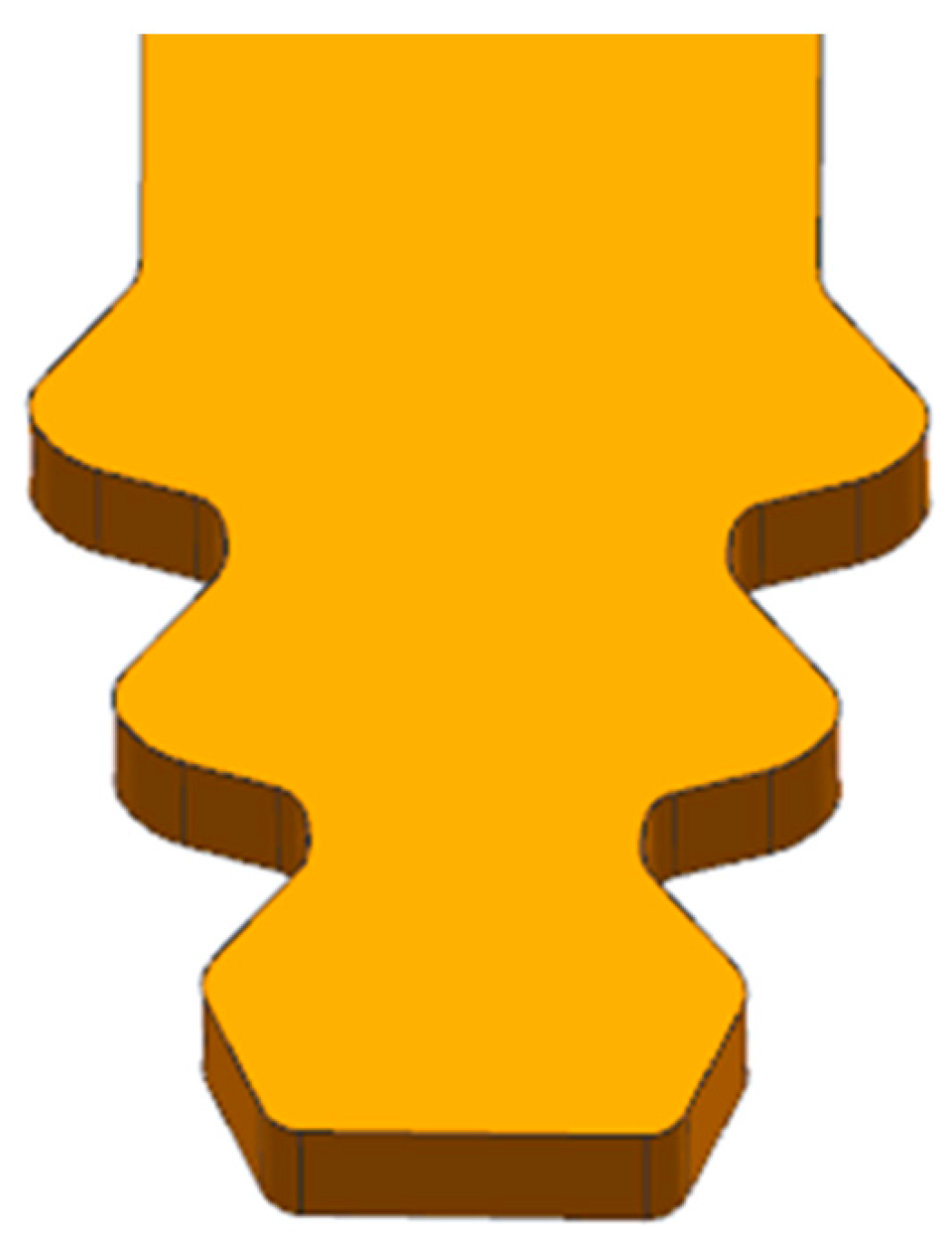
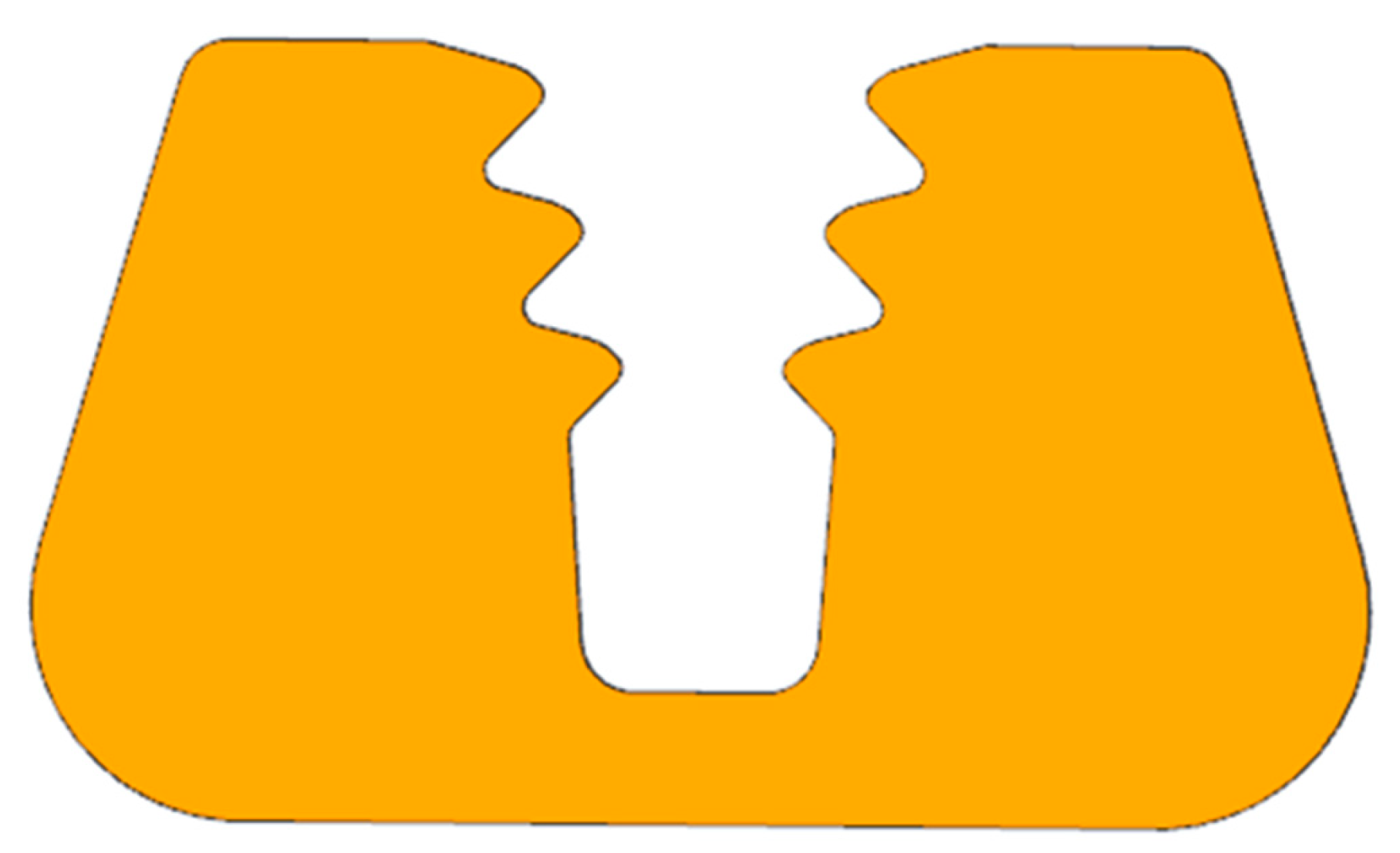
The turbine blade root adopts a fir-tree configuration, and its geometric structure is illustrated in
Figure 12. The mass information of a single blade is listed in
Table 9.
The blade material is DD6, while the material of the connected high-pressure turbine disk is FGH96.
Under normal operating conditions, the loads acting on the high-pressure turbine working blade mainly include thermal load, centrifugal load and aerodynamic load.
In this study, the loads corresponding to the engine design operating condition are selected for the analysis of the blade.
Since the structure of the high-pressure turbine working blade is relatively complex, in order to improve the efficiency of simulation analysis, a three-dimensional finite element model is established using the high-pressure turbine disk together with the sector under a single blade, and the tetrahedral SOLID187 element with mid-side nodes is adopted. The calculation coordinate system is a Cartesian coordinate system, in which the x-axis is parallel to the engine axis and the direction along the airflow is positive, the y-axis is positive from the blade back to the blade basin, and the z-axis is parallel to the blade stacking axis.
The axial and circumferential displacements of the front mounting edge of the high-pressure turbine disk are constrained. The axial end surfaces of the high-pressure turbine blade and turbine disk are selected for nodal coupling in the axial direction. The cyclic symmetry surface of the high-pressure turbine disk is coupled in the radial, circumferential, and axial directions, and standard contact is established on the dovetail tooth contact surfaces between the high-pressure turbine blade and the turbine disk.
Temperature load and centrifugal load are applied to the high-pressure turbine disk and blade, and circumferential and axial forces are applied to the blade basin side to simulate aerodynamic load.
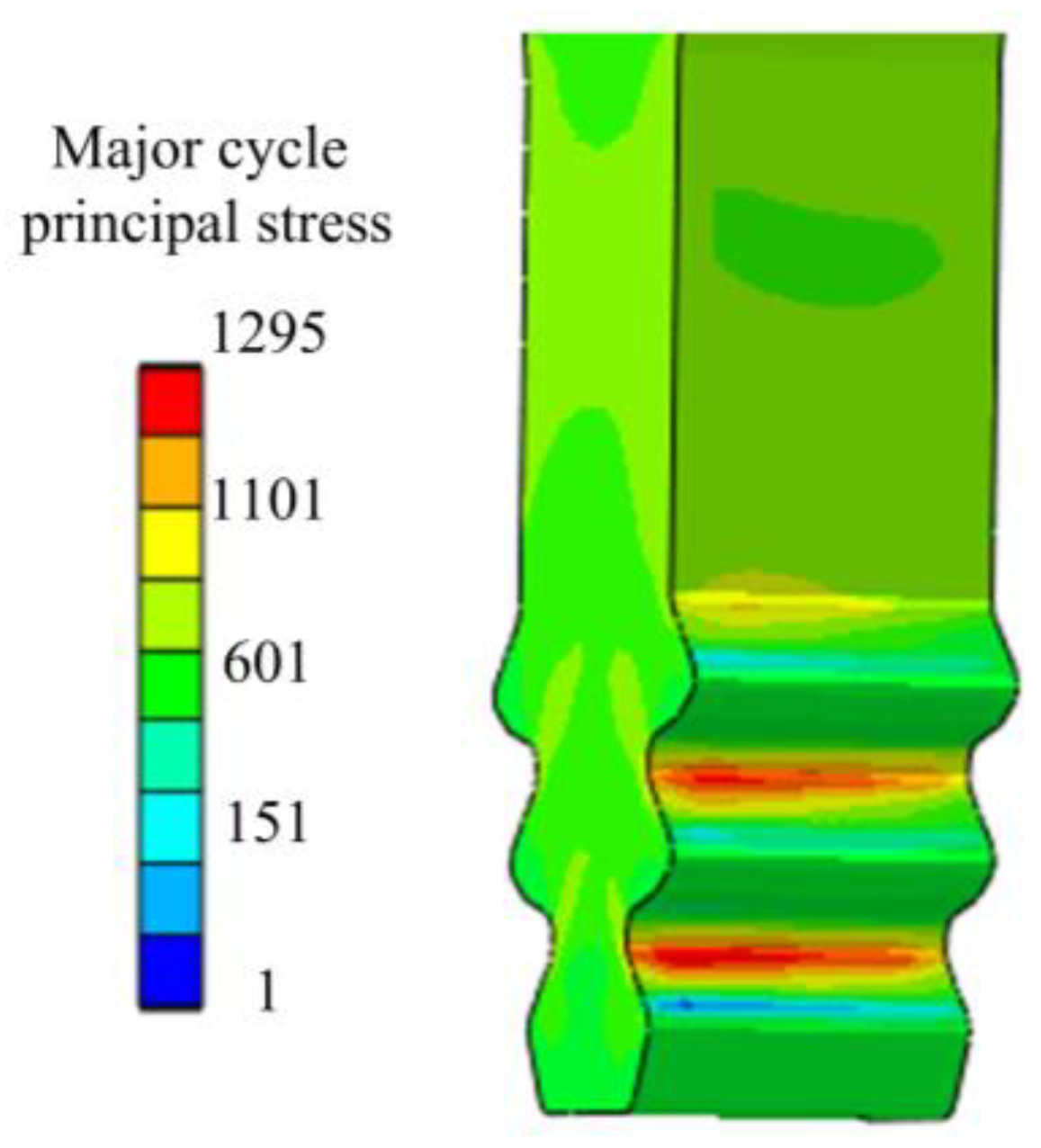
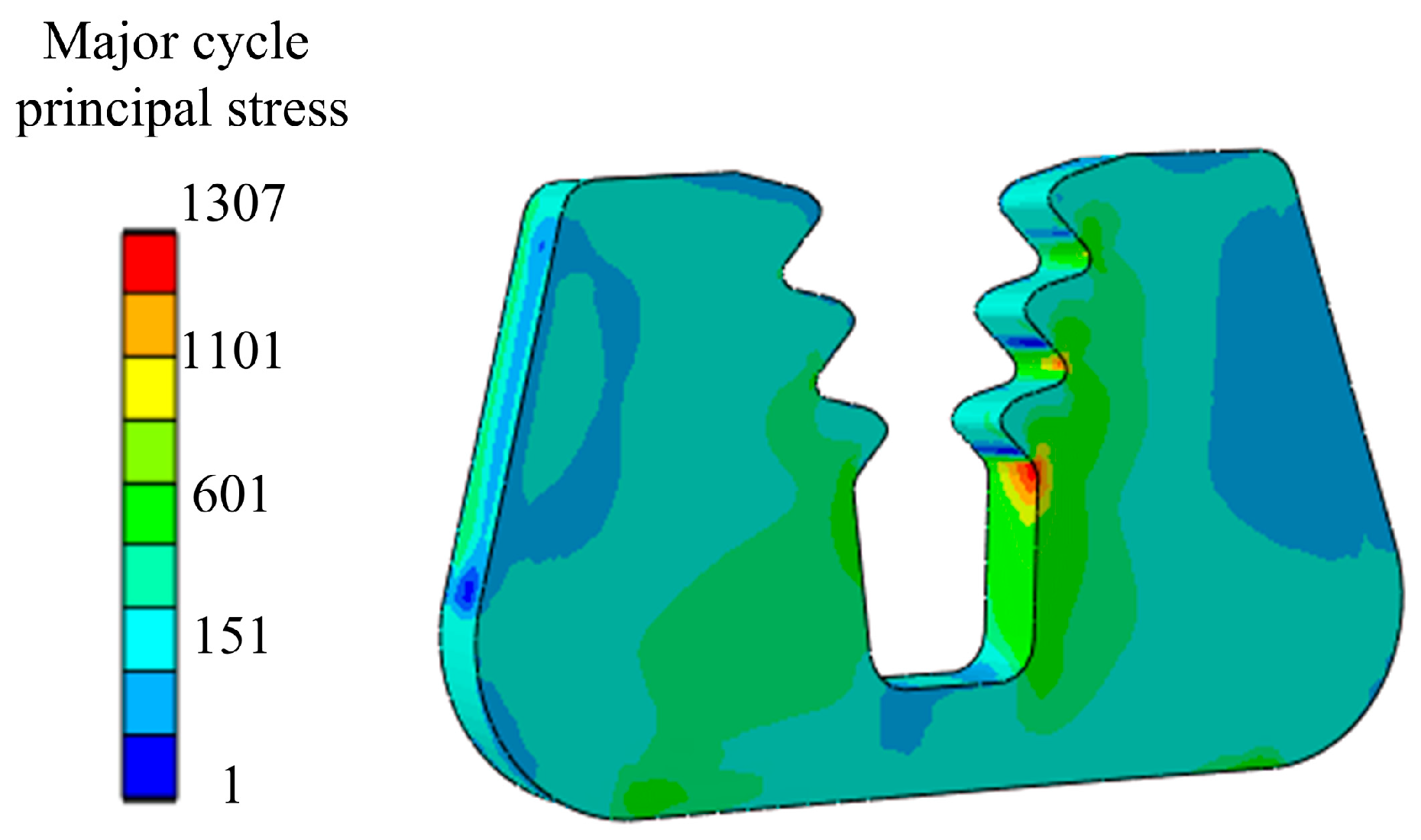
Elastic finite element simulation analysis is carried out for the high-pressure turbine working blade, and the first principal stress of its dovetail is shown in
Figure 13.
According to
Figure 13, the position with the maximum first principal stress of the dovetail of the high-pressure turbine working blade is the third pair of fir-tree teeth (the pair close to the blade extension root is regarded as the first pair of dovetail teeth), located at the tooth root on the blade basin side, which is the dangerous point for the low-cycle fatigue life of the blade.
In addition, by comparing the stress distribution of each dovetail tooth, it can be found that the maximum stress appears on one side, and there are differences in both the stress magnitude and distribution between the two sides. The reasons are as follows:
- (1)
The structural shape of the dovetail. The included angle between the front and rear end surfaces of the blade dovetail and the dovetail teeth is not a right angle, and the sizes of the ventilation holes of the dovetail are different and unevenly distributed.
- (2)
The force state of the dovetail tooth contact surface. Theoretically, the contact surfaces of the dovetail teeth should bear the same force in design, but due to the aerodynamic force during operation, the force on the blade basin side is relatively larger. Generally, adjustment is made through the blade shroud amount design, but its influence cannot be completely eliminated.
The data for the stress concentration locations of the turbine blade/disk dovetail joint structure are shown in
Table 10.
When constructing a parametric model, extracting geometric parameters is the primary step. The extracted geometric parameters should possess both completeness and conciseness, which should comprehensively cover the structural geometric information while avoiding redundancy.
Based on this, the geometric parameters of the fir-tree root structure are divided into structural parameters and tooth profile parameters. The former is used to describe the basic form and spatial position of the dovetail structure, while the latter is used to define the specific profile of each pair of dovetail teeth.
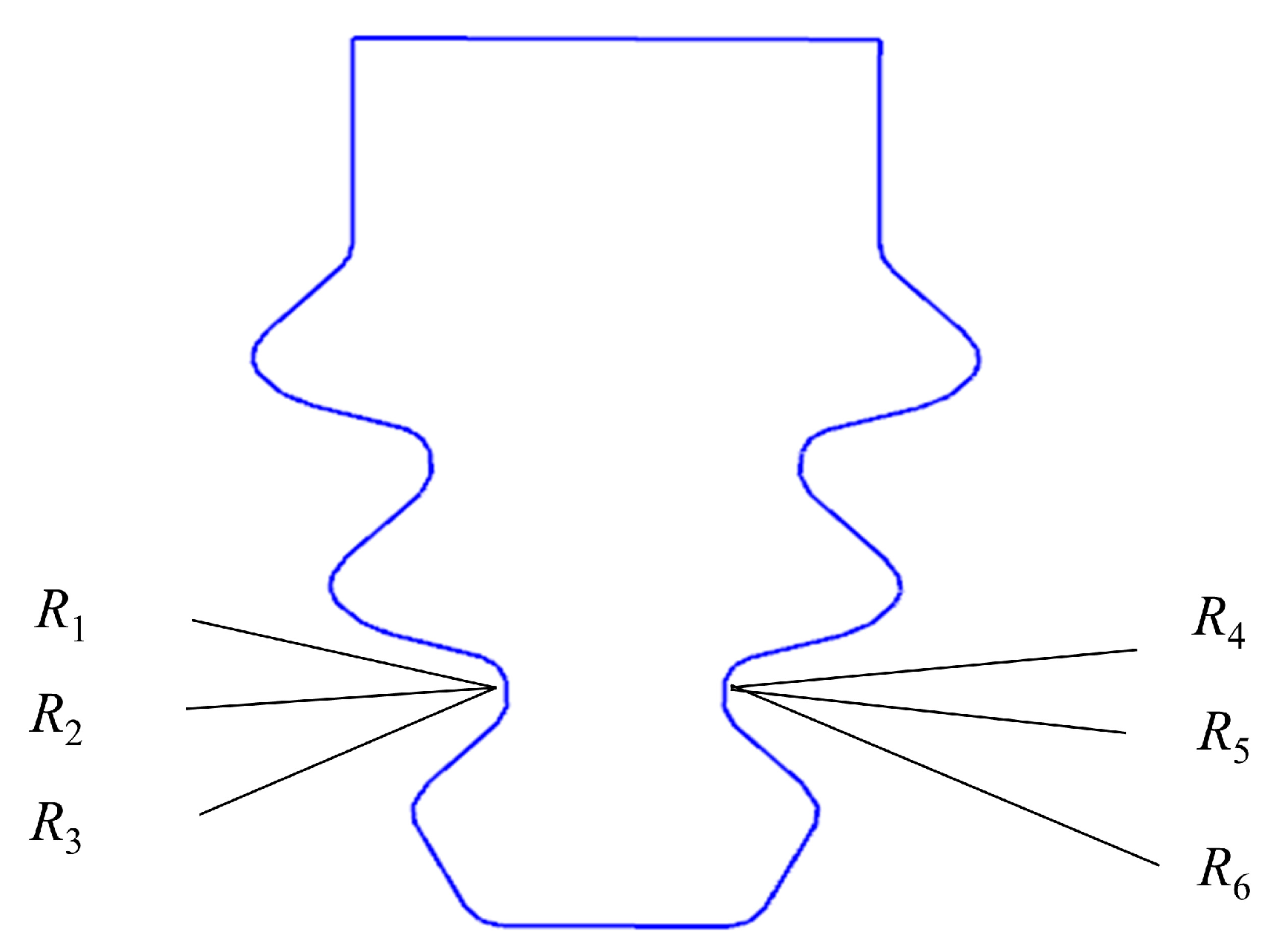
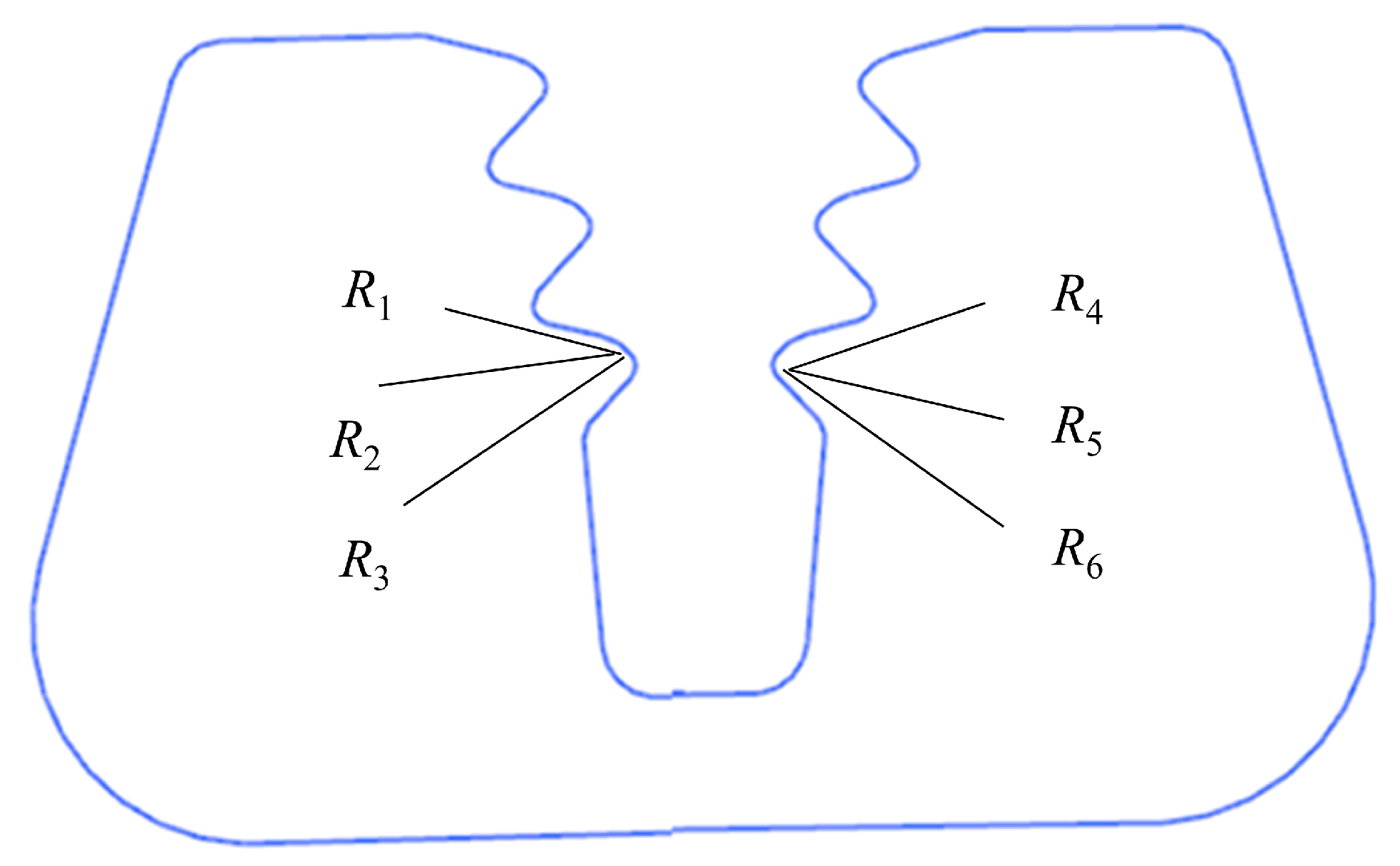
The cross-sectional shape of the turbine blade dovetail structure used in a certain gas turbine can be referred to in
Figure 14. From top to bottom, the section successively presents the first, second, and third teeth, and the tooth profile parameters used by these three pairs of dovetail teeth are identical. There are three tooth-root filets between each dovetail tooth.
For the high-pressure turbine working blade dovetail, the key dimensions include: the profile of the fir-tree tooth working surface; the tooth-root filet of the dovetail tooth; the wedge angle; the inclination angle of the groove bottom and the filet at the edge of the dovetail ventilation hole.
The dispersion of structural dimensions is usually determined by the upper and lower limits of the design tolerance, and the actual machining process determines its probability distribution characteristics.
At present, there is a lack of dimensional measurement data for the above key locations. Therefore, the allowable dimensional tolerance ±Δ
x of machined parts in the design drawings is used to estimate the standard deviation of the dimensions (assuming the dimensions follow a normal distribution), as shown in Equation (44).
Referring to the dimensional tolerances of the fir-tree tooth-root filet and the filet at the edge of the blade ventilation hole in the design drawings of the high-pressure turbine working blade, the dispersion of the key dimensions is estimated through the design tolerance, and the dimensional values and randomization parameters are shown in
Table 11.
In addition, since the turbine blade is a casting, its weight has certain deviations, which directly affect the centrifugal force of the blade. The parameterization is based on the third pair of dovetail teeth, and the parameterization of blade weight is realized through the conversion of blade density. The key dimensions are shown in
Table 12.
The Kriging model is composed of a parametric model and a non-parametric model. The parametric model is a regression analysis model, and the non-parametric model is a random distribution.
The Kriging model predicts a point mainly by using the information of known variables around the point, and estimates the unknown information of the point through the weighted combination of information within a certain range around the point. The selection of weights is determined by minimizing the error variance of the estimated value.
The form of the Kriging model is as follows:
In Equation (45), y(x) is the response function to be fitted, and f(x) is a deterministic part providing a global approximation of the simulation, which is generally expressed by a polynomial of xxx. In this paper, a second-order polynomial is adopted. z(x) provides an approximation of the local deviation of the simulation, which is a random function with mean zero and variance σ2, representing the local deviation of the global model and obtained through interpolation of sample points.
The covariance matrix of
z(x) represents the degree of its local deviation and has the following form:
In Equation (46),
xi is the input part of the
i-th training sample point;
R(
,
x,
xi) is the correlation function with parameter
θ; and
n is the number of sample points.
R(
,
x,
xi) is a Gaussian function.
Based on the samples, the unknown parameter θk is obtained by solving the equations so that the prediction variance of the Kriging model is minimized.
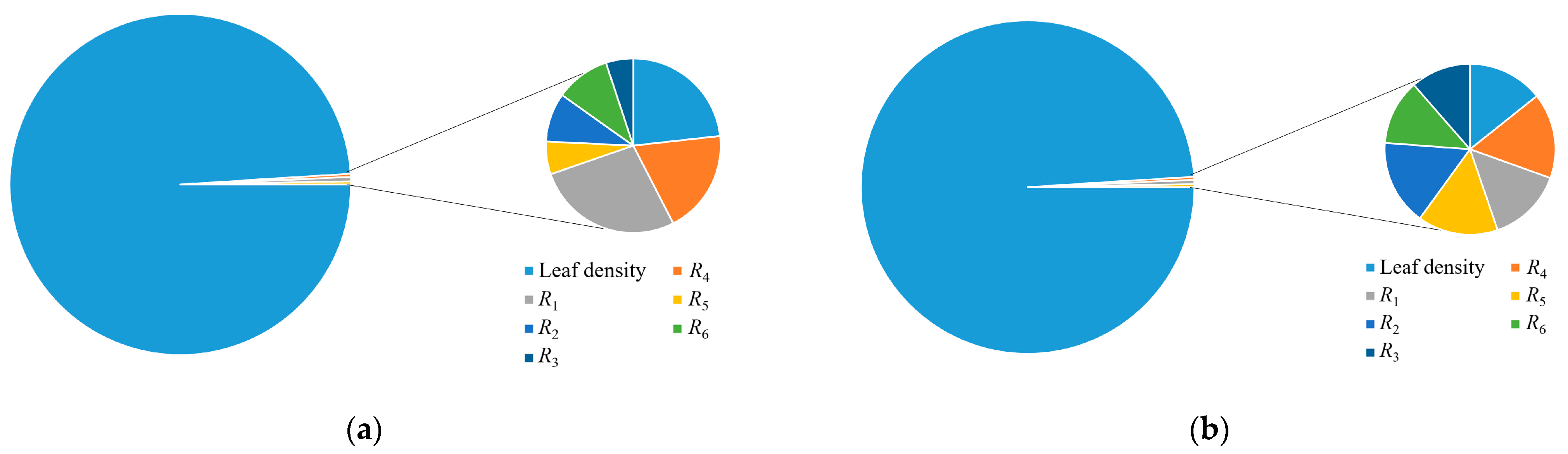
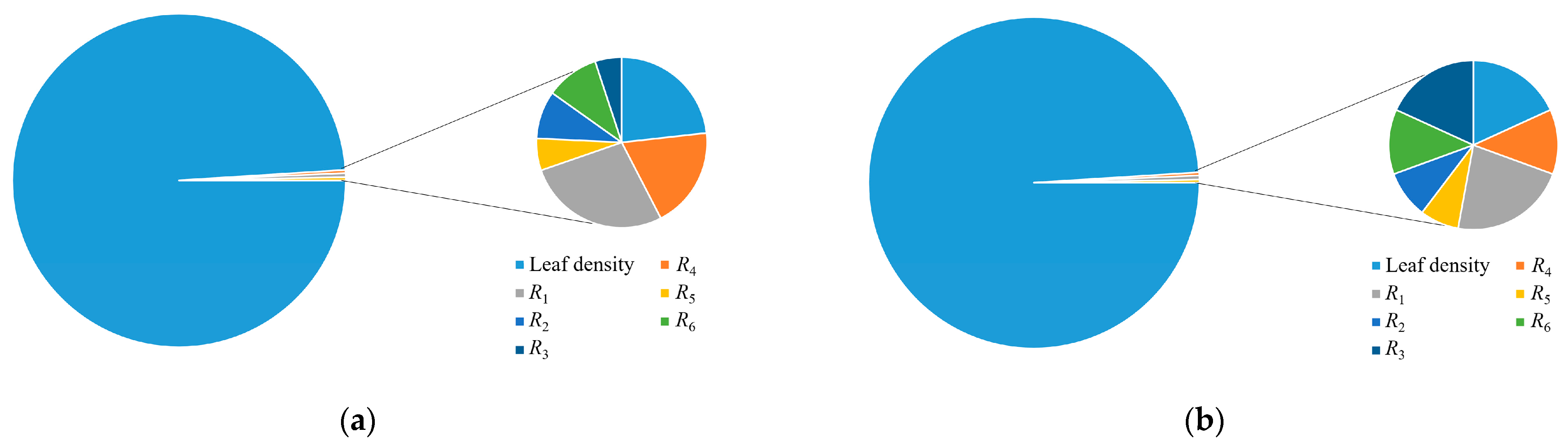
According to the surrogate model, the sensitivity analysis results of the influence of key dimensions and blade weight on the stress at the critical location of the blade dovetail can be obtained, as shown in
Figure 15 and
Table 13.
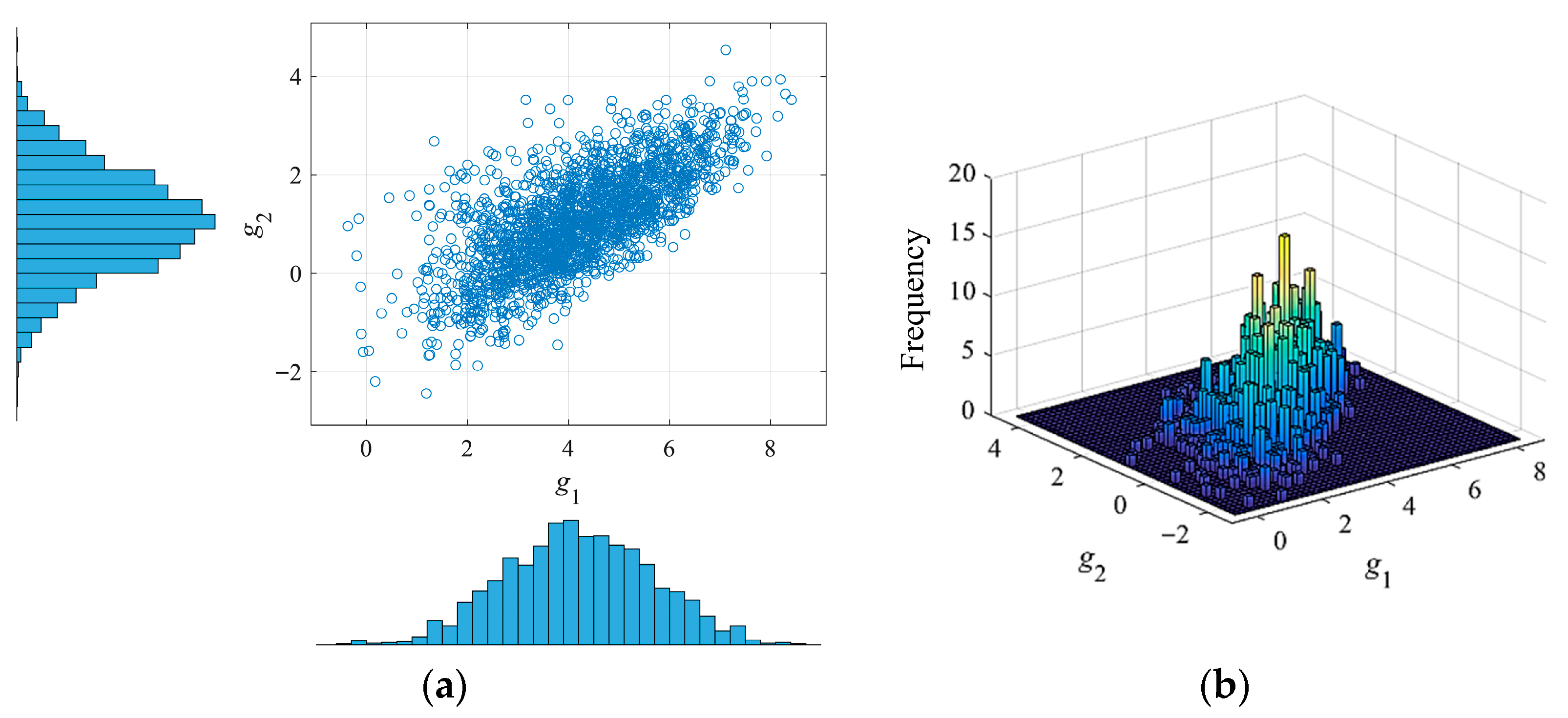
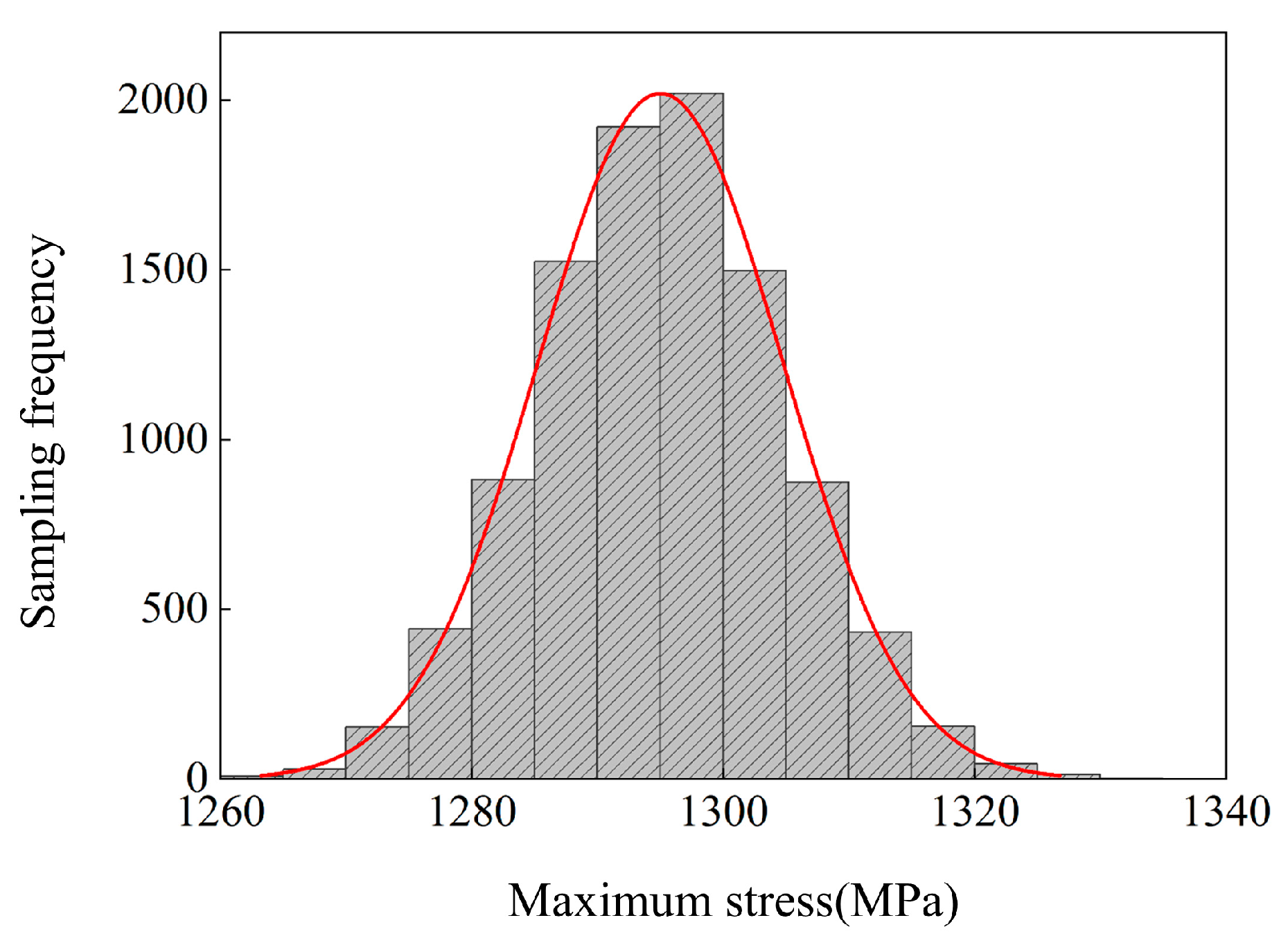
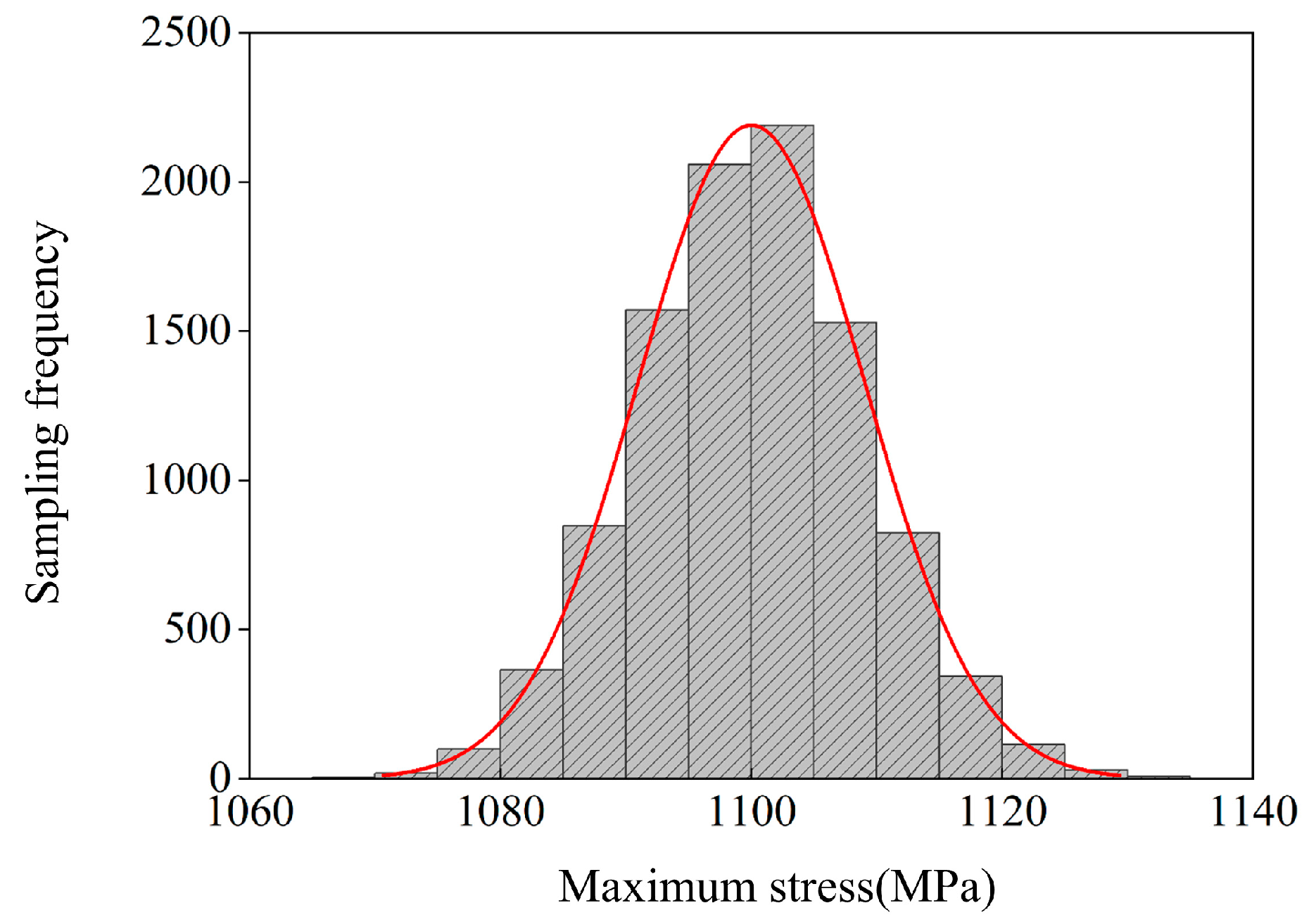
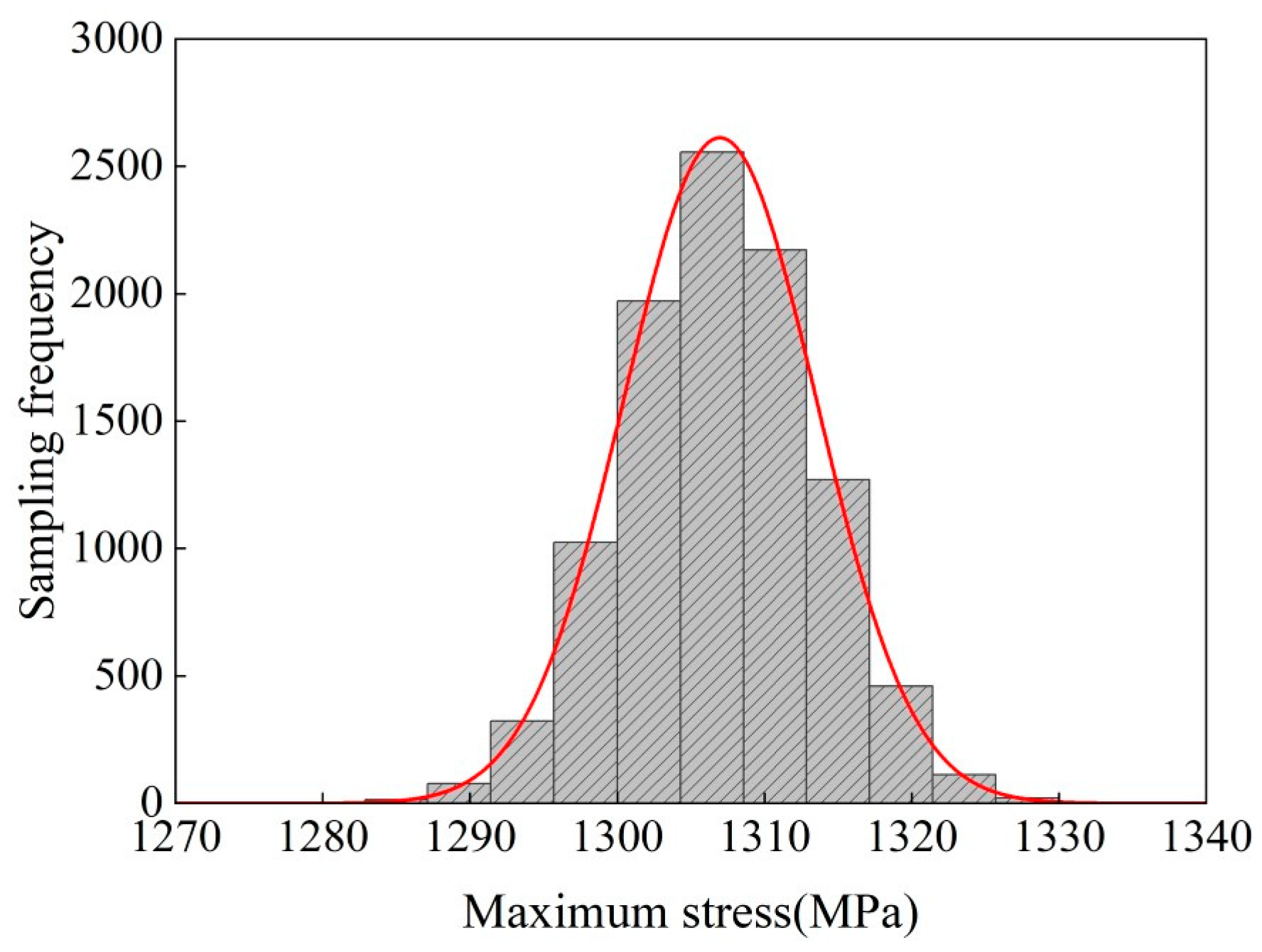
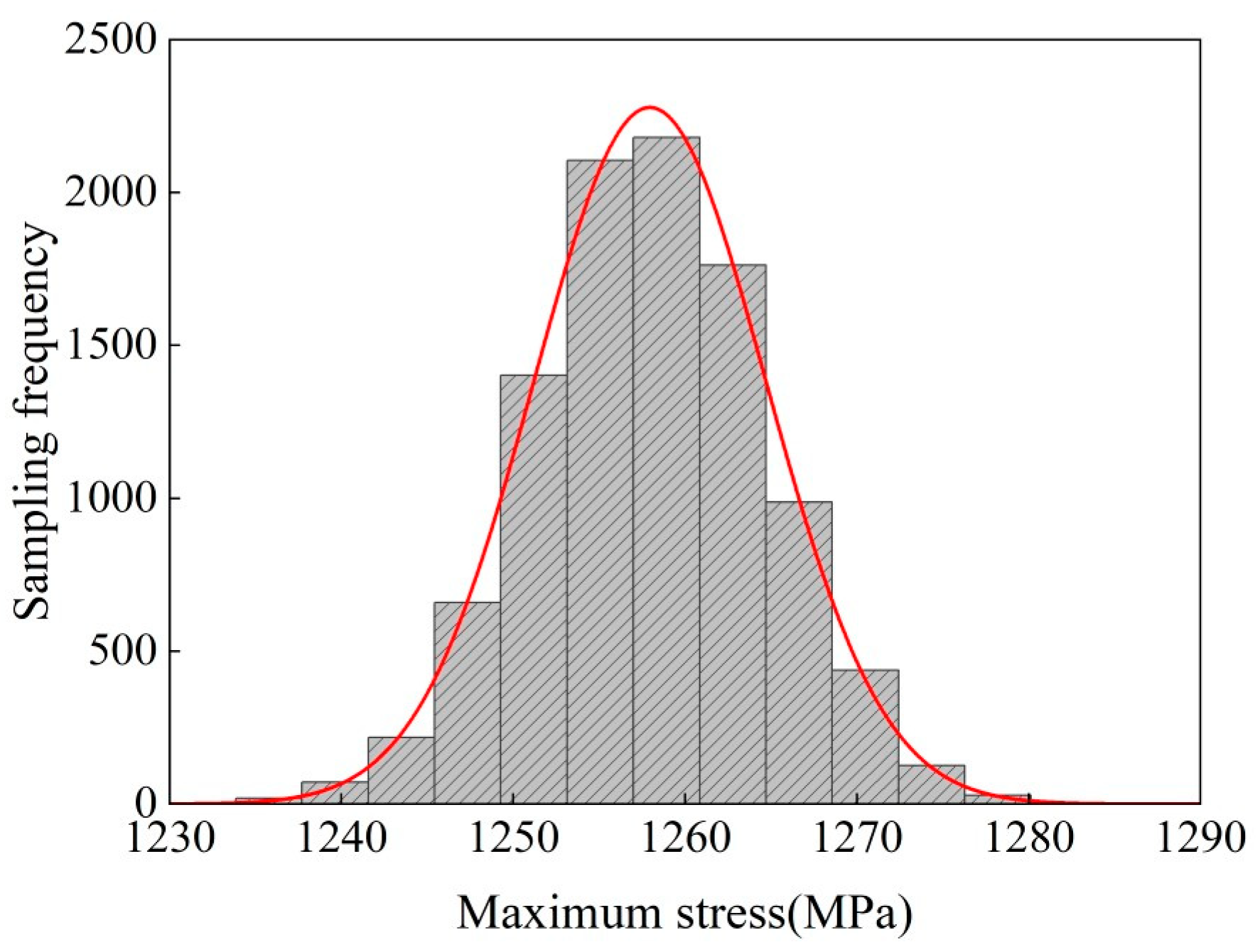
Based on the established surrogate model, 10,000 samples are generated by Latin hypercube sampling, and the probability distribution of the maximum stress (S1) at the left and right tooth-root filets of the third pair of dovetail teeth of the turbine blade/disk dovetail joint structure can be obtained.
The maximum stress at the left tooth-root filet of the turbine blade dovetail structure is 1295 MPa, with a standard deviation of 9.85 MPa, while the maximum stress at the right tooth-root filet is 1100 MPa, with a standard deviation of 9.11 MPa.
The specific probability distribution data of the maximum stress of the turbine blade dovetail joint structure are shown in
Figure 16 and
Figure 17, and
Table 14.
4.2. Reliability Analysis of Multi-Tooth Fir-Tree Root
First, from the previous chapter, the stress probability distribution parameters at the dangerous locations of the turbine blade dovetail structure are obtained: the maximum stress at the left tooth-root filet is 1295 MPa, and the maximum stress at the right tooth-root filet is 1100 MPa. Then, the equivalent stress is determined using the point method of the Theory of Critical Distances, which introduces a material characteristic length L and takes the stress at a specific distance from the location of maximum stress gradient as the equivalent stress. Finally, the equivalent stress is substituted into the Morrow-modified Manson–Coffin equation (Equation (20)) to calculate fatigue life, where the stress–strain relationship is established through the elastic modulus E. The total strain range is obtained by dividing the equivalent stress by the elastic modulus and subsequently decomposed into elastic and plastic strain components. For multiaxial stress states, the maximum principal stress criterion is adopted as a simplification. The deterministic life of the left and right tooth roots of a single dovetail is calculated, as shown in
Table 15.
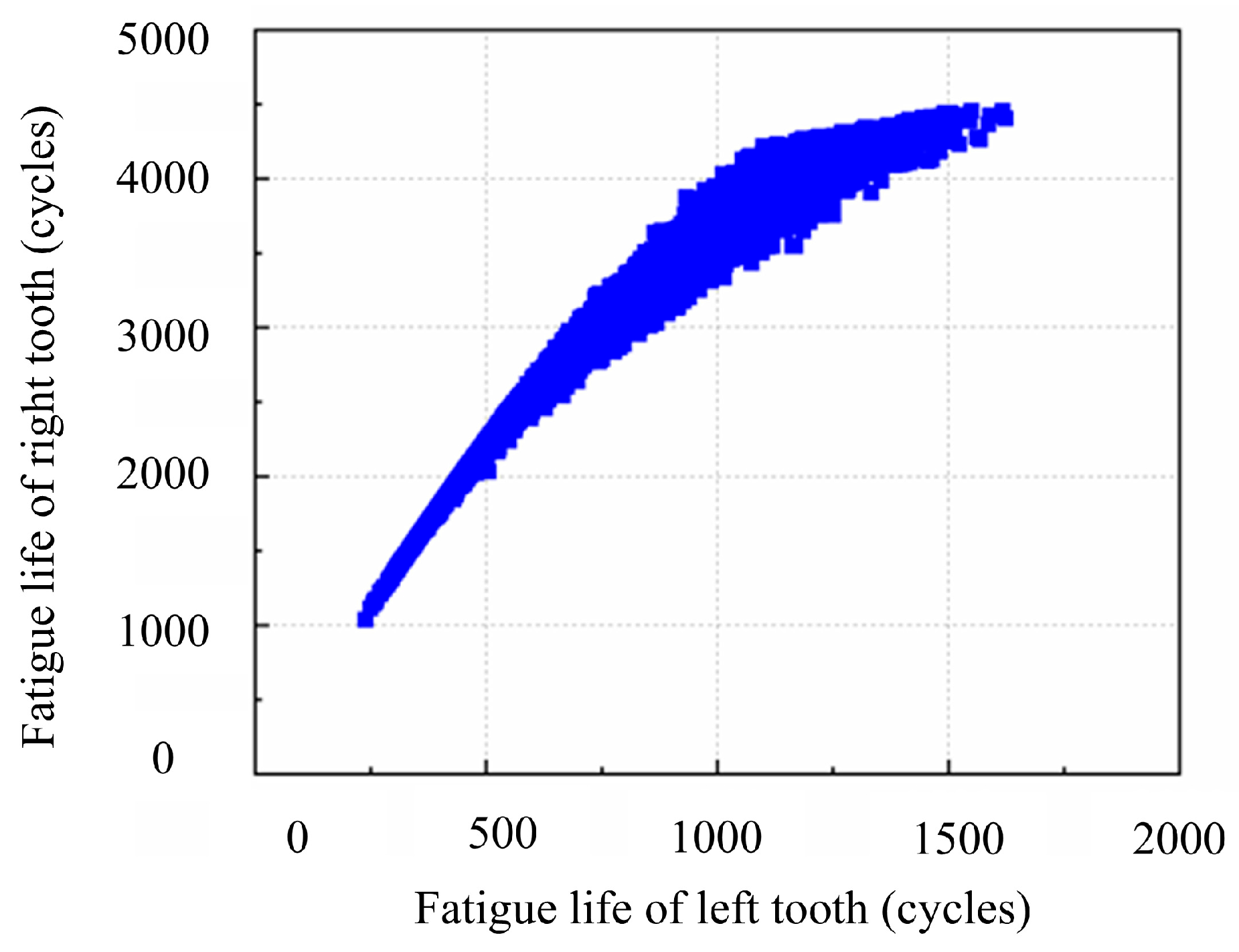
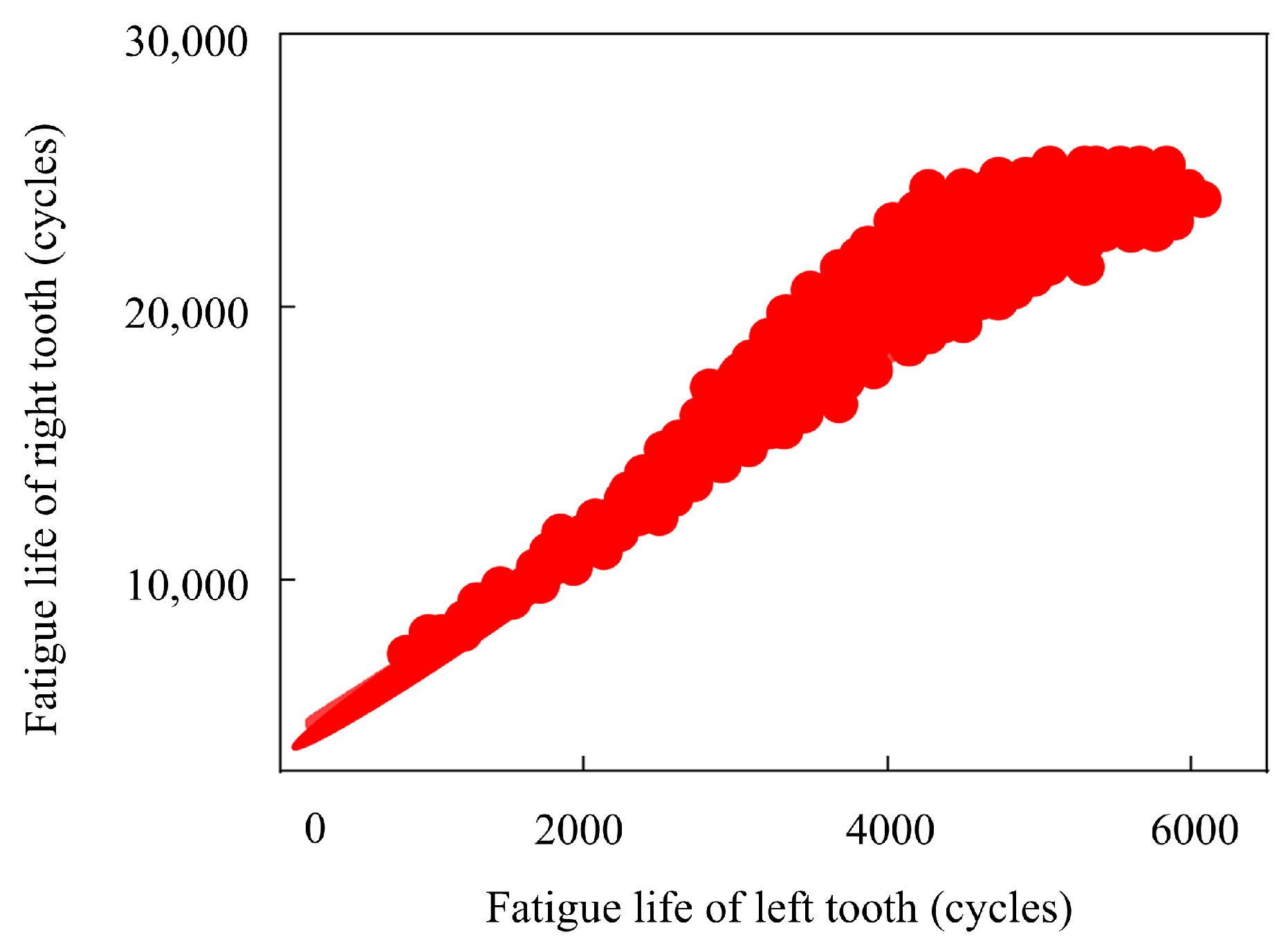
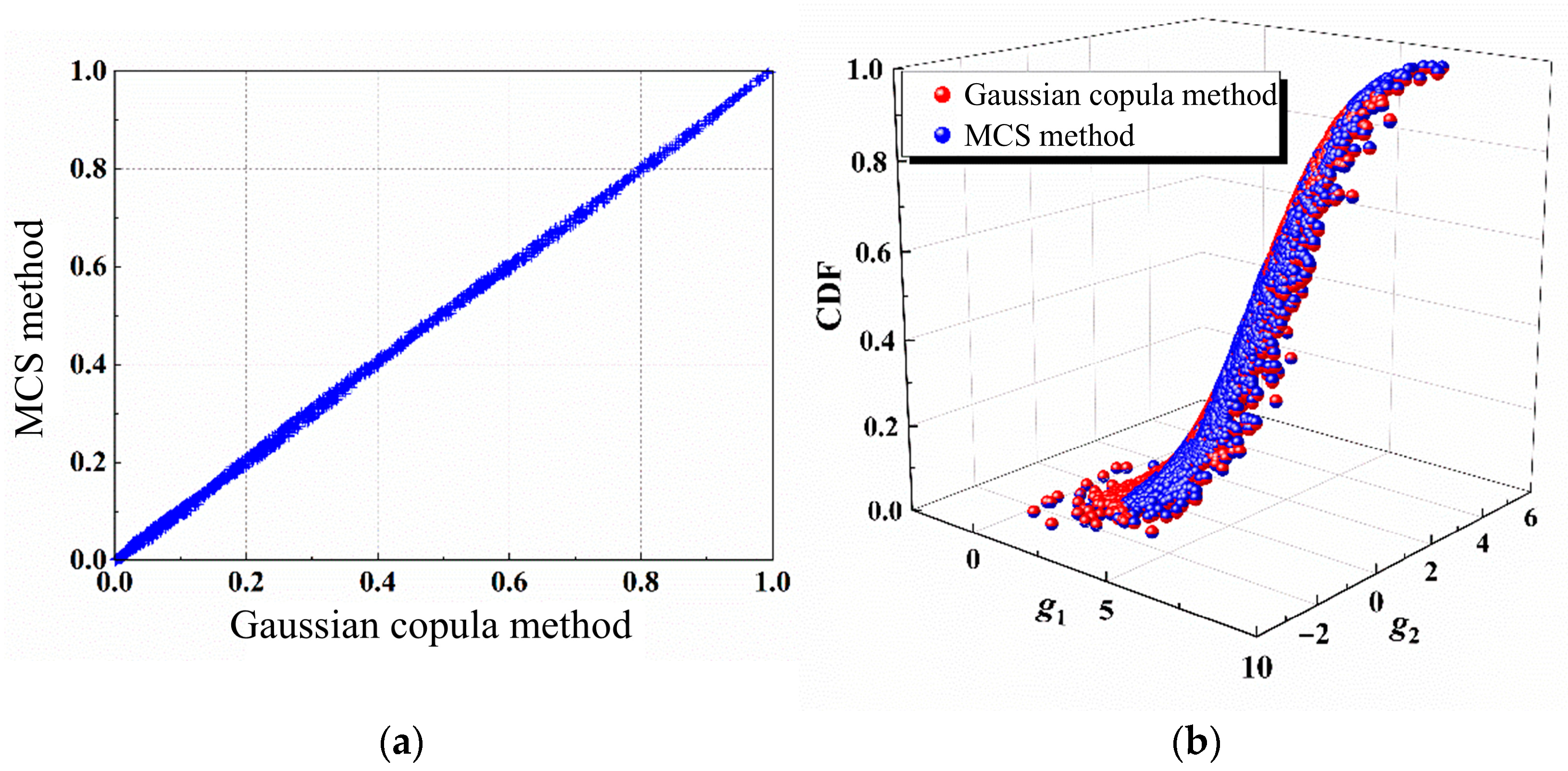
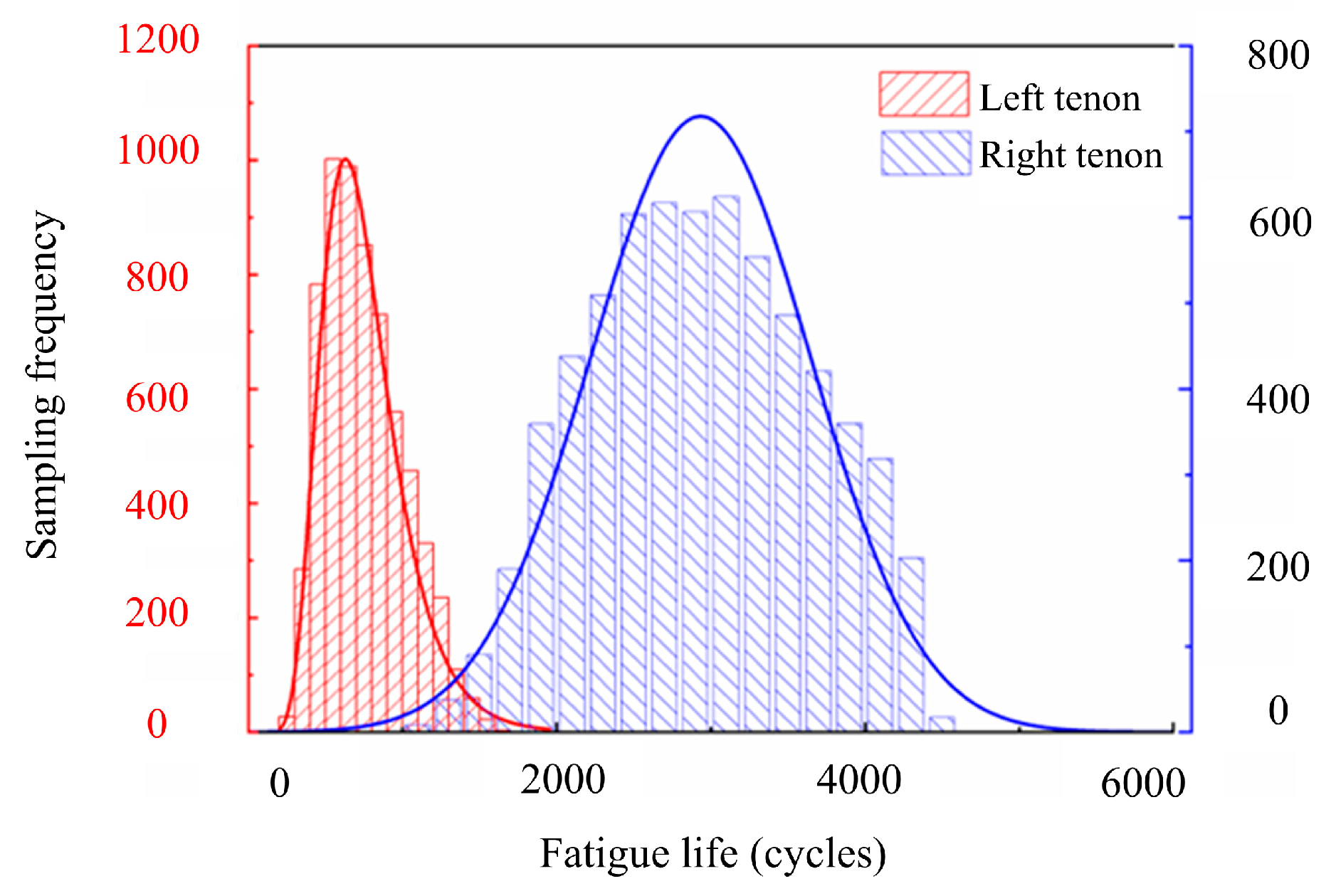
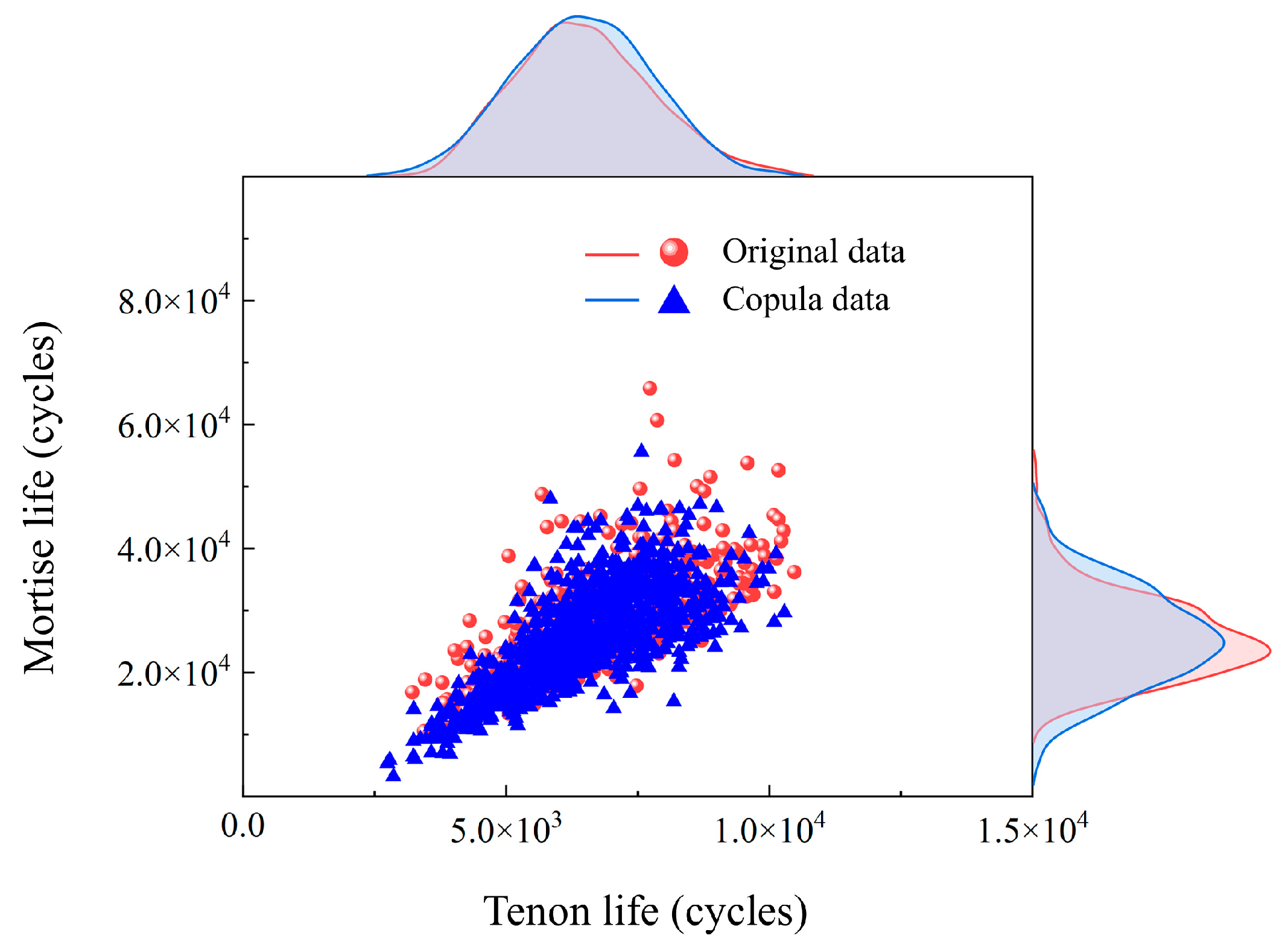
Using the Monte Carlo method, the life relationship between the left and right teeth is obtained through joint sampling, as shown in
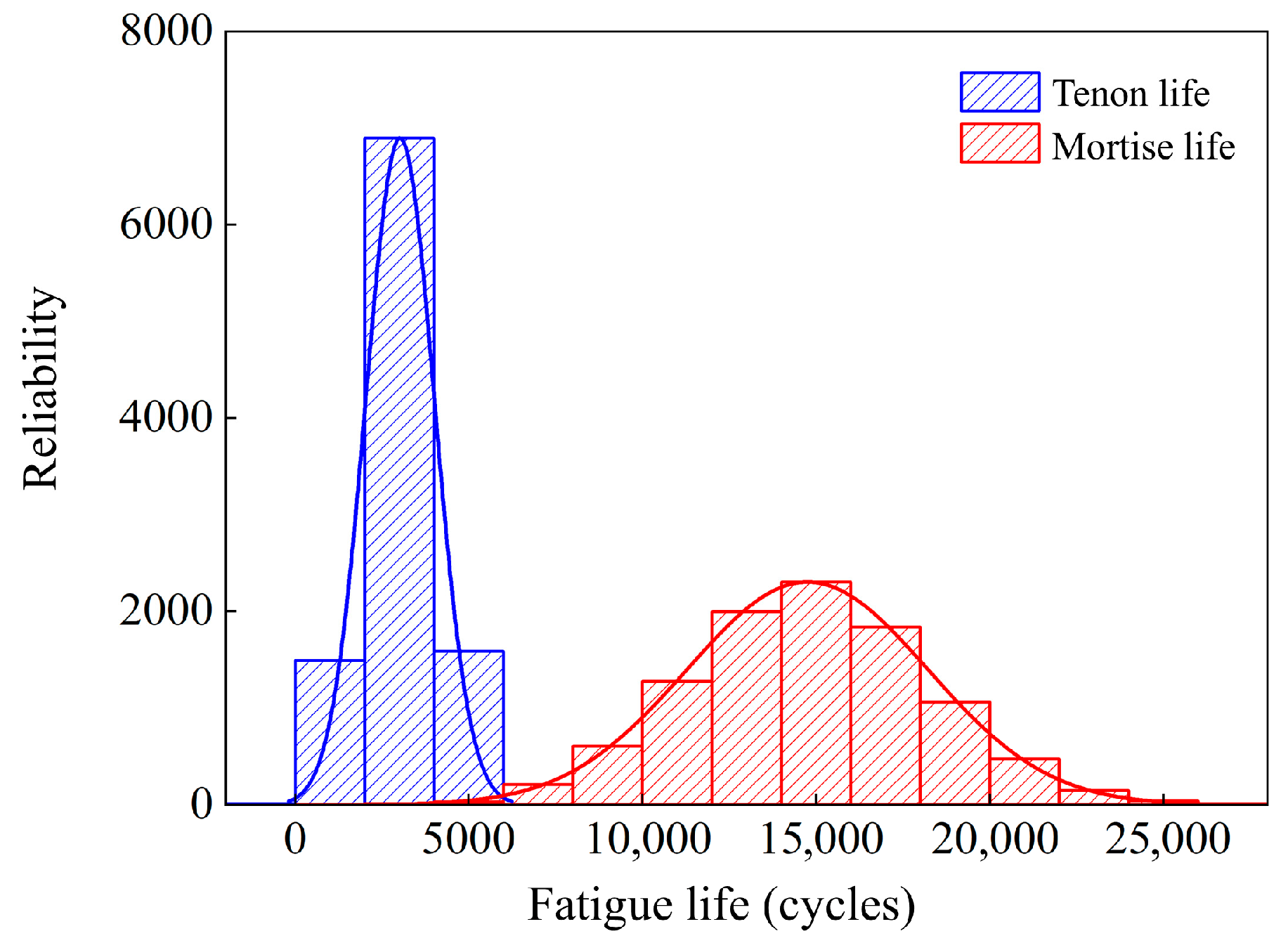
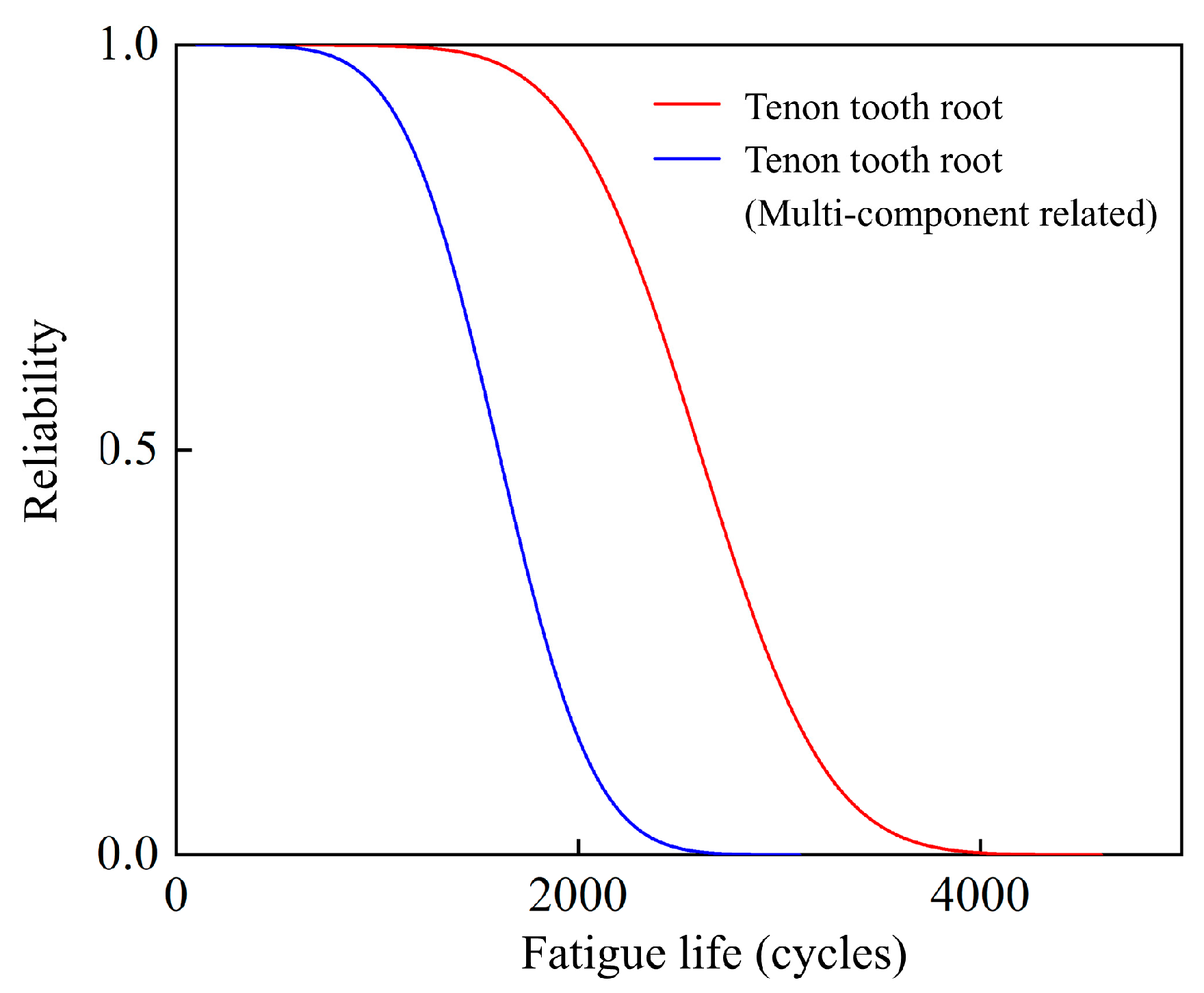
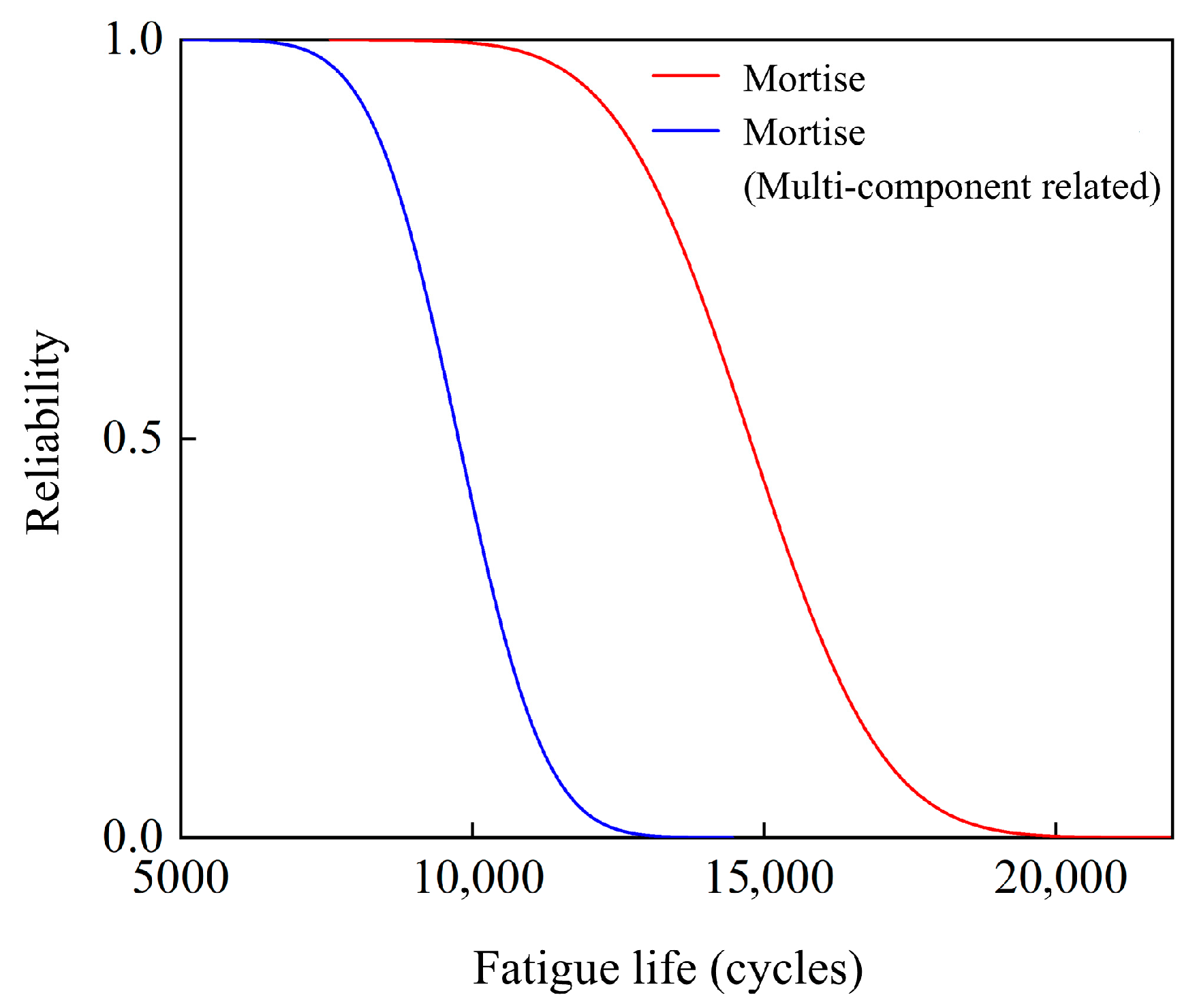
Figure 18, which shows that there is strong correlation. The probability life distributions of the two teeth are plotted, as shown in
Figure 19. The tooth life distribution is significantly lower than that of the right tooth, and in the overlapping part, both dangerous locations may fail.
The comparison between the fitting results of the life cumulative distribution function and the traditional Monte Carlo method shows that the Copula model has significant advantages in describing complex dependence structures.
The traditional Monte Carlo method relies on independent sampling or simple correlation assumptions, which may lead to underestimation of tail risks, especially in multivariate joint distribution modeling. In contrast, the Copula-based fitting constructs conditional dependence relationships hierarchically, which can more accurately capture nonlinear and asymmetric dependence between variables (such as tail dependence).
Empirical analysis shows that for high-dimensional life data, the estimation error of the extreme quantile (such as the 99% confidence level) of the Copula model is about 20–30% lower than that of the Monte Carlo method, and the computational efficiency can be improved through vine structure optimization.
However, the Monte Carlo method still has practicality in implementation simplicity and small-sample scenarios, while the superiority of the Copula becomes more prominent with the increase in data dimension and dependence complexity.
This comparison provides a quantitative basis for model selection in life risk evaluation.
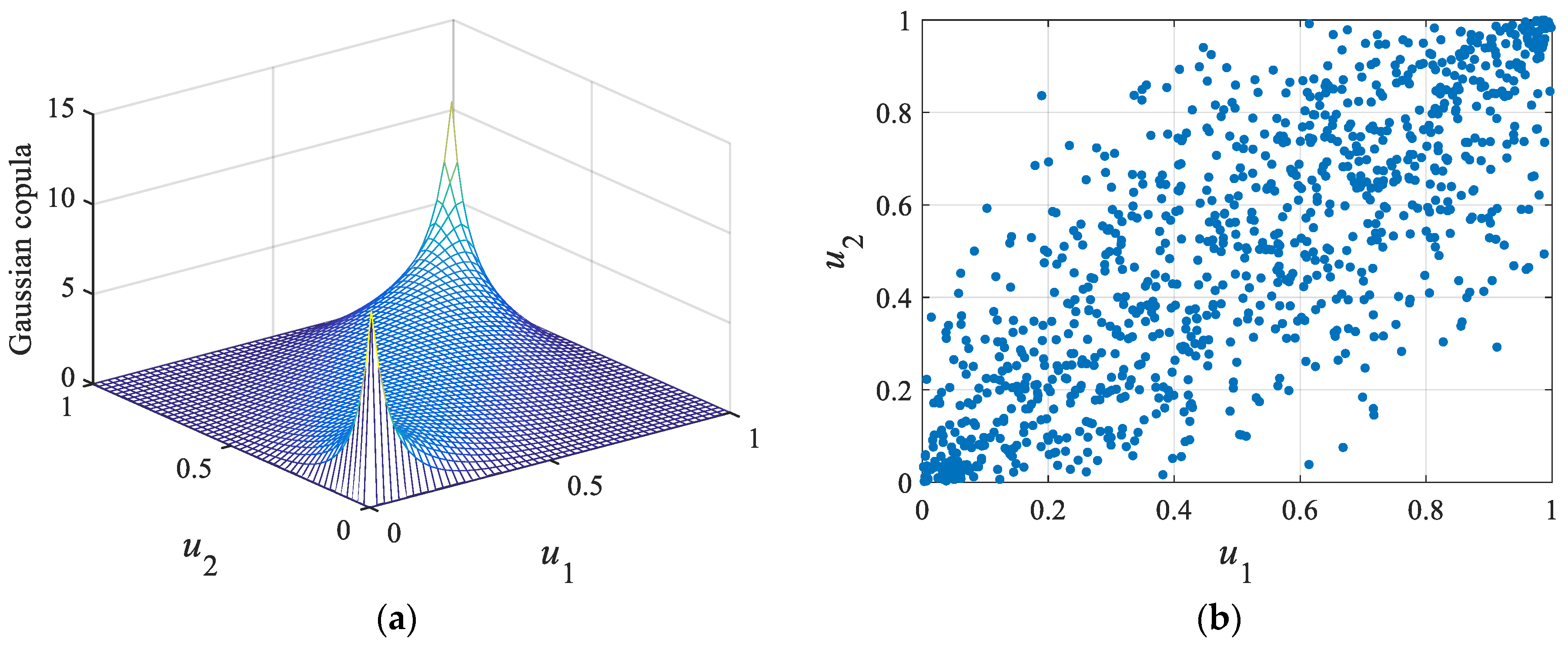
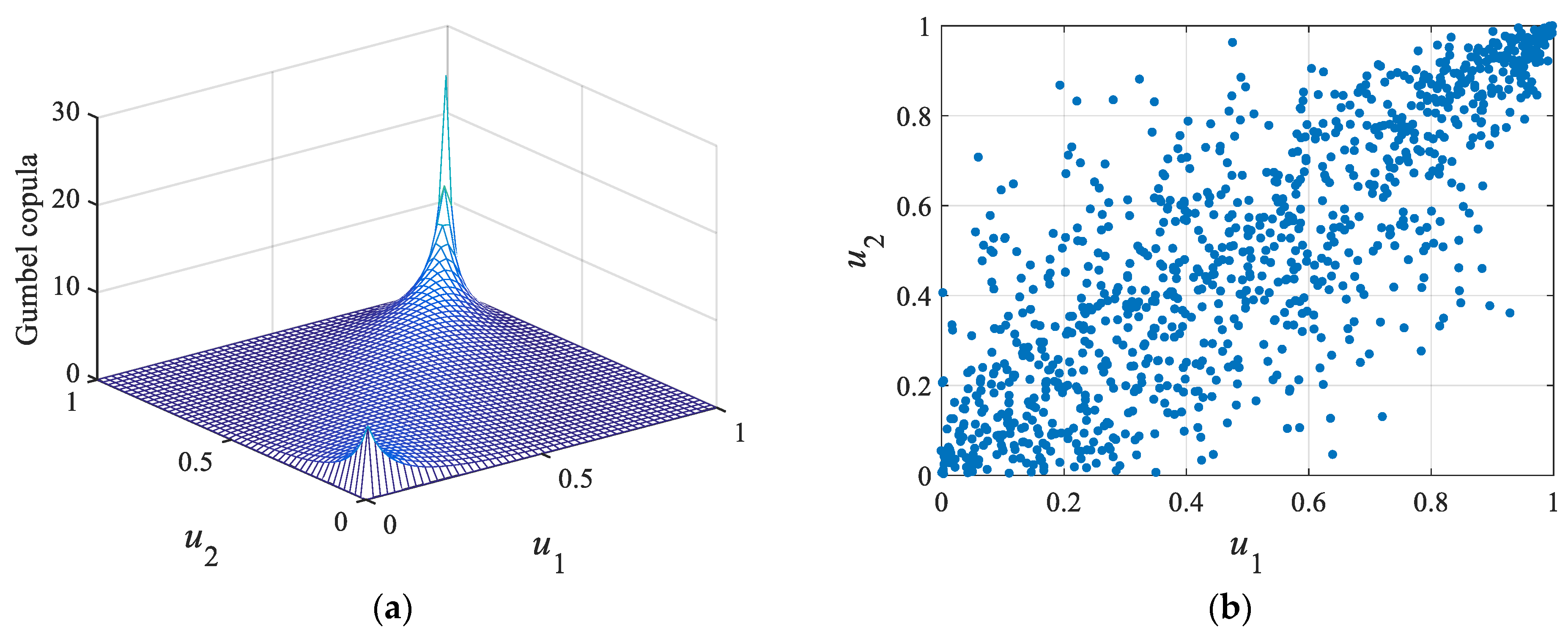
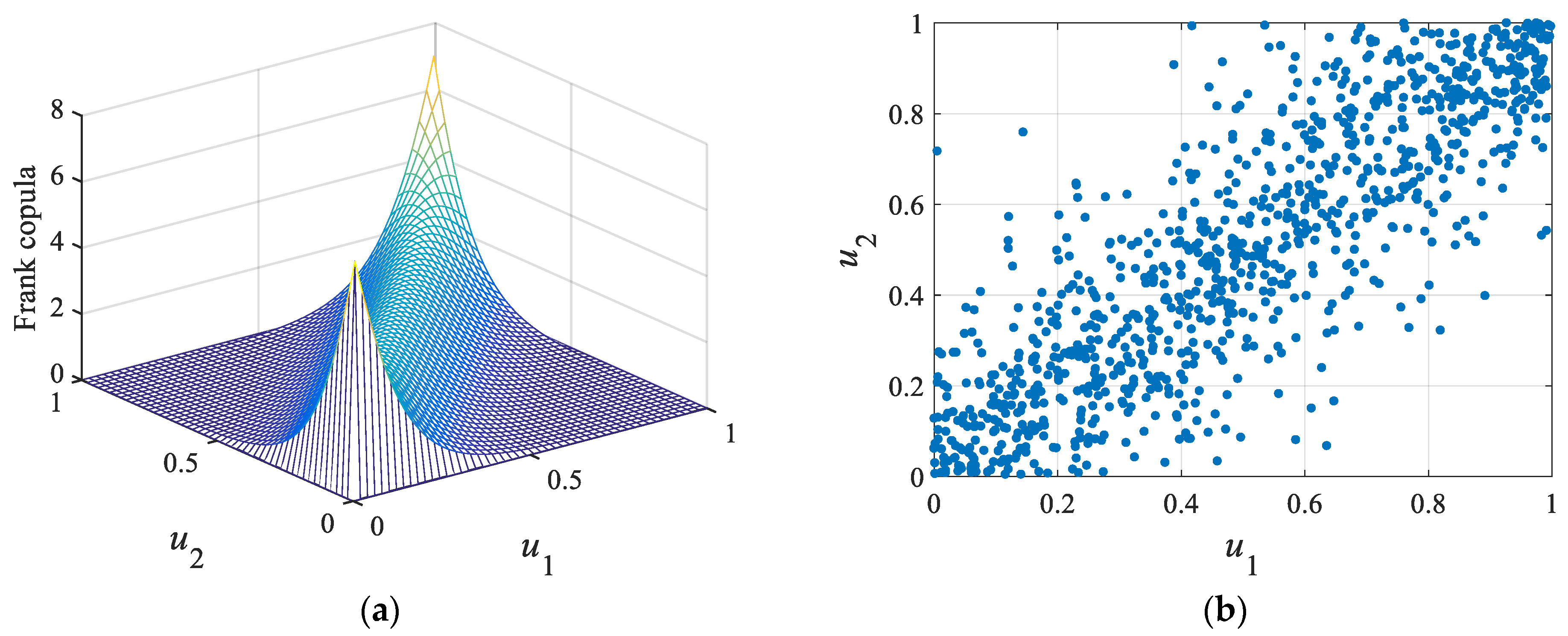
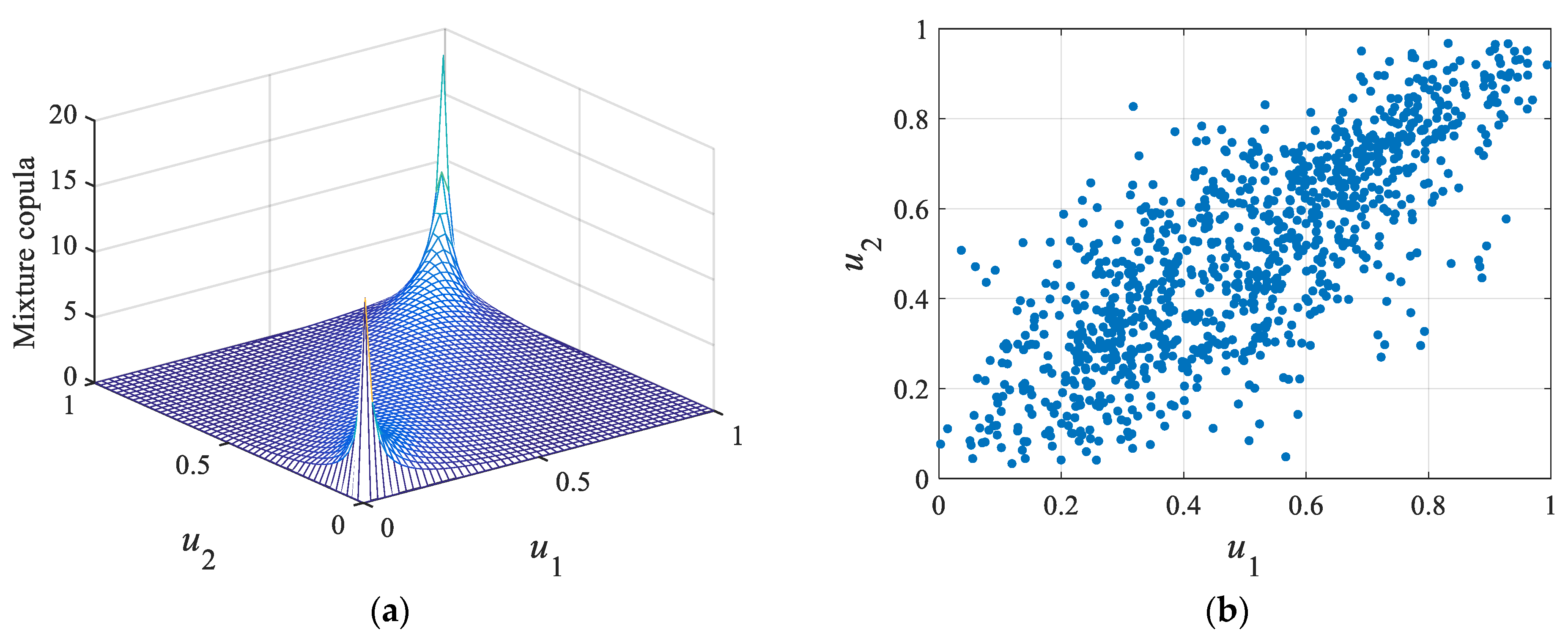
The Copula function is used to characterize the common-cause failure correlation of the two dovetail teeth, and the AIC (Akaike Information Criterion) method is used to select the optimal model, as shown in
Table 16. The minimum value corresponds to the model with the highest accuracy; therefore, the Gaussian coupling parameter is selected to characterize the correlation.
Using the established Copula function to characterize the correlation between the two teeth, the reliability distribution considering correlation is calculated. Life under different reliability levels is shown in
Table 17.
Combined with the figures and tables, it can be seen that the reliability distribution considering correlation is lower than that of a single tooth root distribution, and higher than the completely independent case, and is greatly affected by the most dangerous tooth. Therefore, in engineering practice it is necessary to consider the influence of correlation.
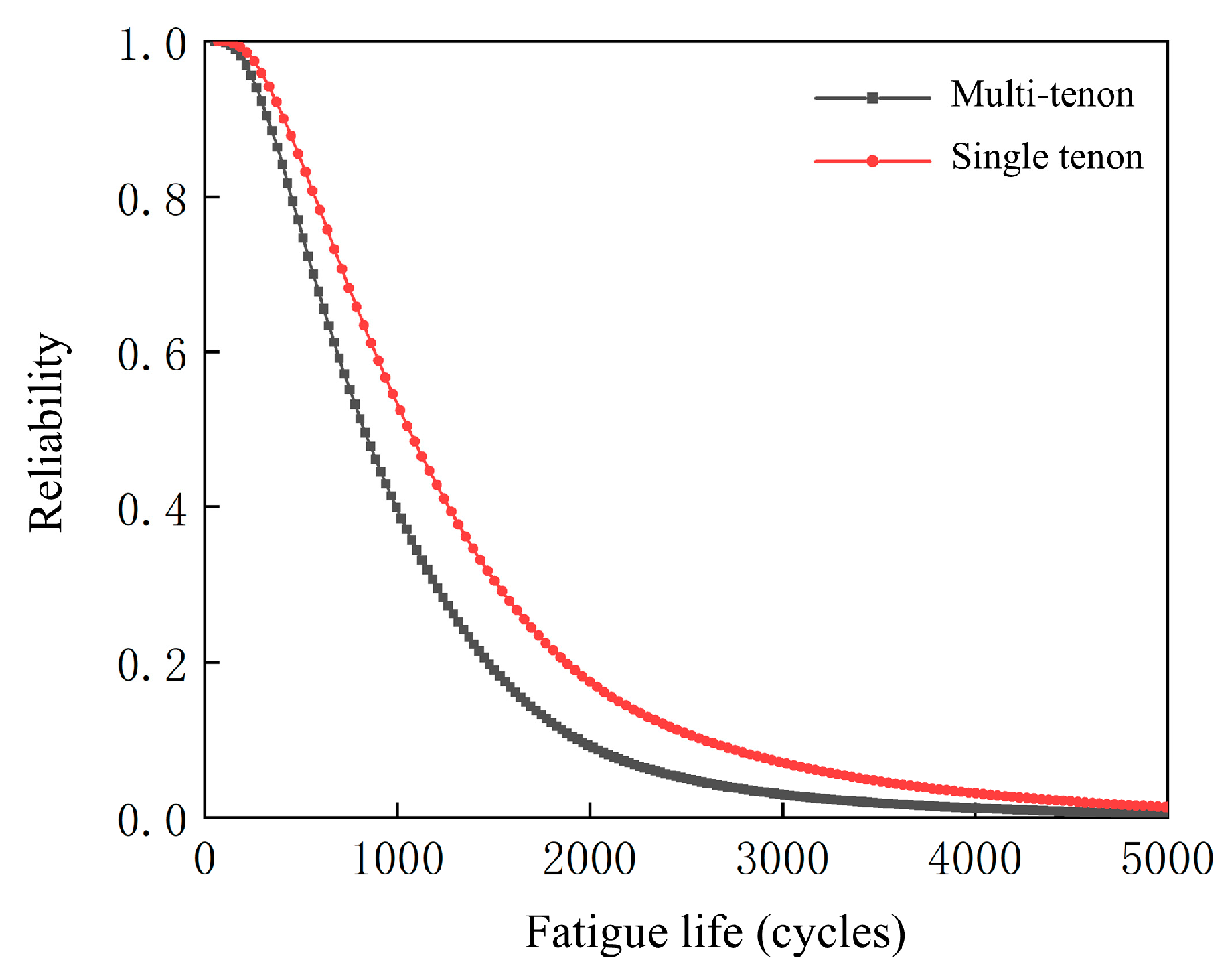
On the basis of the reliability analysis of multi-tooth correlation of the dovetail, the reliability considering the correlation of multiple dovetails of the whole disk is further analyzed. Correlation analysis is carried out for the whole-disk dovetails, and the multi-dovetail reliability curve is obtained as shown in
Figure 20.
The life of the whole disk depends on the life of the dangerous location with the lowest life, but the correlation among different dangerous locations also needs to be considered. After considering correlation, the whole-disk life decreases slightly, and in engineering practice the influence of multi-location correlation on life needs to be considered.
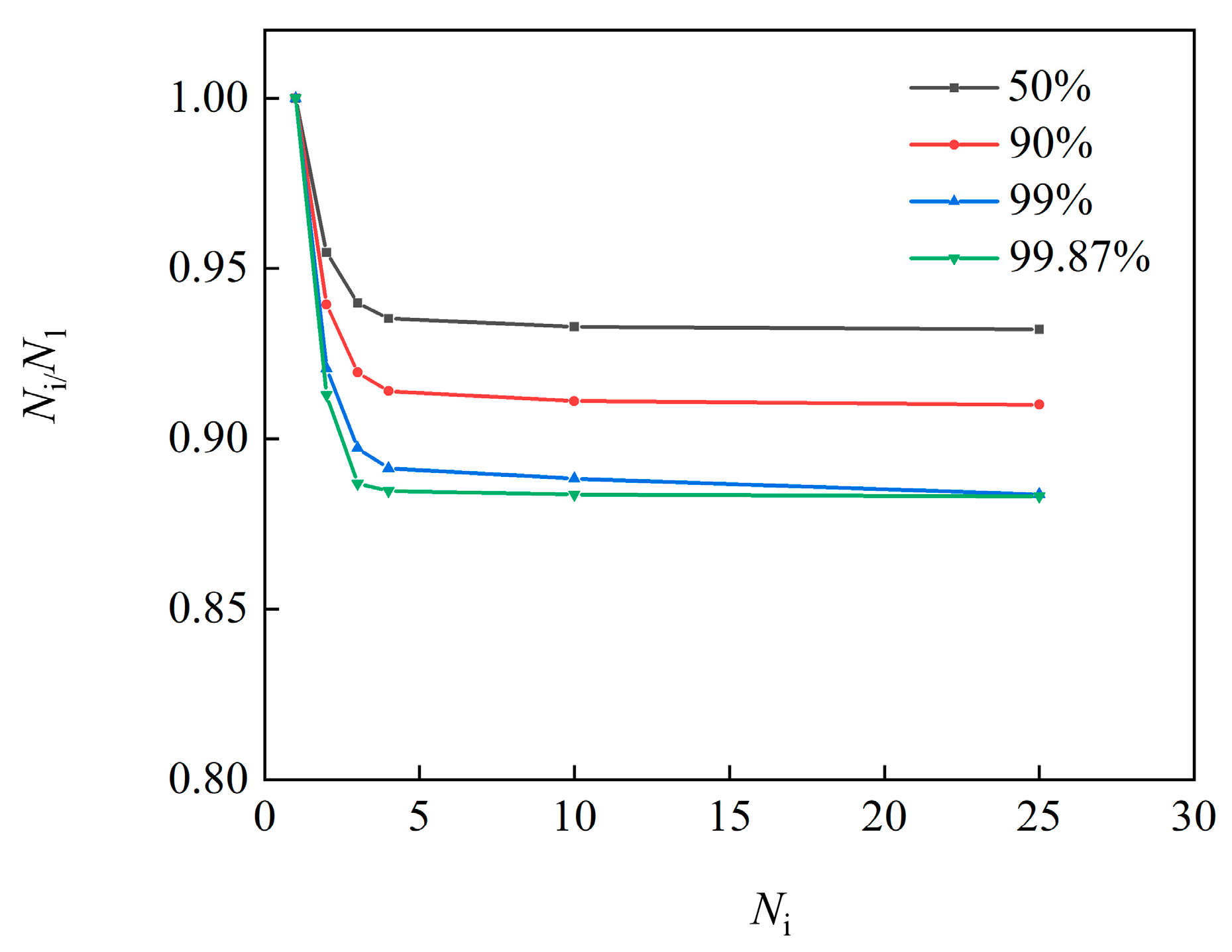
Further study is carried out on the influence of different numbers of dovetails on turbine disk life. Let
Ni be the life with multiple dovetails, and the life of a single dovetail be
N1. The life distributions under different numbers of dovetails are simulated, and the variation in
Ni/
N1 with the number of teeth under the same reliability is plotted, as shown in
Figure 21.
Under the same reliability, as the number of dovetails increases, Ni/N1 gradually decreases. When the number of dovetails is less than 10, the decrease is significant, and when it is greater than 10, it tends to become stable. Moreover, under the same number of dovetails, the decrease increases with the increase in reliability.