Article

Tailoring Active-Site Density in Ni/Al-MCM-41 Catalysts for Ethanol-Assisted CO2 Reforming: Impact of Ni Loading on Catalytic Performance


by
Fatima Seerat
1,
Muhammad Azriel Irfan Bin Azhar
1,
Alaa Dhari Jawad Al-Bayati
2,
Sarah R. Al-Karkhi
3,
Zainab Y. Shnain
4 and
Bamidele Victor Ayodele
1,*
1
Chemical Engineering Department, Universiti Teknologi PETRONAS, Bandar Seri Iskandar 32610, Perak, Malaysia
2
Department of Chemical Engineering and Petroleum Industries, Al-Mustaqbal University College, Hilla 51001, Iraq
3
Department of Environment and Pollution Engineering, Technical Engineering College-Kirkuk, Northern Technical University, Kirkuk 36001, Iraq
4
College of Chemical Engineering, University of Technology-Iraq, Baghdad 10066, Iraq
*
Author to whom correspondence should be addressed.
Catalysts 2026, 16(5), 463; https://doi.org/10.3390/catal16050463
Submission received: 7 March 2026 / Revised: 23 March 2026 / Accepted: 2 April 2026 / Published: 16 May 2026

Abstract

The interest in more sustainable energy sources has necessitated research in hydrogen production from various reliable pathways. This study investigates the potential of hydrogen production by ethanol-assisted CO2 reforming over Al-MCM-41-supported Ni catalysts considering the effect on the catalytic performance and stability. The Ni/Al-MCM-41 catalysts were synthesized via wet impregnation method and characterized using different instruments and techniques. Evidence of the formation of well-crystallized Ni nanoparticles dispersed on the Al-MCM-41 support was confirmed by X-ray diffraction analysis and field emission scanning electron microscopy. The amount of Ni loading, which varied from 5 to 15%, was confirmed using energy-dispersive analysis, while the mesoporous nature of the Ni/Al-MCM-41 was ascertained using N2 physisorption analysis. The performance of the Ni/Al-MCM-41 catalyst as a function of the ethanol conversion, CO2 conversion, hydrogen and CO yield is strongly corrected with Ni loading and reaction temperature. The ethanol conversion and hydrogen yield increase with the increase in reaction temperature. At a reaction temperature of 550 °C the lowest ethanol conversion and hydrogen yield of 32.3% and 33.7% were obtained over the 5 wt% Ni/Al-MCM-41 catalyst, while the highest ethanol conversion of 87.4% and hydrogen yield of 75.5% were obtained over the 15% Ni/Al-MCM-41 at 700 °C. The 15 wt% catalyst achieves the most balanced syngas profile at 700 °C, where the H2 and CO yields are optimized through the synergistic consumption of both ethanol and CO2. It can be inferred that the reaction follows a bifunctional pathway whereby the Ni active sites are responsible for the ethanol dissociation while the CO2 adsorption and activation are enhanced by the Al-MCM-41 support.

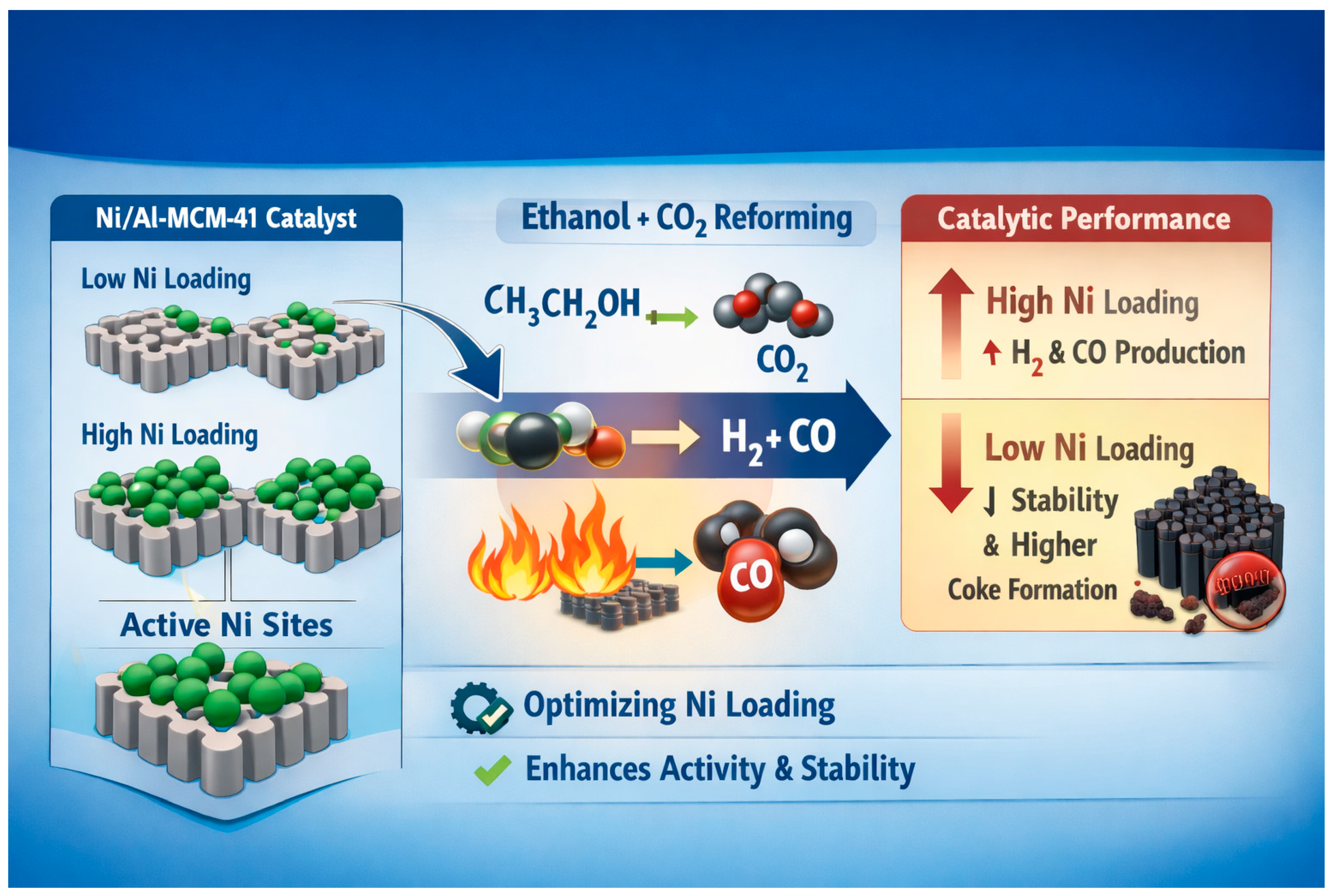
Graphical Abstract

1. Introduction

The quest for renewable and sustainable energy sources has driven intensive research interest in hydrogen production due to its several advantages [1,2,3]. Hydrogen possesses high energy density, and it does not emit greenhouse gases when used as fuel [4]. Steam methane reforming and electrolysis are mature technologies being used for commercial production of hydrogen [5,6]. However, constraints such as CO2 emission and high energy consumption associated with these technologies have opened new research opportunities for more environmentally sustainable pathways for hydrogen production [7]. To achieve this goal, alternative thermo-catalytic pathways to steam methane reforming have been investigated [8]. One of such alternatives is the dry reforming process, which utilizes CO2 as oxidant to transform feedstocks such as CH4, glycerol, and ethanol into hydrogen-rich syngas [9].
Ethanol dry reforming (EDR) is a type of reforming reaction that catalytically converts ethanol and CO2 into hydrogen-rich syngas as indicated in Equation (1) [10].
C 2 H 5 O H + C O 2 3 C O + 3 H 2
High-purity hydrogen can be obtained from the product stream during ethanol dry reforming using the pressure swing adsorption process and subsequently deployed for end-use [11]. Since ethanol reforming is a temperature-dependent reaction, one of the constraints is catalyst deactivation at elevated temperatures [12]. Carbon deposition typically occurs through two main routes: the dehydration of ethanol to ethylene followed by polymerization, and the decomposition of methane (CH4 → C + 2H2) [13]. The generally accepted mechanism for EDR over Ni-supported catalysts follows a bifunctional pathway. In this model, ethanol undergoes dissociative adsorption on the metallic Ni sites to form CHx and CO fragments [14]. Simultaneously, CO2 is activated on the basic sites of the support (or at the metal–support interface) to produce surface oxygen species (O*) [15]. These oxygen species are critical for the gasification of the CHx intermediates, releasing CO and H2 while keeping the active Ni surface clean. Therefore, the design of a support like Al-MCM-41 is strategic; its high surface area facilitates superior Ni dispersion to combat sintering, while the incorporation of aluminum modulates the surface basicity to enhance CO2 activation and suppress carbon formation.
To mitigate this constraint of carbon deposition during EDR, several formulations of transition-based metals have been explored. Fionov et al. [16] investigated the effects of ZrO2 and CeO2 promoters on the catalytic activities of Ni/Al2O3 in EDR. A hydrogen yield of 77% was obtained over the Ni catalyst synthesized on 50% alumina and 50% ZrO2-CeO2 supports. The performance of the catalyst was attributed to the small Ni nanoparticles influenced by the increased Al content. Although the nominal Ni loading was set at 10%, it was not certain if an optimum performance was attained at the stipulated nominal Ni loading. In a similar study, Wei et al. [17] reported the potential of using Ni/KIT-6 for ethanol dry reforming. The study revealed that 90% ethanol conversion occurs at a reaction temperature of 550 °C leading to hydrogen yield of 45%. The catalytic performance was attributed to the influence of strong metal–support interactions between the Ni and the KIT-6. However, the Ni loading in the catalyst composition is not certain from the study. Considering the impact of lanthanum (La) as a promoter, Bahari et al. [18] investigated the catalytic performance of Ni/Al2O3 in EDR reaction. The study revealed that ethanol conversion and the hydrogen yield were significantly influenced by the La loading and increase in the CO2 partial pressure. It was not clear if an optimum catalytic performance was attained at the stipulated 10 wt% Ni loading.
As indicated in the various studies, Ni-based catalysts are the most used catalytic material for various EDR reactions [19]. This is primarily due to cost-effectiveness, abundance, high catalytic activity, good selectivity, versatility and modifiability [20]. In comparison with noble metals such as ruthenium, rhodium, platinum and palladium, Ni is significantly less expensive and more abundant, which makes it more economically viable for industrial-scale applications where cost is a factor. In addition, Ni has been proven to display high activity in terms of reactant conversion [19] and product yields during EDR reaction [21]. Moreover, Ni catalysts offer the advantage of being easily synthesized on a wide range of support materials such as Al2O3, SiO2, CeO2 and ZrO2 [22,23]. Ni-based catalysts have been extensively investigated for various thermo-catalytic reactions such as methanation [24], methanol synthesis [25], reverse water–gas shift reactions [26], reforming [27], and urea synthesis [28].
The effectiveness of Ni dispersion is significantly influenced by the choice of support materials [29]. However, attaining high efficiency in Ni-based catalysts used for EDR is usually constrained by non-optimal Ni loading. Challenges such as severe sintering of Ni is often associated with high Ni loading. Similarly, a very low Ni loading might result in insufficient activity during EDR. Hence, a critical challenge lies in the identification of the precise Ni loading that optimizes the active sites’ availability and dispersion while simultaneously minimizing sintering. Therefore, this study aims to elucidate the effect of Ni loading (5, 10, and 15 wt%) on hydrogen production during EDR reaction. The catalysts were synthesized and characterized using different instrument techniques. The catalysts were then tested in EDR reaction using a fixed-bed continuous reactor. The goal was to identify what Ni loading maximizes hydrogen production and provide fundamental insights that will guide the future design of highly efficient Ni-based catalysts for EDR reactions in line with the principles of cleaner production.

2. Results and Discussion

2.1. Catalyst Characterization

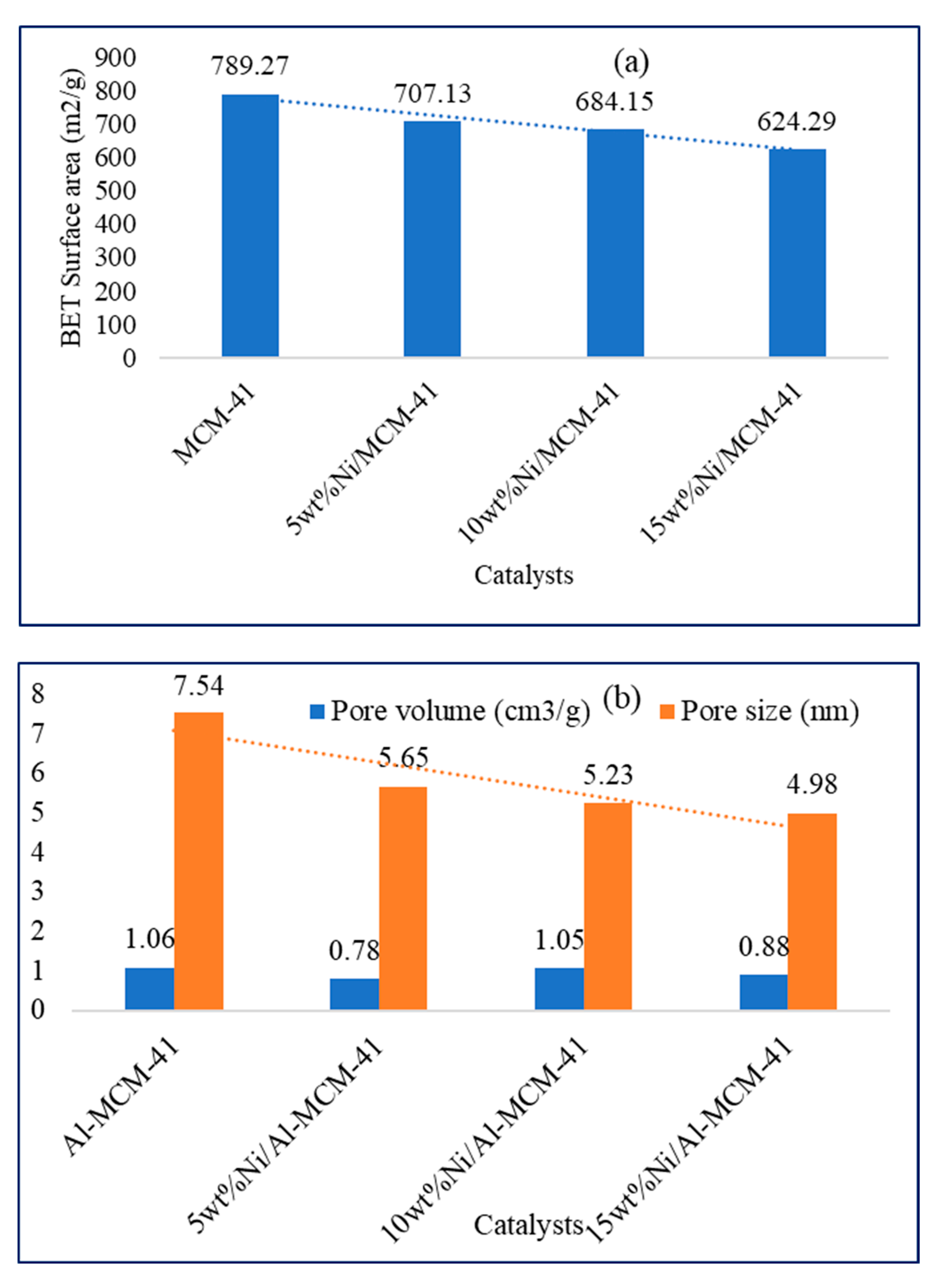
The adsorption–desorption isotherms and pore distribution of the Ni/Al-MCM-41 catalysts are depicted in Figure 1. The adsorption–desorption isotherms depicted in Figure 1a exhibit type IV features according to IUPAC classification [30]. As shown in the isotherms, at P/P° < 0.1, there is a rapid increase in the quantity of N2 adsorbed, indicating monolayer–multilayer adsorption on the pore walls [31]. P/P° range of 0.2 to 0.4 depicts a region where monolayer adsorption continues to build up on the catalyst surface. This is followed by a sharp, steep rise at P/P° from 0.4 to 0.8 depicting a characteristic of capillary condensation occurring within the mesopores [32]. The mesoporous nature of the catalyst is further confirmed by the presence of hysteresis loop, whereby the adsorption and desorption branches do not coincide [33]. As indicated in Figure 2a, the BET specific surface area of the Al-MCM-41 support, 5 wt% Ni/Al-MCM-51, 10 wt% Ni/Al-MCM-41 and 15 wt% Ni/Al-MCM-41 was calculated as 789.27, 707.13, 684.15, and 624.29 m2/g, respectively. The decrease in the specific surface area of the catalyst with increased Ni loading can be attributed to the deposition of the Ni nanoparticles within and on the surface of the pores, thereby reducing the available total surface area of the catalyst.
The pore size distribution (PSD) (Figure 1b) of the Ni/Al-MCM-41 catalysts, as determined by the BJH method, confirms the retention of the mesoporous framework across all Ni loadings, with a primary pore diameter centered between 1.0 and 1.3 nm. A non-linear trend was observed: the 10 wt% Ni sample exhibited a slight shift toward larger pore diameters (~1.25 nm) and increased peak intensity, suggesting the merging of smaller micropores. Conversely, the 15 wt% Ni catalyst showed a reduction in both peak intensity and pore diameter (~1.0 nm), which is attributed to a pore-filling effect where the higher metallic concentration occupies the internal volume of the Al-MCM-41 channels. This structural evolution suggests that while the 15 wt% loading slightly reduces the effective pore size, it maximizes the density of active Ni sites within the mesoporous architecture, directly contributing to the superior ethanol conversion and hydrogen yield observed at 700 °C. The average pore size of the catalysts indicated in Figure 2b ranges from 4.98 nm to 5.65 nm, which further confirms the mesoporous nature of the catalysts since they are within 2 and 50 nm. While the primary mesopore peak was observed at approximately 1.1 nm (Figure 1a), the BJH average pore diameter reported in Figure 2b accounts for the total porosity, including the secondary broader distribution in the 4.98–5.65 nm range.
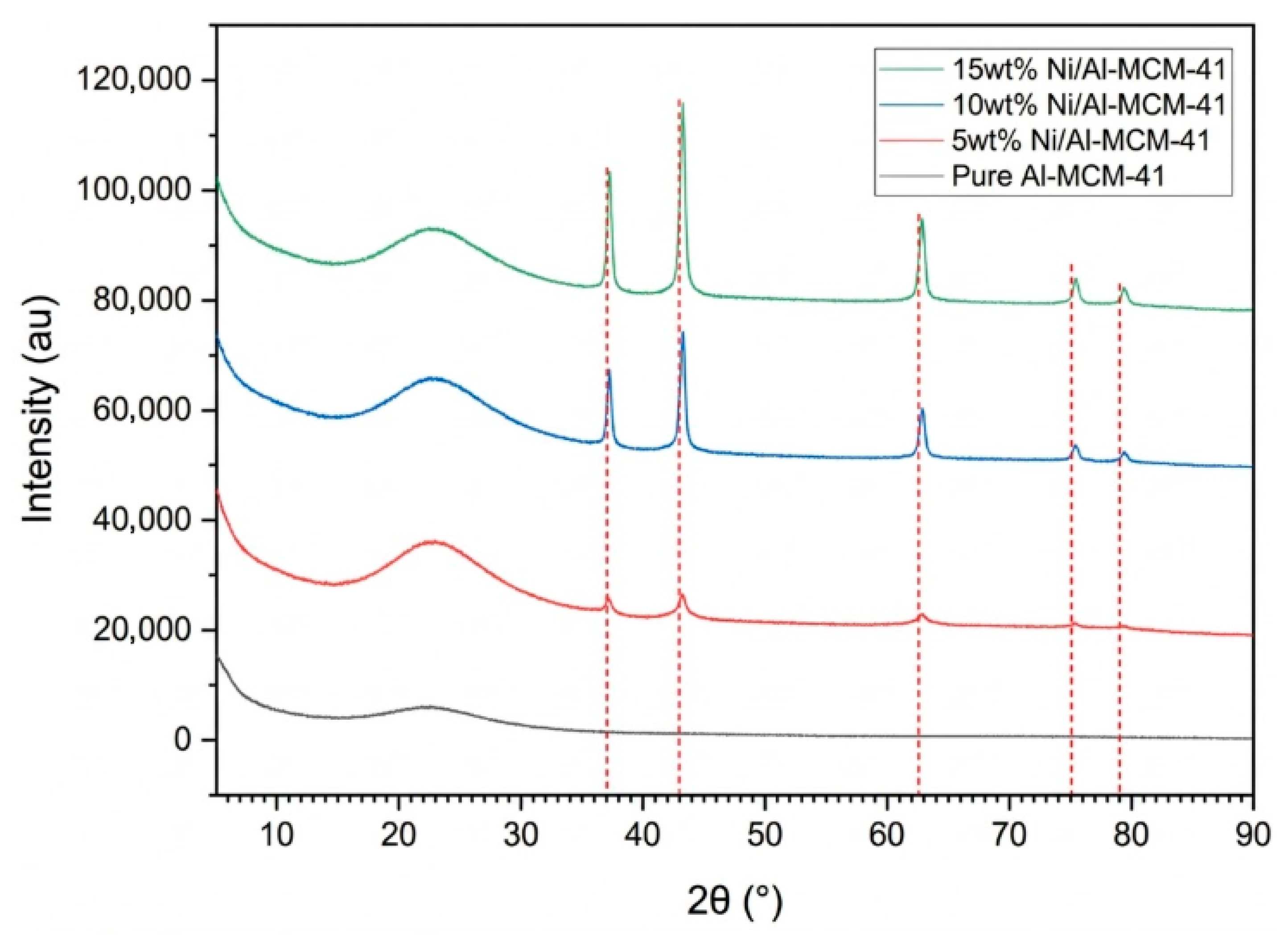
The XRD patterns of the Ni/Al-MCM-41 catalysts are depicted in Figure 3. The pristine Al-MCM-41 support displayed broad, diffuse peaks in the 2θ range of 20° to 25°, which is typical of an amorphous silica response for the structure of Al-MCM-41 [34]. The 5 wt%, 10 wt%, and 15 wt% Ni/Al-MCM-41 catalysts retained the broad, diffuse peaks in the 2θ range of 20° to 25°, which confirmed the presence of the Al-MCM-41 supports. Also, it is an indication that the original structure of the Al-MCM-41 amorphous structure is preserved after the impregnation of the Ni precursors. Furthermore, the presence of several sharp and well-defined diffractions peaks can be seen on the XRD patterns of the three Ni/Al-MCM-41 catalysts. The intensity of the sharp peaks systematically increases with the increase in the Ni loading from 5 wt% to 15 wt%. This is an indication that the peaks originate from a crystalline phase containing Ni, and the amount of this crystalline phase increases with higher Ni content [35]. The comparison of the peaks with the standard reference in the Joint Committee on Powder Diffraction Standards (JCPDS) helps in the identification of the catalyst crystalline phase. As indicated in Table 1, the diffraction peaks at 2θ = 37.2° (111), 43.3° (200), 62.9° (220), 75.4° (311), and 79.4° (222) can be attributed to the face-centered cubic structure of the metallic Ni (JCPDS card no. 47-1049) [36].
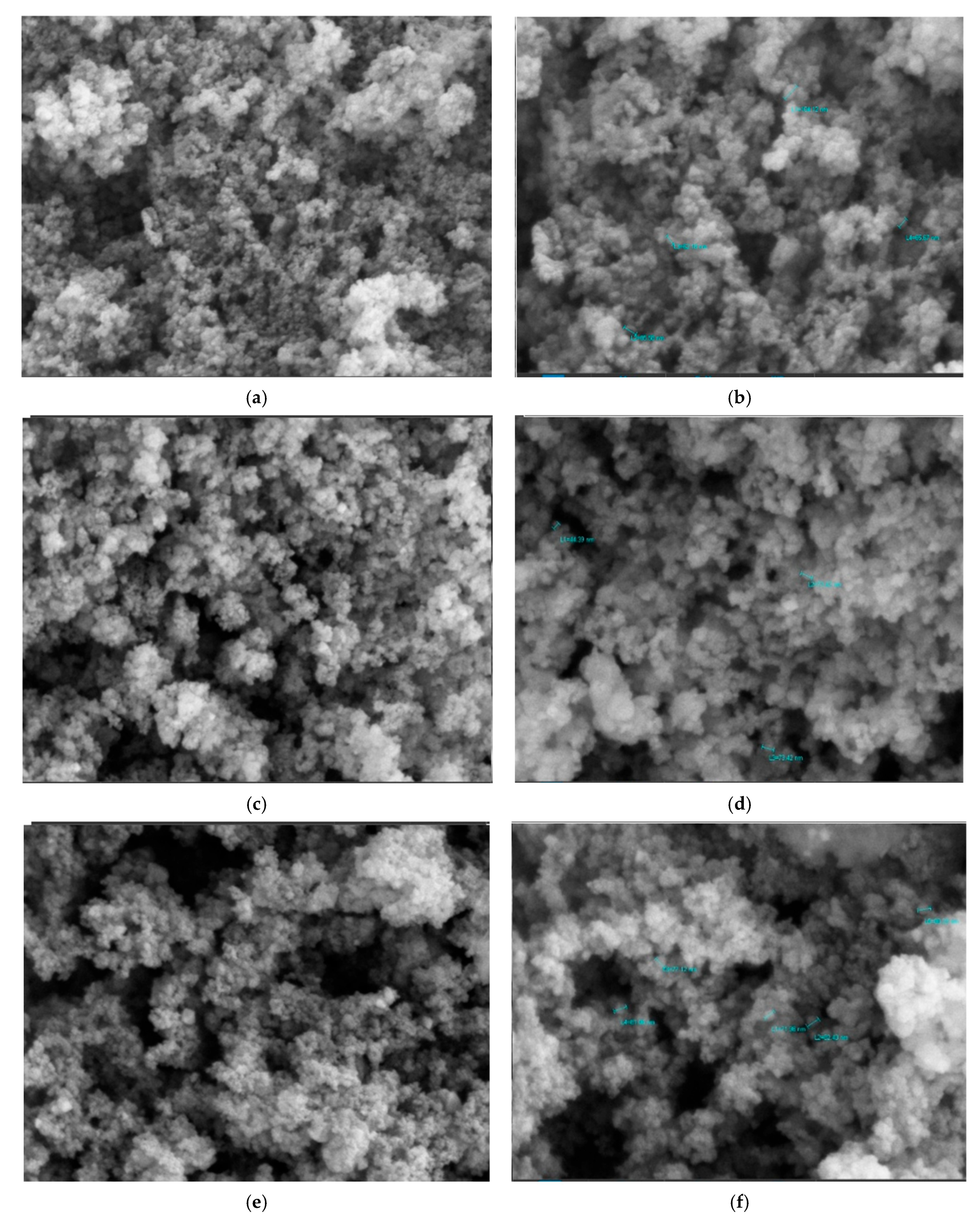
The morphology of the Ni/Al-MCM-41 catalysts at 50,000× and 100,000× magnifications are depicted in Figure 4. The FESEM images reveal materials composed of nanoscale particles that are heavily agglomerated into a larger, porous structure. The catalyst nanoparticles appear to be quasi-spherical or slightly irregular in shape [37]. Also, the catalyst nanoparticles are densely packed and fused together, forming a continuous, sponge-like network, which indicates a material with a very high surface-to-volume ratio due to the presence of the mesoporous Al-MCM-41 support material. The catalyst nanoparticles seem to have relatively uniform distributions of particle sizes in the range of 45–90 nm dispersed on the Al-MCM-41 supports. However, the agglomeration of the nanoparticles to form a larger, highly porous, sponge-like structure seems to increase with the increase in the Ni loading.
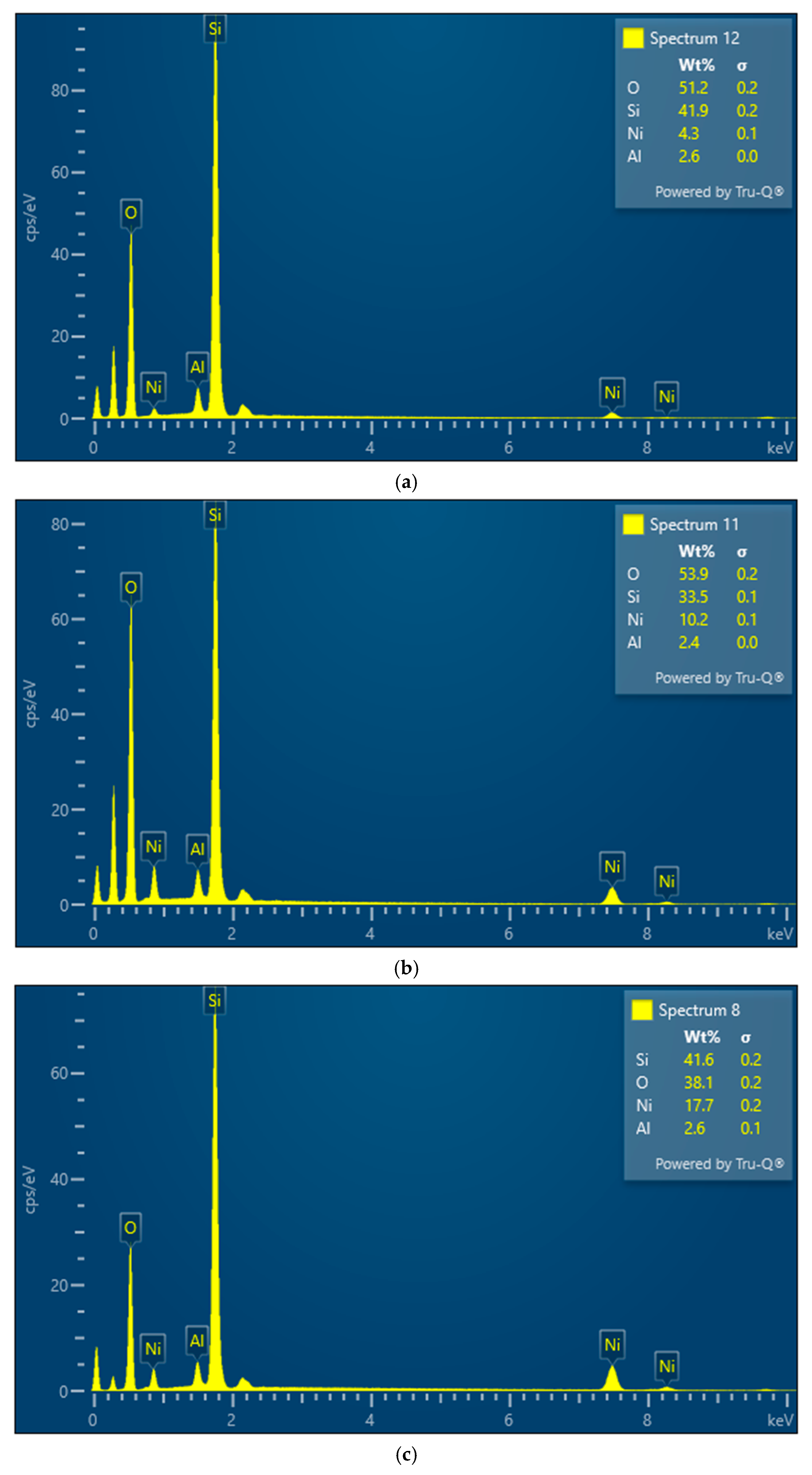
The EDS micrograph of the catalysts indicating the different Ni loading is depicted in Figure 5. The presence of silicon (Si), oxygen (O), nickel (Ni), and aluminum (Al) can be confirmed from the EDS micrograph, which constitute the elemental make-up of the Ni/Al-MCM-41 catalysts. This observation confirms that the nanoparticles observed in the FESEM images are composed of Ni, Si, O and small fraction of Al. The detection of Ni, Si and O is consistent with the XRD results, which identified crystalline Ni and amorphous SiO2 support with Al undetected perhaps due to the small percentage. The compositions of the elements vary according to the Ni loading. In Figure 5a, the elemental compositions of the O, Si, Ni, and Al are obtained as 51.2%, 41.9%, 4.3%, and 2.6%, respectively. The Ni composition of 4.3% is consistent with 5% calculated during the synthesis stage. In Figure 5b, the elemental compositions of the O, Si, Ni, and Al are obtained as 53.9%, 33.5%, 10.2%, and 2.4%, respectively. Also, the Ni composition of 10.2% is consistent with 10% calculated during the synthesis stage. In Figure 5c, the elemental compositions of the O, Si, Ni, and Al are obtained as 41.6%, 38.1%, 17.7%, and 2.6%, respectively. Also, the Ni composition of 17.7% is consistent with 15% calculated during the synthesis stage. The detection of a relatively small amount of Al (~2.5%) in all the samples is confirmation that the support material is aluminosilicate hierarchical material (Al-MCM-41) [38]. The support is characterized as a hierarchical aluminosilicate material, as evidenced by the dual porosity observed in the BJH pore size distribution and the successful integration of Al into the mesoporous silica framework verified by EDX and XRD. The slightly lower Ni loading detected by EDS for 5 wt% Ni/Al-MCM-41 and 10 wt% Ni/Al-MCM-41 catalysts compared to the nominal loading may be attributed to the incorporation of some Ni species within the internal mesoporous channels of the Al-MCM-41, which are less accessible to the EDS electron beam compared to surface species, whereas the slight excess of Ni detected by EDS relative to the nominal values for the 15 wt% Ni/Al-MCM-41 suggests a minor degree of surface enrichment of Ni particles on the exterior of the Al-MCM-41 support.

2.2. Catalytic’ Performance in Ethanol Dry Reforming Reaction

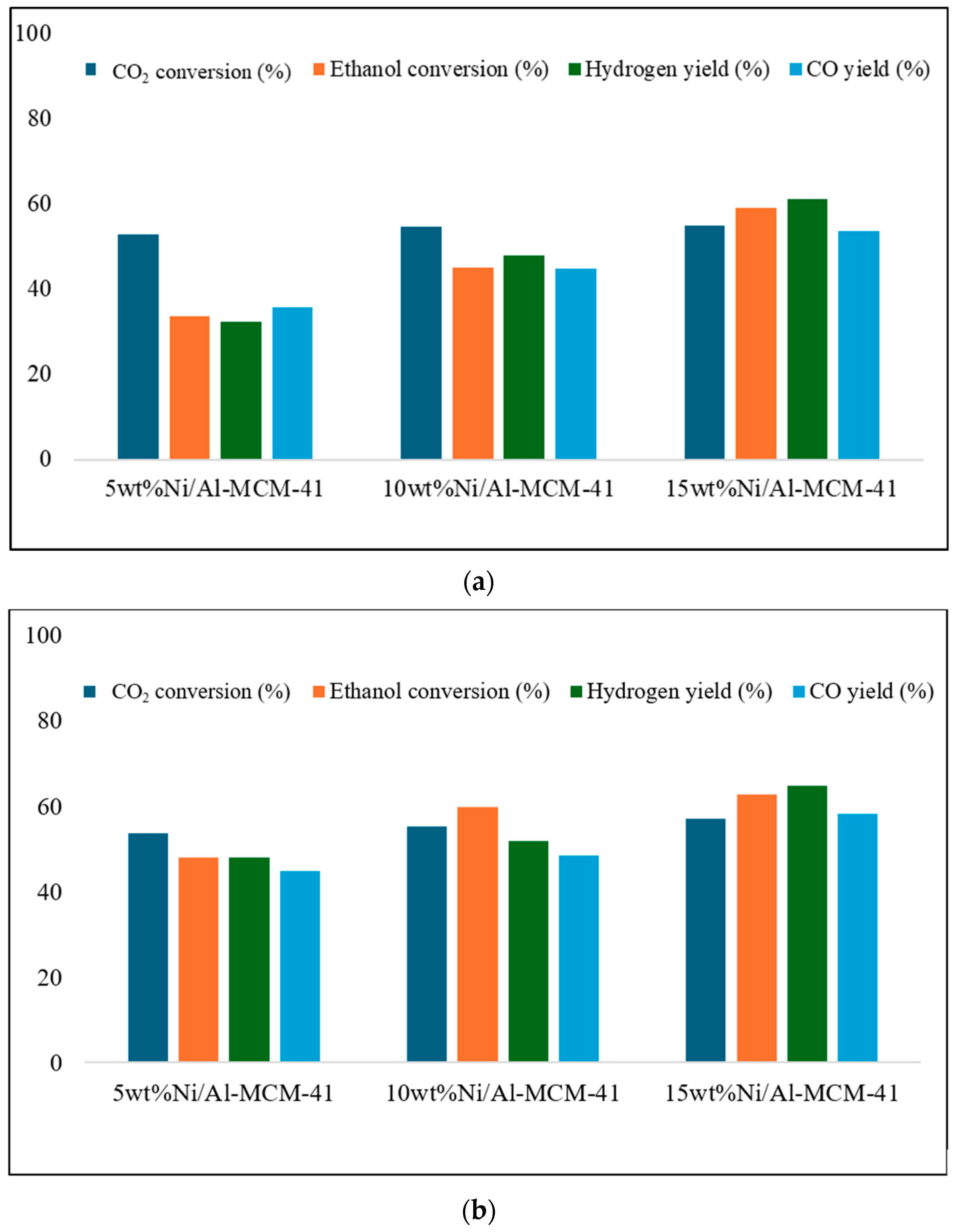
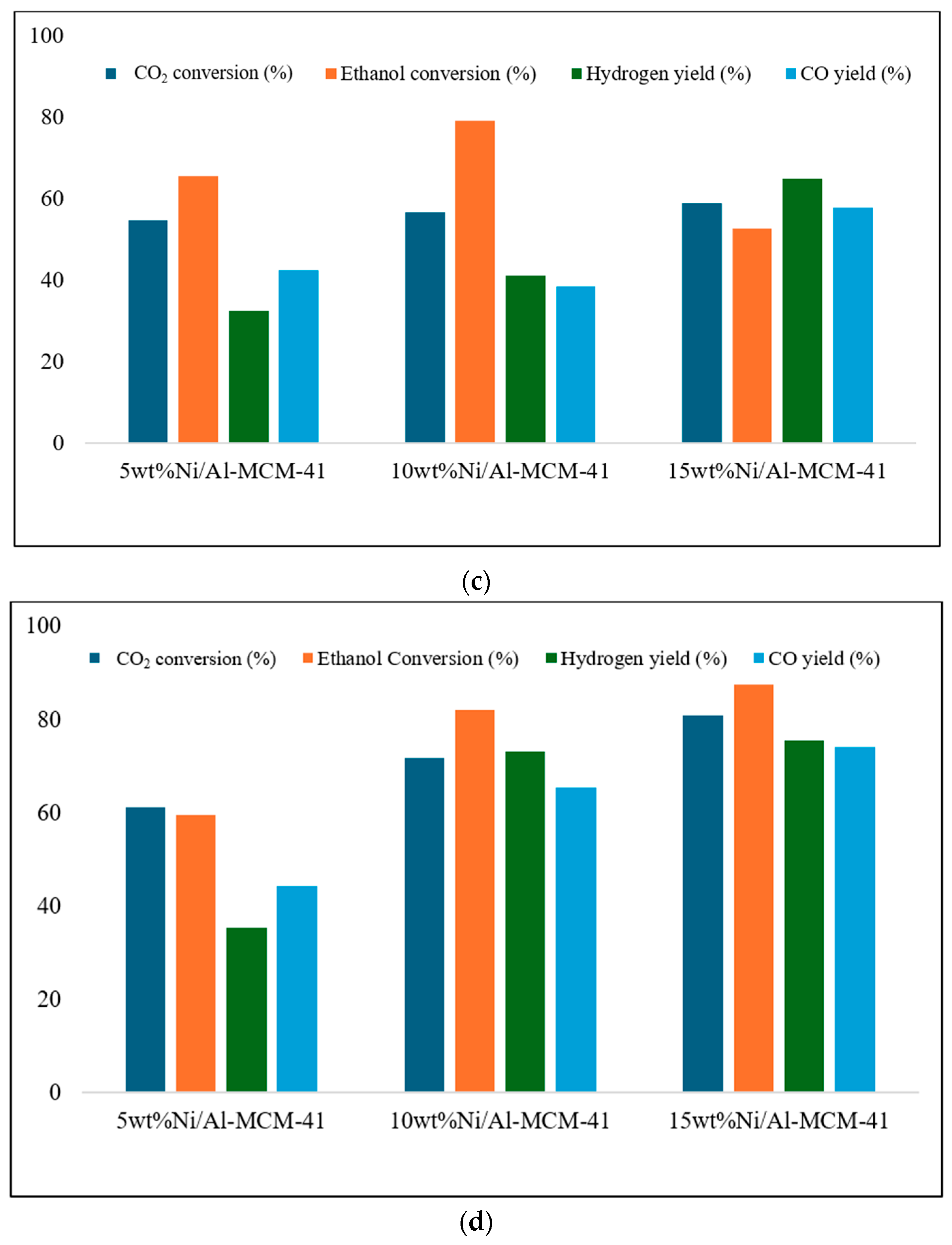
The performance of the catalysts in the ethanol dry reforming reaction in terms of ethanol, CO2 conversion, CO and hydrogen yield is depicted in Figure 6. Figure 6a shows the performance of the Ni catalysts in ethanol dry reforming at 550 °C. The increase in the Ni loading from 5 wt% to 15 wt% resulted in a corresponding increase in the ethanol conversion from 33% to 59% and hydrogen yield from 32% to 61%. The increase in both hydrogen yield and ethanol conversion can be attributed to the increase in the number of active metallic sites available on the Al-MCM-41 support. This observation is consistent with the study by Huang et al. [39], who reported that the selective reduction of NO with NH3 was strongly influenced by the active site. Since Ni is responsible for the C-C and C-H bond cleavage in ethanol molecules, it implies that a high Ni loading leads to a higher Ni active site density [40]. In addition, the presence of the Al-MCM-41 plays a synergistic role in the dispersion of the Ni particles [41]. Moreover, both CO2 conversion and CO yield exhibit a synchronized upward trend as the Ni loading increases from 5 to 15 wt%. This correlation is fundamental to the EDR mechanism. The CO2 conversion (reaching approximately 55% for the 15 wt% Ni catalyst) reflects the ability of the aluminosilicate support to activate the CO2 molecule. The basic sites on the Al-MCM-41 framework facilitate the dissociative adsorption of CO2 into CO (ads) and O(ads). The resulting CO is released into the gas phase, contributing directly to the observed CO yield, while the surface oxygen (O(ads)) plays a critical role in gasifying carbonaceous species on the Ni surface, thus maintaining catalytic stability. The fact that CO yield follows the CO2 conversion so closely suggests the prevalence of the reverse water–gas shift (RWGS), whereby a portion of the H2 produced and the additional CO2 react to produce more CO. Similarly, Figure 6b depicts the performance of the catalyst in ethanol dry reforming reaction at 650 °C. The ethanol conversion increases from 48% (for 5 wt% Ni loading) to 63% (for 15 wt% Ni loading) while the hydrogen yield increases from 48% (for 5 wt% Ni loading) to 65% (for 15 wt% Ni loading). This observation also confirms the influence of metal loading on the catalyst performance [42]. The active Ni sites on the Al-MCM-41 support can be inferred to have increased with the Ni loading. Considering the stoichiometric ratio of ethanol conversion and hydrogen yield using 5 wt% Ni loading, the reaction can be inferred to have primarily proceeded through the direct reforming pathway without the influence of parallel reactions, whereas there is an indication that the dry reforming reaction pathway at 650 °C is influenced by water–gas shift reaction [43]. Also, Figure 6b highlights a consistent upward trend in both CO2 conversion and CO yield as the Ni loading increases from 5 to 15 wt%. This simultaneous increase is a key indicator of the EDR pathway, where CO2 acts not only as a co-reactant but as a vital carbon source for syngas production. The CO yield (increasing from ~45% to ~58%) follows the CO2 conversion (increasing from ~54% to ~57%) very closely across the catalyst series. In the EDR process, Figure 6c depicts the performance of the catalysts in ethanol dry reforming reaction at 700 °C, which demonstrates a transition into a thermodynamically driven regime that requires high thermal energy [44]. The ethanol conversion was observed to increase as the Ni loading increased from 5 wt% to 10 wt% Ni loading. A high ethanol conversion of 80% was attained at 700 °C over the 10 wt% Ni/Al-MCM-41 catalyst. At a higher temperature, the kinetic barriers for breaking the C-C and C-H bonds are more easily overcome. A decrease in the ethanol conversion was observed for the 15 wt% Ni/Al-MCM-41 catalyst, which could be as a result of metal sintering or pore blockage [45]. Studies have shown that Ni nanoparticles could aggregate due to high temperature and metal loading, thereby reducing the active surface area available for reaction [46,47]. On the other hand, the hydrogen yield increases with increased Ni loading. An optimum hydrogen yield of 65% was obtained for the 15 wt% Ni/Al-MCM-41 catalyst. The stoichiometric ratio difference between the ethanol yield and the hydrogen yield over 5 wt% and 10 wt% Ni/Al-MCM-41 catalysts indicates the possible influence of side reactions such as ethanol dehydration, which could impede the performance of the catalyst. CO2 conversion steadily increases with Ni loading, reaching its maximum at 15 wt%. This trend underscores the importance of the metal–support interface; as more Ni sites become available adjacent to the aluminosilicate basic sites, the activation of CO2 becomes more effective at gasifying surface carbon. The 15 wt% catalyst achieves the most balanced syngas profile, where the H2 and CO yields are optimized through the synergistic consumption of both ethanol and CO2. The performance of the catalyst at 700 °C in ethanol dry reforming reaction reflects a high thermal activation resulting in the highest conversion (Figure 6d). The conversion of ethanol at 700 °C increases from 60% (for 5 wt% Ni loading) to 88% (for 15 wt% Ni loading), which further corroborates the influence of Ni loading at high thermal energy. Similarly, hydrogen yield increases from 36% (for 5 wt% Ni loading) to 76% (for 15 wt% Ni loading). The higher ethanol conversion obtained compared to the hydrogen yield indicates the possibility of the influence of parallel reactions such as ethanol dehydration. The CO yield reached ~74% for the optimal 15 wt% catalyst. The high CO yield, closely mirroring the CO2 conversion, suggests a robust dry reforming pathway coupled with the RWGS reaction. This synergy allows for a high utilization of carbon feed, effectively transforming CO2 into a valuable syngas component.

2.3. Mechanistic Implications of the Ni/Al-MCM-41 Catalytic Performance

The performance of the 5 wt%, 10 wt%, and 15 wt% Ni/Al-MCM-41 catalysts across the temperature range of 550–700 °C indicates a strong influence of both Ni loading and the reaction temperature on the ethanol dry reforming reaction. It can be inferred that the ethanol dry reforming reaction at 550 °C was kinetically influenced, whereby the Ni loading had a direct influence on the active site density available for breaking the C-C and C-H bonds. The increase in the temperature from 550 °C to 700 °C resulted in the transitioning of the reaction regime to a thermodynamically controlled regime resulting in peak performance of the 15 wt% Ni/Al-MCM-41 catalyst. The stochiometric ratio of the ethanol conversion and the hydrogen yield elucidates the possibility of complex reaction pathways influenced by parallel reactions as well as multi-step reforming mechanisms. The catalytic performance of the catalysts at the intermediate reaction temperature of 650 °C revealed that the hydrogen yield obtained was greater than the ethanol conversion, which could be an indication of the influence of water–gas shift reaction where an additional mole of hydrogen was produced from the side reaction. On the contrary, it can be inferred that the rate-limiting step for the ethanol dry reforming reaction at 700 °C is the dry reforming of the intermediate species formed from the rapid ethanol dehydration. The intermediates could be seen to be minimally managed at 15 wt% Ni loading for the 700 °C reaction temperature as a result of the possibility of larger Ni ensembles that enhanced the activation of the C-H bonds [48,49]. The performance of the catalysts suggests bifunctional pathways whereby ethanol dissociation occurs on the Ni metallic sites while the CO2 adsorption and activation is assisted by the Al-MCM-41 support.

2.4. Evaluation of Carbon Deposition on the Spent Catalyst

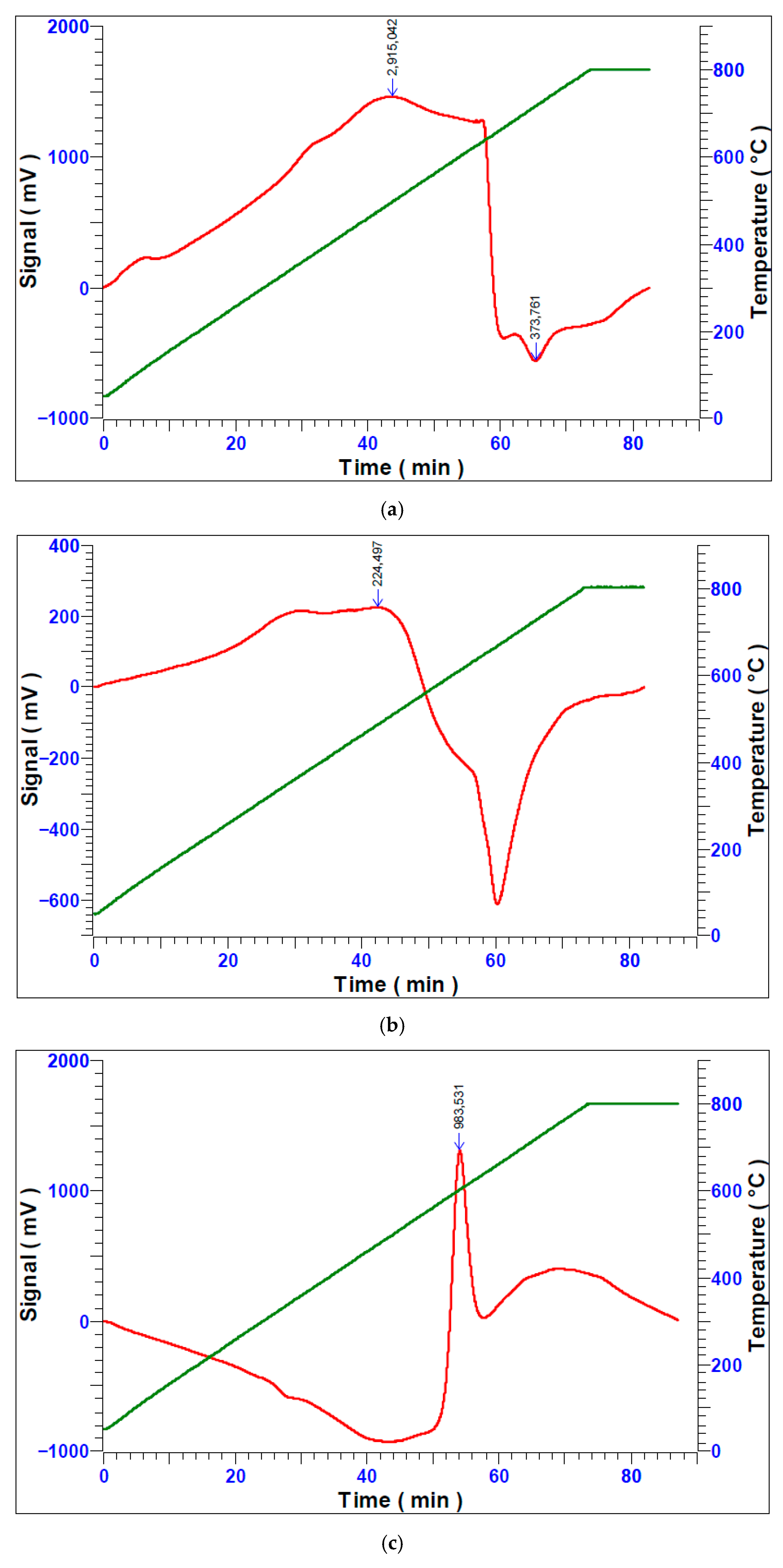
The TPO analyses to quantify the amount of carbon deposited after the ethanol dry reforming reaction are depicted in Figure 7, while the amount of carbon deposited per gram of catalyst is calculated and summarized in Table 2. Evidence of carbon deposition on 5 wt% Ni/Al-MCM-41, 10 wt% Ni/Al-MCM-41, and 15 wt% Ni/Al-MCM-41 at oxidation temperatures of 291.8 °C, 224.5 °C and 585.3 °C, respectively, can be seen from the TPO analysis. The total carbon deposit decreased from 2.7 to 1.3 mg/g across the catalysts. The deposition of amorphous carbon is evidenced for 5 wt% Ni/Al-MCM-41 and 10 wt% Ni/Al-MCM-41 due to the carbon oxidation peaks in the temperature range of 224.5–291.8 °C [50], while the carbon deposited on 15 wt% Ni/Al-MCM-41 can be speculated to be a filamentous or graphitic carbon since carbon oxidation occurs at a temperature of 585.3 °C. Flonov et al. [16] reported the deposition of graphitized carbon on Ni/Al2O3-(Zr + Ce)O2 catalyst used for ethanol dry reforming.

2.5. Study Implications and Future Directions

This study has shown that the performance of Ni/Al-MCM-41 catalysts in ethanol dry reforming reaction is strongly influenced by the Ni loading and the reaction temperature, which is an indication of the synergy between the Ni loading and the thermal activation of the reactants. Loading the catalyst with high Ni content tends to maximize the ethanol conversion and drive the reaction towards high hydrogen yield, whereas the Al-MCM-41 support serves a critical role, offering a confinement effect that prevents thermal sintering of the catalysts. The difference between the hydrogen yield and ethanol conversion indicates that the ethanol dry reforming reaction is a multi-step mechanistic pathway. This implies that the optimization of the catalyst performance should take into consideration the effectiveness in the process of the reaction intermediates. In addition, the oxygen retention capability of the catalyst could further be enhanced by incorporating basic promoters such as cerium. This would further enhance the tendency of the catalyst to suppress coking and improve the tendency of the catalyst to gasify carbonaceous deposits. In situ characterization using XRD and TEM-EDX could be investigated for a real-time monitoring of any phase changes and metal–support interactions of the catalyst during reaction. This would help to bridge the gap between the laboratory-scale performance and the possibility of a scale-up hydrogen production.

3. Materials and Methods

3.1. Materials

The materials used for the preparation of the Ni/Al-MCM-41 catalyst include nickel (II) nitrate hexahydrate (Ni (NO3)2·6H2O) used as the catalyst precursor, 99.999% trace-metal basis, Al-MCM-41 (Mobil Composition of Matter No. 41) used as support, and de-ionized water used for the catalyst preparation. The chemicals were purchased from Sigma-Aldrich and used without any further modifications.

3.2. Catalyst Synthesis

The synthesis of the catalysts was performed using the wet impregnation method [51]. The choice of wet impregnation method is due to its simplicity and effectiveness in obtaining a good dispersion of the nickel active phase on the Al-MCM-41 support [52]. A stipulated amount of the Ni (NO3)2·6H2O precursor was dissolved in de-ionized water. The concentration of Ni (NO3)2·6H2O solution was calculated as a function of the Ni loading (5 wt%, 10 wt% and 15 wt%) in the final Ni/Al-MCM-41 catalyst and the amount of Al-MCM-41 support to be impregnated. Typically, to prepare 5 wt% Ni/Al-MCM-41, 2.5 mg of Al-MCM-41 was dissolved in 0.5 M Ni (NO3)2·6H2O. The mixture was vigorously stirred using a magnetic stirrer for about 24 h at 25 °C to ensure complete impregnation. Thereafter, the water in the slurry slowly dried in oven for 24 h at temperature of 80 °C. The dried slurry was subsequently calcined in a furnace at 400 °C for 4 h under air primarily for decomposition of the nickel precursor, to ensure stronger interactions of the Ni and the Al-MCM-41 support and removal of any organic residues.

3.3. Characterization of the Ni/Al-MCM-41

The physicochemical properties of the Ni/Al-MCM-41 catalysts were investigated using N2 physisorption analysis, X-ray diffraction analysis (XRD), field emission scanning electron microscopy (FESEM), and energy-dispersive X-ray spectroscopy (EDS).
The N2 physisorption analysis was performed using a surface area and porosity analyzer (ASAP 2020, Micromeritics, Norcross, GA, USA). The catalyst sample was degassed in a vacuum at 300 °C prior to the analysis. The degassing of the catalyst facilitates the removal of any pre-adsorbed impurities from the surface and the pores of the catalyst in order to ensure that only N2 interacts with the catalyst surface. Thereafter, the degassed catalyst sample was cooled to −196 °C. At −196 °C, liquid N2 was introduced into the sample cell containing the catalyst. The equilibrium pressure was continuously measured together with the volume of N2 adsorbed. The adsorption isotherms were generated using the relative pressure and the quantity of N2 adsorbed during the analysis. The specific surface area of the catalyst was calculated using the Brunauer–Emmett–Teller (BET) model using the relative pressure range of 0.05–0.3. The pore distribution was estimated using the Barrett–Joyner–Halenda (BJH) model. The total pores of the catalyst was calculated from the amount of N2 adsorbed at a high relative pressure.
The X-ray diffraction analysis was performed to determine the crystallographic structure and the phase composition of the crystalline catalyst sample. X-ray analysis works based on the principle of constructive interference of X-rays scattered by the periodic arrangement of atoms in a crystal lattice. The analysis was conducted using Xpert3 Powder analyzer, (Malvern Panalytical Ltd., Malvern, Worcestershire, UK). The catalyst sample was mounted on a goniometer to allow its rotation alongside the detector. The intensity of the diffracted X-rays was measured as the catalyst sample rotated together with the detector through a range of 2θ angles. The X-ray diffraction pattern was generated through a plot of diffracted X-ray intensity versus 2θ angles.
The FESEM and EDS analyses were conducted to characterize the surface morphology and topography of the catalyst using Supra V55 (Zeiss, Oberkochen, Germany). FESEM analysis uses a field emission electron gun to produce a much narrower and brighter electron beam compared to the conventional scanning electron microscope. As the electron beam scans across the sample, it interacts with the atoms in the material, generating various signals. Secondary electrons are collected using a detector and the corresponding intensities are converted into an image allowing for the visualization of surface features with high magnification. The EDS is integrated with the FESEM to determine the elemental composition of the catalyst. Inner-shell electrons are ejected from the atoms of a sample through the interaction with electron beams during the EDS analysis. A detector is employed to measure the energy and intensity of the X-ray, compiling them into a spectrum that reveals the characteristic peaks used to identify elements and their composition.
The amount of carbon deposited was quantified using temperature-programmed oxidation (TPO). The analysis was performed using Thermo-Scientific TPDRO 1100 (Milan, Italy). A stipulated weighed of the catalyst sample was loaded into the quartz reactor and heated at a constant heating rate up to 800 °C in a flow of He/O2. The gasification of the carbon deposited occurs as the temperature increases resulting in peaks in the thermal conductivity detector signal. The carbon deposited on the catalyst during the ethanol dry reforming is quantified through the comparison of the integrated area of the oxidation peaks to the area of the known calibration gas pulse. The thermal stability and the type of carbon deposited are indicated by the specific peak temperature.

3.4. Ethanol Dry Reforming Reaction

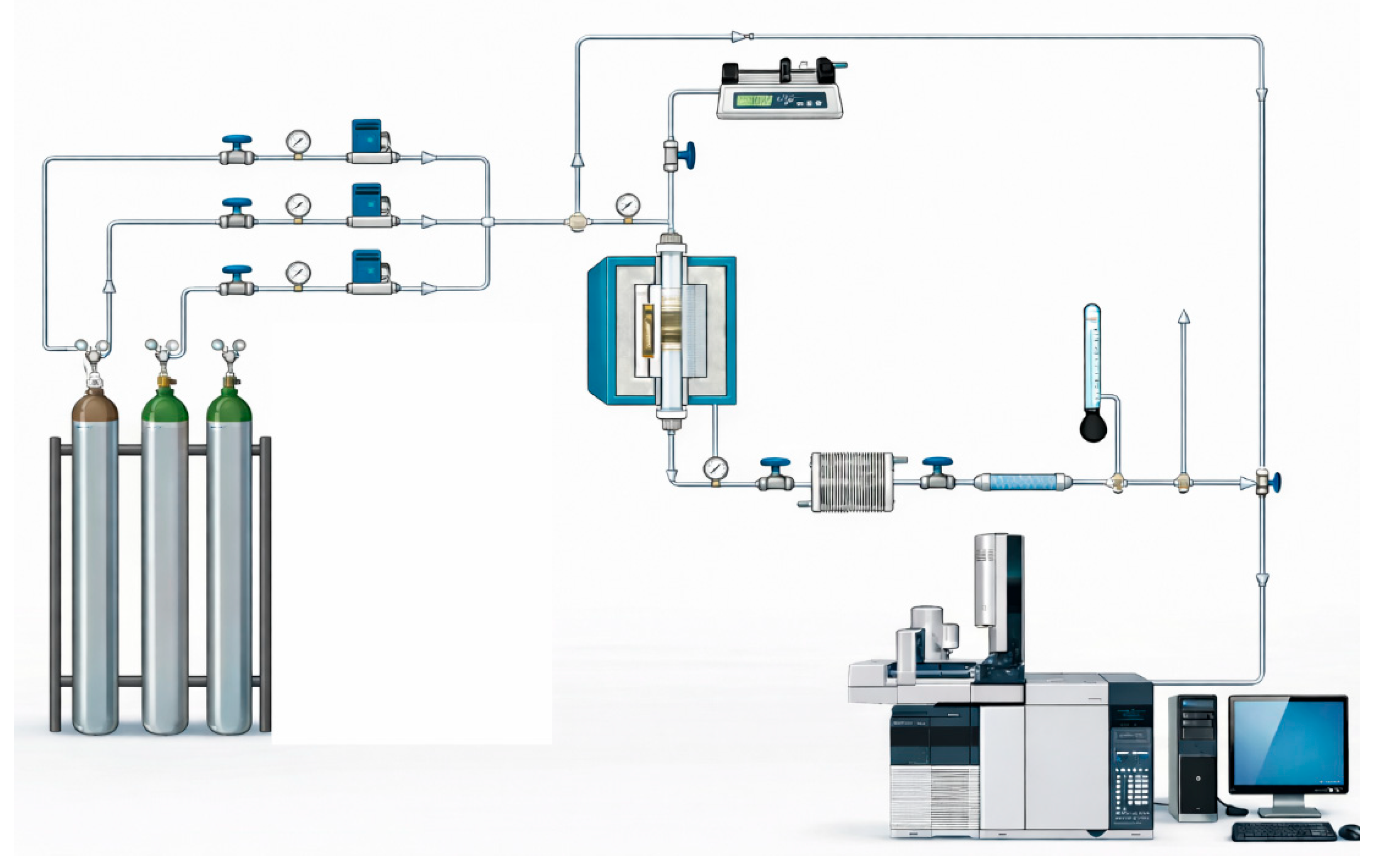
The EDR reaction was performed using the experimental set-up depicted in Figure 8. The set-up consists of the gas supply and feed section, the reactor, the product cooling and separation, and the analysis and data acquisition unit. The reacting gas consists of CO2, which serves as the reactant, H2 used for reduction and N2, which serves as the diluent. The flow of the gases was regulated using a mass flow controller (Alicat, Tucson, AZ, USA). The ethanol was fed into the pre-heating coil at 80 °C where it vaporized into the reactor. The reactor consists of vertically mounted stainless steel in a furnace equipped with k-type thermocouples to regulate the temperature. The catalyst (100 mg) was mounted on quartz wool at the center of the reactor. Prior to initiating the reaction, the catalyst was reduced in situ at 700 °C in a stream of 50 mL/min H2/N2. The EDR reaction was performed at a temperature of 550–700 °C to determine the effect of reaction temperature on the ethanol conversion and the product yield. The feed (CO2 and ethanol) was fed into the reactor in the ratio of 1:2.5 while the reaction lasted for 4 h time-on-stream. The outlet stream from the reactor was cooled and trapped to remove condensable vapors prior to entering the online mass spectrometer for compositional analysis of the products. The ethanol and CO2 conversions were calculated using the inlet flowrate of CO2 and ethanol ( F C O 2 , i n ,   F e t h a n o l , o u t ) and outlet flowrate ( F C O 2 , o u t ,   F e t h a n o l ,   o u t ) as indicated in Equations (2) and (3), while the H2 and CO yields were calculated using the inlet flowrate of H2 and CO ( F C O , i n ,   F H 2 , i n ) and the inlet flowrate of ethanol ( F E t O H , i n ) depicted in Equations (4) and (5).
E t h a n o l   c o n v e r s i o n ( % ) = F e t h a n o l , i n F e t h a n o l , o u t F e t h a n o l , i n
C O 2   c o n v e r s i o n ( % ) = F C O 2 , i n F C O 2 , o u t F C O 2 , i n
H 2   y i e l d = F H 2 , o u t 3 F E t O H , i n × 100
C O   y i e l d = F C O , o u t 3 F E t O H , i n × 100

4. Conclusions

This study has demonstrated the effect of varying Ni loading on the capability of Ni/Al-MCM-41 catalyst for hydrogen production by ethanol dry reforming reaction. The catalysts were successfully synthesized using the wet impregnation method and characterized using different instrumental techniques. Successful loading of the Ni on the Al-MCM-41 support was established through XRD, FESEM, and EDS analyses. A clear structural–synergistic relationship between the Ni active phase and the Al-MCM-41 support was established. The performance of the catalyst in the ethanol dry reforming reaction was governed by the synergy between the Ni loading and the reaction temperature. The 15 wt% Ni/Al-MCM-41 catalyst consistently displayed superior performance across the reaction temperature range (550–700 °C) resulting in a high ethanol conversion of 88% and hydrogen yield of 76% at 700 °C. A critical confinement effect was displayed by the highly ordered mesoporous Al-MCM-41 support thereby providing high Ni dispersion and thermal stability at high temperatures. The ethanol dry reforming reaction is inferred to have been kinetically controlled at lower temperatures, while it was thermodynamically driven at higher temperature as indicated by the observed disparity between the ethanol conversion and the hydrogen yield. The ethanol dry reforming reaction is proposed to be a multi-step reaction pathway whereby intermediates undergo secondary reforming for maximum hydrogen production. The Ni/Al-MCM-41 catalysts have demonstrated robust potential for hydrogen production via ethanol dry reforming reaction.

Author Contributions

Conceptualization, B.V.A.; methodology, B.V.A. and Z.Y.S.; software, B.V.A.; validation, A.D.J.A.-B., S.R.A.-K. and Z.Y.S.; formal analysis, F.S.; investigation, F.S. and M.A.I.B.A.; resources, B.V.A.; data curation, F.S.; writing—original draft preparation, B.V.A. and F.S.; writing—review and editing, Z.Y.S.; visualization, A.D.J.A.-B. and S.R.A.-K.; supervision, B.V.A.; project administration, B.V.A.; funding acquisition, B.V.A. All authors have read and agreed to the published version of the manuscript.

Funding

This research is funded by Murata Science Foundation (Grant No. 015ME0-389).

Data Availability Statement

Dataset available on request from the authors.

Conflicts of Interest

The authors declare no conflicts of interest.

Abbreviations

The following abbreviations are used in this manuscript:
EDSEnergy-Dispersive X-Ray Spectroscopy
EDREthanol Dry Reforming
FESEMField Emission Scanning Electron Microscope
TEMTransmission Electron Microscope
TPOTemperature-Programmed Oxidation
IUPACInternational Union of Pure and Applied Chemistry
MCM-41Mobil Composition of Matter No. 41
XRDX-ray Diffraction

References

  1. Nor Shafiqah, M.-N.; Mohamed, H.; Panpranot, J.; Zainal Abidin, S. Catalytic Evaluation of Pd-Promoted Ni-Co/Al2O3 Catalyst for Glycerol Dry Reforming: Assessing Hydrogen-Rich Syngas Production, Kinetics and Mechanisms. Chem. Eng. Sci. 2024, 285, 119567. [Google Scholar] [CrossRef]
  2. Mageed, A.K.; Ayodele, B.V.; Mustapa, S.I. Response Surface Optimization of Hydrogen-Rich Syngas Production by Greenhouse Gases Reforming. Chem. Eng. Technol. 2020, 43, 742–751. [Google Scholar] [CrossRef]
  3. Wang, Y.; Huang, L.; Zhang, T.; Wang, Q. Hydrogen-Rich Syngas Production from Biomass Pyrolysis and Catalytic Reforming Using Biochar-Based Catalysts. Fuel 2022, 313, 123006. [Google Scholar] [CrossRef]
  4. Boettcher, S.W. Introduction to Green Hydrogen. Chem. Rev. 2024, 124, 13095–13098. [Google Scholar] [CrossRef]
  5. El-Shafie, M. Hydrogen Production by Water Electrolysis Technologies: A Review. Results Eng. 2023, 20, 101426. [Google Scholar] [CrossRef]
  6. Lewis, E.; McNaul, S.; Jamieson, M.; Henriksen, M.S.; Matthews, H.S.; Walsh, L.; Grove, J.; Shultz, T.; Skone, T.J.; Stevens, R. Comparison of Commercial, State-of-the-Art, Fossil-Based Hydrogen Production Technologies; National Energy Technology Laboratory (NETL): Pittsburgh, PA, USA, 2022. [Google Scholar]
  7. Cho, H.H.; Strezov, V.; Evans, T.J. Environmental Impact Assessment of Hydrogen Production via Steam Methane Reforming Based on Emissions Data. Energy Rep. 2022, 8, 13585–13595. [Google Scholar] [CrossRef]
  8. Alsaffar, M.A.; Ayodele, B.V.; Ali, J.M.; Abdel Ghany, M.A.; Mustapa, S.I.; Cheng, C.K. Kinetic Modeling and Reaction Pathways for Thermo-Catalytic Conversion of Carbon Dioxide and Methane to Hydrogen-Rich Syngas over Alpha-Alumina Supported Cobalt Catalyst. Int. J. Hydrogen Energy 2021, 46, 30871–30881. [Google Scholar] [CrossRef]
  9. Zhang, Z.; Zhang, Y.; Liu, L. Role and Mechanism of Calcium-Based Catalysts for Methane Dry Reforming: A Review. Fuel 2024, 355, 129329. [Google Scholar] [CrossRef]
  10. Yu, J.; Odriozola, J.A.; Reina, T.R. Dry Reforming of Ethanol and Glycerol: Mini-Review. Catalysts 2019, 9, 1015. [Google Scholar] [CrossRef]
  11. Chen, J.; Bu, L.; Luo, Y. Comparative Study on Pressure Swing Adsorption System for Industrial Hydrogen and Fuel Cell Hydrogen. Chin. J. Chem. Eng. 2022, 42, 112–119. [Google Scholar] [CrossRef]
  12. Buasuk, N.; Saelee, T.; Rittiruam, M.; Phatanasri, S.; Praserthdam, S.; Praserthdam, P. Deactivating and Non-Deactivating Coking Found on Ni-Based Catalysts during Combined Steam-Dry Reforming of Methane. Top. Catal. 2021, 64, 357–370. [Google Scholar] [CrossRef]
  13. Shafiqah, M.-N.N.; Siang, T.J.; Kumar, P.S.; Ahmad, Z.; Jalil, A.A.; Bahari, M.B.; Van Le, Q.; Xiao, L.; Mofijur, M.; Xia, C.; et al. Advanced Catalysts and Effect of Operating Parameters in Ethanol Dry Reforming for Hydrogen Generation. A Review. Environ. Chem. Lett. 2022, 20, 1695–1718. [Google Scholar] [CrossRef]
  14. Lu, K.; Zhang, H. Study on the Mechanism of Ethanol Dry Reforming via Thermodynamic and Kinetic Investigations: Clarifying the Contribution of Tandem and Parallel Reactions in Syngas Production. ACS Catal. 2025, 15, 10092–10108. [Google Scholar] [CrossRef]
  15. Bahari, M.B.; Phuc, N.H.H.; Abdullah, B.; Alenazey, F.; Vo, D.-V.N. Ethanol Dry Reforming for Syngas Production over Ce-Promoted Ni/Al2O3 Catalyst. J. Environ. Chem. Eng. 2016, 4, 4830–4838. [Google Scholar] [CrossRef]
  16. Fionov, Y.; Khlusova, K.; Chuklina, S.; Mushtakov, A.; Fionov, A.; Zhukov, D.; Averin, A.; Zhukova, A. High-Performance Ni/Al2O3-(Zr + Ce)O2 Catalysts for Syngas Production via Ethanol Dry Reforming. Fuel 2024, 376, 132685. [Google Scholar] [CrossRef]
  17. Wei, Y.; Cai, W.; Deng, S.; Li, Z.; Yu, H.; Zhang, S.; Yu, Z.; Cui, L.; Qu, F. Efficient Syngas Production via Dry Reforming of Renewable Ethanol over Ni/KIT-6 Nanocatalysts. Renew. Energy 2020, 145, 1507–1516. [Google Scholar] [CrossRef]
  18. Bahari, M.B.; Goo, B.C.; Pham, T.L.M.; Siang, T.J.; Danh, H.T.; Ainirazali, N.; Vo, D.-V.N. Hydrogen-Rich Syngas Production from Ethanol Dry Reforming on La-Doped Ni/Al2O3 Catalysts: Effect of Promoter Loading. Procedia Eng. 2016, 148, 654–661. [Google Scholar] [CrossRef]
  19. Bepari, S.; Kuila, D. Steam Reforming of Methanol, Ethanol and Glycerol over Nickel-Based Catalysts-A Review. Int. J. Hydrogen Energy 2020, 45, 18090–18113. [Google Scholar] [CrossRef]
  20. Zarenezhad, E.; Abdulabbas, H.T.; Marzi, M.; Ghazy, E.; Ekrahi, M.; Pezeshki, B.; Ghasemian, A.; Moawad, A.A. Nickel Nanoparticles: Applications and Antimicrobial Role against Methicillin-Resistant Staphylococcus Aureus Infections. Antibiotics 2022, 11, 1208. [Google Scholar] [CrossRef]
  21. Lucas, J.; Padmanabha Naveen, N.S.; Janik, M.J.; Alexopoulos, K.; Noh, G.; Aireddy, D.; Ding, K.; Dorman, J.A.; Dooley, K.M. Improved Selectivity and Stability in Methane Dry Reforming by Atomic Layer Deposition on Ni-CeO2–ZrO2/Al2O3 Catalysts. ACS Catal. 2024, 14, 9115–9133. [Google Scholar] [CrossRef] [PubMed]
  22. Zhang, Y.; Zhang, G.; Liu, J.; Li, T.; Wang, Y.; Zhao, Y.; Li, G.; Zhang, Y. Dry Reforming of Methane over Ni/SiO2 Catalysts: Role of Support Structure Properties. Fuel 2023, 340, 127490. [Google Scholar] [CrossRef]
  23. Kowalik, P.; Krysa, M.; Antoniak-Jurak, K.; Próchniak, W.; Pieta, P.; Lisowski, W.; Nowakowski, R.; Sroka-Bartnicka, A.; Pieta, I.S. The Effect of Support on Surface Ni-V Species Arrangement and Consequences for Catalytic DME Dry Reforming Reaction. Chem. Eng. J. 2023, 474, 145369. [Google Scholar] [CrossRef]
  24. Li, L.; Zeng, W.; Song, M.; Wu, X.; Li, G.; Hu, C. Research Progress and Reaction Mechanism of CO2 Methanation over Ni-Based Catalysts at Low Temperature: A Review. Catalysts 2022, 12, 244. [Google Scholar] [CrossRef]
  25. Shen, C.; Bao, Q.; Xue, W.; Sun, K.; Zhang, Z.; Jia, X.; Mei, D.; Liu, C. Synergistic Effect of the Metal-Support Interaction and Interfacial Oxygen Vacancy for CO2 Hydrogenation to Methanol over Ni/In2O3 Catalyst: A Theoretical Study. J. Energy Chem. 2022, 65, 623–629. [Google Scholar] [CrossRef]
  26. Ranjbar, A.; Irankhah, A.; Mosayebi, A.; Eghbal Ahmadi, M.H. Reverse Water Gas Shift Reaction over Ni/MgAl2O4 Catalyst: Study about Kinetic and Type-2 Fuzzy Model Approaches. J. Taiwan Inst. Chem. Eng. 2025, 168, 105930. [Google Scholar] [CrossRef]
  27. Hossain, S.K.S.; Ayodele, B.V. Towards a Sustainable Hydrogen-Rich Syngas Production by Methane Dry Reforming: Advances in Catalyst Synthesis and Optimization Strategies. Fuel 2026, 403, 136132. [Google Scholar] [CrossRef]
  28. Li, P.; Wei, Y.; Yang, X.; Zhu, Y.; Zhang, Z.; Yang, X.; Shen, Y.; Wang, M. Boosting the Urea Synthesis Rate on Ni Single-Atom Catalysts: The Impact of Acetonitrile Electrolyte in the Tandem CO2 Reduction/Nucleophilic Addition Reaction. ACS Catal. 2024, 14, 7967–7977. [Google Scholar] [CrossRef]
  29. Ghaffari Saeidabad, N.; Noh, Y.S.; Alizadeh Eslami, A.; Song, H.T.; Kim, H.D.; Fazeli, A.; Moon, D.J. A Review on Catalysts Development for Steam Reforming of Biodiesel Derived Glycerol; Promoters and Supports. Catalysts 2020, 10, 910. [Google Scholar] [CrossRef]
  30. Buttersack, C. Modeling of Type IV and v Sigmoidal Adsorption Isotherms. Phys. Chem. Chem. Phys. 2019, 21, 5614–5626. [Google Scholar] [CrossRef] [PubMed]
  31. Kalam, S.; Abu-Khamsin, S.A.; Kamal, M.S.; Patil, S. Surfactant Adsorption Isotherms: A Review. ACS Omega 2021, 6, 32342–32348. [Google Scholar] [CrossRef]
  32. Qiu, X.; Yang, H.; Dejam, M.; Tan, S.P.; Adidharma, H. Experiments on the Capillary Condensation/Evaporation Hysteresis of Pure Fluids and Binary Mixtures in Cylindrical Nanopores. J. Phys. Chem. C 2021, 125, 5802–5815. [Google Scholar] [CrossRef]
  33. Hossain, M.D.; Hossain, M.A.; Sikder, S.S. Hysteresis Loop Properties of Rare Earth Doped Spinel Ferrites: A Review. J. Magn. Magn. Mater. 2022, 564, 170095. [Google Scholar] [CrossRef]
  34. Atiyah, N.A.; Albayati, T.M.; Atiya, M.A. Functionalization of Mesoporous MCM-41 for the Delivery of Curcumin as an Anti-Inflammatory Therapy. Adv. Powder Technol. 2022, 33, 103417. [Google Scholar] [CrossRef]
  35. Kiran, A.; Hussain, S.; Ahmad, I.; Imran, M.; Saqib, M.; Parveen, B.; Munawar, K.S.; Mnif, W.; Al Huwayz, M.; Alwadai, N.; et al. Green Synthesis of NiO and NiO@graphene Oxide Nanomaterials Using Elettaria cardamomum Leaves: Structural and Electrochemical Studies. Heliyon 2024, 10, e38613. [Google Scholar] [CrossRef] [PubMed]
  36. Adiba; Pandey, V.; Munjal, S.; Ahmad, T. NiO Nanoparticles: Phase Purification and Strain Analysis. AIP Conf. Proc. 2021, 2369, 020121. [Google Scholar] [CrossRef]
  37. Kıvrak, B.; Akyıldız, H.; Aka, C.; Akyol, M. Effect of Synthesis Conditions on the Size and Morphology of Magnetic Nickel Particles. ChemistrySelect 2025, 10, e202402582. [Google Scholar] [CrossRef]
  38. Jiang, R.; Yi, B.; Sun, Z.; Yang, J.; Guo, F. Mechanism of the Effect of Metal Species and Loading Order on the Carbon Deposition Activity of Ni-Based Catalysts in Toluene Reforming. Fuel 2025, 393, 134904. [Google Scholar] [CrossRef]
  39. Huang, X.; Dong, F.; Zhang, G.; Tang, Z. Design and Identify the Confinement Effect of Active Site Position on Catalytic Performance for Selective Catalytic Reduction of NO with NH3 at Low Temperature. J. Catal. 2023, 420, 134–150. [Google Scholar] [CrossRef]
  40. Liu, Y.; Chen, Y.; Gao, Z.; Zhang, X.; Zhang, L.; Wang, M.; Chen, B.; Diao, Y.; Li, Y.; Xiao, D.; et al. Embedding High Loading and Uniform Ni Nanoparticles into Silicalite-1 Zeolite for Dry Reforming of Methane. Appl. Catal. B Environ. Energy 2022, 307, 121202. [Google Scholar] [CrossRef]
  41. Newman, C.; Zhou, X.; Goundie, B.; Ghampson, I.T.; Pollock, R.A.; Ross, Z.; Wheeler, M.C.; Meulenberg, R.W.; Austin, R.N.; Frederick, B.G. Effects of Support Identity and Metal Dispersion in Supported Ruthenium Hydrodeoxygenation Catalysts. Appl. Catal. A Gen. 2014, 477, 64–74. [Google Scholar] [CrossRef]
  42. Gupta, S.; Deo, G. Effect of Metal Amount on the Catalytic Performance of Ni–Al2O3 Catalyst for the Tri-Reforming of Methane. Int. J. Hydrogen Energy 2023, 48, 5478–5492. [Google Scholar] [CrossRef]
  43. Foppa, L.; Margossian, T.; Kim, S.M.; Müller, C.; Copéret, C.; Larmier, K.; Comas-Vives, A. Contrasting the Role of Ni/Al2O3 Interfaces in Water–Gas Shift and Dry Reforming of Methane. J. Am. Chem. Soc. 2017, 139, 17128–17139. [Google Scholar] [CrossRef] [PubMed]
  44. Cao, P.; Adegbite, S.; Zhao, H.; Lester, E.; Wu, T. Tuning Dry Reforming of Methane for F-T Syntheses: A Thermodynamic Approach. Appl. Energy 2018, 227, 190–197. [Google Scholar] [CrossRef]
  45. Chen, C.; Wei, J.; Lu, Y.; Duyar, M.S.; Huang, Y.; Lin, L.; Ye, R. Confinement Effects over Ni-Based Catalysts for Methane Dry Reforming. Catal. Sci. Technol. 2023, 13, 6089–6101. [Google Scholar] [CrossRef]
  46. Mette, K.; Kühl, S.; Tarasov, A.; Willinger, M.G.; Kröhnert, J.; Wrabetz, S.; Trunschke, A.; Scherzer, M.; Girgsdies, F.; Düdder, H.; et al. High-Temperature Stable Ni Nanoparticles for the Dry Reforming of Methane. ACS Catal. 2016, 6, 7238–7248. [Google Scholar] [CrossRef]
  47. Roselina, N.R.N.; Azizan, A. Ni Nanoparticles: Study of Particles Formation and Agglomeration. Procedia Eng. 2012, 41, 1620–1626. [Google Scholar] [CrossRef]
  48. Bengaard, H.S.; Nørskov, J.K.; Sehested, J.; Clausen, B.S.; Nielsen, L.P.; Molenbroek, A.M.; Rostrup-Nielsen, J.R. Steam Reforming and Graphite Formation on Ni Catalysts. J. Catal. 2002, 209, 365–384. [Google Scholar] [CrossRef]
  49. Wang, H.; Lu, J. A Review on Particle Size Effect in Metal-Catalyzed Heterogeneous Reactions. Chin. J. Chem. 2020, 38, 1422–1444. [Google Scholar] [CrossRef]
  50. Cui, T.; Chen, Q.; Zhang, Y.; Nie, B.; Yang, B. Understanding the Mechanism of Carbon Deposition of Ni3Co Catalysts for Methane Dry Reforming. Appl. Surf. Sci. 2022, 599, 154002. [Google Scholar] [CrossRef]
  51. Komiyama, M. Design and Preparation of Impregnated Catalysts. Catal. Rev. 1985, 27, 341–372. [Google Scholar] [CrossRef]
  52. da Cunha, T.; Maulu, A.; Guillot, J.; Fleming, Y.; Duez, B.; Lenoble, D.; Arl, D. Design of Silica Nanoparticles-Supported Metal Catalyst by Wet Impregnation with Catalytic Performance for Tuning Carbon Nanotubes Growth. Catalysts 2021, 11, 986. [Google Scholar] [CrossRef]
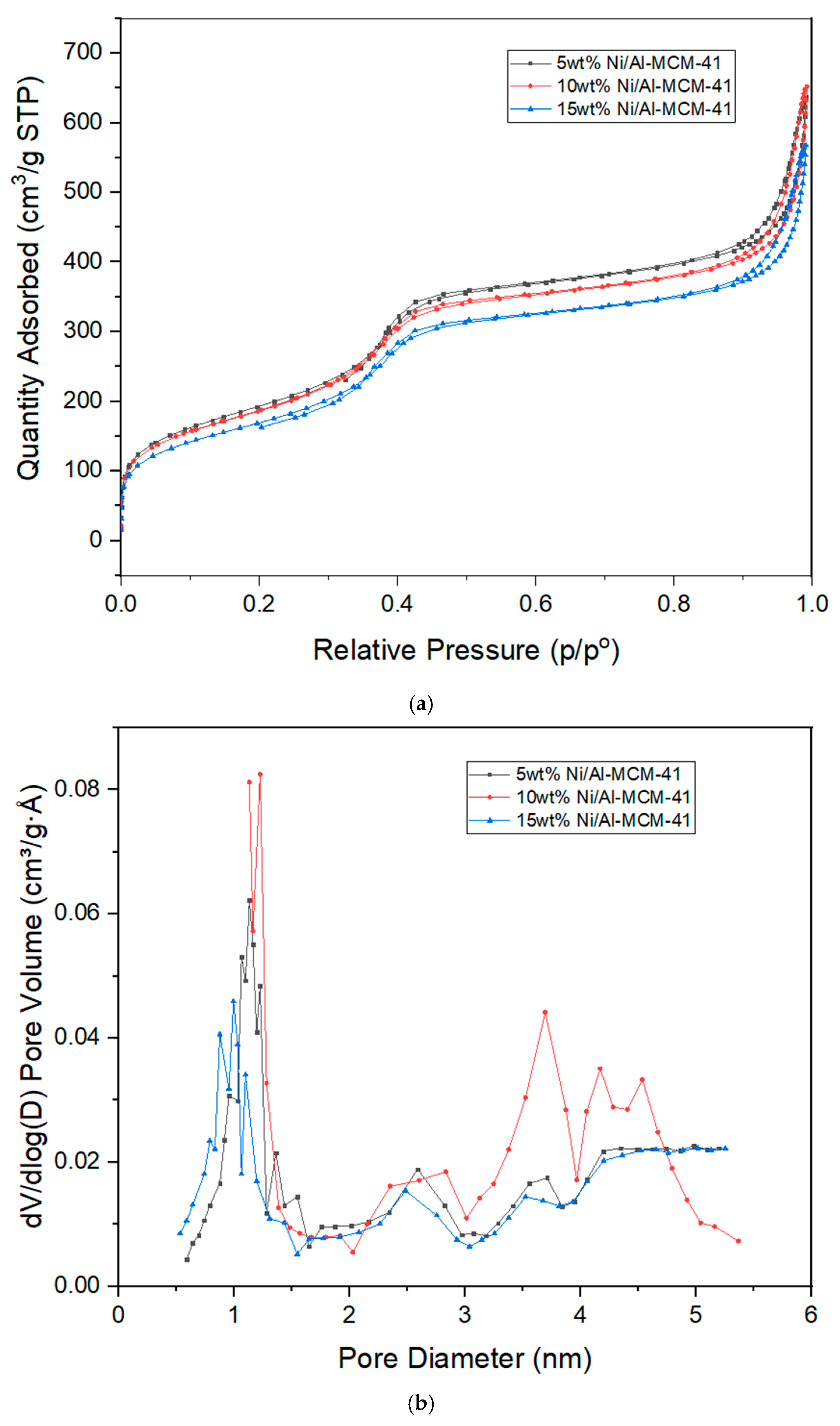
Figure 1. (a) Adsorption–desorption isotherm and (b) pore distribution for the Ni/Al-MCM-41 catalysts.
Catalysts 16 00463 g001
Figure 2. (a) BET specific surface area of the Ni/Al-MCM-41 catalysts and (b) the BJH average pore distribution.
Catalysts 16 00463 g002
Figure 3. XRD pattern of the Ni/Al-MCM-41 catalysts.
Catalysts 16 00463 g003
Figure 4. FESEM image of 5 wt% Ni/Al-MCM-41 at (a) 50,000× and (b) 100,000× magnifications, FESEM image of 10 wt% Ni/Al-MCM-41 at (c) 50,000× and (d) 100,000× magnifications, FESEM image of 15 wt% Ni/Al-MCM-41 at (e) 50,000× and (f) 100,000× magnifications.
Catalysts 16 00463 g004
Figure 5. EDS micrograph of (a) 5 wt% Ni/Al-MCM-41, (b) 10 wt% Ni/Al-MCM-41, (c) 15 wt% Ni/Al-MCM-41.
Catalysts 16 00463 g005
Figure 6. CO2 conversion, ethanol conversion, hydrogen and CO yield obtained at reaction temperatures of (a) 550 °C, (b) 600 °C, (c) 650 °C and (d) 700 °C.
Catalysts 16 00463 g006aCatalysts 16 00463 g006b
Figure 7. Temperature-programmed oxidation of (a) 5 wt% Ni/Al-MCM-41, (b) 10 wt% Ni/Al-MCM-41 and (c) 15 wt% Ni/Al-MCM-41.
Catalysts 16 00463 g007
Figure 8. Experimental set-up for the EDR reaction.
Catalysts 16 00463 g008
Table 1. Comparison of nominal and experimental (EDS) elemental compositions.
CatalystNominal Ni (wt%)EDS-Measured Ni Content (wt%)
5 wt% Ni/Al-MCM-4154.3
10 wt% Ni/Al-MCM-411010.2
15 wt% Ni/Al-MCM-411517.7
Table 2. Summary of the TPO analysis showing the amount of carbon deposited.
CatalystPeak Oxidation Temperature (°C)Amount of Carbon Deposited (mgCarbon/gCat)Carbon Type
5 wt% Ni/Al-MCM-41291.82.70Amorphous/reactive carbon
10 wt% Ni/Al-MCM-41224.51.71Amorphous carbon
15 wt% Ni/Al-MCM-41585.31.29Filamentous/graphitic carbon
Disclaimer/Publisher’s Note: The statements, opinions and data contained in all publications are solely those of the individual author(s) and contributor(s) and not of MDPI and/or the editor(s). MDPI and/or the editor(s) disclaim responsibility for any injury to people or property resulting from any ideas, methods, instructions or products referred to in the content.