Article

CO2 Reduction in Structured Ni/Mayenite Catalytic System: A Methanation Test by Means of a Pre-Industrial Scaled Chemical Pilot Plant


by
Giacomo Seccacini
1,
Martina Fattobene
1,
Leonardo Suraniti
2,
Paola Russo
2 and
Mario Berrettoni
1,*
1
Chemistry Division, School of Science and Technology, University of Camerino, Via Madonna delle Carceri—ChIP, 62032 Camerino, MC, Italy
2
Department of Chemical Engineering Materials Environment, Sapienza University of Rome, Via Eudossiana 18, 00184 Rome, RM, Italy
*
Author to whom correspondence should be addressed.
Catalysts 2026, 16(5), 458; https://doi.org/10.3390/catal16050458
Submission received: 8 April 2026 / Revised: 6 May 2026 / Accepted: 7 May 2026 / Published: 13 May 2026

Abstract

The performance of a Mayenite-supported nickel-based catalyst were investigated by using an in-house-designed, assembled and set-up chemical pilot plant, which was developed to provide experimental insights relevant to industrial scale up. In particular, the proposed heterogeneous catalytic system was structured in mm-sized spheres and tested in a large-scale experiment, in a fixed-bed reactor for the CO2 methanation process, and the results were compared with the output achieved with a Ni/alumina catalyst produced by an analogous route as the benchmark. The obtained findings highlighted the effective potential of the Mayenite structure supporting metallic active sites in promoting CO2 reduction under the selected operating conditions (450 °C, 4 bar), along with long-term stability and high CH4 selectivity. Moreover, the available experimental equipment was optimized to achieve accurate estimations of amounts of reaction by-product, as confirmed by the optimal agreement with the mass balance retrieved from the measured gaseous outlet composition. Such an achievement, notable for a large-scale chemical plant, plays a capital role in terms of industrial applications due to the critical impact of residual carbon and water in establishing the viability of innovative catalyst systems for the CO2 recycling process.

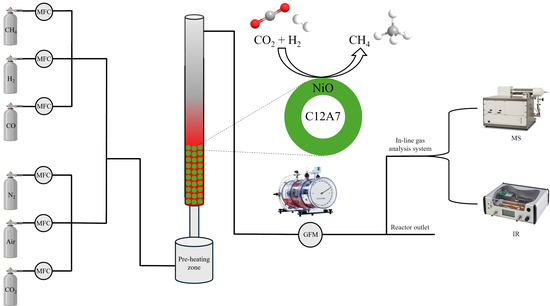
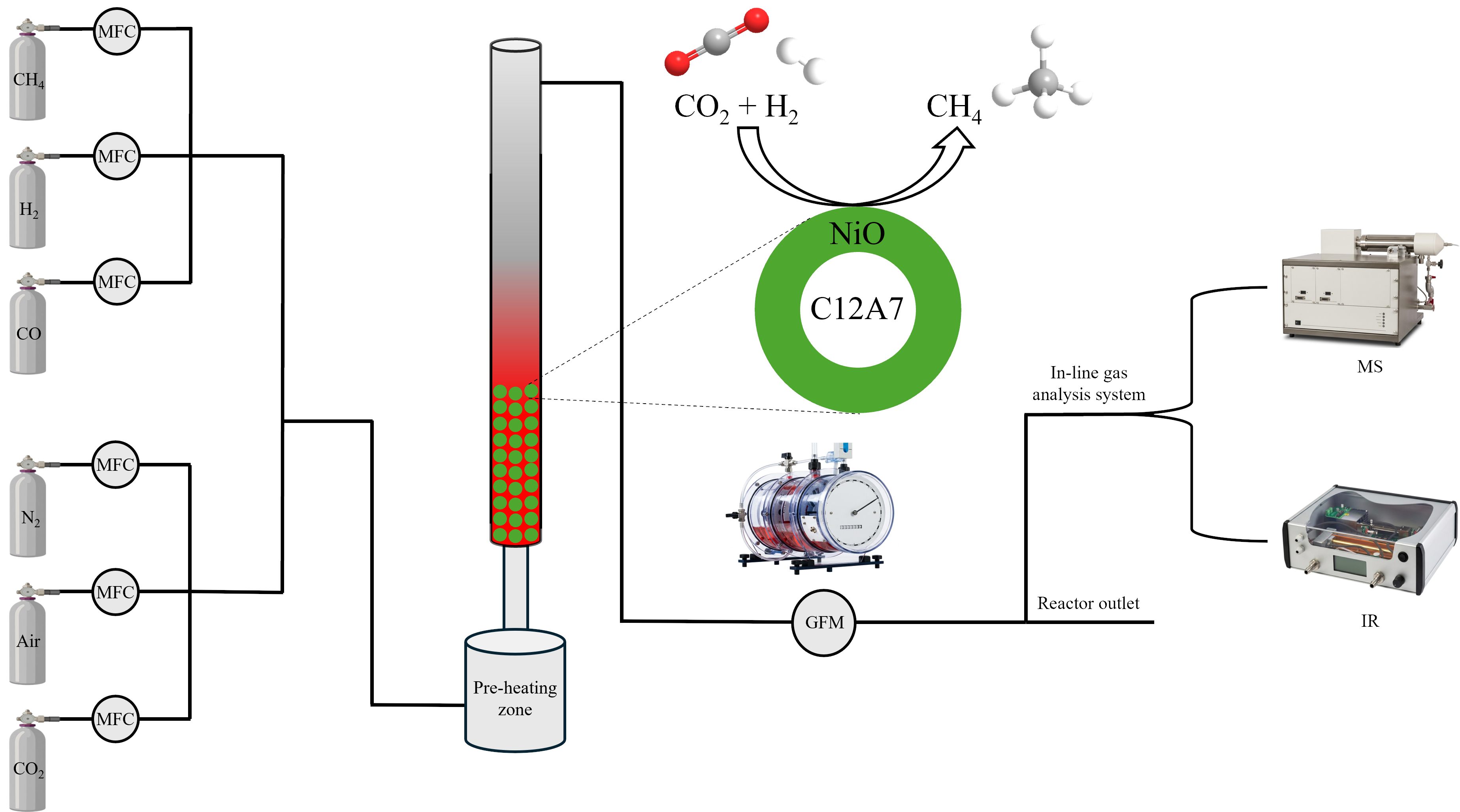
Graphical Abstract

1. Introduction

Catalytic chemistry is central in many industrial chemical production, from bulk to fine chemicals. In fact, many industrial processes rely on the use of catalysts to produce chemicals in different sectors, such as the petrochemical, agrochemical, and pharmaceutical ones. Common examples of catalytic industrial processes are the Haber–Bosch ammonia synthesis, methanol production, Fischer–Tropsch synthesis of hydrocarbon/synthetic fuels, fluid catalytic cracking, reforming, hydrogenation reactions, and others [1,2]. It is reported that more than 90% of chemical industrial production is accomplished with the aid of a catalyst [3]. The role of the catalyst in these processes is to accelerate reactions by lowering their activatsion energies and to selectively form the desired products, showing good performance for as long as possible. The field of catalysis offers the opportunity to study new solutions for reducing energy consumption and the environmental impact of some of the most energy-intensive processes [1,2]. As an example, the Haber–Bosch process for the synthesis of ammonia is responsible for 2% of the total energy consumption annually, and between 1 and 2% of global CO2 emissions. [4,5].
Heterogeneous catalysts are used in the previously reported energy-intensive processes, and, due to their easy product separation and recyclability, they are preferred over their homogeneous counterparts for large-scale chemical production. However, heterogeneous catalysts are limited by heat and mass transfer, leading to hotspot generation, reduced selectivity, and deactivation, which can be caused by sintering, poisoning by impurities, fouling, and physical degradation [6]. All these aspects must be taken into consideration when innovative catalysts are designed for a specific chemical reaction. The catalysts involved in these processes can be bulk catalysts or dispersed on a supporting material. Bulk catalysts are mainly composed of metal species active for the desired reaction, but electronic and structural promoters can be added to improve their catalytic performance, e.g., the fused iron catalyst commercially used for ammonia synthesis falls into this category [4]. To reduce the amount of active material used, metals can be dispersed on a support material while maintaining the same catalytic effect. Moreover, the interaction of the active phase with the support material can improve the activity, selectivity, and stability of the catalyst. Parameters like surface acidity or basicity as well as the presence of vacancies on the support surface can enhance the adsorption and activation of reactive species on the catalyst surface. Commonly used support materials include Al2O3, SiO2, TiO2, CeO2, ZrO2, and many other metal oxides, but the research is now focused alsoon the application of new support materials, such as MOFs, COFs and carbon-based materials [7,8]. Active metals are chosen, depending on the target reaction. Noble metals such as Ru, Rh, Pd and Pt are highly active species catalysis, but their high cost and low availability limit their use in large-scale applications. First-row transition metals are usually preferred, since they show appreciable performance at lower cost [9].
The design of heterogeneous catalysts is a complex process, as it requires consideration of many variables, from preparation to final use. The first step is catalyst screening and, when choosing the right active species for a specific reaction, the key parameters to consider are activity, selectively, stability and regeneration ability while keeping costs as low as possible. All these parameters are usually conflicting, so the best compromise must be found. The preparation route can involve the development of innovative solutions or the modification of existing ones to improve their performance, and the factors that must be controlled during this step are the amounts of reagents used (active phase, support material, and promoters), shape, size, elemental distribution and surface area.
Once the best catalysts have been evaluated in a laboratory-scale reactor in terms of their activity and selectivity, the next steps are the investigation of the reaction mechanism and the kinetics of the system; understanding the reaction mechanisms is necessary to create a kinetic model to be considered when developing larger-scale reactors, from reactor design to operation and process control. The kinetic model must be developed by taking into consideration all the process parameters, such as temperature, pressure, feed composition and space velocity. A large-scale reactor can be modeled based on developed kinetic model. The designed reactor, together with all side units and equipment necessary for the pilot plant operation, provides the bases for the development of a model representing the overall catalytic process. The final step before the commercial-scale application of catalysts is to test their performance in a pilot-scale reactor. It is a crucial step, as reproducing operating conditions allows one to evaluate the catalyst for its activity, selectivity, stability and deactivation phenomena with real feeds, stream-recycle system and with the catalyst in its final form ready for use—i.e., in conditions closer to industrial scale than to the tests conducted using laboratory equipment. The catalyst stability testing is of particular importance, since it helps to determine whether a catalyst can be scaled up or not; moreover, conducting such tests in a larger-scale reactor can be useful for identifying trace contaminants or accumulated materials, that are not observable at a smaller scale [6,10,11,12]. Finally, the development of a catalyst showing good catalytic activity towards the target reaction, together with the development of a specific reactor, can contribute to reducing the environmental impact and the energy consumption of the entire catalytic process [13].
In this scenario, the present work introduces an in-house-developed pilot plant for testing the activity of heterogeneous catalysts in gas-phase reaction [14]. Compared with other large-scale reactors reported in the latest literature [15,16,17,18,19,20,21,22,23,24,25], the present system offers some advantages, such as the possibility of using up to seven gases, allowing the study of more reactions using the same equipment, from reforming reactions to partial oxidation, methanation, ammonia synthesis and Fischer–Tropsch reaction. Moreover, the gas flow rate and achievable space velocities in this reactor are difficult to reach in other testing systems, since it is possible to study reactions with flow rates up to 750 NL/h and space velocities up to 300,000 h−1. The tubular column inside the plant can be loaded from 25 g up to 100 g of catalyst, which is a reasonable amount for pilot-plant testing, but it can provide useful information of the final commercialization of the new product. Finally, the gas-analysis system used in this plant allows the detection and quantification of different species in a very short time, being composed of a mass spectrometer, together with several IR detectors, with excellent reliability after calibration.
The goal is to test the catalytic activity of a Mayenite-based Ni catalyst in operating conditions using the developed semi-industrial pilot plant. To do this, a structured catalyst was prepared, and the catalytic activity was tested within the framework of the CO2 methanation reaction, and the results compared with those provided by a standard alumina-supported Ni catalyst prepared by an analogous route. CO2 methanation is an exothermic reaction, requiring a support material that could maintain good metal particle dispersion during the reaction, support CO2 absorption and activation, and be resistant to coke formation [26,27]. Mayenite (Ca12Al14O33 or C12A7) is a very interesting material which has been studied as a support material for catalytic applications, in methanation reaction and for tar-reforming reactions due to its behavior related to its crystalline structure [28,29,30,31]. It is composed of unit cells having the formula [Ca24Al28O64]4+ and two additional oxygen atoms, referred to as free oxygens, which are believed to improve the catalyst performance compared with conventional inert supports. Moving around the cage, in fact, these free oxygens can reach the support surface and oxidize carbon deposits that can be formed during the reaction, making Mayenite a material resistant to carbon deposition; moreover, free oxygen may replace sulphur atoms when present in the gas feed, also preventing sulphur poisoning of the catalyst. The preliminary results reported here suggest the potential offered by Mayenite-based support for metal catalysts, from both an applied research point of view, due to the wide range of chemical processes that could benefit Mayenite-aided catalytic activity, and from a commercial point of view, since the experimental findings are demonstrated in a large-scale pilot plant able to operate in conditions approaching those of an actual industrial plant.

2. Results and Discussion

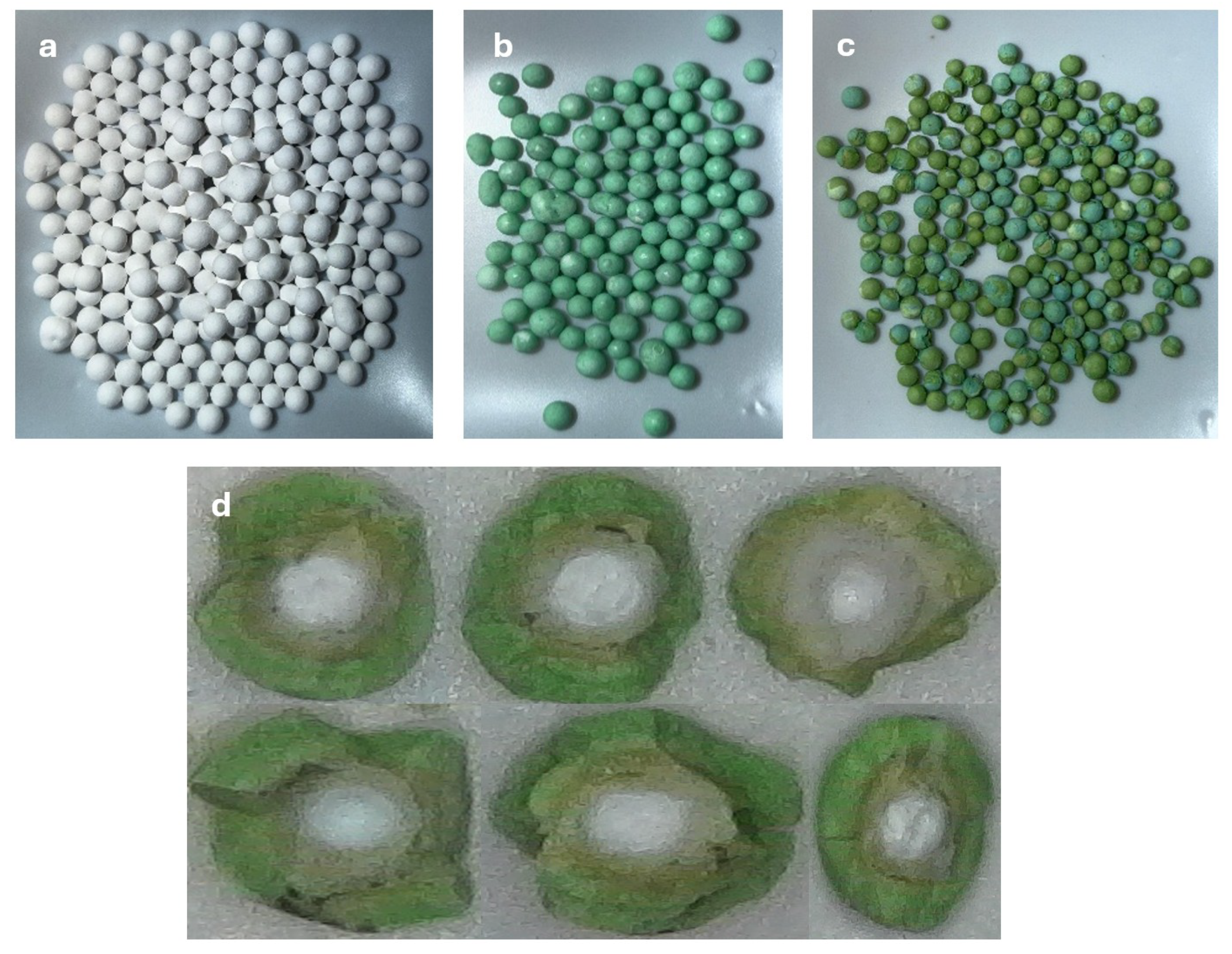
Some images illustrating the Mayenite-based catalyst preparation are shown in Figure 1. Particular care was required during the deposition of Ni onto the Mayenite precursor, since the precursor spheres are very fragile and they can easily break: the Ni solution was thus slowly added to the precursor spheres to minimize the problem. However, it can be noticed that some spheres in the final batch exhibit surface fractures; this can be due to the fast decomposition of the nickel nitrate precursor during the calcination step. Moreover, the images of some broken spheres, revealed the formation of a thick Ni layer around the Mayenite core: that is likely due to the migration of the Ni salt toward the surface of the catalyst during calcination and the contemporary sintering of the Mayenite core, leading to a core–shell structure.
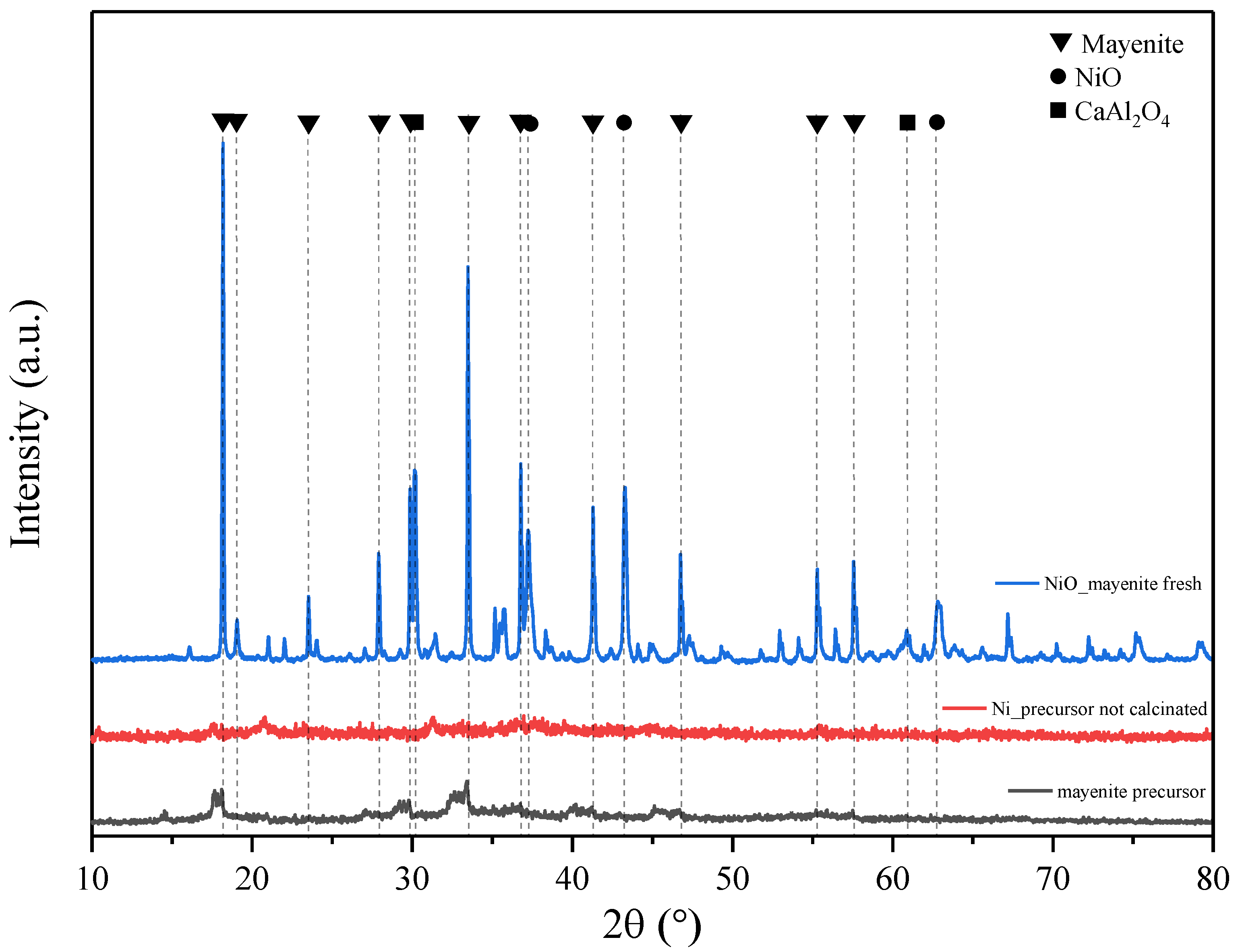
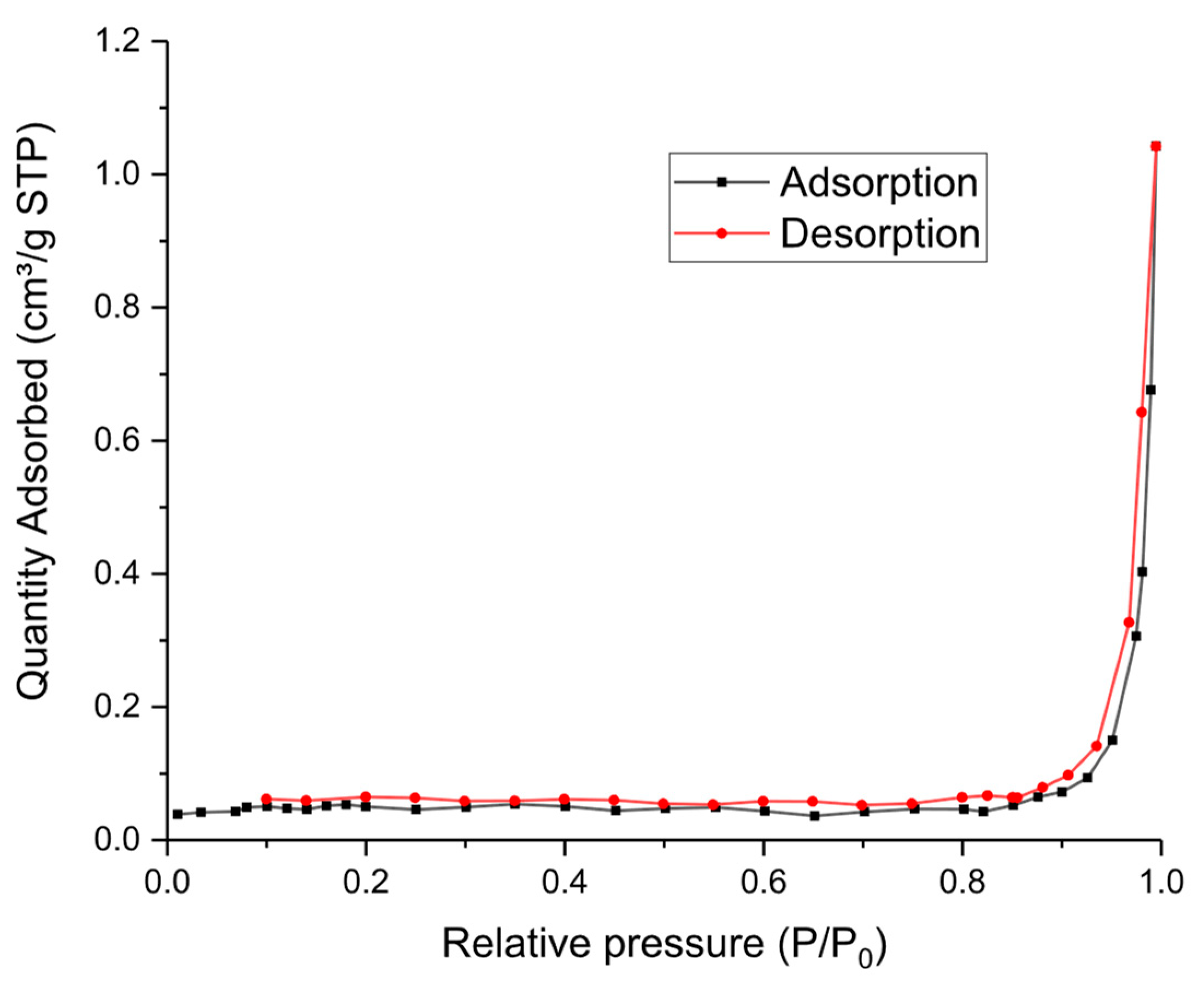
The XRD graphs of the virgin Mayenite precursor and of the precursor spheres after impregnation presented no crystallinity, while sharp phase reflections related to Mayenite are detected after calcination at 1310 °C (Figure 2). That agrees with results previously reported in the literature; moreover, the typical reflections of NiO at 37°, 43° and 63° can be onserved, thus confirming both the Mayenite phase formation and the Ni(NO3)2 decomposition to form NiO [29,30,32,33]. The other non-identified peaks can be attributed to different calcium aluminate phases [34,35]. By using the NiO reflection at 43°, which is isolated from the Mayenite peaks, the dimensions of the NiO crystallites on the catalyst surface can be estimated using the Scherrer equation being 44.4 nm for the fresh catalyst. The BET analysis (Figure 3) conducted on the spherical fresh catalyst gave as a result a surface area of 0.182 m2/g and a pore volume of 0.0016 cm3/g. Low values of surface area (<10 m2/g) are also reported in the literature [29,30,31,36], and can be compatible with the mm-size spheres and with the synthesis route, since the impregnation step and the successive calcination at high temperature can contribute to the closing of all the pores and sintering of the spheres.
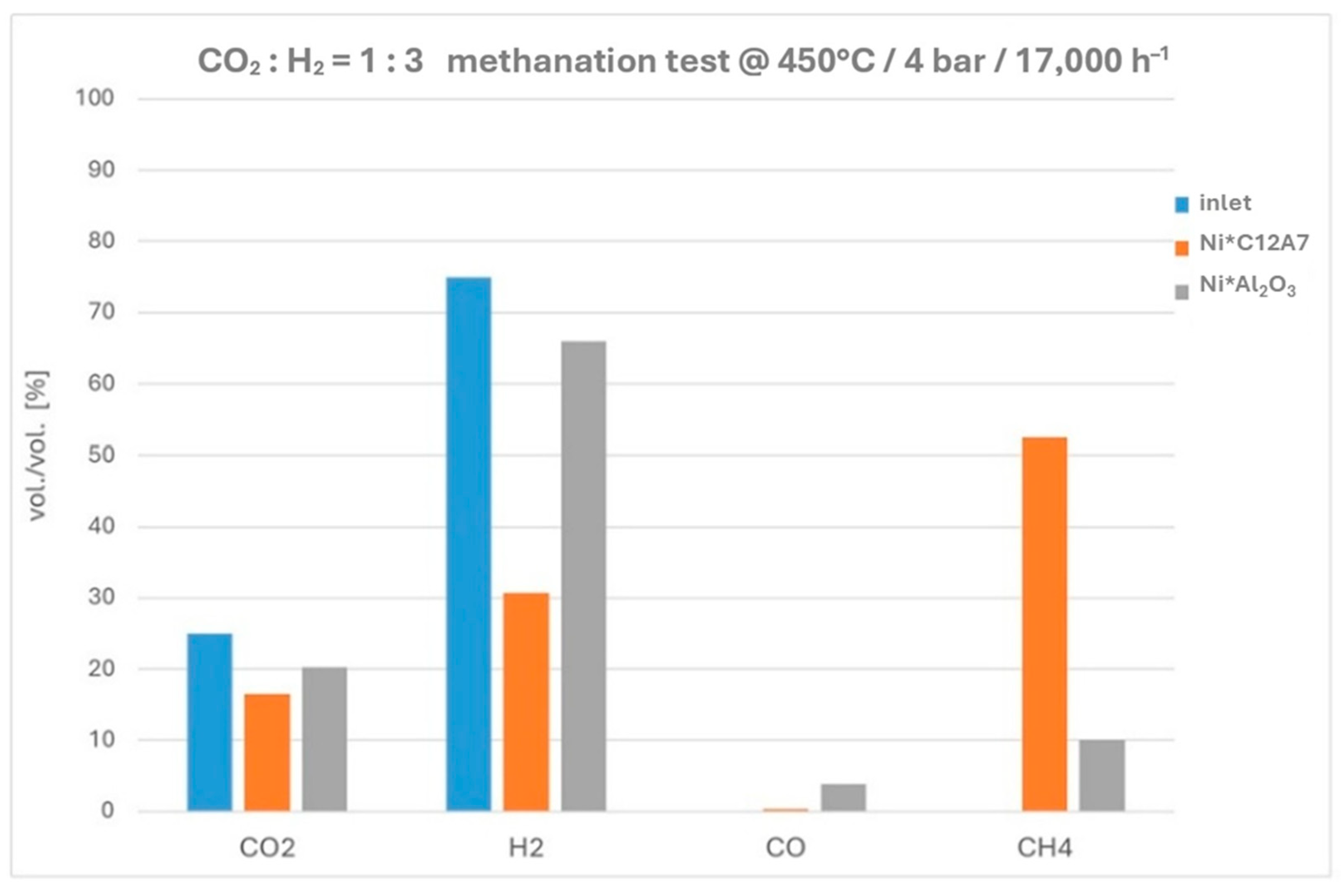
Figure 4 resumes the methanation measurements are resumed, comparing the outlet gas mixture composition in terms of volume percentage for the tested catalysts. Based on the experimental findings, the mass balance related to inlet CO2:H2 = 1:3 molar ratio is analyzed (reported in Equations (1)–(9)), keeping in mind that, down-streaming from a deal of effort to gain accurate quantitative results by precise calibration of the chemical pilot-plant, the conditions of no free oxygen in the outlet mixture as well as of a total condensation of the produced H2O are imposed, while the weak H2 dissociation is monitored by coupling the MS analysis to the quantitative percentages of CO2-CH4-CO retrieved by IR detectors:
3 H 2 + C O 2 a C O 2 + b H 2 + g C O + d C H 4 + x C ( s ) + y H 2 O ( l )
a , b , g , d = N [ α , β , γ , δ ]
(Linear rates corresponding to the measured volume percentages: α + β + γ + δ = 1.)
3 H 2 + C O 2 N α C O 2 + β H 2 + γ C O + δ C H 4 + x C ( s ) + y H 2 O ( l )
C :           1 = N α + γ + δ + x
O :           2 = N 2 α + γ + y
H :           6 = N 2 β + 4 δ + 2 y
N = 1 β + 2 δ 2 α γ
x = β 3 α + δ 2 γ β + 2 δ 2 α γ
y = 2 β + 4 δ 6 α 3 γ β + 2 δ 2 α γ
The mass balance solutions are then retrieved by the measured gaseous volumetric percentages; the actual CO2 inlet flow with respect to the unitary framework above must be considered to have the effective quantities (flux, mole number and mass for each species) related to the specific test. The gaseous outlet total measured using the RITTER Drum-type Gas Meter is intended to support the value estimated by the analytical balance. A decrease in the outlet flux with respect to the total inlet flux is considered indicative of CO2 reduction. Moreover, after the test, the lines are purged by flushing nitrogen to collect the condensed water produced during the whole process, as further reference assessing the reliability of the balance quantitative results, regarding the solid waste product (coke) estimation. In particular, as far as the results reported in Table 1 are concerned, x and y solutions are multiplied by the CO2 inlet flow [NL/min], the test span [min] and by mol.wt./Vol1-MOL to estimate the grams of solid carbon and water produced during the whole reaction, respectively: the quantitative agreement between balance evaluation and measurement of both outlet total flux (Neff vs. Nmeas) and amount of condensed water (H2O(l)ev vs. H2O(l)coll) testifies the huge level of reliability obtained in large-scale tests conducted by the adopted set-up.
In such framework, CO2 conversion rate and products selectivity can be evaluated as reported in Equations (10) and (11):
C O 2     c o n v e r s i o n   % = 100 · 1 a
C H 4 , C O , C ( s )     s e l e c t i v i t y   % = 100 · d , g , x 1 α
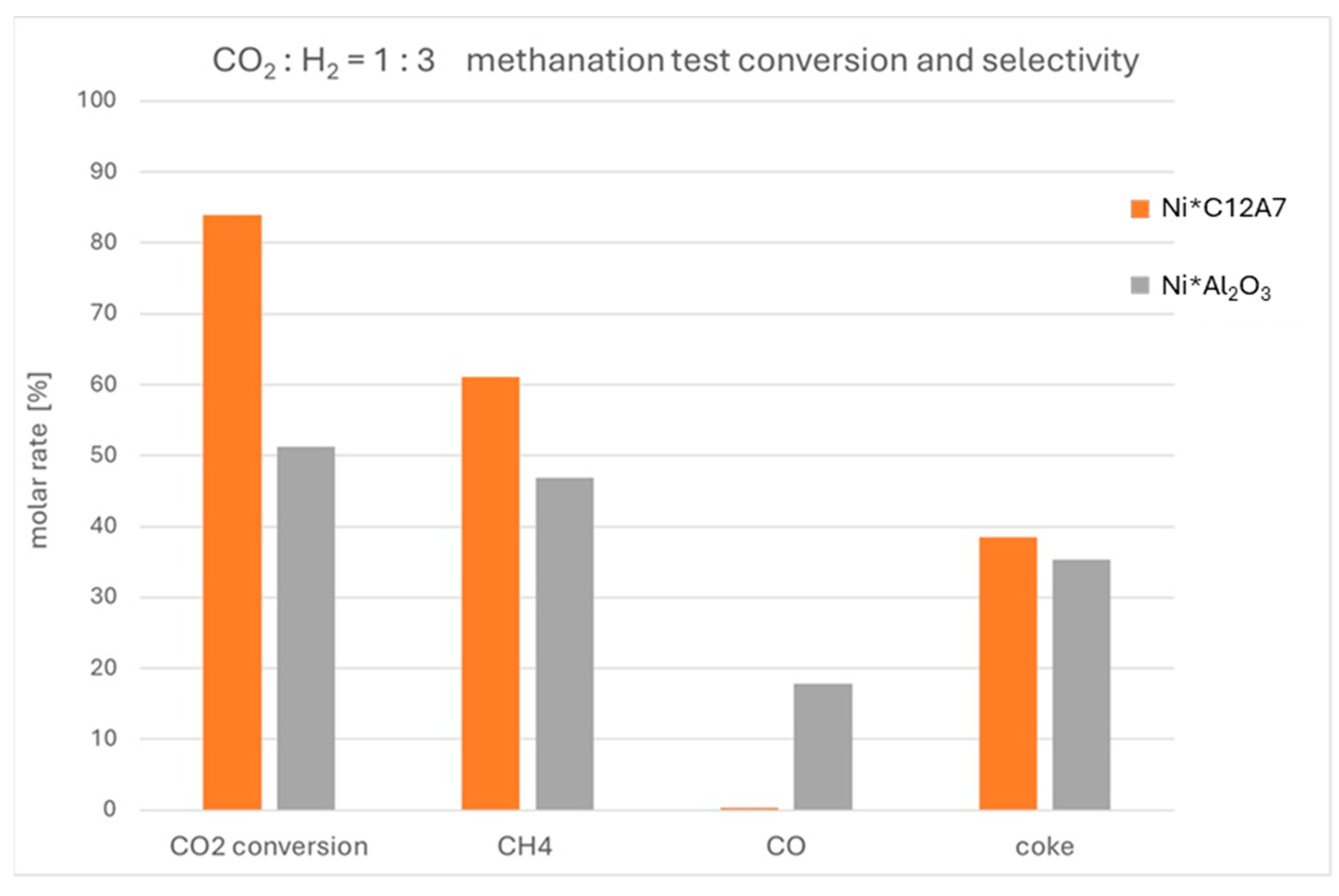
where it has been stressed that, by this way (i.e., in the context of the closed carbon balance), the actual CO2 hydrogenation effectiveness is revealed since the solid waste production is taken into account (by comparing only CH4 vs. CO yield, for instance, the Mayenite-based catalyst would provide a virtual CH4 selectivity of nearly 100%). The corresponding results are summarized in Figure 5, highlighting the significant capability provided by Ni*C12A7 catalytic system in promoting CO2 reduction toward the selective production of methane respect to the alumina-supported catalyst performance.
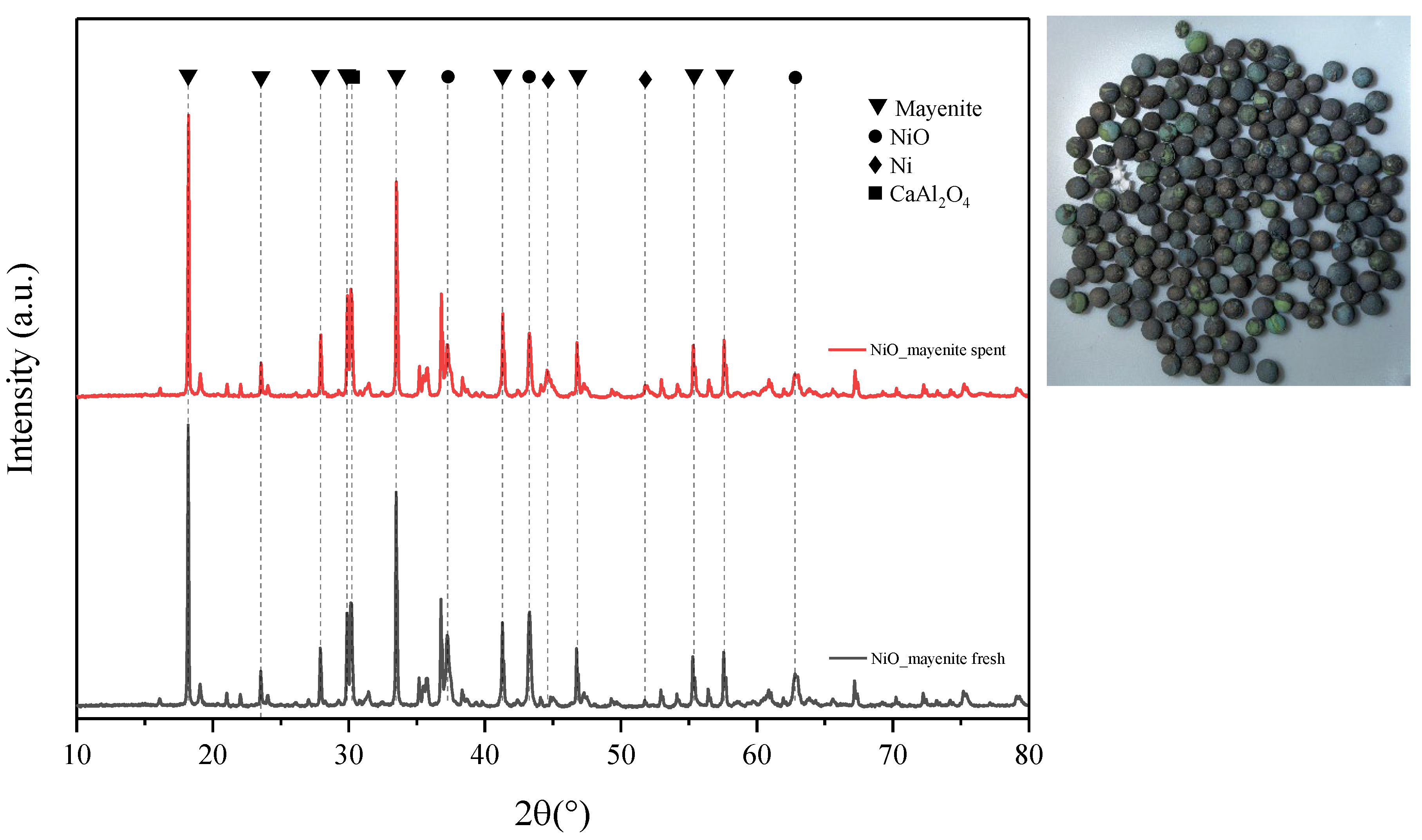
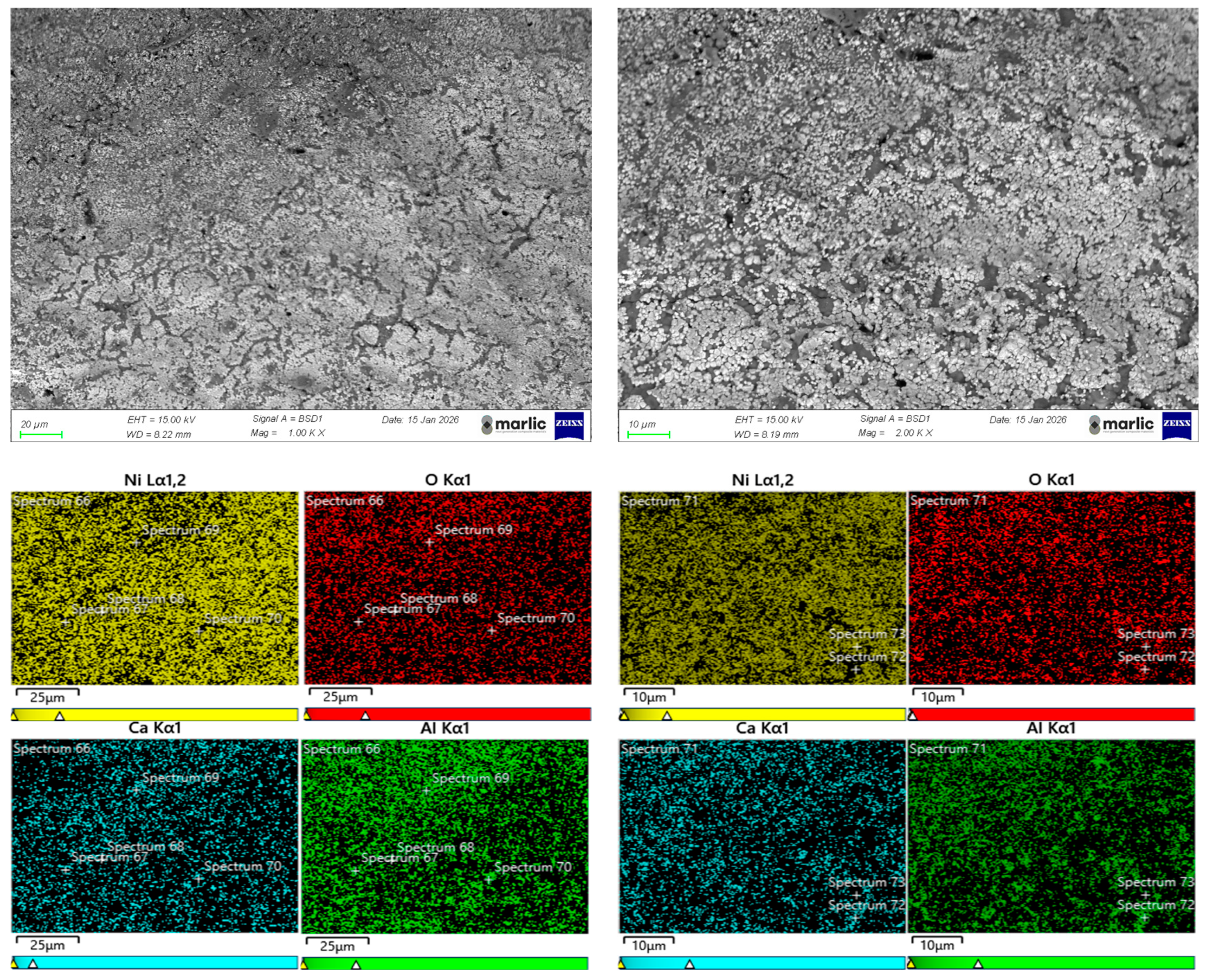
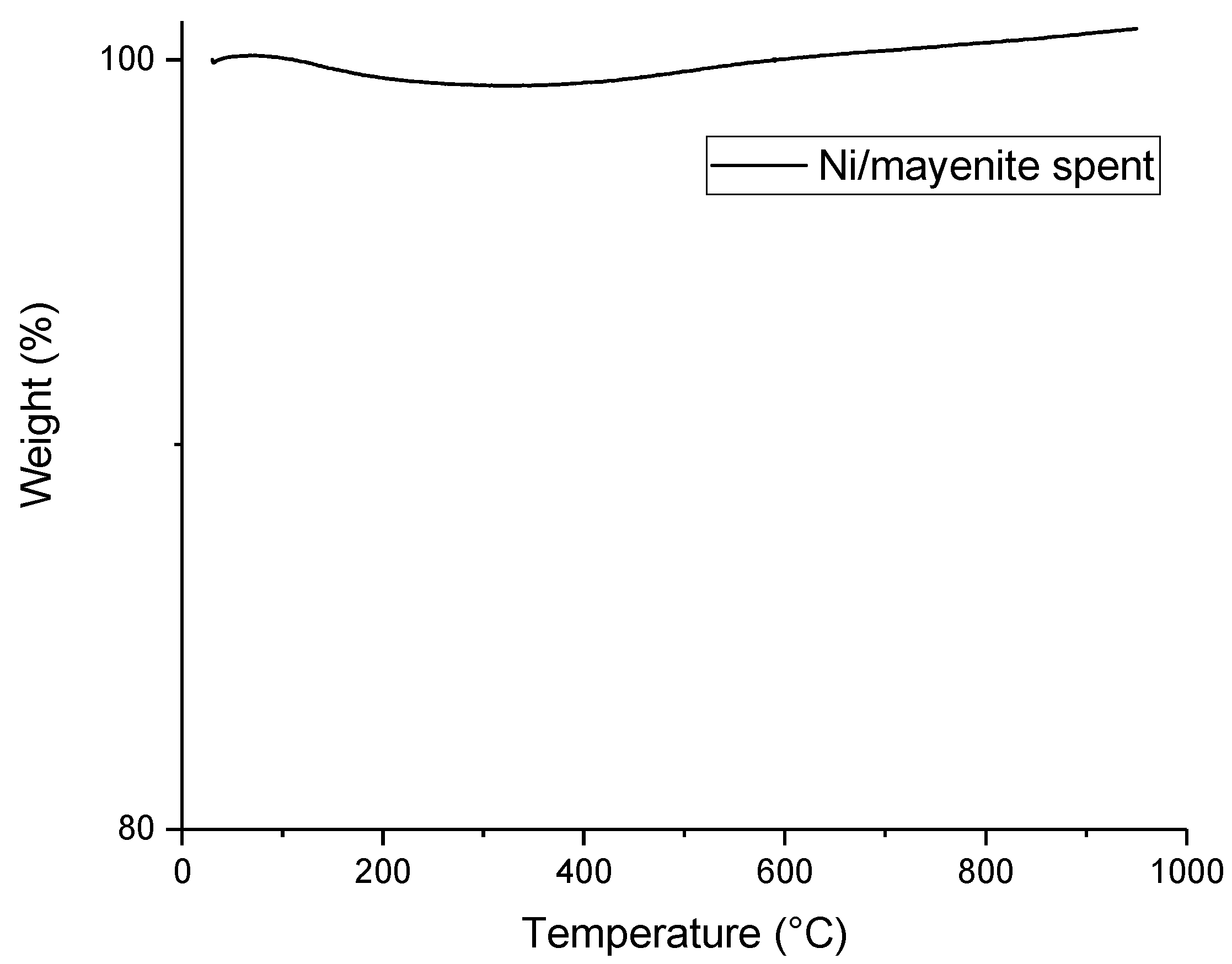
The comparison between the XRD patterns of the fresh and used catalyst (Figure 6), shows both NiO reflections and metallic Ni reflections at 44° and 52° in the spent catalyst diffractogram [30,31,33]. However, since the CO2 methanation reaction was performed just after the catalyst reduction in situ (see Figure 5 inset), it is not possible to know whether the coexistence of both peaks is due to a partial oxidation of the Ni during the reaction or to an incomplete reduction of the NiO on the catalyst surface. The NiO crystallites size calculated for the spent catalyst was 44.6 nm, thus maintaining similar dimensions after the catalytic test, while for metallic Ni, the estimated dimension is 26.5 nm. A similar behavior demonstrating crystallite size reduction was also reported by [37]. Nevertheless, the reported results are made with a rough calculation, since the instrumental broadening was not taken into account in the calculation. Furthermore, from the SEM images (Figure 7) and EDS elemental mapping (Table 2) of the used catalyst, no carbon deposits were observed after the test, despite their predictionfrom the mass balance. The absence of carbon deposits was further confirmed by the TGA analysis conducted in the air atmosphere (Figure 8), showing no weight loss up to 950 °C. The absence of carbon may be attributed by the short time of the catalytic test. Anyway, this aspect will be investigated in the next activity focused on longer experimental test times.
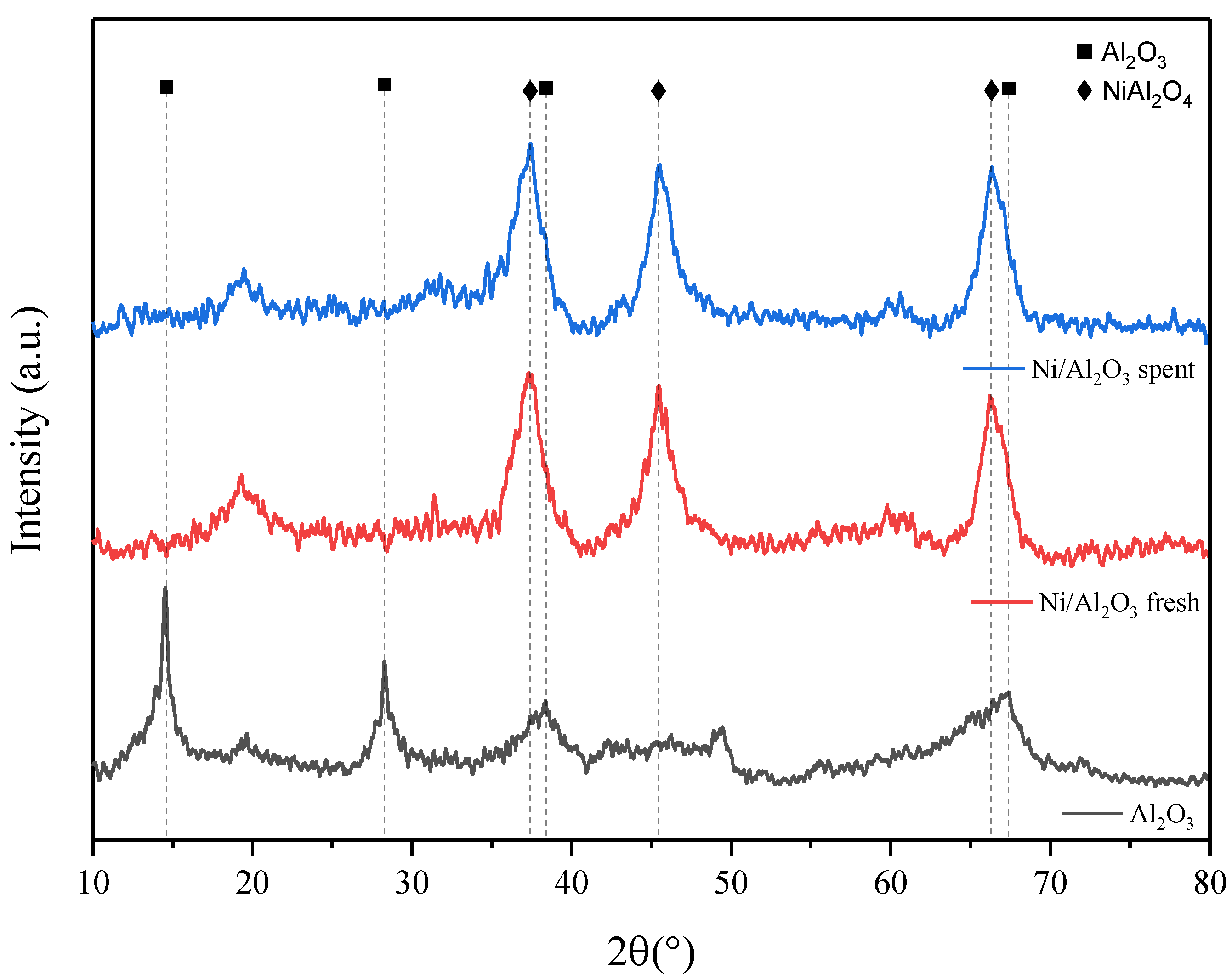
The lower CO2 conversion and selectivity obtained with the Ni/Al2O3 catalyst, it can be attributed to the formation of the spinel phase NiAl2O4 after the calcination of the catalyst, as shown in the XRD diffractograms reported in Figure 9. The spinel phase was reported to be more stable at high temperatures but also more tough to reduce in the active form Ni/Al2O3 [38]. The incomplete reduction of the catalyst, demonstrated by the same registered pattern for the fresh catalyst before use and the spent catalyst after the reaction, can explain the low activity registered.
The CO2 methanation reaction is usually performed at temperatures not higher than 450 °C and with a 4:1 molar ratio between H2 and CO2, since this is the stoichiometry needed by the reaction (see Table 3). Under this condition, Ni-based catalysts are very active, especially when supported on CeO2, ZrO2 or on mixed metal oxide support material containing ceria or zirconia, due to the presence of many oxygen vacancies on their surface, acting as an active site for CO2 absorption and methanation. These catalysts have shown good CO2 conversion and almost 100% selectivity toward CH4 at temperatures lower than 400 °C, providing better performances than common SiO2 and Al2O3 supports [39].
Few examples are reported in the literature for the CO2 methanation reaction with a sub-stochiometric ratio of the reactant gases. In [51], a 70% CO2 conversion and 100% selectivity for CH4 for a 12 wt.% Ni-loaded catalyst based on ZrO2-Al2O3 composite support with a 3.5 to 1 ratio between H2/CO2 is reported. Using the same 3.5 to 1 CO2:H2 ratio, a process achieving 80% conversion of CO2 and a 100% selectivity for CH4 for a 20 wt.% Ni-loaded catalyst supported on mesoporous nanocrystalline gamma-Al2O3 is described in [52]. The methanation reaction with a 3:1 H2 / CO2 ratio using Ni nanoparticles loaded on Zr-based MOF, achieving 57.6% of CO2 conversion and 100% CH4 selectivity at 300 °C with 20 wt.% metal loading, was reported in [53], maintaining the same performance over 100 h and showing superior activity than 20wt.% Ni loaded on common support as SiO2 and ZrO2. As described in [54], the CO2 methanation reaction was conducted with a biochar-based Ni catalyst in two different methanation facilities and with different catalyst masses loaded in the reactor, reporting only 11% conversion with a 48% selectivity for the reaction, with 5 g of catalyst (GHSV = 50,000 h−1) which increased to 54% of conversion and 89% of selectivity for the reaction with 40 g of Ni-biochar catalyst (GHSV: 6000 h−1). These ones, however, are test conducted with powdered catalysts. Different experiments with structured catalysts were carried out, particularly with a wash-coated parallel channel honeycomb monolith and a gyroid 3D-printed monolith [55]: the chosen active phase was 0.5 wt.% Ru−15 wt.% Ni/MgAl2O4, while the activity of the catalyst was evaluated by varying the reactant gases ratio from 1:1 to 4:1 H2/CO2, showing, for both types of catalysts a CO2 conversion above 50%. A similar result was also reported in [56], where a bimetallic NiRu wash-coated alumina monolith showed 55% CO2 conversion over a 48 h test, using a feed mixture composed of 5 vol% CO2, 15 vol% H2, and Ar to balance. A further example of CO2 methanation with a 3:1 ratio of H2/CO2 is provided in [57], where the activity of a 20 wt.% Ni deposited on a Cr2O3 catalyst and a 20 wt.% Ni-Cr2O3 mixed oxide catalyst was studied, showing 69% CO2 conversion with 100% selectivity for CH4.
None of the previously reported studies mention solid carbon deposition on the catalyst surface. In the present work, the catalytic activity has been evaluated using a H2/CO2 ratio of 3:1. The study of the reaction under these conditions is especially of industrial interest, since a reduction in H2 in the gas feed can reduce the cost of the reaction, but it can also to a lower CO2 conversion and CH4 selectivity, because of coking phenomena and the favored reverse water–gas shift reaction that produces CO as the main product instead of methane [12,58]. The results reported here show that the as-manufactured 10 wt.% Ni/Mayenite can reach about 85% CO2 conversion, with nearly 100% CH4 selectivity over CO at 1 h of testing, showing better performance than some of the previously reported catalysts; moreover, these results were obtained with a structured catalyst, which is a very important prerequisite when considering it for industrial application. The only study found in the literature in which Mayenite is used in the carbon dioxide hydrogenation conducted the CO2 methanation reaction with Ru deposited on a Mayenite support, demonstrating a maximum of 80% CO2 conversion and 80% CH4 yield with a 3.54 wt.% of active metal loading, keeping the same performance over a 72 h test. [28].

3. Materials and Methods

3.1. Chemical Pilot Plant

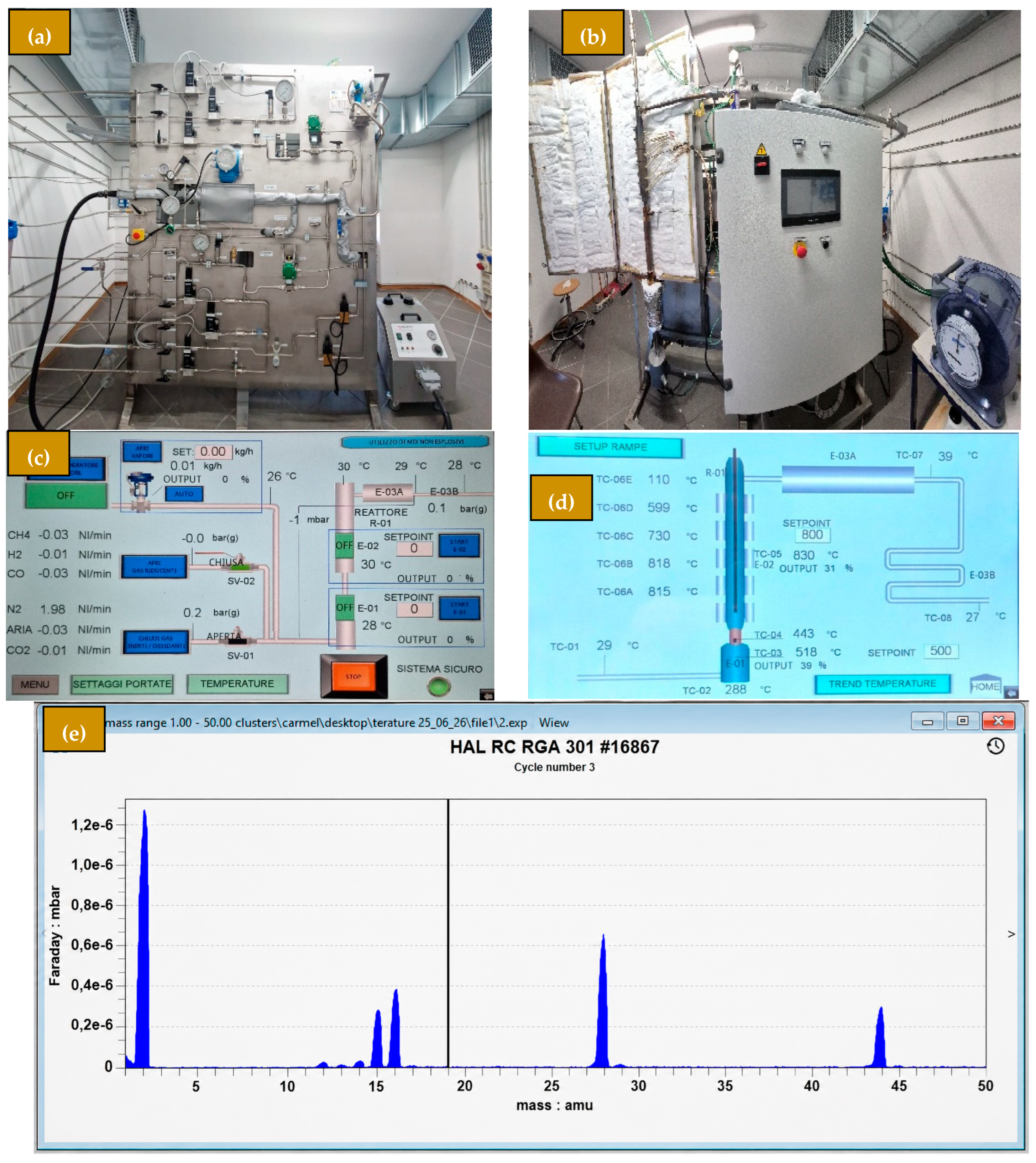
Some images of the in-house-designed, assembled and set-up pre-industrial-scale chemical plant are shown in Figure 10 [14]. The plant consistsof an adiabatic single-tube reactor with a fixed catalytic bed housing, placed vertically inside a ceramic-insulated electric furnace. The inlet is connected to the gas injection, mixing, and pre-heating section, whereas the outlet features subsystems for cooling, product collection, and reaction product analysis. The system is designed to operate across a broad range of conditions, and can operate at temperatures up to approximately 800 °C and at working pressures up to 8 atm.
The entire system is remotely controlled via custom software, allowing the setting of inlet flow rates, operational pressure, heating ramps and dwell temperatures, while monitoring the reaction progress as well as the thermal profile throughout the different reactor zones in real time. The plant includes an injection section with six gas lines (N2, H2, air, CH4, CO, and CO2) converging into a single mixing manifold, which is also equipped with a continuously fed steam generator supplied with demineralized water. The lines are connected to mass flow controllers (MFC—Model SLA5850, Brooks Instruments, Hatfield, PA, USA), with gas calibration performed using bubble flow meters and liter counter depending on the flow rates (range: 0.4–13 NL/min).
The reaction zone consists of a tubular reactor made of steel, with an internal chamber approximately 500 mm in length, with an internal diameter of 20 mm. Heating was controlled by six resistive heating bands, and the reactor’s thermal profile is monitored by five thermocouples placed along the reaction zone. At the inlet, an electric preheating system can handle a maximum mixed gas flow rate of 750 NL/h, with temperatures rising from room temperature to a maximum of 700 °C. The reactor’s internal chamber houses a cartridge for loading the catalytic bed in the isothermal zone between two layers of inert material. The catalyst introduced into the reactor may be monolithic or in the form of pellets, foam, or spheres. Powders should be avoided, since in big reactors they cause problems related to heat dissipation, causing hot spots and pressure drops within the reactor, within the reaction column [20].
Downstream of the reactor, a pre-cooling heat exchanger using main water is installed to reduce the temperature below 400 °C before the gas is reintroduced into the stainless-steel pipelines. Additionally, a condenser removes unreacted steam from the outlet mixture, and moisture traps prevent residual water from entering the next section, which contains a water-cooler capable of lowering the gas temperature below 40 °C. A pressure controller is installed after the condenser and is connected to a control unit that regulates and maintains the system’s pressure.
The gas stream exiting the reactor is first cooled and then sent to a drum-type gas flow meter (TG10, Ritter Apparatebau GmbH & Co., Bochum, Germany) to measure the total mass flow at the reactor’s outlet, allowing the mass balance to be defined and calculated. Subsequently, part of the exiting gas stream is sent to a mass spectrometer (HPR 20 EGA, Hiden Analytical, Warrington, UK) connected in-line with the system for real time qualitative measurements of gaseous mixtures. Additionally, IR detectors (MultiGas, Ritter Apparatebau GmbH & Co., Bochum, Germany) for specifically CO, CO2 and CH4 vol% tracking are installed at the outlet: such a system allows the quantification of the outlet gases, resolving problems related to peak overlap in the fragmentation pattern (e.g., N2 and CO at m/z 28 in the mass spectrum).

3.2. Catalyst Preparation and Test Conditions

Calcium oxide (CaO), aluminum oxide (Al2O3) and PVA were purchased from Sigma Aldrich (Sigma-Aldrich Chemie GmbH, Steinheim, Germany); Ni(NO3)2∙6H2O was purchased from Carlo Erba (CARLO ERBA Reagents srl., Cornaredo, Italy). Catalyst spheres were prepared by mixing CaO and Al2O3 in an appropriate stoichiometric ratio (i.e., to obtain the final Mayenite support Ca12Al14O33); a 5% PVA solution was then added to the powder mixture to form a paste. The latter was then loaded into a syringe and extruded to form a filament, which was subsequently cut into 2 mm pieces and rounded between two non-sticky plates to prepare spherical support—i.e., spheres with an average diameter around 1 mm. The prepared material was first dried in air for 12–24 h, then heated at 1000 °C to decompose the binder: this is referred to as the Mayenite precursor. Ni/Mayenite catalyst with 10 wt.% of active metal loading was then prepared by impregnation of the Mayenite precursor spheres in an aqueous solution of Ni(NO3)2∙6H2O. After impregnation, the spheres were dried overnight at 60 °C and calcinated in air at 1310 °C, using a heating ramp of 5 °C/min to reach the final temperature. The thermal treatment was needed to decompose the nickel nitrate to NiO and to form the Mayenite phase in the support material, which t is twofold crucial, since it tackles the complex issue of achieving significant metallic loading of non-porous support that is also not stable in aqueous solution, such as Mayenite. A few grams of catalyst were produced to preliminarily establish the successful procedure (mainly, regarding the expected Ni loading amount within the Mayenite precursor as well as the effective formation of the characteristic Mayenite cage); then, a batch of around 90 g was produced for testing activity. In parallel, a corresponding amount of Ni/Al2O3 catalyst was produced as a benchmark by depositing of 10 wt.% Ni onto alumina mm-sized spherical structures, using the same route following standard impregnation. The metal loading was measured using iCAP™ PRO ICP-OES instrument by ThermoFisher Scientific (Waltham, MA, USA) after digestion of the catalyst in aqua regia (Table 4): the analysis of the calcinated catalyst confirmed the 10% wt of Ni loading onto the Mayenite precursor, confirming the successful nickel deposition.
The formation of the Mayenite phase was checked by PXRD analysis (Bruker, Millerica, MA, USA; D6 PHASER, Cu-kα, λ = 1.5418 Å, 40 kV and 15 mA, with a step size of 0.02° (2θ)). The morphological analysis and elemental mapping were performed with SEM-EDS (Zeiss Sigma 300, Oberkochen, Germany). TGA analysis was conducted using an STA 6000 instrument (Perkin Elmer, Shelton, CT, USA). The catalyst surface area and pore volume were determined by N2 adsorption–desorption isotherms at 77 K (ASAP 2020 Plus, Micromeritics, Norcross, GA, USA). Prior to the activity test, the catalysts were reduced in situ within the reactor under a flowing gaseous mixture of H2 and N2 in a 1:4 volume ratio for 1 h at 450 °C (H2 flow: 1.2 NL/min; N2 flow: 4.8 NL/min; Pwork ~ 1 bar). The CO2 methanation reaction was conducted at 450 °C and 4 bar using a CO2/H2 volume ratio of 1:3 in the reactant mixture (1.5 NL/min for CO2 and 4.5 NL/min of H2), thus maintaining a total gas flow of 6.0 NL/min. The tests were carried out by loading about 30 g of catalyst into the reactor chamber, thus setting GHSV at around 17,000 h−1 (estimated microsphere density ~ 1.4 g/cm3).

4. Conclusions

A structured heterogeneous catalyst based on Ni deposited on a mayenitic support was prepared and tested for the CO2 hydrogenation process by using an in-house-built chemical pilot plant to obtain reliable experimental data for large-scale application. There are three main achievements of the present work:
-
An innovative aqueous route was implemented to perform nickel loading onto a non-porous Mayenite support starting from precursor oxides: the evidence from XRD and ICP-OES characterization shows that this method allows one to achieve the target deposition grade (10 wt.%) on mm-sized spherical structures in which the required chemical configuration (i.e., the mayenitic cage) is preserved.
-
The assembled plant setup was carefully tuned to precisely monitor all the operating parameters and, mainly, to obtained reproducible quantitative results of the gas-phase test reaction: in particular, beyond the evaluation of catalytic properties, the waste by-products can be successfully analyzed and quantified, thus demonstrating the large potential of the adopted experimental equipment for industrial research activities.
-
The proposed novel catalyst proved to be effective in promoting CO2 reduction, showing almost ideal CH4 selectivity: a CO2 conversion of 85%, and nearly 100% selectivity for CH4 over CO were achieved. These results, considering the test feasibility under effective conditions (mainly, a structured catalyst tested in large amounts at high GHSV), represent promising preliminary results for further studies on Mayenite-based catalytic systems for gas-phase reactions.
The preliminary results point to future insights about the newly developed catalytic system, which will focus on long-term testing in order to evaluate catalyst stability, with particular attention to the detection and quantification of solid carbon deposition that can lead to catalyst deactivation, to obtain a better understanding of the catalyst behavior, especially when considering real implementation of the system in industrial applications.

Author Contributions

Conceptualization M.B.; Methodology, G.S., M.F. and M.B.; Validation, M.B.; Formal Analysis, G.S. and M.F.; Investigation, G.S.; Data Curation, G.S. and M.F.; Writing—Original Draft Preparation, G.S.; Writing—Review and Editing, G.S., M.F., L.S., P.R. and M.B.; Supervision, M.B.; Funding Acquisition, M.B. All authors have read and agreed to the published version of the manuscript.

Funding

Scholarship funded under NGEU—PNRR, DM 630/2024 M4 C2 I3.3, CUP J11J24001870006 with the contribution of KairoSpace S.r.l.—VAT N°/registration n°: 04268240712.

Data Availability Statement

The raw data supporting the conclusions of this article will be made available by the authors on request.

Acknowledgments

Thanks to KairoSpace S.r.l for the financial contribution and technical support with the pilot plant.

Conflicts of Interest

The authors declare no conflicts of interest.

References

  1. Friend, C.M.; Xu, B. Heterogeneous Catalysis: A Central Science for a Sustainable Future. Acc. Chem. Res. 2017, 50, 517–521. [Google Scholar] [CrossRef]
  2. Hu, X.; Yip, A.C.K. Heterogeneous Catalysis: Enabling a Sustainable Future. Front. Catal. 2021, 1, 667675. [Google Scholar] [CrossRef]
  3. Xu, Y.; Cao, M.; Zhang, Q. Recent Advances and Perspective on Heterogeneous Catalysis Using Metals and Oxide Nanocrystals. Mater. Chem. Front. 2021, 5, 151–222. [Google Scholar] [CrossRef]
  4. Humphreys, J.; Lan, R.; Tao, S. Development and Recent Progress on Ammonia Synthesis Catalysts for Haber–Bosch Process. Adv. Energy Sustain. Res. 2021, 2, 2100043. [Google Scholar] [CrossRef]
  5. Tian, F.; Zhou, N.; Chen, W.; Zhan, J.; Tang, L.; Wu, M. Progress in Green Ammonia Synthesis Technology: Catalytic Behavior of Ammonia Synthesis Catalysts. Adv. Sustain. Syst. 2024, 8, 2300618. [Google Scholar] [CrossRef]
  6. Králik, M.; Koóš, P.; Markovič, M.; Lopatka, P. Research and Developments of Heterogeneous Catalytic Technologies. Molecules 2025, 30, 3279. [Google Scholar] [CrossRef]
  7. Munnik, P.; De Jongh, P.E.; De Jong, K.P. Recent Developments in the Synthesis of Supported Catalysts. Chem. Rev. 2015, 115, 6687–6718. [Google Scholar] [CrossRef]
  8. Zaera, F. Designing Sites in Heterogeneous Catalysis: Are We Reaching Selectivities Competitive with Those of Homogeneous Catalysts? Chem. Rev. 2022, 122, 8594–8757. [Google Scholar] [CrossRef]
  9. Alam, M.I.; Cheula, R.; Moroni, G.; Nardi, L.; Maestri, M. Mechanistic and Multiscale Aspects of Thermo-Catalytic CO2 conversion to C1products. Catal. Sci. Technol. 2021, 11, 6601–6629. [Google Scholar] [CrossRef]
  10. Pérez-Ramírez, J.; Berger, R.J.; Mul, G.; Kapteijn, F.; Moulijn, J.A. The Six-Flow Reactor Technology A Review on Fast Catalyst Screening and Kinetic Studies. Catal. Today 2000, 60, 93–109. [Google Scholar] [CrossRef]
  11. Campanati, M.; Fornasari, G.; Vaccari, A. Fundamentals in the Preparation of Heterogeneous Catalysts. Catal. Today 2003, 77, 299–314. [Google Scholar] [CrossRef]
  12. Tommasi, M.; Degerli, S.N.; Ramis, G.; Rossetti, I. Advancements in CO2 Methanation: A Comprehensive Review of Catalysis, Reactor Design and Process Optimization. Chem. Eng. Res. Des. 2024, 201, 457–482. [Google Scholar] [CrossRef]
  13. Colelli, L.; Grancini, A.; Mattei, E.; Bassano, C.; Vilardi, G. Preparation and Characterization of Ru-Based Catalyst for Power to Gas Applications. Energies 2025, 18, 827. [Google Scholar] [CrossRef]
  14. Catalytic Chemistry. Available online: https://www.kairospace.it/Catalytic-Chemistry/ (accessed on 23 March 2026).
  15. Xu, Z.; Wang, Z.; Shen, Y.; Chen, L.; Wang, C. Achieving Sulfur Tolerance in CO2 Methanation over Ni-Based Catalysts: Protective Effects of Fe. Energy Fuels 2024, 38, 21287–21299. [Google Scholar] [CrossRef]
  16. Geschke, A.; Zimmermann, R.T.; Bremer, J.; Sundmacher, K. Core-Shell Catalyst Pellets for CO2 Methanation in a Pilot-Scale Fixed-Bed Reactor. Chem. Ing. Tech. 2024, 96, 1718–1725. [Google Scholar] [CrossRef]
  17. Bassano, C.; Deiana, P.; Lietti, L.; Visconti, C.G. P2G Movable Modular Plant Operation on Synthetic Methane Production from CO2 and Hydrogen from Renewables Sources. Fuel 2019, 253, 1071–1079. [Google Scholar] [CrossRef]
  18. Pascual, S.; Barón, C.; Katla, D.; Skorek-Osikowska, A.; Węcel, D.; Bailera, M.; Legaz, J.; Peña, B.; Lisbona, P. Pilot-Plant Experimental Tests and Kinetic Model Validation of Ru-Based Catalytic Methanation: Assessment of Operating Pressure and Filler Material on Carbon Conversion. Energy 2025, 335, 138183. [Google Scholar] [CrossRef]
  19. Renda, S.; Ricca, A.; Palma, V. Precursor Salts Influence in Ruthenium Catalysts for CO2 Hydrogenation to Methane. Appl. Energy 2020, 279, 115767. [Google Scholar] [CrossRef]
  20. Bailera, M.; Lisbona, P.; Peña, B.; Alarcón, A.; Guilera, J.; Perpiñán, J.; Romeo, L.M. Synthetic Natural Gas Production in a 1 KW Reactor Using Ni-Ce/Al2O3 and Ru-Ce/Al2O3: Kinetics, Catalyst Degradation and Process Design. Energy 2022, 256, 124720. [Google Scholar] [CrossRef]
  21. Witte, J.; Calbry-Muzyka, A.; Wieseler, T.; Hottinger, P.; Biollaz, S.M.A.; Schildhauer, T.J. Demonstrating Direct Methanation of Real Biogas in a Fluidised Bed Reactor. Appl. Energy 2019, 240, 359–371. [Google Scholar] [CrossRef]
  22. Aieamsam-Aung, P.; Srifa, A.; Koo-Amornpattana, W.; Assabumrungrat, S.; Reubroycharoen, P.; Suchamalawong, P.; Fukuhara, C.; Ratchahat, S. Upgradation of Methane in the Biogas by Hydrogenation of CO2 in a Prototype Reactor with Double Pass Operation over Optimized Ni-Ce/Al-MCM-41 Catalyst. Sci. Rep. 2023, 13, 9342. [Google Scholar] [CrossRef] [PubMed]
  23. Kiendl, I.; Klemm, M.; Clemens, A.; Herrman, A. Dilute Gas Methanation of Synthesis Gas from Biomass Gasification. Fuel 2014, 123, 211–217. [Google Scholar] [CrossRef]
  24. Spallina, V.; Marinello, B.; Gallucci, F.; Romano, M.C.; Van Sint Annaland, M. Chemical Looping Reforming in Packed-Bed Reactors: Modelling, Experimental Validation and Large-Scale Reactor Design. Fuel Process. Technol. 2017, 156, 156–170. [Google Scholar] [CrossRef]
  25. Marnasidou, K.G.; Voutetakis, S.S.; Tjatjopoulos, G.J.; Vasalos, I.A. Catalytic Partial Oxidation of Methane to Synthesis Gas in a Pilot-Plant-Scale Spouted-Bed Reactor. Ind. Eng. Chem. Res. 1999, 54, 3691–3699. [Google Scholar] [CrossRef]
  26. Malyshev, S.A.; Shlyakhtin, O.A.; Lazarenko, D.A.; Beresnev, K.A.; Valeev, R.G.; Petukhov, D.I.; Kustov, A.L. Synthesis and Complete Reduction of Nd1.5Ca0.5NiO4: A Route to Composite Ni-Based CO2 Hydrogenation Catalysts with Tunable Microstructure. Int. J. Hydrog. Energy 2025, 151, 150159. [Google Scholar] [CrossRef]
  27. Lee, W.J.; Li, C.; Prajitno, H.; Yoo, J.; Patel, J.; Yang, Y.; Lim, S. Recent Trend in Thermal Catalytic Low Temperature CO2 Methanation: A Critical Review. Catal. Today 2021, 368, 2–19. [Google Scholar] [CrossRef]
  28. Wu, H.; Yuan, M.; Huang, J.; Li, X.; Wang, Y.; Li, J.; You, Z. CO2 Methanation over Ru/12CaO∙7Al2O3 Catalysts: Effect of Encaged Anions on Catalytic Mechanism. Appl. Catal. A Gen. 2020, 595, 117474. [Google Scholar] [CrossRef]
  29. Ordóñez, C.; Martínez, I.; Murillo, R. Nickel Catalyst Supported on Mayenite/CaO for the Catalytic Steam Reforming of a Tar Model Compound. Appl. Catal. A Gen. 2025, 700, 120266. [Google Scholar] [CrossRef]
  30. Manera, C.; Perondi, D.; Barbieri, R.A.; Barcellos, T.; Godinho, M. Ultrasonication-Promoted Synthesis of Ni/Mayenite for Catalytic Reforming of Biomass Tar. Ultrason. Sonochem. 2020, 67, 105165. [Google Scholar] [CrossRef]
  31. Di Carlo, A.; Borello, D.; Sisinni, M.; Savuto, E.; Venturini, P.; Bocci, E.; Kuramoto, K. Reforming of Tar Contained in a Raw Fuel Gas from Biomass Gasification Using Nickel-Mayenite Catalyst. Int. J. Hydrog. Energy 2015, 40, 9088–9095. [Google Scholar] [CrossRef]
  32. Di Giuliano, A.; Gallucci, K.; Foscolo, P.U.; Courson, C. Effect of Ni Precursor Salts on Ni-Mayenite Catalysts for Steam Methane Reforming and on Ni-CaO-Mayenite Materials for Sorption Enhanced Steam Methane Reforming. Int. J. Hydrog. Energy 2019, 44, 6461–6480. [Google Scholar] [CrossRef]
  33. Savuto, E.; Di Carlo, A.; Gallucci, K.; Natali, S.; Bocci, E. Characterization and Performance Analysis of an Innovative Ni/Mayenite Catalyst for the Steam Reforming of Raw Syngas. Fuel 2017, 194, 348–356. [Google Scholar] [CrossRef]
  34. Shiri, S.; Abbasi, M.H.; Monshi, A.; Karimzadeh, F. Synthesis of the CaAl2O4 Nanoceramic Compound Using High-Energy Ball Milling with Subsequent Annealing. Adv. Powder Technol. 2014, 25, 338–341. [Google Scholar] [CrossRef]
  35. Volodin, A.M.; Kenzhin, R.M.; Kapishnikov, A.V.; Komarovskikh, A.Y.; Vedyagin, A.A. Aluminothermic Synthesis of Dispersed Electrides Based on Mayenite: XRD and EPR Study. Materials 2022, 15, 8988. [Google Scholar] [CrossRef] [PubMed]
  36. Li, C.; Hirabayashi, D.; Suzuki, K. Synthesis of Higher Surface Area Mayenite by Hydrothermal Method. Mater. Res. Bull. 2011, 46, 1307–1310. [Google Scholar] [CrossRef]
  37. Richardson, J.T.; Scates, R.; Twigg, M.V. X-Ray Diffraction Study of Nickel Oxide Reduction by Hydrogen. Appl. Catal. A Gen. 2003, 246, 137–150. [Google Scholar] [CrossRef]
  38. Kwon, Y.; Eichler, J.E.; Mullins, C.B. NiAl2O4as a Beneficial Precursor for Ni/Al2O3 catalysts for the Dry Reforming of Methane. J. CO2 Util. 2022, 63, 102112. [Google Scholar] [CrossRef]
  39. Ye, Z.; Huang, F.; Wu, L.; Wang, S.; Zhang, L. Advanced Catalytic Materials for CO2 Methanation: Challenges and Prospects. Fuel 2026, 410, 137952. [Google Scholar] [CrossRef]
  40. Ye, R.; Ma, L.; Hong, X.; Reina, T.R.; Luo, W.; Kang, L.; Feng, G.; Zhang, R.; Fan, M.; Zhang, R.; et al. Boosting Low-Temperature CO2 Hydrogenation over Ni-Based Catalysts by Tuning Strong Metal-Support Interactions. Angew. Chem. Int. Ed. 2024, 63, e202317669. [Google Scholar] [CrossRef]
  41. Riani, P.; Spennati, E.; Garcia, M.V.; Escribano, V.S.; Busca, G.; Garbarino, G. Ni/Al2O3 Catalysts for CO2 Methanation: Effect of Silica and Nickel Loading. Int. J. Hydrog. Energy 2023, 48, 24976–24995. [Google Scholar] [CrossRef]
  42. Ye, R.P.; Liao, L.; Reina, T.R.; Liu, J.; Chevella, D.; Jin, Y.; Fan, M.; Liu, J. Engineering Ni/SiO2 Catalysts for Enhanced CO2 Methanation. Fuel 2021, 285, 119151. [Google Scholar] [CrossRef]
  43. Zhou, G.; Liu, H.; Cui, K.; Jia, A.; Hu, G.; Jiao, Z.; Liu, Y.; Zhang, X. Role of Surface Ni and Ce Species of Ni/CeO2 Catalyst in CO2 Methanation. Appl. Surf. Sci. 2016, 383, 248–252. [Google Scholar] [CrossRef]
  44. Xu, Y.; Wan, H.; Du, X.; Yao, B.; Wei, S.; Chen, Y.; Zhuang, W.; Yang, H.; Sun, L.; Tao, X.; et al. Highly Active Ni/CeO2/SiO2 Catalyst for Low-Temperature CO2 Methanation: Synergistic Effect of Small Ni Particles and Optimal Amount of CeO2. Fuel Process. Technol. 2022, 236, 107418. [Google Scholar] [CrossRef]
  45. Yu, J.; Feng, B.; Liu, S.; Mu, X.; Lester, E.; Wu, T. Highly Active Ni/Al2O3 Catalyst for CO2 Methanation by the Decomposition of Ni-MOF@Al2O3 Precursor via Cold Plasma. Appl. Energy 2022, 315, 119036. [Google Scholar] [CrossRef]
  46. Zhang, Y.; Qu, B.; Chen, X.; Ye, R.; Feng, G.; Zhang, R.; Dai, C.; Liu, Q.; Hu, F. Enhancing Low-Temperature CO2 Methanation Performance over Ni/Al2O3-CeO2 Catalysts by Tuning Oxygen Vacancy. Fuel 2026, 405, 136656. [Google Scholar] [CrossRef]
  47. Fu, H.; Sun, S.; Lian, H. Enhanced Low-Temperature CO2 methanation over Ni/ ZrO2-Al2O3 catalyst: Effect of Al Addition on Catalytic Performance and Reaction Mechanism. J. CO2 Util. 2023, 69, 102415. [Google Scholar] [CrossRef]
  48. Aziz, M.A.A.; Jalil, A.A.; Triwahyono, S.; Mukti, R.R.; Taufiq-Yap, Y.H.; Sazegar, M.R. Highly Active Ni-Promoted Mesostructured Silica Nanoparticles for CO2 Methanation. Appl. Catal. B 2014, 147, 359–368. [Google Scholar] [CrossRef]
  49. Tan, J.; Wang, J.; Zhang, Z.; Ma, Z.; Wang, L.; Liu, Y. Highly Dispersed and Stable Ni Nanoparticles Confined by MgO on ZrO2 for CO2 Methanation. Appl. Surf. Sci. 2019, 481, 1538–1548. [Google Scholar] [CrossRef]
  50. García-Bordejé, E.; Dongil, A.B.; Conesa, J.M.; Guerrero-Ruiz, A.; Rodríguez-Ramos, I. Promotion of Ru or Ni on Alumina Catalysts with a Basic Metal for CO2 Hydrogenation: Effect of the Type of Metal (Na, K, Ba). Nanomaterials 2022, 12, 1052. [Google Scholar] [CrossRef]
  51. Cai, M.; Wen, J.; Chu, W.; Cheng, X.; Li, Z. Methanation of Carbon Dioxide on Ni/ZrO2-Al2O3 Catalysts: Effects of ZrO2 Promoter and Preparation Method of Novel ZrO2-Al2O3 Carrier. J. Nat. Gas Chem. 2011, 20, 318–324. [Google Scholar] [CrossRef]
  52. Rahmani, S.; Rezaei, M.; Meshkani, F. Preparation of Highly Active Nickel Catalysts Supported on Mesoporous Nanocrystalline γ-Al2O3 for CO2 Methanation. J. Ind. Eng. Chem. 2014, 20, 1346–1352. [Google Scholar] [CrossRef]
  53. Zhao, Z.W.; Zhou, X.; Liu, Y.N.; Shen, C.C.; Yuan, C.Z.; Jiang, Y.F.; Zhao, S.J.; Ma, L.B.; Cheang, T.Y.; Xu, A.W. Ultrasmall Ni Nanoparticles Embedded in Zr-Based MOFs Provide High Selectivity for CO2 Hydrogenation to Methane at Low Temperatures. Catal. Sci. Technol. 2018, 8, 3160–3165. [Google Scholar] [CrossRef]
  54. Peña, B.; Bailera, M.; Legaz, J.; Barón, C.; Garlatti, S.; Zampilli, M.; Slopiecka, K.L.; Guilera, J.; Martín, E.; Fantozzi, F.; et al. Development, Testing, Performance Analysis and Modelling of a Biochar-Based Catalyst for Methanation Reaction. Renew. Energy 2025, 250, 123248. [Google Scholar] [CrossRef]
  55. Baena-Moreno, F.M.; González-Castaño, M.; Navarro De Miguel, J.C.; Miah, K.U.M.; Ossenbrink, R.; Odriozola, J.A.; Arellano-García, H. Stepping toward Efficient Microreactors for CO2 Methanation: 3D-Printed Gyroid Geometry. ACS Sustain. Chem. Eng. 2021, 9, 8198–8206. [Google Scholar] [CrossRef]
  56. Bustinza, A.; Frías, M.; Liu, Y.; García-Bordejé, E. Mono- And Bimetallic Metal Catalysts Based on Ni and Ru Supported on Alumina-Coated Monoliths for CO2 methanation. Catal. Sci. Technol. 2020, 10, 4061–4071. [Google Scholar] [CrossRef]
  57. Gholami, S.; Alavi, S.M.; Rezaei, M. Preparation of Highly Active and Stable Nanostructured Ni-Cr2O3 Catalysts for Hydrogen Purification via CO2 Methanation Reaction. J. Energy Inst. 2021, 95, 132–142. [Google Scholar] [CrossRef]
  58. Kuznecova, I.; Gusca, J. Property Based Ranking of CO and CO2 Methanation Catalysts. In Proceedings of the Energy Procedia; Elsevier Ltd.: Amsterdam, The Netherlands, 2017; Volume 128, pp. 255–260. [Google Scholar]
Figure 1. Mayenite-supported Ni catalyst: the as-manufactured precursor spheres (a), dried Ni-impregnated (b) after the calcination treatment (c) and broken spheres showing core mayenitic structure surrounded by metallic layer (d).
Catalysts 16 00458 g001
Figure 2. XRD analysis of Mayenite precursor and of the material after Ni impregnation and after thermal treatment.
Catalysts 16 00458 g002
Figure 3. Adsorption–desorption isotherms for the fresh Ni/Mayenite catalyst.
Catalysts 16 00458 g003
Figure 4. Methanation tests results: outlet mixture gas percentages detected for CO2, CO and CH4, the H2 value is retrieved by normalization and checked by comparison with MS calibration. * means Ni deposited on C12A7 and Al2O3.
Catalysts 16 00458 g004
Figure 5. Methanation tests results: CO2 conversion rates and carbon-based reaction products selectivity. * means Ni deposited on C12A7 and Al2O3.
Catalysts 16 00458 g005
Figure 6. XRD analysis of fresh and post-mortem Mayenite catalyst (the inset image shows the darkened spheres due to both reduction treatment before the methanation and eventual by-product deposition during the test).
Catalysts 16 00458 g006
Figure 7. SEM/EDX analysis of the Ni/Mayenite catalyst after the methanation test. On the left, 1000× image magnification, on the right the 2000× image magnification.
Catalysts 16 00458 g007
Figure 8. TGA analysis of the Ni/Mayenite catalyst after the methanation test. Heating rate: 10 °C/min; air flow rate: 10 mL/min.
Catalysts 16 00458 g008
Figure 9. Comparison of fresh and spent Ni/Al2O3 catalyst.
Catalysts 16 00458 g009
Figure 10. Chemical pilot plant developed @ UNICAM Chemistry Division (adapted with permission from [14]. Copyright: 2025, KairoSpace s.r.l.): (a) pipeline side, (b) reactor chamber and control panel, (c) gas inlet remote control, (d) reactor thermal profile monitoring, (e) gas outlet analysis by mass spectrometer.
Catalysts 16 00458 g010
Table 1. Methanation tests analysis and quantitative results (test duration: 1 h). * means Ni deposited on C12A7 and Al2O3.
Catalyst
(Mass Balance)
Nxyabgd
Ni*C12A70.980.321.670.160.300.0030.51
Ni*Al2O32.400.180.930.491.580.0910.24
Catalyst
(Test Evaluation)
Neff [NL/min]Nmeas [NL/min]H2O(l)ev
[g]
H2O(l)coll
[mL]
C(s) [g]
Ni*C12A71.461.5121~ 115~ 15
Ni*Al2O33.603.767~ 60~ 9
Table 2. Average element weight percentage from EDX analysis for the Ni/Mayenite catalyst.
ElementAverage w/w%
Ni56.49
Al14.97
Ca8.64
O19.52
Total99.62
Table 3. Summary of recent Ni-based catalyst methanation experimental results.
CatalystReaction Temp. [°C]H2/CO2GHSV [mLg−1h−1]P [bar]CO2 Conv. [%]CH4 Sel. [%]Ref.
Ni/ZrO2230412,00018498.6[40]
Ni/SiO2400455,00017095.0[41]
Ni/SiO2310420,0002077.299.8[42]
Ni/CeO23404.622,000191100.0[43]
Ni/CeO2-SiO2250415,00016399.0[44]
Ni/Al2O340043000169.197.5[45]
Ni/Al2O3-CeO2250412,000178.699.9[46]
Ni/ZrO2-Al2O3300448,000192100.0[47]
Ni/SiO23404600018096.0[48]
Ni/MgO-ZrO2300415,000195100.0[49]
15%Ba-Ni/Al2O3450419,00018099[50]
Table 4. ICP-OES characterization of the prepared catalysts.
SupportTemperature Treatment Theoretical LoadingExp. Ni Loading [av. wt./wt.%]
Mayenite precursor (batch 4 g)1310 °C10%10.13 ± 0.05
Mayenite precursor (batch ~ 90 g)1310 °C10%9.15 ± 0.07
Alumina600 °C10%10.10 ± 2.27
Disclaimer/Publisher’s Note: The statements, opinions and data contained in all publications are solely those of the individual author(s) and contributor(s) and not of MDPI and/or the editor(s). MDPI and/or the editor(s) disclaim responsibility for any injury to people or property resulting from any ideas, methods, instructions or products referred to in the content.