Article

Enhanced Catalytic Ozonation of Norfloxacin by In Situ Construction of Ce-Ni@WSA Catalysts

College of Urban Construction, Nanjing Tech University, Nanjing 211816, China
*
Author to whom correspondence should be addressed.
Catalysts 2026, 16(5), 432; https://doi.org/10.3390/catal16050432
Submission received: 30 March 2026 / Revised: 27 April 2026 / Accepted: 2 May 2026 / Published: 7 May 2026

Abstract

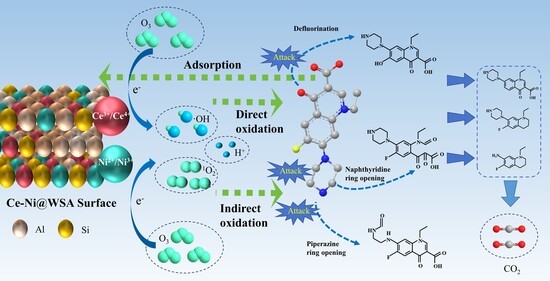
Ce-Ni@WSA (WSA = water-resistant silica–alumina gel) ozone catalyst was prepared with an impregnation–calcination method using WSA as the support and characterized by SEM, XRD, BET, XRF, and XPS analyses. The operating conditions and reaction mechanism of the Ce-Ni@WSA catalytic ozonation of norfloxacin (Nor)-simulated wastewater were systematically studied. A data-envelopment analysis model (DEA-B2C) was then established to evaluate the catalytic ozonation process. Under the optimal conditions of initial pH 7.42 (raw water), ozone dosage = 0.4 g/L/h, catalyst-filling ratio = 5%, humic acid dosage = 0 mg/L, the removal rates of chemical oxygen demand (COD) and Nor reached 84.95% and 93.52%, respectively. Ce-Ni@WSA retained its high catalytic performance and mechanical strength after 50 cycles of repeated use. Mechanistic studies showed that •OH oxidation was dominant in the catalytic-ozonation system, and Nor can be degraded into small molecules through three different pathways and eventually mineralized. The DEA-B2C model analysis showed that the treatment cost was low and the catalytic efficiency was high under the optimal operating conditions.

Graphical Abstract

1. Introduction

Antibiotics in water are detected frequently, so their negative effects on the natural environment are attracting considerable attention. Norfloxacin (Nor) is a fluoroquinolone antibiotic widely used to treat various bacterial infections [1]. The discharge of wastewater from pharmaceutical enterprises and hospitals is the main cause of Nor residue in water systems [2]. According to the literature, the content of Nor in the effluent of sewage treatment plants is mostly in the order of microgram per milligram per liter [3]. Although the concentration in water is not high, the chemical structure of Nor is very stable, with bioaccumulation and persistence. Long-term low-level exposure of water to Nor can still produce toxicological effects [4]. It may lead to human poisoning, impaired body function, and broken ecological balance (such as inhibiting the survival and reproduction of algae) [5]. Therefore, strictly controlling the emission of Nor and subsequently developing and strengthening the water-treatment technology for Nor degradation are necessary.
The structure of Nor is very stable, so it is difficult to degrade and is bio-persistent. Generally, adsorption, membrane separation, and advanced oxidation methods are used. Yang et al. utilized ethanol-ball-milling-modified corn stover biochar for efficient adsorption of norfloxacin, with a maximum adsorption capacity of 163 mg/g and a removal rate of 92.1% [6]. However, adsorption essentially only transfers pollutants to other spaces and does not effectively remove long-term accumulation or newly emerging pollutants in water [7,8]. Qiu et al. prepared PVDF@CoFe2O4 catalytic membranes for natural water treatment, using PVDF@CoFe2O4 membranes to activate peroxymonosulfate (PMS) to generate sulfate radicals (SO4) and hydroxyl radicals (•OH). Within 120 min, the removal rate of Nor reached 82.54%, indicating efficient pollutant removal through oxidative degradation [9]. Although membrane separation can effectively remove Nor from water, its practical application is limited by high operating costs and short service life caused by membrane fouling during operation [10,11]. Advanced oxidation processes (AOPs), such as Fenton oxidation, electrochemical oxidation, photocatalytic oxidation, and ozonation, have been widely applied for the degradation of refractory organic pollutants [12]. Zhang et al. prepared a modified composite catalyst, PB/CeO2, and applied it to the Fenton-like oxidation system of Nor. Under optimized conditions (pH 4, H2O2 concentration of 15 mmol/L, and reaction time of 60 min), the removal efficiency of Nor reached 95.32% [13]. However, limited by the mass-transfer efficiency of catalyst materials, the dosage of drugs is often large, and catalyst recovery is difficult [14]. Similarly, electrochemical oxidation has high requirements for operating conditions. Factors such as electrode materials, electrolyte solutions, and reaction pH affect the treatment performance [15,16]. Compared with other treatment methods, catalytic ozonation technology is favored in the field of water treatment and is gradually becoming a research hotspot due to its advantages of simple operation, strong adaptability, and no secondary pollution [17].
In heterogeneous catalytic ozonation, solid catalysts can provide active sites for ozone adsorption and activation, thereby promoting the generation of reactive oxygen species such as •OH and enhancing the degradation efficiency of refractory organic pollutants. Compared with homogeneous systems, this technology offers advantages such as easier catalyst recovery, lower risk of residual metal ions, and reduced secondary pollution [18,19]. Heterogeneous catalytic ozonation has the advantages of superior catalytic performance, reusability, and large-scale application [20]. Zhang et al. performed the Cu-CuFe2O4 catalytic ozonation of Nor. The maximum removal rate of Nor is 81.58% when the ozone and catalyst dosage are 2.72 mg/L and 0.1 g/L, respectively [21]. Zhang et al. prepared a Cl-CaFe2O4/g-C3N4 magnetic layered catalyst for the catalytic ozonation degradation of Nor. The results showed that the Nor removal efficiency reached 91.79%, which was 1.62 times that of ozonation alone, and decreased by only 4.61% after five cycles [22]. Cerium (Ce)- and nickel (Ni)-based catalysts show great potential in the field of catalytic ozone oxidation due to their unique redox properties: the rapid valence transition of Ce3+/Ce4+ promotes the decomposition of ozone to •OH, and its surface oxygen vacancies also adsorb and activate pollutant molecules. For example, Li et al. investigated the application of Co-Mn/CeO2 catalysts in catalytic ozone degradation of norfloxacin, which resulted in the removal of Nor up to 89.61% under optimal conditions [23]; the Lewis acidic sites of Ni2+ could enhance the adsorption of ozone molecules, while the semiconducting properties of NiO could help the electron transfer. Adel Adly et al.’s investigation of the NiFe-LDH catalyst resulted in enhanced norfloxacin mineralization through an interlayer hydroxyl radical generation pathway, and the degradation efficiency of Nor reached 86% in 60 min under optimal conditions [24], but Ni dissolution problems resulted in increased long-term operating costs. Although catalytic ozonation can effectively degrade and mineralize Nor, the optimization of operating conditions, the exploration of chemical stability, and the discussion of the degradation mechanism still need further discussion. Humic acid, as a representative natural organic matter in aquatic environments, may affect catalytic ozonation by competing for ozone, reactive radicals, and catalyst surface active sites. Therefore, its influence on Nor degradation was also evaluated in this study. WSA was selected as the support in this study because of its porous structure, water resistance, and mechanical strength, which are beneficial for Ce/Ni loading and stable catalytic ozonation.
In the present study, the bimetallic ozone catalyst, Ce-Ni@WSA, loaded with Ce and Ni and used in the catalytic ozonation of Nor was prepared. We aimed to explore the optimal operating conditions of the reaction, and the catalyst stability was investigated by repeated-use experiments and mechanical-strength analysis. The entire process of the Ce-Ni@WSA catalytic ozonation of Nor was analyzed via a free-radical quenching experiment, UV-Vis, EEMs, and GC-MS characterization, and then the reaction mechanism was explored. Free-radical quenching experiments were used to identify the main reactive species involved in Nor degradation. A data-envelopment analysis (DEA-B2C) model was established to comprehensively evaluate the whole process of catalytic ozonation of Nor by Ce-Ni@WSA.

2. Results and Discussion

2.1. Preparation and Optimization of Ce-Ni@WSA

As shown in Figure S1, the removal rate of Nor adsorption by the blank silicon–aluminum ball carrier initially increased and then leveled off. When the adsorption time was 250 min, the maximum Nor removal rate was 14.26%. As shown in Figure S2, when the reaction time was 30 min, the removal rates of Nor and COD were 78.64% and 29.07%, respectively. When the reaction time was 30 min, the removal rates of Nor and COD by ozonation alone were 61.99% and 25.42%, respectively.
As shown in Figure S3a, different metal combinations were preliminarily screened based on Nor removal efficiency to determine the optimal active components for WSA-supported catalysts. When the load combination was Ce-Ni and the reaction time was 30 min, the best Nor removal rate was 89.69%. As shown in Figure S3b, with the increased proportion of the Ni element, the removal rate of Nor increased rapidly and then gradually leveled off. When Ce/Ni = 2:1, Ce/Ni = 1:2, and the reaction time was 30 min, the Nor removal rates were 93.52% and 93.56%, respectively, which were significantly better than the corresponding values at other ratios. For comparison, single-metal catalysts (Ce/WSA and Ni/WSA) were also evaluated under the same conditions. The results showed that their Nor and COD removal efficiencies were lower than those of the bimetallic Ce-Ni@WSA catalyst, indicating a synergistic effect between Ce and Ni. As shown in Figure S3c, the removal rate of Nor initially increased and then decreased with increased calcination temperature, and all catalysts used in this study were calcined at 650 °C for 2.5 h. When the calcination temperature was 650 °C and the reaction time was 30 min, the best Nor removal rate was 93.52%. Therefore, considering both Nor and COD removal efficiencies, Ce–Ni was selected as the active component for subsequent optimization. As shown in Figure S4a, the COD removal performance of different metal combinations was further compared. When the load combination was Ce-Ni and the reaction time was 30 min, the best COD removal rate was 58.20%. Figure S4b shows that with an increased Ni element ratio, the COD removal rate increased slowly with the increased reaction time. When Ce/Ni = 2:1 and the reaction time was 30 min, the best removal rate of COD was 84.95%. As shown in Figure S4c, with an increased calcination temperature, the COD removal rate initially increased and then decreased. When the calcination temperature was 650 °C and the reaction time was 30 min, the best COD removal rate was 84.95%. Overall, the preliminary results indicate that a Ce/Ni ratio of 2:1 and a calcination temperature of 650 °C are optimal conditions for achieving high removal efficiencies of both Nor and COD.

2.2. Characterization of the Physical and Chemical Properties of Ce-Ni@WSA

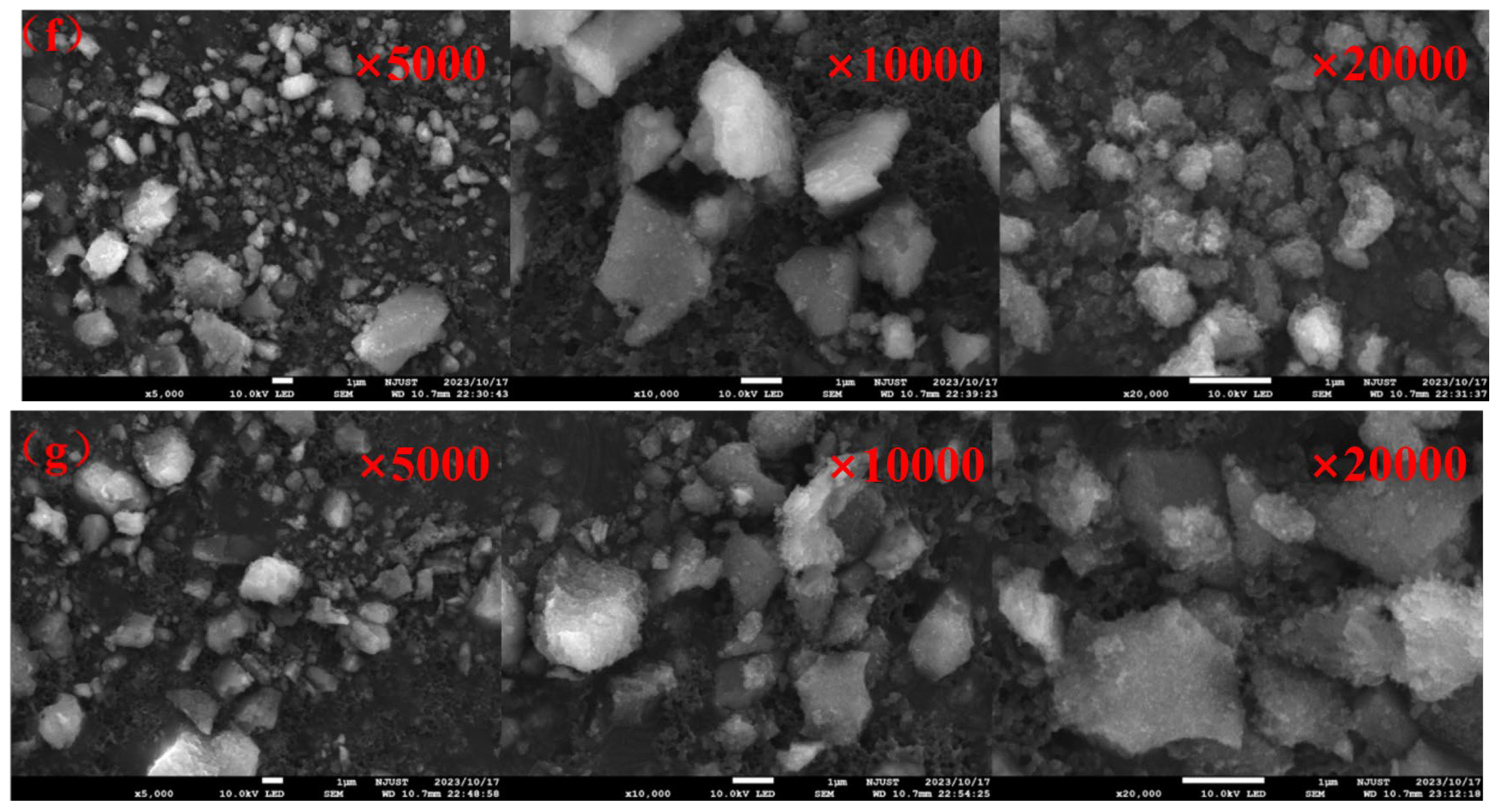
As shown in Figure 1a, a large number of tiny particles were unevenly distributed throughout the surface of the blank silicon–aluminum sphere, forming a good pore structure. As shown in Figure 1b–f, with the increasing calcination temperature, irregular spherical particles and slender strip particles appeared on the surface of Ce-Ni@WSA at different calcination temperatures [25,26]. At a 650 °C calcination temperature, the crystal of the Ce-Ni@WSA surface active component continued to grow, and the crystal distribution was close and uniform. As shown in Figure 1g, the pore structure of the Ce-Ni@WSA surface after repeated use for 50 times was blocked to a certain extent, resulting in decreased catalytic performance [27].
As shown in Figure S5 and Table 1, the specific surface area, average pore volume, and average pore diameter of Ce-Ni@WSA prepared under the optimal calcination condition were 173.51 m2/g, 0.329 cm3/g, and 7.59 nm, respectively. Compared with the blank silica–aluminum sphere carriers, Ce-Ni@WSA had a higher specific surface area, a larger average pore volume, and an average pore diameter. This increase can be attributed to the loading of Ce and Ni active components, which modified the surface structure and introduced additional pore features. After 50 cycles of reuse, the specific surface area and pore volume further increased to 194.66 m2/g and 0.375 cm3/g, respectively, while the pore size showed a slight increase. This phenomenon may be related to structural rearrangement or partial removal of surface deposits during the catalytic reaction, resulting in the exposure of more pore structures and active sites. However, the catalytic performance still decreased slightly, possibly because repeated reactions caused partial coverage or deactivation of surface active sites, which limited effective ozone activation.
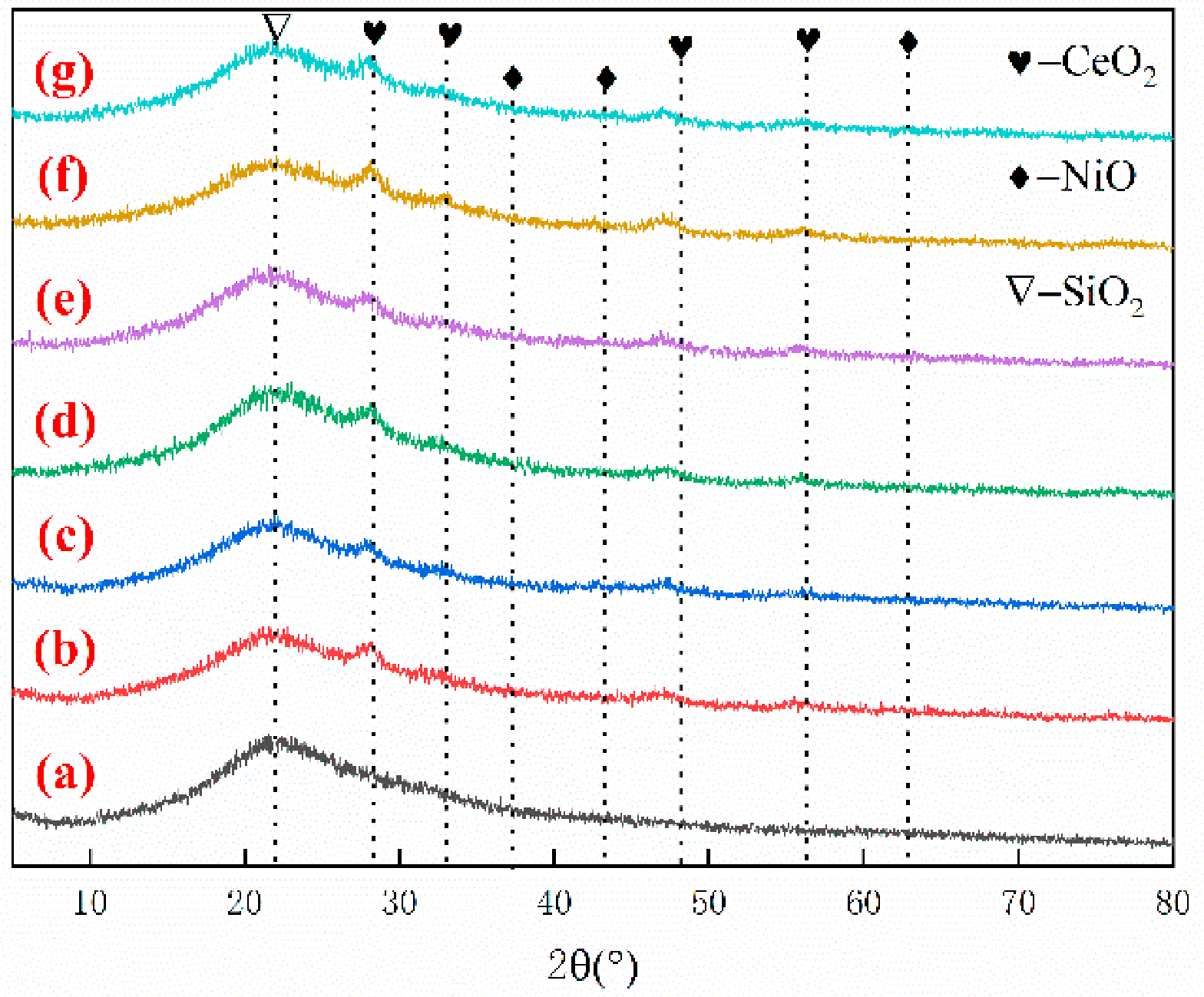
As shown in Figure 2, the diffraction peaks can be clearly observed at 2θ = 28.6°, 33.0°, 47.6°, and 56.3°, which were consistent with the characteristic peak of CeO2 crystal (JCPDS # 34-0394), indicating that Ce was primarily loaded in the form of a cubic fluorite structure, CeO2, in the catalyst [28]. The diffraction peaks observed at 2θ = 37.3°, 43.3°, and 62.9° indicated that Ni was primarily supported in the form of NiO, with an orthorhombic hexagonal crystal structure, in the catalyst [29]. To further quantify the crystallite characteristics of the prepared samples, the average crystallite sizes of samples Figure 2 (a)–(g) were calculated from the main diffraction peaks using the Scherrer equation, and were approximately 21.6, 7.7, 12.7, 16.5, 8.7, 9.8, and 7.7 nm, respectively. With the increasing calcination temperature, the positions of CeO2 and NiO diffraction peaks remained nearly unchanged, while their intensities varied, indicating differences in crystallinity. Compared with other samples, the 650 –calcined Ce-Ni@WSA showed clearer CeO2 and NiO peaks, suggesting better crystallization of the active components.
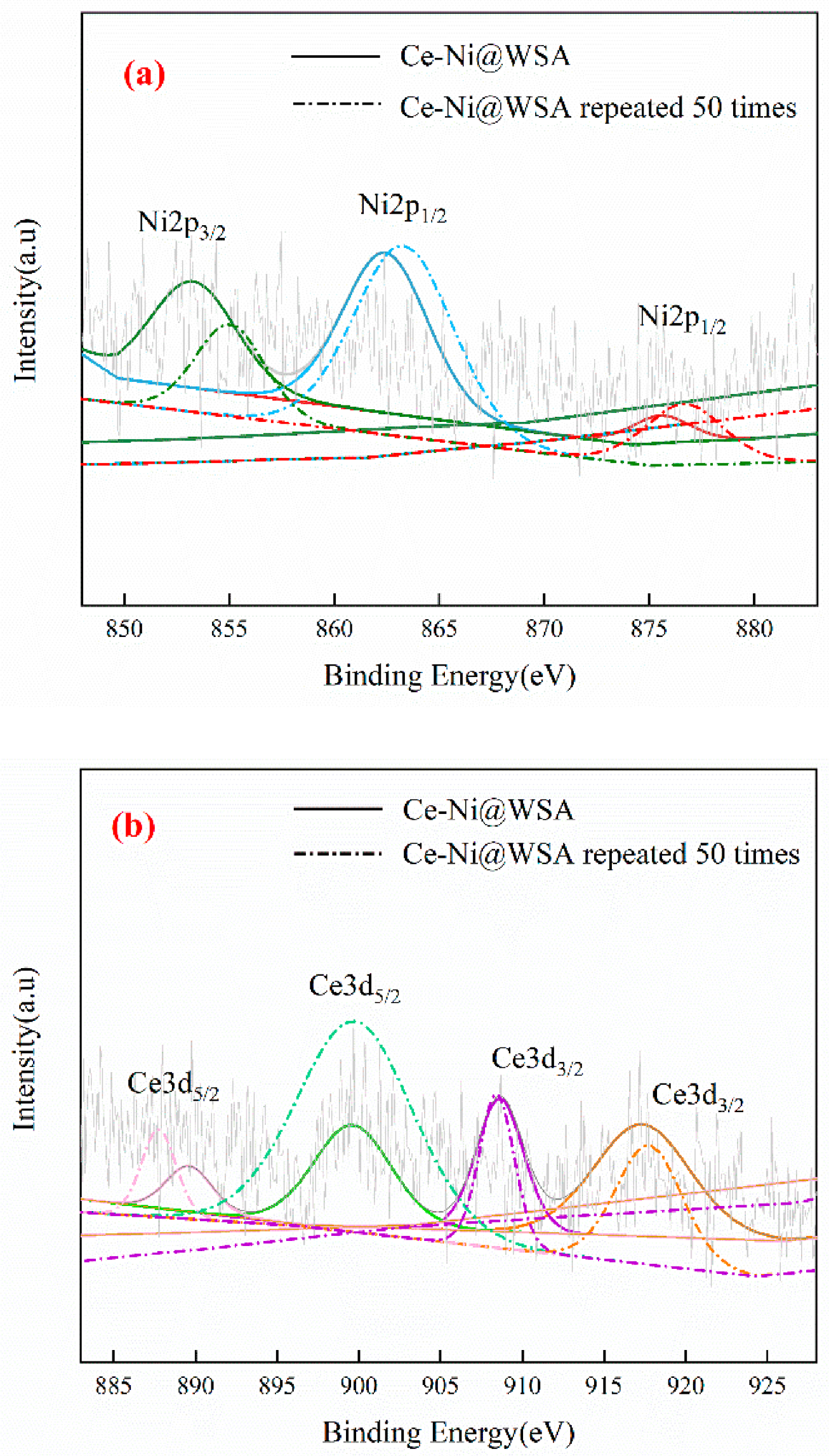
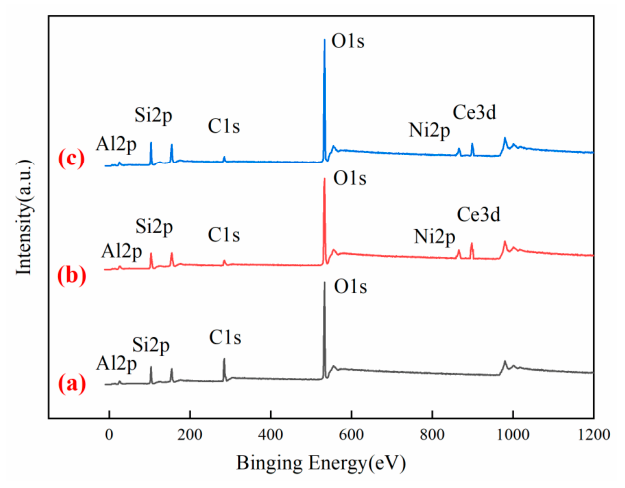
As shown in Figure 3, the characteristic peaks of Ni2p and Ce3d appeared at 866.1 and 898.4 eV, respectively, and the characteristic peaks of Ni2p and Ce3d did not shift significantly after Ce-Ni@WSA was reused for 50 times. According to Figure 4a, Ce-Ni@WSA had a Ni2p3/2 characteristic peak at 853.7 eV, as well as Ni2p1/2 characteristic peaks at 862.4 and 875.7 eV. At this time, Ni was primarily in the +2 valence state, and a small part was in the +3 valence state [30]. With the repeated use of Ce-Ni@WSA, the characteristic peak of Ni2p3/2 shifted to 855.9 eV, and the Ni element changed from a small amount of Ni2+ to Ni3+ [31]. Figure 4b shows that Ce-Ni@WSA had Ce3d5/2 characteristics at 889.5 and 900.6 eV, as well as Ce3d3/2 characteristic peaks at 907.2 and 916.8 eV. At this time, Ce was primarily in the +3 valence state, and a small part was in the +4 valence state [32]. With the repeated use of Ce-Ni@WSA, the peak at 889.5 eV shifted and its intensity increased, and the Ce element changed from a small amount of Ce3+ to Ce4+ [33]. As shown in Table 2, the CeO2 and NiO of Ce-Ni@WSA after impregnation and calcination accounted for 3.337% and 0.919%, respectively. The content of CeO2 and NiO in Ce-Ni@WSA increased slightly after repeated use for 50 times. The coexistence of Ce3+/Ce4+ and Ni2+/Ni3+ provides a redox cycling system, which facilitates electron transfer and enhances ozone activation, thereby promoting the generation of reactive oxygen species and improving Nor degradation.
After 50 cycles of reuse, the spent Ce-Ni@WSA catalyst was further analyzed by SEM, BET, XRD, XRF, and XPS. Compared with the optimized fresh catalyst, the reused catalyst still maintained a relatively complete surface morphology and mesoporous structure, but partial pore blockage was observed, which may be caused by the adsorption or deposition of organic intermediates during repeated ozonation. BET results showed that the specific surface area and pore volume increased slightly after reuse, possibly due to surface abrasion and partial structural rearrangement under continuous water–gas flow. XRD and XRF results indicated that CeO2 and NiO were still retained on the WSA support, with no obvious loss of active components. XPS results further showed that Ce and Ni remained in mixed-valence states, although slight changes in Ce3+/Ce4+ and Ni2+/Ni3+ ratios occurred after reuse. These results suggest that Ce-Ni@WSA maintained good structural and chemical stability after 50 cycles, while the slight decrease in catalytic performance may be mainly attributed to partial pore blockage, active-site coverage, and minor surface abrasion.

2.3. Operating-Condition Study of Catalytic Ozone Oxidation of Nor by Ce-Ni@WSA

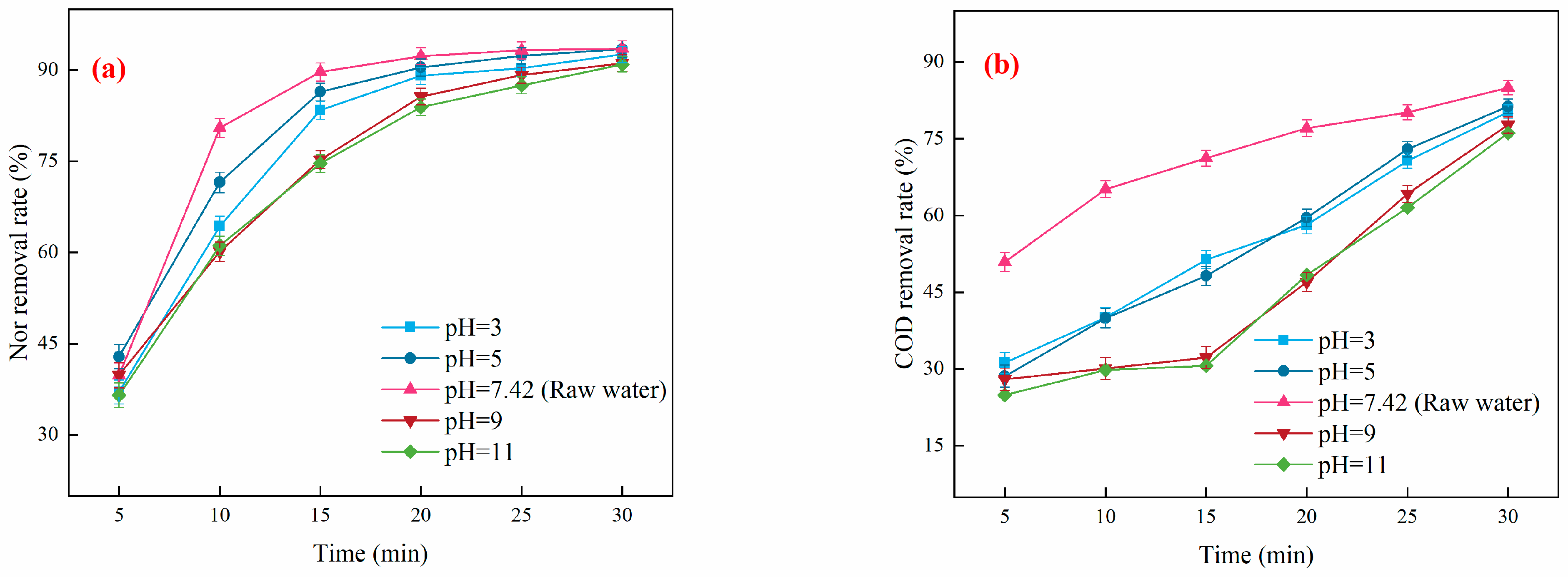
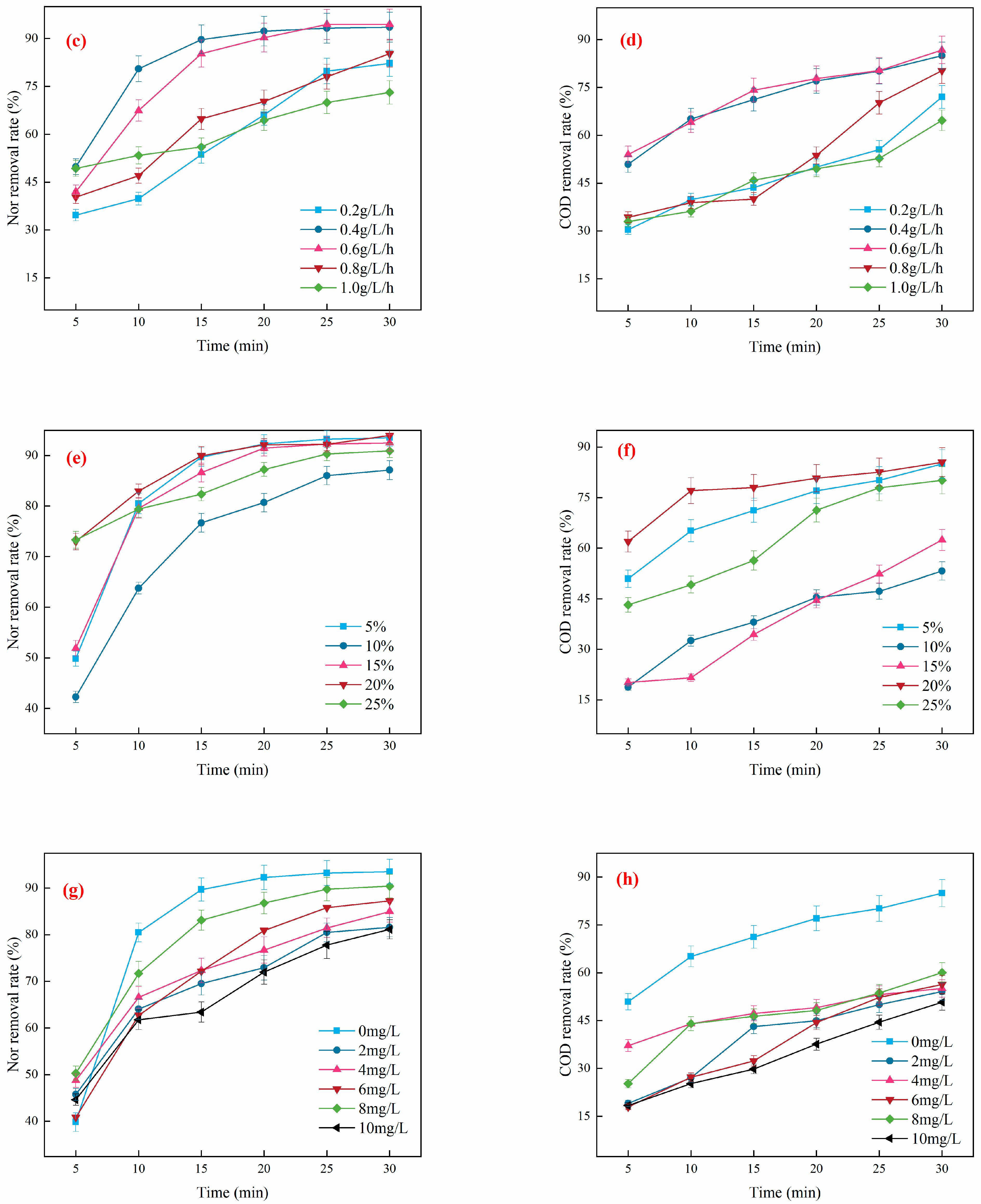
As shown in Figure 5a,b, the removal rates of Nor and COD initially increased and then decreased with increased solution pH. The initial pH of the Nor simulated wastewater was adjusted using 0.1 mol/L HCl or 0.1 mol/L NaOH. When the oxidation reaction was 30 min and pH was 7.42 (raw water), the maximum removal rates of Nor and COD were 93.52% and 84.95%, respectively. At near neutral pH, the active sites (such as Lewis acid sites) on the catalyst surface were more effective for the adsorption and activation of ozone, which promoted the decomposition of ozone into hydroxyl radicals [34,35]. As shown in Figure 5c,d, the removal rates of Nor and COD initially increased and then decreased with increased ozone dosage. When the oxidation reaction was 30 min and the ozone dosage was 0.4 g/L/h, the removal rates of Nor and COD were 93.52% and 84.95%, respectively. As shown in Figure 5e,f, when the oxidation reaction was 30 min and the catalyst-filling ratio was 5%, the removal rates of Nor and COD reached 93.52% and 84.95%, respectively. With the further increased catalyst-filling ratio to 20%, the best Nor and COD removal rates were 93.97% and 85.49%, respectively. A 5% catalyst-filling ratio provided sufficient active sites, and further increasing it to 20% only slightly improved Nor removal; therefore, 5% was selected as the optimal condition. As shown in Figure 5g,h, the addition of humic acid significantly inhibited the catalytic performance of ozone, and with increased dosage, the inhibition ability of the system gradually weakened and then increased rapidly. With the dosage of humic acid increasing to 2 mg/L, the removal rates of Nor and COD were 81.62% and 54.13% at 30 min, respectively. With further increased dosage of humic acid to 10 mg/L, the removal rates of Nor and COD were 81.13% and 50.79% at 30 min, respectively. The catalytic inhibition of humic acid on ozone may be due to the high affinity between humic acid itself and the catalyst, competing with the Nor phase to inhibit its degradation [36].

2.4. Mechanistic Study of the Catalytic Ozone Oxidation of Nor by Ce-Ni@WSA

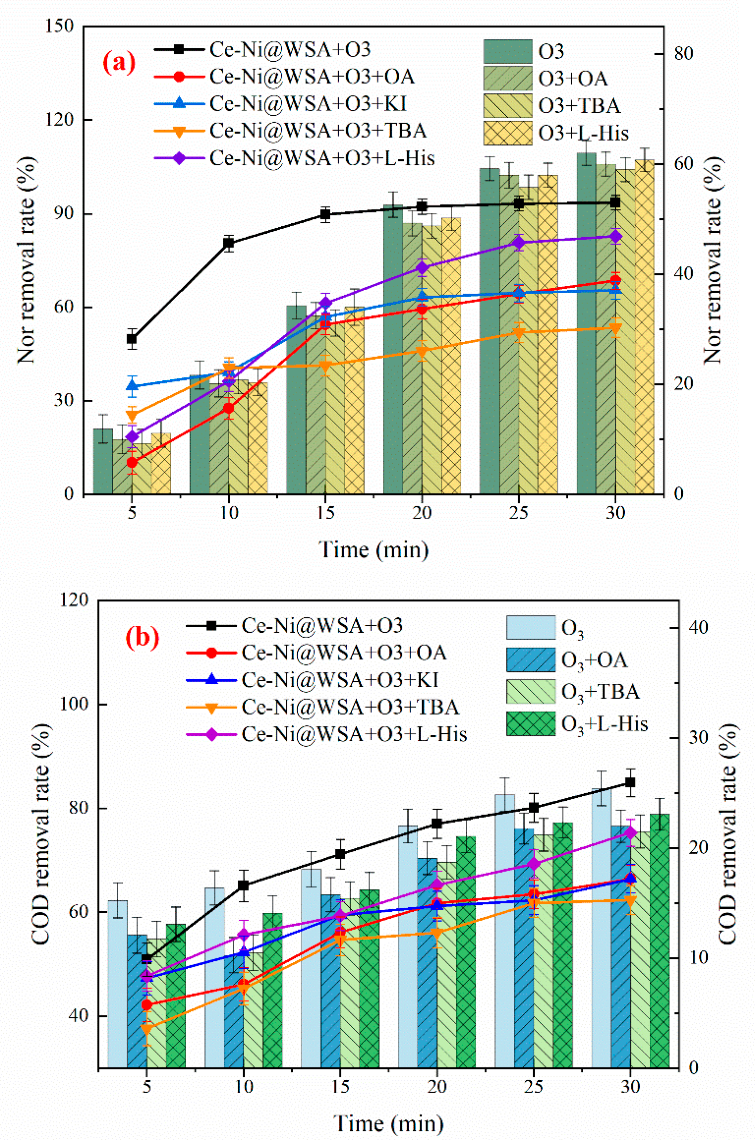
Tert-butyl alcohol (TBA), potassium iodide (KI), oxalic acid (OA), and L-histidine (L-His) were selected as quenchers to identify the contributions of •OH, surface active species, solution-phase holes, and 1O2, respectively.
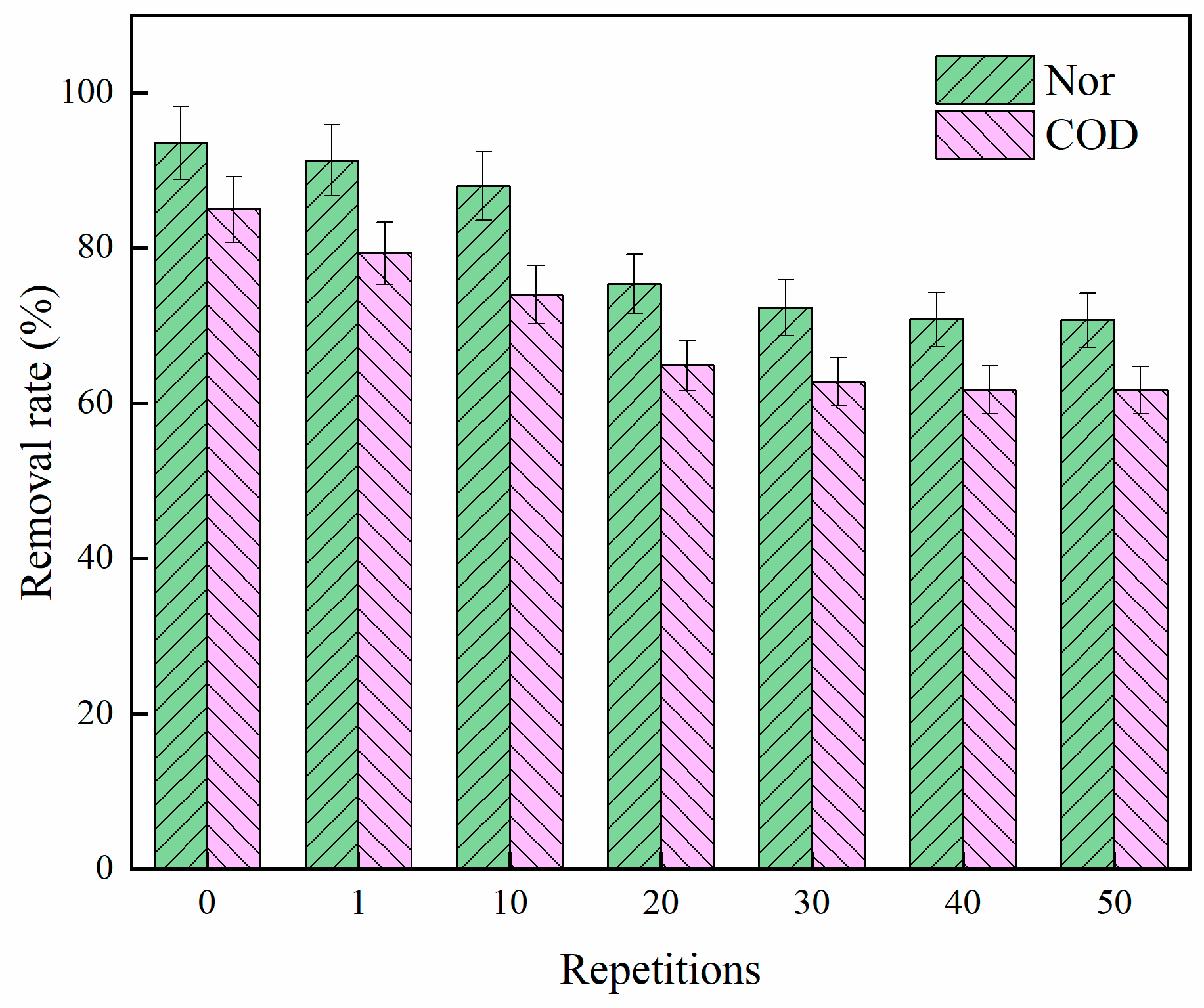
The reusability of the catalyst was evaluated by performing 50 consecutive catalytic ozonation cycles under identical reaction conditions. After each cycle, the catalyst was collected, washed with deionized water, dried, and reused in the next cycle. As shown in Figure 6, with increased reuse times, the Nor removal rate and COD removal rate sharply declined and then gently declined. After 50 times of catalyst use, the removal rates of Nor and COD were reduced by 22.79% and 23.26%, respectively, compared with those after the first use. This decrease may be attributed to the filling of pores and partial coverage of active sites by reaction intermediates or residual organic species. Meanwhile, continuous scouring by water and gas flows during repeated reactions may cause slight catalyst abrasion and minor loss of active components, thereby weakening ozone activation. As shown in Figure S6, Ce-Ni@WSA had good mechanical strength, which can meet the catalyst requirements during aeration and water–gas flow [37].
As shown in Figure 7, the tert-butyl alcohol (TBA) inhibition effect was the strongest in the Ce-Ni@WSA catalytic-ozonation system. At 30 min of oxidation reaction, the removal rates of Nor and COD decreased by 40.09% and 22.59% compared with those without the TBA quencher. When KI was added and the oxidation reaction was 30 min, the removal rate of Nor and COD decreased by 28.08% and 18.46%, respectively, compared with that without the KI quencher. When OA was added, and the oxidation reaction lasted for 30 min, the removal rates of Nor and COD decreased by 24.97% and 18.49%, respectively, compared with those without OA quencher. When L-histidine (L-His) was added and the oxidation reaction was run for 30 min, the removal rates of Nor and COD decreased by 10.78% and 9.62%, respectively, compared with those without L-His quencher.
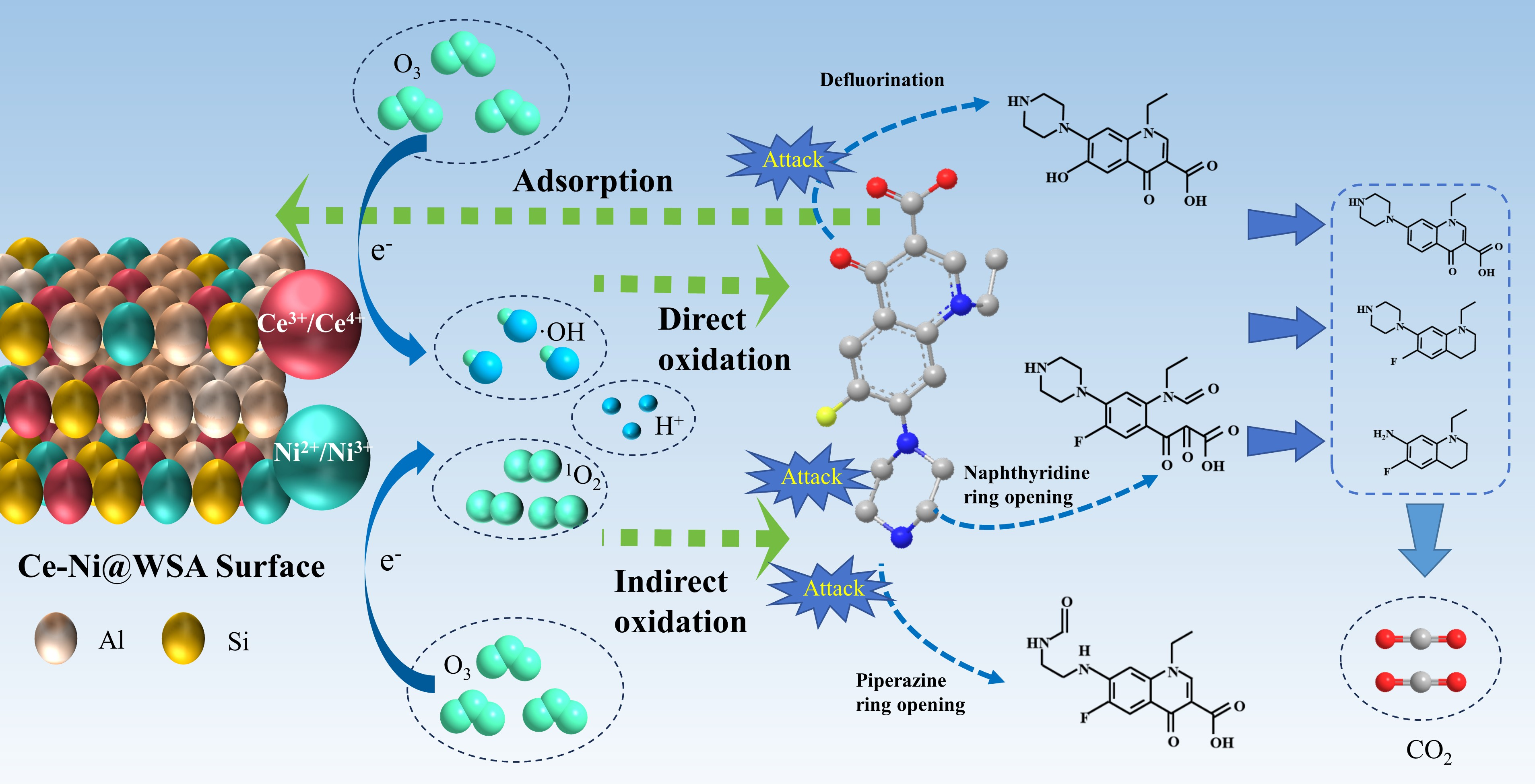
The inhibition efficiency of free-radical quencher on the Ce-Ni@WSA catalytic-ozonation system decreased as follows: TBA > KI > OA > L-His. This finding indicated that the effect of free radicals in the reaction system decreased as follows: •OH > h+ on the catalyst surface > h+ in solution > 1O2. During the catalytic ozonation of Nor by Ce-Ni@WSA, the ozone molecules’ decomposition into hydroxyl radicals (•OH) to oxidize organic matter was the main oxidation mechanism. Moreover, h+ and 1O2 on the catalyst surface and in the solution participated in the reaction. During the ozonation of Nor alone, direct ozone oxidation was the main way of pollutant degradation, and h+ and 1O2 in the solution also played certain roles.
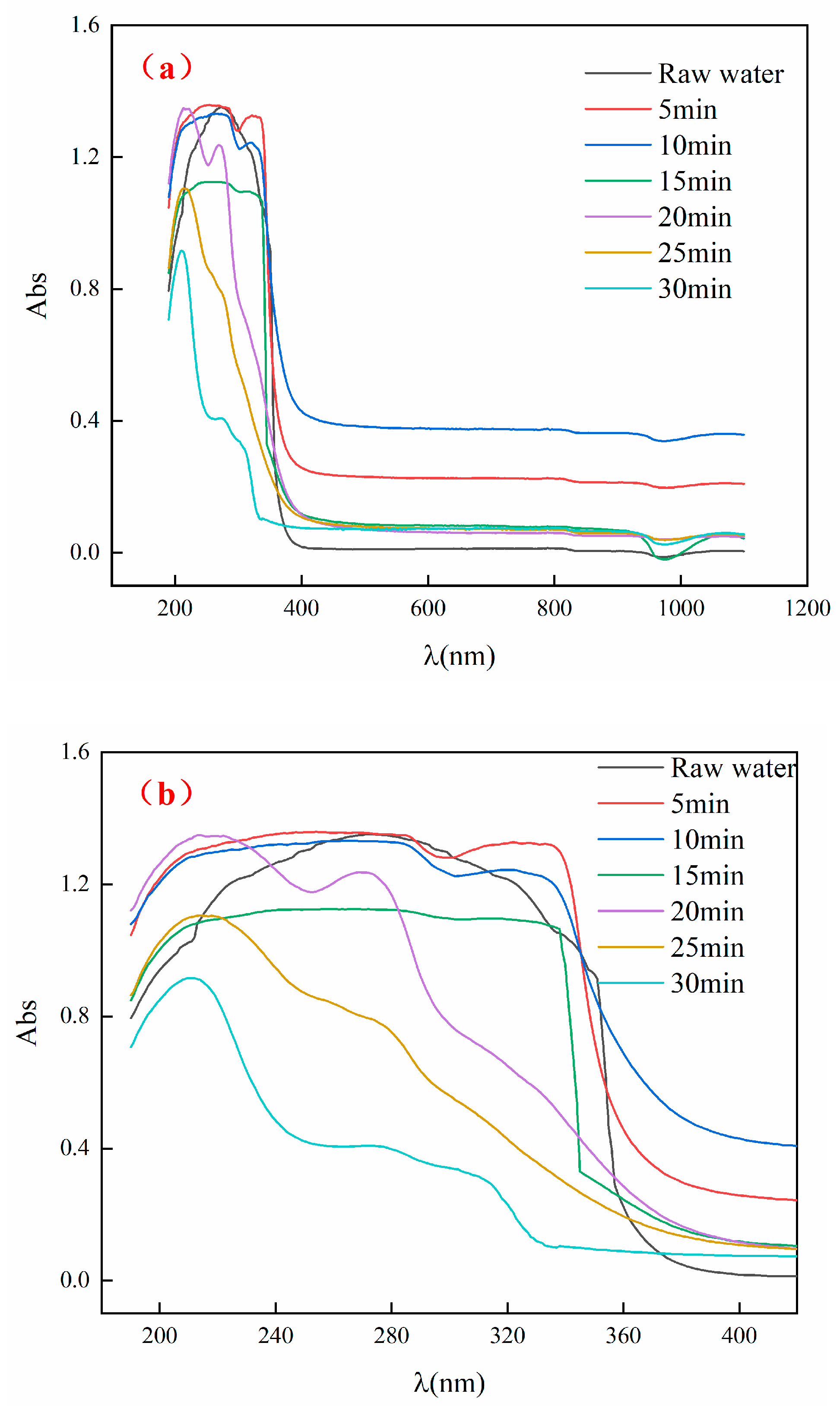
As shown in Figure 8, Nor raw water showed a significant characteristic peak at 273 nm. The substances corresponding with the characteristic peaks at 250–300 nm were aromatic compounds containing a benzene ring, and the substances corresponding with the characteristic peaks at 190–250 nm were organic acid compounds containing ethylene, unsaturated carbonyl, and so on [38]. With increased catalytic ozonation time of Ce-Ni@WSA, the characteristic peak was blue-shifted, and the peak intensity gradually decreased. This may be due to the destruction of Nor‘s piperazine ring and other rings, which were transformed into new degradation products [39,40].
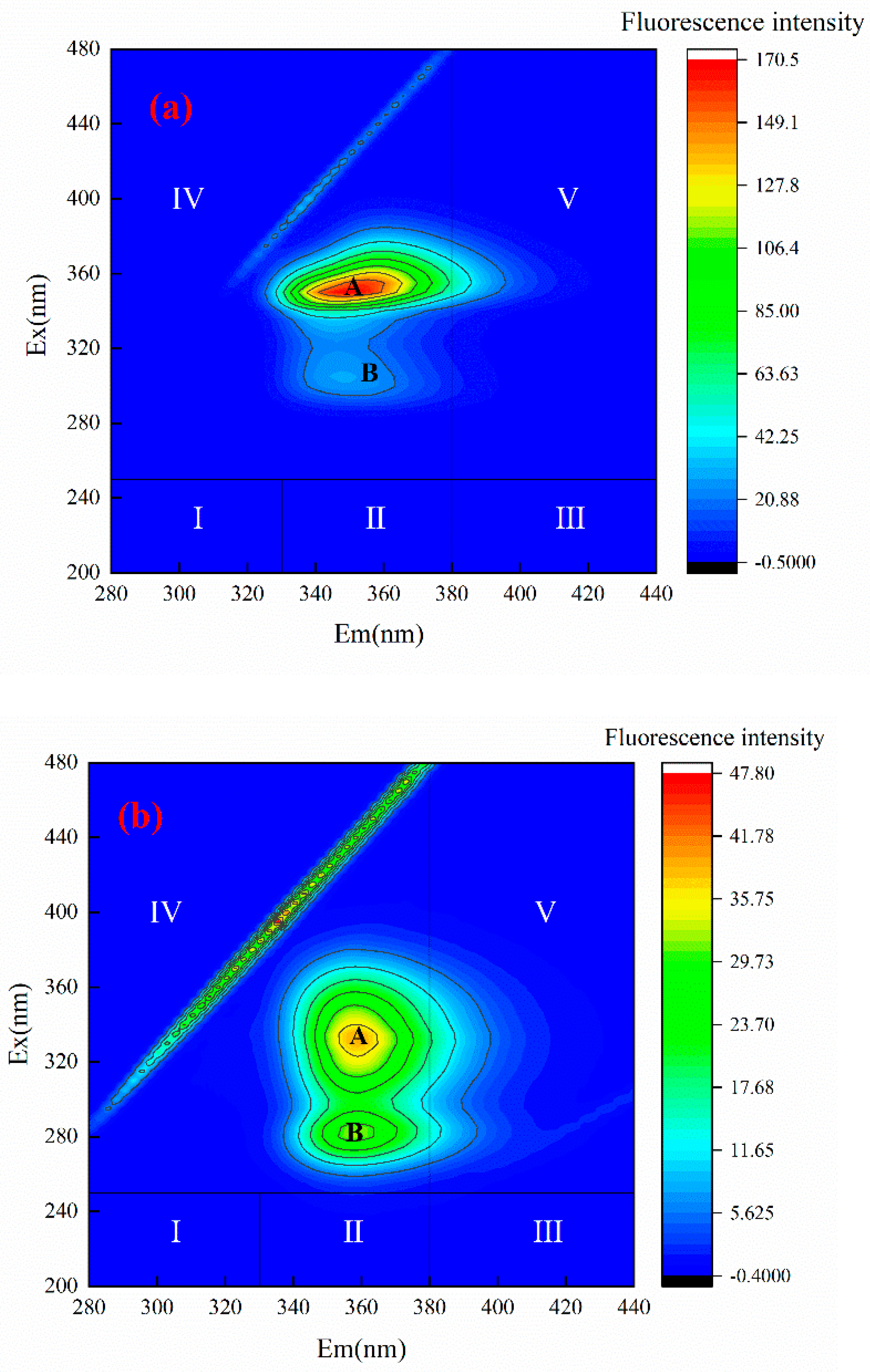
As shown in Figure 9, the fluorescence regions are defined as follows: Region I (Ex/Em = 200–250/280–330 nm) corresponds to aromatic protein-like substances, mainly tyrosine-like components; Region II (Ex/Em = 200–250/330–380 nm) corresponds to aromatic protein II-like substances, mainly tryptophan-like components; Region III (Ex/Em = 200–250/>380 nm) corresponds to fulvic acid-like substances; Region IV (Ex/Em >250/280–380 nm) corresponds to soluble microbial product-like substances; and Region V (Ex/Em >250/>380 nm) corresponds to humic acid-like substances. The IV region of the three-dimensional fluorescence spectrum of raw water had two characteristic fluorescence peaks, indicating the possible presence of tryptophan, protein-like substances, and other substances [41]. The highest fluorescence intensities of characteristic peaks A and B were 170 and 63, respectively. After 30 min of catalytic ozonation under the optimal conditions, the two characteristic fluorescence peaks remained in the IV region, but the fluorescence intensity of the characteristic peaks A and B decreased to 47 and 12, respectively. This finding indicated that the Nor content was greatly reduced and oxidized into other small molecules.
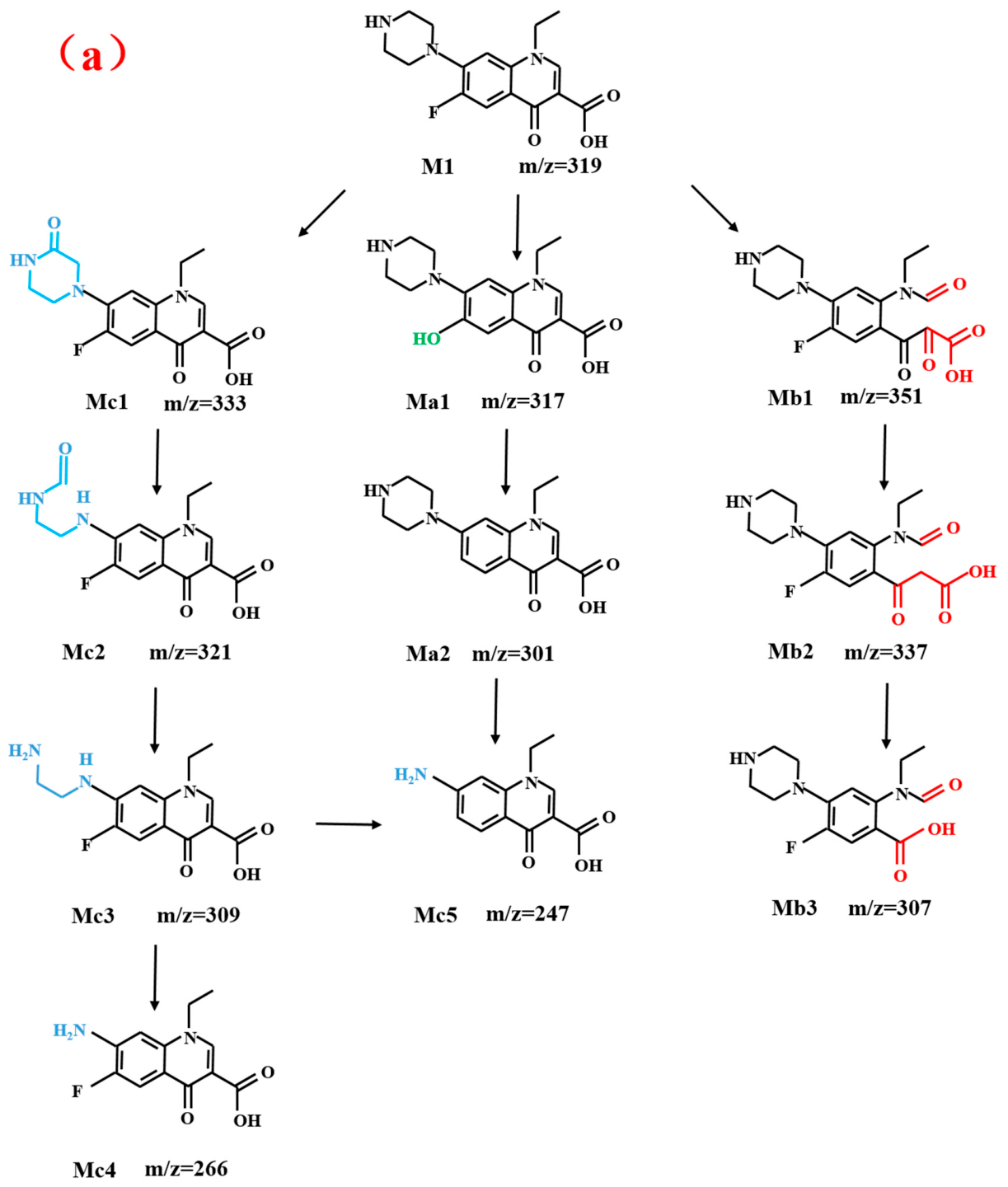
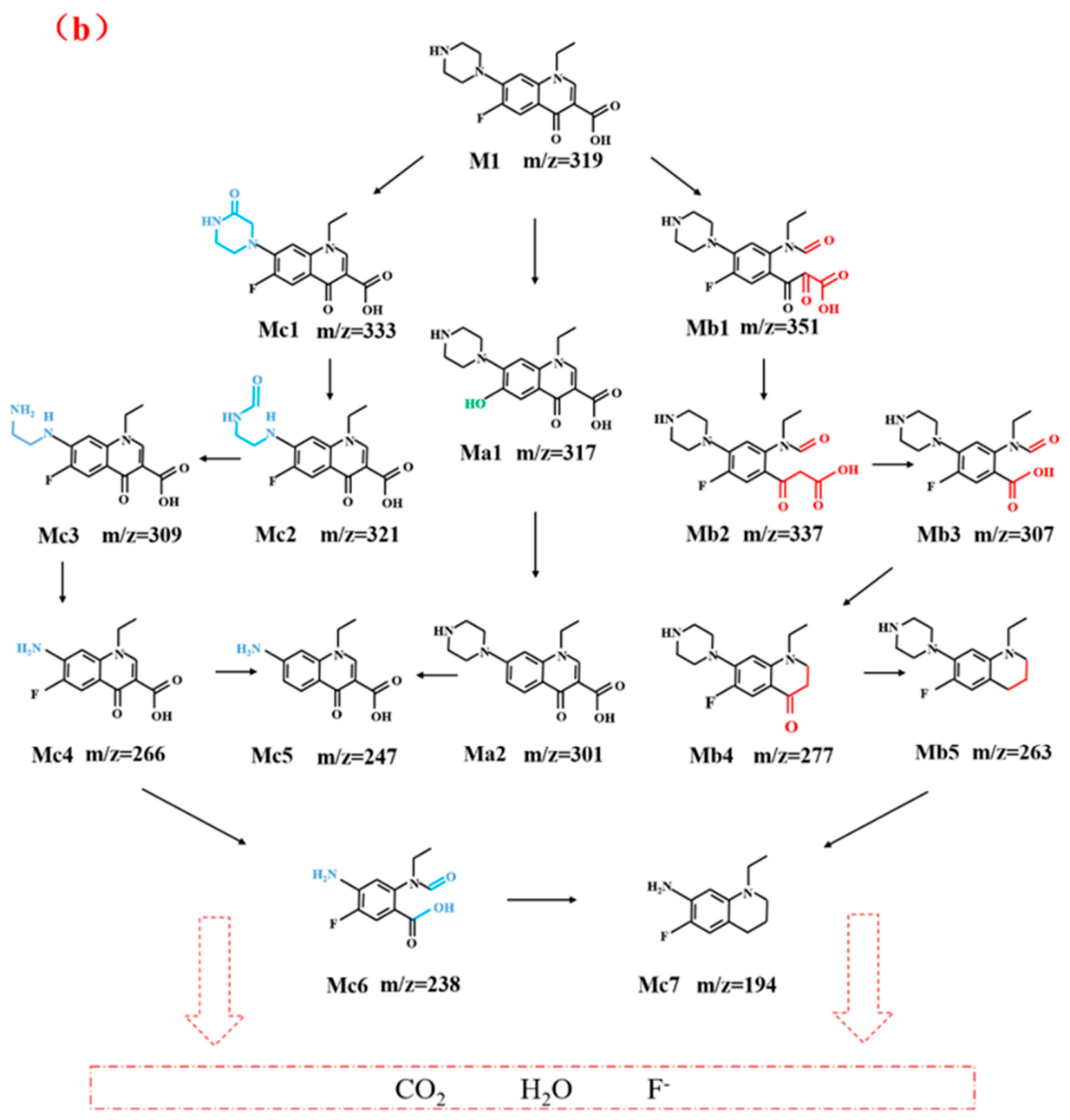
Table S1 and Figure 10 show three possible degradation pathways of Nor by Ce-Ni@WSA catalytic ozonation in 0−15 and 0–30 min, namely, defluorination, naphthyridine ring opening, and piperazine ring opening. (1) Defluorination: At 0–15 min, hydroxyl radicals quickly attacked the C-F bond of Nor, and fluoride ions were replaced by hydroxyl groups to synthesize Ma1 (m/z = 317), followed by the shedding of hydroxyl groups to form Ma2 (m/z = 301) [42]. (2) Ring opening of piperazine: At 0–15 min, the piperazine ring was attacked and cleaved, carboxylated to produce Mc1 (m/z = 333), followed by structural rearrangement accompanied by the shedding of methyl to produce Mc2 (m/z = 321). Subsequently, decarboxylation occurred to produce Mc3 (m/z = 308), which was further oxidized into Mc4 (m/z = 266). With continued reaction for 30 min, the naphthyridine ring of Mc4 (m/z = 266) was cleaved and decarboxylated to form Mc6 (m/z = 238). At the same time, the C-F bond of Mc4 (m/z = 266) was attacked, the fluorine atom fell off to form Mc5 (m/z = 247), and the piperazine ring of Ma2 (m/z = 301) was attacked and cleaved to form Mc5 (m/z = 247) [43]. (3) Naphthyridine ring opening: The carbon–carbon double bond near the carboxyl group in Nor was easily attacked by active radicals. In this experiment, the Nor naphthyridine ring was attacked by hydroxyl radicals within 0–15 min, resulting in the rapid cleavage of the carbon–carbon double bond to form Mb1 (m/z = 351) [44], followed by continuous decarboxylation, decarbonization, and demethylation to form Mb2 (m/z = 337) and Mb3 (m/z = 307). With further oxidation of the product, Mb4 (m/z = 277) and Mb5 (m/z = 263) formed within 15–30 min. Mb5 (m/z = 263) and Mc6 (m/z = 238) can continue to be oxidized by strong oxidizing substances into Mc7 (m/z = 194). Finally, the above degradation intermediates were oxidized into small molecules such as F-, H2O, and CO2 to achieve the mineralization of organic matter (i.e., complete oxidation of organic pollutants into CO2, H2O, and inorganic ions) [45]. Hydroxyl radicals and singlet oxygen were found to primarily attack the piperazine ring in the molecular structure of Nor. After 15 min of reaction, the piperazine ring was deeply cracked. During the reaction for 30 min, defluorination and naphthyridine ring cracking occurred again.
Figures S7 and S8 and Table S2 show that ozone oxidation alone was consistent with zero-order reaction kinetics. The catalytic-ozonation system was consistent with first-order reaction kinetics. The reaction rate of each stage of the catalytic-ozonation system was higher than that of the single-ozonation system, indicating that Ce-Ni@WSA effectively catalyzed the reaction process and improved the treatment efficiency of Nor degradation [46].

2.5. DEA-B2C Model Analysis

Table S7 shows that the scale reward coefficient of DEA strong and effective projects 2, project 3, project 7, and project 12 was 1, thereby reaching the fixed scale reward. The returns to scale coefficients of the remaining projects were less than 1, which indicated increasing returns to scale, indicating that these DMU conditions needed to be increased. From the perspective of input redundancy and insufficient output, compared with project 3’s raw water pH of 7.42, project 2 needed to set up additional pH adjustment links, which increased operational complexity and cost. The ozone dosage was adjusted to 0.3 g/L/h in project 7. Compared with 0.4 g/L/h in project 3, the condition for obtaining better catalytic performance was to increase the treatment cost and safety risk. Compared with project 3, the catalyst-filling ratio of project 12 increased from 5% to 20%, which also increased the processing cost and increased the workload of subsequent catalyst treatment and recovery. On the whole, project 3 (pH 7.42, ozone dosage = 0.4 g/L/h, catalyst-filling ratio = 5%, humic acid dosage = 0 mg/L) can obtain better catalytic performance at the lowest cost, consistent with the results of the optimization experiment. Compared with previously reported metal-modified catalytic ozonation systems, the Ce-Ni@WSA catalyst in this study exhibits relatively high removal efficiency under near-neutral conditions and good reusability. However, further studies are still needed to evaluate its performance in complex water matrices and long-term operational stability.

3. Materials and Methods

3.1. Materials

Cerium nitrate, nickel nitrate, copper nitrate, etc., were all analytical grade and purchased from Guoyao Group Chemical Reagents Co., Ltd. (Shanghai, China). Nor and fine-pore water-resistant silica–alumina gel were all analytical grade and purchased from Shanghai Macklin Biochemical Technology Co., Ltd. (Shanghai, China). Tert-butyl alcohol, L-histidine, potassium iodide, etc., were all analytical grade and purchased from Nanjing Chemical Reagent Co., Ltd. (Nanjing, China). The concentration of Nor in the simulated wastewater was 100.0 mg/L, the COD was 197.0 mg/L, and the pH was 7.42.

3.2. Preparation of Ce-Ni@WSA

A quantitative nitrate solution of Ce and Ni with a concentration of 0.3 mol/L was prepared. The WSA carrier was purchased from Shanghai Macklin Biochemical Co., Ltd. (analytical grade). Prior to use, the WSA carrier was pretreated by soaking in 0.1 mol/L HCl for 12 h, followed by repeated washing with deionized water until the effluent reached neutral pH, and drying at 110 °C for 12 h. After pickling pretreatment and drying, the WSA carrier was weighed in a conical flask, and 150 mL of nitrate solution was added. The conical flask was shaken in a shaker for 12 h. After impregnation, the catalyst was dried in an oven at 110 °C for 12 h and then calcined in a muffle furnace at 650 °C for 2.5 h, which was selected as the optimal calcination condition based on preliminary experiments conducted over the temperature range of 350–750 °C. After calcination, the Ce-Ni@WSA catalyst was naturally cooled and stored for subsequent use.

3.3. Characterization Method of Ce-Ni@WSA

The microstructure of Ce-Ni@WSA was characterized using scanning electron microscopy (SEM; Merlin, Carl Zeiss Microscopy GmbH, Jena, Germany). The pore size, pore volume, and adsorption capacity of Ce-Ni@WSA were characterized by specific surface area (BET; ASAP 2020, Micromeritics Instrument Corp., Norcross, GA, USA). The crystal morphology of the transition metal in Ce-Ni@WSA was characterized using X-ray diffraction (XRD; D8 Advance, Bruker AXS GmbH, Karlsruhe, Germany). The composition and valence distribution of metal elements in Ce-Ni@WSA were analyzed via X-ray photoelectron spectroscopy (XPS; ESCALAB 250Xi, Thermo Fisher Scientific, Waltham, MA, USA). The metal content and oxide content in Ce-Ni@WSA were characterized via X-ray fluorescence spectrometry (XRF; Axios PW4400, PANalytical B.V., Almelo, The Netherlands). The compressive properties of Ce-Ni@WSA were analyzed using a mechanical-strength test (SHK-A102, Suzhou QZ Instrument Technology Co., Ltd., Suzhou, China).

3.4. Catalytic Ozone Oxidation Experiment

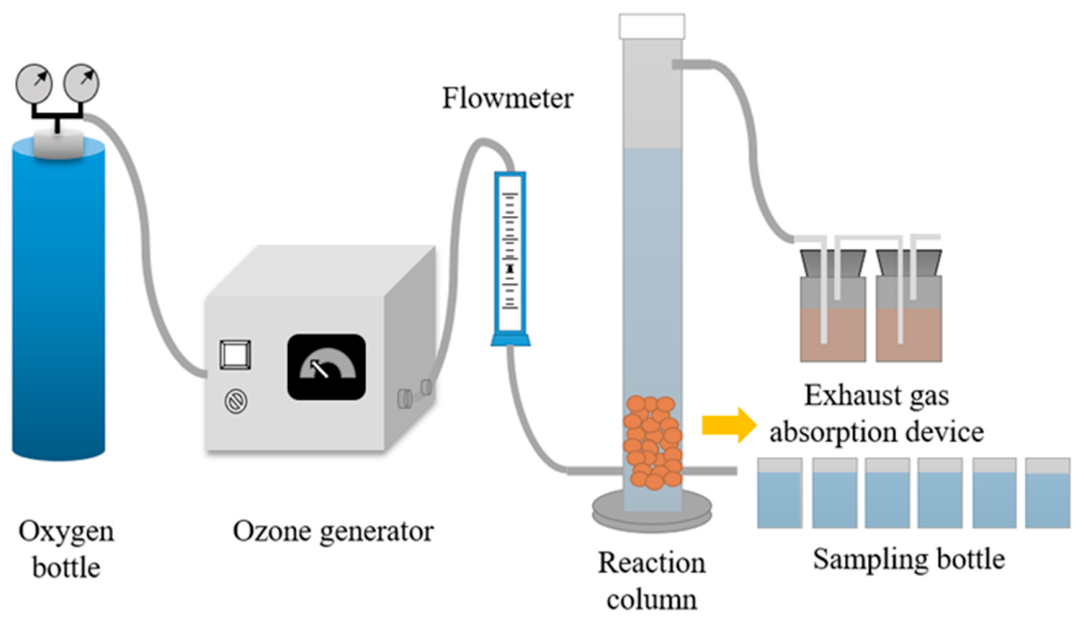
As shown in Figure 11, the catalytic ozonation degradation of the Nor reaction device comprised a high-purity oxygen cylinder, gas-flow meter, ozone generator (CF-G-3-10G, Qingdao Guolin Environmental Protection Technology Co., Ltd., Qingdao, China), ozone reaction column, and ozone tail gas-absorption device. The size parameters of the ozone-reaction column were as follows: column height of 100 cm (effective volume water level of 90 cm), inner diameter of 4 cm, and container height–diameter ratio (ratio of reaction column height to inner diameter) of 25:1. We adjusted the gas-flow meter to control the pressure of the ozone generator to be 0.1 MPa, pre-blew oxygen for 10 min, and added a quantitative catalyst and a configured 1 L Nor-simulated wastewater (100 mg/L concentration) to the ozone-reaction column. The Ce-Ni@WSA catalyst was used as a supported solid granular heterogeneous catalyst and was packed into the ozone reaction column together with 1 L of Nor-simulated wastewater. After the start of the experiment, sampling was performed every 5 min. COD was determined via the potassium dichromate method (GB11914-89) [47]. The Nor concentration was determined using UV spectrophotometry (UV spectrophotometer, UV-5500PC, Shanghai Elemental Analysis Instrument Co., Ltd., Shanghai, China). The UV wavelength was selected at 273 nm [48].

3.5. Model Establishment of DEA-B2C Model Analysis

This study aimed to establish a B2C model with variable returns to scale in DEA (Data Envelopment Analysis, DEA). The initial pH, ozone dosage, catalyst-filling ratio, and humic acid dosage were selected as input indicators X, and the Nor removal rate and COD removal rate were the output indicators Y, for a total of 18 decision-making units. By analyzing the DEA effectiveness, input-redundancy rate, output-deficiency rate, and scale-reward coefficient, the catalytic efficiency of each project was judged. The best operating conditions were then selected (Text S1 shows the detailed modeling).

4. Conclusions

Ce-Ni@WSA was successfully prepared by an impregnation–calcination method using WSA as the support. The obtained catalyst exhibited a well-developed porous structure, uniformly distributed surface crystals, and stable Ce/Ni active components. Under the optimal conditions of initial pH 7.42, ozone dosage of 0.4 g/L/h, catalyst-filling ratio of 5%, and humic acid dosage of 0 mg/L, the removal efficiencies of Nor and COD reached 93.52% and 84.95%, respectively. After 50 cycles of repeated use, Ce-Ni@WSA still maintained favorable catalytic performance and mechanical strength, indicating good reusability. The degradation process followed first-order reaction kinetics, and hydroxyl radicals (OH) were identified as the dominant reactive species. Nor degradation mainly occurred through defluorination, naphthyridine ring opening, and piperazine ring opening, leading to the formation of small molecules and eventual mineralization. DEA-B2C model analysis further confirmed that the above operating conditions provided high catalytic efficiency with relatively low treatment cost.

Supplementary Materials

The following supporting information can be downloaded at: https://www.mdpi.com/article/10.3390/catal16050432/s1, Figure S1: Adsorption experiment of blank silicon aluminum ball carrier; Figure S2: Degradation effects of individual ozone oxidation and blank silicon aluminum ball carrier catalyzed ozone oxidation: (a) Nor removal rate, (b) COD removal rate; Figure S3: Effect of Ce-Ni@WSA on Nor removal rate under different conditions: (a) Active metal combination, (b) Metal load ratio, (c) Roasting temperature; Figure S4: Effect of Ce-Ni@WSA on COD removal rate under different conditions: (a) Active metal combination, (b) Metal load ratio, (c) Roasting temperature; Figure S5: BET characterization of Ce-Ni@WSA: (a) Blank Silicon aluminum ball carrier, (b) Ce-Ni@WSA, (c) Ce-Ni@WSA repeated 50 times, (d) Pore size distribution; Figure S6: Mechanical strength of Ce-Ni@WSA catalysts; Figure S7: Fitted kinetic curve for reaction of the ozone system alone: (a) zero-order, (b) first-order, (c) second-order; Figure S8: Fitted kinetic curve for the reaction of catalytic ozonation system: (a) zero-order, (b) first-order, (c) second-order; Table S1: Tetracycline parent compounds and degradation products; Table S2: Fitted parameters for reaction kinetic analysis; Table S3: Correlation index; Table S4: Evaluation criteria; Table S5: Research data summary; Table S6: Validity analysis result; Table S7: Detailed analysis results.

Author Contributions

Conceptualization, Y.S.; methodology, Y.S.; software, W.S., S.C., J.Z. and Y.C.; validation, J.Z. and Y.C.; formal analysis, J.Z. and Y.C.; investigation, W.S. and Y.C.; resources, W.S.; data curation, W.S., S.C., J.Z., Y.C. and K.J.S.; writing—original draft preparation, W.S., S.C. and Y.C.; writing—review and editing, W.S., K.J.S. and Y.S.; visualization, W.S. and S.C.; supervision, W.S.; project administration, Y.S.; funding acquisition, Y.S. All authors have read and agreed to the published version of the manuscript.

Funding

This research was funded by the National Key R&D Program of China, grant number 2024YFB4105500; the National Natural Science Foundation of China, grant number 51508268; and the Industry-University-Research Collaboration Projects of Jiangsu Province in China, grant number BY20240507.

Data Availability Statement

The authors confirm that the data supporting the findings of this study are available within the article and/or its Supplementary Materials.

Conflicts of Interest

The authors declare no conflicts of interest.

References

  1. Fang, L.; Miao, Y.; Wei, D.; Zhang, Y.; Zhou, Y. Efficient removal of norfloxacin in water using magnetic molecularly imprinted polymer. Chemosphere 2021, 262, 128032. [Google Scholar] [CrossRef]
  2. Shurbaji, S.; Huong, P.T.; Altahtamouni, T.M. Review on the visible light photocatalysis for the decomposition of ciprofloxacin, norfloxacin, tetracyclines, and sulfonamides antibiotics in wastewater. Catalysts 2021, 11, 437. [Google Scholar] [CrossRef]
  3. Mitra, D.; Zhou, C.; Hashim, M.H.B.; Hang, T.M.; Gin, K.Y.; Wang, C.; Neoh, K.G. Emerging pharmaceutical and organic contaminants removal using carbonaceous waste from oil refineries. Chemosphere 2021, 271, 129542. [Google Scholar] [CrossRef]
  4. Parida, V.K.; Saidulu, D.; Majumder, A.; Srivastava, A.; Gupta, B.; Gupta, A.K. Emerging contaminants in wastewater: A critical review on occurrence, existing legislations, risk assessment, and sustainable treatment alternatives. J. Environ. Chem. Eng. 2021, 9, 105966. [Google Scholar] [CrossRef]
  5. Pan, Y.; Li, F.; Zhou, C.; Yan, S.; Dong, J.; Li, T.; Duan, C. Norfloxacin disrupts Daphnia magna-induced colony formation in Scenedesmus quadricauda and facilitates grazing. Ecol. Eng. 2017, 102, 255–261. [Google Scholar] [CrossRef]
  6. Yang, S.; Yang, C.; Hu, X.; Ding, Z.; Zhou, R.; Wei, H.; Wang, L. Aqueous norfloxacin removal by novel biochar adsorbent prepared through ethanol-combined ball milling. Environ. Pollut. Bioavailab. 2024, 36, 2311675. [Google Scholar] [CrossRef]
  7. Garba, Z.N.; Zhou, W.; Lawan, I.; Xiao, W.; Zhang, M.; Wang, L.; Chen, L.; Yuan, Z. An overview of chlorophenols as contaminants and their removal from wastewater by adsorption: A review. J. Environ. Manag. 2019, 241, 59–75. [Google Scholar] [CrossRef]
  8. Rashid, R.; Shafiq, I.; Akhter, P.; Iqbal, M.J.; Hussain, M. A state-of-the-art review on wastewater treatment techniques: The effectiveness of adsorption method. Environ. Sci. Pollut. Res. 2021, 28, 9050–9066. [Google Scholar] [CrossRef]
  9. Qiu, L.; Meng, F.; Qiu, Q.; Kang, X.; Gong, S.; Zhang, F.; Xu, J.; Wang, F.; Wu, D.; Zhu, X. PVDF@CoFe2O4 nanoconfined catalytic membrane for natural surface water treatment: Efficient NOM degradation and membrane fouling mitigation. J. Water Process Eng. 2025, 70, 107005. [Google Scholar] [CrossRef]
  10. Asad, A.; Sameoto, D.; Sadrzadeh, M. Overview of membrane technology. In Nanocomposite Membranes for Water and Gas Separation; Elsevier: Amsterdam, The Netherlands, 2020; Volume 321, pp. 1–28. [Google Scholar]
  11. Singh, R.; Hankins, N.P. Introduction to membrane processes for water treatment. In Emerging Membrane Technology for Sustainable Water Treatment; Elsevier Science: Amsterdam, The Netherlands, 2016; pp. 15–52. [Google Scholar]
  12. Kanakaraju, D.; Glass, B.D.; Oelgemöller, M. Advanced oxidation process-mediated removal of pharmaceuticals from water: A review. J. Environ. Manag. 2018, 219, 189–207. [Google Scholar] [CrossRef]
  13. Zhang, Y.; Xiao, R.; Wang, S.; Zhu, H.; Song, H.; Chen, G.; Lin, H.; Zhang, J.; Xiong, J. Oxygen vacancy enhancing Fenton-like catalytic oxidation of norfloxacin over prussian blue modified CeO2: Performance and mechanism. J. Hazard. Mater. 2020, 398, 122863. [Google Scholar] [CrossRef]
  14. Vorontsov, A.V. Advancing Fenton and photo-Fenton water treatment through the catalyst design. J. Hazard. Mater. 2019, 372, 103–112. [Google Scholar] [CrossRef]
  15. Martínez-Huitle, C.A.; Panizza, M. Electrochemical oxidation of organic pollutants for wastewater treatment. Curr. Opin. Electrochem. 2018, 11, 62–71. [Google Scholar] [CrossRef]
  16. Najafinejad, M.S.; Chianese, S.; Fenti, A.; Iovino, P.; Musmarra, D. Application of electrochemical oxidation for water and wastewater treatment: An overview. Molecules 2023, 28, 4208. [Google Scholar] [CrossRef]
  17. Li, X.; Ma, J.; He, H. Recent advances in catalytic decomposition of ozone. J. Environ. Sci. 2020, 94, 14–31. [Google Scholar] [CrossRef]
  18. Li, X.; Fu, L.; Chen, F.; Zhao, S.; Zhu, J.; Yin, C. Application of heterogeneous catalytic ozonation in wastewater treatment: An overview. Catalysts 2023, 13, 342. [Google Scholar] [CrossRef]
  19. Yu, G.; Wang, Y.; Cao, H.; Zhao, H.; Xie, Y. Reactive oxygen species and catalytic active sites in heterogeneous catalytic ozonation for water purification. Environ. Sci. Technol. 2020, 54, 5931–5946. [Google Scholar] [CrossRef]
  20. Wei, X.; Shao, S.; Ding, X.; Jiao, W.; Liu, Y. Degradation of phenol with heterogeneous catalytic ozonation enhanced by high gravity technology. J. Clean. Prod. 2020, 248, 119179. [Google Scholar] [CrossRef]
  21. Zhang, L.; Li, Y.; Guo, J.; Kan, Z.; Jia, Y. Catalytic ozonation mechanisms of Norfloxacin using Cu–CuFe2O4. Environ. Res. 2023, 216, 114521. [Google Scholar] [CrossRef]
  22. Zhang, L.; Shi, B.; Liu, H.; Lin, X.; Shi, F. Charge-engineered 2D layered magnetic Cl-CaFe2O4/g-C3N4 catalyst for catalytic ozonation of norfloxacin: Performance, mechanism and ecotoxicological assessment. Chem. Eng. J. 2025, 525, 170440. [Google Scholar] [CrossRef]
  23. Li, R.; Xiong, J.; Zhang, Y.; Wang, S.; Zhu, H.; Lu, L. Catalytic Ozonation of Norfloxacin Using Co-Mn/CeO2 as a Multi-Component Composite Catalyst. Catalysts 2022, 12, 1606. [Google Scholar]
  24. Adly, A.; Galal, M.M.; Matta, M.E. Catalytic degradation of norfloxacin using persulfate activation by Ni-Fe layered double hydroxide catalyst supported on activated carbon. Sci. Rep. 2025, 15, 5132. [Google Scholar] [CrossRef] [PubMed]
  25. Sun, W.; Xiao, Z.; Sun, Y.; Ding, L.; Zhou, J. Preparation of Cu-Ce@γ-Al2O3 and study on catalytic ozone oxidation for the treatment of RO concentrate water. Water 2022, 14, 2881. [Google Scholar]
  26. Ye, G.; Luo, P.; Zhao, Y.; Qiu, G.; Hu, Y.; Preis, S.; Wei, C. Three-dimensional Co/Ni bimetallic organic frameworks for high-efficient catalytic ozonation of atrazine: Mechanism, effect parameters, and degradation pathways analysis. Chemosphere 2020, 253, 126767. [Google Scholar] [CrossRef]
  27. Lu, X.; Xie, S.; Li, S.; Zhou, J.; Sun, W.; Xu, Y.; Sun, Y. Treatment of purified terephthalic acid wastewater by ozone catalytic oxidation method. Water 2021, 13, 1906. [Google Scholar] [CrossRef]
  28. Li, Z.; Jia, D.; Zhang, W.; Li, Y.; Wang, M.; Zhang, D. Enhanced photocatalytic performance by regulating the Ce3+/Ce4+ ratio in cerium dioxide. Front. Chem. Sci. Eng. 2024, 18, 31. [Google Scholar]
  29. Yan, X.; Tong, X.; Wang, J.; Gong, C.; Zhang, M.; Liang, L. Rational synthesis of hierarchically porous NiO hollow spheres and their supercapacitor application. Mater. Lett. 2013, 95, 1–4. [Google Scholar] [CrossRef]
  30. Sun, J.; Du, L.; Sun, B.; Han, G.; Ma, Y.; Wang, J.; Huo, H.; Zuo, P.; Du, C.; Yin, G. A bifunctional perovskite oxide catalyst: The triggered oxygen reduction/evolution electrocatalysis by moderated Mn-Ni co-doping. J. Energy Chem. 2021, 54, 217–224. [Google Scholar]
  31. Zhou, M.; Xiong, W.; Li, H.; Zhang, D.; Lv, Y. Emulsion-template synthesis of mesoporous nickel oxide nanoflowers composed of crossed nanosheets for effective nitrogen reduction. Dalton Trans. 2021, 50, 5835–5844. [Google Scholar] [CrossRef]
  32. Zhang, W.; Gao, S.; Chen, D. Preparation of Ce3+ doped Bi2O3 hollow needle-shape with enhanced visible-light photocatalytic activity. J. Rare Earths 2019, 37, 726–731. [Google Scholar] [CrossRef]
  33. Bêche, E.; Charvin, P.; Perarnau, D.; Abanades, S.; Flamant, G. Ce 3d XPS investigation of cerium oxides and mixed cerium oxide (CexTiyOz). Surf. Interface Anal. 2008, 40, 264–267. [Google Scholar] [CrossRef]
  34. Sajjad, S.; Ikhlaq, A.; Javed, F.; Ahmad, S.W.; Qi, F. A study on the influence of pH changes during catalytic ozonation process on alumina, zeolites and activated carbons for the decolorization of Reactive Red-241. Water Sci. Technol. 2021, 83, 727–738. [Google Scholar] [CrossRef]
  35. Bing, J.; Xu, Y.; Wu, C.; Lv, X.; Xiao, X.; Chen, L. Mechanism of catalytic ozonation in different surface acid sites of oxide aqueous suspensions. Environ. Sci. Nano 2023, 10, 2312–2323. [Google Scholar] [CrossRef]
  36. Chen, L.; Ding, D.; Liu, C.; Cai, H.; Qu, Y.; Yang, S.; Gao, Y.; Cai, T. Degradation of norfloxacin by CoFe2O4-GO composite coupled with peroxymonosulfate: A comparative study and mechanistic consideration. Chem. Eng. J. 2018, 334, 273–284. [Google Scholar] [CrossRef]
  37. He, C.; Wang, J.; Wang, C.; Zhang, C.; Hou, P.; Xu, X. Catalytic ozonation of bio-treated coking wastewater in continuous pilot-and full-scale system: Efficiency, catalyst deactivation and in-situ regeneration. Water Res. 2020, 183, 116090. [Google Scholar] [CrossRef] [PubMed]
  38. Li, W.; Li, Y.; Zhang, D.; Lan, Y.; Guo, J. CuO-Co3O4@CeO2 as a heterogeneous catalyst for efficient degradation of 2, 4-dichlorophenoxyacetic acid by peroxymonosulfate. J. Hazard. Mater. 2020, 381, 121209. [Google Scholar]
  39. Liu, J.; Hu, W.; Sun, M.; Xiong, O.; Yu, H.; Feng, H.; Wu, X.; Tang, L.; Zhou, Y. Enhancement of Fenton processes at initial circumneutral pH for the degradation of norfloxacin with Fe@Fe2O3 core-shell nanomaterials. Environ. Technol. 2019, 40, 3632–3640. [Google Scholar] [CrossRef] [PubMed]
  40. Wang, P.; Zhang, H.; Wu, Z.; Zhao, X.; Sun, Y.; Duan, N.; Liu, Z.; Liu, W. A data-based review on norfloxacin degradation by persulfate-based advanced oxidation processes: Systematic evaluation and mechanisms. Chin. Chem. Lett. 2023, 34, 108722. [Google Scholar]
  41. Khan, M.F.S.; Akbar, M.; Wu, J.; Xu, Z. A review on fluorescence spectroscopic analysis of water and wastewater. Methods Appl. Fluoresc. 2021, 10, 12001. [Google Scholar] [CrossRef] [PubMed]
  42. Shah, N.S.; Khan, J.A.; Sayed, M.; Khan, Z.U.H.; Rizwan, A.D.; Muhammad, N.; Boczkaj, G.; Murtaza, B.; Imran, M.; Khan, H.M.; et al. Solar light driven degradation of norfloxacin using as-synthesized Bi3+ and Fe2+ co-doped ZnO with the addition of HSO5: Toxicities and degradation pathways investigation. Chem. Eng. J. 2018, 351, 841–855. [Google Scholar] [CrossRef]
  43. Niu, B.; Wang, L.; Li, M.; Yao, W.; Zang, K.; Zhou, L.; Hu, X.; Zheng, Y. Lattice B-doping evolved ferromagnetic perovskite-like catalyst for enhancing persulfate-based degradation of norfloxacin. J. Hazard. Mater. 2022, 425, 127949. [Google Scholar] [CrossRef] [PubMed]
  44. Li, H.; Meng, F.; Gong, J.; Fan, Z.; Qin, R. Structural, morphological and optical properties of shuttle-like CeO2 synthesized by a facile hydrothermal method. J. Alloys Compd. 2017, 722, 489–498. [Google Scholar]
  45. Wang, G.; Zhao, D.; Kou, F.; Ouyang, Q.; Chen, J.; Fang, Z. Removal of norfloxacin by surface Fenton system (MnFe2O4/H2O2): Kinetics, mechanism and degradation pathway. Chem. Eng. J. 2018, 351, 747–755. [Google Scholar] [CrossRef]
  46. Rekhate, C.V.; Srivastava, J.K. Recent advances in ozone-based advanced oxidation processes for treatment of wastewater-A review. Chem. Eng. J. Adv. 2020, 3, 100031. [Google Scholar]
  47. GB/T 11914-1989; Water Quality—Determination of the Chemical Oxygen Demand—Dichromate Method. State Bureau of Technical Supervision: Beijing, China, 1989.
  48. Yang, Q.; Wu, P.; Liu, J.; Rehman, S.; Ahmed, Z.; Ruan, B.; Zhu, N. Batch interaction of emerging tetracycline contaminant with novel phosphoric acid activated corn straw porous carbon: Adsorption rate and nature of mechanism. Environ. Res. 2020, 181, 108899. [Google Scholar] [CrossRef]
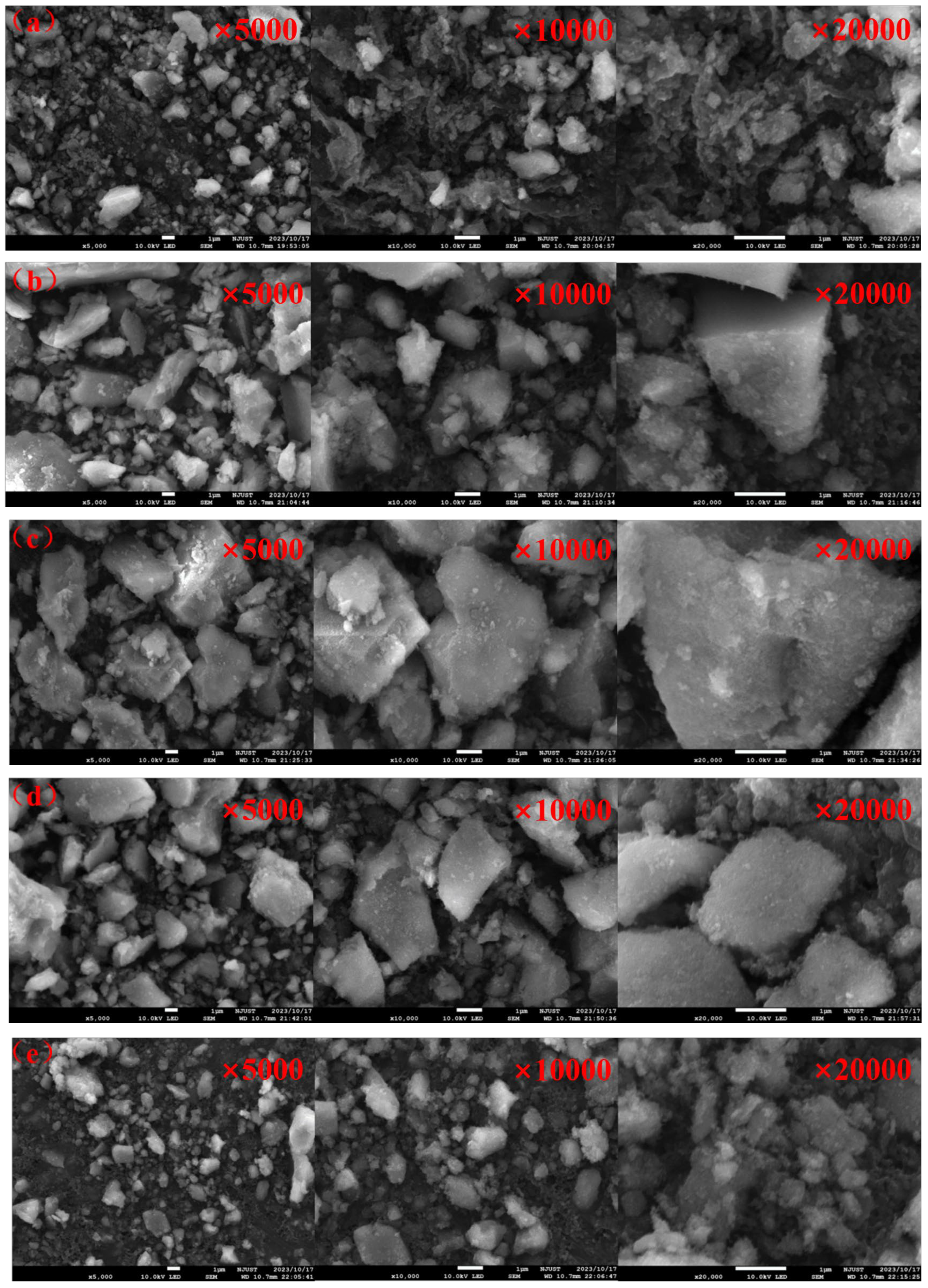
Figure 1. SEM characterization of Ce-Ni@WSA catalysts: (a) blank silicon–aluminum ball carrier, (b) 350 °C, (c) 450 °C, (d) 550 °C, (e) 650 °C, (f) 750 °C, (g) Ce-Ni@WSA repeated 50 times.
Catalysts 16 00432 g001aCatalysts 16 00432 g001b
Figure 2. XRD characterization of Ce-Ni@WSA with a Ce/Ni molar ratio of 2:1: (a) blank silicon–aluminum ball carrier, (b) 350 °C, (c) 450 °C, (d) 550 °C, (e) 650 °C, (f) 750 °C, and (g) Ce-Ni@WSA repeated 50 times.
Catalysts 16 00432 g002
Figure 3. XPS characterization of Ce-Ni@WSA: (a) blank silicon–aluminum ball carrier, (b) Ce-Ni@WSA, and (c) Ce-Ni@WSA repeated 50 times.
Catalysts 16 00432 g003
Figure 4. Peak fitting diagram of Ce-Ni@WSA catalysts: (a) Ni, (b) Ce.
Catalysts 16 00432 g004
Figure 5. The effects of different operating conditions on Nor and COD removal rates: (a) pH on Nor removal rate, (b) pH on COD removal rate, (c) ozone dosage on Nor removal rate, (d) ozone dosage on COD removal rate, (e) catalyst-filling ratio on Nor removal rate, (f) catalyst-filling ratio on COD removal rate, (g) humic acid dosage on Nor removal rate, (h) humic acid dosage on COD removal rate.
Catalysts 16 00432 g005aCatalysts 16 00432 g005b
Figure 6. Effect of repetition times on degradation efficiency.
Catalysts 16 00432 g006
Figure 7. Influence of various free-radical quenchers on degradation efficiency: (a) Nor removal rate and (b) COD removal rate.
Catalysts 16 00432 g007
Figure 8. Scan of UV–Vis spectrum of Norfloxacin simulation wastewater: (a) 190–1100 nm, (b) 190–400 min.
Catalysts 16 00432 g008
Figure 9. Three-dimensional fluorescence spectra of Norfloxacin simulation wastewater: (a) Raw water. (b) Optimal working conditions for 30 min.
Catalysts 16 00432 g009
Figure 10. Possible degradation pathways of Nor: (a) 0–15 min and (b) 0–30 min. Blue compounds represent nitrogen-containing heterocyclic intermediates, red compounds represent ring-opening oxidation products and low-molecular-weight organic acid intermediates, and green indicates H2O involved in the reaction process.
Catalysts 16 00432 g010aCatalysts 16 00432 g010b
Figure 11. Ozone catalytic oxidation diagram.
Catalysts 16 00432 g011
Table 1. BET characterization analysis of Ce-Ni@WSA.
SampleSpecific Surface Area (m2/g)Average Pore
Volume (cm3/g)
Average Pore Size (nm)
Blank silicon–aluminum ball carrier144.570.3116.50
Ce-Ni@WSA 173.510.3297.59
Ce-Ni@WSA repeated 50 times194.660.3757.70
Table 2. XRF characterization of Ce-Ni@WSA.
Sample and Content (%)SiO2CeO2Al2O3NiOSO2ClCaOK2OCuOFe2O3TiO2ZrO2
Blank silicon aluminum ball carrier96.665/1.772/0.3600.4120.4320.1160.0210.1460.0650.011
Ce-Ni@WSA93.0763.3372.2280.9190.2150.0950.0770.0350.018///
Ce-Ni@WSA repeated 50 times91.9043.7252.6861.0010.3320.1130.1180.0970.024///
Disclaimer/Publisher’s Note: The statements, opinions and data contained in all publications are solely those of the individual author(s) and contributor(s) and not of MDPI and/or the editor(s). MDPI and/or the editor(s) disclaim responsibility for any injury to people or property resulting from any ideas, methods, instructions or products referred to in the content.