Article

Enhanced Soot Oxidation Performance of CeO2-Promoted La2O2SO4 Catalytic Oxygen Storage Materials for Gasoline Particulate Filters


by
Luciana Lisi
*,
Elisabetta Maria Cepollaro
,
Michele Emanuele Fortunato
and
Stefano Cimino
Istituto di Scienze e Tecnologie per l’Energia e la Mobilità Sostenibili (STEMS)—CNR, Via Marconi 4, 80125 Napoli, Italy
*
Author to whom correspondence should be addressed.
Catalysts 2026, 16(5), 407; https://doi.org/10.3390/catal16050407
Submission received: 20 February 2026 / Revised: 20 March 2026 / Accepted: 15 April 2026 / Published: 1 May 2026
(This article belongs to the Special Issue Catalytic Soot Oxidation)

Abstract

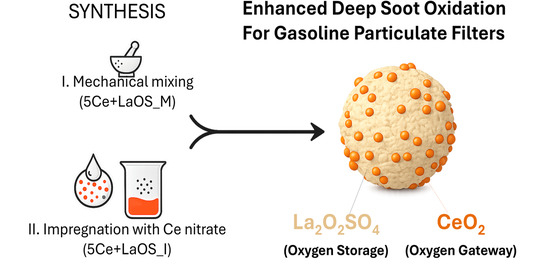
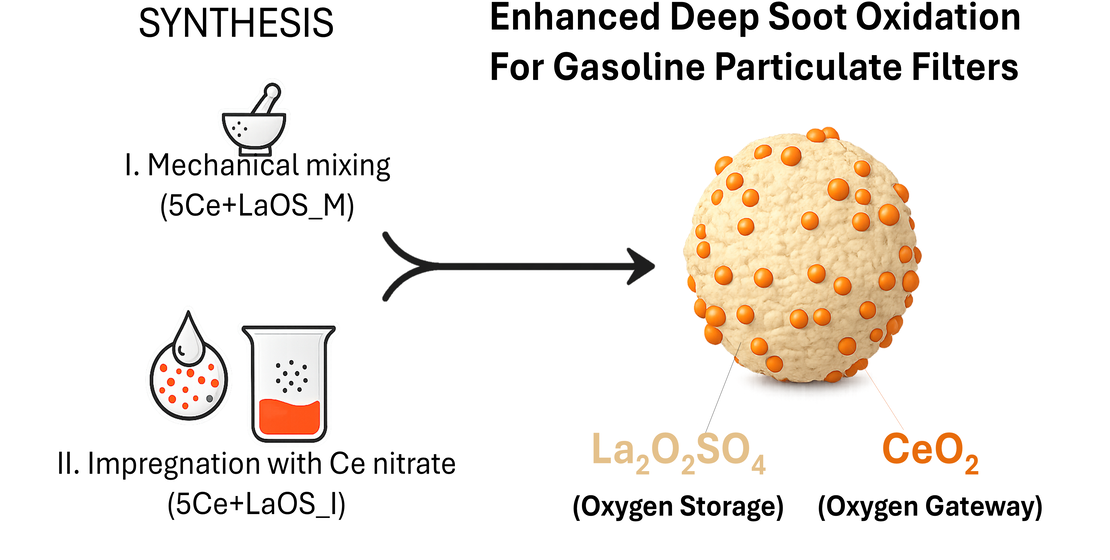
This study investigates the synergistic promotional effects of CeO2 and La2O2SO4 as composite catalytic oxygen storage systems for soot oxidation in Gasoline Particulate Filters (GPFs) across a broad operating temperature range. Two 5 wt % CeO2-promoted Lanthanum oxysulfate compounds were prepared by mechanical mixing of pure phases or by supporting CeO2 via incipient wetness impregnation with a cerium nitrate precursor. The soot oxidation activity was evaluated using Thermogravimetric Analysis coupled with Mass Spectrometry (TG-MS) under both anaerobic and lean-O2 (1% vol.) environments, with the performance benchmarked against pure La- or Pr-oxysulfates and CeO2 reference materials. Comprehensive characterization via XRD, SEM, N2-physisorption, and H2-TPR revealed that the observed synergistic effects transcend the simple additive properties of the individual components.

Graphical Abstract

1. Introduction

The automotive sector is shifting toward Gasoline Direct Injection (GDI) engines—replacing Port Fuel Injection (PFI)—as a strategy to mitigate transport-related CO2 emissions. GDI technology provides enhanced thermal efficiency and precise injection control, leading to reduced fuel consumption and lower CO2 output. Despite these benefits, the proximity of the injection point to the combustion chamber can decrease mixture homogeneity. This leads to the formation of fuel-rich regions that promote increased production of unburned hydrocarbons and soot, consequently requiring the mandatory installation of a Gasoline Particulate Filter (GPF) [1,2,3].
Despite the fact that GDI exhaust gas temperatures (ranging from 400 to 700 °C) are typically higher than those in a Diesel Particulate Filter (DPF), catalytic materials in Gasoline Particulate Filters (GPFs) face a significant challenge. This is primarily due to the very low O2 concentration—a result of stoichiometric combustion—and the absence of NO2, which is removed by the upstream three-way catalyst (TWC) [4]. Therefore, catalytic coatings for GPFs must rely on materials with a high oxygen storage capacity (OSC), such as ceria and perovskites. These materials, thanks to their easy oxygen mobility, are capable of releasing their lattice oxygen even under low or zero O2 partial pressure and then recovering their original oxidation state during the transient phases when a higher amount of O2 is present in the exhaust gas (fuel cut mode) [5,6,7,8,9].
The activity of CeO2 is based on the Ce4+ to Ce3+ redox cycle; however, the high temperatures of exhaust gases can be responsible for the irreversible transformation into Ce2O3 and, consequently, the irreversible decrease in its OSC [2,10,11]. Doping CeO2 with foreign elements, such as Mn, Fe, Cu, Zr, Pr, Sm, and U, can promote the formation of different kinds of defects in its lattice that enhance oxygen mobility and/or increase the thermal stability [5,6,10,11,12,13,14,15,16]. Silver nanoparticles were also proposed as CeO2 promoters [17] due to their role as oxygen collectors of active oxygen species generated on surface oxygen vacancies of ceria that spill over to react with soot, thus facilitating its oxidation under oxygen-deficient conditions. The importance of this oxygen delivery route was also highlighted by Wang et al. [18] for their Ag-promoted Fe2O3@CeO2 catalysts. CeO2 could act as the gateway of oxygen release/storage for Fe2O3. Consequently, Fe2O3 particles grafted with CeO2 showed a high oxygen utilization.
Rare earth oxysulfates (Re2O2SO4) have been investigated for their high OSC, good thermal stability, and cyclability [19,20,21,22,23,24,25]. The high OSC of these compounds stems from the redox chemistry of S, which can undergo a complete reduction from S6+ (in the oxysulfate) to S2− (in the oxysulfide) [11,12,13,14,15,16,17,18,19]. This corresponds to a significant capacity of 4 moles of O per mole of catalyst, vastly exceeding the theoretical 0.5 moles available from CeO2 or 1 mole for transition metals such as copper in perovskite catalysts [9]. The ability to reversibly operate these redox cycles while preserving the crystal structure is attributed to the structural similarity between the oxidized (Re2O22+ and SO42− layers) and reduced (Re2O22+ and S2− layers) compounds [19,20,21]. Among a series of Lanthanides (La, Pr, Nd, and Sm), Pr-oxysulfate exhibited redox cycles at the lowest temperature due to a significant promotional effect exerted by the peculiar presence of both Pr4+/Pr3+ species on the surface. Similar effects are reported for Eu-oxysulfate due to Eu3+/Eu2+ surface multivalence state [25], whereas cerium, although having the redox couple Ce4+/Ce3+, does not form stable oxysulfates [21]. However, Praseodymium and Europium are critical raw materials with higher pricing compared to La and Ce [21].
In a previous work [26], we investigated for the first time the ability of transition metal (Cu, Co)-promoted lanthanum oxysulfates (LaOS) for the oxidation of soot under GPF conditions, in the absence of O2, showing a complete reduction into the corresponding oxysulfide occurring without any sign of its undesired (irreversible) decomposition. When the metal-promoted LaOS materials were exposed to a very low O2 partial pressure, the oxysulfide was quickly re-oxidized, restoring the original oxysulfate. In contrast, pure CeO2 was not able to activate the Ce4+/Ce3+ reaction under the same severe anaerobic conditions, but it showed better catalytic soot oxidation activity at lower temperatures in the presence of O2. Moreover, Zhang et al. [27] revealed a synergistic improvement in the oxygen storage capacity (OSC) of CeO2 when supported on LaOS at various loadings. When tested in the anaerobic CO oxidation, these composite materials exhibited both larger OSC and higher reaction rates than the single oxides across a wide temperature range (400–700 °C). By following the reaction between CO and CeO2/18O-labelled LaOS composites, they demonstrated that CO reacted primarily with lattice oxygen from CeO2, and the resulting oxygen vacancies were then efficiently refilled by oxygen atoms supplied from LaOS via the solid–solid interface. Thus, CeO2 worked as an oxygen gateway, and LaOS served as an oxygen reservoir. The same authors also investigated the preparation of Ce-substituted La-oxysulfates [28] and assigned the high rates of oxygen release and storage to the redox property of Ce3+/Ce4+ and the possible structural distortion of SO4 units in the oxysulfate lattice. Consistently, Shen and Naito [29] also found a favourable effect of 5% Ce substitution on the redox cycle of sulfur of LaOS.
In this study, we developed a composite catalyst pairing CeO2 and LaOS to bridge the performance gaps across the diverse temperature and oxygen regimes of GPF operation. While CeO2 can provide high activity at low temperatures in oxygen-rich environments, LaOS excels at high temperatures and can operate under anaerobic conditions. We explored the synergistic interaction between these components using 5% CeO2-promoted LaOS prepared by two distinct methods. Specifically, we report the first investigation of carbon soot oxidation under both anaerobic and lean-O2 environments mimicking gasoline exhaust, benchmarking the performance of these catalytic oxygen storage materials against pure La- and Pr-oxysulfates as well as CeO2 references.

2. Results and Discussion

2.1. Characterization of Materials

Table 1 summarizes the main characterization results for the as-prepared Lanthanum and Praseodymium oxysulfates (LaOS and PrOS, respectively) alongside the commercial CeO2 nanopowder and two composite CeO2 + LaOS materials (5Ce + LaOS_M: mechanical mixture; 5Ce/LaOS_I: impregnated catalyst). The maximum theoretical OSC (wt %) is calculated considering the complete reduction from S6+ (in the oxysulfate) to S2− (in the oxysulfide) and from Ce4+ to Ce3+ (in the ceria).
XRD analysis (Figure 1) confirmed that the high-temperature treatment (1000 °C) of corresponding sulfate salts under an inert atmosphere led to the formation of monoclinic La- and Pr-oxysulfate phases (PDF No. 04-016-0017 and 04-016-0018). Trace amounts (ca 1 wt %) of the monoclinic Pr6O11 phase (PDF No. 04-007-2299) were additionally detected in the case of PrOS. The La- and Pr-oxysulfate phases exhibited characteristic unit cell volumes of 493.8 Å3 and 472.1 Å3, in line with the characteristic contraction of ionic radii alongside the lanthanide series [21]. Their average crystallite size estimated by the Scherrer equation, applied to the five most intense diffraction peaks, was equal to 81 ± 3 nm and 77 ± 4 nm for LaOS and PrOS, respectively. As regards the composite materials, 5Ce + LaOS_M retained the unit cell volume and the average crystallite size of the parent LaOS and the commercial cubic CeO2 (PDF No. 04-016-4610), whose actual content was confirmed at 5.0 ± 0.1 wt %.
At variance, the 5Ce/LaOS_I material prepared by impregnation showed a characteristic enlargement of the unit cell volume of the cubic ceria phase from ca 159 up to 167.8 Å3, which was due to the migration of some La into the lattice and formation of the mixed Ce0.8La0.2O1.9 phase (PDF No. 01-080-5544) [30,31]. Its content was estimated equal to 6.3 ± 0.2 wt % (corresponding to the nominal 5 wt % loading of CeO2), and it was characterized by relatively smaller crystallites (9 ± 1 nm).
The BET surface areas of LaOS and PrOS (2.7 and 5 m2 g−1, respectively; Table 1) were slightly larger than the corresponding parent sulfates due to the evolution of SO2 and O2 during the high-temperature pre-treatment [20,24] but indicate the absence of any substantial micro/meso-porosity and the formation of polycrystalline aggregates, previously confirmed by TEM [26]. CeO2-promoted LaOS samples displayed similar BET surface areas (6–7 m2/g) regardless of the preparation method; in the case of the physical mixture, the value slightly exceeds the expected figure obtained as a linear combination of the two contributions from the parent materials, probably due to the mechanical activation of the powders disrupting some polycrystalline domains.

2.2. H2-Temperature Programmed Reduction

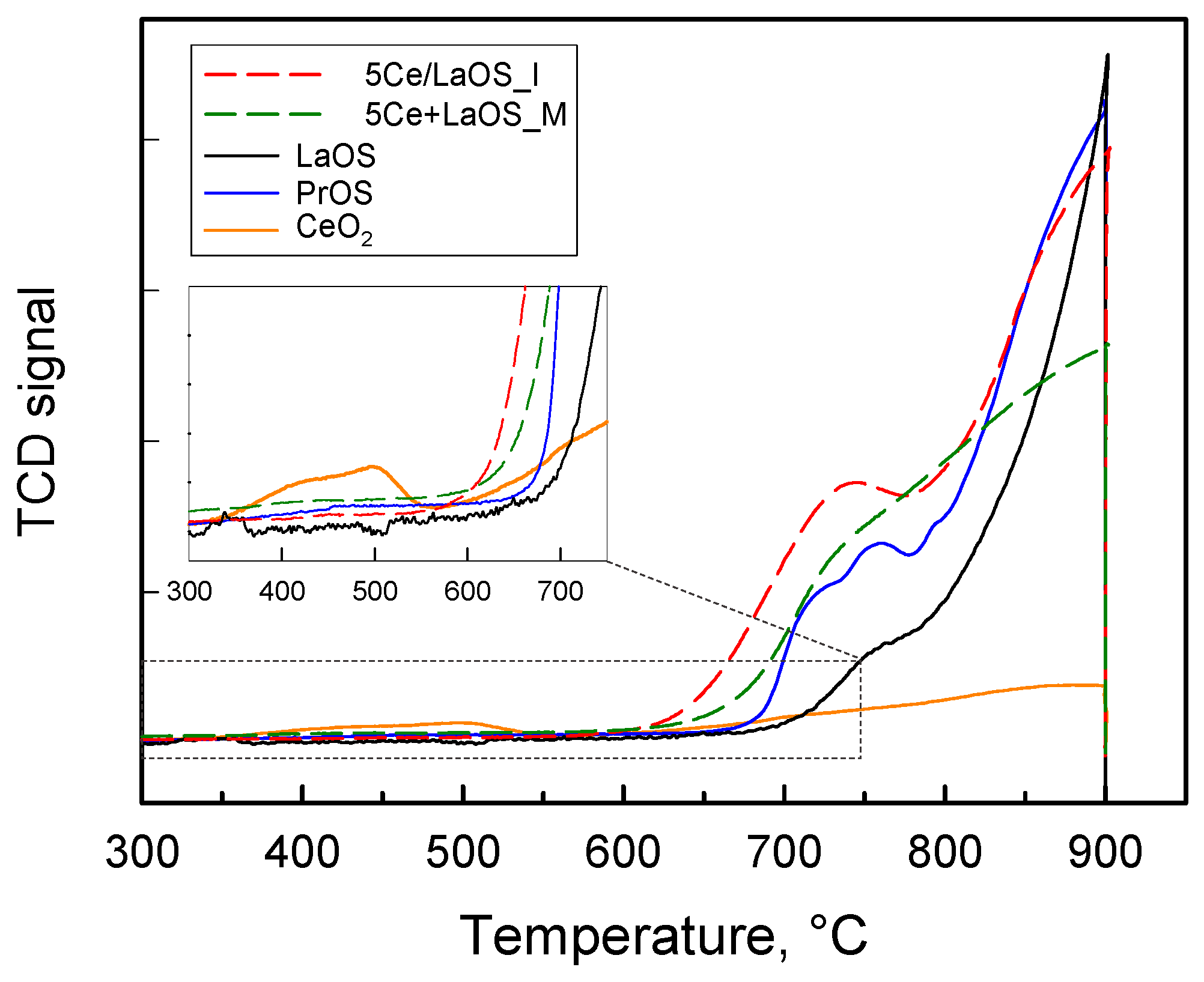
In Figure 2, the TPR profiles of 5Ce + LaOS_M and 5Ce/LaOS_I are compared with those of pure LaOS, PrOS and CeO2. In line with previous results, the commercial CeO2 sample showed two small and separate reduction events starting respectively at ca 300 °C (peaking at 495 °C, inset of Figure 2) and 650 °C (with a maximum at 890 °C, tailing under isothermal conditions at 900 °C), which are normally assigned to the reduction in surface and bulk ceria [32,33,34]: the amount of H2 consumed indicates that ca 50% of the Ce4+ was reduced to Ce+3 at the end of the TPR in agreement with Caputo et al. [32]. On the other hand, the H2-TPR profiles of pure PrOS and LaOS samples showed onset temperatures at ca 650 and 670 °C, respectively, with a first (partially unresolved) reduction peak at ca 760 °C, more pronounced for PrOS, eventually followed by a continuous increase up to 900 °C, where the reduction process continued under isothermal conditions. It should be mentioned that the maximum temperature was limited to 900 °C to avoid the possible partial decomposition of the oxysulfate phase under H2 leading to the release of SO2 (undetectable in the TPR apparatus) [24]. Nevertheless, the total amount of H2 consumed at the end of the TPR test accounted (within the experimental uncertainty) for the complete transformation of each of the oxysulfate phases into their corresponding oxysulfides. The faster reduction rate in the temperature range up to 880 °C was previously assigned to the promoting effect of the presence of Pr4+ species on the surface of the oxysulfate that are more easily reduced to Pr+3, in turn favouring the reduction of S from +6 to −2 in the oxysulfide [21,22]. This is consistent with the trace amounts of Pr6O11 detected in the PrOS sample.
Notably, despite the 5Ce + LaOS_M sample being a mechanical mixture of the two CeO2 and LaOS solids, its redox behaviour differed substantially from the combination of the TPR profiles of the parent samples. The reduction process by H2 started at as low as 600 °C (inset of Figure 2) and displayed a higher rate over LaOS (as well as PrOS), up to ca 850 °C. As for the pure LaOS sample, the overall amount of H2 consumed at the end of the isothermal step at 900 °C corresponded to the complete transformation into the La-oxysulfide. It should be noted that the large H2 consumption measured up to 850 °C with the composite sample cannot be simply associated with the reduction in the ceria content, since it far exceeds the corresponding theoretical required amount. This clearly indicates that CeO2 is rather acting as a promoter or catalyst by activating H2 and by drawing oxygen from the lattice of the LaOS to replenish the oxygen vacancies [24]. Interestingly, the promotional effect of CeO2 on the transformation of the La-oxysulfate into its corresponding oxysulfide was also evident when the two solids had a limited interfacial contact area, as expected in the case of a mechanical mixture. However, the 5Ce/LaOS_I sample guaranteed further improvements of the redox performance as shown by the clear left-shift of its reduction profile in Figure 2. In particular, the onset temperature for reduction was as low as 570 °C, and the H2 consumption rate was always faster than for LaOS as well as PrOS samples for temperatures up to 850 °C. It can be argued that this result was due to the larger contact surface area between the two phases when CeO2 was dispersed on the LaOS via impregnation, as well as to an enhanced oxygen mobility caused by the partial substitution of La [30,31] that was detected in the ceria lattice (Table 1). Similarly, some limited substitution of cerium into the lanthanum oxysulfate lattice following the reducing treatment [28] cannot be completely ruled out. Analogous promoting effects were previously reported with Me/LaOS composites doped with small amounts (1 wt %) of transition metals (oxides), increasing in the order Co > Mn > Cu [22].

2.3. Soot Oxidation Under Anaerobic Conditions

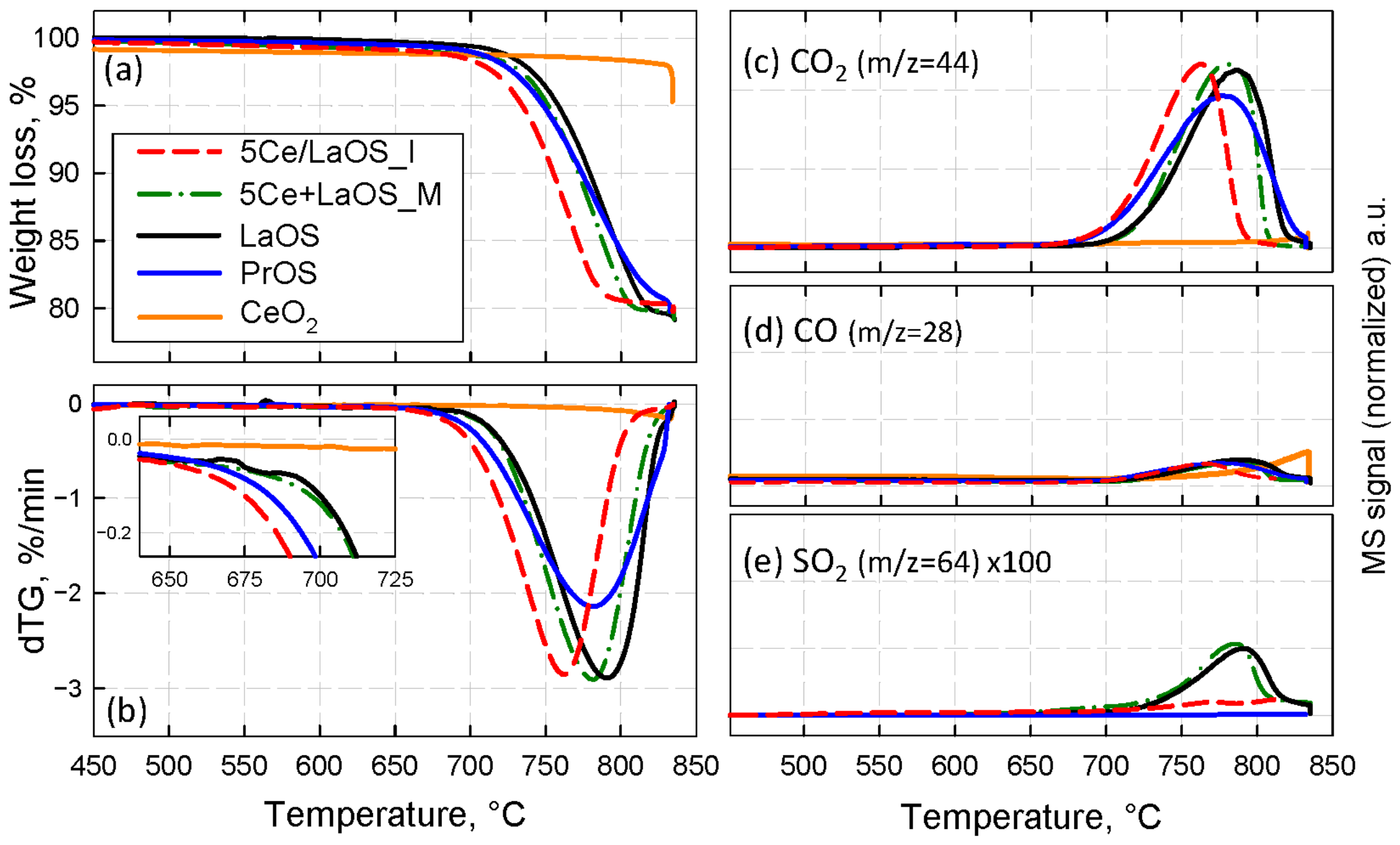
Figure 3 presents the results of TG experiments of soot combustion performed under anaerobic conditions (inert flow) for the pure materials and the two composite samples. Pure LaOS, PrOS, CeO2 and carbon soot were all stable when heated under inert flow conditions up to 835 °C and did not spontaneously release any molecular oxygen [23,26]. However, each of the pure OS materials was capable to oxidize carbon soot when mixed with it by employing lattice oxygen to form COx. Among all tested materials, the commercial CeO2 nanopowder exhibited the lowest activity [26]: the onset temperature for soot oxidation (estimated from the derivative TG profile, Figure 3b) was around 750 °C, and the maximum weight loss rate occurred only at the test’s upper thermal limit (835 °C). Consequently, isothermal kinetics were sluggish, yielding a final weight loss of only −4.7%, which falls below the complete utilization of the theoretical oxygen storage capacity (Table 1), considering the conversion to CO2 (−5.7%) or to CO (−7.2%). In fact, MS traces indicated the release of both CO2 and CO at comparable extents in the evolved gases (Figure 3c,d).
PrOS and LaOS displayed distinctly better oxidation performance than CeO2 when mixed with soot, showing an onset temperature for weight loss respectively at 660 and 675 °C, in line with the onset of the reduction of the oxysulfate phases during the corresponding H2-TPR. Thereafter, weight loss proceeded, showing dTG peaks centred at 780 and 790 °C. This is remarkable when considering that the maximum reduction rate during the H2-TPR was not achieved below 900 °C and points to the very strong reducing potential of solid carbon even if its contact area with the oxysulfate phase was relatively limited (mechanical mixture). Both samples eventually reached a stable weight at the end of the experiment: their final weight losses (20.0% and 21.0%, respectively, for PrOS and LaOS) largely correspond to the values calculated (19.3% and 19.5%) for the deep oxidation of a soot fraction to form CO2 via reaction (1), utilizing all of the oxygen storage capacity deriving from the complete transformation of the oxysulfate into its oxysulfide.
Re2O2SO4 + 2C → Re2O2S + 2CO2
Re2O2SO4 + 4C → Re2O2S + 4CO
Re2O2SO4 + C → Re2O3 + SO2 + CO
Accordingly, the MS traces for CO2 emission (Figure 3c) closely resembled the corresponding dTG peaks. Also, the temporal traces at m/z = 28 (Figure 3d) followed identical patterns: considering the contribution at m/z = 28 deriving from CO2 mass fragmentation (11.4% of the signal at m/z = 44), it can be argued that CO formation via reaction (2) was negligible, providing almost complete selectivity to CO2. Moreover, the SO2 trace for PrOS was flat across the entire temperature range up to 835 °C (Figure 3e), indicating that the undesired irreversible decomposition of the oxysulfate by reaction (3) did not occur. In the case of LaOS, some trace amounts of SO2 were detected, peaking at the same temperature of CO2. Despite a fully quantitative assessment not being performed, the concentration of SO2 was estimated to be lower than that of CO2 by a factor of around 500 (considering MS sensitivity factors of 2.1 and 1.4, respectively), implying that the La2O2SO4 was converted with very high selectivity (99.8%) via reaction (1). It should be highlighted that the slightly larger weight loss and the associated SO2 emissions, already reported by our group during similar experiments with La-oxysulfate + soot [26] mixtures, were most probably affected by some undetected impurities of Lanthanum sulfate, which is more easily decomposed during heating with soot under anaerobic conditions.
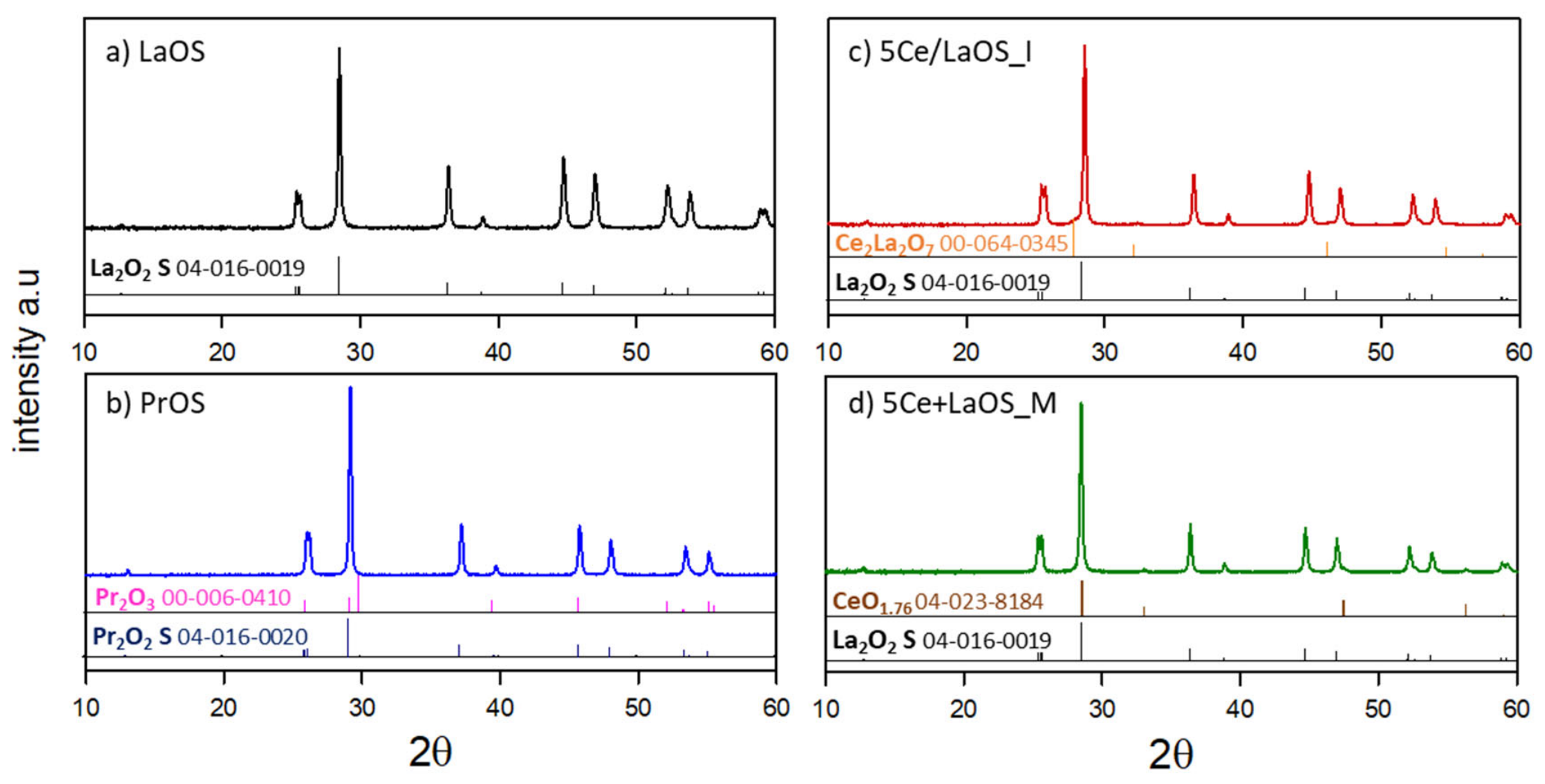
Visual inspection of the powders recovered after the TG experiments (cooled to room temperature under inert flow) confirmed the presence of some residual soot, consistent with its initial amount exceeding the maximum available oxygen content of the materials (and the formation of CO2). The corresponding XRD patterns (Figure 4) indicate the complete transformation of LaOS and PrOS into their hexagonal La- or Pr-oxysulfides (PDF No. 04-016-0019 and 04-016-0020, respectively): the latter was also accompanied by a small amount (0.9 wt %, Table 2) of Pr2O3 (hexagonal, PDF No 00-006-0410) deriving from the reduction of Pr4+ to Pr3+ in the oxide phase detected in the original sample.
The addition of just 5 wt % of CeO2 to the LaOS phase proved effective to favour the deep oxidation of soot under anaerobic conditions as shown by the corresponding weight loss curves that were shifted toward lower temperatures for both composite materials. The promoting effect of ceria was limited to only 10 °C in the case of 5Ce + LaOS_M (mechanical mix), reaching a peak in the dTG curve at 780 °C. On the other hand, the 5Ce/LaOS_I impregnated material attained the maximum rate of reaction at as low as 760 °C, and the onset temperature for soot oxidation was also anticipated by ca 30 °C with respect to the parent LaOS (Figure 3b), thus outperforming the PrOS sample, too. The temporal profiles for the evolved CO2 followed the same (anticipated) trends, and once again the CO emission was negligible, confirming the very high selectivity towards the total oxidation of soot (Figure 3c,d). In addition, the SO2 trace was almost flat for the 5Ce/LaOS_I composite material over the whole temperature range, reflecting the removal of sulfate impurities due to the preparation method. The higher effectiveness of adding Ceria by impregnation is consistent with the smaller average dimension and better dispersion of its crystallites on the LaOS phase. Moreover, it most probably also benefits from the doping effect of La [30,31] in the Ce0.8La0.2O1.9 and Ce2La2O7 mixed phases that were detected by XRD analysis in the fresh and reduced samples, respectively, which displayed similar volumes (168 Å3) of their cubic unit cell (Table 2). At variance, the commercial ceria mixed with LaOS turned into a partially reduced CeO1.76 phase at the end of the experiment, without any sign of significant La-substitution, and thus preserved its original smaller cubic unit cell (158 Å3) as well as the larger average dimension of its crystallites (Table 2).

2.4. Soot Oxidation Under Lean-O2 Conditions

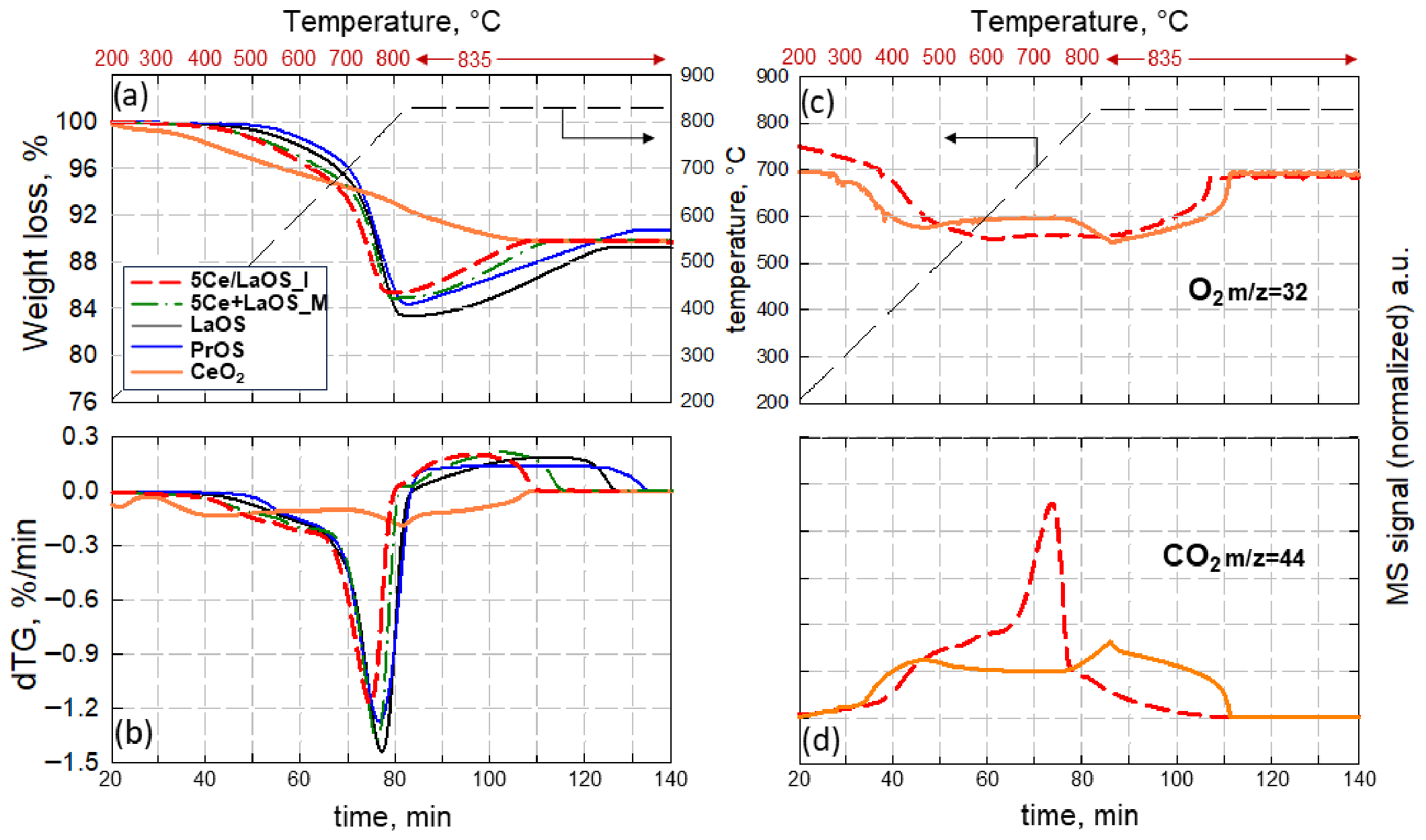
Soot oxidation experiments in TG-MS were also repeated under a flow of 1% O2/Ar, and the results are presented in Figure 5a,b in terms of weight profiles as a function of temperature/time together with the corresponding derivative curves. Moreover, panels in Figure 5c,d report the transient concentration profiles of O2 and CO2 in the evolved gas relevant to the two extreme cases of the pure CeO2 nanopowder and the 5Ce/LaOS_I composite material. CO (as well as SO2) emissions were negligible for all tested materials under oxidizing conditions.
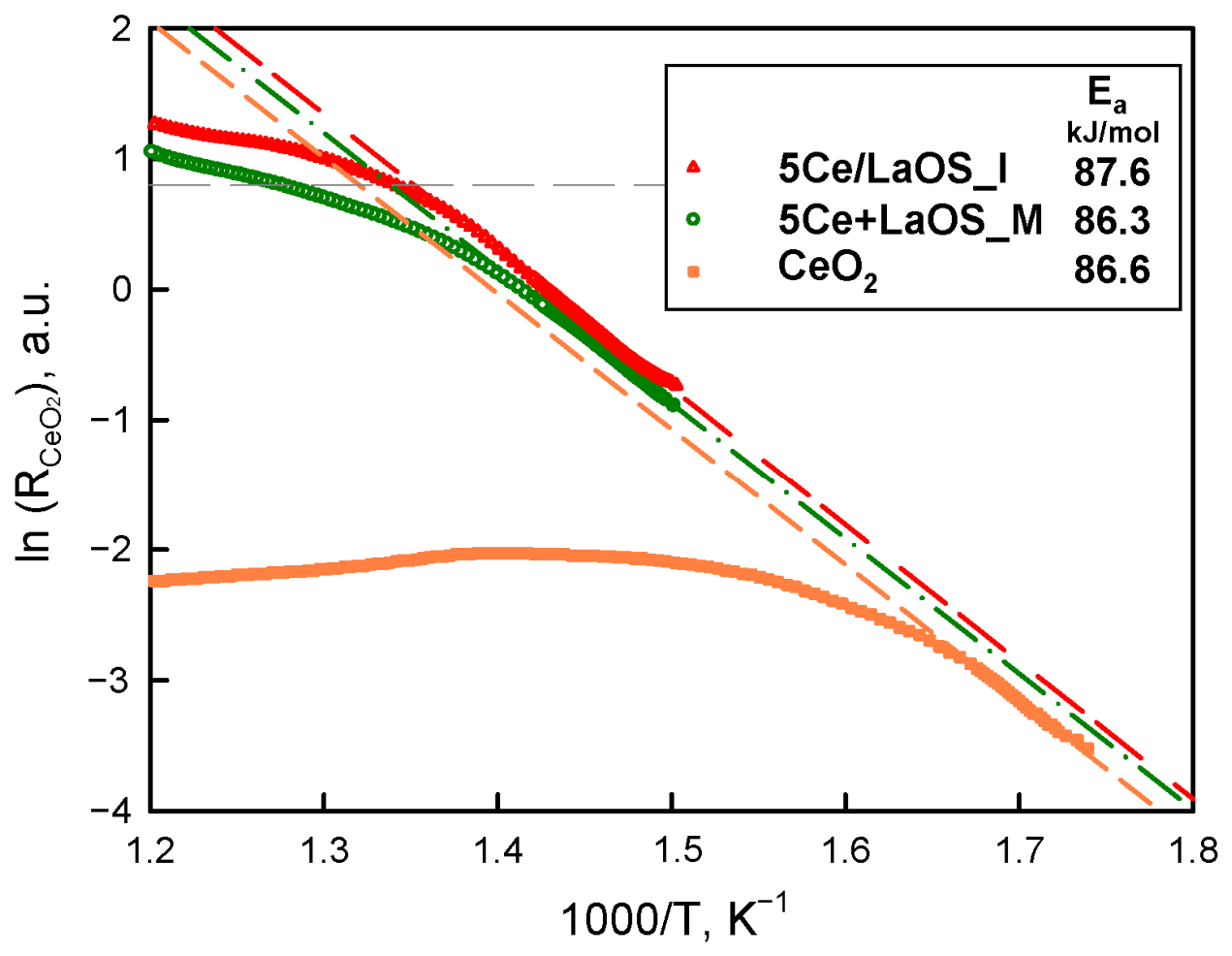
In line with previous reports [26], the TG trace for the CeO2 catalyst mixed with soot decreased monotonically down to the expected value corresponding to the complete burn-out of the carbon content (10%). The corresponding CO2 emission profile shows that soot oxidation started from as low as 300 °C and reached a maximum rate around 420 °C, then continued almost unchanged up to ca 760 °C. The O2 consumption in the gas mixture strictly mirrored the CO2 formation trend: this confirms that ceria acted as a catalyst by oxidizing carbon soot via the oxygen available on its surface, resulting in oxygen vacancies which, in the presence of O2 in the gas phase, can be continuously replenished, closing the redox cycle. As such, Figure 6 presents the Arrhenius plot for the soot oxidation rate per gram of ceria (RCeO2), which is proportional to the dTG value at each temperature. The corresponding apparent activation energy, estimated from the slope of the line in the low-temperature (and low conversion) range, is equal to 86.6 kJ/mol, which agrees with typical values reported for the oxidation of soot on CeO2 [35]. However, the rate of reaction rapidly approached a roughly constant value for temperatures beyond 400 °C, which indicates that the process proceeded under purely external mass transfer control: this is due to the relatively slow transport of O2 from the TG flow chamber into the crucible freeboard and its subsequent diffusion through the crucible to the surface of the catalyst particles [26]. Interestingly, under those conditions, the concentration of O2 on the surface of the catalyst was actually zero, and the rate of reaction increased only when some additional oxygen from the CeO2 lattice became available, i.e., above 750 °C, consistent with the activation temperature measured during the anaerobic oxidation tests. Accordingly, this second oxidation event reached a small peak at 835 °C to continue during the isothermal stage until all the soot was consumed, while the lattice oxygen of CeO2 was simultaneously restored.
All other materials containing an oxysulfate phase displayed a markedly different TG profile, characterized by an onset of soot oxidation shifted to higher temperatures with respect to pure CeO2 and a much faster maximum weight loss rate (Figure 5b) that was achieved between 750 and 775 °C. Oxidation activity increased in the order 5Ce/LaOS_I > 5Ce + LaOS_M ≥ PrOS > LaOS, i.e., following the same trend observed during the anaerobic tests. The corresponding deep minima in the weight profiles were systematically lower than expected for the removal of the entirety of the soot content, suggesting that the (partial) transformation of the oxysulfate phase into its corresponding oxysulphide was occurring. Thereafter, when most of the soot was consumed/oxidized, the samples started to regain weight until they eventually recovered the level corresponding to the re-formation of the oxysulfate phase. Accordingly, the CO2 emission trace (shown for the case of 5Ce/LaOS_I, Figure 5d) mirrored the dTG profile up to the temperature corresponding to the maximum oxidation rate and then rapidly dropped due to the complete consumption of the solid carbon. On the other hand, the O2 trace mirrored the CO2 profile only from low to moderate temperatures up to 500 °C, where it stabilized at the same level observed with pure CeO2. Once more, this is consistent with the instauration of an external mass transfer-limited regime. However, in this case, the CO2 formation rate did not level-off but increased further along with the temperature due to the increasing availability of oxygen from the lattice of the oxysulfate phase, which was initially transferred to the catalytically active ceria phase [27]. Given the analogy with the anaerobic oxidation tests, for temperatures beyond ca 670 °C, the remaining soot also started to oxidize directly at the contact points with the oxysulfate phase and not only through the CeO2 catalytic gateways.
Due to the negligible soot combustion with pure LaOS below 500 °C, it can be argued that in the case of the composite CeO2 + LaOS materials, the low-temperature oxidation was exclusively catalyzed by the active sites of ceria. As such, Figure 6 reports the catalytic reaction rates on the composites after normalization for the unit mass of CeO2. It can be observed that the soot oxidation rate over each composite material increased along with temperature with the same apparent activation energy (87 ± 0.7 kJ/mol) that was measured for the case of pure CeO2 nanoparticles, suggesting an identical mechanism of activation. However, the specific rate per gram of ceria was higher (from 22 to 38%) over the composites, thus indicating that a larger number of active sites were present than over pure CeO2, and they were most probably located at the interface with the LaOS. Notably, the 5Ce/LaOS_I sample displayed the fastest specific rate (ca 12–15% higher than 5Ce + LaOS_M counterpart). This generally agrees with a larger contact area between phases that can be obtained via the impregnation procedure rather than by mechanical mixing. Nevertheless, the possible promoting effect deriving from the formation of novel oxygen vacancies, due to the observed partial substitution of La into the ceria lattice, cannot be completely ruled out. In contrast to the case of pure CeO2, Figure 6 confirms that the specific soot oxidation rate over both the composite materials continued to increase along with temperature (though much more slowly) also beyond 500 °C (i.e., when the molecular O2 was already consumed), eventually exceeding the limit for the external mass transport regime (recalculated considering the actual content of ceria). This can be rationalized with the utilization of lattice oxygen from the LaOS reservoir diffusing towards the active sites located at the interface with ceria, consistently with results of Zhang et al. [27] for CO oxidation. Under such an O2-depleted regime at intermediate temperatures, the activity between 5Ce/LaOS_I and 5Ce + LaOS_M appeared more pronounced. However, a precise kinetic evaluation from dTG data was precluded by the relatively high soot conversion levels and the concurrent phase transformation of LaOS into its oxysulfide.
Interestingly, once the combustion of soot was completed, the maximum rate of catalyst reoxidation (i.e., weight gain) also appeared to have an upper limit (Figure 5b) that was relatively unaffected by either the type of oxysulfide (La or Pr) or the presence of 5% CeO2 mixed with or impregnated on LaOS. Accordingly, the O2 consumption rate remained constant during the reoxidation phase (as shown in Figure 5c, for 5Ce/LaOS_I), clearly indicating that the intrinsic kinetics were fast and the reoxidation process was O2-diffusion limited.
XRD analysis of the samples after the soot oxidation tests under 1% vol. O2 confirmed the complete recovery of the initial La- and Pr-oxysulfate and ceria phases, with unchanged crystal structures and parameters, indicating easy and reversible transformations occurring during the redox cycles.
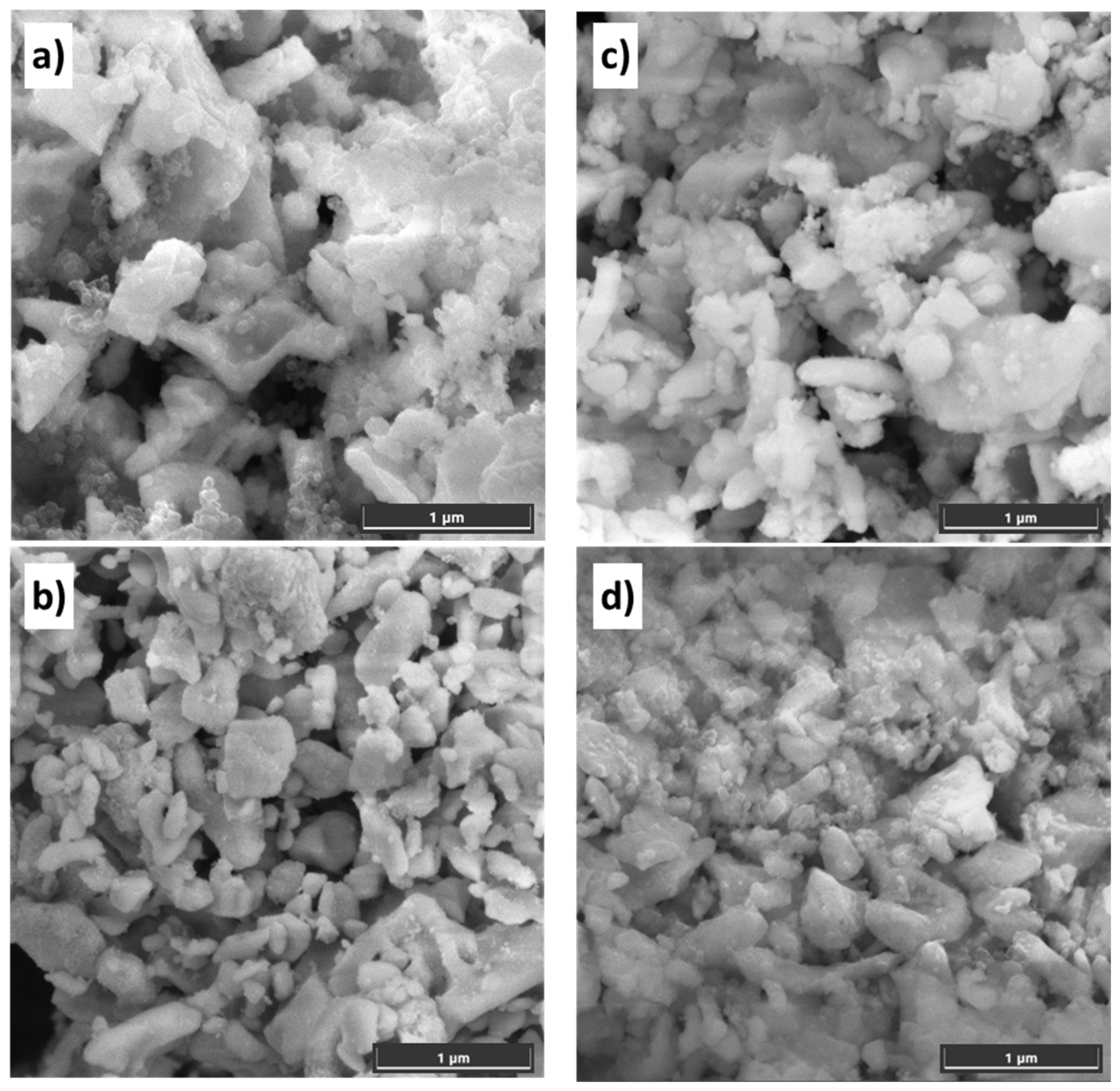
SEM images of the two composite materials recovered after the soot oxidation experiments under either 1% vol. O2 or anaerobic flow conditions at high temperature (i.e., containing fully oxidized La-oxysulfate and fully reduced La-oxysulfide species, respectively) are presented in Figure 7. The re-oxidized oxygen storage materials (Figure 7a,c) retained their characteristic macroporous structure made of grains with a wide size distribution up to 1–2 µm deriving from the agglomeration of primary crystalline LaOS particles, whose pristine dimensions were previously found in the range 30–190 nm by TEM [26]. Despite ceria-based nanoparticles not being clearly distinguished from the main LaOS phase due to poor contrast variation, the 5Ce/LaOS_I showed numerous smaller nanoparticles adhering on top of the larger LaOS grains, confirming a better interaction and larger contact area between phases with respect to the mechanical mixture counterpart, consistent with XRD and reactivity results. Moreover, the complete transformation into the La-oxysulfide phase at the end of the anaerobic oxidation tests did not significantly alter the morphology of the samples, also considering the residual presence of some small nanoparticles of unburned carbon soot.
Current experiments demonstrate that the La-oxysulfate–oxysulfide transformation is structurally reversible during soot combustion experiments with Ce + LaOS composites. However, their suitability for GPFs depends on long-term stability across thousands of redox cycles—a requirement yet to be validated. Previous studies on similar materials (Pt-CeO2/LaOS [27]) showed stable redox cycling at 600 °C alternating 1.4% vol. H2 with 0.7% vol. O2 feed streams. Similarly, a Co-doped LaOS [24] was reported to be stable during redox cycles of chemical looping combustion of methane at 800 °C. Notably, it was also reported that the long-term cyclic stability of the Re2O2SO4/Re2O2S systems was strongly enhanced in the presence of even small contents of S-bearing compounds, such as those commonly found in the fuel stream [36].

3. Materials and Methods

Lanthanum oxysulfate (LaOS) and Praseodymium oxysulfate (PrOS) were obtained by the thermal decomposition of their corresponding sulfates (La2(SO4)3 Sigma-Aldrich (St. Louis, MO, USA) purity 99.99%; Pr2(SO4)3·8H2O Fischer Scientific Italia (Segrate, Italy), purity 99.9%) by heating them at 10 °C min−1 up to 1000 °C and holding for 2 h under inert flow. Commercial CeO2 nano-powder was supplied by Aldrich (≤25nm, Aldrich Product No. 544841-25G, St. Louis, MO, USA).
A mechanical mixture of CeO2 (5 wt %) and LaOS was prepared by intensively grinding the LaOS and CeO2 powders with a pestle in an agate mortar (5Ce + LaOS_M). A further composite sample with identical nominal composition was prepared by impregnation of LaOS with a Ce nitrate water solution followed by drying at 120 °C and calcination at 850 °C for 2h in 1% O2/Ar (5Ce/LaOS_I).
XRD patterns of fresh samples and after high-temperature soot oxidation experiments were collected using a Philips X’Pert PRO apparatus (Malvern Panalytical, Malvern, UK) with CuKα radiation (anti-scatter silt width 7.5 mm) in a 2θ range 5–80 °, which was scanned using a step size of 0.013° and a scan speed of 0.156° s−1. Background correction, fitting, peak attribution, and calculation of lattice parameters (WPPF) were performed using SmartLab Studio II software v4.5.162.0 and PDF-5+ 2025 database (ICDD). Average dimensions of crystallites were estimated by the Scherrer equation applied to the most intense peaks of each phase. Phase quantification was performed by the Rietveld method.
The morphology of fresh and used samples was investigated with a FE-SEM TESCAN CLARA (S8154) (Tescan, Brno, Czech Republic) scanning electron microscope (SEM).
N2 adsorption−desorption measurements at 77 K were performed in a Quantachrome Autosorb 1-C (Anton Paar GmbH, Graz, Austria) after degassing the samples at 150 °C for 3 h under a high dynamic vacuum. The specific surface area was evaluated by the BET method.
Temperature Programmed Reduction (TPR) analysis was carried out with a Micromeritics AutoChem 2020 (Norcross, GA, USA) equipped with a TC detector. Powder samples (150 mg) were pre-treated in situ under air flow at 500 °C for 1 h; after cooling to room temperature, the flow was switched to 2% vol. H2/Ar mixture (50 cm3 min−1) and the temperature was ramped at 10 °C min−1 up to 900 °C for 1h.
Soot oxidation experiments were carried out in a Setaram Labsys Evo TGA-DTA-DSC 1600 (Caluire-et-Cuire, France) flow microbalance either under inert (Ar) or 1% O2/Ar flow (50 cm3 min−1) by heating up at a rate of 10 °C min−1 from 130 °C to 835 °C, then holding for 60 min at the maximum temperature. Commercial Degussa Printex-U (Evonik Degussa, Essen, Germany) was employed as a model for GDI soot in this study since they share similar morphologies and oxidation behaviour [6]: ca 6–8 mg of it was mixed with the catalyst powder in a 1:9 weight ratio in tight contact (intensively milled together in an agate mortar for 10 min) and loaded in an alumina crucible. Reference experiments were also carried out on pure CeO2, LaOS and PrOS. A Pfeiffer Thermostar G Mass Spectrometer (Aßlar, Germany) equipped with a Secondary Electron Detector (MS-SEM), was employed to continuously analyze the gases evolved during reaction by recording the temporal profiles at m/z = 18 (H2O), 28 (CO), 32 (O2), 44 (CO2), and 64 (SO2).

4. Conclusions and Outlook

A synergistic promotional effect was found by doping La2O2SO4 with a small amount (5 wt %) of CeO2 to obtain advanced catalytic oxygen storage systems for soot oxidation in Gasoline Particulate Filters (GPFs). The composite materials, prepared by either mechanical activation or impregnation, showed a higher oxygen mobility during H2-TPR, which consistently translated into enhanced deep oxidation activity for carbon soot under anaerobic conditions with respect to the reference pure La- or Pr-oxysulfates. Despite CeO2 on its own displaying very poor activity below 800 °C in the absence of molecular O2, when in contact with LaOS, it helped extract the oxygen stored in the oxysulfate lattice starting from 630 °C to sustain the selective combustion of soot to CO2. At the same time, the La-oxysulfate progressively transformed into its oxysulfide phase, guaranteeing the full deployment of a remarkable 15.2 wt % oxygen storage capacity. Under lean-O2 conditions, the CeO2 active surface promoted the catalytic combustion of soot from as low as 300 °C, but a significant acceleration was observed above 450 °C when an additional oxygen flux from the LaOS increased the reaction rate above the threshold level otherwise set by the external mass transport limitations for O2. Furthermore, beyond 630 °C, the LaOS phase itself started to contribute directly to the deep oxidation of the carbon soot particles in close contact with it.
Following complete soot combustion, the La2O2S fraction was readily regenerated to La2O2SO4 in the presence of molecular O2, even at low partial pressures. This reoxidation process exhibited rapid intrinsic kinetics at temperatures relevant to GPF applications, fully restoring the original textural and morphological properties of the oxygen storage materials. Acting as a gateway for oxygen extracted from the La2O2SO4 bulk, ceria demonstrated a more pronounced promotional effect when a larger interfacial contact area was provided and upon partial substitution with La, as observed with the impregnated composite compared to the mechanically mixed counterpart. These results suggest that the combination of two different catalysts, one (a doped Ceria) covering the low-temperature and aerobic conditions and the other one (LaOS) covering the mid–high-temperature and anaerobic conditions, can be effective, and the potential occurrence of an interaction between the two phases does not represent a drawback. Eventually, the CeO2 and LaOS contents in the composites can be tailored to meet specific low-temperature catalytic activity and oxygen storage capacity requirements of real GPFs.
The catalytic oxidation performance of the composites may be further enhanced by increasing both the exposed surface area of the La2O2SO4 phase and the ceria–oxysulfate interface. Alternative preparation strategies for the synthesis of LaOS using (carbon) templates and/or a precipitating agent, as well as refining the mechanical activation step, could further advance this objective. More sophisticated core–shell nanoarchitectures can be envisaged, containing a LaOS core surrounded by a porous CeO2 shell.
While current results confirm the structural reversibility of the lanthanum oxysulfate–oxysulfide transformation during soot combustion, long-term stability over thousands of redox cycles remains to be proven for GPF applications. Under harsh operating conditions the oxygen storage capacity and the catalytic properties of the CeO2+LaOS composites may be compromised by phase segregation at the complex interface or by the progressive loss of minimal sulfur-bearing compounds. Specifically, assessing the stability of performance requires ad hoc experimental designs where the catalyst is applied as a thin washcoat layer on a typical wall flow filter and solid carbon soot is periodically or continuously deposited on it to serve as the reducing agent.

Author Contributions

Conceptualization, L.L. and S.C.; methodology, L.L.; validation, S.C.; investigation, E.M.C. and M.E.F.; data curation, E.M.C. and M.E.F.; writing—original draft preparation, L.L. and S.C.; writing—review and editing, L.L. and S.C.; supervision, L.L.; funding acquisition, L.L. All authors have read and agreed to the published version of the manuscript.

Funding

This research was funded by Ministero Università e Ricerca—Italy (PRIN2022—JRT7WZ). E. M. Cepollaro acknowledges the European Union—Next Generation EU under the National Recovery and Resilience Plan (NRRP), Mission 04 Component 2 Investment 3.1, Project Code: IR0000027-CUP:B33C22000710006-iENTRANCE@ENL: Infrastructure for Energy TRAnsition aNd Circular Economy @ EuroNanoLab.

Data Availability Statement

Data are contained within the article.

Conflicts of Interest

The authors declare no conflicts of interest.

References

  1. Singh, E.; Kim, N.; Vuilleumier, D.; Skeen, S.; Cenker, E.; Sjöberg, M.; Pickett, L. Particulate Matter Emissions in Gasoline Direct-Injection Spark-Ignition Engines: Sources, Fuel Dependency, and Quantities. Fuel 2023, 338, 127198. [Google Scholar] [CrossRef]
  2. Johnson, T.; Joshi, A. Review of Vehicle Engine Efficiency and Emissions. SAE Int. J. Engines 2018, 11, 1307–1330. [Google Scholar] [CrossRef]
  3. Richter, J.M.; Klingmann, R.; Spiess, S.; Wong, K.-F. Application of Catalyzed Gasoline Particulate Filters to GDI Vehicles. SAE Int. J. Engines 2012, 5, 1361. [Google Scholar] [CrossRef]
  4. Giechaskiel, B.; Melas, A.; Valverde, V.; Otura, M.; Martini, G. Challenging Conditions for Gasoline Particulate Filters (GPFs). Catalysts 2022, 12, 70. [Google Scholar] [CrossRef]
  5. Sartoretti, E.; Martini, F.; Piumetti, M.; Bensaid, S.; Russo, N.; Fino, D. Nanostructured Equimolar Ceria-Praseodymia for Total Oxidations in Low-O2 Conditions. Catalysts 2020, 10, 165. [Google Scholar] [CrossRef]
  6. Martínéz-Munuera, J.C.; Zoccoli, M.; Gimenez-Mañogil, J.; García-García, A. Lattice oxygen activity in ceria-praseodymia mixed oxides for soot oxidation in catalysed Gasoline Particle Filters. Appl. Catal. B Environ. 2019, 245, 706–720. [Google Scholar] [CrossRef]
  7. Moreno-Marcos, C.; Torregrosa-Rivero, V.; Albaladejo-Fuentes, V.; Sánchez-Adsuar, M.S.; Illán-Gómez, M.J. BaFe1−xCuxO3 Perovskites as Soot Oxidation Catalysts for Gasoline Particulate Filters (GPF): A Preliminary Study. Top. Catal. 2019, 62, 413–418. [Google Scholar] [CrossRef]
  8. Torregrosa-Rivero, V.; Moreno-Marcos, C.; Albaladejo-Fuentes, V.; Sánchez-Adsuar, M.S.; Illán-Gómez, M.J. BaFe1−xCuxO3 Perovskites as Active Phase for Diesel (DPF) and Gasoline Particle Filters (GPF). Nanomaterials 2019, 9, 1551. [Google Scholar] [CrossRef] [PubMed]
  9. Martinovic, F.; Galletti, C.; Bensaid, S.; Pirone, R.; Deorsola, F.A. Soot oxidation in low-O2 and O2-free environments by lanthanum-based perovskites: Structural changes and the effect of Ag doping. Catal. Sci. Technol. 2022, 12, 5453–5464. [Google Scholar] [CrossRef]
  10. Li, P.; Chen, X.; Li, Y.; Schwank, J.W. A review on oxygen storage capacity of CeO2-based materials: Influence factors, measurement techniques, and applications in reactions related to catalytic automotive emissions control. Catal. Today 2019, 327, 90–115. [Google Scholar] [CrossRef]
  11. Polychronopoulou, K.; Zedan, A.F.; AlKetbi, M.; Stephen, S.; Ather, M.; Katsiotis, M.S.; Arvanitidis, J.; Christofilos, D.; Isakovic, A.F.; Al Hassan, S. Tailoring the efficiency of an active catalyst for CO abatement through oxidation reaction: The case study of samarium-doped ceria. J. Environ. Chem. Eng. 2018, 6, 266–280. [Google Scholar] [CrossRef]
  12. Piumetti, M.; Bensaid, S.; Andana, T.; Dosa, M.; Novara, C.; Giorgis, F.; Russo, N.; Fino, D. Nanostructured Ceria-Based Materials: Effect of the Hydrothermal Synthesis Conditions on the Structural Properties and Catalytic Activity. Catalysts 2017, 7, 174. [Google Scholar] [CrossRef]
  13. Zhu, H.; Chen, Y.; Wang, Z.; Liu, W.; Wang, L. Catalytic oxidation of CO over mesoporous copper-doped ceria catalysts via a facile CTAB-assisted synthesis. RCS Adv. 2018, 8, 14888–14897. [Google Scholar] [CrossRef] [PubMed]
  14. Sahoo, T.R.; Armandi, M.; Arletti, R.; Piumetti, M.; Bensaid, S.; Manzoli, M.; Panda, S.R.; Bonelli, B. Pure and Fe-doped CeO2 nanoparticles obtained by microwave assisted combustion synthesis: Physico-chemical properties ruling their catalytic activity towards CO oxidation and soot combustion. Appl. Catal. B Environ. 2017, 211, 31–45. [Google Scholar] [CrossRef]
  15. Han, C.; Yoko, A.; Taufik, A.; Ohara, S.; Nishibori, M.; Ninomiya, K.; Kiuchi, H.; Harada, Y.; Adschiri, T. High Oxygen Storage Capacity of Ultrasmall Mn-Doped CeO2 Nanoparticles via Enhanced Local Distortion and Mn(II) Lattice Substitution. Chem. Mater. 2025, 37, 1205–1214. [Google Scholar] [CrossRef]
  16. Shelly, L.; Schweke, D.; Danon, A.; Rosen, B.A.; Hayun, S. Exploring the Redox Properties of Ce1−xUxO2±δ (x ≤ 0.5) Oxides for Energy Applications. Inorg. Chem. 2023, 62, 11456–11465. [Google Scholar] [CrossRef]
  17. Wu, S.; Yang, Y.; Lu, C.; Yuan, Y.S.; Qian, G. Soot Oxidation over CeO2 or Ag/CeO2: Influences of Bulk Oxygen Vacancies and Surface Oxygen Vacancies on Activity and Stability of the Catalyst. Eur. J. Inorg. Chem. 2018, 2018, 2944–2951. [Google Scholar] [CrossRef]
  18. Wang, H.; Jin, B.; Wang, H.; Ma, N.; Liu, W.; Weng, D.; Wu, X.; Liu, S. Study of Ag promoted Fe2O3@CeO2 as superior soot oxidation catalysts: The role of Fe2O3 crystal plane and tandem oxygen delivery. Appl. Catal. B Environ. 2018, 237, 251–262. [Google Scholar] [CrossRef]
  19. Machida, M.; Kawamura, K.; Ito, K. Novel oxygen storage mechanism based on redox of sulfur in lanthanum oxysulfate/oxysulfide. Chem. Commun. 2004, 21, 662–663. [Google Scholar] [CrossRef]
  20. Machida, M.; Kawamura, K.; Ito, K.; Ikeue, K. Large-Capacity Oxygen Storage by Lanthanide Oxysulfate/Oxysulfide Systems. Chem. Mater. 2005, 17, 1487–1492. [Google Scholar] [CrossRef]
  21. Machida, M.; Kawano, T.; Eto, M.; Zhang, D.; Ikeue, K. Ln Dependence of the Large-Capacity Oxygen Storage/Release Property of Ln Oxysulfate/Oxysulfide Systems. Chem. Mater. 2007, 19, 954–960. [Google Scholar] [CrossRef]
  22. Valsamakis, I.; Flytzani-Stephanopoulos, M. Sulfur-tolerant lanthanide oxysulfide catalysts for the high-temperature water gas shift reaction. Appl. Catal. B Environ. 2011, 106, 255–263. [Google Scholar] [CrossRef]
  23. Lisi, L.; Mancino, G.; Cimino, S. Chemical looping oxygen transfer properties of Cu-doped lanthanum oxysulphate. Int. J. Hydrogen Energy 2015, 40, 2047–2054. [Google Scholar] [CrossRef]
  24. Cimino, S.; Mancino, G.; Lisi, L. Performance and Stability of Metal (Co, Mn, Cu)-Promoted La2O2SO4 Oxygen Carrier for Chemical Looping Combustion of Methane. Catalysts 2019, 9, 147. [Google Scholar] [CrossRef]
  25. Joshi, P.U.; Deshpande, U.P.; Bhobe, P.A. Emerging Potential of Eu2O2SO4 in Reversible Oxygen Storage: A Comparative Study with Pr2O2SO4. J. Phys. Chem. C 2026, 130, 3400–3409. [Google Scholar] [CrossRef]
  26. Cepollaro, E.M.; Cimino, S.; Infante, M.R.; Lisi, L. Metal-Promoted La2O2SO4 for High-Temperature Soot Oxidation in Catalyzed Gasoline Particulate Filters. Ind. Eng. Chem. Res. 2024, 63, 19466–19475. [Google Scholar] [CrossRef]
  27. Zhang, D.; Kawada, T.; Yoshioka, F.; Machida, M. Oxygen Gateway Effect of CeO2/La2O2SO4 Composite Oxygen Storage Materials. ACS Omega 2016, 1, 789–798. [Google Scholar] [CrossRef]
  28. Zhang, D.; Yoshioka, F.; Ikeue, K.; Machida, M. Synthesis and Oxygen Release/Storage Properties of Ce-Substituted La-Oxysulfates, (La1−xCex)2O2SO4. Chem. Mater. 2008, 20, 6697–6703. [Google Scholar] [CrossRef]
  29. Shen, W.; Naito, S. Easy precipitation method for preparation of cerium added La2O2SO4 used for oxygen storage. Adv. Mater. Res. 2014, 886, 196–199. [Google Scholar] [CrossRef]
  30. Zhang, B.; Li, D.; Wang, X. Catalytic performance of La–Ce–O mixed oxide for combustion of methane. Catal. Today 2010, 158, 348–353. [Google Scholar] [CrossRef]
  31. Bhavsar, S.; Isenberg, N.; More, A.; Veser, G. Lanthana-doped ceria as active support for oxygen carriers in chemical looping combustion. Appl. Energy 2016, 168, 236–247. [Google Scholar] [CrossRef]
  32. Caputo, T.; Lisi, L.; Pirone, R.; Russo, G. On the role of redox properties of CuO/CeO2 catalysts in the preferential oxidation of CO in H2-rich gases. Appl. Catal. A Gen. 2008, 348, 42–53. [Google Scholar] [CrossRef]
  33. Boaro, M.; Vicario, M.; de Leitenburg, C.; Dolcetti, G.; Trovarelli, A. The use of temperature-programmed and dynamic/transient methods in catalysis: Characterization of ceria-based, model three-way catalysts. Catal. Today 2003, 77, 407–417. [Google Scholar] [CrossRef]
  34. Zimmer, P.; Tschöpe, A.; Birringer, R. Temperature-Programmed Reaction Spectroscopy of Ceria- and Cu/Ceria-Supported Oxide Catalyst. J. Catal. 2002, 205, 339–345. [Google Scholar] [CrossRef]
  35. Jian, S.; Yang, Y.; Ren, W.; Xing, L.; Zhao, D.; Tian, Y.; Ding, T.; Li, X. Kinetic analysis of morphologies and crystal planes of nanostructured CeO2 catalysts on soot oxidation. Chem. Eng. Sci. 2020, 226, 115891. [Google Scholar] [CrossRef]
  36. Ikeue, K.; Eto, M.; Zhang, D.J.; Kawano, T.; Machida, M. Large-capacity oxygen storage of Pd-loaded Pr2O2SO4 applied to anaerobic catalytic CO oxidation. J. Catal. 2007, 248, 46–52. [Google Scholar] [CrossRef]
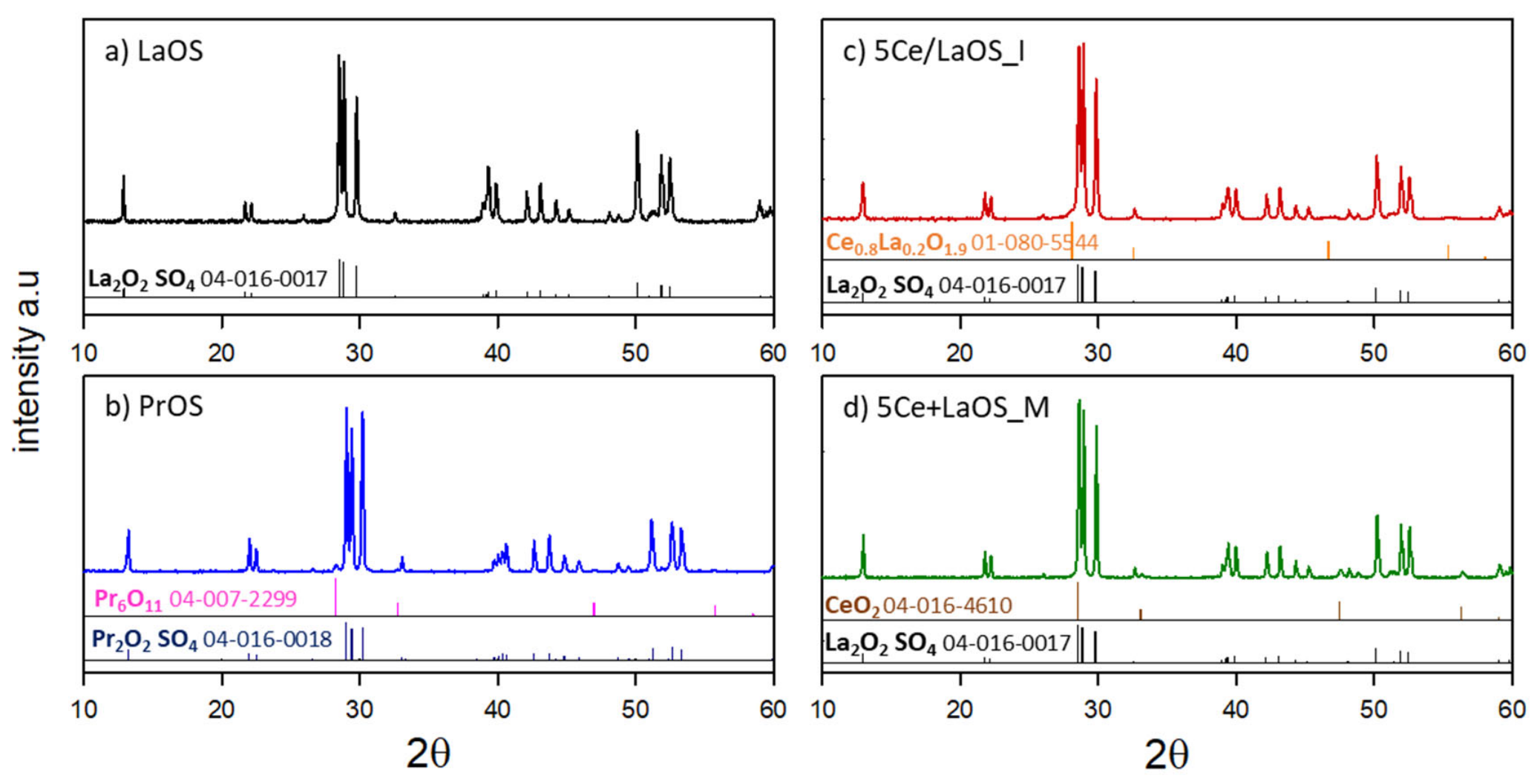
Figure 1. XRD patterns for nominally pure La- and Pr-oxysulfates (a,b), and composite 5Ce/LaOS_I (c) and 5Ce + LaOS_M (d) materials with a 5 wt % CeO2 content. Reference ICDD peak bars are reported at the bottom of each panel for phase identification.
Catalysts 16 00407 g001
Figure 2. H2-TPR profiles for pure (LaOS, PrOS, CeO2) and composite (5Ce + LaOS_M, 5Ce/LaOS_I) oxygen storage materials.
Catalysts 16 00407 g002
Figure 3. TG-MS experiments under anaerobic conditions (Ar flow) for 1:9 mixtures of carbon soot in tight contact with pure (LaOS, PrOS, CeO2) and composite (5Ce + LaOS_M, 5Ce/LaOS_I) oxygen storage materials: weight losses (a) and corresponding derivative profiles (b); MS signals for CO2 (c), CO (d) and SO2 (e) in the evolved gas.
Catalysts 16 00407 g003
Figure 4. XRD patterns for LaOS (a), PrOS (b) and composite 5Ce/LaOS_I (c) and 5Ce + LaOS_M (d) materials recovered in their reduced form at the end of the anaerobic oxidation of soot in the TG-MS up to 835 °C under flowing Ar. Reference ICDD peak bars are reported at the bottom of each panel for phase identification.
Catalysts 16 00407 g004
Figure 5. TG-MS experiments under 1% vol. O2 flow conditions for 1:9 mixtures of carbon soot in tight contact with pure (LaOS, PrOS, CeO2) and composite (5Ce + LaOS_M, 5Ce/LaOS_I) oxygen storage materials: weight losses (a) and corresponding derivative profiles (b); MS signals for O2 (c) and CO2 (d) in the evolved gas for CeO2 and 5Ce/LaOS_I.
Catalysts 16 00407 g005
Figure 6. Arrhenius plots for the soot oxidation rate per unit mass of ceria over composite 5Ce + LaOS_M, 5Ce/LaOS_I materials in comparison with pure CeO2, with indication of the corresponding apparent activation energies calculated from the low conversion data.
Catalysts 16 00407 g006
Figure 7. SEM images of 5Ce/LaOS_I (a,b) and 5Ce+LaOS_M (c,d) composite oxygen storage materials recovered at the end of soot oxidation tests under either 1%O2 (a,c) or anaerobic (b,d) flow conditions at max temperature of 835 °C.
Catalysts 16 00407 g007
Table 1. Summary of the characterization results for the nominally pure LaOS, PrOS and commercial CeO2, and the two composites CeO2 + LaOS: BET specific surface area, crystal phases and system, average crystallite size, unit cell volume and maximum theoretical oxygen storage capacity.
BET s.a.
m2 g−1
Crystal PhasesPhase Content
wt %
Crystallite Size a
nm
Unit Cell Vol
Å3
OSCmax
wt %
LaOS2.7La2O2SO4 (Monoclinic)10081 ± 3493.8 15.8
PrOS5.0Pr2O2SO4 (Monoclinic)
Pr6O11 (Monoclinic)
98.9 ± 0.1
1.1 ± 0.1
77 ± 4
37 ± 6
472.3
994.0
15.6
CeO238CeO2 (Cubic)10035 ± 3158.84.6
5Ce + LaOS_M6.1La2O2SO4 (Monoclinic)
CeO2 (Cubic)
95.0 ± 0.1
5.0 ± 0.1
82 ± 5
33 ± 2
493.7
158.9
15.2 b
5Ce/LaOS_I7.0La2O2SO4 (Monoclinic)
Ce0.8La0.2O1.9 (Cubic)
93.7 ± 0.2
6.3 ± 0.2
76 ± 4
9 ± 1
493.8
167.8
15.2 b
a average of the values calculated from the most intense diffraction peaks for each phase. b calculated as the linear combination of the corresponding figures for pure LaOS + CeO2.
Table 2. Summary of the results from XRD analysis of the pure and composite OSC materials recovered in their reduced form after the anaerobic oxidation of soot in the TG-MS up to 835 °C under flowing Ar.
Crystal PhasesPhase Content
wt %
Crystallite Size a
nm
Unit Cell Vol
Å3
LaOS La2O2S (Hexagonal)10043 ± 398.9
PrOS Pr2O2S (Hexagonal)
Pr2O3 (Hexagonal)
99.1 ± 0.3
0.9 ± 0.3
45 ± 3
-
93.4
58.2
Ce + LaOS_M La2O2S (Hexagonal)
CeO1.76 (Cubic)
95.3 ± 0.2
4.7 ± 0.2
44 ± 3
29 ± 3
98.7
158.4
Ce/LaOS_ILa2O2S (Hexagonal)
Ce2La2O7 (Cubic)
94.7 ± 0.5
5.3 ± 0.5
44 ± 3
15 ± 1
98.8
167.9
a average of values calculated from the most intense diffraction peaks for each phase.
Disclaimer/Publisher’s Note: The statements, opinions and data contained in all publications are solely those of the individual author(s) and contributor(s) and not of MDPI and/or the editor(s). MDPI and/or the editor(s) disclaim responsibility for any injury to people or property resulting from any ideas, methods, instructions or products referred to in the content.