1. Introduction
Worsening global climate change and fossil fuel depletion are driving the need for clean, renewable energy alternatives [
1,
2]. Among various renewable energy sources, biomass energy has attracted significant attention due to its unique advantages. Unlike intermittent solar and wind energy, biomass enables a closed carbon cycle, offering inherent resource renewability and carbon neutrality. Furthermore, biomass represents a widely available energy source, encompassing diverse feedstocks such as agricultural waste, forestry residues, dedicated energy crops and algal biomass. Its conversion into multiple energy forms—including electricity, heat and liquid fuels—provides a sustainable pathway for both clean energy generation and the valorization of waste materials. Consequently, it has been identified as a key development direction in the energy roadmaps of many countries [
3,
4].
Among various biomass resources, microalgae are considered ideal feedstocks for third-generation biofuels owing to their high oil yield per unit area, rapid growth cycle and non-competition with arable land. A prominent species,
Chlorella vulgaris (CV), is not only rich in lipids suitable for liquid fuel production but also contains abundant proteins and carbohydrates, suggesting great potential for comprehensive utilization. However, its efficient energy conversion faces several technical challenges. The robust cell walls, high moisture content, and the consequential high energy input for direct conversion currently hinder large-scale application [
5].
Currently, the primary technological pathways for converting microalgae into energy products include physical extraction, biological fermentation and thermochemical conversion [
6]. Physical extraction directly yields algal oil but demands transesterification for biodiesel, whereas biological fermentation, though mild, suffers from long cycles, substrate specificity, and incomplete component utilization [
7]. In comparison, pyrolysis serves as a key thermochemical conversion technology. It efficiently converts entire biomass into bio-oil, biochar and syngas under high-temperature, oxygen-free conditions, with notable advantages including broad feedstock adaptability, high reaction efficiency and tunable product distribution [
8,
9]. However, solo pyrolysis of CV faces challenges due to its high protein content, which generates nitrogen-containing compounds (amines, nitriles and heterocyclics), while lipids and carbohydrates produce oxygenates (acids, ketones and aldehydes). These impurities reduce bio-oil heating value and stability, potentially leading to NO
x emissions during combustion [
10].
In an effort to overcome these challenges, researchers have proposed co-pyrolysis of microalgae such as CV with lignocellulosic biomass as a means of improving bio-oil quality through synergistic effects. Kazemi et al. [
11] observed that co-pyrolysis of lentil husk with CV led to bio-oil with increased carbon content, decreased oxygen content and a significantly higher heating value. Zhao et al. [
12] demonstrated that co-pyrolysis of CV with sugarcane bagasse not only significantly increased the bio-oil yield to 23.5% but also raised the hydrocarbon content to 14.17%, while effectively reducing the formation of nitrogen-containing compounds. These improvements are mainly attributed to synergistic mechanisms in which hydrogen-rich radicals released during CV pyrolysis stabilize hydrogen-deficient phenolic radicals from lignin pyrolysis, thereby suppressing coke formation and increasing liquid oil yield [
13,
14]. Additionally, reactive oxygen species generated during lignin pyrolysis help convert nitrogen-containing compounds into N
2, which reduces the formation of NO
x precursors [
15]. As a typical lignocellulosic biomass, Eucalyptus generates abundant underutilized by-products (e.g., branches, bark) [
16]. Their composition suggests that co-pyrolysis with CV may induce synergistic effects, which could potentially enhance bio-oil yield and quality. This promising technical pathway, however, requires further investigation to confirm.
Conventional pyrolysis often suffers from inefficient heat transfer and temperature gradients. In contrast, microwave pyrolysis enables rapid and uniform volumetric heating, leading to more controlled reactions, superior bio-oil quality and enhanced energy efficiency [
17,
18]. However, the weak microwave absorption capacity of most biomass can result in uneven heating and incomplete reactions, negatively impacting bio-oil yield and quality [
19]. To overcome this limitation, introducing catalysts with strong microwave absorption and high activity has emerged as a key research focus. These catalysts not only improve microwave absorption and heat transfer but also create favorable interactions among microwaves, the catalyst and reactants. Consequently, these favorable interactions selectively promote upgrading reactions like deoxygenation and denitrification, thereby enhancing both pyrolysis efficiency and final oil quality [
20].
HZSM-5 zeolite is a promising catalyst for bio-oil upgrading, primarily due to its suitable microporous structure and the presence of both Brønsted and Lewis acid sites. These properties collectively enable the efficient cracking, deoxygenation and aromatization of macromolecular pyrolysis intermediates. To further enhance its efficacy in microwave-assisted co-pyrolysis, strategic metal modification presents a viable pathway [
21]. This promotes the formation of light hydrocarbons, especially mono-aromatics, while suppressing the formation of large coke precursors, thereby improving oil quality [
22,
23]. The construction of bimetallic active sites (e.g., Ni-Cu) on HZSM-5 represents a strategic approach to augment its catalytic function, specifically enhancing critical pathways such as deoxygenation and aromatization [
24,
25]. Among various metals, Ni-based catalysts have attracted extensive attention for their high dispersity and multiple active sites. However, monometallic Ni catalysts still exhibit limitations in denitrification efficiency [
26]. In contrast, bimetallic zeolite catalysts combine different metals to achieve functional complementarity, significantly improving heteroatom removal efficiency and product selectivity [
27]. For instance, Chen et al. [
28] reported that Fe/HZSM-5 increased hydrocarbon content by 152% during co-pyrolysis of microalgae and rice straw. Kumar et al. [
29] found that Cu-Ni/HZSM-5 outperformed monometallic catalysts in biomass pyrolysis, while Chaerusani et al. [
30] demonstrated that Cu-Mg bimetallic zeolite maintained high activity and low coke accumulation after multiple reaction cycles.
However, the co-pyrolysis of CV and Eucalyptus branches (EP) using Ni-bimetallic modified HZSM-5 catalysts has not been reported. In this work, three bimetallic modified HZSM-5 catalysts (Ni–Cu, Ni–Mg and Ni–Fe) were synthesized and subsequently employed in microwave-assisted co-pyrolysis experiments of CV and EP. The effects of catalyst type and loading (5%, 10% and 15%) on co-pyrolysis characteristics, product distribution and bio-oil quality were systematically examined. GC-MS analysis of the bio-oil was performed to evaluate the influence of catalysts on hydrocarbon production and the removal of oxygen and nitrogen. This study aims to establish a theoretical basis and explore practical strategies toward enhanced resource utilization of microalgae and Eucalyptus by-products and optimized pyrolytic bio-oil production.
2. Materials and Methods
2.1. Materials and Additives
The CV used in this study was procured from Xi’an Dongfeng Biotechnology Co., Ltd. (Xi’an, China), while the EP were sourced from Hezhou City in Guangxi, China. Prior to experimentation, the EP were ground into powder and sieved through a 100-mesh standard sieve (particle size ≤ 150 μm). After drying, the material was further dried in an air-drying oven at 105 °C. Additionally, the CV was ground and sieved through a 100-mesh sieve before drying. The proximate analysis and elemental analysis of CV and EP are summarized in
Table 1.
2.2. Catalyst Preparation and Characterization
The chemicals used in this experiment, including MgSO4, Fe(NO3)3·9H2O, Ni(NO3)2·6H2O and Cu(NO3)2·3H2O, were purchased from Tianjin Damao Chemical Reagent Factory (Tianjin, China). The HZSM-5 zeolite was obtained from Raodong New Materials Co., Ltd. (Dalian, China), with a purity of no less than 99% and particle diameters below 200 µm.
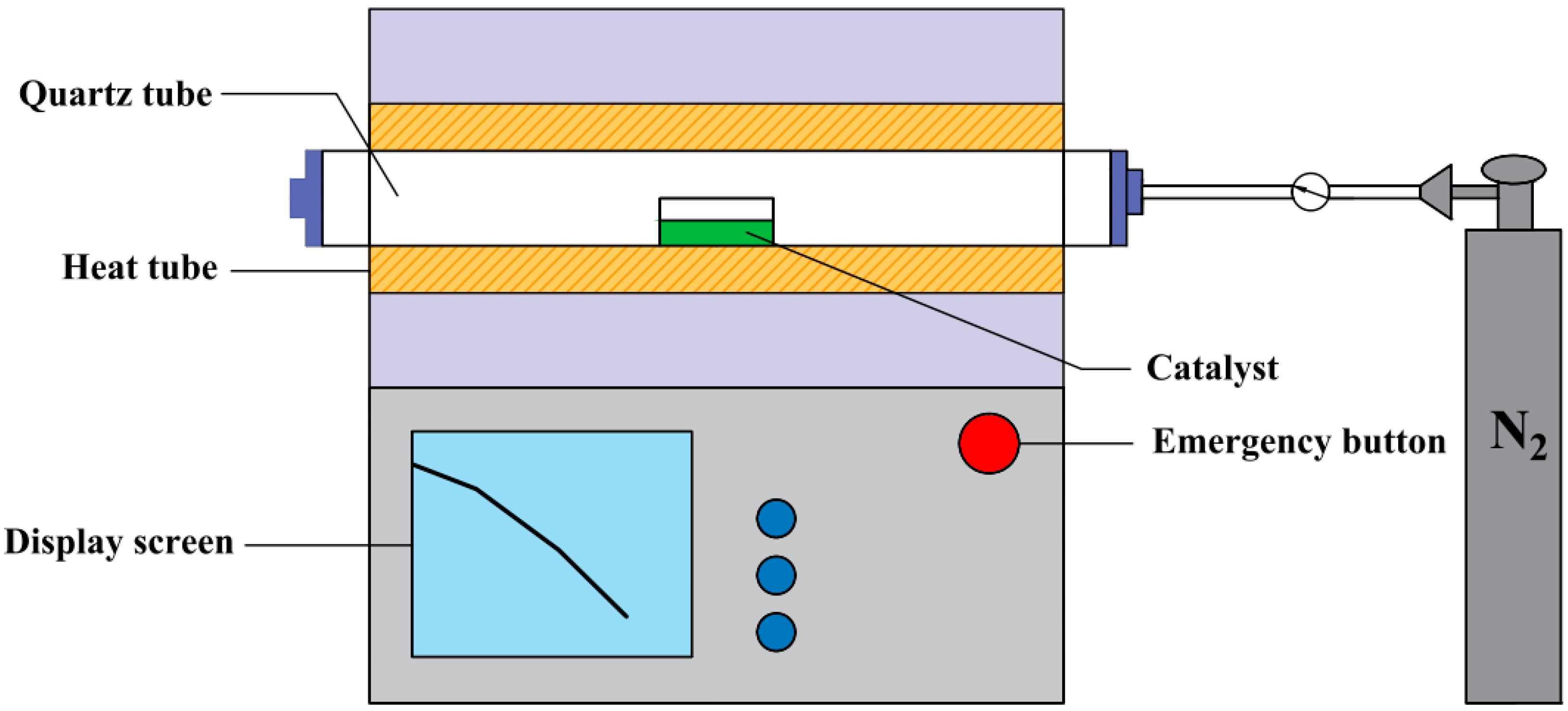
To activate the pore structure of the zeolite, it was first calcined in a tubular furnace (
Figure 1) at 550 ± 5 °C under a static air atmosphere for 5 h. For the preparation of the Ni-Mg/HZSM-5 catalyst, 0.02 mol of Ni(NO
3)
2·6H
2O, 0.02 mol of MgSO
4 and 30 g of HZSM-5 zeolite were placed in a beaker, followed by the addition of 300 mL of distilled water. The mixture was stirred with a magnetic stirrer at 25 °C for 1.5 h. The resulting solution was then transferred to a drying oven and heated at 120 °C for 12 h. After the beaker cooled to room temperature, the solid product was scraped off and thoroughly ground into a fine powder in a mortar. The obtained powder was then washed three times with deionized water. The completeness of sulfate removal was confirmed by adding a few drops of BaCl
2 solution to the washing liquid; no white precipitate (BaSO
4) was observed, indicating the successful removal of sulfate ions. This powder was subsequently heated in a tubular furnace at 800 °C for 120 min, followed by a controlled cooling process at a rate of 10 °C/min under a nitrogen atmosphere. When the temperature decreased to 500 °C, the sample was allowed to cool naturally to room temperature, yielding the Ni-Mg/HZSM-5 catalyst. The Ni-Cu/HZSM-5 and Ni-Fe/HZSM-5 catalysts were prepared following the same procedure as described for Ni-Mg/HZSM-5 except that the washing step with BaCl
2 test was not required because no sulfate ions were present in their precursors.
The microscopic morphology of the catalysts was characterized using a German Zeiss Gemini 300 field emission scanning electron microscope (SEM, Jena, Germany). The structural characteristics of the catalysts, including crystal size and interplanar spacing, were analyzed with a Japanese Smartlab 9 X-ray diffractometer (XRD, Rigaku, Japan). The specific surface area, pore size distribution and average pore radius were determined through Brunauer–Emmett–Teller (BET, Micromeritics, Norcross, GA, USA) surface area analysis.
2.3. Experimental Setup and Methodology
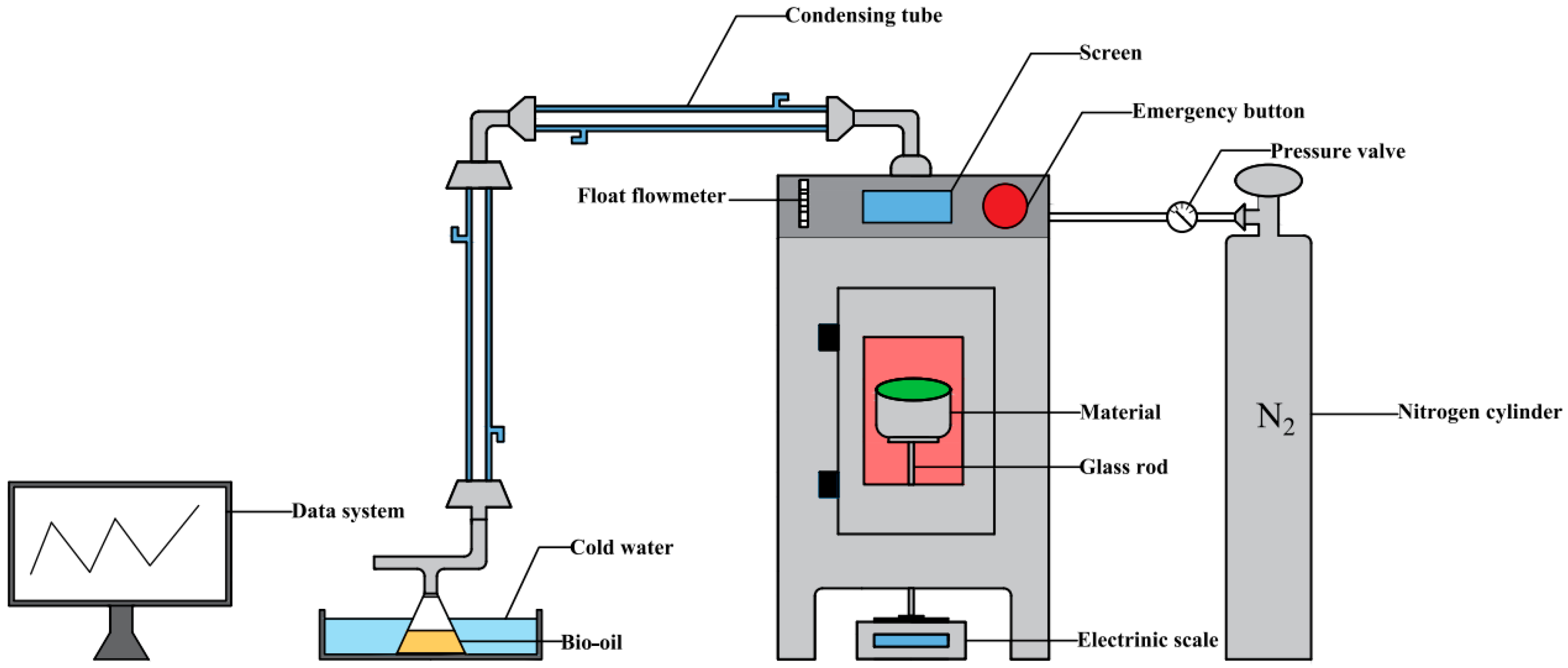
The experimental setup (
Figure 2) consisted of a microwave pyrolysis platform integrating a microwave generator (Qingdao Microwave, Qingdao, China, IKC-M1B), a condenser, an electronic balance, and a nitrogen gas supply system. The microwave generator featured adjustable power output with a maximum of 800 W and an operating frequency of 2.45 GHz. During the experiments, the microwave power was fixed at 800 W, and catalytic co-pyrolysis was performed under a CV/EP mass ratio of 2:1 (C2E1) with a constant sample mass of 30 g. A series of pyrolysis tests were conducted by adding catalysts at different proportions (5%, 10% and 15%).
Prior to starting each experiment, the following procedures were performed. CV and EP were thoroughly mixed in a quartz crucible. The electronic balance was tared to ensure accurate material weighing. High-purity nitrogen (99.5%) was continuously introduced into the pyrolysis chamber at a flow rate of 400 mL/min throughout the experiment to maintain an oxygen-free atmosphere. The steam outlet of the microwave generator was connected to the condensation system to facilitate the condensation of volatile products into liquid bio-oil, while simultaneously discharging exhaust and non-condensable gases. The reaction was considered complete when the reading of the electronic balance stabilized. The bio-oil was then collected, weighed and subjected to subsequent extraction procedures.
All experiments were conducted in triplicate, and the data are presented as mean ± standard deviation (SD). Error bars indicating the SD have been added to the relevant figures.
2.4. Pyrolysis Product Yield Calculation
The mass of the condensed liquid corresponds to the bio-oil yield, while the real-time reading from the electronic balance represents the mass of solid residue. The biochar mass was determined according to Equation (1) using the mass difference method. The gas mass was calculated based on the principle of mass conservation in Equation (2). Finally, the yields of solid product (biochar), bio-oil and pyrolysis gas were calculated using Equations (3) to (5), respectively.
In Equations (1)–(5), Ms, Moil and Mgas represent the masses (g) of biochar, bio-oil and pyrolysis gas, respectively; Mremain, Mcatalyst and MA denote the masses (g) of pyrolytic residue, catalyst and total feedstock, respectively. Ws, Woil and Wgas correspond to the generation rates (wt.%) of biochar, bio-oil and pyrolysis gas, respectively.
2.5. Analysis Methods for Bio-Oil Components
The chemical composition of the bio-oil was analyzed using an Agilent 7890B-7000D gas chromatography-mass spectrometer (GC-MS, Santa Clara, CA, USA) equipped with an HP-5 UI capillary column. High-purity helium was employed as the carrier gas at a constant flow rate of 2.25 mL/min. The components of the pyrolysis products were identified by comparing the experimental chromatographic peaks and mass spectra with reference data from standard libraries such as NIST and the existing literature, thereby determining the chemical composition of the bio-oil.
3. Result and Discussion
3.1. Characterization and Analysis of Catalysts
The morphology and porous structure of the four zeolite catalysts (HZSM-5, Ni-Mg/HZSM-5, Ni-Cu/HZSM-5 and Ni-Fe/HZSM-5) were characterized.
As shown in
Table 2, the HZSM-5 support possesses a relatively high specific surface area of 304.12 m
2/g and a pore volume of 0.19 cm
3/g. After metal modification, the specific surface areas of all catalysts decreased to varying degrees. The Ni-Mg/HZSM-5 catalyst exhibited the most significant reduction, to 198.87 m
2/g, while Ni-Fe/HZSM-5 and Ni-Cu/HZSM-5 retained specific surface areas of 236.28 m
2/g and 284.32 m
2/g, respectively. A similar trend was observed for pore volume, though the average pore diameter remained largely unchanged within the range of 2.17–2.53 nm, indicating that metal loading did not significantly alter the inherent pore size distribution of the support. The relatively high specific surface area offers abundant active sites for catalytic reactions, which enhances contact efficiency between reactants and the catalyst, thus promoting the removal of oxygen-containing functional groups during pyrolysis and potentially lowering the required reaction temperature.
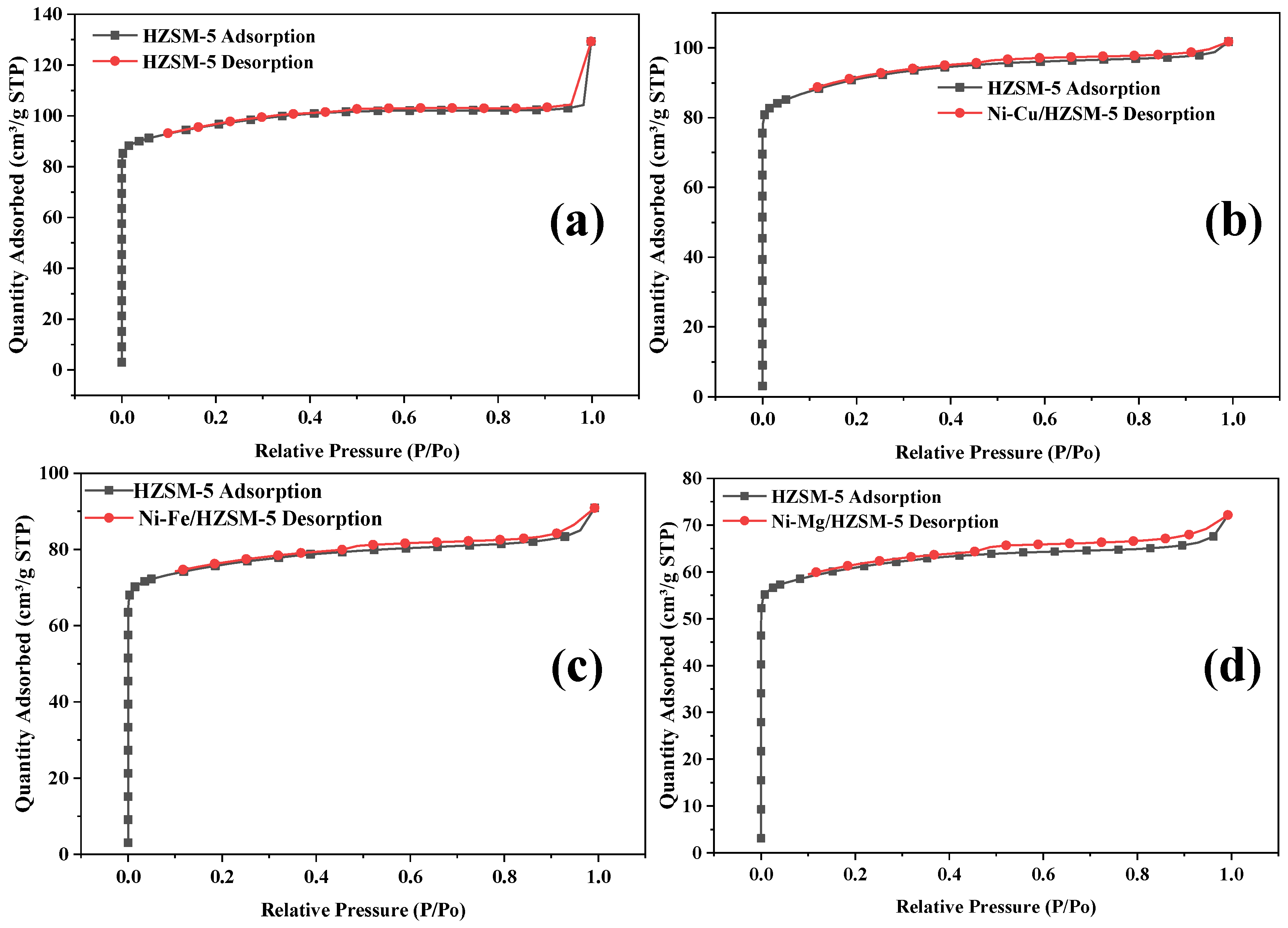
As shown in
Figure 3, all catalysts exhibit a typical type IV isotherm. In the low relative pressure region (P/P
0 < 0.1), a slow increase in adsorption amount is observed, indicating the presence of micropores. In the medium-to-high relative pressure region (P/P
0 = 0.4–0.9), a distinct hysteresis loop appears, and at high relative pressures (P/P
0 > 0.9), a sharp increase in adsorption amount occurs, which is attributed to capillary condensation within mesopores. Among the catalysts, the unmodified HZSM-5 shows the largest adsorption capacity (maximum of the desorption branch ~129 cm
3/g), with a complete hysteresis loop of type H4, corresponding to slit-shaped mesopores. After metal modification, the adsorption capacity decreases in the following order: Ni-Cu/HZSM-5 retains a relatively high adsorption capacity (~102 cm
3/g) with a hysteresis loop shape similar to that of HZSM-5; Ni-Fe/HZSM-5 (~91 cm
3/g) and Ni-Mg/HZSM-5 (~72 cm
3/g) show a more pronounced decrease in adsorption capacity, and their hysteresis loops tend toward type H3, indicating that metal loading may lead to increased interparticle pores (from particle stacking) or partial pore blockage.
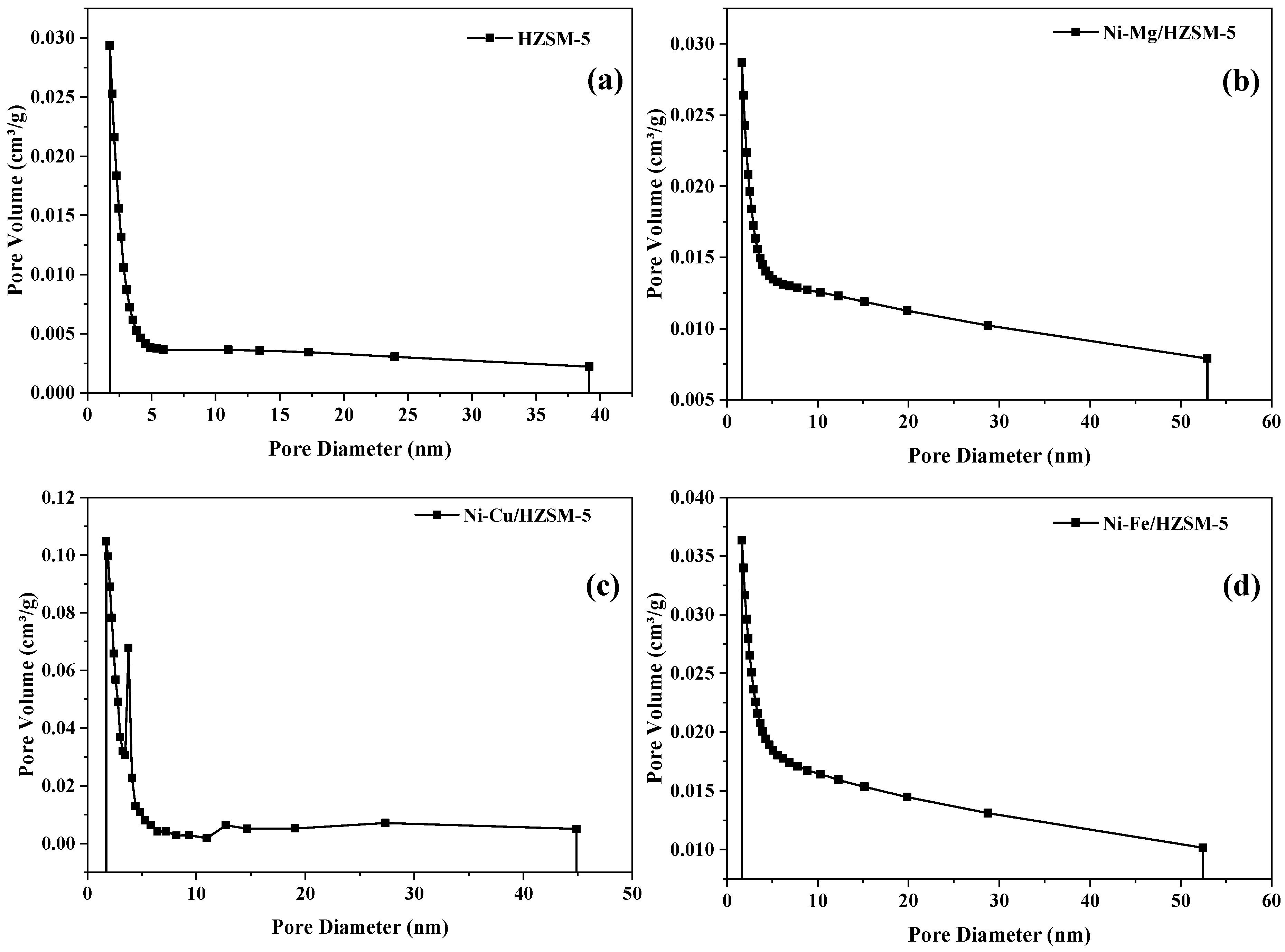
As shown in
Figure 4, based on the pore size distribution data (BJH method, pore diameter range of approximately 1.7–50 nm) of the four catalysts (HZSM-5, Ni-Mg/HZSM-5, Ni-Cu/HZSM-5, Ni-Fe/HZSM-5), the differences in their mesoporous structures can be analyzed. For HZSM-5, the differential pore volume monotonically increases with decreasing pore diameter, reaching approximately 0.029 cm
3/g at 1.75 nm, indicating that its pore channels are dominated by micropores with a minor contribution from mesopores. Ni-Mg/HZSM-5 and Ni-Fe/HZSM-5 exhibit relatively flat pore volume distributions, with maximum pore volumes of approximately 0.036 cm
3/g and 0.036 cm
3/g, respectively, within the same pore size range, which are slightly higher than that of the unmodified HZSM-5. This suggests that metal loading does not significantly alter the mesoporous structure but may introduce a small number of stacking pores. In contrast, Ni-Cu/HZSM-5 shows a distinct bimodal distribution: a sharp mesoporous peak appears at approximately 3.8 nm (pore volume of 0.0677 cm
3/g), and in the small pore diameter region (<2.5 nm), the pore volume continuously increases to 0.105 cm
3/g, which is much higher than those of the other catalysts. This indicates that Ni-Cu co-modification promotes the generation of mesopores and enhances pore connectivity.
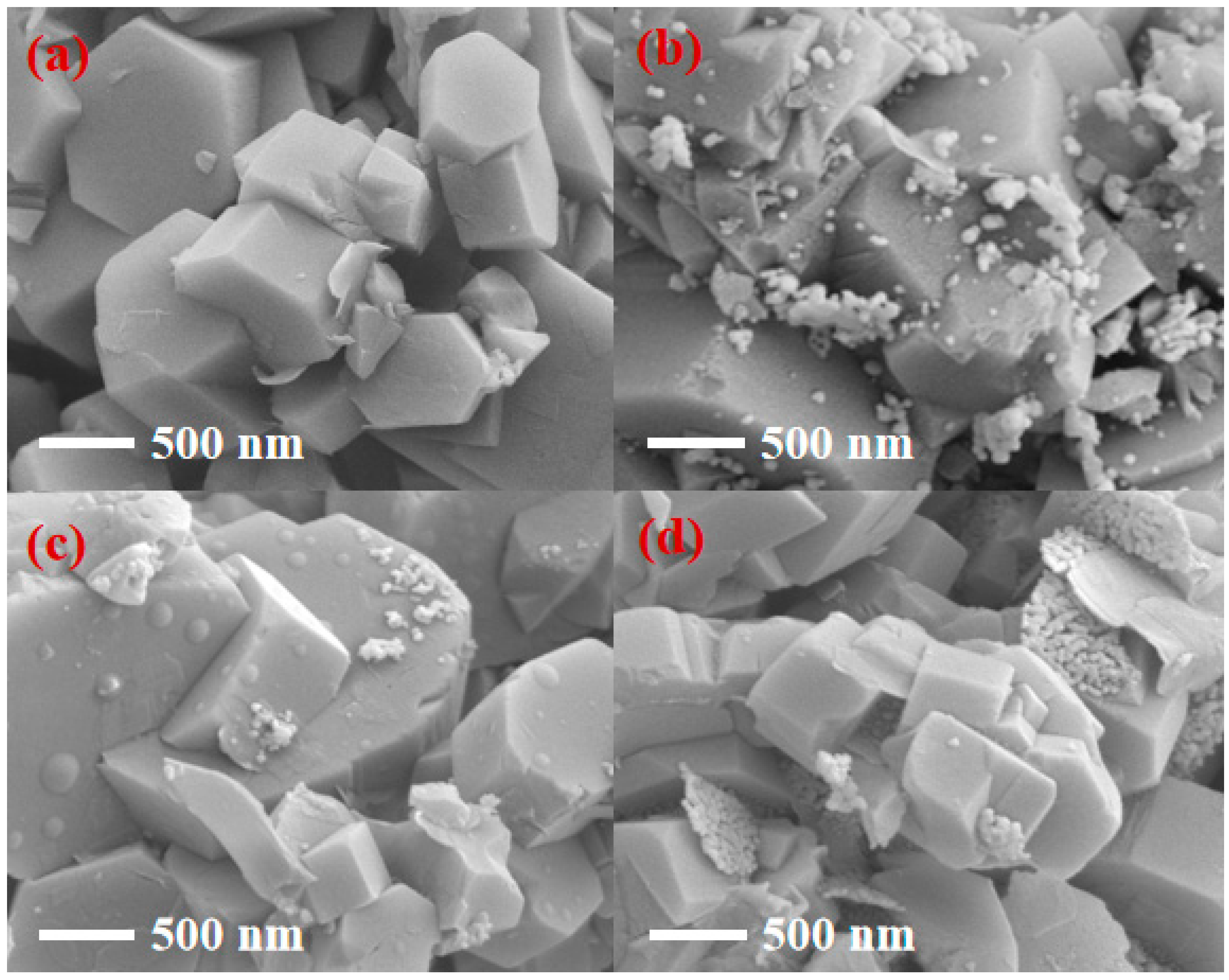
The unmodified HZSM-5 zeolite exhibits a relatively regular square or block-like crystal structure with a smooth and flat surface. After metal loading (
Figure 5b–d), the surface of the modified catalysts clearly shows the attachment of fine granular substances, confirming the successful deposition of metal species onto the HZSM-5 support. Specifically, for Ni-Mg/HZSM-5 (
Figure 5b), the surface particles are relatively uniformly distributed and small in size; for Ni-Cu/HZSM-5 (
Figure 5c), the surface particles show good dispersion with relatively clear particle boundaries; for Ni-Fe/HZSM-5 (
Figure 5d), the surface particles exhibit slight agglomeration, with some regions showing larger aggregates. These morphological differences indicate that different metal combinations have significantly distinct modification effects on the catalyst surface, potentially affecting their catalytic activity and microwave absorption performance.
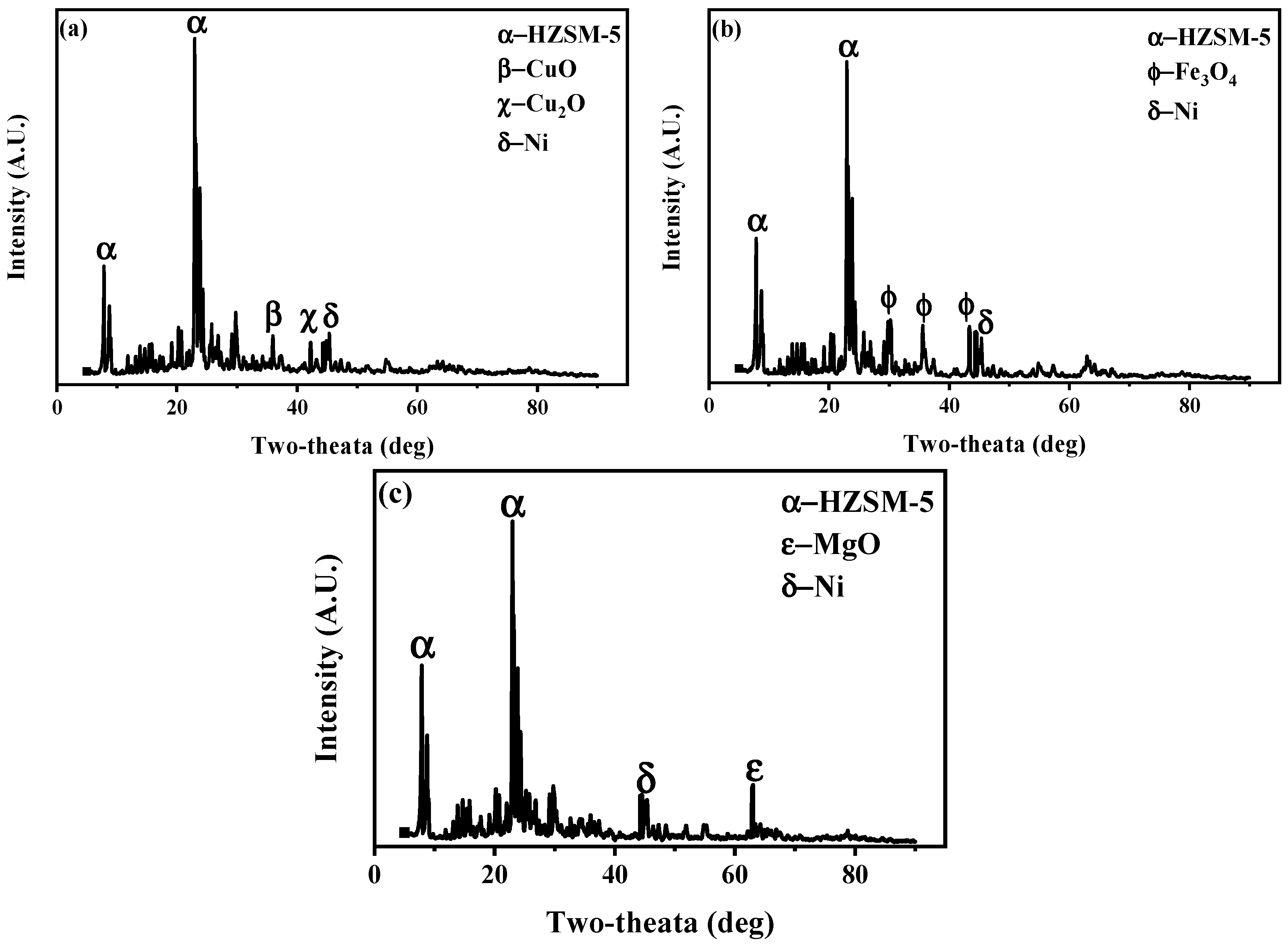
The XRD patterns in
Figure 6 reveal the characteristic crystal structures of the catalysts. As shown in
Figure 6a–c, the diffraction peaks at 2θ = 7.68° and 22.96° are attributed to the HZSM-5 support, while the peak at 44.44° corresponds to metallic Ni. The distinct phases identified in each pattern include diffraction peaks at 35.98° and 42.26° for CuO and Cu
2O, respectively, in
Figure 6a, peaks at 30.26°, 35.55° and 43.22° indicating the presence of Fe
3O
4 in
Figure 6b and an MgO diffraction signal observed at 66.29° in
Figure 6c. These active components (CuO, Cu
2O, Fe
3O
4, MgO and Ni) not only introduce new active sites but also enhance the microwave absorption capability of the catalysts.
3.2. Catalytic Cothermal Decomposition Characteristics Analysis
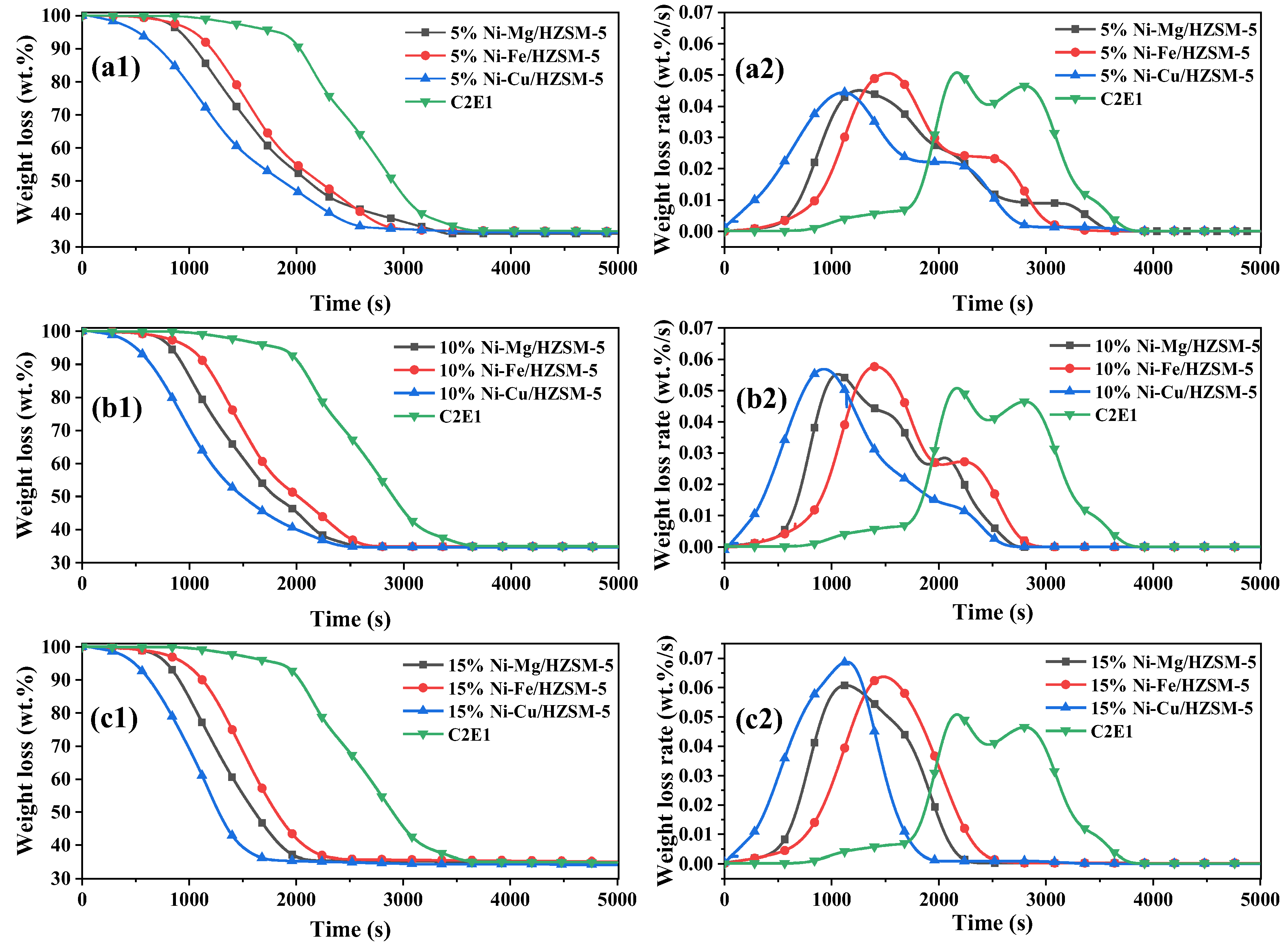
The effects of three metal-zeolite catalysts (Ni-Mg/HZSM-5, Ni-Cu/HZSM-5 and Ni-Fe/HZSM-5) with different loading levels (5%, 10% and 15%) on the co-pyrolysis performance of C2E1 were analyzed. The weight loss curves and derivative weight loss curves for the different catalysts at the same loading level are presented in
Figure 7, while the relevant pyrolysis characteristic parameters are listed in
Table 3.
As illustrated in
Figure 7, the co-pyrolysis process of the C2E1 mixture under different catalysts exhibits three typical stages. The initial stage is primarily physical, involving the evaporation of moisture and inherent light volatile components in the material. As the temperature increases into the main reaction zone, the process transitions to intense chemical bond breaking and reorganization. Proteins, lipids and carbohydrates in microalgae, along with cellulose, hemicellulose and lignin in
Eucalyptus, undergo depolymerization, generating complex volatile compounds rich in nitrogen and oxygen. The third stage mainly involves the slow condensation, aromatization, and structural rearrangement of char [
31].
From
Figure 7(a1–c1), it can be observed that the addition of catalysts promotes the co-pyrolysis reaction of C2E1, and this promoting effect becomes more pronounced with increasing catalyst loading. This is attributed to the abundant acid sites of HZSM-5 zeolite, which provide highly active catalytic centers for the co-pyrolysis of CV and EP, significantly reducing the activation energy of reactions such as C–C bond cleavage, thereby accelerating the pyrolysis rate [
32,
33].
As shown in
Figure 7(a2–c2), the addition of Ni-Cu/HZSM-5, Ni-Mg/HZSM-5 and Ni-Fe/HZSM-5 catalysts significantly increases the weight loss rate of the co-pyrolysis reaction. Their weight loss rate curves are all shifted to the left compared to the C2E1 control group. This is because the bimetallic catalysts are highly dispersed on the HZSM-5 support, forming more metal active sites and acid centers. These active sites effectively activate C–C and C–O bonds in the pyrolysis intermediates of microalgae and
Eucalyptus, promoting the catalytic cracking and deoxygenation of volatiles, thereby accelerating the overall pyrolysis process and increasing the weight loss rate [
34,
35].
As shown in
Table 3, as the loading of the three Ni-based bimetallic catalysts (Ni-Mg/HZSM-5, Ni-Cu/HZSM-5 and Ni-Fe/HZSM-5) increases, the corresponding
Rm generally shows an upward trend. For Ni-Cu/HZSM-5, the addition increases from 5% to 15%, and
Rm increases from 0.0443 wt.%/s to 0.0687 wt.%/s. This indicates that the transition metal elements (such as Ni, Cu and Fe) in the catalysts possess a strong dielectric response to microwaves, enhancing microwave absorption and its conversion into thermal energy, thereby promoting more intense decomposition of the feedstock and increasing the pyrolysis rate [
36,
37]. The bimetallic catalysts generally exhibit higher
Rm values compared to the C2E1 group, suggesting that the bimetallic catalysts help improve catalytic efficiency. In contrast, the average weight loss rate
Rv shows a clear increasing trend with higher catalyst loading, with values ranging from 0.0183 to 0.0315 wt.%/s, which are significantly higher than that of the C2E1 group (0.1691 wt.%/s). This indicates that the catalysts effectively accelerate the overall weight loss process.
The introduction of catalysts substantially reduced the time required to reach Tm and Ts. For instance, with 10% Ni-Cu/HZSM-5, Tm was measured at 919 s, compared to 2895 s for the C2E1 group. This demonstrates that the catalysts significantly accelerate the pyrolysis reaction process. The metal catalysts perform better in reducing the pyrolysis activation energy, allowing the pyrolysis to reach a stable state more quickly.
Regarding the
Mt, compared to the C2E1 group (64.19 wt.%),
Mt increases under most catalytic conditions. Notably, the group with 5% Ni-Cu/HZSM-5 reaches 68.40%, indicating that an appropriate amount of catalyst promotes the effective release of volatiles and enhances the conversion degree of the feedstock. However, when the catalyst loading increases to 15%, the
Mt for the Ni-Fe/HZSM-5 group decreases to 63.03 wt.%, falling below the baseline of the raw material. This phenomenon may be attributed to the enhanced secondary reactions caused by the high loading of the metal catalyst. Specifically, the Ni-Fe combination at higher concentrations might promote deep cracking and condensation of volatiles, leading to an increased char yield and consequently a reduced apparent weight loss rate [
38]. These results indicate that both the catalyst type and its loading level collectively regulate the distribution of product yields during pyrolysis.
In summary, all three Ni-based bimetallic catalysts effectively improve the pyrolysis performance of C2E1. Among them, Ni-Cu/HZSM-5 at a 15% loading exhibits particularly outstanding performance, showing the highest Rm (0.0687 wt.%/s) and significantly shortened Tm and Ts. Bimetallic zeolite catalysts demonstrate clear advantages in increasing pyrolysis rate and reducing reaction time, showing good application potential.
3.3. Quantification of Co-Pyrolytic Product Yields
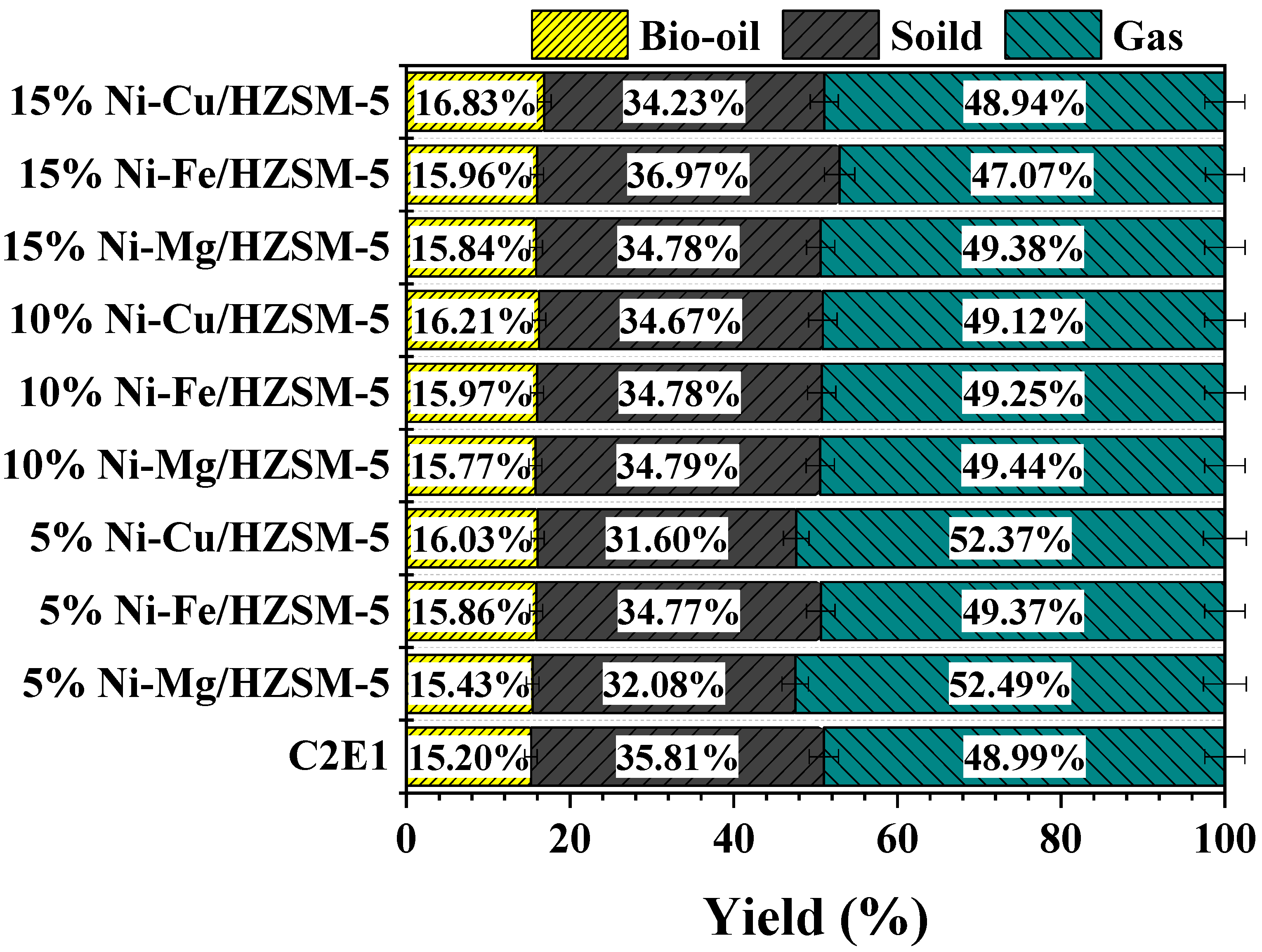
The influence of different loading amounts (5%, 10% and 15%) of the bimetallic zeolite catalysts Ni-Mg/HZSM-5, Ni-Fe/HZSM-5 and Ni-Cu/HZSM-5 on the product yields (bio-oil, residual char and pyrolysis gas) from the co-pyrolysis of the C2E1 group was investigated. The product distribution from the catalytic co-pyrolysis is presented in
Figure 8.
Figure 8 shows that both the amount and type of catalyst added have a noticeable effect on the pyrolysis product yields. Firstly, all three catalysts at different addition levels increased the bio-oil yield. This indicates that the metal-modified catalysts effectively promoted the condensation of volatiles and the formation of liquid products. This phenomenon can be attributed to the selective cracking of oxygen-containing functional groups (such as hydroxyl and carboxyl groups) by the metal sites, as well as secondary reactions occurring within the catalyst pores, which favor the conversion of intermediate products into liquid bio-oil [
39].
Among the various catalysts, Ni-Cu/HZSM-5 demonstrated the best catalytic performance. It achieved the highest bio-oil yield of 16.83 wt.% at the 15% addition level, which is an increase of 1.63 percentage points compared to the C2E1 group. Regarding gas yield, most catalytic groups showed varying degrees of fluctuation. For instance, the gas yield for 5% Ni-Mg/HZSM-5 and 5% Ni-Cu/HZSM-5 increased to 52.49 wt.% and 52.37 wt.%, respectively, while that for 15% Ni-Fe/HZSM-5 decreased to 47.07 wt.%. This reflects the differing regulatory effects of various metal combinations on the gaseous product pathways.
Compared to the C2E1 group (solid yield of 35.81 wt.%), most metal-modified zeolite catalysts reduced the solid yield. This effect was particularly significant for 5% Ni-Cu/HZSM-5 (31.60 wt.%). This is mainly attributed to the Ni metal sites promoting hydrodeoxygenation (HDO) reactions, removing oxygen in the form of H
2O [
40]. Simultaneously, secondary metals such as Mg, Fe and Cu optimized the acid site distribution of HZSM-5, suppressing excessive cracking and condensation reactions caused by strong acid sites, thereby directing more carbon resources towards bio-oil and gas formation [
41]. It is noteworthy that the solid yield for the 15% Ni-Fe/HZSM-5 group (38.08 wt.%) was higher than that of the control group, suggesting that Fe at higher loadings may promote the formation of non-volatile residues, leading to an increase in solid yield.
It should be noted that the gas yields obtained in this study (ranging from 47.07 to 52.49 wt.%) are relatively high compared to the bio-oil yields (15.20–16.83 wt.%). This observation suggests that a portion of the pyrolysis volatiles may have undergone excessive secondary cracking, particularly under a fixed microwave power of 800 W. The relatively high power input likely leads to rapid and intense heating, which, combined with the high catalytic activity of the bimetallic HZSM-5 catalysts, could promote deep cracking of intermediates into non-condensable gases. Therefore, reducing the microwave power (e.g., to 600 W or 400 W) might suppress secondary cracking and shift the product distribution toward higher bio-oil yield. However, the present study was designed to compare the catalytic performance of different Ni-based bimetallic catalysts under identical conditions, and a systematic optimization of microwave power was beyond its scope. Future work will investigate the effect of microwave power (400–800 W) on product yields to identify the optimal conditions for maximizing bio-oil production.
In summary, the three types of metal-modified HZSM-5 catalysts (Ni-Mg/HZSM-5, Ni-Fe/HZSM-5 and Ni-Cu/HZSM-5) at different addition amounts (5%, 10% and 15%) all significantly increased the bio-oil yield from C2E1 co-pyrolysis. Among them, Ni-Cu/HZSM-5 exhibited particularly outstanding catalytic effects, achieving the highest bio-oil yield of 16.83 wt.% at the 15% addition level, representing an increase of 1.64 wt.% compared to the non-catalytic C2E1 group. Furthermore, this type of catalyst effectively suppressed the formation of solid char, with the 5% Ni-Cu/HZSM-5 group showing the lowest solid yield at 31.60 wt.%. It is important to note that Ni-Fe/HZSM-5 at high loadings may promote non-volatile residues, leading to an increase in solid yield.
3.4. Bio-Oil Composition Analysis
Through an analysis of the pyrolysis characteristics and co-pyrolysis product yields under different catalyst conditions, it was found that the optimal catalytic effect was achieved at an additive amount of 15%. Therefore, this study selected bio-oils produced from the C2E1 group and the catalytic groups with 15% Ni-Mg/HZSM-5, 15% Ni-Cu/HZSM-5 and 15% Ni-Fe/HZSM-5 for composition analysis, aiming to investigate the influence of different metal-modified zeolite catalysts on the chemical composition of bio-oil.
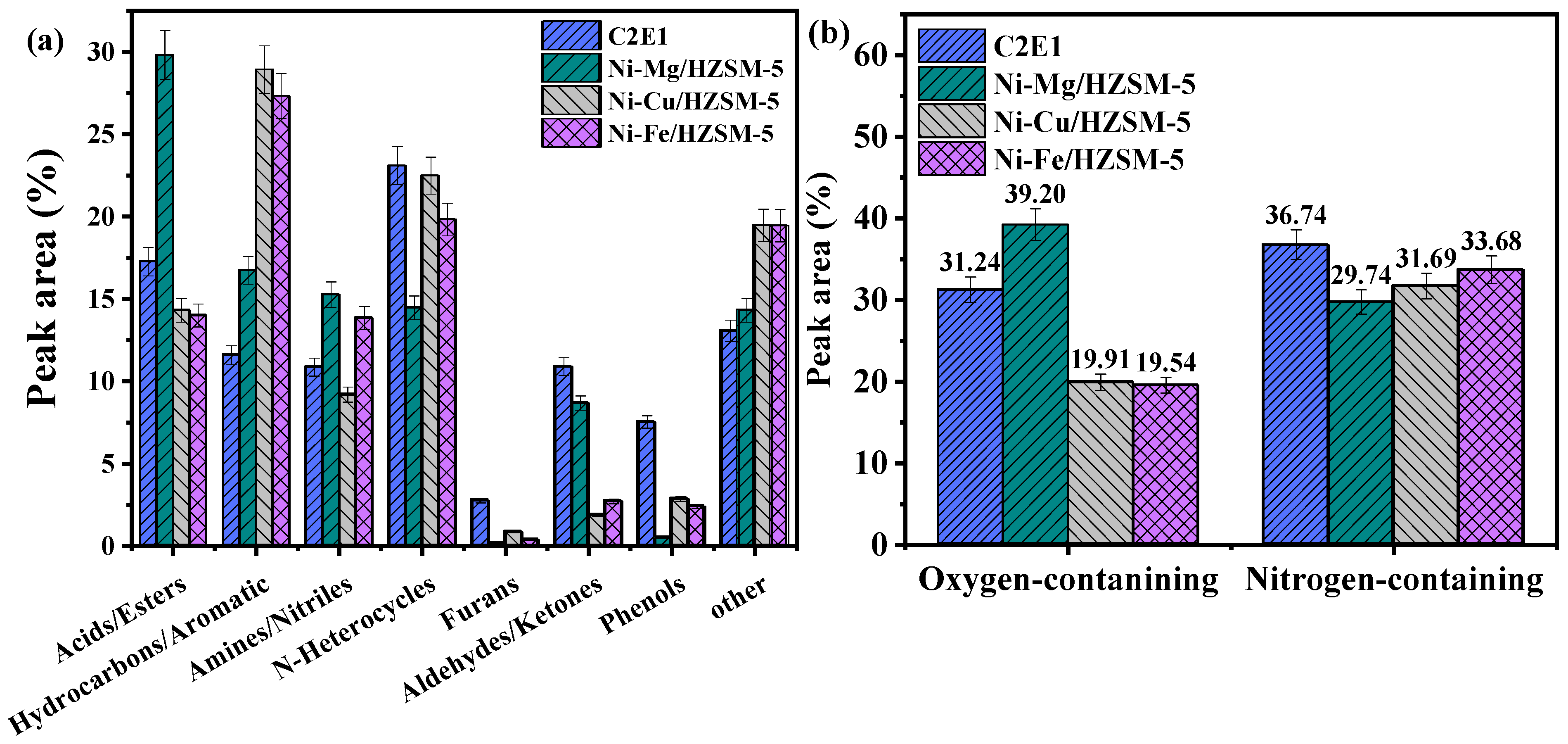
Figure 9 presents the compositional distribution results for bio-oils obtained from catalytic and non-catalytic co-pyrolysis.
As shown in
Figure 9a, the bio-oil derived from C2E1 pyrolysis exhibits a complex composition, primarily consisting of nitrogen-containing heterocycles (23.10%), acids/esters (17.27%), amines/nitriles (10.87%), aldehydes/ketones (10.90%), total hydrocarbons (11.59%) and phenols (7.54%), among others. After the introduction of catalysts, the bio-oil composition changed significantly. A common trend observed was a notable increase in hydrocarbon content and a decrease in nitrogen- and oxygen-containing components, such as N-heterocycles, furans and phenols. The Ni-Cu/HZSM-5 catalyst demonstrated the most effective promotion of hydrocarbon formation, substantially increasing the total hydrocarbon content in the bio-oil from 11.59% for C2E1 to 28.92%. In conjunction with
Figure 9b, the nitrogen-containing components in the bio-oil decreased from 36.74% to 31.69% under this catalyst. This phenomenon is attributed to the shape-selective catalysis and regular microporous structure of HZSM-5 zeolite, which facilitate the formation and shape-selective diffusion of small hydrocarbon molecules while potentially suppressing the formation of heavy condensation products, thereby favoring the generation of gasoline fraction (C
5–C
12) hydrocarbons [
42]. Furthermore, Ni metal serves as an efficient active center for hydrogenation/dehydrogenation, enabling the hydrogenation saturation of unsaturated components like olefins, aldehydes and ketones in the pyrolysis vapor, leading to the formation of more stable intermediates [
43]. Activated hydrogen molecules (H
2) generate active hydrogen species (H), which attack oxygen-containing compounds, such as the C–O bonds in acids and phenols, removing them in the form of H
2O and generating hydrogen-enriched hydrocarbons [
44,
45]. Specific reactions are as follows:
Additionally, Ni can catalyze the hydrogenation saturation of nitrogen-containing heterocycles, such as pyridine and indole, generating intermediates like piperidine. This process weakens the C–N bonds, making them more susceptible to subsequent hydrogenolytic cleavage on acid sites or metal centers, thereby achieving deep denitrogenation. The introduction of Cu further optimizes the catalyst performance by modulating the electronic properties of Ni, enhancing its dispersion and inhibiting sintering deactivation. The Ni-Cu bimetallic centers effectively promote the conversion of nitrogen- and oxygen-containing compounds [
46].
It is noteworthy that the catalyst composition significantly influences the product distribution. The Ni-Fe/HZSM-5 catalyst also exhibits effects in increasing hydrocarbons and reducing nitrogen and oxygen content. After adding the Ni-Fe/HZSM-5 catalyst, the hydrocarbon content in the bio-oil increased from 11.59% to 27.33%, and the total nitrogen-containing compounds decreased from 36.74% to 33.68%. The principle involves active components within the catalyst, such as Fe
3O
4 and Ni, accelerating the cleavage of C=C and C–H bonds and releasing lighter chain hydrocarbons, hydrogen radicals and methyl radicals, which are more conducive to hydrocarbon formation [
47,
48]. For the Ni-Mg/HZSM-5 catalyst, the hydrocarbon content in the bio-oil increased to 16.74%, while the total nitrogen content decreased to 29.74%. Notably, under the catalysis of Ni-Mg/HZSM-5, the acid/ester content rose to 29.82%. This phenomenon is somewhat unexpected, as magnesium species are generally considered to promote deoxygenation reactions through decarboxylation and decarbonylation via their basic sites. However, existing studies have shown that Mg@ZSM-5 can inhibit deoxygenation reactions through its basicity, effectively preserving oxygen-containing groups such as methoxy groups under different catalytic modes [
49]. Meanwhile, the introduction of Mg species can also regulate the acid site distribution of HZSM-5 via isomorphous substitution, generating abundant weak Brønsted/Lewis acid sites while reducing strong acid sites [
50]. This may alter the reaction network: decarboxylation of carboxylic acids may still occur, but the accumulation of acids/esters may result from the inhibited conversion of other oxygenates (e.g., aldehydes, ketones) or from the preferential esterification reaction between acids and alcohols. Furthermore, in studies on bio-oil upgrading using supercritical ethanol as a hydrogen source, the main components of the upgraded bio-oil over the MgNiMo/SAPO-11 catalyst were also dominated by esters and hydrocarbons, showing some similarity to the phenomena observed in this study [
51]. Under the current microwave-assisted conditions, the relatively low loading of magnesium or its interaction with the zeolite framework may fail to provide sufficiently strong basicity to completely convert all carboxylic acids. Further research is needed to clarify the specific role of magnesium in this catalytic system.
In summary, metal-modified HZSM-5 catalysts with a 15% additive amount can significantly alter the bio-oil composition. Among them, Ni-Cu/HZSM-5 demonstrates the best performance in promoting hydrocarbon generation and deoxygenation, while also achieving considerable denitrogenation. Ni-Fe/HZSM-5 also exhibits good catalytic activity, notably increasing the hydrocarbon content. In contrast, Ni-Mg/HZSM-5 shows the highest nitrogen removal efficiency but hinders the deoxygenation pathway due to neutralization of acid sites, leading to the accumulation of acidic components such as acids/esters.
3.5. Co-Pyrolysis Reaction Mechanism Analysis
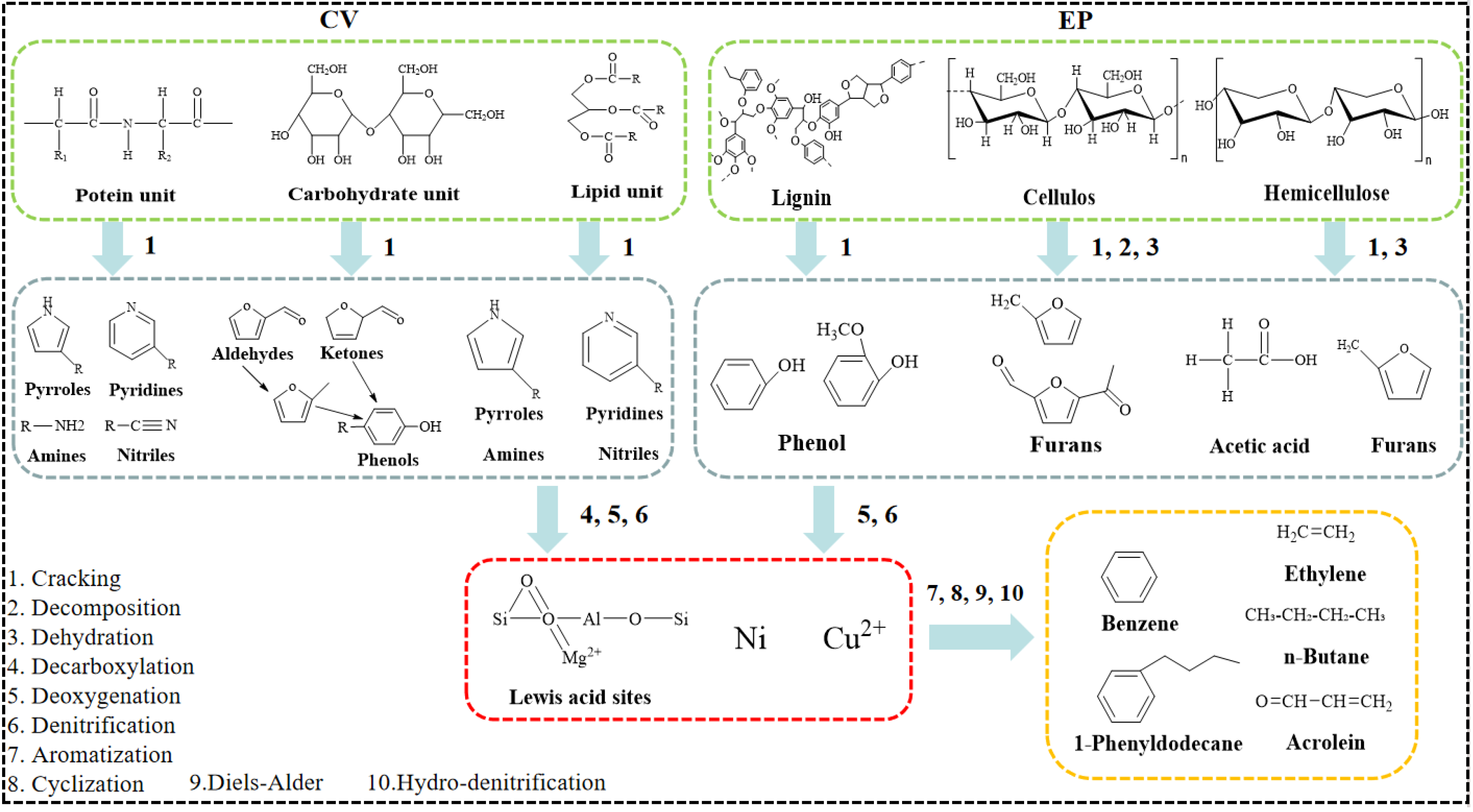
Analysis of pyrolysis reactions with Ni-Mg/HZSM-5, Ni-Cu/HZSM-5, and Ni-Fe/HZSM-5 revealed that Ni-Cu/HZSM-5 exhibited optimal hydrocarbon selectivity, deoxygenation, and denitrogenation performance. A possible reaction pathway during CV and EP co-pyrolysis over this catalyst is proposed and discussed, and a proposed mechanism is illustrated in
Figure 10.
As shown in
Figure 10,
Eucalyptus, a lignocellulosic biomass, is primarily composed of cellulose, hemicellulose and lignin [
52]. Conversely, CV is rich in proteins, lipids and carbohydrates [
10]. During the initial pyrolysis stage, the hemicellulose in EP, due to its lower thermal stability, decomposes first via reactions such as dehydration, generating furfural and other furan derivatives. Cellulose subsequently undergoes depolymerization and dehydration reactions, producing oxygenated compounds like levoglucosan, aldehydes and ketones. Lignin, an aromatic polymer, depolymerizes more slowly, mainly yielding phenolic monomers. Simultaneously, pyrolysis of proteins in CV produces nitrogen-containing compounds such as amines and nitriles. Lipids decompose through ester bond cleavage, forming fatty acids and glycerol, with fatty acids potentially undergoing further decarboxylation to form long-chain alkanes. The pyrolysis pathways of carbohydrates in CV are similar to those of sugars in EP, generating products such as furans [
53].
When the two biomasses are subjected to mixed co-pyrolysis, significant interactions occur between their pyrolysis intermediates. It is suggested that nitrogen-containing intermediates from CV protein pyrolysis could undergo Maillard reactions with oxygenated intermediates like furfural and reducing sugars derived from EP pyrolysis. This possible pathway generates nitrogen-containing heterocyclic compounds such as pyrazines and pyrroles, representing a significant source of nitrogen impurities in the bio-oil. Long-chain alkanes or alkenes derived from CV lipids may act as hydrogen donors, providing hydrogen to hydrogen-deficient aromatic intermediates from EP, a process that could help inhibit condensation and preliminarily stabilize radicals [
54].
Under the action of the Ni-Cu/HZSM-5 catalyst, it is proposed that the Ni-Cu bimetallic sites loaded on the HZSM-5 surface play a central role in the hydrodeoxygenation (HDO) of the abundant oxygenated compounds (e.g., phenols, carboxylic acids, aldehydes, ketones) produced from EP pyrolysis. These sites activate H
2 generated in situ, producing active hydrogen species (H) that attack C–O bonds, efficiently removing them as H
2O and directly generating corresponding hydrocarbons [
55,
56]. The inherent regular microporous structure and abundant acid sites of the HZSM-5 zeolite facilitate cracking and aromatization. Its shape-selective catalysis favors the formation and diffusion of small hydrocarbon molecules within the gasoline fraction (C
5–C
12), while potentially limiting the formation of heavy byproducts. The acid sites catalyze a series of reactions of intermediates such as olefins, aldehydes, ketones and furans, including Diels–Alder reactions and dehydrogenative cyclization, potentially converting them into monocyclic aromatic hydrocarbons like benzene, toluene and xylene (BTX), which could enhance the quality and value of the bio-oil [
57].
Nitrogen removal is tentatively explained by the combined action of Ni-Cu sites and HZSM-5 acid sites. Ni-Cu sites may enable partial hydrodenitrogenation (HDN), while competitive adsorption on acid sites could also contribute. The predominance of oxygenated intermediates from EP might preferentially block the adsorption of nitrogen-containing species, potentially suppressing their condensation into heterocycles and diverting nitrogen toward small molecules such as NH3. This proposed pathway is speculative and requires further validation.