Activation of TAS2R Signaling by Diphenidol Suppresses Tumor Growth and Remodels the Tumor Immune Microenvironment in Oral Squamous Cell Carcinoma

 ,
,  and
and
Simple Summary
Abstract
1. Introduction
2. Materials and Methods
2.1. Patient Samples and Ethical Approval
2.2. Tissue Microarray Analysis
2.3. Reagents and Antibodies
2.4. Cell Culture Conditions
2.5. Measurement of Intracellular Ca2+
2.6. RNA-Seq and Functional Enrichment Analysis
2.7. Quantitative Reverse Transcription PCR (qRT-PCR)
2.8. Cell Proliferation and Cytotoxicity Assays
2.9. Migration Assays
2.10. Apoptosis Assay
2.11. In Vivo Tumor Model
2.12. Immunohistochemistry and TUNEL Assay
2.13. Flow Cytometry of Tumor-Infiltrating Lymphocytes (TILs)
2.14. Statistical Analysis
3. Results
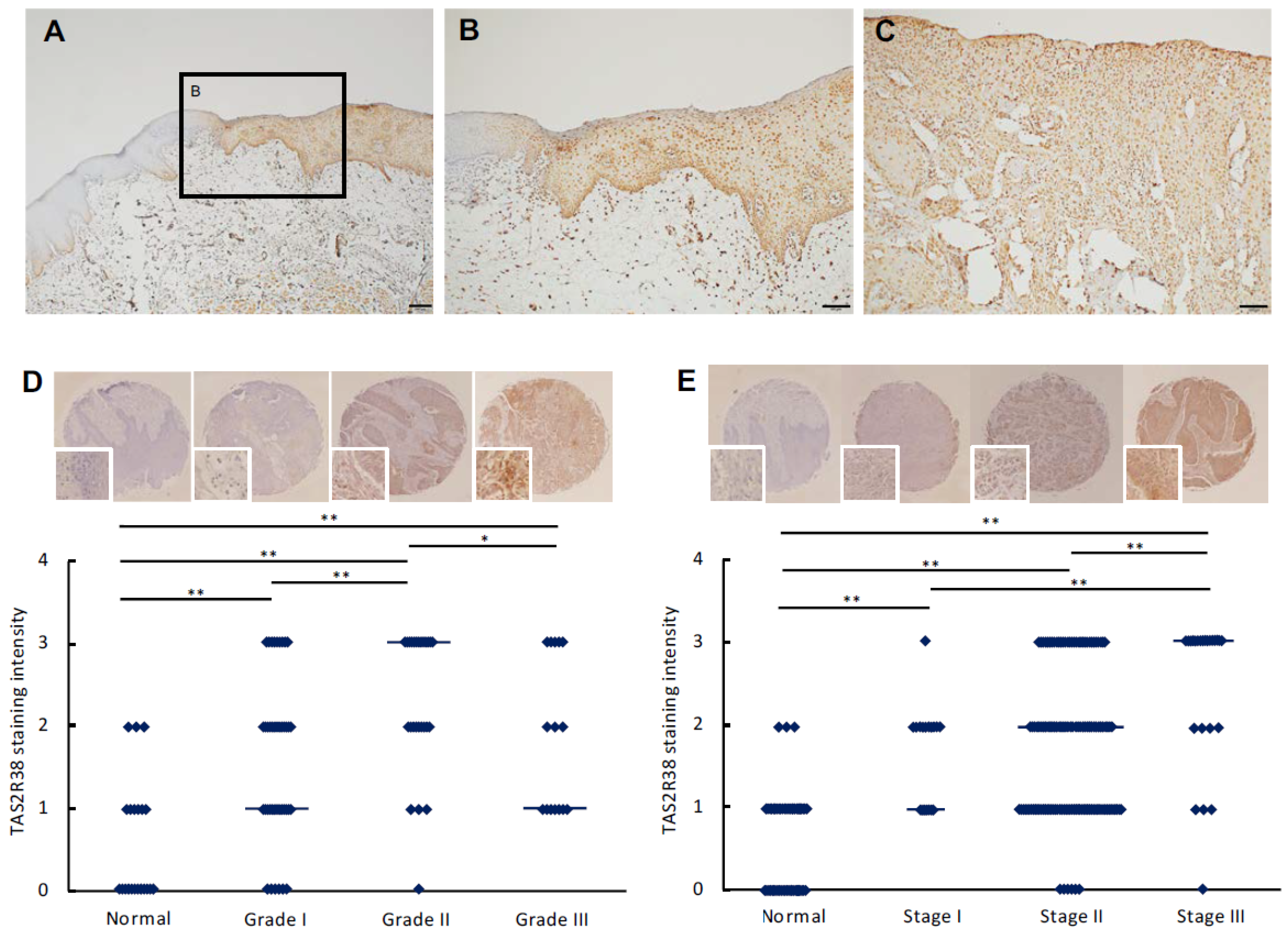
3.1. TAS2R38 Is Robustly Upregulated and Predominantly Localized to the Nucleus in Human Tongue OSCC
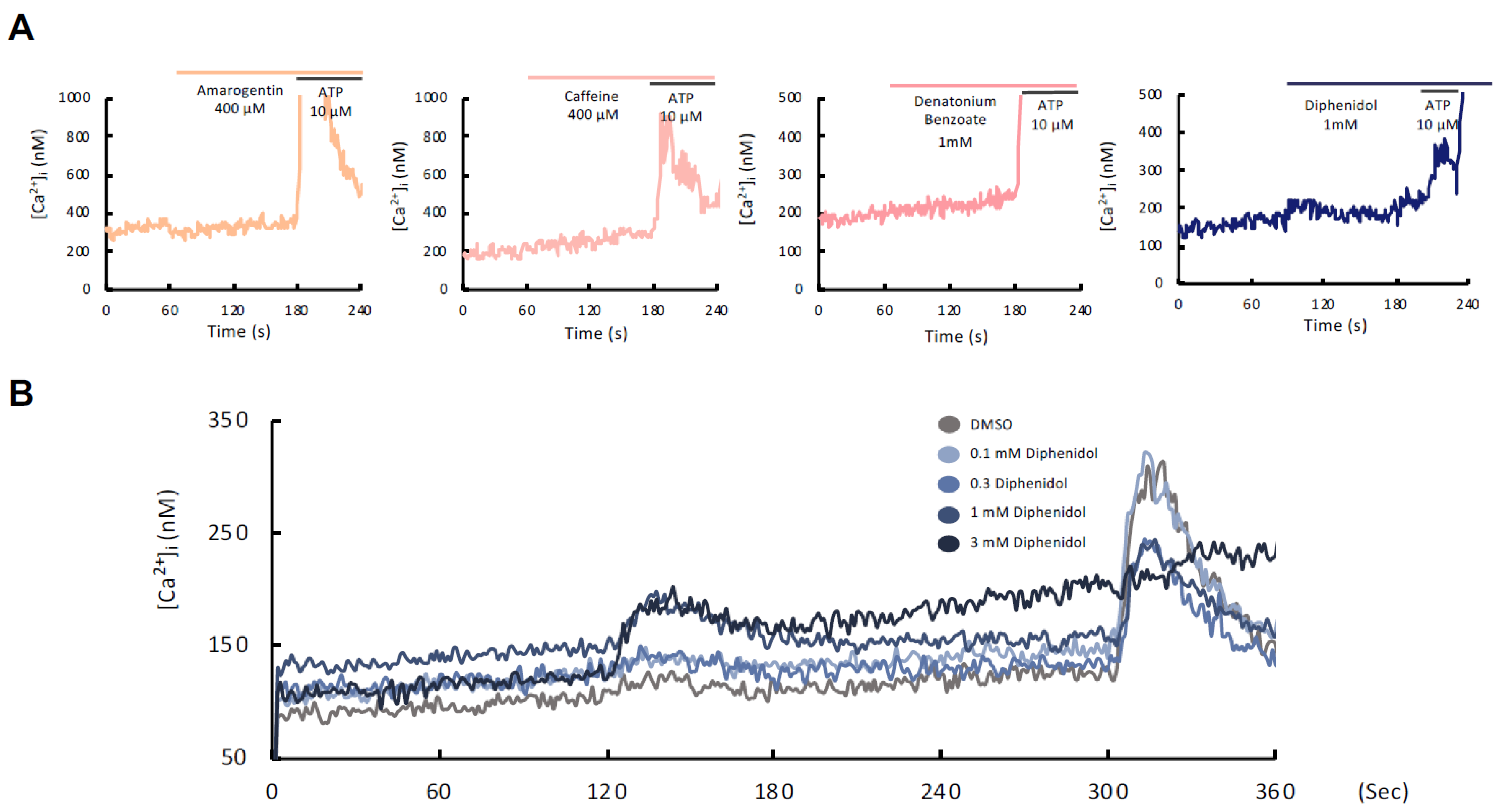
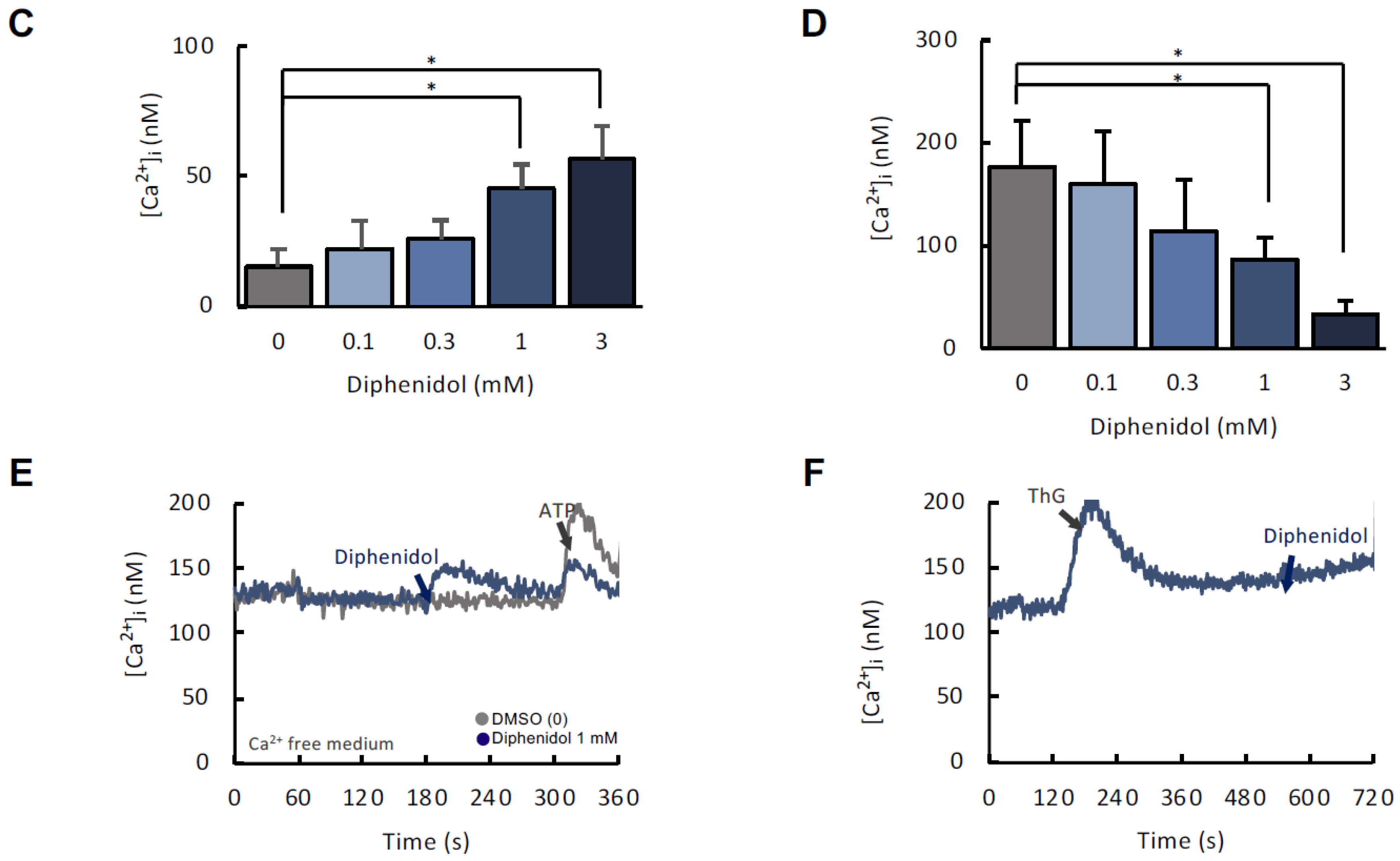
3.2. Diphenidol Selectively Activates Intracellular Calcium Signaling in SCC7 Cells via IP3-Sensitive Ca2+ Stores
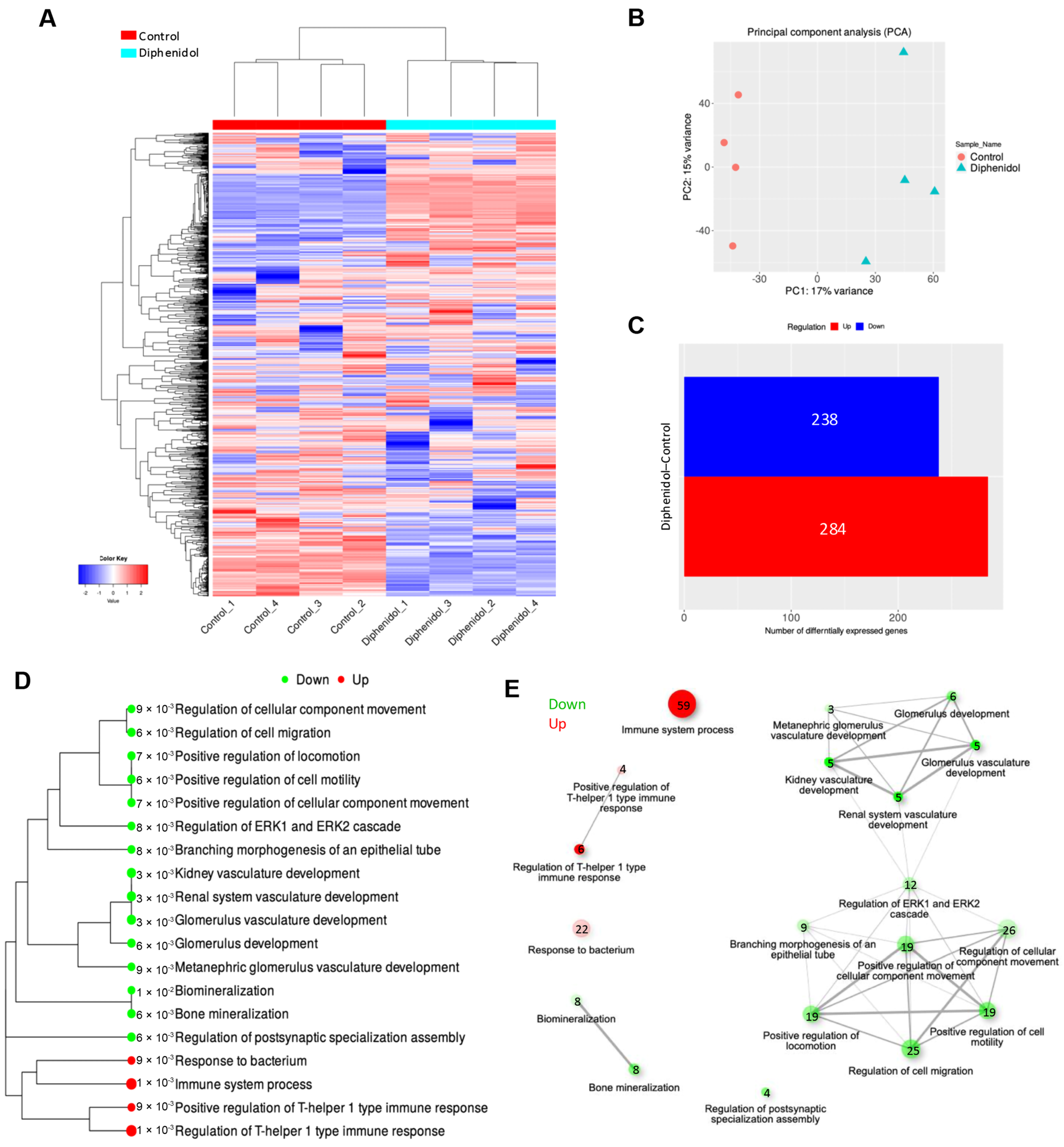
3.3. Diphenidol Modulates Transcriptional Profiles Associated with Immune Regulation and Apoptosis
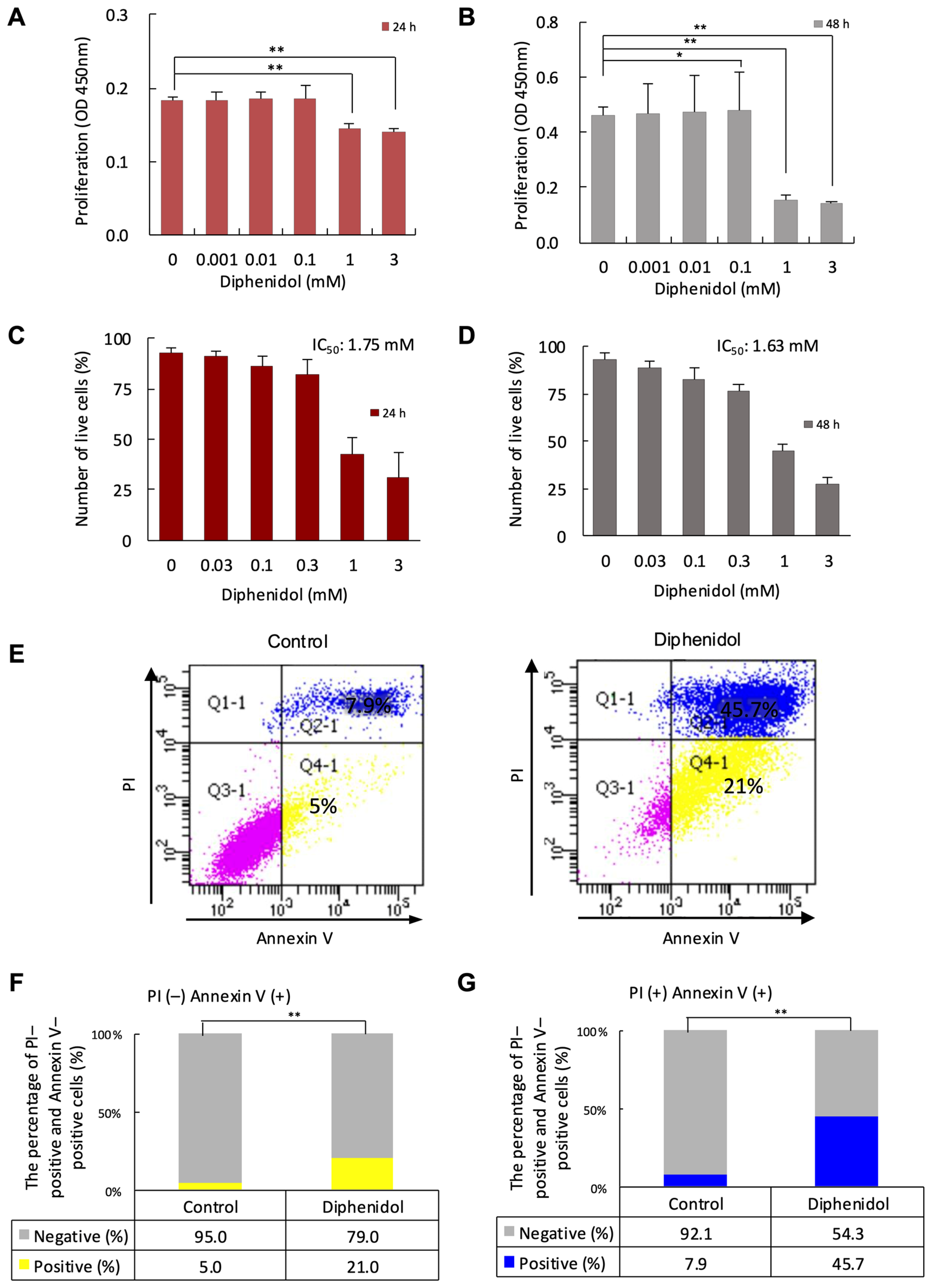
3.4. Diphenidol Inhibits Proliferation and Migration and Induces Apoptosis in SCC7 Cells
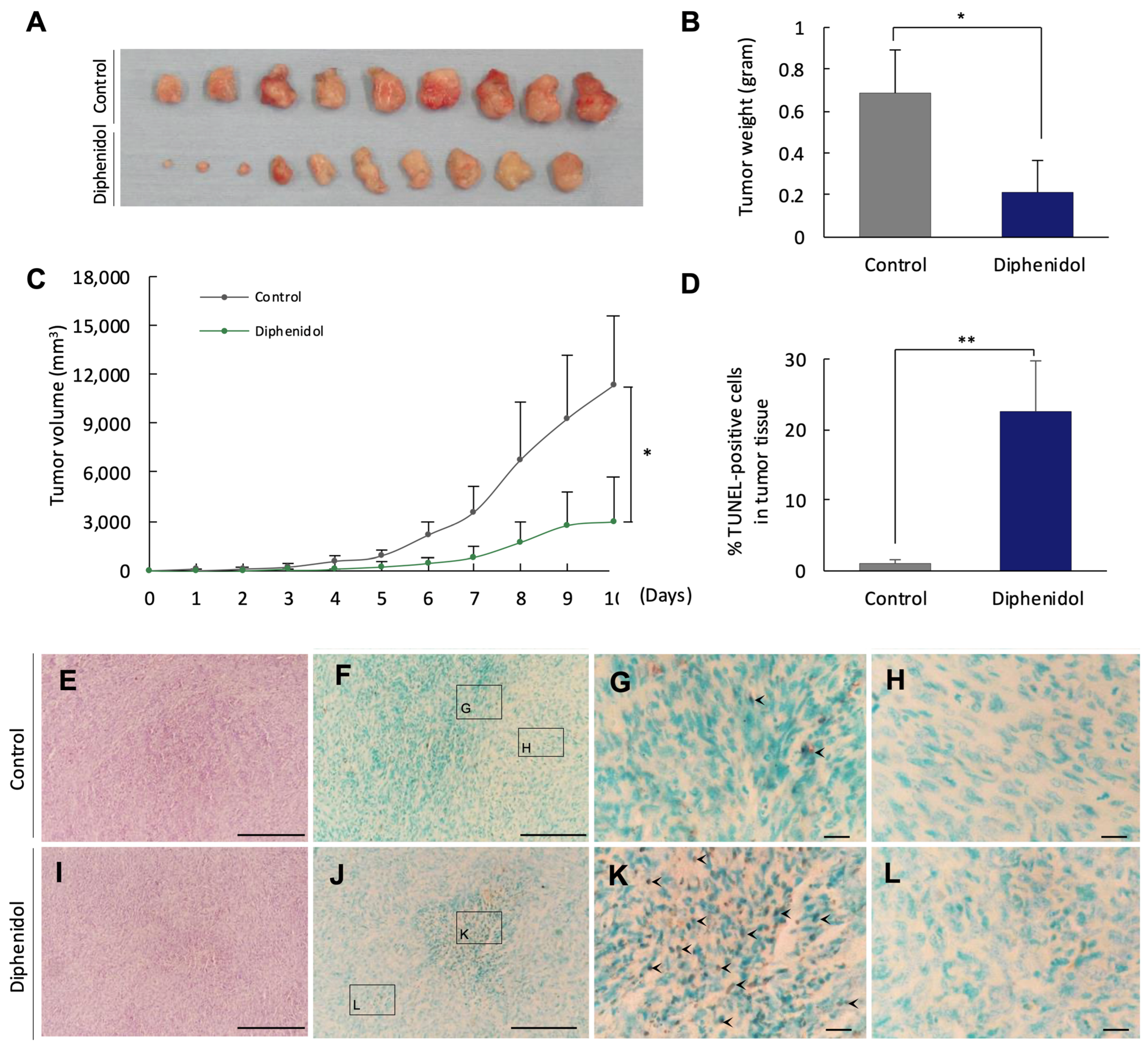
3.5. Diphenidol Suppresses Tumor Growth and Enhances Apoptosis In Vivo
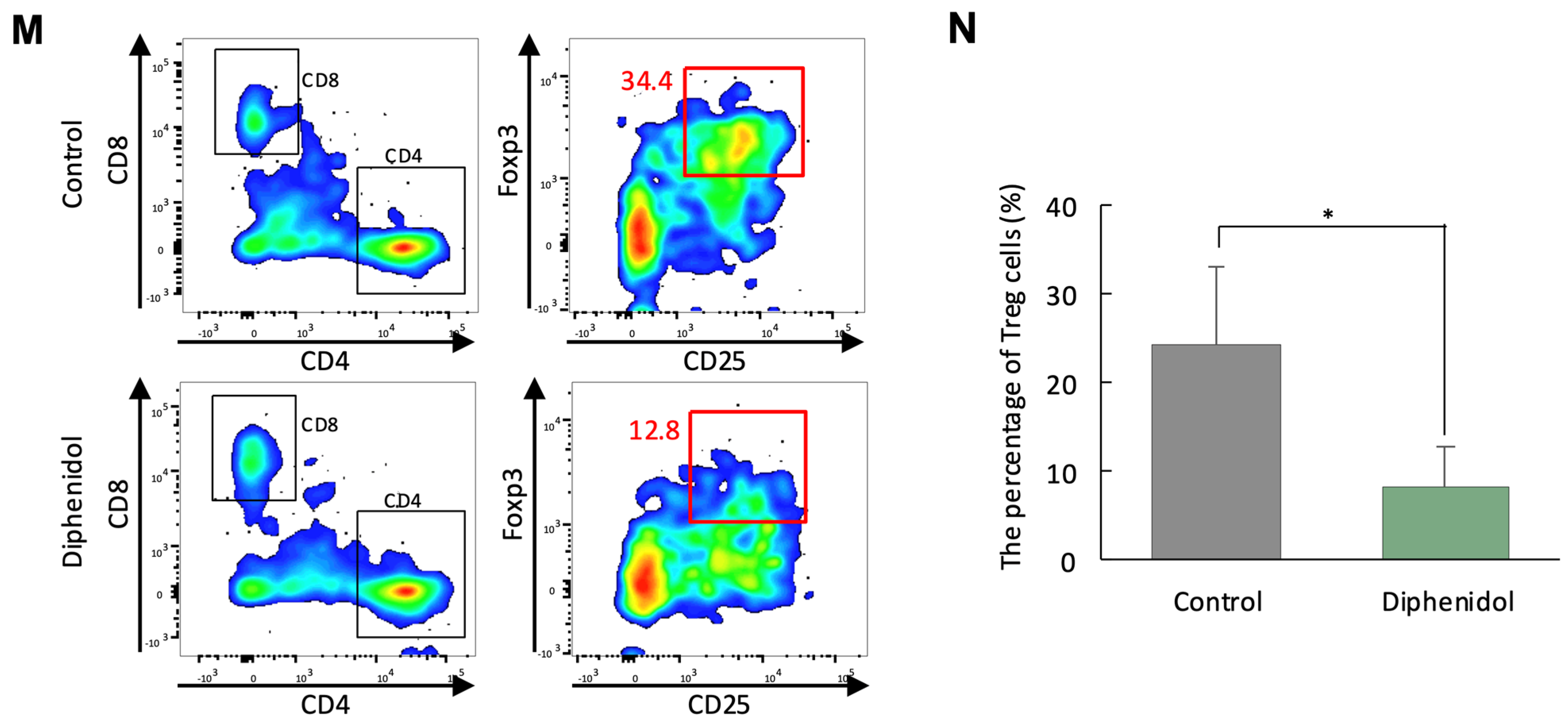
3.6. Diphenidol Modulates the Tumor Immune Microenvironment by Reducing Regulatory T Cell Infiltration
4. Discussion
5. Conclusions
Supplementary Materials
Author Contributions
Funding
Institutional Review Board Statement
Informed Consent Statement
Data Availability Statement
Acknowledgments
Conflicts of Interest
Abbreviations
| TAS2R | Taste receptor type 2 (bitter taste receptor) |
| OSCC | Oral squamous cell carcinoma |
| ICI | Immune checkpoint inhibitor |
| TME | Tumor microenvironment |
| GPCR | G protein-coupled receptor |
| IP3 | Inositol 1,4,5-trisphosphate |
| SHH | Sonic hedgehog |
| ATP | Adenosine 5′-triphosphate disodium salt hydrate |
| PI3K/AKT | Phosphatidylinositol 3-kinase/protein kinase B |
| MAPK | Mitogen-activated protein kinase |
| ER | Endoplasmic reticulum |
| TMA | Tissue microarray |
| TAS2R38 | Taste receptor type 2 member 38 |
| SCC7 | Murine squamous cell carcinoma cell line |
| ATCC | The American Type Culture Collection |
| RNA-seq | RNA sequencing |
| GO | Gene ontology |
| qRT-PCR | Quantitative reverse transcription polymerase chain reaction |
| TILs | Tumor-infiltrating lymphocytes |
References
- Tan, Y.; Wang, Z.; Xu, M.; Li, B.; Huang, Z.; Qin, S.; Nice, E.C.; Tang, J.; Huang, C. Oral squamous cell carcinomas: State of the field and emerging directions. Int. J. Oral Sci. 2023, 15, 23. [Google Scholar] [CrossRef]
- Ferlay, J.; Colombet, M.; Soerjomataram, I.; Mathers, C.; Parkin, D.M.; Piñeros, M.; Znaor, A.; Bray, F. Estimating the global cancer incidence and mortality in 2018: GLOBOCAN sources and methods. Int. J. Cancer 2019, 144, 1941–1953. [Google Scholar] [CrossRef] [PubMed]
- Chamoli, A.; Gosavi, A.S.; Shirwadkar, U.P.; Wangdale, K.V.; Behera, S.K.; Kurrey, N.K.; Kalia, K.; Mandoli, A. Overview of oral cavity squamous cell carcinoma: Risk factors, mechanisms, and diagnostics. Oral Oncol. 2021, 121, 105451. [Google Scholar] [CrossRef] [PubMed]
- Hanahan, D. Hallmarks of Cancer: New Dimensions. Cancer Discov. 2022, 12, 31–46. [Google Scholar] [CrossRef] [PubMed]
- de Visser, K.E.; Joyce, J.A. The evolving tumor microenvironment: From cancer initiation to metastatic outgrowth. Cancer Cell 2023, 41, 374–403. [Google Scholar] [CrossRef]
- Wang, Q.; Shao, X.; Zhang, Y.; Zhu, M.; Wang, F.X.C.; Mu, J.; Li, J.; Yao, H.; Chen, K. Role of tumor microenvironment in cancer progression and therapeutic strategy. Cancer Med. 2023, 12, 11149–11165. [Google Scholar] [CrossRef]
- Benvenuto, M.; Focaccetti, C. Tumor microenvironment: Cellular interaction and metabolic adaptations. Int. J. Mol. Sci. 2024, 25, 3642. [Google Scholar] [CrossRef]
- Khalaf, K.; Hana, D.; Chou, J.T.T.; Singh, C.; Mackiewicz, A.; Kaczmarek, M. Aspects of the tumor microenvironment involved in immune resistance and drug resistance. Front. Immunol. 2021, 12, 656364. [Google Scholar] [CrossRef]
- Facciabene, A.; Motz, G.T.; Coukos, G. T-regulatory cells: Key players in tumor immune escape and angiogenesis. Cancer Res. 2012, 72, 2162–2171. [Google Scholar] [CrossRef]
- Togashi, Y.; Shitara, K.; Nishikawa, H. Regulatory T cells in cancer immunosuppression—Implications for anticancer therapy. Nat. Rev. Clin. Oncol. 2019, 16, 356–371. [Google Scholar] [CrossRef]
- Dąbrowska, A.; Grubba, M.; Balihodzic, A.; Szot, O.; Sobocki, B.K.; Perdyan, A. The role of regulatory T cells in cancer treatment resistance. Int. J. Mol. Sci. 2023, 24, 14114. [Google Scholar] [CrossRef]
- Shang, B.; Liu, Y.; Jiang, S.J.; Liu, Y. Prognostic value of tumor-infiltrating FoxP3+ regulatory T cells in cancers: A systematic review and meta-analysis. Sci. Rep. 2015, 5, 15179. [Google Scholar] [CrossRef]
- Dorsam, R.T.; Gutkind, J.S. G-protein-coupled receptors and cancer. Nat. Rev. Cancer 2007, 7, 79–94. [Google Scholar] [CrossRef]
- Schiöth, H.B.; Lagerström, M.C. Structural diversity of G protein-coupled receptors and significance for drug discovery. Nat. Rev. Drug Discov. 2008, 7, 339–357. [Google Scholar]
- Deshpande, D.A.; Wang, W.C.H.; McIlmoyle, E.L.; Robinett, K.S.; Schillinger, R.M.; An, S.S.; Sham, J.S.K.; Liggett, S.B. Bitter taste receptors on airway smooth muscle bronchodilate by localized calcium signaling and reverse obstruction. Nat. Med. 2010, 16, 1299–1304. [Google Scholar] [CrossRef]
- Talmon, M.; Pollastro, F.; Fresu, L.G. The complex journey of calcium regulation downstream of TAS2R activation. Cells 2022, 11, 3638. [Google Scholar] [CrossRef]
- Miller, Z.A.; Carey, R.M.; Lee, R.J. A deadly taste: Linking bitter taste receptors and apoptosis. Apoptosis 2025, 30, 674–692. [Google Scholar] [CrossRef] [PubMed]
- Shimo, T.; Matsumoto, K.; Takabatake, K.; Aoyama, E.; Takebe, Y.; Ibaragi, S.; Okui, T.; Kurio, N.; Takada, H.; Obata, K.; et al. The role of sonic hedgehog signaling in osteoclastogenesis and jaw bone destruction. PLoS ONE 2016, 11, e0151731. [Google Scholar] [CrossRef] [PubMed]
- Meyerhof, W.; Batram, C.; Kuhn, C.; Brockhoff, A.; Chudoba, E.; Bufe, B.; Appendino, G.; Behrens, M. The molecular receptive ranges of human TAS2R bitter taste receptors. Chem. Senses 2010, 35, 157–170. [Google Scholar] [CrossRef]
- Carey, R.M.; McMahon, D.B.; Miller, Z.A.; Kim, T.B.; Rajasekaran, K.; Gopallawa, I.; Newman, J.G.; Basu, D.; Nead, K.T.; White, E.A.; et al. T2R bitter taste receptors regulate apoptosis and may be associated with survival in head and neck squamous cell carcinoma. Mol. Oncol. 2022, 16, 1474–1492. [Google Scholar] [CrossRef] [PubMed]
- Wei, K.; Hill, B.L.; Thompson, J.C.; Miller, Z.A.; Mueller, A.; Lee, R.J.; Carey, R.M. Bitter taste receptor agonists induce apoptosis in papillary thyroid cancer. Head Neck 2025, 47, 2101–2113. [Google Scholar] [CrossRef]
- Costa, A.R.; Duarte, A.C.; Costa-Brito, A.R.; Gonçalves, I.; Santos, C.R.A. Bitter taste signaling in cancer. Life Sci. 2023, 315, 121377. [Google Scholar] [CrossRef]
- Sun, X.; Song, J.; Li, E.; Geng, H.; Li, Y.; Yu, D.; Zhong, C. Epigallocatechin-3-gallate inhibits bladder cancer stem cells via suppression of sonic hedgehog pathway. Oncol. Rep. 2019, 42, 425–435. [Google Scholar] [CrossRef] [PubMed]
- Pasturel, A.; Strale, P.O.; Studer, V. Tailoring common hydrogels into 3D cell culture templates. Adv. Healthc. Mater. 2020, 9, 1901315. [Google Scholar] [CrossRef]
- Shimo, T.; Kubota, S.; Yoshioka, N.; Ibaragi, S.; Isowa, S.; Eguchi, T.; Sasaki, A.; Takigawa, M. Pathogenic role of connective tissue growth factor (CTGF/CCN2) in osteolytic metastasis of breast cancer. J. Bone Miner. Res. 2006, 21, 1045–1059. [Google Scholar] [CrossRef]
- Okui, T.; Shimo, T.; Fukazawa, T.; Kurio, N.; Hassan, N.M.M.; Honami, T.; Takaoka, M.; Naomoto, Y.; Sasaki, A. Antitumor effect of temsirolimus against oral squamous cell carcinoma associated with bone destruction. Mol. Cancer Ther. 2010, 9, 2960–2969. [Google Scholar] [CrossRef][Green Version]
- Li, F.; Xiao, T.; Qiu, X.; Liu, C.; Ma, Q.; Yu, D.; Zhou, L.; Xiao, R.; He, B.; Tang, A.; et al. Oral frailty and its influencing factors in patients with cancer undergoing chemotherapy: A cross-sectional study. BMC Oral Health 2025, 25, 426. [Google Scholar] [CrossRef] [PubMed]
- Liang, H.; Yang, Q.; Yin, L.; Pang, H.; Jiu, E.; Li, B.; Qin, L. Cross-cultural adaptation and validation of the Chinese version of the taste and smell survey for cancer patients. BMC Cancer 2025, 25, 1068. [Google Scholar] [CrossRef] [PubMed]
- Zehentner, S.; Reiner, A.T.; Grimm, C.; Somoza, V. The role of bitter taste receptors in cancer: A systematic review. Cancers 2021, 13, 5891. [Google Scholar] [CrossRef]
- Salvestrini, V.; Ciciarello, M.; Pensato, V.; Simonetti, G.; Laginestra, M.A.; Bruno, S.; Pazzaglia, M.; De Marchi, E.; Forte, D.; Orecchioni, S.; et al. Denatonium as a bitter taste receptor agonist modifies transcriptomic profile and functions of acute myeloid leukemia cells. Front. Oncol. 2020, 10, 1225. [Google Scholar] [CrossRef]
- Singh, N.; Chakraborty, R.; Bhullar, R.P.; Chelikani, P. Differential expression of bitter taste receptors in non-cancerous breast epithelial and breast cancer cells. Biochem. Biophys. Res. Commun. 2014, 446, 499–503. [Google Scholar] [CrossRef]
- Singh, N.; Shaik, F.A.; Myal, Y.; Chelikani, P. Chemosensory bitter taste receptors T2R4 and T2R14 activation attenuates proliferation and migration of breast cancer cells. Mol. Cell. Biochem. 2020, 465, 199–214. [Google Scholar] [CrossRef]
- Choi, J.H.; Lee, J.; Choi, I.J.; Kim, Y.W.; Ryu, K.W.; Kim, J. Genetic variation in the TAS2R38 bitter taste receptor and gastric cancer risk in Koreans. Sci. Rep. 2016, 6, 26904. [Google Scholar] [CrossRef] [PubMed]
- Carrai, M.; Steinke, V.; Vodicka, P.; Pardini, B.; Rahner, N.; Holinski-Feder, E.; Morak, M.; Schackert, H.K.; Görgens, H.; Stemmler, S.; et al. Association between TAS2R38 gene polymorphisms and colorectal cancer risk. PLoS ONE 2011, 6, e20464. [Google Scholar] [CrossRef]
- Yamaki, M.; Saito, H.; Isono, K.; Goto, T.; Shirakawa, H.; Shoji, N.; Satoh-Kuriwada, S.; Sasano, T.; Okada, R.; Kudoh, K.; et al. Genotyping analysis of bitter-taste receptor genes TAS2R38 and TAS2R46 in Japanese patients with gastrointestinal cancers. J. Nutr. Sci. Vitaminol. 2017, 63, 148–154. [Google Scholar] [CrossRef] [PubMed]
- Barontini, J.; Antinucci, M.; Tofanelli, S.; Cammalleri, M.; Dal Monte, M.; Gemignani, F.; Vodicka, P.; Marangoni, R.; Vodickova, L.; Kupcinskas, J.; et al. Association between polymorphisms of TAS2R16 and susceptibility to colorectal cancer. BMC Gastroenterol. 2017, 17, 105. [Google Scholar] [CrossRef]
- Stern, L.; Giese, N.; Hackert, T.; Strobel, O.; Schirmacher, P.; Felix, K.; Gaida, M.M. Overcoming chemoresistance in pancreatic cancer cells: Role of the bitter taste receptor T2R10. J. Cancer 2018, 9, 711–725. [Google Scholar] [CrossRef]
- Gaida, M.M.; Mayer, C.; Dapunt, U.; Stegmaier, S.; Schirmacher, P.; Wabnitz, G.H.; Hänsch, G.M. Expression of the bitter receptor T2R38 in pancreatic cancer. Oncotarget 2016, 7, 12623–12632. [Google Scholar] [CrossRef] [PubMed]
- Choi, J.H.; Lee, J.; Yang, S.; Lee, E.K.; Hwangbo, Y.; Kim, J. Genetic variations in TAS2R3 and TAS2R4 bitterness receptors modify papillary carcinoma risk and thyroid function in Korean females. Sci. Rep. 2018, 8, 15004. [Google Scholar] [CrossRef]
- Clapham, D.E. Calcium signaling. Cell 2007, 131, 1047–1058. [Google Scholar] [CrossRef]
- Berridge, M.J. Inositol trisphosphate and calcium signalling mechanisms. Biochim. Biophys. Acta 2009, 1793, 933–940. [Google Scholar] [CrossRef]
- Mustakim, K.R.; Eo, M.Y.; Kim, S.M. The role of endoplasmic reticulum stress in the pathogenesis of oral diseases. J. Korean Assoc. Oral Maxillofac. Surg. 2024, 50, 177–188. [Google Scholar] [CrossRef]
- Ho, J.E.; Chen, W.Y.; Chen, M.H.; Larson, M.G.; McCabe, E.L.; Cheng, S.; Ghorbani, A.; Coglianese, E.; Emilsson, V.; Johnson, A.D.; et al. Common genetic variation at the IL1RL1 locus regulates IL-33/ST2 signaling. J. Clin. Investig. 2013, 123, 4208–4218. [Google Scholar] [CrossRef]
- Li, Q.; Zhang, C.; Cheng, Y.; Yang, X.; Chen, W.; He, K.; Chen, M. IL1RL1 polymorphisms rs12479210 and rs1420101 are associated with increased lung cancer risk in the Chinese Han population. Front. Genet. 2023, 14, 1183528. [Google Scholar] [CrossRef]
- Peng, Y.; Clark, C.; Luong, R.; Tu, W.H.; Lee, J.; Johnson, D.T.; Das, A.; Carroll, T.J.; Sun, Z. The leucine zipper putative tumor suppressor 2 protein LZTS2 regulates kidney development. J. Biol. Chem. 2011, 286, 40331–40342. [Google Scholar] [CrossRef]
- Xu, S.; Li, Y.; Lu, Y.; Huang, J.; Ren, J.; Zhang, S.; Yin, Z.; Huang, K.; Wu, G.; Yang, K. LZTS2 inhibits PI3K/AKT activation and radioresistance in nasopharyngeal carcinoma by interacting with p85. Cancer Lett. 2018, 420, 38–48. [Google Scholar] [CrossRef] [PubMed]
- Martin, L.T.P.; Nachtigal, M.W.; Selman, T.; Nguyen, E.; Salsman, J.; Dellaire, G.; Dupré, D.J. Bitter taste receptors are expressed in human epithelial ovarian and prostate cancers cells and noscapine stimulation impacts cell survival. Mol. Cell. Biochem. 2019, 454, 203–214. [Google Scholar] [CrossRef] [PubMed]
- Tong, A.; Yang, H.; Yu, X.; Wang, D.; Guan, J.; Zhao, M.; Li, J. Mechanisms and novel therapeutic roles of bitter taste receptors in diseases. Theranostics 2025, 15, 3961–3978. [Google Scholar] [CrossRef] [PubMed]
- Hung, J.; Perez, S.M.; Dasa, S.S.K.; Hall, S.P.; Heckert, D.B.; Murphy, B.P.; Crawford, H.C.; Kelly, K.A.; Brinton, L.T. A bitter taste receptor as a novel molecular target on cancer-associated fibroblasts in pancreatic ductal adenocarcinoma. Pharmaceuticals 2023, 16, 389. [Google Scholar] [CrossRef]
- Ferris, R.L.; Blumenschein, G.; Fayette, J.; Guigay, J.; Colevas, A.D.; Licitra, L.; Harrington, K.; Kasper, S.; Vokes, E.E.; Even, C.; et al. Nivolumab for recurrent squamous-cell carcinoma of the head and neck. N. Engl. J. Med. 2016, 375, 1856–1867. [Google Scholar] [CrossRef]



| Gene ID | Symbol | Description | log2 Fold Change | Adj p Values |
|---|---|---|---|---|
| Upregulated Differentially Expressed Gene | ||||
| ENSMUSG00000026069 | Il1rl1 | interleukin 1 receptor-like 1 | 5.702127071 | 2.80 × 10⁻⁷ |
| ENSMUSG00000039879 | Heca | hdc homolog, cell cycle regulator | 6.528040111 | 2.25 × 10⁻⁵ |
| ENSMUSG00000050776 | Olfr1317 | olfactory receptor family 4 subfamily F member 47 | 6.604364684 | 0.01636834 |
| ENSMUSG00000021646 | Mccc2 | methylcrotonoyl-CoA carboxylase 2 | 6.635359028 | 0.00011617 |
| ENSMUSG00000043909 | Trp53bp1 | transformation-related protein 53 binding protein 1 | 6.789957746 | 0.00026009 |
| ENSMUSG00000047428 | Dlk2 | delta-like non-canonical Notch ligand 2 | 6.797139793 | 3.78 × 10⁻⁵ |
| ENSMUSG00000047109 | Cldn14 | claudin 14 | 6.953696549 | 0.0995777 |
| ENSMUSG00000048279 | Sacs | sacsin | 6.972006267 | 1.30 × 10⁻⁵ |
| ENSMUSG00000015090 | Ptgds | prostaglandin D2 synthase | 7.07153037 | 0.00235089 |
| ENSMUSG00000098650 | Commd1b | COMM domain-containing protein 1 | 7.607206741 | 0.05875312 |
| ENSMUSG00000031799 | Tpm4 | tropomyosin 4 | 9.192198312 | 2.50 × 10⁻⁶ |
| ENSMUSG00000035342 | Lzts2 | leucine zipper, putative tumor suppressor 2 | 9.842655723 | 4.03 × 10⁻⁷ |
| Downregulated differentially expressed gene | ||||
| ENSMUSG00000037716 | Ccdc33 | coiled-coil domain-containing 33 | −7.892024778 | 0.05173466 |
| ENSMUSG00000042700 | Sipa1l1 | signal-induced proliferation-associated 1 like 1 | −7.717187171 | 2.65 × 10⁻⁶ |
| ENSMUSG00000023505 | Cdca3 | cell division cycle-associated 3 | −7.499259915 | 4.91 × 10⁻⁶ |
| ENSMUSG00000010311 | Optc | opticin | −6.858924507 | 0.09314864 |
| ENSMUSG00000072964 | Bhlhb9 | basic helix-loop-helix domain-containing, class B9 | −6.83308327 | 3.60 × 10⁻⁵ |
| ENSMUSG00000032254 | Kif23 | kinesin family member 23 | −6.815479484 | 8.94 × 10⁻⁶ |
| ENSMUSG00000027646 | Src | Rous sarcoma oncogene | −6.526260407 | 0.00029274 |
| ENSMUSG00000030849 | Fgfr2 | fibroblast growth factor receptor 2 | −6.048728642 | 0.00018604 |
| ENSMUSG00000095909 | Zfp997 | zinc finger protein 997 | −5.941494813 | 0.02891211 |
| ENSMUSG00000063275 | Hacd1 | 3-hydroxyacyl-CoA dehydratase 1 | −5.803498901 | 1.28 × 10⁻²⁴ |
Disclaimer/Publisher’s Note: The statements, opinions and data contained in all publications are solely those of the individual author(s) and contributor(s) and not of MDPI and/or the editor(s). MDPI and/or the editor(s) disclaim responsibility for any injury to people or property resulting from any ideas, methods, instructions or products referred to in the content. |
© 2026 by the authors. Licensee MDPI, Basel, Switzerland. This article is an open access article distributed under the terms and conditions of the Creative Commons Attribution (CC BY) license.
Share and Cite
Nasrun, N.E.; Tanimura, A.; Yoshida, K.; Uehara, O.; Kunisada, Y.; Takabatake, K.; Hosoya, A.; Takebe, H.; Nagatsuka, H.; Abiko, Y.; et al. Activation of TAS2R Signaling by Diphenidol Suppresses Tumor Growth and Remodels the Tumor Immune Microenvironment in Oral Squamous Cell Carcinoma. Cancers 2026, 18, 1527. https://doi.org/10.3390/cancers18101527
Nasrun NE, Tanimura A, Yoshida K, Uehara O, Kunisada Y, Takabatake K, Hosoya A, Takebe H, Nagatsuka H, Abiko Y, et al. Activation of TAS2R Signaling by Diphenidol Suppresses Tumor Growth and Remodels the Tumor Immune Microenvironment in Oral Squamous Cell Carcinoma. Cancers. 2026; 18(10):1527. https://doi.org/10.3390/cancers18101527
Chicago/Turabian StyleNasrun, Nisrina Ekayani, Akihiko Tanimura, Koki Yoshida, Osamu Uehara, Yuki Kunisada, Kiyofumi Takabatake, Akihiro Hosoya, Hiroaki Takebe, Hitoshi Nagatsuka, Yoshihiro Abiko, and et al. 2026. "Activation of TAS2R Signaling by Diphenidol Suppresses Tumor Growth and Remodels the Tumor Immune Microenvironment in Oral Squamous Cell Carcinoma" Cancers 18, no. 10: 1527. https://doi.org/10.3390/cancers18101527
APA StyleNasrun, N. E., Tanimura, A., Yoshida, K., Uehara, O., Kunisada, Y., Takabatake, K., Hosoya, A., Takebe, H., Nagatsuka, H., Abiko, Y., Ruslin, M., & Shimo, T. (2026). Activation of TAS2R Signaling by Diphenidol Suppresses Tumor Growth and Remodels the Tumor Immune Microenvironment in Oral Squamous Cell Carcinoma. Cancers, 18(10), 1527. https://doi.org/10.3390/cancers18101527