Efficient Preparation of Ultrahigh-Strength Nanostructured Nickel by Ultranarrow Slit-Jet Scanning Electrodeposition Without Additives
 , ,
, ,
Abstract
1. Introduction
2. Process Scheme of USJS-ECD
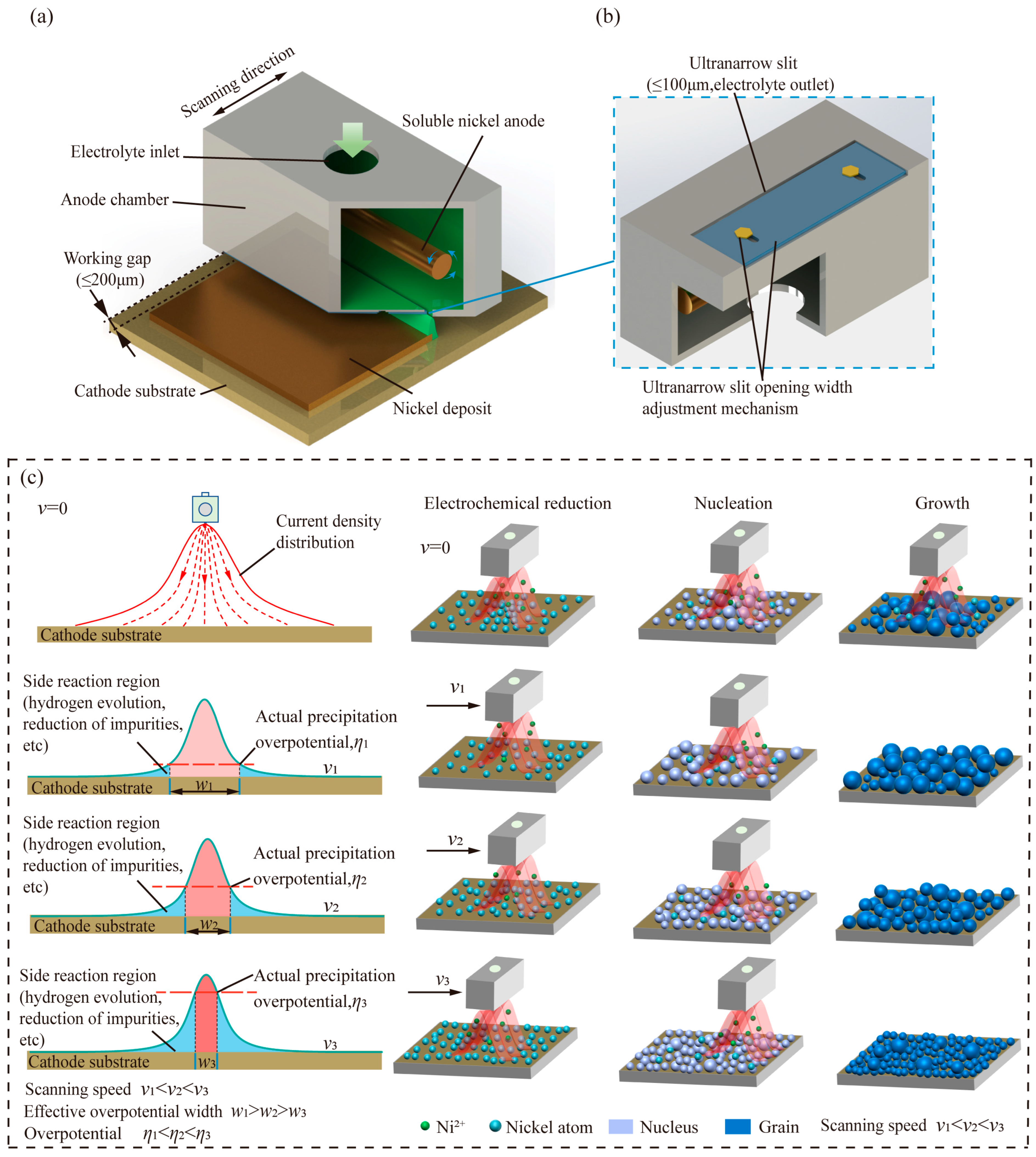
2.1. Working Principle of USJS-ECD
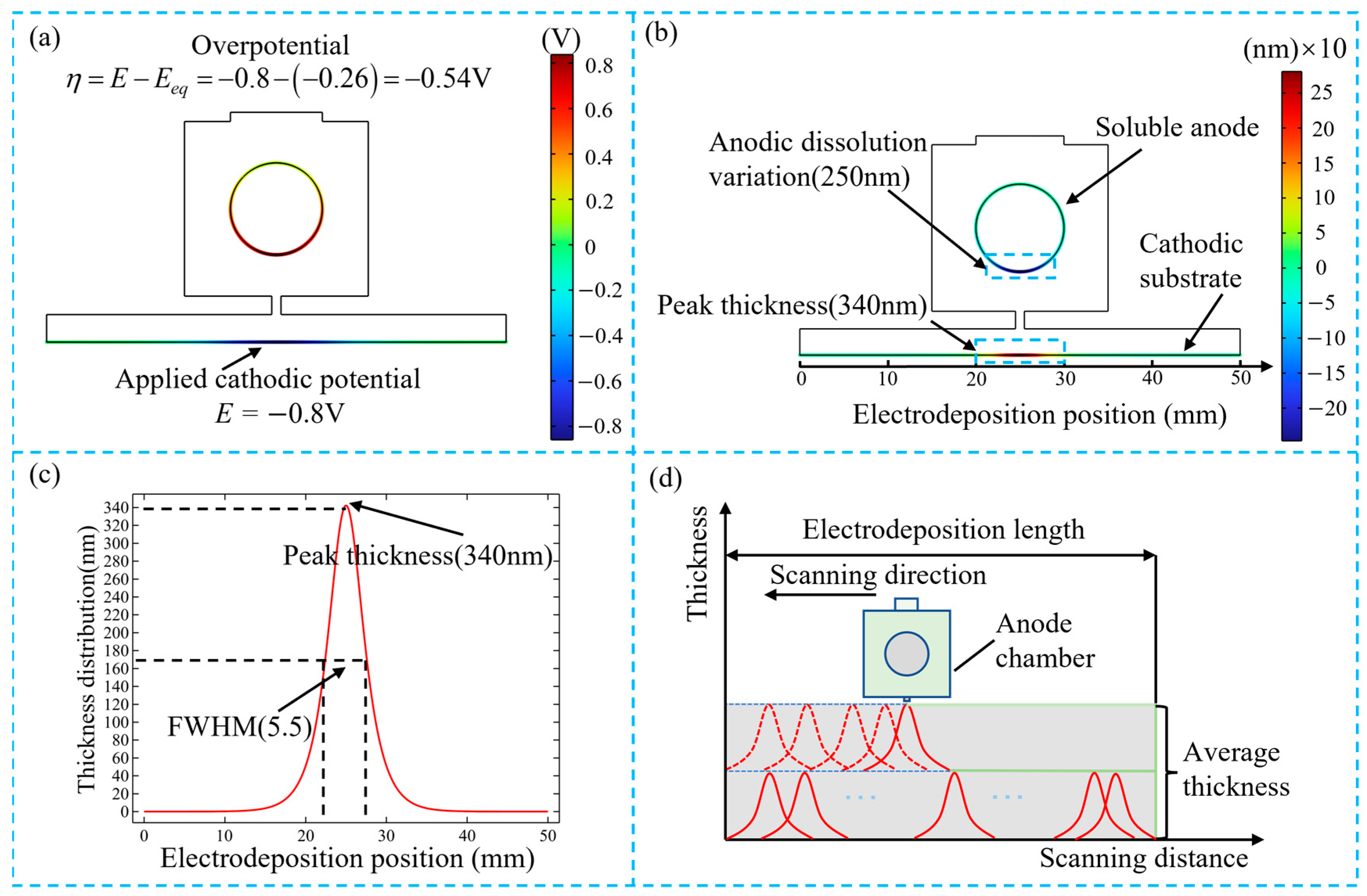
2.2. Multiphysics Numerical Simulation of USJS-ECD
2.2.1. Models
- (1)
- The electrolyte was treated as a continuous incompressible Newtonian fluid under laminar-flow conditions.
- (2)
- Representative stationary slit-jet conditions under quasi-steady-state assumptions were employed instead of fully dynamic reciprocating scanning conditions.
- (3)
- The cathodic reaction was assumed to consist solely of nickel electrodeposition, while cathodic side reactions such as hydrogen evolution were neglected.
- (4)
- Thermal effects, gas evolution, and moving-boundary deformation during long-term deposition were neglected.
- (5)
- The simulation mainly focused on localized current-density distribution and mass-transfer behavior rather than exact quantitative prediction of macroscopic deposition thickness.
2.2.2. Simulation Results and Discussion
- (1)
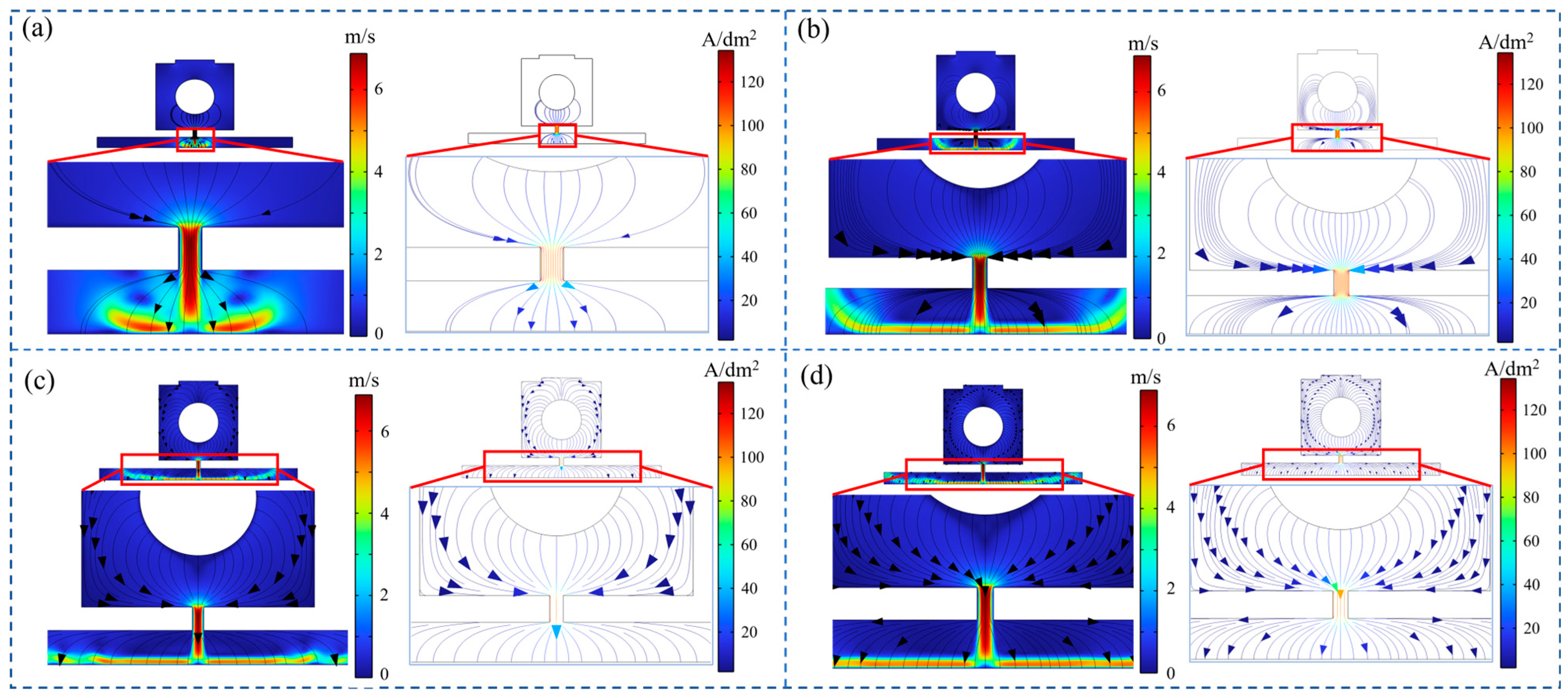
- Distributions of flow field and current density
- (2)
- Formation mechanism of nanocrystalline nickel and localized stationary deposition behavior
3. Experimental
3.1. Sample Preparation
3.2. Methods for Microstructural Characterization and Mechanical Property Evaluation
4. Results and Discussion
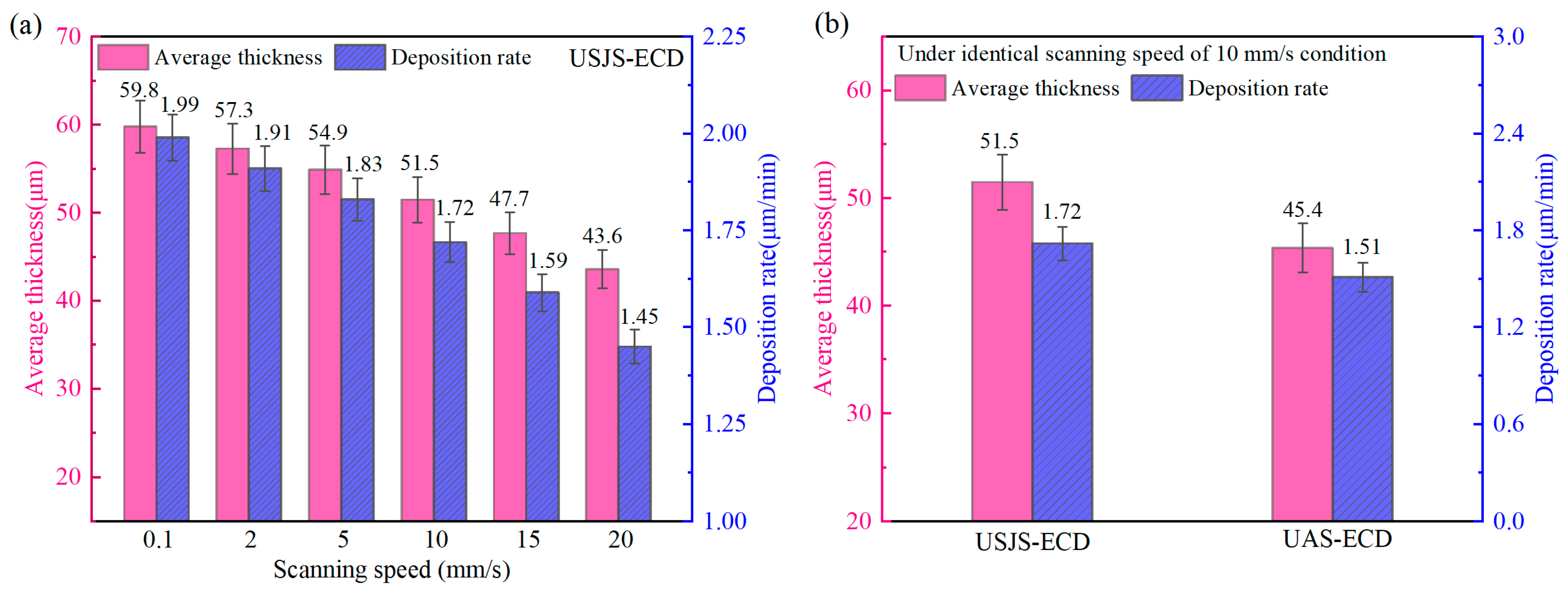
4.1. Deposition Rate of Nickel Samples
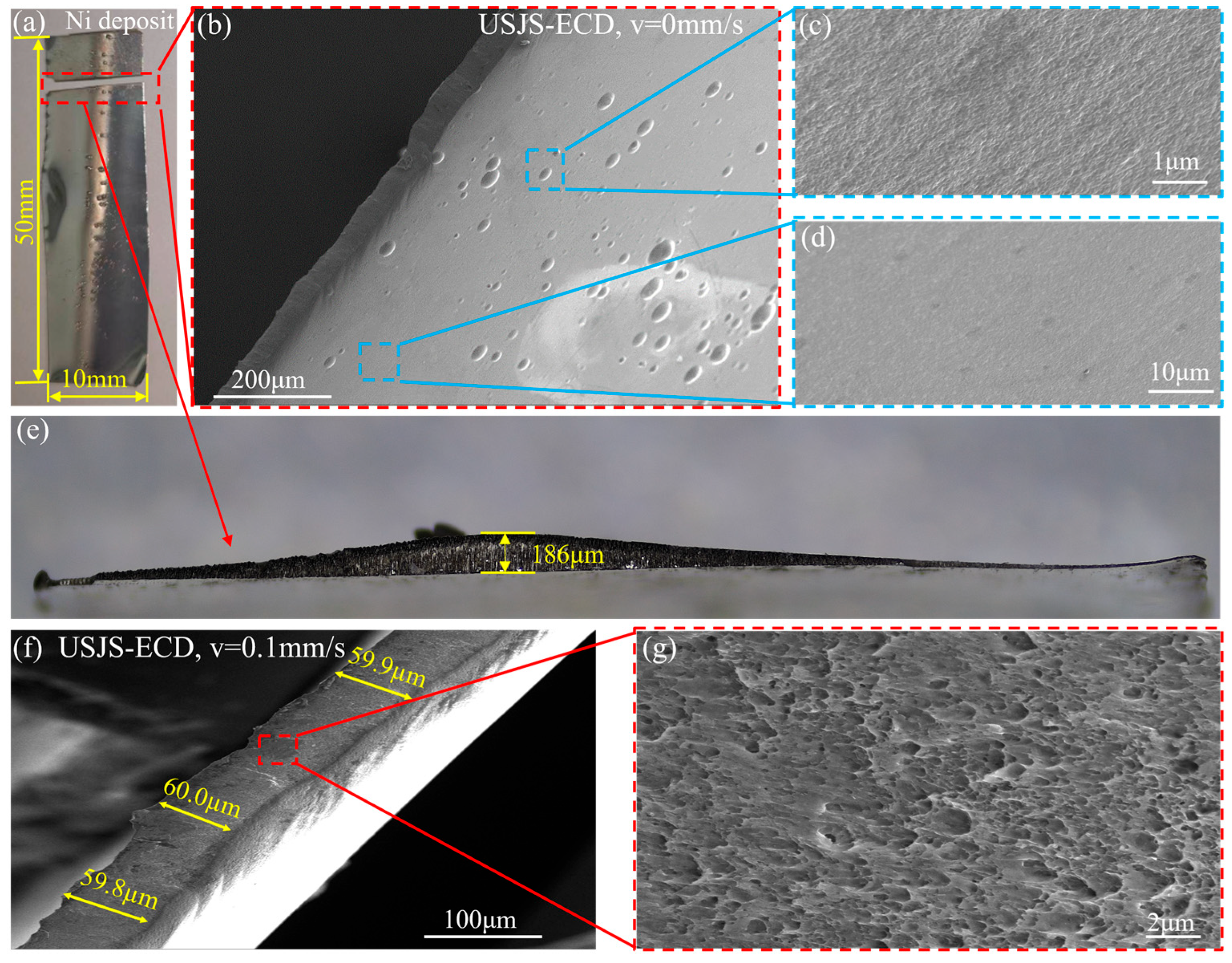
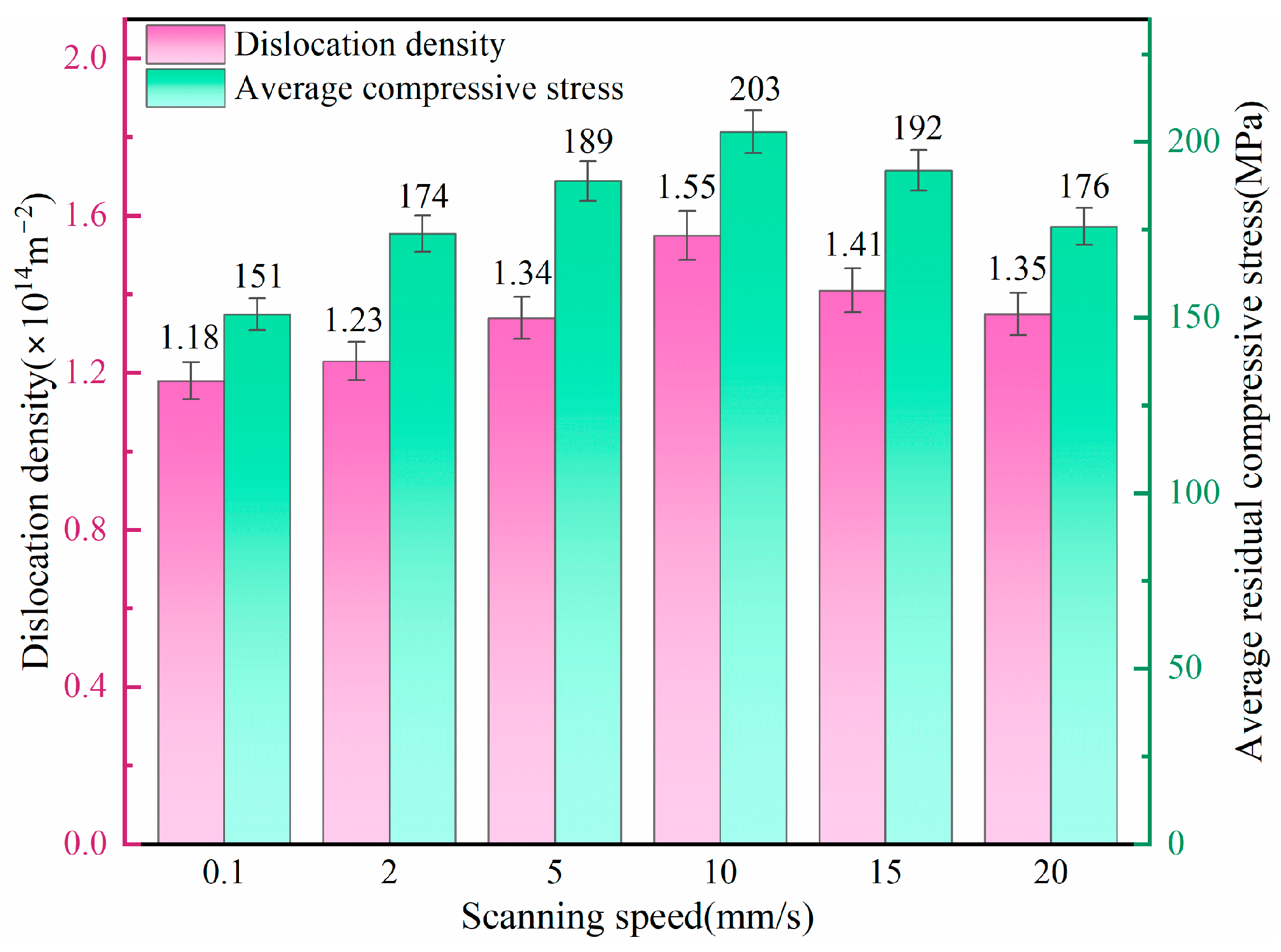
4.2. Microstructure of Nickel Samples
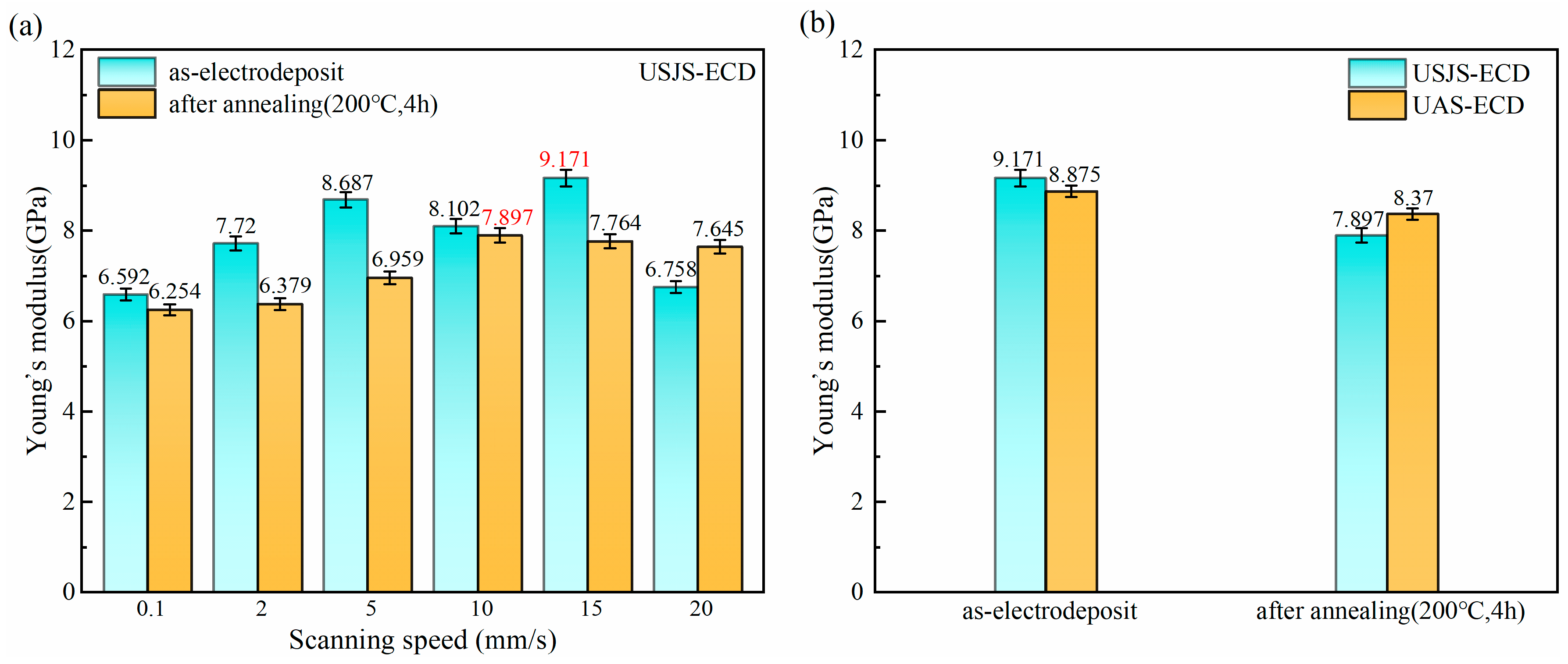
4.3. Mechanical Properties
5. Conclusions
- (1)
- The USJS-ECD process facilitates the integration of high purity, refined nanocrystalline microstructure, superior strength-toughness synergy, and a stable deposition rate through the combined influence of planar jet scanning and localized electric fields. Under identical operational parameters, the deposition rate is enhanced by 13.91% relative to UAS-ECD. The favorable process controllability and scalability render this method a promising avenue for the fabrication of high-performance nanocrystalline metal foils.
- (2)
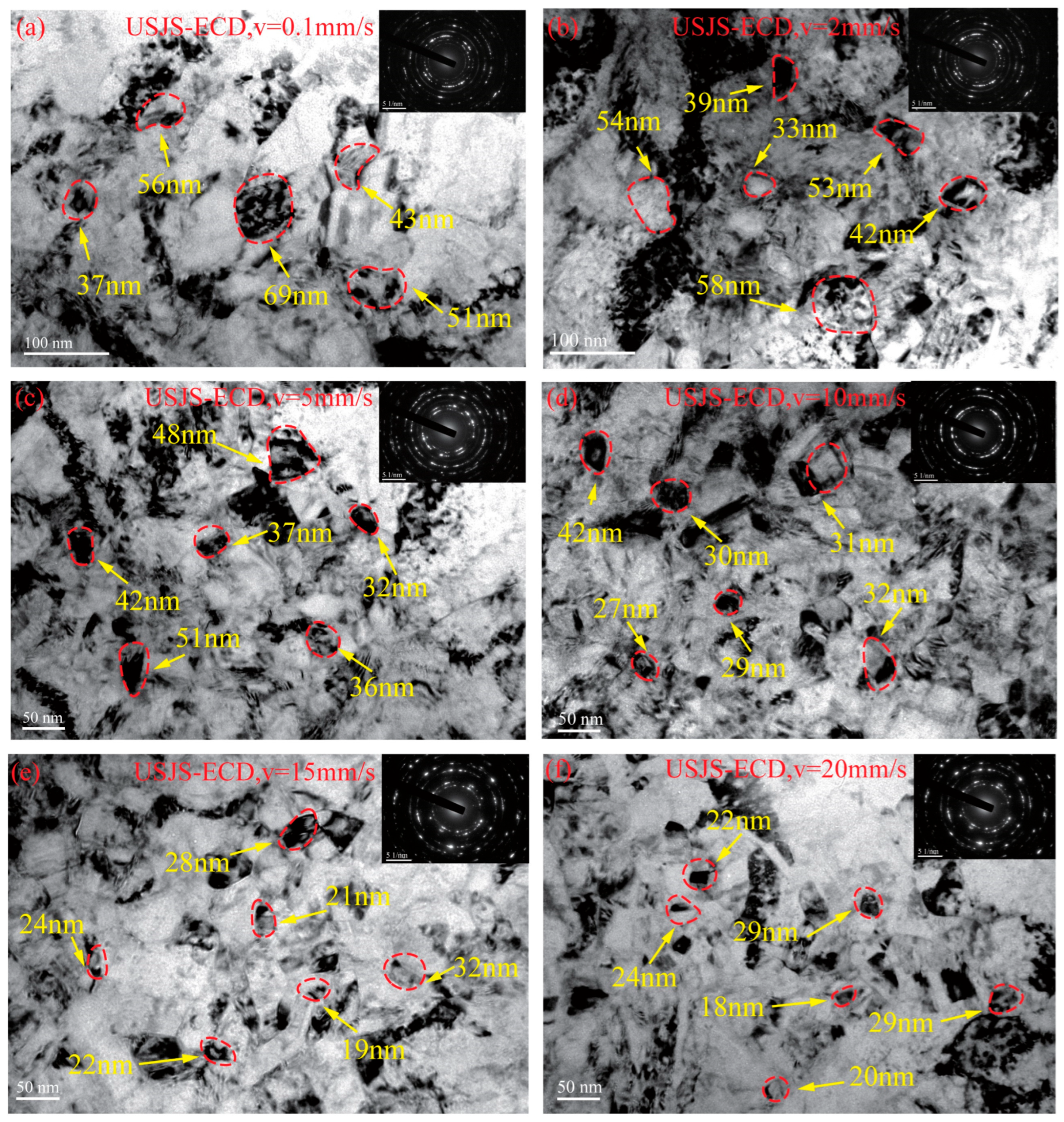
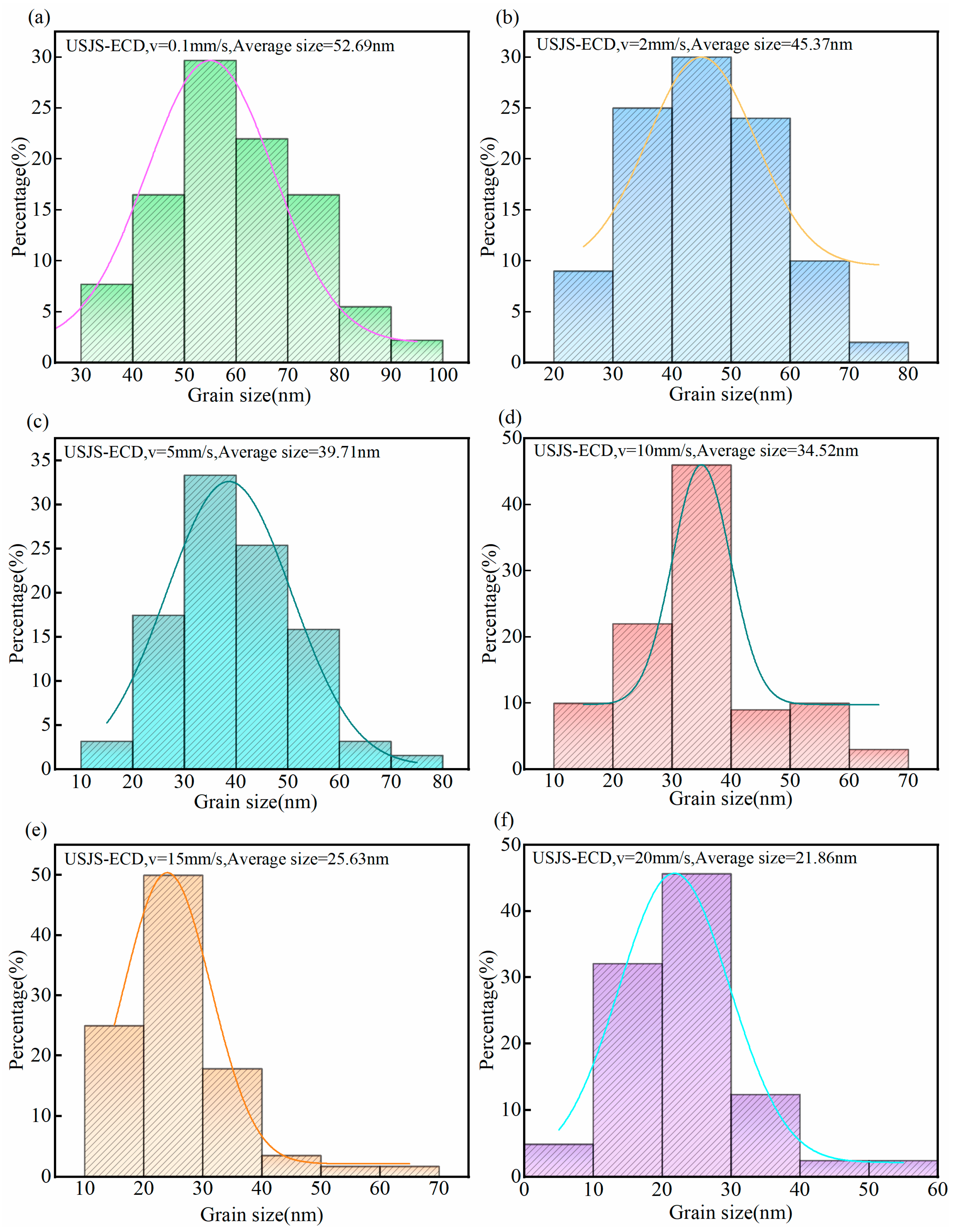
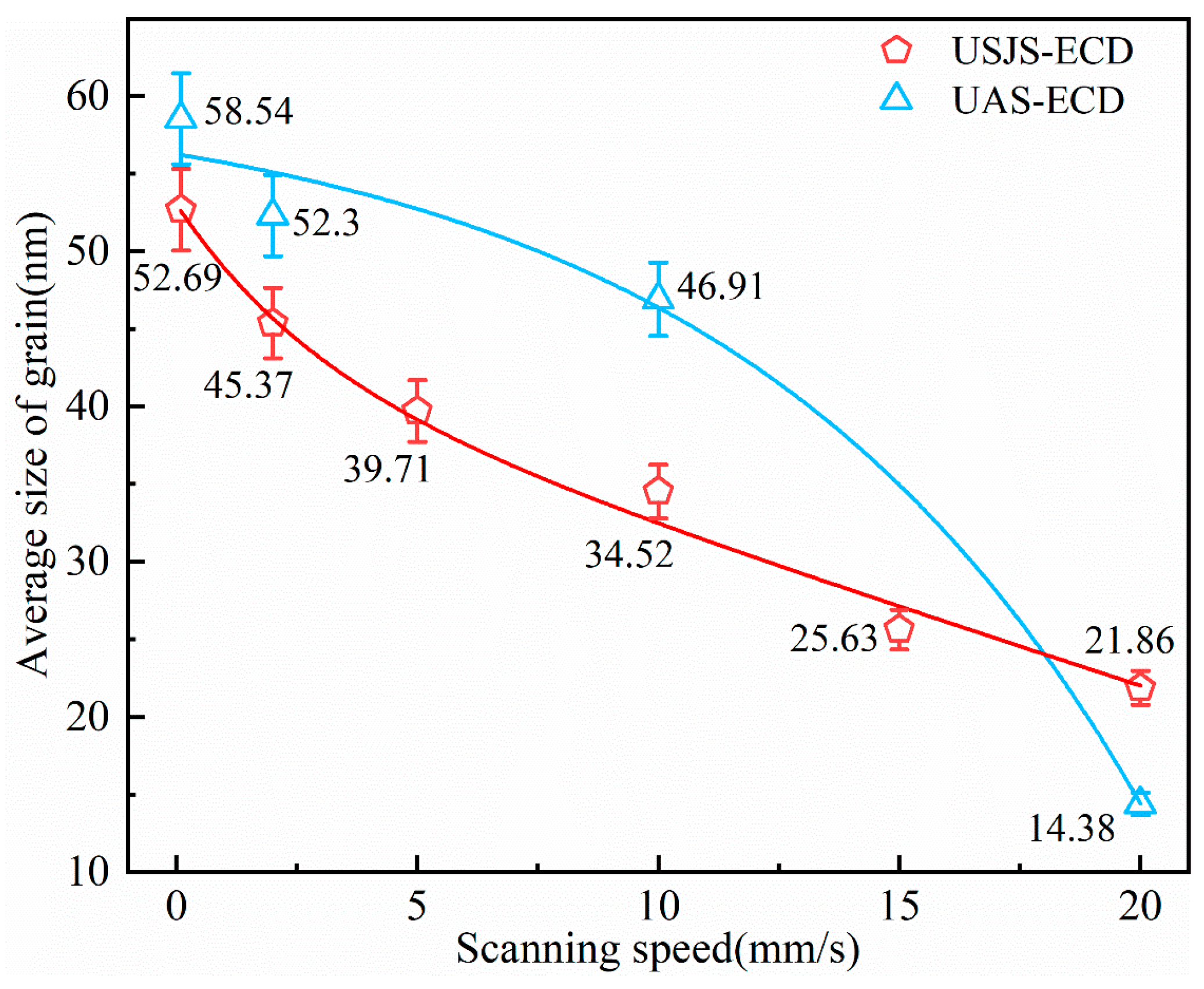
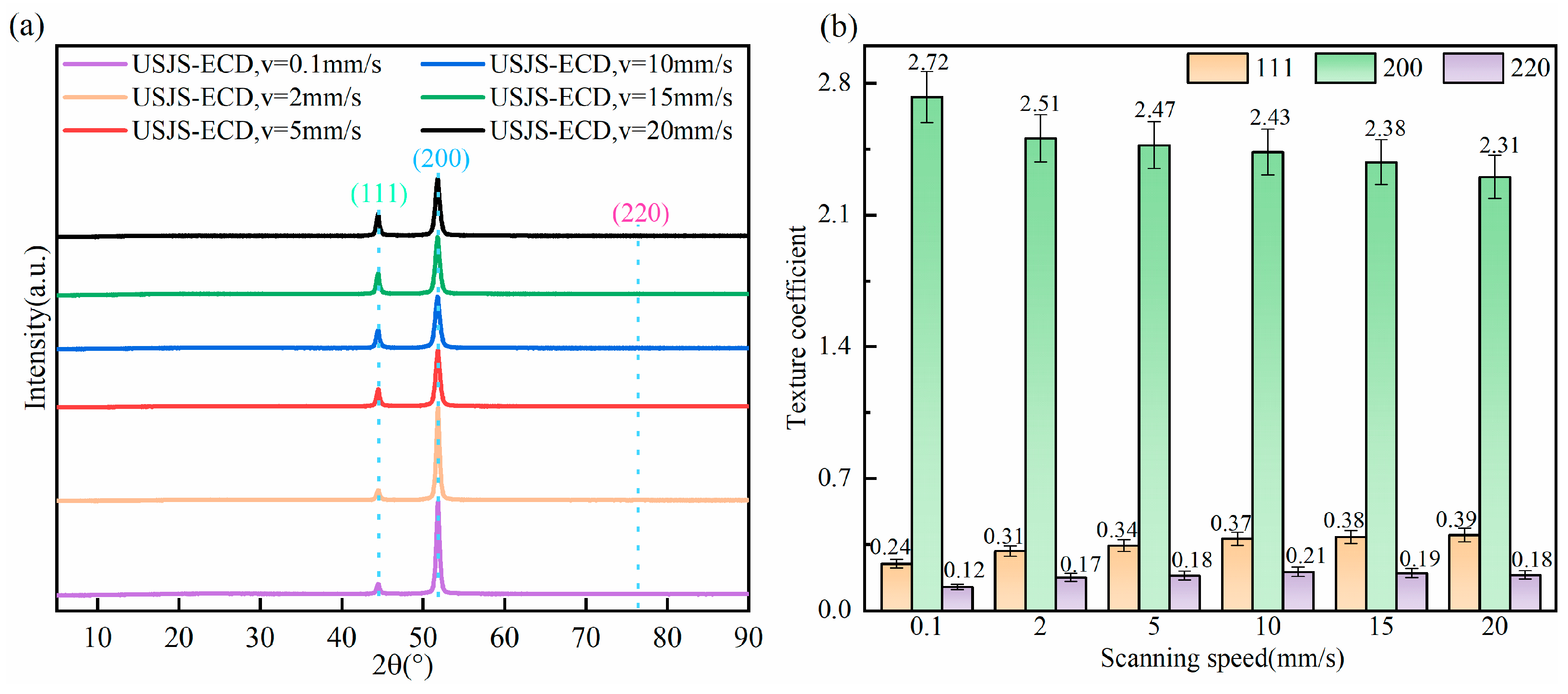
- The periodic migration of localized electric fields is achieved via the narrow slit planar jet flow coupled with scanning motion, resulting in continuous renewal of mass transport conditions and electric field distribution at the deposition interface. This promotes high-density nucleation and uniform grain growth. The deposited nickel exhibits a typical face-centered cubic crystal structure with a purity of approximately 98.82 wt%. The average grain size ranges from 21.86 to 52.69 nm, accompanied by a stable (200) preferred orientation, demonstrating effective control over nanocrystalline structure and texture within high-purity systems.
- (3)
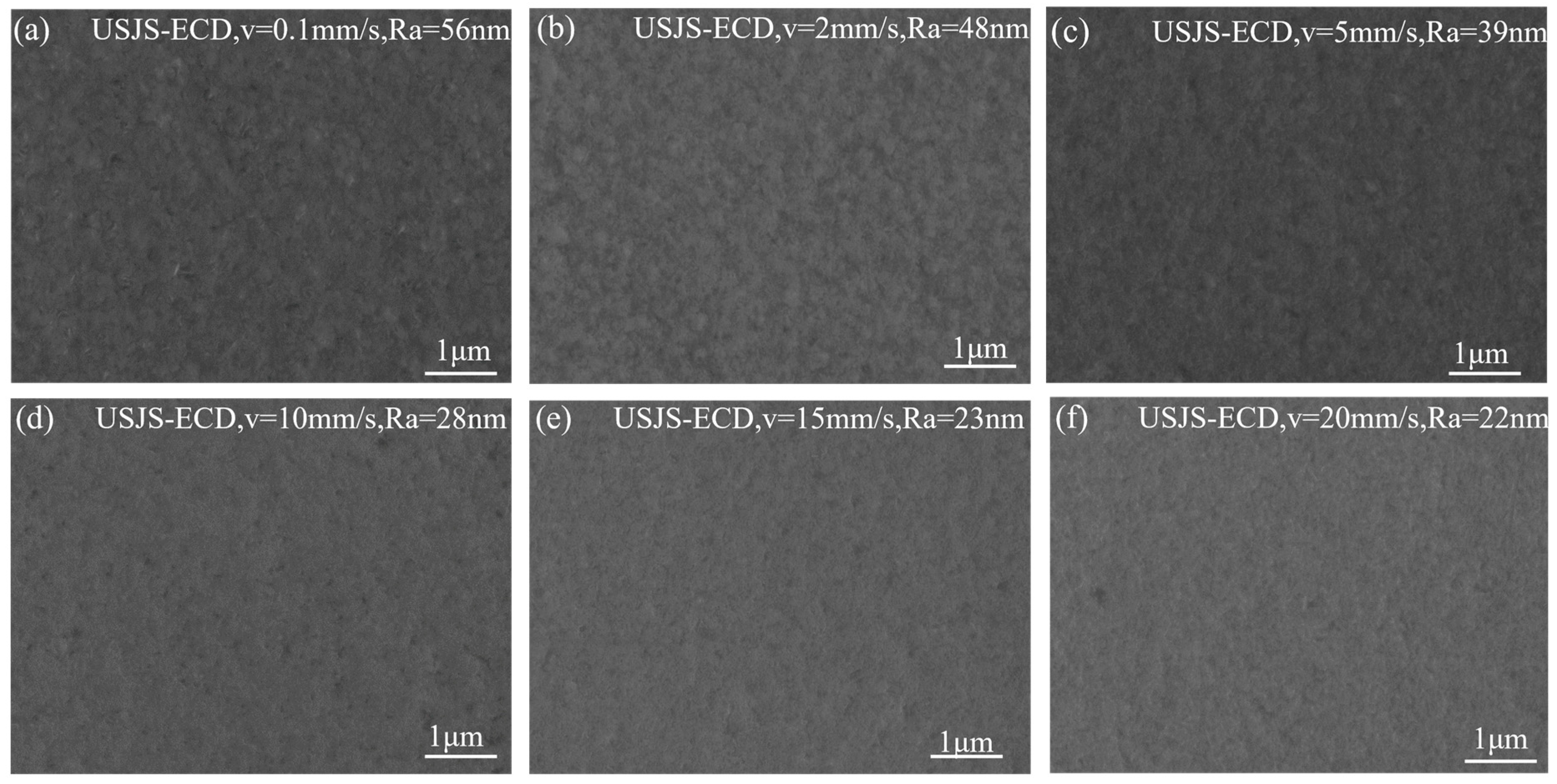
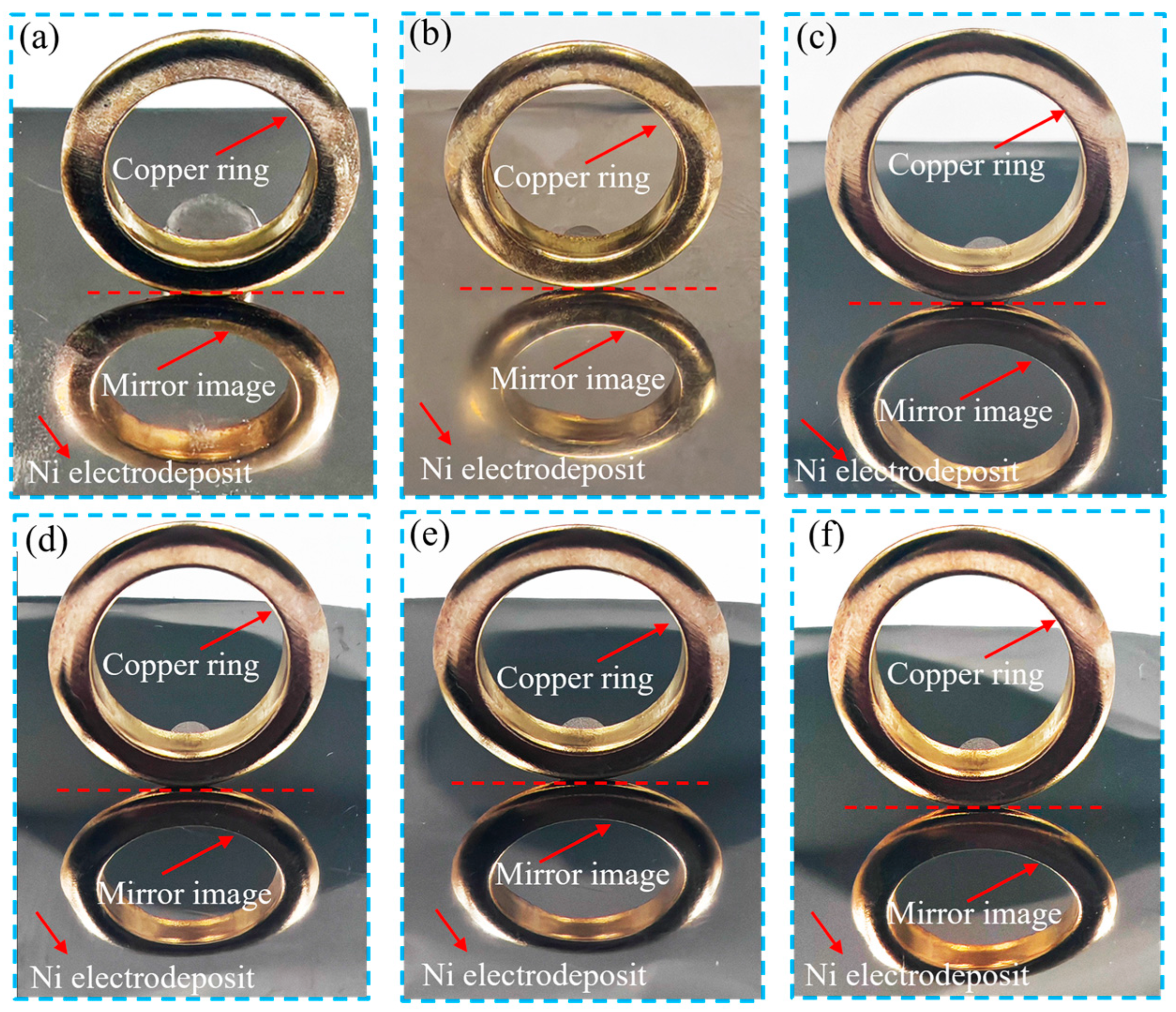
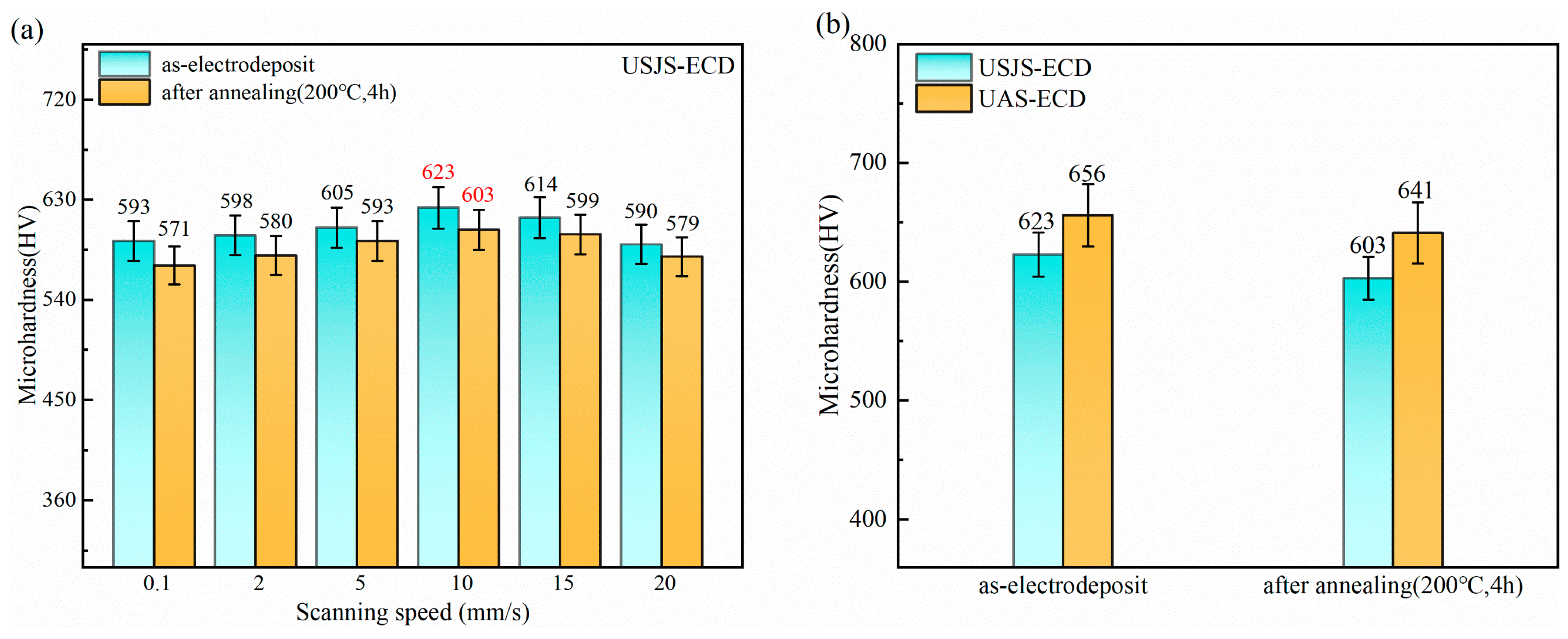
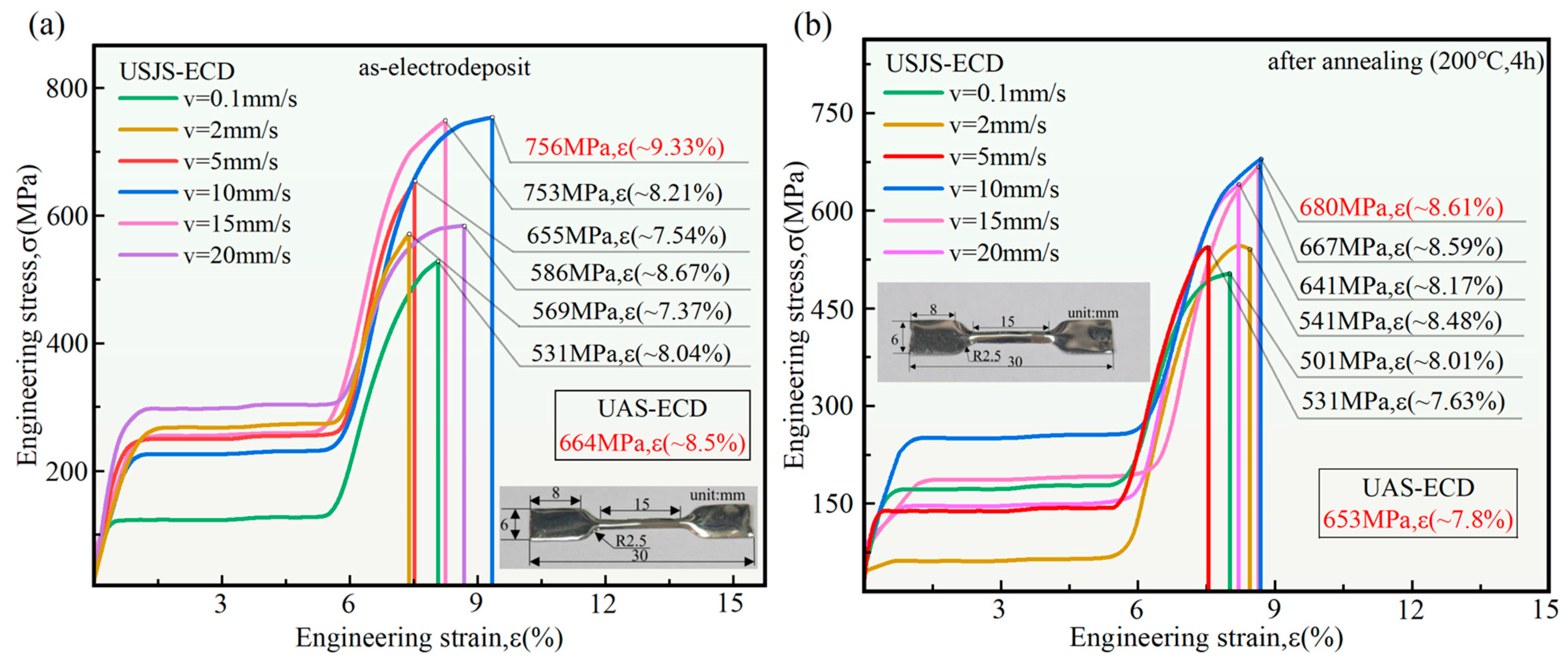
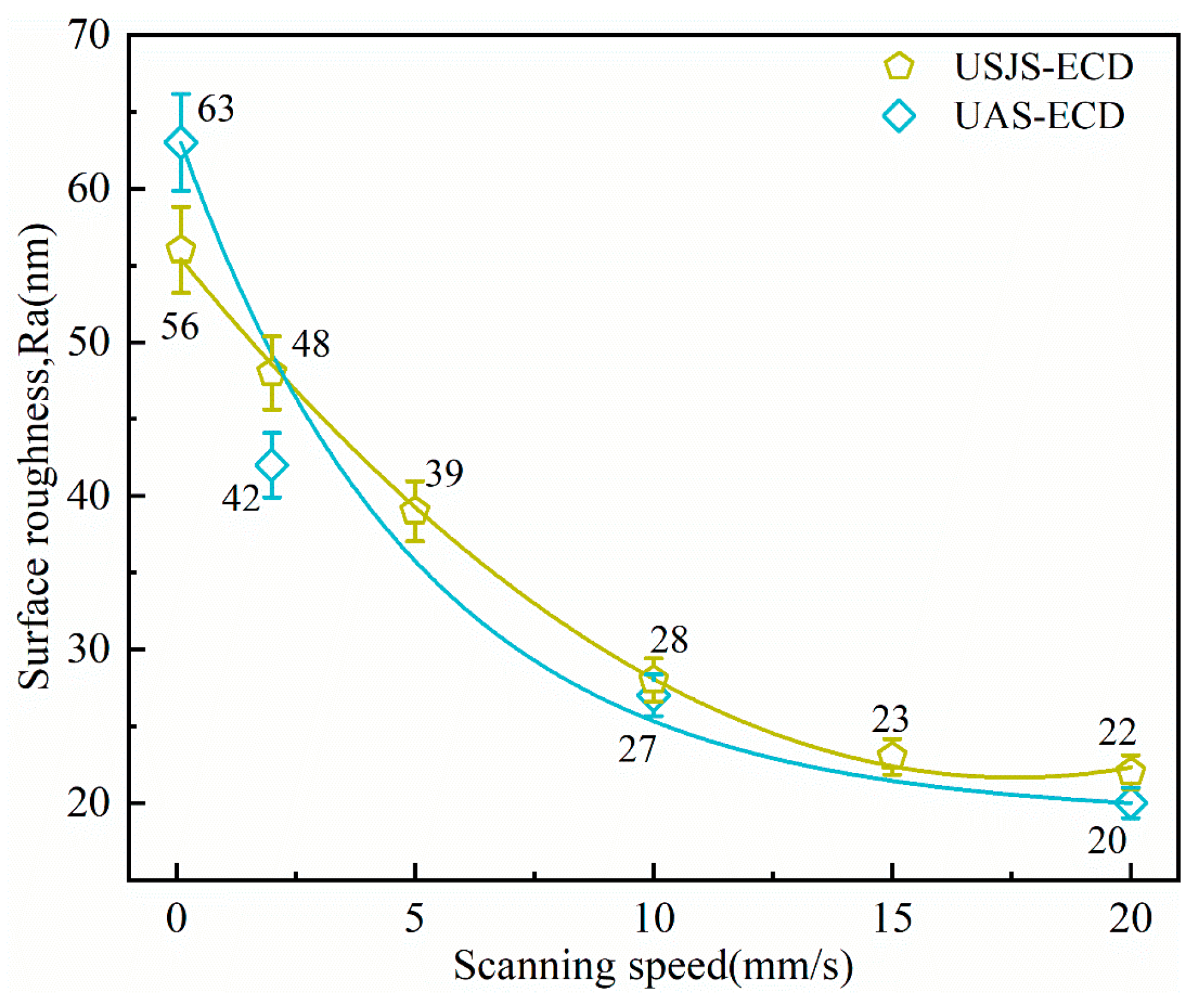
- In the absence of additives, the nickel layer produced by USJS-ECD displays a surface roughness (Ra) of approximately 22 nm, microhardness around 623 HV, tensile strength of 756 MPa, and elongation at fracture of 9.33%. Compared to UAS-ECD, the hardness experiences a slight decrease, whereas tensile strength increases by 13.85%, indicating a commendable combination of mechanical properties characterized by both high hardness and toughness.
Supplementary Materials
Author Contributions
Funding
Institutional Review Board Statement
Informed Consent Statement
Data Availability Statement
Conflicts of Interest
References
- Valiev, R. Nanostructuring of Metals by Severe Plastic Deformation for Advanced Properties. Nat. Mater. 2004, 3, 511–516. [Google Scholar] [CrossRef] [PubMed]
- Meyers, M.A.; Mishra, A.; Benson, D.J. Mechanical Properties of Nanocrystalline Materials. Prog. Mater. Sci. 2006, 51, 427–556. [Google Scholar] [CrossRef]
- Kushwaha, A.K.; John, M.; Misra, M.; Menezes, P.L. Nanocrystalline Materials: Synthesis, Characterization, Properties, and Applications. Crystals 2021, 11, 1317. [Google Scholar] [CrossRef]
- Kaneyama, G.; Takigawa, Y. Superplastic Bonding of Electrodeposited Nanocrystalline Ni Alloys. J. Jpn. Inst. Met. 2022, 86, 176–180. [Google Scholar] [CrossRef]
- Liu, Z.; Zhang, Q.; Zhang, X.; Yu, Z.; Zhang, X.; Mao, Q.; Nie, J.; Zhao, Y. Electrodeposition of Nanocrystalline Ni and NiCr Alloy Coatings: Effects of Cr Content on Microhardness and Wear Resistance Improvement. J. Mater. Res. Technol. 2024, 30, 3584–3593. [Google Scholar] [CrossRef]
- Viswanathan, V.; Laha, T.; Balani, K.; Agarwal, A.; Seal, S. Challenges and Advances in Nanocomposite Processing Techniques. Mater. Sci. Eng. R Rep. 2006, 54, 121–285. [Google Scholar] [CrossRef]
- Yang, X.; Ming, P.; Zhang, X.; Xiao, Y.; Zhang, Y.; Guo, X.; Zhang, Y. Fabrication of Precision Thin-Walled Parts via Quasi-Additive and Additive Electroforming: A Critical Overview. J. Manuf. Process. 2025, 150, 769–797. [Google Scholar] [CrossRef]
- Li, X.; Ming, P.; Ao, S.; Wang, W. Review of Additive Electrochemical Micro-Manufacturing Technology. Int. J. Mach. Tools Manuf. 2022, 173, 103848. [Google Scholar] [CrossRef]
- Wang, W.; Ming, P.; Zhang, X.; Li, X.; Zhang, Y.; Niu, S.; Ao, S. Additive Manufacturing of Three-Dimensional Intricate Microfeatures by Electrolyte-Column Localized Electrochemical Deposition. Addit. Manuf. 2022, 50, 102582. [Google Scholar] [CrossRef]
- Qu, N.S.; Zhu, D.; Chan, K.C.; Lei, W.N. Pulse Electrodeposition of Nanocrystalline Nickel Using Ultra Narrow Pulse Width and High Peak Current Density. Surf. Coat. Technol. 2003, 168, 123–128. [Google Scholar] [CrossRef]
- Jose, A.; Dmitrieva, E.; Schiemenz, S.; Schlörb, H.; Gemming, T.; Wolf, D.; Devi, A.; Gebert, A. Nanoporous Gold Nanostructures via Overpotential Electrodeposition and Two-Step Dealloying for SERS Applications. J. Alloys Compd. 2025, 1046, 184881. [Google Scholar] [CrossRef]
- Watanabe, A.; Takigawa, Y. Reducing Sulfur to Improve Thermal Embrittlement in Electrodeposited Nickel Using Citric Acid. Results Surf. Interfaces 2020, 1, 100001. [Google Scholar] [CrossRef]
- Krajaisri, P.; Puranasiri, R.; Chiyasak, P.; Rodchanarowan, A. Investigation of Pulse Current Densities and Temperatures on Electrodeposition of Tin-Copper Alloys. Surf. Coat. Technol. 2022, 435, 128244. [Google Scholar] [CrossRef]
- Wasekar, N.P.; Haridoss, P.; Seshadri, S.K.; Sundararajan, G. Influence of Mode of Electrodeposition, Current Density and Saccharin on the Microstructure and Hardness of Electrodeposited Nanocrystalline Nickel Coatings. Surf. Coat. Technol. 2016, 291, 130–140. [Google Scholar] [CrossRef]
- Mukundan, C.; Drillet, J. Mitigating the Effect of High Overpotential during Al Deposition on Aluminium-Graphite Battery Performance. Batter. Supercaps 2025, 8, e202400718. [Google Scholar] [CrossRef]
- Alkire, R.; Lu, P.-Y. Effect of Hydrogen Evolution on Current Distribution during Electrodeposition at Vertical Electrodes. J. Electrochem. Soc. 1979, 126, 2118. [Google Scholar] [CrossRef]
- Li, J.; Abruña, H.D. Phases of Underpotentially Deposited Hg on Au(111): An in Situ Surface X-Ray Diffraction Study. J. Phys. Chem. B 1997, 101, 2907–2916. [Google Scholar] [CrossRef]
- Li, Y.; Jiang, H.; Pang, L.; Wang, B.; Liang, X. Novel Application of Nanocrystalline Nickel Electrodeposit: Making Good Diamond Tools Easily, Efficiently and Economically. Surf. Coat. Technol. 2007, 201, 5925–5930. [Google Scholar] [CrossRef]
- Ma, T.; Ni, Y.; Wang, Q.; Xiao, J.; Huang, Z.; Tao, Z.; Chen, J. Lithium Dendrites Inhibition by Regulating Electrodeposition Kinetics. Energy Storage Mater. 2022, 52, 69–75. [Google Scholar] [CrossRef]
- Lan, C.; Feng, H.; Zhang, L.; Yue, J.; Wu, Y.; Wang, J.; Tang, J.; Tang, L. Regulating Electrode Wettability by Construction of the Liquid-Liquid Interface for Improving Metal Electrodeposition Performance. Chem. Eng. J. 2026, 527, 171769. [Google Scholar] [CrossRef]
- Zhu, Z.; Zhu, D.; Qu, N. Mechanical Electrodeposition of Bright Nanocrystalline Nickel. Sci. China Ser. E-Technol. Sci. 2008, 51, 911–920. [Google Scholar] [CrossRef]
- Liu, X.; Shen, L.; Qiu, M.; Tian, Z.; Wang, Y.; Zhao, K. Jet Electrodeposition of Nanocrystalline Nickel Assisted by Controllable Friction. Surf. Coat. Technol. 2016, 305, 231–240. [Google Scholar] [CrossRef]
- Zhang, F.; Liu, S.; Wang, F. Nucleation and Growth Behaviors of Nickel Coating by Jet Electrodeposition under the Combined Effect of Convection and Vertical Distribution. J. Phys. Chem. C 2022, 126, 14669–14679. [Google Scholar] [CrossRef]
- Xiao, Y.; Ming, P.; Zhang, X.; Hou, Y.; Du, L.; Li, S.; Zhang, Y.; Song, J. Ultrahigh Strength Ultrapure Nanostructured Nickel Metal Prepared via Ultrafine Anode Scanning Electrodeposition. Mater. Des. 2022, 213, 110339. [Google Scholar] [CrossRef]
- Zhu, D.; Sheng, L.; Ou, Y.; Wang, J.; Tang, Y.; Liu, K.; He, X.; Xu, H. Stable Electrodeposition of Lithium Metal Driven by Interfacial Unsaturated Solvation Environments. ACS Appl. Mater. Interfaces 2025, 17, 13952–13959. [Google Scholar] [CrossRef]
- Pei, L.; Huang, Y.; Wang, S.; Lei, J.; Wang, J. Precise Tailoring of Multi-Active Sites via Electrodeposition at the Mn-Co Interface for Catalytic Oxidation of Mixed VOCs. Sep. Purif. Technol. 2025, 374, 133734. [Google Scholar] [CrossRef]
- Nikitin, V.S.; Ostanina, T.N.; Rudoi, V.M.; Kuloshvili, T.S.; Darintseva, A.B. Features of Hydrogen Evolution during Electrodeposition of Loose Deposits of Copper, Nickel and Zinc. J. Electroanal. Chem. 2020, 870, 114230. [Google Scholar] [CrossRef]
- Kumar, K.S.; Suresh, S.; Chisholm, M.F.; Horton, J.A.; Wang, P. Deformation of Electrodeposited Nanocrystalline Nickel. Acta Mater. 2003, 51, 387–405. [Google Scholar] [CrossRef]
- Recio, F.J.; Herrasti, P.; Vazquez, L.; Ponce de León, C.; Walsh, F.C. Mass Transfer to a Nanostructured Nickel Electrodeposit of High Surface Area in a Rectangular Flow Channel. Electrochim. Acta 2013, 90, 507–513. [Google Scholar] [CrossRef]
- Tarkowski, L.; Indyka, P.; Bełtowska-Lehman, E. XRD Characterisation of Composite Ni-Based Coatings Prepared by Electrodeposition. Nucl. Instrum. Methods Phys. Res. Sect. B Beam Interact. Mater. At. 2012, 284, 40–43. [Google Scholar] [CrossRef]
- Julie, S.; Wasekar, N.P.; Parida, P.K.; Santra, S.; David, C.; Kamruddin, M. Effect of Grain Size on the Thermal Stability of Electrodeposited Nanocrystalline Nickel: X-Ray Diffraction Studies. Thin Solid Films 2022, 745, 139114. [Google Scholar] [CrossRef]
- Wang, Y.M.; Cheng, S.; Wei, Q.M.; Ma, E.; Nieh, T.G.; Hamza, A. Effects of Annealing and Impurities on Tensile Properties of Electrodeposited Nanocrystalline Ni. Scr. Mater. 2004, 51, 1023–1028. [Google Scholar] [CrossRef]
- Ebrahimi, F.; Ahmed, Z.; Morgan, K.L. Effect of Grain Size Distribution on Tensile Properties of Electrodeposited Nanocrystalline Nickel. MRS Online Proc. Libr. (OPL) 2000, 634, B2.7.1. [Google Scholar] [CrossRef]
- Gu, C.; Lian, J.; Jiang, Z.; Jiang, Q. Enhanced Tensile Ductility in an Electrodeposited Nanocrystalline Ni. Scr. Mater. 2006, 54, 579–584. [Google Scholar] [CrossRef]
- Yim, T.H.; Yoon, S.C.; Kim, H.S. Tensile Properties of Electrodeposited Nanocrystalline Nickel. Mater. Sci. Eng. A 2007, 449–451, 836–840. [Google Scholar] [CrossRef]
- Fritz, T.; Griepentrog, M.; Mokwa, W.; Schnakenberg, U. Determination of Young’s Modulus of Electroplated Nickel. Electrochim. Acta 2003, 48, 3029–3035. [Google Scholar] [CrossRef]
- Harris, G.B. X. Quantitative Measurement of Preferred Orientation in Rolled Uranium Bars. Lond. Edinb. Dublin Philos. Mag. J. Sci. 1952, 43, 113–123. [Google Scholar] [CrossRef]
- Williamson, G.K.; Smallman, R.E., III. Dislocation Densities in Some Annealed and Cold-Worked Metals from Measurements on the X-Ray Debye-Scherrer Spectrum. Philos. Mag. A J. Theor. Exp. Appl. Phys. 1956, 1, 34–46. [Google Scholar] [CrossRef]









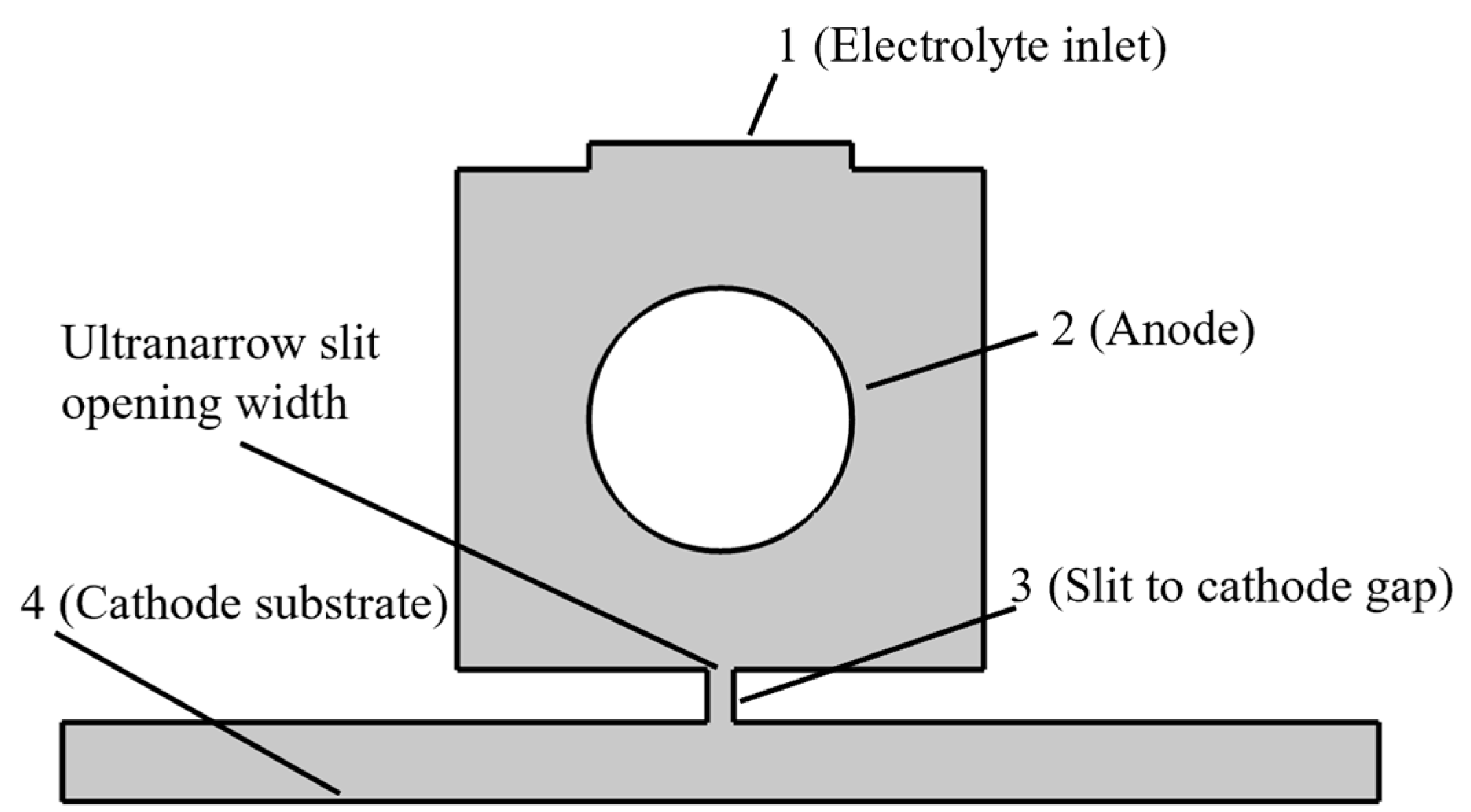
| Boundary | Parameter | Value |
|---|---|---|
| Electrical conductivity | 20 S/m | |
| Dynamic viscosity | 0.0012 Pa·s | |
| Ni2+ concentration | 1.4 mol/L | |
| Anodic charge transfer coefficient | 1.5 | |
| Diffusion coefficient of Ni2+ | 7 × 10⁻¹⁰ m2/s | |
| Electrolyte density | 1400 kg/m3 | |
| 1 | Electrolyte inlet | 16 L/min |
| 2 | Anode voltage | 20 V |
| 3 | Slit to cathode gap | 200 μm |
| 4 | Cathode substrate voltage | 0 V |
| Ultranarrow slit opening width | 50 μm |
| Element | Content (wt%) | Element | Content (wt%) |
|---|---|---|---|
| Ni | 98.82 | Fe | 0.197 |
| N | 0.183 | S | 0.03 |
| C | 0.098 | Cu | 0.169 |
| Cl | 0.17 | O | 0.31 |
Disclaimer/Publisher’s Note: The statements, opinions and data contained in all publications are solely those of the individual author(s) and contributor(s) and not of MDPI and/or the editor(s). MDPI and/or the editor(s) disclaim responsibility for any injury to people or property resulting from any ideas, methods, instructions or products referred to in the content. |
© 2026 by the authors. Licensee MDPI, Basel, Switzerland. This article is an open access article distributed under the terms and conditions of the Creative Commons Attribution (CC BY) license.
Share and Cite
Lei, Z.; Ming, P.; Li, X.; Wang, K.; Liu, W.; Liu, H.; Niu, S. Efficient Preparation of Ultrahigh-Strength Nanostructured Nickel by Ultranarrow Slit-Jet Scanning Electrodeposition Without Additives. Micromachines 2026, 17, 700. https://doi.org/10.3390/mi17060700
Lei Z, Ming P, Li X, Wang K, Liu W, Liu H, Niu S. Efficient Preparation of Ultrahigh-Strength Nanostructured Nickel by Ultranarrow Slit-Jet Scanning Electrodeposition Without Additives. Micromachines. 2026; 17(6):700. https://doi.org/10.3390/mi17060700
Chicago/Turabian StyleLei, Zhenjian, Pingmei Ming, Xinchao Li, Kun Wang, Wenjie Liu, Huan Liu, and Shen Niu. 2026. "Efficient Preparation of Ultrahigh-Strength Nanostructured Nickel by Ultranarrow Slit-Jet Scanning Electrodeposition Without Additives" Micromachines 17, no. 6: 700. https://doi.org/10.3390/mi17060700
APA StyleLei, Z., Ming, P., Li, X., Wang, K., Liu, W., Liu, H., & Niu, S. (2026). Efficient Preparation of Ultrahigh-Strength Nanostructured Nickel by Ultranarrow Slit-Jet Scanning Electrodeposition Without Additives. Micromachines, 17(6), 700. https://doi.org/10.3390/mi17060700