1. Introduction
Driven by the exponential growth in High-Performance Computing (HPC) and Artificial Intelligence (AI) accelerators, the demand for Fully Integrated Voltage Regulators (FIVRs) and Power-Supply-on-Chip (PwrSoC) architectures has reached unprecedented levels [
1,
2]. To achieve ultimate system miniaturization and high-frequency power delivery, these advanced power management systems heavily rely on embedded passive components. Within this framework, on-chip micro-inductors have emerged as the primary bottleneck, as they strictly require massive current-handling capabilities and thermal performance while confined to an ultra-compact footprint [
3].
To address the stringent requirements of integration compatibility, MEMS thin-film inductors provide an effective solution by virtue of their compact structure and CMOS-compatible fabrication processes, thus becoming a prominent research focus in the monolithic integration of power management systems at present [
4,
5,
6,
7]. However, the application of existing MEMS thin-film inductors under high-power operating conditions is still plagued by two core bottlenecks: insufficient current-handling capability and severe thermal performance degradation [
8,
9,
10]. As operational current densities continually escalate, the resulting excessive Joule heating poses a severe threat to both device reliability and overall system efficiency.
To tackle these thermal and current-carrying limitations, multilayer/dual-layer structural innovations have emerged as a key research direction, leveraging the advantages of stacked conductors to enhance both electrical and thermal performance. Historically, the concept of utilizing multilayer or two-layer structures in micro-inductors has been explored to address various performance limitations. As early as 1998, Yue and Wong proposed on-chip spiral inductors with patterned ground shields for silicon-based RF ICs to improve the quality factor [
11]. Subsequent studies by Ragonese et al. established scalable physics-based models for silicon spiral inductors, paving the way for multilayer designs [
12]. Furthermore, innovative multilayer configurations have been patented and developed to achieve unique electrical properties, such as negative inductance structures proposed by Widjaja and Sarangan [
13], and high-performance microcoils using layered films [
14].
However, despite these advancements in two-layer and multilayer geometries, most existing designs primarily focus on maximizing spatial efficiency, optimizing radio-frequency (RF) characteristics, or achieving specific electromagnetic shielding on traditional silicon substrates. When applied to modern high-power operating conditions (e.g., currents exceeding 2–3 A), these conventional geometries are still trapped in a fundamental physical trade-off: the “electrothermal deadlock”. Expanding the conductor volume to enhance the current rating inevitably consumes valuable chip area. Furthermore, traditional silicon substrates suffer from severe substrate eddy current losses, which degrade high-frequency signal integrity [
15,
16,
17].
To overcome these structural and material bottlenecks, this paper proposes an inductor chip based on a DLP array microcoil structure, fabricated via advanced MEMS processes. Our approach introduces three distinct advantages over prior methods: First, unlike traditional series-stacked structures, our unique parallel array architecture evenly distributes the input current to the upper and lower coils, directly halving the localized current density and substantially suppressing Joule heating while maintaining high inductance through vertical magnetic coupling. Second, by utilizing MEMS technology, the device achieves an ultra-thin and compact profile, making it highly compatible with the stringent dimensional requirements of modern thin-film integration and emerging flexible electronics. Finally, substituting the conventional silicon wafer with a glass substrate eliminates substrate eddy currents, ensuring superior electrical insulation and maintaining excellent signal integrity even under high-frequency and high-power operations. This structural and material innovation sets a new benchmark for thermal-electromagnetic co-design, making its rapid dissemination highly impactful for the immediate advancement of ultra-high-density PwrSoC modules.
2. Double-Layer Inductor Model Design
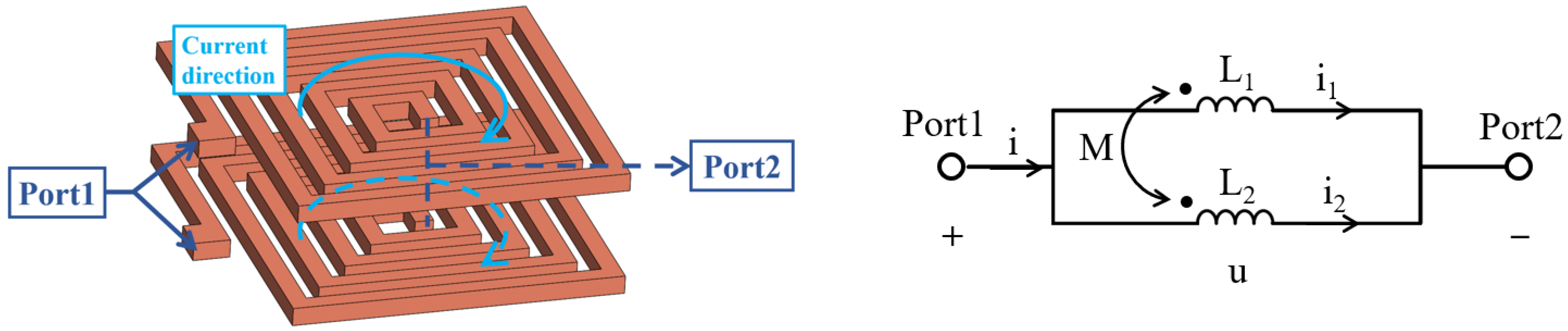
Based on the single-layer coil, we extended it to a double-layer parallel structure, as illustrated in
Figure 1. According to Kirchhoff’s current law, the total inductance is given by:
Since ideal coupling does not exist in practical scenarios, the total inductance cannot be zero. In general, the double-layer parallel coil exhibits a total inductance comparable to that of a planar parallel coil.
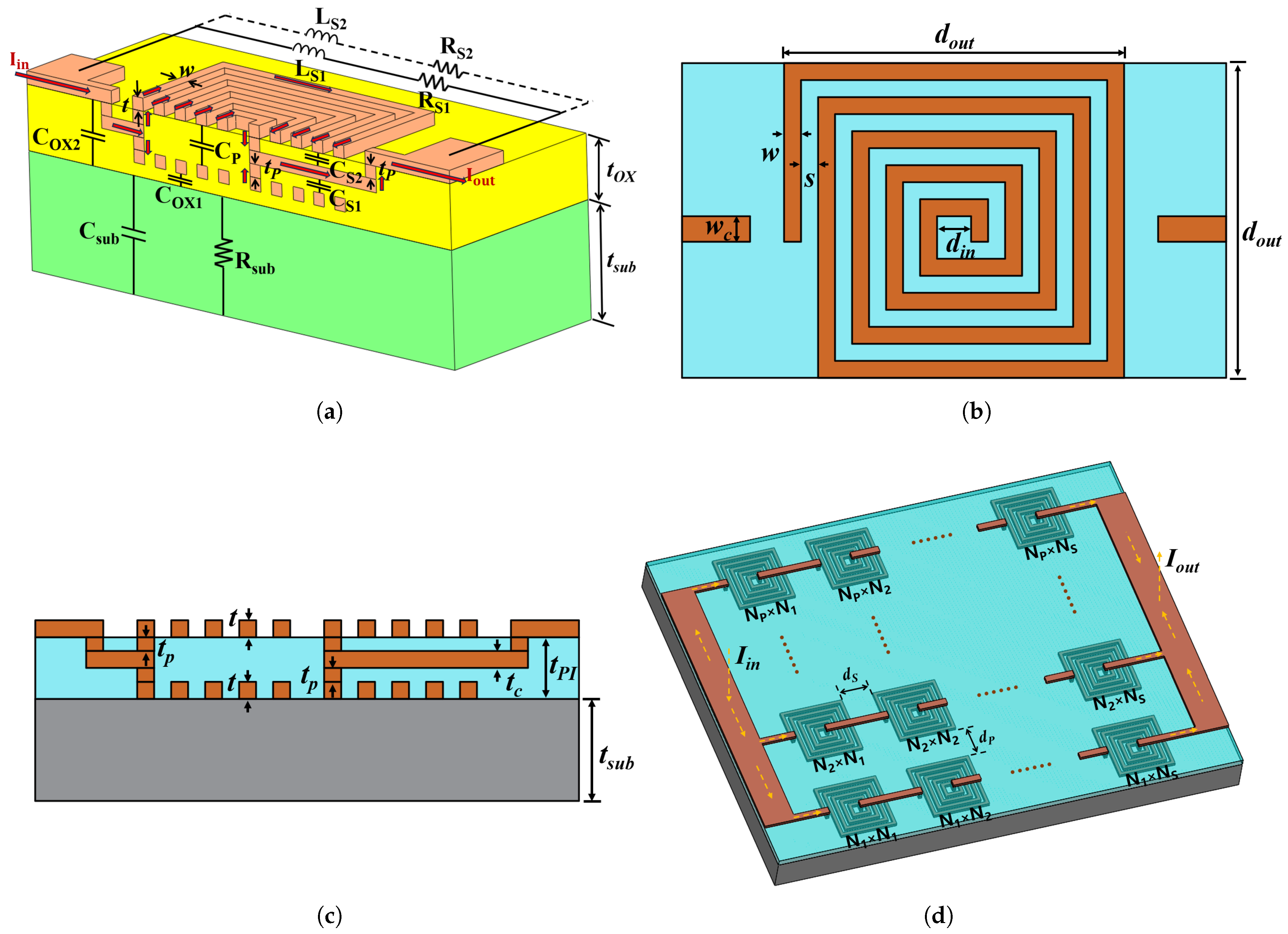
The geometric model of the DLP thin-film inductor features a five-layer configuration (
Figure 2a–c). During operation, current enters via the top pad, passes through the intermediate routing layer, splits equally into the two coil layers, recombines at the opposite routing layer, and exits through the other top pad. In
Figure 2a, the physical meanings of
,
,
,
,
,
,
, and
are consistent with those in the equivalent circuit model of the double-layer series thin-film inductor. The magnetic flux superposition of the two coils is represented by the mutual inductance in the same-name terminal parallel configuration. Among these parameters, the calculation formula for
is modified as follows:
Furthermore,
and
denote the overlap capacitances between the bottom/top coils and the intermediate connecting lines. Since the structures of the top and bottom coils are identical, these two capacitances are equal. Due to the structural modification, the overlap capacitance
between the coils is altered. Specifically, the calculation formulas for
,
, and
are:
To illustrate this theoretical background with practical values, We consider the base geometric parameters of our designed DLP inductor (detailed later in
Section 4,
Table 1). For an example structure with a conductor width
, wire thickness
, pillar thickness
, and utilizing a polyimide layer with a relative permittivity (
), the parasitic capacitances (
,
, and
) are effectively restricted to the sub-picofarad (pF) range. Furthermore, by plugging in these physical dimensions and the layout footprints, the baseline single-cell double-layer parallel structure is estimated to achieve a total theoretical inductance (
) of approximately
. These practical baseline values demonstrate that the rationally designed geometric parameters not only safely control the parasitic elements, thereby guaranteeing a high self-resonant frequency (SRF) for the double-layer parallel configuration, but also halve the branch currents to mitigate Joule heating.
3. Simulation of Double-Layer Inductor
It can be observed that , , and are all positively correlated with the coil conductor width and negatively correlated with the thickness of the vertical interconnects. Reducing the conductor linewidth or increasing the thickness of the vertical interconnects can effectively decrease the above capacitance values.
This parallel current division halves the load per coil layer, significantly mitigating Joule heating and boosting the maximum current-carrying capacity. Although the halved current reduces the individual magnetic flux of each layer, the vertical superposition of the total flux effectively compensates for this reduction. Consequently, the inductance of the DLP structure experiences only negligible degradation. This basic structure is laterally scaled into an
×
array configuration (where
p and
s denote rows and columns) by horizontally interconnecting multiple individual inductors (shown in
Figure 2d).
In this study, the finite element method (FEM) was employed to simulate and analyze MEMS thin-film inductors using the commercial simulation software COMSOL Multiphysics 6.0. The objective was to investigate the influence of the geometric structure of MEMS thin-film inductors on their electrical and thermal performance, thereby optimizing the detailed parameters for the structural design of MEMS thin-film inductors. Based on our previous research on single-layer inductors, we simulated the performance of double-layer series and double-layer parallel inductors, with a fixed vertical interconnect thickness of .
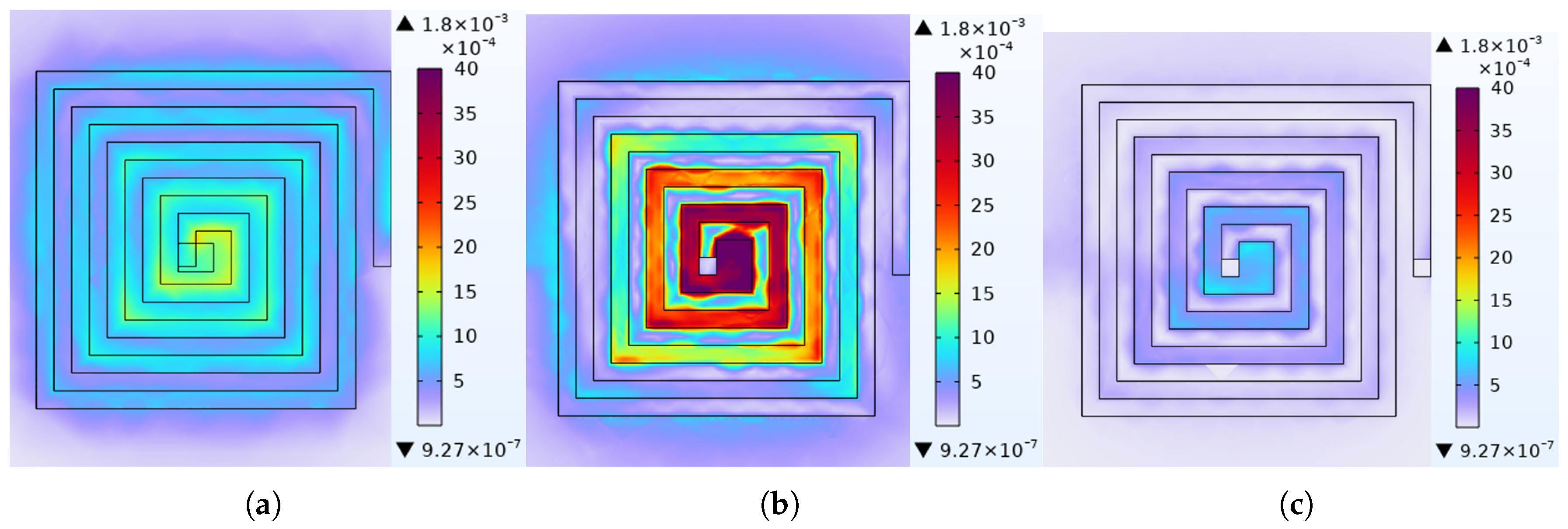
Figure 3 presents the finite element simulation results of the magnetic flux density distribution and magnetic flux streamline distribution for the three types of MEMS thin-film inductors. The upper and lower limits of the color bar are set identically to facilitate comparative analysis. Furthermore, all three inductor structures were excited by an alternating current (AC) with a frequency of 1 GHz and a magnitude of 0.1 A. Evidently, the double-layer series structure exhibits the best inductive performance, while the double-layer parallel structure shows the weakest performance, although the difference from the single-layer structure is relatively small.
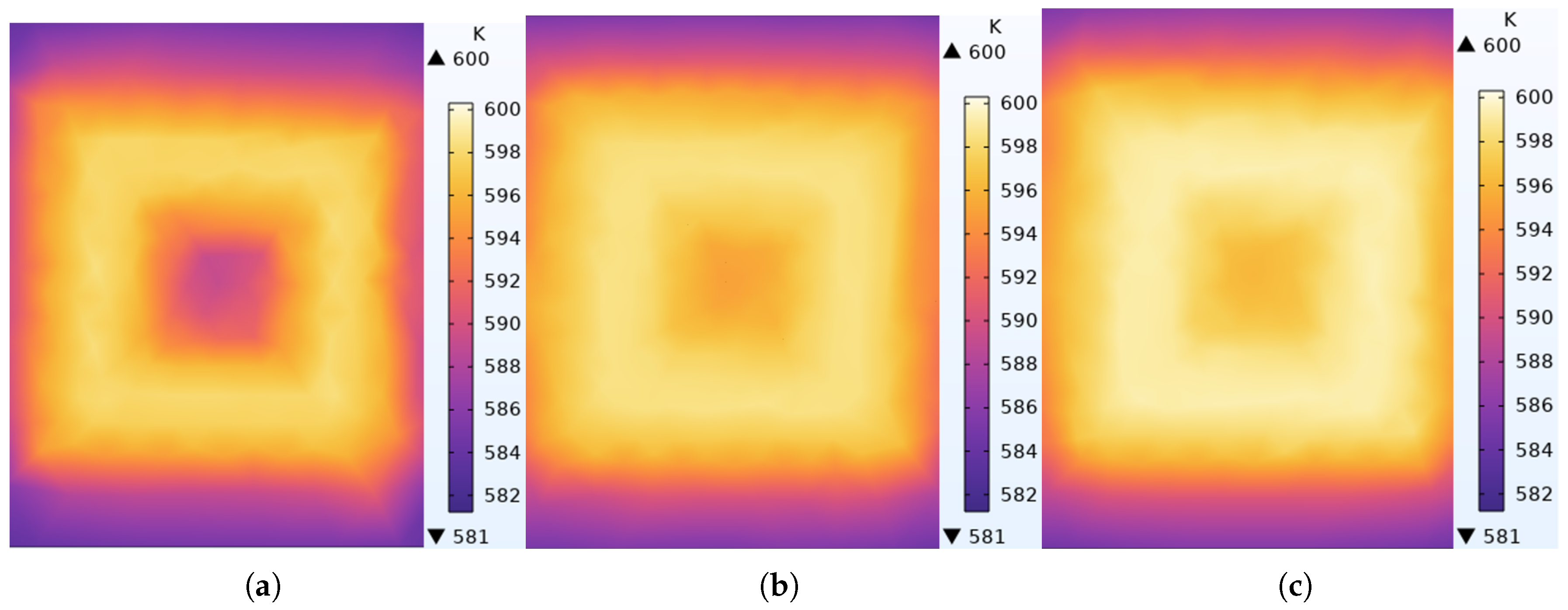
Figure 4 illustrates the finite element simulation results of the temperature distribution in the PI layer for the three MEMS thin-film inductor structures. All inductors were excited by a direct current (DC), and the maximum temperature of the PI layer was controlled at approximately 600 K. The temperature contour maps reveal that the most intense heat generation occurs around the middle-turn conductors rather than at the center of the coil, and the temperature distributions of the three thin-film inductors are generally consistent. Meanwhile, the double-layer parallel structure demonstrates slightly better thermal performance than the other two structures.
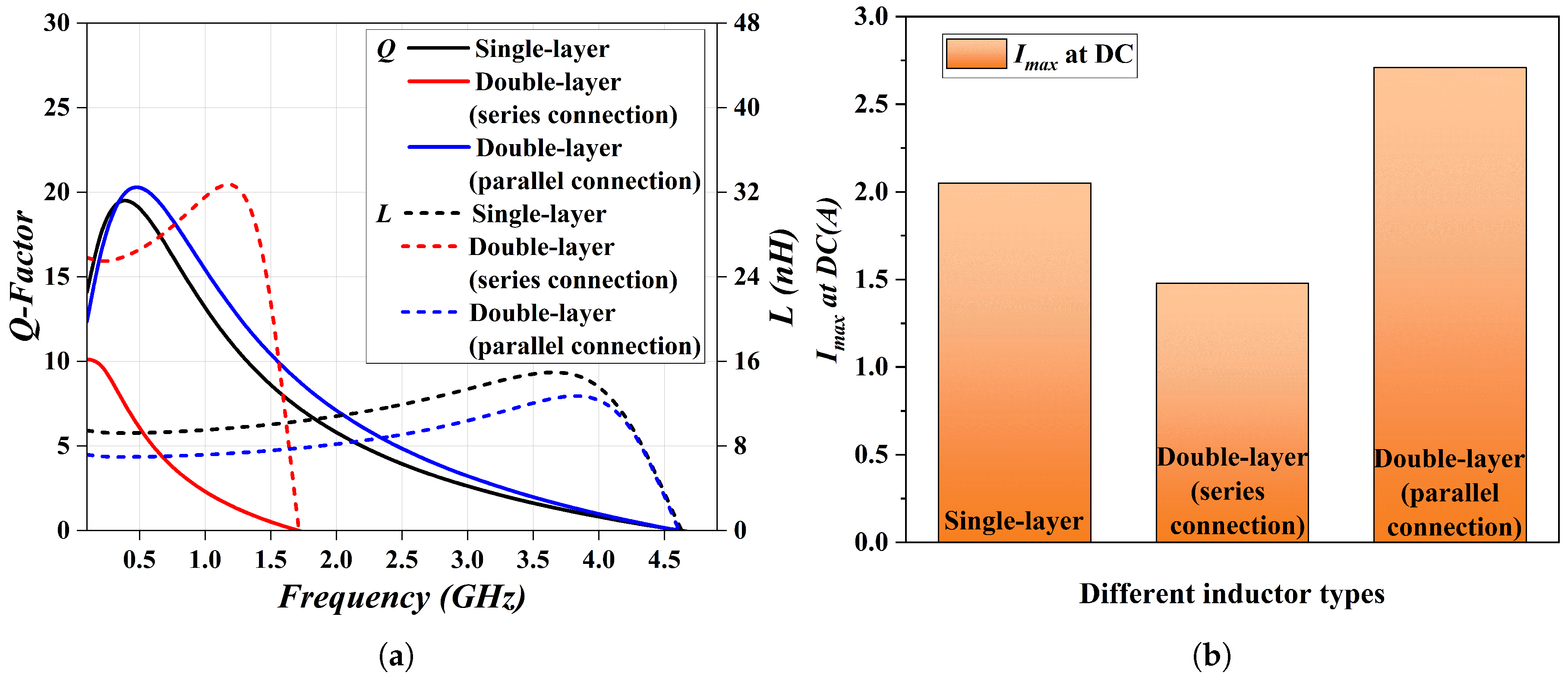
Figure 5 quantitatively analyzes other performance metrics of the three structures. The simulation results indicate that the electrical performance of the double-layer parallel thin-film inductor is close to that of the single-layer inductor. It exhibits a slightly higher maximum quality factor (19.644@0.4 GHz for the single layer vs. 20.39@0.5 GHz for the double-layer parallel) and a slightly lower maximum inductance (14.974 nH@3.7 GHz for the single layer vs. 12.76 nH@3.8 GHz for the double-layer parallel), along with superior frequency characteristics. In addition, the double-layer parallel thin-film inductor achieves the optimal maximum current-carrying capacity of 2.71 A, representing improvements of 32.2% and 83.2% compared with the single-layer and double-layer series structures, respectively. In contrast, the double-layer series structure outperforms the other two structures only in terms of inductance value.
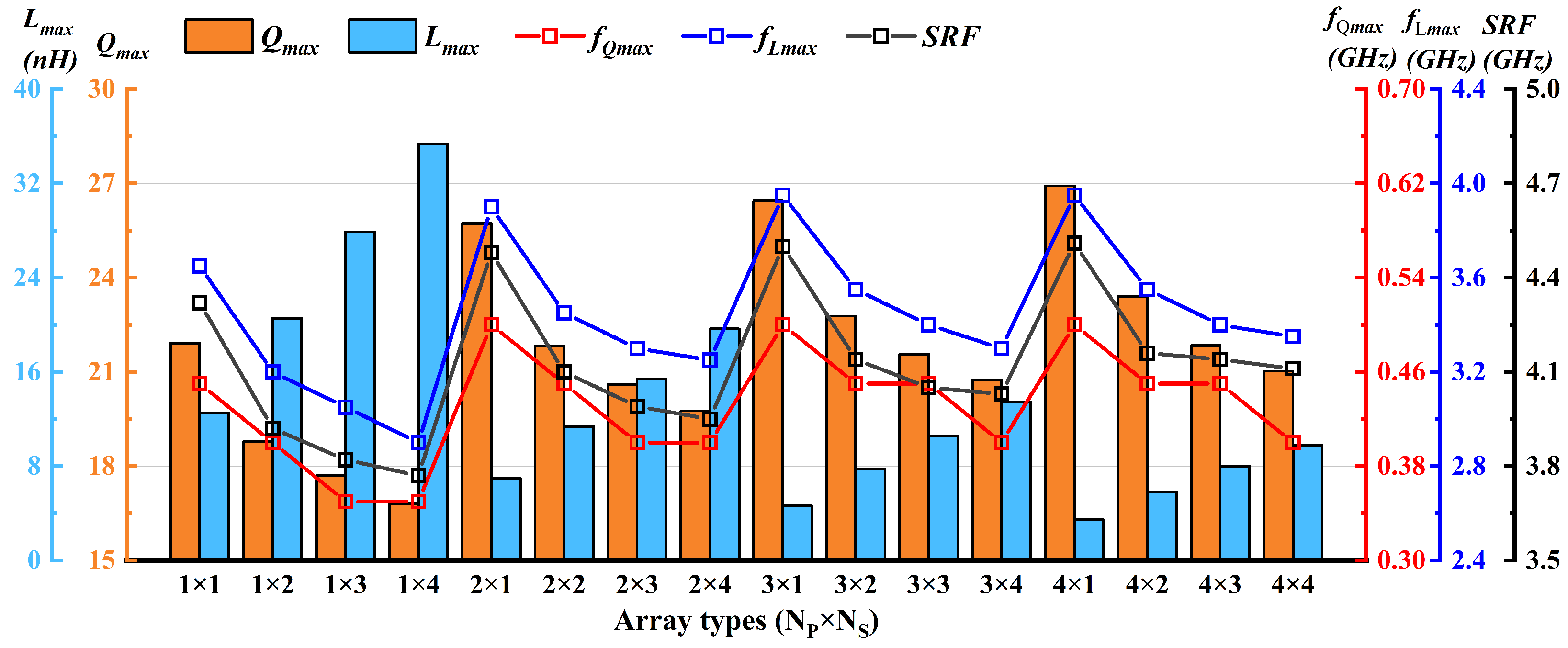
To further investigate the effect of arrayed coils on inductor performance, this study quantitatively analyzed the electrical performance of various arrays for the three inductor structures, with the simulation results shown in
Figure 6. Taking the single-cell array (
= 1, i.e., 1 × 1/2 × 1/3 × 1/4 × 1) as the benchmark, each additional stage of planar series connection increases
by an average of 76.4%, 135.29%, and 194.11%, respectively, while
,
, and
decrease slightly. Taking the single-row array (
= 1, i.e., 1 × 1/1 × 2/1 × 3/1 × 4) as the benchmark, each additional stage of planar parallel connection reduces
by an average of 48.73%, 59.66%, and 75.89%, respectively, whereas
increases by an average of 15.90%, 19.09%, and 22.7%, respectively. Moreover, increasing the number of series or parallel stages results in a slight reduction in the self-resonant frequency (SRF).
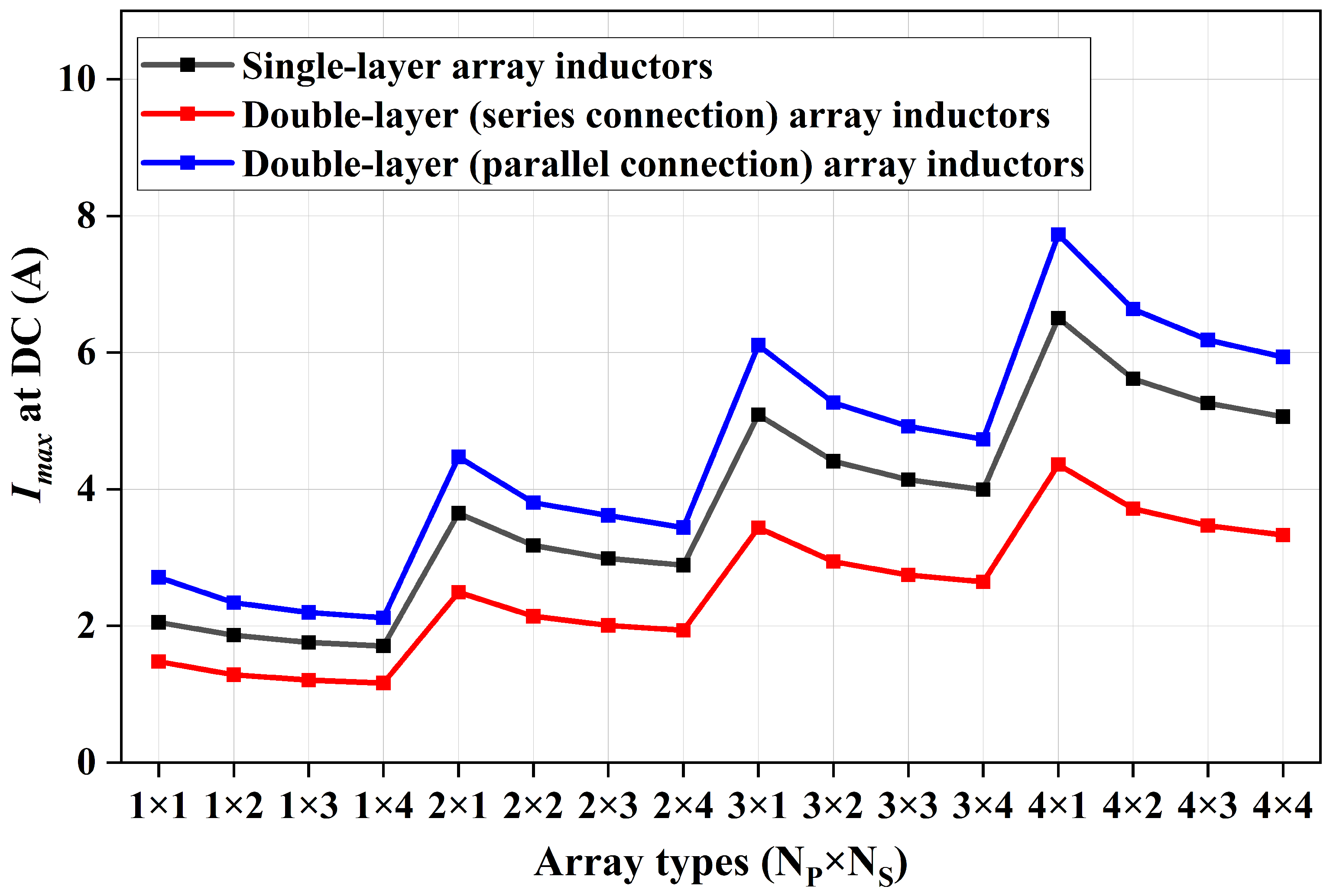
Similarly, the maximum current-carrying capacity of various arrays for the three inductor structures was quantitatively analyzed, with the simulation results presented in
Figure 7. The results show that, relative to the single-cell array (
= 1), each additional stage of planar series connection reduces the maximum current-carrying capacity by an average of 13.48%, 18.83%, and 21.85%, respectively. In contrast, relative to the single-row array (
= 1), each additional stage of planar parallel connection improves the maximum current-carrying capacity by an average of 67.44%, 130.56%, and 191.74%, respectively.
Based on the above quantitative analysis, the key conclusions can be drawn as follows: The double-layer parallel structure offers significant advantages in achieving higher current-carrying capacity and better thermal performance with only minor degradation in electrical performance. Furthermore, arraying the double-layer structures can further enhance their electrical and thermal performance.
4. Fabrication of Inductor
Based on the simulation results in the previous section, the structural parameters of the double-layer parallel inductor were determined in this study, as listed in
Table 1.
Table 1.
Geometric Parameters of Designed DLP Inductor.
Table 1.
Geometric Parameters of Designed DLP Inductor.
| Parameter | Items | Values (μm) |
|---|
| t | thickness of spiral wires | 50 |
| thickness of pillars | 40 |
| thickness of polyimide layer | 90 |
| thickness of connecting conductors | 50 |
| thickness of glass substrate | 1800 |
| w | width of spiral wires | 50 |
| width of connecting conductors | 200 |
| width of pillars | 100 |
| s | spacing of the lines of spiral wires | 50 |
| x-axis spacing of arrayed coils | 500 |
| y-axis spacing of arrayed coils | 500 |
| inner diameter of the coil | 50 |
| outer diameter of the coil | 1000 |
The fabrication of this thin-film inductor primarily utilizes MEMS processes such as photolithography, sputtering, etching, and electroplating, proceeding sequentially through the five-layer structure. All fabrication processes in this work were carried out on 4-inch glass wafers. To make full use of the limited wafer area while ensuring the quantity and quality of qualified samples, the number of prepared arrays of different configurations was not uniform. In addition, to guarantee reliable interconnection between conductors in different layers, the cross-sectional area of the vertical interconnects was slightly enlarged in the design, together with an increased contact area between the coils and their connecting sections. This structural variation has a negligible effect on the performance of the array inductors.
The DLP array inductor, possessing a five-layer structure, requires a more complex fabrication process compared to single-layer or standard double-layer series inductors [
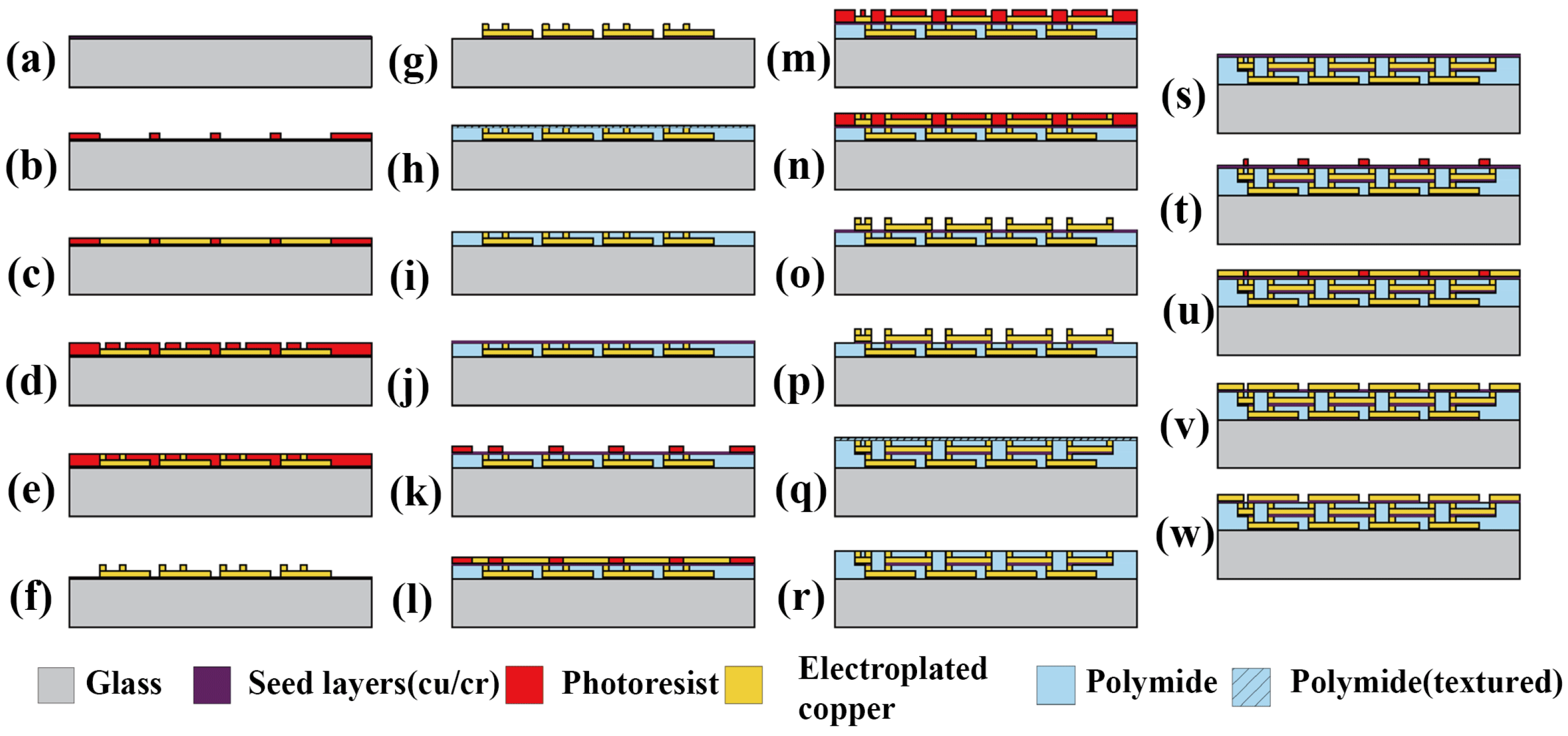
18]. The fabrication process flow of the MEMS thin-film inductor is illustrated in
Figure 8, with detailed steps as follows:
Figure 8a A Cr/Cu seed layer (10 nm Cr and 150 nm Cu) was deposited on the glass substrate.
Figure 8b Positive photoresist with a thickness of approximately 50
m was spin-coated on the seed layer. After baking the sample on a hot plate at 90 °C for 2 h, conventional photolithography was performed to pattern the photoresist and form the electroplating mold for the bottom-layer coil.
Figure 8c Copper was electroplated through the mold to form the bottom coil.
Figure 8d second layer of photoresist with a thickness of approximately 40
m was spin-coated over the previous layer, followed by patterning to create the mold for vertical interconnects.
Figure 8e Copper was electroplated to form the vertical interconnects.
Figure 8f All photoresist was removed using acetone and ultrasonic agitation for 10–15 min.
Figure 8g The first seed layer was stripped via dry etching. The substrate was then cleaned and dried on a hot plate at 90 °C for 1 h.
Figure 8h Polyimide (PI) was spin-coated to fill the gap between the previous two layers, with the filling height slightly higher than the vertical interconnects to ensure full coverage. The sample was subsequently cured in a vacuum oven at 250 °C for 2 h.
Figure 8i The PI layer was finely polished until the surface of the vertical interconnects was exposed, yielding a flat processing plane.
Figure 8j A Cr/Cu seed layer with the same thickness as above was deposited.
Figure 8k Positive photoresist with a thickness of approximately 50
m was spin-coated on the seed layer. Following the same baking and patterning procedures, the electroplating mold for the top-layer interconnects (or coils in the double-layer series configuration) and lead pads was fabricated.
Figure 8l Copper was electroplated through the mold.
Figure 8m Another layer of photoresist with a thickness of approximately 40
m was spin-coated and patterned to form the mold for a second set of vertical interconnects.
Figure 8n Copper was electroplated to form the second vertical interconnects.
Figure 8o All photoresist was removed using acetone and ultrasonic agitation for 10–15 min.
Figure 8p The second seed layer was removed by dry etching. The substrate was cleaned and dried at 90 °C for 1 h.
Figure 8q PI was spin-coated to fill the gap between the layers, with a height slightly above the vertical interconnects to ensure complete filling, followed by curing in a vacuum oven at 250 °C for 2 h.
Figure 8r The PI layer was polished until the vertical interconnects were exposed, achieving a flat surface.
Figure 8s A Cr/Cu seed layer (10 nm Cr, 150 nm Cu) was deposited.
Figure 8t Photoresist with a thickness of approximately 50
m was spin-coated and patterned using the same baking and lithography procedures to form the mold for top-layer interconnects and lead pads.
Figure 8u Copper was electroplated through the mold.
Figure 8v All photoresist was stripped using acetone and ultrasonic treatment for 10–15 min.
Figure 8w The top seed layer was removed via dry etching. The substrate was cleaned and dried at 90 °C for 1 h, completing the fabrication process of the double-layer parallel array inductor.
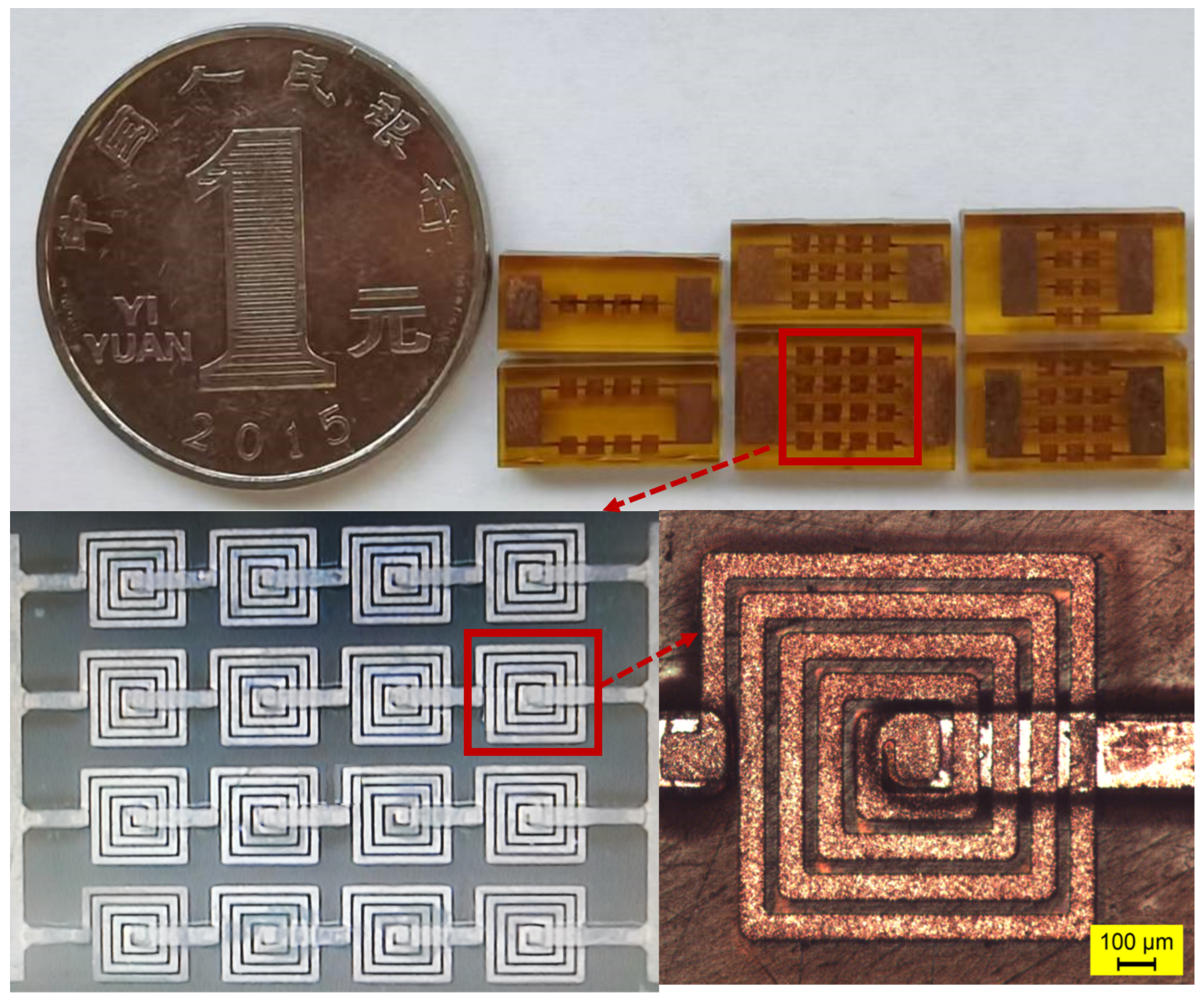
In this study, the double-layer parallel inductors were successfully fabricated and taped out, with all fabricated chips using 4-inch glass wafers as substrates.
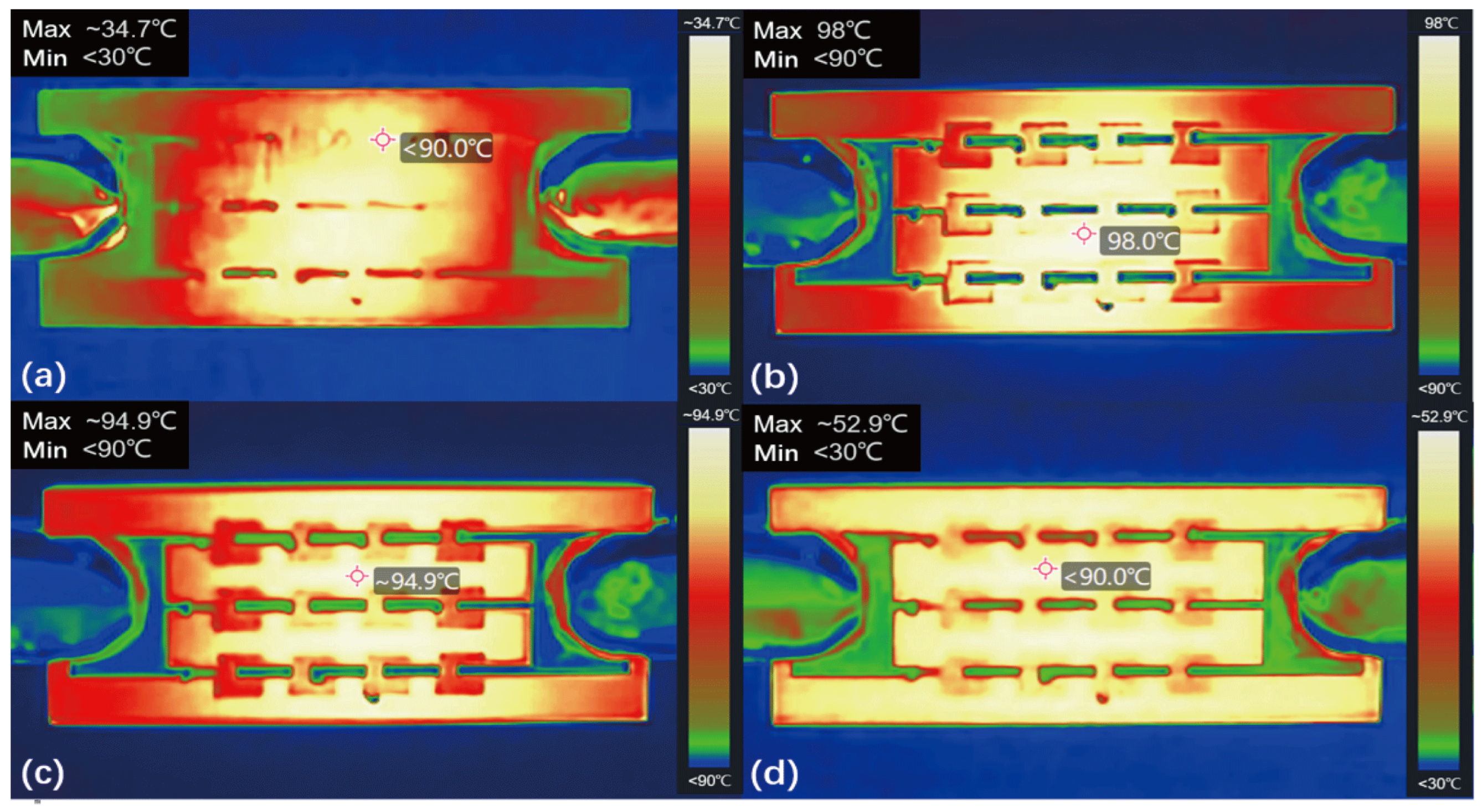
Figure 9 presents partial tape-out results of the double-layer array inductors, and all tests were performed on the successfully fabricated samples.
6. Conclusions
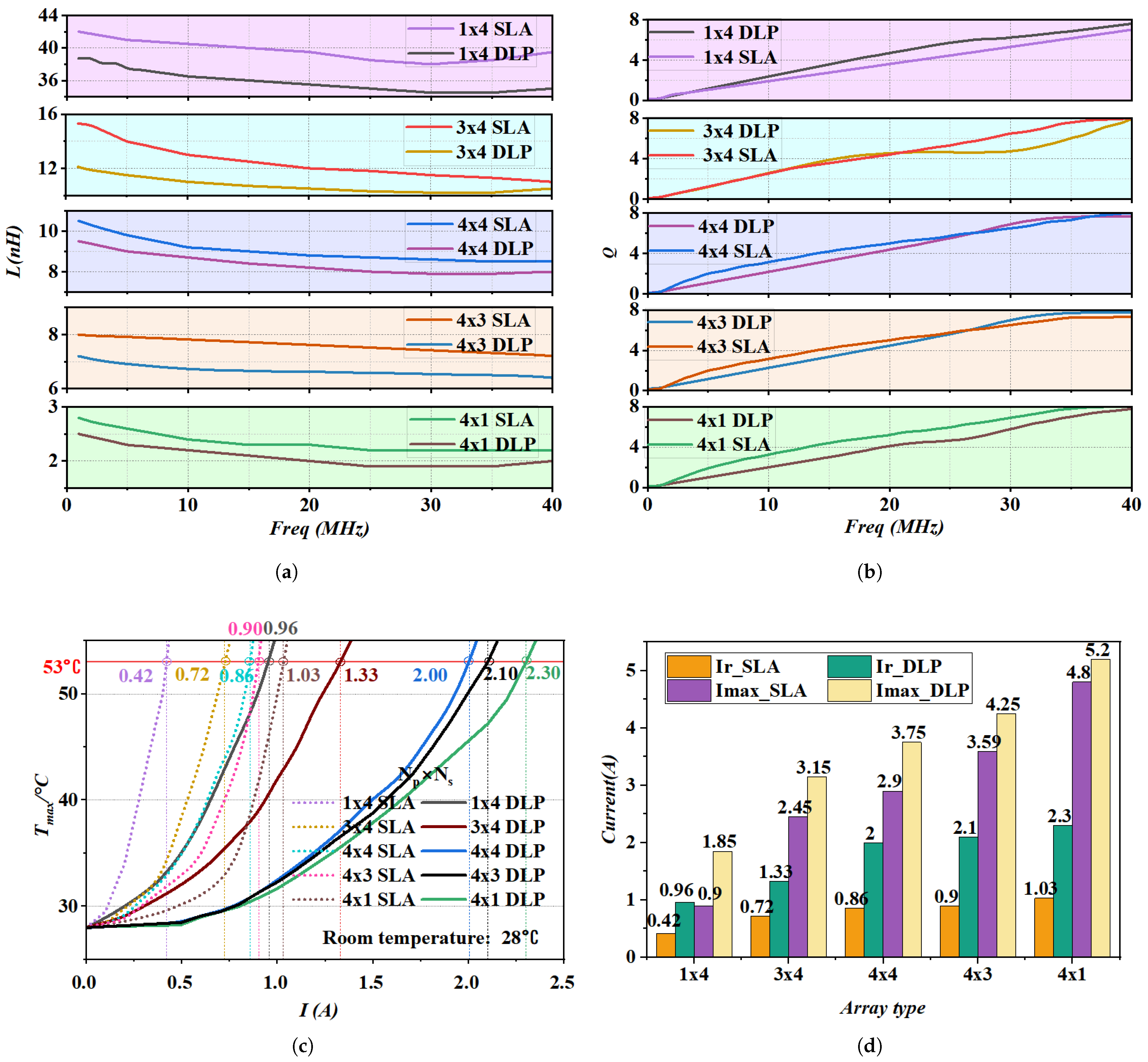
In this work, to develop micro-inductor devices with higher current-carrying capacity and better thermal performance, modeling and simulation were carried out for single-layer, double-layer series, and double-layer parallel array structures, which were further extended to various array configurations. Based on theoretical and simulation results, double-layer parallel inductors with 1 × 4, 3 × 4, 4 × 4, 4 × 3, and 4 × 1 arrays were designed and successfully fabricated. The measured results demonstrate that, compared with conventional single-layer and double-layer series structures, the proposed double-layer parallel inductors exhibit significantly enhanced current-carrying capacity and greatly improved temperature rise performance. In particular, the 4 × 3 array DLP inductor achieves a maximum current of 4.25 A and a rated current of 3.59 A. This provides a promising solution for high-current, compact application scenarios, such as PwrSoC.
Nevertheless, the performance of our devices can be further improved. First, the fabrication process can be optimized. Owing to the complexity of the multilayer process, the yield of the taped-out chips is relatively low. In future work, we will gradually optimize the process at each stage according to failure analysis to reduce the defect rate. Second, the inductance reduction caused by the parallel structure can be minimized. By adjusting the spacing between the double-layer coils, the mutual inductance can be effectively enhanced, thereby increasing the overall inductance and reducing the inductance loss. Furthermore, manipulating the heat distribution and current flow regime offers exciting avenues for future exploration. As current density scales up, the distribution of electric and magnetic fields within the inductor becomes highly complex. Future designs could explore intentionally creating transverse magnetic field gradients—potentially by integrating artificial magnetic materials (e.g., neodymium magnets) between layers. Utilizing the resulting Lorentz force to alter the current distribution across the conductors could introduce a novel mechanism to actively control current limits and further optimize thermal fields in next-generation micro-inductors.




 ,
,