3.1. Third-Quadrant Characteristics
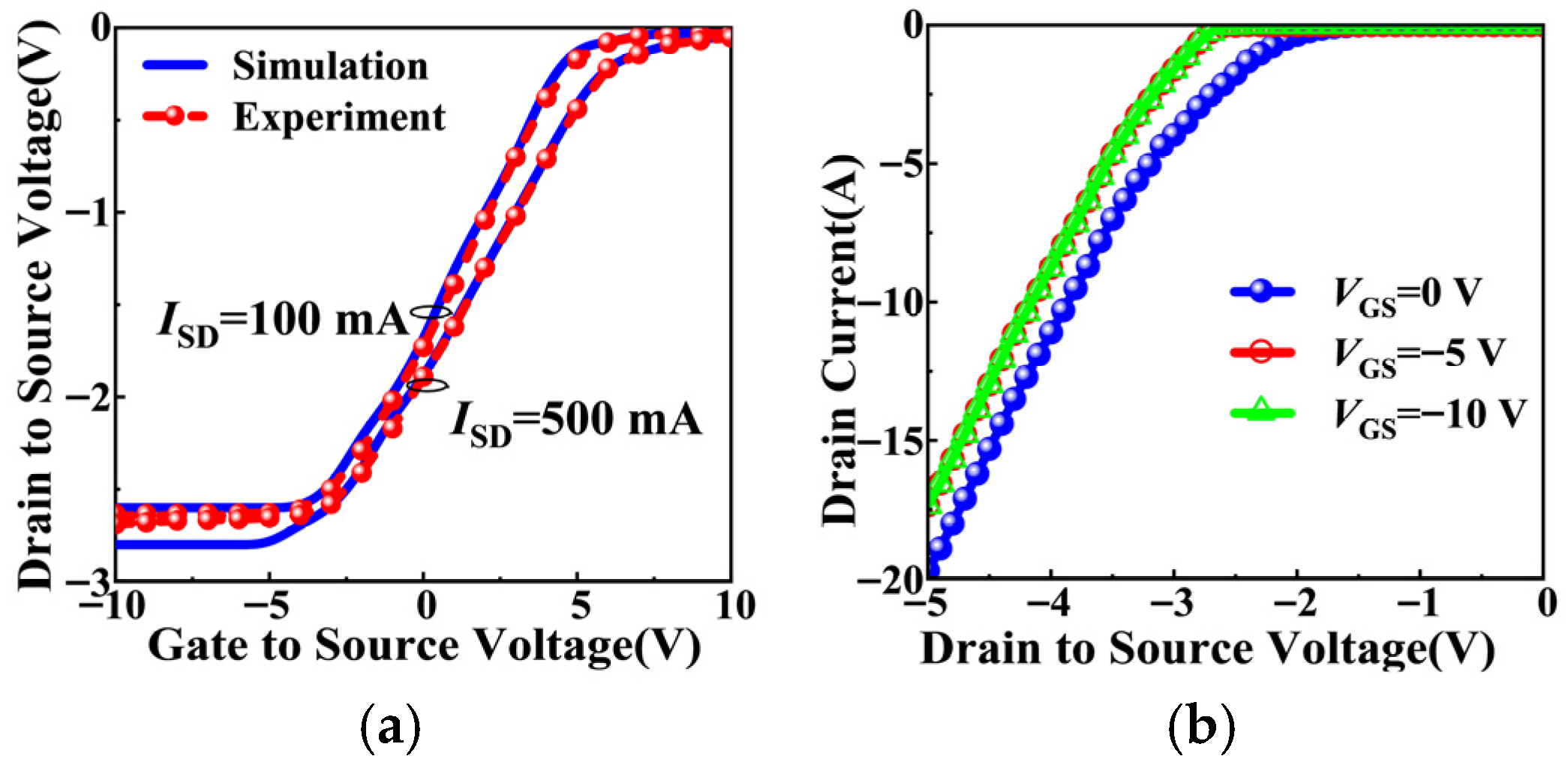
As shown in
Figure 3a, the measured and simulated third-quadrant characteristics are consistent with the three conduction regimes defined by
VGS. At
ISD = 100 mA, in the diode conduction regime (
VGS < −5 V), the MOS channel is fully suppressed, and
ISD flows entirely through the PiN body diode, resulting in a high and nearly constant
VSD. As
VGS increases into the mixed conduction regime (−5 V <
VGS <
Vth), the partial channel conducts, and
VSD begins to decrease as the channel shares part of the reverse current. In the MOS channel conduction regime (
VGS ≥
Vth), the channel fully turns on, and
VSD drops to a low value determined by the channel resistance.
To further verify this behavior, the third-quadrant characteristics are measured under different
VGS at
ISD = 100 mA, as shown in
Figure 3b. The curves corresponding to
VGS = −5 V and
VGS = −10
VGS nearly overlap, indicating that the MOS channel is already fully suppressed at
VGS = −5 V. Under this condition, the
ISD flows exclusively through the intrinsic PiN body diode, which is consistent with the previous analysis.
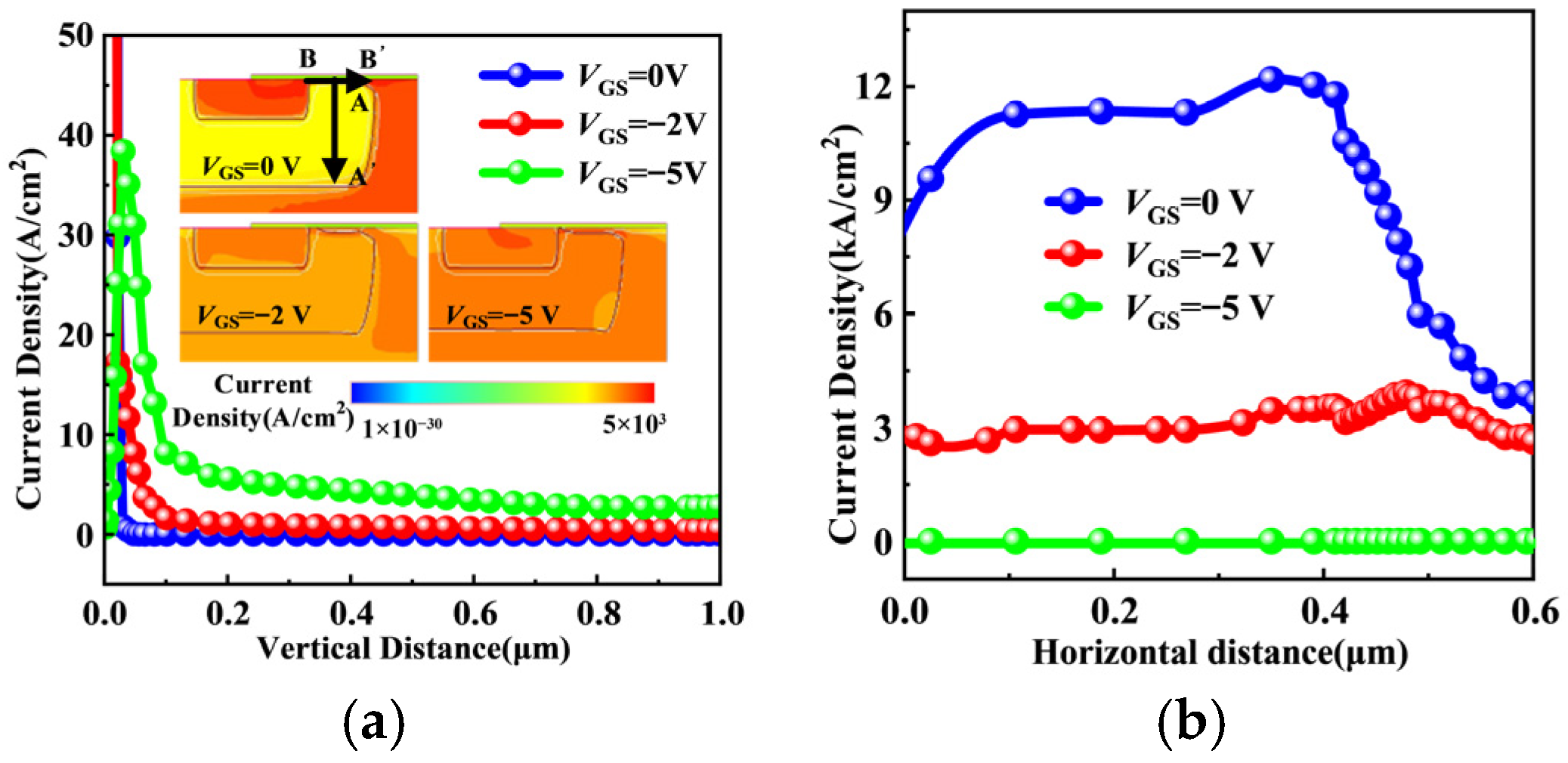
To clarify internal current distribution, TCAD simulations of third-quadrant operation are performed. The insets of
Figure 4a show current density distributions at
ISD = 100 mA under different gate biases:
VGS = 0 V, −2 V, and −5 V.
Figure 4 presents current density profiles along AA′ (PiN path) and BB′ (MOS channel path) lines marked in the insets. As shown in
Figure 4a, the PiN path conducts current under all bias conditions. In contrast,
Figure 4b reveals the gate-voltage dependence of MOS channel conduction. At
VGS = 0 V and −2 V, significant current density along BB′ confirms partial MOS channel conduction. At
VGS = −5 V, current along BB′ vanishes, indicating complete channel suppression, with
ISD flowing almost exclusively through the PiN path. This gate-dependent redistribution clearly demonstrates conduction path reconfiguration during third-quadrant operation.
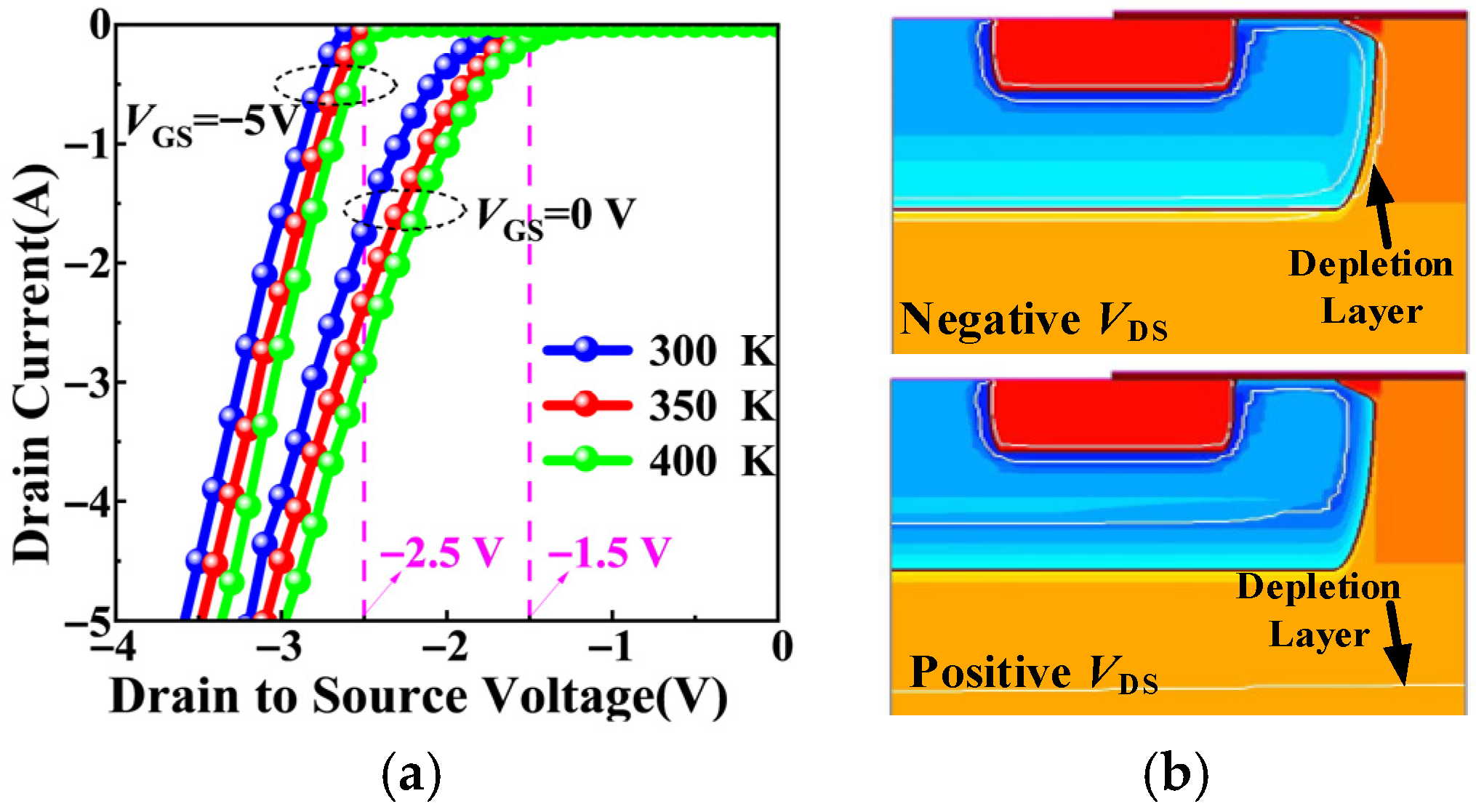
Figure 5a shows the simulated third-quadrant characteristics at different junction temperatures for
VGS = 0 V and −5 V. For a given temperature, the
VGS = 0 V curve exhibits a lower turn-on voltage than the
VGS = −5 V, because partial channel conduction provides an additional parallel path. The steeper slope of the −5 V curve reflects the strong conductivity modulation in the N
− drift region under pure PiN conduction, whereas the 0 V curve shows a higher differential resistance due to the absence of such modulation in the channel path. As the temperature increases, both curves shift toward lower
VSD. Although this shift appears similar in the
I–
V characteristics, it originates from two distinct physical mechanisms: the negative temperature coefficient of the built-in potential for the −5 V case (pure PiN), and the negative temperature coefficient of the threshold voltage for the 0 V case (mixed conduction).
Figure 5b compares the simulated electrostatic conditions at
VGS = 0 V under negative and positive
VDS. When
VDS is negative (third-quadrant), the depletion region at the P-well/N
− drift junction contracts, exposing the channel. The forward-biased junction raises the P-well potential, making
VSB negative. This negative
VSB reduces the threshold voltage through the body effect, as described in (5), enabling
ISD conduction via the MOS channel. This body effect can be further enhanced dynamically. Under continuous negative
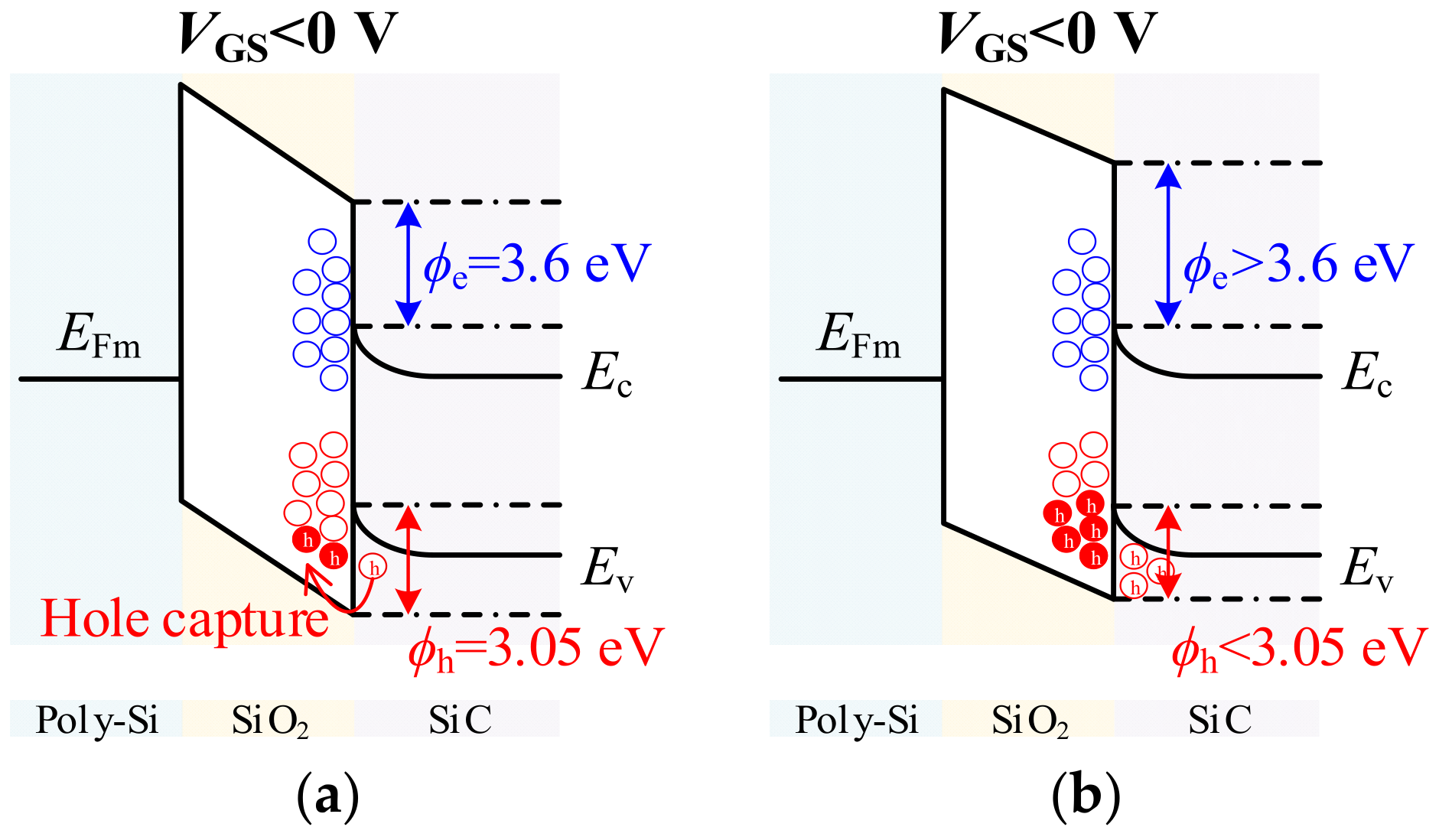
VGS, holes accumulate in the P-well, gradually raising its potential over time, as shown in
Figure 6b. This transient behavior is described by:
where
VP0 is the initial P-well potential,
VP,ss is the steady-state value, and
τP is the hole accumulation time constant. The rising
VP reduces the effective source-body voltage
VSB,eff =
VS −
VP(t), further lowering
Vth and increasing channel current over time.
Conversely, when VDS is positive, the depletion region expands and shields the channel, suppressing conduction. This asymmetric depletion behavior explains why channel conduction occurs during third-quadrant operation, whether from static reverse bias or dynamic gate stress, while remaining blocked in the forward-blocking state. It also clarifies why MOS channel current exists even at VGS = 0 V.
3.2. Reverse Recovery of SiC MOSFET Body Diode
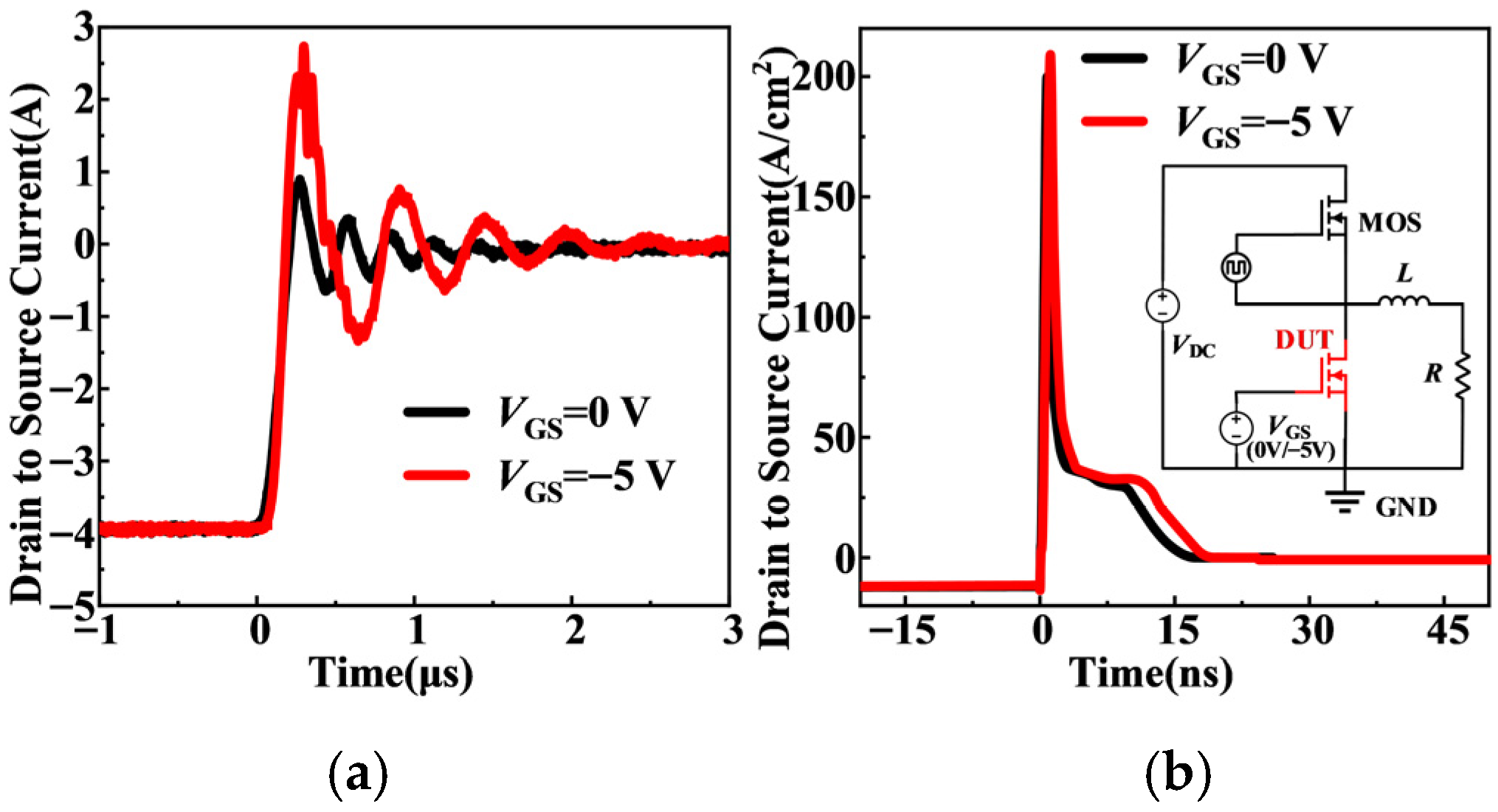
Although the
Irr of SiC MOSFETs is relatively small, it becomes increasingly important in high switching-frequency applications. Therefore, the influence of negative
VGS on the reverse recovery characteristics of the body diode is further investigated. The test circuit is shown in the inset of
Figure 7b. The
VGS of the device under test (DUT) is set to
VGS = 0 V and −5 V, respectively, with
VDC = 200 V. Initially, the top-side switch turns on to build inductor current. After the current reaches the desired value, the top-side switch turns off. When the high-side switch subsequently turns on, the body diode of the DUT undergoes reverse recovery, generating a reverse current in the opposite direction. The measured and simulated
Irr result is shown in
Figure 7. The extracted
Qrr and
trr values are summarized in
Table 2.
As shown in
Figure 7, the
Irr at
VGS = 0 V is smaller than that at
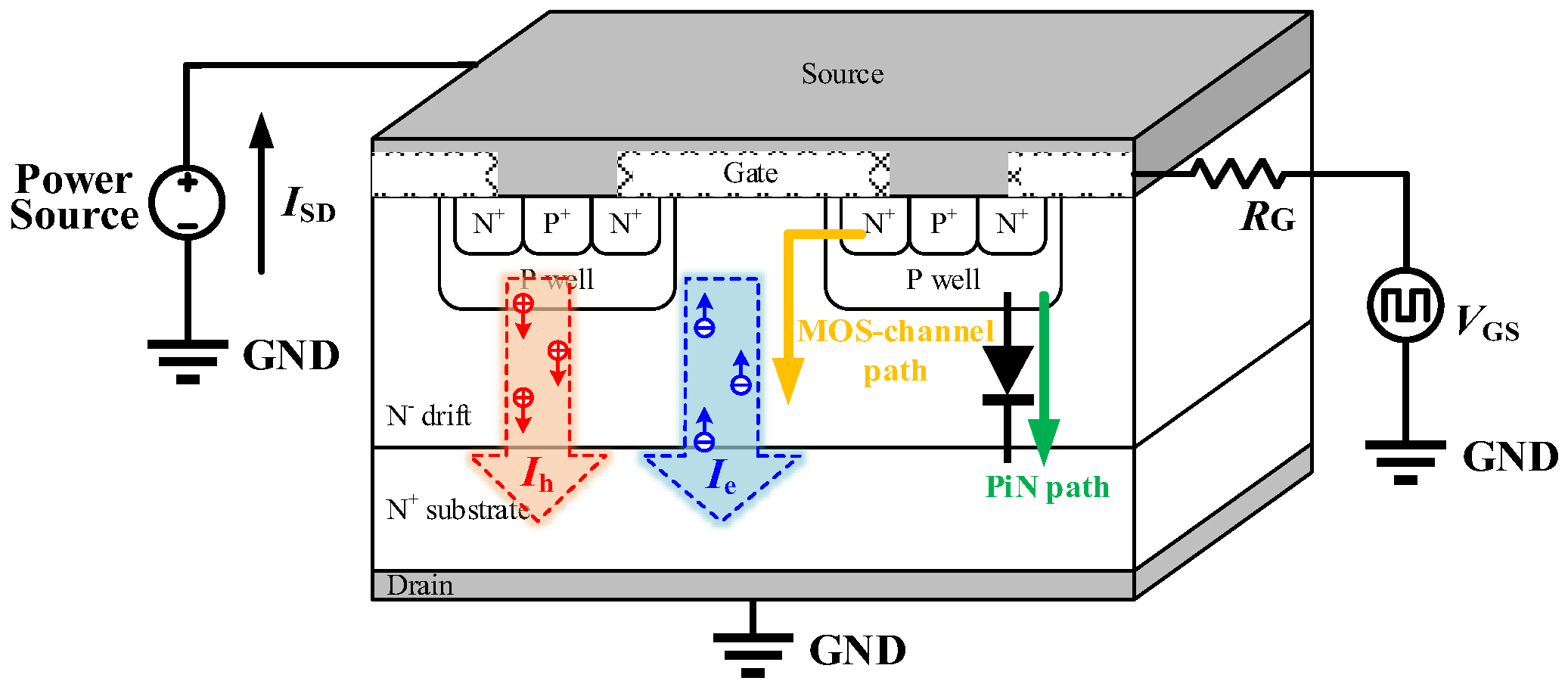
VGS = −5 V. This difference originates from the redistribution of the reverse current between the MOS channel path and the PiN path. At
VGS = 0 V, as analyzed before, a portion of the reverse current flows through the MOS channel while the remainder flows through the PiN path. Since the channel path involves only majority-carrier transport and does not rely on minority-carrier storage, the reverse recovery process mainly consists of rapid majority-carrier extraction, resulting in smaller
Qrr and shorter
trr. In contrast, at
VGS = −5 V, the MOS channel is completely turned off, and the
ISD flows entirely through the PiN path, relying on minority-carrier injection and storage. Subsequent removal of stored charge leads to larger
Qrr, longer
trr, and a higher
Irr peak.
As summarized in
Table 2, compared with the case of
VGS = −5 V, operation at
VGS = 0 V results in a 25% reduction in
Qrr and a 12% decrease in
trr, confirming that channel participation effectively reduces minority-carrier storage and accelerates the reverse recovery process. These results are consistent with the current partition model in (9).
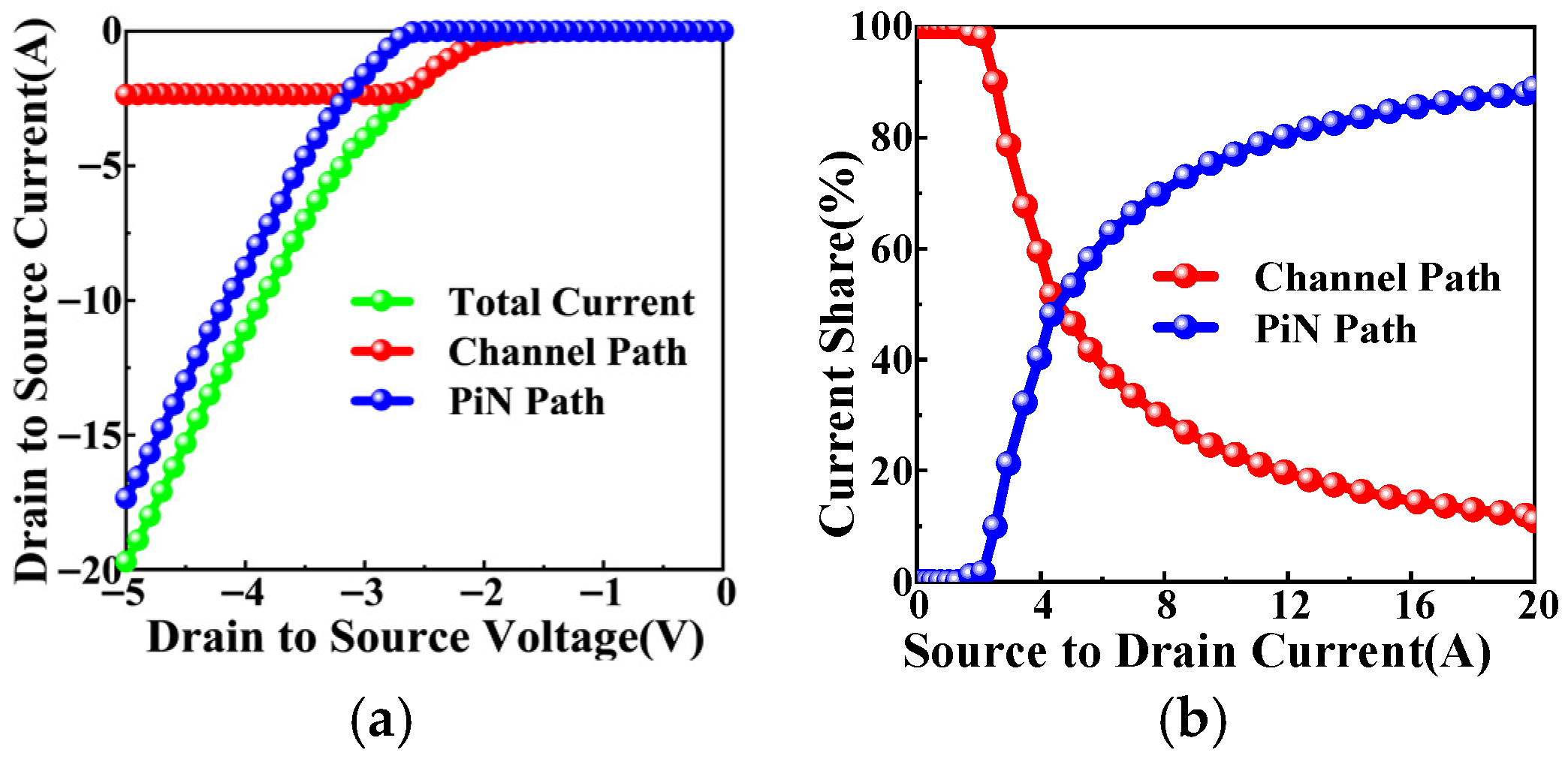
As shown in (9), the current partitioning between the two parallel conduction paths is not only gate-dependent but also strongly modulated by
VSD. The current partitioning at
VGS = 0 V is shown in
Figure 8 as a function of
VSD. As
VSD increases, the channel current initially rises but then saturates. This saturation results from two effects: the rising P-well potential reduces the effective gate overdrive, and the expanding JFET depletion region increases channel resistance. In contrast, the PiN current increases monotonically because the P-well/N
− drift junction becomes more forward-biased, enhancing minority-carrier injection and conductivity modulation. Consequently, the PiN path increasingly dominates at higher
VSD, reflecting the competition between the gate-controlled channel and the junction-controlled bipolar path.
3.3. Effect of Negative Gate Pulses on Third-Quadrant Reverse Conduction
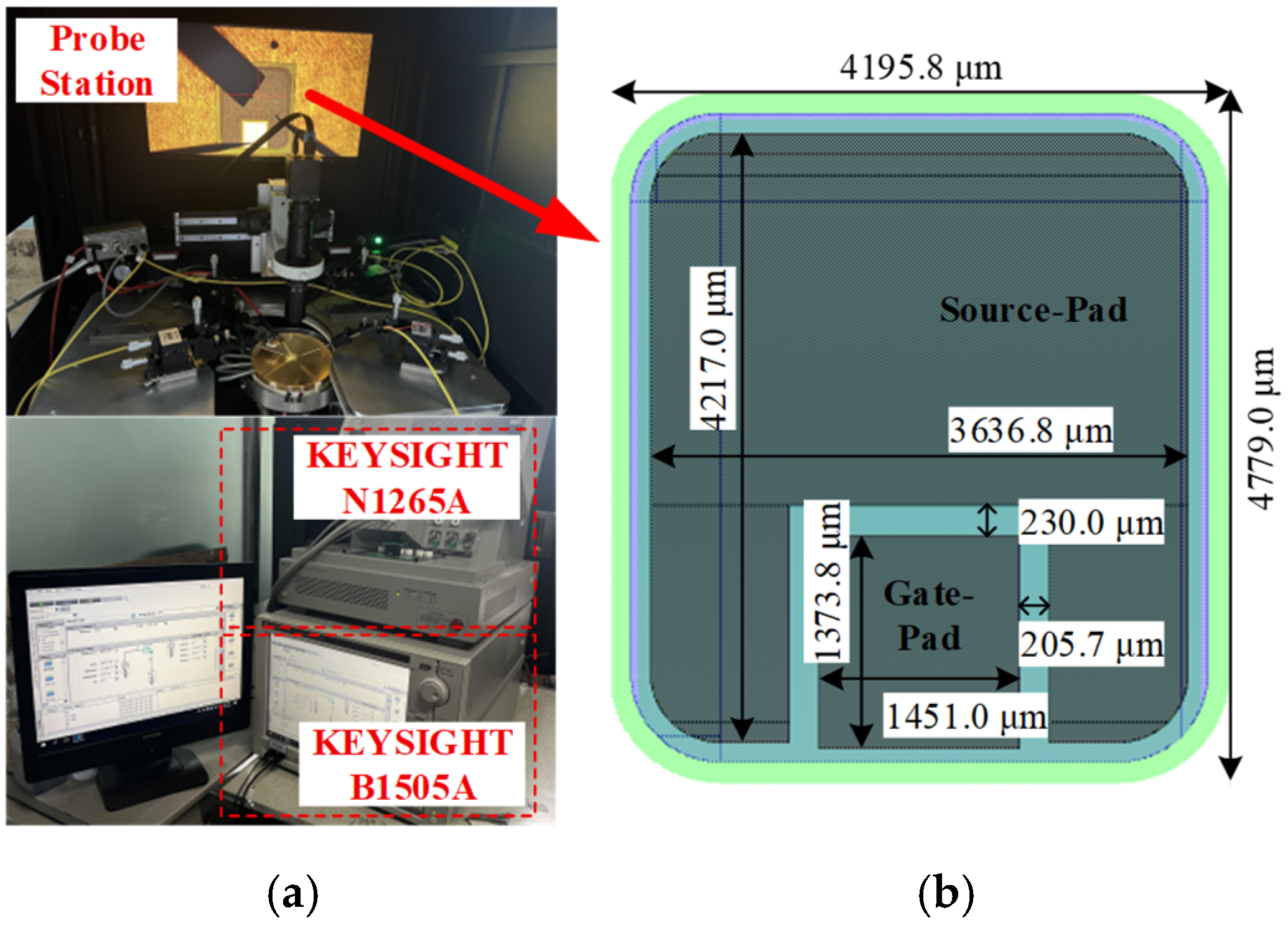
Based on the test setup in
Figure 1, the effect of negative
VGS on the reverse conduction of the SiC MOSFET is investigated.
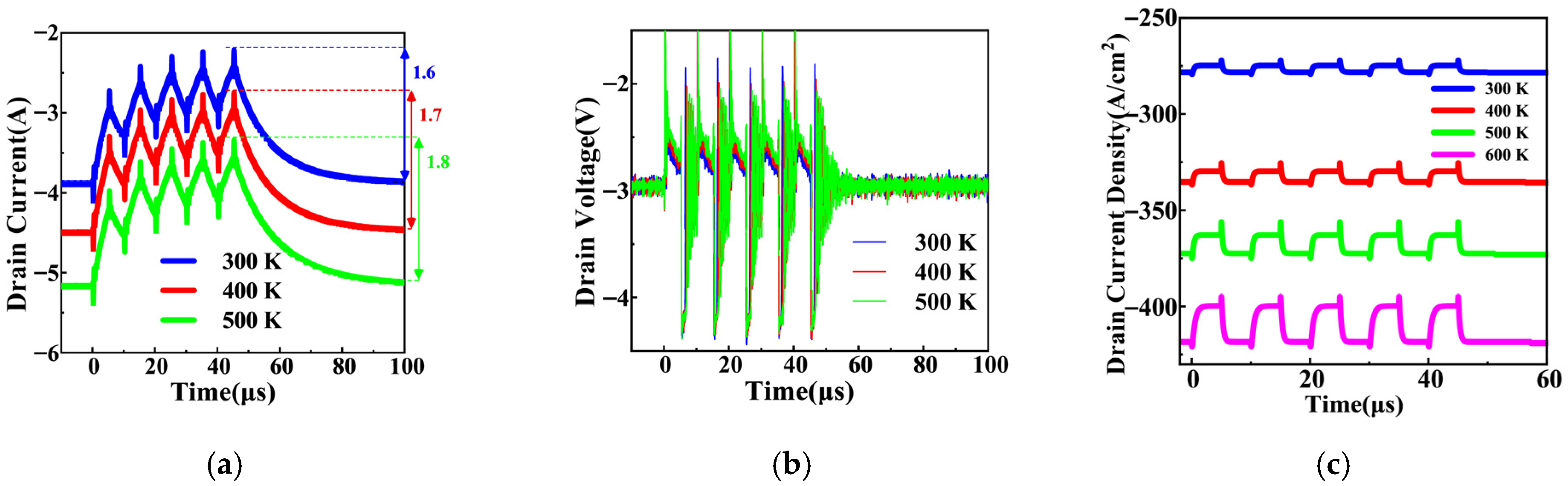
Figure 9a,b presents the measured results for the SiC MOSFET under third-quadrant reverse conduction at
VDS = −3 V, with five pulses of
VGS = −5 V (5 µs width, 50% duty cycle). As the temperature increases, the reverse current variation induced by negative
VGS pulses significantly increases, and the drain current and drain voltage both exhibit more pronounced changes at higher temperatures. In addition,
Figure 9c shows the simulated third-quadrant reverse conduction characteristics of the SiC MOSFET at
VDS = −3 V, with five pulses of
VGS = −5 V (5 µs width, 50% duty cycle). The simulated results are consistent with the experimental measurements, showing that the reverse current fluctuation decreases at lower temperatures.
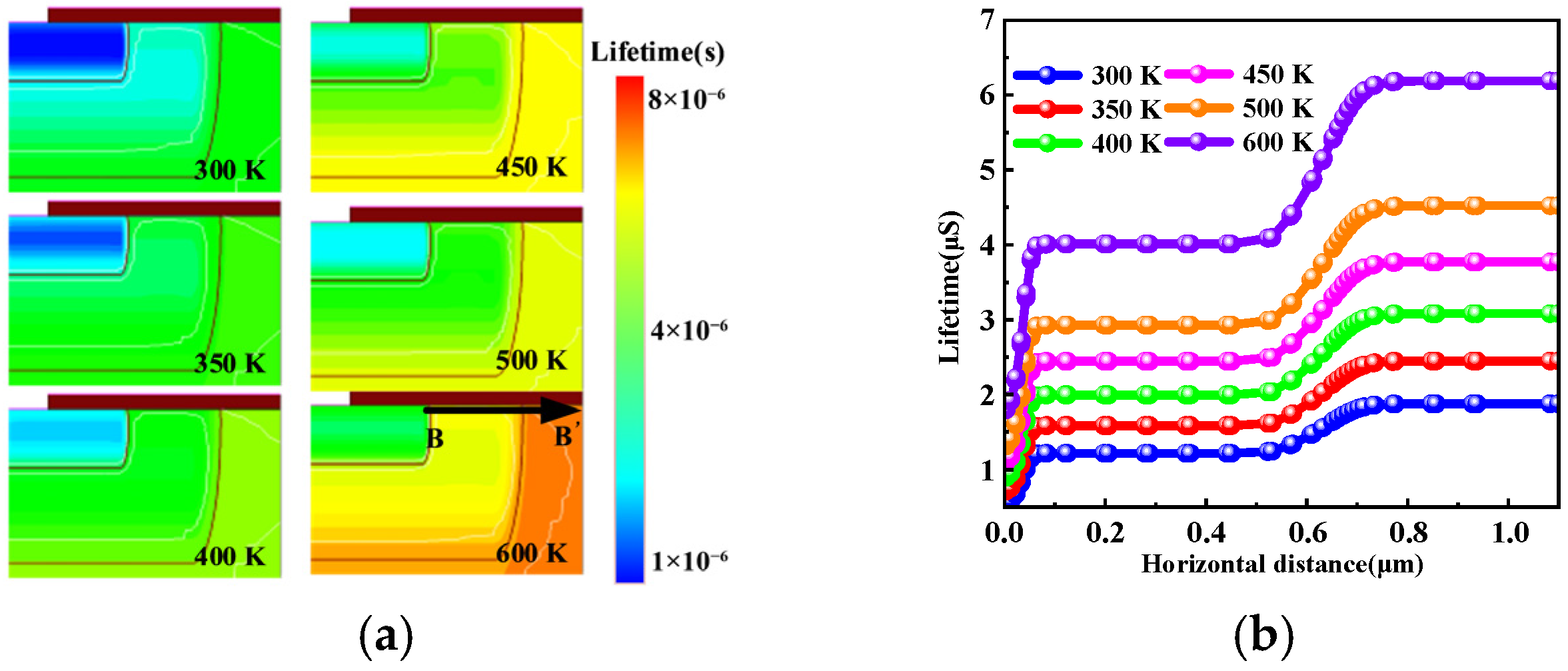
Figure 10a depicts the simulated carrier lifetime distribution at different temperatures with
VGS = 0 V, and
Figure 10b further illustrates the carrier lifetime profile extracted along the BB′ cutline, which corresponds to the MOS channel path marked in
Figure 10a. Both figures demonstrate that the carrier lifetime increases with temperature. At the cell level, this phenomenon originates from temperature-induced modulation of parallel conduction mechanisms. Under
VGS = 0 V, the body effect places the channel in the subthreshold conduction. At elevated temperatures, the extended minority-carrier lifetime and enhanced injection efficiency strengthen carrier storage in the N
− drift region, causing the PiN path to carry a larger transient current during the gate pulses. Therefore, higher temperatures significantly enhance the modulation effect of gate pulses on the third-quadrant reverse conduction current, reflecting a pronounced thermal dependence.
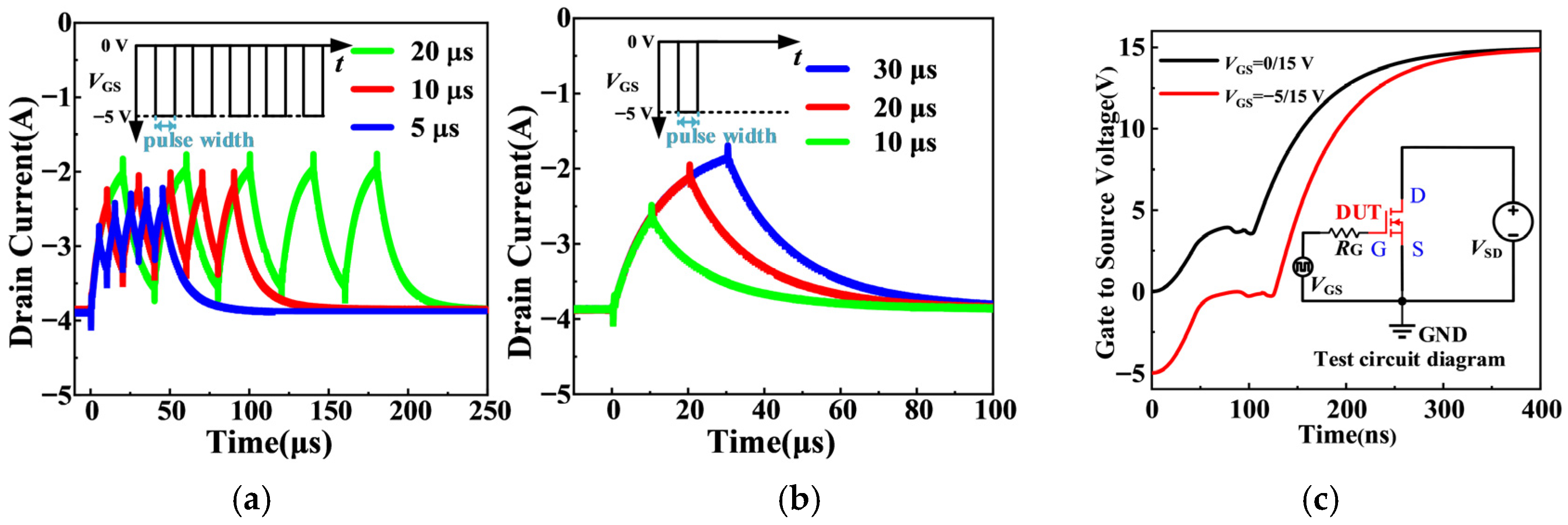
To further explain the influence of gate bias on the third-quadrant reverse conduction characteristics of SiC MOSFETs, continuous negative gate pulses of −5 V are applied while the drain-source voltage is maintained at a constant
VDS of −3 V, and the pulse width is varied to change the pulse frequency. The measured results are shown in
Figure 11a. The inset shows a schematic diagram of the gate pulse, with a duty cycle of 50%. The results indicate that as the width of the continuous negative gate pulses increases, the steady-state saturation value of the drain reverse conduction current gradually rises, demonstrating a clear pulse-width-dependent behavior. This observation implies that even with a constant gate voltage amplitude, the temporal characteristics of the gate bias can significantly modulate the device’s internal conduction state and, consequently, affect the third-quadrant reverse turn-on current.
Figure 11b summarizes the measured outcomes under a fixed drain bias of −3 V, where negative gate pulses of −5 V with varying pulse widths are imposed. The inset provides a schematic illustration of the adopted gate pulse configuration. With the pulse amplitude kept constant, the reverse conduction current amplitude gradually rises as the negative gate pulse width increases, revealing that the influence of gate pulses on third-quadrant conduction current accumulates over time, which is consistent with the trend of current variation amplitude versus gate pulse width observed in
Figure 11a. This behavioral evolution distinctly reveals the transient carrier transport behaviors under pulsed gate biasing: as the negative gate pulse duration extends, the dynamic capture and emission processes of interface traps and the gradual accumulation of holes in the P-well fully develop, continuously modulating the P-well potential and channel conduction capability [
Figure 6b], thereby altering the current distribution between the channel and PiN paths.
From a device physics perspective, this pulse-width dependence originates from the transient response of the channel to negative
VGS. When a negative
VGS is applied, holes accumulate in the P-well and at the oxide interface (as shown in
Figure 6a), modifying the surface potential and the
Vth
,eff. This process is governed by carrier capture and emission at interface traps, introducing a time constant
τtrap. The channel current during the turn-on transient can be modeled as:
where
Ich,ss is the steady-state channel current. As the pulse width increases, the channel current approaches
Ich,ss, leading to a higher contribution to the total reverse current, as presented in
Figure 6b, where the simulated channel current density increases with longer pulse widths. In addition, the sustained negative
VGS also alters the P-well potential as described in
Section 2. The combination of interface trap filling and P-well potential evolution leads to a progressive increase in channel conduction with pulse width. Consequently, the channel path carries more current, the PiN path less, and the total saturation current rises until a quasi-steady state is reached. Collectively, these results demonstrate that
VGS is capable of both enabling device reverse conduction and regulating its dynamic response.
Figure 11c illustrates the gate-source voltage waveforms during the turn-on process of the SiC MOSFET under different
VGS. In the simulation, the device is subjected to
VGS of −5/15 V and 0/15 V, with the SiC material doped with 1.5 × 10
8 cm
−3 acceptor defects, the oxide layer containing 1.5 × 10
11 cm
−3 acceptor defects, and a SiC/SiO
2 interface with 1 × 10
10 cm
−2 acceptor defects. The results reveal that when the
VGS is set to −5/15 V, the device exhibits a significantly slower turn-on speed compared to when the
VGS is set to 0/15 V. This discrepancy is mainly attributed to the enhanced suppression of the MOS channel at negative gate biases, which effectively reduces the ability of the channel to conduct current during the turn-on phase. Consequently, the current flows predominantly through the PiN body diode, which has a longer reverse recovery time and lower conduction efficiency, resulting in a longer turn-on delay. Additionally, the negative
VGS at −5/15 V leads to an extended Miller plateau time. The longer Miller plateau is linked to the accumulation of holes in the P-well under the negative gate bias (
Figure 6), which increases the P-well potential and delays the transition from reverse conduction to full channel conduction. This effect is compounded by the trapping of carriers at the SiC/SiO
2 interface, which slows down the overall switching dynamics. As a result, negative gate voltages cause slower switching speeds due to a more dominant PiN conduction path and prolonged carrier trapping effects, and the gate voltage of the device directly affects its operating state.