Article

Network Pharmacology-Based Characterization of Mecasin (KCHO-1) as a Multi-Target Modulator of Neuroinflammatory Pathways in Alzheimer’s Disease


1
Institute for Global Rare Disease Network, Professional Graduate School of Korean Medicine, Wonkwang University, Iksan 54538, Republic of Korea
2
Department of Pharmacology, School of Korean Medicine, Wonkwang University, Iksan 54538, Republic of Korea
3
Research Center of Traditional Korean Medicine, Wonkwang University, Iksan 54538, Republic of Korea
*
Author to whom correspondence should be addressed.
These authors contributed equally to this work.
Nutrients 2026, 18(1), 8; https://doi.org/10.3390/nu18010008
Submission received: 12 November 2025 / Revised: 7 December 2025 / Accepted: 16 December 2025 / Published: 19 December 2025

Abstract

Background/Objectives: Mecasin (KCHO-1) is a standardized multi-herb formulation containing diverse bioactive compounds predicted to engage multiple molecular targets. This study applied an integrative network pharmacology approach to explore how Mecasin may interact with Alzheimer’s disease (AD)-related molecular networks. Methods: Bioactive constituents from 9 herbs were screened through OASIS and PubChem, and their predicted targets were cross-referenced with 8886 AD-associated genes from GeneCards. Overlapping genes were analyzed using protein–protein interaction mapping, Gene Ontology, and KEGG to identify potential Mecasin–AD core nodes and pathways. Co-expression, co-regulation, and molecular docking analyses were performed to further characterize mechanistic relevance. Results: Network integration identified 6 core genes—AKT1, STAT3, IL6, TNF, EGFR, and IL1B—positioned within signaling pathways related to neuronal survival, inflammatory regulation, and cellular stress responses, including FoxO, JAK–STAT, MAPK, and TNF pathways. Molecular docking suggested that several Mecasin compounds may interact with targets such as AKT1 and TNF. Conclusions: These in silico findings indicate that Mecasin, a multi-component formulation containing numerous phytochemicals that generate broad compound–target associations, may interface with interconnected neuroimmune pathways relevant to AD. While exploratory, the results highlight potential multi-target mechanisms that merit further investigation and provide a systems-level framework to inform future experimental validation.

1. Introduction

Dementia is a growing global health concern, with Alzheimer’s disease (AD) representing its most prevalent form and a major contributor to morbidity in aging populations [1,2,3,4]. AD pathology involves amyloid and tau abnormalities as well as interconnected processes such as neuroinflammation and oxidative stress, reflecting its multifactorial nature [5]. Current therapeutic options provide only symptomatic relief and have limited impact on disease progression [6]. These limitations highlight the need to elucidate the mechanisms underlying AD and to explore multi-pathway therapeutic strategies that can modulate its complex pathological networks [7].
Mecasin (KCHO-1) is a standardized herbal formulation composed of Curcuma longa, Polygala tenuifolia, Gastrodia elata, Salvia miltiorrhiza, Paeonia lactiflora, Glycyrrhiza uralensis, Pseudocydonia sinensis, Aconitum carmichaeli, and Atractylodes japonica. It has been designated as an orphan herbal investigational product for amyotrophic lateral sclerosis (ALS) and has shown clinical promise by improving functional outcomes and slowing disease progression in ALS patients [8]. Considering that ALS and AD are neurodegenerative disorders sharing multiple neuroinflammatory features [9], assessing Mecasin in an AD-related mechanistic context is relevant. Given its documented neuroprotective and anti-inflammatory properties, Mecasin may influence AD-associated neuroimmune pathways implicated in cognitive decline. On this basis, the present study employed an integrative network-based pharmacological framework to explore the multi-target mechanisms through which Mecasin may exert disease-modifying actions in AD.
Conventional drug-development strategies in AD typically focus on single molecular targets, despite the multifactorial nature of neurodegenerative pathology. This reductionist paradigm poses inherent limitations in addressing the interconnected cascades of oxidative stress, synaptic dysfunction, and neuronal loss. Network pharmacology has emerged as a systems-level analytical framework that integrates chemical, genomic, and pharmacological information to uncover pathway networks relevant to disease mechanisms [10]. By mapping drug-herb-component–target–pathway relationships within complex biological systems, this approach enables the identification of compounds capable of modulating multiple pathological axes simultaneously and is therefore particularly well-suited for elucidating the mechanistic basis of multi-component herbal formulations [11].
In this study, we adopted an in silico network pharmacology approach to explore how Mecasin may engage molecular pathways implicated in AD. By integrating compound profiles, predicted targets, and AD-related gene networks, we examined the possible mechanisms through which Mecasin could influence neuroinflammatory and neuroprotective processes. This exploratory analysis outlines potential pathways that Mecasin may engage within the complex biology of AD.

2. Materials and Methods

2.1. Collection of Active Compounds from Mecasin

To construct the Mecasin-associated molecular network, phytochemical constituents of each herbal component were retrieved from a publicly available traditional medicine database. The list of ingredients was acquired by querying the OASIS Traditional Medicine Information Portal (http://oasis.kiom.re.kr/, accessed on 5 January 2024) [12]. For each compound, physicochemical profiles and corresponding PubChem compound identifiers (CID) were extracted to enable downstream target-prediction and annotation [13].

2.2. Identification of Compound-Associated Target Genes

Active phytochemicals identified from the nine herbal components of Mecasin (Curcuma longa, Polygala tenuifolia, Gastrodia elata, Salvia miltiorrhiza, Paeonia lactiflora, Glycyrrhiza uralensis, Pseudocydonia sinensis, Aconitum carmichaeli, and Atractylodes japonica) were queried in PubChem to obtain putative protein-coding targets. For each compound, gene-target associations were retrieved from the PubChem “Chemical-Gene Co-Occurrences in Literature” dataset. Compounds lacking available literature-based target annotations were excluded. Duplicate and erroneous compound entries were removed through manual curation. The final number of compound-associated gene targets included 292 for Curcuma longa, 818 for Polygala tenuifolia, 322 for Gastrodia elata, 1050 for Salvia miltiorrhiza, 2555 for Paeonia lactiflora, 2719 for Glycyrrhiza uralensis, 1289 for Pseudocydonia sinensis, 329 for Aconitum carmichaeli, and 358 for Atractylodes japonica.

2.3. Retrieval of AD-Associated Genes and Intersection with Mecasin Targets

To investigate the relevance of Mecasin to AD pathophysiology, AD-associated genes were retrieved from the GeneCards database (https://www.genecards.org/, accessed on 5 January 2024) using the keyword “Alzheimer’s Disease” A total of 8886 AD-related genes were collected [14]. Subsequently, Mecasin-associated target genes were intersected with the AD gene set to identify shared targets.

2.4. Protein–Protein Interaction Network Construction and Core Gene Identification

Overlapping Mecasin–AD target genes were imported into the STRING database to construct a protein–protein interaction (PPI) network [15]. Interaction data with high confidence scores were retrieved and subsequently analyzed using Cytoscape (version 3.10.1; http://cytoscape.org/, accessed on 10 January 2024) [16]. To identify core genes, network topology metrics were computed, including degree centrality (DC), betweenness centrality (BC), and closeness centrality (CC) [17,18]. Genes with values above the mean threshold for each metric were retained during an initial screening step, and this threshold-based filtering procedure was repeated iteratively. Genes consistently enriched across successive screening rounds were defined as hub genes, representing key molecular nodes potentially mediating Mecasin’s therapeutic effects in AD.

2.5. Functional Enrichment and Network Construction

Functional enrichment analysis was performed to elucidate biological processes and signaling pathways associated with Mecasin-related targets. Gene Ontology (GO) biological process and Kyoto Encyclopedia of Genes and Genomes (KEGG) pathway enrichment were conducted using the Enrichr platform (http://maayanlab.cloud/Enrichr, accessed on 12 January 2024) [19,20,21]. Enriched terms were ranked according to statistical significance, and pathways meeting the predefined p-value threshold were retained for interpretation [22,23]. To visualize the multilevel interaction structure of Mecasin within the AD context, a drug–herb–compound–target–pathway (D-H-C-T-P) network was constructed [24]. Data obtained from compound screening, target identification, AD-related gene retrieval, and PPI–core gene analysis were integrated and imported into Cytoscape.

2.6. Co-Expression, Co-Regulation, and Molecular Docking Analysis of Core Targets

To further characterize the mechanistic relevance of the core genes, we performed co-expression, co-regulation, and molecular docking analyses. Co-expression analysis was performed in STRING to evaluate the combined scores among the 6 core genes. For proteomic co-regulation assessment, we utilized ProteomeHD [25]. Because TNF is a secreted ligand and not consistently represented in proteome-wide co-regulation datasets, TRAF2 was employed as a proxy to interrogate TNFR1/2–TRAF2 signaling, with results interpreted at the receptor–adaptor level rather than ligand abundance. For structural validation, molecular docking simulations were performed between Mecasin-derived bioactive compounds and proteins encoded by the core genes. Docking was carried out using CB-Dock2 (https://cadd.labshare.cn/cb-dock2/index.php, accessed on 1 September 2025), which enables blind-docking cavity prediction and ligand-binding evaluation [26]. Protein structures (PDB format) and compound files (SDF format) were obtained from the PDB (https://www.rcsb.org, accessed on 1 September 2025) and PubChem (https://pubchem.ncbi.nlm.nih.gov, accessed on 1 September 2025), respectively [27]. Prior to docking, the protein structures were preprocessed in CHIMERA (v1.19) by removing the original solvent and bound ligands, followed by the addition of hydrogens and charges to optimize the receptor conformation for ligand-binding analysis [28].

3. Results

3.1. Identification of Mecasin Bioactive Constituents and Predicted Targets

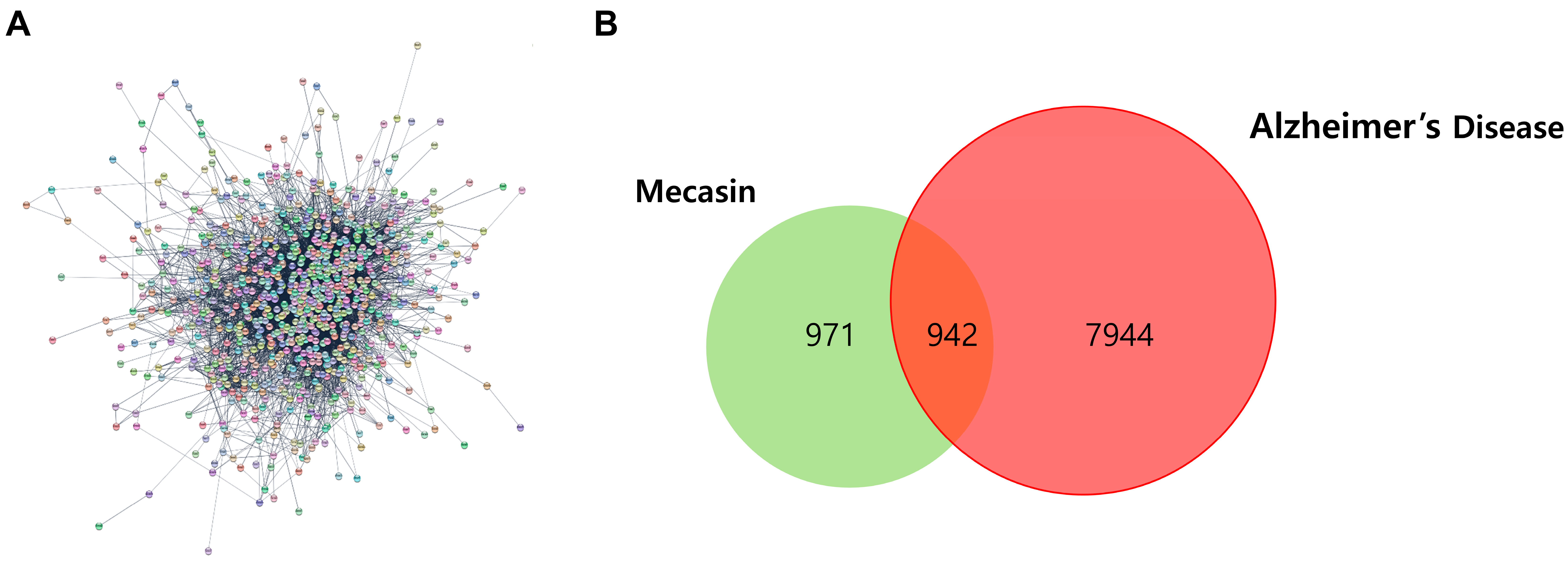
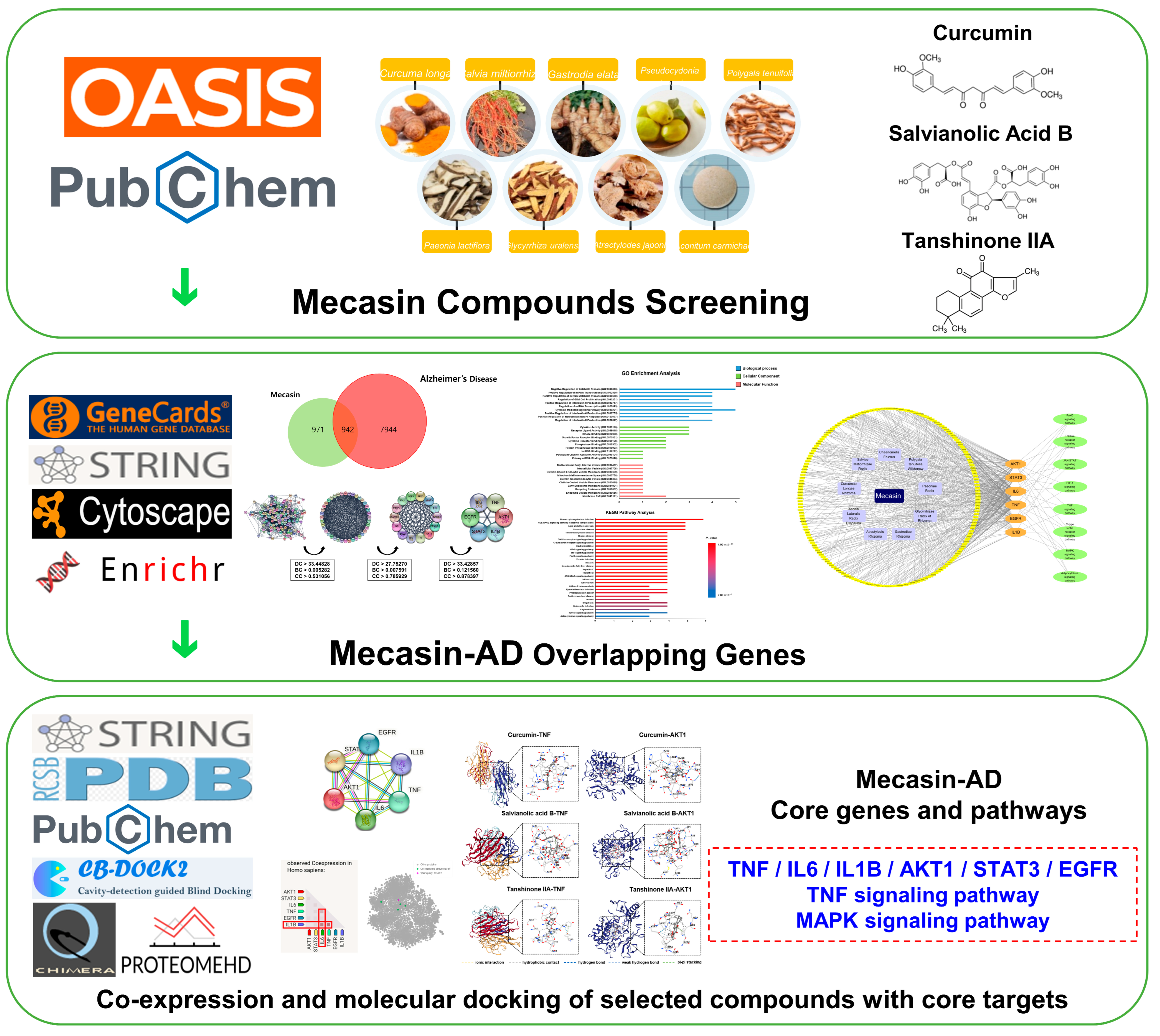
The workflow of the entire study is shown in Figure 1. We first curated the bioactive constituents of Mecasin using the OASIS database. A total of 198 phytochemical candidates were initially retrieved. Following the removal of compounds lacking PubChem identifiers, duplicates, and molecules without defined gene targets, 192 active constituents were retained (Table 1). These included 6 from Curcuma longa, 20 from Polygala tenuifolia, 5 from Gastrodia elata, 17 from Salvia miltiorrhiza, 34 from Paeonia lactiflora, 83 from Glycyrrhiza uralensis, 17 from Pseudocydonia sinensis, 5 from Aconitum carmichaeli, and 5 from Atractylodes japonica. Cross-referencing these bioactive molecules with target-gene databases yielded 1913 predicted Mecasin-associated targets (Figure 2A).

3.2. Intersection Between Mecasin-Associated Targets and Alzheimer’s Disease Gene Networks

To evaluate the therapeutic relevance of Mecasin in the context of AD, we compared Mecasin-associated gene targets with AD-related genetic signatures curated from the GeneCards database (8886 AD-associated genes). Of the 1913 predicted Mecasin target genes, 942 overlapped with AD-related genes (Figure 2B, Supplementary Table S1).

3.3. Analysis of Key Genes and Networks Associated with Mecasin and Alzheimer’s Disease

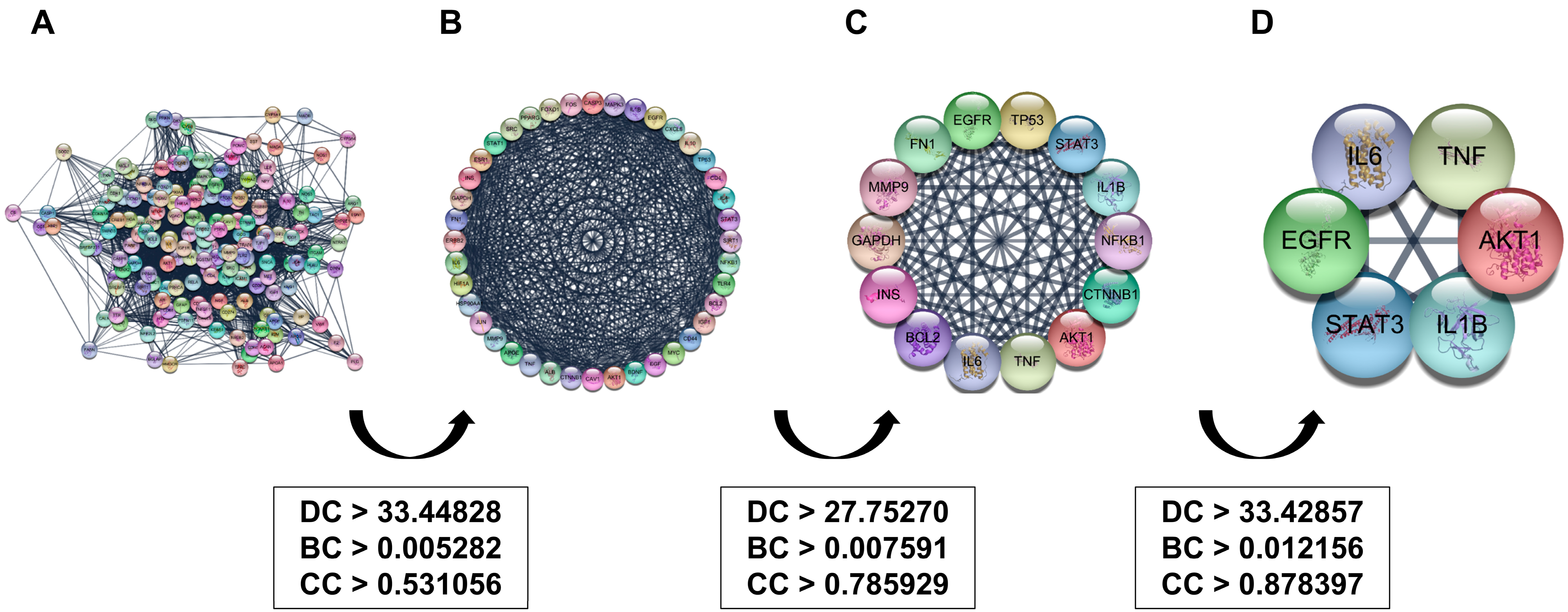
Based on the 942 overlapping Mecasin—AD targets, we reconstructed a PPI network comprising 942 nodes and 9948 edges (Figure 3). Network topology analysis was then conducted in Cytoscape (v3.10.1) using degree centrality (DC), betweenness centrality (BC), and closeness centrality (CC) as selection metrics. In the first screening step, thresholds of DC > 21.12102, BC > 2.09 × 10⁻³, and CC > 0.336771 were applied, yielding a refined network of 174 nodes and 2910 edges. A second iteration using DC > 33.44828, BC > 0.005282, and CC > 0.531056 further narrowed candidate nodes (Figure 3A,B), followed by a third filtering round (DC > 27.75, BC > 0.007591, CC > 0.785929625, Figure 3C). The final screening step (DC > 33.42857, BC > 0.012156, CC > 0.878397) resulted in 6 core genes—AKT1, STAT3, IL6, TNF, EGFR, and IL1B—forming a condensed interaction network of 6 nodes and 15 edges (Figure 3D and Table 2). These hubs represent key regulators of inflammatory signaling, apoptosis, neuronal survival, and metabolic processes implicated in AD progression.

3.4. Functional and Pathway Enrichment Analysis of Mecasin–AD Core Genes

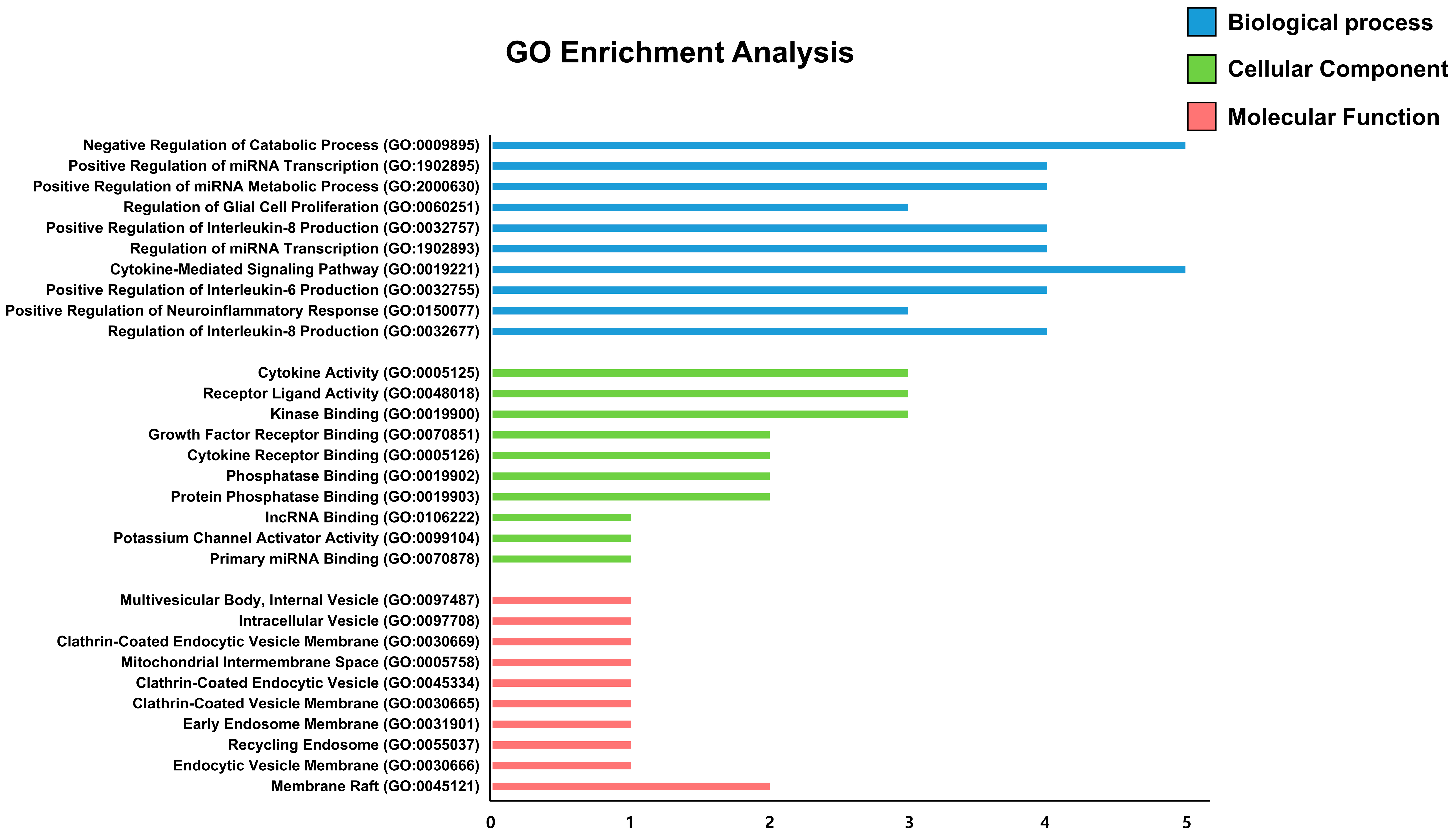
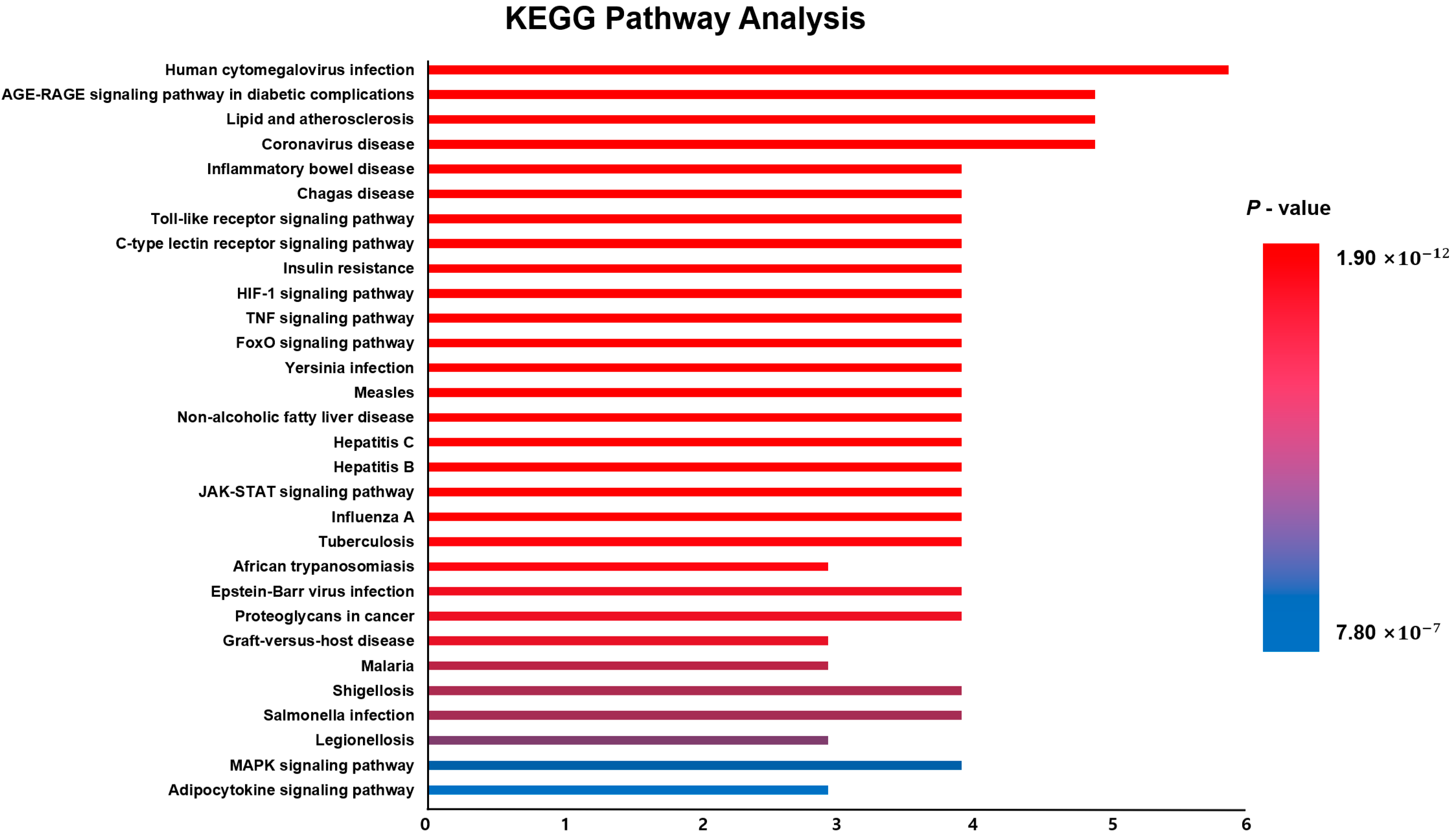
To investigate the functional mechanisms through which Mecasin may act in AD, the 6 core genes identified from our network analysis were submitted to Enrichr for GO enrichment analysis and KEGG pathway annotation (Figure 4). The GO enrichment results revealed 589 terms in the Biological Process (BP) category, 25 terms in the Cellular Component (CC) category, and 47 terms in the Molecular Function (MF) category. Based on p-values, the top 10 terms from each category were further examined. In the BP category, key enriched terms included “Negative regulation of catabolic process” and “Positive regulation of miRNA transcription.” In the CC category, enriched terms were related to structures such as “Multivesicular body, internal vesicle” and “Intracellular vesicle,” while the MF category included terms such as “Cytokine activity” and “Receptor ligand activity.” KEGG pathway identified 144 associated signaling pathways. Among the top 30 pathways ranked by p-value, eight were closely related to AD mechanisms: the Toll-like receptor signaling pathway, C-type lectin receptor signaling pathway, HIF-1 signaling pathway, TNF signaling pathway, FoxO signaling pathway, JAK–STAT signaling pathway, MAPK signaling pathway, and adipocytokine signaling pathway (Figure 5).

3.5. D-H-C-T-P Network Analysis of Mechanisms of Mecasin in AD

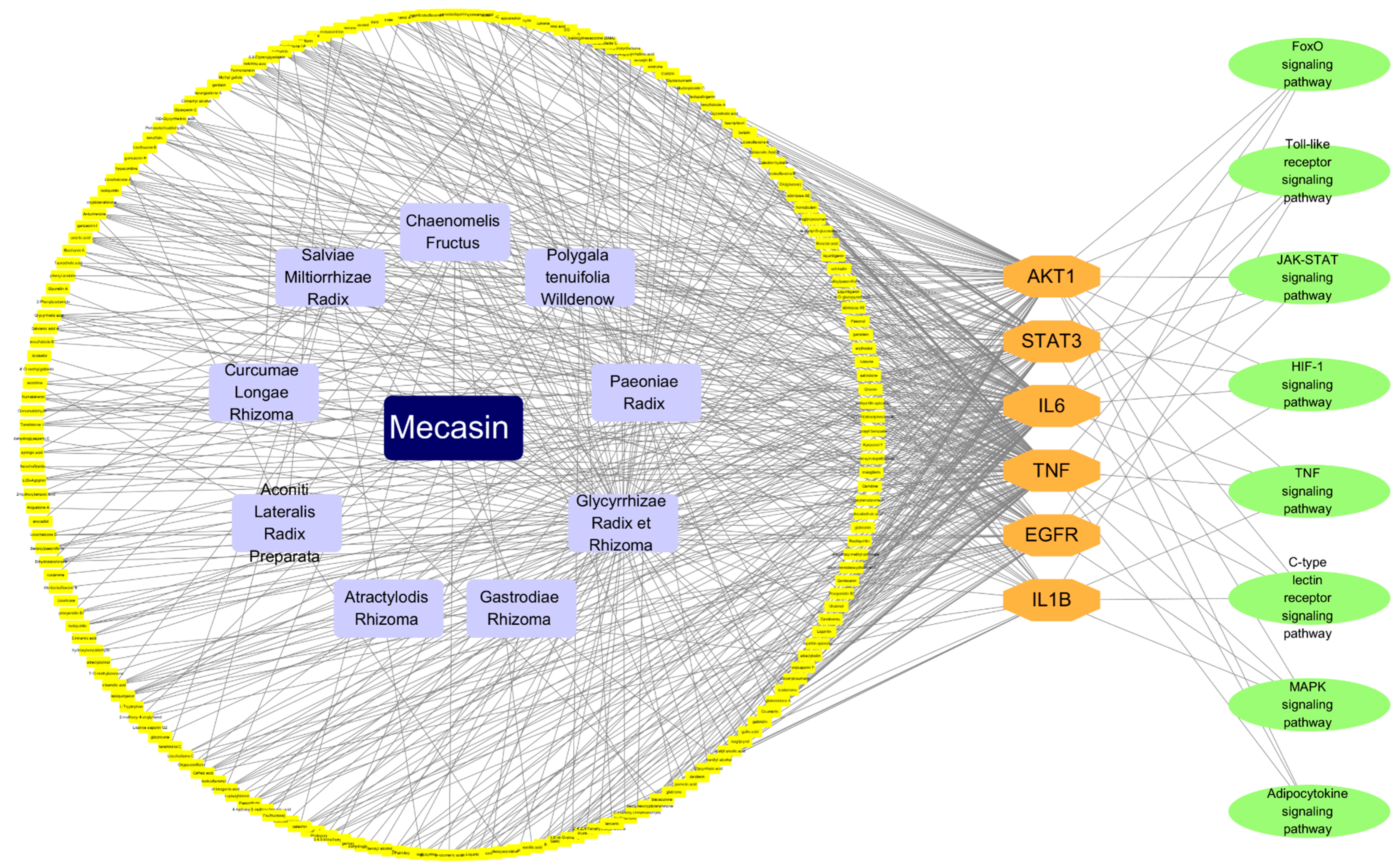
To integrate pharmacological components with disease-relevant molecular pathways, a D-H-C-T-P network was constructed (Figure 6). This multilevel network revealed that Mecasin’s therapeutic activity is convergently directed toward key AD-related core genes, including TNF, IL6, and AKT1. Mecasin’s major bioactive constituents showed broad connectivity to AD-related core genes. Curcumin was associated with 5 core genes, glycyrrhetic acid with 5, Tanshinone IIA with 4, tenuifolin with 4, albiflorin with 4, paeoniflorin with 4, salvianolic acid B with 3, and liquiritigenin with 3. TNF, IL6, and AKT1 emerged as shared targets across all 7 compounds. AKT1 was the only gene associated with all 8 Mecasin–AD core KEGG pathways. IL6 was associated with 6 pathways, TNF with 5, EGFR with 4, IL1B with 4, and STAT3 with 3.

3.6. Co-Expression, Co-Regulation, and Molecular Docking Analysis of Core Targets

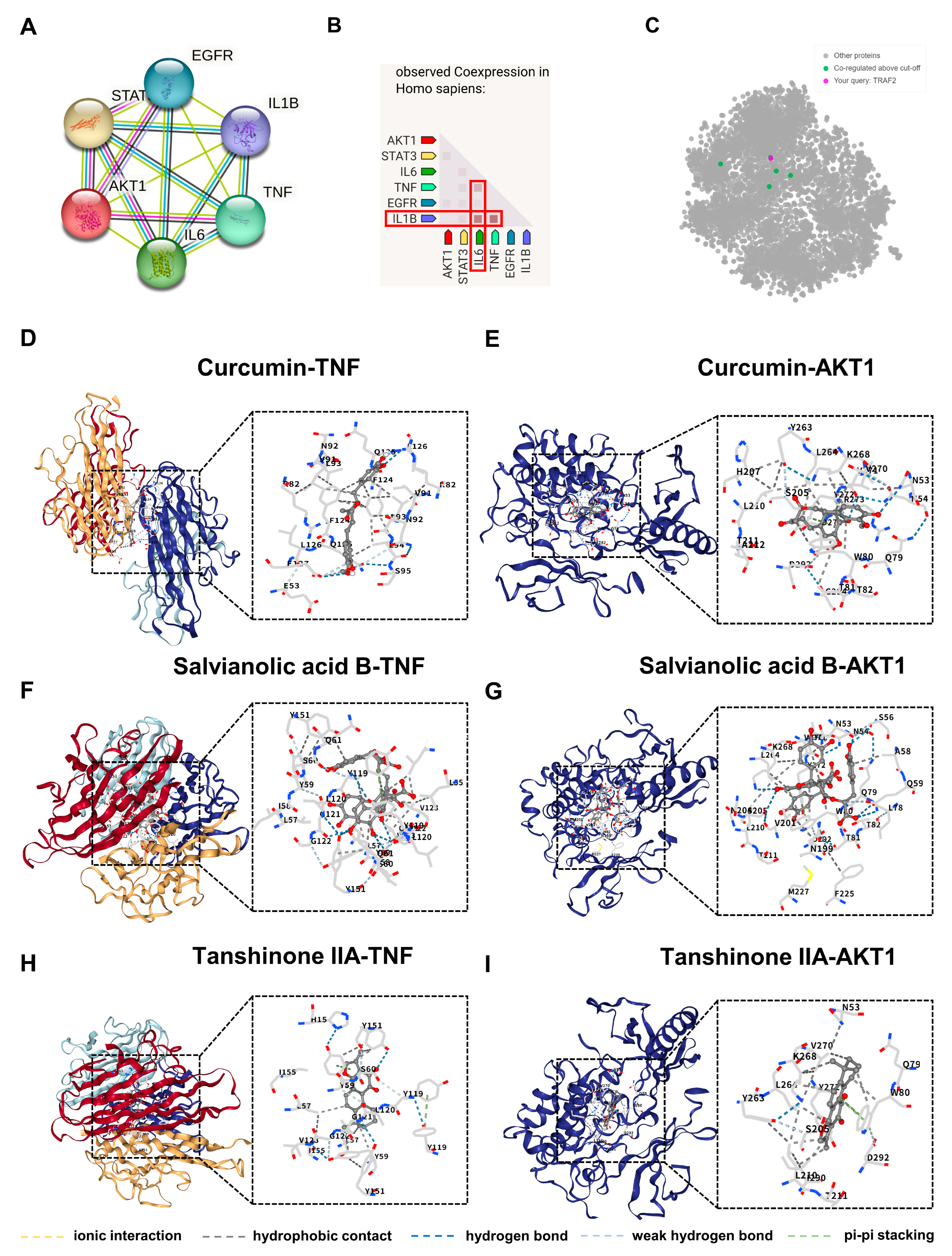
To further validate the mechanistic relevance of Mecasin–AD core genes, we performed integrated analyses combining gene co-expression, co-regulation, and molecular docking (Figure 7). Among the 6 core Mecasin–AD genes, the STRING protein–protein interaction network showed a high level of functional connectivity, with an average combined score of 0.933 across all pairwise interactions. Notably, the interaction strengths between EGFR–STAT3 (0.998), IL1B–TNF (0.998), and IL1B–IL6 (0.996) were among the highest, reflecting tightly linked regulatory relationships within inflammatory and signaling pathways (Figure 7A). Co-expression analysis of the 6 core Mecasin–AD genes revealed coordinated transcriptional patterns among key inflammatory mediators. The co-expression scores were 0.261 for TNF–IL6, 0.515 for IL1B–IL6, and 0.616 for TNF–IL1B. Notably, TNF demonstrated the highest centrality within this co-expression module (Figure 7B). Using a cut-off threshold of 0.945, co-regulation analysis identified genes co-regulated with TRAF2—a key adaptor in TNF signaling—including INTS12, PLEKHA2, CNOT9, ZNF143, and MITD1 (Figure 7C). The average percentile score of these co-regulated genes was 0.963, with an average co-regulation score of 0.171, reflecting tight regulatory integration within the TNF signaling network. Molecular docking was conducted for 6 protein–ligand pairs consisting of two core proteins—AKT1, associated with neuroplasticity, and TNF, associated with inflammatory signaling—and 3 Mecasin compounds (curcumin, salvianolic acid B, and tanshinone IIA) (Figure 7D–I). For AKT1, the binding affinities were −9.5 kcal/mol with curcumin, −8.4 kcal/mol with salvianolic acid B, and −11.7 kcal/mol with tanshinone IIA. For TNF, the binding affinities were −7.7 kcal/mol with curcumin, −8.4 kcal/mol with salvianolic acid B, and −9.0 kcal/mol with tanshinone IIA.

4. Discussion

AD is the most prevalent form of dementia and represents a progressive neurodegenerative disorder characterized by the gradual loss of neuronal structure and function [29,30]. Clinically, AD manifests as a continuum from subtle short-term memory deficits and spatial disorientation in the early stages to pronounced cognitive impairment, behavioral disturbances, and ultimately complete dependence in daily activities during the late phase. The AD course is marked by progressive synaptic dysfunction, neuronal death, and widespread network disintegration, leading to a profound decline in memory, reasoning, and executive function [31]. Although the exact pathological mechanisms underlying AD remain unclear, abnormal overproduction and aggregation of Aβ peptides are believed to play a critical role in disease progression. The resulting extracellular amyloid plaques interfere with neuronal communication, induce neuroinflammatory responses, and promote oxidative and metabolic stress. These events impair synaptic function and contribute to neuronal degeneration, ultimately driving the cognitive and behavioral manifestations of AD [32,33].
Mecasin was developed as an orphan drug candidate for the treatment of ALS, with the aim of evaluating its safety and efficacy in alleviating neurodegenerative symptoms. Preclinical investigations have demonstrated that Mecasin, a standardized herbal formulation, exerts both neuroprotective and anti-neuroinflammatory effects. Its safety has been consistently confirmed across in vitro and in vivo experimental models. In lipopolysaccharide-stimulated BV2 microglia, Mecasin markedly attenuated the expression of inflammatory mediators (iNOS, COX-2), and pro-inflammatory cytokines (TNF-α, IL-1β, IL-6) through suppression of NF-κB nuclear translocation and IκB-α phosphorylation. Mechanistically, it upregulated heme oxygenase-1 (HO-1) expression via Nrf2 activation, enhancing endogenous antioxidant defense. Comparative analyses further revealed that key constituents such as Curcuma longa and Polygala tenuifolia synergistically contributed to this anti-neuroinflammatory action [34,35]. In HT22 neuronal cells, Mecasin protected against glutamate- and hydrogen peroxide-induced cytotoxicity in a concentration-dependent manner. This protection was mediated through ERK/p38-MAPK–dependent activation of Nrf2 and subsequent HO-1 induction, leading to suppression of intracellular ROS and maintenance of neuronal viability [36]. Toxicological assessments confirmed Mecasin’s favorable safety profile. Single-dose intravenous and intramuscular pharmacopuncture studies in Sprague–Dawley rats showed no mortality, clinical toxicity, or histopathological abnormalities up to 2000 mg/kg [37,38]. Furthermore, chronic 26-week oral administration produced no adverse clinical, hematological, or organ-specific findings, establishing a NOAEL exceeding 2000 mg/kg/day [39]. In the hSOD1G93A transgenic mouse model of ALS, Mecasin delayed disease onset, improved motor coordination, and prolonged survival. Histological analysis revealed reduced spinal motor neuron loss, suppressed microglial activation, and decreased oxidative markers such as iNOS and gp91phox. These effects were linked to downregulation of ERK1/2 phosphorylation and inhibition of the NADPH oxidase–MAPK axis [40]. Collectively, these findings establish Mecasin as a safe and mechanistically robust herbal formulation with dual actions on redox and inflammatory homeostasis. Through modulation of Nrf2/HO-1, NF-κB, and MAPK signaling, Mecasin mitigates glial activation, oxidative stress, and neuronal degeneration. These preclinical insights provide a mechanistic rationale for its therapeutic potential in neurodegenerative disorders, including ALS and AD. Clinically, a recent multicenter, double-blind, placebo-controlled phase IIa trial further supported these findings, showing that 12 weeks of Mecasin treatment slowed functional decline in ALS patients without serious adverse events [8]. Building upon these preclinical and clinical observations, we hypothesized that Mecasin’s neuroprotective and anti-inflammatory mechanisms may also extend to AD. Therefore, this study employed a network pharmacology approach to explore the diverse ingredient–target interactions underlying Mecasin’s potential regulatory effects on Alzheimer’s pathology.
Using the OASIS database, a compound–target network was constructed based on the active ingredients of Mecasin, comprising 942 nodes and 9948 edges. To assess the disease relevance of these targets, 8886 AD–related genes retrieved from GeneCards were cross-analyzed with 1913 Mecasin-associated targets. The intersection revealed 942 genes that overlapped with AD-associated gene sets. Topological network analysis (degree centrality, betweenness centrality, and closeness centrality) was applied in three successive screening rounds to identify hub genes. 6 key targets were confirmed: STAT3, IL1B, TNF, IL6, EGFR, and AKT1. Functional enrichment analysis was then performed to elucidate the biological implications of these hub genes. In the GO Biological Process category, enriched terms included positive regulation of gene expression and negative regulation of apoptotic process. KEGG pathway analysis revealed major signaling cascades potentially involved in Mecasin’s AD-modulating effects: the HIF-1 signaling pathway, JAK–STAT signaling pathway, TNF signaling pathway, and MAPK signaling pathway. Together, these findings complement the existing evidence for Mecasin and suggest a consistent mechanistic outline through which its multi-ingredient formulation may relate to AD pathology. On this basis, three possible mechanistic aspects through which Mecasin may influence AD can be proposed: neuroprotection, neuroregenerative support, and anti-inflammatory regulation.
Neuronal loss and impaired survival signaling are central pathological features of AD, with accumulating evidence indicating that disruptions in PI3K–AKT, JAK–STAT, and MAPK pathways contribute significantly to synaptic degeneration, oxidative injury, and apoptosis [41,42,43,44]. In our network pharmacology analysis, Mecasin was found to converge on several key nodes associated with neuroprotective processes, particularly AKT1, STAT3, and EGFR, suggesting that the formulation may engage molecular modules that support neuronal resilience in AD. Among the 6 Mecasin–AD core genes identified, AKT1 emerged as a major regulatory hub, aligning with prior studies showing that AKT-mediated phosphorylation cascades protect neurons from Aβ-induced toxicity, mitochondrial dysfunction, and excitotoxic damage [45,46,47]. The involvement of STAT3 and EGFR further reinforces this neuroprotective framework, as both genes have been implicated in promoting neuronal survival, dendritic maintenance, and glial-mediated trophic support [48,49,50]. KEGG pathway analysis highlighted JAK–STAT, HIF-1, and MAPK signaling as major functional clusters, all of which have well-established roles in protecting neurons under oxidative or inflammatory stress [51,52,53]. These pathways coordinate anti-apoptotic signaling, enhance mitochondrial stability, and regulate antioxidant gene expression, suggesting that Mecasin may potentially engage these protective mechanisms. The molecular docking results provided preliminary indications of a potential neuroprotective role of Mecasin. Tanshinone IIA exhibited strong affinity toward AKT1, followed by curcumin and salvianolic acid B, consistent with previous reports demonstrating that these phytochemicals activate AKT-related regenerative and protective pathways [54]. Curcumin and salvianolic acid B, in particular, have been shown to modulate oxidative pathways, inhibit ROS formation, and stabilize synaptic proteins, which may complement Mecasin’s overall neuroprotective profile [55,56,57]. Although these in silico findings do not confirm functional activity, they outline plausible molecular interfaces through which Mecasin compounds could engage neuroprotective signaling in AD. Collectively, these multi-level observations suggest that Mecasin may exert neuroprotective effects by modulating AKT1-centered survival pathways and by interacting with STAT3- and EGFR-dependent trophic mechanisms. These proposed actions align with previously reported anti-apoptotic, antioxidant, and mitochondrial-stabilizing effects of Mecasin’s constituent herbs and compounds. Further experimental validation is warranted to determine whether these network-level predictions translate into functional protection against neuronal injury in vivo.
Beyond neuronal survival, accumulating evidence indicates that impairment of adult neurogenesis and synaptic remodeling is a critical component of cognitive decline in AD. Reduced hippocampal neurogenesis and dysregulated neurotrophic signaling, including BDNF/TrkB and PI3K–AKT–CREB pathways, have been linked to memory impairment and increased vulnerability of neuronal circuits in AD and related conditions [58]. In our KEGG pathway analysis, several Mecasin–AD core genes (IL6, AKT1, STAT3) appeared within signaling pathways associated with neuronal remodeling. Among these, the FoxO and MAPK pathways are known to participate in axon extension, dendritic growth, and activity-dependent synaptic plasticity [59,60,61,62]. Taken together, these associations suggest that Mecasin may have relevance to regenerative processes beyond basic survival support, raising the possibility of a connection to structural adaptations within vulnerable neuronal circuits.
Consistent with the inflammatory burden characteristic of AD, Mecasin–AD core genes showed strong representation across TNF signaling, Toll-like receptor signaling, and C-type lectin receptor pathways, with IL6, IL1B, TNF, and AKT1 appearing across all three. These convergent pathways underscore the central role of cytokine-driven cascades in shaping microglial activation and neuroinflammatory responses [63,64]. While our co-regulation analysis identified TRAF2 as a point of convergence within these networks—together with a small cluster of genes displaying transcriptional coherence—this finding is best interpreted as a preliminary indication of how receptor-proximal TNF signaling may interface with downstream regulatory processes. Such patterns, together with the favorable docking affinities of Mecasin compounds for TNF, suggest that Mecasin may modulate inflammatory signaling at multiple levels, potentially contributing to the attenuation of cytokine-driven neuroinflammation in AD.
This study has several methodological limitations inherent to the in silico network pharmacology approach. First, although compound–target prediction tools and basic pharmacokinetic filters were applied, these methods cannot fully reflect the absorption, distribution, metabolism, and excretion characteristics of Mecasin’s diverse phytochemicals, nor do they ensure biologically relevant target engagement. Second, because Mecasin is a multi-herb formulation containing numerous phytochemicals, it naturally generates a large number of predicted compound–target associations, and its pharmacological effects are likely to arise from synergistic interactions among components. While network inference can identify convergent mechanistic hubs within this complexity, it cannot establish causal contributions of individual herbs or compounds to AD-related pathways. Third, PPI-based core-gene extraction and pathway mapping rely on heterogeneous database evidence, meaning that the prominence of nodes such as AKT1, IL6, TNF, STAT3, EGFR, and IL1B may partially reflect their general network centrality rather than Mecasin-specific actions. Fourth, the molecular docking analysis represents an exploratory structural assessment and is subject to notable constraints, as it was performed as single docking runs on CB-Dock2 without comparison to known ligands, without incorporating receptor flexibility, and without consideration of ADME/BBB properties of the compounds. Docking scores alone do not establish physical binding or biological efficacy, particularly for multi-component herbal mixtures, and the results should therefore be interpreted solely as plausible structural poses rather than evidence of functional activity. Finally, the mechanistic predictions generated from this network analysis will require targeted molecular or in vivo studies to confirm the proposed interactions and pathways. Nevertheless, in silico network pharmacology analysis offers a useful framework for examining how complex herbal mixtures may relate to diverse aspects of disease biology. By identifying plausible Mecasin–AD interaction hubs and pathway clusters, the present study offers theoretical groundwork and directional guidance for future experimental investigations into the neuroimmune mechanisms of Mecasin.

5. Conclusions

This network pharmacology study explored potential connections between Mecasin and molecular features associated with AD. 6 Mecasin–AD core genes (AKT1, STAT3, IL6, TNF, EGFR, IL1B) emerged as central nodes linked to pathways involved in neuronal survival, regenerative signaling, and inflammatory regulation. KEGG enrichment highlighted FoxO, JAK–STAT, MAPK, and TNF signaling as potential axes of Mecasin activity. Docking results suggested that several Mecasin compounds may interact with AKT1 or TNF, although the relevance of these interactions to AD will require experimental verification. Overall, these in silico findings suggest possible multi-target interactions through which Mecasin may modulate interconnected neuroimmune mechanisms in AD, offering a systems-level framework that can inform subsequent mechanistic and in vivo validation.

Supplementary Materials

The following supporting information can be downloaded at https://www.mdpi.com/article/10.3390/nu18010008/s1: Table S1: List of overlapping target genes shared between Mecasin and Alzheimer’s disease gene sets.

Author Contributions

Conceptualization: H.J.; Methodology: H.J. and J.S.; Formal analysis: H.J. and J.S.; Investigation: H.J., J.S. and H.L.; Writing—original Draft: H.J. and J.S.; Writing—review and editing: G.-S.B. and S.K.; Supervision: S.K.; Funding acquisition: S.K. All authors have read and agreed to the published version of the manuscript.

Funding

This paper was supported by Wonkwang University in 2025 (2025-03-25-338).

Institutional Review Board Statement

Not applicable.

Informed Consent Statement

Not applicable.

Data Availability Statement

The original contributions presented in this study are included in the article. Further inquiries can be directed to the corresponding author.

Conflicts of Interest

The authors declare no conflicts of interest.

References

  1. Seo, H.; Park, Y.; Kwon, I.; Kim, J.L. The long-term outcomes of Alzheimer’s disease patients treated with anti-dementia medications according to baseline dementia severity. J. Korean Soc. Biol. Ther. Psychiatry 2021, 3, 33–39. [Google Scholar]
  2. Brück, C.C.; Wolters, F.J.; Ikram, M.A.; de Kok, I.M. Projected prevalence and incidence of dementia accounting for secular trends and birth cohort effects: A population-based microsimulation study. Eur. J. Epidemiol. 2022, 37, 807–814. [Google Scholar] [CrossRef]
  3. Bianchetti, A.; Ranieri, P.; Margiotta, A.; Trabucchi, M. Pharmacological treatment of Alzheimer’s Disease. Aging Clin. Exp. Res. 2006, 18, 158–162. [Google Scholar] [CrossRef] [PubMed]
  4. Karantzoulis, S.; Galvin, J.E. Distinguishing Alzheimer’s disease from other major forms of dementia. Expert Rev. Neurother. 2011, 11, 1579–1591. [Google Scholar] [CrossRef]
  5. Kim, S.; Chun, H.; Kim, Y.; Kim, Y.; Park, U.; Chu, J.; Ryu, H. Astrocytic autophagy plasticity modulates Aβ clearance and cognitive function in Alzheimer’s disease. Mol. Neurodegener. 2024, 19, 55. [Google Scholar] [CrossRef]
  6. Lee, H.; Lee, H.; Choi, J.; Hwang, G.; Lee, H.; Lee, H.; Yim, J. Investigation of the Approaches to Optimal Exercise Interventions Based on Dementia Type: A Theoretical Review. Healthcare 2024, 12, 576. [Google Scholar] [CrossRef]
  7. Kim, S.Y. Past and future of drug treatments for Alzheimer’s disease. J. Korean Neuropsychiatr. Assoc. 2018, 57, 30–42. [Google Scholar] [CrossRef]
  8. Kim, S.; Yang, M.; Ku, B.; Cha, E.; Seo, W.; Son, I.; Kim, S. Efficacy of mecasin for treatment of amyotrophic lateral sclerosis: A phase IIa multicenter randomized double-blinded placebo-controlled trial. J. Ethnopharmacol. 2023, 315, 116670. [Google Scholar] [CrossRef]
  9. Hanna, L.; Poluyi, E.; Ikwuegbuenyi, C.; Morgan, E.; Imaguezegie, G. Peripheral inflammation and neurodegeneration; a potential for therapeutic intervention in Alzheimer’s disease (AD), Parkinson’s disease (PD) and amyotrophic lateral sclerosis (ALS). Egypt. J. Neurosurg. 2022, 37, 15. [Google Scholar] [CrossRef]
  10. Wang, M.; Yin, F.; Kong, L.; Yang, L.; Sun, H.; Sun, Y.; Wang, X. Chinmedomics: A potent tool for the evaluation of traditional Chinese medicine efficacy and identification of its active components. Chin. Med. 2024, 19, 47. [Google Scholar] [CrossRef] [PubMed]
  11. Shao, L.I.; Zhang, B. Traditional Chinese medicine network pharmacology: Theory, methodology and application. Chin. J. Nat. Med. 2013, 11, 110–120. [Google Scholar]
  12. Yea, S.J.; Jang, Y.; Seong, B.; Kim, C. Comparative analysis of web search trends between experts and public for medicinal herbs in Korea. J. Ethnopharmacol. 2015, 176, 463–468. [Google Scholar] [CrossRef]
  13. Kim, S.; Thiessen, P.A.; Bolton, E.E.; Chen, J.; Fu, G.; Gindulyte, A.; Bryant, S.H. PubChem substance and compound databases. Nucleic Acids Res. 2016, 44, D1202–D1213. [Google Scholar] [PubMed]
  14. Stelzer, G.; Rosen, N.; Plaschkes, I.; Zimmerman, S.; Twik, M.; Fishilevich, S.; Lancet, D. The GeneCards suite: From gene data mining to disease genome sequence analyses. Curr. Protoc. Bioinform. 2016, 54, 1.30.1–1.30.33. [Google Scholar] [CrossRef] [PubMed]
  15. Szklarczyk, D.; Gable, A.L.; Nastou, K.C.; Lyon, D.; Kirsch, R.; Pyysalo, S.; von Mering, C. The STRING database in 2021: Customizable protein–protein networks, and functional characterization of user-uploaded gene/measurement sets. Nucleic Acids Res. 2021, 49, D605–D612. [Google Scholar] [PubMed]
  16. Shannon, P.; Markiel, A.; Ozier, O.; Baliga, N.S.; Wang, J.T.; Ramage, D.; Ideker, T. Cytoscape: A software environment for integrated models of biomolecular interaction networks. Genome Res. 2003, 13, 2498–2504. [Google Scholar] [CrossRef]
  17. Chin, C.H.; Chen, S.H.; Wu, H.H.; Ho, C.W.; Ko, M.T.; Lin, C.Y. cytoHubba: Identifying hub objects and sub-networks from complex interactome. BMC Syst. Biol. 2014, 8, S11. [Google Scholar] [CrossRef]
  18. Koschützki, D.; Schreiber, F. Centrality analysis methods for biological networks and their application to gene regulatory networks. Gene Regul. Syst. Biol. 2008, 2, 193–201. [Google Scholar] [CrossRef]
  19. Yu, G.; Wang, L.G.; Han, Y.; He, Q.Y. clusterProfiler: An R package for comparing biological themes among gene clusters. Omics A J. Integr. Biol. 2012, 16, 284–287. [Google Scholar] [CrossRef]
  20. Kanehisa, M.; Furumichi, M.; Sato, Y.; Kawashima, M.; Ishiguro-Watanabe, M. KEGG for taxonomy-based analysis of pathways and genomes. Nucleic Acids Res. 2023, 51, D587–D592. [Google Scholar]
  21. Gene Ontology Consortium. The Gene Ontology resource: Enriching a GOld mine. Nucleic Acids Res. 2021, 49, D325–D334. [Google Scholar]
  22. Chen, E.Y.; Tan, C.M.; Kou, Y.; Duan, Q.; Wang, Z.; Meirelles, G.V.; Ma’ayan, A. Enrichr: Interactive and collaborative HTML5 gene list enrichment analysis tool. BMC Bioinform. 2013, 14, 128. [Google Scholar] [CrossRef] [PubMed]
  23. Kuleshov, M.V.; Jones, M.R.; Rouillard, A.D.; Fernandez, N.F.; Duan, Q.; Wang, Z.; Ma’ayan, A. Enrichr: A comprehensive gene set enrichment analysis web server 2016 update. Nucleic Acids Res. 2016, 44, W90–W97. [Google Scholar] [CrossRef]
  24. Liang, H.; Ruan, H.; Ouyang, Q.; Lai, L. Herb-target interaction network analysis helps to disclose molecular mechanism of traditional Chinese medicine. Sci. Rep. 2016, 6, 36767. [Google Scholar] [CrossRef]
  25. Kustatscher, G.; Grabowski, P.; Schrader, T.A.; Passmore, J.B.; Schrader, M.; Rappsilber, J. Co-regulation map of the human proteome enables identification of protein functions. Nat. Biotechnol. 2019, 37, 1361–1371. [Google Scholar] [CrossRef] [PubMed]
  26. Liu, Y.; Yang, X.; Gan, J.; Chen, S.; Xiao, Z.X.; Cao, Y. CB-Dock2: Improved protein–ligand blind docking by integrating cavity detection, docking and homologous template fitting. Nucleic Acids Res. 2022, 50, W159–W164. [Google Scholar]
  27. Burley, S.K.; Bhikadiya, C.; Bi, C.; Bittrich, S.; Chen, L.; Crichlow, G.V.; Zhuravleva, M. RCSB Protein Data Bank: Powerful new tools for exploring 3D structures of biological macromolecules for basic and applied research and education in fundamental biology, biomedicine, biotechnology, bioengineering and energy sciences. Nucleic Acids Res. 2021, 49, D437–D451. [Google Scholar] [CrossRef]
  28. Pettersen, E.F.; Goddard, T.D.; Huang, C.C.; Couch, G.S.; Greenblatt, D.M.; Meng, E.C.; Ferrin, T.E. UCSF Chimera—A visualization system for exploratory research and analysis. J. Comput. Chem. 2004, 25, 1605–1612. [Google Scholar] [CrossRef]
  29. Rego, S.; Sanchez, G.; Da Mesquita, S. Current views on meningeal lymphatics and immunity in aging and Alzheimer’s disease. Mol. Neurodegener. 2023, 18, 55. [Google Scholar] [CrossRef]
  30. Zhang, J.; Zhang, Y.; Wang, J.; Xia, Y.; Zhang, J.; Chen, L. Recent advances in Alzheimer’s disease: Mechanisms, clinical trials and new drug development strategies. Signal Transduct. Target. Ther. 2024, 9, 211. [Google Scholar] [CrossRef]
  31. Joe, E.; Ringman, J.M. Cognitive symptoms of Alzheimer’s disease: Clinical management and prevention. BMJ 2019, 367, l6217. [Google Scholar] [CrossRef]
  32. Li, X.L.; Hu, N.; Tan, M.S.; Yu, J.T.; Tan, L. Behavioral and psychological symptoms in Alzheimer’s disease. BioMed Res. Int. 2014, 2014, 927804. [Google Scholar] [CrossRef] [PubMed]
  33. Wang, T.; Ko, W.; Shin, J.Y.; Choi, D.; Lee, D.S.; Kim, S. Comparison of anti-inflammatory effects of Mecasin and its constituents on lipopolysaccharide-stimulated BV2 cells. Exp. Ther. Med. 2021, 21, 591. [Google Scholar]
  34. Wang, T.; Lee, S.; Yang, M.; Cha, E.; Jang, J.; Kim, S. Analytical Method Validation of Gamijakyakgamchobuja-Tang (KCHO-1, Mecasin) Preparation. Evid.-Based Complement. Altern. Med. 2019, 2019, 7824146. [Google Scholar] [CrossRef]
  35. Lee, D.S.; Ko, W.; Song, B.K.; Son, I.; Kim, D.W.; Kang, D.G.; Kim, S. The herbal extract KCHO-1 exerts a neuroprotective effect by ameliorating oxidative stress via heme oxygenase-1 upregulation. Mol. Med. Rep. 2016, 13, 4911–4919. [Google Scholar] [CrossRef]
  36. Lee, S.J.; Jeong, H.H.; Lee, J.C.; Cha, E.H.; Park, M.Y.; Song, B.G.; Kim, S.C. A Study on Single Dose Toxicity of Intravenous Injection of Mecasin Herbal Acupuncture. J. Acupunct. Res. 2016, 33, 1–7. [Google Scholar]
  37. Cha, E.; Jeong, H.; Lee, J.; Lee, S.; Park, M.; Kim, S. A study on single dose toxicity of Mecasin pharmacopuncture injection in muscle. J. Korean Med. 2015, 36, 36–42. [Google Scholar] [CrossRef]
  38. Yang, M.; Lee, S.; Wang, T.; Cha, E.; Jang, J.; Kim, D.; Kim, S. 26-Week repeated dose oral toxicity study of KCHO-1 in sprague-dawley rats. J. Pharmacopunct. 2019, 22, 192. [Google Scholar] [CrossRef] [PubMed]
  39. Kook, M.G.; Choi, S.W.; Seo, Y.; Kim, D.W.; Song, B.K.; Son, I.; Kang, K.S. KCHO-1, a novel herbal anti-inflammatory compound, attenuates oxidative stress in an animal model of amyotrophic lateral sclerosis. J. Vet. Sci. 2017, 18, 487–497. [Google Scholar] [CrossRef]
  40. Hauptmann, S.; Scherping, I.; Dröse, S.; Brandt, U.; Schulz, K.L.; Jendrach, M.; Müller, W.E. Mitochondrial dysfunction: An early event in Alzheimer pathology accumulates with age in AD transgenic mice. Neurobiol. Aging 2009, 30, 1574–1586. [Google Scholar] [CrossRef]
  41. Long, H.Z.; Cheng, Y.; Zhou, Z.W.; Luo, H.Y.; Wen, D.D.; Gao, L.C. PI3K/AKT signal pathway: A target of natural products in the prevention and treatment of Alzheimer’s disease and Parkinson’s disease. Front. Pharmacol. 2021, 12, 648636. [Google Scholar]
  42. Rusek, M.; Smith, J.; El-Khatib, K.; Aikins, K.; Czuczwar, S.J.; Pluta, R. The role of the JAK/STAT signaling pathway in the pathogenesis of Alzheimer’s disease: New potential treatment target. Int. J. Mol. Sci. 2023, 24, 864. [Google Scholar]
  43. Munoz, L.; Ammit, A.J. Targeting p38 MAPK pathway for the treatment of Alzheimer’s disease. Neuropharmacology 2010, 58, 561–568. [Google Scholar] [PubMed]
  44. Griffin, R.J.; Moloney, A.; Kelliher, M.; Johnston, J.A.; Ravid, R.; Dockery, P.; O’Neill, C. Activation of Akt/PKB, increased phosphorylation of Akt substrates and loss and altered distribution of Akt and PTEN are features of Alzheimer’s disease pathology. J. Neurochem. 2005, 93, 105–117. [Google Scholar] [CrossRef]
  45. Lee, H.K.; Kumar, P.; Fu, Q.; Rosen, K.M.; Querfurth, H.W. The insulin/Akt signaling pathway is targeted by intracellular β-amyloid. Mol. Biol. Cell 2009, 20, 1533–1544. [Google Scholar] [CrossRef] [PubMed]
  46. Ahmad, F.; Singh, K.; Das, D.; Gowaikar, R.; Shaw, E.; Ramachandran, A.; Ravindranath, V. Reactive oxygen species-mediated loss of synaptic Akt1 signaling leads to deficient activity-dependent protein translation early in Alzheimer’s disease. Antioxid. Redox Signal. 2017, 27, 1269–1280. [Google Scholar] [CrossRef]
  47. Alawdi, S.H.; El-Denshary, E.S.; Safar, M.M.; Eidi, H.; David, M.O.; Abdel-Wahhab, M.A. Neuroprotective effect of nanodiamond in Alzheimer’s disease rat model: A pivotal role for modulating NF-κB and STAT3 signaling. Mol. Neurobiol. 2017, 54, 1906–1918. [Google Scholar] [CrossRef]
  48. Mansour, H.M.; Fawzy, H.M.; El-Khatib, A.S.; Khattab, M.M. Repurposed anti-cancer epidermal growth factor receptor inhibitors: Mechanisms of neuroprotective effects in Alzheimer’s disease. Neural Regen. Res. 2022, 17, 1913–1918. [Google Scholar] [PubMed]
  49. Jain, M.; Singh, M.K.; Shyam, H.; Mishra, A.; Kumar, S.; Kumar, A.; Kushwaha, J. Role of JAK/STAT in the neuroinflammation and its association with neurological disorders. Ann. Neurosci. 2021, 28, 191–200. [Google Scholar] [CrossRef]
  50. Porel, P.; Bala, K.; Aran, K.R. Exploring the role of HIF-1α on pathogenesis in Alzheimer’s disease and potential therapeutic approaches. Inflammopharmacology 2025, 33, 669–678. [Google Scholar]
  51. Calderaro, A.; Patanè, G.T.; Tellone, E.; Barreca, D.; Ficarra, S.; Misiti, F.; Laganà, G. The neuroprotective potentiality of flavonoids on Alzheimer’s disease. Int. J. Mol. Sci. 2022, 23, 14835. [Google Scholar] [CrossRef]
  52. Mei, X.; Qiu, C.; Shi, L.; Li, X.; Yang, M.; Hu, J.; Zou, C. The effect of curcumin on Aβ, Akt, and GSK3β on the brain and retina of APP/PS1 mice and in the blood of Alzheimer’s patients with early-stage disease. Pharmacogn. Mag. 2022, 18, 679–684. [Google Scholar]
  53. Guo, R.; Li, L.; Su, J.; Li, S.; Duncan, S.E.; Liu, Z.; Fan, G. Pharmacological activity and mechanism of tanshinone IIA in related diseases. Drug Design Dev. Ther. 2020, 14, 4735–4748. [Google Scholar]
  54. Habtemariam, S. Molecular pharmacology of rosmarinic and salvianolic acids: Potential seeds for Alzheimer’s and vascular dementia drugs. Int. J. Mol. Sci. 2018, 19, 458. [Google Scholar] [CrossRef] [PubMed]
  55. Wang, S.X.; Hu, L.M.; Gao, X.M.; Guo, H.; Fan, G.W. Anti-inflammatory activity of salvianolic acid B in microglia contributes to its neuroprotective effect. Neurochem. Res. 2010, 35, 1029–1037. [Google Scholar] [CrossRef]
  56. Dumont, M.; Beal, M.F. Neuroprotective strategies involving ROS in Alzheimer disease. Free Radic. Biol. Med. 2011, 51, 1014–1026. [Google Scholar] [CrossRef]
  57. Mostafa, M.; Disouky, A.; Lazarov, O. Therapeutic modulation of neurogenesis to improve hippocampal plasticity and cognition in aging and Alzheimer’s disease. Neurotherapeutics 2025, 22, e00580. [Google Scholar] [CrossRef]
  58. Jiang, M.; Vanan, S.; Tu, H.T.; Zhang, W.; Zhang, Z.W.; Chia, S.Y.; Zeng, L. Amyloid precursor protein intracellular domain-dependent regulation of FOXO3a inhibits adult hippocampal neurogenesis. Neurobiol. Aging 2020, 95, 250–263. [Google Scholar] [CrossRef]
  59. Lazarov, O.; Marr, R.A. Neurogenesis and Alzheimer’s disease: At the crossroads. Exp. Neurol. 2010, 223, 267–281. [Google Scholar] [PubMed]
  60. Lee, H.C.; Tan, K.L.; Cheah, P.S.; Ling, K.H. Potential role of JAK-STAT signaling pathway in the neurogenic-to-gliogenic shift in down syndrome brain. Neural Plast. 2016, 2016, 7434191. [Google Scholar] [CrossRef]
  61. Ashok, B.S.; Ajith, T.A.; Sivanesan, S. Hypoxia-inducible factors as neuroprotective agent in Alzheimer’s disease. Clin. Exp. Pharmacol. Physiol. 2017, 44, 327–334. [Google Scholar] [CrossRef] [PubMed]
  62. Su, F.; Bai, F.; Zhang, Z. Inflammatory cytokines and Alzheimer’s disease: A review from the perspective of genetic polymorphisms. Neurosci. Bull. 2016, 32, 469–480. [Google Scholar] [CrossRef]
  63. Ng, A.; Tam, W.W.; Zhang, M.W.; Ho, C.S.; Husain, S.F.; McIntyre, R.S.; Ho, R.C. IL-1β, IL-6, TNF-α and CRP in elderly patients with depression or Alzheimer’s disease: Systematic review and meta-analysis. Sci. Rep. 2018, 8, 12050. [Google Scholar] [CrossRef] [PubMed]
  64. Zhao, M.; Zhou, A.; Xu, L.; Zhang, X. The role of TLR4-mediated PTEN/PI3K/AKT/NF-κB signaling pathway in neuroinflammation in hippocampal neurons. Neuroscience 2014, 269, 93–101. [Google Scholar] [CrossRef] [PubMed]
Figure 1. Workflow of the network pharmacology analysis of Mecasin in Alzheimer’s disease (AD). Bioactive compounds from the nine constituent herbs were retrieved from the OASIS and PubChem databases and mapped to predicted molecular targets. Mecasin-associated targets were then integrated with AD-related genes obtained from GeneCards to identify shared gene signatures. These overlapping genes were analyzed through STRING-based PPI network construction, followed by GO and KEGG enrichment analyses in Cytoscape and Enrichr to determine key functional nodes and pathways. Subsequent co-expression, co-regulation, and molecular docking assessments were conducted to examine the binding compatibility between core targets (TNF, AKT1) and Mecasin-derived compounds (curcumin, salvianolic acid B, Tanshinone IIA), outlining potential interactions relevant to AD-associated molecular mechanisms.
Nutrients 18 00008 g001
Figure 2. Network and overlapping target genes between Mecasin and Alzheimer’s disease (AD). (A) Protein–protein interaction (PPI) network constructed from Mecasin-associated target genes, comprising 942 nodes and 9948 edges. (B) Venn diagram showing the overlap between Mecasin-related targets and AD-related genes, identifying 942 shared targets.
Nutrients 18 00008 g002
Figure 3. Topological refinement process for identifying core Mecasin–Alzheimer’s disease (AD) targets. (A) Protein–protein interaction (PPI) network constructed from the 942 overlapping Mecasin–AD genes. (B) First and second rounds of topological filtering based on degree, betweenness, and closeness centrality thresholds, reducing the network to intermediate candidate nodes. (C) Third screening step further narrowing high-ranking nodes according to increasingly stringent centrality criteria. (D) Final condensed network consisting of 6 core genes (AKT1, STAT3, IL6, TNF, EGFR, IL1B), each showing the highest topological importance across all filtering iterations.
Nutrients 18 00008 g003
Figure 4. GO enrichment analysis of Mecasin-associated targets. Blue bars indicate Biological Processes (BP), green bars represent Cellular Components (CC), and red bars denote Molecular Functions (MF). The top-ranked GO terms in each category illustrate Mecasin’s potential involvement in gene expression regulation, intracellular organization, and protein-binding activity.
Nutrients 18 00008 g004
Figure 5. KEGG pathway analysis of Mecasin-associated targets. The core pathways include the HIF-1, JAK–STAT, TNF, and MAPK signaling pathways, indicating Mecasin’s potential involvement in regulating inflammatory, oxidative stress, and cell survival mechanisms related to Alzheimer’s disease.
Nutrients 18 00008 g005
Figure 6. Drug–Herb–Compound–Target–Pathway (D-H-C-T-P) network of Mecasin in Alzheimer’s disease (AD). Navy nodes represent the drug (Mecasin), purple nodes indicate herbs, yellow nodes denote bioactive compounds, orange nodes correspond to target genes, and green nodes represent pathways. The network illustrates the multi-component and multi-target interactions through which Mecasin may exert regulatory effects on AD-related molecular mechanisms.
Nutrients 18 00008 g006
Figure 7. Co-expression, co-regulation, and molecular docking analyses of Mecasin–Alzheimer’s disease core targets. (A) Protein–protein interaction (PPI) network of the 6 core genes (AKT1, STAT3, IL6, TNF, EGFR, IL1B) showing high-confidence associations. (B) Co-expression profiling in Homo sapiens demonstrating coordinated transcriptional patterns among the 6 genes. (C) Co-regulation network centered on TRAF2, highlighting tightly associated regulatory partners within the TNF signaling axis. (D) Molecular docking of curcumin with TNF and (E) with AKT1. (F) Docking configuration of salvianolic acid B with TNF and (G) with AKT1. (H) Docking of tanshinone IIA with TNF and (I) with AKT1. Dashed-line colors indicate interaction types: ionic interactions (yellow), hydrophobic contacts (gray), hydrogen bonds (blue), weak hydrogen bonds (light blue), and pi–pi stacking (green).
Nutrients 18 00008 g007
Table 1. List of bioactive compounds identified from Mecasin and their corresponding PubChem IDs.
CompoundPubchem IDOrigin
Ar-turmerone160512Curcumae Longa
bisacurone14287397Curcumae Longa
curcumin969516Curcumae Longa
curzerene12305301Curcumae Longa
α-curcumene442360Curcumae Longa
α-turmerone14632996Curcumae Longa
3,4-dimethoxycinnamic acid717531Polygala tenuifolia
glomeratose A11972358Polygala tenuifolia
lancerin5281645Polygala tenuifolia
N-acetyl-D-glucosamine439174Polygala tenuifolia
senegin III21669942Polygala tenuifolia
sibiricose A5102004867Polygala tenuifolia
sibiricose A66326021Polygala tenuifolia
tenuifoliside A46933844Polygala tenuifolia
tenuifoliside B10055215Polygala tenuifolia
tenuifoliside C11968391Polygala tenuifolia
1-(3,4-dimethoxyphenyl)
ethan-1-one
14328Polygala tenuifolia
2-hydroxybenzoic acid338Polygala tenuifolia
3,4,5-trimethoxycinnamic acid735755Polygala tenuifolia
3,6′-di-O-sinapoyl sucrose11968389Polygala tenuifolia
gentisin5281636Polygala tenuifolia
mangiferin5281647Polygala tenuifolia
onjisaponin F10701737Polygala tenuifolia
propyl benzoate16846Polygala tenuifolia
sucrose5988Polygala tenuifolia
tenuifolin21588226Polygala tenuifolia
vanillin1183Gastrodia elata
4-hydroxy-3-methoxybenzoic acid8468Gastrodia elata
benzyl alcohol244Gastrodia elata
hydroxybenzaldehyde126Gastrodia elata
vanillyl alcohol62348Gastrodia elata
Protocatechualdehyde8768Salvia miltiorrhiza
Tanshinone I114917Salvia miltiorrhiza
tanshindiol C126072Salvia miltiorrhiza
Miltirone160142Salvia miltiorrhiza
cryptotanshinone160254Salvia miltiorrhiza
Tanshinone IIA164676Salvia miltiorrhiza
danshenol A3083514Salvia miltiorrhiza
Rosmarinic acid5281792Salvia miltiorrhiza
Salvianolic Acid B6451084Salvia miltiorrhiza
salviolone10355691Salvia miltiorrhiza
arucadiol11011966Salvia miltiorrhiza
Danshensu11600642Salvia miltiorrhiza
deoxyneocryptotanshinone15690458Salvia miltiorrhiza
Dihydrotanshinone5316743Salvia miltiorrhiza
sugiol94162Salvia miltiorrhiza
Caffeic acid689043Salvia miltiorrhiza
Salvianic acid A5281793Salvia miltiorrhiza
Benzoic acid243Paeonia lactiflora
Carnitine288Paeonia lactiflora
Coumarin323Paeonia lactiflora
Gallic acid370Paeonia lactiflora
Glycyrrhizin3495Paeonia lactiflora
Protoporphyrin IX4971Paeonia lactiflora
L-Tryptophan6305Paeonia lactiflora
L(D)-Agrginin6322Paeonia lactiflora
Taurocholic acid6675Paeonia lactiflora
Methyl gallate7428Paeonia lactiflora
2-Phenylacetamide7680Paeonia lactiflora
Catechin9064Paeonia lactiflora
Glycocholic acid10140Paeonia lactiflora
Paeonol11092Paeonia lactiflora
Glycochenodeoxycholic acid12544Paeonia lactiflora
Glycyrrhizic acid14982Paeonia lactiflora
PGG65238Paeonia lactiflora
Catechin hydrate107957Paeonia lactiflora
Liquiritigenin114829Paeonia lactiflora
Paeoniflorin425990Paeonia lactiflora
Ononin442813Paeonia lactiflora
Cinnamic acid444539Paeonia lactiflora
Liquiritin503737Paeonia lactiflora
Cinnamaldehyde637511Paeonia lactiflora
2-methoxy cinnamaldehyde641298Paeonia lactiflora
Cinnamyl alcohol5315892Paeonia lactiflora
Isoliquiritin5318591Paeonia lactiflora
L-Palmitoylcarnitine11953816Paeonia lactiflora
6′-O-actylpaeoniflorin21575212Paeonia lactiflora
Mudanpioside C21631098Paeonia lactiflora
Oxypaeoniflorin21631105Paeonia lactiflora
Benzoylpaeoniflorin21631106Paeonia lactiflora
Albiflorin24868421Paeonia lactiflora
Galloyloxypaeoniflorin71455849Paeonia lactiflora
Glycyrrhetic acid3230Glycyrrhiza uralensis
18β-Glycyrrhetinic acid10114Glycyrrhiza uralensis
Glycyrrhizin14982Glycyrrhiza uralensis
Daidzin107971Glycyrrhiza uralensis
liquiritigenin114829Glycyrrhiza uralensis
licopyranocoumarin122851Glycyrrhiza uralensis
glabranin124049Glycyrrhiza uralensis
isoglycyrol124050Glycyrrhiza uralensis
galbridin124052Glycyrrhiza uralensis
uralsaponin B163744Glycyrrhiza uralensis
licoisoflavanone392443Glycyrrhiza uralensis
7-O-methyllutenone441251Glycyrrhiza uralensis
Schaftoside442658Glycyrrhiza uralensis
Vicenin-2442664Glycyrrhiza uralensis
Ononin442813Glycyrrhiza uralensis
dehydroglyasperin C480775Glycyrrhiza uralensis
gancaonin I480777Glycyrrhiza uralensis
6,8-Diprenylgenistein480783Glycyrrhiza uralensis
glycyrin480787Glycyrrhiza uralensis
Glyasperin C480859Glycyrrhiza uralensis
Liquiritin503737Glycyrrhiza uralensis
isoliquirigenin638278Glycyrrhiza uralensis
Isoschaftoside3084995Glycyrrhiza uralensis
Biochanin A5280373Glycyrrhiza uralensis
Formononetin5280378Glycyrrhiza uralensis
Kaempferol 3-O-methyl ether5280862Glycyrrhiza uralensis
kaempferol5280863Glycyrrhiza uralensis
genistein5280961Glycyrrhiza uralensis
Genkwanin5281617Glycyrrhiza uralensis
daidzein5281708Glycyrrhiza uralensis
Licoisoflavone A5281789Glycyrrhiza uralensis
luteone5281797Glycyrrhiza uralensis
pratensein5281803Glycyrrhiza uralensis
wighteone5281814Glycyrrhiza uralensis
Uralenol5315126Glycyrrhiza uralensis
Lupiwighteone5317480Glycyrrhiza uralensis
glabrone5317652Glycyrrhiza uralensis
Glycocoumarin5317756Glycyrrhiza uralensis
glycyrrhisoflavone5317764Glycyrrhiza uralensis
Isolicoflavonol5318585Glycyrrhiza uralensis
isoliquiritin5318591Glycyrrhiza uralensis
Kumatakenin5318869Glycyrrhiza uralensis
Licochalcone A5318998Glycyrrhiza uralensis
Licochalcone B5318999Glycyrrhiza uralensis
Licoricone5319013Glycyrrhiza uralensis
4′-O-methylgalbridin5319664Glycyrrhiza uralensis
glycyrol5320083Glycyrrhiza uralensis
licoisoflavone B5481234Glycyrrhiza uralensis
semilicoisoflavone B5481948Glycyrrhiza uralensis
gancaonin H5481949Glycyrrhiza uralensis
Licoflavonol5481964Glycyrrhiza uralensis
2′,4′,2-Trihydroxychalcone5811533Glycyrrhiza uralensis
homobutein6438092Glycyrrhiza uralensis
isoliquiritin apioside6442433Glycyrrhiza uralensis
echinatin6442675Glycyrrhiza uralensis
Licochalcone C9840805Glycyrrhiza uralensis
Kanzonol Y10001604Glycyrrhiza uralensis
liquiritin apioside10076238Glycyrrhiza uralensis
Licoarylcoumarin10090416Glycyrrhiza uralensis
2′,4′,2,4-Tetrahydroxychalcone10107266Glycyrrhiza uralensis
dehydroglyasperin D10109594Glycyrrhiza uralensis
glicoricone10361658Glycyrrhiza uralensis
Allolicoisoflavone B10383349Glycyrrhiza uralensis
Licochalcone D10473311Glycyrrhiza uralensis
licoleafol11111496Glycyrrhiza uralensis
Licoflavone B11349817Glycyrrhiza uralensis
Glabrol11596309Glycyrrhiza uralensis
11-Deoxoglycyrrhetinic acid12305517Glycyrrhiza uralensis
Licorice saponin A314187172Glycyrrhiza uralensis
isoglycycoumarin14187587Glycyrrhiza uralensis
licoflavanone14218028Glycyrrhiza uralensis
2ʹ-hydroxyisolupalbigenin14237659Glycyrrhiza uralensis
isoderrone14237660Glycyrrhiza uralensis
licuraside14282455Glycyrrhiza uralensis
gancaonin L14604077Glycyrrhiza uralensis
Licorice saponin G214891565Glycyrrhiza uralensis
Angustone A15664151Glycyrrhiza uralensis
Glyurallin A15818598Glycyrrhiza uralensis
isoangustone A21591148Glycyrrhiza uralensis
neoisoliquiritin22524410Glycyrrhiza uralensis
isolupalbigenin26238934Glycyrrhiza uralensis
Liquiritigenin 7,4′-di-O-glucopyranoside46869260Glycyrrhiza uralensis
Neoliquiritin51666248Glycyrrhiza uralensis
protocatechuic acid72Pseudocydonia sinensis
gallic acid370Pseudocydonia sinensis
vanillic acid8468Pseudocydonia sinensis
catechin9064Pseudocydonia sinensis
oleanolic acid10494Pseudocydonia sinensis
syringic acid10742Pseudocydonia sinensis
ursolic acid64945Pseudocydonia sinensis
betulinic acid64971Pseudocydonia sinensis
epicatechin72276Pseudocydonia sinensis
betulin72326Pseudocydonia sinensis
erythodiol101761Pseudocydonia sinensis
Procyanidin B2122738Pseudocydonia sinensis
pomolic acid382831Pseudocydonia sinensis
p-coumaric acid637542Pseudocydonia sinensis
chlorogenic acid1794427Pseudocydonia sinensis
acetyl ursolic acid6475119Pseudocydonia sinensis
procyanidin B111250133Pseudocydonia sinensis
aconitine2012Aconitum carmichaeli
hypaconitine441737Aconitum carmichaeli
mesaconitine441747Aconitum carmichaeli
deoxyaconitine21598997Aconitum carmichaeli
benzoylmesaconine (BMA)24832659Aconitum carmichaeli
Glc (glucose)5793Atractylodes japonica
ATO-III (atractylenolideIII)155948Atractylodes japonica
Fru (fructose)445557Atractylodes japonica
atractylodin5321047Atractylodes japonica
atractylodinol10012964Atractylodes japonica
Table 2. Detailed information on the 6 core target genes identified from the Mecasin–Alzheimer’s disease network.
TargetDegree CentralityBetweenness Centrality Closeness Centrality
AKT1360.0134306320.928571429
STAT3360.0139611680.928571429
IL6390.0209309571.000000000
TNF350.0145256680.906976744
EGFR350.0139142230.906976744
IL1B360.0162672010.928571429
Disclaimer/Publisher’s Note: The statements, opinions and data contained in all publications are solely those of the individual author(s) and contributor(s) and not of MDPI and/or the editor(s). MDPI and/or the editor(s) disclaim responsibility for any injury to people or property resulting from any ideas, methods, instructions or products referred to in the content.