Understanding the Optical Behavior and Spectral Signature of Dredging-Induced Plumes in Coastal Waters

 , ,
, ,
Highlights
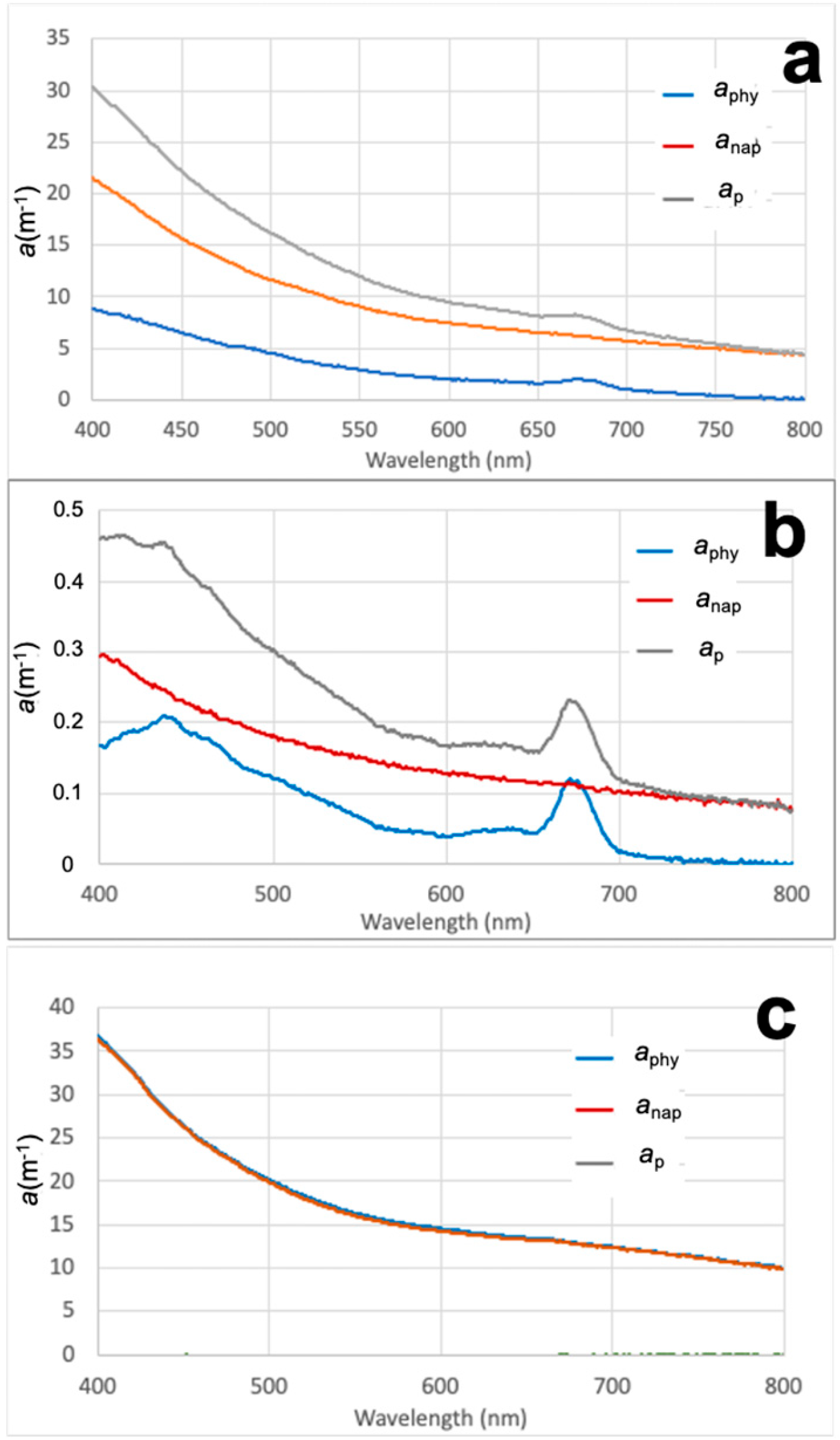
- Particles in suspension in dredge plumes have peculiar (rather spectrally flat) light absorption properties.
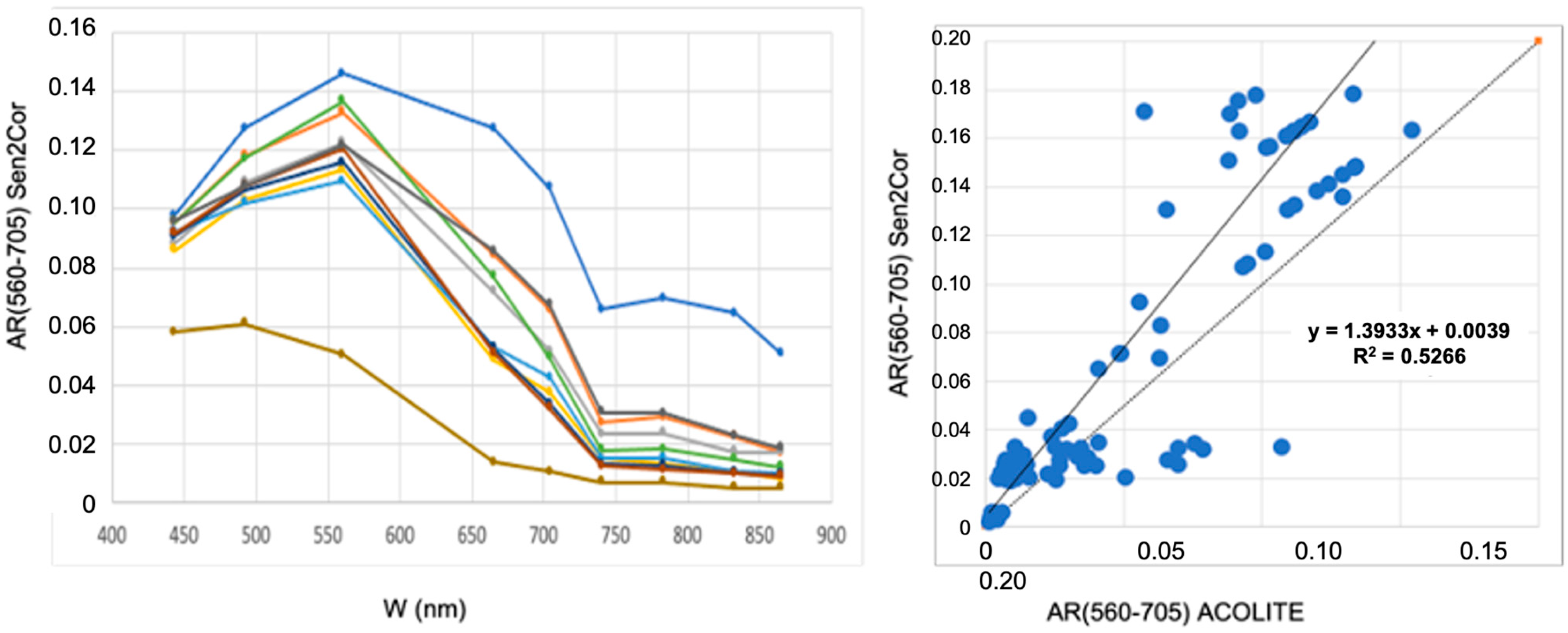
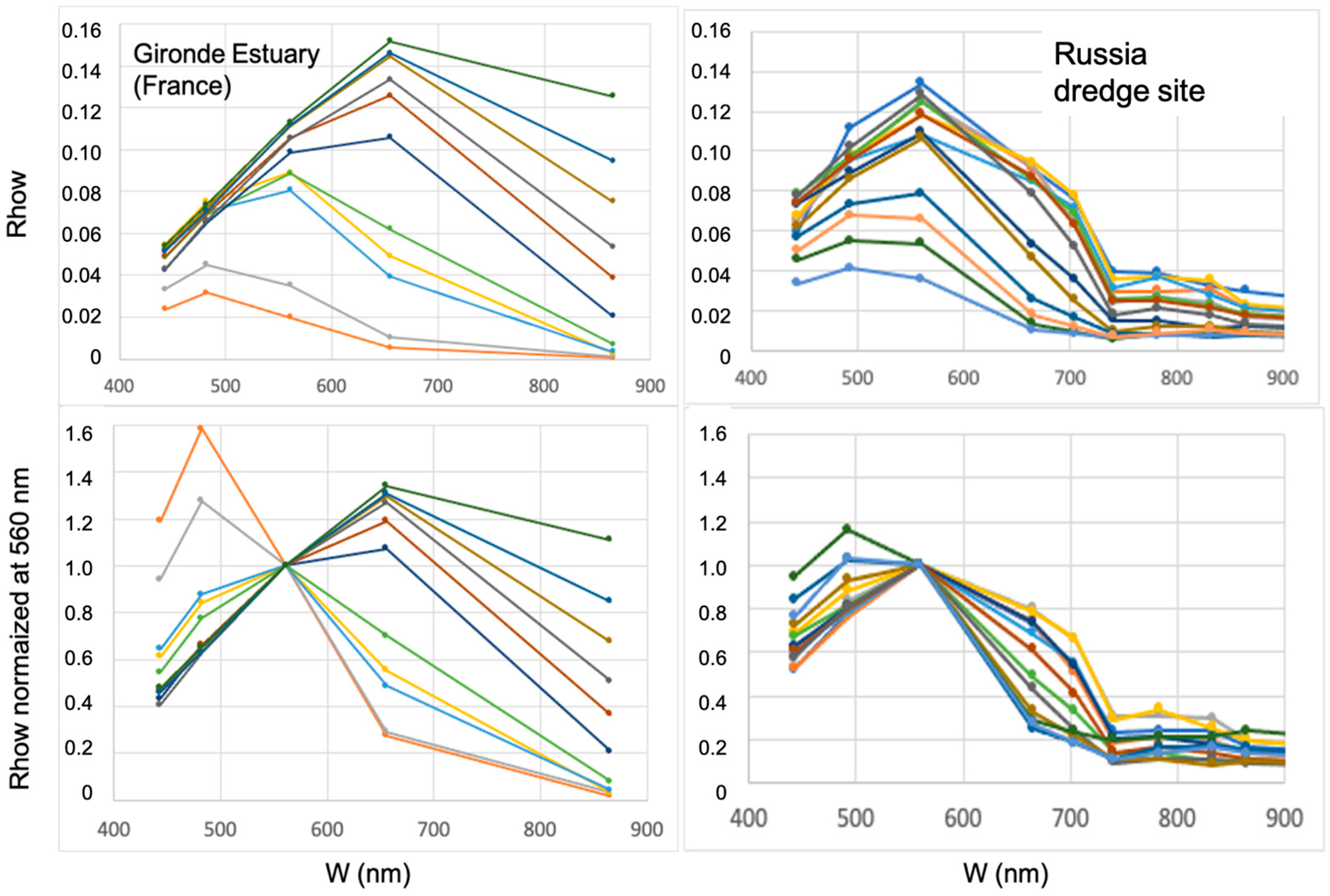
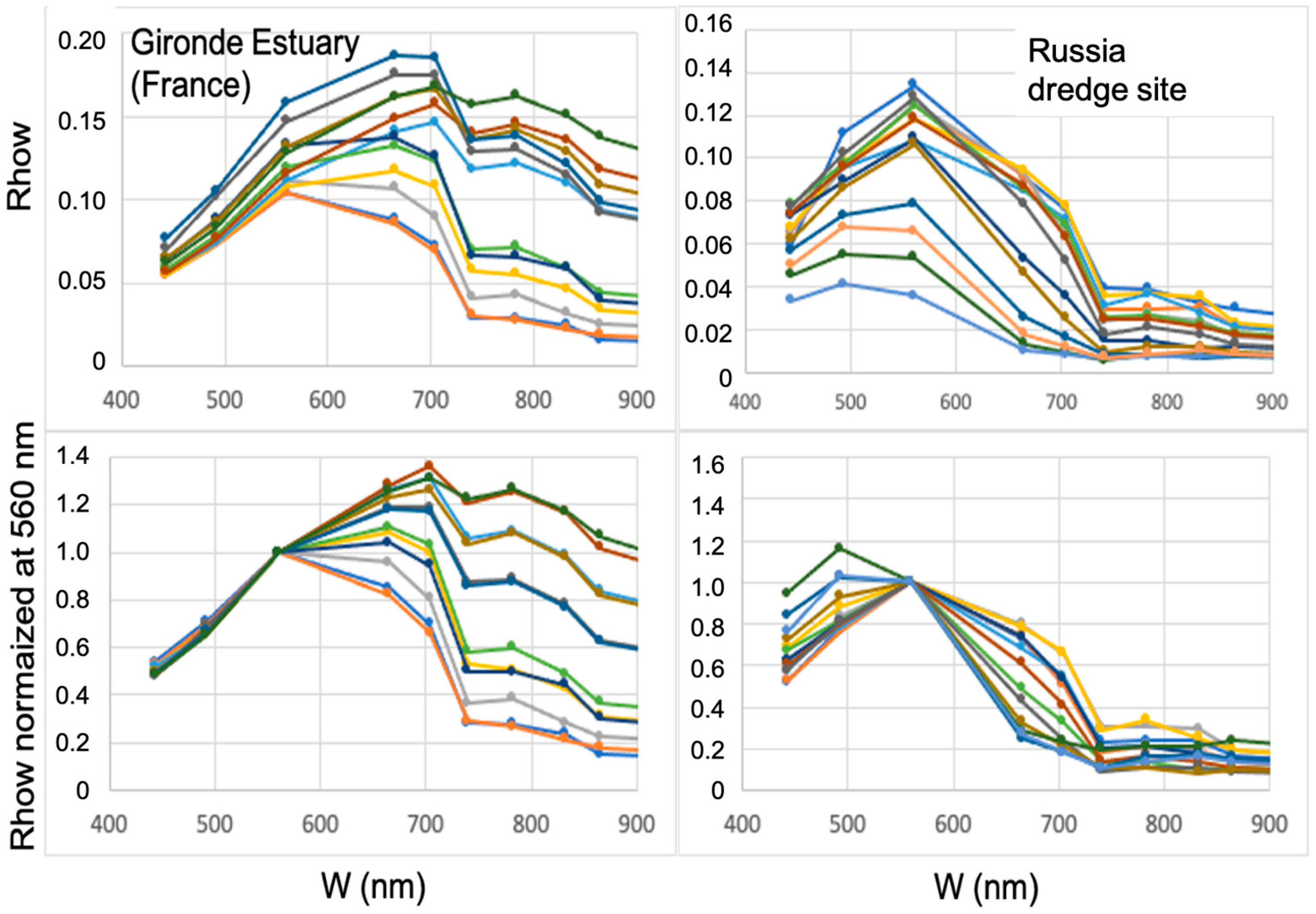
- Dredge plumes have a specific spectral signature significantly different from natural turbid waters (e.g., river plumes), i.e., with a higher water reflectance signal at short visible wavelengths (400–550 nm), as detected in water reflectance spectra derived from atmospherically corrected satellite data.
- Dredge plumes can be identified from ocean color satellite data, i.e., distinguished from natural turbid waters.
- High-spatial-resolution (e.g., Sentinel2-MSI) satellite data can be used for the operational monitoring of dredge plumes in coastal waters.
Abstract
1. Introduction
1.1. Optical Properties and Dredge Plumes
1.2. Understanding Dredge Plumes
2. Materials and Methods
2.1. In Situ Data
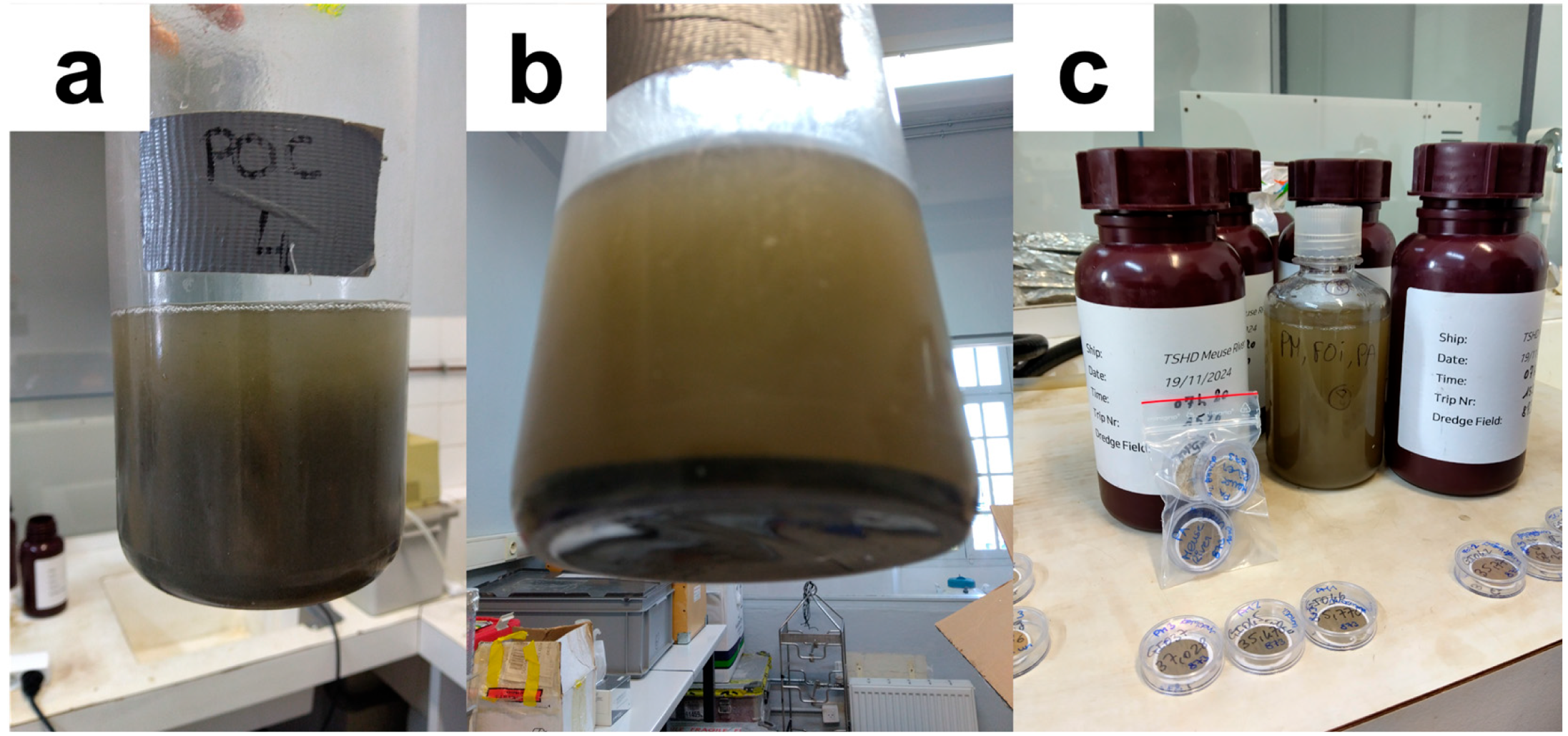
2.1.1. Field Data Collection
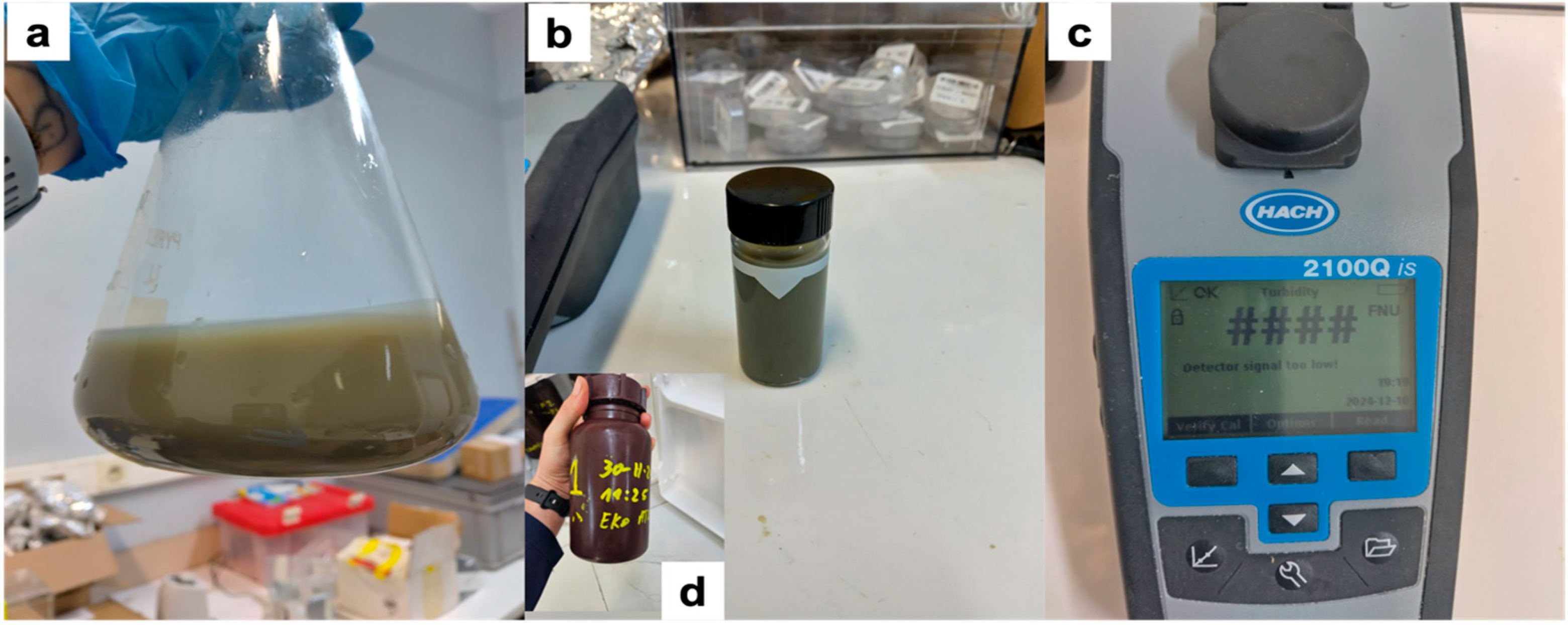
2.1.2. Analyses of Water Samples in Laboratory
- D1A: In two samples (out of seven) collected in November 2024 in Dredging Site 1 in Africa (dilutions of 1 in 10 and 1 in 50);
- D1A: At the same site in February 2025 (all samples collected had to be diluted 10 times);
- D1EU: In dredging site 1 in Europe in November 2024 (one sample diluted 10 times) and then in February 2025 (four samples out of eight had to be diluted two times);
- D1EU: At the same site in December 2024 (water samples had to be pre-filtered at 200 µm to remove coarse (sand) materials and then diluted 2 to 10 times).
2.2. Satellite Data Processing
2.2.1. Selection of Sentinel-2 Images
- Dredging Site 2 Africa (D2A)
- Dredging Site 3 Europe (D3EU)
- Dredging Site 1 Russia (D1R)
2.2.2. Atmospheric Correction of S2-MSI Images
2.2.3. ICOR Atmospheric Correction Using Terrascope
3. Results
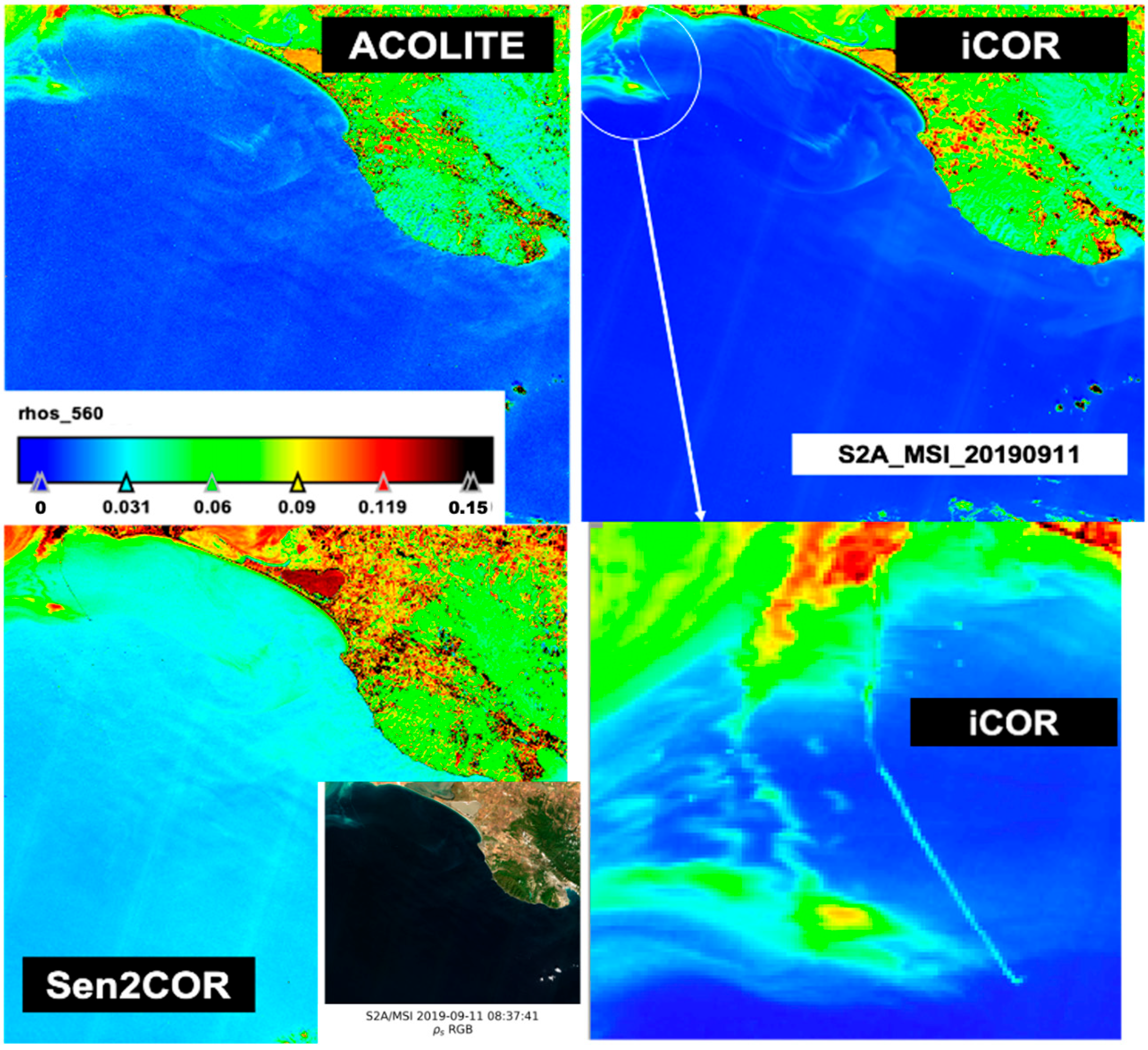
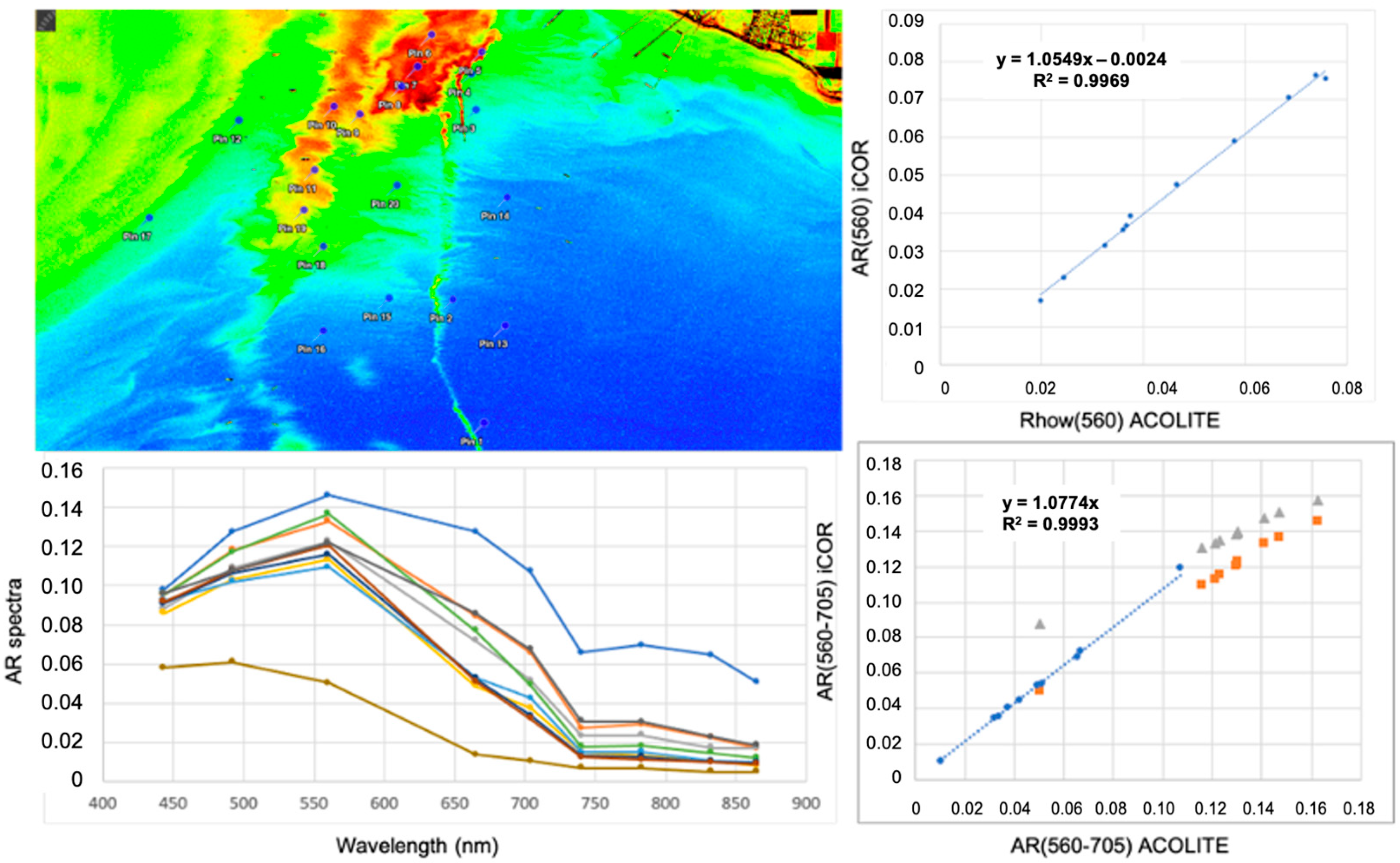
3.1. Satellite Intercomparison of Atmospheric Corrections
3.2. In Situ Data Analysis
3.3. Analysis of Aquatic Reflectance Spectra
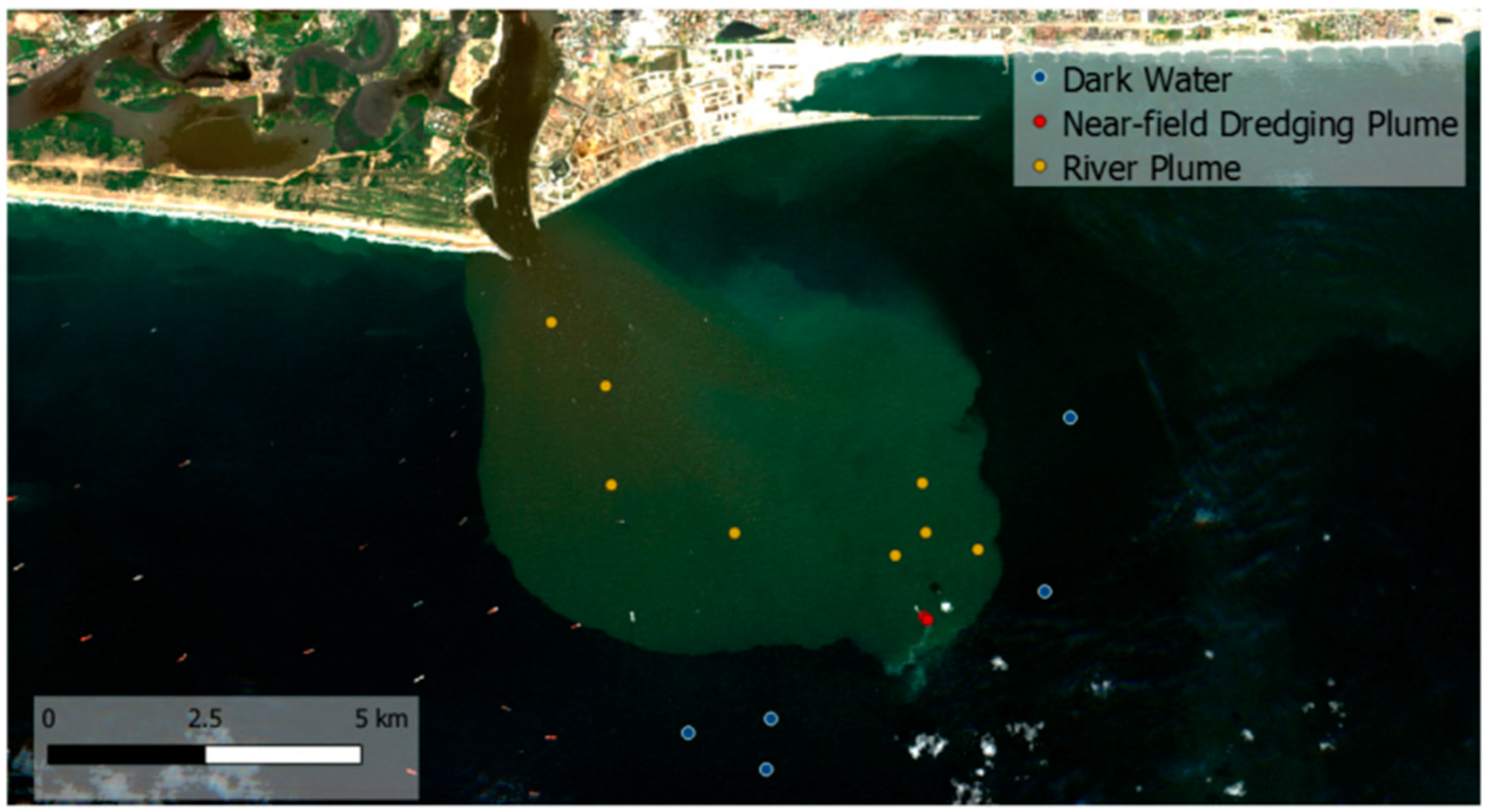
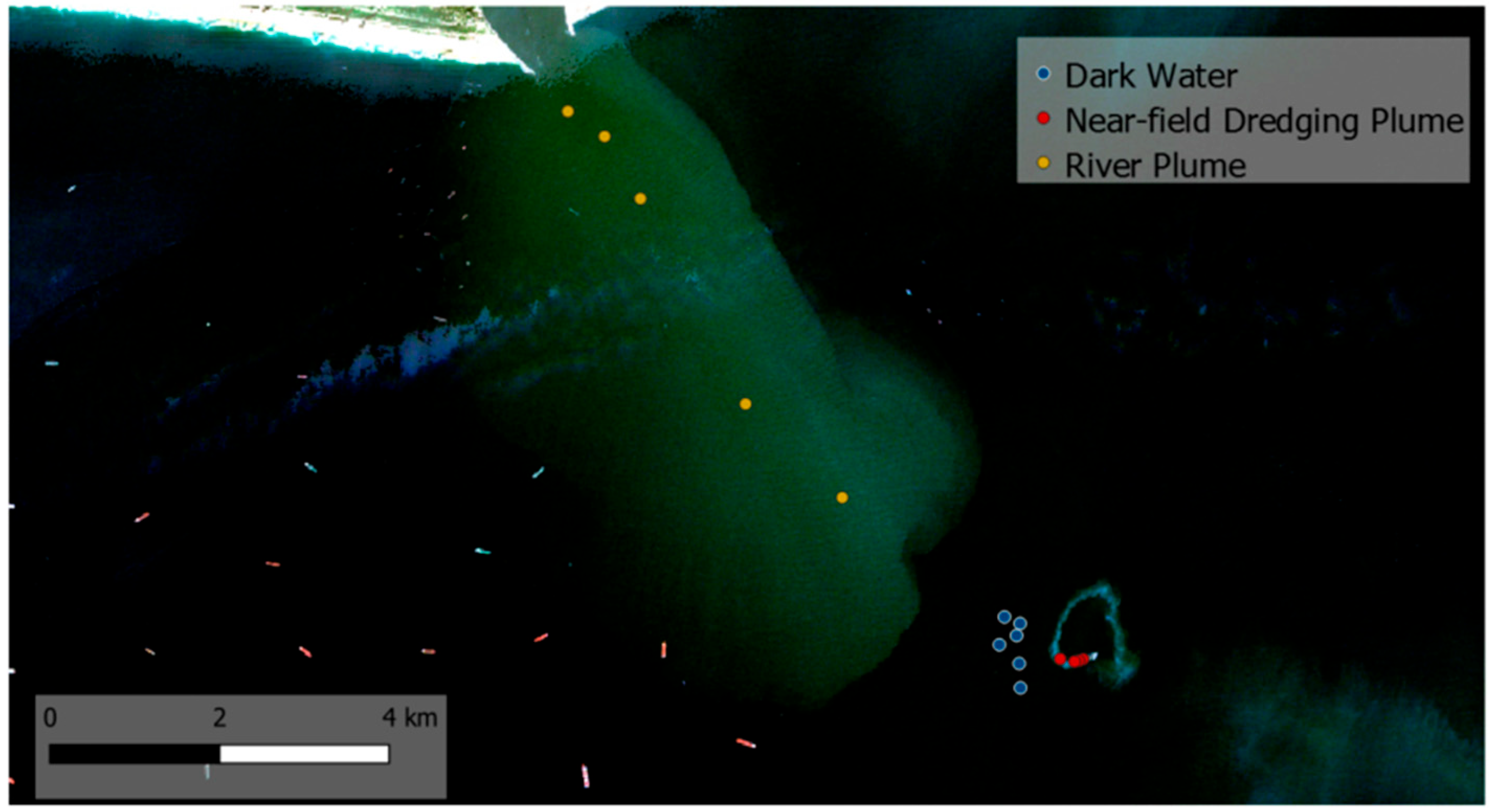
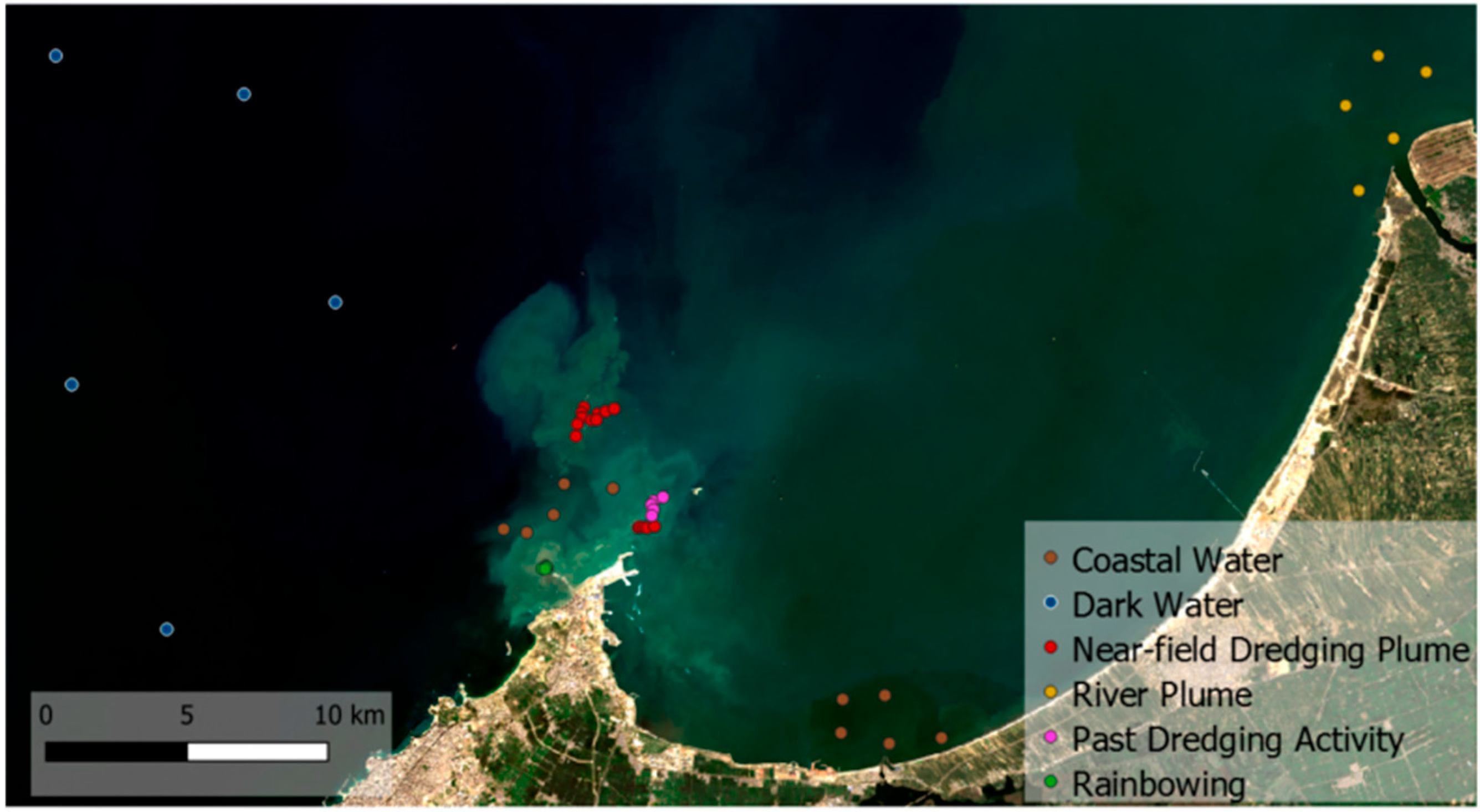
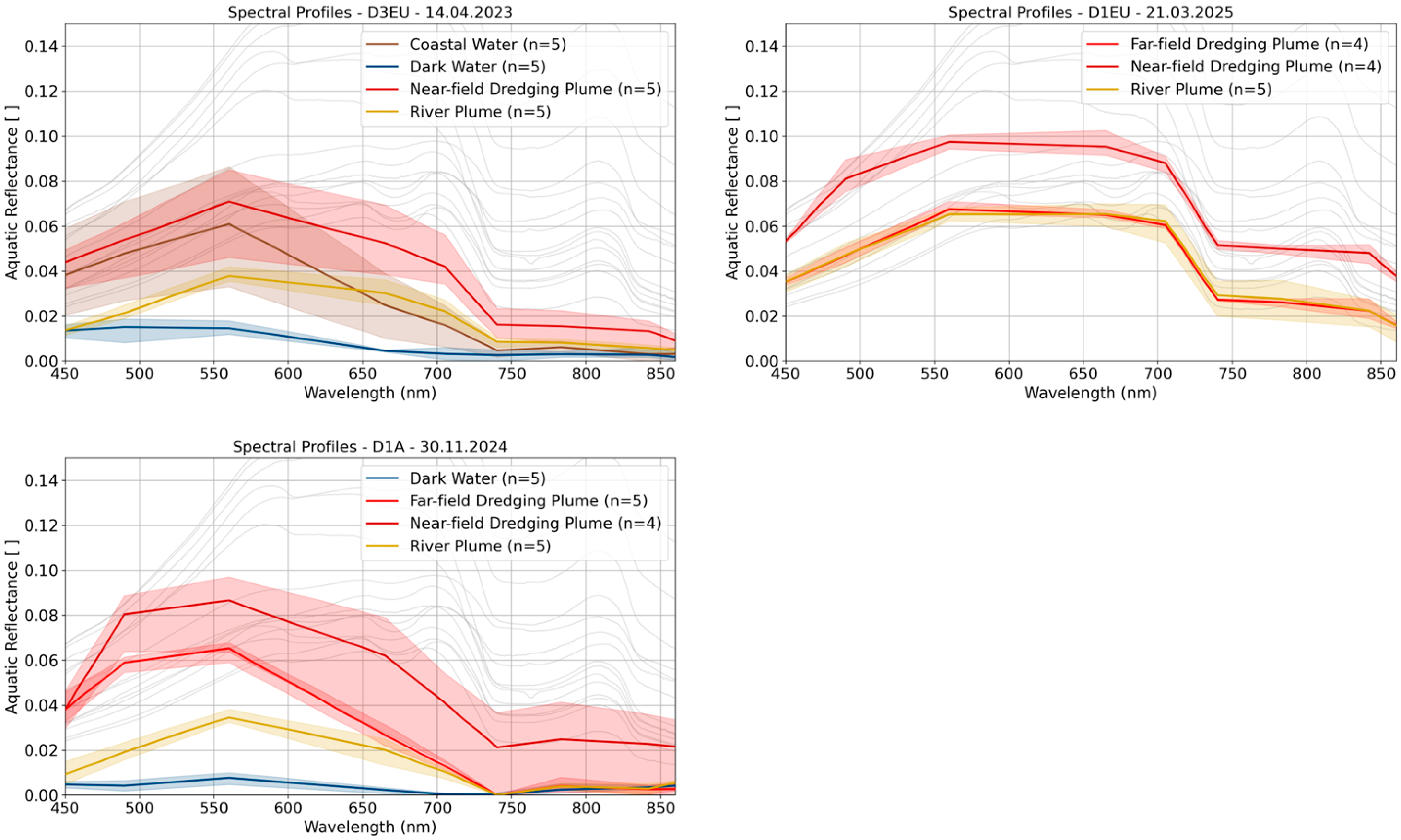
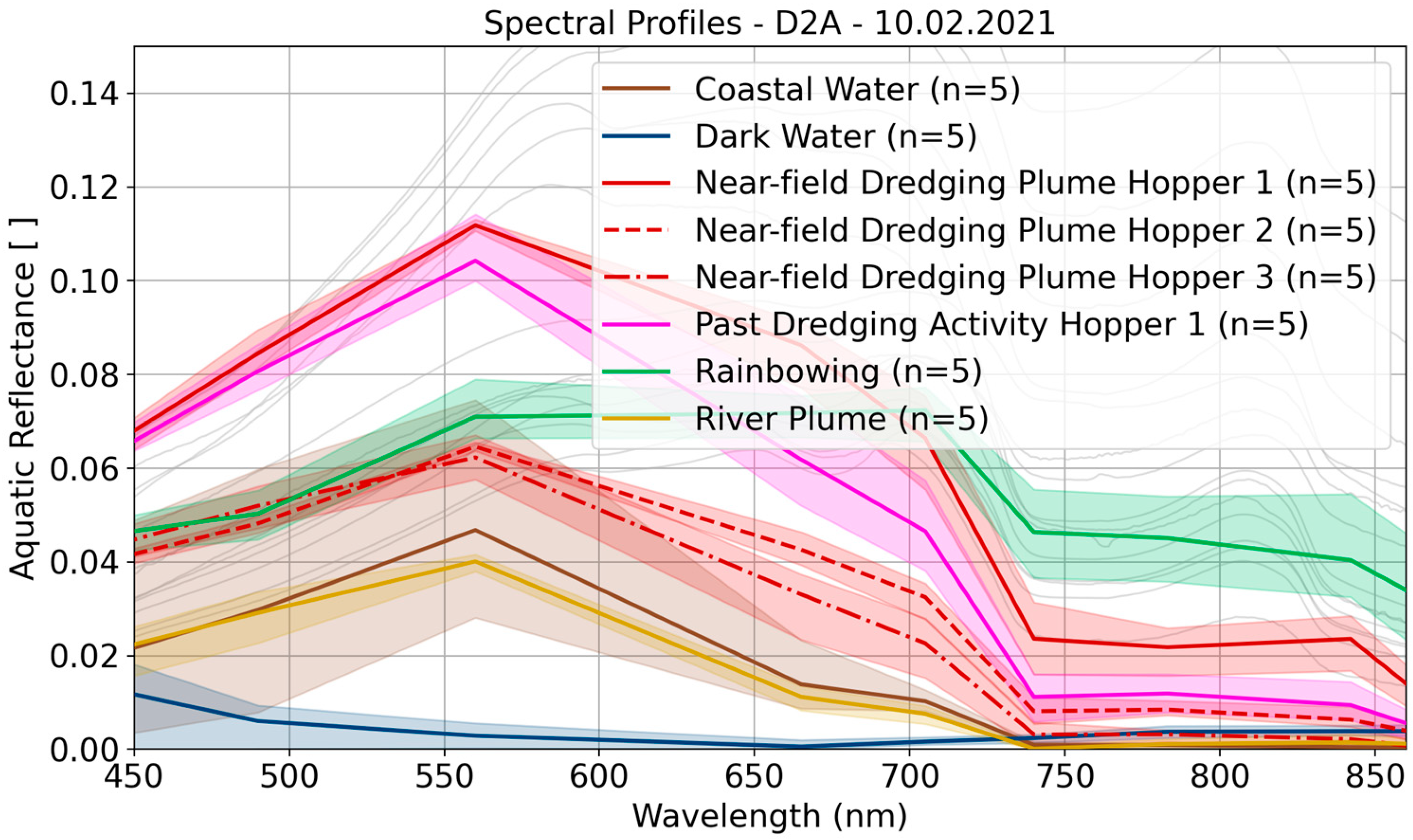
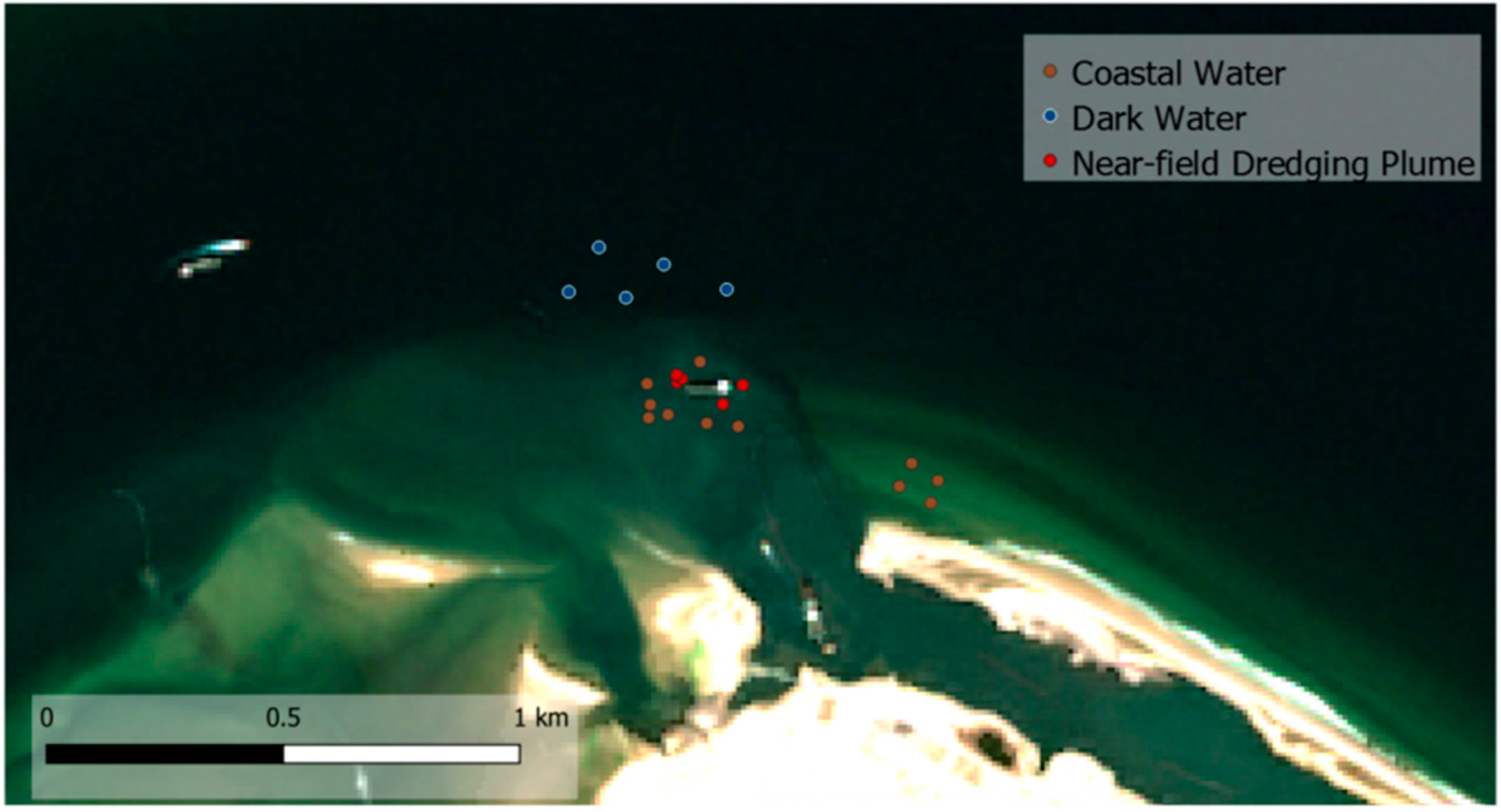
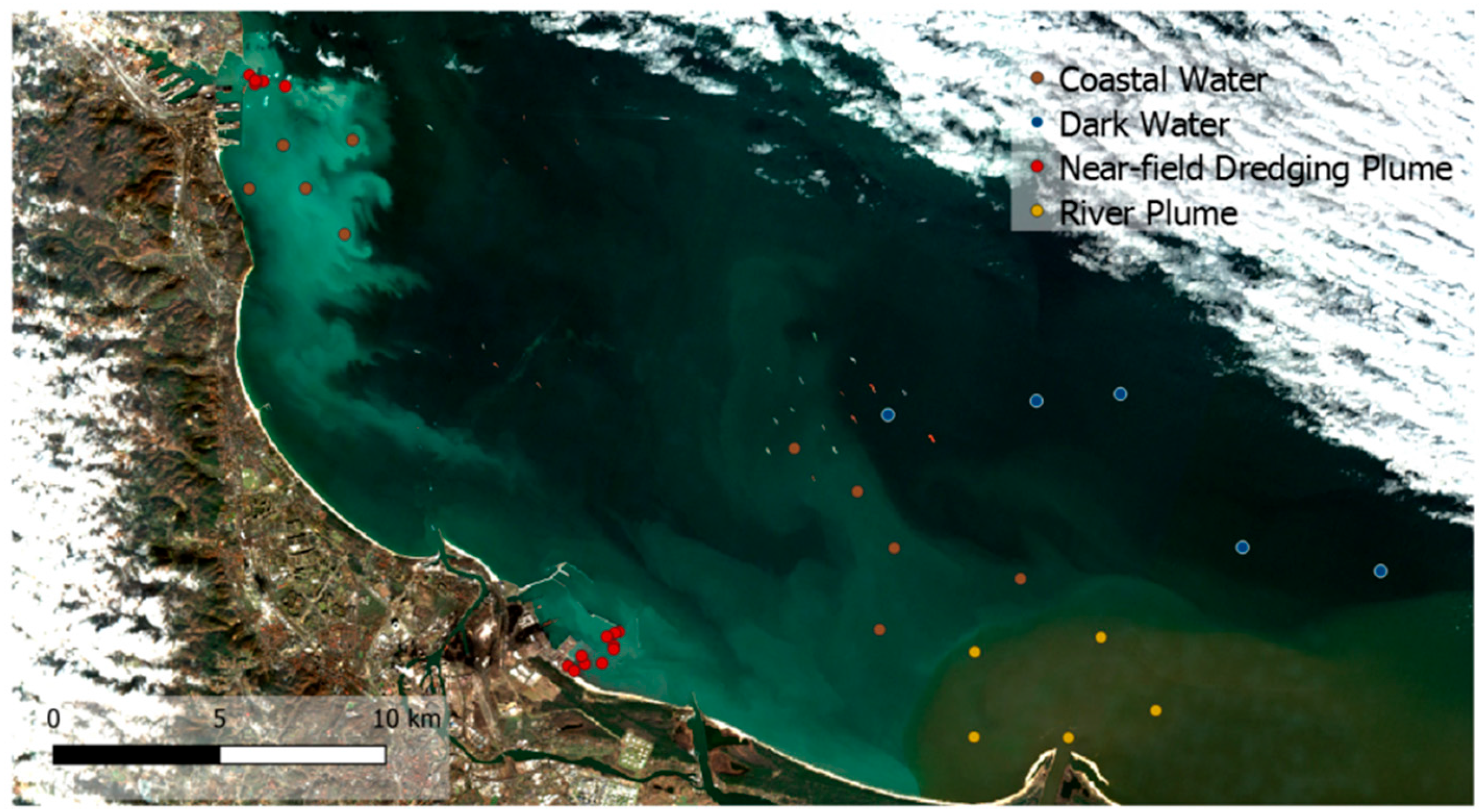
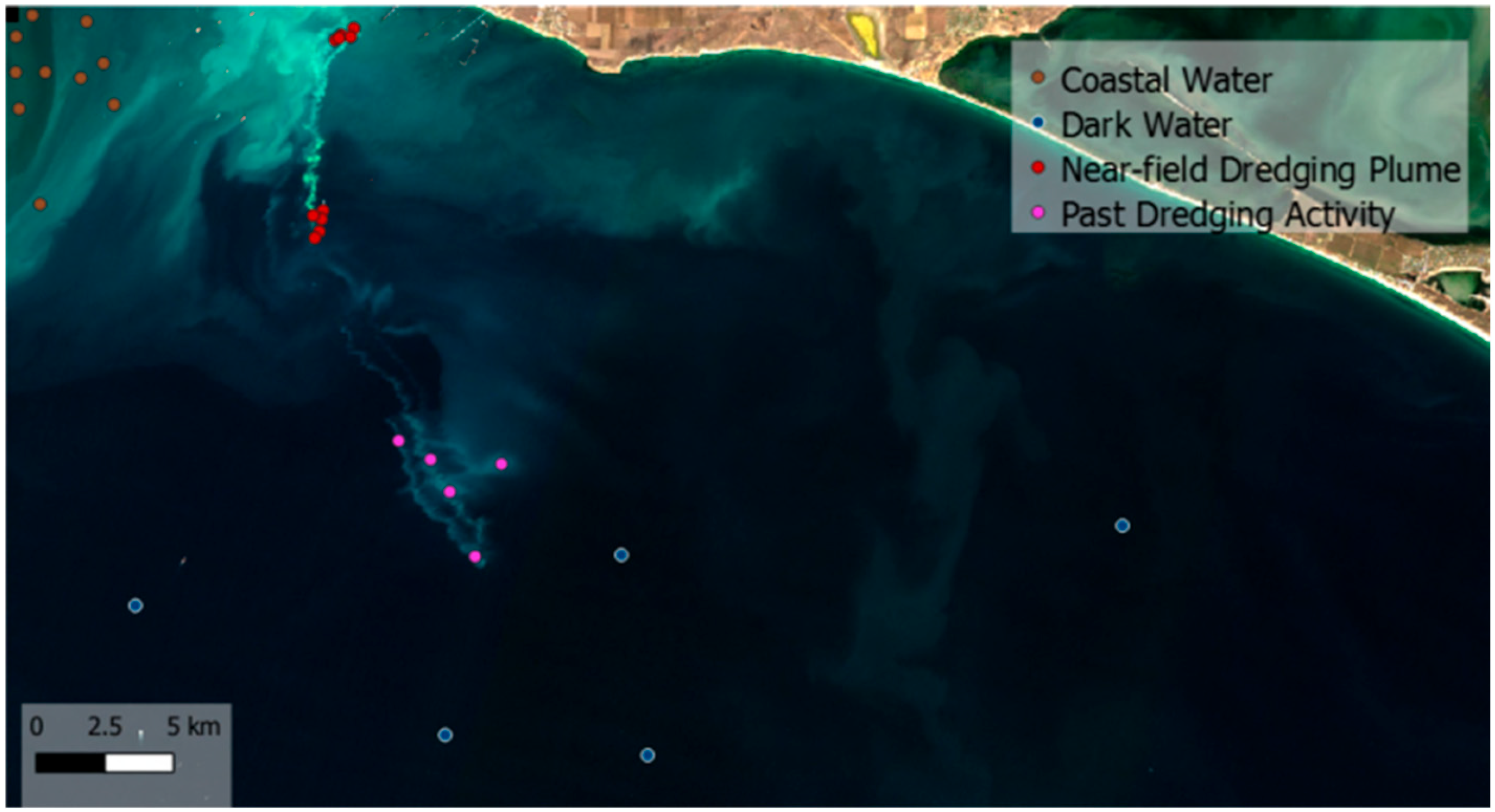
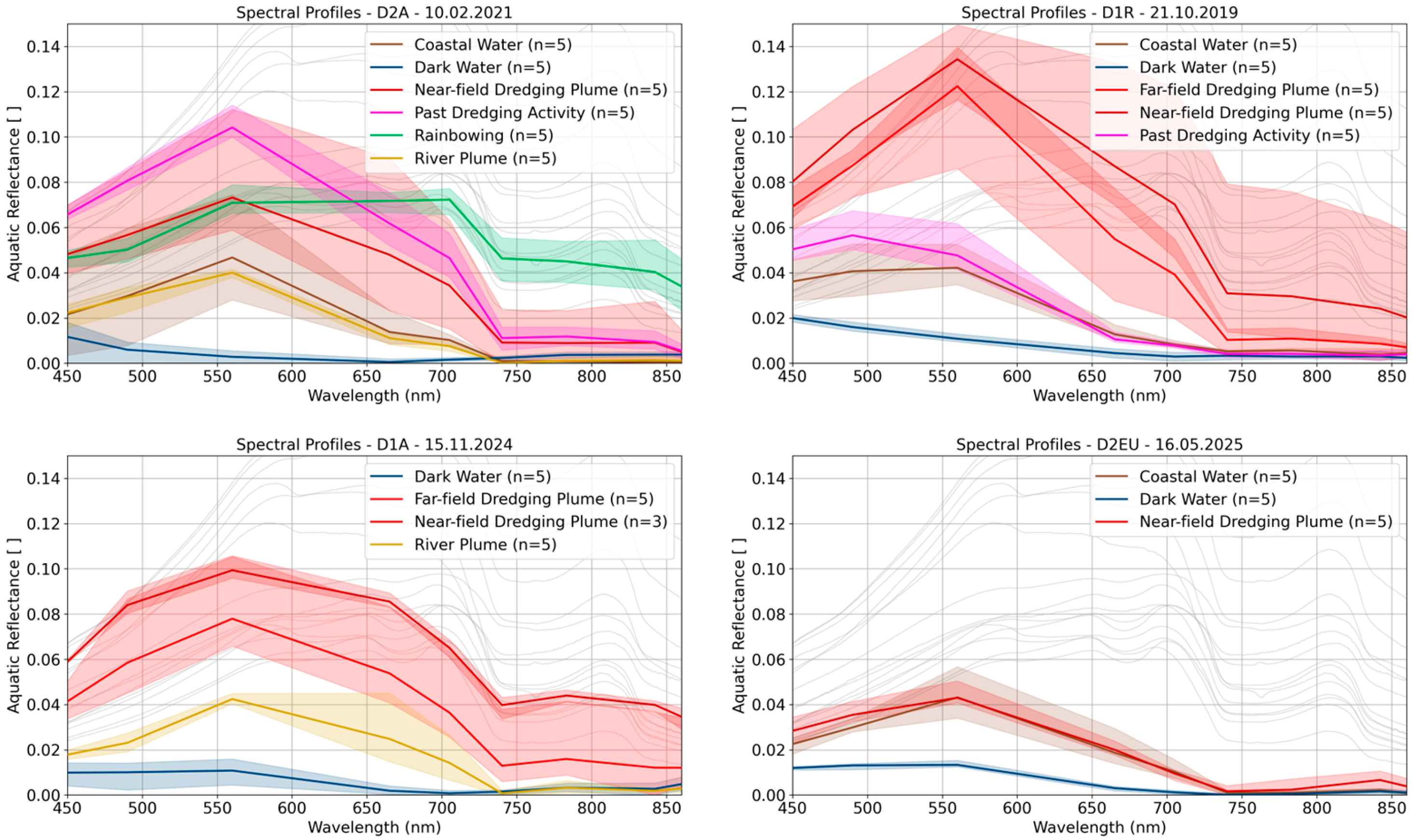
- The dark water category in blue exhibits low reflectance across the spectrum, with a slight increase in the blue-green region. This spectral shape is characteristic of clear water bodies with minimal optically active constituents such as suspended sediments or phytoplankton, suggesting low turbidity and low biological activity.
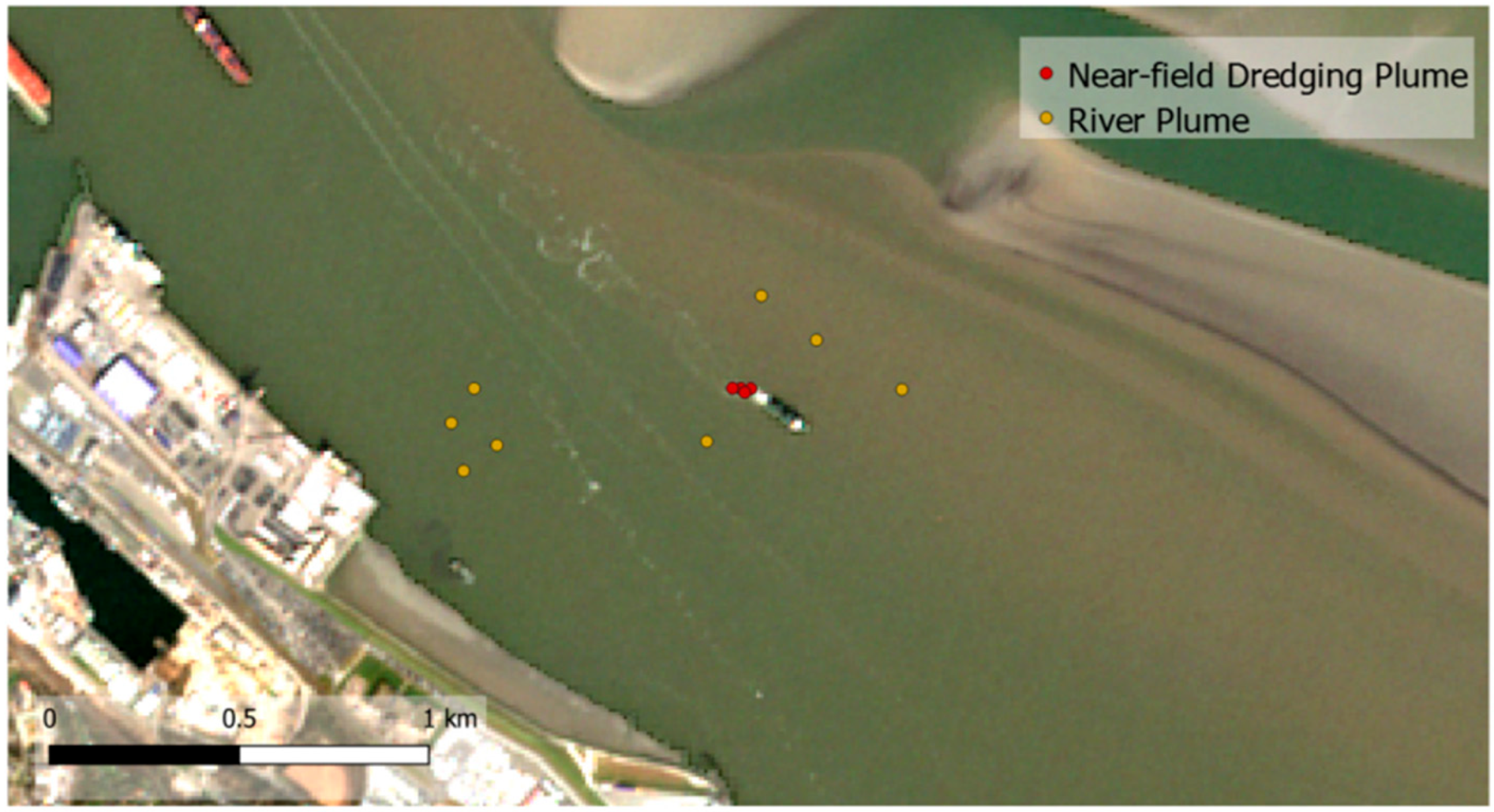
- Spectra collected in the river plume category (yellowish) show elevated reflectance compared to dark water, particularly in the green and red spectral regions. However, in the blue region, reflectance values drop significantly, which may indicate strong absorption due to non-algal particles, phytoplankton, or dissolved organic matter. In D2A, this is further supported by a small observed dip around 665 nm, a known absorption feature associated with chlorophyll-a, suggesting biological influence and a potential presence of algal matter.
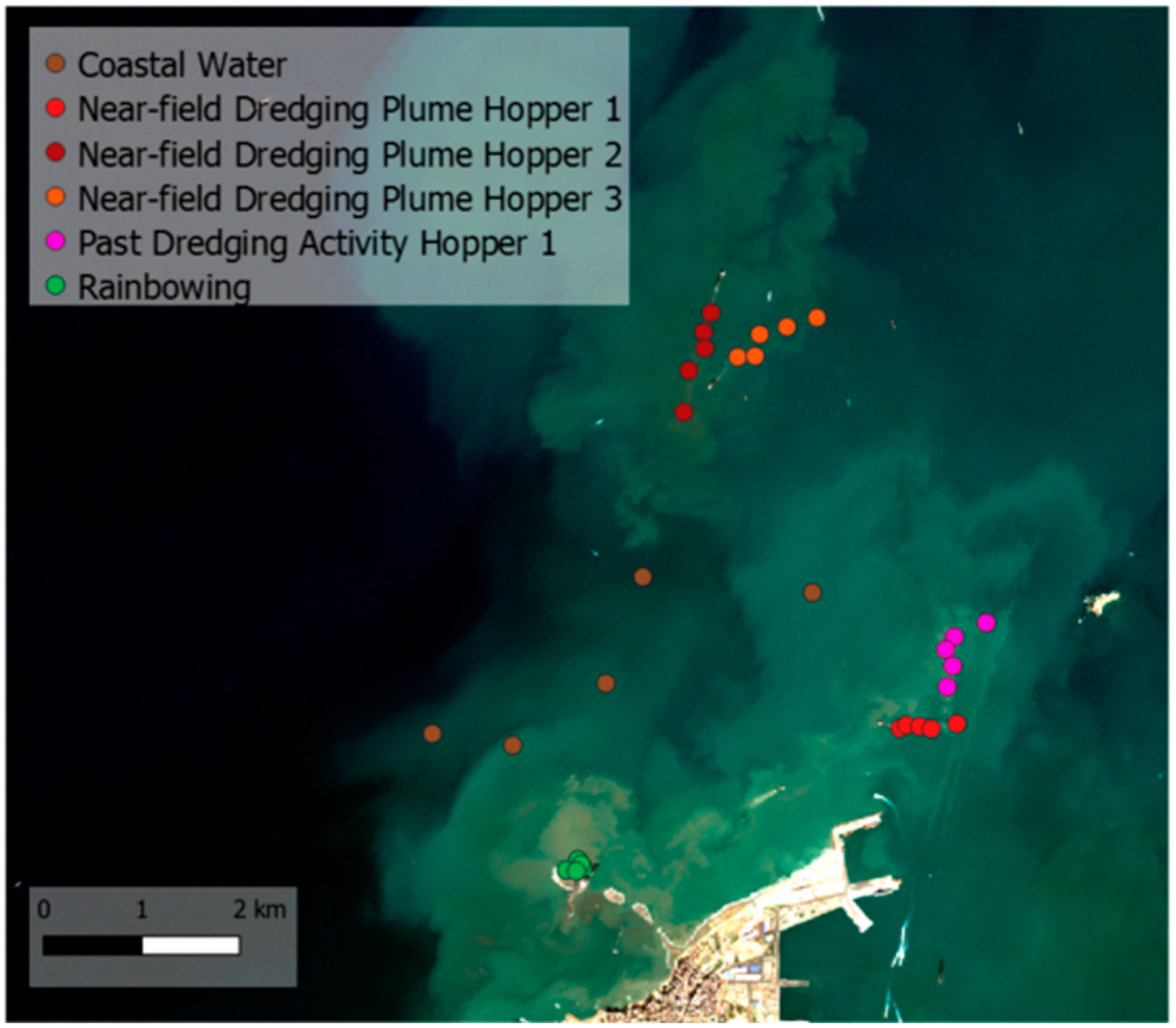
- Rainbowing (D2A only) results in a relatively flat spectral response across the visible spectrum, with elevated reflectance extending into the NIR region. This suggests a particle-rich composition, rather than a water-dominated one, as water typically exhibits stronger absorption, particularly in the NIR spectral region.
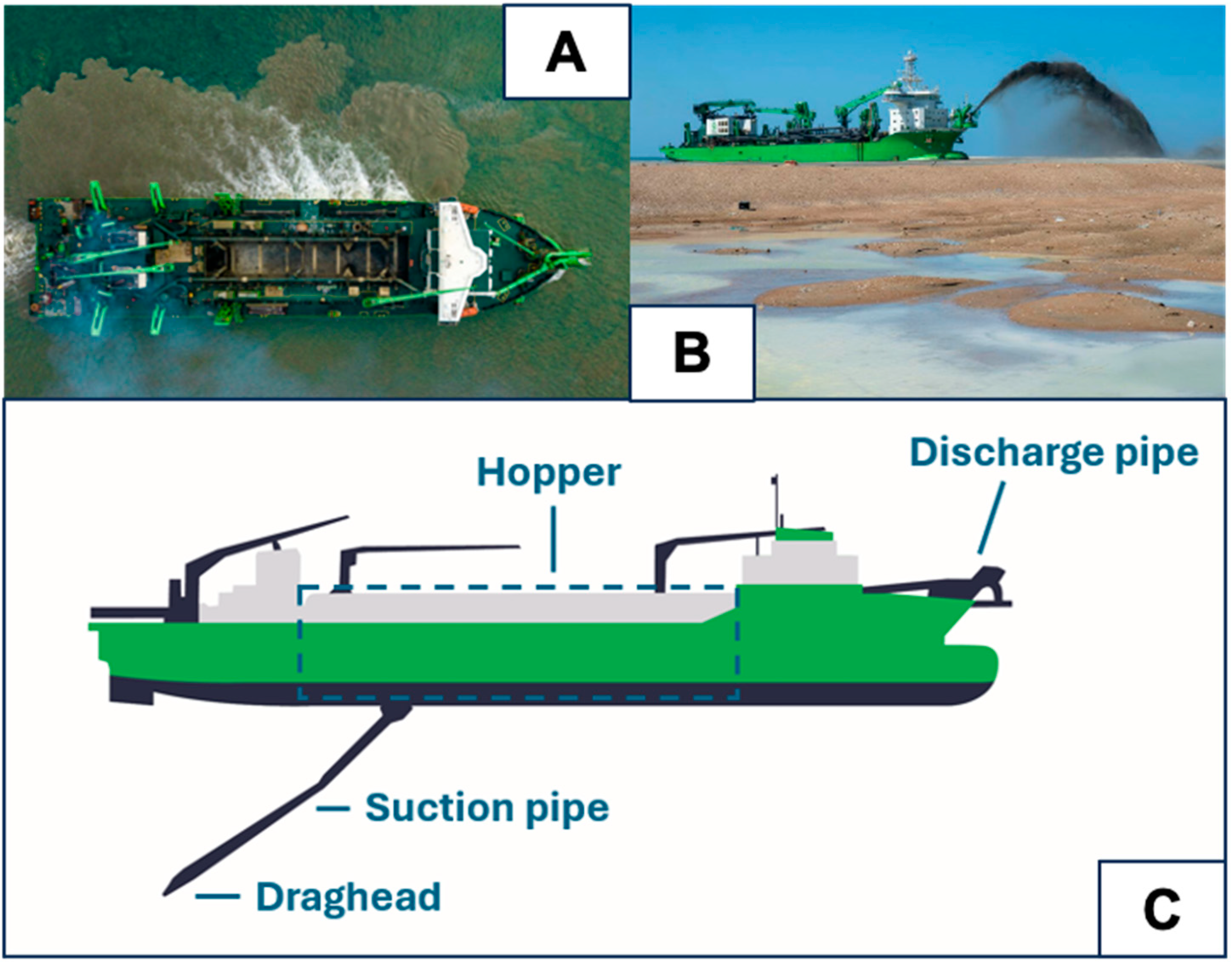
- Near-field dredging plumes (dark red) exhibit the overall highest reflectance values, indicating a high concentration of suspended sediments and strong light scattering. They have a pronounced peak near 560 nm and sustained high values into the NIR. However, compared to very turbid riverine waters from the SeaSWIR database (e.g., [32,33]), these spectra specifically show a higher reflectance in the blue and green and lower values in the NIR. This could potentially be related to lower CDOM, NAP, and Chla absorption compared to the riverine waters. For D2A, the near-field dredging plume consists of plumes from three different hoppers (see Figure 11 and Figure 12: hoppers 1, 2, and 3). The plume from past dredging activity is probably linked to dredging activities from hopper 1, with hopper 1 having the highest reflectance values. This explains the higher reflectance from past dredging activity. For D2EU, the near-field dredge plume spectrum is overall lower, with a slight difference from the spectrum of the surrounding coastal waters. This is probably due to the small size of the dredge plume, the different dredging technique (CSD), and the difficulty in extracting the spectra from the dredge plume accurately. The spectra probably represent mixed cases.
- In the case of far-field dredging plumes (bright red), a noticeable decline in reflectance is observed, suggesting sediment settling, plume dispersion, and mixing with other water types over time. This temporal change may reflect a reduction in particle concentration or shifts in particle composition as the plume ages.
4. Discussion
5. Conclusions
Author Contributions
Funding
Data Availability Statement
Acknowledgments
Conflicts of Interest
Abbreviations
| AOT | Aerosol Optical Thickness; |
| Chla | Chlorophyll-a; |
| CSDs | Cutter Suction Dredgers; |
| DEME | Dredging, Environmental, and Marine Engineering Group; |
| ECMWF | European Centre for Medium-Range Weather Forecasts; |
| EO | Earth Observation; |
| FNU | Formazin Nephelometric Unit; |
| HPLC | High-Performance Liquid Chromatography; |
| IOCCG | International Ocean Colour Coordinating Group; |
| LOV | Laboratoire d’Océanographie de Villefranche; |
| LUT | Look-Up Tables; |
| MSI | Multi-Spectral Imager; |
| NRT | Near Real Time; |
| NIR | Near Infrared; |
| OLI | Operational Land Imager; |
| S2 | Sentinel-2; |
| SIMEC | SIMilarity Environment Correction; |
| SPM | Suspended Particulate Matter |
| TSHDs | Trailing Suction Hopper Dredgers; |
| TOA | Top of Atmosphere; |
| VNIR | Visible and Near Infrared. |
Appendix A



Appendix B

| Parameter Min/Max/Mean | PIF (%) | TU/SPM (FNU·m3·g−1) | anap/ap (443) (%) | anap (443)/SPM (m2·g−1) | Snap (nm−1) |
|---|---|---|---|---|---|
| D1EU | 89/95/93 | 0.7/1.1/0.9 | 89/95/93 | 0.021/0.067/0.035 | 0.007/0.009/0.008 |
| D2EU | 77/83/89 | 0.3/0.5/0.7 | 53/67/88 | 0.016/0.026/0.037 | 0.007/0.008/0.007 |
| D1A | 86/89/87 | 0.7/1.1/0.9 | 86/100/98 | 0.034/0.041/0.036 | 0.008/0.010/0.009 |
References
- Barnes, B.B.; Hu, C.; Kovach, C.X.; Silverstein, R.N. Sediment plumes induced by the Port of Miami dredging: Analysis and interpretation using Landsat and MODIS data. Remote Sens. Env. 2015, 170, 328–339. [Google Scholar] [CrossRef]
- Caballero, I.; Navarro, G.; Ruiz, J. Multi-platform assessment of turbidity plumes during dredging operations in a major estuarine system. Int. J. Appl. Earth Obs. Geoinf. 2018, 68, 31–41. [Google Scholar] [CrossRef]
- Vlasblom, W.J. Introduction to Dredging Equipment. In Dredging Equipment and Technology; University lecture notes; Delft University of Technology: Delft, The Netherlands, 2003; Available online: https://www.dredging.org/dredging-equipment-and-technology/53 (accessed on 15 December 2025).
- Jeong, S.W.; Ha, K.H.J.; Ha, H.K. Enhanced settling velocity and floc formation in response to dredging-induced plumes: In-situ observations from a coastal sand mining site. Reg. Stud. Mar. Sci. 2025, 90, 104463. [Google Scholar] [CrossRef]
- Xu, X.; Li, J.; Chen, L.; Peng, Y.; Wang, W.; Cao, Z. Spatiotemporal fusion of multisource remote sensing for monitoring suspended sediment concentrations in dredging projects. Autom. Constr. 2025, 180, 106545. [Google Scholar] [CrossRef]
- Lednicka, B.; Kubacka, M.; Freda, W.; Haule, K.; Dembska, G.; Galer-Tatarowicz, K.; Pazikowska-Sapota, G. Water Turbidity and Suspended Particulate Matter Concentration at Dredged Material Dumping Sites in the Southern Baltic. Sensors 2022, 22, 8049. [Google Scholar] [CrossRef]
- Mikkelsen, O.A.; Pejrup, M. In situ particle size spectra and density of particle aggregates in a dredging plume. Mar. Geol. 2000, 170, 443–459. [Google Scholar] [CrossRef]
- Symonds, A.M.; Erftemeijer, P.L.A.; White, R.E.; Pastorelli, F. The influence of flocculation in turbid plumes from mechanical and hydraulic dredging. Cont. Shelf Res. 2024, 277, 105263. [Google Scholar] [CrossRef]
- Junakova, N.; Balintova, M. The study of bottom sediment characteristics as a material for beneficial reuse. Chem. Eng. Trans. 2014, 39, 637–642. [Google Scholar] [CrossRef]
- Dorleon, G.; Techer, I.; Rigaud, S. Geochemical characterization data of harbors dredged sediments in the Occitanie region (southern France). Data Brief 2024, 54, 110509. [Google Scholar] [CrossRef] [PubMed]
- Dogliotti, A.I.; Ruddick, K.G.; Nechad, B.; Doxaran, D.; Knaeps, E. A single algorithm to retrieve turbidity from remotely sensed data in all coastal and estuarine waters. Remote Sens. Env. 2015, 156, 157–168. [Google Scholar] [CrossRef]
- Neukermans, G.; Ruddick, K.G.; Loisel, H.; Roose, P. Optimization and quality control of suspended particulate matter concentration measurement using turbidity measurements. Limnol. Oceanogr. Methods 2012, 10, 1011–1023. [Google Scholar] [CrossRef]
- Doxaran, D.; Ehn, J.; Bélanger, S.; Matsuoka, A.; Hooker, S.; Babin, M. Optical characterisation of suspended particles in the Mackenzie River plume (Canadian Arctic Ocean) and implications for ocean colour remote sensing. Biogeosciences 2012, 9, 3213–3229. [Google Scholar] [CrossRef]
- Rontani, J.F.; Charriere, B.; Sempéré, R.; Doxaran, D.; Vaultier, F.; Vonk, J.E.; Volkman, J.K. Degradation of sterols and terrestrial organic matter in waters of the Mackenzie Shelf, Canadian Arctic. Org. Geochem. 2014, 75, 61–73. [Google Scholar] [CrossRef]
- Chaves, J.E.; Cetinić, I.; Dall’Olmo, G.; Estapa, M.; Gardner, W.; Goñi, M.; Graff, J.R.; Hernes, P.; Lam, P.J.; Liu, Z.; et al. Particulate Organic Matter Sampling and Measurement Protocols: Consensus Towards Future Ocean Color Missions. In IOCCG Ocean Optics and Biogeochemistry Protocols for Satellite Ocean Colour Sensor Validation; IOCCG: Dartmouth, NS, Canada, 2021; Volume 6.0. [Google Scholar]
- Ras, J.; Claustre, H.; Uitz, J. Spatial variability of phytoplankton pigment distributions in the Subtropical South Pacific Ocean: Comparison between in situ and modelled data. Biogeosciences 2008, 5, 353–369. [Google Scholar] [CrossRef]
- Boss, E.; D’Sa, E.J.; Freeman, S.; Fry, E.; Mueller, J.L.; Pegau, S.; Reynolds, R.A.; Roesler, C.; Rottgers, R.; Stramski, D.; et al. Inherent Optical Property Measurements and Protocols: Absorption Coefficient. In IOCCG Ocean Optics and Biogeochemistry Protocols for Satellite Ocean Colour Sensor Validation; Neeley, A.R., Mannino, A., Eds.; IOCCG: Dartmouth, NS, Canada, 2018; Volume 1.0. [Google Scholar]
- Estapa, M.L.; Boss, E.; Mayer, L.M.; Roesler, C. Role of iron and organic carbon in mass-specific light absorption by particulate matter from Louisiana coastal waters. Limnol. Oceanogr. 2012, 57, 97–112. [Google Scholar] [CrossRef]
- Babin, M.; Stramski, D.; Ferrari, G.M.; Claustre, H.; Bricaud, A.; Obolensky, G.; Hoepffner, N. Variations in the Light Absorption Coefficients of Phytoplankton, Non-algal particles, and dissolved organic matter in coastal waters around Europe. J. Geophys. Res. 2003, 108, 3211. [Google Scholar] [CrossRef]
- Mostafa, Y.E.S. Environmental impacts of dredging and land reclamation at Abu Qir Bay, Egypt. Ain Shams Eng. J. 2012, 3, 1–15. [Google Scholar] [CrossRef]
- Emam, W.M.; Saad, A.E.-H.A.; El-Moselhy, K.M.; Owen, N.A. Evaluation of water quality of Abu-Qir Bay, Mediterranean coast, Egypt. Int. J. Env. Sci. Eng. 2013, 4, 47–54. [Google Scholar]
- De Keukelaere, L.; Sterckx, S.; Adriaensen, S.; Knaeps, E.; Reusen, I.; Giardino, C.; Bresciani, M.; Hunter, P.; Neil, C.; Van der Zande, D.; et al. Atmospheric correction of Landsat-8/OLI and Sentinel-2/MSI data using iCOR algorithm: Validation for coastal and inland waters. Eur. J. Remote Sens. 2018, 51, 525–542. [Google Scholar] [CrossRef]
- Vanhellemont, Q. Adaptation of the dark spectrum fitting atmospheric correction for aquatic applications of the Landsat and Sentinel-2 archives. Remote Sens. Env. 2019, 225, 175–192. [Google Scholar] [CrossRef]
- Main-Knorn, M.; Pflug, B.; Louis, J.; Debaecker, V.; Müller-Wilm, U.; Ferran, G. Sen2Cor for Sentinel-2. In Image and Signal Processing for Remote Sensing Conference; SPIE: Cergy-Pontoise, France, 2017; Volume 3. [Google Scholar] [CrossRef]
- Doxaran, D.; ElKilani, B.; Corizzi, A.; Goyens, C. Validation of satellite-derived water-leaving reflectance in contrasted French coastal waters based on HYPERNETS field measurements. Front. Remote Sens. 2024, 4, 1290110. [Google Scholar] [CrossRef]
- Guanter, L.; Gómez-Chova, L.; Moreno, J. Coupled retrieval of aerosol optical thickness, columnar water vapor and surface reflectance maps from ENVISAT/MERIS data over land. Remote Sens. Env. 2008, 112, 2898–2913. [Google Scholar] [CrossRef]
- Morcrette, J.-J.; Boucher, O.; Jones, L.; Salmond, D.; Bechtold, P.; Beljaars, A.; Benedetti, A.; Bonet, A.; Kaiser, J.W.; Razinger, M.; et al. Aerosol analysis and forecast in the European Centre for Medium-Range Weather Forecasts Integrated Forecast System: Forward modeling. J. Geophys. Res. 2009, 114, D06206. [Google Scholar] [CrossRef]
- Inness, A.; Ades, M.; Agustí-Panareda, A.; Barré, J.; Benedictow, A.; Blechschmidt, A.M.; Suttie, M. The CAMS reanalysis of atmospheric composition. Atmos. Chem. Phys. 2019, 19, 3515–3556. [Google Scholar] [CrossRef]
- Sterckx, S.; Knaeps, S.; Kratzer, S.; Ruddick, K. SIMilarity Environment Correction (SIMEC) applied to MERIS data over inland and coastal waters. Remote Sens. Env. 2015, 157, 96–110. [Google Scholar] [CrossRef]
- Luo, Y.; Doxaran, D.; Ruddick, K.G.; Shen, F.; Gentili, B.; Yan, L.; Huang, H. Saturation of water reflectance in extremely turbid media based on field measurements, satellite data and bio-optical modelling. Opt. Express 2018, 26, 10435–10451. [Google Scholar] [CrossRef] [PubMed]
- Jafar-Sidik, M.; Gohin, F.; Bowers, D.; Howarth, J.; Hull, T. The relationship between Suspended Particulate Matter and Turbidity at a mooring station in a coastal environment: Consequences for satellite-derived products. Oceanologia 2017, 59, 365–378. [Google Scholar] [CrossRef]
- Knaeps, E.; Doxaran, D.; Dogliotti, A.I.; Nechad, B.; Ruddick, K.G.; Raymaekers, D.; Sterckx, S. The SeaSWIR dataset. Earth Syst. Sci. Data 2018, 10, 1439–1449. [Google Scholar] [CrossRef]
- Knaeps, E.; Ruddick, K.G.; Doxaran, D.; Dogliotti, A.I.; Nechad, B.; Raymaekers, D.; Sterckx, S. A SWIR based algorithm to retrieve Total Suspended Matter in highly turbid waters. Remote Sens. Env. 2015, 168, 66–79. [Google Scholar] [CrossRef]





| Site | Date of Field Data Collection (ID) | Comments |
|---|---|---|
| Dredging Site 1 Europe (D1EU) | 19 November 2024 (D1EUa) | Dredging with TSHD: 3 water samples collected from tender boat near the hopper. |
| 17 December 2024 (D1EUb) | Dredging with TSHD: 5 water samples collected near the hopper. | |
| 11 February 2025 (D1EUc) | Dredging with TSHD: 8 water samples collected, including 4 in the hopper, and 4 near the hopper. | |
| 17 March 2025 (D1EUd) | Dredging with TSHD: 5 water samples collected, 3 in the dredge plume, 2 outside the dredge plume. All taken near the hopper. | |
| Dredging Site 2 Europe (D2EU) | 24 April 2025 (D2EUa) | Dredging with CSD: 6 water samples collected, 3 on starboard side and 3 on the port side, near the vessel. |
| 4 June 2025 (D2EUb) | Dredging with CSD: 8 water samples collected, 4 starboard side, 4 port side, near the vessel. A barge was being loaded alongside CSD on port side, so samples were taken between CSD and barge. The barge was utilizing overflow. | |
| 17 June 2025 (D2EUc) | Dredging with CSD: 8 water samples collected, 4 starboard side, 4 port side. CSD was cutting starboard. Samples were taken during dredging of the CSD while loading a TSHD with floating line—bow coupling connection. | |
| Dredging Site 1 Africa (D1A) | 30 November 2024 (D1Aa) | Dredging with TSHD: 7 water samples collected, including 1 (reference) before dredging and 2 in the hopper. |
| 13 February 2025 (D1Ab) | Dredging with TSHD: 8 water samples collected, including 4 inside the hopper. |
Disclaimer/Publisher’s Note: The statements, opinions and data contained in all publications are solely those of the individual author(s) and contributor(s) and not of MDPI and/or the editor(s). MDPI and/or the editor(s) disclaim responsibility for any injury to people or property resulting from any ideas, methods, instructions or products referred to in the content. |
© 2026 by the authors. Licensee MDPI, Basel, Switzerland. This article is an open access article distributed under the terms and conditions of the Creative Commons Attribution (CC BY) license.
Share and Cite
Doxaran, D.; Mayot, I.; De Keukelaere, L.; Moelans, R.; Verdoodt, N.; Knaeps, E. Understanding the Optical Behavior and Spectral Signature of Dredging-Induced Plumes in Coastal Waters. Remote Sens. 2026, 18, 1428. https://doi.org/10.3390/rs18091428
Doxaran D, Mayot I, De Keukelaere L, Moelans R, Verdoodt N, Knaeps E. Understanding the Optical Behavior and Spectral Signature of Dredging-Induced Plumes in Coastal Waters. Remote Sensing. 2026; 18(9):1428. https://doi.org/10.3390/rs18091428
Chicago/Turabian StyleDoxaran, David, Isabella Mayot, Liesbeth De Keukelaere, Robrecht Moelans, Niels Verdoodt, and Els Knaeps. 2026. "Understanding the Optical Behavior and Spectral Signature of Dredging-Induced Plumes in Coastal Waters" Remote Sensing 18, no. 9: 1428. https://doi.org/10.3390/rs18091428
APA StyleDoxaran, D., Mayot, I., De Keukelaere, L., Moelans, R., Verdoodt, N., & Knaeps, E. (2026). Understanding the Optical Behavior and Spectral Signature of Dredging-Induced Plumes in Coastal Waters. Remote Sensing, 18(9), 1428. https://doi.org/10.3390/rs18091428