Research on Walnut Yield Estimation Based on Interpretable Machine Learning and Stacked Integration Under Different Water–Fertilizer Coupling Regimes

 , and
, and
Highlights
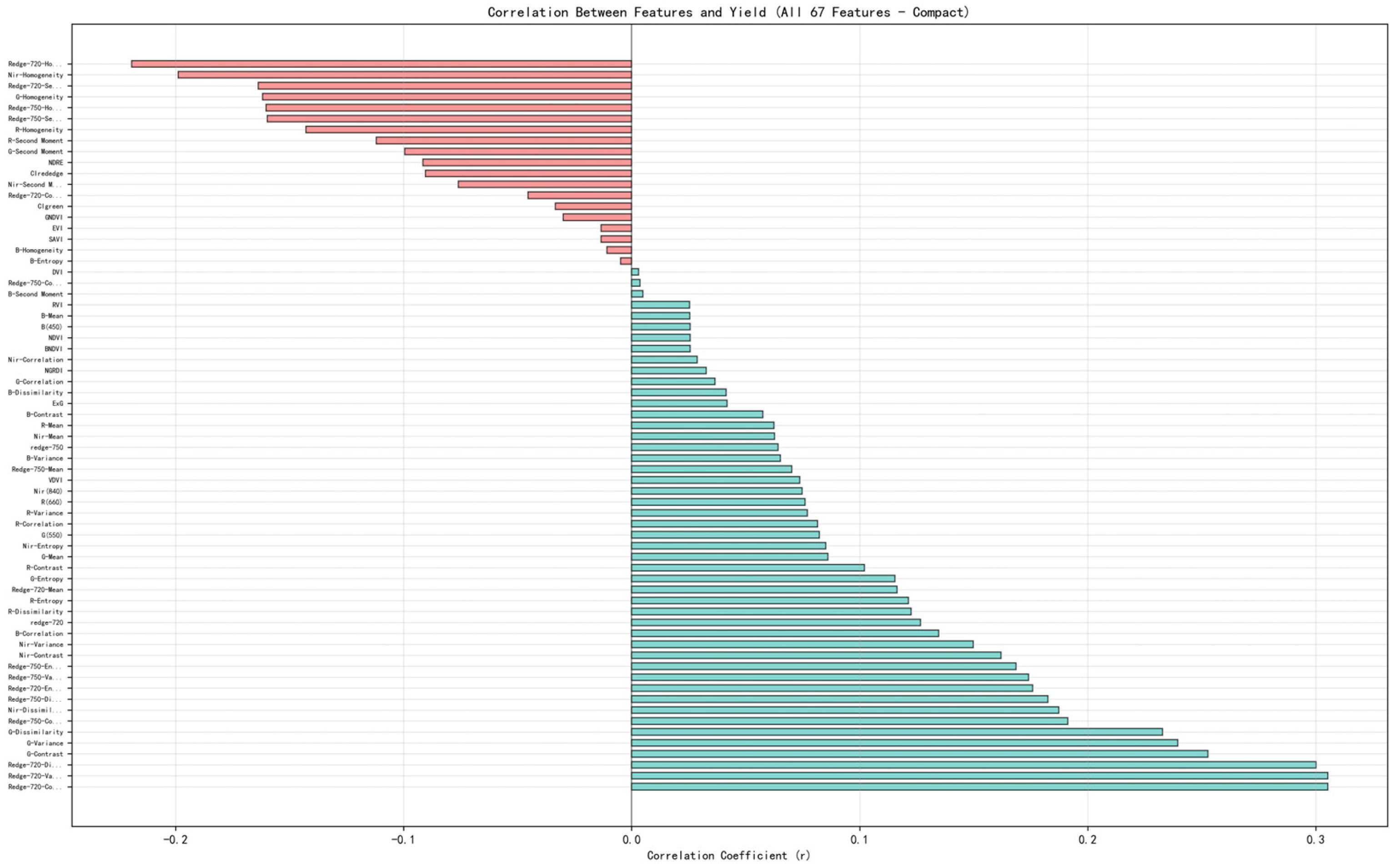
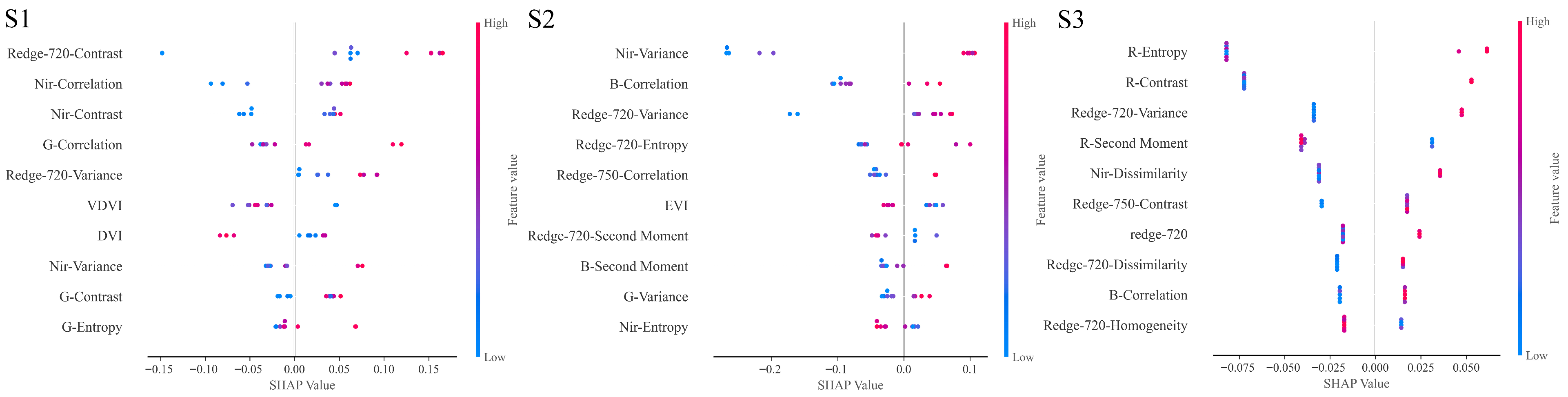
- Red-edge texture features showed higher correlation coefficients and SHAP importance values than traditional vegetation indices for walnut yield prediction, suggesting they may be more sensitive to canopy structural heterogeneity under varying water and fertilizer regimes.
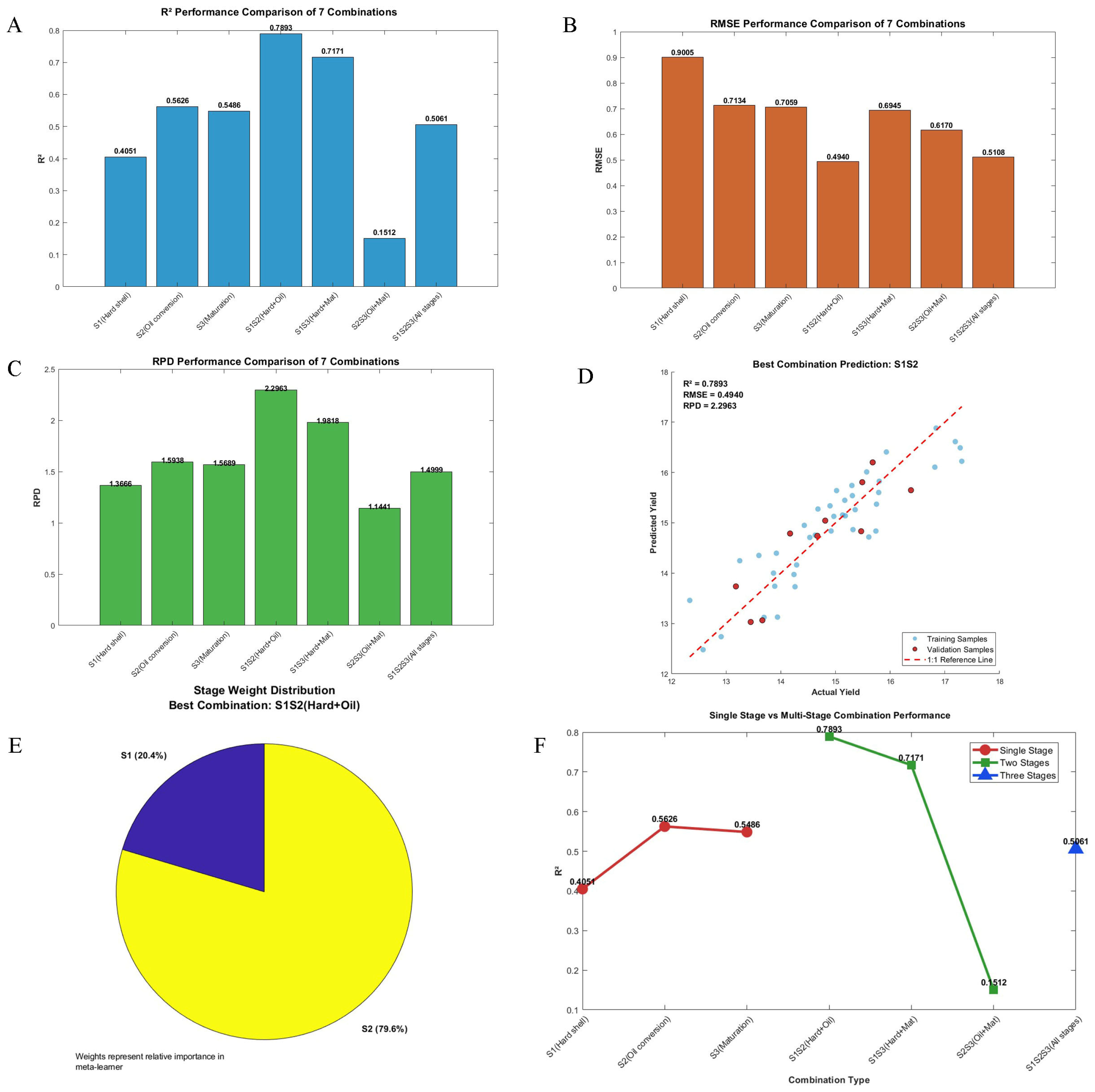
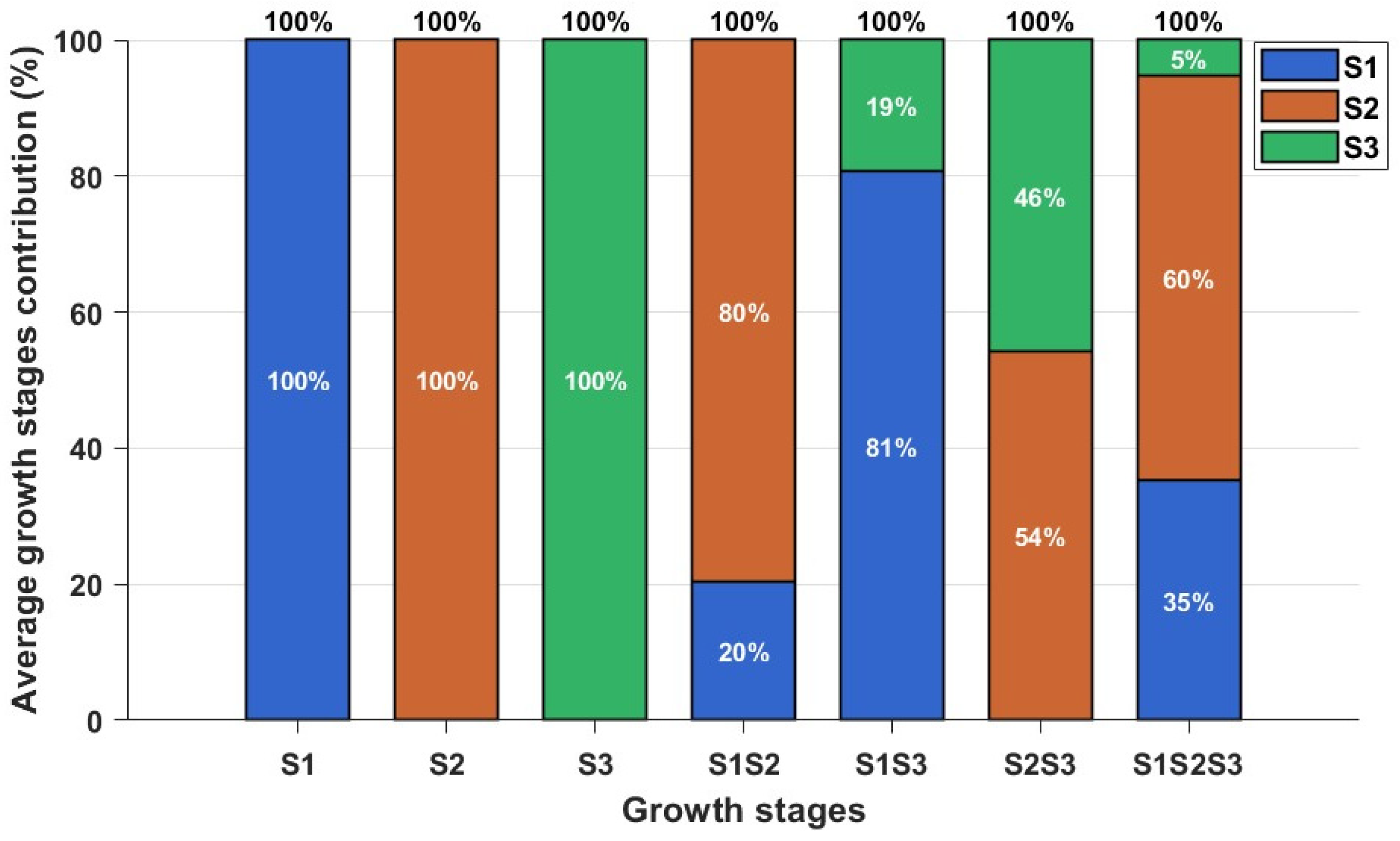
- The proposed growth stage stacking ensemble (GSSE) model in this dataset achieved an R2 of 0.789, and the characteristic coefficients suggested that the oil conversion stage had the highest estimated contribution (60%) to the final prediction.
- Identifies a growth stage for precise management, with the oil conversion period serving as a window for targeted water and fertilizer interventions to maximize resource efficiency.
- Enhances model reliability for decision support, as the high accuracy and interpretability of the approach provide a transparent foundation for intelligent orchard management.
Abstract
1. Introduction
2. Materials and Methods
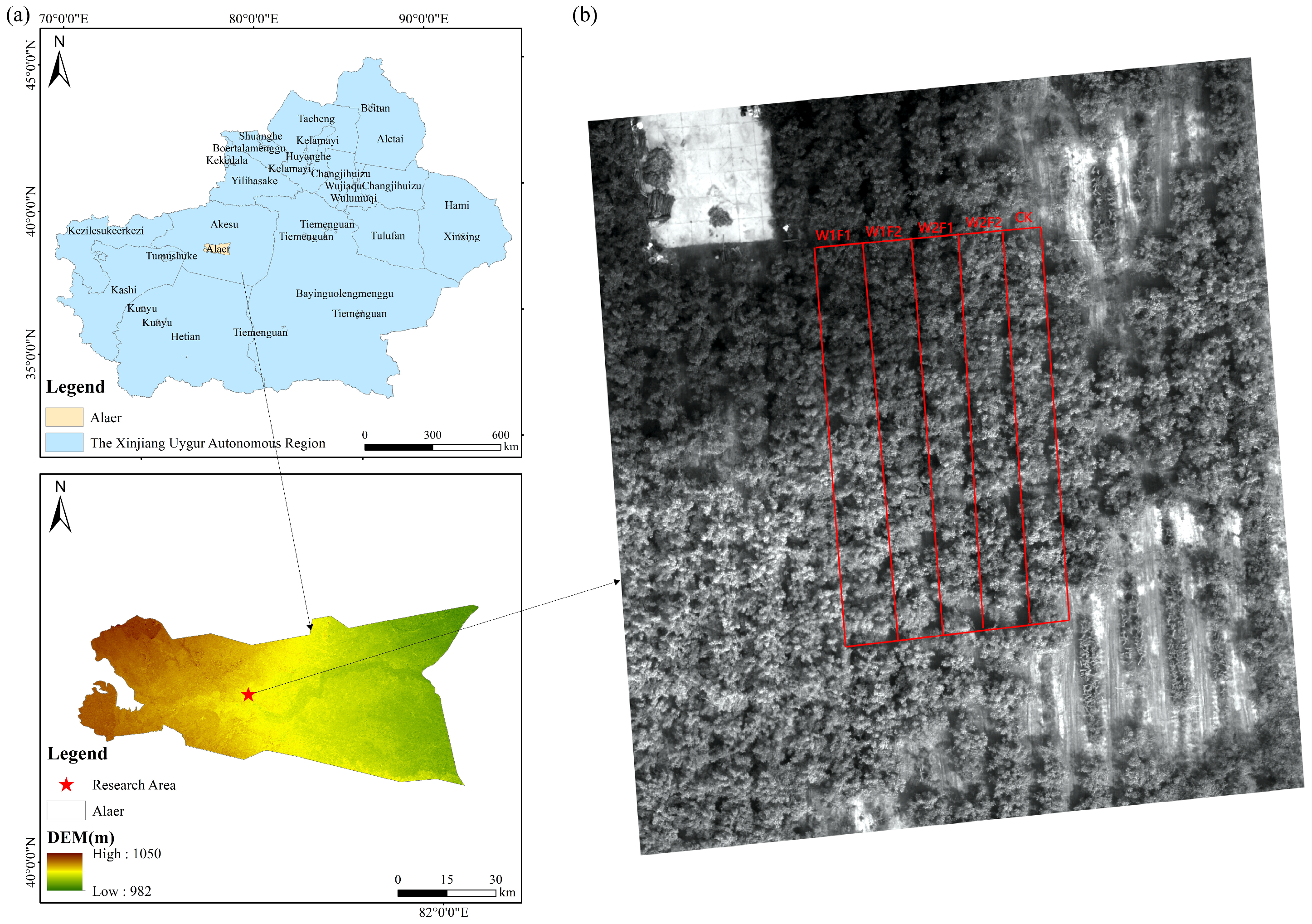
2.1. Overview of the Study Area
2.2. Experimental Design
2.3. Acquisition of UAV Multispectral Images
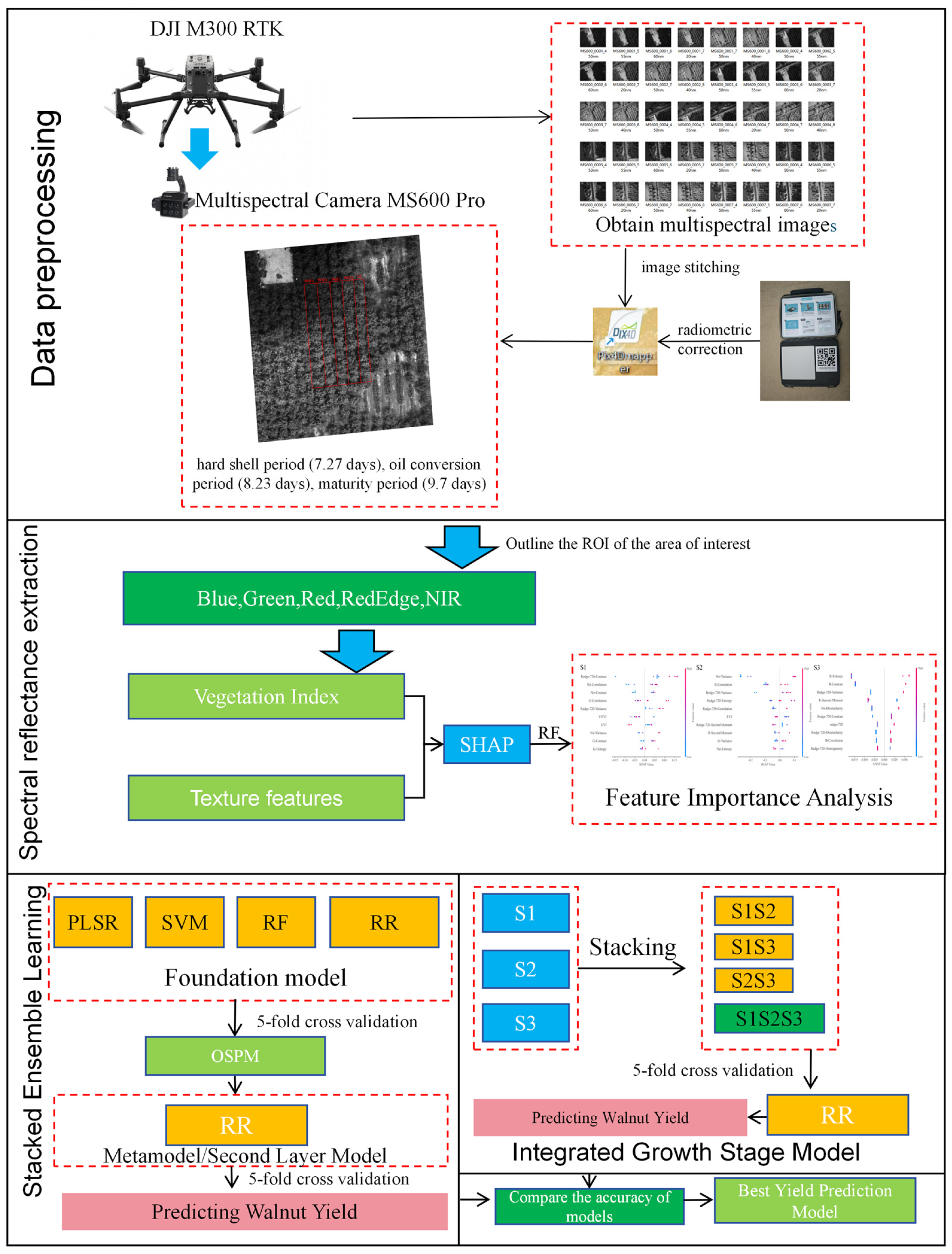
2.4. UAV Image Preprocessing
2.5. Test Indicators and Methods
2.5.1. Walnut Production
2.5.2. Extraction of Vegetation Indices
2.5.3. Extraction of Texture Features
2.5.4. Individual Machine Learning Algorithms
2.5.5. Stacked Integration Learning
2.5.6. Growth Stage Stacking Integration
2.5.7. Validation and Analysis
2.5.8. Analysis of SHAP Feature Contributions
2.6. Data-Processing Software
3. Results
3.1. Correlation of Vegetation Indices, Texture Characteristics with Yield and Selection of Model Input Variables
3.1.1. Correlation of Vegetation Indices, Texture Characteristics and Yield
3.1.2. Selection of Model Variables
3.2. Results of Yield Estimation and Accuracy Analysis
3.2.1. Estimation Results and Accuracy Analysis Using a Single Machine Learning Model
3.2.2. SEL Estimation Results and Accuracy Analysis
3.2.3. Estimation Results and Precision Analysis of GSSE
3.3. Analysis of the Impact of Information on GSSE by Reproductive Period
3.4. Spatial Distribution Map of Fruit Yield
4. Discussion
4.1. Mechanisms for the Contribution of Remote Sensing Features to Yield Estimation
4.2. Machine Learning Model Performance Comparison and Integration Strategy Advantages
4.3. Interpretability Analysis of Water–Fertilizer Coupling Effects
4.4. Prospects and Limitations of Model Application
5. Conclusions
Author Contributions
Funding
Data Availability Statement
Acknowledgments
Conflicts of Interest
References
- Phillips, S. Precision agriculture: Supporting global food security. Better Crops Plant Food 2014. [Google Scholar]
- Food and Agriculture Organization. State of food and agriculture. State Food Agric. 1996, 71, 110–113. [Google Scholar]
- Mulla David, J. Twenty five years of remote sensing in precision agriculture: Key advances and remaining knowledge gaps. Biosyst. Eng. 2013, 114, 358–371. [Google Scholar] [CrossRef]
- Yin, N.; Liu, R.; Zeng, B.; Liu, N. A review: UAV-based Remote Sensing. IOP Conf. Ser. Mater. Sci. Eng. 2019, 490, 062014. [Google Scholar] [CrossRef]
- Cui, D.; Li, M.; Zhu, Y.; Cao, W.; Zhang, X. Monitoring Crop Growth Status Based on Optical Sensor. In Computer and Computing Technologies in Agriculture, Volume II; Springer: Boston, MA, USA, 2008. [Google Scholar]
- Weiss, M.; Jacob, F.; Duveiller, G. Remote sensing for agricultural applications: A meta-review. Remote Sens. Environ. 2020, 236, 19. [Google Scholar] [CrossRef]
- Ramesh, V.; Kumaresan, P. Advancements in Machine Learning and Deep Learning Techniques for Crop Yield Prediction: A Comprehensive Review. Nat. Environ. Pollut. Technol. 2024, 23, 2071–2086. [Google Scholar] [CrossRef]
- Lee, K.; Park, C.W.; Ahn, H.Y.; Hong, S.Y.; Jang, S.Y.; Na, S.; So, K.H. Estimation of Rice Leaf Nitrogen Content and Yield using UAV Image. Korean J. Soil Sci. Fertil. 2020, 53, 335–344. [Google Scholar] [CrossRef]
- Sun, X.; Yang, Z.; Su, P.; Wei, K.; Wang, Z.; Yang, C.; Wang, C.; Qin, M.; Xiao, L.; Yang, W.; et al. Non-destructive monitoring of maize LAI by fusing UAV spectral and textural features. Front. Plant Sci. 2023, 14, 1158837. [Google Scholar] [CrossRef]
- Condon, A.G.; Richards, R.A.; Rebetzke, G.J.; Farquhar, G. Improving Intrinsic Water-Use Efficiency and Crop Yield. Crop Sci. 2002, 42, 122–131. [Google Scholar]
- Zhao, L.; Tang, Q.; Song, Z.; Yin, Y.; Wang, G.; Li, Y. Increasing the yield of drip-irrigated rice by improving photosynthetic performance and enhancing nitrogen metabolism through optimizing water and nitrogen management. Front. Plant Sci. 2023, 14, 1075625. [Google Scholar] [CrossRef]
- Hassan, F.A.S.; Ali, E.F.; Mahfouz, S.A. Comparison between different fertilization sources, irrigation frequency and their combinations on the growth and yield of coriander plant. Aust. J. Basic Appl. Sci. 2012, 6, 600–615. [Google Scholar]
- Cutler, A.; Cutler, D.R.; Stevens, J.R. Random Forests. Mach. Learn. 2004, 45, 157–176. [Google Scholar]
- Chen, T.; Guestrin, C. XGBoost: A Scalable Tree Boosting System. arXiv 2016, arXiv:1603.02754. [Google Scholar] [CrossRef]
- Roscher, R.; Bohn, B.; Duarte, M.F.; Garcke, J. Explainable Machine Learning for Scientific Insights and Discoveries. Qual. Control. Trans. 2020, 8, 42200–42216. [Google Scholar] [CrossRef]
- Lundberg, S.; Lee, S.I. A Unified Approach to Interpreting Model Predictions. arXiv 2017, arXiv:1705.07874. [Google Scholar] [CrossRef]
- Yeerhazi, Y.; Xia, Q.; Chen, T.; Ahmed, M.M.; Nuerdawulieti, W.; Zhang, R.; Yang, G.; Ding, Y.; Guo, Z. Optimization of Walnut Water-Fertilizer Coupling Schemes Based on Yield, Quality, and Water-Fertilizer Utilization Efficiency. J. Fruit Sci. 2026, 43, 424–438. [Google Scholar] [CrossRef]
- Rouse, J.W.; Haas, R.H.; Schell, J.A.; Deering, D. Monitoring Vegetation Systems in the Great Plains with Erts; NASA: Washington, DC, USA, 1974; Volume 351. [Google Scholar]
- Gitelson, A.A.; Kaufman, Y.J.; Merzlyak, M.N. Use of a green channel in remote sensing of global vegetation from EOS-MODIS. Remote Sens. Environ. 1996, 58, 289–298. [Google Scholar] [CrossRef]
- Li, C.; Wang, Y.; Ma, C.; Ding, F.; Li, Y.; Chen, W.; Li, J.; Xiao, Z. Hyperspectral Estimation of Winter Wheat Leaf Area Index Based on Continuous Wavelet Transform and Fractional Order Differentiation. Sensors 2021, 21, 8497. [Google Scholar] [CrossRef]
- Breiman, L. Random Forests Machine Learning. J. Clin. Microbiol. 2001, 2, 199–228. [Google Scholar]
- Smola, A.J.; Schölkopf, B. A tutorial on support vector regression. Stat. Comput. 2004, 14, 199–222. [Google Scholar] [CrossRef]
- Wold, S.; Sjstrm, M.; Eriksson, L. PLS-regression: A basic tool of chemometrics. Chemom. Intell. Lab. Syst. 2001, 58, 109–130. [Google Scholar] [CrossRef]
- Jia, Z.; Sun, M.; Ou, C.; Sun, S.; Mao, C.; Hong, L.; Wang, J.; Li, M.; Jia, S.; Mao, P. Single Seed Identification in Three Medicago Species via Multispectral Imaging Combined with Stacking Ensemble Learning. Sensors 2022, 22, 7521. [Google Scholar] [CrossRef] [PubMed]
- Hassan, M.A.; Fei, S.; Li, L.; Jin, Y.; Liu, P.; Rasheed, A.; Shawai, R.S.; Zhang, L.; Ma, A.; Xiao, Y.; et al. Stacking of canopy spectral reflectance from multiple growth stages improves grain yield prediction under full and limited irrigation in wheat. Remote Sens. 2022, 14, 4318. [Google Scholar] [CrossRef]
- Li, F.; Miao, Y.; Feng, G.; Yuan, F.; Yue, S.; Gao, X.; Liu, Y.; Liu, B.; Ustin, S.L.; Chen, X. Improving estimation of summer maize nitrogen status with red edge-based spectral vegetation indices. Field Crops Res. 2014, 157, 111–123. [Google Scholar] [CrossRef]
- Chang, C.W.; Laird, D.A.; Mausbach, M.J.; Hurburgh, C.R. Near-Infrared Reflectance Spectroscopy—Principal Components Regression Analyses of Soil Properties. Soil Sci. Soc. Am. J. 2001, 65, 480–490. [Google Scholar] [CrossRef]
- Štrumbelj, E.; Kononenko, I. Explaining prediction models and individual predictions with feature contributions. Knowl. Inf. Syst. 2020, 41, 647–665. [Google Scholar] [CrossRef]
- Marcone, A.; Impollonia, G.; Croci, M.; Blandinières, H.; Pellegrini, N.; Amaducci, S. Garlic yield monitoring using vegetation indices and texture features derived from UAV multispectral imagery. Microelectron. J. 2024, 8, 100513. [Google Scholar] [CrossRef]
- Sun, L.; Gao, F.; Anderson, M.C.; Kustas, W.P.; Alsina, M.M.; Sanchez, L.; Sams, B.; McKee, L.; Dulaney, W.; White, W.A.; et al. Daily Mapping of 30 m LAI and NDVI for Grape Yield Prediction in California Vineyards. Remote Sens. 2017, 9, 317. [Google Scholar] [CrossRef]
- Jang, C.; Namoi, N.; Wolske, E.; Wasonga, D.; Behnke, G.; Bowman, N.D.; Lee, D.K. Integrating plant morphological traits with remote-sensed multispectral imageries for accurate corn grain yield prediction. PLoS ONE 2024, 19, e0297027. [Google Scholar] [CrossRef]
- Belgiu, M.; Drăguţ, L. Random forest in remote sensing: A review of applications and future directions. ISPRS J. Photogramm. Remote Sens. 2016, 114, 24–31. [Google Scholar] [CrossRef]
- Siegmann, B.; Jarmer, T.; Beyer, F.; Ehlers, M. The Potential of Pan-Sharpened EnMAP Data for the Assessment of Wheat LAI. Remote Sens. 2015, 7, 12737–12762. [Google Scholar] [CrossRef]
- Maimaitiyiming, M.; Ghulam, A.; Bozzolo, A.; Wilkins, J.L.; Kwasniewski, M.T. Early Detection of Plant Physiological Responses to Different Levels of Water Stress Using Reflectance Spectroscopy. Remote Sens. 2017, 9, 745. [Google Scholar] [CrossRef]
- Wolpert, D.H. Stacked Generalization. Neural Netw. 1992, 5, 241–259. [Google Scholar] [CrossRef]
- Zhou, G.; Chen, F.; Sun, S.; Lyu, W.; Piao, H.; Hao, J.; Zhang, S.; Chen, H. The effect of water fertilizer coupling on the photosynthetic characteristics, yield, and quality of walnuts. Xinjiang Agric. Sci. 2024, 61, 1151–1159. [Google Scholar]
- Dordas, C. Role of nutrients in controlling plant diseases in sustainable agriculture. A review. Agron. Sustain. Dev. 2008, 28, 33–46. [Google Scholar] [CrossRef]
- Jin, X.; Liu, S.; Baret, F.; Hemerlé, M.; Comar, A. Estimates of plant density of wheat crops at emergence from very low altitude UAV imagery. Remote Sens. Environ. 2017, 198, 105–114. [Google Scholar] [CrossRef]
- Shi, X.; Han, W.; Zhao, T.; Tang, J. Decision Support System for Variable Rate Irrigation Based on UAV Multispectral Remote Sensing. Sensors 2019, 19, 2880. [Google Scholar] [CrossRef]




| Irrigation Sequence | Irrigation Date | Irrigation Cycle | Irrigation Quota (m3·667 m−2) | |
|---|---|---|---|---|
| W1 | W2 | |||
| Spring irrigation | 3.5–3.25 | 100 | 100 | |
| 1 | 5.1–5.7 | 6 | 37.5 | 31.25 |
| 2 | 5.17–5.23 | 6 | 37.5 | 31.25 |
| 3 | 6.3–6.9 | 6 | 37.5 | 31.25 |
| 4 | 6.19–6.25 | 6 | 37.5 | 31.25 |
| 5 | 7.5–7.11 | 6 | 37.5 | 31.25 |
| 6 | 7.21–7.27 | 6 | 37.5 | 31.25 |
| 7 | 8.6–8.15 | 6 | 37.5 | 31.25 |
| 8 | 8.25–9.1 | 6 | 37.5 | 31.25 |
| Winter irrigation | 11.5–11.10 | 100 | 100 | |
| Total | 500 | 450 | ||
| Fertilization Time | F1 | F2 | F3 | ||||||
|---|---|---|---|---|---|---|---|---|---|
| Urea | Monoam Monium | Potassium Sulfate | Urea | Monoam Monium | Potassium Sulfate | Urea | Monoam Monium | Potassium Sulfate | |
| 5.1–5.7 | 6.7 | 4.7 | 0.67 | 8 | 5.7 | 0.8 | 6.7 | 4.7 | 0.67 |
| 5.17–5.23 | 6.7 | 4.7 | 0.67 | 8 | 5.7 | 0.8 | 6.7 | 4.7 | 0.67 |
| 6.3–6.9 | 6.7 | 4.7 | 0.67 | 8 | 5.7 | 0.8 | 6.7 | 4.7 | 0.67 |
| 6.19–6.25 | 6.7 | 4.7 | 0.67 | 8 | 5.7 | 0.8 | 6.7 | 4.7 | 0.67 |
| 7.5–7.11 | 5 | 7.5 | 3 | 5 | 7.5 | 3 | 5 | 7.5 | 3 |
| 7.21–7.27 | 5 | 7.5 | 3 | 5 | 7.5 | 3 | 5 | 7.5 | 3 |
| 8.6–8.15 | 5 | 7.5 | 3 | 5 | 7.5 | 3 | 5 | 7.5 | 3 |
| 8.25–9.1 | 5 | 7.5 | 3 | 5 | 7.5 | 3 | 5 | 7.5 | 3 |
| Variable Name | Full Name | Calculation Formula | |
|---|---|---|---|
| Vegetation Index | Normalized difference vegetation index | NDVI | (NIR − R)/(NIR + R) |
| Different influential factors | DVI | NIR − R | |
| Ratio vegetation index | RVI | NIR/R | |
| Green normalized difference vegetation index | GNDVI | (NIR − G)/(NIR + G) | |
| Blue normalized difference vegetation index | BNDVI | (NIR − B)/(NIR + B) | |
| Normalized difference red edge index | NDRE | (NIR − RE)/(NIR + RE) | |
| Chlorophyll index-red edge | CIrededge | NIR/RE − 1 | |
| Chlorophyll index-green | CIgreen | NIR/G − 1 | |
| Excess green index | ExG | 2G − R − B | |
| Normalized green–red difference index | NGRDI | (G − R)/(G + R) | |
| Visible-band difference vegetation index | VDVI | (2G − R − B)/(2G + R + B) | |
| Enhanced vegetation index | EVI | 2.5(NIR − R)/(NIR + 6R − 7.5B + 1) | |
| Soil adjusted vegetable index | SAVI | (1 + L)(NIR − R)/(NIR + 6R − 7.5B + 1) | |
| Texture features | MEAN | Mean | |
| HOM | Homogeneity | ||
| ENT | Entropy | ||
| DIS | Dissimilarity | ||
| SEC | Second moment | ||
| COR | Correlation | ||
| VAR | Variance | ||
| CON | Contrast |
| Training Set | Validation Set | ||||||
|---|---|---|---|---|---|---|---|
| R2 | RMSE | RPD | R2 | RMSE | RPD | ||
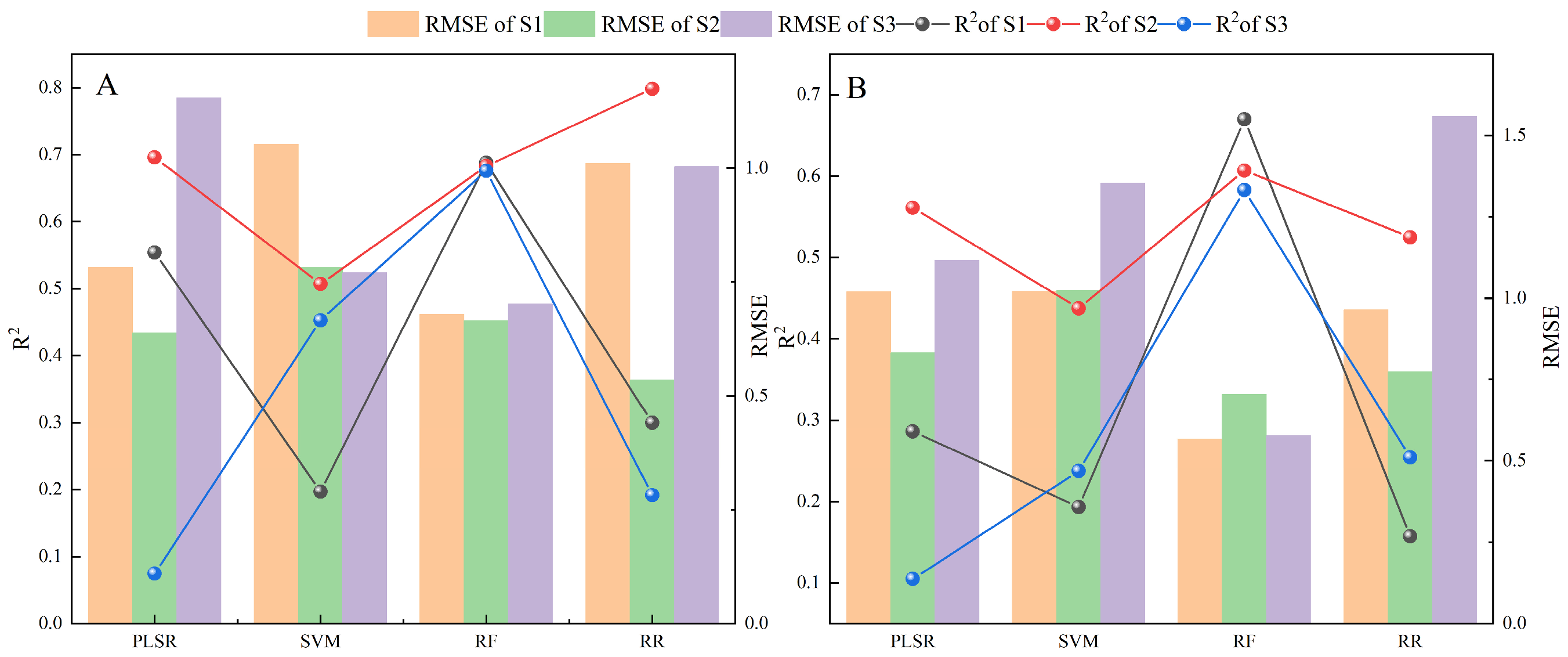
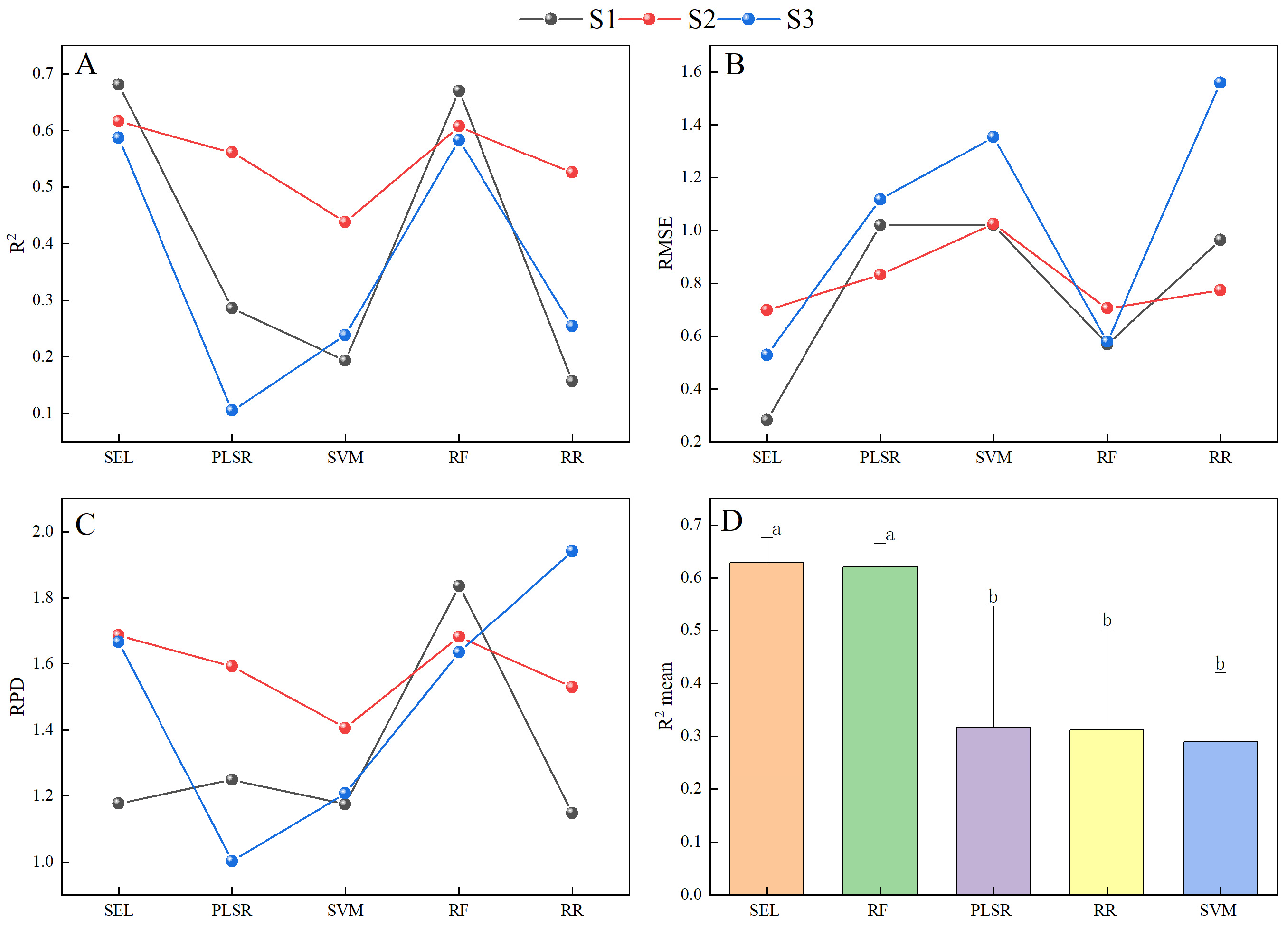
| S1 | PLSR | 0.554 | 0.782 | 1.517 | 0.286 | 1.020 | 1.248 |
| SVM | 0.197 | 1.052 | 1.130 | 0.193 | 1.021 | 1.174 | |
| RF | 0.688 | 0.679 | 1.813 | 0.670 | 0.568 | 1.836 | |
| RR | 0.300 | 1.011 | 1.211 | 0.157 | 0.964 | 1.148 | |
| S2 | PLSR | 0.696 | 0.638 | 1.837 | 0.561 | 0.833 | 1.592 |
| SVM | 0.507 | 0.782 | 1.442 | 0.438 | 1.024 | 1.406 | |
| RF | 0.683 | 0.665 | 1.798 | 0.607 | 0.705 | 1.681 | |
| RR | 0.798 | 0.535 | 2.256 | 0.525 | 0.774 | 1.529 | |
| S3 | PLSR | 0.074 | 1.155 | 1.053 | 0.105 | 1.117 | 1.003 |
| SVM | 0.453 | 0.770 | 1.369 | 0.238 | 1.354 | 1.207 | |
| RF | 0.676 | 0.702 | 1.780 | 0.583 | 0.578 | 1.633 | |
| RR | 0.192 | 1.004 | 1.127 | 0.254 | 1.559 | 1.941 |
| R2 | RMSE | RPD | |
|---|---|---|---|
| GSSE | 0.789 | 0.494 | 2.296 |
| SEL | 0.681 | 0.283 | 1.177 |
| RF | 0.670 | 0.568 | 1.836 |
Disclaimer/Publisher’s Note: The statements, opinions and data contained in all publications are solely those of the individual author(s) and contributor(s) and not of MDPI and/or the editor(s). MDPI and/or the editor(s) disclaim responsibility for any injury to people or property resulting from any ideas, methods, instructions or products referred to in the content. |
© 2026 by the authors. Licensee MDPI, Basel, Switzerland. This article is an open access article distributed under the terms and conditions of the Creative Commons Attribution (CC BY) license.
Share and Cite
Yerzati, Y.; Xia, Q.; Luo, L.; Chen, J.; Qi, J.; Guo, Z.; Zhai, C.; Zhang, Y.; Zhang, R. Research on Walnut Yield Estimation Based on Interpretable Machine Learning and Stacked Integration Under Different Water–Fertilizer Coupling Regimes. Remote Sens. 2026, 18, 1449. https://doi.org/10.3390/rs18101449
Yerzati Y, Xia Q, Luo L, Chen J, Qi J, Guo Z, Zhai C, Zhang Y, Zhang R. Research on Walnut Yield Estimation Based on Interpretable Machine Learning and Stacked Integration Under Different Water–Fertilizer Coupling Regimes. Remote Sensing. 2026; 18(10):1449. https://doi.org/10.3390/rs18101449
Chicago/Turabian StyleYerzati, Yerhazi, Qiuhao Xia, Langqin Luo, Jiaxing Chen, Jiahui Qi, Zhongzhong Guo, Changyuan Zhai, Yunqi Zhang, and Rui Zhang. 2026. "Research on Walnut Yield Estimation Based on Interpretable Machine Learning and Stacked Integration Under Different Water–Fertilizer Coupling Regimes" Remote Sensing 18, no. 10: 1449. https://doi.org/10.3390/rs18101449
APA StyleYerzati, Y., Xia, Q., Luo, L., Chen, J., Qi, J., Guo, Z., Zhai, C., Zhang, Y., & Zhang, R. (2026). Research on Walnut Yield Estimation Based on Interpretable Machine Learning and Stacked Integration Under Different Water–Fertilizer Coupling Regimes. Remote Sensing, 18(10), 1449. https://doi.org/10.3390/rs18101449