1. Introduction
Recent corporate scandals have underscored the growing importance of environmental, social, and governance (ESG) performance in shaping firm value and long-term sustainability. Traditional financial reports, which focus largely on historical performance and short-term outcomes, often fail to provide stakeholders with a comprehensive view of how companies create value over time [
1] In an increasingly uncertain and complex business environment, investors require greater transparency regarding strategy, risk, governance, and long-term prospects. Consequently, innovation in corporate reporting has become essential for communicating value creation in a more holistic manner.
One response to this demand has been the development of reporting models capable of integrating financial and non-financial information. The International Integrated Reporting Council (IIRC) emphasized that integrated reports should identify significant risks and opportunities, even when their probability of occurrence appears low [
2]. Moreover, intangible assets now account for a substantial share of firm value, yet they are often insufficiently reflected in conventional reporting frameworks [
3]. Integrated Reporting (IR) has therefore emerged as a mechanism for bridging this gap by linking financial performance with sustainability, governance, strategy, and intellectual capital disclosures.
Integrated reporting has gained international attention as a unified approach to corporate disclosure, combining qualitative and quantitative information within a single framework. Although companies have long issued sustainability or intellectual capital reports, these disclosures were typically provided separately or as supplementary components of annual reports [
4]. The IIRC, established in 2010, developed the International Integrated Reporting Framework (IIRF) to promote global adoption of IR [
5,
6]. While some scholars argue that IR represents an evolution of traditional annual and sustainability reporting [
6,
7,
8], others view it as a transformative model that embeds sustainability into core business strategy [
9]. Despite ongoing debate, IR is commonly defined as a concise communication explaining how strategy, governance, performance, and prospects lead to value creation over the short, medium, and long term [
5].
Although ESG reporting has become increasingly widespread, it often represents a preliminary and sometimes fragmented step toward sustainability transparency. ESG disclosures frequently focus on discrete environmental, social, or governance indicators without fully integrating them into strategic decision-making. In contrast, integrated reporting seeks to provide a more comprehensive account of how organizations create value across multiple capitals and time horizons. Implementing IR requires greater coordination across governance structures, risk management systems, and performance measurement processes. In emerging economies such as the UAE—where sustainability agendas are rapidly evolving and regulatory initiatives increasingly emphasize non-financial transparency—the shift from ESG-focused disclosure toward integrated thinking presents both institutional pressures and organizational challenges. Understanding this transition therefore requires a multi-theoretical lens, as firms may respond to legitimacy concerns, stakeholder expectations, agency incentives, resource constraints, and institutional dynamics simultaneously.
Globally, only a limited number of countries have mandated integrated reporting, including South Africa, Brazil, and India [
10,
11]. In most jurisdictions, including the UAE, the publication of reports referred to as integrated reports is required; however, substantive alignment with the IIRF remains largely discretionary. Within this context, this study examines firm-specific factors associated with variations in IIRF-based disclosure quality among listed companies in the UAE, an emerging economy characterized by a growing sustainability-oriented institutional environment.
Rather than investigating the decision to publish an integrated report, the study focuses on differences in the extent of alignment with the IIRF beyond the minimum regulatory requirement. By analyzing publicly available corporate reports, the study develops an Integrated Reporting Disclosure Score (IRDS) based on systematic content analysis of 43 criteria derived from the IIRF. This structured approach enables an assessment of disclosure quality and allows examination of the firm-level characteristics associated with variations in compliance.
The study contributes to the literature in three principal ways. First, it develops a comprehensive IR disclosure index grounded in the IIRF, providing a systematic measure of framework alignment. Second, it offers empirical evidence from the UAE, where research on integrated reporting in emerging market contexts remains limited. Third, by combining regression and dominance analysis, the study identifies firm-level characteristics associated with IIRF-based disclosure quality and evaluates their relative importance, offering a more nuanced understanding of the factors linked to variations in integrated reporting practices.
The remainder of the paper is structured as follows.
Section 2 presents the theoretical framework and develops the research hypotheses.
Section 3 describes the methodology and data.
Section 4 reports the empirical findings.
Section 5 concludes the study.
2. Theoretical Background, Prior Research, and Hypothesis Development
Integrated reporting is shaped by a combination of governance structures, market pressures, institutional expectations, and strategic considerations. As such, no single theoretical perspective is sufficient to explain variations in disclosure practices, particularly in contexts where reporting is mandated but alignment with an international framework remains discretionary. Prior literature acknowledges this complexity and emphasizes the value of integrating multiple theoretical lenses to capture the diverse motivations underlying reporting behavior [
12,
13,
14].
Accordingly, integrated reporting has been examined through several complementary perspectives. Agency and signaling theories have been used to explain how firms respond to information asymmetry and reputational incentives through enhanced disclosure [
15]. Stakeholder theory highlights the role of accountability to diverse stakeholder groups in shaping disclosure quality [
16], while [
17] demonstrate how broader contextual factors, such as national culture, interact with stakeholder expectations to influence reporting practices. Institutional theory provides further insight into how regulatory and normative pressures shape organizational behavior across different environments [
18]. At the same time, proprietary cost theory introduces a competing logic, suggesting that firms may limit disclosure when transparency entails strategic costs. Studies such as [
19] explicitly combine these perspectives to explain differences in integrated reporting practices across countries. Legitimacy theory also remains central, as illustrated by [
20], who show how firms use integrated reporting to maintain societal approval.
Building on this foundation, the present study adopts a multi-theoretical framework to examine firm-specific characteristics associated with variations in voluntary compliance with the International Integrated Reporting Framework (IIRF) beyond the mandatory reporting requirement in the UAE. By explicitly integrating complementary and, at times, competing theoretical logics, the study develops a more robust and contextually grounded explanation of differences in integrated reporting quality.
2.1. Hypothesis Development
Prior research suggests that variations in integrated reporting practices are associated with two broad categories of factors: firm-specific characteristics, including company size, profitability, leverage, age, and industry type, and corporate governance characteristics, such as board size, gender diversity, and board independence. Building on this literature and the multi-theoretical framework outlined above, the following hypotheses are developed to examine how these characteristics are associated with variations in IIRF-based IR disclosure quality beyond the mandatory reporting requirement.
2.1.1. Firm-Specific Characteristics and IIRF-Based IR Disclosure Quality
Firm Size and IIRF-Based IR Disclosure Quality
Firm size is one of the most frequently examined factors in research on corporate disclosure practices. From an agency theory perspective, larger firms tend to have more dispersed ownership structures and greater reliance on external financing, which may increase information asymmetry and monitoring costs. Enhanced transparency, including stronger alignment with the IIRF, can serve as a mechanism to reduce these agency costs and reassure capital providers [
21].
Stakeholder theory offers a complementary explanation. Larger firms are exposed to a broader and more diverse group of stakeholders, including regulators, investors, employees, and the public. This increased visibility heightens expectations for transparency and accountability, encouraging more comprehensive disclosure. Legitimacy theory similarly suggests that highly visible firms are more likely to adopt extensive reporting practices to maintain societal approval and demonstrate alignment with prevailing sustainability norms [
22,
23]. In addition, signaling theory posits that large firms may use high-quality IIRF-aligned reporting to signal organizational strength, sound governance, and long-term commitment to sustainability [
19].
However, alternative arguments must also be considered. Political and proprietary cost perspectives suggest that larger firms may face greater regulatory scrutiny or competitive risks associated with extensive disclosure. Increased transparency may expose strategic information or attract political attention, potentially discouraging more detailed reporting.
Despite these competing considerations, prior empirical evidence generally supports a positive association between firm size and disclosure quality. In the UAE context—where sustainability expectations are evolving and institutional attention to reporting practices is increasing—larger firms are likely to demonstrate stronger alignment with the IIRF beyond the mandatory reporting requirement. Accordingly, the following hypothesis is proposed:
H1. Firm size is positively associated with IIRF-based IR disclosure quality.
Profitability and IIRF-Based IR Disclosure Quality
Profitability is commonly examined as a determinant of corporate disclosure practices. From a signaling theory perspective, more profitable firms have incentives to communicate their superior performance to the market in order to differentiate themselves from competitors and reduce information asymmetry [
24]. High-quality disclosure, including stronger alignment with the IIRF, can serve as a credible signal of financial strength, sound governance, and long-term sustainability commitment.
Agency theory offers a related explanation. Managers of profitable firms may disclose more comprehensive information to justify their performance, reinforce investor confidence, and reduce monitoring pressures [
25,
26]. Enhanced transparency can therefore help sustain access to capital and protect managerial reputation.
Legitimacy theory further suggests that profitable firms may face greater public visibility and higher societal expectations. Firms with stronger financial performance may also have greater resources to invest in social and environmental initiatives, and may disclose these activities more extensively to demonstrate responsible corporate behavior [
27]. However, proprietary cost theory introduces a competing consideration. Highly profitable firms may limit disclosure to avoid revealing strategic information that could undermine competitive advantage. Despite this potential tension, prior empirical research generally finds a positive association between profitability and disclosure quality [
19].
In the UAE context, where sustainability reporting expectations are evolving and alignment with the IIRF remains discretionary beyond the mandatory reporting requirement, more profitable firms may be better positioned to enhance disclosure depth and quality. In light of the foregoing discussion and theoretical foundations, we propose the following hypothesis:
H2. Firm profitability is positively associated with IIRF-based IR disclosure quality.
Leverage and IIRF-Based IR Disclosure Quality
Leverage is frequently examined in disclosure research due to its implications for agency conflicts and creditor monitoring. From an agency theory perspective, higher levels of debt intensify conflicts between managers, shareholders, and creditors. As leverage increases, information asymmetry becomes more pronounced, potentially raising agency costs. To mitigate these concerns, highly leveraged firms may enhance transparency and provide more comprehensive disclosures to reassure capital providers and reduce monitoring pressures [
28,
29].
Signaling theory offers a related explanation. Firms with substantial debt obligations may use higher-quality reporting to signal financial stability, responsible governance, and long-term value creation to creditors and investors [
25]. Similarly, stakeholder theory suggests that firms relying heavily on external financing face stronger demands for transparency from creditors, who may condition lending decisions on the availability of credible information [
30,
31]. In this context, enhanced alignment with the IIRF may serve as a mechanism for demonstrating accountability and reducing perceived risk.
However, competing considerations also exist. Highly leveraged firms may experience financial constraints that limit their ability to invest in enhanced reporting practices. Financial pressure could shift managerial focus toward short-term survival rather than broader transparency initiatives. Consistent with these tensions, prior empirical findings are mixed. While [
32] report a positive association between leverage and disclosure, other studies document weaker or insignificant relationships [
19,
33]. Despite these mixed findings, the theoretical emphasis on creditor monitoring and information asymmetry suggests that higher leverage is likely to be associated with stronger disclosure incentives in contexts where external financing plays a significant role. In light of the preceding theoretical arguments, the following hypothesis is advanced:
H3. Leverage is positively associated with IIRF-based IR disclosure quality.
Firm Age and IIRF-Based IR Disclosure Quality
Firm age has frequently been examined in disclosure research as a proxy for organizational legitimacy. According to legitimacy theory, a firm’s standing within its institutional environment is shaped, in part, by its longevity [
34]. Firms that have operated for longer periods may accumulate reputational capital and develop stronger stakeholder relationships, increasing their incentives to maintain transparency and uphold societal expectations. In the context of integrated reporting, prior studies such as [
35] and [
36] have employed firm age to examine differences in reporting practices, suggesting that more established firms may demonstrate greater engagement with integrated reporting frameworks.
Older firms may also possess accumulated experience and institutional knowledge, enabling them to better understand industry dynamics and evolving regulatory expectations. This experience can facilitate the implementation of structured reporting systems and more comprehensive disclosure practices. As argued by [
37], established firms may be more inclined to adopt enhanced reporting approaches to safeguard legitimacy and ensure continued presence within their industries. However, empirical evidence on this relationship remains inconclusive. Studies by [
38,
39], and [
36] report no significant association between firm age and integrated reporting practices. These mixed findings suggest that longevity alone may not uniformly translate into higher disclosure quality, particularly in contexts where reporting behavior is influenced by broader institutional pressures.
Despite these inconsistencies, legitimacy theory suggests that firms with longer operating histories may be more motivated to protect accumulated reputational capital by demonstrating stronger alignment with recognized reporting standards. In the UAE context, where sustainability-oriented expectations are evolving, older firms may therefore exhibit higher levels of IIRF-based IR disclosure quality. In light of the discussion and prior empirical evidence, the following hypothesis is advanced:
H4. Firm age is positively associated with IIRF-based IR disclosure quality.
2.1.2. Corporate Governance Characteristics and IIRF-Based IR Disclosure Quality
Gender Diversity and IIRF-Based IR Disclosure Quality
Board diversity refers to the heterogeneity of board members in terms of background, perspectives, and experiences [
40]. Prior research suggests that diversity enhances the consideration of alternative viewpoints and improves decision-making processes [
41]. Group diversity may arise from social category, informational, or value differences, or a combination of these dimensions [
42]. Such diversity has been associated with improved leadership quality, stronger problem-solving capacity, and enhanced relationship-building within organizations [
40].
Among the various dimensions of board diversity, gender diversity has received particular attention in the literature [
43,
44]. Gender diversity is considered especially relevant due to differences in perspectives and sensitivities related to social and cultural issues [
45]. Several studies suggest that female board members are more attentive to sustainability, ethical considerations, and reputational concerns, which may be reflected in higher levels of non-financial disclosure [
46,
47].
From a stakeholder theory perspective, women directors may exhibit greater responsiveness to stakeholder interests, encouraging more transparent and socially responsible corporate behavior [
48]. Institutional theory further suggests that increasing representation of women on boards may reflect evolving societal expectations regarding diversity and corporate accountability, which in turn may be associated with enhanced sustainability reporting practices [
49].
In the context of integrated reporting, which emphasizes transparency, value creation, and stakeholder engagement, boards with greater gender diversity may be more inclined to support comprehensive disclosure and stronger alignment with recognized reporting frameworks. Accordingly, gender-diverse boards may be associated with higher levels of IIRF-based IR disclosure quality. Based on the foregoing arguments, the following hypothesis is formulated:
H5. Board gender diversity is positively associated with IIRF-based IR disclosure quality.
Board Size and IIRF-Based IR Disclosure Quality
Board size is a key governance attribute that may be associated with differences in disclosure quality. From an agency theory perspective, the board’s monitoring role can be influenced by its composition and size. Larger boards may strengthen oversight by bringing together a broader range of expertise and experience, which can help reduce information asymmetry and enhance transparency [
50,
51,
52]. They are also less likely to be dominated by management and may include members with accounting or financial backgrounds who can support more robust reporting practices [
50,
52].
In addition to monitoring considerations, board size may reflect greater diversity of perspectives. A broader range of viewpoints can help firms respond more effectively to societal and environmental expectations regarding transparency [
53]. Given that integrated reporting requires the integration of financial and non-financial information, boards with diverse expertise may be better positioned to oversee complex reporting processes and promote stronger alignment with established frameworks [
36,
43,
44].
At the same time, agency theory also highlights potential limitations. Very large boards may face coordination challenges, slower decision-making, and weaker monitoring effectiveness [
50]. These constraints suggest that the relationship between board size and disclosure quality may not be strictly linear. Despite these competing considerations, prior research generally indicates that larger boards are associated with enhanced transparency. Accordingly, the following hypothesis is proposed:
H6. Board size is positively associated with IIRF-based IR disclosure quality.
Board Independence and IIRF-Based IR Disclosure Quality
Board independence is a central element of corporate governance and has been widely examined in relation to disclosure practices. Directors play a key role in shaping organizational transparency and communication with stakeholders. A higher proportion of independent, non-executive directors may enhance the diversity of perspectives within the board and strengthen governance effectiveness by providing objective oversight of managerial decisions [
44,
54]. Because independent directors are not involved in day-to-day operations, they are better positioned to monitor management and mitigate agency conflicts [
55].
From an agency theory perspective, stronger board independence reduces information asymmetry and constrains opportunistic managerial behavior. Boards with a higher proportion of non-executive directors are therefore expected to provide more balanced evaluations of firm performance and promote more transparent disclosure practices [
45]. In the context of integrated reporting, effective oversight may be associated with stronger alignment with recognized frameworks and higher-quality disclosure. However, the relationship may not be straightforward. While formal independence enhances monitoring capacity, it does not always guarantee substantive engagement with complex reporting processes. Independent directors may lack firm-specific knowledge or sufficient involvement in sustainability-related matters, potentially limiting their impact on disclosure practices.
Despite these considerations, agency theory suggests that stronger monitoring mechanisms are generally associated with improved transparency. Accordingly, the following hypothesis is proposed:
H7. Board independence is positively associated with IIRF-based IR disclosure quality.
2.1.3. Contextual Factors
Industry Type and IIRF-Based IR Disclosure Quality
Reporting practices often vary across industries due to differences in environmental impact, stakeholder scrutiny, and regulatory exposure. Firms operating in environmentally sensitive or high-risk industries—such as manufacturing sectors with direct societal and environmental impact—tend to face heightened public attention and regulatory oversight [
56]. As a result, these firms may place greater emphasis on sustainability-related disclosure in order to address stakeholder concerns and mitigate reputational risk. In contrast, firms in service-oriented industries, such as financial services or human resource consulting, are generally subject to comparatively lower environmental scrutiny and may experience weaker external pressure to provide extensive sustainability disclosures [
19].
Empirical research on sustainability reporting consistently documents significant differences in disclosure practices across industries [
57,
58]. From an institutional theory perspective, firms operating within the same industry tend to adopt similar reporting practices due to coercive, normative, and mimetic pressures. Organizations may imitate leading firms within their sector to reduce uncertainty and enhance legitimacy [
59]. Ref. [
60] further note that some firms adopt integrated reporting earlier than their industry peers to position themselves as exemplars, thereby shaping broader reporting diffusion patterns.
Legitimacy theory provides an additional explanation. Firms operating in industries with strong consumer visibility or environmental impact may adopt more extensive disclosure practices to ensure that their activities are perceived as appropriate within socially constructed norms and expectations [
61]. In this sense, industry context may be associated with differences in IIRF-based IR disclosure quality.
Taken together, institutional and legitimacy perspectives suggest that firms in environmentally sensitive industries are more likely to exhibit higher levels of IIRF-based IR disclosure quality. Accordingly, the following hypothesis is proposed:
H8. Industry affiliation is associated with differences in IIRF-based IR disclosure quality.
3. Research Methodology
3.1. Data
To examine the factors associated with IIRF-based IR disclosure quality in the UAE, this study initially considered 100 non-financial firms listed on the Abu Dhabi Securities Exchange (ADX) and the Dubai Financial Market (DFM). Although the publication of an integrated report is mandated by the UAE Securities and Commodities Authority, implementation was not entirely consistent during the study period. Some firms did not issue a standalone integrated report or a comprehensive report combining financial, governance, and sustainability information, while others published only financial statements without sufficient qualitative disclosure to allow for systematic IIRF-based content analysis. As a result, 11 firms were excluded from the sample, leaving a final sample of 89 companies. Financial institutions—such as banks and insurance companies—were excluded because their reporting practices are subject to distinct regulatory requirements imposed by the UAE Central Bank.
The analysis focuses on the year 2022, which represents the most recent reporting period available at the time data collection began in 2023. This year is particularly relevant as it follows the Securities and Commodities Authority’s (SCA) directive requiring listed companies to publish what are termed “integrated reports” (IR). While the issuance of such reports became mandatory, alignment with the International Integrated Reporting Framework (IIRF) remains discretionary, making 2022 an appropriate period for examining variations in disclosure quality. The use of cross-sectional data from a single reporting year is consistent with prior research investigating factors associated with integrated reporting disclosure, including studies conducted in specific national contexts such as [
62,
63], as well as broader international analyses such as [
19] and [
36].
3.2. Measurement of IIRF-Based IR Disclosure Quality
This study employs content analysis to measure IIRF-based IR disclosure quality. Content analysis is widely used in organizational reporting research and is recognized as a reliable and systematic method for examining disclosure practices [
64]. Rather than assessing the adoption of integrated reporting per se, the analysis evaluates the extent to which published reports align with the disclosure requirements outlined in the International Integrated Reporting Framework (IIRF).
The content of integrated reports issued by firms listed on the Dubai Financial Market (DFM) and the Abu Dhabi Securities Exchange (ADX) was systematically examined and compared against 43 disclosure items derived from the six core content elements of the IIRF. Using predefined criteria based on the framework enhances consistency and reduces subjectivity in the coding process. For each item, a score of 1 was assigned if the disclosure was adequately addressed and 0 if it was absent or insufficiently disclosed. The aggregate score represents the firm’s level of IIRF-based IR disclosure quality.
Following an initial review of the published reports, a structured content analysis was conducted to assess IIRF-based IR disclosure quality. The analysis focused on 43 disclosure items grouped under six themes derived from the International Integrated Reporting Framework (IIRF): Organizational Overview and Outlook (6 items), Governance (6 items), Business Model (7 items), Risks and Opportunities (10 items), Strategy and Resource Allocation (7 items), and Performance (7 items). These items are consistent with prior disclosure index studies [
37,
63,
65].
The coding process was carried out by one primary researcher using a detailed coding guide developed based on the IIRF content elements. Before full-scale coding, a pilot assessment of a subset of reports was conducted to refine the coding criteria and ensure clarity in the interpretation of disclosure items. To enhance reliability, the coding decisions were subsequently reviewed by a second author, and any ambiguous or unclear cases were discussed until consensus was reached. This procedure helped ensure consistency and reduce potential subjectivity in the scoring process.
Consistent with standard practice in disclosure index research, a dichotomous scoring approach was employed, whereby each disclosure item was assigned a value of 1 if adequately addressed and 0 if absent or insufficiently disclosed (e.g., [
17,
36,
63,
66]. The total disclosure score for each firm was calculated as the sum of disclosed items and standardized by dividing by 43—the total number of items—yielding a disclosure percentage that reflects the firm’s level of IIRF-based IR disclosure quality. Thus, the integrated reporting disclosure score (IRDS) for firm j is calculated as:
where
IRDSj represents the integrated reporting disclosure score for company
j;
IRij denotes the disclosure score for item
i by company
j (1 = disclosed, 0 = not disclosed) and
n is the total number of applicable disclosure items for company
j, where
n ≤ 43, as some items may not be applicable to all firms.
3.3. Regression Analysis
To examine the associations between the identified firm-level characteristics and IIRF-based IR disclosure quality (
IRDS), this study employs multiple regression analysis. The model is estimated using Ordinary Least Squares (OLS), a widely applied method for assessing relationships between dependent and independent variables. OLS has been extensively used in prior corporate reporting research (e.g., [
36,
63,
67,
68], making it appropriate for the present analysis.
Drawing on the existing literature, eight hypotheses were developed to examine the firm-level and contextual factors associated with IIRF-based IR disclosure quality (IRDS) in the UAE. To test these hypotheses, two regression models are estimated. The first model assesses the association between IRDS and seven explanatory variables: firm size, profitability, leverage, firm age, board size, gender diversity, and board independence. The second model extends the baseline specification by incorporating industry effects to control for sectoral differences in disclosure practices. The regression model is specified as follows:
where the variables are defined in
Table 1 below,
is the intercept,
are the regression coefficients to be estimated and
is the error term.
Researchers frequently assert the significance of predictor variables in multiple regression analysis by comparing standardized regression coefficients (beta coefficients). However, this approach has been criticized as an improper application of multiple regression analysis [
72]. To address this issue, we emphasize the application of dominance analysis. The regression analysis studies the relationship between the dependent variable and the independent variables. However, it does not account for the correlation between the independent variables, which, in some cases—such as in our research—may be stronger than the correlation between the dependent variable and the independent variables. This phenomenon is named as a “suppression” effect and happens mostly in multiple regression analysis. As per [
73] “… multiple regression analysis should always be accompanied by dominance analysis… to identify the unique contribution of individual predictors while considering correlations among predictors”. Accordingly, we can conclude that the “standardized beta coefficient” is not appropriate to measure the predictors’ strength. Many researchers in various research areas, such as [
74], applied the relative importance test to solve the suppression effect. Therefore, we will apply the dominance analysis, discussed below, to overcome the limitations in the regression analysis mentioned previously and to test the relative importance of the predictor variables.
3.4. Dominance Analysis
Dominance analysis (DA) is a technique employed to assess the comparative significance of predictors within multiple regression models. [
75] introduced the concept of predictor “dominance” as an innovative method for comparing predictors in multiple regression analysis. This method evaluates the superiority of one predictor over another by examining their incremental contributions to the R
2 values across all possible subset models [
76]. It allows for comparing, ranking, and ordering the predictor variables once the correct model has been identified. The strength of DA lies in its provision of intuitively interpretable estimates and the opportunity it affords to investigate patterns of dominance. Unlike relying on inferred measures, DA permits a direct comparison of relative importance and encompasses variables’ direct, partial, and total effects [
77,
78]. Therefore, DA was utilized in this study to explore the relative importance of seven independent variables in predicting the level of IR disclosure (IRDS)
4. Results
The results obtained from the content analysis served as the foundation for constructing the Integrated Reporting (IR) Disclosure Score Index, which quantifies the extent of IR-related disclosures across firms. This index was subsequently used in the empirical analysis, where multiple regression models were estimated to examine the relationships between selected firm-specific and governance-related variables and the level of IR disclosure quality. In addition, dominance analysis was conducted to assess the relative importance of each predictor variable, providing a more nuanced understanding of their contributions to the explanatory power of the models. The findings from these analyses address the research objective of the study, which is to examine the quality of integrated reporting disclosures and the firm-level characteristics associated with variations in alignment with the IIRF in the UAE. Although listed companies are required to publish reports referred to as “integrated reports”, the extent to which these reports align with the IIRF remains largely discretionary. To the best of our knowledge, this study represents the first attempt to analyse integrated reporting content within the UAE context, providing insights into the extent of IIRF alignment among listed firms in this market. Moreover, this study is among the first to employ dominance analysis in the field of integrated reporting to examine the relative importance of factors associated with variations in IR disclosure quality in the UAE context.
4.1. Summary Statistics of the Variables
Table 2 presents the summary statistics for the variables used in the analysis. The sample consists of 89 non-financial firms listed on the DFM and ADX. As shown, the mean (median) Integrated Reporting Disclosure Score (IRDS) is 39% (41.9%), with values ranging from 4.65% to 95.3%. On average, firms disclose approximately 39% of the IIRF content elements, indicating partial rather than comprehensive alignment with the framework. While listed companies are required to publish reports referred to as “integrated reports”, adherence to the IIRF is not mandatory. The observed disclosure level therefore reflects voluntary alignment beyond the regulatory minimum. The relatively moderate average score suggests that integrated reporting practices in the UAE remain in a developmental phase, with considerable variation across firms. Notably, the upper bound of 95.3% indicates that some firms exhibit near-complete alignment with the IIRF, highlighting heterogeneity in disclosure quality and suggesting that higher levels of compliance are achievable within the current institutional environment.
The reported average board size is 7 members, ranging from a minimum of 4 to a maximum of 11 directors. The average proportion of women on corporate boards is 0.0986, with values ranging from 0 to 2 female directors. This indicates that some companies have no female board members, while others have up to two women serving on their boards. Regarding board independence, the mean proportion of independent directors is 0.723, with values ranging from 0 to 1. This suggests that some firms have fully independent boards, while others have no independent directors.
Table 2 also reports that the mean leverage, measured by the debt-to-equity ratio, is 1.19. This suggests that, on average, firms carry debt equal to 1.19 times their equity, indicating a moderately leveraged capital structure. Profitability, measured by earnings per share (EPS), has a mean (median) value of 0.28 (0.0950), with values ranging from −0.404 to 2.82. This indicates that, on average, firms generate positive earnings per share, although considerable variation exists across the sample. In addition, the mean firm age is 28.1 years, with a minimum of 2 years and a maximum of 63 years. Firm age was calculated from the year of establishment through 2022, which corresponds to the reporting year under analysis.
4.2. Regression Results
Before analysing the results of the OLS regression, it is important to verify that the underlying assumptions of the OLS methodology are met. These assumptions include linearity of the relationship between the dependent and independent variables, independence of errors, homoscedasticity (constant variance of errors), normality of the error terms, and the absence of multicollinearity among the predictors. Ensuring that these conditions are satisfied enhances the reliability and validity of the regression estimates and helps prevent biased or inefficient results. Accordingly, diagnostic tests were conducted to assess the presence of any violations prior to interpreting the regression output.
4.2.1. Regression Diagnostics and Specification Tests
Table 3 below shows the result of the variance inflation factor (VIF) test, which is a formal test to detect a multicollinearity problem. The VIF statistic values, for all explanatory variables, are much lower than the threshold value of 10, with a mean of 1.19. The low VIF values indicate that multicollinearity is not a concern in the model, thereby supporting the robustness of the regression estimates [
79]. In addition, a correlation matrix was constructed (results not reported) to further assess the relationships among the explanatory variables. The intercorrelations were found to be low, with all values below 0.50, thereby reinforcing the conclusion that multicollinearity is not a concern in the model.
In addition, several regression diagnostic tests were performed to ensure the reliability and validity of the coefficient estimates, as well as to confirm that the underlying model assumptions were not violated.
Table 4 below presents the results of diagnostic tests, including White’s and Breusch–Pagan tests for heteroskedasticity, a normality test of the residuals, a non-linearity test, and the Ramsey RESET test for model specification. As
Table 4 shows, our regression model does not violate the key assumptions of linear regression, indicating that the results are statistically reliable, and the model is appropriately specified.
4.2.2. Regression Results
Firm-Specific Characteristics and IIRF-Based IR Disclosure Quality
Table 5 presents the results of OLS regression model to assess the relationship between IRDS and the explanatory variables, including profitability (PROF), leverage (LEV), age (AGE), firm size (FSIZE), independent directors (INDEP), gender diversity (GENDER), board size (BODSIZE) and industry (INDUST). Model 1 incorporates all the explanatory variables without the inclusion of industry dummy variables, whereas Model 2 extends the specification by incorporating industry dummies to control for sector-specific effects. As can be seen from
Table 5, the F-statistics of both models are statistically significant at the 1% level or better, indicating that the coefficient estimates of the explanatory variables are jointly different from zero. Moreover, R-squared values of Model 1 and Model 2 suggest that approximately 39% and 47% of the variation in the dependent variable (IRDS), respectively, is explained by the models. The adjusted R-squared of Model 2 is not considerably higher than that of Model 1, implying that the inclusion of industry dummies does not meaningfully improve the model’s explanatory power. This suggests that, although Model 2 captures additional variation through sector-specific controls, the improvement in model fit is limited after adjusting for the number of predictors.
As shown in
Table 5, firm size (measured by total assets) and firm profitability (measured by EPS) are statistically significant and positively associated with IR disclosure score (IRDS). The coefficients on size (FSIZE) are significant at the 1% level in Model 1 (
β = 0.0360; t-statistic = 2.828) and at the 10% level in Model 2 (
β = 0.0295; t-statistic = 1.936). The coefficients in Models 1 and 2 suggest that, on average, a one-unit increase in firm size is associated with an increase of 0.036 and 0.0295 in IRDS, respectively (i.e., approximately 3.6 and 2.95 percentage points). The coefficient on firm size (0.036 in Model 1 and 0.0295 in Model 2) implies that a one-unit increase in the natural logarithm of total assets—approximately equivalent to a doubling of firm size—is associated with an increase of 0.036 and 0.0295 in IRDS, respectively. This corresponds to roughly 1.5 additional IIRF disclosure items (0.036 × 43), indicating an economically meaningful improvement in disclosure quality. Similarly, the coefficients on profitability (PROF) are significant at the 5% level in both Model 1 (β = 0.0854; t = 2.146) and Model 2 (β = 0.0922; t = 2.168). These coefficients imply that a one-unit increase in profitability is associated with an increase of 0.0854 and 0.0922 in IRDS, respectively (i.e., approximately 8.5 to 9.2 percentage points). In practical terms, this corresponds to roughly 3.7 to 4 additional IIRF disclosure items, indicating a substantial improvement in disclosure quality. Thus, the results support H1 and H2, showing that larger and more profitable firms tend to exhibit higher levels of IIRF-based IR disclosure quality. Firms with greater economic resources and stronger financial performance are likely better positioned to absorb the costs associated with preparing more comprehensive reports and to enhance transparency beyond the minimum reporting requirement. Larger firms are also subject to greater public visibility and stakeholder scrutiny, which may increase incentives to provide more extensive disclosures. Similarly, more profitable firms may use enhanced reporting to signal strong performance and reduce information asymmetry. Overall, the findings are broadly consistent with agency, signaling, stakeholder, and legitimacy perspectives, which emphasize monitoring incentives, performance signaling, stakeholder accountability, and reputational considerations. While proprietary cost theory allows for competing incentives that could discourage disclosure, the evidence in this setting suggests that transparency-enhancing motivations prevail. These results are in line with prior empirical findings reported by [
16,
36,
67,
80].
As a robustness check, the regression analysis was re-estimated using return on assets (ROA) as an alternative proxy for profitability. Consistent with the direction observed for EPS, ROA shows a positive relationship with IIRF-based disclosure quality, although it is not statistically significant. Importantly, the consistency in the direction of the coefficients and the stability of the overall model suggest that the main findings remain robust. This may reflect the fact that ROA captures operational efficiency, which does not necessarily translate into greater transparency or more extensive disclosure practices. In the UAE context, where integrated reporting is still evolving and alignment with the IIRF remains largely discretionary, operational performance alone may not be sufficient to influence the extent of disclosure. In contrast, EPS reflects performance from a market-oriented perspective, which is more closely aligned with the information needs of investors, the primary audience of integrated reporting. The detailed results of this robustness analysis are reported in
Appendix A.
As shown in
Table 5, firm age (AGE) is positively associated with IRDS in both models, with statistical significance at the 10% level. The estimated coefficients are β = 0.0611 (t = 1.810) and β = 0.0632 (t = 1.698) in Models 1 and 2, respectively. These coefficients imply that a one-unit increase in firm age is associated with an increase of approximately 0.061 and 0.063 in IRDS (i.e., about 6.1 to 6.3 percentage points). In practical terms, this corresponds to roughly 2.6 to 2.7 additional IIRF disclosure items, suggesting that older firms tend to provide more comprehensive disclosures. This finding supports H4, indicating that older companies in the UAE tend to exhibit higher levels of IIRF-based IR disclosure quality. The result is consistent with legitimacy theory, which suggests that firms with a longer presence in the market may place greater emphasis on maintaining their reputation and reinforcing their organizational legitimacy through more comprehensive disclosure practices [
20]. The evidence aligns with prior empirical studies reporting a positive and statistically significant association between firm age and IR disclosure quality (e.g., [
20,
37,
71,
80]).
Regarding leverage (LEV), the estimated coefficients are positive (β = 0.0141 in Model 1 and β = 0.0191 in Model 2), but they are not statistically significant at conventional levels (
p > 0.10). Accordingly, H3 is not supported. Although the coefficients suggest that a one-unit increase in leverage is associated with an increase of approximately 0.014 to 0.019 in IRDS—equivalent to less than one additional disclosure item—this effect is not statistically different from zero. Consistent with our findings, [
19] reported a positive but statistically non-significant relationship between leverage and the voluntary adoption of integrated reporting in a cross-country sample. They argue that the adoption of IR may not be strongly influenced by external pressure from banks or creditors. In the present study, although the estimated coefficient on leverage is positive, it is not statistically significant, suggesting that debt levels do not systematically explain variations in IIRF-based IR disclosure quality among UAE firms.
While agency, signaling, and stakeholder theories suggest that higher leverage may increase incentives for transparency in order to reduce information asymmetry and reassure creditors, the empirical evidence in this context does not provide support for such mechanisms. The absence of statistical significance may indicate that leverage does not play a decisive role in shaping disclosure quality in the UAE’s reporting environment.
Corporate Governance Characteristics and IIRF-Based IR Disclosure Quality
In relation to corporate governance variables, the results in
Table 5 show that board size (BODSIZE) and gender diversity (GENDER) are positively and statistically associated with IRDS. The coefficients on BODSIZE (β = 0.0412 and β = 0.0472) and GENDER (β = 0.6380 and β = 0.7110) are statistically significant at the 1% level in both Model 1 and Model 2, respectively, supporting H5 and H6. The coefficient on board size indicates that each additional board member is associated with an increase of approximately 0.041 to 0.047 in IRDS (i.e., about 4.1 to 4.7 percentage points). In terms of disclosure items, this corresponds to roughly 1.8 to 2 additional IIRF items (0.041 × 43), suggesting a meaningful improvement in disclosure quality. With respect to gender diversity, the coefficient implies that a one-unit increase in the proportion of women on the board (from 0% to 100%) would be associated with an increase of approximately 0.638 to 0.711 in IRDS. More realistically, a 10-percentage point increase in female board representation (e.g., from 10% to 20%) is associated with an increase of approximately 0.064 to 0.071 in IRDS, equivalent to roughly 2.7 to 3 additional disclosure items. This indicates that greater gender diversity on boards is strongly associated with higher IIRF-based disclosure quality in the UAE context. These findings align with prior research from both developed and emerging markets, including [
43] in Italy, [
53] in France, [
68] in Bangladesh, and [
80] in South Africa.
In relation to board independence (INDEP), the results indicate a positive but statistically non-significant association with IRDS in both Model 1 (β = 0.0219; t = 0.2897) and Model 2 (β = 0.0598; t = 0.737). Accordingly, H7, which posited that greater board independence enhances IIRF-based IR disclosure quality, is not supported. Although the coefficients are positive, they are not statistically different from zero. Interpreted economically, a 10-percentage point increase in the proportion of independent directors (e.g., from 60% to 70%) would be associated with an increase of approximately 0.002 to 0.006 in IRDS. In terms of disclosure items, this corresponds to less than one additional IIRF item. However, given the lack of statistical significance, these estimates do not provide reliable evidence of a systematic relationship between board independence and disclosure quality in the UAE context.
This suggests that while independent directors may contribute positively to governance structures, their presence alone does not appear to significantly influence the extent or quality of integrated reporting practices within the sampled firms in the UAE context. This may be explained by the limited functional involvement of independent directors in the firms’ reporting processes in the UAE. As independent directors are generally not engaged in the organization’s operational activities, their capacity to influence disclosure practices may be constrained. This finding differs from prior studies that report a positive and significant association between board independence and disclosure quality (see, e.g., [
68,
80]).
Contextual Factors: Industry Type
As shown in
Table 5, Model 2 incorporates industry dummy variables to control for industry-specific effects. The results indicate that firms operating in the Consumer Discretionary sector (INDUST_D2; coefficients not tabulated) exhibit, on average, a 0.1398 higher IRDS compared to firms in the reference industrial sector. This corresponds to approximately 14 percentage points, or roughly six additional IIRF disclosure items, suggesting a substantial difference in disclosure quality across industries. The finding supports H8 and indicates that industry affiliation is significantly associated with IIRF-based IR disclosure quality. One possible explanation relates to the characteristics of the Consumer Discretionary sector in the UAE, where firms are particularly sensitive to consumer perception and market dynamics. As a result, they may face stronger incentives to enhance transparency and provide more comprehensive disclosures. This evidence aligns with prior findings reported by [
71] and [
62]. Moreover, the result is consistent with institutional theory, which suggests that industry norms and competitive pressures shape organizational reporting practices.
To facilitate a clearer overview of the empirical findings,
Table 6 summarizes the research hypotheses along with their corresponding outcomes. This summary provides a concise presentation of which hypotheses are supported and which are not, based on the regression results discussed above.
4.3. Dominance Analysis Results
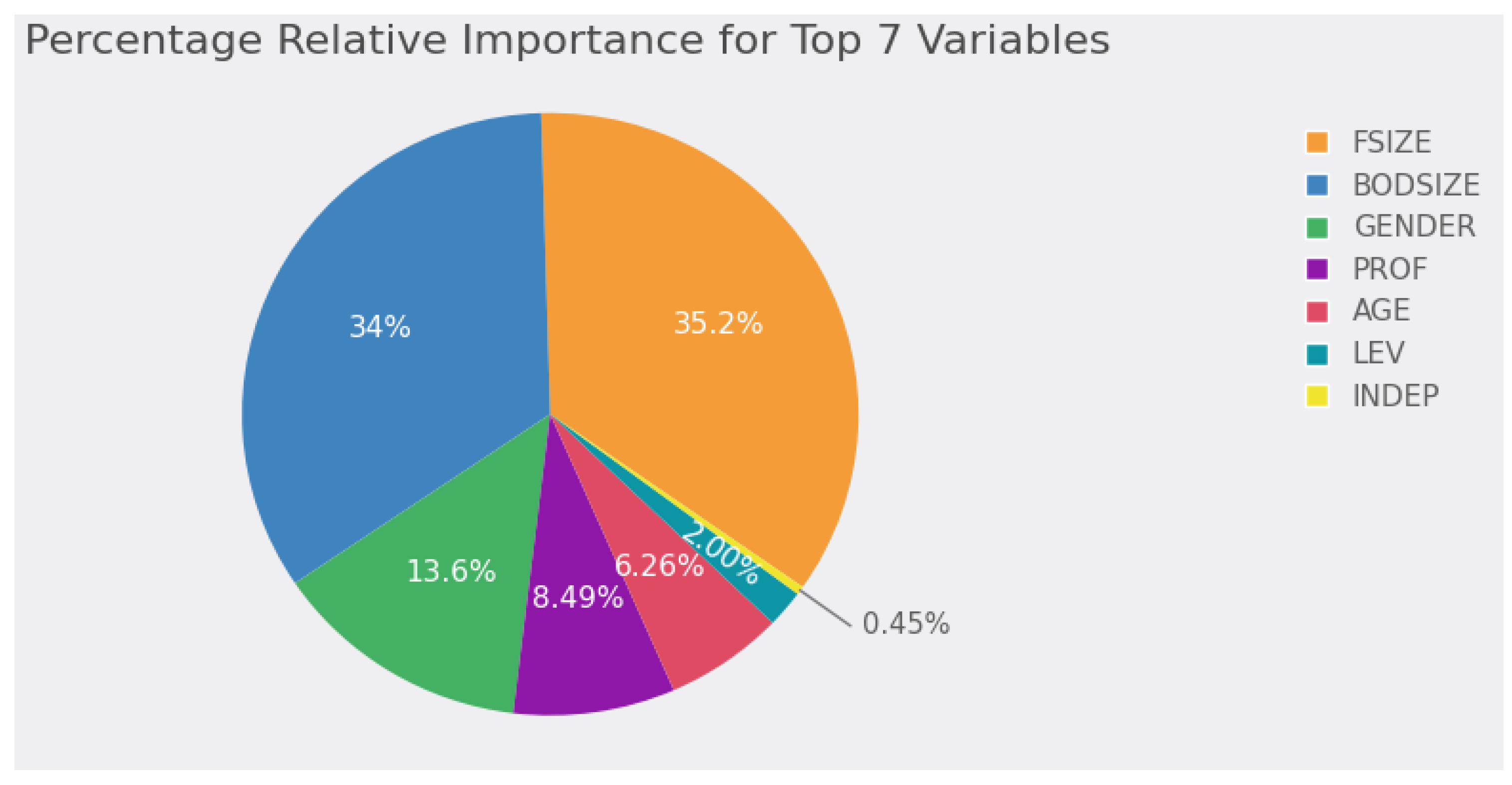
Both
Table 7 and
Figure 1 present the relative contribution of each independent variable in explaining variation in IRDS. The results indicate that firm size (FSIZE), board size (BODSIZE), gender diversity (GENDER), and profitability (PROF) jointly account for 91.29 percentage points of the explained variation in IRDS, leaving only 8.71 percentage points attributable to firm age (AGE), leverage (LEV), and board independence (INDEP). This suggests that disclosure quality in the UAE context is predominantly driven by firm scale, governance structure, and financial performance.
Notably, FSIZE and BODSIZE together account for 69.2 percentage points of IRDS variation, with FSIZE contributing slightly more than BODSIZE by 1.2 percentage points. The dominance of these two variables is consistent with prior research highlighting firm size and board characteristics as factors associated with integrated reporting disclosure. Larger firms typically possess greater resources and face heightened stakeholder scrutiny, while larger boards may provide broader monitoring capacity and governance oversight. These characteristics are therefore often associated with more comprehensive reporting practices. These findings are broadly aligned with legitimacy, stakeholder, agency, resource dependence, and institutional theories.
Although the remaining variables collectively explain a smaller share of the variation in IRDS, this does not imply that they are irrelevant. Dominance analysis assesses relative rather than absolute importance. Accordingly, while AGE, LEV, and INDEP exhibit comparatively weaker explanatory power in the presence of stronger predictors such as FSIZE and BODSIZE, they may still play a role in shaping disclosure quality within the broader reporting environment.
GENDER and PROF together account for 22.09 percentage points of the explained variation in IRDS, compared to 69.2 percentage points jointly attributed to FSIZE and BODSIZE. This suggests that while gender diversity and profitability contribute meaningfully to disclosure quality, their explanatory power is more moderate relative to firm size and board structure. Profitability may fluctuate over time, and its influence on disclosure incentives may therefore be less structural than firm size or governance characteristics. Similarly, incremental changes in board gender composition may not produce substantial shifts in disclosure quality unless variation is sufficiently large.
The remaining three variables collectively account for 8.71 percentage points of IRDS variation, with 6.26 percentage points attributable to AGE, 2.0 to LEV, and 0.45 to INDEP. Although firm age contributes modestly, its effect may reflect differences in organizational experience and reporting maturity across firms. Younger firms may face resource or expertise constraints, while older firms may exhibit more established reporting practices. The relatively limited contribution of leverage suggests that capital structure plays a less decisive role in shaping integrated reporting quality, potentially because IR disclosure is driven more by stakeholder, reputational, and institutional considerations than by creditor-related pressures. Finally, the minimal relative importance of board independence suggests that, within this context, the presence of independent directors is not strongly associated with variations in IIRF-based disclosure quality.
5. Conclusions
This study examined the firm-level characteristics associated with IIRF-based integrated reporting disclosure quality among listed firms in the United Arab Emirates, an emerging economy characterized by a sustainability-oriented institutional environment in which the publication of reports referred to as “integrated reports” is mandated, while alignment with the International Integrated Reporting Framework remains discretionary. By combining regression and dominance analyses, the study moves beyond identifying statistically significant predictors and instead provides a clearer understanding of the relative importance of firm-specific, governance, and contextual factors in shaping disclosure quality.
The findings reveal a clear hierarchy among the factors associated with integrated reporting quality. Structural and governance-related characteristics—particularly firm size and board size—appear to be the most strongly associated with variation in disclosure practices, followed by gender diversity and profitability. In contrast, leverage and board independence exhibit limited explanatory power in explaining variation in disclosure quality. The dominance analysis reinforces this pattern, demonstrating that firm size, board size, gender diversity, and profitability collectively account for the vast majority of the model’s explanatory capacity. This suggests that integrated reporting quality in the UAE is shaped primarily by organizational scale, governance structure, and resource capacity rather than by financial risk considerations alone.
From a theoretical perspective, the results provide stronger support for legitimacy, stakeholder, resource dependence, and agency theories, which emphasize visibility, stakeholder expectations, monitoring capacity, and resource availability as central drivers of disclosure behavior. Conversely, the limited role of leverage and board independence offers weaker empirical support for arguments centered primarily on creditor pressure or formal board independence as mechanisms for enhancing transparency. Overall, the findings indicate that in emerging market contexts such as the UAE, substantive alignment with international reporting frameworks depends more on institutional visibility and governance composition than on capital structure factors.
More broadly, the study contributes to the literature on integrated reporting in emerging markets by demonstrating that mandatory reporting requirements alone do not guarantee high levels of framework alignment. Instead, disclosure quality appears to depend on firm-level characteristics and governance capacity. These insights highlight the importance of organizational readiness and institutional development in advancing meaningful integrated reporting practices beyond formal compliance.
This study offers several practical implications for regulators and UAE-based firms. The substantial variation in IRDSs suggests uneven alignment with the IIRF, indicating that the current reporting requirement alone does not ensure consistent disclosure quality. Regulators may therefore consider issuing clearer implementation guidance or sector-specific reporting templates to reduce variability and support firms with lower disclosure levels. In particular, targeted training initiatives and technical support may be beneficial for smaller firms, which exhibit comparatively lower disclosure quality.
For companies, the findings highlight governance structure as a key lever for improving reporting practices. The strong influence of board size and gender diversity suggests that strengthening board composition and enhancing governance capacity may contribute meaningfully to disclosure quality. Firms with lower IRDS levels may also benefit from benchmarking against high-performing peers within their industry to identify gaps in IIRF alignment. Overall, the results indicate that improving integrated reporting quality requires not only regulatory direction but also organizational commitment and governance-level engagement.
Limitations and Future Research
Like other studies on integrated reporting, this research is subject to several limitations. First, the analysis is based on a single reporting year (2022), as this represents the first full year following the Securities and Commodities Authority’s (SCA) directive requiring listed firms to publish reports referred to as “integrated reports”. Reports issued in 2021 were excluded because they reflected an initial transition period and were unlikely to represent fully developed reporting practices. As a result, the findings capture a cross-sectional snapshot rather than dynamic changes in disclosure quality over time. In addition, the cross-sectional design of the study limits the ability to infer causal relationships. The observed associations between firm characteristics and IIRF-based disclosure quality may be affected by potential endogeneity concerns, including reverse causality or omitted variable bias. Second, the study focuses exclusively on non-financial listed firms in the UAE. Financial institutions were excluded due to their distinct regulatory environment, and firms without publicly available reports were omitted. Consequently, the generalizability of the findings may be limited to similar emerging market contexts, particularly within the GCC region.
Future research could extend this work in several directions. Longitudinal studies employing panel data would allow researchers to examine the evolution of IIRF-based disclosure quality over time and assess whether alignment improves as reporting practices mature. Cross-country studies incorporating other GCC or MENA economies would also enable broader regional comparisons and strengthen external validity. In addition, qualitative research—such as interviews with senior executives or board members—could provide deeper insight into how organizational decision-makers perceive integrated reporting and the internal factors influencing disclosure practices beyond formal regulatory requirements.