Review

Common Buckwheat (Fagopyrum esculentum Mill.) as a Support for Sustainable Agriculture

by
Piotr Jarosław Żarczyński
1,
Ewa Mackiewicz-Walec
2,
Sławomir Józef Krzebietke
1,
Stanisław Sienkiewicz
1,
Soňa Hlinková
3 and
Katarzyna Żarczyńska
4,*
1
Department of Agricultural Chemistry and Environmental Protection, Faculty of Agriculture and Forestry, University of Warmia and Mazury in Olsztyn, 10-719 Olsztyn, Poland
2
Department of Agrotechnology and Agribusiness, Faculty of Agriculture and Forestry, University of Warmia and Mazury in Olsztyn, 10-719 Olsztyn, Poland
3
Department of Laboratory Diagnostic Methods in Healthcare and Public Health, Trenčín University of Alexander Dubček in Trenčín, Študentská 2, 911 50 Trenčín, Slovakia
4
Department and Clinic of Internal Diseases, Faculty of Veterinary Medicine, University of Warmia and Mazury in Olsztyn, 10-719 Olsztyn, Poland
*
Author to whom correspondence should be addressed.
Sustainability 2026, 18(6), 2823; https://doi.org/10.3390/su18062823
Submission received: 31 January 2026 / Revised: 10 March 2026 / Accepted: 11 March 2026 / Published: 13 March 2026

Abstract

Common buckwheat (Fagopyrum esculentum Mill.) is a pseudocereal that has recently gained increasing interest among both farmers and scientists. Its low soil requirements, high adaptability, and high resistance to diseases and pests allow it to be cultivated in many regions of the world. It is recommended for various cultivation systems, especially for low-input and organic farming. Currently, buckwheat is grown mainly for seeds and less often for green fodder. Thanks to its above-average nutritional value and many benefits that support human health, it is considered one of the leaders in functional food. It can be a basic raw material for many food products such as flour, groats, and flakes, but can also be used as a valuable addition to crisps, bars and drinks. Recently, buckwheat’s usefulness in the energy industry, construction, medicine, and pharmacology has been confirmed. Buckwheat, as a plant species distinct from the dominant global crops, fits very well into the current standards and assumptions of sustainable development. Its cultivation and consumption are associated with a number of benefits not only for human health but also for the whole environment. It is considered a species that counteracts climate change. Buckwheat’s valuable properties include its positive impact on soil physicochemical properties, its enhancement of biodiversity, and its support for pollinators. It is considered a species that can be cultivated in a changing climate, generating a very low carbon footprint. The aim of this study was to determine the contemporary economic importance of buckwheat, its place among species supporting sustainable development, and to identify potential research areas that will contribute to strengthening buckwheat’s role in sustainable agriculture.

1. Introduction

Modern agriculture faces a number of complex challenges. The most important is the need to feed a growing population while simultaneously caring for the natural environment [1,2]. In recent years, increasing evidence points to the significant contribution of agricultural production to climate change [3]. Many modern food systems pose a potential risk of land degradation and biodiversity loss. As a result, food security remains seriously threatened [2,4]. Global food security remains a key challenge in achieving the United Nations Sustainable Development Goals (SDGs), in particular Goal 2 (Zero Hnger), Goal 12 (Responsible Consumption and Production), and Goal 15 (Life on Land) [5,6]. Recently, there have been changes in the approach to the issue of plant cultivation. There is a growing trend toward sustainable, multifunctional cropping systems that integrate food production with ecosystem services that contribute to improved soil fertility [7]. It is inappropriate to rely solely on traditional staple crops such as wheat, rice, or corn. There is a need to seek alternative crops that are resilient to climate change and could contribute to food security [8]. An increasing number of supporters are finding solutions based on the cultivation of less popular species, such as pseudocereals [9], i.e., plants not belonging to the grass species that produce seeds similar in chemical composition to true cereals. The most popular among them are quinoa, buckwheat, and amaranth. Due to their properties, they align well with the concept of sustainable development [8].
Current agricultural development schemes emphasize that agriculture should—and is able to—simultaneously pursue several goals, such as the production of healthy food and the provision of a number of ecosystem services [10,11]. They underline the need for crop diversification, proper crop rotation and the introduction of species that contribute to improving soil fertility, or protecting pollinators [12,13,14].
Global research confirms that crop diversification is a key element of sustainable agricultural management. Appropriate plant species selection enhances biodiversity and can be an alternative to reducing intensive fertilization and regulating pest and disease populations [15,16,17].
In the face of many dangerous phenomena such as, manifested by increasingly longer and more severe droughts, storms, and excessive moisture, crop diversification is gaining more importance, along with the growing role of creative plant breeding [18,19]. To overcome these limitations and ensure food security, in-depth evaluation of lesser-known species and the development of new, climate-friendly crop varieties are necessary [20,21]. One way to counteract these threats is to reintroduce less popular but known plant species into cultivation, including pseudocereals [15,18,22,23].
Buckwheat is a pseudocereal belonging to the Polygonaceae family and the Fagopyrum genus [24]. Of the 26 buckwheat species, only two are cultivated—common buckwheat (Fagopyrum esculentum Moench) and tataricum (Fagopyrum tataricum (L.) Gaertn.) [25]. This is primarily due to the high tolerance of both species to diverse agroecological conditions [14,24]. The cultivation of this plant began in northern and southwestern China, dating back 7–8 thousand years ago. Over time, buckwheat cultivation spread widely throughout Eurasia [26]. Currently, the largest producers of buckwheat are Russia, China, France, Poland and Ukraine, with the popularity of this species also growing in North and South America [27,28].
Buckwheat (Fagopyrum spp.) is primarily used as a pseudocereal for direct consumption. Its seeds are eaten whole or processed into flour and groats, which are then used in various food products. Furthermore, buckwheat inflorescences are highly valued in beekeeping, serving as an excellent source of nectar for honey production [29]. Its cultivation and consumption are associated with a number of benefits for both human health and the environment, which may contribute to the sustainable development of agriculture in the coming years. The interest in buckwheat research is constantly growing [13,30,31]. The proof of this is numerous experiments confirming the usefulness of buckwheat in the energy industry, also in medicine, pharmacology, and construction [5,32,33]. According to many authors, its potential is still not fully appreciated or properly utilised [4,34,35].
Recently, a considerable amount of information has emerged on the usefulness of buckwheat in sustainable agriculture and climate change. However, a comprehensive review of this topic has not been published. The aim of this study is to present the current state of research on common buckwheat—a valuable pseudocereal—including its cultivation options, with particular emphasis on research areas and trends in the use of this species in sustainable agriculture. The article also presents issues that may constitute the direction of future research on buckwheat.

2. Materials and Methods

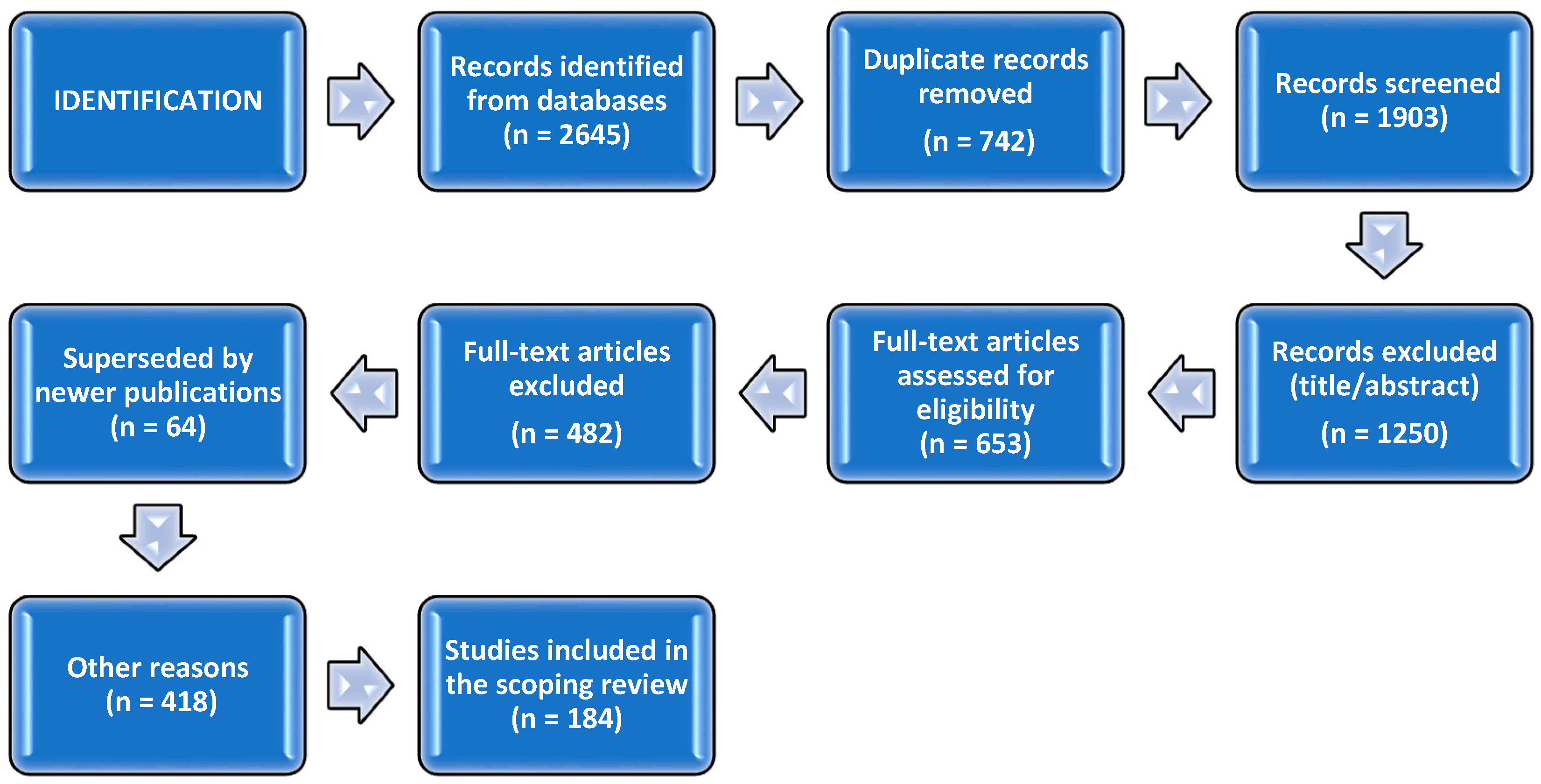
This study was designed as a scoping review and conducted in accordance with the JBI methodological framework and PRISMA-ScR guidelines, as well as the methodology presented in Mackiewicz-Walec et al. [10] and Żarczyński et al. [11]. Data for the review were obtained by searching the following bibliometric databases: Web of Science, PubMed, Scopus, MDPI, Google Scholar, Cambridge Journals, Taylor & Francis, Science Direct, Springer and AGRO. The following keywords were adopted: common buckwheat and buckwheat in combination with: sustainability, cultivation, fertilization, chemical composition, cover crops, food, feed, energy and erosion. The analyses were based on open access articles published in English. Duplicate papers were excluded. Conference proceedings, popular science articles, book chapters, non-peer-reviewed articles, short communications, editorial letters, notes, and conference proceedings were also excluded. 2645 articles were considered. The review covers scientific works from 2008–2026. Earlier publications where superseded by updated studies. This resulted in the collection and citation of 184 works (Figure 1). The collected articles were assigned to appropriate thematic groups, based on which individual chapters and subchapters were created.

3. Morphology

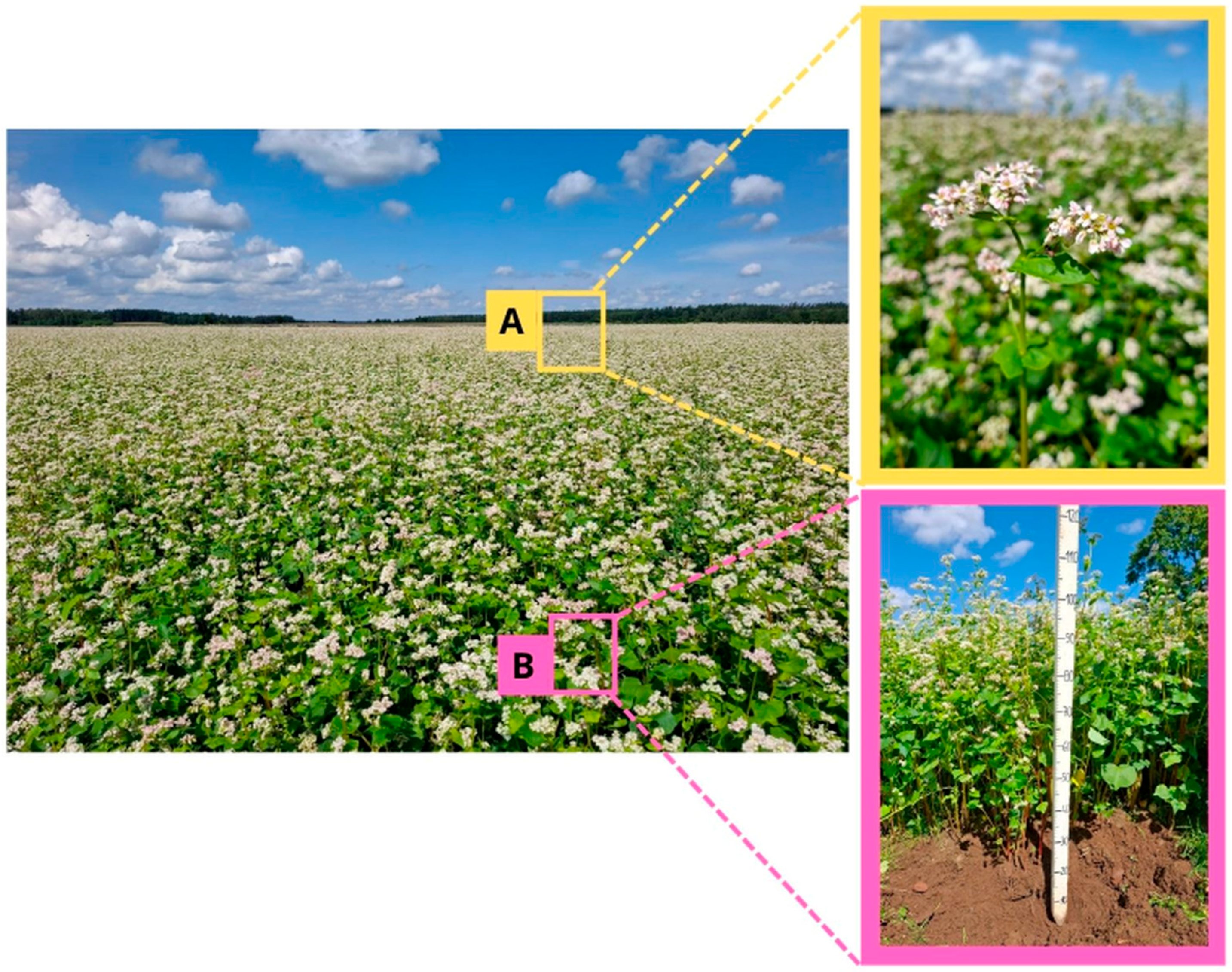
Common buckwheat (Fagopyrum esculentum Moench, syn. Fagopyrum sagittatum Gilib.) is an annual plant that was most likely selected for cultivation from weeds occurring among other crops [36]. Currently cultivated buckwheat genotypes are characterized by high variability, which consequently leads to differences in phenotypic and morphological traits [37]. This is a key element in the development of creative breeding, and the varieties obtained so far allow for the effective counteraction of the problems resulting from climate change [19]. Buckwheat reaches a height of 70–140 cm (Figure 2).
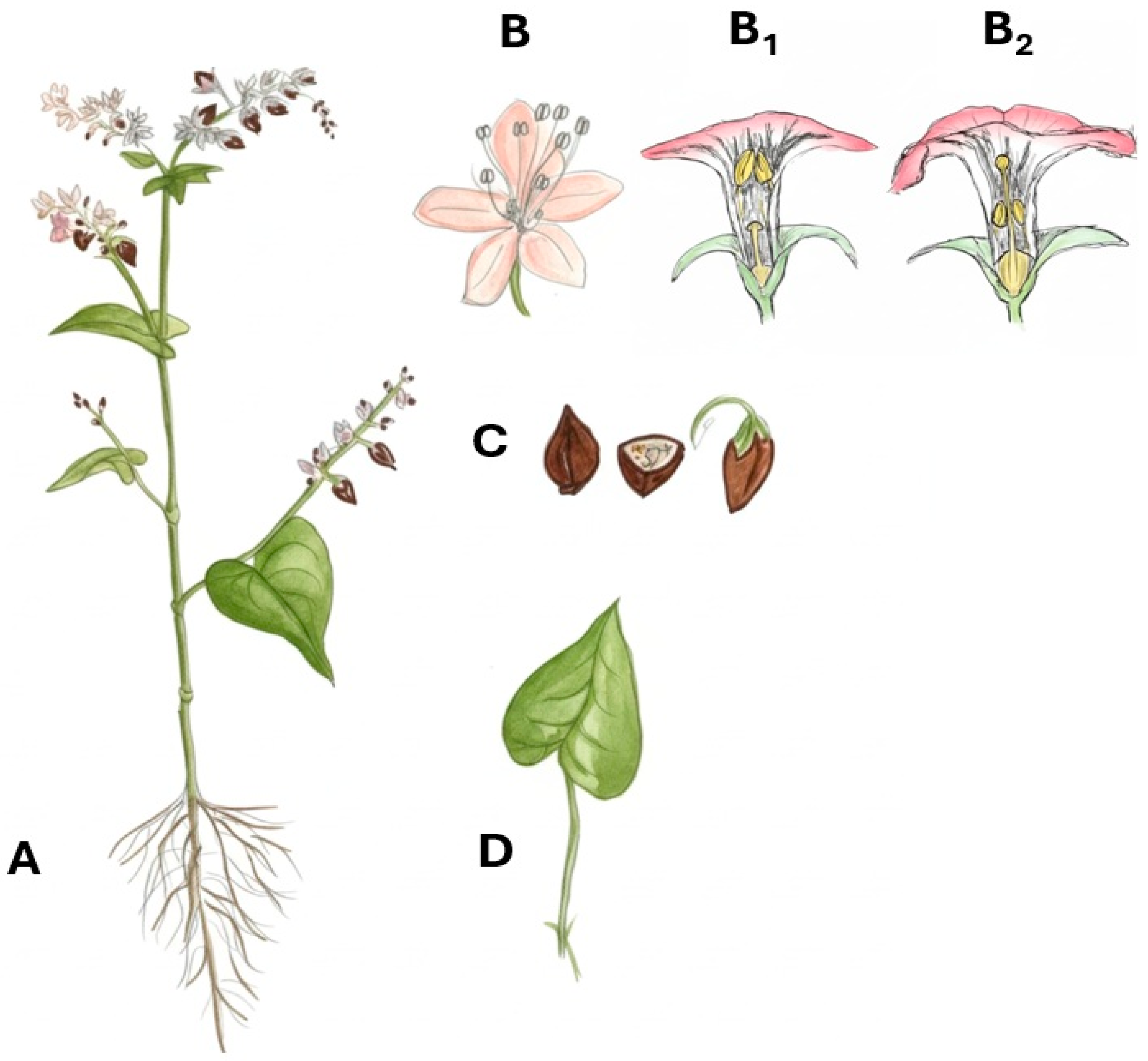
It has a taproot, which, depending on the variety, climate and soil conditions, can extend from 1 to even 2 m into the soil profile. Such a developed root system makes buckwheat a highly competitive species in terms of nutrient and water uptake. The stem is branched, ranging in colour from green with anthocyanin to reddish-purple. The leaves are cordate-sagittate [37,38,39,40]. Buckwheat inflorescences form loose racemes or umbels composed of flowers with five, usually pale pink petals. A single plant can produce 500 to 2000 flowers, of which only 4–10% produce seeds. This is largely due to the floral dimorphism characteristic of this species. This characteristic involves the occurrence of two flower forms—some with stamens longer than the pistil, and others in which the pistil exceeds the stamens. This flower structure (heterostyly) hinders self-pollination, and pollination is only possible when pollen from long-stamen flowers lands on the stigma of long-pistil flowers and vice versa [31,41,42,43]. Furthermore, as Luthar et al. report [44], buckwheat flowering is uneven, which is a significant disadvantage of this species. This flower structure reflects the evolutionary process of maintaining balance within the Fagopyrum genus. Heterostyly in common buckwheat promotes the maintenance of genetic diversity, while homostyly in Tatarian buckwheat ensures reproductive success under abiotic stress conditions (Figure 3).
Advances in genomics, such as the identification of the FeS-ELF3 gene, now enable targeted breeding that combines the resistance of wild relatives with the high productivity of cultivated lines. Due to a thorough understanding of the individual stages of flower development, it is possible to fully utilise the potential of buckwheat in sustainable agriculture—both on fertile and marginal soils—which is in line with global initiatives for food security [6]. On the other hand, Luthar et al. [44] indicate that the mode of inheritance of most of the traits related to yield and synthesis of compounds with medicinal properties remains poorly understood and is one of the main problems in buckwheat breeding. Similarly, the mechanisms of the action of genes responsible for the synthesis of secondary metabolites of pharmaceutical and health-promoting importance are insufficiently investigated.
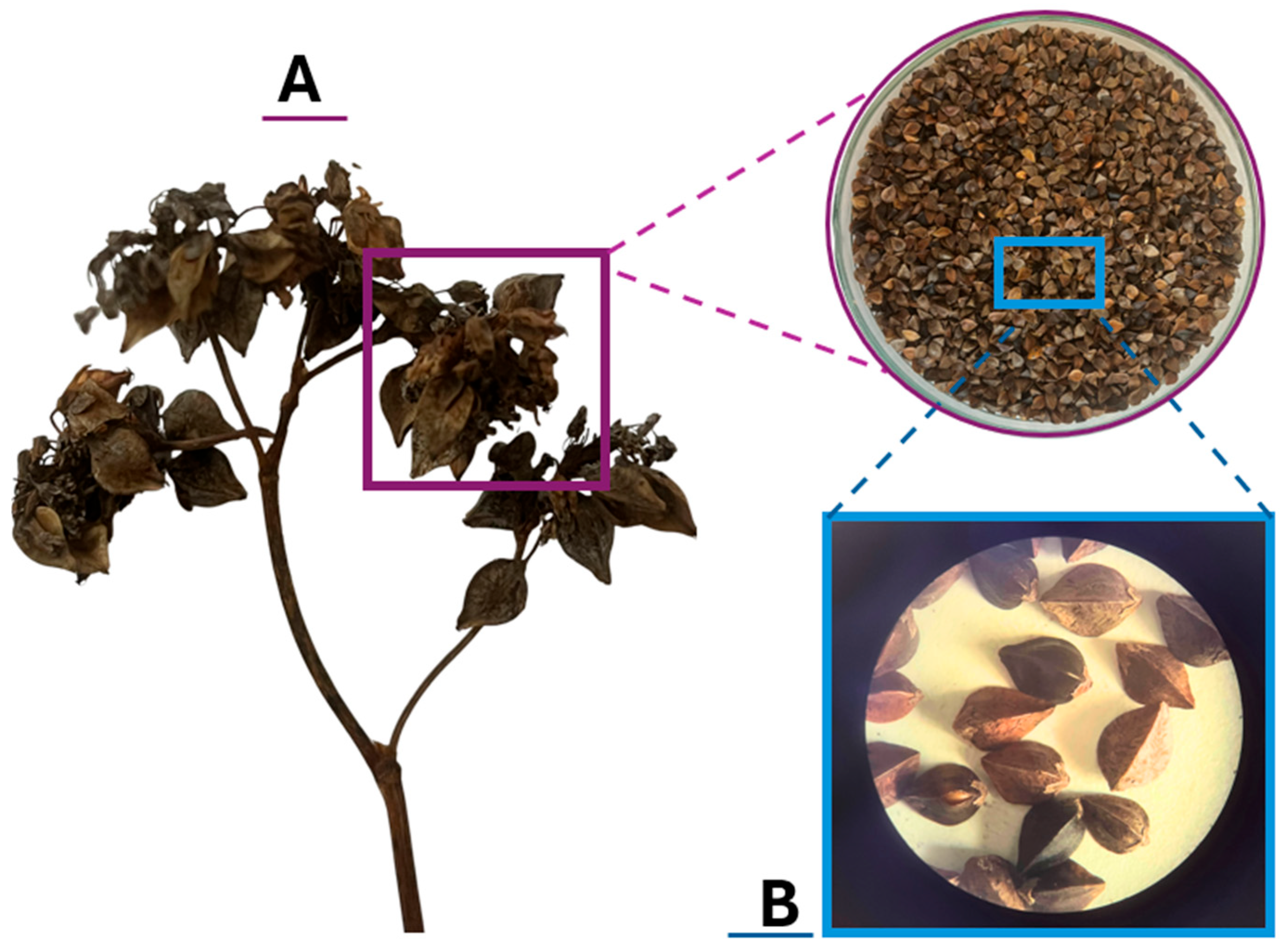
The buckwheat fruit is a triangular nutlet with pointed edges, usually greyish-brown in colour (Figure 4). This characteristic shape gives rise to the species’ name. The weight of one thousand nutlets, commonly called grains, ranges from 14 to 39 g [37]. Buckwheat has an indeterminate habit, for this reason its crop ripens unevenly, which is one of the significant drawbacks of this species. Although this problem—similar to the phenomenon of seed shedding—is of constant interest to breeders, it remains unresolved [44,45]. Buckwheat reaches 80% maturity after 73–95 days of vegetation [31,38].

4. Soil Requirements and Impact on Soil Properties

Buckwheat effectively protects soil against erosion [46] and also has a beneficial effect on numerous physical, chemical, and biological properties of soil [14,47]. According to Hudek et al. [40], the beneficial effect of cover crops (e.g., buckwheat, phacelia, or vetch) on the physical properties of soil are determined by appropriately developed features of the root system, such as root diameter and the distribution of their lateral branches, which are particularly advantageous in the case of buckwheat. On the other hand, Liszewski et al. [48] draw attention to the premature induction of root system aging and the associated reduced ability of roots to uptake mineral nutrients, which limits the utilization of the yield potential of this plant. Buckwheat cultivation increases organic carbon resources in the soil, improves the stability of moist aggregates, and reduces the bulk density of the soil [47]. The study conducted by Hudek et al. [40] also found that buckwheat cultivation provides greater stability of aggregates in the topsoil layer (0–15 cm) and increases microporosity at the interface with the compacted layer compared to the soil without vegetation. Furthermore, root diameter may correlate negatively with soil macroporosity, indicating that cover crops with fine root systems, such as buckwheat, promote the creation of porous space (up to 30 cm deep) to a greater extent than species with thicker taproots. According to Hudek et al. [40], the deep and fibrous root system of buckwheat contributes to improved soil structure and increases its porosity, which promotes better water and air infiltration. The presence of buckwheat in crop rotation has a positive effect on the composition and diversity of rhizosphere bacterial communities—both dominant and rare—as well as on soil chemical properties and soil enzyme activity [14]. Lalewicz et al. [47] also observed a positive correlation between increased soil organic carbon levels and increased bacterial and fungal colony counts. Buckwheat plant residues modified the microbiological activity of the soil and influenced the number and structure of the soil’s microorganism population. Its use as a catch crop intensified the activity of various microbiological processes (ammonification, nitrification and denitrification), and the stimulating effect on bacterial activity lasted longer in soils covered with buckwheat than with phacelia.
Buckwheat is valuable as an aftercrop, but somewhat less valuable than other commonly used cover crops, such as phacelia (Phacelia tanacetifolia) or common vetch. Buckwheat emerges quickly and establishes cover quickly, quickly combats erosion, helps suppress weeds, and captures relatively scarce phosphorus from the soil, potentially increasing phosphorus availability after uptake—a trait less pronounced in legumes. It also produces less total biomass than phacelia and does not fix atmospheric nitrogen, thus contributing minimal net nitrogen to the system compared to vetch, which, as a legume, enriches soil nitrogen pools through symbiotic fixation. Phacelia, on the other hand, not only often produces greater biomass—promoting stronger weed suppression and greater nutrient uptake (including nitrogen)—but also generates greater amounts of organic matter, which can further enhance soil structure and microbial activity [37,49]. Therefore, although buckwheat plays a useful role in short-season cover sequences, particularly for rapid soil cover and phosphorus cycling, it is recommended to use it in mixtures as a supplement rather than a direct substitute for high-biomass or nitrogen-fixing cover crops when the aim is to significantly improve soil fertility [50].

5. Agronomic Management—Cultivation Recommendations

Buckwheat is a plant with low agrotechnical requirements, often described as minimal [51,52]. It is recommended as a species that can be grown in various agricultural production systems—from low-input, organic to intensive, utilizing the full range of available production means [53]. Scientific articles report that the most appropriate approach is to use buckwheat in organic and extensive farming systems, which are based on sustainable resource management [53,54,55]. According to Karbivska et al. [56], buckwheat cultivation in an organic farming system may even generate higher profits compared to the production of true cereals or legumes. On the other hand, Kuczuk [57] states that buckwheat cultivation—both in conventional and organic technology—is profitable, however, from the perspective of the energy efficiency index, the profits are not high, as this index is 1.36 for conventional cultivation and 1.39 for organic cultivation, respectively.
The unquestionable advantage of buckwheat is its low soil and pre-crop requirements, resulting from its ability to uptake nutrients that are difficult for other plants to access, and thus to make better use of soil resources. In practice, it is usually grown on poorer soils, most often in areas after cereal crops [58]. According to Wang et al. [59], when grown in monoculture, it responds with a decrease in yield. Buckwheat grows well in difficult environmental conditions, demonstrating high resistance to pests and diseases. For this reason, this species is perfectly suited for organic farming [54].
In buckwheat agrotechnology, various soil preparation systems are used—from traditional ploughing to a depth of 15–20 cm [60,61] to simplified cultivation methods [5]. According to Myers [61], the advantage of traditional ploughing in buckwheat cultivation is more effective weed control. Simplified cultivation systems, in turn, according to the same author, reduce soil erosion and promote better soil moisture retention. When sowing buckwheat as the main crop, a plant density of 90–190 germinating seeds/m2 is recommended, which corresponds to a sowing rate of approximately 40–100 kg of seeds/ha [62,63,64,65], at a depth of approximately 2–3 cm [66]. A larger stocking density is dedicated only to buckwheat intended as an aftercrop [67]. Excessive sowing density in the case of buckwheat leads to the development of plants with a weak plant habit, a smaller assimilation area, as well as the loss of the ability to effectively defend against weeds [68].
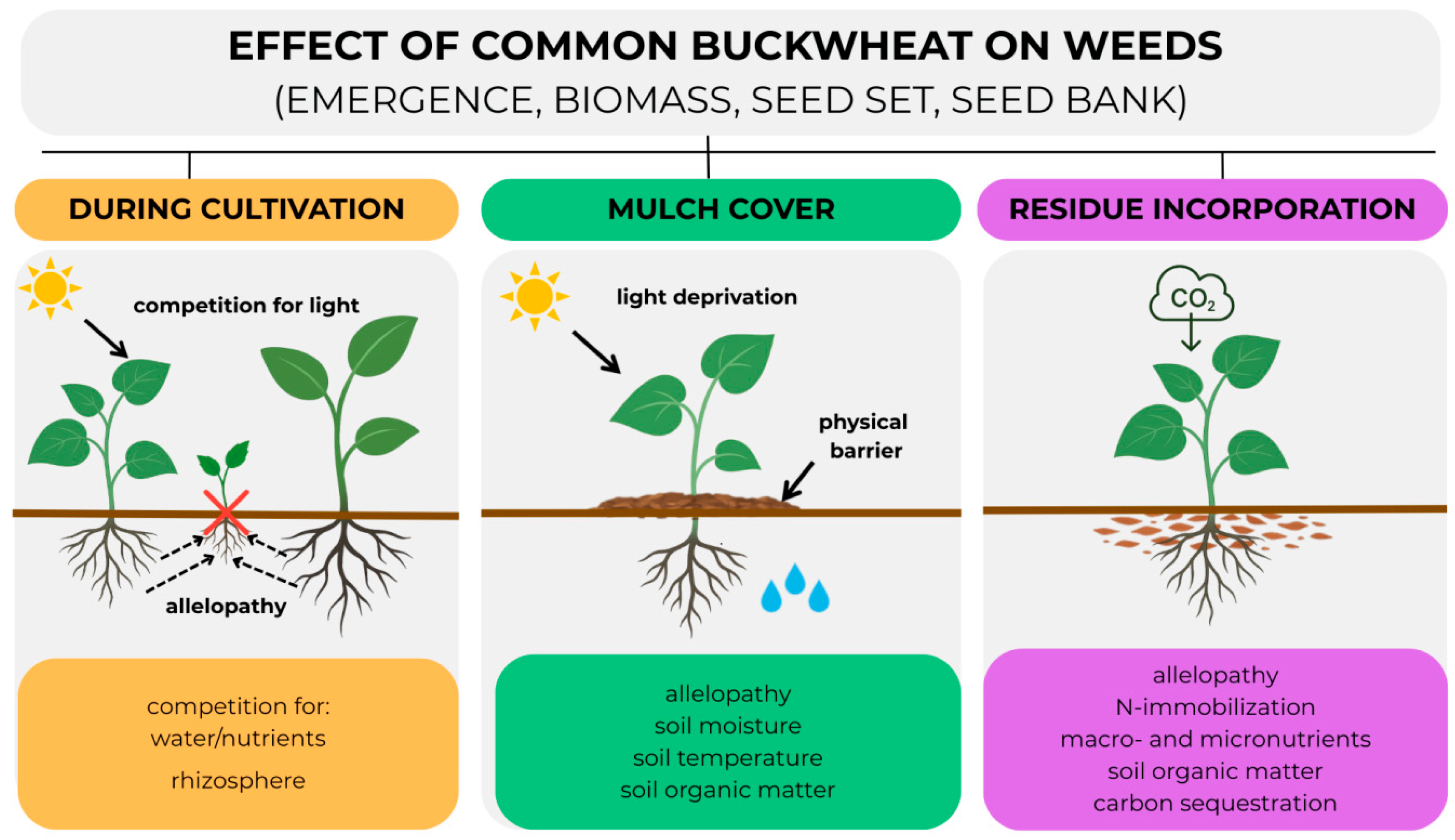
Buckwheat is characterized by low fertilization requirements [31], for this reason it is considered a species suitable for cultivation in circular economy systems [69]. However, as Ding et al. [6] report, the correct approach to fertilization of this plant is a key element in achieving maximum productivity in sustainable cropping systems. The optimal pH range that does not negatively affect buckwheat yield is considered to be 5.0–6.8. According to Boglaienko et al. [70], a pH higher than 8.3 may, however, lead to inhibition of plant growth. It is recommended to apply nutrients such as phosphorus and potassium before sowing at a rate of approximately 26 kg P/ha and approximately 50 kg K/ha [60]. As reported by Tang et al. [71], buckwheat responds with an increase in yield even to small doses of potassium (in the range of 15–30 kg/ha). Wan et al. [63] consider the optimal phosphorus fertilization to be a dose of P at the level of 75 kg/ha. According to Mäkelä et al. [72], it should also be remembered that buckwheat roots acidify the rhizosphere by secreting phosphatases, organic acids, and phenolic compounds during growth, which facilitates the dissolution of phosphorus bound in soil resources. Common buckwheat is described as an extensive plant, poorly responsive to nitrogen fertilization. However, research indicates that a good supply of nitrogen to this plant increases the intensity of photosynthesis, which in turn has a positive effect on the growth and development of plants and, consequently, on their yield. González-Villagra et al. [73] propose nitrogen fertilization at the level of 30–45 kg N/ha. Liszewski et al. [48] provide similar values, recommending a dose of 40 kg N/ha. Podolska [74] recommends a dose not exceeding 80 kg N/ha, preferably applied once—pre-sowing. In turn, according to Grabiński and Podolska [60], 20 kg N/ha should be used before sowing, and another 40 kg N/ha in the budding stage of buckwheat. Ciftci et al. [75] recommend nitrogen fertilization at levels of up to 90 kg N/ha in the harsh climate of Turkey. Buckwheat responds positively to fertilization with natural fertilizers, such as cattle or poultry manure. The introduction of this type of fertilizers leads to an increase in seed yield and improvement of their mineral composition [76]. Ozyazici and Turan [77] also report the beneficial effects of fertilizing buckwheat with vermicompost. In their opinion, good results are achieved by applying approximately 2.25 t/ha of this fertilizer to soils with a low organic matter content. Buckwheat is considered a plant with a high degree of resistance to weed infestation. This is facilitated by its rapid growth after germination and relatively early field cover, which effectively limits weed development [13,46]. Buckwheat’s allelopathic properties significantly contribute to weed control [13,78]. According to Vieites-Álvarez et al. [55], the effectiveness of allelopathic weed control is closely dependent on the flavonoid content in buckwheat roots, which, in turn, are correlated with the development of cultivated varieties. Due to this, the appropriate selection of varieties can be an effective tool in selective weed control, consistent with the principles of sustainable agriculture. According to researchers, this is an important direction of breeding progress. In turn, research by Vieites-Álvarez et al. [79] demonstrated that different buckwheat genotypes may exhibit varying capacities to produce and secrete specialized secondary metabolites (polyphenols), leading to a wide range of allelopathic and defensive functions in the agroecosystem. Dihydroxybenzoic acid, p-coumaric acid, luteolin, 4-hydroxyacetophenone, orientin, and vitexin play key roles. As a result of their presence, it is possible to sustainably reduce weed spread.
According to Falquet et al. [80], the allelopathic effect persists not only during the buckwheat vegetation period, but also after harvest, during the decomposition of crop residues, which additionally enhances the phytosanitary beneficial effect on the soil (Figure 5). In practice, various agrotechnical measures are used to limit the negative impact of weeds on buckwheat yield. An effective solution is sowing an aftercrop—winter rye—which can reduce weed infestation by over 90%. As a result, seed yield can increase by approximately 40% compared to a crop without an aftercrop [60]. According to the same authors, chemical weed control methods are more effective than mechanical and biological methods. In turn, according to Pelech and Onufriychuk [81], in order to effectively reduce weed infestation in buckwheat agrocenoses, early spring and pre-sowing cultivation should be performed, and then harrowing with a light harrow should be applied in the 1st–2nd leaf stage of the plants.
Additional advantage of buckwheat is the possibility of harvesting it using classic combine harvesters, which optimizes cultivation costs [82]. To achieve relatively low losses at the harvesting stage and maintain the possible highest quality of the raw material, Hussain et al. [83] recommend a threshing drum speed of approximately 600 rpm, a feed rate of 1.2 kg/s, and a threshing gap setting of approximately 9 mm.
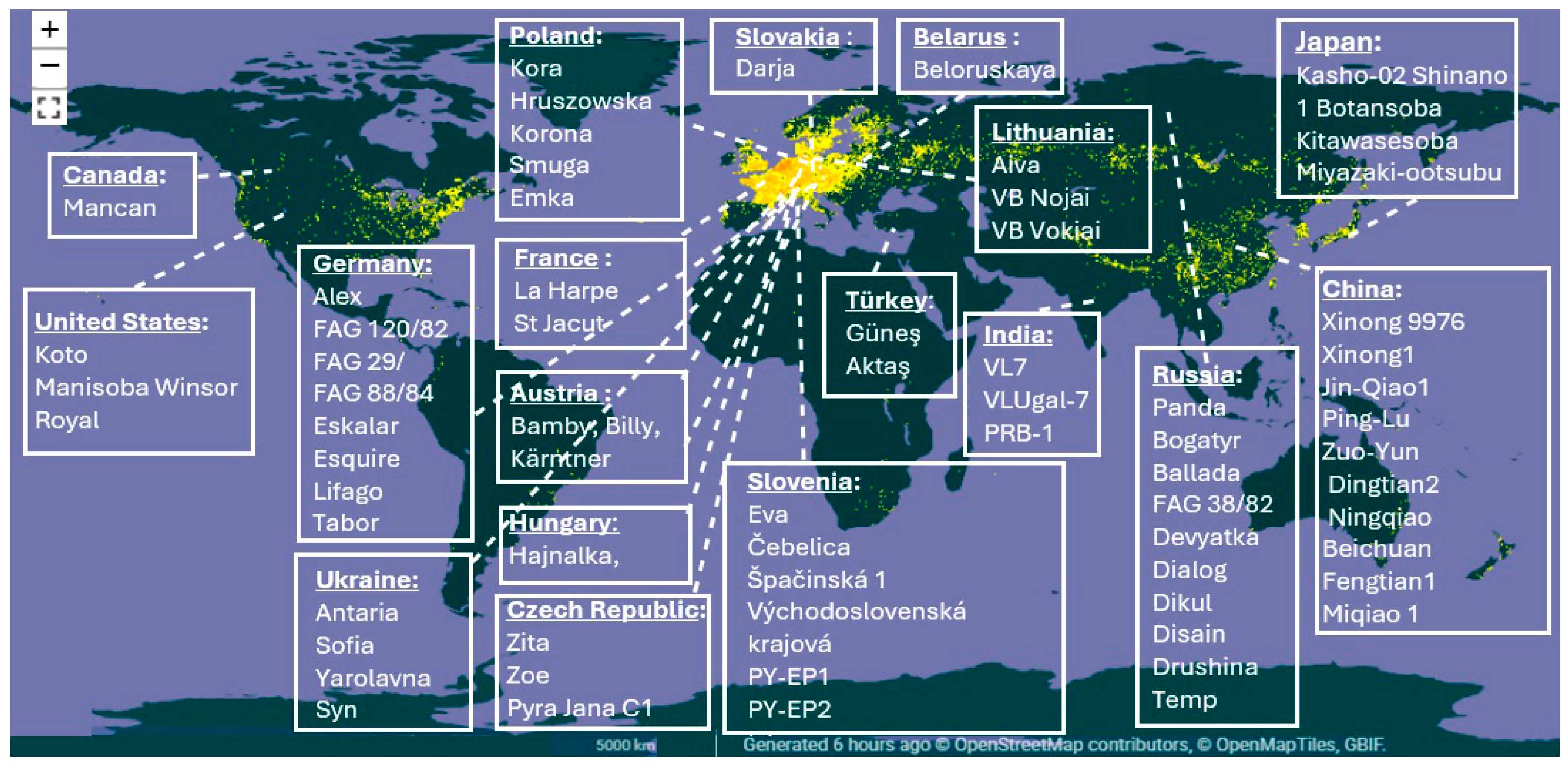
Buckwheat yield and its biochemical composition are largely influenced by environmental conditions, soil, and climate [84]. According to literature data, the selection of an appropriate cultivar, adapted to habitat conditions, is becoming increasingly important in shaping the yield and chemical composition of this species [6,55]. According to Liszewski et al. [48], precipitation and the availability of pollinating insects have a very strong impact on yield. Unstable buckwheat yields (in years) are considered one of the main reasons for the lower interest in its cultivation compared to true cereals [32]. The distribution of buckwheat cultivation and popular varieties are presented in Figure 6.
The largest areas of buckwheat cultivation and production are located in the Russian Federation and China, accounting for approximately two-thirds of global production. Significant producers include Ukraine, Kazakhstan, Poland, Japan, and the United States. France, Lithuania, and Brazil are next, although their production scale is significantly smaller than the previously mentioned countries [90]. According to FAOSTAT data from 2023, world buckwheat production amounted to about 2.2 million tonnes, the cultivation area was 1.67 million ha, and the seed yield is estimated at 0.96–1.0 t/ha [91]. In Nepal, it averages 1.15 t/ha [31]. In the harsh climate of Turkey, with irrigation and nitrogen fertilization at 90 kg N/ha, a yield of 2.09 t/ha is obtained [89]. Significantly higher seed yields are recorded in Europe—2.43 t/ha [74] and 3.67 t/ha [48] with fertilization at 40 kg N/ha and copper application. Rotilli et al. [92] report that in Argentine conditions, in irrigated fields, the yield was 2.73 t/ha, while Guglielmini et al. [93] obtained a yield of 4.1 t/ha. Kwiatkowski [94] reports that under Poland’s climatic and soil conditions, it is possible to achieve a buckwheat seed yield of approximately 2.65 t/ha in an organic farming system. Buckwheat straw yield is typically approximately twice as high as seed yield [95]. Due to many characteristics, such as species distinctiveness and phytosanitary and allelopathic properties, buckwheat leaves a very good field for successor plants [46]. Sown as aftercrop (USA—Massachusetts) at 67 kg/ha, it can contribute 5.8 t/ha of dry matter (roots and shoots) to the soil within 60 days, while under identical conditions, oats produce 4.8 t/ha, and field pea only 2.0 t/ha [96]. Better results were obtained by Bilenky et al. [67], reaching 6.4 t/ha of dry matter; however, in their experiment, a higher sowing rate was used—123 kg of seeds/ha, which could have contributed to a higher biomass yield. The study by Lalewicz et al. [47], conducted under organic farming conditions, showed that buckwheat, in comparison to phacelia sown as an aftercrop, produces almost twice as much aboveground biomass—33.0 t FM/ha for buckwheat and 58.2 t FM/ha for phacelia, respectively. In this way, phacelia was able to retain as much as 161 kg N/ha in the soil, while buckwheat only 67 kg N/ha. Similar conclusions were drawn by Wilczewski and Szczepanek [49], who believe that buckwheat as an aftercrop is able to retain approximately 20.4 kg N/ha, 4.4 kg P/ha and 37.4 kg K/ha, while spring vetch accumulates 73.4 kg N/ha, 7.6 kg P/ha and 64.9 kg K/ha. Furthermore, Saadat et al. [96] proved that the release of nitrogen from buckwheat crop residues is slow, which may indicate potential nitrogen immobilization leading to its deficiency in subsequent crops. Lalewicz et al. [47] classify buckwheat as a species that significantly improves phosphorus availability in soil. Growing buckwheat as a catch crop significantly increases phosphorus (P) availability for subsequent crops after incorporating the biomass into the soil. Furthermore, according to the authors, biomass from buckwheat crop residues significantly contributes to soil enrichment, particularly in potassium (K), sulphur (S), and magnesium (Mg), as well as in micronutrients such as iron (Fe), manganese (Mn), and zinc (Zn). Moreover, buckwheat is more efficient at absorbing these nutrients than phacelia. According to Virili et al. [97] and Pokharel et al. [98], a very promising research direction is the use of buckwheat in intercropping, which can further increase nutrient use efficiency and support agroecosystem biodiversity. To date, intercropping with buckwheat has met with little interest, although literature data indicate positive results. The authors emphasize that intercropping systems are among the best-researched agricultural practices, enabling the simultaneous achievement of production benefits and a number of ecosystem services. Buckwheat shows great potential in this regard, particularly in the context of reducing weed infestation and preventing nutrient loss from the soil.
Given the diversity of production contexts discussed above, Table 1 summarizes the main agronomic management recommendations for buckwheat across organic, low-input/sustainable, and conventional systems. This overview highlights the crop’s adaptability to different levels of input intensity.

6. Buckwheat as a Food Source

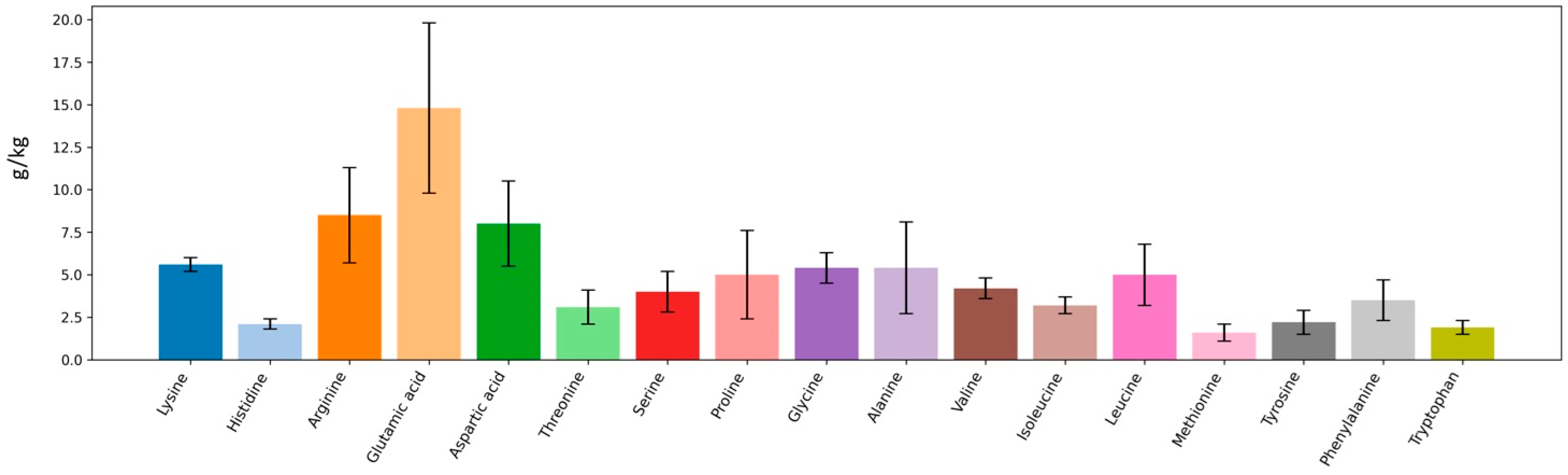
The great interest in buckwheat is primarily due to its exceptional nutritional properties, wide processing possibilities and attractive, often described as unique, sensory characteristics [12,29]. Pseudocereals, such as common buckwheat, belong to a group of species that can support dietary biodiversity and, at the same time, constitute an important element of food security in the era of global climate change [99]. The range of food products containing buckwheat seeds is very wide. This is largely due to the unique amino acid profile of the seeds (Figure 7) [100,101].
This species is used in the production of groats, flour, flakes, bread, pasta, and confectionery [102]. It can also successfully replace barley in the production of beer, both malted and unmalted [103]. Common buckwheat is widely used in the pharmaceutical industry and herbal medicine in the form of teas, herbal preparations and dietary supplements [102]. The growing demand for nutraceuticals and gluten-free products generates the need to develop new products with high health-promoting values, and buckwheat is one of the most promising raw materials in this regard [104]. Due to its unique nutritional composition, it is a valuable raw material for creating value-added products such as cereal bars, crackers, crisps, and beverages. Incorporating buckwheat into food recipes improves the nutritional profile, sensory properties, and market appeal of the final products [105]. Another important property of buckwheat is the possibility to use it as an addition to meat products. A growing number of studies confirm that such supplementation is a promising strategy for increasing the yield, shelf-life stability and sensory attractiveness of products, e.g., meat cutlets, without compromising their technological properties [106]. The addition of buckwheat husk during bread production effectively improves its nutritional value and functional properties [107].
Due to the intensively flowering buckwheat plantations, valuable bee products are obtained, such as honey and bee pollen [95,108]. Due to its properties, buckwheat honey is considered one of the most valuable types of honey [109,110]. It is characterized by a dark colour and an intense, expressive taste [111]. Buckwheat honey has strong antibacterial, anti-inflammatory, and antihyaluronidase properties, as well as high antioxidant activity. It also contains higher amounts of polyphenols compared to honeydew, linden, or goldenrod honey [108,112]. Research by Kunat-Budzyńska et al. [113] confirm the antimicrobial properties of buckwheat honey, determined by the high content of phenolic acids. However, according to the authors, honeydew and phacelia honeys exhibit stronger antimicrobial activity, which results from the higher content of these compounds. Pollen obtained from buckwheat flowers is described as low in protein—its content is approximately 11%. For comparison, aloe pollen contains approximately 51% protein, while rapeseed and phacelia pollen contain approximately 27% [114]. As emphasized by Taha et al. [115], buckwheat pollen is characterized by a diverse amino acid composition, especially in the range of exogenous amino acids. It is relatively rich in glutamic acid, proline, aspartic acid, leucine, tryptophan, lysine, valine, alanine, and arginine, which increases its nutritional value.

7. Health-Promoting Properties and Bioactive Potential of Buckwheat

The greatest, undisputed advantage of buckwheat is its positive impact on human health. This originates from the species’ rich mineral and vitamin composition, which directly determines its biological properties. Recent review articles suggest that buckwheat may exert hypotensive, hypoglycemic, hypocholesterolemic, neuroprotective and antioxidant effects; however, much of the evidence derives from experimental and preclinical studies [108,116]. According to review data, buckwheat contains numerous bioactive compounds, including flavonoids, phytosterols and phenolic compounds, which are associated with various biological activities demonstrated mainly in experimental models [104]. Lițoiu et al. [52] describe the presence of numerous bioactive compounds in buckwheat, including flavonoids (rutin, quercetin), phenolic acids, and anthocyanins, which are attributed potential health-promoting properties. A comprehensive review of pseudocereals highlights potential antidiabetic and hypoglycemic effects of buckwheat-derived compounds, although clinical evidence remains limited [52,117]. However, it should be emphasized that most of the available evidence derives from experimental studies, and direct extrapolation of these findings to the human population requires caution as well as further well-designed clinical trials.
According to Mahata [95], consuming buckwheat seeds also has a beneficial effect on skin condition. Preclinical studies suggest that buckwheat-derived compounds may influence mechanisms associated with colorectal cancer prevention [108]. Furthermore, preclinical studies have shown that buckwheat extracts exhibit cytotoxic activity against human gastrointestinal cancer cell lines. Animals fed buckwheat were characterised by a lower degree of inflammation of the intestinal mucosa, higher diversity of the gastrointestinal alpha microbiome and higher concentration of short-chain fatty acids in the faeces [118].
Manganese, present in buckwheat, supports the maintenance of healthy bone structure by participating in the formation of enzymes necessary for bone formation and acting as a coenzyme supporting metabolism in the human body. It also participates in connective tissue synthesis, calcium absorption, and the metabolism of fats and carbohydrates. Magnesium, in turn, is important for bone and dental health—it participates in the transmission of nerve impulses, energy production, and facilitates calcium absorption, preventing the development of osteoporosis. Buckwheat plays an important role in maintaining a healthy skeletal structure [95].
Several review and nutritional studies suggest that buckwheat may be suitable for individuals with increased dietary requirements, including those following vegetarian diets; however, the strength of clinical evidence varies depending on the outcome assessed [119,120,121]. The composition of its fibrous polysaccharides plays a significant role in the health-promoting properties of buckwheat, which is similar to the composition of fruits and vegetables than to typical cereals. According to a review of dietary fiber polysaccharides, buckwheat polysaccharides exhibit antioxidant, anticancer and immunomodulatory activities, mainly demonstrated in experimental and in vitro models [122]. Buckwheat sprouts are a rich source of bioactive substances and nutrients, making them a promising raw material for the development of synbiotic formulations [123]. Functional substances present in buckwheat also contribute to lowering cholesterol levels, improving intestinal peristalsis and reducing the risk of obesity [104]. Nevertheless, much of the available evidence is derived from preclinical or dietary intervention studies, and further controlled clinical trials are required to confirm these effects in humans.
Buckwheat husks have been used in many therapeutic products, such as pillows, mattresses, seats, and more. This material is particularly recommended for the prevention of discopathy, back pain, and vasomotor disorders of the head. A significant advantage of buckwheat husks as a therapeutic material is their high resistance to colonization by fungi, bacteria, and pests, as well as their low flammability. Mattresses filled with buckwheat husks are characterized by a good fit to the body due to the wide range of density variations exhibited by the husks. At the same time, this material is characterized by high air permeability and a high ability to absorb water vapor and release it into the environment, which facilitates cleanliness [124].

8. Suitability for Livestock

8.1. Buckwheat as a Forage and Feed Crop: Opportunities and Limitations

The importance of buckwheat in livestock nutrition is significantly smaller than its potential for food production. The most frequently cited reason is the relatively low yield and unstable yield of this species compared to other crops [5]. The nutritional value of buckwheat as fodder depends on many factors, such as the plant development stage [125], climatic and soil conditions; furthermore, it does not always meet the criteria for high-quality fodder. Nevertheless, many authors emphasize that even the secondary metabolites of buckwheat may have beneficial properties in the nutrition and health of farm animals [126]. Despite some discrepancies in the assessment of their usefulness, both buckwheat seeds and green fodder or hay are successfully used as feed for various animal species, including poultry and swine [62]. Buckwheat contains flavonoids, including rutin, which may influence the antioxidant status of animals. Nutritional studies have shown that the addition of buckwheat to the diet of animals can improve antioxidant enzyme activity and the oxidative stability of animal products [127,128]. The chemical composition of buckwheat seeds and green fodder is given in Table 2.
Amelchanka et al. [136] report that buckwheat fed in the form of silage from whole plants or seeds alone can successfully replace feed made from corn. The authors did not observe any decrease in feed intake, milk yield or deterioration of milk parameters. Similar results were obtained by Florit et al. [137], who demonstrated that silage from aftercrops such as buckwheat can be an alternative to sorghum silage in the diets of dairy cows in the final phase of lactation. Similar observations were reported by Er and Keles [138] in their study of dairy goat nutrition. They confirmed that buckwheat hay and silage are well accepted by animals, and they recommend that the dry matter content during ensiling should be above 330 g/kg. The authors also noted that the nutritional value of hay may be higher than silage due to its lower fiber content and higher proportion of non-fibrous carbohydrates and fully digestible ingredients. Maxin et al. [139] emphasized that some species, including buckwheat, can be used simultaneously as an aftercrop and feed for ruminants. Researchers found that this plant has nutritional properties comparable to alfalfa, and additionally, its use in ruminant feed can lead to a significant reduction in ammonia and methane emissions compared to feeding based on clover, phacelia or vetch. The authors link this effect to the presence of phenolic compounds with anti-fermentative properties in buckwheat.
Despite its high nutritional value, buckwheat, like many other plant materials, contains a number of antinutritional factors that can limit the utilization of individual nutrients. These include tannins and protease inhibitors, which reduce protein digestibility, and phytates, which affect mineral availability. The presence of phytates results in limited availability of, among others, phosphorus, which is particularly important in the nutrition of monogastric animals [140]. Studies conducted on broilers have shown that sprouting and preparing the raw material by removing most of the husk can improve phosphorus utilization parameters and production performance, demonstrating that the nutritional value of buckwheat-based products depends largely on the processing methods used, which can reduce the content of certain antinutritional compounds [141]. Furthermore, fagopyrins, compounds that play a protective role against UV radiation, pests, and microbial diseases, are found primarily in the green parts and flowers of buckwheat. Consuming very large amounts of raw buckwheat combined with exposure to sunlight can lead to a phototoxic reaction (phagopyrosis), manifested by skin irritation, edema, and serous exudate [142]. Phototoxic reactions are rare and their occurrence depends on the amount of raw plant matter consumed and exposure to sunlight; therefore, with rational use of buckwheat, this risk is low.

8.2. Buckwheat as a Melliferous Crop

Buckwheat belongs to the group of honey-producing species [29,56,143]. This is due to the very rich composition of its nectar, which contains mainly glucose, fructose, sucrose, vitamins and amino acids [143]. This species is extremely attractive to pollinators and attracts numerous insects, including Apis mellifera, Apis cerana, Bombus spp., Andrena spp. and various species of the order Diptera [144,145,146].
A strong bee colony is able, under favorable conditions, to collect up to 5 kg of honey per day. Although buckwheat is considered a reliable and efficient honey plant, it produces nectar mainly in the morning—usually approximately for two hours. As a result, bees are unable to use it as a source of forage throughout the day, which causes them to be more irritated and active in searching for nectar on other plants [95]. According to Ţiţei [111], buckwheat is nevertheless highly valued by beekeepers because its flowering usually lasts until the first frosts—a period when there are few other honey plants. In buckwheat plantations, 200 to 400 kg of honey can be obtained per hectare [108]. These values are higher than in the case of rapeseed (150–300 kg/ha), although significantly lower compared to phacelia (600–1000 kg/ha). However, it should be remembered that the above-mentioned species, unlike buckwheat, usually bloom during the warmest and longest days of the year [11,147].
According to Chorbiński et al. [148], it is more beneficial for bees than when intercropped with Paulownia tomentosa, a fast-growing tree used in agroforestry systems. Buckwheat monoculture caused a significant increase in the number of flowers, which translated into a higher density of pollinators and their higher number per unit of area.

9. Buckwheat in the Face of Climate Change

The Earth, and therefore agriculture, are being affected in various ways by the effects of climate change, such as fluctuations in annual precipitation, average temperatures, heatwaves, weed compensation, pest and microbial pressure, global changes in atmospheric CO2 and ozone concentrations, and rising sea levels [149]. Buckwheat is considered a species that aligns well with the challenges of climate change. It has gained recognition as a valuable plant resistant to environmental stress and exhibiting exceptional adaptive capabilities, particularly in regions with variable weather conditions and ongoing soil degradation [150]. According to Padhan et al. [151], buckwheat as a crop offers an effective, comprehensive strategy for counteracting the negative effects of climate change. In many regions of the world, rainfall shortages resulting from climate change prevent the cultivation of traditional cereal species, such as wheat. Therefore, it is necessary to search for alternative species capable of growing in drought conditions. Buckwheat’s resistance mechanisms to water stress give this species significant potential for increasing global food supply and reducing dependence on dominant crops. Buckwheat is one of the climate-resilient crops that could play a key role in the future of agriculture, due to its unique ability to adapt to a variety of biotic and abiotic stress [19]. Similarly, Simón Martínez-Goñi et al. [152] indicate that buckwheat may be a potential alternative to wheat under extreme drought conditions, while spelt, for example—according to these authors—does not exhibit comparable resistance. Defalque et al.’s [153] study on the behavior of insects visiting buckwheat flowers confirms that the frequency of their visits is not strongly influenced by drought or high temperatures. According to the authors, this is due to modifications in flower exposure and the availability of floral resources induced by abiotic stress, which is evidence of buckwheat’s ability to adapt to ongoing climate change. Suzuki et al. [29] describe buckwheat as a kind of “food guarantor”—a plant—a safety insurance policy in crisis situations. The authors emphasize its flexibility in sowing dates and its ability to produce crops quickly, enabling rapid replenishment of food supplies.
Buckwheat (Fagopyrum esculentum), like quinoa (Chenopodium quinoa) and amaranth (Amaranthus spp.), is increasingly recognized as adaptable and resilient plants, suitable for marginal and stress-prone environments. A comprehensive review by Manoharan et al. [8] indicates that buckwheat exhibits the ability to adapt to marginal soils and short cultivation periods, although it is generally characterized by a narrower range of stress tolerance compared to quinoa or amaranth. Quinoa and amaranth can grow well at high altitudes, in environments prone to drought and salinity, thanks to physiological characteristics such as reduced leaf area, waxy cuticles, and a deep root system that supports osmotic regulation and heat tolerance. According to the aforementioned authors, buckwheat’s level of adaptation in morphological and physiological terms is significantly lower. Buckwheat supports sustainability; however, its climate resilience is not consistently superior to that of other stress-tolerant pseudocereals [154,155].

10. Reclamation of Degraded Ecosystems

Buckwheat is recommended as a species suitable for cultivation on soils of varying degrees of degradation. Its low soil requirements and high resistance to difficult climatic conditions allow for cultivation in mountainous areas unsuitable for other species, and contribute to partial regeneration [62]. This is due to the characteristic root system and high dynamics of biomass growth, as a result buckwheat effectively protects the soil against erosion [40,46]. Studies conducted by Mitrus and Horbowicz [156] and Domańska et al. [157] indicate that buckwheat meets the criteria for a phytoremediation plant with respect to cadmium (Cd) and lead (Pb) in both mineral and organic soils. Franzaring et al. [158], in turn, observed that this species has only a limited ability to uptake metals such as tin, tungsten, molybdenum and lithium, which limits its use in phytoremediation. The authors also emphasise that the low accumulation of heavy metals in plant tissues means that common buckwheat can be safely cultivated even in contaminated soils.
Buckwheat hulls are a material whose total content of cellulose, hemicellulose, and lignin is approximately 90–95% [159]. After appropriate physical and chemical modification, they can be used as a sorbent for removing oil and petroleum products from water surfaces. Sorbents made from buckwheat hulls have a reserve buoyancy for over 20 days, and their sorption capacity is up to 6.1 g/g for oil and 4.9 g/g for used engine oil [160]. The sorption efficiency of buckwheat hulls against heavy metal ions, such as lead (Pb) and cadmium (Cd), was also confirmed by Tahir et al. [161]. In turn, Franco et al. [162] demonstrated the posibility of using buckwheat husks modified with sulfuric acid to remove the pesticide 2,4-dichlorophenoxyacetic acid (2,4-D) from aqueous solutions. The use of a buckwheat husk-based material reduced the concentration of this pollutant in simulated river sewage by approximately 76%. After simple modification with epichlorohydrin and ammonia, buckwheat waste in the form of husks can also be used as effective sorbents for dyes from the textile and tanning industries. The sorption capacity of such modified husks is several times higher compared to unmodified husks [159]. The cited authors emphasize that buckwheat husks are a widely available and inexpensive raw material that perfectly aligns with the principles of a circular economy and the sustainable use of natural resources.

11. Energy Generation

Many reports indicate the growing importance of agricultural biomass as an alternative, sustainable, and renewable energy source [163,164]. A growing number of studies on buckwheat clearly confirm that this species can significantly support the energy sector, and energy from buckwheat can be produced in at least several ways. Straw plays an important role as an energy resource, accounting for a significant share in the structure of primary energy production from renewable energy sources [165]. Kraszkiewicz et al. [166] determined the combustion heat of buckwheat straw at 15.72 MJ/kg, and the chemical and physical properties of this raw material allow for its efficient energy use. However, the authors emphasize that the calorific value of buckwheat straw is inferior compared to straw derived from true cereals. Bilyk et al. [167] report that it is possible to produce high-quality pellets from buckwheat straw. The resulting pellets are characterized by high mechanical strength, which extends their storage use and enables long-distance transport. According to Żarczyński et al. [168], buckwheat straw meets the criteria for mobile pellet production and can be used as an energy source, especially in arid climates. According to Smuga-Kogut et al. [169], it is also possible to obtain bioethanol from buckwheat straw. However, this material requires pre-treatment with ionic liquids and subsequent enzymatic treatment. However, this approach has its detractors, who emphasise that biomass from cultivation on poorer soils should remain crushed in the field, supporting soil organic matter resources [170].
A more consistent opinion among scientists concerns the management of buckwheat husks. Steponavičiūtė and Paulikienė [171] emphasise the need for the rational use of this raw material, the global production of which exceeds 1 million tons per year. This material is characterized by high calorific value, low ash content, and a high melting point. The authors’ research demonstrates that one effective method of managing buckwheat waste is co-granulating the husks with peat. Similarly, Obidziński et al. [172] recommend buckwheat hulls as a valuable material for pellet production. According to the authors, obtaining high-quality pellets requires the use of binder additives, such as potato pulp. This additive allows for the production of pellets with high energy values and appropriate physicochemical properties. Similar results are presented by Kulokas et al. [173], who recommend direct combustion of buckwheat hulls after pelletization. The authors, however, recommend mixing it with wheat straw or wood chips. They believe that using buckwheat hulls as a chlorine-free additive reduces its concentration in fuel mixtures, significantly reducing the risk of corrosion and heating equipment failure. Yildiz et al. [174] also confirm the usefulness of buckwheat husks, which can be successfully co-pelleted with other waste biomass. However, the authors emphasize that combustion of such pellets requires improved boiler designs that provide an additional air supply. Waste biomass from buckwheat can also be successfully pyrolyzed, which increases the carbon content and thus the calorific value and bulk density of the resulting fuel compared to the initial raw material [175]. As a result of this process, biochar obtained from buckwheat has a significantly higher total carbon content—76.7%, compared to material obtained, for example, from low-morphine poppy seeds (58.9%). Therefore, according to Saletnik et al. [176], buckwheat biochar can be a valuable alternative to other biomass and biochar fuels. A very important issue in the process of utilizing buckwheat waste as a solid fuel is the possibility of rationally managing the ash generated by combustion. It contains sufficiently large amounts of P, K, Mg, Ca, Zn, Cu, Mn, and Fe that it should be used for fertilizing crops. After the granulation process, buckwheat ashes and waste meet the criteria for bulk fertilizers. In this way, buckwheat cultivation can significantly support the circular economy, climate protection, and counteract soil environmental degradation [177].
According to Ţiţei [111], buckwheat harvested at the beginning of flowering meets the criteria for a suitable substrate for anaerobic fermentation. The author indicates that it is characterized by an appropriate carbon to nitrogen (C/N) ratio of 20.5–29.5 and optimal lignin and hemicellulose content, which guarantees a methane potential of 292–305 L CH4/kg. Ensiled buckwheat biomass, whose C/N ratio can reach 33.3, allows—according to the same author—to obtain up to 314 L of methane from 1 kg of biomass. Research by Svensson et al. [178] also confirms the possibility of obtaining biogas from green fodder containing 60% buckwheat sown as a aftercrop. The authors recommend this solution after harvesting the main crop to retain excess nitrogen in the soil. They emphasize that the entire process is economically justified even if additional nitrogen fertilization is not applied to the aftercrop. Although, as Słomka and Pawłowska [179] note, this approach may limit the positive impact of the aftercrop on soil structure, according to Żarczyński et al. [11], the digestate sufficiently compensates for the removed biomass. As a natural, liquid fertilizer, it can be—unlike catch crop biomass—more precisely dosed and effectively used for fertilization.

12. Directions for Further Research on Buckwheat

Based on the analysis of the latest research on the role of buckwheat in sustainable agriculture, it can undoubtedly be concluded that this species is enjoying a growing interest among scientists worldwide. This is primarily due to its significant contribution to the implementation of sustainable farming principles by providing numerous ecosystem services that positively impact both the environment and human health. Many authors emphasise buckwheat’s high potential, focussing on a number of research areas whose future development could further strengthen this species’ position in sustainable food production systems. The priority development directions include breeding work aimed at obtaining varieties with better yields, stable over the years and competitive with true cereals [19,73]. To achieve stable and high yields, Ahmad et al. [45] and Luthar et al. [44] draw attention to the need to reduce seed shedding and improve seed ripening uniformity. Lin et al. [150] emphasise that future research should focus on the use of biotechnological tools in improving yield, while Zargar et al. [180] draw attention to the need to extend knowledge about the molecular basis of genetic regulation of economically important traits. On the other hand, researchers point to the need to intensify work on the chemical composition, nutritional value, and health benefits of consuming buckwheat products [118,150,181,182]. Lin et al. [150] also emphasize the need to develop legislative support mechanisms linked to global policies that would enable the full inclusion of buckwheat in sustainable food production systems promoting human health. According to Luo et al. [14], it is necessary to develop research on crop rotation involving buckwheat and other plants with diverse biological functions, which can contribute to improved yields and the stability of agroecosystems. Pipan et al. [35] draw attention to the poorly understood genetic stability of buckwheat under monoculture conditions and the need to optimise the selection of forecrops and crop rotation systems. Similarly, Sałata et al. [183] point to the validity of research on the impact of buckwheat aftercrops on vegetable yield and quality. Lin et al. [150] emphasise the need to intensify research on improving the level of mechanization in buckwheat cultivation. According to the authors, an analysis of the available literature indicates the need to undertake research on the use of modern, efficient machines in buckwheat cultivation, their cost calculation, impact on the carbon footprint, and a comprehensive environmental impact assessment—including using the Life Cycle Assessment (LCA) method. To optimise production technology and reduce inputs, Bielski et al. [53] propose conducting research on energy efficiency and greenhouse gas emissions during buckwheat production in European and global conditions.
Kókai et al. [184] propose that the knowledge gained so far about the potential of pseudocereals such as buckwheat be disseminated more broadly among consumers, emphasizing that consuming buckwheat products contributes not only to improved health but also to climate protection.

13. Conclusions

In summary, buckwheat is a species with a wide range of uses, which has gained global importance due to its multifunctional nature. It perfectly fits the concept of sustainable agriculture, supporting environmental protection and food security. This plant is distinguished by its high nutritional value, health-promoting properties, and beneficial effects on the agroecosystem. Despite certain limitations, such as unstable yields, numerous studies confirm its high production and environmental potential. Buckwheat is currently a focus of interest among scientists, breeders, and industry, which promotes the development of knowledge about this species and the discovery of new possibilities for its use in sustainable agricultural development and the circular economy.

Author Contributions

Conceptualization, P.J.Ż., S.J.K. and K.Ż.; writing—original draft, E.M.-W., P.J.Ż., S.S. and K.Ż.; writing—review and editing, K.Ż. and S.H.; visualization, E.M.-W.; supervision, S.J.K., S.S. and S.H. All authors have read and agreed to the published version of the manuscript.

Funding

This research received no external funding.

Institutional Review Board Statement

Not applicable.

Informed Consent Statement

Not applicable.

Data Availability Statement

No new data were created or analyzed in this study.

Conflicts of Interest

The authors declare no conflicts of interest.

Abbreviations

The following abbreviations are used in this manuscript:
SDGsSustainable Development Goals
FMFresh Matter
LCALife Cycle Assessment

References

  1. Noya, I.; González-García, S.; Bacenetti, J.; Fiala, M.; Moreira, M.T. Environmental impacts of the cultivation-phase associated with agricultural crops for feed production. J. Clean. Prod. 2018, 172, 3721–3733. [Google Scholar] [CrossRef]
  2. Roy, A.; Moradkhani, H.; Mekonnen, M.; Moftakhari, H.; Magliocca, N. Towards strategic interventions for global food security in 2050. Sci. Total Environ. 2024, 954, 176811. [Google Scholar] [CrossRef]
  3. Lombardozzi, D.L.; Wieder, W.R.; Keppel-Aleks, G.; Lai, J.; Luo, Z.; Sun, Y.; Simpson, I.R.; Lawrence, D.M.; Bonan, G.B.; Lin, X.; et al. Agricultural fertilization significantly enhances amplitude of land–atmosphere CO2 exchange. Nat. Commun. 2025, 16, 1742. [Google Scholar] [CrossRef]
  4. Jha, R.; Zhang, K.; He, Y.; Mendler-Drienyovszki, N.; Magyar-Tábori, K.; Quinet, M.; Germ, M.; Kreft, I.; Meglič, V.; Ikeda, K.; et al. Global nutritional challenges and opportunities: Buckwheat, a potential bridge between nutrient deficiency and food security. Trends Food Sci. Technol. 2024, 145, 104365. [Google Scholar] [CrossRef]
  5. Chrungoo, N.K.; Chettry, U. Buckwheat: A critical approach towards assessment of its potential as a super crop. Indian J. Genet. Plant Breed. 2021, 81, 1–23. [Google Scholar] [CrossRef]
  6. Ding, M.; Yang, Y.; Yi, Z.; Zhou, M.; Luo, H. Across the ages: Buckwheat meets era-specific needs. Trends Food Sci. Technol. 2025, 166, 105359. [Google Scholar] [CrossRef]
  7. Yang, T.; Siddique, K.H.M.; Liu, K. Cropping systems in agriculture and their impact on soil health—A review. Glob. Ecol. Conserv. 2020, 23, e01118. [Google Scholar] [CrossRef]
  8. Manoharan, R.; Asthana, S.; Somanathan Nair, C.; Gokhale, T.; Nishanth, D.; Jaleel, A.; Sood, N. Exploring the hidden treasure in arid regions: Pseudocereals as sustainable, climate-resilient crops for food security. Front. Plant Sci. 2025, 16, 1662267. [Google Scholar] [CrossRef]
  9. Quevedo-Olaya, J.L.; Schmiele, M.; Correa, M.J. Potential of Andean grains as substitutes for animal proteins in vegetarian and vegan diets: A nutritional and functional analysis. Foods 2025, 14, 2987. [Google Scholar] [CrossRef]
  10. Mackiewicz-Walec, E.; Żarczyński, P.J.; Krzebietke, S.J.; Żarczyńska, K. Smooth Brome (Bromus inermis L.)—A versatile grass: A review. Agriculture 2024, 14, 854. [Google Scholar] [CrossRef]
  11. Żarczyński, P.J.; Mackiewicz-Walec, E.; Krzebietke, S.J.; Sienkiewicz, S.; Żarczyńska, K. Phacelia tanacetifolia Benth. as a multifunctional plant: Support for pollinators and sustainable agricultural practices. Agronomy 2025, 15, 1843. [Google Scholar] [CrossRef]
  12. Zamaratskaia, G.; Gerhardt, K.; Knicky, M.; Wendin, K. Buckwheat: An underutilized crop with attractive sensory qualities and health benefits. Crit. Rev. Food Sci. Nutr. 2023, 64, 12303–12318. [Google Scholar] [CrossRef]
  13. Vieites-Alvarez, Y.; Reigosa, M.J.; Sánchez-Moreiras, A.M. A decade of advances in the study of buckwheat for organic farming and agroecology (2013–2023). Front. Plant Sci. 2024, 15, 1354672. [Google Scholar] [CrossRef]
  14. Luo, H.; Zhang, Z.; Fang, X.; Wang, Z.; Liu, Z.; Yang, Y.; Zhang, K.; Yi, Z.; Ding, M. Rhizosphere abundant bacteria enhance buckwheat yield, while rare taxa regulate soil chemistry under diversified crop rotations. Agric. Ecosyst. Environ. 2025, 393, 109781. [Google Scholar] [CrossRef]
  15. Matías, J.; Rodríguez, M.J.; Carrillo-Vico, A.; Casals, J.; Fondevilla, S.; Haros, C.M.; Pedroche, J.; Aparicio, N.; Fernández-García, N.; Aguiló-Aguayo, I.; et al. From ‘Farm to Fork’: Exploring the potential of nutrient-rich and stress-resilient emergent crops for sustainable and healthy food in the Mediterranean region in the face of climate change challenges. Plants 2024, 13, 1914. [Google Scholar] [CrossRef]
  16. Sienkiewicz, S.; Żarczyński, P.J.; Wierzbowska, J.; Krzebietke, S.J. The impact of long-term fallowing on the yield and quality of winter rape and winter and spring wheat. Agriculture 2024, 14, 567. [Google Scholar] [CrossRef]
  17. Gawdiya, S.; Sharma, R.K.; Singh, H.; Kumar, D. Crop diversification as a cornerstone for sustainable agroecosystems: Tackling biodiversity loss and global food system challenges. Discov. Appl. Sci. 2025, 7, 373. [Google Scholar] [CrossRef]
  18. Aubert, L.; Quinet, M. Comparison of heat and drought stress responses among twelve Tartary buckwheat (Fagopyrum tataricum) varieties. Plants 2022, 11, 1517. [Google Scholar] [CrossRef] [PubMed]
  19. Antala, M.; Kovar, M.; Sporinová, L.; Filacek, A.; Juszczak, R.; Zivcak, M.; Shomali, A.; Prasad, R.; Brestic, M.; Rastogi, A. High-throughput phenotyping of buckwheat (Fagopyrum esculentum Moench.) genotypes under water stress: Exploring drought resistance for sustainable agriculture. BMC Plant Biol. 2025, 25, 444. [Google Scholar] [CrossRef] [PubMed]
  20. Wheeler, T.; Von Braun, J. Climate change impacts on global food security. Science 2013, 341, 508–513. [Google Scholar] [CrossRef] [PubMed]
  21. Yang, X.; Fu, W.; Xiao, L.; Wei, Z.; Han, L. Nutrition, health benefits, and processing of sand rice (Agriophyllum squarrosum): Comparisons with quinoa and buckwheat. Food Sci. Nutr. 2024, 12, 7060–7074. [Google Scholar] [CrossRef] [PubMed]
  22. Khoury, C.K.; Bjorkman, A.D.; Dempewolf, H.; Ramirez-Villegas, J.; Guarino, L.; Jarvis, A.; Rieseberg, L.H.; Struik, P.C. Increasing homogeneity in global food supplies and the implications for food security. Proc. Natl. Acad. Sci. USA 2014, 111, 4001–4006. [Google Scholar] [CrossRef]
  23. Martínez-Villaluenga, C.; Peñas, E.; Hernández-Ledesma, B. Pseudocereal grains: Nutritional value, health benefits and current applications for the development of gluten-free foods. Food Chem. Toxicol. 2020, 137, 111178. [Google Scholar] [CrossRef]
  24. Zhang, K.; He, M.; Fan, Y.; Zhao, H.; Gao, B.; Yang, K.; Li, F.; Tang, Y.; Gao, Q.; Lin, T.; et al. Resequencing of global Tartary buckwheat accessions reveals multiple domestication events and key loci associated with agronomic traits. Genome Biol. 2021, 22, 23. [Google Scholar] [CrossRef]
  25. Ohsako, T.; Li, C. Classification and systematics of the Fagopyrum species. Breed. Sci. 2020, 70, 93–100. [Google Scholar] [CrossRef] [PubMed]
  26. Yao, Y.-F.; Song, X.-Y.; Xie, G.; Tang, Y.-N.; Wortley, A.H.; Qin, F.; Blackmore, S.; Li, C.-S.; Wang, Y.-F. New insights into the origin of buckwheat cultivation in southwestern China from pollen data. New Phytol. 2023, 237, 2467–2477. [Google Scholar] [CrossRef] [PubMed]
  27. Ji, X.; Han, L.; Liu, F.; Yin, S.; Peng, Q.; Wang, M. A mini-review of isolation, chemical properties and bioactivities of polysaccharides from buckwheat (Fagopyrum Mill). Int. J. Biol. Macromol. 2019, 127, 204–209. [Google Scholar] [CrossRef]
  28. Sinkovič, L.; Kokalj, D.; Vidrih, R.; Meglič, V. Milling fractions fatty acid composition of common (Fagopyrum esculentum Moench) and Tartary (Fagopyrum tataricum (L.) Gaertn) buckwheat. J. Stored Prod. Res. 2020, 85, 101551. [Google Scholar] [CrossRef]
  29. Suzuki, T.; Noda, T.; Morishita, T.; Ishiguro, K.; Otsuka, S.; Brunori, A. Present status and future perspectives of breeding for buckwheat quality. Breed. Sci. 2020, 70, 48–66. [Google Scholar] [CrossRef]
  30. Melekşen Akın, S.; Eyduran, S.P.; Papageorgiou, M.; Bartkiene, E.; Rocha, J.M. Bibliometric analysis on pseudocereals. Clean. Circ. Bioecon. 2023, 6, 100062. [Google Scholar] [CrossRef]
  31. Adhikari, B.B. Prospects and potential of buckwheat (Fagopyrum spp.) production in Nepal: A review. J. Inst. Agric. Anim. Sci. 2023, 37, 173–182. [Google Scholar] [CrossRef]
  32. Gao, Y.; Hou, H.; Cang, Q.; Sangdan, Z.; Zhao, G.; Yuan, Y.; Feng, B. Global research trends and future directions for buckwheat as a smart crop: A bibliometric and content analysis. Foods 2024, 13, 4068. [Google Scholar] [CrossRef]
  33. Zakrzewska, P.; Zygmunt-Kowalska, B.; Kuźnia, M.; Głowacz-Czerwonka, D.; Oleksy, M.; Sieradzka, M. Eco-friendly polyurethane foams enriched with waste from the food and energy industries. Energies 2024, 17, 3829. [Google Scholar] [CrossRef]
  34. Dutta, P.P.; Swain, S.; Laloo, B.; Kaur, S.; Touthang, L.; Verma, V.K.; Chandora, R.; Yadav, S.K.; Rai, M.; Das, S.P.; et al. Ascertaining the morpho-molecular diversity in buckwheat germplasm and identification of high yielding, stable genotypes with superior biochemical quality. Sci. Rep. 2025, 15, 34232. [Google Scholar] [CrossRef] [PubMed]
  35. Pipan, B.; Neji, M.; Meglič, V.; Sinkovič, L. Adapted and yet evolving: Long-term agronomic, nutritional and genetic assessment of the buckwheat variety Čebelica (Fagopyrum esculentum Moench) under Central European conditions. Eur. J. Agron. 2026, 172, 127895. [Google Scholar] [CrossRef]
  36. Hunt, H.V.; Shang, X.; Jones, M.K. Buckwheat: A crop from outside the major Chinese domestication centres? A review of the archaeobotanical, palynological and genetic evidence. Veg. Hist. Archaeobot. 2018, 27, 493–506. [Google Scholar] [CrossRef] [PubMed]
  37. Pipan, B.; Sinkovič, L.; Neji, M.; Janovská, D.; Zhou, M.; Meglič, V. Agro-morphological and molecular characterization reveal deep insights in promising genetic diversity and marker-trait associations in Fagopyrum esculentum and Fagopyrum tataricum. Plants 2023, 12, 3321. [Google Scholar] [CrossRef] [PubMed]
  38. Rauf, M.; Yoon, H.; Lee, S.-H.; Ali, A.; Kwon, S.W.; Khan, M.A.; Lee, S.-J.; Jeong, J.C.; Kim, J.K. Evaluation of Fagopyrum esculentum Moench germplasm based on agro-morphological traits and the rutin and quercetin content of seeds under spring cultivation. Genet. Resour. Crop Evol. 2020, 67, 1385–1403. [Google Scholar] [CrossRef]
  39. Aubert, L.; Decamps, C.; Jacquemin, G.; Quinet, M. Comparison of plant morphology, yield and nutritional quality of Fagopyrum esculentum and Fagopyrum tataricum grown under field conditions in Belgium. Plants 2021, 10, 258. [Google Scholar] [CrossRef]
  40. Hudek, C.; Putinica, C.; Otten, W.; De Baets, S. Functional root trait-based classification of cover crops to improve soil physical properties. Eur. J. Soil Sci. 2021, 73, e13147. [Google Scholar] [CrossRef]
  41. Taki, H.; Okabe, K.; Makino, S.; Yamaura, Y.; Sueyoshi, M. Contribution of small insects to pollination of common buckwheat, a distylous crop. Ann. Appl. Biol. 2009, 155, 121–129. [Google Scholar] [CrossRef]
  42. Matsui, K.; Yasui, Y. Buckwheat heteromorphic self-incompatibility: Genetics, genomics and application to breeding. Breed. Sci. 2020, 70, 32–38. [Google Scholar] [CrossRef] [PubMed]
  43. Nagano, Y.; Miyashita, T. Contribution of nocturnal moth pollination to buckwheat seed set. Arthropod-Plant Interact. 2025, 19, 11. [Google Scholar] [CrossRef]
  44. Luthar, Z.; Fabjan, P.; Mlinarič, K. Biotechnological methods for buckwheat breeding. Plants 2021, 10, 1547. [Google Scholar] [CrossRef] [PubMed]
  45. Ahmad, M.; Ahmad, F.; Dar, E.A.; Bhat, R.A.; Mushtaq, T.; Shah, F. Buckwheat (Fagopyrum esculentum)—A neglected crop of high-altitude cold arid regions of Ladakh: Biology and nutritive value. Int. J. Pure Appl. Biosci. 2018, 6, 395–406. [Google Scholar] [CrossRef]
  46. Borkowska, B.; Robaszewska, A. Use of buckwheat grain in various industry branches. Zesz. Nauk. Akad. Morsk. Gdyni 2012, 73, 43–55. [Google Scholar]
  47. Lalewicz, P.; Domagała-Świątkiewicz, I.; Siwek, P. Phacelia and buckwheat cover crops’ effects on soil quality in organic vegetable production in a high tunnel system. Agronomy 2024, 14, 1614. [Google Scholar] [CrossRef]
  48. Liszewski, M.; Chorbiński, P.; Kozłowska, K.; Wójcik, A. The effect of nitrogen, copper and manganese foliar fertilization on buckwheat yielding. Fragm. Agron. 2013, 30, 74–83. [Google Scholar]
  49. Wilczewski, E.; Szczepanek, M. Accumulation of bioelements in the biomass of plants grown as stubble catch crops depending on the sowing time. J. Elem. 2018, 23, 261–272. [Google Scholar] [CrossRef]
  50. Wangchuk, T.; Tamang, P. Effects of Fagopyrum esculentum (Buckwheat) and Vigna radiata (Mung Bean) Cover Crops (Monoculture and Mixture) on Soil Organic Matter, Total Nitrogen, and Available Phosphorus. Bhutan J. Nat. Resour. Dev. 2024, 11, 11–22. [Google Scholar] [CrossRef]
  51. Grimes, S.J.; Afzal, M.; Tako, R.; Hahn, V.; Graeff-Hönninger, S.; Longin, C.F.H. Buckwheat in Germany: The effect of variety and sowing date on agronomic traits. Agron. J. 2025, 117, e70192. [Google Scholar] [CrossRef]
  52. Lițoiu, A.A.; Păucean, A.; Lung, C.; Zmuncilă, A.; Chiș, M.S. An overview of buckwheat—A superfood with applicability in human health and food packaging. Plants 2025, 14, 2200. [Google Scholar] [CrossRef]
  53. Bielski, S.; Marks-Bielska, R.; Wiśniewski, P. Investigation of energy and economic balance and GHG emissions in the production of different cultivars of buckwheat (Fagopyrum esculentum Moench): A case study in northeastern Poland. Energies 2023, 16, 17. [Google Scholar] [CrossRef]
  54. Zawadzka, A.; Kobus-Cisowska, J.; Stachowiak, B. Bioactive metabolites of buckwheat (Fagopyrum Mill.). Zagadn. Doradz. Rol. 2021, 103, 58–66. [Google Scholar]
  55. Vieites-Álvarez, Y.; Hussain, M.I.; Reigosa, M.J.; Kolmanič, A.; Meglič, V.; Čepková, P.H.; Zhou, M.; Janovská, D.; Sánchez-Moreiras, A.M. Potential of different common (Fagopyrum esculentum Moench) and Tartary (Fagopyrum tataricum (L.) Gaertn.) buckwheat accessions to sustainably manage surrounding weeds. Eur. J. Agron. 2024, 153, 127040. [Google Scholar] [CrossRef]
  56. Karbivska, U.; Kunychak, G.; Dutchak, O.; Karpuk, L.; Tatarchuk, L.; Kashtanova, T.; Shelenko, D.; Hryhoriv, Y.; Gniezdilova, V.; Sluchyk, I. Application of biologization elements in buckwheat organic cultivation technology. Ecol. Eng. Environ. Technol. 2024, 25, 235–242. [Google Scholar] [CrossRef]
  57. Kuczuk, A. Cumulative energy intensity and energy account in cultivation of buckwheat (Fagopyrum esculentum Moench). J. Res. Appl. Agric. Eng. 2016, 61, 6–14. [Google Scholar]
  58. Jaśkiewicz, B. The factors effecting the regional differentiation of buckwheat production in Poland. Res. Agric. Appl. Econ. 2015, V, 77–83. [Google Scholar] [CrossRef]
  59. Wang, Y.; Zhang, Y.; Li, Z.Z.; Zhao, Q.; Huang, X.Y.; Huang, K.F. Effect of continuous cropping on the rhizosphere soil and growth of common buckwheat. Plant Prod. Sci. 2019, 23, 81–90. [Google Scholar] [CrossRef]
  60. Grabiński, J.; Podolska, G. The effect of weed control method on weed infestation and yield of buckwheat. Pol. J. Agron. 2014, 19, 11–16. [Google Scholar] [CrossRef]
  61. Myers, R. Growing Buckwheat for Grain or Cover Crop Use; University of Missouri Extension: Columbia, MO, USA, 2018; Available online: https://extension.missouri.edu/publications/g4163 (accessed on 1 December 2025).
  62. Babu, S.; Yadav, G.S.; Singh, R.; Avasthe, R.K.; Das, A.; Mohapatra, K.P.; Tahashildar, M.; Kumar, K.; Prabha, M.; Thoithoi Devi, M.; et al. Production technology and multifarious uses of buckwheat (Fagopyrum spp.): A review. Indian J. Agron. 2018, 63, 415–427. [Google Scholar]
  63. Wan, C.; Gao, S.; Wang, J.; Lei, X.; Ge, J.; Tao, J.; Wang, Q.; Dang, P.; Wang, M.; Yang, P.; et al. Optimal planting density combined with phosphorus input promotes common buckwheat resource use efficiency and productivity to increase grain yield. Agric. Water Manag. 2023, 287, 108468. [Google Scholar] [CrossRef]
  64. Nikolic, O.; Pavlovic, M.; Dedic, D.; Sabados, V. The influence of sow density on productivity and moisture in buckwheat grain (Fagopyrum esculentum Moench.) in condition of stubble sowing and irrigation. Agric. For. 2019, 65, 193–202. [Google Scholar] [CrossRef]
  65. Knicky, M.; Zamaratskaia, G.; Fogelberg, F. Yield and protein composition in seeds of four buckwheat (Fagopyrum sp.) cultivars cropped in Sweden. Agric. Food Sci. 2024, 33, 261–267. [Google Scholar] [CrossRef]
  66. Gerhards, R.; Schappert, A. Advancing cover cropping in temperate integrated weed management. Pest Manag. Sci. 2020, 76, 42–46. [Google Scholar] [CrossRef] [PubMed]
  67. Bilenky, M.T.; Ajay, N.; McDaniel, M.D. Effect of summer cover crops on cabbage yield, weed suppression, and N mineralization in a low input cropping system. Front. Sustain. Food Syst. 2022, 6, 1021639. [Google Scholar] [CrossRef]
  68. Fang, X.; Li, Y.; Nie, J.; Wang, C.; Huang, K.; Zhang, Y.; Zhang, Y.; She, H.; Liu, X.; Ruan, R.; et al. Effects of nitrogen fertilizer and planting density on the leaf photosynthetic characteristics, agronomic traits and grain yield in common buckwheat (Fagopyrum esculentum M.). Field Crops Res. 2018, 219, 160–168. [Google Scholar] [CrossRef]
  69. Speranza, A.R.; Ghidotti, F.G.; Barbiroli, A.; Scarafoni, A.; Limbo, S.; Iametti, S. Setting up a “green” extraction protocol for bioactive compounds in buckwheat husk. Int. J. Mol. Sci. 2025, 26, 7407. [Google Scholar] [CrossRef]
  70. Boglaienko, D.; Soti, P.; Shetty, K.G.; Jayachandran, K. Buckwheat as a cover crop in Florida: Mycorrhizal status and soil analysis. Agroecol. Sustain. Food Syst. 2014, 38, 1033–1046. [Google Scholar] [CrossRef]
  71. Tang, L.; Tang, J.; Huang, K.; Huang, X. Potassium fertilizer promotes the thin-shelled Tartary buckwheat yield by delaying senescence and promoting grain filling. Front. Plant Sci. 2024, 15, 1385548. [Google Scholar] [CrossRef]
  72. Mäkelä, P.S.A.; Wasonga, D.O.; Solano Hernandez, A.; Santanen, A. Seedling growth and phosphorus uptake in response to different phosphorus sources. Agronomy 2020, 10, 1089. [Google Scholar] [CrossRef]
  73. González-Villagra, J.; Solano, J.; Ávila, K.; Tranamil-Manquein, J.; Tighe-Neira, R.; Ribera-Fonseca, A.; Inostroza-Blancheteau, C. Physiological performance and grain yield components of common buckwheat (Fagopyrum esculentum Moench) cultivated under different N rates. Plants 2025, 14, 2037. [Google Scholar] [CrossRef] [PubMed]
  74. Podolska, G. Influence of nitrogen fertilization on yield and yield components of buckwheat cv. Kora. Pol. J. Agron. 2011, 6, 38–43. [Google Scholar]
  75. Ciftci, B.; Akcura, S.; Varol, I.S.; Kardes, Y.M.; Tas, I.; Kaplan, M. Grain yield and nutritional properties of buckwheat (Fagopyrum esculentum M.) grown with varying nitrogen doses and irrigation levels. BMC Plant Biol. 2025, 25, 943. [Google Scholar] [CrossRef] [PubMed]
  76. Fallah, S.; Abedini Dastgerdi, H.; Kaul, H.-P.; Salehi, A. Subsurface banding of poultry manure enhances photosynthetic efficiency, yield, and nutrient uptake in buckwheat. Plants 2025, 14, 2700. [Google Scholar] [CrossRef]
  77. Ozyazici, G.; Turan, N. Effect of vermicompost application on mineral nutrient composition of grains of buckwheat (Fagopyrum esculentum M.). Sustainability 2021, 13, 6004. [Google Scholar] [CrossRef]
  78. Fernández-Aparicio, M.; Masi, M.; Cimmino, A.; Vilariño, S.; Evidente, A. Allelopathic Effect of Quercetin, a Flavonoid from Fagopyrum esculentum Roots in the Radicle Growth of Phelipanche ramosa: Quercetin Natural and Semisynthetic Analogues Were Used for a Structure-Activity Relationship Investigation. Plants 2021, 10, 543. [Google Scholar] [CrossRef]
  79. Vieites-Álvarez, Y.; Otero, P.; López-González, D.; Prieto, M.A.; Simal-Gandara, J.; Reigosa, M.J.; Hussain, M.I.; Sánchez-Moreiras, A.M. Specialized metabolites accumulation pattern in buckwheat is strongly influenced by accession choice and co-existing weeds. Plants 2023, 12, 2401. [Google Scholar] [CrossRef]
  80. Falquet, B.; Gfeller, A.; Pourcelot, M.; Tschuy, F.; Wirth, J. Weed suppression by common buckwheat: A review. Environ. Control Biol. 2015, 53, 16. [Google Scholar] [CrossRef]
  81. Pelech, L.; Onufriychuk, O. Influence of technological measures on buckwheat productivity. Sci. Rep. Natl. Univ. Life Environ. Sci. Ukr. 2024, 20. [Google Scholar] [CrossRef]
  82. Ren, X.; Dai, F.; Zhao, W.; Shi, R.; Chen, J.; Chang, L. Progress in mechanized harvesting technologies and equipment for minor cereals: A review. Agriculture 2025, 15, 1576. [Google Scholar] [CrossRef]
  83. Hussain, S.; Lei, X.; Wu, H.; Li, H.; Song, H.; Zheng, D.; Jiawei, W.; Li, A.; Farid, M.U.; Ghafoor, A. Optimizing the design of a multi-stage tangential roller threshing unit using CFD modeling and experimental studies. Comput. Electron. Agric. 2024, 226, 109400. [Google Scholar] [CrossRef]
  84. Hlásná Čepková, P.; Janovská, D.; Bernhart, M.; Svoboda, P.; Jágr, M.; Meglič, V. The diversity of morphological traits and seed metabolomic composition in buckwheat genetic resources. Plants 2025, 14, 903. [Google Scholar] [CrossRef]
  85. Global Biodiversity Information Facility. GBIF-The Global Biodiversity Information Facility. Available online: https://www.gbif.org/species/2703670 (accessed on 1 December 2025).
  86. Unal, H.; Izli, G.; Izli, N.; Asik, B.B. Comparison of some physical and chemical characteristics of buckwheat (Fagopyrum esculentum Moench) grains. CyTA—J. Food 2016, 15, 257–265. [Google Scholar] [CrossRef]
  87. Mikulajová, A.; Šedivá, D.; Hybenová, E.; Mošovská, S. Buckwheat cultivars-Phenolic compounds profiles and antioxidant properties. Acta Chim. Slovaca 2016, 9, 124–129. [Google Scholar] [CrossRef]
  88. Bhardwaj, H.L.; Hamama, A.A. Yield and composition of buckwheat biomass relative to forage use. J. Agric. Sci. 2020, 12, 129. [Google Scholar] [CrossRef]
  89. Sinkovič, L.; Meglič, V.; Pipan, B. Grain characteristics of eleven buckwheat varieties (Fagopyrum spp.) grown under Central European climatic conditions. J. Elem. 2024, 29, 419–431. [Google Scholar] [CrossRef]
  90. Jančaitienė, K.; Pocienė, O.; Šlinkšienė, R. The Role of Lupins and Buckwheat in Sustainable Agriculture, Nutrition, and the Circular Economy. Sustainability 2025, 17, 10061. [Google Scholar] [CrossRef]
  91. Food and Agriculture Organization of the United Nations (FAO). FAOSTAT: Buckwheat Production in 2023. Available online: https://www.fao.org/faostat/ (accessed on 23 April 2025).
  92. Rotili, D.H.; Guglielmini, A.; Caccavo, M.; Antequera, S.; Rocca, C.M.; Miralles, D.J. Grain yield, yield components and nitrogen economy of irrigated second-crop common buckwheat (Fagopyrum esculentum Moench) in a cold-temperate region. Eur. J. Agron. 2023, 144, 126750. [Google Scholar] [CrossRef]
  93. Guglielmini, A.C.; Forcat, J.I.; Miralles, D.J. The critical period for yield determination in common buckwheat (Fagopyrum esculentum Moench). Eur. J. Agron. 2019, 110, 125933. [Google Scholar] [CrossRef]
  94. Kwiatkowski, J. Buckwheat breeding and seed production in Poland. Fagopyrum 2023, 40, 29–40. [Google Scholar] [CrossRef]
  95. Mahata, D. Importance of buckwheat (Fagopyrum esculentum Moench). Int. J. Chem. Stud. 2018, 6, 2121–2125. [Google Scholar]
  96. Saadat, D.; Hashemi, M.; Herbert, S.; Siller, A. Contribution of roots and shoots of three summer cover crops to soil C and N cycling post-termination. Agronomy 2025, 15, 1467. [Google Scholar] [CrossRef]
  97. Virili, A.; Marusig, D.; Vedove, G.D.; Marraccini, E. Buckwheat (Fagopyrum esculentum Moench.) as an emerging companion crop in annual cropping systems: A systematic review. Ital. J. Agron. 2024, 19, 100006. [Google Scholar] [CrossRef]
  98. Pokharel, S.S.; Yu, H.; Fang, W.; Parajulee, M.N.; Chen, F. Intercropping cover crops for a vital ecosystem service: A review of the biocontrol of insect pests in tea agroecosystems. Plants 2023, 12, 2361. [Google Scholar] [CrossRef] [PubMed]
  99. Zhang, Z.; Fan, S.; Duncan, G.J.; Morris, A.; Henderson, D.; Morrice, P.; Russell, W.R.; Duncan, S.H.; Neacsu, M. Buckwheat (Fagopyrum esculentum) hulls are a rich source of fermentable dietary fibre and bioactive phytochemicals. Int. J. Mol. Sci. 2023, 24, 16310. [Google Scholar] [CrossRef]
  100. Christa, K.; Soral-Śmietana, M. Buckwheat grains and buckwheat products—Nutritional and prophylactic value of their components: A review. Czech J. Food Sci. 2008, 26, 153–162. [Google Scholar] [CrossRef]
  101. Wan, C.; Gao, L.; Wang, J.; Lei, X.; Tao, J.; Feng, B.; Gao, J. Proteomics characterization of nitrogen fertilizer–promoted starch synthesis and metabolism and amino acid biosynthesis in common buckwheat. Int. J. Biol. Macromol. 2021, 192, 342–349. [Google Scholar] [CrossRef]
  102. Zarzecka, K.; Ginter, A.; Gugała, M.; Mystkowska, I. Health-promoting properties of buckwheat (Fagopyrum esculentum Moench). Herbalizm 2024, 1, 118–126. [Google Scholar] [CrossRef]
  103. Ciocan, M.E.; Salamon, R.V.; Ambrus, Á.; Codină, G.G.; Chetrariu, A.; Dabija, A. Use of unmalted and malted buckwheat in brewing. Appl. Sci. 2023, 13, 2199. [Google Scholar] [CrossRef]
  104. Ahmed, A.; Khalid, N.; Ahmad, A.; Abbasi, N.A.; Latif, M.S.Z.; Randhawa, M.A. Phytochemicals and biofunctional properties of buckwheat: A review. J. Agric. Sci. 2014, 152, 349–369. [Google Scholar] [CrossRef]
  105. Solanki, C.; Mridula, D.; Singh, R. Buckwheat processing and its utilization in value-added products: A comprehensive review. Pharma Innov. J. 2023, 12, 2746–2752. [Google Scholar]
  106. Nurymkhan, G.; Kalibekkyzy, Z.; Orynbekov, D.; Assenova, B.; Kambarova, A.; Dautova, A.; Maizhanova, A.; Zhumanova, G.; Atambayeva, Z.; Okuskhanova, E. The effect of a multi-component plant supplement on the nutritional value of meat patties. Processes 2025, 13, 3171. [Google Scholar] [CrossRef]
  107. Mumtaz, W.; Czarnowska-Kujawska, M.; Klepacka, J. Effect of buckwheat husk addition on antioxidant activity, phenolic profile, color, and sensory characteristics of bread. Molecules 2025, 30, 3625. [Google Scholar] [CrossRef]
  108. Popović, V.; Burić, M.; Mihailović, A.; Aćimić-Remiković, M.; Vukeljić, N.; Batrićević, M.; Petrović, B. Medicinal properties of buckwheat products and honey in compliance with food safety regulatory requirements. J. Agric. Food Environ. Sci. 2022, 76, 16–24. [Google Scholar] [CrossRef]
  109. Becerril-Sánchez, A.L.; Quintero-Salazar, B.; Dublán-García, O.; Escalona-Buendía, H.B. Phenolic compounds in honey and their relationship with antioxidant activity, botanical origin, and color. Antioxidants 2021, 10, 1700. [Google Scholar] [CrossRef]
  110. Pogoda, E.; Kuś, P.M. Application of liquid chromatography–mass spectrometry-based untargeted metabolomics to reveal metabolites related to antioxidant activity in buckwheat honey. Molecules 2025, 30, 2198. [Google Scholar] [CrossRef] [PubMed]
  111. Ţiţei, V. Some biological peculiarities and the biomass quality of common buckwheat, Fagopyrum esculentum, growing under the conditions of the Republic of Moldova. Sci. Pap. Ser. A. Agron. 2023, 66, 584–591. [Google Scholar]
  112. Grabek-Lejko, D.; Hyrchel, T. The antibacterial properties of Polish honey against Streptococcus mutans—A causative agent of dental caries. Antibiotics 2023, 12, 1640. [Google Scholar] [CrossRef]
  113. Kunat-Budzyńska, M.; Rysiak, A.; Wiater, A.; Grąz, M.; Andrejko, M.; Budzyński, M.; Bryś, M.S.; Sudziński, M.; Tomczyk, M.; Gancarz, M.; et al. Chemical Composition and Antimicrobial Activity of New Honey Varietals. Int. J. Environ. Res. Public Health 2023, 20, 2458. [Google Scholar] [CrossRef]
  114. Bryś, M.S.; Strachecka, A. The key role of amino acids in pollen quality and honey bee physiology—A review. Molecules 2024, 29, 2605. [Google Scholar] [CrossRef]
  115. Taha, E.-K.A.; Al-Kahtani, S.; Taha, R. Protein Content and Amino Acids Composition of Bee-Pollens from Major. Floral Sources in Al-Ahsa, Eastern Saudi Arabia. Saudi J. Biol. Sci. 2019, 26, 232–237. [Google Scholar] [CrossRef]
  116. Yilmaz, H.Ö.; Ayhan, N.Y.; Meriç, Ç.S. Buckwheat: A useful food and its effects on human health. Curr. Nutr. Food Sci. 2020, 16, 29–34. [Google Scholar] [CrossRef]
  117. Kaur, H.; Shams, R.; Dash, K.K.; Dar, A.H. A comprehensive review of pseudo-cereals: Nutritional profile, phytochemical constituents and potential health-promoting benefits. Appl. Food Res. 2023, 3, 100351. [Google Scholar] [CrossRef]
  118. Valido, E.; Stoyanov, J.; Gorreja, F.; Stojic, S.; Niehot, C.; Kiefte-de Jong, J.; Llanaj, E.; Muka, T.; Glisic, M. Systematic review of human and animal evidence on the role of buckwheat consumption on gastrointestinal health. Nutrients 2023, 15, 1. [Google Scholar] [CrossRef]
  119. Kreft, M. Buckwheat phenolic metabolites in health and disease. Nutr. Res. Rev. 2016, 29, 30–39. [Google Scholar] [CrossRef]
  120. Jagielski, P.; Bolesławska, I.; Wybrańska, I.; Przysławski, J.; Łuszczki, E. Effects of a diet containing sources of prebiotics and probiotics and modification of the gut microbiota on the reduction of body fat. Int. J. Environ. Res. Public Health 2023, 20, 1348. [Google Scholar] [CrossRef] [PubMed]
  121. Huda, M.N.; Lu, S.; Jahan, T.; Ding, M.; Jha, R.; Zhang, K.; Zhang, W.; Georgiev, M.I.; Park, S.U.; Zhou, M. Treasure from garden: Bioactive compounds of buckwheat. Food Chem. 2021, 335, 127653. [Google Scholar] [CrossRef] [PubMed]
  122. Zhu, F. Dietary fiber polysaccharides of amaranth, buckwheat and quinoa grains: A review of chemical structure, biological functions and food uses. Carbohydr. Polym. 2020, 248, 116819. [Google Scholar] [CrossRef]
  123. Dumitru, C.N.; Vizireanu, C.; Bahrim, G.E.; Dinica, R.M.; Lupoae, M.; Dumitru, A.O.; Gurau, T.V. Design and optimization of a plant-based synbiotic beverage from sprouted buckwheat: A multi-response approach for enhancing functional properties. Beverages 2025, 11, 104. [Google Scholar] [CrossRef]
  124. Nawirska-Olszańska, A.; Figiel, A.; Pląskowska, E.; Twardowski, J.; Gębarowska, E.; Kucharska, A.Z.; Sokół-Łętowska, A.; Spychaj, R.; Lech, K.; Liszewski, M. Qualitative and quantitative assessment of buckwheat husks as a material for use in therapeutic mattresses. Int. J. Environ. Res. Public Health 2021, 18, 1949. [Google Scholar] [CrossRef]
  125. Hanoğlu Oral, H. Buckwheat forage as a ruminant feed: The effects of different harvesting stages on the nutritive value and yield of two cultivars. J. Hell. Vet. Med. Soc. 2024, 75, 7161–7172. [Google Scholar] [CrossRef]
  126. Türk, Z.; Leiber, F.; Schlittenlacher, T.; Hamburger, M.; Walkenhorst, M. Multiple benefits of herbs: Polygonaceae species in veterinary pharmacology and livestock nutrition. Vet. Anim. Sci. 2025, 27, 100416. [Google Scholar] [CrossRef]
  127. Atambayeva, Z.; Nurgazezova, A.; Amirkhanov, K.; Tultabayeva, T.; Kudaibergenov, N.; Zhumagulova, A. Unlocking the Potential of Buckwheat Hulls, Sprouts, and Extracts: Innovative Food Product Development, Bioactive Compounds, and Health Benefits—A Review. Pol. J. Food Nutr. Sci. 2024, 74, 293–312. [Google Scholar] [CrossRef]
  128. Cui, K.; Wang, Q.; Wang, S.; Diao, Q.; Zhang, N. The Facilitating Effect of Tartary Buckwheat Flavonoids and Lactobacillus plantarum on the Growth Performance, Nutrient Digestibility, Antioxidant Capacity, and Fecal Microbiota of Weaned Piglets. Animals 2019, 9, 986. [Google Scholar] [CrossRef]
  129. Erol, S.; Arslan, Ö.; Aşık, B.B.; Budaklı Çarpıcı, E. The effects of different sowing times and harvest stages on forage yield and quality in buckwheat (Fagopyrum esculentum Moench). Turk. J. Field Crops 2022, 27, 78–86. [Google Scholar] [CrossRef]
  130. Vojtíšková, P.; Švec, P.; Kubáň, V.; Krejzová, E.; Bittová, M.; Kráčmar, S.; Svobodová, B. Chemical Composition of Buckwheat Plant Parts and Selected Buckwheat Products. Potravin. Slovak J. Food Sci. 2014, 8, 247–253. [Google Scholar] [CrossRef]
  131. Zielińska, D.; Turemko, M.; Kwiatkowski, J.; Zieliński, H. Evaluation of flavonoid contents and antioxidant capacity of the aerial parts of common and tartary buckwheat plants. Molecules 2012, 17, 9668–9682. [Google Scholar] [CrossRef]
  132. Podolska, G.; Gujska, E.; Klepacka, J.; Aleksandrowicz, E. Bioactive Compounds in Different Buckwheat Species. Plants 2021, 10, 961. [Google Scholar] [CrossRef] [PubMed]
  133. Vollmannová, A.; Musilová, J.; Lidiková, J.; Árvay, J.; Šnirc, M.; Tóth, T.; Bojňanská, T.; Čičová, I.; Kreft, I.; Germ, M. Concentrations of phenolic acids are differently genetically determined in leaves, flowers, and grain of common buckwheat (Fagopyrum esculentum Moench). Plants 2021, 10, 1142. [Google Scholar] [CrossRef] [PubMed]
  134. Kara, N. Yield and Mineral Nutrition Content of Buckwheat (Fagopyrum esculentum Moench): The Effect of Harvest Times. Süleyman Demirel Üniv. Ziraat Fak. Derg. 2014, 9, 85–94. [Google Scholar]
  135. Zapletalová, A.; Kolenčík, M.; Ducsay, L.; Vicianová, M.; Vician, T.; Černý, I.; Bušo, R. Approach to selenium application in different soil concentrations for encouraged yield, distribution, and biofortification of common buckwheat seeds (Fagopyrum esculentum Moench). Agriculture 2025, 15, 891. [Google Scholar] [CrossRef]
  136. Amelchanka, S.L.; Kreuzer, M.; Leiber, F. Utility of Buckwheat (Fagopyrum esculentum Moench) as Feed: Effects of Forage and Grain on In Vitro Ruminal Fermentation and Performance of Dairy Cows. Anim. Feed Sci. Technol. 2010, 155, 111–121. [Google Scholar] [CrossRef]
  137. Florit, E.; Romanzin, A.; Foletto, V.; Piasentier, E.; Corazzin, M. Sorghum Silage and Cover Crop Silage in Diets for Late-Lactation Cows: Effects on Feed Intake, Digestibility, Feeding Behaviour, and Milk Yield. J. Anim. Feed Sci. 2025, 34, 242–248. [Google Scholar] [CrossRef]
  138. Er, M.; Keles, G. Buckwheat Conservation as Hay or Silage: Agronomic Evaluation, Nutritive Value, Conservation Quality, and Intake by Lactating Dairy Goats. Trop. Anim. Health Prod. 2021, 53, 215. [Google Scholar] [CrossRef]
  139. Maxin, G.; Graulet, B.; Le Morvan, A.; Picard, F.; Portelli, J.; Andueza, D. Cover Crops as Alternative Forages for Ruminants: Nutritive Characteristics, In Vitro Digestibility, Methane and Ammonia Production. Anim. Prod. Sci. 2020, 60, 823–832. [Google Scholar] [CrossRef]
  140. Sofi, S.A.; Ahmed, N.; Farooq, A.; Rafiq, S.; Zargar, S.M.; Kamran, F.; Dar, T.A.; Mir, S.A.; Dar, B.N.; Mousavi Khaneghah, A. Nutritional and bioactive characteristics of buckwheat, and its potential for developing gluten-free products: An updated overview. Food Sci. Nutr. 2022, 11, 2256–2276. [Google Scholar] [CrossRef]
  141. Chowdhury, R.; Koh, K. Growth Performance, Bone Quality, and Phosphorus Availability in Broilers Given Phosphorus-Deficient Diets Containing Buckwheat (Fagopyrum esculentum). J. Poult. Sci. 2018, 55, 249–256. [Google Scholar] [CrossRef]
  142. Hornyák, M.; Kula-Maximenko, M.; Miszalski, Z.; Nilsson, A.; Andrén, P.E.; Göransson, U.; Slazak, B. Distribution of photosensitive fagopyrin in buckwheat flowers and its potential biological relevance. Sci. Rep. 2025, 15, 36279. [Google Scholar] [CrossRef]
  143. Płażek, A.; Kopeć, P.; Dziurka, M.; Słomka, A. The Yield of Common Buckwheat (Fagopyrum esculentum Moench) Depends on the Genotype but Not on the Pin-to-Thrum Ratio. Sci. Rep. 2023, 13, 16022. [Google Scholar] [CrossRef]
  144. Jacquemart, A.-L.; Cawoy, V.; Kinet, J.-M.; Ledent, J.-F.; Quinet, M. Is Buckwheat (Fagopyrum esculentum Moench) Still a Valuable Crop Today? Eur. J. Plant Sci. Biotechnol. 2012, 6, 1–10. [Google Scholar]
  145. Campbell, J.W.; Allyn, I.; Hennelly, I.; Cory, S.S.; James, E.D. Insect Visitors to Flowering Buckwheat, Fagopyrum esculentum (Polygonales: Polygonaceae), in North-Central Florida. Fla. Entomol. 2016, 99, 264–268. [Google Scholar] [CrossRef]
  146. Pisinov, B.; Rakić, R.; Rakić, S.; Sekulić, Z.Ž.; Milićević, T.; Kulić, G.; Đurović, S. Sustainable Utilization of Novosadska Variety Buckwheat as Cultivated Biodiversity-Friendly Crop. Processes 2024, 12, 1827. [Google Scholar] [CrossRef]
  147. Na, S.-J.; Kim, Y.-K.; Park, J.-M. Nectar Characteristics and Honey Production Potential of Five Rapeseed Cultivars and Two Wildflower Species in South Korea. Plants 2024, 13, 419. [Google Scholar] [CrossRef]
  148. Chorbiński, P.; Liszewski, M.; Bąbelewski, P.; Jama-Rodzeńska, A. The Impact of Buckwheat and Paulownia (Paulownia elongata × P. fortunei) Intercropping on Beekeeping Value and Buckwheat Yield. Sci. Rep. 2024, 14, 21490. [Google Scholar] [CrossRef]
  149. Raza, A.; Razzaq, A.; Mehmood, S.S.; Zou, X.; Zhang, X.; Lv, Y.; Xu, J. Impact of Climate Change on Crops Adaptation and Strategies to Tackle Its Outcome: A Review. Plants 2019, 8, 34. [Google Scholar] [CrossRef] [PubMed]
  150. Lin, R.; Sang, L.; Zhu, Y.; Wang, Y.; Liu, X.; Zhao, L.; Shen, Q.; Xue, Y.; Zhao, Q. Buckwheat 2.0: From Climate-Resilient Crop to Personalized Nutrition Product—A Model Approach for Future Food Industry. Trends Food Sci. Technol. 2025, 165, 105320. [Google Scholar] [CrossRef]
  151. Padhan, S.R.; Lepcha, B.; Singh, J.K.; Srivas, A.; Saini, S.; Rani, K.S.; Sharma, P.; Gogoi, A. Buckwheat for Greening Winter Fallows of Sikkim: Sustainable Strategy for Agricultural Resilience. Food Sci. Rep. 2025, 6, 20–25. [Google Scholar]
  152. Simón Martínez-Goñi, X.; Miranda-Apodaca, J.; Pérez-López, U. Could Buckwheat and Spelt Be Alternatives to Wheat under Future Environmental Conditions? Study of Their Physiological Response to Drought. Agric. Water Manag. 2023, 278, 108176. [Google Scholar] [CrossRef]
  153. Defalque, C.; Laeremans, J.; Drugmand, J.; Tcheutchoua, C.F.; Meng, Y.; Zhou, M.; Zhang, K.; Quinet, M. Drought and High Temperatures Impact the Plant–Pollinator Interactions in Fagopyrum esculentum. Plants 2025, 14, 131. [Google Scholar] [CrossRef]
  154. Sarker, U.; Oba, S. Drought Stress Effects on Quinoa and Amaranth. Plants 2019, 8, 303. [Google Scholar] [CrossRef]
  155. Joshi, D.C.; Zhang, K.; Wang, C.; Chandora, R.; Khurshid, M.; Li, J.; He, M.; Liu, Q. Buckwheat Adaptation and Stress Responses. Front. Plant Sci. 2019, 10, 821. [Google Scholar] [CrossRef]
  156. Mitrus, J.; Horbowicz, M. Impact of Short-Term Exposure to Lead and Cadmium on Common Buckwheat (Fagopyrum esculentum Moench) Seedlings Grown in Hydroponic Culture. J. Elem. 2020, 25, 633–644. [Google Scholar] [CrossRef]
  157. Domańska, J.; Leszczyńska, D.; Badora, A. The Possibilities of Using Common Buckwheat in Phytoremediation of Mineral and Organic Soils Contaminated with Cd or Pb. Agriculture 2021, 11, 562. [Google Scholar] [CrossRef]
  158. Franzaring, J.; Damsohn, W.; Fangmeier, A.; Schlosser, S.; Kurz, H.; Büttner, P. Phytotoxicity of Tin Mine Waste and Accumulation of Involved Heavy Metals in Common Buckwheat (Fagopyrum esculentum Moench). Int. J. Phytoremediat. 2018, 20, 462–470. [Google Scholar] [CrossRef]
  159. Jóźwiak, T.; Filipkowska, U.; Kowalkowska, A.; Struk-Sokołowska, J.; Werbowy, D. The Influence of Amination of Sorbent Based on Buckwheat (Fagopyrum esculentum) Husks on the Sorption Effectiveness of Reactive Black 5 Dye. J. Environ. Chem. Eng. 2021, 9, 105092. [Google Scholar] [CrossRef]
  160. Mostovoy, A.; Eremeeva, N.; Shcherbakov, A.; Lopukhova, M.; Ussenkulova, S.; Zhunussova, E.; Bekeshev, A. A Study of the Structure, Properties, and Sorption Activity of Oil Sorbents Based on the Secondary Cellulose-Containing Raw Materials of Buckwheat Cereal Production. Molecules 2025, 30, 2285. [Google Scholar] [CrossRef]
  161. Tahir, T.; Druteikienė, R.; Žukauskaitė, Z.; Vaičiūnienė, J.; Selskienė, A.; Ignatjev, I.; Adnan, M. Biosorption of Lead (II) and Cadmium (II) Ions from Aqueous Solution by Buckwheat (Fagopyrum Esculentum) Hulls Biosorbent: Kinetic, Equilibrium and Thermodynamic Studies. Chem. Phys. 2025, 602, 112997. [Google Scholar] [CrossRef]
  162. Franco, D.; Silva, L.F.O.; Martinello, K.D.B.; Diel, J.C.; Georgin, J.; Netto, M.S.; Pereira, H.A.; Lima, E.C.; Dotto, G.L. Transforming Agricultural Waste into Adsorbent: Application of Fagopyrum esculentum Wheat Husks Treated with H2SO4 to Adsorption of the 2,4-D Herbicide. J. Environ. Chem. Eng. 2021, 9, 106872. [Google Scholar] [CrossRef]
  163. Jankowski, K.J.; Dubis, B. Jerusalem artichoke: Nitrogen fertilization strategy and energy balance in the production technology of aerial biomass. Energies 2024, 17, 5202. [Google Scholar] [CrossRef]
  164. Stolarski, M.J.; Krzyżaniak, M.; Olba-Zięty, E. Properties of pellets from forest and agricultural biomass and their mixtures. Energies 2025, 18, 3137. [Google Scholar] [CrossRef]
  165. Stolarski, M.J.; Welenc, M.; Krzyżaniak, M.; Olba-Zięty, E.; Stolarski, J.; Wierzbicki, S. Characteristics and changes in the properties of cereal and rapeseed straw used as energy feedstock. Energies 2024, 17, 1243. [Google Scholar] [CrossRef]
  166. Kraszkiewicz, A.; Kachel-Jakubowska, M.; Niedziółka, I. Analysis of selected physical and chemical properties of plant biomass of agricultural origin in terms of its energy use. Bulg. J. Agric. Sci. 2015, 21, 1295–1299. [Google Scholar]
  167. Bilyk, H.R.; Hutsol, T.; Osadchuk, O.; Mudryk, K.; Jewiarz, M.; Wróbel, M.M.; Dziedzic, K. Straw of buckwheat as an alternative source of biofuels. In Renewable Energy Sources: Engineering, Technology, Innovation; Springer: Cham, The Netherlands, 2020; pp. 365–376. [Google Scholar] [CrossRef]
  168. Żarczyński, P.J.; Krzbietke, S.J.; Sienkiewicz, S.; Wierzbowska, J. Yield and energy efficiency of fallow biomass pelletized using different pelletizing technologies. Ind. Crops Prod. 2025, 233, 121446. [Google Scholar] [CrossRef]
  169. Smuga-Kogut, M.; Bychto, L.; Walendzik, B.; Cielecka-Piontek, J.; Marecik, R.; Kobus-Cisowska, J.; Grajek, K.; Szymanowska-Powałowska, D. Use of buckwheat straw to produce ethyl alcohol using ionic liquids. Energies 2019, 12, 2014. [Google Scholar] [CrossRef]
  170. Ninkuu, V.; Liu, Z.; Qin, A.; Xie, Y.; Song, X.; Sun, X. Impact of straw returning on soil ecology and crop yield: A review. Heliyon 2025, 11, e41651. [Google Scholar] [CrossRef] [PubMed]
  171. Steponavičiūtė, M.; Paulikienė, S. Investigation of biofuel properties of buckwheat shell and peat mixtures. Agric. Eng. 2022, 54, 1–7. [Google Scholar] [CrossRef]
  172. Obidziński, S.; Piekut, J.; Dec, D. The influence of potato pulp content on the properties of pellets from buckwheat hulls. Renew. Energy 2016, 87, 289–297. [Google Scholar] [CrossRef]
  173. Kulokas, M.; Praspaliauskas, M.; Pedišius, N. Investigation of buckwheat hulls as additives in the production of solid biomass fuel from straw. Energies 2021, 14, 265. [Google Scholar] [CrossRef]
  174. Yildiz, M.J.; Cwalina, P.; Obidziński, S. A comprehensive study of buckwheat husk co-pelletization for utilization via combustion. Biomass Conv. Bioref. 2024, 14, 27925–27942. [Google Scholar] [CrossRef]
  175. Kazimierski, P.; Januszewicz, K.; Godlewski, W.; Fijuk, A.; Suchocki, T.; Chaja, P.; Barczak, B.; Kardaś, D. The course and the effects of agricultural biomass pyrolysis in the production of high-calorific biochar. Materials 2022, 15, 1038. [Google Scholar] [CrossRef] [PubMed]
  176. Saletnik, B.A.; Fiedur, M.; Saletnik, A.; Bajcar, M.; Zaguła, Z.; Puchalski, C.; Lipa, T.; Dobrzański, B., Jr. Pyrolysis as a method of refining plant biomass residues from poppy (Papaver somniferum L.) and buckwheat (Fagopyrum esculentum) crops. Int. Agrophys. 2025, 39, 113–124. [Google Scholar] [CrossRef]
  177. Pocienė, O.; Šlinkšienė, R. Studies on the possibilities of processing buckwheat husks and ash in the production of environmentally friendly fertilizers. Agriculture 2022, 12, 193. [Google Scholar] [CrossRef]
  178. Svensson, S.E.; Johansson, E.; Kreuger, E.; Prade, T. Evaluating intermediate crops for biogas production—Effects of nitrogen fertilization and harvest timing on biomass yield, methane output and economic viability. Biomass Bioenergy 2024, 192, 107497. [Google Scholar] [CrossRef]
  179. Słomka, A.; Pawłowska, M. Catch and cover crops’ use in the energy sector via conversion into biogas—Potential benefits and disadvantages. Energies 2024, 17, 600. [Google Scholar] [CrossRef]
  180. Zargar, S.M.; Hami, A.; Manzoor, M.; Mir, R.A.; Mahajan, R.; Bhat, K.A.; Ahmad, P.; Masi, A. Buckwheat OMICS: Present status and future prospects. Crit. Rev. Biotechnol. 2024, 44, 717–734. [Google Scholar] [CrossRef]
  181. Majewska, E.; Drużyńska, B.; Derewiaka, D.; Ciecierska, M.; Pakosz, P. Comparison of antioxidant properties and color of selected Polish honeys and Manuka honey. Foods 2024, 13, 2666. [Google Scholar] [CrossRef]
  182. Kumar, H.; Guleria, S.; Kimta, N.; Dhalaria, R.; Nepovimova, E.; Dhanjal, D.S.; Alomar, S.Y.; Kuca, K. Amaranth and buckwheat grains: Nutritional profile, development of functional foods, their pre-clinical cum clinical aspects and enrichment in feed. Curr. Res. Food Sci. 2024, 9, 100836. [Google Scholar] [CrossRef]
  183. Sałata, A.; Pandino, G.; Buczkowska, H.; Lombardo, S. Influence of catch crops on yield and chemical composition of winter garlic grown for bunch harvesting. Agriculture 2020, 10, 134. [Google Scholar] [CrossRef]
  184. Kókai, Z.L.; Remijnse, W.; Takács, J.; Veresné Bálint, M. Considering a more sustainable gluten free diet? Gluten free cereals in European dietary practice. Discov. Sustain. 2024, 5, 232. [Google Scholar] [CrossRef]
Figure 1. PRISMA-ScR flow diagram of the study selection process.
Sustainability 18 02823 g001
Figure 2. Common buckwheat plantation in full flowering phase—(A) inflorescence; (B) general view of the plant. Source: own elaboration.
Sustainability 18 02823 g002
Figure 3. Diagram showing the morphology of Fagopyrum esculentum Mill. (A)—root system; (B)—flower; (B1,B2)—the phenomenon of heterostyly in buckwheat. (B1)—flowers stamens longer than the pistil; (B2)—the pistil exceeds the stamens; (C)—fruit; (D)—leaf blade. Source: own elaboration.
Sustainability 18 02823 g003
Figure 4. Fagopyrum esculentum Mill. (A)—mature inflorescence; (B)—seeds. Source: own elaboration.
Sustainability 18 02823 g004
Figure 5. The effect of common buckwheat on weeds. Source: own elaboration based on [80].
Sustainability 18 02823 g005
Figure 6. Geographic distribution of Fagopyrum esculentum Mill. Source: Online [85]; literature sources [51,62,63,75,81,86,87,88,89]. Own elaboration.
Sustainability 18 02823 g006
Figure 7. Aminoacids of buckwheat grains (g/kg). Source: own elaboration based on [100,101].
Sustainability 18 02823 g007
Table 1. Common Buckwheat management across different cropping systems.
Common Buckwheat (Fagopyrum esculentum Mill.)
ORGANIC SYSTEMLOW-INPUT/SUSTAINABLECONVENTIONAL SYSTEM
No synthetic fertilizersModerate fertilizationMineral fertilization
Mechanical weed controlIntegrated weed controlChemical protection possible
High biodiversity valueBalanced input-outputYield-oriented management
Lower but stable yieldsYield stabilityHigher yield potential
Soil regenerationResource efficiencyEconomic optimization
Table 2. Chemical composition of buckwheat—green fodder (budding phase) and seeds in DM.
IngredientUnitWhole Plants-
Budding Phase
Seeds
ContentReferencesContentReferences
Acid detergent fibre (ADF) 298.0–397.0[88,111,125,129]383.0[111]
Neutral detergent fibre (NDF) 371.0–577.0[88,111,125,129]589.0[111]
Digestible dry matter (DDM) 584.0[111]591.0[111]
Total digestible nutrients (TDN) 539.4[129]--
Acid detergent lignin (ADL) 66.0–91.5[111,125]69.0[111]
Crude fat (CF) --22.4–74.0[35,121]
Total soluble sugars (TSS)g/kg69.0[111]101.0[111]
Crude protein (CP) 132.0–226.0[88,111,125,129]93.9–146.2[35,75,86,111,121]
Crude fiber (CF) 375.0[111]362.0[111]
Cellulose 248.0–325.0[111,125]314.0[111]
Hemicellulose 60.0–181.0[111,125]216.0[111]
Crude ash (CA) 121.4[125]18.9–48.9[30,75,130]
Total phenolic content (TPC)mg GAE/g--2.1–15.33[30,89]
Total flavonoids (TF)mg RE/g52.3–57.4 *
137.2–148.8 **
[131]5.6–6.0[131]
Total phenolic acid --2222–3891[132]
Rutin 17.7–55.8 *
7.4–75.1 **
[131,133]91.9–707[29,132]
Ferulic acidmg/kg--2.27–4.00[132]
Coumaric acid --20.49–39.45[132]
Syringic acid --72.0–85.6[132]
Vanillic acid --240–378[132]
Nitrogen (N) 30.6–30.8[134]18.9–19.2[134]
Phosphorus (P) 5.0–6.6[88]2.70–4.63[35,86,89,121]
Potassium (K) 27.8–30.0[88]3.50–7.17[35,86,89,121,130]
Calcium (Ca)g/kg23.1–28.5[88]0.13–1.89[35,86,89,121,130]
Magnesium (Mg) 11.7–14.1[88]1.54–3.90[35,86,89,121,130]
Sulfur (S) 2.5–2.6[88]0.23–2.21[35,89]
Sodium (Na) 0.03–0.05[88]700–3750[35,86]
Copper (Cu) 8.87–9.00[88]5.34–11.39[35,75,86,88,130]
Iron (Fe) 144.0–176.0[88]24.3–170.5[35,75,86,89,121]
Zink (Zn) 33.6–38.9[88]8.0–42.2[35,75,86,89,121]
Manganese (Mn) 32.9–36.5[88]9.2–32.4[35,75,86,89,121]
Molybdenum (Mo) --0.17–2.33[35,81]
Selenium 0.11–0.25 ***[135]0.11–0.23[135]
Cobalt (Co)mg/kg--0.02–0.08[35,89]
Nickel (Ni) --1.09–4.24[75,86]
Aluminum (Al) 102.0–114.0[88]--
Vanadium (V) --0.03–0.15[35]
Chrome (Cr) --0.05–1.10[35,86,130]
Lead (Pb) --0.19–0.51[86,130]
Cadmium (Cd) --0.08[130]
Digestible energy 9.87–11.54[111,125]11.88[111]
Metabolizable energyMJ/kg8.09–9.51[111,125]9.62[111]
Net energy for lactation 5.02–5.54[111,125]5.62[111]
Biomethane potentialm3/kg295.0–305.0[111]--
*—leaves; **—flowers; ***—steams.
Disclaimer/Publisher’s Note: The statements, opinions and data contained in all publications are solely those of the individual author(s) and contributor(s) and not of MDPI and/or the editor(s). MDPI and/or the editor(s) disclaim responsibility for any injury to people or property resulting from any ideas, methods, instructions or products referred to in the content.