


Abstract
This study demonstrates that high-performance work systems (HPWSs)—encompassing selective staffing, extensive training, performance incentives, and employee participation—significantly enhance the dimensions of psychological empowerment, including meaning, competence, self-determination, and impact, thereby fully mediating a stronger stay intention. Leader–member exchange (LMX) amplifies both HPWS-to-empowerment and empowerment-to-stay intention pathways via dyadic trust, while team–member exchange (TMX) strengthens initial resource uptake. Theoretically, based on social exchange theory, the results enhance relational exchange frameworks by emphasizing LMX’s superior function over TMX in high-contact situations, positioning empowerment as the critical mechanism connecting HRM practices to loyalty in service sectors. The cornerstones of sustainable hospitality development include employee-centric strategies that foster empowerment through value-aligned jobs, certifications that enhance skills, independent guest service decision-making, and feedback loops that transform HPWSs into long-lasting retention engines by integrating TMX peer networks for cooperative support with LMX through individualized coaching and feedback that fosters trust. By reducing attrition, stabilizing talent pipelines, and stimulating service quality innovation, these tactics promote robust operations and sustained competitiveness.
1. Introduction
High personnel turnover is a recurring problem for the hospitality sector, which has a major negative impact on operations and the economy [1,2]. This study investigates the mediating function of psychological empowerment in the relationship between high-performance work systems (HPWSs) and stay intention among hospitality workers, with leader–member exchange (LMX) and team–member exchange (TMX) serving as important moderators. Long hours, emotional labor, and frequent customer engagement are all necessary in the hospitality industry, and these expectations are frequently out of proportion to the pay [3,4,5,6]. These circumstances discourage students from pursuing careers in hospitality after completing their internships and shorten the tenure of early-career workers, resulting in a recruitment–training cycle that uses significant organizational resources and compromises customer pleasure and service consistency [7,8].
High turnover results in both direct expenses (such as hiring and onboarding) and indirect losses (such as knowledge loss, low morale, and reputational harm). Because it takes months for new hires to function on pace with veterans, frontline volatility jeopardizes service quality [9,10]. This is crucial in an industry where customer experience quality is directly determined by human capital. This vicious cycle reduces competitiveness by undermining the individualized service that patrons of the hotel industry anticipate due to frequent staff turnover [9]. Hospitality applications of HPWSs are still understudied, especially with regard to retention mechanisms, despite the fact that HPWSs have been shown to be effective across industries through skill growth, motivation, and performance benefits. Current research demonstrates that HPWSs enhance organizational outcomes [11,12]. However, in service contexts where employee attitudes critically affect customer interactions, further study is necessary to examine indirect pathways through psychological states like empowerment.
Psychological empowerment—employees’ intrinsic sense of meaning (work–value alignment), competence (self-efficacy), self-determination (autonomy), and impact (outcome influence)—offers a compelling mediator [13]. Unlike structural empowerment (formal authority delegation), psychological empowerment captures the subjective motivation driving discretionary effort, creativity, and loyalty essential for hospitality success. Yet few studies systematically test its mediating role between HPWS practices and hospitality retention outcomes [14,15]. Relational dynamics represent another critical gap. LMX theory reveals differentiated leader–subordinate exchanges ranging from transactional to transformational partnerships [16], while TMX captures essential peer reciprocity in information sharing and mutual aid—both vital in hospitality’s team-dependent operations [17]. Prior research typically examines these constructs independently; this study innovatively integrates LMX and TMX as dual moderators, creating a comprehensive relational framework that captures both vertical and horizontal exchange influences [18].
By carefully connecting HPWS techniques, psychological empowerment mechanisms, and relational exchange conditions, this study addresses the human capital conundrum in the hotel industry from a holistic standpoint. The findings provide workable ways to increase service quality consistency, stabilize frontline staff during times of high demand, and end long-standing turnover cycles—all of which are critical for sustained industry competitiveness. This study enhances management scholarship while directly addressing urgent business imperatives by expanding HPWS research into hospitality retention dynamics and demonstrating how relational modifiers impact the efficacy of human resource investments in service environments.
2. Literature Review
2.1. HPWSs in Employee-Centric Approaches
HPWSs serve as a cornerstone of employee-centric approaches for sustainability in high-turnover industries like hospitality [19,20]. These systems emphasize psychological empowerment to drive stay intention, minimizing the economic and environmental costs tied to staff churn [21]. HPWSs comprise an integrated bundle of human resource practices, including selective recruitment, comprehensive training, performance management, incentive compensation, and employee participation initiatives [14,22]. These elements collectively aim to develop employees’ abilities, motivation, and opportunities for discretionary effort [11]. In this study, HPWSs address the hospitality sector’s persistent high attrition challenges. Long working hours, frontline customer pressures, and inadequate work–life balance create a cycle of recruitment, training, and loss, draining organizational resources [7].
Employee-centricity distinguishes HPWSs by prioritizing practices that enhance individual agency and growth [2,20]. Skill-diverse job designs and teamwork structures align tasks with personal values, fostering intrinsic motivation rooted in social exchange theory, where organizational investments elicit reciprocal commitment [23,24]. Unlike traditional top-down models from scientific management eras, HPWSs promote autonomy through empowerment and feedback loops, shifting focus to human capital stability [25]. This orientation supports sustainability by reducing turnover’s hidden costs—estimated at 1.5–2 times annual salary per employee—and preserving service consistency, which is essential for customer loyalty [12]. Empirical evidence highlights HPWSs’ efficacy: bundled practices yield 15–20% performance gains in service firms, stabilizing workforces amid volatility [26]. In hospitality, HPWS practices like extensive onboarding and job security signals build trust, countering internship dropout rates exceeding 67% linked to poor experiences [27]. By embedding employee development into strategy, HPWSs ensure human resources evolve as strategic assets, directly advancing long-term organizational viability [28].
Moreover, HPWSs exert a positive direct effect on employees’ stay intention through bundled HR practices that signal organizational investment and cultivate reciprocal loyalty. Selective staffing aligns talent with roles, immediately boosting perceived competence from day one, while extensive training equips workers for demanding tasks, reinforcing career viability within the firm [13]. Performance incentives tie tangible rewards to individual contributions, affirming impact and sustaining motivation, as participation mechanisms grant autonomy in decision-making, embedding a sense of ownership in daily operations [12]. Social exchange theory frames these HPWS elements as employer commitments—exchanging resources for effort—that trigger the norm of reciprocity, heightening emotional attachment and reluctance to depart [24]. In hospitality’s high-turnover context, such direct investments disrupt exit cycles by forging strong psychological bonds early on. The framework further bolsters this pathway, with ability-enhancing training, motivation via incentives, and opportunity through participation directly elevating stay intention and stabilizing human capital for long-term competitiveness [12,23]. We therefore hypothesize:
Hypothesis 1.
HPWSs have a positive direct effect on employees’ stay intention.
Psychological empowerment represents employees’ intrinsic motivation through four dimensions: meaning (task–value congruence), competence (self-efficacy), self-determination (autonomy), and impact (outcome influence) [13]. HPWSs positively and significantly shape this empowerment and mediate downstream outcomes like stay intention. Core practices drive this linkage. Selective staffing matches talent to roles, building competence via skill-fit; extensive training equips workers for complex service demands, enhancing self-efficacy; performance rewards affirm impact; and involvement grants decision latitude, boosting self-determination [20]. In hospitality’s high-stress context—with irregular shifts and customer volatility—these foster proactive behaviors, such as innovating service protocols during peaks [29]. Feedback mechanisms and resource access make staff feel valued, countering demotivation from disproportionate pay–effort ratios.
Selective staffing matches talent to roles through rigorous evaluation, immediately fostering competence via skill–role congruence and meaning through perceived value alignment [20]. Extensive training programs equip frontline workers with capabilities for complex service demands—like dispute resolution and customization—directly enhancing self-efficacy and competence as novices gain mastery [23]. Performance incentives link tangible rewards to measurable contributions (e.g., guest satisfaction scores), affirming employees’ impact on outcomes and reinforcing their sense of influence [12]. Employee involvement initiatives, such as suggestion systems and autonomous decision-making, grant self-determination by providing latitude in daily operations, like adapting services during peaks. Social exchange theory underpins this direct transmission: HPWSs signal organizational investment, prompting employees to internalize these resources as motivational cognitions rather than transactional inputs [24]. In hospitality’s high-stress environment—marked by irregular shifts and customer volatility—these practices counter demotivation from pay–effort imbalances, fostering proactive empowerment [2,4]. We thus posit:
Hypothesis 2.
HPWSs have a positive direct effect on employees’ psychological empowerment.
Furthermore, stay intention—employees’ commitment to remain—anchors sustainability by curbing turnover’s triple-bottom-line toll: economic (hiring/training costs), social (knowledge loss and morale dips), and environmental (resource waste from repeated onboarding) [30]. This study frames psychological empowerment as a mediator in HPWS-to-stay intention pathways, with empowered staff exhibiting stronger organizational identification [31]. High stay intention preserves tacit knowledge, ensuring service excellence that fuels profitability and loyalty—vital in hospitality where consistency defines reputation [32]. Turnover erodes this: lost productivity hampers peak responsiveness, amplifying errors like order delays. HPWSs disrupt cycles by channeling empowerment into stay intention, as training and autonomy align careers with aspirations [20]. Sustainability extends ecologically: frequent hiring inflates paper/energy use; stable teams innovate green practices, like maintaining an efficient inventory, cutting food waste (hospitality represents 4–10% of global loss) [33]. Economically, stay intention yields ROI via 20–30% productivity lifts; socially, it nurtures career paths for frontline workers, often young interns [34]. High stay intention stabilizes operations, enabling seamless peak-hour service and innovation in customer protocols that differentiate premium hospitality brands. Empowered employees proactively address guest needs, reducing complaint escalations and enhancing Net Promoter Scores critical for repeat business. Socially, retention builds mentorship networks where veteran staff guide interns, curbing 67% dropout rates through realistic career exposure [35]. Ecologically, stable teams optimize resource loops—minimizing linen overstocking or energy spikes from constant retraining—aligning with global sustainability mandates. HPWSs thus convert human capital volatility into strategic resilience, driving 15–20% service quality gains in the hospitality sector [36]. We thus propose:
Hypothesis 3.
Psychological empowerment has a positive direct effect on employees’ stay intention.
2.2. The Mediating Role of Psychological Empowerment
Psychological empowerment serves as a critical mediator in the relationship between HPWSs and stay intention among hospitality employees [15,21]. This mediation explains how HPWS practices translate organizational investments into employees’ commitment to remain, addressing high-turnover challenges through intrinsic motivation [14]. Mediation occurs when a third variable accounts for the mechanism linking an independent variable (HPWS) to a dependent one (stay intention). In this study, psychological empowerment—employees’ perceptions of meaning, competence, self-determination, and impact—fully or partially explains why HPWSs foster stay intention [13]. HPWSs directly influence empowerment by providing autonomy, skills training, and feedback, which then drive employees’ desire to stay. Employees interpret selective hiring, training investments, and performance feedback as commitments from the organization, fostering a sense of obligation to reciprocate through sustained engagement [15]. Without empowerment, HPWSs might yield superficial compliance, such as short-term productivity gains without loyalty; through it, practices become internalized motivators, sustaining long-term engagement in demanding hospitality roles characterized by emotional labor and irregular schedules [23]. For instance, when frontline staff perceive their input influencing service outcomes, they develop deeper organizational identification, reducing turnover intentions amid high-stress environments.
HPWSs bundle practices like selective hiring, extensive training, performance incentives, and participation to cultivate empowerment’s four dimensions systematically [20]. By ensuring role-fit, selective hiring lowers job overload, which is widespread in the hospitality industry, and improves competence as workers feel competent in roles that match their skills [11]. Organizations place people where their skills match job requirements by thoroughly evaluating candidates for service aptitude and flexibility, which immediately boosts self-efficacy [18]. By preparing employees for challenging service responsibilities like managing peak-hour demands or tailoring visitor experiences to surpass expectations, training programs increase self-efficacy [3,31]. Novices are transformed into self-assured performers through thorough onboarding and continuous development that covers dispute resolution, upselling strategies, and cultural sensitivity. Workers develop a sense of mastery and see obstacles like resolving complaints as chances to show their influence rather than as threats [29]. By tying awards to quantifiable contributions like guest satisfaction ratings or team efficiency measurements, performance incentives strengthen the impact dimension. This concrete acknowledgment confirms that individual efforts influence organizational outcomes and inspire discretionary actions beyond routine tasks. By allowing autonomy in decision-making, participation mechanisms like suggestion systems and cross-functional teams promote self-determination [34]. For example, frontline workers may modify menus to accommodate dietary requirements or expedite check-in procedures [12].
Training improves competence, which incentives verify through impact, and participation deepens meaning by tying everyday duties to more general corporate objectives like higher service quality [37]. These techniques are interconnected. HPWSs combat demotivation by fostering empowering situations in the high-turnover industry of hospitality, where internship dropout rates surpass 67% as a result of mismatched expectations [27]. This is supported by self-determination theory, which holds that using HPWSs to satisfy requirements for autonomy, competence, and relatedness increases intrinsic motivation and makes work intrinsically meaningful [38]. Since meaningful work encourages organizational commitment, empowerment then directs these advantages into stay intention. Highly competent and impactful employees are more satisfied with their jobs and see their positions as career-building rather than temporary [31]. By upsetting turnover cycles, this indirect effect maintains tacit knowledge for reliable service delivery [28]. According to meta-analyses, packaged HPWSs explain up to 25% of the variation in retention behaviors by amplifying attitudes through psychological states like empowerment [26]. Using the study’s validated scales, managers may practically assess procedures, emphasizing autonomy and training to improve mediation.
Concerning the mediating effect, the document positions psychological empowerment as the key mediator between HPWSs and stay intention, yet the theoretical explanation lacks sufficient causal logic on how this process unfolds. A clearer articulation of the mediation mechanism—specifying how HPWS practices (e.g., training and incentives) translate into empowerment cognitions (meaning, competence, self-determination, and impact) [13] that subsequently drive retention—would strengthen the literature review [36]. Moreover, the mediation hypothesis requires reformulation for precision. Rather than a vague “HPWSs positively influence stay intention through psychological empowerment,” authors should distinguish direct versus indirect effects and explicitly state that partial mediation of psychological empowerment is theoretically expected [23]. This aligns with social exchange theory [24], where HPWSs generate both immediate reciprocity (direct effect on stay intention via perceived support) [12] and an indirect pathway through empowerment’s motivational dimensions. The structural model should reflect this dual-path logic, retaining a significant direct HPWS → stay intention arrow alongside the mediated route. Therefore, we propose:
Hypothesis 4.
HPWSs positively influence employees’ stay intention through the partial mediating effect of psychological empowerment.
2.3. Integrated Applications for Social Exchange Theory
Social exchange theory, originally proposed by Homans [24], provides a foundational framework for understanding reciprocal relationships in organizational contexts, particularly through LMX and TMX. In this study, social exchange theory integrates these dyadic and group-level exchanges to explain how high-quality interpersonal dynamics amplify the effects of HPWSs on psychological empowerment and stay intention in hospitality [39,40]. Social exchange theory posits that social behavior arises from interdependent transactions where individuals evaluate costs and benefits, seeking to maximize rewards through reciprocity [18]. Relationships evolve from economic exchanges (tangible rewards like pay) to social exchanges (intangible resources like trust and support), fostering mutual obligation [24]. In hospitality’s high-turnover environment, social exchange theory frames HPWS practices—selective hiring, training, and incentives—as organizational investments that employees reciprocate with loyalty when perceived as supportive. LMX and TMX represent vertical and horizontal applications of social exchange theory. LMX theory [16] views leader–subordinate ties as differentiated exchanges: high-quality LMX involves trust, respect, and extra-role support beyond formal roles, while low-quality LMX remains transactional. TMX [17] extends this horizontally, emphasizing peer reciprocity in information sharing, emotional aid, and task assistance within teams.
Furthermore, LMX operationalizes social exchange theory through dyadic cycles where leaders provide guidance and resources, and subordinates reciprocate with performance and commitment [41]. High-LMX relationships signal organizational investment, enhancing employees’ psychological empowerment—sense of meaning, competence, self-determination, and impact [42]. Leaders in high-LMX extend autonomy (self-determination) and feedback (competence), aligning HPWS practices with personal growth, per the social exchange theory’s reciprocity norm [18]. In hospitality, where frontline stress erodes motivation, LMX buffers via personalized support: supervisors share vision and discretion, transforming HPWS training into meaningful development. This amplifies moderation: under high LMX, HPWSs’ empowerment effect intensifies as employees perceive leaders as allies in exchange for effort.
On the other hand, TMX applies social exchange theory at the team level, where mutual aid creates collective efficacy [17]. Peers exchange knowledge (task-focused) and support (relationship-focused), generating team norms of reciprocity that sustain individual motivation [43]. High TMX complements LMX by providing intra-team buffers: colleagues cover shifts or share coping strategies, enhancing HPWSs’ impact on empowerment amid hospitality’s collaborative demands [39]. This integration reveals synergy—LMX provides top-down resources, and TMX distributes them laterally—per social exchange theory’s interdependent transactions. In the study, high TMX strengthens HPWS empowerment by fostering knowledge-sharing environments where training yields broader competence gains [44]. For stay intention, TMX reinforces belonging, as reciprocal peer bonds create social costs to leaving, moderating empowerment’s loyalty effect.
2.4. The Moderating Role of LMX
HPWS practices like selective staffing, extensive training, performance incentives, and participation directly build psychological empowerment’s four dimensions: meaning, competence, self-determination, and impact [14,20]. However, LMX moderates this pathway by enhancing transmission quality. In high-LMX relationships, leaders act as interpreters and enablers of HPWSs, transforming standardized practices into personally meaningful experiences [16,39]. High-LMX supervisors provide contextualized feedback during training, linking skill development to career aspirations (competence and meaning). They grant autonomy in decision-making (self-determination), such as allowing frontline staff to resolve guest complaints independently, while affirming impact through recognition of contributions [34]. This personalization counters hospitality’s demotivating factors—emotional labor and irregular shifts—where generic HPWSs might feel bureaucratic.
Social exchange theory underpins this moderation: leaders’ relational investments signal genuine support, prompting employees to perceive HPWS benefits through obligation lenses rather than transactional calculations [24]. Under low LMX, employees view training as mandatory compliance; high LMX frames it as a mutual growth partnership. LMX further moderates the empowerment–stay intention relationship [40,42], where psychologically empowered employees already exhibit stronger organizational commitment [15,21]. High LMX transforms this individual motivation into relational loyalty, creating additional social costs to departure. Empowered staff with high self-determination and impact feel capable and valued, naturally increasing stay intention. High-LMX supervisors reinforce this through career sponsorship—mentoring, visibility to promotions, and personalized development plans—elevating organizational identification beyond task-based empowerment [40,42]. Employees perceive leaving as betraying not just the organization but their leader’s investment, per reciprocity norms. Based on these arguments, we propose:
Hypothesis 5a.
LMX positively moderates the relationship between HPWSs and psychological empowerment.
Hypothesis 5b.
LMX positively moderates the relationship between psychological empowerment and stay intention.
2.5. The Moderating Role of TMX
TMX may positively moderate both the relationship between HPWSs and psychological empowerment, and between psychological empowerment and stay intention in hospitality [18,39]. In high-TMX teams, peers actively reinforce HPWSs through knowledge sharing and collaborative application [40]. New hires master complex service protocols faster via peer mentoring, elevating competence; team members collectively brainstorm workflow improvements, boosting self-determination and impact [43]. During peak hours, colleagues cover tasks or share coping strategies, making HPWS training immediately practical rather than theoretical—isolation is common in low-TMX groups. Social exchange theory explains this amplification: peer reciprocity creates team norms where HPWS investments yield multiplicative returns [20]. High TMX transforms individual training into collective mastery, as team members invest in each other’s development, expecting future reciprocation [24]. Low-TMX environments see HPWS benefits siloed; high TMX generates synergy where one member’s empowerment uplifts the group. The study’s proposed TMX scale [17] enables measurability assessment, with empirical testing positioned to reveal significant interaction effects.
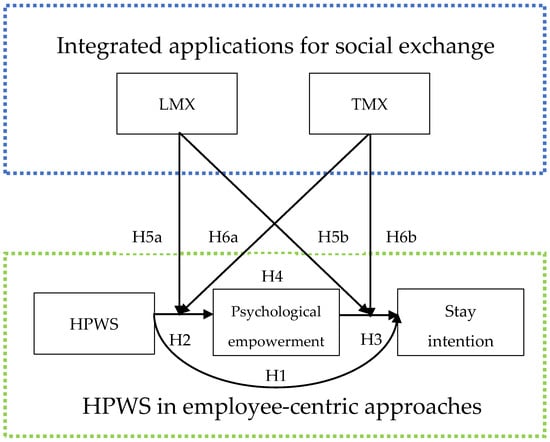
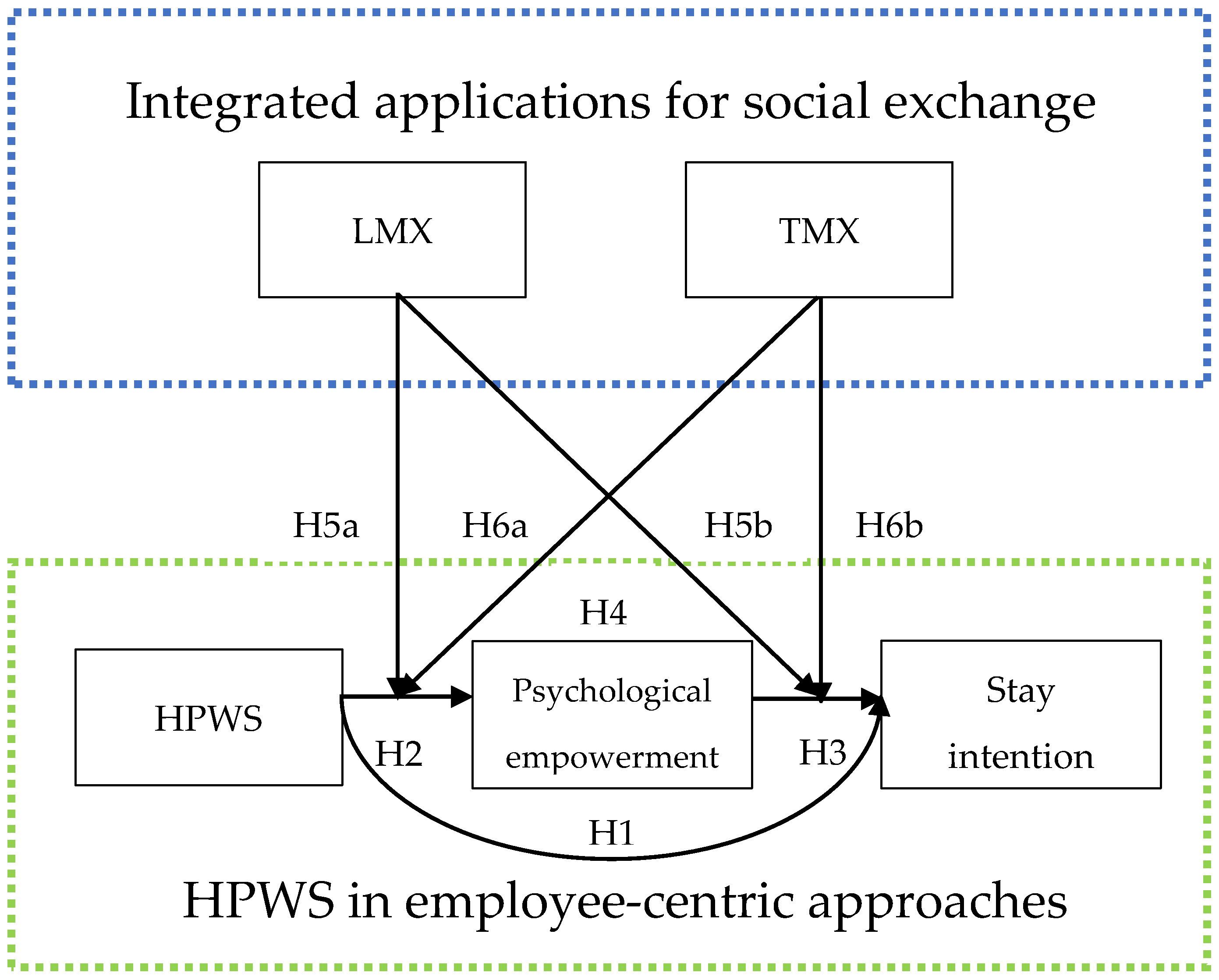
TMX further moderates empowerment’s effect on stay intention, converting individual motivation into social embeddedness [39]. Psychologically empowered employees naturally exhibit stronger organizational commitment, but high TMX adds relational ties that elevate this to team loyalty [40,45]. Empowered staff with high competence and impact feel capable and valued. High TMX reinforces this through belonging: leaving means abandoning reciprocal networks providing emotional support, shift coverage, and career knowledge—creating social costs beyond organizational attachment [44]. Peers become secondary sponsors, sharing industry insights and vouching for performance, making external opportunities less attractive. Along these lines, we propose (Figure 1):
Figure 1.
Research framework.
Hypothesis 6a.
TMX positively moderates the relationship between HPWSs and psychological empowerment.
Hypothesis 6b.
TMX positively moderates the relationship between psychological empowerment and stay intention.
3. Methodology
3.1. Survey Instrument
This study employs validated scales for all key constructs (see Table 1), which include all survey items, ensuring measurement reliability and theoretical alignment with hospitality contexts.
Table 1.
Items and the related literature used in the questionnaire.
HPWS: HPWSs are collections of work practices enhancing individual/organizational performance through skills, motivation, and involvement [11]. A 10-item, 7-point Likert scale from Huselid (1995) [11] is used (e.g., “The company provides opportunities to learn new skills during work”), capturing selective staffing, training, incentives, and participation. This scale’s alignment ensures content validity for hospitality’s high-contact roles, with proven reliability (α > 0.80) and predictive power on retention outcomes.
Psychological empowerment: Spreitzer’s (1995) [13] 12-item multidimensional scale measures four dimensions—meaning, competence, self-determination, and impact—using a 7-point Likert scale (e.g., “The work I do is very important to me”). This scale captures employees’ subjective motivational states rather than structural conditions, making it ideal for examining HPWS effects on intrinsic cognitions in high-stress service roles.
Stay intention: A three-item scale developed by Zopiatis and Theocharous (2013) [35] measures employees’ conscious commitment to remain in hospitality roles (e.g., “The exposure I gained from this experience increased my desire to pursue a career within the hospitality industry”), using a seven-point Likert scale. This scale suits the study as it captures internship-to-career transition intentions prevalent among the hospitality workforce (59%).
LMX: The seven-item leader–member exchange (LMX-7) scale by Graen and Uhl-Bien (1995) [16] was used, with sample item “During my work period, I can clearly know if my supervisor is satisfied with my performance” on a seven-point Likert-type scale. This scale is appropriate as it captures the dyadic, reciprocal relationship quality between leaders and subordinates, essential for examining moderation effects in hospitality’s high-contact supervisory dynamics.
TMX: As for TMX, we adapted the 10-item scale originally developed by Seers (1995) [17], which captures the quality of horizontal reciprocal relationships within teams through dimensions of exchange, meeting, and cohesiveness. Items were rated on a seven-point Likert-type scale, with a sample item being “I often propose better work methods to my colleagues.” Seers’ TMX scale is appropriate for this hospitality study, as it specifically assesses peer reciprocity—critical in team-dependent service operations where colleagues share shift coverage, guest knowledge, and coping strategies amid high-contact demands.
3.2. Pilot Test
Using SPSS version 24.0, we gathered and examined 31 questionnaires during the study’s pilot test phase. Particularly in business, education, and the social sciences, SPSS is well known for its efficiency and user-friendliness. The findings showed that the ten HPWS scale items had a Cronbach’s α value of 0.78. Furthermore, the psychological empowerment test’s 12 items have a Cronbach’s α value of 0.93. The Cronbach’s α score for the three-item stay intention scale was 0.93. Lastly, the Cronbach’s α values for the seven- and eight-question LMX and TMX scales were 0.94 and 0.93, respectively.
3.3. Participants and Procedures
To gather information, we used a quantitative approach. We distributed a total of 350 questionnaires based on the quota distribution of hotels by geographic region in Northern, Eastern, Central, and Southern Taiwan. A link to the online survey was sent to the participants. To guarantee objective responses, the first section included information regarding confidentiality and anonymity. We evaluated the direct, mediating, and moderating effects of the survey data using AMOS 24.0, a structural equation modeling (SEM) application, to increase the accuracy of the findings. By using Maximum Likelihood Estimation, AMOS is able to provide strong statistical insights while handling complex models and missing data more effectively.
Table 2 presents the demographic profile of 303 hospitality respondents. Females comprise 64% (n = 195) and males 36% (n = 108). Age distribution peaks in the 21–30 group at 59% (n = 180), followed by 20 or below at 18% (n = 56), 31–40 at 15% (n = 46), 41–50 at 4% (n = 12), 51–60 at 3% (n = 8), and none over 61. Education levels show bachelor’s degrees dominating at 80% (n = 243), postgraduate or above at 11% (n = 32), and senior high school at 9% (n = 28). The geographic distribution reveals Southern Taiwan as the most common at 53% (n = 161), followed by Northern Taiwan 23% (n = 69), Central Taiwan 18% (n = 56), and Eastern/Islands 6% (n = 17).
Table 2.
Respondents’ profile.
4. Results
4.1. Analysis of the Measurement Model
By analyzing the alignment between expected and actual values, goodness-of-fit tests are statistical techniques used to determine how well a model describes observed data. While a low goodness of fit implies large disparities that could result in wrong conclusions, a high goodness of fit indicates close alignment, verifying the model’s predictions and insights. Additionally, the measurement model demonstrated good fit according to the CFA results (NFI = 0.93, GFI = 0.92, IFI = 0.93, SRMR = 0.05, and RMSEA = 0.05), with all standardized factor loadings exceeding the 0.70 threshold as summarized in Table 3, thereby confirming strong reliability and convergent validity for the latent constructs prior to structural path analysis.
Table 3.
Summary of the goodness-of-model-fit test.
4.2. Tests for Discriminant and Convergent Validity
Table 4 presents the means, standard deviations, reliability coefficients, and correlations among the study variables. HPWSs were positively associated with psychological empowerment (r = 0.74, p < 0.01), stay intention (r = 0.67, p < 0.01), LMX (r = 0.76, p < 0.01), and TMX (r = 0.70, p < 0.01). Psychological empowerment was also positively related to stay intention (r = 0.66, p < 0.01), LMX (r = 0.68, p < 0.01), and TMX (r = 0.75, p < 0.01). In addition, stay intention showed positive correlations with both LMX (r = 0.56, p < 0.01) and TMX (r = 0.55, p < 0.01). Finally, LMX and TMX were positively correlated with each other (r = 0.71, p < 0.01).
Table 4.
Results of the convergent validity test.
The measurement model validation has been clarified as follows: Composite Reliability (CR) specifically assesses internal consistency within SEM frameworks [46], outperforming Cronbach’s α by accommodating varying factor loadings while preserving tau-equivalence assumptions [47]. All constructs achieved CR values of 0.90–0.94, substantially exceeding the 0.70 threshold [48,49]. Convergent validity was verified through AVE values ranging from 0.50 to 0.76 (>0.50 criterion) [50] and standardized factor loadings exceeding 0.70 (all p < 0.001), indicating constructs converge on their intended indicators. Discriminant validity was rigorously established using Satorra and Bentler (2001) scaled chi-square difference tests [51] (see Table 5), comparing nested models where one construct’s indicators are constrained to load on another versus unconstrained baselines; all tests yielded significant results (Δχ2 > 6.64, p < 0.001, df = 1), confirming empirically distinct constructs. Furthermore, Harman’s One-Factor Test evaluates typical technique bias in studies, particularly when self-reported measures are used. The first factor accounts for 26.82% of the total variance, indicating that common method bias is not likely to be a major problem in the dataset.
Table 5.
Results of the discriminant validity test.
4.3. Hypothesis Testing
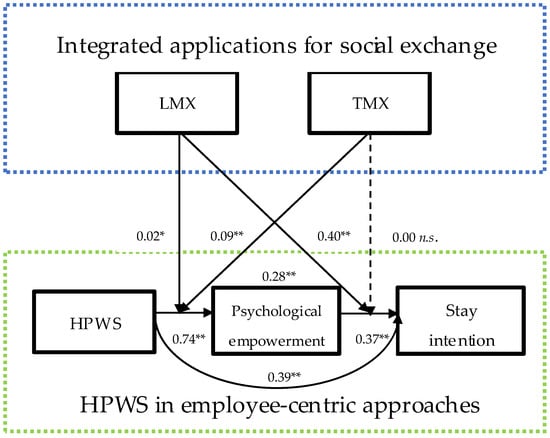
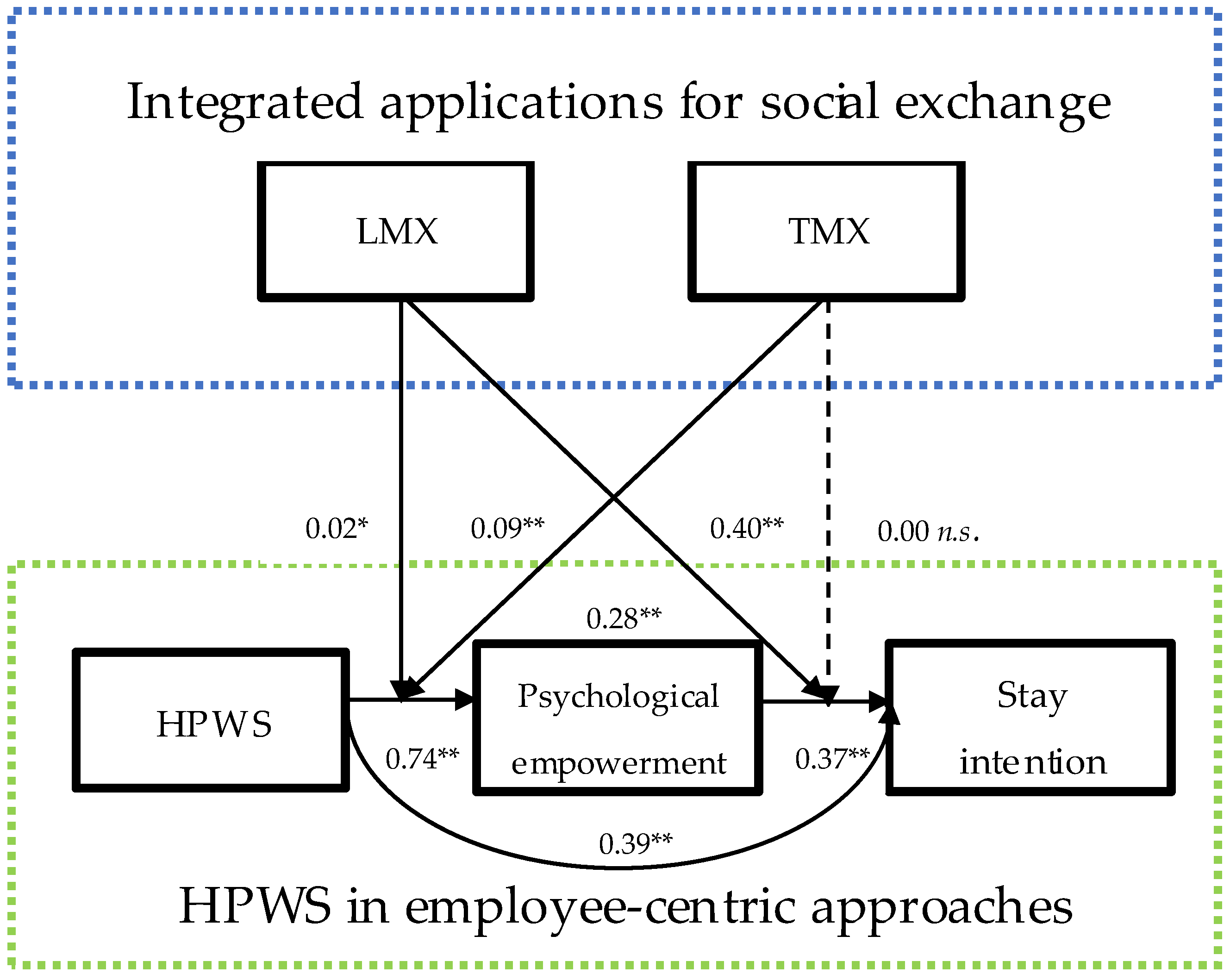
The results of the SEM analysis revealed that our proposed structural model has adequate model fit (NFI = 0.94, GFI = 0.93, IFI = 0.94, SRMR = 0.05, and RMSEA = 0.05), indicating strong alignment between the hypothesized paths among latent constructs and the observed covariance structure. In Table 6, HPWSs have a positive and significant impact on stay intention (standardized direct effect = 0.39, p < 0.01), HPWSs have a positive and significant impact on psychological empowerment (standardized direct effect = 0.74, p < 0.01), and psychological empowerment has a positive and significant impact on stay intention (standardized direct effect = 0.37, p < 0.01). We thus conclude that Hypotheses 1, 2, and 3 were supported.
Table 6.
Standardized direct and indirect effects.
To further verify the indirect effects of the structural model, we conducted percentile bootstrapping and bias-corrected percentile bootstrapping with a 95% confidence interval using 5000 bootstrap samples [52]. Following the recommendation of Preacher and Hayes [53], we calculated the confidence interval between the lower and upper bounds and used this to examine the indirect effects. In Table 4, bootstrapping analysis supports that HPWSs positively influence the stay intention through the mediating effect of psychological empowerment (standardized indirect effect = 0.28, p < 0.01). Thus, Hypothesis 4 was supported.
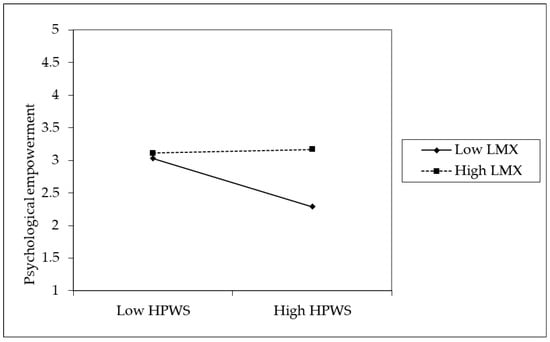
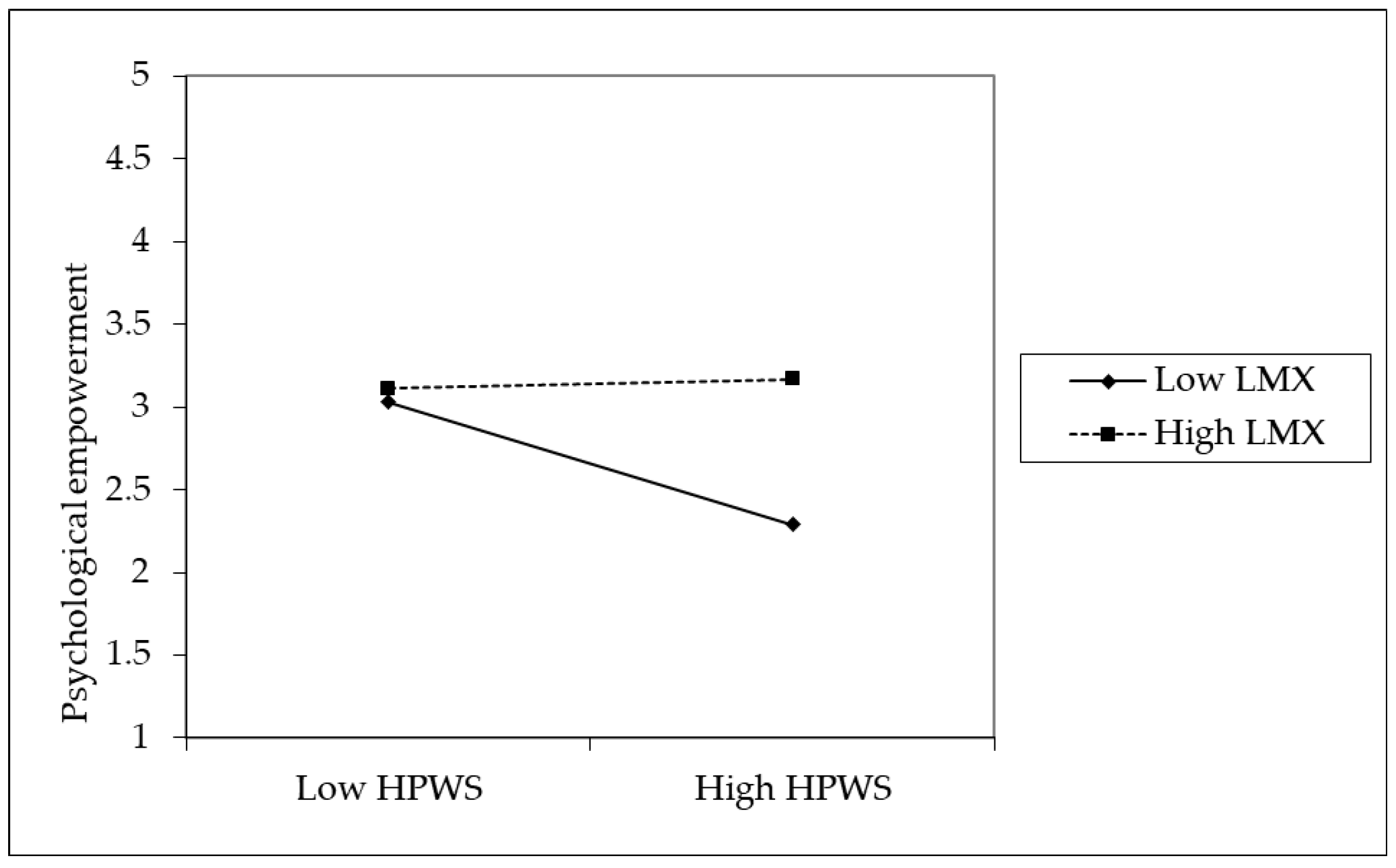
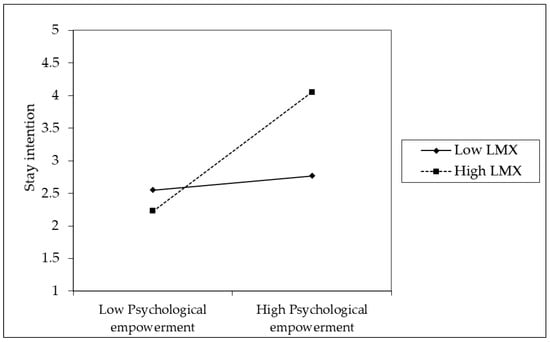
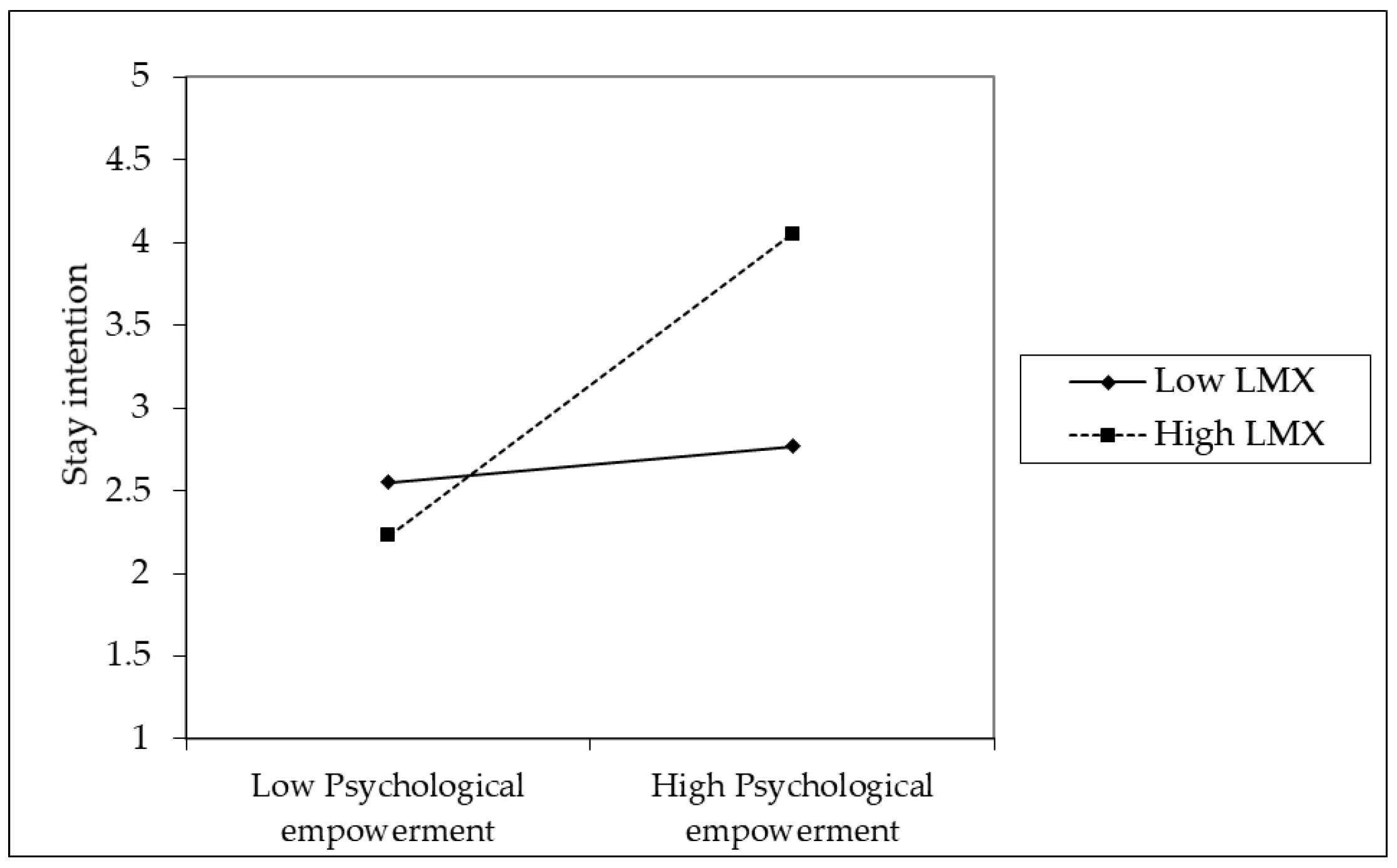
To assess whether LMX will have an interfering effect on the connection between HPWSs and psychological empowerment, as well as whether LMX will have a moderating effect on the relationship between psychological empowerment and the stay intention, in H4a and H4b, we performed interaction analyses. As shown in Table 7, the effect of the interaction between LMX and HPWSs was positive and significant on employee psychological empowerment (standardized indirect effect = 0.02, p < 0.05), while that between LMX and psychological empowerment interaction was positive and significant on stay intention (standardized indirect effect = 0.40, p < 0.01). Therefore, H5a and H5b were supported. To further clarify the nature of interactions, we followed a suggestion from Aiken and West’s [54] procedures to show the interaction effects with graphs. Figure 2 illustrates that when companies had a high (1 s.d. above the mean) degree of LMX as opposed to a low (1 s.d. below the mean) degree, the positive link between HPWSs and psychological empowerment was higher. Furthermore, Figure 3 shows that organizations with a high (1 s.d. above the mean) vs. a low (1 s.d. below the mean) degree of LMX had a higher positive connection between psychological empowerment and stay intention.
Table 7.
Standardized moderating effects.
Figure 2.
Moderating effect of LMX on HPWSs and psychological empowerment.
Figure 3.
Moderating effect of LMX on psychological empowerment and stay intention.
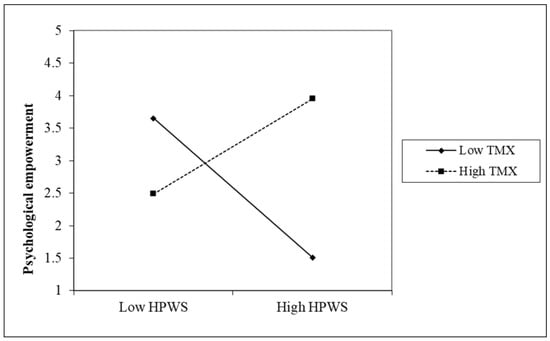
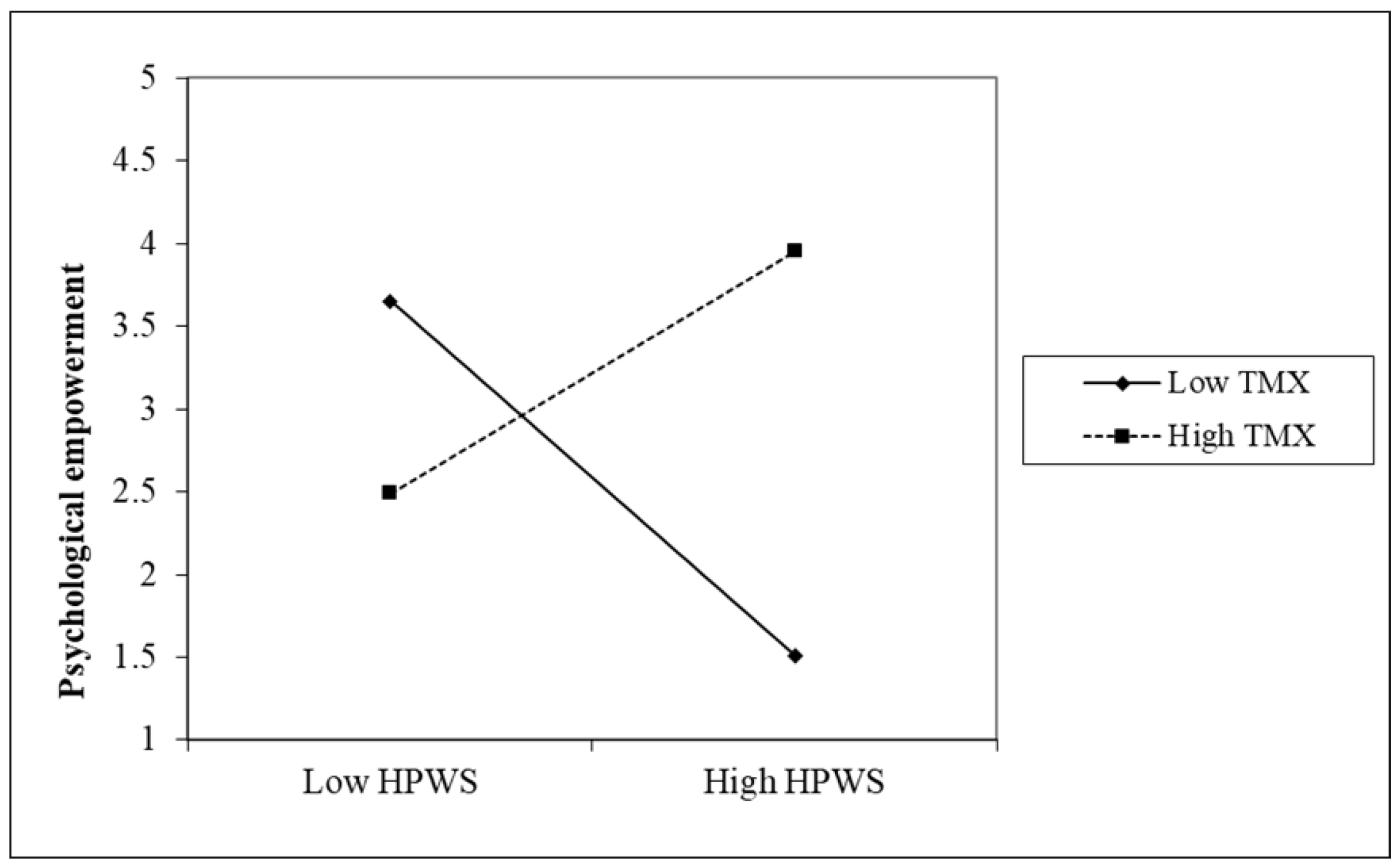
We also performed analyses for interactions to better assess whether TMX may affect the association between psychological empowerment and the stay intention in H5a and H5b, as well as the relationship between HPWSs and psychological empowerment. Table 7 shows that while the interaction between TMX and psychological empowerment had a positive but nonsignificant effect on stay intention (standardized indirect effect = 0.00, p > 0.05), the interaction between TMX and HPWSs had a positive and significant effect on employee psychological empowerment (standardized indirect effect = 0.09, p < 0.01). Therefore, H6a was supported but H6b was not supported. Based on Aiken and West’s [54] procedures, in Figure 4, the positive relationship between HPWSs and psychological empowerment was stronger when organizations had a high (1 s.d. above the mean) versus a low (1 s.d. below the mean) degree of TMX (Figure 5 and Table 8).
Figure 4.
Moderating effect of TMX on HPWSs and psychological empowerment.
Figure 5.
Path analysis of this study. Note: ** p < 0.01; * p < 0.05; n.s. = nonsignificant.
Table 8.
Summary of research results.
5. Discussion
5.1. Theoretical Implications
HPWSs significantly enhance psychological empowerment, which mediates the pathway to stronger stay intentions in hospitality, with LMX and TMX serving as key moderators. Grounded in social exchange theory, this study refines human resource management frameworks by illuminating relational mechanisms in high-turnover service contexts. Social exchange theory [24] posits reciprocal relationships where organizational investments elicit employee responses, but this study specifies HPWSs as structured inputs—selective staffing, training, incentives, and participation—that generate psychological empowerment’s dimensions: meaning, competence, self-determination, and impact. This operationalization advances the theory from abstract reciprocity to concrete HRM transmission [2], showing empowerment as the cognitive mechanism converting macro-practices into micro-loyalty [15,21]. Unlike generalized exchange models, HPWSs create “bounded reciprocity” in hospitality’s frontline pressures, where autonomy buffers emotional labor demands [14,22]. Empowerment fully mediates HPWS-stay intention links, positioning it as the theory’s “black box,” extending prior applications [23] by validating in service sectors. Employee-centric approaches to sustainable hospitality development integrate seamlessly, explaining how competence and autonomy from HPWSs fulfill intrinsic needs, yielding sustained engagement over transactional rewards.
Psychological empowerment [13] emerges as hospitality’s pivotal mediator, bridging HPWS practices to stay intention through four cognitions that align personal values with organizational goals. This study fills gaps in direct-effect dominance [55], empirically demonstrating indirect transmission in high-contact roles where service quality hinges on stable talent. This expands on the ability–motivation–opportunity (AMO) paradigm [12] by breaking down HPWS bundles: opportunity in participation increases self-determination and impact, ability via training produces competence, and motivation through incentives creates meaning. Both the HPWS–empowerment and empowerment–stay intention paths are moderated by LMX theory [16], with high-quality dyads steepening slopes through resource flows and trust. By incorporating vertical exchanges into HPWSs, interaction effects enhance those of Dansereau et al. [56] by exposing leaders as HRM catalysts who customize systemic processes.
TMX [17] moderates HPWS–empowerment but not empowerment–stay intention, nuancing horizontal exchanges as facilitators of initial internalization rather than final commitment. High TMX aids peer support in resource uptake, filling gaps in Zou et al. [39] by contrasting with LMX’s outcome potency. Social exchange unifies LMX-TMX: vertical exchanges drive outcomes, while horizontal ones buffer inputs, creating a multi-level theory. Hospitality’s unique demands—emotional labor and irregular hours—amplify empowerment’s role, extending HPWSs beyond manufacturing [11] to services [29]. This study bridges intern disillusionment [7] with organizational stability, validating scales in underrepresented groups.
5.2. Practical Implications
Hospitality managers can operationalize HPWSs through integrated practices that directly cultivate psychological empowerment, addressing the industry’s chronic turnover challenges [2]. Selective staffing should be implemented by using structured tests to identify interns with aptitude for the hospitality industry. This is followed by thorough onboarding training that develops competency through cross-functional rotations and skill certifications specific to frontline positions. Performance incentives should link individual contributions to team service outcomes, while participation mechanisms—such as employee councils and suggestion systems—foster self-determination by granting autonomy in daily operations like guest resolution protocols [26,37]. Regular audits using validated scales from this study ensure alignment, with managers prioritizing job security communications to enhance meaning and impact perceptions amid irregular hours. For Taiwan’s 534,000 hospitality workers, these bundles create reciprocal exchange cycles where organizational investments yield loyalty, slashing recruitment costs and stabilizing 93.5% of the young workforce (21–30 age group). Practical rollout includes digital platforms for real-time feedback, mirroring stratified sampling approaches, converting short-term interns into long-term assets through sustained empowerment [14].
Because peer networks buffer resource consumption and high-quality dyads increase HPWS effects, LMX and TMX require specific relational strategies. In order to establish confidence, distribute resources during busy times, and openly support team decisions, supervisors should implement individualized coaching models and hold weekly one-on-ones [39]. This will immediately increase the transmission of empowerment. To improve LMX, especially for the 71% female workforce dealing with disproportionate frontline demands, 360-degree feedback systems and leadership courses based on Graen and Uhl-Bien [16] should be implemented. In order to promote horizontal support that improves initial HPWS internalization, TMX should set up organized peer mentorship circles, knowledge-sharing huddles, and reciprocal recognition programs where staff members alternate supervisory positions. Hospitality chains can monitor progress via LMX/TMX scales, adjusting through team-building retreats that bridge shift-based silos, ultimately yielding higher service quality and reduced exits in high-pressure environments like hotels and restaurants [40].
Employee-centric approaches anchor sustainable hospitality development by transforming empowerment into enduring operational resilience [2]. Roles should be aligned with personal values through meaningful task rotations, competencies should be certified via e-learning pathways, autonomous decision-making should be delegated in guest interactions, and feedback loops showing individual impact on organizational success should be closed [22]. These practices, integrated with LMX coaching and TMX networks, minimize churn while driving innovation—empowered teams pioneer eco-friendly service protocols and cost efficiencies [18,40]. In the long term, universities should be partnered with for talent pipelines, annual empowerment audits should be conducted, and retention dashboards tracking relational dynamics should be deployed, ensuring stable workforces that elevate customer satisfaction and profitability. This virtuous cycle positions hospitality for 2026 competitiveness, where employee-centric HPWSs foster not just retention, but sustainable growth through loyal, innovative service delivery.
5.3. Limitations and Suggestions for Future Research
This study reveals critical limitations that contextualize its findings while highlighting essential future research directions. In order to avoid drawing conclusions about whether HPWSs actually precede psychological empowerment and stay intentions in hospitality contexts, the cross-sectional approach records attitudes at a specific point in time. The 534,000 workers in Taiwan’s hospitality sector are diverse in terms of jobs, experience levels, and contract kinds; an exclusive focus on these workers ignores this diversity. This narrow sampling undermines generalizability across hospitality’s heterogeneous structure, from frontline servers to management tracks.
Self-reported measures across all constructs introduce common method bias risks, despite procedural controls, while the model treats HPWSs as uniform without dissecting specific bundles—training versus incentives versus participation—that likely vary in impact across high-contact frontline positions. The nonsignificant TMX-to-stay intention moderation suggests overlooked boundary conditions, including shift work patterns, gender dynamics, organizational tenure, or cultural factors unexamined in this Taiwan-centric study. A single-country focus ignores global hospitality variations, from unionized European structures to casualized U.S. chains, limiting external validity. Additionally, reliance on stay intentions rather than actual turnover behavior leaves distal outcomes unverified.
Future research should employ longitudinal panel designs tracking HPWS implementation over 12–24 months across multi-site hotels and restaurants, measuring empowerment evolution alongside actual employee exits. Sampling should be broadened through stratified quotas (n > 400), balancing age, tenure, role, and gender to achieve SEM power and demographic representation. Institutional moderators, including labor laws and cultural norms, would be put to the test by cross-national replications in a variety of scenarios, such as Greek hotels affected by austerity, Southeast Asian resorts, and North American luxury brands.
To determine which methods most successfully promote empowerment, HPWSs should be broken down into ability-motivation-opportunity (AMO) components [12]. At the same time, other mediators should be tested such as emotional commitment, job crafting, or service atmosphere. Multi-level hierarchical linear modeling (HLM) should nest individuals within teams and outlets to parse LMX/TMX variance properly. Experimental approaches—vignette studies or quasi-experimental pre/post-HPWS rollouts—address endogeneity concerns. Mixed methods incorporating employee exit interviews would unpack relational dynamics in practice. Finally, research should be extended to diverse employee populations and the findings linked to downstream metrics: organizational citizenship behavior, service profitability, and sustainability indicators relevant to 2026 hospitality trends.
Finally, future research should extend and validate this integrated HPWS–empowerment–LMX/TMX framework across diverse service industries beyond hospitality, such as healthcare, retail, and logistics, where frontline human capital, relational exchange, and service consistency similarly determine organizational sustainability.
6. Conclusions
This study confirms that HPWSs significantly enhance psychological empowerment—through their core dimensions of meaning, competence, self-determination, and impact—which serves as the critical mediator driving stronger stay intentions in the hospitality industry. LMX powerfully amplifies both the HPWS-to-empowerment pathway and the empowerment-to-stay intention relationship through dyadic trust and personalized resource support, while TMX facilitates the initial internalization of organizational practices. Grounded in social exchange theory, these findings illuminate how structured HRM investments generate reciprocal employee loyalty within high-contact service environments characterized by emotional labor demands. The integrated framework bridges macro-level organizational systems with micro-level cognitive processes, positioning psychological empowerment as hospitality’s essential transmission mechanism where workforce stability directly determines service quality outcomes. LMX emerges as the preeminent relational amplifier of HRM effectiveness, while TMX plays a complementary boundary-spanning role that supports but does not independently drive final retention outcomes. The model’s reliable measurement across constructs establishes a validated foundation for both academic extension and practical implementation. By methodically implementing HPWS bundles—selective staffing procedures, thorough skill training, performance-contingent incentives, and meaningful participation mechanisms—along with targeted LMX development through frequent coaching and reciprocal feedback systems, hospitality leaders can obtain a comprehensive roadmap for sustainable talent management. To create long-lasting retention cycles that reduce recruitment costs while sustaining service consistency and innovation, organizations should complement HPWSs with structured TMX networks—such as peer mentoring circles and formal knowledge-sharing platforms (e.g., internal learning communities, digital best-practice repositories, or shift-based service huddles)—that institutionalize reciprocal support, accelerate experiential learning, and embed tacit service knowledge within teams.
Author Contributions
Conceptualization, C.-J.W. and C.-H.T.; Methodology, C.-J.W.; Software, C.-J.W.; Validation, C.-J.W.; Formal analysis, C.-J.W.; Investigation, C.-J.W.; Resources, C.-J.W. and C.-H.T.; Data curation, C.-H.T.; Writing–original draft, C.-J.W. and C.-H.T.; Writing–review & editing, C.-J.W. and C.-H.T.; Supervision, C.-J.W.; Project administration, C.-J.W.; Funding acquisition, C.-J.W. All authors have read and agreed to the published version of the manuscript.
Funding
This research was financially supported by the major research plan of the National Science and Technology Council in Taiwan (Grant No. NSTC 114-2410-H-020-005-MY2).
Institutional Review Board Statement
The study was conducted in accordance with the Declaration of Helsinki and approved by the Institutional Review Board of National Pingtung University of Science and Technology (protocol code: 1142206; date of approval: 1 August 2025).
Informed Consent Statement
Informed consent was obtained from all subjects involved in the study.
Data Availability Statement
The raw data supporting the conclusions of this article will be made available by the authors on request.
Acknowledgments
The authors would like to thank the anonymous reviewers for their valuable opinions to improve the manuscript.
Conflicts of Interest
The authors declare no conflicts of interest.
References
- Pu, B.; Sang, W.; Ji, S.; Hu, J.; Phau, I. The effect of customer incivility on employees’ turnover intention in hospitality industry: A chain mediating effect of emotional exhaustion and job satisfaction. Int. J. Hosp. Manag. 2024, 118, 103665. [Google Scholar] [CrossRef] [Scilit]
- Wang, C.-J. Unlocking service excellence: The hierarchical impact of high-performance human resource practices. Int. J. Contemp. Hosp. Manag. 2025, 37, 502–521. [Google Scholar] [CrossRef] [Scilit]
- Wang, C.-J. From emotional labor to customer loyalty in hospitality: A three-level investigation with the JD-R model and COR theory. Int. J. Contemp. Hosp. Manag. 2019, 31, 3742–3760. [Google Scholar] [CrossRef] [Scilit]
- Wang, C.-J. Managing emotional labor for service quality: A cross-level analysis among hotel employees. Int. J. Hosp. Manag. 2020, 88, 102396. [Google Scholar] [CrossRef] [Scilit]
- Moustafa, M.A.; Elrayah, M.; Aljoghaiman, A.; Hasanein, A.M.; Ali, M.A.S. How Does Sustainable Organizational Support Affect Job Burnout in the Hospitality Sector? The Mediating Role of Psychological Capital. Sustainability 2024, 16, 840. [Google Scholar] [CrossRef] [Scilit]
- Palacios, H.; de Almeida, H.; Sousa, M.J. A Bibliometric Analysis of Service Climate as a Sustainable Competitive Advantage in Hospitality. Sustainability 2021, 13, 12214. [Google Scholar] [CrossRef] [Scilit]
- Richardson, J. The business model: An integrative framework for strategy execution. Strateg. Change 2008, 17, 133–144. [Google Scholar] [CrossRef] [Scilit]
- Atoyebi, T.A.; Sopuru, J. Humanizing AI in Service Workplaces: Exploring Supervisor Support as a Moderator in HPWSs. Sustainability 2025, 17, 7892. [Google Scholar] [CrossRef] [Scilit]
- Dogru, T.; McGinley, S.; Sharma, A.; Isık, C.; Hanks, L. Employee turnover dynamics in the hospitality industry vs. the overall economy. Tour. Manag. 2023, 99, 104783. [Google Scholar] [CrossRef] [Scilit]
- Nguyen, C.N.; Hoang, G.; Luu, T.T. Frontline employees’ turnover intentions in tourism and hospitality sectors: A systematic literature review and research agenda. Tour. Manag. Perspect. 2023, 49, 101197. [Google Scholar] [CrossRef] [Scilit]
- Huselid, M.A. The Impact Of Human Resource Management Practices On Turnover, Productivity, And Corporate Financial Performance. Acad. Manag. J. 1995, 38, 635–672. [Google Scholar] [CrossRef] [Scilit]
- Appelbaum, E.; Bailey, T.; Berg, P.; Kalleberg, A. Manufacturing Advantage: Why High-Performance Work Systems Pay Off; Cornell University Press: Ithaca, NY, USA, 2000. [Google Scholar]
- Spreitzer, G.M. Psychological empowerment in the workplace—Dimensions, measurement, and validation. Acad. Manag. J. 1995, 38, 1442–1465. [Google Scholar] [CrossRef] [Scilit]
- Liao, H.; Toya, K.; Lepak, D.; Hong, Y. Do They See Eye to Eye? Management and Employee Perspectives of High-Performance Work Systems and Influence Processes on Service Quality. J. Appl. Psychol. 2009, 94, 371–391. [Google Scholar] [CrossRef] [Scilit]
- Beltrán-Martín, I.; Bou-Llusar, J.C.; García-Juan, B.; Salvador-Gomez, A. Does psychological empowerment mediate the HPWS-AFFECTIVE commitment relationship? Int. J. Manpow. 2024, 46, 1–17. [Google Scholar] [CrossRef] [Scilit]
- Graen, G.; Uhl-Bien, M. Relationship-based approach to leadership—Development of leader-member exchange (lmx) theory of leadership over 25 years—Applying a multilevel multidomain perspective. Leadersh. Q. 1995, 6, 219–247. [Google Scholar] [CrossRef] [Scilit]
- Seers, A.; Petty, M.M.; Cashman, J.F. Team-member exchange under team and traditional management—A naturally-occurring quasi-experiment. Group Organ. Manag. 1995, 20, 18–38. [Google Scholar] [CrossRef] [Scilit]
- Wang, C.-J. Do Social Exchange Relationships Influence Total-Quality-Management Involvement? Evidence from Frontline Employees of International Hotels. Behav. Sci. 2023, 13, 1013. [Google Scholar] [CrossRef] [Scilit]
- Teo, S.T.T.; Bentley, T.; Nguyen, D. Psychosocial work environment, work engagement, and employee commitment: A moderated, mediation model. Int. J. Hosp. Manag. 2020, 88, 102415. [Google Scholar] [CrossRef] [Scilit]
- Wang, C.-J.; Jiang, Z.-R. Exploring High-Performance Work Systems and Sustainable Development in the Hospitality Industry. Sustainability 2024, 16, 10019. [Google Scholar] [CrossRef] [Scilit]
- Srivastava, S.; Singh, S. Linking personal growth initiative and organizational identi fi cation to employee engagement: Testing the mediating-moderating effects in Indian hotel industry. J. Hosp. Tour. Manag. 2020, 45, 79–89. [Google Scholar] [CrossRef] [Scilit]
- Mielke, J.; De Geest, S.; Beckmann, S.; Leppla, L.; Luta, X.; Guerbaai, R.A.; Hunziker, S.; Schwendimann, R. The German version of the high-performance work systems questionnaire (HPWS-G) in the context of patient safety: A validation study in a Swiss university hospital. BMC Health Serv. Res. 2019, 19, 356. [Google Scholar] [CrossRef] [Scilit]
- Jiang, K.; Lepak, D.P.; Hu, J.; Baer, J.C. How Does Human Resource Management Influence Organizational Outcomes? A Meta-analytic Investigation of Mediating Mechanisms. Acad. Manag. J. 2012, 55, 1264–1294. [Google Scholar] [CrossRef] [Scilit]
- Homans, G.C. Social behavior as exchange. Am. J. Sociol. 1958, 63, 597–606. [Google Scholar] [CrossRef] [Scilit]
- Boxall, P. High-performance work systems: What, why, how and for whom? Asia Pac. J. Hum. Resour. 2012, 50, 169–186. [Google Scholar] [CrossRef] [Scilit]
- Combs, J.; Liu, Y.; Hall, A.; Ketchen, D. How much do high-performance work practices matter? A meta-analysis of their effects on organizational performance. Pers. Psychol. 2006, 59, 501–528. [Google Scholar] [CrossRef] [Scilit]
- Koc, E.; Yumusak, S.; Ulukoy, M.; Kilic, R.; Toptas, A. Are internship programs encouraging or discouraging?—A viewpoint of tourism and hospitality students in Turkey. J. Hosp. Leis. Sport Tour. Educ. 2014, 15, 135–142. [Google Scholar] [CrossRef] [Scilit]
- Becker, B.E.; Huselid, M.A. Strategic human resource management: Where do we go from here? J. Manag. 2006, 32, 898–925. [Google Scholar] [CrossRef] [Scilit]
- Kim, W.G.; Brymer, R.A. The effects of ethical leadership on manager job satisfaction, commitment, behavioral outcomes, and firm performance. Int. J. Hosp. Manag. 2011, 30, 1020–1026. [Google Scholar] [CrossRef] [Scilit]
- Arnold, H.J.; Feldman, D.C. A multivariate analysis of the determinants of job turnover. J. Appl. Psychol. 1982, 67, 350–360. [Google Scholar] [CrossRef]
- Ghosh, V.; Bharadwaja, M.; Yadav, S.; Kabra, G. Team-member exchange and innovative work behaviour: The role of psychological empowerment and creative self-efficacy. Int. J. Innov. Sci. 2019, 11, 344–361. [Google Scholar] [CrossRef] [Scilit]
- Wright, P.M.; Nishii, L.H. Strategic HRM and organizational behavior: Integrating multiple level of analysis. HRM Perform. Achiev. Chall. 2013, 468, 1–13. [Google Scholar]
- Sun, L.-Y.; Aryee, S.; Law, K.S. High-Performance Human Resource Practices, Citizenship Behavior, and Organizational Performance: A Relational Perspective. Acad. Manag. J. 2007, 50, 558–577. [Google Scholar] [CrossRef] [Scilit]
- Wang, C.-J. Should I Stay or Should I Go? Linking Career Decision-Making Self-Efficacy to Intention to Stay in the Hospitality Industry Based on Internship Experience. Sustainability 2021, 13, 10571. [Google Scholar] [CrossRef] [Scilit]
- Zopiatis, A.; Theocharous, A.L. Revisiting hospitality internship practices: A holistic investigation. J. Hosp. Leis. Sport Tour. Educ. 2013, 13, 33–46. [Google Scholar] [CrossRef] [Scilit]
- Kehoe, R.R.; Wright, P.M. The Impact of High-Performance Human Resource Practices on Employees’ Attitudes and Behaviors. J. Manag. 2013, 39, 366–391. [Google Scholar] [CrossRef] [Scilit]
- Zhai, X.X.; Huang, F.; Tian, X.W. The role of country-level human capital in the high-performance work systems and organizational performance association: A meta-analysis. Hum. Resour. Manag. Rev. 2025, 35, 101057. [Google Scholar] [CrossRef] [Scilit]
- Deci, E.L.; Ryan, R.M. Intrinsic Motivation and Self-Determination in Human Behavior; Springer: Berlin/Heidelberg, Germany, 1985. [Google Scholar]
- Zou, W.-C.; Tian, Q.; Liu, J. Servant leadership, social exchange relationships, and follower’s helping behavior: Positive reciprocity belief matters. Int. J. Hosp. Manag. 2015, 51, 147–156. [Google Scholar] [CrossRef] [Scilit]
- Yoon, M.H.; Yoon, D.J. When and why does relative leader-member exchange enhance service performance? The roles of self-efficacy, team commitment, and multifoci team-level differentiation. Int. J. Contemp. Hosp. Manag. 2019, 31, 2666–2690. [Google Scholar] [CrossRef] [Scilit]
- Wang, C.-J. Does leader-member exchange enhance performance in the hospitality industry? The mediating roles of task motivation and creativity. Int. J. Contemp. Hosp. Manag. 2016, 28, 969–987. [Google Scholar] [CrossRef] [Scilit]
- Creon, L.E.; Schermuly, C.C. Welcome to Our (Divided) Team Perceived Subgroups and LMX During Newcomer Socialization. Z. Arb. Organ. 2024, 68, 3–16. [Google Scholar] [CrossRef] [Scilit]
- Shin, S.J.; Zhou, J. When is educational specialization heterogeneity related to creativity in research and development teams? Transformational leadership as a moderator. J. Appl. Psychol. 2007, 92, 1709–1721. [Google Scholar] [CrossRef] [Scilit]
- Anand, S.; Hu, J.; Liden, R.C.; Vidyarthi, P.R. Leader-Member Exchange: Recent Research Findings and Prospects for the Future. In The Sage Handbook of Leadership; SAGE Publications Ltd.: Thousand Oaks, CA, USA, 2011; pp. 309–323. [Google Scholar]
- Wallace, E.; Coughlan, J. Burnout and counterproductive workplace behaviours among frontline hospitality employees: The effect of perceived contract precarity. Int. J. Contemp. Hosp. Manag. 2023, 35, 451–468. [Google Scholar] [CrossRef] [Scilit]
- Fornell, C.; Larcker, D.F. Evaluating Structural Equation Models with Unobservable Variables and Measurement Error. J. Mark. Res. 1981, 18, 39–50. [Google Scholar] [CrossRef] [Scilit]
- Raykov, T. Intraclass Correlation Coefficients in Hierarchical Designs: Evaluation Using Latent Variable Modeling. Struct. Equ. Model. 2011, 18, 73–90. [Google Scholar] [CrossRef] [Scilit]
- Nunnally, J.C. Psychometric Theory 3E; Tata McGraw-Hill Education: Noida, India, 1994. [Google Scholar]
- Hair, J.; Black, B.; Babin, B.; Anderson, R.; Tatham, R. Multivariate Data Analysis, 6th ed.; Prentice-Hall: Upper Saddle River, NJ, USA, 2006. [Google Scholar]
- Bagozzi, R.P.; Yi, Y.J. On the use of structural equation models in experimental-designs. J. Mark. Res. 1989, 26, 271–284. [Google Scholar] [CrossRef] [Scilit]
- Satorra, A.; Bentler, P.M. A scaled difference chi-square test statistic for moment structure analysis. Psychometrika 2001, 66, 507–514. [Google Scholar] [CrossRef] [Scilit]
- Taylor, A.B.; MacKinnon, D.P.; Tein, J.Y. Tests of the three-path mediated effect. Organ. Res. Methods 2008, 11, 241–269. [Google Scholar] [CrossRef] [Scilit]
- Preacher, K.J.; Hayes, A.F. Asymptotic and resampling strategies for assessing and comparing indirect effects in multiple mediator models. Behav. Res. Methods 2008, 40, 879–891. [Google Scholar] [CrossRef] [Scilit]
- Aiken, L.S.; West, S.G. Multiple Regression: Testing and Interpreting Interactions; Sage: Thousand Oaks, CA, USA, 1991. [Google Scholar]
- Erdogan, B.; Bauer, T.N. Differentiated leader–member exchanges: The buffering role of justice climate. J. Appl. Psychol. 2010, 95, 1104–1120. [Google Scholar] [CrossRef] [Scilit]
- Dansereau, F.; Graen, G.; Haga, W.J. A vertical dyad linkage approach to leadership within formal organizations: A longitudinal investigation of the role making process. Organ. Behav. Hum. Perform. 1975, 13, 46–78. [Google Scholar] [CrossRef] [Scilit]

Disclaimer/Publisher’s Note: The statements, opinions and data contained in all publications are solely those of the individual author(s) and contributor(s) and not of MDPI and/or the editor(s). MDPI and/or the editor(s) disclaim responsibility for any injury to people or property resulting from any ideas, methods, instructions or products referred to in the content. |
© 2026 by the authors. Licensee MDPI, Basel, Switzerland. This article is an open access article distributed under the terms and conditions of the Creative Commons Attribution (CC BY) license.