Article

Protected Area Soils as Natural Laboratories: Topographic Controls on Soil Carbon Storage and Nutrient Stoichiometry for Sustainable Ecosystem Management

by
Ahu Alev Abacı Bayar
Department of Soil Science and Plant Nutrition, Kırşehir Ahi Evran University, Kırşehir 40100, Türkiye
Sustainability 2026, 18(3), 1560; https://doi.org/10.3390/su18031560
Submission received: 24 December 2025 / Revised: 24 January 2026 / Accepted: 27 January 2026 / Published: 3 February 2026

Abstract

There are 266 nature parks in Türkiye, including Aşıkpaşa Nature Park, covering a total area of approximately 109,023 ha; however, information regarding soil organic carbon stocks (SOCS), soil nitrogen stocks (NS), and nutrient stoichiometry in these protected forests remains limited. This study evaluates the influence of tree species, altitude, aspect, and soil depth on nutrient stocks and stoichiometry using a 3 × 2 × 3 × 3 factorial experimental design. The findings indicate that mixed stands (Black Pine + Cedar) significantly optimize nutrient storage, reaching peak N (3.531 ± 0.115 t ha−1) and P (0.948 ± 0.016 t ha−1) stocks. SOC and N stocks reached 66.34 ± 1.86 t ha−1 and 4.032 ± 0.123 t ha−1, respectively, along the altitudinal gradient. Soil pH exhibited a steady rise with altitude (from 7.86 to 8.15), contrary to typical leaching patterns, while bulk density varied depending on Altitude × Aspect × Depth interactions. Stoichiometric analyses revealed that Cedar stands maintain higher C:K ratios (3.457 ± 0.258), reflecting superior nutrient use efficiency. Furthermore, sunny aspects prioritized nitrogen mineralization (N:P ratio: 4.540), whereas shaded aspects facilitated phosphorus retention. These results prove that soil fertility and carbon sequestration are modulated by complex topographic–biotic interactions, suggesting that preserving mixed forest structures is of vital importance for ecological sustainability and forest resilience.

1. Introduction

Forest ecosystems constitute one of the largest soil organic carbon (SOC) pools within global terrestrial ecosystems and therefore play a critical role in mitigating climate change [1,2]. Soil carbon, together with macronutrients such as nitrogen (N), phosphorus (P), and potassium (K), directly regulates ecosystem productivity, nutrient cycling, and carbon sequestration processes [3]. The ecological stoichiometry framework, which examines the quantitative relationships among these elements, provides a powerful theoretical basis for understanding soil–plant–microorganism interactions [4,5].
In forest soils, C, N, and P contents and their stoichiometric ratios (C:N, C:P, and N:P) are widely used indicators for diagnosing nutrient limitation and evaluating ecosystem functioning [6,7]. In particular, the C:N ratio reflects organic matter decomposition rates and microbial activity, whereas the N:P ratio is considered a key indicator for identifying nitrogen or phosphorus limitation in plant growth [8,9]. In recent years, this approach has been increasingly applied to reveal spatial patterns of nutrient cycling in forest ecosystems [10,11].
Topographic factors—such as elevation, slope, aspect, and slope position—shape microclimatic conditions, soil moisture regimes, erosion processes, and organic matter accumulation, thereby exerting strong control over the distribution of soil carbon and nutrient elements [12,13]. Elevation-driven decreases in temperature and increases in moisture generally constrain organic matter decomposition, leading to higher SOC and total N accumulation at higher altitudes [14,15]. Aspect and slope influence solar radiation, evapotranspiration, and surface runoff, thereby enhancing the spatial heterogeneity of soil nutrient distributions [16,17].
Recent studies have demonstrated that topographic gradients significantly affect not only soil carbon and nutrient stocks but also C–N–P stoichiometric ratios [17,18]. Research conducted in alpine and subalpine forest ecosystems has shown that C:N:P ratios vary markedly across slope positions and micro-topographic units, and that these variations are closely associated with microbial biomass, enzyme activities, and plant species composition [10,19]. These findings highlight the existence of complex feedback mechanisms among topography, vegetation, and soil processes.
In Türkiye, the limited number of available studies also supports the decisive role of topographic factors in controlling carbon and nutrient stocks in forest soils. Aşıkpaşa Nature Park is ecologically significant as it hosts natural and protected forest ecosystems and is the only nature park located in the region. Moreover, the absence of previous similar studies conducted in this area enhances the scientific originality of the present research and its potential contribution to the literature. For example, research conducted in Uludağ National Park reported significant differences in SOC, total N, and macronutrient stocks associated with elevation and aspect [16]. Similarly, studies in mountainous forest areas of the Black Sea and Central Anatolia regions have shown that slope and slope position exert pronounced effects on the spatial distribution of soil nutrients [20,21]. However, most of these studies have primarily focused on total C and N, while comprehensive investigations integrating soil carbon and macronutrient stoichiometry with topographic factors in protected forest areas, such as nature parks, remain scarce.
Nature parks, characterized by relatively low anthropogenic pressure and preserved natural topographic heterogeneity, represent ideal natural laboratories for investigating topography-driven soil processes. Assessing soil carbon and macronutrient stoichiometry along topographic gradients in these areas is of great importance for quantifying carbon sequestration potential and for developing effective management strategies for protected areas [2,3]. In this context, determining the effects of topographic factors on soil carbon and macronutrient stoichiometry in forest ecosystems of nature parks will contribute to a better understanding of ecosystem functioning and provide a scientific basis for sustainable conservation policies.

2. Materials and Methods

2.1. Study Area

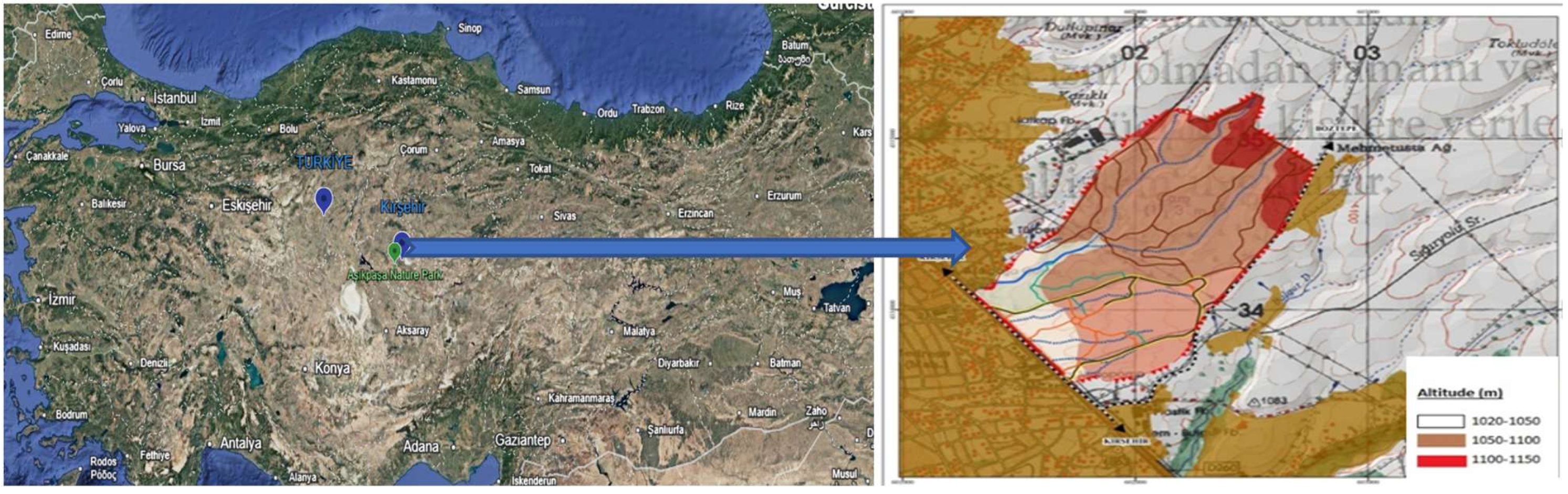
This study was conducted in Aşıkpaşa Nature Park, located in the Central Anatolia Region of Türkiye (39°09′06″ N; 34°10′49″ E). The research area covers approximately 131 ha and is situated within a continental ecosystem characterized by steppe vegetation typical of the Irano-Turanian phytogeographical region. In addition to the natural steppe cover, the area includes afforested stands predominantly established with black pine (Pinus nigra). Within the forested areas, P. nigra is the dominant species, accompanied locally by Quercus pubescens, Crataegus spp., and Juniperus spp.
Geologically, the study area is underlain by the Kızılırmak Formation, which is widely exposed in Central Anatolia. This formation consists mainly of reddish-brown, massive, loosely textured terrestrial mudstones and locally includes lenses of tuff, gypsum–anhydrite, clayey limestone, conglomerate, and sandstone. The formation overlies pre-Upper Miocene basement rocks in a horizontal position and has a thickness ranging from approximately 5 to 100 m [22].
In terms of soil groups, Brown Soils dominate the southern and southeastern parts of the study area, covering 60.33 ha and accounting for 46.05% of the total area. In contrast, Reddish Brown Soils are limited in extent and occur mainly in the southwestern part of the area, covering 0.97 ha (0.74%).

2.2. Climatic Characteristics

The climatic conditions of the study area were evaluated using the De Martonne climate classification method [23]. According to long-term meteorological data (1962–2024) from the Kırşehir Meteorological Station, the mean annual air temperature is 11.4 °C, and the mean annual total precipitation is 388.0 mm. Winter temperatures are generally around 0 °C, while summer temperatures reach an average of 23.1 °C. Precipitation is concentrated mainly in winter (33.25%) and spring (32.73%), whereas summers are characterized by pronounced drought conditions. Based on the De Martonne aridity index, the study area is classified as a steppe–semi-humid transitional climate, reflecting the dominance of continental climatic conditions.

2.3. Experimental Design and Sampling

This study investigated the effects of elevation zones, aspect, and soil depth on soil organic carbon (SOC), total nitrogen (TN), and macronutrient stocks in Aşıkpaşa Nature Park. The research area was divided into three elevation zones: Z1 (1020 m), Z2 (1100 m), and Z3 (1150 m). Within each elevation zone, two main aspect groups were defined based on slope orientation: north-facing aspects (northwest, north, northeast, and east) and south-facing aspects (southeast, south, southwest, and west) (Figure 1). Within the scope of the study, three soil profiles were created for each elevation × aspect combination, and a total of 18 soil profiles were examined. Soil samples were taken from three different layers at depths of 0–10, 10–20, and 20–30 cm from each profile, yielding a total of 54 soil samples. Each soil sample was analyzed in triplicate in a laboratory setting, and the results were evaluated based on a total of 162 measurement values.

2.4. Soil Sample Preparation and Analysis

Soil samples collected for the determination of physical and chemical properties were air-dried under laboratory conditions, ground, and sieved through a 2 mm mesh to obtain homogeneous material. Undisturbed soil samples were collected from the midpoint of each depth interval using steel cylinders. After insertion to the desired depth, excess material at the edges and base was removed, and samples were placed in polyethylene bags. In the laboratory, fresh weights were recorded, after which samples were oven-dried at 105 °C for 24 h to determine dry weights. Soil bulk density was calculated using the cylinder volume and dry weight values [24]. Soil pH was measured potentiometrically in a 1:2.5 (soil:distilled water) suspension [25]. Soil texture was determined using the hydrometer method to quantify sand, silt, and clay fractions in samples collected from the 0–30 cm depth [26] and classified according to the USDA soil texture classification system [27].
Total organic carbon (SOC) and total nitrogen (TN) contents were determined using the dry combustion method with an elemental analyzer (Eurovector EA3000-Single CNH-S, Milan, Italy) on soil samples dried in air-dry conditions and sieved through a 2 mm sieve [28,29]. Due to the low carbonate (CaCO3) content of the study area soils, the samples were subjected to acid pretreatment; accordingly, the total carbon data obtained were evaluated directly as organic carbon content. Calibration and quality control stages during the analysis process were performed using certified reference materials compliant with ISO standards [30,31].
Macronutrient elements—calcium (Ca), magnesium (Mg), potassium (K), and phosphorus (P)—were determined in ground and homogenized samples using X-ray fluorescence spectrometry (EDXRF Xepos II, Spectro- Analytical Instruments GmbH, Kleve, Germany), and results were expressed in mg kg−1. XRF is widely used for determining total elemental concentrations in soils and is particularly suitable for phosphorus analysis in silicate-rich matrices [32,33].
SOC, TN, and macronutrient concentrations were converted to area-based stock values (Mg ha−1) by incorporating soil bulk density, sampling depth, and the volume of fine earth. Stock calculations were based on layer thickness and bulk density [34,35].

2.5. Nutrient Element Stocks

Soil carbon, nitrogen, and nutrient element stocks were calculated by multiplying soil mass by element concentrations and expressed as tons per hectare (t ha−1 = Mg ha−1) [36]. The basic formulation is expressed as Equation (1).
Mi = BDi × Ti × 104
where:
  • Mi: Mass of dry soil at depth i (t ha−1)
  • BDi: Bulk density at depth i (t m−3)
  • Ti: Thickness of the soil layer at depth i (m)
  • 104: Unit conversion factor (from m2 to ha)
Soil organic carbon stock (STOC), nitrogen stock (SN) and macronutrient stock were calculated according to the following formula [36]. The basic formulation is expressed as Equation (2).
Nutrient element stock (t ha−1) = Nutrient concentration (%) × Mi (t ha−1)

2.6. Stoichiometric Ratios

Stoichiometric analyses were performed to evaluate nutrient cycling and elemental relationships within the ecosystem. Accordingly, soil C:N, C:P, N:P, C:K, N:K, and P:K ratios were calculated. These ratios are widely used indicators for interpreting soil nutrient dynamics and biogeochemical processes [37,38]. SOC, N, P, and K stocks were calculated separately for the 0–10, 10–20, and 20–30 cm soil layers.

2.7. Statistical Analysis

The experiment was set up in a factorial design according to the 3 × 2 × 3 × 3 randomized block experimental plan. Analysis of variance (ANOVA) was applied to examine the tree species, aspect, elevation, and soil depth factors and their two-way, three-way, and four-way interactions. In addition to the main factors, the statistical significance of all interaction terms was evaluated in the analyses. Where statistically significant differences were determined between groups, the Tukey multiple comparison test was used to compare the means. Prior to the analysis of variance, the normality assumption was examined using the Shapiro–Wilk and Kolmogorov–Smirnov tests, and the assumption of homogeneity of variances was examined using the Levene test. Logarithmic transformations were applied to variables that did not meet the normal distribution assumption. All statistical analyses were performed using IBM (Armonk, New York, NY, USA) SPSS Statistics 29.0 [39]. software and the Python 3.9 (Python Software Foundation, Wilmington, DE, USA) programming language in the Google Colaboratory environment. The statistical significance level was set at p < 0.05 for all analyses.

3. Results and Discussion

3.1. Physical Characteristics of Soil

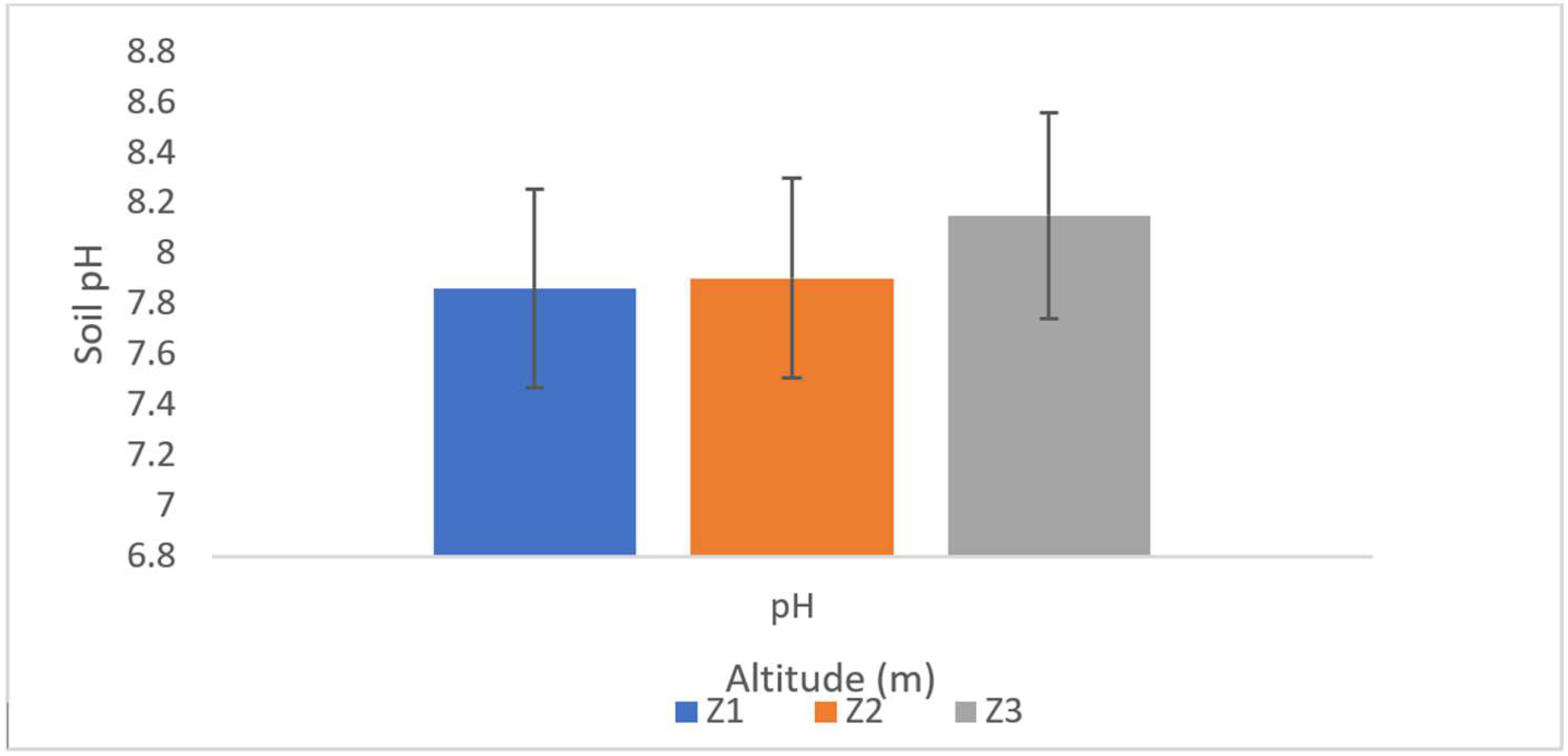
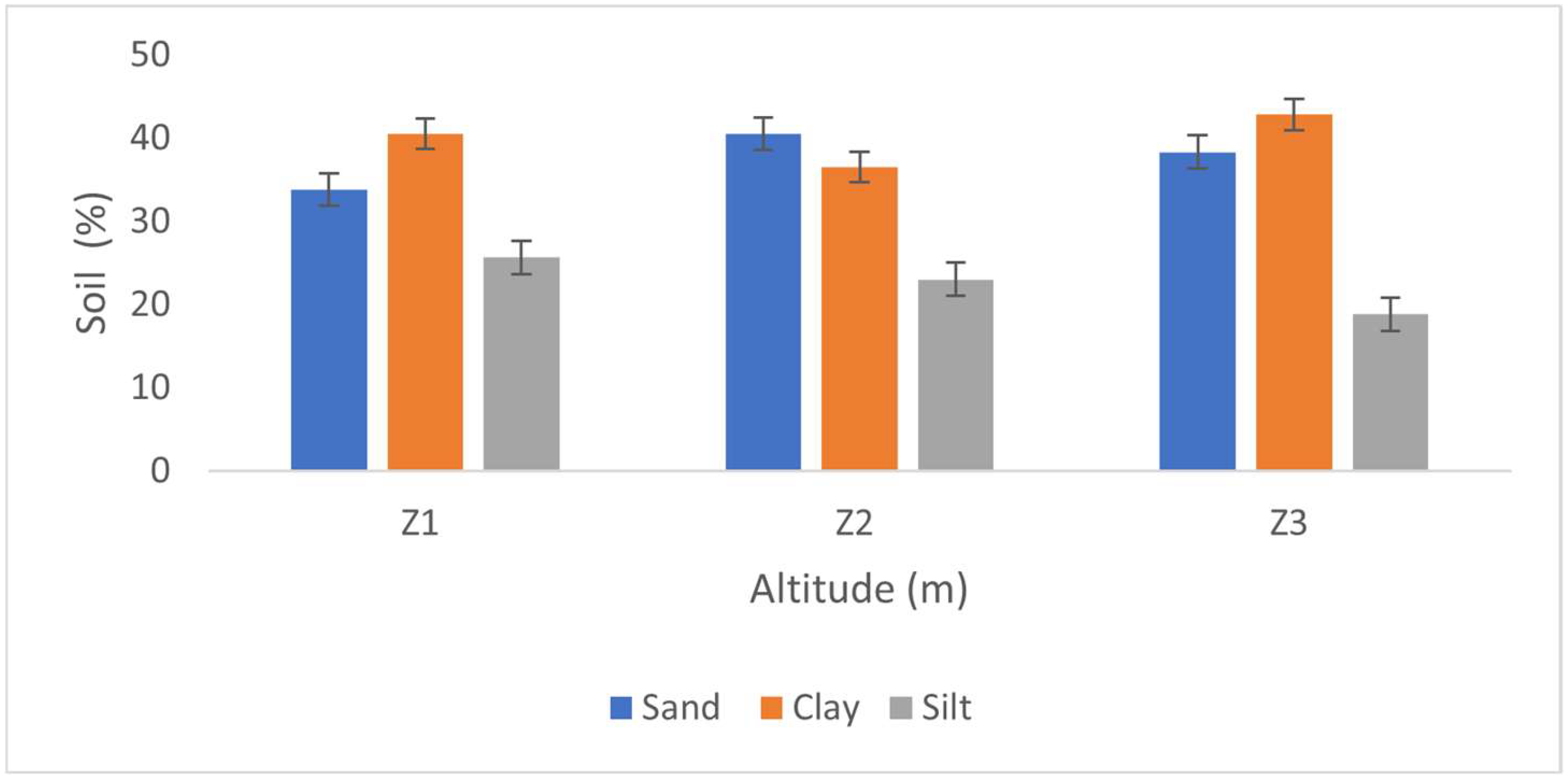
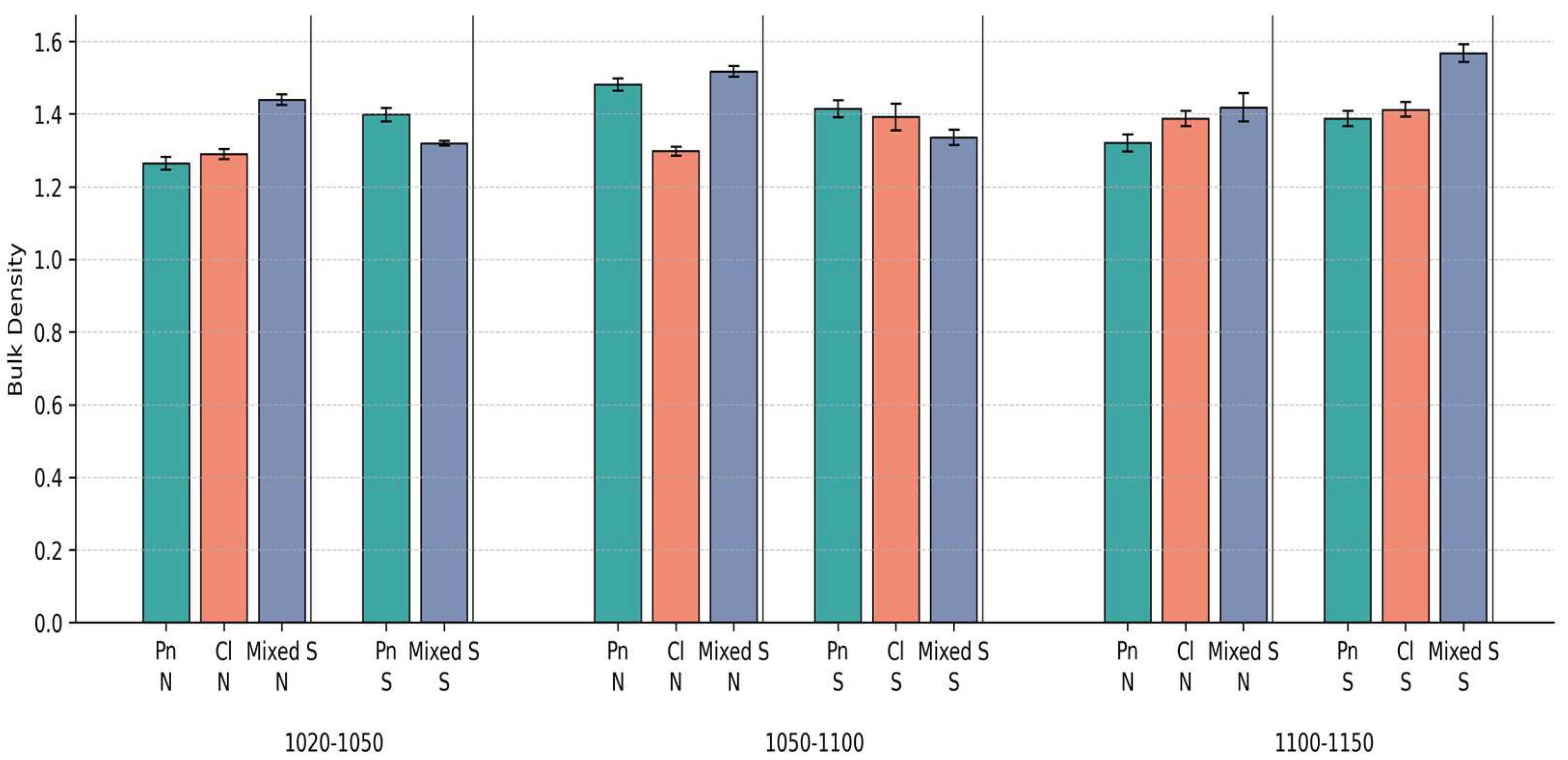
The findings are described below within the framework of the mean ± standard error values (Table 1 and Table 2) and the p-values of the accompanying sources of variation, reported according to the factorial design in a 3 × 2 × 3 × 3 randomized complete block design. In the tables, means denoted by different letters within the same factor level indicate a statistically significant difference at the 0.05 significance level. Regarding tree species, bulk density values were reported as 1.380 ± 0.011 for Black Pine (Pinus nigra), 1.356 ± 0.012 for Cedar (Cedrus libani), and 1.433 ± 0.015 for the Black Pine + Cedar mixture. At the aspect level, values of 1.379 ± 0.011 for shaded aspects and 1.402 ± 0.010 for sunny aspects were obtained. For altitude levels, values of 1.351 ± 0.011 were observed in the 1020–1050 m range, 1.406 ± 0.013 in the 1050–1100 m range, and 1.415 ± 0.014 in the 1100–1150 m range. At the depth level, values were reported as 1.448 ± 0.012 for the first depth, 1.379 ± 0.013 for the second, and 1.346 ± 0.011 for the third (Figure 2). Analysis of the sources of variation for bulk density revealed that the main effect of Aspect was significant (p = 0.015). Furthermore, the Tree Species × Aspect × Depth (p = 0.013) and Altitude × Aspect × Depth (p = 0.009) interactions were found to be significant; no significance at the 0.05 level was reported for other main effects or interactions. Soil pH values in the study area exhibit a limited but steady upward trend parallel to the increase in altitude (Figure 3). While the pH value was approximately 7.86 at the lowest altitude level, Z1 (1020–1050 m), it rose to 7.90 at the middle level, Z2 (1050–1100 m), and reached 8.15 at the highest altitude level, Z3 (1100–1150 m). The soil was found to be slightly alkaline across all levels. An increase in sand content was detected when moving from Z1 to Z2, while clay content reached its peak at the Z3 level (Figure 4). Despite the narrow altitudinal range (1020–1150 m), local topographic features promote site-specific environmental heterogeneity that deviates from general elevational trends. These variations appear to be driven primarily by inherent soil properties rather than broader atmospheric shifts. The changes observed along the altitudinal gradient clearly demonstrate the decisive role of topographic factors on pedogenic processes. The intensification of physical weathering at higher altitudes (Z3: 1100–1150 m) has accelerated the formation of fine materials, leading to peak clay accumulation. Conversely, the steady decrease in the silt fraction with increasing altitude suggests that fine materials undergo selective transport by factors such as surface runoff or wind, shifting the surface texture toward coarser fractions [40]. The dominance of sand at the surface, contrasting with the increased clay content in the lower layers, points to a typical pedogenic model associated with the illuviation process [41]. This clay accumulation, particularly in the Z3 region, is a direct consequence of altitude-dependent changes in water balance and percolation intensity [42]. These changes in physical structure are in full harmony with the chemical properties of the site. Contrary to the general trend in the literature, the detection of an increase in pH values—rather than basic cation leaching as altitude increases—is a reflection unique to the study area. While increased acidity is normally expected at high altitudes due to higher precipitation, the pH increase observed here can be attributed to the more intensive weathering of basic parent materials, such as limestone, at higher elevations [43]. Specifically, the rise in pH above 8.1 at the Z3 level confirms an increase in calcium carbonate (CaCO3) accumulation and base cation saturation at high altitudes [40]. This situation is also consistent with the high clay content identified, as fine-textured soils have a higher capacity to retain basic cations. Consequently, this slightly alkaline structure plays a modulating role in nitrogen mineralization and nutrient stocks in the region by directly affecting microbial activity and the rate of organic matter decomposition [42].

3.2. Changes in Soil Organic Carbon Stocks

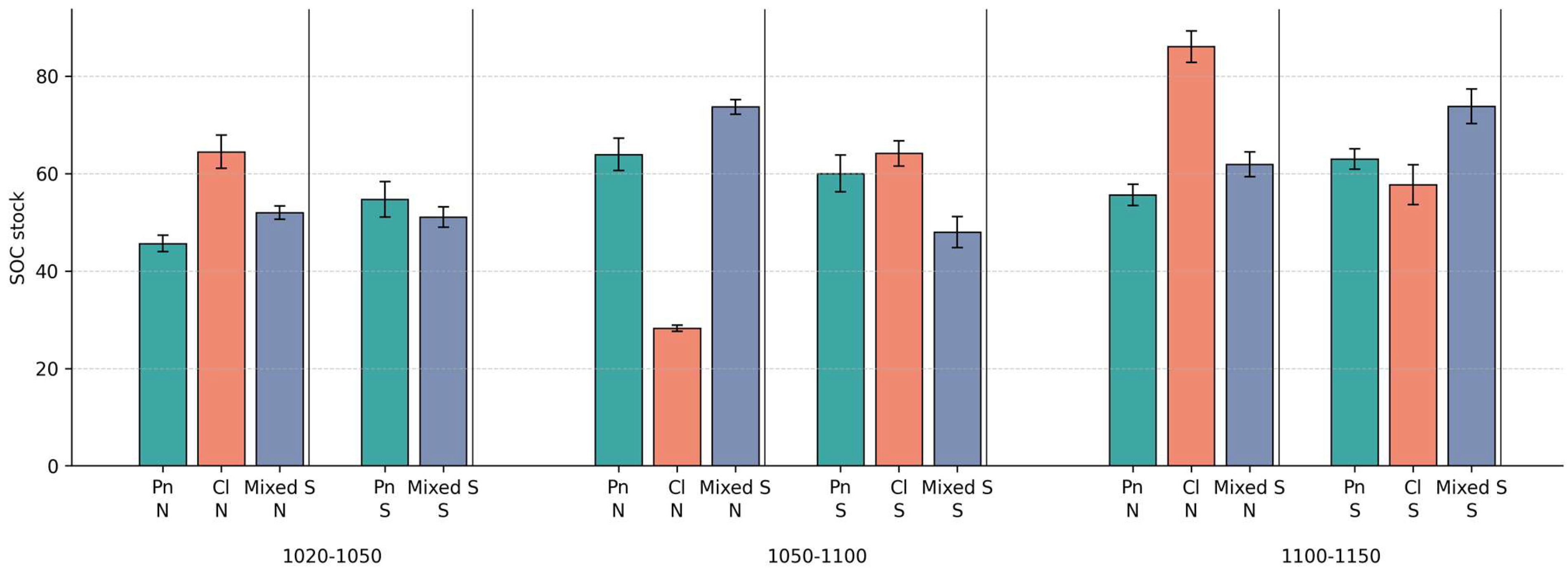
Regarding the SOC stock variable, values were reported as 56.79 ± 1.509 for Black Pine, 60.12 ± 3.088 for Cedar, and 60.06 ± 1.745 for the Black Pine + Cedar mixture at the tree species level. At the aspect level, values of 59.04 ± 1.904 (North aspect) and 58.57 ± 1.438 (South aspect) were observed. For altitude levels, values were determined as 53.74 ± 1.596 in the 1020–1050 m range, 56.34 ± 2.280 in the 1050–1100 m range, and 66.34 ± 1.866 in the 1100–1150 m range. At the depth level, values of 65.74 ± 1.790 for the first depth, 59.28 ± 1.927 for the second, and 51.39 ± 2.008 for the third were reported. Analysis of the sources of variation for SOC stock revealed that, in addition to the main effect of tree species (p = 0.004), the Altitude × Aspect (p < 0.001), Altitude × Depth (p < 0.001), and Altitude × Aspect × Depth (p = 0.016) interactions were statistically significant (Figure 5). The research findings demonstrate that SOC stocks vary at the tree species level among Black Pine (56.79 t ha−1), Cedar (60.12 t ha−1), and mixed stands (60.06 t ha−1), confirming that the main effect of tree species is statistically significant (p = 0.004). In the literature, differences in the soil carbon sequestration capacities of coniferous species such as Cedar (Cedrus libani) and Black Pine (Pinus nigra) are generally attributed to needle decomposition rates and microbial activity [44]. The higher SOC values exhibited particularly by Cedar stands can be explained by variations in root biomass and litter quality. When the altitude factor is examined, SOC stocks are seen to increase from 53.74 t ha−1 to 66.34 t ha−1 as the elevation rises from 1020 m to 1150 m. This is consistent with the principle that microbial decomposition slows down as a result of decreasing temperatures at higher altitudes, leading to the accumulation of organic matter in the soil [45]. The decrease observed across depth levels (from 65.74 t ha−1 to 51.39 t ha−1) is a typical characteristic of forest soils, resulting from the concentration of fresh organic matter input in the upper layers [46]. The most striking finding of the study is the complex interactions affecting SOC stocks; specifically, the Altitude × Aspect (p < 0.001) and Altitude × Depth (p < 0.001) interactions demonstrate how topographic factors modulate SOC dynamics through microclimate. Small differences at the aspect level (Shaded: 59.04; Sunny: 58.57) become significant when combined with altitude and depth factors. Recent studies emphasize that high-altitude northern aspects serve as “hotspots” for carbon accumulation due to their moisture retention capacity [47]. Consequently, these data confirm that SOC stocks are managed by synergistic effects along the altitude-aspect-depth gradient rather than by individual variables alone.

3.3. Changes in Soil Nitrogen Stocks

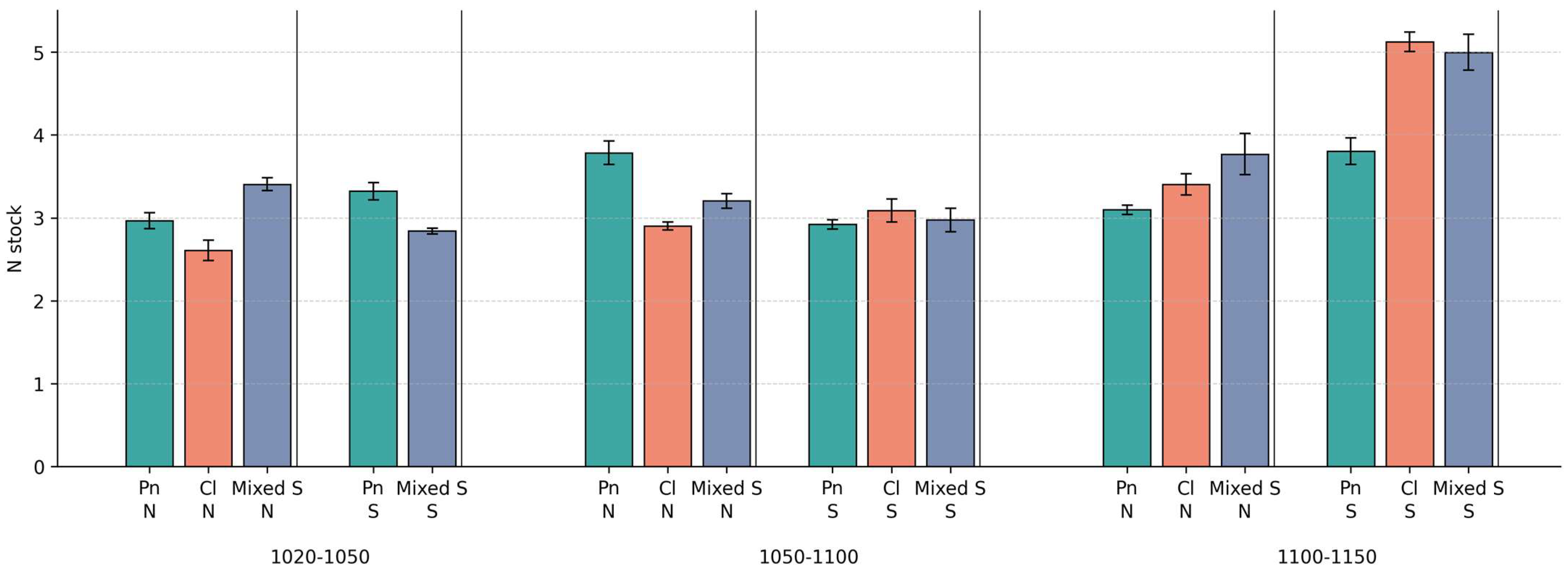
The research findings reveal that soil N stocks exhibit significant differences (p < 0.05) at the tree species level among Black Pine (3.316 t ha−1), Cedar (3.425 t ha−1), and mixed stands (3.531 t ha−1) (Figure 6). The higher N stock observed particularly in mixed stands is explained in the literature by “complementary resource use” and the “mixed litter effect”; the combination of needle litter from different species can enhance soil nitrogen accumulation by generalizing decomposition rates and nutrient cycling [48,49]. Regarding the aspect factor, it is noteworthy that sunny aspects (3.599 t ha−1) harbor higher N stocks compared to shaded aspects (3.237 t ha−1). This situation can be attributed to higher soil temperatures on sunny aspects, which accelerate microbial mineralization processes [50]. Along the altitudinal gradient, the distinct increase in N stocks from 3.077 t ha−1 to 4.032 t ha−1 when ascending from 1020 m to 1150 m is consistent with the principle that organic matter decomposition slows down due to decreasing temperatures at high altitudes, leading to a greater accumulation of nitrogen in organic forms [51]. The decrease observed across the soil profile (from 3.567 to 3.267 t ha−1) is a natural consequence of the concentration of organic material—the primary source of nitrogen—in the upper soil layers [52]. The multiple interactions identified in the study (e.g., Tree Species × Altitude × Aspect × Depth) prove that nitrogen dynamics cannot be explained by a single factor alone; rather, they result from the synergistic effect of microclimate and vegetation. Recent studies emphasize that such complex interactions are the primary elements governing the nutrient budget, especially in Mediterranean ecosystems [47].

3.4. Soil P and K Stocks in the Studied Soils

The pronounced variability of phosphorus (P) and potassium (K) stocks across elevation and soil depth suggests that these macronutrients are governed by distinct topographic and pedogenic controls. In the studied ecosystem, soil phosphorus stocks (P stock) exhibit dynamic changes under the influence of environmental and biotic factors. According to the results, the highest P stock values were identified in mixed stands of Black Pine and Cedar (0.948 ± 0.016), which were statistically higher than the pure stands of either species. Regarding the aspect factor, shaded aspects (0.872 ± 0.016) possessed higher phosphorus stocks compared to sunny aspects. This trend can be attributed to the low temperature and high moisture conditions on northern slopes, which facilitate phosphorus retention within the system by slowing down the decomposition of organic matter. The linear increase observed in P stock values along the altitudinal gradient further confirms the suppressive effect of decreasing temperatures on mineralization at higher elevations. The lowest stock values were recorded in the 1020–1050 m range (0.785 ± 0.021), while this figure rose to 0.896 ± 0.016 in the 1100–1150 m range. Differences between depth levels reflect the limited mobility of phosphorus within the soil profile; the highest accumulation occurred in the topsoil layer (0.888 ± 0.019), where vegetation-derived organic input and biological cycling are most intensive. The decreasing stock amounts with depth verify the tendency of phosphorus to accumulate at the surface in forest soils and highlight the topsoil’s role as a primary nutrient reservoir through the P stock parameter.
In the examined forest ecosystem, soil potassium stocks (K stock) exhibited statistically significant variations depending on tree species and altitude. At the tree species level, the highest potassium accumulation was identified in Black Pine + Cedar mixed stands (24.65 ± 0.611 t ha−1), which was found to be statistically higher than that of pure Black Pine (22.99 ± 0.348 t ha−1) and pure Cedar (18.81 ± 0.533 t ha−1) stands (p < 0.05). This pronounced difference between species indicates that the biological cycling of potassium is enhanced in mixed stands through the “niche complementarity” mechanism [53,54]. Along the altitudinal gradient, K stock values were at their lowest at the minimum elevation level (21.35 ± 0.540 t ha−1), while they showed a marked increase at the 1100–1150 m altitude level, reaching 23.80 ± 0.780 t ha−1. This increase at higher altitudes is likely associated with lower temperatures slowing the leaching rate of potassium and increasing organic matter stabilization. Conversely, no statistically significant main effect of aspect or soil depth was observed on K stock; it was determined that values exhibited a relatively homogeneous distribution throughout the profile (ranging from 22.76 to 22.04 t ha−1).

3.5. Changes in Soil Macronutrient Stoichiometry

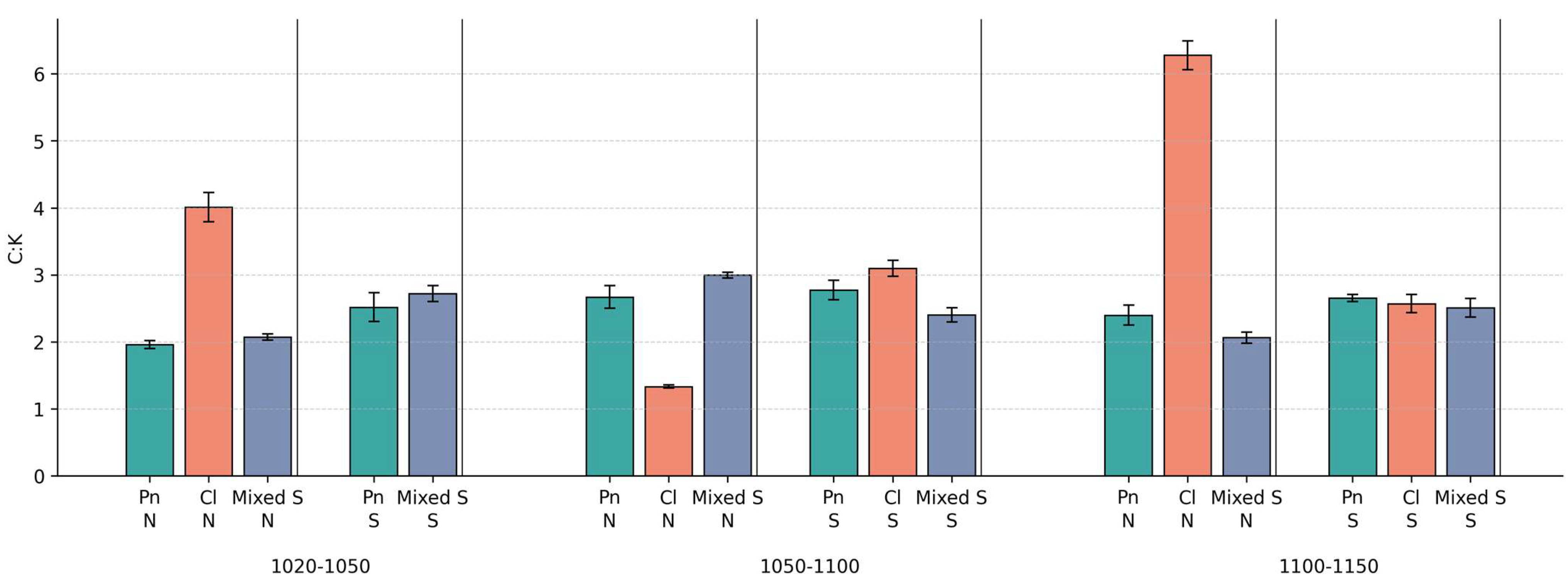
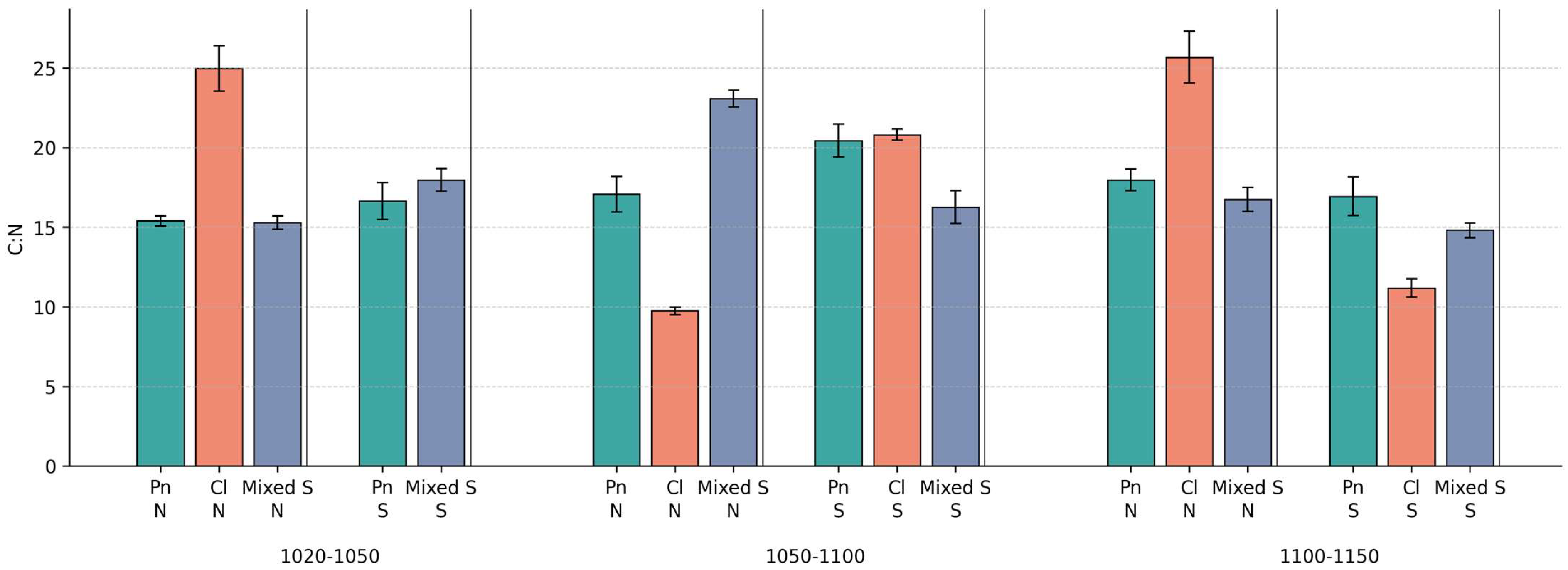
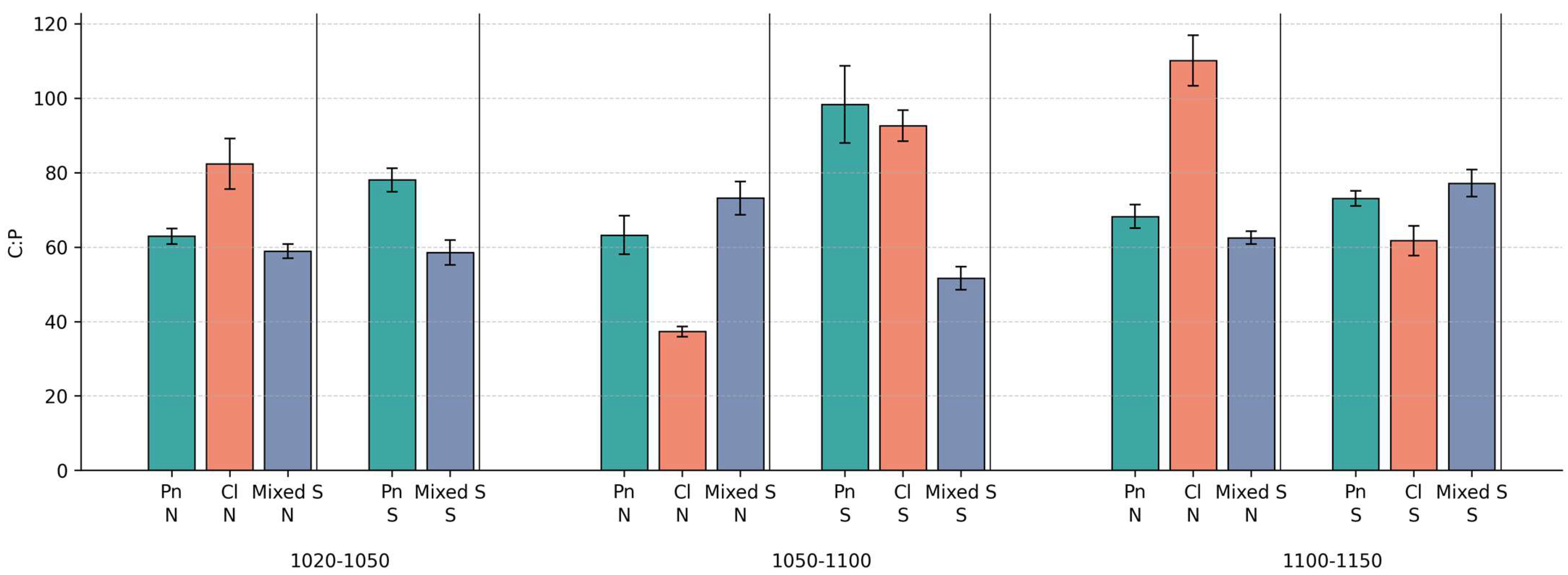
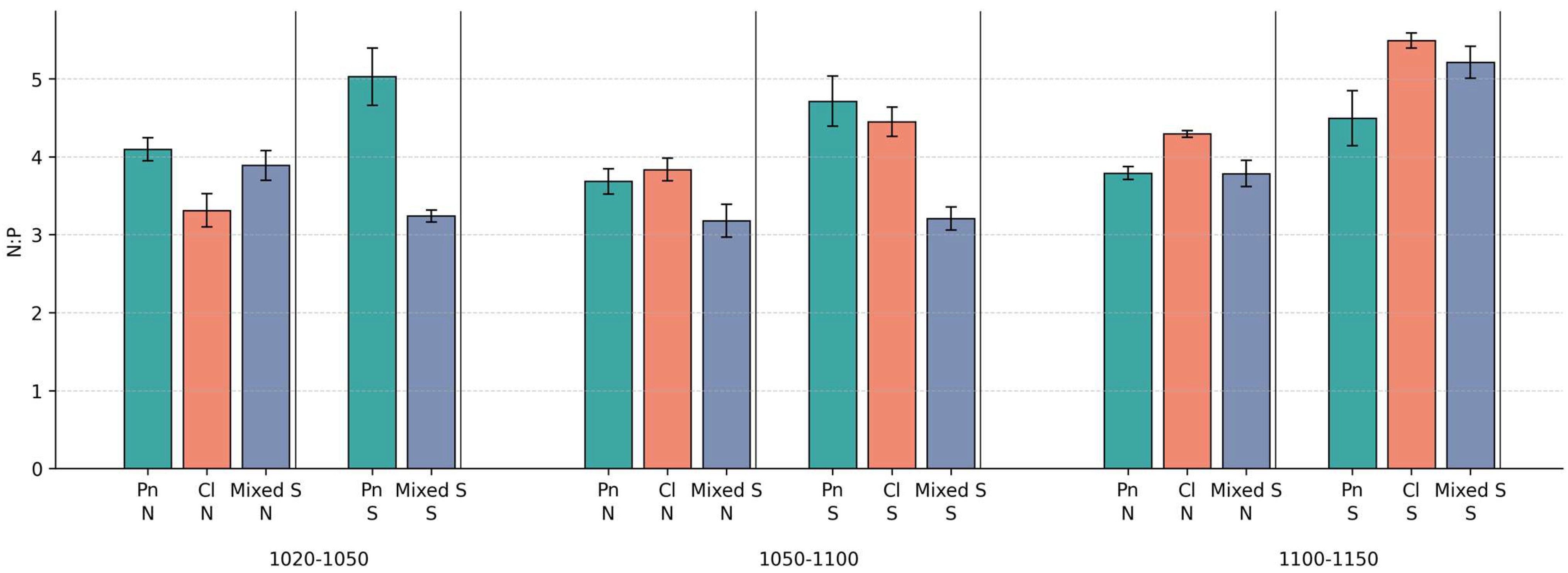
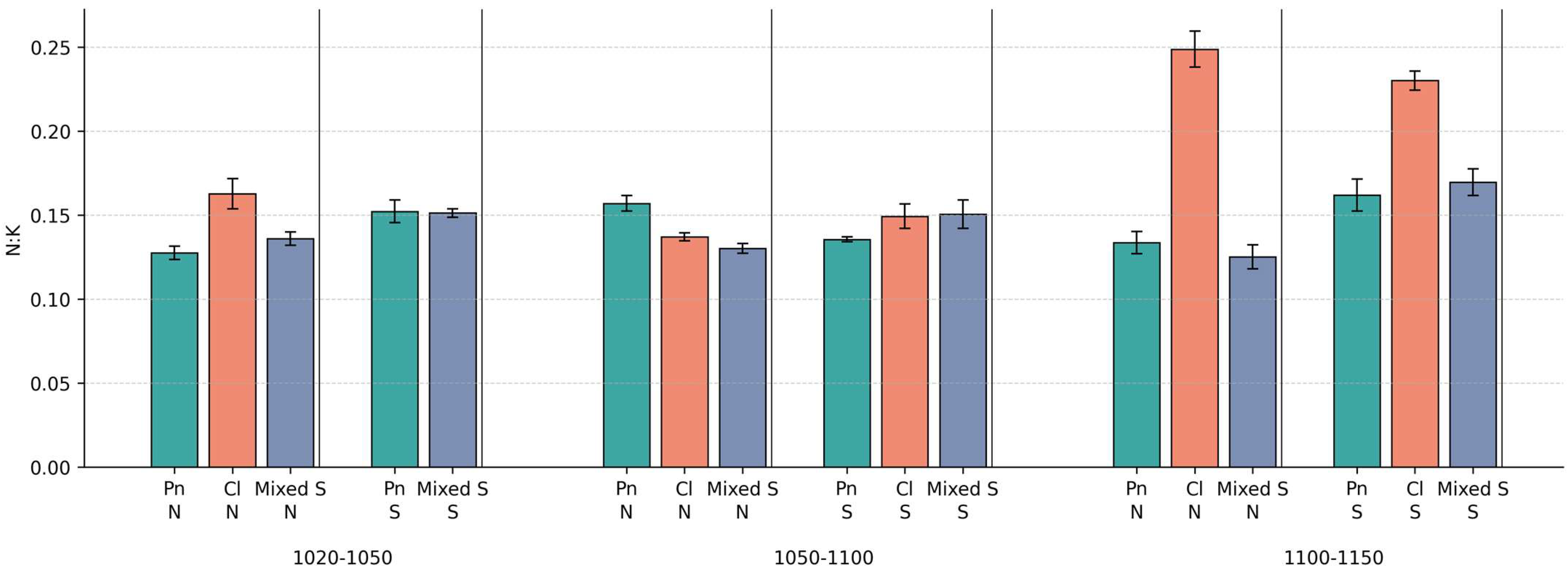
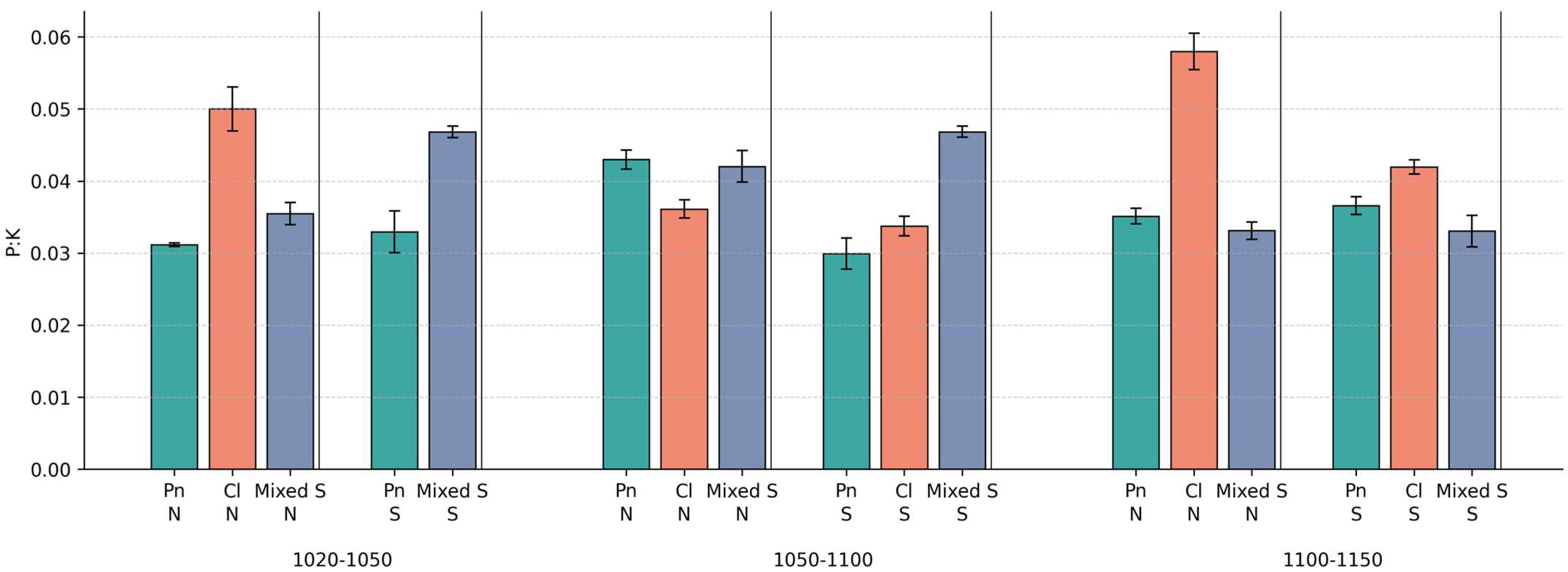
In the examined forest area, the ratios of carbon to macronutrients (C:K, C:N, C:P) reflect the ecosystem’s biomass production efficiency and decomposition potential. According to the research findings, all main factors as well as multiple interactions such as Altitude × Aspect and Altitude × Depth were statistically significant for the C:K ratio (p < 0.05) (Figure 7). At the species level, the highest C:K ratio was recorded in Cedar stands (3.457 ± 0.258), while Black Pine and mixed stands exhibited lower values. This indicates that Cedar possesses a higher carbon storage capacity per unit of potassium or that potassium follows a more restricted cycle in these areas. Furthermore, the peak of the C:K ratio at the highest altitude level (3.079 ± 0.205) and in the topsoil (3.029 ± 0.141) demonstrates that the mobility of potassium in the biological cycle is concentrated at upper elevations and organic input points. Regarding the C:N ratio analysis, complex relationships ranging from main effects (p = 0.004) to four-way interactions (Tree Species × Altitude × Aspect × Depth, p = 0.004) were identified (Figure 8). The C:N ratios, which ranged within a narrow interval (17.29–18.48) across stand types, reflect that organic matter decomposition and nitrogen mineralization proceed at a stable rate in the study area. However, the decline of the C:N ratio from 18.82 to 16.36 with increasing depth indicates a more advanced stage of humification in the lower soil layers, where nitrogen is preserved in more stable forms despite the reduction in carbon. For the C:P ratio, the statistical significance being limited to the Altitude × Aspect × Depth interaction (p = 0.010) highlights the sensitivity of phosphorus to topography and moisture regimes. The low C:P value identified in Black Pine + Cedar mixed stands (63.62 ± 1.725) points toward a more efficient phosphorus economy and a more favorable nutrient balance for microbial decomposition compared to pure stands (Figure 9). Consequently, these stoichiometric parameters reveal that mixed forest structures enhance nutrient use efficiency and that environmental factors (aspect and altitude) directly modulate nutrient limitations throughout the soil profile. The N:P, N:K, and P:K ratios, reflecting the stoichiometric balance of nutrients in the forest ecosystem, exhibited statistically significant variations across all main factors and numerous interaction levels. For the N:P ratio, all main effects of Tree Species, Altitude, Aspect, and Depth were significant (p < 0.05), along with two-way and higher-order interactions such as Tree Species × Altitude, Tree Species × Aspect, and Altitude × Aspect (Figure 10). Specifically, the value of 4.540 recorded on sunny aspects, compared to 3.762 on shaded aspects, reveals a more dominant accumulation or plant uptake of nitrogen relative to phosphorus. Similarly, for the N:K ratio, significance at the 0.05 level was reported for all main factors and most two/three/four-way interactions (Figure 11). The upward trend in N:K and P:K ratios observed with increasing altitude (1100–1150 m) confirms that while potassium (K) decreases due to leaching or consumption processes at high altitudes, nitrogen (N) and phosphorus (P) are preserved in more stable forms due to the effect of low temperatures. Analysis of P:K ratio data showed that tree species, depth, and multiple interactions (e.g., Tree Species × Altitude, Altitude × Aspect) were significant at the p < 0.05 level (Figure 12). Conversely, the variations in total phosphorus stock (P stock being limited only to the Tree Species × Depth interaction (p = 0.024)) suggest that phosphorus accumulation is sensitive to the specific interaction between stand types and soil layers. Considering the vertical distribution, the decrease in C:N and C:P ratios with depth proves that nitrogen and phosphorus are more densely present in mineral forms in the lower layers despite the drop in carbon. This demonstrates that the humification process is more advanced in lower depths compared to upper layers and that mineral soil layers serve a critical function as nutrient reservoirs. The ratios of carbon to nutrients (C:K, C:N, C:P) provide fundamental indicators of biomass production strategies and organic matter decomposition rates. The high C:K ratios found in Cedar stands are consistent with the adaptation of coniferous species to use limited potassium resources more efficiently in biomass production, as noted by Sardans et al. [55]. The peak of the C:K ratio at high altitudes and in the topsoil results from the restriction of potassium mobility in the biological cycle due to low temperatures slowing microbial mineralization, as emphasized by Maaroufi and De Long [56]. The C:N ratios (17.29–18.48) remaining within a narrow range in the study area stay below the critical threshold (<20) suggested for global forest soils by Gong et al. [57], proving that net nitrogen mineralization proceeds at a stable rate. The decrease in the C:N ratio with depth indicates that nitrogen is preserved in more stable forms within humic structures (humification) despite the consumption of carbon through microbial respiration in lower layers [11,34].
The fact that stoichiometric balances such as N:P, N:K, and P:K are influenced by all main factors reveals the high sensitivity of the ecosystem to environmental changes. The higher N:P ratio observed on sunny aspects indicates that increased solar radiation stimulates the nitrogen cycle more than the phosphorus cycle, as noted by Zhang et al. [58]. The increasing trend of N:K and P:K ratios at high altitudes supports recent findings suggesting that nitrogen and phosphorus are better preserved within the soil profile under cold climatic conditions, in contrast to the loss of potassium through leaching [59]. Consequently, the interaction between topography and stand structure directly modulates the function of forest soils as nutrient reservoirs along the vertical profile.

4. Conclusions

This study comprehensively demonstrates how soil physicochemical properties and nutrient stocks in forest ecosystems are shaped along environmental gradients such as tree species, altitude, aspect, and soil depth. The findings prove that topographic factors and stand structure do not merely act as isolated variables; instead, they modulate soil fertility and carbon sequestration capacity through complex interactions (Altitude × Aspect × Depth). One of the most fundamental outcomes of the research is the determination that mixed stands of Black Pine and Cedar possess higher nitrogen (N) and phosphorus (P) stocks compared to pure stands. This supports the “Niche Complementarity Hypothesis” and indicates that species diversity plays a critical role in increasing ecosystem resilience by optimizing nutrient cycling. Furthermore, the concentration of SOC stocks at higher altitudes and in the upper soil layers emphasizes the stabilization (sequestration) of carbon within the soil profile due to temperature limitations. Evaluations based on stoichiometric ratios (C:N:P:K) reveal that the study area generally exhibits a nitrogen-limited character and that microbial decomposition processes present a dynamic structure depending on topographic position. In particular, the high nitrogen mineralization on sunny aspects and the superior potassium use efficiency in Cedar stands highlight the importance of species-site compatibility. In conclusion, sustainable management of forest ecosystems and strategies for combating climate change must consider not only carbon quantities but also nutrient stoichiometry and interspecific interactions. This study suggests that preserving mixed forest structures is of vital importance for ecological sustainability and recommends that micro-climatic variables (aspect and altitude) must be integrated into afforestation activities.

Funding

This research received no external funding.

Institutional Review Board Statement

Not applicable.

Informed Consent Statement

Not applicable.

Data Availability Statement

The original contributions presented in this study are included in the article. Further inquiries can be directed to the corresponding author.

Acknowledgments

I would like to thank Kastamonu University Central Research Laboratory for the use of the Eurovector EA3000-Single CNH-S elemental and Spectro Xepos II model X-ray fluorescence spectrometer analysis device.

Conflicts of Interest

The author declares no conflicts of interest.

References

  1. Lal, R. Soil carbon sequestration impacts on global climate change and food security. Science 2004, 304, 1623–1627. [Google Scholar] [CrossRef]
  2. Pan, Y.; Birdsey, R.A.; Fang, J.; Houghton, R.; Kauppi, P.E.; Kurz, W.A.; Phillips, O.L.; Shvidenko, A.; Lewis, S.L.; Canadell, J.G.; et al. A large and persistent carbon sink in the world’s forests. Science 2011, 333, 988–993. [Google Scholar] [CrossRef]
  3. Schlesinger, W.H.; Bernhardt, E.S. Biogeochemistry: An Analysis of Global Change, 3rd ed.; Academic Press: Waltham, MA, USA, 2013. [Google Scholar]
  4. Sterner, R.W.; Elser, J.J. Ecological Stoichiometry: The Biology of Elements from Molecules to the Biosphere; Princeton University Press: Princeton, NJ, USA, 2002. [Google Scholar]
  5. Elser, J.J.; Fagan, W.F.; Kerkhoff, A.J.; Swenson, N.G.; Enquist, B.J. Biological stoichiometry of plant production: Metabolism, scaling and ecological response to global change. New Phytol. 2010, 186, 593–608. [Google Scholar] [CrossRef] [PubMed]
  6. Tian, H.; Chen, G.; Zhang, C.; Melillo, J.M.; Hall, C.A.S. Pattern and variation of C:N:P ratios in China’s soils: A synthesis of observational data. Biogeochemistry 2010, 98, 139–151. [Google Scholar] [CrossRef]
  7. Cleveland, C.C.; Liptzin, D. C:N:P stoichiometry in soil: Is there a “Redfield ratio” for the microbial biomass? Biogeochemistry 2007, 85, 235–252. [Google Scholar] [CrossRef]
  8. Güsewell, S. N:P ratios in terrestrial plants: Variation and functional significance. New Phytol. 2004, 164, 243–266. [Google Scholar] [CrossRef]
  9. Yuan, J.; Cheng, F.; Zhu, X.; Li, J.; Zhang, S. Respiration of downed logs in pine and oak forests in the Qinling Mountains, China. Soil Biol. Biochem. 2018, 127, 19–29. [Google Scholar] [CrossRef]
  10. Qi, K.; Pang, X.; Yang, B.; Bao, W. Soil carbon, nitrogen and phosphorus ecological stoichiometry shifts with tree species in subalpine plantations. PeerJ 2020, 8, e9702. [Google Scholar] [CrossRef]
  11. Lu, M.; Zeng, F.; Lv, S.; Zhang, H.; Zeng, Z.; Peng, W.; Song, T.; Wang, K.; Du, H. Soil C:N:P stoichiometry and its influencing factors in forest ecosystems in southern China. Front. For. Glob. Change 2023, 6, 1142933. [Google Scholar] [CrossRef]
  12. Jenny, H. Factors of Soil Formation: A System of Quantitative Pedology; Dover Publications: New York, NY, USA, 1994. [Google Scholar]
  13. Moore, I.D.; Gessler, P.E.; Nielsen, G.A.; Peterson, G.A. Soil attribute prediction using terrain analysis. Soil Sci. Soc. Am. J. 1993, 57, 443–452. [Google Scholar] [CrossRef]
  14. Körner, C. The use of ‘altitude’ in ecological research. Trends Ecol. Evol. 2007, 22, 569–574. [Google Scholar] [CrossRef]
  15. Jia, C.; Wu, G.; Lu, Y.; Qin, H.; Jiang, K.; Huang, W.; Che, X. Stoichiometry characteristics of carbon, nitrogen and phosphorus of soil profiles at different altitudes in Luofu Mountain, Guangdong. Pol. J. Environ. Stud. 2023, 32, 1587–1598. [Google Scholar] [CrossRef]
  16. Sariyildiz, T.; Savaci, G.; Parlak, S.; Gencal, B. Effects of aspect and elevation on soil organic carbon and nutrient element stocks in Uludağ fir (Abies nordmanniana subsp. bornmülleriana) stands. Artvin Çoruh Univ. J. For. Fac. 2022, 23, 159–174. [Google Scholar]
  17. Wu, C.L.; Luo, A.R.; Zhou, C. Variation characteristics of forest soil nutrients and their ecological stoichiometry in Sejıla Mountaıns of southeast Tibet, China. Appl. Ecol. Environ. Res. 2023, 21, 681–697. [Google Scholar] [CrossRef]
  18. Lv, X.; Jia, G.; Yu, X.; Niu, L. Vegetation and topographic factors affecting SOM, SOC, and N contents in a mountainous watershed in North China. Forests 2022, 13, 742. [Google Scholar] [CrossRef]
  19. Dang, Y.; Zhou, H.; Zhao, W.; Cui, Y.; Tan, C.; Ding, F.; Wang, Y.; Liu, R.; Wu, P. Soil stoichiometric characteristics and influencing factors in karst forests under micro-topography and microhabitat scales. EGUsphere 2025. preprint. [Google Scholar] [CrossRef]
  20. Yüksek, T.; Yüksek, F. Effects of altitude, aspect, and soil depth on carbon stocks and properties of soils in a tea plantation in the humid Black Sea region. Land Degrad Dev. 2021, 32, 4267–4276. [Google Scholar] [CrossRef]
  21. Göl, C. Influences of slope aspects on soil properties of Anatolian black pine forests in the semiarid region of Turkey. Anatol. J. For. Res. 2022, 8, 17–24. [Google Scholar] [CrossRef]
  22. General Directorate of Mineral Research and Exploration (MTA). Geological Maps of Turkey and Explanatory Reports: Kızılırmak Basin and Surrounding Areas; MTA Publications: Ankara, Türkiye, 2023. [Google Scholar]
  23. De Martonne, E. L’indice d’aridité. Ann. Géogr. 1926, 35, 449–459. [Google Scholar] [CrossRef]
  24. Blake, G.R.; Hartge, K.H. Bulk density. In Methods of Soil Analysis: Part 1—Physical and Mineralogical Methods, 2nd ed.; Klute, A., Ed.; Soil Science Society of America: Madison, WI, USA, 1986; pp. 363–375. [Google Scholar] [CrossRef]
  25. Guitian, F.; Carballas, T. Técnicas de Análisis de Suelos; Pico Sacro: Santiago de Compostela, Spain, 1976. [Google Scholar]
  26. Gee, G.W.; Bauder, J.W. Particle-size analysis by hydrometer: A simplified method for routine textural analysis and a sensitivity test of measurement parameters. Soil Sci. Soc. Am. J. 1979, 43, 1004–1007. [Google Scholar] [CrossRef]
  27. United States Department of Agriculture (USDA). Keys to Soil Taxonomy, 11th ed.; USDA-Natural Resources Conservation Service: Washington, DC, USA, 2010. [Google Scholar]
  28. Nelson, D.W.; Sommers, L.E. Total carbon, organic carbon, and organic matter. In Methods of Soil Analysis: Part 3—Chemical Methods; Sparks, D.L., Page, A.L., Helmke, P.A., Loeppert, R.H., Eds.; Soil Science Society of America: Madison, WI, USA, 1996; pp. 961–1010. [Google Scholar] [CrossRef]
  29. Bremner, J.M. Nitrogen—Total. In Methods of Soil Analysis: Part 3—Chemical Methods; Sparks, D.L., Ed.; Soil Science Society of America: Madison, WI, USA, 1996; pp. 1085–1121. [Google Scholar] [CrossRef]
  30. ISO 10694:1995; Soil Quality—Determination of Organic and Total Carbon after Dry Combustion (Elementary Analysis). ISO: Geneva, Switzerland, 1995.
  31. ISO 13878:1998; Soil Quality—Determination of Total Nitrogen Content by Dry Combustion (“Elemental Analysis”). ISO: Geneva, Switzerland, 1998.
  32. Lee, W.; Wu, J.; Lee, Y.; Sneddon, J. Recent applications of laser-induced breakdown spectrometry: A review of material approaches. Appl. Spectrosc. Rev. 2004, 39, 27–97. [Google Scholar] [CrossRef]
  33. Towett, E.K.; Shepherd, K.D.; Cadisch, G. Quantification of total element concentrations in soils using total X-ray fluorescence spectroscopy (TXRF). Sci. Total Environ. 2013, 463–464, 374–388. [Google Scholar] [CrossRef] [PubMed]
  34. Batjes, N.H. Total carbon and nitrogen in the soils of the world. Eur. J. Soil Sci. 1996, 47, 151–163. [Google Scholar] [CrossRef]
  35. Ellert, B.H.; Bettany, J.R. Calculation of organic matter and nutrients stored in soils under contrasting management regimes. Can. J. Soil Sci. 1995, 75, 529–538. [Google Scholar] [CrossRef]
  36. Lee, J.; Hopmans, J.W.; Rolston, D.E.; Baer, S.G.; Six, J. Determining soil carbon stock changes: Simple bulk density corrections fail. Agric. Ecosyst. Environ. 2009, 134, 251–256. [Google Scholar] [CrossRef]
  37. Schlesinger, W.H.; Andrews, J.A. Soil respiration and the global carbon cycle. Biogeochemistry 2000, 48, 7–20. [Google Scholar] [CrossRef]
  38. Berg, B.; McClaugherty, C. Plant Litter: Decomposition, Humus Formation, Carbon Sequestration; Springer: Berlin, Germany, 2003. [Google Scholar]
  39. IBM Corp. IBM SPSS Statistics for Windows, Version 29.0; IBM Corp: Armonk, NY, USA, 2022; Available online: https://www.ibm.com/products/spss-statistics (accessed on 20 January 2026).
  40. Jiang, L.; He, Z.; Liu, J.; Xing, C.; Gu, X.; Wei, C.; Zhu, J.; Wang, X. Elevation Gradient Altered Soil C, N, and P Stoichiometry of Pinus taiwanensis Forest on Daiyun Mountain. Forests 2019, 10, 1089. [Google Scholar] [CrossRef]
  41. Zhang, B.; Xu, C.; Zhang, Z.; Hu, C.; Zhong, C.; Chen, S.; Hu, G. Elevational patterns of soil organic carbon and its fractions in tropical seasonal rainforests in karst peak-cluster depression region. Front. Plant Sci. 2024, 15, 1424891. [Google Scholar] [CrossRef]
  42. Sardans, J.; Peñuelas, J. Potassium Control of Plant Functions: Ecological and Agricultural Implications. Plants 2021, 10, 419. [Google Scholar] [CrossRef]
  43. Li, Y.; Han, J.; Wang, S.; Brandle, J.; Lian, J.; Luo, Y.; Zhang, F. Soil organic carbon and total nitrogen storage under different land uses in the Naiman Banner, a semiarid degraded region of Northern China. Can. J. Soil Sci. 2014, 94, 9–20. [Google Scholar] [CrossRef]
  44. Tolunay, D. Total carbon stocks and carbon accumulation in living tree biomass in forest ecosystems of Turkey. Turk. J. Agric. For. 2011, 35, 265–279. [Google Scholar] [CrossRef]
  45. Tashi, S.; Singh, B.; Keitel, C.; Adams, M. Soil carbon and nitrogen stocks in forests along an altitudinal gradient in the eastern Himalayas and a meta-analysis of global data. Glob. Change Biol. 2016, 22, 2255–2268. [Google Scholar] [CrossRef] [PubMed]
  46. Jobbágy, E.G.; Jackson, R.B. The vertical distribution of soil organic carbon and its relation to climate and vegetation. Ecol. Appl. 2000, 10, 423–436. [Google Scholar] [CrossRef]
  47. Schillaci, C.; Saia, S.; Acutis, M. Modelling of Soil Organic Carbon in the Mediterranean area: A systematic map. Rend. Online Soc. Geol. It. 2018, 46, 161–166. [Google Scholar] [CrossRef]
  48. Sayyad, E.; Hosseini, S.M.; Mokhtari, J.; Mahdavi, R.; Jalali, S.G.; Akbarinia, M.; Tabari, M. Comparison of growth, nutrition and soil properties of pure and mixed stands of Populus deltoides and Alnus subcordata. Silva Fenn. 2006, 40, 27–35. [Google Scholar] [CrossRef]
  49. Hilmers, T.; Mehtätalo, L.; Bielak, K.; Brazaitis, G.; del Río, M.; Ruiz-Peinado, R.; Schmied, G.; Uhl, E.; Pretzsch, H. Towards resource-efficient forests: Mixing species changes crown biomass allocation and improves growth efficiency. Plants People Planet 2024, 6, 117–132. [Google Scholar] [CrossRef]
  50. Guckland, A.; Jacob, M.; Flessa, H.; Thomas, F.M.; Leuschner, C. Acidity, nutrient stocks, and organic matter content in soils of a temperate deciduous forest with different abundance of European beech (Fagus sylvatica L.). J. Plant Nutr. Soil Sci. 2009, 172, 500–511. [Google Scholar] [CrossRef]
  51. Abebe, G.; Tsunekawa, A.; Haregeweyn, N.; Takeshi, T.; Wondie, M.; Adgo, E.; Masunaga, T.; Tsubo, M.; Ebabu, K.; Berihun, M.L.; et al. Effects of Land Use and Topographic Position on Soil Organic Carbon and Total Nitrogen Stocks in Different Agro-Ecosystems of the Upper Blue Nile Basin. Sustainability 2020, 12, 2425. [Google Scholar] [CrossRef]
  52. Jobbágy, E.G.; Jackson, R.B. The distribution of soil nutrients with depth: Global patterns and the imprint of plants. Biogeochemistry 2001, 53, 51–77. [Google Scholar] [CrossRef]
  53. Loreau, M.; Hector, A. Partitioning selection and complementarity in biodiversity experiments. Nature 2001, 412, 72–76. [Google Scholar] [CrossRef]
  54. Hooper, D.U.; Chapin, F.S.; Ewel, J.J.; Hector, A.; Inchausti, P.; Lavorel, S.; Lawton, J.H.; Lodge, D.M.; Loreau, M.; Naeem, S.; et al. Effects of biodiversity on ecosystem functioning: A consensus of current knowledge. Ecol. Monogr. 2005, 75, 3–35. [Google Scholar] [CrossRef]
  55. Sardans, J.; Peñuelas, J.; Coll, M.; Vayreda, J.; Rivas-Ubach, A. Stoichiometry of potassium is largely determined by water availability and growth in Catalonian forests. Funct. Ecol. 2012, 26, 1077–1089. [Google Scholar] [CrossRef]
  56. Maaroufi, N.I.; De Long, J.R. Global Change Impacts on Forest Soils: Linkage Between Soil Biota and Carbon-Nitrogen-Phosphorus Stoichiometry. Front. For. Glob. Change 2020, 3, 16. [Google Scholar] [CrossRef]
  57. Gong, H.; Sardans, J.; Huang, H.; Yan, Z.; Wang, Z.; Penuelas, J. Global patterns and controlling factors of tree bark C:N:P stoichiometry in forest ecosystems consistent with biogeochemical niche hypothesis. New Phytol. 2024, 244, 1303–1314. [Google Scholar] [CrossRef]
  58. Zhang, X.; Zhang, L.; Wang, Z.; Wang, J. Reviews and syntheses: Ecological Stoichiometry of Carbon, Nitrogen, and Phosphorus in Shrubs and Shrublands. EGUsphere 2025. preprint. [Google Scholar] [CrossRef]
  59. Bin, H.; Li, Q.; Zhang, P.; Li, W.; Xue, X.; Zou, S.; Zhang, Q. Effects of Elevation on Ecological Stoichiometry of Plant Leaves, Litter, and Soils in Pseudotsuga sinensis Forest in the Karst Mountain region, Southwest China. J. Soil Sci. Plant Nutr. 2022, 22, 3582–3597. [Google Scholar] [CrossRef]
Figure 1. Representation of the study area on the map of Türkiye and Altitude of the Study Area.
Sustainability 18 01560 g001
Figure 2. Variation of soil bulk density values according to different combinations of tree species, altitude, and aspect.
Sustainability 18 01560 g002
Figure 3. Changes in soil pH values according to different elevation levels (Z1: 1020–1050 m, Z2: 1050–1100 m, Z3: 1100–1150 m).
Sustainability 18 01560 g003
Figure 4. Percentage distribution of soil texture components (sand, clay, silt) according to different elevation levels (Z1: 1020–1050 m, Z2: 1050–1100 m, Z3: 1100–1150 m).
Sustainability 18 01560 g004
Figure 5. Variation in soil SOC stock values across different combinations of tree species, elevation, and aspect.
Sustainability 18 01560 g005
Figure 6. Variation in soil N stock values across different combinations of tree species, elevation, and aspect.
Sustainability 18 01560 g006
Figure 7. Variation in soil Carbon/Potassium (C:K) ratios according to elevation, aspect, and stand type.
Sustainability 18 01560 g007
Figure 8. Variation in soil Carbon/Nitrogen (C:N) ratios according to elevation, aspect, and stand type.
Sustainability 18 01560 g008
Figure 9. Variation in soil Carbon/Phosphorus (C:P) ratios according to elevation, aspect, and stand type.
Sustainability 18 01560 g009
Figure 10. Variation in soil Nitrogen/Phosphorus (N:P) ratios according to elevation, aspect, and stand type.
Sustainability 18 01560 g010
Figure 11. Variation in soil Nitrogen/Potassium (N:K) ratios according to elevation, aspect, and stand type.
Sustainability 18 01560 g011
Figure 12. Variation in soil Phosphorus/Potassium (P:K) ratios according to elevation, aspect, and stand type.
Sustainability 18 01560 g012
Table 1. Physical and chemical properties of soil, nutrient stocks, and ecological stoichiometric ratios across different tree species, elevations, aspects, and soil depths in the study area.
EFBDSOC StockN StockC:KC:NC:PN:PN:KP:KPstockKstock
TS
Pn1.380 ± 0.011 b56.79 ± 1.509 a3.316 ± 0.061 a2.499 ± 0.077 a17.29 ± 0.466 a74.51 ± 2.376 b4.404 ± 0.141 b0.145 ± 0.003 a0.034 ± 0.001 a0.785 ± 0.022 a22.99 ± 0.348 a
Cl1.356 ± 0.012 a60.12 ± 3.088 b3.425 ± 0.142 ab3.457 ± 0.258 b18.48 ± 1.109 b76.80 ± 4.366 b4.276 ± 0.126 b0.185 ± 0.007 a0.043 ± 0.001 c0.797 ± 0.016 a18.81 ± 0.533 b
Ms1.433 ± 0.015 c60.06 ± 1.745 b3.531 ± 0.115 b2.460 ± 0.059 a17.35 ± 0.461 a63.62 ± 1.725 a3.751 ± 0.118 a0.143 ± 0.0030.039 ± 0.001 b0.948 ± 0.016 b24.65 ± 0.611 c
As
N1.379 ± 0.011 b59.04 ± 1.9043.237 ± 0.057 b2.864 ± 0.162 a18.43 ± 0.62068.71 ± 2.473 b3.762 ± 0.062 b0.150 ± 0.004 b0.040 ± 0.0010.872 ± 0.016 a22.39 ± 0.533
S1.402 ± 0.010 a58.57 ± 1.4383.599 ± 0.102 a2.640 ± 0.061 b16.85 ± 0.45574.31 ± 2.243 a4.540 ± 0.132 a0.161 ± 0.003 a0.037 ± 0.0010.814 ± 0.018 b22.38 ± 0.418
Al
Z11.351 ± 0.011 a53.74 ± 1.596 a3.077 ± 0.060 a2.632 ± 0.123 a17.81 ± 0.64769.78 ± 2.129 a4.098 ± 0.164 b0.146 ± 0.003 a0.038 ± 0.0010.785 ± 0.021 a21.35 ± 0.540 a
Z21.406 ± 0.013 b56.34 ± 2.280 b3.146 ± 0.059 a2.545 ± 0.091 a17.90 ± 0.66869.33 ± 3.648 a3.844 ± 0.112 a0.143 ± 0.002 a0.038 ± 0.0010.849 ± 0.025 b21.99 ± 0.283 a
Z31.415 ± 0.014 b66.34 ± 1.866 c4.032 ± 0.123 b3.079 ± 0.205 b17.21 ± 0.71075.43 ± 2.721 b4.510 ± 0.115 c0.178 ± 0.007 b0.039 ± 0.0010.896 ± 0.016 c23.80 ± 0.780 b
SD
11.448 ± 0.012 c65.74 ± 1.790 c3.567 ± 0.110 c3.029 ± 0.141 c18.82 ± 0.530 c75.15 ± 2.354 b4.061 ± 0.1130.160 ± 0.005 b0.040 ± 0.001 b0.888 ± 0.019 a22.76 ± 0.607
21.379 ± 0.013 b59.28 ± 1.927 b3.420 ± 0.102 b2.782 ± 0.146 b17.74 ± 0.628 b73.99 ± 3.140 b4.183 ± 0.1080.156 ± 0.005 ab0.038 ± 0.001 a0.831 ± 0.021 b22.36 ± 0.571
31.346 ± 0.011 a51.39 ± 2.008 a3.267 ± 0.097 a2.445 ± 0.155 a16.36 ± 0.801 a65.40 ± 3.035 a4.209 ± 0.1800.150 ± 0.004 a0.037 ± 0.001 a0.810 ± 0.024 b22.04 ± 0.584
EF: Experimental Factors, BD: Bulk density, TS: Tree species, Pn: Black Pine (Pinus nigra), Cl: Cedar (Cedrus libani), MS: Black Pine + Cedar (Mixed Stand), As: Aspect, N: North aspect, S: South aspect, Al: Altitude, Z1: 1020–1050 m, Z2: 1050–1100 m, Z3: 1100–1150 m, SD: Soil depth, 1: 0–10 cm, 2: 10–20 cm, 3: 20–30 cm. (Different letters in the same column are significantly different at the p < 0.05 level).
Table 2. Mean values (±SE) of soil bulk density, organic carbon (SOC) stocks, nitrogen (N) stocks, and ecological stoichiometric ratios (C:K, C:N, C:P, N:P, N:K, P:K) across different tree species, elevations, aspects, and soil depths, along with their associated sources of variation.
SVdfBDSOC StockN StockC:KC:NC:PN:PN:KP:KP StockK Stock
p values
TS2<0.0010.0040.0020.000<0.001<0.0010.0000.0000.000<0.0010.000
Al2<0.001<0.0010.0000.0000.004<0.0010.0000.0000.309<0.0010.000
As10.0150.1470.0000.0000.075<0.0010.0000.0000.055<0.0010.067
SD2<0.001<0.0010.0000.000<0.001<0.0010.0280.0010.013<0.0010.289
TS*Al4<0.001<0.0010.0000.000<0.001<0.0010.0000.0000.000<0.0010.000
TS*As2<0.001<0.0010.0000.305<0.001<0.0010.0040.0000.000<0.0010.000
TS*SD40.4780.4190.0240.392<0.001<0.0010.0080.0450.0310.0240.889
Al*As2<0.0010.0010.0000.000<0.001<0.0010.0000.0110.000<0.0010.000
Al*SD40.2100.0010.2490.020<0.001<0.0010.0000.1470.000<0.0010.776
As*SD20.111<0.0010.2020.001<0.001<0.0010.0140.0070.3430.1890.408
TS*Al*As3<0.001<0.0010.0000.000<0.001<0.0010.0000.0000.000<0.0010.000
TS*Al*SD8<0.001<0.0010.0000.0090.074<0.0010.0000.0000.001<0.0010.346
TS*As*SD40.0130.0670.0210.1380.054<0.0010.0000.0010.001<0.0010.017
Al*As*SD40.0090.0160.0240.0070.0020.0100.0020.0010.010<0.0010.315
TS*Al*As*SD6<0.0010.0510.0460.2640.004<0.0010.0000.0010.000<0.0010.030
Error111
SV: Source of variation, TS: Tree species, Al: Altitude, As: Aspect, SD: Soil depth, *: interaction, df: degrees of freedom.
Disclaimer/Publisher’s Note: The statements, opinions and data contained in all publications are solely those of the individual author(s) and contributor(s) and not of MDPI and/or the editor(s). MDPI and/or the editor(s) disclaim responsibility for any injury to people or property resulting from any ideas, methods, instructions or products referred to in the content.