


Abstract
This study examines the relationships among firm innovativeness, digital enablement, business model innovation, and firm resilience within Saudi family firms, addressing the limited understanding of how these interrelated capabilities contribute to family firm resilience amid rapid digital transformation. Grounded in the Dynamic Capabilities View, the study proposes a sequential mediation model linking these constructs. Data were gathered from 167 family firms in Saudi Arabia and were analyzed using exploratory factor analysis and structural equation modeling (SEM). The findings show positive links between innovativeness, digital enablement, and business model innovation. Digital enablement is also related to business model innovation and firm resilience, and business model innovation positively relates to firm resilience. However, innovativeness does not directly relate to resilience, emphasizing the mediating roles of digital enablement and business model innovation. The results reveal that generational involvement significantly moderates role by weakening the direct effect on business model innovation while strengthening the role of digital enablement, suggesting nuanced family governance in digital transformation. This study extends the dynamic capabilities framework to family firm resilience in emerging economies and offers guidance for managers on fostering innovation culture and digital enablement. Limitations include the cross-sectional design and the focus on the Saudi-specific context.
1. Introduction
Family businesses play a crucial role in Saudi Arabia’s economy, accounting for around 95% of all businesses in the Kingdom and employing 48% of the workforce, making them a fundamental pillar of national development [1,2]. As Saudi Arabia undergoes significant economic and digital transformation since the announcement of Saudi Vision 2030 to become a leading digital economy and hub of technical innovation [3,4,5], family firms face both opportunities and challenges in adapting to the evolving business landscape [6].
However, family firms must navigate unique challenges in the digital age such as succession planning, professionalization, and digital transformation to remain competitive [7,8,9]. They need to employ dynamic capabilities serving as mediating mechanisms between innovation and resilience. This perspective emphasizes the need for family firms to integrate, build, and configure resources to address changing environments [10]. Developing dynamic capabilities is crucial in the context of family firms for navigating digital and strategic changes [11]. Particularly, the Saudi context presents a unique setting for studying family firm resilience due to the rapid economic and digital transformation underway. Understanding how family firms can develop dynamic capabilities to innovate and adapt in this context is crucial for their long-term survival and success.
In family businesses, fostering firm innovativeness (FINNO), defined as the organization’s cultural orientation toward generating, supporting, and implementing new ideas, requires balancing tradition with adaptability. Unlike nonfamily firms, family firms often prioritize legacy and long-term stewardship, which can either hinder or catalyze innovation [12]. A culture of innovation thrives through a shared vision that aligns with family values, promotes entrepreneurial thinking across generations, provides resources for experimentation, and encourages calculated risk-taking [13]. In this sense, FINNO reflects a sensing capability rooted in mindset and values rather than immediate structural change. With these fresh perspectives, family firms remain agile in shifting markets and open to iterative learning from failures to ultimately strengthen resilience through continuous renewal [14].
Building on this, digital enablement (DEN), conceptualized as the firm’s ability to mobilize digital resources, skills, and routines to support organizational processes, extends beyond adopting technology to embedding digital capabilities into their identity. It requires investing in digital skills and cultivating a culture where technology supports rather than replaces human decision-making. DEN thus represents an implementation-oriented capability that translates innovative intent into operational action. This alignment enables family businesses to scale sustainably, keep up personalized relations with customers, and remain competitive while staying faithful to their heritage [15]. Yet, many face tension between preserving legacy [16], maintaining socioemotional wealth, embracing digital transformation [6,8,17], and reinventing their business models [18] to sustain a competitive advantage and meet contemporary demands and challenges [19,20].
Business model innovation (BMI) is defined as the deliberate reconfiguration of a firm’s value creation, delivery, and capture mechanisms. In family firms, BMI involves redesigning structures, revenue logics, and governance arrangements while remaining aligned with family values and long-term orientation. It allows firms to recombine existing resources and digital technologies into new strategic architectures, enabling adaptation to environmental shifts without abandoning organizational identity [17,18,20].
Ultimately, firm resilience (FRESI), defined as the firm’s capacity to absorb shocks, adapt to disruptions, and recover while preserving its strategic purpose, is deeply tied to their capacity to innovate and adapt governance structures. Their long-term orientation provides a foundation for surviving crises, but FRESI is strengthened when paired with dynamic capabilities like rapid digital adoption or business model pivots [20,21,22]. This underscores a clear conceptual distinction among the study’s constructs: FINNO captures idea generation and the cultural readiness to change, DEN represents the technological and operational capabilities to enact these ideas, and business model innovation (BMI) reflects strategic and structural adaptation, with each uniquely contributing to FRESI.
Prior studies have noted descriptive trends but often lack rigorous theoretical justification for the mechanisms linking FINNO, DEN, and FRESI. Despite frequent claims that innovation drives resilience, there is limited clarity in the literature on how FINNO translates into resilient outcomes and under what conditions. Empirical gaps persist, particularly regarding whether DEN precedes or follows BMI and how these sequential mechanisms operate. These mechanisms reflect a theoretical rationale for why FINNO is positioned as the initial antecedent in the sequential mediation model. This theoretical framing justifies why the sequential mediation from FINNO through DEN and BMI is conceptually plausible. Despite that the literature confirms that FINNO fosters FRESI in family businesses through separate mechanisms involving DEN and BMI, prior work often suffers from sample limitations, inconsistent operationalizations of constructs, and limited empirical testing of sequential pathways. Only some key contributions from [9] on dynamic capabilities and [23] on ESG-driven BMI integrated with DEN.
In this context, understanding how family firms can enhance their resilience through innovation and DEN is of critical importance. This study aims to investigate the relationships among FINNO, DEN, BMI, and FRESI in Saudi family firms. Drawing on the Dynamic Capabilities View (DCV) as a primary theoretical framework; the sequential mediation model is empirically motivated by prior evidence that innovation requires digital capabilities to be operationalized before being embedded strategically through business model changes. This theoretical framework is supported by a resource-based view to ensure the resource orchestration when FINNO generates resources (knowledge, creative ideas), DEN organizes and mobilizes these resources, and BMI restructures them to capture value [24]. Thus, it explains the role of FINNO and DEN to play the role of strategic resources, BMI theory to explain mediation mechanism, and organizational resilience theory to ground resilience outcome.
The contributions of this study are threefold. First, it advances the theoretical application of the Dynamic Capabilities View (DCV) by extending its relevance to Saudi family firms. By illustrating how these firms develop and reconfigure capabilities to innovate, adopt digital technologies, and sustain resilience, the study enriches the broader dynamic capabilities discourse [15,25]. Second, the study provides empirical evidence on the mediating roles of DEN and BMI in the relationship between FINNO and FRESI, highlighting how capabilities are operationalized in practice [26,27]. Third, it contributes to the emerging literature on family FRESI in developing economies, particularly within the context of government-led digital transformation initiatives such as those of the Saudi Vision 2030, providing both contextual and theoretical insights into mechanisms that link innovation to resilience in family firms operating under dynamic conditions [6]. In short, this paper offers a contribution to scientific knowledge within the realm of going beyond the Western paradigm to provide a nuanced, context-rich understanding of digital transformation in emerging economy family firms. The Saudi family firms provide a peculiarly insightful setting, as these firms possess strong family-related features (e.g., GEINV), which, in turn, experience an unprecedented form of digital transformation in the wake of the Vision 2030 initiative.
The paper goes as follows. Section 2 introduces the background theories of the study, the dynamic capabilities approach, conceptual frameworks, hypotheses, and the research model. Section 3 describes the research methods of the study. Section 4 presents the empirical findings of the study. Section 5 discusses the research findings within the study and presents the conclusion of the study.
2. Theoretical Background
2.1. Dynamic Capabilities Perspective as Integrative Framework
To understand how family firms adapt and thrive in rapidly evolving environments, it is essential to adopt a theoretical perspective that views resources as dynamic rather than static. The Dynamic Capabilities View (DCV) extends the Resource-Based View (RBV) by emphasizing a firm’s ability to integrate, build, and reconfigure internal and external competences in response to change [25,26,27]. This perspective is particularly relevant to family firms, as it explains how they can leverage capabilities to innovate, digitally transform their activities, and enhance their FRESI [9,15,18].
Based on the DCV, FINNO is conceptualized as a cultural and behavioral orientation that fosters idea generation, experimentation and openness to novelty. It primes firms to sense and recognize opportunities but does not guarantee their implementation. Digital technology acts as an external enabler as it presents firms with new opportunities to transform their capabilities and business models. Through DEN, conceived as a lower-order capability, firms embed these technologies at the core of their business, facilitating innovation and agility [10,28,29,30]. This involves building robust digital resources and infrastructure, developing employee’ digital skills and cultivating a culture of digital empowerment where experimentation and collaboration are encouraged to sustain digital-driven transformation [31,32,33]. By aligning digital tools with organizational processes, DEN allows firms to operate the DCV cycle: sense changes, seize opportunities, and reconfigure resources, thereby driving BMI and FRESI. It thus acts as the missing link between external technologies and internal adaptability, ensuring FRESI and competitiveness in turbulent environments [33,34]. BMI theory explains how firms redesign value creation and delivery mechanisms [25,35]. Specifically, BMI is deemed a strategic high-order reconfiguration capability through which firms redesign how they create, deliver, and capture value, representing the reconfiguration of organizational architecture enabled by prior digital readiness. Resilience theory highlights how DEN strengthens FRESI by embedding technology-driven agility and adaptive capacity, enabling firms to pivot and sustain performance amidst turbulent contexts [36]. As such, resilience emerges from the preceding capabilities. From this, a sequential causal chain is identified: from mindset (FINNO) to execution enabler (DEN), to strategic action (BMI) to outcome (FRESI).
In short, this conceptual model is aligned with the DCV: sensing is enabled by innovativeness, seizing is operated through digital enablement, reconfigurating/transforming is achieved by BMI, and resilience is the resulting adaptive capability. Considering the family firm context, this pathway is both critically important and uniquely challenging. The specificity of this model is further refined by introducing generational involvement as a theoretical rich moderator between digital enablement and BMI. This moderator embodies the core family paradox between continuing the legacy vs. embracing the change through digital transformation. Thus, strategic generational involvement can act as a catalyst to unlock the innovative potential of digital resources at the very heart of resilience building. This moderated pathway is acutely relevant in contexts like Saudi Arabia, where rapid national transformation (Vision 2030) intersects with traditional family business structures, making generational involvement a pivotal force for digital renewal and resilience.
2.2. Conceptual Framework
FINNO refers to the organization’s capacity and willingness to embrace new ideas, experiment with new approaches, and implement novel solutions to improve its products, processes, and overall competitiveness. It encompasses a culture that values creativity, learning, experimentation and adaptation to change [13,37,38].
DEN refers to providing employees with the digital tools, skills, resources, and support necessary to effectively leverage technology to improve their job performance, enhance productivity, and contribute to the organization’s overall digital transformation goals [39,40]. It is more than just providing technology [41,42]; it is about fostering a culture that embraces digital solutions and empowering employees to use them effectively [32,43]. It highlights the importance of driving innovation, supports business maturity and contributes to organizational success [44,45].
BMI involves creating new ways for a company to deliver value to customers, organize its internal processes, and generate revenue [46]. It goes beyond simply improving existing products or services by transforming how a business operates and interacts with its environment. Such innovation may involve creating entirely new business models or significantly altering existing ones [47]. It includes redefining customer value propositions, leveraging emerging technologies, enhancing customer experiences, and introducing new revenue mechanisms or delivery channels [23,36,48,49]. Ultimately, BMI enables firms to reach new markets and sustain competitiveness.
FRESI is the ability of a firm to effectively withstand disruptions, adapt and recover while maintaining its purpose and strategic direction, adjusting strategies, operations, and learning from challenges to stay competitive [50]. Accordingly, FRESI highlights efficient reallocation of financial, human, and technological resources to address new priorities [51]. It ensures firms remain productive and goal-oriented despite uncertainties. It involves applying lessons from past experiences to refine future strategies. It relies on capability endowments and routines, with behavioral capabilities enabling information processing, task execution, and adaptability to adversity [52]. Together, these resilience features enable firms to navigate disruptions, sustain growth, and enhance family business longevity in the long term in dynamic environments [14].
2.3. Hypotheses Development
2.3.1. Firm Innovativeness and Digital Enablement
In the context of a (family) firm, FINNO refers to a firm’s propensity to support and implement new ideas, novelty, experimentation, and creative processes that may result in new products, services, or technological processes [4,53,54].
DEN refers to a firm’s ability to leverage digital technologies to create value and competitive advantage [39,40,41]. These capabilities include digital knowledge sharing, digital platform capabilities, and the ability to integrate digital technologies into business processes and provide the tools and training necessary for employees to perform effectively. In short, DEN includes access, skills development, and support structures to digital technologies [42,55,56]. It thus captures both the tools given to employees and the organizational systems, processes, and culture supporting their effective use, including performance metrics, collaboration tools, and recognition of digital-driven productivity. This concept aligns with “Technology Enablement” [31] and “Digital Workplace Transformation” [57] but emphasizes productivity-focused digital practices where technology acts as a catalyst for continuous learning, collaboration, and value creation within organizations [33].
Grounded in the Dynamic Capabilities View (DCV), DEN can be seen as a capability nurtured through FINNO. Family firms with strong innovation orientation are more likely to appreciate, adopt, and leverage digital technologies effectively. Moreover, an innovative-driven culture fosters the development and utilization of digital capabilities to optimize and reinvent business processes [58]. Innovation-oriented firms are therefore more inclined to invest in digital infrastructure, training, and systems that strengthen DEN. Prior research confirmed that entrepreneurial orientation and digitalization jointly enhance organizational ambidexterity [6], yet the direct link between FINNO and digitalization remains unexplored. Based on the above, we can state the following hypothesis:
H1:
Firm Innovativeness is positively associated with digital enablement in Saudi family firms.
2.3.2. Firm Innovativeness and Business Model Innovation
BMI refers to the design and implementation of novel ways to create, deliver, and capture value [59]. The notion of BMI is based on a firm’s capability to leverage its internal capabilities and resources towards innovating its business model. FINNO is therefore taken as a determinant of BMI and has the potential to motivate firms to test and reconsider their BMI, as existing studies have shown a positive relationship between innovation activity and business model experimentation [60,61,62,63]. An innovative organizational culture encourages the exploration of new business models. Firms with a strong innovation focus are more inclined to challenge existing models and experiment with alternative approaches [64]. Hence, we can state the following hypothesis:
H2:
Firm Innovativeness is positively associated with Business model innovation in Saudi family firms.
2.3.3. Digital Enablement and Business Model Innovation
In the context of digital transformation, BMI often involves leveraging digital technologies to create new value propositions or reconfigure existing ones [65].
We propose that DEN facilitate BMI by providing the necessary digital tools and infrastructure to redesign new value propositions, value creation processes, and value capture mechanisms [48,49,66]. High level of DEN will allow firms to create, deliver, and capture value in novel ways through digital capabilities (knowledge sharing, digital platforms, social media, big data, digitalization, etc.), leading to BMI in SMEs [30,60,67], including family firms [6,68]. Based on 255 Chinese manufacturing firms, ref. [30] found that digitalization influences two types of BMI (novelty vs. efficiency). Likewise, from qualitative empirical data from two distinctive (the automotive and media) industries, ref. [69] found that while digitalization is critical, value proposition and value network determine perceived BMI alternatives.
In a context of Saudi family firms, firm degree of digitalization has significant impact on their innovation ambidexterity [6]. Therefore, digital technologies play a crucial role in identifying, exploring, assessing, and seizing opportunities, enhancing a venture’s competitiveness, boosting efficiency, and driving innovation, particularly in times of uncertainty [70]. Therefore, based on the above, we propose the following hypothesis:
H3:
Digital enablement is positively associated with business model innovation in Saudi family firms.
2.3.4. Business Model Innovation and Firm Resilience
FRESI refers to an organization’s ability to anticipate, prepare for, respond to, and adapt to incremental change and sudden disruptions to survive and prosper [4].
Successful diffusion of innovation can foster resilient behaviors. For FRESI to be attained, organizations must possess the capacity to develop new business processes that are effective and efficient [62]. Similarly, ref. [71] demonstrated how FRESI can be achieved with BMI.
BMI enhances FRESI by enabling family firms to adapt to changing market conditions during unprecedented times, and create new sources of competitive advantage [14,72]. Successful family firms that adapt their business models by digital transformation are more sensitive to environmental changes and better positioned to sustain competitiveness [15,73]. Innovation and resilience capabilities are deemed to be key dynamic capabilities to address a changing business landscape, remaining competitive [4,19,74]. Therefore, in the context of family firms, FRESI is particularly important due to the long-term orientation and desire for transgenerational continuity [27]. From the above, the following hypothesis can be stated:
H4:
Business model innovation is positively associated with firm resilience in Saudi family firms.
2.3.5. Digital Enablement and Firm Resilience
The increased diffusion and adoption of emerging digital technologies have had a significant impact on the ability of companies to enhance FRESI [20,75,76]. This is also corroborated by [75], in which it was found that digitally enabled companies in the Middle East and Central Asia region experienced a smaller decline in sales during the pandemic compared to their digitally constrained peers. However, the study also urges policymakers to bridge the digital divide and accelerate the digitalization of firms to enhance overall economic resilience. Several studies explored the contribution provided by the young generations of entrepreneurs to the digital transformation and resilience of family businesses during the pandemic emergence of COVID-19 [70,77,78]. For example, research by [78] also connects digital technologies with organizational learning and innovation, thereby enhancing organizational resilience to find a positive impact mediated by innovation. This suggests that digital technologies facilitate innovation, contributing to a firm’s ability to adapt and thrive in dynamic environments. Hence, we can state the following hypothesis:
H5:
Digital enablement is positively associated with firm resilience in Saudi family firms.
2.3.6. Firm Innovativeness and Firm Resilience
While FINNO is generally considered beneficial for firm performance and adaptation, its direct relationship with FRESI may be complex. The culture of FINNO within an organization significantly contributes to its FRESI. Such a culture encourages adaptability and proactive problem-solving, enabling firms to navigate uncertainties effectively [79,80]. In their study, ref. [81] revealed that FINNO is a significant antecedent to supply chain resilience, irrespective of firm size.
In Saudi context, ref. [4] found that, from 225 Saudi SMEs, the behavioral aspect of entrepreneurial orientation including FINNO is significantly linked to FRESI, which in return does not mediate its relationship with firm performance. Thus, we derive the following hypothesis:
H6:
Firm Innovativeness is positively associated with firm resilience in Saudi family firms.
2.3.7. Sequential Mediation of Digital Enablement and Business Model Innovation
Literature suggests a complex interdependence among FINNO, DEN, BMI, and FRESI [78,82,83]. More innovative companies are better positioned to leverage digital technologies in enhancing their FRESI [14,78,82]. DEN facilitates BMI by introducing new platforms and tools for value creation, delivery, and capture [84,85]. BMI, however, can enhance the resilience of a company by enabling it to adapt to changing market conditions and unexpected disruptions [83,86].
Ref. [82] discusses the interplay between entrepreneurship and success determinants in forming business resilience and achieving competitive advantage through innovation in different country contexts. Their study emphasizes considering the interactions and interdependencies of a dynamic network, rather than simplifying reality to one facet. Ref. [87] addresses the process through which digitalization improves organizational resilience, recognizing the mediating role of ambidextrous innovation. In the same vein, ref. [83] examines the role played by lean innovation in supply chain practices and digitalization in acquiring resilience and business sustainability during the COVID-19 pandemic, concluding that lean coordination mechanisms and an omnichannel approach are conducive to resilience and sustainability. DEN abilities are a connection, turning novel ideas into new business models. The abilities provide the infrastructure and resources to carry out and scale up innovative business ideas and ensure innovation and competitiveness [29,88]. Accordingly, we can formulate the following hypotheses:
H7:
Digital enablement mediates between firm innovativeness and firm resilience.
H8:
Business model innovation mediates between firm innovativeness and firm resilience.
H9:
The relationship between firm innovativeness and firm resilience in family firms is sequentially mediated by digital enablement and business model innovation.
2.3.8. Moderated Mediation: Role of Generational Involvement
Generational involvement (GEINV) is expected to moderate the relationship between DEN and BMI, as foundational, systemic family firm outcomes of leveraging digital capabilities for business model change are contingent on strategically influential family member GEINV. While DEN enables firms to transition their organizational infrastructure toward reconstructing how they create and deliver value [33,89], family firms differ in their degree of willingness to exploit those capabilities for disruptive innovation. High GEINV will assist this relationship when subsequent generations take a position of digital openness, possess intentions for strategic renewal, and have lesser pressures to produce socioemotional wealth preservation, permitting digital tools to directly translate to new business models [12,90,91,92]. In other words, GEINV heightens the impact of DEN on BMI when subsequent generations launch an adaptive practice on behalf of the family firm [93]. Similarly, if the prevailing dominant generation maintains a more traditional perspective representing stability of operations and continuity, DEN initiatives will likely be restricted to efficiency gains, not potentially achieving substantive business model change. In short, applications of DEN will lead to changes in a family firm’s business model or value creation process while GEINV does not inhibit the ability of the firms to transform its strategies.
H10:
Generational involvement moderates the relationship between digital enablement and business model innovation, such that the effect of digital enablement on business model innovation is stronger when generational involvement is high.
2.4. Research Model
The research model and hypotheses are illustrated in Figure 1. The mediating role of DEN and BMI in the relationship between FINNO and FRESI are tested by the sequential mediation model.
Figure 1.
The study’s conceptual model with proposed relationships. H1–H6: direct relationships; H7–H9: indirection relationships (mediation); H10: indirection relationships (moderation).
3. Research Methods
3.1. Sample and Data Collection
This study employed a cross-sectional online survey to gather primary data from Saudi family firms located in major cities. Data were collected over four months (January–May 2024) using a Google Form, with support from three trained final-year student assistants. The questionnaire link was distributed through email and social media using purposive-convenience and snowball sampling to reach management staff in family firms, as they possess the deepest knowledge of their organizations and family business characteristics. Participation was voluntary, and respondents were assured of confidentiality and anonymity for scientific use only. A target sample of 384 firms was determined using an online sample size calculator to achieve a 5% sampling error. Of 203 responses received, 26 non-family firms were excluded, resulting in 167 usable questionnaires, representing a 43.5% response rate [94].
The survey included demographic and family influence information and validated instruments for FINNO, BMI, and FRESI, while DEN was conceptualized and operationalized as a new construct following Churchill’s (1979) scale development paradigm [95]. Two experts in innovation and digitalization assessed the conceptual domain and reviewed the initial 12-item pool to ensure content validity. Based on their evaluation, eight items captured digital resources, skills, and culture were retained and overlapping items were removed to improve construct distinctiveness. The instrument was pretested with 12 respondents whose responses are used to refine the instrument before full data collection [96].
Table 1 presents the sample characteristics, detailing the distribution of respondents by position, gender, and experience. In fact, (30.0%) of respondents are owners/founders/shareholders/partners, (20.4%) are middle managers, (19.2%) are senior manager employees. A dominant 76% of respondents are male. In total, 43.1% of respondents have between 1 and 5 years of experience and 22.8% of respondents have over 10 years of experience. In addition, the sample includes mostly small firms (45.5% with fewer than 50 employees) and a mix of younger (17.4% under 5 years old) and older firms (28.7% over 20 years old). The majority operate in services (27.5%) and trading (19.8%) sectors. The rest of firms operate in manufacturing, trading, IT, and other sectors (52.7%). Most firms are led by the second generation (52.7%), with significant family representation in top management (32.3% have 10–50% family members).
Table 1.
Sample characteristics.
3.2. Measurements
We measured all constructs using five-point Likert scales anchored by ‘strongly disagree’ and ‘strongly agree’. The constructs’ items are listed in Appendix A (Table A1).
Independent variable: FINNO was measured using a scale adapted from previous studies on entrepreneurial orientation [37], organizational and firm innovativeness [38,53,79] in family firms [13]. From these studies, 6 items were adapted to fit the family business context. A sample item includes “Our family firm constantly foster a culture of innovation and continuous experimentation of new ideas”.
Mediators: First mediator: DEN construct as the first mediator was assessed using 8 items (as reviewed by the experts) that capture a firm’s ability to leverage digital technologies and tools along with the organizational support and empowerment provided to use them effectively. They reflect how digital enablement supports the optimization of processes, improvement of efficiency, enhancement of customer experience and achievement of profitability. These items were extracted from previous research to define clearly the new construct and its elements [31,32,42,48,57]. A sample item includes “We provide employees access to digital tools and software that streamline daily tasks, enhancing productivity and efficiency.”
Second mediator: BMI as the second mediator was measured using 5 items that reflect changes in value proposition, value creation, and value capture mechanisms. These three dimensions of proposition, creation, and capture were measured with at least one item [97]. A sample item includes “Our innovations offer benefits that are new to the customers.”
Dependent variable: FRESI was assessed using a 5-item scale that captures a firm’s ability to adapt to and recover from disruptions [4,98]. A sample item includes “In our family firm, our team remains focused and productive even when faced with significant uncertainties or setbacks.”
Moderator variable: GEINV is measured by asking “How many generations are currently engaged in managing the business and participating in strategic decision-making?”. Respondents selected one option: a single generation, two generations, or multiple generations (three or more) following earlier studies (1st generation = 1; 2nd = 2; 3rd = 3) (e.g., [6,99]).
Control variables: Following [4,100], the study controlled for factors that may affect FRESI, namely firm size and firm age. Firm size was coded as 1 = fewer than 50 employees, 2 = 50–249 employees, 3 = 250 or more employees, and firm age as 1 = <5 years, 2 = 5–9 years, 3 = 10–14 years, 4 = 15–19 years, 5 = ≥20 years.
3.3. Data Analysis Approach
Data analysis has been carried out by following three steps: exploratory factor analysis for all the constructs of the study including validated constructs from previous studies (FINNO, BMI, and FRESI) and newly worded construct (DEN); confirmatory factor analysis; and SEM analysis with measurement and structural models for testing direct and indirect relationships and assessing the proposed sequential mediation model.
3.4. Common Method and Non-Response Biases
Common method bias may arise when data are obtained from a single source. In keeping with [101] recommendations for addressing this issue, we conducted Harmon’s one-factor test, which involved subjecting all items measuring each construct to a single-factor analysis. This analysis resulted in five factors, with the largest factor explaining 46.727% (less than 50%) of the total variance. Therefore, it can be concluded that no single factor explains the majority of the total variance, indicating the absence of common method bias.
Based on a confirmatory factorial analysis, the measurement model with four factors is found to be more satisfactory than the model with one factor using a common latent factor (Table 2), and the model fit indices aligns with the widely accepted thresholds for a good fit, as proposed by [102]. These results suggest that the model under investigation is well-fitted and prepared for further analysis.
Table 2.
Model fit indices with one and five factors.
To assess non-response bias, a t-test was conducted by comparing the first 30 (early) and last 30 (late) respondents across the key study variables [103,104]: FINNO, DEN, BMI, and FRESI. The results indicated no significant differences between the two groups for FINNO (t(31) = 1.64, p = 0.111), DEN (t(31) = 0.77, p = 0.450), BMI (t(31) = 0.66, p = 0.517), and FRESI (t(31) = 0.31, p = 0.759). Thus, non-response bias is unlikely to affect the study results.
3.5. Measurement Model Analysis
The measurement model was assessed by checking the convergent validity, composite reliability, Cronbach’s Alpha, AVE, and discriminant validity. Table 3 summarizes the details regarding the scale reliability and validity. All results of the EFA provide support for sufficient levels of reliability and validity in this study. An exploratory factor analysis (EFA) was conducted for all the study’s constructs to verify their factor loadings. Additionally, higher values (+0.859) of the Kaiser–Meyer–Olkin (KMO) measure indicate that the EFA is appropriate for these constructs. All items were retained, and their factor loadings were beyond the cut-off value of 0.5. The results of the EFA also show that the composite reliability (CR) of the variables was tested and higher than the cut-off value of 0.7. Cronbach’s alphas for the variables were above the accepted cut-off value of 0.7.
Table 3.
Scale validity and reliability.
Table 4 displays correlations among the main variables (independent, mediators, dependent, and control variables). Statistically significant correlations were revealed at the 0.01 level (two-tailed) among main variables of the study. In line with [105] recommendations, Table 4 shows that the square root of the AVE estimated for each variable (diagonal elements in italics) exceeded the correlation between that specific construct and all other constructs in the model (off-diagonal elements).
Table 4.
Correlation matrix and AVE.
To further confirm discriminant validity and reduce possible [105] criterion limitations with highly correlated constructs, we employed the heterotrait–monotrait ratio (HTMT). HTMT compares average correlations between various constructs to the geometric mean of average correlations within constructs. Discriminant validity is confirmed if the HTMT is below 0.9 [106]. Our highest HTMT was 0.833 (Table 5), which confirmed discriminant validity.
Table 5.
Heterotrait–monotrait (HTMT) value matrix.
3.6. Model Specification and Estimation Adequacy
Before hypothesis testing, the adequacy of the sample size for stable parameter estimation was assessed. Consistent with covariance-based SEM guidelines in [102,107], sample size adequacy was evaluated based on model degrees of freedom, measurement quality, and overall model fit in addition to the sample-to-parameter ratio. The proposed model exhibits high degrees of freedom (df = 278) relative to its moderate complexity (73 estimated parameters), indicating a well-specified and identified structure.
The model’s overidentification indicates technical estimability; however, estimation stability and sample adequacy are supported by the high degrees of freedom, satisfactory measurement properties, and moderate acceptable fit indices rather than by model identification alone. With a sample of 167 observations, structural equation modeling (SEM) using AMOS was therefore deemed appropriate for hypothesis testing.
4. Results
4.1. Structural Model
Following an adequate measurement model, SEM analysis then tested the research model (Figure 2). The structural model was found to have a moderately acceptable level of fit given its complexity after the introduction of two control variables (firm size and firm age) and GEINV as a moderator (CMIN/DF = 1.948; GFI = 0.827; IFI = 0.887; TLI = 0.861; CFI = 0.884, RMSEA = 0.076) and therefore provided a reasonable representation of the data [102]. Direct relationships were first tested, followed by indirect ones to see if there are possible mediation effects. Results are presented in Table 6 and Table 7.
Figure 2.
Interaction plot DEN × GEINV—BMI relationship.
Table 6.
Results of the hypothesized path analysis.
Table 7.
Results of the sequential mediation analysis.
4.2. Path Analysis
Table 6 presents the path analysis findings examining the hypothesized relationships in the model. Hypotheses H1, H2, H3, H4, and H5 were confirmed, with statistically significant positive path coefficients. Specifically, it is evident that FINNO positively influences DEN (H1: β = 0.770, p < 0.001), and DEN positively influences BMI (H2: β = 0.458, p < 0.001). FINNO also directly positively influences BMI (H3: β = 0.413, p < 0.001). BMI thus positively influences FRESI (H4: β = 0.385, p < 0.001), and so does DEN (H5: β = 0.395, p < 0.001). However, the direct effect of FINNO on FRESI (H6) was not statistically significant (β = 0.170, p = 0.106), which means this hypothesized relationship is not supported by the data. Control variables (firm size, firm age) also did not exhibit statistically significant correlations with FRESI.
GEINV demonstrated a significant negative direct effect on BMI (β = –0.121, p = 0.038). Importantly, the interaction between GEINV and DEN was significant and positive (H10: β = 0.237, p < 0.001), indicating that GEINV strengthens the contribution of DEN to BMI.
Overall, the findings suggest a capability-activation mechanism in which FINNO translates into FRESI only when converted into digital capabilities (DEN) and BMI.
4.3. Mediation Analysis
Table 7 shows the results of sequential mediation analysis. Following the recommendations of several scholars [102,108,109], the direct, indirect, and total effects were calculated, and the mediation analysis is commented further. In fact, the path between FINNO and FRESI is partially mediated by DEN and BMI separately. However, when considering the sequential mediation through DEN followed by BMI, and through BMI followed by FRESI, the impact of FINNO on FRESI is completely mediated. The chain of sequential mediation, FINNO → DEN → BMI → FRESI, also demonstrates full mediation. The combined indirect effect of FINNO on FRESI is significant (β = 0.599, p < 0.001), which highlights the importance of these mediating paths.
4.4. Moderating Role of Generational Involvement
The negative coefficient (β = −0.121, p = 0.038) indicates that higher GEINV, typically associated with stronger family influence and legacy commitment, can inhibit BMI. However, positive moderation indicates this conservatism is not permanent: when digital capability is high, the same GEINV supports BMI instead of blocking it, meaning digital maturity neutralizes the traditionalism trap.
As shown in Figure 2, BMI increases as DEN moves from low to high levels, confirming the positive direct effect of DE on BMI. However, the slope is steeper when GEINV is high, indicating that the impact of DEN on BMI is stronger under higher levels of GEINV. In contrast, when GI is low, the increase in BMI associated with higher DE is more modest.
This interaction suggests that family firms with stronger GEINV are more capable of translating digital capabilities into BMI—possibly because the involvement of multiple generations brings complementary knowledge, strategic continuity, and shared commitment to long-term renewal. When GEINV is low, DEN still contributes to BMI, but the effect is weaker, implying that digital transformation efforts may lack the family-driven strategic support needed to convert technology adoption into business model change.
5. Discussion, Implications, Limitations, and Future Research Directions
5.1. Discussion
Our findings contribute to the understanding of how Saudi family firms can enhance their resilience through a culture of innovation, DEN, and BMI. These findings are most relevant in the context of increased emphasis on digital transformation as part of Saudi Vision 2030, which inspires private and family firms to pursue modernization and competitiveness. This study provides theoretical and practical insight into the complex dynamics between FINNO, DEN, BMI, and FRESI, particularly within emerging market contexts. In addition, the inclusion of GEINV as a moderating variable offers new evidence on how family-related dynamics shape these capability-building processes [110,111].
Our findings offer valuable insights into the relationship among main variables. The path analysis (Table 6) confirmed that FINNO drives DEN, which subsequently influences BMI. These findings are in line with previous studies suggesting that FINNO acts as a catalyst for the adoption and integration of digital technologies [6,58,70]. Such enabled technologies play a crucial role in creating an environment conducive to the implementation and development of novel business models (e.g., [30,34,60,61,68,90,112]).
Both DEN and BMI directly and positively contribute to FRESI. These results reinforce previous research on the relationship between DEN and FRESI in the face of uncertainty and disruptions [20,70,75,77] and confirm earlier empirical work on the relationship between BMI and FRESI [4,14,19,62,71,72,73,74]. Interestingly, while FINNO has a direct positive effect on BMI, aligning with previous studies such as those by [60,62,63], its direct effect on FRESI was not statistically significant. This result comes in contradiction with previous studies [4,79,80], which positioned FINNO as a direct antecedent of FRESI. The lack of a direct relationship suggests that FINNO contributes to FRESI primarily through its influence on intermediate capabilities. Moreover, the results reveal that GEINV has a direct and negative effect on BMI, indicating that coexistence of multiple generations may slow down or constrain strategic renewal [110].
The impact of FINNO on FRESI is primarily channeled through the mediating roles of DEN and BMI. The results highlight the importance of developing DEN and engaging in BMI as pathways to increased family FRESI. These results are in line with previous studies [29,84,85,88]. Additionally, GEINV was found to significantly moderate the relationship between DEN and BMI, such that DEN translates more strongly into BMI when multiple generations are involved. This suggests that the combination of diverse generational perspectives can reinforce digitally driven strategic transformation, even if it simultaneously introduces resistance to change in some areas.
The mediation analysis (Table 7) further clarifies these relationships. The sequential mediation model demonstrates that the effect of innovation on resilience is fully mediated through the pathway of FINNO → DEN → BMI → FRESI. This highlights the crucial role of DEN and BMI in translating innovative efforts into enhanced organizational resilience. These findings contribute to the theoretical understanding of resilience by emphasizing the importance of intermediary mechanisms in facilitating the positive impact of FINNO. By incorporating GEINV, the study extends existing models of capability development in family firms and demonstrates that family-related attributes do not uniformly facilitate or hinder strategic change but act as conditional forces depending on the stage of capability deployment.
Based on the previous results, this family-related attribute has a negative direct relationship with BMI, while it positively moderates the DEN–BMI relationship. It is a revelation of conditional and contingent effects. When GEINV is looked at in isolation, it is associated with less BMI, which means that the incumbent generation is protective of the legacy, and the successor may be under pressure to “prove themselves” by not rocking the boat. The primary focus is on stability and continuity, not risky strategic reconfiguration. However, it provides the successor generation with the means, legitimacy, and language to drive change using digital technologies. Instead of being a steward of tradition and legacy, the successor generation becomes a digital translator for the family legacy or digital catalyst for strategic renewal. The contingent nature of GEINV as a potential that is realized under specific conditions with the presence of DEN. The next generation in a Saudi firm is not inherently innovative, but they become agents of BMI only when their firms equip them with digital tools and the organizational capability to use them. Some of them succeed the transition and transformation, while others stagnate across generations.
5.2. Implications for Theory and Practice
These findings have important implications for family firm managers and policymakers in Saudi Arabia. Family firms should focus on developing their DEN and exploring innovative business models to enhance their resilience in the face of rapid economic and technological changes. The results further suggest that the role of GEINV should not be overlooked, as it may either facilitate or impede these processes, depending on how intergenerational collaboration is managed.
In Saudi family firms, the incoming generation, while full of new ideas, often finds its modernizing ambitions stifled by traditional structures and respect for paternal authority—leading to an overall dampening effect on radical change (negative direct effect). While with the presence of DEN, GEINV is transformed from a source of tension into the essential catalyst for BMI. For Saudi family firms to succeed the transformation and be resilient, they need to view digital investment not as technology upgrade, but as the most effective succession planning tool to empower their next generation (Western-educated, digitally native, and eager to modernize), while keeping the strategic renewal with the family’s control.
This study extends the DCV through sequential mediation pathways. Specifically, FINNO alone does not directly enhance resilience but requires a chain of DEN and BMI. Numerous studies have highlighted the influence of digital transformation on BMI and FRESI [20,44,65]. Scholars and practitioners widely agree that DEN and BMI are critical to building organizational resilience, particularly for firms seeking to secure competitive advantage or drive breakthrough innovations. By integrating GEINV into this framework, the study advances theoretical understanding of how family-specific characteristics condition capability deployment, demonstrating that resilience in family firms is not only a function of strategic resources, but also of how family governance structures shape the translation of those resources into outcomes.
From a practical standpoint, our research underscores the need for organizations to prioritize DEN as a strategic priority by investments in digital technologies and implement structured BMI processes to bolster their resilience. Simply focusing on innovation alone may not be sufficient to enhance resilience; organizations must effectively leverage digital tools to prioritize DEN as a non-negotiable mediator to unlock FINNO and deploy the necessary tools to streamline operations for agile decision-making. They must adapt and redesign systematically their business models to translate their innovative efforts and digital initiatives and investments undertaken into tangible resilience outcomes. Additionally, managers should recognize that GEINV can create both friction and opportunity: while multi-generational participation may hinder BMI in its early stages, it can also strengthen the translation of digital capabilities into strategic renewal when intergenerational alignment is achieved. This highlights the strategic need for governance mechanisms for GEINV that balance tradition and transformation in family firms [113].
This insight is deemed to be considered an archetypal of a nation in rapid transition and demonstrates how a society is leveraging technology as the key agent in managing the very delicate and essential transition of economic power (business system) from one generation to another without disrupting the social fabric (family system).
5.3. Limitations and Future Research Directions
This study is not without limitations. The cross-sectional nature of the data limits our ability to establish causal relationships definitively. Future research should employ multi-informant and longitudinal designs to examine these relationships over time and provide stronger causal inferences. Furthermore, our study focused on a specific context. Future studies should explore these relationships across similar contexts to enhance the generalizability of the findings. Since family firms differ greatly in terms of ownership structure, governance logic, and cultural norms, replication in non-Saudi settings could help determine whether the findings are driven by context, country, or family-business institutional characteristics. While the sample size of our study is adequate for SEM estimation, larger samples could further enhance statistical power and generalizability.
Future research could explore the role of family-specific factors like moderators (e.g., family ownership concentration, family involvement in governance, socioemotional wealth dimensions, etc.) and could further enrich our understanding of these complex relationships. Our findings suggest that GEINV does not uniformly strengthen or weaken strategic capability development but may exert asymmetric effects, depending on the stage of transformation (e.g., inhibiting BMI while reinforcing the DEN–BMI linkage). Future studies may therefore examine other contingencies—such as generation-specific goals, conflict levels, or succession readiness and status—to refine when and why family attributes act as enabling or constraining forces. Finally, exploring additional mediating mechanisms, such as organizational learning and dynamic capabilities, could offer a more nuanced perspective on how FINNO contributes to FRESI.
6. Conclusions
The study’s findings on the possible relationship between FINNO and FRESI showed a sequential mediation model of DEN and BMI. Additionally, there is no previous study in which the four variables examined in this study have been simultaneously investigated. These findings showed how FINNO contribute to FRESI through linked mechanisms in the context of Saudi family firms. In addition, this study also offers one of the first empirical attempts to explain how family-related factors (e.g., GEINV as a moderator) condition the pathways through which DEN and innovation translate into resilient outcomes in rapidly transforming emerging economies. This contributes to both resilience and family business literature by illustrating that capability building in family firms is not only a strategic process but also a sociofamilial one.
Funding
This work was supported and funded by the Deanship of Scientific Research at Imam Mohammad Ibn Saud Islamic University (IMSIU) (grant number IMSIU-DDRSP2604).
Institutional Review Board Statement
This study does not treat humans as subjects for experimentation. It collects data on their perceptions regarding selected digitalization, innovation and family business topics, such as innovativeness, digital enablement, business model innovation, resilience and generational involvement.
Informed Consent Statement
Informed consent was obtained from all subjects involved in the study. Confidentiality, anonymity and absolute freedom of participation in the survey were guaranteed to the participants.
Data Availability Statement
The original contributions presented in this study are included in the article. Further inquiries can be directed to the corresponding author.
Conflicts of Interest
The author declares no conflicts of interest.
Abbreviations
The following abbreviations are used in this manuscript:
| FINNO | Firm Innovativeness |
| DEN | Digital Enablement |
| BMI | Business Model Innovation |
| FRESI | Firm Resilience |
| GEINV | Generational Involvement |
| SEM | Structural Equation Modeling |
Appendix A
Table A1.
List of constructs’ items.
References
- Aloulou, W.J.; Alshaeel, R. Family Business in Saudi Arabia. In Family Business in Gulf Cooperation Council Countries; Ramadani, V., Aloulou, W.J., Zainal, M., Eds.; Contributions to Management Science; Springer: Cham, Switzerland, 2023; pp. 91–119. [Google Scholar]
- Ramadani, V.; Aloulou, W.J.; Zainal, M. (Eds.) Family Business in Gulf Cooperation Council Countries; Springer: Cham, Switzerland, 2023. [Google Scholar]
- Saudi Council of Economic and Development Affairs. Saudi Vision 2030. 24 April 2016. Available online: https://www.vision2030.gov.sa/en (accessed on 10 January 2025).
- Aloulou, W.J. Be innovative and resilient: Empirical evidence from Saudi firms on how to translate entrepreneurial orientation into firm performance. Adm. Sci. 2023, 13, 168. [Google Scholar] [CrossRef] [Scilit]
- Alnasser, A.; Al Ghofaili, A.Y.R.; Almushaiti, M.A.; AlZaidan, Z.I. Navigating Digital Transformation in Alignment with Vision 2030: A Review of Organizational Strategies, Innovations, and Implications in Saudi Arabia. J. Knowl. Learn. Sci. Technol. 2024, 3, 21–29. [Google Scholar]
- Aloulou, W. Unpacking Saudi Family Firm Performance Benefits of Entrepreneurial Orientation, Digitalization, Ambidexterity, and Involvements. In Proceedings of the 19th European Conference on Innovation and Entrepreneurship, Paris, France, 26–27 September 2024; Volume 19, pp. 36–45. [Google Scholar]
- Alkahtani, A. Family-Owned Businesses in Saudi Arabia. Int. J. Contemp. Manag. Inf. Technol. 2021, 1, 16–25. [Google Scholar]
- Chen, C.; Lv, L.; Xu, C. Digital transformation and the performance of family firms: A dynamic capabilities perspective. Innovation 2025, 1–29. [Google Scholar] [CrossRef] [Scilit]
- Soluk, J.; Miroshnychenko, I.; Kammerlander, N.; De Massis, A. Family influence and digital business model innovation: The enabling role of dynamic capabilities. Entrep. Theory Pract. 2021, 45, 867–905. [Google Scholar] [CrossRef] [Scilit]
- Teece, D.J. Explicating dynamic capabilities: The nature and microfoundations of (sustainable) enterprise performance. Strateg. Manag. J. 2007, 28, 1319–1350. [Google Scholar] [CrossRef] [Scilit]
- Chirico, F.; Nordqvist, M. Dynamic capabilities and trans-generational value creation in family firms: The role of organizational culture. Int. Small Bus. J. 2010, 28, 487–504. [Google Scholar] [CrossRef] [Scilit]
- Calabrò, A.; Vecchiarini, M.; Gast, J.; Campopiano, G.; De Massis, A.; Kraus, S. Innovation in Family Firms: A Systematic Literature Review and Guidance for Future Research. Int. J. Manag. Rev. 2019, 21, 317–355. [Google Scholar] [CrossRef] [Scilit]
- Kellermanns, F.W.; Eddleston, K.A.; Sarathy, R.; Murphy, F. Innovativeness in family firms: A family influence perspective. Small Bus. Econ. 2012, 38, 85–101. [Google Scholar] [CrossRef] [Scilit]
- Yilmaz, Y.; Raetze, S.; Kammerlander, N. Resilience in Family Businesses: A Systematic Literature Review. Fam. Bus. Rev. 2024, 37, 60–88. [Google Scholar] [CrossRef] [Scilit]
- Soluk, J.; Kammerlander, N. Digital transformation in family-owned Mittelstand firms: A dynamic capabilities perspective. Eur. J. Inf. Syst. 2021, 30, 676–711. [Google Scholar] [CrossRef] [Scilit]
- Alrubaishi, D.; Alarifi, G.; McAdam, M. Innovation heterogeneity in family firms: Evidence from the date industry in Saudi Arabia. Int. J. Entrep. Innov. 2021, 22, 75–87. [Google Scholar] [CrossRef] [Scilit]
- Ren, T.; Liu, X.; Ding, J. Intergenerational dynamics of digital transformation in family firms. Technol. Soc. 2023, 74, 102261. [Google Scholar] [CrossRef] [Scilit]
- Weimann, V.; Gerken, M.; Hülsbeck, M. Business model innovation in family firms: Dynamic capabilities and the moderating role of socioemotional wealth. J. Bus. Econ. 2020, 90, 369–399. [Google Scholar] [CrossRef] [Scilit]
- Czakon, W.; Hajdas, M.; Radomska, J. Playing the wild cards: Antecedents of family firm resilience. J. Fam. Bus. Strategy 2023, 14, 100484. [Google Scholar] [CrossRef] [Scilit]
- Del Vecchio, P.; Secundo, G.; Garzoni, A. Digital transformation and resilience in family business: An exploratory study of generational dynamics. Eur. J. Innov. Manag. 2025, 28, 2815–2844. [Google Scholar] [CrossRef] [Scilit]
- Khurana, I.; Dutta, D.K.; Singh Ghura, A. SMEs and digital transformation during a crisis: The emergence of resilience as a second-order dynamic capability in an entrepreneurial ecosystem. J. Bus. Res. 2022, 150, 623–641. [Google Scholar] [CrossRef] [Scilit]
- Sinha, K.K.; Raby, S.; Salari, T. Exploring the scope and depth of digitalisation in times of crisis: Implications for SME resilience. Int. Small Bus. J. 2025, 43, 219–245. [Google Scholar] [CrossRef] [Scilit]
- Marnoto, S.; Silva, C.; Veiga, P.M. Beyond profit in family businesses: ESG-driven business model innovation and the critical role of digital capabilities. J. Fam. Bus. Manag. 2024, ahead-of-print. [Google Scholar] [CrossRef] [Scilit]
- Sirmon, D.G.; Hitt, M.A.; Ireland, R.D.; Gilbert, B.A. Resource orchestration to create competitive advantage: Breadth, depth, and life cycle effects. J. Manag. 2011, 37, 1390–1412. [Google Scholar] [CrossRef] [Scilit]
- Teece, D.J. Business models and dynamic capabilities. Long Range Plan. 2018, 51, 40–49. [Google Scholar] [CrossRef] [Scilit]
- Cevallos, G.R.; Sánchez, D.G. Dynamic capabilities and performance of family businesses in emerging economies. Bus. Theory Pract. 2024, 25, 263–277. [Google Scholar] [CrossRef] [Scilit]
- Barros, I.; Hernangómez, J.; Martin-Cruz, N. A theoretical model of strategic management of family firms. A dynamic capabilities approach. J. Fam. Bus. Strategy 2016, 7, 149–159. [Google Scholar] [CrossRef] [Scilit]
- Von Briel, F.; Davidsson, P.; Recker, J. Digital technologies as external enablers of new venture creation in the IT hardware sector. Entrep. Theory Pract. 2018, 42, 47–69. [Google Scholar] [CrossRef] [Scilit]
- Fielt, E. Digital Business Model Innovation: An External Enablement Perspective and Research Agenda. J. Bus. Models 2024, 12, 19–41. [Google Scholar] [CrossRef] [Scilit]
- Li, Y.; Cui, L.; Wu, L.; Lowry, P.B.; Kumar, A.; Tan, K.H. Digitalization and network capability as enablers of business model innovation and sustainability performance: The moderating effect of environmental dynamism. J. Inf. Technol. 2024, 39, 687–715. [Google Scholar] [CrossRef] [Scilit]
- Bharadwaj, A.; El Sawy, O.A.; Pavlou, P.A.; Venkatraman, N.V. Digital business strategy: Toward a next generation of insights. MIS Q. 2013, 37, 471–482. [Google Scholar] [CrossRef] [Scilit]
- Kane, G. The technology fallacy: People are the real key to digital transformation. Res. Technol. Manag. 2019, 62, 44–49. [Google Scholar] [CrossRef] [Scilit]
- Warner, K.S.R.; Wäger, M. Building dynamic capabilities for digital transformation: An ongoing process of strategic renewal. Long Range Plan. 2019, 52, 326–349. [Google Scholar] [CrossRef] [Scilit]
- Liu, Y.; Guo, M.; Han, Z.; Gavurova, B.; Bresciani, S.; Wang, T. Effects of digital orientation on organizational resilience: A dynamic capabilities perspective. J. Manuf. Technol. Manag. 2024, 35, 268–290. [Google Scholar] [CrossRef] [Scilit]
- Chesbrough, H. Business model innovation: Opportunities and barriers. Long Range Plan. 2010, 43, 354–363. [Google Scholar] [CrossRef] [Scilit]
- Schaffer, N.; Pérez, P.G.; Weking, J. How Business Model Innovation fosters Organizational Resilience during COVID-19. In Proceedings of the 27th Annual Americas Conference on Information Systems, AMCIS 2021, Virtually, 9–13 August 2021. [Google Scholar]
- Covin, J.G.; Slevin, D.P. Strategic management of small firms in hostile and benign environments. Strateg. Manag. J. 1989, 10, 78–87. [Google Scholar] [CrossRef] [Scilit]
- Hurley, R.F.; Hult, T.M. Innovation, market orientation, and organizational learning: An integration and empirical examination. J. Mark. 1998, 62, 42–54. [Google Scholar] [CrossRef] [Scilit]
- Dillianti, R.; Prabowo, H.; Rahim, R.K.; Kurniawan, Y. From readiness to excellence: The role of digital enablement and innovation in life insurance performance. Insur. Mark. Co. 2024, 15, 35–46. [Google Scholar] [CrossRef] [Scilit]
- Dillianti, R.; Prabowo, H.; Rahim, R.K.; Kurniawan, Y. Bridging market orientation and leadership through digital enablement: A strategic model for life insurance success. Insur. Mark. Co. 2025, 16, 42–53. [Google Scholar] [CrossRef] [Scilit]
- Akhtar, U. What is Digital Enablement and Why Does It Matter? Content Bloom. 2023. Available online: https://contentbloom.com/blog/what-is-digital-enablement-and-why-does-it-matter/ (accessed on 23 November 2024).
- Burr, A. What is Digital Enablement? Viamo. 2025. Available online: https://www.vaimo.com/blog/what-is-digital-enablement/ (accessed on 19 February 2025).
- Mention, A.L.; Torkkeli, M.; Ferreira, J.P. The era of digital enablement: A blessing or a curse? J. Innov. Manag. 2020, 8, 1–5. [Google Scholar] [CrossRef] [Scilit]
- Chen, A.; Li, L.; Shahid, W. Digital transformation as the driving force for sustainable business performance: A moderated mediation model of market-driven business model innovation and digital leadership capabilities. Heliyon 2024, 10, e29509. [Google Scholar] [CrossRef] [Scilit]
- Telukdarie, A.; Sishi, M.; Tshukudu, C. Digital tools for advancing digital enablement of business: A toolset advancing business maturity. Procedia Comput. Sci. 2023, 239, 726–733. [Google Scholar] [CrossRef] [Scilit]
- Schneider, S.; Spieth, P. Business model innovation: Towards an integrated future research agenda. Int. J. Innov. Manag. 2013, 17, 1340001. [Google Scholar] [CrossRef] [Scilit]
- Foss, N.J.; Saebi, T. Business models and business model innovation: Between wicked and paradigmatic problems. Long Range Plan. 2018, 51, 9–21. [Google Scholar] [CrossRef] [Scilit]
- Guo, Y.; Zhu, Y.; Chen, J. Business model innovation of IT-enabled customer participating in value co-creation based on the affordance theory: A case study. Sustainability 2021, 13, 5753. [Google Scholar] [CrossRef] [Scilit]
- Kim, S.; Bowen, M.; Wen, X. The ultimate co-creation: Leveraging customer input in business model innovation. AMS Rev. 2019, 9, 339–356. [Google Scholar] [CrossRef] [Scilit]
- Xia, Q.; Xie, Y.; Hu, S.; Song, J. Exploring how entrepreneurial orientation improve firm resilience in digital era: Findings from sequential mediation and FsQCA. Eur. J. Innov. Manag. 2024, 27, 96–122. [Google Scholar] [CrossRef] [Scilit]
- Duchek, S. Organizational resilience: A capability-based conceptualization. Bus. Res. 2020, 13, 215–246. [Google Scholar] [CrossRef] [Scilit]
- Williams, T.A.; Gruber, D.A.; Sutcliffe, K.M.; Shepherd, D.A.; Zhao, E.Y. Organizational response to adversity: Fusing crisis management and resilience research streams. Acad. Manag. Ann. 2017, 11, 733–769. [Google Scholar] [CrossRef] [Scilit]
- Hult, G.T.M.; Hurley, R.F.; Knight, G.A. Innovativeness: Its antecedents and impact on business performance. Ind. Mark. Manag. 2004, 33, 429–438. [Google Scholar] [CrossRef]
- Dobni, C.B. Measuring innovation culture in organizations: The development of a generalized innovation culture construct using exploratory factor analysis. Eur. J. Innov. Manag. 2008, 11, 539–559. [Google Scholar] [CrossRef] [Scilit]
- Renganathan, R. Digital Enablement in an Era of Value Realization. Randstad Digital, Everest Group. 2023. Available online: https://143150674.fs1.hubspotusercontent-eu1.net/hubfs/143150674/content/2023_Q4_Everest%20Report/Everest%20Group%20-%20Digital%20Enablement%20in%20an%20Era%20of%20Value%20Realization_10-06-2023.pdf (accessed on 1 March 2025).
- Chen, Y.; Yang, S.; Zhang, Z.; Shen, H. How does digital enablement affect product customization? The roles of innovation capability and network embeddedness. Technol. Forecast. Soc. Change 2024, 201, 123272. [Google Scholar] [CrossRef] [Scilit]
- Kane, G.C.; Palmer, D.; Nguyen-Phillips, A.; Kiron, D.; Buckley, N. Achieving digital maturity. MIT Sloan Manag. Rev. 2017, 59, 1–29. [Google Scholar]
- Tseng, Y.C.; Hung, H.W.; Lin, B.W. Win the next war vs innovate or die: Framing the digital transformation across the Taiwanese sectors. Eur. J. Innov. Manag. 2024, 27, 2994–3013. [Google Scholar] [CrossRef] [Scilit]
- Teece, D.J. Business Models, Business Strategy and Innovation. Long Range Plan. 2010, 43, 172–194. [Google Scholar] [CrossRef] [Scilit]
- Bouwman, H.; Nikou, S.; Molina-Castillo, F.J.; de Reuver, M. The impact of digitalization on business models. Digit. Policy Regul. Gov. 2018, 20, 105–124. [Google Scholar] [CrossRef] [Scilit]
- Anwar, M. Business model innovation and SMEs performance—Does competitive advantage mediate? Int. J. Innov. Manag. 2018, 22, 1850057. [Google Scholar] [CrossRef] [Scilit]
- Mafabi, S.; Munene, J.C.; Ahiauzu, A. Creative climate and organisational resilience: The mediating role of innovation. Int. J. Organ. Anal. 2015, 23, 564–587. [Google Scholar] [CrossRef] [Scilit]
- Pucihar, A.; Lenart, G.; Kljajić Borštnar, M.; Vidmar, D.; Marolt, M. Drivers and outcomes of business model innovation—Micro, small and medium-sized enterprises perspective. Sustainability 2019, 11, 344. [Google Scholar] [CrossRef] [Scilit]
- Aloulou, W. Entrepreneurial orientation and innovation performance of Saudi Firms: A sequential mediation model of absorptive capacity and innovation capability. FIIB Bus. Rev. 2024, 23197145231220426. [Google Scholar] [CrossRef] [Scilit]
- Bresciani, S.; Huarng, K.-H.; Malhotra, A.; Ferraris, A. Digital transformation as a springboard for product, process and business model innovation. J. Bus. Res. 2021, 128, 204–210. [Google Scholar] [CrossRef] [Scilit]
- Mihardjo, L.W.W.; Sasmoko; Alamsjah, F.; Elidjen. Role of customer experience in developing co-creation strategy and business model innovation: Study on Indonesia telecommunication firms in facing Industry 4.0. Int. J. Bus. Glob. 2021, 28, 48–63. [Google Scholar] [CrossRef] [Scilit]
- Anwar, M.; Scheffler, M.A.; Clauss, T. Digital capabilities, their role in business model innovativeness, and the internationalization of SMEs. IEEE Trans. Eng. Manag. 2022, 71, 4131–4143. [Google Scholar] [CrossRef] [Scilit]
- Spieth, P.; Breitenmoser, P.; Röth, T. Business model innovation: Integrative review, framework, and agenda for future innovation management research. J. Prod. Innov. Manag. 2025, 42, 166–193. [Google Scholar] [CrossRef] [Scilit]
- Rachinger, M.; Rauter, R.; Müller, C.; Vorraber, W.; Schirgi, E. Digitalization and its influence on business model innovation. J. Manuf. Technol. Manag. 2019, 30, 1143–1160. [Google Scholar] [CrossRef] [Scilit]
- Santos, S.C.; Liguori, E.W.; Garvey, E. How digitalization reinvented entrepreneurial resilience during COVID-19. Technol. Forecast. Soc. Change 2023, 189, 122398. [Google Scholar] [CrossRef] [Scilit]
- Carayannis, E.G.; Grigoroudis, E.; Sindakis, S.; Walter, C. Business model innovation as antecedent of sustainable enterprise excellence and resilience. J. Knowl. Econ. 2014, 5, 440–463. [Google Scholar] [CrossRef] [Scilit]
- Linnenluecke, M.K. Resilience in business and management research: A review of influential publications and a research agenda. Int. J. Manag. Rev. 2017, 19, 4–30. [Google Scholar] [CrossRef] [Scilit]
- Porfírio, J.A.; Santos, P.; Rodrigues, R.M. Digital Transformation in Family Businesses: An Analysis of Drivers with fsQCA. Sustainability 2024, 16, 10326. [Google Scholar] [CrossRef] [Scilit]
- Garrido-Moreno, A.; Martín-Rojas, R.; García-Morales, V.J. The key role of innovation and organizational resilience in improving business performance: A mixed-methods approach. Int. J. Inf. Manag. 2024, 77, 102777. [Google Scholar] [CrossRef] [Scilit]
- Abidi, N.; Sakha, S.; El Herradi, M. Digitalization and Resilience: Firm-Level Evidence During the COVID-19 Pandemic. International Monetary Fund. 2022. Available online: https://www.imf.org/-/media/files/publications/wp/2022/english/wpiea2022034-print-pdf.pdf (accessed on 10 March 2025).
- Trieu, H.D.; Van Nguyen, P.; Nguyen, T.T.; Vu, H.M.; Tran, K. Information technology capabilities and organizational ambidexterity facilitating organizational resilience and firm performance of SMEs. Asia Pac. Manag. Rev. 2023, 28, 544–555. [Google Scholar] [CrossRef] [Scilit]
- Bürgel, T.R.; Hiebl, M.R.; Pielsticker, D.I. Digitalization and entrepreneurial firms’ resilience to pandemic crises: Evidence from COVID-19 and the German Mittelstand. Technol. Forecast. Soc. Change 2022, 186, 122135. [Google Scholar] [CrossRef] [Scilit] [PubMed]
- Awad, J.A. Digital transformation influence on organisational resilience through organisational learning and innovation. J. Innov. Entrep. 2024, 13, 69. [Google Scholar] [CrossRef] [Scilit]
- Gölgeci, I.; Ponomarov, S.Y. How does firm innovativeness enable supply chain resilience? The moderating role of supply uncertainty and interdependence. Technol. Anal. Strateg. Manag. 2015, 27, 267–282. [Google Scholar] [CrossRef] [Scilit]
- Iftikhar, A.; Purvis, L.; Giannoccaro, I. A meta-analytical review of antecedents and outcomes of firm resilience. J. Bus. Res. 2021, 135, 408–425. [Google Scholar] [CrossRef] [Scilit]
- Dickens, J.M.; Uvet, H.; Anderson, J.R.; Ponomarov, S.Y.; Nowicki, D.R. An empirical examination on firm innovativeness and supply chain resilience: The role of information sharing from a dynamic capabilities’ view. Knowl. Process Manag. 2024, 31, 295–308. [Google Scholar] [CrossRef] [Scilit]
- Florek-Paszkowska, A.; Ujwary-Gil, A.; Godlewska-Dzioboń, B. Business innovation and critical success factors in the era of digital transformation and turbulent times. J. Entrep. Manag. Innov. 2021, 17, 7–28. [Google Scholar] [CrossRef] [Scilit]
- Trabucco, M.; De Giovanni, P. Achieving resilience and business sustainability during COVID-19: The role of lean supply chain practices and digitalization. Sustainability 2021, 13, 12369. [Google Scholar] [CrossRef] [Scilit]
- Ibarra, D.; Ganzarain, J.; Igartua, J.I. Business model innovation through Industry 4.0: A review. Procedia Manuf. 2018, 22, 4–10. [Google Scholar] [CrossRef] [Scilit]
- Sorescu, A. Data-Driven Business Model Innovation. J. Prod. Innov. Manag. 2017, 34, 691–696. [Google Scholar] [CrossRef] [Scilit]
- Eriksson, T.; Heikkilä, M.; Nummela, N. Business model innovation for resilient international growth. Small Enterp. Res. 2022, 29, 205–226. [Google Scholar] [CrossRef] [Scilit]
- Zhang, J.; Long, J.; Von Schaewen, A.M.E. How does digital transformation improve organizational resilience?—Findings from PLS-SEM and fsQCA. Sustainability 2021, 13, 11487. [Google Scholar] [CrossRef] [Scilit]
- Renganathan, R. Embracing the Future: The Transformative Impact of Digital Enablement. Randstad Digital, Everest Group. 2024. Available online: https://www.randstaddigital.com/insights/blogs/tech-trends/embracing-future-transformative-impact-digital-enablement/ (accessed on 11 March 2025).
- Kraus, S.; Palmer, C.; Kailer, N.; Kallinger, F.L.; Spitzer, J. Digital transformation and business model innovation: A systematic literature review. Technol. Forecast. Soc. Change 2021, 171, 120–160. [Google Scholar]
- Bornhausen, A.M.; Wulf, T. Digital innovation in family firms: The roles of non-family managers and transgenerational control intentions. Small Bus. Econ. 2024, 62, 1429–1448. [Google Scholar] [CrossRef] [Scilit]
- Hauck, J.; Prügl, R. Innovation activities during intra-family leadership succession in family firms: An empirical study from a socioemotional wealth perspective. J. Fam. Bus. Strategy 2015, 6, 104–118. [Google Scholar] [CrossRef] [Scilit]
- Meroño-Cerdán, A.L. Unity or commitment: A generational view of innovation in family firms. Eur. Manag. Rev. 2024, 21, 166–185. [Google Scholar] [CrossRef] [Scilit]
- De Massis, A.; Frattini, F.; Kotlar, J.; Petruzzelli, A.M.; Wright, M. Innovation through tradition in family firms: An exploratory study. Acad. Manag. J. 2016, 59, 1217–1233. [Google Scholar]
- Sataloff, R.T.; Vontela, S. Response rates in survey research. J. Voice 2021, 35, 683–684. [Google Scholar] [CrossRef] [Scilit]
- Churchil, G.A., Jr. A paradigm for developing better measures of marketing constructs. J. Mark. Res. 1979, 16, 64–73. [Google Scholar] [CrossRef] [Scilit]
- DeVellis, R.F.; Thorpe, C.T. Scale Development: Theory and Applications; Sage Publications: Thousand Oaks, CA, USA, 2021. [Google Scholar]
- Bouncken, R.B.; Lehmann, C.; Fellnhofer, K. The role of entrepreneurial orientation and modularity for business model innovation in service companies. Int. J. Entrep. Ventur. 2016, 8, 237–260. [Google Scholar] [CrossRef] [Scilit]
- Ambulkar, S.; Blackhurst, J.; Grawe, S. Firm’s resilience to supply chain disruptions: Scale development and empirical examination. J. Oper. Manag. 2015, 33, 111–122. [Google Scholar] [CrossRef] [Scilit]
- Cherchem, N. The relationship between organizational culture and entrepreneurial orientation in family firms: Does generational involvement matter? J. Fam. Bus. Strategy 2017, 8, 87–98. [Google Scholar] [CrossRef] [Scilit]
- Aloulou, W.J. Examining entrepreneurial orientation’s dimensions–performance relationship in Saudi family businesses: Contingency role of family involvement in management. J. Fam. Bus. Manag. 2018, 8, 126–145. [Google Scholar] [CrossRef] [Scilit]
- MacKenzie, S.B.; Podsakoff, P.M. Common method bias in marketing: Causes, mechanisms, and procedural remedies. J. Retail. 2012, 88, 542–555. [Google Scholar] [CrossRef] [Scilit]
- Hair, J.F.; Black, W.C.; Babin, B.J.; Anderson, R.E.; Black, W.; Anderson, R. Multivariate Data Analysis; Cengage Learning EMEA: Hampshire, UK, 2019. [Google Scholar]
- Armstrong, J.S.; Overton, T.S. Estimating nonresponse bias in mail surveys. J. Mark. Res. 1977, 14, 396–402. [Google Scholar] [CrossRef] [Scilit]
- Rogelberg, S.G.; Stanton, J.M. Introduction: Understanding and dealing with organizational survey nonresponse. Organ. Res. Methods 2007, 10, 195–209. [Google Scholar] [CrossRef] [Scilit]
- Fornell, C.; Larcker, D.F. Evaluating structural equation models with unobservable variables and measurement error. J. Mark. Res. 1981, 18, 39–50. [Google Scholar] [CrossRef] [Scilit]
- Henseler, J.; Ringle, C.M.; Sarstedt, M. A new criterion for assessing discriminant validity in variance-based structural equation modeling. J. Acad. Mark. Sci. 2015, 43, 115–135. [Google Scholar] [CrossRef] [Scilit]
- Kline, R.B. Principles and Practice of Structural Equation Modeling; Guilford Publications: New York, NY, USA, 2023. [Google Scholar]
- Collier, J. Applied Structural Equation Modeling Using AMOS: Basic to Advanced Techniques; Routledge: New York, NY, USA, 2020. [Google Scholar]
- Hayes, A.F. Introduction to Mediation, Moderation, and Conditional Process Analysis: A Regression-Based Approach; Guilford Press e-Book: New York, NY, USA, 2022. [Google Scholar]
- Cesaroni, F.M.; Chamochumbi Diaz, G.D.; Sentuti, A. Family Firms and Innovation from Founder to Successor. Adm. Sci. 2021, 11, 54. [Google Scholar] [CrossRef] [Scilit]
- Diaz-Moriana, M.V.; Clinton, E.; Kammerlander, N.; Lumpkin, G.T.; Craig, J.B. Innovation motives in family firms: A transgenerational view. Entrep. Theory Pract. 2020, 44, 256–287. [Google Scholar] [CrossRef] [Scilit]
- Ansong, E.; Boateng, R. Surviving in the digital era–business models of digital enterprises in a developing economy. Digit. Policy Regul. Gov. 2019, 21, 164–178. [Google Scholar] [CrossRef] [Scilit]
- Dibrell, C.; Gamble, J.R.; Clinton, E.; Sherlock, C. Family firm innovativeness: An investigation of family governance, commitment, and generation involvement. Entrep. Reg. Dev. 2024, 1–22. [Google Scholar] [CrossRef] [Scilit]
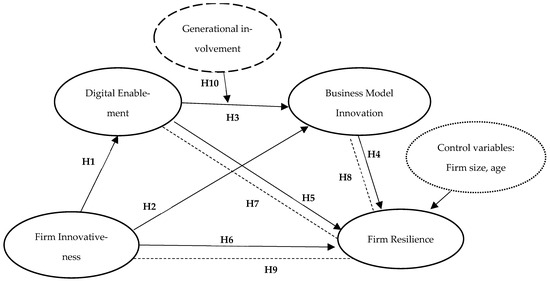
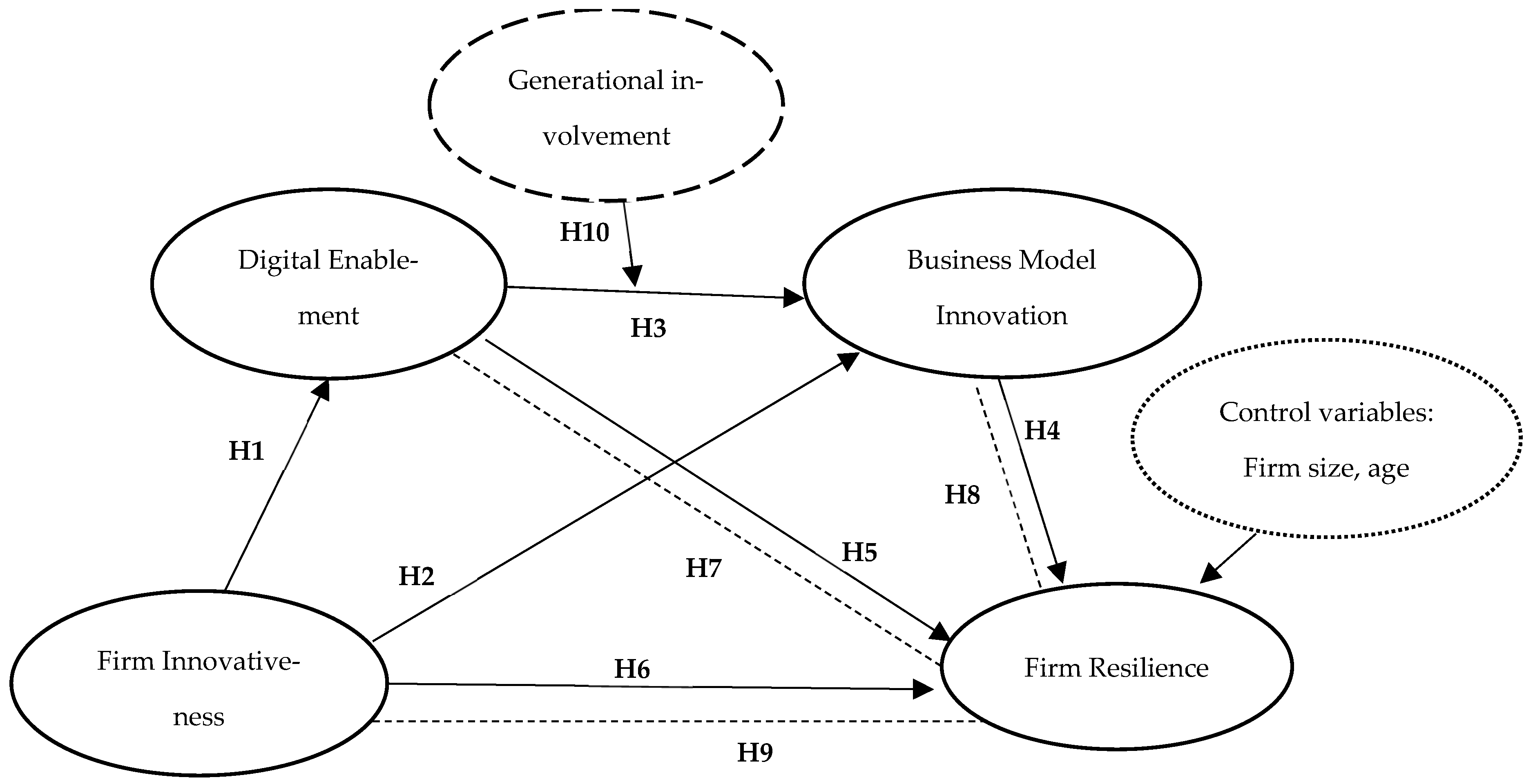
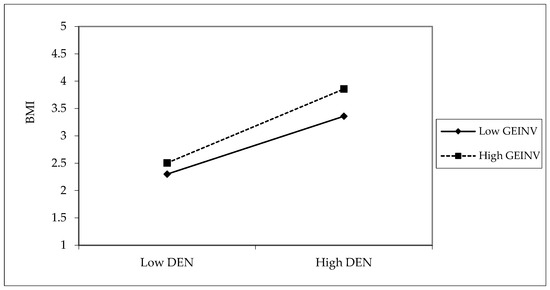
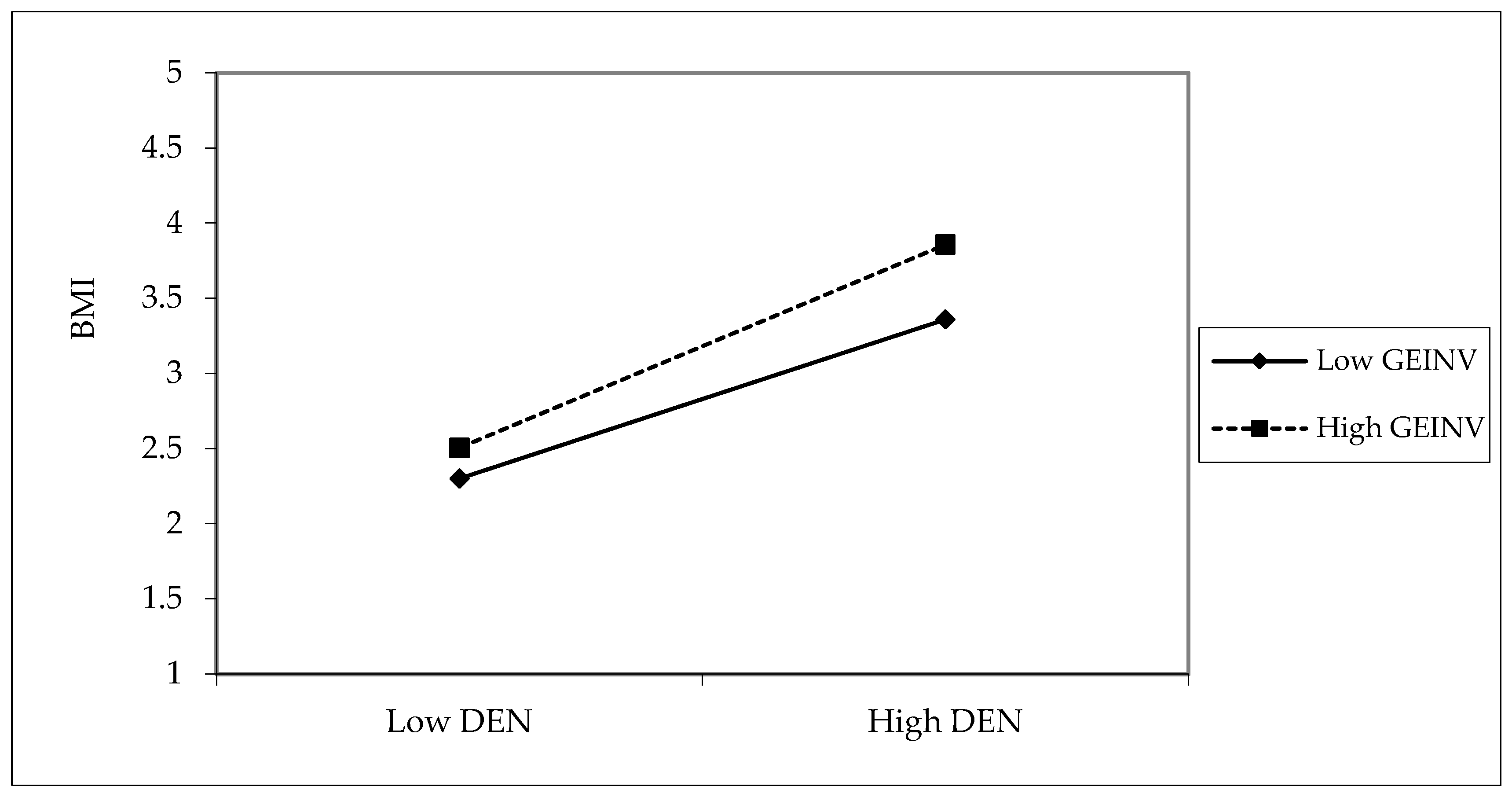

Disclaimer/Publisher’s Note: The statements, opinions and data contained in all publications are solely those of the individual author(s) and contributor(s) and not of MDPI and/or the editor(s). MDPI and/or the editor(s) disclaim responsibility for any injury to people or property resulting from any ideas, methods, instructions or products referred to in the content. |
© 2026 by the author. Licensee MDPI, Basel, Switzerland. This article is an open access article distributed under the terms and conditions of the Creative Commons Attribution (CC BY) license.