


Abstract
This study examines the socio-economic and behavioral factors influencing sustainable consumption through secondhand clothing purchases among young consumers in Hanoi, Vietnam. By addressing the changing consumption patterns, this research contributes to understanding how youth behavior supports the transition toward sustainability in emerging urban markets. This research integrates the Theory of Planned Behavior (TPB) with additional constructs such as perceived economic benefits, environmental concern, perceived risk, shopping experience, and gender differences to provide an integrated socio-economic framework. Data were collected through a structured questionnaire administered to university students and analyzed using Partial Least Squares Structural Equation Modeling (PLS-SEM). Results indicate that perceived economic benefits and subjective norms are the strongest predictors of purchase intention across both general and luxury secondhand fashion segments, emphasizing affordability and social acceptance. Environmental concern and attitude also positively influence general secondhand purchase intentions, while perceived behavioral control notably impacts luxury secondhand purchases. Contrary to prior studies, perceived risk was found to be insignificant, and male consumers exhibited a higher engagement rate than females in this context. These findings underscore the complex interplay of economic, social, and environmental dimensions shaping sustainable fashion consumption among youth. This study suggests targeted marketing and policy strategies to promote sustainable consumption and supports the expansion of circular economy practices in emerging urban markets. Limitations related to sample scope and self-reported data warrant further research to generalize the findings and explore additional moderating variables.
1. Introduction
Since Vietnam transformed from a low-income country to a lower-middle-income country in 2010, in the last decade, its economy maintained a relatively fast growth rate of around 6% per year and reached USD 343.6 billion in 2020. This trend continued over the next few years and reached USD 476.3 billion in 2024 with a GDP growth rate of about 7.09% and forecasted by IMF to reach USD 506 billion in 2025 [1]. While this economic expansion has elevated living standards and accelerated industrialization, it has also led to overconsumption [2]. Which contributes to severe environmental degradation through waste generation and resource depletion [3,4]. This, coupled with the rapid expansion of the new business strategies like fast fashion, a linear business model involving production-use-disposal cycle of the textile and clothing industry [5] and fast tech, which refers to everyday low-cost electrical items with short lifespans that are constantly consumed and disposed of [6], has contributed to excessive resource consumption and waste production, making current consumption patterns unsustainable. To mitigate these issues, more sustainable lifestyles must be promoted, encouraging consumers to shift toward eco-friendly behaviors, such as buying secondhand products [7]. In developing countries like Vietnam, the secondhand clothing (SHC) market experienced robust growth from 2020 to 2024, achieving a value of USD 1.13 billion in 2024 with compound annual growth rate (CAGR) of 16.7%. This upward trajectory was driven by changing consumer attitudes. While older generations may still see secondhand as charity leftovers, younger people increasingly see them as stylish and eco-friendly alternatives [8]. Similar patterns are observed across Southeast Asia, such as Indonesia and the Philippines, where secondhand fashion markets are supported by rising environmental awareness and evolving social norms [9,10], which heavily influenced consumers’ green behavior [11,12].
Within the scope of sustainable consumption, secondhand shopping is a key practice that helps reduce waste, extend product life cycles, and counteract the negative effects of overconsumption [13]. As the demand for pre-owned products grows, understanding the underlying motivations and barriers to secondhand consumption becomes essential. Within this context, it is important to distinguish between different types of secondhand fashion products, as they can evoke different motivations and decision-making processes. General secondhand fashion products typically refer to previously owned, everyday clothing items whose acquisition is often motivated by affordability or environmental concerns [14]. In contrast, secondhand luxury products consist of pre-owned luxury possessions, sometimes including vintage or collectible pieces, that retain significant symbolic, emotional, and economic value for consumers [15]. These distinctions shape how consumers evaluate secondhand items and may influence their attitudes, perceived norms, and purchasing intentions.
While the expansion of the resale market has been well documented in developed economies, limited research exists on the behaviors and motivations driving secondhand fashion consumption in developing countries or examined how these factors differ across general and luxury secondhand fashion categories.
This study addresses this gap by integrating the Theory of Planned Behavior (TPB) with economic and environmental constructs to explain secondhand clothing purchasing behavior among young consumers in Hanoi. By examining how these constructs operate differently in the general and luxury secondhand fashion markets, this study further deepens our understanding of how young consumers make sustainable purchasing decisions. Offering further implications for businesses, policymakers, and sustainability advocates to promote responsible consumption and circular economy transitions, supporting Vietnam’s broader commitment to sustainable development.
The remainder of this paper is structured as follows: Section 2 presents a theoretical framework. Section 3 shows the literature review on secondhand consumption and hypothesis development. Section 4 outlines the research methodology, including data collection and analysis methods. Section 5 presents the results of this study, followed by Section 6, which discusses the implications for businesses, policymakers, and sustainability advocates. Finally, Section 7 concludes with recommendations for future research.
By conducting a comparative PLS-SEM analysis, this study contributes to the growing body of research on secondhand fashion consumption in emerging economies, offering insights into how determinants differ between mainstream secondhand goods and luxury resale while also revealing emerging gender dynamics within Vietnam’s youth demographic. Furthermore, this study advances theoretical understanding of secondhand consumption, enriches empirical evidence from emerging markets, and provides contextual implications for businesses and policymakers.
2. Theoretical Framework
The Theory of Planned Behavior (TPB) [16] is a widely used framework for understanding consumer decision-making, particularly in sustainable consumption. TPB suggests that an individual’s intention to perform a behavior is determined by three key factors: attitude, subjective norms, and perceived behavioral control (PBC). Despite TPB’s extensive application in sustainable consumer behavior research, there remains limited exploration of its extension in the context of secondhand purchases, particularly regarding economic and environmental factors. Therefore, this study integrates TPB with additional factors such as perceived economic benefits, environmental concern, perceived risk, shopping experience, and gender differences, aiming to provide a more comprehensive understanding of secondhand consumption behavior.
2.1. Circular Economy and Secondhand Consumption
The increasing severity of environmental degradation has prompted the search for sustainable solutions to mitigate the detrimental effects of industrial production and overconsumption. Among these solutions, the concept of Circular Economy (CE) stands out as a transformative model aimed at reducing waste, regenerating products, and promoting resource efficiency [12,17]. While the traditional linear business model focuses on large-scale production models based on the “take, make, and dispose” pattern, the Circular Economy relies on circular business models that enhance resource efficiency through sharing economies, closed-loop supply chains, and upcycling practices [18]. Through these mechanisms, CE helps reduce environmental pollution, alleviate resource depletion, and enhance long-term sustainability [19].
Secondhand consumption, which involves the purchase of pre-owned goods, is a core element of the Circular Economy because it directly contributes to extending product lifecycles, reducing demand for virgin resources, and mitigating waste [20,21]. The growing popularity of second-hand markets, particularly among young consumers, reflects a broader cultural shift towards sustainability and ethical consumption. From an economic perspective, the affordability of secondhand clothing has made it an attractive option for price-sensitive consumers [13,22,23]. In addition, increasing environmental awareness has further boosted interest in secondhand goods, as young consumers seek alternatives that minimize environmental impact [24].
2.2. Theory of Planned Behavior (TPB)
The Theory of Planned Behavior (TPB) is a widely adopted framework for understanding human behavior and decision-making processes. Building on Fishbein and Ajzen’s Theory of Reasoned Action [25], TPB suggests that an individual’s intention to engage in a behavior is influenced by three key factors: attitudes toward the behavior, subjective norms, and perceived behavioral control. Specifically:
Attitudes: These encompass the individual’s positive or negative evaluation of secondhand clothing, such as perceived cost savings and environmental benefits.
Subjective Norms: These refer to the social influences on secondhand consumption, including peer behaviors, societal trends, and the perceived social acceptability of buying used clothing.
Perceived Behavioral Control: This involves an individual’s sense of control over behavior, including factors such as accessibility, availability of secondhand stores, and perceived convenience or effort required in making second-hand purchases.
These factors collectively shape the likelihood of an individual performing a specific behavior, in this case, purchasing secondhand clothing. TPB has been successfully applied to a wide range of consumer behaviors, from purchasing habits to health-related actions [26,27].
While TPB offers a solid framework for predicting consumer behavior, it may not fully explain the multifaceted associations between ethical values, behavioral facets, and environmental issues [28]. As such, this study extends the TPB framework by integrating additional factors such as economic benefits, environmental concerns, and perceived risk.
3. Literature Review and Hypotheses Development
3.1. Perceived Economic Benefits (PEB)
One of the main reasons consumers buy secondhand goods is the economic advantage they offer. Cost savings and value-for-money are consistently cited as major drivers of secondhand purchasing behavior as consumers often turn to secondhand markets to obtain fair prices or access products that would otherwise be too expensive to purchase new [22,23,29,30]. While perceived economic value has been shown to significantly influence purchase intentions across various product categories [31], this study expects that in both general and luxury secondhand fashion markets, economic benefits remain the main driver for the buying intention.
Based on the above:
Hypothesis 1a (H1a).
Perceived economic benefits positively influence the intention to buy general secondhand fashion products.
Hypothesis 1b (H1b).
Perceived economic benefits positively influence the intention to buy secondhand luxury fashion products.
3.2. Environmental Concern (EC)
While earlier studies viewed economic necessity as the main driver of secondhand shopping, more recent research indicates that environmental concern has become a significant motivator [32,33,34]. Consumers’ attitudes and behavior towards circular products are strongly influenced by environmental awareness [35], and attitudes toward secondhand buying of the consumers are also positively affected by perceived sustainability [36]. Given the growing alignment between sustainability values and secondhand fashion consumption, this study expects high level of environmental concern to increase purchase intentions for both secondhand categories. Thus:
Hypothesis 2a (H2a).
Environmental concern positively influences the intention to buy general secondhand fashion products.
Hypothesis 2b (H2b).
Environmental concern positively influences the intention to buy secondhand luxury fashion products.
3.3. Attitude (AT)
Evidence across secondhand contexts consistently shows that favorable attitudes enhance consumers’ willingness to engage in resale markets. For instance, attitude strongly predicts intention to buy secondhand fashion on peer-to-peer platforms [23], and similar positive relationships are found for general secondhand clothing [37,38]. Therefore, this study expects that attitude increases purchase intentions for both secondhand categories:
Hypothesis 3a (H3a).
Attitude toward buying secondhand positively influences the intention to buy general secondhand fashion products.
Hypothesis 3b (H3b).
Attitude toward buying secondhand positively influences the intention to buy secondhand luxury fashion products.
3.4. Subjective Norm (SN)
Across different contexts, subjective norms can influence secondhand buying intentions in varied ways [39], sometimes negatively [32], but more commonly positively [40]. As secondhand fashion becomes more mainstream and socially acceptable, consumers are more likely to purchase both general and luxury secondhand items to align with prevailing trends and social expectations. This factor is well established as a determinant of secondhand purchase intention [36,37,41]. Thus, we expect that higher subjective norms toward secondhand products increase the purchase intentions for both secondhand categories:
Hypothesis 4a (H4a).
Subjective Norm positively affects the intention to buy general secondhand fashion products.
Hypothesis 4b (H4b).
Subjective Norm positively affects the intention to buy secondhand luxury fashion products.
3.5. Perceived Behavior Control (PBC)
In this context, PBC relates to factors such as the ease of purchasing secondhand fashion, confidence in finding trustworthy sellers, understanding product quality and authenticity, and access to convenient shopping platforms. The greater the sense of control consumers feel, the more likely they are to engage in secondhand clothing purchases [37]. Previous studies demonstrate that PBC is a key predictor of secondhand buying intention [38,40,41], and its effect is consistently positive [32]. Therefore, this study expects that PBC will positively relate to both general and luxury SHC buying behavior:
Hypothesis 5a (H5a).
Perceived Behavior Control positively affects the intention to buy general secondhand fashion products.
Hypothesis 5b (H5b).
Perceived Behavior Control positively affects the intention to buy secondhand luxury fashion products.
3.6. Perceived Risk (PR)
Despite growing acceptance of secondhand fashion, perceived risk remains a notable barrier. Such risks include financial concerns, product quality issues, esthetic flaws, hygiene worries, psychological discomfort, and fear of counterfeit items, especially in luxury markets [42,43]. Studies show that sanitary and psychological risks significantly deter secondhand purchases and are common among non-users of secondhand fashion [30,42]. Given these associations, this study expects that PR will be negatively related to SHC purchase intention; thus:
Hypothesis 6a (H6a).
Perceived risk negatively influences the intention to buy general secondhand fashion products.
Hypothesis 6b (H6b).
Perceived risk negatively influences the intention to buy secondhand luxury fashion products.
3.7. Buying Intentions (BI)
In the secondhand fashion market, buying intention reflects an individual’s conscious plan or willingness to engage in purchasing either general or luxury secondhand items. This theoretical foundation has been supported in various empirical studies focused on secondhand consumption, indicating that enhancing consumers’ buying intentions directly impacts their likelihood of buying secondhand products [44,45]. Therefore, SHC buying intentions have a positive correlation with the SHC buying behavior:
Hypothesis 7 (H7a).
Buying intentions toward secondhand general fashion products positively influences actual buying behavior.
Hypothesis 7 (H7b).
Buying intentions toward secondhand luxury fashion products positively influences actual buying behavior.
3.8. Shopping Experience (EXP)
Shopping experience is another factor that may influence secondhand purchasing behavior. In their study, Swapana and Padmavathy [46] find that positive past experiences can improve consumers’ attitude, trust, and lead to higher repurchase intention. Consumers who have experience of buying secondhand clothes showed more positive perception of such products [47]. Past experiences in secondhand product buying can affect SHC purchase intention of consumer [41,48]. Additionally, prior customer experience moderates the relationship between performance expectancy and satisfaction, as well as between satisfaction and repurchase intention [49]. Thus, positive EXP is expected to increase the SHC buying behavior:
Hypothesis 8 (H8).
Shopping Experience has a positive influence on secondhand fashion products buying behavior.
3.9. Gender (GD)
Gender has been widely recognized as a significant factor influencing consumer behavior, particularly in the context of secondhand buying. Empirical studies consistently show that women tend to dominate the secondhand fashion market, both as buyers and sellers [35,50]. This dominance is often attributed to gender-specific attitudes toward secondhand products. For instance, Kim and Kim [47] and Markova and Bayanduuren [51] report that men generally exhibit more negative attitudes toward purchasing secondhand goods, whereas women are more open and likely to engage in such purchases.
Hypothesis 9 (H9).
Gender has a positive influence on secondhand fashion products buying behavior.
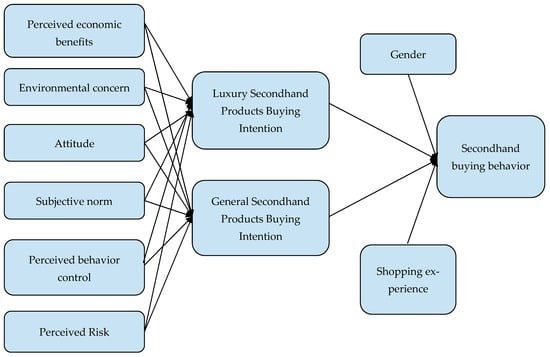
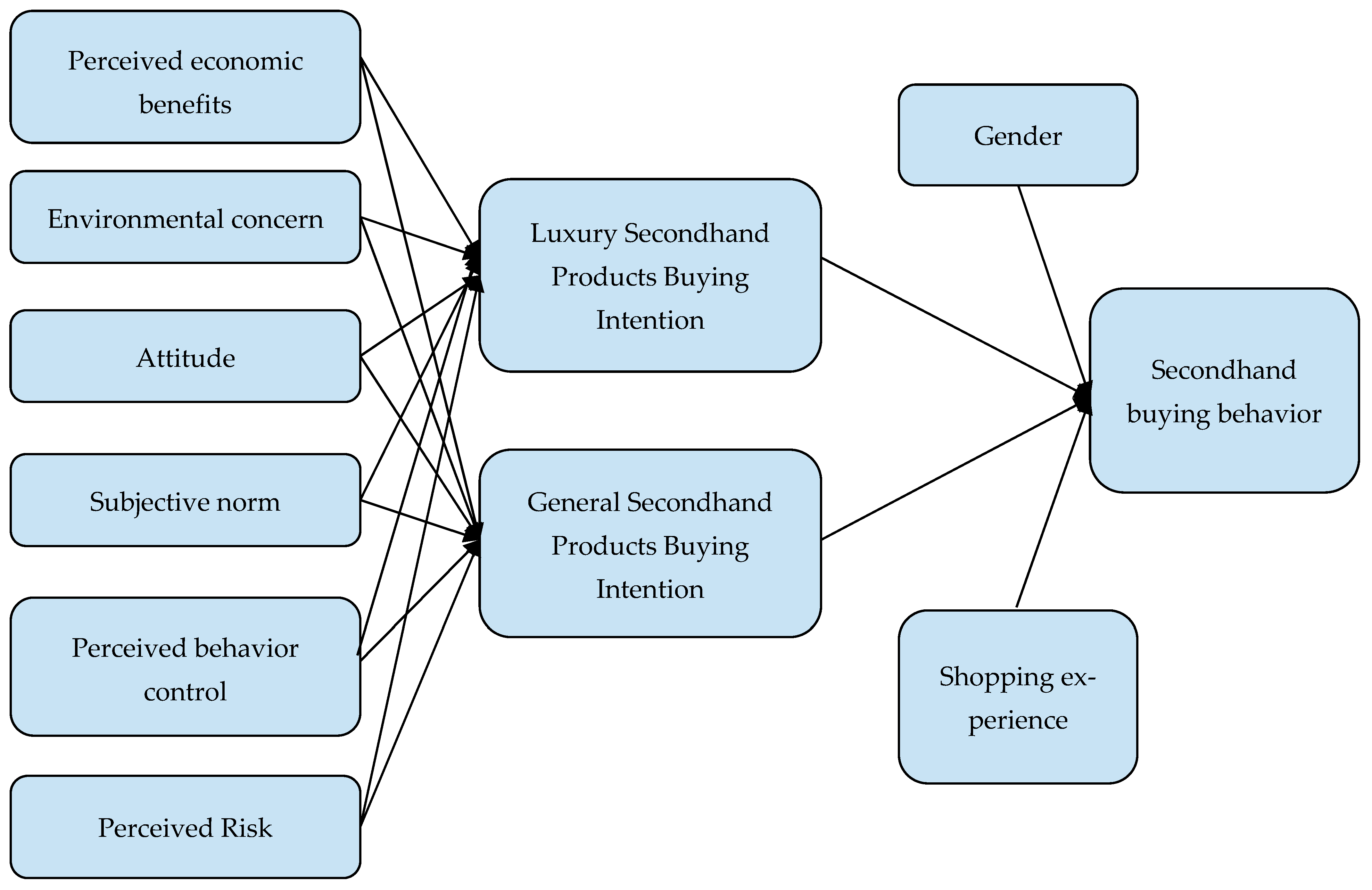
Based on the assumptions outlined above, Figure 1 presents the finalized proposed theoretical model framework.
Figure 1.
Conceptual model. Source: Developed by authors.
4. Research Methodology
This study aims to evaluate the factors influencing the behavior of young consumers in Hanoi’s secondhand fashion market. To gather relevant data, a structured questionnaire was developed and distributed to undergraduate and graduate students from various disciplines across multiple universities in Hanoi. The targeted respondents were chosen due to their active engagement with fashion and their potential to provide valuable insights into secondhand clothing purchase behavior.
4.1. Questionnaire Design and Validation
The survey instrument was developed based on established constructs from consumer behavior literature, particularly in the context of secondhand fashion. Items were drafted in English and translated into Vietnamese using a translation and back-translation procedure to ensure semantic accuracy.
Single-item measures were used for constructs such as buying intention, gender, experience, and buying behavior due to their unidimensional and concrete nature: Gender was naturally captured by one item; Experience was conceptualized as a global assessment of prior secondhand purchasing; Buying intentions (GSH and LSH) and buying behavior (BB) were treated as simple, direct outcome variables reflecting a single behavioral tendency. While this approach does not permit internal reliability assessment, prior research supports the validity of single-item measures for straightforward constructs [52,53]. The questionnaire encompassed six key latent variables hypothesized to influence purchase intention (Table 1): Perceived Economic Benefits (PEB), Environmental Concern (EC), Attitude (AT), Subjective Norm (SN), Perceived Behavioral Control (PBC), and Perceived Risk (PR).
Table 1.
Variable descriptions.
Each construct was measured through multiple items adapted from validated scales in prior research, ensuring content validity. Respondents indicated their level of agreement with each item on a five-point Likert scale, ranging from 1 (strongly disagree) to 5 (strongly agree). This scale was selected to capture the intensity of respondents’ perceptions and attitudes effectively.
Prior to the main data collection, the questionnaire underwent a rigorous validation process. Several experts in consumer behavior and fashion marketing reviewed the instrument to ensure clarity, relevance, and comprehensiveness. Based on their feedback, the questionnaire was refined to improve question wording and the overall structure, enhancing reliability and validity.
4.2. Sampling and Data Collection
The target population comprised undergraduate and graduate students from diverse academic disciplines across multiple universities in Hanoi. This population was chosen due to their active participation in fashion consumption and their relevance to understanding secondhand clothing purchase behavior. To ensure disciplinary diversity, participants were recruited from key academic sectors, including natural sciences, social sciences and humanities, engineering and technology, economics and business, law, health sciences, and foreign languages. These areas represent the core academic fields across Hanoi’s higher education institutions and were intentionally included to capture variations in secondhand fashion consumption across different academic orientations. Eligible participants were required to (1) be currently enrolled as university students in Hanoi and (2) voluntarily agree to participate in the survey. Data was collected using a direct paper survey distributed in classrooms, libraries, and common student areas with institutional permission. Participation was voluntary, and no identifying information was collected. A total of 674 usable responses were collected through a structured questionnaire survey.
To differentiate consumer groups, respondents were classified as either secondhand consumers or non-secondhand consumers based on their self-reported history of purchasing secondhand fashion items. Those who affirmed having purchased secondhand products were categorized as secondhand consumers (n = 583), while respondents who had never purchased such items were classified as non-secondhand consumers (n = 91). The sample consisted of 498 female respondents and 176 male respondents, reflecting a gender distribution relevant for further analysis of gender-related effects.
In determining the adequacy of the sample size for PLS-SEM analysis, the “10-times rule” recommended by Hair [54] was applied. These heuristics dictate that the minimum sample size should be at least ten times the maximum number of structural paths directed at any latent construct or ten times the largest number of indicators measuring a single construct. Given the measurement model’s complexity and the number of indicators, the calculated minimum sample size was established, and with 674 valid responses, this study comfortably exceeded this threshold. This ensures sufficient statistical power for the PLS-SEM analysis and robustness in estimating path coefficients and model fit.
5. Data Analysis
5.1. Validity and Reliability Assessment
To analyze the PLS-SEM model, the authors utilized SmartPLS 3 software on the primary data collected. The validity and reliability of the model were carefully assessed using multiple criteria. The results presented in Table 2 show that the outer loading coefficients of all observed variables exceed 0.7, which aligns with the recommendation [55]. This finding confirms that the observed variables are appropriate for inclusion in the model, ensuring content validity.
Table 2.
Reliability and validity testing.
The reliability of the measurement model was further evaluated using Cronbach’s alpha and composite reliability values. Cronbach’s alpha values for all variables were above 0.7, which is consistent with standards [56], suggesting that the variables exhibit high internal consistency and reliability. Similarly, the composite reliability values for all constructs were greater than 0.8, further supporting the reliability of the variables. While some studies accept a threshold of 0.7 for composite reliability [54,57,58], the results in this study align with the more stringent threshold of 0.8, affirming the robustness of the measurement model.
To assess the convergence validity, the Average Variance Extracted (AVE) for each construct was evaluated. As shown in Table 2, all AVE values exceed the 0.5 threshold, which confirms that the constructs exhibit adequate convergence validity.
This research also examined the discriminant validity of the measurement scale by using the Heterotrait–monotrait (HTMT) ratio. Garson [59] suggests that a value below 1 indicates sufficient discriminant validity between two latent variables, and Henseler [60] recommends a threshold of 0.9. While stricter thresholds of 0.85 have been proposed others [61,62]. In this study, all HTMT values are below 0.85, as shown in Table 3, confirming that the measurement model satisfies the discriminant validity criterion.
Table 3.
Discriminant validity (HTMT).
5.2. Evaluation of the Structural Model
To ensure the validity of the structural model, potential collinearity concerns were investigated by examining the Inner VIF (Variance Inflation Factor) values. Hair [63] suggests that a VIF value of 5 or higher indicates a significant risk of multicollinearity. For this analysis, the thresholds outlined by SmartPLS software were applied: a VIF value larger than 5 signals a high probability of multicollinearity, values between 3 and 5 suggest the possibility of multicollinearity, and a VIF less than 3 indicates no multicollinearity. As shown in Table 4, all the VIF values fall within the range of 1.001 to 1.897, confirming that the model does not suffer from multicollinearity issues.
Table 4.
VIF and Path analysis results.
5.3. Hypothesis Testing and Significant Relationships
Based on the data presented in Table 4, relationships between independent and dependent variables were analyzed using p-values. As per the rule of thumb, relationships are considered statistically significant if the p-value is less than 0.05.
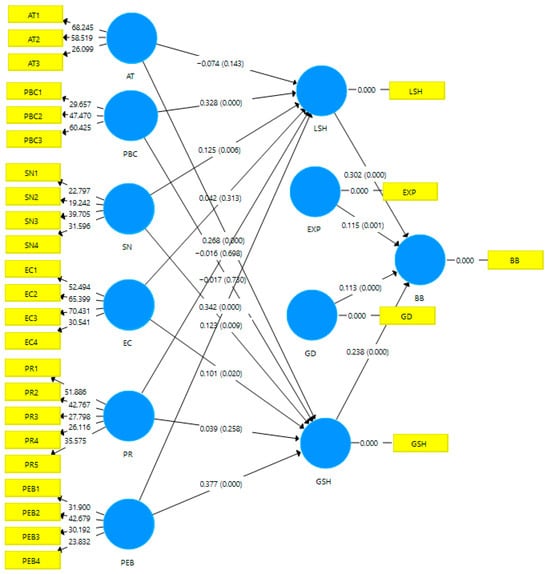
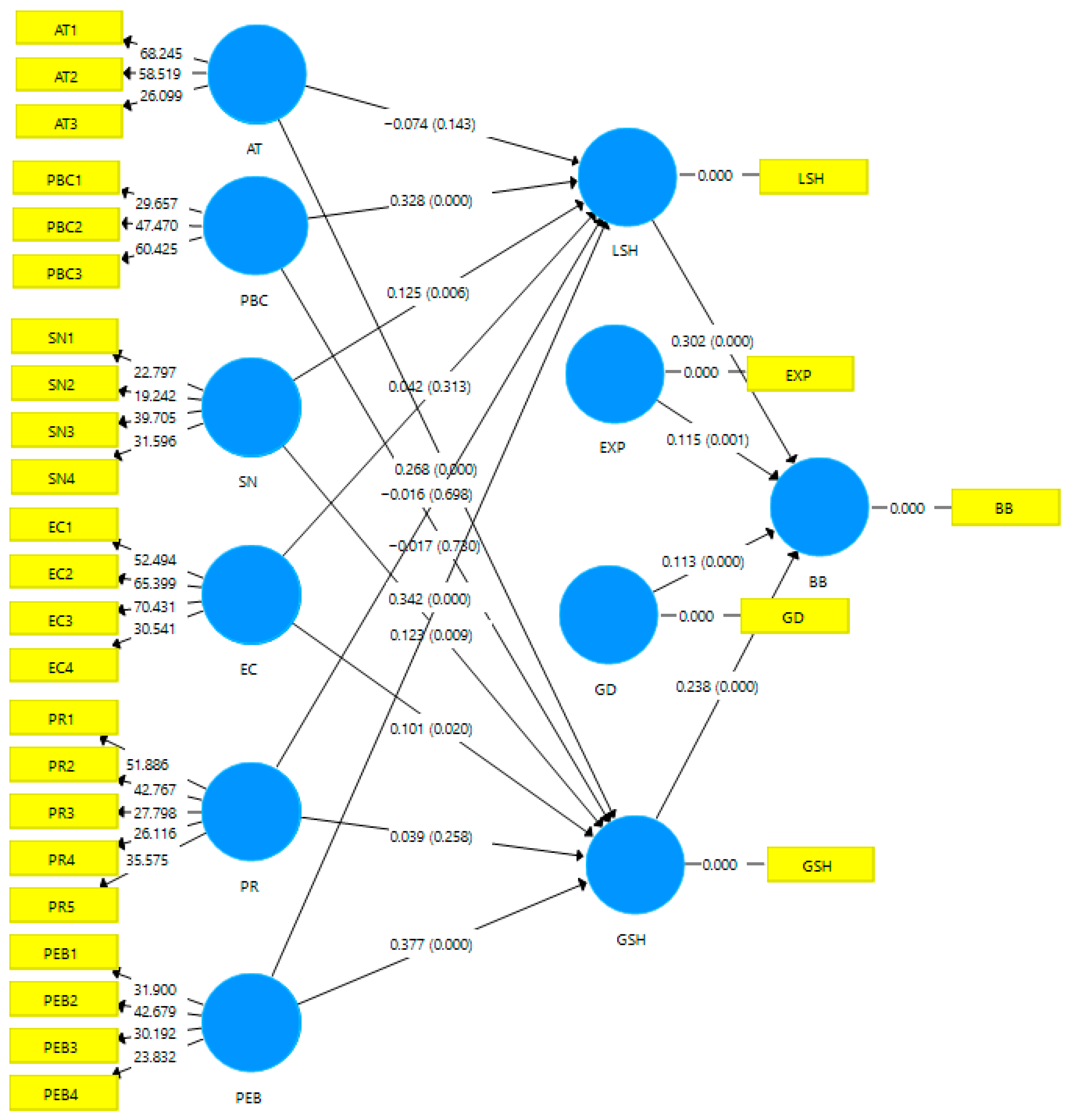
It can be observed that most of the relationships in the table show p-values of 0.000, indicating statistical significance at the 95% confidence level. These relationships demonstrate a positive effect, as evidenced by the positive estimation coefficients. However, there are a few relationships where the p-value is greater than 0.05, indicating no statistical significance. Specifically, AT → LSH (p = 0.146), PBC → GSH (p = 0.728), and PR → GSH (p = 0.262), among others, were not significant, offering interesting insights into the secondhand fashion purchase behavior among Vietnamese youth in Hanoi. In summary, from the analysis, hypotheses H1a, H1b, H2a, H3a, H4a, H4b, H5b, H7a, H7b, H8, H9 are supported while hypotheses H2b, H3b, H5a, H6a, H6b are rejected (Figure 2).
Figure 2.
Factors Influencing the Secondhand Clothing Buying Behavior of Young People in Hanoi. Source: Developed by authors.
6. Discussion and Implications
6.1. Discussion
One of the most significant findings of this study is the strong influence of Perceived Economic Benefits on consumer buying intention in both general secondhand goods (β = 0.377, p = 0.000) and luxury secondhand goods (β = 0.342, p = 0.000), which is consistent with the existing literature, solidifies the role of PEB as a primary motivator for consumers engaging in the secondhand market [22,23,30]. These results extend the literature by showing that economic motivation can overshadow environmental values in shaping youth consumption patterns, particularly for aspirational goods such as luxury items.
Another critical theoretical contribution of this study lies in the positive influence of Attitude (β = 0.268, p = 0.000) and Environment Concern (β = 0.101, p = 0.020) on general secondhand fashion items but loses predictive power in the luxury segment. This divergence highlights the moderating role of product symbolism: when items carry higher status value, pro-environmental attitudes become less central. This adds nuance to sustainability behavior literature by showing that value-driven motivations are contingent on product type and the symbolic meaning attached to consumption.
Contrary to established assumptions of Koay [42] and Hur [30], Perceived Risk is not statistically significant in both general and luxury preowned fashion markets. This challenges traditional risk–utility perspectives in secondhand markets and suggests that digital-native consumers may have adapted to quality-verification mechanisms and peer-driven trust in resale platforms. It also highlights the increasing normalization of secondhand purchases among young Vietnamese consumers.
The differential significance of Perceived Behavior Control, non-significant for general items but significant for luxury (β = 0.328, p = 0.000), further illustrates that psychological determinants operate differently across product categories. In the luxury fashion market, perceived ease and confidence authenticity and transaction processes become more salient, aligning with the Theory of Planned Behavior’s emphasis on context-specific behavioral constraints. However, when comes to general secondhand fashion products, young Vietnamese consumers do not view this factor as significant barriers to purchasing general secondhand fashion goods. Resulting in a statistically insignificant PBC in this context.
Consistent with prior studies [36,37,41], Subjective Norms also emerged as an important factor in the buying intention of both general and luxury secondhand goods (β = 0.123, p = 0.005 for secondhand general goods and β = 0.125, p = 0.005 for secondhand luxury goods). This finding reflects the increasing normalization and social endorsement of secondhand consumption among youth. This reinforces TPB’s social dimension while capturing evolving cultural narratives around sustainability and trend-driven fashion in Vietnam.
The model further shows that Buying Intention toward secondhand goods (both general and luxury) strongly translates into actual buying behavior (β = 0.238 for secondhand general goods and β = 0.302 for secondhand luxury). This resonates with the well-established theory of planned behavior as well as prior studies of Wicaksono [44], and Borusiak [45], where intention is a critical antecedent to actual consumer behavior. At the same time, Experience (β = 0.115, p = 0.001) and Gender (β = 0.113, p = 0.000) also emerged as predictors of buying behavior.
The positive effect of prior experience with secondhand shopping supports previous literature indicating that consumers with prior exposure are more likely to engage in repeat purchases. This effect is attributed to reduced uncertainty, greater familiarity, and increased confidence when purchasing secondhand items.
While the database resonates with prior studies, which emphasize women’s dominant role in secondhand fashion markets [35,50], this study’s results suggest that male respondents are more likely to engage in secondhand clothing purchases compared to their female counterparts. This highlights unique contextual factors in the Vietnamese market and youth culture. Economic motivations could be more pronounced for young men, who might view secondhand purchases as a practical and cost-effective way to build their wardrobes without compromising style. Additionally, men may experience fewer social stigmas related to buying used clothing in this context, or they might have different attitudes toward sustainability and consumption patterns. Cultural factors specific to Vietnam, including evolving gender roles and economic pressures, might contribute to these dynamics.
6.2. Implications
6.2.1. Theoretical Implications
First, the findings contribute to sustainability behavior literature by showing that economic motivations dominate environmental concerns in shaping consumers purchase behavior, even among environmentally aware youth, especially when luxury symbolism is involved. Secondly, the distinct differences between general SHC and luxury SHC markets related to the influence of Attitude, Perceived Behavioral Control suggests an interaction effect between product type and psychological determinants. This extends TPB by showing that the predictive power of its constructs is context- and category-specific, with Attitude influencing general SHC but not luxury items and vice versa. Furthermore, Environment Concern has varied effect on general and luxury secondhand fashion items suggesting an interaction effect between sustainability values and product type, contributing to literature exploring value-driven vs. status-driven sustainable behavior. Thirdly, the non-significance of perceived risk in both markets challenges traditional assumptions about secondhand markets and indicates a reduced risk sensitivity among digital-native consumers. Fourth, this study contributes new theoretical insight into gender dynamics in sustainable and secondhand consumption. While women are still the primary participants in secondhand fashion markets, young men are more likely to engage in actual secondhand purchasing behavior. This divergence suggests that gendered consumption patterns may shift in emerging markets. From a theoretical perspective, these results imply that economic motivations, social stigma, and sustainability attitudes may operate differently across genders, and that evolving gender roles and cultural expectations in Vietnam influence how TPB predictors translate into behavior. This adds a context-sensitive, gender-specific dimension to existing models of sustainable and circular fashion consumption.
6.2.2. Contextual Implications
Firstly, marketers should highlight affordability and value-for-money, particularly within the luxury segment of the secondhand market. Strategies such as competitive pricing, promotional discounts, and clear communication of savings can effectively attract price-sensitive young consumers who prioritize economic advantages even when purchasing high-end items. Secondly, marketing efforts that emphasize the ecological benefits of secondhand fashion are likely to resonate well with eco-conscious consumers, thereby enhancing their participation in this market. However, sustainability-focused messaging may be less effective in the context of secondhand luxury goods. Instead, marketers should pivot toward emphasizing authenticity, superior quality, and the unique luxury experience to appeal to young consumers seeking premium products at more accessible prices. Moreover, marketers should leverage social proof through peer influence, celebrity endorsements, and community-driven campaigns that highlight the collective benefits of sustainable consumption, thereby reinforcing secondhand fashion as a fashionable and responsible choice. To convert purchase intentions into actual buying behavior, platforms must focus on optimizing the shopping experience. This includes offering detailed product information, high-quality images, customer reviews, and flexible return policies—all of which enhance consumers’ confidence in product quality and authenticity. Additionally, hosting workshops or events related to secondhand fashion, such as styling sessions or sustainability education, can foster positive experiential knowledge and further encourage consumer participation. Finally, considering the notable gender differences observed in buying behavior, marketing strategies should be tailored accordingly. Since young men in Hanoi exhibit higher engagement driven by functionality, affordability, and possibly lower sensitivity to social judgment, campaigns targeting this group should emphasize practicality, durability, and economic benefits. Retailers might also curate product selections that align with male preferences, such as casual or sportswear focused on comfort and utility. For female consumers, highlighting style variety, trends, and community engagement can enhance appeal and encourage greater participation.
7. Conclusions
By integrating the Theory of Planned Behavior (TPB) with additional factors such as perceived economic benefits, environmental concern, perceived risk, the influence of shopping experience, gender, and employing the PLS-SEM method, this study provides comprehensive insights into the factors influencing youth consumption behavior in secondhand fashion markets, with particular emphasis on both general secondhand goods and secondhand luxury items.
The results reveal that, among the determinants influencing young consumers’ intention to purchase pre-owned fashion products, Perceived Economic Benefits serve as a paramount driver across both segments, reinforcing affordability as a critical motivator consistent with prior research. This underscores the importance of cost-effectiveness in shaping purchasing decisions, especially within emerging markets where luxury pricing remains a substantial barrier. Similarly, Subjective Norms exert a positive effect in both markets, reflecting evolving social acceptance and the role of social influence on youth within emerging markets, particularly in Vietnam. In contrast, risks typically associated with secondhand purchases prove to be insignificant factors for young Vietnamese consumers when considering secondhand products, whether general or luxury items. Additionally, in the luxury secondhand fashion segment, Perceived Behavioral Control (β = 0.328) plays a significant role, further highlighting the influence of ease of purchase on consumer behavior in this market. Meanwhile, in the general secondhand fashion segment, the positive influences of Attitude (β = 0.268) and Environmental Concern (β = 0.101) suggest that environmental motivations significantly shape consumer behavior in this context, particularly among younger generations who are more inclined to embrace secondhand consumption as a means of reducing waste and conserving resources. Moreover, the strong translation of buying intention into actual behavior aligns with the Theory of Planned Behavior and is further supported by the positive roles of prior experience and gender. Contrary to previous literature emphasizing women’s dominance in the secondhand market, this study identifies greater male engagement within Hanoi’s youth demographic, likely driven by economic practicality and evolving cultural dynamics. These findings collectively offer valuable guidance for marketers, businesses, and policymakers aiming to harness the growing secondhand market. Tailored strategies that emphasize affordability, sustainability messaging where relevant, trust-building mechanisms, and social influence can effectively enhance consumer engagement. Additionally, recognizing gender-specific preferences and barriers will allow for more nuanced targeting, fostering a more inclusive and vibrant secondhand fashion ecosystem.
While this study provides valuable insights into the drivers and barriers of secondhand consumption, several limitations should be acknowledged. First, this research primarily focuses on young consumers in Hanoi, which may limit the generalizability of the findings to other demographic groups or geographic regions. Cultural, economic, and social factors vary across locations and may influence the impact of the identified factors on secondhand purchasing behavior. Future research could expand to other major Vietnamese cities and extend the analysis to other ASEAN countries to examine cross-cultural similarities or divergences in secondhand consumption patterns. Second, although this study integrates multiple factors from the Theory of Planned Behavior and additional variables such as environmental concern and shopping experience, it does not account for all potential influences on consumer behavior. For instance, external factors such as economic crises, governmental policies, or the role of digital platforms and online marketplaces in secondhand shopping were not explored in depth. These factors could significantly shape secondhand consumption patterns. Therefore, given the growing role of online marketplaces and e-commerce, future studies should explore how platform design, digital trust mechanisms, and algorithm-driven recommendations shape secondhand buying behaviors. Third, while this study investigates the moderating effects of shopping experience and gender, it does not deeply explore other potential moderators such as income level, social class, or educational background, which might also impact consumer behavior. Future research could examine how these additional variables interact with the key factors identified. Finally, this study’s reliance on self-reported data may introduce bias, as participants could overstate their intentions or behaviors regarding sustainable consumption. To address this limitation, future studies could incorporate behavioral data or experimental methods to more accurately capture actual consumer behavior. Therefore, further research is necessary to address these limitations and expand on the factors influencing sustainable consumer behaviors across diverse contexts and populations. For example, the unexpected finding that young consumers in Hanoi do not perceive significant risks when purchasing secondhand goods raises important questions. Future research should investigate whether this low-risk perception is unique to digitally savvy youth, or whether other age groups, such as Gen X or older consumers, display different levels of risk sensitivity. Comparative generational studies could clarify whether risk perceptions vary across life stages or demographic profiles.
Author Contributions
Conceptualization, N.T.K., H.Z., D.H.A. and C.V.C.; Methodology, N.T.K., H.X.B., H.Z., V.T.H. and T.T.H.; Software, T.Q.M., H.X.B., C.V.C. and T.T.H.; Formal analysis, T.Q.M.; Resources, V.T.H.; Data curation, V.T.H.; Writing—original draft, T.Q.M., H.Z., D.H.A., C.V.C. and T.T.H.; Writing—review & editing, N.T.K., H.Z. and C.V.C. All authors have read and agreed to the published version of the manuscript.
Funding
This research received no external funding.
Institutional Review Board Statement
This study was approved by the Ethics Committee of the Research Institute for Economics, Business and Innovation (2024-2025/005), issued on 7 December 2024.
Informed Consent Statement
Informed consent was obtained from all subjects involved in this study.
Data Availability Statement
The original contributions presented in this study are included in the article. Further inquiries can be directed to the corresponding author.
Conflicts of Interest
The authors declare no conflicts of interest.
References
- VNA. Vietnam’s Economy in 2024 and Prospects for 2025. Tap Chi Cong San, 27 January 2025. Available online: https://www.vietnam.vn/en/kinh-te-viet-nam-nam-2024-va-trien-vong-nam-2025 (accessed on 17 April 2025).
- Millstein, S. How Overconsumption Affects the Environment and Health, Explained. Sentient, 17 January 2025. Available online: https://sentientmedia.org/overconsumption/ (accessed on 17 April 2025).
- Håkansson, A. What is overconsumption?—A step towards a common understanding. Int. J. Consum. Stud. 2014, 38, 692–700. [Google Scholar] [CrossRef] [Scilit]
- Pan, L. Discussion on the concept of over-consumption. In Proceedings of the 3rd International Conference on Culture, Education and Economic Development of Modern Society (ICCESE 2019), Moscow, Russia, 1–3 March 2019. [Google Scholar] [CrossRef] [Scilit]
- Aponte, N.O.; Gómez, J.H.; Argüelles, V.T.; Smith, E.D. Fast fashion consumption and its environmental impact: A literature review. Sustain. Sci. Pract. Policy 2024, 20, 2381871. [Google Scholar] [CrossRef] [Scilit]
- Recycle Your Electricals. Is fasttech the new fast fashion. Material Focus, 13 March 2024. Available online: https://www.materialfocus.org.uk/press-releases/is-fasttech-the-new-fast-fashion/ (accessed on 17 April 2025).
- Dobscha, S.; Ozanne, J.L. An ecofeminist analysis of environmentally sensitive women using qualitative methodology: The emancipatory potential of an ecological life. J. Public Policy Mark. 2001, 20, 201–214. [Google Scholar] [CrossRef] [Scilit]
- Lam, H.L.; Cleveland, D. Transforming circular fashion in Vietnam. Fash. Highlight 2024, 3, 90–101. [Google Scholar] [CrossRef] [Scilit]
- Anisah, T.N.; Luthfiana, D.N.; Kumar, V.; Ernestivita, G.; Harnaji, B.; Najmudin, M. Green threads: Unveiling sustainable fashion preferences among Indonesian gen Z consumers. Asian Manag. Bus. Rev. 2024, 4, 376–393. [Google Scholar] [CrossRef] [Scilit]
- Benavidez, N.J.V. Exploring Ukay Ukay consumption in the Philippines: Between Sustainable practices and business potential. World J. Adv. Res. Rev. 2025, 26, 69–75. [Google Scholar] [CrossRef] [Scilit]
- Levine, D.S.; Strube, M.J. Environmental attitudes, knowledge, intentions and behaviors among college students. J. Soc. Psychol. 2012, 152, 308–326. [Google Scholar] [CrossRef] [Scilit]
- Geissdoerfer, M.; Savaget, P.; Bocken, N.M.; Hultink, E.J. The Circular Economy—A new sustainability paradigm? J. Clean. Prod. 2016, 143, 757–768. [Google Scholar] [CrossRef] [Scilit]
- Guiot, D.; Roux, D. A second-hand shoppers’ motivation scale: Antecedents, consequences, and implications for retailers. J. Retail. 2010, 86, 355–371. [Google Scholar] [CrossRef] [Scilit]
- Yang, S.; Yiping, S.; Siliang, T. Sustainable Retailing in the Fashion Industry: A Systematic Literature Review. Sustainability 2017, 9, 1266. [Google Scholar] [CrossRef] [Scilit]
- Turunen, L.L.M.; Leipämaa-Leskinen, H. Pre-loved Luxury: Identifying the Meanings of Second-hand Luxury Possessions. J. Prod. Brand Manag. 2015, 24, 57–65. [Google Scholar] [CrossRef] [Scilit]
- Ajzen, I. The theory of planned behaviour. Organ. Behav. Hum. Decis. Process. 1991, 50, 179–211. [Google Scholar] [CrossRef] [Scilit]
- Bocken, N.M.P.; De Pauw, I.; Bakker, C.; Van Der Grinten, B. Product design and business model strategies for a circular economy. J. Ind. Prod. Eng. 2016, 33, 308–320. [Google Scholar] [CrossRef] [Scilit]
- Jørgensen, S.; Pedersen, L.J.T. The circular rather than the linear economy. In RESTART Sustainable Business Model Innovation; Palgrave Studies in Sustainable Business in Association with Future Earth; Palgrave Macmillan: Cham, Switzerland, 2018; pp. 103–120. [Google Scholar] [CrossRef] [Scilit]
- Almulhim, A.I.; Abubakar, I.R. Understanding public environmental awareness and attitudes toward circular economy transition in Saudi Arabia. Sustainability 2021, 13, 10157. [Google Scholar] [CrossRef] [Scilit]
- Xue, H.; Yang, D. Implementing circular consumption by means of second-hand goods market. In Proceedings of the International Conference on Management and Service Science, Wuhan, China, 24–26 August 2010; pp. 1–4. [Google Scholar] [CrossRef] [Scilit]
- D’Adamo, I.; Lupi, G.; Morone, P.; Settembre-Blundo, D. Towards the circular economy in the fashion industry: The second-hand market as a best practice of sustainable responsibility for businesses and consumers. Environ. Sci. Pollut. Res. 2022, 29, 46620–46633. [Google Scholar] [CrossRef] [Scilit]
- Ferraro, C.; Sands, S.; Brace-Govan, J. The role of fashionability in second-hand shopping motivations. J. Retail. Consum. Serv. 2016, 32, 262–268. [Google Scholar] [CrossRef] [Scilit]
- Styvén, M.E.; Mariani, M.M. Understanding the intention to buy secondhand clothing on sharing economy platforms: The influence of sustainability, distance from the consumption system, and economic motivations. Psychol. Mark. 2020, 37, 724–739. [Google Scholar] [CrossRef] [Scilit]
- Zahid, N.M.; Khan, J.; Tao, M. Exploring mindful consumption, ego involvement, and social norms influencing second-hand clothing purchase. Curr. Psychol. 2022, 42, 13960–13974. [Google Scholar] [CrossRef] [Scilit]
- Fishbein, M.; Ajzen, I. Belief, Attitude, Intention and Behavior: An Introduction to Theory and Research; Addison-Wesley: Boston, MA, USA, 1975. [Google Scholar]
- Pavlou, N.; Fygenson, N. Understanding and predicting electronic commerce adoption: An extension of the theory of planned behavior. MIS Q. 2006, 30, 115. [Google Scholar] [CrossRef] [Scilit]
- Rhodes, R.E.; Jones, L.W.; Courneya, K.S. Extending the theory of planned behavior in the exercise domain: A comparison of social support and subjective norm. Res. Q. Exerc. Sport 2002, 73, 193–199. [Google Scholar] [CrossRef] [Scilit]
- Kautish, P.; Paço, A.; Thaichon, P. Sustainable consumption and plastic packaging: Relationships among product involvement, perceived marketplace influence and choice behavior. J. Retail. Consum. Serv. 2022, 67, 103032. [Google Scholar] [CrossRef] [Scilit]
- Williams, C.C.; Paddock, C. The meaning of alternative consumption practices. Cities 2003, 20, 311–319. [Google Scholar] [CrossRef] [Scilit]
- Hur, E. Rebirth fashion: Secondhand clothing consumption values and perceived risks. J. Clean. Prod. 2020, 273, 122951. [Google Scholar] [CrossRef] [Scilit]
- Latifah, N.; Putri, A.; Kamil, F.; Henry, I. Purchase intention of second hand cosmetics under the influence of attitude and perceived risk. Indones. Bus. Rev. 2022, 5, 99–117. [Google Scholar] [CrossRef] [Scilit]
- Borusiak, B.; Szymkowiak, A.; Lopez-Lluch, D.B.; Sanchez-Bravo, P. The role of environmental concern in explaining attitude towards second-hand shopping. Entrep. Bus. Econ. Rev. 2021, 9, 71–83. [Google Scholar] [CrossRef] [Scilit]
- Kim, S.; Woo, H. Big data analysis of trends in the second-hand apparel market: A comparison between 2014 and 2019. Res. J. Text. Appar. 2021, 26, 138–155. [Google Scholar] [CrossRef] [Scilit]
- Yan, R.; Bae, S.Y.; Xu, H. Second-hand clothing shopping among college students: The role of psychographic characteristics. Young Consum. Insight Ideas Responsible Mark. 2015, 16, 85–98. [Google Scholar] [CrossRef] [Scilit]
- De Chiara, A.; Gallo, M.; Simonacci, V. Re-examining consumer engagement in the circular economy. J. Consum. Mark. 2024, 41, 706–723. [Google Scholar] [CrossRef] [Scilit]
- Rodrigues, M.; Proença, J.F.; Macedo, R. Determinants of the purchase of secondhand products: An approach by the theory of planned behaviour. Sustainability 2023, 15, 10912. [Google Scholar] [CrossRef] [Scilit]
- Seo, M.J.; Kim, M. Understanding the purchasing behaviour of second-hand fashion shoppers in a non-profit thrift store context. Int. J. Fash. Des. Technol. Educ. 2019, 12, 301–312. [Google Scholar] [CrossRef] [Scilit]
- Han, T.I.; Stoel, L. Explaining socially responsible consumer behavior: A meta-analytic review of theory of planned behavior. J. Int. Consum. Mark. 2016, 29, 91–103. [Google Scholar] [CrossRef] [Scilit]
- Xu, Y.; Chen, Y.; Burman, B.; Zhao, H. Second-hand clothing consumption: A cross-cultural comparison between American and Chinese young consumers. Int. J. Consum. Stud. 2014, 38, 670–677. [Google Scholar] [CrossRef] [Scilit]
- Ögel, İ.Y. Is it sustainability or fashion? Young educated consumers’ motivations for buying second-hand clothing. Bus. Manag. Stud. Int. J. 2022, 10, 817–834. [Google Scholar] [CrossRef] [Scilit]
- Stolz, K. Why do(n’t) we buy second-hand luxury products? Sustainability 2022, 14, 8656. [Google Scholar] [CrossRef] [Scilit]
- Koay, K.Y.; Cheah, C.W.; Lom, H.S. Does perceived risk influence the intention to purchase second-hand clothing? A multigroup analysis of SHC consumers versus non-SHC consumers. J. Prod. Brand Manag. 2022, 32, 530–543. [Google Scholar] [CrossRef] [Scilit]
- Koay, K.Y.; Cheung, M.L.; Lom, H.S.; Leung, W.K.S. Perceived risk and second-hand clothing consumption: A moderated-moderation model. J. Fash. Mark. Manag. 2024, 28, 240–253. [Google Scholar] [CrossRef] [Scilit]
- Wicaksono, P.A.; Sari, D.P.; Azzahra, F.; Sa’adati, N.A. Analysis of consumer behaviour in purchasing second-hand fashion products: An extended theory of planned behaviour model. Int. J. Sustain. Dev. Plan. 2024, 19, 2955–2964. [Google Scholar] [CrossRef] [Scilit]
- Borusiak, B.; Szymkowiak, A.; Horska, E.; Raszka, N.; Żelichowska, E. Towards building sustainable consumption: A study of second-hand buying intentions. Sustainability 2020, 12, 875. [Google Scholar] [CrossRef] [Scilit]
- Swapana, M.; Padmavathy, C. Effect of online second-hand shopping experience on repurchase intention. Int. J. Asian Bus. Inf. Manag. 2018, 9, 36–47. [Google Scholar] [CrossRef] [Scilit]
- Kim, D.H.; Kim, M.S. Perception, purchase behaviors of and the buying motives toward secondhand clothing products. Res. J. Costume Cult. 2013, 21, 324–337. [Google Scholar] [CrossRef] [Scilit]
- Herjanto, H.; Amin, M.; Purinton, E.; Lindle, E.L., II. Secondhand clothing purchase intentions: Generation Z’s perspective. J. Glob. Responsib. 2023, 15, 53–72. [Google Scholar] [CrossRef] [Scilit]
- Pappas, I.O.; Pateli, A.G.; Giannakos, M.N.; Chrissikopoulos, V. Moderating effects of online shopping experience on customer satisfaction and repurchase intentions. Int. J. Retail Distrib. Manag. 2014, 42, 187–204. [Google Scholar] [CrossRef] [Scilit]
- Milgram, B.L. Reconfiguring margins: Secondhand clothing and street vending in the Philippines. Textile 2012, 10, 200–221. [Google Scholar] [CrossRef] [Scilit]
- Markova, I.; Bayanduuren, N. Conscious consumption: Consumer attitudes and behaviors toward second-hand shopping. In International Textile and Apparel Association Annual Conference Proceedings; Iowa State University Digital Press: Ames, IA, USA, 2017. [Google Scholar] [CrossRef] [Scilit]
- Bergkvist, L.; Rossiter, J.R. The Predictive Validity of Multiple-Item Versus Single-Item Measures of the Same Constructs. J. Mark. Res. 2007, 44, 175–184. [Google Scholar] [CrossRef] [Scilit]
- Lawrence, A.; Eisend, M. Single Versus Multiple Measurement of Attitudes. J. Advert. Res. 2017, 58, 218–227. [Google Scholar] [CrossRef] [Scilit]
- Hair, J.F.; Black, W.C.; Babin, B.J.; Anderson, R.E. Multivariate Data Analysis, 7th ed.; Pearson Education Limited: London, UK, 2014. [Google Scholar]
- Hair, J.F.; Hult, G.T.M.; Ringle, C.; Sarstedt, M. A Primer on Partial Least Squares Structural Equation Modeling (PLS-SEM); Sage Publications: Thousand Oaks, CA, USA, 2016. [Google Scholar]
- Hair, J.F.; Ringle, C.M.; Sarstedt, M. Partial least squares structural equation modeling: Rigorous applications, better results and higher acceptance. Long Range Plan. 2013, 46, 1–12. [Google Scholar] [CrossRef] [Scilit]
- Bagozzi, R.P.; Yi, Y. Specification, evaluation, and interpretation of structural equation models. J. Acad. Mark. Sci. 2011, 40, 8–34. [Google Scholar] [CrossRef] [Scilit]
- Henseler, J.; Sarstedt, M. Goodness-of-fit indices for partial least squares path modeling. Comput. Stat. 2012, 28, 565–580. [Google Scholar] [CrossRef] [Scilit]
- Garson, G.D. Partial Least Squares: Regression and Structural Equation Models; Statistical Associates Publishers: Asheboro, NC, USA, 2016. [Google Scholar]
- Henseler, J.; Ringle, C.M.; Sarstedt, M. A new criterion for assessing discriminant validity in variance-based structural equation modeling. J. Acad. Mark. Sci. 2014, 43, 115–135. [Google Scholar] [CrossRef] [Scilit]
- Clark, L.; Watson, D. Constructing validity: Basic issues in objective scale development. Psychol. Assess. 1995, 7, 309–319. [Google Scholar] [CrossRef]
- Kline, R.B. Principles and Practice of Structural Equation Modeling; Guilford Press: New York, NY, USA, 2015. [Google Scholar]
- Hair, J.F.; Risher, J.J.; Sarstedt, M.; Ringle, C.M. When to use and how to report the results of PLS-SEM. Eur. Bus. Rev. 2019, 31, 2–24. [Google Scholar] [CrossRef] [Scilit]

Disclaimer/Publisher’s Note: The statements, opinions and data contained in all publications are solely those of the individual author(s) and contributor(s) and not of MDPI and/or the editor(s). MDPI and/or the editor(s) disclaim responsibility for any injury to people or property resulting from any ideas, methods, instructions or products referred to in the content. |
© 2026 by the authors. Licensee MDPI, Basel, Switzerland. This article is an open access article distributed under the terms and conditions of the Creative Commons Attribution (CC BY) license.