


Abstract
With the steady of new-type urbanization, the urban–rural income gap has become an increasingly prominent issue in China. Nevertheless, limited attention has been paid to the spatial relationships among new-type urbanization, industrial structure upgrading, and farmers’ income in Northeast China. Taking Northeast China as the research area, this study constructs a multidimensional evaluation index for new-type urbanization and employs data panels spanning 34 regional areas spanning the years from 2012 to 2023. The Statistical Durbin Model is used to examine both the direct and spatial spillover effects of new-type urbanization on farmers’ income, while the mediating role of industrial structure upgrading is further explored. The empirical findings indicate that: (1) cities with relatively higher farmers’ income levels and more advanced new-type urbanization are mainly concentrated in Liaoning Province; (2) new-type urbanization significantly contributes to the growth of farmers’ income; (3) new-type urbanization exerts positive spatial spillover effects on farmers’ income in surrounding regions; (4) industrial structure upgrading serves as an important transmission channel through which new-type urbanization enhances farmers’ income; and (5) among the control variables, fiscal support for agriculture and the degree of agricultural economic growth exerts large beneficial influence on farmers’ income. These results provide empirical and theoretical support for promoting new-type urbanization as an effective approach to narrowing the urban–rural income gap and increasing farmers’ earnings. Accordingly, policy efforts should focus on accelerating the advancement of new-type urbanization in Northeast China, strengthening infrastructure development and the provision of public services, optimising industrial structures to enhance employment absorption capacity, expanding farmers’ income sources, and fostering coordinated and sustainable urban–rural development across the region.
1. Introduction
New-type urbanization functions as a critical catalyst for China’s economic expansion and social progress while simultaneously serving as an essential conduit for promoting modernization and realizing integrated urban–rural development [1,2]. In contrast to the conventional urbanization model focused on population density and urban spatial growth, new-type urbanization prioritizes a people-centric approach, coordinated urban–rural development, and the integration of production factors. It seeks the integration of economic efficiency, social harmony, resource conservation, and ecological civilization [3,4,5]. Thus, new urbanization serves as both a strategic option for promoting economic and social advancement and a crucial means of reducing the urban–rural income disparity while encouraging coordinated regional development and sustainable growth [6,7,8]. Following the 18th National Congress of the Communist Party of China, policy document have consistently underscored a people-centric approach, advocating for the rational movement resources between urban and rural areas and the equitable distribution of essential services. Accelerating the new urbanization process has become particularly crucial, driven by the Northeast Revitalisation Strategy and the Three-Year Action Plan for New Breakthroughs in the Comprehensive Revitalisation of Northeast China (2023–2025). This is crucial for reducing the urban–rural income disparity, enhancing prospects for elevated farmer earnings, and attaining sustainable growth in agricultural incomes [3].
Despite ongoing urbanization in China, significant regional differences persist. By 2023, China’s urbanization rate based on permanent residents had reached 66.16%. The Northeast region continues to face substantial issues related to population decline and unequal urban–rural development, which impose severe limitations on income growth for farmers. In recent years, the per capita disposable income of farmers in the Northeast has exhibited a consistent rising trajectory; however it continues to fall short of the national average. In 2023, the per capita disposable income for rural inhabitants was 21,691 yuan (equivalent to 3043.25 dollars). Liaoning Province in the Northeast reported 21,483 yuan (3014.06 dollars), Jilin Province 19,472 yuan (2731.92 dollars), and Heilongjiang Province 19,756 yuan (2771.77 dollars), indicating a significant income discrepancy compared to the national average. This disparity arises from the predominantly uniform income structure among Northeast farmers, who demonstrate a significant reliance on wage and transfer income while facing stagnant growth in company income. As a result, the stability and sustainability of income increase are insufficient. The Northeast region functions simultaneously as a significant center for China’s heavy industry and energy production, as well as an essential agricultural hub, rich in agricultural resources. Nevertheless, escalating industrial restructuring and resource depletion have hindered the progress of new urbanization in the region, presenting considerable challenges to its growth [4,9,10]. Attaining enduring, stable, and sustainable growth in farmers’ incomes within this new urbanization process has consequently emerged as an urgent issue necessitating settlement.
2. Literature Review
Currently, the majority of the literature demonstrates that new-type urbanization exerts a significant positive effect on farmers’ income, establishing a long-term, stable virtuous cycle between the two [11]. Accelerating new urbanization facilitates the transfer of rural labor to non-agricultural sectors, promotes intensive land management in rural areas, and achieves sustained growth in farmers’ income by expanding demand for agricultural products and enhancing factor allocation efficiency [8,12]. From the perspective of income structure, new urbanization not only enhances farmers’ business income but also promotes simultaneous growth in wage and transfer income through expanded employment opportunities and improved public services, thereby achieving comprehensive income growth for farmers [13].
In terms of empirical research methods, the early literature primarily utilized time-series data analysis as an empirical study approach to investigate the correlation between new-type urbanization and farmers’ income, with a dominant perspective that the new-type urbanization process may enhance farmers’ income levels [14]. Nevertheless, time-series data does not address sample variability and is incapable of assessing potential geographical correlations and spillover effects among locations of new-type urbanization. Subsequently, several researchers began employing panel data in their investigations, which validated that new urbanization positively influences rural earnings [13]. Nonetheless, these research depended exclusively on conventional panel data analysis, neglecting to account for spatial autocorrelation and spatial heterogeneity concerns. Moreover, new-type urbanization significantly promotes economic development through factor agglomeration, innovation diffusion, and industrial restructuring. Concurrently, the provision of public services, ecological and environmental quality, and industrial upgrading exert substantial moderating effects on the economic outcomes of urbanization [15].
Recently, a limited number of researchers have concentrated on the spatial spillover effects of new-type urbanization on farmers’ incomes, seeking to analyze the spatial impact mechanisms of new-type urbanization on farmers’ incomes through provincial or county-level panel data [16]. Relevant research demonstrates that the effect of new urbanization on farmers’ income shows considerable regional disparity. In light of enhanced transportation circumstances and closer regional links, inter-provincial studies frequently undervalue the spatial impacts of increased new urbanization due to inadequate spatial correlation [17]. Consequently, we must not disregard the spatial implications of increased urbanization when assessing its influence on farmers’ income.
Second, most studies examining the relationship between new-type urbanization and income disparities focus on the urban–rural gap [18]. Extensive research demonstrates that new-type urbanization exerts a significant positive effect on residents’ income levels, with a more pronounced impact on rural residents. The urban–rural income gap has become smaller in part because farmers are making more money [19]. Regarding the underlying mechanisms, some scholars have found it certain academics have identified the significance of improving new urbanization levels and fostering cooperation with neighboring regions [20].
Income gap is not unique to China but rather a structural issue commonly faced by many countries during their urbanization and modernization processes. Relevant studies indicate that the urban–rural gap manifests not only in income and living standards but also in “development security” factors such as accessibility to public services, transportation infrastructure, energy security, and social welfare. As sustainable development concepts evolve, academia has progressively integrated coordinated urban–rural development into a unified framework encompassing economic, social, and security objectives. This approach emphasizes the critical role of urbanization quality—rather than speed—in enhancing residents’ well-being and regional sustainability [21]. Against this backdrop, some international studies employing efficiency measurement and quantile regression methods have revealed the dynamic impacts of urbanization on agricultural economies and rural incomes. These findings indicate significant heterogeneity in urbanization’s promotional effects on agriculture across different developmental stages and regions, providing new empirical evidence for understanding the relationship between urbanization and sustainable agricultural development [22,23]. Therefore, advancing sustainable urbanization represents a crucial pathway to achieving agricultural efficiency gains, increased farmer incomes, and coordinated regional development.
In summary, existing research has revealed the impact mechanisms of new-type urbanization on farmers’ income growth and changes in urban–rural disparities from various perspectives. While the findings are relatively abundant, the research perspectives and methodologies still exhibit the following shortcomings: First, the existing literature predominantly focuses on developed regions, with relatively insufficient attention paid to transitional and resource-based areas such as Northeast China; second, most studies rely on time-series and ordinary panel data, overlooking the spatial spillover effects of new urbanization on rural incomes. While some employ spatial econometric models, they predominantly examine aggregate effects without decomposing spatial impacts, lacking in-depth analysis of direct versus indirect effects [24]. Third, regarding mechanism analysis, few studies systematically examine the mediation function of industrial structure upgrading in the process by which urbanization affects farmers’ income within a spatial framework.
It constructs a new index for evaluating urbanization that encompasses demographic, economic, social, spatial, and ecological dimensions. Employing spatial Durbin models and mediation effect models, this research systematically analyzes the spatial effects and operational mechanisms linking new urbanization, industrial structure upgrading, and farmers’ income. The aim is to provide empirical evidence for advancing new urbanization in Northeast China and achieving sustainable development in agriculture and regional economies.
3. Theoretical Analysis and Research Hypothesis
3.1. Theoretical Model
New-type urbanization, as a pivotal form of urban transformation and enhancement, not only optimizes factor allocation between urban and rural regions in accordance with economic growth and factor mobility theories, but also ameliorates farmers’ production and living conditions by broadening employment opportunities, enhancing infrastructure, and raising public service standards. From the standpoint of factor mobility theory, new urbanization promotes the bidirectional movement and enhanced allocation of resources, including labor, land, and capital, between urban and rural regions. This undermines the limitations set by the urban–rural dual structure on farmers’ income advancement, allowing them to engage more significantly in non-agricultural sectors and urban economic endeavors. Advancing new urbanization, by ensuring increased worker compensation and business profits, is essential for mitigating population exodus and facilitating industrial transformation and enhancement. It offers substantial assistance for rural labor migration, the employment of excess agricultural labor, and the marketization of agricultural products, thus enhancing farmers’ revenue [6]. Conversely, from an economic growth standpoint, new urbanization bolsters regional economic vitality and production efficiency by consolidating production variables such as population, capital, and technology. Enhancements in public service infrastructure, including transportation, education, and healthcare, augment farmers’ human capital and overall quality of life. This expands work opportunities for rural labor and enhances farmers’ income, ensuring ongoing income development. Consequently, the novel urbanization process, focused on individuals and marked by the unrestricted movement of resources, can successfully reduce the urban–rural disparity and enhance farmers’ income levels. Therefore, promoting a new form of urbanization can enhance farmers’ output and living conditions, broaden income growth prospects, and substantially increase their income levels. This document presents Research Hypothesis 1:
H1.
New urbanization has a significant positive contribution to farmers’ income.
3.2. Spatial Spillover Effects of New Urbanization on Farmers’ Income
The theory of regional factor flow posits that factor flow is a significant catalyst for economic growth. New urbanization depends on the advancement of urban agglomerations, encourages cross-regional industrial specialization, dismantles administrative barriers, and facilitates the unrestricted movement and effective distribution of production factors, including labor, capital, and technology, to enhance resource allocation efficiency [25]. The rapid advancement of new urbanization has facilitated the migration of numerous surplus rural laborers to urban areas and non-agricultural sectors, resulting in increased employment options and enhanced income and quality of life for farmers [26]. The theory of spatial interaction posits that the unrestricted movement of mobility elements, including the flow of people, logistics, and information between urban and rural areas, will stimulate spatial interaction between these systems [27]. This relationship fosters regional growth and facilitates the agglomeration and dissemination of production elements in adjacent areas via the “diffusion effect.” The openness of the economic system, coupled with the first rule of geography—which posits a spatial correlation between factor flow and technology diffusion—often results in inter-regional development being accompanied by spatial spillover effects. This approach enhances economic connections and resource sharing between peripheral regions and core cities by optimizing urban structure and form while fostering regional industry specialization and collaboration. The theory of population migration posits that the labor force selects migration paths based on wage differentials, whereby developed cities not only attract local labor but also draw urban and rural labor from adjacent regions, creating a “siphon effect.” New urbanization exerts both a radiative and diffusive effect, wherein the urban expansion of a region can elevate the income of local farmers and, through spatial spillover, stimulate income growth among farmers in adjacent areas [28]. Assuming that the migration of the rural labor force predominantly occurs between adjacent regions, the income of farmers in these neighboring areas will also experience substantial enhancement [25], indicating that the spatial spillover effect is crucial for the coordinated development of the region, thereby offering developmental impetus to adjacent regions. This document presents Hypothesis 2:
H2.
New urbanization has spatial spillover effects on farmers’ income.
3.3. Mechanisms of New Urbanization on Farmers’ Income
The theory of industrial economics posits that the essential factor in upgrading industrial structure is the facilitation of efficient resource flow and reallocation across industries and regions, achieving a transition from a low-level to a high-level industrial structure, and fostering dynamic equilibrium and enhancement in industrial quality. The essential factor in advancing industrial structural enhancement through new urbanization is the judicious movement and redistribution of resource elements. Initially, by transcending the constraints of administrative divisions, enhancing the market’s role in the distribution of resources such as labor, capital, and land, and fostering the synergistic development of resources and industries; subsequently, by upgrading infrastructure and public services, facilitating the relocation of industries to counties, expediting the transition of industries from agriculture to manufacturing and modern services, and advancing the overall structure from a low-level to a high-level paradigm shift [29,30,31,32]. This process of industrial structure upgrading enhances productivity and resource usage efficiency while simultaneously augmenting urban employment chances through the expansion of company profitability and scale [33]. The synergistic relationship between new urbanization and the upgrading of industrial structures fosters economic growth, enhances resource allocation, and elevates farmers’ income. Both factors generate numerous employment opportunities and income avenues through the “employment effect,” thereby facilitating the continuous rise in farmers’ income. The new urbanization, characterized by the concentration of population, resources, and industries in urban areas, will create significant demand for both productive and residential services, hence fostering the growth of the tertiary sector. Furthermore, several rural laborers return to their native regions to establish companies, hence enhancing agricultural labor productivity [34]. New urbanization enhances farmers’ income through the upgrading of industrial structures and offers demographic support for industrial development, while the upgrading of industrial structures also expands opportunities for non-agricultural employment, both of which substantially elevate farmers’ income levels. This document posits hypothesis 3:
H3.
New urbanization significantly increases farmers’ income by upgrading the industrial structure.
Based on the preceding discussion, the logical mechanism of this paper is illustrated in Figure 1.
Figure 1.
Theoretical logic diagram of the impact of new urbanization on farmers’ incomes in the Northeast region.
4. Data Sources, Variable Selection and Model Selection
4.1. Data Sources
This study examines the impact of new urbanization on farmers’ income in Northeast China using panel data from 34 prefecture-level cities in the region between 2012 and 2023. (Given the systematic annual missingness of key variables in Yanbian Korean Autonomous Prefecture and Greater Khingan Range during the study period, coupled with a distinct non-random pattern of missing data that precludes the construction of reliable balanced panel data through interpolation methods, these regions were excluded to ensure the robustness of the estimation results). Data sources include the China Statistical Yearbook, National Bureau of Statistics, China Urban Construction Statistical Yearbook, China Urban Statistical Yearbook, Heilongjiang Statistical Yearbook, Liaoning Statistical Yearbook, and Jilin Statistical Yearbook, as well as statistical bulletins and prefecture-level city yearbooks from Heilongjiang, Liaoning, and Jilin provinces.
4.2. Measurement of the New Urbanization Level
4.2.1. Construction of a New System for Evaluating Urbanization Levels
New urbanization encompasses multiple dimensions of social life and possesses broader and deeper connotations. This paper identifies 22 secondary indicators across five dimensions: demographic urbanization [12,25], economic urbanization [4], social urbanization [35,36], spatial urbanization [1,37], and ecological urbanization [4,33,37], to develop a new urbanization indicator system. This selection is based on existing research and tailored to the actual context, ensuring the availability of data. Furthermore, due to the absence or omission of certain years of data, this research employs the linear interpolation approach for supplementation. The particular indication system is presented in Table 1:
Table 1.
The New Urbanization Indicator System.
Table 1 establishes a comprehensive evaluation index system for new-type urbanization encompassing five dimensions: population, economy, society, spatial development, and ecology. This system systematically delineates the multidimensional implications of urbanization’s transition from “scale expansion” to “quality enhancement.” This indicator system not only focuses on traditional urbanization characteristics, such as population concentration and economic development, but also integrates elements like public services, infrastructure, spatial form, and the ecological environment into a unified analytical framework. This approach embodies the fundamental requirements of new-type urbanization: “people-centered development, coordinated progress, and green, low-carbon growth.”
From the perspective of weight distribution, economic urbanization and social urbanization account for relatively high proportions in the composite index. Among these, indicators such as overall general public budget revenue, total retail sales of consumer goods, the amount of internet access households, and number of hospital beds carry significant weight. This reflects the critical role of fiscal capacity, resident consumption levels, information infrastructure, and social security systems in measuring the quality of urbanization. The data indicates that new-type urbanization no longer centers solely on population migration and land expansion but increasingly emphasizes enhancing economic vitality, public service provision capacity, and residents’ welfare levels. In the dimension of population urbanization, population density and employment structure carry greater weight than the urbanization rate alone. This indicates that labor concentration and employment structure optimization better reflect the intrinsic quality of urbanization than “quantitative” urbanization. In the dimension of economic urbanization, per capita GDP, fiscal revenue, and consumption levels hold higher weight, highlighting the crucial role of economic foundations and domestic demand vitality in supporting the sustainable development of urbanization. The weighting of social urbanization indicators is generally concentrated, particularly in areas such as healthcare, education investment, information infrastructure, and social security. This highlights the crucial role that equitable public services and robust social security systems play in supporting new-type urbanization. Spatial urbanization measures the expansion of urban areas and land use intensity through the proportion of built-up areas, reflecting the objective characteristics of spatial form evolution during the urbanization process. Although ecological urbanization carries a relatively lower overall weighting, it encompasses key indicators such as greening levels, pollution emissions, and environmental governance. This underscores the constraining and foundational role of ecological and environmental quality in achieving high-quality urbanization development.
In summary, the weighting configuration in Table 1 also reflects the practical shift in urbanization from a “speed-oriented” to a “quality-oriented” approach, providing a reliable indicator foundation for subsequent empirical analysis of the impact of new-type urbanization on farmers’ income and its spatial effects.
4.2.2. Measurement Methods
As an objective weighting method, the entropy value method ensures unbiased weighting results and operational feasibility while avoiding the subjectivity inherent in manual weighting, thereby offering relatively high credibility. Therefore, drawing upon relevant research [38], this paper employs the entropy value method to measure the development level of new urbanization in Northeast China. First, all indicator data undergo dimensionless processing to eliminate the impact of dimensional and magnitude differences. Corresponding standardization algorithms are applied to positive and inverse indicators, respectively. The specific calculation steps are as follows:
First, standardize the positive indicators:
Negative indicators are then normalized:
Calculate the proportion that the i-th sample accounts for under the j-th indicator:
In the formula, represents the standardized data, and m denotes the number of samples. Next, calculate the entropy for each indicator:
Then, calculate the coefficient of variation for the information entropy of each indicator:
and obtain the entropy weights for each indicator:
Table 2 illustrates that the level of new urbanization is ranked as follows: Liaoning > Jilin > Heilongjiang. Dalian, Shenyang, Changchun, and Harbin lead the three northeastern provinces with urbanization indices ranging from 0.5742 to 0.7003. Anshan, Jilin, Daqing, and Qiqihar have indices between 0.3167 and 0.3711, while the remaining prefectures are below 0.3167. Fushun, Tieling, Fuxin, Baisan, Baicheng, and Hegang exhibit the lowest relative urbanization levels. Refer to Figure 2. The high-value zones of new urbanization are concentrated in the southwest of Heilongjiang, centered around Harbin; the central region of Jilin, with Changchun as its nucleus; the central area of Liaoning, centered on Shenyang; and the northern part of Liaoning, with Dalian as the focal point. The geographical expanse of Harbin and Changchun is relatively extensive, while the low-value area is predominantly located in a substantial block in the northeast of Heilongjiang Province. Overall, the level of new urbanization in Liaoning Province surpasses that of Jilin Province, whereas Heilongjiang Province exhibits a lower degree of new urbanization compared to Jilin Province, and Liaoning Province’s new urbanization level exceeds that of Heilongjiang Province decrease.
Table 2.
Composite score of new towns and cities in 2023.
Figure 2.
Extent of new urbanization in the Northeast in 2023.
4.3. Variable Selection
4.3.1. Explained Variables
The independent variable of this study is the disposable income of rural inhabitants (Income). To account for the impact of prices, following Guo Wuke’s methodology [11], the per capita disposable income data of rural residents for each year is adjusted using 2012 as the base year, resulting in a variable that reflects per capita disposable income devoid of price influences.
4.3.2. Explanatory Variables
New urbanization emphasizes development quality, focusing on a people-centered and integrated approach [19]. It establishes an indicator system consisting of five dimensions: demographic urbanization, economic urbanization, social urbanization, spatial urbanization, and ecological urbanization. The previous section utilized the entropy weighting approach with objective weighting to determine indicator weights and construct comprehensive scores for the new-type urbanization index (refer to Table 1). Given the significant differences in scale and values between the dependent variable (Income) and the explanatory variable (Urban), the natural logarithm of the dependent variable (Income) was taken to eliminate heteroscedasticity between variables, thereby generating a new variable lnIncome.
4.3.3. Control Variables
Current research substantiates that five control variables—fiscal support for agriculture (Finance) [3], degree of openness to external markets (Open) [19], level of industrialization (Industry) [17], educational attainment (Educate) [3], and agricultural economic status (Agriculture) [3]—significantly affect farmers’ income. Consequently, they are regarded as control variables. The level of fiscal support for agriculture is measured by the proportion of expenditures on agriculture, forestry, and water affairs within total fiscal spending. Increased fiscal investment in agriculture not only enhances agricultural production efficiency but also further promotes steady growth in farmers’ incomes. The degree of accessibility to the global economy is shown with the percentage for all imports and exports on GDP.
When openness reaches a high level, agricultural products from various regions gain access to international markets as openness increases, expanding their market scale and thereby benefiting farmers. The level of industrialization is measured by the share of secondary industry output in GDP. As industrialization advances, its positive feedback on agriculture becomes increasingly pronounced, helping to boost agricultural productivity and drive steady growth in farmers’ incomes [17]. Educational attainment is measured by the proportion of education expenditures in total fiscal spending for the year. Increased education spending enhances human capital and creates more educational opportunities for impoverished farmers. Farmers with higher education levels tend to acquire financial literacy more rapidly, enabling them to better utilize financial instruments to boost income levels. Agricultural economic level, measured by the total output value of agriculture, forestry, animal husbandry, and fisheries in each prefecture-level city, directly reflects agricultural development status and significantly impacts farmer income. Due to the substantial disparities in scale and values across these variables, natural logarithms are utilized to mitigate heteroscedasticity. This results in five new variables: lnFinance, lnOpen, lnIndustry, lnEducate, and lnAgriculture.
4.3.4. Mediating Variables
Industrial structure upgrade (Inst) mediates the relationship between new urbanization and agricultural revenue. In accordance with Zhang Qi et al. [39] and Wang Kai et al. [32], we assess industrial structure upgrading (Inst) by utilizing the proportion of the tertiary sector in GDP. To standardize the variable dimensions, industrial structure upgrading (Inst) was standardized and subjected to a logarithmic transformation, resulting in the new mediating variable (lnInst). Table 3 presents the descriptions of each variable.
Table 3.
Explanation of variables.
4.4. Model Selection
Spatial Weight Matrix Construction
The construction of the spatial weight matrix in this paper draws upon the research of Zhao Rui [3]. The following are the three spatial weight matrices constructed in this paper:
(1) Neighborhood weight matrix. When regions i and j share the same geographic boundary or node, it takes the value of 1, otherwise it takes the value of 0. It is defined as follows:
Inverse distance weight matrix (). The spatial effect is generated regardless of whether the areas are neighboring or not, and the closer the distance the stronger the effect is generated. It is defined as follows:
Economic distance weight matrix (). It takes into account not only the spatial spillover effects generated by geographical distance, but also the spatial effects generated by economic factors, which are defined as follows:
signifies the average per capita GDP of area i over a span of 12 years, while indicates the per capita GDP disparity between regions i and j. A narrow gap signifies that the two places are economically proximate, necessitating a greater spatial weight. Consequently, the inverse of the GDP disparity between the two regions is employed to denote their spatial weight.
The essential requirement for developing the spatial econometric model is the selection of an appropriate spatial weight matrix. Utilizing the methodologies of Zhou Xiaogang [19] and Zhao Rui [3], the adjacency spatial weight matrix () effectively delineates the proximity among various locations within geospatial contexts; conversely, the inverse distance-squared spatial weight matrix () adheres to the first law of geography while methodically assessing the extent of interactions between regions. This study selects the adjacency weight matrix and the inverse distance weight matrix as the spatial weight matrices. The economic weight matrix () is relevant due to the impact of economic and geographic elements, therefore serving as a basis for comparison and enhancing the robustness of the conclusions.
4.5. Spatial Measurement Modeling
4.5.1. Spatial Autocorrelation
Spatial autocorrelation analysis serves as a crucial tool for examining spatial dependencies among variables, categorized into global and local spatial autocorrelation. This paper draws upon Zhao Rui’s [3] research for analysis. This study the utilizes the univariate global Moran’s I index and univariate local spatial autocorrelation techniques to investigate the geographic connection between new urbanization and farmer income in Northeast China. The global Moran’s I index predominantly indicates the general geographical correlation and clustering patterns of data, with values spanning from −1 to 1. When Moran’s I > 0, it signifies a positive correlation, wherein high values are proximate to high values and low values to low values. When Moran’s I is below 0, it signifies a negative correlation, where high values are located in proximity to low values. If Moran’s I = 0, it indicates a random distribution devoid of spatial association. The formula for calculation is as follows:
Among these, , n = 34, is the spatial weight matrix, and and denote the value of each indicator for prefecture-level cities i and j, respectively.
4.5.2. Spatial Durbin Model
Given that the spatial Durbin model comprehensively captures the spatial relationships between explanatory and dependent variables, and its applicability has been demonstrated in prior research, this study employs this model to examine the spatial spillover effects of new urbanization on farmers’ incomes in Northeast China. The spatial Durbin model is constructed as follows:
Among these, is farmer’s income; is new urbanization; is the spatial lag term of farmer’s income; is the spatial lag term of new urbanization; W is the spatial weight matrix; is the controlled variable; is the constant term; , , , and are the corresponding correlation scores; i refers to the various prefecture-level cities of the Northeast region; t indicates year; is the time-fixed effect; is the individual fixed effect; and is the random error term.
4.6. Models of Mediating Effects
To analyze the causal mechanisms linking new urbanization, industrial restructuring, and farmers’ income in Northeast China, this study employs a stepwise analysis approach following the methodology of Wen Zhonglin et al. [40]. The model is set as follows:
Model 1: Analyzing the influence of new urbanization on farmers’ income.
Model 2: Analyzing the effects of contemporary urbanization on the enhancement in industrial structure.
Model 3: Evaluating the effects of contemporary urbanization and industrial reorganization on agricultural earnings.
where: is the per capita disposable income of farmers; is the new urbanization; is the control variable; and is the mediating variable, which is the industrial structure upgrade.
5. Results and Analysis
Based on the theoretical analysis and research framework presented above, this study proposes the following hypotheses, which are tested in the subsequent empirical analysis:
H1.
New-type urbanization significantly promotes farmers’ income growth.
H2.
New-type urbanization exerts not only direct effects on local farmers’ income but also significant spatial spillover effects on neighbouring regions.
H3.
Industrial structure upgrading plays a mediating role in the relationship between new-type urbanization and farmers’ income.
The following analysis empirically examines these three hypotheses.
5.1. Spatial Autocorrelation Test
This research initially examines the spatial link between farmers’ disposable income and the degree of new urbanization in 34 prefecture-level cities in the Northeast region from 2012 to 2023, utilizing the global Moran index for the analysis, with the results presented accordingly. Table 4 reveals that the spatial adjacency weight matrix demonstrates that the annual income of farmers and the seasonal aspect of new urbanization surpass the significant thresholds of 5% and 10%, indicating a substantial positive correlation among the research variables in the Northeast region. The test reveals a strong positive spatial correlation of the research variables among the prefecture-level cities in the Northeast area. According to the inverse distance geographical geographic weights, all years of farmers’ income and several years of new urbanization in the Northeast region surpassed the 5% and 10% significance thresholds, exhibiting positive spatial connection. In the economic distance weight matrix, the farmer’s income and the new urbanization segment of the year in the Northeast exhibited positive correlations, passing the significance tests at the 5% and 10% levels. Collectively, there may exist a spatial association between farmers’ income and new urbanization, which can be further examined utilizing spatial econometric models.
Table 4.
Global Moran’s Index of Farmers’ Income and New Urbanization.
Local Moran’s I test. To examine the spatial disparities among each prefecture-level city and its adjacent prefecture-level cities, the adjacency weight matrix was utilized in conjunction with ArcGIS10.8 and Stata17 software. The multivariate regional geographic clustering distributions of new urbanization and agricultural income were illustrated, and local Moran scatter plots were generated, selecting 2012 and 2023 as the respective temporal reference points (Figure 3 and Figure 4).
Figure 3.
Univariate localized spatial clustering distribution of farmers’ income in Northeast China.
Figure 4.
Localized Moran scatter plot. Note: 1-Shenyang City, 2-Dalian City, 3-Anshan City, 4-Fushun City, 5-Benxi City, 6-Dandong City, 7-Jinzhou City, 8-Yingkou City, 9-Fuxin City, 10-Liaoyang City, 11-Panjin City, 12-Tieling City, 13-Chaoyang City, 14-Huludao City, 15-Changchun City, 16-Jilin City, 17-Siping City, 18-Liaoyuan City, 19-Tonghua City, 20-Baishan City, 21-Songyuan City, 22-Baicheng City, 23-Haerbin City, 24-Qiqihaer City, 25-Jixi City, 26-Hegang City, 27-Shuangyashan City, 28-Daqing City, 29-Yichun City, 30-Jiamusi City, 31-Qitaihe City, 32-Mudanjiang City, 33-Heihe City, 34-Suihua City.
Figure 3 and Figure 4 illustrate that the majority of prefecture-level cities are in the first and third quadrants, designated as “High-High Adjacent” and “Low-Low Adjacent,”, respectively. Consequently, it can be inferred that a spatial clustering phenomenon exists regarding farmers’ income and new urbanization, exhibiting characteristics of “H-H” clustering and “L-L” clustering. Characteristics of “H-H” and “L-L” agglomeration. Table 5 presents the outcomes of additional regionally varied clustering of farmers’ income and new urbanization in 2023.The regions exhibiting elevated farmers’ income and accelerated urbanization are predominantly located in Liaoning Province. Initially, there are 12 and 6 prefecture-level cities categorized as H-H types, respectively, with the majority of farmer income clusters and new urbanization development concentrated in Liaoning Province, indicating that regional synergistic development has not yet been realized at this stage. Secondly, there are 13 and 14 prefecture-level cities classified as L-L type, with the deficiencies in farmers’ income and new urbanization development primarily concentrated in Jilin and Heilongjiang provinces, indicating that progress in these areas is significantly delayed. Thirdly, a limited number of prefectures are classified as H-L and L-H kinds, predominantly located in Jilin and Heilongjiang provinces. Despite Liaoning Province’s advanced regional growth, elevated new urbanization, and increased farmers’ earnings, it has not fully leveraged its radiative and driving influence on adjacent provinces.
Table 5.
Classification of spatially differentiated clusters.
5.2. Spatial Measurement Model Selection Test Results
This essay initially utilized inflation factor for variance to assess every factor, ensuring the precision of statistical significance evaluations for regression coefficients and reducing parameter estimate instability. The average VIF value was 2.09, with all variables displaying mean values under 10. This signifies the absence of multicollinearity among the variables, allowing for advancement to further empirical investigation.
The test findings presented in Table 6 indicate that all tests for the spatial adjacency weight matrix, inverse distance spatial weight matrix, and economic distance weight matrix successfully met the 1%, 5%, and 10% significant thresholds. This indicates that the model exhibits significant credibility and robustness. Utilizing LM and LR tests to ascertain the final model specification, all statistics met significance criteria, with the exception of the robust LM test statistic for the adjacency weight matrix, inverse distance spatial weight matrix, and economic distance weight matrix, suggesting that the spatial Durbin model remains valid. Subsequent Hausman experiments suggested that fixed effects were better suitable. Fixed effects analysis indicated the selection of a dual fixed effects model that integrates both time and individual fixed effects. This essay used a spatial Durbin model with dual fixed effects to analyze the interrelationships among the variables.
Table 6.
Tests related to spatial measurement model selection.
5.3. Spatial Durbin Model Results and Effects Decomposition
Based on the regression results of the spatial Durbin model in Table 7, the spatial autocorrelation coefficient passed the statistical significance tests and exhibited a positive correlation. This indicates that incorporating spatial factors into the model is justified and confirms that farmers’ income exhibits strong spatial spillover effects. In the main regression results, the main effects of the core explanatory variables were significantly positive across all three spatial weighting matrices, with coefficients of 0.374, 0.332, and 0.376, respectively. Only some control variables failed to pass the test, indicating that new urbanization positively promotes farmers’ income, and the coefficients remain highly consistent under different spatial weighting settings. This suggests that new-type urbanization can steadily increase local farmers’ income levels by improving infrastructure conditions, promoting employment structure transformation, and enhancing public service provision. Hypotheses H1 and H2 are thus preliminarily validated.
Table 7.
Spatial Durbin model regression results.
From the viewpoint of spatial spillover effects, the spatial lag term of new-type urbanization exhibits distinct variations under different weighting matrices. Under the inverse distance weighting matrix, new urbanization exerts a significant positive spillover effect on farmers’ incomes in neighboring regions, whereas this effect is insignificant under the adjacency matrix and economic distance matrix. This indicates that the cross-regional income effects of new urbanization rely more on the decaying characteristics of geographic distance than on mere administrative adjacency or economic similarity, reflecting the spatial friction characteristics of factor diffusion in urbanization.
Regarding control variables, fiscal support for agriculture exerts a significant positive direct impact on farmers’ income across all three weighting matrices. This indicates that financial deepening enhances farmers’ operating and transfer income by improving credit availability and alleviating financing constraints. However, its spatial spillover effects are generally insignificant, suggesting that the income-boosting role of financial development manifests primarily at the local level, with relatively limited cross-regional transmission.
The direct effects of openness levels appear negative or insignificant in some models, while their spatial lag terms are significantly negative under most weight matrices. This indicates that open-type economic development intensifies interregional competition for factors and income disparity, potentially creating an effect of crowding out on farmers’ incomes in the short term and generating negative spillovers through spatial linkages. This finding reflects the reality of uneven distribution of openness dividends across urban–rural areas and regions. Industrialization levels exert a significant negative direct impact on farmers’ income under all three spatial weighting matrices, with pronounced negative spatial spillover effects observed under both inverse distance and economic distance weighting matrices. This indicates that within the context of Northeast China’s traditional industrial structure, industrial development retains distinct urban bias and capital-intensive characteristics. The rural sector has not yet effectively channeled its structural gains, which could potentially suppress farmers’ income through factor crowding and industrial agglomeration effects. The Northeast’s resource-based and heavy industry-dominated industrial structure is closely linked to the negative effect that industrialization levels have on farmer income. The capital-intensive nature of the industrial sector and its limited employment absorption capacity readily generate factor crowding effects on agriculture, thereby weakening the positive transmission of industrialization benefits to farmer income. Structural transformation theory asserts that industrialization ultimately enhances farmer income via productivity increases and labor reallocation; however, this effect generally exhibits significant long-term characteristics. During the early stages of transition, particularly in regions with a high proportion of heavy industry, industrialization may be accompanied by factor crowding and structural adjustment costs, thereby exerting a negative impact on farmers’ incomes in the short term.
The direct impact of educational attainment on farmers’ income is generally negative, with limited spatial spillover effects. The phenomenon may be related to the selective migration mechanism of “education improvement—labor loss” against the backdrop of population outflow in Northeast China. That is, increased educational attainment has not translated into local income growth but instead generates benefits through population migration to external regions. This trend may reflect the human capital structure mismatch effect during the urbanization transition period. In Northeast China, rising educational attainment has not concurrently translated into local non-agricultural employment opportunities in rural areas. Some higher-educated rural laborers, constrained by insufficient industrial absorption capacity and a monolithic employment structure, choose to migrate out or shift to non-agricultural sectors, thereby creating a crowding-out effect on farmers’ incomes in the short term.
In most models, the degree that agricultural experiences economic development have a substantial positive direct effect on farmers’ income, indicating that improvements in agricultural production conditions and enhanced agricultural efficiency remain crucial foundations for increasing farmers’ income. However, its spatial spillover effects are not significant, reflecting the strong regional dependence of agricultural income growth.
Overall, the income-boosting effect of new-type urbanization on farmers exhibits strong robustness across different spatial weight matrices. Its direct effect is significant and stable, while the spatial spillover effect shows pronounced weight dependency. The estimation results for control variables further reveal the structural constraints facing Northeast China in the context of industrialization, openness, and population mobility, providing crucial empirical support for subsequent analyses incorporating industrial structure upgrading as an intermediary mechanism. Consequently, utilizing the partial differential method developed by LeSage and Pace [41], we concentrate on examining the spatial spillover effects of each explanatory variable on farmers’ income.
Table 8 displays the disaggregated regression outcomes of the Spatial Durbin Model. Direct effects denote the influence of local explanatory variables on their respective dependent variables, whereas indirect effects assess the impact of explanatory variables from adjacent regions on local dependent variables. The total effect denotes the cumulative impact of explanatory variables on dependent variables. In particular:
Table 8.
Decomposition results of spatial effects.
- (1)
- Under all three weighting matrices, the core explanatory variable (Income) exhibits positive direct, indirect, and total effects at nearly all 1% significance levels. This indicates that enhanced levels of new-type urbanization in Northeast China directly boost local farmers’ incomes, demonstrating how new-type urbanization stabilizes and increases rural incomes by improving infrastructure, elevating public service standards, and facilitating employment structure transformation. Regarding spatial spillover effects, new urbanization exhibits significant positive indirect effects under both the adjacency weight matrix and the economic distance weight matrix. This effect is even more pronounced under the inverse distance weight matrix, where indirect effects surpass direct effects. This indicates that new urbanization not only boosts local farmers’ incomes but also generates substantial positive spillover effects on farmers’ incomes in neighboring or spatially connected regions through mechanisms such as factor mobility, industrial linkage, and market integration. Overall, the total effect of new-type urbanization is significantly positive under all three weight matrices, with values substantially higher than direct effects. The direct effect coefficient of new urbanization consistently ranges from 0.359 to 0.396, signifying that a 1% rise in new urbanization correlates with an approximate 0.36% to 0.40% increase in farmers’ income. This indicates that spatial spillovers play a crucial role in urbanization’s promotion of farmer income, further validating Hypothesis H1 and Hypothesis H2.
- (2)
- Fiscal support for agriculture exhibits a significant positive direct effect under all three spatial weighting matrices, but its indirect effects are generally insignificant, leading to non-significant overall effects in some models. This indicates that the role of financial development in boosting farmers’ income is primarily manifested through local effects, with limited cross-regional transmission capacity. The allocation of financial resources remains strongly dependent on geographical factors.
- (3)
- The direct effect of openness is only significantly negative at the 10% level in the adjacency matrix. This indicates that openness has no significant impact on farmers’ incomes in either local or neighboring regions, suggesting limited spatial spillover effects. This suggests that openness in Northeast China may adversely affect farmers’ incomes by intensifying interregional factor competition and industrial agglomeration while generating negative spillover effects through spatial linkage mechanisms. This phenomenon reflects the uneven distribution of openness dividends across urban–rural and regional boundaries.
- (4)
- The direct and total effects of industrialization levels are significantly negative under all three weighting matrices, with significant negative indirect effects observed under the inverse distance and economic distance weighting matrices. This indicates that within the context of Northeast China’s traditional industrial structure, industrial development retains pronounced urban bias and capital-intensive characteristics. Its structural gains struggle to effectively trickle down to the rural sector, potentially even suppressing farmers’ incomes through factored crowding and spatial agglomeration effects. Resource-based and capital-intensive industries continue to dominate the current industrial system in Northeast China. These sectors have limited employment absorption capacity, making it difficult to effectively drive rural labor transfer. Simultaneously, they may exert crowding-out effects on agricultural production factors, thereby suppressing farmers’ income growth in the short term. Although structural transformation theory posits that industrialization ultimately boosts rural incomes through productivity gains and labor reallocation, adjustment costs and structural imbalances during early industrial transition phases may temporarily exert negative impacts on farmer incomes.
- (5)
- The direct effect of educational attainment is overall negative under different spatial weighting matrices. Moreover, significant negative indirect effects emerge under both adjacency and inverse distance weighting matrices, resulting in a significantly negative overall effect. This finding may relate to the “education-selection migration” mechanism in the context of population outflow from Northeast China. Specifically, rural laborers with higher educational attainment are more inclined to migrate to external regions, thereby weakening the positive impact of educational investment on local farmers’ income. This indicates that during urbanization, human capital enhancement does not immediately translate into increased farmer income. On one hand, higher education may increase the opportunity cost of rural labor, accelerating its shift toward urban and non-agricultural sectors. Insufficient local non-agricultural jobs in rural areas hinder the timely realization of education dividends, constrained by the industrial structure and employment absorption capacity in Northeast China, creating a temporary human capital mismatch effect. In the long term, as industrial upgrading and labor market improvements unfold, rising educational attainment is still expected to boost farmers’ incomes by enhancing labor productivity. Therefore, this negative outcome primarily reflects short-term adjustment effects during the transition period.
- (6)
- The direct effects of agricultural economic level in the adjacency matrix and inverse distance matrix are significance, while the indirect effects are not significant. This indicates that improved agricultural production conditions remain a crucial foundation for farmers’ income growth. Regions with stronger agricultural foundations exert a certain short-term promotional effect on local farmers’ incomes, but their spatial spillover effects are relatively weak, failing to generate pronounced regional spillovers. Although agriculture remains a vital pillar for increasing farmers’ income, its driving effect is largely confined to local areas. Nonetheless, within the economic distance weighting matrix, its indirect influence is also significantly positive, indicating that agricultural development possesses certain positive spillover effects between regions with relatively close economic ties.
Overall, the results of the spatial impact decomposition demonstrate that new-type urbanization enhances farmers’ income growth through both direct benefits and notable spatial spillover effects, especially under the inverse distance weighting matrix. The magnitude of government assistance for agriculture and the rate of agricultural economic development significantly enhance local farmers’ incomes. The extent of governmental support for agriculture and the level of agricultural economic advancement substantially improve local farmers’ earnings.
Nonetheless, the spillover effects on adjacent regions are not significant, suggesting that the spatial spillover mechanism of fiscal agricultural support policies remains underdeveloped. Conversely, areas with robust agricultural foundations may enhance local farmers’ incomes temporarily; nevertheless, their geographical spillover benefits are limited, lacking significant regional interconnections. Conversely, industrialization and liberalization present unique structural limitations on farmers’ income, although agricultural advancement and innovative urbanization serve as the principal catalysts for income enhancement. Educational attainment negatively affects farmer income, and the detrimental impact of industrialization levels is directly associated with the industrial structural characteristics of Northeast China. The results indicate that the income-boosting impacts of new-type urbanization may be limited by short- to medium-term structural impediments in education and industry advancement. The identified adverse consequences ought to be seen as transitional instead of structural, highlighting the significance of sustainable and integrated urban–rural industrial development. Consequently, enhancing coordination among new urbanization, industrial advancement, and rural labor integration is essential for attaining sustainable development in farmers’ incomes.
5.4. Mediating Effects Results
The spatial mediation effect test results in Table 9 indicate that under different spatial weighting matrices, new-type urbanization exerts a significant positive impact on farmers’ income. Concurrently, new-type urbanization significantly promotes industrial structure upgrading, demonstrating that it effectively advances regional industrial structure toward higher levels by facilitating factor agglomeration, optimizing industrial layout, and increasing the share of non-agricultural industries. Furthermore, controlling for the level of new urbanization, industrial structure upgrading still exhibits a significant positive impact on farmers’ income. This indicates that industrial structure upgrading can further promote farmers’ income growth by expanding employment channels, increasing labor productivity, and diversifying non-agricultural income sources for farmers. Thus, industrial structure upgrading plays a partial mediating effect between new urbanization and farmers’ income, with a mediating effect of approximately 0.069, accounting for about 17.35% of the total effect. Hypothesis H3 is validated. Building upon this, a robustness test employing the Bootstrap method (1000 samples) indicated that the 95% confidence interval for the mediating effect was [0.0149591, 0.1386703], excluding zero. This result further confirmed the mediating effect of industrial structure upgrading, maintaining the robustness and reliability of the conclusion. Hypothesis 3 was thus further validated.
Table 9.
Results of mediated effects.
From a spatial effects perspective, the spatial lag term of industrial structure upgrading exerts a significant positive impact on farmers’ income under both the neighborhood weight matrix and the inverse distance weight matrix, while it is insignificant under the economic distance weight matrix. This indicates that the mediating effect of industrial structure upgrading exhibits certain characteristics of geographical proximity spillovers. In contrast, the spatial lag term for new urbanization proves insignificant in most models, suggesting that its impact on farmers’ income primarily manifests as a local effect, with relatively limited cross-regional spillover effects.
5.5. Robustness Test
This paper performed robustness tests by substituting the weighting matrices to assure the resilience and reliability of the regression model results. In the aforementioned research process, the spatial adjacency weight matrix and inverse distance spatial geographic weight matrix were introduced as foundational model matrices, with the incorporation of an economic distance weight matrix for comparative analysis. The primary explanatory variables continued to exert a substantial impact on farmers’ income.
5.6. Discussion
Existing research has extensively explored the relationship between new-type urbanization and farmers’ income, with a prevailing view that urbanization can boost farmers’ earnings through channels such as employment, factor mobility, and infrastructure improvements. Most studies focus on economically active regions and primarily employ traditional panel models, often overlooking potential spatial correlations between them. Compared to prior work, this paper expands and deepens the literature in several key aspects. First, by introducing the Spatial Durbin Model, this study explicitly delineates the spatial transmission mechanism of new urbanization on farmers’ incomes. The empirical results demonstrate that new urbanization not only significantly increases local farmers’ income but also generates substantial positive spatial spillover effects on neighboring regions. Building upon the work of Zhao Rui et al. [3], Tan Chang et al. [28], and Qian Xiaoke et al. [17], this study systematically decomposes direct and indirect effects using multiple spatial weight matrices, providing more robust empirical evidence for regional linkage mechanisms. Second, unlike some studies that measure new urbanization using only a few indicators, this paper constructs a comprehensive evaluation index system covering multidimensional aspects such as population, economy, society, space, and ecology. This approach more fully reflects the intrinsic characteristics of new urbanization—being “people-centered, quality-oriented, and coordinated development”—thereby reducing measurement bias caused by indicator selection to some extent and enhancing the explanatory power of empirical results. Compared to existing research that often analyzes from a single perspective of “direct effects” or “structural transformation,” this paper organically integrates new urbanization, industrial structure upgrading, and farmers’ income growth within a unified spatial analysis framework. It verifies from a spatial perspective the mechanism by which new urbanization promotes farmers’ income growth through driving industrial structure optimization, thereby enriching relevant theoretical research at the mechanism level.
Empirical findings also reveal distinct patterns from other studies, highlighting the regional specificity of Northeast China in the relationship between new urbanization and farmer income. Specifically, fiscal support for agriculture and the speed that agriculture experiences economic development exert large beneficial direct impacts on local farmer income; nevertheless, their regional spillover effects remain constrained. This indicates that current agricultural support policies still exhibit strong territorial characteristics and have yet to establish effective cross-regional transmission mechanisms. More importantly, certain control variables—such as industrialization level, openness to foreign trade, and education level—exhibit negative spatial spillover effects. This outcome partially deviates from the traditional theoretical expectation that “industrialization and human capital accumulation generally benefit rural income growth.” A possible explanation lies in the Northeast’s status as a classic old industrial base, where industrial transformation and upgrading often exhibit capital- and technology-intensive characteristics, limiting their short-term capacity to absorb rural labor. Highly educated workers tend to migrate toward central cities, influenced by urban employment opportunities and the concentration of public resources. This process exacerbates the outflow of factors from rural areas and generates negative externalities on the incomes of farmers in surrounding regions. The impact of new urbanization and structural transformation on farmers’ incomes is not automatic but highly dependent on regional development stages and institutional environments. This paper reveals the spatial heterogeneity and regional differences in how new urbanization affects farmers’ incomes, providing new empirical evidence for understanding urban–rural income issues under varying developmental contexts. It also partially supplements existing research findings.
6. Conclusions and Recommendations
6.1. Conclusions
This study investigates the effects of new-type urbanization on farmers’ incomes in Northeast China. It develops a comprehensive evaluation framework for novel urbanization, methodically examining its direct impacts on farmers’ incomes, regional spillover effects, and underlying mechanisms. This research seeks to fill gaps in the current literature, namely about the inadequate focus on regional spatial linkages and the limited comprehension of income-enhancing impacts in aging industrial regions. The main conclusions of this paper are as follows:
- (1)
- The ranking of the degree of new urbanization in the northeast region: Liaoning Province > Jilin Province > Heilongjiang Province. In the analysis of spatially differentiated cluster distribution in the Northeast region, it is concluded that there is a general spatial clustering phenomenon of farmers’ income and new urbanization, and the areas with high farmers’ income and faster development of new urbanization are concentrated in Liaoning Province.
- (2)
- New-type urbanization significantly boosts farmers’ incomes and generates positive spatial spillover effects. Under different spatial weighting matrices, new-type not only directly promotes local farmers’ income growth but also drives income increases for farmers in surrounding areas through industrial linkage, labor mobility, and factor diffusion. Spillover effects are particularly pronounced in geographically adjacent regions with strong economic ties. Under different spatial weight matrices, the direct effect coefficient of new-type urbanization ranges from 0.359 to 0.396. This indicates that a 1% increase in new-type urbanization levels corresponds to an approximate 0.36–0.40% rise in farmer income, representing a substantial economic impact in practical terms. Moreover, the spatial spillover effects of new-type urbanization are equally significant economically. Under the inverse distance weighting matrix, the indirect effect reaches 1.001, significantly exceeding the direct effect. This indicates that the advancement of new urbanization in a single city can substantially amplify the overall income growth effect for farmers through spatial linkage mechanisms. Compared with other explanatory variables, the new urbanization coefficient exhibits a higher level in both absolute value and total effect, highlighting its greater economic significance in explaining variations in farmers’ income.
- (3)
- Among the control variables, fiscal support for agriculture and the level of agricultural economic development exert a significant positive effect on local farmers’ income. However, their spillover effects on surrounding areas are not pronounced, indicating that the spatial spillover mechanism of fiscal agricultural support policies has yet to be fully realized. Meanwhile, regions with stronger agricultural foundations can boost local farmers’ income to some extent in the short term, but their spatial spillover effects remain weak, failing to generate distinct regional linkage effects. Certain control variables—such as openness to foreign trade, industrialization levels, and education levels—exhibit negative spatial effects. This indicates that during the advancement of new-type urbanization, resources increasingly flow toward urban and industrial sectors, leading to the “crowding out” of rural labor and factors of production. As a result, farmers struggle to directly benefit from income growth. Therefore, vigilance is required against potential negative spillover impacts stemming from industrial structural imbalances and demographic shifts.
- (4)
- The enhancement in industrial structure contributes to the intermediary effect of new urbanization in facilitating the increase in farmers’ income. New urbanization can directly augment farmers’ income and further amplify the indirect effect of income enhancement by facilitating the optimization of industrial structure.
In conclusion, the primary contributions of this study are expressed in the following three aspects: First, from a research standpoint, it moves beyond the typical single-region analysis framework of “urbanization-income,” including spatial interconnections into a holistic analytical system. This uncovers the geographical spillover mechanism by which new-type urbanization boosts farmer incomes, adding to the theoretical implications of research on urban–rural income disparities and coordinated regional development. Second, in terms of research content, this study adds industrial structure upgrading into the analytical framework, demonstrating its partly mediation function in the process by which new urbanization affects farmer incomes. This research advances our knowledge of the “quality-oriented” connotation of modern urbanization at the mechanism level. Third, in terms of research topic, this study focuses on the Northeast Old Industrial Base, a region with specific structural transformation characteristics, offering new empirical evidence for the applicability of relevant theories across diverse developmental phases and geographical contexts.
6.2. Recommendations
In light of the aforementioned empirical findings, this article presents the subsequent specific and implementable suggestions as follows:
First, continue advancing farmer-centered new urbanization. We should place greater emphasis on the “quality attributes” of urbanization while raising its levels. By improving integrated urban–rural infrastructure development and enhancing equitable access to public services, the direct income-boosting effect of new urbanization on farmers should be strengthened, avoiding an urbanization path that “prioritizes speed over efficiency.”
Second, strengthen regional coordination to fully unleash the spatial spillover effects of new-type urbanization. Empirical evidence indicates that new-type urbanization possesses significant cross-regional spillover effects. We should enhance coordination among cities in Northeast China regarding industrial layout, factor mobility, and public policies. This will foster an urbanization pattern where core cities drive the coordinated development of surrounding areas, thereby amplifying the overall impact on farmers’ income growth.
Third, optimize the path for industrial structure upgrading to enhance the absorption capacity for rural labor. In advancing industrialization and industrial transformation, prevent capital-intensive and technology-intensive industries from creating a “crowding-out effect” on rural labor. By developing agricultural product processing, modern agricultural services, and new rural industries, broaden farmers’ non-agricultural employment opportunities and sources of business income, thereby achieving synergistic progress in industrial upgrading and increased farmer income.
Fourth, improve the spatial transmission mechanism of fiscal support policies for agriculture. Addressing the issue that while fiscal support significantly boosts local farmers’ incomes, its spatial spillover effects remain insufficient, efforts should focus on enhancing the cross-regional linkage of these policies through regional joint projects, inter-regional agricultural infrastructure development, and coordinated policy design. This will amplify their capacity to drive income growth for farmers in surrounding areas.
Fifth, emphasize the structural impact of human capital and population mobility. To address the negative spatial effects of educational attainment and industrialization levels, efforts should focus on improving rural vocational education and skills training systems to enhance farmers’ employability within local industrial structures. Concurrently, guiding rational population mobility can mitigate the adverse effects of rural “brain drain” on farmers’ income growth.
Author Contributions
Conceptualization, G.Z. and X.L.; methodology, X.L.; software, X.L.; validation, G.Z. and X.L.; formal analysis, X.L.; investigation, X.L.; resources, G.Z.; data curation, X.L.; writing—original draft preparation, X.L.; writing—review and editing, G.Z.; supervision, G.Z. and X.L.; project administration, G.Z.; funding acquisition, G.Z. All authors have read and agreed to the published version of the manuscript.
Funding
This study was funded by the Jilin Provincial Department of Education Scientific Research Project: “Evaluation of the Current Status and Pathways for Enhancing Quality and Efficiency in the Development of New Village Collective Economies in Jilin Province” (JJKH20260362SK).
Institutional Review Board Statement
Not applicable.
Informed Consent Statement
Not applicable.
Data Availability Statement
The original contributions presented in this study are included in this article. Further inquiries can be directed to the corresponding author.
Conflicts of Interest
The authors declare no conflicts of interest.
References
- Han, J.; Du, H. Influence effect and mechanism of new urbanization on common wealth. Stat. Decis. Mak. 2023, 39, 126–131. [Google Scholar] [CrossRef]
- Yang, Y.; Zhao, W.; Wu, J.; Gao, H. The Common Prosperity Effect of New Urbanization: An Analysis Based on the National Comprehensive Pilot Policy of New Urbanization. Agric. Econ. Issues 2025, 3, 46–61. [Google Scholar] [CrossRef]
- Zhao, R.; Qi, Q. Study on the Effect of New Urbanization on Farmers’ Income—Empirical Analysis Based on Panel Data of 30 Provinces (Cities And Autonomous Region). China Agric. Resour. Zoning 2022, 43, 131–140. [Google Scholar]
- Liu, C.; Dang, M.; Ran, C. Research on the Coordinated Development of Agricultural Modernization and New Urbanization in Northeast China. China Popul.-Resour. Environ. 2017, 27, 155–162. [Google Scholar]
- Xuan, H. Spatial Differences of New Urbanization Level in Huaihe River Basin and Its Influencing Factors. Resour. Dev. Mark. 2014, 30, 1429–1433+1412. [Google Scholar] [CrossRef]
- Zhou, H. Research on countermeasures to play the role of new urbanization in driving farmers’ income. Econ. Zongheng 2015, 7, 31–34. [Google Scholar] [CrossRef]
- Wang, F.; He, L. Research on Farmers’ Income Growth under New Urbanization Conditions in Hubei Province. China Agric. Resour. Zoning 2016, 37, 119–123. [Google Scholar]
- Wang, T.; Zhu, M. New urbanization and farmers’ income growth:mechanism, methods and countermeasures. Fujian Forum (Humanit. Soc. Sci. Ed.) 2014, 30, 30–37. Available online: https://kns.cnki.net/kcms2/article/abstract?v=zYSMMY9t1sdwn5Go17jyELGTtyWfpkeJdusJqp0U8X4q70zhwHlvrOAXSGbwHJzDG4rlgVNlP9XsoXVA5G9IKwoTz1aePWXxVy9ibWjY693w0D9179d_TeqTLj_nL8jeSLYbS0ZfXXxEymWAA0O2kcP_ilZW5Aj0WUXTebzxD40=&uniplatform=NZKPT (accessed on 19 December 2025).
- Zhang, Y. A Study on Urbanization Efficiency of Three Provinces in Northeast China under the Background of New Urbanization. Tax. Econ. 2020, 3, 45–51. [Google Scholar]
- Bai, X.; Song, Y.; Hao, F. Evolution of the pattern and influence mechanism of the coordinated development of the “Five Harmonizations” in Northeast China. Geogr. Res. 2018, 37, 67–80. [Google Scholar]
- Guo, W. Study on the Relationship Between the New Urbanization and Farmers’ Income Growth in Henan Province. China Agric. Resour. Zoning 2021, 42, 239–247. Available online: https://kns.cnki.net/kcms2/article/abstract?v=zYSMMY9t1scaaLZIm2zM0dzVFhDi5dwXtaXkaBRWI7BGKiJT_tri7rrsC63KmaOxIjQBlvTa0ElSuSNY73Fp2m6ljv7a7N7yMKeMCW80e-L13QH8LAfNTokSyPOTmiuPntW85z4FutBIpsinQHiNwWzGHvwA-RcxG9hiAExXFbs=&uniplatform=NZKPT (accessed on 19 December 2025).
- Liang, W.; Gui, S. Research on the Relationship Between China’s New—Type Urbanization, Rural Logistics and Farmers’ Income—Based on Principal Component Analysis and VAR Model. J. Harbin Univ. Commer. (Soc. Sci. Ed.) 2019, 4, 93–103. [Google Scholar]
- Zhong, W.; Zhou, H. Research on the impact mechanism of new urbanization on farmers’ income in Hubei Province. Agric. Econ. 2023, 5, 63–66. Available online: https://kns.cnki.net/kcms2/article/abstract?v=zYSMMY9t1seWdhYJ2qJLAH39SQIHLfZbqWJyu1rObqFdCwbU4B3cV49ZeOdXoIfV2BArUefd7CwNU7jGL3YFLGx-fEss0nnkgaXFL3gQkUHbkWcslzqGFVp1NdO-j2cD9XG5hAPPwQtbGwiPRjcEReMEOgW6W8MEepfNClo_epY=&uniplatform=NZKPT (accessed on 19 December 2025).
- Pang, X.; Ran, G. The Impact of Traditional Urbanization and In-Place Urbanization on Farmers’ Income: A Time-Varying Analysis Perspective. China Soft Sci. 2017, 9, 91–98. Available online: https://kns.cnki.net/kcms2/article/abstract?v=f0DSObGwzqgfiXXFsAhImv-OmOnyEIzkcQXP5cR7UbRVTkPg5LlqIx6lQVmKl1B00FthPp7-dIauY-p2cQknoTyVKk-k5PI9NfsvQnXwXDuNB31scJlqPAI1DeOod3EtkIu85vTK3FmkYk8DkGuLzI7fFYyZbexmPQhfVn00NvQ=&uniplatform=NZKPT (accessed on 19 December 2025).
- Zhang, D.; Jiao, F.; Zheng, X.; Pang, J. Analysis of the Influence Mechanism of New Urbanization on High-Quality Economic Development in Northeast China. Sustainability 2023, 15, 7992. [Google Scholar] [CrossRef] [Scilit]
- Xun, H.; Tan, Q.; Sun, J. Spatial Econometric Analysis of Industrialization and Urbanization on Farmers’ Income Growth: Evidence from County-Level Data in Anhui Province. Forum Stat. Inf. 2014, 2, 75–82. Available online: https://kns.cnki.net/kcms2/article/abstract?v=f0DSObGwzqgKqdypXeq_LGsl-NlLZ6IC7TpsSn-VfQ7TIklY_CPHYJBaye4pHT4kIelBgEWERJF5PM1qToJ-MbWK7GFoFrexaonsutUa48iTkpeG0_Q4dCGn8HAh3TPAp9-MeCgYgyM70pVWNYfy406-sh6f3R5C&uniplatform=NZKPT (accessed on 19 December 2025).
- Qian, X.; Mo, H. New Urbanization and Farmers’Income Growth—A Spatial Econometric Analysis Based on China’s Prefectural Cities. Econ. Jingwei 2018, 35, 30–36. [Google Scholar] [CrossRef]
- Tang, L.; Qiang, W.; Sun, S. The Impact of Population Aging on Urban—Rural Income Gap—Based on the Perspective of New Urbanization and Human Capital Investment. Popul. Dev. 2025, 31, 85–93. [Google Scholar]
- Zhou, X.; Wang, C. Influence of Digital Economy and New Urbanization on Urban-Rural Income Gap: An Empirical Analysis Based on Spatial Durbin Model. J. Agric. For. Econ. Manag. 2023, 22, 780–791. [Google Scholar] [CrossRef]
- Chanieabate, M.; He, H.; Guo, C.; Abrahamgeremew, B.; Huang, Y. Examining the Relationship between Transportation Infrastructure, Urbanization Level and Rural-Urban Income Gap in China. Sustainability 2023, 15, 8410. [Google Scholar] [CrossRef] [Scilit]
- Chomać-Pierzecka, E.; Błaszczak, B.; Godawa, S.; Kęsy, I. Human Safety in Light of the Economic, Social and Environmental Aspects of Sustainable Development—Determination of the Awareness of the Young Generation in Poland. Sustainability 2025, 17, 6190. [Google Scholar] [CrossRef] [Scilit]
- Ye, H.; Ding, Y.; Zhang, R.; Zou, Y. A Study on the Correlation Between Urbanization and Agricultural Economy Based on Efficiency Measurement and Quantile Regression: Evidence from China. Sustainability 2025, 17, 5908. [Google Scholar] [CrossRef] [Scilit]
- Wan, J.; Wang, Q.; Miao, S. The Impact of Urbanization on Industrial Transformation and Upgrading: Evidence from Early 20th Century China. Sustainability 2024, 16, 4720. [Google Scholar] [CrossRef] [Scilit]
- Liu, H.J.; Zhang, Q.; Yang, Q. Urbanization, Spatial Spillover and Regional Economic Growth-Based on Partial Differential Approach of Spatial Regression Model and Empirical Evidence in China. Agric. Technol. Econ. 2014, 10, 95–105. [Google Scholar] [CrossRef]
- Jin, C.; Shi, J. Empirical Analysis of the Spatial Effects of New Urbanization on the Income Gap between Urban and Rural Areas. J. Shanxi Univ. (Philos. Soc. Sci. Ed.) 2024, 47, 142–151. [Google Scholar] [CrossRef]
- Zhang, Z.-X.; Xing, H.-Z.; Yu, L.-Y. Urbanization, Industrial Structure Upgrade and Urban-Rural Income Gap: An Empirical Based on PVAR Model. East China Econ. Manag. 2020, 34, 93–102. [Google Scholar] [CrossRef]
- Zhang, X. Strengthening research on regional economic theory and China’s regional economic development. J. Wuhan Univ. (Philos. Soc. Sci. Ed.) 2005, 3, 292. Available online: https://kns.cnki.net/kcms2/article/abstract?v=f0DSObGwzqhT4Vw-H0eDiPn7nxiJ5LHJgnH0eO6HQdLI8m9gxR5De64FnPM5V6NB-gBpeRG3BN_cxhNPw81zYy1m_fTIcUnYmKfpsWsGsxSMP0gusyWWrRzHl7PJrKq0LOcSNd-NvbVPZfvrZW6l6Cy0a-LNDC2u&uniplatform=NZKPT (accessed on 19 December 2025).
- Tan, C.; Wu, H. New urbanization, spatial spillover and farmers’ income growth. Explor. Econ. Issues 2019, 4, 67–76. [Google Scholar]
- Yang, F. Industrial Economics; Tsinghua University Press: Beijing, China, 2017. [Google Scholar]
- Liu, F.; Liang, M. New Urbanization, Human Capital and Industrial Structure Upgrading: Based on the Moderating Effect of Population Aging. J. Soc. Sci. Hunan Norm. Univ. 2021, 50, 46–55. [Google Scholar]
- Li, Y.J.; Wang, X.J. The Impact of Industrial Structure Transformation on the Income Gap Between Urban and Rural Residents in Beijing Tianjin Hebei Region. Beijing Soc. Sci. 2023, 3, 45–55. [Google Scholar]
- Wang, K.; Zhao, Y.; Tan, J.X.; Guan, Y.; Gan, C. Spatial Effect and Influence Mechanism of New Urbanization on Urban-Rural Income Gap in the Wuling Mountain Area. Trop. Geogr. 2025, 45, 386–398. [Google Scholar] [CrossRef]
- Liu, X. Dynamic Heterogeneous Impact and Mechanism Test of Digital Economy Development on New-type Urbanization. Stat. Decis. Mak. 2025, 41, 17–22. [Google Scholar] [CrossRef]
- Wei, M.; Hu, Z. Analysis on the Coupling Coordination of Regional New Urbanization and Industrial Structure Evolution. China Sci. Technol. Forum 2019, 10, 128–136. [Google Scholar] [CrossRef]
- Yang, Z.; Duan, X. Analysis of Regional Differences in Response to New Urbanization of Industrial Structure Change—A Case Study of 16 Districts in Chengdu—Chongqing Economic Zone. Resour. Dev. Mark. 2018, 34, 1150–1156. [Google Scholar] [CrossRef]
- Wang, S.; Li, Y. Study on The Nonlinear Relationship Between Industrial Structure Upgrading and Urban—Rural Income Gap—Threshold Effect Analysis from the Perspective of New Urbanization. J. Harbin Univ. Commer. (Soc. Sci. Ed.) 2022, 04, 81–92. Available online: https://kns.cnki.net/kcms2/article/abstract?v=zYSMMY9t1sfBoCCQTcms_YduPxAftDJ7AL8XfaUlSAnJfLy6zaFU6MarZGzWOKIxfucnYX7W9OwlFSVyqp3jTBOyT99GIUA2sFFlLzCDCrmPhLT3yYdoHe5Hn6OzMNkNh3Zn_1SAEt9e8e0sFKBvFh_G5FeCuP00MLvFLhyqpQw=&uniplatform=NZKPT (accessed on 19 December 2025).
- Xu, X. Multidimensional Measurement, Spatial Differences and Dynamic Evolution of High-quality Development of New-type Urbanization. Stat. Decis. Mak. 2024, 40, 100–105. [Google Scholar] [CrossRef]
- Jian, X.; Nie, C. Measuring China’s High-Quality Development: 1978–2018. Economist 2020, 49–58. Available online: https://kns.cnki.net/kcms2/article/abstract?v=f0DSObGwzqgi9jxeVyylKZXdvUXDSOTNoiOeWNz3_x1IKpTKXfOjWopIWVmBYo7adneUQHsXuJV71YsW64wJ4lccjPBMuinIm0Y5uVvV5wlu8F4HgD-LaXhoiVjD2C7ryiPDxT3dbfdyRUakNau1LE09luLuCN4S7YW6SBms9BQ=&uniplatform=NZKPT (accessed on 19 December 2025).
- Zhang, Q.; Cao, W.N.; Yan, S.H. Spatial Heterogeneity of the Impact of Tourism Development on Urban-rural Income Gap in China—Based on Multi-scale Geographically Weighted Regression Model(MGWR). J. China Univ. Geosci. (Soc. Sci. Ed.) 2022, 22, 112–123. [Google Scholar] [CrossRef]
- Wen, Z.L.; Zhang, L.; Hou, J.T.; Liu, H.Y. Testing and Application of the Mediating Effects. Psychol. J. 2004, 36, 614–620. [Google Scholar]
- Lesage, J.P.; Pace, R.K. Introduction to Spatial Econometrics; CRC Press: Boca Raton, FL, USA, 2009. [Google Scholar]
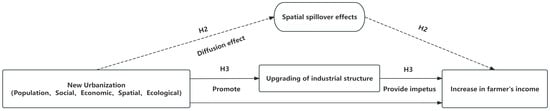
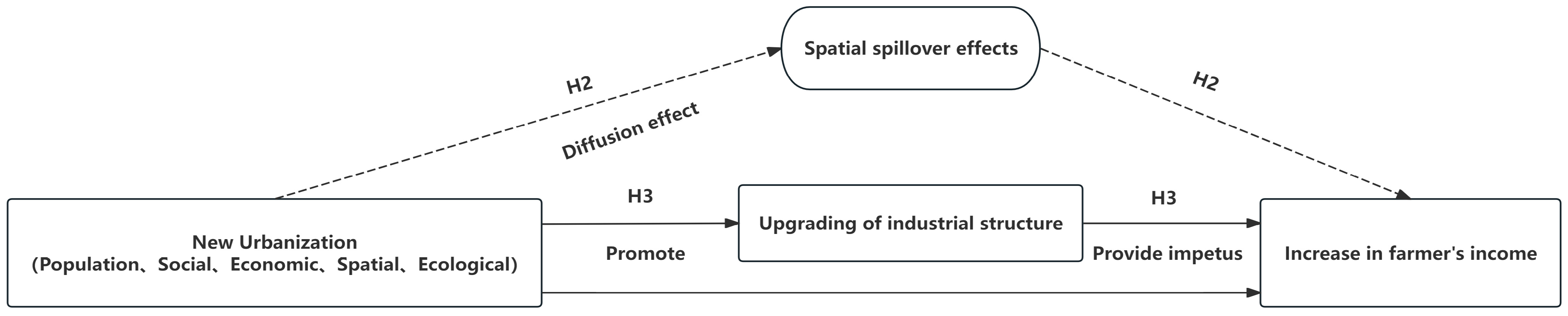
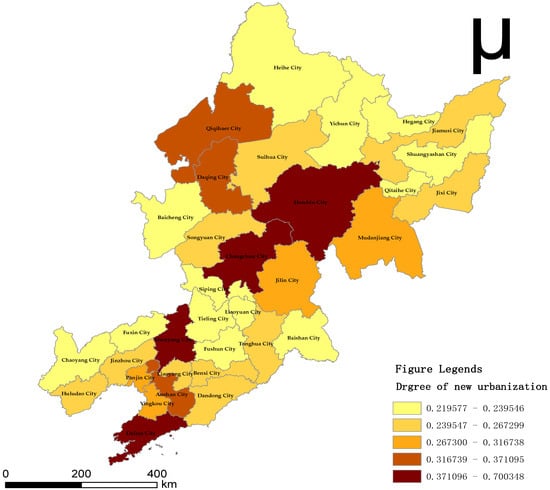
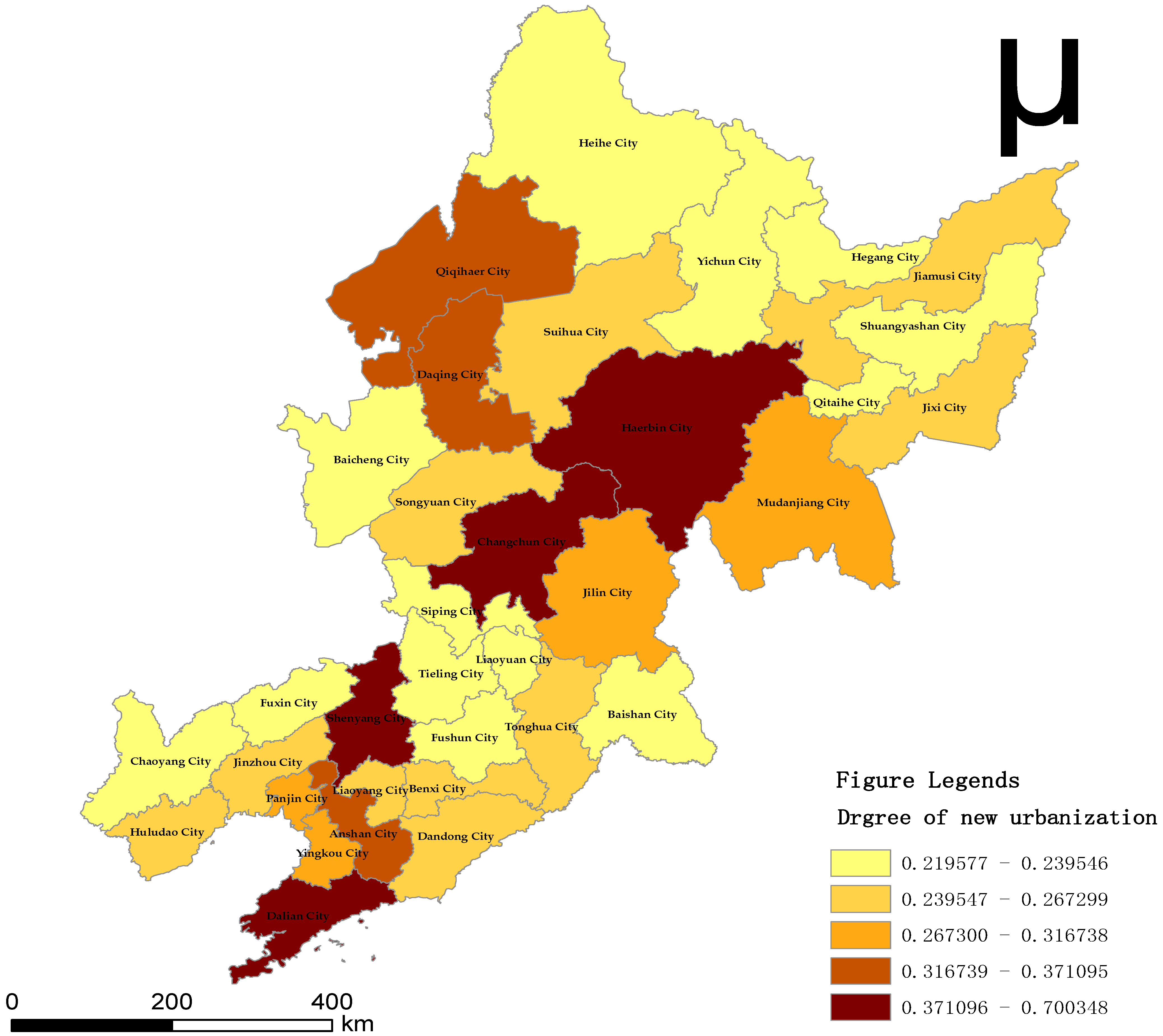
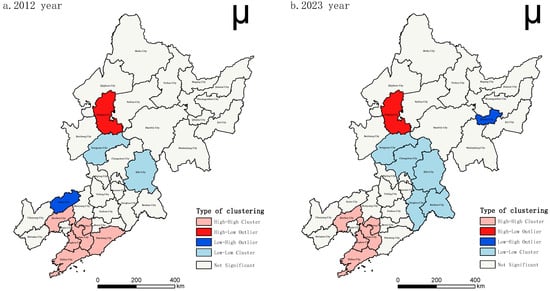
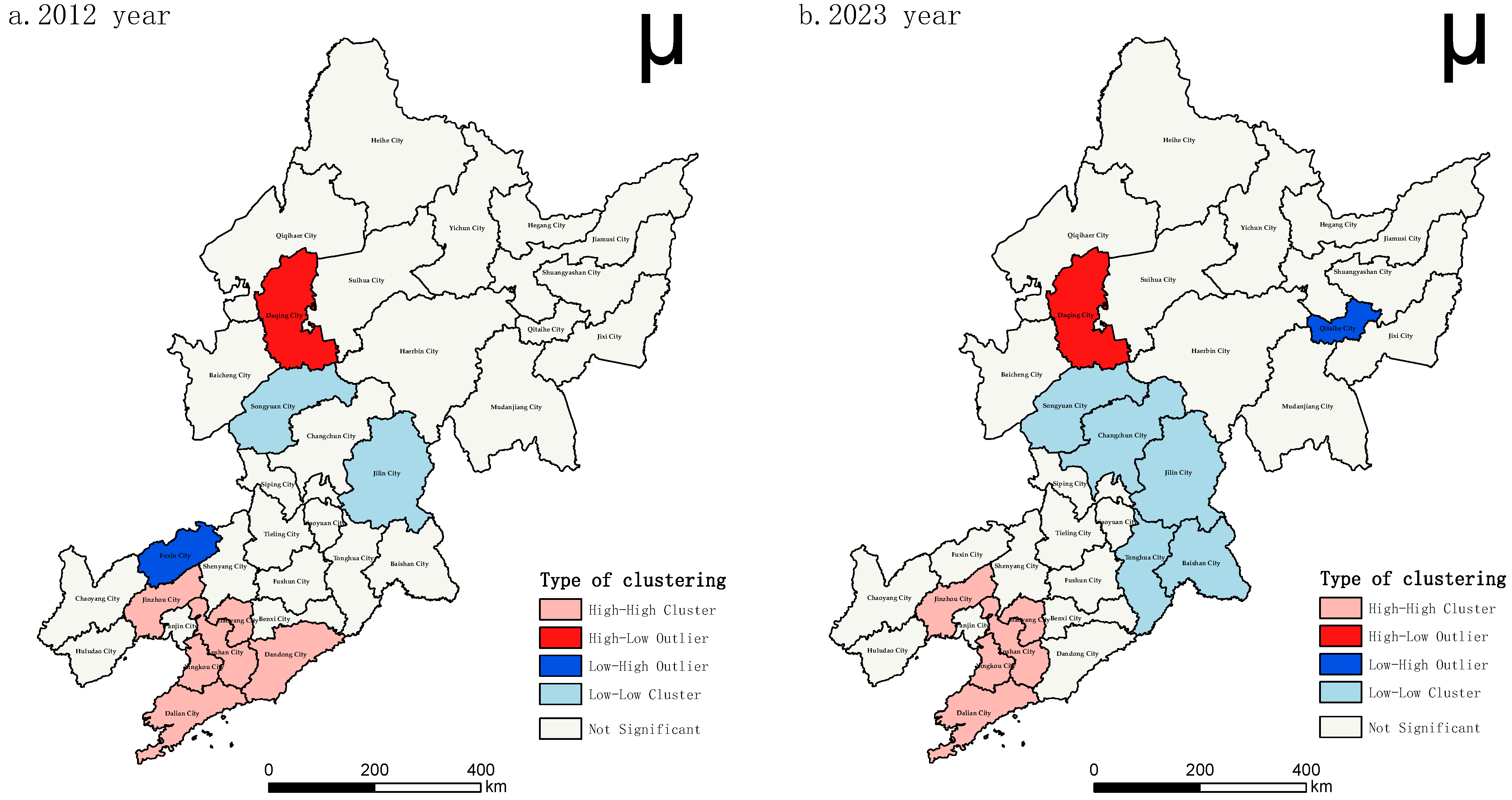
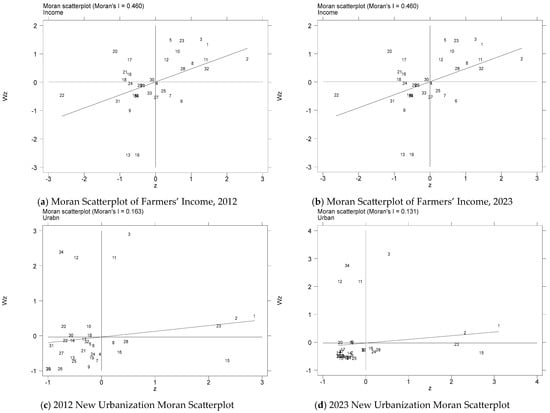
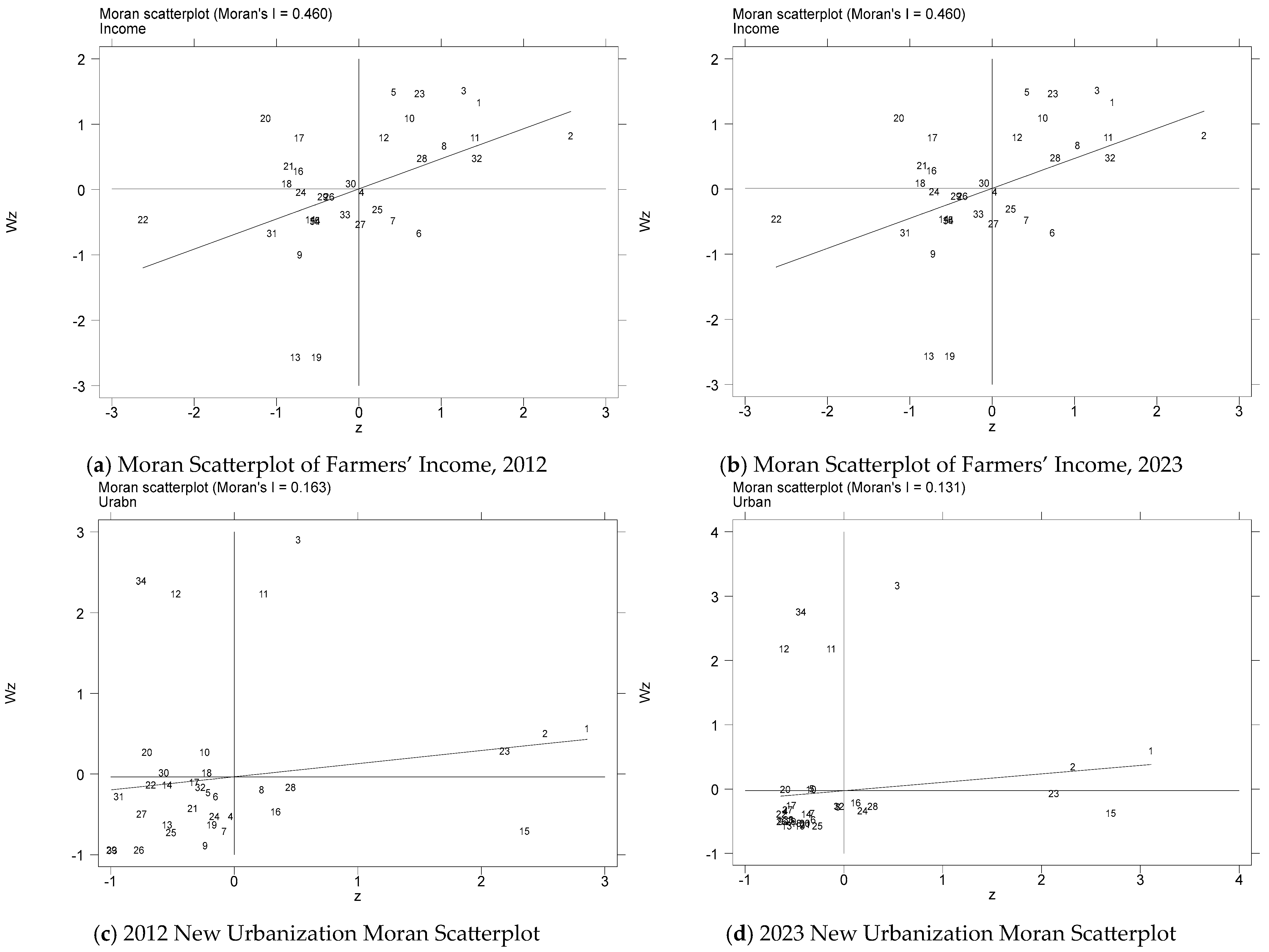

Disclaimer/Publisher’s Note: The statements, opinions and data contained in all publications are solely those of the individual author(s) and contributor(s) and not of MDPI and/or the editor(s). MDPI and/or the editor(s) disclaim responsibility for any injury to people or property resulting from any ideas, methods, instructions or products referred to in the content. |
© 2026 by the authors. Licensee MDPI, Basel, Switzerland. This article is an open access article distributed under the terms and conditions of the Creative Commons Attribution (CC BY) license.