


Abstract
The need for a stronger framework that integrates green taxation, innovation, and energy into logistics operations in Africa has grown because these measures are critical to the continent’s green development, participation in global green goals, and ensuring an equitable, prosperous future for African countries. To address this issue, this study investigated the impacts of green taxation, innovation, and energy on green logistics in Africa. This study drew on secondary sources, including the World Bank and the Organization for Economic Co-operation and Development, to create a dataset of 23 African countries from 2008 to 2022. In line with the pre-estimation test, we used heterogeneous panel data. As in the pre-estimation test, we used a heterogeneous panel data model (HDPDM). The results revealed that green taxation (GREENTAX) had a positive, significant long run effect on green logistics (GREENLOGI), implying that a green taxation regime could prompt behavioral changes among logistics customers and suppliers, promoting environmentally friendly practices. The results also showed that green innovations (GREENINNOV) had a positive, significant short- and long-term influence on GREENLOGI, emphasizing the need to incorporate green innovations into logistics plans to achieve short- and long-term benefits. Moreover, renewable energy (RENEW) was observed to be positive significant in the long run but insignificant in the short term. This indicates that the environmental effects of energy transition take time to materialize. Policymakers and regulators can use the study’s insights to develop frameworks to improve environmental policies and initiatives in African nations.
1. Introduction
The need for logistics services has increased in both advanced and emerging economies [1]. As this need has grown, transitioning to green, sustainable transportation has become critical to mitigate the negative effects of climate change and reduce carbon emissions [2]. To achieve green logistics, which is the practice of implementing environmentally friendly approaches, companies must reduce their carbon emissions, compress waste, implement inclusive waste management, and use recyclable materials.
Although the energy crisis and climate change have created a need for change, achieving a delicate balance between the economic and ecological aims of green supply chain management and industrial operations has become increasingly difficult [3]. Recently, green logistics has become a popular topic as customers have begun to favor merchants and organizations that seek to reduce their negative environmental impacts. Indeed, previous research has shown that many customers are willing to change their e-commerce shopping behaviors to reduce their environmental effects [4,5]. As more consumers become environmentally conscious, they prioritize green enterprises [6,7]. Consequently, consumers frequently pursue the best methods to reduce their personal environmental footprint, becoming more inclined to support more sustainable products [7]. Additionally, businesses are adapting their supply chains and logistics infrastructure to meet these new demands. This transformation is occurring gradually, as more CEOs prioritize sustainability in their company’s aims.
Along with rising consumer demand for sustainable products, recent regulatory pressures to reduce carbon emissions—and businesses’ commitments to environmental, social, and governance (ESG) goals—the push toward green logistics has been driven. Achieving this end is essential. According to the International Energy Agency (2009) [8], the transport and logistics sector accounts for nearly one-quarter of global energy-related CO2 emissions, underscoring the need for worldwide environmental regulations. Recent studies suggest that firms adopting eco-efficient logistics reduce their environmental footprint, achieve competitive advantages, and boost their business reputation [9,10]. As the number of logistics enterprises and the volume of logistics transportation have increased dramatically over the past few decades, the negative environmental impacts of logistics businesses have become increasingly visible. The impacts include waste, pollution, and a large volume of greenhouse gas emissions due to fuel use [11]. Therefore, the need for an effective model of green logistics that unites operational efficiency with sustainability objectives has grown.
Environmentally damaging logistics activities can generate multiple waste streams or release large volumes of carbon dioxide into the atmosphere. Consequently, firms can be incentivized to produce greener products and adopt greener manufacturing processes through green taxes. In this instance, a green tax can become a valuable tool for boosting environmentally friendly logistics practices by increasing the costs of environmentally damaging activities [1,12]. Therefore, green taxation is a necessary driver of the logistics industry’s development [13].
In addition to green taxation, green technologies are essential in developing green logistics. Innovative green technologies can enhance brand image and attract environmentally conscious consumers. Moreover, new and improved tools—such as the Internet of Things (IoT)—provide solutions that increase transparency and database accessibility while also being account-oriented to the supply chain. Indeed, some contend that technological innovation offers the greatest promise among the various determinants of green logistics because it enables more sustainable, energy-efficient transportation systems with lower energy consumption and emissions [14,15]. Hence, investment in green innovation is expected to promote green logistics and sustainable supply chain management. Therefore, green innovation is integral to the sustainable development of the modern logistics industry [16,17], underscoring the growing need to integrate green innovation into the logistics framework.
Logistics activities often rely heavily on fossil fuels, harming environmental sustainability and polluting the natural environment. Integrating green or renewable energy technology into green logistics regulations can support sustainability efforts [16,18]. For example, using electric delivery trucks and installing renewable energy technologies at depots and logistics hubs can reduce reliance on fossil fuels, thereby decreasing greenhouse gas emissions. Thus, integrating renewable energy technologies with green logistics is expected to reduce environmental harm from transportation emissions, improve operational efficiency and business sustainability, and could be a significant step toward achieving the SDGs.
Against this backdrop, this study investigates the impact of green levies, green innovation, and green energy (proxied by renewable energy technologies) on green logistics in Africa, controlling for other macroeconomic and environmental variables. Most importantly, the study considers both short-term and long-term effects of the variables on green logistics performance. The distinction between short- and long-term effects of the explanatory variables enables understanding of both the temporary and equilibrium effects of the independent variables on green logistics performance in Africa.
The study makes the following contributions. First, prior assessments of the sustainability of international supply chains have typically used a single ecological characteristic: accounting for pollutant leakage [19]. Green logistics techniques are essential for fostering green growth and achieving sustainable development goals. The ambiguity around the factors influencing the implementation of green logistics necessitates an urgent investigation into the antecedents and effective mechanisms that govern their effectiveness. Second, this study provides fresh insights into the nexus between green taxation, innovation, energy, and green logistics, as the literature on the nexus between green growth determinants and logistics performance is scarce, and most prior studies have focused on developing economies, thereby neglecting to explore the context of emerging economies (such as African states). Third, Africa has abundant resources; thus, implementing green logistics can help rehabilitate the region and make it more attractive to investors worldwide. In this regard, African countries are obligated to meet the requirements of the international environmental covenants. For this reason, the use of green levies, green innovation, and green energy in logistics can help African countries meet the demands of the Paris Agreement (PA) [20,21,22].
This research makes theoretical, methodological, and practical contributions. From a theoretical perspective, the current study seeks to bridge Stakeholder Theory, the Natural Resource-Based View, and Circular Economy Theory to examine how green taxation, green energy, and green innovation influence the performance of green logistics. Second, from a methodological perspective, it employs a robust approach that includes Heterogeneous Dynamic Panel Data Modeling (HDPDM), Panel-Corrected Standard Errors (PCSE), System GMM, and Spatial Spillovers, which is uncommon in the existing literature on green logistics. Third, from a practical perspective, it contributes to the widespread promotion of green logistics by providing a comprehensive view of 23 African countries from 2008 to 2022, accounting for spatial spillovers. It enables policymakers to assess the effectiveness of green taxation from the perspective of green innovation, addressing a lag in the relevant literature in Africa.
The study documented the short-term effects of green taxation on green logistics in these nations and found that green taxation regimes can prompt behavioral changes among logistics suppliers and customers, which promote environmentally friendly behaviors. Additionally, the study found that green innovations and green logistics have both short- and long-term effects. This dual effect underscores the importance of integrating green innovations into logistics programs for immediate and long-term benefits. This study provides policymakers and regulators with valuable insights for designing effective frameworks to enhance environmental policies and strategies in African countries.
The study is organized as follows: Introduction, literature and theory, methodology, Results, and Conclusions and implications.
2. Literature Review
Green logistics involves the planning, execution, and coordination of all logistical functions to minimize their environmental impact. This includes minimizing the carbon footprint, energy use, and waste generation. [23,24]. Green logistics encompasses all aspects of the logistics process, including transportation, warehousing, inventory management, and packaging.
The move towards green logistics in the sector is essential given the nature of the industry. To begin with, the logistics industry is one of the top producers of greenhouse gases worldwide. In fact, a substantial share of global carbon emissions is attributed to the transportation industry (International Energy Agency, 2009 [8]). Although the climate-related and environmental motivations for green logistics are well recognized, its importance extends beyond environmental considerations to incorporate significant economic, technological, operational, and regulatory dimensions. Economically, green logistics helps decrease costs through energy savings and logistics efficiency and optimization. Operationally, it makes supply chains more resilient and efficient by eliminating resource inefficiencies and logistical coordination problems. Technologically, green logistics encourages the implementation of innovative solutions, such as digital tracking technologies, energy-efficient transportation, and alternative fuel sources. As far as regulations are concerned, there is a need to adopt higher environmental standards, which means that both firms and government bodies must adopt green logistics practices.
2.1. Green Logistics in Africa
The literature on green logistics in Africa remains scarce compared with other regions of the world. The current literature focuses predominantly on green logistics and economic growth, sustainable quality, international trade [25,26], or green logistics awareness and practices in a certain country or sub-sector [27,28]. Such literature highlights significant problems related to insufficient infrastructure development, regulatory measures, energy costs, and the lack of adoption of environmentally friendly technology. The empirical literature shows that logistics in Africa is usually characterized by high carbon intensity, which is mainly determined by dependence on fossil fuel-based logistics and inefficiency of the whole logistics system [25,26]. Although some country-level studies claim slow but positive trends caused by policy changes and cooperation of local companies with international firms, the progress made towards green logistics seems to be rather unequal [28].
Many recent studies on green logistics in Africa mainly use a single-country/sector approach; therefore, generalizing the results appears difficult. Moreover, there is a gap in research papers integrating policy instruments (green taxes), technological innovation (green innovations), and the energy transition (renewable energy). Dynamic aspects (adjustment in the short and long run) and cross-country heterogeneity are also not considered by researchers. This study aims to address these issues through multivariate panel data analysis of the impact on green logistics in Africa.
2.2. Green Taxation and Green Logistics
Green taxation has been adopted as a policy instrument across the globe to internalize the costs of environmental economic activity and to encourage firms to become more environmentally conscious. Green taxes—including carbon charges, fuel excise duties, and congestion charging—in the logistics sector help discourage non-green practices and promote environmentally conscious technology and energy-efficiency investments (OECD, 2019 [29]). The purpose of green logistics is to decrease ecological costs through the adoption of sustainable practices.
Most previous studies on the sustainability of international supply chains have focused on integrating only one ecological dimension, which is pollutant leakage [19]. Various studies have argued that achieving a trade-off between environmental and economic efficiency is critical in the development of logistics policies [13]. These studies have argued that imposing green taxation was the best option for green logistics, arguing that high-carbon-content-raw-material taxes on oil, gas, or coal would lead to investments in low-carbon, gas-emitting transportation infrastructure [12]. For example, Yang et al. [30] explored the relationship between green taxation and green logistics. They reported that green taxes help mitigate transportation emissions in China. Sadowski and Misztal [31] argued that green taxation, including transport, energy, and pollution taxes, substantially enhanced transportation innovation in line with sustainability ethics. Finally, in the same way, Kowalska and Misztal [13] contended that sustainable activities played a significant role in improving green logistics in Saudi Arabia.
Notwithstanding these developments, there is no clear literature on the role played by green taxes in Africa. Most countries in Sub-Saharan Africa have inefficient environmental sustainability tax laws. Owing to inadequate means of enforcement, their efficacy is greatly diminished (Occhiali & Quak, 2024 [32]). Furthermore, companies in emerging economies are likely to perceive environmental taxes as a cost rather than an incentive to innovate [33]. This cost-incentive issue suggests a knowledge gap that must be filled through empirical studies to determine whether green taxation, given regulatory frameworks, markets, and institutional capacities, can help produce greening logistics systems in Africa, whose economies are so distant from those of developed economies.
Based on the literature, this research expects that imposing levies on environmentally harmful activities, such as carbon emissions from transportation services and wasteful logistics practices, will encourage companies to invest in sustainable alternatives. The rationale is that this imposition will compel companies to enhance their transportation options; adopt cleaner, more energy-efficient automobiles; and implement waste-reduction strategies. According to the Stakeholder Theory, green taxes are an external institutional pressure that makes organizations internalize environmental costs and satisfy regulatory requirements. Within the context of Circular Economy Theory, such regulatory pressure motivates firms and economies to become resource-efficient and reduce waste by encouraging clean production and logistics operations. Thus, green taxes might help improve green logistics performance by encouraging firms to adopt greener transportation, storage, and distribution practices. In view of this perspective, the following hypothesis is posited:
H1.
Green taxation has a significant influence on the adoption of green logistics practices in both the short run and long run.
2.3. Green Innovation and Green Logistics
Green innovations in logistics include introducing environmentally friendly technologies, processes, and practices to reduce the ecological footprint of supply chain activities [34]. Green innovations and technologies in the logistics industry are essential for alleviating ecological crises and mitigating climate change impacts, and for safeguarding sustainable development [35,36]. Examples include fuel-efficient trucks, green route-planning software, green packaging, reverse logistics, and computerized tracking systems that optimize fuel consumption and reduce waste. Empirical evidence from industrialized countries has shown that such innovations increase operational efficiency and reduce carbon footprints [37].
Although logistics corporations have been pressured to implement green innovations to reduce their carbon emissions and adverse environmental impacts, the positive effects of these innovations require more substantial evidence [38]. Prior studies have shown that, in logistics practice, innovation mitigates environmental burdens and serves as an essential driver of viable improvement [39]. Green innovation enables better management of productive inputs, helping balance the expenditures required to make companies environmentally friendly. Ref. [35] investigated the impacts of green innovation on the relationship between green sustainability and logistics performance. They reported that green innovation reduced CO2 emissions and enhanced sustainability. Similarly, Musah and Mensah [40] argued that green innovation was related to environmental sustainability and efficient resource management. Thus, green innovation can play a greater role in mitigating the ecological burdens of the logistics industry, including pollution and greenhouse gas emissions.
Unfortunately, few studies have examined the adoption and performance of green innovations in Africa. This examination is necessary because most companies in Africa face challenges such as high setup costs, limited technical expertise, and inadequate institutional support, which limit the diffusion of green technologies [41]. The knowledge gap underscores the need to investigate how green innovations impact green logistics performance in Africa.
Consequently, incorporating green technologies or innovations, such as electric vehicles, into green logistics activities is expected to promote productivity and mitigate ecological impacts in supply chain management. According to the Natural Resource-Based View (NRBV), green innovations are an internal capability that enables firms and economies to create environmentally friendly products, use resources efficiently, and eliminate waste and inefficiencies in operations. According to Circular Economy Theory, such innovations can help minimize waste, enable recycling, and develop closed loops within supply chain operations. Hence, green innovations might contribute to improved logistics efficiency and reduced environmental impacts at once. In view of the above perspective, the following hypothesis is posited:
H2.
Green innovations have a significant influence on the adoption of green logistics practices in both the short run and long run.
2.4. Green Energy and Green Logistics
Green energy adoption in logistics refers to using low-carbon or renewable energy sources—like wind, solar, biofuels, and electricity—to power transport, warehousing, and other supply chain functions [42,43]. Carbon gas emissions are a key issue in the manufacturing sector due to energy usage, and green energy use reduces carbon emissions and enhances resilience and sustainability in logistics systems [44]. Furthermore, Ref. [45] noted that logistics activities rely heavily on fossil fuels, thereby undermining green sustainability and polluting social life. The previous literature has shown that logistics firms using solar-powered warehouses, electric-powered vehicles, and hybrid fuel systems achieve significant cost savings and reduced environmental impacts [46].
Incorporating green energy into green logistics policies can encourage sustainability efforts. For example, using green energy technologies to power electronic transportation reduces dependence on fossil fuels and decreases greenhouse gas emissions; Ref. [46] examined the economic impact of green logistics and argued that using green energy in logistics operations enhances environmental performance by reducing carbon emissions. This finding aligns with Dangelico and Pontrandolfo [47], who examined the influence of green growth on environmental actions and firm performance. They suggested that companies should adopt renewable energy in their logistics systems to enhance their green and economic performance. Xie and Qiu [3] empirically found that adopting renewable energy and electric vehicles might reduce carbon emissions in the supply chain.
However, little is known about the acceptance of green energy among logistics in Africa. The erratic nature of the power supply, the high initial investment cost, and inadequate infrastructure all work against large-scale adoption (African Development Bank, 2020 [48]). Moreover, most available research focuses on single energy solutions at the expense of exploring their combined effects on logistics sustainability, with little understanding of how green energy uptake affects green logistics performance in the regional context. Therefore, applying green energy systems to control transportation, warehouses, and distribution should help firms reduce their environmental impacts and contribute to a more sustainable model. Under the Natural Resource-Based View (NRBV), renewable energy adoption is a sustainability-oriented capability that increases energy efficiency and decreases dependency on fossil fuels. From the perspective of the Circular Economy Theory, the usage of renewable energy promotes cleaner production cycles and lower emissions in logistics operations. Thus, the use of renewable energy helps significantly enhance green logistics performance. In view of this, the following hypothesis is posited:
H3.
Green energy has a significant influence on the adoption of green logistics practices in both the short run and long run.
2.5. Theoretical Perspectives
Various theories underpin green logistics and supply chain studies. One such theory is the Stakeholder Theory (ST) [49]. The theory examines how firms conduct business while considering the interests of numerous internal and external stakeholders [50]. Given the intricacy of contemporary supply chain management, recognizing the full range of stakeholders is imperative. In this setting, stakeholder theory might help enhance understanding of the fundamentals of operationalizing green sustainability, highlighting the roles of firms and their stakeholders [50,51,52]. Hence, ST was used to underpin the examination of the study’s variables.
This approach worked because, in relation to the green tax approach, the government could impose a tax on carbon emissions to encourage greener approaches. While firms would not be willing to adopt this approach because of the expense involved, it would enable them to reduce costs through innovation and increased production efficiency, resulting in a win–win scenario. In terms of green innovations, firms that adopt innovations related to green logistics, such as electric vehicles, would gain reputation or status while satisfying customers’ need for sustainability. Creating mechanisms to elicit continuous feedback from all stakeholders can help firms and countries advance climate and environmental change agendas and sustainable development.
Another essential theory for promoting green logistics is the Circular Economy Theory (CET), a financial model for fiscal, resource, and green sustainable development [53,54]. It is a leading strategic tool for reducing emissions and safeguarding natural resources, ecosystems, and biodiversity [54]. Thus, the circular economy philosophy can be applied as a necessary step to stimulate a more sustainable growth curve [53,54]. This theory could also guide green growth in logistics production from the perspectives of finance, resources, and green interactions [53,54,55].
Finally, the Natural Resource-Based View (NRBV) extends the traditional resource-based view by focusing on environmental capabilities as strategic resources [56,57]. Process innovations, the use of renewable energies, and the development of eco-efficient logistics systems can provide companies with sustainable competitive advantages. Based on Stakeholder Theory, firms adopt green practices to maintain legitimacy (Sun et al., 2025 [58]), meet regulatory pressures, and secure stakeholder approval. Together, ST and the NRBV help explain how external pressures (green taxes and stakeholder expectations) and internal capabilities (green innovations and green energy) drive green logistics performance across Africa.
In summary, Stakeholder Theory helps explain how environmental regulations, especially green taxation, exert external pressure on organizations and governments to adopt sustainable practices. Likewise, the NRBV theory states that internal factors such as green innovation and renewable energy act as strategic resources that improve both economic and environmental performance. The Circular Economy Theory (CET) further complements both theories by explaining how external pressures and internal enablers interact to achieve resource efficiency, waste reduction, and closed-loop systems, which are important for improving green logistics performance. Therefore, this research combines green taxation, green innovation and renewable energy, and emissions reduction dynamics to examine green logistics performance differences.
Conceptual Framework
Figure 1 presents a conceptual framework of the relationships among green taxes, green innovation, and green energy as antecedents of green logistics in Africa. ST posits that green taxes create societal and governmental pressure on businesses to adopt sustainable logistics practices. The NRBV posits that green innovation and green energy are environmental capabilities of firms.
Figure 1.
Conceptual framework.
CET is another relevant, integrative theory that can be used to investigate the performance of green logistics, as logistics systems are involved in resource circulation, waste management, and energy conservation within an economy. Through its focus on circular material flows, renewable energy, and efficient environmental processes, CET seeks to explain how logistics can be used to achieve improved environmental sustainability while delivering economic benefits. In developing or emerging economies, achieving circular logistics is challenging; in some cases, efficiency sacrifices may be necessary during the transition. By integrating the CET into this study, the positive and transitional effects of green taxation, green energy, and innovation on green logistics performance can be fully considered. In this study, the ST, NRBV, and CET provide an integrated approach to understanding how green logistics is implemented in response to external pressures and internal resource constraints, while incorporating a circular approach to achieve overall sustainability in the logistics sector.
2.6. Research Gap
Recently, studies have examined the factors that impact green logistics performance and the role of environmental policy instruments across various contexts. In a meta-analysis, Öztürk et al. (2026) investigated the nexus among green supply chain, carbon-neutral performance, and green innovation [59]. Kartal and Taşkın [60] examined the influence of supply chain logistics and green transport on green economics. Similarly, Starostka-Patyk and Bajdor [61] explored the effect of green logistics performance on the environmental sustainability of EU countries. Olkiewicz and Dyczkowska [62] studied the influence of green logistics implementations and logistics operators in Poland. However, most studies have examined green logistics in developed economies; empirical research on Africa is scant. Furthermore, although the literature is frequently available on green taxes, green innovations, and the use of green energy, the combined effects of these on logistics sustainability are rarely analyzed.
Moreover, the unique institutional, infrastructural, and regulatory challenges in Africa have not been well addressed. Thus, a knowledge gap remains regarding how these determinants interact to affect green logistics performance in the region. Moreover, to date, few studies have examined the moderating effect of green innovation on the nexus between policy instruments and logistics performance. Even fewer have considered spatial spillovers from neighboring countries to help fill gaps in understanding how regional dynamics serve as a conduit for green logistics. This study addresses this gap by focusing on African countries with heterogeneous levels of economic development and integrating fundamental insights from Stakeholder Theory, the Natural Resource-Based View, and Circular Economy theory to explicitly examine the effects of green taxes, green innovations, and green energy on green logistics in Africa.
3. Data Sources and Description
This study applied the positivist research philosophy, which holds that reality is objective and measurable. This is applicable because the research uses quantitative techniques and models to test hypotheses about the determinants of green logistics. Consequently, qualitative inquiry—such as interpretivism—may not apply to this empirical study. The empirical methodology of this study is structured in such a way that it would fit into the research objectives and hypotheses proposed in this study using the dynamic panel modeling approach. In particular, the model estimates the short-run effect of the variables of green taxation, green innovations, and renewable energy on green logistics performance.
We extracted data from auxiliary sources of the World Bank and the Organization for Economic Co-operation and Development (OECD), with a sample of 23 countries across 54 African states (2008–2022). The study focuses on 23 of 54 African countries because complete and consistent data on key variables—green taxation, green innovation, green energy, and logistics performance—were available only for these countries during the period 2008–2022. Most African countries lack continuous or comparable data in the World Bank and OECD datasets, which would compromise the validity of the analysis. The resulting dataset is an unbalanced panel. Linear interpolation was used for a small number of missing values to maintain database continuity, limiting the non-significant loss of country-year groups [63,64]. The sporadic occurrence of missing values suggests that linear interpolation preserves the panel’s structure without significantly affecting the estimated relationships.
3.1. Construction of Green Logistics Index
Green Logistics (GREENLOGI) is the dependent variable and it is developed through the use of the DEA method to determine the level of efficiency at which the countries achieve desirable logistics performance while taking into account the negative environmental effect that occurs due to transportation activities. The variable returns to scale (VRS) output-oriented DEA model is used. Output orientation is appropriate in this case since the analysis seeks to establish the extent to which countries can maximize their desirable logistics performance while taking the inputs into consideration and at the same time accounting for the undesirable environmental output that results from transport activities.
The Logistics Performance Index (LPI), developed by the World Bank, is used as the desirable output in this case. It measures the logistics performance in the countries in terms of six important dimensions which include customs performance, infrastructure, ease of arranging international shipments, quality of logistics services, tracking and tracing and timeliness. A high LPI indicates high performance in logistics, and thus it is considered as the desirable output in this DEA analysis. Transport related CO2 emissions are used as the undesirable output in this analysis in order to take into account the environmental effect of the emissions related to transportation.
On the assumption of the Variable Return to Scale (VRS), the DEA framework permits countries to have various scales of operations and does not assume proportionality between input and output quantities. Therefore, the DEA scores generated using this DEA framework reflect the efficiency of green logistics in each country in a given year relative to the rest of the observations in the sample as follows.
min θ, λ θ
Subject to:
where θ is the efficiency value; X and Y stand for matrices of inputs and outputs respectively and λ is a vector of weights. The values of the efficiency scores lie between zero and one.
Yλ ≥ yi
θXi ≥ Xλ
∑λj = 1, λj ≥ 0
Prior to its utilization in the econometric analysis, the DEA efficiency scores are standardized in order to derive the standardized Green Logistics Index which is defined as:
where DEAit represents the raw DEA efficacy score for country i in year t, represents the average of the raw DEA efficacy scores, and SD(DEA) represents the standard deviation of the raw DEA efficacy scores.
The result is which has a mean close to zero and does not fall within the range of [0, 1]. Thus, a negative score indicates an observation where green-logistics efficiency is below the sample mean while a positive score is indicative of observations whose green-logistics efficiency score is above the sample mean. This process explains how the regression variable’s descriptive statistics may have negative and positive values although the DEA scores are bound.
Therefore, the paper recognizes the difference between the DEA score and the standardized Green Logistics Index used in the econometrics analysis.
In addition to the DEA technique, principal component analysis (PCA) has been used to construct another composite index through reduction in several correlated indicators [65,66,67]. Standardization will be carried out first before extraction of principal components based on their eigenvalues as follows:
where Zi denotes standardized variables, wi denotes weights obtained through eigenvectors, and PC1 accounts for the maximum variance in the data set. By incorporating both DEA and PCA in index construction, a strong method is formed that combines efficiency-oriented methods with variance-oriented methods. The consistent results from the two different indices form a stronger validation for the empirical findings.
PC1 = w1Z1 + w2Z2 + … + wnZn
Zi = (Xi − μ)/σ
Σw = λw
There are three independent variables. The first was green taxation (TGREENTAX). GREENTAX is a tax or charge on properties, items, or actions that harm the environment.
The second was green innovation. (GREENINNOVATION). GREENINNOVATION reflects the nation’s annual patent filings in environmental technologies. The third explanatory variable was green energy (RENEW). RENEW reflects any technique of producing energy that applies renewable means, including biomass, wind, water, and solar [68].
We controlled for several factors. First, we controlled for foreign direct investment (FDI) because international investors can substantially influence domestic policies, including environmental and sustainability strategies. Therefore, their power may affect such policies and strategies, thereby influencing the efficiency of green logistics approaches. The second control variable used was greenhouse emissions (GREENHOUSE). It was important to incorporate the control variable since controlling for GREENHOUSE helps determine the direct effects that green levies, green innovation, and green energy have on reducing logistics emissions. Finally, we included the third control variable, energy from fossil fuels, to assess the effects of green levies, green innovation, and green energy on green logistics, which may be related. By incorporating the energy control variable, this study would be able to determine the specific impacts of green approaches on green logistics.
All variables are theoretically grounded and draw on prior empirical evidence. Green taxation measures directly promote environmental sustainability through government policy incentives. Green energy measures the adoption of green energy in a country. It can be controlled through tax incentives to reduce carbon emissions [42]. Similarly, green innovation measures technologies, which might be encouraged by green taxes to influence their impact on logistics performance [69]. Green logistics performance measures the efficiency of supply chains in a green context, which is what green taxation policies aim to enhance [70]. The control variables aim to adjust for heterogeneity in economies, institutions, and infrastructure to ensure an exact estimate of what drives green logistics performance. Table 1 presents information on the study variables, their measurements, and the sampled countries.
Table 1.
Variable dimensions.
Table 2 below shows the country representation, panel structure, and missing observations in the dataset. The data set contains 345 observations for 23 African countries between 2008 and 2022, out of which only 24 are missing (6.957%), signifying the level of completeness of the data set. The missing observations of 6.957 are unevenly spread, where most of the countries have no missing observations, whereas there are few countries—including Cabo Verde, Equatorial Guinea, Eswatini, Madagascar, and Mauritania—with moderate missing observations (20%), and Niger has the highest missing value of 27%. All the missing values were replaced using linear interpolation to ensure balanced panel data. To mitigate the effect of extreme observations, all our continuous variables were winsorized at the 1st and 99th percentiles. This technique mitigates the effect of extreme values without removing observations from the panel. Table 2 lists the countries used.
Table 2.
Data availability and interpolation.
3.2. Econometric Approach
Test of Homogeneity
Verifying the assumption of slope homogeneity in dynamic panel data analysis is critical. Therefore, the form of cointegration assessment to be adopted is contingent on whether the variables are similar or dissimilar. The delta (∆) assessment was developed by Pesaran and Yamagata [75] as an augmentation to Swamy’s assessment of slant homogeneity. Consistent with this examination, a cointegration equation can be derived as follows:
Yit = ∂ + βXit + εit
It uses the following gradient coefficient. The hypotheses about the examination are as follows:
H4.
When βi = β, the slope coefficients are similar.
H5.
When βi = β, the slope coefficients are dissimilar.
To assess these postulations, two examination statistics established by Pesaran and Yamagata [75]: (for huge samples *) and (for small samples *) were used. Table 3 presents the results of the homogeneity test.
Table 3.
Homogeneity test.
3.3. Cross-Sectional Reliance Examination
Our sample comprises several countries from similar landmasses in Africa. Consequently, cross-sectional dependence, reflecting possible interdependence and correlation within countries or firms, is expected to exist [76]. Testing the cross-sectional dependence might verify whether our dataset comprises any feasible communal correlation effects. Table 4 presents the results of the cross-sectional dependence test.
Table 4.
Cross-sectional dependence.
Table 4 provides substantial evidence of cross-sectional dependence among the variables, and the assumption of cross-sectional weak dependence is strongly rejected for all variables except RENEW and FDI, whose p-values are greater than 10%. Therefore, for all the remaining variables (GREENLOGI, GRENTX, GREENINNOVATION, GREENHOUSEGASEMISSIONS, and ENERGY), a shockwave, whether constructive or adverse, might spread to other segments of the panel.
3.4. Unit Root Assessment
Before estimating, the stationary characteristics of the variables are assessed using Cross-sectionally Augmented (CIPS) test, which takes into account cross-sectional dependence. The cross-sectional dependence (CD) test indicates that the examined variables exhibit cross-sectional dependence so that traditional unit root tests may yield biased results. Consequently, consistent with Albulescu and Pépin [77,78], new-generation unit root tests were conducted to control for the CD of errors and for gradient heterogeneity [33,78]. To estimate the system of integrating the various variables, we adopted Pesaran [79] “cross-sectional augmented Dickey-Fuller” (CADF) examination. Table 5 presents the results of the CADF test.
Table 5.
Unit root assessment.
The results of the investigation are presented in Table 5, which indicates the critical values along with the significance levels (*) revealed that green logistics (GREENLOGI), green taxation (GRENTX), green innovation (GREENINNOV), renewable energy (RENEW), external direct investment (FDI) and energy are stationary at level (I(0)); however, greenhouse emissions (GREENHOUSE) and (ENERGY) are stationary at first difference (I(1)). Therefore, we employed a heterogeneous dynamic panel data model (HDPDM *) as the assessment model.
3.5. Model Specification
Baseline Estimation Models and Techniques
As mentioned earlier, we adopted an HDPDM in this study. The estimation of the HDPDM uses the PMG estimator within the panel ARDL framework, which permits heterogeneous short-run dynamics but requires homogeneity of the long-run coefficient estimates across cross-sectional units. The general form of the specification is defined by the ARDL (p, q1, …, qk) model, where the optimal lag length is determined based on information criteria (Akaike Information Criterion, AIC). The presence of the long-run equilibrium relationship (cointegration) is tested by a statistically significant and negative coefficient on the error correction term (ECT), which is consistent with the theory of cointegration (Robert F. Engle & Clive W. J. Granger, 1987 [80]). The reason for choosing the PMG-ARDL model instead of the fixed and random effects and GMM estimators is its ability to account for non-stationary variable and estimate the long-run parameters consistently even if there is dynamic heterogeneity across countries [42,81]. Therefore, the simulations of HDPDM can be derived as follows:
HDPDM via ARDL
Error Correction
Long-Run Relationship
Long-Run Coefficients
Error Correction Term
where
GREENLOGI = Green logistics
GREENTAX = Aggregate green taxation
GREENINNOV = Green innovation
RENEW = Green energy
FDI = Foreign direct investment
GREENHOUSE = Greenhouse emissions
ENERGY = energy from fuel fossils
α0: Constant
φj: Short-run coefficients
β: Long-run ARDL coefficients
θ: Long-run elasticities
λ: Speed of adjustment (ECT coefficient)
μi: Country fixed effects
ε_it: Error term
4. Results and Discussion
4.1. Explanation of Descriptive Data
Table 6 presents the descriptive data of the study. The green logistics index (GREENLOGI) is standardized with mean value around zero, and its distribution has quite a bit of variation (standard deviation = 0.897). The range of GREENLOGI (−1.93 to 1.39) shows significant differences between countries and years, with negative scores for underperforming in environmental efficiency and positive scores for good performance in green logistics. The combined African green taxation structure (TGREENTAX) had a middling score of 0.893% of aggregate GDP across African economies. This percentage is accompanied by the lowest and highest scores of 0.000% and 3.110%, respectively. This finding suggests that some sample nations from the dataset did not contribute to green levies throughout the period under investigation. Green innovation (GREENINNOV) had a middling score of 4.519, with the smallest and highest values of 0.143 and 114.917, respectively. This suggests that, on average, African nations grant 4.519 patents in environment-related technologies annually. This amount is accompanied by the lowest and highest values of 0.143 and 114.917, respectively. Renewable or green energy technologies (RENEW) had an average score of 61.517% from absolute energy ingestion in Africa. This percentage is supplemented by the smallest and highest values of 5.100% and 98.340%, respectively.
Table 6.
Descriptive data.
The first control variable, FDI, was measured as the net inflow ratio of GDP, with a middling value of 4.742% and the smallest and largest values of −18.9180% and 64.3840%, respectively. This finding suggests that the value of direct investment by local investors in the international economies of one or more sampled nations was lower than the value of disinvested foreign direct investment. Additionally, it might mean, among other things, that an investment has been made or reinvested externally to the state, an obligation has been liquidated, intercompany advances have been progressive and recompensed, or business actions have been trailing money. Greenhouse emissions (GREENHOUSE) averaged 74.453%, with the smallest and largest values of 20.400% and 100%, respectively. This suggests that, on average, African nations had 74.453% GREENHOUSE per capita. Energy (ENERGY) had a middling score of 0.747%, with the smallest and highest values of 0.000% and 2.5500%, respectively.
4.2. Correlation
Table 7 presents the correlation outcomes. The table shows an association among TGREENTAX, GREENINNOV, RENEW, ENERGY, and GREENLOGI. The associations among the predictor variables are within the standard range and thus not too strongly associated. Therefore, multicollinearity might not affect the model.
Table 7.
Correlations.
4.3. Regression Results
Table 8 shows the regression results of the HDPDM. Based on the empirical results, stability of the estimated PMG-ARDL model has been validated through an error-correction term (ec) that is negative and significant (−0.336, p < 0.01). It suggests the presence of a stable equilibrium relationship between the variables under consideration and implies that about 33.6 percent short-run deviations from the equilibrium are corrected in one period. The first differences of the dependent and independent variables have been employed to capture short-run variations, whereas the level variables signify the long-run equilibrium association. The specification comprises the lagged dependent variable in the long-run association, allowing deviations from equilibrium to be corrected over time.
Table 8.
HDPDM regression results.
The PMG model can be considered the most suitable specification, as the Hausman test done for comparison between the Pooled Mean Group (PMG) and Mean Group (MG) models gives a value of χ2 of 7.970 with a p-value of 0.24. Thus, the null hypothesis for the model assumes that the long-run coefficients have homogenous nature and it cannot be rejected because the p-value is higher than 0.05. Hence, it indicates that PMG is both a consistent and efficient estimator and is therefore used as the estimation model. The model specification is additionally supported by the information criteria. Thus, the value of the Akaike Information Criterion (AIC) for the selected PMG model is −1264.107 (BIC = −1211.264). As all the variables are included consistently in the models and previous inconsistencies have been eliminated. Moreover, the unit root test in Table 5 shows that none of the variables are I(2) variables, which means that the ARDL approach is appropriate in the study.
The results indicate that green taxation (TGREENTAX) has a significant long-term influence on green logistics (GREENLOGI). The coefficient of 0.337 *** and the p-value of 0.001 indicate this influence. This finding implies that a unit increase in GREENTAX will to a proportionate increase in GREENLOGI’s performance by 0.337. This finding supports our a priori expectation that green taxation will stimulate the adoption of green logistics practices. The results, however, revealed that the long-term effect was insignificant. A possible explanation is that, in the short term, firms often seek readily applicable measures, such as those that enhance vehicle maintenance, improve delivery routes, or optimize freight efficiency, to mitigate tax impacts. Likewise, a green tax regime can prompt immediate behavioral changes among logistics suppliers and customers, thereby stimulating environmentally friendly practices. The results align with those of Kowalska and Misztal [13] and Yang et al. [30], who reported that sustainable practices and green taxes help promote sustainable logistics. One implication of this result is that implementing green taxes could spur the development of stricter environmental regulations, leading to greater transparency in logistics practices.
The results in Table 8 also show that green innovations (GREENINNOV) have significant short- and long-term effects on green logistics (GREENLOGI). The coefficients and p-values of 0.0877 ** and 0.310 *** and 0.05 and 0.001, respectively, indicate the following: a unit increase in GREENINNOV will to a proportionate increase in GREENLOGI’s performance by 0.0877 and 0.310 respectively. This finding supports our a priori expectation that green innovation will stimulate the adoption of green logistics practices. A possible explanation is that GREENINNOV influences green logistics in the short run by enhancing operational efficiency and safeguarding regulatory compliance.
Furthermore, these benefits could lead to sustainable cost savings, innovative and ecological development, and greater adaptation to impending challenges. Consequently, the dual effect underscores the importance of integrating green innovations into logistics policies to achieve both short- and long-term benefits. The results confirm prior studies that argue that innovation mitigates environmental burdens and is an essential driver of sustainable development [35,39].
Green energy (RENEW) is positively significant with GREENLOGI in the long run. The beta coefficients of 0.0380 *** and p-value of 0.001, reveal this. Therefore, an increase in RENEW will lead to a proportionate increase in GREENLOGI performance by 0.0380. This finding supports our a priori expectation that green energy would stimulate the adoption of green logistics practices. It is also consistent with prior studies which argue that logistics firms using solar-powered warehouses, electric-powered vehicles, and hybrid fuel systems achieve significant cost savings and reduced environmental impacts [46].
Regarding control variables, the table shows that foreign direct investment (FDI) had a positive, significant influence on GREENLOGI in the long run but insignificant influence in the short run. The findings of this study suggest that FDI may substantially enhance green logistics over the long term through capital inflows and technology transfer. Greenhouse gases (GREENHOUSE) significantly and negatively affected GREENLOGI in long run. A possible explanation for this result is that, as argued in the literature, GREENLOGI aims to mitigate the ecological impacts of logistics activities. Hence, high GREENHOUSE will negatively affect green goals and thus disrupt efforts to adopt sustainable logistics. Finally, there is also an existence of a negative and significant long-term relationship between energy from fossil fuels (ENERGY) and GREENLOGI, suggesting that over-reliance on traditional sources of energy will negatively affect the performance of green logistics.
The results of the economic significance of our findings are presented in Table 9 using the long-run coefficient and standard deviation of the independent variables. This result shows that a rise of one standard deviation in green taxation is associated with a rise of 0.250 in the green logistics. The coefficient may seem low; however, its economic effect cannot be overlooked due to the variability of green taxation. Similarly, a one-standard-deviation increase in green innovation is associated with a rise of 3.711 in green logistics. In comparison with the other two variables, this one seems to have the highest impact on the economic development of green logistics. The same goes for renewable energy. A one-standard-deviation increase in renewable energy is associated with a rise of 1.130 in the Green Logistics Index. This proves that renewable energy development has a positive effect on green logistics development.
Table 9.
Economic effect = Long-run coefficient × Standard deviation.
4.4. Discussion
This study investigated long- and short-run factors related to green logistics performance across 23 African countries, emphasizing the interrelationships among policy instruments, innovation, and energy use. The results have theoretical implications for Stakeholder Theory (ST), the Natural Resource-Based View (NRBV), and the Circular Economy Theory (CET). Overall, the empirical results provide evidence consistent with the predictions of Stakeholder Theory and the NRBV, as external pressures (green taxes) and internal capabilities (green innovations) jointly affect performance in green logistics. Further, these findings have also been found to be in accordance with the principles of the Circular Economy Theory.
In the short and long run, the findings revealed a positive and significant relationship between green innovation and the NRBV model’s predictions about the capacity of internal technological competence to help the firm leverage its constraints for efficiency-driven benefits. This result was due to past studies that emphasized the importance of green innovation in improving sustainable supply chains and environmental quality. The current study’s findings support previous research that documented that green innovations and technologies in the logistics industry are essential for mitigating ecological crises and climate change impacts, and for safeguarding sustainable development [35,36].
Green taxation revealed a positive and significant influence on green logistics in the long-run period, while its short-run effect is insignificant. The findings imply that the environmental tax policy has no immediate effect but causes gradual structural changes in the logistics system of companies because companies need some time to rearrange resources, introduce greener technologies, and modify their processes according to the new fiscal incentives. From the perspective of the Stakeholder Theory, the significance of green taxation in the long run can be justified by the growing pressure of the stakeholders—such as government, consumers, and environmental organizations—on businesses to follow environmentally friendly logistics practices. Green taxes might also serve as a formal tool that enables governments to implement the interests of all the members of society, encouraging companies to operate according to stakeholder requirements. Consequently, companies start responding by introducing green innovations and greener logistics systems to remain competitive. In the same vein, the empirical findings corroborate Legitimacy Theory, which suggests that firms work towards ensuring that their actions are socially acceptable according to the existing institutional framework. Through green taxation, the costs of environmental regulation and reputation increase for the firms that engage in environmentally damaging activities. Thus, such firms have the motivation to improve their environmental performance so that they do not lose legitimacy. Since there is a statistically significant long-term relationship, this means that firms begin to incorporate these external factors into their logistics operations to make sure that they meet the environmental requirements. The lack of statistical significance in the short term suggests that legitimacy-seeking takes time. Overall, the empirical findings indicate that green taxation serves as a long-term policy tool, which impacts firm actions through prolonged economic and institutional pressure.
Table 8 also revealed that the consumption of green energy (RENEW) is positively correlated to the long-run performance of green logistics (GREENLOGI). In essence, the higher the consumption rate of green energy, the better the green logistics performance will be. From the practical point of view, the study reveals that using renewable energy sources will result in fewer carbon emissions during transportation processes, warehousing activities, and supply chain activities in general. By adopting clean energy resources, logistics organizations become greener over time in their activities. A possible explanation for the positive association between the variables is the fact that investments in renewable energy sources are often made together with the modernization of the transport systems and electrification of the logistic processes. Over time, these activities lead to increased green logistics performance. While the correlation of short-run effects may be influenced by transitional inefficiencies, it does not affect the long-run effect.
However, this study’s findings support the conclusion that stakeholder-driven policies (e.g., green taxes) induce short-term action, whereas internal resources (e.g., innovation) and system integration (CET-related factors) support long-term, sustainable logistics performance. This study’s theoretical framework offers an integrated explanation of findings in the literature, contextualizes variations in the data, and provides an alternative understanding of sustainable green logistics in Africa as the combined effect of all three factors rather than the sole effect of any one factor in isolation.
Beyond statistical significance, the fiscal extent of our estimation coefficients implies that the influence of the main variables, though sometimes modest, may accrue over time to yield meaningful changes in green logistics performance. Consequently, it is imperative to differentiate between statistical significance and practical relevance in interpreting the results.
The moderation analysis in the robustness checks further suggests that green innovation plays a pivotal role in shaping the efficacy of green taxation and renewable energy technologies, signifying that policy outcomes rely on the level of technological advancement. Moreover, the spatial effect analysis reveals cross-country spillover effects, suggesting that improvements in one country may affect neighboring economies. The subgroup investigation also reveals the heterogeneity across the sample countries, emphasizing the significance of context-specific policy design. In general, our findings highlight the need for an integrated approach that combines policy instruments, technological innovation, and regional collaboration to improve green logistics outcomes.
4.5. Robustness Analysis
Generally, a robust analysis is pivotal, as it confirms and clarifies basic conclusions. It also provides new evidence by evaluating the influence of supplementary assumptions or techniques. It might be employed to assess the cogency of the primary analysis. Based on the foregoing justifications, we adopted a substitute technique that differs from the main model to control for potential issues not accounted for in the primary analysis. Thus, we employed GMM to mitigate the possible problem of endogeneity and dynamic panel bias [82,83,84,85]. In this approach, lagged values of the independent variables were used as instrumental variables because they are orthogonal to the error term at time t. The instruments include lagged values of the regressors’ levels and differences (t − 2 onwards) to minimize simultaneity bias. To avoid instrument proliferation, the number of instruments employed in the analysis is limited and kept below the number of cross-sectional elements. The validity of the instruments is tested through the Hansen (Sargan) test of over-identifying restrictions. In contrast, serial correlation in residuals is tested using the Arellano–Bond AR (1) and AR (2) tests. Although the use of lagged variables to serve as instruments through the GMM approach aids in reducing any potential problem of endogeneity, the findings from this study cannot be taken as proof of causation. In this case, the findings indicate a dynamic relationship between the variables.
Table 10 provides the GMM results. The table shows that the GMM outcomes partially align with the primary model but remain broadly consistent in the direction of the estimated coefficients. Therefore, the study might reasonably control heterogeneity, misspecification, serial correlation, or endogeneity issues.
Table 10.
GMM analysis.
Furthermore, consistent with [86,87], we conducted fixed-effects (FEs) simulations with Driscoll-Kraay standard errors (DKSEs) to assess the robustness of the primary model. This is because the DKSE simulation controls for potential omitted-variable bias in dynamics that may differ across nations but remain consistent over time [88]. It can also control for time-invariant attributes, such as the countries in the study [89]. For example, in African states, DKSEs can control for country-specific characteristics that do not vary over time, such as cultural factors, geographical features, or intrinsic institutional attributes. Hence, this is very important, as it ensures that the study variables are not biased by the abovementioned issues. Therefore, Table 11 presents the DKSE simulation results. The table shows that the DKSE simulation outcomes partially align with the primary model but remain broadly consistent in the direction of the estimated coefficients. Consequently, the results might help mitigate the potential risks posed by omitted variables and time-invariant attributes.
Table 11.
Drisc–Kraay model.
For the purpose of making the measurement of green logistics robust, the current study employs Principal Component Analysis (PCA) to develop a different composite index. PCA combines the various inter-correlated indicators related to environment and logistics into one standardized index based on the extraction of the principal components carrying the greatest amount of variation in the data set. The first principal component (PC1), carrying the greatest variance, is considered as a proxy measure for green logistics.
Table 12 indicates that the Drisc–Kraay model outcomes partially align with the primary model but remain broadly consistent in the direction of the estimated coefficients.
Table 12.
Drisc–Kraay model, with PCA as alternative measurement.
As a supplementary robustness check to address potential omitted-variable bias, we re-examined our model using the Drisc–Kraay estimator rather than the baseline heterogeneous dynamic panel data model (HDPDM *) specification. This alternative technique was implemented because the set of variables was relatively large, given the covariates included in the current estimation. The Drisc–Kraay estimation integrates key omitted factors—GDPUSD (GDP in current US$), ATCET (access to clean energy and clean technologies), and INSTENV (CPIA policy and institutions for environmental sustainability rating (1 = low to 6 = high))—to control for variations in economic scale, infrastructure expansion, and institutional quality. The Drisc–Kraay findings in Table 13 remain broadly consistent with the baseline model, affirming the robustness of the estimated influences.
Table 13.
Drisc–Kraay model with possible omitted variables.
The moderation analysis was re-estimated based on the Green Logistics Index to match the initial model. According to the results in Table 14, it can be observed that the effect of green innovation is moderating the impact of environmental policy instruments on green logistics performance. More specifically, the coefficient for the interaction of green taxation and green innovation (TGREENTAX × GREENINNOV) is positive and significant (0.313, p < 0.01). It means that the effectiveness of the green fiscal policies is higher in the environment characterized by the high innovation capacity. In addition, the coefficient for the interaction of renewable energy and green innovation (RENEW × GREENINNOV) is also positive and significant (0.842, p < 0.01). It implies that renewable energy and green innovation are the complementary variables that enhance environmental sustainability in the logistics industry.
Table 14.
Drisc–Kraay Model with green innovation as a moderator.
As an additional robustness test, the sample was divided into Commonwealth/Non-Commonwealth subgroups. The regression in Table 15 for Commonwealth countries has 150 observations (10 countries), while the non-Commonwealth countries have 195 observations (13 countries). The comparison between Commonwealth and non-Commonwealth nations can be theoretically justified on the grounds of institutions and history. Countries belonging to the Commonwealth have many similarities in terms of their laws (common law), governance systems, regulations, and administration [42,43]. This could affect their environmental and sustainability policies in one way or another. It would be interesting to see whether these institutions will make a difference in relation to the effectiveness of policies related to green taxation, renewable energy, green innovation, and green logistics.
Table 15.
Drisc–Kraay model with Commonwealth/non-Commonwealth Subgroup.
In order to assess whether there is any form of spatial dependence among green logistics performance and the extent to which the green logistics drivers produce cross country spillovers, we utilize spatial panel data techniques based on country-level geographical information. The spatial relationship among the units under study is captured by a 5k-nearest neighbor spatial weight matrix which is created using the geographical coordinates (latitude and longitude) of the countries in the dataset. The matrix involves connecting each country to the (k) geographically closest neighbors, followed by row-normalization such that the weights sum up to one for each country.
The main spatial model used is the spatial durbin model with country fixed effects and can be described as follows:
where GLit = Green Logistics Index for country i in year t, W = spatial-weight matrix representing the geographical connection between countries, spatially lagged Green Logistics Index, accounting for the impact of neighboring countries on their green logistics performance, ρ = spatial autoregressive coefficient, denoting the strength of association between the green logistics performance in neighboring countries and that of country i, Xit = vector of explanatory variables, β = vector of coefficients measuring the within-country effects of the explanatory variables on green logistics, θ = vector of coefficients related to the spatially lagged explanatory variables, μi = country-specific fixed effects, λt = year-specific fixed effects and εit = individual error term.
GLit = ρWGLit + Xitβ + WXitθ + μi + λt + εit
In addition to the above specification, a Spatial Error Model (SEM) has been estimated, in which spatial dependence is included in the error term as follows:
where W = spatial-weight matrix, representing the geographical associations among the countries; and Wuit = spatially lagged error term, representing the effect of unobserved factors in neighboring countries.
GLit = Xitβ + μi + λt + ui, uit = λWuit + εit
Hence, the SDM specification includes spatial dependence both for the dependent variable and the explanatory variables, while the SEM specification includes spatial dependence in the error term. However, it should be stressed that the estimated parameters in the case of the SDM model do not represent spillover effects per se. Rather, spatial feedback means that the change in the explanatory variables in one country will affect the outcome in another country via the spatial multiplier. For this reason, Table 16 provides the estimated direct, indirect (spillover), and total effects based on the SDM specification estimated in Table 17. The indirect effects show the transmission of changes in the explanatory variables across countries, while the total effects show their combination. All spatial specifications are estimated with the same dependent and explanatory variables as the baseline specification, thus making comparison between the ordinary panel specification and the spatial models possible.
Table 16.
Direct, indirect and total effects from the SDM.
Table 17.
Spatial spillover effect with SDM and SEM.
The tables reveal that there is the presence of spatial dependence, which is demonstrated by significant LR statistics of the spatial lag (77.35 ***) and spatial error components (0.128 ***). Thus, the green logistics performance depends not only on internal, but also on external (neighboring) countries’ determinants.
Finally, of particular note is the fact that since we have included a spatially lagged dependent variable in our analysis, we can no longer interpret the estimated parameters directly as marginal effects. In this context, we calculate the direct, indirect (spill-over), and total effects of variables on the response. The outcomes show that while the direct effects are partially similar to those found using the PMG approach, the indirect effects suggest the existence of spill-over effects across countries.
As a robustness test, the sample was divided into low-income and high-income countries based on GDP: low-income countries had GDP below the sample mean, and high-income countries had GDP above it. The regression in Table 18 for lower-income countries has 300 observations, while the high-income sample has only 44. Interpretation of the results should be made with great caution since there are significant differences in sample size between various subgroups, especially between low- and high-income countries. The smaller sample size of observations in the high-income group might make it more difficult to obtain statistically robust estimates and, therefore, the obtained results will not be easily comparable with those for the low-income group. After re-estimation through the Driscoll–Kraay approach to fixed effects, the results seem to confirm heterogeneous relationships between variables within different subgroups of countries despite variations in the magnitude and significance of coefficients. This indicates that the influence of green taxation, renewable energy production and green innovations on environmental performance may depend on the particular institutional structure related to the income level of countries. Nevertheless, the results do not always indicate the existence of significant or robust effects among all subgroups of countries. That is why they can be regarded only as suggestive but not conclusive.
Table 18.
Low-income countries versus high-income countries.
To further establish the robustness of the results, this study uses the GMM estimator for the estimation of the dynamic panel regression on the initial data set without the linear interpolation of. As a result of this estimation, only observations without missing values are used and, thus, an unbalanced panel is estimated. Firstly, the GMM results obtained on the non-interpolated data are in line with the baseline estimates obtained with the use of the interpolated (balanced) data set. Thus, the statistical outcomes in Table 19 partially align with the primary model and remain partially consistent in the direction of the estimated coefficients; this can be regarded as evidence that the interpolation process does not influence the dynamic relationships estimated with the help of the GMM model.
Table 19.
GMM analysis with samples before interpolation.
5. Conclusions
This study investigated the impacts of green taxation, green innovations, and green energy on green logistics in African states, providing relevant insights into the impacts of green taxes, green innovations, and green energy on green logistics. Moreover, the study explored the influence of green taxes, green innovation, and green energy on green logistics in Africa, with a focus on achieving sustainability, economic development, and effective policy implementation.
The study had several significant results. It can be concluded from the empirical results that green taxation, green innovations, and renewable energy have a complementary effect on the improvement of green logistics performance in the long run. The results demonstrate the presence of a significant long-run relationship between green taxation, green innovation, and renewable energy with green logistics performance, suggesting that regulation measures, technological development, and renewable energy transition are factors influencing sustainable logistics development. The lack of a short-run influence of green taxation and renewable energy means that their effects on green logistics occur gradually as companies need to adjust their methods of production, introduce clean technologies, and incorporate renewable energy.
This study offers policymakers and regulators valuable insights for designing effective frameworks to enhance the environmental policies and strategies of African countries. Understanding how green taxation, green innovation, and green energy technologies influence logistics practices can help policymakers and regulators develop effective strategies to promote sustainable behaviors across industries. This might lead to stronger regulatory frameworks that endorse green logistics.
Although this paper uses the HDPDM to examine short-run and long-run effects, it should be noted that other estimation methods, such as GMM, PCSE, and DKSE, might yield a different perspective. However, the main advantage of HDPDM modeling lies in its ability to examine the heterogeneity of adjustment processes and long-run equilibrium relationships, yet the slight differences in results across methods indicate the necessity of careful interpretation.
5.1. Research Implications
The study points to a mutually reinforcing relationship between green taxation, green logistics, and renewable energy, highlighting the active role of green fiscal policy. This mutuality suggests that green taxation is an active policy device that incentivizes companies to adopt green logistics practices, and that enhancements in green logistics also reinforce the efficiency and sustainability of green tax regimes. From a policy perspective, this relationship suggests that green taxation should be embedded in a long-term strategy that accompanies companies’ shifts towards green logistics, rather than as standalone fiscal measures, to be effective.
The robustness of the findings suggests that the development of technology is not only a result of green logistics, but it is also an operational factor of innovation as a whole. From a policy perspective, this highlights the need to implement reforms in the logistics sector, as investment in the sector can drive green innovation.
The presence of a positive influence of renewable energy suggests that governments should develop the infrastructure of clean energy use in logistics.
Finally, the ineffectiveness in the short term suggests that authorities should couple these measures with transition mechanisms such as capacity building, technical assistance, and gradual policy implementation in order to minimize the adjustment costs for firms. An integrated policy strategy that combines green taxation, innovation, and renewable energy can create more synergies and promote a rapid shift towards sustainable logistics systems.
Our findings suggest that countries require differentiated, evidence-based policy recommendations tailored to their unique characteristics, innovation capacity, and regional context. Low-income and low-innovation-capacity countries should implement subsidy-based programs to promote green technology adoption, capacity-building initiatives, and basic renewable energy infrastructure, as they face challenges in leveraging green taxation in the short term. High-income, high-innovation-capacity countries should implement more vigorous green taxation, R&D incentives, and innovation-based circular logistics programs, as they have greater technology endowments that enhance the overall policy impact. Commonwealth countries should implement harmonized environmental regulations and cross-border green logistics programs, as these can leverage spatial spillovers across countries. Non-Commonwealth countries should implement targeted infrastructure investments and gradual policy implementation to mitigate the short-term adverse effects of green energy in the short term. Finally, all countries should leverage green innovation as a moderating variable to maximize both short- and long-term green logistics performance.
The paper also suggests more focused and phased policy interventions adapted to the structural features of the African economies. First, for developing countries with a limited fiscal base, the emphasis should be on implementing fiscal policies that enable private investment in green logistics. They include tax breaks, investment tax credits, and public–private partnerships to create necessary infrastructure, such as electric vehicle (EV) charging and energy-efficient transportation systems.
Moreover, given the challenges related to tax competition between countries revealed by the spatial analysis, regional coordination is required in this matter. Regional institutions such as the African Union and sub-regional blocs like ECOWAS can become key stakeholders in promoting a harmonized framework of green taxes and compensation measures, reducing the risks of policy fragmentation and inconsistency and ensuring an equal distribution of green transition costs and benefits among countries.
Moreover, spatial analysis confirms cross-country interdependencies, which mean that national policies can create spillovers across countries. In such a situation, coordination on a regional level becomes extremely important. Organizations like the African Union and sub-regional organizations, such as ECOWAS, need to establish harmonized green tax systems and compensation schemes to minimize cross-border tax competition and balance green transition costs across regions.
This research contributes to stakeholder theory by showing that green logistics performance is influenced not only by domestic stakeholders but also by pressures and practices diffusing across neighboring countries through spatial spillovers.
Based on the natural resource-based view, this research finds that green innovation is a strategic capability that shapes the effectiveness of environmental policies. Green taxes and green energy policies positively affect logistics performance only when firms have sufficient innovation capacity, thereby extending NRBV by demonstrating the empirical relationship between environmental regulation, innovation, and performance in a spatial context.
The research contributes to the circular economy theory by showing that the transition to cleaner energy and greener logistics may entail short-term efficiency costs in regions with weak infrastructure. Still, these costs can be reduced through innovation.
Finally, the study’s results can contribute to achieving some Sustainable Development Goals (SDGs) by examining the influence of green taxation, renewable technology adoption, and green innovation on green logistics performance in African countries. This paper can serve as guidance for achieving some SDGs, such as SDG 9 (Industry, Innovation, and Infrastructure), SDG 11 (Sustainable Cities and Communities), SDG 12 (Responsible Consumption and Production), and SDG 13 (Climate Action), and shows that effective green policies and green innovation are likely to help improve green supply chains.
5.2. Limitations of the Study and Suggestions for Future Studies
However, this research has limitations that offer opportunities for further study. First, although this research has covered 23 African countries, its ability to generalize the findings to other regions and the world at large may be limited. Second, although this research conducted a subgroup analysis and incorporated green innovation as a moderating mechanism, it did not explore other potential moderating factors, such as firms’ practices, industry differences, and the intensity of institutional enforcement. Third, although this research has used a spatial method, it relies on country-level data, which may not capture intra-country differences. There might be the problem of sample-selection bias because of the limited sampling of 23 African countries, which can affect the generalization of the results. Furthermore, the data interpolation used to solve the problem of missing observations can cause distortions, affecting the accuracy of relationships estimates. These factors need to be taken into account while analyzing the results of the paper.
Finally, therefore, the patent-based indicator may capture an essential dimension of innovation activity, while possibly reflecting only part of the broader technological development in the region. The findings should be interpreted with this fact in mind. Some complementary measures, such as green technology imports or R&D expenditures, could be considered in future studies.
Future research can extend this work by adopting a broader, more contextual, and more theory-driven approach. For instance, income, industrialization, and heterogeneity can be explored to understand how policy effectiveness varies in diverse economic and regulatory contexts. Moreover, the role of green innovation as a moderating mechanism should be further explored, particularly regarding policy adoption, circular economy practices, and long-term logistics performance. Extension of the sample to other regions, the inclusion of firm/sectoral level data, and the exploration of other potential moderating/mediating factors like technology, policy enforcement, and institutions would help to create a more complete picture of how environmental policies, innovation, and circular economy practices combine to affect green logistics worldwide. Future research should also focus on increasing the size of the sample by including a greater number of countries or regions, so as to increase the generalizability of the results. It is necessary to recommend other techniques of dealing with missing observations rather than using data interpolation.
Author Contributions
Conceptualization, H.B.; Methodology, H.B.; Software, A.S.A.N. and A.A.; Formal analysis, H.B.; Data curation, A.A.S.; Writing—original draft, H.B.; Writing—review & editing, A.S.A.N., A.A., A.A.S. and N.B. All authors have read and agreed to the published version of the manuscript.
Funding
This research is supported by “the Deanship of Scientific Research, Vice Presidency for Graduate Studies and Scientific Research at King Faisal University” (Grant number: KFU265048). This research was funded by Princess Nourah bint Abdulrahman University Researchers Supporting Project number (PNURSP2026R859), Princess Nourah bint Abdulrahman University, Riyadh, Saudi Arabia.
Institutional Review Board Statement
Not applicable.
Informed Consent Statement
Not applicable.
Data Availability Statement
The dataset used in this study are publicly available and cited in the paper (World Bank Dataset at https://data.worldbank.org/country/sub-saharan-africa (accessed on 6 July 2026) and OECD). The final dataset is available for replication upon request.
Conflicts of Interest
The authors declare no conflicts of interest.
References
- Andreoni, P.; Reis, L.A.; Drouet, L.; Dessens, O.; Fragkos, P.; Pietzcker, R.; Pye, S.; Rodrigues, R.; Tavoni, M. Fossil extraction bans and carbon taxes: Assessing their interplay through multiple models. iScience 2023, 26, 106377. [Google Scholar] [CrossRef] [Scilit]
- Moktadir, M.A.; Ren, J. Towards green logistics: An innovative decision support model for zero-emission transportation modes development. Transp. Res. Part E Logist. Transp. Rev. 2024, 189, 103648. [Google Scholar] [CrossRef] [Scilit]
- Xie, D.; Qiu, Y.; Huang, J. Multi-objective optimization for green logistics planning and operations management: From economic to environmental perspective. Comput. Ind. Eng. 2024, 189, 109988. [Google Scholar] [CrossRef] [Scilit]
- Gee, I.M.; Heard, B.R.; Webber, M.E.; Miller, S.A. The future of food: Environmental lessons from E-commerce. Environ. Sci. Technol. 2020, 54, 14776–14784. [Google Scholar] [CrossRef] [Scilit]
- Creazza, A.; Ellram, L.M.; Colicchia, C. Culture counts: Implications of consumer preferences for more sustainable ecommerce fulfillment. J. Clean. Prod. 2023, 382, 135288. [Google Scholar] [CrossRef] [Scilit]
- Zhang, W.; Zhang, M.; Zhang, W.; Zhou, Q.; Zhang, X. What influences the effectiveness of green logistics policies? A grounded theory analysis. Sci. Total Environ. 2020, 714, 136731. [Google Scholar] [CrossRef] [Scilit]
- Kumar, A. Green Logistics for sustainable development: An analytical review. IOSRD Int. J. Bus. 2015, 1, 7–13. [Google Scholar]
- IEA. Transport, Energy and CO2; IEA: Paris, France, 2009; Available online: https://www.iea.org/reports/transport-energy-and-co2 (accessed on 17 July 2026).
- Odock, S.O.; Mutua, D.M.; Ndungu, C.; Mwangi, M. Green logistics practices and firm performance: The mediating effect of environmental performance among logistics firms in Kenya. Int. J. Prof. Bus. Rev. Int. J. Prof. Bus. Rev. 2024, 9, e05085. [Google Scholar] [CrossRef] [Scilit]
- Sadiq, M.; Chien, F.; Staniewski, M.W.; Tufail, B. The convergence of environmental innovation, stakeholder pressure, open innovation in logistics firms: Pathway to renewable energy in the presence of managerial cognition & competitive advantage. Technol. Econ. Dev. Econ. 2025, 31, 892–915. [Google Scholar] [CrossRef] [Scilit]
- Wang, D.-F.; Dong, Q.-L.; Peng, Z.-M.; Khan, S.A.R.; Tarasov, A. The green logistics impact on international trade: Evidence from developed and developing countries. Sustainability 2018, 10, 2235. [Google Scholar] [CrossRef] [Scilit]
- Klumpp, M. To green or not to green: A political, economic and social analysis for the past failure of green logistics. Sustainability 2016, 8, 441. [Google Scholar] [CrossRef] [Scilit]
- Kowalska, M.; Misztal, A.; Gniadkowska-Szymańska, A. The impact of environmental taxes on the financial security of the logistics sector. Zesz. Nauk. Organ. Zarz./Politech. Śl. 2024, 191, 291–303. [Google Scholar] [CrossRef] [Scilit]
- Chen, B.; Liu, F.; Gao, Y.; Ye, C. Spatial and temporal evolution of green logistics efficiency in China and analysis of its motivation. Environ. Dev. Sustain. 2024, 26, 2743–2774. [Google Scholar] [CrossRef] [Scilit]
- Vienažindienė, M.; Tamulienė, V.; Zaleckienė, J. Green logistics practices seeking development of sustainability: Evidence from Lithuanian transportation and logistics companies. Energies 2021, 14, 7500. [Google Scholar] [CrossRef] [Scilit]
- Wan, B.; Wan, W.; Hanif, N.; Ahmed, Z. Logistics performance and environmental sustainability: Do green innovation, renewable energy, and economic globalization matter? Front. Environ. Sci. 2022, 10, 996341. [Google Scholar] [CrossRef] [Scilit]
- Zhang, H.; Sun, X.; Dong, K.; Sui, L.; Wang, M.; Hong, Q. Green Innovation in Regional Logistics: Level Evaluation and Spatial Analysis. Int. J. Environ. Res. Public Health 2022, 20, 735. [Google Scholar] [CrossRef] [Scilit]
- Arena, F.; Malara, G.; Musolino, G.; Rindone, C.; Romolo, A.; Vitetta, A. From green-energy to green-logistics: A pilot study in an Italian port area. Transp. Res. Procedia 2018, 30, 111–118. [Google Scholar] [CrossRef] [Scilit]
- Wang, Q.; Jiang, F.; Li, R. Assessing supply chain greenness from the perspective of embodied renewable energy–A data envelopment analysis using multi-regional input-output analysis. Renew. Energy 2022, 189, 1292–1305. [Google Scholar] [CrossRef] [Scilit]
- Dirisu, J.O.; Salawu, E.Y.; Ekpe, I.C.; Udoye, N.E.; Falodun, O.E.; Oyedepo, S.O.; Ajayi, O.O.; Kale, S.A. Promoting the use of bioenergy in developing nations: A CDM route to sustainable development. Front. Energy Res. 2024, 11, 1184348. [Google Scholar] [CrossRef] [Scilit]
- Preston, B.J. The influence of the Paris agreement on climate litigation: Legal obligations and norms (Part I). J. Environ. Law 2021, 33, 1–32. [Google Scholar] [CrossRef] [Scilit]
- Chin-Yee, S. Briefing: Africa and the Paris climate change agreement. Afr. Aff. 2016, 115, 359–368. [Google Scholar] [CrossRef] [Scilit]
- McKinnon, A.; Browne, M.; Whiteing, A.; Piecyk, M. Green Logistics: Improving the Environmental Sustainability of Logistics; Kogan Page Publishers: London, UK, 2015. [Google Scholar]
- Dekker, R.; Bloemhof, J.; Mallidis, I. Operations Research for green logistics–An overview of aspects, issues, contributions and challenges. Eur. J. Oper. Res. 2012, 219, 671–679. [Google Scholar] [CrossRef] [Scilit]
- Tetteh, F.K.; Kwateng, K.O.; Tukue, T.; Mensah, J.; Atiase, D.D. Effect of logistics performance on transport environmental quality: Comparative insight from Sub-Saharan Africa and OECD markets. Asian J. Shipp. Logist. 2025, 41, 216–227. [Google Scholar] [CrossRef] [Scilit]
- Ahmad, A.U.; Jeevan, J.; Ruslan, S.M.M. Effect of green logistics performance on sustainability in African countries. WMU J. Marit. Aff. 2025, 24, 249–292. [Google Scholar] [CrossRef] [Scilit]
- Hove-Sibanda, P.; Mkumatela, Y. Green Logistics in SMEs for Sustainable Development. In Eco-Logistics and Sustainable Supply Chain Innovations; IGI Global Scientific Publishing: Hershey, PA, USA, 2025; pp. 85–116. [Google Scholar] [CrossRef] [Scilit]
- Ahatsi, E.; Olanrewaju, O. Green logistics awareness and sustainable practice adoption in African logistics firms. Discov. Sustain. 2026, 7, 1055. [Google Scholar] [CrossRef] [Scilit]
- OECD. Taxing Energy Use 2019: Using Taxes for Climate Action; OECD Publishing: Paris, France, 2019. [Google Scholar] [CrossRef] [Scilit]
- Yang, Y.; Zhu, Y.; Li, Y.; Zheng, Z.; Han, Y. The effect of CEO succession on green technology innovation: The mediating effect of earnings management. Environ. Dev. Sustain. 2023, 27, 7503–7544. [Google Scholar] [CrossRef] [Scilit]
- Sadowski, A.; Misztal, A.; Kowalska, M.; Jędrzejczak, R.; Engelseth, P.; Bujak, A.; Skowron-Grabowska, B. The Impact on Environmental Taxes on Transportation and Storage Enterprises’ Development–The Case of Balkan Countries. Technol. Econ. Dev. Econ. 2023, 29, 1477–1495. [Google Scholar] [CrossRef] [Scilit]
- Occhiali, G.; Quak, E.-J. Implementation Obstacles and Political Appeal of Environmental Taxes in Sub-Saharan Africa: Reflections from Selected Countries; ICTD Research in Brief, Issue 135; Institute of Development Studies: Brighton, UK, 2024. [Google Scholar] [CrossRef] [Scilit]
- Bala, H.; Al-Absy, M.S.M.; Ya’u, A.; Abdullahi, M.; Sani, A.A.; Khatoon, G.; Mustapha, U.A.; Musa, B. The Effect of Environmental Taxes on Environmental Accounting Disclosure of Nigerian Oil and Gas Companies. Int. J. Energy Econ. Policy 2024, 14, 477–483. [Google Scholar] [CrossRef] [Scilit]
- Bala, H.; Al Naim, A.S.; Sani, A.U.A.; Alomair, A. Assessing the Role of Board Structure on the Nexus between Green Innovations, Green Taxation, and Cosmetic Accounting Practice in Nigeria. Sustainability 2024, 16, 6919. [Google Scholar] [CrossRef] [Scilit]
- Wang, D.; Liu, W.; Liang, Y. Green innovation in logistics service supply chain: The impacts of relationship strength and overconfidence. Ann. Oper. Res. 2022, 343, 949–979. [Google Scholar] [CrossRef] [Scilit]
- Wang, K.-H.; Wen, C.-P.; Tang, Y.; Su, C.-W. Mitigating environmental pollution in China: Unlocking the potential for high-quality innovation. iScience 2024, 27, 110231. [Google Scholar] [CrossRef] [Scilit]
- Dong, F.; Zhu, J.; Li, Y.; Chen, Y.; Gao, Y.; Hu, M.; Qin, C.; Sun, J. How green technology innovation affects carbon emission efficiency: Evidence from developed countries proposing carbon neutrality targets. Environ. Sci. Pollut. Res. 2022, 29, 35780–35799. [Google Scholar] [CrossRef] [Scilit]
- Shou, Y.; Wu, C.; Shao, J.; Hu, W.; Lai, K.-H. Does green technology innovation contribute to logistics companies’ market value? The effects of stakeholder engagement and public attention. Transp. Res. Part E Logist. Transp. Rev. 2023, 176, 103227. [Google Scholar] [CrossRef] [Scilit]
- Cosimato, S.; Troisi, O. The influence of green innovation in logistics competitiveness and sustainability. The DHL case study. In Proceedings of the 17th Toulon-Verona International Conference Excellence in Services, Liverpool, UK, 28–29 August 2014; pp. 95–111. Available online: https://sites.les.univr.it/eisic/wp-content/uploads/2018/07/Cosimato-Troisi.pdf (accessed on 17 July 2026).
- Musah, M.; Mensah, I.A.; Onifade, S.T.; Ankrah, I.; Gyamfi, B.A. On China’s sustainable future: How do eco-technological innovations and financial development moderate the tourism-environmental pollution nexus? J. Clean. Prod. 2025, 498, 144987. [Google Scholar] [CrossRef] [Scilit]
- Amankwah-Amoah, J. Solar energy in sub-Saharan Africa: The challenges and opportunities of technological leapfrogging. Thunderbird Int. Bus. Rev. 2015, 57, 15–31. [Google Scholar] [CrossRef] [Scilit]
- Bala, H.; Khatoon, G. Effect of green taxation on renewable energy technologies: An analysis of commonwealth and non-commonwealth countries in Sub-Saharan Africa. Environ. Sci. Pollut. Res. 2024, 31, 11933–11949. [Google Scholar] [CrossRef] [Scilit]
- Ankrah, I.; Appiah-Kubi, M.; Antwi, E.O.; Amenyah, I.D.; Musah, M.; Sackey, F.G.; Asravor, R.; Sikayena, I. A spotlight on fossil fuel lobby and energy transition possibilities in emerging oil-producing economies. Heliyon 2025, 11, e41287. [Google Scholar] [CrossRef] [Scilit]
- Khan, S.A.R.; Godil, D.I.; Yu, Z.; Abbas, F.; Shamim, M.A. Adoption of renewable energy sources, low-carbon initiatives, and advanced logistical infrastructure—An step toward integrated global progress. Sustain. Dev. 2022, 30, 275–288. [Google Scholar] [CrossRef] [Scilit]
- Liu, S.; He, K.; Pan, X.; Hu, Y. Review of development trend of transportation energy system and energy usages in China considering influences of intelligent technologies. Energies 2023, 16, 4142. [Google Scholar] [CrossRef] [Scilit]
- Nagy, G.; Szentesi, S. Innovative green logistics solutions and their economic impact: New perspectives and future directions. Multidiszcip. Tudományok 2025, 15, 15–30. [Google Scholar]
- Dangelico, R.M.; Pontrandolfo, P. Being ‘green and competitive’: The impact of environmental actions and collaborations on firm performance. Bus. Strategy Environ. 2015, 24, 413–430. [Google Scholar] [CrossRef] [Scilit]
- African Development Bank Group. Annual Development Effectiveness Review 2020: Building Resilient African Economies, 10th ed.; African Development Bank Group: Abidjan, Côte d’Ivoire, 2020. [Google Scholar]
- Freeman, R.E. Strategic Management: A Stakeholder Approach; Cambridge University Press: Cambridge, UK, 2010. [Google Scholar]
- Huge-Brodin, M.; Sweeney, E.; Evangelista, P. Environmental alignment between logistics service providers and shippers—A supply chain perspective. Int. J. Logist. Manag. 2020, 31, 575–605. [Google Scholar] [CrossRef] [Scilit]
- Laguir, I.; Stekelorum, R.; El Baz, J. Going green? Investigating the relationships between proactive environmental strategy, GSCM practices and performances of third-party logistics providers (TPLs). Prod. Plan. Control 2021, 32, 1049–1062. [Google Scholar] [CrossRef] [Scilit]
- Prataviera, L.B.; Creazza, A.; Perotti, S. A call to action: A stakeholder analysis of green logistics practices. Int. J. Logist. Manag. 2024, 35, 979–1008. [Google Scholar] [CrossRef] [Scilit]
- Khan, S.A.R.; Zhang, Y. Development of green logistics and circular economy theory. In Proceedings of the 2020 3rd International Seminar on Education Research and Social Science (ISERSS 2020); Atlantis Press: Dordrecht, The Netherlands, 2021; pp. 121–127. [Google Scholar] [CrossRef] [Scilit]
- Pan, X.; Xu, L.; Yang, Z.; Yu, B. Payments for ecosystem services in China: Policy, practice, and progress. J. Clean. Prod. 2017, 158, 200–208. [Google Scholar] [CrossRef] [Scilit]
- Ban, N.C.; Mills, M.; Tam, J.; Hicks, C.C.; Klain, S.; Stoeckl, N.; Bottrill, M.C.; Levine, J.; Pressey, R.L.; Satterfield, T. A social–ecological approach to conservation planning: Embedding social considerations. Front. Ecol. Environ. 2013, 11, 194–202. [Google Scholar] [CrossRef] [Scilit]
- Hamdoun, M. The antecedents and outcomes of environmental management based on the resource-based view: A systematic literature review. Manag. Environ. Qual. An. Int. J. 2020, 31, 451–469. [Google Scholar] [CrossRef] [Scilit]
- Bucak, U.; Ayaz, İ.S.; Esmer, S. Decarbonization measures in port facilities: Determining the most suitable strategies from the natural resource-based view. WMU J. Marit. Aff. 2025, 1–25. [Google Scholar] [CrossRef] [Scilit]
- Sun, G.; Sulemana, I.; Agyemang, A.O. Examining the impact of stakeholders’ pressures on sustainability practices. Manag. Decis. 2025, 63, 3967–3995. [Google Scholar] [CrossRef] [Scilit]
- Öztürk, R.; Öztürk, M.; Kızılkan, Z.; Dumitrașcu, C.; Cîrțînă, D.; Ghimiși, S.S.; Ianăși, C.A.; Nioață, A. Green supply chain management, green innovation, and carbon-neutral performance: A meta-analytic examination of the moderating role of sustainability metrics. Sustainability 2026, 18, 681. [Google Scholar] [CrossRef] [Scilit]
- Kartal, M.T.; Taşkın, D. Impact of supply chain logistics and green transportation on green economics under green finance, oil price shocks, and geopolitical risk: Evidence from the globe via novel quantile methods. Financ. Innov. 2026, 12, 31. [Google Scholar] [CrossRef] [Scilit]
- Starostka-Patyk, M.; Bajdor, P.; Białas, J. Green logistics performance Index as a benchmarking tool for EU countries environmental sustainability. Ecol. Indic. 2024, 158, 111396. [Google Scholar] [CrossRef] [Scilit]
- Olkiewicz, M.; Dyczkowska, J.A. Green Logistics at Selected Logistics Operators in Poland. Sustainability 2025, 17, 4587. [Google Scholar] [CrossRef] [Scilit]
- Larson, D.M.; Bungula, W.; Lee, A.; Stockdill, A.; McKean, C.; Miller, F.F.; Davis, K.; Erickson, R.A.; Hlavacek, E. Reconstructing missing data by comparing interpolation techniques: Applications for long-term water quality data. Limnol. Oceanogr. Methods 2023, 21, 435–449. [Google Scholar] [CrossRef] [Scilit]
- Tian, Y.; Li, C.; Cui, J.; Zhang, X.; Jin, Y.; Li, Y. An novel edge-cloud EEMD-OMP algorithm of missing reconstruction for renewable energy power data. Electr. Power Syst. Res. 2026, 255, 112699. [Google Scholar] [CrossRef] [Scilit]
- Mahmood, H. CO2 emissions, financial development, trade, and income in North America: A spatial panel data approach. Sage Open 2020, 10, 2158244020968085. [Google Scholar] [CrossRef] [Scilit]
- Wang, L.; Wu, M. How Does Government Attention to Climate Risks Drive Corporate Green Investment? A Stakeholder Theory-Based Empirical Analysis. Sustainability 2026, 18, 1852. [Google Scholar] [CrossRef] [Scilit]
- El-Nakib, I.; Elzarka, S. An enhanced composite green logistics performance index for MENA: Methodology, drivers and hybrid forecasting to 2030. Logistics 2026, 10, 56. [Google Scholar] [CrossRef] [Scilit]
- Nchofoung, T.N.; Fotio, H.K.; Miamo, C.W. Green taxation and renewable energy technologies adoption: A global evidence. Renew. Energy Focus 2023, 44, 334–343. [Google Scholar] [CrossRef] [Scilit]
- Qin, Z.; Ali, Z.; Ali, A.; Abdul, Q. The impact of R&D expenditure, capital investment, and green subsidies on green innovation efficiency: Evidence from Pakistani manufacturing enterprises. Environ. Dev. Sustain. 2026, 1–36. [Google Scholar] [CrossRef] [Scilit]
- Karaman, A.S.; Kilic, M.; Uyar, A. Green logistics performance and sustainability reporting practices of the logistics sector: The moderating effect of corporate governance. J. Clean. Prod. 2020, 258, 120718. [Google Scholar] [CrossRef] [Scilit]
- Sun, Y.; Belgacem, S.B.; Khatoon, G.; Nazir, F. Impact of environmental taxation, green innovation, economic growth, and renewable energy on green total factor productivity. Gondwana Res. 2023, 145, 218–227. [Google Scholar] [CrossRef] [Scilit]
- Abbas, J.; Wang, L.; Belgacem, S.B.; Pawar, P.S.; Najam, H.; Abbas, J. Investment in renewable energy and electricity output: Role of green finance, environmental tax, and geopolitical risk: Empirical evidence from China. Energy 2023, 269, 126683. [Google Scholar] [CrossRef] [Scilit]
- Eissa, M.A.; Elgammal, M.M. Foreign direct investment determinants in oil exporting countries: Revisiting the role of natural resources. J. Emerg. Mark. Financ. 2020, 19, 33–65. [Google Scholar] [CrossRef] [Scilit]
- Freedman, M.; Freedman, O.; Stagliano, A. Greenhouse gas disclosures: Evidence from the EU response to Kyoto. Int. J. Crit. Account. 2012, 4, 237–264. [Google Scholar] [CrossRef] [Scilit]
- Pesaran, M.H.; Yamagata, T. Testing slope homogeneity in large panels. J. Econom. 2008, 142, 50–93. [Google Scholar] [CrossRef] [Scilit]
- Pesaran, M.H. Testing weak cross-sectional dependence in large panels. Econom. Rev. 2015, 34, 1089–1117. [Google Scholar] [CrossRef] [Scilit]
- Albulescu, C.T.; Pépin, D.; Tiwari, A.K. A re-examination of real interest parity in CEECs using ‘old’ and ‘new’ second-generation panel unit root tests. Bull. Econ. Res. 2016, 68, 133–150. [Google Scholar] [CrossRef] [Scilit]
- Hurlin, C.; Mignon, V. Second Generation Panel Unit Root Tests. 2007. Available online: https://shs.hal.science/halshs-00159842v1 (accessed on 17 July 2026).
- Pesaran, M.H. Estimation and Inference in Large Heterogenous Panels with Cross Section Dependence; University of Cambridge: Cambridge, UK, 2003. [Google Scholar]
- Engle, R.F.; Granger, C.W.J. Co-integration and error correction: Representation, estimation, and testing. Econom. J. Econom. Soc. 1987, 55, 251–276. [Google Scholar] [CrossRef] [Scilit]
- Mabrouki, M. Patent, education, human capital, and economic growth in Scandinavian countries: A dynamic panel CS-ARDL analysis. J. Knowl. Econ. 2022, 14, 3028–3043. [Google Scholar] [CrossRef] [Scilit]
- Ullah, S.; Akhtar, P.; Zaefarian, G. Dealing with endogeneity bias: The generalized method of moments (GMM) for panel data. Ind. Mark. Manag. 2018, 71, 69–78. [Google Scholar] [CrossRef] [Scilit]
- Bala, H.; Amran, N.A.; Shaari, H. Audit committee attributes and cosmetic accounting in Nigeria: The moderating effect of audit price. Manag. Audit. J. 2020, 35, 177–206. [Google Scholar] [CrossRef] [Scilit]
- Gao, W.; Cheng, J.; Zhang, J. The influence of heterogeneous environmental regulation on the green development of the mining industry: Empirical analysis based on the system GMM and dynamic panel data model. Chin. J. Popul. Resour. Environ. 2019, 17, 154–175. [Google Scholar] [CrossRef] [Scilit]
- Jha, C.K. Financial reforms and corruption: Evidence using GMM estimation. Int. Rev. Econ. Financ. 2019, 62, 66–78. [Google Scholar] [CrossRef] [Scilit]
- Bangura, M.; Saibu, O. Modeling Electricity Demand in the Ecowas Region: New Insights Using Fixed Effect with Driscoll and Kraay Standard Errors. Mod. Econ. 2024, 15, 67–85. [Google Scholar] [CrossRef]
- Pham, A.; Li, C.; Bui, Q. Assessing the heterogeneous impacts of energy consumption on human development of G7 by employing advanced quantile panel data estimation. Gondwana Res. 2024, 127, 211–225. [Google Scholar] [CrossRef] [Scilit]
- Ayhan, F.; Elal, O. The IMPACTS of technological change on employment: Evidence from OECD countries with panel data analysis. Technol. Forecast. Soc. Change 2023, 190, 122439. [Google Scholar] [CrossRef] [Scilit]
- Achuo, E.D.; Miamo, C.W.; Nchofoung, T.N. Energy consumption and environmental sustainability: What lessons for posterity? Energy Rep. 2022, 8, 12491–12502. [Google Scholar] [CrossRef] [Scilit]
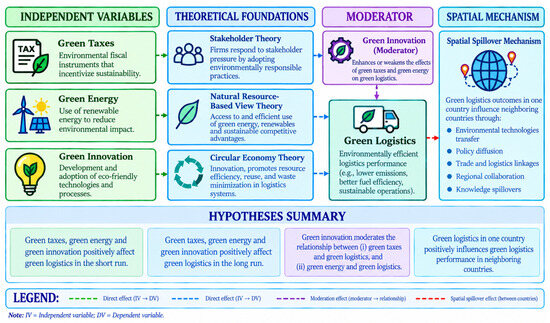
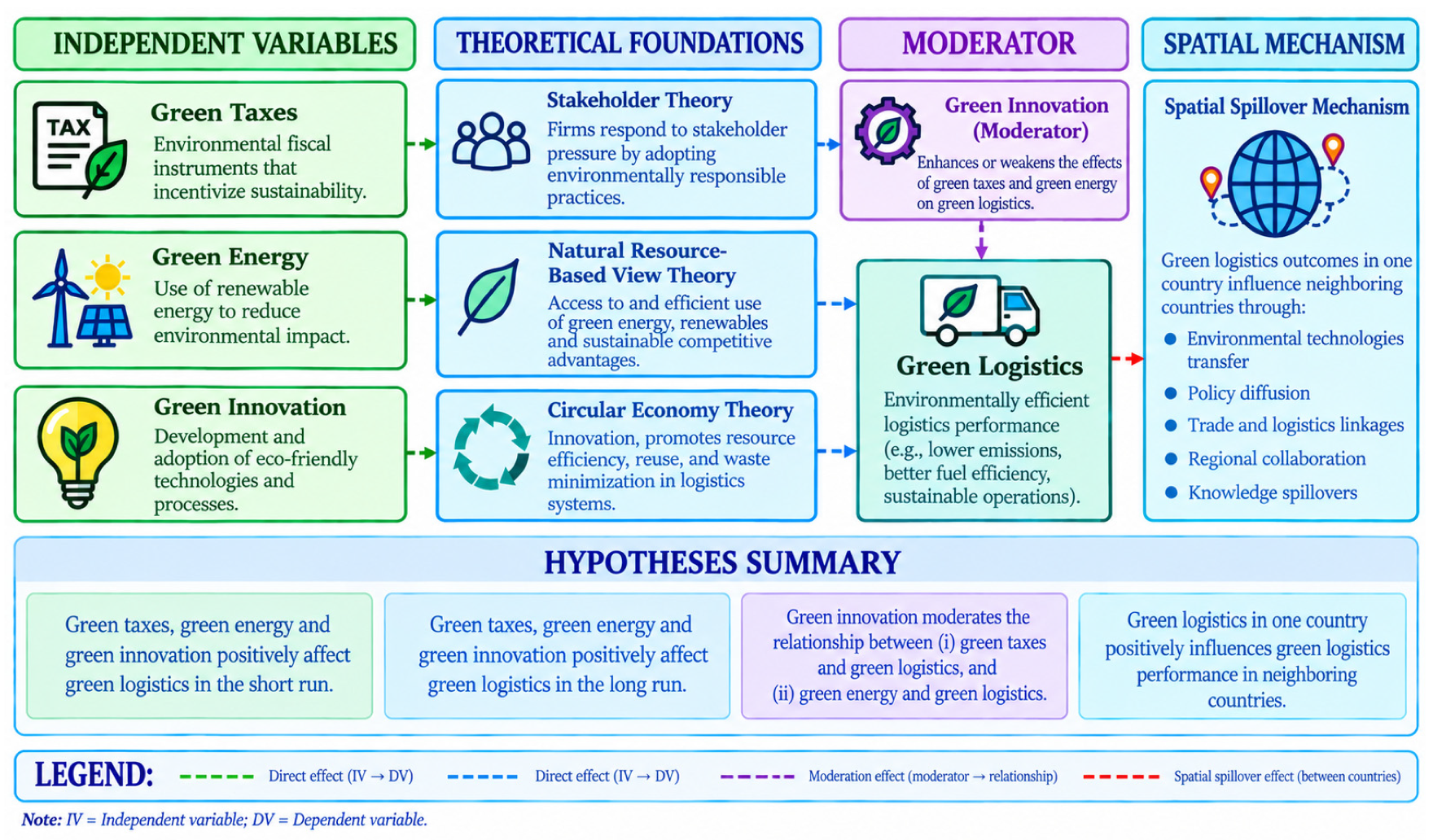

Disclaimer/Publisher’s Note: The statements, opinions and data contained in all publications are solely those of the individual author(s) and contributor(s) and not of MDPI and/or the editor(s). MDPI and/or the editor(s) disclaim responsibility for any injury to people or property resulting from any ideas, methods, instructions or products referred to in the content. |
© 2026 by the authors. Licensee MDPI, Basel, Switzerland. This article is an open access article distributed under the terms and conditions of the Creative Commons Attribution (CC BY) license.