1. Introduction
In arid and semi-arid regions, water resource management represents not only a sectoral issue but also a critical component of national security and sustainable development. Globally, increasing water demand, climate change, and demographic pressures have intensified competition for water resources, transforming water governance into a complex, multi-level challenge requiring institutional coordination and adaptive management frameworks [
1,
2,
3].
Recent research emphasizes that water sustainability is increasingly determined not only by hydrological availability but also by governance effectiveness and institutional capacity. In particular, Integrated Water Resources Management (IWRM) frameworks highlight the importance of multi-level coordination, stakeholder engagement, and adaptive policy mechanisms [
2,
4]. Previous studies in Central Asia have primarily focused on hydrological scarcity, irrigation systems, or transboundary allocation as separate analytical dimensions [
5,
6,
7,
8,
9]. However, governance-related factors are often treated descriptively and rarely integrated into quantitative sustainability assessment frameworks. Moreover, existing studies frequently emphasize physical water availability while underestimating the role of institutional effectiveness, infrastructure efficiency, and adaptive governance capacity in shaping long-term sustainability outcomes. Empirical evidence further indicates that significant gaps persist between formal policy design and actual implementation, particularly in transition economies where institutional capacity remains uneven [
5,
6].
Central Asia represents one of the most water-stressed and institutionally complex regions in this context [
7,
8]. The region is characterized by transboundary river systems, legacy irrigation infrastructure, and uneven spatial distribution of water resources. These structural characteristics are further compounded by climate variability, increasing demand, and limited coordination among riparian states, thereby intensifying governance complexity and system vulnerability [
7,
8,
9].
Kazakhstan, the largest economy in Central Asia, exemplifies these challenges. The country’s hydrological system is characterized by strong spatial heterogeneity, seasonal variability, and substantial reliance on transboundary inflows from neighboring countries, including China, Kyrgyzstan, Russia, and Uzbekistan. According to recent national water statistics [
10], Kazakhstan’s total renewable water resources amount to approximately 108.41 km
3 per year, of which more than 40% originate outside its national territory. Such structural dependence significantly increases exposure to upstream water management decisions and climate-induced variability, thereby amplifying systemic risk [
10].
At the national level, Kazakhstan is generally classified as experiencing moderate water stress. However, aggregated indicators obscure significant regional disparities. Southern regions are characterized by high irrigation intensity and lower local water availability, while eastern regions benefit from more favorable hydrological conditions due to mountain-fed river systems. This spatial asymmetry creates differentiated governance challenges that cannot be effectively addressed through uniform national policy approaches [
11,
12]. Despite the growing body of research on water management in Kazakhstan, most existing studies focus on isolated dimensions such as hydrological scarcity, irrigation efficiency, climate impacts, or transboundary water allocation separately [
11,
12,
13,
14,
15,
16,
17]. Comprehensive assessments integrating quantitative hydrological indicators with institutional governance analysis remain limited, particularly at the national scale. In addition, previous studies rarely combine composite sustainability modeling with sensitivity and elasticity analysis to evaluate the relative influence of internal system efficiency and external hydrological dependence. To address these limitations, the present study develops an integrated hydro-institutional framework combining quantitative water indicators, governance assessment, and elasticity-based sustainability analysis.
Sectorally, agriculture remains the dominant water user, accounting for more than half of total water withdrawals. Irrigation-intensive production systems, combined with aging infrastructure and inefficient water distribution networks, contribute to significant water losses and reduced system performance. These inefficiencies not only reduce effective water availability but also increase system vulnerability under conditions of climatic stress [
13,
14]. Recent studies highlight that improving irrigation efficiency and adopting modern water-saving technologies can substantially enhance sustainability outcomes in water-scarce regions [
15,
16].
In addition, climate change is expected to further intensify water management challenges in Kazakhstan. Increasing temperatures, glacier retreat, and higher frequency of drought events are projected to affect long-term water availability, particularly in southern basins [
3,
17]. These dynamics necessitate the development of adaptive governance frameworks capable of integrating climate risks into water allocation and management systems. Recent studies by Kudaibergenova et al. emphasize the importance of combining technological innovation with governance approaches for sustainable water management and pollution control [
18,
19].
Against this backdrop, this study aims to provide a comprehensive hydro-institutional assessment of sustainable water resource management in Kazakhstan by integrating quantitative hydrological indicators with governance analysis. Specifically, the study evaluates national and regional water availability using standardized indicators, assesses sectoral water withdrawal patterns, quantifies transboundary dependence, develops composite indices, and examines governance performance.
By integrating hydrological assessment with institutional analysis, this research contributes to the literature by demonstrating that water sustainability in semi-arid and transboundary contexts is primarily shaped by governance effectiveness, infrastructure efficiency, and spatial heterogeneity. Unlike previous approaches that primarily evaluate hydrological availability, irrigation systems, or sectoral water use independently, the proposed framework combines quantitative hydrological indicators with institutional governance assessment within a unified analytical structure. The proposed analytical framework further contributes by linking composite index modeling with sensitivity analysis, thereby enhancing the interpretability of sustainability outcomes.
A key methodological novelty of this study is the integration of composite sustainability indexing with elasticity-based sensitivity analysis, enabling evaluation of the relative influence of internal system efficiency improvements and external transboundary dependence on overall sustainability performance. This integrated approach provides stronger policy relevance and improved analytical interpretability compared with conventional descriptive or single-indicator assessments.
Building on existing approaches, this study further develops an integrated hydro-institutional modeling framework combining composite index construction with elasticity-based sensitivity analysis.
2. Materials and Methods
2.1. Research Design
This study adopts a mixed-method hydro-institutional assessment framework integrating quantitative hydrological analysis with institutional governance evaluation. The methodological approach is designed to capture both physical water resource constraints and governance-related determinants influencing sustainability outcomes.
The research design consists of three interconnected analytical stages:
- (i)
Quantitative assessment of water resource availability and use.
- (ii)
Composite sustainability modeling.
- (iii)
Institutional governance diagnostics.
This multi-layered approach enables triangulation between hydrological indicators, regional variability, and governance structures, thereby providing a comprehensive evaluation of water sustainability in a transboundary-dependent system.
The quantitative component evaluates hydrological sustainability through standardized indicators, composite index modeling, and elasticity-based sensitivity analysis, enabling assessment of water availability, sectoral demand structure, and transboundary dependence. The qualitative component complements this analysis by examining institutional arrangements, policy implementation mechanisms, and administrative coordination processes affecting water management performance. Integration between the two methodological components is achieved through comparative interpretation of quantitative sustainability outcomes and institutional governance conditions, thereby linking physical system vulnerability with governance effectiveness and policy capacity.
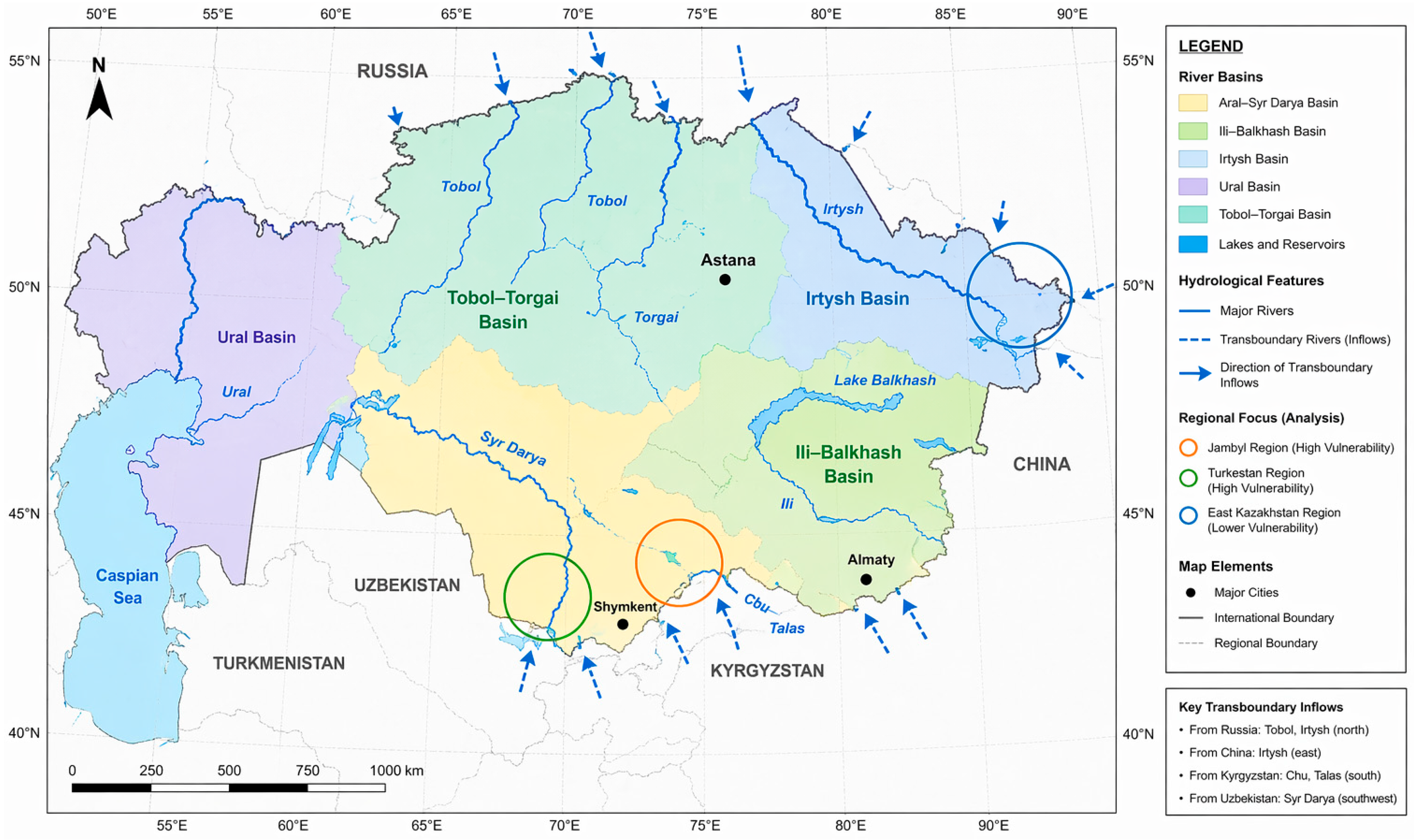
Figure 1 presents the spatial distribution of water resources and major river basins in Kazakhstan, highlighting regional heterogeneity and the structure of transboundary inflows.
2.2. Data Sources
2.2.1. International Datasets
Primary quantitative data were obtained from internationally recognized databases to ensure comparability and methodological consistency. The analysis covers the period 2010–2024 and incorporates harmonized national-level hydrological and water management indicators.
The following datasets were used:
- -
FAO AQUASTAT (2024) [
10]—total renewable water resources (TRWR), internal renewable water resources, external renewable water resources (ERWR), sectoral water withdrawals, irrigation indicators, and transboundary inflow data;
- -
World Bank World Development Indicators [
11]—freshwater availability per capita, demographic indicators, and validation of water stress estimates;
- -
UN SDG 6 Global Database [
1]—water stress classification thresholds and SDG 6.4.2 reference framework.
These datasets provide harmonized and standardized indicators used in the analysis, including renewable water resource availability, sectoral withdrawal structure, transboundary dependence, irrigation intensity, and population data required for calculating per capita water availability and water stress indicators.
Time-series data were compiled and aggregated at the national scale to evaluate long-term trends in water availability, sectoral demand structure, and transboundary dependence. Data preprocessing included consistency checking, harmonization of units, and comparative validation between international and national statistical sources.
2.2.2. National and Regional Data
The regional analysis focuses on major hydrological and administrative contrasts between southern irrigation-intensive regions (e.g., Jambyl and Turkestan) and eastern water-abundant regions (East Kazakhstan). These regions were selected to capture spatial heterogeneity in water availability, agricultural dependence, and transboundary exposure.
To ensure comparability, all indicators were harmonized to consistent annual units and standardized reporting formats prior to analysis. Comparative validation between international databases and national statistical sources was also performed to minimize inconsistencies and improve data reliability.
The dataset includes:
- -
Regional water abstraction volumes.
- -
Sectoral water consumption structure.
- -
Irrigation infrastructure indicators.
- -
Demographic statistics.
- -
Basin-level water distribution characteristics.
- -
Regional estimates of irrigation intensity and infrastructure losses.
Irrigation efficiency values (60–70%) and distribution losses (25–35%) were derived from aggregated national statistics, FAO AQUASTAT data, and reports of the Bureau of National Statistics of the Republic of Kazakhstan.
2.2.3. Institutional and Policy Sources
Institutional analysis is based on:
- -
The Water Code of the Republic of Kazakhstan.
- -
National water management programs.
- -
Environmental strategy documents.
- -
Basin-level regulatory frameworks.
- -
Intergovernmental agreements on transboundary water use.
Peer-reviewed literature was used to contextualize governance structures and reform dynamics in Central Asia.
2.3. Quantitative Indicator Framework
To evaluate water sustainability, a set of standardized indicators was constructed.
2.3.1. Per Capita Renewable Water Resources (PCWR)
Per capita renewable water availability is calculated as:
where TRWR—Total Renewable Water Resources (km
3/year); Population—national population.
This indicator is widely used in international water resource assessments and enables comparability and baseline scarcity classification [
10,
11].
2.3.2. Sectoral Withdrawal Ratio (SWR)
Sectoral distribution of water use is calculated as:
This metric captures structural concentration and demand dominance.
2.3.3. Transboundary Dependence Ratio (TDR)
Transboundary dependence is estimated as:
This indicator reflects geopolitical exposure and external vulnerability.
2.3.4. Water Stress Index (WSI)
Water stress is estimated using a simplified withdrawal-to-availability ratio:
The Water Stress Index (WSI) applied in this study does not explicitly account for environmental flow requirements (EFR) due to the absence of consistent and reliable national-level data. Therefore, it represents an approximate indicator of water stress rather than a strict implementation of the UN SDG 6.4.2 methodology.
For interpretative purposes, the classification thresholds of SDG 6.4.2 are used as a general reference: <25%—low stress; 25–50%—moderate stress; >50%—high stress.
2.4. Composite Sustainability Modeling
To integrate hydrological and institutional dimensions, a Water Sustainability Composite Index (WSCI) was developed:
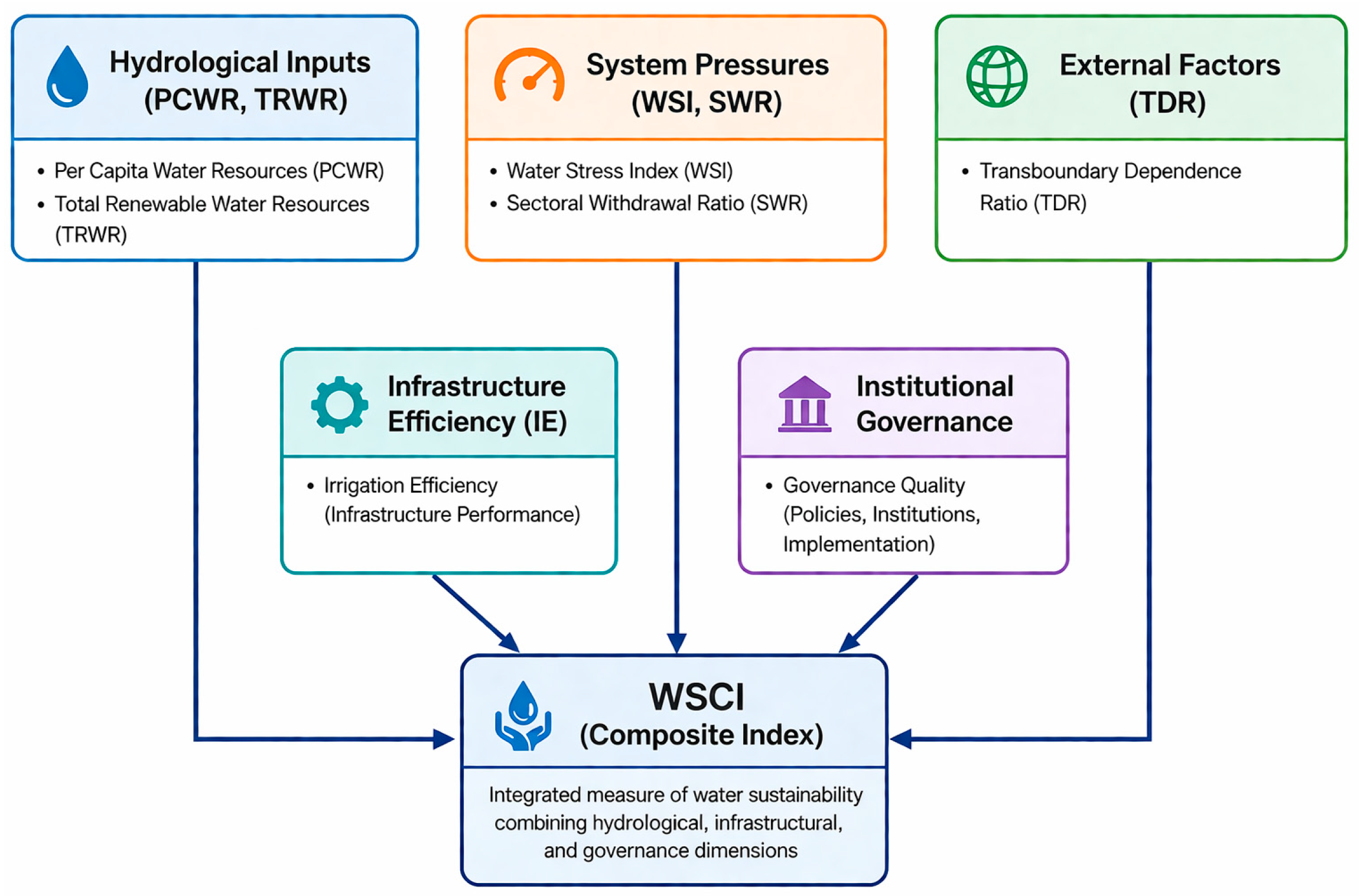
where RE—renewable endowment (normalized PCWR); WP—withdrawal pressure (WSI); TD—transboundary dependence; IE—irrigation efficiency proxy; wi—weights.
Normalization was performed using min–max transformation to ensure comparability across indicators. The resulting composite index ranges from 0 (low sustainability) to 1 (high sustainability). All variables included in the WSCI were assigned equal weights (w1 = w2 = w3 = w4 = 0.25), reflecting the absence of prior empirical evidence supporting differential importance among components and ensuring methodological transparency and reproducibility. The WSCI was used as a comparative analytical indicator for evaluating relative sustainability performance under observed hydrological and governance conditions.
Figure 2 presents the conceptual structure of the WSCI framework.
2.5. Regional Vulnerability Index (RVI)
To capture intra-national asymmetry, a Regional Vulnerability Index was constructed:
The index integrates three dimensions: local resource availability, irrigation demand intensity, and transboundary dependence. All variables included in the RVI were normalized using min–max scaling to ensure comparability across indicators with different units and magnitudes. This transformation rescales each variable to a [0,1] range, preventing dominance of variables with larger numerical values.
Equal weighting was applied (α1 = α2 = α3 = 0.33) to ensure consistency and transparency in index construction.
Higher RVI values correspond to increased levels of water resource vulnerability.
2.6. Institutional Governance Assessment
Institutional governance assessment was conducted using qualitative comparative analysis of national water management policies, regulatory documents, basin-level governance frameworks, and intergovernmental agreements related to transboundary water management.
The analysis focused on four predefined analytical dimensions:
- (i)
Institutional coordination.
- (ii)
Policy implementation capacity.
- (iii)
Transboundary governance mechanisms.
- (iv)
Integration of adaptive water management principles.
The analytical procedure followed a thematic classification approach in which governance-related information was systematically grouped according to these four dimensions. Comparative interpretation was subsequently performed to evaluate consistencies and discrepancies between formal policy objectives, implementation mechanisms, administrative coordination structures, and observed sustainability outcomes reported in official documents and previous literature.
The qualitative findings were then integrated with quantitative sustainability indicators to support the hydro-institutional assessment framework and improve the interpretation of institutional drivers influencing water sustainability performance.
2.7. Sensitivity and Elasticity Analysis
Partial elasticities were calculated to evaluate marginal effects of:
- -
Irrigation efficiency improvement.
- -
Variation in transboundary inflows.
Counterfactual simulations were conducted to estimate potential WSCI shifts under reform scenarios. The elasticity analysis follows a point-elasticity framework based on discrete scenario simulations rather than regression-based functional estimation.
Elasticity was calculated using a finite-difference approximation:
where E represents elasticity, WSCI is the Water Sustainability Composite Index, X denotes the variable of interest (irrigation efficiency or transboundary inflow), and ΔX corresponds to a ±10% variation relative to baseline conditions.
Baseline conditions correspond to observed national average values for the period 2010–2024. The resulting elasticity values quantify the relative sensitivity of sustainability performance to changes in internal efficiency conditions and external hydrological dependence.
3. Results
3.1. Per Capita Renewable Water Resources and Structural Endowment
Based on FAO AQUASTAT (2024), total renewable water resources (TRWR) in Kazakhstan amount to 108.41 km3/year. Using national population data for 2024, the estimated per capita renewable water availability is approximately 5411 m3/person/year.
This value places Kazakhstan within the category of moderate water availability according to international classifications. However, the normalized renewable endowment component (RE) used in Equation (5) indicates that, despite moderate aggregate availability, substantial spatial heterogeneity persists across regions.
Sensitivity analysis suggests that uncertainty in population estimates (±1–2%) has a negligible effect on RE values (<0.5%), confirming the robustness of the indicator.
3.2. Sectoral Withdrawal Structure and Demand Pressure
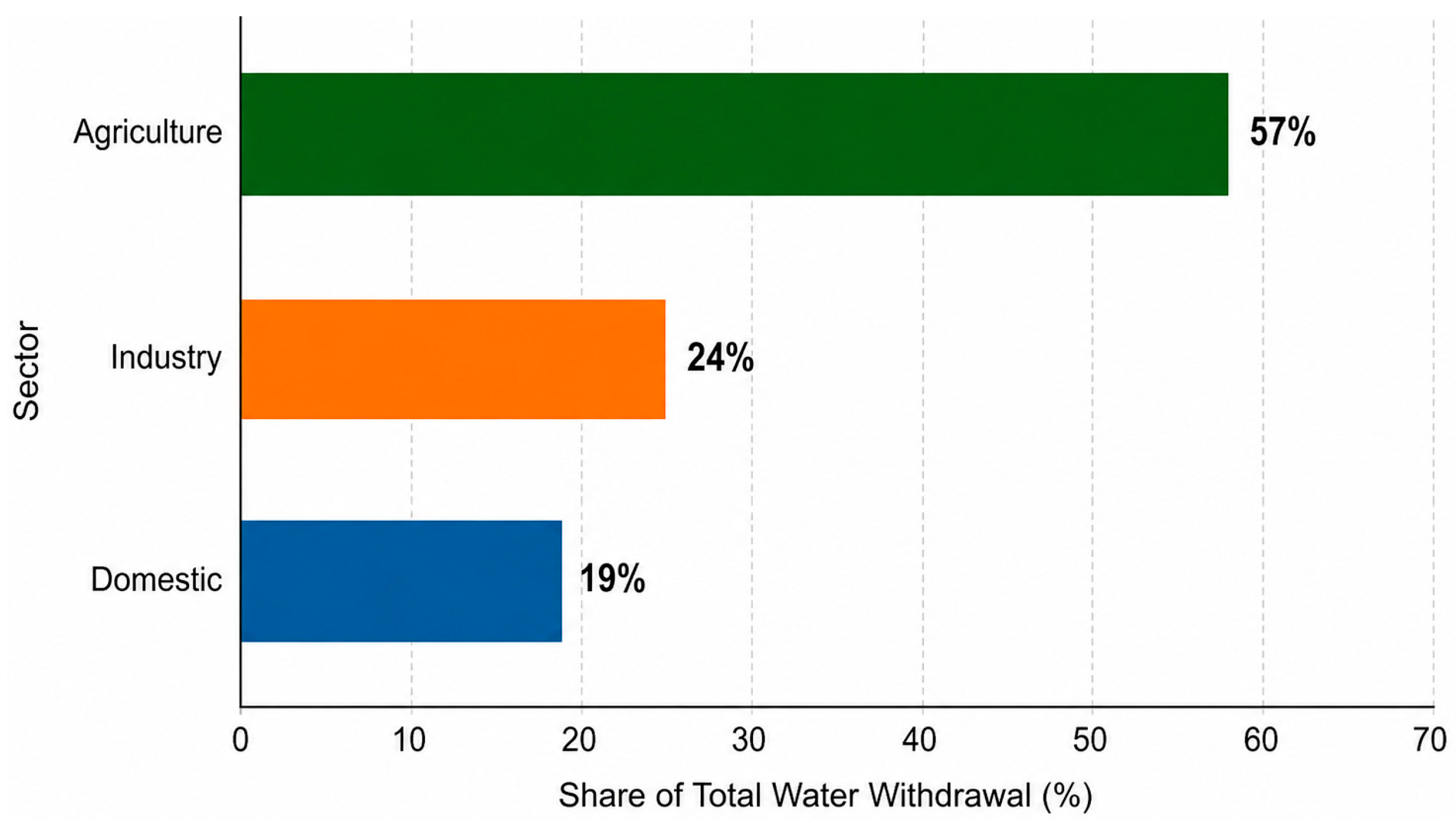
The results indicate a strong concentration of water use in the agricultural sector, which accounts for approximately 57% of total withdrawal, followed by industry (≈24%) and domestic use (≈19%). This distribution reflects the structurally irrigation-dependent nature of water demand in Kazakhstan.
Figure 3 illustrates the sectoral structure of water withdrawal, highlighting the dominance of agricultural water demand relative to industrial and domestic sectors.
The sectoral composition demonstrates that agriculture is the primary driver of national water demand. The estimated Water Stress Index (WSI) is approximately 23–25%, placing Kazakhstan at the boundary between low and moderate stress levels. While this aggregate indicator suggests moderate pressure at the national scale, it masks structural imbalances across sectors. The high share of agricultural water withdrawal suggests elevated seasonal pressure on water resources and indicates potential sensitivity to drought-related variability, particularly in irrigation-dependent regions. Scenario simulations were conducted using discrete ±10% variations in agricultural water withdrawal relative to baseline national average conditions for 2010–2024. The simulations indicate that a ±10% variation in agricultural water use corresponds to an approximate 4–6% change in WSI, suggesting moderate but policy-relevant system responsiveness.
3.3. Transboundary Dependence and External Exposure
The transboundary dependence ratio (TDR) is estimated at approximately 40.64%, based on external renewable water resources of 44.06 km3/year. This indicates that nearly half of Kazakhstan’s water resources originate outside its national territory, demonstrating a high level of structural exposure to upstream hydrological and geopolitical dynamics.
Uncertainty analysis suggests that fluctuations in external inflows of ±10% can lead to variations in TDR of approximately ±4 percentage points. However, subsequent elasticity analysis indicates that the impact of such variability on overall sustainability is moderated by internal system performance factors.
3.4. Composite Sustainability Assessment (WSCI)
The Water Sustainability Composite Index (WSCI) integrates normalized values of renewable endowment (RE), withdrawal pressure (WP), transboundary dependence (TD), and irrigation efficiency (IE). The resulting values indicate a moderate level of overall water sustainability (
Table 1).
The resulting WSCI value for Kazakhstan falls within the range of 0.52–0.58, indicating a moderate but structurally constrained sustainability profile rather than absolute resource scarcity.
Decomposition of the index indicates that renewable endowment (RE) contributes positively to sustainability performance, whereas withdrawal pressure (WP) and transboundary dependence (TD) act as system-limiting factors. Irrigation efficiency (IE) emerges as the most influential variable in improving sustainability outcomes.
Monte Carlo sensitivity testing (±10% variation in input variables) confirms that WSCI remains within a relatively narrow band (±0.04), demonstrating the stability and internal consistency of the composite index. The results indicate a consistent pattern across key indicators (
Table 1).
3.5. Regional Vulnerability and Spatial Asymmetry
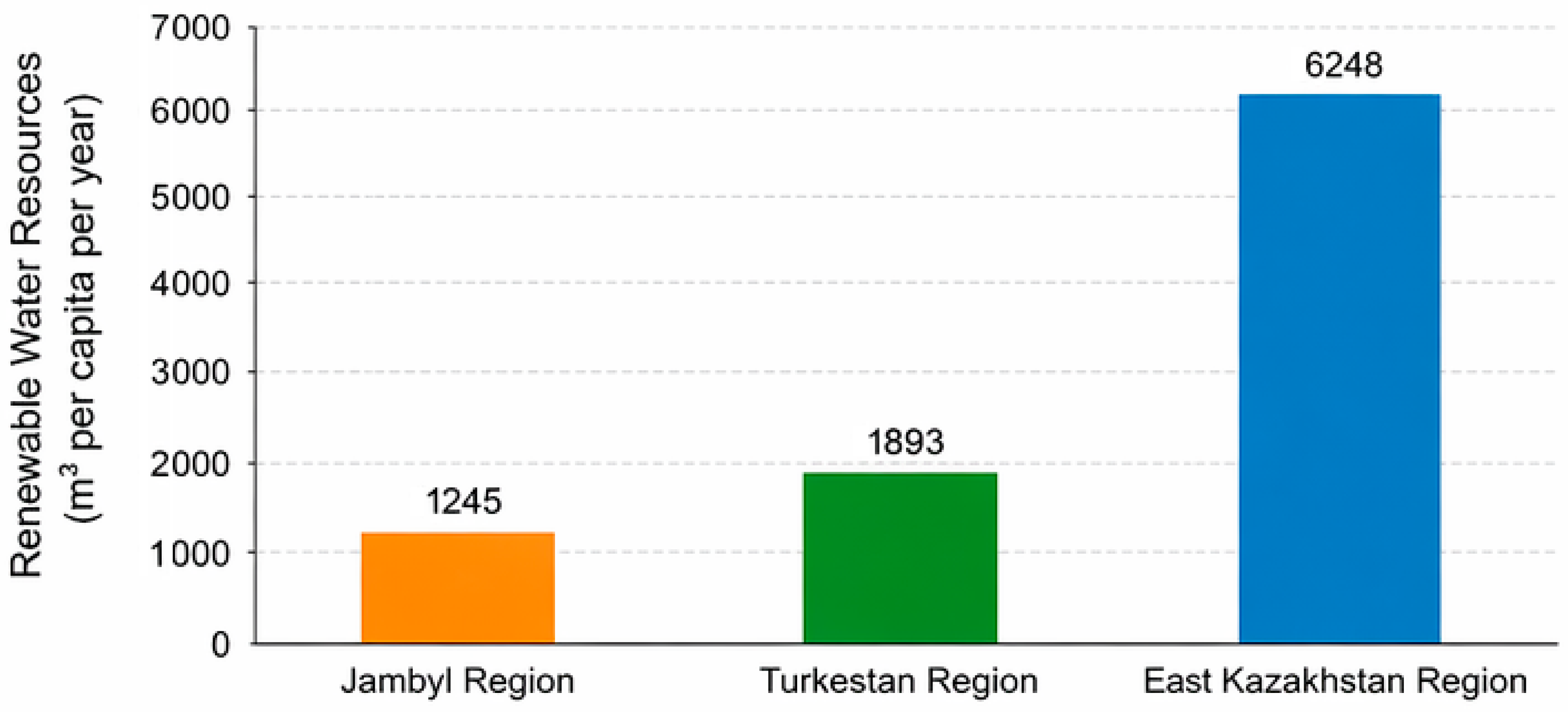
The Regional Vulnerability Index (RVI) highlights significant intra-national disparities in water sustainability conditions. Southern regions (Jambyl and Turkestan) exhibit high RVI values due to a combination of low local water availability, high irrigation intensity, and strong dependence on transboundary inflows, which collectively increase vulnerability. In contrast, East Kazakhstan demonstrates lower RVI values, reflecting more favorable hydrological conditions, lower extraction pressure, and reduced external dependency, resulting in higher system resilience.
The results reveal substantial regional disparities in water availability, with irrigation-dependent southern regions exhibiting significantly lower resource levels compared to eastern basins (
Figure 4).
Comparative analysis indicates that regional variability in RVI exceeds national-level variability in WSCI, confirming that spatial heterogeneity is a critical determinant of sustainability. The regional disparities in water availability and vulnerability indicators are summarized in
Table 2.
3.6. Efficiency Constraints and System Losses
Irrigation efficiency (IE) is estimated at approximately 60–70%, while distribution losses range between 25 and 35%, indicating substantial inefficiencies in water use and distribution. These inefficiencies substantially reduce effective water availability and act as a primary constraint on system performance. Scenario simulations indicate that improving irrigation efficiency by 10% results in the WSCI increasing by approximately 6–8%, demonstrating a strong and direct positive effect on sustainability outcomes.
3.7. Elasticity and Sensitivity Analysis
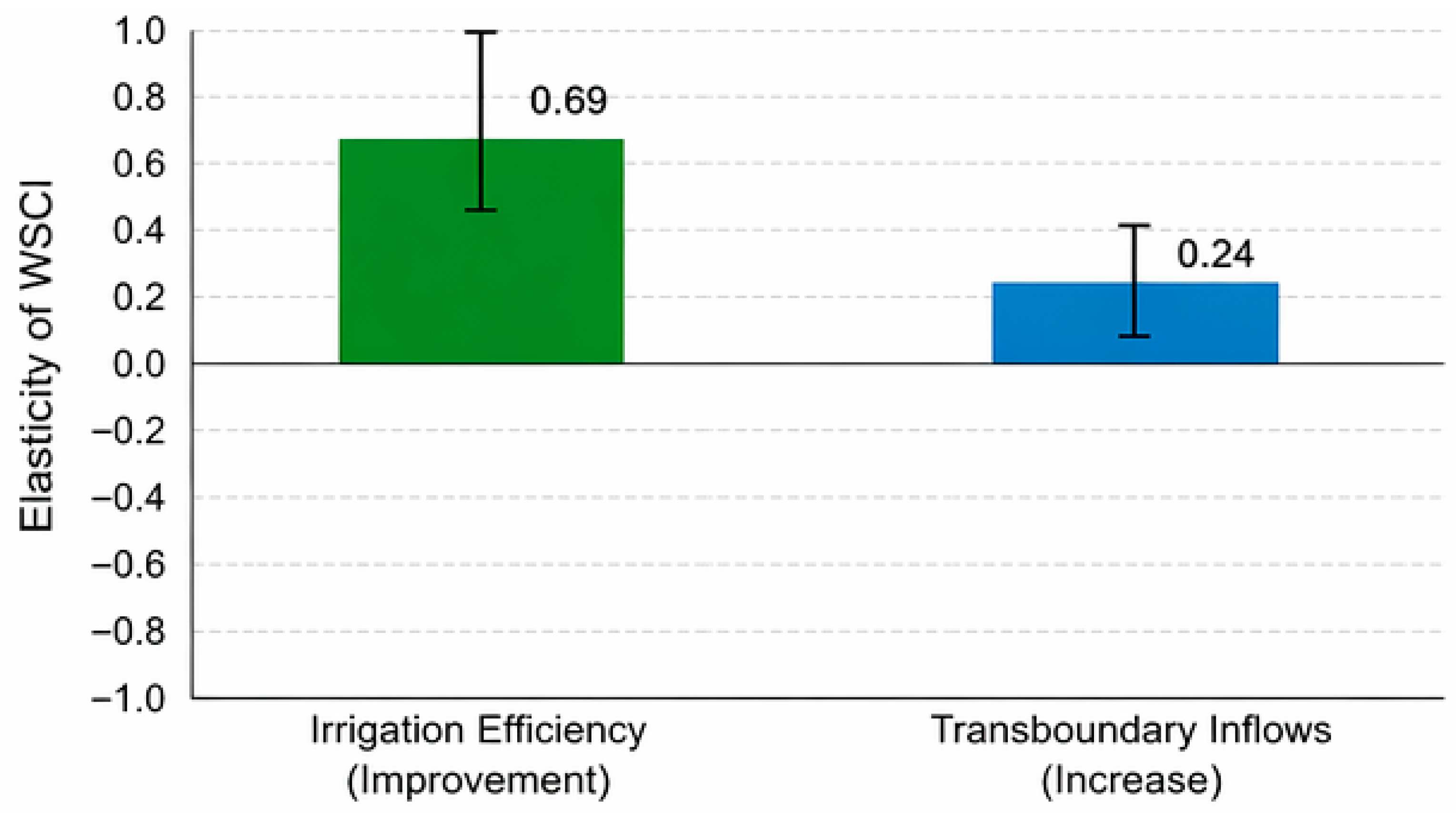
Elasticity analysis indicates that the response of the Water Sustainability Composite Index (WSCI) is substantially stronger with respect to irrigation efficiency (IE), with elasticity values ranging from approximately 0.6 to 0.8, compared to transboundary inflows (ERR), where elasticity remains significantly lower (approximately 0.2–0.3). These results indicate that improvements in irrigation efficiency exert approximately two to three times greater influence on sustainability outcomes than equivalent changes in external inflows. The elasticity values and their interpretation are summarized in
Table 3.
The results indicate that irrigation efficiency exerts a substantially stronger influence on the Water Sustainability Composite Index (WSCI) than variations in transboundary inflows, as reflected in the relative magnitude of elasticity values (
Figure 5). This relationship remains stable across multiple simulation scenarios and demonstrates robustness under parameter uncertainty.
3.8. Integrated Interpretation
The combined results indicate that Kazakhstan’s water sustainability is not primarily constrained by absolute water availability, but rather by structural, institutional, and efficiency-related factors. Moderate aggregate water availability masks significant regional disparities, while the dominance of agricultural water use creates substantial demand pressure within the system. In addition, high transboundary dependence introduces systemic vulnerability, and infrastructure inefficiencies further reduce effective water supply. Among these factors, irrigation efficiency emerges as the most influential lever for improving sustainability outcomes.
Overall, the system can be characterized as hydrologically moderate but structurally and institutionally constrained, with sustainability outcomes largely determined by governance effectiveness and infrastructure performance.
4. Discussion
Kazakhstan’s water sustainability is not primarily constrained by absolute resource scarcity but by structural and institutional factors. Although the calculated per capita renewable water availability indicates moderate national-level conditions, the combined effects of sectoral demand concentration, transboundary dependence, and system inefficiencies significantly limit effective sustainability outcomes. This finding reinforces the argument that water availability alone is insufficient to explain sustainability outcomes without considering system performance and governance effectiveness.
This interpretation is consistent with recent research emphasizing that governance performance and infrastructure efficiency are critical determinants of water sustainability in semi-arid regions [
2,
6,
7].
A key finding of this study is the dominant role of irrigation efficiency in shaping sustainability outcomes. Elasticity analysis indicates that improvements in irrigation efficiency exert approximately two to three times greater impact on the Water Sustainability Composite Index (WSCI) compared to equivalent changes in transboundary inflows.
The primacy of internal system dynamics over external hydrological variability is evident in shaping sustainability trajectories.
This indicates that internal system performance, rather than external hydrological variability, represents the primary leverage point for sustainability improvements. Similar conclusions have been reported in recent empirical studies showing that irrigation modernization significantly enhances water use efficiency and resilience under climate stress [
15,
16,
20].
4.1. Structural Demand Pressure and Sectoral Imbalance
Agriculture remains the dominant water consumer, accounting for the majority of withdrawals. This structural imbalance increases system vulnerability, particularly during dry periods when irrigation demand peaks.
The concentration of water demand in a single sector reduces system flexibility and limits adaptive capacity under climatic stress conditions. Previous studies highlight that irrigation-intensive economies in Central Asia are particularly sensitive to seasonal variability and inefficient allocation mechanisms [
5,
8].
The estimated Water Stress Index (WSI), while moderate at the national level, underestimates localized stress in irrigation-dependent regions. This demonstrates that aggregated indicators may obscure critical sector-specific and regional pressures, thereby limiting their usefulness for policy design.
This reinforces the need to interpret aggregate indicators cautiously, as they may conceal sector-specific and spatial pressures [
1].
4.2. Transboundary Dependence and External Risk
The calculated transboundary dependence ratio (≈40%) confirms Kazakhstan’s significant exposure to upstream water management decisions. Transboundary rivers such as the Syr Darya and Irtysh link national water security to broader regional governance dynamics.
However, elasticity results indicate that while transboundary inflows remain important, their influence on sustainability performance appears less pronounced than internal system efficiency under the analyzed conditions. This observation suggests that external hydrological vulnerability may be partially mitigated through improvements in domestic water management and allocation efficiency.
This interpretation aligns with recent governance literature indicating that domestic institutional capacity may reduce exposure to external hydrological risks through improved allocation mechanisms and infrastructure performance [
2,
14,
21].
The high level of transboundary dependence also reflects broader geopolitical and hydrological uncertainties associated with shared river basins in Central Asia. Variability in annual inflow volumes, upstream reservoir regulation, irrigation expansion in neighboring countries, and differences in implementation of transboundary water agreements may collectively influence long-term water availability in Kazakhstan. These factors emphasize the importance of strengthening regional coordination mechanisms and adaptive transboundary governance frameworks under changing climatic and geopolitical conditions.
4.3. Regional Asymmetry and Spatial Inequality
The Regional Vulnerability Index (RVI) reveals substantial intra-national disparities. Southern regions exhibit higher vulnerability due to lower local availability, high irrigation intensity, and strong dependence on transboundary inflows. In contrast, eastern regions benefit from more favorable hydrological conditions and lower structural pressure.
These results confirm that spatial heterogeneity is a fundamental characteristic of Kazakhstan’s water system and must be explicitly incorporated into sustainability assessments. This spatial asymmetry confirms that national-level averages obscure basin-level variability, a finding that has been widely reported in regional water governance studies [
12,
17].
From a policy perspective, this implies that uniform national strategies are insufficient and must be complemented by region-specific management approaches. Such differentiation is essential for effective resource allocation and targeted intervention design.
4.4. Efficiency Constraints as a Key Limiting Factor
Water losses during distribution and suboptimal irrigation efficiency significantly reduce effective water availability. The results show that improvements in irrigation efficiency generate the largest marginal gains in sustainability, as confirmed by elasticity estimates.
This finding indicates that efficiency improvements represent the most cost-effective and immediately actionable pathway for enhancing water sustainability. This finding is strongly supported by recent studies demonstrating that modernization of irrigation systems, including digital monitoring and water-saving technologies, can substantially reduce losses and improve system performance [
13,
15].
The persistence of high inefficiency levels suggests that infrastructure limitations remain one of the most critical barriers to sustainable water management in Kazakhstan. This underscores the need for sustained investment in infrastructure modernization and technological upgrading.
4.5. Comparative Perspective Within Central Asia
In a regional context, Kazakhstan occupies an intermediate position between upstream resource-rich countries (e.g., Kyrgyzstan) and downstream irrigation-intensive systems (e.g., Uzbekistan). While Kazakhstan benefits from moderate water availability, its high external dependence and structural inefficiencies place it in a vulnerable position.
This intermediate position creates a dual challenge: balancing internal efficiency improvements with external coordination mechanisms. Comparative studies indicate that water sustainability outcomes in Central Asia are strongly influenced by governance effectiveness, institutional coordination, and infrastructure quality rather than purely hydrological conditions [
6,
7,
9].
This reinforces the conclusion that governance reforms and efficiency improvements represent the most effective pathways toward sustainable water management.
4.6. Synthesis
Overall, the findings suggest that Kazakhstan’s water sustainability is best characterized as hydrologically moderate but institutionally constrained. The dominance of irrigation demand, high transboundary dependence, and significant efficiency losses collectively define the system’s vulnerability.
Importantly, elasticity analysis indicates that internal system improvements—particularly in irrigation efficiency—offer the most effective strategy for enhancing sustainability. This shifts the analytical and policy focus from resource expansion toward system optimization and governance reform.
These findings are consistent with recent research emphasizing the importance of demand-side management and regulatory instruments in improving water sustainability outcomes, particularly in water-stressed regions [
22,
23].
This perspective emphasizes that sustainable water management in Kazakhstan requires integrated approaches that combine infrastructure modernization, institutional strengthening, and adaptive policy design.
From a practical policy perspective, priority measures may include modernization of irrigation infrastructure in southern agricultural regions, reduction of distribution losses through basin-level rehabilitation programs, expansion of digital water monitoring systems, and strengthening coordination between national and regional water management authorities. Given existing financial and administrative constraints, phased investment strategies targeting high-loss irrigation zones may provide more effective sustainability outcomes than uniform national interventions.
A limitation of this study is that the analysis is based on historical and current data for the period 2010–2024 and does not explicitly incorporate projected future climate conditions. While this approach provides a robust baseline assessment of water sustainability under observed conditions, it does not capture potential long-term shifts in water availability associated with climate change, including glacier retreat, altered precipitation patterns, and increased frequency of drought events.
Recent studies have applied probabilistic and scenario-based approaches to assess water system vulnerability under uncertainty and climate variability, highlighting the importance of incorporating risk-based frameworks into sustainability assessments [
24].
Future extensions of the proposed framework could integrate climate projection data (e.g., IPCC scenarios) by adjusting renewable water resource endowments and hydrological variability parameters. Such integration would enable dynamic scenario-based assessment of water sustainability under different climate trajectories and improve long-term policy relevance.




 ,
,