Energy, Economic, and Environmental Assessment of Wind Turbine Blade Thermal Recycling Coupled with Organic Rankine Cycle Heat Recovery and Power Generation


Abstract
1. Introduction
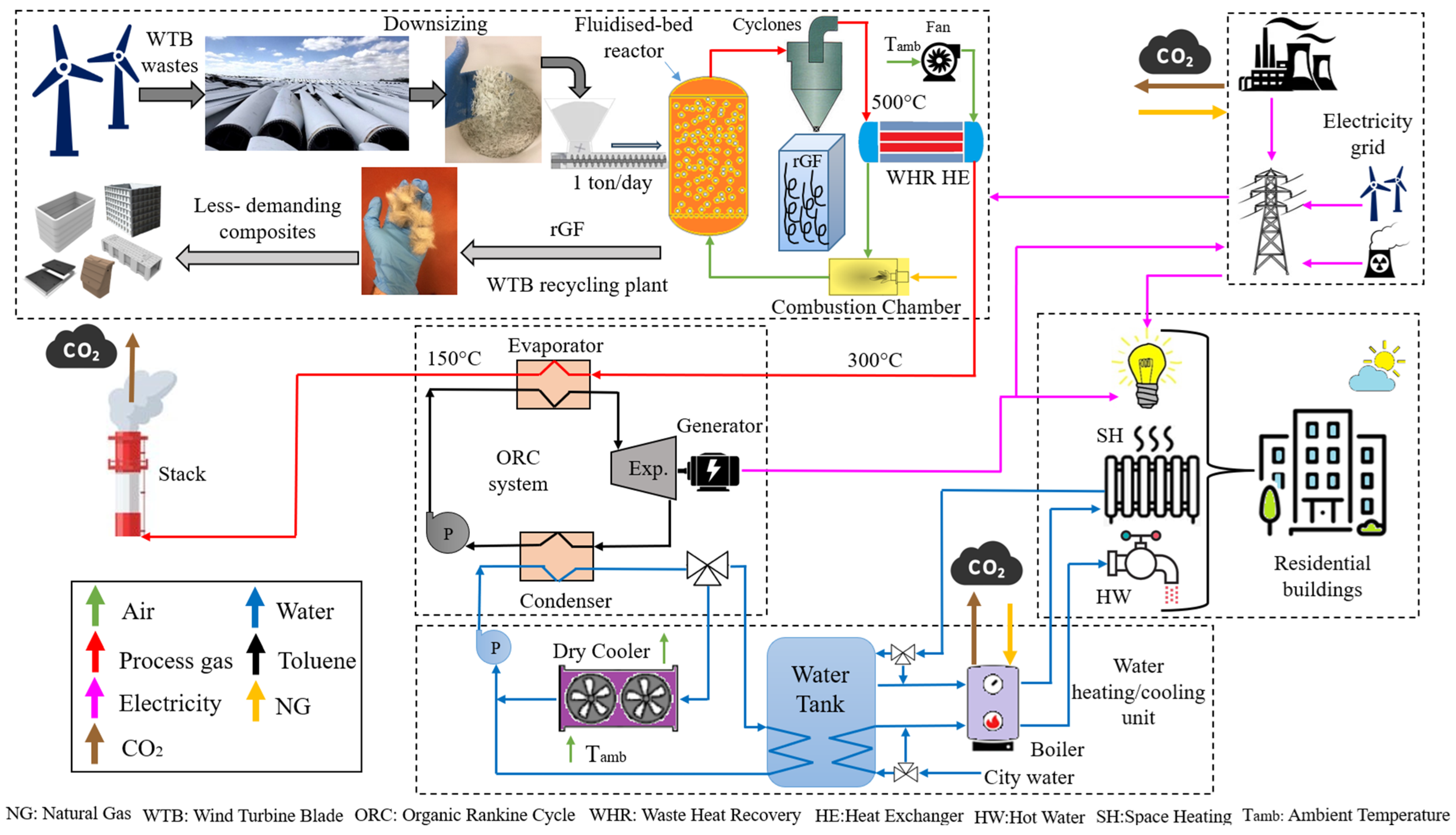
- A novel CMHP system is proposed, comprising an innovative WTB thermal recycling pilot based on the fluidised-bed technology coupled with an ORC-CHP system.
- A detailed model of a WTB recycling pilot (1 t/day) is developed based on experimental data from a demonstration plant and used as the baseline for scaling the process.
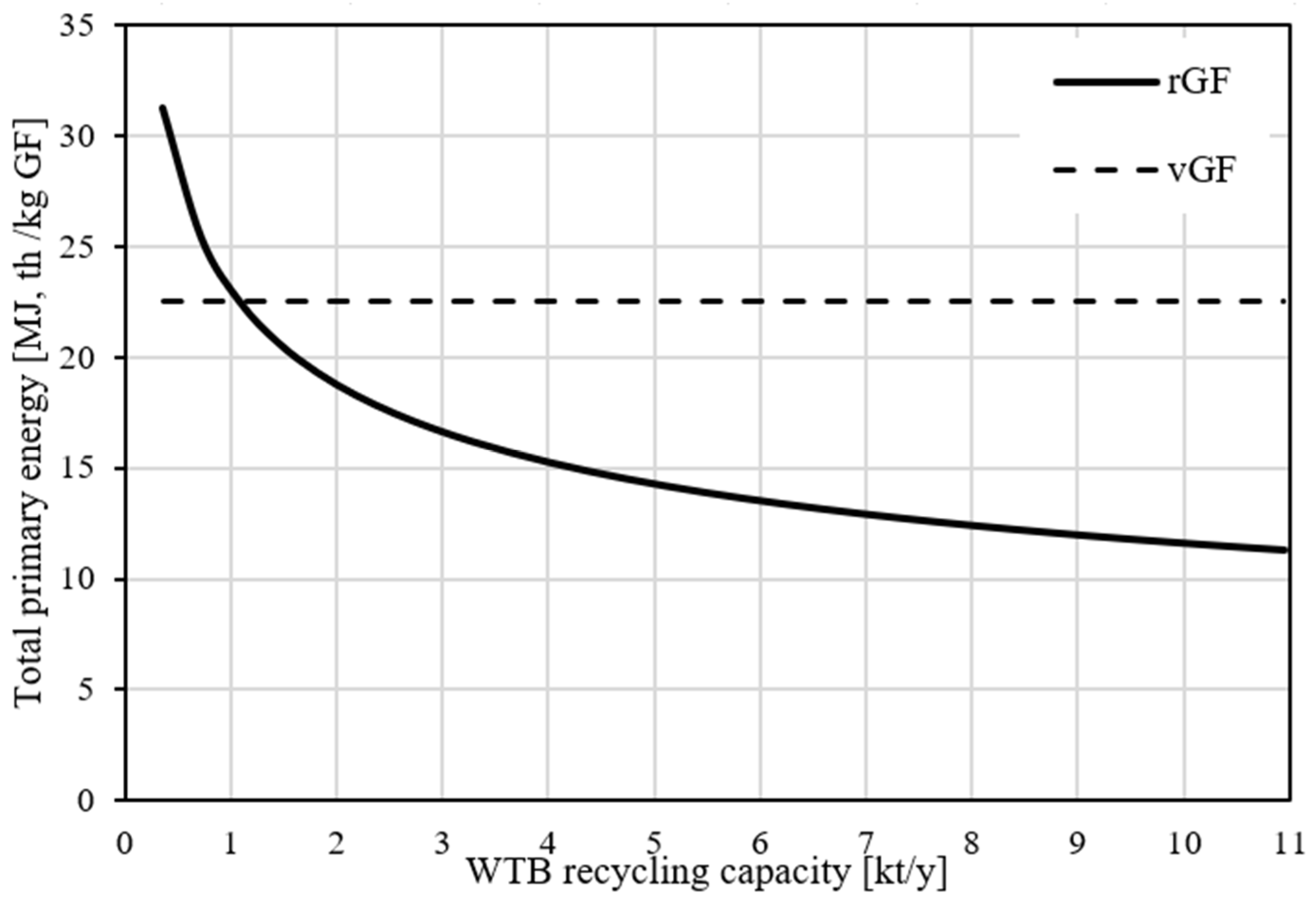
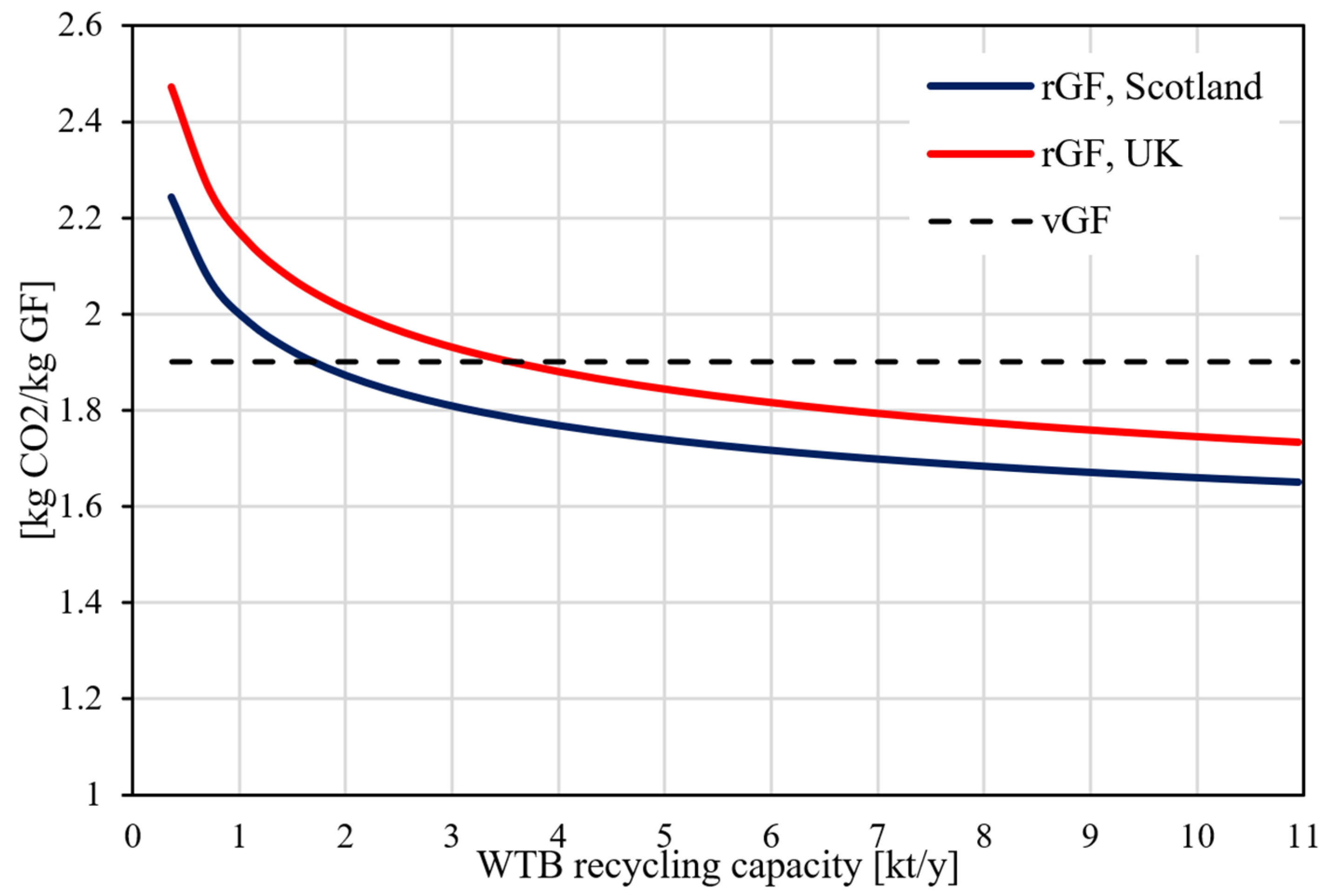
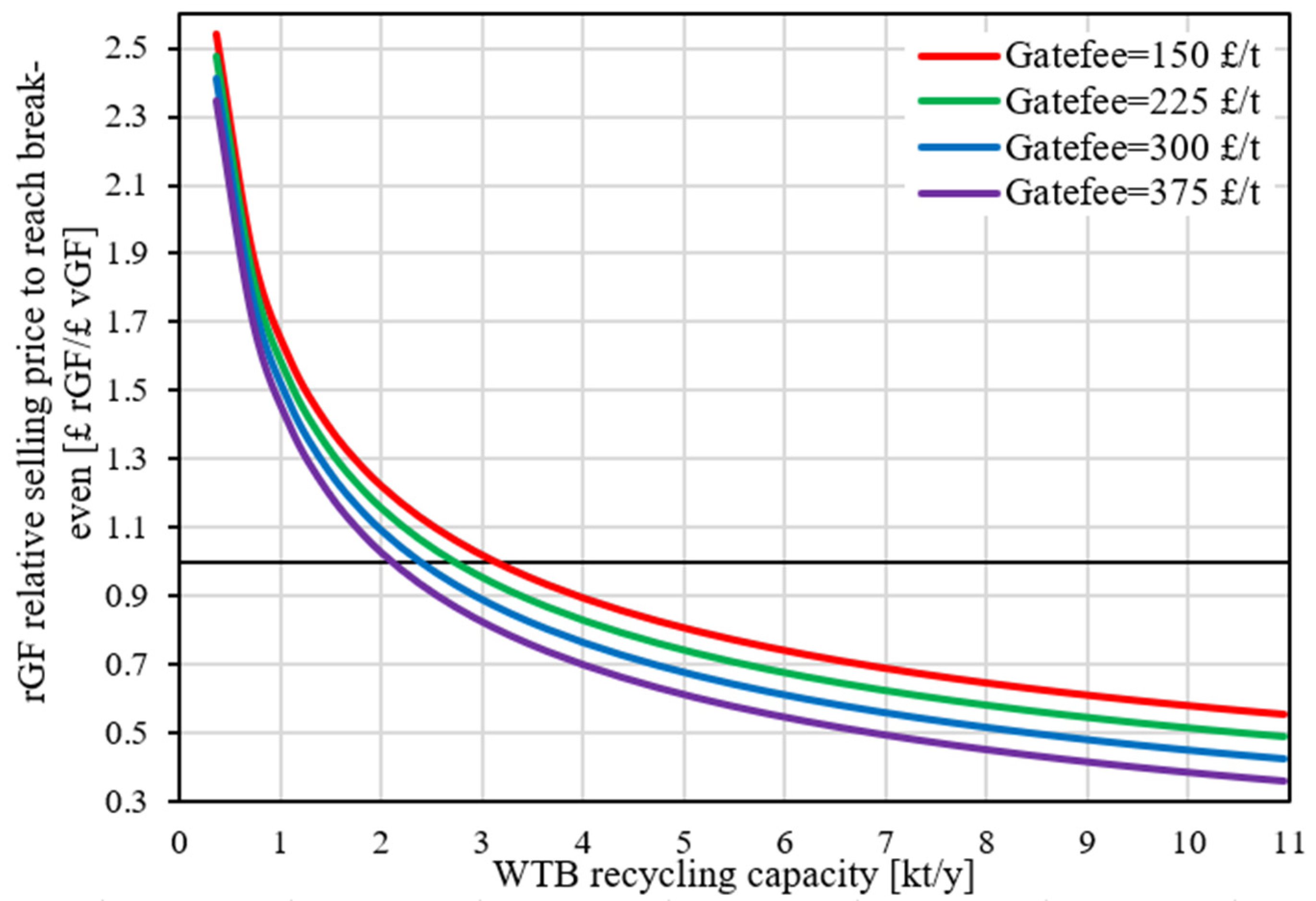
- The primary energy consumption, CO2 emissions, and production costs of rGF from scaled WTB recycling units across a wide range of throughputs are presented and compared with those of vGF.
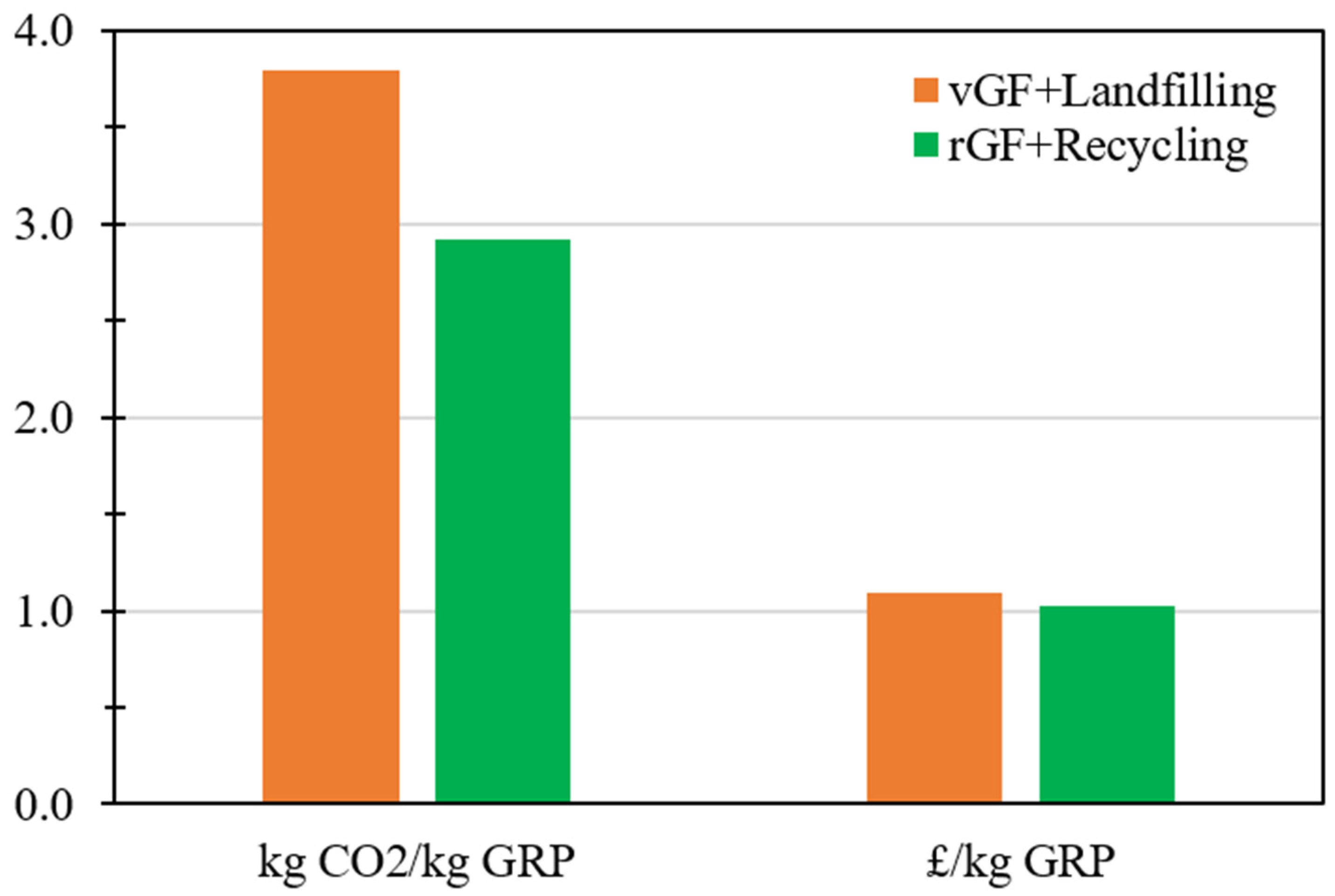
- The impact of GRP recycling and the utilisation of rGF produced by the WTB recycling pilot in BMC manufacturing is investigated and compared with the use of vGF in terms of manufacturing costs and total CO2 emissions.
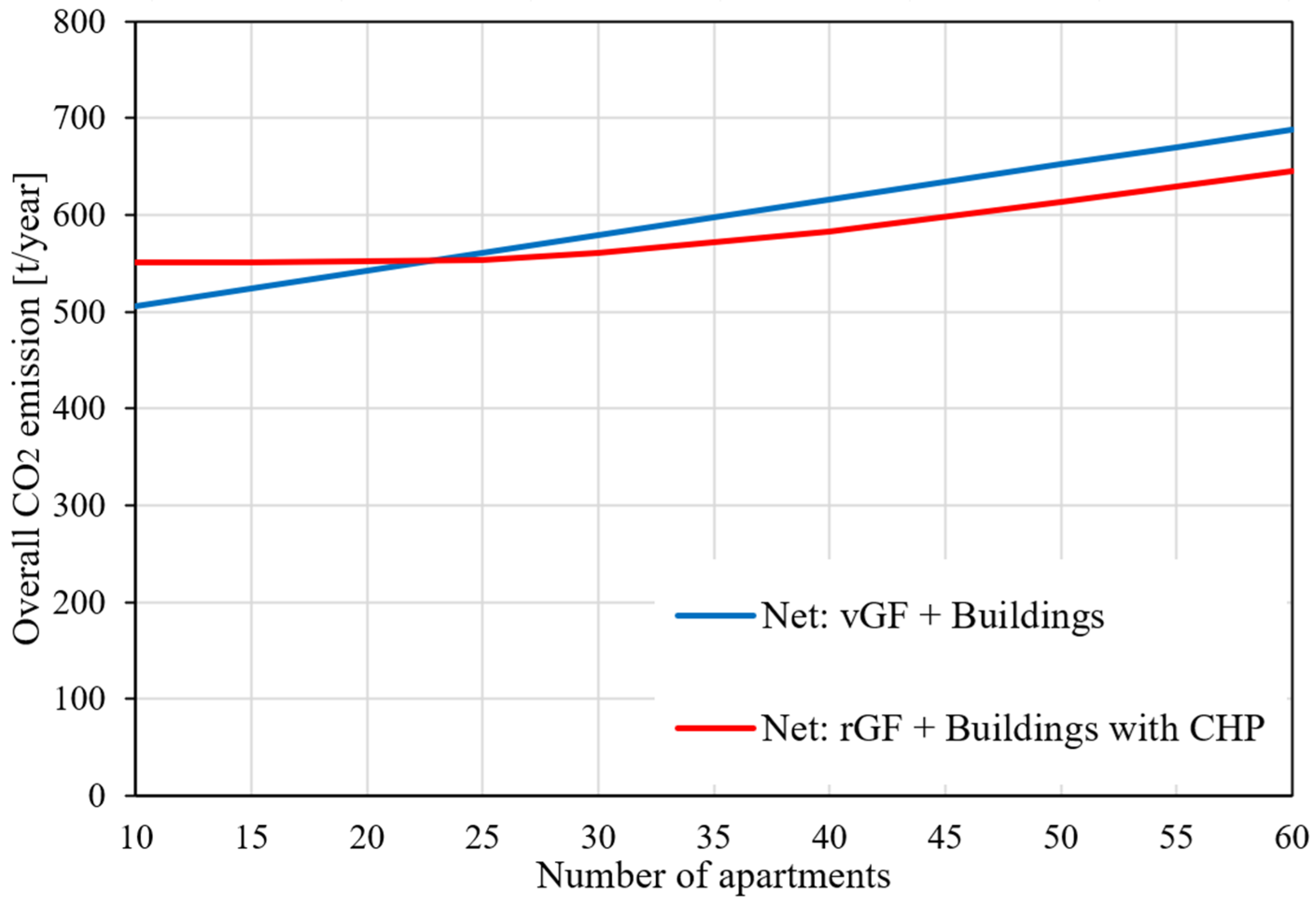
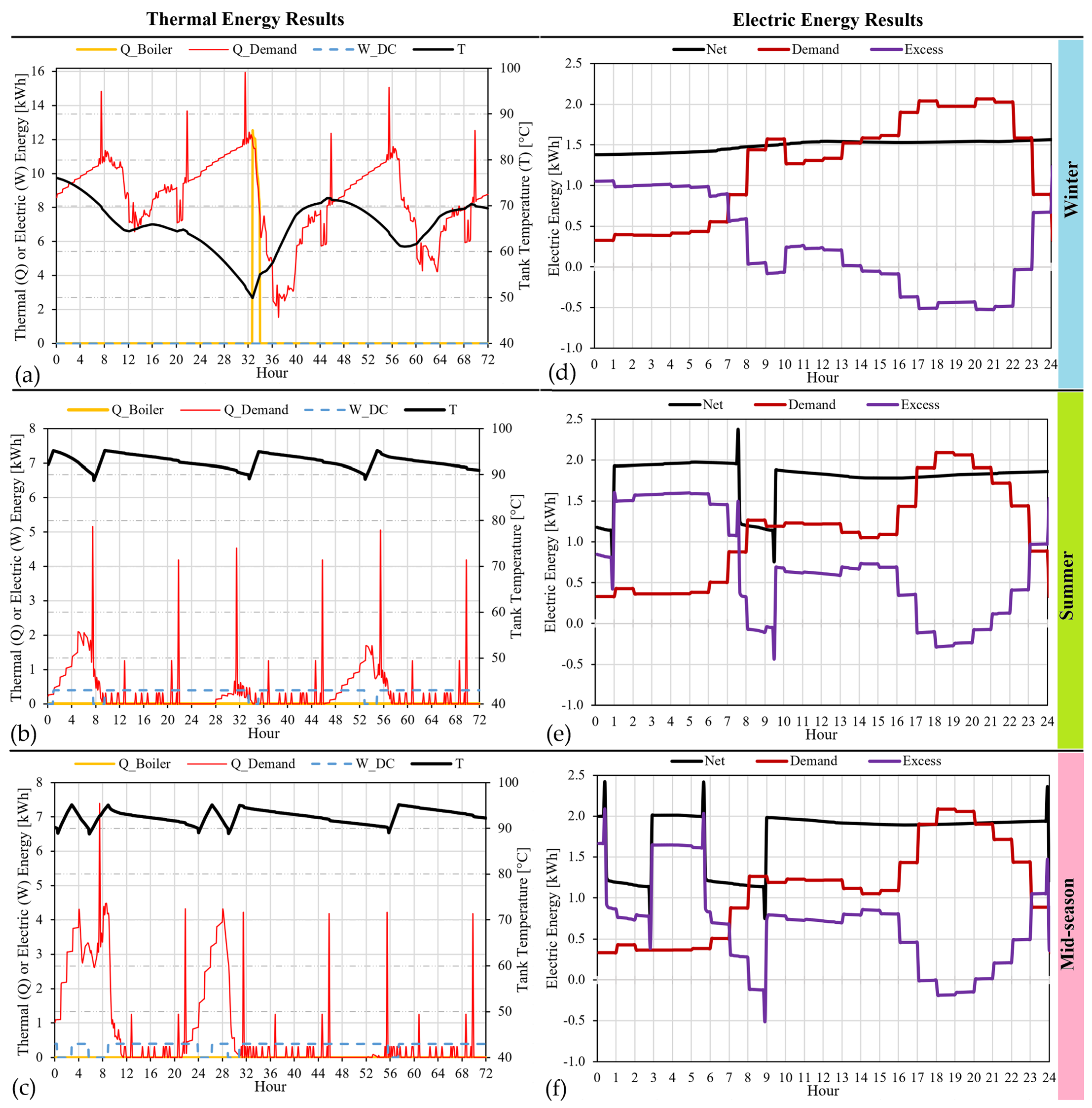
- The annual 3E performance of the residential buildings is investigated, and the impact of integrating with the proposed CMHP system is assessed.
- The paper is structured as follows: the models of the individual units of the CMHP system are presented first. Subsequently, the primary thermal energy consumption, CO2 emissions, and the economics of rGF produced from WTB recycling facilities are presented at scaled capacities, considering both the Scottish and average UK energy grids, and compared with those of vGF. Finally, the results for the integrated residential buildings and the WTB recycling pilot coupled through an ORC-CHP system are presented and compared with those of stand-alone units.
2. Modelling of the CMHP System
2.1. WTB Fluidised-Bed Recycling Pilot

| A—Energy Prices | |||
| Parameter | Value | Unit | Notes |
| Electricity purchase price | 34.0 | p/kWh,el | [63] |
| Electricity export price | 7.5 | p/kWhel,ex | Selling to grid [65] |
| NG purchase price | 10.3 | p/kWh,th | [63] |
| Standing charge—electricity | 53.0 | p/day,el | [63] |
| Standing charge—NG | 29.0 | p/day,th | [63] |
| Grid thermal equivalent | 2.5 | kWh,th/kWh,el | Assuming grid efficiency 40% [66] |
| B—Emissions Factors | |||
| Parameter | Value | Unit | Notes |
| CO2 intensity—Scottish grid | 26.9 | g·CO2/kWh,el | [63] |
| CO2 intensity—UK grid | 153.6 | g·CO2/kWh,el | [63] |
| CO2 intensity—vGF | 1.9 | kg·CO2/kg·vGF | Average of 10 reliable data points in [67] |
| CO2 intensity—polyester | 7.6 | kg·CO2/kg·polyester | [68] |
| Embodied thermal footprint—vGF | 22.5 | MJ,th/kg·vGF | Average of values reported in [69] |
| C—Material & Waste Costs | |||
| Parameter | Value | Unit | Notes |
| Selling price—vGF | 1.7 | £/kg·vGF | [64] |
| Selling price—rGF | 1.36 | £/kg·vGF | Assuming 80% of the vGF price |
| Selling price—polyester | 3.0 | £/kg·polyester | [68] |
| WTB landfilling gate fee | 150.0 | £/t | [33] |
| WTB shredding cost | 580.0 | £/t | From 5–10 m chunks to 1–10 mm flakes [33] |
| D—Capital & Operating Costs | |||
| Parameter | Value | Unit | Notes |
| Total CapEx | 1071.4 | k£ | Incl. 20% contingency to consider CHP costs |
| Labour cost | 131.4 | k£/y | 1 person/shift, 3 shifts, labour fee of 15.0 £/h |
| Maintenance | 64.3 | k£/y | 6% of CapEx [64] |
| Depreciation | 107.1 | k£/y | 10% of CapEx [64] |
| Overheads | 113.4 | k£/y | 25% of OpEx incl. energy, labour, and maintenance [64] |
| Total SG&A | 236.0 | k£/y | 35% of OpEx excl. shredding costs [64] |
| E—Plant Operating Parameters | |||
| Parameter | Value | Unit | Notes |
| WTB throughput capacity | 365.0 | t/y | The pilot |
| Annual operational hours | 8760 | h/y | |
| GF content of WTB feedstock | 67.7 | wt% | [33] |
| E—Results of the Produced Recycled Glass Fibres | |||
| Parameter | Value | Unit | Notes |
| rGF production capacity | 247.1 | [t/y] | Considering 67.7% of WTB GF, and the rest epoxy |
| Embodied thermal footprint—rGF | 15.03 | MJth/kg rGF | |
| Embodied electric footprint—rGF | 6.49 | MJel/kg rGF | |
| Embodied equivalent thermal footprint—rGF | 31.25 | MJth,eq/kg rGF | By converting the electric footprint to a thermal footprint |
| CO2 intensity—rGF | 2.24 | kg CO2/kg rGF | For the plant’s location in Scotland |
| OpEx | 1121.9 | [k£/y] | Total OpEx incl. energy, labour, and maintenance, depreciation, overheads, shredding costs, and SG&A |
| Gross cost—rGF | 4.54 | £/kg rGF | Total OpEx, excl. revenues from selling rGF and gate fee |
| Net cost—rGF | 2.96 | £/kg rGF4 | Total OpEx, incl. revenues |
2.2. The ORC System
2.3. The Residential Users
2.4. The Water Heating/Cooling Unit
3. Results and Discussion
3.1. The 3E Performances of the rGF
3.2. Performance of the CMHP System
4. Conclusions
Author Contributions
Funding
Data Availability Statement
Acknowledgments
Conflicts of Interest
Nomenclature
| Cov | Coverage [-] |
| E | Total primary energy [kWh] |
| EF | Energy Factor [kWh/kg] |
| LP | Low pressure [Pa] |
| HP | High pressure [Pa] |
| Q | Thermal energy [kWh] |
| T | Temperature [°C] |
| W | Electric energy [kWh] |
| & Eff | Efficiency [-] |
| £ | Cost or price [GBP] |
| p | Cost of energy unit [GBX] |
| Mass flow rate [kg/s] | |
| Thermal power [W] | |
| Subscriptions | |
| amb | Ambient |
| el | Electric |
| ex | Exit |
| in | Input |
| p | Pump |
| t | Turbine |
| th | Thermal |
| ev | Evaporator |
| cd | Condenser |
| hf | Hot fluid |
| cf | Cold fluid |
| of | Organic fluid |
| ap | Approach |
| tk | Tank |
| Acronyms | |
| CHP | Combined Heat and Power |
| CMHP | Combined Heat, Material, and Power |
| DC | Dry Cooler |
| GF | Glass Fibre |
| GRP | Glass-Reinforced Polymer |
| HE | Heat Exchanger |
| HW | Hot Water |
| POV | Point of View |
| NG | Natural Gas |
| OHTC | Overall Heat Transfer Coefficient |
| ORC | Organic Rankine Cycle |
| rGF | Recycled Glass Fibre |
| SH | Space Heating |
| SC | Space Cooling |
| vGF | Virgin Glass Fibre |
| WTB | Wind Turbine Blade |
Appendix A. The ORC Model

References
- Liu, P.; Meng, F.; Barlow, C.Y. Wind Turbine Blade End-of-Life Options: An Economic Comparison. Resour. Conserv. Recycl. 2022, 180, 106202. [Google Scholar] [CrossRef]
- Namrata, K.; Saini, R.P.; Kothari, D.P. Introduction to Wind Energy; Springer: Singapore, 2024; pp. 135–196. [Google Scholar] [CrossRef]
- Smith, W.; Schernikau, L. An Introduction to Wind Energy Subtitle: Can “Renewables” Replace Fossil Fuel and Nuclear Energy in Germany? SSRN Electron. J. 2022. [Google Scholar] [CrossRef]
- Cioccolanti, L.; Tascioni, R.; Moradi, R.; Jurasz, J. Investigating the Hybridisation of Micro-Scale Concentrated Solar Trigeneration Systems and Wind Turbines for Residential Applications Using a Dynamic Model. Energy Convers. Manag. 2022, 269, 116159. [Google Scholar] [CrossRef]
- Asiaban, S.; Kayedpour, N.; Samani, A.E.; Bozalakov, D.; De Kooning, J.D.M.; Crevecoeur, G.; Vandevelde, L. Wind and Solar Intermittency and the Associated Integration Challenges: A Comprehensive Review Including the Status in the Belgian Power System. Energies 2021, 14, 2630. [Google Scholar] [CrossRef]
- Sander, L.; Jung, C.; Schindler, D. Global Review on Environmental Impacts of Onshore Wind Energy in the Field of Tension between Human Societies and Natural Systems. Energies 2024, 17, 3098. [Google Scholar] [CrossRef]
- National Research Council. Environmental Impacts of Wind-Energy Projects; National Academies Press: Washington, DC, USA, 2007. [Google Scholar] [CrossRef]
- Ostachowicz, W.; McGugan, M.; Schröder-Hinrichs, J.U.; Luczak, M. MARE-WINT: New Materials and Reliability in Offshore Wind Turbine Technology; Springer: Cham, Switzerland, 2016; pp. 1–432. [Google Scholar] [CrossRef]
- Liu, P.; Barlow, C.Y. Wind Turbine Blade Waste in 2050. Waste Manag. 2017, 62, 229–240. [Google Scholar] [CrossRef]
- American Clean Power (ACP) Wind Blade Working Group. Decommissioned Wind Turbine Blade Management Strategies; American Clean Power Association: Washington, DC, USA, 2023. [Google Scholar]
- Liu, P.; Barlow, C.Y. The Environmental Impact of Wind Turbine Blades. IOP Conf. Ser. Mater. Sci. Eng. 2016, 139, 012032. [Google Scholar] [CrossRef]
- Krauklis, A.E.; Karl, C.W.; Gagani, A.I.; Jørgensen, J.K.; Krauklis, C.; Karl, A.E.; Gagani, C.W.; Jørgensen, A.I. Composite Material Recycling Technology—State-of-the-Art and Sustainable Development for the 2020s. J. Compos. Sci. 2021, 5, 28. [Google Scholar] [CrossRef]
- Mishnaevsky, L. Sustainable End-of-Life Management of Wind Turbine Blades: Overview of Current and Coming Solutions. Materials 2021, 14, 1124. [Google Scholar] [CrossRef] [PubMed]
- André, A.; Kullberg, J.; Nygren, D.; Mattsson, C.; Nedev, G.; Haghani, R. Re-Use of Wind Turbine Blade for Construction and Infrastructure Applications. IOP Conf. Ser. Mater. Sci. Eng. 2020, 942, 012015. [Google Scholar] [CrossRef]
- Nagle, A.J.; Mullally, G.; Leahy, P.G.; Dunphy, N.P. Life Cycle Assessment of the Use of Decommissioned Wind Blades in Second Life Applications. J. Environ. Manag. 2022, 302, 113994. [Google Scholar] [CrossRef]
- Menna, C.; De Simone, L.; Capozzi, V. Mechanical Recycling of GFRP Wind Turbine Blades: Evaluating the Sustainability and Economic Potential of Recycled Fibers. Dev. Built Environ. 2025, 23, 100710. [Google Scholar] [CrossRef]
- Meng, F.; McKechnie, J.; Turner, T.A.; Pickering, S.J. Energy and Environmental Assessment and Reuse of Fluidised Bed Recycled Carbon Fibres. Compos. Part A Appl. Sci. Manuf. 2017, 100, 206–214. [Google Scholar] [CrossRef]
- Mattsson, C.; André, A.; Juntikka, M.; Tränkle, T.; Sott, R. Chemical Recycling of End-of-Life Wind Turbine Blades by Solvolysis/HTL. IOP Conf. Ser. Mater. Sci. Eng. 2020, 942, 012013. [Google Scholar] [CrossRef]
- Paulsen, E.B.; Enevoldsen, P. A Multidisciplinary Review of Recycling Methods for End-of-Life Wind Turbine Blades. Energies 2021, 14, 4247. [Google Scholar] [CrossRef]
- Tayebi, S.T.; Sambucci, M.; Valente, M. Waste Management of Wind Turbine Blades: A Comprehensive Review on Available Recycling Technologies with A Focus on Overcoming Potential Environmental Hazards Caused by Microplastic Production. Sustainability 2024, 16, 4517. [Google Scholar] [CrossRef]
- Yousef, S.; Kalpokaitė-Dičkuvienė, R. Sustainable Mortar Reinforced with Recycled Glass Fiber Derived from Pyrolysis of Wind Turbine Blade Waste. J. Mater. Res. Technol. 2024, 31, 879–887. [Google Scholar] [CrossRef]
- Bulińska, S.; Sujak, A.; Pyzalski, M. From Waste to Renewables: Challenges and Opportunities in Recycling Glass Fibre Composite Products from Wind Turbine Blades for Sustainable Cement Production. Sustainability 2024, 16, 5150. [Google Scholar] [CrossRef]
- Enieb, M.; Diab, A.; Yang, X. Short- and Long-Term Properties of Glass Fiber Reinforced Asphalt Mixtures. Int. J. Pavement Eng. 2021, 22, 64–76. [Google Scholar] [CrossRef]
- Department of Energy. Carbon Rivers Makes Wind Turbine Blade Recycling and Upcycling a Reality with Support from DOE. Available online: https://www.energy.gov/cmei/systems/articles/carbon-rivers-makes-wind-turbine-blade-recycling-and-upcycling-reality (accessed on 14 April 2026).
- Nagle, A.J.; Delaney, E.L.; Bank, L.C.; Leahy, P.G. A Comparative Life Cycle Assessment between Landfilling and Co-Processing of Waste from Decommissioned Irish Wind Turbine Blades. J. Clean. Prod. 2020, 277, 123321. [Google Scholar] [CrossRef]
- Ma, Z.; Qu, L.; Zhou, P.; Song, Z.; Zhao, X.; Wang, W. A Review of Research on the Resource Utilization of Pyrolysis of Decommissioned Wind Turbine Blades. Energies 2025, 18, 782. [Google Scholar] [CrossRef]
- Li, L.; Kang, X. Recycling Wind Turbine Blades: A Comprehensive Review of Challenges, Solutions, and Future Directions. J. Build. Eng. 2025, 114, 114489. [Google Scholar] [CrossRef]
- Muzyka, R.; Sobek, S.; Korytkowska-Wałach, A.; Drewniak, Ł.; Sajdak, M. Recycling of Both Resin and Fibre from Wind Turbine Blade Waste via Small Molecule-Assisted Dissolution. Sci. Rep. 2023, 13, 9270. [Google Scholar] [CrossRef] [PubMed]
- Pickering, S.J. Recycling Technologies for Thermoset Composite Materials—Current Status. Compos. Part A Appl. Sci. Manuf. 2006, 37, 1206–1215. [Google Scholar] [CrossRef]
- Coughlin, D.; Ludwig, C.; Ozcan, S.; Hartman, D.; Ginder, R. Controlled Pyrolysis: A Robust Scalable Composite Recycling Technology; Institute for Advanced Composites Manufacturing Innovation (IACMI): Knoxville, TN, USA, 2021. [Google Scholar] [CrossRef]
- Pickering, S.J.; Kelly, R.M.; Kennerley, J.R.; Rudd, C.D.; Fenwick, N.J. A Fluidised-Bed Process for the Recovery of Glass Fibres from Scrap Thermoset Composites. Compos. Sci. Technol. 2000, 60, 509–523. [Google Scholar] [CrossRef]
- Veolia and GE Renewable Energy Recycle Wind Turbine Blades. Available online: https://www.waste360.com/waste-to-energy/veolia-and-ge-renewable-energy-recycle-wind-turbine-blades-for-cement-industry-applications (accessed on 14 April 2026).
- PRoGrESS Dissemination Report. 2025. Available online: https://compositesuk.co.uk/wp-content/uploads/2025/04/Project-PRoGrESS-Dissemination-Report-final-published-version-March-31st-2025.pdf (accessed on 20 April 2026).
- Paul, D.; Badri, H.; Omairey, S.; Jayasree, N.; Cosby, J.; Smith, J.P. Life Cycle Assessment of Glass Fibre Recovery from Waste Composites Using Pressolysis. Waste Biomass Valoriz. 2025, 17, 3601–3615. [Google Scholar] [CrossRef]
- Branfoot, C.; Folkvord, H.; Keith, M.; Leeke, G.A. Recovery of Chemical Recyclates from Fibre-Reinforced Composites: A Review of Progress. Polym. Degrad. Stab. 2023, 215, 110447. [Google Scholar] [CrossRef]
- Naqvi, S.R.; Prabhakara, H.M.; Bramer, E.A.; Dierkes, W.; Akkerman, R.; Brem, G. A Critical Review on Recycling of End-of-Life Carbon Fibre/Glass Fibre Reinforced Composites Waste Using Pyrolysis towards a Circular Economy. Resour. Conserv. Recycl. 2018, 136, 118–129. [Google Scholar] [CrossRef]
- Leon, M.J. Recycling of Wind Turbine Blades: Recent Developments. Curr. Opin. Green Sustain. Chem. 2023, 39, 100746. [Google Scholar] [CrossRef]
- Yuan, Y.; Sun, Y.; Yan, S.; Zhao, J.; Liu, S.; Zhang, M.; Zheng, X.; Jia, L. Multiply Fully Recyclable Carbon Fibre Reinforced Heat-Resistant Covalent Thermosetting Advanced Composites. Nat. Commun. 2017, 8, 14657. [Google Scholar] [CrossRef]
- Wu, M.S.; Jin, B.C.; Li, X.; Nutt, S. A Recyclable Epoxy for Composite Wind Turbine Blades. Adv. Manuf. Polym. Compos. Sci. 2019, 5, 114–127. [Google Scholar] [CrossRef]
- Jiang, G.; Wong, K.H.; Pickering, S.J.; Rudd, C.D.; Walker, G.S. Study of a Fluidised Bed Process for Recycling Carbon Fibre from Polymer Composites. In Proceedings of the 7th World Congress of Chemical Engineering, Glasgow, UK, 10–14 July 2005; pp. 10–14. [Google Scholar]
- Developments in the Fluidised Bed Process for Fibre Recovery from Thermoset Composites. Available online: https://www.researchgate.net/publication/301849557_Developments_in_the_fluidised_bed_process_for_fibre_recovery_from_thermoset_composites (accessed on 23 April 2026).
- Yang, L. Composites Recycling; De Gruyter: Berlin, Germany, 2026; ISBN 9783110754438. [Google Scholar]
- Pender, K.; Yang, L. Glass Fibre Composites Recycling Using the Fluidised Bed: A Comparative Study into the Carbon Footprint in the UK. Sustainability 2024, 16, 1016. [Google Scholar] [CrossRef]
- Moradi, R.; Habib, E.; Villarini, M.; Cioccolanti, L. Assumption-Free Modeling of a Micro-Scale Organic Rankine Cycle System Based on a Mass-Sensitive Method. Energy Convers. Manag. 2021, 245, 114554. [Google Scholar] [CrossRef]
- Li, J.; Ge, Z.; Duan, Y.; Yang, Z.; Liu, Q. Parametric Optimization and Thermodynamic Performance Comparison of Single-Pressure and Dual-Pressure Evaporation Organic Rankine Cycles. Appl. Energy 2018, 217, 409–421. [Google Scholar] [CrossRef]
- Biancini, G.; Cioccolanti, L.; Moradi, R.; Moglie, M. Comparative Study of Steam, Organic Rankine Cycle and Supercritical CO2 Power Plants Integrated with Residual Municipal Solid Waste Gasification for District Heating and Cooling. Appl. Therm. Eng. 2024, 241, 122437. [Google Scholar] [CrossRef]
- Mahmoudi, A.; Fazli, M.; Morad, M.R. A Recent Review of Waste Heat Recovery by Organic Rankine Cycle. Appl. Therm. Eng. 2018, 143, 660–675. [Google Scholar] [CrossRef]
- Quoilin, S.; Van Den Broek, M.; Declaye, S.; Dewallef, P.; Lemort, V. Techno-Economic Survey of Organic Rankine Cycle (ORC) Systems. Renew. Sustain. Energy Rev. 2013, 22, 168–186. [Google Scholar] [CrossRef]
- ORC System|Organic Rankine Cycle Manufacturer|TURBODEN. Available online: https://www.turboden.com/products/2463/orc-system (accessed on 22 April 2026).
- Organic Rankine Cycle—Plant Engineering. Available online: https://www.plantengineering.com/organic-rankine-cycle/ (accessed on 22 April 2026).
- Inmis-Energy.com/—Turboden Maintenance Packages. Available online: https://www.inmis-energy.com/8-0-products-services/8-4-after-sale-services/8-4-1-turboden-maintenance-packages (accessed on 22 April 2026).
- Algieri, A.; Morrone, P. Energetic Analysis of Biomass-Fired ORC Systems for Micro-Scale Combined Heat and Power (CHP) Generation. A Possible Application to the Italian Residential Sector. Appl. Therm. Eng. 2014, 71, 751–759. [Google Scholar] [CrossRef]
- European Commission. Energy Performance of Buildings Directive. Available online: https://ec.europa.eu/energy/topics/energy-efficiency/energy-efficient-buildings/energy-performance-buildings-directive_en#energy-performance-of-buildings-standards (accessed on 9 November 2021).
- Eurostat. 2022. Available online: https://ec.europa.eu/eurostat/statistics-explained/index.php?title=Energy_consumption_in_households (accessed on 22 September 2022).
- Moradi, R.; Marcantonio, V.; Cioccolanti, L.; Bocci, E. Integrating Biomass Gasification with a Steam-Injected Micro Gas Turbine and an Organic Rankine Cycle Unit for Combined Heat and Power Production. Energy Convers. Manag. 2020, 205, 112464. [Google Scholar] [CrossRef]
- Çakir, U.; Çomakli, K.; Yüksel, F. The Role of Cogeneration Systems in Sustainability of Energy. Energy Convers. Manag. 2012, 63, 196–202. [Google Scholar] [CrossRef]
- Calise, F.; Vicidomini, M.; Cappiello, F.L.; D’Accadia, M.D. Polygeneration. In Polygeneration Systems: Design, Processes and Technologies; Academic Press: Cambridge, MA, USA, 2022; pp. 1–33. [Google Scholar] [CrossRef]
- Jana, K.; Ray, A.; Majoumerd, M.M.; Assadi, M.; De, S. Polygeneration as a Future Sustainable Energy Solution—A Comprehensive Review. Appl. Energy 2017, 202, 88–111. [Google Scholar] [CrossRef]
- Behzadi, A.; Gholamian, E.; Houshfar, E.; Habibollahzade, A. Multi-Objective Optimization and Exergoeconomic Analysis of Waste Heat Recovery from Tehran’s Waste-to-Energy Plant Integrated with an ORC Unit. Energy 2018, 160, 1055–1068. [Google Scholar] [CrossRef]
- Braimakis, K.; Charalampidis, A.; Karellas, S. Techno-Economic Assessment of a Small-Scale Biomass ORC-CHP for District Heating. Energy Convers. Manag. 2021, 247, 114705. [Google Scholar] [CrossRef]
- Pender, K.; Yang, L. Waste Glass Fibre Composites Valorization Using the Fluidised Bed: A Global Warming Potential and Economic Assessment. J. Mater. Cycles Waste Manag. 2024, 27, 343–353. [Google Scholar] [CrossRef]
- Aspen Plus, Version 14; Aspen Technology, Inc.: Bedford, MA, USA, 2023. Available online: https://www.aspentech.com (accessed on 20 April 2026).
- Scottish Energy Statistics Hub. Available online: https://scotland.shinyapps.io/sg-scottish-energy-statistics/?Section=RenLowCarbon&Subsection=RenElec&Chart=GridEmissions (accessed on 27 March 2023).
- Fonte, R.; Xydis, G. Wind Turbine Blade Recycling: An Evaluation of the European Market Potential for Recycled Composite Materials. J. Environ. Manag. 2021, 287, 112269. [Google Scholar] [CrossRef] [PubMed]
- This Is How Much Homeowners Earn Selling Solar Panel Energy Back to the Grid|This Is Money. Available online: https://www.thisismoney.co.uk/money/bills/article-10781929/This-homeowners-earn-selling-solar-panel-energy-grid.html (accessed on 20 April 2026).
- Directive 2012/27 EN—EUR-Lex. Available online: https://eur-lex.europa.eu/legal-content/EN/TXT/?uri=celex:32012L0027 (accessed on 24 April 2026).
- Balcioglu, G.; Fitzgerald, A.M.; Rodes, F.A.M.; Allen, S.R. Data Quality and Uncertainty Assessment of Life Cycle Inventory Data for Composites. Compos. B Eng. 2025, 292, 112021. [Google Scholar] [CrossRef]
- Fibreglass Material Supplies Manchester. Available online: https://grpukltd.com/ (accessed on 20 April 2026).
- Song, Y.S.; Youn, J.R.; Gutowski, T.G. Life Cycle Energy Analysis of Fiber-Reinforced Composites. Compos. Part A Appl. Sci. Manuf. 2009, 40, 1257–1265. [Google Scholar] [CrossRef]
- Moradi, R. Object-Oriented Modeling of Micro-ORC Systems for Low-Grade Waste Heat Recovery Applications. Doctroal Thesis, Sapienza University of Rome, Rome, Italy, 2021. [Google Scholar]
- Rahbar, K.; Mahmoud, S.; Al-Dadah, R.K.; Moazami, N.; Mirhadizadeh, S.A. Review of Organic Rankine Cycle for Small-Scale Applications. Energy Convers. Manag. 2017, 134, 135–155. [Google Scholar] [CrossRef]
- Moradi, R.; Cioccolanti, L. Modelling Approaches of Micro and Small-Scale Organic Rankine Cycle Systems: A Critical Review. Appl. Therm. Eng. 2024, 236, 121505. [Google Scholar] [CrossRef]
- Ibarra, M.; Rovira, A.; Alarcón-Padilla, D.C.; Blanco, J. Performance of a 5kWe Organic Rankine Cycle at Part-Load Operation. Appl. Energy 2014, 120, 147–158. [Google Scholar] [CrossRef]
- Moradi, R.; Campana, P.E.; Tascioni, R.; Cioccolanti, L. Thermodynamic Analysis of the Off-Design Performance of a Micro Solar Organic Rankine Cycle Trigeneration System. In Proceedings of the 6th International Seminar on ORC Power Systems; Technical University of Munich: Munich, Germany, 2021. [Google Scholar]
- University of Wisconsin–Madison, Solar Energy Laboratory. TRNSYS, a Transient Simulation Program; The Laboratory: Madison, WI, USA.
- CEN/TC 228; Heating Systems in Buildings—Method for Calculation of System Energy Requirements and System Efficiencies—Part 3-1 Domestic Hot Water Systems, Characterisation of Needs (Tapping Requirements). Technical Committee: Geneva, Switzerland, 2006.
- Fazeli, A.; Gillott, M. Analysing the Effects of Seasonal Variation on Occupancy in an Electricity Demand Model. Int. J. Low-Carbon Technol. 2013, 8, 282–288. [Google Scholar] [CrossRef]
- Nickel, D.L.; Braunstein, H.R. Distribution Transformer Loss Evaluation: II—Load Characteristics and System Cost Parameters. IEEE Trans. Power Appar. Syst. 1981, PAS-100, 798–811. [Google Scholar] [CrossRef]
- Fugmann, H.; Nienborg, B.; Trommler, G.; Dalibard, A.; Schnabel, L. Performance Evaluation of Air-Based Heat Rejection Systems. Energies 2015, 8, 714–741. [Google Scholar] [CrossRef]
- Hagnell, M.K.; Åkermo, M. The Economic and Mechanical Potential of Closed Loop Material Usage and Recycling of Fibre-Reinforced Composite Materials. J. Clean. Prod. 2019, 223, 957–968. [Google Scholar] [CrossRef]
- PwC—Sustainable Performance and Strategy. Life Cycle Assessment of Continuous Filament Glass Fibre Products; PwC: Neuilly-sur-Seine, France, 2023. [Google Scholar]
- Definitions for Near-Zero and Low-Emissions Steel and Cement, and Underlying Emissions Measurement Methodologies Summary of Emerging Understandings. Available online: https://www.iea.org/reports/definitions-for-near-zero-and-low-emissions-steel-and-cement-and-underlying-emissions-measurement-methodologies (accessed on 20 April 2026).




| Turbine isentropic efficiency | 0.80 | Superheating degree | 10 K |
| Pump isentropic efficiency | 0.60 | Subcooling degree | 5 K |
| Pump & turbine mechanical efficiency | 0.95 | Evaporator temperature approach | 60 K |
| Generator efficiency | 0.95 | Temperature pinch | 5 K |
| Nominal ORC net electric efficiency | 0.15 | Working fluid | Toluene [70,71] |
| DC capacity ratio | 0.045 [kWel/kWth] | OHTC of tank losses | 1 [W·m−2·K−1] |
| Tank diameter | 2.5 [m] | OHTC of the spiral tube HE | 665 [W·m−2·K−1] |
| Water tank volume | 700 [litre/apartment] | The diameter of the spiral tube | 0.8 × tank diameter |
| Boiler thermal efficiency | 0.95 | Height of the spiral tube | Tank height/3 |
| Water pump isentropic efficiency | 0.70 | The pitch of the spiral tube | 4.1 [cm] |
| Tex,water,DC–Tamb | 8 K | Spiral tube diameter | 3 [cm] |
| Rule | Conditions | Actions |
|---|---|---|
| 1 | AND Boiler and DC are off | ORC cooling water passes through the tank. Keep/turn the boiler and DC off. |
| 2 | ORC cooling water passes through the tank. Turn the boiler on. | |
| 3 | ORC cooling water passes through the DC. Turn the DC on. | |
| 4 | + 5 AND Boiler is on | ORC cooling water passes through the tank. Keep the boiler on. |
| 5 | − 5 AND DC is on | ORC cooling water passes through the DC. Keep the DC on. |
Disclaimer/Publisher’s Note: The statements, opinions and data contained in all publications are solely those of the individual author(s) and contributor(s) and not of MDPI and/or the editor(s). MDPI and/or the editor(s) disclaim responsibility for any injury to people or property resulting from any ideas, methods, instructions or products referred to in the content. |
© 2026 by the authors. Licensee MDPI, Basel, Switzerland. This article is an open access article distributed under the terms and conditions of the Creative Commons Attribution (CC BY) license.
Share and Cite
Moradi, R.; Yang, L. Energy, Economic, and Environmental Assessment of Wind Turbine Blade Thermal Recycling Coupled with Organic Rankine Cycle Heat Recovery and Power Generation. Sustainability 2026, 18, 5859. https://doi.org/10.3390/su18125859
Moradi R, Yang L. Energy, Economic, and Environmental Assessment of Wind Turbine Blade Thermal Recycling Coupled with Organic Rankine Cycle Heat Recovery and Power Generation. Sustainability. 2026; 18(12):5859. https://doi.org/10.3390/su18125859
Chicago/Turabian StyleMoradi, Ramin, and Liu Yang. 2026. "Energy, Economic, and Environmental Assessment of Wind Turbine Blade Thermal Recycling Coupled with Organic Rankine Cycle Heat Recovery and Power Generation" Sustainability 18, no. 12: 5859. https://doi.org/10.3390/su18125859
APA StyleMoradi, R., & Yang, L. (2026). Energy, Economic, and Environmental Assessment of Wind Turbine Blade Thermal Recycling Coupled with Organic Rankine Cycle Heat Recovery and Power Generation. Sustainability, 18(12), 5859. https://doi.org/10.3390/su18125859